WO2023074442A1 - リチウム含有溶液の製造方法および水酸化リチウムの製造方法 - Google Patents
リチウム含有溶液の製造方法および水酸化リチウムの製造方法 Download PDFInfo
- Publication number
- WO2023074442A1 WO2023074442A1 PCT/JP2022/038609 JP2022038609W WO2023074442A1 WO 2023074442 A1 WO2023074442 A1 WO 2023074442A1 JP 2022038609 W JP2022038609 W JP 2022038609W WO 2023074442 A1 WO2023074442 A1 WO 2023074442A1
- Authority
- WO
- WIPO (PCT)
- Prior art keywords
- lithium
- containing solution
- producing
- lithium hydroxide
- ion exchange
- Prior art date
- Legal status (The legal status is an assumption and is not a legal conclusion. Google has not performed a legal analysis and makes no representation as to the accuracy of the status listed.)
- Ceased
Links
Images


Classifications
-
- H—ELECTRICITY
- H01—ELECTRIC ELEMENTS
- H01M—PROCESSES OR MEANS, e.g. BATTERIES, FOR THE DIRECT CONVERSION OF CHEMICAL ENERGY INTO ELECTRICAL ENERGY
- H01M4/00—Electrodes
- H01M4/02—Electrodes composed of, or comprising, active material
- H01M4/36—Selection of substances as active materials, active masses, active liquids
- H01M4/48—Selection of substances as active materials, active masses, active liquids of inorganic oxides or hydroxides
- H01M4/52—Selection of substances as active materials, active masses, active liquids of inorganic oxides or hydroxides of nickel, cobalt or iron
- H01M4/525—Selection of substances as active materials, active masses, active liquids of inorganic oxides or hydroxides of nickel, cobalt or iron of mixed oxides or hydroxides containing iron, cobalt or nickel for inserting or intercalating light metals, e.g. LiNiO2, LiCoO2 or LiCoOxFy
-
- C—CHEMISTRY; METALLURGY
- C01—INORGANIC CHEMISTRY
- C01D—COMPOUNDS OF ALKALI METALS, i.e. LITHIUM, SODIUM, POTASSIUM, RUBIDIUM, CAESIUM, OR FRANCIUM
- C01D15/00—Lithium compounds
- C01D15/02—Oxides; Hydroxides
-
- B—PERFORMING OPERATIONS; TRANSPORTING
- B01—PHYSICAL OR CHEMICAL PROCESSES OR APPARATUS IN GENERAL
- B01J—CHEMICAL OR PHYSICAL PROCESSES, e.g. CATALYSIS OR COLLOID CHEMISTRY; THEIR RELEVANT APPARATUS
- B01J45/00—Ion-exchange in which a complex or a chelate is formed; Use of material as complex or chelate forming ion-exchangers; Treatment of material for improving the complex or chelate forming ion-exchange properties
-
- C—CHEMISTRY; METALLURGY
- C02—TREATMENT OF WATER, WASTE WATER, SEWAGE, OR SLUDGE
- C02F—TREATMENT OF WATER, WASTE WATER, SEWAGE, OR SLUDGE
- C02F9/00—Multistage treatment of water, waste water or sewage
-
- C—CHEMISTRY; METALLURGY
- C22—METALLURGY; FERROUS OR NON-FERROUS ALLOYS; TREATMENT OF ALLOYS OR NON-FERROUS METALS
- C22B—PRODUCTION AND REFINING OF METALS; PRETREATMENT OF RAW MATERIALS
- C22B26/00—Obtaining alkali, alkaline earth metals or magnesium
- C22B26/10—Obtaining alkali metals
- C22B26/12—Obtaining lithium
-
- C—CHEMISTRY; METALLURGY
- C22—METALLURGY; FERROUS OR NON-FERROUS ALLOYS; TREATMENT OF ALLOYS OR NON-FERROUS METALS
- C22B—PRODUCTION AND REFINING OF METALS; PRETREATMENT OF RAW MATERIALS
- C22B3/00—Extraction of metal compounds from ores or concentrates by wet processes
- C22B3/20—Treatment or purification of solutions, e.g. obtained by leaching
- C22B3/42—Treatment or purification of solutions, e.g. obtained by leaching by ion-exchange extraction
-
- C—CHEMISTRY; METALLURGY
- C01—INORGANIC CHEMISTRY
- C01P—INDEXING SCHEME RELATING TO STRUCTURAL AND PHYSICAL ASPECTS OF SOLID INORGANIC COMPOUNDS
- C01P2006/00—Physical properties of inorganic compounds
- C01P2006/80—Compositional purity
-
- C—CHEMISTRY; METALLURGY
- C02—TREATMENT OF WATER, WASTE WATER, SEWAGE, OR SLUDGE
- C02F—TREATMENT OF WATER, WASTE WATER, SEWAGE, OR SLUDGE
- C02F1/00—Treatment of water, waste water, or sewage
- C02F1/02—Treatment of water, waste water, or sewage by heating
-
- C—CHEMISTRY; METALLURGY
- C02—TREATMENT OF WATER, WASTE WATER, SEWAGE, OR SLUDGE
- C02F—TREATMENT OF WATER, WASTE WATER, SEWAGE, OR SLUDGE
- C02F1/00—Treatment of water, waste water, or sewage
- C02F1/42—Treatment of water, waste water, or sewage by ion-exchange
-
- C—CHEMISTRY; METALLURGY
- C02—TREATMENT OF WATER, WASTE WATER, SEWAGE, OR SLUDGE
- C02F—TREATMENT OF WATER, WASTE WATER, SEWAGE, OR SLUDGE
- C02F1/00—Treatment of water, waste water, or sewage
- C02F1/46—Treatment of water, waste water, or sewage by electrochemical methods
- C02F1/469—Treatment of water, waste water, or sewage by electrochemical methods by electrochemical separation, e.g. by electro-osmosis, electrodialysis, electrophoresis
- C02F1/4693—Treatment of water, waste water, or sewage by electrochemical methods by electrochemical separation, e.g. by electro-osmosis, electrodialysis, electrophoresis electrodialysis
-
- C—CHEMISTRY; METALLURGY
- C02—TREATMENT OF WATER, WASTE WATER, SEWAGE, OR SLUDGE
- C02F—TREATMENT OF WATER, WASTE WATER, SEWAGE, OR SLUDGE
- C02F1/00—Treatment of water, waste water, or sewage
- C02F1/66—Treatment of water, waste water, or sewage by neutralisation; pH adjustment
-
- C—CHEMISTRY; METALLURGY
- C02—TREATMENT OF WATER, WASTE WATER, SEWAGE, OR SLUDGE
- C02F—TREATMENT OF WATER, WASTE WATER, SEWAGE, OR SLUDGE
- C02F1/00—Treatment of water, waste water, or sewage
- C02F1/42—Treatment of water, waste water, or sewage by ion-exchange
- C02F2001/425—Treatment of water, waste water, or sewage by ion-exchange using cation exchangers
-
- C—CHEMISTRY; METALLURGY
- C02—TREATMENT OF WATER, WASTE WATER, SEWAGE, OR SLUDGE
- C02F—TREATMENT OF WATER, WASTE WATER, SEWAGE, OR SLUDGE
- C02F1/00—Treatment of water, waste water, or sewage
- C02F1/52—Treatment of water, waste water, or sewage by flocculation or precipitation of suspended impurities
- C02F2001/5218—Crystallization
-
- Y—GENERAL TAGGING OF NEW TECHNOLOGICAL DEVELOPMENTS; GENERAL TAGGING OF CROSS-SECTIONAL TECHNOLOGIES SPANNING OVER SEVERAL SECTIONS OF THE IPC; TECHNICAL SUBJECTS COVERED BY FORMER USPC CROSS-REFERENCE ART COLLECTIONS [XRACs] AND DIGESTS
- Y02—TECHNOLOGIES OR APPLICATIONS FOR MITIGATION OR ADAPTATION AGAINST CLIMATE CHANGE
- Y02P—CLIMATE CHANGE MITIGATION TECHNOLOGIES IN THE PRODUCTION OR PROCESSING OF GOODS
- Y02P10/00—Technologies related to metal processing
- Y02P10/20—Recycling
Definitions
- the present invention relates to a method for producing a lithium-containing solution and a method for producing lithium hydroxide. More particularly, the present invention relates to a method for producing a lithium-containing solution and a method for producing lithium hydroxide, which are capable of increasing the purity of the finally obtained lithium compound.
- Patent Document 1 discloses a method for producing lithium hydroxide, in which a lithium hydroxide-containing solution in which lithium hydroxide is dissolved can be obtained from a predetermined lithium-containing solution obtained from salt lake brine or the like. there is This method makes it possible to obtain high-purity lithium hydroxide at low cost.
- Patent Document 1 an impurity removal step is provided before the conversion step, and in this impurity removal step, part of the metal ions are removed from the second lithium-containing solution to obtain the final product, lithium hydroxide. has increased purity.
- the impurity removal step includes, for example, a neutralization step and an ion exchange step, or an oxidation step, a neutralization step, and an ion exchange step.
- an object of the present invention is to provide a method for producing a lithium-containing solution and a method for producing lithium hydroxide, which are capable of increasing the purity of the finally obtained lithium compound.
- the method for producing a lithium-containing solution of the first invention comprises contacting an ion-exchange resin with an untreated lithium-containing solution to obtain a lithium-containing solution containing a predetermined metal element in a lower amount than the lithium-containing solution before treatment.
- the pre-treatment lithium-containing solution is passed through a column containing the ion-exchange resin to remove predetermined metal elements, and the pre-treatment lithium-containing solution is removed. It is characterized in that, among the solutions, a predetermined amount of the untreated lithium-containing solution is not included in the lithium-containing solution after starting to pass through the column.
- the method for producing a lithium-containing solution of the second invention is characterized in that, in the first invention, the ion-exchange resin is an iminodiacetic acid-type chelate resin, and the functional group of the iminodiacetic acid-type chelate resin is sodium type. and
- a method for producing a lithium-containing solution according to a third invention is characterized in that, in the first invention or the second invention, the predetermined amount is smaller than BV4.
- a method for producing a lithium-containing solution according to a fourth invention is characterized in that, in any one of the first to third inventions, the pH of the lithium-containing solution before treatment is 7 or more and 11 or less.
- a method for producing lithium hydroxide according to a fifth aspect of the present invention is a method for producing lithium hydroxide using the lithium-containing solution produced by the method for producing a lithium-containing solution according to any one of the first to fourth aspects of the invention.
- a method for producing lithium hydroxide comprising a crystallization step of obtaining solid lithium hydroxide from a lithium hydroxide-containing solution, and a washing step of washing the solid lithium hydroxide with a washing liquid, The cleaning liquid is characterized by being a lithium hydroxide-containing solution having a predetermined solubility or higher.
- a method for producing lithium hydroxide according to a sixth aspect of the invention is characterized in that, in the fifth aspect of the invention, the washing liquid is a saturated lithium hydroxide solution.
- the first invention a predetermined amount of the lithium-containing solution before treatment is not included in the lithium-containing solution from the start of passing through the column in the ion exchange step, thereby suppressing the waste amount of the lithium-containing solution before treatment.
- the ion-exchange resin is an iminodiacetic acid-type chelate resin, and the functional group of the iminodiacetic acid-type chelate resin is sodium type, so that the properties of the solution in the ion exchange step are stabilized and the removal The certainty of removal of metal elements to be removed is improved.
- the predetermined amount of liquid passage in the initial stage is smaller than BV4, thereby further suppressing the amount of waste of the lithium-containing solution and increasing the yield of the high-purity lithium-containing solution. be able to.
- the pH of the lithium-containing solution before treatment is 7 or more and 11 or less, so that calcium can be removed more reliably among the metal elements to be removed.
- the lithium hydroxide-containing solution having a predetermined solubility or more is used, thereby suppressing the re-dissolution of the obtained crystals, and the lithium hydroxide crystals. can be acquired without waste.
- the washing liquid is a saturated lithium hydroxide solution, the crystallized crystals are not dissolved again, and the lithium hydroxide crystals can be obtained more efficiently.
- FIG. 1 is a flow diagram of a method for producing a lithium hydroxide-containing solution, including a method for producing a lithium-containing solution according to one embodiment of the present invention
- FIG. 1 is a flowchart of a method for producing lithium hydroxide according to one embodiment of the present invention
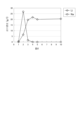
- FIG. 4 is a graph showing the relationship between BV and the liquid concentrations of Li and Na in an ion exchange step.
- the method for producing a lithium-containing solution according to the present invention comprises contacting an ion-exchange resin with an untreated lithium-containing solution to obtain a lithium-containing solution containing less predetermined metal elements than the untreated lithium-containing solution. Includes an exchange step.
- the pre-treatment lithium-containing solution is passed through a column containing the ion exchange resin to remove predetermined metal elements. Then, of the lithium-containing solution before treatment, a predetermined amount of the lithium-containing solution before treatment is not included in the lithium-containing solution after starting to flow through the column.
- the amount of waste of the lithium-containing solution before treatment is suppressed, and the initial stage of passing the solution
- the metal element to be removed contained in can be removed, and the content of the metal to be removed in the lithium-containing solution can be reduced.
- the ion-exchange resin is an iminodiacetic acid-type chelate resin
- the functional group of the iminodiacetic acid-type chelate resin is sodium type. This stabilizes the properties of the solution in the ion exchange step and improves the certainty of removing the metal element to be removed.
- the predetermined amount is preferably BV4 or less. As a result, the waste amount of the lithium-containing solution can be further suppressed, and the yield of the high-purity lithium-containing solution can be increased.
- the pH of the lithium-containing solution before treatment is preferably 7 or more and 11 or less.
- the metal elements to be removed calcium can be removed more reliably.
- a method for producing lithium hydroxide according to the present invention is a method for producing lithium hydroxide using a lithium-containing solution produced by any one of the above-described methods for producing a lithium-containing solution
- the method for producing lithium hydroxide includes a crystallization step of obtaining solid lithium hydroxide from a lithium hydroxide-containing solution, and a washing step of washing the solid lithium hydroxide with a washing liquid, wherein the washing liquid is , preferably a lithium hydroxide-containing solution having a predetermined solubility or more.
- the cleaning liquid is a saturated lithium hydroxide solution.
- the crystallized crystals do not dissolve again, and the lithium hydroxide crystals can be obtained without waste.
- FIG. 1 shows a flow diagram of a method for producing a lithium hydroxide-containing solution, including a method for producing a lithium-containing solution according to one embodiment of the present invention.
- the steps provided before and after the method for producing a lithium-containing solution of the present embodiment are not particularly limited, but for example, by providing the following steps before and after, a lithium hydroxide-containing solution with high purity can be obtained. It becomes possible.
- FIG. 1 shows a flow diagram of a method for producing a lithium hydroxide-containing solution, including a method for producing a lithium-containing solution according to one embodiment of the present invention.
- the neutralization step shown in FIG. 1 is preferably provided upstream of the method for producing a lithium-containing solution according to this embodiment.
- This neutralization step is a step of adding an alkali to the crude lithium-containing solution to obtain a post-neutralization lithium-containing solution before treatment.
- This process yields a neutralized precipitate containing impurities other than, for example, lithium chloride.
- the crude lithium-containing solution refers to a solution containing a lithium compound when this liquid is crystallized.
- Examples include solutions obtained by reacting lithium carbonate with hydrochloric acid, solutions obtained by extraction of lithium-containing ores with hydrochloric acid, or solutions obtained by selectively adsorbing and separating lithium from brines.
- This crude lithium-containing solution is preferably a solution obtained by selectively adsorbing and separating lithium from brine.
- alkali is added to remove metals other than lithium.
- Ion exchange resins are mainly used to remove divalent or higher metal ions.
- the ion exchange resin is expensive, the cost for producing lithium hydroxide increases and the work load for exchanging the ion exchange resin increases.
- the work load for regenerating the ion exchange resin also increases. Therefore, in the neutralization step, an alkali is added to remove some of the metals other than lithium. Examples of metals other than lithium include bivalent magnesium and manganese.
- the neutralization step for example, sodium hydroxide is added to a lithium chloride-containing solution, which is a crude lithium-containing solution, to precipitate magnesium and manganese as magnesium hydroxide and manganese hydroxide, and the precipitates are recovered. to remove metals other than lithium.
- a lithium chloride-containing solution which is a crude lithium-containing solution
- the pH of the post-neutralization solution after the neutralization step is preferably 8.5 or more and 12 or less.
- the neutralization step has been described as a step constituting the method for producing a lithium hydroxide-containing solution
- the untreated lithium-containing solution in the method for producing a lithium-containing solution of the present invention does not necessarily have to be treated through the neutralization step. It need not be a pre-lithium containing solution. Moreover, even a pre-treated lithium-containing solution obtained by including steps other than the neutralization step can be used without any problem.
- a method for producing a lithium-containing solution according to one embodiment of the present invention includes an ion exchange step.
- FIG. 1 shows an example of positioning of the ion exchange step in the method for producing a lithium hydroxide-containing solution.
- This ion exchange step is a step of contacting the untreated lithium-containing solution with an ion-exchange resin to obtain a lithium-containing solution.
- all or part of the predetermined metal elements calcium, aluminum, manganese and magnesium are removed. Some or all of these metal elements are reduced in the lithium-containing solution as compared to the untreated lithium-containing solution.
- pre-treatment lithium-containing solution is used to mean the solution until the ion exchange process is completed. That is, the “pre-treatment lithium-containing solution” includes both the solution before being brought into contact with the ion exchange resin and the solution being in contact with the ion exchange resin.
- Ion exchange resin is a type of synthetic resin that has a structure that ionizes as an ion exchange group in part of its molecular structure.
- an ion exchange resin capable of removing divalent or higher metal ions that is, an iminodiacetic acid type chelate resin or an iminodiacetate type chelate resin is preferable.
- the pH of the post-neutralization solution in the ion exchange step is preferably determined by the ion exchange resin. However, it is preferred that the untreated lithium-containing solution obtained in the neutralization step is directly subjected to the ion exchange step.
- the functional group is preferably sodium type.
- the ion-exchange resin is an iminodiacetic acid-type chelate resin, and the functional group of the iminodiacetic acid-type chelate resin is sodium type, the properties of the solution in the ion-exchange step are stabilized, and the removal of the metal element to be removed is facilitated. Improve certainty.
- the method of contacting the ion exchange resin with the lithium-containing solution before treatment is a method using a column.
- the flow rate of the untreated lithium-containing solution passing through this column is preferably SV1 or more and SV7 or less.
- SV is an abbreviation for Space Velocity, and represents the amount of liquid passing per unit time (1 hour) (unit is BV described below). If the flow rate is less than SV1, the efficiency of producing lithium hydroxide will be poor. Also, if the liquid permeation speed is higher than SV7, the liquid may flow too fast and the metal may not be captured. With this liquid flow rate, the bivalent metals magnesium and calcium can be more reliably removed.
- the amount of the post-neutralization liquid that passes through the column is preferably BV10 or more and BV35 or less.
- BV is an abbreviation for Bed Volume, and is a unit that indicates how many times the volume of the ion-exchange resin in the column. If the flow rate is less than BV10, the efficiency of producing lithium hydroxide will be poor. Also, if the flow rate is larger than BV35, the ion exchange resin may reach breakthrough exceeding the capacity of the ion exchange resin to trap metals, making it impossible to trap metals. With this liquid flow rate, magnesium and calcium can be removed more reliably.
- the ion exchange resin used in the ion exchange process can be regenerated.
- the captured metal is eluted by immersing the used ion exchange resin in a liquid having an acid hydrogen concentration of 0.3 mol/L or more and 2.0 mol/L or less.
- a predetermined amount of the untreated lithium-containing solution is extracted from the beginning of the flow through the column, and the extracted untreated lithium-containing solution is converted into ions. It is not included in the lithium-containing solution obtained after the exchange step.
- lithium-containing solution before treatment sodium is mixed in the lithium-containing solution before treatment in the initial stage when the ion exchange step is started, and the sodium is The problem is that it remains in the lithium-containing solution obtained after the ion exchange step. Metals other than lithium that remain in the lithium-containing solution become impurities in the final lithium compound. cause inconvenience. Therefore, in order to remove impurities mixed in at the initial stage of the ion exchange process, a predetermined amount of the untreated lithium-containing solution is withdrawn after the column is started to flow, and then the untreated lithium-containing solution withdrawn is It should not be included in the lithium-containing solution obtained after the ion exchange step. For example, when the lithium-containing solution before treatment is repeatedly passed through the column, the lithium-containing solution before treatment at the initial stage is withdrawn, and another lithium-containing solution before treatment is repeatedly passed.
- the waste amount of the lithium-containing solution before treatment is suppressed.
- a predetermined amount of the untreated lithium-containing solution is withdrawn after the column starts to flow, and the predetermined amount to be withdrawn is preferably smaller than BV4.
- the pH of the lithium-containing solution before treatment is preferably 7 or more and 11 or less.
- chelate resins are pH-dependent in that the higher the pH, the higher the adsorption efficiency. Therefore, when the pH is less than 7, it becomes impossible to adsorb and remove calcium.
- the pH when the pH is higher than 11, the adsorption amount of co-adsorbed Li increases. That is, loss of Li increases.
- the amount of neutralizing agent such as NaOH used increases, resulting in an increase in cost.
- the pH of the lithium-containing solution before treatment is 7 or more and 11 or less, it is possible to more reliably remove calcium among the metal elements to be removed.
- the lithium-containing solution obtained by the method for producing a lithium-containing solution according to the present embodiment converts a lithium compound such as lithium chloride contained in the lithium-containing solution into lithium hydroxide. Transform to obtain a lithium hydroxide-containing liquid in which lithium hydroxide is dissolved.
- the lithium compound contained in the lithium-containing solution is lithium chloride.
- lithium chloride When the lithium compound in the lithium-containing solution is lithium chloride, lithium chloride is dissolved in the lithium-containing solution. In this step, these liquids are converted into a lithium hydroxide-containing liquid containing lithium hydroxide and hydrochloric acid by, for example, electrodialysis using a bipolar membrane. That is, by performing electrodialysis, lithium chloride in the lithium-containing solution is decomposed, and lithium ions of lithium chloride pass through a cation membrane and combine with hydroxide ions to form lithium hydroxide, such as chloride ions. passes through the anion membrane and becomes hydrochloric acid. The recovered hydrochloric acid can be recycled to the elution process. This can reduce the amount of hydrochloric acid used.
- electrodialysis using ion exchange membranes corresponds to the conversion step.
- a cation exchange membrane is used as the ion exchange membrane, lithium hydroxide is produced in the cathode compartment.
- FIG. 2 shows a flowchart of a method for producing lithium hydroxide according to one embodiment of the present invention.
- the method for producing lithium hydroxide described below adds a crystallization step and a washing step from the lithium hydroxide-containing solution produced by the method for producing a lithium hydroxide-containing solution shown in FIG. It is a configuration that The steps for obtaining the lithium hydroxide-containing solution are the same as those of the manufacturing method shown in FIG.
- ⁇ Crystallization step> solid lithium hydroxide is obtained by solidifying the lithium hydroxide dissolved in the lithium hydroxide-containing liquid. Together with this solid lithium hydroxide, the crystallization mother liquor is obtained. In the conversion process, lithium becomes lithium hydroxide, and alkali metals such as sodium and potassium also become hydroxides. Therefore, these are also included in the lithium hydroxide-containing liquid obtained in the conversion step. Furthermore, when the lithium compound contained in the lithium-containing solution is lithium chloride, chloride ions, which are anions, also pass through the membrane and are contained in the lithium hydroxide-containing solution. In the crystallization step, by utilizing the difference in solubility of each hydroxide, the lithium hydroxide is solidified and the contained impurities are separated.
- the lithium hydroxide-containing liquid is heated and concentrated. At this time, the concentration of metal ions contained in the liquid increases, and lithium hydroxide, which has relatively low solubility, first precipitates and solidifies. This precipitated lithium hydroxide is recovered as solid lithium hydroxide. At this time, sodium hydroxide and potassium hydroxide, which have relatively high solubility, are left in the liquid without being precipitated. This increases the purity of the recovered lithium hydroxide.
- the solubility of lithium hydroxide is 13.2 g/100 g-water, compared with 174 g/100 g-water for sodium hydroxide and 154 g/100 g-water for potassium hydroxide. It turns out that it is extremely low. Since the chlorine ion is 2 g/L even during the heating and concentration operation, it is not precipitated in the lithium hydroxide as an alkali metal chloride.
- the crystallization process can be industrially performed by continuous crystallization using a crystallization can. Batch crystallization can also be performed.
- the crystallization mother liquor generated in the crystallization process is a concentrated alkaline solution. Since the crystallization mother liquor contains lithium hydroxide as much as the solubility, the lithium recovery rate is increased by repeating the steps before the neutralization step. Additionally, the cost of the neutralizer is reduced.
- the crystallization mother liquor may adhere to the solid lithium hydroxide.
- the solid lithium hydroxide obtained in the crystallization step (before the washing step) is washed with a washing liquid, and the crystallization attached to the solid lithium hydroxide (before the washing step) is By washing away the mother liquor, solid lithium hydroxide (after the washing step) is obtained.
- the cleaning liquid used in the cleaning process is a lithium hydroxide-containing solution having a predetermined solubility or more.
- the solubility of lithium hydroxide at 0° C. is 12 g/100 g-water, so a lithium hydroxide-containing solution with a lower solubility of 10 g/100 g-water is preferred.
- the cleaning liquid is a saturated lithium hydroxide solution.
- the crystallized crystals will not be dissolved again, and the lithium hydroxide crystals can be obtained without waste.
- the lithium hydroxide-containing solution obtained by the method for producing the lithium hydroxide-containing solution shown in FIG. 1 is used, but the present invention is not particularly limited to this.
- the method for producing lithium hydroxide according to the present invention can be applied to any solution containing lithium hydroxide.
- Example 1 ⁇ Pre-stage of ion exchange process> As a pre-treatment lithium-containing solution, a lithium chloride-containing solution having the composition shown in Table 1 was prepared through a neutralization step and the like.
- ⁇ Ion exchange process> A column containing an ion exchange resin was prepared.
- the ion-exchange resin used was an iminodiacetic acid-type ion-exchange resin with a sodium-type functional group (Amberlite IRC743).
- a pre-treatment lithium-containing solution adjusted to pH 8.2 was passed through this column at SV (Space Velocity) 5 and BV (Bed Volume) 30.
- SV Space Velocity
- BV Bed Volume
- Table 2 shows the composition of the entire lithium-containing solution from BV4 to BV30 collected after the lithium-containing solution before treatment was extracted from BV3 after the start of the flow.
- the conversion step was performed using the lithium-containing solution obtained in the ion exchange step to obtain a lithium hydroxide-containing solution with less impurities.
- Example 1 A lithium-containing solution was obtained by passing the pre-treatment lithium-containing solution through the column and without particularly removing the pre-treatment lithium-containing solution. Other conditions are the same as in Example 1. Table 3 shows the results of measuring the concentration of metal in the entire lithium-containing solution in this case.
Landscapes
- Chemical & Material Sciences (AREA)
- Engineering & Computer Science (AREA)
- Organic Chemistry (AREA)
- Materials Engineering (AREA)
- Environmental & Geological Engineering (AREA)
- Life Sciences & Earth Sciences (AREA)
- Metallurgy (AREA)
- Manufacturing & Machinery (AREA)
- Geology (AREA)
- Mechanical Engineering (AREA)
- General Life Sciences & Earth Sciences (AREA)
- Inorganic Chemistry (AREA)
- Geochemistry & Mineralogy (AREA)
- Chemical Kinetics & Catalysis (AREA)
- Electrochemistry (AREA)
- General Chemical & Material Sciences (AREA)
- Hydrology & Water Resources (AREA)
- Water Supply & Treatment (AREA)
- Treatment Of Water By Ion Exchange (AREA)
- Manufacture And Refinement Of Metals (AREA)
- Inorganic Compounds Of Heavy Metals (AREA)
- Battery Electrode And Active Subsutance (AREA)
Priority Applications (4)
| Application Number | Priority Date | Filing Date | Title |
|---|---|---|---|
| EP22886770.1A EP4349781A4 (en) | 2021-10-28 | 2022-10-17 | Method for producing lithium-containing solution and method for producing lithium hydroxide |
| AU2022379150A AU2022379150A1 (en) | 2021-10-28 | 2022-10-17 | Method for producing lithium-containing solution and method for producing lithium hydroxide |
| US18/681,346 US20240308864A1 (en) | 2021-10-28 | 2022-10-17 | Method for producing lithium containing solution and method for producing lithium hydroxide |
| CN202280045520.7A CN117561217A (zh) | 2021-10-28 | 2022-10-17 | 含锂溶液的制造方法以及氢氧化锂的制造方法 |
Applications Claiming Priority (2)
| Application Number | Priority Date | Filing Date | Title |
|---|---|---|---|
| JP2021-176695 | 2021-10-28 | ||
| JP2021176695A JP7698239B2 (ja) | 2021-10-28 | 2021-10-28 | リチウム含有溶液の製造方法および水酸化リチウムの製造方法 |
Publications (1)
| Publication Number | Publication Date |
|---|---|
| WO2023074442A1 true WO2023074442A1 (ja) | 2023-05-04 |
Family
ID=86157761
Family Applications (1)
| Application Number | Title | Priority Date | Filing Date |
|---|---|---|---|
| PCT/JP2022/038609 Ceased WO2023074442A1 (ja) | 2021-10-28 | 2022-10-17 | リチウム含有溶液の製造方法および水酸化リチウムの製造方法 |
Country Status (8)
| Country | Link |
|---|---|
| US (1) | US20240308864A1 (enExample) |
| EP (1) | EP4349781A4 (enExample) |
| JP (1) | JP7698239B2 (enExample) |
| CN (1) | CN117561217A (enExample) |
| AR (1) | AR127471A1 (enExample) |
| AU (1) | AU2022379150A1 (enExample) |
| CL (1) | CL2024001000A1 (enExample) |
| WO (1) | WO2023074442A1 (enExample) |
Citations (9)
| Publication number | Priority date | Publication date | Assignee | Title |
|---|---|---|---|---|
| JP2003293050A (ja) * | 2002-04-04 | 2003-10-15 | Sumitomo Metal Ind Ltd | チタンのフッ化物イオンを含む水溶液中の不純物金属イオンの除去方法 |
| JP2010285655A (ja) * | 2009-06-11 | 2010-12-24 | Kurita Water Ind Ltd | 金属回収方法 |
| JP2011032151A (ja) * | 2009-08-04 | 2011-02-17 | Kee:Kk | 炭酸リチウムの水酸化リチウムへの転換方法 |
| JP2011252711A (ja) * | 2010-05-31 | 2011-12-15 | Tosoh Analysis And Research Center Co Ltd | 金属主成分含有試料の不純物分析法 |
| WO2012026061A1 (ja) * | 2010-08-27 | 2012-03-01 | 株式会社日立製作所 | 金属回収方法及び金属回収装置 |
| CN109516479A (zh) * | 2018-12-19 | 2019-03-26 | 中化河北有限公司 | 电池级氢氧化锂的制备方法 |
| JP2020132951A (ja) * | 2019-02-20 | 2020-08-31 | 株式会社ササクラ | リチウム回収方法 |
| JP2020193130A (ja) | 2019-05-30 | 2020-12-03 | 住友金属鉱山株式会社 | 水酸化リチウムの製造方法 |
| WO2021166479A1 (ja) * | 2020-02-17 | 2021-08-26 | 住友金属鉱山株式会社 | 水酸化リチウムの製造方法 |
Family Cites Families (2)
| Publication number | Priority date | Publication date | Assignee | Title |
|---|---|---|---|---|
| JP4886358B2 (ja) | 2006-05-11 | 2012-02-29 | オルガノ株式会社 | エンドウホエー由来の可溶性ポリペプチドを有効成分とする起泡剤およびこれを含む炭酸飲料 |
| RU2751710C2 (ru) * | 2019-01-21 | 2021-07-16 | Акционерное общество "Ангарский электролизный химический комбинат" | Способ получения моногидрата гидроксида лития высокой степени чистоты из материалов, содержащих карбонат лития или хлорид лития |
-
2021
- 2021-10-28 JP JP2021176695A patent/JP7698239B2/ja active Active
-
2022
- 2022-10-17 AU AU2022379150A patent/AU2022379150A1/en active Pending
- 2022-10-17 CN CN202280045520.7A patent/CN117561217A/zh active Pending
- 2022-10-17 WO PCT/JP2022/038609 patent/WO2023074442A1/ja not_active Ceased
- 2022-10-17 EP EP22886770.1A patent/EP4349781A4/en active Pending
- 2022-10-17 US US18/681,346 patent/US20240308864A1/en active Pending
- 2022-10-27 AR ARP220102918A patent/AR127471A1/es unknown
-
2024
- 2024-04-04 CL CL2024001000A patent/CL2024001000A1/es unknown
Patent Citations (9)
| Publication number | Priority date | Publication date | Assignee | Title |
|---|---|---|---|---|
| JP2003293050A (ja) * | 2002-04-04 | 2003-10-15 | Sumitomo Metal Ind Ltd | チタンのフッ化物イオンを含む水溶液中の不純物金属イオンの除去方法 |
| JP2010285655A (ja) * | 2009-06-11 | 2010-12-24 | Kurita Water Ind Ltd | 金属回収方法 |
| JP2011032151A (ja) * | 2009-08-04 | 2011-02-17 | Kee:Kk | 炭酸リチウムの水酸化リチウムへの転換方法 |
| JP2011252711A (ja) * | 2010-05-31 | 2011-12-15 | Tosoh Analysis And Research Center Co Ltd | 金属主成分含有試料の不純物分析法 |
| WO2012026061A1 (ja) * | 2010-08-27 | 2012-03-01 | 株式会社日立製作所 | 金属回収方法及び金属回収装置 |
| CN109516479A (zh) * | 2018-12-19 | 2019-03-26 | 中化河北有限公司 | 电池级氢氧化锂的制备方法 |
| JP2020132951A (ja) * | 2019-02-20 | 2020-08-31 | 株式会社ササクラ | リチウム回収方法 |
| JP2020193130A (ja) | 2019-05-30 | 2020-12-03 | 住友金属鉱山株式会社 | 水酸化リチウムの製造方法 |
| WO2021166479A1 (ja) * | 2020-02-17 | 2021-08-26 | 住友金属鉱山株式会社 | 水酸化リチウムの製造方法 |
Non-Patent Citations (1)
| Title |
|---|
| See also references of EP4349781A4 |
Also Published As
| Publication number | Publication date |
|---|---|
| AU2022379150A1 (en) | 2024-02-08 |
| CL2024001000A1 (es) | 2024-08-30 |
| US20240308864A1 (en) | 2024-09-19 |
| JP7698239B2 (ja) | 2025-06-25 |
| AR127471A1 (es) | 2024-01-31 |
| EP4349781A4 (en) | 2025-05-21 |
| EP4349781A1 (en) | 2024-04-10 |
| CN117561217A (zh) | 2024-02-13 |
| JP2023066149A (ja) | 2023-05-15 |
Similar Documents
| Publication | Publication Date | Title |
|---|---|---|
| JP7156322B2 (ja) | 水酸化リチウムの製造方法 | |
| CN112441572B (zh) | 一种废旧磷酸铁锂正极材料的回收方法 | |
| JP7558647B2 (ja) | 水酸化リチウムの製造方法 | |
| WO2021215486A1 (ja) | 水酸化リチウムの製造方法 | |
| JP2023090706A (ja) | 水酸化リチウムの製造方法 | |
| JP2019099874A (ja) | リチウムの回収方法 | |
| JP7518481B2 (ja) | 水酸化リチウムの製造方法 | |
| JP7115123B2 (ja) | リチウムの精製方法 | |
| JPS589043B2 (ja) | 電解生成せるアルカリ金属塩素酸塩−塩化物溶液からのイオン交換による重クロム酸塩の除去 | |
| TW202300460A (zh) | 硫酸鈷之製造方法 | |
| JP2021172536A (ja) | 水酸化リチウムの製造方法 | |
| JP2024507510A (ja) | リチウム及び電池化学的製造における硫酸ナトリウム副生成物の処理 | |
| CN102167369B (zh) | 一种降低LiCl中NaCl含量的方法 | |
| US2021988A (en) | Production of lithium compounds | |
| WO2023074442A1 (ja) | リチウム含有溶液の製造方法および水酸化リチウムの製造方法 | |
| KR20220039398A (ko) | 양극재 수세액 내 리튬을 탄산리튬의 형태로 회수하는 방법 | |
| WO2023248025A1 (en) | Process for recovery of lithium from brine | |
| EP4257552A1 (en) | Method for producing lithium hydroxide | |
| CN109055775B (zh) | 一种用于净化铜电解液的络合沉淀剂的重生方法 | |
| JP2023066149A5 (enExample) | ||
| JPH10182147A (ja) | リチウムの回収方法 | |
| JPS6316340B2 (enExample) | ||
| AU2004235839B2 (en) | A method for producing an electrolytic solution containing vanadium | |
| JPS5944102B2 (ja) | イオン交換樹脂の再生法 | |
| JP2019099875A (ja) | リチウムの回収方法 |
Legal Events
| Date | Code | Title | Description |
|---|---|---|---|
| 121 | Ep: the epo has been informed by wipo that ep was designated in this application |
Ref document number: 22886770 Country of ref document: EP Kind code of ref document: A1 |
|
| WWE | Wipo information: entry into national phase |
Ref document number: 202280045520.7 Country of ref document: CN |
|
| WWE | Wipo information: entry into national phase |
Ref document number: 2022886770 Country of ref document: EP |
|
| WWE | Wipo information: entry into national phase |
Ref document number: 2022379150 Country of ref document: AU Ref document number: AU2022379150 Country of ref document: AU |
|
| ENP | Entry into the national phase |
Ref document number: 2022886770 Country of ref document: EP Effective date: 20240104 Ref document number: 2022379150 Country of ref document: AU Date of ref document: 20221017 Kind code of ref document: A |
|
| NENP | Non-entry into the national phase |
Ref country code: DE |