WO2023063113A1 - フィルムヒータ - Google Patents
フィルムヒータ Download PDFInfo
- Publication number
- WO2023063113A1 WO2023063113A1 PCT/JP2022/036687 JP2022036687W WO2023063113A1 WO 2023063113 A1 WO2023063113 A1 WO 2023063113A1 JP 2022036687 W JP2022036687 W JP 2022036687W WO 2023063113 A1 WO2023063113 A1 WO 2023063113A1
- Authority
- WO
- WIPO (PCT)
- Prior art keywords
- connection portion
- heat generating
- connection
- extension
- electrode
- Prior art date
- Legal status (The legal status is an assumption and is not a legal conclusion. Google has not performed a legal analysis and makes no representation as to the accuracy of the status listed.)
- Ceased
Links
Images





Classifications
-
- H—ELECTRICITY
- H05—ELECTRIC TECHNIQUES NOT OTHERWISE PROVIDED FOR
- H05B—ELECTRIC HEATING; ELECTRIC LIGHT SOURCES NOT OTHERWISE PROVIDED FOR; CIRCUIT ARRANGEMENTS FOR ELECTRIC LIGHT SOURCES, IN GENERAL
- H05B3/00—Ohmic-resistance heating
- H05B3/02—Details
- H05B3/03—Electrodes
-
- H—ELECTRICITY
- H05—ELECTRIC TECHNIQUES NOT OTHERWISE PROVIDED FOR
- H05B—ELECTRIC HEATING; ELECTRIC LIGHT SOURCES NOT OTHERWISE PROVIDED FOR; CIRCUIT ARRANGEMENTS FOR ELECTRIC LIGHT SOURCES, IN GENERAL
- H05B3/00—Ohmic-resistance heating
-
- H—ELECTRICITY
- H05—ELECTRIC TECHNIQUES NOT OTHERWISE PROVIDED FOR
- H05B—ELECTRIC HEATING; ELECTRIC LIGHT SOURCES NOT OTHERWISE PROVIDED FOR; CIRCUIT ARRANGEMENTS FOR ELECTRIC LIGHT SOURCES, IN GENERAL
- H05B3/00—Ohmic-resistance heating
- H05B3/10—Heating elements characterised by the composition or nature of the materials or by the arrangement of the conductor
-
- H—ELECTRICITY
- H05—ELECTRIC TECHNIQUES NOT OTHERWISE PROVIDED FOR
- H05B—ELECTRIC HEATING; ELECTRIC LIGHT SOURCES NOT OTHERWISE PROVIDED FOR; CIRCUIT ARRANGEMENTS FOR ELECTRIC LIGHT SOURCES, IN GENERAL
- H05B3/00—Ohmic-resistance heating
- H05B3/20—Heating elements having extended surface area substantially in a two-dimensional [2D] plane, e.g. plate-heater
-
- H—ELECTRICITY
- H05—ELECTRIC TECHNIQUES NOT OTHERWISE PROVIDED FOR
- H05B—ELECTRIC HEATING; ELECTRIC LIGHT SOURCES NOT OTHERWISE PROVIDED FOR; CIRCUIT ARRANGEMENTS FOR ELECTRIC LIGHT SOURCES, IN GENERAL
- H05B3/00—Ohmic-resistance heating
- H05B3/84—Heating arrangements specially adapted for transparent or reflecting areas, e.g. for demisting or de-icing windows, mirrors or vehicle windshields
-
- H—ELECTRICITY
- H05—ELECTRIC TECHNIQUES NOT OTHERWISE PROVIDED FOR
- H05B—ELECTRIC HEATING; ELECTRIC LIGHT SOURCES NOT OTHERWISE PROVIDED FOR; CIRCUIT ARRANGEMENTS FOR ELECTRIC LIGHT SOURCES, IN GENERAL
- H05B2203/00—Aspects relating to Ohmic resistive heating covered by group H05B3/00
- H05B2203/002—Heaters using a particular layout for the resistive material or resistive elements
- H05B2203/003—Heaters using a particular layout for the resistive material or resistive elements using serpentine layout
-
- H—ELECTRICITY
- H05—ELECTRIC TECHNIQUES NOT OTHERWISE PROVIDED FOR
- H05B—ELECTRIC HEATING; ELECTRIC LIGHT SOURCES NOT OTHERWISE PROVIDED FOR; CIRCUIT ARRANGEMENTS FOR ELECTRIC LIGHT SOURCES, IN GENERAL
- H05B2203/00—Aspects relating to Ohmic resistive heating covered by group H05B3/00
- H05B2203/013—Heaters using resistive films or coatings
Definitions
- the present disclosure relates to film heaters.
- Patent Document 1 there has been known a film heater including an electrode having a connecting portion, a bypass portion, and an extraction portion, and a non-rectangular transparent conductive film.
- This connecting portion is connected to the transparent conductive film through the port so that a current flows between it and the inside of the heat generating portion of the transparent conductive film.
- the bypass section is connected to the connection section and to the power supply section via the extraction section. Therefore, in the film heater described in Patent Literature 1, a current flows from the feeding portion to the transparent conductive film via the extracting portion, the bypass portion, the connection portion and the port.
- connection portion of the film heater described in Patent Document 1 is smaller than that of the bypass portion and the extraction portion.
- the power density of the connecting portion is higher than the power density of the bypass portion and the extracting portion, so the amount of heat generated per unit area of the connecting portion is the same as the amount of heat generated per unit area of the bypass portion and the extracting portion. become larger in comparison. Therefore, local heat generation occurs at the connecting portion.
- An object of the present disclosure is to provide a film heater that suppresses local heat generation in a transparent conductive film.
- the film heater includes a first heat generating portion that generates heat and transmits light when energized, and a second heat generating portion that generates heat and transmits light when energized. and a first electrode having a transparent conductive film having and a second electrode facing the first connection portion and connected to the first heating portion and the second heating portion, wherein the length of the path of the current flowing through the second heating portion is equal to the length of the first heating portion.
- the film heater is such that the electrical resistance of the second connecting portion is greater than the electrical resistance of the first connecting portion.
- the voltage applied to the second heating portion is equal to the voltage applied to the first heating portion. be smaller than Therefore, since the power density of the first heat generating portion and the power density of the second heat generating portion are the same, local heat generation of the transparent conductive film is suppressed.
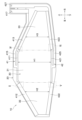
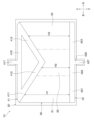
- FIG. 2 is a configuration diagram of a film heater according to the first embodiment;
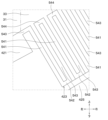
- FIG. 2 is an enlarged view of part II of FIG. 1;
- FIG. 3 is a cross-sectional view taken along line III-III of FIG. 2;
- the block diagram of the film heater of 6th Embodiment The block diagram of the film heater of 7th Embodiment.
- the film heater 10 of the present embodiment is attached to a camera, radar device, Lidar, headlights and glass mounted on a vehicle (not shown). Moreover, the film heater 10 performs deicing, snow melting, and defogging of these things by generating heat.
- Lidar is an abbreviation for Light Detection and Ranging/Laser Imaging Detection and Ranging.
- the film heater 10 includes a transparent insulator 20, a transparent conductive film 30, a first electrode 41 and a second electrode 42, as shown in FIGS.
- the upper side of the drawing is simply referred to as the upper side.
- the lower side of the drawing is simply referred to as the lower side.
- the left side of the drawing is simply referred to as the left side.
- the right side of the drawing is simply referred to as the right side.
- the transparent insulator 20 has electrical insulation properties because it is made of a resin such as polycarbonate.
- the transparent conductive film 30 is made of ITO, carbon nanotubes, or the like, so that it is transparent and conductive.
- ITO is an abbreviation for indium tin oxide.
- the transparent conductive film 30 is formed in a planar shape and is covered with the transparent insulator 20 . Furthermore, the transparent conductive film 30 has a first heat generating portion 31 , a second heat generating portion 32 and a third heat generating portion 33 .
- the first heat generating portion 31, the second heat generating portion 32, and the third heat generating portion 33 generate heat when current flows through them.
- the first heat generating portion 31 is the central portion of the transparent conductive film 30 .
- the second heat generating portion 32 is connected to the left side of the first heat generating portion 31 .
- the third heat generating portion 33 is connected to the right side of the first heat generating portion 31 .
- the length of the path of the current flowing through the first heat generating portion 31 be the first conducting distance H1.
- the length of the path of the current flowing through the second heat generating portion 32 is defined as a second conducting distance H2.
- fever part 33 be the 3rd conduction distance H3.
- the second conducting distance H2 and the third length are shorter than the first conducting distance H1.
- the second energization distance H2 decreases toward the left from the boundary portion between the first heat generating portion 31 and the second heat generating portion 32 .
- the third current-carrying distance H3 decreases toward the right from the boundary between the first heat generating portion 31 and the third heat generating portion 33 .
- the lengths in the horizontal direction of the first heat generating portion 31, the second heat generating portion 32 and the third heat generating portion 33 are substantially the same.
- the boundaries between the first heat generating portion 31, the second heat generating portion 32, and the third heat generating portion 33 are schematically indicated by two-dot chain lines.
- the first conducting distance H1 is the same as the vertical length of the first heat generating portion 31 .
- the second conducting distance H2 is the same as the vertical length of the second heating portion 32 .
- the third conducting distance H3 is the same as the vertical length of the third heat generating portion 33 .
- the first electrode 41 is made of metal such as gold, platinum, silver, copper, and aluminum. Also, the first electrode 41 is a positive electrode. Furthermore, the first electrode 41 has a first connection portion 411 , a second connection portion 412 , a third connection portion 413 , a first lead portion 415 and a first terminal portion 417 .
- the first connection portion 411 is connected to the upper side of the first heat generating portion 31 and extends in the left-right direction.
- the second connection portion 412 is connected to the upper side of the second heat generating portion 32 .
- the second connection portion 412 includes a first end portion 510, a plurality of first extension portions 511, a plurality of second extension portions 512, a plurality of third extension portions 513, and a plurality of fourth extension portions 513. Includes extension 514 .
- the first end portion 510 is connected to the left side of the first connection portion 411 and extends in the lower left direction from the boundary portion between the first end portion 510 and the first connection portion 411 .
- the right first extension portion 511 among the plurality of first extension portions 511 is connected to the left side of the first end portion 510 .
- the first extension portion 511 extends in the upper left direction.
- the second extension portion 512 is connected to the upper side of the first extension portion 511 and extends in the lower left direction from the boundary portion between the second extension portion 512 and the first extension portion 511 .
- the third extension portion 513 is connected to the left side of the second extension portion 512 and extends downward and to the right from the boundary portion between the third extension portion 513 and the second extension portion 512 .
- the fourth extension portion 514 is connected to the lower side of the third extension portion 513 and the lower side of the first extension portion 511, and extends downward and to the left from the boundary portion between the fourth extension portion 514 and the third extension portion 513. extends to Therefore, the second connecting portion 412 has a meandering shape due to the first end portion 510 , the first extension portion 511 , the second extension portion 512 , the third extension portion 513 and the fourth extension portion 514 . In addition, due to these, the total length of the second connection portion 412 is longer than the total length of the first connection portion 411 . Note that the first end portion 510, the first extension portion 511, the second extension portion 512, the third extension portion 513, and the fourth extension portion 514 may extend in directions that cross each other.
- the widths of the first end portion 510 , the first extension portion 511 , the second extension portion 512 , the third extension portion 513 and the fourth extension portion 514 are smaller than the width of the first connection portion 411 . Furthermore, as shown in FIG. 3 , the thicknesses of first end portion 510 , first extension portion 511 , second extension portion 512 , third extension portion 513 and fourth extension portion 514 are equal to the thickness of first connection portion 411 . are the same. Also, since the second connection portion 412 is made of the same material as the first connection portion 411 , the conductivity of the second connection portion 412 is the same as the conductivity of the first connection portion 411 .
- the third connecting portion 413 is connected to the upper side of the third heat generating portion 33 .
- the third connection portion 413 includes a second end portion 520, a plurality of fifth extension portions 521, a plurality of sixth extension portions 522, a plurality of seventh extension portions 523, and a plurality of eighth extension portions 523. Includes extension 524 .
- the second end portion 520 is connected to the right side of the first connection portion 411 and extends in the lower right direction from the boundary portion between the second end portion 520 and the first connection portion 411 .
- the left fifth extension portion 521 among the plurality of fifth extension portions 521 is connected to the right side of the second end portion 520 .
- the fifth extension portion 521 extends in the upper right direction.
- the sixth extension portion 522 is connected to the upper side of the fifth extension portion 521 and extends in the lower right direction from the boundary portion between the sixth extension portion 522 and the fifth extension portion 521 .
- the seventh extension portion 523 is connected to the right side of the sixth extension portion 522 and extends in the lower left direction from the boundary portion between the seventh extension portion 523 and the sixth extension portion 522 .
- the eighth extension portion 524 is connected to the bottom side of the seventh extension portion 523 and the bottom side of the fifth extension portion 521, and extends from the boundary between the eighth extension portion 524 and the seventh extension portion 523 to the lower right. extending in the direction Accordingly, the third connecting portion 413 has a meandering shape due to the second end portion 520 , the fifth extension portion 521 , the sixth extension portion 522 , the seventh extension portion 523 and the eighth extension portion 524 . In addition, due to these, the total length of the third connecting portion 413 is longer than the total length of the first connecting portion 411 . In addition, the second end portion 520, the fifth extension portion 521, the sixth extension portion 522, the seventh extension portion 523, and the eighth extension portion 524 may extend in mutually intersecting directions.
- the widths of the second end portion 520 , the fifth extension portion 521 , the sixth extension portion 522 , the seventh extension portion 523 and the eighth extension portion 524 are smaller than the width of the first connection portion 411 . Furthermore, the thicknesses of the second end portion 520 , the fifth extension portion 521 , the sixth extension portion 522 , the seventh extension portion 523 and the eighth extension portion 524 are the same as the thickness of the first connection portion 411 . Also, since the third connection portion 413 is made of the same material as the first connection portion 411 , the conductivity of the third connection portion 413 is the same as the conductivity of the first connection portion 411 .
- the first lead portion 415 is connected to the first connection portion 411 and extends along the edge of the transparent insulator 20 .
- the first terminal portion 417 is connected to the first lead portion 415 and a power source (not shown).
- the second electrode 42 is made of metal such as gold, platinum, silver, copper, and aluminum. Also, the second electrode 42 is a negative electrode. Further, the second electrode 42 has a fourth connection portion 421, a fifth connection portion 422, a sixth connection portion 423, a second lead portion 425 and a second terminal portion 427, returning to FIG.
- the fourth connection portion 421 is connected to the lower side of the first heat generating portion 31 and extends in the left-right direction.
- the fifth connection portion 422 is connected to the lower side of the second heat generating portion 32 .
- the fifth connection portion 422 includes a third end portion 530, a plurality of ninth extension portions 531, a plurality of tenth extension portions 532, a plurality of eleventh extension portions 533, and a plurality of twelfth extension portions 533, as shown in FIG.
- An extension 534 is included.
- the third end portion 530 is connected to the left side of the fourth connection portion 421 and extends in the upper left direction from the boundary portion between the third end portion 530 and the fourth connection portion 421 .
- the right ninth extension portion 531 among the plurality of ninth extension portions 531 is connected to the left side of the third end portion 530 .
- the ninth extension portion 531 extends in the lower left direction.
- the tenth extension 532 is connected to the lower side of the ninth extension 531 and extends leftward from the boundary between the tenth extension 532 and the ninth extension 531 .
- the eleventh extension 533 is connected to the left side of the tenth extension 532 and extends in the upper right direction from the boundary between the eleventh extension 533 and the tenth extension 532 .
- the twelfth extension portion 534 is connected to the upper side of the eleventh extension portion 533 and the upper side of the ninth extension portion 531, and extends in the upper left direction from the boundary portion between the twelfth extension portion 534 and the eleventh extension portion 533.
- the fifth connecting portion 422 has a serpentine shape due to the third end portion 530 , the ninth extension portion 531 , the tenth extension portion 532 , the eleventh extension portion 533 and the twelfth extension portion 534 .
- the total length of the fifth connection portion 422 is longer than the total length of the fourth connection portion 421 .
- the widths of the third end portion 530 , the ninth extension portion 531 , the tenth extension portion 532 , the eleventh extension portion 533 and the twelfth extension portion 534 are smaller than the width of the fourth connection portion 421 . Furthermore, the thicknesses of the third end portion 530 , the ninth extension portion 531 , the tenth extension portion 532 , the eleventh extension portion 533 and the twelfth extension portion 534 are the same as the thickness of the fourth connection portion 421 . Further, since the fifth connection portion 422 is made of the same material as the fourth connection portion 421 , the conductivity of the fifth connection portion 422 is the same as the conductivity of the fourth connection portion 421 .
- the sixth connection portion 423 is connected to the lower side of the third heat generating portion 33 and the right side of the fourth connection portion 421 .
- the sixth connection portion 423 includes a fourth end portion 540, a plurality of thirteenth extension portions 541, a plurality of fourteenth extension portions 542, a plurality of fifteenth extension portions 543, and a plurality of sixteenth extension portions 543.
- An extension 544 is included.
- the fourth end portion 540 is connected to the right side of the fourth connection portion 421 and extends in the upper right direction from the boundary portion between the fourth end portion 540 and the fourth connection portion 421 .
- the left thirteenth extension 541 among the plurality of thirteenth extensions 541 is connected to the right side of the fourth end 540 .
- the thirteenth extension portion 541 extends in the lower right direction.
- the fourteenth extension portion 542 is connected to the lower side of the thirteenth extension portion 541 and extends in the upper right direction from the boundary portion between the fourteenth extension portion 542 and the thirteenth extension portion 541 .
- the fifteenth extension portion 543 is connected to the right side of the fourteenth extension portion 542 and extends in the upper left direction from the boundary portion between the fifteenth extension portion 543 and the fourteenth extension portion 542 .
- the 16th extension portion 544 is connected to the upper side of the 15th extension portion 543 and the upper side of the 13th extension portion 541, and extends in the upper right direction from the boundary portion between the 16th extension portion 544 and the 13th extension portion 541.
- the sixth connecting portion 423 has a meandering shape due to the fourth end portion 540 , the thirteenth extension portion 541 , the fourteenth extension portion 542 , the fifteenth extension portion 543 and the sixteenth extension portion 544 .
- the total length of the sixth connection portion 423 is longer than the total length of the fourth connection portion 421 .
- the widths of the fourth end portion 540 , the thirteenth extension portion 541 , the fourteenth extension portion 542 , the fifteenth extension portion 543 and the sixteenth extension portion 544 are smaller than the width of the fourth connection portion 421 .
- the thicknesses of the fourth end portion 540 , the thirteenth extension portion 541 , the fourteenth extension portion 542 , the fifteenth extension portion 543 and the sixteenth extension portion 544 are the same as the thickness of the fourth connection portion 421 .
- the sixth connection portion 423 is made of the same material as the fourth connection portion 421 , the conductivity of the sixth connection portion 423 is the same as the conductivity of the fourth connection portion 421 .
- the second lead portion 425 is connected to the fourth connection portion 421 and extends along the edge of the transparent insulator 20 .
- the second terminal portion 427 is connected to the second lead portion 425 and a power source (not shown).
- the film heater 10 is configured as described above.
- the heat generated by the film heater 10 deices and defogs a camera, radar device, lidar, headlights, and glass mounted on a vehicle (not shown), and suppresses local heat generation in the transparent conductive film 30 .
- heat generation by the film heater 10 will be described.
- the first electrode 41 is the positive electrode and the second electrode 42 is the negative electrode. Therefore, when a power source (not shown) supplies power to the film heater 10 , current flows from the power source (not shown) to the first connection portion 411 via the first terminal portion 417 and the first lead portion 415 . Also, current flows from the first connection portion 411 to the fourth connection portion 421 via the first heat generating portion 31 . Thereby, the first heat generating portion 31 generates heat.
- the electrical resistance is greater than the electrical resistance of the first connecting portion 411 . Therefore, the voltage drop in the second connection portion 412 when the current flows from the second connection portion 412 to the second heat generation portion 32 is becomes larger compared to In addition, since the total length of the fifth connection portion 422 is longer than the total length of the fourth connection portion 421 and the width of the fifth connection portion 422 is smaller than the width of the fourth connection portion 421, the electrical resistance of the fifth connection portion 422 is is greater than the electrical resistance of the fourth connection portion 421 .
- the voltage drop at the fifth connection portion 422 when the current flows from the second heat generating portion 32 to the fourth connection portion 421 via the fifth connection portion 422 is Compared to when the electrical resistance is equal to or less than that of the portion 421, it becomes larger. Therefore, the voltage applied to the second heat generating portion 32 is lower than the voltage applied to the first heat generating portion 31 . Therefore, the amount of heat generated by the second heat generating section 32 is smaller than the amount of heat generated by the first heat generating section 31 . Therefore, the amount of heat generated per unit area of the second heat generating portion 32 is the same as the amount of heat generated per unit area of the first heat generating portion 31 .
- the third heat generating portion 33 generates heat. Therefore, a camera, a radar device, a lidar, a headlight, and glass mounted on a vehicle (not shown) are heated by the first heat generating portion 31, the second heat generating portion 32, and the third heat generating portion 33, thereby melting the ice. , snow melting and anti-fogging.
- the electrical power of the third connection portion 413 is The resistance is greater than the electrical resistance of the first connecting portion 411 . Therefore, the voltage drop in the third connection portion 413 when current flows from the third connection portion 413 to the third heat generation portion 33 is becomes larger compared to In addition, since the total length of the sixth connection portion 423 is longer than the total length of the fourth connection portion 421 and the width of the sixth connection portion 423 is smaller than the width of the fourth connection portion 421, the electric resistance of the sixth connection portion 423 is is greater than the electrical resistance of the fourth connection portion 421 .
- the voltage drop at the sixth connection portion 423 when current flows from the third heat generating portion 33 to the fourth connection portion 421 via the sixth connection portion 423 is Compared to when the electrical resistance is equal to or less than that of the portion 421, it becomes larger. Therefore, the voltage applied to the third heat generating portion 33 is lower than the voltage applied to the first heat generating portion 31 . Therefore, the amount of heat generated by the third heat generating portion 33 is smaller than the amount of heat generated by the first heat generating portion 31 . Therefore, the amount of heat generated per unit area of the third heat generating portion 33 is the same as the amount of heat generated per unit area of the first heat generating portion 31 . Therefore, the amount of heat generated per unit area of the first heat generating portion 31, the second heat generating portion 32, and the third heat generating portion 33 is the same.
- the current that has flowed through the fourth connection portion 421 flows to the power source (not shown) via the second lead portion 425 and the second terminal portion 427 .
- the film heater 10 generates heat. Next, suppression of local heat generation in the transparent conductive film 30 will be described.
- the film heater 10 includes a transparent conductive film 30, a first electrode 41, and a second electrode 42.
- the transparent conductive film 30 has a first heat generating portion 31 and a second heat generating portion 32 .
- the first heat generating portion 31 generates heat when energized and transmits light.
- the second heat generating portion 32 generates heat when energized and transmits light.
- the first electrode 41 has a first connection portion 411 and a second connection portion 412 .
- the first connection portion 411 is connected to the first heat generating portion 31 .
- the second connection portion 412 is connected to the second heat generating portion 32 and the first connection portion 411 .
- the second electrode 42 faces the first connecting portion 411 and is connected to the first heat generating portion 31 and the second heat generating portion 32 .
- the transparent conductive film 30 is formed in a planar shape. Furthermore, the second conducting distance H2 is shorter than the first conducting distance H1. Also, the electrical resistance of the second connection portion 412 is higher than the electrical resistance of the first connection portion 411 . As a result, the voltage drop in the second connection portion 412 when the current flows through the second connection portion 412 and the second heat generating portion 32 generates heat is equal to the electrical resistance of the second connection portion 412 is equal to It becomes larger than when it is below. As a result, the voltage applied to the second heat generating portion 32 becomes smaller than the voltage applied to the first heat generating portion 31 . In addition, the first conducting distance H ⁇ b>1 corresponds to the length of the path of the current flowing through the first heat generating portion 31 .
- the second conducting distance H2 corresponds to the length of the path of the current flowing through the second heat generating portion 32 .
- the electrical resistance of the second connection portion 412 is higher than the electrical resistance of the first connection portion 411 .
- the electrical resistance of the second connection portion 412 per unit length in the direction in which the current flows through the second connection portion 412 is the first connection per unit length in the direction in which the current flows through the first connection portion 411 . It may be greater than the electrical resistance of the portion 411 .
- the power density W ⁇ which is the power per unit area, is represented by the following relational expression (1).
- V is a voltage.
- Rs is the sheet resistance of the transparent conductive film 30;
- Sheet resistance is the electrical resistance per unit area.
- H is the length of the transparent conductive film 30 in the direction parallel to the surface of the transparent conductive film 30 and from the first electrode 41 to the second electrode 42 .
- the voltage applied to the second heating portion 32 becomes smaller than the voltage applied to the first heating portion 31 when the second conducting distance H2 is smaller than the first conducting distance H1. Therefore, since the power density W ⁇ of the first heat generating portion 31 and the power density W ⁇ of the second heat generating portion 32 are the same, local heat generation of the transparent conductive film 30 is suppressed. In addition, since local heat generation of the transparent conductive film 30 is suppressed, energy consumed by local heat generation is suppressed. Therefore, since it is not necessary to supply extra power from the power source to the film heater 10, the power consumption of the film heater 10 is suppressed.
- the film heater 10 also has the following effects.
- the film heater 10 includes a transparent conductive film 30, a first electrode 41, and a second electrode .
- the transparent conductive film 30 has a first heat generating portion 31 and a second heat generating portion 32 in the same manner as described above.
- the first electrode 41 is connected to the upper side of the transparent conductive film 30 .
- the second electrode 42 has a fourth connection portion 421 and a fifth connection portion 422 .
- the fourth connection portion 421 is connected to the side of the first heating portion 31 opposite to the first electrode 41 .
- the fifth connection portion 422 is connected to the second heat generating portion 32 and the fourth connection portion 421 .
- the electrical resistance of the fifth connection portion 422 is higher than the electrical resistance of the fourth connection portion 421 .
- the voltage drop in the fifth connection portion 422 when the current flows through the fifth connection portion 422 and the second heat generating portion 32 generates heat is equal to the electric resistance of the fourth connection portion 421 . It becomes larger than when it is below. As a result, the voltage applied to the second heat generating portion 32 becomes smaller than the voltage applied to the first heat generating portion 31 .
- the first electrode 41 corresponds to the second electrode.
- the second electrode 42 corresponds to the first electrode.
- the fourth connection portion 421 corresponds to the first connection portion.
- the fifth connection portion 422 corresponds to the second connection portion.
- the electrical resistance of the fifth connection portion 422 is higher than the electrical resistance of the fourth connection portion 421 .
- the electrical resistance of the fifth connection portion 422 per unit length in the direction in which the current flows through the fifth connection portion 422 is the fourth connection per unit length in the direction in which the current flows through the fourth connection portion 421. It may be greater than the electrical resistance of the portion 421 .
- the voltage applied to the second heating portion 32 becomes smaller than the voltage applied to the first heating portion 31 when the second conducting distance H2 is smaller than the first conducting distance H1. Therefore, since the power density W ⁇ of the first heat generating portion 31 and the power density W ⁇ of the second heat generating portion 32 are the same, local heat generation of the transparent conductive film 30 is suppressed. In addition, since local heat generation of the transparent conductive film 30 is suppressed, energy consumed by local heat generation is suppressed. Therefore, since it is not necessary to supply extra power from the power source to the film heater 10, the power consumption of the film heater 10 is suppressed.
- the length of the path of current flowing through the second connection portion 412 is longer than the length of the path of current flowing through the first connection portion 411 . This makes it easier for the electrical resistance of the second connection portion 412 to be greater than the electrical resistance of the first connection portion 411 .
- the width of the second connection portion 412 is smaller than the width of the first connection portion 411 . This makes it easier for the electrical resistance of the second connection portion 412 to be greater than the electrical resistance of the first connection portion 411 .
- the width of the first connecting portion 411 corresponds to the width in the direction orthogonal to the direction of current flowing through the first connecting portion 411 and in the direction in which the surface of the transparent conductive film 30 extends.
- the width of the second connection portion 412 corresponds to the width in the direction orthogonal to the direction of current flowing through the second connection portion 412 and in the direction in which the surface of the transparent conductive film 30 extends.
- the first electrode 41 further has a first lead portion 415 and a first terminal portion 417 .
- the first lead portion 415 is connected to the first connection portion 411 .
- the first terminal portion 417 is connected to the first lead portion 415 and a power source (not shown).
- the electrical resistance of the first connection portion 411 is smaller than the electrical resistance of the second connection portion 412 .
- the power source is connected to the first terminal portion 417 , the first lead portion 415 and the first connection portion 411 via the first connection portion 411 .
- a current easily flows through the heat generating portion 31 . Therefore, the first heat generating portion 31 is likely to generate heat.
- the first lead portion 415 and the first terminal portion 417 correspond to lead portions.
- the second electrode 42 further has a second lead portion 425 and a second terminal portion 427 .
- the second lead portion 425 is connected to the fourth connection portion 421 .
- the second terminal portion 427 is connected to the second lead portion 425 and a power source (not shown).
- the fourth connection portion 421 is connected to the lower side of the first heat generating portion 31 .
- the electrical resistance of the fourth connection portion 421 is smaller than the electrical resistance of the fifth connection portion 422 .
- the first extension portion 511 and the third extension portion 513 of the second connection portion 412 are thinner than the first connection portion 411, as shown in FIG. Similarly, the thicknesses of the first end portion 510 , the second extension portion 512 and the fourth extension portion 514 of the second connection portion 412 are smaller than the thickness of the first connection portion 411 .
- the thicknesses of the second end portion 520 , the fifth extension portion 521 , the sixth extension portion 522 , the seventh extension portion 523 and the eighth extension portion 524 of the third connection portion 413 are larger than the thickness of the first connection portion 411 . It's getting smaller.
- the thicknesses of the third end portion 530 , the ninth extension portion 531 , the tenth extension portion 532 , the eleventh extension portion 533 , and the twelfth extension portion 534 of the fifth connection portion 422 are greater than the thickness of the fourth connection portion 421 . It's getting smaller.
- the thicknesses of the fourth end portion 540 , the thirteenth extension portion 541 , the fourteenth extension portion 542 , the fifteenth extension portion 543 and the sixteenth extension portion 544 of the sixth connection portion 423 are larger than the thickness of the fourth connection portion 421 . It's getting smaller.
- first connection portion 411, the second connection portion 412, the third connection portion 413, the fourth connection portion 421, the fifth connection portion 422, and the sixth connection portion 423 are made of gold, platinum, silver, copper, aluminum, or the like. It is formed by sintering metal. Also, the second connection portion 412 and the third connection portion 413 are formed by being sintered at a lower temperature than the first connection portion 411 . Therefore, since the porosity of the second connection portion 412 and the third connection portion 413 is higher than the porosity of the first connection portion 411, the conductivity of the second connection portion 412 and the third connection portion 413 is It is smaller than the conductivity of the first connection portion 411 .
- the fifth connecting portion 422 and the sixth connecting portion 423 are formed by being sintered at a lower temperature than the fourth connecting portion 421 . Therefore, since the porosity of the fifth connecting portion 422 and the sixth connecting portion 423 is higher than the porosity of the fourth connecting portion 421, the conductivity of the fifth connecting portion 422 and the sixth connecting portion 423 is It is smaller than the electrical conductivity of the fourth connecting portion 421 . Since the first connection portion 411 is made of silver and the second connection portion 412 and the third connection portion 413 are made of aluminum, the conductivity of the second connection portion 412 and the third connection portion 413 is It may be smaller than the conductivity of the first connection portion 411 .
- the conductivity of the second connection portion 412 and the third connection portion 413 is the second highest. It may be smaller than the conductivity of the 1 connection portion 411 .
- the fourth connection portion 421 is made of silver and the fifth connection portion 422 and the sixth connection portion 423 are made of aluminum, the conductivity of the fifth connection portion 422 and the sixth connection portion 423 is It may be smaller than the conductivity of the fourth connection portion 421 . Since the fourth connection portion 421 and the fifth connection portion 422 and the sixth connection portion 423 are formed of different materials in this manner, the conductivity of the fifth connection portion 422 and the sixth connection portion 423 is the second highest. It may be smaller than the conductivity of the 4-connection portion 421 .
- the second embodiment is configured. Also in the second embodiment, the same effect as in the first embodiment is obtained. In addition, the second embodiment also has the following effects.
- the thickness of the second connection portion 412 in the direction orthogonal to the direction of the current flowing through the second connection portion 412 and the surface of the transparent conductive film 30 is the same as the direction of the current flowing through the first connection portion 411. It is smaller than the thickness in the direction perpendicular to the surface of the conductive film 30 . As a result, the electrical resistance of the second connection portion 412 tends to be greater than the electrical resistance of the first connection portion 411 .
- the conductivity of the second connection portion 412 is lower than the conductivity of the first connection portion 411 .
- the electrical resistance of the second connection portion 412 tends to be greater than the electrical resistance of the first connection portion 411 .
- the thickness of the fifth connection portion 422 in the direction perpendicular to the direction of the current flowing through the fifth connection portion 422 and the surface of the transparent conductive film 30 is the same as the direction of the current flowing through the fourth connection portion 421. It is smaller than the thickness in the direction perpendicular to the surface of the conductive film 30 . As a result, the electrical resistance of the fifth connection portion 422 tends to be greater than the electrical resistance of the fourth connection portion 421 .
- the conductivity of the fifth connection portion 422 is lower than the conductivity of the fourth connection portion 421 .
- the electrical resistance of the fifth connection portion 422 tends to be greater than the electrical resistance of the fourth connection portion 421 .
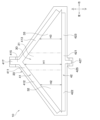
- the shape of the transparent conductive film 30 is different. Other than this, it is the same as the first embodiment.
- the transparent conductive film 30 is formed in a triangular shape as shown in FIG.
- the first heat generating portion 31 of the transparent conductive film 30 is formed in, for example, a pentagonal shape.
- the second heat generating portion 32 and the third heat generating portion 33 of the transparent conductive film 30 are formed in, for example, a triangular shape.
- the third embodiment which is configured in this way, has the same effect as the first embodiment.
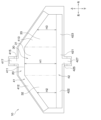
- the shape of the transparent conductive film 30 is different. Other than this, it is the same as the first embodiment.
- the transparent conductive film 30 is formed in a hexagonal shape as shown in FIG.
- the first heat generating portion 31 is formed in, for example, a rectangular shape.
- the second heat generating portion 32 and the third heat generating portion 33 are formed in, for example, a trapezoidal shape.
- the fourth embodiment which is configured, has the same effect as the first embodiment.
- the form of the transparent conductive film 30 is different. Other than this, it is the same as the first embodiment.
- the transparent conductive film 30 is formed in an elliptical shape, as shown in FIG. Note that the transparent conductive film 30 may be formed in a perfect circular shape.
- the fifth embodiment which is configured, has the same effect as the first embodiment.
- the film heater 10 includes a transparent insulator 20, a transparent conductive film 30, a first electrode 41, a second electrode 42, a third electrode 43 and a fourth electrode 44, as shown in FIG.
- the transparent insulator 20 is formed in the same manner as in the first embodiment.
- the transparent conductive film 30 has a first heat generating portion 31 and a second heat generating portion 32 .
- the first heat generating portion 31 and the second heat generating portion 32 are formed in a rectangular shape.
- the left side of the first heat generating section 31 is connected to the right side of the second heat generating section 32 .
- the second conducting distance H2 is shorter than the first conducting distance H1. Furthermore, the lengths in the left-right direction of the first heat generating portion 31 and the second heat generating portion 32 are substantially the same.
- the first electrode 41 is made of metal such as gold, platinum, silver, and copper, as in the first embodiment. Also, the first electrode 41 is a positive electrode. Further, the first electrode 41 has a first electrode connecting portion 419 , a first lead portion 415 and a first terminal portion 417 . The first electrode connecting portion 419 is connected to the upper side of the first heat generating portion 31 . The first lead portion 415 is connected to the first electrode connection portion 419 . The first terminal portion 417 is connected to the first lead portion 415 and a power source (not shown).
- the second electrode 42 is made of metal such as gold, platinum, silver, and copper, as in the first embodiment. Also, the second electrode 42 is a negative electrode. Furthermore, the second electrode 42 has a second electrode connecting portion 429 , a second lead portion 425 and a second terminal portion 427 .
- the second electrode connecting portion 429 is connected to the lower sides of the first heat generating portion 31 and the second heat generating portion 32 .
- the second lead portion 425 is connected to the second electrode connection portion 429 .
- the second terminal portion 427 is connected to the second electrode connection portion 429 of the second lead portion 425 and a power source (not shown).
- the third electrode 43 is made of metal such as gold, platinum, silver and copper. Also, the third electrode 43 is connected to the upper side of the second heat generating portion 32 .
- the fourth electrode 44 is made of metal such as gold, platinum, silver and copper. Furthermore, the fourth electrode 44 is connected to the first electrode connecting portion 419 and the third electrode 43 .
- the cross-sectional area of the fourth electrode 44 is smaller than the cross-sectional areas of the first electrode 41, the second electrode 42 and the third electrode 43 in the direction perpendicular to the direction in which the current flows. Furthermore, the cross-sectional areas of the first electrode 41, the second electrode 42 and the third electrode 43 are the same in the direction orthogonal to the direction in which the current flows.
- the sixth embodiment is configured as described above. Next, heat generation by the film heater 10 will be described.
- the first electrode 41 is the positive electrode and the second electrode 42 is the negative electrode. Therefore, when a power source (not shown) supplies electric power to the film heater 10 , current flows from the power source (not shown) to the first electrode connection portion 419 via the first terminal portion 417 and the first lead portion 415 . Further, current flows from the first electrode connection portion 419 to the second electrode connection portion 429 via the first heat generating portion 31 . Thereby, the first heat generating portion 31 generates heat.
- the second heat generating portion 32 generates heat. Therefore, a camera, radar device, lidar, headlights, and glass mounted on a vehicle (not shown) are heated by the first heat generating portion 31 and the second heat generating portion 32, thereby deicing, melting snow, and preventing fogging. done.
- the cross-sectional area of the fourth electrode 44 is smaller than the cross-sectional areas of the first electrode 41, the second electrode 42 and the third electrode 43 in the direction perpendicular to the direction in which the current flows. Therefore, the electrical resistance of the fourth electrode 44 is greater than the electrical resistances of the first electrode 41 , the second electrode 42 and the third electrode 43 . Therefore, when current flows from the first electrode connection portion 419 to the second electrode connection portion 429 via the fourth electrode 44, the third electrode 43 and the second heat generating portion 32, the voltage drop in the fourth electrode 44 is , the electrical resistance of the fourth electrode 44 is greater than the electrical resistances of the first electrode 41, the second electrode 42 and the third electrode 43 or less.
- the voltage applied to the second heat generating portion 32 is lower than the voltage applied to the first heat generating portion 31 . Therefore, the amount of heat generated by the second heat generating portion 32 is smaller than the amount of heat generated by the first heat generating portion 31 . Therefore, the amount of heat generated per unit area of the second heat generating portion 32 is the same as the amount of heat generated per unit area of the first heat generating portion 31 .
- the current that has flowed through the second electrode connection portion 429 flows through the second lead portion 425 and the second terminal portion 427 to the power supply (not shown).
- the film heater 10 generates heat. Also in the sixth embodiment, the same effect as in the first embodiment is obtained.
- the film heater 10 includes a transparent insulator 20, a transparent conductive film 30, a first electrode 41 and a second electrode 42, as shown in FIG.
- the transparent insulator 20 is formed in the same manner as in the first embodiment.
- the transparent conductive film 30 has a first heat generating portion 31 , a second heat generating portion 32 and a third heat generating portion 33 .
- the first heat generating portion 31 is formed in a trapezoidal shape.
- the second heat generating portion 32 is formed in a pentagonal shape.
- the left side of the second heat generating portion 32 and the right side of the first heat generating portion 31 are connected.
- the third heat generating portion 33 is formed in a trapezoidal shape.
- the left side of the third heat generating section 33 and the right side of the second heat generating section 32 are connected.
- the second conducting distance H2 is shorter than the first conducting distance H1 and the third conducting distance H3. Furthermore, the lengths in the horizontal direction of the first heat generating portion 31, the second heat generating portion 32 and the third heat generating portion 33 are substantially the same.
- the first electrode 41 is made of metal such as gold, platinum, silver, and copper, as in the first embodiment. Also, the first electrode 41 is a positive electrode. Furthermore, the first electrode 41 has a first connection portion 411 , a second connection portion 412 , a third connection portion 413 , a first lead portion 415 and a first terminal portion 417 .
- the first connection portion 411 is connected to the upper side of the first heat generating portion 31 .
- the second connection portion 412 is connected to the upper side of the second heat generating portion 32 and connected to the right side of the first connection portion 411 .
- the third connection portion 413 is connected to the upper side of the third heat generating portion 33 and connected to the right side of the second connection portion 412 .
- the length and width of the first connection portion 411, the second connection portion 412 and the third connection portion 413 are the same.
- the thickness of the second connection portion 412 is thinner than the thicknesses of the first connection portion 411 and the third connection portion 413 .
- the electrical resistance of the second connection portion 412 is equal to that of the first connection portion 411 and the third connection portion 413. It is larger than the electric resistance of the 3 connection part 413 .
- the first lead portion 415 is connected to the first connection portion 411 and the third connection portion 413 .
- the first terminal portion 417 is connected to the first lead portion 415 and a power source (not shown).
- the second electrode 42 is made of metal such as gold, platinum, silver, and copper, as in the first embodiment. Also, the second electrode 42 is a negative electrode. Furthermore, the second electrode 42 has a fourth connection portion 421 , a fifth connection portion 422 , a sixth connection portion 423 , a second lead portion 425 and a second terminal portion 427 .
- the fourth connecting portion 421 is formed in a rectangular shape. Further, the fourth connection portion 421 is connected to the lower side of the first heat generating portion 31 and extends in the left-right direction.
- the fifth connection portion 422 is formed in a rectangular shape. Furthermore, the fifth connection portion 422 is connected to the lower side of the second heat generating portion 32 and the right side of the fourth connection portion 421 .
- the sixth connection portion 423 is formed in a rectangular shape. Also, the sixth connection portion 423 is connected to the lower side of the third heat generating portion 33 and the right side of the fifth connection portion 422 . Furthermore, the length and width of the fourth connection portion 421, the fifth connection portion 422 and the sixth connection portion 423 are the same.
- the thickness of the fifth connection portion 422 is thinner than the thicknesses of the fourth connection portion 421 and the sixth connection portion 423 . Therefore, the cross-sectional area of the fifth connecting portion 422 is smaller than the cross-sectional areas of the fourth connecting portion 421 and the sixth connecting portion 423, so that the electrical resistance of the fifth connecting portion 422 is equal to that of the fourth connecting portion 421 and the sixth connecting portion 423. It is larger than the electric resistance of the 6 connection part 423 .
- the second lead portion 425 is connected to the fifth connection portion 422 .
- the second terminal portion 427 is connected to the second lead portion 425 and a power source (not shown).
- the seventh embodiment is configured as described above. Also in the seventh embodiment, the same effects as in the first embodiment are obtained except for the above [1-5].
- the total length of the second connection portion 412 is longer than the total length of the first connection portion 411, and the width of the second connection portion 412 is smaller than the width of the first connection portion 411.
- the electrical resistance of the portion 412 is greater than the electrical resistance of the first connection portion 411 .
- the second connection portion 412 is not limited to be higher than the electrical resistance of the first connecting portion 411 .
- the total length of the second connecting portion 412 is longer than the total length of the first connecting portion 411, the width of the second connecting portion 412 is smaller than the width of the first connecting portion 411, and the thickness of the second connecting portion 412 is the first At least one of the thickness of the connecting portion 411 being smaller than the thickness of the connecting portion 411 and the conductivity of the second connecting portion 412 being smaller than the conductivity of the first connecting portion 411 causes the electrical resistance of the second connecting portion 412 to be lower than that of the first connecting portion 411 . It may be greater than the electrical resistance of 411 .
- the electric resistance of the third connecting portion 413 is is greater than the electrical resistance of the first connection portion 411 .
- the third connecting portion 413 is not limited to be higher than the electrical resistance of the first connecting portion 411 .
- the total length of the third connecting portion 413 is longer than the total length of the first connecting portion 411, the width of the third connecting portion 413 is smaller than the width of the first connecting portion 411, and the thickness of the third connecting portion 413 is the first At least one of the thickness of the connecting portion 411 being smaller than the thickness of the connecting portion 411 and the conductivity of the third connecting portion 413 being smaller than the conductivity of the first connecting portion 411 causes the electrical resistance of the third connecting portion 413 to be lower than that of the first connecting portion 411 . It may be greater than the electrical resistance of 411 .
- the electrical resistance of the fifth connection portion 422 is is greater than the electrical resistance of the fourth connection portion 421 .
- the fifth connecting portion 422 is not limited to be higher than the electrical resistance of the fourth connecting portion 421 .
- the total length of the fifth connecting portion 422 is longer than the total length of the fourth connecting portion 421, the width of the fifth connecting portion 422 is smaller than the width of the fourth connecting portion 421, and the thickness of the fifth connecting portion 422 is the fourth At least one of the thickness of the connecting portion 421 being smaller than the thickness of the connecting portion 421 and the conductivity of the fifth connecting portion 422 being smaller than the conductivity of the fourth connecting portion 421 causes the electrical resistance of the fifth connecting portion 422 to be lower than that of the fourth connecting portion 421 . It may be greater than the electrical resistance of 421 .
- the electric resistance of the sixth connection portion 423 is is greater than the electrical resistance of the fourth connection portion 421 .
- the sixth connecting portion 423 is not limited to be higher than the electrical resistance of the fourth connecting portion 421 .
- the total length of the sixth connecting portion 423 is longer than the total length of the fourth connecting portion 421, the width of the sixth connecting portion 423 is smaller than the width of the fourth connecting portion 421, and the thickness of the sixth connecting portion 423 is the fourth At least one of the fact that the thickness of the connection portion 421 is smaller than the thickness of the connection portion 421 and the conductivity of the sixth connection portion 423 is smaller than that of the fourth connection portion 421 makes the electrical resistance of the sixth connection portion 423 equal to that of the fourth connection portion 421 . It may be greater than the electrical resistance of 421 .
- the electrical resistance of the second connection portion 412 and the third connection portion 413 is greater than the electrical resistance of the first connection portion 411, and the fifth connection portion 422 and the sixth connection portion 423 are the fourth connection portion 422 and the sixth connection portion 423. It is greater than the electrical resistance of the connecting portion 421 .
- the electrical resistance of the second connection portion 412 and the third connection portion 413 is greater than the electrical resistance of the first connection portion 411, and the fifth connection portion 422 and the sixth connection portion 423 are equal to the fourth connection portion. It is not limited to be greater than the electrical resistance of 421.
- the electrical resistance of the second connection portion 412 and the third connection portion 413 is greater than the electrical resistance of the first connection portion 411
- the electrical resistance of the fifth connection portion 422 and the sixth connection portion 423 is greater than the electrical resistance of the fourth connection portion 421 . may be the same.
- the electrical resistance of the fifth connection portion 422 and the sixth connection portion 423 is greater than the electrical resistance of the fourth connection portion 421, and the electrical resistance of the second connection portion 412 and the third connection portion 413 is greater than the electrical resistance of the first connection portion 411.
- the second electrode 42 corresponds to the first electrode.
- the fourth connection portion 421 corresponds to the first connection portion.
- the fifth connection portion 422 corresponds to the second connection portion.
- the second lead portion 425 and the second terminal portion 427 correspond to lead portions.
- the first electrode 41 is a positive electrode and the second electrode 42 is a negative electrode.
- the first electrode 41 may be a negative electrode and the second electrode 42 may be a positive electrode.
Landscapes
- Resistance Heating (AREA)
- Surface Heating Bodies (AREA)
Priority Applications (3)
| Application Number | Priority Date | Filing Date | Title |
|---|---|---|---|
| DE112022004954.5T DE112022004954T5 (de) | 2021-10-15 | 2022-09-30 | Schichtheizvorrichtung |
| CN202280068844.2A CN118104394A (zh) | 2021-10-15 | 2022-09-30 | 薄膜加热器 |
| US18/589,716 US20240206018A1 (en) | 2021-10-15 | 2024-02-28 | Film heater |
Applications Claiming Priority (2)
| Application Number | Priority Date | Filing Date | Title |
|---|---|---|---|
| JP2021169582A JP7517302B2 (ja) | 2021-10-15 | 2021-10-15 | フィルムヒータ |
| JP2021-169582 | 2021-10-15 |
Related Child Applications (1)
| Application Number | Title | Priority Date | Filing Date |
|---|---|---|---|
| US18/589,716 Continuation US20240206018A1 (en) | 2021-10-15 | 2024-02-28 | Film heater |
Publications (1)
| Publication Number | Publication Date |
|---|---|
| WO2023063113A1 true WO2023063113A1 (ja) | 2023-04-20 |
Family
ID=85988501
Family Applications (1)
| Application Number | Title | Priority Date | Filing Date |
|---|---|---|---|
| PCT/JP2022/036687 Ceased WO2023063113A1 (ja) | 2021-10-15 | 2022-09-30 | フィルムヒータ |
Country Status (5)
| Country | Link |
|---|---|
| US (1) | US20240206018A1 (https=) |
| JP (1) | JP7517302B2 (https=) |
| CN (1) | CN118104394A (https=) |
| DE (1) | DE112022004954T5 (https=) |
| WO (1) | WO2023063113A1 (https=) |
Cited By (2)
| Publication number | Priority date | Publication date | Assignee | Title |
|---|---|---|---|---|
| WO2024214787A1 (ja) * | 2023-04-12 | 2024-10-17 | 株式会社デンソー | フィルムヒータ |
| WO2025192290A1 (ja) * | 2024-03-11 | 2025-09-18 | 株式会社デンソー | フィルムヒータ |
Citations (4)
| Publication number | Priority date | Publication date | Assignee | Title |
|---|---|---|---|---|
| JPH0362492A (ja) * | 1989-07-28 | 1991-03-18 | Unitika Ltd | 透明面状発熱体 |
| JPH07277151A (ja) * | 1994-04-07 | 1995-10-24 | Pentel Kk | ヒーター付ミラー |
| JP2016201343A (ja) * | 2015-04-07 | 2016-12-01 | フィグラ株式会社 | Led信号機用発熱ガラス |
| JP2021086712A (ja) * | 2019-11-27 | 2021-06-03 | 株式会社デンソー | フィルムヒータ |
Family Cites Families (1)
| Publication number | Priority date | Publication date | Assignee | Title |
|---|---|---|---|---|
| JP7237884B2 (ja) | 2020-04-17 | 2023-03-13 | 信越化学工業株式会社 | 熱伝導性シリコーン組成物 |
-
2021
- 2021-10-15 JP JP2021169582A patent/JP7517302B2/ja active Active
-
2022
- 2022-09-30 CN CN202280068844.2A patent/CN118104394A/zh active Pending
- 2022-09-30 DE DE112022004954.5T patent/DE112022004954T5/de active Pending
- 2022-09-30 WO PCT/JP2022/036687 patent/WO2023063113A1/ja not_active Ceased
-
2024
- 2024-02-28 US US18/589,716 patent/US20240206018A1/en active Pending
Patent Citations (4)
| Publication number | Priority date | Publication date | Assignee | Title |
|---|---|---|---|---|
| JPH0362492A (ja) * | 1989-07-28 | 1991-03-18 | Unitika Ltd | 透明面状発熱体 |
| JPH07277151A (ja) * | 1994-04-07 | 1995-10-24 | Pentel Kk | ヒーター付ミラー |
| JP2016201343A (ja) * | 2015-04-07 | 2016-12-01 | フィグラ株式会社 | Led信号機用発熱ガラス |
| JP2021086712A (ja) * | 2019-11-27 | 2021-06-03 | 株式会社デンソー | フィルムヒータ |
Cited By (2)
| Publication number | Priority date | Publication date | Assignee | Title |
|---|---|---|---|---|
| WO2024214787A1 (ja) * | 2023-04-12 | 2024-10-17 | 株式会社デンソー | フィルムヒータ |
| WO2025192290A1 (ja) * | 2024-03-11 | 2025-09-18 | 株式会社デンソー | フィルムヒータ |
Also Published As
| Publication number | Publication date |
|---|---|
| JP7517302B2 (ja) | 2024-07-17 |
| CN118104394A (zh) | 2024-05-28 |
| DE112022004954T5 (de) | 2024-08-14 |
| US20240206018A1 (en) | 2024-06-20 |
| JP2023059521A (ja) | 2023-04-27 |
Similar Documents
| Publication | Publication Date | Title |
|---|---|---|
| US11603051B2 (en) | Decorative component for vehicle | |
| WO2023063113A1 (ja) | フィルムヒータ | |
| JP2019503566A (ja) | 独立制御ptcヒーター及び装置 | |
| KR102461509B1 (ko) | 히팅필름 | |
| WO2014156038A1 (ja) | 輻射ヒータ装置 | |
| BR112013024983B1 (pt) | suporte para elementos de aquecimento de painel, elemento de aquecimento de painel, método para produzir um suporte eletricamente aquecível e uso de um suporte | |
| WO2016013136A1 (ja) | 輻射ヒータ装置 | |
| JP2015126089A (ja) | 電子装置 | |
| JP2026003047A (ja) | フィルムヒータ | |
| JP6217766B2 (ja) | 車両の発電装置 | |
| JP7213498B2 (ja) | 電子部品モジュール | |
| JP2013026222A (ja) | 加熱システム、ヒーター、および部品を加熱する方法 | |
| JP2009218173A (ja) | ヒータエレメント | |
| JP2023169096A5 (https=) | ||
| JP2023059521A5 (https=) | ||
| KR102274251B1 (ko) | 퓨즈 기능을 갖는 발열체 및 이를 포함하는 히터유닛 | |
| CN114974761A (zh) | 高功率晶片电阻 | |
| CN110798915A (zh) | 一种耐高温的石墨烯加热板 | |
| KR102323142B1 (ko) | 발열체 및 이를 포함하는 차량공조용 히터 | |
| WO2024214787A1 (ja) | フィルムヒータ | |
| JP2023161415A (ja) | 面状発熱体 | |
| WO2023105971A1 (ja) | 透明フィルムヒーター | |
| KR101120010B1 (ko) | 부분 과열 방지 기능을 갖는 면발열 히터 | |
| JP2021044402A (ja) | パワーコントロールユニット | |
| WO2025192290A1 (ja) | フィルムヒータ |
Legal Events
| Date | Code | Title | Description |
|---|---|---|---|
| 121 | Ep: the epo has been informed by wipo that ep was designated in this application |
Ref document number: 22880809 Country of ref document: EP Kind code of ref document: A1 |
|
| WWE | Wipo information: entry into national phase |
Ref document number: 202280068844.2 Country of ref document: CN |
|
| WWE | Wipo information: entry into national phase |
Ref document number: 112022004954 Country of ref document: DE |
|
| 122 | Ep: pct application non-entry in european phase |
Ref document number: 22880809 Country of ref document: EP Kind code of ref document: A1 |