WO2023052906A1 - 表示装置 - Google Patents
表示装置 Download PDFInfo
- Publication number
- WO2023052906A1 WO2023052906A1 PCT/IB2022/058899 IB2022058899W WO2023052906A1 WO 2023052906 A1 WO2023052906 A1 WO 2023052906A1 IB 2022058899 W IB2022058899 W IB 2022058899W WO 2023052906 A1 WO2023052906 A1 WO 2023052906A1
- Authority
- WO
- WIPO (PCT)
- Prior art keywords
- layer
- light
- wiring
- transistor
- display device
- Prior art date
- Legal status (The legal status is an assumption and is not a legal conclusion. Google has not performed a legal analysis and makes no representation as to the accuracy of the status listed.)
- Ceased
Links
Images



























Classifications
-
- H—ELECTRICITY
- H10—SEMICONDUCTOR DEVICES; ELECTRIC SOLID-STATE DEVICES NOT OTHERWISE PROVIDED FOR
- H10K—ORGANIC ELECTRIC SOLID-STATE DEVICES
- H10K59/00—Integrated devices, or assemblies of multiple devices, comprising at least one organic light-emitting element covered by group H10K50/00
- H10K59/10—OLED displays
- H10K59/12—Active-matrix OLED [AMOLED] displays
- H10K59/131—Interconnections, e.g. wiring lines or terminals
-
- G—PHYSICS
- G09—EDUCATION; CRYPTOGRAPHY; DISPLAY; ADVERTISING; SEALS
- G09F—DISPLAYING; ADVERTISING; SIGNS; LABELS OR NAME-PLATES; SEALS
- G09F9/00—Indicating arrangements for variable information in which the information is built-up on a support by selection or combination of individual elements
- G09F9/30—Indicating arrangements for variable information in which the information is built-up on a support by selection or combination of individual elements in which the desired character or characters are formed by combining individual elements
-
- G—PHYSICS
- G09—EDUCATION; CRYPTOGRAPHY; DISPLAY; ADVERTISING; SEALS
- G09F—DISPLAYING; ADVERTISING; SIGNS; LABELS OR NAME-PLATES; SEALS
- G09F9/00—Indicating arrangements for variable information in which the information is built-up on a support by selection or combination of individual elements
- G09F9/30—Indicating arrangements for variable information in which the information is built-up on a support by selection or combination of individual elements in which the desired character or characters are formed by combining individual elements
- G09F9/302—Indicating arrangements for variable information in which the information is built-up on a support by selection or combination of individual elements in which the desired character or characters are formed by combining individual elements characterised by the form or geometrical disposition of the individual elements
-
- G—PHYSICS
- G09—EDUCATION; CRYPTOGRAPHY; DISPLAY; ADVERTISING; SEALS
- G09G—ARRANGEMENTS OR CIRCUITS FOR CONTROL OF INDICATING DEVICES USING STATIC MEANS TO PRESENT VARIABLE INFORMATION
- G09G3/00—Control arrangements or circuits, of interest only in connection with visual indicators other than cathode-ray tubes
- G09G3/20—Control arrangements or circuits, of interest only in connection with visual indicators other than cathode-ray tubes for presentation of an assembly of a number of characters, e.g. a page, by composing the assembly by combination of individual elements arranged in a matrix no fixed position being assigned to or needed to be assigned to the individual characters or partial characters
-
- G—PHYSICS
- G09—EDUCATION; CRYPTOGRAPHY; DISPLAY; ADVERTISING; SEALS
- G09G—ARRANGEMENTS OR CIRCUITS FOR CONTROL OF INDICATING DEVICES USING STATIC MEANS TO PRESENT VARIABLE INFORMATION
- G09G3/00—Control arrangements or circuits, of interest only in connection with visual indicators other than cathode-ray tubes
- G09G3/20—Control arrangements or circuits, of interest only in connection with visual indicators other than cathode-ray tubes for presentation of an assembly of a number of characters, e.g. a page, by composing the assembly by combination of individual elements arranged in a matrix no fixed position being assigned to or needed to be assigned to the individual characters or partial characters
- G09G3/22—Control arrangements or circuits, of interest only in connection with visual indicators other than cathode-ray tubes for presentation of an assembly of a number of characters, e.g. a page, by composing the assembly by combination of individual elements arranged in a matrix no fixed position being assigned to or needed to be assigned to the individual characters or partial characters using controlled light sources
- G09G3/30—Control arrangements or circuits, of interest only in connection with visual indicators other than cathode-ray tubes for presentation of an assembly of a number of characters, e.g. a page, by composing the assembly by combination of individual elements arranged in a matrix no fixed position being assigned to or needed to be assigned to the individual characters or partial characters using controlled light sources using electroluminescent panels
- G09G3/32—Control arrangements or circuits, of interest only in connection with visual indicators other than cathode-ray tubes for presentation of an assembly of a number of characters, e.g. a page, by composing the assembly by combination of individual elements arranged in a matrix no fixed position being assigned to or needed to be assigned to the individual characters or partial characters using controlled light sources using electroluminescent panels semiconductive, e.g. using light-emitting diodes [LED]
- G09G3/3208—Control arrangements or circuits, of interest only in connection with visual indicators other than cathode-ray tubes for presentation of an assembly of a number of characters, e.g. a page, by composing the assembly by combination of individual elements arranged in a matrix no fixed position being assigned to or needed to be assigned to the individual characters or partial characters using controlled light sources using electroluminescent panels semiconductive, e.g. using light-emitting diodes [LED] organic, e.g. using organic light-emitting diodes [OLED]
- G09G3/3225—Control arrangements or circuits, of interest only in connection with visual indicators other than cathode-ray tubes for presentation of an assembly of a number of characters, e.g. a page, by composing the assembly by combination of individual elements arranged in a matrix no fixed position being assigned to or needed to be assigned to the individual characters or partial characters using controlled light sources using electroluminescent panels semiconductive, e.g. using light-emitting diodes [LED] organic, e.g. using organic light-emitting diodes [OLED] using an active matrix
- G09G3/3233—Control arrangements or circuits, of interest only in connection with visual indicators other than cathode-ray tubes for presentation of an assembly of a number of characters, e.g. a page, by composing the assembly by combination of individual elements arranged in a matrix no fixed position being assigned to or needed to be assigned to the individual characters or partial characters using controlled light sources using electroluminescent panels semiconductive, e.g. using light-emitting diodes [LED] organic, e.g. using organic light-emitting diodes [OLED] using an active matrix with pixel circuitry controlling the current through the light-emitting element
-
- H—ELECTRICITY
- H05—ELECTRIC TECHNIQUES NOT OTHERWISE PROVIDED FOR
- H05B—ELECTRIC HEATING; ELECTRIC LIGHT SOURCES NOT OTHERWISE PROVIDED FOR; CIRCUIT ARRANGEMENTS FOR ELECTRIC LIGHT SOURCES, IN GENERAL
- H05B33/00—Electroluminescent light sources
- H05B33/12—Light sources with substantially two-dimensional [2D] radiating surfaces
-
- H—ELECTRICITY
- H05—ELECTRIC TECHNIQUES NOT OTHERWISE PROVIDED FOR
- H05B—ELECTRIC HEATING; ELECTRIC LIGHT SOURCES NOT OTHERWISE PROVIDED FOR; CIRCUIT ARRANGEMENTS FOR ELECTRIC LIGHT SOURCES, IN GENERAL
- H05B33/00—Electroluminescent light sources
- H05B33/12—Light sources with substantially two-dimensional [2D] radiating surfaces
- H05B33/22—Light sources with substantially two-dimensional [2D] radiating surfaces characterised by the chemical or physical composition or the arrangement of auxiliary dielectric or reflective layers
-
- H—ELECTRICITY
- H05—ELECTRIC TECHNIQUES NOT OTHERWISE PROVIDED FOR
- H05B—ELECTRIC HEATING; ELECTRIC LIGHT SOURCES NOT OTHERWISE PROVIDED FOR; CIRCUIT ARRANGEMENTS FOR ELECTRIC LIGHT SOURCES, IN GENERAL
- H05B33/00—Electroluminescent light sources
- H05B33/12—Light sources with substantially two-dimensional [2D] radiating surfaces
- H05B33/22—Light sources with substantially two-dimensional [2D] radiating surfaces characterised by the chemical or physical composition or the arrangement of auxiliary dielectric or reflective layers
- H05B33/24—Light sources with substantially two-dimensional [2D] radiating surfaces characterised by the chemical or physical composition or the arrangement of auxiliary dielectric or reflective layers of metallic reflective layers
-
- H—ELECTRICITY
- H05—ELECTRIC TECHNIQUES NOT OTHERWISE PROVIDED FOR
- H05B—ELECTRIC HEATING; ELECTRIC LIGHT SOURCES NOT OTHERWISE PROVIDED FOR; CIRCUIT ARRANGEMENTS FOR ELECTRIC LIGHT SOURCES, IN GENERAL
- H05B33/00—Electroluminescent light sources
- H05B33/12—Light sources with substantially two-dimensional [2D] radiating surfaces
- H05B33/26—Light sources with substantially two-dimensional [2D] radiating surfaces characterised by the composition or arrangement of the conductive material used as an electrode
-
- H—ELECTRICITY
- H05—ELECTRIC TECHNIQUES NOT OTHERWISE PROVIDED FOR
- H05B—ELECTRIC HEATING; ELECTRIC LIGHT SOURCES NOT OTHERWISE PROVIDED FOR; CIRCUIT ARRANGEMENTS FOR ELECTRIC LIGHT SOURCES, IN GENERAL
- H05B33/00—Electroluminescent light sources
- H05B33/12—Light sources with substantially two-dimensional [2D] radiating surfaces
- H05B33/26—Light sources with substantially two-dimensional [2D] radiating surfaces characterised by the composition or arrangement of the conductive material used as an electrode
- H05B33/28—Light sources with substantially two-dimensional [2D] radiating surfaces characterised by the composition or arrangement of the conductive material used as an electrode of translucent electrodes
-
- H—ELECTRICITY
- H10—SEMICONDUCTOR DEVICES; ELECTRIC SOLID-STATE DEVICES NOT OTHERWISE PROVIDED FOR
- H10K—ORGANIC ELECTRIC SOLID-STATE DEVICES
- H10K50/00—Organic light-emitting devices
-
- H—ELECTRICITY
- H10—SEMICONDUCTOR DEVICES; ELECTRIC SOLID-STATE DEVICES NOT OTHERWISE PROVIDED FOR
- H10K—ORGANIC ELECTRIC SOLID-STATE DEVICES
- H10K59/00—Integrated devices, or assemblies of multiple devices, comprising at least one organic light-emitting element covered by group H10K50/00
-
- H—ELECTRICITY
- H10—SEMICONDUCTOR DEVICES; ELECTRIC SOLID-STATE DEVICES NOT OTHERWISE PROVIDED FOR
- H10K—ORGANIC ELECTRIC SOLID-STATE DEVICES
- H10K59/00—Integrated devices, or assemblies of multiple devices, comprising at least one organic light-emitting element covered by group H10K50/00
- H10K59/10—OLED displays
- H10K59/12—Active-matrix OLED [AMOLED] displays
- H10K59/121—Active-matrix OLED [AMOLED] displays characterised by the geometry or disposition of pixel elements
- H10K59/1213—Active-matrix OLED [AMOLED] displays characterised by the geometry or disposition of pixel elements the pixel elements being TFTs
-
- H—ELECTRICITY
- H10—SEMICONDUCTOR DEVICES; ELECTRIC SOLID-STATE DEVICES NOT OTHERWISE PROVIDED FOR
- H10K—ORGANIC ELECTRIC SOLID-STATE DEVICES
- H10K59/00—Integrated devices, or assemblies of multiple devices, comprising at least one organic light-emitting element covered by group H10K50/00
- H10K59/10—OLED displays
- H10K59/12—Active-matrix OLED [AMOLED] displays
- H10K59/124—Insulating layers formed between TFT elements and OLED elements
-
- H—ELECTRICITY
- H10—SEMICONDUCTOR DEVICES; ELECTRIC SOLID-STATE DEVICES NOT OTHERWISE PROVIDED FOR
- H10K—ORGANIC ELECTRIC SOLID-STATE DEVICES
- H10K59/00—Integrated devices, or assemblies of multiple devices, comprising at least one organic light-emitting element covered by group H10K50/00
- H10K59/30—Devices specially adapted for multicolour light emission
- H10K59/35—Devices specially adapted for multicolour light emission comprising red-green-blue [RGB] subpixels
- H10K59/353—Devices specially adapted for multicolour light emission comprising red-green-blue [RGB] subpixels characterised by the geometrical arrangement of the RGB subpixels
-
- H—ELECTRICITY
- H10—SEMICONDUCTOR DEVICES; ELECTRIC SOLID-STATE DEVICES NOT OTHERWISE PROVIDED FOR
- H10K—ORGANIC ELECTRIC SOLID-STATE DEVICES
- H10K59/00—Integrated devices, or assemblies of multiple devices, comprising at least one organic light-emitting element covered by group H10K50/00
- H10K59/80—Constructional details
- H10K59/805—Electrodes
- H10K59/8051—Anodes
-
- H—ELECTRICITY
- H10—SEMICONDUCTOR DEVICES; ELECTRIC SOLID-STATE DEVICES NOT OTHERWISE PROVIDED FOR
- H10K—ORGANIC ELECTRIC SOLID-STATE DEVICES
- H10K59/00—Integrated devices, or assemblies of multiple devices, comprising at least one organic light-emitting element covered by group H10K50/00
- H10K59/80—Constructional details
- H10K59/88—Dummy elements, i.e. elements having non-functional features
-
- H—ELECTRICITY
- H10—SEMICONDUCTOR DEVICES; ELECTRIC SOLID-STATE DEVICES NOT OTHERWISE PROVIDED FOR
- H10K—ORGANIC ELECTRIC SOLID-STATE DEVICES
- H10K59/00—Integrated devices, or assemblies of multiple devices, comprising at least one organic light-emitting element covered by group H10K50/00
- H10K59/90—Assemblies of multiple devices comprising at least one organic light-emitting element
-
- H—ELECTRICITY
- H10—SEMICONDUCTOR DEVICES; ELECTRIC SOLID-STATE DEVICES NOT OTHERWISE PROVIDED FOR
- H10K—ORGANIC ELECTRIC SOLID-STATE DEVICES
- H10K2102/00—Constructional details relating to the organic devices covered by this subclass
- H10K2102/301—Details of OLEDs
- H10K2102/351—Thickness
-
- H—ELECTRICITY
- H10—SEMICONDUCTOR DEVICES; ELECTRIC SOLID-STATE DEVICES NOT OTHERWISE PROVIDED FOR
- H10K—ORGANIC ELECTRIC SOLID-STATE DEVICES
- H10K50/00—Organic light-emitting devices
- H10K50/10—OLEDs or polymer light-emitting diodes [PLED]
- H10K50/11—OLEDs or polymer light-emitting diodes [PLED] characterised by the electroluminescent [EL] layers
Definitions
- One embodiment of the present invention relates to a display device.
- One embodiment of the present invention relates to an electronic device including a display device.
- one aspect of the present invention is not limited to the above technical field.
- Technical fields of one embodiment of the present invention disclosed in this specification and the like include semiconductor devices, display devices, light-emitting devices, power storage devices, memory devices, electronic devices, lighting devices, input devices, input/output devices, and driving methods thereof. , or methods for producing them, can be mentioned as an example.
- a semiconductor device refers to all devices that can function by utilizing semiconductor characteristics.
- Display devices applicable to display panels typically include liquid crystal display devices, light-emitting devices equipped with light-emitting elements such as organic EL (Electro Luminescence) elements or light-emitting diodes (LEDs), and electrophoretic display devices. Examples include electronic paper that performs display by, for example.
- the basic structure of an organic EL element is that a layer containing a light-emitting organic compound is sandwiched between a pair of electrodes. By applying a voltage to this device, light can be obtained from the light-emitting organic compound.
- a display device to which such an organic EL element is applied does not require a backlight, which is required in a liquid crystal display device or the like.
- Patent Document 1 describes an example of a display device using an organic EL element.
- a transmissive device for AR requires high luminance in order to display an image superimposed on external light.
- An object of one embodiment of the present invention is to provide a high-definition display device.
- An object of one embodiment of the present invention is to provide a low-power display device.
- An object of one embodiment of the present invention is to provide a display device with high luminance.
- An object of one embodiment of the present invention is to provide a display device with a high aperture ratio.
- An object of one embodiment of the present invention is to provide a highly reliable display device.
- An object of one embodiment of the present invention is to provide a novel display device, display module, or electronic device. Another object is to provide a method for manufacturing the above display device with high yield.
- One aspect of the present invention aims at at least alleviating at least one of the problems of the prior art.
- One embodiment of the present invention is a display device including a first wiring, a second wiring, a third wiring, a pixel electrode, an EL layer, and an insulating layer.
- the first wiring extends in a first direction and is supplied with a source signal.
- the second wiring extends in a second direction crossing the first direction and is supplied with a gate signal.
- a constant potential is applied to the third wiring.
- the first wiring and the pixel electrode are provided so as to overlap each other with the third wiring interposed therebetween.
- the insulating layer has a portion in contact with a portion of the upper surface of the pixel electrode and a portion in contact with the side surface of the pixel electrode.
- the EL layer has a first portion in contact with another portion of the top surface of the pixel electrode and a second portion located on the insulating layer. The second portion has a region that is less than half as thick as the first portion.
- Another embodiment of the present invention includes a first wiring, a second wiring, a third wiring, a pixel electrode, a first transistor, a second transistor, an EL layer, and insulation. and a display device.
- the first wiring extends in a first direction and is supplied with a source signal.
- the second wiring extends in a second direction crossing the first direction and is supplied with a gate signal.
- a first potential is applied to the third wiring.
- the first wiring and the pixel electrode are provided to overlap each other with the third wiring interposed therebetween.
- the first transistor has one of its source and drain electrically connected to the first wiring, and its gate electrically connected to the second wiring.
- the second transistor has one of its source and drain electrically connected to the pixel electrode and the other of its source and drain electrically connected to the third wiring.
- the first transistor and the second transistor each have a semiconductor layer through which current flows in the first direction.
- the insulating layer has a portion in contact with a portion of the upper surface of the pixel electrode and a portion in contact with the side surface of the pixel electrode.
- the EL layer has a first portion in contact with another portion of the top surface of the pixel electrode and a second portion located on the insulating layer. The second portion has a region that is less than half as thick as the first portion.
- Another embodiment of the present invention includes a first wiring, a second wiring, a third wiring, a pixel electrode, a first transistor, a second transistor, an EL layer, and insulation. and a display device.
- the first wiring extends in a first direction and is supplied with a source signal.
- the second wiring extends in a second direction crossing the first direction and is supplied with a gate signal.
- a first potential is applied to the third wiring.
- the first wiring and the pixel electrode are provided to overlap each other with the third wiring interposed therebetween.
- the first transistor has one of its source and drain electrically connected to the first wiring, and its gate electrically connected to the second wiring.
- the second transistor has one of its source and drain electrically connected to the pixel electrode and the other of its source and drain electrically connected to the third wiring.
- the first transistor and the second transistor each have a semiconductor layer through which current flows in a second direction.
- the insulating layer has a portion in contact with a portion of the upper surface of the pixel electrode and a portion in contact with the side surface of the pixel electrode.
- the EL layer has a first portion in contact with another portion of the top surface of the pixel electrode and a second portion located on the insulating layer. The second portion has a region that is less than half as thick as the first portion.
- the dummy layer contains the same semiconductor material as the semiconductor layer, and that the dummy layer has a portion whose upper surface shape is substantially the same as that of the semiconductor layer. Furthermore, it is preferable that the plurality of dummy layers and semiconductor layers are arranged at regular intervals in the second direction or the first direction.
- any one of the above it is preferable to include a fourth wiring, a third transistor, and a fourth transistor.
- One of the source and the drain of the third transistor is electrically connected to the fourth wiring, and the other of the source and the drain is electrically connected to the gate of the second transistor.
- the fourth transistor has one of its source and drain electrically connected to the fourth wiring, and the other of its source and drain electrically connected to the pixel electrode. A second potential lower than the first potential is applied to the fourth wiring.
- a fifth transistor is a transistor whose channel is formed in silicon.
- the semiconductor layer contains one or both of indium and zinc.
- the first transistor and the second transistor are preferably provided above the fifth transistor.
- the third wiring preferably has a grid-like upper surface shape. At this time, it is preferable to have a third portion extending in the first direction and a fourth portion extending in the second direction. Further, it is preferable that the pixel electrode and the first wiring are overlapped with each other with the third portion interposed therebetween.
- any one of the above it is preferable to have a plurality of pixel electrodes.
- a light emitting region is provided on the pixel electrode.
- the plurality of light emitting regions are preferably arranged such that one light emitting region is surrounded by six light emitting regions in plan view.
- the light emitting region has a substantially hexagonal top surface shape.
- the light-emitting region preferably has a top surface shape in which two of the six corners facing each other have interior angles greater than 120 degrees and the remaining four corners have interior angles less than 120 degrees.
- the light emitting region preferably has a substantially hexagonal top shape.
- the pixel electrode has a top surface shape in which six interior angles are all 120 degrees, two opposing sides out of the six sides have the same length, and the other four sides have the same length. It is preferable to have
- the three adjacent light emitting regions are arranged so as to be positioned at the vertices of an isosceles triangle.
- Another aspect of the present invention is a display module including any of the display devices described above and a connector or an integrated circuit.
- Another aspect of the present invention is an electronic device including the display module and at least one of an antenna, a battery, a housing, a camera, a speaker, a microphone, a touch sensor, and an operation button.
- a display device with high definition can be provided.
- a display device with low power consumption can be provided.
- a display device with high luminance can be provided.
- a display device with a high aperture ratio can be provided.
- a highly reliable display device can be provided.
- a novel display device, display module, electronic device, or the like can be provided.
- at least one of the problems of the prior art can be at least alleviated.
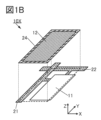
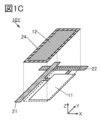
- FIG. 1A to 1C are diagrams showing configuration examples of a display device.
- FIG. 2 is a diagram illustrating a configuration example of a display device.
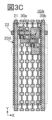
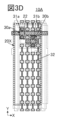
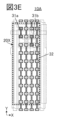
- 3A to 3E are diagrams showing configuration examples of the display device.
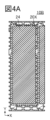
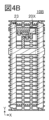
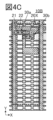
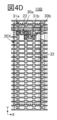
- 4A to 4E are diagrams showing configuration examples of the display device.
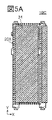
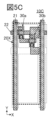
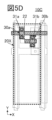
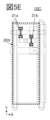
- 5A to 5E are diagrams showing configuration examples of the display device.
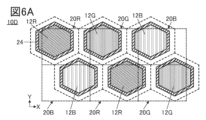
- 6A to 6D are diagrams showing configuration examples of the display device.
- FIG. 7 is a diagram illustrating a configuration example of a display device.
- 8A to 8F are diagrams showing configuration examples of the display device.
- 9A to 9F are diagrams showing configuration examples of the display device.
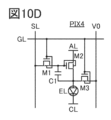
- 10A to 10D are circuit diagrams showing configuration examples of display devices.
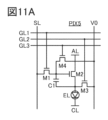
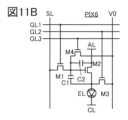
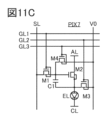
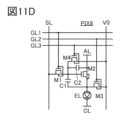
- 11A to 11D are circuit diagrams showing configuration examples of display devices.
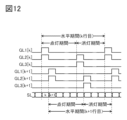
- FIG. 12 is a timing chart showing an example of a method of driving the display device.
- FIG. 13 is a diagram illustrating a configuration example of a display device.
- FIG. 14 is a diagram illustrating a configuration example of a display device.
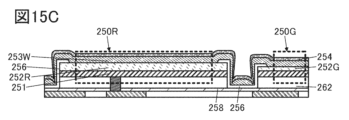
- 15A to 15D are diagrams showing configuration examples of display devices.
- FIG. 16 is a diagram illustrating a configuration example of a display device.
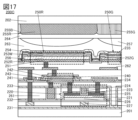
- FIG. 17 is a diagram illustrating a configuration example of a display device.
- FIG. 18 is a diagram illustrating a configuration example of a display device.
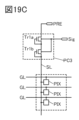
- 19A to 19D are circuit diagrams showing configuration examples of protection circuits.
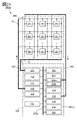
- 20A and 20B are diagrams showing configuration examples of a display device.
- FIG. 21 is a diagram illustrating a configuration example of a display device.
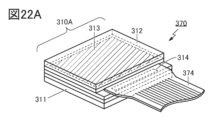
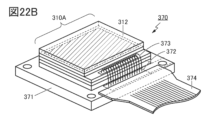
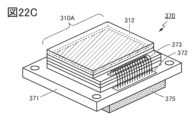
- 22A to 22C are diagrams showing configuration examples of display devices.
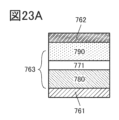
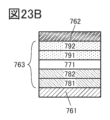
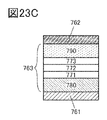
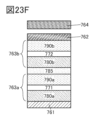
- 23A to 23F are diagrams showing configuration examples of light emitting devices.
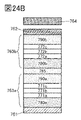
- 24A to 24C are diagrams showing configuration examples of light emitting devices.
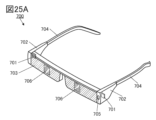
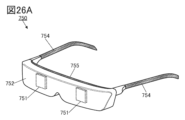
- 25A and 25B are diagrams illustrating configuration examples of electronic devices.
- 26A and 26B are diagrams illustrating configuration examples of electronic devices.
- 27A to 27D are cross-sectional images of the display panel according to the example.
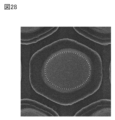
- FIG. 28 is a top view of the display panel according to the example.
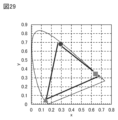
- FIG. 29 is a chromaticity diagram according to the example.
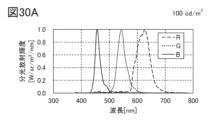
- 30A and 30B are the results of spectral measurement according to the example.
- top shape of a component refers to the contour shape of the component in plan view.
- Plan view means viewing from the normal direction of the surface on which the component is formed, or the surface of the support (for example, substrate) on which the component is formed.
- the upper surface shapes roughly match means that at least a part of the contours overlaps between the laminated layers.
- the upper layer and the lower layer may be processed with the same mask pattern or partially with the same mask pattern.
- the contours do not overlap, and the upper layer may be located inside the lower layer, or the upper layer may be located outside the lower layer.
- an EL layer refers to a layer provided between a pair of electrodes of a light-emitting element and containing at least a light-emitting substance (also referred to as a light-emitting layer) or a laminate including a light-emitting layer.
- a display panel which is one aspect of a display device, has a function of displaying (outputting) an image or the like on a display surface. Therefore, the display panel is one aspect of the output device.
- the substrate of the display panel is attached with a connector such as FPC (Flexible Printed Circuit) or TCP (Tape Carrier Package), or the substrate is mounted with a COG (Chip On Glass) method.
- a connector such as FPC (Flexible Printed Circuit) or TCP (Tape Carrier Package)
- COG Chip On Glass
- a display device including a plurality of pixels arranged in matrix.
- a display device includes a plurality of source lines (first wirings) supplied with source signals (also referred to as video signals, data signals, etc.) and a plurality of source lines supplied with gate signals (also referred to as scan signals, scan signals, etc.). and a gate line (second wiring).
- the source lines are provided to extend in a first direction
- the gate lines are provided to extend in a second direction crossing the first direction.
- a pixel is provided corresponding to an intersection of one source line and one gate line.
- a pixel has one or more display elements and one or more transistors.
- a pixel has a pixel electrode that functions as an electrode of a display element.
- the source line and the pixel electrode are overlapped with each other through a wiring (third wiring) to which a constant potential is applied.
- a wiring third wiring
- electrical noise from the source line is shielded by the third wiring, and can be suppressed from propagating to the pixel electrode. Therefore, the area of the pixel electrode can be increased, and the aperture ratio of the display device can be increased.
- the third wiring is preferably a wiring that supplies a constant potential to the pixels.
- the third wiring can also serve as a wiring for supplying an anode potential or a cathode potential to the organic EL element.
- the third wiring can also serve as a wiring for supplying a power supply potential (high power supply potential (VDD), low power supply potential (VSS), or the like) to the pixel.
- VDD high power supply potential
- VSS low power supply potential
- the third wiring can have a striped upper surface shape extending along the first direction, which is the extending direction of the source line.
- the third wiring may have a portion along the second direction, or may have a grid-like top surface shape having portions along the first direction and the second direction. good.
- pixels are arranged at high density, it is necessary to reduce the distance between adjacent light emitting elements.
- a layer containing a light-emitting compound (an EL layer) can be shared between adjacent light-emitting elements. Therefore, it can be said that it is suitable for high definition.
- the distance between adjacent light emitting elements is small, unintended light emission may occur due to leakage current flowing between adjacent pixels through the EL layer. As a result, deterioration of color reproducibility, color deviation, deterioration of contrast, and the like occur.
- a region with a thin EL layer is formed between adjacent pixels to suppress leakage current through the EL layer.
- a region where the EL layer is divided is formed between adjacent pixels to prevent leakage current through the EL layer.
- a configuration is used in which the EL layer is thinned or divided in a self-aligning manner (also referred to as self-alignment) when an organic layer or the like to be the EL layer is formed. Accordingly, leakage current through the EL layer can be suppressed or prevented without increasing the number of steps, and a display device with high color reproducibility and high contrast can be realized.
- the upper surface of an insulating layer (also referred to as a partition wall) covering the end of the pixel electrode is formed to be concave.
- a part of the surface of the insulating layer that is in contact with the EL layer is formed substantially vertically.
- a part of the surface of the insulating layer in contact with the EL layer is 70 degrees or more and 120 degrees or less, preferably 75 degrees or more and 115 degrees or less, more preferably 80 degrees with respect to the substrate surface or the upper surface of the pixel electrode. degree or more and 110 degrees or less.
- the pixel electrode can be manufactured by processing the side surface to be approximately vertical and forming an insulating layer so as to cover the side surface of the pixel electrode. By using such an insulating layer, the EL layer formed over the insulating layer is formed into thin portions or divided in a self-aligning manner.
- the EL layer has a portion that is locally thinner than other regions in a region that overlaps with the insulating layer.
- the portion of the EL layer that overlaps with the insulating layer is half or less, preferably 40% or less, more preferably 30% or less, and more than 0% of the thickness of the portion that overlaps with the pixel electrode. It has regions of great thickness. Thus, current flowing through the EL layer between adjacent light emitting elements can be suppressed.
- a display device with a resolution of 1000 ppi or more, 2000 ppi or more, 3000 ppi or more, 4000 ppi or more, or 5000 ppi or more and 30000 ppi or less, 20000 ppi or less, or 15000 ppi or less can be realized.
- FIG. 1A shows a schematic perspective view showing the lamination structure of one sub-pixel of the display device 10.
- a sub-pixel has a pixel circuit 11 , a light-emitting element 12 , a wiring 21 , a wiring 22 , and a wiring 23 .
- the light emitting element 12 has a pixel electrode 24 .
- FIG. 1A also shows the X direction, the Y direction, and the Z direction, respectively.
- the X direction, Y direction, and Z direction are orthogonal directions.
- the wiring 21 is a wiring that functions as a source line and extends in the Y direction.
- the wiring 22 is a wiring that functions as a gate line and extends in the X direction.
- the wiring 23 is a wiring to which a constant potential is supplied, and has a portion extending in the Y direction.
- the light emitting element 12 is provided inside the pixel electrode 24 .
- the light-emitting element 12 for example, an electroluminescent element in which a layer containing a light-emitting substance (also referred to as an EL layer) is sandwiched between a pair of electrodes and emits light by current flowing between the pair of electrodes can be preferably used.
- an organic EL element using a light-emitting organic compound for the EL layer.
- the pixel circuit 11 is a circuit for controlling current flowing through the light emitting element 12 .
- the pixel circuit 11 preferably has one or more transistors.
- the pixel electrode 24 and the wiring 21 have regions that overlap each other in plan view. Furthermore, the pixel electrode 24 and the wiring 21 overlap with each other via the wiring 23 . In this way, by arranging the wiring 23 to which a constant potential is supplied between the pixel electrode 24 and the wiring 21, even if the pixel electrode 24 is arranged so as to overlap with the wiring 21, the electrical Such noise can be shielded by the wiring 23 and prevented from propagating to the pixel electrode 24 . As a result, the area of the pixel electrode 24 can be enlarged, the light emitting area of the light emitting element 12 can be enlarged, and the aperture ratio (effective light emitting area ratio) of the display device 10 can be increased.
- planar view refers to the case of viewing from the display surface side of the display device 10.
- FIG. 1B shows an example of the display device 10X in which the wiring 23 is not provided. At this time, electrical noise from the wiring 21 propagates to the pixel electrode 24 located above it, and the potential of the pixel electrode 24 changes, which may cause a gradation shift in the light emission luminance of the light emitting element 12 . .
- FIG. 1C is an example of the display device 10Y in which the width of the pixel electrode 24 in the X direction is reduced and arranged so as not to overlap with the wiring 21.
- FIG. 1C the occurrence of crosstalk due to electrical noise from the wiring 21 can be suppressed, but the light emitting area of the light emitting element 12 is reduced, so the aperture ratio of the display device 10 is reduced.
- the display device 10 of one embodiment of the present invention can achieve high definition and high aperture ratio.
- the aperture ratio can be increased, luminance can be increased.
- the current required for desired luminance can be reduced, a display device with low power consumption and deterioration of light-emitting elements can be realized.
- FIG. 2 shows a schematic top view of the pixel 20 included in the display device 10A.
- Pixel 20 has sub-pixel 20R, sub-pixel 20G, and sub-pixel 20B.
- the display device 10A has a plurality of pixels 20, and the pixels 20 are arranged periodically in the X direction and the Y direction.
- the sub-pixel 20R has a light-emitting element 12R that emits red light.
- the sub-pixel 20G has a light-emitting element 12G that emits green light.
- the sub-pixel 20B has a light-emitting element 12B that emits blue light.
- the light-emitting element 12R, the light-emitting element 12G, and the light-emitting element 12B may each include a different light-emitting material, or may be a combination of a white-light-emitting light-emitting element and a color filter, or may emit blue or purple light.
- a configuration in which an element and a color conversion material (such as a quantum dot) are combined may be used.
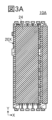
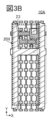
- 3A to 3E show schematic top views of one sub-pixel 20X extracted from the pixel 20 shown in FIG.
- Sub-pixel 20X can be applied to sub-pixel 20R, sub-pixel 20G, and sub-pixel 20B. Note that light-emitting elements are omitted here.
- the wiring 23 functions as a power supply line to the light emitting element 12 and is given a constant potential.
- a high power supply potential is applied to the wiring 23 when the pixel electrode 24 functions as an anode, and a low power supply potential is applied to the wiring 23 when it functions as a cathode.
- the wiring 23 preferably has not only a portion extending in the Y direction but also a portion extending in the X direction.
- the wiring 23 can have a grid-like upper surface shape, so that the electrical resistance is lower than in the case of the stripe-like upper surface shape, and the influence of the voltage drop can be suppressed.
- FIG. 3C shows the wiring 22 and a conductive layer formed by processing the same conductive film as the wiring 22 with the same hatching pattern.
- FIG. 3C shows the wiring 21 and the conductive layer formed by processing the same conductive film as the wiring 21 with the same hatching pattern.
- FIG. 3D only the outline of the wiring 21 in FIG. 3C and the conductive layer formed by processing the same conductive film as the wiring 21 are clearly indicated by broken lines.
- FIG. 3E only the outlines of the wiring 22 in FIG. 3D and the conductive layer formed by processing the same conductive film as the wiring 22 are indicated by broken lines.
- FIGS. 3C and 3D show a transistor 30a and a transistor 30b in FIGS. 3C and 3D.
- FIG. 3D also shows a semiconductor layer 31a of the transistor 30a and a semiconductor layer 31b of the transistor 30b.
- the transistor 30a functions as a selection transistor that controls selection/non-selection of sub-pixels.
- the transistor 30b functions as a driving transistor that controls the current flowing through the light emitting element.
- a part of the wiring 22 constitutes the gate of the transistor 30a, one of the source and the drain is electrically connected to the wiring 21, and the other is electrically connected to the gate of the transistor 30b.
- One of the source and the drain of the transistor 30b is electrically connected to the wiring 23 and the other is electrically connected to the pixel electrode 24 .
- each of the semiconductor layers 31a and 31b has a pair of thick portions where contact portions are arranged and a thin portion formed as a channel.
- the semiconductor layers of the two transistors so as to have substantially the same top surface shape in this manner, the electrical characteristics of the two transistors can be made uniform, and the design can be facilitated, which is preferable.
- a transistor having desired electrical characteristics may be formed by combining semiconductor layers with the same pattern. For example, a plurality of semiconductor layers may be arranged and connected in parallel so that the channel width of one transistor is an integral multiple of the channel width of the other transistor. Alternatively, a plurality of semiconductor layers may be arranged and connected in series so that the channel length of one transistor is an integral multiple of the channel length of the other transistor.
- the semiconductor layer 31a included in the transistor 30a and the semiconductor layer 31b included in the transistor 30b are arranged so that current flows in the Y direction, that is, in the direction parallel to the extending direction of the wiring 21. .
- the transistors 30a and 30b are arranged such that the channel length direction is parallel to the Y direction and the channel width direction is parallel to the X direction.
- a plurality of dummy layers 32 are provided.
- the dummy layer 32 is formed by processing the same film as the semiconductor layers 31a and 31b, and can be a film showing the same composition as these.
- FIGS. 3A to 3E in order to distinguish the semiconductor layers 31a and 31b from the dummy layer 32, these are shown with different hatching patterns.
- the upper surface shape of the dummy layer 32 is preferably the same as the upper surface shapes of the semiconductor layers 31a and 31b, or a shape obtained by periodically combining them.
- one of the dummy layers 32 has a top surface shape having two or more thick portions and a thin portion connecting two adjacent thick portions in the Y direction.
- Each dummy layer 32 is arranged such that its longitudinal direction is parallel to the Y direction. Also, one dummy layer 32 is arranged over a plurality of pixels arranged in the Y direction.
- the dummy layer 32 By arranging the dummy layer 32 in a region where the semiconductor layer 31a and the semiconductor layer 31b are not provided in this way, it is possible to reduce variations in the processed shape of the semiconductor layer 31a and the semiconductor layer 31b. It is possible to reduce variations in the electrical characteristics of 30b.
- the dummy layer is a layer provided in an empty space for the purpose of stabilizing the manufacturing process, reducing processing variations, etc., and is basically a layer that is not considered as a component that constitutes a circuit. Therefore, the dummy layer is electrically floating or given a constant voltage. Note that dummy layers are preferably provided in layers other than the semiconductor layer as well.
- the dummy layer 32 is arranged in a region where the semiconductor layer 31a and the semiconductor layer 31b are not provided so as to cover the region as much as possible.
- the dummy layer 32 may be arranged so as to overlap the wiring 21 .
- the configuration is not limited to this, and three or more transistors may be arranged. At this time, it is preferable that all the transistors provided in the sub-pixels have the same pattern for the semiconductor layer and that the directions of the currents flowing through the semiconductor layer are the same.
- FIG. 1 A schematic top views of sub-pixels 20X included in the display device 10B.
- the display device 10B is mainly different from the display device 10A in that the directions of the semiconductor layers 31a, 31b, and dummy layers 32 are different.
- the semiconductor layer 31a and the semiconductor layer 31b are arranged so that a current flows in the X direction, that is, in a direction parallel to the extending direction of the wiring 22 .
- the transistors 30a and 30b are arranged such that the channel length direction is parallel to the X direction and the channel width direction is parallel to the Y direction.
- the dummy layer 32 is arranged so that its longitudinal direction is parallel to the X direction.
- the dummy layer 32 is arranged over a plurality of pixels arranged in the X direction.
- the display device 10B shows an example in which the dummy layer 32 is provided so as to have a portion overlapping with the wiring 21 .
- FIG. 1A to 5E show schematic top views of sub-pixels 20X included in the display device 10C.
- the display device 10C mainly differs from the display device 10A in that the dummy layer 32 is not provided.
- the display device 10B exemplified in the above configuration example 2-2 may also have a configuration in which the dummy layer 32 is not provided, like the display device 10C.
- FIG. 6A shows a schematic top view of part of the display device 10D.
- FIG. 6A shows an example of a method of arranging six light emitting elements.
- the display device 10D has a pixel portion in which the unit shown in FIG. 6A is set as one unit, and the unit is repeatedly arranged in the X direction and the Y direction.
- FIG. 6A shows six pixel electrodes 24, two light emitting elements 12R, two light emitting elements 12G, and two light emitting elements 12B.
- regions where two sub-pixels 20R, two sub-pixels 20G, and two sub-pixels 20B are provided are indicated by broken lines.
- Each light-emitting element is arranged inside a hexagonal region that is closely arranged.
- Each light-emitting element is arranged so as to be surrounded by six light-emitting elements when focusing on one light-emitting element.
- the light emitting elements of the same color are provided so as not to be adjacent to each other. For example, when focusing on the light emitting element 12R, three light emitting elements 12G and three light emitting elements 12B are arranged alternately so as to surround the light emitting element 12R.
- the light emitting region of the light emitting element preferably has a hexagonal top surface shape.
- the pixel electrode 24 preferably has a hexagonal upper surface shape.
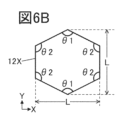
- FIGS. 6B and 6C show examples of the top surface shape of the light emitting region of the light emitting element 12, respectively.
- the length L between a pair of vertices located in the Y direction and the distance between a pair of sides extending in the Y direction are equal. This makes it possible to equalize the pixel arrangement periods in the X direction and the Y direction. In the case of close-packed arrangement using regular hexagons, it is difficult to equalize the arrangement period in the X direction and the Y direction, so it is preferable not to use regular hexagons.
- the interior angles (angle ⁇ 1) of a pair of vertices located in the Y direction are equal, and the interior angles (angle ⁇ 2) of the other four vertices are equal.
- the angle ⁇ 1 is an angle larger than 120°
- the angle ⁇ 2 is an angle smaller than 120°.
- all six interior angles are 120°. Also, the length of a pair of sides extending in the Y direction is shorter than the other sides.
- the upper surface shape of the light emitting element 12X is often a shape with rounded vertices, so the angles and side lengths described above are applied to a hexagonal figure that approximates the light emitting element 12X. shall be
- the shape of the light emitting element 12X has been described here, it is preferable that the pixel electrode also have the same shape. At this time, the light emitting region can be provided so as to overlap with the pixel electrode and be positioned inside the pixel electrode in plan view.
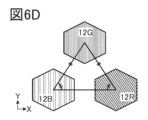
- FIG. 6D is a diagram showing the positions of three adjacent light emitting elements (light emitting element 12R, light emitting element 12G, and light emitting element 12B). As shown in FIG. 6D, it is preferable to arrange the three light emitting elements so that they are positioned at the vertices of an isosceles triangle. At this time, it is preferable that the angles of the vertices located in the Y direction in the isosceles triangle be larger than the angles of the vertices located at both ends of the sides parallel to the X direction.
- FIG. 7 shows a schematic top view of the display device 10E.
- FIG. 7 shows a range including 2 ⁇ 2 sub-pixels.
- FIG. 7 shows a sub-pixel 20G, a sub-pixel 20B and two sub-pixels 20R.
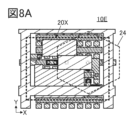
- FIG. 8A shows a schematic top view of one sub-pixel 20X of the display device 10E.
- the sub-pixel 20X can be applied to the sub-pixel 20R, sub-pixel 20G, or sub-pixel 20B in FIG. Note that in FIG. 8A, only the outline of the pixel electrode 24 is indicated by a broken line.
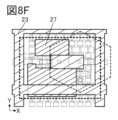
- FIG. 8B to 8F show the layout of each layer that constitutes the sub-pixel 20X.
- FIG. 8B shows the layer closest to the formation surface
- FIG. 8F shows the two layers closest to the pixel electrode 24 .
- FIG. 8B shows the wiring 22 and a layer having a conductive layer obtained by processing the same conductive film as the wiring 22 . Part of these functions as one gate electrode (also referred to as a bottom gate electrode, a first gate electrode, or the like) of the transistor 30a or the transistor 30b.
- one gate electrode also referred to as a bottom gate electrode, a first gate electrode, or the like
- FIG. 8C shows layers having a semiconductor layer 31a, a semiconductor layer 31b, and a plurality of dummy layers 32.
- FIG. 8C shows layers having a semiconductor layer 31a, a semiconductor layer 31b, and a plurality of dummy layers 32.
- FIG. 8C shows layers having a semiconductor layer 31a, a semiconductor layer 31b, and a plurality of dummy layers 32.
- FIG. 8C shows layers having a semiconductor layer 31a, a semiconductor layer 31b, and a plurality of dummy layers 32.
- FIG. 8C shows layers having a semiconductor layer 31a, a semiconductor layer 31b, and a plurality of dummy layers 32.
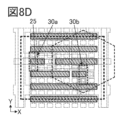
- FIG. 8D shows a layer having multiple conductive layers 25 .
- Part of the conductive layer 25 functions as the other gate electrode (also referred to as a top gate electrode, a second gate electrode, or the like) of the transistor 30a or the transistor 30b.
- an electrically floating conductive layer 25 may be included. By providing the dummy layer, variations in processed shape of the conductive layer 25 and the like can be reduced.
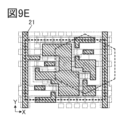
- FIG. 8E shows the wiring 21 and a layer having a plurality of conductive layers obtained by processing the same conductive film. Some of the multiple conductive layers shown in FIG. 8E function as one of the source and drain electrodes of transistor 30a or transistor 30b. Also, part of the plurality of conductive layers illustrated in FIG. 8E functions as one electrode of the capacitor.
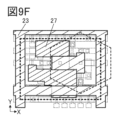
- FIG. 8F shows a layer having a conductive layer 27, wiring 23 located thereabove, and a layer having a conductive layer obtained by processing the same conductive film.
- a pixel electrode 24 is provided above the wiring 23 .
- Part of the conductive layer 27 functions as the other electrode of the capacitor.
- a part of the conductive layer obtained by processing the same conductive film as the wiring 23 functions as a relay wiring that electrically connects the pixel electrode 24 and the transistor 30b.
- Configuration example 3-2 Although the configuration of a sub-pixel having two transistors has been described above, a configuration example of a sub-pixel having four transistors will be described below. It should be noted that in the following description, portions that overlap with configuration example 3-1 and the like may be referred to and descriptions thereof may be omitted.
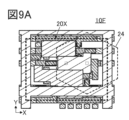
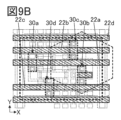
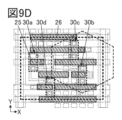
- 9A to 9F show configuration examples of a display device 10F including a sub-pixel 20X having four transistors.
- the sub-pixel 20X has a transistor 30a, a transistor 30b, a transistor 30c, and a transistor 30d.
- three gate lines (wiring 22a, wiring 22b, and wiring 22c) and wiring 22d to which a constant potential is supplied are provided.
- Part of the wiring 22a functions as one gate electrode of the transistor 30a.
- Part of the wiring 22b functions as one gate electrode of the transistor 30c.
- a portion of the wiring 22c functions as one gate electrode of the transistor 30d.
- the semiconductor layer 31c of the transistor 30c and the semiconductor layer 31d of the transistor 30d are arranged so that current flows in the Y direction, like the semiconductor layers 31a and 31b.
- the dummy layers 32 are provided in gaps between the semiconductor layers, and are arranged such that their longitudinal directions are parallel to the Y direction.
- the layout may be such that the channel length direction is parallel to the X direction, as in the configuration example 2-2.
- transistors 30a, 30b, 30c, and 30d each have a pair of gate electrodes.
- one or more of the four transistors may be transistors having only one gate (single-gate transistors), and the rest may be transistors having a pair of gates (dual-gate transistors).
- a pixel circuit PIX1 shown in FIG. 10A has a transistor M1, a transistor M2, a capacitor C1, and a light emitting element EL.
- a wiring SL, a wiring GL, a wiring AL, and a wiring CL are electrically connected to the pixel circuit PIX1.
- the transistor M1 has a gate electrically connected to the wiring GL, one of the source and the drain electrically connected to the wiring SL, and the other electrically connected to the gate of the transistor M2 and one electrode of the capacitor C1.
- One of the source and the drain of the transistor M2 is electrically connected to the wiring AL, and the other is electrically connected to the anode of the light emitting element EL.
- the other electrode of the capacitor C1 is electrically connected to the anode of the light emitting element EL.
- the cathode of the light emitting element EL is electrically connected to the wiring CL.
- the transistor M1 can also be called a selection transistor and functions as a switch for controlling selection/non-selection of pixels.
- the transistor M2 can also be called a driving transistor and has a function of controlling current flowing through the light emitting element EL.
- the capacitor C1 functions as a holding capacitor and has a function of holding the gate potential of the transistor M2.
- a capacitive element such as an MIM capacitance may be applied, or capacitance between wirings, gate capacitance of a transistor, or the like may be used as the capacitance C1.
- a source signal is supplied to the wiring SL.
- a gate signal is supplied to the wiring GL.
- a constant potential is supplied to each of the wiring AL and the wiring CL.
- the anode side of the light emitting element EL can be set at a high potential, and the cathode side can be set at a lower potential than the anode side.
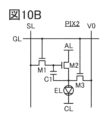
- the pixel circuit PIX2 shown in FIG. 10B has a configuration in which a transistor M3 is added to the pixel circuit PIX1.
- a wiring V0 is electrically connected to the pixel circuit PIX2.
- the transistor M3 has a gate electrically connected to the wiring GL, one of the source and the drain electrically connected to the anode of the light emitting element EL, and the other electrically connected to the wiring V0.
- a constant potential is applied to the wiring V0 when writing data to the pixel circuit PIX2. Thereby, variations in the gate-source voltage of the transistor M2 can be suppressed.
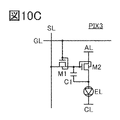
- a pixel circuit PIX3 shown in FIG. 10C is an example in which a pair of transistors whose gates are electrically connected are applied to the transistors M1 and M2 of the pixel circuit PIX1.
- a pixel circuit PIX4 shown in FIG. 10D is an example in which the transistor is applied to the pixel circuit PIX2. This can increase the current that the transistor can pass. Note that although a transistor having a pair of gates electrically connected to each other is used as all the transistors here, the present invention is not limited to this. Alternatively, a transistor having a pair of gates and electrically connected to different wirings may be used. For example, reliability can be improved by using a transistor in which one of the gates and the source are electrically connected.
- a pixel circuit PIX5 shown in FIG. 11A has a configuration in which a transistor M4 is added to the pixel circuit PIX2.
- the pixel circuit PIX5 is electrically connected to three wirings (wiring GL1, wiring GL2, and wiring GL3) functioning as gate lines.
- the transistor M4 has a gate electrically connected to the wiring GL3, one of the source and the drain electrically connected to the gate of the transistor M2, and the other electrically connected to the wiring V0.
- a gate of the transistor M1 is electrically connected to the wiring GL1, and a gate of the transistor M3 is electrically connected to the wiring GL2.
- Such a pixel circuit is suitable for a display method in which display periods and off periods are alternately provided.
- a pixel circuit PIX6 shown in FIG. 11B is an example in which a capacitor C2 is added to the pixel circuit PIX5. Capacitor C2 functions as a holding capacitor.
- a pixel circuit PIX7 shown in FIG. 11C and a pixel circuit PIX8 shown in FIG. 11D are examples in which a transistor having a pair of gates is applied to the pixel circuit PIX5 or pixel circuit PIX6, respectively.
- a transistor having a pair of gates electrically connected to each other is used as the transistor M1, the transistor M3, and the transistor M4, and a transistor having one gate electrically connected to a source is used as the transistor M2.
- Example of driving method An example of a method for driving a display device to which the pixel circuit PIX5 is applied will be described below. A similar driving method can be applied to the pixel circuits PIX6, PIX7, and PIX8.
- FIG. 12 shows a timing chart relating to a method of driving a display device to which the pixel circuit PIX5 is applied.
- FIG. 12 shows timings of signals supplied to the wiring SL functioning as a source line.
- a high-level potential is applied to the wirings GL1[k] and GL2[k], and a source signal is applied to the wiring SL. Accordingly, the transistor M1 and the transistor M3 are brought into conduction, and a potential corresponding to the source signal is written from the wiring SL to the gate of the transistor M2. After that, a low-level potential is applied to the wirings GL1[k] and GL2[k], so that the transistors M1 and M3 are brought out of conduction, and the gate potential of the transistor M2 is held.
- a high-level potential is applied to the wiring GL2[k] and the wiring GL3[k] in the off period of the k-th row.
- the transistor M3 and the transistor M4 are brought into a conductive state, and the same potential is supplied to the source and gate of the transistor M2, so that almost no current flows through the transistor M2.
- the light emitting element EL is extinguished. All sub-pixels located in the k-th row are turned off. The sub-pixels of the k-th row are kept off until the next lighting period.
- the light-off period of the k+1 row is entered, and all the sub-pixels of the k+1 row are turned off in the same manner as described above.
- a driving method in which a light-off period is provided during one horizontal period instead of lighting all over one horizontal period can be called duty driving.
- duty driving an afterimage phenomenon when displaying moving images can be reduced, so that a display device with high moving image display performance can be realized.
- VR motion sickness can be alleviated by reducing afterimages.
- the ratio of the lighting period to one horizontal period can be called the duty ratio.
- the duty ratio when the duty ratio is 50%, it means that the lighting period and the lighting-out period have the same length.
- the duty ratio can be freely set, and can be appropriately adjusted within a range of, for example, higher than 0% and 100% or less.
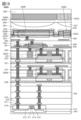
- FIG. 13 is a schematic cross-sectional view of the display device 200A.
- the display device 200A includes a light-emitting element 250R, a light-emitting element 250G, a transistor 210, a transistor 220, a capacitor 240, and the like between substrates 201 and 202.
- FIG. 1 A schematic cross-sectional view of the display device 200A.
- the display device 200A includes a light-emitting element 250R, a light-emitting element 250G, a transistor 210, a transistor 220, a capacitor 240, and the like between substrates 201 and 202.
- FIG. 1 is a schematic cross-sectional view of the display device 200A.
- the display device 200A includes a light-emitting element 250R, a light-emitting element 250G, a transistor 210, a transistor 220, a capacitor 240, and the like between substrates 201 and 202.
- FIG. 1 A schematic cross-sectional view of the display
- a transistor 210 is a transistor in which a channel formation region is formed in the substrate 201 .
- the substrate 201 for example, a semiconductor substrate such as a single crystal silicon substrate can be used.
- the transistor 210 includes part of the substrate 201, a conductive layer 211, a low-resistance region 212, an insulating layer 213, an insulating layer 214, and the like.
- the conductive layer 211 functions as a gate electrode.
- An insulating layer 213 is located between the substrate 201 and the conductive layer 211 and functions as a gate insulating layer.
- the low-resistance region 212 is a region in which impurities are doped in the substrate 201 and functions as either a source or a drain.
- the insulating layer 214 is provided to cover the side surface of the conductive layer 211 .
- a device isolation layer 215 is provided between two adjacent transistors 210 so as to be embedded in the substrate 201 .
- a wiring layer 203 is provided between the transistor 210 and the transistor 220 .
- the wiring layer 203 has a structure in which layers having one or more wirings are stacked. Each layer has a conductive layer 271 and an interlayer insulating layer 273 is provided between the two layers.
- a plug 272 provided in the interlayer insulating layer 273 electrically connects the conductive layers 271 in different layers.
- a transistor 220 is provided on the wiring layer 203 .
- the transistor 220 is a transistor in which a metal oxide (also referred to as an oxide semiconductor) is applied to a semiconductor layer in which a channel is formed.
- a metal oxide also referred to as an oxide semiconductor
- the transistor 220 includes a semiconductor layer 221, an insulating layer 223, a conductive layer 224, a pair of conductive layers 225, an insulating layer 226, a conductive layer 227, and the like.
- An insulating layer 231 is provided on the wiring layer 203 .
- the insulating layer 231 functions as a barrier layer that prevents impurities such as water or hydrogen from diffusing into the transistor 220 from the wiring layer 203 side and oxygen from the semiconductor layer 221 to the wiring layer 203 side.
- a film into which hydrogen or oxygen is less likely to diffuse than a silicon oxide film such as an aluminum oxide film, a hafnium oxide film, or a silicon nitride film, can be used.
- a conductive layer 227 is provided over the insulating layer 231 , and an insulating layer 226 is provided to cover the conductive layer 227 .
- the conductive layer 227 functions as a first gate electrode of the transistor 220, and part of the insulating layer 226 functions as a first gate insulating layer.
- An oxide insulating film such as a silicon oxide film is preferably used for at least a portion of the insulating layer 226 which is in contact with the semiconductor layer 221 .
- the semiconductor layer 221 is provided on the insulating layer 226 .
- the semiconductor layer 221 preferably includes a metal oxide (also referred to as an oxide semiconductor) film having semiconductor characteristics.
- the atomic ratio of the semiconductor layer 221 to be deposited includes a variation of plus or minus 40% of the atomic ratio of the metal element contained in the sputtering target.
- the semiconductor layer 221 has an energy gap of 2 eV or more, preferably 2.5 eV or more.
- the off-state current of the transistor can be reduced.
- the semiconductor layer 221 preferably has a non-single-crystal structure.
- Non-single-crystal structures include, for example, CAAC structures, polycrystalline structures, microcrystalline structures, or amorphous structures, which are described below.
- the amorphous structure has the highest defect level density
- the CAAC structure has the lowest defect level density.
- CAAC c-axis aligned crystal
- the CAAC structure is one of the crystal structures such as thin films having a plurality of nanocrystals (crystal regions with a maximum diameter of less than 10 nm), and each nanocrystal has a c-axis oriented in a specific direction and an a-axis. It is a crystal structure characterized in that the and b-axes have no orientation and that the nanocrystals are continuously connected without forming grain boundaries.
- a thin film having a CAAC structure is characterized in that the c-axis of each nanocrystal tends to be oriented in the thickness direction of the thin film, the direction normal to the formation surface, or the normal direction to the surface of the thin film.
- CAAC-OS Oxide Semiconductor
- CAAC-OS is a highly crystalline oxide semiconductor.
- CAAC-OS since a clear grain boundary cannot be confirmed, it can be said that a decrease in electron mobility due to a grain boundary is unlikely to occur.
- a CAAC-OS since the crystallinity of an oxide semiconductor may be deteriorated by contamination of impurities, generation of defects, or the like, a CAAC-OS can be said to be an oxide semiconductor with few impurities and defects (such as oxygen vacancies). Therefore, an oxide semiconductor including CAAC-OS has stable physical properties. Therefore, an oxide semiconductor including CAAC-OS is resistant to heat and has high reliability.
- crystallography it is common to take a unit cell with a specific axis as the c-axis for the three axes (crystal axes) of the a-axis, b-axis, and c-axis that constitute the unit cell. .
- crystal axes the three axes (crystal axes) of the a-axis, b-axis, and c-axis that constitute the unit cell.
- a representative example of a crystal having such a layered structure is graphite, which is classified as a hexagonal system, and the a-axis and b-axis of the unit cell are parallel to the cleavage plane, and the c-axis is perpendicular to the cleavage plane. do.
- a crystal of InGaZnO 4 having a YbFe 2 O 4 type crystal structure which is a layered structure, can be classified into a hexagonal system, and the a-axis and b-axis of the unit cell are parallel to the plane direction of the layer, and the c-axis are orthogonal to the layers (ie, the a-axis and the b-axis).
- an oxide semiconductor film having a microcrystalline structure crystal parts may not be clearly confirmed in a TEM image.
- a crystal part included in a microcrystalline oxide semiconductor film often has a size of 1 nm to 100 nm or 1 nm to 10 nm.
- an oxide semiconductor film including nanocrystals (nc) which are microcrystals with a size of 1 nm to 10 nm or 1 nm to 3 nm, is called an nc-OS (nanocrystalline oxide semiconductor) film.
- nc-OS nanocrystalline oxide semiconductor
- the nc-OS film has periodicity in atomic arrangement in a minute region (for example, a region of 1 nm or more and 10 nm or less, particularly a region of 1 nm or more and 3 nm or less).
- a minute region for example, a region of 1 nm or more and 10 nm or less, particularly a region of 1 nm or more and 3 nm or less.
- the nc-OS film may be indistinguishable from the amorphous oxide semiconductor film depending on the analysis method. For example, when structural analysis is performed on the nc-OS film using an XRD apparatus that uses X-rays with a diameter larger than that of the crystal part, no peak indicating the crystal plane is detected in the analysis by the out-of-plane method.
- an nc-OS film is subjected to electron beam diffraction (also referred to as selected area electron beam diffraction) using an electron beam with a probe diameter (e.g., 50 nm or more) larger than the crystal part, a diffraction pattern such as a halo pattern is obtained. is observed.
- an nc-OS film is subjected to electron diffraction (also referred to as nanobeam electron diffraction) using an electron beam with a probe diameter (for example, 1 nm or more and 30 nm or less) that is close to the size of the crystal part or smaller than the crystal part,
- a probe diameter for example, 1 nm or more and 30 nm or less
- a circular (ring-shaped) region with high brightness is observed, and a plurality of spots are observed within the ring-shaped region.
- the nc-OS film has a lower defect level density than the amorphous oxide semiconductor film.
- the nc-OS film there is no regularity in crystal orientation between different crystal parts. Therefore, the nc-OS film has a higher defect level density than the CAAC-OS film. Therefore, the nc-OS film may have higher carrier density and higher electron mobility than the CAAC-OS film. Therefore, a transistor including an nc-OS film may exhibit high field-effect mobility.
- the nc-OS film can be formed by reducing the oxygen flow rate during film formation as compared with the CAAC-OS film.
- the nc-OS film can also be formed at a lower substrate temperature during film formation than the CAAC-OS film.
- the nc-OS film can be formed with a relatively low substrate temperature (eg, 130° C. or lower) or without heating the substrate. It is suitable for using , and can increase productivity.
- Objects tend to have either one of the nc (nano crystal) structure and the CAAC structure, or a mixture of these structures.
- a metal oxide formed at a substrate temperature of room temperature (RT) tends to have an nc crystal structure.
- the room temperature (R.T.) referred to here includes the temperature when the substrate is not intentionally heated.
- a pair of conductive layers 225 are provided on and in contact with the semiconductor layer 221 and function as a source electrode and a drain electrode.
- An insulating layer 232 is provided to cover the top surface and side surfaces of the pair of conductive layers 225, the side surface of the semiconductor layer 221, and the like, and an insulating layer 261 is provided over the insulating layer 232.
- the insulating layer 232 functions as a barrier layer that prevents impurities such as water or hydrogen from diffusing into the semiconductor layer 221 from the interlayer insulating layer or the like and oxygen from leaving the semiconductor layer 221 .
- an insulating film similar to the insulating layer 231 can be used as the insulating layer 232.
- An opening reaching the semiconductor layer 221 is provided in the insulating layer 232 and the insulating layer 261 .
- an insulating layer 223 in contact with side surfaces of the insulating layer 261 , the insulating layer 232 , and the conductive layer 225 and the top surface of the semiconductor layer 221 , and a conductive layer 224 are embedded over the insulating layer 223 .
- the conductive layer 224 functions as a second gate electrode
- the insulating layer 223 functions as a second gate insulating layer.
- the upper surface of the conductive layer 224, the upper surface of the insulating layer 223, and the upper surface of the insulating layer 261 are planarized so that their heights are approximately the same, and an insulating layer 233 is provided to cover them.
- An opening is provided in the stacked structure between the insulating layer 233 and the insulating layer 231 , and part of the insulating layer 233 is provided in contact with the insulating layer 231 in the opening.
- the insulating layer 261 functions as an interlayer insulating layer.
- the insulating layer 233 also functions as a barrier layer that prevents impurities such as water or hydrogen from diffusing from above.
- an insulating film similar to the insulating layer 231 or the like can be used.
- a capacitive element 240 is provided on the insulating layer 233 .
- the capacitive element 240 has a conductive layer 241, a conductive layer 242, and an insulating layer 243 positioned therebetween.
- the conductive layer 241 functions as one electrode of the capacitor 240
- the conductive layer 242 functions as the other electrode of the capacitor 240
- the insulating layer 243 functions as the dielectric of the capacitor 240 .
- An insulating layer 234 is provided to cover the capacitive element 240 .
- an insulating film similar to the insulating layer 231 can be used.
- An insulating layer 262 is provided over the insulating layer 231 with an interlayer insulating layer and wiring interposed therebetween, and the light emitting elements 250R and 250G are provided over the insulating layer 262 .
- the light emitting element 250R has a conductive layer 251, a conductive layer 252R, an EL layer 253W, a conductive layer 254, and the like.
- the conductive layer 251 is reflective to visible light, and the conductive layer 252R is transparent to visible light.
- Conductive layer 254 is reflective and transmissive to visible light.
- the conductive layer 252R functions as an optical adjustment layer for adjusting the optical distance between the conductive layers 251 and 254.
- FIG. The optical adjustment layer may have different thicknesses between the light emitting elements emitting different colors.
- the conductive layer 252R of the light emitting element 250R and the conductive layer 252G of the light emitting element 250G have different thicknesses.
- An insulating layer 256 is provided to cover the end of the conductive layer 252R and the end of the conductive layer 252G.
- the EL layer 253W and the conductive layer 254 are commonly provided over a plurality of pixels.
- the EL layer 253W has a plurality of light-emitting layers so as to emit white light.
- FIG. 14 shows an enlarged view of a portion of the conductive layer 252R, a portion of the conductive layer 252G, and the area therebetween.
- a laminate of the conductive layer 251 and the conductive layer 252R functions as a pixel electrode.
- the conductive layer 251 and the conductive layer 252R are processed so that the side surfaces thereof are substantially perpendicular to the substrate surface or the upper surface of the conductive layer 252R.
- the layered body of the conductive layer 251 and the conductive layer 252G is also processed so that the side surface is substantially perpendicular to the substrate surface or the upper surface of the conductive layer 252G.
- Either the conductive layer 251 or the conductive layer 252R (or the conductive layer 252G) may be processed so that the side surface thereof is substantially vertical.
- the insulating layer 256 is provided covering part of the top surface and side surfaces of the conductive layer 252R, each side surface of the two conductive layers 251, and part of the top surface and side surfaces of the conductive layer 252G.
- the insulating layer 256 has a concave upper surface shape in a region between the conductive layers 252R and 252G.
- the EL layer 253W is provided to cover the conductive layer 252R, the insulating layer 256, and the conductive layer 252G.
- a part of the surface of the insulating layer 256 in contact with the EL layer 253W is 70 degrees or more and 120 degrees or less, preferably 75 degrees or more and 115 degrees or less, more preferably 70 degrees or more and 120 degrees or less, with respect to the substrate surface or the upper surface of the conductive layer 252R or the conductive layer 252G. has a portion between 80 degrees and 110 degrees.
- a thin portion can be formed in a self-aligning manner.
- the EL layer 253W can be divided in a self-aligned manner.
- FIG. 14 shows an example in which the EL layer 253W is connected between adjacent light emitting elements.
- the thickness of the portion of the EL layer 253W that is in contact with the top surface of the conductive layer 252R is T R1
- the thickness of the portion that is on the insulating layer 256 and overlaps with the conductive layer 252R is T R2
- the insulation on the conductive layer 252R side is T R2 .
- the thickness of the portion of layer 256 in contact with the plane substantially perpendicular to the top surface of conductive layer 252R is defined as thickness TR3 .
- the thickness of the portion of the EL layer 253W that is in contact with the top surface of the conductive layer 252G is T G1
- the thickness of the portion that is on the insulating layer 256 and overlaps with the conductive layer 252G is T G2
- the conductive layer 252G is The thickness of the portion of the side insulating layer 256 that is in contact with the surface that is substantially perpendicular to the upper surface of the conductive layer 252G is assumed to be the thickness TG3
- the thickness of the portion where the upper surface of the insulating layer 256 is in contact with the flat portion is assumed to be the thickness T4 .
- the thickness here refers to the thickness in the direction normal to the surface to be formed, not the thickness in the direction perpendicular to a reference plane such as a substrate surface. Therefore, when the surface to be formed has unevenness, the direction for defining the thickness differs depending on the location.
- the thickness T R1 , the thickness T R2 , the thickness T G1 , the thickness T G2 , and the thickness T 4 are approximately equal.
- the thickness TR3 and the thickness TG3 are thinner than the thickness TR1 , the thickness TR2 , the thickness TG1 , the thickness TG2 , and the thickness T4 .
- the thickness TR3 and the thickness TG3 are half (50%) of the thickness TR1 , the thickness TR2 , the thickness TG1 , the thickness TG2 , or the thickness T4 .
- FIG. 14 shows an example in which a region of the insulating layer 262 that is not covered with the conductive layer 251 is shaved during etching of the conductive layer 251 and the like, and is thinned. Specifically, the bottom surface of the insulating layer 256 is positioned lower than the bottom surface of the conductive layer 251 . By etching part of the insulating layer 262 in this manner, the undulations of the steps between the adjacent light emitting elements can be increased, so that a thin region can be easily formed in the EL layer 253W more effectively. can.
- a colored layer 255R is provided on the light emitting element 250R with an insulating layer 235 interposed therebetween.
- a colored layer 255G is provided on the light emitting element 250G.
- FIG. 13 also shows part of the colored layer 255B.
- the colored layer 255R transmits red light
- the colored layer 255G transmits green light
- the colored layer 255B transmits blue light.
- the color purity of light emitted from each light emitting element can be increased, and a display device with higher display quality can be realized.
- the relationship between each light-emitting element and each colored layer is reduced compared to the case where the substrate 201 and the substrate 202 are bonded after forming the colored layer on the substrate 202 side. Alignment is easy, and an extremely high-definition display device can be realized.
- a lens array 257 is provided on the colored layer 255R and the colored layer 255G. Light emitted from the light emitting element 250R is colored by the coloring layer 255R and emitted to the outside through the lens array 257. FIG. The lens array 257 may be omitted if unnecessary.
- the display device 200A has a substrate 202 on the viewing side.
- the substrate 202 and the substrate 201 are bonded together.
- a light-transmitting substrate such as a glass substrate, a quartz substrate, a sapphire substrate, or a plastic substrate can be used.
- FIG. 15A to 15D each show an extracted laminated structure from the insulating layer 262 to the conductive layer 254.
- FIG. 15A to 15D each show an extracted laminated structure from the insulating layer 262 to the conductive layer 254.
- FIG. 15A is different from FIG. 14 in that the portion of the insulating layer 262 that does not overlap with the conductive layer 251 is not thinned. Specifically, the bottom surface of the insulating layer 256 is positioned at substantially the same height as the bottom surface of the conductive layer 251 . By not etching the insulating layer 262, variations in the cross-sectional shape can be suppressed, so that the process yield can be increased and mass productivity can be improved.
- FIG. 15B is an example in which the insulating layer 256 is formed thick. Also, FIG. 15B shows a schematic cross-sectional view of the light emitting element 250B and the light emitting element 250G.
- the light-emitting element 250B has a conductive layer 251, a conductive layer 252B, an EL layer 253W, and a conductive layer 254. Conductive layer 252B is thinner than conductive layer 252G.
- FIG. 15B shows an example in which the insulating layer 256 is thicker than the conductive layers 252G and 252B.
- 15C and 15D show an example in which an insulating layer 258 functioning as an etching stopper film is provided below the insulating layer 262.
- FIG. Also, the insulating layer 262 in the region between adjacent light emitting elements is etched, and the bottom surface of the insulating layer 256 is in contact with the insulating layer 258 . With such a configuration, the undulations between the adjacent light emitting elements can be increased.
- FIG. 15D shows an example in which the EL layer 253W is divided.
- the conductive layer 254 is preferably connected between adjacent light emitting elements without being divided. Dividing the EL layer 253W between adjacent light-emitting elements can completely prevent leakage current through the EL layer 253W, which is preferable.
- the configuration shown in FIG. 15D corresponds to the thickness TR3 and the thickness TG3 in FIG. 14 being zero.
- FIG. 15D shows that thickness T R3 and thickness T G3 are 0% with respect to thickness T R1 , thickness T R2 , thickness T G1 , thickness T G2 , and thickness T 4 , respectively. It can also be said that the state is
- FIG. 16 shows a schematic cross-sectional view of a display device 200B having a partially different configuration from the display device 200A.
- the display device 200B shows an example in which the colored layer 255R, the colored layer 255G, the colored layer 255B, and the lens array 257 are formed on the substrate 202 side.
- the colored layer 255R, the colored layer 255G, and the colored layer 255B are provided on the substrate 201 side surface of the substrate 202, and the colored layer 255R, the colored layer 255G, and the colored layer 255B are covered to function as a planarization layer.
- An insulating layer 264 is provided, and a lens array 257 is provided on the surface of the insulating layer 264 on the substrate 201 side.
- the substrates 202 and 201 are bonded together by an adhesive layer 263 .
- the insulating layer 235 preferably has a function of preventing moisture contained in the adhesive layer 263 from diffusing into the light emitting element.
- the insulating layer 235 preferably includes at least an inorganic insulating film.
- the inorganic insulating film an aluminum oxide film formed by an ALD (Atomic Layer Deposition) method having excellent step coverage, a metal oxide film such as a hafnium oxide film, or an inorganic insulating film such as a silicon oxide film is used as the insulating layer 235 .
- FIG. 17 is a schematic cross-sectional view of the display device 200C.
- the main difference between display device 200C and display device 200B is that display device 200C does not have transistor 210 .
- An insulating layer 231 is provided over the substrate 201 and the transistor 220 is provided over the insulating layer 231 . Note that the insulating layer 231 may not be provided when there is no risk of diffusion of impurities or the like from the substrate 201 .
- a substrate with a low coefficient of thermal expansion is preferably used as the substrate 201 .
- a single crystal semiconductor substrate such as single crystal silicon or silicon carbide, or a high melting point insulating substrate such as sapphire or quartz.
- FIG. 18 is a schematic cross-sectional view of the display device 200D.
- the main difference between the display device 200D and the display device 200B is the layered structure of the transistors.
- the transistor 220B and the transistor 220A are stacked on the transistor 210.
- the transistor 220A has a structure similar to that of the transistor 220 in the display device 200B or the like.
- the transistor 220B is provided between the insulating layer 236 and the insulating layer 237 and has a structure similar to that of the transistor 220A.
- the insulating layers 236 and 237 function as barrier layers similarly to the insulating layer 231 and the like.
- An active matrix display device has many source lines and gate lines arranged in a matrix. Therefore, if ESD (Electro Static Discharge) occurs in the source line or the gate line during the manufacturing process of the display device or the assembling process of the electronic device, a display defect is caused. Therefore, it is preferable to provide a protection circuit for reducing the influence of ESD on the source line and the gate line.
- ESD Electro Static Discharge
- inspection circuits, terminals, or electrodes may be provided for inspecting whether pixels are driven normally.
- FIG. 19A shows an example of a circuit PC1 for inputting the potential input from the terminal PRE to the source line SL.
- the circuit PC1 has transistors Tr1, Tr2, and Tr3. Each transistor is a transistor having a pair of gates. A gate positioned below the semiconductor layer is referred to as a back gate, and a gate positioned above the semiconductor layer is referred to as a top gate.
- the transistor Tr1 has a top gate electrically connected to the terminal Sig, a back gate electrically connected to the terminal VBG1, one of the source and the drain electrically connected to the source line SL, and the other electrically connected to the terminal PRE.
- a signal for controlling the transistor Tr1 is applied to the terminal Sig.
- a bias potential is applied to the terminal VBG1.
- the potential of the terminal PRE is supplied to the wiring SL.
- the transistor Tr2 and the transistor Tr3 are electrically connected between the top gate of the transistor Tr1 and the terminal Sig.
- Transistor Tr2 and transistor Tr3 function as a protection circuit.
- the transistors Tr2 and Tr3 are diode-connected transistors.
- a terminal VDD is electrically connected to the transistor Tr2, and a terminal VSS is electrically connected to the transistor Tr3.
- a terminal VBG2 is electrically connected to the back gate of the transistor Tr2, and a terminal VBG3 is electrically connected to the back gate of the transistor Tr3.
- a circuit PC2 shown in FIG. 19B is an example in which the number of terminals and the number of transistors are reduced compared to the circuit PC1.
- the circuit PC2 has a transistor Tr1.
- the transistor Tr1 has a top gate electrically connected to the wiring SL, a back gate electrically connected to the terminal Sig, one of the source and the drain electrically connected to the terminal PRE, and the other electrically connected to the wiring SL.
- the circuit can be simplified without requiring a protection circuit for the terminal Sig.
- the top gate and back gate of the transistor Tr1 may be exchanged depending on the electrical characteristics of the transistor Tr1.
- a circuit PC3 shown in FIG. 19C shows an example in which two transistors, a transistor Tr1a and a transistor Tr1b, are used instead of the transistor Tr1 in the circuit PC2.
- the back gates of the transistors Tr1a and Tr1b are electrically connected to the terminal Sig.
- a circuit PC4 shown in FIG. 19D is an example in which terminals (terminal Sig1 and terminal Sig2) are separately connected to the transistor Tr1a and the transistor Tr1b.
- the number of terminals can be significantly reduced compared to the configuration shown in FIG. 19A, for example, and a small display device can be realized.
- This embodiment can be implemented by appropriately combining at least part of it with other embodiments described herein.
- Embodiment 2 Structural examples of display devices that can be applied to the display devices of the electronic devices described in Embodiment 1 are described below with reference to drawings.
- FIG. 20A is a perspective view of a display device 310A that can be applied to the display device of the electronic device exemplified in Embodiment 1.
- FIG. 20A is a perspective view of a display device 310A that can be applied to the display device of the electronic device exemplified in Embodiment 1.
- FIG. 20A is a perspective view of a display device 310A that can be applied to the display device of the electronic device exemplified in Embodiment 1.
- the display device 310A has substrates 311 and 312 .
- the display device 310 ⁇ /b>A has a display section 313 composed of elements provided between a substrate 311 and a substrate 312 .
- the display unit 313 is an area for displaying an image in the display device 310A.
- the display portion 313 has a plurality of pixels 390 .
- a pixel 390 has a pixel circuit 351 and a light emitting element 361 .
- the display unit 313 capable of displaying at a resolution of so-called full high-definition (also called “2K resolution,” “2K1K,” or “2K”) is realized. can. Further, for example, when the pixels 390 are arranged in a matrix of 3840 ⁇ 2160 pixels, the display unit 313 can display at a resolution of so-called ultra high-definition (also referred to as “4K resolution”, “4K2K”, or “4K”). can be realized.
- the display unit 313 can display at a resolution of so-called Super Hi-Vision (also called “8K resolution”, “8K4K”, or “8K”). can be realized. By increasing the number of pixels 390, it is possible to realize the display unit 313 capable of displaying at a resolution of 16K or even 32K.
- the pixel density (definition) of the display unit 313 is preferably 1000 ppi or more and 10000 ppi or less. For example, it may be 2000 ppi or more and 6000 ppi or less, or 3000 ppi or more and 5000 ppi or less.
- the screen ratio (aspect ratio) of the display unit 313 is not particularly limited.
- the display unit 313 can support various screen ratios such as 1:1 (square), 4:3, 16:9, and 16:10.
- a display element may be replaced with “device”.
- a display element, a light-emitting element, and a liquid crystal element can be interchanged with, for example, a display device, a light-emitting device, and a liquid crystal device.
- the display device 310A receives various signals and power supply potential from the outside via the terminal section 314, and can display images using the display element provided in the display section 313.
- Various elements can be used as the display element.
- a light-emitting element having a function of emitting light such as an organic EL element and an LED element, a liquid crystal element, or a MEMS (Micro Electro Mechanical Systems) element can be applied.
- a plurality of layers are provided between the substrate 311 and the substrate 312, and each layer is provided with a transistor for circuit operation or a display element for emitting light.
- a pixel circuit having a function of controlling operation of a display element a driver circuit having a function of controlling the pixel circuit, a functional circuit having a function of controlling the driver circuit, and the like are provided.
- FIG. 20B shows a perspective view schematically showing the configuration of each layer provided between the substrate 311 and the substrate 312.
- a layer 320 is provided on the substrate 311 .
- Layer 320 has drive circuitry 330 , functional circuitry 340 and input/output circuitry 380 .
- Layer 320 has a transistor 321 (also called a Si transistor) with silicon in a channel forming region 322 .
- the substrate 311 is, for example, a silicon substrate.
- a silicon substrate is preferable because it has higher thermal conductivity than a glass substrate.
- the charge/discharge time of the control signal for the function circuit 340 to control the drive circuit 330 is shortened, and power consumption can be reduced.
- the charging and discharging time required for the input/output circuit 380 to supply signals to the functional circuit 340 and the driving circuit 330 is shortened, and power consumption can be reduced.
- the transistor 321 can be, for example, a transistor including single crystal silicon in a channel formation region (also referred to as a "c-Si transistor").
- a transistor including single crystal silicon in a channel formation region also referred to as a "c-Si transistor”
- the on current of the transistor can be increased. Therefore, the circuit included in the layer 320 can be driven at high speed, which is preferable.
- the Si transistor can be formed by microfabrication such that the channel length is 3 nm or more and 10 nm or less, the display device 310A in which an accelerator such as a CPU or a GPU, an application processor, or the like is provided integrally with the display portion can be provided. .
- a transistor including polycrystalline silicon in a channel formation region may be provided in the layer 320.
- Low temperature polysilicon LTPS
- LTPS transistor a transistor including LTPS in a channel formation region
- OS transistor may be provided in the layer 320 .
- the drive circuit 330 has, for example, a gate driver circuit, a source driver circuit, and the like. In addition, an arithmetic circuit, a memory circuit, a power supply circuit, and the like may be provided. Since the gate driver circuit, the source driver circuit, and other circuits can be arranged so as to overlap the display portion 313, the display device 310A can be arranged as compared to the case where these circuits and the display portion 313 are arranged side by side. The width of a non-display area (also referred to as a frame) existing on the periphery of the display portion 313 can be extremely narrowed, and the size reduction of the display device 310A can be realized.
- a non-display area also referred to as a frame
- the functional circuit 340 has, for example, the function of an application processor for controlling each circuit in the display device 310A and generating signals for controlling each circuit.
- the functional circuit 340 may also have a circuit for correcting image data, such as an accelerator such as a CPU or GPU.
- the functional circuit 340 also includes an LVDS (Low Voltage Differential Signaling) circuit, a MIPI (Mobile Industry Processor Interface) circuit, and/or a D/A It may have a (Digital to Analog) conversion circuit or the like.
- the functional circuit 340 may also include a circuit for compressing/decompressing image data and/or a power supply circuit.
- a layer 350 is provided on the layer 320 .
- Layer 350 has pixel circuits 355 that include a plurality of pixel circuits 351 .
- An OS transistor may be provided in layer 350 .
- the pixel circuit 351 may include an OS transistor. Note that the layer 350 can be stacked over the layer 320 .
- a Si transistor may be provided in layer 350 .
- the pixel circuit 351 may include a transistor including single crystal silicon or polycrystal silicon in a channel formation region.
- LTPS may be used as the polycrystalline silicon.
- layer 350 can be formed on another substrate and attached to layer 320 .
- the pixel circuit 351 may be composed of a plurality of types of transistors using different semiconductor materials.
- the transistors may be provided in different layers for each type of transistor.
- the Si transistor and the OS transistor may be overlapped. By overlapping the transistors, the area occupied by the pixel circuit 351 is reduced. Therefore, the definition of the display device 310A can be improved.
- a structure in which an LTPS transistor and an OS transistor are combined is sometimes called an LTPO.
- the transistor 352 which is an OS transistor
- a transistor having an oxide containing at least one of indium, element M (element M is aluminum, gallium, yttrium, or tin), and zinc in a channel formation region is preferably used.
- Such an OS transistor has a very low off-state current. Therefore, it is particularly preferable to use an OS transistor as a transistor provided in the pixel circuit because analog data written to the pixel circuit can be held for a long time.
- a layer 360 is provided on the layer 350 .
- a substrate 312 is provided over the layer 360 .
- the substrate 312 is preferably a light-transmitting substrate or a layer made of a light-transmitting material.
- a layer 360 is provided with a plurality of light emitting elements 361 . Note that the layer 360 can be stacked over the layer 350 .
- the light-emitting element 361 for example, an organic electroluminescence element (also referred to as an organic EL element) can be used.
- the light emitting element 361 is not limited to this, and for example, an inorganic EL element made of an inorganic material may be used.
- the light emitting element 361 may have inorganic compounds such as quantum dots.
- quantum dots by using quantum dots in the light-emitting layer, it can function as a light-emitting material.
- a display device 310A of one embodiment of the present invention can have a structure in which a light-emitting element 361, a pixel circuit 351, a driver circuit 330, and a function circuit 340 are stacked; ratio (effective display area ratio) can be extremely high.
- the pixel aperture ratio can be 40% or more and less than 100%, preferably 50% or more and 95% or less, and more preferably 60% or more and 95% or less.
- the pixel circuits 351 can be arranged at an extremely high density, and the definition of pixels can be extremely increased.
- Pixels can be arranged with a resolution of 20000 ppi or less, or 30000 ppi or less.
- Such a display device 310A has extremely high definition, it can be suitably used for devices for VR such as a head-mounted display, or glasses-type devices for AR. For example, even in the case of a configuration in which the display portion of the display device 310A is viewed through an optical member such as a lens, the display device 310A has an extremely high-definition display portion. A highly immersive display can be performed without being visually recognized.
- the diagonal size of the display unit 313 is 0.1 inch or more and 5.0 inches or less, preferably 0.5 inch or more and 2.0 inches or more. It can be 1 inch or less, more preferably 1 inch or more and 1.7 inch or less. For example, the diagonal size of the display unit 313 may be 1.5 inches or around 1.5 inches. By setting the diagonal size of the display unit 313 to 2.0 inches or less, it is possible to perform processing in one exposure process of an exposure device (typically a scanner device), thereby improving the productivity of the manufacturing process. can be improved.
- an exposure device typically a scanner device
- the display device 310A can be applied to devices other than wearable electronic devices.
- the diagonal size of the display 313 may exceed 2.0 inches.
- the configuration of the transistors used in the pixel circuit 351 may be selected as appropriate according to the diagonal size of the display portion 313 .
- the diagonal size of the display section 313 is preferably 0.1 inch or more and 3 inches or less.
- the diagonal size of the display portion 313 is preferably 0.1 inch or more and 30 inches or less, more preferably 1 inch or more and 30 inches or less.
- the diagonal size of the display portion 313 is preferably 0.1 inch or more and 50 inches or less, and is preferably 1 inch or more and 50 inches or less. more preferred.
- the diagonal size of the display portion 313 is preferably 0.1 inch or more and 200 inches or less, more preferably 50 inches or more and 100 inches or less.
- the OS transistor is free from restrictions on the use of a laser crystallization apparatus or the like in the manufacturing process, or can be manufactured at a relatively low process temperature (typically 450° C. or lower), and thus has a relatively large area. (Typically, it is possible to correspond to a display device having a diagonal size of 50 inches or more and 100 inches or less). In addition, for LTPO, it is possible to support a diagonal size (typically, 1 inch or more and 50 inches or less) between the case of using an LTPS transistor and the case of using an OS transistor.
- FIG. 21 is a block diagram illustrating a plurality of wirings connecting the pixel circuits 351, the driving circuits 330 and the functional circuits 340, bus wirings in the display device 310A, and the like in the display device 310A.
- a layer 350 has a plurality of pixel circuits 351 arranged in a matrix.
- the driver circuit 330 has, for example, a source driver circuit 331 , a digital-to-analog converter (DAC) 332 , an amplifier circuit 335 , a gate driver circuit 333 , and a level shifter 334 .
- the functional circuit 340 has, for example, a storage device 341 , a GPU (AI accelerator) 342 , an EL correction circuit 343 , a timing controller 344 , a CPU 345 , a sensor controller 346 and a power supply circuit 347 .
- Functional circuit 340 has the function of an application processor.
- the input/output circuit 380 is compatible with a transmission system such as LVDS (Low Voltage Differential Signaling). It has the function of distributing to Also, the input/output circuit 380 has a function of outputting the information of the display device 310A to the outside via the terminal section 314 .
- LVDS Low Voltage Differential Signaling
- the circuit included in the drive circuit 330 and the circuit included in the function circuit 340 are each electrically connected to the bus line BSL.
- the source driver circuit 331 has a function of transmitting image data to the pixel circuit 351 included in the pixel 390 . Therefore, the source driver circuit 331 is electrically connected to the pixel circuit 351 through the wiring SL. Note that a plurality of source driver circuits 331 may be provided.
- the digital-to-analog conversion circuit 332 has a function of converting image data digitally processed by a GPU, a correction circuit, etc., which will be described later, into analog data.
- the image data converted into analog data is amplified by an amplifier circuit 335 such as an operational amplifier and transmitted to the pixel circuit 351 via the source driver circuit 331 .
- the image data may be transmitted to the source driver circuit 331, the digital-analog converter circuit 332, and the pixel circuit 351 in this order.
- the digital-to-analog conversion circuit 332 and the amplifier circuit 335 may be included in the source driver circuit 331 .
- the gate driver circuit 333 has a function of selecting a pixel circuit to which image data is to be sent in the pixel circuit 351 . Therefore, the gate driver circuit 333 is electrically connected to the pixel circuit 351 through the wiring GL. Note that a plurality of gate driver circuits 333 may be provided corresponding to the source driver circuits 331 .
- the level shifter 334 has a function of converting signals input to the source driver circuit 331, the digital-analog conversion circuit 332, the gate driver circuit 333, etc. to appropriate levels.
- the storage device 341 has, for example, a function of storing image data to be displayed on the pixel circuit 351 . Note that the storage device 341 can be configured to store image data as digital data or analog data.
- the storage device 341 is preferably a non-volatile memory.
- a NAND memory or the like can be applied as the storage device 341 .
- the storage device 341 is preferably a volatile memory.
- SRAM Static Random Access Memory
- DRAM Dynamic Random Access Memory
- the GPU 342 has, for example, a function of performing processing for outputting image data read from the storage device 341 to the pixel circuit 351 .
- the GPU 342 since the GPU 342 is configured to perform pipeline processing in parallel, image data to be output to the pixel circuit 351 can be processed at high speed.
- GPU 342 may also function as a decoder for restoring encoded images.
- the functional circuit 340 may include a plurality of circuits that can improve the display quality of the display device 310A.
- a correction circuit color toning, dimming
- the function circuit 340 may be provided with an EL correction circuit that corrects image data according to the characteristics of the light-emitting device.
- the functional circuit 340 includes an EL correction circuit 343 as an example.
- Artificial intelligence may also be used for the image correction described above.
- the current (or voltage applied to the pixel circuit) is monitored and acquired, the displayed image is acquired by an image sensor, etc., and the current (or voltage) and the image are calculated by artificial intelligence (for example, , an artificial neural network, etc.), and the output result may be used to determine whether or not to correct the image.
- artificial intelligence for example, , an artificial neural network, etc.
- artificial intelligence calculations can be applied not only to image correction, but also to up-conversion processing to increase the resolution of image data.
- the GPU 342 in FIG. 21 illustrates blocks for performing various correction calculations (color unevenness correction 342a, up-conversion 342b, etc.).
- Algorithms for up-converting image data include the Nearest neighbor method, Bilinear method, Bicubic method, RAISR (Rapid and Accurate Image Super-Resolution) method, ANR (Anchored Neighborhood Regression) method, A+ method, SuperN (SRCN -Resolution (Convolutional Neural Network) method or the like can be selected.
- the up-conversion process may be configured such that the algorithm used for the up-conversion process is changed for each region determined according to the gaze point. For example, the up-conversion processing of the gaze point and the area near the gaze point is performed with a slow but high-precision algorithm, and the up-conversion processing of areas other than the subject area is performed with a fast but low-accuracy algorithm. Just do it. With this configuration, the time required for up-conversion processing can be shortened. Also, the power consumption required for up-conversion processing can be reduced.
- up-conversion processing not only up-conversion processing, but also down-conversion processing that lowers the resolution of image data may be performed. If the resolution of the image data is higher than the resolution of the display unit 313 , part of the image data may not be displayed on the display unit 313 . In such a case, the entire image data can be displayed on the display unit 313 by performing down-conversion processing.
- the timing controller 344 has a function of controlling the drive frequency (frame frequency, frame rate, refresh rate, etc.) for displaying images. For example, when displaying a still image on the display device 310A, power consumption of the display device 310A can be reduced by lowering the driving frequency by the timing controller 344.
- the drive frequency frame frequency, frame rate, refresh rate, etc.
- the CPU 345 has a function of performing general-purpose processing such as, for example, operating system execution, data control, various calculations, and program execution.
- the CPU 345 has a role of issuing commands such as, for example, an image data write operation or read operation in the storage device 341, an image data correction operation, and an operation to a sensor to be described later.
- the CPU 345 may have a function of transmitting a control signal to at least one of the circuits included in the functional circuit 340 .
- the sensor controller 346 has a function of controlling sensors.
- a wiring SNCL is illustrated as a wiring for electrically connecting to the sensor.
- a touch sensor that can be provided in the display unit 313 can be used as the sensor.
- the sensor may be, for example, an illuminance sensor.
- the power supply circuit 347 has a function of generating voltage to be supplied to the pixel circuit 351, the drive circuit 330, the function circuit 340, and the like.
- the power supply circuit 347 may have a function of selecting a circuit that supplies voltage.
- the power supply circuit 347 can reduce power consumption of the entire display device 310A by stopping voltage supply to the CPU 345, the GPU 342, and the like while a still image is being displayed.
- the display device of one embodiment of the present invention can have a structure in which the display element, the pixel circuit, and the driver circuit and function circuit 340 are stacked.
- a driver circuit and a functional circuit which are peripheral circuits, can be arranged so as to overlap with the pixel circuit, and the width of the frame can be extremely narrowed, so that the display device can be miniaturized.
- the display device of one embodiment of the present invention has a structure in which circuits are stacked, the wiring that connects the circuits can be shortened; thus, the display device can be lightweight. .
- the display device of one embodiment of the present invention can be a display portion with improved pixel definition, the display device can have excellent display quality.
- FIG. 22A to 22C are perspective views of the display module 370.
- FIG. The display module 370 has a structure in which an FPC 374 (FPC: flexible printed circuits) is provided at the terminal portion 314 of the display device 310A.
- the FPC 374 has a structure in which a film made of an insulator is provided with wiring. Also, the FPC 374 has flexibility.
- the FPC 374 functions as wiring for externally supplying video signals, control signals, power supply potential, and the like to the display device 310A. Also, an IC may be mounted on the FPC 374 .
- a display module 370 shown in FIG. 22B has a configuration in which a display device 310A is provided on a printed wiring board 371.
- the printed wiring board 371 has a structure in which wiring is provided inside or on the surface of a substrate made of an insulator, or inside and on the surface.
- Wires 373 can be formed by wire bonding. Ball bonding or wedge bonding can be used as wire bonding.
- the wire 373 may be covered with a resin material or the like.
- the electrical connection between the display device 310A and the printed wiring board 371 may be made by a method other than wire bonding.
- the electrical connection between the display device 310A and the printed wiring board 371 may be realized by an anisotropic conductive adhesive, bumps, or the like.
- the terminal portion 372 of the printed wiring board 371 is electrically connected to the FPC 374 .
- the terminal portion 314 and the FPC 374 may be electrically connected via the printed wiring board 371 .
- the wiring formed on the printed wiring board 371 can be used to convert the intervals (pitch) between the electrodes of the terminal portion 314 to the intervals of the electrodes of the terminal portion 372 . That is, even when the pitch of the electrodes provided in the terminal section 314 and the pitch of the electrodes provided in the FPC 374 are different, the electrodes can be electrically connected.
- the printed wiring board 371 can be provided with various elements such as resistance elements, capacitive elements, and semiconductor elements.
- the terminal portion 372 is electrically connected to the connection portion 375 provided on the lower surface of the printed wiring board 371 (the surface on which the display device 310A is not provided). good too.
- the connecting portion 375 a socket type connecting portion, the display module 370 can be easily detached from another device.
- a device manufactured using a metal mask or FMM may be referred to as a device with an MM (metal mask) structure.
- a device manufactured without using a metal mask or FMM may be referred to as a device with an MML (metal maskless) structure.
- a structure in which at least light-emitting layers are separately formed in light-emitting devices with different emission wavelengths is sometimes referred to as an SBS (side-by-side) structure.
- SBS side-by-side
- the material and structure can be optimized for each light-emitting device, so the degree of freedom in selecting the material and structure increases, and it becomes easy to improve luminance and reliability.
- holes or electrons are sometimes referred to as "carriers".
- the hole injection layer or electron injection layer is referred to as a "carrier injection layer”
- the hole transport layer or electron transport layer is referred to as a “carrier transport layer”
- the hole blocking layer or electron blocking layer is referred to as a "carrier It is sometimes called a block layer.
- the carrier injection layer, the carrier transport layer, and the carrier block layer described above may not be clearly distinguished from each other due to their cross-sectional shape, characteristics, or the like.
- one layer may serve as two or three functions of the carrier injection layer, the carrier transport layer, and the carrier block layer.
- a light-emitting device (also referred to as a light-emitting element) has an EL layer between a pair of electrodes.
- the EL layer has at least a light-emitting layer.
- the layers (also referred to as functional layers) included in the EL layer include a light-emitting layer, a carrier-injection layer (hole-injection layer and electron-injection layer), a carrier-transport layer (hole-transport layer and electron-transport layer), and A carrier block layer (a hole block layer and an electron block layer) and the like are included.
- the light-emitting device for example, it is preferable to use an OLED (Organic Light Emitting Diode) or a QLED (Quantum-dot Light Emitting Diode).
- the light-emitting substance included in the light-emitting device include a substance that emits fluorescence (fluorescent material), a substance that emits phosphorescence (phosphorescence material), and a substance that exhibits thermally activated delayed fluorescence (thermally activated delayed fluorescence: TADF ) materials), and inorganic compounds (quantum dot materials, etc.).
- LEDs such as micro LED (Light Emitting Diode), can also be used as a light emitting device.
- the emission color of the light emitting device can be infrared, red, green, blue, cyan, magenta, yellow, white, or the like.
- color purity can be enhanced by providing a light-emitting device with a microcavity structure.
- the light-emitting device has an EL layer 763 between a pair of electrodes (lower electrode 761 and upper electrode 762).
- EL layer 763 can be composed of multiple layers, such as layer 780 , light-emitting layer 771 , and layer 790 .
- the light-emitting layer 771 has at least a light-emitting substance (also referred to as a light-emitting material).
- the layer 780 includes a layer containing a substance with high hole injection property (hole injection layer), a layer containing a substance with high hole transport property (positive hole-transporting layer) and a layer containing a highly electron-blocking substance (electron-blocking layer).
- the layer 790 includes a layer containing a substance with high electron injection properties (electron injection layer), a layer containing a substance with high electron transport properties (electron transport layer), and a layer containing a substance with high hole blocking properties (positive layer). pore blocking layer).
- a structure having a layer 780, a light-emitting layer 771, and a layer 790 provided between a pair of electrodes can function as a single light-emitting unit, and the structure of FIG. 23A is referred to herein as a single structure.
- FIG. 23B is a modification of the EL layer 763 included in the light emitting device shown in FIG. 23A. Specifically, the light-emitting device shown in FIG. It has a top layer 792 and a top electrode 762 on layer 792 .
- layer 781 is a hole injection layer
- layer 782 is a hole transport layer
- layer 791 is an electron transport layer
- layer 792 is an electron injection layer.
- the layer 781 is an electron injection layer
- the layer 782 is an electron transport layer
- the layer 791 is a hole transport layer
- the layer 792 is a hole injection layer.
- FIGS. 23C and 23D a configuration in which a plurality of light-emitting layers (light-emitting layers 771, 772, and 773) are provided between layers 780 and 790 is also a variation of the single structure.
- FIGS. 23C and 23D show an example having three light-emitting layers, the number of light-emitting layers in a single-structure light-emitting device may be two or four or more.
- the single structure light emitting device may have a buffer layer between the two light emitting layers.
- tandem structure a structure in which a plurality of light-emitting units (light-emitting unit 763a and light-emitting unit 763b) are connected in series via a charge generation layer 785 (also referred to as an intermediate layer) is described in this specification.
- a tandem structure a structure in which a plurality of light-emitting units (light-emitting unit 763a and light-emitting unit 763b) are connected in series via a charge generation layer 785 (also referred to as an intermediate layer) is described in this specification.
- charge generation layer 785 also referred to as an intermediate layer
- tandem structure may also be called a stack structure.
- FIGS. 23D and 23F are examples in which the display device has a layer 764 that overlaps the light emitting device.
- Figure 23D is an example of layer 764 overlapping the light emitting device shown in Figure 23C
- Figure 23F is an example of layer 764 overlapping the light emitting device shown in Figure 23E.
- the layer 764 one or both of a color conversion layer and a color filter (colored layer) can be used.
- the light-emitting layers 771, 772, and 773 may be made of a light-emitting material that emits light of the same color, or even the same light-emitting material.
- a light-emitting substance that emits blue light may be used for the light-emitting layers 771 , 772 , and 773 .
- blue light emitted by the light-emitting device can be extracted.
- a color conversion layer is provided as layer 764 shown in FIG. and can extract red or green light.
- a single-structure light-emitting device preferably has a light-emitting layer containing a light-emitting substance that emits blue light and a light-emitting layer containing a light-emitting substance that emits visible light with a longer wavelength than blue.
- a single-structure light-emitting device has three light-emitting layers, a light-emitting layer containing a light-emitting substance that emits red (R) light, a light-emitting layer containing a light-emitting substance that emits green (G) light, and a light-emitting layer that emits blue light. It is preferable to have a light-emitting layer having a light-emitting substance (B) that emits light.
- the stacking order of the light-emitting layers can be R, G, B from the anode side, or R, B, G, etc. from the anode side.
- a buffer layer may be provided between R and G or B.
- a light-emitting device with a single structure has two light-emitting layers, a light-emitting layer containing a light-emitting substance that emits blue (B) light and a light-emitting layer containing a light-emitting substance that emits yellow (Y) light. It is preferred to have This structure is sometimes called a BY single structure.
- a color filter may be provided as the layer 764 shown in FIG. 23D.
- a desired color of light can be obtained by passing the white light through the color filter.
- a light-emitting device that emits white light preferably contains two or more types of light-emitting substances.
- two or more light-emitting substances may be selected so that the light emission of each light-emitting substance has a complementary color relationship.
- the emission color of the first light-emitting layer and the emission color of the second light-emitting layer have a complementary color relationship, it is possible to obtain a light-emitting device that emits white light as a whole. The same applies to light-emitting devices having three or more light-emitting layers.
- the light-emitting layer 771 and the light-emitting layer 772 may be made of a light-emitting substance that emits light of the same color, or even the same light-emitting substance.
- a light-emitting material that emits blue light may be used for each of the light-emitting layers 771 and 772 .
- blue light emitted by the light-emitting device can be extracted.
- a color conversion layer is provided as layer 764 shown in FIG. and can extract red or green light.
- a light-emitting device having the configuration shown in FIG. 23E or FIG. 23F is used for a sub-pixel that emits light of each color
- different light-emitting substances may be used depending on the sub-pixel.
- a light-emitting substance that emits red light may be used for each of the light-emitting layers 771 and 772 .
- a light-emitting substance that emits green light may be used for each of the light-emitting layers 771 and 772 .
- a light-emitting substance that emits blue light may be used for each of the light-emitting layers 771 and 772 . It can be said that the display device having such a configuration employs a tandem structure light emitting device and has an SBS structure. Therefore, it is possible to have both the merit of the tandem structure and the merit of the SBS structure. As a result, a highly reliable light-emitting device capable of emitting light with high brightness can be realized.
- light-emitting substances with different emission colors may be used for the light-emitting layers 771 and 772 .
- the light emitted from the light-emitting layer 771 and the light emitted from the light-emitting layer 772 are complementary colors, white light emission is obtained.
- a color filter may be provided as layer 764 shown in FIG. 23F. A desired color of light can be obtained by passing the white light through the color filter.
- 23E and 23F show an example in which the light-emitting unit 763a has one light-emitting layer 771 and the light-emitting unit 763b has one light-emitting layer 772, but the present invention is not limited to this.
- Each of the light-emitting unit 763a and the light-emitting unit 763b may have two or more light-emitting layers.
- FIGS. 23E and 23F exemplify a light-emitting device having two light-emitting units, but the present invention is not limited to this.
- the light emitting device may have three or more light emitting units.
- FIGS. 24A to 24C the configuration of the light-emitting device shown in FIGS. 24A to 24C can be mentioned.
- FIG. 24A shows a configuration having three light emitting units.
- a structure having two light-emitting units may be called a two-stage tandem structure, and a structure having three light-emitting units may be called a three-stage tandem structure.
- a plurality of light-emitting units are connected in series with charge generation layers 785 interposed therebetween.
- Light-emitting unit 763a includes layer 780a, light-emitting layer 771, and layer 790a
- light-emitting unit 763b includes layer 780b, light-emitting layer 772, and layer 790b
- light-emitting unit 763c includes , a layer 780c, a light-emitting layer 773, and a layer 790c.
- the light-emitting layer 771, the light-emitting layer 772, and the light-emitting layer 773 preferably contain light-emitting substances that emit light of the same color.
- the light-emitting layer 771, the light-emitting layer 772, and the light-emitting layer 773 each include a red (R) light-emitting substance (so-called three-stage tandem structure of R ⁇ R ⁇ R), the light-emitting layer 771, and the light-emitting layer 772 and 773 each include a green (G) light-emitting substance (so-called G ⁇ G ⁇ G three-stage tandem structure), or the light-emitting layers 771, 772, and 773 each include a blue light-emitting layer.
- a structure (B) including a light-emitting substance (a so-called three-stage tandem structure of B ⁇ B ⁇ B) can be employed.
- the luminescent substances that emit light of the same color are not limited to the above configurations.
- a tandem-type light-emitting device in which light-emitting units each having a plurality of light-emitting substances are stacked may be used.
- FIG. 24B shows a configuration in which a plurality of light emitting units (light emitting unit 763a and light emitting unit 763b) are connected in series with the charge generation layer 785 interposed therebetween.
- the light-emitting unit 763a includes a layer 780a, a light-emitting layer 771a, a light-emitting layer 771b, a light-emitting layer 771c, and a layer 790a. and a light-emitting layer 772c and a layer 790b.
- luminescent materials are appropriately selected for the luminescent layers 771a, 771b, and 771c, and the luminescent unit 763a is configured to emit white light (W).
- light-emitting substances are appropriately selected for the light-emitting layers 772a, 772b, and 772c so that the light-emitting unit 763b can emit white light (W). That is, the configuration shown in FIG. 24C has a two-stage tandem structure of W ⁇ W. Note that there is no particular limitation on the stacking order of the light-emitting substances that are complementary colors of the light-emitting layers 771a, 771b, and 771c. A practitioner can appropriately select the optimum stacking order. Although not shown, a three-stage tandem structure of W ⁇ W ⁇ W or a tandem structure of four or more stages may be employed.
- a tandem structure light-emitting device When a tandem structure light-emitting device is used, a two-stage tandem structure of B ⁇ Y having a light-emitting unit that emits yellow (Y) light and a light-emitting unit that emits blue (B) light, red (R) and A two-stage tandem structure of R G ⁇ B having a light emitting unit that emits green (G) light and a light emitting unit that emits blue (B) light, a light emitting unit that emits blue (B) light, and a light emitting unit that emits yellow (B) light.
- a three-stage tandem structure of B ⁇ G ⁇ B having a unit, a light-emitting unit that emits green (G) light, and a light-emitting unit that emits blue (B) light in this order can be given.
- a light-emitting unit having one light-emitting substance and a light-emitting unit having a plurality of light-emitting substances may be combined.
- a plurality of light-emitting units (light-emitting unit 763a, light-emitting unit 763b, and light-emitting unit 763c) are connected in series with charge generation layers 785 interposed therebetween.
- Light-emitting unit 763a includes layer 780a, light-emitting layer 771, and layer 790a
- light-emitting unit 763b includes layer 780b, light-emitting layer 772a, light-emitting layer 772b, light-emitting layer 772c, and layer 790b.
- the light-emitting unit 763c includes a layer 780c, a light-emitting layer 773, and a layer 790c.
- the light-emitting unit 763a is a light-emitting unit that emits blue (B) light
- the light-emitting unit 763b emits red (R), green (G), and yellow-green (YG) light.
- a three-stage tandem structure of B ⁇ R, G, and YG ⁇ B, in which the light-emitting unit 763c is a light-emitting unit that emits blue (B) light, or the like can be applied.
- the order of the number of stacked light-emitting units and the colors is as follows: from the anode side, a two-stage structure of B and Y; a two-stage structure of B and light-emitting unit X; a three-stage structure of B, Y, and B; , B, and the order of the number of layers of light-emitting layers and the colors in the light-emitting unit X is, from the anode side, a two-layer structure of R and Y, a two-layer structure of R and G, and a two-layer structure of G and R.
- a two-layer structure, a three-layer structure of G, R, and G, or a three-layer structure of R, G, and R can be used.
- another layer may be provided between the two light-emitting layers.
- the layer 780 and the layer 790 may each independently have a laminated structure consisting of two or more layers.
- the light-emitting unit 763a has layers 780a, 771 and 790a
- the light-emitting unit 763b has layers 780b, 772 and 790b.
- layers 780a and 780b each have one or more of a hole injection layer, a hole transport layer, and an electron blocking layer.
- layers 790a and 790b each include one or more of an electron injection layer, an electron transport layer, and a hole blocking layer. If the bottom electrode 761 is the cathode and the top electrode 762 is the anode, then layers 780a and 790a would have the opposite arrangement, and layers 780b and 790b would also have the opposite arrangement.
- layer 780a has a hole-injection layer and a hole-transport layer over the hole-injection layer, and further includes a hole-transport layer. It may have an electron blocking layer on the layer.
- Layer 790a also has an electron-transporting layer and may also have a hole-blocking layer between the light-emitting layer 771 and the electron-transporting layer.
- Layer 780b also has a hole transport layer and may also have an electron blocking layer on the hole transport layer.
- Layer 790b also has an electron-transporting layer, an electron-injecting layer on the electron-transporting layer, and may also have a hole-blocking layer between the light-emitting layer 771 and the electron-transporting layer. If the bottom electrode 761 is the cathode and the top electrode 762 is the anode, for example, layer 780a has an electron injection layer, an electron transport layer on the electron injection layer, and a positive electrode on the electron transport layer. It may have a pore blocking layer. Layer 790a also has a hole-transporting layer and may also have an electron-blocking layer between the light-emitting layer 771 and the hole-transporting layer.
- Layer 780b also has an electron-transporting layer and may also have a hole-blocking layer on the electron-transporting layer.
- Layer 790b also has a hole-transporting layer, a hole-injecting layer on the hole-transporting layer, and an electron-blocking layer between the light-emitting layer 771 and the hole-transporting layer. good too.
- charge generation layer 785 has at least a charge generation region.
- the charge-generating layer 785 has a function of injecting electrons into one of the two light-emitting units and holes into the other when a voltage is applied between the pair of electrodes.
- the display device of one embodiment of the present invention preferably has a structure in which a light-emitting device that emits white light and a color filter are combined. Furthermore, it is more preferable to use a tandem structure light-emitting device.
- a conductive film that transmits visible light is used for the electrode on the light extraction side of the lower electrode 761 and the upper electrode 762 .
- a conductive film that reflects visible light is preferably used for the electrode on the side from which light is not extracted.
- the display device has a light-emitting device that emits infrared light
- a conductive film that transmits visible light and infrared light is used for the electrode on the side from which light is extracted
- a conductive film is used for the electrode on the side that does not extract light.
- a conductive film that reflects visible light and infrared light is preferably used.
- a conductive film that transmits visible light may also be used for the electrode on the side from which light is not extracted.
- the electrode is preferably placed between the reflective layer and the EL layer 763 . That is, the light emitted from the EL layer 763 may be reflected by the reflective layer and extracted from the display device.
- metals, alloys, electrically conductive compounds, mixtures thereof, and the like can be used as appropriate.
- specific examples of such materials include aluminum, titanium, chromium, manganese, iron, cobalt, nickel, copper, gallium, zinc, indium, tin, molybdenum, tantalum, tungsten, palladium, gold, platinum, silver, yttrium, Metals such as neodymium, and alloys containing appropriate combinations thereof can be mentioned.
- Examples of such materials include indium tin oxide (also referred to as In—Sn oxide, ITO), In—Si—Sn oxide (also referred to as ITSO), indium zinc oxide (In—Zn oxide), and In -W-Zn oxide and the like can be mentioned.
- Examples of the material include aluminum-containing alloys (aluminum alloys) such as alloys of aluminum, nickel, and lanthanum (Al-Ni-La), and alloys of silver, palladium and copper (Ag-Pd-Cu, APC Also referred to as).
- elements belonging to Group 1 or Group 2 of the periodic table of elements not exemplified above e.g., lithium, cesium, calcium, strontium
- europium e.g., europium
- rare earth metals such as ytterbium
- appropriate combinations of these alloy containing, graphene, and the like e.g., graphene, graphene, and the like.
- a micro optical resonator (microcavity) structure is preferably applied to the light emitting device. Therefore, one of the pair of electrodes of the light-emitting device preferably has an electrode (semi-transmissive/semi-reflective electrode) that is transparent and reflective to visible light, and the other is an electrode that is reflective to visible light ( reflective electrode). Since the light-emitting device has a microcavity structure, the light emitted from the light-emitting layer can be resonated between both electrodes, and the light emitted from the light-emitting device can be enhanced.
- the semi-transmissive/semi-reflective electrode has a laminated structure of a conductive layer that can be used as a reflective electrode and a conductive layer that can be used as an electrode that transmits visible light (also referred to as a transparent electrode). can be done.
- the light transmittance of the transparent electrode is set to 40% or more.
- an electrode having a transmittance of 40% or more for visible light (light having a wavelength of 400 nm or more and less than 750 nm) as the transparent electrode of the light emitting device.
- the visible light reflectance of the semi-transmissive/semi-reflective electrode is 10% or more and 95% or less, preferably 30% or more and 80% or less.
- the visible light reflectance of the reflective electrode is 40% or more and 100% or less, preferably 70% or more and 100% or less.
- the resistivity of these electrodes is preferably 1 ⁇ 10 ⁇ 2 ⁇ cm or less.
- a light-emitting device has at least a light-emitting layer.
- layers other than the light-emitting layer include a substance with a high hole-injection property, a substance with a high hole-transport property, a hole-blocking material, a substance with a high electron-transport property, a substance with a high electron-injection property, and an electron block material.
- a layer containing a material, a bipolar substance (a substance with high electron-transport properties and high hole-transport properties), or the like may be further included.
- the light-emitting device has, in addition to the light-emitting layer, one or more of a hole injection layer, a hole transport layer, a hole blocking layer, a charge generation layer, an electron blocking layer, an electron transport layer, and an electron injection layer. can be configured.
- Both low-molecular-weight compounds and high-molecular-weight compounds can be used in the light-emitting device, and inorganic compounds may be included.
- Each of the layers constituting the light-emitting device can be formed by a vapor deposition method (including a vacuum vapor deposition method), a transfer method, a printing method, an inkjet method, a coating method, or the like.
- the luminescent layer has one or more luminescent substances.
- a substance emitting light of blue, purple, blue-violet, green, yellow-green, yellow, orange, red, or the like is used as appropriate.
- a substance that emits near-infrared light can be used as the light-emitting substance.
- Luminous materials include fluorescent materials, phosphorescent materials, TADF materials, and quantum dot materials.
- fluorescent materials include pyrene derivatives, anthracene derivatives, triphenylene derivatives, fluorene derivatives, carbazole derivatives, dibenzothiophene derivatives, dibenzofuran derivatives, dibenzoquinoxaline derivatives, quinoxaline derivatives, pyridine derivatives, pyrimidine derivatives, phenanthrene derivatives, and naphthalene derivatives. mentioned.
- Examples of phosphorescent materials include organometallic complexes (especially iridium complexes) having a 4H-triazole skeleton, 1H-triazole skeleton, imidazole skeleton, pyrimidine skeleton, pyrazine skeleton, or pyridine skeleton, and phenylpyridine derivatives having an electron-withdrawing group.
- organometallic complexes especially iridium complexes
- platinum complexes, rare earth metal complexes, and the like, which serve as ligands, can be mentioned.
- the light-emitting layer may contain one or more organic compounds (host material, assist material, etc.) in addition to the light-emitting substance (guest material).
- One or both of a highly hole-transporting substance (hole-transporting material) and a highly electron-transporting substance (electron-transporting material) can be used as the one or more organic compounds.
- a highly hole-transporting substance hole-transporting material
- a highly electron-transporting substance electron-transporting material
- electron-transporting material a material having a high electron-transporting property that can be used for the electron-transporting layer, which will be described later, can be used.
- Bipolar materials or TADF materials may also be used as one or more organic compounds.
- the light-emitting layer preferably includes, for example, a phosphorescent material and a combination of a hole-transporting material and an electron-transporting material that easily form an exciplex.
- ExTET Exciplex-Triplet Energy Transfer
- a combination that forms an exciplex that emits light that overlaps with the wavelength of the absorption band on the lowest energy side of the light-emitting substance energy transfer becomes smooth and light emission can be efficiently obtained. With this configuration, high efficiency, low-voltage driving, and long life of the light-emitting device can be realized at the same time.
- the hole-injecting layer is a layer that injects holes from the anode into the hole-transporting layer, and contains a material with high hole-injecting properties.
- highly hole-injecting materials include aromatic amine compounds and composite materials containing a hole-transporting material and an acceptor material (electron-accepting material).
- hole-transporting material a material having a high hole-transporting property that can be used for the hole-transporting layer, which will be described later, can be used.
- oxides of metals belonging to groups 4 to 8 in the periodic table can be used.
- Specific examples include molybdenum oxide, vanadium oxide, niobium oxide, tantalum oxide, chromium oxide, tungsten oxide, manganese oxide, and rhenium oxide.
- molybdenum oxide is particularly preferred because it is stable even in the atmosphere, has low hygroscopicity, and is easy to handle.
- An organic acceptor material containing fluorine can also be used.
- Organic acceptor materials such as quinodimethane derivatives, chloranil derivatives, and hexaazatriphenylene derivatives can also be used.
- a material with a high hole-injection property a material containing a hole-transporting material and an oxide of a metal belonging to Groups 4 to 8 in the above-described periodic table (typically molybdenum oxide) is used. may be used.
- the hole-transporting layer is a layer that transports holes injected from the anode to the light-emitting layer by means of the hole-injecting layer.
- a hole-transporting layer is a layer containing a hole-transporting material.
- the hole-transporting material a substance having a hole mobility of 1 ⁇ 10 ⁇ 6 cm 2 /Vs or more is preferable. Note that substances other than these can be used as long as they have a higher hole-transport property than electron-transport property.
- hole-transporting materials include ⁇ -electron-rich heteroaromatic compounds (e.g., carbazole derivatives, thiophene derivatives, furan derivatives, etc.), aromatic amines (compounds having an aromatic amine skeleton), and other highly hole-transporting materials. is preferred.
- ⁇ -electron-rich heteroaromatic compounds e.g., carbazole derivatives, thiophene derivatives, furan derivatives, etc.
- aromatic amines compounds having an aromatic amine skeleton
- other highly hole-transporting materials is preferred.
- the electron blocking layer is provided in contact with the light emitting layer.
- the electron blocking layer is a layer containing a material capable of transporting holes and blocking electrons.
- a material having an electron blocking property can be used among the above hole-transporting materials.
- the electron blocking layer has hole transport properties, it can also be called a hole transport layer. Moreover, the layer which has electron blocking property can also be called an electron blocking layer among hole transport layers.
- the electron-transporting layer is a layer that transports electrons injected from the cathode to the light-emitting layer by the electron-injecting layer.
- the electron-transporting layer is a layer containing an electron-transporting material.
- an electron-transporting material a substance having an electron mobility of 1 ⁇ 10 ⁇ 6 cm 2 /Vs or more is preferable. Note that substances other than these substances can be used as long as they have a higher electron-transport property than hole-transport property.
- electron-transporting materials include metal complexes having a quinoline skeleton, metal complexes having a benzoquinoline skeleton, metal complexes having an oxazole skeleton, metal complexes having a thiazole skeleton, oxadiazole derivatives, triazole derivatives, imidazole derivatives, ⁇ electron deficient including oxazole derivatives, thiazole derivatives, phenanthroline derivatives, quinoline derivatives with quinoline ligands, benzoquinoline derivatives, quinoxaline derivatives, dibenzoquinoxaline derivatives, pyridine derivatives, bipyridine derivatives, pyrimidine derivatives, and other nitrogen-containing heteroaromatic compounds
- a material having a high electron transport property such as a type heteroaromatic compound can be used.
- the hole blocking layer is provided in contact with the light emitting layer.
- the hole-blocking layer is a layer containing a material that has electron-transport properties and can block holes.
- a material having a hole-blocking property can be used among the above-described electron-transporting materials.
- the hole-blocking layer can also be called an electron-transporting layer because it has electron-transporting properties. Moreover, among the electron transport layers, a layer having hole blocking properties can also be referred to as a hole blocking layer.
- the electron injection layer is a layer that injects electrons from the cathode to the electron transport layer, and is a layer that contains a material with high electron injection properties.
- Alkali metals, alkaline earth metals, or compounds thereof can be used as materials with high electron injection properties.
- a composite material containing an electron-transporting material and a donor material (electron-donating material) can also be used as a material with high electron-injecting properties.
- the LUMO level of the material with high electron injection properties has a small difference (specifically, 0.5 eV or less) from the value of the work function of the material used for the cathode.
- the electron injection layer includes, for example, lithium, cesium, ytterbium, lithium fluoride (LiF), cesium fluoride (CsF), calcium fluoride (CaF x , X is an arbitrary number), 8-(quinolinolato)lithium (abbreviation: Liq), 2-(2-pyridyl)phenoratritium (abbreviation: LiPP), 2-(2-pyridyl)-3-pyridinolatritium (abbreviation: LiPPy), 4-phenyl-2-(2-pyridyl)pheno Alkali metals such as latolithium (abbreviation: LiPPP), lithium oxide (LiO x ), cesium carbonate, alkaline earth metals, or compounds thereof can be used.
- the electron injection layer may have a laminated structure of two or more layers. Examples of the laminated structure include a structure in which lithium fluoride is used for the first layer and ytterbium is provided for the second layer.
- the electron injection layer may have an electron-transporting material.
- a compound having a lone pair of electrons and an electron-deficient heteroaromatic ring can be used as the electron-transporting material.
- a compound having at least one of a pyridine ring, diazine ring (pyrimidine ring, pyrazine ring, pyridazine ring), and triazine ring can be used.
- the lowest unoccupied molecular orbital (LUMO) level of an organic compound having an unshared electron pair is preferably -3.6 eV or more and -2.3 eV or less.
- CV cyclic voltammetry
- photoelectron spectroscopy optical absorption spectroscopy
- inverse photoelectron spectroscopy etc. are used to determine the highest occupied molecular orbital (HOMO) level and LUMO level of an organic compound. can be estimated.
- BPhen 4,7-diphenyl-1,10-phenanthroline
- NBPhen 2,9-di(naphthalen-2-yl)-4,7-diphenyl-1,10-phenanthroline
- HATNA diquinoxalino [2,3-a:2′,3′-c]phenazine
- TmPPPyTz 2,4,6-tris[3′-(pyridin-3-yl)biphenyl-3-yl]-1,3 , 5-triazine
- the charge generation layer has at least a charge generation region as described above.
- the charge generation region preferably contains an acceptor material, for example, preferably contains a hole transport material and an acceptor material applicable to the hole injection layer described above.
- the charge generation layer preferably has a layer containing a material with high electron injection properties.
- This layer can also be called an electron injection buffer layer.
- the electron injection buffer layer is preferably provided between the charge generation region and the electron transport layer. Since the injection barrier between the charge generation region and the electron transport layer can be relaxed by providing the electron injection buffer layer, electrons generated in the charge generation region can be easily injected into the electron transport layer.
- the electron injection buffer layer preferably contains an alkali metal or an alkaline earth metal, and can be configured to contain, for example, an alkali metal compound or an alkaline earth metal compound.
- the electron injection buffer layer preferably has an inorganic compound containing an alkali metal and oxygen, or an inorganic compound containing an alkaline earth metal and oxygen. Lithium (Li 2 O), etc.) is more preferred.
- the above materials applicable to the electron injection layer can be preferably used.
- the charge generation layer preferably has a layer containing a material with high electron transport properties. Such layers may also be referred to as electron relay layers.
- the electron relay layer is preferably provided between the charge generation region and the electron injection buffer layer. If the charge generation layer does not have an electron injection buffer layer, the electron relay layer is preferably provided between the charge generation region and the electron transport layer.
- the electron relay layer has a function of smoothly transferring electrons by preventing interaction between the charge generation region and the electron injection buffer layer (or electron transport layer).
- a phthalocyanine-based material such as copper (II) phthalocyanine (abbreviation: CuPc), or a metal complex having a metal-oxygen bond and an aromatic ligand.
- charge generation region the electron injection buffer layer, and the electron relay layer described above may not be clearly distinguishable depending on their cross-sectional shape or characteristics.
- the charge generation layer may have a donor material instead of the acceptor material.
- the charge-generating layer may have a layer containing an electron-transporting material and a donor material, which are applicable to the electron-injecting layer described above.
- a display device and a display module of one embodiment of the present invention can be applied to a display portion of an electronic device or the like having a display function.
- electronic devices include electronic devices with relatively large screens, such as televisions, notebook personal computers, monitor devices, digital signage, pachinko machines, and game machines, as well as digital cameras, digital video cameras, Examples include digital photo frames, mobile phones, mobile game machines, mobile information terminals, and sound reproducing devices.
- the display device and the display module of one embodiment of the present invention can increase definition, they can be suitably used for electronic devices having a relatively small display portion.
- electronic devices include wristwatch-type and bracelet-type information terminals (wearable devices), devices for VR such as head-mounted displays, and wearable devices that can be worn on the head, such as glasses-type devices for AR. is mentioned.
- FIG. 25A shows a perspective view of a glasses-type electronic device 700.
- the electronic device 700 has a pair of display panels 701, a pair of housings 702, a pair of optical members 703, a pair of mounting portions 704, and the like.
- the electronic device 700 can project an image displayed on the display panel 701 onto the display area 706 of the optical member 703 . Further, since the optical member 703 has translucency, the user can see the image displayed in the display area 706 superimposed on the transmitted image visually recognized through the optical member 703 . Therefore, the electronic device 700 is an electronic device capable of AR display.
- one housing 702 is provided with a camera 705 capable of imaging the front.
- one of the housings 702 is provided with a wireless receiver or a connector to which a cable can be connected, and a video signal or the like can be supplied to the housing 702 .
- an acceleration sensor such as a gyro sensor in the housing 702 , it is possible to detect the orientation of the user's head and display an image corresponding to the orientation in the display area 706 .
- a battery is preferably provided in the housing 702 and can be charged wirelessly or by wire.
- a display panel 701 , a lens 711 , and a reflector 712 are provided inside the housing 702 .
- a portion corresponding to the display area 706 of the optical member 703 has a reflecting surface 713 functioning as a half mirror.
- Light 715 emitted from the display panel 701 passes through the lens 711 and is reflected by the reflector 712 toward the optical member 703 . Inside the optical member 703 , the light 715 repeats total reflection at the end face of the optical member 703 and reaches the reflecting surface 713 , whereby an image is projected onto the reflecting surface 713 . Thereby, the user can visually recognize both the light 715 reflected by the reflecting surface 713 and the transmitted light 716 transmitted through the optical member 703 (including the reflecting surface 713).
- FIG. 25 shows an example in which the reflecting plate 712 and the reflecting surface 713 each have a curved surface.
- the degree of freedom in optical design can be increased and the thickness of the optical member 703 can be reduced compared to when these are flat surfaces.
- the reflecting plate 712 and the reflecting surface 713 may be flat.
- a member having a mirror surface can be used as the reflector 712, and it is preferable that the reflectance is high.
- the reflecting surface 713 a half mirror using reflection of a metal film may be used, but if a prism or the like using total reflection is used, the transmittance of the transmitted light 716 can be increased.
- the housing 702 preferably has a mechanism for adjusting the distance between the lens 711 and the display panel 701 or the angle between them. This makes it possible to pin and adjust, enlarge or reduce the image, and the like.
- the lens 711 and the display panel 701 may be configured to be movable in the optical axis direction.
- the housing 702 preferably has a mechanism capable of adjusting the angle of the reflector 712 .
- the angle of the reflector 712 By changing the angle of the reflector 712, it is possible to change the position of the display area 706 where the image is displayed. This makes it possible to arrange the display area 706 at an optimum position according to the position of the user's eyes.
- a display device or a display module of one embodiment of the present invention can be applied to the display panel 701 . Therefore, the electronic device 700 can display images with extremely high definition.
- FIG. 26A and 26B show perspective views of a goggle-type electronic device 750.
- FIG. 26A is a perspective view showing the front, top, and left side of electronic device 750
- FIG. 26B is a perspective view showing the rear, bottom, and right side of electronic device 750.
- FIG. 26A is a perspective view showing the front, top, and left side of electronic device 750
- FIG. 26B is a perspective view showing the rear, bottom, and right side of electronic device 750.
- the electronic device 750 has a pair of display panels 751, a housing 752, a pair of mounting portions 754, a buffer member 755, a pair of lenses 756, and the like.
- the pair of display panels 751 are provided inside the housing 752 at positions where they can be visually recognized through the lens 756 .
- the electronic device 750 is an electronic device for VR.
- a user wearing the electronic device 750 can visually recognize an image displayed on the display panel 751 through the lens 756 .
- By displaying different images on the pair of display panels 751, three-dimensional display using parallax can be performed.
- An input terminal 757 and an output terminal 758 are provided on the rear side of the housing 752 .
- the input terminal 757 can be connected to a video signal from a video output device or the like, or a cable for supplying power or the like for charging a battery provided in the housing 752 .
- the output terminal 758 functions as an audio output terminal, for example, and can be connected to earphones, headphones, or the like. Note that the audio output terminal does not need to be provided when the configuration is such that audio data can be output by wireless communication, or when audio is output from an external video output device.
- the housing 752 preferably has a mechanism for adjusting the left and right positions of the lens 756 and the display panel 751 so that they are optimally positioned according to the position of the user's eyes. . Moreover, it is preferable to have a mechanism for adjusting the focus by changing the distance between the lens 756 and the display panel 751 .
- the display device or display module of one embodiment of the present invention can be applied to the display panel 751 . Therefore, the electronic device 750 can display images with extremely high definition. This allows the user to feel a high sense of immersion.
- the cushioning member 755 is the part that contacts the user's face (forehead, cheeks, etc.). Since the cushioning member 755 is in close contact with the user's face, it is possible to prevent light leakage and enhance the sense of immersion. It is preferable to use a soft material for the cushioning member 755 so that the cushioning member 755 is in close contact with the user's face when the electronic device 750 is worn by the user.
- a soft material for the cushioning member 755 so that the cushioning member 755 is in close contact with the user's face when the electronic device 750 is worn by the user.
- materials such as rubber, silicone rubber, urethane, and sponge can be used. If a sponge or the like whose surface is covered with cloth or leather (natural leather or synthetic leather) is used, it is difficult to create a gap between the user's face and the cushioning member 755, and light leakage can be suitably prevented. can be done.
- a member that touches the user's skin is preferably detachable for easy cleaning or replacement.
- This embodiment can be implemented by appropriately combining at least part of it with other embodiments described herein.
- Example 1 In this example, a display panel of one embodiment of the present invention was manufactured.
- the display panel was fabricated by using a single-crystal silicon substrate as a substrate and stacking a single-crystal silicon transistor, a wiring layer, an oxide semiconductor transistor (OS transistor), and a light-emitting element in this order.
- a white light emitting element having a B ⁇ Y tandem structure in which a light emitting layer emitting blue (B) light and a light emitting layer emitting yellow (Y) light were stacked was used.
- a protective layer was formed over the light-emitting element, and a color filter and a lens were formed over the protective layer.
- the manufactured display panel had a display area size of 0.51 inches diagonally, a resolution of 1920 ⁇ 1920 pixels, a pixel size of 4.8 ⁇ m, and a pixel density of 5291 ppi.
- the light emitting element is of top emission type.
- FIG. 27A shows a cross-sectional observation image of the manufactured display device.
- FIG. 27A shows cross sections of light-emitting elements corresponding to blue, red, green, blue, and red pixels in order from the left. Let the area between red and green be area RG, the area between green and blue be area GB, and the area between blue and red be area BR.
- FIGS. 27B, 27C, and 27D show enlarged images of the regions RG, GB, and BR, respectively.
- a reflective electrode also referred to as a conductive layer
- an optical adjustment layer also referred to as a conductive layer
- a partition wall also referred to as an insulating layer covering ends of the reflective electrode and the optical adjustment layer
- an EL layer A layer and a common electrode also called a conductive layer
- the EL layer has a portion that is thinner than other portions in the region overlapping with the partition wall.
- the minimum value was 24.4 nm and the maximum value was 49.8 nm.
- the thickness of the EL layer in the portion overlapping with the pixel electrode and the partition wall is about 200 nm, it can be confirmed that the EL layer has a thickness of about 12.2% to 24.9%. rice field.
- FIG. 28 shows a top observation image of one light emitting element.
- a region enclosed by a dashed line corresponds to the light emitting region.
- the shape of the light emitting region is an ellipse with a length of about 1.5 ⁇ m and a width of about 1.8 ⁇ m.
- the aperture ratio was about 25.9%.
- FIG. 29 shows a chromaticity diagram.
- the chromaticity coordinates of the manufactured display panel during red light emission are indicated by square markers
- the chromaticity coordinates during green light emission are indicated by round markers
- the chromaticity coordinates during blue light emission are indicated by triangular markers. showing.
- the DCI-P3 coverage of the display panel was 87.4%.
- FIGS. 30A and 30B show the measurement results of the spectrum of the display panel.
- the wavelength dependence of the spectral radiant intensity was measured with all pixels of the display panel displayed in red (R), green (G), and blue (B), respectively.
- FIG. 30A is the spectrum when displayed at 100 cd/m 2
- FIG. 30B is the spectrum when displayed at 1 cd/m 2 .
- FIGS. 30A and 30B almost no color mixture was confirmed, and it was confirmed that extremely high contrast and color rendering properties were achieved.
Landscapes
- Engineering & Computer Science (AREA)
- Physics & Mathematics (AREA)
- Microelectronics & Electronic Packaging (AREA)
- General Physics & Mathematics (AREA)
- Theoretical Computer Science (AREA)
- Optics & Photonics (AREA)
- Computer Hardware Design (AREA)
- Geometry (AREA)
- Devices For Indicating Variable Information By Combining Individual Elements (AREA)
- Electroluminescent Light Sources (AREA)
Priority Applications (4)
| Application Number | Priority Date | Filing Date | Title |
|---|---|---|---|
| CN202280065512.9A CN118044336A (zh) | 2021-09-30 | 2022-09-21 | 显示装置 |
| US18/693,614 US20240397770A1 (en) | 2021-09-30 | 2022-09-21 | Display apparatus |
| KR1020247012377A KR20240088858A (ko) | 2021-09-30 | 2022-09-21 | 표시 장치 |
| JP2023550739A JPWO2023052906A1 (https=) | 2021-09-30 | 2022-09-21 |
Applications Claiming Priority (2)
| Application Number | Priority Date | Filing Date | Title |
|---|---|---|---|
| JP2021161367 | 2021-09-30 | ||
| JP2021-161367 | 2021-09-30 |
Publications (1)
| Publication Number | Publication Date |
|---|---|
| WO2023052906A1 true WO2023052906A1 (ja) | 2023-04-06 |
Family
ID=85780468
Family Applications (1)
| Application Number | Title | Priority Date | Filing Date |
|---|---|---|---|
| PCT/IB2022/058899 Ceased WO2023052906A1 (ja) | 2021-09-30 | 2022-09-21 | 表示装置 |
Country Status (5)
| Country | Link |
|---|---|
| US (1) | US20240397770A1 (https=) |
| JP (1) | JPWO2023052906A1 (https=) |
| KR (1) | KR20240088858A (https=) |
| CN (1) | CN118044336A (https=) |
| WO (1) | WO2023052906A1 (https=) |
Cited By (1)
| Publication number | Priority date | Publication date | Assignee | Title |
|---|---|---|---|---|
| WO2026074418A1 (ja) * | 2024-10-04 | 2026-04-09 | 株式会社半導体エネルギー研究所 | 駆動回路 |
Citations (8)
| Publication number | Priority date | Publication date | Assignee | Title |
|---|---|---|---|---|
| JP2006270077A (ja) * | 2005-02-25 | 2006-10-05 | Semiconductor Energy Lab Co Ltd | 半導体装置およびその作製方法 |
| WO2016125052A1 (ja) * | 2015-02-06 | 2016-08-11 | 株式会社半導体エネルギー研究所 | 半導体装置およびその作製方法 |
| JP2019102462A (ja) * | 2017-12-05 | 2019-06-24 | エルジー ディスプレイ カンパニー リミテッド | 電界発光表示装置 |
| US20200212124A1 (en) * | 2018-12-29 | 2020-07-02 | Wuhan Tianma Micro-Electronics Co., Ltd. | Organic light-emitting display panel and display device |
| US20210020725A1 (en) * | 2019-07-16 | 2021-01-21 | Samsung Display Co., Ltd. | Display device |
| US20210043705A1 (en) * | 2019-08-07 | 2021-02-11 | Lg Display Co., Ltd. | Display Device and Method for Manufacturing the Same |
| WO2021037217A1 (zh) * | 2019-08-29 | 2021-03-04 | 广东聚华印刷显示技术有限公司 | 像素排列结构及包含该像素排列结构的显示面板 |
| WO2021093481A1 (zh) * | 2019-11-13 | 2021-05-20 | 京东方科技集团股份有限公司 | 有机发光显示基板及其制备方法、显示装置 |
Family Cites Families (1)
| Publication number | Priority date | Publication date | Assignee | Title |
|---|---|---|---|---|
| SG118118A1 (en) | 2001-02-22 | 2006-01-27 | Semiconductor Energy Lab | Organic light emitting device and display using the same |
-
2022
- 2022-09-21 JP JP2023550739A patent/JPWO2023052906A1/ja active Pending
- 2022-09-21 US US18/693,614 patent/US20240397770A1/en active Pending
- 2022-09-21 CN CN202280065512.9A patent/CN118044336A/zh active Pending
- 2022-09-21 KR KR1020247012377A patent/KR20240088858A/ko active Pending
- 2022-09-21 WO PCT/IB2022/058899 patent/WO2023052906A1/ja not_active Ceased
Patent Citations (8)
| Publication number | Priority date | Publication date | Assignee | Title |
|---|---|---|---|---|
| JP2006270077A (ja) * | 2005-02-25 | 2006-10-05 | Semiconductor Energy Lab Co Ltd | 半導体装置およびその作製方法 |
| WO2016125052A1 (ja) * | 2015-02-06 | 2016-08-11 | 株式会社半導体エネルギー研究所 | 半導体装置およびその作製方法 |
| JP2019102462A (ja) * | 2017-12-05 | 2019-06-24 | エルジー ディスプレイ カンパニー リミテッド | 電界発光表示装置 |
| US20200212124A1 (en) * | 2018-12-29 | 2020-07-02 | Wuhan Tianma Micro-Electronics Co., Ltd. | Organic light-emitting display panel and display device |
| US20210020725A1 (en) * | 2019-07-16 | 2021-01-21 | Samsung Display Co., Ltd. | Display device |
| US20210043705A1 (en) * | 2019-08-07 | 2021-02-11 | Lg Display Co., Ltd. | Display Device and Method for Manufacturing the Same |
| WO2021037217A1 (zh) * | 2019-08-29 | 2021-03-04 | 广东聚华印刷显示技术有限公司 | 像素排列结构及包含该像素排列结构的显示面板 |
| WO2021093481A1 (zh) * | 2019-11-13 | 2021-05-20 | 京东方科技集团股份有限公司 | 有机发光显示基板及其制备方法、显示装置 |
Cited By (1)
| Publication number | Priority date | Publication date | Assignee | Title |
|---|---|---|---|---|
| WO2026074418A1 (ja) * | 2024-10-04 | 2026-04-09 | 株式会社半導体エネルギー研究所 | 駆動回路 |
Also Published As
| Publication number | Publication date |
|---|---|
| KR20240088858A (ko) | 2024-06-20 |
| US20240397770A1 (en) | 2024-11-28 |
| CN118044336A (zh) | 2024-05-14 |
| JPWO2023052906A1 (https=) | 2023-04-06 |
Similar Documents
| Publication | Publication Date | Title |
|---|---|---|
| JP7802690B2 (ja) | 表示装置、及び表示装置の作製方法 | |
| JP7825612B2 (ja) | 表示装置 | |
| US12085728B2 (en) | Optical device and electronic device | |
| US20260065864A1 (en) | Electronic device | |
| TW202316179A (zh) | 電子裝置 | |
| JP2025185133A (ja) | 表示装置 | |
| WO2023126740A1 (ja) | 光学機器および電子機器 | |
| JP7818532B2 (ja) | 表示装置 | |
| US20240385456A1 (en) | Electronic device and communication system | |
| US20240419008A1 (en) | Electronic device | |
| WO2023052906A1 (ja) | 表示装置 | |
| WO2022214915A1 (ja) | 表示装置、電子機器および表示装置の作製方法 | |
| WO2022185151A1 (ja) | 電子機器 | |
| JP2022100763A (ja) | 表示装置の補正方法 | |
| WO2023073472A1 (ja) | 表示装置、表示モジュール、電子機器、及び、表示装置の作製方法 | |
| WO2022224091A1 (ja) | 表示装置 | |
| US20230113155A1 (en) | Electronic device | |
| US20250069335A1 (en) | Display system | |
| US12575259B2 (en) | Oxygen fixing passivation layer for display backplane | |
| WO2023073473A1 (ja) | 表示装置、及び表示装置の作製方法 | |
| WO2023148573A1 (ja) | 電子機器 | |
| JP2025139661A (ja) | 表示装置、画像データの処理方法 | |
| TW202433434A (zh) | 顯示裝置 | |
| WO2023126749A1 (ja) | 表示装置、表示モジュール、及び、電子機器 | |
| WO2023057851A1 (ja) | 表示装置、及び表示装置の作製方法 |
Legal Events
| Date | Code | Title | Description |
|---|---|---|---|
| 121 | Ep: the epo has been informed by wipo that ep was designated in this application |
Ref document number: 22875270 Country of ref document: EP Kind code of ref document: A1 |
|
| WWE | Wipo information: entry into national phase |
Ref document number: 18693614 Country of ref document: US |
|
| WWE | Wipo information: entry into national phase |
Ref document number: 202280065512.9 Country of ref document: CN |
|
| WWE | Wipo information: entry into national phase |
Ref document number: 2023550739 Country of ref document: JP |
|
| NENP | Non-entry into the national phase |
Ref country code: DE |
|
| 122 | Ep: pct application non-entry in european phase |
Ref document number: 22875270 Country of ref document: EP Kind code of ref document: A1 |