WO2023032596A1 - 多層フィルム、包装材及び包装体 - Google Patents
多層フィルム、包装材及び包装体 Download PDFInfo
- Publication number
- WO2023032596A1 WO2023032596A1 PCT/JP2022/030163 JP2022030163W WO2023032596A1 WO 2023032596 A1 WO2023032596 A1 WO 2023032596A1 JP 2022030163 W JP2022030163 W JP 2022030163W WO 2023032596 A1 WO2023032596 A1 WO 2023032596A1
- Authority
- WO
- WIPO (PCT)
- Prior art keywords
- propylene
- layer
- ethylene
- multilayer film
- mass
- Prior art date
- Legal status (The legal status is an assumption and is not a legal conclusion. Google has not performed a legal analysis and makes no representation as to the accuracy of the status listed.)
- Ceased
Links
Images
Classifications
-
- B—PERFORMING OPERATIONS; TRANSPORTING
- B32—LAYERED PRODUCTS
- B32B—LAYERED PRODUCTS, i.e. PRODUCTS BUILT-UP OF STRATA OF FLAT OR NON-FLAT, e.g. CELLULAR OR HONEYCOMB, FORM
- B32B27/00—Layered products comprising a layer of synthetic resin
- B32B27/06—Layered products comprising a layer of synthetic resin as the main or only constituent of a layer, which is next to another layer of the same or of a different material
- B32B27/08—Layered products comprising a layer of synthetic resin as the main or only constituent of a layer, which is next to another layer of the same or of a different material of synthetic resin
-
- B—PERFORMING OPERATIONS; TRANSPORTING
- B32—LAYERED PRODUCTS
- B32B—LAYERED PRODUCTS, i.e. PRODUCTS BUILT-UP OF STRATA OF FLAT OR NON-FLAT, e.g. CELLULAR OR HONEYCOMB, FORM
- B32B27/00—Layered products comprising a layer of synthetic resin
- B32B27/30—Layered products comprising a layer of synthetic resin comprising vinyl (co)polymers; comprising acrylic (co)polymers
- B32B27/302—Layered products comprising a layer of synthetic resin comprising vinyl (co)polymers; comprising acrylic (co)polymers comprising aromatic vinyl (co)polymers, e.g. styrenic (co)polymers
-
- B—PERFORMING OPERATIONS; TRANSPORTING
- B32—LAYERED PRODUCTS
- B32B—LAYERED PRODUCTS, i.e. PRODUCTS BUILT-UP OF STRATA OF FLAT OR NON-FLAT, e.g. CELLULAR OR HONEYCOMB, FORM
- B32B27/00—Layered products comprising a layer of synthetic resin
- B32B27/32—Layered products comprising a layer of synthetic resin comprising polyolefins
-
- B—PERFORMING OPERATIONS; TRANSPORTING
- B32—LAYERED PRODUCTS
- B32B—LAYERED PRODUCTS, i.e. PRODUCTS BUILT-UP OF STRATA OF FLAT OR NON-FLAT, e.g. CELLULAR OR HONEYCOMB, FORM
- B32B27/00—Layered products comprising a layer of synthetic resin
- B32B27/36—Layered products comprising a layer of synthetic resin comprising polyesters
-
- B—PERFORMING OPERATIONS; TRANSPORTING
- B32—LAYERED PRODUCTS
- B32B—LAYERED PRODUCTS, i.e. PRODUCTS BUILT-UP OF STRATA OF FLAT OR NON-FLAT, e.g. CELLULAR OR HONEYCOMB, FORM
- B32B7/00—Layered products characterised by the relation between layers; Layered products characterised by the relative orientation of features between layers, or by the relative values of a measurable parameter between layers, i.e. products comprising layers having different physical, chemical or physicochemical properties; Layered products characterised by the interconnection of layers
- B32B7/04—Interconnection of layers
- B32B7/12—Interconnection of layers using interposed adhesives or interposed materials with bonding properties
-
- B—PERFORMING OPERATIONS; TRANSPORTING
- B65—CONVEYING; PACKING; STORING; HANDLING THIN OR FILAMENTARY MATERIAL
- B65D—CONTAINERS FOR STORAGE OR TRANSPORT OF ARTICLES OR MATERIALS, e.g. BAGS, BARRELS, BOTTLES, BOXES, CANS, CARTONS, CRATES, DRUMS, JARS, TANKS, HOPPERS, FORWARDING CONTAINERS; ACCESSORIES, CLOSURES, OR FITTINGS THEREFOR; PACKAGING ELEMENTS; PACKAGES
- B65D65/00—Wrappers or flexible covers; Packaging materials of special type or form
- B65D65/38—Packaging materials of special type or form
- B65D65/40—Applications of laminates for particular packaging purposes
-
- C—CHEMISTRY; METALLURGY
- C08—ORGANIC MACROMOLECULAR COMPOUNDS; THEIR PREPARATION OR CHEMICAL WORKING-UP; COMPOSITIONS BASED THEREON
- C08J—WORKING-UP; GENERAL PROCESSES OF COMPOUNDING; AFTER-TREATMENT NOT COVERED BY SUBCLASSES C08B, C08C, C08F, C08G or C08H
- C08J5/00—Manufacture of articles or shaped materials containing macromolecular substances
- C08J5/18—Manufacture of films or sheets
-
- C—CHEMISTRY; METALLURGY
- C08—ORGANIC MACROMOLECULAR COMPOUNDS; THEIR PREPARATION OR CHEMICAL WORKING-UP; COMPOSITIONS BASED THEREON
- C08L—COMPOSITIONS OF MACROMOLECULAR COMPOUNDS
- C08L23/00—Compositions of homopolymers or copolymers of unsaturated aliphatic hydrocarbons having only one carbon-to-carbon double bond; Compositions of derivatives of such polymers
- C08L23/02—Compositions of homopolymers or copolymers of unsaturated aliphatic hydrocarbons having only one carbon-to-carbon double bond; Compositions of derivatives of such polymers not modified by chemical after-treatment
- C08L23/04—Homopolymers or copolymers of ethene
- C08L23/08—Copolymers of ethene
-
- B—PERFORMING OPERATIONS; TRANSPORTING
- B32—LAYERED PRODUCTS
- B32B—LAYERED PRODUCTS, i.e. PRODUCTS BUILT-UP OF STRATA OF FLAT OR NON-FLAT, e.g. CELLULAR OR HONEYCOMB, FORM
- B32B2250/00—Layers arrangement
- B32B2250/02—2 layers
-
- B—PERFORMING OPERATIONS; TRANSPORTING
- B32—LAYERED PRODUCTS
- B32B—LAYERED PRODUCTS, i.e. PRODUCTS BUILT-UP OF STRATA OF FLAT OR NON-FLAT, e.g. CELLULAR OR HONEYCOMB, FORM
- B32B2250/00—Layers arrangement
- B32B2250/03—3 layers
-
- B—PERFORMING OPERATIONS; TRANSPORTING
- B32—LAYERED PRODUCTS
- B32B—LAYERED PRODUCTS, i.e. PRODUCTS BUILT-UP OF STRATA OF FLAT OR NON-FLAT, e.g. CELLULAR OR HONEYCOMB, FORM
- B32B2250/00—Layers arrangement
- B32B2250/24—All layers being polymeric
-
- B—PERFORMING OPERATIONS; TRANSPORTING
- B32—LAYERED PRODUCTS
- B32B—LAYERED PRODUCTS, i.e. PRODUCTS BUILT-UP OF STRATA OF FLAT OR NON-FLAT, e.g. CELLULAR OR HONEYCOMB, FORM
- B32B2250/00—Layers arrangement
- B32B2250/24—All layers being polymeric
- B32B2250/242—All polymers belonging to those covered by group B32B27/32
-
- B—PERFORMING OPERATIONS; TRANSPORTING
- B32—LAYERED PRODUCTS
- B32B—LAYERED PRODUCTS, i.e. PRODUCTS BUILT-UP OF STRATA OF FLAT OR NON-FLAT, e.g. CELLULAR OR HONEYCOMB, FORM
- B32B2270/00—Resin or rubber layer containing a blend of at least two different polymers
-
- B—PERFORMING OPERATIONS; TRANSPORTING
- B32—LAYERED PRODUCTS
- B32B—LAYERED PRODUCTS, i.e. PRODUCTS BUILT-UP OF STRATA OF FLAT OR NON-FLAT, e.g. CELLULAR OR HONEYCOMB, FORM
- B32B2307/00—Properties of the layers or laminate
- B32B2307/30—Properties of the layers or laminate having particular thermal properties
-
- B—PERFORMING OPERATIONS; TRANSPORTING
- B32—LAYERED PRODUCTS
- B32B—LAYERED PRODUCTS, i.e. PRODUCTS BUILT-UP OF STRATA OF FLAT OR NON-FLAT, e.g. CELLULAR OR HONEYCOMB, FORM
- B32B2307/00—Properties of the layers or laminate
- B32B2307/30—Properties of the layers or laminate having particular thermal properties
- B32B2307/306—Resistant to heat
-
- B—PERFORMING OPERATIONS; TRANSPORTING
- B32—LAYERED PRODUCTS
- B32B—LAYERED PRODUCTS, i.e. PRODUCTS BUILT-UP OF STRATA OF FLAT OR NON-FLAT, e.g. CELLULAR OR HONEYCOMB, FORM
- B32B2307/00—Properties of the layers or laminate
- B32B2307/30—Properties of the layers or laminate having particular thermal properties
- B32B2307/308—Heat stability
-
- B—PERFORMING OPERATIONS; TRANSPORTING
- B32—LAYERED PRODUCTS
- B32B—LAYERED PRODUCTS, i.e. PRODUCTS BUILT-UP OF STRATA OF FLAT OR NON-FLAT, e.g. CELLULAR OR HONEYCOMB, FORM
- B32B2307/00—Properties of the layers or laminate
- B32B2307/30—Properties of the layers or laminate having particular thermal properties
- B32B2307/31—Heat sealable
-
- B—PERFORMING OPERATIONS; TRANSPORTING
- B32—LAYERED PRODUCTS
- B32B—LAYERED PRODUCTS, i.e. PRODUCTS BUILT-UP OF STRATA OF FLAT OR NON-FLAT, e.g. CELLULAR OR HONEYCOMB, FORM
- B32B2307/00—Properties of the layers or laminate
- B32B2307/50—Properties of the layers or laminate having particular mechanical properties
- B32B2307/514—Oriented
- B32B2307/518—Oriented bi-axially
-
- B—PERFORMING OPERATIONS; TRANSPORTING
- B32—LAYERED PRODUCTS
- B32B—LAYERED PRODUCTS, i.e. PRODUCTS BUILT-UP OF STRATA OF FLAT OR NON-FLAT, e.g. CELLULAR OR HONEYCOMB, FORM
- B32B2307/00—Properties of the layers or laminate
- B32B2307/50—Properties of the layers or laminate having particular mechanical properties
- B32B2307/558—Impact strength, toughness
-
- B—PERFORMING OPERATIONS; TRANSPORTING
- B32—LAYERED PRODUCTS
- B32B—LAYERED PRODUCTS, i.e. PRODUCTS BUILT-UP OF STRATA OF FLAT OR NON-FLAT, e.g. CELLULAR OR HONEYCOMB, FORM
- B32B2307/00—Properties of the layers or laminate
- B32B2307/70—Other properties
- B32B2307/732—Dimensional properties
- B32B2307/734—Dimensional stability
-
- B—PERFORMING OPERATIONS; TRANSPORTING
- B32—LAYERED PRODUCTS
- B32B—LAYERED PRODUCTS, i.e. PRODUCTS BUILT-UP OF STRATA OF FLAT OR NON-FLAT, e.g. CELLULAR OR HONEYCOMB, FORM
- B32B2307/00—Properties of the layers or laminate
- B32B2307/70—Other properties
- B32B2307/732—Dimensional properties
- B32B2307/737—Dimensions, e.g. volume or area
- B32B2307/7375—Linear, e.g. length, distance or width
- B32B2307/7376—Thickness
-
- B—PERFORMING OPERATIONS; TRANSPORTING
- B32—LAYERED PRODUCTS
- B32B—LAYERED PRODUCTS, i.e. PRODUCTS BUILT-UP OF STRATA OF FLAT OR NON-FLAT, e.g. CELLULAR OR HONEYCOMB, FORM
- B32B2439/00—Containers; Receptacles
-
- B—PERFORMING OPERATIONS; TRANSPORTING
- B32—LAYERED PRODUCTS
- B32B—LAYERED PRODUCTS, i.e. PRODUCTS BUILT-UP OF STRATA OF FLAT OR NON-FLAT, e.g. CELLULAR OR HONEYCOMB, FORM
- B32B2439/00—Containers; Receptacles
- B32B2439/02—Open containers
- B32B2439/06—Bags, sacks, sachets
-
- B—PERFORMING OPERATIONS; TRANSPORTING
- B32—LAYERED PRODUCTS
- B32B—LAYERED PRODUCTS, i.e. PRODUCTS BUILT-UP OF STRATA OF FLAT OR NON-FLAT, e.g. CELLULAR OR HONEYCOMB, FORM
- B32B2439/00—Containers; Receptacles
- B32B2439/70—Food packaging
Definitions
- the present invention relates to multilayer films, packaging materials and packages. Specifically, the present invention is excellent in heat resistance, cold shock resistance and low-temperature sealing properties, and can be suitably used as a sealant film for packaging bags for harsh treatments such as boiling water treatment and retort treatment.
- the present invention relates to a polypropylene-based multi-layer sealant film that can be suitably used for packaging materials composed of raw materials, and to a packaging material and a packaging bag obtained by using the polypropylene-based multi-layer sealant film.
- Polypropylene film has excellent rigidity and heat resistance, and is inexpensive, so it is sometimes used as a sealant film in various packaging materials such as food packaging.
- Patent Document 1 discloses a polypropylene-based composite film composed of three layers, wherein an intermediate layer is composed of a propylene/ethylene block copolymer, and both surface layers are composed of a propylene-based random copolymer. system composite films have been proposed.
- Polypropylene multilayer films are required to have heat resistance that can withstand retort processing, etc., in which pressure treatment is performed at a high temperature of 120 to 135 ° C for sterilization and sterilization, and cold impact resistance that does not break even when stored at low temperatures. It is In addition, in recent years, with the diversification of packaging materials, various materials have been used for base films, and low-temperature sealing properties have been required for polypropylene-based multilayer sealant films. However, the current situation is that it is difficult for conventional polypropylene-based multilayer sealant films to achieve a good balance between excellent heat resistance, cold impact resistance, and low-temperature sealability.
- the present invention has been made in view of the above circumstances, and an object of the present invention is to provide a polypropylene-based multilayer film capable of achieving excellent heat resistance, cold impact resistance, and low-temperature sealability at a high level in a well-balanced manner. and Another object of the present invention is to provide a packaging material and a packaging body obtained by using the multilayer film.
- the heat seal layer is mixed with a propylene homopolymer (A) and a propylene-based resin (B) having a melting point of 132 to 150° C. in predetermined amounts, and this is mixed with propylene.
- A propylene homopolymer
- B propylene-based resin
- the inventors have found that it is important to laminate a layer containing an ethylene block copolymer (C) and an ethylene/propylene copolymer elastomer (D), and have completed the present invention.
- a multilayer film according to one aspect of the present invention contains 70 to 10% by mass of a propylene homopolymer (A) and 30 to 90% by mass of a propylene-based resin (B) having a melting point of 132 to 150°C.
- a first layer, which is a layer, and a second layer containing a propylene/ethylene block copolymer (C) and an ethylene/propylene copolymer elastomer (D) are provided in this order.
- the first layer contains the propylene homopolymer (A) and the propylene-based resin (B) having a melting point of 132 to 150° C. in a specific ratio
- the second layer contains propylene.
- - Contains an ethylene block copolymer (C) and an ethylene/propylene copolymer elastomer (D).
- C ethylene block copolymer
- D ethylene/propylene copolymer elastomer
- Such a composite effect cannot be obtained when a propylene-ethylene block copolymer is used for the intermediate layer and a propylene-based random copolymer is used for the outer layer (for example, Patent Document 1 above). This is a favorable effect especially in retort processing applications.
- the second layer may contain 90 to 50% by mass of the propylene/ethylene block copolymer (C) and 10 to 50% by mass of the ethylene/propylene copolymer elastomer (D). This makes it easier to obtain even better impact resistance even during low-temperature storage.
- the thickness of the first layer may be 8-30% based on the thickness of the multilayer film. This makes it easy to obtain low-temperature sealability while maintaining cold impact resistance.
- the multilayer film comprises the first layer, the second layer, the propylene homopolymer (A), and the third layer containing the propylene-based resin (B) having a melting point of 132 to 150°C. and , in that order. This makes it easy to suppress distortion and warpage of the multilayer film.
- the total thickness of the first layer and the third layer may be 16-42% based on the thickness of the multilayer film. This makes it easy to obtain low-temperature sealability while maintaining cold impact resistance.
- the thickness of the second layer may be 20 ⁇ m or more. This makes it easy to maintain the cold impact resistance of the film.
- a packaging material according to one aspect of the present invention includes the multilayer film described above and a base material.
- the substrate may be a biaxially oriented polypropylene film.
- a package according to one aspect of the present invention is made from the packaging material described above.
- a polypropylene-based multilayer film capable of achieving excellent heat resistance, cold impact resistance, and low-temperature sealability at a high level in a well-balanced manner. That is, according to the present invention, heat resistance that can withstand retort treatment in which sterilization and sterilization are performed by performing pressure treatment at a high temperature of 120 to 135 ° C., cold impact resistance that does not break even during low-temperature storage, and low-temperature sealability. It is possible to provide a polypropylene-based multilayer film that is excellent in Moreover, according to this invention, the packaging material and packaging body obtained using the said multilayer film can be provided.
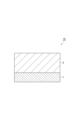
- FIG. 1 is a cross-sectional view of a multilayer film according to one embodiment of the invention.
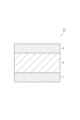
- FIG. 2 is a cross-sectional view of a multilayer film according to another embodiment of the invention.
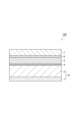
- FIG. 3 is a cross-sectional view of a packaging material according to one embodiment of the present invention.
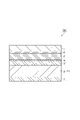
- FIG. 4 is a cross-sectional view of a packaging material according to another embodiment of the invention.
- FIG. 1 is a cross-sectional view of a multilayer film according to one embodiment of the invention.
- the multilayer film 10 comprises a first layer 1 and a second layer 2 in this order.
- FIG. 2 is a cross-sectional view of a multilayer film according to another embodiment of the invention.
- the multilayer film 11 comprises a first layer 1, a second layer 2 and a third layer 3 in this order.
- the multilayer film can be used as a polypropylene-based unstretched sealant film.
- the first layer contains a propylene homopolymer (A) and a propylene-based resin (B) having a melting point of 132-150°C.
- a propylene homopolymer (A) having a high melting point together with the propylene-based resin (B) having a moderately lower melting point, both excellent heat resistance and heat sealability can be achieved.
- the first layer is a heat seal layer (seal layer), and when the multilayer film further comprises a third layer, the first layer can be referred to as an outer layer (first outer layer).
- the propylene homopolymer (A) can be obtained by homopolymerizing propylene using, for example, a Ziegler-Natta catalyst, a metallocene catalyst, or a half-metallocene catalyst. By containing the propylene homopolymer (A) in the first layer, excellent heat resistance can be imparted to the first layer.
- the melting point of the propylene homopolymer (A) is above the melting point of the propylene-based resin (B).
- the propylene homopolymer (A) those having a melting initiation temperature of 150°C or higher and a melting point of 155°C or higher when differential scanning calorimetry (JIS K 7121) is performed can be used. Those having both the melting initiation temperature and the melting point within this range have excellent heat resistance and, for example, are less likely to fuse on the inner surface of the packaging bag after being subjected to high-temperature retort treatment.
- melt flow rate MFR: ISO 1133
- temperature 230°C, load 2.16 kg in the range of 2.0 to 7.0 g/10 minutes
- melt flow rate is equal to or higher than the lower limit
- the load on the extruder during molding is reduced, the processing speed is less likely to decrease, and excellent productivity can be easily maintained.
- melt flow rate is equal to or lower than the upper limit
- the first layer tends to have excellent impact resistance.
- Propylene resin (B) As the propylene-based resin (B), those having a melting point in the range of 132 to 150° C. when measured by differential scanning calorimetry (JIS K 7121) can be used. By using a material having a melting point within this range, it is possible to achieve both excellent heat resistance and excellent low-temperature sealability in a well-balanced manner. From this point of view, the melting point may be 135-145°C. After the formation of the first layer, the melting point of the propylene-based resin (B) is measured by separating the first layer by a high-temperature LC method using, for example, graphite carbon as an adsorbent, and measuring the respective melting points. can do.
- JIS K 7121 differential scanning calorimetry
- the ethylene content of the propylene-based resin (B) may be 6% by mass or less.
- the ethylene content may be 5.5% by mass or less, and may be 4.5% by mass or less.
- the lower limit of the ethylene content is not particularly limited, it can be 3% by mass from the viewpoint of low-temperature sealing properties.
- the ethylene content of the propylene-based resin (B) is the ethylene content described on pages 412-413 of the Polymer Analysis Handbook (May 10, 2013, 3rd edition) edited by the Japan Society for Analytical Science, Polymer Analysis Council. It can be measured according to the quantitative determination method (IR method).
- the propylene-based resin (B) includes, for example, a propylene/ethylene random copolymer.
- the propylene/ethylene random copolymer is not particularly limited in its production method. can be obtained by copolymerizing. By using a propylene/ethylene random copolymer, a multilayer film having superior transparency can be obtained.
- the first layer contains 70-10% by mass of propylene homopolymer (A) and 30-90% by mass of propylene-based resin (B) having a melting point of 132-150°C.
- the content of the propylene homopolymer (A) is 10% by mass or more, excellent heat resistance can be maintained. From this point of view, the content may be 15% by mass or more, and may be 20% by mass or more.
- the content of the propylene homopolymer (A) is 70% by mass or less, that is, the content of the propylene-based resin (B) having a melting point of 132 to 150°C is at least 30% by mass or more, Excellent low-temperature sealability can be expressed.
- the content of the propylene homopolymer (A) may be 65% by mass or less, and may be 60% by mass or less.
- the content of the propylene-based resin (B) having a melting point of 132 to 150° C. may be 35 to 85% by mass, and may be 40 to 80% by mass.
- the second layer contains a propylene/ethylene block copolymer (C) and an ethylene/propylene copolymer elastomer (D). If the multilayer film further comprises a third layer, the second layer can be referred to as an intermediate layer.
- the propylene/ethylene block copolymer (C) is produced by producing the propylene polymer (C1) in the first step and then producing the ethylene-propylene copolymer (C2) by vapor phase polymerization in the second step. It is a copolymer that can be obtained.
- the propylene/ethylene block copolymer (C) is not a block copolymer in which a propylene polymer terminal and an ethylene-propylene copolymer terminal are bonded, but a kind of blend copolymer. By containing the propylene/ethylene block copolymer (C) in the second layer, it is easy to obtain excellent cold impact resistance.
- the propylene/ethylene block copolymer (C) used has a melt flow rate (MFR: ISO 1133) (temperature 230°C, load 2.16 kg) in the range of 0.5 to 2.5 g/10 minutes. be able to.
- MFR melt flow rate
- the melt flow rate is equal to or higher than the lower limit, the load on the extruder during molding is reduced, the processing speed is less likely to decrease, and excellent productivity can be easily maintained.
- the melt flow rate is equal to or lower than the upper limit, the second layer can easily obtain excellent cold impact resistance.
- the propylene/ethylene block copolymer (C) may contain 90 to 60% by mass of the propylene polymer (C1) and 10 to 40% by mass of the ethylene-propylene copolymer (C2). When each component is in this range, it is easy to obtain excellent cold impact resistance. From this point of view, the propylene/ethylene block copolymer (C) contains 87.5 to 65% by mass of the propylene polymer (C1) and 12.5 to 35% by mass of the ethylene-propylene copolymer (C2). It may contain 85 to 70% by mass of propylene polymer (C1) and 15 to 30% by mass of ethylene-propylene copolymer (C2).
- the ethylene content of the ethylene-propylene copolymer (C2) contained in the propylene-ethylene block copolymer (C) is not particularly limited, but can be in the range of 20 to 40% by mass.
- the ethylene content is equal to or less than the upper limit, the tackiness of the product can be suppressed, contamination due to the tackiness of the product during production is less likely to occur, and excellent productivity can be easily maintained.
- the ethylene content is at least the lower limit, excellent cold impact resistance can be easily obtained.
- the ethylene/propylene copolymer elastomer (D) can be prepared, for example, by a slurry polymerization method in the presence of an inert hydrocarbon such as hexane, heptane, or kerosene, or a liquefied ⁇ -olefin solvent such as propylene, or a gas phase polymerization method in the absence of a solvent. It can be obtained legally. Specifically, the ethylene/propylene copolymer elastomer (D) is obtained using a known multistage polymerization method.
- a polymerization-type high polymer can be obtained by copolymerizing propylene and ⁇ -olefin in the second stage reactor. It is a rubber-containing polypropylene resin.
- the ethylene/propylene copolymer elastomer (D) used has a melt flow rate (MFR: ISO 1133) (temperature: 230°C, load: 2.16 kg) in the range of 0.5 to 3.5 g/10 minutes. be able to.
- MFR melt flow rate
- the melt flow rate is equal to or higher than the lower limit, the load on the extruder during molding is reduced, the processing speed is less likely to decrease, and excellent productivity can be easily maintained.
- the melt flow rate is equal to or lower than the upper limit, the compatibility between the propylene/ethylene block copolymer (C) and the ethylene/propylene copolymer elastomer (D) is improved, resulting in reduced transparency and impact resistance. hard to do
- ethylene/propylene copolymer elastomer (D) those having a mass ratio of propylene content to ethylene content (propylene content/ethylene content) in the range of 1.5 to 4 can be used. Within the above range, it is easy to obtain excellent cold impact resistance.
- the second layer may contain 90 to 50% by mass of the propylene/ethylene block copolymer (C) and 10 to 50% by mass of the ethylene/propylene copolymer elastomer (D).
- the content of the propylene/ethylene block copolymer (C) is 50% by mass or more, excellent heat resistance can be easily maintained. From this point of view, the content may be 60% by mass or more, and may be 70% by mass or more.
- the content of the propylene/ethylene block copolymer (C) is 90% by mass or less, that is, the content of the ethylene/propylene copolymer elastomer (D) is at least 10% by mass or more. Cold impact resistance can be expressed.
- the content of the propylene/ethylene block copolymer (C) may be 87.5% by mass or less, and may be 85% by mass or less.
- the content of the ethylene/propylene copolymer elastomer (D) may be 12.5 to 40% by mass, and may be 15 to 30% by mass.
- the third layer contains the propylene homopolymer (A) and the propylene-based resin (B) having a melting point of 132 to 150° C. described in the first layer. Distortion and curling of the multilayer film can be easily suppressed by providing the third layer.
- the third layer can be referred to as an outer layer (second outer layer).
- the mixing ratio of the propylene homopolymer (A) and the propylene-based resin (B) having a melting point of 132 to 150° C. in the third layer there are no particular restrictions on the mixing ratio of the propylene homopolymer (A) and the propylene-based resin (B) having a melting point of 132 to 150° C. in the third layer, but from the viewpoint of suppressing film curl after film formation, the first It is preferable that the compounding ratio is the same as that of the layer.
- the thickness of the multilayer film is not particularly limited as long as it can be used as a film for packaging materials, for example, but if the film is too thick, there is a cost disadvantage.
- the thickness of the multilayer film can be 100 ⁇ m or less, and can be between 50 and 70 ⁇ m.
- the thickness of the first layer may be 8-30% based on the thickness of the multilayer film.
- the thickness ratio of the first layer is at least the lower limit, excellent low-temperature sealability can be easily obtained, and when it is at most the upper limit, a decrease in the heat seal strength of the film can be suppressed. Practicality is easily obtained. From this point of view, the thickness percentage of the first layer may be 10-25%, and may be 10-15%.
- the thickness of the second layer may be 20 ⁇ m or more. As a result, the cold impact resistance of the film is maintained, and the bag is less likely to break even during low-temperature storage. From this point of view, the thickness of the second layer may be 25 ⁇ m or more, and may be 30 ⁇ m or more. Although the upper limit of the thickness of the second layer is not particularly limited, it can be set to 50 ⁇ m because it is a cost disadvantage.
- the total thickness of the first layer and the third layer when providing the third layer may be 16 to 42% based on the thickness of the multilayer film.
- the ratio of the total thickness is at least the lower limit value, excellent low-temperature sealability can be easily obtained, and when it is at most the upper limit value, a decrease in the heat seal strength of the film can be suppressed, and practicality can be obtained. easy.
- the ratio of the total thickness of the first layer and the third layer may be 20-35%, and may be 20-30%.
- a method for producing a multilayer film is not particularly limited, and known methods can be used.
- a melt-kneading method using a general kneader such as a single-screw extruder, a twin-screw extruder, and a multi-screw extruder; Examples include a method of removing the solvent by heating.
- a single-screw extruder or a twin-screw extruder can be used in consideration of workability.
- the screw When a single-screw extruder is used, the screw includes a full-flight screw, a screw with a mixing element, a barrier-flight screw, a fluted screw, and the like, and these can be used without particular limitation.
- a twin-screw kneading device a co-rotating twin-screw extruder, a counter-rotating twin-screw extruder, etc. can be used, and the screw shape can be a full-flight screw, a kneading disk type, etc., without particular limitation. can be done.
- the obtained multilayer film may be subjected to a surface modification treatment to improve suitability for post-processing as necessary.
- a surface modification treatment for example, in order to improve the printability when using a single film or to improve the lamination aptitude when using a laminated film, the surface to be printed or the surface that comes into contact with the base material may be subjected to a surface modification treatment.
- the surface modification treatment include corona discharge treatment, plasma treatment, flame treatment, and other treatments that oxidize the film surface to generate functional groups, and modification treatment by a wet process that forms an easily adhesive layer by coating. .
- the multilayer film may be used as a single film or laminated with a substrate, and the method of use as a packaging material is not particularly limited.
- the packaging material can be provided with the multilayer film and the base material.
- a packaging material includes the above multilayer film, biaxially oriented polyamide film (ONy), biaxially oriented polyester film (PET), biaxially oriented polypropylene film (OPP), printed paper, metal foil ( It can be obtained by laminating at least one layer of substrates such as AL foil), transparent deposition film, etc. to form a laminate.
- a packaging material obtained by using a biaxially oriented polypropylene film (OPP) as a base material can be referred to as a same-material packaging material.
- FIG. 3 is a cross-sectional view of a packaging material according to one embodiment of the present invention.
- a packaging material 100 shown in the figure includes a multilayer film 10, an adhesive layer 4, a transparent deposited film 5, an adhesive layer 6, and a base film 7 in this order.
- FIG. 4 is a cross-sectional view of a packaging material according to another embodiment of the invention.
- a packaging material 101 shown in the figure comprises a multilayer film 11, an adhesive layer 4, a transparent deposited film 5, an adhesive layer 6, and a base film 7 in this order.
- the packaging materials 100 and 101 are used so that the sides of the multilayer films 10 and 11 face the contents.
- a conventional dry lamination method in which the films constituting the laminate are laminated using an adhesive can be suitably employed, but a method of extrusion laminating the multilayer film directly onto the substrate can also be used as necessary. can be adopted.
- the layered structure of the laminate is appropriately adjusted according to the required properties of the package, such as barrier properties that satisfy the shelf life of the packaged food, size and impact resistance that can handle the weight of the contents, and visibility of the contents. can do.
- the package may be made from the packaging material described above, and there are no particular restrictions on the manner of making the bag.
- the above packaging material laminate
- the above packaging material can be used for a flat bag, a three-sided bag, a folded bag, a gusseted bag, a standing pouch, a spouted pouch, a beaked pouch, etc., using a multilayer film as a sealing material.
- a first layer which is a heat seal layer, containing 70 to 10% by mass of a propylene homopolymer (A) and 30 to 90% by mass of a propylene-based resin (B) having a melting point of 132 to 150°C; a second layer containing a propylene/ethylene block copolymer (C) and an ethylene/propylene copolymer elastomer (D) in this order.
- a second layer containing a propylene/ethylene block copolymer (C) and an ethylene/propylene copolymer elastomer (D) in this order.
- [Invention 3] The multilayer film according to invention 1 or 2, wherein the thickness of the first layer is 8 to 30% based on the thickness of the multilayer film.
- [Invention 4] the first layer; the second layer; The multi-layer film according to invention 1, comprising in this order a propylene homopolymer (A) and a third layer containing a propylene-based resin (B) having a melting point of 132 to 150°C.
- [Invention 5] The multilayer film according to invention 4, wherein the total thickness of the first layer and the third layer is 16 to 42% based on the thickness of the multilayer film.
- [Invention 6] The multilayer film according to any one of Inventions 1 to 5, wherein the second layer has a thickness of 20 ⁇ m or more.
- FIG. 7 A packaging material comprising the multilayer film according to any one of Inventions 1 to 6 and a substrate.
- Example 1 A propylene homopolymer (A), a propylene resin (B), a propylene/ethylene block copolymer (C), and an ethylene/propylene copolymer elastomer (D) shown below were prepared.
- Polylene resin (B) A propylene/ethylene random copolymer having a melting point of 147° C. and an ethylene content of 3.4% by mass as determined by differential scanning calorimetry (JIS K 7121).
- the ethylene content was measured using the ethylene content quantification method ( IR method).
- a resin mixture was prepared by mixing 50% by mass of the propylene homopolymer (A) and 50% by mass of the propylene-based resin (B) in the form of pellets.
- a resin mixture was prepared by mixing 83% by mass of the propylene/ethylene block copolymer (C) and 17% by mass of the ethylene/propylene copolymer elastomer (D) in the form of pellets.
- Each resin mixture was supplied to an extruder whose temperature was controlled at 250°C, kneaded in a molten state, and a T-die extruder with a feed block gave a first layer thickness of 15 ⁇ m and a second layer thickness of 15 ⁇ m.
- a film of Example 1 was produced by laminating so that the thickness of the layers was 45 ⁇ m.
- Example 2 A film of Example 2 was produced in the same manner as in Example 1, except that the mixing ratio of the propylene homopolymer (A) and the propylene-based resin (B) was changed as shown in Table 1.
- Example 3 A film of Example 3 was produced in the same manner as in Example 1, except that the mixing ratio of the propylene homopolymer (A) and the propylene-based resin (B) was changed as shown in Table 1.
- Example 4 A film of Example 4 was produced in the same manner as in Example 1, except that the following propylene-based resin (B') was used instead of the propylene-based resin (B).
- Propylene resin (B') A propylene/ethylene random copolymer having a melting point of 133° C. and an ethylene content of 5.8% by mass as determined by differential scanning calorimetry (JIS K 7121).
- Example 5 The film of Example 5 was prepared in the same manner as in Example 1, except that the mixing ratio of the propylene/ethylene block copolymer (C) and the ethylene/propylene copolymer elastomer (D) was changed as shown in Table 1. was made.
- Example 6 For forming the first layer and the third layer, a resin mixture was prepared by mixing 50% by mass of propylene homopolymer (A) and 50% by mass of propylene-based resin (B) in the form of pellets.
- a resin mixture was prepared by mixing 83% by mass of the propylene/ethylene block copolymer (C) and 17% by mass of the ethylene/propylene copolymer elastomer (D) in the form of pellets.
- Each resin mixture is supplied to an extruder controlled at 250 ° C., kneaded in a molten state, and the thickness of the first layer and the third layer is adjusted by a T-die extruder having a feed block.
- a film of Example 6 was produced by laminating so that the thickness of the second layer was 10 ⁇ m and the thickness of the second layer was 40 ⁇ m.
- Example 7 A film of Example 7 was produced in the same manner as in Example 6, except that the mixing ratio of the propylene homopolymer (A) and the propylene-based resin (B) was changed as shown in Table 1.
- Example 8 A film of Example 8 was produced in the same manner as in Example 6, except that the mixing ratio of the propylene homopolymer (A) and the propylene-based resin (B) was changed as shown in Table 1.
- Example 9 A film of Example 9 was prepared in the same manner as in Example 6, except that the mixing ratio of the propylene/ethylene block copolymer (C) and the ethylene/propylene copolymer elastomer (D) was changed as shown in Table 1. was made.
- Comparative example 1 A film of Comparative Example 1 was produced in the same manner as in Example 1, except that the first layer was formed using only the propylene homopolymer (A).
- Comparative example 2 A film of Comparative Example 2 was produced in the same manner as in Example 1, except that the mixing ratio of the propylene homopolymer (A) and the propylene-based resin (B) was changed as shown in Table 2.
- Comparative Example 3 A film of Comparative Example 3 was produced in the same manner as in Example 1, except that the first layer was formed using only the propylene-based resin (B).
- Example 5 Example 1 except that the following elastomer resin was used instead of the propylene-based resin (B), and the mixing ratio of the propylene homopolymer (A) and the elastomer resin was changed as shown in Table 2.
- a film of Comparative Example 5 was produced in the same manner as above.
- (elastomer resin) It is an olefin-based elastomer using a metallocene catalyst, using ethylene as a main monomer and butene-1 as a comonomer, and having a melt flow rate (MFR: ISO 1133) (temperature: 190°C, load: 2.16 kg) of 3.6 g/ Elastomer resin that is 10 minutes.
- Comparative Example 6 A film of Comparative Example 6 was produced in the same manner as in Example 1, except that the second layer was formed using only the propylene/ethylene block copolymer (C).
- a biaxially oriented polyester film (PET) with a thickness of 12 ⁇ m, an AL foil with a thickness of 9 ⁇ m, a biaxially oriented polyamide film (ONy) with a thickness of 15 ⁇ m, and the film (polypropylene film) obtained in each example were urethane-based
- a laminate having the following structure was prepared by laminating by an ordinary dry lamination method using an adhesive. If the film had a first layer, it was adhered to the ONy with the first layer facing out.
- Laminate structure PET/adhesive/AL foil/adhesive/ONy/adhesive/polypropylene film
- the polypropylene films of this laminate were sealed using a heat sealer manufactured by Tester Sangyo Co., Ltd. at a sealing pressure of 0.2 MPa. Heat-sealing was performed at a sealing temperature of 140° C. to 160° C. in increments of 5° C. under conditions of a sealing time of 1 second and a sealing width of 5 mm.
- the polypropylene-based multilayer film of the present invention achieves high levels of heat resistance, cold impact resistance, and low-temperature sealing properties, and can be suitably used as a sealant film for retort packaging.
Landscapes
- Chemical & Material Sciences (AREA)
- Engineering & Computer Science (AREA)
- Health & Medical Sciences (AREA)
- Chemical Kinetics & Catalysis (AREA)
- Medicinal Chemistry (AREA)
- Polymers & Plastics (AREA)
- Organic Chemistry (AREA)
- Manufacturing & Machinery (AREA)
- Materials Engineering (AREA)
- Mechanical Engineering (AREA)
- Laminated Bodies (AREA)
- Wrappers (AREA)
Priority Applications (5)
| Application Number | Priority Date | Filing Date | Title |
|---|---|---|---|
| JP2022570199A JP7231135B1 (ja) | 2021-09-01 | 2022-08-05 | 多層フィルム、包装材及び包装体 |
| EP22864182.5A EP4397490A4 (en) | 2021-09-01 | 2022-08-05 | Multilayer film, packaging material, and package |
| US18/294,736 US20240343026A1 (en) | 2021-09-01 | 2022-08-05 | Multilayer film, packaging material, and package |
| CN202280051029.5A CN117751034A (zh) | 2021-09-01 | 2022-08-05 | 多层膜、包装材料以及包装体 |
| JP2023018216A JP2023055942A (ja) | 2021-09-01 | 2023-02-09 | 多層フィルム、包装材及び包装体 |
Applications Claiming Priority (2)
| Application Number | Priority Date | Filing Date | Title |
|---|---|---|---|
| JP2021142123 | 2021-09-01 | ||
| JP2021-142123 | 2021-09-01 |
Publications (1)
| Publication Number | Publication Date |
|---|---|
| WO2023032596A1 true WO2023032596A1 (ja) | 2023-03-09 |
Family
ID=85411027
Family Applications (1)
| Application Number | Title | Priority Date | Filing Date |
|---|---|---|---|
| PCT/JP2022/030163 Ceased WO2023032596A1 (ja) | 2021-09-01 | 2022-08-05 | 多層フィルム、包装材及び包装体 |
Country Status (6)
| Country | Link |
|---|---|
| US (1) | US20240343026A1 (cg-RX-API-DMAC10.html) |
| EP (1) | EP4397490A4 (cg-RX-API-DMAC10.html) |
| JP (2) | JP7231135B1 (cg-RX-API-DMAC10.html) |
| CN (1) | CN117751034A (cg-RX-API-DMAC10.html) |
| TW (1) | TW202319249A (cg-RX-API-DMAC10.html) |
| WO (1) | WO2023032596A1 (cg-RX-API-DMAC10.html) |
Cited By (2)
| Publication number | Priority date | Publication date | Assignee | Title |
|---|---|---|---|---|
| WO2024247593A1 (ja) * | 2023-05-31 | 2024-12-05 | Toppanホールディングス株式会社 | シーラントフィルム、包装材及び包装体 |
| WO2025243870A1 (ja) * | 2024-05-22 | 2025-11-27 | Toppanホールディングス株式会社 | 多層フィルム、包装材及び包装体 |
Families Citing this family (3)
| Publication number | Priority date | Publication date | Assignee | Title |
|---|---|---|---|---|
| JP2024143326A (ja) | 2023-03-30 | 2024-10-11 | 大王製紙株式会社 | 個装吸収性物品 |
| JP2025075618A (ja) * | 2023-10-31 | 2025-05-15 | Toppanホールディングス株式会社 | シーラントフィルム、包装材及び包装体 |
| CN119734501B (zh) * | 2024-12-19 | 2025-12-05 | 杭州福斯特功能膜材料有限公司 | 一种用于铝塑膜的聚丙烯膜、铝塑膜及电池 |
Citations (5)
| Publication number | Priority date | Publication date | Assignee | Title |
|---|---|---|---|---|
| JPH09314770A (ja) * | 1996-05-31 | 1997-12-09 | Sumitomo Bakelite Co Ltd | Ptp包装用ポリプロピレン系シート |
| US20080176016A1 (en) * | 2007-01-24 | 2008-07-24 | Otsuka Pharmaceutical Factory, Inc. | Pliable plastic film and container using the same |
| JP2017132186A (ja) | 2016-01-29 | 2017-08-03 | 東レフィルム加工株式会社 | 耐衝撃性フィルムおよびそれを用いた積層体 |
| JP2018079583A (ja) * | 2016-11-14 | 2018-05-24 | フタムラ化学株式会社 | ポリプロピレン系延伸シーラントフィルム及びこれを用いたフィルム積層体 |
| JP2018094911A (ja) * | 2016-12-13 | 2018-06-21 | 日本ポリプロ株式会社 | 加飾フィルムおよびそれを用いた加飾成形体の製造方法 |
Family Cites Families (18)
| Publication number | Priority date | Publication date | Assignee | Title |
|---|---|---|---|---|
| JPH0686109B2 (ja) * | 1985-07-01 | 1994-11-02 | 昭和電工株式会社 | レトルト殺菌包装材料用複合フィルム積層体 |
| US5527608A (en) * | 1994-12-27 | 1996-06-18 | Mobil Oil Corporation | Oriented multilayer heat sealable packaging film capable of withstanding high altitude effects |
| JP2006326925A (ja) * | 2005-05-24 | 2006-12-07 | Okamoto Ind Inc | ポリプロピレン系多層フィルム、積層体及び容器包装袋 |
| EP1840164A1 (en) * | 2006-03-30 | 2007-10-03 | SOLVAY INDUSTRIAL FOILS MANAGEMENT AND RESEARCH (Société Anonyme) | Retortable composition |
| US8784958B2 (en) * | 2007-02-23 | 2014-07-22 | Otsuka Pharmaceutical Factory, Inc. | Multilayer film and container |
| JP5205044B2 (ja) * | 2007-12-14 | 2013-06-05 | 日本ポリプロ株式会社 | 二軸延伸自己粘着性プロテクトフィルム |
| US7750081B2 (en) * | 2008-10-01 | 2010-07-06 | Sunoco Chemicals, Inc. | Random copolymer with enhanced ethylene content |
| JP5709142B2 (ja) * | 2010-05-31 | 2015-04-30 | 株式会社大塚製薬工場 | 多層フィルムおよび多層フィルムから形成されたバッグ |
| US20220111622A1 (en) * | 2018-07-31 | 2022-04-14 | Bemis Company, Inc. | Multilayer packaging film |
| TWI858003B (zh) * | 2019-01-29 | 2024-10-11 | 日商東洋紡股份有限公司 | 聚丙烯系樹脂多層膜以及包裝體 |
| JP7331473B2 (ja) * | 2019-06-10 | 2023-08-23 | 凸版印刷株式会社 | シーラント層形成用樹脂組成物、並びに、それを用いたシーラントフィルム、積層フィルム及び包装材 |
| TWI828911B (zh) * | 2019-06-20 | 2024-01-11 | 日商東洋紡股份有限公司 | 聚烯烴系樹脂膜、使用有聚烯烴系樹脂膜之積層體以及包裝體 |
| JP7259623B2 (ja) * | 2019-07-29 | 2023-04-18 | 凸版印刷株式会社 | ガスバリア積層体及びこれを用いた包装材 |
| US20230202153A1 (en) * | 2020-06-12 | 2023-06-29 | Toppan Inc. | Multilayer film, packaging material and package |
| WO2021256350A1 (ja) * | 2020-06-17 | 2021-12-23 | 東洋紡株式会社 | 二軸配向ポリプロピレンフィルム |
| JP7596127B2 (ja) * | 2020-11-25 | 2024-12-09 | 住友化学株式会社 | プロピレン重合体組成物、および、フィルム |
| EP4279268A4 (en) * | 2021-01-15 | 2024-11-27 | Toyobo Co., Ltd. | MULTILAYER BODY AND PACKAGING USING SAME |
| JP7700503B2 (ja) * | 2021-05-10 | 2025-07-01 | Toppanホールディングス株式会社 | 多層フィルム、包装材及び包装体 |
-
2022
- 2022-08-05 WO PCT/JP2022/030163 patent/WO2023032596A1/ja not_active Ceased
- 2022-08-05 CN CN202280051029.5A patent/CN117751034A/zh active Pending
- 2022-08-05 EP EP22864182.5A patent/EP4397490A4/en active Pending
- 2022-08-05 US US18/294,736 patent/US20240343026A1/en active Pending
- 2022-08-05 JP JP2022570199A patent/JP7231135B1/ja active Active
- 2022-08-25 TW TW111132010A patent/TW202319249A/zh unknown
-
2023
- 2023-02-09 JP JP2023018216A patent/JP2023055942A/ja active Pending
Patent Citations (5)
| Publication number | Priority date | Publication date | Assignee | Title |
|---|---|---|---|---|
| JPH09314770A (ja) * | 1996-05-31 | 1997-12-09 | Sumitomo Bakelite Co Ltd | Ptp包装用ポリプロピレン系シート |
| US20080176016A1 (en) * | 2007-01-24 | 2008-07-24 | Otsuka Pharmaceutical Factory, Inc. | Pliable plastic film and container using the same |
| JP2017132186A (ja) | 2016-01-29 | 2017-08-03 | 東レフィルム加工株式会社 | 耐衝撃性フィルムおよびそれを用いた積層体 |
| JP2018079583A (ja) * | 2016-11-14 | 2018-05-24 | フタムラ化学株式会社 | ポリプロピレン系延伸シーラントフィルム及びこれを用いたフィルム積層体 |
| JP2018094911A (ja) * | 2016-12-13 | 2018-06-21 | 日本ポリプロ株式会社 | 加飾フィルムおよびそれを用いた加飾成形体の製造方法 |
Non-Patent Citations (2)
| Title |
|---|
| "the Polymer Analysis Handbook", 10 May 2013, POLYMER ANALYSIS COUNCIL OF THE JAPAN SOCIETY FOR ANALYTICAL SCIENCE, pages: 412 - 413 |
| See also references of EP4397490A4 |
Cited By (2)
| Publication number | Priority date | Publication date | Assignee | Title |
|---|---|---|---|---|
| WO2024247593A1 (ja) * | 2023-05-31 | 2024-12-05 | Toppanホールディングス株式会社 | シーラントフィルム、包装材及び包装体 |
| WO2025243870A1 (ja) * | 2024-05-22 | 2025-11-27 | Toppanホールディングス株式会社 | 多層フィルム、包装材及び包装体 |
Also Published As
| Publication number | Publication date |
|---|---|
| JP2023055942A (ja) | 2023-04-18 |
| JP7231135B1 (ja) | 2023-03-01 |
| US20240343026A1 (en) | 2024-10-17 |
| JPWO2023032596A1 (cg-RX-API-DMAC10.html) | 2023-03-09 |
| EP4397490A4 (en) | 2024-12-11 |
| TW202319249A (zh) | 2023-05-16 |
| CN117751034A (zh) | 2024-03-22 |
| EP4397490A1 (en) | 2024-07-10 |
Similar Documents
| Publication | Publication Date | Title |
|---|---|---|
| JP7231135B1 (ja) | 多層フィルム、包装材及び包装体 | |
| JP7047967B2 (ja) | 多層フィルム、包装材及び包装体 | |
| TWI890806B (zh) | 多層薄膜、包裝材料及包裝體 | |
| JP7401036B1 (ja) | 多層フィルム、包装材及び包装体 | |
| JP7464034B2 (ja) | 多層フィルム、包装材及び包装体 | |
| JP7581884B2 (ja) | 多層フィルム、包装材及び包装体 | |
| WO2023210278A1 (ja) | シーラントフィルム、包装材及び包装体 | |
| JP2023161216A (ja) | 包装材及び包装体 | |
| JP2020203987A (ja) | ポリプロピレン系樹脂組成物、ポリプロピレン系フィルム及び包装材、並びに包装体 | |
| JP7315113B1 (ja) | 多層フィルムの製造方法 | |
| JP2022173753A (ja) | 多層フィルム、包装材及び包装体 | |
| JP7855913B2 (ja) | シーラントフィルム、包装材及び包装体 | |
| JP7855911B2 (ja) | シーラントフィルム、包装材及び包装体 | |
| JP7855912B2 (ja) | シーラントフィルム、包装材及び包装体 | |
| JP7464067B2 (ja) | 多層フィルム、包装材及び包装体 | |
| JP7537235B2 (ja) | ポリプロピレン系多層フィルム、これを用いた包装材及び包装体 | |
| JP7078193B2 (ja) | 多層フィルム、包装材及び包装体 | |
| JP2023161210A (ja) | ポリプロピレン系無延伸フィルム、包装材及び包装体 | |
| JP2020180255A (ja) | ポリプロピレン系樹脂組成物、包装材および包装体 | |
| CN118900770A (zh) | 多层膜、包装材料及包装体 | |
| JP2025075618A (ja) | シーラントフィルム、包装材及び包装体 | |
| WO2025243870A1 (ja) | 多層フィルム、包装材及び包装体 |
Legal Events
| Date | Code | Title | Description |
|---|---|---|---|
| ENP | Entry into the national phase |
Ref document number: 2022570199 Country of ref document: JP Kind code of ref document: A |
|
| 121 | Ep: the epo has been informed by wipo that ep was designated in this application |
Ref document number: 22864182 Country of ref document: EP Kind code of ref document: A1 |
|
| WWE | Wipo information: entry into national phase |
Ref document number: 202280051029.5 Country of ref document: CN |
|
| WWE | Wipo information: entry into national phase |
Ref document number: 18294736 Country of ref document: US |
|
| WWE | Wipo information: entry into national phase |
Ref document number: 202447013748 Country of ref document: IN |
|
| WWE | Wipo information: entry into national phase |
Ref document number: 2401001308 Country of ref document: TH |
|
| WWE | Wipo information: entry into national phase |
Ref document number: 2022864182 Country of ref document: EP |
|
| NENP | Non-entry into the national phase |
Ref country code: DE |
|
| ENP | Entry into the national phase |
Ref document number: 2022864182 Country of ref document: EP Effective date: 20240402 |