WO2023017834A1 - 消毒剤、消毒フィルム及び消毒ビーズ - Google Patents
消毒剤、消毒フィルム及び消毒ビーズ Download PDFInfo
- Publication number
- WO2023017834A1 WO2023017834A1 PCT/JP2022/030526 JP2022030526W WO2023017834A1 WO 2023017834 A1 WO2023017834 A1 WO 2023017834A1 JP 2022030526 W JP2022030526 W JP 2022030526W WO 2023017834 A1 WO2023017834 A1 WO 2023017834A1
- Authority
- WO
- WIPO (PCT)
- Prior art keywords
- surfactant
- disinfectant
- iodine
- disinfecting
- film
- Prior art date
- Legal status (The legal status is an assumption and is not a legal conclusion. Google has not performed a legal analysis and makes no representation as to the accuracy of the status listed.)
- Ceased
Links
Images





Classifications
-
- A—HUMAN NECESSITIES
- A01—AGRICULTURE; FORESTRY; ANIMAL HUSBANDRY; HUNTING; TRAPPING; FISHING
- A01N—PRESERVATION OF BODIES OF HUMANS OR ANIMALS OR PLANTS OR PARTS THEREOF; BIOCIDES, e.g. AS DISINFECTANTS, AS PESTICIDES OR AS HERBICIDES; PEST REPELLANTS OR ATTRACTANTS; PLANT GROWTH REGULATORS
- A01N25/00—Biocides, pest repellants or attractants, or plant growth regulators, characterised by their forms, or by their non-active ingredients or by their methods of application, e.g. seed treatment or sequential application; Substances for reducing the noxious effect of the active ingredients to organisms other than pests
-
- A—HUMAN NECESSITIES
- A01—AGRICULTURE; FORESTRY; ANIMAL HUSBANDRY; HUNTING; TRAPPING; FISHING
- A01N—PRESERVATION OF BODIES OF HUMANS OR ANIMALS OR PLANTS OR PARTS THEREOF; BIOCIDES, e.g. AS DISINFECTANTS, AS PESTICIDES OR AS HERBICIDES; PEST REPELLANTS OR ATTRACTANTS; PLANT GROWTH REGULATORS
- A01N25/00—Biocides, pest repellants or attractants, or plant growth regulators, characterised by their forms, or by their non-active ingredients or by their methods of application, e.g. seed treatment or sequential application; Substances for reducing the noxious effect of the active ingredients to organisms other than pests
- A01N25/02—Biocides, pest repellants or attractants, or plant growth regulators, characterised by their forms, or by their non-active ingredients or by their methods of application, e.g. seed treatment or sequential application; Substances for reducing the noxious effect of the active ingredients to organisms other than pests containing liquids as carriers, diluents or solvents
-
- A—HUMAN NECESSITIES
- A01—AGRICULTURE; FORESTRY; ANIMAL HUSBANDRY; HUNTING; TRAPPING; FISHING
- A01N—PRESERVATION OF BODIES OF HUMANS OR ANIMALS OR PLANTS OR PARTS THEREOF; BIOCIDES, e.g. AS DISINFECTANTS, AS PESTICIDES OR AS HERBICIDES; PEST REPELLANTS OR ATTRACTANTS; PLANT GROWTH REGULATORS
- A01N25/00—Biocides, pest repellants or attractants, or plant growth regulators, characterised by their forms, or by their non-active ingredients or by their methods of application, e.g. seed treatment or sequential application; Substances for reducing the noxious effect of the active ingredients to organisms other than pests
- A01N25/18—Vapour or smoke emitting compositions with delayed or sustained release
-
- A—HUMAN NECESSITIES
- A01—AGRICULTURE; FORESTRY; ANIMAL HUSBANDRY; HUNTING; TRAPPING; FISHING
- A01N—PRESERVATION OF BODIES OF HUMANS OR ANIMALS OR PLANTS OR PARTS THEREOF; BIOCIDES, e.g. AS DISINFECTANTS, AS PESTICIDES OR AS HERBICIDES; PEST REPELLANTS OR ATTRACTANTS; PLANT GROWTH REGULATORS
- A01N59/00—Biocides, pest repellants or attractants, or plant growth regulators containing elements or inorganic compounds
- A01N59/12—Iodine, e.g. iodophors; Compounds thereof
-
- A—HUMAN NECESSITIES
- A01—AGRICULTURE; FORESTRY; ANIMAL HUSBANDRY; HUNTING; TRAPPING; FISHING
- A01P—BIOCIDAL, PEST REPELLANT, PEST ATTRACTANT OR PLANT GROWTH REGULATORY ACTIVITY OF CHEMICAL COMPOUNDS OR PREPARATIONS
- A01P1/00—Disinfectants; Antimicrobial compounds or mixtures thereof
-
- A—HUMAN NECESSITIES
- A01—AGRICULTURE; FORESTRY; ANIMAL HUSBANDRY; HUNTING; TRAPPING; FISHING
- A01P—BIOCIDAL, PEST REPELLANT, PEST ATTRACTANT OR PLANT GROWTH REGULATORY ACTIVITY OF CHEMICAL COMPOUNDS OR PREPARATIONS
- A01P3/00—Fungicides
-
- A—HUMAN NECESSITIES
- A61—MEDICAL OR VETERINARY SCIENCE; HYGIENE
- A61K—PREPARATIONS FOR MEDICAL, DENTAL OR TOILETRY PURPOSES
- A61K33/00—Medicinal preparations containing inorganic active ingredients
- A61K33/18—Iodine; Compounds thereof
-
- A—HUMAN NECESSITIES
- A61—MEDICAL OR VETERINARY SCIENCE; HYGIENE
- A61K—PREPARATIONS FOR MEDICAL, DENTAL OR TOILETRY PURPOSES
- A61K47/00—Medicinal preparations characterised by the non-active ingredients used, e.g. carriers or inert additives; Targeting or modifying agents chemically bound to the active ingredient
- A61K47/02—Inorganic compounds
-
- A—HUMAN NECESSITIES
- A61—MEDICAL OR VETERINARY SCIENCE; HYGIENE
- A61K—PREPARATIONS FOR MEDICAL, DENTAL OR TOILETRY PURPOSES
- A61K47/00—Medicinal preparations characterised by the non-active ingredients used, e.g. carriers or inert additives; Targeting or modifying agents chemically bound to the active ingredient
- A61K47/06—Organic compounds, e.g. natural or synthetic hydrocarbons, polyolefins, mineral oil, petrolatum or ozokerite
- A61K47/08—Organic compounds, e.g. natural or synthetic hydrocarbons, polyolefins, mineral oil, petrolatum or ozokerite containing oxygen, e.g. ethers, acetals, ketones, quinones, aldehydes, peroxides
- A61K47/10—Alcohols; Phenols; Salts thereof, e.g. glycerol; Polyethylene glycols [PEG]; Poloxamers; PEG/POE alkyl ethers
-
- A—HUMAN NECESSITIES
- A61—MEDICAL OR VETERINARY SCIENCE; HYGIENE
- A61K—PREPARATIONS FOR MEDICAL, DENTAL OR TOILETRY PURPOSES
- A61K47/00—Medicinal preparations characterised by the non-active ingredients used, e.g. carriers or inert additives; Targeting or modifying agents chemically bound to the active ingredient
- A61K47/30—Macromolecular organic or inorganic compounds, e.g. inorganic polyphosphates
- A61K47/36—Polysaccharides; Derivatives thereof, e.g. gums, starch, alginate, dextrin, hyaluronic acid, chitosan, inulin, agar or pectin
-
- A—HUMAN NECESSITIES
- A61—MEDICAL OR VETERINARY SCIENCE; HYGIENE
- A61K—PREPARATIONS FOR MEDICAL, DENTAL OR TOILETRY PURPOSES
- A61K47/00—Medicinal preparations characterised by the non-active ingredients used, e.g. carriers or inert additives; Targeting or modifying agents chemically bound to the active ingredient
- A61K47/50—Medicinal preparations characterised by the non-active ingredients used, e.g. carriers or inert additives; Targeting or modifying agents chemically bound to the active ingredient the non-active ingredient being chemically bound to the active ingredient, e.g. polymer-drug conjugates
- A61K47/69—Medicinal preparations characterised by the non-active ingredients used, e.g. carriers or inert additives; Targeting or modifying agents chemically bound to the active ingredient the non-active ingredient being chemically bound to the active ingredient, e.g. polymer-drug conjugates the conjugate being characterised by physical or galenical forms, e.g. emulsion, particle, inclusion complex, stent or kit
-
- A—HUMAN NECESSITIES
- A61—MEDICAL OR VETERINARY SCIENCE; HYGIENE
- A61K—PREPARATIONS FOR MEDICAL, DENTAL OR TOILETRY PURPOSES
- A61K9/00—Medicinal preparations characterised by special physical form
- A61K9/08—Solutions
-
- A—HUMAN NECESSITIES
- A61—MEDICAL OR VETERINARY SCIENCE; HYGIENE
- A61K—PREPARATIONS FOR MEDICAL, DENTAL OR TOILETRY PURPOSES
- A61K9/00—Medicinal preparations characterised by special physical form
- A61K9/14—Particulate form, e.g. powders, Processes for size reducing of pure drugs or the resulting products, Pure drug nanoparticles
-
- A—HUMAN NECESSITIES
- A61—MEDICAL OR VETERINARY SCIENCE; HYGIENE
- A61K—PREPARATIONS FOR MEDICAL, DENTAL OR TOILETRY PURPOSES
- A61K9/00—Medicinal preparations characterised by special physical form
- A61K9/70—Web, sheet or filament bases ; Films; Fibres of the matrix type containing drug
-
- A—HUMAN NECESSITIES
- A61—MEDICAL OR VETERINARY SCIENCE; HYGIENE
- A61P—SPECIFIC THERAPEUTIC ACTIVITY OF CHEMICAL COMPOUNDS OR MEDICINAL PREPARATIONS
- A61P17/00—Drugs for dermatological disorders
-
- A—HUMAN NECESSITIES
- A61—MEDICAL OR VETERINARY SCIENCE; HYGIENE
- A61P—SPECIFIC THERAPEUTIC ACTIVITY OF CHEMICAL COMPOUNDS OR MEDICINAL PREPARATIONS
- A61P31/00—Antiinfectives, i.e. antibiotics, antiseptics, chemotherapeutics
- A61P31/04—Antibacterial agents
-
- A—HUMAN NECESSITIES
- A61—MEDICAL OR VETERINARY SCIENCE; HYGIENE
- A61P—SPECIFIC THERAPEUTIC ACTIVITY OF CHEMICAL COMPOUNDS OR MEDICINAL PREPARATIONS
- A61P31/00—Antiinfectives, i.e. antibiotics, antiseptics, chemotherapeutics
- A61P31/10—Antimycotics
-
- A—HUMAN NECESSITIES
- A61—MEDICAL OR VETERINARY SCIENCE; HYGIENE
- A61P—SPECIFIC THERAPEUTIC ACTIVITY OF CHEMICAL COMPOUNDS OR MEDICINAL PREPARATIONS
- A61P31/00—Antiinfectives, i.e. antibiotics, antiseptics, chemotherapeutics
- A61P31/12—Antivirals
Definitions
- the present invention relates to disinfectants, disinfecting films and disinfecting beads.
- Povidone-iodine is a complex of polyvinylpyrrolidone and polyiodide ions, and disinfectants containing povidone-iodine are shipped as products at a concentration of about 10 w/v %.
- iodine-based disinfectants include iodine tincture containing iodine and potassium iodide in ethanol, and compound iodine-glycerin containing iodine and potassium iodide in glycerin.
- Patent Document 1 discloses a cleaning disinfectant for contact lenses containing a nonionic surfactant and iodine.
- Patent Document 2 discloses a disinfectant containing an iodine-based bactericidal component, potassium iodide, and a zwitterionic compound.
- An object of the present invention is to provide a novel iodine-based disinfectant, a disinfecting film and disinfecting beads containing such a disinfectant.
- ⁇ Aspect 7>> A method for producing a disinfectant, comprising mixing in a medium such that iodine is 10 ppm or more and surfactant is 0.05 w/v% or more, wherein the surfactant is a nonionic surfactant
- a method for producing a disinfectant comprising mixing in a medium such that iodine is 10 ppm or more and surfactant is 0.05 w/v% or more, wherein the surfactant is a nonionic surfactant
- a method for producing a disinfectant A method for producing a disinfectant.
- ⁇ Aspect 8>> A disinfecting film containing iodine and a surfactant in a binder resin, wherein the surfactant is a nonionic surfactant.
- the disinfecting film according to 9. ⁇ Aspect 11>> 11.
- a sanitizing laminate comprising: ⁇ Aspect 14>> A method for producing a disinfecting film according to aspect 10 or 11, wherein the binder resin, iodine, surfactant, and gelation accelerator are dissolved in an aqueous medium, and the resulting dissolved product is put into a mold or a substrate A method for producing an antiseptic film that is applied on top and then dried.
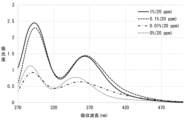
- FIG. 1 shows the results of the absorbance test for each disinfectant produced in Experiment 1.
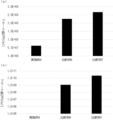
- FIG. FIG. 2 shows the test results of the storage stability of each disinfectant produced in Experiment 2.
- FIG. 3 shows the test results of the bactericidal performance of each disinfectant produced in Experiment 3.
- FIG. 4 shows the results of the virus inactivation test for each disinfectant produced in Experiment 4.
- FIG. 5 shows the results of the virus inactivation test for each disinfecting film produced in Experiment 5.
- FIG. 6 shows an actual photograph of one example of the antiseptic film of the present invention.
- FIG. 7 shows the results of the absorbance test and sterilization performance test of each disinfectant containing Tween 20 produced in Experiment 6.
- FIG. 8 shows the results of the absorbance test and sterilization performance test of each disinfectant containing Tween 60 produced in Experiment 6.
- FIG. 9 shows the absorbance test results of each disinfectant containing PEG and/or SDS produced in Experiment 6.
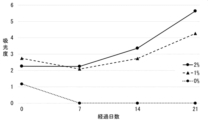
- FIG. 10 shows the storage stability test results of each disinfectant containing Tween 80 produced in Experiment 7.
- FIG. 11 shows the storage stability test results of each disinfectant containing polyoxyethylene alkyl ether produced in Experiment 7.
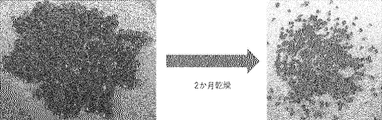
- FIG. Figure 12 shows an actual photograph of one example of the disinfecting beads of the present invention.
- the disinfectant of the present invention is a disinfectant containing 10 ppm or more of iodine and 0.05 w/v% or more of a surfactant in a medium, wherein the surfactant is a nonionic surfactant.
- concentration and content of a component in the disinfectant mean the amount of the component added to manufacture the disinfectant.
- unit of "ppm” means “mg/L” in this specification.
- 95% by mass or more of the iodine added to produce the disinfectant can be complexed with a nonionic surfactant as described later.
- the present invention is a method for producing a disinfectant, comprising mixing in a medium such that iodine is 10 ppm or more and a surfactant is 0.05 w/v% or more, wherein the surfactant is a nonionic It also relates to a method of making a disinfectant, which is a surfactant.
- "containing 10 ppm or more of iodine” means that simple iodine is added to 10 ppm or more, and as a result of adding simple iodine, the form of iodine changes. However, the above contents are not affected.
- the amount of iodide to be added which will be described later, is calculated separately from the amount of iodine to be added.
- the present inventors have found that when a disinfectant contains iodine and a surfactant at a concentration above a certain level, the iodine and the surfactant are complexed, and the disinfecting effect can be exhibited while remaining in the complexed state. Found it. This was unexpected based on the prior art, which derives its disinfecting action from the presence or absence of free iodine. It has been found that this disinfectant is particularly effective in inactivating enveloped viruses such as coronaviruses and influenza viruses.
- the disinfectant of the present invention can obtain not only a bactericidal action due to iodine cations due to free iodine, but also a disinfecting action due to a complex of iodine and a surfactant.
- the state in which iodine and the surfactant in the disinfectant of the present invention are combined can be stably maintained for a long period of time, at least at relatively low temperatures.
- Povidone-iodine is usually used in a diluted form, because when povidone-iodine is at a high concentration, iodine is not liberated from povidone-iodine, resulting in a lower disinfecting effect.
- povidone-iodine is diluted from the beginning, a large amount of iodine is liberated and sublimated, resulting in a decrease in iodine, which is a sterilizing component.
- the disinfectant of the present invention is very useful because it does not need to be diluted immediately before use and can be stored for a long period of time.
- Iodine can be added to the disinfectant so that the weight ratio of the disinfectant is 10 ppm or more.
- the medium is an aqueous medium
- iodine can be mixed with a liquid containing an iodide to improve the water solubility of iodine.
- Iodine may be, for example, 10 ppm or more, 20 ppm or more, 40 ppm or more, 50 ppm or more, 80 ppm or more, 100 ppm or more, 150 ppm or more, or 200 ppm or more, 2000 ppm or less, 1000 ppm or less, 500 ppm or less, 300 ppm or less, or 200 ppm or less. It can be included in disinfectants.
- the content may be 10 ppm to 2000 ppm, 40 ppm to 500 ppm, or 50 ppm to 300 ppm.
- iodide itself does not have a disinfecting effect, depending on the iodide ion concentration, the form of iodine changes to free iodine, triiodide ion, etc., and the form of iodine can affect disinfection performance. is adjusted and mixed with the disinfectant.
- the appropriate amount of iodide to be added varies depending on the amount of iodine to be added. For example, when iodine is about 10 ppm, iodide may not be added.
- the weight ratio of the iodide content to the iodine content may be 0 or more, 0.1 or more, 1 or more, 3 or more, 5 or more, or 7 or more, 30 or less, 20 or less, 15 or less, or 10 or less.
- This weight ratio may be, for example, 0 to 30, 1 to 20, or 3 to 15.
- the type of iodide is not particularly limited as long as it is an ionic compound that forms an ionic bond with iodide ions.
- iodide ions lithium iodide, sodium iodide, potassium iodide, rubidium iodide, cesium iodide, beryllium iodide, magnesium iodide, strontium iodide, barium iodide, zinc iodide, cobalt iodide, nickel iodide, ammonium iodide, methylammonium iodide, and the like.
- the disinfectant of the present invention can contain a nonionic surfactant. According to the studies of the present inventors, it has been found that nonionic surfactants and iodine can be compounded by containing them at a certain content or more. By combining these, the absorbance in water changes, and an aqueous solution of only a normal nonionic surfactant does not have bactericidal performance and / or disinfecting performance, but by combining with iodine , can provide disinfectants with high bactericidal and/or disinfecting performance.
- this high sterilization performance and/or disinfection performance is higher than that of an aqueous solution containing only iodine, and is due to the synergistic effect of combining iodine and a nonionic surfactant.
- polyiodide ions are stabilized by forming a charge transfer complex with the hydrophilic portion of the nonionic surfactant, and free iodine interacts with the hydrophobic portion of the surfactant to form an O/W emulsion. is considered to form and stably disperse.
- iodine in water can be maintained in a stable state to provide a disinfectant that maintains high sterilization performance and/or disinfection performance and long-term performance.
- the disinfectant of the present invention contains a nonionic surfactant at a critical micelle concentration or higher. It is believed that this emulsifies the free iodine and prevents it from vaporizing.
- the content of the nonionic surfactant in the disinfectant of the present invention is 0.05 w/v% or more, 0.08 w/v% or more, 0.10 w/v% 0.30 w/v% or more, 0.50 w/v% or more, or 0.80 w/v% or more, 5.0 w/v% or less, 3.0 w/v% or less; It may be 0 w/v% or less, or 1.5 w/v% or less.
- the content is 0.05 w/v% or more and 5.0 w/v% or less, 0.08 w/v% or more and 3.0 w/v% or less, or 0.30 w/v% or more and 1.5 w/v% or less may be Such a range is preferable because it can be combined with iodine.
- I 3 - derived from the added elemental iodine may be reduced to I - and the iodine and surfactant may not form a complex.
- the weight ratio of iodine to nonionic surfactant may be 0.001 or more, 0.005 or more, 0.01 or more, or 0.05 or more, and may be 0.10 or less, 0.05 or less, 0.05 or more. 03 or less, or 0.01 or less. This weight ratio may be, for example, between 0.001 and 0.10, or between 0.005 and 0.05.
- nonionic surfactant is not particularly limited as long as it can be combined with iodine to substantially change the absorbance in water.
- a surfactant having a terminal hydroxyl group such as a polyoxyalkylene addition type surfactant, particularly a polyoxyethylene (POE) addition type surfactant.
- POE polyoxyethylene
- ester type or ester ether type surfactants are particularly preferable.
- nonionic surfactants include C1-C20 alkanols, phenols, naphthols, bisphenols, (poly)C1-C25 alkylphenols, (poly)arylalkylphenols, C1-C25 alkylnaphthols, C1-C25 alkoxylated phosphoric acids ( salt), sorbitan fatty acid ester, polyalkylene glycol, C1-C22 aliphatic amine, C1-C22 aliphatic amide, etc., and ethylene oxide (EO) and/or propylene oxide (PO) in an amount of 2 to 300 mol, 5 to 100 mol or 10 Addition condensation of up to 60 moles, C1-C25 alkoxylated phosphoric acid (salt), and the like can be mentioned.
- EO ethylene oxide
- PO propylene oxide
- the HLB value of the nonionic surfactant may be 7.0 or more, 8.0 or more, 9.0 or more, 10.0 or more, or 11.0 or more, 20 or less, 18.0 or less, 16 .0 or less, or 15.0 or less.
- the HLB value is 9.0 or more. If the HLB value is too low, it becomes difficult to form an O/W emulsion, which is undesirable because it prevents the formation of a complex with iodine.
- the disinfectant of the present invention contains iodine and surfactant in the medium.
- the medium is not particularly limited, but may be liquid or solid, such as cream or gel.
- Liquid media can include water and water-miscible media, such as water, alcohols, or mixtures thereof.
- well-known media such as ethanol, glycerin, propylene glycol, dipropylene glycol, can be mentioned as alcohol.
- An aqueous solvent is preferred.
- the disinfectant of the present invention can be made into a disinfectant with a predetermined concentration by preparing a concentrated disinfectant in which the medium is adjusted in advance to less than a predetermined amount, and then adding the medium to adjust the concentration.
- the medium used for adjustment and the medium used for density adjustment need not be the same, but must be mixed.
- the description of the content of each component described in this specification is a description of the content of each component when using the disinfectant, and the disinfectant is manufactured by concentrating these in the range of 10 to 500 times can also
- the disinfectant of the present invention may contain other ingredients as long as they do not impair the effects of the present invention.
- medicinal ingredients for example, medicinal ingredients, surfactants other than the above, diluents commonly used in the preparation of disinfectants, viscosity modifiers, stabilizers such as glycerol, preservatives, flavoring agents (including sweeteners), flavorings agents (including fragrances), colorants, monodisperse solid particles such as zeolite, and various other additives.
- the disinfectant of the present invention does not need to contain an iodine-dissipating component, such as ethylenediaminetetraacetic acid, for dissipating iodine after using the disinfectant.
- an iodine-dissipating component such as ethylenediaminetetraacetic acid
- the iodine dissipating component can be 0.01 w/v% or less, 0.001 w/v% or less, 0.0005 w/v% or less, or 0.0001 w/v% or less, or even not included at all. good.
- the disinfectant of the present invention need not contain polyvinylpyrrolidone.
- polyvinylpyrrolidone may be 0.01 w/v% or less, 0.001 w/v% or less, 0.0005 w/v% or less, 0.0001 w/v% or less, or may be completely absent. .
- the disinfectant of the present invention may contain pH buffers such as borate buffers, phosphate buffers, citrate buffers, lactic acid buffers, etc. for pH stabilization.
- the content of the buffering agent in the disinfectant is not particularly limited as long as the pH of the disinfectant can be stabilized in a suitable range, such as a neutral to weakly acidic range, but for example, 0.02 to 3.0 w/v. %, or 0.1 to 1.5 w/v %.
- the disinfectant of the present invention contains ionic surfactants such as cationic surfactants such as alkyltrimethylammonium iodide and dialkyldimethylammonium chloride, N-acylglutamate, An anionic surfactant such as N-methyl-acyl taurine salt may be contained.
- the content of the ionic surfactant in the disinfectant is 0.1 to 50 mol/mol, or 3 to 20 mol/mol as a molar amount relative to the nonionic surfactant in the emulsion.
- the disinfecting film of the present invention contains iodine and a surfactant in a binder resin, and the surfactant is a nonionic surfactant.
- a film containing iodine and a surfactant can inactivate viruses in the form of a film.
- Films having antibacterial properties existed in the prior art, but the present inventors were the first to discover such an iodine-based antiseptic film.
- the antiseptic film of the present invention By attaching the antiseptic film of the present invention to the surfaces of buttons, touch panels, etc., it is possible to prevent the spread of bacteria and viruses, which is very useful.
- the disinfecting film of the present invention to a wound or the like, it is possible to prevent infection with bacteria and viruses.
- the disinfectant film of the present invention can be applied to the udder of a dairy cow.
- the effect of disinfection can also be maintained for a long time.
- iodine and surfactants those used in the above disinfectants can be used.
- the content of iodine and surfactant in the film is not particularly limited as long as it can provide disinfecting properties, but the content contained in the above disinfectant can be referred to.
- the film of the present invention contains 1 part by mass or more, 5 parts by mass or more, 10 parts by mass or more, 20 parts by mass or more, or 30 parts by mass or more of a nonionic surfactant with respect to 100 parts by mass of the binder resin. 200 parts by mass or less, 150 parts by mass or less, 100 parts by mass or less, 80 parts by mass or less, or 60 parts by mass or less.
- the film of the present invention may contain 1 part by mass or more and 200 parts by mass or less, or 20 parts by mass or more and 80 parts by mass or less of a nonionic surfactant with respect to 100 parts by mass of the binder resin.
- the weight ratio of iodine to the nonionic surfactant can be the same as that of the disinfectant of the present invention.
- the binder resin is not particularly limited as long as it can provide the advantageous effects of the present invention and can be used as a binder resin for films, but water-soluble polymers can be mentioned in consideration of ease of production.
- water-soluble polymers examples include polyvinyl alcohols, polyvinylpyrrolidones, polyalkylene oxides such as polyethylene oxide and polypropylene oxide, water-soluble (meth)acrylic resins such as polyacrylic acid and polyacrylamide, and water-soluble acetic acid.
- Vinyl resins and salts thereof, gelatin, and thickening polysaccharides can be mentioned.
- thickening polysaccharides include food additive polysaccharides such as gellan gum, alginic acid such as sodium alginate or salts thereof, xanthan gum, agar, agarose, and locust bean gum.
- a disinfecting film When using a water-soluble polymer, a disinfecting film can be obtained simply by dissolving the water-soluble polymer in the above disinfectant and drying it.
- the antiseptic film of the present invention can further contain a gelling accelerator depending on the type of water-soluble polymer.
- gelling accelerators include salts of alkali metals or alkaline earth metals, such as calcium salts, magnesium salts, sodium salts and potassium salts.
- salts include organic salts or inorganic salts. Halogen salts such as chlorides and fluorides are preferred.
- the above disinfectant and water-soluble polymer are dissolved in an aqueous medium, and this is spread evenly in a container such as a petri dish, and an aqueous system containing the gelation accelerator is placed thereon. Spread out the medium on top of each other. Then, the film of the present invention can be produced by removing the liquid phase by drying or the like and solidifying the film.
- the water content of the antiseptic film of the present invention is not particularly limited, but can be 50 w/v% or less, 10 w/v% or less, 1 w/v% or less, or 0.1 w/v% or less, and does not contain any may
- the thickness of the antiseptic film of the present invention is not particularly limited, but may be 1 ⁇ m or more, 5 ⁇ m or more, 10 ⁇ m or more, 30 ⁇ m or more, 50 ⁇ m or more, 100 ⁇ m or more, 500 ⁇ m or more, or 1 mm or more. 1 mm or less, 500 ⁇ m or less, 300 ⁇ m or less, 100 ⁇ m or less, 50 ⁇ m or less, or 30 ⁇ m or less.
- the thickness of the antiseptic film may be between 1 ⁇ m and 5 mm, between 30 ⁇ m and 1 mm, or between 100 ⁇ m and 500 ⁇ m.
- the antiseptic film of the present invention can be used as one layer of the antiseptic laminate by preparing the above antiseptic, putting it into a mold or coating it on a substrate, and then drying it.
- the base material is not particularly limited as long as it is not gas or liquid.
- it may be a form-retaining substrate such as paper, cloth, film, foam, fiber, glass, rubber, and the like.
- the antiseptic laminate thus comprises a substrate and an antiseptic film on the substrate.
- the antiseptic film may be in the form of a coating, or may be a self-supporting film adhered to the substrate with an adhesive or the like.
- the disinfecting beads of the present invention contain iodine and a surfactant in a binder resin, and the surfactant is a nonionic surfactant.
- Disinfectant beads like the disinfectant film above, can inactivate viruses in the form of beads, which is very useful. It is also possible to use it by attaching it to a base material, or put it in a container and use it as it is.
- iodine, surfactant, and binder resin those used in the above disinfectant or disinfectant film can be used, respectively.
- the contents of the iodine, surfactant and binder resin in the beads are not particularly limited as long as they can provide disinfecting properties, but the contents contained in the above film can be referred to.
- the water content of the beads of the present invention is not particularly limited, but may be 50 w/v% or less, 10 w/v% or less, 1 w/v% or less, or 0.1 w/v% or less, and may be completely free of water. good too.
- binder resin and the gelling accelerator those that can be used in the above film can be used.
- Disinfectant beads can be obtained by dissolving a water-soluble polymer in the above disinfectant and dropping it into an aqueous medium containing a gelling accelerator. Immediately after production, gel-like beads are obtained, but even if the water content of the gel-like beads is removed, the beads of the present invention do not lose their disinfecting properties because iodine and surfactant are complexed.
- the disinfecting beads of the present invention can be used by being present on or in a substrate.
- the base material include the base material used for the disinfecting laminate described above.
- the antiseptic beads may be adhered onto a substrate with an adhesive or the like, or may be used by being contained in a fiber substrate or the like.
- the disinfecting films and disinfecting beads of the present invention are colored, in particular have a light brown color. It is derived from iodine, which has disinfecting properties, and has a characteristic absorption of visible light. In other words, it is possible to detect that the disinfecting performance of the disinfecting film, the disinfecting laminate including the disinfecting film, and the disinfecting beads has deteriorated due to fading.
- the detection method is not particularly limited as long as it is an inspection method that identifies the colors of the film and beads. For example, the appearance may be confirmed by visual observation or by a spectrophotometer.
- Experiment 1 Experiment of Compositing Polyoxyethylene Sorbitan Monooleate and Iodine
- polyoxyethylene sorbitan monooleate Teween 80
- iodine and potassium iodide were mixed in a weight ratio of 1:8 so that the iodine content was 20 ppm to obtain a disinfectant.
- Fig. 1 shows the light absorption spectrum (absorbance) of these disinfectants in the range of 270 nm to 500 nm.
- Experiment 2 Stability test of disinfectant Disinfectant containing no surfactant and containing 200 ppm iodine (Comparative Example 1); containing 1.0 w/v% surfactant (Tween 80) and 200 ppm iodine Disinfectant (Example 1); Disinfectant containing 5.0 w/v % glycerol as stabilizer and 200 ppm iodine and potassium iodide (Comparative Example 2); An antiseptic with the additional addition of 0 w/v % glycerol (Example 2); and a povidone-iodine mouthwash (Comparative Example 3) diluted to an iodine concentration of 200 ppm showing effective bactericidal activity were prepared.
- FIG. 2 shows how much the peak decreased when the absorbance immediately after preparation of each example was taken as 100%.
- the disinfectants of Examples 1 and 2 did not decrease in absorbance even after about 30 days, whereas the disinfectants of Comparative Examples 1-3 showed a few days to 10 days. It can be seen that the absorbance peak is lost in about a day.
- the sanitizers of Examples 1 and 2 did not change color after about 30 days, whereas the sanitizers of Comparative Examples 1-3 became colorless as the absorbance peak was lost. became.
- Bacteriophage Q ⁇ can be used as a virus model such as norovirus that does not have an envelope
- bacteriophage ⁇ 6 can be used as a virus model that has an envelope such as influenza virus and coronavirus.
- Escherichia coli NBRC13965 and Pseudomonas syringae NBRC14084 were used. A portion of the colony of the strain used was inoculated into the autoclaved 702 liquid medium prepared using a platinum loop, and shake culture was performed overnight at 30° C. and 150 rpm. Two types of medium were used, a liquid medium, an upper layer agar medium and a lower layer agar medium.
- For the upper agar medium soft agar medium
- 4 ml of 702 liquid medium containing 0.7% agar powder was dispensed into each test tube, covered with an aluminum cap, autoclaved, and placed in a water bath at 52°C for 15 minutes. I kept it warm for about a minute and used it.
- 702 liquid medium containing 1.5% agar powder was autoclaved and spread in a deep petri dish.
- the phage stock solution was diluted 10-fold with 10 mM potassium phosphate buffer (KPB), treated with 1 ml of disinfectant for 5 minutes, and added with 9 ml of 702 liquid medium to inactivate iodine.
- KPB potassium phosphate buffer
- a 10 3 -fold, 10 4 -fold, 10 5 -fold or 10 6 -fold diluted phage dilution was prepared with KPB, and 100 ⁇ l of these phage dilutions and 100 ⁇ l of the pre-cultured bacterial solution were added to the warmed upper agar medium. After gently stirring, the mixture was uniformly poured into the lower layer agar medium which had been returned to room temperature. The number of plaques was counted after culturing overnight with the plate facing upward, and the phage concentration (PFU) was calculated according to the following formula.
- Phage concentration (PFU/ml) Number of plaques x (dilution rate x 1,000 ( ⁇ l))/(volume of phage dilution ( ⁇ l))
- PFU Protein Forming Unit
- the iodine-Tween80 complex solution was prepared so that the Tween80 concentration was 0 or 1% and the iodine concentration was 0-200 ppm.
- the culture temperature is 37° C. for Escherichia coli infected with bacteriophage Q ⁇ , and 25° C. for Pseudomonas bacteria infected with bacteriophage ⁇ 6.
- FIG. 4(a) The results for bacteriophage Q ⁇ are shown in FIG. 4(a), and the results for bacteriophage ⁇ 6 are shown in FIG. 4(b).
- the disinfectant containing iodine concentration of 100 ppm or more can reduce the number of plaques by more than two orders of magnitude. Also, looking at FIG. 4(b), the disinfectant containing iodine concentration of 10 ppm or more can reduce the number of plaques by three orders of magnitude or more, and the disinfection of the present invention against viruses such as enveloped coronaviruses. agents have been found to be particularly effective.
- ⁇ means that the turbidity was 99.9% or more lower than the blank test using water instead of disinfectant and was below the lower limit of detection.
- ⁇ means that the turbidity was 90.0% to 99.9% lower than water.
- X means that the turbidity did not decrease by 90.0% or more with respect to water.
- Experiment 6 Experiment of disinfecting film containing disinfectant 1 w / v% of gellan gum, which is a water-soluble polymer, 1.0 w / v% of surfactant (Tween 80), 200 ppm of iodine and potassium iodide are mixed in water, These aqueous solutions were obtained. A thin film was formed by putting 10 ml of this aqueous solution into a ⁇ 90 mm glass petri dish. Further, a 0.5% by weight calcium chloride solution was added in layers and allowed to solidify. Then, the film of Example 4 was formed by removing moisture after air-drying for 5 days. A film of Comparative Example 6 was formed in the same manner as in Example 4, except that iodine was not included. Further, a film of Comparative Example 7 was formed in the same manner as in Example 4, except that iodine and surfactant were not included.
- a virus-containing liquid was dropped onto these films, and after about 10 minutes, the films were washed out, and the liquid was used to infect E. coli with the virus. Then, in the same manner as in Experiment 4, the virus inactivation performance was tested.
- FIG. 5(a) The results for bacteriophage Q ⁇ are shown in FIG. 5(a), and the results for bacteriophage ⁇ 6 are shown in FIG. 5(b).
- the film of Example 4 was able to reduce the number of plaques by one digit or more. Moreover, referring to FIG. 5(b), the film of Example 4 showed no plaques within the measurable range, and was able to reduce the number of plaques by at least four orders of magnitude. Therefore, it was found that the antiseptic film of the present invention can inactivate viruses simply by contacting them. In particular, it was found that the antiseptic film of the present invention is very effective against viruses such as enveloped coronaviruses.
- FIG. 6 shows an actual photograph of a film obtained using 2 w/v % sodium alginate instead of 1 w/v % gellan gum in Example 4.
- FIG. 6 shows an actual photograph of a film obtained using 2 w/v % sodium alginate instead of 1 w/v % gellan gum in Example 4.
- Experiment 7 Experiment of disinfectants containing various surfactants Except for changing the surfactant polyoxyethylene sorbitan monooleate (Tween 80, C18; 1 (n-9)) to another surfactant, In the same manner as in Experiments 1 and 3, the surfactant and iodine were combined and the bactericidal performance thereof was tested.
- the surfactant polyoxyethylene sorbitan monooleate Teween 80, C18; 1 (n-9)
- Fig. 7 shows the results of disinfectants containing polyoxyethylene sorbitan monolaurate (Tween 20, C12), and Fig. 8 shows the results of disinfectants containing polyoxyethylene sorbitan monostearate (Tween 60, C18).
- (a) is the result of the absorbance test, and (b) is the result of the bactericidal performance test.
- Figure 9(a) shows the absorbance test results for disinfectants containing polyethylene glycol (PEG) of various molecular weights
- Figure 9(b) shows sodium lauryl sulfate (SDS), an anionic surfactant.
- the results of the absorbance test of the disinfectant are shown
- FIG. 9(c) shows the result of the absorbance test of the disinfectant containing PEG and SDS.
- A means that there is no bactericidal property of the surfactant alone, and the bactericidal property is improved by adding the surfactant to iodine alone
- B is iodine.
- the single substance and surfactant alone show bactericidal activity, it means that the bactericidal activity is equal to or lower than that of iodine alone. In contrast, it means that the bactericidal activity is equal to or lower than that.
- the disinfectant using a nonionic surfactant was able to demonstrate both long-term bactericidal retention and high bactericidal performance.
- the synergistic effect with iodine was not clear for cationic surfactants and amphoteric surfactants, since the surfactants themselves also have bactericidal properties.
- Experiment 7 Complex Stability Experiment A disinfectant was obtained by adding 20 ppm of iodine to various concentrations of surfactant (Tween 80) aqueous solutions. This was stored at 30° C., and the change in absorbance of the peak near 350 nm was observed over time.
- surfactant Teween 80
- a disinfectant was obtained by adding 20 ppm of iodine to a surfactant (polyoxyethylene alkyl ether (C8: HLB 11.5) aqueous solution of various concentrations. It was stored at 30 ° C. and the peak near 350 nm The change in absorbance was observed over time, and the disinfectant stored at 18° C. was also observed. At 30°C, an emulsion is formed, making it difficult to measure the light absorption spectrum.
- a surfactant polyoxyethylene alkyl ether (C8: HLB 11.5) aqueous solution of various concentrations. It was stored at 30 ° C. and the peak near 350 nm The change in absorbance was observed over time, and the disinfectant stored at 18° C. was also observed. At 30°C, an emulsion is formed, making it difficult to measure the light absorption spectrum.
- Experiment 8 Experiment of Disinfection Beads 2 w/v% sodium alginate, 1.0 w/v% surfactant (Tween 80), 200 ppm iodine and potassium iodide were mixed in water to obtain an aqueous solution of these. When this aqueous solution was dropped into a 0.5 mass % calcium chloride solution, gel-like beads were formed in the solution according to the size of the dropped droplet.
- Fig. 12 shows the disinfection beads obtained by separating the beads from the solution.
- the beads shown on the left side of FIG. 12 had a high moisture content and were yellow in color.
- the dried beads obtained by drying the beads for 2 months are shown on the right side of FIG. This bead had a very low moisture content and was darker than the bead before drying, giving it an orange color.
Landscapes
- Health & Medical Sciences (AREA)
- Life Sciences & Earth Sciences (AREA)
- General Health & Medical Sciences (AREA)
- Chemical & Material Sciences (AREA)
- Pharmacology & Pharmacy (AREA)
- Animal Behavior & Ethology (AREA)
- Medicinal Chemistry (AREA)
- Public Health (AREA)
- Veterinary Medicine (AREA)
- Engineering & Computer Science (AREA)
- Epidemiology (AREA)
- Chemical Kinetics & Catalysis (AREA)
- General Chemical & Material Sciences (AREA)
- Pest Control & Pesticides (AREA)
- Plant Pathology (AREA)
- Environmental Sciences (AREA)
- Zoology (AREA)
- Wood Science & Technology (AREA)
- Dentistry (AREA)
- Organic Chemistry (AREA)
- Agronomy & Crop Science (AREA)
- Inorganic Chemistry (AREA)
- Bioinformatics & Cheminformatics (AREA)
- Nuclear Medicine, Radiotherapy & Molecular Imaging (AREA)
- Toxicology (AREA)
- Communicable Diseases (AREA)
- Oncology (AREA)
- Dermatology (AREA)
- Microbiology (AREA)
- Mycology (AREA)
- Oil, Petroleum & Natural Gas (AREA)
- Virology (AREA)
- Agricultural Chemicals And Associated Chemicals (AREA)
Priority Applications (1)
| Application Number | Priority Date | Filing Date | Title |
|---|---|---|---|
| JP2023541456A JP7781390B2 (ja) | 2021-08-13 | 2022-08-10 | 消毒剤、消毒フィルム及び消毒ビーズ |
Applications Claiming Priority (2)
| Application Number | Priority Date | Filing Date | Title |
|---|---|---|---|
| JP2021-131864 | 2021-08-13 | ||
| JP2021131864 | 2021-08-13 |
Publications (1)
| Publication Number | Publication Date |
|---|---|
| WO2023017834A1 true WO2023017834A1 (ja) | 2023-02-16 |
Family
ID=85200627
Family Applications (1)
| Application Number | Title | Priority Date | Filing Date |
|---|---|---|---|
| PCT/JP2022/030526 Ceased WO2023017834A1 (ja) | 2021-08-13 | 2022-08-10 | 消毒剤、消毒フィルム及び消毒ビーズ |
Country Status (2)
| Country | Link |
|---|---|
| JP (1) | JP7781390B2 (https=) |
| WO (1) | WO2023017834A1 (https=) |
Cited By (1)
| Publication number | Priority date | Publication date | Assignee | Title |
|---|---|---|---|---|
| WO2025258649A1 (ja) * | 2024-06-12 | 2025-12-18 | 国立大学法人山形大学 | 消毒性製品、その製造方法及びそれを含む浄化システム |
Citations (13)
| Publication number | Priority date | Publication date | Assignee | Title |
|---|---|---|---|---|
| US4017407A (en) * | 1973-05-14 | 1977-04-12 | West Laboratories, Inc. | Methods for preparing solid iodine carrier mixtures and solid formulations of iodine with iodine carriers |
| JPH01290608A (ja) * | 1988-05-18 | 1989-11-22 | Sunstar Inc | 殺菌剤組成物 |
| JPH0259517A (ja) * | 1988-08-12 | 1990-02-28 | Hercon Lab Corp | 水蒸気および酸素透過性接着包帯 |
| JPH045206A (ja) * | 1990-04-23 | 1992-01-09 | Kao Corp | 殺菌消毒剤組成物 |
| JPH05237171A (ja) * | 1991-09-09 | 1993-09-17 | Becton Dickinson & Co | ポリウレタン中の安定なヨードフォア |
| JPH10108897A (ja) * | 1996-10-04 | 1998-04-28 | Tomey Technol Corp | コンタクトレンズの洗浄消毒方法 |
| JPH10165960A (ja) * | 1996-12-10 | 1998-06-23 | Tomey Technol Corp | 抗菌性組成物及びその製造方法、その抗菌性組成物を使用した抗菌性混合粒状物、微生物侵入防止機能付き液体供給具及びヨウ素含有溶液製造装置 |
| JPH10506916A (ja) * | 1994-12-09 | 1998-07-07 | ウエスト アグロ インコーポレイテッド | 粘性のある液体コンディショニング局所的殺菌剤 |
| JPH11137649A (ja) * | 1997-11-10 | 1999-05-25 | Tomey Technology Kk | コンタクトレンズの洗浄消毒方法 |
| JP2000507217A (ja) * | 1996-03-01 | 2000-06-13 | ウエスト アグロ,アイエヌシー. | 安定性が増大した低pHの殺菌性ヨウ素組成物 |
| JP2003213022A (ja) * | 2001-11-06 | 2003-07-30 | Tomey Corp | ヨウ素含有物品の簡易製造方法、耐水性を有するヨウ素ガス徐放具およびそれらを用いた消毒システム。 |
| JP2005152404A (ja) * | 2003-11-27 | 2005-06-16 | Tomey Corp | ヨウ素ガス放出具、ヨウ素含有液剤調製方法およびヨウ素含有液剤製造装置 |
| JP2011236190A (ja) * | 2010-05-07 | 2011-11-24 | Npo Ecoycle Kyushu | 徐放性藻抑制剤 |
-
2022
- 2022-08-10 JP JP2023541456A patent/JP7781390B2/ja active Active
- 2022-08-10 WO PCT/JP2022/030526 patent/WO2023017834A1/ja not_active Ceased
Patent Citations (13)
| Publication number | Priority date | Publication date | Assignee | Title |
|---|---|---|---|---|
| US4017407A (en) * | 1973-05-14 | 1977-04-12 | West Laboratories, Inc. | Methods for preparing solid iodine carrier mixtures and solid formulations of iodine with iodine carriers |
| JPH01290608A (ja) * | 1988-05-18 | 1989-11-22 | Sunstar Inc | 殺菌剤組成物 |
| JPH0259517A (ja) * | 1988-08-12 | 1990-02-28 | Hercon Lab Corp | 水蒸気および酸素透過性接着包帯 |
| JPH045206A (ja) * | 1990-04-23 | 1992-01-09 | Kao Corp | 殺菌消毒剤組成物 |
| JPH05237171A (ja) * | 1991-09-09 | 1993-09-17 | Becton Dickinson & Co | ポリウレタン中の安定なヨードフォア |
| JPH10506916A (ja) * | 1994-12-09 | 1998-07-07 | ウエスト アグロ インコーポレイテッド | 粘性のある液体コンディショニング局所的殺菌剤 |
| JP2000507217A (ja) * | 1996-03-01 | 2000-06-13 | ウエスト アグロ,アイエヌシー. | 安定性が増大した低pHの殺菌性ヨウ素組成物 |
| JPH10108897A (ja) * | 1996-10-04 | 1998-04-28 | Tomey Technol Corp | コンタクトレンズの洗浄消毒方法 |
| JPH10165960A (ja) * | 1996-12-10 | 1998-06-23 | Tomey Technol Corp | 抗菌性組成物及びその製造方法、その抗菌性組成物を使用した抗菌性混合粒状物、微生物侵入防止機能付き液体供給具及びヨウ素含有溶液製造装置 |
| JPH11137649A (ja) * | 1997-11-10 | 1999-05-25 | Tomey Technology Kk | コンタクトレンズの洗浄消毒方法 |
| JP2003213022A (ja) * | 2001-11-06 | 2003-07-30 | Tomey Corp | ヨウ素含有物品の簡易製造方法、耐水性を有するヨウ素ガス徐放具およびそれらを用いた消毒システム。 |
| JP2005152404A (ja) * | 2003-11-27 | 2005-06-16 | Tomey Corp | ヨウ素ガス放出具、ヨウ素含有液剤調製方法およびヨウ素含有液剤製造装置 |
| JP2011236190A (ja) * | 2010-05-07 | 2011-11-24 | Npo Ecoycle Kyushu | 徐放性藻抑制剤 |
Non-Patent Citations (1)
| Title |
|---|
| FUKUYASU, TSUGUAKI, ASHIDA, KIYOMI: "Effects of Various Salts and Surface Active Agents on Ovicidal Activity of Iodine on Ascaris Eggs", NIPPON JUISHIKAI ZASSHI - JOURNAL OF THE VETERINARY MEDICALASSOCIATION, NIPPON JUISHIKAI, TOKYO,, JP, vol. 40, no. 12, 1 January 1987 (1987-01-01), JP , pages 854 - 858, XP009543371, ISSN: 0446-6454, DOI: 10.12935/jvma1951.40.854 * |
Cited By (1)
| Publication number | Priority date | Publication date | Assignee | Title |
|---|---|---|---|---|
| WO2025258649A1 (ja) * | 2024-06-12 | 2025-12-18 | 国立大学法人山形大学 | 消毒性製品、その製造方法及びそれを含む浄化システム |
Also Published As
| Publication number | Publication date |
|---|---|
| JP7781390B2 (ja) | 2025-12-08 |
| JPWO2023017834A1 (https=) | 2023-02-16 |
Similar Documents
| Publication | Publication Date | Title |
|---|---|---|
| TWI439274B (zh) | 抗病毒方法 | |
| JP3531945B2 (ja) | 安定なポビドン−ヨウ素眼科用溶液 | |
| US3639576A (en) | Resterilizing contact lens solution | |
| KR101633449B1 (ko) | 전기화학적으로 활성화된 치아염소산염 용액을 포함하는 약제학적 제제 | |
| RU2538694C2 (ru) | Фармацевтическая композиция | |
| CN107778497B (zh) | 一种按需释放的复合共价水凝胶及其制备方法和应用 | |
| US9872501B2 (en) | Methods for forming stabilized metal salt particles | |
| CN103843817A (zh) | 一种过氧化氢和过氧乙酸混合型消毒剂及其配制方法 | |
| JPH04182431A (ja) | 殺菌消毒剤組成物 | |
| WO2002085951A2 (en) | Water soluble, randomly substituted partial n-, partial o-acetylated chitosan, preserving compositions containing chitosan, and processes for making thereof | |
| CN108883064B (zh) | 包含pvp-i的眼用组合物 | |
| CN104206413A (zh) | 一种用于血液透析机清洗消毒的消毒液及其制备方法 | |
| TWI650308B (zh) | 有機矽烷水溶液及其保存方法 | |
| JP7781390B2 (ja) | 消毒剤、消毒フィルム及び消毒ビーズ | |
| JPS5925751A (ja) | ポビドン溶液の殺菌法 | |
| JPH02213348A (ja) | ヨードフォールを安定化しパッケージを通して起こる沃素浸出を抑制したパッケージ及びその方法 | |
| JP7521721B2 (ja) | 希釈ポビドンヨード製剤を含む安定した医薬品 | |
| JP2003523420A (ja) | 抗菌性ポリマー組成物 | |
| CN110199994A (zh) | 一种消毒剂及其制备方法、应用,饲料添加剂 | |
| KR101946928B1 (ko) | 수용해성이 향상된 요오드제 및 염화나트륨을 포함하는 고체 조성물 | |
| JP6407537B2 (ja) | 殺菌・抗ウイルス性組成物 | |
| CZ209793A3 (en) | Mesna injection solutions | |
| KR101933603B1 (ko) | 양쪽성 계면활성제를 포함하는 방부제 조성물 및 이를 포함하는 물티슈 | |
| TW201010727A (en) | Pharmaceutical composition having relatively low ionic strength | |
| CN121667213A (zh) | 一种阳离子消毒剂及其制备方法和应用 |
Legal Events
| Date | Code | Title | Description |
|---|---|---|---|
| 121 | Ep: the epo has been informed by wipo that ep was designated in this application |
Ref document number: 22855896 Country of ref document: EP Kind code of ref document: A1 |
|
| WWE | Wipo information: entry into national phase |
Ref document number: 2023541456 Country of ref document: JP |
|
| NENP | Non-entry into the national phase |
Ref country code: DE |
|
| 122 | Ep: pct application non-entry in european phase |
Ref document number: 22855896 Country of ref document: EP Kind code of ref document: A1 |