WO2022255447A1 - βグルカンエステル誘導体 - Google Patents
βグルカンエステル誘導体 Download PDFInfo
- Publication number
- WO2022255447A1 WO2022255447A1 PCT/JP2022/022474 JP2022022474W WO2022255447A1 WO 2022255447 A1 WO2022255447 A1 WO 2022255447A1 JP 2022022474 W JP2022022474 W JP 2022022474W WO 2022255447 A1 WO2022255447 A1 WO 2022255447A1
- Authority
- WO
- WIPO (PCT)
- Prior art keywords
- ester derivative
- glucan ester
- glucan
- carbon atoms
- substitution
- Prior art date
- Legal status (The legal status is an assumption and is not a legal conclusion. Google has not performed a legal analysis and makes no representation as to the accuracy of the status listed.)
- Ceased
Links
Images


Classifications
-
- C—CHEMISTRY; METALLURGY
- C08—ORGANIC MACROMOLECULAR COMPOUNDS; THEIR PREPARATION OR CHEMICAL WORKING-UP; COMPOSITIONS BASED THEREON
- C08B—POLYSACCHARIDES; DERIVATIVES THEREOF
- C08B37/00—Preparation of polysaccharides not provided for in groups C08B1/00 - C08B35/00; Derivatives thereof
- C08B37/0006—Homoglycans, i.e. polysaccharides having a main chain consisting of one single sugar, e.g. colominic acid
- C08B37/0024—Homoglycans, i.e. polysaccharides having a main chain consisting of one single sugar, e.g. colominic acid beta-D-Glucans; (beta-1,3)-D-Glucans, e.g. paramylon, coriolan, sclerotan, pachyman, callose, scleroglucan, schizophyllan, laminaran, lentinan or curdlan; (beta-1,6)-D-Glucans, e.g. pustulan; (beta-1,4)-D-Glucans; (beta-1,3)(beta-1,4)-D-Glucans, e.g. lichenan; Derivatives thereof
-
- C—CHEMISTRY; METALLURGY
- C08—ORGANIC MACROMOLECULAR COMPOUNDS; THEIR PREPARATION OR CHEMICAL WORKING-UP; COMPOSITIONS BASED THEREON
- C08B—POLYSACCHARIDES; DERIVATIVES THEREOF
- C08B3/00—Preparation of cellulose esters of organic acids
- C08B3/16—Preparation of mixed organic cellulose esters, e.g. cellulose aceto-formate or cellulose aceto-propionate
-
- C—CHEMISTRY; METALLURGY
- C08—ORGANIC MACROMOLECULAR COMPOUNDS; THEIR PREPARATION OR CHEMICAL WORKING-UP; COMPOSITIONS BASED THEREON
- C08L—COMPOSITIONS OF MACROMOLECULAR COMPOUNDS
- C08L1/00—Compositions of cellulose, modified cellulose or cellulose derivatives
- C08L1/08—Cellulose derivatives
- C08L1/10—Esters of organic acids, i.e. acylates
- C08L1/14—Mixed esters, e.g. cellulose acetate-butyrate
-
- C—CHEMISTRY; METALLURGY
- C08—ORGANIC MACROMOLECULAR COMPOUNDS; THEIR PREPARATION OR CHEMICAL WORKING-UP; COMPOSITIONS BASED THEREON
- C08L—COMPOSITIONS OF MACROMOLECULAR COMPOUNDS
- C08L5/00—Compositions of polysaccharides or of their derivatives not provided for in groups C08L1/00 or C08L3/00
Definitions
- the present disclosure relates to ⁇ -glucan ester derivatives.
- bioplastics that use microorganisms and plants as raw materials.
- ⁇ -1,3-glucan ester derivatives obtained by esterifying at least part of the hydroxyl groups in ⁇ -1,3-glucan with an acid or the like are known as bioplastics made from microorganisms.
- ⁇ -1,3-glucan ester derivatives and ⁇ -1,4-glucan ester derivatives with similar structures are being studied for molding and processing for use in various applications.
- a ⁇ -1,3-glucan ester derivative for example, by introducing a long-chain component having 14 or more carbon atoms, a technique has been disclosed in which mechanical properties and thermoplasticity can be obtained (for example, Patent Document 1. ).
- Cited Document 1 does not have sufficient water resistance and heat resistance for use in housing equipment and water-related applications, and also has problems from the viewpoint of achieving both rigidity and flexibility.
- the present disclosure has been made in view of the above, and an object thereof is to provide a ⁇ -glucan ester derivative that can obtain preferable water resistance and heat resistance and can achieve both rigidity and flexibility.
- the present disclosure provides a ⁇ -glucan ester derivative having an acyl group with 3 carbon atoms and an acyl group with 6 to 8 carbon atoms, wherein the ⁇ -glucan ester derivative is a ⁇ -1,3-glucan ester derivative, or
- the present invention relates to a ⁇ -glucan ester derivative which is a ⁇ -1,4-glucan ester derivative and has an 80° C. bending strength of 8 MPa or more and an 80° C. bending elastic modulus of 250 MPa or more.
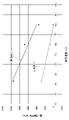
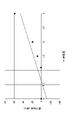
- 4 is a graph showing the temperature dependence of bending strength in Examples and Comparative Examples. 4 is a graph showing the temperature dependence of the flexural modulus of Examples and Comparative Examples. 4 is a graph showing the relationship between bending strength and degree of Pr substitution in Examples. 4 is a graph showing the relationship between the flexural modulus and the degree of Pr substitution in Examples.
- the ⁇ -glucan ester derivative according to this embodiment is a ⁇ -1,3-glucan ester derivative or a ⁇ -1,4-glucan ester derivative.
- a ⁇ -glucan ester derivative is a polymer in which multiple glucoses are linked by glycosidic bonds.
- the ⁇ -1,3-glucan ester derivative has a main chain of ⁇ -glucan composed of ⁇ -1,3 glycosidic bonds.
- the ⁇ -1,4-glucan ester derivative has a main chain of ⁇ -glucan composed of ⁇ -1,4 glycosidic bonds.
- the ⁇ -1,3-glucan ester derivative in this embodiment is preferably a curdlan ester derivative or a paramylon ester derivative.
- Both curdlan and paramylon are compounds derived from microorganisms. Microorganism-derived plastics can be produced by using ester derivatives obtained by esterifying these. Curdlan and paramylon are one type of polysaccharide ⁇ -1,3-glucan.
- the curdlan ester derivative and the paramylon ester derivative according to the present embodiment are derived from microorganisms, they have strength equivalent to that of polypropylene and the like, and are excellent in moldability.
- curdlan is a polysaccharide ⁇ -1,3-glucan contained in soil bacteria. Curdlan has a molecular weight of about 1,000,000, and its derivative has high strength but poor fluidity. n1 in the following formula (1) represents an integer of 1000-6200.
- a curdlan ester derivative represented by the following formula (2) is obtained by esterifying at least part of the hydroxyl groups in the curdlan, which will be described in detail later. As a method for esterification, a conventionally known method is employed.
- paramylon is a polysaccharide ⁇ -1,3-glucan contained in Euglena. Paramylon has a molecular weight of about 300,000, and its derivatives have low strength and good fluidity. n2 in the following formula (3) represents an integer of 300-2000.
- a paramylon ester derivative represented by the following formula (4) is obtained by esterifying at least part of the hydroxyl groups in paramylon, which will be described later in detail. As a method for esterification, a conventionally known method is employed.
- R in the above formulas (2) and (4) is each independently a hydrogen atom, an acyl group having 3 carbon atoms (hereinafter sometimes referred to as a “short chain component”), or 6 to 8 carbon atoms represents an acyl group (hereinafter sometimes referred to as a "long-chain component").
- at least one R is an acyl group having 3 carbon atoms and at least one is an acyl group having 6 to 8 carbon atoms, and not all of R are hydrogen atoms at the same time.
- n1 in formula (2) represents an integer of 1000-6200.
- n2 in formula (4) represents an integer of 300-2000. This enables synthesis in a shorter period of time than when only long-chain components are introduced as substituents.
- synthesis can be performed in a shorter time than when a component having more than 8 carbon atoms as a long-chain component is introduced as a substituent.
- the ⁇ -1,3-glucan ester derivative is a heteroester having a short-chain component and a long-chain component that are different types of substituents, the crystallinity of the molded product, the glass transition temperature, the melt viscosity, etc. Because the thermal properties can be easily controlled, the injection moldability, stiffness and flexibility can be adjusted within preferred ranges.
- the ⁇ -1,3-glucan ester derivative according to this embodiment preferably does not contain acyl groups having 4 and 5 carbon atoms. As a result, the odor such as the peculiar odor of the molded article can be suppressed, and the molded article can be applied to plumbing, housing equipment, and the like.
- the degree of substitution DSs of the short-chain component (hereinafter sometimes referred to as “degree of substitution DSs”) and the degree of substitution DSl of the long-chain component (hereinafter sometimes referred to as “degree of substitution DSl”) in the above formula (2), is referred to as the overall degree of substitution DSs+DSl (hereinafter sometimes referred to as "DSs+DSl”).
- the overall degree of substitution DSs+DSl is preferably 2.0 or more from the viewpoint of improving the water resistance (hydrolysis resistance) and long-term durability required for plumbing and housing equipment.
- the degree of substitution DSs and the degree of substitution DSl here mean the average number of hydrogen atoms replaced by short- and long-chain moieties, respectively, per glucose unit.
- DSs+DSl When DSs+DSl is less than 2.0, the proportion of hydroxyl groups remaining in the molecule is high, and thus preferable water resistance and long-term durability cannot be obtained.
- DSs+DSl is more preferably 2.5 or more, and even more preferably 3.0.
- the ratio DSs:DSl which is the ratio of the degree of substitution DSs to the degree of substitution DSl, is preferably 2.5:0.5 to 2.8:0.2.
- the ⁇ -1,3-glucan ester derivative can have an 80° C. bending strength of 8 MPa or more and an 80° C. bending elastic modulus of 250 MPa or more.
- both rigidity and flexibility of the resulting molded article can be achieved.
- DSs:DSl of the ⁇ -1,3-glucan ester derivative is more preferably 2.6:0.4 to 2.8:0.2, and 2.7:0.3 to More preferably 2.8:0.2.
- the degree of substitution DSs and the degree of substitution DSl can be measured, for example, by 1 H NMR.
- the structure of the acyl group with 3 carbon atoms and the acyl group with 6 to 8 carbon atoms is not particularly limited as long as the conditions for the number of carbon atoms are satisfied.
- a bond between carbon atoms may be a saturated bond or may contain an unsaturated bond. In addition to the above, it may have a linear structure, a branched chain structure, or a ring structure.
- a propanoyl group which is a saturated aliphatic acyl group having 3 carbon atoms having a straight chain structure, an isopropanoyl group having a branched chain structure, a cyclopropanoyl group having a ring structure, and a straight chain structure having a number of carbon atoms 6 to 8 saturated aliphatic acyl groups, n-hexanoyl, n-heptanoyl, n-octanoyl, isohexanoyl, isoheptanoyl, isooctanoyl having a branched chain structure, cyclohexanoyl having a ring structure cycloheptanoyl group, cyclooctanoyl group, unsaturated bond-containing hexenoyl group, heptenoyl group, octenoyl group, aromatic ring-containing acetylphenyl group, and
- the hydrogen atoms in the hydroxyl groups of ⁇ -1,3-glucan are replaced with short-chain components and long-chain components by esterification as described above.
- Methods for esterification of ⁇ -1,3-glucan according to the present disclosure are not particularly limited, and include, for example, the TFAA method and the acid chloride method.
- the acid chloride method ⁇ -glucan and acid chloride are heated in a solvent in the presence of a chlorine-scavenging component (pyridine, etc.) to dehydrochloride, and the hydrogen atoms of the hydroxyl groups of ⁇ -glucan are substituted with acyl groups for esterification.
- the TFAA method is a method in which ⁇ -glucan and carboxylic acid are heated in a solvent in the presence of TFAA (trifluoroacetic anhydride) as an acid catalyst to cause dehydration condensation and esterification.
- TFAA trifluoroacetic anhydride
- acid chlorides used for esterification in the acid chloride method include acid chlorides having the number of carbon atoms and structure corresponding to the short-chain component and long-chain component.
- propionyl chloride can be mentioned as an acid chloride used for introducing a saturated aliphatic acyl group having 3 carbon atoms.
- acid chloride used for introducing the long-chain component having a straight-chain structure which is a saturated aliphatic acyl group having 6 to 8 carbon atoms, include hexanoyl chloride, heptanoyl chloride, and octanoyl chloride.
- the acid chloride may have a branched chain structure, a ring structure, or an unsaturated bond.
- NMP N-methyl-2-pyrrolidone
- acids used for esterification in the TFAA method include carboxylic acids having the number of carbon atoms and structures corresponding to short-chain components and long-chain components.
- a carboxylic acid used for introducing a saturated aliphatic acyl group having 3 carbon atoms includes propionic acid.
- Carboxylic acids that are saturated aliphatic acyl groups having 6 to 8 carbon atoms and are used for introducing long-chain components having a linear structure include, for example, n-hexanoic acid, n-heptanoic acid, n-octanoic acid, is mentioned.
- the acid also functions as a solvent for the ⁇ -1,3-glucan ester derivative produced.
- trifluoroacetic anhydride is used in combination as the acid used as the solvent.
- ⁇ -1,4-glucan ester derivative The structure of ⁇ -1,4-glucan is represented by the following formula (5), and is a polymer in which multiple glucoses are linked by ⁇ -1,4-glycosidic bonds, such as plant-derived cellulose. n3 in the following formula (5) represents an integer of 300-2000.
- the structure of the ⁇ -1,4-glucan ester derivative is represented by the following formula (6), in which at least some of the hydrogen atoms of the hydroxyl groups of ⁇ -1,4-glucan are Structures permuted by moieties and long chain moieties are shown.
- the ⁇ -1,4-glucan ester derivative can be synthesized by esterification similar to the ⁇ -1,3-glucan ester derivative.
- Each R in the above formula (6) is independently a hydrogen atom, an acyl group having 3 carbon atoms (hereinafter sometimes referred to as a “short chain component”), or an acyl group having 6 to 8 carbon atoms ( Hereinafter, it may be referred to as a “long chain component”). However, at least one R is an acyl group having 3 carbon atoms and at least one is an acyl group having 6 to 8 carbon atoms, and not all of R are hydrogen atoms at the same time.
- n3 in formula (6) represents an integer of 300-2000.
- the ⁇ -1,4-glucan ester derivative preferably has a total substitution degree DSs+DSl defined in the same manner as the ⁇ -1,3-glucan ester derivative of 2.0 or more. DSs+DSl is more preferably 2.5 or more, and even more preferably 3.0. Also, the ⁇ -1,4-glucan ester derivative preferably does not contain acyl groups having 4 and 5 carbon atoms.
- the ratio of the degree of substitution DSs to the degree of substitution DSl, DSs:DSl is preferably 1.5:1.5 to 2.2:0.8.
- the ⁇ -1,4-glucan ester derivative can have an 80° C. bending strength of 8 MPa or more and an 80° C. bending elastic modulus of 250 MPa or more.
- both rigidity and flexibility of the resulting molded article can be achieved.
- DSs:DSl of the ⁇ -1,4-glucan ester derivative is more preferably 1.9:1.1 to 2.2:0.8, and 1.9:1.1 to More preferably 2.1:0.9.
- the degree of substitution DSs and the degree of substitution DSl of can be measured, for example, by 1 H NMR.
- the 80°C bending strength of the ⁇ -glucan ester derivative according to this embodiment is 8 MPa or more, and the 80°C bending elastic modulus is 250 MPa or more.
- the 80° C. bending strength of polypropylene is about 8 MPa, and the 80° C. bending elastic modulus is about 250 MPa. Therefore, the ⁇ -glucan ester derivative according to the present embodiment has heat resistance equal to or higher than that of polypropylene. Therefore, the ⁇ -glucan ester derivative can be preferably applied to housing equipment and plumbing.
- the Tg (glass transition temperature) of the ⁇ -glucan ester derivative is preferably 100°C or higher.
- the method for purifying a ⁇ -glucan ester derivative according to the present embodiment includes, for example, a precipitation step of mixing a synthesis reaction solution containing a ⁇ -glucan ester derivative with a reprecipitation solvent, and at least one of the synthesis reaction solution and the reprecipitation solvent. and a cooling step for lowering the temperature.
- a cleaning step for cleaning the deposit in the deposition step may be used.
- the precipitation step is a step of mixing a synthesis reaction solution containing a ⁇ -glucan ester derivative obtained by esterifying at least part of the hydroxyl groups in the ⁇ -glucan ester derivative with a reprecipitation solvent.
- the precipitation step precipitates (reprecipitates) the ⁇ -glucan ester derivative.
- the reprecipitation solvent consists of, for example, a good solvent that is substantially soluble in the ⁇ -glucan ester derivative and a poor solvent that is substantially insoluble in the ⁇ -glucan ester derivative.
- a precipitate containing a ⁇ -glucan ester derivative is precipitated by mixing a reprecipitation solvent with the synthesis reaction solution.
- the deposition step can be performed in a single vessel.
- the good solvent may substantially dissolve the ⁇ -glucan ester derivative, and includes, for example, ketones such as acetone and methyl isobutyl ketone; Esters such as propylene glycol-1-monomethyl ether-2-acetate; Aromatic compounds such as toluene, chlorobenzene, ⁇ -dichlorobenzene; Chloroform, N,N-dimethylformamide, N-methyl-2-pyrrolidone, etc. are preferably used. be done.
- a good solvent capable of washing the impurities used for the esterification remaining in the precipitate.
- the good solvent one kind of solvent may be used, or plural kinds of solvents may be mixed and used as a good solvent.
- the poor solvent is substantially insoluble in the ⁇ -glucan ester derivative, and at least has lower solubility in the ⁇ -glucan ester derivative than the good solvent.
- water is preferably used as the poor solvent.
- the poor solvent one kind of solvent may be used, or plural kinds of solvents may be mixed and used as the poor solvent.
- the cooling step is a step of lowering the temperature of at least one of the synthesis reaction solution and the reprecipitation solvent.
- the cooling step may cool at least one of the synthesis reaction solution and the reprecipitation solvent before mixing the synthesis reaction solution and the reprecipitation solvent in the precipitation step.
- the cooling step may involve cooling the mixed solution after mixing the synthesis reaction solution and the reprecipitation solvent in the precipitation step.
- the washing step is a step of washing the precipitate containing the ⁇ -glucan ester derivative that precipitates in the precipitation step. Impurities contained in the precipitate are removed by the cleaning step.
- the solution used in the washing step is not particularly limited as long as it can substantially dissolve the ⁇ -glucan ester derivative. Impurities include reactants of chlorine and pyridine used as a chlorine catcher (for example, pyridine hydrochloride and propionic acid) when the acid chloride method is used as the method of esterification.
- the TAFF method is used as the method of esterification
- the impurities include acids used for esterification.
- the solution used in the washing step is preferably soluble in the acid used for the esterification.
- the washing step is not particularly limited and can be performed using a known method.
- the ⁇ -glucan ester derivative purified by the purification method of this embodiment is then molded by various molding methods.
- Usable molding methods include, for example, injection molding, casting, compression, and inflation. Since the ⁇ -glucan ester derivative according to the present embodiment has a preferable melt viscosity, it is preferably molded particularly by an injection molding method.
- the molded product can be applied to various uses such as, for example, plumbing supplies used in bathrooms and kitchens of houses, housing equipment, exterior materials for houses, and the like.
- Example 1 Paramylon (weight average molecular weight: about 300,000) as ⁇ -glucan at room temperature, dehydrated NMP (N-methyl-2-pyrrolidone, manufactured by Fujifilm Wako Pure Chemical Industries, Ltd.) as a solvent, and dehydrated as a chlorine catcher A predetermined amount of pyridine (manufactured by Fujifilm Wako Pure Chemical Industries, Ltd.) was placed in a reaction vessel and stirred for 5 hours. After that, the mixture was cooled to -10°C or lower overnight while stirring was continued.
- NMP N-methyl-2-pyrrolidone, manufactured by Fujifilm Wako Pure Chemical Industries, Ltd.
- Example 2 Comparative Examples 1 to 4>
- the ⁇ -glucan shown in Table 1 was used.
- Comparative Example 1 used stearoyl chloride (manufactured by Tokyo Chemical Industry Co., Ltd.) instead of hexanoyl chloride, and the carbon chain ratio (Dss: ⁇ -glucan ester derivatives according to Examples and Comparative Examples were obtained in the same manner as in Example 1, except that the ratio of each acid chloride was adjusted so that the ratio of Dsl) was as shown in Table 1.
- the short-chain component type "Pr" shown in Table 1 indicates a propanoyl group which is a saturated aliphatic acyl group having 3 carbon atoms.
- He denotes n-hexanoyl groups, which are saturated aliphatic acyl groups of 6 carbon atoms
- St denotes stearoyl groups, which are saturated aliphatic acyl groups of 18 carbon atoms.
- Tm, Tg measurement The melting point (Tm, °C) and glass transition temperature (Tg, °C) of the ⁇ -glucan ester derivatives of the above Examples and Comparative Examples were measured using DSC (EXSTAR DSC7020, manufactured by Hitachi High-Tech Science). A sample was filled in an aluminum pan, heated from 30° C. to 250° C. at a rate of 20° C./min, and held for 1 minute after reaching 250° C. After that, the temperature was lowered to -60°C at a cooling rate of 200°C/min, and after reaching -60°C, the temperature was maintained for 1 minute. After that, the temperature was raised to 250° C.
- compositions may be identified by Tg values in the present disclosure, Tm values are useful in looking at the thermal properties of a composition and can be derived from Tg and other parameters, even if not directly derived from the point of inflection. It is possible to predict the value of Tm.
- the ⁇ -glucan ester derivatives of the above examples and comparative examples were injection molded to prepare samples for physical property measurement.
- MiniJet Pro manufactured by Scientific Thermofisher
- the injection pressure was 900 bar for 10 sec
- the holding pressure was 250 bar for 10 sec.
- a sample mold for the Charpy test shown below had a length of 80 mm, a width of 12.5 mm, and a thickness of 2.5 mm (strip piece).
- FIG. 1 shows the flexural strengths of the ⁇ -glucan ester derivatives of Example 1 and Comparative Example 1 when the test temperatures were 23° C., 60° C. and 80° C., respectively.
- FIG. 2 shows the flexural moduli of Example 1 and Comparative Example 1 when the test temperatures were 23° C., 60° C., and 80° C., respectively. From the results of FIGS. 1 and 2, it is clear that the test temperature of the ⁇ -glucan ester derivatives of Example 1 and Comparative Example 1 and the bending strength and bending elastic modulus are in a substantially proportional relationship.
- the horizontal axis of the graphs of FIGS. 3 and 4 indicates the degree of substitution of Pr, which is a short chain component
- the vertical axis of the graph of FIG. 3 indicates the 23° C. bending strength
- the vertical axis of the graph of FIG. Indicates elastic modulus. From the results of FIGS. 3 and 4, it is clear that the degree of Pr substitution, bending strength and bending elastic modulus are in a substantially proportional relationship.
- the ⁇ -glucan ester derivatives according to Examples have higher 80° C. bending strength and 80° C. bending elastic modulus and are superior in heat resistance compared to the ⁇ -glucan ester derivatives according to Comparative Examples. it is obvious. In addition to this, favorable water resistance, stiffness and flexibility are obtained, and it is clear that these can be combined.
Landscapes
- Chemical & Material Sciences (AREA)
- Health & Medical Sciences (AREA)
- Chemical Kinetics & Catalysis (AREA)
- Medicinal Chemistry (AREA)
- Polymers & Plastics (AREA)
- Organic Chemistry (AREA)
- Life Sciences & Earth Sciences (AREA)
- Engineering & Computer Science (AREA)
- Biochemistry (AREA)
- Materials Engineering (AREA)
- General Health & Medical Sciences (AREA)
- Molecular Biology (AREA)
- Polysaccharides And Polysaccharide Derivatives (AREA)
Priority Applications (2)
| Application Number | Priority Date | Filing Date | Title |
|---|---|---|---|
| JP2023525909A JP7653516B2 (ja) | 2021-06-03 | 2022-06-02 | βグルカンエステル誘導体 |
| EP22816192.3A EP4349872A4 (en) | 2021-06-03 | 2022-06-02 | SS-GLUCAN ESTER DERIVATIVE |
Applications Claiming Priority (2)
| Application Number | Priority Date | Filing Date | Title |
|---|---|---|---|
| JP2021-093726 | 2021-06-03 | ||
| JP2021093726 | 2021-06-03 |
Publications (1)
| Publication Number | Publication Date |
|---|---|
| WO2022255447A1 true WO2022255447A1 (ja) | 2022-12-08 |
Family
ID=84324244
Family Applications (1)
| Application Number | Title | Priority Date | Filing Date |
|---|---|---|---|
| PCT/JP2022/022474 Ceased WO2022255447A1 (ja) | 2021-06-03 | 2022-06-02 | βグルカンエステル誘導体 |
Country Status (3)
| Country | Link |
|---|---|
| EP (1) | EP4349872A4 (https=) |
| JP (1) | JP7653516B2 (https=) |
| WO (1) | WO2022255447A1 (https=) |
Citations (10)
| Publication number | Priority date | Publication date | Assignee | Title |
|---|---|---|---|---|
| JP2013130860A (ja) * | 2011-11-21 | 2013-07-04 | Fujifilm Corp | 光学フィルム、偏光板、及び液晶表示装置 |
| JP2015011236A (ja) * | 2013-06-28 | 2015-01-19 | 株式会社ケンシュー | 光学用樹脂材料、光学用部品、及び光学用樹脂材料の非晶性の判定方法 |
| CN105199001A (zh) * | 2014-06-19 | 2015-12-30 | 南通醋酸纤维有限公司 | 一种纤维素长链脂肪酸酯或长短链混合酸酯的制备方法 |
| JP2016136171A (ja) * | 2015-01-23 | 2016-07-28 | コニカミノルタ株式会社 | 光学フィルム、円偏光板及び有機エレクトロルミネッセンス表示装置 |
| JP2017193667A (ja) * | 2016-04-21 | 2017-10-26 | 国立研究開発法人産業技術総合研究所 | β−1,3−グルカン誘導体及びその製造方法、並びに成形体 |
| JP2018145382A (ja) * | 2016-04-08 | 2018-09-20 | 株式会社ダイセル | セルロース混合エステルとその成形体 |
| WO2020013232A1 (ja) | 2018-07-10 | 2020-01-16 | 日本電気株式会社 | パラミロン系樹脂、成形用材料および成形体、並びにパラミロン系樹脂の製造方法 |
| WO2020022250A1 (ja) * | 2018-07-23 | 2020-01-30 | 株式会社Lixil | β-1,3-グルカンエステル誘導体の精製方法 |
| WO2021111917A1 (ja) * | 2019-12-04 | 2021-06-10 | 株式会社Lixil | β-1,3-グルカンエステル誘導体の精製方法 |
| WO2021246006A1 (ja) * | 2020-06-02 | 2021-12-09 | 株式会社Lixil | β-1,3-グルカンエステル誘導体及びβ-1,4-グルカンエステル誘導体 |
Family Cites Families (2)
| Publication number | Priority date | Publication date | Assignee | Title |
|---|---|---|---|---|
| US5750677A (en) * | 1994-12-30 | 1998-05-12 | Eastman Chemical Company | Direct process for the production of cellulose esters |
| CN107936186B (zh) * | 2016-10-13 | 2020-06-09 | 中国石油化工股份有限公司 | 3d打印丝材及制备方法 |
-
2022
- 2022-06-02 JP JP2023525909A patent/JP7653516B2/ja active Active
- 2022-06-02 WO PCT/JP2022/022474 patent/WO2022255447A1/ja not_active Ceased
- 2022-06-02 EP EP22816192.3A patent/EP4349872A4/en active Pending
Patent Citations (10)
| Publication number | Priority date | Publication date | Assignee | Title |
|---|---|---|---|---|
| JP2013130860A (ja) * | 2011-11-21 | 2013-07-04 | Fujifilm Corp | 光学フィルム、偏光板、及び液晶表示装置 |
| JP2015011236A (ja) * | 2013-06-28 | 2015-01-19 | 株式会社ケンシュー | 光学用樹脂材料、光学用部品、及び光学用樹脂材料の非晶性の判定方法 |
| CN105199001A (zh) * | 2014-06-19 | 2015-12-30 | 南通醋酸纤维有限公司 | 一种纤维素长链脂肪酸酯或长短链混合酸酯的制备方法 |
| JP2016136171A (ja) * | 2015-01-23 | 2016-07-28 | コニカミノルタ株式会社 | 光学フィルム、円偏光板及び有機エレクトロルミネッセンス表示装置 |
| JP2018145382A (ja) * | 2016-04-08 | 2018-09-20 | 株式会社ダイセル | セルロース混合エステルとその成形体 |
| JP2017193667A (ja) * | 2016-04-21 | 2017-10-26 | 国立研究開発法人産業技術総合研究所 | β−1,3−グルカン誘導体及びその製造方法、並びに成形体 |
| WO2020013232A1 (ja) | 2018-07-10 | 2020-01-16 | 日本電気株式会社 | パラミロン系樹脂、成形用材料および成形体、並びにパラミロン系樹脂の製造方法 |
| WO2020022250A1 (ja) * | 2018-07-23 | 2020-01-30 | 株式会社Lixil | β-1,3-グルカンエステル誘導体の精製方法 |
| WO2021111917A1 (ja) * | 2019-12-04 | 2021-06-10 | 株式会社Lixil | β-1,3-グルカンエステル誘導体の精製方法 |
| WO2021246006A1 (ja) * | 2020-06-02 | 2021-12-09 | 株式会社Lixil | β-1,3-グルカンエステル誘導体及びβ-1,4-グルカンエステル誘導体 |
Non-Patent Citations (1)
| Title |
|---|
| See also references of EP4349872A4 |
Also Published As
| Publication number | Publication date |
|---|---|
| JP7653516B2 (ja) | 2025-03-28 |
| EP4349872A4 (en) | 2025-05-14 |
| JPWO2022255447A1 (https=) | 2022-12-08 |
| EP4349872A1 (en) | 2024-04-10 |
Similar Documents
| Publication | Publication Date | Title |
|---|---|---|
| JP7566274B2 (ja) | β-1,3-グルカンエステル誘導体及びβ-1,4-グルカンエステル誘導体 | |
| JP6819841B1 (ja) | ポリアリーレンエーテルケトン樹脂及びその製造方法、並びに成形体 | |
| EP0347347A1 (fr) | Polyamides amorphes transparents ayant une température de transition vitreuse élevée | |
| WO2022255447A1 (ja) | βグルカンエステル誘導体 | |
| KR101837634B1 (ko) | 아세틸화 셀룰로오스 에테르와 그의 제조방법, 및 상기 아세틸화 셀룰로오스 에테르를 포함하는 물품 | |
| CN101016246A (zh) | 乙烯基对苯二甲酸二[对丁氧基苯酚]酯及其聚合物与制备方法和应用 | |
| CN120623468A (zh) | 一种酚酞基聚芳醚酮聚合物及其制备方法 | |
| EP2930190A1 (en) | Method for preparing acetylated cellulose ethers having improved anti-fouling properties, and acetylated cellulose ethers prepared by same | |
| US9376502B2 (en) | Acetylated cellulose ether and articles including same | |
| Al-Muaikel et al. | Liquid crystalline polymers xiii main chain thermotropic copoly (arylidene-ether) s containing 4-teriary butyl-cyclohexanone moiety linked with polymethylene spacers | |
| JP2018131484A (ja) | 樹脂組成物および樹脂成形体 | |
| JP2016183285A (ja) | 樹脂組成物及び樹脂成形体 | |
| JP7323891B2 (ja) | ポリアリーレンエーテルケトン樹脂及びその製造方法、並びに成形体 | |
| JP2016183321A (ja) | 樹脂組成物、及び樹脂成形体 | |
| JP7770309B2 (ja) | ポリアミド-イミドポリマー、ポリマー組成物、及びそれらを含む物品、並びにそれらの製造方法 | |
| JP7766587B2 (ja) | ポリアミド-イミドポリマー及びその製造方法 | |
| JP2017171854A (ja) | 樹脂組成物、樹脂成形体、及び樹脂組成物の製造方法 | |
| CN110023375A (zh) | 化合物 | |
| JP6369610B1 (ja) | 樹脂組成物及び樹脂成形体 | |
| JP2016183283A (ja) | 樹脂組成物及び樹脂成形体 | |
| CN101445602A (zh) | 一种可溶性含硅聚醚酰亚胺及其制备方法 | |
| CN116178685B (zh) | 一种高清亮点lcp材料及其制备方法 | |
| WO2020045510A1 (ja) | リグノセルロース系バイオマス由来の複合材料及びその製造方法 | |
| JP2021017528A (ja) | 樹脂組成物 | |
| KR101562094B1 (ko) | 셀룰로오스계 수지 및 그 제조방법 |
Legal Events
| Date | Code | Title | Description |
|---|---|---|---|
| 121 | Ep: the epo has been informed by wipo that ep was designated in this application |
Ref document number: 22816192 Country of ref document: EP Kind code of ref document: A1 |
|
| WWE | Wipo information: entry into national phase |
Ref document number: 2023525909 Country of ref document: JP |
|
| WWE | Wipo information: entry into national phase |
Ref document number: 2022816192 Country of ref document: EP |
|
| NENP | Non-entry into the national phase |
Ref country code: DE |
|
| ENP | Entry into the national phase |
Ref document number: 2022816192 Country of ref document: EP Effective date: 20240103 |