WO2022239597A1 - フェノール性水酸基含有樹脂 - Google Patents
フェノール性水酸基含有樹脂 Download PDFInfo
- Publication number
- WO2022239597A1 WO2022239597A1 PCT/JP2022/017764 JP2022017764W WO2022239597A1 WO 2022239597 A1 WO2022239597 A1 WO 2022239597A1 JP 2022017764 W JP2022017764 W JP 2022017764W WO 2022239597 A1 WO2022239597 A1 WO 2022239597A1
- Authority
- WO
- WIPO (PCT)
- Prior art keywords
- group
- phenolic hydroxyl
- aliphatic hydrocarbon
- resin
- hydroxyl group
- Prior art date
- Legal status (The legal status is an assumption and is not a legal conclusion. Google has not performed a legal analysis and makes no representation as to the accuracy of the status listed.)
- Ceased
Links
Images


Classifications
-
- C—CHEMISTRY; METALLURGY
- C08—ORGANIC MACROMOLECULAR COMPOUNDS; THEIR PREPARATION OR CHEMICAL WORKING-UP; COMPOSITIONS BASED THEREON
- C08G—MACROMOLECULAR COMPOUNDS OBTAINED OTHERWISE THAN BY REACTIONS ONLY INVOLVING UNSATURATED CARBON-TO-CARBON BONDS
- C08G8/00—Condensation polymers of aldehydes or ketones with phenols only
- C08G8/04—Condensation polymers of aldehydes or ketones with phenols only of aldehydes
-
- G—PHYSICS
- G03—PHOTOGRAPHY; CINEMATOGRAPHY; ANALOGOUS TECHNIQUES USING WAVES OTHER THAN OPTICAL WAVES; ELECTROGRAPHY; HOLOGRAPHY
- G03F—PHOTOMECHANICAL PRODUCTION OF TEXTURED OR PATTERNED SURFACES, e.g. FOR PRINTING, FOR PROCESSING OF SEMICONDUCTOR DEVICES; MATERIALS THEREFOR; ORIGINALS THEREFOR; APPARATUS SPECIALLY ADAPTED THEREFOR
- G03F7/00—Photomechanical, e.g. photolithographic, production of textured or patterned surfaces, e.g. printing surfaces; Materials therefor, e.g. comprising photoresists; Apparatus specially adapted therefor
- G03F7/004—Photosensitive materials
-
- G—PHYSICS
- G03—PHOTOGRAPHY; CINEMATOGRAPHY; ANALOGOUS TECHNIQUES USING WAVES OTHER THAN OPTICAL WAVES; ELECTROGRAPHY; HOLOGRAPHY
- G03F—PHOTOMECHANICAL PRODUCTION OF TEXTURED OR PATTERNED SURFACES, e.g. FOR PRINTING, FOR PROCESSING OF SEMICONDUCTOR DEVICES; MATERIALS THEREFOR; ORIGINALS THEREFOR; APPARATUS SPECIALLY ADAPTED THEREFOR
- G03F7/00—Photomechanical, e.g. photolithographic, production of textured or patterned surfaces, e.g. printing surfaces; Materials therefor, e.g. comprising photoresists; Apparatus specially adapted therefor
- G03F7/004—Photosensitive materials
- G03F7/09—Photosensitive materials characterised by structural details, e.g. supports, auxiliary layers
- G03F7/11—Photosensitive materials characterised by structural details, e.g. supports, auxiliary layers having cover layers or intermediate layers, e.g. subbing layers
-
- G—PHYSICS
- G03—PHOTOGRAPHY; CINEMATOGRAPHY; ANALOGOUS TECHNIQUES USING WAVES OTHER THAN OPTICAL WAVES; ELECTROGRAPHY; HOLOGRAPHY
- G03F—PHOTOMECHANICAL PRODUCTION OF TEXTURED OR PATTERNED SURFACES, e.g. FOR PRINTING, FOR PROCESSING OF SEMICONDUCTOR DEVICES; MATERIALS THEREFOR; ORIGINALS THEREFOR; APPARATUS SPECIALLY ADAPTED THEREFOR
- G03F7/00—Photomechanical, e.g. photolithographic, production of textured or patterned surfaces, e.g. printing surfaces; Materials therefor, e.g. comprising photoresists; Apparatus specially adapted therefor
- G03F7/20—Exposure; Apparatus therefor
- G03F7/22—Exposing sequentially with the same light pattern different positions of the same surface
Definitions
- the present invention relates to a phenolic hydroxyl group-containing resin, and a photosensitive resin composition, a curable composition, a resist film, a resist underlayer film and a resist permanent film using the same.
- positive photoresists using alkali-soluble resins and photosensitive agents such as 1,2-naphthoquinonediazide compounds are available.
- alkali-soluble resin a positive photoresist resin composition using a mixture of m-cresol novolak resin and p-cresol novolak resin as the alkali-soluble resin has been proposed (see, for example, Patent Document 1).
- Non-Patent Document 1 Gold bumps, copper posts and copper wires for redistribution in wafer level packaging require a resist mold that is subsequently electroplated to form the final metal structure in advanced interconnect technology. do.
- This resist layer is very thick compared to the photoresist used in IC manufacturing on the critical layers.
- a thick film resist having a thickness of about 25 to 125 ⁇ m is used for this resist layer, and depending on the case, it may be necessary to form a thick film of 200 ⁇ m.
- a multi-pin mounting system called a flip chip system is used.
- pads with a thickness of 20 .mu.m or more must be arranged with high accuracy in the connection terminal portion.
- Photoresist is also used for the formation of this pad, and as the pad becomes finer and more precise, there is a demand for a photoresist that has a thickness of 20 ⁇ m or more and is capable of forming a fine pattern.
- a thick-film photoresist has been proposed for forming the bumps and flip-chip pads (for example, Patent Document 2).
- Patent Document 2 since the positive photoresist resin composition described in Patent Document 2 does not have sufficient flexibility, there is a problem that cracks occur after pre-baking when a thick film pattern or the like as described above is drawn. In addition, there is a problem that it has poor compatibility with photosensitive agents and is not suitable for drawing bumps and pads for cutting-edge wafer level packaging. As described above, for cutting-edge wafer-level packaging applications, there is a demand for a photoresist film capable of forming a thick film with higher resolution.
- An object of the present invention is to provide a curable material capable of forming a thick film and having flexibility and developability.
- a composition using a polycondensation product of a phenolic hydroxyl group-containing resin and an alkyl group-containing aldehyde having a predetermined chain length can be used to form a thick film. Furthermore, the present inventors have completed the present invention on the basis of the finding that they are excellent in developability and flexibility.
- the present invention relates to a phenolic hydroxyl group-containing resin containing a structural unit A represented by the following formula (A) and a structural unit B represented by the following formula (B).
- R 1 is an aliphatic hydrocarbon group, an alkoxy group, an aryl group, an aralkyl group, or a halogen atom.
- R2 is a hydrogen atom, an aliphatic hydrocarbon group, an alkoxy group, an aryl group, an aralkyl group or a halogen atom.
- l is 0 or 1 and m is 1 or 2;
- R 3 is an aliphatic hydrocarbon group having 6 to 18 carbon atoms.
- the present invention further relates to a photosensitive resin composition containing the phenolic hydroxyl group-containing resin and a photosensitive agent.
- the present invention further relates to a resist film obtained from the photosensitive resin composition.
- the present invention further relates to a curable composition containing the phenolic hydroxyl group-containing resin and a curing agent.
- the present invention further relates to a cured product of the curable composition.
- the present invention further comprises a step of polymerizing an intermediate from a compound represented by the following formula (1) and a compound represented by the following formula (2);
- a method for producing a phenolic hydroxyl group-containing resin comprising a step of polymerizing a compound that (In formula (1), R 1 is an aliphatic hydrocarbon group, an alkoxy group, an aryl group, an aralkyl group, or a halogen atom; l is 0 or 1; m is 1 or 2;
- R2 is a hydrogen atom, an aliphatic hydrocarbon group, an alkoxy group, an aryl group, an aralkyl group or a halogen atom.
- R 3 is an aliphatic hydrocarbon group having 6 to 18 carbon atoms.
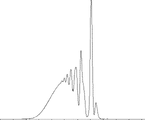
- FIG. 1 is a GPC chart of an intermediate of Example 1.
- FIG. 1 is a GPC chart of the phenolic hydroxyl group-containing resin of Example 1.
- FIG. 2 is a GPC chart of the phenolic hydroxyl group-containing resin of Example 2.
- FIG. 3 is a GPC chart of the phenolic hydroxyl group-containing resin of Example 3.
- FIG. 1 is a GPC chart of a phenolic hydroxyl group-containing resin of Comparative Synthesis Example 1.
- a phenolic hydroxyl group-containing resin includes a structural unit A represented by the following formula (A) and a structural unit B represented by the following formula (B).
- R 1 is an aliphatic hydrocarbon group, an alkoxy group, an aryl group, an aralkyl group, or a halogen atom.
- R2 is a hydrogen atom, an aliphatic hydrocarbon group, an alkoxy group, an aryl group, an aralkyl group or a halogen atom.
- l is 0 or 1 and m is 1 or 2;
- R 3 is an aliphatic hydrocarbon group having 6 to 18 carbon atoms.
- a structural unit B having a predetermined long-chain alkyl group (R 3 ) into the structural unit A of the novolak resin, synergistic action with the photosensitive agent can be obtained when used as a photosensitive resin composition. occur. As a result, a cured product that can form a thick film and has flexibility and developability can be obtained.
- R 1 in formula (A) above is an aliphatic hydrocarbon group, an alkoxy group, an aryl group, an aralkyl group, or a halogen atom.
- alkyl groups include methyl, ethyl, propyl, butyl, pentyl, hexyl, and cyclohexyl groups.
- the number of carbon atoms is preferably 1-9, for example.
- alkoxy groups include methoxy, ethoxy, propyloxy, butoxy, pentyloxy, hexyloxy and cyclohexyloxy groups.
- the number of carbon atoms is preferably 1-9, for example.
- aryl groups include those having 6 to 14 carbon atoms forming a ring.
- the aryl group may have a substituent such as the alkyl group and alkoxy group described above, or a hydroxy group.
- Specific examples include a phenyl group, a hydroxyphenyl group, a dihydroxyphenyl group, a hydroxyalkoxyphenyl group, an alkoxyphenyl group, a tolyl group, a xylyl group, a naphthyl group, a hydroxynaphthyl group, and a dihydroxynaphthyl group.
- An aralkyl group means an alkyl group in which one or more hydrogen atoms of the alkyl group (C n H 2n+1 ) have been replaced with an aryl group.
- the aryl group may have a substituent such as the alkyl group and alkoxy group described above, or a hydroxy group.
- the number of carbon atoms is preferably 7-15, for example.
- halogen atoms include fluorine, chlorine and bromine atoms.
- R 2 in formula (A) above is a hydrogen atom, an aliphatic hydrocarbon group, an alkoxy group, an aryl group, an aralkyl group or a halogen atom.
- Specific examples of the aliphatic hydrocarbon group, alkoxy group, aryl group, aralkyl group and halogen atom are the same as those for R 1 above.
- R 1 is an aliphatic hydrocarbon group of 1-4 carbon atoms. A methyl group is preferred.
- R 2 is a hydrogen atom or an aliphatic hydrocarbon group having 1 to 4 carbon atoms. A hydrogen atom is preferred.
- m is preferably 1.
- R 3 in formula (B) is an aliphatic hydrocarbon group having 6 to 18 carbon atoms.
- Examples include linear hydrocarbon groups such as hexyl, heptyl, octyl, nonyl, decyl, undecyl, dodecyl, pentadecyl and octadecyl groups.
- R 3 is an aliphatic hydrocarbon group of 8-12 carbon atoms.
- a decyl group, an undecyl group or a dodecyl group is preferred.
- the abundance ratio (A:B, molar ratio) of the structural unit A and the structural unit B is appropriately changed according to the desired resin performance, application, and the like.
- the abundance ratio (A:B) is preferably 70:30 to 98:2, more preferably 80:20 to 95:5.
- the abundance ratio (A:B) can be adjusted by the feed ratio of the raw material compounds.
- the method for producing the phenolic hydroxyl group-containing resin of the present invention is not particularly limited. For example, it can be obtained by a production method having the following steps.
- ⁇ Process 1 A step of polymerizing an intermediate from a compound represented by the following formula (1) (hereinafter referred to as compound 1) and a compound represented by the following formula (2) (hereinafter referred to as compound 2).
- R 1 is an aliphatic hydrocarbon group, an alkoxy group, an aryl group, an aralkyl group, or a halogen atom
- l is 0 or 1
- m is 1 or 2
- R2 is a hydrogen atom, an aliphatic hydrocarbon group, an alkoxy group, an aryl group, an aralkyl group or a halogen atom.
- ⁇ Process 2 A step of polymerizing the intermediate obtained in step 1 and a compound represented by the following formula (3) (hereinafter referred to as compound 3).
- R 3 —CHO (3) In formula (3), R 3 is an aliphatic hydrocarbon group having 6 to 18 carbon atoms.
- R 1 , R 2 and R 3 in formulas (1) to (3) are the same as R 1 , R 2 and R 3 in formulas (A) and (B) above, respectively.
- Compound 1 includes, for example, phenol, dihydroxybenzene, and cresol.
- Compound 2 includes, for example, formaldehyde, acetaldehyde, propionaldehyde, n-butyraldehyde, t-butyraldehyde, pentylaldehyde and the like. Each of these may be used alone, or two or more of them may be used in combination. Among them, it is preferable to use formaldehyde because of its excellent reactivity.
- formaldehyde formalin in the form of an aqueous solution may be used, or paraformaldehyde in the form of a solid may be used.
- formaldehyde and other aldehyde compounds it is preferable to use 0.05 to 1 mol of the other aldehyde compound per 1 mol of formaldehyde.
- the above step 1 is a step of polymerizing an intermediate having structural unit A from compound 1 and compound 2. This step is preferably carried out under acid-catalyzed conditions.
- Acid catalysts used here include, for example, acetic acid, oxalic acid, sulfuric acid, hydrochloric acid, phenolsulfonic acid, p-toluenesulfonic acid, zinc acetate, and manganese acetate. These acid catalysts may be used alone or in combination of two or more.
- the phenolic hydroxyl group-containing resin of the present invention is a novolac-type phenolic resin, not a resol-type phenolic resin.
- Solvents used here include, for example, monoalcohols such as methanol, ethanol and propanol; Polyols such as ,6-hexanediol, 1,7-heptanediol, 1,8-octanediol, 1,9-nonanediol, trimethylene glycol, diethylene glycol, polyethylene glycol, glycerin; 2-ethoxyethanol, ethylene glycol monomethyl ether , ethylene glycol monoethyl ether, ethylene glycol monopropyl ether, ethylene glycol monobutyl ether, ethylene glycol monopentyl ether, ethylene glycol dimethyl ether, ethylene glycol ethyl methyl ether, ethylene glycol monophenyl ether; 1,3-dioxane, Cyclic ethers such as 1,4-dioxane and tetra
- the reaction is carried out, for example, in a temperature range of 60-140° C. for 0.5-20 hours.
- an intermediate can be obtained by, for example, adding water to the reaction product and performing a reprecipitation operation.
- the intermediate thus obtained has a weight average molecular weight (Mw) of 500 to 5, because it has an excellent balance of developability, heat resistance and crack resistance, and provides a phenolic hydroxyl group-containing resin suitable for resist materials. It is preferably in the range of 000.
- the polydispersity (Mw/Mn) of the intermediate is preferably in the range of 1.2 to 5.0.
- the weight average molecular weight (Mw) and polydispersity (Mw/Mn) are values measured by GPC under the conditions shown in Examples.
- the step 2 is a step of polymerizing the intermediate obtained in the step 1 and the compound 3.
- Compound 3 includes heptanal, octanal, nonanal, decanal, undecanal, dodecanal (lauryl aldehyde), tridecanal, nonadecanal and the like.
- This step is also preferably carried out under acid catalyst conditions as in step 1. Exemplary catalysts, solvents, and reaction conditions are the same as for Step 1 above.
- R 1 is an aliphatic hydrocarbon group, an alkoxy group, an aryl group, an aralkyl group, or a halogen atom.
- R 2 is a hydrogen atom, an aliphatic hydrocarbon group, an alkoxy group, an aryl group, an aralkyl group or a halogen atom.
- R 3 is an aliphatic hydrocarbon group having 6 to 18 carbon atoms. l is 0 or 1, respectively, and m is 1 or 2, respectively.
- the weight average molecular weight (Mw) of the phenolic hydroxyl group-containing resin obtained in step 2 has an excellent balance of developability, heat resistance and crack resistance, and is suitable for resist materials. It is preferably in the range of 000 to 10,000. Also, the polydispersity (Mw/Mn) of the intermediate is preferably in the range of 1.5 to 6.0. In the present invention, the weight average molecular weight (Mw) and polydispersity (Mw/Mn) are values measured by GPC under the conditions shown in Examples.
- the phenolic hydroxyl group-containing resin of the present invention can be used for various electrical and electronic member applications such as adhesives, paints, photoresists, and printed wiring boards. Among them, it is particularly suitable for resist applications such as wafer level packaging because it can be formed into a thick film and has flexibility and developability. In combination with an agent, it can be suitably used for thick film applications (for example, 20 to 200 ⁇ m thick), resist underlayer films, and resist permanent films. An example of application will be described below.
- a photosensitive resin composition that is one embodiment of the present invention includes the phenolic hydroxyl group-containing resin of the present invention and a photosensitizer.
- photosensitizers include compounds having a quinonediazide group.
- Specific examples of compounds having a quinonediazide group include aromatic (poly)hydroxy compounds, naphthoquinone-1,2-diazide-5-sulfonic acid, naphthoquinone-1,2-diazide-4-sulfonic acid, ortho-anthra Full ester compounds, partial ester compounds, amidates and partial amidates with sulfonic acid having a quinonediazide group such as quinonediazide sulfonic acid can be mentioned.
- Aromatic (poly)hydroxy compounds are, for example, 2,3,4-trihydroxybenzophenone, 2,4,4′-trihydroxybenzophenone, 2,4,6-trihydroxybenzophenone, 2,3,6-trihydroxy Benzophenone, 2,3,4-trihydroxy-2'-methylbenzophenone, 2,3,4,4'-tetrahydroxybenzophenone, 2,2',4,4'-tetrahydroxybenzophenone, 2,3',4 ,4′,6-pentahydroxybenzophenone, 2,2′,3,4,4′-pentahydroxybenzophenone, 2,2′,3,4,5-pentahydroxybenzophenone, 2,3′,4,4′ ,5′,6-hexahydroxybenzophenone, 2,3,3′,4,4′,5′-hexahydroxybenzophenone and other polyhydroxybenzophenone compounds;
- tris(4-hydroxyphenyl)methane bis(4-hydroxy-3,5-dimethylphenyl)-4-hydroxyphenylmethane, bis(4-hydroxy-2,5-dimethylphenyl)-4-hydroxyphenylmethane, bis (4-hydroxy-3,5-dimethylphenyl)-2-hydroxyphenylmethane, bis(4-hydroxy-2,5-dimethylphenyl)-2-hydroxyphenylmethane, bis(4-hydroxy-2,5-dimethyl tris(hydroxyphenyl)methane compounds such as phenyl)-3,4-dihydroxyphenylmethane, bis(4-hydroxy-3,5-dimethylphenyl)-3,4-dihydroxyphenylmethane, or methyl-substituted derivatives thereof;
- the amount of the photosensitive agent in the photosensitive resin composition of the present embodiment is a photosensitive resin composition having excellent photosensitivity
- the total resin solid content of the photosensitive resin composition is 100 parts by mass. A ratio of 50 parts by mass is preferable.
- resins (X) may be blended in addition to the phenolic hydroxyl group-containing resin.
- resin (X) one that is soluble in an alkaline developer, or one that is dissolved in an alkaline developer when used in combination with an additive such as an acid generator can be used.
- the resin (X) for example, a phenolic resin (X-1) other than the phenolic hydroxyl group-containing resin of the present invention described above; p-hydroxystyrene, p-(1,1,1,3,3,3-hexa Homopolymer or copolymer (X-2) of a hydroxy group-containing styrene compound such as fluoro-2-hydroxypropyl)styrene; Those modified with acid-decomposable groups such as benzyloxycarbonyl groups (X-3); homopolymers or copolymers of (meth)acrylic acid (X-4); oils such as norbornene compounds and tetracyclododecene compounds Alternating polymers (X-5) of a cyclic polymerizable monomer and maleic anhydride or maleimide are included.
- a phenolic resin (X-1) other than the phenolic hydroxyl group-containing resin of the present invention described above
- phenol resin (X-1) examples include phenol novolak resin, cresol novolak resin, naphthol novolak resin, cocondensation novolak resin using various phenolic compounds, aromatic hydrocarbon formaldehyde resin-modified phenol resin, dicyclopentadiene.
- Phenol addition type resin phenol aralkyl resin (Zyloc resin), naphthol aralkyl resin, trimethylolmethane resin, tetraphenylolethane resin, biphenyl-modified phenol resin (polyhydric phenolic compound with phenolic nucleus linked by bismethylene group), biphenyl Modified naphthol resin (polyhydric naphthol compound with phenolic nucleus linked by bismethylene group), aminotriazine-modified phenolic resin (polyhydric phenolic compound with phenolic nucleus linked with melamine, benzoguanamine, etc.), alkoxy group-containing aromatic ring-modified novolak Phenolic resins such as resins (polyhydric phenolic compounds in which a phenol nucleus and an alkoxy group-containing aromatic ring are linked with formaldehyde) can be mentioned.
- cresol novolak resins or cocondensed novolak resins of cresol and other phenolic compounds are preferred because they provide a photosensitive resin composition with high sensitivity and excellent heat resistance.
- the cresol novolac resin or the co-condensation novolac resin of cresol and other phenolic compound is specifically composed of at least one cresol selected from the group consisting of o-cresol, m-cresol and p-cresol and an aldehyde compound. It is a novolak resin that is an essential raw material and can be obtained by appropriately using other phenolic compounds in combination.
- phenolic compounds other than cresol include, for example, phenol; xylenol such as xylenol; ethylphenol such as o-ethylphenol, m-ethylphenol and p-ethylphenol; butylphenol such as isopropylphenol, butylphenol and pt-butylphenol; p-pentylphenol, p-octylphenol and p-nonylphenol , alkylphenols such as p-cumylphenol; halogenated phenols such as fluorophenol, chlorophenol, bromophenol and iodophenol; monosubstituted phenols such as p-phenylphenol, aminophenol, nitrophenol, dinitrophenol and trinitrophenol; Condensed polycyclic phenols such as 1-naphthol and 2-naphthol; polyhydric phenols such as resorcinol, alkylresorcinol,
- aldehyde compounds examples include formaldehyde, paraformaldehyde, trioxane, acetaldehyde, propionaldehyde, polyoxymethylene, chloral, hexamethylenetetramine, furfural, glyoxal, n-butyraldehyde, caproaldehyde, allylaldehyde, benzaldehyde, crotonaldehyde. , acrolein, tetraoxymethylene, phenylacetaldehyde, o-tolualdehyde, salicylaldehyde.
- Aldehyde compounds may be used alone or in combination of two or more.
- formaldehyde is preferable because of its excellent reactivity, and formaldehyde and other aldehyde compounds may be used in combination.
- the amount of the other aldehyde compounds used is preferably in the range of 0.05 to 1 mol per 1 mol of formaldehyde.
- the reaction ratio of the phenolic compound and the aldehyde compound in the production of the novolak resin is 0.3 to 0.3 to 1 mol of the aldehyde compound per 1 mol of the phenolic compound. It is preferably in the range of 1.6 mol, more preferably in the range of 0.5 to 1.3.
- Acid catalysts used here include, for example, oxalic acid, sulfuric acid, hydrochloric acid, phenolsulfonic acid, p-toluenesulfonic acid, zinc acetate, and manganese acetate.
- the acid catalysts may be used singly or in combination of two or more. Among them, oxalic acid is preferable from the viewpoint of excellent catalytic activity.
- cresol novolak resins using meta-cresol alone or cresol novolac resins using both meta-cresol and para-cresol is preferably In the latter case, the reaction molar ratio of meta-cresol and para-cresol [meta-cresol/para-cresol] is 10/0 to 2/8, since the resulting photosensitive resin composition has an excellent balance between sensitivity and heat resistance. A range is preferred, and a range of 7/3 to 2/8 is more preferred.
- the blending ratio of the phenolic hydroxyl group-containing resin of the present invention and the resin (X) can be arbitrarily adjusted depending on the desired application.
- the phenolic hydroxyl group-containing resin of the present invention is excellent in photosensitivity and resolution when combined with a photosensitive agent, a photosensitive resin composition containing this as a main component is most suitable for resist applications.
- the ratio of the phenolic hydroxyl group-containing resin in the total resin component is preferably 60% by mass or more, and 80% by mass or more, because the curable composition has high photosensitivity and excellent resolution. is more preferred.
- the photosensitive resin composition of the present invention may contain a surfactant for the purpose of improving film formability and pattern adhesion when used for resist applications, and reducing development defects.
- surfactants include polyoxyethylene alkyl ether compounds such as polyoxyethylene lauryl ether, polyoxyethylene stearyl ether, polyoxyethylene cetyl ether, and polyoxyethylene oleyl ether; polyoxyethylene octylphenol ether, polyoxyethylene nonylphenol; Polyoxyethylene alkyl allyl ether compounds such as ether; polyoxyethylene/polyoxypropylene block copolymer, sorbitan monolaurate, sorbitan monopalmitate, sorbitan monostearate, sorbitan monooleate, sorbitan trioleate, sorbitan tristearate, etc.
- Nonionic surfactants such as ethylene sorbitan fatty acid ester compounds; fluorine atoms in the molecular structure, such as copolymers of polymerizable monomers having fluoroaliphatic groups and [poly(oxyalkylene)] (meth)acrylates, etc. a fluorine-based surfactant having a silicone structure; and a silicone-based surfactant having a silicone structural site in the molecular structure.
- fluorine-based surfactant having a silicone structure
- silicone-based surfactant having a silicone structural site in the molecular structure.
- the blending amount of these surfactants is preferably in the range of 0.001 to 2 parts by mass with respect to the total 100 parts by mass of the resin solid content in the photosensitive resin composition of the present invention.
- a photosensitive agent in addition to the phenolic hydroxyl group-containing resin of the present invention, a photosensitive agent, and if necessary, other phenolic resin (X), surfactants, dyes , a filler, a cross-linking agent, a dissolution accelerator, and the like, and dissolved in an organic solvent to obtain a resist resin composition.
- a photosensitive agent in addition to the phenolic hydroxyl group-containing resin of the present invention, a photosensitive agent, and if necessary, other phenolic resin (X), surfactants, dyes , a filler, a cross-linking agent, a dissolution accelerator, and the like, and dissolved in an organic solvent to obtain a resist resin composition.
- This may be used as a positive resist solution as it is, or may be used as a positive resist film after applying the resist resin composition in the form of a film and removing the solvent.
- the support film used as a resist film include synthetic resin films such as polyethylene, polypropylene, polycarbonate,
- the organic solvent used in the resist resin composition is not particularly limited, but examples include alkylene glycol monoalkyl ethers such as ethylene glycol monomethyl ether, ethylene glycol monoethyl ether, ethylene glycol monopropyl ether, ethylene glycol monobutyl ether propylene glycol monomethyl ether; diethylene glycol.
- alkylene glycol monoalkyl ethers such as ethylene glycol monomethyl ether, ethylene glycol monoethyl ether, ethylene glycol monopropyl ether, ethylene glycol monobutyl ether propylene glycol monomethyl ether; diethylene glycol.
- Dialkylene glycol dialkyl ether such as dimethyl ether, diethylene glycol diethyl ether, diethylene glycol dipropyl ether, diethylene glycol dibutyl ether; alkylene glycol alkyl ether acetate such as ethylene glycol monomethyl ether acetate, ethylene glycol monoethyl ether acetate, propylene glycol monomethyl ether acetate; acetone, ketone compounds such as methyl ethyl ketone, cyclohexanone, methyl amyl ketone; cyclic ethers such as dioxane; methyl 2-hydroxypropionate, ethyl 2-hydroxypropionate, ethyl 2-hydroxy-2-methylpropionate, ethyl ethoxyacetate, oxyacetic acid ester compounds such as ethyl, methyl 2-hydroxy-3-methylbutanoate, 3-methoxybutyl acetate, 3-methyl-3-methoxybutyl a
- the resist resin composition can be adjusted by blending the above components and mixing them with a stirrer or the like.
- the photoresist resin composition contains a filler or a pigment, it can be prepared by dispersing or mixing using a dispersing device such as a dissolver, homogenizer, or three-roll mill.
- the resist resin composition is applied onto an object to be subjected to silicon substrate photolithography, and prebaked at a temperature of 60 to 150°C.
- the coating method at this time may be any method such as spin coating, roll coating, flow coating, dip coating, spray coating, and doctor blade coating.
- the resist pattern is formed. Since the resist resin composition of the present embodiment is a positive type, the desired resist pattern is exposed through a predetermined mask, and the exposed portion is dissolved in an alkaline developer. Thus, a resist pattern is formed. Since the resist resin composition has both high alkali solubility in the exposed area and high alkali solubility resistance in the non-exposed area, it is possible to form a resist pattern with excellent resolution.
- a curable composition that is one embodiment of the present invention contains the phenolic hydroxyl group-containing resin of the present invention described above and a curing agent.
- the curing agent used in this embodiment is not particularly limited as long as it is a compound capable of causing a curing reaction with the phenolic hydroxyl group-containing resin of the present invention, and various compounds can be used.
- the method of curing the curable composition is not particularly limited, and curing can be performed by an appropriate method such as heat curing or photocuring depending on the type of curing agent, the type of curing accelerator, and the like. Curing conditions such as the heating temperature and time for heat curing, and the type of light beam and exposure time for photocuring are appropriately adjusted according to the type of curing agent, the type of curing accelerator described later, and the like.
- Curing agents used in the present embodiment include, for example, melamine compounds, guanamine compounds, glycoluril compounds, urea compounds, resole resins, epoxy resins, isocyanate compounds, azide compounds, compounds containing double bonds such as alkenyl ether groups, acid Examples include anhydrides and oxazoline compounds.
- melamine compounds include hexamethylolmelamine, hexamethoxymethylmelamine, compounds in which 1 to 6 methylol groups of hexamethylolmelamine are methoxymethylated, and methylols of hexamethoxyethylmelamine, hexaacyloxymethylmelamine, and hexamethylolmelamine.
- Examples include compounds in which 1 to 6 groups are acyloxymethylated.
- guanamine compounds include tetramethylolguanamine, tetramethoxymethylguanamine, tetramethoxymethylbenzoguanamine, compounds in which 1 to 4 methylol groups of tetramethylolguanamine are methoxymethylated, tetramethoxyethylguanamine, tetraacyloxyguanamine, and tetramethylolguanamine.
- examples include compounds in which 1 to 4 methylol groups of methylolguanamine are acyloxymethylated.
- glycoluril compounds include 1,3,4,6-tetrakis(methoxymethyl)glycoluril, 1,3,4,6-tetrakis(butoxymethyl)glycoluril, 1,3,4,6-tetrakis ( hydroxymethyl)glycoluril.
- Urea compounds include, for example, 1,3-bis(hydroxymethyl)urea, 1,1,3,3-tetrakis(butoxymethyl)urea and 1,1,3,3-tetrakis(methoxymethyl)urea.
- resole resins examples include phenol, alkylphenols such as cresol and xylenol, phenylphenol, resorcinol, biphenyl, bisphenols such as bisphenol A and bisphenol F, phenolic hydroxyl group-containing compounds such as naphthol and dihydroxynaphthalene, and aldehyde compounds.
- alkylphenols such as cresol and xylenol
- phenylphenol resorcinol
- biphenyl bisphenols
- bisphenols such as bisphenol A and bisphenol F
- phenolic hydroxyl group-containing compounds such as naphthol and dihydroxynaphthalene
- aldehyde compounds examples include polymers obtained by reacting under catalytic conditions.
- epoxy resins include diglycidyloxynaphthalene, phenol novolak type epoxy resin, cresol novolak type epoxy resin, naphthol novolak type epoxy resin, naphthol-phenol co-condensation novolac type epoxy resin, naphthol-cresol co-condensation novolak type epoxy resin, Phenol aralkyl type epoxy resin, naphthol aralkyl type epoxy resin, 1,1-bis(2,7-diglycidyloxy-1-naphthyl) alkane, naphthylene ether type epoxy resin, triphenylmethane type epoxy resin, dicyclopentadiene- Examples include phenol addition reaction type epoxy resins, phosphorus atom-containing epoxy resins, and polyglycidyl ethers of co-condensates of phenolic hydroxyl group-containing compounds and alkoxy group-containing aromatic compounds.
- isocyanate compounds include tolylene diisocyanate, diphenylmethane diisocyanate, hexamethylene diisocyanate, and cyclohexane diisocyanate.
- Azide compounds include, for example, 1,1'-biphenyl-4,4'-bisazide, 4,4'-methylidenebisazide, and 4,4'-oxybisazide.
- Examples of compounds containing double bonds such as alkenyl ether groups include ethylene glycol divinyl ether, triethylene glycol divinyl ether, 1,2-propanediol divinyl ether, 1,4-butanediol divinyl ether, and tetramethylene glycol divinyl ether.
- acid anhydrides examples include phthalic anhydride, trimellitic anhydride, pyromellitic anhydride, 3,3′,4,4′-benzophenonetetracarboxylic dianhydride, biphenyltetracarboxylic dianhydride, 4, Aromatic acid anhydrides such as 4'-(isopropylidene)diphthalic anhydride, 4,4'-(hexafluoroisopropylidene)diphthalic anhydride; tetrahydrophthalic anhydride, methyltetrahydrophthalic anhydride, hexahydrophthalic anhydride Acids, alicyclic carboxylic acid anhydrides such as methylhexahydrophthalic anhydride, endomethylenetetrahydrophthalic anhydride, dodecenylsuccinic anhydride and trialkyltetrahydrophthalic anhydride.
- glycoluril compounds are particularly preferred, because they provide a curable composition with excellent curability and heat resistance in the cured product.
- the amount of the curing agent in the curable composition of the present embodiment is 100 parts by mass in total of the phenolic hydroxyl group-containing resin of the present invention and the other resin (Y) described later, because the composition has excellent curability. It is preferable that the ratio is 0.5 to 50 parts by mass.
- the curable composition may use other resin (Y) in combination with the phenolic hydroxyl group-containing resin of the present invention described above.
- the resin (Y) include various novolak resins, addition polymerization resins of alicyclic diene compounds such as dicyclopentadiene and phenolic compounds, and modified novolacs of phenolic hydroxyl group-containing compounds and alkoxy group-containing aromatic compounds.
- resins phenol aralkyl resins (Zyloc resins), naphthol aralkyl resins, trimethylolmethane resins, tetraphenylolethane resins, biphenyl-modified phenol resins, biphenyl-modified naphthol resins, aminotriazine-modified phenol resins, and various vinyl polymers.
- novolak resins include phenol; alkylphenols such as cresol and xylenol; bisphenols such as phenylphenol, resorcinol, biphenyl, bisphenol A and bisphenol F; phenolic hydroxyl group-containing compounds such as naphthol and dihydroxynaphthalene; and a polymer obtained by reacting the compound under acid-catalyzed conditions.
- Examples of the various vinyl polymers mentioned above include polyhydroxystyrene, polystyrene, polyvinylnaphthalene, polyvinylanthracene, polyvinylcarbazole, polyindene, polyacenaphthylene, polynorbornene, polycyclodecene, polytetracyclododecene, polynortricyclene, poly Examples include homopolymers of vinyl compounds such as (meth)acrylates and copolymers thereof.
- the mixing ratio of the phenolic hydroxyl group-containing resin of the present invention and resin (Y) can be arbitrarily set according to the application.
- the proportion of the resin (Y) is 0.5 to 100 parts by mass per 100 parts by mass of the phenolic hydroxyl group-containing resin of the present invention.
- a cured product of the curable composition of the present invention can be used, for example, as a resist underlayer film or a resist permanent film.
- the curable composition of the present invention is used for a resist underlayer film (BARC film), in addition to the phenolic hydroxyl group-containing resin of the present invention and a curing agent, if necessary, other resins (Y), surfactant
- BARC film resist underlayer film
- Y other resins
- surfactant By adding various additives such as agents, dyes, fillers, cross-linking agents, dissolution accelerators, etc., and dissolving them in an organic solvent, a resist underlayer film composition can be obtained.
- the organic solvent used in the resist underlayer film composition is not particularly limited.
- Ethers dialkylene glycol dialkyl ethers such as diethylene glycol dimethyl ether, diethylene glycol diethyl ether, diethylene glycol dipropyl ether and diethylene glycol dibutyl ether; alkylene glycol alkyl ether acetates such as ethylene glycol monomethyl ether acetate, ethylene glycol monoethyl ether acetate and propylene glycol monomethyl ether acetate ketone compounds such as acetone, methyl ethyl ketone, cyclohexanone and methyl amyl ketone; cyclic ethers such as dioxane; methyl 2-hydroxypropionate, ethyl 2-hydroxypropionate, ethyl 2-hydroxy-2-methylpropionate, ethyl ethoxyacetate , ethyl oxyacetate, methyl 2-hydroxy-3-methylbutanoate, 3-meth
- the resist underlayer film composition can be prepared by blending the above components and mixing them using a stirrer or the like.
- the resist underlayer film composition contains fillers or pigments, they can be dispersed or mixed using a dispersing device such as a dissolver, a homogenizer, or a three-roll mill.
- the composition for a resist underlayer film described above is applied onto an object to be photolithographed such as a silicon substrate, and the temperature is maintained at 100 to 200°C. There is also a method of heating and curing under temperature conditions of 250 to 400° C. after drying under low temperature conditions. Then, a resist pattern is formed on the underlayer film by a normal photolithography operation, and dry etching is performed with a halogen-based plasma gas or the like to form a resist pattern by a multi-layer resist method.
- the phenolic hydroxyl group-containing resin of the present invention When the curable composition of the present invention is used for resist permanent film applications, the phenolic hydroxyl group-containing resin of the present invention, a curing agent, and optionally other resins (Y), surfactants, dyes, Additives such as a filler, a cross-linking agent, and a dissolution accelerator can be added and dissolved in an organic solvent to obtain a composition for resist permanent film.
- the organic solvent used here include those similar to the organic solvent used in the resist underlayer film composition.
- a method of photolithography using a resist permanent film composition is, for example, dissolving and dispersing a resin component and an additive component in an organic solvent, applying it on an object to be subjected to silicon substrate photolithography, and heating at 60 to 150 ° C. Pre-bake under temperature conditions.
- the coating method at this time may be any method such as spin coating, roll coating, flow coating, dip coating, spray coating, and doctor blade coating.
- the resist permanent film composition is positive, the resist pattern is exposed through a predetermined mask, and the exposed portion is dissolved in an alkaline developer to form a resist pattern. .
- Permanent films made of compositions for resist permanent films are, for example, solder resists, packaging materials, underfill materials, package adhesive layers such as circuit elements, adhesive layers between integrated circuit elements and circuit boards, LCDs, and OLEDs in relation to semiconductor devices. In relation to representative thin displays, it can be suitably used for thin film transistor protective films, liquid crystal color filter protective films, black matrices, spacers and the like.
- the present invention will be described in more detail below with specific examples.
- the number average molecular weight (Mn), weight average molecular weight (Mw), and polydispersity (Mw/Mn) of the synthesized resin were measured under the following GPC measurement conditions.
- Measurement conditions for GPC Measuring device: "HLC-8220 GPC” manufactured by Tosoh Corporation Column: “Shodex KF802" manufactured by Showa Denko Co., Ltd.: 8.0 mm ⁇ ⁇ 300 mm + "Shodex KF802" manufactured by Showa Denko Co., Ltd.: 8.0 mm ⁇ ⁇ 300 mm + "Shodex KF803" manufactured by Showa Denko Co., Ltd.: 8.0 mm ⁇ ⁇ 300 mm + "Shodex KF804" manufactured by Showa Denko Co., Ltd.: 8.0 mm ⁇ ⁇ 300 mm
- the phenol resin (C-1) had a number average molecular weight (Mn) of 686, a weight average molecular weight (Mw) of 1056, and a polydispersity (Mw/Mn) of 1.54.
- Mn number average molecular weight
- Mw weight average molecular weight
- Mw/Mn polydispersity
- the resulting product was separated by filtration and vacuum dried to obtain 55 g of an orange powdery phenolic hydroxyl group-containing resin.
- the phenolic hydroxyl group-containing resin had Mn of 1239, Mw of 3419, and Mw/Mn of 2.40.
- a GPC chart of the phenolic hydroxyl group-containing resin is shown in FIG. The abundance ratio (A:B, molar ratio) of structural unit A and structural unit B was 88:12.
- Example 2 Synthesis was carried out in the same manner as in Example 1, except that the amount of laurylaldehyde charged was changed to 12.5 g, to obtain 57 g of powder of phenolic hydroxyl group-containing resin.
- the phenolic hydroxyl group-containing resin had an Mn of 1,352, an Mw of 3,852, and an Mw/Mn of 2.85.
- a GPC chart of the phenolic hydroxyl group-containing resin is shown in FIG. The abundance ratio (A:B, molar ratio) of structural unit A and structural unit B was 90:10.
- Example 3 Synthesis was carried out in the same manner as in Example 1, except that the amount of laurylaldehyde charged was changed to 15 g, to obtain 60 g of powder of a phenolic hydroxyl group-containing resin.
- Mn of the phenolic hydroxyl group-containing resin was 1521
- Mw was 5614
- Mw/Mn was 3.69.
- a GPC chart of the phenolic hydroxyl group-containing resin is shown in FIG.
- the abundance ratio of structural unit A and structural unit B (A:B, molar ratio) was 86:14.
- resist resin composition Examples 4-6 A resist resin composition was obtained by dissolving 20 g of the phenolic hydroxyl group-containing resin powder synthesized in the example shown in Table 1 in 80 g of propylene glycol monomethyl ether acetate (PGMEA).
- PGMEA propylene glycol monomethyl ether acetate
- Comparative example 1 A resist resin composition was obtained in the same manner as in Example 4, except that 20 g of the intermediate powder obtained in Example 1(1) was used instead of the phenolic hydroxyl group-containing resin.
- Comparative example 2 A resist resin composition was obtained in the same manner as in Example 4, except that 20 g of the phenolic hydroxyl group-containing resin powder of Comparative Synthesis Example 1 was used.
- the resist resin compositions obtained in Examples 4 to 6 and Comparative Examples 1 and 2 were evaluated for the following items. Table 1 shows the results.
- (1) Alkaline Developability The resist resin composition prepared in each example was applied to a 5-inch silicon wafer with a spin coater to a thickness of about 1 ⁇ m, and dried on a hot plate at 110° C. for 60 seconds. The obtained wafer was immersed in a developer (2.38% tetramethylammonium hydroxide aqueous solution) for 60 seconds and then dried on a hot plate at 110° C. for 60 seconds. The film thickness was measured before and after immersion in the developer, and the value obtained by dividing the difference by 60 was defined as alkali developability ADR1 ( ⁇ /s).
- Comparative Examples 1 and 2 using novolac resins not crosslinked with an aldehyde having an aliphatic hydrocarbon group of 6 to 18 carbon atoms are inferior in substrate followability.
- Comparative example 3 A positive photosensitive resin composition was obtained in the same manner as in Example 7, except that 20 g of the intermediate powder obtained in Example 1(1) was used instead of the phenolic hydroxyl group-containing resin.
- Comparative example 4 A positive photosensitive resin composition was obtained in the same manner as in Example 7, except that 20 g of the phenolic hydroxyl group-containing resin powder of Comparative Synthesis Example 1 was used.
- the positive photosensitive resin compositions obtained in Examples 7 to 9 and Comparative Examples 3 and 4 were evaluated for development contrast.
- Table 2 shows the results.
- the development contrast is determined by the alkali developability ADR1 ( ⁇ /s) of the resist resin composition containing no photosensitizer (Examples 4 to 6, Comparative Examples 1 and 2) and the positive photosensitive resin containing a photosensitizer.
- the ratio (ADR1/ADR2) of the alkali developability ADR2 ( ⁇ /s) of the compositions (Examples 7 to 9 and Comparative Examples 3 and 4) was used.
- ADR2 was obtained in the same manner as ADR1.
- the evaluation was as follows. ⁇ : development contrast is 10 or more ⁇ : development contrast is less than 10
- Example 10 3 g of phenolic hydroxyl group-containing resin powder synthesized in Example 1, 4.4 g of epoxy resin (curing agent: EPICLON 850S: manufactured by DIC Corporation), 10% by mass of 2-ethyl-4-methylimidazole (curing catalyst: Kanto Chemical Co., Ltd.) and 4.58 g of PGMEA were mixed to obtain a resist permanent film composition having a solid concentration of 60% by mass.
- Example 11 3 g of powder of phenolic hydroxyl group-containing resin synthesized in Example 2, 4.13 g of epoxy resin (EPICLON 850S: manufactured by DIC Corporation), 10% by mass of 2-ethyl-4-methylimidazole (manufactured by Kanto Kagaku) PGMEA solution 0 .36 g and 4.43 g of PEGMEA were mixed to obtain a resist permanent film composition having a solid concentration of 60% by mass.
- epoxy resin EPICLON 850S: manufactured by DIC Corporation
- 2-ethyl-4-methylimidazole manufactured by Kanto Kagaku
- Example 12 PGMEA solution of 3 g of phenolic hydroxyl group-containing resin powder synthesized in Example 3, 4.03 g of epoxy resin (EPICLON 850S: manufactured by DIC Corporation), and 10% by mass of 2-ethyl-4-methylimidazole (manufactured by Kanto Kagaku) 0.35 g and 4.37 g of PEGMEA were mixed to obtain a resist permanent film composition having a solid concentration of 60% by mass.
- epoxy resin EPICLON 850S: manufactured by DIC Corporation
- 2-ethyl-4-methylimidazole manufactured by Kanto Kagaku
- Comparative example 5 3 g of the intermediate powder obtained in Example 1 (1), 4.1 g of epoxy resin (EPICLON 850S: manufactured by DIC Corporation), and a PGMEA solution of 10% by mass of 2-ethyl-4-methylimidazole (manufactured by Kanto Kagaku) 0.34 g and 4.72 g of PEGMEA were mixed to obtain a resist permanent film composition having a solid concentration of 60% by mass.
- epoxy resin EPICLON 850S: manufactured by DIC Corporation
- PGMEA solution of 10% by mass of 2-ethyl-4-methylimidazole manufactured by Kanto Kagaku
- Comparative example 6 3 g of powder of phenolic hydroxyl group-containing resin of Comparative Synthesis Example 1, 4.2 g of epoxy resin (EPICLON 850S: manufactured by DIC Corporation), 10% by mass of 2-ethyl-4-methylimidazole (manufactured by Kanto Kagaku) PGMEA solution 0 .35 g and 4.71 g of PEGMEA were mixed to obtain a resist permanent film composition having a solid concentration of 60% by mass.
- epoxy resin EPICLON 850S: manufactured by DIC Corporation
- 2-ethyl-4-methylimidazole manufactured by Kanto Kagaku
- the cured films obtained by curing the resist permanent film compositions obtained in Examples 10 to 12 and Comparative Examples 5 and 6 were evaluated for flexibility. Table 3 shows the results.
- a cured film was obtained by coating the composition of each example on a mirror-finished aluminum surface with an applicator to form a film, followed by heat curing at 175° C. for 1 hour (thickness of about 80 ⁇ m).
- the resulting cured film was cut into strips and analyzed with a Texture Analyzer TA.
- a flexibility (elongation) test was performed using XT Plus (manufactured by Eiko Seiki). The evaluation was as follows. ⁇ : Elongation of cured film is 5% or more ⁇ : Elongation of cured film is less than 5%
- Comparative Examples 1 and 2 using novolak resins not crosslinked with an aldehyde having an aliphatic hydrocarbon group of 6 to 18 carbon atoms are inferior in flexibility.
Landscapes
- Physics & Mathematics (AREA)
- Chemical & Material Sciences (AREA)
- General Physics & Mathematics (AREA)
- Medicinal Chemistry (AREA)
- Polymers & Plastics (AREA)
- Organic Chemistry (AREA)
- Engineering & Computer Science (AREA)
- Architecture (AREA)
- Structural Engineering (AREA)
- Health & Medical Sciences (AREA)
- Chemical Kinetics & Catalysis (AREA)
- Phenolic Resins Or Amino Resins (AREA)
- Materials For Photolithography (AREA)
- Polyoxymethylene Polymers And Polymers With Carbon-To-Carbon Bonds (AREA)
- Macromonomer-Based Addition Polymer (AREA)
Priority Applications (3)
| Application Number | Priority Date | Filing Date | Title |
|---|---|---|---|
| JP2023520934A JP7380951B2 (ja) | 2021-05-14 | 2022-04-14 | フェノール性水酸基含有樹脂 |
| KR1020237035247A KR102804147B1 (ko) | 2021-05-14 | 2022-04-14 | 페놀성 수산기 함유 수지 |
| CN202280034951.3A CN117321109A (zh) | 2021-05-14 | 2022-04-14 | 含酚性羟基树脂 |
Applications Claiming Priority (2)
| Application Number | Priority Date | Filing Date | Title |
|---|---|---|---|
| JP2021-082506 | 2021-05-14 | ||
| JP2021082506 | 2021-05-14 |
Publications (1)
| Publication Number | Publication Date |
|---|---|
| WO2022239597A1 true WO2022239597A1 (ja) | 2022-11-17 |
Family
ID=84028213
Family Applications (1)
| Application Number | Title | Priority Date | Filing Date |
|---|---|---|---|
| PCT/JP2022/017764 Ceased WO2022239597A1 (ja) | 2021-05-14 | 2022-04-14 | フェノール性水酸基含有樹脂 |
Country Status (5)
| Country | Link |
|---|---|
| JP (1) | JP7380951B2 (https=) |
| KR (1) | KR102804147B1 (https=) |
| CN (1) | CN117321109A (https=) |
| TW (1) | TWI864366B (https=) |
| WO (1) | WO2022239597A1 (https=) |
Citations (10)
| Publication number | Priority date | Publication date | Assignee | Title |
|---|---|---|---|---|
| US2231860A (en) * | 1937-09-27 | 1941-02-11 | Monsanto Chemicals | Phenol-butyraldehyde-formaldehyde resins |
| JPH01206337A (ja) * | 1987-10-14 | 1989-08-18 | Fuji Photo Film Co Ltd | ハロゲン化銀写真感光材料 |
| JPH03503781A (ja) * | 1989-01-25 | 1991-08-22 | セカ エス.アー. | フェノール/重質アルデヒド型の新規なノボラック |
| EP0472446A2 (fr) * | 1990-07-25 | 1992-02-26 | Ceca S.A. | Résines novolaques à base de para-alkylphenols. Leur procédé de préparation |
| JP2006518004A (ja) * | 2003-02-18 | 2006-08-03 | インドスペク ケミカル コーポレーション | 改質レゾルシノール樹脂、及びその用途 |
| US20120264864A1 (en) * | 2009-10-20 | 2012-10-18 | C.N.R.S. | Modified polyamide composition containing at least one phenolic compound |
| WO2016185865A1 (ja) * | 2015-05-20 | 2016-11-24 | Dic株式会社 | ノボラック型フェノール性水酸基含有樹脂及びレジスト膜 |
| WO2017029935A1 (ja) * | 2015-08-18 | 2017-02-23 | Dic株式会社 | ノボラック型フェノール性水酸基含有樹脂及びレジスト膜 |
| JP2018532027A (ja) * | 2015-10-29 | 2018-11-01 | ヘキシオン・インコーポレイテッド | 新規なアルキルフェノール樹脂及びこの調製方法 |
| WO2020153048A1 (ja) * | 2019-01-21 | 2020-07-30 | Dic株式会社 | フェノール性水酸基含有樹脂、感光性組成物、レジスト膜、硬化性組成物及び硬化物 |
Family Cites Families (2)
| Publication number | Priority date | Publication date | Assignee | Title |
|---|---|---|---|---|
| JP3710717B2 (ja) | 2001-03-06 | 2005-10-26 | 東京応化工業株式会社 | 厚膜用ポジ型ホトレジスト組成物、ホトレジスト膜およびこれを用いたバンプ形成方法 |
| JP2008088197A (ja) | 2006-09-29 | 2008-04-17 | Sumitomo Bakelite Co Ltd | フォトレジスト用フェノール樹脂とその製造方法、及びフォトレジスト用樹脂組成物 |
-
2022
- 2022-02-18 TW TW111105946A patent/TWI864366B/zh active
- 2022-04-14 JP JP2023520934A patent/JP7380951B2/ja active Active
- 2022-04-14 KR KR1020237035247A patent/KR102804147B1/ko active Active
- 2022-04-14 WO PCT/JP2022/017764 patent/WO2022239597A1/ja not_active Ceased
- 2022-04-14 CN CN202280034951.3A patent/CN117321109A/zh active Pending
Patent Citations (10)
| Publication number | Priority date | Publication date | Assignee | Title |
|---|---|---|---|---|
| US2231860A (en) * | 1937-09-27 | 1941-02-11 | Monsanto Chemicals | Phenol-butyraldehyde-formaldehyde resins |
| JPH01206337A (ja) * | 1987-10-14 | 1989-08-18 | Fuji Photo Film Co Ltd | ハロゲン化銀写真感光材料 |
| JPH03503781A (ja) * | 1989-01-25 | 1991-08-22 | セカ エス.アー. | フェノール/重質アルデヒド型の新規なノボラック |
| EP0472446A2 (fr) * | 1990-07-25 | 1992-02-26 | Ceca S.A. | Résines novolaques à base de para-alkylphenols. Leur procédé de préparation |
| JP2006518004A (ja) * | 2003-02-18 | 2006-08-03 | インドスペク ケミカル コーポレーション | 改質レゾルシノール樹脂、及びその用途 |
| US20120264864A1 (en) * | 2009-10-20 | 2012-10-18 | C.N.R.S. | Modified polyamide composition containing at least one phenolic compound |
| WO2016185865A1 (ja) * | 2015-05-20 | 2016-11-24 | Dic株式会社 | ノボラック型フェノール性水酸基含有樹脂及びレジスト膜 |
| WO2017029935A1 (ja) * | 2015-08-18 | 2017-02-23 | Dic株式会社 | ノボラック型フェノール性水酸基含有樹脂及びレジスト膜 |
| JP2018532027A (ja) * | 2015-10-29 | 2018-11-01 | ヘキシオン・インコーポレイテッド | 新規なアルキルフェノール樹脂及びこの調製方法 |
| WO2020153048A1 (ja) * | 2019-01-21 | 2020-07-30 | Dic株式会社 | フェノール性水酸基含有樹脂、感光性組成物、レジスト膜、硬化性組成物及び硬化物 |
Also Published As
| Publication number | Publication date |
|---|---|
| JPWO2022239597A1 (https=) | 2022-11-17 |
| TWI864366B (zh) | 2024-12-01 |
| JP7380951B2 (ja) | 2023-11-15 |
| KR20230156418A (ko) | 2023-11-14 |
| KR102804147B1 (ko) | 2025-05-09 |
| TW202244094A (zh) | 2022-11-16 |
| CN117321109A (zh) | 2023-12-29 |
Similar Documents
| Publication | Publication Date | Title |
|---|---|---|
| US10414850B2 (en) | Resin containing phenolic hydroxyl groups, and resist film | |
| JP6341348B1 (ja) | フェノール性水酸基含有樹脂及びレジスト材料 | |
| KR102534516B1 (ko) | 노볼락형 페놀성 수산기 함유 수지 및 레지스트막 | |
| JP6156591B2 (ja) | ノボラック型フェノール性水酸基含有樹脂及びレジスト膜 | |
| JP5939450B1 (ja) | フェノール性水酸基含有樹脂、その製造方法、感光性組成物、レジスト材料、塗膜、硬化性組成物とその硬化物、及びレジスト下層膜 | |
| JP6274366B1 (ja) | ノボラック型樹脂及びレジスト材料 | |
| JP6269904B1 (ja) | ノボラック型樹脂の製造方法 | |
| JP7380951B2 (ja) | フェノール性水酸基含有樹脂 | |
| JP6590085B2 (ja) | フェノール性水酸基含有樹脂及びレジスト材料 | |
| JP6328350B2 (ja) | ノボラック型樹脂及びレジスト材料 |
Legal Events
| Date | Code | Title | Description |
|---|---|---|---|
| 121 | Ep: the epo has been informed by wipo that ep was designated in this application |
Ref document number: 22807300 Country of ref document: EP Kind code of ref document: A1 |
|
| ENP | Entry into the national phase |
Ref document number: 2023520934 Country of ref document: JP Kind code of ref document: A |
|
| ENP | Entry into the national phase |
Ref document number: 20237035247 Country of ref document: KR Kind code of ref document: A |
|
| WWE | Wipo information: entry into national phase |
Ref document number: 1020237035247 Country of ref document: KR |
|
| WWE | Wipo information: entry into national phase |
Ref document number: 202280034951.3 Country of ref document: CN |
|
| NENP | Non-entry into the national phase |
Ref country code: DE |
|
| 122 | Ep: pct application non-entry in european phase |
Ref document number: 22807300 Country of ref document: EP Kind code of ref document: A1 |