WO2022219993A1 - プログラム、方法、情報処理装置 - Google Patents
プログラム、方法、情報処理装置 Download PDFInfo
- Publication number
- WO2022219993A1 WO2022219993A1 PCT/JP2022/011531 JP2022011531W WO2022219993A1 WO 2022219993 A1 WO2022219993 A1 WO 2022219993A1 JP 2022011531 W JP2022011531 W JP 2022011531W WO 2022219993 A1 WO2022219993 A1 WO 2022219993A1
- Authority
- WO
- WIPO (PCT)
- Prior art keywords
- player
- matching
- game
- input operation
- matched
- Prior art date
- Legal status (The legal status is an assumption and is not a legal conclusion. Google has not performed a legal analysis and makes no representation as to the accuracy of the status listed.)
- Ceased
Links
Images



Classifications
-
- A—HUMAN NECESSITIES
- A63—SPORTS; GAMES; AMUSEMENTS
- A63F—CARD, BOARD, OR ROULETTE GAMES; INDOOR GAMES USING SMALL MOVING PLAYING BODIES; VIDEO GAMES; GAMES NOT OTHERWISE PROVIDED FOR
- A63F13/00—Video games, i.e. games using an electronically generated display having two or more dimensions
- A63F13/30—Interconnection arrangements between game servers and game devices; Interconnection arrangements between game devices; Interconnection arrangements between game servers
- A63F13/33—Interconnection arrangements between game servers and game devices; Interconnection arrangements between game devices; Interconnection arrangements between game servers using wide area network [WAN] connections
- A63F13/332—Interconnection arrangements between game servers and game devices; Interconnection arrangements between game devices; Interconnection arrangements between game servers using wide area network [WAN] connections using wireless networks, e.g. cellular phone networks
-
- A—HUMAN NECESSITIES
- A63—SPORTS; GAMES; AMUSEMENTS
- A63F—CARD, BOARD, OR ROULETTE GAMES; INDOOR GAMES USING SMALL MOVING PLAYING BODIES; VIDEO GAMES; GAMES NOT OTHERWISE PROVIDED FOR
- A63F13/00—Video games, i.e. games using an electronically generated display having two or more dimensions
- A63F13/70—Game security or game management aspects
- A63F13/79—Game security or game management aspects involving player-related data, e.g. identities, accounts, preferences or play histories
-
- A—HUMAN NECESSITIES
- A63—SPORTS; GAMES; AMUSEMENTS
- A63F—CARD, BOARD, OR ROULETTE GAMES; INDOOR GAMES USING SMALL MOVING PLAYING BODIES; VIDEO GAMES; GAMES NOT OTHERWISE PROVIDED FOR
- A63F13/00—Video games, i.e. games using an electronically generated display having two or more dimensions
- A63F13/55—Controlling game characters or game objects based on the game progress
- A63F13/58—Controlling game characters or game objects based on the game progress by computing conditions of game characters, e.g. stamina, strength, motivation or energy level
-
- A—HUMAN NECESSITIES
- A63—SPORTS; GAMES; AMUSEMENTS
- A63F—CARD, BOARD, OR ROULETTE GAMES; INDOOR GAMES USING SMALL MOVING PLAYING BODIES; VIDEO GAMES; GAMES NOT OTHERWISE PROVIDED FOR
- A63F13/00—Video games, i.e. games using an electronically generated display having two or more dimensions
- A63F13/70—Game security or game management aspects
- A63F13/79—Game security or game management aspects involving player-related data, e.g. identities, accounts, preferences or play histories
- A63F13/795—Game security or game management aspects involving player-related data, e.g. identities, accounts, preferences or play histories for finding other players; for building a team; for providing a buddy list
Definitions
- the present disclosure relates to programs, methods, and information processing devices.
- the player can progress the game by arranging, in the game space, facility objects for producing products, objects for decoration, and the like.
- Matching apps have been provided as applications for smartphones, etc. that allow you to search for matching partners (partners). Matching apps allow users to communicate and interact with each other.
- Patent Document 1 describes a matching service that matches players in a game and enhances intimacy between players through the game.
- Patent Literature 1 describes a technique for realizing a matching system capable of providing a wide range of encounter opportunities by combining a game function with a matching function.
- multiplayer In games, in order to encourage players to enjoy the game together, so-called multiplayer, we sometimes provide a system that allows players to register as friends. For players, making friends with many players increases the possibility of being able to play multiplayer. On the other hand, since data capacity is limited, there is usually an upper limit on the number of other players that a player can register as friends. Therefore, in the game, an operation to cancel the friend status is also accepted from the player.
- a game program for execution by a computer comprising a processor presents the processor with a first game field associated with the first player to the first player; , matching the first player and a second player different from the first player based on the input operation of the first player and the input operation of the second player; associating the one player and the second player with a particular game object shared by the first player and the second player; resolving the match based on at least one of the input operation of the second player and the input operation of the second player;
- a game program is provided that renders one player and second player unavailable and does not allow re-matching of a dissolved first player and second player.
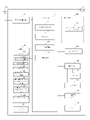
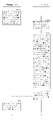
- FIG. 3 is a block diagram showing a functional configuration of a terminal device;
- FIG. 3 is a block diagram showing a functional configuration of a server;
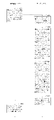
- FIG. FIG. 2 is a diagram showing the data structure of a database stored by a server;
- FIG. FIG. 2 is a diagram showing the data structure of a database stored by a server;
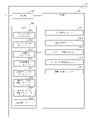
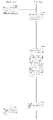
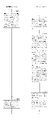
- FIG. FIG. 10 is a diagram showing a flow of processing related to matching; It is a figure which shows the flow of related processing of harvesting operation.
- FIG. 10 is a diagram showing the flow of processing for viewing profiles of unmatched partners.
- FIG. 10 is a diagram showing the flow of processing for viewing profiles of already matched partners.
- FIG. 10 is a diagram showing an example of a screen in which the viewing range of the profile changes according to the progress of the game; It is a figure which shows the example of a screen of cancellation
- a user operates a terminal device (for example, a smartphone) equipped with a touch screen, and progresses the game while transmitting and receiving game-related data between the game server and the smartphone.
- the content of the game is a town-building type game including elements of matching with other players, and the player installs the game object by performing an operation to install the game object.
- the game objects eg, fields, factories, commercial facilities, mining facilities, houses, public facilities, etc.
- produce products crops, in-game currency, etc.
- Players can acquire in-game assets (materials, raw materials, funds, etc. in the game) by performing operations to harvest products.
- FIG. 1 is a block diagram showing an example of the overall configuration of a game distribution system 1 according to an embodiment.
- the game delivery system 1 includes a terminal device 10 used by a user and a server 20. These devices are connected to each other via a network 80 so as to be able to communicate with each other. Although one terminal device 10 is illustrated in the illustrated example, each user operates the terminal device 10 .
- the example in FIG. 1 shows the terminal device 10 used by the user.
- the terminal device 10 is a terminal having a touch screen.
- the terminal device 10 By executing the game program, the terminal device 10 provides the user with an environment for playing the game according to the game program.
- the terminal device 10 installs a game program via a platform that distributes applications, for example.
- the terminal device 10 enables a user to play a game by executing a game program installed in the terminal device 10 or a preinstalled game program.
- the terminal device 10 By reading and executing a game program, the terminal device 10 connects the terminal device 10 and the server 20 for communication, and transfers game-related data between the terminal device 10 and the server 20 according to the progress of the game. to send and receive.
- the server 20 causes the game play on the terminal device 10 to progress by appropriately transmitting data necessary for playing the game to the terminal device 10 .
- the server 20 manages various data related to games of users who play the games.
- the server 20 communicates with the terminal device 10 and transmits images, sounds, text data, etc. to the terminal device 10 according to the progress of each user's game.
- the server 20 manages other various data such as information on icons that appear in the game, information on items that can be used by each user among the players that appear in the game, and profile information on players that appear in the game. .
- the server 20 also performs processing for the game operator to notify the user of campaigns, the occurrence of problems in the progress of the game, the resolution of problems, and other information related to the operation of the game.
- the terminal device 10 includes a communication IF (Interface) 12, an input device 13, an output device 14, a memory 15, a storage section 16, and a processor 19.
- IF Interface
- the communication IF 12 is an interface for inputting and outputting signals for the terminal device 10 to communicate with an external device.
- the input device 13 is a device (for example, a touch panel, a touch pad, a pointing device such as a mouse, a keyboard, etc.) for receiving an input operation from a user who is a game player.
- a device for example, a touch panel, a touch pad, a pointing device such as a mouse, a keyboard, etc.
- the output device 14 is a device (display, speaker, etc.) for presenting information to the user.
- the memory 15 is for temporarily storing programs and data processed by the programs, and is a volatile memory such as a DRAM (Dynamic Random Access Memory).
- DRAM Dynamic Random Access Memory
- the storage unit 16 is for storing data, and is, for example, a flash memory or a HDD (Hard Disc Drive).
- the processor 19 is hardware for executing an instruction set described in a program, and is composed of arithmetic units, registers, peripheral circuits, and the like.
- the server 20 is a device that manages the information of the players who play the game and the progress of the game.
- the server 20 includes a communication IF 22, an input/output IF 23, a memory 25, a storage 26, and a processor 29.
- the communication IF 22 is an interface for inputting and outputting signals for the server 20 to communicate with external devices.
- the input/output IF 23 functions as an interface with an input device for accepting input operations from the user and an output device for presenting information to the user.
- the memory 25 is for temporarily storing programs and data processed by the programs, and is a volatile memory such as a DRAM (Dynamic Random Access Memory).
- DRAM Dynamic Random Access Memory
- the storage 26 is for storing data, and is, for example, a flash memory or HDD (Hard Disc Drive).
- HDD Hard Disc Drive
- the processor 29 is hardware for executing an instruction set described in a program, and is composed of arithmetic units, registers, peripheral circuits, and the like.
- FIG. 2 is a block diagram showing the functional configuration of the terminal device.
- the terminal device 10 includes an antenna 111, a first wireless communication section 121, and a processor 19 (including an input operation reception section 191, a transmission/reception section 192, a data processing section 193, and a notification control section 194).
- operation reception unit 130 including touch-sensitive device 131
- storage unit 16 player information 161, matching information 162, private garden information 163, shared garden information 164, facility object information 165, facility object in private garden information 166, facility object information 167 in the shared garden, and harvest information 168
- memory includes display 132, audio processing unit 140, microphone 141, speaker 142, position information sensor 150, camera 160 and .
- the antenna 111 radiates the signal emitted by the terminal device 10 into space as radio waves. Antenna 111 also receives radio waves from space and provides a received signal to first wireless communication section 121 .
- the first wireless communication unit 121 performs modulation and demodulation processing for transmitting and receiving signals via the antenna 111 and the like.
- the first radio communication unit 121 is a communication module for radio communication including a tuner, a high frequency circuit, etc., performs modulation/demodulation and frequency conversion of radio signals transmitted and received by the terminal device 10 , and provides received signals to the processor 19 .
- the processor 19 controls the operation of the terminal device 10 by reading and executing programs stored in the storage unit 16 .
- the processor 19 is implemented by, for example, an application processor.
- the operation accepting unit 130 has a mechanism for accepting user input operations.
- operation reception unit 130 is configured as a touch screen.
- the touch-sensitive device 131 detects proximity of a user's finger or the like by using, for example, a capacitive device.
- the storage unit 16 is composed of a flash memory, a RAM (Random Access Memory), etc., and stores programs used by the terminal device 10, various data received by the terminal device 10 from the server 20, and the like.
- the display 132 displays data such as images, moving images, and text under the control of the processor 19.
- the display 132 is implemented by, for example, an LCD (Liquid Crystal Display), an organic EL (Electroluminescence), or other display device.
- the audio processing unit 140 modulates and demodulates the audio signal. Audio processing unit 140 modulates the signal supplied from microphone 141 and supplies the modulated signal to processor 19 . Also, the audio processing unit 140 provides an audio signal to the speaker 142 .
- the microphone 141 receives an audio input and provides an audio signal corresponding to the audio input to the audio processing unit 140 .
- the speaker 142 converts the audio signal given from the audio processing unit 140 into audio and outputs the audio to the outside of the terminal device 10 .
- the position information sensor 150 is a sensor that detects the position of the terminal device 10, and is, for example, a GPS (Global Positioning System) module.
- GPS Global Positioning System
- a GPS module is a receiving device used in a satellite positioning system.
- the camera 160 is a device for receiving light with a light receiving element and outputting it as a captured image.
- FIG. 3 is a diagram showing a functional configuration of the server 20.
- the server 20 includes a communication unit 201, a storage unit 202 (player information database 2021, matching information database 2022, private garden information database 2023, shared garden information database 2024, facility object database 2025, facility object list a database 2026, a facility object list database 2027, and a harvest database 2028); 2035).
- the communication unit 201 performs processing for the server 20 to communicate with an external device.
- the storage unit 202 includes a player information database 2021, a matching information database 2022, a private garden information database 2023, a shared garden information database 2024, a facility object database 2025, a private garden facility object list database 2026, and a shared garden facility object list database 2026.
- Various databases such as a facility object list database 2027 and a harvest database 2028 are stored.
- the player information database 2021 is a database for managing player information. Details will be described later.
- the matching information database 2022 is a database for managing matching information. Details will be described later.
- the private garden information database 2023 is a database for managing information on private gardens.
- a personal garden is a game field assigned to a user, in which objects associated with the user can be placed and in-game assets such as coins can be obtained from the placed objects. Details will be described later.
- the shared garden information database 2024 is a database for managing information on shared gardens.
- a shared garden is a game field assigned to each matched user, in which shared objects associated with the matched user are placed, and in-game assets such as coins are collected from the placed objects by each user. It is a game field in which it is possible to obtain, for example. Details will be described later.
- the facility object database 2025 is a database for managing information on facility objects. Details will be described later.
- the private garden facility object list database 2026 is a database for managing information on facility objects in private gardens. Details will be described later.
- the facility object list database 2027 in the shared garden is a database for managing information on facility objects in the shared garden. Details will be described later.
- the control unit 203 is implemented by the processor 29 reading a program stored in the storage unit 202 and executing instructions included in the program.
- the control unit 203 operates according to programs to exhibit functions indicated by a reception control module 2031, a transmission control module 2032, a player information acquisition module 2033, a matching information acquisition module 2034, and a garden information acquisition module 2035.
- the reception control module 2031 controls the process by which the server 20 receives signals from external devices according to the communication protocol.
- the transmission control module 2032 controls the processing by which the server 20 transmits signals to external devices according to the communication protocol.
- the player information acquisition module 2033 performs a series of processes for managing player information.
- the matching information acquisition module 2034 performs a series of processes for associating multiple users.
- the garden information acquisition module 2035 performs a series of processes for managing garden information that appears in the game.
- FIG. 4 and 5 are diagrams showing the data structure of the database stored by the server 20.
- FIG. 4 is an example and does not exclude data that is not described.
- the player information database 2021 of FIG. 4 includes subfields "user ID”, subfields "name”, subfields “age”, subfields “sex”, subfields "hometown", and subfields "blood Type”, sub-field “account creation date”, sub-field “number of coins in possession”, sub-field “number of matching people”, and sub-field "last login date”.
- the subfield "user ID” indicates the identification information given to the user.
- the subfield "user ID” is a unique ID for the user that is required when managing the game program.
- the subfield "name” indicates the name or nickname specified by the user.
- the subfield "Age” indicates the age specified by the user.
- the subfield "gender” indicates the gender specified by the user.
- the subfield "place of birth” indicates the place of birth specified by the user.
- the subfield "blood type” indicates the blood type specified by the user.
- the subfield "account creation date” indicates the date when the user created the account.
- the subfield ⁇ Number of coins owned'' indicates the amount of virtual currency (also called ⁇ coins'') that the user has and can use in the game.
- the subfield "number of matching people” indicates the number of people that the user is matching with other users.
- the sub-field "Number of matching people” has an upper limit on the number of people who can be matched.
- the sub-field "Date last logged in” indicates the last day the user logged in to the game.
- the matching information database 2022 of FIG. 4 includes a subfield "matching ID”, a subfield “user ID_1”, a subfield “user ID_2”, a subfield “matching date”, and a subfield “matching cancellation date”. and the subfield "Status”.
- the subfield "matching ID” indicates the identification information given to the matching.
- the subfield "matching ID” is a unique ID for matching that is required when managing the game program.
- the subfield "user ID_1" indicates the ID of the matching user (first player).
- the subfield "user ID_2" indicates the ID of the matching user (second player).
- the subfield "Date of Matching" indicates the date on which matching was established.
- the subfield "Date of termination of matching" indicates the date on which matching was terminated.
- the subfield "status" indicates the matching status.
- the subfield "status" is information indicating whether the matching status is in progress or has already been resolved.
- the private garden information database 2023 of FIG. 4 includes subfields "private garden ID”, subfields "user ID”, subfields “created date”, subfields “updated dates”, and subfields " Installed Facility Object List” and the sub-field "Garden Status”.
- the subfield "private garden ID” is identification information given to a private garden.
- a personal garden is a game field assigned to a user, in which objects associated with the user can be placed and in-game assets such as coins can be obtained from the placed objects.
- the subfield "private garden ID” is a unique ID for a private garden that is required when managing the game program.
- the subfield "user ID” indicates the identification information given to the user. Specifically, the subfield “user ID” is a unique ID for the user, which is required when managing the game program.
- the subfield "Date created” indicates the date the personal garden was created.
- the subfield "Date updated" indicates the date the personal garden was updated.
- the subfield "List of installed facility objects" indicates a list of facility objects installed in private gardens.
- the subfield "Status" indicates the status of the private garden.
- the subfield "Status” is information indicating whether the status of the personal garden is being released or has already been deleted.
- the shared garden information database 2024 of FIG. Installed Facility Object List" and the sub-field "Garden Status".
- the subfield "shared garden ID” is identification information given to the shared garden.
- a shared garden is a game field assigned to each matched user, in which shared objects associated with the matched user are placed, and in-game assets such as coins are collected from the placed objects by each user. It is a game field in which it is possible to obtain, for example.
- the subfield "shared garden ID” is a unique ID for the shared garden, which is required when managing the game program.
- the subfield "matching ID” indicates the identification information given to the user.
- the subfield "matching ID” is a unique ID for the user that is required when managing the game program.
- the subfield "Date Created” indicates the date the shared garden was created.
- the subfield "Date updated" indicates the date the shared garden was updated.
- the subfield "List of installed facility objects" indicates a list of facility objects installed in the shared garden.
- the sub-field ⁇ installed facility object list'' will be described later in the facility object list database 2027 in the shared garden of FIG. 5 for details of the list of facility objects in the shared garden.
- the subfield "Status" indicates the status of the shared garden.
- the subfield "Status” is information indicating whether the shared garden status is being released or has already been deleted.
- the facility object database 2025 of FIG. 5 includes a subfield "facility object ID”, a subfield “facility object name”, a subfield “created date”, a subfield "which garden it belongs to”, and a subfield. It includes a field ⁇ facility object level'', a subfield ⁇ facility object attribute'', a subfield ⁇ harvested product ID grown in the facility object'', and a subfield ⁇ coordinate position of facility object''.
- the subfield "facility object ID" indicates the identification information given to the facility object.
- the subfield "facility object ID” is a unique ID for the facility object that is required when managing the game program.
- the subfield "name of facility object" indicates the name of the facility object.
- the subfield "Date Created” indicates the date the facility object was created.
- the subfield "Which garden belongs to” indicates which garden the facility object belongs to.
- a facility object is installed in a private garden or a shared garden by the user.
- the sub-field "facility object level” indicates the level of the facility object.
- the subfield "facility object level” performs the following processing for each user according to the level of the facility object installed in the shared garden.
- the range in which each matching user can browse the other's profile is changed. For example, the higher the level of the facility object in the shared garden, the wider the scope of the other party's profile that each user can view.
- the amount of in-game assets that each matching user can obtain from the facility object varies. For example, the higher the level of the facility object, the higher the number and types of objects that can be produced by the facility object, and the production speed.
- the sub-field "attribute of facility object" indicates the attribute of the facility object.
- the subfield "Harvest ID” indicates the ID of the harvest grown in the facility object.
- the subfield "coordinate position of facility object” indicates the coordinate position of the facility object.
- the subfield "coordinate position of facility object” includes coordinate information of the coordinate position of the facility object in each user's private garden or shared garden.
- the private garden facility object list database 2026 in FIG. 5 includes a subfield "private garden facility object list ID”, a subfield "private garden ID”, and a subfield "facility object ID”.
- the subfield "private garden facility object list ID" indicates information identifying the private garden facility object list.
- the subfield "private garden facility object list ID" is a unique ID for the private garden facility object list, which is required when managing the game program.
- the subfield "private garden ID” is identification information given to a private garden.
- a personal garden is a game field assigned to a user, in which objects associated with the user can be placed and in-game assets such as coins can be obtained from the placed objects.
- the subfield "private garden ID” is a unique ID for a private garden that is required when managing the game program.
- the subfield "facility object ID" indicates the identification information given to the facility object.
- the subfield "facility object ID” is a unique ID for the facility object that is required when managing the game program.
- the facility object list database 2027 in the shared garden in FIG. 5 includes subfields "shared garden facility object list ID", subfields "shared garden ID”, and subfields "facility object ID”.
- the subfield "shared garden facility object list ID" indicates information that identifies the facility object list of the shared garden.
- the subfield "Shared garden facility object list ID" is a unique ID for the shared garden facility object list, which is required when managing the game program.
- the subfield "shared garden ID” is identification information given to the shared garden.
- a shared garden is a game field assigned to each matched user, in which shared objects associated with the matched user are placed, and in-game assets such as coins are collected from the placed objects by each user. It is a game field in which it is possible to obtain, for example.
- the subfield "shared garden ID” is a unique ID for the shared garden, which is required when managing the game program.
- the subfield "facility object ID" indicates the identification information given to the facility object.
- the subfield "facility object ID” is a unique ID for the facility object that is required when managing the game program.
- the harvest database 2028 of FIG. 5 includes subfields "harvest ID”, subfields "harvest name”, subfields “time to harvest”, and subfields "available when harvested”. Quantity”, a sub-field “coins obtained when harvested crops are sold”, and a sub-field “minimum level of facility object where harvested crops can be planted”.
- the subfield "Harvest ID” indicates the identification information given to the harvest.
- the subfield "harvest ID” is a unique ID for the harvest that is required when managing the game program.
- the subfield "Name of harvest” indicates the name of the harvest.
- the subfield "Time to harvest” indicates the time it takes for the crop to be harvested.
- the subfield "Coins obtained when selling harvested items” shows information on the coins obtained when selling harvested items.
- the subfield "Coins obtained when selling harvested products” can be used in each player's own garden.
- the subfield "Minimum level of facility objects at which crops can be planted" indicates the lowest level of facility objects at which crops can be planted.
- FIG. 6 is a diagram showing the flow of matching-related processing.
- step S501 the terminal device (10) accepts an input operation for matching the first player to the second player.
- step S551 the server (20) receives an input operation for matching the first player to the second player.
- step S552 the server (20) determines the matching result based on the input operation for matching.
- the server (20) updates the matching information database 2022 by accepting an operation for matching from the first player to the second player. For example, in the matching information database 2022, the server (20) first accepts an operation for the first player to designate the second player while the first player and the second player are not matched. , causes the subfield "user ID_1" to hold the identification information of the first player and the subfield "user ID_2" to hold the identification information of the second player.
- the server (20) requires input operations from both the first player and the second player in order to determine the matching result.
- the server (20) refers to the matching information database 2022 in response to receiving the second player's operation to designate the first player, and performs matching between the second player and the first player. establish. By judging that the matching is established, the server (20) holds the information of the timing (for example, date and time) when the matching is established in the subfield "date of matching" of the matching information database 2022.
- a server (20) in a state in which a first player and a second player are matched, responds to an operation for canceling matching from either or both of the players. Dissolve the match between the player and the second player.
- the server (20) refers to the matching information database 2022, and holds information on the timing when the matching was canceled in the subfield "matching cancellation date" for the players who have canceled the matching.
- the server (20) refers to the matching information database 2022 to determine whether matching has been established in the past. can be determined.
- the server (20) may prohibit re-establishment of matching for a combination of players for which matching was established in the past but the matching was canceled.
- step S553 the server (20) presents the determined matching result to the terminal device (10).
- step S502 the terminal device (10) presents the determined matching result to the first player on a display or the like.
- FIG. 7 is a diagram showing the flow of processing related to the harvesting operation.
- step S601 the terminal device (10) accepts an input operation for raising and harvesting game objects shared by the first player and the matching partner while the first player and the second player are matched.
- the server (20) receives an input operation for raising and harvesting the game object shared by the first player with the matching partner.
- step S652 the server (20) determines what game object acquisition result to give to the first player and the second player based on the input operation for growing and harvesting game objects.
- the server (20) updates the facility object database 2025 and the harvested product database 2028 by receiving the input operation of raising and harvesting game objects by the first player. For example, in the facility object database 2025, the server (20) responds to an input operation for growing and harvesting a game object shared by a first player with a second player who is a matching partner.
- the harvest database 2028 is referred to from the "grown harvest ID", and the acquisition result of the game object is given according to the subfield "quantity obtained when harvesting" of the harvest database 2028.
- the server (20) presents the acquisition result of the game object to the terminal device (10).
- the result of acquiring the game object will be sent to both the first player and the second player.
- step S602 the terminal device (10) presents the acquisition result of another game object to the first player on a display or the like.
- FIG. 8 is a diagram showing the flow of processing for browsing profiles of unmatched partners.
- step S701 the terminal device (10) transmits an operation for the first player to browse the second player's profile while the first player and the second player are not matched.
- step S751 the server (20) determines the second player's profile viewing range based on the first player's operation of viewing the second profile. In determining the viewing range of the profile, the first player is allowed to view part of the second player's profile, while the other part is viewable, until the first player and the second player are matched. limit.
- step S752 the server (20) determines the second player's profile viewing range based on the first player's operation of viewing the second profile. In determining the viewing range of the profile, the first player is allowed to view part of the second player's profile, while the other part is viewable, until the first player and the second player are matched. limit.
- step S753 the server (20) presents the second player's profile information to the first player's terminal device (10).
- step S702 the terminal device (10) presents the profile information of the second player to the first player by displaying it on a display or the like.
- FIG. 9 is a diagram showing the flow of processing for browsing profiles of already matched partners.
- step S801 the terminal device (10) accepts an input operation for browsing the second profile by the first player in a state in which matching has been established between the first player and the second player.
- the server (20) accepts an input operation from the first player to browse the profile of the second player.
- step S852 the server (20) determines the viewing range of the second player's profile that the first player can view, based on the first player's operation of viewing the second player's profile. .
- the server (20) refers to the player information database 2021 and acquires the second player's profile information based on the first player's operation of viewing the second player's profile.
- the viewing range of the profile When determining the viewing range of the profile, if the first player and the second player are matched, the following will occur. Part of the profile information that was restricted from viewing before matching was established, based on the input operation history of the first player and the second player on the game object shared by the first player and the second player. can be viewed.
- step S853 the server (20) presents the second player's profile information to the first player's terminal device.
- step S802 the terminal device (10) presents the profile information of the second player to the first player on a display or the like.
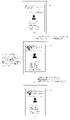
- FIG. 10 is a diagram showing an example of a screen in which the viewing range of the profile changes according to the progress of the game.
- the server (20) presents the information to the player so that the viewing range of the profile is limited and only a part of the profile can be viewed for the partner to whom the player has not yet matched. do.
- the server (20) provides information to the player so that the profile of the specified matching partner can be viewed on the screen where the profile of the matching partner can be viewed after the matching is established. Present.
- the server (20) makes it possible to partially view the subfields of the profile that could not be viewed when there was no matching. Present information to the player. Furthermore, the range of profiles that can be viewed will expand by increasing the degree of intimacy, such as cultivating a shared garden with a matching partner.
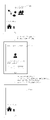
- FIG. 11 is a diagram showing an example of a screen for canceling a match with a partner.
- the server (20) causes the terminal device (10) to display the garden shared by the first player and the matching partner in the game field.
- the server (20) receives an operation from the player to specify one of the plurality of matching partners with which the player is matching.
- the server (20) displays the information of the matching partner specified by the player ("Yanagi" in the illustrated example) among the plurality of matching partners.
- the server (20) refers to the personal garden information database 2023 and the shared garden information database 2024, and reads out the information of the installed objects (for example, by arranging these objects in the game space and setting them according to the settings of the virtual camera). Rendering, etc.) to draw the screen presented to the player.
- the server (20) receives an operation from the player to cancel the matching. As shown in screen 1114, if the first player is unmatched with a match, the server (20) presents information to the player so that the game field does not display the shared garden with the match. In addition, the server (20) performs processing so that the player cannot be matched again with a partner with whom matching has been canceled once.
- a specific game object makes another game object available to the first player and the second player when a predetermined condition is met while the first player and the second player are matched. is a 5.
- the game program according to claim 4, causing execution of a step (S601) of accepting an input operation for obtaining another game object from only the first player or the second player.
- a first game object that accepts an input operation only from a first player is arranged in a first game field, 8.
- a computer-implemented method comprising a processor (29, 19), comprising: The method is that the processor presenting to the first player a first game field associated with the first player; a step of matching the first player and a second player different from the first player based on the input operation of the first player and the input operation of the second player (S552); causing the first and second players being matched to associate a particular game object shared by the first and second players; causing the first player and the second player who are matched to cancel the matching based on the input operation of the first player and the input operation of the second player (S552); a step in which a particular game object is deleted upon resolution; A method in which a first player that was matched in the presenting step cannot be re-matched with a second player.
- An information processing device comprising a processor (29, 19), The processor of the information processing device presenting to the first player a first game field associated with the first player; a step of matching the first player and a second player different from the first player based on the input operation of the first player and the input operation of the second player (S552); causing the first and second players being matched to associate a particular game object shared by the first and second players; causing the first player and the second player who are matched to cancel the matching based on the input operation of the first player and the input operation of the second player (S552); a step in which a particular game object is deleted upon resolution; An information processing device in which a first player who has been matched cannot be re-matched with a second player in the presenting step.
Landscapes
- Engineering & Computer Science (AREA)
- Multimedia (AREA)
- Business, Economics & Management (AREA)
- Computer Security & Cryptography (AREA)
- General Business, Economics & Management (AREA)
- Theoretical Computer Science (AREA)
- Human Computer Interaction (AREA)
- Computer Networks & Wireless Communication (AREA)
- Management, Administration, Business Operations System, And Electronic Commerce (AREA)
Priority Applications (1)
| Application Number | Priority Date | Filing Date | Title |
|---|---|---|---|
| US18/485,971 US20240082737A1 (en) | 2021-04-14 | 2023-10-12 | Program, method and information processing apparatus |
Applications Claiming Priority (2)
| Application Number | Priority Date | Filing Date | Title |
|---|---|---|---|
| JP2021068169A JP7220433B2 (ja) | 2021-04-14 | 2021-04-14 | プログラム、方法、情報処理装置 |
| JP2021-068169 | 2021-04-14 |
Related Child Applications (1)
| Application Number | Title | Priority Date | Filing Date |
|---|---|---|---|
| US18/485,971 Continuation US20240082737A1 (en) | 2021-04-14 | 2023-10-12 | Program, method and information processing apparatus |
Publications (1)
| Publication Number | Publication Date |
|---|---|
| WO2022219993A1 true WO2022219993A1 (ja) | 2022-10-20 |
Family
ID=83640348
Family Applications (1)
| Application Number | Title | Priority Date | Filing Date |
|---|---|---|---|
| PCT/JP2022/011531 Ceased WO2022219993A1 (ja) | 2021-04-14 | 2022-03-15 | プログラム、方法、情報処理装置 |
Country Status (3)
| Country | Link |
|---|---|
| US (1) | US20240082737A1 (enExample) |
| JP (3) | JP7220433B2 (enExample) |
| WO (1) | WO2022219993A1 (enExample) |
Families Citing this family (3)
| Publication number | Priority date | Publication date | Assignee | Title |
|---|---|---|---|---|
| JP7365615B1 (ja) | 2023-02-20 | 2023-10-20 | 株式会社Koiniwa | サーバ及びプログラム |
| JP2025030893A (ja) * | 2023-08-24 | 2025-03-07 | 株式会社コロプラ | プログラムおよび情報処理システム |
| JP7724487B1 (ja) * | 2024-11-06 | 2025-08-18 | 株式会社Koiniwa | プログラム、情報処理方法、情報処理装置、および、情報処理システム |
Citations (3)
| Publication number | Priority date | Publication date | Assignee | Title |
|---|---|---|---|---|
| JP2011156213A (ja) * | 2010-02-02 | 2011-08-18 | Konami Digital Entertainment Co Ltd | 紹介装置、紹介方法、ならびに、プログラム |
| JP2018079250A (ja) * | 2016-11-18 | 2018-05-24 | 株式会社セガゲームス | ゲームサーバおよびゲームプログラム |
| JP6714757B1 (ja) * | 2019-06-25 | 2020-06-24 | 株式会社バンク・オブ・イノベーション | サーバ及び情報システム |
Family Cites Families (4)
| Publication number | Priority date | Publication date | Assignee | Title |
|---|---|---|---|---|
| JP5809403B2 (ja) * | 2010-09-14 | 2015-11-10 | 株式会社バンダイナムコエンターテインメント | プログラム、サーバ、及びネットワークシステム |
| US20150065241A1 (en) * | 2013-08-27 | 2015-03-05 | Zynga Inc. | Gaming systems and methods for facilitating item grouping and group actions |
| US20160248864A1 (en) * | 2014-11-19 | 2016-08-25 | Unravel, Llc | Social networking games including image unlocking and bi-directional profile matching |
| CN106730850B (zh) * | 2016-12-16 | 2020-10-27 | 网易(杭州)网络有限公司 | 游戏对手匹配方法和装置 |
-
2021
- 2021-04-14 JP JP2021068169A patent/JP7220433B2/ja active Active
-
2022
- 2022-03-15 WO PCT/JP2022/011531 patent/WO2022219993A1/ja not_active Ceased
-
2023
- 2023-01-23 JP JP2023008393A patent/JP7746635B2/ja active Active
- 2023-10-12 US US18/485,971 patent/US20240082737A1/en active Pending
-
2025
- 2025-05-27 JP JP2025088217A patent/JP2025137882A/ja active Pending
Patent Citations (3)
| Publication number | Priority date | Publication date | Assignee | Title |
|---|---|---|---|---|
| JP2011156213A (ja) * | 2010-02-02 | 2011-08-18 | Konami Digital Entertainment Co Ltd | 紹介装置、紹介方法、ならびに、プログラム |
| JP2018079250A (ja) * | 2016-11-18 | 2018-05-24 | 株式会社セガゲームス | ゲームサーバおよびゲームプログラム |
| JP6714757B1 (ja) * | 2019-06-25 | 2020-06-24 | 株式会社バンク・オブ・イノベーション | サーバ及び情報システム |
Non-Patent Citations (1)
| Title |
|---|
| "Let's set up a multi-server with Minecraft! (1st edition)", 11 March 2017, IMPRESS CORPORATION, JP, ISBN: 978-4-295-00080-8, article TSUCHIDA, YONEICHI: "World Guard' plugin", pages: 62 - 66, XP009541189 * |
Also Published As
| Publication number | Publication date |
|---|---|
| JP7220433B2 (ja) | 2023-02-10 |
| JP2023037032A (ja) | 2023-03-14 |
| JP7746635B2 (ja) | 2025-10-01 |
| US20240082737A1 (en) | 2024-03-14 |
| JP2025137882A (ja) | 2025-09-22 |
| JP2022163307A (ja) | 2022-10-26 |
Similar Documents
| Publication | Publication Date | Title |
|---|---|---|
| JP7746635B2 (ja) | プログラム、方法、情報処理装置 | |
| US11344804B2 (en) | Display of system-level achievements with real-time updating | |
| CN109920167B (zh) | 用于实现基于计算机活动的挑战的方法和系统 | |
| CN103341266B (zh) | 游戏装置、控制方法及程序 | |
| JP7242739B2 (ja) | プログラム、情報処理装置、及び制御方法 | |
| CN110325249A (zh) | 游戏程序以及游戏程序控制方法 | |
| JP2013250876A (ja) | 投稿情報共有システム、ゲームアプリケーション実行システム、プログラムおよび情報処理方法 | |
| JP2024161294A (ja) | 情報処理装置、投票受付方法及び投票受付プログラム | |
| WO2020241441A1 (ja) | システム、装置、方法及びプログラム | |
| JP5977585B2 (ja) | ゲームシステム、制御方法、プログラムおよび端末装置 | |
| US20130017872A1 (en) | Method and system for tag-based grouping of online communities | |
| JP7220432B2 (ja) | プログラム、方法、情報処理装置 | |
| US9390581B2 (en) | Information generation device, information provision system, and information storage medium | |
| JP2013250840A (ja) | 情報処理システム、情報処理装置、情報処理方法およびプログラム | |
| JP2021023528A (ja) | プログラム、情報処理方法、及び情報処理装置 | |
| JP6035075B2 (ja) | 情報処理システム、情報処理装置、プログラムおよび情報処理方法 | |
| CN114053695B (zh) | 游戏数据分享方法、装置、电子设备及可读介质 | |
| JP2017042552A (ja) | 寄付特典量決定システム、ゲームサーバ、寄付特典量決定方法およびプログラム | |
| JP2020192350A (ja) | 情報生成装置、情報提供システムおよびプログラム | |
| JP2013146575A (ja) | ゲーム情報配信装置、プログラムおよび情報記憶媒体 | |
| JP2010017222A (ja) | ゲーム情報配信装置、プログラムおよび情報記憶媒体 | |
| KR20240067778A (ko) | 아이템을 제공할 수 있는 게임 시스템 및 그 아이템 제공 방법 | |
| JP2020192351A (ja) | 情報生成装置、情報提供システムおよびプログラム | |
| HK40021434A (en) | Method and apparatus for obtaining virtual card, method and apparatus for issuing virtual card, device and readable storage medium | |
| KR20180082140A (ko) | 캐주얼 점프액션 게임시스템 |
Legal Events
| Date | Code | Title | Description |
|---|---|---|---|
| 121 | Ep: the epo has been informed by wipo that ep was designated in this application |
Ref document number: 22787919 Country of ref document: EP Kind code of ref document: A1 |
|
| NENP | Non-entry into the national phase |
Ref country code: DE |
|
| 122 | Ep: pct application non-entry in european phase |
Ref document number: 22787919 Country of ref document: EP Kind code of ref document: A1 |