WO2022158528A1 - 抗ウイルス剤 - Google Patents
抗ウイルス剤 Download PDFInfo
- Publication number
- WO2022158528A1 WO2022158528A1 PCT/JP2022/001997 JP2022001997W WO2022158528A1 WO 2022158528 A1 WO2022158528 A1 WO 2022158528A1 JP 2022001997 W JP2022001997 W JP 2022001997W WO 2022158528 A1 WO2022158528 A1 WO 2022158528A1
- Authority
- WO
- WIPO (PCT)
- Prior art keywords
- group
- strain
- carbon atoms
- virus
- alkyl group
- Prior art date
- Legal status (The legal status is an assumption and is not a legal conclusion. Google has not performed a legal analysis and makes no representation as to the accuracy of the status listed.)
- Ceased
Links
Images


Classifications
-
- A—HUMAN NECESSITIES
- A61—MEDICAL OR VETERINARY SCIENCE; HYGIENE
- A61K—PREPARATIONS FOR MEDICAL, DENTAL OR TOILETRY PURPOSES
- A61K31/00—Medicinal preparations containing organic active ingredients
- A61K31/70—Carbohydrates; Sugars; Derivatives thereof
- A61K31/7042—Compounds having saccharide radicals and heterocyclic rings
- A61K31/7052—Compounds having saccharide radicals and heterocyclic rings having nitrogen as a ring hetero atom, e.g. nucleosides, nucleotides
- A61K31/706—Compounds having saccharide radicals and heterocyclic rings having nitrogen as a ring hetero atom, e.g. nucleosides, nucleotides containing six-membered rings with nitrogen as a ring hetero atom
- A61K31/7064—Compounds having saccharide radicals and heterocyclic rings having nitrogen as a ring hetero atom, e.g. nucleosides, nucleotides containing six-membered rings with nitrogen as a ring hetero atom containing condensed or non-condensed pyrimidines
-
- A—HUMAN NECESSITIES
- A61—MEDICAL OR VETERINARY SCIENCE; HYGIENE
- A61K—PREPARATIONS FOR MEDICAL, DENTAL OR TOILETRY PURPOSES
- A61K31/00—Medicinal preparations containing organic active ingredients
- A61K31/33—Heterocyclic compounds
- A61K31/395—Heterocyclic compounds having nitrogen as a ring hetero atom, e.g. guanethidine or rifamycins
- A61K31/40—Heterocyclic compounds having nitrogen as a ring hetero atom, e.g. guanethidine or rifamycins having five-membered rings with one nitrogen as the only ring hetero atom, e.g. sulpiride, succinimide, tolmetin, buflomedil
- A61K31/403—Heterocyclic compounds having nitrogen as a ring hetero atom, e.g. guanethidine or rifamycins having five-membered rings with one nitrogen as the only ring hetero atom, e.g. sulpiride, succinimide, tolmetin, buflomedil condensed with carbocyclic rings, e.g. carbazole
- A61K31/404—Indoles, e.g. pindolol
-
- A—HUMAN NECESSITIES
- A61—MEDICAL OR VETERINARY SCIENCE; HYGIENE
- A61K—PREPARATIONS FOR MEDICAL, DENTAL OR TOILETRY PURPOSES
- A61K31/00—Medicinal preparations containing organic active ingredients
- A61K31/33—Heterocyclic compounds
- A61K31/395—Heterocyclic compounds having nitrogen as a ring hetero atom, e.g. guanethidine or rifamycins
- A61K31/53—Heterocyclic compounds having nitrogen as a ring hetero atom, e.g. guanethidine or rifamycins having six-membered rings with three nitrogens as the only ring hetero atoms, e.g. chlorazanil, melamine
-
- A—HUMAN NECESSITIES
- A61—MEDICAL OR VETERINARY SCIENCE; HYGIENE
- A61K—PREPARATIONS FOR MEDICAL, DENTAL OR TOILETRY PURPOSES
- A61K31/00—Medicinal preparations containing organic active ingredients
- A61K31/66—Phosphorus compounds
- A61K31/683—Diesters of a phosphorus acid with two hydroxy compounds, e.g. phosphatidylinositols
- A61K31/685—Diesters of a phosphorus acid with two hydroxy compounds, e.g. phosphatidylinositols one of the hydroxy compounds having nitrogen atoms, e.g. phosphatidylserine, lecithin
-
- A—HUMAN NECESSITIES
- A61—MEDICAL OR VETERINARY SCIENCE; HYGIENE
- A61P—SPECIFIC THERAPEUTIC ACTIVITY OF CHEMICAL COMPOUNDS OR MEDICINAL PREPARATIONS
- A61P31/00—Antiinfectives, i.e. antibiotics, antiseptics, chemotherapeutics
- A61P31/12—Antivirals
-
- A—HUMAN NECESSITIES
- A61—MEDICAL OR VETERINARY SCIENCE; HYGIENE
- A61P—SPECIFIC THERAPEUTIC ACTIVITY OF CHEMICAL COMPOUNDS OR MEDICINAL PREPARATIONS
- A61P31/00—Antiinfectives, i.e. antibiotics, antiseptics, chemotherapeutics
- A61P31/12—Antivirals
- A61P31/14—Antivirals for RNA viruses
-
- Y—GENERAL TAGGING OF NEW TECHNOLOGICAL DEVELOPMENTS; GENERAL TAGGING OF CROSS-SECTIONAL TECHNOLOGIES SPANNING OVER SEVERAL SECTIONS OF THE IPC; TECHNICAL SUBJECTS COVERED BY FORMER USPC CROSS-REFERENCE ART COLLECTIONS [XRACs] AND DIGESTS
- Y02—TECHNOLOGIES OR APPLICATIONS FOR MITIGATION OR ADAPTATION AGAINST CLIMATE CHANGE
- Y02A—TECHNOLOGIES FOR ADAPTATION TO CLIMATE CHANGE
- Y02A50/00—TECHNOLOGIES FOR ADAPTATION TO CLIMATE CHANGE in human health protection, e.g. against extreme weather
- Y02A50/30—Against vector-borne diseases, e.g. mosquito-borne, fly-borne, tick-borne or waterborne diseases whose impact is exacerbated by climate change
Definitions
- the present invention relates to an antiviral agent that is effective as a therapeutic agent against viruses such as coronaviruses and flaviviruses.
- a coronavirus is an enveloped virus whose gene is a positive single-stranded RNA.
- Coronaviruses that infect humans include, in addition to viruses that cause common colds, those that cause acute respiratory syndrome.
- SARS-CoV which is the cause of the severe acute respiratory syndrome (SARS) epidemic in 2003
- SARS-CoV-2 which is the cause of the new coronavirus infection COVID-19.
- SARS-CoV-19 the cause of the new coronavirus infection 2019-19.
- there are still few therapeutic drugs for COVID-19 and the development of more effective therapeutic drugs is desired.
- Remdesivir is a monophosphoramidate prodrug of GS-441524, an antiviral agent consisting of a nucleic acid compound developed as a treatment for Ebola hemorrhagic fever and Marburg virus infection, and antiviral agent against single-stranded RNA viruses.
- GS-441524 is also expected to have a therapeutic effect against COVID-19 (Non-Patent Document 1).
- GS-441524 is an adenosine analog and also the parent nucleoside of remdesivir.
- Non-Patent Document 5 reported that GS-441524 has antiviral activity against flaviviruses and coronaviruses.
- Non-Patent Document 6 reported that GS-621763 and MPV (Molnupiravir) have therapeutic effects against SARS-CoV-2 infection.
- GS-621763 is a prodrug of GS-441524 and MPV is a prodrug of NHC (N-hydroxycytidine).
- the purpose of the present invention is to provide an antiviral agent that is effective as a therapeutic agent for viral infectious diseases including COVID-19.
- the present inventors used the nucleic acid compound-based compound library owned by the Research and Education Center for Pharmaceutical Sciences, Faculty of Pharmaceutical Sciences, Hokkaido University, to study the novel coronavirus SARS-CoV-2 and human coronavirus 2.
- the present invention was completed by screening compounds having antiviral activity against the strains (229E strain and OC43 strain) and selecting compounds with high antiviral activity.
- the present invention provides the following antiviral agent and the like. [1] the following general formula (1) or (2)
- R 1 is -(CH 2 )n 1 -Z 1 -R 11 or -CH-(-Z 1 -R 11 ) 2 (n 1 is 0 or 1 ; a bond, an oxygen atom, —NH—, a sulfur atom, —SO—, —SO 2 —, —CO—, —CO—O—, or —CH ⁇ NO—;
- R 11 is a hydrogen atom, carbon an alkyl group having a number of 1 to 6, -NR 12 R 13 , -N 3 , -NO 2 , -CN, -CH 2 -CO-OR 14 , or a 5- or 6-membered heterocyclocyclic group containing a nitrogen atom
- R 12 and R 13 are each independently a hydrogen atom or an alkyl group having 1 to 6 carbon atoms
- R 14 is a hydrogen atom or an alkyl group having 1 to 6 carbon atoms, provided that the above A heterocyclocyclic group is a group in which a
- An antiviral agent comprising a compound represented by or a derivative thereof, a salt of these compounds, or a solvate thereof.
- the general formula (1) is represented by the following general formulas (1-1) to (1-15) [In the formula, R 21 is a hydrogen atom, an alkyl group having 1 to 6 carbon atoms, —CH 2 —COOH, or an amino group; R 22 is a hydrogen atom, an alkyl group having 1 to 6 carbon atoms, or an amino R 23 , R 26 , R 27 , R 31 , R 32 and R 33 are hydrogen atoms or alkyl groups having 1 to 6 carbon atoms; R 24 , R 25 , R 29 and R 30 , and R 35 is an alkyl group having 1 to 6 carbon atoms; R 28 is a hydrogen atom, an alkyl group having 1 to 6 carbon atoms, or a cyano group; R 34 is a hydrogen atom, 1 to 6 carbon atoms 6 alkyl group, —CH 2
- the antiviral agent of [1] or [2], comprising one or more compounds selected from the group consisting of HUP1136, HUP1108, HUP1069, HUP1077, HUP1078, and HUP1109.
- a pharmaceutical composition comprising the antiviral agent of any one of [1] to [3] as an active ingredient.
- the pharmaceutical composition of [4] above which is used for treating infections caused by coronaviruses or flaviviruses.
- the pharmaceutical composition of [5] which is used for treating COVID-19.
- the pharmaceutical composition of [7], wherein the 3CL protease inhibitor is at least one selected from the group consisting of PF-07304814 and S-217622.
- a therapeutic method for treating coronavirus infection or flavivirus infection by administering an effective amount of the antiviral agent of any one of [1] to [3].
- the therapeutic method of [9] wherein an effective amount of an antiviral agent consisting of HUP1108 is administered.
- the therapeutic method of [9] or [10] wherein the effective amount is less than 60 mg/kg.
- the therapeutic method of [11] wherein the effective amount is 20 mg/kg.
- the flavivirus is at least one selected from the group consisting of dengue virus (DENV), Zika virus (ZIKV), yellow fever virus (YFV), West Nile virus (WNV), and Japanese encephalitis virus (JEV).
- DEV dengue virus
- ZIKV Zika virus
- YFV yellow fever virus
- WNV West Nile virus
- JEV Japanese encephalitis virus
- [18] A therapeutic combination of the antiviral agent of any of [1]-[3] and an inhibitor of 3CL protease. [19] The combination of [18], wherein the 3CL protease inhibitor is at least one selected from the group consisting of PF-07304814 and S-217622. [20] The antiviral agent of any one of [1] to [3], which is used for treating coronavirus infection or flavivirus infection.
- the coronavirus is at least one selected from the group consisting of WK-521 strain, ⁇ strain, ⁇ strain, ⁇ strain, ⁇ strain and ⁇ strain of SARS-CoV-2
- the flavivirus is at least one selected from the group consisting of dengue virus (DENV), Zika virus (ZIKV), yellow fever virus (YFV), West Nile virus (WNV) and Japanese encephalitis virus (JEV)
- DEV dengue virus
- ZIKV Zika virus
- YFV yellow fever virus
- WNV West Nile virus
- JEV Japanese encephalitis virus
- the antiviral agent according to the present invention contains, as an active ingredient, a nucleic acid compound that has high antiviral activity against enveloped viruses whose genes are positive-strand single-stranded RNA, such as coronaviruses and flaviviruses. Therefore, the antiviral agent is suitable as an in vivo or ex vivo antiviral agent, and a pharmaceutical composition containing the viral agent as an active ingredient is useful for treating or preventing infectious diseases caused by coronaviruses and flaviviruses. It is very useful as a pharmaceutical composition used for
- Example 2 the amount of viral RNA (Log 10 [viral RNA Copy number]) is a diagram showing the measurement results.
- the viral RNA replication inhibition rate [test sample is a diagram showing the measurement results of the number of viral RNA copies derived from cells treated with]/[the number of viral RNA copies derived from cells of the test sample non-added group] ⁇ 100%).
- Caco-2 cells infected with SARS-CoV-2 were treated with HUP1108 at three timings (Whole, Entry, and Post-entry). It is a diagram.
- Caco-2 cells infected with SARS-CoV-2 were treated with HUP1108 at three timings (Whole, Entry, and Post-entry).
- FIG. 10 shows the measurement results of viral RNA levels (Log 10 [viral RNA copy number]) when Caco-2 cells infected with various strains of SARS-CoV-2 were treated with compound HUP1108 in Example 5. is.
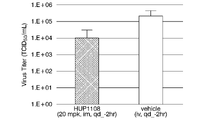
- Example 6 it is a diagram showing the results of measuring the intrapulmonary virus titers of SARS-CoV-2-infected mice to which HUP1108 was administered and SARS-CoV-2-infected mice to which HUP1108 was not administered.
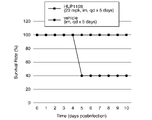
- FIG. 10 shows the results of measuring the survival rates of SARS-CoV-2-infected mice to which HUP1108 was administered and SARS-CoV-2-infected mice to which HUP1108 was not administered in Example 7.
- FIG. 10 shows the measurement results of viral RNA levels (Log 10 [viral RNA copy number]) when Caco-2 cells infected with various strains of SARS-CoV-2 were treated with compound HUP1108 in Example 5. is.
- Example 6 it is a diagram showing the results of measuring the intrapulmonary virus
- C yz (where y and z are positive integers satisfying y ⁇ z) means that the number of carbon atoms is y or more and z or less.
- the antiviral agent according to the present invention is a compound represented by the following general formula (1) (hereinafter sometimes referred to as “compound (1)”) or a compound represented by the following general formula (2) (hereinafter referred to as Sometimes referred to as “compound (2)”).
- R 1 is a group represented by —(CH 2 )n 1 —Z 1 —R 11 or —CH(—Z 1 —R 11 ) 2 .
- n 1 is 0 or 1
- n 1 is 0, —(CH 2 ) 0 — is a single bond, meaning that Z 1 is directly bonded to the carbon atom of the purine ring.
- R 11 is a hydrogen atom, an alkyl group having 1 to 6 carbon atoms, —NR 12 R 13 , —N 3 , —NO 2 , —CN, —CH 2 —CO-OR 14 , or 5 containing a nitrogen atom It is a membered or 6-membered heterocyclo ring group.
- R 12 and R 13 are each independently a hydrogen atom or an alkyl group having 1 to 6 carbon atoms
- R 14 is a hydrogen atom or an alkyl group having 1 to 6 carbon atoms.
- the nitrogen atom in the ring group and Z1 are linked.
- R 11 , R 12 , R 13 and R 14 are alkyl groups having 1 to 6 carbon atoms
- the alkyl groups may be linear or branched. More specifically, methyl group, ethyl group, n-propyl group, isopropyl group, n-butyl group, sec-butyl group, isobutyl group, tert-butyl group, n-pentyl group, sec-pentyl group, isopentyl group, An n-hexyl group, a sec-hexyl group, an isohexyl group and the like are preferred, an alkyl group having 1 to 4 carbon atoms is more preferred, an alkyl group having 1 to 3 carbon atoms is even more preferred, and a methyl group and an ethyl group are even more preferred.
- compound (1) includes compounds represented by any one of general formulas (1-1) to (1-15), and compound (2) includes general formula (2- 1) to compounds represented by any one of (2-15).
- R 21 is a hydrogen atom, an alkyl group having 1 to 6 carbon atoms, —CH 2 —COOH, or an amino group (—NH 2 ).
- the alkyl group having 1 to 6 carbon atoms the same groups as listed for R 11 can be used.
- R 22 is a hydrogen atom, an alkyl group having 1 to 6 carbon atoms, or an amino group.
- the alkyl group having 1 to 6 carbon atoms the same groups as listed for R 11 can be used.
- R 23 is a hydrogen atom or an alkyl group having 1 to 6 carbon atoms.
- the alkyl group having 1 to 6 carbon atoms the same groups as listed for R 11 can be used.
- R 24 is an alkyl group having 1 to 6 carbon atoms.
- the same groups as listed for R 11 can be used.
- R 25 is an alkyl group having 1 to 6 carbon atoms.
- the same groups as listed for R 11 can be used.
- R 26 is a hydrogen atom or an alkyl group having 1 to 6 carbon atoms.
- the alkyl group having 1 to 6 carbon atoms the same groups as listed for R 11 can be used.
- R 27 is a hydrogen atom or an alkyl group having 1 to 6 carbon atoms.
- the alkyl group having 1 to 6 carbon atoms the same groups as listed for R 11 can be used.
- R 28 is a hydrogen atom, an alkyl group having 1 to 6 carbon atoms, or a cyano group (--CN).
- the alkyl group having 1 to 6 carbon atoms the same groups as listed for R 11 can be used.
- R 29 is an alkyl group having 1 to 6 carbon atoms.
- the same groups as listed for R 11 can be used.
- R 30 is an alkyl group having 1 to 6 carbon atoms.
- the same groups as listed for R 11 can be used.
- R 31 is a hydrogen atom or an alkyl group having 1 to 6 carbon atoms.
- the alkyl group having 1 to 6 carbon atoms the same groups as listed for R 11 can be used.
- R 32 and R 33 each independently represent a hydrogen atom or an alkyl group having 1 to 6 carbon atoms.
- the alkyl group having 1 to 6 carbon atoms the same groups as listed for R 11 can be used.
- R 32 and R 33 are each independently preferably a hydrogen atom, a methyl group, or an ethyl group, and more preferably both R 32 and R 33 are a hydrogen atom, a methyl group, or an ethyl group. . It is also preferred that R 32 is a hydrogen atom and R 33 is a methyl group or an ethyl group.
- R 34 is a hydrogen atom, an alkyl group having 1 to 6 carbon atoms, —CH 2 —N 3 , a cyano group, an amino group, a nitro group (- NO 2 ), or an azide group (—N 3 ).
- the alkyl group having 1 to 6 carbon atoms the same groups as listed for R 11 can be used.
- R 35 is an alkyl group having 1 to 6 carbon atoms.
- the alkyl group having 1 to 6 carbon atoms the same groups as listed for R 11 can be used.
- Two R35 's in one molecule may be the same or different groups.
- R 35 is preferably a hydrogen atom, a methyl group, or an ethyl group, more preferably a methyl group or an ethyl group, and even more preferably a methyl group.
- A is a 5- or 6-membered heterocyclocyclic group containing a nitrogen atom.
- a nitrogen atom in the ring group is linked to a carbon atom of the purine ring via a methylene group.
- the heterocyclocyclic group include monovalent groups obtained by extracting hydrogen atoms bonded to nitrogen atoms from pyrrolidine, piperidine, morpholine, and thiomorpholine.
- the compound (1) is preferably a compound represented by the general formula (1-13), a compound represented by the general formula (1-1), or a compound represented by the general formula (1-11).
- R 34 in formula (1-13) is a hydrogen atom, an alkyl group having 1 to 3 carbon atoms, a cyano group, or a nitro group
- R 21 in general formula (1-1) is a hydrogen atom or a carbon number
- Compounds having 1 to 3 alkyl groups or compounds in which R 31 in general formula (1-11) is a hydrogen atom or an alkyl group having 1 to 3 carbon atoms are more preferable.
- the compound (2) is preferably a compound represented by the general formula (2-13), a compound represented by the general formula (2-1), or a compound represented by the general formula (2-11).
- R 34 in formula (2-13) is a hydrogen atom, an alkyl group having 1 to 3 carbon atoms, a cyano group, or a nitro group
- R 21 in general formula (2-1) is a hydrogen atom or a carbon number
- Compounds having 1 to 3 alkyl groups or compounds in which R 31 in general formula (2-11) is a hydrogen atom or an alkyl group having 1 to 3 carbon atoms are more preferred.
- Antiviral agents according to the present invention include HUP1136 (tubercidin) (CAS No.: 69-33-0), HUP1108 (5-hydroxymethyltubercidin), HUP1069 (5-formyltubercidin oxime), HUP1077 ( Particularly preferred are one or more compounds selected from the group consisting of tubercidin N-oxide), HUP1078 (5-nitrotubercidin), and HUP1109 (5-cyanotubercidin, toyocamycin).
- HUP1108, HUP1069, HUP1077, HUP1078, and HUP1109 can be synthesized from HUP1136 by the method described in Non-Patent Document 2.
- HUP1108 can also be synthesized from HUP1136 by the method described in Non-Patent Document 3, and can also be synthesized from the natural product sangivamycin by the method described in Non-Patent Document 4.
- compound (1) and compound (2) may form a salt, and the acid or base that forms the salt includes mineral acids such as hydrochloric acid and sulfuric acid; Acids, organic acids such as citric acid; alkali metals such as sodium and potassium; alkaline earth metals such as calcium and magnesium; Compound (1) and compound (2) may also be in the form of solvates such as hydrates.
- a derivative of compound (1) or a derivative of compound (2) may be used as the antiviral agent according to the present invention.
- the derivative of compound (1) or the derivative of compound (2) is preferably a derivative from which compound (1) or compound (2) is produced by enzymatic treatment or the like in vivo.
- the derivative of compound (1) or the derivative of compound (2) that can be used as an antiviral agent includes, for example, are more preferred.
- the hydroxy group linked to the furan ring via a methylene group is substituted with a phosphoric acid group (PO 4 ⁇ ), or monophosphoramidite derivatives in which a hydroxy group is substituted with a monophosphoramidite group, monophosphorothioate derivatives in which the hydroxy group is substituted with a monophosphorothioate group, and the like.
- the derivative of compound (1) and the derivative of compound (2) may form a salt or may be in the form of a solvate such as a hydrate. As the salt, those listed above can be used.
- nucleic acid compounds have antiviral activity against viruses, particularly coronaviruses and flaviviruses. Useful as an ingredient.
- Coronaviruses include SARS-CoV, MERS-CoV, and SARS-CoV-2.
- SARS-CoV-2 has various mutant strains, for example, ⁇ strain (alpha strain) (B.1.1.7 strain), ⁇ strain (beta strain) (B.1.351 strain), ⁇ strain (gamma strain ) (P.1 strain), ⁇ strain (Delta strain) (B.1.617.2 strain), ⁇ strain (Omicron strain) (B.1.1.529), E484K strain (R.1 strain), ⁇ strain (Epsilon) strain) (B.1.427/B.1.429 strain), ⁇ strain (theta strain) (P.3 strain), ⁇ strain (kappa strain) (B.1.617.1 strain), and other mutant strains.
- flavivirus like coronavirus, it is an enveloped virus that has a positive-strand single-stranded RNA gene, and is the cause of dengue fever (dengue hemorrhagic fever).
- ZIKV Zika virus
- YFV Yellow fever virus
- WNV West Nile virus
- JEV Japanese encephalitis virus caused by Japanese encephalitis
- DENV DENV from type 1 to type 4 (DENV1, DENV2, DENV3, and DENV4).
- the nucleic acid compound according to the present invention like remdesivir, inhibits RNA-dependent RNA polymerase (RdRp). Therefore, it has antiviral activity against viruses replicated by RdRp.
- viruses include, for example, viruses that cause viral hepatitis, such as coronaviruses, flaviviruses, and hepacivirus C.
- Nucleic acid compounds of the present invention can be used to treat infections caused by viruses that are replicated by RdRp.
- Nucleic acid compounds according to the present invention are particularly useful as active ingredients of pharmaceutical compositions used for treatment or prevention of coronavirus infections including COVID-19. Since all SARS-CoV-2 mutant strains require RdRp for replication, the nucleic acid compounds according to the present invention have antiviral activity against all mutant strains. In addition, the nucleic acid compound according to the present invention can also be used as an active ingredient of a pharmaceutical composition used for the treatment or prevention of flavivirus infectious diseases such as dengue fever, Zika fever, yellow fever, West Nile fever, and Japanese encephalitis. Very useful. Since the nucleic acid compound according to the present invention is a low-molecular-weight compound, there is no problem such as immunogenicity. In addition, it can be administered orally, and the route of administration is not so limited, so it is particularly useful as an active ingredient of medicines for mammals including humans.
- Non-Patent Document 7 discusses cellular uptake of GS-441524.
- the authors showed that cellular uptake of GS-441524 is entirely dependent on adenosine transporters present on the cell surface, but these transporters are reduced in hypoxic lung epithelial cells and certain cell lines. Therefore, it is speculated that the uptake of GS-441524 into cells is reduced.
- One major difference between GS-441524 and tubercidin derivatives such as HUP1108 is that a cyano group (-CN) is attached to position 1 of GS-441524, whereas HUP1108 does not. is. Therefore, this difference may be one of the reasons why the compounds of the present invention show superior potency compared to GS-441524.
- the compounds of the present invention are believed to be taken up into cells via multiple mechanisms, thereby ameliorating the problem of reduced uptake into hypoxic lung epithelial cells with reduced adenosine transporters, It is considered to have excellent antiviral activity.
- nucleic acid compounds according to the present invention When one or more nucleic acid compounds according to the present invention are contained in a pharmaceutical composition, they are mixed with a pharmaceutically acceptable carrier, if necessary, and various dosage forms are adopted depending on the purpose of prevention or treatment. It is possible. Examples of such forms include oral agents, injections, suppositories, ointments, and patches, with oral agents being preferred. Each of these dosage forms can be produced by a conventional formulation method known to those skilled in the art.
- Pharmaceutically acceptable carriers include excipients, binders, disintegrants, lubricants and coloring agents in solid preparations; solvents, solubilizers, suspending agents, tonicity agents and buffers in liquid preparations. and analgesics, etc. are used.
- Formulation additives such as preservatives, antioxidants, colorants, sweeteners, stabilizers, etc. may also be used as necessary.
- the nucleic acid compound of the present invention is added with an excipient, and if necessary, a binder, a disintegrant, a lubricant, a coloring agent, a flavoring agent, etc. Tablets, coated tablets, granules, powders, capsules, etc. can be produced according to the method.
- a flavoring agent When preparing an oral liquid preparation, a flavoring agent, a buffering agent, a stabilizer, a flavoring agent, etc. are added to the nucleic acid compound according to the present invention, and oral liquid preparations, syrups, elixirs, etc. are produced by conventional methods. be able to.
- the nucleic acid compound according to the present invention is added with a pH adjusting agent, a buffering agent, a stabilizing agent, a tonicity agent, a local anesthetic, etc., and administered subcutaneously, intramuscularly or intravenously by a conventional method. Injections for use can be manufactured.
- the nucleic acid compound according to the present invention can be prepared by conventional methods after adding pharmaceutical carriers known in the art, such as polyethylene glycol, lanolin, cocoa butter, fatty acid triglycerides, and the like. .
- pharmaceutical carriers known in the art, such as polyethylene glycol, lanolin, cocoa butter, fatty acid triglycerides, and the like.
- bases, stabilizers, wetting agents, preservatives and the like that are commonly used for the nucleic acid compound of the present invention are blended, if necessary, and mixed and formulated by conventional methods.
- the above-mentioned ointments, creams, gels, pastes, etc. may be applied to a conventional support by a conventional method.
- the content of the nucleic acid compound according to the present invention in each of the preparations described above varies depending on the patient's condition, dosage form, etc., but is generally about 0.001 to 1000 mg for oral preparations and about 0.001 to 1000 mg for injections. 500 mg, about 0.01 to 1000 mg for suppositories.
- the daily dose of these formulations varies depending on the patient's symptoms, body weight, age, sex, etc., and cannot be determined indiscriminately. 0.01 to 1000 mg is preferable, and it is preferable to administer this amount once a day or in 2 to 3 divided doses.
- the dosage of the nucleic acid compound according to the present invention is not particularly limited, but is preferably less than 60 mg/kg, more preferably 10 mg/kg or more and less than 60 mg/kg, and 15 to 40 mg/kg. is more preferred.
- the dosage of nucleic acid compounds of the present invention can be 15-30 mg/kg, and can be 20 mg/kg.
- less than 60 mg/kg of HUP1108 (5-hydroxymethyltubercidin) can be administered, and preferably 20 mg/kg of HUP1108 is administered.
- the animal to which the antiviral agent and pharmaceutical composition containing the nucleic acid compound of the present invention as an active ingredient is administered is not particularly limited, and may be a human or a non-human animal.
- Non-human animals include mammals such as cows, pigs, horses, sheep, goats, monkeys, dogs, cats, rabbits, mice, rats, hamsters and guinea pigs, and birds such as chickens, quails and ducks.
- SARS-CoV-2 was provided by the National Institute of Infectious Diseases as the JPN/TY/WK-521 strain and its mutants provided by the National Institute of Infectious Diseases.
- QK002 ⁇ strain
- TY8-612 ⁇ strain
- TY5-501 ⁇ strain
- TY11-927 ⁇ strain
- HCoV-229E ATCC: VR-740
- ATCC: VR-1558 human coronaviruses
- DENV1-4 are D1/hu/PHL/10-07 strain, D2/hu/INDIA/09-74 strain, D3/hu/Thailand/00-40 strain, respectively.
- the strain D4/hu/Solomon/08-11 was used.
- MR766 strain was used for ZIKV.
- YFV used strain 17D-204.
- NY99 strain was used as WNV.
- Beijing-1 strain was used as JEV.
- ⁇ Cultured cells> human fetal lung-derived cultured cell line MRC5 cells or human colon cancer-derived cultured cell line Caco-2 cells were used for virus infection.
- 2% FBS/MEM was used as a culture medium for all cells.
- 2% FBS/MEM was prepared by adding 2% FBS (fetal bovine serum: manufactured by Gibco) and L-glutamine (manufactured by Wako) to MEM (Minimum Essential Medium: manufactured by Nissui).
- Example 1 The effect of suppressing cell death of cells infected with human coronavirus was tested using compounds from the compound library with nucleic acid compounds as the mother nucleus held by the Research and Education Center for Pharmaceutical Sciences, Faculty of Pharmaceutical Sciences, Hokkaido University. We screened for compounds that HCoV-229E and HCoV-OC43 were used as human coronaviruses. As a result, six compounds, HUP1136, HUP1108, HUP1069, HUP1077, HUP1078, and HUP1109, among the compounds contained in the compound library used, were found to have antiviral activity.
- reaction stop solution virus inactivation solution: sodium dodecyl sulfate (SDS) dissolved in distilled water to 7.5%) was dispensed into each well and mixed with a plate mixer. Thereafter, the 96-well plate was measured for fluorescence intensity at 531 nm (Emission)/590 nm (Excitation) using a multiplate reader (equipment name: EnVision, manufactured by PerkinElmer).
- Statistical analysis software (product name: GraphPad Prism 8, manufactured by GraphPad Software) was used to calculate the 50% cell death inhibitory concentration (EC 50 ) of virus-infected cells based on the following formula. Furthermore, SI ( CC50 / EC50 ) was calculated from the values of EC50 and CC50 . Table 1 shows the calculation results.
- Example 2 In Example 1, the viral RNA replication inhibitory effect on SARS-CoV-2 was examined for the six compounds that were confirmed to have antiviral activity. Caco-2 cells were used as cultured cells to be infected with viruses.
- Viral Infection of Cultured Cells A culture medium consisting of 2% FBS/MEM was used to dilute the test samples (six compounds confirmed to have antiviral activity), viruses and cells.
- 100 ⁇ L/well of Caco-2 cell solution adjusted to an appropriate number of cells was dispensed into a 96-well plate and cultured overnight in a CO 2 incubator (37° C., 5% CO 2 ).
- a test sample previously diluted to an appropriate concentration with a culture medium was added so as to prepare a 3-fold serial dilution series (50 ⁇ L/well). , and mixed in a plate mixer.
- a virus solution previously diluted to an appropriate concentration with a culture medium was dispensed into each 96-well plate containing the test sample. After that, the 96-well plate was mixed with a plate mixer and cultured in a CO2 incubator (37°C, 5% CO2 ) for 48 hours.
- RNA extraction kit product name: PureLink Pro 96 Viral RNA/DNA Kit, manufactured by Thermo Fisher Scientific
- qRT-PCR real-time quantitative reverse transcription PCR
- qRT-PCR is a commercially available kit (product name: THUNDERBIRD Probe One-step qRT-PCR kit, manufactured by TOYOBO) and a real-time PCR system (product name: QuantStudio 7 Flex Real-Time PCR System, manufactured by Thermo Fisher Scientific). was used.
- the viral RNA copy number in each sample was calculated using the standard curve method.
- a calibration curve was similarly prepared by performing qRT-PCR using the plasmid incorporating the nucleotide sequence containing the nucleocapsid region as a template (10 9 to 10 3 copies).
- the viral RNA replication inhibition rate (%) of the test sample at each concentration was calculated based on the viral RNA copy number of the test sample non-added group.
- the measurement results of the amount of viral RNA derived from cells treated with each test sample are shown in FIG. /[Number of viral RNA copies derived from cells in the test sample non-added group] ⁇ 100%) are shown in FIG.
- ECF Concentration of test sample at which the response value is the F% value between Bottom and Top
- X concentration of test sample
- Top (maximum response) 100 (100% inhibition of viral RNA replication)
- HUP1078 from 0.123 ⁇ M
- HUP1136 from 1.11 ⁇ M
- HUP1108 10 ⁇ M
- the concentration at which antiviral activity was confirmed was lower than the cytotoxicity.
- HUP1108 may suppress viral growth due to cytotoxic effects at concentrations higher than 3.33 ⁇ M, but suppresses viral growth even at concentrations lower than 3.33 ⁇ M. It was confirmed that it has antiviral activity even at low concentrations that do not show cytotoxicity.
- HUP1077 and HUP1108, in particular, have low concerns about cytotoxicity, exhibit concentration-dependent viral RNA replication inhibitory activity, and are considered to be very useful as antiviral agents.
- Example 3 A Time-of-Addition test was performed to investigate the point of action of HUP1108's anti-SARS-CoV-2 activity. Caco-2 cells were used as cultured cells to be infected with viruses.
- ⁇ Time-of-Addition test> (1) Viral Infection of Cultured Cells A culture medium consisting of 2% FBS/MEM was used to dilute the test sample (HUP1108), virus and cells. First, 300 ⁇ L/well of Caco-2 cell solution adjusted to an appropriate number of cells was dispensed into a 48-well plate and cultured overnight in a CO 2 incubator (37° C., 5% CO 2 ). Next, after removing the culture supernatant from each well containing Caco-2 cells in this 48-well plate, a virus solution (150 ⁇ L/well) previously diluted to an appropriate concentration with culture medium was added, and the following was added.
- test sample diluted in advance with culture medium was added (150 ⁇ L/well, final concentration: 1 ⁇ M), mixed with a plate mixer, and placed in a CO 2 incubator (37 ° C. , 5% CO 2 ) for a total of 24 hours.
- test sample is present in all steps of virus infection. Add the test sample at the same timing as the addition of the virus solution, mix with a plate mixer, and then place in a CO 2 incubator (37 ° C., 5% CO 2 ). Incubated for 1 hour. After that, the culture supernatant was removed, and after washing with the culture solution, a new test sample-containing culture solution was added, and the cells were cultured in a CO 2 incubator (37° C., 5% CO 2 ) for 24 hours.
- test sample is present only at the time of virus invasion
- Test sample is present only after virus invasion.
- the test sample was not added, and cultured for 1 hour in a CO 2 incubator (37°C, 5% CO 2 ). After that, remove the culture supernatant, wash with culture medium, add new culture medium (culture medium containing no test sample), and culture for 2 hours in a CO 2 incubator (37° C., 5% CO 2 ). did. After that, the culture supernatant was removed again, and after washing with the culture medium, the culture medium containing the test sample was added and cultured in a CO 2 incubator (37° C., 5% CO 2 ) for 22 hours.
- RNA Extraction/Purification Culture supernatants were collected from each well of the 48-well plate after culturing for 24 hours and used for virus titer measurement.
- the cells in the wells were washed with PBS (phosphate saline) (300 ⁇ L x 2 times), and the Lysis buffer attached to the RNA extraction kit (product name: PureLink RNA Mini Kit, manufactured by Thermo Fisher Scientific) was added. added to each well to lyse the cells. After that, total RNA was purified according to the protocol attached to the kit.
- PBS phosphate saline
- Lysis buffer attached to the RNA extraction kit product name: PureLink RNA Mini Kit, manufactured by Thermo Fisher Scientific
- FIG. 3 shows the calculation results of the relative viral RNA amount of each sample. The graph shown in FIG. 3 was created using statistical analysis software (product name: GraphPad Prism 8, manufactured by GraphPad Software).
- Example 4 Six compounds evaluated to have antiviral activity in Example 1 were investigated for their effect of suppressing cell death due to flavivirus infection.
- MTT solution (3-(4,5-dimethyl-2-thiazol)-2,5-diphenyl-2H-tetrazolium bromide (manufactured by Nacalai Tesque) dissolved in PBS to 5 ⁇ g/mL) was added to each well at 30 ⁇ L and incubated for 2 hours in a CO 2 incubator. After that, remove 150 ⁇ L of the supernatant from the plate without sucking the cells, and add a cell lysis solution (virus inactivation solution: 500 mL isopropanol, 50 mL Triton X-100, 4 mL hydrochloric acid (12N) 150 ⁇ L of each well was added to each well and mixed with a plate mixer. After that, the 96-well plate was measured for absorbance at two wavelengths of 570 nm/630 nm using an absorbance meter.
- OD absorbance conc.: drug concentration
- OD (cell control) Average absorbance of control wells
- OD (virus control) mean absorbance of virus control wells
- the EC50 was calculated from the two points A-High (High OD, High conc.) and B-Low (Low OD, Low conc.) sandwiching the 50 % OD value on the absorbance and drug concentration curve.
- Non-Patent Document 5 also reported that the antiviral activity (EC 50 ) of GS-441524 against DENV2 was 9.46 ⁇ M. This value is significantly higher than any of the compounds HUP1136, HUP1108, HUP1069, and HUP1077 of the present invention, particularly nearly 10 times higher than HUP1108 and nearly 40 times higher than HUP1136.
- Non-Patent Document 5 also reported that the antiviral activity (EC 50 ) of GS-441524 against YFV was 11 ⁇ M. This value is significantly higher than both HUP1136 and HUP1108, and in particular is about 40 times higher than HUP1108 and about 73 times higher than HUP1136. Therefore, it is clear that the antiviral activity of the compounds of the invention is significantly higher than that of GS-441524.
- Example 5 HUP1108 was examined in the same manner as in Example 2 for its inhibitory effect on viral RNA replication against WK-521 strain and various mutant strains ( ⁇ strain, ⁇ strain, ⁇ strain, ⁇ strain) of SARS-CoV-2.
- ⁇ strain, ⁇ strain, ⁇ strain, ⁇ strain various mutant strains ( ⁇ strain, ⁇ strain, ⁇ strain) of SARS-CoV-2.
- each well containing Caco-2 cells in a 96-well plate was diluted with a culture medium to an appropriate concentration in advance, and the test sample was diluted 2-fold instead of a 3-fold serial dilution series.
- a serial dilution series was added (50 ⁇ L/well) and mixed with a plate mixer.
- HUP1108 As shown in FIG. 5, it was observed that the amount of virus released from infected cells decreased depending on the amount of HUP1108 compound, indicating that HUP1108 had antiviral activity against all five strains of SARS-CoV-2. It was confirmed to have From this result, it can be said that HUP1108 also has antiviral activity against other mutant strains of SARS-CoV-2 (eg, Omicron strain, etc.).
- Example 6 In vivo mouse model (pulmonary viral load measurement model) BALB/c mice were intranasally inoculated with SARS-CoV-2 (strain WK-521), and 3 days post-infection lung homogenate supernatant was inoculated into the next mouse, which was repeated 10 times. A stable high virus titer was obtained from passage 3 (P3), and some individuals died after P9. Genetic analysis of the P10 virus by next generation sequencing (NGS) was performed. As a result, the Q498H mutation was confirmed in the spike protein region that determines the infectivity of the virus.
- SARS-CoV-2 strain WK-521
- MA-P10 strain 2 ⁇ 10 2 TCID 50 /mouse
- the lungs of each individual were collected the day after infection, and the virus titer in the lungs was measured ( 5 animals in each group).
- the viral load in the lungs of the group in which HUP1108 was administered intramuscularly (single dose, 20 mg/kg) 2 hours before infection was higher than that in the group (Vehicle) in which only the vehicle without the drug was administered. , was approximately 1.3 logs lower (Fig. 6).
- the mouse survival rate of the group administered with HUP1108 was 100%, whereas the mouse survival rate of the group (vehicle) administered with only the medium without the drug for 5 days was 40% (Fig. 7 ). That is, continuous administration of HUP1108 resulted in suppression of the lethal effect of SARS-CoV-2.
- Non-Patent Document 6 SARS-CoV-2-MA10 model, orally administered GS-621763 60 mg / kg or more per day, or MPV (Molnupiravir) 120 mg / kg or more per day, acute respiratory Reported improvement in Acute Respiratory Distress Syndrome.
- daily intramuscular administration of 20 mg/kg of the compound HUP1108 of the present invention to a similar mouse model markedly decreased the intrapulmonary viral load and resulted in a survival rate of 100%.
- HUP1108 was confirmed to be a compound that exhibits very high antiviral activity against SARS-CoV-2 even in vivo at low doses.
Landscapes
- Health & Medical Sciences (AREA)
- Life Sciences & Earth Sciences (AREA)
- Chemical & Material Sciences (AREA)
- Medicinal Chemistry (AREA)
- Pharmacology & Pharmacy (AREA)
- Animal Behavior & Ethology (AREA)
- General Health & Medical Sciences (AREA)
- Public Health (AREA)
- Veterinary Medicine (AREA)
- Epidemiology (AREA)
- Virology (AREA)
- Molecular Biology (AREA)
- Communicable Diseases (AREA)
- Oncology (AREA)
- Chemical Kinetics & Catalysis (AREA)
- General Chemical & Material Sciences (AREA)
- Nuclear Medicine, Radiotherapy & Molecular Imaging (AREA)
- Organic Chemistry (AREA)
- Pharmaceuticals Containing Other Organic And Inorganic Compounds (AREA)
- Acyclic And Carbocyclic Compounds In Medicinal Compositions (AREA)
Priority Applications (7)
| Application Number | Priority Date | Filing Date | Title |
|---|---|---|---|
| US18/262,326 US20240131046A1 (en) | 2021-01-20 | 2022-01-20 | Anti-viral agent |
| CA3206486A CA3206486A1 (en) | 2021-01-20 | 2022-01-20 | Antiviral agent |
| CN202280010804.2A CN116761615A (zh) | 2021-01-20 | 2022-01-20 | 抗病毒剂 |
| EP22742650.9A EP4282420A4 (en) | 2021-01-20 | 2022-01-20 | ANTIVIRAL AGENT |
| KR1020237027751A KR20230137361A (ko) | 2021-01-20 | 2022-01-20 | 항바이러스제 |
| AU2022210132A AU2022210132A1 (en) | 2021-01-20 | 2022-01-20 | Anti-viral agent |
| JP2022576742A JPWO2022158528A1 (https=) | 2021-01-20 | 2022-01-20 |
Applications Claiming Priority (2)
| Application Number | Priority Date | Filing Date | Title |
|---|---|---|---|
| JP2021-007531 | 2021-01-20 | ||
| JP2021007531 | 2021-01-20 |
Publications (1)
| Publication Number | Publication Date |
|---|---|
| WO2022158528A1 true WO2022158528A1 (ja) | 2022-07-28 |
Family
ID=82549509
Family Applications (1)
| Application Number | Title | Priority Date | Filing Date |
|---|---|---|---|
| PCT/JP2022/001997 Ceased WO2022158528A1 (ja) | 2021-01-20 | 2022-01-20 | 抗ウイルス剤 |
Country Status (8)
| Country | Link |
|---|---|
| US (1) | US20240131046A1 (https=) |
| EP (1) | EP4282420A4 (https=) |
| JP (1) | JPWO2022158528A1 (https=) |
| KR (1) | KR20230137361A (https=) |
| CN (1) | CN116761615A (https=) |
| AU (1) | AU2022210132A1 (https=) |
| CA (1) | CA3206486A1 (https=) |
| WO (1) | WO2022158528A1 (https=) |
Cited By (9)
| Publication number | Priority date | Publication date | Assignee | Title |
|---|---|---|---|---|
| CN115073431A (zh) * | 2021-04-14 | 2022-09-20 | 盐野义制药株式会社 | 具有病毒增殖抑制作用的三嗪衍生物及含有其的药物组合物 |
| JP7236065B1 (ja) * | 2021-09-28 | 2023-03-09 | 塩野義製薬株式会社 | トリアジン誘導体を含有する医薬組成物 |
| WO2023054292A1 (ja) * | 2021-09-28 | 2023-04-06 | 塩野義製薬株式会社 | トリアジン誘導体を含有する医薬組成物 |
| JP7253866B1 (ja) * | 2021-11-24 | 2023-04-07 | 塩野義製薬株式会社 | トリアジン誘導体を含有する経口投与する製剤 |
| JP7273455B1 (ja) * | 2022-01-19 | 2023-05-15 | 塩野義製薬株式会社 | 新型コロナウイルス感染症治療用医薬 |
| CN116782904A (zh) * | 2021-09-28 | 2023-09-19 | 盐野义制药株式会社 | 含有三嗪衍生物的医药组合物 |
| CN117417387A (zh) * | 2023-09-13 | 2024-01-19 | 苏州翔实医药发展有限公司 | 一种核苷类似物的合成方法 |
| WO2024075794A1 (ja) * | 2022-10-04 | 2024-04-11 | 国立大学法人北海道大学 | 抗インフルエンザウイルス用組成物、医薬、飲食品、サプリメント、農薬、飼料および化粧料 |
| WO2024076951A3 (en) * | 2022-10-04 | 2024-05-30 | The Scripps Research Institute | Antiviral prodrugs and formulations thereof |
Families Citing this family (1)
| Publication number | Priority date | Publication date | Assignee | Title |
|---|---|---|---|---|
| CN117357531A (zh) * | 2023-09-08 | 2024-01-09 | 湖北九康通生物医药有限公司 | 一种药物组合物、其制备方法和其应用 |
Citations (5)
| Publication number | Priority date | Publication date | Assignee | Title |
|---|---|---|---|---|
| WO2005020885A2 (en) * | 2003-05-21 | 2005-03-10 | Isis Pharmaceuticals, Inc. | Compositions and methods for the treatment of severe acute respiratory syndrome (sars) |
| US20210236497A1 (en) * | 2020-02-04 | 2021-08-05 | Oyagen, Inc. | Method for treating coronavirus infections |
| WO2021205298A1 (en) * | 2020-04-05 | 2021-10-14 | Pfizer Inc. | Compounds and methods for the treatment of covid-19 |
| WO2021209993A1 (en) * | 2020-04-13 | 2021-10-21 | Yissum Research Development Company Of The Hebrew University Of Jerusalem Ltd. | Use of metabolic regulators for the treatment of covid-19 |
| WO2021234128A1 (en) * | 2020-05-20 | 2021-11-25 | Institut de Recherche en Semiochimie et Ethologie Appliquee | Nucleoside analogues to inhibit the main protease of a coronavirus |
Family Cites Families (3)
| Publication number | Priority date | Publication date | Assignee | Title |
|---|---|---|---|---|
| KR20230020952A (ko) * | 2020-04-01 | 2023-02-13 | 유니온 테라퓨틱스 에이/에스 | 치료 |
| GB2599799B (en) * | 2020-04-15 | 2023-04-05 | Starpharma Pty Ltd | Macromolecule for prophylaxis of Coronavirus |
| MX2023006518A (es) * | 2020-12-03 | 2023-06-23 | Regeneron Pharma | Metodos de identificacion de sujetos que tienen un mayor riesgo de desarrollar una infeccion por coronavirus y su tratamiento. |
-
2022
- 2022-01-20 EP EP22742650.9A patent/EP4282420A4/en active Pending
- 2022-01-20 JP JP2022576742A patent/JPWO2022158528A1/ja active Pending
- 2022-01-20 CA CA3206486A patent/CA3206486A1/en active Pending
- 2022-01-20 AU AU2022210132A patent/AU2022210132A1/en not_active Abandoned
- 2022-01-20 US US18/262,326 patent/US20240131046A1/en active Pending
- 2022-01-20 KR KR1020237027751A patent/KR20230137361A/ko active Pending
- 2022-01-20 WO PCT/JP2022/001997 patent/WO2022158528A1/ja not_active Ceased
- 2022-01-20 CN CN202280010804.2A patent/CN116761615A/zh active Pending
Patent Citations (6)
| Publication number | Priority date | Publication date | Assignee | Title |
|---|---|---|---|---|
| WO2005020885A2 (en) * | 2003-05-21 | 2005-03-10 | Isis Pharmaceuticals, Inc. | Compositions and methods for the treatment of severe acute respiratory syndrome (sars) |
| US20210236497A1 (en) * | 2020-02-04 | 2021-08-05 | Oyagen, Inc. | Method for treating coronavirus infections |
| WO2021158701A1 (en) * | 2020-02-04 | 2021-08-12 | Oyagen, Inc. | Method for treating coronavirus infections |
| WO2021205298A1 (en) * | 2020-04-05 | 2021-10-14 | Pfizer Inc. | Compounds and methods for the treatment of covid-19 |
| WO2021209993A1 (en) * | 2020-04-13 | 2021-10-21 | Yissum Research Development Company Of The Hebrew University Of Jerusalem Ltd. | Use of metabolic regulators for the treatment of covid-19 |
| WO2021234128A1 (en) * | 2020-05-20 | 2021-11-25 | Institut de Recherche en Semiochimie et Ethologie Appliquee | Nucleoside analogues to inhibit the main protease of a coronavirus |
Non-Patent Citations (13)
| Title |
|---|
| "Biological Methylation and Drug Design", 15 April 1986, HUMANA PRESS, US, ISBN: 0-89603-102-0, article MONTGOMERY, JOHN A. ET AL.: "Nucleoside analogs as antiviral agents", pages: 409 - 416, XP009538416 * |
| BERGSTROM D.E. , ET AL: "Antiviral activity of C-5 substituted tubercidin analogues", JOURNAL OF MEDICINAL CHEMISTRY, AMERICAN CHEMICAL SOCIETY, US, vol. 27, 1 January 1984 (1984-01-01), US , pages 285 - 292, XP002277617, ISSN: 0022-2623, DOI: 10.1021/jm00369a010 * |
| BERGSTROM ET AL., JOURNAL OF ORGANIC CHEMISTRY, vol. 46, no. 7, 1981, pages 1423 - 1431 |
| CHO ET AL., BIOORGANIC & MEDICINAL CHEMISTRY LETTERS, vol. 22, 2012, pages 2705 - 2707 |
| EYER LUDĚK, FOJTÍKOVÁ MARTINA, NENCKA RADIM, RUDOLF IVO, HUBÁLEK ZDENĚK, RUZEK DANIEL: "Viral RNA-Dependent RNA Polymerase Inhibitor 7-Deaza-2′- C -Methyladenosine Prevents Death in a Mouse Model of West Nile Virus Infection", ANTIMICROBIAL AGENTS AND CHEMOTHERAPY, AMERICAN SOCIETY FOR MICROBIOLOGY, US, vol. 63, no. 3, 1 March 2019 (2019-03-01), US , XP055952102, ISSN: 0066-4804, DOI: 10.1128/AAC.02093-18 * |
| MCKIMM-BRESCHKIN JENNIFER L.; HAY ALAN J.; CAO BIN; COX REBECCA J.; DUNNING JAKE; MOEN ANN C.; OLSON DANIEL; PIZZORNO ANDRÉS; HAYD: "COVID-19, Influenza and RSV: Surveillance-informed prevention and treatment – Meeting report from an isirv-WHO virtual conference", ANTIVIRAL RESEARCH, ELSEVIER BV, NL, vol. 197, 18 December 2021 (2021-12-18), NL , XP086916600, ISSN: 0166-3542, DOI: 10.1016/j.antiviral.2021.105227 * |
| RUNZHI WU, ERIC D. SMIDANSKY, HYUNG SUK OH, RATREE TAKHAMPUNYA, RADHAKRISHNAN PADMANABHAN, CRAIG E. CAMERON, BLAKE R. PETERSON: "Synthesis of a 6-Methyl-7-deaza Analogue of Adenosine That Potently Inhibits Replication of Polio and Dengue Viruses", JOURNAL OF MEDICINAL CHEMISTRY, AMERICAN CHEMICAL SOCIETY, US, vol. 53, no. 22, 25 November 2010 (2010-11-25), US , pages 7958 - 7966, XP055736512, ISSN: 0022-2623, DOI: 10.1021/jm100593s * |
| SCHAFER ET AL., BIORXIV, 13 September 2021 (2021-09-13), Retrieved from the Internet <URL:https://doi.ora/10.1101/2021.09.13.460111> |
| UEMATSU TAKAYOSHI, SUHADOLNIK ROBERT J: "5-Hydroxymethyltubercidin. Synthesis, Biological Activity, and Role in Pyrrolopyrimidine Biosynthesis", JOURNAL OF MEDICINAL CHEMISTRY, AMERICAN CHEMICAL SOCIETY, US, vol. 16, no. 12, 1 January 1973 (1973-01-01), US , pages 1405 - 1407, XP055952103, ISSN: 0022-2623 * |
| UEMATSUSUHADOLNIK, JOURNAL OF MEDICINAL CHEMISTRY, vol. 16, no. 12, 1973, pages 1405 - 1407 |
| WATANABEUEDA, NUCLEOSIDES & NUCLEOTIDES, vol. 2, no. 2, 1983, pages 113 - 125 |
| YANAND, ACS MEDICINAL CHEMISTRY LETTERS, vol. 11, 2020, pages 1361 - 1366 |
| ZHANG, X.W. ; YAP, Y.L. ; ALTMEYER, R.M.: "Generation of predictive pharmacophore model for SARS-coronavirus main proteinase", EUROPEAN JOURNAL OF MEDICINAL CHEMISTRY, ELSEVIER, AMSTERDAM, NL, vol. 40, no. 1, 1 January 2005 (2005-01-01), AMSTERDAM, NL , pages 57 - 62, XP027857593, ISSN: 0223-5234 * |
Cited By (12)
| Publication number | Priority date | Publication date | Assignee | Title |
|---|---|---|---|---|
| CN115073431A (zh) * | 2021-04-14 | 2022-09-20 | 盐野义制药株式会社 | 具有病毒增殖抑制作用的三嗪衍生物及含有其的药物组合物 |
| CN115073431B (zh) * | 2021-04-14 | 2023-09-05 | 盐野义制药株式会社 | 具有病毒增殖抑制作用的三嗪衍生物及含有其的药物组合物 |
| JP7236065B1 (ja) * | 2021-09-28 | 2023-03-09 | 塩野義製薬株式会社 | トリアジン誘導体を含有する医薬組成物 |
| WO2023054292A1 (ja) * | 2021-09-28 | 2023-04-06 | 塩野義製薬株式会社 | トリアジン誘導体を含有する医薬組成物 |
| CN116782904A (zh) * | 2021-09-28 | 2023-09-19 | 盐野义制药株式会社 | 含有三嗪衍生物的医药组合物 |
| JP7253866B1 (ja) * | 2021-11-24 | 2023-04-07 | 塩野義製薬株式会社 | トリアジン誘導体を含有する経口投与する製剤 |
| JP2023078413A (ja) * | 2021-11-24 | 2023-06-06 | 塩野義製薬株式会社 | トリアジン誘導体を含有する経口投与する製剤 |
| JP7466731B2 (ja) | 2021-11-24 | 2024-04-12 | 塩野義製薬株式会社 | トリアジン誘導体を含有する経口投与する製剤 |
| JP7273455B1 (ja) * | 2022-01-19 | 2023-05-15 | 塩野義製薬株式会社 | 新型コロナウイルス感染症治療用医薬 |
| WO2024075794A1 (ja) * | 2022-10-04 | 2024-04-11 | 国立大学法人北海道大学 | 抗インフルエンザウイルス用組成物、医薬、飲食品、サプリメント、農薬、飼料および化粧料 |
| WO2024076951A3 (en) * | 2022-10-04 | 2024-05-30 | The Scripps Research Institute | Antiviral prodrugs and formulations thereof |
| CN117417387A (zh) * | 2023-09-13 | 2024-01-19 | 苏州翔实医药发展有限公司 | 一种核苷类似物的合成方法 |
Also Published As
| Publication number | Publication date |
|---|---|
| KR20230137361A (ko) | 2023-10-04 |
| EP4282420A1 (en) | 2023-11-29 |
| EP4282420A4 (en) | 2024-11-27 |
| JPWO2022158528A1 (https=) | 2022-07-28 |
| CN116761615A (zh) | 2023-09-15 |
| CA3206486A1 (en) | 2022-07-28 |
| US20240131046A1 (en) | 2024-04-25 |
| AU2022210132A1 (en) | 2023-08-31 |
Similar Documents
| Publication | Publication Date | Title |
|---|---|---|
| WO2022158528A1 (ja) | 抗ウイルス剤 | |
| RU2718690C2 (ru) | Способы и композиции для ингибирования полимеразы | |
| EP3900717B1 (en) | Vidofludimus for use in the treatment or prevention of viral diseases | |
| EA028605B1 (ru) | Комбинация озельтамивира и ингибитора mek для лечения вирусных заболеваний | |
| KR20140015246A (ko) | 글루타티온 환원효소 및 산화된 글루타티온을 포함하는 조성물, 및 이의 치료학적 용도 | |
| CN115768418B (zh) | 病毒抑制 | |
| KR102597757B1 (ko) | 천연물 유래 화합물 및 이를 유효성분으로 함유하는 항바이러스제 | |
| JP5976224B2 (ja) | ウイルス性疾患を処置するためのヘテロシクリルカルボキサミド | |
| HU225600B1 (en) | Liquid compositions comprising lamivudine | |
| JP2021155397A (ja) | ベータコロナウイルス感染を防止する組成物 | |
| HK40104268A (en) | Anti-viral agent | |
| JP2021107352A (ja) | 豚コレラの治療及び/又は予防剤 | |
| US20250009777A1 (en) | Antiviral agent | |
| JP2023072634A (ja) | 抗ウイルス剤 | |
| KR100930480B1 (ko) | 신규 디아릴 헵타노이드계 화합물 및 그 용도 | |
| CN117503776A (zh) | 一种药物组合物及其用途 | |
| US20240390328A1 (en) | Pharmaceutical composition containing as active ingredient compound conjugated to g4 structures of coronaviruses for prevention or treatment of coronavirus infectious diseases | |
| KR100931249B1 (ko) | 신규 디아릴 헵타노이드계 화합물 및 그 용도 | |
| JP2024064068A (ja) | ウイルス増殖阻害剤 | |
| KR20250026454A (ko) | Rad51 억제제를 유효성분으로 포함하는 코로나바이러스 감염 예방 및 치료용 조성물 | |
| JP2023550409A (ja) | レイン(rhein)、メクロフェナム酸(meclofenamic acid)、又はこれらの組合せを含むSARS-CoV-2及びHCoV-OC43に対する抗ウイルス用組成物 | |
| CN118680947A (zh) | 2'-脱氧-2'-氟胞苷在抗鱼类弹状病毒中的应用 | |
| WO2022112358A2 (en) | Compounds for treating enveloped virus infections | |
| CN115105507A (zh) | 帕唑帕尼在制备抑制肠道病毒71型嗜神经性病毒药物中的应用 | |
| BR102018067963A2 (pt) | Composições farmacêuticas para tratamento de infecções virais e uso |
Legal Events
| Date | Code | Title | Description |
|---|---|---|---|
| 121 | Ep: the epo has been informed by wipo that ep was designated in this application |
Ref document number: 22742650 Country of ref document: EP Kind code of ref document: A1 |
|
| ENP | Entry into the national phase |
Ref document number: 3206486 Country of ref document: CA |
|
| ENP | Entry into the national phase |
Ref document number: 2022576742 Country of ref document: JP Kind code of ref document: A |
|
| WWE | Wipo information: entry into national phase |
Ref document number: 202280010804.2 Country of ref document: CN |
|
| REG | Reference to national code |
Ref country code: BR Ref legal event code: B01A Ref document number: 112023014569 Country of ref document: BR |
|
| ENP | Entry into the national phase |
Ref document number: 20237027751 Country of ref document: KR Kind code of ref document: A |
|
| WWE | Wipo information: entry into national phase |
Ref document number: 1020237027751 Country of ref document: KR |
|
| NENP | Non-entry into the national phase |
Ref country code: DE |
|
| ENP | Entry into the national phase |
Ref document number: 2022742650 Country of ref document: EP Effective date: 20230821 |
|
| ENP | Entry into the national phase |
Ref document number: 2022210132 Country of ref document: AU Date of ref document: 20220120 Kind code of ref document: A |
|
| WWE | Wipo information: entry into national phase |
Ref document number: 11202305473S Country of ref document: SG |
|
| ENP | Entry into the national phase |
Ref document number: 112023014569 Country of ref document: BR Kind code of ref document: A2 Effective date: 20230720 |