WO2022101979A1 - 音響機器、音響機器の再生制御方法およびプログラム - Google Patents
音響機器、音響機器の再生制御方法およびプログラム Download PDFInfo
- Publication number
- WO2022101979A1 WO2022101979A1 PCT/JP2020/041920 JP2020041920W WO2022101979A1 WO 2022101979 A1 WO2022101979 A1 WO 2022101979A1 JP 2020041920 W JP2020041920 W JP 2020041920W WO 2022101979 A1 WO2022101979 A1 WO 2022101979A1
- Authority
- WO
- WIPO (PCT)
- Prior art keywords
- rotation
- effect
- angle
- audio device
- music
- Prior art date
- Legal status (The legal status is an assumption and is not a legal conclusion. Google has not performed a legal analysis and makes no representation as to the accuracy of the status listed.)
- Ceased
Links
Images


Classifications
-
- G—PHYSICS
- G10—MUSICAL INSTRUMENTS; ACOUSTICS
- G10H—ELECTROPHONIC MUSICAL INSTRUMENTS; INSTRUMENTS IN WHICH THE TONES ARE GENERATED BY ELECTROMECHANICAL MEANS OR ELECTRONIC GENERATORS, OR IN WHICH THE TONES ARE SYNTHESISED FROM A DATA STORE
- G10H1/00—Details of electrophonic musical instruments
- G10H1/0091—Means for obtaining special acoustic effects
-
- G—PHYSICS
- G10—MUSICAL INSTRUMENTS; ACOUSTICS
- G10H—ELECTROPHONIC MUSICAL INSTRUMENTS; INSTRUMENTS IN WHICH THE TONES ARE GENERATED BY ELECTROMECHANICAL MEANS OR ELECTRONIC GENERATORS, OR IN WHICH THE TONES ARE SYNTHESISED FROM A DATA STORE
- G10H1/00—Details of electrophonic musical instruments
- G10H1/02—Means for controlling the tone frequencies, e.g. attack or decay; Means for producing special musical effects, e.g. vibratos or glissandos
- G10H1/04—Means for controlling the tone frequencies, e.g. attack or decay; Means for producing special musical effects, e.g. vibratos or glissandos by additional modulation
- G10H1/053—Means for controlling the tone frequencies, e.g. attack or decay; Means for producing special musical effects, e.g. vibratos or glissandos by additional modulation during execution only
- G10H1/055—Means for controlling the tone frequencies, e.g. attack or decay; Means for producing special musical effects, e.g. vibratos or glissandos by additional modulation during execution only by switches with variable impedance elements
-
- H—ELECTRICITY
- H04—ELECTRIC COMMUNICATION TECHNIQUE
- H04R—LOUDSPEAKERS, MICROPHONES, GRAMOPHONE PICK-UPS OR LIKE ACOUSTIC ELECTROMECHANICAL TRANSDUCERS; ELECTRIC HEARING AIDS; PUBLIC ADDRESS SYSTEMS
- H04R3/00—Circuits for transducers
-
- G—PHYSICS
- G10—MUSICAL INSTRUMENTS; ACOUSTICS
- G10H—ELECTROPHONIC MUSICAL INSTRUMENTS; INSTRUMENTS IN WHICH THE TONES ARE GENERATED BY ELECTROMECHANICAL MEANS OR ELECTRONIC GENERATORS, OR IN WHICH THE TONES ARE SYNTHESISED FROM A DATA STORE
- G10H2210/00—Aspects or methods of musical processing having intrinsic musical character, i.e. involving musical theory or musical parameters or relying on musical knowledge, as applied in electrophonic musical tools or instruments
- G10H2210/155—Musical effects
- G10H2210/195—Modulation effects, i.e. smooth non-discontinuous variations over a time interval, e.g. within a note, melody or musical transition, of any sound parameter, e.g. amplitude, pitch, spectral response or playback speed
- G10H2210/241—Scratch effects, i.e. emulating playback velocity or pitch manipulation effects normally obtained by a disc-jockey manually rotating a LP record forward and backward
-
- G—PHYSICS
- G10—MUSICAL INSTRUMENTS; ACOUSTICS
- G10H—ELECTROPHONIC MUSICAL INSTRUMENTS; INSTRUMENTS IN WHICH THE TONES ARE GENERATED BY ELECTROMECHANICAL MEANS OR ELECTRONIC GENERATORS, OR IN WHICH THE TONES ARE SYNTHESISED FROM A DATA STORE
- G10H2220/00—Input/output interfacing specifically adapted for electrophonic musical tools or instruments
- G10H2220/155—User input interfaces for electrophonic musical instruments
- G10H2220/391—Angle sensing for musical purposes, using data from a gyroscope, gyrometer or other angular velocity or angular movement sensing device
Definitions
- the present invention relates to an audio device, a reproduction control method and a program of the audio device.
- Patent Document 1 Various techniques for improving functionality and operability have been proposed in audio equipment such as controllers and mixers used for DJ performance. Examples of such techniques are described, for example, in Patent Document 1, Patent Document 2, and Patent Document 3.
- an object of the present invention is to provide an audio device, a playback control method and a program for the audio device, which enables even a user with little experience and knowledge to perform scratch reproduction with a high effect by a simple operation. And.
- a detection unit that detects the rotation angle of the rotation operator, a determination unit that determines whether or not the rotation direction of the rotation operator is reversed based on the rotation angle, and a rotation angle when the rotation direction is reversed.
- An acoustic device equipped with an effect playback control unit that reproduces the effect sound associated with the angle difference between the and the reference angle.
- the effect reproduction control unit reproduces an effect sound when the contact sensor detects contact.
- the determination unit further determines the rotation direction of the rotation controller before inversion, and the effect reproduction control unit reproduces different effect sounds according to the angle difference and the rotation direction before inversion, from [1] to [1].
- the acoustic device according to any one of. [5]
- the audio device according to any one of [1] to [4], wherein the effect sound includes a scratch sound obtained by sequentially or reversely reproducing the first music.
- a music reproduction control unit for reproducing a second music different from the first music is further provided, and the effect reproduction control unit reproduces the scratch sound in synchronization with the beat position of the second music [5]. ]
- the rotation angle of the rotation operator is detected, and it is determined whether or not the rotation direction of the rotation operator is reversed based on the rotation angle. Then, by reproducing the effect sound associated with the angle difference between the rotation angle and the reference angle when the rotation direction is reversed, even a user with little experience or knowledge can produce a high effect with a simple operation. Scratch regeneration can be performed.
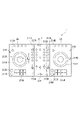
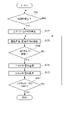
- the schematic diagram which shows the audio equipment in one Embodiment of this invention. It is a block diagram which shows the schematic functional structure of the audio equipment which concerns on one Embodiment of this invention. It is a schematic diagram explaining the scratch mode in one Embodiment of this invention. It is a figure which shows an example of the effect sound stored in an effect storage part. It is a flowchart which shows the reproduction control method which concerns on one Embodiment of this invention.
- FIG. 1 is a schematic diagram showing an audio device according to an embodiment.
- the audio device 1 according to the present embodiment is a DJ system in which two players 2A and 2B for playing music and a mixer 3 for controlling the players 2A and 2B are integrated.
- the audio device 1 functions as an acoustic reproduction device and an acoustic reproduction control device by being operated by a user, reproduces a musical piece, and applies various effects to the reproduced musical piece to reproduce the musical piece.
- the audio device 1 includes operation units 21A and 21B provided on the players 2A and 2B, respectively, and operation units 31 provided on the mixer 3.
- the operation unit 21A accepts a user operation for the player 2A
- the operation unit 21B accepts a user operation for the player 2B
- the operation unit 31 accepts a user operation for the mixer 3.
- the operation unit 21A includes a jog dial 211A, a tempo slider 212A, a cue button 213A, a play / pause button 214A, a performance pad 215A, and a scratch mode button 216A.
- the jog dial 211A functions as a rotation controller, and is a dial used when setting the playback direction and playback speed of the music being played by the player 2A.
- the jog dial 211A has a contact sensor 211SA on the top surface, which is an operation surface, and detects a contact position by the user.
- the tempo slider 212A is a lever that adjusts the playback speed of the music being played by the player 2A.
- the cue button 213A is a button pressed when setting a predetermined position of a musical piece as a cue point.
- the play / pause button 214A is a button pressed when the player 2A starts or stops playing the music.
- the performance pad 215A is a versatile operator to which various functions related to reproduction control can be assigned.
- the scratch mode button 216A is an operator capable of accepting an on / off switch operation by the user, and is used for setting the start and end of the scratch mode that realizes scratch reproduction of a music having a high effect by a simple operation. The details of the scratch mode will be described later.
- the scratch mode button 216A may be a dedicated operator used for setting the start and end of the scratch mode as illustrated in FIG. 1, or may be a configuration in which an existing operator is also used. good.
- the operation unit 21B includes a jog dial 211B, a tempo slider 212B, a cue button 213B, a play / pause button 214B, a performance pad 215B, and a scratch mode button 216B, similarly to the operation unit 21A.
- the jog dial 211B has a contact sensor 211SB on the top surface, which is an operation surface, and detects a contact position by the user. Then, for example, when the user operates the operation unit 21A of the player 2A, the audio device 1 plays the music loaded in the player 2A and applies the effect to the music being played. And play. The same applies to player 2B.
- the mixer 3 switches music reproduction between players 2A and 2B, adjusts the volume of each channel, and executes reproduction to which an effect is applied, according to a user operation.
- the operation unit 31 of the mixer 3 includes effect selection knobs 311A and 311B, effect amount adjustment knobs 312A and 312B, channel faders 313A and 313B, and a crossfader 314.
- the effect selection knobs 311A and 311B are knobs used to select an effect to be applied to the music being played by the players 2A and 2B, respectively.
- the effect amount adjustment knobs 312A and 312B are knobs used to adjust parameters such as the depth and size of the effect applied to the music being played by the players 2A and 2B, respectively.
- the channel faders 313A and 313B are levers used to adjust the output volume level of the music being played by the players 2A and 2B, respectively.
- the crossfader 314 is a lever used when switching the output volume level of the music output from the players 2A and 2B.
- FIG. 2 is a block diagram showing a schematic functional configuration of an audio device according to an embodiment.
- the audio device 1 includes a control unit 4, an effect storage unit 5, a music data storage unit 6, and an audio output unit 7, in addition to the above-mentioned units.
- the functions of the above-mentioned parts are realized, for example, in an audio device having a computer hardware configuration, by operating the processor according to a program. Hereinafter, the functions of each part will be further described.
- the control unit 4 is mounted on the audio device 1 by, for example, a communication interface, a processor such as a CPU (Central Processing Unit), and a memory as a work area, and controls the operation of the audio device 1.
- the control unit 4 includes a reception unit 41, a detection unit 42, a determination unit 43, and a first reproduction control realized by operating the processor according to a program stored in a memory or received via a communication interface.
- a unit 44, a second reproduction control unit 45, and an effect reproduction control unit 46 are included.
- the reception unit 41 detects user operations on the operation units 21A and 21B and the operation unit 31, and accepts the user operation. Then, the reception unit 41 supplies information indicating the content of the user operation to each unit in the control unit 4.
- the detection unit 42 detects a user operation on the jog dials 211A and 211B, which are rotation operators, when the scratch mode is executed.
- the determination unit 43 determines whether or not the rotation directions of the jog dials 211A and 211B, which are rotation operators, are reversed when the scratch mode is executed.
- the first reproduction control unit 44 reproduces the music in the player 2A and outputs an audio signal to the audio output unit 7.
- the second reproduction control unit 45 reproduces the music in the player 2B and outputs an audio signal to the audio output unit 7. Further, the first reproduction control unit 44 performs reproduction by applying the effect to the music being reproduced by the player 2A, and the second reproduction control unit 45 performs reproduction by applying the effect to the music being reproduced by the player 2B.
- the effect reproduction control unit 46 reproduces the effect sound associated with the angle difference between the rotation angle and the reference angle when the rotation directions of the jog dials 211A and 211B, which are rotation operators, are reversed when the scratch mode is executed.
- the effect reproduction control unit 46 uses the rotation angle when the user newly contacts the contact sensor 211S A of the jog dial 211A or the contact sensor 211S B of the jog dial 211B as a reference angle, and has different effects according to the above-mentioned angle difference. Play the sound.
- the effect storage unit 5 stores the correspondence between the angle difference and the effect sound in the scratch mode. More specifically, the effect storage unit 5 stores parameters and algorithms that generate effect sounds associated with the angle difference.
- the music data storage unit 6 is configured to be able to store music data by an HDD (Hard Disk Drive), a flash memory, or the like.
- the music data storage unit 6 stores music data of a plurality of music pieces in a predetermined format such as an MP3 format.
- the music data includes, for example, information such as the BPM of the music, artwork, title, artist name, album name, key, number of DJ plays, and genre as tag information.
- a time stamp which is information on the reproduction position, is associated with the music data stored in the music data storage unit 6.
- the audio device 1 may be provided with a communication interface, and may be configured to acquire music data stored in an external storage device, a computer, or the like via a communication interface (not shown) and store the music data in the music data storage unit 6. In this case, the audio device 1 does not include the music data storage unit 6, and the external storage device functions as the music data storage unit 6.
- the audio output unit 7 includes a speaker, a headphone terminal, and the like, and outputs an audio signal reproduced by the first reproduction control unit 44, the second reproduction control unit 45, and the effect reproduction control unit 46 as audio information.
- the scratch mode is a mode in which scratch reproduction with a high effect is performed by a simple operation.
- scratch reproduction repeated reproduction using the rotation operation of the jog dials 211A and 211B and intentional mute using the crossfader 314 are performed in an accurate and timely combination to perform scratch reproduction with a high effect. It has been.
- such operations require knowledge, experience, and accurate and complex user operations.
- scratch reproduction is performed according to a simple user operation on the jog dials 211A and 211B.
- FIG. 3 is a schematic diagram illustrating processing at the time of executing the scratch mode in one embodiment.
- the player 2B scratches using the player 2A while playing the second music based on the audio data.
- the case of performing reproduction is illustrated.
- the scratch reproduction by the player 2A is performed when a scratch sound, which is an effect sound, is added as a sound effect to the second music being reproduced by the player 2B.
- the scratch mode is started and ended by using the scratch mode button 216A of the operation unit 21A.
- the scratch mode button 216A is turned on to start the scratch mode, and as shown in FIG. 3, the user touches the point P1 of the contact sensor 211SA of the jog dial 211A at time t1. After contacting, the user rotates the jog dial 211A along the arrow A1 until the point P1 moves to the point P2 between the times t1 and t2, and the user points along the arrow A2 between the time t2 and the time t3.
- the rotation direction is reversed and the jog dial 211A is rotated until P2 moves to the point P3.
- the detection unit 42 has a rotation angle corresponding to the point P1 at time t1, a rotation direction corresponding to the arrow A1 between times t1 and t2, a rotation angle corresponding to the point P2 at time t2, and a time between time t2 and t3.
- the rotation direction corresponding to the arrow A2 is sequentially detected.
- the determination unit 43 determines that the rotation direction of the jog dial 211A is reversed based on the rotation direction between the times t1 and t2 and the rotation direction between the times t2 and t3.
- the effect reproduction control unit 46 uses the rotation angle corresponding to the point P1 at the time t1 as the reference angle, and stores the effect sound associated with the angle difference between the rotation angle corresponding to the point P2 at the time t2 and the reference angle. Select with reference to part 5. Then, the effect reproduction control unit 46 generates the selected effect sound and outputs it to the audio output unit 7.
- FIG. 4 is a diagram showing an example of an effect sound stored in the effect storage unit 5.
- the effect storage unit 5 stores different effect sounds FX1a to FX6a and FX1b to FX6b in association with the above-mentioned angle difference and the rotation direction before inversion.
- the rotation direction before reversal is clockwise when the rotation direction of the jog dial 211A is reversed from clockwise to counterclockwise, and the rotation direction before reversal is counterclockwise of the jog dial 211A. This is the case when the direction of rotation is reversed from counterclockwise to clockwise.
- the angle difference is divided into six, and 12 types of effect sounds are stored according to the combination of the angle difference and the rotation direction before inversion.
- the parameters and algorithms for generating the effect sounds are different between the effect sounds FX1a to FX6a and FX1b to FX6b.
- the effect reproduction control unit 46 selects an effect sound with reference to the effect storage unit 5, and processes a part of the first musical piece loaded in the player 2A based on the above-mentioned parameters and algorithms to produce the effect sound. Generate. It should be noted that a part of the first musical piece that is the original sound of the effect sound can be set as a length corresponding to the angle difference, starting from the playback start position designated in advance in the first musical piece, for example. ..
- the playback start position can be specified by user operation using the cue button 213A, the play / pause button 214A, and the like.
- the processing of the effect sound is based on the above-mentioned parameters and algorithms, for example, playback or reverse playback of a part of the first song, adjustment of the playback time, adjustment of the tone color, and partial mute (mute pattern). It is performed by a known method such as).
- processing the effect sound it may be synchronized with the beat position of the second musical piece being played by the player 2B which is the opposite player.
- the beat position can be acquired by analyzing the second music data in advance based on the existing music analysis technique. By synchronizing the effect sound with the beat position, the effect of scratch reproduction can be further enhanced.
- Effect sounds FX1a to FX6a and FX1b to FX6b have different parameters and algorithms for generating effect sounds, so different effect sounds differ depending on the position where the user reverses the rotation direction of the jog dial 211A and the rotation direction before the inversion. Will be generated. Further, since the effect sound generated by the effect reproduction control unit 46 is generated based on the original sound, even if the user performs the same operation, different effect sounds will be generated if the original sound is different.
- the effect storage unit 5 stores 12 types of effect sounds, but any number of types of effect sounds may be stored as long as it is 1 or more.
- the effect sound stored in the effect storage unit 5 may be set by the user, or a preferable effect sound may be stored in advance. Further, the user may change a part or all of the effect sound stored in advance and memorize the effect sound.
- the effect reproduction control unit 46 reproduces the effect sound at the time t1 when the contact sensor 211SA of the jog dial 211A detects the contact, in addition to the time t3 when the rotation direction of the jog dial 211A is reversed.
- the effect sound reproduced when the contact sensor 211SA of the jog dial 211A detects contact is referred to as an effect sound FX0.
- the effect sound FX0 is an effect sound suitable for starting scratch reproduction, and is immediately reproduced when the user touches the jog dial 211A, so that scratch reproduction can be started at a timing desired by the user.
- the effect sound FX0 is reproduced. ..
- FIG. 5 shows a flowchart of processing when the scratch mode is executed.
- the detection unit 42 detects the user's contact with the contact sensor 211SA of the jog dial 211A (step S101YES)
- the effect reproduction control unit 46 reproduces the effect sound F0 (step S102).
- the detection unit 42 detects the rotation angle and the rotation direction of the jog dial 211A (step S103), and the determination unit 43 determines whether or not the rotation direction of the jog dial 211A is reversed (step S104). If the determination unit 43 does not determine that the rotation direction of the jog dial 211A has been reversed (step S104NO), the control unit 4 returns to step S103.
- step S104YES When the determination unit 43 determines that the rotation direction of the jog dial 211A is reversed (step S104YES), the effect reproduction control unit 46 refers to the effect storage unit 5 to select an effect sound (step S105), and reproduces the effect sound. (Step S106).
- the control unit 4 executes the scratch mode by repeating the processes of steps S103 to S107 at predetermined time intervals until the user operation for turning off the scratch mode button 216A is accepted (step S107YES).
- FIGS. 3 to 5 the case where the scratch mode is executed by the player 2A during the reproduction of the second music by the player 2B has been described as an example, but during the reproduction of the first music by the player 2A.
- the same process is performed when the scratch mode is executed by the player 2B. That is, when the user operation of turning on the scratch mode button 216B is accepted during the playback of the first musical piece on the player 2A, the scratch mode for effectively adding the scratch sound, which is an effect sound, is executed by the player 2B.
- the rotation angles of the jog dials 211A and 211B which are rotation operators, are detected, and it is determined whether or not the rotation directions of the jog dials 211A and 211B are reversed. Then, the effect sound associated with the angle difference between the rotation angle and the reference angle when the rotation directions of the jog dials 211A and 211B are reversed is reproduced. Therefore, even a user with little experience or knowledge can perform scratch reproduction with a high effect by a simple operation similar to an actual scratch operation without requiring advanced techniques.
- the reference angle is the rotation angle when the contact sensor 211S A of the jog dial 211A or the contact sensor 211S B of the jog dial 211B detects a new contact. Therefore, even if the user roughly operates the jog dial 211A or the jog dial 211B without being particularly conscious of the contact start position, scratch reproduction with a high effect can be performed.
- the effect sound F0 is reproduced when the contact sensor 211S A of the jog dial 211A or the contact sensor 211S B of the jog dial 211B detects contact. Therefore, the scratch reproduction can be started at the user's desired timing.
- different effect sounds are reproduced depending on the above-mentioned angle difference and the rotation direction before inversion. Therefore, in addition to the combination of the angle difference between the rotation angle and the reference angle, it is possible to easily use a plurality of effect sounds associated with the rotation direction before inversion. Therefore, it is possible to realize a wide variety of scratch reproduction without impairing the enjoyment of playing.
- the rotation angle when the contact sensor 211S A of the jog dial 211A or the contact sensor 211S B of the jog dial 211B detects a new contact is used as a reference angle, but other rotation angles are used. It may be used as a reference angle. Further, the reference angle may be specified by the user.
- the effect sound F0 is reproduced when the contact sensor 211S A of the jog dial 211A or the contact sensor 211S B of the jog dial 211B detects contact, but the effect sound F0 is not reproduced. It may be configured, or it may be configured so that the user can specify whether or not to reproduce the effect sound F0.
- the plurality of effect sounds associated with the angle difference and the rotation direction before inversion described in the above embodiment are examples, and are not limited to this example.
- an example of dividing the angle difference into 6 is shown, but the number of divisions is not limited to this example.
- the effect sound may be associated with only one of the angle difference and the rotation direction before inversion.
- the scratch sound is reproduced in synchronization with the beat position of the music being played by the player on the opposite side, but the scratch sound may be reproduced without synchronization. Further, the scratch sound may be reproduced in synchronization with the beat position of the music being played by the player executing the scratch mode.
- the audio device having the above-mentioned functions is not limited to the DJ system as described as one embodiment, and may be, for example, a mixer, a DJ controller having a mixer function, or the like.
- a two-channel audio device having two players 2A and 2B has been described, but a similar function can be realized by, for example, an audio device having three or more channels.
- the scratch sound may be reproduced in synchronization with the beat position of the music being reproduced by the master player.
- the present invention is not limited to DJ equipment, and can be applied to audio equipment such as general mixers and electronic musical instruments.
Landscapes
- Physics & Mathematics (AREA)
- Engineering & Computer Science (AREA)
- Acoustics & Sound (AREA)
- Multimedia (AREA)
- Signal Processing (AREA)
- Electrophonic Musical Instruments (AREA)
- Circuit For Audible Band Transducer (AREA)
Priority Applications (3)
| Application Number | Priority Date | Filing Date | Title |
|---|---|---|---|
| JP2022561723A JP7522853B2 (ja) | 2020-11-10 | 2020-11-10 | 音響機器、音響機器の再生制御方法およびプログラム |
| PCT/JP2020/041920 WO2022101979A1 (ja) | 2020-11-10 | 2020-11-10 | 音響機器、音響機器の再生制御方法およびプログラム |
| US18/252,111 US12406645B2 (en) | 2020-11-10 | 2020-11-10 | Audio device, audio device playback control method, and program |
Applications Claiming Priority (1)
| Application Number | Priority Date | Filing Date | Title |
|---|---|---|---|
| PCT/JP2020/041920 WO2022101979A1 (ja) | 2020-11-10 | 2020-11-10 | 音響機器、音響機器の再生制御方法およびプログラム |
Publications (1)
| Publication Number | Publication Date |
|---|---|
| WO2022101979A1 true WO2022101979A1 (ja) | 2022-05-19 |
Family
ID=81600859
Family Applications (1)
| Application Number | Title | Priority Date | Filing Date |
|---|---|---|---|
| PCT/JP2020/041920 Ceased WO2022101979A1 (ja) | 2020-11-10 | 2020-11-10 | 音響機器、音響機器の再生制御方法およびプログラム |
Country Status (3)
| Country | Link |
|---|---|
| US (1) | US12406645B2 (https=) |
| JP (1) | JP7522853B2 (https=) |
| WO (1) | WO2022101979A1 (https=) |
Cited By (1)
| Publication number | Priority date | Publication date | Assignee | Title |
|---|---|---|---|---|
| WO2024241583A1 (ja) * | 2023-05-25 | 2024-11-28 | AlphaTheta株式会社 | 音響装置、音響装置の制御方法、及びプログラム |
Families Citing this family (3)
| Publication number | Priority date | Publication date | Assignee | Title |
|---|---|---|---|---|
| USD1051127S1 (en) * | 2021-10-27 | 2024-11-12 | Alphatheta Corporation | Controller for digital audio player |
| US12585426B2 (en) | 2023-06-02 | 2026-03-24 | Algoriddim Gmbh | Artificial reality based system, method and computer program for pre-cueing music audio data |
| US12596522B2 (en) | 2023-06-02 | 2026-04-07 | Algoriddim Gmbh | Artificial reality based DJ system, method and computer program implementing a scratching operation or a playback control operation |
Citations (2)
| Publication number | Priority date | Publication date | Assignee | Title |
|---|---|---|---|---|
| JP2015080110A (ja) * | 2013-10-17 | 2015-04-23 | パイオニア株式会社 | 付加音制御装置、音響機器、および付加音制御方法 |
| JP2016025379A (ja) * | 2014-07-16 | 2016-02-08 | カシオ計算機株式会社 | 楽音制御装置、電子楽器、楽音制御方法及びプログラム |
Family Cites Families (5)
| Publication number | Priority date | Publication date | Assignee | Title |
|---|---|---|---|---|
| JP2004295969A (ja) * | 2003-03-26 | 2004-10-21 | Teac Corp | オーディオ信号再生装置 |
| JP6975032B2 (ja) * | 2017-12-19 | 2021-12-01 | 株式会社ユーシン | 入力装置 |
| US11347468B2 (en) | 2018-06-06 | 2022-05-31 | Alphatheta Corporation | Sound volume operation device |
| JP7015919B2 (ja) | 2018-06-12 | 2022-02-03 | AlphaTheta株式会社 | 音響装置およびプログラム |
| WO2019239538A1 (ja) | 2018-06-14 | 2019-12-19 | Pioneer DJ株式会社 | 音響装置およびプログラム |
-
2020
- 2020-11-10 US US18/252,111 patent/US12406645B2/en active Active
- 2020-11-10 JP JP2022561723A patent/JP7522853B2/ja active Active
- 2020-11-10 WO PCT/JP2020/041920 patent/WO2022101979A1/ja not_active Ceased
Patent Citations (2)
| Publication number | Priority date | Publication date | Assignee | Title |
|---|---|---|---|---|
| JP2015080110A (ja) * | 2013-10-17 | 2015-04-23 | パイオニア株式会社 | 付加音制御装置、音響機器、および付加音制御方法 |
| JP2016025379A (ja) * | 2014-07-16 | 2016-02-08 | カシオ計算機株式会社 | 楽音制御装置、電子楽器、楽音制御方法及びプログラム |
Cited By (1)
| Publication number | Priority date | Publication date | Assignee | Title |
|---|---|---|---|---|
| WO2024241583A1 (ja) * | 2023-05-25 | 2024-11-28 | AlphaTheta株式会社 | 音響装置、音響装置の制御方法、及びプログラム |
Also Published As
| Publication number | Publication date |
|---|---|
| US12406645B2 (en) | 2025-09-02 |
| US20230419931A1 (en) | 2023-12-28 |
| JPWO2022101979A1 (https=) | 2022-05-19 |
| JP7522853B2 (ja) | 2024-07-25 |
Similar Documents
| Publication | Publication Date | Title |
|---|---|---|
| JP7522853B2 (ja) | 音響機器、音響機器の再生制御方法およびプログラム | |
| JP2002062883A (ja) | オーディオ変調機能を持つオーディオ再生装置及び方法、その装置を適用したリミキシング装置及び方法 | |
| JPWO2022101979A5 (https=) | ||
| US8636199B1 (en) | System and method for matching a media manipulation with a media manipulation template | |
| JP7521002B2 (ja) | 音響機器、音響機器の制御方法およびプログラム | |
| JP7420828B2 (ja) | 音響機器、表示制御方法、及び表示制御プログラム | |
| JP7602624B2 (ja) | 音響装置、音響装置の制御方法およびプログラム | |
| JP6222964B2 (ja) | 電子機器、電子システム、音響機器、電子機器の制御方法およびプログラム | |
| WO2013140440A1 (ja) | 再生制御装置、操作装置、再生制御装置の制御方法およびプログラム | |
| JP7742884B2 (ja) | 音響装置、音響装置の制御方法およびプログラム | |
| JP2001272977A (ja) | 楽音制御装置、楽音制御方法及び同方法を実現するためのプログラムを記録した記録媒体 | |
| JP7671786B2 (ja) | 音響機器、音響機器の制御方法、及びプログラム | |
| JP7375003B2 (ja) | 音響装置および音響再生プログラム | |
| JP7762215B2 (ja) | 音響装置、音響装置の制御方法およびプログラム | |
| JPWO2017119115A1 (ja) | 音響制御システム | |
| JP7656708B2 (ja) | 音声データ処理装置、音声データ処理方法およびプログラム | |
| JP3213389U (ja) | マルチサウンドトラックの即時編集に用いられる電子装置 | |
| JP7681709B2 (ja) | 音声データ処理装置、音声データ処理方法およびプログラム | |
| JP2010231027A (ja) | 電子音楽装置 | |
| JP7734749B2 (ja) | 音声データ処理装置、音声データ処理方法およびプログラム | |
| WO2025134279A1 (ja) | 音響装置、音響装置の制御方法およびプログラム | |
| KR100797390B1 (ko) | 휴대용 디지털 오디오 재생 장치에서의 음악 연출 장치 및그 방법 | |
| JP7375004B2 (ja) | 音響装置および音響再生プログラム | |
| WO2024171354A1 (ja) | 音響装置、音響装置の制御方法およびプログラム | |
| WO2023119670A1 (ja) | 操作装置及び音響装置 |
Legal Events
| Date | Code | Title | Description |
|---|---|---|---|
| 121 | Ep: the epo has been informed by wipo that ep was designated in this application |
Ref document number: 20961507 Country of ref document: EP Kind code of ref document: A1 |
|
| ENP | Entry into the national phase |
Ref document number: 2022561723 Country of ref document: JP Kind code of ref document: A |
|
| WWE | Wipo information: entry into national phase |
Ref document number: 18252111 Country of ref document: US |
|
| NENP | Non-entry into the national phase |
Ref country code: DE |
|
| 122 | Ep: pct application non-entry in european phase |
Ref document number: 20961507 Country of ref document: EP Kind code of ref document: A1 |
|
| WWG | Wipo information: grant in national office |
Ref document number: 18252111 Country of ref document: US |