WO2022085557A1 - ポリn-ビニルカルボン酸アミドおよびその製造方法 - Google Patents
ポリn-ビニルカルボン酸アミドおよびその製造方法 Download PDFInfo
- Publication number
- WO2022085557A1 WO2022085557A1 PCT/JP2021/038045 JP2021038045W WO2022085557A1 WO 2022085557 A1 WO2022085557 A1 WO 2022085557A1 JP 2021038045 W JP2021038045 W JP 2021038045W WO 2022085557 A1 WO2022085557 A1 WO 2022085557A1
- Authority
- WO
- WIPO (PCT)
- Prior art keywords
- acid amide
- poly
- vinylcarboxylic acid
- mass
- molecular weight
- Prior art date
- Legal status (The legal status is an assumption and is not a legal conclusion. Google has not performed a legal analysis and makes no representation as to the accuracy of the status listed.)
- Ceased
Links
Images

Classifications
-
- C—CHEMISTRY; METALLURGY
- C08—ORGANIC MACROMOLECULAR COMPOUNDS; THEIR PREPARATION OR CHEMICAL WORKING-UP; COMPOSITIONS BASED THEREON
- C08F—MACROMOLECULAR COMPOUNDS OBTAINED BY REACTIONS ONLY INVOLVING CARBON-TO-CARBON UNSATURATED BONDS
- C08F26/00—Homopolymers and copolymers of compounds having one or more unsaturated aliphatic radicals, each having only one carbon-to-carbon double bond, and at least one being terminated by a single or double bond to nitrogen or by a heterocyclic ring containing nitrogen
- C08F26/02—Homopolymers and copolymers of compounds having one or more unsaturated aliphatic radicals, each having only one carbon-to-carbon double bond, and at least one being terminated by a single or double bond to nitrogen or by a heterocyclic ring containing nitrogen by a single or double bond to nitrogen
Definitions
- the present invention relates to a polyN-vinylcarboxylic acid amide having at least one molecular terminal as a hydrophobic group.
- poly N-vinylacetamide which is one of the polymers of N-vinylcarboxylic acid amide monomer, has amphipathic properties, so it thickens and prepares water-based inks and paints, and various water-based compound coating liquids. It is used for various purposes such as films and adhesives.
- binder resin for secondary batteries binder resin for capacitors
- binder resin for capacitors such as solid electrolytic type and electric double layer, high conductivity. It is used as a molecular modifier, adhesive, paint, building material, polishing agent for chemical mechanical polishing, etc.
- the aqueous solution often has a high viscosity. If the viscosity is high, it is difficult to handle, the applicable fields are limited, and the dispersibility deteriorates, so that it cannot be used as a coating liquid. In general, from the viewpoint of upsizing and mass production, the viscosity of the coating liquid has a large effect, and high viscosity causes a significant decrease in yield. Further, when the viscosity is high, it is often difficult to form a uniform coating film.
- an aqueous solution of polyvinylpyrrolidone has a high molecular weight and a low viscosity, but is inferior in binding force due to its low polarity. Further, when a binding force is required, it is conceivable to use a large amount of a low molecular weight polymer, but when it is used in a large amount, there is a problem such as an increase in the internal resistance value in battery applications.
- Patent Document 1 Japanese Unexamined Patent Publication No. 2-29683
- Patent Document 1 Japanese Unexamined Patent Publication No. 2-29683
- a styrene-based water-soluble macromer having N-vinylamide as a repeating unit, which reacts polyN-vinylamide containing a hydroxyl group or a carboxy group with halomethylstyrene, has been disclosed, but it has a low molecular weight and is not always required for the above requirements. It wasn't enough.
- Comparative Example 1 of Patent Document 2 discloses an N-vinylacetamide polymer polymerized in ethyl acetate with an oil-soluble azo polymerization initiator (V-601).
- V-601 oil-soluble azo polymerization initiator
- Patent Document 3 Japanese Patent No. 382348 proposes that a thermoreversible polymer compound imparted with appropriate hydrophobicity can be obtained by combining a hydrophobic vinyl monomer with poly (N-vinylformamide). ing.
- Patent Document 4 Japanese Unexamined Patent Publication No. 2001-343378
- a hydrophobic monomer (A) such as aromatic divinyl
- a hydrophilic monomer (B) such as N-vinylcarboxylic acid amide are copolymerized.
- Patent Document 5 Japanese Unexamined Patent Publication No.
- an object of the present invention is to provide a water-soluble polymer having a high molecular weight and high polarity, but having a characteristic that the viscosity of an aqueous solution is low.
- the polyN-vinylcarboxylic acid amide has a hydrophobic group at least one molecular terminal and has a predetermined weight average molecular weight, or has a predetermined weight average molecular weight. And, as long as it has a predetermined inertial radius, it has been found that it can be sufficiently used for the above-mentioned applications while maintaining a balance between fluidity and binding property, and has completed the present invention.
- the configuration of the present invention is as follows.
- a polymer of N-vinylcarboxylic acid amide which is a polymer. At least one molecular end of the polymer is a hydrophobic group.
- the weight average molecular weight Mw is 300,000 or more,
- the viscosity of the 10% by mass aqueous solution is 500 mPa ⁇ s or less.
- Poly N-vinylcarboxylic acid amide [2] The poly N-vinyl carboxylic acid amide according to [1], wherein the poly N-vinyl carboxylic acid amide is a poly N-vinyl acetoamide.
- the weight average molecular weight Mw is 300,000 or more
- N-vinylcarboxylic acid amide is polymerized using a hydrophobic polymerization initiator.
- a polyN-vinylcarboxylic acid amide which is a water-soluble polymer having a high molecular weight and high polarity but a low viscosity of an aqueous solution, can be obtained. Since such a poly N-vinylcarboxylic acid amide has good handling when made into an aqueous solution, it is possible to provide a coating liquid having a high yield and excellent production efficiency.
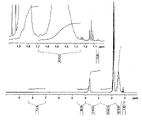
- 6 is a 1 H-NMR chart of PNVA-1 obtained in Example 1.
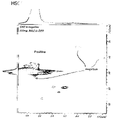
- the HMBC Heteronuclear Multiple Bond Coherence
- the HSQC Heteronuclear single-quantum correlation spectroscopy
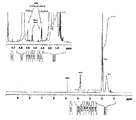
- 6 is a 1 H-NMR chart of PNVA-C1 obtained in Comparative Example 1.
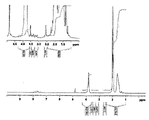
- 6 is a 1 H-NMR chart of the main component after the PNVA-C1 obtained in Comparative Example 1 was separated.
- 6 is a 1 H-NMR chart of a low molecular weight component after fractionation of PNVA-C1 obtained in Comparative Example 1.
- the poly N-vinyl carboxylic acid amide of the present embodiment is formed by polymerizing at least an N-vinyl carboxylic acid amide monomer, and at least one molecular terminal of the poly N-vinyl carboxylic acid amide is a hydrophobic group. ..
- One aspect of the present invention is that the weight average molecular weight (Mw) of the poly N-vinylcarboxylic acid amide is 300,000 or more, and the viscosity of the 10% by mass aqueous solution is 500 mPa ⁇ s or less.
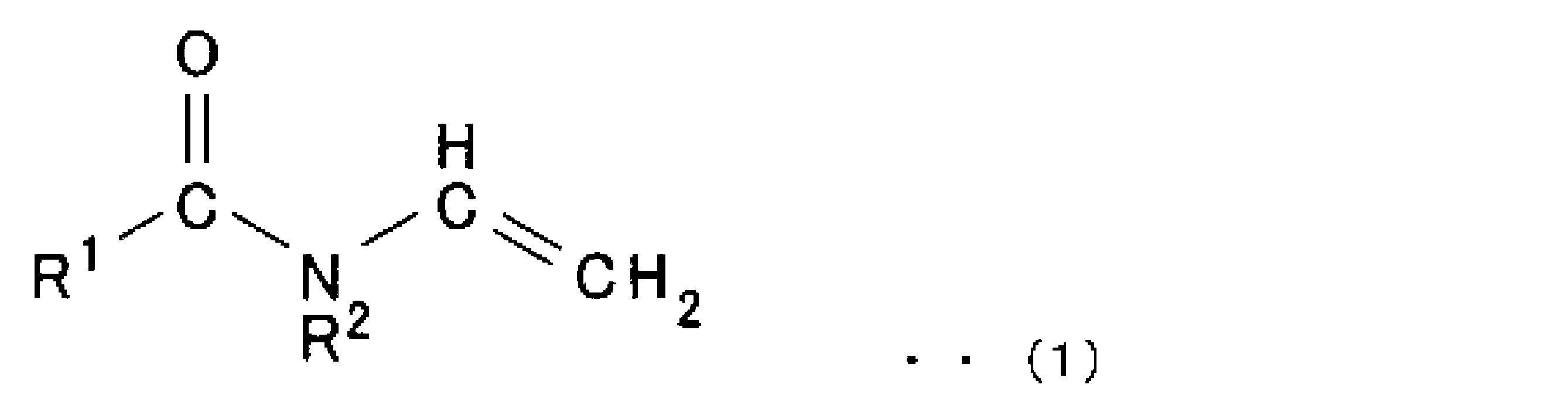
- N-vinylcarboxylic acid amide monomer is represented by the following formula (1).
- R 1 represents a hydrogen atom or a hydrocarbon group having 1 to 6 carbon atoms.
- R 2 represents a hydrogen atom or a hydrocarbon group having 1 to 6 carbon atoms.
- R 1 is NR 2 .
- a cyclic structure may be formed with the above.
- Preferred R 1 is a hydrogen atom or a methyl group, and preferred R 2 is a hydrogen atom.
- Specific examples of the N-vinylcarboxylic acid amide monomer include N-vinylformamide, N-vinylacetamide, N-vinylpropionamide, N-vinylbenzamide, N-vinyl-N-methylformamide, and N-vinyl.
- N-vinylacetamide examples thereof include -N-ethylformamide, N-vinyl-N-methylacetamide, N-vinyl-N-ethylacetamide, and N-vinylpyrrolidone. Of these, N-vinylacetamide is particularly preferable. Two or more types of N-vinylcarboxylic acid amide monomers may be used in combination.
- the poly N-vinylcarboxylic acid amide may be a monomer or a copolymer with a monomer of another component.
- the monomer of the other component is not particularly limited, and examples thereof include an unsaturated carboxylic acid ester, an unsaturated carboxylic acid amide, and a styrene-based monomer.
- the molar ratio of the N-vinylcarboxylic acid amide monomer to the monomer of other components in the copolymer is adjusted in consideration of the balance between hydrophilicity and hydrophobicity, but is usually 100: 0 to 80:20. It is preferable, more preferably 100: 0 to 90:10, and even more preferably 100: 0.
- a copolymer having an appropriate balance between hydrophilicity and hydrophobicity can be obtained.
- the weight average molecular weight (Mw) of the poly N-vinylcarboxylic acid amide is 300,000 or more, preferably 350,000 or more, and more preferably 400,000 or more.
- the weight average molecular weight is measured by GPC with a light scattering detector. Specific conditions are as described in the examples.
- the weight average molecular weight (Mw) of the poly N-vinylcarboxylic acid amide is preferably 4 million or less, more preferably 1 million or less, and further preferably 500,000 or less. When the weight average molecular weight (Mw) is 300,000 or more, the coatability is good.
- the viscosity of the 10% by mass aqueous solution of poly N-vinylcarboxylic acid amide is 500 mPa ⁇ s or less, preferably 300 mPa ⁇ s or less, and more preferably 100 mPa ⁇ s or less.
- the viscosity of the poly N-vinylcarboxylic acid amide is preferably 5 mPa ⁇ s or more, more preferably 20 mPa ⁇ s or more, and further preferably 50 mPa ⁇ s or more.
- a B-type viscometer is used as a method for measuring the viscosity of the aqueous solution. Specific conditions are as described in the examples.
- the poly N-vinylcarboxylic acid amide of the present embodiment has a weight average molecular weight Mw of 300,000 or more, and the inertial radius of the poly N-vinylcarboxylic acid amide is 35 nm or less.
- the radius of inertia indicates the degree of spread of the polymer chain in the poly N-vinylacetamide solution measured by the multi-angle light scattering method (MALS).
- MALS multi-angle light scattering method
- the radius of inertia (rm) is calculated by the following equation 1 using the multi-angle light scattering method.
- at least one molecular terminal does not necessarily have to be a hydrophobic group, but is preferably a hydrophobic group.
- the weight average molecular weight (Mw) of the poly N-vinylcarboxylic acid amide is 300,000 or more, preferably 350,000 or more, and more preferably 400,000 or more, as in the above embodiment.
- the weight average molecular weight (Mw) of the poly N-vinylcarboxylic acid amide is preferably 4 million or less, more preferably 1 million or less, still more preferably 500,000 or less. When the weight average molecular weight (Mw) is 300,000 or more, the coatability is good.
- the radius of inertia is 35 nm or less, preferably 30 nm or less, and more preferably 28 nm or less. When the radius of inertia is in this range, the entanglement of the polymer chains is small and the viscosity of the aqueous solution is low.
- the radius of inertia is preferably 5 nm or more, more preferably 10 nm or more, and even more preferably 15 nm or more.
- the hydrophobic group constituting at least one molecular terminal of the poly N-vinyl carboxylic acid amide does not contain a hydrophilic group such as hydroxy, amino, carboxy, or oxime, and may contain a hydrocarbon group (may include a cyclic structure).
- hydrophobic groups are exemplified.
- the affinity with a metal or the like is strengthened and the binding property is improved.
- the spread of the molecule in water can be easily suppressed, and the poly N-vinylcarboxylic acid amide can be aggregated in water. This makes it possible to obtain a polyN-vinylacetamide having a higher molecular weight and a lower viscosity.
- the poly-N-vinylcarboxylic acid amide of the present embodiment has the characteristic that the viscosity of the aqueous solution is low while having the above-mentioned high molecular weight.
- the introduction of a hydrophobic group into at least one molecular terminal can also be carried out by copolymerizing with a hydrophobic monomer, but in terms of controlling the terminal modification, N- using a hydrophobic polymerization initiator.
- Polymerization of vinyl carboxylic acid amide is preferable in that a hydrophobic group derived from a polymerization initiator is introduced into the molecular terminal.
- the method for producing a poly N-vinylcarboxylic acid amide of the present embodiment is characterized by polymerizing the N-vinylcarboxylic acid amide using a hydrophobic polymerization initiator. Further, if necessary, the monomers of the above-mentioned other components may be copolymerized.
- the polymerization initiator used is not limited as long as it is hydrophobic, but is 2,2'-azobis (isobutyric acid) dimethyl, azobisisobutyronitrile, 1,1'-azobis (cyclohexane-1-).
- the azo-based polymerization initiator is preferable, 2,2'-azobis (isobutyric acid) dimethyl, azobisisobutyronitrile, 1,1'-azobis (cyclohexane-1-carbonitrile), 2,2'-.
- Azobis (2-methylbutyronitrile) is more preferred, and 2,2'-azobis (isobutyric acid) dimethyl is even more preferred. It does not contain cyano groups, does not generate corrosive decomposition products, and the 10-hour half-life temperature of the polymerization initiator (the temperature at which the concentration of azo groups in the solution is halved in 10 hours) is 60 to 90 ° C. Those in the range of 1 are preferable because it is easy to obtain the target molecular weight.
- the hydrophobic polymerization initiator is preferably used in an amount of 0.01 parts by mass or more and 5.0 parts by mass or less, more preferably 0.05 parts by mass or more, based on 100 parts by mass of the N-vinylcarboxylic acid amide. It is 3.0 parts by mass or less. When other monomers are contained, the total is 100 parts by mass.
- the polymerization of N-vinylcarboxylic acid amide is preferably solution polymerization using a solvent.
- the polymerization solvent is not particularly limited as long as it is a solvent in which N-vinylcarboxylic acid amide is dissolved, and various solvents can be used.
- Aromatic hydrocarbons such as toluene and xylene; aliphatic hydrocarbons such as hexane, cyclohexane, pentane and heptane; alcohols such as methanol, ethanol, n-propyl alcohol, isopropyl alcohol, n-butanol and isobutanol; methylene chloride , Hydrocarbons such as chloroform; Ketones such as acetone and methyl ethyl ketone; Esters such as methyl acetate, ethyl acetate and propyl acetate; Ethers such as diethyl ether and N-methyl-2-pyrrolidone, glycerin, N, N -Dimethylformamide, dimethylsulfoxide, acetonitrile, tetrahydrofuran, water can be used.
- ethyl acetate and water are preferable, and ethyl acetate is more preferable, considering the molecular weight band of the obtained polymer slurry and the drying step after the polymerization.
- Two or more kinds of solvents may be combined, but when ethyl acetate is used as a main component, ethyl acetate is preferably 90% by mass or more of the solvent.
- the polymerization start temperature is preferably 20 ° C to 100 ° C, more preferably 30 ° C to 80 ° C, and even more preferably 40 ° C to 70 ° C. Then, by adjusting the polymerization temperature and the polymerization time within the above range, the above-mentioned poly N-vinylcarboxylic acid amide having a predetermined weight average molecular weight Mw, 10% by mass aqueous solution viscosity, and inertia radius can be obtained.
- the obtained poly N-vinylcarboxylic acid amide is obtained in a state of being dissolved or dispersed in the solvent. Usually, the obtained poly N-vinylcarboxylic acid amide is purified to remove impurities.
- the obtained poly N-vinylcarboxylic acid amide can also be dried and provided as a powder. However, when used for applications such as coating liquids, it is often dissolved in a solvent such as water. Therefore, in the present embodiment, it is also a preferable embodiment to replace the reaction solvent with water or the like at the time of purification and provide the solution as a poly N-vinylcarboxylic acid amide solution.
- the coating liquid in one embodiment of the present embodiment contains a poly N-vinylcarboxylic acid amide and a solvent.
- the solvent is not particularly limited, but water or a volatile organic solvent is preferable. Further, as described later, various additives may be contained depending on the purpose of the coated product. As the organic solvent, alcohols, ketones, esters, ethers, cellosolves, aromatic hydrocarbons, aliphatic hydrocarbons and the like can be used. Further, a high boiling point organic solvent as described later may be contained. The content of the organic solvent in the coating liquid can be adjusted to such an extent that it can be coated or impregnated, and the amount used is not particularly limited as long as the evaporation cost is not increased. Usually, 50 to 99% by mass is preferable, and 65 to 98% by mass is more preferable.
- the component (solid content) other than the solvent in the coating liquid is preferably contained in an amount of 1 to 50% by mass, preferably 2 to 35% by mass, based on the mass of the coating liquid.
- the solid content may be only poly N-vinylcarboxylic acid amide, but may contain other solid content components, in which case the poly N-vinylcarboxylic acid amide is 0 with respect to the mass of the coating liquid. It is preferably contained in an amount of 1 to 3.0% by mass, preferably 0.3 to 1.0% by mass.
- the coating liquid includes high boiling point organic solvents such as conductive polymers, carbon blacks, conductive auxiliaries and ethylene glycol, and additives such as phosphoric acid compounds and colloidal silica as voltage resistance improving agents.
- a pH adjusting agent such as a binder, a surfactant, or triethanolamine for improving the mechanical strength of the coating film may be contained.
- polystyrene sulfonic acid-doped poly (3,4-ethylenedioxythiophene) PEDOT: PSS
- polystyrene sulfonic acid-doped poly methyl-3,4-ethylenedioxythiophene
- Polystyrene sulfonate-doped poly ethyl-3,4-ethylenedioxythiophene
- the content of the conductive polymer is preferably 1.0% by mass or more and 30% by mass or less, and particularly preferably 5 to 20% by mass, based on the mass of the coating liquid.
- carbon blacks include those having a large specific surface area, preferably activated carbon, activated carbon fibers, and porous carbon materials such as graphite-like microcrystalline carbon produced by activating a carbon material, and activated carbon is preferable.
- the content of the carbon blacks is preferably 1.0% by mass or more and 70% by mass or less, particularly preferably 5.0 to 50.0% by mass, based on the mass of the coating liquid.
- the conductive auxiliary agent include acetylene black, channel black, furnace black, and ketjen black.
- the content of the conductive auxiliary agent is preferably 0.01% by mass or more and 5.0% by mass or less, and particularly preferably 0.1 to 2.0% by mass, based on the mass of the coating liquid.
- the coating liquid may contain a high boiling point organic solvent.
- a high boiling point organic solvent having a boiling point of 150 to 250 ° C. is particularly preferable.
- the high boiling point organic solvent examples include N-methyl-2-pyrrolidone (boiling point 202 ° C.), dimethyl sulfoxide (boiling point 189 ° C.), ⁇ -butyrolactone (boiling point 204 ° C.), sulfolane (boiling point 285 ° C.), and dimethyl sulfone.
- Boiling point 233 ° C. ethylene glycol (boiling point 198 ° C.), diethylene glycol (boiling point 244 ° C.) and the like can be mentioned.
- ethylene glycol or ⁇ -butyrolactone is more preferable because it can form a conductive polymer-containing solid electrolyte layer having a uniform surface state.
- the content of the high boiling point organic solvent is preferably 5 to 30% by mass, particularly preferably 10 to 20% by mass, based on the mass of the coating liquid.
- the coating liquid of the present invention may contain an additive for the purpose of improving the withstand voltage of a solid electrolytic capacitor, for example.
- the additive examples include an oily phosphoric acid compound generally used as a resin plasticizer, colloidal silica and the like.
- colloidal silica is preferably mentioned because it is particularly excellent in the effect of improving the withstand voltage.
- the coating liquid may contain a binder resin, a surfactant, and an alkaline pH adjuster in order to adjust the coating film strength of the coated product.
- a binder resin a thermosetting resin or a thermoplastic resin is preferable.
- polyester such as polyethylene terephthalate, polybutylene terephthalate, polyethylene naphthalate, polyimide such as polyimide and polyamideimide, fluororesin such as polyvinylidene fluoride, polyvinyl chloride and polytetrafluoroethylene, polyvinyl alcohol, polyvinyl ether, etc. Examples thereof include polyvinyl butyral, polyvinyl acetate, polyvinyl chloride and copolymers thereof.
- surfactant examples include anionic surfactants, cationic surfactants, amphoteric surfactants, and nonionic surfactants.
- anionic surfactants include carboxylates, sulfonates, sulfate esters, phosphate esters and the like
- examples of cationic surfactants include tertiary amine salts and quaternary ammonium salts.
- amphoteric surfactant examples include carboxybetaine, aminocarboxylate, imidazolium betaine and the like
- nonionic surfactant include polyoxyethylene alkyl ether, polyoxyethylene glycerin fatty acid ester and ethylene glycol fatty acid. Examples thereof include esters and polyoxyethylene fatty acid amides.
- organic bases containing no metal salt are preferable, and examples thereof include triethylamine and triethanolamine, which are less corrosive. These components may be diluted with water or added to the coating liquid as an emulsion or an organic solvent solution.
- the coating liquid is contact-fixed with a base material made of a metal having a rectifying action to form a coating product.
- the preferred contact fixing method is coating or impregnation contact, and then heating and drying. This makes it possible to manufacture, for example, a member for a power storage device.
- the metal having a rectifying action used in one embodiment of the present invention one selected from the group consisting of aluminum, tantalum, niobium or titanium can be mentioned, and it is used in the form of a sintered body or a foil.
- the coating method of the coating liquid is not particularly limited, but in addition to spray coating, roll coating, bar coating, gravure coating, die coating, knife coating, inkjet coating, brush coating, dip coating, etc., roll-to-roll pattern coating device. It is also possible to apply continuously using.
- the impregnation method is not particularly limited, and a vacuum pressure impregnation method, a true impregnation method, an internal pressurization, an internal vacuum method, or the like can be used, but the gas removal rate of the metal foil portion and the filling rate into the pores can be determined. Considering this, the vacuum pressure impregnation method is preferable.
- the composition of the coated product corresponds to the composition of the coating liquid from which the solvent has been removed.
- the high boiling point solvent may remain.
- the coated product may contain unvolatile water or an organic solvent.
- the content of the poly N-vinylcarboxylic acid amide in the coated product is preferably 1.0% by mass or more and 50% by mass or less, particularly preferably 10 to 30% by mass, based on the mass of the coated product.
- the content of carbon blacks in the coated product is preferably 0.1% by mass or more and 30% by mass or less, and particularly preferably 0.1 to 5% by mass, based on the mass of the coated product.
- the content of the conductive auxiliary agent is preferably 0.001% by mass or more and 3.0% by mass or less, and particularly preferably 0.01 to 1.0% by mass, based on the mass of the coated material.
- the content of the additive in the coating is preferably 0.1 to 30% by mass, more preferably 0.2 to 20% by mass, and even more preferably 0.5 to 10% by mass. It's better. It is possible to manufacture a solid electrolytic capacitor having a particularly excellent withstand voltage within the above range.
- the content of the conductive polymer is preferably 0.1% by mass or more and 10% by mass or less, and particularly preferably 0.1 to 5% by mass, based on the mass of the coated material.
- the drying method is not particularly limited, and examples thereof include spin drying, vacuum drying, warm air drying, and infrared drying.
- the drying time is also not particularly limited.
- the thickness of the coating film can be appropriately selected depending on the intended purpose, but is generally preferably in the range of 10 nm to 10 ⁇ m, more preferably in the range of 50 nm to 5 ⁇ m.
- a coating film can be used for various power storage devices such as various secondary batteries, various capacitors, and air batteries. Of these, it can be suitably used for a conductive layer of a solid electrolytic capacitor or the like.
- the solid electrolytic capacitor has, for example, a positive electrode, a dielectric layer, a conductive layer, and a negative electrode in this order.
- Examples of the metal used for the positive electrode include aluminum, tantalum, niobium, titanium, or an alloy using these as a substrate.
- the shape of the positive electrode is not particularly limited, and is intended for the purpose of a porous burnt body of the metal, a plate-shaped body (including foil-shaped, ribbon-shaped, etc.) surface-treated by etching or the like. It can be selected as appropriate.
- the dielectric layer is an oxide of the metal itself constituting the positive electrode, and the surface of the positive electrode is coated in the form of a film.
- a conventionally known method can be used. For example, when an aluminum foil is used as a positive electrode, the surface of the aluminum foil is electrochemically etched and then electrochemically treated in an aqueous solution of boric acid and ammonium borate to form an aluminum foil on the aluminum foil. An oxide dielectric layer made of alumina can be formed. Further, when a sintered body of tantalum powder is used, for example, the positive electrode can be oxidized in an aqueous phosphoric acid solution to form an oxide film on the sintered body.
- the material used for the negative electrode is not particularly limited as long as it can be used for a solid electrolytic capacitor, and is formed by using, for example, a conductive paste such as carbon paste or silver paste. Further, the negative electrode may be a single layer or a plurality of layers.
- test method ⁇ viscosity> Dissolve 20 g of poly N-vinylacetamide in 180 g of water in a 300 ml tall beaker. Leave it in a constant temperature bath at 20 ° C for 12 hours or more to make it completely free of air bubbles inside. After that, put a beaker in a constant temperature water tank whose temperature was adjusted to 20 ° C, confirm that the test piece temperature was 20 ⁇ 0.5 ° C with a thermometer, and use the B-type viscometer shown in JIS K7117-1: 1999. The viscosity is measured under the following conditions.
- Viscometer DVE (Brookfield) Viscometer LV type Spindle: No. 6 Spindle rotation speed: 50 rpm Temperature: 20 ° C ⁇ Weight average molecular weight and radius of inertia> Adjust the poly N-vinylacetamide concentration to 0.05% by mass in a 0.1 mol / L phosphate buffer (sodium hydrogen phosphate 0.1 mol / L + disodium hydrogen phosphate 0.1 mol / L) solution. It was allowed to stand for 20 hours. This was filtered through a membrane filter having a pore size of 0.45 ⁇ m, and the filtrate was measured by GPC-MALS.
- a mol / L phosphate buffer sodium hydrogen phosphate 0.1 mol / L + disodium hydrogen phosphate 0.1 mol / L
- Example 1 A nitrogen gas insertion tube, a stirrer, a solvent dropping device, and a thermometer were attached to a 1000 ml 4-port separable flask, and 250 g of ethyl acetate (manufactured by Genuine Chemical Co., Ltd., special grade) and 100 g of N-vinylacetamide were placed under nitrogen gas inflow. The temperature was raised to 45 ° C. while stirring at 100 rpm.
- the 1 H-NMR chart of the obtained poly N-vinylacetamide is shown in FIG. Since the peaks of CH 3 in the main chain and CH 3 at the end overlapped and CH 3 at the end could not be confirmed, the HMBC (Heteronuclear Multiple Bond Coherence) chart shown in FIG. As a result of confirmation on the spectroscopic) chart, C of the terminal methyl group was confirmed.
- HMBC Heteronuclear Multiple Bond Coherence
- the obtained poly N-vinylacetamide is a polyN-vinylacetamide having a hydrophobic methyl at the molecular end.
- the obtained poly N-vinylacetamide is designated as PNVA-1.
- Example 2 A nitrogen gas insertion tube, a stirrer, a solvent dropping device, and a thermometer were attached to a 1000 ml 4-port separable flask, and 500 g of ethyl acetate and 100 g of N-vinylacetamide were put in the flask and stirred at 100 rpm under the inflow of nitrogen gas. The temperature was raised to ° C.
- AIBN azobisisobutyronitrile
- the filter After suction filtration of the obtained polymer slurry with Nutche and solvent washing with ethyl acetate, the filter is developed in a resin bat and placed in an inert oven under nitrogen gas at 50 ° C. under a stream with a nitrogen gas flow rate of 200 ml / min. The mixture was air-dried with nitrogen gas at the same temperature for 6 hours to obtain poly N-vinylacetamide. This is referred to as PNVA-2.
- Example 3 A nitrogen gas insertion tube, a stirrer, a solvent dropping device, and a thermometer are attached to a 1000 ml 4-port separable flask, and 500 g of toluene (manufactured by Genuine Chemical Co., Ltd., special grade) and 100 g of N-vinylacetamide are put in and the nitrogen gas flows in. The temperature was raised to 78 ° C. while stirring at 100 rpm.
- the filter After suction filtration of the obtained polymer slurry with Nutche and solvent washing with ethyl acetate, the filter is developed in a resin bat and placed in an inert oven under nitrogen gas at 50 ° C. under a stream with a nitrogen gas flow rate of 200 ml / min. The mixture was air-dried with nitrogen gas at the same temperature for 6 hours to obtain poly N-vinylacetamide. This is referred to as PNVA-3.
- Example 4 A nitrogen gas insertion tube, a stirrer, a solvent dropping device, and a thermometer are attached to a 1000 ml 4-port separable flask, 500 g of toluene and 100 g of N-vinylacetamide are placed, and the temperature is 78 ° C. while stirring at 100 rpm under the inflow of nitrogen gas. The temperature was raised to.
- VE-073 2,2'-azobis (2-methylbutyronitrile) (manufactured by Wako Pure Chemical Industries, Ltd., hereinafter also referred to as "VE-073”) dissolved in 10 g of toluene was added. It was injected with a syringe.
- the filter After suction filtration of the obtained polymer slurry with Nutche and solvent washing with ethyl acetate, the filter is developed in a resin bat and placed in an inert oven under nitrogen gas at 50 ° C. under a stream with a nitrogen gas flow rate of 200 ml / min. The mixture was air-dried with nitrogen gas at the same temperature for 6 hours to obtain poly N-vinylacetamide. This is referred to as PNVA-4.
- Comparative Example 1 A nitrogen gas insertion tube, a stirrer, a solvent dropping device, and a thermometer are attached to a 1000 ml 4-port separable flask, 500 g of ion-exchanged water and 100 g of N-vinylacetamide are put in the flask, and the mixture is stirred at 100 rpm under the inflow of nitrogen gas. The temperature was raised to 65 ° C.
- PNVA-C1 poly N-vinylacetamide
- the 1 H-NMR chart of PNVA-C1 obtained in Comparative Example 1 is shown in FIG.
- the NHCH 2 CH 3 peak at the polymer terminal was present at 3.5 ppm, and the NHCH 2 CH 3 peak considered to be derived from the initiator and the decomposition product was present at 3.2 ppm.
- FIG. 5 shows a 1 H-NMR chart of the main components after fractionation in Comparative Example 1.
- the 3.2 ppm peak had disappeared.
- FIG. 6 shows a 1 H-NMR chart of a low molecular weight component after fractionation of Comparative Example 1.
- a peak of 3.2 ppm derived from the terminal group of the polymerization initiator was confirmed.
- the obtained poly N-vinylacetamide has an initiator-derived group introduced at the molecular end, and the low molecular weight component contains a polymerization initiator, but the main component contains a polymerization initiator below the lower limit of detection. It has been found.
- Comparative Example 2 A nitrogen gas insertion tube, a stirrer, a solvent dropping device, and a thermometer are attached to a 1000 ml 4-port separable flask, 500 g of ion-exchanged water and 100 g of N-vinylacetamide are put in the flask, and the mixture is stirred at 100 rpm under the inflow of nitrogen gas. The temperature was raised to 70 ° C.
- PNVA-C2 poly N-vinylacetamide
- Comparative Example 3 A nitrogen gas insertion tube, a stirrer, a solvent dropping device, and a thermometer are attached to a 1000 ml four-necked separable flask, and 890 g of ion-exchanged water and 100 g of N-vinylacetamide are added and stirred at 100 rpm under the inflow of nitrogen gas. The temperature was raised to 93 ° C.
- the filter After suction filtration of the obtained polymer slurry with Nutche and solvent washing with ethyl acetate, the filter is developed in a resin bat and placed in an inert oven under nitrogen gas at 50 ° C. under a stream with a nitrogen gas flow rate of 200 ml / min. The mixture was air-dried with nitrogen gas at the same temperature for 6 hours to obtain poly N-vinylacetamide. This is referred to as PNVA-C4.
- the ratio of viscosity to molecular weight, ⁇ / Mw is an order of magnitude lower than that of the poly N-vinylacetamide of each comparative example. The lower the value, the lower the viscosity with respect to the molecular weight. Become.
- the index rw / Mw which is the ratio of the radius of inertia and the weight average molecular weight, showed a value smaller than that of Comparative Example 1-3 in any of the examples.
- Example 1 and 4 and Comparative Examples 1 and 2 the example showed higher peel strength even in the comparison in the same molecular weight band. It is considered that this is because the viscosity of the aqueous solution is low in the same molecular weight band, so that the polymer solution can enter into the fine irregularities on the surface of the adherend, and the contact area increases.
- Comparative Example 3 although the viscosity is low, the molecular weight is low, so that it is considered that the contact between the adherends is sufficient, but the strength itself is low due to the low molecular weight. Further, in Comparative Example 4, it is considered that the hydrophobic group is introduced at the end, but the molecular weight is low, so that the peel strength is low.
- a coating liquid was prepared using the poly N-vinylacetamides of Examples 1 to 4 and Comparative Examples 1 to 4 described above, immersed in a substrate, and then a fixing test was performed. Preparation of coating liquid The composition of the coating liquid was blended as shown in Table 2 below.
- PEDOT-PSS poly (3,4-ethylenedioxythiophene) / poly (4-styrenesulfonic acid) (hereinafter also referred to as "PEDOT-PSS”) (manufactured by Sigma Aldrich, 5% by mass) in a 50 ml glass bottle with a cap. 20 g of the dispersion liquid) is taken, 3.1 g of ion-exchanged water is added, 5.0 g of ethylene glycol, 1.0 g of 10 mass% sodium dodecylbenzene sulfonate, 2.0 g of 1-propanol, and poly N-vinylacetamide. 0.2 g was added, the mixture was tightly closed, and the mixture was manually shaken violently.
- the solution viscosity coating liquid was taken out from the refrigerator and adjusted to 20 ° C. in a constant temperature bath. After confirming that the specimen temperature is 20 ⁇ 0.5 ° C., the viscosity is measured under the following conditions using a B-type viscometer shown in JIS K7117-1: 1999.
- Viscometer DVE (Brookfield) Viscometer LV type Spindle: No. 63 Spindle rotation speed: 50 rpm Temperature: 20 ° C Impregnation rate, fixation rate, residual rate after vibration
- the weight of coiled aluminum was measured in advance and used as the initial weight. Then, the coiled aluminum was immersed in the coating liquid at 23 ° C. for 30 seconds, immediately immersed in methanol for 1 second, the surface of the removed aluminum coil was wiped off with paper, and the weight was measured after impregnation.
Landscapes
- Chemical & Material Sciences (AREA)
- Health & Medical Sciences (AREA)
- Chemical Kinetics & Catalysis (AREA)
- Medicinal Chemistry (AREA)
- Polymers & Plastics (AREA)
- Organic Chemistry (AREA)
- Addition Polymer Or Copolymer, Post-Treatments, Or Chemical Modifications (AREA)
- Paints Or Removers (AREA)
Abstract
[課題]本発明の課題は、高分子量かつ高極性でありながら、水溶液の粘度は低いという特性をもつ水溶性高分子を提供する。 [解決手段]N-ビニルカルボン酸アミドの重合体であって、 前記重合体の少なくとも一つの分子末端が疎水基であり、 重量平均分子量Mwが30万以上であり、 10質量%水溶液の粘度が500mPa・s以下であることを特徴とする、ポリN-ビニルカルボン酸アミド。
Description
本発明は少なくとも一つの分子末端が疎水基であるポリN-ビニルカルボン酸アミドに関する。
工業分野全般に環境面や安全面の観点や効率性から水溶性高分子を用いた塗工、印刷技術が広く使われ始めている。特に薄膜化をする場合には水溶性高分子を使用した水系の塗工液が非常に優れており、産業上の利点が非常に大きい。
中でもN-ビニルカルボン酸アミド単量体の重合体の1種であるポリN-ビニルアセトアミドは、両親媒性もあることから水系のインクや塗料、各種水系の配合塗工液の増粘、造膜、接着剤など様々な用途に使用されている。特に、医薬、化粧品などのパーソナルケア分野や建材などの建築分野および工業分野において、二次電池用バインダー樹脂、キャパシタ用バインダー樹脂、固体電解型や電気二重層等のコンデンサ用バインダー樹脂、導電性高分子改質剤、接着剤、塗料、建材、化学機械研磨用の研磨剤等として使用される。
水溶性高分子への要求として、被着体との結着力や密着性が求められている。しかし上記性能を達成するためには高分子量かつ高極性である必要があり、結果として水溶液は高粘度となることが多い。高粘度となると取り扱いが難しく、適用可能な分野が限定され、分散性が悪化するため塗工液に使用できない等の不具合がある。一般に、大型化や大量生産などの観点では、塗工液の粘度の影響は大きく、高粘度は著しく歩留まりを低下させる原因となる。また粘度が高い場合、均一な塗工膜を形成することが困難となることが多い。
このような水溶性高分子として、例えばポリビニルピロリドン水溶液は高分子量で低粘度ではあるが、極性が低いため結着力に劣る。更には結着力が必要な場合、低分子量の高分子体を多量に使用することも考えられるが、多量に使用した場合は電池用途における内部抵抗値の増大等の課題があった。
化学機械研磨用途等では液性や機械的摩擦を繰り返し受けるため、低分子量の高分子体ではこれらの操作中に更に分子量が小さくなることがあるなどの点からも、更なる高分子量化が求められていた。
しかしながら、高分子量かつ高極性でありながら、水溶液の粘度は低いという特性をもつ水溶性高分子は、必ずしも知られていなかった。
これに関連する技術として、特許文献1(特開平2-296813号公報)には水酸基またはカルボキシ基を分子内に有する連鎖移動剤の存在下N-ビニルアセトアミドをラジカル重合させて得られ、末端に水酸基またはカルボキシ基の入ったポリN-ビニルアミドとハロメチルスチレンとを反応させる、N-ビニルアミドを繰り返し単位にもつスチレン系水溶性マクロマーが開示されているが、低分子量であり、上記要求には必ずしも十分ではなかった。
これに関連する技術として、特許文献1(特開平2-296813号公報)には水酸基またはカルボキシ基を分子内に有する連鎖移動剤の存在下N-ビニルアセトアミドをラジカル重合させて得られ、末端に水酸基またはカルボキシ基の入ったポリN-ビニルアミドとハロメチルスチレンとを反応させる、N-ビニルアミドを繰り返し単位にもつスチレン系水溶性マクロマーが開示されているが、低分子量であり、上記要求には必ずしも十分ではなかった。
また、特許文献2(国際公開第2016/181993号)の比較例1には、酢酸エチル中に油溶性アゾ重合開始剤(V-601)で重合したN-ビニルアセトアミド重合体の開示があるが、重量平均分子量が75000と低分子量であり、上記要求には十分なものではなかった。
特許文献3(特許第3823489号公報)には、ポリ(N-ビニルホルムアミド)に疎水性ビニルモノマーを組み合わせることにより、適切な疎水性を付与した熱可逆性高分子化合物が得られることが提案されている。特許文献4(特開2001-343378号公報)には、芳香族ジビニルなどの疎水性単量体(A)と、N-ビニルカルボン酸アミドなどの親水性単量体(B)とを共重合することで、合成高分子に化学的修飾によりイオン交換性基を導入する固相抽出用充填剤が開示されている。特許文献5(特開2008-239874号公報)には、アミノ基ないしイミノ基を末端に有するビニルポリマーが記載されている。しかしながら、これらの文献にも高分子量かつ高極性でありながら、水溶液の粘度は低いという特性をもつ水溶性高分子は、全く示唆されていない。
しかしながらポリN-ビニルカルボン酸アミド等の水溶性高分子から塗工物を作製する際に、容易に塗工できる構成は何ら提案されていないのが実情である。そこで本発明の課題は、高分子量かつ高極性でありながら、水溶液の粘度は低いという特性をもつ水溶性高分子を提供することにある。
上記課題を解決するため、本発明者らは鋭意検討した結果、ポリN-ビニルカルボン酸アミドで少なくとも一つの分子末端が疎水基であり、所定の重量平均分子量を有する、又は所定の重量平均分子量および所定の慣性半径を有するものであれば、流動性と結着性のバランスを保ち上記用途に十分に使用できることを見出し、本発明を完成するに至った。
本発明の構成は以下の通りである。
[1]N-ビニルカルボン酸アミドの重合体であって、
前記重合体の少なくとも一つの分子末端が疎水基であり、
重量平均分子量Mwが30万以上であり、
10質量%水溶液の粘度が500mPa・s以下であることを特徴とする、
ポリN-ビニルカルボン酸アミド。
[2]前記ポリN-ビニルカルボン酸アミドがポリN-ビニルアセトアミドである、[1]のポリN-ビニルカルボン酸アミド。
[3]重量平均分子量Mwが400万以下である、[1]または[2]のポリN-ビニルカルボン酸アミド。
[4]10質量%水溶液の粘度が5mPa・s以上である、[1]~[3]のポリN-ビニルカルボン酸アミド。
[5]N-ビニルカルボン酸アミドの重合体であって、
重量平均分子量Mwが30万以上であり、
前記ポリN-ビニルカルボン酸アミドの慣性半径が35nm以下である、ポリN-ビニルカルボン酸アミド。
[6]重量平均分子量Mwが400万以下である、[5]のポリN-ビニルカルボン酸アミド。
[7]前記重合体の少なくとも一つの分子末端が疎水基である、[5]または[6]のポリN-ビニルカルボン酸アミド。
[8]慣性半径が5nm以上である、[5]~[7]のポリN-ビニルカルボン酸アミド。
[9][1]~[8]のポリN-ビニルカルボン酸アミドと溶媒を含む、塗工液。
[10][1]~[8]のポリN-ビニルカルボン酸アミドを含む、塗工物。
[11]更に添加剤を含む、[10]の塗工物。
[12]N-ビニルカルボン酸アミドを、疎水性の重合開始剤を用いて、重合することを特徴とする、
重量平均分子量Mwが30万以上であり、10質量%水溶液の粘度が500mPa・s以下のポリN-ビニルカルボン酸アミドの製造方法。
[13]前記疎水性の重合開始剤が、N-ビニルカルボン酸アミド100質量部に対して0.01質量部以上10.0質量部以下である、[12]のポリN-ビニルカルボン酸アミドの製造方法。
[14]重合を溶媒存在下に行い、かつかかる溶媒が酢酸エチルを90質量%以上含む、[12]または[13]のポリN-ビニルカルボン酸アミドの製造方法。
[15]前記ポリN-ビニルカルボン酸アミドの重量平均分子量Mwが400万以下である、[12]~[14]のポリN-ビニルカルボン酸アミドの製造方法。
[16]前記ポリN-ビニルカルボン酸アミドの10質量%水溶液粘度が5mPa・s以上である、[12]~[15]のポリN-ビニルカルボン酸アミドの製造方法。
[1]N-ビニルカルボン酸アミドの重合体であって、
前記重合体の少なくとも一つの分子末端が疎水基であり、
重量平均分子量Mwが30万以上であり、
10質量%水溶液の粘度が500mPa・s以下であることを特徴とする、
ポリN-ビニルカルボン酸アミド。
[2]前記ポリN-ビニルカルボン酸アミドがポリN-ビニルアセトアミドである、[1]のポリN-ビニルカルボン酸アミド。
[3]重量平均分子量Mwが400万以下である、[1]または[2]のポリN-ビニルカルボン酸アミド。
[4]10質量%水溶液の粘度が5mPa・s以上である、[1]~[3]のポリN-ビニルカルボン酸アミド。
[5]N-ビニルカルボン酸アミドの重合体であって、
重量平均分子量Mwが30万以上であり、
前記ポリN-ビニルカルボン酸アミドの慣性半径が35nm以下である、ポリN-ビニルカルボン酸アミド。
[6]重量平均分子量Mwが400万以下である、[5]のポリN-ビニルカルボン酸アミド。
[7]前記重合体の少なくとも一つの分子末端が疎水基である、[5]または[6]のポリN-ビニルカルボン酸アミド。
[8]慣性半径が5nm以上である、[5]~[7]のポリN-ビニルカルボン酸アミド。
[9][1]~[8]のポリN-ビニルカルボン酸アミドと溶媒を含む、塗工液。
[10][1]~[8]のポリN-ビニルカルボン酸アミドを含む、塗工物。
[11]更に添加剤を含む、[10]の塗工物。
[12]N-ビニルカルボン酸アミドを、疎水性の重合開始剤を用いて、重合することを特徴とする、
重量平均分子量Mwが30万以上であり、10質量%水溶液の粘度が500mPa・s以下のポリN-ビニルカルボン酸アミドの製造方法。
[13]前記疎水性の重合開始剤が、N-ビニルカルボン酸アミド100質量部に対して0.01質量部以上10.0質量部以下である、[12]のポリN-ビニルカルボン酸アミドの製造方法。
[14]重合を溶媒存在下に行い、かつかかる溶媒が酢酸エチルを90質量%以上含む、[12]または[13]のポリN-ビニルカルボン酸アミドの製造方法。
[15]前記ポリN-ビニルカルボン酸アミドの重量平均分子量Mwが400万以下である、[12]~[14]のポリN-ビニルカルボン酸アミドの製造方法。
[16]前記ポリN-ビニルカルボン酸アミドの10質量%水溶液粘度が5mPa・s以上である、[12]~[15]のポリN-ビニルカルボン酸アミドの製造方法。
本発明によれば、高分子量かつ高極性でありながら、水溶液の粘度は低いという特性をもつ水溶性高分子であるポリN-ビニルカルボン酸アミドが得られる。このようなポリN-ビニルカルボン酸アミドは、水溶液にしたときにハンドリング良好であるため、歩留まりが高く、製造効率に優れた塗工液を提供することができる。
以下、本発明を実施する形態について説明する。本発明は勿論これらに限定されるものではない。
〔ポリN-ビニルカルボン酸アミド〕
本実施形態のポリN-ビニルカルボン酸アミドは、少なくともN-ビニルカルボン酸アミド単量体を重合してなるものであり、ポリN-ビニルカルボン酸アミドの少なくとも一つの分子末端が疎水基である。そして本発明では、ポリN-ビニルカルボン酸アミドの重量平均分子量(Mw)が30万以上であり、10質量%水溶液粘度が500mPa・s以下であることを一態様とする。
〔ポリN-ビニルカルボン酸アミド〕
本実施形態のポリN-ビニルカルボン酸アミドは、少なくともN-ビニルカルボン酸アミド単量体を重合してなるものであり、ポリN-ビニルカルボン酸アミドの少なくとも一つの分子末端が疎水基である。そして本発明では、ポリN-ビニルカルボン酸アミドの重量平均分子量(Mw)が30万以上であり、10質量%水溶液粘度が500mPa・s以下であることを一態様とする。
N-ビニルカルボン酸アミド単量体は下記式(1)で表される。
N-ビニルカルボン酸アミド単量体としては、具体例には、N-ビニルホルムアミド、N-ビニルアセトアミド、N-ビニルプロピオンアミド、N-ビニルベンズアミド、N-ビニル-N-メチルホルムアミド、N-ビニル-N-エチルホルムアミド、N-ビニル-N-メチルアセトアミド、N-ビニル-N-エチルアセトアミド、N-ビニルピロリドンなどが挙げられる。このうち、N-ビニルアセトアミドが特に好ましい。なお、2種類以上のN-ビニルカルボン酸アミド単量体を組み合わせて用いても良い。
ポリN-ビニルカルボン酸アミドには、単量体であっても、他の成分の単量体との共重合体であってもよい。他の成分の単量体としては特に限定されないが、不飽和カルボン酸エステル、不飽和カルボン酸アミド、スチレン系単量体が挙げられる。
共重合体中のN-ビニルカルボン酸アミド単量体と他の成分の単量体のモル比は、親水性と疎水性のバランスを鑑み調整されるが、通常100:0~80:20が好ましく、より好ましくは100:0~90:10、更に好ましくは100:0である。N-ビニルカルボン酸アミド単量体と他の成分の単量体のモル比が前記範囲にあれば、適切な親水性と疎水性のバランスを有する共重合体が得られる。
ポリN-ビニルカルボン酸アミドの重量平均分子量(Mw)は、30万以上であり、好ましくは35万以上であり、より好ましくは40万以上である。重量平均分子量は、光散乱検出器によるGPC測定による。具体的条件は、実施例に記載の通りとする。
ポリN-ビニルカルボン酸アミドの重量平均分子量(Mw)は、好ましくは400万以下であり、より好ましくは100万以下であり、更に好ましくは50万以下である。重量平均分子量(Mw)が30万以上であれば、塗工性が良好である。
ポリN-ビニルカルボン酸アミドの10質量%水溶液の粘度は、500mPa・s以下であり、好ましくは300mPa・s以下であり、より好ましくは100mPa・s以下である。ポリN-ビニルカルボン酸アミドの粘度は、好ましくは5mPa・s以上であり、より好ましくは20mPa・s以上であり、更に好ましくは50mPa・s以上である。水溶液の粘度の測定方法は、B型粘度計を用いる。具体的条件は、実施例に記載の通りとする。
また、本実施形態のポリN-ビニルカルボン酸アミドは、重量平均分子量Mwが30万以上であり、前記ポリN-ビニルカルボン酸アミドの慣性半径が35nm以下であることを一態様とする。ここで、慣性半径とは多角度光散乱法(MALS)により測定されたポリN-ビニルアセトアミド溶液中での高分子鎖の広がり具合の程度を示すものである。慣性半径(rm)は多角度光散乱法を用いて下記数1により算出される。この態様では、少なくとも一つの分子末端が必ずしも疎水基でなくともよいが、好ましくは疎水基である。

なお、(Kc/Rθ)1/2 とsin2(θ/2)とは実測データで得られる値である。
ポリN-ビニルカルボン酸アミドの重量平均分子量(Mw)は、前記態様と同様に30万以上であり、好ましくは35万以上であり、より好ましくは40万以上である。ポリN-ビニルカルボン酸アミドの重量平均分子量(Mw)は、好ましくは400万以下であり、より好ましくは100万以下であり、更に好ましくは50万以下である。重量平均分子量(Mw)が30万以上であれば、塗工性が良好である。
本実施形態においては、慣性半径が35nm以下であり、好ましくは30nm以下、より好ましくは28nm以下である。慣性半径がこの範囲にあると、高分子鎖の絡み合いが少なく済み、水溶液の粘度が低くなる。また、慣性半径は、5nm以上が好ましく、より好ましくは10nm以上、さらに好ましくは15nm以上である。
ポリN-ビニルカルボン酸アミドの少なくとも一つの分子末端を構成する疎水基としては、ヒドロキシ、アミノ、カルボキシ、オキシムなどの親水基を含まないものであり、炭化水素基(環状構造を含んでもよい)、エステル結合またはアミドを主鎖の一部に含む炭化水素基、シアノ基またはシアノ基を含む炭化水素基、さらにこれらの炭化水素基の少なくとも1つの水素がフッ素置換されたものなどが挙げられる。
具体的には以下の疎水基が例示される。

この結果、本実施形態のポリN-ビニルカルボン酸アミドは、前記したような高分子量でありながら、水溶液の粘度が低いという特性を有する。
少なくとも一つの分子末端への疎水基の導入は、疎水性単量体を用いて共重合することでも可能であるが、末端修飾の制御という点で、疎水性の重合開始剤を用いてN-ビニルカルボン酸アミドの重合を行うことが、重合開始剤由来の疎水基を分子末端に導入するという点で好ましい。
〔ポリN-ビニルカルボン酸アミドの製造方法〕
このため、本実施形態のポリN-ビニルカルボン酸アミドの製造方法は、N-ビニルカルボン酸アミドを、疎水性の重合開始剤を用いて、重合することを特徴とする。また必要に応じて、前記した他の成分の単量体を共重合させてもよい。
少なくとも一つの分子末端への疎水基の導入は、疎水性単量体を用いて共重合することでも可能であるが、末端修飾の制御という点で、疎水性の重合開始剤を用いてN-ビニルカルボン酸アミドの重合を行うことが、重合開始剤由来の疎水基を分子末端に導入するという点で好ましい。
〔ポリN-ビニルカルボン酸アミドの製造方法〕
このため、本実施形態のポリN-ビニルカルボン酸アミドの製造方法は、N-ビニルカルボン酸アミドを、疎水性の重合開始剤を用いて、重合することを特徴とする。また必要に応じて、前記した他の成分の単量体を共重合させてもよい。
使用する重合開始剤は疎水性であれば何ら限定されることはないが、2,2'-アゾビス(イソ酪酸)ジメチル、アゾビスイソブチロニトリル、1,1'-アゾビス(シクロヘキサン-1-カルボニトリル)、2,2'-アゾビス(2-メチルブチロニトリル)、2,2'-アゾビス(4-メトキシ-2,4-ジメチルバレロニトリル)、2,2'-アゾビス(2,4-ジメチルバレロニトリル)、2,2'-アゾビス(イソブチロニトリル)、、2,2'-アゾビス[2-(2-イミダゾリン-2-イル)プロパン]二塩酸塩、2,2'-アゾビス[2-(-イミダゾリン-2-イル)プロパン]二硫酸塩二水和物、2,2'-アゾビス[2-(2-イミダゾリン-2-イル)プロパン]、2,2'-アゾビス[2-メチル-N-(2-ヒドロキシエチル)プロピオンアミド]、2,2'-アゾビス[N-(2-プロペニル)-2-メチルプロピオンアミド]、2,2'-アゾビス(N-ブチル-2-メチルプロピオンアミド)等のアゾ系重合開始剤、ラウロイルパーオキシド、ベンゾイルパーオキシド、ターシャリーブチルパーオキシピバレート、ジイソプロピルパーオキシジカーボネート等のパーオキシド系開始剤が挙げられる。
このうち、アゾ系重合開始剤が好ましく、2,2'-アゾビス(イソ酪酸)ジメチル、アゾビスイソブチロニトリル、1,1'-アゾビス(シクロヘキサン-1-カルボニトリル)、2,2'-アゾビス(2-メチルブチロニトリル)がより好ましく、2,2'-アゾビス(イソ酪酸)ジメチルが更に好ましい。シアノ基を含んでおらず、腐食性の分解物が発生しないことおよび、重合開始剤の10時間半減期温度(溶液中でアゾ基の濃度が10時間で半分となる温度)が60~90℃の範囲にあるものが、目標の分子量を得るのに容易となることから好ましい。
前記疎水性の重合開始剤は、N-ビニルカルボン酸アミド100質量部に対して0.01質量部以上5.0質量部以下で使用されることが好ましく、より好ましくは0.05質量部以上3.0質量部以下である。なお他の単量体を含む場合、総和が100質量部とする。
N-ビニルカルボン酸アミドの重合は、溶媒を使用する溶液重合が好ましい。重合溶媒はN-ビニルカルボン酸アミドが溶解する溶媒であれば特に限定はされず種々の溶媒を使用することが出来る。例えばトルエン,キシレンなどの芳香族炭化水素;ヘキサン、シクロヘキサン、ペンタン、ヘプタンなどの脂肪族炭化水素;メタノール、エタノール、n-プロピルアルコール、イソプロピルアルコール、n-ブタノール、イソブタノールなどのアルコール類;塩化メチレン、クロロホルムなどのハロゲン化炭化水素;アセトン、メチルエチルケトンなどのケトン類;酢酸メチル、酢酸エチル、酢酸プロピルなどのエステル類;ジエチルエーテルなどのエーテル類やN-メチル-2-ピロリドン、グリセリン、N,N-ジメチルホルムアミド、ジメチルスルホキシド、アセトニトリル、テトラヒドロフラン、水が使用可能である。
中でも得られる重合体スラリーの分子量帯や重合後の乾燥工程なども考慮すると酢酸エチル、水が好ましく、酢酸エチルがより好ましい。溶媒は2種類以上を組み合わせて良いが、酢酸エチルを主成分として用いる場合は、酢酸エチルが溶媒の90質量%以上であることが好ましい。
重合開始温度は20℃から100℃が好ましく、より好ましくは30℃から80℃、更に好ましくは40℃から70℃である。
そして、重合温度や重合時間を上記範囲に調整することで、前記した、所定の重量平均分子量Mw、10質量%水溶液粘度、慣性半径を有するポリN-ビニルカルボン酸アミドが得られる。
そして、重合温度や重合時間を上記範囲に調整することで、前記した、所定の重量平均分子量Mw、10質量%水溶液粘度、慣性半径を有するポリN-ビニルカルボン酸アミドが得られる。
得られたポリN-ビニルカルボン酸アミドは前記溶媒に溶解ないし分散した状態で得られる。通常、得られたポリN-ビニルカルボン酸アミドは、精製され不純物が除去される。なお、得られたポリN-ビニルカルボン酸アミドは乾燥して、粉末として、供することも可能である。しかしながら、塗工液などの用途に使用される場合、水などの溶媒に溶解されることが多い。このため、本実施形態では、精製の際に反応溶媒を水などで溶媒置換して、ポリN-ビニルカルボン酸アミド溶液として供することも好ましい態様である。溶液状であると、塗工液分散液にしたときに、他の成分との混和性が高くできるので、均一な塗工液とすることができる。
塗工液および塗工物
本実施形態の一実施態様における塗工液は、ポリN-ビニルカルボン酸アミドと溶媒を含む。
塗工液および塗工物
本実施形態の一実施態様における塗工液は、ポリN-ビニルカルボン酸アミドと溶媒を含む。
溶媒は、特に限定されないが水や揮発性の有機溶媒が好ましい。また、後述するように、塗工物の目的に応じて各種添加剤を含んでもよい。
有機溶媒としては、アルコール類、ケトン類、エステル類、エーテル類、セロソルブ類、芳香族炭化水素類、脂肪族炭化水素類等を用いることができる。また、後述するような高沸点有機溶媒を含有させてもよい。塗工液における有機溶媒の含有量は、塗工や含浸できる程度に粘度を調整でき、蒸発コストが大きくならない限りであればその使用量は特に制限されないが、塗工液の質量に対して、通常50~99質量%が好ましく、65~98質量%がより好ましい。
有機溶媒としては、アルコール類、ケトン類、エステル類、エーテル類、セロソルブ類、芳香族炭化水素類、脂肪族炭化水素類等を用いることができる。また、後述するような高沸点有機溶媒を含有させてもよい。塗工液における有機溶媒の含有量は、塗工や含浸できる程度に粘度を調整でき、蒸発コストが大きくならない限りであればその使用量は特に制限されないが、塗工液の質量に対して、通常50~99質量%が好ましく、65~98質量%がより好ましい。
塗工液中の溶媒以外の成分(固形分)は塗工液の質量に対して、1~50質量%、好ましくは2~35質量%で含むことが好ましい。
固形分は、ポリN-ビニルカルボン酸アミドのみでもよいが、他の固形分成分を含んでいてもよく、その場合、ポリN-ビニルカルボン酸アミドは、塗工液の質量に対して、0.1~3.0質量%、好ましくは0.3~1.0質量%で含むことが好ましい。
固形分は、ポリN-ビニルカルボン酸アミドのみでもよいが、他の固形分成分を含んでいてもよく、その場合、ポリN-ビニルカルボン酸アミドは、塗工液の質量に対して、0.1~3.0質量%、好ましくは0.3~1.0質量%で含むことが好ましい。
さらに、塗工液には、導電性高分子類、カーボンブラック類、導電性助剤、エチレングリコールなどの高沸点有機溶媒や、耐電圧性向上剤としてリン酸化合物やコロイダルシリカなどの添加剤、また塗膜の機械的強度を向上させるためのバインダー類や界面活性剤、トリエタノールアミンなどのpH調整剤を含んでもよい。
導電性高分子類として、特に好ましくは、ポリスチレンスルホン酸ドープのポリ(3,4-エチレンジオキシチオフェン)(PEDOT:PSS)、ポリスチレンスルホン酸ドープのポリ(メチル-3,4-エチレンジオキシチオフェン)、ポリスチレンスルホン酸ドープのポリ(エチル-3,4-エチレンジオキシチオフェン)が挙げられる。
導電性高分子類の含有量は、塗工液の質量に対して、1.0質量%以上30質量%以下が好ましく挙げられ、5~20質量%が特に好ましく挙げられる。
カーボンブラック類としては、比表面積の大きいものが好ましく活性炭や活性炭繊維、炭素材料に賦活処理を施して製造される黒鉛類似の微結晶炭素等の多孔質炭素材料が挙げられ、活性炭が好ましい。
カーボンブラック類としては、比表面積の大きいものが好ましく活性炭や活性炭繊維、炭素材料に賦活処理を施して製造される黒鉛類似の微結晶炭素等の多孔質炭素材料が挙げられ、活性炭が好ましい。
カーボンブラック類の含有量は、塗工液の質量に対して、1.0質量%以上70質量%以下が好ましく挙げられ、5.0~50.0質量%が特に好ましく挙げられる。
導電性助剤としては、アセチレンブラック、チャネルブラック、ファーネスブラック、ケッチェンブラックなどが挙げられる。
導電性助剤としては、アセチレンブラック、チャネルブラック、ファーネスブラック、ケッチェンブラックなどが挙げられる。
導電性助剤の含有量は、塗工液の質量に対して、0.01質量%以上5.0質量%以下が好ましく挙げられ、0.1~2.0質量%が特に好ましく挙げられる。
塗工液には、高沸点有機溶媒を含有させてもよい。高沸点有機溶媒の中でも、特に沸点が150~250℃である高沸点有機溶媒が好ましく挙げられる。該高沸点有機溶媒の具体例としては、N-メチル-2-ピロリドン(沸点202℃)、ジメチルスルホキシド(沸点189℃)、γ-ブチロラクトン(沸点204℃)、スルホラン(沸点285℃)、ジメチルスルホン(沸点233℃)、エチレングリコール(沸点198℃)、ジエチレングリコール(沸点244℃)等が挙げられる。これらの中でも特にエチレングリコール又はγ-ブチロラクトンが、表面状態が均一な導電性高分子含有固体電解質層を形成できる点で、より好ましい。
塗工液には、高沸点有機溶媒を含有させてもよい。高沸点有機溶媒の中でも、特に沸点が150~250℃である高沸点有機溶媒が好ましく挙げられる。該高沸点有機溶媒の具体例としては、N-メチル-2-ピロリドン(沸点202℃)、ジメチルスルホキシド(沸点189℃)、γ-ブチロラクトン(沸点204℃)、スルホラン(沸点285℃)、ジメチルスルホン(沸点233℃)、エチレングリコール(沸点198℃)、ジエチレングリコール(沸点244℃)等が挙げられる。これらの中でも特にエチレングリコール又はγ-ブチロラクトンが、表面状態が均一な導電性高分子含有固体電解質層を形成できる点で、より好ましい。
高沸点有機溶媒の含有量は塗工液の質量に対して、5~30質量%が好ましく挙げられ、10~20質量%が特に好ましく挙げられる。 また、本発明の塗工液を蓄電材料に使用する場合、たとえば固体電解コンデンサの耐電圧を向上させる目的で塗工液に添加剤を含有させてもよい。
添加剤としては、一般的に樹脂可塑剤として使用される油状のリン酸化合物、コロイダルシリカ等が挙げられる。これらの中でも特に耐電圧を向上させる効果に優れている点より、コロイダルシリカが好ましく挙げられる。
また、塗工液には、塗工物の塗膜強度を調整するために、バインダー樹脂、界面活性剤、アルカリ性のpH調整剤を含有させてもよい。バインダー樹脂としては、熱硬化性樹脂又は熱可塑性樹脂が好ましい。具体的には、ポリエチレンテレフタレート、ポリブチレンテレフタレート、ポリエチレンナフタレート等のポリエステル、ポリイミド、ポリアミドイミド等のポリイミド、ポリフッ化ビニリデン、ポリフッ化ビニル、ポリテトラフルオロエチレン等のフッ素樹脂、ポリビニルアルコール、ポリビニルエーテル、ポリビニルブチラール、ポリ酢酸ビニル、ポリ塩化ビニル及びこれらの共重合体等が挙げられる。
界面活性剤としては、陰イオン界面活性剤、陽イオン界面活性剤、両性界面活性剤、非イオン界面活性剤が挙げられる。陰イオン界面活性剤としては、カルボン酸塩、スルホン酸塩、硫酸エステル塩、リン酸エステル塩等が挙げられ、陽イオン界面活性剤としては、第三級アミン塩、第四級アンモニウム塩等が挙げられ、両性界面活性剤としては、カルボキシベタイン、アミノカルボン酸塩、イミダゾリウムベタイン等が挙げられ、非イオン界面活性剤としては、ポリオキシエチレンアルキルエーテル、ポリオキシエチレングリセリン脂肪酸エステル、エチレングリコール脂肪酸エステル、ポリオキシエチレン脂肪酸アミド等が挙げられる。
pH調整剤としては金属塩を含有しない有機塩基類が好ましく、腐食性の低いトリエチルアミン、トリエタノールアミンなどが挙げられる。
これらの成分は、水で希釈したり、エマルジョンや有機溶媒溶液として塗工液に添加されてもよい。
これらの成分は、水で希釈したり、エマルジョンや有機溶媒溶液として塗工液に添加されてもよい。
塗工液は、整流作用のある金属類からなる基材と接触固定させて、塗工物とする。好ましい接触固定方法としては塗工や含浸接触であり、その後、加熱乾燥をする方法である。これにより例えば蓄電装置用の部材を製造することができる。
また、本発明の一実施態様に用いる整流作用のある金属類としては、アルミニウム、タンタル、ニオブ又はチタンからなる群より選ばれる1種が挙げられ、焼結体又は箔の形状で用いられる。
塗工液の塗工方法は特に制限されないが、スプレーコート、ロールコート、バーコート、グラビアコート、ダイコート、ナイフコート、インクジェットコートや、刷毛塗り、浸漬塗りなどの他に、ロールtoロールパターン塗布装置を使用して、連続式に塗工することも可能である。
含浸の方法としては特に限定されず、真空加圧含浸法、真含浸法、内部加圧、内部真空法などを用いることができるが、金属箔部の気体除去率や細孔への充填率を考慮すると真空加圧含浸法が好ましい。
塗工物の組成は、前記塗工液の組成から溶媒が除去されたものが相当する。なお、高沸点溶媒は残存していることもある。また、塗工物には未揮発の水や有機溶媒が含まれていてもよい。
塗工物におけるポリN-ビニルカルボン酸アミドの含有量は、塗工物の質量に対して1.0質量%以上50質量%以下が好ましく挙げられ、10~30質量%が特に好ましく挙げられる。
塗工物におけるカーボンブラック類の含有量は、塗工物の質量に対して、0.1質量%以上30質量%以下が好ましく挙げられ、0.1~5質量%が特に好ましく挙げられる。
導電性助剤の含有量は、塗工物の質量に対して、0.001質量%以上3.0質量%以下が好ましく挙げられ、0.01~1.0質量%が特に好ましく挙げられる。
導電性助剤の含有量は、塗工物の質量に対して、0.001質量%以上3.0質量%以下が好ましく挙げられ、0.01~1.0質量%が特に好ましく挙げられる。
塗工物における添加剤の含有量が0.1~30質量%であることが好ましく、0.2~20質量%であることがより好ましく、0.5~10質量%であることがさらに好ましいる。前記範囲内で特に優れた耐電圧を有する固体電解コンデンサを製造することができる。
導電性高分子類の含有量は、塗工物の質量に対して、0.1質量%以上10質量%以下が好ましく挙げられ、0.1~5質量%が特に好ましく挙げられる。
乾燥方法は特に制限なく、スピン乾燥、真空乾燥、温風乾燥、赤外線乾燥などが挙げられる。乾燥時間も、特に制限されない。
乾燥方法は特に制限なく、スピン乾燥、真空乾燥、温風乾燥、赤外線乾燥などが挙げられる。乾燥時間も、特に制限されない。
塗工膜の厚さは、目的により適宜選択できるが、一般的には10nm~10μmの範囲が好ましく、50nm~5μmの範囲がより好ましい。
このような塗工膜は、各種二次電池、各種コンデンサ、空気電池等、種々の蓄電装置に使用できる。このうち固体電解コンデンサの導電層などに好適に使用できる。固体電解コンデンサは、たとえば陽電極、誘電体層、導電層、及び、陰電極、をこの順に有する。
このような塗工膜は、各種二次電池、各種コンデンサ、空気電池等、種々の蓄電装置に使用できる。このうち固体電解コンデンサの導電層などに好適に使用できる。固体電解コンデンサは、たとえば陽電極、誘電体層、導電層、及び、陰電極、をこの順に有する。
前記陽電極に用いる金属としては、アルミニウム、タンタル、ニオブ、チタン、若しくはこれらを基質とする合金等、が挙げられる。また、前記陽電極の形状としては、特に制限はなく、上記金属の多孔質焼質体、エッチング等で表面処理がなされた板状体(箔状、リボン状、等を含む)等、目的に応じて適宜選択できる。
前記誘電体層は、前記陽電極を構成する金属自体の酸化物であり、陽電極表面を皮膜状に被覆してなる。このような誘電体層を設ける方法としては、従来公知の方法を使用することができる。例えば、アルミニウム箔を陽電極とする場合であれば、アルミニウム箔の表面を電気化学的にエッチングし、さらにホウ酸及びホウ酸アンモニウムの水溶液中で電気化学的に処理することにより、アルミニウム箔上にアルミナからなる酸化物誘電体層を形成することができる。また、タンタル粉末の焼結体を用いる場合であれば、例えば、リン酸水溶液中で陽電極を酸化して焼結体に酸化被膜を形成することができる。
前記陰電極に用いられる材料としては、固体電解コンデンサに用いうるものであれば特に制限はなく、例えば、カーボンペースト、銀ペースト等の導電性ペーストなどを用いて形成される。また、陰電極は、単層であってもよいし、複数層であってもよい。
以下、本発明を実施例により説明するが、本発明はこれらの実施例に何ら限定されるものではない。
実施例および比較例での評価は以下の通りに行った。
試験法
<粘度>
300mlトールビーカーにポリN-ビニルアセトアミド20gを水180gに溶解させる。12時間以上20℃の恒温槽に静置し内部の気泡が完全に無い状態とする。その後、20℃に調温された恒温水槽にビーカーを入れ温度計にて試験体温度が20±0.5℃であることを確認し、JIS K7117-1:1999に示すB型粘度計を用いて以下の条件にて粘度を測定する。
実施例および比較例での評価は以下の通りに行った。
試験法
<粘度>
300mlトールビーカーにポリN-ビニルアセトアミド20gを水180gに溶解させる。12時間以上20℃の恒温槽に静置し内部の気泡が完全に無い状態とする。その後、20℃に調温された恒温水槽にビーカーを入れ温度計にて試験体温度が20±0.5℃であることを確認し、JIS K7117-1:1999に示すB型粘度計を用いて以下の条件にて粘度を測定する。
粘度計:DVE(ブルックフィールド)粘度計 LV型
スピンドル:No.6スピンドル
回転数:50rpm
温度:20℃
<重量平均分子量及び慣性半径>
0.1mol/Lリン酸バッファー(リン酸水素ナトリウム0.1mol/L+リン酸水素二ナトリウム0.1mol/L)溶液にポリN-ビニルアセトアミド濃度が0.05質量%となるように調整し、20時間静置した。これを孔径0.45μmメンブレンフィルターにて濾過し、濾液をGPC-MALSにて測定を実施した。
分析装置及び測定条件
GPC : 昭和電工株式会社製Shodex(登録商標),SYSTEM-21
カラム : 昭和電工株式会社製SHODEX(登録商標)
SB807、SB807およびSB807が直列に接続したものを使用。
カラム温度 : 40℃
溶離液 : 0.1mol/L NaH2PO4+0.1mol/L Na2HPO4(pH=6.8)
流速 : 0.64 mL/min
試料注入量 : 100μL
MALS(多角度光散乱)検出器 : Wyatt Technology,DAWN
DSP
レーザー波長 : 633nm
多角度フィット法 : Berry法
解析プログラム ASTRA7.2.2
<剥離強度>
ポリN-ビニルアセトアミド10質量%の水溶液1.5gを、アルミニウム箔試験片(3cm×15cm)上に、バーコーターを使用してチャックのつかみ部を10mm残し厚さ50μm、幅30mmで均一に塗布した。次いで、水溶液を塗布した側のアルミニウム箔試験片上に、別のアルミニウム箔試験片(3cm×15cm)を全体が重なるよう積層して貼り合わせ、1kg重のローラーにて密着させた。その後100℃で6時間、100Paで乾燥し、試験体とした。
スピンドル:No.6スピンドル
回転数:50rpm
温度:20℃
<重量平均分子量及び慣性半径>
0.1mol/Lリン酸バッファー(リン酸水素ナトリウム0.1mol/L+リン酸水素二ナトリウム0.1mol/L)溶液にポリN-ビニルアセトアミド濃度が0.05質量%となるように調整し、20時間静置した。これを孔径0.45μmメンブレンフィルターにて濾過し、濾液をGPC-MALSにて測定を実施した。
分析装置及び測定条件
GPC : 昭和電工株式会社製Shodex(登録商標),SYSTEM-21
カラム : 昭和電工株式会社製SHODEX(登録商標)
SB807、SB807およびSB807が直列に接続したものを使用。
カラム温度 : 40℃
溶離液 : 0.1mol/L NaH2PO4+0.1mol/L Na2HPO4(pH=6.8)
流速 : 0.64 mL/min
試料注入量 : 100μL
MALS(多角度光散乱)検出器 : Wyatt Technology,DAWN
DSP
レーザー波長 : 633nm
多角度フィット法 : Berry法
解析プログラム ASTRA7.2.2
<剥離強度>
ポリN-ビニルアセトアミド10質量%の水溶液1.5gを、アルミニウム箔試験片(3cm×15cm)上に、バーコーターを使用してチャックのつかみ部を10mm残し厚さ50μm、幅30mmで均一に塗布した。次いで、水溶液を塗布した側のアルミニウム箔試験片上に、別のアルミニウム箔試験片(3cm×15cm)を全体が重なるよう積層して貼り合わせ、1kg重のローラーにて密着させた。その後100℃で6時間、100Paで乾燥し、試験体とした。
その後、引張試験機(株式会社オリエンテック PTM-100)を用いて、50mm/minの速度で試験体の180°剥離強度をJIS K6854-2:1999に則り測定した(試験温度:23℃、相対湿度:50%)。引張試験を行った試験体における貼り合わせ面積は42cm2(3cm×14cm)であり、チャック間距離は2cmである。各試験体について3個ずつ作製した。3個の試験体における引張試験の最大値を平均し、各試験体の剥離強度とした。
<酢酸エチル等の溶媒の定量>
ポリN-ビニルアセトアミド中の残留溶媒である酢酸エチルについては、以下の条件のGC分析で定量する。
<酢酸エチル等の溶媒の定量>
ポリN-ビニルアセトアミド中の残留溶媒である酢酸エチルについては、以下の条件のGC分析で定量する。
蒸留処理後のフラスコ内溶液状の高分子を2g取り出し20mlガラス瓶へ分取、トルエン10gを加え密栓して振とうした。その後0.1μmのフィルター濾過した液をガスクロマトグラフィーにて分析した。
装置:高性能汎用ガスクロマトグラフ「GC-2014」(株式会社島津製作所製)
カラム:DB-WAX(直径0.25mm × 30m、Agilent Tech
nologies社製)
キャリアガス種類:He
キャリアガス流量:1mL/分
スプリット比:40
カラム温度:40℃(7分)→昇温(25℃/分)→130℃(15分)→昇温(30℃/分)→220℃(7分)の順で昇温プログラムを設定
インジェクション温度:200℃
検出器:水素炎イオン化検出器(FID)
検出器温度:230℃
<核磁気共鳴(1H-および13C-NMR)解析>
ポリN-ビニルアセトアミド102 mgをD2O約0.5mLに溶解し、外径5mmのNMR試料管に入れ、ブルカー社製 AVANCE NEO 400またはブルカー社製AVANCE 500にて、25℃にて測定した。
<分取条件>
カラム:昭和電工株式会社製SHODEX(登録商標) OHpak SB-2004
オーブン温度:40 ℃
溶離液:水
流量:4mL/min.
注入量:100μL (無希釈)
分取繰り返し回数:12回
検出器:RI(示差屈折率)
検出器装置:島津 RID-10A
なお、RIで極大ピークを示したフラクションを主成分とした。
実施例1
1000mlの4つ口セパラブルフラスコに窒素ガス挿入管、攪拌機、溶媒滴下装置、温度計を装着し酢酸エチル(純正化学株式会社製、特級)250g、N-ビニルアセトアミド100gを入れ窒素ガス流入下のもと100rpmで撹拌をしながら45℃まで昇温した。
カラム:DB-WAX(直径0.25mm × 30m、Agilent Tech
nologies社製)
キャリアガス種類:He
キャリアガス流量:1mL/分
スプリット比:40
カラム温度:40℃(7分)→昇温(25℃/分)→130℃(15分)→昇温(30℃/分)→220℃(7分)の順で昇温プログラムを設定
インジェクション温度:200℃
検出器:水素炎イオン化検出器(FID)
検出器温度:230℃
<核磁気共鳴(1H-および13C-NMR)解析>
ポリN-ビニルアセトアミド102 mgをD2O約0.5mLに溶解し、外径5mmのNMR試料管に入れ、ブルカー社製 AVANCE NEO 400またはブルカー社製AVANCE 500にて、25℃にて測定した。
<分取条件>
カラム:昭和電工株式会社製SHODEX(登録商標) OHpak SB-2004
オーブン温度:40 ℃
溶離液:水
流量:4mL/min.
注入量:100μL (無希釈)
分取繰り返し回数:12回
検出器:RI(示差屈折率)
検出器装置:島津 RID-10A
なお、RIで極大ピークを示したフラクションを主成分とした。
実施例1
1000mlの4つ口セパラブルフラスコに窒素ガス挿入管、攪拌機、溶媒滴下装置、温度計を装着し酢酸エチル(純正化学株式会社製、特級)250g、N-ビニルアセトアミド100gを入れ窒素ガス流入下のもと100rpmで撹拌をしながら45℃まで昇温した。
2時間経過後、10gの酢酸エチルに溶解した2,2'-アゾビス(イソ酪酸)ジメチル(富士フイルム和光純薬株式会社製、以下『V-601』ともいう)、0.1gを注射器にて投入した。
1時間経過後、250rpmへ撹拌数を上げながら酢酸エチル250gを3時間かけて滴下投入し、投入終了後、酢酸エチル10gに溶解したV-601、0.1gをシリンジにて投入した。その後、65℃まで昇温し1時間保持し、さらに酢酸エチル100gを投入し、重合反応を終了し重合体スラリーを得た。なお重合体であるポリN-ビニルアセトアミドは、酢酸エチルに難溶の為、重合の進行とともに析出し、スラリーとなる。
得られた重合体スラリーの300gを取り出しヌッチェにて吸引濾過、酢酸エチルでの溶媒洗浄の後、濾物を樹脂製バットに展開し窒素ガス下イナートオーブンにて窒素ガス流量200ml/minの気流下で50℃の温度にて6時間窒素ガス風乾し、ポリN-ビニルアセトアミドを得た。
得られたポリN-ビニルアセトアミドの1H-NMRチャートを図1に示す。主鎖のCH3と末端のCH3のピークが重複し、末端のCH3は確認できなかったため、図2に示すHMBC(Heteronuclear Multiple Bond Coherence)チャートおよび図3に示すHSQC(Heteronuclear single-quantum correlation spectroscopy)チャートで確認したところ、末端メチル基のCが確認された。
したがって、得られたポリN-ビニルアセトアミドは、分子末端に疎水性のメチルを有するポリN-ビニルアセトアミドであることが確認された。得られたポリN-ビニルアセトアミドをPNVA-1とする。
以後の実施例2~4でも同様であった。
[参考製造例1]
上記実施例1の重合体スラリーにイオン交換水を350g加えて撹拌し、冷却管付きのフラスコに入れ、内温70℃に加温した後、真空ポンプを使用して70torr(9333Pa)まで減圧し5時間蒸留処理をした。
[参考製造例1]
上記実施例1の重合体スラリーにイオン交換水を350g加えて撹拌し、冷却管付きのフラスコに入れ、内温70℃に加温した後、真空ポンプを使用して70torr(9333Pa)まで減圧し5時間蒸留処理をした。
そのポリN-ビニルアセトアミドをトルエンで抽出し、そのトルエン層をとりわけガスクロマトグラフィーにて分析した結果、酢酸エチルは検出されなかった。
実施例2
1000mlの4つ口セパラブルフラスコに窒素ガス挿入管、攪拌機、溶媒滴下装置、温度計を装着し酢酸エチル500g、N-ビニルアセトアミド100gを入れ窒素ガス流入下のもと100rpmで撹拌をしながら50℃まで昇温した。
実施例2
1000mlの4つ口セパラブルフラスコに窒素ガス挿入管、攪拌機、溶媒滴下装置、温度計を装着し酢酸エチル500g、N-ビニルアセトアミド100gを入れ窒素ガス流入下のもと100rpmで撹拌をしながら50℃まで昇温した。
2時間経過後、10gの酢酸エチルに溶解したアゾビスイソブチロニトリル(富士フイルム和光純薬株式会社製、以下『AIBN』ともいう)0.5gを注射器にて投入した。 同時に250rpmへ撹拌数を上げながら酢酸エチル350gを2時間かけて滴下投入し、投入終了後、酢酸エチル10gに溶解したAIBN、0.5gをシリンジにて投入した。その後、70℃まで昇温し1時間保持し、重合反応を終了した。
得られた重合体スラリーをヌッチェにて吸引濾過、酢酸エチルでの溶媒洗浄の後、濾物を樹脂製バットに展開し窒素ガス下イナートオーブンにて窒素ガス流量200ml/minの気流下で50℃の温度にて6時間窒素ガス風乾し、ポリN-ビニルアセトアミドを得た。これをPNVA-2とする。
実施例3
1000mlの4つ口セパラブルフラスコに窒素ガス挿入管、攪拌機、溶媒滴下装置、温度計を装着しトルエン(純正化学株式会社製、特級)500g、N-ビニルアセトアミド100gを入れ窒素ガス流入下のもと100rpmで撹拌をしながら78℃まで昇温した。
実施例3
1000mlの4つ口セパラブルフラスコに窒素ガス挿入管、攪拌機、溶媒滴下装置、温度計を装着しトルエン(純正化学株式会社製、特級)500g、N-ビニルアセトアミド100gを入れ窒素ガス流入下のもと100rpmで撹拌をしながら78℃まで昇温した。
2時間経過後、10gのトルエンに溶解した、1,1'-アゾビス(シクロヘキサン-1-カルボニトリル)(富士フイルム和光純薬株式会社製、以下『V-40』ともいう)、0.5gを注射器にて投入した。
同時に、250rpmへ撹拌数を上げながらトルエン390gを2時間かけて滴下投入し、投入終了後、トルエン10gに溶解したV-40、0.5gをシリンジにて投入した。その後、88℃まで昇温し1時間保持し、重合反応を終了した。
得られた重合体スラリーをヌッチェにて吸引濾過、酢酸エチルでの溶媒洗浄の後、濾物を樹脂製バットに展開し窒素ガス下イナートオーブンにて窒素ガス流量200ml/minの気流下で50℃の温度にて6時間窒素ガス風乾し、ポリN-ビニルアセトアミドを得た。これをPNVA-3とする。
実施例4
1000mlの4つ口セパラブルフラスコに窒素ガス挿入管、攪拌機、溶媒滴下装置、温度計を装着しトルエン500g、N-ビニルアセトアミド100gを入れ窒素ガス流入下のもと100rpmで撹拌をしながら78℃まで昇温した。
実施例4
1000mlの4つ口セパラブルフラスコに窒素ガス挿入管、攪拌機、溶媒滴下装置、温度計を装着しトルエン500g、N-ビニルアセトアミド100gを入れ窒素ガス流入下のもと100rpmで撹拌をしながら78℃まで昇温した。
2時間経過後、10gのトルエンに溶解した、2,2'-アゾビス(2-メチルブチロニトリル) (富士フイルム和光純薬株式会社製、以下『VE-073』ともいう)、0.3gを注射器にて投入した。
同時に、250rpmへ撹拌数を上げながらトルエンの390gを2時間かけて滴下投入し、投入終了後、トルエン10gに溶解したVE―073、0.5gをシリンジにて投入した。その後、88℃まで昇温し1時間保持し、重合反応を終了した。
得られた重合体スラリーをヌッチェにて吸引濾過、酢酸エチルでの溶媒洗浄の後、濾物を樹脂製バットに展開し窒素ガス下イナートオーブンにて窒素ガス流量200ml/minの気流下で50℃の温度にて6時間窒素ガス風乾し、ポリN-ビニルアセトアミドを得た。これをPNVA-4とする。
比較例1
1000mlの4つ口セパラブルフラスコに窒素ガス挿入管、攪拌機、溶媒滴下装置、温度計を装着しイオン交換水500g、N-ビニルアセトアミド100gを入れ窒素ガス流入下のもと100rpmで撹拌をしながら65℃まで昇温した。
比較例1
1000mlの4つ口セパラブルフラスコに窒素ガス挿入管、攪拌機、溶媒滴下装置、温度計を装着しイオン交換水500g、N-ビニルアセトアミド100gを入れ窒素ガス流入下のもと100rpmで撹拌をしながら65℃まで昇温した。
2時間経過後、10gのイオン交換水に溶解した2,2'-アゾビス[N-(カルボキシエチル)-2-メチルプロピオンアミジン]テトラハイドレート(富士フイルム和光純薬株式会社製、以下『VA-057』ともいう)、1.0gを注射器にて投入した。
同時に、250rpmへ撹拌数を上げながらイオン交換水390gを2時間かけて滴下投入し、投入終了後、イオン交換水10gに溶解したVA-057、0.1gをシリンジにて投入した。その後、80℃まで昇温し1時間保持し、重合反応を終了し無色透明、粘ちょうな重合液として、ポリN-ビニルアセトアミドを得た。これをPNVA-C1とする。
比較例1で得られたPNVA-C1の1H-NMRチャートを図4に示す。3.5ppmにポリマー末端のNHCH2CH3のピークが、3.2ppmに開始剤及び分解物由来と考えられるNHCH2CH3ピークが存在していた。
比較例1で分取した後の主成分の1H-NMRチャートを図5に示す。3.2ppmのピークは消失していた。一方、比較例1を分取した後の、低分子量成分の1H-NMRチャートを図6に示す。重合開始剤の末端基由来である3.2ppmのピークが、確認された。得られたポリN-ビニルアセトアミドは、分子末端に開始剤由来の基が導入されていること、および低分子量成分には重合開始剤が含まれるが主成分では重合開始剤が検出下限以下であることが判明した。
比較例2
1000mlの4つ口セパラブルフラスコに窒素ガス挿入管、攪拌機、溶媒滴下装置、温度計を装着しイオン交換水500g、N-ビニルアセトアミド100gを入れ窒素ガス流入下のもと100rpmで撹拌をしながら70℃まで昇温した。
比較例2
1000mlの4つ口セパラブルフラスコに窒素ガス挿入管、攪拌機、溶媒滴下装置、温度計を装着しイオン交換水500g、N-ビニルアセトアミド100gを入れ窒素ガス流入下のもと100rpmで撹拌をしながら70℃まで昇温した。
2時間経過後、10gのイオン交換水に溶解した4,4'-アゾビス(4-シアノ吉草酸)(富士フイルム和光純薬株式会社製、以下『V-501』ともいう)、0.6gを注射器にて投入した。
同時に、250rpmへ撹拌数を上げながらイオン交換水390gを2時間かけて滴下投入し、投入終了後、イオン交換水10gに溶解したV-501、0.5gをシリンジにて投入した。その後、80℃まで昇温し1時間保持し、重合反応を終了し無色透明、粘ちょうな重合液として、ポリN-ビニルアセトアミドを得た。これをPNVA-C2とする。
比較例3
1000mlの4つ口セパラブルフラスコに窒素ガス挿入管、攪拌機、溶媒滴下装置、温度計を装着しイオン交換水890g、N-ビニルアセトアミド100gを入れ窒素ガス流入下のもと100rpmで撹拌をしながら93℃まで昇温した。
比較例3
1000mlの4つ口セパラブルフラスコに窒素ガス挿入管、攪拌機、溶媒滴下装置、温度計を装着しイオン交換水890g、N-ビニルアセトアミド100gを入れ窒素ガス流入下のもと100rpmで撹拌をしながら93℃まで昇温した。
2時間経過後、10gのイオン交換水に溶解した2,2'-アゾビス(2-メチルプロピオンアミジン)二塩酸塩(富士フイルム和光純薬株式会社製、以下『V―50』ともいう)、5.0gを注射器にて投入した。
2時間経過後、イオン交換水10gに溶解したV―50、0.5gをシリンジにて投入した。その後、98℃まで昇温し1時間保持し、重合反応を終了し無色透明な重合液として、ポリN-ビニルアセトアミドを得た。これをPNVA-C3とする。
比較例4
1000mlサイズの4つ口セパラブルフラスコに窒素ガス挿入管、攪拌機、溶媒滴下装置、温度計を装着し酢酸エチル500g、N-ビニルアセトアミド100gを入れ窒素ガス流入下のもと100rpmで撹拌をしながら55℃まで昇温した。
比較例4
1000mlサイズの4つ口セパラブルフラスコに窒素ガス挿入管、攪拌機、溶媒滴下装置、温度計を装着し酢酸エチル500g、N-ビニルアセトアミド100gを入れ窒素ガス流入下のもと100rpmで撹拌をしながら55℃まで昇温した。
2時間経過後、10gの酢酸エチルに溶解したV-601、0.6gを注射器にて投入した。
同時に、250rpmへ撹拌数を上げながら酢酸エチル390gを2時間かけて滴下投入し、投入終了後、酢酸エチル10gに溶解したV-601、0.6gをシリンジにて投入した。その後、75℃まで昇温し1時間保持し、重合反応を終了した。
同時に、250rpmへ撹拌数を上げながら酢酸エチル390gを2時間かけて滴下投入し、投入終了後、酢酸エチル10gに溶解したV-601、0.6gをシリンジにて投入した。その後、75℃まで昇温し1時間保持し、重合反応を終了した。
得られた重合体スラリーをヌッチェにて吸引濾過、酢酸エチルでの溶媒洗浄の後、濾物を樹脂製バットに展開し窒素ガス下イナートオーブンにて窒素ガス流量200ml/minの気流下で50℃の温度にて6時間窒素ガス風乾し、ポリN-ビニルアセトアミドを得た。これをPNVA-C4とする。
以上の、実施例および比較例で得られたポリN-ビニルアセトアミドについて10質量%水溶液粘度、重量平均分子量Mw、慣性半径、剥離強度を評価し、結果を表1に示す。
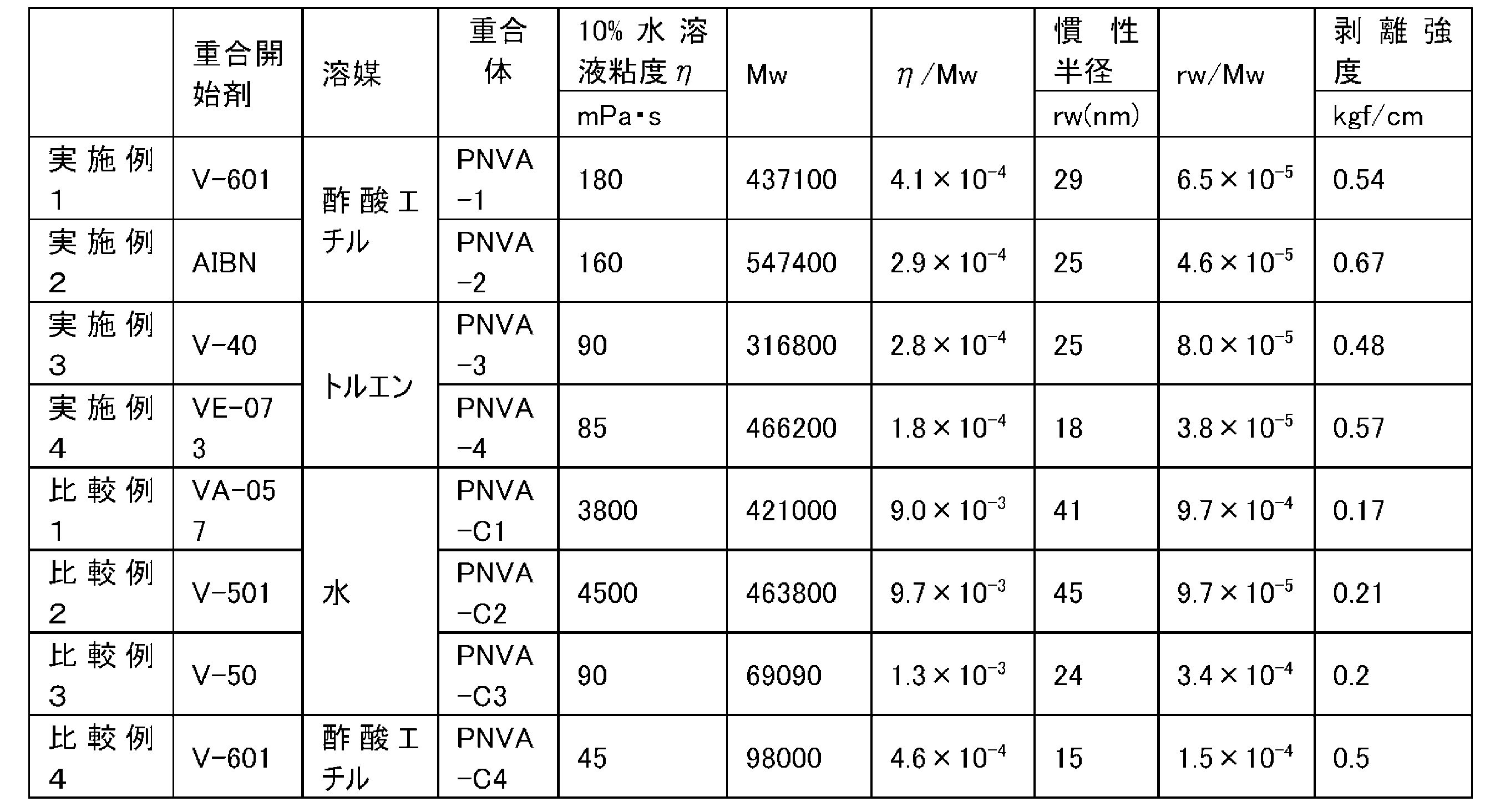
また、粘度と分子量の比であるη/Mwは各比較例のポリN-ビニルアセトアミドと比較して一桁低い値となっている、この値が低いほど分子量に対して粘度が低いということになる。
更には慣性半径と重量平均分子量との比である指標rw/Mwが、いずれの実施例の方が比較例1-3より小さい値を示した。なおrw/Mwが小さいほど分子量に対して分子鎖が収縮していることを意味する。
高分子体の結着能力を示す剥離強度については実施例1,4と比較例1,2では同分子量帯での比較においても実施例のほうが高剥離強度を示した。
これは同分子量帯において水溶液粘度が低いことにより、被着体表面の微細な凹凸に高分子溶液が入り込むことが可能となり、接触面積が増えたことによると考えられる。
これは同分子量帯において水溶液粘度が低いことにより、被着体表面の微細な凹凸に高分子溶液が入り込むことが可能となり、接触面積が増えたことによると考えられる。
また、比較例3においては低粘度ではあるが分子量が低いため、被着体間への接触は十分であると考えられるが、低分子量のため強度自体は低くなっている。
さらに比較例4においては疎水基が末端導入されていると考えられるが分子量が低いため、剥離強度が低い。
さらに比較例4においては疎水基が末端導入されていると考えられるが分子量が低いため、剥離強度が低い。
以上のことから本発明によるポリN-ビニルアセトアミドを使用することで、増粘性を嫌う水溶性高分子溶液の流動性が必要な産業分野において必要な結着力を得ることが可能となる。
以上の実施例1~4、比較例1~4のポリN-ビニルアセトアミドを用いて塗工液を調製し、基材に浸漬させたのち、固着試験を行った。
塗工液の調製
塗工液の組成としては以下の表2の通り配合した。
塗工液の調製
塗工液の組成としては以下の表2の通り配合した。
手順としては、密栓付き50mlガラス製ビンに、ポリ(3,4-エチレンジオキシチオフェン)/ポリ(4-スチレンスルホン酸)(以下『PEDOT-PSS』ともいう)(シグマアルドリッチ製、5質量%分散液)を20g分取し、イオン交換水を3.1g入れ、そこにエチレングリコール5.0g、10質量%ドデシルベンゼンスルホン酸ナトリウム1.0g、1-プロパノール2.0g、ポリN-ビニルアセトアミド0.2gを添加し、密栓して手動にて激しく振とうした。
その後、5℃の冷蔵庫に15時間静置し、塗工液を得た

塗工液を冷蔵庫から取り出し、恒温槽にて20℃に調温した。試験体温度が20±0.5℃であることを確認し、JIS K7117-1:1999に示すB型粘度計を用いて以下の条件にて粘度を測定する。
粘度計:DVE(ブルックフィールド)粘度計 LV型
スピンドル:No.63スピンドル
回転数:50rpm
温度:20℃
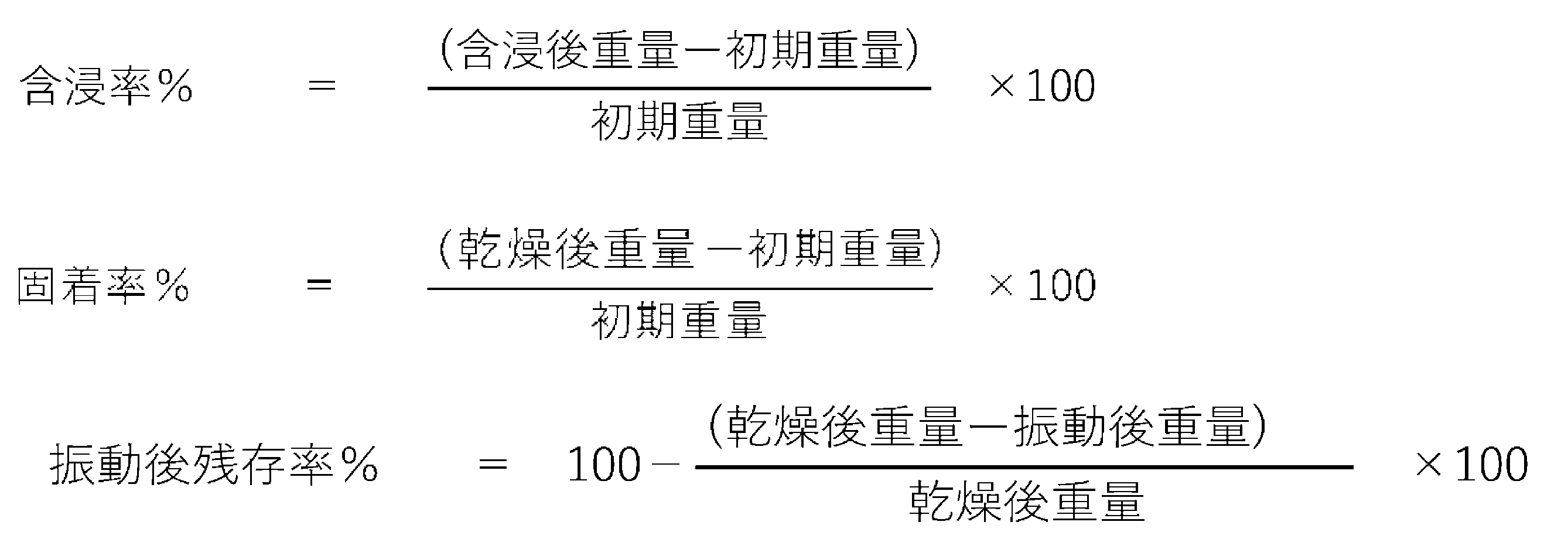
含浸率、固着率、振動後残存率
予めコイル状アルミニウムの重量を測定し、初期重量とした。その後、塗工液にコイル状のアルミニウムを23℃大気圧にて30秒間浸漬し、すぐに1秒間メタノールに浸漬、取り出したアルミニウムコイルの表面を紙で拭き取り、含浸後重量を測定した。その後、金属製のバットに入れ200℃にて60分間オーブン(ヤマト科学:DVS-402)にて乾燥し、23℃のデシケーターに入れ5分間放冷し、塗工物の付着したコイル状のアルミニウムを得た。その後、コイル状アルミニウムの重量を測定し、乾燥後重量とした。
スピンドル:No.63スピンドル
回転数:50rpm
温度:20℃
含浸率、固着率、振動後残存率
予めコイル状アルミニウムの重量を測定し、初期重量とした。その後、塗工液にコイル状のアルミニウムを23℃大気圧にて30秒間浸漬し、すぐに1秒間メタノールに浸漬、取り出したアルミニウムコイルの表面を紙で拭き取り、含浸後重量を測定した。その後、金属製のバットに入れ200℃にて60分間オーブン(ヤマト科学:DVS-402)にて乾燥し、23℃のデシケーターに入れ5分間放冷し、塗工物の付着したコイル状のアルミニウムを得た。その後、コイル状アルミニウムの重量を測定し、乾燥後重量とした。
塗工物の付着したコイル状のアルミニウムの重量を測定し、振動篩(日陶科学株式会社製:ANF30)の最下段に入れ2800rpmで楕円状に15分間振動し、その後、コイル状アルミニウムの重量を測定し、振動後重量とした。
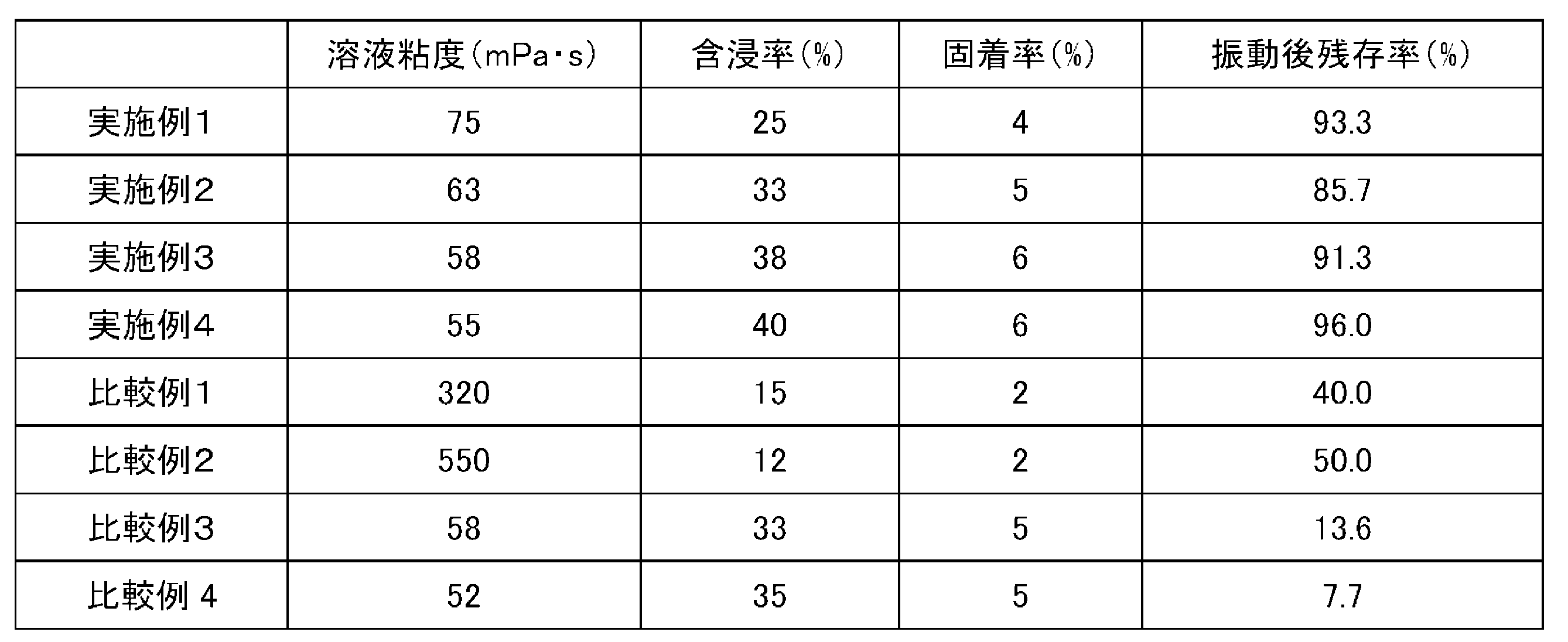
また振動後残存率より、固着成分が剥離することなく強固である。
一方比較例は1、2については粘度も高く、含浸量も少ない、振動試験においても残存率も低く、アルミニウム表面への接触効率が悪いことがうかがえる。
比較例3、4については、溶液粘度は低く含浸量は多いが、分子量が低いため振動後の残存率が少なくなっている。
一方比較例は1、2については粘度も高く、含浸量も少ない、振動試験においても残存率も低く、アルミニウム表面への接触効率が悪いことがうかがえる。
比較例3、4については、溶液粘度は低く含浸量は多いが、分子量が低いため振動後の残存率が少なくなっている。
Claims (16)
- N-ビニルカルボン酸アミドの重合体であって、
前記重合体の少なくとも一つの分子末端が疎水基であり、
重量平均分子量Mwが30万以上であり、
10質量%水溶液の粘度が500mPa・s以下であることを特徴とする、
ポリN-ビニルカルボン酸アミド。 - 前記ポリN-ビニルカルボン酸アミドがポリN-ビニルアセトアミドである、請求項1に記載のポリN-ビニルカルボン酸アミド。
- 重量平均分子量Mwが400万以下である、請求項1または請求項2に記載のポリN-ビニルカルボン酸アミド。
- 10質量%水溶液の粘度が5mPa・s以上である、請求項1~3のいずれか1項に記載のポリN-ビニルカルボン酸アミド。
- N-ビニルカルボン酸アミドの重合体であって、
重量平均分子量Mwが30万以上であり、
前記ポリN-ビニルカルボン酸アミドの慣性半径が35nm以下であることを特徴とする、ポリN-ビニルカルボン酸アミド。 - 重量平均分子量Mwが400万以下である、請求項5に記載のポリN-ビニルカルボン酸アミド。
- 前記重合体の少なくとも一つの分子末端が疎水基である、請求項5または請求項6に記載のポリN-ビニルカルボン酸アミド。
- 慣性半径が5nm以上である、請求項5~7のいずれか1項に記載のポリN-ビニルカルボン酸アミド。
- 請求項1~8のいずれか1項に記載のポリN-ビニルカルボン酸アミドと溶媒を含む、塗工液。
- 請求項1~8のいずれか1項に記載のポリN-ビニルカルボン酸アミドを含む、塗工物。
- 更に添加剤を含む、請求項10に記載の塗工物。
- N-ビニルカルボン酸アミドを、疎水性の重合開始剤を用いて、重合することを特徴とする、
重量平均分子量Mwが30万以上であり、10質量%水溶液の粘度が500mPa・s以下のポリN-ビニルカルボン酸アミドの製造方法。 - 前記疎水性の重合開始剤が、N-ビニルカルボン酸アミド100質量部に対して0.01質量部以上10.0質量部以下である、請求項12に記載のポリN-ビニルカルボン酸アミドの製造方法。
- 重合を溶媒存在下に行い、かつかかる溶媒が酢酸エチルを90質量%以上含むことを特徴とする、請求項12または請求項13に記載のポリN-ビニルカルボン酸アミドの製造方法。
- 前記ポリN-ビニルカルボン酸アミドの重量平均分子量Mwが400万以下である、請求項12~14のいずれか1項に記載のポリN-ビニルカルボン酸アミドの製造方法。
- 前記ポリN-ビニルカルボン酸アミドの10質量%水溶液粘度が5mPa・s以上である、請求項12~15のいずれか1項に記載のポリN-ビニルカルボン酸アミドの製造方法。
Priority Applications (1)
| Application Number | Priority Date | Filing Date | Title |
|---|---|---|---|
| JP2022557433A JPWO2022085557A1 (ja) | 2020-10-22 | 2021-10-14 |
Applications Claiming Priority (2)
| Application Number | Priority Date | Filing Date | Title |
|---|---|---|---|
| JP2020-177490 | 2020-10-22 | ||
| JP2020177490 | 2020-10-22 |
Publications (1)
| Publication Number | Publication Date |
|---|---|
| WO2022085557A1 true WO2022085557A1 (ja) | 2022-04-28 |
Family
ID=81290756
Family Applications (1)
| Application Number | Title | Priority Date | Filing Date |
|---|---|---|---|
| PCT/JP2021/038045 Ceased WO2022085557A1 (ja) | 2020-10-22 | 2021-10-14 | ポリn-ビニルカルボン酸アミドおよびその製造方法 |
Country Status (3)
| Country | Link |
|---|---|
| JP (1) | JPWO2022085557A1 (ja) |
| TW (1) | TW202229371A (ja) |
| WO (1) | WO2022085557A1 (ja) |
Citations (7)
| Publication number | Priority date | Publication date | Assignee | Title |
|---|---|---|---|---|
| US2231905A (en) * | 1939-03-03 | 1941-02-18 | Du Pont | Aliphatic vinyl tertiary amides |
| GB1082016A (en) * | 1963-08-15 | 1967-09-06 | Monsanto Co | Polymers of n-vinyl-n-methylacetamide |
| JPH1143374A (ja) * | 1997-07-24 | 1999-02-16 | Showa Denko Kk | セラミックス成形用バインダー及びセラミックス成形用組成物 |
| JP2001122911A (ja) * | 1999-10-28 | 2001-05-08 | Showa Denko Kk | 乳化重合法及び組成物 |
| US20030008993A1 (en) * | 2001-07-06 | 2003-01-09 | Isp Investments Inc. | Process for making vinyl caprolactam-based polymers |
| US6538088B1 (en) * | 1997-02-04 | 2003-03-25 | National Starch And Chemical Investment Holding Corporation | Methods for making polymers from N-vinyl acetamide monomer |
| JP2010158668A (ja) * | 2008-12-10 | 2010-07-22 | Sanyo Chem Ind Ltd | 高分子凝集剤 |
Family Cites Families (1)
| Publication number | Priority date | Publication date | Assignee | Title |
|---|---|---|---|---|
| JP2002105134A (ja) * | 2000-09-27 | 2002-04-10 | Mitsubishi Rayon Co Ltd | 光ファイバ鞘材用重合体、これを用いたプラスチック光ファイバ、光ファイバケーブル及びプラグ付き光ファイバケーブル |
-
2021
- 2021-10-14 WO PCT/JP2021/038045 patent/WO2022085557A1/ja not_active Ceased
- 2021-10-14 JP JP2022557433A patent/JPWO2022085557A1/ja active Pending
- 2021-10-21 TW TW110139117A patent/TW202229371A/zh unknown
Patent Citations (7)
| Publication number | Priority date | Publication date | Assignee | Title |
|---|---|---|---|---|
| US2231905A (en) * | 1939-03-03 | 1941-02-18 | Du Pont | Aliphatic vinyl tertiary amides |
| GB1082016A (en) * | 1963-08-15 | 1967-09-06 | Monsanto Co | Polymers of n-vinyl-n-methylacetamide |
| US6538088B1 (en) * | 1997-02-04 | 2003-03-25 | National Starch And Chemical Investment Holding Corporation | Methods for making polymers from N-vinyl acetamide monomer |
| JPH1143374A (ja) * | 1997-07-24 | 1999-02-16 | Showa Denko Kk | セラミックス成形用バインダー及びセラミックス成形用組成物 |
| JP2001122911A (ja) * | 1999-10-28 | 2001-05-08 | Showa Denko Kk | 乳化重合法及び組成物 |
| US20030008993A1 (en) * | 2001-07-06 | 2003-01-09 | Isp Investments Inc. | Process for making vinyl caprolactam-based polymers |
| JP2010158668A (ja) * | 2008-12-10 | 2010-07-22 | Sanyo Chem Ind Ltd | 高分子凝集剤 |
Also Published As
| Publication number | Publication date |
|---|---|
| JPWO2022085557A1 (ja) | 2022-04-28 |
| TW202229371A (zh) | 2022-08-01 |
Similar Documents
| Publication | Publication Date | Title |
|---|---|---|
| US20240425375A1 (en) | Dispersions containing graphenic carbon nanoparticles and dispersant resins | |
| KR101351206B1 (ko) | 비수 전해질 이차 전지용 부극 합제, 비수 전해질 이차 전지용 부극 및 비수 전해질 이차 전지 | |
| KR101959962B1 (ko) | 전기 화학 소자 전극용 도전성 접착제 조성물, 접착제층이 부착된 집전체 및 전기 화학 소자 전극 | |
| Kyeremateng et al. | Electrodeposited copolymer electrolyte into nanostructured titania electrodes for 3D Li-ion microbatteries | |
| US10910634B2 (en) | Electroactive ionic liquids and surface-modified substrates containing them | |
| WO2015181347A1 (en) | Two or polyfunctional compounds as adhesion primers for conductive polymers | |
| US20180145370A1 (en) | Solid polymer electrolyte and electrochemical devices comprising same | |
| KR20000004982A (ko) | 전기 분무로 도포할 수 있는 릴리이즈 피복물 | |
| TW201131872A (en) | Binder composition for secondary battery, secondary battery electrode mix comprising same, and secondary battery | |
| JPWO2016167294A1 (ja) | 電極構造体およびその製造方法 | |
| TW201710308A (zh) | 共聚合物、二次電池之電極用黏合劑、二次電池之電極用組成物、二次電池用電極 | |
| US10236130B2 (en) | Electrolytic capacitor and method for manufacturing same | |
| Teixeira et al. | Molecular engineering of a π-conjugated polymer film of the azo dye Bismarck Brown Y | |
| JP2024022549A (ja) | ポリマーおよび電解質を含有する組成物、粘接着剤、粘接着剤の硬化物並びに接合体 | |
| Mocny et al. | Synthesis of loop poly (methyl methacrylate) brushes via chain-end postpolymerization modification | |
| WO2020012942A1 (ja) | 蓄電デバイス用組成物、蓄電デバイス電極用スラリー、蓄電デバイス電極及び蓄電デバイス | |
| US20140198428A1 (en) | Solid electrolytic capacitor and method for manufacturing same | |
| TW202229371A (zh) | 聚n-乙烯羧酸醯胺及其製造方法 | |
| JP2008533302A (ja) | 導体または半導体表面にグラフト化された超薄膜の形成 | |
| KR102636889B1 (ko) | N-비닐카르복실산아미드의 중합체를 포함하는 수성 도공액용 조성물 | |
| JP2017534729A (ja) | 気−液界面プラズマ重合による高分子薄膜の製造方法及びこれにより製造された高分子薄膜 | |
| CN105980416B (zh) | 含氟大分子引发剂及其制造方法 | |
| CN118103463B (zh) | 导电性颜料糊剂、复层材料糊剂以及锂离子电池用电极 | |
| US10340090B2 (en) | Electrolytic capacitor, and production method therefor | |
| CN113874408B (zh) | 水性涂覆液用组合物 |
Legal Events
| Date | Code | Title | Description |
|---|---|---|---|
| 121 | Ep: the epo has been informed by wipo that ep was designated in this application |
Ref document number: 21882698 Country of ref document: EP Kind code of ref document: A1 |
|
| ENP | Entry into the national phase |
Ref document number: 2022557433 Country of ref document: JP Kind code of ref document: A |
|
| NENP | Non-entry into the national phase |
Ref country code: DE |
|
| 122 | Ep: pct application non-entry in european phase |
Ref document number: 21882698 Country of ref document: EP Kind code of ref document: A1 |