WO2022080461A1 - 細胞外小胞の産生用培地、培地キット、添加剤及び細胞外小胞の産生方法 - Google Patents
細胞外小胞の産生用培地、培地キット、添加剤及び細胞外小胞の産生方法 Download PDFInfo
- Publication number
- WO2022080461A1 WO2022080461A1 PCT/JP2021/038095 JP2021038095W WO2022080461A1 WO 2022080461 A1 WO2022080461 A1 WO 2022080461A1 JP 2021038095 W JP2021038095 W JP 2021038095W WO 2022080461 A1 WO2022080461 A1 WO 2022080461A1
- Authority
- WO
- WIPO (PCT)
- Prior art keywords
- medium
- extracellular vesicles
- salt
- glutamine
- present
- Prior art date
- Legal status (The legal status is an assumption and is not a legal conclusion. Google has not performed a legal analysis and makes no representation as to the accuracy of the status listed.)
- Ceased
Links
Images


Classifications
-
- C—CHEMISTRY; METALLURGY
- C12—BIOCHEMISTRY; BEER; SPIRITS; WINE; VINEGAR; MICROBIOLOGY; ENZYMOLOGY; MUTATION OR GENETIC ENGINEERING
- C12N—MICROORGANISMS OR ENZYMES; COMPOSITIONS THEREOF; PROPAGATING, PRESERVING, OR MAINTAINING MICROORGANISMS; MUTATION OR GENETIC ENGINEERING; CULTURE MEDIA
- C12N5/00—Undifferentiated human, animal or plant cells, e.g. cell lines; Tissues; Cultivation or maintenance thereof; Culture media therefor
- C12N5/06—Animal cells or tissues; Human cells or tissues
- C12N5/0602—Vertebrate cells
- C12N5/0652—Cells of skeletal and connective tissues; Mesenchyme
- C12N5/0662—Stem cells
- C12N5/0663—Bone marrow mesenchymal stem cells (BM-MSC)
-
- A—HUMAN NECESSITIES
- A61—MEDICAL OR VETERINARY SCIENCE; HYGIENE
- A61K—PREPARATIONS FOR MEDICAL, DENTAL OR TOILETRY PURPOSES
- A61K35/00—Medicinal preparations containing materials or reaction products thereof with undetermined constitution
- A61K35/12—Materials from mammals; Compositions comprising non-specified tissues or cells; Compositions comprising non-embryonic stem cells; Genetically modified cells
-
- C—CHEMISTRY; METALLURGY
- C12—BIOCHEMISTRY; BEER; SPIRITS; WINE; VINEGAR; MICROBIOLOGY; ENZYMOLOGY; MUTATION OR GENETIC ENGINEERING
- C12N—MICROORGANISMS OR ENZYMES; COMPOSITIONS THEREOF; PROPAGATING, PRESERVING, OR MAINTAINING MICROORGANISMS; MUTATION OR GENETIC ENGINEERING; CULTURE MEDIA
- C12N2500/00—Specific components of cell culture medium
- C12N2500/05—Inorganic components
- C12N2500/10—Metals; Metal chelators
- C12N2500/20—Transition metals
- C12N2500/24—Iron; Fe chelators; Transferrin
-
- C—CHEMISTRY; METALLURGY
- C12—BIOCHEMISTRY; BEER; SPIRITS; WINE; VINEGAR; MICROBIOLOGY; ENZYMOLOGY; MUTATION OR GENETIC ENGINEERING
- C12N—MICROORGANISMS OR ENZYMES; COMPOSITIONS THEREOF; PROPAGATING, PRESERVING, OR MAINTAINING MICROORGANISMS; MUTATION OR GENETIC ENGINEERING; CULTURE MEDIA
- C12N2500/00—Specific components of cell culture medium
- C12N2500/05—Inorganic components
- C12N2500/10—Metals; Metal chelators
- C12N2500/20—Transition metals
- C12N2500/24—Iron; Fe chelators; Transferrin
- C12N2500/25—Insulin-transferrin; Insulin-transferrin-selenium
-
- C—CHEMISTRY; METALLURGY
- C12—BIOCHEMISTRY; BEER; SPIRITS; WINE; VINEGAR; MICROBIOLOGY; ENZYMOLOGY; MUTATION OR GENETIC ENGINEERING
- C12N—MICROORGANISMS OR ENZYMES; COMPOSITIONS THEREOF; PROPAGATING, PRESERVING, OR MAINTAINING MICROORGANISMS; MUTATION OR GENETIC ENGINEERING; CULTURE MEDIA
- C12N2500/00—Specific components of cell culture medium
- C12N2500/30—Organic components
- C12N2500/32—Amino acids
-
- C—CHEMISTRY; METALLURGY
- C12—BIOCHEMISTRY; BEER; SPIRITS; WINE; VINEGAR; MICROBIOLOGY; ENZYMOLOGY; MUTATION OR GENETIC ENGINEERING
- C12N—MICROORGANISMS OR ENZYMES; COMPOSITIONS THEREOF; PROPAGATING, PRESERVING, OR MAINTAINING MICROORGANISMS; MUTATION OR GENETIC ENGINEERING; CULTURE MEDIA
- C12N2501/00—Active agents used in cell culture processes, e.g. differentation
- C12N2501/10—Growth factors
- C12N2501/105—Insulin-like growth factors [IGF]
-
- C—CHEMISTRY; METALLURGY
- C12—BIOCHEMISTRY; BEER; SPIRITS; WINE; VINEGAR; MICROBIOLOGY; ENZYMOLOGY; MUTATION OR GENETIC ENGINEERING
- C12N—MICROORGANISMS OR ENZYMES; COMPOSITIONS THEREOF; PROPAGATING, PRESERVING, OR MAINTAINING MICROORGANISMS; MUTATION OR GENETIC ENGINEERING; CULTURE MEDIA
- C12N2501/00—Active agents used in cell culture processes, e.g. differentation
- C12N2501/10—Growth factors
- C12N2501/15—Transforming growth factor beta (TGF-β)
-
- C—CHEMISTRY; METALLURGY
- C12—BIOCHEMISTRY; BEER; SPIRITS; WINE; VINEGAR; MICROBIOLOGY; ENZYMOLOGY; MUTATION OR GENETIC ENGINEERING
- C12N—MICROORGANISMS OR ENZYMES; COMPOSITIONS THEREOF; PROPAGATING, PRESERVING, OR MAINTAINING MICROORGANISMS; MUTATION OR GENETIC ENGINEERING; CULTURE MEDIA
- C12N2501/00—Active agents used in cell culture processes, e.g. differentation
- C12N2501/30—Hormones
- C12N2501/33—Insulin
-
- C—CHEMISTRY; METALLURGY
- C12—BIOCHEMISTRY; BEER; SPIRITS; WINE; VINEGAR; MICROBIOLOGY; ENZYMOLOGY; MUTATION OR GENETIC ENGINEERING
- C12N—MICROORGANISMS OR ENZYMES; COMPOSITIONS THEREOF; PROPAGATING, PRESERVING, OR MAINTAINING MICROORGANISMS; MUTATION OR GENETIC ENGINEERING; CULTURE MEDIA
- C12N2501/00—Active agents used in cell culture processes, e.g. differentation
- C12N2501/80—Neurotransmitters; Neurohormones
- C12N2501/825—Serotonine (5-HT); Melatonine
Definitions
- the present invention relates to a medium for producing extracellular vesicles, a medium kit, an additive, and a method for producing extracellular vesicles.
- Extracellular vesicles which are small membrane vesicles derived from cells and composed of lipid double membranes, are responsible for cell-cell communication through the transport of nucleic acids such as the contained mRNA and microRNA, or proteins.
- Non-Patent Document 1 Extracellular vesicles are cultured and obtained for the purpose of diagnosing and treating diseases using extracellular vesicles.
- a method for obtaining extracellular vesicles produced (secreted) from mesenchymal stem cells a method for obtaining them from a cell culture supernatant in which mesenchymal stem cells are cultured by an ultracentrifugation method or the like is known.
- a medium cell culture medium
- FBS fetal bovine serum
- FBS is rich in extracellular vesicles derived from fetal bovine serum, it is not desirable to use a medium containing FBS in the purification of extracellular vesicles.
- Non-Patent Document 2 D-MEM (including 4 mM L-glutamine) which is a basal medium is used, and in Non-Patent Document 3, D-MEM (4 mM L-) which is a basal medium is used.
- D-MEM 4 mM L-
- bFGF basic fibroblast growth factor
- an object of the present invention is to provide a medium for producing extracellular vesicles, a kit, an additive, and a method for producing extracellular vesicles, which promote the production of extracellular vesicles.
- L-glutamine or a salt thereof in a medium for producing extracellular vesicles containing at least one component selected from a growth factor, a cellotonin compound and a transferrin growth factor ⁇ , and containing L-glutamine or a salt thereof. It has been found that the production of extracellular vesicles is promoted by using a medium for producing extracellular vesicles having a concentration of 5 mM or more, and the present invention has been completed.
- the present invention is a medium for producing extracellular vesicles
- the basic embodiment thereof is (1) A medium for producing extracellular vesicles.
- the present invention is also a medium kit for producing extracellular vesicles, specifically, (13) A medium kit for producing extracellular vesicles.
- Contains additives for the production of extracellular vesicles When the additive for producing extracellular vesicles contains L-glutamine or a salt thereof, the additive for producing extracellular vesicles is the additive for producing L-glutamine or a salt thereof in a medium for producing extracellular vesicles.
- the present invention is also an additive for the production of extracellular vesicles, specifically, (14) An additive for the production of extracellular vesicles used in the production of a medium.
- the medium is the medium according to any one of (1) to (12). Contains at least one component selected from L-glutamine or a salt thereof, transferrin, selenic acid or a salt thereof, insulin, insulin-like growth factor, serotonin compound and transforming growth factor ⁇ . It is an additive containing an amount such that the concentration of L-glutamine or a salt thereof in the medium for producing extracellular vesicles in the case of containing L-glutamine or a salt thereof is 5 mM or more.
- the present invention is also a method for producing extracellular vesicles, specifically, (15) A method for producing extracellular vesicles, which comprises producing extracellular vesicles from mesenchymal stem cells using the medium according to any one of (1) to (12). ..
- the medium for producing extracellular vesicles According to the medium for producing extracellular vesicles, the kit, and the method for producing extracellular vesicles of the present invention, the production of extracellular vesicles is promoted.
- FIG. 1 shows the results of analyzing the number of particles of extracellular vesicles produced using various media by the nanotracking analysis method.
- FIG. 2 is a diagram showing primers used for quantitative PCR.
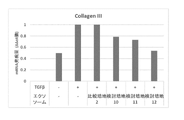
- FIG. 3 is a diagram showing the results of evaluating the activity of extracellular vesicles produced from mesenchymal stem cells using various media using the mRNA expression level of Collagen III as an index.
- FIG. 4 is a diagram showing the results of evaluating the activity of extracellular vesicles produced from mesenchymal stem cells using various media using the mRNA expression level of Collagen III as an index.
- the extracellular vesicle according to the present invention refers to a small membrane vesicle composed of a lipid bilayer membrane derived from a cell.
- the extracellular vesicles usually have a diameter of 20 nm to 1000 nm, preferably 50 nm to 800 nm, more preferably 50 nm to 500 nm, and particularly preferably 50 nm to 200 nm.
- Examples of the extracellular vesicles include Nature Reviews Immunology 9,581-593 (August 2009), "Obesity Research" Vol. 13 No. 2 2007 Topics As described in Naoto Aoki, etc., there are various categories according to the origin of their occurrence, the size of small membrane vesicles, and the like.
- exosomes include exosomes, microvesicles, ectosomes, membrane particles, exosome-like vesicles, apoptotic bodies, adiposomes and the like, with exosomes and vesicles being preferred, and exosomes being more preferred.
- the exosome is a cell-derived small membrane vesicle composed of a lipid bilayer, and examples thereof include those having a diameter of 50 nm to 200 nm, preferably 50 nm to 150 nm, and 50 nm to 100 nm. The one is more preferable. Exosomes are thought to be derived from late endosomes.
- the microvesicles are small membrane vesicles derived from cells and composed of a lipid bilayer membrane, and examples thereof include those having a diameter of 100 nm to 1000 nm, preferably those having a diameter of 100 nm to 800 nm, and preferably 100 nm to 500 nm. Is more preferable.
- the microvesicles are thought to be derived from the cell membrane.
- the mesenchymal stem cells refer to stem cells having the ability to differentiate into cells belonging to tissues derived from mesoderm (mesoderm) such as osteoblasts, adipocytes, muscle cells, and chondrocytes.
- the mesenchymal stem cells can be obtained, for example, by a method of separating from a tissue derived from mesoderm or a method of inducing from stem cells such as iPS cells and ES cells.
- the mesenchymal stem cells are derived from one or more tissues selected from the group consisting of umbilical cord, umbilical cord blood, bone marrow, fat, muscle, nerve, skin, dental pulp, amniotic membrane and placenta, and iPS cells. Those are preferably used.
- the mesenchymal stem cells may be those that have undergone pretreatment such as recovery, concentration, purification, isolation, dilution with a buffer solution, and filtration sterilization. These pretreatments may be appropriately performed according to a conventional method.
- pretreatments may be appropriately performed according to a conventional method.
- Examples of the origin of the mesenchymal stem cells according to the present invention include animals, preferably mammals, and more preferably humans.
- the medium for producing extracellular vesicles of the present invention is a basal medium for culturing animal cells and at least one selected from L-glutamine, transferase, selenates, insulin, insulin-like growth factor, serotonin and transforming growth factor ⁇ .
- Concentration of L-glutamine or its salt in the medium for producing extracellular vesicles when it contains the component of L-glutamine (hereinafter, may be abbreviated as the component according to the present invention) and contains L-glutamine or a salt thereof. Is 5 mM or more.
- the medium for producing extracellular vesicles of the present invention finally contains the components contained in the basal medium for culturing animal cells according to the present invention and the components according to the present invention (provided that L-glutamine or a salt thereof is contained).
- the concentration of L-glutamine or a salt thereof in the medium for producing extracellular vesicles may be 5 mM or more), for example, the component according to the present invention may be contained, and L-glutamine or a salt thereof may be contained.
- An additive containing an amount such that the concentration of L-glutamine or a salt thereof in the medium for producing extracellular vesicles when contained is 5 mM or more (hereinafter, abbreviated as the additive for producing extracellular vesicles of the present invention). Is obtained) by mixing the components of the basal medium for culturing animal cells according to the present invention or the basal medium for culturing animal cells according to the present invention with water. According to the medium for producing extracellular vesicles of the present invention, the production of extracellular vesicles is promoted.
- the secretion of extracellular vesicles is promoted, and more extracellular vesicles are used. Can be obtained.
- the number of particles of extracellular vesicles can be measured by, for example, a nanoparticle tracking analysis method (Nano Tracking Analysis method).
- the medium for producing extracellular vesicles of the present invention is preferably serum-free (serum-free medium), and particularly preferably FBS-free.
- the medium for producing extracellular vesicles of the present invention contains the components contained in the basal medium for culturing animal cells according to the present invention and the components according to the present invention (provided that they contain L-glutamine or a salt thereof.
- the concentration of L-glutamine or a salt thereof in the culture medium for producing vesicles is 5 mM or more), even if it is in a liquid form (liquid medium) such as an aqueous solution or a dispersion in which it is dissolved or dispersed in a solvent such as water. It may be in a solid form (solid medium) such as a form (agar medium) or a gel form (solid medium), and a liquid form (liquid medium) is preferable.
- L-glutamine or a salt thereof according to the present invention examples include L-glutamine and halides of L-glutamine, and L-glutamine is preferable.
- the content of L-glutamine or a salt thereof according to the present invention in the medium for producing extracellular vesicles of the present invention is 5 mM or more, for example, 5 mM to 18 mM, preferably 5 mM to 16 mM, more preferably 5 mM to 14 mM.
- 6 mM to 12 mM is more preferable, and 6 mM to 10 mM is particularly preferable.
- the L-glutamine or a salt thereof according to the present invention one kind or two or more kinds may be used.
- transferrin according to the present invention examples include naturally-derived transferrin, transferrin of a recombinant (recombinant), transferrin obtained by a chemical synthesis method, and the like.
- Examples of the organism from which naturally-derived transferrin is derived include humans and mice.
- the content of transferrin according to the present invention in the medium for producing extracellular vesicles of the present invention is, for example, 0.01 mg / L to 1000 mg / L, preferably 0.05 mg / L to 500 mg / L, and is 0. .1 mg / L to 100 mg / L is more preferable, 0.5 mg / L to 50 mg / L is further preferable, and 1 mg / L to 10 mg / L is particularly preferable.
- selenous acid or a salt thereof As the selenous acid or a salt thereof according to the present invention, selenous acid, sodium selenite, potassium selenate, magnesium selenate, calcium selenate are preferable, and selenous acid and sodium selenite are particularly preferable. ..
- the content of the selenous acid compound according to the present invention in the medium for producing extracellular vesicles of the present invention is, for example, 0.001 ⁇ g / L to 0.1 mg / L, and 0.005 ⁇ g / L to 0.
- 05 mg / L is preferable, 0.01 ⁇ g / L to 0.01 mg / L is more preferable, 0.05 ⁇ g / L to 0.005 mg / L is further preferable, and 0.1 ⁇ g / L to 0.001 mg / L is particularly preferable. ..
- As the selenous acid or a salt thereof according to the present invention one kind or two or more kinds may be used.
- Examples of the insulin according to the present invention include naturally occurring insulin, recombinant (recombinant) insulin, and insulin obtained by a chemical synthesis method.
- Examples of organisms from which naturally occurring insulin is derived include humans and mice.
- the content of insulin according to the present invention in the medium for producing extracellular vesicles of the present invention is, for example, 0.05 mg / L to 500 mg / L, preferably 0.1 mg / L to 250 mg / L, and 0. .5 mg / L to 100 mg / L is more preferable, 1 mg / L to 50 mg / L is further preferable, and 5 mg / L to 25 mg / L is particularly preferable.
- insulin-like growth factor examples include IGF-1, IGF-2 and the like, and IGF-1 is preferable.
- examples of the insulin-like growth factor according to the present invention include naturally occurring insulin-like growth factor, insulin-like growth factor of a recombinant (recombinant), insulin-like growth factor obtained by a chemical synthesis method, and the like. ..
- Examples of organisms from which naturally occurring insulin is derived include humans and mice.
- the content of the insulin-like growth factor according to the present invention in the medium for producing extracellular vesicles of the present invention is, for example, 0.05 ⁇ g / L to 50 mg / L, and 0.1 ⁇ g / L to 10 mg / L. It is preferably 0.5 ⁇ g / L to 5 mg / L, more preferably 0.001 mg / L to 1 mg / L, and particularly preferably 0.005 mg / L to 0.5 mg / L.
- serotonin compound according to the present invention examples include serotonin, serotonin complex and salts thereof, preferably serotonin, serotonin-creatinine complex and salts thereof, and serotonin, serotonin-creatinine sulfate complex and serotonin sulfate.
- Serotonin hydrochloride is more preferable, serotonin, serotonin-creatinine sulfate complex is more preferable, and serotonin-creatinine sulfate complex is particularly preferable.
- the content of the serotonin compound according to the present invention in the medium for producing extracellular vesicles of the present invention is, for example, 0.005 mg / L to 500 mg / L, preferably 0.01 mg / L to 100 mg / L. It is more preferably 0.05 mg / L to 50 mg / L, further preferably 0.1 mg / L to 10 mg / L, and particularly preferably 0.5 mg / L to 5 mg / L.
- the transforming growth factor ⁇ examples include TGF ⁇ 1, TGF ⁇ 3 and the like, and TGF ⁇ 3 is preferable.
- the transforming growth factor ⁇ according to the present invention includes, for example, a naturally occurring transforming growth factor ⁇ , a transforming growth factor ⁇ of a recombinant (recombinant), and a transforming growth factor ⁇ obtained by a chemical synthesis method. And so on.
- Examples of the organism from which the naturally-derived transforming growth factor ⁇ is derived include humans and mice.
- the content of transforming growth factor ⁇ according to the present invention in the medium for producing extracellular vesicles of the present invention is, for example, 0.01 ⁇ g / L to 0.5 mg / L and 0.05 ⁇ g / L to 0.
- 0.1 mg / L is preferable, 0.1 ⁇ g / L to 0.1 mg / L is more preferable, 0.5 ⁇ g / L to 0.05 mg / L is further preferable, and 0.001 mg / L to 0.01 mg / L is particularly preferable. preferable.
- the basic medium for culturing animal cells according to the present invention is not particularly limited as long as it is used for cell culture of animal cells, particularly mesenchymal stem cells.
- the basal medium for culturing animal cells according to the present invention may contain components necessary for survival of animal cells, and examples thereof include those containing inorganic salts, amino acids, sugars, vitamins and the like.
- inorganic salts include potassium chloride, sodium chloride, calcium chloride, magnesium chloride, copper sulfate, zinc sulfate, manganese sulfate, magnesium sulfate, iron (III) nitrate, calcium nitrate, iron nitrate, disodium hydrogen phosphate, and phosphorus.
- Examples thereof include sodium dihydrogen acid and sodium hydrogen carbonate.
- Examples of amino acids include L-alanine, L-arginine, L-asparagine, L-aspartic acid, L-cysteine, L-glutamic acid, glycine, L-histidine, L-isoleucine, L-leucine, L-lysine, and the like.
- Examples thereof include L-methionine, L-phenylalanine, L-proline, L-serine, L-threonine, L-tryptophan, L-tyrosine, and L-valine.
- the basal medium for culturing animal cells according to the present invention may contain L-glutamine of 4 mM or less.
- vitamins include ascorbic acid, biotin, D-pantothenic acid, choline, folic acid, myo-inositol, niacinamide, pyrodoxal, riboflavin, thiamine, cyanocobalamin, DL- ⁇ -tocopherol and the like.
- saccharides include glucose, galactose, fructose, sucrose and the like.
- Specific examples of the basal medium for animal cell culture according to the present invention include DMEM (Dalbeco's Modified Eagle's Medium), DMEM / F-12, Dham F-12, Dham F-12K, Dumb F-10, and MEM.
- the basal medium for culturing animal cells according to the present invention may be a mixed medium of one or more types of basal medium for culturing animal cells or a mixed medium with another medium.
- the basal medium for culturing animal cells according to the present invention may be modified from the basal medium for culturing animal cells so as to be suitable for the production of extracellular vesicles, and one or more components may be added, removed, or increased. , May be reduced.
- the mesenchymal stem cell according to the present invention is preferable. Further, as the origin of the animal cells, mammals are preferable, and humans are more preferable.
- Examples of the medium for producing extracellular vesicles of the present invention include those containing 1 type, 2 types, 3 types, 4 types, 5 types, 6 types, and 7 types of the components according to the present invention, and two or more types of the present invention. Those containing the components according to the invention are preferable, and those containing 7 kinds are most preferable.
- Examples of the medium containing one of the components according to the present invention include a medium containing 5 mM or more of L-glutamine or a salt thereof, a medium containing transferase, a medium containing selenic acid or a salt thereof, a medium containing insulin, and an insulin.
- Examples include a medium containing a growth factor, a medium containing a serotonin compound, a medium containing a transforming growth factor ⁇ , a medium containing 5 mM or more of L-glutamine or a salt thereof, a medium containing an insulin-like growth factor, and a cellotnin compound.
- a medium is preferable, and a medium containing 5 mM or more of L-glutamine or a salt thereof is particularly preferable.
- the medium containing the two components according to the present invention a medium containing transferrin and selenous acid or a salt thereof, and a medium containing insulin-like growth factor and transforming growth factor ⁇ are preferable.
- Examples of the medium containing the three components according to the present invention include transferrin, selenic acid or a salt thereof, and a medium containing insulin, 5 mM or more of L-glutamine or a salt thereof, insulin-like growth factor and transforming growth factor ⁇ .
- the medium containing is preferable.
- the medium containing 7 kinds of components according to the present invention contains 5 mM or more of L-glutamine or a salt thereof, transferrin, selenic acid or a salt thereof, insulin, insulin-like growth factor, serotonin compound and transforming growth factor ⁇ . Examples include media.
- a medium for producing extracellular vesicles of the present invention a medium containing 5 mM or more of L-glutamine or a salt thereof, a medium containing insulin-like growth factor, a medium containing a serotonin compound; transferase and selenic acid or a salt thereof can be used.
- the basal medium for culturing animal cells is DMEM, DMEM / F-12, ham F-12, ham F-12K, ham F-10, MEM, EMEM. , ⁇ -MEM, GMEM, IMDM and RPMI-1640, and the component according to the present invention is L-glutamine or a salt thereof; insulin-like growth factor; serotonin compound.
- L-glutamine or a salt thereof When L-glutamine or a salt thereof is contained, its concentration in the medium for producing extracellular vesicles of the present invention is 5 mM or more.
- the medium for producing extracellular vesicles of the present invention may further contain an optional component in addition to the component according to the present invention.
- Optional components include, for example, reducing agents (eg, 2-mercaptoethanol, catalase, superoxide dismutase, N-acetylcysteine, etc.), organic acids (eg, pyruvate, lactic acid, etc.), trace metals (sodium, potassium, magnesium, etc.).
- the medium for producing extracellular vesicles of the present invention may contain additives used for cell culture such as animal cells, particularly mesenchymal stem cells, in addition to those exemplified. It is preferable that these optional components are contained in a concentration range known per se depending on the purpose of using the optional components.
- the additive for producing extracellular vesicles of the present invention is at least one selected from L-glutamine or a salt thereof, transferrin, selenic acid or a salt thereof, insulin, insulin-like growth factor, serotonin compound and transforming growth factor ⁇ . It contains a seed component and contains an amount such that the concentration of L-glutamine or a salt thereof in the medium for producing extracellular vesicles in the case of containing L-glutamine or a salt thereof is 5 mM or more.
- the additive for producing extracellular vesicles of the present invention is an aqueous solution or a dispersion liquid in which each component according to the present invention contained in the additive for producing extracellular vesicles of the present invention is dissolved or dispersed in a solvent such as water. It may be in a liquid form such as, or in a solid form such as powder or particle, and the form may be different for each component according to the present invention.
- the additive for producing extracellular vesicles of the present invention may be a separate substance for each component according to the present invention, or may contain two or more kinds of components according to the present invention together. It is preferable that the above-mentioned components according to the present invention are integrated.
- the additive for producing extracellular vesicles of the present invention is used for producing (preparing) the medium for producing extracellular vesicles of the present invention, in other words, the production of extracellular vesicles of the present invention described later. It is used in the method, and is mixed with the basal medium for culturing animal cells according to the present invention.
- the medium for producing extracellular vesicles of the present invention and the basal medium for culturing animal cells according to the present invention are the same as those described above, and specific examples and preferred embodiments are also the same.
- the final concentration of the extracellular vesicle production additive of the present invention in the extracellular vesicle production medium of the present invention obtained by mixing with the animal cell culture basal medium of the present invention is described above, for example.
- the component according to the present invention may be contained so as to be the content of the component according to the present invention in the medium for producing extracellular vesicles of the present invention. That is, when the basal medium for culturing animal cells according to the present invention contains the component according to the present invention, the content (concentration) of the component according to the present invention in the above-mentioned medium for producing extracellular vesicles of the present invention.
- the component according to the present invention is contained in the additive for producing extracellular vesicles of the present invention in an amount obtained by subtracting the content (concentration) of the component according to the present invention contained in the basal medium for culturing animal cells according to the present invention. Just let me do it.
- D-MEM medium containing 4 mM glutamine
- the amount calculated by subtracting 4 mM from the content of glutamine or a salt thereof may be used.
- the additives for producing extracellular vesicles of the present invention include reagents usually used in this field, such as buffers, sensitizers, surfactants, and preservatives (eg, sodium azide). , Salicylic acid, benzoic acid, etc.), stabilizers (eg albumin, globulin, water-soluble gelatin, surfactants, saccharides, etc.), activators, agents to avoid the effects of coexisting substances, and others used in this field. It may also contain a substance that does not inhibit the stability with the coexisting reagent or inhibit the promotion of extracellular vesicle production by the component according to the present invention. Further, as for the concentration range of these reagents and the like, the concentration range and the like usually used in order to exert the effect of each reagent may be appropriately selected and used.
- the medium kit of the present invention comprises the basal medium for culturing animal cells according to the present invention, L-glutamine or a salt thereof, transferase, selenic acid or a salt thereof, insulin, insulin-like growth factor, serotonin compound and transforming growth factor ⁇ .
- the extracellular vesicle production additive containing at least one component selected from the above, and the extracellular vesicle production additive containing L-glutamine or a salt thereof.
- the vesicle production additive contains L-glutamine or a salt thereof in an amount such that the concentration of L-glutamine or a salt thereof in the medium for producing extracellular vesicles is 5 mM or more.
- the medium kit of the present invention contains the basal medium for culturing animal cells according to the present invention and the additive for producing extracellular vesicles of the present invention.
- the medium kit of the present invention is used for producing (preparing) a medium for producing extracellular vesicles of the present invention, in other words, it is used for a method for producing extracellular vesicles of the present invention described later. ..
- the kit of the present invention is used by mixing the additive for producing extracellular vesicles of the present invention contained in the kit with the basal medium for culturing animal cells according to the present invention.
- the medium for producing extracellular vesicles of the present invention, the additive for producing extracellular vesicles of the present invention, the basal medium according to the present invention, etc. in the medium kit of the present invention are the same as those described above, and specific examples thereof. The same applies to the preferred ones.
- the medium kit of the present invention may contain one or more additives for producing the extracellular vesicles of the present invention in one container, and the production of two or more kinds of extracellular vesicles of the present invention. It is preferable that the additive is contained in one container.
- the kit of the present invention may further include, for example, a growth medium described later, reagents used in a method for obtaining extracellular vesicles from the sample, an instruction manual, and the like.
- Examples of the reagents used in the method for obtaining extracellular vesicles from the sample include kits for obtaining extracellular vesicles such as MagCapture TM Exosome Isolation Kit PS (Fujifilm Wako Pure Drug) and the kits. Examples thereof include reagents constituting the cells, kits for concentrating extracellular vesicles such as ExoQuick Exosome Prescription Solution (System Biosciences), and reagents constituting the kit.
- the method for producing extracellular vesicles of the present invention comprises producing extracellular vesicles from mesenchymal stem cells using the medium for producing extracellular vesicles of the present invention.
- the medium for producing extracellular vesicles, mesenchymal stem cells, and extracellular vesicles of the present invention in the method for producing extracellular vesicles of the present invention are the same as those described above, and specific examples and preferred ones are also the same. be.
- the method for producing extracellular vesicles of the present invention is, for example, using the medium for producing extracellular vesicles of the present invention in a CO 2 environment of, for example, 2% to 7%, for example, 35 ° C to 40 ° C, preferably. It is done by culturing mesenchymal stem cells at 36 ° C. to 38 ° C., for example, for 24 hours to 240 hours, preferably 48 hours to 180 hours.
- the culture may be static culture or shaking culture, and static culture is preferable.
- Examples of the incubator used in the method for producing extracellular vesicles of the present invention include flasks, dishes, petri dishes, microwell plates, microslides, chamber slides, tubes, trays, culture bags, and culture tanks. Further, the incubator may be cell-adhesive or non-cell-adhesive.
- the mesenchymal stem cells according to the present invention are proliferated using a growth medium, and then the medium is exchanged for the medium for producing extracellular vesicles of the present invention.
- extracellular vesicles may be produced from the mesenchymal stem cells according to the present invention using the medium for producing extracellular vesicles of the present invention.
- the growth medium may be any medium as long as it has the ability to proliferate mesenchymal stem cells, and for example, ⁇ -MEM, DMEM, DMEM / F-12, ham F-12, ham F-12K, ham F.
- MEM, EMEM, GMEM, IMDM and other basal media mesenchymal stem cell proliferation medium 2 (Takara Bio), KBM ADSC-1 (Kojin Bio), KBM ADSC-2 (Kojin Bio), MSC NutriStem TM XF Medium (BioLogical Industries), TheraPEAK TM MSCGM TM Mesenchymal Stem Cell Growth Medium (Lonza), Serum-free medium for primary mesenchymal stem cells STKR1 (Kanto Kagaku), Mesenchymal stem cell-free medium STKR1 (Kanto Kagaku), Mesenchymal stem cell-free medium Free Human MSC Expansion Media (R & D Systems), StemXVivo Serum-Free Human MSC Expansion Media (R & D Systems), StemXVivo Mesenchymal Stem Cell Expansion Media (R & D Systems), CnT-Prime MSC Medium Xeno-Free (CELLnTEC), CnT-Prime MSC Medium (CELLnTEC
- the medium may contain 5-20% serum (eg, FBS), preferably one containing FBS.
- the growth medium is one or more basal media or mesenchymal stem cells. It may be a mixed medium of a growth medium or a mixed medium with another medium.
- the growth medium may be modified to be suitable for the growth of mesenchymal stem cells, and may be one or more. Ingredients may be added, removed, increased or decreased.
- the proliferation of mesenchymal stem cells according to the present invention is carried out, for example, using the above-mentioned growth medium in a CO 2 environment of, for example, 2% to 7%, for example, at 35 ° C to 40 ° C, preferably 36 ° C to 38 ° C.
- it is carried out by culturing mesenchymal stem cells for 24 hours to 240 hours, preferably 48 hours to 120 hours.
- the culture may be a static culture or a shaking culture.
- the incubator used for the proliferation of mesenchymal stem cells according to the present invention is the same as the incubator used for the method for producing extracellular vesicles of the present invention.
- an extracellular vesicle produced by the method for producing an extracellular vesicle of the present invention and a method for obtaining an extracellular vesicle.
- the method for obtaining (isolating / purifying) the extracellular vesicles produced by the method for producing extracellular vesicles of the present invention may be any method as long as the extracellular vesicles can be obtained from the sample, for example.
- Affinity method for example, PS affinity method
- fractional centrifugation method for example, ultracentrifugation method such as pellet down method, scroll cushion method, density gradient centrifugation method
- immunoprecipitation method for example, ion exchange chromatograph.
- Imaging method gel permeation chromatography method
- density gradient method eg, sucrose density gradient method
- electrophoresis method eg organella electrophoresis method
- magnetic separation method eg, magnetically activated cell sorting (MACS) method
- Ultracentrifugation enrichment method for example, nanomembrane ultracentrifugation enrichment method
- Percor gradient isolation method microfluidic device-based method, PEG precipitation method, etc., and highly purified extracellular membrane vesicles.
- Affinity method or fractional centrifugation method which can theoretically be recovered without bias is preferable, affinity method or ultracentrifugation method is more preferable, and affinity method is particularly preferable.
- affinity methods a method of obtaining extracellular vesicles by a method using a substance having an affinity for phosphatidylserine (PS affinity method) is preferable.
- PS affinity method a method of obtaining extracellular vesicles by a method using a substance having an affinity for phosphatidylserine
- the affinity method and fractionation centrifugation method may be performed according to, for example, the methods described in JP-A-2016-088689.
- isolation methods only one kind may be used, or two or more kinds may be combined. Further, isolation by one isolation method may be repeated twice or more.
- PS-affinitive substance is a substance capable of specifically binding to phosphatidylserine constituting the membrane of extracellular vesicles. Any of these may be used, and for example, Annexin V; MFG-E8; Tim1 protein (T-cell immunoglobulin / mutin domain-containing molecule 1, T-cell antibodyglobulin-mucin-domine 1), Tim2 protein (T-cell immunoglobulin / mutin 1), Tim2 protein (T-cell immunoglobulin / mutin).
- Tim3 protein T-cell immunoglobulin / mutin domain-containing molecule 3, T-cell antibody / mucin-domain 3
- Tim4 protein T-cell immunoglobulin / mutin 3
- Tim proteins such as domain-containing molecule 4, T-cell antibody-mucin-domain 4
- Tim protein is preferable because extracellular vesicles can be efficiently obtained, Tim4 protein, Tim3 protein and Tim1.
- Those selected from proteins are more preferable, Tim4 protein and Tim1 protein are further preferable, and Tim4 protein is particularly preferable.
- a cell culture supernatant containing extracellular vesicles is brought into contact with a PS-affinitive substance in the presence of calcium ions, and the extracellular vesicles and the PS-affinitive substance in the cell culture supernatant are brought into contact with each other.
- the PS-affinitive substance is separated from the complex to obtain PS-positive extracellular vesicles.
- the PS-positive extracellular vesicle refers to the PS-positive (PS-containing) extracellular vesicle in which phosphatidylserine is considered to be exposed on the membrane surface of the extracellular vesicle.
- the preferred method of the PS affinity method includes the following steps. (1) In the presence of calcium ions, the cell culture supernatant containing extracellular vesicles and the PS-affinitive substance are brought into contact with the PS-positive extracellular vesicles and PS-affinitive substance in the cell culture supernatant. To form a complex of (2) Separation of the complex of the PS-positive extracellular vesicles obtained in (1) and the PS-affinitive substance from the cell culture supernatant containing the extracellular vesicles. (3) Separation of PS-positive extracellular vesicles from the complex of PS-positive extracellular vesicles and PS-affinitive substances to obtain PS-positive extracellular vesicles.
- the cultured bone marrow-derived mesenchymal stem cells were seeded in a 100 mm cell culture dish (Corning International) with a cell number of 3 ⁇ 105, and in a cell culture incubator set to 5 % CO 2 and 37 ° C. The cells were cultured for 72 hours and grown to a cell number of 3 ⁇ 106 .
- Example 1-5 Preparation of medium for extracellular vesicle production
- D-MEM high glucose
- bFGF low-density protein
- the medium contained 4 mM of L-glutamine
- bFGF was contained at 0.01 ⁇ g / mL to prepare a reference medium.
- 20 mL of a medium containing each additive in the reference medium was prepared so as to have a specified concentration.
- Each of the obtained media is referred to as "examination medium 1" to "examination medium 5".
- the additive L-glutamine 584 ( ⁇ g / mL) is 4 (mM), and the study medium 1 contains 8 mM in combination with L-glutamine contained in D-MEM.
- (2) Production of extracellular vesicles The bone marrow-derived mesenchymal stem cells grown in Experimental Example 1 were exchanged from the growth medium to the study medium 1 to the study medium 5, respectively. Then, the cells were cultured for 120 hours in a cell culture incubator set under the conditions of 5% CO 2 and 37 ° C. Each of the obtained culture supernatants was collected in a 50 mL centrifuge tube and centrifuged at 2000 ⁇ g for 20 minutes, and the supernatant was collected.
- Comparative example 1 Preparation of medium for extracellular vesicle production (1) Preparation of medium for production of extracellular vesicles The reference medium prepared in Example 1-5 (1) above is referred to as "comparative medium 1". The extracellular vesicles were produced and obtained by the same method as in Example 1 except that the comparative medium 1 was used instead of the study medium 1, to obtain an extracellular vesicle solution.
- Example 3 Serotonin creatinine sulfate monohydrate (Example 3), insulin, transferase and Na selenate (Example 4), and insulin-like growth factor (Example 5), extracellularly.
- the number of vesicles produced increased significantly.
- Table 2 based on the number of extracellular vesicles produced by Comparative Medium 1, "++++” is for 4 times or more, “++++” is for 3 times or more and less than 4 times, and “+++” is for 2 times or more and less than 3 times. Was indicated by "++” to evaluate the production effect of extracellular vesicles.
- Preparation of medium for extracellular vesicle production (1) Preparation of medium for extracellular vesicle production "D-MEM (high glucose) (containing L-glutamine, phenol red)" (Fujifilm Wako Pure Chemical Industries, Ltd., Hon.
- the medium contained 4 mM of L-glutamine) and bFGF was contained at 0.01 ⁇ g / mL to prepare a reference medium.
- 30 mL of a medium containing each additive in the reference medium was prepared so as to have a specified concentration.
- ⁇ in Table 3 means that the corresponding component is included.
- Each of the obtained media is referred to as "examination medium 6" to "examination medium 9".
- TIG3 cells distributed from JCRB
- DMEM Fluji Film Wako Pure Chemical Industries, Ltd.
- FBS Biosera
- the cells were seeded at 2.5 ⁇ 104 per cell and 500 ⁇ L of medium.
- the extracellular vesicle solution obtained in Example 6-10 was added to each well in an amount having a final concentration of 1 ⁇ 10 9 parts / mL, and cultured for 16 hours.
- RNA was extracted according to the procedure described in the instruction manual attached to the kit. From 200 ng of the extracted RNA, cDNA was synthesized using Revera Ace TM qPCR RT Master Mix with gDNA Remover (Toyobo Co., Ltd.) according to the procedure described in the instruction manual attached to the kit.
- the mRNA expression levels of Collagen III which is a fibrosis-related gene
- GAPDH which is an internal standard
- the primer (SEQ ID NO: 1-2) used for quantitative PCR is shown in FIG.
- the measurement results are shown in FIG.
- the expression level of the Collagen III gene is shown on the vertical axis as a relative value ( ⁇ ct value) to the expression of the target mRNA in the control by normalizing the numerical value obtained from qPCR performed using the primer for each gene to GAPDH.
- the extracellular vesicles produced by the medium containing no insulin-like growth factor (IGF) (examination medium 7) and the medium containing no transforming growth factor (examination medium 8) are the insulin-like growth factor and It showed lower anti-inflammatory activity than extracellular vesicles produced by medium containing transforming growth factor (Study Medium 6).
- extracellular vesicles produced in a medium having a final concentration of L-glutamine of 8 mM (examination medium 9) are prepared by a medium containing 4 mM of L-glutamine (only 4 mM contained in the reference medium, examination medium 6). It showed higher anti-inflammatory activity than the extracellular vesicles produced.
- extracellular vesicles containing at least one component selected from L-glutamine or a salt thereof provided that the concentration in the medium is 5 mM or more
- insulin-like growth factor insulin-like growth factor
- transforming growth factor ⁇ transforming growth factor ⁇
- Experimental example 4 Evaluation of anti-fibrosis activity of extracellular vesicles It is a fibrosis-related gene by the same method as in Experimental Example 3 except that the extracellular vesicle solutions obtained in Comparative Example 2 and Examples 10-12 were used. The expression level of collagen III mRNA was measured by quantitative PCR to evaluate the antifibrotic effect. The obtained results are shown in FIG. From FIG. 4, extracellular vesicles produced by a medium containing IGF (insulin-like growth factor), TGF ⁇ (transforming growth factor), or L-glutamine were not observed when the comparative medium 2 was used. Antifibrotic activity was observed. These results suggest that a medium for producing extracellular vesicles containing at least one component selected from IGF, TGF ⁇ , and L-glutamine promotes the production of highly active extracellular vesicles. ..
- IGF insulin-like growth factor
- TGF ⁇ transforming growth factor
- L-glutamine transforming growth factor
- Experimental example 5 Preparation of medium for extracellular vesicle production and evaluation of antifibrotic activity According to Table 4 above, 30 mL of medium containing EGF at 5 ( ⁇ g / L) in comparative medium 2 was prepared, and the same as in Experimental Example 4. The antifibrotic activity was evaluated by the above method. The extracellular vesicles produced by the medium containing EGF showed antifibrotic activity that was not observed when the comparative medium 2 was used.
- the present invention provides a medium for producing extracellular vesicles, a medium kit, an additive, and a method for producing extracellular vesicles. According to the present invention, the production of extracellular vesicles is promoted, which is useful, for example, in the field of diagnosis of diseases using extracellular vesicles and research for that purpose.
Landscapes
- Health & Medical Sciences (AREA)
- Life Sciences & Earth Sciences (AREA)
- Engineering & Computer Science (AREA)
- Biomedical Technology (AREA)
- Zoology (AREA)
- Biotechnology (AREA)
- Chemical & Material Sciences (AREA)
- Developmental Biology & Embryology (AREA)
- Bioinformatics & Cheminformatics (AREA)
- Organic Chemistry (AREA)
- Genetics & Genomics (AREA)
- Wood Science & Technology (AREA)
- Immunology (AREA)
- General Health & Medical Sciences (AREA)
- Cell Biology (AREA)
- General Engineering & Computer Science (AREA)
- Biochemistry (AREA)
- Hematology (AREA)
- Microbiology (AREA)
- Rheumatology (AREA)
- Virology (AREA)
- Medicinal Chemistry (AREA)
- Pharmacology & Pharmacy (AREA)
- Epidemiology (AREA)
- Animal Behavior & Ethology (AREA)
- Public Health (AREA)
- Veterinary Medicine (AREA)
- Micro-Organisms Or Cultivation Processes Thereof (AREA)
Priority Applications (4)
| Application Number | Priority Date | Filing Date | Title |
|---|---|---|---|
| EP21880196.7A EP4230724A4 (en) | 2020-10-16 | 2021-10-14 | Culture medium for producing extracellular vesicles, culture medium kit, additive, and method for producing extracellular vesicles |
| CN202180070470.3A CN116529358A (zh) | 2020-10-16 | 2021-10-14 | 细胞外囊泡的产生用培养基、培养基试剂盒、添加剂及细胞外囊泡的产生方法 |
| JP2022557453A JPWO2022080461A1 (https=) | 2020-10-16 | 2021-10-14 | |
| US18/300,741 US20230250397A1 (en) | 2020-10-16 | 2023-04-14 | Culture medium for producing extracellular vesicles, culture medium kit, additive, and method for producing extracellular vesicles |
Applications Claiming Priority (4)
| Application Number | Priority Date | Filing Date | Title |
|---|---|---|---|
| JP2020174347 | 2020-10-16 | ||
| JP2020-174347 | 2020-10-16 | ||
| JP2021053337 | 2021-03-26 | ||
| JP2021-053337 | 2021-03-26 |
Related Child Applications (1)
| Application Number | Title | Priority Date | Filing Date |
|---|---|---|---|
| US18/300,741 Continuation US20230250397A1 (en) | 2020-10-16 | 2023-04-14 | Culture medium for producing extracellular vesicles, culture medium kit, additive, and method for producing extracellular vesicles |
Publications (1)
| Publication Number | Publication Date |
|---|---|
| WO2022080461A1 true WO2022080461A1 (ja) | 2022-04-21 |
Family
ID=81208143
Family Applications (1)
| Application Number | Title | Priority Date | Filing Date |
|---|---|---|---|
| PCT/JP2021/038095 Ceased WO2022080461A1 (ja) | 2020-10-16 | 2021-10-14 | 細胞外小胞の産生用培地、培地キット、添加剤及び細胞外小胞の産生方法 |
Country Status (4)
| Country | Link |
|---|---|
| US (1) | US20230250397A1 (https=) |
| EP (1) | EP4230724A4 (https=) |
| JP (1) | JPWO2022080461A1 (https=) |
| WO (1) | WO2022080461A1 (https=) |
Citations (13)
| Publication number | Priority date | Publication date | Assignee | Title |
|---|---|---|---|---|
| JP2003008095A (ja) | 2001-03-30 | 2003-01-10 | Brother Ind Ltd | 圧電アクチュエータおよび液滴噴射装置 |
| JP2016088689A (ja) | 2014-11-05 | 2016-05-23 | セイコーエプソン株式会社 | 媒体保持具、媒体装填装置、記録装置 |
| JP2016518109A (ja) * | 2013-03-13 | 2016-06-23 | ユニバーシティ・オブ・マイアミUniversity Of Miami | 細胞培養上清および生体液からの微小胞の単離および精製のための方法 |
| JP2018064550A (ja) * | 2016-07-11 | 2018-04-26 | ナショナル ヘルス リサーチ インスティテューツNational Health Research Institutes | 幹細胞からエクソソームを生成する方法およびその使用 |
| JP2018531979A (ja) * | 2015-11-02 | 2018-11-01 | タイジェニックス、ソシエダッド、アノニマ、ウニペルソナルTigenix S.A.U. | 間葉幹細胞由来のエクソソームおよびその使用 |
| JP2019513367A (ja) * | 2016-03-31 | 2019-05-30 | サンバイオ,インコーポレイティド | 幹細胞の培養及び治療のための培地、方法、細胞、及び分泌因子 |
| JP2019518428A (ja) * | 2016-04-12 | 2019-07-04 | ユニシテ エーファウ アクチェンゲゼルシャフト | 体液試料からの細胞外小胞(ev)の単離 |
| US20190240156A1 (en) * | 2018-02-06 | 2019-08-08 | Agency For Science, Technology And Research (A*Star) | Therapeutic Compositions Comprising Mesenchymal Stem Cell Particles And Related Methods |
| CN110317788A (zh) * | 2019-04-26 | 2019-10-11 | 广州瑞臻再生医学科技有限公司 | 一种npc培养基、外泌体的制备方法和应用 |
| WO2020204161A1 (ja) * | 2019-04-04 | 2020-10-08 | 日産化学株式会社 | 細胞外小胞の分泌を促進するための組成物 |
| WO2021145395A1 (ja) * | 2020-01-15 | 2021-07-22 | 富士フイルム和光純薬株式会社 | 抗線維化剤、及び抗線維化作用を有する細胞外小胞の製造方法 |
| WO2021145396A1 (ja) * | 2020-01-15 | 2021-07-22 | 富士フイルム和光純薬株式会社 | 血管新生剤、及び血管新生作用を有する細胞外小胞の製造方法 |
| WO2021181819A1 (ja) * | 2020-03-13 | 2021-09-16 | 昭和電工マテリアルズ株式会社 | 細胞懸濁液の製造方法、及び、接着細胞の製造方法 |
Family Cites Families (1)
| Publication number | Priority date | Publication date | Assignee | Title |
|---|---|---|---|---|
| CN111527199A (zh) * | 2017-11-16 | 2020-08-11 | 得克萨斯大学体系董事会 | 用于制备来源于msc的外泌体的方法 |
-
2021
- 2021-10-14 WO PCT/JP2021/038095 patent/WO2022080461A1/ja not_active Ceased
- 2021-10-14 JP JP2022557453A patent/JPWO2022080461A1/ja active Pending
- 2021-10-14 EP EP21880196.7A patent/EP4230724A4/en active Pending
-
2023
- 2023-04-14 US US18/300,741 patent/US20230250397A1/en active Pending
Patent Citations (13)
| Publication number | Priority date | Publication date | Assignee | Title |
|---|---|---|---|---|
| JP2003008095A (ja) | 2001-03-30 | 2003-01-10 | Brother Ind Ltd | 圧電アクチュエータおよび液滴噴射装置 |
| JP2016518109A (ja) * | 2013-03-13 | 2016-06-23 | ユニバーシティ・オブ・マイアミUniversity Of Miami | 細胞培養上清および生体液からの微小胞の単離および精製のための方法 |
| JP2016088689A (ja) | 2014-11-05 | 2016-05-23 | セイコーエプソン株式会社 | 媒体保持具、媒体装填装置、記録装置 |
| JP2018531979A (ja) * | 2015-11-02 | 2018-11-01 | タイジェニックス、ソシエダッド、アノニマ、ウニペルソナルTigenix S.A.U. | 間葉幹細胞由来のエクソソームおよびその使用 |
| JP2019513367A (ja) * | 2016-03-31 | 2019-05-30 | サンバイオ,インコーポレイティド | 幹細胞の培養及び治療のための培地、方法、細胞、及び分泌因子 |
| JP2019518428A (ja) * | 2016-04-12 | 2019-07-04 | ユニシテ エーファウ アクチェンゲゼルシャフト | 体液試料からの細胞外小胞(ev)の単離 |
| JP2018064550A (ja) * | 2016-07-11 | 2018-04-26 | ナショナル ヘルス リサーチ インスティテューツNational Health Research Institutes | 幹細胞からエクソソームを生成する方法およびその使用 |
| US20190240156A1 (en) * | 2018-02-06 | 2019-08-08 | Agency For Science, Technology And Research (A*Star) | Therapeutic Compositions Comprising Mesenchymal Stem Cell Particles And Related Methods |
| WO2020204161A1 (ja) * | 2019-04-04 | 2020-10-08 | 日産化学株式会社 | 細胞外小胞の分泌を促進するための組成物 |
| CN110317788A (zh) * | 2019-04-26 | 2019-10-11 | 广州瑞臻再生医学科技有限公司 | 一种npc培养基、外泌体的制备方法和应用 |
| WO2021145395A1 (ja) * | 2020-01-15 | 2021-07-22 | 富士フイルム和光純薬株式会社 | 抗線維化剤、及び抗線維化作用を有する細胞外小胞の製造方法 |
| WO2021145396A1 (ja) * | 2020-01-15 | 2021-07-22 | 富士フイルム和光純薬株式会社 | 血管新生剤、及び血管新生作用を有する細胞外小胞の製造方法 |
| WO2021181819A1 (ja) * | 2020-03-13 | 2021-09-16 | 昭和電工マテリアルズ株式会社 | 細胞懸濁液の製造方法、及び、接着細胞の製造方法 |
Non-Patent Citations (5)
| Title |
|---|
| BASALOVA ET AL.: "Secretome of Mesenchymal Stromal Cells Prevents Myofibroblasts Differentiation by Transferring Fibrosis-Associated microRNAs within Extracellular Vesicles", CELLS, vol. 9, no. 5, 2020, pages 1272 |
| MATHIEU MMARTIN-JAULAR LLAVIEU GTHERY C: "Specificities of secretion and uptake of exosomes and other extracellular vesicles for cell-to-cell communication", NAT CELL BIOL, vol. 21, no. 1, 2019, pages 9 - 17, XP036664265, DOI: 10.1038/s41556-018-0250-9 |
| NATURE REVIEWS IMMUNOLOGY, vol. 9, August 2009 (2009-08-01), pages 581 - 593 |
| See also references of EP4230724A4 |
| TOPICS NAOTO AOKI ET AL., OBESITY RESEARCH, vol. 13, no. 2, 2007 |
Also Published As
| Publication number | Publication date |
|---|---|
| EP4230724A1 (en) | 2023-08-23 |
| EP4230724A4 (en) | 2024-05-22 |
| US20230250397A1 (en) | 2023-08-10 |
| JPWO2022080461A1 (https=) | 2022-04-21 |
Similar Documents
| Publication | Publication Date | Title |
|---|---|---|
| US11980641B2 (en) | Methods for generation of podocytes from pluripotent stem cells and cells produced by the same | |
| CN101412985B (zh) | 用于骨髓间充质干细胞体外培养和扩增的无血清培养基 | |
| AU2007205522B2 (en) | Additive for culture medium for use in serum-free culture of animal cell, kit, and use of the additive or kit | |
| EP3048169B1 (en) | Method for preparing pluripotent stem cells | |
| WO2018164228A1 (ja) | Ror1陽性の間葉系幹細胞を含有する、線維症を伴う疾患の予防又は処置のための医薬組成物、及びその調製方法、並びにror1陽性の間葉系幹細胞を用いる線維症を伴う疾患の予防又は処置方法 | |
| CN116685676A (zh) | 用于祖细胞分化的无血清培养基 | |
| CN116426470B (zh) | 间充质干细胞无血清培养基及其应用 | |
| Tragoonlugkana et al. | The use of human platelet lysate as a coating substance for adipose-derived stem cell expansion | |
| WO2021088847A1 (zh) | 一种妇科肿瘤原代细胞的培养方法及配套培养基 | |
| US9243228B2 (en) | Process for obtaining myofibroblasts | |
| CN119662532B (zh) | 人nk细胞的培养基、组合物和培养方法 | |
| WO2022080461A1 (ja) | 細胞外小胞の産生用培地、培地キット、添加剤及び細胞外小胞の産生方法 | |
| US20200131480A1 (en) | Method For Enhancing Proliferation Capability Of Stem Cells Using Ethionamide | |
| KR20200001756A (ko) | 엑소좀 기반의 심근세포 교차분화 유도방법 | |
| EP3991558A1 (en) | Cell membrane protection solution | |
| JP2024054301A (ja) | シート状細胞培養物の製造方法 | |
| CN116529358A (zh) | 细胞外囊泡的产生用培养基、培养基试剂盒、添加剂及细胞外囊泡的产生方法 | |
| WO2023076292A1 (en) | Culture media and conditions for in vitro expansion and/or maturation of hepatocytes | |
| US12139725B2 (en) | Composition for promoting stem cell differentiation, comprising progenitor cell culture solution and multilayer graphene film, and use thereof | |
| CA3151339A1 (en) | Methods and compositions for culturing alveolar cells | |
| Brown et al. | Long-term culture of nephron progenitor cells ex vivo | |
| US20230146610A1 (en) | Method for enhancing proliferation capability of stem cells using ethionamide | |
| Zeytin et al. | Modeling osteoclast defect and altered hematopoietic stem cell niche in osteopetrosis with patient-derived iPSCs | |
| WO2026093215A1 (en) | Reduction of albumin in a cell culture medium | |
| Shimomura et al. | Hypoxia Promotes Differentiation of Pure Cartilage from Human iPS Cells |
Legal Events
| Date | Code | Title | Description |
|---|---|---|---|
| 121 | Ep: the epo has been informed by wipo that ep was designated in this application |
Ref document number: 21880196 Country of ref document: EP Kind code of ref document: A1 |
|
| ENP | Entry into the national phase |
Ref document number: 2022557453 Country of ref document: JP Kind code of ref document: A |
|
| WWE | Wipo information: entry into national phase |
Ref document number: 202180070470.3 Country of ref document: CN |
|
| NENP | Non-entry into the national phase |
Ref country code: DE |
|
| ENP | Entry into the national phase |
Ref document number: 2021880196 Country of ref document: EP Effective date: 20230516 |