WO2022045151A1 - 改変タンパク質の製造方法 - Google Patents
改変タンパク質の製造方法 Download PDFInfo
- Publication number
- WO2022045151A1 WO2022045151A1 PCT/JP2021/031039 JP2021031039W WO2022045151A1 WO 2022045151 A1 WO2022045151 A1 WO 2022045151A1 JP 2021031039 W JP2021031039 W JP 2021031039W WO 2022045151 A1 WO2022045151 A1 WO 2022045151A1
- Authority
- WO
- WIPO (PCT)
- Prior art keywords
- protein
- enzyme
- modifying
- modifying enzyme
- ppiase
- Prior art date
- Legal status (The legal status is an assumption and is not a legal conclusion. Google has not performed a legal analysis and makes no representation as to the accuracy of the status listed.)
- Ceased
Links
Images

Classifications
-
- C—CHEMISTRY; METALLURGY
- C12—BIOCHEMISTRY; BEER; SPIRITS; WINE; VINEGAR; MICROBIOLOGY; ENZYMOLOGY; MUTATION OR GENETIC ENGINEERING
- C12N—MICROORGANISMS OR ENZYMES; COMPOSITIONS THEREOF; PROPAGATING, PRESERVING, OR MAINTAINING MICROORGANISMS; MUTATION OR GENETIC ENGINEERING; CULTURE MEDIA
- C12N9/00—Enzymes; Proenzymes; Compositions thereof; Processes for preparing, activating, inhibiting, separating or purifying enzymes
- C12N9/90—Isomerases (5.)
-
- C—CHEMISTRY; METALLURGY
- C12—BIOCHEMISTRY; BEER; SPIRITS; WINE; VINEGAR; MICROBIOLOGY; ENZYMOLOGY; MUTATION OR GENETIC ENGINEERING
- C12P—FERMENTATION OR ENZYME-USING PROCESSES TO SYNTHESISE A DESIRED CHEMICAL COMPOUND OR COMPOSITION OR TO SEPARATE OPTICAL ISOMERS FROM A RACEMIC MIXTURE
- C12P21/00—Preparation of peptides or proteins
- C12P21/06—Preparation of peptides or proteins produced by the hydrolysis of a peptide bond, e.g. hydrolysate products
-
- A—HUMAN NECESSITIES
- A23—FOODS OR FOODSTUFFS; TREATMENT THEREOF, NOT COVERED BY OTHER CLASSES
- A23J—PROTEIN COMPOSITIONS FOR FOODSTUFFS; WORKING-UP PROTEINS FOR FOODSTUFFS; PHOSPHATIDE COMPOSITIONS FOR FOODSTUFFS
- A23J3/00—Working-up of proteins for foodstuffs
- A23J3/14—Vegetable proteins
-
- A—HUMAN NECESSITIES
- A23—FOODS OR FOODSTUFFS; TREATMENT THEREOF, NOT COVERED BY OTHER CLASSES
- A23J—PROTEIN COMPOSITIONS FOR FOODSTUFFS; WORKING-UP PROTEINS FOR FOODSTUFFS; PHOSPHATIDE COMPOSITIONS FOR FOODSTUFFS
- A23J3/00—Working-up of proteins for foodstuffs
- A23J3/14—Vegetable proteins
- A23J3/16—Vegetable proteins from soybean
-
- A—HUMAN NECESSITIES
- A23—FOODS OR FOODSTUFFS; TREATMENT THEREOF, NOT COVERED BY OTHER CLASSES
- A23J—PROTEIN COMPOSITIONS FOR FOODSTUFFS; WORKING-UP PROTEINS FOR FOODSTUFFS; PHOSPHATIDE COMPOSITIONS FOR FOODSTUFFS
- A23J3/00—Working-up of proteins for foodstuffs
- A23J3/30—Working-up of proteins for foodstuffs by hydrolysis
- A23J3/32—Working-up of proteins for foodstuffs by hydrolysis using chemical agents
- A23J3/34—Working-up of proteins for foodstuffs by hydrolysis using chemical agents using enzymes
- A23J3/346—Working-up of proteins for foodstuffs by hydrolysis using chemical agents using enzymes of vegetable proteins
-
- C—CHEMISTRY; METALLURGY
- C12—BIOCHEMISTRY; BEER; SPIRITS; WINE; VINEGAR; MICROBIOLOGY; ENZYMOLOGY; MUTATION OR GENETIC ENGINEERING
- C12N—MICROORGANISMS OR ENZYMES; COMPOSITIONS THEREOF; PROPAGATING, PRESERVING, OR MAINTAINING MICROORGANISMS; MUTATION OR GENETIC ENGINEERING; CULTURE MEDIA
- C12N9/00—Enzymes; Proenzymes; Compositions thereof; Processes for preparing, activating, inhibiting, separating or purifying enzymes
- C12N9/14—Hydrolases (3)
- C12N9/48—Hydrolases (3) acting on peptide bonds (3.4)
- C12N9/50—Proteinases, e.g. Endopeptidases (3.4.21-3.4.25)
-
- C—CHEMISTRY; METALLURGY
- C12—BIOCHEMISTRY; BEER; SPIRITS; WINE; VINEGAR; MICROBIOLOGY; ENZYMOLOGY; MUTATION OR GENETIC ENGINEERING
- C12N—MICROORGANISMS OR ENZYMES; COMPOSITIONS THEREOF; PROPAGATING, PRESERVING, OR MAINTAINING MICROORGANISMS; MUTATION OR GENETIC ENGINEERING; CULTURE MEDIA
- C12N9/00—Enzymes; Proenzymes; Compositions thereof; Processes for preparing, activating, inhibiting, separating or purifying enzymes
- C12N9/14—Hydrolases (3)
- C12N9/78—Hydrolases (3) acting on carbon to nitrogen bonds other than peptide bonds (3.5)
- C12N9/80—Hydrolases (3) acting on carbon to nitrogen bonds other than peptide bonds (3.5) acting on amide bonds in linear amides (3.5.1)
-
- C—CHEMISTRY; METALLURGY
- C12—BIOCHEMISTRY; BEER; SPIRITS; WINE; VINEGAR; MICROBIOLOGY; ENZYMOLOGY; MUTATION OR GENETIC ENGINEERING
- C12P—FERMENTATION OR ENZYME-USING PROCESSES TO SYNTHESISE A DESIRED CHEMICAL COMPOUND OR COMPOSITION OR TO SEPARATE OPTICAL ISOMERS FROM A RACEMIC MIXTURE
- C12P21/00—Preparation of peptides or proteins
-
- C—CHEMISTRY; METALLURGY
- C12—BIOCHEMISTRY; BEER; SPIRITS; WINE; VINEGAR; MICROBIOLOGY; ENZYMOLOGY; MUTATION OR GENETIC ENGINEERING
- C12Y—ENZYMES
- C12Y304/00—Hydrolases acting on peptide bonds, i.e. peptidases (3.4)
-
- C—CHEMISTRY; METALLURGY
- C12—BIOCHEMISTRY; BEER; SPIRITS; WINE; VINEGAR; MICROBIOLOGY; ENZYMOLOGY; MUTATION OR GENETIC ENGINEERING
- C12Y—ENZYMES
- C12Y305/00—Hydrolases acting on carbon-nitrogen bonds, other than peptide bonds (3.5)
-
- C—CHEMISTRY; METALLURGY
- C12—BIOCHEMISTRY; BEER; SPIRITS; WINE; VINEGAR; MICROBIOLOGY; ENZYMOLOGY; MUTATION OR GENETIC ENGINEERING
- C12Y—ENZYMES
- C12Y502/00—Cis-trans-isomerases (5.2)
- C12Y502/01—Cis-trans-Isomerases (5.2.1)
- C12Y502/01008—Peptidylprolyl isomerase (5.2.1.8), i.e. cyclophilin
Definitions
- the present invention relates to a method for producing a modified protein and a method for producing a modified protein material.
- PPIase Peptidylprolyl isomerase
- PPIase acts on the peptide bond on the N-terminal side of the proline (Pro) residue in the peptide or protein and catalyzes cis-trans isomerization.
- PPIase has a so-called chaperone function involved in protein folding (see, for example, Non-Patent Document 1).
- the chaperone function of PPIase is utilized, for example, to improve the expression efficiency of a heterologous protein in a host cell (see, for example, Patent Documents 1 to 3).
- PPIase is also used for screening immunosuppressive substances (see, for example, Patent Document 4).
- Non-Patent Document 2 discloses a method for measuring PPIase activity utilizing the fact that chymotrypsin acts only on the trans form of a synthetic substrate (peptide).
- Such modification of a protein material for example, techniques such as softening of meat by protease, binding of meat by transglutaminase, and improvement of solubility of protein material by protein glutaminase are known.
- a protein material modified by such a technique is provided as a new protein material.
- the modified protein material has improved properties and new functions, so it can be expected to be applied to various fields, and its utility value is high. There is still a great need for further means to provide such highly useful protein materials. Therefore, it is an object of the present invention to provide a new means for modifying (processing) a protein material.
- PPIase itself enables modification of protein materials. Given that PPIase is only known to catalyze the isomerization reaction, it is expected that PPIase will enable the modification of protein materials that has been done by enzymes that catalyze the molecular conversion reaction of protein molecules. It was outside. Furthermore, they have also found that the reaction efficiency of a protein-modifying enzyme can be regulated by using PPIase in combination with an enzyme that catalyzes the molecular conversion reaction of a protein molecule (hereinafter, also referred to as "protein-modifying enzyme"). The following inventions are mainly based on the above findings.
- a method for producing a modified protein which comprises a step of allowing peptidylprolyl isomerase and a protein modifying enzyme to act on the protein.
- the production method according to [1], wherein the treatment on which the protein-modifying enzyme is allowed to act and the treatment on which the peptidylprolyl isomerase is allowed to act are simultaneously performed.
- the protein modifying enzyme is selected from the group consisting of a proteolytic enzyme, a protein side chain modifying enzyme, and a protein cross-linking enzyme.
- the protein consists of plant proteins derived from beans, grains, nuts and seeds; milk proteins, egg proteins, blood proteins, muscle proteins and tendon proteins; and proteins derived from microorganisms, algae and insects.
- a method for producing a modified protein material which comprises a step of treating a food material, a pharmaceutical material or an industrial material containing a protein with peptidyl prolyl isomerase and a protein modifying enzyme.
- the production method according to [6] wherein the treatment with the protein-modifying enzyme is performed at the same time as the treatment with the peptidylprolyl isomerase.
- the enzyme agent for protein modification according to [8], wherein the protein-modifying enzyme is selected from the group consisting of a proteolytic enzyme, a protein side chain modifying enzyme, and a protein cross-linking enzyme.
- a method for producing a modified protein material which comprises a step of treating a protein-containing product material, a pharmaceutical material or an industrial material with peptidylprolyl isomerase.
- a new means capable of modifying a protein material is provided.
- modification of a protein means molecular conversion by decomposition, synthesis, cross-linking, etc., in other words, the number and / or type of constituent atoms of a protein molecule (also referred to as “protein substrate”). It refers to processing that changes the structure of a protein so as to change it (thus, it does not include mere isomerization), and means structural-modification as opposed to “modification” described later.
- modification is the process of enzymatically treating a material containing a protein (also referred to as "protein material”) so that the characteristics of the protein material change based on changes in the physical properties of the protein. Describe as (property modification).
- the "modification" of a protein material is an action and effect based on “modification” of a protein, an action and effect based on isomerization of a protein by peptidylprolyl isomerase, and an action and effect obtained by combining both actions and effects. Including effects.
- the "protein” in the present invention broadly includes substances in which a plurality of amino acids are peptide-bonded. Therefore, the “protein” in the present invention includes oligopeptides having 10 or less amino acid residues, polypeptides having more than 10 amino acid residues, and proteins in which the polypeptides form a three-dimensional structure.
- the first aspect of the present invention relates to a method for producing a modified protein.
- the method for producing a modified protein of the present invention is characterized by comprising a step of reacting a protein (hereinafter, also referred to as “substrate protein”) with peptidylprolyl isomerase (PPIase) and a protein modifying enzyme.
- substrate protein a protein
- PPIase peptidylprolyl isomerase
- the regulation of protein treatment is, in a typical and preferred example, an upward regulation (promotion of reaction), in which case it promotes the reaction of the protein-modifying enzyme.
- the regulation is also allowed to be downward regulation (suppression of reaction), and in this case, it suppresses the reaction between PPIase and the protein-modifying enzyme.
- Such a downward adjustment mode has, for example, a problem that the reaction proceeds too much (for example, if the protein-modifying enzyme is a cross-linking enzyme, the texture and the like are deteriorated due to cross-linking, and if the protein-modifying enzyme is a degrading (cleaving) enzyme. It is applied when there is deterioration of taste and physical properties).
- Protein there are no particular restrictions on the origin of the protein (substrate protein) used in the present invention.
- vegetable proteins that are examples of proteins used in the present invention include soy beans, green peas, lentils, chickpeas, black beans, and the like. Beans; wheat, barley, rye, swallow (Oat), rice and other grains; almonds, peanuts and other nuts; cannabis seeds (Hemp), chia seeds (Chia), quinoa, amaranthus (Amaranthus) and other seeds
- proteins derived from include soy beans, green peas, lentils, chickpeas, black beans, and the like.
- Beans wheat, barley, rye, swallow (Oat), rice and other grains; almonds, peanuts and other nuts; cannabis seeds (Hemp), chia seeds (Chia), quinoa, amaranthus (Amaranthus) and other seeds
- proteins derived from include soy beans, green peas, lentils, chickpeas, black beans, and the
- animal proteins used in the present invention include milk proteins such as casein and ⁇ -lactoglobulin; egg proteins such as ovalbumin; blood proteins such as serum albumin; muscle proteins such as myosin and actin. Includes tendon proteins such as gelatin and collagen.
- proteins that are further examples of the proteins used in the present invention include proteins derived from insects such as crickets and silk; microorganisms such as yeast and filamentous fungi, and algae such as spirulina.
- the natural protein in addition to the above-mentioned natural protein, is chemically partially decomposed by an acid, an alkali, or the like, and the natural protein is an enzyme by a protease or the like.
- Preliminary modified proteins such as proteins that have undergone partial degradation and proteins in which the natural protein has been chemically modified with various reagents can also be mentioned.
- the protein to be processed in the present invention is not only a protein that is industrially useful (that is, a protein that is enhanced by the addition of new properties by the treatment according to the present invention), but also a protein that is not industrially useful. (That is, the treatment according to the present invention reduces or eliminates the undesired properties of the protein, thereby imparting new usefulness).
- proteins that are not industrially useful include various allergens (including gluten contained in wheat such as wheat, barley, rye, and swallow) and toxic peptides (eg, 33mer gliadin peptide contained in gluten degradation products). , Extrinsic opioid peptides (eg, casomorphin contained in casein degradation products, gliadorphin contained in gluten degradation products, etc.) and the like.
- PPIase PPIase is an enzyme that acts on the N-terminal peptide bond of a proline (Pro) residue in a peptide or protein and catalyzes cis-trans isomerization.
- PPIase activity an activity that changes the peptide bond on the N-terminal side of a Pro residue in a peptide or protein into a cis / trans form.
- the PPIase used in the present invention is not particularly limited as long as it is a polypeptide having the activity. Therefore, a polypeptide having PPIase activity corresponds to PPIase used in the present invention even if it is not classified as PPIase on the official database.
- the presence or absence of PPIase activity is determined by adding PPIase and chymotrypsin to the synthetic substrate Suc-Ala-Ala-Pro-Phe-pNA (Suc-AAPF-pNA) and detecting the release of pNA; Abz-Ala-Xaa-Pro-Phe. -Method of adding pNA, PPIase and protease to detect Abz fluorescence; activity detection method using FRET (Fluorescence Resonance Energy Transfer) substrate, etc., by at least one of these methods. If the PPIase activity can be detected, it can be determined that the PPIase activity is present.
- FRET Fluorescence Resonance Energy Transfer
- the presence or absence of PPIase activity can be confirmed by the method of detecting the release of pNA among the above methods.
- the specific value of the activity of PPIase shall be measured based on the method for detecting the release of pNA.
- PPIase used in the present invention is not particularly limited, and examples thereof include a wide range of organisms including prokaryotes, eukaryotes, and archaea (Biochim Biophys Acta. 2015 Oct; 1850 (10): 2017-2034.).
- the activity of PPIase can be provided regardless of the presence of side chains if there is a characteristic pocket (cavity) with a diameter of 10 ⁇ and a depth of 6 ⁇ (Protein Engineering, Design and Selection, Volume 21, Issue 2, February 2008). , Pages83-89) Therefore, any polypeptide having the pocket can be used as the PPIase of the present invention.
- polypeptide having PPIase activity examples include cyclophilin (Cyclophilin A and the like), FKBP (FKBP12 and the like), Pin1, parbrin, and the following [1] to [3] polypeptides and the like).
- Polypeptide consisting of the amino acid sequence shown in SEQ ID NO: 1
- polypeptide having PPIase activity [3] A polypeptide having an amino acid sequence having an amino acid sequence identity of 68% or more with respect to the amino acid sequence shown in SEQ ID NO: 1 and having PPIase activity.
- SEQ ID NO: 1 in [1] is an amino acid sequence of PPIase derived from Streptomyces griseus.
- polypeptides [2] and [3] are sequence-like PPIases having the amino acid sequence of the polypeptide of [1] as the basic skeleton.
- the modification of the amino acid introduced into the polypeptide of [2] may include only one modification (for example, substitution) from substitutions, additions, insertions, and deletions, and two or more thereof. Modifications (eg, substitution and insertion) may be included.
- the number of amino acids substituted, added, inserted or deleted may be one, more than one, or several, for example, 1 to 97, 1 to 80, 1 to 60. 1 to 40, 1 to 20, 1 to 10, preferably 1 to 8, 1 to 6, 1 to 5, or 1 to 4, more preferably 1 to 3, particularly preferably. 1 or 2 or 1 may be mentioned.
- sequence identity may be 68% or more, preferably 80% or more, more preferably 90% or more, still more preferably 95% or more, still more preferably 98%. As mentioned above, 99% or more is more preferable, 99.5% or more is particularly preferable, and 99.8% or more is most preferable.
- sequence identity is defined as BLAST PACKAGE [sgi32 bit edition, Version 2.0.12; available from National Center for Biotechnology Information (NCBI)] bl2sevoT.A.T.
- NCBI National Center for Biotechnology Information
- the value of the identity of the amino acid sequence obtained by Microbiol. Lett., Vol. 174, p247-250, 1999) is shown.
- the parameters may be set to Gap insertion Cost value: 11 and Gap extension Cost value: 1.
- the 41st to 165th positions and the 220th to 309th positions in the amino acid sequence shown in SEQ ID NO: 1 constitute the FK506 binding protein (FKBP) domain. It is desirable not to introduce substitutions or deletions at these sites.
- amino acid substitution introduced into the amino acid sequence shown in SEQ ID NO: 1 is another non-polar amino acid if the amino acid before substitution is a non-polar amino acid.
- amino acid addition is introduced into the polypeptides of [2] and [3], as an embodiment of amino acid addition, for example, addition of a methionine residue to the N-terminal, binding to a tag for purification (for example, oligohistidine, etc.) Addition of oligopeptide) and the like can be mentioned.
- polypeptides [2] and [3] include not only the polypeptide obtained by artificially mutating, but also naturally occurring mutations (mutants) based on individual differences or species differences of the organism from which the polypeptide is derived. Also included are polypeptides produced by (or variants).
- the method for confirming the "PPIase activity" in the polypeptides of [2] and [3] is as described above.
- the "PPIase activity" in the polypeptides of [2] and [3] is equivalent to that of the polypeptide of [1], and specifically, for the polypeptides of [2] and [3].
- the amount of free pNA measured based on the method of detecting the release of pNA from the synthetic substrate Suc-Ala-Ala-Pro-Phe-pNA (Suc-AAPF-pNA) in the coexistence of chymotrypsin is the above-mentioned [1]. 80-120%, preferably 90-110%, of the amount of free pNA measured for the polypeptide of.
- PPIases are commercially available (eg FKBP12 from Sigma, Cyclophilin A from Sigma) and are easily available. These PPIases may be used alone or in combination of two or more.
- the amount per 1 g of the substrate protein is, for example, 0.0001 mg to 1 g, preferably 0.01 mg to 100 mg, or, for example, 0.01 to 100,000 U, preferably 0.1 to 10,000 U, more preferably. 1 to 1000 U, more preferably 10 to 200 U.
- Protein-modifying enzyme In the method for producing a modified protein of the present invention, a protein-modifying enzyme (protein processing enzyme) is used in combination with PPIase. That is, PPIase is allowed to act on the substrate protein and a protein modifying enzyme is also allowed to act.
- a protein-modifying enzyme is an enzyme that can modify a substrate protein molecule by its catalytic action (it can be processed to change the structure of a protein so as to change the number and / or type of constituent atoms of the protein molecule).
- protein-modifying enzymes include proteolytic enzymes, protein side chain modifying enzymes, and protein cross-linking enzymes.
- proteolytic enzymes include proteases (pepsin, trypsin, chymotrypsin, papaine, metal protease, serine protease, cysteine protease, proteinase such as acidic protease, carboxypeptidase, aminopeptidase, etc.).
- protein side chain modifying enzyme examples include transglutaminase such as protein deamidating enzyme (protein glutaminase, protein arginine deiminase, etc.).
- protein cross-linking enzyme is an oxidative-reducing enzyme that catalyzes protein cross-linking. (Rigyl oxidase, sulfhydryl oxidase, tyrosinase, lacquerze, birylbin oxidase, ascorbic acid oxidase, celluloplasmin, peroxidase, etc.) can be mentioned.
- the protein deamidating enzyme is an enzyme that deamidates the amide groups of glutamine residues and asparagine residues in proteins.
- enzymes that deamidate glutamine residues in proteins include protein glutaminase derived from Chryseobacterium proteolyticum (Eur J Biochem, 268 (5), 1410, 2001, Protein-glutaminase From Chryseobacterium Proteolyticum, an Enzyme That Deamidates Purification, characterization and Gene Cloning, S Yamaguchi 1, D J Jeenes, D B Archer or Front Microbiol, 9, 1975, 2018, Complete Genome Sequence and characterization of a Protein-Glutaminase Protein-Glutaminase Producing Strain Zhu, Min Tian, Yingjie Liu, Wenjuan Yan, Jian Ye, Hongliang Gao, Jing Huang) are well known, but not limited to this.
- Enzymes that deamidate asparagine residues in proteins are disclosed, for example, in WO2015 / 133590, but are not limited thereto.
- the protein deamidating enzyme in the present invention also includes an enzyme that deimidinates arginine residues.
- an enzyme that deiminates arginine residues for example, arginine deminase derived from Fusarium graminearum is known.
- the deamidated protein has amphipathic properties and becomes an ideal surfactant, and the emulsifying power, emulsifying stability, foaming property, and foam stability of the protein are greatly improved.
- deamidation of a protein brings about an improvement in various functional properties of the protein, and the use of the protein is dramatically increased (for example, Molecular Approaches to Improving Food Quality and Safety, D. Chatnagar and T.E. . Cleveland, eds., Van Nostrand Reinhold, New York, 1992, p. 37).
- the arginine residue in the protein is deiminated, the hydrophobicity of the protein is increased and the higher-order structure of the protein is changed.
- Transglutaminase is an enzyme that catalyzes the acyl transfer reaction of the ⁇ -carboxyamide group of the glutamine residue in the peptide chain, and when the ⁇ -amino group of the lysine residue in the protein acts as an acyl acceptor, it is a protein molecule.
- ⁇ - ( ⁇ -Gln) -Lys cross-linking is formed within or between molecules of. Since protein modification can be performed by utilizing the action of transglutaminase, transglutaminase derived from the genus Streptomyces is used for meat binding, sausage, tofu, bread, and noodles. Further, the use of transglutaminase is being promoted not only in the food field but also in the textile field, the medical field, the cosmetics field and the like.
- the above protein-modifying enzyme may be used alone or in combination of two or more.
- combinations of two or more kinds of protein modifying enzymes include a combination of protein glutaminase and transglutaminase, a combination of protein glutaminase and laccase, a combination of transglutaminase and laccase, a combination of protease and transglutaminase, and the like.
- the amount of the protein modifying enzyme used for example, 0.001 mg to 1 g, preferably 0.01 mg to 0.1 g, or, for example, 0.001 to 10000 U, preferably 0.01 to 5000 U, as an amount per 1 g of the substrate protein. , More preferably 0.1 to 3000 U.
- the treatment for causing PPIase such as reaction operation and reaction conditions, and the treatment for allowing protein-modifying enzyme to act may be performed simultaneously or sequentially.
- the treatment with PPIase and the treatment with a protein-modifying enzyme are preferably performed at the same time.
- the treatment start timing may be the same or either.
- the start timing of one of the processes may be delayed.
- the end timings of the processes may be the same, or the end timing of either process may be delayed.
- all protein-modifying enzymes may be used for simultaneous reaction with PPIase, or some protein-modifying enzymes may be used for simultaneous reaction with PPIase.
- the remaining protein-modifying enzyme may be used after the co-reaction.
- the temperature condition includes, for example, 10 ° C to 60 ° C, preferably 20 ° C to 50 ° C, and the pH condition is, for example, 3 to 9, preferably 4.
- ⁇ 8 can be mentioned.
- the total time required for treatment with PPIase and treatment with a protein modifying enzyme is, for example, 1 minute to 24 hours, preferably 10 minutes to 16 hours.
- the optimum reaction conditions may be determined through preliminary experiments.
- Modified protein In the modified protein obtained by the method for producing a modified protein of the present invention, the protein described in the above "1-1. Protein (substrate protein)" is replaced with the above "1-3. Protein modifying enzyme". It is produced by the modification action by the described protein-modifying enzyme.
- Specific examples of the modified protein include a proteolytic product when a proteolytic enzyme is used as the protein modifying enzyme; and a side chain modification when a protein side chain modifying enzyme is used as the protein modifying enzyme. Protein; When a protein cross-linking enzyme is used as the protein-modifying enzyme, a protein cross-linked between molecules and / or within a molecule can be mentioned.
- the second aspect of the present invention relates to a method for producing a modified protein material.
- the combination of peptidylprolyl isomerase and a protein modifying enzyme can be used for modifying a substrate protein, and therefore, it can be applied to the treatment of a protein material.
- Protein material can be modified.
- the present invention also provides a method for producing a modified protein material.
- a food material, a pharmaceutical material or an industrial material containing a protein is treated with peptidylprolyl isomerase, or peptidylprolyl isomerase and a protein modifying enzyme. It is characterized by including a step of performing.
- the specific form of modification may be any form as long as it can be expected from the action and effect of the protein modifying enzyme.
- Examples of specific forms of modification include improvement of the water dispersibility of the protein in the protein material, improvement of protein solubility in the protein material, and emulsion stability of the protein material, depending on the type and / or form of the protein material. Improvement, improvement of in-vivo digestibility of protein material, improvement of taste of protein material, improvement of foaming property of protein material, improvement of gelling property of protein material, etc. can be mentioned.
- Another example of a specific form of modification is the reduction or elimination of allergic or opioid properties, the conferral of limited allergic properties useful for desensitization therapy (ie, reducing allergenicity and predetermined limitation). It is also possible to leave it within the specified range).
- the protein material to be processed in the method for producing a modified protein material of the present invention is an article containing a protein and distributed in various industries (specific examples thereof include foods, pharmaceuticals, and industrial articles). It is a raw material used in the production of.
- the protein contained in the protein material is as described in "1-1. Protein (substrate protein)" above.
- Specific examples of protein materials include food materials, pharmaceutical materials and industrial materials. More specific examples of food materials include animal tissues and plant tissues, as well as their dispersions (particularly preferably vegetable milk in which pulverized edible parts of plants are dispersed in water), extracts.
- a composition containing all of the so-called foodstuffs such as processed products such as products, an allergen and a food-acceptable ingredient, and a composition containing an exogenous opioid peptide and a food-acceptable ingredient.
- Compositions containing toxic peptides and foodally acceptable ingredients and the like are also examples.
- a composition containing an allergen and a pharmaceutically acceptable component can be mentioned.
- industrial materials include fibers such as silk and wool.
- the above-mentioned protein material has an action of peptidylprolyl isomerase or an action of peptidylprolyl isomerase and a protein modifying enzyme. It is what happens when you receive it.
- modified protein materials examples of the above-mentioned protein materials produced by the action of peptidylprolyl isomerase include improved water dispersibility of the protein, improved solubility of the protein, and / or stable emulsification. Examples thereof include protein materials having improved properties (specifically, food materials or pharmaceutical materials).
- modified protein materials examples of the above-mentioned protein material produced by the action of peptidylprolyl isomerase and a protein modifying enzyme include improved water dispersibility of the protein and improved solubility of the protein.
- Protein materials with improved emulsion stability, improved foaming properties, and / or improved gelling properties specifically, food or pharmaceutical materials
- improved digestibility in the body and / or improved taste.
- Protein materials (specifically, food materials), and protein materials specifically, food materials, pharmaceutical materials, or industrial materials) whose allergic, opioid, toxic, and / or unnecessary substances have been reduced or eliminated. Can be mentioned.
- the food material having improved digestibility in the body can be used, for example, for foods and drinks for animals with reduced digestive function, healthy foods and drinks with enhanced digestive and absorptive capacity;
- Food materials with reduced or eliminated allergenicity can be used, for example, in foods and drinks for animals having a constitution that causes allergies to the allergen because allergens are reduced or eliminated; opioidity is reduced.
- the disappeared food material can be used for foods and drinks for animals suffering from mental diseases such as autism caused by the opioid peptide because the exogenous opioid peptide is reduced or eliminated;
- Food materials whose toxicity has been reduced or eliminated can be used, for example, in foods and drinks for animals suffering from celiac disease and other gluten-related diseases because the toxic peptide has been reduced or eliminated.
- the pharmaceutical material with reduced allergenicity in the pharmaceutical material with reduced allergenicity, a part of the allergen is decomposed from the composition containing the allergen and the pharmaceutically acceptable component, and the allergen content is predeterminedly restricted. Since it is adjusted so as to remain within the above concentration range, it can be used, for example, as a drug for allergic desensitization therapy.
- industrial materials with reduced or eliminated allergenicity can be used as materials for textile products that come into contact with the skin; industrial materials with reduced or eliminated unnecessary substances are sericin-removed. Examples thereof include (refined) silk and wool from which scale has been removed, and can be used as a material for textile products having an improved texture.
- the types of the above animals are not particularly limited, but examples thereof include mammals and birds, preferably mammals, and more preferably humans.
- the third aspect of the present invention relates to an enzyme agent for protein modification.
- the combination of peptidylprolyl isomerase and a protein modifying enzyme can be used for modifying a substrate protein. Therefore, the present invention also provides a protein-modifying enzyme preparation containing peptidylprolyl isomerase and a protein-modifying enzyme.
- the content of PPIase and protein-modifying enzyme, which are active ingredients, is not particularly limited in the protein-modifying enzyme preparation.
- the content of PPIase per 1 g of the enzyme agent for protein modification is, for example, 0.0001 mg to 1000 mg, preferably 0.01 mg to 100 mg.
- the content of the protein-modifying enzyme per 1 g of the protein-modifying enzyme agent is, for example, 0.0001 mg to 1000 mg, preferably 0.01 mg to 100 mg; as the protein-modifying enzyme.
- peptidase for example, 0.0001 mg to 1000 mg, preferably 0.01 mg to 100 mg
- protein glutaminase when used as a protein-modifying enzyme, for example, 0.0001 mg to 1000 mg, preferably 0.01 mg to 1 g of this enzyme preparation. 100 mg is mentioned; when transglutaminase is used as a protein-modifying enzyme, for example, 0.0001 mg to 1000 mg, preferably 0.01 mg to 100 mg can be mentioned.
- the enzyme agent for protein modification of the present invention contains other components such as excipients, buffers, suspending agents, stabilizers, preservatives, preservatives, and physiological saline in addition to the above-mentioned enzymes which are active ingredients. May be.
- the excipient include lactose, sorbitol, D-mannitol, maltodextrin, sucrose and the like.
- the buffer include phosphates, citrates, acetates and the like.
- the stabilizer include propylene glycol, ascorbic acid and the like.
- the preservative include phenol, benzalkonium chloride, benzyl alcohol, chlorobutanol, methylparaben and the like.
- the preservative include benzalkonium chloride, paraoxybenzoic acid, chlorobutanol and the like.
- the properties of the enzyme preparation for protein modification of the present invention are not particularly limited, and examples thereof include a solid state, a liquid state, and a supported state.
- more specific forms include granules and powders.
- a more specific form includes a form in which the enzyme as an active ingredient is immobilized on the surface of an insoluble carrier such as silica or a porous polymer. Be done.
- the fourth aspect of the present invention relates to an enzyme agent for modifying protein material.
- peptidylprolyl isomerase alone or in combination with peptidylprolyl isomerase and a protein modifying enzyme can be used to modify a protein material.
- the present invention also provides an enzyme agent for modifying a protein material containing peptidylprolyl isomerase.
- the modifying enzyme agent of the present invention can further contain a protein-modifying enzyme.
- the content of the enzyme as an active ingredient, the types of other components that may be contained, and the properties thereof are for protein modification according to the third aspect. It is the same as the enzyme preparation.
- ⁇ Measurement method of PPIase activity The activity of PPIase was measured using a Protease-coupled assay. 0.2 mM tetrapeptide (Suc-Ala-Ala-Pro-Phe-pNA) was dissolved in 0.47M lithium chloride (LiCl) + trifluoroethanol solution to prepare a substrate solution. 0.3 mg / ml chymotrypsin and an appropriate amount of PPIase were added to the substrate solution, mixed, treated at 30 ° C. for 3 minutes, and then the absorbance at 390 nm (Abs390 (Ch + PPI)) was measured.
- LiCl lithium chloride
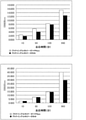
- ⁇ Test Example 1 Effect of combined use of PPIase and protease>
- Method Amano a 1 mg / mL umamizyme G (protease derived from Aspergillus oryzae) in 10 ⁇ L in 100 ⁇ L of a substrate aqueous solution (dissolved azocasein (manufactured by Sigma) in 2% (w / v) in 20 mM Na acetate (pH 6.0)).
- Enzyme Co., Ltd. 150 u / g) and 10 ⁇ L of 0.1 mg / mL FKBP12 (microbial-derived PPIase, Sigma, 0.15 mg / ml) were added, and after a reaction at 37 ° C for 0, 10 or 30 minutes, 240 ⁇ L of 10 The reaction was stopped by adding the% (w / v) TCA solution. After centrifugation, 120 ⁇ L of the supernatant was collected. 140 ⁇ L of 1N NaOH was added to the recovered supernatant, mixed and colored, and the absorbance at OD440 nm was measured to evaluate the degradability of azocasein. The degradability of azocasein was compared based on a sample (protease only) to which purified water was added instead of FKBP12.
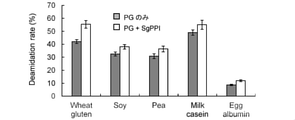
- ⁇ Test Example 2 Effect of combined use of PPIase and protein glutaminase> (1) Method 10 ⁇ L of 25 u / mL PG in 1 mL of substrate solution (10% (w / v) soybean protein (Fuji Pro F, manufactured by Fuji Oil Co., Ltd.) aqueous solution or 10% (w / v) wheat gluten aqueous solution) Add -500 (protein glutaminase "Amano" 500, manufactured by Amano Enzyme Co., Ltd.) and 10 ⁇ L of 0.1 mg / ml Cyclophilin A (PPIase derived from bovine thoracic gland, C7696 manufactured by Sigma) or purified water, and add 10, 60 at 37 ° C.
- substrate solution 10% (w / v) soybean protein (Fuji Pro F, manufactured by Fuji Oil Co., Ltd.) aqueous solution or 10% (w / v) wheat gluten aqueous solution
- Add -500 protein glut
- the reaction was stopped by adding 1 mL of 10% (w / v) TCA solution.
- the degree of deamidation was evaluated by measuring the amount of ammonia produced in the sample after each reaction was stopped using Ammonia Test Wako (manufactured by FUJIFILM). Specifically, after each reaction was stopped, the sample was diluted 5-fold with the deproteinization solution attached to the kit, and then centrifuged to collect the supernatant (removal of protein components). Ammonia nitrogen in the supernatant was developed and the absorbance at 630 nm was compared.
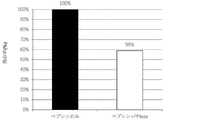
- the residual rate of 33mer peptide in the reaction solution was calculated by an ELISA assay using an anti-33mer peptide antibody.
- the degradability of the peptide was evaluated by a relative amount with the residual rate of the peptide as 100% when pepsin alone was used as the enzyme (when Cyclophilin A was not used in combination).
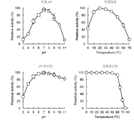
- SgPPI was expressed in E. coli BL21 and recovered, and its properties were examined. The optimum pH, optimum temperature, pH stability, and temperature stability of SgPPI are shown in FIG. Although not shown, it was also confirmed that SgPPI has a known PPIase effect such as an effect of improving thermal stability.
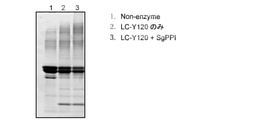
- ⁇ Test Example 4 Effect of using SgPPI and laccase together> (1) Method In a 5% (w / v) milk casein aqueous solution, LC-Y120 (laccase, manufactured by Amano Enzyme Co., Ltd.) of 2400 U per 1 g of protein, or LC-Y120 of 2400 U per 1 g of protein and 174 U per 1 g of protein. SgPPI was added and shaken at 40 ° C. for 4 hours, and then the reaction solution was subjected to SDS-PAGE. The cross-linking of the protein and its degree can be confirmed by the presence of a band closer to the origin and the intensity of the band in SDS-PAGE.
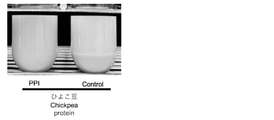
- Chickpea milk was prepared by suspending Indian "chickpea” (KOBE GROCERS) protein at 10 w / v% in ionized water. To 10 mL of the obtained chickpea milk, SgPPI was added so as to be 87 U per 1 g of protein, and the mixture was incubated for 24 hours at 40 ° C. (standing). After that, the properties of chickpea milk were photographed.
- KBE GROCERS Indian "chickpea”
- a new means capable of modifying a protein material is provided. Specifically, by allowing peptidylprolyl isomerase and a protein-modifying enzyme to act on a protein, the protein-modifying reaction can be regulated (typically promoted).
- the protein material can be modified.
- the protein material can also be modified by treating the protein material with peptidyl prolyl isomerase.
- modified protein materials can be used as industrial materials such as food materials, pharmaceutical materials and industrial materials, and contribute to the production of industrial products such as foods, pharmaceuticals and industrial products.
Landscapes
- Chemical & Material Sciences (AREA)
- Life Sciences & Earth Sciences (AREA)
- Health & Medical Sciences (AREA)
- Organic Chemistry (AREA)
- Engineering & Computer Science (AREA)
- Zoology (AREA)
- Wood Science & Technology (AREA)
- Bioinformatics & Cheminformatics (AREA)
- Genetics & Genomics (AREA)
- Biochemistry (AREA)
- General Health & Medical Sciences (AREA)
- General Engineering & Computer Science (AREA)
- Microbiology (AREA)
- Biotechnology (AREA)
- Molecular Biology (AREA)
- Medicinal Chemistry (AREA)
- Biomedical Technology (AREA)
- Chemical Kinetics & Catalysis (AREA)
- General Chemical & Material Sciences (AREA)
- Nutrition Science (AREA)
- Food Science & Technology (AREA)
- Polymers & Plastics (AREA)
- Preparation Of Compounds By Using Micro-Organisms (AREA)
- Enzymes And Modification Thereof (AREA)
Priority Applications (4)
| Application Number | Priority Date | Filing Date | Title |
|---|---|---|---|
| JP2022545646A JPWO2022045151A1 (cg-RX-API-DMAC7.html) | 2020-08-24 | 2021-08-24 | |
| EP21861575.5A EP4202054A4 (en) | 2020-08-24 | 2021-08-24 | PROCESS FOR PRODUCING A MODIFIED PROTEIN |
| US18/042,510 US20230323423A1 (en) | 2020-08-24 | 2021-08-24 | Method for producing modified protein |
| CN202180052715.XA CN116113704A (zh) | 2020-08-24 | 2021-08-24 | 人工改造蛋白质的制备方法 |
Applications Claiming Priority (2)
| Application Number | Priority Date | Filing Date | Title |
|---|---|---|---|
| JP2020141053 | 2020-08-24 | ||
| JP2020-141053 | 2020-08-24 |
Publications (1)
| Publication Number | Publication Date |
|---|---|
| WO2022045151A1 true WO2022045151A1 (ja) | 2022-03-03 |
Family
ID=80353953
Family Applications (1)
| Application Number | Title | Priority Date | Filing Date |
|---|---|---|---|
| PCT/JP2021/031039 Ceased WO2022045151A1 (ja) | 2020-08-24 | 2021-08-24 | 改変タンパク質の製造方法 |
Country Status (5)
| Country | Link |
|---|---|
| US (1) | US20230323423A1 (cg-RX-API-DMAC7.html) |
| EP (1) | EP4202054A4 (cg-RX-API-DMAC7.html) |
| JP (1) | JPWO2022045151A1 (cg-RX-API-DMAC7.html) |
| CN (1) | CN116113704A (cg-RX-API-DMAC7.html) |
| WO (1) | WO2022045151A1 (cg-RX-API-DMAC7.html) |
Citations (12)
| Publication number | Priority date | Publication date | Assignee | Title |
|---|---|---|---|---|
| JPH02124100A (ja) | 1988-11-02 | 1990-05-11 | Tonen Corp | プロリルイソメラーゼの使用方法 |
| JPH1175837A (ja) | 1997-09-02 | 1999-03-23 | Sekisui Chem Co Ltd | 酵素反応方法 |
| JP2001066309A (ja) * | 1998-12-28 | 2001-03-16 | Sekisui Chem Co Ltd | ウイルス抗原の調製法 |
| JP2001510848A (ja) * | 1997-07-24 | 2001-08-07 | メディカル リサーチ カウンシル | フォルダーゼ(foldase)およびシャペロンを用いるリフォールディング方法 |
| JP2002525120A (ja) | 1998-09-30 | 2002-08-13 | ダニスコ エイ/エス | ペプチジルプロリルシス−トランスイソメラーゼ |
| JP2004215591A (ja) | 2003-01-16 | 2004-08-05 | Mitsui Chemicals Inc | ペプチジルプロリルシストランスイソメラーゼを強化させた微生物による異種タンパク質の生産方法 |
| JP2005046066A (ja) | 2003-07-29 | 2005-02-24 | Sekisui Chem Co Ltd | 蛋白質生産用の新規なバクテリア及び蛋白質の製造方法 |
| WO2006082922A1 (ja) * | 2005-02-03 | 2006-08-10 | San-Ei Gen F.F.I., Inc. | 色調が改善されたクチナシ青色素とその製造方法 |
| WO2015133590A1 (ja) | 2014-03-07 | 2015-09-11 | 味の素株式会社 | 新規タンパク質脱アミド酵素 |
| JP2018074967A (ja) * | 2016-11-10 | 2018-05-17 | 日清ファルマ株式会社 | 塩味および旨味増強剤 |
| JP2019508366A (ja) * | 2015-12-15 | 2019-03-28 | エフ.ホフマン−ラ ロシュ アーゲーF. Hoffmann−La Roche Aktiengesellschaft | トランスグルタミナーゼ認識部位を有するfkbpドメイン |
| WO2019083795A1 (en) * | 2017-10-27 | 2019-05-02 | Pfenex Inc. | GUIDED BACTERIAL SEQUENCES FOR EXPRESSION OF PERIPLASMIC PROTEINS |
Family Cites Families (2)
| Publication number | Priority date | Publication date | Assignee | Title |
|---|---|---|---|---|
| ES2294196T3 (es) * | 2002-12-20 | 2008-04-01 | F. Hoffmann-La Roche Ag | Metodos para elaborar y utilizar complejos solubles de proteinas diana y chaperonas peptil prolil isomerasas. |
| EP2373338B1 (en) * | 2008-12-03 | 2017-02-15 | The Johns Hopkins University | Annexina2 as immunological target |
-
2021
- 2021-08-24 WO PCT/JP2021/031039 patent/WO2022045151A1/ja not_active Ceased
- 2021-08-24 JP JP2022545646A patent/JPWO2022045151A1/ja active Pending
- 2021-08-24 EP EP21861575.5A patent/EP4202054A4/en active Pending
- 2021-08-24 CN CN202180052715.XA patent/CN116113704A/zh active Pending
- 2021-08-24 US US18/042,510 patent/US20230323423A1/en active Pending
Patent Citations (12)
| Publication number | Priority date | Publication date | Assignee | Title |
|---|---|---|---|---|
| JPH02124100A (ja) | 1988-11-02 | 1990-05-11 | Tonen Corp | プロリルイソメラーゼの使用方法 |
| JP2001510848A (ja) * | 1997-07-24 | 2001-08-07 | メディカル リサーチ カウンシル | フォルダーゼ(foldase)およびシャペロンを用いるリフォールディング方法 |
| JPH1175837A (ja) | 1997-09-02 | 1999-03-23 | Sekisui Chem Co Ltd | 酵素反応方法 |
| JP2002525120A (ja) | 1998-09-30 | 2002-08-13 | ダニスコ エイ/エス | ペプチジルプロリルシス−トランスイソメラーゼ |
| JP2001066309A (ja) * | 1998-12-28 | 2001-03-16 | Sekisui Chem Co Ltd | ウイルス抗原の調製法 |
| JP2004215591A (ja) | 2003-01-16 | 2004-08-05 | Mitsui Chemicals Inc | ペプチジルプロリルシストランスイソメラーゼを強化させた微生物による異種タンパク質の生産方法 |
| JP2005046066A (ja) | 2003-07-29 | 2005-02-24 | Sekisui Chem Co Ltd | 蛋白質生産用の新規なバクテリア及び蛋白質の製造方法 |
| WO2006082922A1 (ja) * | 2005-02-03 | 2006-08-10 | San-Ei Gen F.F.I., Inc. | 色調が改善されたクチナシ青色素とその製造方法 |
| WO2015133590A1 (ja) | 2014-03-07 | 2015-09-11 | 味の素株式会社 | 新規タンパク質脱アミド酵素 |
| JP2019508366A (ja) * | 2015-12-15 | 2019-03-28 | エフ.ホフマン−ラ ロシュ アーゲーF. Hoffmann−La Roche Aktiengesellschaft | トランスグルタミナーゼ認識部位を有するfkbpドメイン |
| JP2018074967A (ja) * | 2016-11-10 | 2018-05-17 | 日清ファルマ株式会社 | 塩味および旨味増強剤 |
| WO2019083795A1 (en) * | 2017-10-27 | 2019-05-02 | Pfenex Inc. | GUIDED BACTERIAL SEQUENCES FOR EXPRESSION OF PERIPLASMIC PROTEINS |
Non-Patent Citations (7)
| Title |
|---|
| BIOCHIM BIOPHYS ACTA, vol. 1850, no. 10, October 2015 (2015-10-01), pages 2017 - 2034 |
| BIOMED BIOCHIM ACTA, vol. 43, no. 10, 1984, pages 1101 - 11 |
| EUR J BIOCHEM, vol. 268, no. 5, 2001, pages 1410 |
| PROTEIN ENGINEERING, DESIGN AND SELECTION, vol. 21, February 2008 (2008-02-01), pages 83 - 89 |
| S YAMAGUCHI 1D J JEENESD B ARCHER, FRONT MICROBIOL, vol. 9, 2018, pages 1975 |
| See also references of EP4202054A4 |
| TATIANA A. TATSUSOVATHOMAS L. MADDEN, FEMS MICROBIOL. LETT., vol. 174, 1999, pages 247 - 250 |
Also Published As
| Publication number | Publication date |
|---|---|
| EP4202054A4 (en) | 2025-07-02 |
| JPWO2022045151A1 (cg-RX-API-DMAC7.html) | 2022-03-03 |
| US20230323423A1 (en) | 2023-10-12 |
| CN116113704A (zh) | 2023-05-12 |
| EP4202054A1 (en) | 2023-06-28 |
Similar Documents
| Publication | Publication Date | Title |
|---|---|---|
| JP5328100B2 (ja) | ペプチドおよびタンパク質を加水分解するためのプロリン特異的エンドプロテアーゼの使用 | |
| Cui et al. | Peptide profiles and allergy-reactivity of extensive hydrolysates of milk protein | |
| Meng et al. | Peanut allergen reduction and functional property improvement by means of enzymatic hydrolysis and transglutaminase crosslinking | |
| Edens et al. | Extracellular prolyl endoprotease from Aspergillus niger and its use in the debittering of protein hydrolysates | |
| ES2811270T3 (es) | Uso de peptidilarginina deiminasa para solubilizar proteínas, opcionalmente también para reducir su tendencia a la formación de espuma | |
| Shetty et al. | Discovery, cloning and characterisation of proline specific prolyl endopeptidase, a gluten degrading thermo-stable enzyme from Sphaerobacter thermophiles | |
| US20230114377A1 (en) | Protein crosslinking method | |
| Wang et al. | Biochemical properties of extracellular protease from Staphylococcus epidermidis isolated from Harbin dry sausages and its hydrolysis of meat protein | |
| Rezvankhah et al. | The effects of combined enzymatic and physical modifications of lentil protein applying Alcalase, Flavourzyme, microbial transglutaminase, and ultrasound: Antioxidant, antihypertension, and antidiabetic activities | |
| WO2011077359A2 (en) | Synergic action of a prolyl protease and tripeptidyl proteases | |
| WO2012174127A1 (en) | Proteases for degrading gluten | |
| US7008653B2 (en) | Method of deamidation of milk protein and method of denaturation of milk protein | |
| Socha et al. | The use of different proteases to hydrolyze gliadins | |
| CA2967538A1 (en) | Method for producing a protein hydrolysate | |
| EP3367812A1 (en) | Methods for determination of bioactivity, quantity, removal, or inactivation of cereal amylase trypsin inhibitors in cereals, flours, plants, and complex foods | |
| US5554508A (en) | Process for the enzymatic synthesis of alkyl esters of peptides and peptides, and microparticles therefrom | |
| JP2022135142A (ja) | ペプチド | |
| Guo et al. | Effect of heat, rutin and disulfide bond reduction on in vitro pepsin digestibility of Chinese tartary buckwheat protein fractions | |
| Chi et al. | Effects and mechanisms of co-fermentation of sodium sulfite with Bacillus strains on the protein quality of corn gluten meal | |
| US20230323423A1 (en) | Method for producing modified protein | |
| JP2021501591A (ja) | エンドウ豆タンパク質加水分解物 | |
| JP2006042757A (ja) | 酵素の安定化剤 | |
| JP2017520244A (ja) | 低グルテン酵母加水分解産物 | |
| US20050089934A1 (en) | Stabilizing agent for enzymes | |
| WO2014011662A2 (en) | Acid stable prolyl endopeptidases for degrading gluten |
Legal Events
| Date | Code | Title | Description |
|---|---|---|---|
| 121 | Ep: the epo has been informed by wipo that ep was designated in this application |
Ref document number: 21861575 Country of ref document: EP Kind code of ref document: A1 |
|
| ENP | Entry into the national phase |
Ref document number: 2022545646 Country of ref document: JP Kind code of ref document: A |
|
| NENP | Non-entry into the national phase |
Ref country code: DE |
|
| ENP | Entry into the national phase |
Ref document number: 2021861575 Country of ref document: EP Effective date: 20230324 |