WO2021261361A1 - 固体電解質組成物、固体電解質シートの製造方法、および電池の製造方法 - Google Patents
固体電解質組成物、固体電解質シートの製造方法、および電池の製造方法 Download PDFInfo
- Publication number
- WO2021261361A1 WO2021261361A1 PCT/JP2021/022959 JP2021022959W WO2021261361A1 WO 2021261361 A1 WO2021261361 A1 WO 2021261361A1 JP 2021022959 W JP2021022959 W JP 2021022959W WO 2021261361 A1 WO2021261361 A1 WO 2021261361A1
- Authority
- WO
- WIPO (PCT)
- Prior art keywords
- solid electrolyte
- solvent
- sheet
- electrolyte composition
- composition
- Prior art date
- Legal status (The legal status is an assumption and is not a legal conclusion. Google has not performed a legal analysis and makes no representation as to the accuracy of the status listed.)
- Ceased
Links
Images




Classifications
-
- H—ELECTRICITY
- H01—ELECTRIC ELEMENTS
- H01M—PROCESSES OR MEANS, e.g. BATTERIES, FOR THE DIRECT CONVERSION OF CHEMICAL ENERGY INTO ELECTRICAL ENERGY
- H01M10/00—Secondary cells; Manufacture thereof
- H01M10/05—Accumulators with non-aqueous electrolyte
- H01M10/056—Accumulators with non-aqueous electrolyte characterised by the materials used as electrolytes, e.g. mixed inorganic/organic electrolytes
- H01M10/0561—Accumulators with non-aqueous electrolyte characterised by the materials used as electrolytes, e.g. mixed inorganic/organic electrolytes the electrolyte being constituted of inorganic materials only
- H01M10/0562—Solid materials
-
- H—ELECTRICITY
- H01—ELECTRIC ELEMENTS
- H01B—CABLES; CONDUCTORS; INSULATORS; SELECTION OF MATERIALS FOR THEIR CONDUCTIVE, INSULATING OR DIELECTRIC PROPERTIES
- H01B1/00—Conductors or conductive bodies characterised by the conductive materials; Selection of materials as conductors
- H01B1/06—Conductors or conductive bodies characterised by the conductive materials; Selection of materials as conductors mainly consisting of other non-metallic substances
-
- H—ELECTRICITY
- H01—ELECTRIC ELEMENTS
- H01M—PROCESSES OR MEANS, e.g. BATTERIES, FOR THE DIRECT CONVERSION OF CHEMICAL ENERGY INTO ELECTRICAL ENERGY
- H01M10/00—Secondary cells; Manufacture thereof
- H01M10/05—Accumulators with non-aqueous electrolyte
- H01M10/052—Li-accumulators
- H01M10/0525—Rocking-chair batteries, i.e. batteries with lithium insertion or intercalation in both electrodes; Lithium-ion batteries
-
- H—ELECTRICITY
- H01—ELECTRIC ELEMENTS
- H01M—PROCESSES OR MEANS, e.g. BATTERIES, FOR THE DIRECT CONVERSION OF CHEMICAL ENERGY INTO ELECTRICAL ENERGY
- H01M10/00—Secondary cells; Manufacture thereof
- H01M10/05—Accumulators with non-aqueous electrolyte
- H01M10/058—Construction or manufacture
- H01M10/0585—Construction or manufacture of accumulators having only flat construction elements, i.e. flat positive electrodes, flat negative electrodes and flat separators
-
- H—ELECTRICITY
- H01—ELECTRIC ELEMENTS
- H01M—PROCESSES OR MEANS, e.g. BATTERIES, FOR THE DIRECT CONVERSION OF CHEMICAL ENERGY INTO ELECTRICAL ENERGY
- H01M2300/00—Electrolytes
- H01M2300/0017—Non-aqueous electrolytes
- H01M2300/0065—Solid electrolytes
- H01M2300/0068—Solid electrolytes inorganic
- H01M2300/008—Halides
-
- Y—GENERAL TAGGING OF NEW TECHNOLOGICAL DEVELOPMENTS; GENERAL TAGGING OF CROSS-SECTIONAL TECHNOLOGIES SPANNING OVER SEVERAL SECTIONS OF THE IPC; TECHNICAL SUBJECTS COVERED BY FORMER USPC CROSS-REFERENCE ART COLLECTIONS [XRACs] AND DIGESTS
- Y02—TECHNOLOGIES OR APPLICATIONS FOR MITIGATION OR ADAPTATION AGAINST CLIMATE CHANGE
- Y02E—REDUCTION OF GREENHOUSE GAS [GHG] EMISSIONS, RELATED TO ENERGY GENERATION, TRANSMISSION OR DISTRIBUTION
- Y02E60/00—Enabling technologies; Technologies with a potential or indirect contribution to GHG emissions mitigation
- Y02E60/10—Energy storage using batteries
-
- Y—GENERAL TAGGING OF NEW TECHNOLOGICAL DEVELOPMENTS; GENERAL TAGGING OF CROSS-SECTIONAL TECHNOLOGIES SPANNING OVER SEVERAL SECTIONS OF THE IPC; TECHNICAL SUBJECTS COVERED BY FORMER USPC CROSS-REFERENCE ART COLLECTIONS [XRACs] AND DIGESTS
- Y02—TECHNOLOGIES OR APPLICATIONS FOR MITIGATION OR ADAPTATION AGAINST CLIMATE CHANGE
- Y02P—CLIMATE CHANGE MITIGATION TECHNOLOGIES IN THE PRODUCTION OR PROCESSING OF GOODS
- Y02P70/00—Climate change mitigation technologies in the production process for final industrial or consumer products
- Y02P70/50—Manufacturing or production processes characterised by the final manufactured product
Definitions
- the present disclosure relates to a solid electrolyte composition, a method for manufacturing a solid electrolyte sheet, and a method for manufacturing a battery.
- Patent Document 1 discloses a solid electrolyte composition containing a sulfide solid electrolyte and a solvent.
- a solid electrolyte composition containing a solvent in which the polar term ⁇ p of the Hansen solubility parameter (HSP) of the solvent is 1.6 or more and 5.6 or less is used.
- the solid electrolyte composition according to one aspect of the present disclosure is: With solvent The solid electrolyte dispersed in the solvent and Including The solid electrolyte contains a halide solid electrolyte and contains.
- the polarity term ⁇ p of the Hansen solubility parameter of the solvent is larger than 0 and smaller than 5.9.
- the present disclosure can provide a solid electrolyte sheet having high surface smoothness and a battery having a high energy density using the solid electrolyte sheet.
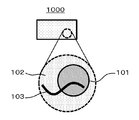
- FIG. 1 is a schematic diagram of the solid electrolyte composition 1000 according to the first embodiment.
- FIG. 2 is a diagram showing how to obtain the yield stress.
- FIG. 3 is a flowchart showing a method of manufacturing the solid electrolyte sheet 201 according to the second embodiment.
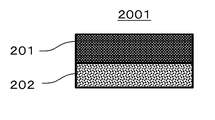
- FIG. 4 is a cross-sectional view of the electrode 2001 according to the second embodiment.
- FIG. 5 is a cross-sectional view of the transfer sheet 2002 according to the second embodiment.
- FIG. 6 is a cross-sectional view of the battery 3000 according to the third embodiment.
- all-solid-state secondary batteries that use an inorganic solid electrolyte instead of an organic electrolyte are attracting attention. All-solid-state secondary batteries do not leak. Since the inorganic solid electrolyte has high thermal stability, it is expected that heat generation in the event of a short circuit or the like will be suppressed.
- a sulfide solid electrolyte containing sulfur as a main component and an oxide solid electrolyte containing a metal oxide as a main component are known.
- sulfide solid electrolytes can generate toxic hydrogen sulfide when reacted with moisture.
- the ionic conductivity of the oxide solid electrolyte is low. Therefore, it is desired to develop a new solid electrolyte having high ionic conductivity.
- a halide solid electrolyte is expected as a new solid electrolyte.
- the halide solid electrolyte is a solid electrolyte containing a halogen element.
- the halide solid electrolyte contains, for example, a lithium element, a metal or metalloid element, and at least one halogen element.
- solid electrolyte composition containing the solid electrolyte.
- the solid electrolyte composition is applied to the surfaces of the electrode, the base material, and the like to form a solid electrolyte sheet.
- the solid electrolyte sheet acts as a diaphragm for the battery.
- the solid electrolyte sheet used for the diaphragm thinner In order to make the solid electrolyte sheet used for the diaphragm thinner, the solid electrolyte sheet is required to have sufficient surface smoothness. When the surface roughness of the solid electrolyte sheet is large, the thickness of the solid electrolyte sheet also varies greatly. In order to reliably prevent contact between the positive electrode and the negative electrode, a constant thickness is required at all positions of the solid electrolyte sheet. Therefore, when it is predicted that the thickness variation is large, it is difficult to reduce the design thickness from the viewpoint of safety. Conversely, when the solid electrolyte sheet has excellent surface smoothness and the variation in thickness is small, safety can be ensured even if the design thickness is reduced.
- a solid electrolyte composition having fluidity it is necessary to mix the solid electrolyte and the organic solvent.
- the present inventors prepare a solid electrolyte composition by mixing a halide solid electrolyte with various organic solvents, prepare a solid electrolyte sheet using the solid electrolyte composition, and examine the surface smoothness thereof. rice field. As a result, it was found that when a specific organic solvent and a halide solid electrolyte are mixed, the fluidity of the solid electrolyte composition is impaired and the surface smoothness of the solid electrolyte sheet is lowered. For example, even an organic solvent suitable for a sulfide solid electrolyte may not be suitable for a halide solid electrolyte. From the above points of view, we came up with the structure of this disclosure.
- the solid electrolyte composition according to the first aspect of the present disclosure is With solvent
- the solid electrolyte contains a halide solid electrolyte and contains.
- the polarity term ⁇ p of the Hansen solubility parameter of the solvent is larger than 0 and smaller than 5.9.
- a solid electrolyte sheet having excellent surface smoothness can be obtained.
- a solid electrolyte sheet having excellent surface smoothness can improve the energy density of a battery.
- the polarity term ⁇ p of the Hansen solubility parameter of the solvent may be 0.6 or more and 5.7 or less.
- a solid electrolyte sheet having more excellent surface smoothness can be obtained.
- a solid electrolyte sheet having excellent surface smoothness can improve the energy density of a battery.
- the halide solid electrolyte may contain Li, M1, and X1, and the M1 is other than Li. It is at least one selected from the group consisting of metal elements and metalloid elements, and X1 is at least one selected from the group consisting of F, Cl, Br, and I.
- the obtained solid electrolyte sheet can be used to produce a lithium secondary battery.
- the halide solid electrolyte may be represented by the following composition formula (1), where ⁇ , ⁇ , and ⁇ , ⁇ , and ⁇ is a value larger than 0 independently of each other.
- composition formula (1) where ⁇ , ⁇ , and ⁇ , ⁇ , and ⁇ is a value larger than 0 independently of each other.
- the M1 may contain yttrium.
- the ionic conductivity of the halide solid electrolyte is improved, the ionic conductivity of the solid electrolyte sheet produced from the solid electrolyte composition can be improved.
- the solid electrolyte composition according to any one of the first to fifth aspects may further contain a resin binder.
- the resin binder improves the dispersibility of the solid electrolyte in the solvent and the adhesion between the particles of the solid electrolyte.
- the resin binder may contain an elastomer.
- Elastomers have excellent flexibility and elasticity, and are therefore suitable as resin binders for solid electrolyte sheets.
- the elastomer may contain a repeating unit derived from styrene.
- Elastomers containing repeating units derived from styrene are particularly suitable as resin binders for solid electrolyte sheets because of their superior flexibility and elasticity.
- the method for producing a solid electrolyte sheet according to the ninth aspect of the present disclosure is as follows. Applying the solid electrolyte composition according to any one of the first to eighth aspects to the electrode or the base material to form a coating film, Removing the solvent from the coating film and including.
- a solid electrolyte sheet having a uniform and uniform thickness can be produced.
- the method for manufacturing a battery according to the tenth aspect of the present disclosure is as follows.
- a method for manufacturing a battery including a positive electrode, a negative electrode, and an electrolyte layer arranged between the positive electrode and the negative electrode.
- a battery having a high energy density can be manufactured.
- the solid electrolyte sheet according to the eleventh aspect of the present disclosure is Halide solid electrolyte and The resin binder adhering to the halide solid electrolyte and Including
- the thickness of the solid electrolyte sheet is 1 ⁇ m or more and 20 ⁇ m or less.
- the arithmetic mean height Sa of the main surface of the solid electrolyte sheet is 0.37 ⁇ m or less.
- the solid electrolyte sheet according to the eleventh aspect has excellent surface smoothness.
- a solid electrolyte sheet having excellent surface smoothness can improve the energy density of a battery.
- the battery according to the twelfth aspect of the present disclosure is With the positive electrode With the negative electrode An electrolyte layer arranged between the positive electrode and the negative electrode, Equipped with The electrolyte layer contains the solid electrolyte sheet according to the eleventh aspect.
- the battery according to the twelfth aspect may have a high energy density.
- FIG. 1 is a schematic view showing the solid electrolyte composition 1000 according to the first embodiment.
- the solid electrolyte composition 1000 contains the solid electrolyte 101 and the solvent 102.
- the solid electrolyte 101 is dispersed or dissolved in the solvent 102.
- the solid electrolyte 101 contains a halide solid electrolyte.
- the polar term ⁇ p of the Hansen solubility parameter (HSP) of the solvent 102 is larger than 0 and smaller than 5.9.
- solid electrolyte sheet When a solid electrolyte sheet is produced using the solid electrolyte composition 1000, a solid electrolyte sheet having excellent surface smoothness can be obtained.
- a solid electrolyte sheet having excellent surface smoothness can improve the energy density of a battery.
- the solid electrolyte 101 contains a halide solid electrolyte.
- Halide solid electrolytes include, for example, Li, M1, and X1.
- M1 is at least one selected from the group consisting of metal elements other than Li and metalloid elements
- X1 is at least one selected from the group consisting of F, Cl, Br, and I. be.
- the present inventors examined a solid electrolyte composition containing a solid electrolyte and a solvent. As a result, the present inventors impair the fluidity of the solid electrolyte composition when the halide solid electrolyte and the solvent having the polar term ⁇ p of HSP of 5.9 or more are mixed, and as a result, the solid electrolyte composition is impaired. It has been found that there arises a problem that the surface smoothness of the solid electrolyte sheet produced from the product is lowered. This problem is thought to be caused by the strong interaction between the halide solid electrolyte and the highly polar solvent. More specifically, the halide solid electrolyte has a highly ionic binding site such as M1-X1.
- a solvent having a polar term ⁇ p of HSP of 5.9 or more is a solvent having a relatively high charge bias. It is considered that the above-mentioned problems become apparent due to the strong interaction between the binding site having a high ionic bond property of the halide solid electrolyte and the solvent having a high charge bias.
- the present inventors also impair the fluidity of the solid electrolyte composition when the halide solid electrolyte and the solvent having the polar term ⁇ p of HSP of 0 are mixed, and as a result, the solid electrolyte composition is produced. It has been found that there arises a problem that the surface smoothness of the solid electrolyte sheet is lowered. This challenge is believed to arise from the strong interaction between the particles of the halide solid electrolyte. More specifically, the halide solid electrolyte has a highly ionic binding site such as M1-X1.
- the solvent in which the polar term ⁇ p of HSP is 0 is a solvent in which the charge bias is relatively weak. It is considered that the above-mentioned problems become apparent because the strong interaction between particles due to the bond site having high ionic bonding property of the halide solid electrolyte cannot be alleviated by the solvent having a weak charge bias.
- the present inventors further proceeded with the study based on the above findings.
- the polarity of the solvent specifically, by using a solvent in which the polarity term ⁇ p of HSP is larger than 0 and smaller than 5.9
- the solid electrolyte composition containing the halide solid electrolyte is used. It has been found that the phenomenon of impaired fluidity can be suppressed.
- the polar term ⁇ p of the HSP of the solvent 102 is a value larger than 0 and smaller than 5.9. Thereby, the surface smoothness of the solid electrolyte sheet produced from the solid electrolyte composition 1000 can be improved.
- the polarity term ⁇ p of the HSP of the solvent 102 may be 0.6 or more and 5.7 or less. As a result, when a solid electrolyte sheet is produced from the solid electrolyte composition 1000, a solid electrolyte sheet having more excellent surface smoothness can be obtained. A solid electrolyte sheet having excellent surface smoothness can improve the energy density of a battery. Further, the polarity term ⁇ p may be 0.6 or more and 5.0 or less.
- the scope of application of the technique of the present disclosure is not limited to the halide solid electrolyte having a specific composition.
- the technique of the present disclosure can be widely applied to a solid electrolyte composition 1000 containing a halide solid electrolyte.
- the "solid electrolyte sheet” may be a self-supporting sheet member, or may be a solid electrolyte layer supported by an electrode or a base material.
- the solid electrolyte composition 1000 can be a slurry having fluidity.
- the solid electrolyte composition 1000 has fluidity, it is possible to form a solid electrolyte sheet by a wet method such as a coating method.
- the solid electrolyte 101 may contain a solid electrolyte other than the halide solid electrolyte such as a sulfide solid electrolyte and an oxide solid electrolyte.
- the solid electrolyte 101 may be a halide solid electrolyte.
- the solid electrolyte 101 may contain only a halide solid electrolyte.
- the solid electrolyte composition 1000 may further contain the resin binder 103.
- the resin binder 103 is dispersed or dissolved in the solvent 102.
- the resin binder 103 can improve the flexibility of the solid electrolyte sheet to be obtained.
- the solid electrolyte sheet with excellent flexibility easily adheres to the electrodes. This makes it possible to reduce the resistance between the solid electrolyte sheet and the electrode.
- metaloid elements are B, Si, Ge, As, Sb and Te.
- metal element refers to all elements contained in groups 1 to 12 of the periodic table except hydrogen, as well as B, Si, Ge, As, Sb, Te, C, N, P, O, and S. , And all the elements contained in the 13th to 16th groups of the periodic table except Se.
- metal element and “metal element” are a group of elements that can become cations when an inorganic compound is formed with a halogen element.
- solid electrolyte composition 1000 according to the first embodiment will be described in detail below.
- solid electrolyte 101 may be referred to as "halide solid electrolyte”.
- the "halide solid electrolyte” means a solid electrolyte containing a halogen element and not containing sulfur.
- the sulfur-free solid electrolyte means a solid electrolyte represented by a composition formula containing no sulfur element. Therefore, a solid electrolyte having a very small amount of sulfur component, for example, a sulfur content of 0.1% by mass or less, is classified as a sulfur-free solid electrolyte.
- the halide solid electrolyte may contain oxygen as an anion other than the halogen element.
- the solid electrolyte composition 1000 in the first embodiment contains a halide solid electrolyte 101, a solvent 102, and a resin binder 103.
- halide solid electrolyte 101, the solvent 102, and the resin binder 103 will be described in detail.
- the halide solid electrolyte 101 is a material containing Li, M1 and X1.
- the element M1 and the element X1 are as described above.
- the ionic conductivity of the halide solid electrolyte 101 is further improved, so that the ionic conductivity of the solid electrolyte sheet produced from the solid electrolyte composition 1000 can be further improved.
- the output characteristics of the battery can be improved.
- the halide solid electrolyte 101 has high thermal stability, the solid electrolyte sheet produced from the solid electrolyte composition 1000 can improve the safety of the battery when used in the battery.
- the halide solid electrolyte 101 does not contain sulfur, the solid electrolyte sheet produced from the solid electrolyte composition 1000 can suppress the generation of hydrogen sulfide gas.
- the halide solid electrolyte 101 may be a material represented by the following composition formula (1).
- ⁇ , ⁇ and ⁇ are independently larger than 0.
- ⁇ can be, for example, 4 or 6.
- the ionic conductivity of the halide solid electrolyte 101 is improved, so that the ionic conductivity of the solid electrolyte sheet produced from the solid electrolyte composition 1000 can be improved.
- the output characteristics of the battery can be further improved.
- the halide solid electrolyte 101 containing Y may be represented by, for example, the following composition formula (2).
- the element Me is at least one selected from the group consisting of metal elements and metalloid elements other than Li and Y.
- m represents the valence of the element Me.
- mb is the sum of the values obtained by multiplying the composition ratio of each element by the valence of the element.
- the composition ratio of the element Me1 is b 1 and the valence of the element Me 1 is m 1
- the composition ratio of the element Me 2 is b 2 and the valence of the element Me 2.
- mb m 1 b 1 + m 2 b 2 .
- the element X is at least one selected from the group consisting of F, Cl, Br, and I.
- the element Me is, for example, at least one selected from the group consisting of Mg, Ca, Sr, Ba, Zn, Sc, Al, Ga, Bi, Zr, Hf, Ti, Sn, Ta, Gd and Nb. May be good.
- the halide solid electrolyte 101 for example, the following materials can be used. According to the following materials, the ionic conductivity of the halide solid electrolyte 101 is further improved, so that the ionic conductivity of the solid electrolyte sheet produced from the solid electrolyte composition 1000 in the first embodiment can be further improved. Thereby, when the solid electrolyte sheet is used for a battery, the output characteristics of the battery can be further improved.
- the halide solid electrolyte 101 may be a material represented by the following composition formula (A1).
- the element X1 is at least one selected from the group consisting of Cl, Br, and I.
- d satisfies 0 ⁇ d ⁇ 2.
- the halide solid electrolyte 101 may be a material represented by the following composition formula (A2).
- the element X1 is at least one selected from the group consisting of Cl, Br and I.
- the halide solid electrolyte 101 may be a material represented by the following composition formula (A3).
- composition formula (A3) ⁇ satisfies 0 ⁇ ⁇ 0.15.
- the halide solid electrolyte 101 may be a material represented by the following composition formula (A4).
- composition formula (A4) ⁇ satisfies 0 ⁇ ⁇ 0.25.
- the halide solid electrolyte 101 may be a material represented by the following composition formula (A5).
- the element Me is at least one selected from the group consisting of Mg, Ca, Sr, Ba, and Zn.
- composition formula (A5) is -1 ⁇ ⁇ 2, 0 ⁇ a ⁇ 3, 0 ⁇ (3-3 ⁇ + a), 0 ⁇ (1 + ⁇ -a), 0 ⁇ x ⁇ 6, 0 ⁇ y ⁇ 6, and (x + y) ⁇ 6, Meet.
- the halide solid electrolyte 101 may be a material represented by the following composition formula (A6).
- the element Me is at least one selected from the group consisting of Al, Sc, Ga, and Bi.
- composition formula (A6) is used. -1 ⁇ ⁇ 1, 0 ⁇ a ⁇ 2, 0 ⁇ (1 + ⁇ -a), 0 ⁇ x ⁇ 6, 0 ⁇ y ⁇ 6, and (x + y) ⁇ 6, Meet.
- the halide solid electrolyte 101 may be a material represented by the following composition formula (A7).
- the element Me is at least one selected from the group consisting of Zr, Hf and Ti.
- composition formula (A7) is -1 ⁇ ⁇ 1, 0 ⁇ a ⁇ 1.5, 0 ⁇ (3-3 ⁇ -a), 0 ⁇ (1 + ⁇ -a), 0 ⁇ x ⁇ 6, 0 ⁇ y ⁇ 6, and (x + y) ⁇ 6, Meet.
- the halide solid electrolyte 101 may be a material represented by the following composition formula (A8).
- the element Me is at least one selected from the group consisting of Ta and Nb.
- composition formula (A8) is used. -1 ⁇ ⁇ 1, 0 ⁇ a ⁇ 1.2, 0 ⁇ (3-3 ⁇ -2a), 0 ⁇ (1 + ⁇ -a), 0 ⁇ x ⁇ 6, 0 ⁇ y ⁇ 6, and (x + y) ⁇ 6, Meet.
- the halide solid electrolyte may be a compound containing Li, M2, O (oxygen) and X2.
- the element M2 contains, for example, at least one selected from the group consisting of Nb and Ta. Further, X2 is at least one selected from the group consisting of F, Cl, Br and I.
- the compound containing Li, M2, X2 and O may be represented by , for example, the composition formula: Li x M2O y X2 5 + x-2y.
- x may satisfy 0.1 ⁇ x ⁇ 7.0.
- y may satisfy 0.4 ⁇ y ⁇ 1.9.
- the halide solid electrolyte 101 for example, Li 3 YX3 6 , Li 2 MgX3 4 , Li 2 FeX3 4 , Li (Al, Ga, In) X3 4 , Li 3 (Al, Ga, In).
- X3 6 Li 3 (Ca, Y, Gd) X3 6 , Li 3 (Ti, Al) X3 6 , Li 2.7 (Ti, Al) X3 6 , LiTaOCl 4 and the like can be used.
- the element X3 is at least one selected from the group consisting of F, Cl, Br, and I.
- the shape of the halide solid electrolyte 101 is not particularly limited, and may be, for example, needle-shaped, spherical, elliptical spherical, or the like.
- the shape of the halide solid electrolyte 101 may be in the form of particles.
- the particle diameter (median diameter) of the solid electrolyte may be 1 ⁇ m or more and 100 ⁇ m or less, or 1 ⁇ m or more and 10 ⁇ m or less.
- the particle size of the halide solid electrolyte 101 is 1 ⁇ m or more and 100 ⁇ m or less, the halide solid electrolyte 101 can be easily dispersed in the solvent 102.
- the particle diameter of the solid electrolyte may be 0.1 ⁇ m or more and 1 ⁇ m or less.
- the solid electrolyte sheet produced from the solid electrolyte composition 1000 may have higher surface smoothness and a finer structure. ..
- the median diameter is the particle diameter at which the cumulative volume in the volume-based particle size distribution is 50%.
- the volume-based particle size distribution is obtained, for example, by a laser diffraction / scattering method. The same applies to the following other materials.
- a binary halide is a compound composed of two kinds of elements including a halogen element.
- the raw material powder LiCl and the raw material powder YCl 3 are prepared in a molar ratio of 3: 1.
- the elemental species of "M” and "X” in the composition formula (1) can be determined.
- the values of " ⁇ ", " ⁇ ” and “ ⁇ ” in the composition formula (1) can be adjusted by adjusting the type of the raw material powder, the blending ratio of the raw material powder and the synthesis process.
- the raw material powders are reacted with each other using the method of mechanochemical milling.
- the raw material powder may be mixed and pulverized, and then calcined in a vacuum or in an inert atmosphere. For example, firing may be performed for 1 hour or more in the range of 100 ° C. to 550 ° C.
- the solvent 102 may have an HSP polar term ⁇ p of 0.6 or more and 5.7 or less.
- HSP polar term ⁇ p When the polar term ⁇ p is 5.7 or less, good fluidity of the solid electrolyte composition 1000 can be realized, and thus the surface smoothness of the solid electrolyte sheet produced from the solid electrolyte composition 1000 can be improved.
- the polar term ⁇ p is 0.6 or more, good dispersibility of the solid electrolyte 101 can be realized, and the surface smoothness of the solid electrolyte sheet produced from the solid electrolyte composition 1000 can be further improved.
- Hansen solubility parameter is a kind of method to define the solubility parameter of the solvent.
- the HSP consists of a dispersion term ⁇ d, a polarity term ⁇ p and a hydrogen bond term ⁇ h. Since the polarity term ⁇ p is a parameter that correlates with the dielectric constant of the solvent and the dipole moment, it indicates the degree of charge bias.
- An HSP database has been constructed, and the HSP value of the solvent can be obtained by referring to a database installed in software such as Hansen Solubility Parameters in Practice (HSPiP).
- the HSP of a mixed solvent containing a plurality of solvents can be obtained by the sum of the values obtained by multiplying the HSP of each solvent by the volume content of each solvent.
- the solvent 102 may be an organic solvent.
- the organic solvent is a compound containing carbon, and is, for example, a compound containing elements such as carbon, hydrogen, nitrogen, oxygen, sulfur, and halogen.
- the solvent 102 may contain at least one selected from the group consisting of hydrocarbons, compounds having a halogen group, and compounds having an ether bond.
- Hydrocarbon is a compound consisting only of carbon and hydrogen.
- the hydrocarbon may be an aliphatic hydrocarbon.
- the hydrocarbon may be a saturated hydrocarbon or an unsaturated hydrocarbon.
- the hydrocarbon may be linear or branched.
- the number of carbons contained in the hydrocarbon is not particularly limited and may be 7 or more.
- Hydrocarbons may have a ring structure.
- the ring structure may be an alicyclic hydrocarbon or an aromatic hydrocarbon.
- the ring structure may be a monocyclic type or a polycyclic type. Since the hydrocarbon has a ring structure, the halide solid electrolyte 101 can be easily dispersed in the solvent 102. From the viewpoint of enhancing the dispersibility of the halide solid electrolyte 101 in the solid electrolyte composition 1000, the hydrocarbon may contain aromatic hydrocarbons.
- the hydrocarbon may be an aromatic hydrocarbon.
- the compound having a halogen group may be composed of only carbon and hydrogen in a portion other than the halogen group. That is, the compound having a halogen group means a compound in which at least one hydrogen atom contained in a hydrocarbon is replaced with a halogen group.
- Halogen groups include F, Cl, Br, and I.
- As the halogen group at least one selected from the group consisting of F, Cl, Br, and I may be used.
- Compounds with halogen groups can have high polarity.
- the number of carbons contained in the compound having a halogen group is not particularly limited and may be 7 or more. As a result, the compound having a halogen group does not easily volatilize, so that the solid electrolyte composition 1000 can be stably produced. Further, the compound having a halogen group may have a large molecular weight. That is, a compound having a halogen group can have a high boiling point.
- the compound having a halogen group may have a ring structure.
- the ring structure may be an alicyclic hydrocarbon or an aromatic hydrocarbon.
- the ring structure may be a monocyclic type or a polycyclic type. Since the compound having a halogen group has a ring structure, the halide solid electrolyte 101 can be easily dispersed in the solvent 102. From the viewpoint of enhancing the dispersibility of the halide solid electrolyte 101 in the solid electrolyte composition 1000, the compound having a halogen group may contain aromatic hydrocarbons.
- the compound having a halogen group may be an aromatic hydrocarbon.
- the compound having a halogen group may have only a halogen group as a functional group.
- the number of halogens contained in the compound having a halogen group is not particularly limited.
- the halogen group at least one selected from the group consisting of F, Cl, Br, and I may be used.
- the compound having a halogen group may be a halogenated hydrocarbon.
- Halogenated hydrocarbon means a compound in which all hydrogen contained in the hydrocarbon is substituted with a halogen group.
- the compound having an ether bond may be composed of only carbon and hydrogen in a portion other than the ether bond. That is, the compound having an ether bond means a compound in which at least one of the CC bonds contained in the hydrocarbon is replaced with a COC bond. Compounds with ether bonds can have high polarity.
- the halide solid electrolyte 101 can be easily dispersed in the solvent 102. Therefore, the solid electrolyte composition 1000 having excellent dispersibility can be obtained.
- the solid electrolyte sheet produced from the solid electrolyte composition 1000 can have excellent ionic conductivity and a more dense structure.
- the compound having an ether bond may have a ring structure.
- the ring structure may be an alicyclic hydrocarbon or an aromatic hydrocarbon.
- the ring structure may be a monocyclic type or a polycyclic type. Since the compound having an ether bond has a ring structure, the halide solid electrolyte 101 can be easily dispersed in the solvent 102. From the viewpoint of enhancing the dispersibility of the halide solid electrolyte 101 in the solid electrolyte composition, the compound having an ether bond may contain an aromatic hydrocarbon.
- the compound having an ether bond may be an aromatic hydrocarbon.
- the boiling point of the solvent 102 may be 100 ° C. or higher and 250 ° C. or lower.
- the solvent 102 may be a liquid at room temperature (25 ° C.). Since such a solvent does not easily volatilize at room temperature, the solid electrolyte composition 1000 can be stably produced. Therefore, a solid electrolyte composition 1000 that can be easily applied to the surface of the electrode or the base material can be obtained. Further, the solvent 102 contained in the solid electrolyte composition 1000 can be easily removed by drying described later.
- the water content of the solvent 102 may be 10 mass ppm or less.
- the method for reducing the amount of water include a dehydration method using a molecular sieve and a dehydration method by bubbling using an inert gas such as nitrogen gas and argon gas. From the viewpoint of being able to deoxidize at the same time as water, the dehydration method by bubbling using an inert gas is recommended.
- the water content can be measured with a Karl Fischer moisture measuring device.
- the solvent 102 can be a liquid capable of dispersing the halide solid electrolyte 101.
- the halide solid electrolyte 101 may not be dissolved in the solvent 102.
- the solid electrolyte composition 1000 can be produced in a state where the ionic conduction phase formed during the production of the halide solid electrolyte 101 is maintained. Therefore, it is possible to suppress a decrease in ionic conductivity of the solid electrolyte sheet produced by using the solid electrolyte composition 1000.
- the solvent 102 may partially or completely dissolve the halide solid electrolyte 101.
- the solvent 102 may partially or completely dissolve the halide solid electrolyte 101.
- the polar term ⁇ p of the HSP of the solvent 102 contained in the solid electrolyte composition 1000 may be specified by a chemical analysis method. For example, by nuclear magnetic resonance (NMR), Fourier transform infrared spectroscopy (FT-IR), mass spectrometry (MS), or elemental analysis, the composition and structure of solvent 102 can be identified and the polar term ⁇ p of the HSP can be determined. Can be asked. Further, with respect to the solid electrolyte sheet produced from the solid electrolyte composition 1000, the polar term ⁇ p of the solid electrolyte composition 1000 used for the production can be obtained by analyzing the remaining solvent by the above method.
- NMR nuclear magnetic resonance
- FT-IR Fourier transform infrared spectroscopy
- MS mass spectrometry
- the solid electrolyte composition 1000 may contain a resin binder 103 for the purpose of improving the dispersibility of the solid electrolyte 101 in the solvent 102 and the adhesion between the particles of the solid electrolyte 101.
- the resin binder 103 include polyvinylidene fluoride (PVDF), polytetrafluoroethylene (PTFE), polyethylene, polypropylene, aramid resin, polyamide, polyimide, polyamideimide, polyacrylic nitrile, polyacrylic acid, polyacrylic acid methyl ester, and poly.
- Polyacrylic acid ethyl ester polyacrylic acid hexyl ester, polymethacrylic acid, polymethacrylic acid methyl ester, polymethacrylic acid ethyl ester, polymethacrylic acid hexyl ester, polyvinylacetate, polyvinylpyrrolidone, polyether, polycarbonate, polyether sulfone, Examples thereof include polyether ketones, polyether ether ketones, polyphenylene sulfides, hexafluoropolypropylenes, styrene butadiene rubbers, carboxymethyl celluloses, ethyl celluloses and the like.
- a copolymer containing two or more selected from the group consisting of hexadiene as a monomer can also be used as the resin binder 103. One of these may be used alone, or two or more thereof may be used in combination.
- the binder 103 may contain an elastomer from the viewpoint of excellent binding property.
- the elastomer means a polymer having rubber elasticity.
- the elastomer used as the binder 103 may be a thermoplastic elastomer or a thermosetting elastomer.
- the binder 103 may contain a thermoplastic elastomer. Examples of the elastomer include styrene-ethylene / butylene-styrene block copolymer (SEBS), styrene-ethylene / propylene-styrene block copolymer (SEPS), and styrene-ethylene / ethylene / propylene-styrene block copolymer (SEEPS).
- SEBS styrene-ethylene / butylene-styrene block copolymer
- SEPS styrene-ethylene / propylene-styrene block copolymer
- SEEPS
- BR butadiene rubber
- IR isoprene rubber
- CR chloroprene rubber
- NBR acrylonitrile-butadiene rubber
- SBR styrene-butylene rubber
- SBS styrene-butadiene-styrene block copolymer
- SIS styrene-isoprene -Styrene block copolymer
- hydrided isoprene rubber (HIR), hydride butyl rubber (HIIR), hydride nitrile rubber (HNBR), hydride styrene-butylene rubber (HSBR) and the like can be mentioned.
- the binder 103 a mixture containing two or more selected from these may be used.
- the elastomer contained in the binder 103 may contain repeating units derived from styrene.
- the repeating unit means a molecular structure derived from a monomer and is sometimes called a constituent unit.
- an elastomer containing a repeating unit derived from styrene may be referred to as a styrene-based elastomer.
- Styrene-based elastomers are more flexible and elastic, and are therefore suitable as binders for solid electrolyte sheets.
- styrene-based elastomer examples include styrene-ethylene / butylene-styrene block copolymer (SEBS), styrene-ethylene / propylene-styrene block copolymer (SEPS), and styrene-ethylene / ethylene / propylene-styrene block copolymer (Styrene-ethylene / ethylene / propylene-styrene block copolymer).
- SEBS styrene-ethylene / butylene-styrene block copolymer
- SEPS styrene-ethylene / propylene-styrene block copolymer
- SEPS styrene-ethylene / ethylene / propylene-styrene block copolymer
- the binder 103 may contain SBR or SEBS as a styrene-based elastomer. As the binder 103, a mixture containing two or more selected from these may be used.
- the binder 103 containing the styrene-based elastomer can impart flexibility to the solid electrolyte sheet produced from the solid electrolyte composition 1000. As a result, it is possible to realize a thin layer of the electrolyte layer of the battery using the solid electrolyte sheet, and it is possible to further improve the energy density of the battery.
- the resin binder 103 may contain a modifying group.
- the modifying group is a functional group in which all the repeating units of the polymer chain, a part of the repeating unit of the polymer chain, or the end of the polymer chain is chemically modified by substitution or addition.
- Examples of the modifying group include functional groups containing elements such as O or N having a relatively high electronegativity and Si having a relatively low electronegativity.
- Modification groups include carboxylic acid group, maleic anhydride group, acyl group, hydroxy group, sulfo group, sulfanyl group, phosphoric acid group, phosphonic acid group, isocyanate group, epoxy group, silyl group, amino group, nitrile group, and Examples include nitro groups.
- the resin binder 103 contains a modifying group, the dispersibility of the solid electrolyte 101 contained in the solid electrolyte composition 1000 can be further improved.
- the binder 103 may contain an SBR into which a modifying group has been introduced.
- the weight average molecular weight (M w ) of the polymer contained in the binder 103 in the first embodiment may be, for example, 1,000 or more and 1,000,000 or less, and 10,000 or more and 500,000 or less. May be good.
- the weight average molecular weight of the polymer contained in the binder 103 is 1,000 or more, the particles of the solid electrolyte 101 can be bonded to each other with sufficient adhesive strength.
- the weight average molecular weight of the polymer contained in the binder 103 is 1,000,000 or less, the ionic conduction between the particles of the solid electrolyte 101 is less likely to be hindered by the binder 103, and the charge / discharge characteristics of the battery can be improved. can.
- the weight average molecular weight of the polymer contained in the binder 103 can be specified, for example, by gel permeation chromatography (GPC) measurement using polystyrene as a standard sample.
- GPC gel permeation chromatography
- Chloroform may be used as the eluent in the GPC measurement.
- the ratio of the mass of the binder 103 to the mass of the solid electrolyte 101 is, for example, 0.5% by mass, may be 1% by mass or more, may be 2% by mass or more, or may be 3% by mass or more. It may be 5% by mass or more, and may be 8% by mass or more.
- the upper limit of the ratio of the mass of the binder 103 to the mass of the solid electrolyte 101 is, for example, 10% by mass.
- the solid electrolyte composition 1000 may be in the form of a paste or in the form of a dispersion.
- the solid electrolyte 101 is, for example, particles.
- the particles of the solid electrolyte 101 are mixed with the solvent 102.
- the method for mixing the solid electrolyte 101, the solvent 102, and the resin binder 103 in the production of the solid electrolyte composition 1000 is not particularly limited. Mixing methods using a mixing device such as a stirring type, a shaking type, and a rotary type can be mentioned.
- a mixing method using a dispersion kneading device such as a high-speed homogenizer, a thin-film swirling high-speed mixer, an ultrasonic homogenizer, a ball mill, a bead mill, a planetary mixer, a sand mill, a roll mill, and a kneader can be mentioned.
- a dispersion kneading device such as a high-speed homogenizer, a thin-film swirling high-speed mixer, an ultrasonic homogenizer, a ball mill, a bead mill, a planetary mixer, a sand mill, a roll mill, and a kneader can be mentioned.
- a dispersion kneading device such as a high-speed homogenizer, a thin-film swirling high-speed mixer, an ultrasonic homogenizer, a ball mill, a bead mill, a planetary mixer, a sand mill, a
- the solid electrolyte composition 1000 is produced, for example, by the following method. First, the solid electrolyte 101 and the solvent 102 are mixed, and pulverized and dispersed in a wet manner using a ball mill or a bead mill device. In such a step, the solid electrolyte 101 can be made into fine particles having a particle diameter of 1 ⁇ m or less, and the solid electrolyte 101 can be uniformly dispersed in the solvent 102. Next, while dispersing the obtained dispersion by shearing using a homogenizer or a high-speed shear mixer device, a resin binder solution is added to prepare a solid electrolyte composition 1000. In such a step, the fine particles of the solid electrolyte 101 can be dispersed and stabilized in the solvent 102 to produce the solid electrolyte composition 1000 having better fluidity.
- the resin binder solution is a solution containing the resin binder 103 and the solvent 102.
- the composition of the solvent contained in the resin binder solution may be the same as or different from the composition of the solvent contained in the dispersion liquid of the solid electrolyte 101.
- the solid content concentration of the solid electrolyte composition 1000 is appropriately determined according to the particle size of the solid electrolyte 101, the type of the solvent 102, and the type of the resin binder 103.
- the solid content concentration may be 10% by mass or more and 60% by mass or less, or 20% by mass or more and 40% by mass or less. By setting the solid content concentration to 20% by mass or more, the viscosity of the solid electrolyte composition 1000 can be increased, and sagging when the solid electrolyte composition 1000 is applied to the substrate can be suppressed.
- the wet film thickness when the solid electrolyte composition 1000 is applied to the substrate to form the coating film can be increased, so that the solid electrolyte sheet having a more uniform film thickness can be increased. Can be manufactured.
- the rheology of the solid electrolyte composition 1000 can be quantified as the values of viscosity, yield stress, storage elastic modulus G'and loss tangent tan ⁇ by using a viscosity / viscoelasticity measuring device.
- the values of viscosity, yield stress, storage elastic modulus and loss tangent of the solid electrolyte composition 1000 are adjusted by controlling the solid electrolyte 101, the solvent 102, the resin binder 103, the composition ratio of each component, the solid content concentration, and the production method. can do.
- the viscosity measured under the conditions of 25 ° C. and a shear rate of 1 / s using a viscosity / viscoelasticity measuring device may be 1 Pa ⁇ s or more and 15 Pa ⁇ s or less.
- the viscosity measured under the conditions of 25 ° C. and a shear rate of 1 / s may be 2.4 Pa ⁇ s or more and 16.3 Pa ⁇ s or less.
- the viscosity measured under the conditions of 25 ° C. and a shear rate of 1000 / s using a viscosity / viscoelasticity measuring device may be 10 mPa ⁇ s or more.
- the viscosity measured under the conditions of 25 ° C. and a shear rate of 1000 / s may be 21.6 mPa ⁇ s or more.
- the range of viscosity may be defined by the combination of the upper limit of the viscosity measured under the condition of low shear rate 1 / s and the lower limit of the viscosity measured under the condition of high shear rate 1000 / s.
- the yield stress measured under the condition of 25 ° C. using a viscosity / viscoelasticity measuring device may be 25 Pa or less. By setting the yield stress to 25 Pa or less, a more uniform coating film can be manufactured.
- the yield stress may be 3.8 Pa or more and 22.0 Pa or less.
- FIG. 2 is a diagram showing how to obtain the yield stress. While controlling the shear stress on the horizontal axis, measure the amount of strain on the vertical axis. The intersection of the tangent of the low strain elastic deformation region and the tangent of the high strain plastic deformation region represents the yield stress.
- the storage elastic modulus G'measured at 25 ° C., a frequency of 1 Hz, and a strain amount of 10% to 25% using a viscosity / viscoelasticity measuring device is 1 Pa or more and 40 Pa or less. good.
- the loss tangent tan ⁇ measured under the same conditions may be 0.8 or more and 3.0 or less.
- FIG. 3 is a flowchart showing a method for manufacturing a solid electrolyte sheet.
- the method for producing the solid electrolyte sheet may include steps S01, S02, and S03.
- Step S01 in FIG. 3 has been described in Embodiment 1.
- the method for producing a solid electrolyte sheet includes a step S02 for applying the solid electrolyte composition 1000 and a step S03 for drying according to the first embodiment.
- Step S01, step S02, and step S03 may be carried out in this order. From the above steps, the solid electrolyte sheet 201 having excellent surface smoothness can be produced by using the solid electrolyte composition 1000 according to the first embodiment.
- FIG. 4 is a cross-sectional view of the electrode 2001 according to the second embodiment.
- the electrode 2001 can be manufactured by including the step of applying the solid electrolyte composition 1000 on the electrode 202 as the step S02.
- FIG. 5 is a cross-sectional view of the transfer sheet 2002 according to the second embodiment.
- the transfer sheet 2002 can be manufactured by including the step of applying the solid electrolyte composition 1000 on the base material 203 as the step S02.
- step S02 the solid electrolyte composition 1000 is applied onto the electrode 202 or the base material 203. As a result, a coating film of the solid electrolyte composition 1000 is formed on the electrode 202 or the base material 203.
- the electrode 202 may be a positive electrode or a negative electrode, or may be a member obtained by applying a solid electrolyte on the positive electrode or the negative electrode.
- the positive electrode or the negative electrode includes a current collector and an active material layer arranged on the current collector.
- the solid electrolyte composition 1000 is applied onto the electrode 202, and the electrode 2001 made of a laminate of the electrode 202 and the solid electrolyte sheet 201 is manufactured through the step S03 described later.
- Examples of the material used for the base material 203 include a metal foil and a resin film.
- Examples of the material of the metal foil include copper (Cu), aluminum (Al), iron (Fe), nickel (Ni), and alloys thereof.
- Examples of the material of the resin film include polyethylene terephthalate (PET), polyimide (PI), polytetrafluoroethylene (PTFE) and the like.
- a transfer sheet 2002 composed of a laminate of the base material 203 and the solid electrolyte sheet 201 is manufactured by applying the solid electrolyte composition 1000 on the base material 203 and passing through the step S03 described later.
- Examples of the coating method include a die coating method, a gravure coating method, a doctor blade method, a bar coating method, a spray coating method, and an electrostatic coating method. From the viewpoint of mass productivity, it may be applied by the die coating method.
- step S03 the solid electrolyte composition 1000 coated on the base material 203 is dried.
- the solvent 102 is removed from the coating film of the solid electrolyte composition 1000, and a solid electrolyte sheet is produced.
- drying method for removing the solvent 102 from the solid electrolyte composition 1000 examples include hot air / hot air drying, infrared heating drying, vacuum drying, vacuum drying, high frequency dielectric heating drying, and high frequency induction heating drying. One of these may be used alone, or two or more thereof may be used in combination.
- the solvent 102 may be removed from the solid electrolyte composition 1000 by drying under reduced pressure. That is, the solvent 102 may be removed from the solid electrolyte composition 1000 in a pressure atmosphere lower than atmospheric pressure.
- the pressure atmosphere lower than the atmospheric pressure may be a gauge pressure of, for example, ⁇ 0.01 MPa or less.
- the vacuum drying may be performed at 50 ° C. or higher and 250 ° C. or lower.
- the solvent 102 may be removed from the solid electrolyte composition 1000 by vacuum drying. That is, the solvent 102 may be removed from the solid electrolyte composition 1000 at a temperature lower than the boiling point of the solvent 102 and in an atmosphere equal to or lower than the equilibrium vapor pressure of the solvent 102.
- the solvent 102 may be removed from the solid electrolyte composition 1000 by hot air / hot air drying from the viewpoint of manufacturing cost.
- the set temperature of the hot air / hot air may be 50 ° C. or higher and 250 ° C. or lower, or 80 ° C. or higher and 150 ° C. or lower.
- Removal of solvent 102 is confirmed, for example, by Fourier transform infrared spectroscopy (FT-IR), X-ray photoelectron spectroscopy (XPS), gas chromatography (GC), or gas chromatography mass spectrometry (GC / MS). can.
- FT-IR Fourier transform infrared spectroscopy
- XPS X-ray photoelectron spectroscopy
- GC gas chromatography
- GC / MS gas chromatography mass spectrometry
- the ionic conductivity of the solid electrolyte sheet 201 may be 0.1 mS / cm or more.
- the output characteristics of the battery can be improved by setting the ionic conductivity to 0.1 mS / cm or more.
- pressure molding may be performed using a press machine or the like.
- FIG. 6 is a cross-sectional view of the battery 3000 according to the third embodiment.
- the battery 3000 in the third embodiment includes a positive electrode 301, a negative electrode 303, and an electrolyte layer 302.
- the electrolyte layer 302 is arranged between the positive electrode 301 and the negative electrode 303.
- the electrolyte layer 302 includes the solid electrolyte sheet 201 according to the second embodiment.
- the battery 3000 includes a solid electrolyte sheet 201 having excellent surface smoothness.
- the smooth surface of the solid electrolyte sheet 201 means that the thickness variation of the solid electrolyte sheet 201 is small.
- the solid electrolyte sheet 201 having a small thickness variation can have a thickness close to the design value at all positions in the plane. Therefore, even when the electrolyte layer 302 is made thinner, the possibility of contact (short circuit) between the positive electrode 301 and the negative electrode 303 can be reduced, and the energy density can be improved. Further, the safety of the battery 3000 can be enhanced by including the solid electrolyte sheet 201 containing the solid electrolyte 101 having high thermal stability.
- the battery 3000 can be manufactured, for example, by combining the electrode 2001 in the second embodiment and an electrode having a polarity opposite to the polarity of the electrode 2001. This method is excellent from the viewpoint of reducing the number of parts.
- the electrode 2001 is a positive electrode
- the electrode having a polarity opposite to the polarity of the electrode 2001 is a negative electrode.
- the electrode having a polarity opposite to the polarity of the electrode 2001 is a positive electrode.
- the positive electrode or the negative electrode includes a current collector and an active material layer arranged on the current collector. A layer containing a solid electrolyte may be provided on the active material layer of the positive electrode or on the active material layer of the negative electrode.
- the battery 3000 may be manufactured using the transfer sheet 2002 according to the second embodiment. That is, the battery 3000 transfers the solid electrolyte sheet 201 from the transfer sheet 2002 to the first electrode, and the transferred solid electrolyte sheet 201 is arranged between the first electrode and the second electrode so that the first electrode is arranged. Can be manufactured by combining and a second electrode. In order to transfer the solid electrolyte sheet 201 from the transfer sheet 2002 to the first electrode, the transfer sheet is placed on the first electrode so that the solid electrolyte sheet 201 and the first electrode are in contact with each other, and then the base material 203 is removed. As a result, the solid electrolyte sheet 201 is transferred to the first electrode. When the first electrode is a positive electrode, the second electrode is a negative electrode.
- the second electrode is the positive electrode.
- the positive electrode and the negative electrode include a current collector and an active material layer arranged on the current collector.
- a layer containing a solid electrolyte may be provided on the active material layer of the positive electrode or on the active material layer of the negative electrode.
- the solid electrolyte sheet 201 is produced in a separate step from the positive electrode and the negative electrode. Therefore, the influence of the solvent used when producing the solid electrolyte sheet 201 on the positive electrode or the negative electrode is taken into consideration. You don't have to. Therefore, the choice of solvent is expanded.
- the electrolyte layer 302 is a layer containing an electrolyte material.
- the electrolyte material is, for example, a solid electrolyte. That is, the electrolyte layer 302 may be a solid electrolyte layer.
- a sulfide solid electrolyte, an oxide solid electrolyte, a halide solid electrolyte, a polymer solid electrolyte, a complex hydride solid electrolyte and the like can be used.
- the solid electrolyte may be, for example, a halide solid electrolyte.
- the "oxide solid electrolyte” means a solid electrolyte containing oxygen.
- the oxide solid electrolyte may further contain anions other than sulfur and halogen elements as anions other than oxygen.
- halide solid electrolyte is as described in the first embodiment, and corresponds to the solid electrolyte 101 contained in the solid electrolyte composition 1000 in the first embodiment.
- Examples of the sulfide solid electrolyte include Li 2 SP 2 S 5 , Li 2 S-Si S 2 , Li 2 SB 2 S 3 , Li 2 S-Ge S 2 , Li 3.25 Ge 0.25 P 0.75 S 4 , Li 10 GeP 2 S 12 and the like can be used. These, LiX, Li 2 O, MO q, and / or the like Li p MO q may be added.
- the element X in “LiX” is at least one selected from the group consisting of F, Cl, Br and I.
- the element M in “MO q " and “Li p MO q " is at least one selected from the group consisting of P, Si, Ge, B, Al, Ga, In, Fe, and Zn. P and q in "MO q " and "Li p MO q " are independent natural numbers, respectively.
- oxide solid electrolyte examples include a NASICON type solid electrolyte typified by LiTi 2 (PO 4 ) 3 and its elemental substituent, a (LaLi) TiO 3 type perovskite type solid electrolyte, Li 14 ZnGe 4 O 16 , and Li 4 SiO.
- LiGeO 4 and LISION-type solid electrolytes typified by elemental substituents
- Li 7 La 3 Zr 2 O 12 and garnet-type solid electrolytes typified by elemental substituents Li 3 PO 4 and its N-substituted products
- Glass or glass ceramics to which a material such as Li 2 SO 4 or Li 2 CO 3 is added to a base material containing a Li—BO compound such as LiBO 2 or Li 3 BO 3 can be used.
- a compound of a polymer compound and a lithium salt can be used as the polymer solid electrolyte.
- the polymer compound may have an ethylene oxide structure.
- the polymer compound having an ethylene oxide structure can contain a large amount of lithium salt. Therefore, the ionic conductivity can be further increased.
- the lithium salt LiPF 6, LiBF 4, LiSbF 6, LiAsF 6, LiSO 3 CF 3, LiN (SO 2 F) 2, LiN (SO 2 CF 3) 2, LiN (SO 2 C 2 F 5) 2, LiN (SO 2 CF 3 ) (SO 2 C 4 F 9 ), LiC (SO 2 CF 3 ) 3 and the like can be used.
- One type of lithium salt may be used alone, or two or more types may be used in combination.
- the complex hydrides solid electrolyte LiBH 4 -LiI, may LiBH 4 -P 2 etc. S 5 is used.
- the electrolyte layer 302 may contain a solid electrolyte as a main component. That is, the electrolyte layer 302 may contain a solid electrolyte in an amount of 70% or more (70% by mass or more) in terms of mass ratio with respect to the entire electrolyte layer 302, for example.
- the output characteristics of the battery 3000 can be further improved.
- the electrolyte layer 302 may contain unavoidable impurities while containing a solid electrolyte as a main component.
- Inevitable impurities include starting materials, by-products, decomposition products and the like used in synthesizing solid electrolytes.
- the electrolyte layer 302 may contain 100% of the solid electrolyte in terms of mass ratio to the whole of the electrolyte layer 302, for example, excluding impurities inevitably mixed.
- the output characteristics of the battery 3000 can be further improved.
- the electrolyte layer 302 may contain two or more of the materials listed as solid electrolytes.
- the electrolyte layer 302 may contain a halide solid electrolyte and a sulfide solid electrolyte.
- the electrolyte layer 302 is a layer produced by laminating a layer using the solid electrolyte sheet 201 and a layer containing a solid electrolyte having a composition different from that of the solid electrolyte 101 contained in the solid electrolyte sheet 201. May be good.
- the electrolyte layer 302 may be a single layer made of the solid electrolyte sheet 201, or may be two or more layers made of other solid electrolytes.
- the electrolyte layer 302 is arranged between the layer using the solid electrolyte sheet 201 and the negative electrode 303, and has a layer containing a solid electrolyte having a lower reduction potential than the solid electrolyte 101 contained in the solid electrolyte sheet 201. May be good. According to the above configuration, the reduction decomposition of the solid electrolyte 101 that may occur due to the contact between the solid electrolyte 101 and the negative electrode active material material can be suppressed, so that the output characteristics of the battery can be improved. Examples of the solid electrolyte having a lower reduction potential than the solid electrolyte 101 include a sulfide solid electrolyte.
- the thickness of the electrolyte layer 302 may be 1 ⁇ m or more and 300 ⁇ m or less.
- the thickness of the electrolyte layer 302 is 1 ⁇ m or more, the possibility that the positive electrode 301 and the negative electrode 303 are short-circuited is low. Further, when the thickness of the electrolyte layer 302 is 300 ⁇ m or less, the operation at high output becomes easy. That is, if the thickness of the electrolyte layer 302 is appropriately adjusted, sufficient safety of the battery 3000 can be ensured, and the battery 3000 can be operated at a high output.
- the thickness of the solid electrolyte sheet 201 contained in the electrolyte layer 302 may be 1 ⁇ m or more and 20 ⁇ m or less.
- the thickness of the solid electrolyte sheet 201 is 1 ⁇ m or more, the possibility that the positive electrode 301 and the negative electrode 303 are short-circuited is low. Further, when the thickness of the electrolyte layer 302 is 20 ⁇ m or less, the operation at high output is possible by lowering the internal resistance of the battery, and the energy density of the battery 3000 can be improved.
- the thickness of the solid electrolyte sheet is defined, for example, by the average value of any plurality of points (for example, three points) in the cross section parallel to the thickness direction.
- the surface smoothness of the solid electrolyte sheet 201 can be evaluated by at least one of the arithmetic mean height Sa and the maximum height Sz.
- the arithmetic mean height Sa of the main surface of the solid electrolyte sheet 201 that can be measured with an objective lens magnification of 50 times of a shape analysis laser microscope (manufactured by Keyence Corporation, VK-X1000) may be 0.40 ⁇ m or less.
- the lower limit of the arithmetic mean height Sa is not particularly limited, and is, for example, 0.20 ⁇ m.
- the "main surface" is the surface with the largest area.
- the maximum height Sz of the main surface of the solid electrolyte sheet 201 may be 7.0 ⁇ m or less.
- the lower limit of the maximum height Sz is not particularly limited, and is, for example, 3.0 ⁇ m.
- Arithmetic mean height Sa is a parameter that extends the arithmetic average roughness Ra (arithmetic mean height of lines) to the surface.
- the maximum height Sz is a parameter obtained by extending the maximum height Rz (maximum height of the line) to the surface.
- the arithmetic mean height Sa and the maximum height Sz are specified in ISO 25178, respectively.
- the shape of the solid electrolyte contained in the battery 3000 is not limited.
- the shape of the solid electrolyte may be, for example, needle-shaped, spherical, elliptical spherical, or the like.
- the shape of the solid electrolyte may be, for example, particulate.
- At least one of the positive electrode 301 and the negative electrode 303 may contain an electrolyte material, for example, a solid electrolyte.
- an electrolyte material for example, a solid electrolyte.
- the solid electrolyte the solid electrolyte exemplified as the material constituting the electrolyte layer 302 can be used. According to the above configuration, the ionic conductivity (for example, lithium ion conductivity) inside the positive electrode 301 or the negative electrode 303 becomes high, and the operation at high output becomes possible.
- the positive electrode 301 contains, for example, as a positive electrode active material, a material having a property of occluding and releasing metal ions (for example, lithium ions).
- the positive electrode active material include lithium-containing transition metal oxides, transition metal fluorides, polyanionic materials, fluorinated polyanionic materials, transition metal sulfides, transition metal oxysulfides, and transition metal oxynitrides.
- the lithium-containing transition metal oxide include Li (NiCoAl) O 2 , Li (NiCoMn) O 2 , and LiCoO 2 .
- Li (NiCoAl) O 2 means that Ni, Co and Al are contained in an arbitrary ratio.
- Li (NiCoMn) O 2 means that Ni, Co and Mn are contained in an arbitrary ratio.
- the median diameter of the solid electrolyte may be 100 ⁇ m or less.
- the positive electrode active material and the solid electrolyte can be well dispersed in the positive electrode 301. This improves the charge / discharge characteristics of the battery 3000.
- the median diameter of the solid electrolyte contained in the positive electrode 301 may be smaller than the median diameter of the positive electrode active material. As a result, the solid electrolyte and the positive electrode active material can be well dispersed.
- the median diameter of the positive electrode active material may be 0.1 ⁇ m or more and 100 ⁇ m or less.
- the median diameter of the positive electrode active material is 0.1 ⁇ m or more, the positive electrode active material and the solid electrolyte can be satisfactorily dispersed in the positive electrode 301.
- the charge / discharge characteristics of the battery 3000 are improved.
- the median diameter of the positive electrode active material is 100 ⁇ m or less, the lithium diffusion rate in the positive electrode active material is improved. Therefore, the battery 3000 can operate at a high output.
- v1 indicates the volume fraction of the positive electrode active material when the total volume of the positive electrode active material and the solid electrolyte contained in the positive electrode 301 is 100.
- 30 ⁇ v1 it is easy to secure a sufficient energy density of the battery 3000.
- v3 ⁇ 95 the operation of the battery 3000 at a high output becomes easier.
- the thickness of the positive electrode 301 may be 10 ⁇ m or more and 500 ⁇ m or less. When the thickness of the positive electrode 301 is 10 ⁇ m or more, it becomes easy to secure a sufficient energy density of the battery 3000. When the thickness of the positive electrode 301 is 500 ⁇ m or less, the operation of the battery 3000 at high output becomes easier.
- the negative electrode 303 contains, for example, as a negative electrode active material, a material having a property of occluding and releasing metal ions (for example, lithium ions).
- the negative electrode active material include metal materials, carbon materials, oxides, nitrides, tin compounds, silicon compounds and the like.
- the metal material may be a simple substance metal or an alloy.
- the metal material include lithium metal and lithium alloy.
- the carbon material include natural graphite, coke, developing carbon, carbon fiber, spherical carbon, artificial graphite, amorphous carbon and the like.
- silicon (Si), tin (Sn), a silicon compound, a tin compound, or the like the capacity density of the battery can be improved.
- an oxide compound containing titanium (Ti) or niobium (Nb) as the active material 112
- the safety of the battery can be improved.
- the median diameter of the negative electrode active material may be 0.1 ⁇ m or more and 100 ⁇ m or less.
- the median diameter of the negative electrode active material is 0.1 ⁇ m or more, the negative electrode active material and the solid electrolyte can be satisfactorily dispersed in the negative electrode 303. This improves the charge / discharge characteristics of the battery 3000.
- the median diameter of the negative electrode active material is 100 ⁇ m or less, the lithium diffusion rate in the negative electrode active material is improved. Therefore, the battery 3000 can operate at a high output.
- the median diameter of the negative electrode active material may be larger than the median diameter of the solid electrolyte. As a result, the solid electrolyte and the negative electrode active material can be well dispersed.
- v2 indicates the volume fraction of the negative electrode active material when the total volume of the negative electrode active material and the solid electrolyte contained in the negative electrode 303 is 100.
- 30 ⁇ v2 it is easy to secure a sufficient energy density of the battery 3000.
- v2 ⁇ 95 the operation of the battery 3000 at a high output becomes easier.
- the thickness of the negative electrode 303 may be 10 ⁇ m or more and 500 ⁇ m or less. When the thickness of the negative electrode 303 is 10 ⁇ m or more, it becomes easy to secure a sufficient energy density of the battery 3000. When the thickness of the negative electrode 303 is 500 ⁇ m or less, the operation of the battery 3000 at high output becomes easier.
- the positive electrode active material and the negative electrode active material may be coated with a coating material in order to reduce the interfacial resistance between each active material and the solid electrolyte.
- a coating material a material having low electron conductivity can be used.
- an oxide material, an oxide solid electrolyte, or the like can be used.
- Oxide materials used for the coating material include SiO 2 , Al 2 O 3 , TIO 2 , B 2 O 3 , Nb 2 O 5 , WO 3 , ZrO 2 and the like.
- oxide solid electrolyte used for the coating material examples include Li-Nb-O compounds such as LiNbO 3 , Li-BO compounds such as LiBO 2 and Li 3 BO 3, and Li-Al-O such as LiAlO 2.
- the oxide solid electrolyte has high ionic conductivity and high potential stability. Therefore, by using the oxide solid electrolyte as a coating material, the charge / discharge efficiency of the battery can be further improved.
- At least one selected from the group consisting of the positive electrode 301, the electrolyte layer 302, and the negative electrode 303 may contain a binder for the purpose of improving the adhesion between the particles.
- the binder include those described above for the binder 103.
- the binder contains an elastomer, the durability of the battery can be improved because each layer of the positive electrode 301, the electrolyte layer 302, and the negative electrode 303 contained in the battery 3000 exhibits excellent flexibility and elasticity.
- At least one selected from the group consisting of the positive electrode 301, the electrolyte layer 302, and the negative electrode 303 includes a non-aqueous electrolyte solution, a gel electrolyte, for the purpose of facilitating the transfer of lithium ions and improving the output characteristics of the battery 3000.
- a non-aqueous electrolyte solution for the purpose of facilitating the transfer of lithium ions and improving the output characteristics of the battery 3000.
- an ionic liquid may be contained.
- the non-aqueous electrolyte solution contains a non-aqueous solvent and a lithium salt dissolved in the non-aqueous solvent.
- a non-aqueous solvent a cyclic carbonate ester solvent, a chain carbonate ester solvent, a cyclic ether solvent, a chain ether solvent, a cyclic ester solvent, a chain ester solvent, a fluorine solvent and the like can be used.
- the cyclic carbonate solvent include ethylene carbonate, propylene carbonate, butylene carbonate and the like.
- Examples of the chain carbonate ester solvent include dimethyl carbonate, ethyl methyl carbonate, diethyl carbonate and the like.
- Examples of the cyclic ether solvent include tetrahydrofuran, 1,4-dioxane, 1,3-dioxolane and the like.
- Examples of the chain ether solvent include 1,2-dimethoxyethane and 1,2-diethoxyethane.
- Examples of the cyclic ester solvent include ⁇ -butyrolactone and the like.
- Examples of the chain ester solvent include methyl acetate.
- Fluorine solvents include fluoroethylene carbonate, methyl fluoropropionate, fluorobenzene, fluoroethylmethyl carbonate, fluorodimethylene carbonate and the like.
- As the non-aqueous solvent one non-aqueous solvent selected from these may be used alone, or a mixture of two or more non-aqueous solvents selected from these may be used.
- the non-aqueous electrolytic solution may contain at least one fluorine solvent selected from the group consisting of fluoroethylene carbonate, methyl fluoropropionate, fluorobenzene, fluoroethyl methyl carbonate, and fluorodimethylene carbonate.
- fluorine solvent selected from the group consisting of fluoroethylene carbonate, methyl fluoropropionate, fluorobenzene, fluoroethyl methyl carbonate, and fluorodimethylene carbonate.
- the lithium salt LiPF 6, LiBF 4, LiSbF 6, LiAsF 6, LiSO 3 CF 3, LiN (SO 2 F) 2, LiN (SO 2 CF 3) 2, LiN (SO 2 C 2 F 5) 2, Examples thereof include LiN (SO 2 CF 3 ) (SO 2 C 4 F 9 ) and LiC (SO 2 CF 3 ) 3 .
- the lithium salt one lithium salt selected from these may be used alone, or a mixture of two or more lithium salts selected from these may be used.
- the concentration of the lithium salt may be, for example, 0.5 mol / liter or more and 2 mol / liter or less.
- a material in which a non-aqueous electrolytic solution is contained in a polymer material can be used.
- Polymer materials include polymers with polyethylene oxide, polyacrylic nitrile, polyvinylidene fluoride, polymethylmethacrylate, and ethylene oxide bonds.
- the cations constituting the ionic liquid include aliphatic quaternary cations such as tetraalkylammonium and tetraalkylphosphonium, pyrrolidiniums, morpholiniums, imidazoliniums, tetrahydropyrimidiniums, piperaziniums, piperidiniums and the like. It may be a nitrogen-containing heterocyclic aromatic cation such as aliphatic cyclic ammonium, pyridiniums, and imidazoliums.
- the ionic liquid may contain a lithium salt.
- At least one of the positive electrode 301 and the negative electrode 303 may contain a conductive auxiliary agent for the purpose of enhancing electronic conductivity.
- Conductive aids include graphites such as natural graphite and artificial graphite, carbon blacks such as acetylene black and ketjen black, conductive fibers such as carbon fibers and metal fibers, and conductivity such as carbon fluoride and aluminum. Powders, conductive whiskers such as zinc oxide and potassium titanate, conductive metal oxides such as titanium oxide, conductive polymers such as polyaniline, polypyrrole, and polythiophene can be used. If a carbon material is used as the conductive auxiliary agent, the cost can be reduced.
- Examples of the shape of the battery include a coin type, a cylindrical type, a square type, a sheet type, a button type, a flat type, and a laminated type.
- solid electrolyte composition the solid electrolyte sheet and the battery of the present disclosure are not limited to the following examples.
- LYBC Li 3 YBr 2 Cl 4
- Preparation of resin binder solution A solvent was added to the resin binder so that the concentration of the resin binder was 5% by mass or more and 6% by mass or less, and the resin binder was dissolved or dispersed in the solvent. Then, dehydration treatment was carried out by nitrogen bubbling until the water content of the resin binder solution became 10 mass ppm or less.
- Example 1-1 mesitylene was used as the solvent for the resin binder solution.
- resin binder SEBS (Tough Tech (registered trademark) N504, manufactured by Asahi Kasei Corporation), which is a hydrogenated styrene-based thermoplastic elastomer, was used.
- a resin binder solution was added to a LYBC dispersion of about 20 cm 3 while performing dispersion by shearing using a homogenizer (manufactured by AS ONE, HG-200) and a generator (manufactured by AS ONE, K-20S).
- a mixed dispersion containing LYBC and a resin binder was obtained.
- mesitylene was added to the mixed dispersion so that the solid content concentration was 30% by mass, and the mixed dispersion was kneaded under the conditions of 3000 rpm and 10 minutes. After one day, the mixed dispersion was kneaded at 1600 rpm for 3 minutes using a rotation / revolution mixer (ARE-310, manufactured by THINKY). As a result, the solid electrolyte composition of Example 1-1 was obtained.
- the halide solid electrolyte was LYBC.
- the resin binder was SEBS.
- the solid content concentration of the solid electrolyte composition of Example 1-1 was measured using a heat-drying moisture meter (MX-50, manufactured by A & D Co., Ltd.). The solid content concentration was 32.2% by mass.
- Example 1-1 The solid electrolyte composition of Example 1-1 was applied onto a copper foil in an argon glove box having a dew point of ⁇ 60 ° C. or lower using a metal mask having a thickness of 70 ⁇ m and a squeegee. The coating film was dried in vacuum at 100 ° C. for 1 hour. As a result, the solid electrolyte sheet of Example 1-1 was obtained.
- the polar term ⁇ p of the HSP of the solvent contained in the solid electrolyte composition of Example 1-1 was 0.6.
- Example 1-2 In the preparation of the solid electrolyte composition, mixed xylene was used as a solvent. Except for this, the solid electrolyte composition and the solid electrolyte sheet of Example 1-2 were prepared in the same manner as in Example 1-1.
- the mixed xylene was a mixed solvent containing o-xylene, m-xylene, p-xylene and ethylbenzene in a mass ratio of 24:42:18:16.
- the solid content concentration of the solid electrolyte composition of Example 1-2 was 31.2% by mass.
- the polar term ⁇ p of the HSP of the solvent contained in the solid electrolyte composition of Example 1-2 was 1.6.
- Tetralin was used as the solvent in the preparation of the solid electrolyte composition. Except for this, the solid electrolyte composition and the solid electrolyte sheet of Example 1-3 were prepared in the same manner as in Example 1-1.
- the solid content concentration of the solid electrolyte composition of Example 1-3 was 31.3% by mass.
- the polar term ⁇ p of the HSP of the solvent contained in the solid electrolyte composition of Example 1-3 was 2.0.
- Example 1-4 When preparing the LYBC dispersion using a planetary ball mill, tetralin was used as the solvent. P-chlorotoluene was used as the solvent in the resin binder solution. When mixing the LYBC dispersion and the resin binder solution using a homogenizer, p-chlorotoluene was used as a solvent. Excluding these, the solid electrolyte composition and the solid electrolyte sheet of Example 1-4 were prepared in the same manner as in Example 1-1.
- the solid content concentration of the solid electrolyte composition of Example 1-4 was 31.0% by mass.
- the polar term ⁇ p of the HSP of the solvent contained in the solid electrolyte composition of Example 1-4 was 3.0.
- Example 1-5> [Preparation of solid electrolyte composition] O-Chlorotoluene was added to LYBC so that the solid content concentration was 35% by mass in an argon glove box having a dew point of ⁇ 60 ° C. or lower. LYBC was wetly pulverized using a wet fine pulverizer / disperser (LMZ015, manufactured by Ashizawa Finetech) of a bead mill device and dispersed in a solvent to obtain a LYBC dispersion liquid. The particle size of LYBC was 0.4 ⁇ m.
- the solid electrolyte composition and the solid electrolyte sheet of Example 1-5 were prepared by the same method as in Example 1-1 except for the following differences.
- the difference was that mixed xylene was used as the solvent in the resin binder solution, and mixed xylene was used as the solvent when the LYBC dispersion and the resin binder solution were mixed using a homogenizer.
- the composition of the mixed xylene was as described in Example 1-2.
- the solid content concentration of the solid electrolyte composition of Example 1-5 was 30.9% by mass.
- the polar term ⁇ p of the HSP of the solvent contained in the solid electrolyte composition of Example 1-5 was 4.0.
- Example 1-6 When preparing the LYBC dispersion using a bead mill, p-chlorotoluene was used as a solvent. Toluene was used as the solvent in the resin binder solution. When mixing the LYBC dispersion and the resin binder solution using a homogenizer, toluene was used as the solvent. Excluding these, the solid electrolyte composition and the solid electrolyte sheet of Example 1-6 were prepared in the same manner as in Example 1-5.
- the solid content concentration of the solid electrolyte composition of Example 1-6 was 32.5% by mass.
- the polar term ⁇ p of the HSP of the solvent contained in the solid electrolyte composition of Example 1-6 was 4.7.
- Example 1-7 When preparing the LYBC dispersion using a bead mill, p-chlorotoluene was used as a solvent. Mixed xylene was used as the solvent in the resin binder solution. When mixing the LYBC dispersion and the resin binder solution using a homogenizer, mixed xylene was used as the solvent. Excluding these, the solid electrolyte composition and the solid electrolyte sheet of Example 1-7 were prepared by the same method as in Example 1-5.
- the solid content concentration of the solid electrolyte composition of Example 1-7 was 30.2% by mass.
- the polar term ⁇ p of the HSP of the solvent contained in the solid electrolyte composition of Example 1-7 was 4.8.
- Example 1-8 When preparing the LYBC dispersion using a bead mill, o-chlorotoluene was used as a solvent. Chlorobenzene was used as the solvent in the resin binder solution. When the LYBC dispersion and the resin binder solution were mixed using a homogenizer, chlorobenzene was used as a solvent. Excluding these, the solid electrolyte composition and the solid electrolyte sheet of Example 1-8 were prepared in the same manner as in Example 1-5.
- the solid content concentration of the solid electrolyte composition of Example 1-8 was 31.5% by mass.
- the polar term ⁇ p of the HSP of the solvent contained in the solid electrolyte composition of Example 1-8 was 4.8.
- Example 1-9 When preparing the LYBC dispersion using a bead mill, p-chlorotoluene was used as a solvent. Tetralin was used as the solvent in the resin binder solution. When mixing the LYBC dispersion and the resin binder solution using a homogenizer, tetralin was used as the solvent. Excluding these, the solid electrolyte composition and the solid electrolyte sheet of Example 1-9 were prepared in the same manner as in Example 1-5.
- the solid content concentration of the solid electrolyte composition of Example 1-9 was 31.3% by mass.
- the polar term ⁇ p of the HSP of the solvent contained in the solid electrolyte composition of Example 1-9 was 5.0.
- Example 1-10> [Preparation of solid electrolyte composition]
- LYBC was wetly pulverized using a wet fine pulverizer / disperser of a bead mill device and dispersed in a solvent to obtain a LYBC dispersion liquid.
- the particle size of LYBC was 0.4 ⁇ m.
- a resin is added to a LYBC dispersion liquid of about 200 cm 3.
- Binder solution was added.
- the solvent was tetralin.
- Example 1-10 the solid electrolyte composition of Example 1-10 was obtained.
- the solid electrolyte sheet of Example 1-10 was prepared by the same method as in Example 1-1.
- the solid content concentration of the solid electrolyte composition of Example 1-10 was 30.8% by mass.
- the polar term ⁇ p of the HSP of the solvent contained in the solid electrolyte composition of Example 1-10 was 5.1.
- Example 1-11 When preparing the LYBC dispersion using a bead mill, p-chlorotoluene was used as a solvent. As the solvent in the resin binder solution, a mixed solvent containing tetralin and p-chlorotoluene in a mass ratio of 45:55 was used. No solvent was used when mixing the LYBC dispersion and the resin binder solution using a homogenizer. Excluding these, the solid electrolyte composition and the solid electrolyte sheet of Example 1-11 were prepared by the same method as in Example 1-5.
- the solid content concentration of the solid electrolyte composition of Example 1-11 was 31.3% by mass.
- the polar term ⁇ p of the HSP of the solvent contained in the solid electrolyte composition of Example 1-11 was 5.7.
- the solid content concentration of the solid electrolyte composition of Comparative Example 1-2 was 31.8% by mass.
- the polar term ⁇ p of the HSP of the solvent contained in the solid electrolyte composition of Comparative Example 1-2 was 5.9.
- ⁇ Comparative Example 1-3> In the preparation of the solid electrolyte composition, p-chlorotoluene was used as a solvent. Except for this, the solid electrolyte composition and the solid electrolyte sheet of Comparative Example 1-3 were prepared by the same method as in Example 1-5. The solid content concentration of the solid electrolyte composition of Comparative Example 1-3 was 32.2% by mass. The polar term ⁇ p of the HSP of the solvent contained in the solid electrolyte composition of Comparative Example 1-3 was 6.2.
- the solid content concentration of the solid electrolyte composition of Comparative Example 1-4 was 32.0% by mass.
- the polar term ⁇ p of the HSP of the solvent contained in the solid electrolyte composition of Comparative Example 1-4 was 6.2.
- the solid content concentration of the solid electrolyte composition of Comparative Example 1-5 was 31.9% by mass.
- the polar term ⁇ p of the HSP of the solvent contained in the solid electrolyte composition of Comparative Example 1-5 was 7.0.
- the solvent was tetralin. Further, tetralin was added to the mixed dispersion so that the solid content concentration was 30% by mass, and the mixed dispersion was kneaded under the conditions of 3000 rpm and 10 minutes. After one day, the mixed dispersion was kneaded using a rotation / revolution mixer at 1600 rpm for 3 minutes. As a result, the solid electrolyte composition of Reference Example 1-1 was obtained. Using the solid electrolyte composition of Reference Example 1-1, the solid electrolyte sheet of Reference Example 1-1 was prepared by the same method as in Example 1-1.
- the polar term ⁇ p of the HSP of the solvent contained in the solid electrolyte composition of Reference Example 1-1 was 5.3.
- ⁇ Reference Example 1-2> In the preparation of the solid electrolyte composition, p-chlorotoluene was used as a solvent. Except for this, the solid electrolyte composition and the solid electrolyte sheet of Reference Example 1-2 were prepared in the same manner as in Reference Example 1-1. The polar term ⁇ p of the HSP of the solvent contained in the solid electrolyte composition of Reference Example 1-2 was 6.2.
- Rheology measurement of the solid electrolyte composition was carried out in a dry room with a dew point of -40 ° C or less.
- a viscosity / viscoelasticity measuring device (Thermo Fisher Scientific, HAAKE MARS40) and a cone plate having a diameter of 35 mm and an angle of 2 ° (Thermo Fisher Scientific, C35 / 2Ti) were used.
- Viscosities were measured from 0.1 / s to 1000 / s shear rates at 25 ° C. and in speed control mode (CR) to obtain viscosities at shear rates 1 / s and 1000 / s.
- the strain ⁇ was measured from a shear stress of 0.1 Pa to 200 Pa at 25 ° C.
- the storage elastic modulus G'and the loss tangent tan ⁇ were measured from 0.01% to 10000% strain at 25 ° C., strain control mode (CD), and frequency 1 Hz, and the storage elastic modulus G'at a strain of 10% to 25%.
- the loss tangent tan ⁇ was obtained.
- Table 1 shows the results of the above measurements.
- Example 2-1> [Preparation of solid electrolyte composition]
- LYBC was wetly pulverized using a wet fine pulverizer / disperser of a bead mill device and dispersed in a solvent to obtain a LYBC dispersion liquid.
- the average particle size of LYBC was 0.4 ⁇ m.
- a resin binder solution was prepared by mixing a resin binder and a solvent.
- Mixed xylene was used as the solvent for the resin binder solution.
- the mixed xylene was a mixed solvent containing o-xylene, m-xylene, p-xylene and ethylbenzene in a mass ratio of 24:42:18:16.
- SEBS Teough Tech (registered trademark) N504, manufactured by Asahi Kasei Corporation), which is a hydrogenated styrene-based thermoplastic elastomer, was used.
- a heat-drying moisture meter was used to determine the solid content concentration of the solid electrolyte composition.
- the solid content concentration was 31.2% by mass.
- the polar term ⁇ p of the HSP of the solvent contained in the solid electrolyte composition of Example 2-1 was 5.0.
- Example 2-1 The solid electrolyte composition of Example 2-1 was applied onto a carbon-coated aluminum foil in an argon glove box having a dew point of ⁇ 60 ° C. or lower using a four-sided applicator with a gap of 100 ⁇ m to form a coating film. The coating film was dried in a vacuum at 100 ° C. for 1 hour to prepare a solid electrolyte sheet of Example 2-1.
- Example 2-2 In the preparation of the solid electrolyte composition, SEBS (manufactured by Asahi Kasei Corporation, Tough Tech (registered trademark) H1053) was used as the resin binder. Except for this, the solid electrolyte composition and the solid electrolyte sheet of Example 2-2 were prepared in the same manner as in Example 2-1. The solid content concentration of the solid electrolyte composition of Example 2-2 was 31.1% by mass.
- Example 2-3 In the preparation of the solid electrolyte composition, SEPS (Septon (registered trademark) 2005, manufactured by Kuraray Co., Ltd.) was used as a resin binder. Except for this, the solid electrolyte composition and the solid electrolyte sheet of Example 2-3 were prepared in the same manner as in Example 2-1. The solid content concentration of the solid electrolyte composition of Example 2-3 was 31.2% by mass.
- SEPS Septon (registered trademark) 2005, manufactured by Kuraray Co., Ltd.
- Example 2-4 SEEPS (Septon (registered trademark) 4099, manufactured by Kuraray Co., Ltd.) was used as a resin binder in the preparation of the solid electrolyte composition. Except for this, the solid electrolyte composition and the solid electrolyte sheet of Example 2-4 were prepared in the same manner as in Example 2-1. The solid content concentration of the solid electrolyte composition of Example 2-4 was 31.9% by mass.
- Example 2-5 A mixture containing SEEPS (Kuraray, Septon® 4099) and PVDF (Arkema, KYNAR® 761) as a resin binder in a 1: 1 mass ratio in the preparation of a solid electrolyte composition. was used. Except for this, the solid electrolyte composition and the solid electrolyte sheet of Example 2-5 were prepared in the same manner as in Example 2-1. The solid content concentration of the solid electrolyte composition of Example 2-5 was 31.2% by mass.
- Example 2-6 In the preparation of the solid electrolyte composition, SBR (Toughden (registered trademark) 2100R, manufactured by Asahi Kasei Corporation) was used as the resin binder. Except for this, the solid electrolyte composition and the solid electrolyte sheet of Example 2-6 were prepared in the same manner as in Example 2-1. The solid content concentration of the solid electrolyte composition of Example 2-6 was 31.1% by mass.
- the solid electrolyte sheet was punched out together with the base material by punching 20 mm ⁇ 20 mm square in an argon glove box with a dew point of -60 ° C or lower. Subsequently, the base material, the solid electrolyte sheet, the solid electrolyte sheet, the base material, and the silicone rubber film were laminated in this order in the mold to prepare a laminated body.
- the laminate was pressure molded at 100 ° C. and a pressure of 620 MPa.
- the silicone rubber film was removed, and the peripheral end of the laminate was cut off using a push-cutting machine.
- a copper foil with a tab lead was attached to each of the substrates.
- a sample for measuring ionic conductivity was prepared by vacuum-sealing the laminate in an aluminum laminate film.
- the metal plate, the silicon rubber sheet, the sample, the silicon rubber sheet, and the metal plate are sandwiched in this order, and the four bolts (M6) are tightened with a torque of 1 Nm to restrain the sample at 25 ° C. Placed in a constant temperature bath.
- the ionic conductivity of each sample was determined by the electrochemical AC impedance method.
- the results of the above measurements are shown in Table 2.
- the types A to F of the resin binders in Table 2 correspond to the following resins, respectively.
- B Hydrogenated styrene-based thermoplastic elastomer (SEBS) Tough Tech H1053
- D Hydrogenated styrene-based thermoplastic elastomer (SEEPS) Septon 4099
- an elastomer resin binder containing a solvent having a polar term ⁇ p of HSP greater than 0 and less than 5.9, or a solvent of 0.6 or more and 5.7 or less and a repeating unit derived from styrene As shown in Table 2, an elastomer resin binder containing a solvent having a polar term ⁇ p of HSP greater than 0 and less than 5.9, or a solvent of 0.6 or more and 5.7 or less and a repeating unit derived from styrene.
- Example 3-1 [Preparation of solid electrolyte sheet]
- the solid electrolyte composition of Example 1-9 was applied onto a polyimide film using a four-sided applicator with a gap of 100 ⁇ m in an argon glove box having a dew point of ⁇ 60 ° C. or lower to form a coating film.
- the coating film was dried in a vacuum at 100 ° C. for 1 hour to prepare a solid electrolyte sheet of Example 3-1.
- the thickness of the solid electrolyte sheet of Example 3-1 was 8 ⁇ m after pressurization.
- a negative electrode mixture containing graphite, LPS and SEBS was applied onto the copper foil and dried. As a result, a negative electrode having a thickness of 90 ⁇ m was obtained after pressurization.
- a positive electrode mixture containing Li (Ni, Co, Mn) O 2 , LPS and SEBS was applied onto the copper foil and dried. As a result, a positive electrode having a thickness of 55 ⁇ m was obtained after pressurization.
- the solid electrolyte sheet was punched out together with the base material by punching 20 mm ⁇ 20 mm square in an argon glove box with a dew point of -60 ° C or lower. Subsequently, a negative electrode, a sulfide solid electrolyte (LPS, a thickness of 15 ⁇ m after pressurization), a solid electrolyte sheet, a base material, and a silicone rubber film were laminated in this order in a mold to prepare a laminated body. The laminate was pressed at a pressure of 100 ° C. and 150 MPa to transfer the solid electrolyte sheet onto the negative electrode.
- LPS sulfide solid electrolyte
- the laminate of the negative electrode and the solid electrolyte sheet, the positive electrode, and the silicone rubber film were laminated in this order in the mold to prepare a power generation element.
- the power generation element was pressure molded at a pressure of 100 ° C. and 620 MPa.
- the silicone rubber film was removed and the thickness of the power generation element was measured using a micrometer.
- the thickness of the power generation element of Example 3-1 was 190 ⁇ m.
- the peripheral end of the power generation element was cut off using a push-cutting machine. Copper foils with tab leads were attached to each of the negative electrode and the positive electrode.
- the battery of Example 3-1 was produced by vacuum-sealing the power generation element in a container made of an aluminum laminated film.
- Example 3-2 [Preparation of solid electrolyte sheet]
- the solid electrolyte composition of Example 1-10 was applied onto the positive electrode using a die coater in an argon glove box having a dew point of ⁇ 60 ° C. or lower to form a coating film.
- the coating film was dried with hot air at a temperature of 80 ° C to 110 ° C to prepare a solid electrolyte sheet of Example 3-2.
- the thickness of the solid electrolyte sheet of Example 3-2 was 6 ⁇ m after pressurization.
- the solid electrolyte sheet was punched out together with the positive electrode by punching 20 mm ⁇ 20 mm square in an argon glove box having a dew point of ⁇ 60 ° C. or lower. Subsequently, a negative electrode, a sulfide solid electrolyte (LPS, a thickness of 15 ⁇ m after pressurization), a solid electrolyte sheet, a positive electrode, and a silicone rubber film were laminated in this order in a mold to prepare a power generation element.
- the power generation element was pressure molded at a pressure of 100 ° C. and 620 MPa. The silicone rubber film was removed and the thickness of the power generation element was measured using a micrometer.
- the thickness of the power generation element of Example 3-2 was 186 ⁇ m. Subsequently, the peripheral end of the power generation element was cut off using a push-cutting machine. Copper foils with tab leads were attached to each of the negative electrode and the positive electrode.
- the battery of Example 3-2 was produced by vacuum-sealing the power generation element in a container made of an aluminum laminated film.
- Example 3-3 [Preparation of solid electrolyte sheet] A negative electrode mixture containing graphite, LPS and SEBS was applied onto the copper foil and dried. As a result, a negative electrode having a thickness of 90 ⁇ m was obtained after pressurization. A layer of sulfide solid electrolyte (LPS) was laminated on the negative electrode to a thickness of 15 ⁇ m after pressurization to prepare a laminated body.
- LPS sulfide solid electrolyte
- the solid electrolyte composition of Example 1-10 was applied onto the laminate using a die coater in an argon glove box having a dew point of ⁇ 60 ° C. or lower to form a coating film.
- the coating film was dried with hot air at a temperature of 80 ° C to 110 ° C to prepare a solid electrolyte sheet of Example 3-3.
- the thickness of the solid electrolyte sheet of Example 3-3 was 5 ⁇ m after pressurization.
- a positive electrode mixture containing Li (Ni, Co, Mn) O 2 , LPS and SEBS was applied onto the copper foil and dried. As a result, a positive electrode having a thickness of 55 ⁇ m was obtained after pressurization.
- the solid electrolyte sheet was punched out together with the negative electrode by punching 20 mm ⁇ 20 mm square in an argon glove box with a dew point of -60 ° C or lower. Subsequently, a laminate of a negative electrode, a sulfide solid electrolyte, and a solid electrolyte sheet, a positive electrode, and a silicone rubber film were laminated in this order in a mold to prepare a power generation element.
- the power generation element was pressure molded at a pressure of 100 ° C. and 620 MPa.
- the silicone rubber film was removed and the thickness of the battery was measured using a micrometer. As a result, the thickness of the power generation element of Example 3-3 was 184 ⁇ m.
- Example 3-3 The battery of Example 3-3 was produced by vacuum-sealing the power generation element in a container made of an aluminum laminated film.
- a metal plate, a silicon rubber sheet, a battery, a silicon rubber sheet, and a metal plate are sandwiched in this order, and four bolts (M6) are tightened with a torque of 1 Nm to restrain the battery and put it in a constant temperature bath at 25 ° C. Placed.
- the battery was charged to a voltage of 4.2 V with a current density of a current value of 0.05 C rate with respect to the theoretical capacity of the positive electrode active material (Li (Ni, Co, Mn) O 2). Then, the battery was discharged to a voltage of 2.5 V at a current density of a current value of 0.05 C rate.
- the battery was charged to a voltage of 4.2 V with a current density of a current value of 0.05 C rate. Then, the battery was discharged to a voltage of 2.5 V at a current density of a current value of 0.3 C rate. From the above measurements, the 0.3C discharge capacity [Ah / cm 2 ], 0.3C average discharge voltage [V], and energy density of each battery were obtained. The energy density was calculated from the following formula.
- Table 3 shows the results of the above measurements.
- the batteries of Examples 3-1 to 3-3 were provided with a solid electrolyte sheet having a thickness of 1 ⁇ m or more and 20 ⁇ m or less, and showed high energy density.
- the thickness of the solid electrolyte sheet used in the battery of Comparative Example 3-1 was 90 ⁇ m.
- the energy density of the battery of Comparative Example 3-1 was low, and the 0.3C discharge capacity was also small.
- the reason why the thickness of the solid electrolyte sheet of Comparative Example 3-1 was 90 ⁇ m is as follows. That is, since the solid electrolyte composition containing the solvent having a large polar term ⁇ p of HSP (Comparative Example 1-3) was used, it was difficult to prepare a thin solid electrolyte sheet in Comparative Example 3-1.
- the solid electrolyte composition of the present disclosure can be used, for example, in the production of an all-solid-state lithium-ion secondary battery.
- Solid Electrolyte 101 Solid Electrolyte 102 Solvent 103 Resin Binder 201 Solid Electrode Sheet 202 Electrode 203 Base Material 301 Positive Electrode 302 Electrolyte Layer 303 Negative Electrode 1000 Solid Electrolyte Composition 2001 Electrode 2002 Transfer Sheet 3000 Battery
Landscapes
- Chemical & Material Sciences (AREA)
- Engineering & Computer Science (AREA)
- General Chemical & Material Sciences (AREA)
- Manufacturing & Machinery (AREA)
- Chemical Kinetics & Catalysis (AREA)
- Electrochemistry (AREA)
- Physics & Mathematics (AREA)
- Condensed Matter Physics & Semiconductors (AREA)
- General Physics & Mathematics (AREA)
- Inorganic Chemistry (AREA)
- Materials Engineering (AREA)
- Conductive Materials (AREA)
- Secondary Cells (AREA)
Priority Applications (4)
| Application Number | Priority Date | Filing Date | Title |
|---|---|---|---|
| CN202180044348.9A CN115917819A (zh) | 2020-06-23 | 2021-06-16 | 固体电解质组合物、固体电解质片的制造方法及电池的制造方法 |
| EP21829498.1A EP4170767A4 (en) | 2020-06-23 | 2021-06-16 | Solid electrolyte composition, method for manufacturing solid electrolyte sheet, and method for manufacturing battery |
| JP2022531893A JP7825177B2 (ja) | 2020-06-23 | 2021-06-16 | 固体電解質組成物、固体電解質シートの製造方法、および電池の製造方法 |
| US18/058,921 US20230094818A1 (en) | 2020-06-23 | 2022-11-28 | Solid electrolyte composition, method for manufacturing solid electrolyte sheet, and method for manufacturing battery |
Applications Claiming Priority (2)
| Application Number | Priority Date | Filing Date | Title |
|---|---|---|---|
| JP2020-107996 | 2020-06-23 | ||
| JP2020107996 | 2020-06-23 |
Related Child Applications (1)
| Application Number | Title | Priority Date | Filing Date |
|---|---|---|---|
| US18/058,921 Continuation US20230094818A1 (en) | 2020-06-23 | 2022-11-28 | Solid electrolyte composition, method for manufacturing solid electrolyte sheet, and method for manufacturing battery |
Publications (1)
| Publication Number | Publication Date |
|---|---|
| WO2021261361A1 true WO2021261361A1 (ja) | 2021-12-30 |
Family
ID=79281341
Family Applications (1)
| Application Number | Title | Priority Date | Filing Date |
|---|---|---|---|
| PCT/JP2021/022959 Ceased WO2021261361A1 (ja) | 2020-06-23 | 2021-06-16 | 固体電解質組成物、固体電解質シートの製造方法、および電池の製造方法 |
Country Status (5)
| Country | Link |
|---|---|
| US (1) | US20230094818A1 (https=) |
| EP (1) | EP4170767A4 (https=) |
| JP (1) | JP7825177B2 (https=) |
| CN (1) | CN115917819A (https=) |
| WO (1) | WO2021261361A1 (https=) |
Cited By (8)
| Publication number | Priority date | Publication date | Assignee | Title |
|---|---|---|---|---|
| WO2022154112A1 (ja) * | 2021-01-18 | 2022-07-21 | Tdk株式会社 | 電池及びその製造方法 |
| EP4075557A4 (en) * | 2019-12-12 | 2023-02-08 | Panasonic Intellectual Property Management Co., Ltd. | SOLID ELECTROLYTE COMPOSITION AND METHOD OF MAKING A SOLID ELECTROLYTE ELEMENT |
| WO2023195271A1 (ja) * | 2022-04-08 | 2023-10-12 | パナソニックIpマネジメント株式会社 | 固体電解質材料およびそれを用いた電池 |
| WO2023199539A1 (ja) * | 2022-04-15 | 2023-10-19 | パナソニックIpマネジメント株式会社 | 固体電解質組成物、電極組成物、固体電解質シートの製造方法、電極シートの製造方法、および電池の製造方法 |
| WO2023228488A1 (ja) * | 2022-05-27 | 2023-11-30 | パナソニックIpマネジメント株式会社 | 固体電解質組成物、電極組成物、固体電解質シートの製造方法、電極シートの製造方法、および電池の製造方法 |
| JP2023179055A (ja) * | 2022-06-07 | 2023-12-19 | トヨタ自動車株式会社 | スラリー組成物の製造方法、および全固体電池の製造方法 |
| EP4535374A4 (en) * | 2022-05-27 | 2025-12-24 | Panasonic Ip Man Co Ltd | SOLID ELECTROLYTE COMPOSITION, ELECTRODE COMPOSITION, SOLID ELECTROLYTE SHEET PRODUCTION METHOD, ELECTRODE SHEET PRODUCTION METHOD, AND BATTERY PRODUCTION METHOD |
| US12609349B2 (en) | 2020-06-24 | 2026-04-21 | Tdk Corporation | Solid electrolyte and solid electrolyte battery |
Families Citing this family (1)
| Publication number | Priority date | Publication date | Assignee | Title |
|---|---|---|---|---|
| CN116885313B (zh) * | 2023-09-06 | 2023-12-01 | 四川新能源汽车创新中心有限公司 | 一种复合固态电解质及其制备方法和应用 |
Citations (6)
| Publication number | Priority date | Publication date | Assignee | Title |
|---|---|---|---|---|
| JPH0433254A (ja) * | 1990-05-28 | 1992-02-04 | Matsushita Electric Ind Co Ltd | 固体電解質組成物の製造法 |
| JP2015002080A (ja) * | 2013-06-14 | 2015-01-05 | 出光興産株式会社 | 全固体電池の製造方法 |
| JP2016139511A (ja) * | 2015-01-27 | 2016-08-04 | 富士フイルム株式会社 | 固体電解質組成物およびこれを用いた電池用電極シートならびに電池用電極シートおよび全固体二次電池の製造方法 |
| WO2018025582A1 (ja) * | 2016-08-04 | 2018-02-08 | パナソニックIpマネジメント株式会社 | 固体電解質材料、および、電池 |
| JP2019102412A (ja) | 2017-12-08 | 2019-06-24 | トヨタ自動車株式会社 | 硫化物固体電解質材料の製造方法 |
| WO2020137189A1 (ja) * | 2018-12-26 | 2020-07-02 | パナソニックIpマネジメント株式会社 | 固体電解質組成物、および、固体電解質部材の製造方法 |
Family Cites Families (9)
| Publication number | Priority date | Publication date | Assignee | Title |
|---|---|---|---|---|
| US5190695A (en) * | 1990-05-28 | 1993-03-02 | Matsushita Electric Industrial Co., Ltd. | Methods to produce solid electrolyte and solid electrode composites |
| JP6259617B2 (ja) * | 2013-04-24 | 2018-01-10 | 出光興産株式会社 | 固体電解質の製造方法 |
| WO2015151144A1 (ja) | 2014-03-31 | 2015-10-08 | 株式会社日立製作所 | 全固体リチウム二次電池 |
| WO2019135319A1 (ja) | 2018-01-05 | 2019-07-11 | パナソニックIpマネジメント株式会社 | 固体電解質材料、および、電池 |
| CN111492442A (zh) * | 2018-01-05 | 2020-08-04 | 松下知识产权经营株式会社 | 固体电解质材料和电池 |
| CN111566756B (zh) * | 2018-01-26 | 2022-03-08 | 松下知识产权经营株式会社 | 固体电解质材料和电池 |
| JP7077766B2 (ja) * | 2018-05-18 | 2022-05-31 | トヨタ自動車株式会社 | 硫化物系固体電解質、当該硫化物系固体電解質の製造方法、及び、全固体電池の製造方法 |
| WO2020067108A1 (ja) * | 2018-09-27 | 2020-04-02 | 富士フイルム株式会社 | 全固体二次電池の負極用組成物、全固体二次電池用負極シート及び全固体二次電池、並びに、全固体二次電池用負極シート及び全固体二次電池の製造方法 |
| CN111211356B (zh) * | 2020-01-13 | 2021-09-28 | 国联汽车动力电池研究院有限责任公司 | 一种用于含固体电解质的锂二次电池电解液及其应用 |
-
2021
- 2021-06-16 EP EP21829498.1A patent/EP4170767A4/en active Pending
- 2021-06-16 CN CN202180044348.9A patent/CN115917819A/zh active Pending
- 2021-06-16 JP JP2022531893A patent/JP7825177B2/ja active Active
- 2021-06-16 WO PCT/JP2021/022959 patent/WO2021261361A1/ja not_active Ceased
-
2022
- 2022-11-28 US US18/058,921 patent/US20230094818A1/en active Pending
Patent Citations (6)
| Publication number | Priority date | Publication date | Assignee | Title |
|---|---|---|---|---|
| JPH0433254A (ja) * | 1990-05-28 | 1992-02-04 | Matsushita Electric Ind Co Ltd | 固体電解質組成物の製造法 |
| JP2015002080A (ja) * | 2013-06-14 | 2015-01-05 | 出光興産株式会社 | 全固体電池の製造方法 |
| JP2016139511A (ja) * | 2015-01-27 | 2016-08-04 | 富士フイルム株式会社 | 固体電解質組成物およびこれを用いた電池用電極シートならびに電池用電極シートおよび全固体二次電池の製造方法 |
| WO2018025582A1 (ja) * | 2016-08-04 | 2018-02-08 | パナソニックIpマネジメント株式会社 | 固体電解質材料、および、電池 |
| JP2019102412A (ja) | 2017-12-08 | 2019-06-24 | トヨタ自動車株式会社 | 硫化物固体電解質材料の製造方法 |
| WO2020137189A1 (ja) * | 2018-12-26 | 2020-07-02 | パナソニックIpマネジメント株式会社 | 固体電解質組成物、および、固体電解質部材の製造方法 |
Non-Patent Citations (2)
| Title |
|---|
| ASANO, TETSUYA ET AL.: "Solid Halide Electrolytes with High Lithium-Ion Conductivity for Application in 4V Class Bulk-Type All-Solid-State Batteries", ADVANCED MATERIALS, vol. 30, 2018, XP055721991, DOI: 10.1002/adma. 20180307 5 * |
| See also references of EP4170767A4 |
Cited By (11)
| Publication number | Priority date | Publication date | Assignee | Title |
|---|---|---|---|---|
| EP4075557A4 (en) * | 2019-12-12 | 2023-02-08 | Panasonic Intellectual Property Management Co., Ltd. | SOLID ELECTROLYTE COMPOSITION AND METHOD OF MAKING A SOLID ELECTROLYTE ELEMENT |
| US12456752B2 (en) | 2019-12-12 | 2025-10-28 | Panasonic Intellectual Property Management Co., Ltd. | Solid electrolyte composition, and method for manufacturing solid electrolyte member |
| US12609349B2 (en) | 2020-06-24 | 2026-04-21 | Tdk Corporation | Solid electrolyte and solid electrolyte battery |
| WO2022154112A1 (ja) * | 2021-01-18 | 2022-07-21 | Tdk株式会社 | 電池及びその製造方法 |
| JPWO2022154112A1 (https=) * | 2021-01-18 | 2022-07-21 | ||
| WO2023195271A1 (ja) * | 2022-04-08 | 2023-10-12 | パナソニックIpマネジメント株式会社 | 固体電解質材料およびそれを用いた電池 |
| WO2023199539A1 (ja) * | 2022-04-15 | 2023-10-19 | パナソニックIpマネジメント株式会社 | 固体電解質組成物、電極組成物、固体電解質シートの製造方法、電極シートの製造方法、および電池の製造方法 |
| WO2023228488A1 (ja) * | 2022-05-27 | 2023-11-30 | パナソニックIpマネジメント株式会社 | 固体電解質組成物、電極組成物、固体電解質シートの製造方法、電極シートの製造方法、および電池の製造方法 |
| EP4535374A4 (en) * | 2022-05-27 | 2025-12-24 | Panasonic Ip Man Co Ltd | SOLID ELECTROLYTE COMPOSITION, ELECTRODE COMPOSITION, SOLID ELECTROLYTE SHEET PRODUCTION METHOD, ELECTRODE SHEET PRODUCTION METHOD, AND BATTERY PRODUCTION METHOD |
| JP2023179055A (ja) * | 2022-06-07 | 2023-12-19 | トヨタ自動車株式会社 | スラリー組成物の製造方法、および全固体電池の製造方法 |
| JP7623320B2 (ja) | 2022-06-07 | 2025-01-28 | トヨタ自動車株式会社 | スラリー組成物の製造方法、および全固体電池の製造方法 |
Also Published As
| Publication number | Publication date |
|---|---|
| EP4170767A1 (en) | 2023-04-26 |
| EP4170767A4 (en) | 2024-10-30 |
| JPWO2021261361A1 (https=) | 2021-12-30 |
| JP7825177B2 (ja) | 2026-03-06 |
| CN115917819A (zh) | 2023-04-04 |
| US20230094818A1 (en) | 2023-03-30 |
Similar Documents
| Publication | Publication Date | Title |
|---|---|---|
| WO2021261361A1 (ja) | 固体電解質組成物、固体電解質シートの製造方法、および電池の製造方法 | |
| CN113597694B (zh) | 离子导体材料及电池 | |
| JP7226323B2 (ja) | 全固体二次電池電極用複合粒子およびその製造方法、全固体二次電池用電極、並びに、全固体二次電池 | |
| WO2013146916A1 (ja) | 全固体二次電池用電極およびその製造方法 | |
| US20240097193A1 (en) | Solid electrolyte composition, method for manufacturing multilayer body including solid electrolyte sheet and electrode, and method for manufacturing battery | |
| US20240063392A1 (en) | Electrode and battery | |
| US20250273686A1 (en) | Electrode and battery | |
| EP4350807A1 (en) | Electrode material, electrode material manufacturing method, and battery | |
| US20250030046A1 (en) | Solid electrolyte composition, electrode composition, method for producing solid electrolyte sheet, method for producing electrode sheet, and method for producing battery | |
| US20250070228A1 (en) | Solid electrolyte composition, electrode composition, manufacturing method of solid electrolyte sheet, manufacturing method of electrode sheet, and manufacturing method of battery | |
| JP2022025903A (ja) | 全固体電池 | |
| US20250070240A1 (en) | Solid electrolyte composition, electrode composition, and manufacturing method of solid electrolyte composition | |
| US20250070239A1 (en) | Solid electrolyte composition, electrode composition, manufacturing method of solid electrolyte sheet, manufacturing method of electrode sheet, and manufacturing method of battery | |
| WO2025074695A1 (ja) | 電極組成物、電極組成物の製造方法、電極シートの製造方法、および電池の製造方法 | |
| US20250070227A1 (en) | Solid electrolyte composition, electrode composition, manufacturing method of solid electrolyte sheet, manufacturing method of electrode sheet, and manufacturing method of battery | |
| US20250279436A1 (en) | Electrode and battery | |
| EP4712156A1 (en) | Electrode and battery | |
| US20260058158A1 (en) | Electrode, battery, and method for producing the battery | |
| US20250192182A1 (en) | Chemical crosslinking of pvdf binder for battery electrodes | |
| WO2023223595A1 (ja) | 固体電解質組成物、固体電解質層、電極、および、電池 | |
| WO2023223596A1 (ja) | 固体電解質組成物、固体電解質層、電極、および、電池 |
Legal Events
| Date | Code | Title | Description |
|---|---|---|---|
| 121 | Ep: the epo has been informed by wipo that ep was designated in this application |
Ref document number: 21829498 Country of ref document: EP Kind code of ref document: A1 |
|
| ENP | Entry into the national phase |
Ref document number: 2022531893 Country of ref document: JP Kind code of ref document: A |
|
| NENP | Non-entry into the national phase |
Ref country code: DE |
|
| ENP | Entry into the national phase |
Ref document number: 2021829498 Country of ref document: EP Effective date: 20230123 |