WO2021241448A1 - 半導体装置の製造方法、基板処理方法、基板処理装置、およびプログラム - Google Patents
半導体装置の製造方法、基板処理方法、基板処理装置、およびプログラム Download PDFInfo
- Publication number
- WO2021241448A1 WO2021241448A1 PCT/JP2021/019395 JP2021019395W WO2021241448A1 WO 2021241448 A1 WO2021241448 A1 WO 2021241448A1 JP 2021019395 W JP2021019395 W JP 2021019395W WO 2021241448 A1 WO2021241448 A1 WO 2021241448A1
- Authority
- WO
- WIPO (PCT)
- Prior art keywords
- gas
- chlorine
- substrate
- semiconductor
- film
- Prior art date
- Legal status (The legal status is an assumption and is not a legal conclusion. Google has not performed a legal analysis and makes no representation as to the accuracy of the status listed.)
- Ceased
Links
Images




Classifications
-
- H—ELECTRICITY
- H10—SEMICONDUCTOR DEVICES; ELECTRIC SOLID-STATE DEVICES NOT OTHERWISE PROVIDED FOR
- H10P—GENERIC PROCESSES OR APPARATUS FOR THE MANUFACTURE OR TREATMENT OF DEVICES COVERED BY CLASS H10
- H10P14/00—Formation of materials, e.g. in the shape of layers or pillars
- H10P14/20—Formation of materials, e.g. in the shape of layers or pillars of semiconductor materials
- H10P14/34—Deposited materials, e.g. layers
- H10P14/3402—Deposited materials, e.g. layers characterised by the chemical composition
- H10P14/3404—Deposited materials, e.g. layers characterised by the chemical composition being Group IVA materials
- H10P14/3411—Silicon, silicon germanium or germanium
-
- C—CHEMISTRY; METALLURGY
- C23—COATING METALLIC MATERIAL; COATING MATERIAL WITH METALLIC MATERIAL; CHEMICAL SURFACE TREATMENT; DIFFUSION TREATMENT OF METALLIC MATERIAL; COATING BY VACUUM EVAPORATION, BY SPUTTERING, BY ION IMPLANTATION OR BY CHEMICAL VAPOUR DEPOSITION, IN GENERAL; INHIBITING CORROSION OF METALLIC MATERIAL OR INCRUSTATION IN GENERAL
- C23C—COATING METALLIC MATERIAL; COATING MATERIAL WITH METALLIC MATERIAL; SURFACE TREATMENT OF METALLIC MATERIAL BY DIFFUSION INTO THE SURFACE, BY CHEMICAL CONVERSION OR SUBSTITUTION; COATING BY VACUUM EVAPORATION, BY SPUTTERING, BY ION IMPLANTATION OR BY CHEMICAL VAPOUR DEPOSITION, IN GENERAL
- C23C16/00—Chemical coating by decomposition of gaseous compounds, without leaving reaction products of surface material in the coating, i.e. chemical vapour deposition [CVD] processes
- C23C16/22—Chemical coating by decomposition of gaseous compounds, without leaving reaction products of surface material in the coating, i.e. chemical vapour deposition [CVD] processes characterised by the deposition of inorganic material, other than metallic material
- C23C16/24—Deposition of silicon only
-
- C—CHEMISTRY; METALLURGY
- C23—COATING METALLIC MATERIAL; COATING MATERIAL WITH METALLIC MATERIAL; CHEMICAL SURFACE TREATMENT; DIFFUSION TREATMENT OF METALLIC MATERIAL; COATING BY VACUUM EVAPORATION, BY SPUTTERING, BY ION IMPLANTATION OR BY CHEMICAL VAPOUR DEPOSITION, IN GENERAL; INHIBITING CORROSION OF METALLIC MATERIAL OR INCRUSTATION IN GENERAL
- C23C—COATING METALLIC MATERIAL; COATING MATERIAL WITH METALLIC MATERIAL; SURFACE TREATMENT OF METALLIC MATERIAL BY DIFFUSION INTO THE SURFACE, BY CHEMICAL CONVERSION OR SUBSTITUTION; COATING BY VACUUM EVAPORATION, BY SPUTTERING, BY ION IMPLANTATION OR BY CHEMICAL VAPOUR DEPOSITION, IN GENERAL
- C23C16/00—Chemical coating by decomposition of gaseous compounds, without leaving reaction products of surface material in the coating, i.e. chemical vapour deposition [CVD] processes
- C23C16/44—Chemical coating by decomposition of gaseous compounds, without leaving reaction products of surface material in the coating, i.e. chemical vapour deposition [CVD] processes characterised by the method of coating
- C23C16/455—Chemical coating by decomposition of gaseous compounds, without leaving reaction products of surface material in the coating, i.e. chemical vapour deposition [CVD] processes characterised by the method of coating characterised by the method used for introducing gases into reaction chamber or for modifying gas flows in reaction chamber
-
- C—CHEMISTRY; METALLURGY
- C23—COATING METALLIC MATERIAL; COATING MATERIAL WITH METALLIC MATERIAL; CHEMICAL SURFACE TREATMENT; DIFFUSION TREATMENT OF METALLIC MATERIAL; COATING BY VACUUM EVAPORATION, BY SPUTTERING, BY ION IMPLANTATION OR BY CHEMICAL VAPOUR DEPOSITION, IN GENERAL; INHIBITING CORROSION OF METALLIC MATERIAL OR INCRUSTATION IN GENERAL
- C23C—COATING METALLIC MATERIAL; COATING MATERIAL WITH METALLIC MATERIAL; SURFACE TREATMENT OF METALLIC MATERIAL BY DIFFUSION INTO THE SURFACE, BY CHEMICAL CONVERSION OR SUBSTITUTION; COATING BY VACUUM EVAPORATION, BY SPUTTERING, BY ION IMPLANTATION OR BY CHEMICAL VAPOUR DEPOSITION, IN GENERAL
- C23C16/00—Chemical coating by decomposition of gaseous compounds, without leaving reaction products of surface material in the coating, i.e. chemical vapour deposition [CVD] processes
- C23C16/44—Chemical coating by decomposition of gaseous compounds, without leaving reaction products of surface material in the coating, i.e. chemical vapour deposition [CVD] processes characterised by the method of coating
- C23C16/455—Chemical coating by decomposition of gaseous compounds, without leaving reaction products of surface material in the coating, i.e. chemical vapour deposition [CVD] processes characterised by the method of coating characterised by the method used for introducing gases into reaction chamber or for modifying gas flows in reaction chamber
- C23C16/45523—Pulsed gas flow or change of composition over time
- C23C16/45525—Atomic layer deposition [ALD]
- C23C16/45527—Atomic layer deposition [ALD] characterized by the ALD cycle, e.g. different flows or temperatures during half-reactions, unusual pulsing sequence, use of precursor mixtures or auxiliary reactants or activations
-
- C—CHEMISTRY; METALLURGY
- C23—COATING METALLIC MATERIAL; COATING MATERIAL WITH METALLIC MATERIAL; CHEMICAL SURFACE TREATMENT; DIFFUSION TREATMENT OF METALLIC MATERIAL; COATING BY VACUUM EVAPORATION, BY SPUTTERING, BY ION IMPLANTATION OR BY CHEMICAL VAPOUR DEPOSITION, IN GENERAL; INHIBITING CORROSION OF METALLIC MATERIAL OR INCRUSTATION IN GENERAL
- C23C—COATING METALLIC MATERIAL; COATING MATERIAL WITH METALLIC MATERIAL; SURFACE TREATMENT OF METALLIC MATERIAL BY DIFFUSION INTO THE SURFACE, BY CHEMICAL CONVERSION OR SUBSTITUTION; COATING BY VACUUM EVAPORATION, BY SPUTTERING, BY ION IMPLANTATION OR BY CHEMICAL VAPOUR DEPOSITION, IN GENERAL
- C23C16/00—Chemical coating by decomposition of gaseous compounds, without leaving reaction products of surface material in the coating, i.e. chemical vapour deposition [CVD] processes
- C23C16/56—After-treatment
-
- H—ELECTRICITY
- H10—SEMICONDUCTOR DEVICES; ELECTRIC SOLID-STATE DEVICES NOT OTHERWISE PROVIDED FOR
- H10P—GENERIC PROCESSES OR APPARATUS FOR THE MANUFACTURE OR TREATMENT OF DEVICES COVERED BY CLASS H10
- H10P14/00—Formation of materials, e.g. in the shape of layers or pillars
- H10P14/20—Formation of materials, e.g. in the shape of layers or pillars of semiconductor materials
- H10P14/24—Formation of materials, e.g. in the shape of layers or pillars of semiconductor materials using chemical vapour deposition [CVD]
-
- H—ELECTRICITY
- H10—SEMICONDUCTOR DEVICES; ELECTRIC SOLID-STATE DEVICES NOT OTHERWISE PROVIDED FOR
- H10P—GENERIC PROCESSES OR APPARATUS FOR THE MANUFACTURE OR TREATMENT OF DEVICES COVERED BY CLASS H10
- H10P14/00—Formation of materials, e.g. in the shape of layers or pillars
- H10P14/20—Formation of materials, e.g. in the shape of layers or pillars of semiconductor materials
- H10P14/32—Formation of materials, e.g. in the shape of layers or pillars of semiconductor materials characterised by intermediate layers between substrates and deposited layers
- H10P14/3202—Materials thereof
- H10P14/3204—Materials thereof being Group IVA semiconducting materials
- H10P14/3211—Silicon, silicon germanium or germanium
-
- H—ELECTRICITY
- H10—SEMICONDUCTOR DEVICES; ELECTRIC SOLID-STATE DEVICES NOT OTHERWISE PROVIDED FOR
- H10P—GENERIC PROCESSES OR APPARATUS FOR THE MANUFACTURE OR TREATMENT OF DEVICES COVERED BY CLASS H10
- H10P14/00—Formation of materials, e.g. in the shape of layers or pillars
- H10P14/20—Formation of materials, e.g. in the shape of layers or pillars of semiconductor materials
- H10P14/32—Formation of materials, e.g. in the shape of layers or pillars of semiconductor materials characterised by intermediate layers between substrates and deposited layers
- H10P14/3202—Materials thereof
- H10P14/3238—Materials thereof being insulating materials
-
- H—ELECTRICITY
- H10—SEMICONDUCTOR DEVICES; ELECTRIC SOLID-STATE DEVICES NOT OTHERWISE PROVIDED FOR
- H10P—GENERIC PROCESSES OR APPARATUS FOR THE MANUFACTURE OR TREATMENT OF DEVICES COVERED BY CLASS H10
- H10P14/00—Formation of materials, e.g. in the shape of layers or pillars
- H10P14/20—Formation of materials, e.g. in the shape of layers or pillars of semiconductor materials
- H10P14/32—Formation of materials, e.g. in the shape of layers or pillars of semiconductor materials characterised by intermediate layers between substrates and deposited layers
- H10P14/3242—Structure
- H10P14/3244—Layer structure
- H10P14/3246—Monolayers
-
- H—ELECTRICITY
- H10—SEMICONDUCTOR DEVICES; ELECTRIC SOLID-STATE DEVICES NOT OTHERWISE PROVIDED FOR
- H10P—GENERIC PROCESSES OR APPARATUS FOR THE MANUFACTURE OR TREATMENT OF DEVICES COVERED BY CLASS H10
- H10P14/00—Formation of materials, e.g. in the shape of layers or pillars
- H10P14/20—Formation of materials, e.g. in the shape of layers or pillars of semiconductor materials
- H10P14/34—Deposited materials, e.g. layers
- H10P14/3451—Structure
- H10P14/3452—Microstructure
- H10P14/3454—Amorphous
-
- H—ELECTRICITY
- H10—SEMICONDUCTOR DEVICES; ELECTRIC SOLID-STATE DEVICES NOT OTHERWISE PROVIDED FOR
- H10P—GENERIC PROCESSES OR APPARATUS FOR THE MANUFACTURE OR TREATMENT OF DEVICES COVERED BY CLASS H10
- H10P14/00—Formation of materials, e.g. in the shape of layers or pillars
- H10P14/20—Formation of materials, e.g. in the shape of layers or pillars of semiconductor materials
- H10P14/38—Formation of materials, e.g. in the shape of layers or pillars of semiconductor materials characterised by treatments done after the formation of the materials
- H10P14/3802—Crystallisation or recrystallisation of non-monocrystalline semiconductor materials, e.g. regrowth
-
- H—ELECTRICITY
- H10—SEMICONDUCTOR DEVICES; ELECTRIC SOLID-STATE DEVICES NOT OTHERWISE PROVIDED FOR
- H10P—GENERIC PROCESSES OR APPARATUS FOR THE MANUFACTURE OR TREATMENT OF DEVICES COVERED BY CLASS H10
- H10P14/00—Formation of materials, e.g. in the shape of layers or pillars
- H10P14/20—Formation of materials, e.g. in the shape of layers or pillars of semiconductor materials
- H10P14/38—Formation of materials, e.g. in the shape of layers or pillars of semiconductor materials characterised by treatments done after the formation of the materials
- H10P14/3822—Controlling the interface between substrate and epitaxial layer, e.g. by ion implantation followed by annealing
-
- H—ELECTRICITY
- H10—SEMICONDUCTOR DEVICES; ELECTRIC SOLID-STATE DEVICES NOT OTHERWISE PROVIDED FOR
- H10P—GENERIC PROCESSES OR APPARATUS FOR THE MANUFACTURE OR TREATMENT OF DEVICES COVERED BY CLASS H10
- H10P14/00—Formation of materials, e.g. in the shape of layers or pillars
- H10P14/40—Formation of materials, e.g. in the shape of layers or pillars of conductive or resistive materials
- H10P14/416—Formation of materials, e.g. in the shape of layers or pillars of conductive or resistive materials of highly doped semiconductor materials, e.g. polysilicon layers or amorphous silicon layers
Definitions
- the present disclosure relates to a semiconductor device manufacturing method, a substrate processing method, a substrate processing apparatus, and a program.
- a step of forming a semiconductor film on an insulating film provided on the surface of a substrate may be performed (see, for example, Patent Document 1).
- the purpose of this disclosure is to improve the characteristics of semiconductor devices.
- B A step of supplying a second gas containing a semiconductor element to the substrate and forming a semiconductor film on the chlorine-containing semiconductor layer.
- a technique for setting the chlorine concentration of the chlorine-containing semiconductor layer formed in (a) to 1.0 ⁇ 10 20 atoms / cm 3 or more and 1.0 ⁇ 10 22 atoms / cm 3 or less.
- FIG. 1 is a schematic configuration diagram of a vertical processing furnace of a substrate processing apparatus preferably used in one aspect of the present disclosure, and is a diagram showing a processing furnace portion in a vertical cross-sectional view.
- FIG. 2 is a schematic configuration diagram of a vertical processing furnace of a substrate processing apparatus preferably used in one aspect of the present disclosure, and is a diagram showing a processing furnace portion in a cross-sectional view taken along the line AA of FIG.
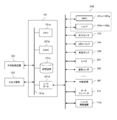
- FIG. 3 is a schematic configuration diagram of a controller of a substrate processing apparatus preferably used in one aspect of the present disclosure, and is a diagram showing a control system of the controller as a block diagram.
- FIG. 4 is a diagram showing a substrate processing sequence according to one aspect of the present disclosure.
- FIG. 5 is a plot showing the relationship between the chlorine concentration and the dangling bond density in the embodiment of one aspect of the present disclosure.
- FIGS. 1 to 4 One aspect of the present disclosure will be described with reference to FIGS. 1 to 4. It should be noted that the drawings used in the following description are all schematic, and the relationship between the dimensions of each element on the drawing, the ratio of each element, and the like do not always match the actual ones. Further, even between the plurality of drawings, the relationship between the dimensions of each element, the ratio of each element, and the like do not always match.
- the processing furnace 202 has a heater 207 as a heating mechanism (temperature adjusting unit).
- the heater 207 has a cylindrical shape and is vertically installed by being supported by a holding plate.
- the heater 207 also functions as an activation mechanism (excitation portion) for activating (exciting) the gas with heat.
- a reaction tube 203 is arranged concentrically with the heater 207.
- the reaction tube 203 is made of a heat-resistant material such as quartz (SiO 2 ) or silicon carbide (SiC), and is formed in a cylindrical shape in which the upper end is closed and the lower end is open.
- a manifold 209 is arranged concentrically with the reaction tube 203.
- the manifold 209 is made of a metal material such as stainless steel (SUS), and is formed in a cylindrical shape with open upper and lower ends. The upper end of the manifold 209 is engaged with the lower end of the reaction tube 203 and is configured to support the reaction tube 203.
- An O-ring 220a as a sealing member is provided between the manifold 209 and the reaction tube 203.
- the reaction tube 203 is installed vertically like the heater 207.
- a processing container (reaction container) is mainly composed of the reaction tube 203 and the manifold 209.
- a processing chamber 201 is formed in the hollow portion of the cylinder of the processing container.
- the processing chamber 201 is configured to accommodate the wafer 200 as a substrate.
- the wafer 200 is processed in the processing chamber 201.
- Nozzles 249a to 249c as first to third supply units are provided in the processing chamber 201 so as to penetrate the side wall of the manifold 209.
- the nozzles 249a to 249c are also referred to as first to third nozzles.
- the nozzles 249a to 249c are made of a non-metal material which is a heat-resistant material such as quartz or SiC.
- Gas supply pipes 232a to 232c are connected to the nozzles 249a to 249c, respectively.
- the nozzles 249a to 249c are different nozzles, and each of the nozzles 249a and 249c is provided adjacent to the nozzle 249b.
- the gas supply pipes 232a to 232c are provided with mass flow controllers (MFCs) 241a to 241c which are flow rate controllers (flow control units) and valves 243a to 243c which are on-off valves, respectively, in order from the upstream side of the gas flow. ..
- MFCs mass flow controllers
- Gas supply pipes 232d and 232f are connected to the downstream side of the gas supply pipe 232a on the downstream side of the valve 243a, respectively.
- Gas supply pipes 232e and 232g are connected to the downstream side of the gas supply pipe 232b on the downstream side of the valve 243b, respectively.
- the gas supply pipes 232d to 232 g are provided with MFCs 241d to 241 g and valves 243d to 243 g in order from the upstream side of the gas flow.
- the gas supply pipes 232a to 232 g are made of a metal material such as SUS.
- the nozzles 249a to 249c are arranged in an annular space in a plan view between the inner wall of the reaction tube 203 and the wafer 200, along the upper part of the inner wall of the reaction tube 203 from the lower part of the wafer 200.
- Each is provided so as to stand upward in the arrangement direction. That is, the nozzles 249a to 249c are provided in the region horizontally surrounding the wafer array region on the side of the wafer array region in which the wafer 200 is arranged, so as to be along the wafer array region.
- the nozzle 249b is arranged so as to face the exhaust port 231a, which will be described later, with the center of the wafer 200 carried into the processing chamber 201 interposed therebetween.
- the nozzles 249a and 249c are arranged so as to sandwich a straight line L passing through the nozzle 249b and the center of the exhaust port 231a along the inner wall of the reaction tube 203 (the outer peripheral portion of the wafer 200) from both sides.
- the straight line L is also a straight line passing through the nozzle 249b and the center of the wafer 200. That is, it can be said that the nozzle 249c is provided on the opposite side of the nozzle 249a with the straight line L interposed therebetween.
- the nozzles 249a and 249c are arranged line-symmetrically with the straight line L as the axis of symmetry.
- Gas supply holes 250a to 250c for supplying gas are provided on the side surfaces of the nozzles 249a to 249c, respectively. Each of the gas supply holes 250a to 250c is opened so as to face (face) the exhaust port 231a in a plan view, and gas can be supplied toward the wafer 200. A plurality of gas supply holes 250a to 250c are provided from the lower part to the upper part of the reaction tube 203.
- a gas containing silicon (Si) and chlorine (Cl) as semiconductor elements constituting the film formed on the wafer 200 that is, a chlorosilane-based gas is MFC241a.
- a chlorosilane-based gas is MFC241a.
- the chlorosilane-based gas contains a chemical bond (Si—Cl bond) between Si and Cl.
- a gas containing Si as a semiconductor element that is, a silane-based gas is supplied into the processing chamber 201 via the MFC 241b, the valve 243b, and the nozzle 249b.
- a gas containing Si as a semiconductor element and hydrogen (H) that is, silicon hydride gas is passed through the MFC 241d, the valve 243d, the gas supply pipe 232a, and the nozzle 249a. It is supplied into the processing chamber 201.
- an H-containing gas is supplied as the fourth gas into the processing chamber 201 via the MFC 241e, the valve 243e, the gas supply pipe 232b, and the nozzle 249b.
- the inert gas is supplied into the processing chamber 201 via the MFC 241c, 241f, 241g, valves 243c, 243f, 243g, gas supply pipes 232a to 232c, and nozzles 249a to 249c, respectively. Will be done.
- the inert gas acts as a purge gas, a carrier gas, a diluting gas and the like.
- the first gas supply system is mainly composed of the gas supply pipe 232a, the MFC241a, and the valve 243a.
- the second gas supply system is mainly composed of the gas supply pipe 232b, the MFC241b, and the valve 243b.
- the third gas supply system is mainly composed of the gas supply pipe 232d, the MFC 241d, and the valve 243d.
- the fourth gas supply system is mainly composed of the gas supply pipe 232e, the MFC241e, and the valve 243e.
- the inert gas supply system is mainly composed of gas supply pipes 232c, 232f, 232g, MFC241c, 241f, 241g, and valves 243c, 243f, 243g.
- any or all of the gas supply systems may be configured as an integrated gas supply system 248 in which valves 243a to 243 g, MFC 241a to 241 g, and the like are integrated.
- the integrated gas supply system 248 is connected to each of the gas supply pipes 232a to 232g, and supplies various gases into the gas supply pipes 232a to 232g, that is, the opening / closing operation of the valves 243a to 243g and the MFC 241a to 241g.
- the flow rate adjusting operation and the like are controlled by the controller 121, which will be described later.
- the integrated gas supply system 248 is configured as an integrated or divided integrated unit, and can be attached to and detached from the gas supply pipes 232a to 232 g in units of the integrated unit, and is an integrated gas supply system. It is configured so that maintenance, replacement, expansion, etc. of 248 can be performed in units of integrated units.
- an exhaust port 231a for exhausting the atmosphere in the processing chamber 201 is provided below the side wall of the reaction tube 203. As shown in FIG. 2, the exhaust port 231a is provided at a position facing (facing) the nozzles 249a to 249c (gas supply holes 250a to 250c) with the wafer 200 interposed therebetween in a plan view.
- the exhaust port 231a may be provided along the upper part of the side wall of the reaction tube 203 from the lower part, that is, along the wafer arrangement region.
- An exhaust pipe 231 is connected to the exhaust port 231a.
- the exhaust pipe 231 is provided via a pressure sensor 245 as a pressure detector (pressure detector) for detecting the pressure in the processing chamber 201 and an APC (Auto Pressure Controller) valve 244 as a pressure regulator (pressure regulator).
- a vacuum pump 246 as a vacuum exhaust device is connected.
- the APC valve 244 can perform vacuum exhaust and vacuum exhaust stop in the processing chamber 201 by opening and closing the valve with the vacuum pump 246 operating, and further, with the vacuum pump 246 operating, the APC valve 244 can perform vacuum exhaust and vacuum exhaust stop. By adjusting the valve opening degree based on the pressure information detected by the pressure sensor 245, the pressure in the processing chamber 201 can be adjusted.
- the exhaust system is mainly composed of an exhaust pipe 231, an APC valve 244, and a pressure sensor 245.
- the vacuum pump 246 may be included in the exhaust system.
- a seal cap 219 is provided as a furnace palate body capable of airtightly closing the lower end opening of the manifold 209.
- the seal cap 219 is made of a metal material such as SUS and is formed in a disk shape.
- An O-ring 220b as a sealing member that comes into contact with the lower end of the manifold 209 is provided on the upper surface of the seal cap 219.
- a rotation mechanism 267 for rotating the boat 217 which will be described later, is installed below the seal cap 219.
- the rotation shaft 255 of the rotation mechanism 267 penetrates the seal cap 219 and is connected to the boat 217.
- the rotation mechanism 267 is configured to rotate the wafer 200 by rotating the boat 217.
- the seal cap 219 is configured to be vertically raised and lowered by a boat elevator 115 as an elevating mechanism installed outside the reaction tube 203.
- the boat elevator 115 is configured as a transport device (transport mechanism) for loading and unloading (transporting) the wafer 200 into and out of the processing chamber 201 by raising and lowering the seal cap 219.
- a shutter 219s is provided as a furnace palate body that can airtightly close the lower end opening of the manifold 209 in a state where the seal cap 219 is lowered and the boat 217 is carried out from the processing chamber 201.
- the shutter 219s is made of a metal material such as SUS and is formed in a disk shape.
- An O-ring 220c as a sealing member that comes into contact with the lower end of the manifold 209 is provided on the upper surface of the shutter 219s.
- the opening / closing operation of the shutter 219s (elevating / lowering operation, rotating operation, etc.) is controlled by the shutter opening / closing mechanism 115s.
- the boat 217 as a substrate support supports a plurality of wafers, for example, 25 to 200 wafers 200 in a horizontal position and vertically aligned with each other, that is, to support them in multiple stages. It is configured to be arranged at intervals.
- the boat 217 is made of a heat resistant material such as quartz or SiC.
- a heat insulating plate 218 made of a heat-resistant material such as quartz or SiC is supported in multiple stages.
- a temperature sensor 263 as a temperature detector is installed in the reaction tube 203. By adjusting the energization condition to the heater 207 based on the temperature information detected by the temperature sensor 263, the temperature in the processing chamber 201 becomes a desired temperature distribution.
- the temperature sensor 263 is provided along the inner wall of the reaction tube 203.
- the controller 121 which is a control unit (control means), is configured as a computer including a CPU (Central Processing Unit) 121a, a RAM (Random Access Memory) 121b, a storage device 121c, and an I / O port 121d.
- the RAM 121b, the storage device 121c, and the I / O port 121d are configured so that data can be exchanged with the CPU 121a via the internal bus 121e.
- An input / output device 122 configured as, for example, a touch panel or the like is connected to the controller 121. Further, the external storage device 123 can be connected to the controller 121.
- the storage device 121c is composed of, for example, a flash memory, an HDD (Hard Disk Drive), an SSD (Solid State Drive), or the like.
- a control program for controlling the operation of the board processing device, a process recipe in which the procedure and conditions for board processing described later are described, and the like are readablely stored.
- the process recipes are combined so that the controller 121 can execute each procedure in the substrate processing described later and obtain a predetermined result, and functions as a program.
- process recipes, control programs, etc. are collectively referred to simply as programs.
- a process recipe is also simply referred to as a recipe.
- the RAM 121b is configured as a memory area (work area) in which programs, data, and the like read by the CPU 121a are temporarily held.
- the I / O port 121d includes the above-mentioned MFCs 241a to 241g, valves 243a to 243g, pressure sensor 245, APC valve 244, vacuum pump 246, temperature sensor 263, heater 207, rotation mechanism 267, boat elevator 115, shutter opening / closing mechanism 115s, etc. It is connected to the.
- the CPU 121a is configured to be able to read and execute a control program from the storage device 121c and read a recipe from the storage device 121c in response to an input of an operation command from the input / output device 122 or the like.
- the CPU 121a adjusts the flow rate of various gases by MFC 241a to 241g, opens and closes the valves 243a to 243g, opens and closes the APC valve 244, and adjusts the pressure by the APC valve 244 based on the pressure sensor 245 so as to follow the contents of the read recipe.
- the controller 121 can be configured by installing the above-mentioned program stored in the external storage device 123 in the computer.
- the external storage device 123 includes, for example, a magnetic disk such as an HDD, an optical disk such as a CD, a magneto-optical disk such as MO, a semiconductor memory such as a USB memory or an SSD, and the like.
- the storage device 121c and the external storage device 123 are configured as a computer-readable recording medium. Hereinafter, these are collectively referred to simply as a recording medium.
- recording medium may include only the storage device 121c alone, it may include only the external storage device 123 alone, or it may include both of them.
- the program may be provided to the computer by using a communication means such as the Internet or a dedicated line without using the external storage device 123.
- Substrate processing step An example of a substrate processing sequence in which a semiconductor film is formed on an insulating film provided on the surface of a wafer 200 as a substrate as one step of a semiconductor device manufacturing process using the above-mentioned substrate processing apparatus. This will be mainly described with reference to FIG. In the following description, the operation of each part constituting the substrate processing apparatus is controlled by the controller 121.
- a chlorosilane-based gas as a first gas is supplied to the wafer 200, and a Cl-containing Si layer as a chlorine-containing semiconductor layer is formed on a silicon oxide film (SiO film) as an insulating film provided on the surface of the wafer 200.
- Step A (Cl-containing Si layer formation) and Step B (Si film formation) of supplying a silane-based gas as a second gas to the wafer 200 and forming a silicon film (Si film) as a semiconductor film on the Cl-containing Si layer is performed.
- the Cl concentration of the Cl-containing Si layer formed in step A is 1.0 ⁇ 10 20 atoms / cm 3 or more and 1.0 ⁇ 10 22 atoms / cm 3 or less.
- step A step A1 for supplying the chlorosilane-based gas to the wafer 200 and step A2 for purging the space where the wafer 200 exists with an inert gas to remove the chlorosilane-based gas remaining in the space. Is performed non-simultaneously a predetermined number of times (n times, n is an integer of 1 or more).
- step C annealing for annealing the Cl-containing Si layer and the Si film is further performed.
- wafer When the word “wafer” is used in the present specification, it may mean the wafer itself or a laminate of a wafer and a predetermined layer or film formed on the surface thereof.
- wafer surface When the term “wafer surface” is used in the present specification, it may mean the surface of the wafer itself or the surface of a predetermined layer or the like formed on the wafer.
- the description of "forming a predetermined layer on a wafer” means that a predetermined layer is directly formed on the surface of the wafer itself, a layer formed on the wafer, or the like. It may mean forming a predetermined layer on top of it.
- the use of the term “wafer” in the present specification is also synonymous with the use of the term “wafer”.
- the shutter opening / closing mechanism 115s moves the shutter 219s to open the lower end opening of the manifold 209 (shutter open).
- the boat 217 supporting the plurality of wafers 200 is lifted by the boat elevator 115 and carried into the processing chamber 201 (boat load).
- the seal cap 219 is in a state where the lower end of the manifold 209 is sealed via the O-ring 220b.
- a SiO film is preliminarily formed on the surface of the wafer 200 as an insulating film.
- the insulating film may be a silicon oxynitride film (SiON film).
- the insulating film is preferably a film that does not substantially contain Cl, that is, a Cl-free film.
- Vacuum exhaust (decompression exhaust) is performed by the vacuum pump 246 so that the inside of the processing chamber 201, that is, the space where the wafer 200 exists, has a desired pressure (vacuum degree).
- the pressure in the processing chamber 201 is measured by the pressure sensor 245, and the APC valve 244 is feedback-controlled based on the measured pressure information.
- the wafer 200 in the processing chamber 201 is heated by the heater 207 so as to have a desired processing temperature.
- the state of energization to the heater 207 is feedback-controlled based on the temperature information detected by the temperature sensor 263 so that the inside of the processing chamber 201 has a desired temperature distribution.
- the rotation of the wafer 200 by the rotation mechanism 267 is started. Exhaust in the processing chamber 201, heating and rotation of the wafer 200 are all continuously performed at least until the processing of the wafer 200 is completed.
- Step A Cl-containing Si layer formation
- Step A1 the chlorosilane gas is supplied to the wafer 200 in the processing chamber 201, that is, the SiO film provided on the surface of the wafer 200.
- valve 243a is opened to allow chlorosilane gas to flow into the gas supply pipe 232a.
- the flow rate of the chlorosilane gas is adjusted by the MFC 241a, is supplied into the processing chamber 201 via the nozzle 249a, and is exhausted from the exhaust port 231a.
- the chlorosilane-based gas is supplied to the wafer 200.
- the valves 243c, 243f, and 243g may be opened to supply the inert gas into the processing chamber 201 via the nozzles 249a to 249c, respectively.
- Si contained in the chlorosilane-based gas is bonded to Si on the SiO film provided on the surface of the wafer 200. , It becomes possible to adsorb (deposit). That is, Si contained in the chlorosilane-based gas can be chemically adsorbed on the SiO film while holding the chemical bond (Si—Cl bond) between Si and Cl without breaking.
- Step A2 After a lapse of a predetermined time, the valve 243a is closed and the supply of the chlorosilane-based gas into the processing chamber 201 is stopped. Then, the inside of the processing chamber 201 is evacuated, and the gas or the like remaining in the processing chamber 201 is removed from the inside of the processing chamber 201 (purge). At this time, the valves 243c, 243f, and 243g are opened to supply the inert gas into the processing chamber 201. The inert gas acts as a purge gas.
- the SiO film provided on the surface of the wafer 200 is formed.
- a silicon layer (Si layer) containing Cl at a high concentration that is, a Cl-containing Si layer.
- the Cl-containing Si layer is a layer forming an interface between a SiO film which is an insulating film and a Si film which is a semiconductor film described later.
- the Cl-containing Si layer is an amorphous Si layer containing Cl.
- the Cl concentration of the Cl-containing Si layer is, for example, 1.0 ⁇ 10 20 atoms / cm 3 or more and 1.0 ⁇ 10 22 atoms / cm 3 or less, preferably 3.0 ⁇ 10 20 atoms / cm 3 or more. It shall be 0 ⁇ 10 21 atoms / cm 3 or less.
- the thickness of the Cl-containing Si layer is preferably thinner than that of the SiO film provided on the surface of the wafer 200 and the Si film described later.
- the thickness of the Cl-containing Si layer is, for example, 1 monolayer (hereinafter, ML) or more and 30 ⁇ (3 nm) or less, preferably 2.5 ⁇ (0.25 nm) or more and 30 ⁇ (3 nm) or less, and more preferably 3 ⁇ (0. 3 nm) or more and 20 ⁇ (2 nm) or less.
- 1ML means a monatomic layer or a monatomic layer.
- the Cl concentration and thickness of the Cl-containing Si layer are the processing temperature (temperature of the wafer 200), processing pressure (pressure in the space where the wafer 200 exists), chlorosilane-based gas supply flow rate, and chlorosilane-based, respectively, in step A1. It can be controlled by one or more of the gas supply times. This makes it possible to control the dangling bond density at the interface between the SiO film, which is an insulating film, and the Si film, which is a semiconductor film described later.
- the Cl concentration and the thickness of the Cl-containing Si layer can be controlled by the number of cycles (n times) described above in step A, respectively. This makes it possible to control the dangling bond density at the interface between the SiO film, which is an insulating film, and the Si film, which is a semiconductor film described later.
- the processing conditions in step A1 include Chlorosilane gas supply flow rate: 0.1 to 1 slm Chlorosilane gas supply time: 0.5 to 2 minutes Treatment temperature (first temperature): 350 to 450 ° C, preferably 350 to 400 ° C Processing pressure: 277 to 1200 Pa (2 to 9 Torr), preferably 667 to 1200 Pa (5 to 9 Torr). Is exemplified.
- the processing conditions in step A2 include Inert gas supply flow rate: 0.5 to 20 slm Inert gas supply time: 10 to 30 seconds Processing pressure: 1 to 30 Pa Is exemplified. Other processing conditions can be the same as the processing conditions in step A1.
- chlorosilane-based gas examples include monochlorosilane (SiH 3 Cl, abbreviated as MCS) gas, dichlorosilane (SiH 2 Cl 2 , abbreviated as DCS) gas, and trichlorosilane (SiHCl 3 , abbreviation: TCS).
- MCS monochlorosilane
- DCS dichlorosilane
- TCS trichlorosilane
- Chlorosilane-based gas such as gas, tetrachlorosilane (SiCl 4 , abbreviated as STC) gas, hexachlorodisilane (Si 2 Cl 6 , abbreviated as HCDS) gas, octachlorotrisilane (Si 3 Cl 8 , abbreviated as OCTS) gas is used. be able to. This point is the same in each step and modification described later.
- a rare gas such as argon (Ar) gas, helium (He) gas, neon (Ne) gas, and xenon (Xe) gas can be used. This point is the same in each step and modification described later.
- the temperature in the processing chamber 201 that is, the temperature of the wafer 200 is set to be higher than the above-mentioned first temperature.
- the output of the heater 207 is adjusted so as to change to the temperature.
- the valves 243c, 243f, and 243g are opened, the inert gas is supplied into the processing chamber 201 via the nozzles 249a to 249c, the inert gas is exhausted from the exhaust port 231a, and the inside of the processing chamber 201 is purged. And.
- step B described later is started.
- Step B Si film formation
- valve 243b is opened to allow the silane gas to flow into the gas supply pipe 232b.
- the flow rate of the silane gas is adjusted by the MFC 241b, is supplied into the processing chamber 201 via the nozzle 249b, and is exhausted from the exhaust port 231a.
- the silane gas is supplied to the wafer 200.
- the valves 243c, 243f, and 243g may be opened to supply the inert gas into the processing chamber 201 via the nozzles 249a to 249c, respectively.
- the silane-based gas By supplying the silane-based gas to the wafer 200 under the treatment conditions described later, the silane-based gas is decomposed in the gas phase, and Cl-containing Si formed on the surface of the wafer 200, that is, on the SiO film. Si can be adsorbed (deposited) on the layer to form a Si film.
- a silane-based gas containing no Cl as the second gas, the Si film formed on the wafer 200 can be made into a Cl-free film.
- the Si film formed on the Cl-containing Si layer is an amorphous Si film or a mixed crystalline Si film of amorphous and poly (polycrystal). Further, at this time, a part of the Cl-containing Si layer may be polymorphized, and the Cl-containing Si layer may become a Si layer in a mixed crystal state of Cl-containing amorphous and poly.
- the valve 243b is closed and the supply of the silane gas into the processing chamber 201 is stopped. Then, by the processing procedure in step A2, the same processing procedure as the processing conditions, and the processing conditions, the gas or the like remaining in the processing chamber 201 is excluded from the processing chamber 201.
- the processing conditions in step B include Silane gas supply flow rate: 0.01-5 slm Silane gas supply time: 1 to 300 minutes Inert gas supply flow rate (for each gas supply pipe): 0 to 20 slm Processing temperature (second temperature): 450-550 ° C Processing pressure: 30 to 400 Pa (1.5 to 3 Torr) Is exemplified.
- Examples of the second gas (silane-based gas) include monosilane (SiH 4 ) gas, disilane (Si 2 H 6 ) gas, trisilane (Si 3 H 8 ) gas, tetrasilane (Si 4 H 10 ) gas, and pentasilane (Si).
- step B After the step B is completed, that is, after the formation of the Si film on the Cl-containing Si layer is completed, the temperature in the processing chamber 201, that is, the temperature of the wafer 200 is set to be higher than the above-mentioned second temperature.
- the output of the heater 207 is adjusted so as to change to the temperature.
- the valves 243c, 243f, and 243g are opened, the inert gas is supplied into the processing chamber 201 via the nozzles 249a to 249c, the inert gas is exhausted from the exhaust port 231a, and the inside of the processing chamber 201 is purged. And.
- step C described later After the temperature of the wafer 200 reaches the third temperature and stabilizes, step C described later is started.
- Step C Annealing
- heat treatment is performed on the wafer 200 in the processing chamber 201, that is, the Cl-containing Si layer and the Si film formed on the wafer 200. ..
- the Cl-containing Si layer and the Si film can be crystallized (polylated). That is, the Cl-containing Si layer and the Si film in the amorphous state or the mixed crystal state of the amorphous and the poly can be crystallized and changed into the Cl-containing Si layer and the Si film in the poly state.
- This step may be performed with the valves 243c, 243f, 243g opened and the inert gas supplied into the processing chamber 201, or the valves 243c, 243f, 243g are closed and the treatment chamber 201 is inactive. The gas supply may be stopped.
- the processing conditions in step C include Inert gas supply flow rate (each gas supply pipe): 0 to 20 slm Treatment temperature (third temperature): 550 to 1000 ° C, preferably 600 to 800 ° C. Processing pressure: 0.1 to 100,000 Pa Processing time: 1 to 300 minutes is exemplified.
- step C After purging and atmospheric pressure recovery, the inert gas as the purge gas is supplied from each of the nozzles 249a to 249c into the processing chamber 201 and exhausted from the exhaust port 231a.
- the inside of the treatment chamber 201 is purged, and the gas and reaction by-products remaining in the treatment chamber 201 are removed from the inside of the treatment chamber 201 (after-purge).
- the atmosphere in the processing chamber 201 is replaced with the inert gas (replacement of the inert gas), and the pressure in the treatment chamber 201 is restored to the normal pressure (return to atmospheric pressure).
- the seal cap 219 is lowered by the boat elevator 115, and the lower end of the manifold 209 is opened. Then, the processed wafer 200 is carried out (boat unloading) from the lower end of the manifold 209 to the outside of the reaction tube 203 while being supported by the boat 217. After the boat is unloaded, the shutter 219s is moved and the lower end opening of the manifold 209 is sealed by the shutter 219s via the O-ring 220c (shutter close). The processed wafer 200 is carried out of the reaction tube 203 and then taken out from the boat 217 (wafer discharge).
- the Cl concentration of the Cl-containing Si layer is less than 1.0 ⁇ 10 20 atoms / cm 3
- the dangling bond at the Si / SiO interface cannot be sufficiently terminated with Cl, and the interface state density is sufficiently reduced. It may not be possible to make it. As a result, it may not be possible to improve the electrical characteristics of the semiconductor device.
- the Cl concentration of the Cl-containing Si layer is 1.0 ⁇ 10 20 atoms / cm 3 or more, the dangling bond at the Si / SiO interface is sufficiently terminated with Cl, and the interface state density is sufficiently reduced. It is possible to improve the electrical characteristics of the semiconductor device.
- the Cl concentration of the Cl-containing Si layer is 3.0 ⁇ 10 20 atoms / cm 3 or more, this effect can be further enhanced.
- the Cl concentration of the Cl-containing Si layer When the Cl concentration of the Cl-containing Si layer is higher than 1.0 ⁇ 10 22 atoms / cm 3 , the Cl concentration becomes excessive with respect to the dangling bond density at the Si / SiO interface, and Cl causes carrier scattering, resulting in a semiconductor device. May deteriorate the electrical characteristics of.
- the Cl concentration of the Cl-containing Si layer By setting the Cl concentration of the Cl-containing Si layer to 1.0 ⁇ 10 22 atoms / cm 3 or less, it is possible to prevent the Cl concentration from becoming excessive with respect to the dangling bond density at the Si / SiO interface. It is possible to suppress Cl from causing carrier scattering and suppress deterioration of the electrical characteristics of the semiconductor device.
- the Cl concentration of the Cl-containing Si layer By setting the Cl concentration of the Cl-containing Si layer to 5.0 ⁇ 10 21 atoms / cm 3 or less, this effect can be further enhanced.
- the thickness of the Cl-containing Si layer When the thickness of the Cl-containing Si layer is less than 1 ML, the Cl atom added to the Si / SiO interface becomes insufficient to terminate the dangling bond at the Si / SiO interface, and the interface state density is sufficiently reduced. Sometimes you can't. As a result, it may not be possible to improve the electrical characteristics of the semiconductor device. By setting the thickness of the Cl-containing Si layer to 1 ML or more, the Cl atoms added to the Si / SiO interface are sufficient to terminate the dangling bond at the Si / SiO interface, and the interface state density is sufficiently reduced. It is possible to improve the electrical characteristics of the semiconductor device. By setting the thickness of the Cl-containing Si layer to 2.5 ⁇ or more, this effect can be further enhanced. By setting the thickness of the Cl-containing Si layer to 3 ⁇ or more, this effect can be further enhanced.
- the thickness of the Cl-containing Si layer is made thicker than 30 ⁇ , Cl may easily diffuse into the Si film above the Cl-containing Si layer. In addition, the amount of Cl at the Si / SiO interface may be excessive. As a result, the electrical characteristics of the semiconductor device may be deteriorated.
- the thickness of the Cl-containing Si layer By setting the thickness of the Cl-containing Si layer to 30 ⁇ or less, it is possible to suppress the diffusion of Cl into the Si film above the Cl-containing Si layer, and the amount of Cl becomes excessive at the Si / SiO interface. It can be suppressed, and deterioration of the electrical characteristics of the semiconductor device can be suppressed. By setting the thickness of the Cl-containing Si layer to 20 ⁇ or less, this effect can be further enhanced.
- (D) Cl is incorporated into the Si / SiO interface in the form of a Cl-containing Si layer, which makes it possible to add Cl pinpointly (locally) only to the Si / SiO interface. Become. As a result, it is possible to suppress the diffusion and mixing of Cl in the Si film and the SiO film, and it is possible to suppress the deterioration of the film characteristics and the deterioration of the electrical characteristics due to the Cl mixing in these films. ..
- (E) Cl is incorporated into the Si / SiO interface in the form of a Cl-containing Si layer, which makes it possible to fix Cl at the Si / SiO interface. This makes it possible to suppress the diffusion of Cl from the Si / SiO interface to the film adjacent to this interface, and to maintain the uniformity of the Cl concentration at the Si / SiO interface.
- At least one of the Cl concentration and the thickness of the Cl-containing Si layer can be precisely controlled by performing the cycles in which steps A1 and A2 are performed non-simultaneously a predetermined number of times. Become. This makes it possible to precisely control at least one of the Cl concentration and the Cl amount at the Si / SiO interface.
- step A step A1 in which the chlorosilane-based gas is supplied to the wafer 200 as the first gas, and the space in which the wafer 200 exists is purged with an inert gas into this space.
- step A2 for removing the residual chlorosilane gas step A3 for supplying silicon hydride gas as the third gas to the wafer 200, and the space where the wafer 200 exists is purged with an inert gas and remains in this space.
- the cycle of performing the step A4 for removing the silicon hydride gas to be performed non-simultaneously may be performed a predetermined number of times (n times, n is an integer of 1 or more).
- the valve 243d When performing step A3, the valve 243d is opened and silicon hydride gas flows into the gas supply pipe 232d.
- the flow rate of the silicon hydride gas is adjusted by the MFC 241d, is supplied into the processing chamber 201 via the gas supply pipe 232a and the nozzle 249a, and is exhausted from the exhaust port 231a.
- silicon hydride gas is supplied to the wafer 200.
- the valves 243c, 243f, and 243g may be opened to supply the inert gas into the processing chamber 201 via the nozzles 249a to 249c, respectively.
- the processing conditions in step A3 include Silicon hydride gas supply flow rate: 0.1 to 1 slm Silicon hydride gas supply time: 0.5 to 2 minutes is exemplified. Other processing conditions can be the same as the processing conditions in step A1.
- the third gas silicon hydride gas
- the above-mentioned various silicon hydride gas exemplified as the second gas can be used.
- the processing procedure and processing conditions in step A4 can be the same as the processing procedures and processing conditions in step A2.
- step A step A1 in which the chlorosilane-based gas is supplied to the wafer 200 as the first gas, and the space in which the wafer 200 exists is purged with an inert gas into this space.
- step A2 for removing the residual chlorosilane gas, step A5 for supplying the H-containing gas as the fourth gas to the wafer 200, and the space where the wafer 200 exists are purged with an inert gas and remain in this space.
- the cycle in which the step A6 for removing the H-containing gas is performed non-simultaneously may be performed a predetermined number of times (n times, where n is an integer of 1 or more).
- the valve 243e When performing step A5, the valve 243e is opened and the H-containing gas flows into the gas supply pipe 232e.
- the flow rate of the H-containing gas is adjusted by the MFC 241d, is supplied into the processing chamber 201 via the gas supply pipe 232b and the nozzle 249b, and is exhausted from the exhaust port 231a.
- the H-containing gas is supplied to the wafer 200.
- the valves 243c, 243f, and 243g may be opened to supply the inert gas into the processing chamber 201 via the nozzles 249a to 249c, respectively.
- the processing conditions in step A5 include H-containing gas supply flow rate: 2 to 10 slm H-containing gas supply time: 2 to 5 minutes Processing pressure: 1333-13332Pa (10 to 100 Torr) Is exemplified.
- Other processing conditions can be the same as the processing conditions in step A1.
- H-containing gas for example, hydrogen (H 2 ) gas can be used.
- the processing procedure and processing conditions in step A6 can be the same as the processing procedure and processing conditions in step A2.
- the semiconductor element contained in each of the Cl-containing semiconductor layer and the semiconductor film contains Si has been described.
- the semiconductor element contained in the Cl-containing semiconductor layer and the semiconductor film is not limited to the case of containing Si, and may contain at least one of Si and germanium (Ge). That is, the Cl-containing semiconductor layer may include at least one of a Cl-containing Si layer, a Cl-containing Ge layer, and a Cl-containing SiGe layer. Further, the semiconductor film may include at least one of a Si film, a Ge film, and a SiGe film. In these cases as well, the same effects as those described above can be obtained.
- another step (other film formation) for forming a film other than the Si film may be performed between the formation of the Si film and the annealing.
- a series of steps from Cl-containing Si layer formation to annealing that is, a series of steps including other film formation may be performed in the same processing chamber (first processing chamber).
- a series of steps from Cl-containing Si layer formation to Si film formation are performed in the same treatment chamber (first treatment chamber), and a series of steps from another film formation to annealing is performed in another treatment chamber (second treatment chamber). It may be done in the processing room).
- first processing chamber a series of steps from the formation of the Cl-containing Si layer to the formation of the Si film are performed in the same processing chamber (first processing chamber), and another film formation is performed in another processing chamber (second processing chamber). Annealing may be performed in a further processing chamber (third processing chamber) or in a first processing chamber. In these cases as well, the same effects as those in the above-described embodiment can be obtained.
- the wafer 200 is not exposed to the atmosphere on the way, and the wafer 200 can be consistently processed while being placed under vacuum. Stable substrate processing can be performed. Further, if some steps are performed by ex-situ, the temperature in each processing chamber can be set in advance to, for example, the processing temperature at each step or a temperature close to the processing temperature, and the time required for temperature adjustment can be shortened. , Production efficiency can be improved.
- the nozzles 249a to 249c are provided adjacent to each other (close to each other)
- the present disclosure is not limited to such an aspect.
- the nozzles 249a and 249c may be provided at a position away from the nozzle 249b in the annular space in the plan view between the inner wall of the reaction tube 203 and the wafer 200. In this case as well, the same effect as the effect in the above-described embodiment can be obtained.
- the recipes used for the substrate processing are individually prepared according to the processing content and stored in the storage device 121c via a telecommunication line or an external storage device 123. Then, when starting the processing, it is preferable that the CPU 121a appropriately selects an appropriate recipe from the plurality of recipes stored in the storage device 121c according to the content of the substrate processing. This makes it possible to form films having various film types, composition ratios, film qualities, and film thicknesses with good reproducibility with one substrate processing device. In addition, the burden on the operator can be reduced, and the process can be started quickly while avoiding operation mistakes.
- the above recipe is not limited to the case of newly creating, for example, it may be prepared by changing an existing recipe already installed in the board processing apparatus.
- the changed recipe may be installed on the board processing apparatus via a telecommunication line or a recording medium on which the recipe is recorded.
- the input / output device 122 included in the existing board processing device may be operated to directly change the existing recipe already installed in the board processing device.
- an example of forming a film using a batch type substrate processing apparatus that processes a plurality of substrates at one time has been described.
- the present disclosure is not limited to the above-described embodiment, and can be suitably applied to, for example, a case where a film is formed by using a single-wafer type substrate processing apparatus that processes one or several substrates at a time.
- an example of forming a film by using a substrate processing apparatus having a hot wall type processing furnace has been described.
- the present disclosure is not limited to the above-mentioned embodiment, and can be suitably applied to the case where a film is formed by using a substrate processing apparatus having a cold wall type processing furnace.
- the film can be formed under the same sequence and processing conditions as the above-mentioned embodiments and modifications, and the same effects as these can be obtained.
- processing procedure and processing conditions at this time can be, for example, the same as the processing procedure and processing conditions of the above-described embodiment.
- the Cl-containing Si layer and the Si film were formed in this order on the SiO film provided on the surface of the wafer by the substrate processing sequence shown in FIG. 4, and an evaluation sample was prepared.
- the processing procedure and processing conditions in each step were the same as those in the processing procedure and processing conditions in each step of the above-described embodiment.
- evaluation samples a plurality of samples having different Cl concentrations in the Cl-containing Si layer were prepared. Then, the dangling bond density in each evaluation sample was measured.
- FIG. 5 shows the relationship between the Cl concentration and the dangling bond density at the interface between the Si film and the SiO film (hereinafter referred to as the Si / SiO interface) of each evaluation sample, that is, at the Si / SiO interface of the dangling bond density. Shows Cl concentration dependence.
- the horizontal axis of FIG. 5 shows the Cl concentration [atoms / cm 3 ] at the Si / SiO interface, and the vertical axis shows the dangling bond density [pieces / cm 3 ] at the Si / SiO interface.
- the ⁇ mark in the figure shows a plot of the measured values of dangling bond density in each evaluation sample.
Landscapes
- Chemical & Material Sciences (AREA)
- General Chemical & Material Sciences (AREA)
- Chemical Kinetics & Catalysis (AREA)
- Engineering & Computer Science (AREA)
- Materials Engineering (AREA)
- Mechanical Engineering (AREA)
- Metallurgy (AREA)
- Organic Chemistry (AREA)
- Inorganic Chemistry (AREA)
- Chemical Vapour Deposition (AREA)
- Crystallography & Structural Chemistry (AREA)
Priority Applications (4)
| Application Number | Priority Date | Filing Date | Title |
|---|---|---|---|
| JP2022526993A JP7361911B2 (ja) | 2020-05-29 | 2021-05-21 | 基板処理方法、半導体装置の製造方法、基板処理装置、およびプログラム |
| KR1020227041669A KR102758532B1 (ko) | 2020-05-29 | 2021-05-21 | 기판 처리 방법, 반도체 장치의 제조 방법, 기판 처리 장치 및 프로그램 |
| CN202180037257.2A CN115668454A (zh) | 2020-05-29 | 2021-05-21 | 半导体器件的制造方法、衬底处理方法、衬底处理装置及程序 |
| US18/070,072 US20230098703A1 (en) | 2020-05-29 | 2022-11-28 | Method of processing substrate, method of manufacturing semiconductor device, substrate processing apparatus, and recording medium |
Applications Claiming Priority (2)
| Application Number | Priority Date | Filing Date | Title |
|---|---|---|---|
| JP2020-094304 | 2020-05-29 | ||
| JP2020094304 | 2020-05-29 |
Related Child Applications (1)
| Application Number | Title | Priority Date | Filing Date |
|---|---|---|---|
| US18/070,072 Continuation US20230098703A1 (en) | 2020-05-29 | 2022-11-28 | Method of processing substrate, method of manufacturing semiconductor device, substrate processing apparatus, and recording medium |
Publications (1)
| Publication Number | Publication Date |
|---|---|
| WO2021241448A1 true WO2021241448A1 (ja) | 2021-12-02 |
Family
ID=78744725
Family Applications (1)
| Application Number | Title | Priority Date | Filing Date |
|---|---|---|---|
| PCT/JP2021/019395 Ceased WO2021241448A1 (ja) | 2020-05-29 | 2021-05-21 | 半導体装置の製造方法、基板処理方法、基板処理装置、およびプログラム |
Country Status (6)
| Country | Link |
|---|---|
| US (1) | US20230098703A1 (https=) |
| JP (1) | JP7361911B2 (https=) |
| KR (1) | KR102758532B1 (https=) |
| CN (1) | CN115668454A (https=) |
| TW (1) | TWI834972B (https=) |
| WO (1) | WO2021241448A1 (https=) |
Citations (5)
| Publication number | Priority date | Publication date | Assignee | Title |
|---|---|---|---|---|
| JPH1126385A (ja) * | 1997-07-07 | 1999-01-29 | Toyota Central Res & Dev Lab Inc | 多結晶シリコン薄膜の製造方法 |
| JP2001352087A (ja) * | 2000-06-07 | 2001-12-21 | Tokuyama Corp | シリコン膜及びその製造方法 |
| JP2012049517A (ja) * | 2010-07-26 | 2012-03-08 | Semiconductor Energy Lab Co Ltd | 微結晶半導体膜の作製方法、及び半導体装置の作製方法 |
| JP2013197307A (ja) * | 2012-03-19 | 2013-09-30 | Hitachi Kokusai Electric Inc | 半導体装置の製造方法及び基板処理装置 |
| WO2017018271A1 (ja) * | 2015-07-27 | 2017-02-02 | シャープ株式会社 | 半導体装置およびその製造方法 |
Family Cites Families (8)
| Publication number | Priority date | Publication date | Assignee | Title |
|---|---|---|---|---|
| JP3320180B2 (ja) * | 1993-12-22 | 2002-09-03 | ティーディーケイ株式会社 | 薄膜トランジスタの製造方法 |
| JP2001168092A (ja) * | 1999-01-08 | 2001-06-22 | Toshiba Corp | 半導体装置およびその製造方法 |
| JP3375938B2 (ja) * | 2000-07-26 | 2003-02-10 | 株式会社半導体エネルギー研究所 | 半導体装置 |
| JP2004022575A (ja) * | 2002-06-12 | 2004-01-22 | Sanyo Electric Co Ltd | 半導体装置 |
| US7265015B2 (en) * | 2005-06-30 | 2007-09-04 | Promos Technologies Inc. | Use of chlorine to fabricate trench dielectric in integrated circuits |
| SG163481A1 (en) * | 2009-01-21 | 2010-08-30 | Semiconductor Energy Lab | Method for manufacturing soi substrate and semiconductor device |
| WO2011081009A1 (en) * | 2009-12-28 | 2011-07-07 | Semiconductor Energy Laboratory Co., Ltd. | Method for manufacturing semiconductor device |
| JP6125279B2 (ja) * | 2013-03-05 | 2017-05-10 | 株式会社日立国際電気 | 半導体装置の製造方法、基板処理装置およびプログラム |
-
2021
- 2021-05-21 WO PCT/JP2021/019395 patent/WO2021241448A1/ja not_active Ceased
- 2021-05-21 JP JP2022526993A patent/JP7361911B2/ja active Active
- 2021-05-21 CN CN202180037257.2A patent/CN115668454A/zh active Pending
- 2021-05-21 KR KR1020227041669A patent/KR102758532B1/ko active Active
- 2021-05-21 TW TW110118362A patent/TWI834972B/zh active
-
2022
- 2022-11-28 US US18/070,072 patent/US20230098703A1/en active Pending
Patent Citations (5)
| Publication number | Priority date | Publication date | Assignee | Title |
|---|---|---|---|---|
| JPH1126385A (ja) * | 1997-07-07 | 1999-01-29 | Toyota Central Res & Dev Lab Inc | 多結晶シリコン薄膜の製造方法 |
| JP2001352087A (ja) * | 2000-06-07 | 2001-12-21 | Tokuyama Corp | シリコン膜及びその製造方法 |
| JP2012049517A (ja) * | 2010-07-26 | 2012-03-08 | Semiconductor Energy Lab Co Ltd | 微結晶半導体膜の作製方法、及び半導体装置の作製方法 |
| JP2013197307A (ja) * | 2012-03-19 | 2013-09-30 | Hitachi Kokusai Electric Inc | 半導体装置の製造方法及び基板処理装置 |
| WO2017018271A1 (ja) * | 2015-07-27 | 2017-02-02 | シャープ株式会社 | 半導体装置およびその製造方法 |
Also Published As
| Publication number | Publication date |
|---|---|
| JPWO2021241448A1 (https=) | 2021-12-02 |
| JP7361911B2 (ja) | 2023-10-16 |
| TW202201490A (zh) | 2022-01-01 |
| KR102758532B1 (ko) | 2025-01-23 |
| TWI834972B (zh) | 2024-03-11 |
| US20230098703A1 (en) | 2023-03-30 |
| KR20230003142A (ko) | 2023-01-05 |
| CN115668454A (zh) | 2023-01-31 |
Similar Documents
| Publication | Publication Date | Title |
|---|---|---|
| JP7050985B2 (ja) | 半導体装置の製造方法、基板処理方法、基板処理装置、およびプログラム | |
| JP7072012B2 (ja) | 基板処理方法、半導体装置の製造方法、基板処理装置、及びプログラム | |
| JP6960953B2 (ja) | 半導体装置の製造方法、基板処理方法、基板処理装置、およびプログラム | |
| JP6953480B2 (ja) | 半導体装置の製造方法、基板処理装置、およびプログラム | |
| JP6946374B2 (ja) | 半導体装置の製造方法、基板処理装置、およびプログラム | |
| JP7058575B2 (ja) | 半導体装置の製造方法、基板処理方法、基板処理装置、およびプログラム | |
| KR102726911B1 (ko) | 기판 처리 방법, 반도체 장치의 제조 방법, 기판 처리 장치, 및 프로그램 | |
| KR102749317B1 (ko) | 반도체 장치의 제조 방법, 기판 처리 방법, 기록 매체 및 기판 처리 장치 | |
| JP7391064B2 (ja) | 基板処理方法、半導体装置の製造方法、基板処理システム、およびプログラム | |
| JP7361911B2 (ja) | 基板処理方法、半導体装置の製造方法、基板処理装置、およびプログラム | |
| TWI879313B (zh) | 基板處理方法、半導體裝置之製造方法、基板處理裝置及程式 | |
| JP2022040906A (ja) | クリーニング方法、半導体装置の製造方法、基板処理装置、およびプログラム | |
| KR102840946B1 (ko) | 기판 처리 방법, 반도체 장치의 제조 방법, 기판 처리 장치 및 프로그램 | |
| JP2022087143A (ja) | 基板処理方法、半導体装置の製造方法、基板処理装置、およびプログラム | |
| WO2022176155A1 (ja) | 半導体装置の製造方法、基板処理装置、およびプログラム | |
| WO2024062634A1 (ja) | 基板処理方法、半導体装置の製造方法、基板処理装置およびプログラム | |
| JP2022023076A (ja) | 半導体装置の製造方法、基板処理方法、基板処理装置、およびプログラム | |
| CN120548595A (zh) | 基板处理方法、半导体装置的制造方法、程序及基板处理装置 |
Legal Events
| Date | Code | Title | Description |
|---|---|---|---|
| 121 | Ep: the epo has been informed by wipo that ep was designated in this application |
Ref document number: 21814450 Country of ref document: EP Kind code of ref document: A1 |
|
| ENP | Entry into the national phase |
Ref document number: 2022526993 Country of ref document: JP Kind code of ref document: A |
|
| ENP | Entry into the national phase |
Ref document number: 20227041669 Country of ref document: KR Kind code of ref document: A |
|
| NENP | Non-entry into the national phase |
Ref country code: DE |
|
| 122 | Ep: pct application non-entry in european phase |
Ref document number: 21814450 Country of ref document: EP Kind code of ref document: A1 |