WO2021220952A1 - 含窒素複素環化合物及びその利用 - Google Patents
含窒素複素環化合物及びその利用 Download PDFInfo
- Publication number
- WO2021220952A1 WO2021220952A1 PCT/JP2021/016414 JP2021016414W WO2021220952A1 WO 2021220952 A1 WO2021220952 A1 WO 2021220952A1 JP 2021016414 W JP2021016414 W JP 2021016414W WO 2021220952 A1 WO2021220952 A1 WO 2021220952A1
- Authority
- WO
- WIPO (PCT)
- Prior art keywords
- group
- substituent
- formula
- represented
- groups
- Prior art date
- Legal status (The legal status is an assumption and is not a legal conclusion. Google has not performed a legal analysis and makes no representation as to the accuracy of the status listed.)
- Ceased
Links
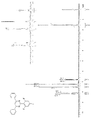
- 0 C*(*)=C([C@@]1(N)N(C)CC1)*=C(*=**=C)C(*)=C Chemical compound C*(*)=C([C@@]1(N)N(C)CC1)*=C(*=**=C)C(*)=C 0.000 description 7
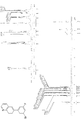
- UMMQOAHRDUNQTD-UHFFFAOYSA-N Fc(cc(cc1)-c2nc(-c3ccccc3)nc(-c3ccccc3)n2)c1-c1nc(-c2ccccc2)nc(-c2ccccc2)n1 Chemical compound Fc(cc(cc1)-c2nc(-c3ccccc3)nc(-c3ccccc3)n2)c1-c1nc(-c2ccccc2)nc(-c2ccccc2)n1 UMMQOAHRDUNQTD-UHFFFAOYSA-N 0.000 description 2
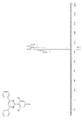
- PTPGZCQGDXUUAH-UHFFFAOYSA-N Brc1nc(-c2ccccc2)nc(-c2ccccc2)n1 Chemical compound Brc1nc(-c2ccccc2)nc(-c2ccccc2)n1 PTPGZCQGDXUUAH-UHFFFAOYSA-N 0.000 description 1
- JEMPMMFZCPUAJB-BPWHKKKASA-N C/C=C\C=C(\c1nc(-c(ccc(-c2nc(-c3ccccc3)nc(-c3ccccc3)n2)c2)c2-[n](c(cc(C(F)(F)F)c(-c2cccc3c2[o]c2c3CCC=C2)c2)c2c2c3)c2cc(C(F)(F)F)c3-c2c3[o]c(cccc4)c4c3ccc2)nc(-c2ccccc2)n1)/C#C Chemical compound C/C=C\C=C(\c1nc(-c(ccc(-c2nc(-c3ccccc3)nc(-c3ccccc3)n2)c2)c2-[n](c(cc(C(F)(F)F)c(-c2cccc3c2[o]c2c3CCC=C2)c2)c2c2c3)c2cc(C(F)(F)F)c3-c2c3[o]c(cccc4)c4c3ccc2)nc(-c2ccccc2)n1)/C#C JEMPMMFZCPUAJB-BPWHKKKASA-N 0.000 description 1
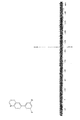
- YONYPNNXOHWPBZ-UHFFFAOYSA-N Cc1nc(-c2ccccc2)nc(-c2ccccc2)n1 Chemical compound Cc1nc(-c2ccccc2)nc(-c2ccccc2)n1 YONYPNNXOHWPBZ-UHFFFAOYSA-N 0.000 description 1
- MIEOIHJJKASVDB-UHFFFAOYSA-N FC(c(cc(c(c1c2)c3)[nH]c1cc(C(F)(F)F)c2-c1c2[o]c4ccccc4c2ccc1)c3-c1cccc2c1[o]c1ccccc21)(F)F Chemical compound FC(c(cc(c(c1c2)c3)[nH]c1cc(C(F)(F)F)c2-c1c2[o]c4ccccc4c2ccc1)c3-c1cccc2c1[o]c1ccccc21)(F)F MIEOIHJJKASVDB-UHFFFAOYSA-N 0.000 description 1
Images














Classifications
-
- C—CHEMISTRY; METALLURGY
- C07—ORGANIC CHEMISTRY
- C07D—HETEROCYCLIC COMPOUNDS
- C07D403/00—Heterocyclic compounds containing two or more hetero rings, having nitrogen atoms as the only ring hetero atoms, not provided for by group C07D401/00
- C07D403/14—Heterocyclic compounds containing two or more hetero rings, having nitrogen atoms as the only ring hetero atoms, not provided for by group C07D401/00 containing three or more hetero rings
-
- C—CHEMISTRY; METALLURGY
- C07—ORGANIC CHEMISTRY
- C07D—HETEROCYCLIC COMPOUNDS
- C07D405/00—Heterocyclic compounds containing both one or more hetero rings having oxygen atoms as the only ring hetero atoms, and one or more rings having nitrogen as the only ring hetero atom
- C07D405/14—Heterocyclic compounds containing both one or more hetero rings having oxygen atoms as the only ring hetero atoms, and one or more rings having nitrogen as the only ring hetero atom containing three or more hetero rings
-
- C—CHEMISTRY; METALLURGY
- C09—DYES; PAINTS; POLISHES; NATURAL RESINS; ADHESIVES; COMPOSITIONS NOT OTHERWISE PROVIDED FOR; APPLICATIONS OF MATERIALS NOT OTHERWISE PROVIDED FOR
- C09K—MATERIALS FOR MISCELLANEOUS APPLICATIONS, NOT PROVIDED FOR ELSEWHERE
- C09K11/00—Luminescent materials, e.g. electroluminescent or chemiluminescent
- C09K11/06—Luminescent materials, e.g. electroluminescent or chemiluminescent containing organic luminescent materials
Definitions
- the nitrogen-containing heterocyclic compound and the technology related to its use are disclosed.
- OLEDs organic light emitting diodes
- the light emitting material it is required that various characteristics such as light emitting color (for example, light emitting maximum wavelength, full width at half maximum), light emitting efficiency, and durability are preferable.
- compounds showing Thermally Activated Delayed Fluorescence (TADF) show high luminous efficiency while being pure organic substances, and are expected as next-generation light emitting materials.
- Patent Document 1 describes the following formula: (In the formula, Y is a cyano group or a trifluoromethyl group.) The compounds represented by are described. Further, in Patent Document 2, the following formula: The compounds represented by are described.
- a main object of the present invention is to provide a nitrogen-containing heterocyclic compound having excellent luminous efficiency and durability and a technique relating to its use.
- Cz-L-Ar (1) [During the ceremony, Cz is calculated by the following equation (2): (During the ceremony, Z is absent, single bond, -C (R 29a ) (R 29b )-, -O-, -S-, or -N (R 29c )-. R 22 and R 27 are electron-attracting groups, respectively, and R 23 and R 26 are electron-donating groups, respectively.
- R 21 , R 24 , R 25 , R 28 , R 29a , R 29b , and R 29c are hydrogen atoms, electron attracting groups, or electron donating groups, respectively.
- the wavy line indicates the binding site with L) It is a group represented by L is a phenylene group which may have a single bond or a substituent, and is a phenylene group.
- Ar is a group selected from the group consisting of an aryl group and a heteroaryl group, and the group may have an N, N-diarylamino group or a substituent which may have a substituent.
- the present invention includes the following aspects.
- Item 1 Compound represented by the following formula (1): Cz-L-Ar (1) [During the ceremony, Cz is calculated by the following equation (2): (During the ceremony, Z is absent, single bond, -C (R 29a ) (R 29b )-, -O-, -S-, or -N (R 29c )-.
- R 22 and R 27 are electron-attracting groups, respectively, and R 23 and R 26 are electron-donating groups, respectively.
- R 21 , R 24 , R 25 , R 28 , R 29a , R 29b , and R 29c are hydrogen atoms, electron attracting groups, or electron donating groups, respectively.
- L is a phenylene group which may have a single bond or a substituent, and is a phenylene group.
- Ar is a group selected from the group consisting of an aryl group and a heteroaryl group, and the group may have an N, N-diarylamino group or a substituent which may have a substituent. It may have at least one substituent selected from a cycloalkyl group, an aryl group which may have a substituent, and a heteroaryl group which may have a substituent (where Ar is. , Not a group represented by equation (2))].
- Ar is a group selected from the group consisting of a phenyl group, a fused bi to hexacyclic aryl group, and a nitrogen-containing heteroaryl group, and the group may have a substituent N, N-diaryl. At least one substituent selected from an amino group, a cycloalkyl group which may have a substituent, an aryl group which may have a substituent, and a heteroaryl group which may have a substituent. (However, Ar is not a group represented by the formula (2)), the compound according to Item 1. Item 3.
- R 3 is a hydrogen atom, an N, N-diarylamino group which may have a substituent, a cycloalkyl group which may have a substituent, an aryl group which may have a substituent, or It is a heteroaryl group that may have a substituent and
- the two R 3 which may be present in a positional relationship ortho to each other, may form an aromatic ring bonded to each other, the aromatic ring may have a substituent N, N-diarylamino group Has at least one substituent selected from a cycloalkyl group which may have a substituent, an aryl group which may have a substituent, and a heteroaryl group which may have a substituent.
- the groups represented by the formula (3) are the following formulas (3-1) to (3-4): (During the ceremony, R 311 and R 312 , R 321 to R 323 , R 331 to R 336 , and R 341 to R 346 , respectively, have a hydrogen atom and an N, N-diarylamino group and a substituent which may have a substituent. A cycloalkyl group which may have a substituent, an aryl group which may have a substituent, or a heteroaryl group which may have a substituent.
- the wavy line indicates the binding site with L) Item 3.
- Item 5. Item 3 or 4 in which L is a phenylene group which may have at least one substituent selected from the group consisting of a group represented by the formula (2) and a group represented by the formula (3).
- the compound described in. Item 6. Item 2. The compound according to any one of Items 1 to 5, wherein Z is a single bond.
- R 23 and R 26 each have an alkyl group, an alkoxy group, a trialkylsilyl group, an N, N-diarylamino group which may have a substituent, a cycloalkyl group which may have a substituent, and the like.
- Item 2. The compound according to any one of Items 1 to 7, which is an aryl group which may have a substituent or a heteroaryl group which may have a substituent.
- R 21 , R 24 , R 25 , and R 28 are hydrogen atoms, or R 21 and R 28 are electron donating groups, respectively, and R 24 and R 25 are electron attracting groups, respectively.
- the compound according to any one of Items 1 to 8. Item 10.
- R 51 , R 52 , and R 58 each have a hydrogen atom, an N, N-diarylamino group which may have a substituent, a cycloalkyl group which may have a substituent, and a substituent, respectively. It is an aryl group which may have a substituent or a heteroaryl group which may have a substituent.
- Each of R 53 to R 57 is a hydrogen atom or a group represented by the formula (2) (however , at least one of R 53 to R 57 is a group represented by the formula (2))].
- R 61 to R 65 are hydrogen atoms or groups represented by the formula (2), respectively (however , at least one of R 61 to R 65 is a group represented by the formula (2)).
- R 66 is a hydrogen atom, an N, N-diarylamino group which may have a substituent, a cycloalkyl group which may have a substituent, an aryl group which may have a substituent, or It is a heteroaryl group that may have a substituent];
- R 81 to R 84 and R 89 each have a hydrogen atom, an N, N-diarylamino group which may have a substituent, a cycloalkyl group which may have a substituent, and a substituent, respectively. It is an aryl group that may be present, or a heteroaryl group that may have a substituent, and is R 85 to R 88 are hydrogen atoms or groups represented by the formula (2) (however , at least one of R 85 to R 88 is a group represented by the formula (2))].
- Item 2 The compound according to Item 1, which is selected from the group consisting of. Item 11.
- An organic light emitting device containing the compound according to any one of Items 1 to 10.
- Item 13. Item 2.
- Item 14. The following formula (9): (During the ceremony, R 91 and R 94 are perfluoroalkyl groups or cyano groups, respectively.
- R 92 and R 93 are an alkyl group, an alkoxy group, a trialkylsilyl group, an N, N-diarylamino group which may have a substituent, and a cycloalkyl group which may have a substituent, respectively.
- Z 9 is absent, single bond, -C (R 95 ) (R 96 )-, -O-, -S-, or -N (R 97 )-, and R 95 to R 97 are a hydrogen atom, an electron attracting group, or an electron donating group, respectively)
- Compounds represented by (where Z 9 is absent, R 91 and R 94 are trifluoromethyl groups, R 92 and R 93 are methoxy groups, and Z 9 is absent.
- R 91 and R 94 are cyano groups
- R 92 and R 93 are phenyl groups).
- a nitrogen-containing heterocyclic compound having excellent luminous efficiency and durability and a technique related to its use are provided.
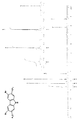
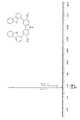
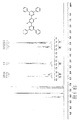
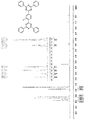
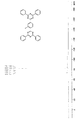
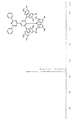
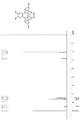
- FIG. 1 is a diagram showing a 1 H NMR spectrum of 3,6-dibromo-2,7-bis (trifluoromethyl) -9H-carbazole.
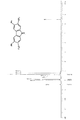
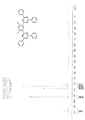
- FIG. 2 is a diagram showing a 19 F NMR spectrum of 3,6-dibromo-2,7-bis (trifluoromethyl) -9H-carbazole.
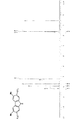
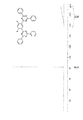
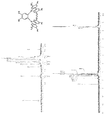
- FIG. 3 is a diagram showing a 1 H NMR spectrum of intermediate D1.
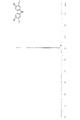
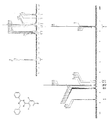
- FIG. 4 is a diagram showing a 19 F NMR spectrum of intermediate D1.
- FIG. 5 is a diagram showing a 1 H NMR spectrum of intermediate D2.
- FIG. 6 is a diagram showing a 19 F NMR spectrum of intermediate D2.
- FIG. 7 is a diagram showing a 1 H NMR spectrum of intermediate D3.
- FIG. 1 is a diagram showing a 1 H NMR spectrum of 3,6-dibromo-2,7-bis (trifluoromethyl) -9H-carbazole.
- FIG. 3 is a diagram showing
- FIG. 8 is a diagram showing a 19 F NMR spectrum of intermediate D3.
- FIG. 9 is a diagram showing a 1 H NMR spectrum of intermediate D5.
- FIG. 10 is a diagram showing a 19 F NMR spectrum of Intermediate D5.
- FIG. 11 is a diagram showing a 1 H NMR spectrum of Intermediate A2.
- FIG. 12 is a diagram showing a 1 H NMR spectrum of Intermediate A3.
- FIG. 13 is a diagram showing a 19 F NMR spectrum of Intermediate A3.
- FIG. 14 is a diagram showing a 1 H NMR spectrum of Intermediate A4.
- FIG. 15 is a diagram showing a 19 F NMR spectrum of Intermediate A4.
- FIG. 16 is a diagram showing a 1 H NMR spectrum of Intermediate A5.
- FIG. 17 is a diagram showing a 19 F NMR spectrum of Intermediate A5.
- FIG. 18 is a diagram showing a 1 H NMR spectrum of Intermediate A6.
- FIG. 19 is a diagram showing a 19 F NMR spectrum of Intermediate A6.
- FIG. 20 is a diagram showing a 1 H NMR spectrum of Intermediate A7.
- FIG. 21 is a diagram showing a 19 F NMR spectrum of Intermediate A7.
- FIG. 22 is a diagram showing a 1 H NMR spectrum of Intermediate A8.
- FIG. 23 is a diagram showing a 1 H NMR spectrum of Intermediate A9.
- FIG. 24 is a diagram showing a 19 F NMR spectrum of Intermediate A9.
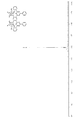
- FIG. 25 is a diagram showing a 1 H NMR spectrum of Example 1.
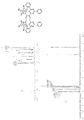
- FIG. 26 is a diagram showing a 19 F NMR spectrum of Example 1.
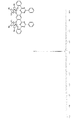
- FIG. 27 is a diagram showing a 1 H NMR spectrum of Example 2.
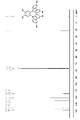
- FIG. 28 is a diagram showing a 19 F NMR spectrum of Example 2.
- FIG. 29 is a diagram showing a 1 H NMR spectrum of Example 3.
- FIG. 30 is a diagram showing a 19 F NMR spectrum of Example 3.
- FIG. 31 is a diagram showing a 1 H NMR spectrum of Example 4.
- FIG. 32 is a diagram showing a 19 F NMR spectrum of Example 4.
- FIG. 33 is a diagram showing a 1 H NMR spectrum of Comparative Example 5.
- FIG. 34 is a diagram showing a 1 H NMR spectrum of Comparative Example 6.
- FIG. 35 is a diagram showing a 19 F NMR spectrum of Comparative Example 6.
- FIG. 36 is a diagram showing a 1 H NMR spectrum of Comparative Example 10.
- FIG. 37 is a diagram showing a 13 C NMR spectrum of Comparative Example 10.
- FIG. 38 is a diagram showing a 1 H NMR spectrum of Comparative Example 11.
- FIG. 39 is a diagram showing a 19 F NMR spectrum of Comparative Example 11.
- FIG. 40 is a diagram showing a 1 H NMR spectrum of Comparative Example 13.
- FIG. 41 is a diagram showing a 19 F NMR spectrum of Comparative Example 13.
- halogen atom is used in the sense of including a fluorine atom, a chlorine atom, a bromine atom, an iodine atom and the like.
- alkyl group means a linear or branched saturated hydrocarbon group, and specifically, for example, a methyl group, an ethyl group, or a propyl group (n).
- -Propyl group isopropyl group
- butyl group n-butyl group, isobutyl group, sec-butyl group, tert-butyl group
- pentyl group hexyl group and other C 1-20 alkyl groups.
- the "perfluoroalkyl group” means a group in which all hydrogen atoms of the alkyl group are substituted with fluorine atoms, and specifically, for example, a trifluoromethyl group.
- alkoxy group means a group in which an oxygen atom is bonded to the terminal of the alkyl group, and specifically, for example, a methoxy group, an ethoxy group, or a propoxy group (n).
- -C 1-12 alkoxy groups such as propoxy group (propoxy group, isopropoxy group), butoxy group (n-butoxy group, isobutoxy group, sec-butoxy group, tert-butoxy group) can be mentioned.
- alkylsulfanyl group means a group in which a sulfur atom is bonded to the terminal of the alkyl group, and specifically, for example, a methylsulfanyl group, an ethylsulfanyl group, or a propyl.
- alkylsulfanyl group such as a sulfanyl group (n-propyl sulfanyl group, isopropyl sulfanyl group) and a butyl sulfanyl group.
- Examples thereof include (C 1-12 alkyl) carbonyl groups such as methylcarbonyl group, ethylcarbonyl group, propylcarbonyl group (n-propylcarbonyl group, isopropylcarbonyl group) and butylcarbonyl group.
- cycloalkyl group includes a cycloC 5-20 alkyl group such as a cyclopentyl group, a cyclohexyl group, a cycloheptyl group and a cyclooctyl group.
- the "trialkylsilyl group” means a group in which the three alkyl groups are bonded to a silicon atom, and specifically, for example, a trimethylsilyl group and a triethylsilyl group. Examples thereof include a tri-C 1-4 alkylsilyl group such as a triisopropylsilyl group and a tert-butyldimethylsilyl group.
- aromatic ring is used in the sense of including an arene ring and a heteroarene ring.
- the number of carbon atoms in the arene ring is not particularly limited, but is, for example, 6 to 40, preferably 6 to 30, more preferably 6 to 28, and even more preferably 6 to 26.
- the arene ring is preferably a benzene ring or a fused ring having a structure in which a plurality of benzene rings are condensed.
- Examples of the arene ring include a benzene ring, a naphthalene ring, a fluorene ring, an anthracene ring, a phenanthrene ring, a fluoranthene ring, a tetracene ring, a tetraphen ring, a chrysene ring, a triphenylene ring, a pyrene ring, a benzopyrene ring, a perylene ring, and a coronene ring.
- Examples include a coronene ring, a phenalene ring, and a trianglene ring.
- the number of ring-constituting atoms in the heteroarene ring is not particularly limited, but is, for example, 5 to 40 members.
- the heteroarene ring may be a monocyclic type or a polycyclic type (for example, a two- to four-ring type).
- the heteroarene ring is preferably a heteroarene ring containing at least one heteroatom selected from an oxygen atom, a sulfur atom, and a nitrogen atom as a ring-constituting atom.
- heteroarene ring examples include an oxygen-containing heteroarene ring (eg, furan ring, benzofuran ring, dibenzo [b, d] furan ring) and a sulfur-containing heteroarene ring (eg, thiophene ring, benzothiophene ring, dibenzo [b].
- oxygen-containing heteroarene ring eg, furan ring, benzofuran ring, dibenzo [b, d] furan ring
- sulfur-containing heteroarene ring eg, thiophene ring, benzothiophene ring, dibenzo [b].
- the aryl group is a group obtained by removing one hydrogen atom from the aromatic hydrocarbon ring (arene ring) in the aromatic ring.
- the aryl group may be a monocyclic aryl group or a fused cyclic aryl group (for example, a fused bi to hexacyclic aryl group).
- Examples of the monocyclic aryl group include a phenyl group.
- Examples of the fused cyclic aryl group include a naphthyl group, a fluorenyl group, an anthrasenyl group, a triphenylenyl group, and a pyrenyl group.
- a C 6-18 aryl group is preferable.
- the heteroaryl group is a group obtained by removing one hydrogen atom from the aromatic heterocycle (heteroarene ring) in the aromatic ring.
- the heteroaryl group may be a monocyclic heteroaryl group (eg, a 5- or 6-membered monocyclic heteroaryl group) or a fused cyclic heteroaryl group (eg, a fused 2- to 6-cyclic aryl group). May be.
- Examples of the monocyclic heteroaryl group include a monocyclic oxygen-containing heteroaryl group such as a frill group; a monocyclic sulfur-containing heteroaryl group such as a thienyl group; a pyrrolyl group, a pyrazolyl group, an imidazolyl group, a triazil group and a pyridyl group.
- Examples thereof include monocyclic nitrogen-containing heteroaryl groups such as a pyridazyl group, a pyrimidyl group, a pyrazil group and a triazinyl group.
- fused cyclic heteroaryl group examples include a fused cyclic oxygen-containing heteroaryl group such as a benzofuryl group and a dibenzofuryl group; a fused cyclic sulfur-containing heteroaryl group such as a benzothienyl group and a dibenzothienyl group; an indrill group and a quinolyl group.
- Fused cyclic nitrogen-containing heteroaryl groups such as groups, isoquinolyl groups, carbazolyl groups, acrizyl groups, 9,10-dihydroacrylidyl groups, phenadyl groups, 5,10-dihydrophenadyl groups; fused cyclic oxygen such as phenoxazyl groups.
- nitrogen-containing heteroaryl groups; fused cyclic sulfur such as phenothiazil groups and nitrogen-containing heteroaryl groups can be mentioned.
- the "electron donating group (donor group)" represents a group in which Hammett's ⁇ p is negative. Hansch, C.et.al., Chem.Rev., 91,165-195 (1991) can be referred to for a description of Hammett's ⁇ p and the numerical values of each group.
- Examples of the electron donating group include an alkyl group such as a methyl group, an isopropyl group and a tertiary butyl group, a cycloalkyl group such as a cyclohexyl group, a phenyl group, a naphthyl group, an anthracenyl group, a triphenylenyl group, a pyrenyl group and a fluorenyl group.
- an alkyl group such as a methyl group, an isopropyl group and a tertiary butyl group
- a cycloalkyl group such as a cyclohexyl group, a phenyl group, a naphthyl group, an anthracenyl group, a triphenylenyl group, a pyrenyl group and a fluorenyl group.
- Aryl group alkoxy group such as methoxy group, alkylsulfanyl group such as methionyl group, trialkylsilyl group such as trimethylsilyl group, pyridyl group, imidazolyl group, pyrazolyl group, oxazolyl group, thiazolyl group, indolyl group, pyrrolyl group, quinolyl.
- Heteroaryl group, N , N, N-diarylamino group such as N-diphenylamino group.
- the "electron-attracting group (acceptor group)” means a group other than an electron-donating group, for example, an alkylcarbonyl group (acyl group), an alkylsulfonyl group, and the like. Examples thereof include a perfluoroalkyl group, a cyano group and a nitro group.
- the compound of the present invention is preferably a compound represented by the following formula (1): Cz-L-Ar (1) [During the ceremony, Cz is calculated by the following equation (2): (During the ceremony, Z is absent, single bond, -C (R 29a ) (R 29b )-, -O-, -S-, or -N (R 29c )-.
- R 22 and R 27 are electron-attracting groups, respectively, and R 23 and R 26 are electron-donating groups, respectively.
- R 21 , R 24 , R 25 , R 28 , R 29a , R 29b , and R 29c are hydrogen atoms, electron attracting groups, or electron donating groups, respectively.
- L is a phenylene group which may have a single bond or a substituent, and is a phenylene group.
- Ar is a group selected from the group consisting of an aryl group and a heteroaryl group, and the group may have an N, N-diarylamino group or a substituent which may have a substituent. It may have at least one substituent selected from a cycloalkyl group, an aryl group which may have a substituent, and a heteroaryl group which may have a substituent (where Ar is. , Not a group represented by equation (2))].
- Cz (Equation (2)) Z is preferably a single bond, -C (R 29a ) (R 29b )-, -O-, -S-, or -N (R 29c )-, and more preferably a single bond.
- the present inventors consider that when R 22 and R 27 are electron attracting groups and R 23 and R 26 are electron donating groups, R 22 and R 27 are electron seeking groups. Emission compared to the case where R 23 and R 26 are hydrogen atoms and where R 22 and R 27 are hydrogen atoms and R 23 and R 26 are electron donating groups. We have found that the half-price range of the peak can be further narrowed.
- R 22 , R 27 , and R 21 , R 24 , R 25 , R 28 , and R 29a to R 29c are electron-attracting groups
- the electron-attracting groups are, respectively. It is preferably a perfluoroalkyl group or a cyano group. More preferably, it is a perfluoroC 1-4 alkyl group or a cyano group. More preferably, it is a perfluoroC 1-3 alkyl group or a cyano group. Even more preferably, it is a perfluoroC 1-2 alkyl group or a cyano group. Particularly preferably, it is a trifluoromethyl group or a cyano group.
- R 23 , R 26 , and R 21 , R 24 , R 25 , R 28 , and R 29a to R 29c are electron-donating groups
- the electron-donating groups are, respectively. It preferably has an alkyl group, an alkoxy group, a trialkylsilyl group, an N, N-diarylamino group which may have a substituent, a cycloalkyl group which may have a substituent, or a substituent. It may have an aryl group or a heteroaryl group which may have a substituent, and more preferably a C 1-6 alkyl group, a C 1-6 alkoxy group, a tri C 1-6 alkylsilyl group and a substituent.
- N, N-di C 6-18 arylamino group may have substituent C 5-12 cycloalkyl group, may have substituent C 6-18 aryl
- a 5- or 6-membered monocyclic heteroaryl group which may have a group, a substituent, or a fused 2- to tetracyclic heteroaryl group which may have a substituent.
- the N, N-diarylamino group is preferably an electron attracting group and an electron donating group.
- the cycloalkyl group, the aryl group, and the substituent optionally contained in the heteroaryl group are preferably an aryl group or a heteroaryl group, more preferably an aryl group, and further preferably a C 6-12 aryl group. It is particularly preferably a C 6-10 aryl group. It is also preferable that the substituent arbitrarily contained in the heteroaryl group is an electron-attracting group and an electron-donating group. The number of the substituents is, for example, 0, 1, 2, 3, or 4.
- the electron donating group is also preferably a group represented by the formula (2).
- R 21 , R 24 , R 25 , and R 28 are combinations of hydrogen atoms; or R 21 and R 28 are electron donating groups, respectively, and R 24 and R 25 are electron attracting groups, respectively.
- the base combination is preferred.
- the group represented by the formula (2) is preferably a group selected from the following group: (In the formula, Me is a methyl group, i-Pr is an isopropyl group, t-Bu is a tertiary butyl group, Ph is a phenyl group, and a wavy line indicates a binding site with L).
- Ar Ar is It is preferably a group selected from an aryl group and a heteroaryl group (however, it is not a group represented by the formula (2)). More preferably, it is a group selected from a C 6-18 aryl group, a 5-membered or 6-membered monocyclic heteroaryl group, and a fused 2- to tetracyclic heteroaryl group (however, it is represented by the formula (2)). Not the basis), More preferably, it is a group selected from a C 6-16 aryl group, a 5-membered or 6-membered monocyclic nitrogen-containing heteroaryl group, and a condensed 2- to tetracyclic nitrogen-containing heteroaryl group (however, the formula (2)).
- These groups may have an N, N-diarylamino group (for example, a group represented by the formula (2) in which Z is absent), which may have a substituent, and a cyclo which may have a substituent.
- An alkyl group preferably a C 5-12 cycloalkyl group
- an aryl group optionally having a substituent preferably a C 6-12 aryl group
- a heteroaryl group optionally having a substituent preferably a C 5-12 cycloalkyl group.
- At least one selected from a 5- or 6-membered monocyclic heteroaryl group or a fused 2- to tetracyclic heteroaryl group (eg, a group represented by formula (2) in which Z is other than absent). It may have a substituent of.
- the substituent arbitrarily contained in the cycloalkyl group, the aryl group, and the heteroaryl group is not particularly limited, but is, for example, an aryl group (for example, C 6-12 aryl group) or a heteroaryl group (for example, 5 members).
- it may be a 6-membered monocyclic heteroaryl group, a fused bi to tetracyclic heteroaryl group), or a group represented by the formula (2).
- R 3 is a hydrogen atom, an N, N-diarylamino group which may have a substituent, a cycloalkyl group which may have a substituent, an aryl group which may have a substituent, or It is a heteroaryl group that may have a substituent and
- the two R 3 which may be present in a positional relationship ortho to each other, may form an aromatic ring bonded to each other, the aromatic ring may have a substituent N, N-diarylamino group Has at least one substituent selected from a cycloalkyl group which may have a substituent, an aryl group which may have a substituent, and a heteroaryl group which may have a substituent.
- You may be The wavy line indicates the binding site with L).
- R 3 is preferably a hydrogen atom, an N, N-di C 6-12 arylamino group which may have a substituent (for example, a group represented by the formula (2) in which Z is absent), a substituent.
- a C 5-12 cycloalkyl group which may have a group, a C 6-12 aryl group which may have a substituent, and a 5-membered or 6-membered monocyclic hetero which may have a substituent. It is a fused bi to tetracyclic heteroaryl group which may have an aryl group or a substituent (for example, a group represented by the formula (2) in which Z is other than absent).
- substituents examples include an aryl group (for example, C 6-12 aryl group) or a heteroaryl group (for example, a 5-membered or 6-membered monocyclic heteroaryl group, a condensed 2- to 4-cyclic heteroaryl group). It may be a group represented by the formula (2).
- the combination of) is more preferable.
- the combination of X 31 , X 32 , and X 35 to X 39 is as a combination.
- the combination of) is more preferable.
- the group represented by the formula (3) is preferably a group represented by any of the following formulas (3-1) to (3-4): (In the formula, R 311 , R 312 , R 321 to R 323 , R 331 to R 336 , and R 341 to R 346 , respectively, may have a hydrogen atom and a substituent N, N-diarylamino. A group, a cycloalkyl group which may have a substituent, an aryl group which may have a substituent, or a heteroaryl group which may have a substituent. The wavy line indicates the binding site with L).
- R 311, R 312, R 321 ⁇ R 323, R 331 ⁇ R 336, and R 341 ⁇ R 346 are each preferably a hydrogen atom, which may have a substituent N, N-di C 6-
- a 12arylamino group for example, a group represented by the formula (2) in which Z is absent
- a C 5-12 cycloalkyl group which may have a substituent and a C which may have a substituent.
- substituent include an aryl group (for example, C 6-12 aryl group) or a heteroaryl group (for example, a 5-membered or 6-membered monocyclic heteroaryl group, a condensed 2- to 4-cyclic heteroaryl group). It may be a group represented by the formula (2).
- the phenylene group may be any of 1,2-phenylene group, 1,3-phenylene group, and 1,4-phenylene group.
- the substituent is Preferably, it is an N, N-diarylamino group which may have a substituent, an aryl group which may have a substituent, or a heteroaryl group which may have a substituent. More preferably, it may have an N, N-di C 6-18 arylamino group which may have a substituent, a C 6-18 aryl group which may have a substituent, and a substituent.
- a fused 2- to tetracyclic heteroaryl group which may have a 5- or 6-membered monocyclic heteroaryl group or a substituent, and is a fused two- to tetracyclic heteroaryl group. More preferably, it is a group represented by the formula (2) or a group represented by the formula (3).
- the number of the substituents is, for example, 0, 1, 2, 3, or 4.
- R 41 to R 44 are represented by the formula (2) in which Z is absent, for example , N, N-di C 6-12 arylamino groups which may have a hydrogen atom and a substituent, respectively. Group), C 5-12 cycloalkyl group which may have a substituent, C 6-12 aryl group which may have a substituent, 5 members or 6 which may have a substituent. It is a member monocyclic heteroaryl group or a fused bi to tetracyclic heteroaryl group which may have a substituent (for example, a group represented by the formula (2) in which Z is other than absent).
- substituents examples include an aryl group (for example, C 6-12 aryl group) or a heteroaryl group (for example, a 5-membered or 6-membered monocyclic heteroaryl group, a condensed 2- to 4-cyclic heteroaryl group). It may be a group represented by the formula (2).
- the compound represented by the formula (4) is preferably a compound represented by the following formula (4-1) or (4-2): (In the formula, each Cz is the same or different from each other and is a group represented by the formula (2), and X 41 to X 43 and R 41 are the same as described above).
- the compound represented by the formula (1) is preferably a compound in which L is a phenylene group which may have a substituent, and has one or more Ars on the benzene ring and one or more formulas (1 or more).
- a compound in which the group represented by 2) is substituted (the total number of Ars and the number of substitutions of the groups represented by the formula (2) is 2 or more and 6 or less) is more preferable, and one Ar and one Ar in the benzene ring and A compound in which one or more and five or less groups represented by the formula (2) are substituted is more preferable, and a compound represented by the following formula (5) is particularly preferable:
- R 51 , R 52 , and R 58 each have a hydrogen atom, an N, N-diarylamino group which may have a substituent, a cycloalkyl group which may have a substituent, and a substituent, respectively. It is an aryl group which may have a substituent or a heteroaryl group which may have a substituent.
- Each of R 53 to R 57 is a hydrogen atom or a group represented by the formula (2) (however , at least one of R 53 to R 57 is a group represented by the formula (2))]. ..
- R 51 , R 52 , and R 58 each preferably have an N, N-di C 6-12 arylamino group (eg, Z is absent), which may have a hydrogen atom and a substituent, respectively (eg, formula (2) in which Z is absent. ), C 5-12 cycloalkyl group which may have a substituent, C 6-12 aryl group which may have a substituent, and may have a substituent.
- a five- or six-membered monocyclic heteroaryl group or a fused two- to tetracyclic heteroaryl group which may have a substituent for example, a group represented by the formula (2) in which Z is other than absent). Is.
- substituents examples include an aryl group (for example, C 6-12 aryl group) or a heteroaryl group (for example, a 5-membered or 6-membered monocyclic heteroaryl group, a condensed 2- to 4-cyclic heteroaryl group). It may be a group represented by the formula (2).
- the compound represented by the formula (5) is preferably a compound represented by any of the following formulas (5-1) to (5-14): (In the formula, Cz is a group represented by the formula (2), and when a plurality of Cz exists, the plurality of Cz may be the same or different from each other, and X 51 to X 53 , R 51. , And R 52 are the same as above).
- the compound represented by the formula (1) is preferably a compound represented by the following formula (6):
- R 61 to R 65 are hydrogen atoms or groups represented by the formula (2), respectively (however , at least one of R 61 to R 65 is a group represented by the formula (2)).
- R 66 is a hydrogen atom, an N, N-diarylamino group which may have a substituent, a cycloalkyl group which may have a substituent, an aryl group which may have a substituent, or It is a heteroaryl group that may have a substituent].
- R 66 is preferably a hydrogen atom, an N, N-di C 6-12 arylamino group which may have a substituent (for example, a group represented by the formula (2) in which Z is absent), a substituent.
- a C 5-12 cycloalkyl group which may have a group, a C 6-12 aryl group which may have a substituent, and a 5-membered or 6-membered monocyclic hetero which may have a substituent.
- a fused bi- to tetracyclic heteroaryl group which may have an aryl group or a substituent (for example, a group represented by the formula (2) in which Z is other than absent).
- substituents examples include an aryl group (for example, C 6-12 aryl group) or a heteroaryl group (for example, a 5-membered or 6-membered monocyclic heteroaryl group, a condensed 2- to 4-cyclic heteroaryl group). It may be a group represented by the formula (2).
- the compound represented by the formula (6) is preferably a compound represented by the following formula (6-1): (In the formula, Cz is a group represented by the formula (2), and the two Cz may be the same or different from each other, and X 61 to X 67 are the same as described above).
- the compound represented by the formula (1) is preferably a compound in which L is a phenylene group which may have a substituent, and has two Ars on the benzene ring and one or more and four or less.
- a compound in which the group represented by the formula (2) is substituted is more preferable, and a compound represented by the following formula (7) is further preferable:
- R 71 to R 74 and R 79 each have a hydrogen atom, an N, N-diarylamino group which may have a substituent, a cycloalkyl group which may have a substituent, and a substituent, respectively.
- R 75 to R 78 are hydrogen atoms or groups represented by the formula (2) (however , at least one of R 75 to R 78 is a group represented by the formula (2))].
- R 71 to R 74 and R 79 each preferably have a hydrogen atom and a substituent, respectively, N, N-di C 6-12 arylamino groups (for example, formula (2) in which Z is absent).
- Group represented by) C 5-12 cycloalkyl group which may have a substituent, C 6-12 aryl group which may have a substituent, and may have a substituent 5
- a fused two- to tetracyclic heteroaryl group which may have a member or 6-membered monocyclic heteroaryl group or a substituent (for example, a group represented by the formula (2) in which Z is other than absent).
- substituents examples include an aryl group (for example, C 6-12 aryl group) or a heteroaryl group (for example, a 5-membered or 6-membered monocyclic heteroaryl group, a condensed 2- to 4-cyclic heteroaryl group). It may be a group represented by the formula (2).
- the compound represented by the formula (7) is preferably a compound represented by any of the following formulas (7-1) to (7-3): (In the formula, Cz is a group represented by the formula (2), and when a plurality of Cz exists, the plurality of Cz may be the same or different from each other, and X 71 to X 76 and R 71. ⁇ R 74 is the same as above).
- the compound represented by the formula (1) is preferably a compound represented by the following formula (8):
- R 81 to R 84 and R 89 each have a hydrogen atom, an N, N-diarylamino group which may have a substituent, a cycloalkyl group which may have a substituent, and a substituent, respectively.
- R 85 to R 88 are hydrogen atoms or groups represented by the formula (2) (provided that at least one of R 85 to R 88 is a group represented by the formula (2))].
- R 81 to R 84 and R 89 preferably have an N, N-diC 6-12 arylamino group which may have a hydrogen atom and a substituent, respectively (for example, formula (2) in which Z is absent).
- a fused two- to tetracyclic heteroaryl group which may have a member or 6-membered monocyclic heteroaryl group or a substituent (for example, a group represented by the formula (2) in which Z is other than absent).
- substituents examples include an aryl group (for example, C 6-12 aryl group) or a heteroaryl group (for example, a 5-membered or 6-membered monocyclic heteroaryl group, a condensed 2- to 4-cyclic heteroaryl group). It may be a group represented by the formula (2).
- the compound represented by the formula (8) is preferably a compound represented by any of the following formulas (8-1) to (8-6): (In the formula, Cz is a group represented by the formula (2), and when a plurality of Cz exists, the plurality of Cz may be the same or different from each other, and X 81 to X 86 and R 81. ⁇ R 84 is the same as above).
- the half width of the emission peak of the compound of the present invention may be preferably 90 nm or less, more preferably 85 nm or less, further preferably 80 nm or less, or 10 nm or more.
- the full width at half maximum can be determined by measuring the emission spectrum when a solution (concentration: 1 ⁇ 10-5 M) in which the compound of the present invention is dissolved is irradiated with excitation light at 340 nm at room temperature.
- the spectrum width of half the peak top intensity is defined as the half width (FWHM, Full Width Half Maximum).
- the luminous efficiency (PLQY) of the compound of the present invention is preferably 50% or more, more preferably 55% or more, still more preferably 60% or more.
- Luminous efficiency (PLQY) is a value when a solution (concentration: 1 ⁇ 10-5 M) in which the compound of the present invention is dissolved is irradiated with excitation light at 340 nm at room temperature, and is an absolute PL quantum yield measuring device (for example). , Hamamatsu Photonics Quantaurus-QY C11347-01) can be used for measurement.
- the HOMO level of the compound of the present invention may preferably be -5.0 eV or less or -5.5 eV or less, and is -7.0 eV or more, -6.5 eV or more, or -6.4 eV or more. May be good. Due to such a HOMO level, compatibility with peripheral materials such as host materials is excellent.
- the HOMO level can be measured using an atmospheric photoelectron spectrometer (for example, AC-3 manufactured by RIKEN Keiki Co., Ltd.).
- the orientation parameter S of the compound of the present invention may be preferably 0.002 or more, 0.003 or more, 0.004 or more, or 0.005 or more, and is 0.05 or less. There may be.
- the orientation parameter S is in the range of 45 to 75 degrees (in 5 degree increments) using a spectroscopic ellipsometer (JA Woollam Japan product) by forming a single film (film thickness of about 30 nm) of the light emitting material on a bare silicon substrate. It can be calculated by performing spectrum measurement and fitting analysis of the obtained spectrum.
- the redox characteristic ⁇ E of the compound of the present invention may be preferably 0.1 eV or less, 0.08 eV or less, 0.06 eV or less, or 0.05 eV or less, and is 0.01 eV or more.
- ⁇ E can be calculated by performing cyclic voltammetry measurement under the following measurement conditions. ⁇ Measurement conditions> Working electrode: Glassy carbon Counter electrode: Platinum wire Reference electrode: Ag / AgNO 3 Acetonitrile solution Solvent: THF Electrolyte: Bu 4 NPF 6 Running speed: 50 meV / s Luminescent material concentration: 1 mM Electrolyte concentration: 100 mM
- the compound represented by the formula (1) is not particularly limited, but for example, the following formula (11): (In the formula, Z and R 21 to R 28 are the same as above)
- Q 1 is a halogen atom Ar and L are the same as above
- n is an integer greater than or equal to 1 selected according to the valence of Ar.
- L is a phenylene group which may have a substituent
- n is an integer of 1 or more selected according to the valence of L). It can be produced by a method including a step of reacting with a compound represented by.
- the compound represented by the formula (11) can be produced by a combination of known reactions.
- the compound represented by the formula (11) is represented by the following formula (13): (In the formula, Q 2 and Q 3 are halogen atoms, respectively, and R 21 , R 22 , R 24 , R 25 , R 27 , and R 28 are the same as above).
- Q 2 and Q 3 may be the same or different from each other, and are preferably fluorine atoms, chlorine atoms, or bromine atoms, respectively.
- ⁇ B (OH) 2 is expressed by the following formula: It may be a group represented by.
- the total amount of the compounds represented by the formulas (14) and (15) used is 2 mol or more, 2.5 mol or more, or 3 mol or more with respect to 1 mol of the compound represented by the formula (13). It is preferably 6 mol or less, 5 mol or less, or 4 mol or less.
- the reaction is preferably carried out in the presence of a catalyst.
- a catalyst include a transition metal catalyst, and specific examples thereof include a palladium catalyst, a copper catalyst, a nickel catalyst, and a cobalt catalyst. These catalysts can be used alone or in combination of two or more. When these catalysts are used, International Publication No. 2011/08902, International Publication No. 2015/137472, and the like can be referred to.
- the reaction is preferably carried out in the presence of a base.
- a base examples include n-butyllithium, NaH, t-butoxysodium, KOH, K 2 CO 3 , K 3 PO 4 , t-butoxy potassium, potassium acetate, Cs 2 CO 3. and the like. These bases can be used alone or in combination of two or more. When these bases are used, International Publication No. 2008/1178226, Chemistry of Materials, 2010, 22 (7), 2403-2410, Korean Patent Application Publication No. 2018-063708, etc. can be referred to.
- the reaction is preferably carried out in the presence of a solvent.
- the solvent is not particularly limited as long as the reaction component can be dissolved, and is, for example, ether (eg, diethyl ether, dipropyl ether, dibutyl ether, 1,4-dioxane, tetrahydrofuran), aromatic hydrocarbon (eg, tetrahydrofuran). Examples include toluene, xylene), amines (eg, chain amines such as triethylamine, cyclic amines such as N-methylpyrrolidone), amides (eg, dimethylformamide), sulfoxides (eg, dimethylsulfoxide) and the like.
- the solvent one type can be used alone or two or more types can be mixed and used.
- the reaction temperature and reaction time of the reaction are not particularly limited as long as the reaction proceeds.
- the reaction temperature may be, for example, 0 ° C. or higher, 15 ° C. or higher, or 25 ° C. or higher, or 200 ° C. or lower, 150 ° C. or lower, or 100 ° C. or lower.
- the reaction time may be, for example, 1 hour or more, 2 hours or more, or 5 hours or more, and may be 50 hours or less, 30 hours or less, or 10 hours or less.
- Compound Q 1 represented by the fluorine atom is preferably a chlorine atom, or bromine atom.
- the compound represented by the formula (12) can be produced by a combination of known reactions.
- the compound in which L is a single bond can be a commercially available product as it is, and the compound in which L is a phenylene group which may have a substituent may be used.
- ⁇ B (OH) 2 is expressed by the following formula: It may be a group represented by.
- reaction of the compound represented by the formula (11) and the compound represented by the formula (12) The reaction may adopt the same reaction conditions as the reaction of the compounds represented by the formulas (13) to (15). can.
- the compounds represented by the formulas (13) to (15) are reacted, and then the compound represented by the formula (11) is continuously purified.
- It may be a reaction (one-pot reaction) in which the compound represented by the formula (12) is reacted (without), and after the compounds represented by the formulas (16) and (17) are reacted, the reaction (without the formula (12)) is continued.
- reaction (one-pot reaction) in which the compound represented by the formulas (13) to (15) is reacted without purifying the compound represented by 12).
- the delayed fluorescent material of the present invention preferably comprises the compound of the present invention.
- the delayed fluorescent material can be suitably used, for example, as a light emitting material for an organic light emitting device described later.
- the organic light emitting device of the present invention preferably contains the compound of the present invention.
- organic light emitting element examples include an organic photoluminescence element (organic PL element) and an organic electroluminescence element (organic EL element).
- organic light emitting element is preferably an organic EL element.
- the organic EL element preferably has an anode, a cathode, and an organic layer formed between the anode and the cathode.
- the organic layer preferably contains at least a light emitting layer, and may be composed of only a light emitting layer, or may include one or more other organic layers in addition to the light emitting layer.
- Other organic layers include, for example, injection layers (eg, hole injection layer, electron injection layer), blocking layers (eg, electron blocking layer, hole blocking layer, exciton blocking layer), transport layers (eg, positive). Hole transport layer, electron transport layer) and the like.
- the hole transport layer may be a hole injection transport layer having a hole injection function
- the electron transport layer may be an electron injection transport layer having an electron injection function.
- the organic EL element may be a bottom emission type that extracts the light generated in the light emitting layer from the substrate side, or may be a top emission type that extracts the light generated in the light emitting layer from the opposite side of the substrate.
- the electrode formed on the substrate side may be an anode or a cathode.
- the electrode on the side that extracts light is preferably transparent, and the electrode on the opposite side may or may not be transparent.
- the organic EL element is preferably supported by a substrate.
- the substrate is not particularly limited as long as it is conventionally used for organic EL elements, and for example, a substrate made of glass, transparent plastic, quartz, silicon, or the like can be used.
- anode in the organic EL element a metal having a large work function (for example, 4 eV or more), an alloy, an electrically conductive compound, and a mixture thereof as an electrode material are preferably used.
- electrode materials include metals such as Au and transparent conductive materials such as CuI, indium tin oxide (ITO), SnO 2, and ZnO.
- a material capable of producing an amorphous transparent conductive film such as IDIXO (In 2 O 3-ZnO) may be used.
- a thin film may be formed by a method such as vapor deposition or sputtering of the electrode material to form a pattern having a desired shape by a photolithography method. May be formed.
- a wet film forming method such as a printing method or a coating method can also be used.
- the sheet resistance as the anode is preferably several hundred ⁇ / ⁇ or less.
- the film thickness of the anode depends on the material, but is usually selected in the range of 10 to 1000 nm, preferably 10 to 200 nm.
- a metal having a small work function for example, 4 eV or less
- electron-injectable metal an alloy, an electrically conductive compound, or a mixture thereof as an electrode material
- Specific examples of such electrode materials include sodium, sodium-potassium alloy, magnesium, lithium, magnesium / copper mixture, magnesium / silver mixture, magnesium / aluminum mixture, magnesium / indium mixture, aluminum / aluminum oxide (Al 2 O). 3 ) A mixture, a lithium / aluminum mixture, aluminum and the like are suitable.
- the cathode can be produced by forming a thin film of an electrode material by a method such as thin film deposition or sputtering.
- the sheet resistance as a cathode is preferably several hundred ⁇ / ⁇ or less.
- the film thickness of the cathode is usually selected in the range of 10 nm to 5 ⁇ m, preferably 50 to 200 nm. It is preferable that either the anode or the cathode of the organic EL element is transparent or translucent because the emission brightness is improved. Further, by using the transparent conductive material mentioned in the description of the anode for the cathode, a transparent or translucent cathode can be produced, and an element in which both the anode and the cathode have transparency can be produced.
- the light emitting layer is a layer that emits light (eg, fluorescent light emission, delayed fluorescent light emission, or both) after excitons are generated by recombination of holes and electrons injected from each of the anode and cathode. Is preferable.
- the light emitting layer may be a layer containing a light emitting material alone, but is preferably a layer containing a light emitting material and a host material.
- the compound of the present invention one type or two or more types
- the host material is not particularly limited, but it is preferable to use an organic compound in which at least one of the excitation singlet energy and the excitation triplet energy has a value higher than that of the compound of the present invention. Further, the host material is preferably an organic compound having a hole transporting ability and an electron transporting ability, preventing a long wavelength of light emission, and having a high glass transition temperature.
- a compound exhibiting TADF property when included in the light emitting layer as a third component (assist dopant compound) in the light emitting layer containing the host material and the light emitting material, it is effective in developing high luminous efficiency (H. Nakan Albany, et al. , Nature Compound, 2014, 5, 4016-4022).
- H. Nakan Albany, et al. Nature Compound, 2014, 5, 4016-4022.
- the triplet excitons generate singlet excitons with inverse intersystem crossing (RISC). can do.
- the energy of the singlet excitons is transferred to the light emitting material, and the light emitting material can emit light. Therefore, theoretically 100% of the exciton energy can be used to make the light emitting material emit light, and high luminous efficiency is exhibited.
- the content of the compound of the present invention in the light emitting layer is preferably 0.1% by mass or more, more preferably 1% by mass or more, and preferably 50% by mass or less, preferably 20% by mass. It is more preferably 10% by mass or less, and further preferably 10% by mass or less.
- the injection layer is preferably a layer provided between the electrode and the organic layer in order to reduce the driving voltage or improve the emission brightness.
- the injection layer includes a hole injection layer and an electron injection layer.
- the injection layer may be provided between the anode and the light emitting layer or the hole transport layer, and between the cathode and the light emitting layer or the electron transport layer.
- the blocking layer is preferably a layer capable of blocking the diffusion of charges (electrons or holes) and / or excitons existing in the light emitting layer to the outside of the light emitting layer.
- the electron blocking layer can be arranged between the light emitting layer and the hole transporting layer, and can prevent electrons from passing through the light emitting layer toward the hole transporting layer.
- the hole blocking layer can be placed between the light emitting layer and the electron transporting layer to prevent holes from passing through the light emitting layer towards the electron transporting layer.
- the electron blocking layer and the hole blocking layer can also function as exciton blocking layers, respectively.
- the electron blocking layer or exciton blocking layer referred to in the present specification is used in the sense that one layer includes a layer having the functions of an electron blocking layer and an exciton blocking layer.
- the hole blocking layer has the function of an electron transport layer in a broad sense.
- the hole blocking layer has a role of blocking the holes from reaching the electron transporting layer while transporting electrons, which can improve the recombination probability of electrons and holes in the light emitting layer.
- As the material of the hole blocking layer a material of the electron transport layer described later can be used as needed.
- the electron blocking layer has a function of transporting holes in a broad sense.
- the electron blocking layer has a role of blocking electrons from reaching the hole transporting layer while transporting holes, which can improve the probability of recombination of electrons and holes in the light emitting layer. ..
- the exciton blocking layer is preferably a layer for blocking excitons generated by recombination of holes and electrons in the light emitting layer from diffusing into the charge transport layer.
- the exciton blocking layer can be inserted into either the anode side or the cathode side adjacent to the light emitting layer, and both can be inserted at the same time.
- the layer when the exciton blocking layer is provided on the anode side, the layer can be inserted between the hole transport layer and the light emitting layer adjacent to the light emitting layer, and when inserted on the cathode side, the light emitting layer and the light emitting layer can be inserted.
- the layer can be inserted adjacent to the light emitting layer between the cathode and the light emitting layer.
- a hole injection layer, an electron blocking layer and the like can be provided between the anode and the exciton blocking layer adjacent to the anode side of the light emitting layer.
- An electron injection layer, an electron transport layer, a hole blocking layer, and the like can be provided between the cathode and the exciton blocking layer adjacent to the cathode side of the light emitting layer.
- the blocking layer it is preferable that at least one of the excitation singlet energy and the excitation triplet energy of the material used as the blocking layer is higher than the excitation singlet energy and the excitation triplet energy of the light emitting material.
- the hole transport layer is preferably made of a hole transport material having a function of transporting holes, and the hole transport layer can be provided as a single layer or a plurality of layers.
- a hole transporting material a material having any of hole injection or transport and electron barrier property is preferable, and either an organic substance or an inorganic substance may be used.
- the hole transporting material that can be used include triazole derivative, oxadiazole derivative, imidazole derivative, carbazole derivative, indolocarbazole derivative, polyarylalkane derivative, pyrazoline derivative and pyrazolone derivative, phenylenediamine derivative, arylamine derivative, and amino.
- Examples thereof include substituted chalcone derivatives, oxazole derivatives, styrylanthracene derivatives, fluorenone derivatives, hydrazone derivatives, stilben derivatives, silazane derivatives, aniline-based copolymers, and conductive polymer oligomers, particularly thiophene oligomers.
- As the hole transport material it is preferable to use a porphyrin compound, an aromatic tertiary amine compound, and a styrylamine compound, and it is more preferable to use an aromatic tertiary amine compound.
- Inorganic semiconductors such as molybdenum oxide can also be used as the hole transport material.
- the electron transport layer is preferably made of a material having a function of transporting electrons, and the electron transport layer can be provided with a single layer or a plurality of layers.
- the electron transporting material (which may also serve as a hole blocking material) preferably has a function of transferring electrons injected from the cathode to the light emitting layer.
- Examples of the electron transporting layer that can be used include nitro-substituted fluorene derivatives, diphenylquinone derivatives, thiopyrandioxide derivatives, carbodiimides, freolenidenemethane derivatives, anthracinodimethane and anthron derivatives, and oxadiazole derivatives.
- a thiadiazole derivative in which the oxygen atom of the oxadiazole ring is replaced with a sulfur atom, and a quinoxalin derivative having a quinoxalin ring known as an electron attractant can also be used as an electron transport material.
- a polymer material in which these materials are introduced into a polymer chain or these materials are used as a polymer main chain can also be used.
- an inorganic semiconductor such as zinc oxide can also be used as an electron transport material.
- the compound of the present invention may be used not only for the light emitting layer but also for a layer other than the light emitting layer.
- the compound of the present invention used for the light emitting layer and the compound of the present invention used for the layer other than the light emitting layer may be the same or different.
- the compound of the present invention may be used for the above-mentioned injection layer, blocking layer (eg, hole blocking layer, electron blocking layer, exciton blocking layer), hole transport layer, electron transport layer and the like.
- the film forming method for these layers is not particularly limited, and may be formed by either a dry process or a wet process.
- R, R', and R 1 to R 10 in the structural formulas of the following exemplified compounds each independently represent a hydrogen atom or a substituent.
- X represents a carbon atom or a complex atom forming a ring skeleton
- n represents an integer of 3 to 5
- Y represents a substituent
- m represents an integer of 0 or more.
- the HOMO / LUMO level of the host material can be adjusted by appropriately introducing a substituent into the basic skeleton of the following exemplified compound. For example, by introducing a cyano group or a perfluoroalkyl group into the basic skeleton of the following exemplified compound, a compound having a deepened HOMO / LUMO level can be obtained, which can be used as a host material or a peripheral compound.
- the host material it is also a bipolar character (flow good both holes and electrons) may be a unipolar resistance, but high excited triplet energy level E T1 than the light emitting material Is preferable. More preferred host material has a bipolar property, those high excited triplet energy level E T1 than the light emitting material.
- preferable compounds as materials that can be further added are given.
- it can be added as a stabilizing material.
- the organic EL element of the present invention can be applied to any of a single element, an element having a structure arranged in an array, and a structure in which an anode and a cathode are arranged in an XY matrix.
- the organic light emitting device such as the organic EL device of the present invention can be further applied to various applications.
- Organic EL device of the present invention can also be applied to organic electroluminescence lighting and backlight, which are in great demand.
- the organic light emitting device of the present invention can be applied to an organic light emitting diode.
- 2-Bromo-4,6-diphenylpyrimidine (611 mg), 2,4,6-trifluorophenylboronic acid (482 mg), potassium carbonate (1.33 g), tris (dibenzylidene) in a 20 mL eggplant flask under a nitrogen atmosphere.
- Acelatin dipalladium (0) chloroform adduct (124 mg) and tri-tert-butylphosphonium tetrafluoroborate (156 mg) were added, and DMF (10 mL) was added to dissolve the mixture. After degassing the reaction solvent, the mixture was stirred with heating under reflux for 20 hours. The reaction mixture was allowed to cool, and toluene and water were added to separate the solutions.
- 6-iodoquinoline (509 mg), 3,5-difluorophenylboronic acid (471 mg), potassium carbonate (1.08 g), and tetrakistriphenylphosphine palladium (132 mg) were placed in a 20 mL eggplant flask, and toluene (toluene) was added. 8 mL) and water (3 mL) were added and dissolved. After degassing the reaction solvent, the mixture was stirred with heating under reflux for 21 hours. The reaction mixture was allowed to cool, ethyl acetate and water were added, and the layers were separated. The aqueous layer was extracted with ethyl acetate, and the organic layers were combined and concentrated under reduced pressure.
- 6-iodoquinoline (613 mg), 3-bromo-5-fluorophenylboronic acid (796 mg), potassium carbonate (1.28 g), and tetrakistriphenylphosphine palladium (150 mg) were placed in a 30 mL eggplant flask.
- Toluene (10 mL) and water (4 mL) were added and dissolved.
- After degassing the reaction solvent the mixture was stirred with heating under reflux for 17 hours.
- the reaction mixture was allowed to cool, ethyl acetate and water were added, and the layers were separated. The aqueous layer was extracted with ethyl acetate, and the organic layers were combined and concentrated under reduced pressure.
- reaction mixture was allowed to cool, subjected to a silica gel filtration column (ethyl acetate), and the filtrate was concentrated under reduced pressure. Hexane was added to the obtained crude product, and the precipitate was collected by filtration to obtain 2,2'-(2-fluoro-1,4-phenylene) bis (4,4,5,5-tetramethyl-1). , 3,2-Dioxaborolane) (1.79 g, yield 72%) was obtained.
- Comparative Examples 2 to 4 have the following formulas, respectively: It is a compound represented by, and was synthesized by the method described in International Publication No. 2018047948.
- intermediate A1 500 mg
- 2,7-bistrifluoromethylcarbazole (444 mg) and cesium carbonate (961 mg) were placed in a 30 mL eggplant flask under a nitrogen atmosphere and dissolved in DMSO (20 mL). rice field. After stirring at 85 ° C. for 3 hours, the mixture was allowed to cool to room temperature. Water (12 mL) and chloroform (10 mL) were added to the reaction solution, and the mixture was allowed to stand for 10 minutes. The precipitated gray crystals were collected by filtration and washed with water (2 mL) and chloroform (3 mL) to form 9- (4- (4,6-diphenyl-1,3,5-triazine-2-yl)-.
- Comparative Example 5 (515 mg, yield 71%).
- the 1 H NMR spectrum of Comparative Example 5 is shown in FIG. 33.
- Comparative Example 6 (85 mg, yield 68%).
- the 1 H NMR spectrum and the 19 F NMR spectrum of Comparative Example 6 are shown in FIGS. 34 and 35, respectively.
- Comparative Examples 7 to 9 have the following formulas, respectively: It is a compound represented by, and was synthesized by the method described in Nature 2012, 492 (13), 234-238.
- Comparative Example 10 has the following formula: It is a compound represented by, and was synthesized by the method described in Chinese Patent Application Publication No. 107384364.
- the 1 H NMR spectrum and the 13 C NMR spectrum of Comparative Example 10 are shown in FIGS. 36 and 37, respectively.
- Comparative Example 11 has the following formula: It is a compound represented by, and was synthesized by the method described in International Publication No. 2019087936.
- the 1 H NMR spectrum and the 19 F NMR spectrum of Comparative Example 11 are shown in FIGS. 38 and 39, respectively.
- Comparative Example 12 has the following formula: In the synthesis of Comparative Example 11, the compound represented by was synthesized using 2,7-bis (trifluoromethyl) carbazole instead of the raw material 3,6-bis (trifluoromethyl) carbazole. The m / z of the target object was confirmed by mass spectrometry (ASAP, positive).
- ⁇ max Maximum emission wavelength ( ⁇ max), full width at half maximum) ⁇ max, full width at half maximum, and CIE of Comparative Examples and Examples show the emission spectrum when a toluene solution of luminescent material (luminescent material concentration: 1 ⁇ 10-5 M) is irradiated with excitation light at 340 nm at room temperature. It was measured using Fluoromax 4 manufactured by Fluoromax 4 manufactured by Fluoromax 4 and measured as follows based on the emission spectrum. ⁇ max was measured by the wavelength of the peak top. The full width at half maximum was measured by the spectral width of half the value of the peak top intensity.
- the PLQY of Comparative Examples and Examples is a value when a toluene solution of a light emitting material (light emitting material concentration: 1 ⁇ 10-5 M) is irradiated with excitation light of 340 nm at room temperature, and is an absolute PL quantum yield measuring device (absolute PL quantum yield measuring device). It was measured using Quantaurus-QY C11347-01) manufactured by Hamamatsu Photonics.
- HOMO level The HOMO levels of Comparative Examples and Examples were measured using an atmospheric photoelectron spectrometer (AC-3 manufactured by RIKEN Keiki Co., Ltd.). As the measurement sample, a light emitting material vacuum-deposited on an ITO substrate so as to have a film thickness of 50 nm was used. The measurement was carried out with an ultraviolet light intensity of 10 nW and a measurement range of -4.00 eV to -7.00 eV (in increments of 0.05 eV), and the energy threshold value of photoelectron emission during ultraviolet irradiation was set as the HOMO level.
- AC-3 atmospheric photoelectron spectrometer
- the orientation parameter S of Comparative Examples and Examples is 45 to 75 degrees (5) using a spectroscopic ellipsometer (JA Woollam Japan product) after forming a single film (thickness of about 30 nm) of the light emitting material on a bare silicon substrate. The spectrum was measured in the range of (in increments), and the spectrum was calculated by fitting analysis of the obtained spectrum.
Landscapes
- Chemical & Material Sciences (AREA)
- Organic Chemistry (AREA)
- Engineering & Computer Science (AREA)
- Materials Engineering (AREA)
- Plural Heterocyclic Compounds (AREA)
- Electroluminescent Light Sources (AREA)
- Nitrogen Condensed Heterocyclic Rings (AREA)
Applications Claiming Priority (2)
| Application Number | Priority Date | Filing Date | Title |
|---|---|---|---|
| JP2020079716A JP7694004B2 (ja) | 2020-04-28 | 2020-04-28 | 含窒素複素環化合物及びその利用 |
| JP2020-079716 | 2020-04-28 |
Publications (1)
| Publication Number | Publication Date |
|---|---|
| WO2021220952A1 true WO2021220952A1 (ja) | 2021-11-04 |
Family
ID=78279498
Family Applications (1)
| Application Number | Title | Priority Date | Filing Date |
|---|---|---|---|
| PCT/JP2021/016414 Ceased WO2021220952A1 (ja) | 2020-04-28 | 2021-04-23 | 含窒素複素環化合物及びその利用 |
Country Status (2)
| Country | Link |
|---|---|
| JP (1) | JP7694004B2 (https=) |
| WO (1) | WO2021220952A1 (https=) |
Cited By (1)
| Publication number | Priority date | Publication date | Assignee | Title |
|---|---|---|---|---|
| WO2023149635A1 (en) * | 2022-02-02 | 2023-08-10 | Samsung Display Co., Ltd. | Organic molecules for optoelectronic devices |
Families Citing this family (2)
| Publication number | Priority date | Publication date | Assignee | Title |
|---|---|---|---|---|
| JPWO2024204389A1 (https=) * | 2023-03-27 | 2024-10-03 | ||
| JP2025058779A (ja) * | 2023-09-28 | 2025-04-09 | 株式会社Kyulux | 化合物、発光材料および発光素子 |
Citations (12)
| Publication number | Priority date | Publication date | Assignee | Title |
|---|---|---|---|---|
| JPS6219875A (ja) * | 1985-07-18 | 1987-01-28 | Canon Inc | 電子写真感光体 |
| JPH10125468A (ja) * | 1996-08-30 | 1998-05-15 | Mitsui Chem Inc | 有機電界発光素子 |
| JPH10265773A (ja) * | 1997-03-24 | 1998-10-06 | Toyo Ink Mfg Co Ltd | 有機エレクトロルミネッセンス素子用正孔注入材料およびそれを使用した有機エレクトロルミネッセンス素子 |
| JP2004253298A (ja) * | 2003-02-21 | 2004-09-09 | Konica Minolta Holdings Inc | 白色発光有機エレクトロルミネッセンス素子 |
| JP2005116247A (ja) * | 2003-10-06 | 2005-04-28 | Mitsui Chemicals Inc | 有機電界発光素子ならびにアミン化合物 |
| JP2008174661A (ja) * | 2007-01-19 | 2008-07-31 | Tsujiden Co Ltd | カルバゾール系ランダム共重合体 |
| KR20150115225A (ko) * | 2014-04-03 | 2015-10-14 | (주)피엔에이치테크 | 유기발광 화합물 및 이를 포함하는 유기전계발광소자 |
| WO2016058504A1 (zh) * | 2014-10-13 | 2016-04-21 | 江苏和成新材料有限公司 | 芳香族胺衍生物及其有机电致发光器件 |
| JP2017103440A (ja) * | 2015-12-04 | 2017-06-08 | 東洋紡株式会社 | 有機発光素子ならびにそれに用いる発光材料および化合物 |
| WO2018047948A1 (ja) * | 2016-09-09 | 2018-03-15 | 東洋紡株式会社 | 有機発光素子ならびにそれに用いる発光材料および化合物 |
| JP6753545B1 (ja) * | 2020-03-23 | 2020-09-09 | 東洋紡株式会社 | 含窒素複素環化合物及びその利用 |
| JP2021075491A (ja) * | 2019-11-11 | 2021-05-20 | 東洋紡株式会社 | パーフルオロアルキル基を有する含窒素複素環化合物及びその利用 |
Family Cites Families (2)
| Publication number | Priority date | Publication date | Assignee | Title |
|---|---|---|---|---|
| JP6195828B2 (ja) | 2012-05-24 | 2017-09-13 | 出光興産株式会社 | 有機エレクトロルミネッセンス素子用材料、及びそれを用いた有機エレクトロルミネッセンス素子 |
| KR101792445B1 (ko) | 2013-08-16 | 2017-10-31 | 코니카 미놀타 가부시키가이샤 | 유기 일렉트로루미네센스 소자, 전자 디바이스, 발광 장치 및 발광 재료 |
-
2020
- 2020-04-28 JP JP2020079716A patent/JP7694004B2/ja active Active
-
2021
- 2021-04-23 WO PCT/JP2021/016414 patent/WO2021220952A1/ja not_active Ceased
Patent Citations (12)
| Publication number | Priority date | Publication date | Assignee | Title |
|---|---|---|---|---|
| JPS6219875A (ja) * | 1985-07-18 | 1987-01-28 | Canon Inc | 電子写真感光体 |
| JPH10125468A (ja) * | 1996-08-30 | 1998-05-15 | Mitsui Chem Inc | 有機電界発光素子 |
| JPH10265773A (ja) * | 1997-03-24 | 1998-10-06 | Toyo Ink Mfg Co Ltd | 有機エレクトロルミネッセンス素子用正孔注入材料およびそれを使用した有機エレクトロルミネッセンス素子 |
| JP2004253298A (ja) * | 2003-02-21 | 2004-09-09 | Konica Minolta Holdings Inc | 白色発光有機エレクトロルミネッセンス素子 |
| JP2005116247A (ja) * | 2003-10-06 | 2005-04-28 | Mitsui Chemicals Inc | 有機電界発光素子ならびにアミン化合物 |
| JP2008174661A (ja) * | 2007-01-19 | 2008-07-31 | Tsujiden Co Ltd | カルバゾール系ランダム共重合体 |
| KR20150115225A (ko) * | 2014-04-03 | 2015-10-14 | (주)피엔에이치테크 | 유기발광 화합물 및 이를 포함하는 유기전계발광소자 |
| WO2016058504A1 (zh) * | 2014-10-13 | 2016-04-21 | 江苏和成新材料有限公司 | 芳香族胺衍生物及其有机电致发光器件 |
| JP2017103440A (ja) * | 2015-12-04 | 2017-06-08 | 東洋紡株式会社 | 有機発光素子ならびにそれに用いる発光材料および化合物 |
| WO2018047948A1 (ja) * | 2016-09-09 | 2018-03-15 | 東洋紡株式会社 | 有機発光素子ならびにそれに用いる発光材料および化合物 |
| JP2021075491A (ja) * | 2019-11-11 | 2021-05-20 | 東洋紡株式会社 | パーフルオロアルキル基を有する含窒素複素環化合物及びその利用 |
| JP6753545B1 (ja) * | 2020-03-23 | 2020-09-09 | 東洋紡株式会社 | 含窒素複素環化合物及びその利用 |
Non-Patent Citations (1)
| Title |
|---|
| ASO FUMIHIRO, KAWASHIMA HIDEHISA, FUJIKI MICHIYA, KIJIMA MASASHI: "Synthesis of delayed-emissive poly(2,7-carbazole)s having an anchored triazine pendant at the N-position", POLYMER CHEMISTRY, vol. 10, no. 24, 18 June 2019 (2019-06-18), pages 3318 - 3324, XP055861540, ISSN: 1759-9954, DOI: 10.1039/C9PY00152B * |
Cited By (1)
| Publication number | Priority date | Publication date | Assignee | Title |
|---|---|---|---|---|
| WO2023149635A1 (en) * | 2022-02-02 | 2023-08-10 | Samsung Display Co., Ltd. | Organic molecules for optoelectronic devices |
Also Published As
| Publication number | Publication date |
|---|---|
| JP2021172629A (ja) | 2021-11-01 |
| JP7694004B2 (ja) | 2025-06-18 |
Similar Documents
| Publication | Publication Date | Title |
|---|---|---|
| CN102598344B (zh) | 有机场致发光元件 | |
| JP5656534B2 (ja) | インドロ[3,2,1−jk]カルバゾール化合物及びこれを有する有機発光素子 | |
| CN102754237B (zh) | 有机电致发光元件 | |
| TWI468494B (zh) | Organic electroluminescent elements | |
| JP5399418B2 (ja) | 有機電界発光素子 | |
| WO2015002213A1 (ja) | 発光材料、遅延蛍光体、有機発光素子および化合物 | |
| WO2013039073A1 (ja) | 芳香族アミン誘導体およびそれを用いた有機エレクトロルミネッセンス素子 | |
| WO2011081061A1 (ja) | 有機電界発光素子 | |
| CN103608429A (zh) | 新化合物及使用所述化合物的有机电子器件 | |
| CN107325090B (zh) | 化合物及包含它的有机电子元件 | |
| WO2021095729A1 (ja) | パーフルオロアルキル基を有する含窒素複素環化合物及びその利用 | |
| CN110785401A (zh) | 有机化合物及包含其的有机电致发光元件 | |
| CN111479799A (zh) | 有机化合物及包含其的有机电致发光元件 | |
| WO2021220952A1 (ja) | 含窒素複素環化合物及びその利用 | |
| CN107406473A (zh) | 杂配铱络合物、与使用该化合物的发光材料及有机发光元件 | |
| US20170040546A1 (en) | Novel compound and organic electronic device using the same | |
| JP6753545B1 (ja) | 含窒素複素環化合物及びその利用 | |
| KR20130100948A (ko) | 신규한 안트라센 유도체 및 이를 이용한 유기전자소자 | |
| JPWO2020184369A1 (ja) | ピロメテン金属錯体、発光素子材料、発光素子、表示装置および照明装置 | |
| KR20180071880A (ko) | 유기 화합물 및 이를 포함하는 유기 전계 발광 소자 | |
| Haykir et al. | The investigation of sky-blue emitting anthracene-carbazole derivatives: Synthesis, photophysics and OLED applications | |
| CN111989319A (zh) | 有机发光化合物及利用其的有机电致发光元件 | |
| WO2021149510A1 (ja) | ピロメテンホウ素錯体、それを含有する発光素子、表示装置および照明装置 | |
| EP4559914B1 (en) | Compound, light-emitting element, display device, and lighting device | |
| JP5672667B2 (ja) | ベンゾ[a]カルバゾール化合物、該化合物を含有する発光材料、およびそれを用いた有機電界発光素子 |
Legal Events
| Date | Code | Title | Description |
|---|---|---|---|
| 121 | Ep: the epo has been informed by wipo that ep was designated in this application |
Ref document number: 21796905 Country of ref document: EP Kind code of ref document: A1 |
|
| NENP | Non-entry into the national phase |
Ref country code: DE |
|
| 122 | Ep: pct application non-entry in european phase |
Ref document number: 21796905 Country of ref document: EP Kind code of ref document: A1 |