WO2021206054A1 - ゲノム改変方法及びゲノム改変キット - Google Patents
ゲノム改変方法及びゲノム改変キット Download PDFInfo
- Publication number
- WO2021206054A1 WO2021206054A1 PCT/JP2021/014495 JP2021014495W WO2021206054A1 WO 2021206054 A1 WO2021206054 A1 WO 2021206054A1 JP 2021014495 W JP2021014495 W JP 2021014495W WO 2021206054 A1 WO2021206054 A1 WO 2021206054A1
- Authority
- WO
- WIPO (PCT)
- Prior art keywords
- sequence
- homology arm
- selectable marker
- donor dna
- alleles
- Prior art date
- Legal status (The legal status is an assumption and is not a legal conclusion. Google has not performed a legal analysis and makes no representation as to the accuracy of the status listed.)
- Ceased
Links
Images





Classifications
-
- C—CHEMISTRY; METALLURGY
- C12—BIOCHEMISTRY; BEER; SPIRITS; WINE; VINEGAR; MICROBIOLOGY; ENZYMOLOGY; MUTATION OR GENETIC ENGINEERING
- C12N—MICROORGANISMS OR ENZYMES; COMPOSITIONS THEREOF; PROPAGATING, PRESERVING, OR MAINTAINING MICROORGANISMS; MUTATION OR GENETIC ENGINEERING; CULTURE MEDIA
- C12N15/00—Mutation or genetic engineering; DNA or RNA concerning genetic engineering, vectors, e.g. plasmids, or their isolation, preparation or purification; Use of hosts therefor
- C12N15/09—Recombinant DNA-technology
- C12N15/10—Processes for the isolation, preparation or purification of DNA or RNA
- C12N15/102—Mutagenizing nucleic acids
-
- C—CHEMISTRY; METALLURGY
- C12—BIOCHEMISTRY; BEER; SPIRITS; WINE; VINEGAR; MICROBIOLOGY; ENZYMOLOGY; MUTATION OR GENETIC ENGINEERING
- C12N—MICROORGANISMS OR ENZYMES; COMPOSITIONS THEREOF; PROPAGATING, PRESERVING, OR MAINTAINING MICROORGANISMS; MUTATION OR GENETIC ENGINEERING; CULTURE MEDIA
- C12N15/00—Mutation or genetic engineering; DNA or RNA concerning genetic engineering, vectors, e.g. plasmids, or their isolation, preparation or purification; Use of hosts therefor
- C12N15/09—Recombinant DNA-technology
- C12N15/11—DNA or RNA fragments; Modified forms thereof; Non-coding nucleic acids having a biological activity
-
- C—CHEMISTRY; METALLURGY
- C12—BIOCHEMISTRY; BEER; SPIRITS; WINE; VINEGAR; MICROBIOLOGY; ENZYMOLOGY; MUTATION OR GENETIC ENGINEERING
- C12N—MICROORGANISMS OR ENZYMES; COMPOSITIONS THEREOF; PROPAGATING, PRESERVING, OR MAINTAINING MICROORGANISMS; MUTATION OR GENETIC ENGINEERING; CULTURE MEDIA
- C12N15/00—Mutation or genetic engineering; DNA or RNA concerning genetic engineering, vectors, e.g. plasmids, or their isolation, preparation or purification; Use of hosts therefor
- C12N15/09—Recombinant DNA-technology
- C12N15/11—DNA or RNA fragments; Modified forms thereof; Non-coding nucleic acids having a biological activity
- C12N15/113—Non-coding nucleic acids modulating the expression of genes, e.g. antisense oligonucleotides; Antisense DNA or RNA; Triplex- forming oligonucleotides; Catalytic nucleic acids, e.g. ribozymes; Nucleic acids used in co-suppression or gene silencing
-
- C—CHEMISTRY; METALLURGY
- C12—BIOCHEMISTRY; BEER; SPIRITS; WINE; VINEGAR; MICROBIOLOGY; ENZYMOLOGY; MUTATION OR GENETIC ENGINEERING
- C12N—MICROORGANISMS OR ENZYMES; COMPOSITIONS THEREOF; PROPAGATING, PRESERVING, OR MAINTAINING MICROORGANISMS; MUTATION OR GENETIC ENGINEERING; CULTURE MEDIA
- C12N15/00—Mutation or genetic engineering; DNA or RNA concerning genetic engineering, vectors, e.g. plasmids, or their isolation, preparation or purification; Use of hosts therefor
- C12N15/09—Recombinant DNA-technology
- C12N15/11—DNA or RNA fragments; Modified forms thereof; Non-coding nucleic acids having a biological activity
- C12N15/113—Non-coding nucleic acids modulating the expression of genes, e.g. antisense oligonucleotides; Antisense DNA or RNA; Triplex- forming oligonucleotides; Catalytic nucleic acids, e.g. ribozymes; Nucleic acids used in co-suppression or gene silencing
- C12N15/1135—Non-coding nucleic acids modulating the expression of genes, e.g. antisense oligonucleotides; Antisense DNA or RNA; Triplex- forming oligonucleotides; Catalytic nucleic acids, e.g. ribozymes; Nucleic acids used in co-suppression or gene silencing against oncogenes or tumor suppressor genes
-
- C—CHEMISTRY; METALLURGY
- C12—BIOCHEMISTRY; BEER; SPIRITS; WINE; VINEGAR; MICROBIOLOGY; ENZYMOLOGY; MUTATION OR GENETIC ENGINEERING
- C12N—MICROORGANISMS OR ENZYMES; COMPOSITIONS THEREOF; PROPAGATING, PRESERVING, OR MAINTAINING MICROORGANISMS; MUTATION OR GENETIC ENGINEERING; CULTURE MEDIA
- C12N15/00—Mutation or genetic engineering; DNA or RNA concerning genetic engineering, vectors, e.g. plasmids, or their isolation, preparation or purification; Use of hosts therefor
- C12N15/09—Recombinant DNA-technology
- C12N15/11—DNA or RNA fragments; Modified forms thereof; Non-coding nucleic acids having a biological activity
- C12N15/113—Non-coding nucleic acids modulating the expression of genes, e.g. antisense oligonucleotides; Antisense DNA or RNA; Triplex- forming oligonucleotides; Catalytic nucleic acids, e.g. ribozymes; Nucleic acids used in co-suppression or gene silencing
- C12N15/1137—Non-coding nucleic acids modulating the expression of genes, e.g. antisense oligonucleotides; Antisense DNA or RNA; Triplex- forming oligonucleotides; Catalytic nucleic acids, e.g. ribozymes; Nucleic acids used in co-suppression or gene silencing against enzymes
-
- C—CHEMISTRY; METALLURGY
- C12—BIOCHEMISTRY; BEER; SPIRITS; WINE; VINEGAR; MICROBIOLOGY; ENZYMOLOGY; MUTATION OR GENETIC ENGINEERING
- C12N—MICROORGANISMS OR ENZYMES; COMPOSITIONS THEREOF; PROPAGATING, PRESERVING, OR MAINTAINING MICROORGANISMS; MUTATION OR GENETIC ENGINEERING; CULTURE MEDIA
- C12N15/00—Mutation or genetic engineering; DNA or RNA concerning genetic engineering, vectors, e.g. plasmids, or their isolation, preparation or purification; Use of hosts therefor
- C12N15/09—Recombinant DNA-technology
- C12N15/11—DNA or RNA fragments; Modified forms thereof; Non-coding nucleic acids having a biological activity
- C12N15/113—Non-coding nucleic acids modulating the expression of genes, e.g. antisense oligonucleotides; Antisense DNA or RNA; Triplex- forming oligonucleotides; Catalytic nucleic acids, e.g. ribozymes; Nucleic acids used in co-suppression or gene silencing
- C12N15/1138—Non-coding nucleic acids modulating the expression of genes, e.g. antisense oligonucleotides; Antisense DNA or RNA; Triplex- forming oligonucleotides; Catalytic nucleic acids, e.g. ribozymes; Nucleic acids used in co-suppression or gene silencing against receptors or cell surface proteins
-
- C—CHEMISTRY; METALLURGY
- C12—BIOCHEMISTRY; BEER; SPIRITS; WINE; VINEGAR; MICROBIOLOGY; ENZYMOLOGY; MUTATION OR GENETIC ENGINEERING
- C12N—MICROORGANISMS OR ENZYMES; COMPOSITIONS THEREOF; PROPAGATING, PRESERVING, OR MAINTAINING MICROORGANISMS; MUTATION OR GENETIC ENGINEERING; CULTURE MEDIA
- C12N15/00—Mutation or genetic engineering; DNA or RNA concerning genetic engineering, vectors, e.g. plasmids, or their isolation, preparation or purification; Use of hosts therefor
- C12N15/09—Recombinant DNA-technology
- C12N15/63—Introduction of foreign genetic material using vectors; Vectors; Use of hosts therefor; Regulation of expression
- C12N15/79—Vectors or expression systems specially adapted for eukaryotic hosts
- C12N15/80—Vectors or expression systems specially adapted for eukaryotic hosts for fungi
-
- C—CHEMISTRY; METALLURGY
- C12—BIOCHEMISTRY; BEER; SPIRITS; WINE; VINEGAR; MICROBIOLOGY; ENZYMOLOGY; MUTATION OR GENETIC ENGINEERING
- C12N—MICROORGANISMS OR ENZYMES; COMPOSITIONS THEREOF; PROPAGATING, PRESERVING, OR MAINTAINING MICROORGANISMS; MUTATION OR GENETIC ENGINEERING; CULTURE MEDIA
- C12N15/00—Mutation or genetic engineering; DNA or RNA concerning genetic engineering, vectors, e.g. plasmids, or their isolation, preparation or purification; Use of hosts therefor
- C12N15/09—Recombinant DNA-technology
- C12N15/63—Introduction of foreign genetic material using vectors; Vectors; Use of hosts therefor; Regulation of expression
- C12N15/79—Vectors or expression systems specially adapted for eukaryotic hosts
- C12N15/80—Vectors or expression systems specially adapted for eukaryotic hosts for fungi
- C12N15/81—Vectors or expression systems specially adapted for eukaryotic hosts for fungi for yeasts
-
- C—CHEMISTRY; METALLURGY
- C12—BIOCHEMISTRY; BEER; SPIRITS; WINE; VINEGAR; MICROBIOLOGY; ENZYMOLOGY; MUTATION OR GENETIC ENGINEERING
- C12N—MICROORGANISMS OR ENZYMES; COMPOSITIONS THEREOF; PROPAGATING, PRESERVING, OR MAINTAINING MICROORGANISMS; MUTATION OR GENETIC ENGINEERING; CULTURE MEDIA
- C12N15/00—Mutation or genetic engineering; DNA or RNA concerning genetic engineering, vectors, e.g. plasmids, or their isolation, preparation or purification; Use of hosts therefor
- C12N15/09—Recombinant DNA-technology
- C12N15/87—Introduction of foreign genetic material using processes not otherwise provided for, e.g. co-transformation
- C12N15/90—Stable introduction of foreign DNA into chromosome
- C12N15/902—Stable introduction of foreign DNA into chromosome using homologous recombination
- C12N15/905—Stable introduction of foreign DNA into chromosome using homologous recombination in yeast
-
- C—CHEMISTRY; METALLURGY
- C12—BIOCHEMISTRY; BEER; SPIRITS; WINE; VINEGAR; MICROBIOLOGY; ENZYMOLOGY; MUTATION OR GENETIC ENGINEERING
- C12N—MICROORGANISMS OR ENZYMES; COMPOSITIONS THEREOF; PROPAGATING, PRESERVING, OR MAINTAINING MICROORGANISMS; MUTATION OR GENETIC ENGINEERING; CULTURE MEDIA
- C12N15/00—Mutation or genetic engineering; DNA or RNA concerning genetic engineering, vectors, e.g. plasmids, or their isolation, preparation or purification; Use of hosts therefor
- C12N15/09—Recombinant DNA-technology
- C12N15/87—Introduction of foreign genetic material using processes not otherwise provided for, e.g. co-transformation
- C12N15/90—Stable introduction of foreign DNA into chromosome
- C12N15/902—Stable introduction of foreign DNA into chromosome using homologous recombination
- C12N15/907—Stable introduction of foreign DNA into chromosome using homologous recombination in mammalian cells
-
- C—CHEMISTRY; METALLURGY
- C12—BIOCHEMISTRY; BEER; SPIRITS; WINE; VINEGAR; MICROBIOLOGY; ENZYMOLOGY; MUTATION OR GENETIC ENGINEERING
- C12N—MICROORGANISMS OR ENZYMES; COMPOSITIONS THEREOF; PROPAGATING, PRESERVING, OR MAINTAINING MICROORGANISMS; MUTATION OR GENETIC ENGINEERING; CULTURE MEDIA
- C12N5/00—Undifferentiated human, animal or plant cells, e.g. cell lines; Tissues; Cultivation or maintenance thereof; Culture media therefor
- C12N5/06—Animal cells or tissues; Human cells or tissues
- C12N5/0602—Vertebrate cells
- C12N5/0693—Tumour cells; Cancer cells
-
- C—CHEMISTRY; METALLURGY
- C12—BIOCHEMISTRY; BEER; SPIRITS; WINE; VINEGAR; MICROBIOLOGY; ENZYMOLOGY; MUTATION OR GENETIC ENGINEERING
- C12N—MICROORGANISMS OR ENZYMES; COMPOSITIONS THEREOF; PROPAGATING, PRESERVING, OR MAINTAINING MICROORGANISMS; MUTATION OR GENETIC ENGINEERING; CULTURE MEDIA
- C12N9/00—Enzymes; Proenzymes; Compositions thereof; Processes for preparing, activating, inhibiting, separating or purifying enzymes
- C12N9/14—Hydrolases (3)
- C12N9/16—Hydrolases (3) acting on ester bonds (3.1)
- C12N9/22—Ribonucleases [RNase]; Deoxyribonucleases [DNase]
-
- C—CHEMISTRY; METALLURGY
- C12—BIOCHEMISTRY; BEER; SPIRITS; WINE; VINEGAR; MICROBIOLOGY; ENZYMOLOGY; MUTATION OR GENETIC ENGINEERING
- C12Y—ENZYMES
- C12Y201/00—Transferases transferring one-carbon groups (2.1)
- C12Y201/01—Methyltransferases (2.1.1)
- C12Y201/01107—Uroporphyrinogen-III C-methyltransferase (2.1.1.107)
-
- C—CHEMISTRY; METALLURGY
- C12—BIOCHEMISTRY; BEER; SPIRITS; WINE; VINEGAR; MICROBIOLOGY; ENZYMOLOGY; MUTATION OR GENETIC ENGINEERING
- C12N—MICROORGANISMS OR ENZYMES; COMPOSITIONS THEREOF; PROPAGATING, PRESERVING, OR MAINTAINING MICROORGANISMS; MUTATION OR GENETIC ENGINEERING; CULTURE MEDIA
- C12N15/00—Mutation or genetic engineering; DNA or RNA concerning genetic engineering, vectors, e.g. plasmids, or their isolation, preparation or purification; Use of hosts therefor
- C12N15/09—Recombinant DNA-technology
- C12N15/63—Introduction of foreign genetic material using vectors; Vectors; Use of hosts therefor; Regulation of expression
- C12N15/79—Vectors or expression systems specially adapted for eukaryotic hosts
- C12N15/85—Vectors or expression systems specially adapted for eukaryotic hosts for animal cells
-
- C—CHEMISTRY; METALLURGY
- C12—BIOCHEMISTRY; BEER; SPIRITS; WINE; VINEGAR; MICROBIOLOGY; ENZYMOLOGY; MUTATION OR GENETIC ENGINEERING
- C12N—MICROORGANISMS OR ENZYMES; COMPOSITIONS THEREOF; PROPAGATING, PRESERVING, OR MAINTAINING MICROORGANISMS; MUTATION OR GENETIC ENGINEERING; CULTURE MEDIA
- C12N2310/00—Structure or type of the nucleic acid
- C12N2310/10—Type of nucleic acid
- C12N2310/20—Type of nucleic acid involving clustered regularly interspaced short palindromic repeats [CRISPR]
-
- C—CHEMISTRY; METALLURGY
- C12—BIOCHEMISTRY; BEER; SPIRITS; WINE; VINEGAR; MICROBIOLOGY; ENZYMOLOGY; MUTATION OR GENETIC ENGINEERING
- C12N—MICROORGANISMS OR ENZYMES; COMPOSITIONS THEREOF; PROPAGATING, PRESERVING, OR MAINTAINING MICROORGANISMS; MUTATION OR GENETIC ENGINEERING; CULTURE MEDIA
- C12N2800/00—Nucleic acids vectors
- C12N2800/80—Vectors containing sites for inducing double-stranded breaks, e.g. meganuclease restriction sites
Definitions
- the present invention relates to a genome modification method and a genome modification kit.
- the target region targeted by the guide RNA is double-stranded by Cas9 nuclease. Double-stranded DNA is known to be repaired by homologous recombination repair (Homologous Directed Repair: HDR) or non-homologous end-joining repair (NHEJ).
- HDR homologous Directed Repair
- NHEJ non-homologous end-joining repair
- any sequence can be incorporated into the target region by introducing into the cell a donor DNA having a sequence homologous to the region surrounding the target region together with the CRISPR / Cas system.
- a genome modification method for modifying two or more alleles of a chromosomal genome (A) A step of introducing the following (i) and (ii) into a cell containing the chromosome, and (I) A genome modification system containing a sequence-specific nucleic acid-cleaving molecule that targets a target region of the chromosomal genome, or a polynucleotide encoding the sequence-specific nucleic acid-cleaving molecule.
- the number of types of donor DNA is equal to or greater than the number of the alleles to be modified in the genome, and two or more types of donor DNA for selectable markers,
- B A method for modifying a genome, which comprises, after the step (a), a step of selecting the cells based on all the selectable marker genes possessed by the donor DNAs for two or more kinds of selective markers.
- [5] The genome modification method according to [3] or [4], wherein the positive selection marker gene is a drug resistance gene and the negative selection marker gene is a fluorescent protein gene.
- [6] The method for modifying a genome according to any one of [1] to [5], wherein the sequence-specific nucleic acid cleavage molecule is a sequence-specific endonuclease.
- the genome modification system includes a Cas protein and a guide RNA having a base sequence homologous to the base sequence in the target region.
- a genome modification kit for modifying two or more alleles of a chromosomal genome which comprises the following (i) and (ii).
- a genome modification system containing a sequence-specific nucleic acid-cleaving molecule targeting the target region of the chromosomal genome or a polynucleotide encoding the sequence-specific nucleic acid-cleaving molecule (ii) adjacent to the upstream side of the target region.
- a base sequence of a selectable marker gene is contained between an upstream homology arm having a base sequence homologous to the base sequence and a downstream homology arm having a base sequence homologous to the base sequence adjacent to the downstream side of the target region.
- sequence-specific nucleic acid cleavage molecule is a sequence-specific endonuclease.
- the genome modification system contains a Cas protein and a guide RNA having a base sequence homologous to the base sequence in the target region. Modification kit.
- the present invention includes the following aspects as an example.
- [1] A method for producing a cell in which two or more alleles of a chromosomal genome have been modified.
- (I) A sequence-specific nucleic acid-cleaving molecule capable of targeting a target region in two or more alleles of the chromosomal genome and cleaving the target region, or a polynucleotide encoding the sequence-specific nucleic acid-cleaving molecule.
- Genome modification system including (Ii) Two or more types of donor DNAs for selectable markers, each of which has an upstream homology arm having a nucleotide sequence homologous to the nucleotide sequence on the upstream side of the target region and a base on the downstream side of the target region.
- a donor for two or more selectable markers which has a downstream homology arm having a sequence and a base sequence that can be homologously recombinant, and contains a base sequence of a selectable marker gene between the upstream homology arm and the downstream homology arm.
- the DNA has different selectable marker genes that are distinguishable from each other, the selectable marker gene is unique to each type of selectable marker donor DNA, and the number of types of the selectable marker donor DNA is the same as that of the genome modification. Two or more selectable marker donor DNAs that are equal to or greater than the number of target alleles.
- different types of donor DNAs for selectable markers are homologously recombined with respect to the two or more alleles, so that the two or more alleles are distinctly different from each other.
- [2] A method of modifying two or more alleles in the chromosomal genome.
- II) A sequence-specific nucleic acid-cleaving molecule capable of targeting a target region in two or more alleles of the chromosomal genome and cleaving the target region, or a polynucleotide encoding the sequence-specific nucleic acid-cleaving molecule.
- Genome modification system including (Ii) Two or more types of donor DNAs for selectable markers, each of which has an upstream homology arm having a nucleotide sequence homologous to the nucleotide sequence on the upstream side of the target region and a base on the downstream side of the target region.
- a donor for two or more selectable markers which has a downstream homology arm having a sequence and a base sequence that can be homologously recombinant, and contains a base sequence of a selectable marker gene between the upstream homology arm and the downstream homology arm.
- the DNA has different selectable marker genes that are distinguishable from each other, the selectable marker gene is unique to each type of selectable marker donor DNA, and the number of types of the selectable marker donor DNA is the same as that of the genome modification. Two or more selectable marker donor DNAs that are equal to or greater than the number of target alleles.
- different types of donor DNAs for selectable markers are homologously recombined with respect to the two or more alleles, so that the two or more alleles are distinctly different from each other.
- step (C) After the step (b), the following steps (iii) and (iv) are introduced into the selected cells to introduce the donor DNA for recombination into the two or more alleles.
- steps (iii) and (iv) are introduced into the selected cells to introduce the donor DNA for recombination into the two or more alleles.
- a genome modification system containing a sequence-specific nucleic acid-cleaving molecule capable of targeting the target sequence and cleaving the target sequence, or a polynucleotide encoding the sequence-specific nucleic acid-cleaving molecule.
- An upstream homology arm having a base sequence homologous recombination with a base sequence on the upstream side of the target region and a base on the downstream side of the target region, which is a donor DNA for recombination containing a desired base sequence.
- Recombinant donor DNA (D) After the step (c), a step of selecting cells that do not express the marker gene for negative selection (step for negative selection) and The method according to any one of the above [1] to [4], further comprising.
- Two or more types of donor DNAs for selection markers each have a selection marker gene for positive selection, a marker gene for negative selection, and a target sequence between the upstream homology arm and the downstream homology arm.
- the selectable marker gene is used for both positive selection and negative selection, it does not have to have another selectable marker gene for negative selection.
- step (C) After the step (b), the following steps (iii) and (iv) are introduced into the selected cells to introduce the donor DNA for recombination into the two or more alleles.
- steps (iii) and (iv) are introduced into the selected cells to introduce the donor DNA for recombination into the two or more alleles.
- a genome modification system containing a sequence-specific nucleic acid-cleaving molecule capable of targeting the target sequence and cleaving the target sequence, or a polynucleotide encoding the sequence-specific nucleic acid-cleaving molecule.
- An upstream homology arm having a base sequence homologous recombination with a base sequence on the upstream side of the target region and a base on the downstream side of the target region, which is a donor DNA for recombination containing a desired base sequence.
- Recombinant donor DNA (D) After the step (c), a step of selecting cells that do not express the marker gene for negative selection (step for negative selection) and The method according to the above [3], further comprising.
- Two or more types of donor DNAs for selection markers each have a selection marker gene for positive selection, a marker gene for negative selection, and a target sequence between the upstream homology arm and the downstream homology arm.
- the selectable marker gene is used for both positive selection and negative selection, it does not have to have another selectable marker gene for negative selection.
- step (C) After the step (b), the following steps (iii) and (iv) are introduced into the selected cells to introduce the donor DNA for recombination into the two or more alleles.
- steps (iii) and (iv) are introduced into the selected cells to introduce the donor DNA for recombination into the two or more alleles.
- a genome modification system containing a sequence-specific nucleic acid-cleaving molecule capable of targeting the target sequence and cleaving the target sequence, or a polynucleotide encoding the sequence-specific nucleic acid-cleaving molecule.
- An upstream homologous arm that is a donor DNA for recombination containing a desired base sequence and has a base sequence that can be homologously recombined with the base sequence on the upstream side of the target region, and a base on the downstream side of the target region.
- a donor DNA for recombination which has a downstream homology arm having a base sequence that can be homologously recombined with a sequence.
- a step of selecting cells that do not express the marker gene for negative selection step for negative selection
- the method according to the above [4], further comprising. [8] The method according to any one of [5] to [7] above, wherein the region between the upstream homology arm and the downstream homology arm of the donor DNA for recombination has a length of 5 kbp or more.
- a genome modification kit for modifying two or more alleles of a chromosomal genome which comprises the following (i) and (ii).
- the downstream homology arm having a homologous recombination base sequence, and contains the base sequence of a selectable marker gene between the upstream homology arm and the downstream homology arm.
- the two or more types of donor DNAs for selectable markers have different selectable marker genes that can be distinguished from each other, and the selectable marker genes are unique to each type of donor DNA for selectable markers, and the donor DNAs for selectable markers are unique.
- the number of types of the donor DNA for two or more types of selectable markers is equal to or more than the number of the allergens to be modified in the genome.
- the target region has a length of 5 kbp or more, and the region between the upstream homology arm and the downstream homology arm of the donor DNA for recombination has a length of 5 kbp or more.
- the kit described. [19] In the above [18], the target region has a length of 8 kbp or more, and the region between the upstream homology arm and the downstream homology arm of the donor DNA for recombination has a length of 8 kbp or more. The kit described.
- the recombinant donor DNA does not have a base sequence in the region between the upstream homology arm and the downstream homology arm of the recombinant donor DNA.
- the recombinant donor DNA does not have a base sequence in the region between the upstream homology arm and the downstream homology arm of the recombinant donor DNA.
- step (b) single cell cloning is not performed in the process of selecting cells in which two or more alleles have been modified, the above [1] to [11], and [20] to [25]. ] The method described in any of. [27] In a cell having two or more alleles on the chromosomal genome with respect to the target region, the target regions of the two or more alleles are deleted, and the sequences upstream and downstream of the target region are bases. Cells that are seamlessly connected, without insertions, substitutions and deletions.
- a genome modification method and the genome modification kit capable of efficiently modifying two or more alleles and modifying a relatively large region.
- the structure of the donor DNA prepared in Experimental Example 1 is shown.
- the step of introducing the donor DNA prepared in Experimental Example 1 into cells is shown.
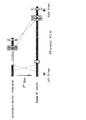
- the design position of the junction Primer used for confirming the knock-in of the donor DNA is shown.
- the result of junction PCR after knock-in of donor DNA is shown.
- the process of introducing the donor DNA prepared in the reference experimental example into cells is shown.
- the design position of the junction primer used for confirming the knock-in of the donor DNA and the result of junction PCR after the knock-in of the donor DNA are shown.
- the step of introducing the wild-type TP53 plasmid as the donor DNA into the cell into which the donor DNA prepared in Experimental Example 1 has been introduced is shown.
- the design position of the primer used to confirm the knock-in of the wild-type TP53 plasmid is shown.
- the results of PCR using the primers shown in FIG. 5 after knock-in of the wild-type TP53 plasmid are shown.
- the step of introducing the four kinds of donor DNAs prepared in Experimental Example 4 into the cells prepared in Experimental Example 2 is shown.
- the design positions of the primers used to confirm the knock-in of the four types of donor DNA are shown.
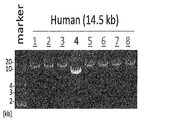
- the results of PCR performed using the primers shown in FIG. 7 after knocking in the four types of donor DNA prepared in Experimental Example 4 are shown.
- the results of the experiment for inducing deletion of the TP53 gene in both alleles in human iPS cells performed in Example 5 are shown.
- polynucleotide and nucleic acid are used interchangeably and refer to nucleotide polymers in which nucleotides are attached by phosphodiester bonds.
- the "polynucleotide” and “nucleic acid” may be DNA, RNA, or may be composed of a combination of DNA and RNA.
- the "polynucleotide” and “nucleic acid” may be a polymer of a natural nucleotide, and the natural nucleotide and the unnatural nucleotide (an analog of the natural nucleotide, a base portion, a sugar portion and a phosphoric acid portion at least one portion thereof) may be used. It may be a polymer with a nucleotide modified with (for example, a phosphorothioate skeleton), or it may be a polymer of an unnatural nucleotide.
- nucleic acid Unless otherwise specified, the base sequence of "polynucleotide” or “nucleic acid” is described by a generally accepted one-letter code. Unless otherwise specified, the base sequence is described from the 5'side to the 3'side. Nucleotide residues constituting the "polynucleotide” or “nucleic acid” may be simply described by adenine, thymine, cytosine, guanine, uracil, etc., or a one-letter code thereof.
- gene refers to a polynucleotide that contains at least one open reading frame that encodes a particular protein.
- the gene can contain both exons and introns.
- polypeptide polypeptide
- peptide protein
- the terms “polypeptide”, “peptide” and “protein” are used interchangeably and refer to polymers of amino acids linked by amide bonds.
- the "polypeptide”, “peptide” or “protein” may be a polymer of natural amino acids, or may be a polymer of natural amino acids and unnatural amino acids (chemical analogs of natural amino acids, modified derivatives, etc.). It may be a polymer of unnatural amino acids. Unless otherwise specified, the amino acid sequence is described from the N-terminal side to the C-terminal side.
- allele refers to a set of base sequences that are co-located on the chromosomal genome.
- diploid cells have two alleles in the same locus and triploid cells have three alleles in the same lous.
- an abnormal copy of the chromosome or an abnormal additional copy of the locus may form an additional allele.
- Genome modification may include the use of sequence-specific nucleic acid cleavage molecules designed to cleave target region DNA.
- genomic modification may include the use of a nuclease that has been engineered to cleave the DNA of the target region.
- genomic modification may include the use of nucleases (eg, TALENs or ZFNs) engineered to cleave a target sequence having a particular base sequence in the target region.
- the genome modification is a restriction enzyme having only one cleavage site in the genome, such as a meganuclease, such as a meganuclease, such as a restriction enzyme that cleaves a target sequence having a specific base sequence in the target region (eg, a 16-based sequence).
- restriction enzymes with specificity (theoretically present in a ratio of one to 4 16 bases)
- restriction enzymes with 17 base sequence specificity theoretically present in a ratio of one to 4 17 bases
- 18 restriction enzyme having a base sequence specificity it may be possible to use a sequence-specific endonuclease, such as.
- NHEJ Homologous End-Joining Repair
- HDR is a repair mechanism using donor DNA, and it is also possible to introduce a desired mutation into a target region.
- the CRISPR / Cas system is preferably exemplified.
- the meganuclease include I-SceI, I-SceII, I-SceIII, I-SceIV, I-SceV, I-SceVI, I-SceVII, I-CeuI, I-CeuAIIP, I-CreI, and I-CrepsbIP.
- a nuclease and its cleavage site preferably a restriction enzyme having a sequence specificity of 18 bases or more, a meganuclease and its cleavage site (or recognition site), particularly one or more sites in the cell genome.
- a non-cleaving meganuclease and its cleavage site can be used.
- target region refers to a genomic region that is the target of genomic modification.
- the term "donor DNA” refers to DNA used for repairing double-strand breaks in DNA and that can be homologously recombined with DNA around the target region.
- the donor DNA contains an upstream base sequence and a downstream base sequence of the target region (for example, a base sequence adjacent to the target region) as a homology arm.
- a homology arm consisting of a base sequence on the upstream side of the target region is referred to as an "upstream homology arm”
- a base sequence on the downstream side of the target sequence for example, on the downstream side
- a homology arm consisting of (adjacent base sequences) may be referred to as a "downstream homology arm”.
- the donor DNA can contain a desired base sequence between the upstream homology arm and the downstream homology arm.
- the length of each homology arm is preferably 300 bp or more, and is usually about 500 to 3000 bp.
- the lengths of the upstream homology arm and the downstream homology arm may be the same or different from each other.
- the "upstream” of the target region means a DNA region located on the 5'side of the reference nucleotide strand in the double-stranded DNA of the target region.
- downstream of the target region is meant DNA located on the 3'side of the reference nucleotide strand.
- the reference nucleotide strand is usually the sense strand.
- the promoter is located upstream of the protein coding sequence.
- the terminator is located downstream of the protein coding sequence.
- sequence-specific nucleic acid cleavage molecule refers to a molecule that can recognize a specific nucleic acid sequence and cleave a nucleic acid with the specific nucleic acid sequence.
- a sequence-specific nucleic acid-cleaving molecule is a molecule having a sequence-specific nucleic acid-cleaving activity (sequence-specific nucleic acid-cleaving activity).
- target sequence refers to a DNA sequence in the genome that is the target of cleavage by a sequence-specific nucleic acid cleavage molecule.
- sequence-specific nucleic acid cleavage molecule is a Cas protein
- the target sequence refers to a DNA sequence in the genome that is the target of cleavage by the Cas protein.
- Cas9 protein is used as the Cas protein
- the target sequence needs to be a sequence adjacent to the 5'side of the protospacer flanking motif (PAM).
- PAM protospacer flanking motif
- a known design tool such as CRISPR DESIGN (crispr.mit.edu /) can be used for designing the target sequence.
- Cas protein refers to a CRISPR-associated protein.
- the Cas protein forms a complex with a guide RNA and exhibits endonuclease activity or nickase activity.
- the Cas protein is not particularly limited, and examples thereof include Cas9 protein, Cpf1 protein, C2c1 protein, C2c2 protein, and C2c3 protein.
- Cas proteins include wild-type Cas proteins and their homologs (paralogs and orthologs), as well as variants thereof, as long as they exhibit endonuclease activity or nickase activity in cooperation with guide RNA.
- the Cas protein is one that is involved in a class 2 CRISPR / Cas system, more preferably one that is involved in a type II CRISPR / Cas system.
- a preferred example of the Cas protein is the Cas9 protein.
- Cas9 protein refers to the Cas protein involved in the type II CRISPR / Cas system.
- the Cas9 protein forms a complex with the guide RNA and exhibits the activity of cleaving the DNA of the target region in cooperation with the guide RNA.
- Cas9 protein includes wild-type Cas9 protein and its homologs (paralogs and orthologs), and variants thereof, as long as they have the above-mentioned activity.
- the wild-type Cas9 protein has a RuvC domain and an HNH domain as nuclease domains, but the Cas9 protein in the present specification may be one in which either the RuvC domain or the HNH domain is inactivated.
- Cas9 in which either the RuvC domain or the HNH domain is inactivated introduces a single-strand break (nick) into the double-stranded DNA. Therefore, when Cas9 in which either the RuvC domain or the HNH domain is inactivated is used for cleavage of the double-stranded DNA, the target sequence of Cas9 is set for each of the sense strand and the antisense strand, and the sense is sensed.
- the modified system can be configured such that the strand and antisense difference nicks occur close enough to induce double-strand breaks.
- the species from which the Cas9 protein is derived is not particularly limited, but bacteria belonging to the genus Streptococcus, Staphylococcus, Neisseria, Treponema, and the like are preferably exemplified. More specifically, S. pyogenes, S. cerevisiae. thermophilus, S.A. aureus, N. et al. Meningitidis, or T.I. Cas9 protein derived from denticola and the like is preferably exemplified. In a preferred embodiment, the Cas9 protein is S. It is a Cas9 protein derived from pyogenes.
- guide RNA and "gRNA” are used interchangeably to refer to RNA that can form a complex with a Cas protein and direct the Cas protein to a target region.
- the guide RNA comprises a CRISPR RNA (crRNA) and a transactivated CRISPR RNA (tracrRNA).
- crRNA is involved in binding to a target region on the genome, and tracrRNA is involved in binding to Cas protein.
- the crRNA comprises a spacer sequence and a repeat sequence, the spacer sequence binding to the complementary strand of the target sequence in the target region.
- the tracrRNA comprises an anti-repeat sequence and a 3'tail sequence.
- the anti-repeat sequence has a sequence complementary to the repeat sequence of crRNA and forms a base pair with the repeat sequence, and the 3'tail sequence usually forms three stem loops.
- the guide RNA may be a single guide RNA (sgRNA) in which the 5'end of tracrRNA is linked to the 3'end of crRNA, and crRNA and tracrRNA are made into separate RNA molecules, and base pairs are used in repeat sequences and anti-repeat sequences. May be formed.
- the guide RNA is sgRNA.
- the repeat sequence of crRNA and the sequence of tracrRNA can be appropriately selected according to the type of Cas protein, and those derived from the same bacterial species as Cas protein can be used.
- the length of sgRNA can be about 50 to 220 nucleotides (nt), preferably about 60 to 180 nt, and more preferably about 80 to 120 nt.
- the length of crRNA can be about 25 to 70 bases including the spacer sequence, and is preferably about 25 to 50 nt.
- the length of the tracrRNA can be about 10 to 130 nt, preferably about 30 to 80 nt.
- the repeat sequence of crRNA may be the same as that in the bacterial species from which the Cas protein is derived, or may be the one in which a part of the 3'end is deleted.
- the tracrRNA may have the same sequence as the mature tracrRNA in the bacterial species from which the Cas protein is derived, or may be a terminal-cleaving type in which the 5'end and / or 3'end of the mature tracrRNA is cleaved.
- tracrRNA can be a terminal-cleaving type in which about 1 to 40 nucleotide residues are removed from the 3'end of mature tracrRNA.
- the tracrRNA can be a terminal-cleaving type in which about 1 to 80 nucleotide residues are removed from the 5'end of the mature tracrRNA. Further, the tracrRNA can be, for example, a terminal-cleaving type in which about 1 to 20 nucleotide residues are removed from the 5'end and about 1 to 40 nucleotide residues are removed from the 3'end.
- Various crRNA repeat sequences and tracrRNA sequences for sgRNA design have been proposed, and those skilled in the art can design sgRNA based on known techniques (eg, Jinek et al. (2012) Science, 337, 816-21; Mali et al.
- protospacer flanking motif and “PAM” are used interchangeably and refer to sequences recognized by the Cas protein when DNA is cleaved by the Cas protein.
- the sequence and position of PAM depends on the type of Cas protein. For example, in the case of Cas9 protein, the PAM needs to be adjacent immediately after the 3'side of the target sequence.
- the sequence of PAM corresponding to the Cas9 protein depends on the bacterial species from which the Cas9 protein is derived. For example, S.
- the PAM corresponding to the Cas9 protein of pyogenes is "NGG" and S. streptococcus.
- the PAM corresponding to the Cas9 protein of thermophilus is "NNAGAA”.
- the PAM corresponding to the Cas9 protein of aureus is "NNGRRT” or “NNGRR (N)".
- the PAM corresponding to the Cas9 protein of meningitidis is "NNNNGATT", and T.I. It is "NAAAAC” corresponding to the Cas9 protein of denticola ("R" is A or G; “N” is A, T, G or C).
- spacer sequence and "guide sequence” are used interchangeably and refer to a sequence contained in a guide RNA that can bind to the complementary strand of the target sequence.
- the spacer sequence is the same sequence as the target sequence (however, T in the target sequence is U in the spacer sequence).
- the spacer sequence can contain a mismatch of one or more bases with respect to the target sequence. When a mismatch of a plurality of bases is included, the mismatch may be present at adjacent positions or may be present at distant positions.
- the spacer sequence may contain a mismatch of 1-5 bases to the target sequence. In a particularly preferred embodiment, the spacer sequence may contain a 1 base mismatch with respect to the target sequence.
- the spacer sequence is located on the 5'side of the crRNA.
- the term "functionally linked" used with respect to a polynucleotide means that the first base sequence is located sufficiently close to the second base sequence and the first base sequence is the second base sequence or the second base sequence. It means that it can affect the area under the control of.
- functionally ligating a polynucleotide to a promoter means that the polynucleotide is ligated to be expressed under the control of the promoter.
- the term “expressible state” refers to a state in which the polynucleotide can be transcribed in the intracellular into which the polynucleotide has been introduced.
- expression vector refers to a vector containing a target polynucleotide, which comprises a system for making the target polynucleotide expressible in the cell into which the vector has been introduced.
- the “Cas protein expression vector” means a vector capable of expressing the Cas protein in the cell into which the vector has been introduced.
- the “guide RNA expression vector” means a vector capable of expressing a guide RNA in the cell into which the vector has been introduced.
- sequence identity is such that two base sequences or amino acid sequences are inserted and deleted so that the corresponding bases or amino acids match most. It is determined as the ratio of the matching base or amino acid to the entire base sequence or the entire amino acid sequence, excluding the gap in the obtained alignment, by juxtaposing the portion corresponding to the above with a gap.
- sequence identity between base sequences or amino acid sequences can be determined by using various homology search software known in the art. For example, the sequence identity value of the base sequence can be obtained by calculation based on the alignment obtained by the known homology search software BLASTN, and the sequence identity value of the amino acid sequence can be obtained by the known homology search. It can be obtained by calculation based on the alignment obtained by the software BLASTP.
- the present invention provides a genome modification method that modifies two or more alleles of a chromosomal genome.
- the genome modification method includes the following steps (a) and (b): (A) A step of introducing the following (i) and (ii) into a cell containing the chromosome; and (i) a sequence-specific nucleic acid cleavage molecule targeting a target region of the chromosome genome, or the sequence-specific nucleic acid.
- a genome modification system containing a polynucleotide encoding a cleaved molecule (Ii) Between an upstream homology arm having a base sequence homologous to the base sequence adjacent to the upstream side of the target region and a downstream homology arm having a base sequence homologous to the base sequence adjacent to the downstream side of the target region.
- two or more kinds of donor DNAs for selectable markers containing the base sequence of the selectable marker gene, and the two or more kinds of donor DNAs for selectable markers have different selectable marker genes and are used for the selectable marker.
- the number of types of donor DNA is equal to or greater than the number of the alleles to be modified in the genome, and two or more types of donor DNA for selectable markers, (B) After the step (a), a step of selecting the cells based on all the selectable marker genes contained in the donor DNAs for the two or more types of selectable markers.
- the selectable marker gene can be unique to each type of donor DNA for the selectable marker.
- the step (b) also changes to the two or more alleles by homologous recombination of different types of donor DNAs for selectable markers with respect to the two or more alleles after the step (a).
- It can be a step (step for positive selection) in which a unique selectable marker gene that is distinctly different from each other is introduced and cells that express all of the introduced selectable marker genes that are distinctively different from each other are selected.
- the above method may be a method for producing a cell in which two or more alleles of the chromosomal genome are modified.
- the present invention is a method of producing a cell in which two or more alleles of a chromosomal genome have been modified.
- Genome modification system including (Ii) Two or more types of donor DNAs for selectable markers, each of which has an upstream homology arm having a nucleotide sequence homologous to the nucleotide sequence on the upstream side of the target region and a base on the downstream side of the target region.
- a donor for two or more selectable markers which has a downstream homology arm having a sequence and a base sequence that can be homologously recombinant, and contains a base sequence of a selectable marker gene between the upstream homology arm and the downstream homology arm.
- the DNA has different selectable marker genes that are distinguishable from each other, the selectable marker gene is unique to each type of selectable marker donor DNA, and the number of types of the selectable marker donor DNA is the same as that of the genome modification. Two or more selectable marker donor DNAs that are equal to or greater than the number of target alleles.
- different types of donor DNAs for selectable markers are homologously recombined with respect to the two or more alleles, so that the two or more alleles are distinctly different from each other.
- step (a) In step (a), the above (i) and (ii) are introduced into cells containing chromosomes.
- the cell used in the genome modification method of the present embodiment is not particularly limited, and may be a cell having a diploid or higher chromosomal genome.
- the cells may be diploid, triploid, tetraploid or higher.
- the cell is not particularly limited, and examples thereof include eukaryotic cells.
- the cell may be a plant cell, an animal cell, or a fungal cell.
- the animal cell is not particularly limited, and may be any cell of human, non-human mammal, bird, reptile, amphibian, fish, insect, or other invertebrate.
- the cell used in the genome modification method of the present embodiment is not an allergen-free cell (for example, a cell having a haploid chromosomal genome, for example, a prokaryotic cell).
- the target region targeted for genome modification can be any region on the genome having one or more alleles.
- the size of the target region is not particularly limited. In the genome modification method of the present embodiment, a region having a larger size than the conventional one can be modified.
- the target region may be, for example, 10 kbp or more.
- the target region is, for example, 100 bp or more, 200 bp or more, 400 bp or more, 800 bp or more, 1 kbp or more, 2 kbp or more, 3 kbp or more, 4 kbp or more, 5 kbp or more, 8 kbp or more, 10 kbp or more, 20 kbp or more, 40 kbp or more, 80 kbp or more, 100 kbp or more. , 200 kbp or more, 300 kbp or more, or 400 kbp or more.
- the target region can be, for example, a region containing one to several genes, a region containing one gene, or a region of a part of one gene. In some embodiments, the targeted region is deleted in the modified cell.
- Genome modification system means a molecular mechanism capable of modifying a desired target region.
- the genome modification system includes a sequence-specific nucleic acid-cleaving molecule that targets a target region of the chromosomal genome, or a polynucleotide encoding the sequence-specific nucleic acid-cleaving molecule.
- sequence-specific nucleic acid-cleaving molecule is not particularly limited as long as it is a molecule having sequence-specific nucleic acid-cleaving activity, and may be a synthetic organic compound or a biopolymer compound such as a protein.
- synthetic organic compounds having sequence-specific nucleic acid cleavage activity include pyrrole and imidazole polyamide.
- proteins having sequence-specific site-cleaving activity include sequence-specific endonucleases.
- a sequence-specific endonuclease is an enzyme that can cleave nucleic acids at a given sequence.
- a sequence-specific endonuclease can cleave double-stranded DNA at a given sequence.
- the sequence-specific endonuclease is not particularly limited, and examples thereof include, but are not limited to, zinc finger nuclease (ZFN), TALEN (Transcript activator-like effector nucleose), and Cas protein.
- ZFN is an artificial nuclease containing a nucleic acid cleavage domain conjugated to a binding domain containing a zinc finger array.
- the cleavage domain include a cleavage domain of the type II restriction enzyme FokI.
- FokI restriction enzyme
- TALEN is an artificial nuclease containing a DNA binding domain of a transcriptional activator-like (TAL) effector in addition to a DNA cleavage domain (eg, FokI domain).
- TAL transcriptional activator-like
- the design of the TALE construct capable of cleaving the target sequence can be performed by a known method (for example, Zhang, Feng et. Al. (2011) Nature Biotechnology 29 (2)).
- the genome modification system includes a CRISPR / Cas system. That is, the genome modification system preferably contains a Cas protein and a guide RNA having a base sequence homologous to the base sequence in the target region.
- the guide RNA may contain a sequence homologous to the sequence in the target region (target sequence) as the spacer sequence.
- the guide RNA need only be capable of binding to the DNA in the target region, and does not have to have a sequence that is exactly the same as the target sequence. This bond may be formed under physiological conditions within the cell nucleus.
- the guide RNA can contain, for example, a mismatch of 0 to 3 bases with respect to the target sequence.
- the number of mismatches is preferably 0 to 2 bases, more preferably 0 to 1, and even more preferably no mismatches.
- the guide RNA can be designed based on a known method.
- the genome modification system is preferably a CRISPR / Cas system and preferably contains a Cas protein and a guide RNA.
- the Cas protein is preferably the Cas9 protein.
- sequence-specific endonuclease may be introduced into cells as a protein or may be introduced into cells as a polynucleotide encoding a sequence-specific endonuclease.
- a sequence-specific endonuclease mRNA may be introduced, or a sequence-specific endonuclease expression vector may be introduced.
- the coding sequence of the sequence-specific endonuclease is functionally linked to the promoter.
- the promoter is not particularly limited, and for example, various pol II promoters can be used.
- the pol II promoter is not particularly limited, and examples thereof include a CMV promoter, an EF1 promoter (EF1 ⁇ promoter), an SV40 promoter, an MSCV promoter, an hTERT promoter, a ⁇ -actin promoter, a CAG promoter, and a CBh promoter.
- the promoter may be an inducible promoter.
- An inducible promoter is a promoter that can induce the expression of a polynucleotide operably linked to the promoter only in the presence of an inducing factor that drives the promoter.
- Examples of the inducible promoter include a promoter that induces gene expression by heating, such as a heat shock promoter.
- Inducible promoters include promoters in which the inducing factor that drives the promoter is a drug. Examples of such drug-inducible promoters include Cumate operator sequences, ⁇ operator sequences (eg, 12 ⁇ ⁇ Op), tetracycline-based inducible promoters, and the like.
- Tetracycline-based inducible promoters include, for example, a promoter that drives gene expression in the presence of tetracycline or a derivative thereof (eg, doxycycline), or a reverse tetracycline-controlled transactivator (rtTA).
- tetracycline-based inducible promoter examples include the TRE3G promoter.
- the expression vector a known one can be used without particular limitation.
- the expression vector include a plasmid vector and a viral vector.
- the expression vector may include a guide RNA coding sequence (guide RNA gene) and in addition to the Cas protein coding sequence (Cas protein gene).
- the guide RNA coding sequence (guide RNA gene) is preferably functionalized by the pol III promoter.
- the pol III promoter include mouse and human U6-snRNA promoters, human H1-RNase P RNA promoters, human valine-tRNA promoters, and the like.
- the selectable marker donor DNA is a donor DNA for knocking in the selectable marker into the target region.
- the donor DNA for the selectable marker includes an upstream homology arm having a base sequence homologous to the base sequence adjacent to the upstream side of the target region and a downstream homology arm having a base sequence homologous to the base sequence adjacent to the downstream side of the target region. Contains the base sequence of one or more selectable marker genes.
- the donor DNA for the selectable marker is not particularly limited, but is, for example, 1 kb or more, 2 kb or more, 3 kb or more, 4 kb or more, 5 kb or more, 6 kb or more, 7 kb or more, 8 kb or more, 9 kb or more, 9.5 kb or more, or 10 kb or more. Can have length.
- the donor DNA for the selectable marker is not particularly limited, but for example, 50 kb or less, 45 kb or less, 40 kb or less, 35 kb or less, 30 kb or less, 25 kb or less, 20 kb or less, 15 kb or less, 14 kb or less, 13 kb or less, 12 kb or less, 11 kb or less, It can have a length of 10 kb or less, 9 kb or less, 8 kb or less, 7 kb or less, 6 kb or less, 5 kb or less, or 4 kb or less.
- the "selectable marker” means a protein that can select cells based on the presence or absence of its expression.
- a selectable marker gene is a gene that encodes a selectable marker.
- the selectable marker When selecting a selectable marker-expressing cell in a cell population in which selectable marker-expressing cells and non-selectable marker-expressing cells coexist, the selectable marker is referred to as a "positive selectable marker” or a "selective marker for positive selection”.
- the selectable marker is referred to as a "negative selection marker” or a "selection marker for negative selection”.
- the selectable markers are different from each other means that they can be distinguished from each other (for example, they are distinguishably different), and physiological properties such as the property of drug resistance that the selectable marker imparts to the cells into which the selectable marker has been introduced or other physiological properties or other factors. It means that they can be distinguished from each other at least in terms of physicochemical properties. That is, when the selectable markers are different from each other, it means that a plurality of different selectable markers can be detected distinguishably from other selectable markers, or a drug can be selected distinguishably from other selectable markers.
- the selectable marker gene is unique to each type of selectable marker donor DNA means that the selectable marker gene possessed by one of the selectable marker donor DNAs is included in the selectable marker donor DNAs other than the above. If it is not present, or if it is contained in a plurality of types of donor DNA, it means that the gene is not expressed by two or more types of donor DNA at the same time. At this time, the two or more types of donor DNA may be the same except for the selectable marker, and may differ in the sequence and / or composition other than the selectable marker.
- the positive selection marker is not particularly limited as long as it can select cells expressing it.
- Examples of the positive selection marker gene include a drug resistance gene, a fluorescent protein gene, a luminescent enzyme gene, a color-developing enzyme gene and the like.
- the negative selection marker is not particularly limited as long as it can select cells that do not express it.
- the negative selection marker gene include a suicide gene (thymidine kines and the like), a fluorescent protein gene, a luciferase gene, a color-developing enzyme gene and the like.
- a negative selectable marker gene is a gene that has a negative effect on cell survival (eg, a suicide gene)
- the negative selectable marker gene can be functionally linked to an inducible promoter.
- the negative selectable marker gene can be expressed only when cells carrying the negative selectable marker gene are desired to be eliminated.
- Constant when the negative selection marker gene has little negative effect on cell survival such as when it is an optically detectable marker gene (visualization marker gene; visible marker gene) such as fluorescence, luminescence, and color development. May be expressed as a gene.
- Examples of drug resistance genes include puromycin resistance gene, blasticidin resistance gene, geneticin resistance gene, neomycin resistance gene, tetracycline resistance gene, canamycin resistance gene, zeosin resistance gene, hygromycin resistance gene, chloramphenicol resistance gene and the like.
- Examples of the fluorescent protein gene include, but are not limited to, a green fluorescent protein (GFP) gene, a yellow fluorescent protein (YFP) gene, a red fluorescent protein (RFP) gene, and the like.
- Examples of the luminescent enzyme gene include, but are not limited to, the luciferase gene.
- color-developing enzyme gene examples include, but are not limited to, ⁇ -galactosidase gene, ⁇ -glucuronidase gene, alkaline phosphatase gene, and the like.
- suicide gene examples include, but are not limited to, herpes simplex virus thymidine kinase (HSV-TK) and inducible caspase-9.
- the selectable marker gene contained in the donor DNA for the selectable marker is preferably a positive selectable marker gene. That is, the cell expressing the selectable marker can be selected as the cell in which the selectable marker gene is knocked in.
- the upstream homology arm has a base sequence that can be homologously recombined with the base sequence on the upstream side of the target region in the genome to be modified, and has, for example, a base sequence homologous to the base sequence adjacent to the upstream side of the target sequence.
- the downstream homology arm has a base sequence that can be homologously recombined with the base sequence on the upstream side of the target region in the genome to be modified, and has, for example, a base sequence homologous to the base sequence adjacent to the downstream side of the target sequence. ..
- the length and sequence of the upstream homology arm and the downstream homology arm are not particularly limited as long as they can be homologously recombined with the peripheral region of the target region.
- the upstream homology arm and the downstream homology arm do not necessarily have to exactly match the upstream or downstream sequence of the target region as long as homologous recombination is possible.
- the upstream homology arm can be a sequence having 90% or more sequence identity (homology) with the base sequence adjacent to the upstream side of the target region, and is 92% or more, 93% or more, 94% or more, It is preferable to have 95% or more, 96% or more, 97% or more, 98% or more, or 99% or more sequence identity.
- the downstream homology arm can be a sequence having 90% or more sequence identity (homology) with the base sequence adjacent to the downstream side of the target region, and is 92% or more, 93% or more, 94% or more, It is preferable to have 95% or more, 96% or more, 97% or more, 98% or more, or 99% or more sequence identity.
- the allele modification efficiency can be further enhanced.
- “close” can mean that the distance between the two sequences is 100 bp or less, 50 bp or less, 40 bp or less, 30 bp or less, 20 bp or less, or 10 bp or less.
- the cut is at one location. In some embodiments, the cuts can be at two or more locations. When introducing multiple cleavages into the genome, one location of the cleavage can be set on the upstream side of the target region and the other can be set on the downstream side of the target region.
- one location of the cleavage can be set on the upstream side of the target region and the other can be set on the downstream side of the target region.
- the donor DNA for the selectable marker undergoes homologous recombination repair upstream and downstream of the target region.
- the deleted region is replaced by the sequence of the donor DNA for the selectable marker.
- the efficiency of recombination can be improved as compared with the case where the cutting is performed at one place.
- the efficiency of allele modification can be further enhanced if at least one of the upstream homology arm and the downstream homology arm, preferably both, are closer to the cleavage site in or near the target region.
- the selectable marker gene is located between the upstream homology arm and the downstream homology arm.
- the selectable marker gene is preferably operably linked to the promoter so that it is expressed under the control of the appropriate promoter.
- the promoter can be appropriately selected depending on the type of cell into which the donor DNA is introduced. Examples of promoters include SR ⁇ promoter, SV40 early promoter, retrovirus LTR, CMV (cytomegalovirus) promoter, RSV (rous sarcoma virus) promoter, HSV-TK (herpes simplex virus thymidine kinase) promoter, EF1 ⁇ promoter, and metallothioneine. Examples include a promoter and a heat shock promoter.
- the donor DNA for the selectable marker may have an arbitrary control sequence such as an enhancer, a poly A addition signal, and a terminator.
- the donor DNA for the selectable marker may have an insulator sequence.
- “Insulator” refers to a sequence that blocks or mitigates the effects of an adjacent chromosomal environment and guarantees or enhances the independence of transcriptional regulation of DNA sandwiched between the regions.
- the insulator has an enhancer blocking effect (the effect of blocking the influence of the enhancer on the promoter activity by inserting it between the enhancer and the promoter) and an inhibitory effect of the positional effect (by sandwiching both sides of the introduced gene with the insulator). , The action of making the expression of the transgene unaffected by the position on the inserted genome).
- the donor DNA for a selectable marker may have an insulator sequence between the upstream arm and the selectable marker gene (or between the upstream arm and the promoter that controls the selectable marker gene).
- the donor DNA for a selectable marker may have an insulator sequence between the downstream arm and the selectable marker gene.
- the donor DNA for the selectable marker may be linear or cyclic, but is preferably cyclic.
- the donor DNA for the selectable marker is a plasmid.
- the donor DNA for the selectable marker may contain any sequence in addition to the above sequences. For example, spacer sequences may be included in all or part of each sequence of the upstream homology arm, the insulator, the selectable marker gene, and the downstream homology arm.
- donor DNA for a selectable marker of the same number or more as the number of alleles to be genome-modified is introduced into cells.
- Different types of selectable marker DNA donor DNA have different (distinguishable) types of selectable marker genes.
- different types of selectable marker donor DNA do not have the exact same selectable marker gene or set thereof. That is, the donor DNA for the first type of selection marker has the first type of selection marker gene, and the donor DNA for the second type of selection marker has the second type of selection marker gene.
- the third type of selectable marker donor DNA has a third type of selectable marker gene, and the same applies to the subsequent types of selectable marker donor DNA.
- the donor DNA for a selectable marker does not have a recombinant sequence of site-specific recombination enzyme (eg, a loxP sequence recombinant by Cre recombinase and variants thereof).
- the methods of the invention do not use site-specific recombination enzymes and recombinant sequences thereof (eg, loxP sequences recombinated by Cre recombinase and variants thereof).
- site-specific recombination enzymes and recombinant sequences thereof eg, loxP sequences recombinated by Cre recombinase and variants thereof.
- one recombinant sequence of the site-specific recombination enzyme usually remains in the edited genome.
- the modified genome of the cell obtained by the method of the invention does not have a recombinant sequence (foreign) of site-specific recombination enzyme.
- the number of types of donor DNA for selectable markers may be equal to or greater than the number of alleles targeted for genome modification, and the upper limit is not particularly limited.
- the number of types of donor DNA for selectable markers is preferably the same as the number of alleles to be targeted for genome modification or about 1 to 2 more than the number of alleles to be targeted for genome modification. It is more preferable that the number is the same as the number of alleles.
- the method for introducing the above (i) and (ii) into cells is not particularly limited, and a known method can be used without particular limitation.
- Examples of the method for introducing (i) and (ii) into cells include a virus infection method, a lipofection method, a microinjection method, a calcium phosphoric acid method, a DEAE-dextran method, an electroporation method, a particle gun method and the like. However, it is not limited to these.
- the DNA of the target region is cleaved by the sequence-specific nucleic acid cleavage molecule of the above (i), and then the donor for the selectable marker of (ii) is obtained by HDR.
- the donor DNAs for two or more types of selectable markers can be randomly knocked into two or more alleles in the target region when the upstream homology arm and the downstream homology arm are the same.
- the donor DNA for two or more types of selectable markers has two or more base sequences that can be homologously recombined with the upstream sequence and the downstream sequence of the target region of each of the two or more alleles as long as they have the base sequence of the homology arm. It is not necessary to have the exact same homology arm base sequence because each of the alleles can be modified.
- the nucleotide sequences of the upstream and downstream homology arms have a nucleotide sequence that is more identical to the upstream and downstream sequences of the target region of each allele. It may be (eg, it may be so optimized).
- the donor DNA for a selectable marker has an upstream homology arm and a downstream homology arm, and has a selectable marker gene between the upstream homology arm and the downstream homology arm, preferably such as a cleavage site of a meganuclease. It may further have a target sequence of endonuclease (base sequence specific nucleic acid cleavage molecule).
- the selectable marker comprises a selectable marker gene for positive selection and a marker gene for negative selection.
- the selectable marker comprises a selectable marker for positive selection, but may not separately include a negative selectable marker gene.
- the selectable marker gene for positive selection can also be used for negative selection, and such marker genes include visualization marker genes.
- the set of two or more selectable marker donor DNAs is a combination of the above-mentioned selectable marker donor DNAs, and each has a selectable marker gene for positive selection that can be distinguished from each other. In the above set, it may further have a target sequence of an endonuclease (base sequence-specific nucleic acid cleavage molecule) such as a cleavage site of a meganuclease, and the target sequences may be different from each other but are the same (or the same). Can be cleaved with a nucleotide sequence-specific nucleic acid cleaving molecule).
- the length of the donor DNA for the selectable marker is as described above, but can be, for example, 5 kbp or more, 8 kbp or more, or 10 kbp or more.
- Step (b) After the step (a), the step (b) is performed.
- step (b) cells into which two or more alleles have been introduced with distinctably different selectable marker genes or combinations thereof are selected based on the expression of the distinctably different selectable marker genes. More specifically, in step (b), different types of donor DNAs for selectable markers are homologously recombined with respect to the two or more alleles, so that the two or more alleles can be distinguished from each other by unique selection. A cell into which a marker gene has been introduced and which expresses all of the introduced distinguishably different selectable marker genes is selected.
- step (b) different selectable marker donors are based on the expression of all selectable marker genes that are selectable marker genes possessed by the two or more selectable marker donor DNAs and are integrated into the chromosomal genome. Select cells in which each allele has been modified by the introduction of DNA. In some embodiments, in step (b), cells are selected based on all selectable marker genes contained in the two or more selectable marker donor DNAs. In some embodiments, in step (b), the expression of all selectable marker genes (marker genes for positive selection) that are selectable marker genes possessed by the two or more types of donor DNAs for selective markers and incorporated into the chromosomal genome.
- cells in which each allele has been modified by introducing a distinguishable marker donor DNA are selected.
- the cells obtained in step (b) have different marker genes for positive selection in each allele.
- the cells obtained in step (b) do not perform single cell cloning in step (b), where each allele has a common marker gene for positive selection. It may or may not include performing single cell cloning after selecting cells in which two or more alleles have been modified in step (b) ⁇ .
- cell selection is based on the expression of multiple marker genes for distinguishable positive selection introduced into each allele.
- step (b) is not performed in a manner that estimates the number of modified alleles based on the expression intensity of a single selectable marker gene (eg, the expression intensity or fluorescence intensity of a fluorescent protein).
- a single selectable marker gene eg, the expression intensity or fluorescence intensity of a fluorescent protein.
- step (b) cells may be appropriately selected according to the type of selectable marker gene used in step (a). At this time, cells are selected based on the expression of all the selectable marker genes used in step (a).
- the selectable marker gene when the selectable marker gene is a positive selectable marker gene, cells expressing all the selectable marker genes integrated (or incorporated) into the chromosomal genome to be modified can be selected, for example, the allele to be modified. It is possible to select cells that express as many positive selection markers as there are.
- the positive selection marker gene is a drug resistance gene, cells expressing the positive selection marker can be selected by culturing the cells in a medium containing the drug.
- the positive selection marker gene is a fluorescent protein gene, a luciferase gene, or a color-developing enzyme gene
- the positive selection marker is selected by selecting a cell that exhibits fluorescence, luminescence, or color development by the fluorescent protein, luciferase, or color-developing enzyme.
- the number of alleles to be modified is modified.
- the number of alleles to be modified is n or less, and at least modified when the number or more and n or less types of donor DNA for selectable markers are incorporated into the genome.
- the allele to be (two or more alleles) has been modified.
- the number of alleles to be modified is n, and that number of types of selectable marker donor DNA has been incorporated into the chromosomal genome and all alleles have been modified.
- the step uses as many or more types of selectable marker donor DNA as the number of alleles to be modified, so that the number of positive selectable markers expressed by the cell is ensured by that number of alleles. It means that it has been modified. From the viewpoint of increasing the cell selection efficiency in the step (b), it is preferable that the number of alleles to be modified is the same as the number of types of donor DNA for the selection marker.
- all the cells have by inducing HDR using n kinds of donor DNAs for selectable markers in order to modify n alleles in n-ploid cells. It is possible to efficiently obtain cells in which the allele of the above is modified. In addition, since cells in which all alleles have been modified can be reliably obtained, it is possible to efficiently acquire cells in which the target region has been modified even if the target region has a large size (for example, 10 kbp or more). can. Therefore, large-scale genome modification is also possible.
- the modified cells in step (b), can be selected from the pool containing the cells obtained in step (a) without cloning the cells. By omitting the cloning step, the time required for the step can be shortened.
- the genome modification method of the present embodiment may have an arbitrary step in addition to the above steps (a) and (b).
- the optional steps include, for example, the following steps (c) and (d): (C) After the step (b), an upstream homology arm having a base sequence homologous to the base sequence adjacent to the upstream side of the target region and a base sequence homologous to the base sequence adjacent to the downstream side of the target region.
- the genome modification method of the present embodiment may include any step in addition to the above steps (a) and (b).
- two or more generous marker donor DNAs are positive between the upstream homology arm and the downstream homology arm, respectively. It has a selectable marker gene for selection and another marker gene for negative selection and a target sequence, and when the selectable marker gene is used for both positive selection and negative selection, the present invention is concerned.
- steps (c) and (d) below may have, for example, steps (c) and (d) below:
- steps (iii) and (iv) are introduced into the selected cells to introduce the donor DNA for recombination into the two or more alleles.
- steps (ii) and (iv) are introduced into the selected cells to introduce the donor DNA for recombination into the two or more alleles.
- a genome modification system comprising a sequence-specific nucleic acid-cleaving molecule capable of targeting the additional target sequence and cleaving the additional target sequence, or a polynucleotide encoding the sequence-specific nucleic acid-cleaving molecule.
- the recombinant donor DNA may contain a desired base sequence between the upstream homology arm and the downstream homology arm. , Does not have to contain any base sequence ⁇ ,
- D After the step (c), a step of selecting cells that do not express the marker gene for negative selection (step for negative selection).
- step (c) After the step (b), the step (c) may be performed.
- a recombinant donor DNA containing or not containing the desired base sequence is introduced between the upstream homology arm and the downstream homology arm into the cells selected in step (b).
- an upstream homology arm having a base sequence homologous to the base sequence adjacent to the upstream side of the target region and a downstream having a base sequence homologous to the base sequence adjacent to the downstream side of the target region.
- a recombinant donor DNA containing the desired base sequence is introduced into the cells selected in step (b) between the homology arm and the homology arm.
- the recombinant donor DNA may contain the desired base sequence to knock in.
- the desired base sequence is not particularly limited.
- a base sequence in which a part or all of the base sequence of the target region is deleted is used as a desired base sequence. be able to.
- a base sequence containing the gene can be used as a desired base sequence.
- the size of the desired base sequence is not particularly limited and can be any size.
- the desired base sequence is, for example, 10 bp or more, 20 bp or more, 40 bp or more, 80 bp or more, 200 bp or more, 400 bp or more, 800 bp or more, 1 kbp or more, 2 kbp or more, 3 kbp or more, 4 kbp or more, 5 kbp or more, 6 kbp or more, 7 kbp or more, It can be 8 kbp or more, 9 kbp or more, 10 kbp or more, 15 kbp or more, 20 kbp or more, 40 kbp or more, 80 kbp or more, 100 kbp or more, 200 kbp or more, and the like.
- cells in which a desired base sequence is knocked in to two or more alleles can be efficiently selected. Therefore, for example, even a large-sized DNA of 5 kbp or more, 8 kbp or more, or 10 kbp or more can be knocked in.
- the recombination donor DNA may be, for example, shorter in length than the selectable marker donor DNA.
- the upstream homology arm and the downstream homology arm of the recombinant donor DNA may be the same as or different from those of the selectable marker donor DNA.
- the upstream homology arm and downstream homology arm included in the donor DNA for the selection marker are referred to as “first upstream homology arm” and “first downstream homology arm”
- the upstream homology arm and downstream homology arm contained in the recombinant donor DNA are referred to as “first upstream homology arm” and "first downstream homology arm”. It may be referred to as a "second upstream homology arm” or a "second downstream homology arm”.
- the second upstream homology arm and the second downstream homology arm can be homologously recombined with, for example, the first upstream homology arm or a region upstream thereof, and the first downstream homology arm or more.
- the length and sequence thereof are not particularly limited as long as they can be homologously recombined with the downstream region (in some embodiments, the length and sequence thereof are not particularly limited as long as they can be homologously recombined with the peripheral region of the target region). .. After recombination with the donor DNA for recombination, it is permissible that a part of the base sequence of the donor DNA for the selectable marker remains on the genome, but preferably, the base sequence of the donor DNA for the selectable marker is for recombination.
- the recombinant donor DNA may have the desired base sequence, whereby cells in which two or more alleles have been modified have the desired base sequence in the modified allele. It will be.
- the desired base sequence is located between the second upstream homology arm and the second downstream homology arm.
- the donor DNA for recombination contains a foreign gene, it is preferable that the foreign gene is functionally linked to a promoter.
- the recombination donor DNA may have an arbitrary control sequence such as an enhancer, a poly A addition signal, and a terminator.
- the recombination donor DNA may have an insulator sequence upstream and downstream of the foreign gene.
- the recombinant donor DNA comprises a spacer sequence between the second upstream homology arm and the second downstream homology arm.
- the recombinant donor DNA is a condition under which the same (or indistinguishable) gene as the selectable marker gene exerts its toxicity when the cell carrying the negative selectable marker gene contained in the selectable marker DNA is removed.
- the donor DNA for recombination is a gene that is the same (or indistinguishable) as the gene concerned under the condition that its toxicity is exhibited. It is configured not to be expressed.
- the recombinant donor DNA does not have a negative selectable marker gene and a second target sequence between the second upstream homology arm and the second downstream homology arm.
- the donor DNA for recombination is introduced into cells together with the above (i).
- the DNA in the target region is cleaved by the sequence-specific nucleic acid cleavage molecule of the above (i), and then the recombinant donor DNA is contained by HDR.
- the desired base sequence is knocked into the target region. Since the cell into which the donor DNA for recombination is introduced in this step is the cell selected in step (b), the base sequence of the donor DNA for selection marker is knocked in to the target region.
- the target sequence of the genome modification system of (i) is a base sequence contained in the target region after knock-in of the donor DNA for a selectable marker.
- the target sequence of the genome modification system in step (a) may be referred to as "first target sequence”
- the target sequence of the genome modification system in step (c) may be referred to as "second target sequence”.
- the second target sequence any sequence contained in the target region of the cell after the step (b) can be used.
- the second target sequence in the donor DNA for a selectable marker can be a sequence that is not present on the genome of the cell.
- the second target sequence in the donor DNA for the selectable marker is a sequence that is not present on the genome of the cell and is different from the other sequence to the extent that it does not cleave other sequences on the genome by the off-target. Is.
- the second target sequence in the donor DNA for a selectable marker can be a cleavage site for a meganuclease that is not present on the genome.
- the second target sequence is a region other than the negative selectable marker gene in step (d).
- the recombination donor DNA is configured so that homologous recombination by the recombination donor DNA is not significantly inhibited.
- the second target sequence will be the first. It may be the same as or different from the target sequence.
- the donor DNA for recombination does not have to contain a base sequence between the upstream homology arm and the downstream homology arm, but is 10 bp or less, 20 bp or less, 30 bp or less, 40 bp or less between the upstream homology arm and the downstream homology arm. , 50 bp or less, 60 bp or less, 70 bp or less, 80 bp or less, 90 bp or less, 100 bp or less, 200 bp or less, 300 bp or less, 400 bp or less, 500 bp or less, 600 bp or less, 700 bp or less, 800 bp or less, 900 bp or less, or 1 kbp or less. It may be included.
- the donor DNA for recombination is 1 kbp or more, 2 kbp or more, 3 kbp or more, 4 kbp or more, 5 kbp or more, 6 kbp or more, 7 kbp or more, 8 kbp or more, 9 kbp or more, or 10 kbp or more between the upstream homology arm and the downstream homology arm. It may contain a base sequence.
- the recombinant donor DNA encodes a selectable marker gene, a target sequence of a site-specific recombination enzyme, a gene encoding a factor having physiological activity, and a factor having cytotoxicity between the upstream homology arm and the downstream homology arm. Contains one or more or all selected from the group consisting of genes and promoter sequences, or does not include one or more selected from the group.
- step (c) the donor DNA for recombination is introduced into the selected cells in step (b).
- the selectable marker gene is knocked in to the target region. It can also be said that the step (c) is a step of removing the selectable marker gene knocked in the target region or replacing it with a desired base sequence.
- step (d) After the step (c), the step (d) may be performed. In step (d), cells that do not express the negative selectable marker are selected.
- the donor DNA for the selection marker may be one containing a positive selection marker gene and a negative selection marker gene, respectively. That is, the donor DNA for the selection marker used in the step (a) may contain a positive selection marker gene and a negative selection marker gene between the upstream homology arm and the downstream homology arm.
- the positional relationship between the positive selection marker gene and the negative selection marker gene is not particularly limited, and the positive selection marker gene may be upstream of the negative selection marker gene and vice versa.
- the donor DNA for a selectable marker has a positive selectable marker gene and a negative selectable marker gene
- a base sequence encoding a self-cleaving peptide or IRES (internal) is inserted between the positive selectable marker gene and the negative selectable marker gene.
- IRES internal
- a ribozyme entry site sequence or the like may intervene.
- Examples of the 2A peptide include 2A peptide (F2A) derived from foot-and-mouth disease virus (FMDV), 2A peptide (E2A) derived from horse rhinitis A virus (ERAV), 2A peptide (P2A) derived from Porcine techovirus (PTV-1), and the like. Examples thereof include a 2A peptide (T2A) derived from Thosea asigna virus (TaV).
- the same selectable marker gene may be used as a positive selectable marker in step (a) and as a negative selectable marker in step (d).
- the selectable marker gene is a fluorescent protein gene, a luciferase gene, or a marker gene (visualization marker gene) related to color development such as fluorescence or dye such as a fluorescent protein gene
- the fluorescent protein or luciferase or cells exhibiting fluorescence, luminescence or color development due to the expression of a luciferase may be selected, and in step (c), cells in which these fluorescence, luminescence or color development have disappeared may be selected.
- the same selectable marker gene also serves as a positive selectable marker and a negative selectable marker is also included when the donor DNA for the selectable marker has a negative selectable marker in addition to the positive selectable marker.
- the negative selectable marker gene may be different or the same depending on the type of donor DNA for the selectable marker.
- the cell selection operation in step (d) becomes simple.
- step (d) cells may be appropriately selected according to the type of negative selection marker gene used in step (a). At this time, all cells that do not express the negative selection marker gene used in step (a) are selected.
- the negative selection marker gene is a visualization marker gene such as a fluorescence protein gene, a luminescent enzyme gene, or a color-developing enzyme gene
- a visualization marker gene such as a fluorescence protein gene, a luminescent enzyme gene, or a color-developing enzyme gene
- cells in which visualization markers such as fluorescence, luminescence, or color development have disappeared may be selected.
- the negative selection marker gene is a suicide gene
- cells that do not express the negative selection marker can be selected by culturing the cells in a medium containing a drug that develops toxicity due to the expression of the suicide gene.
- the thymidine kines gene is used as the suicide gene, the cells may be cultured in a medium containing ganciclovir.
- Loss of expression of the negative selectable marker gene means that the negative selectable marker gene integrated into the target region in step (a) has been replaced with a polynucleotide containing the desired nucleotide sequence of the recombinant donor DNA. At this time, it is considered that the replacement of the polynucleotide occurs in the entire base sequence knocked in in the step (a). Therefore, by selecting cells in which the expression of the negative selection marker gene has disappeared, cells in which the base sequence knocked in in step (a) is replaced with the desired base sequence of the donor DNA for recombination are efficiently selected. can do.
- a negative selectable marker gene such as a suicide gene, may be functionally linked to an inducible promoter and drives the inducible promoter so that the negative selectable marker gene is expressed under conditions where its toxicity is exerted. By culturing the cells in the presence of the drug, cells that do not express the negative selectable marker can be selected.
- the negative selectable marker gene may be a gene encoding a cytotoxin (eg, ricin and diphtheria toxin) that is toxic to cells when expressed.
- step (d) cells in which two or more alleles have been modified (cells in the absence of a negative selectable marker gene) without cloning cells from the pool containing the cells obtained in step (c). ) Can be selected.
- step (c) and step (d) it is possible to efficiently obtain cells in which all alleles possessed by the cells have been modified to a desired sequence.
- cells in which all alleles have been modified can be reliably obtained, even if the desired base sequence has a large size (for example, 10 kbp or more), cells in which the base sequence is knocked in to the target region can be obtained. It can be obtained efficiently.
- step (c) and step (d) result in the deletion of the target region in all alleles of the cell, with homologous recombination before and after (ie, the upstream homology arm and the downstream homology arm, respectively).
- the resulting sequence is seamlessly linked without one or more selected from the group consisting of insertions, substitutions, and deletions of bases (eg, without insertions, substitutions, and deletions of bases).
- the upstream and downstream nucleotide sequences sandwiching the defective region are seamlessly linked.
- step (b) If the number of viable cells is small or no viable cells can be obtained by step (b), the target region removed from the genome by homologous recombination with the upstream homology arm and the downstream homology arm can be found. , Is shown to contain genes that affect cell proliferation or survival. Therefore, it is possible to investigate whether the target region contains genes that affect cell proliferation or survival. In this case, the design positions of the upstream homology arm and the downstream homology arm are changed to change the genes that are eliminated by homologous recombination from the genome, and the genes that affect cell proliferation or survival are identified. Can be done. Therefore, in the present invention, the step (e) can be performed after the step (b).
- step (e) when the number of surviving cells is small or no surviving cells can be obtained in step (b), the target region is narrowed and the number of genes to be eliminated from the genome is reduced. Includes identifying genes that affect cell proliferation or survival. If the target region contains only one gene, it is indicated that the gene is a gene that affects cell proliferation or survival. Then, when a gene that affects cell proliferation or survival is identified, step (f) can be performed. Step (f) involves knocking in to other regions of the genome that modify genes that affect the proliferation or survival of the identified cells (eg, safe harbor region, etc.) ⁇ Knock-in with recombinant donor DNA. May be used ⁇ .
- step (a) may not target a region that abolishes cell proliferation or survival.
- the invention provides a genome modification kit that modifies two or more alleles of the chromosomal genome.
- the genome modification kit includes the following (i) and (ii): (I) A genome modification system containing a sequence-specific nucleic acid-cleaving molecule that targets the target region of the chromosomal genome, or a polynucleotide encoding the sequence-specific nucleic acid-cleaving molecule; and (ii) upstream of the target region.
- a base sequence of a selectable marker gene is contained between a downstream homology arm having a base sequence homologous to an adjacent base sequence and a downstream homology arm having a base sequence homologous to the base sequence adjacent to the downstream side of the target region.
- Two or more types of donor DNAs for selectable markers the two or more types of donor DNAs for selectable markers have different selectable marker genes from each other, and the number of types of the donor DNAs for selectable markers is a genome modification. Two or more types of donor DNAs for selectable markers, which are equal to or more than the number of the target alleles.
- the present invention is a genome modification kit that modifies two or more alleles of a chromosomal genome, comprising the following (i) and (ii).
- a genome modification system containing a sequence-specific nucleic acid-cleaving molecule capable of targeting a target region of the chromosomal genome and cleaving the target region, or a polynucleotide encoding the sequence-specific nucleic acid-cleaving molecule.
- the kit may be one used in the method of the present invention.
- the kit may be used in a method of producing cells in which two or more alleles of the chromosomal genome have been modified.
- the present invention comprises cells in which two or more alleles of the chromosomal genome have been modified and each of the two or more alleles has a mutually different (distinguishable) selectable marker gene.
- the cell can be a cell of a unicellular organism.
- the cell can be an isolated cell.
- the cell can be a pluripotent cell and a cell selected from the group consisting of pluripotent stem cells (such as embryonic stem cells and induced pluripotent stem cells).
- the cell can be a tissue stem cell.
- the cell can be a somatic cell.
- the cell can be a germline cell (eg, a germ cell). In some embodiments, the cell can be a cell line. In some embodiments, the cell can be an immortalized cell. In some embodiments, the cell can be a cancer cell. In some embodiments, the cell can be a non-cancerous cell. In some embodiments, the cell can be a cell of a diseased patient. In some embodiments, the cell can be a healthy subject's cell. In some embodiments, the cells are animal cells (eg, human cells), such as insect cells (eg, silkworm cells), HEK293 cells, HEK293T cells, Expi293F TM cells, FreeStyle TM 293F cells, Chinese hamster ovary cells.
- insect cells eg, silkworm cells
- HEK293 cells HEK293T cells
- Expi293F TM cells FreeStyle TM 293F cells
- Chinese hamster ovary cells Chinese hamster ovary cells.
- It can be a cell selected from the group consisting of (CHO cells), CHO-S cells, CHO-K1 cells, and ExpiCHO cells, as well as cells derived from these cells.
- CHO cells CHO-S cells
- CHO-K1 cells CHO-K1 cells
- ExpiCHO cells cells derived from these cells.
- all alleles in the target region of the chromosomal genome are modified, and the modified regions each have a different (distinguishable) selectable marker gene.
- the selectable marker gene is a drug resistance marker gene
- the culture can be cultured in the presence of a drug for each drug resistance marker gene. Culturing can be carried out under conditions suitable for cell maintenance or proliferation.
- the invention is a non-human organism in which two or more alleles have a modified chromosomal genome, each of which has a mutually different (distinguishable) selectable marker gene.
- Non-human organisms are provided.
- the cell can be a cell of a unicellular organism.
- the non-human organism is a yeast (eg, saccharomyces or budding yeast, such as Saccharomyces cerevisiae, Saccharomyces curlsbergensis, Saccharomyces saccharomyces saccharomyces saccharomyces saccharomyces saccharomyces saccharomyces saccharomyces saccharomyces saccharomyces saccharomyces saccharomyces saccharomyces saccharomyces saccharomyces saccharomyces saccharomyces saccharomyces saccharomyces saccharomyces saccharomyces saccharomyces saccharomyces saccharomyces saccharomyces saccharomy
- Saccharomyces genus such as (Saccharomyces rouxii), Candida utilis such as Candida utilis, Candida genus such as Candida tropicalis, Pichia genus, Cryberomyces (Kluyveromyces) It can be an organism selected from the group consisting of yeasts such as the genus, Hansenula, Endomyces, etc.
- the non-human organism is a filamentous fungus (eg, Aspergillus, Trichoderma, Humicola, Acremonium, etc. (Fusarium, and Saccharomyces species).
- the non-human organism can be a multicellular organism.
- the non-human organism can be a non-human animal.
- the non-human organism can be a non-human.
- the organism can be a plant.
- all alleles in the target region of the chromosomal genome are modified, and the modified regions are different (distinguishable) selection marker genes from each other. Has.
- one or more of the genes necessary for cell survival and proliferation may be contained or collected in other regions of the chromosomal genome.
- the other region can be, for example, a safe harbor region (eg, AAVS1 region, etc.).
- FIG. 1 Preparation of donor DNA
- Fig. 1 Puromycin R plasmid and Blasticidin R plasmid
- a GFP gene was used as a negative selection marker.
- Puromycin R plasmid the GFP gene is linked downstream of the EF1 promoter, and the puromycin resistance gene is linked across the T2A sequence.
- Blasticidin R plasmid the GFP gene is linked downstream of the EF1 promoter, and the Blasticidin resistance gene is linked across the T2A sequence.
- the HR110PA-1 plasmid (Funakoshi) was used as the backbone sequence of the donor plasmid (donor DNA). This HR110PA-1 plasmid was cleaved with restriction enzymes EcoRI and BamHI, and a sequence having an origin of replication and an ampicillin resistance gene was excised and purified. This was used as the backbone sequence for all donor plasmids to be used in the future.
- the plasmid selection marker sequence and homology arm sequence were amplified by the following PCR.
- the EF1 promoter sequence was prepared by amplifying from the EcoRI recognition sequence on HR110PA-1 to the EF1 promoter sequence.
- the GFP sequence was prepared using the CS-CDF-CG-PRE plasmid (dnaconda.riken.jp/search/RDB_clone/RDB04/RDB04379.html) as a template.
- the puromycin expression sequence from the T2A sequence was prepared by amplifying the T2A sequence on HR110PA-1 to the BamHI recognition sequence.
- the upstream homology arm (810 bp: SEQ ID NO: 2) and the downstream homology arm (792 bp: SEQ ID NO: 3) were prepared using the genome of HCT116 as a template.
- a 20 bp homologous sequence corresponding to the adjacent sequence was added to the selectable marker sequence and the homology arm sequence at the time of PCR.
- the backbone sequence, the selection marker sequence, and the homology arm sequence are bound by NEBillder HiFi DNA Assembury (NEW ENGLAND BioLabs), introduced into Escherichia coli, and cultured in an ampicillin-added medium to form a puromycin plasmid. was cloned.
- the blasticidin plasmid was prepared by modifying the puromycin plasmid.
- the ORF sequence of blasticidin amplified by PCR and the sequence amplified other than the puromycin ORF sequence using the puromycin plasmid as a template were bound by NEBiller HiFi DNA Assembury, and cloning was performed in the same manner as in the preparation of the puromycin plasmid.
- Step (a) To 10 5 HCT116 cells as donor plasmid (donor DNA), it was introduced Puromycin R plasmid and Blasticidin R plasmid (each 12.5 ng).
- a plasmid introduction solution was prepared with the following composition.
- the above plasmid introduction solution was mixed by pipetting, incubated for 10 minutes at room temperature, and then added to a 24-well plate.
- Step (b) After introduction of both plasmids, cells were cultured for 8 days in McCoy 5A medium (added FBS to 10%) supplemented with 1 ⁇ g / mL puromycin and 10 ⁇ g / mL bratisidine. After culturing, cells were collected by pipetting from independent colonies.
- HCT116 cells were collected in a 1.5 mL tube and centrifuged at 150 g for 3 minutes at room temperature. The supernatant was removed and resuspended in 173 ⁇ L TE buffer (100 mM NaCl). After incubating at 95 ° C. for 5 minutes, the mixture was cooled to room temperature. 20 ⁇ L of TE buffer (100 mM NaCl, 0.5% SDS), 5 ⁇ L of Proteinase K (5 mg / ml), and 2 ⁇ L of RNase A (100 mg / ml) were added, mixed, and then inverted and stirred at 37 ° C. for 2 hours. .. After incubating at 85 ° C.
- junction PCR was performed using the DNA recovered as described above as a template and the junction Primer shown in FIG.
- the junction Primer is a primer that amplifies a puromycin resistance gene or a blasticidin resistance gene so as to straddle the junctions on both sides of 5'and 3'. Agarose gel electrophoresis of the PCR product was performed to confirm the amplified DNA fragment. The PCR conditions and primer sequences are shown below.
- PCR conditions Composition of PCR solution (reaction system 25 ⁇ L) 1 x KOD one (TOYOBO) 0.2 ⁇ M forward primer 0.2 ⁇ M reverse primer 10 ng genomic DNA
- Thermal cycler conditions 98 ° C, 30 seconds 98 ° C, 10 seconds; 68 ° C, 20 seconds 50 cycles 4 ° C
- DNA was extracted from the collected 10 cell clones by the same method as above.
- Junction PCR was performed in the same manner as above using a junction primer (see the left figure in FIG. 4) that amplifies the puromycin resistance gene or the junction so as to straddle the junctions on both sides of 5'and 3'. Agarose gel electrophoresis of the PCR product was performed to confirm the amplified DNA fragment.
- a plasmid containing a wild-type TP53 sequence As a donor DNA, a plasmid containing a wild-type TP53 sequence (wild-type TP53 plasmid) was prepared. The cell clone obtained in Experimental Example 2 by the same method as above except that a plasmid containing the sequences of the first intron of wild-type TP53 and its peripheral regions (5'arm and 3'arm) was used as the donor DNA. The wild-type TP53 plasmid was introduced into (clone # 13 in FIG. 3). The target sequences of gRNA used in the Cas9 & gRNA co-expression plasmid are shown below. GGCGCAAGCGCGATCGCGTAAGGG (SEQ ID NO: 13)
- Step (d) After the introduction of the wild-type TP53 plasmid, cell clones in which GFP expression had disappeared were selected by a cell sorter (SH800, Sony) and collected on a 96-well plate for each cell.
- a cell sorter SH800, Sony
- DNA was extracted from the collected cells by the same method as described above. PCR was performed using the Primer shown in FIG. Agarose gel electrophoresis of the PCR product was performed to confirm the amplified DNA fragment. The composition of the PCR solution is the same as above. The thermal cycler conditions and primer sequences are shown below.
- Thermal cycler conditions 98 ° C, 30 seconds 98 ° C, 10 seconds; 68 ° C, 2 minutes 30 seconds 50 cycles 4 ° C
- Fig. 6 The result is shown in Fig. 6. Of the 8 clones, 7 clones detected bands of the expected size (underlined clones). This result indicates that in these 7 clones, the selectable markers (puromycin resistance gene or blasticidin resistance gene, and GFP gene) were replaced with the first intron sequence of the wild-type TP53 gene. Also, in the 7 clones, the 5.6 kb band detected when the selectable marker remained in one of the alleles was not detected. This result suggests that the selectable marker was replaced with the wild-type first intron in both alleles.
- the selectable markers puromycin resistance gene or blasticidin resistance gene, and GFP gene
- DNA was extracted from the collected cells by the same method as above. PCR was performed using the Primers shown in FIGS. 7A to 7D. Agarose gel electrophoresis of the PCR product was performed to confirm the amplified DNA fragment. The composition of the PCR solution is the same as above. The thermal cycler conditions and primer sequences are shown below.
- Thermal cycler conditions 98 ° C, 30 seconds 98 ° C, 10 seconds; 68 ° C, 2 minutes 30 seconds 50 cycles 4 ° C
- the first intron of the human TP53 gene is a relatively large genomic region of 10,762 bp. It was confirmed that in the above method, in addition to being able to efficiently edit the genome of both alleles, it is possible to efficiently edit the genome even in such a relatively large genome region.
- Example 5 In Example 4, a deletion of the first intron of the human TP53 gene was attempted in HCT116 cells, but in this example, the deletion of the first intron of the human TP53 gene was performed in human pluripotent stem cells instead of HCT116 cells. I tried.
- the human pluripotent stem cells were specifically human-induced pluripotent stem cells (iPS cells).
- a CRISPR / Cas9 system with a gRNA designed to specifically induce cleavage upstream and downstream of a target gene in the presence of a donor DNA for a selectable marker. Introduced cutting using. The cleavage site was designed between the region where the upstream homology arm hybridizes and the target gene, and between the region where the downstream homology arm hybridizes and the target gene. This induced the first stage of recombination.
- the sequence of gRNA used was as follows.
- TP53 upstream gRNA CUCAGAGGGGGGCUCGACGCU (SEQ ID NO: 16)
- Human TP53 downstream gRNA GGUGCUUUAGAAUUCGCGC (SEQ ID NO: 17)
- target genes Similar to TP53, in HCT116 cells, gene deletion was induced by applying the above method to each of the human genes encoding MLH1, CD44, MET, and APP (hereinafter referred to as target genes). As shown in FIGS. 10 to 13, the size of the target gene was 58 kb for MLH1, 94 kb for CD44, 126 kb for MET, and 290 kb for APP. Upstream homology arms and downstream homology arms for upstream and downstream of each of these target genes were designed, and donor DNA for selection markers carrying different selectable marker genes and visualization marker genes that can be distinguished from each other was prepared. .. Specifically, one selectable marker donor DNA had GFP and puromycin resistance genes, and the other selectable marker donor DNA had GFP and blastysidedin resistance genes.
- cleavage was performed using a CRISPR / Cas9 system with a gRNA designed to specifically induce cleavage upstream and downstream of the target gene in the presence of a selectable marker donor DNA. Introduced. The cleavage site was designed between the region where the upstream homology arm hybridizes and the target gene, and between the region where the downstream homology arm hybridizes and the target gene. This induced the first stage of recombination.
- ⁇ Sequence of guide RNA> The sequences of guide RNAs upstream and downstream of each target gene were as follows. MLH1 upstream gRNA: GCGCCUGACGUCGCGGUUCGC (SEQ ID NO: 18) MLH1 downstream gRNA: GGAGGCCUUGGCACGGGUUC (SEQ ID NO: 19) CD44 upstream gRNA: CGAGGAUGGGCGGACCGAACC (SEQ ID NO: 20) CD44 downstream gRNA: GCCAAGUGGAACUCAACGGAG (SEQ ID NO: 21) MET upstream gRNA: GGGCCGCCGCGCGCCGAUGCC (SEQ ID NO: 22) MET1 downstream gRNA: GUUCCCACCUCCGCAAGCAAU (SEQ ID NO: 23) APP upstream gRNA: CUCCCGGGGGGUGUCUAUAA (SEQ ID NO: 24) APP downstream gRNA: UUCUAUAAAUGGACACCGAU (SEQ ID NO: 25)
- the selectable marker introduced instead of deleting the target gene was removed by the second stage recombination.
- GFP which is a visualization marker
- cells lacking a region containing a selection marker were selected using GFP not to be expressed as an index.
- selectable markers containing GFP could be removed from the genome in both alleles.
- a genome modification method and the genome modification kit capable of efficiently modifying two or more alleles and modifying a relatively large region.
Landscapes
- Health & Medical Sciences (AREA)
- Life Sciences & Earth Sciences (AREA)
- Genetics & Genomics (AREA)
- Engineering & Computer Science (AREA)
- Chemical & Material Sciences (AREA)
- Biomedical Technology (AREA)
- Organic Chemistry (AREA)
- Bioinformatics & Cheminformatics (AREA)
- Zoology (AREA)
- Wood Science & Technology (AREA)
- Biotechnology (AREA)
- General Engineering & Computer Science (AREA)
- Molecular Biology (AREA)
- General Health & Medical Sciences (AREA)
- Biochemistry (AREA)
- Microbiology (AREA)
- Biophysics (AREA)
- Plant Pathology (AREA)
- Physics & Mathematics (AREA)
- Mycology (AREA)
- Cell Biology (AREA)
- Oncology (AREA)
- Crystallography & Structural Chemistry (AREA)
- Medicinal Chemistry (AREA)
- Virology (AREA)
- Measuring Or Testing Involving Enzymes Or Micro-Organisms (AREA)
- Micro-Organisms Or Cultivation Processes Thereof (AREA)
- Saccharide Compounds (AREA)
- Apparatus Associated With Microorganisms And Enzymes (AREA)
Priority Applications (8)
| Application Number | Priority Date | Filing Date | Title |
|---|---|---|---|
| EP21785350.6A EP4134431A4 (en) | 2020-04-06 | 2021-04-05 | GENOME ALTERATION PROCEDURES AND GENOME ALTERATION KIT |
| KR1020227038024A KR20220164748A (ko) | 2020-04-06 | 2021-04-05 | 게놈 개변 방법 및 게놈 개변 키트 |
| AU2021254373A AU2021254373A1 (en) | 2020-04-06 | 2021-04-05 | Genome engineering method and genome engineering kit |
| CN202180026858.3A CN115552002A (zh) | 2020-04-06 | 2021-04-05 | 基因组改造方法及基因组改造试剂盒 |
| JP2022514064A JP7825830B2 (ja) | 2020-04-06 | 2021-04-05 | ゲノム改変方法及びゲノム改変キット |
| US17/917,188 US20230147287A1 (en) | 2020-04-06 | 2021-04-05 | Genome engineering method and genome engineering kit |
| CA3179410A CA3179410A1 (en) | 2020-04-06 | 2021-04-05 | Genome alteration method and genome alteration kit |
| IL297078A IL297078A (en) | 2020-04-06 | 2021-04-05 | Genome engineering method and genome engineering kit |
Applications Claiming Priority (4)
| Application Number | Priority Date | Filing Date | Title |
|---|---|---|---|
| JP2020068266 | 2020-04-06 | ||
| JP2020-068266 | 2020-04-06 | ||
| JP2020141335 | 2020-08-25 | ||
| JP2020-141335 | 2020-08-25 |
Publications (1)
| Publication Number | Publication Date |
|---|---|
| WO2021206054A1 true WO2021206054A1 (ja) | 2021-10-14 |
Family
ID=78022517
Family Applications (1)
| Application Number | Title | Priority Date | Filing Date |
|---|---|---|---|
| PCT/JP2021/014495 Ceased WO2021206054A1 (ja) | 2020-04-06 | 2021-04-05 | ゲノム改変方法及びゲノム改変キット |
Country Status (10)
| Country | Link |
|---|---|
| US (1) | US20230147287A1 (https=) |
| EP (1) | EP4134431A4 (https=) |
| JP (1) | JP7825830B2 (https=) |
| KR (1) | KR20220164748A (https=) |
| CN (1) | CN115552002A (https=) |
| AU (1) | AU2021254373A1 (https=) |
| CA (1) | CA3179410A1 (https=) |
| IL (1) | IL297078A (https=) |
| TW (1) | TW202204611A (https=) |
| WO (1) | WO2021206054A1 (https=) |
Cited By (4)
| Publication number | Priority date | Publication date | Assignee | Title |
|---|---|---|---|---|
| JP7212982B1 (ja) | 2022-10-05 | 2023-01-26 | 株式会社Logomix | 細胞ライブラリおよびその製造方法 |
| WO2023191063A1 (ja) | 2022-04-01 | 2023-10-05 | 株式会社Logomix | 遺伝子工学、細胞工学、および細胞医薬に適した細胞およびその製造方法 |
| WO2024219474A1 (ja) * | 2023-04-21 | 2024-10-24 | 株式会社Logomix | Kir遺伝子クラスター領域、lilr遺伝子クラスター領域およびklr遺伝子クラスター領域のいずれか1以上の領域において欠失を有する細胞およびその製造方法 |
| WO2025033445A1 (ja) | 2023-08-07 | 2025-02-13 | 株式会社Logomix | 遺伝子をコンディショナルに不活化させる方法、およびそのための細胞 |
Citations (7)
| Publication number | Priority date | Publication date | Assignee | Title |
|---|---|---|---|---|
| WO2014093661A2 (en) | 2012-12-12 | 2014-06-19 | The Broad Institute, Inc. | Crispr-cas systems and methods for altering expression of gene products |
| JP2016514480A (ja) * | 2013-04-05 | 2016-05-23 | ダウ アグロサイエンシィズ エルエルシー | 植物のゲノム内に外因性配列を組み込むための方法および組成物 |
| JP2016537982A (ja) * | 2013-11-19 | 2016-12-08 | プレジデント アンド フェローズ オブ ハーバード カレッジ | 巨大遺伝子の切除および挿入 |
| JP2016539655A (ja) * | 2013-12-11 | 2016-12-22 | リジェネロン・ファーマシューティカルズ・インコーポレイテッドRegeneron Pharmaceuticals, Inc. | ゲノムの標的改変のための方法及び組成物 |
| WO2017191503A1 (en) * | 2016-05-05 | 2017-11-09 | Crispr Therapeutics Ag | Materials and methods for treatment of hemoglobinopathies |
| WO2019018534A1 (en) * | 2017-07-18 | 2019-01-24 | The Board Of Trustees Of Leland Stanford Junior University | GENOME EDITION WITHOUT SCARCE THROUGH TWO-STEP APPROVED REPAIR BY HOMOLOGY |
| WO2019216338A1 (ja) * | 2018-05-08 | 2019-11-14 | 国立大学法人大阪大学 | ホモ接合型細胞の作製方法 |
Family Cites Families (2)
| Publication number | Priority date | Publication date | Assignee | Title |
|---|---|---|---|---|
| CN102094036A (zh) * | 2010-12-13 | 2011-06-15 | 西北农林科技大学 | 一种等位基因双敲除打靶载体系统及其构建方法 |
| CN106520829B (zh) * | 2016-10-17 | 2019-12-17 | 扬州大学 | 一种终止双等位基因转录的方法 |
-
2021
- 2021-04-05 CN CN202180026858.3A patent/CN115552002A/zh active Pending
- 2021-04-05 JP JP2022514064A patent/JP7825830B2/ja active Active
- 2021-04-05 EP EP21785350.6A patent/EP4134431A4/en active Pending
- 2021-04-05 WO PCT/JP2021/014495 patent/WO2021206054A1/ja not_active Ceased
- 2021-04-05 IL IL297078A patent/IL297078A/en unknown
- 2021-04-05 AU AU2021254373A patent/AU2021254373A1/en active Pending
- 2021-04-05 US US17/917,188 patent/US20230147287A1/en active Pending
- 2021-04-05 KR KR1020227038024A patent/KR20220164748A/ko active Pending
- 2021-04-05 CA CA3179410A patent/CA3179410A1/en active Pending
- 2021-04-06 TW TW110112407A patent/TW202204611A/zh unknown
Patent Citations (7)
| Publication number | Priority date | Publication date | Assignee | Title |
|---|---|---|---|---|
| WO2014093661A2 (en) | 2012-12-12 | 2014-06-19 | The Broad Institute, Inc. | Crispr-cas systems and methods for altering expression of gene products |
| JP2016514480A (ja) * | 2013-04-05 | 2016-05-23 | ダウ アグロサイエンシィズ エルエルシー | 植物のゲノム内に外因性配列を組み込むための方法および組成物 |
| JP2016537982A (ja) * | 2013-11-19 | 2016-12-08 | プレジデント アンド フェローズ オブ ハーバード カレッジ | 巨大遺伝子の切除および挿入 |
| JP2016539655A (ja) * | 2013-12-11 | 2016-12-22 | リジェネロン・ファーマシューティカルズ・インコーポレイテッドRegeneron Pharmaceuticals, Inc. | ゲノムの標的改変のための方法及び組成物 |
| WO2017191503A1 (en) * | 2016-05-05 | 2017-11-09 | Crispr Therapeutics Ag | Materials and methods for treatment of hemoglobinopathies |
| WO2019018534A1 (en) * | 2017-07-18 | 2019-01-24 | The Board Of Trustees Of Leland Stanford Junior University | GENOME EDITION WITHOUT SCARCE THROUGH TWO-STEP APPROVED REPAIR BY HOMOLOGY |
| WO2019216338A1 (ja) * | 2018-05-08 | 2019-11-14 | 国立大学法人大阪大学 | ホモ接合型細胞の作製方法 |
Non-Patent Citations (7)
| Title |
|---|
| CONG ET AL., SCIENCE, vol. 6121, 2013, pages 819 - 23 |
| HWANG ET AL., NAT. BIOTECHNOL., vol. 3, 2013, pages 227 - 9 |
| JINEK ET AL., ELIFE, vol. 2, 2013, pages e00471 |
| JINEK ET AL., SCIENCE, vol. 337, 2012, pages 816 - 21 |
| See also references of EP4134431A4 |
| SHUNYA KONO, TOMOYUKI OHNO, YASUNARI AISAWA: "G2-19 Development of a precise and large-scale genome editing method", PROCEEDINGS OF THE 100TH ANNUAL SPRING MEETING OF THE CHEMICAL SOCIETY OF JAPAN (CSJ); MARCH 22-25, 2020, vol. 100, 29 February 2020 (2020-02-29), JP, pages 1 - 1, XP009540900 * |
| ZHANG, FENG, NATURE BIOTECHNOLOGY, vol. 29, no. 2, 2011 |
Cited By (6)
| Publication number | Priority date | Publication date | Assignee | Title |
|---|---|---|---|---|
| WO2023191063A1 (ja) | 2022-04-01 | 2023-10-05 | 株式会社Logomix | 遺伝子工学、細胞工学、および細胞医薬に適した細胞およびその製造方法 |
| KR20240166013A (ko) | 2022-04-01 | 2024-11-25 | 가부시키가이샤 로고믹스 | 유전자 공학, 세포 공학, 및 세포 의약에 적합한 세포 및 그 제조 방법 |
| JP7212982B1 (ja) | 2022-10-05 | 2023-01-26 | 株式会社Logomix | 細胞ライブラリおよびその製造方法 |
| JP2024054652A (ja) * | 2022-10-05 | 2024-04-17 | 株式会社Logomix | 細胞ライブラリおよびその製造方法 |
| WO2024219474A1 (ja) * | 2023-04-21 | 2024-10-24 | 株式会社Logomix | Kir遺伝子クラスター領域、lilr遺伝子クラスター領域およびklr遺伝子クラスター領域のいずれか1以上の領域において欠失を有する細胞およびその製造方法 |
| WO2025033445A1 (ja) | 2023-08-07 | 2025-02-13 | 株式会社Logomix | 遺伝子をコンディショナルに不活化させる方法、およびそのための細胞 |
Also Published As
| Publication number | Publication date |
|---|---|
| AU2021254373A1 (en) | 2022-11-03 |
| TW202204611A (zh) | 2022-02-01 |
| EP4134431A4 (en) | 2024-06-05 |
| US20230147287A1 (en) | 2023-05-11 |
| CN115552002A (zh) | 2022-12-30 |
| JP7825830B2 (ja) | 2026-03-09 |
| EP4134431A1 (en) | 2023-02-15 |
| IL297078A (en) | 2022-12-01 |
| JPWO2021206054A1 (https=) | 2021-10-14 |
| CA3179410A1 (en) | 2021-10-14 |
| KR20220164748A (ko) | 2022-12-13 |
Similar Documents
| Publication | Publication Date | Title |
|---|---|---|
| US20240352489A1 (en) | Methods and compositions for modifying a targeted locus | |
| JP6737974B1 (ja) | ヌクレアーゼ媒介dnaアセンブリ | |
| KR102098915B1 (ko) | 키메라 게놈 조작 분자 및 방법 | |
| US11071289B2 (en) | DNA knock-in system | |
| JP2023168355A (ja) | 改良された相同組換えおよびその組成物のための方法 | |
| JP7825830B2 (ja) | ゲノム改変方法及びゲノム改変キット | |
| JP6867635B1 (ja) | ゲノム改変方法及びゲノム改変キット | |
| US20220372522A1 (en) | Compositions and methods for homology-directed recombination | |
| JP7212982B1 (ja) | 細胞ライブラリおよびその製造方法 | |
| JP2022522452A (ja) | 標的化ベクターへの標的化改変の瘢痕のない導入のための方法 | |
| EP4506455A1 (en) | Cell suitable for gene engineering, cell engineering and cellular medicine, and method for producing same | |
| JP2025170455A (ja) | 細胞ライブラリおよびその製造方法 | |
| WO2025033445A1 (ja) | 遺伝子をコンディショナルに不活化させる方法、およびそのための細胞 | |
| da Fonseca Lopes | Easy Embryonicstem Cell: A new Tool to Manipulate Gene Expression in Embryoid Bodies | |
| ANew | EASY EMBRYONIC STEM CELL | |
| HK1235817A1 (en) | Methods and compositions for modifying a targeted locus | |
| HK1235817B (en) | Methods and compositions for modifying a targeted locus |
Legal Events
| Date | Code | Title | Description |
|---|---|---|---|
| 121 | Ep: the epo has been informed by wipo that ep was designated in this application |
Ref document number: 21785350 Country of ref document: EP Kind code of ref document: A1 |
|
| ENP | Entry into the national phase |
Ref document number: 2022514064 Country of ref document: JP Kind code of ref document: A |
|
| ENP | Entry into the national phase |
Ref document number: 3179410 Country of ref document: CA |
|
| WWE | Wipo information: entry into national phase |
Ref document number: 202247061468 Country of ref document: IN |
|
| ENP | Entry into the national phase |
Ref document number: 20227038024 Country of ref document: KR Kind code of ref document: A |
|
| ENP | Entry into the national phase |
Ref document number: 2021254373 Country of ref document: AU Date of ref document: 20210405 Kind code of ref document: A |
|
| NENP | Non-entry into the national phase |
Ref country code: DE |
|
| ENP | Entry into the national phase |
Ref document number: 2021785350 Country of ref document: EP Effective date: 20221107 |