WO2021201198A1 - 標的rnaを編集する方法 - Google Patents
標的rnaを編集する方法 Download PDFInfo
- Publication number
- WO2021201198A1 WO2021201198A1 PCT/JP2021/014096 JP2021014096W WO2021201198A1 WO 2021201198 A1 WO2021201198 A1 WO 2021201198A1 JP 2021014096 W JP2021014096 W JP 2021014096W WO 2021201198 A1 WO2021201198 A1 WO 2021201198A1
- Authority
- WO
- WIPO (PCT)
- Prior art keywords
- dyw
- sequence
- rna
- editing
- amino acids
- Prior art date
- Legal status (The legal status is an assumption and is not a legal conclusion. Google has not performed a legal analysis and makes no representation as to the accuracy of the status listed.)
- Ceased
Links
Images




Classifications
-
- C—CHEMISTRY; METALLURGY
- C12—BIOCHEMISTRY; BEER; SPIRITS; WINE; VINEGAR; MICROBIOLOGY; ENZYMOLOGY; MUTATION OR GENETIC ENGINEERING
- C12N—MICROORGANISMS OR ENZYMES; COMPOSITIONS THEREOF; PROPAGATING, PRESERVING, OR MAINTAINING MICROORGANISMS; MUTATION OR GENETIC ENGINEERING; CULTURE MEDIA
- C12N15/00—Mutation or genetic engineering; DNA or RNA concerning genetic engineering, vectors, e.g. plasmids, or their isolation, preparation or purification; Use of hosts therefor
- C12N15/09—Recombinant DNA-technology
- C12N15/63—Introduction of foreign genetic material using vectors; Vectors; Use of hosts therefor; Regulation of expression
- C12N15/79—Vectors or expression systems specially adapted for eukaryotic hosts
-
- C—CHEMISTRY; METALLURGY
- C07—ORGANIC CHEMISTRY
- C07K—PEPTIDES
- C07K14/00—Peptides having more than 20 amino acids; Gastrins; Somatostatins; Melanotropins; Derivatives thereof
- C07K14/415—Peptides having more than 20 amino acids; Gastrins; Somatostatins; Melanotropins; Derivatives thereof from plants
-
- C—CHEMISTRY; METALLURGY
- C12—BIOCHEMISTRY; BEER; SPIRITS; WINE; VINEGAR; MICROBIOLOGY; ENZYMOLOGY; MUTATION OR GENETIC ENGINEERING
- C12N—MICROORGANISMS OR ENZYMES; COMPOSITIONS THEREOF; PROPAGATING, PRESERVING, OR MAINTAINING MICROORGANISMS; MUTATION OR GENETIC ENGINEERING; CULTURE MEDIA
- C12N15/00—Mutation or genetic engineering; DNA or RNA concerning genetic engineering, vectors, e.g. plasmids, or their isolation, preparation or purification; Use of hosts therefor
- C12N15/09—Recombinant DNA-technology
- C12N15/10—Processes for the isolation, preparation or purification of DNA or RNA
- C12N15/102—Mutagenizing nucleic acids
-
- C—CHEMISTRY; METALLURGY
- C12—BIOCHEMISTRY; BEER; SPIRITS; WINE; VINEGAR; MICROBIOLOGY; ENZYMOLOGY; MUTATION OR GENETIC ENGINEERING
- C12N—MICROORGANISMS OR ENZYMES; COMPOSITIONS THEREOF; PROPAGATING, PRESERVING, OR MAINTAINING MICROORGANISMS; MUTATION OR GENETIC ENGINEERING; CULTURE MEDIA
- C12N15/00—Mutation or genetic engineering; DNA or RNA concerning genetic engineering, vectors, e.g. plasmids, or their isolation, preparation or purification; Use of hosts therefor
- C12N15/09—Recombinant DNA-technology
- C12N15/11—DNA or RNA fragments; Modified forms thereof; Non-coding nucleic acids having a biological activity
- C12N15/52—Genes encoding for enzymes or proenzymes
-
- C—CHEMISTRY; METALLURGY
- C12—BIOCHEMISTRY; BEER; SPIRITS; WINE; VINEGAR; MICROBIOLOGY; ENZYMOLOGY; MUTATION OR GENETIC ENGINEERING
- C12N—MICROORGANISMS OR ENZYMES; COMPOSITIONS THEREOF; PROPAGATING, PRESERVING, OR MAINTAINING MICROORGANISMS; MUTATION OR GENETIC ENGINEERING; CULTURE MEDIA
- C12N15/00—Mutation or genetic engineering; DNA or RNA concerning genetic engineering, vectors, e.g. plasmids, or their isolation, preparation or purification; Use of hosts therefor
- C12N15/09—Recombinant DNA-technology
- C12N15/63—Introduction of foreign genetic material using vectors; Vectors; Use of hosts therefor; Regulation of expression
- C12N15/70—Vectors or expression systems specially adapted for E. coli
-
- C—CHEMISTRY; METALLURGY
- C12—BIOCHEMISTRY; BEER; SPIRITS; WINE; VINEGAR; MICROBIOLOGY; ENZYMOLOGY; MUTATION OR GENETIC ENGINEERING
- C12N—MICROORGANISMS OR ENZYMES; COMPOSITIONS THEREOF; PROPAGATING, PRESERVING, OR MAINTAINING MICROORGANISMS; MUTATION OR GENETIC ENGINEERING; CULTURE MEDIA
- C12N15/00—Mutation or genetic engineering; DNA or RNA concerning genetic engineering, vectors, e.g. plasmids, or their isolation, preparation or purification; Use of hosts therefor
- C12N15/09—Recombinant DNA-technology
- C12N15/63—Introduction of foreign genetic material using vectors; Vectors; Use of hosts therefor; Regulation of expression
- C12N15/74—Vectors or expression systems specially adapted for prokaryotic hosts other than E. coli, e.g. Lactobacillus, Micromonospora
-
- C—CHEMISTRY; METALLURGY
- C12—BIOCHEMISTRY; BEER; SPIRITS; WINE; VINEGAR; MICROBIOLOGY; ENZYMOLOGY; MUTATION OR GENETIC ENGINEERING
- C12N—MICROORGANISMS OR ENZYMES; COMPOSITIONS THEREOF; PROPAGATING, PRESERVING, OR MAINTAINING MICROORGANISMS; MUTATION OR GENETIC ENGINEERING; CULTURE MEDIA
- C12N15/00—Mutation or genetic engineering; DNA or RNA concerning genetic engineering, vectors, e.g. plasmids, or their isolation, preparation or purification; Use of hosts therefor
- C12N15/09—Recombinant DNA-technology
- C12N15/63—Introduction of foreign genetic material using vectors; Vectors; Use of hosts therefor; Regulation of expression
- C12N15/79—Vectors or expression systems specially adapted for eukaryotic hosts
- C12N15/80—Vectors or expression systems specially adapted for eukaryotic hosts for fungi
-
- C—CHEMISTRY; METALLURGY
- C12—BIOCHEMISTRY; BEER; SPIRITS; WINE; VINEGAR; MICROBIOLOGY; ENZYMOLOGY; MUTATION OR GENETIC ENGINEERING
- C12N—MICROORGANISMS OR ENZYMES; COMPOSITIONS THEREOF; PROPAGATING, PRESERVING, OR MAINTAINING MICROORGANISMS; MUTATION OR GENETIC ENGINEERING; CULTURE MEDIA
- C12N15/00—Mutation or genetic engineering; DNA or RNA concerning genetic engineering, vectors, e.g. plasmids, or their isolation, preparation or purification; Use of hosts therefor
- C12N15/09—Recombinant DNA-technology
- C12N15/63—Introduction of foreign genetic material using vectors; Vectors; Use of hosts therefor; Regulation of expression
- C12N15/79—Vectors or expression systems specially adapted for eukaryotic hosts
- C12N15/80—Vectors or expression systems specially adapted for eukaryotic hosts for fungi
- C12N15/81—Vectors or expression systems specially adapted for eukaryotic hosts for fungi for yeasts
-
- C—CHEMISTRY; METALLURGY
- C12—BIOCHEMISTRY; BEER; SPIRITS; WINE; VINEGAR; MICROBIOLOGY; ENZYMOLOGY; MUTATION OR GENETIC ENGINEERING
- C12N—MICROORGANISMS OR ENZYMES; COMPOSITIONS THEREOF; PROPAGATING, PRESERVING, OR MAINTAINING MICROORGANISMS; MUTATION OR GENETIC ENGINEERING; CULTURE MEDIA
- C12N5/00—Undifferentiated human, animal or plant cells, e.g. cell lines; Tissues; Cultivation or maintenance thereof; Culture media therefor
- C12N5/10—Cells modified by introduction of foreign genetic material
-
- A—HUMAN NECESSITIES
- A61—MEDICAL OR VETERINARY SCIENCE; HYGIENE
- A61K—PREPARATIONS FOR MEDICAL, DENTAL OR TOILETRY PURPOSES
- A61K48/00—Medicinal preparations containing genetic material which is inserted into cells of the living body to treat genetic diseases; Gene therapy
- A61K48/005—Medicinal preparations containing genetic material which is inserted into cells of the living body to treat genetic diseases; Gene therapy characterised by an aspect of the 'active' part of the composition delivered, i.e. the nucleic acid delivered
-
- C—CHEMISTRY; METALLURGY
- C12—BIOCHEMISTRY; BEER; SPIRITS; WINE; VINEGAR; MICROBIOLOGY; ENZYMOLOGY; MUTATION OR GENETIC ENGINEERING
- C12N—MICROORGANISMS OR ENZYMES; COMPOSITIONS THEREOF; PROPAGATING, PRESERVING, OR MAINTAINING MICROORGANISMS; MUTATION OR GENETIC ENGINEERING; CULTURE MEDIA
- C12N2510/00—Genetically modified cells
Definitions
- the present invention relates to RNA editing technology using a protein capable of binding to a target RNA.
- the present invention is useful in a wide range of fields such as medical treatment (drug discovery support, treatment), agriculture (agriculture, fishery and livestock product production, breeding), and chemistry (biological substance production).
- RNA editing in which specific bases in the genome are replaced at the RNA level, frequently occurs in plant mitochondria and chloroplasts, and this phenomenon is mediated by the RNA-binding protein pentatricopeptide repeat (PPR) protein. It has been known.
- PPR pentatricopeptide repeat
- PPR proteins are classified into two families, P and PLS, according to the structure of the PPR motif that constitutes this protein (Non-Patent Document 1). While P-class PPR proteins consist of simple repetitions of the standard 35 amino acid PPR motif (P), PLS proteins contain two similar motifs, called L and S, in addition to P. I'm out.
- the PPR array of PLS proteins (arrangement of PPR motifs) consists of three PPR motifs, P1 (about 35 amino acids), L1 (about 35 amino acids), and S1 (about 31 amino acids), which are composed of repeating units of PLS, and P1L1S1.
- PLS On the C-terminal side of, PLS with a slightly different sequence, namely P2 (35 amino acids), L2 (36 amino acids), and S2 (32 amino acids) motifs follow.
- SS 31 amino acids
- SS 31 amino acids
- the C-terminal side of this last P2L2S2 motif may be followed by two PPR-like motifs called E1 and E2, and a DYW domain having a cytidine deaminase domain-like sequence of 136 amino acids (Non-Patent Document 2).
- Patent Document 1 Patent Document 2, Non-Patent Document 3, Non-Patent Document 4, Non-Patent Document 5, Non-Patent Document 6, Non-Patent Document 7, Non-Patent Document 8).
- Non-Patent Document 9 Two different bioinformatics studies have found unique DYW domains with different sequences from standard DYW domains in plants with U-to-C RNA editing (Non-Patent Documents 10 and 11).
- DYW domain PG proteins derived from Physcomitrella patens show RNA editing activity from C to U in Escherichia coli.
- DYW domain is roughly divided into two groups. The first is called the DYW: PG / WW group, which includes the standard DYW domain DYW: PG type and the DYW: WW type with one tryptophan (W) added to the PG box.
- the second group is called DYW: KP, and this DYW domain has a sequence different from that of the PG / WW group in the PG box and the three amino acid sequences at the C-terminal, and only plants with U-to-C RNA editing.
- the technique of converting one base in an arbitrary RNA sequence into a specific base is useful in gene therapy and gene mutation introduction technique in industrial use.
- Various RNA-binding molecules have been developed so far, but by using the DYW domain and artificial RNA-binding protein, cytidine (C) of any target RNA can be converted to uridine (U), or vice versa.
- a method for designing a molecule that converts uridine (U) to cytidine (C) has not been established.
- DYW: PG and DYW: WW domains were C-to-U
- DYW: KP was U-to-C RNA. Showed editing activity.
- the present invention provides: [1] A method for editing a target RNA, which applies an artificial DYW protein to the target RNA, which comprises a DYW domain consisting of one of the following polypeptides a, b, c, and bc.
- x a1 PGx a2 SWIEx a3 -x a16 HP... Hx aa E... Cx a17 x a18 CH... DYW has at least 40% sequence identity with the sequence of SEQ ID NO: 1 and C-to -Peptide with U / U-to-C editing activity b.
- a method of editing target RNA comprising the step of applying the DYW domain consisting of the following c or bc polypeptide to the target RNA to convert the edit target U to C. c.
- a method for editing a target RNA in which an artificial DYW protein containing a DYW domain consisting of any one of the following polypeptides a to c is applied to the target RNA.
- x a1 PGx a2 SWIEx a3 -x a16 HP... HSE... Cx a17 x a18 CH... DYW at least 40% sequence identity with the sequence of SEQ ID NO: 1 and C-to-U / U-to-C Editing Active Polypeptide b.
- a DYW domain consisting of any one of the following polypeptides a to c. x a1 PGx a2 SWIEx a3 -x a16 HP... HSE... Cx a17 x a18 CH... DYW, at least 40% sequence identity with the sequence of SEQ ID NO: 1 and C-to-U / U-to-C Editing Active Polypeptide b.
- a method of editing target RNA comprising the step of applying the DYW domain consisting of the polypeptide of c below to the target RNA to convert the edit target U to C. c. KPAx c1 Ax c2 IEx c3 ... HAE... Cx c4 x c5 CH... Dx c6 x c7 , with at least 40% sequence identity with the sequence of SEQ ID NO: 3 and C-to-U / Polypeptide with U-to-C editing activity [6] The method according to 5, wherein the DYW domain contains at least one PPR motif and is fused to an RNA binding domain capable of sequence-specific binding to the target RNA according to the rules of PPR-code.
- a composition comprising the DYW domain according to 2 for editing RNA in eukaryotic cells.
- a nucleic acid encoding the DYW domain according to 2 or the DYW protein according to 3 or 4.
- Cells containing the vector according to 9 (excluding individual humans).
- the editing target C contained in the target RNA can be converted to U, or the editing target U can be converted to C.
- Phylogenetic trees of (a) DYW: PG type, (b) DYW: WW type and (c) DYW: KP type domains were created using FastTree.
- the DYW: PG domain was designed based on the DYW: PG protein from lycophytes.
- the black lines show the protein lineages (clades) selected to design the DYW: WW and DYW: KP domains.
- the phylogenetic tree is visualized using iTOL (Letunic, I. and Bork, P. (2016) Nucleic Acids Res. 44 W242-245).
- the PPR protein is a PPR array consisting of a thioredoxin, His-tag and TEV site on the N-terminal side, followed by a P or PLS motif, and finally a DYW domain (DYW: PG, DYW: WW or DYW: KP). )including.
- the target sequence of the PPR protein was inserted downstream of the stop codon.
- B The fourth and ii amino acids involved in RNA recognition within the P, P1, L1, S1 and P2 motifs.
- RNA editing assay using E. coli (A) Target base (C or T) on the DNA of each PPR-DYW. (B) C-to-U RNA editing activity of PPR-DYW: PG and WW and (c) U-to-C RNA editing activity of PPR-DYW: KP are shown.
- A Target base (C or T) on the DNA of each PPR-DYW.
- B C-to-U RNA editing activity of PPR-DYW: PG and WW and
- (c) U-to-C RNA editing activity of PPR-DYW: KP are shown.
- One of the results of three independent experiments is shown as an example.
- the bar graph shows the average, and each point shows the RNA editing activity in the three experiments.
- the bar graph on the left shows the C to U editing activity, and the bar graph on the right shows the U to C editing activity.
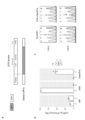
- Improved KP domain performance with domain swapping The RNA editing activity of Chimeric KP1a swapped with the WW1 domain was investigated for the preceding and following domains, leaving the central part containing the active site (HxEx n CxxCH) of KP1. Schematic diagram of domain swapping (a), actual RNA editing activity (b, c). Measurement of RNA editing activity of KP domain mutants.
- RNA editing activity of HEK293T RNA editing activity of HEK293T
- RNA editing activity of KP5 to KP23 in HEK293T c.
- Measurement of RNA editing activity of PG domain mutants RNA editing activity of PG1, PG2, in Escherichia coli (a) and RNA editing activity of HEK293T (b).
- RNA editing activity of PG3 to PG13 in HEK293T Measurement of RNA editing activity of WW domain mutants.
- RNA editing activity of WW1 and WW2 in E. coli (a) and RNA editing activity of HEK293T b).
- Target sequence information a).
- the present invention relates to a method for editing a target RNA, which applies a DYW protein containing a DYW domain consisting of any one of the following polypeptides a, b, c, and bc to the target RNA.
- a DYW protein containing a DYW domain consisting of any one of the following polypeptides a, b, c, and bc to the target RNA.
- x a1 PGx a2 SWIEx a3 -x a16 HP... Hx aa E... Cx a17 x a18 CH... DYW at least 40% sequence identity with the sequence of SEQ ID NO: 1 and C-to -U / U-to-C Editing activity-active polypeptide b.
- C-to-U / U-to-C editing activity refers to an editing assay in which a target polypeptide is linked to the C-terminal side of an RNA-binding domain capable of binding to a target RNA in a sequence-specific manner.
- the conversion may be such that at least about 3%, preferably about 5%, of the edit target base is replaced with the base of interest under appropriate conditions.
- the DYW domain can be represented by any one of these three amino acid sequences.
- the DYW domain consisting of x b18 CH... DYW can be expressed as DYW: WW
- the DYW domain consisting of KPA x c1 Ax c2 IEx c3 ... Hx cc E... Cx c4 x c5 CH... x c6 x c7 x c8 can be expressed as DYW: KP. be.
- the DYW domain is the region containing the PG box consisting of about 15 amino acids at the N-terminus, the central zinc binding domain (HxEx n CxxCH, x n is any number n sequences of any amino acid), and C. It has three regions of DYW at the terminal.
- the zinc binding domain can be further divided into an HxE region and a CxxCH region. These regions of each DYW domain can be represented as shown in the table below.
- PG is a polypeptide consisting of x a1 PGx a2 SWIEx a3 -x a16 HP... Hx aa E... Cx a17 x a18 CH... DYW.
- PG has x a1 PGx a2 SWIEx a3 -x a16 HP... Hx aa E... Cx a17 x a18 CH... DYW and has sequence identity of SEQ ID NO: 1 (detailed in the [Terms] section). It is a polypeptide having C-to-U / U-to-C editing activity.
- DYW: PG has the activity of converting the editing target C into U (C-to-U editing activity).
- SEQ ID NO: 1 shows the sequence of DYW: PG with a total length of 136 amino acids used in the experiments shown in the Examples section of the present specification. This sequence is the first to be disclosed in the present application and is novel.
- the total length of DYW: PG is not particularly limited as long as it can exert C-to-U editing activity, but is, for example, 110 to 160 amino acids in length, preferably 124 to 148 amino acids in length, and more preferably 128 to 144 amino acids in length. It is more preferably 132 to 140 amino acids in length.
- x a1 is not particularly limited as long as it can exhibit C-to-U editing activity as DYW: PG, but is preferably E (glutamic acid) or an amino acid having similar properties, and more preferably G.
- x a2 is not particularly limited as long as it can exhibit C-to-U editing activity as DYW: PG, but is preferably C (cysteine) or an amino acid having similar properties, and more preferably C.
- Each amino acid of x a3 -x a16 is not particularly limited as long as it can exert C-to-U editing activity as DYW: PG, but is preferably the same as the corresponding amino acid at positions 9 to 22 of the sequence of SEQ ID NO: 1. Or an amino acid similar in nature to the corresponding amino acid, more preferably the same amino acid as the corresponding amino acid at positions 9-22 of the SEQ ID NO: 1 sequence.
- the HxE region of DYW: PG is HSE regardless of the other region.
- DYW In the CxxCH region of PG, i.e. Cx a17 x a18 CH: x a17 is not particularly limited as long as it can exhibit C-to-U editing activity as DYW: PG, but is preferably G (glycine) or an amino acid having similar properties, and more preferably G.
- x a18 is not particularly limited as long as it can exhibit C-to-U editing activity as DYW: PG, but is preferably D (aspartic acid) or an amino acid having similar properties, and more preferably D.
- DYW PG
- the region containing the PG box and the Hx aa E ... part, the Hx aa E region and the CxxCH region are combined ... the part, and the CxxCH region and the DYW are connected ... It is called a connecting part, a second connecting part, and a third connecting part (the same applies to other DYW domains).
- the total length of the first connecting portion of DYW: PG is not particularly limited as long as it can exert C-to-U editing activity as DYW: PG, but is, for example, 39 to 47 amino acids in length, preferably 40 to 46 amino acids in length. Yes, more preferably 41-45 amino acids in length, and even more preferably 42-44 amino acids in length.
- the amino acid sequence of the first linking portion is not particularly limited as long as it can exert C-to-U editing activity as DYW: PG, but is preferably the same as or the same as the portion of the sequence of SEQ ID NO: 1 at positions 25 to 67. It is a sequence in which 1 to 22 amino acids are substituted, deleted, or added in a partial sequence, or a sequence having sequence identity with the partial sequence, and more preferably the same sequence as the partial sequence.
- One of the preferred embodiments of the first link of DYW: PG is a polypeptide represented by the following formula with a length of 43 amino acids, regardless of the sequence of the other part of the DYW domain.
- polypeptide is preferably the same as the portion of the sequence of SEQ ID NO: 1 at positions 25 to 67, or is a sequence in which a plurality of amino acids are substituted in the partial sequence and has C-to-U editing activity as DYW: PG. Can be demonstrated. Replacement of this time amino acids, bits value is greater amino acid at the corresponding position in FIG.
- N a29, N a30, N a32, N a33, N a35, N a36, N a40, N a44, N a45, N a47 , N a48 , N a52 , N a53 , N a54 , N a55 , N a58 , N a61 , N a65 , N a67 ) are the same as in Fig. 4, and the other amino acids are substituted. It is preferable to have.
- the total length of the second connecting portion of DYW: PG is not particularly limited as long as it can exert C-to-U editing activity as DYW: PG, but is, for example, 21 to 29 amino acids in length, preferably 22 to 28 amino acids in length. Yes, more preferably 23-27 amino acids in length, and even more preferably 24-26 amino acids in length.
- the amino acid sequence of the second linking portion is not particularly limited as long as it can exert C-to-U editing activity as DYW: PG, but is preferably the same as or the same as the portion of the sequence of SEQ ID NO: 1 at positions 71 to 95. It is a sequence in which 1 to 13 amino acids are substituted, deleted, or added in a partial sequence, or a sequence having sequence identity with the partial sequence, and more preferably the same sequence as the partial sequence.
- One of the preferred embodiments of the second link of DYW: PG is a polypeptide represented by the following formula with a length of 25 amino acids, regardless of the sequence of the other part of the DYW domain.
- the above-mentioned polypeptide is preferably the same as the portion of the sequence of SEQ ID NO: 1 at positions 71 to 95, or is a sequence in which a plurality of amino acids are substituted in the partial sequence and has C-to-U editing activity as DYW: PG. Can be demonstrated.
- the amino acid substitution is performed on amino acids having a large bits value at the corresponding positions in FIG. 4 (for example, N a71 , N a72 , N a73 , N a76 , N a77 , N a78 , N a79 , N a81 , N a82 , N. a86 , N a88 , N a89 , N a91 , N a92 , N a93 , N a94 ) are the same as in FIG. 4, and it is preferable that the other amino acids are substituted.
- the total length of the third connecting portion of DYW: PG is not particularly limited as long as it can exert C-to-U editing activity as DYW: PG, but is, for example, 29 to 37 amino acids in length, preferably 30 to 36 amino acids in length. Yes, more preferably 31-35 amino acids in length, and even more preferably 32-34 amino acids in length.
- the amino acid sequence of the third linking portion is not particularly limited as long as it can exert C-to-U editing activity as DYW: PG, but is preferably the same as or the same as the portion 101 to 133 of the sequence of SEQ ID NO: 1. It is a sequence in which 1 to 17 amino acids are substituted, deleted, or added in a partial sequence, or a sequence having sequence identity with the partial sequence, and more preferably the same sequence as the partial sequence.
- One of the preferred embodiments of the third link of DYW: PG is a polypeptide represented by the following formula with a length of 33 amino acids, regardless of the sequence of the other part of the DYW domain.
- the above-mentioned polypeptide is preferably the same as the portion of the sequence of SEQ ID NO: 1 at positions 101 to 133, or is a sequence in which a plurality of amino acids are substituted in the partial sequence and has C-to-U editing activity as DYW: PG. Can be demonstrated.
- the amino acid substitution is performed on amino acids having a large bits value at the corresponding positions in FIG. 4 (for example, N a102 , N a104 , N a107 , N a112 , N a114 , N a117 , N a118 , N a121 , N a122 , N.
- RNA editing activity can be improved by introducing a mutation into the PG domain consisting of the sequence of SEQ ID NO: 1.
- a preferred example of a domain into which such a mutation has been introduced is PG11 (a polypeptide consisting of the amino acid sequence of SEQ ID NO: 50) shown in the Examples section herein.
- DYW WW is a polypeptide consisting of x b1 PGx b2 SWWTDx b3 -x b16 HP... Hx bb E... Cx b17 x b18 CH... DYW.
- it has x b1 PGx b2 SWWTDx b3 -x b16 HP... Hx bb E... Cx b17 x b18 CH... DYW
- has sequence identity with the sequence of SEQ ID NO: 2 and has C-to-U / It is a polypeptide having U-to-C editing activity.
- DYW: WW has the activity of converting the editing target C into U (C-to-U editing activity).
- SEQ ID NO: 2 shows the sequence of DYW: WW having a total length of 137 amino acids used in the experiment shown in the Example section of the present specification. This sequence is the first to be disclosed in the present application and is novel.
- the total length of DYW: WW is not particularly limited as long as it can exert C-to-U editing activity, but is, for example, 110 to 160 amino acids in length, preferably 125 to 149 amino acids in length, and more preferably 129 to 145 amino acids in length. It is more preferably 133 to 141 amino acids in length.
- the part consisting of WTD may be WSD.
- x b1 is not particularly limited as long as it can exhibit C-to-U editing activity as DYW: WW, but is preferably K (lysine) or an amino acid having similar properties, and more preferably K.
- x b2 is not particularly limited as long as it can exert C-to-U editing activity as DYW: WW, but is preferably Q (glutamine) or an amino acid having similar properties, and more preferably Q.
- Each amino acid of x b3 -x b16 is not particularly limited as long as it can exert C-to-U editing activity as DYW: WW, but is preferably the same as the corresponding amino acid at positions 10 to 23 of the sequence of SEQ ID NO: 2. Or an amino acid similar in nature to the corresponding amino acid, more preferably the same amino acid as the corresponding amino acid at positions 10-23 of the sequence of SEQ ID NO: 2.
- the HxE region of DYW: WW is HSE regardless of the sequence of the other part.
- DYW In the CxxCH region of WW, that is, Cx b17 x b18 CH: x b17 is not particularly limited as long as it can exhibit C-to-U editing activity as DYW: WW, but is preferably D (aspartic acid) or an amino acid having similar properties, and more preferably D.
- x b18 is not particularly limited as long as it can exhibit C-to-U editing activity as DYW: WW, but is preferably D or an amino acid having similar properties, and more preferably D.
- the total length of the first connecting portion of DYW: WW is not particularly limited as long as it can exert C-to-U editing activity as DYW: WW, but is, for example, 39 to 47 amino acids in length, preferably 40 to 46 amino acids in length. Yes, more preferably 41-45 amino acids in length, and even more preferably 42-44 amino acids in length.
- the amino acid sequence of the first linking portion is not particularly limited as long as it can exert C-to-U editing activity as DYW: WW, but is preferably the same as or the same as the portion of the sequence of SEQ ID NO: 2 at positions 25 to 67. It is a sequence in which 1 to 22 amino acids are substituted, deleted, or added in a partial sequence, or a sequence having sequence identity with the partial sequence, and more preferably the same sequence as the partial sequence.
- One of the preferred embodiments of the first link of DYW is a polypeptide represented by the following formula with a length of 43 amino acids, regardless of the sequence of the other part of the DYW domain.
- polypeptide is preferably the same as the portion of the sequence of SEQ ID NO: 2 at positions 26 to 68, or is a sequence in which a plurality of amino acids are substituted in the partial sequence and has C-to-U editing activity as DYW: PG. Can be demonstrated. Replacement of this time amino acids, bits value is greater amino acid at the corresponding position in FIG.
- the total length of the second connecting portion of DYW: WW is not particularly limited as long as it can exert C-to-U editing activity as DYW: WW, but is, for example, 21 to 29 amino acids in length, preferably 22 to 28 amino acids in length. Yes, more preferably 23-27 amino acids in length, and even more preferably 24-26 amino acids in length.
- the amino acid sequence of the second linking portion is not particularly limited as long as it can exert C-to-U editing activity as DYW: WW, but is preferably the same as or the same as the portion of the sequence of SEQ ID NO: 2 at positions 71 to 95. It is a sequence in which 1 to 13 amino acids are substituted, deleted, or added in a partial sequence, or a sequence having sequence identity with the partial sequence, and more preferably the same sequence as the partial sequence.
- WW is a polypeptide represented by the following formula with a length of 25 amino acids, regardless of the sequence of the other part of the DYW domain.
- the above-mentioned polypeptide is preferably the same as the portion of the sequence of SEQ ID NO: 2 at positions 72 to 96, or is a sequence in which a plurality of amino acids are substituted in the partial sequence and has C-to-U editing activity as DYW: WW. Can be demonstrated.
- the amino acid substitution is performed on amino acids having a large bits value at the corresponding positions in FIG. 4 (for example, N b72 , N b73 , N b74 , N b75 , N b77 , N b78 , N b79 , N b81 , N b82 , N.
- N b84 , N b88 , N b89 , N b90 , N b91 , N b92 , N b93 , N b94 , N b95 , N b96 ) are the same as in Fig. 4, and the other amino acids are substituted. It is preferable to have.
- the total length of the third connecting portion of DYW: WW is not particularly limited as long as it can exert C-to-U editing activity as DYW: WW, but is, for example, 29 to 37 amino acids in length, preferably 30 to 36 amino acids in length. Yes, more preferably 31-35 amino acids in length, and even more preferably 32-34 amino acids in length.
- the amino acid sequence of the third linking portion is not particularly limited as long as it can exert C-to-U editing activity as DYW: WW, but is preferably the same as or the same as the portion 101 to 133 of the sequence of SEQ ID NO: 2. It is a sequence in which 1 to 17 amino acids are substituted, deleted, or added in a partial sequence, or a sequence having sequence identity with the partial sequence, and more preferably the same sequence as the partial sequence.
- WW is a polypeptide represented by the following formula with a length of 33 amino acids, regardless of the sequence of the other part of the DYW domain.
- the above-mentioned polypeptide is preferably the same as the portion 102 to 134 of the sequence of SEQ ID NO: 2, or is a sequence in which a plurality of amino acids are substituted in the partial sequence, and has C-to-U editing activity as DYW: WW. Can be demonstrated.
- the amino acid substitution is performed on amino acids having a large bits value at the corresponding positions in FIG. 4 (for example, N b104 , N b105 , N b107 , N b108 , N b109 , N b110 , N b111 , N b113 , N b115 , N.
- RNA editing activity can be improved by introducing a mutation into the WW domain consisting of the sequence of SEQ ID NO: 2.
- Preferred examples of domains into which such mutations have been introduced are WW2-11 and WW13 shown in the Examples section of the present specification, and the one having particularly high editing activity consists of the amino acid sequence of WW11 (SEQ ID NO: 63). Polypeptide).
- DYW: KP is a polypeptide consisting of KPAx c1 Ax c2 IEx c3 ... Hx cc E... Cx c4 x c5 CH... x c6 x c7 x c8 .
- it has KPAx c1 Ax c2 IEx c3 ... Hx cc E... Cx c4 x c5 CH... x c6 x c7 x c8 , has sequence identity with the sequence of SEQ ID NO: 3, and is C-to-U. / U-to-C A polypeptide having editing activity.
- DYW: KP has the activity of converting the editing target U to C (U-to-C editing activity).
- SEQ ID NO: 3 shows the sequence of DYW: KP with a total length of 133 amino acids used in the experiment shown in the Example section of the present specification. This sequence is the first to be disclosed in the present application and is novel.
- the total length of DYW: KP is not particularly limited as long as it can exert U-to-C editing activity, but is, for example, 110 to 160 amino acids in length, preferably 121 to 145 amino acids in length, and more preferably 125 to 141 amino acids in length. It is more preferably 129 to 137 amino acids in length.
- x c1 is not particularly limited as long as it can exhibit U-to-C editing activity as DYW: KP, but is preferably S (serine) or an amino acid having similar properties, and more preferably S.
- x c2 is not particularly limited as long as it can exhibit U-to-C editing activity as DYW: KP, but is preferably L (leucine) or an amino acid having similar properties, and more preferably L.
- x c3 is not particularly limited as long as it can exhibit U-to-C editing activity as DYW: KP, but is preferably V (valine) or an amino acid having similar properties, and more preferably V.
- the HxE region of DYW: KP is HAE regardless of the sequence of the other part.
- DYW In the CxxCH region of KP, i.e. Cx c4 x c5 CH: x c4 is not particularly limited as long as it can exhibit U-to-C editing activity as DYW: KP, but is preferably N (asparagine) or an amino acid having similar properties, and more preferably N.
- x b5 is not particularly limited as long as it can exhibit U-to-C editing activity as DYW: KP, but is preferably D (aspartic acid) or an amino acid having similar properties, and more preferably D.
- DYW In the part of KP corresponding to DYW, that is, x c6 x c7 x c8 : x c6 is not particularly limited as long as it can exhibit U-to-C editing activity as DYW: KP, but is preferably D (aspartic acid) or an amino acid having similar properties, and more preferably D. x c7 is not particularly limited as long as it can exhibit U-to-C editing activity as DYW: KP, but is preferably M (methionine) or an amino acid having similar properties, and more preferably M.
- x b8 is not particularly limited as long as it can exhibit U-to-C editing activity as DYW: KP, but is preferably F (phenylalanine) or an amino acid having similar properties, and more preferably F.
- x c6 x c7 x c8 is D x c7 x c8 , whatever the arrangement of the other parts.
- x c6 x c7 x c8 is GRP, whatever the other part of the sequence.
- the total length of the first connecting portion of DYW: KP is not particularly limited as long as it can exert U-to-C editing activity as DYW: KP, but is, for example, 51 to 59 amino acids in length, preferably 52 to 58 amino acids in length. Yes, more preferably 53-57 amino acids in length, still more preferably 54-56 amino acids in length.
- the amino acid sequence of the first linking portion is not particularly limited as long as it can exert U-to-C editing activity as DYW: KP, but is preferably the same as or the same as the portion of the sequence of SEQ ID NO: 3 at positions 10 to 64. It is a sequence in which 1 to 28 amino acids are substituted, deleted, or added in a partial sequence, or a sequence having sequence identity with the partial sequence, and more preferably the same sequence as the partial sequence.
- KP is a polypeptide represented by the following formula with a length of 55 amino acids, regardless of the sequence of the other part of the DYW domain.
- the above-mentioned polypeptide is preferably the same as the portion of the sequence of SEQ ID NO: 3 at positions 10 to 64, or is a sequence in which a plurality of amino acids are substituted in the partial sequence, and is edited by U-to-C as DYW :: KP. It can exert its activity.
- the substitution of amino acids is the amino acids having a large bits value at the corresponding positions in FIG. 4 (for example, N c10 , N c13 , N c14 , N c15 , N c16 , N c17 , N c18 , N c19 , N c25 , N.
- the total length of the second connecting portion of DYW: KP is not particularly limited as long as it can exert U-to-C editing activity as DYW: KP, but is, for example, 21 to 29 amino acids in length, preferably 22 to 28 amino acids in length. Yes, more preferably 23-27 amino acids in length, still more preferably 24-26 amino acids in length.
- the amino acid sequence of the second linking portion is not particularly limited as long as it can exert U-to-C editing activity as DYW: KP, but is preferably the same as or the same as the portion 68 to 92 of the sequence of SEQ ID NO: 3. It is a sequence in which 1 to 13 amino acids are substituted, deleted, or added in a partial sequence, or a sequence having sequence identity with the partial sequence, and more preferably the same sequence as the partial sequence.
- KP is a polypeptide represented by the following formula with a length of 25 amino acids, regardless of the sequence of the other part of the DYW domain.
- polypeptide is preferably the same as the portion of the sequence of SEQ ID NO: 3 at positions 68 to 92, or is a sequence in which a plurality of amino acids are substituted in the partial sequence and has U-to-C editing activity as DYW: KP. Can be demonstrated. Replacement of this time amino acids, bits value is greater amino acid at the corresponding position in FIG.
- N c68, N c70, N c71, N c72, N c73, N c74, N c75, N c76, N c77, N c78, N c79, N c80, N c81, N c83, N c84, N c85, N c86, N c87, N c88, N c89, N c90, N c91, N c92) are the same as FIG. 4, it is preferable that the amino acids other than the above are substituted.
- the total length of the third connecting portion of DYW: KP is not particularly limited as long as it can exert U-to-C editing activity as DYW: KP, but is, for example, 29 to 37 amino acids in length, preferably 30 to 36 amino acids in length. Yes, more preferably 31-35 amino acids in length, and even more preferably 32-34 amino acids in length.
- the amino acid sequence of the third linking portion is not particularly limited as long as it can exert U-to-C editing activity as DYW: KP, but is preferably the same as or the same as the portion of the sequence of SEQ ID NO: 3 at positions 98 to 130. It is a sequence in which 1 to 17 amino acids are substituted, deleted, or added in a partial sequence, or a sequence having sequence identity with the partial sequence, and more preferably the same sequence as the partial sequence.
- KP is a polypeptide represented by the following formula with a length of 33 amino acids, regardless of the sequence of the other part of the DYW domain.
- polypeptide is preferably the same as the portion of the sequence of SEQ ID NO: 3 at positions 98 to 130, or is a sequence in which a plurality of amino acids are substituted in the partial sequence and has U-to-C editing activity as DYW: KP. Can be demonstrated. Replacement of this time amino acids, bits value is greater amino acid at the corresponding position in FIG.
- Editing activity can be improved by introducing a mutation into the KP domain consisting of the sequence of SEQ ID NO: 3.
- Preferred examples of domains into which such mutations have been introduced are KP2-23 (SEQ ID NOs: 68-89) shown in the Examples section herein.
- KP22 (SEQ ID NO: 88) has the highest editing activity for U to C and the lowest editing activity for C to U, and RNA editing activity is improved compared to the KP domain consisting of the sequence of SEQ ID NO: 3. ing.
- the DYW domain can be divided into several regions due to the conservation of the amino acid sequence. Chimeric DYW with each of these regions exchanged can improve C-to-U editing activity or U-to-C editing activity.
- One preferred embodiment is the area containing the PG box of DYW: WW, i.e. x b1 PGx b2 SWWTDx b3 -x b16 HP and DYW, the other areas of DYW: KP (... Hx cc E... Cx c4 x c5 CH). ). 7) Is fused.
- x b1 , x b2 , and x b3 -x b16 are as described above for DYW: WW.
- the first connecting portion, the second connecting portion, and the third connecting portion are as described above for DYW: KP.
- the DYW part may be D x bc1 x bc2.
- the total length is not particularly limited as long as it can exhibit U-to-C editing activity, but is, for example, 110 to 160 amino acids in length, preferably 125 to 149 amino acids in length, and more preferably 129 to 145 amino acids in length. More preferably, it has a length of 133 to 141 amino acids.
- One of the preferred Chimeric domains has x b1 PGx b2 SWWTDx b3 -x b16 HP... Hx cc E... Cx c4 x c5 CH... Dx bc1 x bc2, with 90 sequences of SEQ ID NO: 2 and at least 40%. It consists of a polypeptide having sequence identity and C-to-U / U-to-C editing activity.
- One of the particularly preferable Chimeric domains is a polypeptide having sequence identity with the sequence of SEQ ID NO: 90 and having U-to-C editing activity.
- SEQ ID NO: 90 shows the sequence of the Chimeric domain used in the experiments shown in the Examples section of this specification. This domain has higher U to C editing activity than DYW: KP consisting of the sequence of SEQ ID NO: 3, and has almost no C to U editing activity.
- the present invention also provides a polypeptide of any one of the following d to i: d. It has more than 78% sequence identity with the sequence of SEQ ID NO: 1, preferably 80% or more, more preferably 85% or more, even more preferably 90% sequence identity, even more preferably 95.
- sequence of SEQ ID NO: 3 It has more than 86% sequence identity with the sequence of SEQ ID NO: 3, preferably 87% or more, more preferably 90% or more, even more preferably 95% sequence identity, even more preferably 97.
- a polypeptide having% sequence identity and U-to-C editing activity In the sequence of SEQ ID NO: 1, 1 to 29, preferably 1 to 25, more preferably 1 to 21, still more preferably 1 to 17, still more preferably 1 to 13, still more preferably 1.
- sequence of SEQ ID NO: 3 1 to 18, preferably 1 to 16, more preferably 1 to 14, still more preferably 1 to 12, still more preferably 1 to 10, still more preferably 1.
- RNA binding domain In the present invention, when converting an editing target using the DYW domain, an RNA-binding protein is used as the RNA-binding domain in order to target the RNA containing the editing target.
- RNA-binding protein used as an RNA-binding domain is a PPR protein composed of a PPR motif.
- the PPR motif has an E value of PF01535 in Pfam and PS51375 in Prosite when the amino acid sequence is analyzed by a protein domain search program on the Web, which is less than or equal to a predetermined value (preferably E-03).
- a polypeptide composed of 30 to 38 amino acids having the amino acid sequence of.
- the position numbers of the amino acids that make up the PPR motif defined in the present invention are almost synonymous with PF01535, but are subtracted by 2 from the amino acid location of PS51375 (eg, No. 1 of the present invention ⁇ No. 3 of PS51375). Equivalent to.
- the terminal side that is, the -2nd amino acid.
- the amino acid two before the first amino acid in the next helix structure is designated as "ii”. You can refer to http://pfam.sanger.ac.uk/ for Pfam and http://www.expasy.org/prosite/ for Prosite.
- the conserved amino acid sequence of the PPR motif has low conservativeness at the amino acid level, but the two ⁇ -helices are well conserved on the secondary structure.
- a typical PPR motif is composed of 35 amino acids, but its length is variable from 30 to 38 amino acids.
- the PPR motif consists of a polypeptide having a length of 30 to 38 amino acids represented by the formula 1.
- Helix A is a 12 amino acid long part capable of forming an ⁇ -helix structure and is represented by the formula 2.
- a 1 to A 12 independently represent amino acids;
- X is a portion that is absent or consists of 1-9 amino acids in length;
- Helix B is an ⁇ -helix structure capable of forming an ⁇ -helix structure consisting of 11 to 13 amino acids in length;
- L is the portion of formula 3 with a length of 2-7 amino acids;
- Equation 3 each amino acid is numbered from the C-terminal side as “i” (-1), “ii” (-2), and However, L iii to L vi i may not exist.
- PPR-code In the PPR motif, the combination of the three amino acids 1, 4, and ii is important for specific binding to a base, and these combinations can determine which base is bound.
- the relationship between the combination of the three amino acids 1, 4, and ii and the base that can be bound is known as PPR-code (Patent Document 2 above), and is as follows.
- a 1, A 4 , and a combination of three amino acids L ii is, in turn, valine, in the case of asparagine and aspartic acid, the PPR motif binds strongly to U, then the C, and the next It has a selective RNA base binding ability of binding to A or G.
- a 1, A 4, and a combination of three amino acids L ii is in turn, valine, asparagine, for asparagine, the PPR motifs bind strongly and C, then binding to A or U However, it has a selective RNA-base binding ability that it does not bind to G.
- a combination of three amino acids of A 1, A 4, and L ii is in turn, glutamic acid, glycine, in the case of aspartic acid, the PPR motif binds strongly to G, A, the U and C It has a selective RNA base binding ability that does not bind.
- a combination of three amino acids of A 1, A 4, and L ii is in turn, isoleucine, asparagine, for asparagine, the PPR motif bind strongly and C, then the U, A the next It has a selective RNA-base binding ability that binds to G but does not bind to G.
- a 1, A 4 , and a combination of three amino acids L ii is in turn valine, threonine, when the aspartic acid, the PPR motif bind strongly to G, then bind to U However, it has a selective RNA-base binding ability that it does not bind to A and C.
- a 1, A 4, and combinations of the three amino acids L ii, in turn, lysine, threonine, aspartic acid, in the case of, the PPR motif binds strongly to G, then binding to A However, it has a selective RNA-base binding ability that it does not bind to U and C.
- a 1, A 4 , and a combination of three amino acids L ii is in turn, phenylalanine, serine, when asparagine, the PPR motif bind strongly to A, then to C, G the next It has a selective RNA base binding ability of binding to and U.
- a 1, A 4 , and a combination of three amino acids L ii is in turn, valine, asparagine, in the case of serine, the PPR motif bind strongly and C, then bind to U but It has a selective RNA-base binding ability that it does not bind to A and G.
- a 1, the combination of A 4, and three amino acids L ii is in turn phenylalanine, threonine, when the asparagine, the PPR motif binds strongly to A, G, binding to U and C It has a selective RNA base binding ability that it does not.
- a 1, A 4, and a combination of three amino acids L ii is in turn, isoleucine, asparagine, when the aspartic acid, the PPR motif binds strongly to U, then binding to A However, it has a selective RNA base binding ability that it does not bind to G and C.
- a combination of three amino acids of A 1, A 4, and L ii is in turn threonine, threonine, when the asparagine, the PPR motif binds strongly to A, G, binding to U and C It has a selective RNA base binding ability that it does not.
- a 1, A 4 , and a combination of three amino acids L ii is in turn isoleucine, methionine, if the aspartic acid, the PPR motif binds strongly to U, then bind to C However, it has a selective RNA base binding ability that it does not bind to A and G.
- a combination of three amino acids of A 1, A 4, and L ii is in turn, phenylalanine, proline, in the case of aspartic acid PPR, the motif bind strongly to U, then bind to C However, it has a selective RNA-base binding ability that it does not bind to A and G.
- a 1, the combination of A 4, and three amino acids L ii is in turn, tyrosine, proline, in the case of aspartic acid, the PPR motif binds strongly to U, A, G, and C is It has a selective RNA base binding ability that does not bind.
- a combination of three amino acids of A 1, A 4, and L ii is in turn leucine, threonine, when the aspartic acid, the PPR motif binds strongly to G, A, the U and C It has a selective RNA base binding ability that does not bind.
- PPR proteins are classified into two families, P and PLS, according to the structure of the constituent PPR motifs.
- the P-type PPR protein consists of a simple repeat (P array) of standard 35 amino acid PPR motifs (P).
- the DYW domain of the present invention can be used in conjunction with a P-type PPR protein.
- PLS array The sequence of PPR motifs of PLS-type PPR protein is composed of repeating units of three PPR motifs P1, L1, and S1, and the C-terminal side of the repetition is followed by P2, L2, and S2 motifs.
- P2, L2, and S2 motifs the C-terminal side of this last P2L2S2 motif may be followed by two PPR-like motifs called E1 and E2, and a DYW domain.
- the total length of P1 is not particularly limited as long as it can bind to the target base, but is, for example, 33 to 37 amino acids in length, preferably 34 to 36 amino acids in length, and more preferably 35 amino acids in length.
- the total length of L1 is not particularly limited as long as it can bind to the target base, but is, for example, 33 to 37 amino acids in length, preferably 34 to 36 amino acids in length, and more preferably 35 amino acids in length.
- the total length of S1 is not particularly limited as long as it can bind to the target base, but is, for example, 30 to 33 amino acids in length, preferably 30 to 32 amino acids in length, and more preferably 31 amino acids in length.
- the total length of P2 is not particularly limited as long as it can bind to the target base, but is, for example, 33 to 37 amino acids in length, preferably 34 to 36 amino acids in length, and more preferably 35 amino acids in length.
- the total length of L2 is not particularly limited as long as it can bind to the target base, but is, for example, 34 to 38 amino acids in length, preferably 35 to 37 amino acids in length, and more preferably 36 amino acids in length.
- the total length of S2 is not particularly limited as long as it can bind to the target base, but is, for example, 30 to 34 amino acids in length, preferably 31 to 33 amino acids in length, and more preferably 32 amino acids in length.
- SEQ ID Nos: 17, 22, and 27 show the sequence of P2 used in the Examples section of this specification.
- SEQ ID Nos: 18, 23, and 28 show the sequence of L2 used in the Examples section of this specification.
- SEQ ID Nos: 19, 24, and 29 show the sequence of S2 used in the Examples section of this specification.
- the total length of E1 is not particularly limited as long as it can bind to the target base, but is, for example, 32 to 36 amino acids in length, preferably 33 to 35 amino acids in length, and more preferably 34 amino acids in length.
- SEQ ID NOs: 20, 25, and 30 show the sequence of E1 used in the Examples section of this specification.
- the total length of E2 is not particularly limited as long as it can bind to the target base, but is, for example, 30 to 34 amino acids in length, preferably 31 to 33 amino acids in length, and more preferably 33 amino acids in length.
- SEQ ID NOs: 21, 26, 31 show the sequence of E2 used in the Examples section of this specification.
- the repeating part of P1L1S1 and the part up to P2 can be designed according to the sequence of the target RNA according to the above-mentioned PPR-code rule.
- the S2 motif correlates with the corresponding nucleotide of the ii amino acid (31st N of SEQ ID NO: 19) (Non-Patent Document 8 above).
- C or U to the right of the target base of the S2 motif can be incorporated into the PLS-type PPR protein, noting that it is an editing target base by the DYW domain.
- the fourth (4th V of SEQ ID NO: 21) and last (33rd K of SEQ ID NO: 21) amino acids in the E2 motif are highly conserved and are involved in specific PPR-RNA recognition. Not (Non-Patent Document 2 mentioned above).
- the number of repetitions of P1L1S1 is not particularly limited as long as it can bind to the target base sequence, but is, for example, 1 to 5, preferably 2 to 4, and more preferably 3. In principle, even 1 unit (3 pieces) can be used.
- MEF8 L1-S1-P2-L2-S2-E-DYW
- MEF8 which consists of five PPR motifs, is known to be involved in editing about 60 locations.
- P1L1S1 located at the beginning and the end is different from the internal P1L1S1 in that there is a clear difference in the amino acid residue at a specific position.
- SS 31 amino acids
- the present invention contains at least one PPR motif, an RNA binding domain capable of sequence-specific binding to a target RNA according to PPR-code rules, and the above-mentioned DYW: PG, DYW: WW, or DYW: KP.
- a DYW protein for editing a target RNA which comprises any one of the DYW domains.
- Such DYW protein can be artificial. Artificial means that it is not a natural product but an artificially synthesized product. Being artificial means, for example, if you have a DYW domain with a non-natural sequence, if you have a PPR binding domain with a non-natural sequence, or if you have a non-natural combination of an RNA binding domain with a DYW domain. This is the case when the protein for RNA editing in animal cells is further added with a portion that is not present in the natural plant-derived DYW protein, for example, a nuclear translocation signal or a human mitochondrial translocation signal.
- nuclear localization signal sequence examples include PKKKRKV (SEQ ID NO: 32) derived from the SV40 large T antigen and KRPAATKKAGQAKKKK (SEQ ID NO: 33), which is the NLS of nucleoplasmin.
- the number of PPR motifs can be appropriately adjusted according to the sequence of the target RNA.
- the number of PPR motifs may be at least one and may be two or more. It is known that two PPR motifs can bind to RNA (Nucleic Acids Research, 2012, Vol. 40, No. 6, 2712-2723).
- One of the preferred embodiments of the DYW protein is: An RNA containing at least 1, preferably 2 to 25, more preferably 5 to 20, and even more preferably 10 to 18 PPR motifs and capable of sequence-specific binding to a target RNA according to PPR-code rules.
- An artificial DYW protein for editing a target RNA which comprises a binding domain and a DYW domain which is any one of DYW: PG, DYW: WW, or DYW: KP described above.
- One of the preferred embodiments of the other DYW protein is: It contains at least 1, preferably 2 to 25, more preferably 5 to 20, and even more preferably 10 to 18 PPR motifs and is capable of sequence-specific binding to animal target RNA according to PPR-code rules. Edit the target RNA, including the RNA-binding domain (preferably the RNA-binding domain that is a PLS-type PPR protein) and the DYW domain that is one of the above-mentioned DYW: PG, DYW: WW, or DYW: KP. DYW protein for.
- the DYW domain, RNA-binding domain PPR protein, and DYW protein of the present invention can be prepared in a relatively large amount by a method well known to those skilled in the art. Such a method may include determining the nucleic acid sequence encoding the amino acid sequence possessed by the domain or protein of interest, cloning it, and producing a transformant producing the domain or protein of interest.
- the present invention also provides the above-mentioned PPR motif, DYW protein, or nucleic acid encoding DYW protein, a vector containing the nucleic acid (for example, a vector for amplification, an expression vector).
- Vectors also include viral vectors.
- the vector for amplification can use Escherichia coli or yeast as a host.
- the expression vector means, for example, a vector containing a DNA having a promoter sequence, a DNA encoding a desired protein, and a DNA having a terminator sequence from the upstream, as long as it exhibits a desired function. It does not necessarily have to be arranged in this order.
- various vectors that can be usually used by those skilled in the art can be recombined and used.
- the present invention contains at least one PPR motif and is sequence-specifically capable of binding to a target RNA (preferably an animal target RNA) according to PPR-code rules (preferably PLS).
- a target RNA preferably an animal target RNA
- PPR-code rules preferably PLS.
- An RNA-binding domain which is a type of PPR protein
- a nucleotide sequence encoding a DYW protein which comprises the DYW domain which is any one of DYW: PG, DYW: WW, or DYW: KP described above.
- the present invention contains an RNA-binding domain (preferably) that contains at least one PPR motif and is sequence-specifically capable of binding to a target RNA (preferably an animal target RNA) according to PPR-code rules.
- a target RNA preferably an animal target RNA
- a target RNA containing a nucleotide sequence encoding a DYW protein, which comprises a PLS-type PPR protein RNA-binding domain) and a DYW domain which is one of DYW: PG, DYW: WW, or DYW: KP described above. Provides a vector for editing.
- the DYW protein of the present invention can function in cells of eukaryotes (eg, animals, plants, microorganisms (yeast, etc.), prokaryotes).
- the DYW protein of the present invention may function particularly in animal cells (in vitro or in vivo). Examples of animal cells into which the DYW protein of the present invention or a vector expressing the DYW protein can be introduced include cells derived from humans, monkeys, pigs, cows, horses, dogs, cats, mice, and rats.
- examples of cultured cells into which the DYW protein of the present invention or a vector expressing the DYW protein can be introduced include Chinese hamster ovary (CHO) cells, COS-1 cells, COS-7 cells, and VERO (ATCC CCL-81). ) Cells, BHK cells, canine kidney-derived MDCK cells, hamster AV-12-664 cells, HeLa cells, WI38 cells, HEK293 cells, HEK293T cells, PER. C6 cells can be mentioned, but are not limited to these.
- the DYW protein of the present invention can convert the editing target C contained in the target RNA to U or the editing target U to C.
- RNA-binding PPR proteins are involved in all RNA processing steps, cleavage, RNA editing, translation, splicing, and RNA stabilization found in organellas.
- the DYW protein of the present invention enables mitochondrial RNA 1-base editing. Mitochondria have their own genome and encode important complex constituent proteins involved in respiration and ATP production. It is known that these mutations cause various diseases. Mutation repair using the present invention can be expected to treat various diseases.
- the CRISPR-Cas system has been developed as a C-to-U RNA editing tool in the cytoplasm by fusing the Cas protein with a modified ADAR domain (Abudayyeh et al., 2019).
- the CRISPR-Cas system is composed of proteins and guide RNAs, making efficient mitochondrial transport of guide RNAs difficult.
- PPR protein can be RNA-edited with one molecule, and in general, protein can be delivered to mitochondria by fusing a mitochondrial localized signal sequence on the N-terminal side. Therefore, in order to confirm whether this technology can be used for RNA editing of mitochondria, we designed a PPR targeting MT-ND2 and MT-ND5 and created a gene fused with PG or WW domain (Fig. 10a). ..
- These proteins consisting of mitochondrial targeting sequences (MTS) and PPR-P sequences, target the 3rd position of the 178th and 301st codons of MT-ND2 and MT-ND5 so as not to adversely affect HEK293T cells.
- Fig. 10a After introducing the plasmid into HEK293T cells, editing was confirmed in the mRNA of MT-ND2 and MT-ND5 (Fig. 10b, c). Up to 70% of the editing activity was detected for these four proteins against the target, and no off-target mutation was detected for the same mRNA molecule (Fig. 10bc).
- RNA base editing method provided by the present invention can be expected to be used in various fields as follows.
- RNA related to medical treatment and specific diseases Recognize and edit specific RNA related to medical treatment and specific diseases.
- the direction of many mutations in genetic diseases is the C to U mutation. Therefore, the method of the present invention capable of converting U to C may be particularly useful.
- stem cells for example, iPS cells
- model cells for evaluation of cosmetics for evaluation of cosmetics
- expression of functional RNA are turned on for the purpose of elucidating the mechanism of drug discovery and pharmacological tests. Contains cells that can be turned off.
- RNA editing with DYW protein enables breeding and breeding (genetic improvement of organisms) of organisms more accurately and quickly than conventional techniques.
- RNA editing by DYW protein does not change traits by foreign genes unlike genetic recombination, so it can be said that it is close to the conventional breeding method of selection of mutants and backcrossing. Therefore, it is possible to respond reliably and promptly to global food problems and environmental problems.
- amino acid residues are sometimes simply referred to as amino acids.
- a search / analysis regarding the identity of a base sequence or an amino acid sequence can be performed by an algorithm or program well known to those skilled in the art (for example, BLASTN, BLASTP, BLASTX, ClustalW).
- the parameters when using the program can be appropriately set by those skilled in the art, and the default parameters of each program may be used. Specific methods of these analysis methods are also well known to those skilled in the art.
- the sequence identity is preferably high unless otherwise specified. Specifically, it is preferably 40% or more, more preferably 45% or more, further preferably 50% or more, further preferably 55% or more, and further preferably 60% or more. Is more preferable, and 65% or more is further preferable. Further, it is preferably 70% or more, more preferably 80% or more, further preferably 85% or more, further preferably 90% or more, still more preferably 95% or more. , 97.5% or more is more preferable.
- the number of amino acids to be substituted when referred to as "substitution, deletion, or addition sequence” shall consist of the amino acid sequence of any motif or protein, unless otherwise specified.
- the motif or protein is not particularly limited as long as it has a desired function, but if the number is about 1 to 9 or 1 to 4, or if it is replaced with an amino acid having similar properties, a larger number of substitutions may be made. sell. Means for preparing polynucleotides or proteins relating to such amino acid sequences are well known to those of skill in the art.
- Amino acids with similar properties refer to amino acids with similar physical characteristics such as hydropathy, charge, pKa, and solubility, and refer to, for example, the following.
- Hydrophobic (non-polar) amino acids alanine, valine, glycine, isoleucine, leucine, phenylalanine, proline, tryptophan, tyrosine non-hydrophobic amino acids; arginine, asparagine, aspartic acid, glutamic acid, glutamine, lysine, serine, threonine, cysteine, histidine , Methionin; Hydrophilic amino acids; arginine, asparagine, aspartic acid, glutamic acid, glutamine, lysine, serine, threonine; Acidic amino acids: aspartic acid, glutamic acid; Basic amino acids: lysine, arginine, histidine; Neutral amino acids: alanine, asparagine, cysteine, glut
- DYW For the design of the WW domain, we selected a lineage of short-branched proteins found only in hornworts (Fig. 1b, WW1). Since this lineage group has short branches, it is presumed that gene mutations between proteins are small.
- DYW For the design of the WW domain, we selected a lineage of short-branched proteins found only in hornworts (Fig. 1b, WW1). Since this lineage group has short branches, it is presumed that gene mutations between proteins are small.
- KP domain we focused on the DYW domain strains specific to pterophyta plants. The protein sequences included in this lineage have large amino acid mutations, but their length is conserved (Fig. 1c, KP1).
- RNA binding domain design of RNA binding domain
- P1 and L1 standard length 35 amino acid motif
- S1 31 amino acid motif
- P1L1S1 located at the first (N-terminal side), P1L1S1 located inside, and P1L1S1 at the last (C-terminal side) located immediately before P2L2S2.
- P1L1S1 located at the first (N-terminal side), P1L1S1 located inside, and P1L1S1 at the last (C-terminal side) located immediately before P2L2S2.
- P1L1S1 located at the first (N-terminal side), P1L1S1 located inside, and P1L1S1 at the last (C-terminal side) located immediately before P2L2S2.
- P1L1S1 located at the first (N-terminal side)
- P1L1S1 located inside
- P1L1S1 located at the last (C-terminal side) located immediately before P2L2S2.
- P1L1S1 located at the
- the gene region encoding the recombinant artificial DYW protein was cloned into an expression vector, and the target sequence was added downstream of the stop codon.
- PPR56, PPR65 Physcomitrella patens
- Non-Patent Document 12 we have developed a method for testing the RNA editing activity of the designed PPR protein in Escherichia coli.
- the designed PLS-DYW: PG1 and PLS-DYW: WW1 showed no editing activity on DNA, while cytidine was replaced with uridine with an editing efficiency of more than 90% on RNA (Fig. 3a, b, d).
- Trx-PPR-DYW protein and target sequence A common sequence for each DYW domain (including P2, L2, S2, E1, E2) was designed using EMBOSS: cons (v.6.6.0.0).
- pET21b + PA was modified to remove the original Esp3I and BpiI restriction enzyme sites, and two Esp3I sites were added as cloning sites.
- the gene was constructed in four sections (Trx, PPR array, DYW domain and RNA editing site) using a two-step Golden Gate method.
- RNA editing activity in E. coli To analyze the RNA editing activity of recombinant proteins in E. coli, we modified the protocol developed by Oldenkott et al. (Non-Patent Document 12 above).
- the plasmid DNA prepared above was introduced into Escherichia coli Rosetta 2 strain and cultured overnight at 37 ° C. in 1 mL of LB medium (containing 50 ⁇ g / mL of carbenicillin and 17 ⁇ g / mL of chloramphenicol).
- LB medium containing 5 mL of suitable antibiotic was prepared in a deep bottom 24-well plate and 100 ⁇ L of preculture was inoculated here. The culture was grown at 37 ° C.
- RNA editing efficiency is measured by using the ratio of the heights of the waveform peaks of C and U at the editing site, and C-to-U RNA editing efficiency is U / (C + U) ⁇ 100, U-to-C editing. The efficiency was calculated by C / (C + U) ⁇ 100. The independent experiment was repeated 3 times.
- HEK293T cells were transfected with a gene in which PLS-type PPR was fused with each DYW domain (PG1 (SEQ ID NO: 1), WW1 (SEQ ID NO: 2), KP1 (SEQ ID NO: 3)) and a plasmid containing the target sequence. After culturing, RNA was collected. The conversion efficiency of cytidine (C) to uridine (U) or uridine (U) to cytidine (C) at the target site was analyzed by sanger sequencing (Fig. 5). When fused with the PG1 or WW1 domain, there was 90% or more C to U activity, while no U to C activity was detected (Fig.
- HEK293T cell culture HEK293T cells are in Dulbecco's Modified Eagle Medium (DMEM) medium containing high glucose, glutamine, phenol-RED, sodium pyruvate (Fujifilm Wako Pure Chemical Industries, Ltd.) with 10% fetal bovine serum (Capricom) and 1% penicillin-streptomycin. (Fuji Film Wako Pure Chemical Industries, Ltd.) was added and cultured at 37 ° C and 5% CO2. Cells were passaged every 2-3 days when they reached 80-90% confluence.
- DMEM Dulbecco's Modified Eagle Medium
- DMEM Dulbecco's Modified Eagle Medium
- Capricom fetal bovine serum
- penicillin-streptomycin penicillin-streptomycin
- RNA editing assay In the RNA editing assay, about 8.0 x 10 4 HEK293T cells were placed in each well of a 24-well flat-bottomed cell culture plate and cultured at 37 ° C. at 5% CO 2 for 24 hours. Add 18.5 ⁇ l Opti-MEM® I Reduced Serum Medium (Thermo Fisher) and 1.5 ⁇ l FuGENE® HD Transfection Reagent (Promega) to each well to a final 25 ⁇ l volume. And said. The mixture was incubated for 10 minutes at room temperature before being added to the cells. Cells were harvested 24 hours after transfection.
- Opti-MEM® I Reduced Serum Medium Thermo Fisher
- FuGENE® HD Transfection Reagent Promega
- RNA extraction, reverse transcription, sequencing The assay was performed in the same manner as in the E. coli assay described above. In the following examples, unless otherwise specified, the assay in Escherichia coli and the same method as in this example were carried out.
- the DYW domain can be divided into several regions due to the conservation of the amino acid sequence, but the relationship with these RNA editing activities is unknown.
- KP1 and a part of the WW1 domain were swapped, and the effect on RNA editing activity was investigated in HEK239T cells (Fig. 6).
- Fig. 6 In the fusion of PG box and DYW of WW1 domain to the central site including the active site of KP1 domain (chimKP1a SEQ ID NO: 90), U to C activity higher than that of KP1 domain was observed, and C to U activity was observed. It turned out that there was almost no activity. Domain swapping has succeeded in improving the performance of U to C editing of KP domains.
- KP2-KP23 SEQ ID NOs: 68-89
- KP22 SEQ ID NO: 88
- Fig. 7a E. coli
- HEK293T cells Fig. 7b, c
- KP22 SEQ ID NO: 88
- PG2-PG13 SEQ ID NOs: 41-53 were designed and C to U RNA editing activity was examined in E. coli (Fig. 8a) and HEK293T cells (Fig. 8b, c).
- PG11 SEQ ID NO: 50 has the highest C to U editing activity and succeeded in improving RNA editing activity.
- Mitochondria have their own genome and encode important complex constituent proteins involved in respiration and ATP production. It is known that various diseases are caused by these mutations, and a mutation repair method is required.
- the CRISPR-Cas system has been developed as a C-to-U RNA editing tool in the cytoplasm by fusing it in the ADAR domain modified to the Cas protein (Abudayyeh et al. 2019 Science Vol.365, Issue 6451, pp. 382-386).
- the CRISPR-Cas system is composed of proteins and guide RNAs, making efficient mitochondrial transport of guide RNAs difficult.
- PPR protein can be RNA-edited with one molecule, and in general, protein can be delivered to mitochondria by fusing a mitochondrial localized signal sequence on the N-terminal side. Therefore, in order to confirm whether this technology can be used for RNA editing of mitochondria, we designed a PPR targeting MT-ND2 and MT-ND5 and created a gene fused with the PG1 or WW1 domain (Fig. 10a). ..
- These proteins consisting of mitochondrial targeting sequences (MTS) and P-DYW sequences, target the 3rd position of the 178th and 301st codons of MT-ND2 and MT-ND5 so as not to adversely affect HEK293T cells.
- Fig. 10a After introducing the plasmid into HEK293T cells, editing was confirmed in MT-ND2 and MT-ND5 mRNA (Fig. 10b, c). Up to 70% of the editing activity was detected for these four proteins against the target, and no off-target mutation was detected for the same mRNA molecule (Fig. 10bc).
Landscapes
- Health & Medical Sciences (AREA)
- Life Sciences & Earth Sciences (AREA)
- Genetics & Genomics (AREA)
- Chemical & Material Sciences (AREA)
- Engineering & Computer Science (AREA)
- Organic Chemistry (AREA)
- Biomedical Technology (AREA)
- Zoology (AREA)
- Biotechnology (AREA)
- Bioinformatics & Cheminformatics (AREA)
- Wood Science & Technology (AREA)
- General Engineering & Computer Science (AREA)
- Biochemistry (AREA)
- General Health & Medical Sciences (AREA)
- Molecular Biology (AREA)
- Biophysics (AREA)
- Microbiology (AREA)
- Plant Pathology (AREA)
- Physics & Mathematics (AREA)
- Proteomics, Peptides & Aminoacids (AREA)
- Botany (AREA)
- Gastroenterology & Hepatology (AREA)
- Medicinal Chemistry (AREA)
- Mycology (AREA)
- Cell Biology (AREA)
- Crystallography & Structural Chemistry (AREA)
- Peptides Or Proteins (AREA)
- Micro-Organisms Or Cultivation Processes Thereof (AREA)
- Preparation Of Compounds By Using Micro-Organisms (AREA)
- Medicines That Contain Protein Lipid Enzymes And Other Medicines (AREA)
- Saccharide Compounds (AREA)
Priority Applications (12)
| Application Number | Priority Date | Filing Date | Title |
|---|---|---|---|
| CN202180037500.0A CN115698296A (zh) | 2020-03-31 | 2021-03-31 | 编辑靶标rna的方法 |
| AU2021248204A AU2021248204A1 (en) | 2020-03-31 | 2021-03-31 | Method for editing target RNA |
| CA3179365A CA3179365A1 (en) | 2020-03-31 | 2021-03-31 | Method for editing target rna |
| IL296955A IL296955A (en) | 2020-03-31 | 2021-03-31 | Method for editing target rna |
| JP2022512682A JP7668547B2 (ja) | 2020-03-31 | 2021-03-31 | 標的rnaを編集する方法 |
| BR112022019571A BR112022019571A2 (pt) | 2020-03-31 | 2021-03-31 | Método para editar um ácido ribonucleico alvo, domínio dyw, proteína dyw, composição para editar ácido ribonucleico em uma célula eucariótica, ácido nucleico, vetor, e, célula |
| US17/915,232 US20230125942A1 (en) | 2020-03-31 | 2021-03-31 | Method for editing target rna |
| KR1020227037296A KR20220165747A (ko) | 2020-03-31 | 2021-03-31 | 표적 rna의 편집방법 |
| EP21781411.0A EP4130274A4 (en) | 2020-03-31 | 2021-03-31 | METHOD FOR EDITING TARGET RNA |
| JP2024065910A JP7698351B2 (ja) | 2020-03-31 | 2024-04-16 | 標的rnaを編集する方法 |
| JP2025073407A JP7698371B1 (ja) | 2020-03-31 | 2025-04-25 | 標的rnaを編集する方法 |
| JP2025094806A JP2025120313A (ja) | 2020-03-31 | 2025-06-06 | 標的rnaを編集する方法 |
Applications Claiming Priority (2)
| Application Number | Priority Date | Filing Date | Title |
|---|---|---|---|
| JP2020-065065 | 2020-03-31 | ||
| JP2020065065 | 2020-03-31 |
Publications (1)
| Publication Number | Publication Date |
|---|---|
| WO2021201198A1 true WO2021201198A1 (ja) | 2021-10-07 |
Family
ID=77930108
Family Applications (1)
| Application Number | Title | Priority Date | Filing Date |
|---|---|---|---|
| PCT/JP2021/014096 Ceased WO2021201198A1 (ja) | 2020-03-31 | 2021-03-31 | 標的rnaを編集する方法 |
Country Status (11)
| Country | Link |
|---|---|
| US (1) | US20230125942A1 (https=) |
| EP (1) | EP4130274A4 (https=) |
| JP (4) | JP7668547B2 (https=) |
| KR (1) | KR20220165747A (https=) |
| CN (1) | CN115698296A (https=) |
| AU (1) | AU2021248204A1 (https=) |
| BR (1) | BR112022019571A2 (https=) |
| CA (1) | CA3179365A1 (https=) |
| IL (1) | IL296955A (https=) |
| TW (1) | TWI899197B (https=) |
| WO (1) | WO2021201198A1 (https=) |
Cited By (2)
| Publication number | Priority date | Publication date | Assignee | Title |
|---|---|---|---|---|
| JPWO2022230924A1 (https=) * | 2021-04-30 | 2022-11-03 | ||
| WO2023120658A1 (ja) * | 2021-12-24 | 2023-06-29 | 国立大学法人北陸先端科学技術大学院大学 | 酵素、複合体、組換えベクター、遺伝性疾患治療薬及びポリヌクレオチド |
Families Citing this family (2)
| Publication number | Priority date | Publication date | Assignee | Title |
|---|---|---|---|---|
| WO2024249445A2 (en) * | 2023-05-26 | 2024-12-05 | The Trustees Of Columbia University In The City Of New York | An rna recognition and editing code of pentatricopeptide repeat proteins |
| CN117384884B (zh) * | 2023-11-30 | 2024-03-08 | 辉大(上海)生物科技有限公司 | IscB多肽及其用途 |
Citations (2)
| Publication number | Priority date | Publication date | Assignee | Title |
|---|---|---|---|---|
| WO2013058404A1 (ja) | 2011-10-21 | 2013-04-25 | 国立大学法人九州大学 | Pprモチーフを利用したrna結合性蛋白質の設計方法及びその利用 |
| WO2014175284A1 (ja) | 2013-04-22 | 2014-10-30 | 国立大学法人九州大学 | Pprモチーフを利用したdna結合性タンパク質およびその利用 |
Family Cites Families (1)
| Publication number | Priority date | Publication date | Assignee | Title |
|---|---|---|---|---|
| WO2009134339A2 (en) * | 2008-04-29 | 2009-11-05 | Monsanto Technology, Llc | Genes and uses for plant enhancement |
-
2021
- 2021-03-31 WO PCT/JP2021/014096 patent/WO2021201198A1/ja not_active Ceased
- 2021-03-31 KR KR1020227037296A patent/KR20220165747A/ko active Pending
- 2021-03-31 CN CN202180037500.0A patent/CN115698296A/zh active Pending
- 2021-03-31 TW TW110112005A patent/TWI899197B/zh active
- 2021-03-31 AU AU2021248204A patent/AU2021248204A1/en active Pending
- 2021-03-31 IL IL296955A patent/IL296955A/en unknown
- 2021-03-31 US US17/915,232 patent/US20230125942A1/en active Pending
- 2021-03-31 BR BR112022019571A patent/BR112022019571A2/pt unknown
- 2021-03-31 EP EP21781411.0A patent/EP4130274A4/en active Pending
- 2021-03-31 CA CA3179365A patent/CA3179365A1/en active Pending
- 2021-03-31 JP JP2022512682A patent/JP7668547B2/ja active Active
-
2024
- 2024-04-16 JP JP2024065910A patent/JP7698351B2/ja active Active
-
2025
- 2025-04-25 JP JP2025073407A patent/JP7698371B1/ja active Active
- 2025-06-06 JP JP2025094806A patent/JP2025120313A/ja active Pending
Patent Citations (2)
| Publication number | Priority date | Publication date | Assignee | Title |
|---|---|---|---|---|
| WO2013058404A1 (ja) | 2011-10-21 | 2013-04-25 | 国立大学法人九州大学 | Pprモチーフを利用したrna結合性蛋白質の設計方法及びその利用 |
| WO2014175284A1 (ja) | 2013-04-22 | 2014-10-30 | 国立大学法人九州大学 | Pprモチーフを利用したdna結合性タンパク質およびその利用 |
Non-Patent Citations (25)
| Title |
|---|
| ABUDAYYEH ET AL., SCIENCE, vol. 365, 2019, pages 382 - 386 |
| ALTSCHUL ET AL., J. MOL. BIOL., vol. 215, 1990, pages 403 - 410 |
| BARKAN, A.ROJAS, M.FUJII, S.YAP, ACHONG, Y. SBOND, C. S.SMALL, I.: "A combinatorial amino acid code for RNA recognition by pentatricopeptide repeat proteins", PLOS GENET, vol. 8, 2012, pages el 002910 |
| CHATEIGNER-BOUTIN, A.L. ET AL., PLANT J., vol. 56, 2008, pages 590 - 602 |
| CHENG, S.GUTMANN, B.ZHONG, X.YE, Y.FISHER, M. F.BAI, F.CASTLEDEN, ISONG, Y.SONG, B.HUANG, J. ET AL.: "Redefining the structural motifs that determine RNA binding and RNA editing by pentatricopeptide repeat proteins in land plants", PLANT J., vol. 85, 2016, pages 532 - 547 |
| DATABASE Nucleotide 26 July 2016 (2016-07-26), ANONYMOUS : "Megaceros tosanus clone 1 pentatricopeptide repeat protein (PPR) gene, partial cds", XP055915666, retrieved from NCBI Database accession no. EU495537 * |
| DATABASE Protein 25 July 2016 (2016-07-25), ANONYMOUS : "hypothetical protein SELMODRAFT_107192 [Selaginella moellendorffii]", XP055915656, retrieved from NCBI Database accession no. EFJ21522 * |
| GERKE, P.SZOVENYI, PNEUBAUER, ALENZ, HGUTMANN, B.MCDOWELL, R.SMALL, I.SCHALLENBERG-RUDINGER, M.KNOOP, V.: "Towards a plant model for enigmatic U-to-C RNA editing: the organelle genomes, transcriptomes, editomes and candidate RNA editing factors in the homwort Anthoceros agrestis", NEW PHYTOLOGIST, vol. 225, 2020, pages 1974 - 1992 |
| GUTMANN B.ROYAN S.SCHALLENBERG-RUDINGER M.LENZ H.CASTLEDEN I.R.MCDOWELL R.VACHER M.A.TONTI-FILIPPINI JBOND C.SKNOOP V: "The Expansion and Diversification of Pentatricopeptide Repeat RNA-Editing Factors in Plants", MOLECULAR PLANT, vol. 13, 2020, pages 215 - 230 |
| K. KATOHD.M. STANDLEY, MOL. BIOL. EVOL., vol. 30, no. 4, 2013, pages 772 - 780 |
| KNIE, N.GREWE, F.FISCHER, S.KNOOP, V.: "Reverse U-to-C editing exceeds C-to-U RNA editing in some ferns - a monilophyte-wide comparison of chloroplast and mitochondrial RNA editing suggests independent evolution of the two processes in both organelles", BMC EVOL. BIOL., vol. 16, 2016, pages 134 |
| KOBAYASHI, T.YAGI, Y.NAKAMURA, T.: "Comprehensive Prediction of Target RNA Editing Sites for PLS-Class PPR Proteins in Arabidopsis thaliana", PLANT CELL PHYSIOL., vol. 60, 2019, pages 862 - 874 |
| LARSSON, A.: "AliView: a fast and lightweight alignment viewer and editor for large data sets", BIOINFONNATICS, vol. 30, no. 22, 2014, pages 3276 - 3278, Retrieved from the Internet <URL:http://dx.doi.org/10.1093/bioinfonnatics/btu531> |
| LETUNIC, 1BORK, P, NUCLEIC ACIDS RES., vol. 44, 2016, pages W242 - 245 |
| LURIN, C.ANDRES, C.AUBOURG, S.BELLAOUI, M.BITTON, F.BRUYERE, C.CABOCHE, M.DEBAST, C.GUALBERTO, J.HOFFMANN, B. ET AL.: "Genome-wide analysis of Arabidopsis pentatricopeptide repeat proteins reveals their essential role in organelle biogenesis", PLANT CELL, vol. 16, 2004, pages 2089 - 2103, XP055219280, DOI: 10.1105/tpc.104.022236 |
| NUCLEIC ACIDS RESEARCH, vol. 40, no. 6, 2012, pages 2712 - 2723 |
| OLDENKOTT BASTIAN, YANG YINGYING, LESCH ELENA, KNOOP VOLKER, SCHALLENBERG-RÜDINGER MAREIKE: "Plant-type pentatricopeptide repeat proteins with a DYW domain drive C-to-U RNA editing in Escherichia coli", COMMUNICATIONS BIOLOGY, vol. 2, no. 1, 1 December 2019 (2019-12-01), pages 1 - 8, XP055915676, DOI: 10.1038/s42003-019-0328-3 * |
| OLDENKOTT, BYANG, YLESCH, EKNOOP, V.SCHALLENBERG-RUDINGER, M: "Plant-type pentatricopeptide repeat proteins with a DYW domain drive C-to-U RNA editing in Escherichia coli", COMMUNICATIONS BIOLOGY, vol. 2, 2019, pages 85, XP055915676, DOI: 10.1038/s42003-019-0328-3 |
| PRICE, M. N. ET AL., PLOS ONE, vol. 5, 2010, pages e9490 |
| RUWE ET AL., NEW PHYTOL., vol. 222, 2019, pages 218 - 229 |
| SALVADOR CAPELLA-GUTIERREZ, BIOINFORMATICS, vol. 25, no. 15, 2009, pages 1972 - 1973 |
| SHEN, C.ZHANG, DGUAN, ZLIU, YYANG, ZYANG, Y.WANG, X.WANG, QZHANG, Q.FAN, S. ET AL., NAT. COMMUN., vol. 7, 2016, pages 11285 |
| TAKENAKA, M., ZEHRMANN, A., BRENNICKE, A., AND GRAICHEN, K.: "Improved computational target site prediction for pentatricopeptide repeat RNA editing factors", PLOS ONE, vol. 8, 2013, pages e65343 |
| YAGI, Y.HAYASHI, S.KOBAYASHI, KHIRAYAMA, T.NAKAMURA, T.: "Elucidation of the RNA recognition code for pentatricopeptide repeat proteins involved in organelle RNA editing in plants", PLOS ONE, vol. 8, 2013, pages e57286 |
| YAN, J.YAO, YHONG, SYANG, Y.SHEN, C.ZHANG, QZHANG, D.ZOU, T.YIN, P.: "Delineation of pentatricopeptide repeat codes for target RNA prediction", NUCLEIC ACIDS RES., vol. 47, 2019, pages 3728 - 3738, XP055769935, DOI: 10.1093/nar/gkz075 |
Cited By (7)
| Publication number | Priority date | Publication date | Assignee | Title |
|---|---|---|---|---|
| JPWO2022230924A1 (https=) * | 2021-04-30 | 2022-11-03 | ||
| WO2022230924A1 (ja) * | 2021-04-30 | 2022-11-03 | 国立大学法人大阪大学 | 筋強直性ジストロフィー1型治療薬 |
| JP7461687B2 (ja) | 2021-04-30 | 2024-04-04 | エディットフォース株式会社 | 筋強直性ジストロフィー1型治療薬 |
| JP2024069430A (ja) * | 2021-04-30 | 2024-05-21 | エディットフォース株式会社 | 筋強直性ジストロフィー1型治療薬 |
| JP7854207B2 (ja) | 2021-04-30 | 2026-05-01 | エディットフォース株式会社 | 筋強直性ジストロフィー1型治療薬 |
| WO2023120658A1 (ja) * | 2021-12-24 | 2023-06-29 | 国立大学法人北陸先端科学技術大学院大学 | 酵素、複合体、組換えベクター、遺伝性疾患治療薬及びポリヌクレオチド |
| EP4455288A4 (en) * | 2021-12-24 | 2025-12-31 | Gecort Co Ltd | ENZYME, COMPOSITE, RECOMINATING VECTOR, MEDICINE FOR HEREDITARY DISEASE AND POLYNUCLEOTIDE |
Also Published As
| Publication number | Publication date |
|---|---|
| JP7668547B2 (ja) | 2025-04-25 |
| JP7698371B1 (ja) | 2025-06-25 |
| JP2025120313A (ja) | 2025-08-15 |
| IL296955A (en) | 2022-12-01 |
| EP4130274A1 (en) | 2023-02-08 |
| CA3179365A1 (en) | 2021-10-07 |
| TW202204382A (zh) | 2022-02-01 |
| JP2024096897A (ja) | 2024-07-17 |
| EP4130274A4 (en) | 2024-05-22 |
| JP2025107239A (ja) | 2025-07-17 |
| AU2021248204A1 (en) | 2022-11-10 |
| US20230125942A1 (en) | 2023-04-27 |
| JPWO2021201198A1 (https=) | 2021-10-07 |
| TWI899197B (zh) | 2025-10-01 |
| JP7698351B2 (ja) | 2025-06-25 |
| BR112022019571A2 (pt) | 2022-12-06 |
| CN115698296A (zh) | 2023-02-03 |
| KR20220165747A (ko) | 2022-12-15 |
Similar Documents
| Publication | Publication Date | Title |
|---|---|---|
| JP7698371B1 (ja) | 標的rnaを編集する方法 | |
| JP7246100B2 (ja) | 新規融合タンパク質の調製およびそのタンパク質合成の向上における使用 | |
| CN110551700B (zh) | Adh蛋白家族突变体及其应用 | |
| JP2016136970A (ja) | 変異型逆転写酵素 | |
| CN111778169A (zh) | 一种提高体外蛋白合成效率的方法 | |
| JP2023156365A (ja) | Crispr/cas融合タンパク質およびシステム | |
| CN108949801A (zh) | 一种通过对核酸酶系统敲除以调控体外生物合成活性的方法 | |
| CN117986355B (zh) | 一种重组人源化iii型胶原蛋白及其制备方法和用途 | |
| KR20210060541A (ko) | 개선된 고처리량 조합 유전적 변형 시스템 및 최적화된 Cas9 효소 변이체 | |
| WO2019185751A1 (en) | Inhibitors of crispr-cas associated activity | |
| CN109929839A (zh) | 拆分型单碱基基因编辑系统及其应用 | |
| KR20160079865A (ko) | 프테로스틸벤의 생합성 제조를 위한 o-메틸트랜스퍼라제의 사용 방법 | |
| CN109152808A (zh) | 用于核酸序列的特异性靶向的二聚蛋白质 | |
| CN106589134A (zh) | 嵌合蛋白pAgoE及构建方法、应用以及使用向导的嵌合蛋白pAgoE及构建方法、应用 | |
| RU2858663C2 (ru) | Способ редактирования рнк-мишени | |
| HK40080660A (zh) | 编辑靶标rna的方法 | |
| US20250223576A1 (en) | Optimized cas protein and use thereof | |
| HK40086250A (en) | Method for editing target rna | |
| JP2023145672A (ja) | 効率的なpprタンパク質の作製方法及びその利用 | |
| CN121991922A (zh) | 一种来源于真核生物的SpuFz1变体及其在基因编辑中的应用 | |
| CN116606874B (zh) | 胱硫醚-β-合成酶的制备方法和应用 | |
| EP4689147A2 (en) | Methods and compositions for nucleic acid synthesis | |
| WO2025160202A1 (en) | Engineered large serine recombinases | |
| CN116355100A (zh) | 一种碱基编辑器及其构建方法与应用 | |
| JP2006254780A (ja) | テアニン合成酵素 |
Legal Events
| Date | Code | Title | Description |
|---|---|---|---|
| 121 | Ep: the epo has been informed by wipo that ep was designated in this application |
Ref document number: 21781411 Country of ref document: EP Kind code of ref document: A1 |
|
| ENP | Entry into the national phase |
Ref document number: 2022512682 Country of ref document: JP Kind code of ref document: A |
|
| ENP | Entry into the national phase |
Ref document number: 3179365 Country of ref document: CA |
|
| REG | Reference to national code |
Ref country code: BR Ref legal event code: B01A Ref document number: 112022019571 Country of ref document: BR |
|
| ENP | Entry into the national phase |
Ref document number: 20227037296 Country of ref document: KR Kind code of ref document: A |
|
| WWE | Wipo information: entry into national phase |
Ref document number: 2022127987 Country of ref document: RU |
|
| NENP | Non-entry into the national phase |
Ref country code: DE |
|
| ENP | Entry into the national phase |
Ref document number: 2021248204 Country of ref document: AU Date of ref document: 20210331 Kind code of ref document: A |
|
| ENP | Entry into the national phase |
Ref document number: 2021781411 Country of ref document: EP Effective date: 20221031 |
|
| ENP | Entry into the national phase |
Ref document number: 112022019571 Country of ref document: BR Kind code of ref document: A2 Effective date: 20220928 |
|
| WWP | Wipo information: published in national office |
Ref document number: 2022127987 Country of ref document: RU |
|
| WWG | Wipo information: grant in national office |
Ref document number: 2022127987 Country of ref document: RU |