WO2021171983A1 - 感熱記録体 - Google Patents
感熱記録体 Download PDFInfo
- Publication number
- WO2021171983A1 WO2021171983A1 PCT/JP2021/004529 JP2021004529W WO2021171983A1 WO 2021171983 A1 WO2021171983 A1 WO 2021171983A1 JP 2021004529 W JP2021004529 W JP 2021004529W WO 2021171983 A1 WO2021171983 A1 WO 2021171983A1
- Authority
- WO
- WIPO (PCT)
- Prior art keywords
- group
- heat
- sensitive recording
- urea compound
- urea
- Prior art date
- Legal status (The legal status is an assumption and is not a legal conclusion. Google has not performed a legal analysis and makes no representation as to the accuracy of the status listed.)
- Ceased
Links
Classifications
-
- B—PERFORMING OPERATIONS; TRANSPORTING
- B41—PRINTING; LINING MACHINES; TYPEWRITERS; STAMPS
- B41M—PRINTING, DUPLICATING, MARKING, OR COPYING PROCESSES; COLOUR PRINTING
- B41M5/00—Duplicating or marking methods; Sheet materials for use therein
- B41M5/26—Thermography ; Marking by high energetic means, e.g. laser otherwise than by burning, and characterised by the material used
- B41M5/30—Thermography ; Marking by high energetic means, e.g. laser otherwise than by burning, and characterised by the material used using chemical colour formers
- B41M5/323—Organic colour formers, e.g. leuco dyes
-
- B—PERFORMING OPERATIONS; TRANSPORTING
- B41—PRINTING; LINING MACHINES; TYPEWRITERS; STAMPS
- B41M—PRINTING, DUPLICATING, MARKING, OR COPYING PROCESSES; COLOUR PRINTING
- B41M5/00—Duplicating or marking methods; Sheet materials for use therein
- B41M5/26—Thermography ; Marking by high energetic means, e.g. laser otherwise than by burning, and characterised by the material used
- B41M5/30—Thermography ; Marking by high energetic means, e.g. laser otherwise than by burning, and characterised by the material used using chemical colour formers
- B41M5/333—Colour developing components therefor, e.g. acidic compounds
-
- B—PERFORMING OPERATIONS; TRANSPORTING
- B41—PRINTING; LINING MACHINES; TYPEWRITERS; STAMPS
- B41M—PRINTING, DUPLICATING, MARKING, OR COPYING PROCESSES; COLOUR PRINTING
- B41M5/00—Duplicating or marking methods; Sheet materials for use therein
- B41M5/26—Thermography ; Marking by high energetic means, e.g. laser otherwise than by burning, and characterised by the material used
- B41M5/30—Thermography ; Marking by high energetic means, e.g. laser otherwise than by burning, and characterised by the material used using chemical colour formers
- B41M5/333—Colour developing components therefor, e.g. acidic compounds
- B41M5/3333—Non-macromolecular compounds
-
- B—PERFORMING OPERATIONS; TRANSPORTING
- B41—PRINTING; LINING MACHINES; TYPEWRITERS; STAMPS
- B41M—PRINTING, DUPLICATING, MARKING, OR COPYING PROCESSES; COLOUR PRINTING
- B41M5/00—Duplicating or marking methods; Sheet materials for use therein
- B41M5/26—Thermography ; Marking by high energetic means, e.g. laser otherwise than by burning, and characterised by the material used
- B41M5/40—Thermography ; Marking by high energetic means, e.g. laser otherwise than by burning, and characterised by the material used characterised by the base backcoat, intermediate, or covering layers, e.g. for thermal transfer dye-donor or dye-receiver sheets; Heat, radiation filtering or absorbing means or layers; combined with other image registration layers or compositions; Special originals for reproduction by thermography
- B41M5/42—Intermediate, backcoat, or covering layers
-
- B—PERFORMING OPERATIONS; TRANSPORTING
- B41—PRINTING; LINING MACHINES; TYPEWRITERS; STAMPS
- B41M—PRINTING, DUPLICATING, MARKING, OR COPYING PROCESSES; COLOUR PRINTING
- B41M2205/00—Printing methods or features related to printing methods; Location or type of the layers
- B41M2205/04—Direct thermal recording [DTR]
-
- B—PERFORMING OPERATIONS; TRANSPORTING
- B41—PRINTING; LINING MACHINES; TYPEWRITERS; STAMPS
- B41M—PRINTING, DUPLICATING, MARKING, OR COPYING PROCESSES; COLOUR PRINTING
- B41M2205/00—Printing methods or features related to printing methods; Location or type of the layers
- B41M2205/40—Cover layers; Layers separated from substrate by imaging layer; Protective layers; Layers applied before imaging
Definitions
- the present invention utilizes a color-developing reaction between a colorless or light-colored electron-donating leuco dye (hereinafter, also referred to as “leuco dye”) and an electron-accepting color developer (hereinafter, also referred to as “color developer”).
- leuco dye colorless or light-colored electron-donating leuco dye
- color developer electron-accepting color developer
- the present invention relates to a heat-sensitive recording body, which is excellent in oil resistance, heat resistance, plastic dye resistance, and print running performance.
- a heat-sensitive recorder is obtained by applying a coating liquid containing a leuco dye and a color developer, which are usually colorless or light-colored, to a support such as paper, synthetic paper, film, or plastic, and is used for a thermal head or hot.
- a recorded image is obtained by developing a color by an instant chemical reaction by heating a stamp, a heat pen, a laser beam, or the like.
- Thermal recorders are widely used as recording media for facsimiles, computer terminal printers, automatic ticket vending machines, measurement recorders, receipts in supermarkets and convenience stores, and the like. In recent years, thermal recorders have been expanded to various applications such as various tickets, receipts, labels, bank ATMs, gas and electricity meter readings, and gold tickets such as car betting tickets.
- Patent Document a heat-sensitive recorder in which water resistance, plasticizer resistance of an image portion, heat resistance of a blank paper portion, etc. are improved by using a combination of two specific types of color developer (Patent Document). 1) and a urea compound (Patent Document 2) as a color developer for improving required performance such as color density, whiteness, and storage stability of a heat-sensitive recorder are disclosed.
- an object of the present invention is to provide a heat-sensitive recording material which is excellent in oil resistance among various performances required for a heat-sensitive recording material, and further excellent in heat resistance, plasticizer resistance, and print running performance.
- the present invention is a heat-sensitive recording body in which a heat-sensitive recording layer containing a colorless or light-colored electron-donating leuco dye and an electron-accepting color developer is provided on a support, and the heat-sensitive recording layer is an electron.
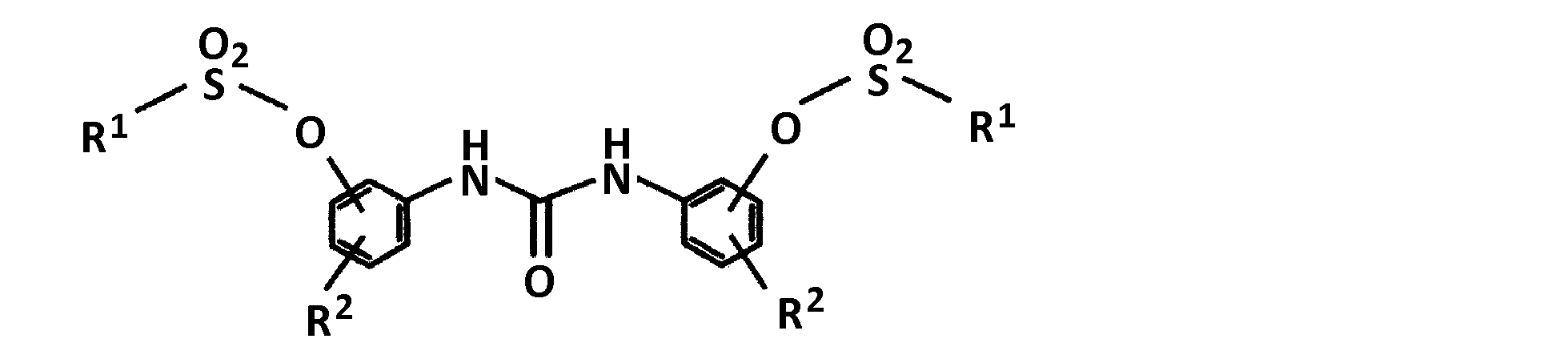
- a receptive color developer it contains at least two kinds of urea compounds, the first urea compound is represented by the following general formula (Chemical formula 1), and the second urea compound is represented by the following general formula (Chemical formula 2). It is a thermal recording body.
- R 1 represents a substituted or unsubstituted alkyl group, an aralkyl group or an aryl group
- R 2 represents a hydrogen atom or an alkyl group.
- R 4 to R 8 may be the same or different, respectively, and may be the same or different, hydrogen atom, halogen atom, nitro group, amino group, alkyl group, alkoxy group, aryloxy group, alkylcarbonyloxy group, aryl.
- It represents a carbonyloxy group, an alkylcarbonylamino group, an arylcarbonylamino group, an alkylsulfonylamino group, an arylsulfonylamino group, a monoalkylamino group, a dialkylamino group, or an arylamino group, and m represents an integer of 0 to 2.
- the present invention it is possible to provide a heat-sensitive recording body having good color-developing performance and good oil resistance, and further to provide a heat-sensitive recording body having good heat resistance, plasticizer resistance, and print running performance. be able to.
- the heat-sensitive recording material of the present invention is a heat-sensitive recording material in which a heat-sensitive recording layer containing a colorless to light-colored leuco dye and a coloring agent is provided on a support, and the heat-sensitive recording layer is used as a coloring agent for at least two types.
- a heat-sensitive recording layer containing a colorless to light-colored leuco dye and a coloring agent is provided on a support, and the heat-sensitive recording layer is used as a coloring agent for at least two types.
- Contains urea compounds including the following first urea compound and second urea compound).
- various materials used in the heat-sensitive recording layer of the heat-sensitive recording body of the present invention will be exemplified, but binders, cross-linking agents, pigments and the like are provided as necessary within a range that does not impair the desired effect on the above-mentioned problems. It can also be used for each coating layer.
- the first urea compound used in the present invention is represented by the following formula (Chemical Formula 1).
- R 1 represents an alkyl group, an aralkyl group or an aryl group which may be substituted or unsubstituted.
- the alkyl group is, for example, a linear, branched or alicyclic alkyl group, preferably having 1 to 12 carbon atoms.
- the carbon number of the aralkyl group is preferably 7 to 12, and the carbon number of the aryl group is preferably 6 to 12.
- the substituent is preferably an alkyl group having 1 to 12 carbon atoms, an alkoxy group having 1 to 12 carbon atoms, an aryl group having 6 to 12 carbon atoms or a halogen atom.
- the plurality of R 1s may be the same or different.
- R 1 -SO 3 -O- positions in the benzene ring of the general formula (1) may be the same or different, preferably 3-position, 4-position or 5-position.
- the alkyl group includes methyl group, ethyl group, n-propyl group, i-propyl group, n-butyl group, i-butyl group, t-butyl group, cyclopentyl group, hexyl group, cyclohexyl group and 2-ethyl.
- Examples include a xyl group and a lauryl group.
- the aralkyl group includes a benzyl group, a 1-phenylethyl group, a 2-phenylethyl group, a 3-phenylpropyl group, a p-methylbenzyl group, an m-methylbenzyl group, an m-ethylbenzyl group, and a p-ethylbenzyl group.
- the aryl group includes a phenyl group, a p-tolyl group, an m-tolyl group, an o-tolyl group, a 2,5-dimethylphenyl group, a 2,4-dimethylphenyl group, a 3,5-dimethylphenyl group, 2, 3-Dimethylphenyl group, 3,4-dimethylphenyl group, mesitylene group, p-ethylphenyl group, pi-propylphenyl group, pt-butylphenyl group, p-methoxyphenyl group, 3,4-dimethoxy Unsubstituted or alkyl group, alkoxy group, aralkyl group, aryl group or halogen atom such as phenyl group, p-ethoxyphenyl group, p-chlorophenyl group, 1-naphthyl group, 2-naphthyl group, t-butylated naphthy
- R 2 represents a hydrogen atom or an alkyl group, preferably a hydrogen atom, and the alkyl group is preferably an alkyl group having 1 to 4 carbon atoms, for example, a methyl group, an ethyl group, a propyl group, an isopropyl group, or a butyl group. , Isobutyl group, sec-butyl group, t-butyl group and the like.
- the position of R 2 in the benzene ring of the general formula (Chemical Formula 1) may be the same or different, and is preferably the 3-position, 4-position, or 5-position.
- a urea compound represented by the following general formula (Chemical Formula 3) is preferable.
- R 3 is an alkyl group or an alkoxy group, preferably an alkyl group, and n represents an integer of 0 to 3, preferably 0 to 2, and more preferably 0 to 1.
- the alkyl group has, for example, 1 to 12, preferably 1 to 8, and more preferably 1 to 4.
- the position of R 3 in the benzene ring of the general formula (Chemical Formula 3) may be the same or different, and is preferably the 3-position, 4-position or 5-position, preferably 4-position.
- the first urea compound of the present invention for example, N, N'-di- [3- (benzenesulfonyloxy) phenyl] urea, N, N'-di- [3- (benzenesulfonyloxy) -4.
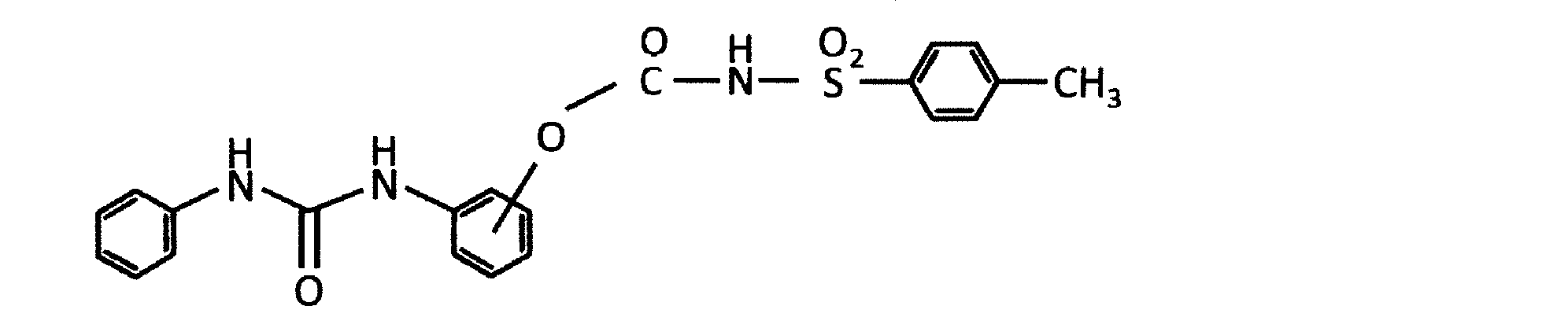
- the second urea compound used in the present invention is represented by the following formula (Chemical Formula 2).
- R 4 to R 8 may be the same or different, respectively, and may be the same or different, and are hydrogen atom, halogen atom, nitro group, amino group, alkyl group, alkoxy group, aryloxy group, alkylcarbonyl.
- R 4 , R 5 , R 7 , and R 8 are preferably hydrogen atoms, and R 6 is preferably hydrogen atoms or alkyl groups.
- R 6 is particularly preferable. This alkyl group (including those contained in alkylcarbonyloxy group, alkylcarbonylamino group, alkylsulfonylamino group, monoalkylamino group, dialkylamino group), and aryl group (aryloxy group, arylcarbonyloxy group, aryl).
- the carbonylamino group, arylsulfonylamino group, and those contained in the arylamino group) are defined in the same manner as the alkyl group and aryl group in the above general formula (Chemical Formula 1).
- the alkoxy group is, for example, a linear, branched chain or alicyclic alkoxy group, and the number of carbon atoms is preferably 1 to 12.
- -O- (CONH) m -SO 2 in the benzene ring of the general formula (2) - positions of the substituted phenyl group, preferably, 3, 4 or 5-position (following general formula (Formula 4)
- m represents an integer of 0 to 2, preferably 0 to 1.
- a urea compound represented by the following general formula (Chemical Formula 4) or the following general formula (Chemical Formula 5) is preferable.
- the content of the first urea compound in the heat-sensitive recording layer of the present invention is 1.0 to 50.0% by weight, preferably 1.0 to 40.0% by weight.
- the content (solid content) of the second urea compound is 5.0 to 50.0% by weight, preferably 5.0 to 40.0% by weight.
- the content of the second urea compound in the heat-sensitive recording layer of the present invention is preferably 0.1 to 30.0 parts by weight, more preferably 0.1 part by weight, based on 1.0 part by weight of the first urea compound. Is 0.5 to 25.0 parts by weight, more preferably 1.0 to 20.0 parts by weight, and particularly preferably 2.0 to 15.0 parts by weight.
- the content of the second urea compound in the heat-sensitive recording layer of the present invention is 0.1 part by weight or more, particularly 1.0 part by weight or more, with respect to 1.0 part by weight of the first urea compound.
- a color-developing agent other than the first urea compound and the second urea compound may be used, and as such a color-developing agent, for example, active white clay, attapulsite, colloidal silica, etc. may be used.
- Inorganic acidic substances such as aluminum silicate, 4,4'-isopropyridene diphenol, 1,1-bis (4-hydroxyphenyl) cyclohexane, 2,2-bis (4-hydroxyphenyl) -4-methylpentane, 4 , 4'-dihydroxydiphenylsulfide, hydroquinone monobenzyl ether, benzyl 4-hydroxybenzoate, 4,4'-dihydroxydiphenylsulfone, 2,4′-dihydroxydiphenylsulfone, 4-hydroxy-4′-isopropoxydiphenylsulfone, 4-Hydroxy-4'-n-propoxydiphenyl sulfone, bis (3-allyl-4-hydroxyphenyl) sulfone, 4-hydroxy-4'-methyldiphenyl sulfone, 4-hydroxyphenyl-4'-benzyloxyphenyl sulfone, 3,4-Dihydroxyphenyl-4'-methylphenylsulfone, 1-
- color-developing agents may be used alone or in combination of two or more.
- 1- [4- (4-Hydroxyphenylsulfonyl) phenoxy] -4- [4- (4-isopropoxyphenylsulfonyl) phenoxy] butane is available, for example, under the trade name JKY-214 manufactured by API Corporation.
- the phenol condensation composition described in JP-A-2003-154760 is available, for example, under the trade name JKY-224 manufactured by API Corporation.
- the compounds described in WO02 / 081229 and the like are available under the trade names NKK-395 and D-100 manufactured by Nippon Soda Co., Ltd.
- a metal chelate-type color-developing component such as a higher fatty acid metal double salt or a polyvalent hydroxy aromatic compound described in JP-A No. 10-258577 can also be contained.
- the total color-developing agent contained in the heat-sensitive recording layer (the first urea compound and the first urea compound).
- the total content (solid content) of the first urea compound and the second urea compound with respect to (including 2 urea compounds) is preferably 50% by weight or more, more preferably 80% by weight or more, still more preferably 90% by weight. % Or more.
- leuco dye used in the present invention all conventional leuco dyes known in the field of pressure-sensitive or thermal recording paper can be used, and are not particularly limited, but are triphenylmethane-based compounds, fluorene-based compounds, and fluorene. Fluorene compounds, divinyl compounds and the like are preferable. Specific examples of typical colorless or light-colored dyes (dye precursors) are shown below. Further, these dye precursors may be used alone or in combination of two or more.
- Triphenylmethane leuco dye > 3,3-bis (p-dimethylaminophenyl) -6-dimethylaminophthalide [also known as crystal violet lactone], 3,3-bis (p-dimethylaminophenyl) phthalide [also known as malachite green lactone]
- sensitizer used in the present invention a conventionally known sensitizer can be used.
- sensitizers include fatty acid amides such as stearate amide and palmitate amide, ethylene bisamide, montanic acid wax, polyethylene wax, 1,2-bis- (3-methylphenoxy) ethane, p-benzylbiphenyl and ⁇ -.
- pigment used in the present invention examples include kaolin, calcined kaolin, calcium carbonate, aluminum oxide, titanium oxide, magnesium carbonate, aluminum silicate, magnesium silicate, calcium silicate, aluminum hydroxide, silica and the like, depending on the required quality. It can also be used together.
- binder used in the present invention examples include fully saponified polyvinyl alcohol, partially saponified polyvinyl alcohol, acetoacetylated polyvinyl alcohol, carboxy-modified polyvinyl alcohol, amide-modified polyvinyl alcohol, sulfonic acid-modified polyvinyl alcohol, butyral-modified polyvinyl alcohol, and olefin-modified.
- These polymer substances are used by dissolving them in solvents such as water, alcohols, ketones, esters, and hydrocarbons, and are also used in a state of being emulsified or dispersed in a paste in water or other media to achieve the required quality. It can also be used together depending on the situation.
- a cross-linking agent can also be used in combination.
- the cross-linking agent include epichlorohydrin-based resins such as polyamine epichlorohydrin resin and polyamide epichlorohydrin resin, polyamide urea-based resins, polyalkylene polyamine resins, polyalkylene polyamide resins, polyamine polyurea-based resins, and modified polyamines.
- Polyamine / polyamide resin such as resin, modified polyamide resin, polyalkylene polyamine urea formalin resin, or polyalkylene polyamine polyamide polyurea resin, glioxal, methylol melamine, melamine formaldehyde resin, melamine urea resin, potassium persulfate, ammonium persulfate, excess Examples thereof include sodium sulfate, ferric chloride, magnesium chloride, boar sand, boric acid, myoban, and ammonium chloride.
- the present invention it is preferable to contain a carboxyl group-containing resin as a binder and an epichlorohydrin-based resin and a polyamine / polyamide-based resin as a cross-linking agent in the heat-sensitive recording layer because the water resistance is particularly good.
- the reason why the water resistance is particularly good when the heat-sensitive recording layer contains a carboxyl group-containing resin as a binder and an epichlorohydrin-based resin and a polyamine / polyamide-based resin as a cross-linking agent is as follows. Is guessed as.
- a cross-linking reaction occurs between the carboxyl group of the carboxyl group-containing resin and the amine portion or amide portion of the epichlorohydrin-based resin which is a cross-linking agent.
- this crosslinked site is a hydrophobic group of the polyamine / polyamide resin.
- the state of being wrapped with the surface facing the outside, that is, the state in which the hydrophilic cross-linking site is protected from water by a hydrophobic group (second water resistance). Therefore, it is presumed that extremely high hydrophobicity is imparted to the reaction site between the carboxyl group-containing resin and the cross-linking agent, and the water resistance is particularly good.
- the carboxyl group-containing resin used in the heat-sensitive recording layer of the present invention may be any one as long as it mainly has a carboxyl group, and is methacrylic acid, 2-hydroxyethyl methacrylate, 2-hydroxypropyl methacrylate, dimethylamino methacrylate.
- examples thereof include acrylic resins containing monofunctional acrylic monomers having a carboxyl group such as ethyl, glycidyl methacrylate, and tetrahydrofrifuryl methacrylate, oxidized starch, carboxylmethylcellulose, and carboxy-modified polyvinyl alcohol in which a carboxyl group is introduced into polyvinyl alcohol. It is possible.
- the carboxyl group-containing resin is carboxy-modified polyvinyl alcohol
- the plasticizer resistance of the image portion and the heat resistance of the blank portion are further improved, which is preferable. It is presumed that this is because, in addition to the above-mentioned cross-linking reaction, the cationic moiety of the polyamine / polyamide resin further cross-links with the carboxyl group of the carboxy-modified polyvinyl alcohol.
- the carboxy-modified polyvinyl alcohol used in the heat-sensitive recording layer of the present invention is a reaction product of the polyvinyl alcohol with a polyvalent carboxylic acid such as fumaric acid, phthalic acid anhydride, meritonic acid anhydride, and itaconic acid anhydride, or an ester of these reactants. It is obtained as a saponified product of vinyl acetate and a copolymer of maleic acid, fumaric acid, itaconic acid, crotonic acid, acrylic acid, methacrylic acid and other ethylenically unsaturated dicarboxylic acids. Specifically, the production method exemplified in Examples 1 or 4 of JP-A-53-91995 can be mentioned.
- the saponification degree of the carboxy-modified polyvinyl alcohol is preferably 72 to 100 mol%, the degree of polymerization is preferably 500 to 2400, and more preferably 1000 to 2000.
- the epichlorohydrin-based resin used in the heat-sensitive recording layer of the present invention is a resin characterized by containing an epoxy group in the molecule, and is the above-mentioned polyamide epichlorohydrin resin and polyamine epichlorohydrin. Resin and the like can be mentioned.
- the amine present in the main chain of the epichlorohydrin-based resin primary to quaternary amines can be used, and there is no particular limitation.
- the cationization degree and the molecular weight are preferably 5 meq / g ⁇ Solid or less (measured value at pH 7) and the molecular weight is 500,000 or more because the water resistance is good.
- epichlorohydrin-based resins can be used alone or in combination of two or more.
- Specific examples of the epichlorohydrin-based resin used in the heat-sensitive recording layer of the present invention include violet resin 650 (30), violet resin 675A, violet resin 6615 (all manufactured by Sumitomo Chemical Corporation), WS4002, and WS4020. , WS4024, WS4030, WS4046, WS4010, CP8970 (all manufactured by Seiko PMC Corporation) and the like.
- the polyamine / polyamide resin used in the heat-sensitive recording layer of the present invention is a resin characterized by having no epoxy group in the molecule, and is the above-mentioned polyamide urea resin, polyalkylene polyamine resin, polyalkylene polyamide resin.
- Polyamine polyurea resin, modified polyamine resin, modified polyamide resin, polyalkylene polyamine urea formalin resin, polyalkylene polyamine polyamide polyurea resin and the like are particularly good in water resistance.
- polyamine / polyamide resins can be used alone or in combination of two or more.
- Specific examples of the polyamine / polyamide resin used in the heat-sensitive recording layer of the present invention include violet resin 302 (manufactured by Sumitomo Chemical Co., Ltd .: polyamine polyurea resin) and violet resin 712 (manufactured by Sumitomo Chemical Co., Ltd .: polyamine polyurea resin).
- Sumire's Resin 703 (Sumitomo Chemical Co., Ltd .: Polyamide Polyurea Resin), Sumire's Resin 636 (Sumitomo Chemical Co., Ltd .: Polyamide Polyurea Resin), Sumire's Resin SPI-100 (Sumitomo Chemical Co., Ltd .: Modified Polyamine Resin) , Sumire's resin SPI-102A (manufactured by Sumitomo Chemical Co., Ltd .: modified polyamine resin), Sumire's resin SPI-106N (manufactured by Sumitomo Chemical Co., Ltd .: modified polyamide resin), Sumire's resin SPI-203 (50) (manufactured by Sumitomo Chemical Co., Ltd.) , Smilase Resin SPI-198 (manufactured by Sumitomo Chemical Co., Ltd.), Printive A-700 (manufactured by Asahi Kasei Co., Ltd.),
- Examples of the lubricant used in the present invention include fatty acid metal salts such as zinc stearate and calcium stearate, waxes, and silicone resins.
- 4,4'-butylidene (6-t-butyl-3-methylphenol), 2 , 2'-di-t-butyl-5,5'-dimethyl-4,4'-sulfonyldiphenol, 1,1,3-tris (2-methyl-4-hydroxy-5-cyclohexylphenyl) butane, 1 , 1,3-Tris (2-methyl-4-hydroxy-5-t-butylphenyl) butane and the like can also be added.
- benzophenone-based or triazole-based ultraviolet absorbers, dispersants, antifoaming agents, antioxidants, fluorescent dyes and the like can be used.
- the types and amounts of the leuco dye, the color developer, the sensitizer, and various other components used in the heat-sensitive recording layer of the present invention are determined according to the required performance and recording suitability, and are not particularly limited. Usually, 0.5 to 10 parts by weight of a developer, 0.1 to 10 parts by weight of a sensitizer, 0.5 to 20 parts by weight of a pigment, and 0.01 to 10 parts by weight of a stabilizer are used with respect to 1 part by weight of leuco dye. Use about 0.01 to 10 parts by weight of parts and other components.
- the binder is preferably about 5 to 25% by weight in the solid content of the thermal recording layer.
- the leuco dye, the color developer, and the material to be added as needed are atomized by a crusher such as a ball mill, an attritor, a sand glider, or an appropriate emulsifying device to a particle size of several microns or less, and the binder is used.
- a crusher such as a ball mill, an attritor, a sand glider, or an appropriate emulsifying device to a particle size of several microns or less
- various additive materials are added according to the purpose to make a coating liquid. Water, alcohol, or the like can be used as the solvent used in this coating liquid, and the solid content thereof is about 20 to 40% by weight.
- a protective layer may be further provided on the thermal recording layer.
- the protective layer often contains a pigment and a resin as main components, and a binder, a pigment, a cross-linking agent, or the like exemplified as a material that can be used for the heat-sensitive recording layer can be used.
- a binder a binder that can be used for the above-mentioned heat-sensitive recording layer can be appropriately used, but carboxy-modified polyvinyl alcohol and a non-core-shell type acrylic resin are preferable. These binders may be used alone or in combination of two or more.
- the cross-linking agent that can be used for the above-mentioned heat-sensitive recording layer can be appropriately used, but epichlorohydrin-based resin and polyamine / polyamide-based resin (those contained in epichlorohydrin-based resin) are used. Excludes) is preferable. It is more preferable that the protective layer contains an epichlorohydrin-based resin and a polyamine / polyamide-based resin together with carboxy-modified polyvinyl alcohol, which further improves the color development performance.
- This carboxy-modified polyvinyl alcohol is, for example, a reaction product of polyvinyl alcohol and a polyvalent carboxylic acid such as fumaric acid, phthalic acid anhydride, meritonic acid anhydride, itaconic acid anhydride, an esterified product of these reactants, and vinyl acetate. It is obtained as a saponification of a copolymer with an ethylenically unsaturated dicarboxylic acid such as maleic acid, fumaric acid, itaconic acid, crotonic acid, acrylic acid and methacrylic acid. Specific examples of the production method include the methods exemplified in JP-A-53-91995.
- the saponification degree of the carboxy-modified polyvinyl alcohol is preferably 72 to 100 mol%, and the degree of polymerization is 500 to 2400, more preferably 1000 to 2000.
- the glass transition point (Tg) of this non-core-shell type acrylic resin is preferably 95 ° C. or lower, and more preferably 50 ° C. or higher. This Tg is measured by differential scanning calorimetry (DSC).
- This non-core shell type acrylic resin contains (meth) acrylic acid and a monomer component copolymerizable with (meth) acrylic acid, and the (meth) acrylic acid is 1 in 100 parts by weight of the non-core shell type acrylic resin. It is preferably about 10 parts by weight.
- (Meta) acrylic acid is alkali-soluble and has the property of turning a non-core shell type acrylic resin into a water-soluble resin by adding a neutralizing agent.
- the bondability to the pigment is remarkably improved, especially when the protective layer contains a pigment, and the protective layer has excellent strength even when a large amount of pigment is contained.
- Examples of components copolymerizable with (meth) acrylic acid include methyl (meth) acrylic acid, ethyl (meth) acrylic acid, propyl (meth) acrylic acid, butyl (meth) acrylic acid, and isobutyl (meth) acrylic acid.
- alkyl acrylate resins such as pentyl (meth) acrylate, hexyl (meth) acrylate, -2-ethylhexyl (meth) acrylate, octyl acrylate and epoxy resins, silicone resins, styrene or derivatives thereof.
- Modified alkyl acrylate resins such as the modified alkyl acrylate resin, (meth) acrylonitrile, acrylic acid ester, and hydroxyalkyl acrylate ester can be exemplified, and in particular, (meth) acrylonitrile and / or methyl methacrylate may be blended. Is preferable.
- This epichlorohydrin-based resin is a resin characterized by containing an epoxy group in the molecule, and examples thereof include polyamide epichlorohydrin resin and polyamine epichlorohydrin resin. These can be used alone or in combination. Further, as the amine present in the main chain of the epichlorohydrin-based resin, primary to quaternary amines can be used, and there is no particular limitation. Further, since the water resistance is good, the degree of cationization and the molecular weight are preferably 5 meq / g ⁇ Solid or less (measured value at pH 7) and a molecular weight of 500,000 or more.
- epichlorohydrin resin examples include Sumire's Resin 650 (30), Sumire's Resin 675A, Sumire's Resin 6615 (all manufactured by Sumitomo Chemical Corporation), WS4002, WS4020, WS4024, WS4030, WS4046, WS4010, CP8970 (above, manufactured by Seiko PMC) and the like can be mentioned.
- This polyamine / polyamide resin does not have an epoxy group in the molecule, and for example, polyamide urea resin, polyalkylene polyamine resin, polyalkylene polyamide resin, polyamine polyurea resin, modified polyamine resin, modified polyamide resin, polyalkylene polyamine.
- polyamide urea resin polyalkylene polyamine resin, polyalkylene polyamide resin, polyamine polyurea resin, modified polyamine resin, modified polyamide resin, polyalkylene polyamine.
- examples thereof include urea formalin resins and polyalkylene polyamine polyamide polyurea resins, which can be used alone or in combination.
- polyamine / polyamide resin examples include Sumire's Resin 302 (Sumitomo Chemical Co., Ltd .: Polyamine Polyurea Resin), Sumire's Resin 712 (Sumitomo Chemical Co., Ltd .: Polyamine Polyurea Resin), and Sumire's Resin 703 (Sumitomo Chemical Co., Ltd.).
- polyamine-based resins polyalkylene polyamine resin, polyamine polyamine resin, modified polyamine resin, polyalkylene polyamine urea formalin resin, polyalkylene polyamine polyamide polyurea resin
- polyamine-based resins polyalkylene polyamine resin, polyamine polyamine resin, modified polyamine resin, polyalkylene polyamine urea formalin resin, polyalkylene polyamine polyamide polyurea resin
- the content is preferably 1 to 100 parts by weight with respect to 100 parts by weight of carboxy-modified polyvinyl alcohol. It is more preferably 5 to 50 parts by weight, further preferably 10 to 40 parts by weight.
- the pigment used for the protective layer the pigment that can be used for the above-mentioned heat-sensitive recording layer can be appropriately used, but kaolin, calcined kaolin, aluminum hydroxide, and silica are preferable. These pigments may be used alone or in combination of two or more.
- the content (solid content) of the binder in the protective layer is preferably 20% by weight or more, more preferably about 20 to 80% by weight, and when the protective layer contains a pigment, the content of the pigment and the binder is 100 parts by weight of the pigment.
- the binder preferably has a solid content of about 30 to 300 parts by weight.
- the coating liquid for the protective layer may contain a cross-linking agent, a lubricant, a stabilizer, an ultraviolet absorber, a dispersant, a defoamer, an antioxidant, a fluorescent dye, etc. that can be used for the above-mentioned heat-sensitive recording layer.
- a cross-linking agent e.g., a cross-linking agent for polyethylene glycol dimethacrylate copolymer, ethylene glycol dimethacrylate, ethylene glycol dimethacrylate, ethylene glycol dimethacrylate, ethylene glycol dimethacrylate, ethylene glycol dimethacrylate, ethylene glycol dimethacrylate, ethylene glycol dimethacrylate, ethylene glycol dimethacrylate, ethylene glycol dimethacrylate, ethylene glycol dimethacrylate, ethylene glycol dimethacrylate, ethylene glycol dimethacrylate, ethylene glycol dimethacrylate, ethylene glycol dimethacrylate,
- the heat-sensitive recording body of the present invention has a heat-sensitive recording layer on the support, but an undercoat layer may be provided between the support and the heat-sensitive recording layer.
- This undercoat layer mainly consists of a binder and a pigment.
- a binder used for the undercoat layer a commonly used emulsion of a water-soluble polymer or a hydrophobic polymer can be appropriately used.
- Specific examples include cellulose derivatives such as polyvinyl alcohol, polyvinyl acetal, hydroxyethyl cellulose, methyl cellulose, and carboxymethyl cellulose, starch and its derivatives, sodium polyacrylic acid, polyvinylpyrrolidone, acrylic acid amide / acrylic acid ester copolymers, and acrylic acids.
- Water-soluble polymers such as amide / acrylic acid ester / methacrylic acid copolymer, styrene / maleic anhydride copolymer alkali salt, isobutylene / maleic anhydride copolymer alkali salt, polyacrylamide, sodium alginate, gelatin, casein, etc.
- An emulsion of a hydrophobic polymer such as a copolymer can be used.
- These binders may be used alone or in combination of two or more.
- pigment used for the undercoat layer known pigments generally used in the past, specific examples thereof include calcium carbonate, silica, zinc oxide, titanium oxide, aluminum hydroxide, magnesium hydroxide, calcined kaolin, clay, talc and the like. Inorganic pigments and the like can be used. These pigments may be used alone or in combination of two or more.
- the pigment in the undercoat layer is usually 50 to 95 parts by weight, preferably 70 to 90 parts by weight, based on 100 parts by weight of the total solid content.
- various auxiliary agents such as dispersants, plasticizers, pH adjusters, defoamers, water retention agents, preservatives, coloring dyes, and UV protection agents may be added to the coating liquid of the undercoat layer. good.
- the means for coating the coating layer other than the heat-sensitive recording layer and the heat-sensitive recording layer that is, the protective layer, the undercoat layer, and the like is not particularly limited, and the coating layer can be applied according to a well-known conventional technique.
- an off-machine coating machine or an on-machine coating machine equipped with various coaters such as an air knife coater, a rod blade coater, a vent blade coater, a bevel blade coater, a roll coater, and a curtain coater is appropriately selected and used.
- the coating amount of the thermal recording layer and the coating layer other than the thermal recording layer is determined according to the required performance and recording suitability, and is not particularly limited, but the general coating amount of the thermal recording layer is solid.
- the coating amount of the protective layer is preferably 0.5 to 5.0 g / m 2 in terms of solid content, which is about 2 to 12 g / m 2 per minute.
- various known techniques in the field of thermal recording materials can be added as necessary, such as performing a smoothing treatment such as super calendar hanging after coating each coating layer.
- a coating liquid for an undercoat layer was prepared by stirring and dispersing a formulation consisting of the following formulations.
- the developer dispersion liquid (A1 to A4 liquid), leuco dye dispersion liquid (B liquid), and sensitizer dispersion liquid (C liquid) having the following formulations are separately used with a sand grinder until the average particle size becomes 0.5 ⁇ m. It was prepared by wet grinding.
- Color developer dispersion liquid (A1 liquid) N, N'-di- [3- (p-toluenesulfonyloxy) phenyl] urea 6.0 parts fully saponified polyvinyl alcohol aqueous solution (manufactured by Kuraray, trade name: PVA117, solid content 10%) 5.0 parts Water 1.5 parts
- Color developer dispersion liquid (A2 liquid) 6.0 parts of urea compound represented by the following chemical formula (Chemical formula 6) Fully saponified polyvinyl alcohol aqueous solution (PVA117) 5.0 parts Water 1.5 parts
- Color developer dispersion liquid (A3 liquid) 6.0 parts of urea compound represented by the following chemical formula (Chemical formula 7) Fully saponified polyvinyl alcohol aqueous solution (PVA117) 5.0 parts Water 1.5 parts
- Sensitizer dispersion liquid (C liquid) 1,2-Di (3-methylphenoxy) ethane (manufactured by Sanko Co., Ltd., trade name: KS232) 6.0 parts Fully saponified polyvinyl alcohol aqueous solution (PVA117) 5.0 parts Water 1.5 parts
- each dispersion was mixed at the following ratio to prepare a coating liquid for a heat-sensitive recording layer.
- ⁇ Coating liquid for thermal recording layer Color developer dispersion (Liquid A1) 2.0 parts Color developer dispersion (Liquid A2) 8.0 parts Leuco dye dispersion (Liquid B) 5.0 parts Sensitizer dispersion (Liquid C) 3.0 Part 25.0 parts of fully saponified polyvinyl alcohol aqueous solution (PVA117)
- a coating liquid for a protective layer was prepared by mixing a formulation consisting of the following ratios.
- ⁇ Coating liquid for protective layer> Aluminum hydroxide dispersion (manufactured by Martinsberg, trade name: Martyfin OL, solid content 50%) 9.0 parts Fully saponified polyvinyl alcohol aqueous solution (PVA117) 40.0 parts Zinc stearate (manufactured by Chukyo Yushi Co., Ltd., Hydrin Z-7-30, Solid content 30%) 2.0 parts Glyoxal aqueous solution (manufactured by Nippon Synthetic Chemical Industry Co., Ltd., solid content 40%) 3.0 parts
- Example 1 After applying the coating liquid for the undercoat layer to one side of the support (high-quality paper with a basis weight of 47 g / m 2 ) by the vent blade method so that the coating amount is 10.0 g / m 2 in terms of solid content. After drying, an undercoat layer coated paper was obtained. On the undercoat layer of this undercoat layer coating paper, the coating liquid for the thermal recording layer is applied by the rod blade method so that the coating amount is 6.0 g / m 2 in terms of solid content, and then dried. A heat-sensitive recorder was prepared by processing with a super calendar so that the smoothness was 100 to 500 seconds.
- Example 2 In the coating liquid for the heat-sensitive recording layer, N, N'-di- [3- (p-toluenesulfonyloxy) phenyl] urea of the A1 liquid is replaced with N, N'-di- [3- (o-toluenesulfonyloxy). ) Phenyl]
- a heat-sensitive recorder was prepared in the same manner as in Example 1 except that it was changed to urea.
- Example 3 In the coating liquid for the thermal recording layer, N, N'-di- [3- (p-toluenesulfonyloxy) phenyl] urea of the A1 liquid is replaced with N, N'-di- [3- (benzenesulfonyloxy) phenyl. ]
- a thermal recorder was prepared in the same manner as in Example 1 except that it was changed to urea.
- Example 4 In the coating liquid for the thermal recording layer, N, N'-di- [3- (p-toluenesulfonyloxy) phenyl] urea of the A1 liquid is replaced with N, N'-di- [3- (mesitylenesulfonyloxy) phenyl. ]
- a thermal recorder was prepared in the same manner as in Example 1 except that it was changed to urea.
- Example 5 In the coating liquid for the heat-sensitive recording layer, N, N'-di- [3- (p-toluenesulfonyloxy) phenyl] urea of the A1 liquid is replaced with N, N'-di- [3- (2-naphthalenesulfonyloxy). ) Phenyl]
- a heat-sensitive recorder was prepared in the same manner as in Example 1 except that it was changed to urea.
- Example 6 In the coating liquid for the heat-sensitive recording layer, N, N'-di- [3- (p-toluenesulfonyloxy) phenyl] urea of the A1 liquid is replaced with N, N'-di- [3- (p-methoxybenzenesulfonyl) sulfonyl.
- a heat-sensitive recorder was prepared in the same manner as in Example 1 except that it was changed to oxy) phenyl] urea.
- Example 7 In the coating liquid for the heat-sensitive recording layer, N, N'-di- [3- (p-toluenesulfonyloxy) phenyl] urea of the A1 liquid is replaced with N, N'-di- [3- (benzylsulfonyloxy) phenyl. ]
- a thermal recorder was prepared in the same manner as in Example 1 except that it was changed to urea.
- Example 8 In the coating liquid for the thermal recording layer, N, N'-di- [3- (p-toluenesulfonyloxy) phenyl] urea of the A1 liquid is replaced with N, N'-di- [3- (ethanesulfonyloxy) phenyl. ]
- a thermal recorder was prepared in the same manner as in Example 1 except that it was changed to urea.
- Example 9 In the coating liquid for the thermal recording layer, N, N'-di- [3- (p-toluenesulfonyloxy) phenyl] urea of the A1 liquid is replaced with N, N'-di- [4- (p-toluenesulfonyloxy) phenyl. ) Phenyl]
- a heat-sensitive recorder was prepared in the same manner as in Example 1 except that it was changed to urea.
- Example 10 In the coating liquid for the thermal recording layer, N, N'-di- [3- (p-toluenesulfonyloxy) phenyl] urea of the A1 liquid is replaced with N, N'-di- [4- (benzenesulfonyloxy) phenyl. ]
- a thermal recorder was prepared in the same manner as in Example 1 except that it was changed to urea.
- Example 11 In Example 1, after applying the coating liquid for the protective layer on the thermal recording layer of the thermal recording layer coating paper by the rod blade method so that the coating amount is 3.0 g / m 2 in terms of solid content. , And treated with a super calendar so that the smoothness was 500 to 1000 seconds to prepare a thermal recorder.
- Example 12 In the coating liquid for the thermal recording layer, the amount of A1 liquid was changed from 2.0 parts to 5.0 parts, and the amount of A2 liquid was changed from 8.0 parts to 5.0 parts.
- a thermal recording body was prepared in the same manner as in Example 1.
- Example 13 In the coating liquid for the heat-sensitive recording layer, a heat-sensitive recording body was produced in the same manner as in Example 1 except that the A3 liquid was used instead of the A2 liquid.
- Example 14 In the coating liquid for the heat-sensitive recording layer, a heat-sensitive recording body was produced in the same manner as in Example 12 except that the A3 liquid was used instead of the A2 liquid.
- the prepared heat-sensitive recorder was evaluated as follows. ⁇ Color development performance (print density)>
- TH-PMD heat-sensitive recording paper printing tester, equipped with Kyocera thermal head
- the printing speed was 50 mm / sec
- the applied energy was 0.35 mJ / dot and 0.
- a checkerboard pattern was printed at .41 mJ / dot.
- the print density of the print section was measured with a Macbeth densitometer (RD-914, using an amber filter), and the color development performance (print density) was evaluated.
- ⁇ Heat resistance> The heat-sensitive recording surface of the prepared heat-sensitive recording body was brought into contact with an iron plate at 110 ° C. for 5 seconds.
- the density of the non-printed part (blank paper part) is measured with a Macbeth densitometer (RD-914, using amber filter), the ground color development value is calculated from the difference between the values before and after processing, and the non-printed part (blank paper part) is calculated according to the following criteria. Part) discoloration was evaluated.
- Ground color development value (Density of non-printed area after processing)-(Density of non-printed area before processing) Excellent: Ground color development value less than 0.1 Possible: Ground color development value 0.1 or more and less than 0.2 Impossible: Ground color development value 0.2 or more ⁇ Plasticizer resistance>
- a checkered pattern was used for the manufactured heat-sensitive recorder using TH-PMD manufactured by Okura Electric Co., Ltd. (with a heat-sensitive recording paper printing tester and a thermal head manufactured by Kyocera) at an applied energy of 0.41 mJ / dot and a printing speed of 50 mm / sec. was printed.
- the printed heat-sensitive recorder is attached to a paper tube after wrapping PVC wrap (Mitsui Chemicals High Wrap KMA) once, and then wrapping PVC wrap three times on it, at 23 ° C, 50% RH environmental conditions. It was allowed to stand underneath for 24 hours.
Landscapes
- Physics & Mathematics (AREA)
- Optics & Photonics (AREA)
- Chemical & Material Sciences (AREA)
- Chemical Kinetics & Catalysis (AREA)
- General Chemical & Material Sciences (AREA)
- Heat Sensitive Colour Forming Recording (AREA)
- Thermal Transfer Or Thermal Recording In General (AREA)
Abstract
Description
近年、感熱記録体は、各種チケット用、レシート用、ラベル用、銀行のATM用、ガスや電気の検針用、車馬券等の金券用など多様な用途にも拡大してきており、そのため、耐水性、画像部の耐可塑剤性、白紙部の耐熱性、耐油性、過酷な条件下における画像部及び白紙部の保存性など様々な性能が必要とされてきている。
このような要求に対して、特定の2種類の顕色剤を組み合わせて用いることにより、耐水性、画像部の耐可塑剤性、白紙部の耐熱性などを向上させた感熱記録体(特許文献1)や、感熱記録体の発色濃度、白色度、及び印字部の保存性などの要求性能を向上させるための顕色剤としてのウレア化合物(特許文献2)が開示されている。
すなわち、本発明は、支持体上に無色ないし淡色の電子供与性ロイコ染料と電子受容性顕色剤とを含有する感熱記録層を設けた感熱記録体であって、該感熱記録層が、電子受容性顕色剤として、少なくとも2種のウレア化合物を含有し、第1のウレア化合物が下記一般式(化1)で表され、第2のウレア化合物が下記一般式(化2)で表される感熱記録体である。

以下、本発明の感熱記録体の感熱記録層で使用される各種材料を例示するが、バインダー、架橋剤、顔料などは上記課題に対する所望の効果を阻害しない範囲で、必要に応じて設けられた各塗工層にも使用することが可能である。
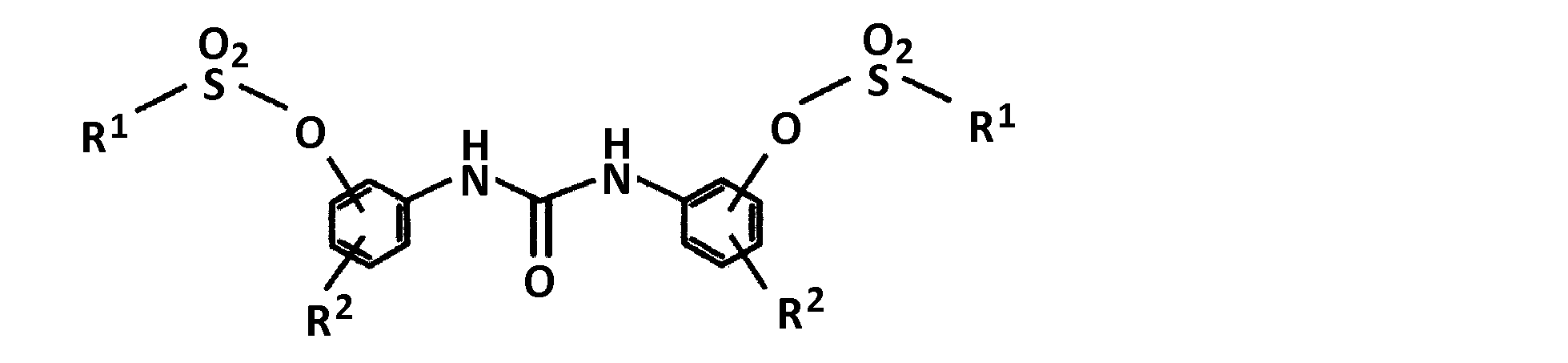
一般式(化1)のベンゼン環中のR1-SO3-O-の位置は、同じであっても異なってもよく、好ましくは、3位、4位又は5位である。
一般式(化1)のベンゼン環中のR2の位置は、同じであっても異なってもよく、好ましくは3位、4位又は5位である。
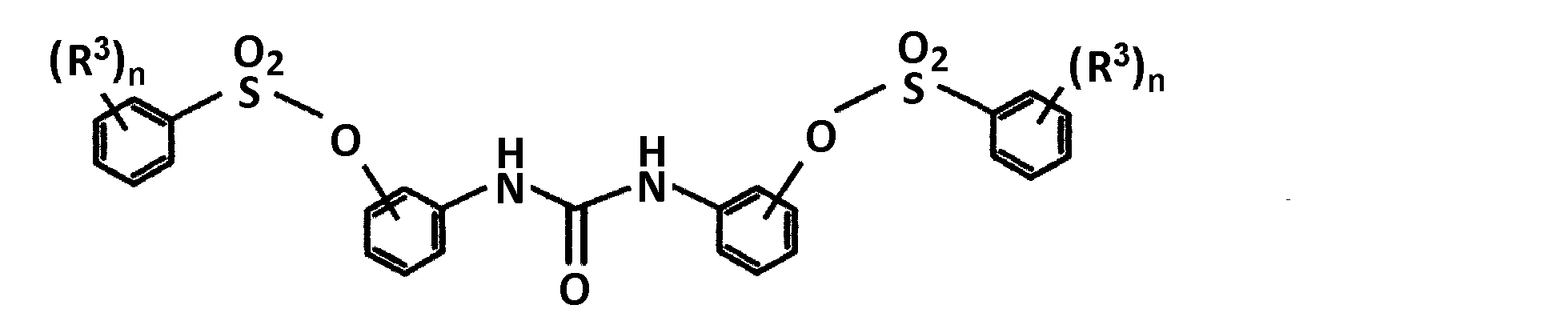
一般式(化3)のベンゼン環中のR3の位置は、同じであっても異なってもよく、好ましくは3位、4位又は5位、好ましくは4位である。

特に、R4、R5、R7、R8としては、水素原子が好ましく、R6としては、水素原子、又はアルキル基が好ましい。R6としては、特にアルキル基が好ましい。
このアルキル基(アルキルカルボニルオキシ基、アルキルカルボニルアミノ基、アルキルスルホニルアミノ基、モノアルキルアミノ基、ジアルキルアミノ基に含まれるものを含む。)、及びアリール基(アリールオキシ基、アリールカルボニルオキシ基、アリールカルボニルアミノ基、アリールスルホニルアミノ基、アリールアミノ基に含まれるものを含む。)については、上記一般式(化1)中のアルキル基及びアリール基と同様に定義される。
このアルコキシ基は、例えば、直鎖状、分岐鎖状若しくは脂環状のアルコキシ基であり、炭素数は好ましくは1~12である。
一般式(化2)のベンゼン環中の-O-(CONH)m-SO2-置換フェニル基の位置は、好ましくは、3位、4位又は5位である(下記一般式(化4)及び一般式(化5)においても同じ。)。
一般式(化2)中、mは0~2、好ましくは0~1の整数を表す。

また、本発明の感熱記録層中の前記第2のウレア化合物の含有量は、前記第1のウレア化合物1.0重量部に対して、好ましくは0.1~30.0重量部、より好ましくは0.5~25.0重量部、更に好ましくは1.0~20.0重量部、特に好ましくは2.0~15.0重量部である。
本発明の感熱記録層中の前記第2のウレア化合物の含有量が、前記第1のウレア化合物1.0重量部に対して、0.1重量部以上、特に1.0重量部以上であると、高い発色感度及び画像濃度を有し、かつ優れた耐油性を備えている感熱記録体が得られる。
3,3-ビス(p-ジメチルアミノフェニル)-6-ジメチルアミノフタリド〔別名クリスタルバイオレットラクトン〕、3,3-ビス(p-ジメチルアミノフェニル)フタリド〔別名マラカイトグリーンラクトン〕
3-ジエチルアミノ-6-メチルフルオラン、3-ジエチルアミノ-6-メチル-7-アニリノフルオラン、3-ジエチルアミノ-6-メチル-7-(o,p-ジメチルアニリノ)フルオラン、3-ジエチルアミノ-6-メチル-7-クロロフルオラン、3-ジエチルアミノ-6-メチル-7-(m-トリフルオロメチルアニリノ)フルオラン、3-ジエチルアミノ-6-メチル-7-(o-クロロアニリノ)フルオラン、3-ジエチルアミノ-6-メチル-7-(p-クロロアニリノ)フルオラン、3-ジエチルアミノ-6-メチル-7-(o-フルオロアニリノ)フルオラン、3-ジエチルアミノ-6-メチル-7-(m-メチルアニリノ)フルオラン、3-ジエチルアミノ-6-メチル-7-n-オクチルアニリノフルオラン、3-ジエチルアミノ-6-メチル-7-n-オクチルアミノフルオラン、3-ジエチルアミノ-6-メチル-7-ベンジルアミノフルオラン、3-ジエチルアミノ-6-メチル-7-ジベンジルアミノフルオラン、3-ジエチルアミノ-6-クロロ-7-メチルフルオラン、3-ジエチルアミノ-6-クロロ-7-アニリノフルオラン、3-ジエチルアミノ-6-クロロ-7-p-メチルアニリノフルオラン、3-ジエチルアミノ-6-エトキシエチル-7-アニリノフルオラン、3-ジエチルアミノ-7-メチルフルオラン、3-ジエチルアミノ-7-クロロフルオラン、3-ジエチルアミノ-7-(m-トリフルオロメチルアニリノ)フルオラン、3-ジエチルアミノ-7-(o-クロロアニリノ)フルオラン、3-ジエチルアミノ-7-(p-クロロアニリノ)フルオラン、3-ジエチルアミノ-7-(o-フルオロアニリノ)フルオラン、3-ジエチルアミノ-ベンゾ〔a〕フルオラン、3-ジエチルアミノ-ベンゾ〔c〕フルオラン、3-ジブチルアミノ-6-メチル-フルオラン、3-ジブチルアミノ-6-メチル-7-アニリノフルオラン、3-ジブチルアミノ-6-メチル-7-(o,p-ジメチルアニリノ)フルオラン、3-ジブチルアミノ-6-メチル-7-(o-クロロアニリノ)フルオラン、3-ジブチルアミノ-6-メチル-7-(p-クロロアニリノ)フルオラン、3-ジブチルアミノ-6-メチル-7-(o-フルオロアニリノ)フルオラン、3-ジブチルアミノ-6-メチル-7-(m-トリフルオロメチルアニリノ)フルオラン、3-ジブチルアミノ-6-メチル-7-クロロフルオラン、3-ジブチルアミノ-6-エトキシエチル-7-アニリノフルオラン、3-ジブチルアミノ-6-クロロ-7-アニリノフルオラン、3-ジブチルアミノ-6-メチル-7-p-メチルアニリノフルオラン、3-ジブチルアミノ-7-(o-クロロアニリノ)フルオラン、3-ジブチルアミノ-7-(o-フルオロアニリノ)フルオラン、3-ジ-n-ペンチルアミノ-6-メチル-7-アニリノフルオラン、3-ジ-n-ペンチルアミノ-6-メチル-7-(p-クロロアニリノ)フルオラン、3-ジ-n-ペンチルアミノ-7-(m-トリフルオロメチルアニリノ)フルオラン、3-ジ-n-ペンチルアミノ-6-クロロ-7-アニリノフルオラン、3-ジ-n-ペンチルアミノ-7-(p-クロロアニリノ)フルオラン、3-ピロリジノ-6-メチル-7-アニリノフルオラン、3-ピペリジノ-6-メチル-7-アニリノフルオラン、3-(N-メチル-N-プロピルアミノ)-6-メチル-7-アニリノフルオラン、3-(N-メチル-N-シクロヘキシルアミノ)-6-メチル-7-アニリノフルオラン、3-(N-エチル-N-シクロヘキシルアミノ)-6-メチル-7-アニリノフルオラン、3-(N-エチル-N-キシルアミノ)-6-メチル-7-(p-クロロアニリノ)フルオラン、3-(N-エチル-p-トルイディノ)-6-メチル-7-アニリノフルオラン、3-(N-エチル-N-イソアミルアミノ)-6-メチル-7-アニリノフルオラン、3-(N-エチル-N-イソアミルアミノ)-6-クロロ-7-アニリノフルオラン、3-(N-エチル-N-テトラヒドロフルフリルアミノ)-6-メチル-7-アニリノフルオラン、3-(N-エチル-N-イソブチルアミノ)-6-メチル-7-アニリノフルオラン、3-(N-エチル-N-エトキシプロピルアミノ)-6-メチル-7-アニリノフルオラン、3-シクロヘキシルアミノ-6-クロロフルオラン、2-(4-オキサヘキシル)-3-ジメチルアミノ-6-メチル-7-アニリノフルオラン、2-(4-オキサヘキシル)-3-ジエチルアミノ-6-メチル-7-アニリノフルオラン、2-(4-オキサヘキシル)-3-ジプロピルアミノ-6-メチル-7-アニリノフルオラン、2-メチル-6-p-(p-ジメチルアミノフェニル)アミノアニリノフルオラン、2-メトキシ-6-p-(p-ジメチルアミノフェニル)アミノアニリノフルオラン、2-クロロ-3-メチル-6-p-(p-フェニルアミノフェニル)アミノアニリノフルオラン、2-クロロ-6-p-(p-ジメチルアミノフェニル)アミノアニリノフルオラン、2-ニトロ-6-p-(p-ジエチルアミノフェニル)アミノアニリノフルオラン、2-アミノ-6-p-(p-ジエチルアミノフェニル)アミノアニリノフルオラン、2-ジエチルアミノ-6-p-(p-ジエチルアミノフェニル)アミノアニリノフルオラン、2-フェニル-6-メチル-6-p-(p-フェニルアミノフェニル)アミノアニリノフルオラン、2-ベンジル-6-p-(p-フェニルアミノフェニル)アミノアニリノフルオラン、2-ヒドロキシ-6-p-(p-フェニルアミノフェニル)アミノアニリノフルオラン、3-メチル-6-p-(p-ジメチルアミノフェニル)アミノアニリノフルオラン、3-ジエチルアミノ-6-p-(p-ジエチルアミノフェニル)アミノアニリノフルオラン、3-ジエチルアミノ-6-p-(p-ジブチルアミノフェニル)アミノアニリノフルオラン、2,4-ジメチル-6-〔(4-ジメチルアミノ)アニリノ〕-フルオラン
3,6,6'-トリス(ジメチルアミノ)スピロ〔フルオレン-9,3'-フタリド〕、3,6,6'-トリス(ジエチルアミノ)スピロ〔フルオレン-9,3'-フタリド〕
3,3-ビス-〔2-(p-ジメチルアミノフェニル)-2-(p-メトキシフェニル)エテニル〕-4,5,6,7-テトラブロモフタリド、3,3-ビス-〔2-(p-ジメチルアミノフェニル)-2-(p-メトキシフェニル)エテニル〕-4,5,6,7-テトラクロロフタリド、3,3-ビス-〔1,1-ビス(4-ピロリジノフェニル)エチレン-2-イル〕-4,5,6,7-テトラブロモフタリド、3,3-ビス-〔1-(4-メトキシフェニル)-1-(4-ピロリジノフェニル)エチレン-2-イル〕-4,5,6,7-テトラクロロフタリド
3-(4-ジエチルアミノ-2-エトキシフェニル)-3-(1-エチル-2-メチルインドール-3-イル)-4-アザフタリド、3-(4-ジエチルアミノ-2-エトキシフェニル)-3-(1-オクチル-2-メチルインドール-3-イル)-4-アザフタリド、3-(4-シクロヘキシルエチルアミノ-2-メトキシフェニル)-3-(1-エチル-2-メチルインドール-3-イル)-4-アザフタリド、3,3-ビス(1-エチル-2-メチルインドール-3-イル)フタリド、3,6-ビス(ジエチルアミノ)フルオラン-γ-(3'-ニトロ)アニリノラクタム、3,6-ビス(ジエチルアミノ)フルオラン-γ-(4'-ニトロ)アニリノラクタム、1,1-ビス-〔2',2',2'',2''-テトラキス-(p-ジメチルアミノフェニル)-エテニル〕-2,2-ジニトリルエタン、1,1-ビス-〔2',2',2'',2''-テトラキス-(p-ジメチルアミノフェニル)-エテニル〕-2-β-ナフトイルエタン、1,1-ビス-〔2',2',2'',2''-テトラキス-(p-ジメチルアミノフェニル)-エテニル〕-2,2-ジアセチルエタン、ビス-〔2,2,2',2'-テトラキス-(p-ジメチルアミノフェニル)-エテニル〕-メチルマロン酸ジメチルエステル
ウムなどを例示することができる。
本発明において、感熱記録層にバインダーとしてカルボキシル基含有樹脂を、架橋剤としてエピクロロヒドリン系樹脂及びポリアミン/ポリアミド系樹脂を、それぞれ含有させると、耐水性が特に良好となる理由は、次のように推測される。
特に、カルボキシル基含有樹脂がカルボキシ変性ポリビニルアルコールである場合、画像部の耐可塑剤性及び白紙部の耐熱性が更に良好になるため好ましい。これは、前述の架橋反応に加え、更にポリアミン/ポリアミド系樹脂のカチオン性部位が、カルボキシ変性ポリビニルアルコールのカルボキシル基と架橋反応するためと推測される。
エピクロロヒドリン系樹脂の主鎖に存在するアミンとしては第1級から第4級までのものを使用することができ、特に制限はない。さらに、カチオン化度及び分子量は、耐水性が良好なことから、カチオン化度は5meq/g・Solid以下(pH7での測定値)、分子量は50万以上が好ましい。これらのエピクロロヒドリン系樹脂は、単独又は2種類以上を使用することも可能である。
本発明の感熱記録層で使用するエピクロロヒドリン系樹脂の具体例としては、スミレーズレジン650(30)、スミレーズレジン675A、スミレーズレジン6615(以上、住友化学社製)、WS4002、WS4020、WS4024、WS4030、WS4046、WS4010、CP8970(以上、星光PMC社製)などが挙げられる。
これらのポリアミン/ポリアミド系樹脂の中では、特に耐水性が良好となるためポリアミン系樹脂(ポリアルキレンポリアミン樹脂、ポリアミンポリ尿素樹脂、変性ポリアミン樹脂、ポリアルキレンポリアミン尿素ホルマリン樹脂、ポリアルキレンポリアミンポリアミドポリ尿素樹等)を使用することが好ましい。これらのポリアミン/ポリアミド系樹脂は、単独又は2種類以上を使用することも可能である。
本発明の感熱記録層で使用するポリアミン/ポリアミド系樹脂の具体例としては、スミレーズレジン302(住友化学社製:ポリアミンポリ尿素樹脂)、スミレーズレジン712(住友化学社製:ポリアミンポリ尿素樹脂)、スミレーズレジン703(住友化学社製:ポリアミンポリ尿素樹脂)、スミレーズレジン636(住友化学社製:ポリアミンポリ尿素樹脂)、スミレーズレジンSPI-100(住友化学社製:変性ポリアミン樹脂)、スミレーズレジンSPI-102A(住友化学社製:変性ポリアミン樹脂)、スミレーズレジンSPI-106N(住友化学社製:変性ポリアミド樹脂)、スミレーズレジンSPI-203(50)(住友化学社製)、スミレーズレジンSPI-198(住友化学社製
)、プリンティブA-700(旭化成社製)、プリンティブA-600(旭化成社製)、PA6500、PA6504、PA6634、PA6638、PA6640、PA6644、PA6646、PA6654、PA6702、PA6704(以上、星光PMC社製:ポリアルキレンポリアミンポリアミドポリ尿素樹脂)などが挙げられる。
酸金属塩、ワックス類、シリコーン樹脂類などが挙げられる。
このバインダーとしては、上述の感熱記録層に使用可能なバインダーが適宜使用可能であるが、カルボキシ変性ポリビニルアルコール及び非コアシェル型アクリル系樹脂が好ましい。これらのバインダーは1種又は2種以上用いてもよい。
また、架橋剤としては、上述の感熱記録層に使用可能な架橋剤が適宜使用可能であるが、エピクロロヒドリン系樹脂及びポリアミン/ポリアミド系樹脂(エピクロロヒドリン系樹脂に含まれるものを除く。)が好ましい。
保護層にカルボキシ変性ポリビニルアルコールと共に、エピクロロヒドリン系樹脂及びポリアミン/ポリアミド系樹脂を含有させることがより好ましく、これにより発色性能が更に改善される。
この非コアシェル型アクリル系樹脂は、(メタ)アクリル酸、及び(メタ)アクリル酸と共重合可能な単量体成分を含み、(メタ)アクリル酸が非コアシェル型アクリル系樹脂100重量部中1~10重量部であることが好ましい。(メタ)アクリル酸は、アルカリ可溶性であり、中和剤の添加により非コアシェル型アクリル系樹脂を水溶性樹脂にする特性を有している。非コアシェル型アクリル系樹脂を水溶性樹脂に変化させることによって、特に保護層中に顔料を含有する場合、顔料への結合性が著しく向上し、多量の顔料含有下でも優れた強度を有する保護層を形成することができる。(メタ)アクリル酸と共重合可能な成分としては、例えば(メタ)アクリル酸メチル、(メタ)アクリル酸エチル、(メタ)アクリル酸プロピル、(メタ)アクリル酸ブチル、(メタ)アクリル酸イソブチル、(メタ)アクリル酸ペンチル、(メタ)アクリル酸ヘキシル、(メタ)アクリル酸-2-エチルへキシル、(メタ)アクリル酸オクチルなどのアクリル酸アルキル樹脂及びエポキシ樹脂、シリコーン樹脂、スチレン又はその誘導体によって変性された上記アクリル酸アルキル樹脂などの変性アクリル酸アルキル樹脂、(メタ)アクリロニトリル、アクリル酸エステル、ヒドロキシアルキルアクリル酸エステルを例示できるが、特に(メタ)アクリロニトリル及び/又はメタクリル酸メチルを配合することが好ましい。(メタ)アクリロニトリルは非コアシェル型アクリル系樹脂100部中15~70部配合することが好ましい。また、メタクリル酸メチルは非コアシェル型アクリル系樹脂100部中20~80部含むことが好ましい。(メタ)アクリロニトリル及びメタクリル酸メチルを含む場合、(メタ)アクリロニトリルを非コアシェル型アクリル系樹脂100部中15~18部、メタクリル酸メチルを非コアシェル型アクリル系樹脂100部中20~80部配合することが好ましい。
保護層中のバインダーの含有量(固形分)は好ましくは20重量%以上、20~80重量%程度がより好ましく、保護層が顔料を含む場合、顔料およびバインダーの含有量は、顔料100重量部に対しバインダーは固形分で30~300重量部程度が好ましい。
保護層の塗工液には必要に応じて、上述の感熱記録層に使用可能な架橋剤、滑剤、安定剤や、紫外線吸収剤、分散剤、消泡剤、酸化防止剤、蛍光染料等の各種助剤を適宜配合してもよい。
下塗り層を設けてもよい。
下塗り層に用いるバインダーとしては、一般的に使用されている水溶性高分子あるいは疎水性高分子のエマルジョン等が適宜使用可能である。具体例としては、ポリビニルアルコール、ポリビニルアセタール、ヒドロキシエチルセルロース、メチルセルロース、カルボキシメチルセルロース、等のセルロース誘導体、デンプンとその誘導体、ポリアクリル酸ソーダ、ポリビニルピロリドン、アクリル酸アミド/アクリル酸エステル共重合体、アクリル酸アミド/アクリル酸エステル/メタクリル酸共重合体、スチレン/無水マレイン酸共重合体アルカリ塩、イソブチレン/無水マレイン酸共重合体アルカリ塩、ポリアクリルアミド、アルギン酸ソーダ、ゼラチン、カゼイン等の水溶性高分子、ポリ酢酸ビニル、ポリウレタン、スチレン/ブタジエン共重合体、ポリアクリル酸、ポリアクリル酸エステル、塩化ビニル/酢酸ビニル共重合体、ポリブチルメタクリレート、エチレン/酢酸ビニル共重合体、スチレン/ブタジエン/アクリル系共重合体等の疎水性高分子のエマルジョンを用いることができる。これらのバインダーは1種又は2種以上用いてもよい。
下塗り層中の顔料は、全固形分100重量部に対して、通常50~95重量部、好ましくは70~90重量部である。
下塗り層の塗工液には必要に応じて、分散剤、可塑剤、pH調整剤、消泡剤、保水剤、防腐剤、着色染料、紫外線防止剤等の各種助剤を適宜配合してもよい。
感熱記録層及び感熱記録層以外の塗工層の塗工量は、要求される性能及び記録適性に従って決定され、特に限定されるものではないが、感熱記録層の一般的な塗工量は固形分で2~12g/m2程度であり、保護層の塗工量は固形分で0.5~5.0g/m2が好ましい。
また、各塗工層の塗工後にスーパーカレンダー掛けなどの平滑化処理を施すなど、感熱記録体分野における各種公知の技術を必要適宜付加することができる。
下記配合からなる配合物を攪拌分散して、下塗り層用塗工液を調製した。
<下塗り層用塗工液>
焼成カオリン(BASF社製、商品名:アンシレックス90)
100.0部
スチレン・ブタジエン共重合体ラテックス(日本ゼオン株式会社製、
商品名:ST5526、固形分48%) 10.0部
水 50.0部
N,N'-ジ-[3-(p-トルエンスルホニルオキシ)フェニル]尿素
6.0部
完全ケン化型ポリビニルアルコール水溶液(クラレ社製、商品名:
PVA117、固形分10%) 5.0部
水 1.5部
下記化学式(化6)で表されるウレア化合物 6.0部

水 1.5部
下記化学式(化7)で表されるウレア化合物 6.0部

水 1.5部
化学式(化8)で表されるフェノール系化合物(日本曹達社製D90)
6.0部

水 1.5部
3-ジブチルアミノ-6-メチル-7-アニリノフルオラン
(山本化成株式会社製、商品名:ODB-2) 6.0部
完全ケン化型ポリビニルアルコール水溶液(PVA117) 5.0部
水 1.5部
1,2-ジ(3-メチルフェノキシ)エタン
(三光社製、商品名:KS232) 6.0部
完全ケン化型ポリビニルアルコール水溶液(PVA117) 5.0部
水 1.5部
<感熱記録層用塗工液>
顕色剤分散液(A1液) 2.0部
顕色剤分散液(A2液) 8.0部
ロイコ染料分散液(B液) 5.0部
増感剤分散液(C液) 3.0部
完全ケン化型ポリビニルアルコール水溶液(PVA117) 25.0部
<保護層用塗工液>
水酸化アルミニウム分散液(マーティンスベルク社製、商品名:
マーティフィンOL、固形分50%) 9.0部
完全ケン化型ポリビニルアルコール水溶液(PVA117) 40.0部
ステアリン酸亜鉛(中京油脂社製、ハイドリンZ-7-30、
固形分30%) 2.0部
グリオキザール水溶液(日本合成化学社製、固形分40%) 3.0部
支持体(坪量47g/m2の上質紙)の片面に、下塗り層用塗工液を、固形分で塗工量10.0g/m2となるようにベントブレード法で塗工した後、乾燥を行ない、下塗り層塗工紙を得た。
この下塗り層塗工紙の下塗り層上に、感熱記録層用塗工液を、固形分で塗工量6.0g/m2となるようにロッドブレード法で塗工した後、乾燥を行い、スーパーカレンダーで平滑度が100~500秒になるように処理して感熱記録体を作製した。
感熱記録層用塗工液において、A1液のN,N'-ジ-[3-(p-トルエンスルホニルオキシ)フェニル]尿素を、N,N'-ジ-[3-(o-トルエンスルホニルオキシ)フェニル]尿素に変更した以外は、実施例1と同様にして感熱記録体を作製した。
[実施例3]
感熱記録層用塗工液において、A1液のN,N'-ジ-[3-(p-トルエンスルホニルオキシ)フェニル]尿素を、N,N'-ジ-[3-(ベンゼンスルホニルオキシ)フェニル]尿素に変更した以外は、実施例1と同様にして感熱記録体を作製した。
感熱記録層用塗工液において、A1液のN,N'-ジ-[3-(p-トルエンスルホニルオキシ)フェニル]尿素を、N,N'-ジ-[3-(メシチレンスルホニルオキシ)フェニル]尿素に変更した以外は、実施例1と同様にして感熱記録体を作製した。
[実施例5]
感熱記録層用塗工液において、A1液のN,N'-ジ-[3-(p-トルエンスルホニルオキシ)フェニル]尿素を、N,N'-ジ-[3-(2-ナフタレンスルホニルオキシ)フェニル]尿素に変更した以外は、実施例1と同様にして感熱記録体を作製した。
感熱記録層用塗工液において、A1液のN,N'-ジ-[3-(p-トルエンスルホニルオキシ)フェニル]尿素を、N,N'-ジ-[3-(p-メトキシベンゼンスルホニルオキシ)フェニル]尿素に変更した以外は、実施例1と同様にして感熱記録体を作製した。
[実施例7]
感熱記録層用塗工液において、A1液のN,N'-ジ-[3-(p-トルエンスルホニルオキシ)フェニル]尿素を、N,N'-ジ-[3-(ベンジルスルホニルオキシ)フェニル]尿素に変更した以外は、実施例1と同様にして感熱記録体を作製した。
感熱記録層用塗工液において、A1液のN,N'-ジ-[3-(p-トルエンスルホニルオキシ)フェニル]尿素を、N,N'-ジ-[3-(エタンスルホニルオキシ)フェニル]尿素に変更した以外は、実施例1と同様にして感熱記録体を作製した。
[実施例9]
感熱記録層用塗工液において、A1液のN,N'-ジ-[3-(p-トルエンスルホニルオキシ)フェニル]尿素を、N,N'-ジ-[4-(p-トルエンスルホニルオキシ)フェニル]尿素に変更した以外は、実施例1と同様にして感熱記録体を作製した。
感熱記録層用塗工液において、A1液のN,N'-ジ-[3-(p-トルエンスルホニルオキシ)フェニル]尿素を、N,N'-ジ-[4-(ベンゼンスルホニルオキシ)フェニル]尿素に変更した以外は、実施例1と同様にして感熱記録体を作製した。
[実施例11]
実施例1において、感熱記録層塗工紙の感熱記録層上に、保護層用塗工液を、固形分で塗工量3.0g/m2となるようにロッドブレード法で塗工した後、乾燥を行い、スーパーカレンダーで平滑度が500~1000秒になるように処理して感熱記録体を作製した。
感熱記録層用塗工液において、A1液の配合量を2.0部から5.0部に変更し、A2液の配合量を8.0部から5.0部に変更した以外は、実施例1と同様にして感熱記録体を作製した。
[実施例13]
感熱記録層用塗工液において、A2液の代わりにA3液を用いた以外は、実施例1と同様にして感熱記録体を作製した。
[実施例14]
感熱記録層用塗工液において、A2液の代わりにA3液を用いた以外は、実施例12と同様にして感熱記録体を作製した。
感熱記録層用塗工液において、A1液を配合せず、A2液の配合量を8.0部から10.0部に変更した以外は、実施例1と同様にして感熱記録体を作製した。
[比較例2]
感熱記録層用塗工液において、A2液を配合せず、A1液の配合量を2.0部から10.0部に変更した以外は、実施例1と同様にして感熱記録体を作製した。
[比較例3]
感熱記録層用塗工液において、A1液を配合せず、A4液を5.0部配合した以外は、実施例12と同様にして感熱記録体を作製した。
[比較例4]
感熱記録層用塗工液において、A2液を配合せず、A4液を5.0部配合した以外は、実施例12と同様にして感熱記録体を作製した。
<発色性能(印字濃度)>
作製した感熱記録体について、大倉電機社製のTH-PMD(感熱記録紙印字試験機、京セラ社製サーマルヘッドを装着)を用い、印字速度50mm/secで、印加エネルギー0.35mJ/dotと0.41mJ/dotで市松模様を印字した。印字部の印字濃度をマクベス濃度計(RD-914、アンバーフィルター使用)で測定し、発色性能(印字濃度)を評価した。
<耐油性>
作製した感熱記録体について、大倉電機社製のTH-PMD(感熱記録紙印字試験機、京セラ社製サーマルヘッドを装着)を用い、印加エネルギー0.41mJ/dot、印字速度50mm/secで市松模様を印字した。
印字した感熱記録体に、サラダ油を綿棒で塗布し、24時間放置した後、印字部の印字濃度をマクベス濃度計(RD-914、アンバーフィルター使用)で測定した。
作製した感熱記録体について、感熱記録面を110℃の鉄板に5秒間接触させた。非印字部(白紙部)の濃度をマクベス濃度計(RD-914、アンバーフィルター使用)で測定し、処理前後の値の差から地色発色値を算出し、下記の基準で非印字部(白紙部)の変色を評価した。
地色発色値=(処理後の非印字部の濃度)-(処理前の非印字部の濃度)
優:地色発色値が0.1未満
可:地色発色値が0.1以上0.2未満
不可:地色発色値が0.2以上
<耐可塑剤性>
作製した感熱記録体について、大倉電機社製のTH-PMD(感熱記録紙印字試験機、京セラ社製サーマルヘッドを装着)を用い、印加エネルギー0.41mJ/dot、印字速度50mm/secで市松模様を印字した。
印字した感熱記録体を、紙管に塩ビラップ(三井化学製ハイラップKMA)を1回巻き付けた上に貼り付け、更にその上に塩ビラップを3重に巻き付けて、23℃、50%RH環境条件下で24時間静置した。
印字部の印字濃度をマクベス濃度計(RD-914、アンバーフィルター使用)で測定し、処理前後の値から残存率を算出して、耐可塑剤性を評価した。
残存率(%)=(処理後の印字部の印字濃度/処理前の印字部の印字濃度)×100
作製した感熱記録体について、サトー社製ラベルプリンタ(レスプリR-8)にて長さ60cmの格子印字を行い、印字後のサーマルヘッドに付着したカス(ヘッドカス)を目視にて下記の基準で評価した。
優:ヘッドカスの付着がほとんど見られなかった。
可:ヘッドカスの付着が少し見られたが、形成された画像の抜け及びカスレが見られず、実用上問題のない程度であった。
不可:ヘッドカスの付着が多く見られ、形成された画像の抜け及びカスレが見られた。

Claims (9)
- 支持体上に無色ないし淡色の電子供与性ロイコ染料と電子受容性顕色剤とを含有する感熱記録層を設けた感熱記録体であって、該感熱記録層が、電子受容性顕色剤として、少なくとも2種のウレア化合物を含有し、第1のウレア化合物が下記一般式(化1)で表され、第2のウレア化合物が下記一般式(化2)で表される感熱記録体。


- 前記第1のウレア化合物が、下記一般式(化3)で請求項1又は2に記載の感熱記録体。

- 前記第1のウレア化合物において、R3が炭素数が1~4のアルキル基を表し、nが0~1の整数を表し、ベンゼン環中のR3の位置が4位である、請求項3に記載の感熱記録体。
- 前記第2のウレア化合物が、下記一般式(化4)又は下記一般式(化5)で表される請求項1~4のいずれか一項に記載の感熱記録体。


- 前記感熱記録層中の前記第1のウレア化合物の含有量(固形分)が1.0~50.0重量%である、請求項1~5のいずれか一項に記載の感熱記録体。
- 前記感熱記録層中の前記第2のウレア化合物の含有量(固形分)が5.0~50.0重量%である、請求項1~6のいずれか一項に記載の感熱記録体。
- 前記感熱記録層中の前記第2のウレア化合物の含有量が、前記第1のウレア化合物1.0重量部に対して、0.1~30.0重量部である、請求項1~7のいずれか一項に記載の感熱記録体。
- 前記感熱記録層が、第1のウレア化合物及び第2のウレア化合物以外の顕色剤を含有し、前記感熱記録層中に含有される全顕色剤に対する、第1のウレア化合物及び第2のウレア化合物の合計含有量(固形分)が90重量%以上である、請求項1~8のいずれか一項に記載の感熱記録体。
- 更に、前期感熱記録層上に保護層を設けた、請求項1~9のいずれか一項に記載の感熱記録体。
Priority Applications (5)
| Application Number | Priority Date | Filing Date | Title |
|---|---|---|---|
| JP2021545751A JP6971434B1 (ja) | 2020-02-28 | 2021-02-08 | 感熱記録体 |
| EP21759557.8A EP4098454B1 (en) | 2020-02-28 | 2021-02-08 | Thermosensitive recording medium |
| US17/802,599 US12246549B2 (en) | 2020-02-28 | 2021-02-08 | Thermosensitive recording medium |
| KR1020227029242A KR102770150B1 (ko) | 2020-02-28 | 2021-02-08 | 감열 기록체 |
| CN202180017049.6A CN115210082B (zh) | 2020-02-28 | 2021-02-08 | 热敏记录体 |
Applications Claiming Priority (2)
| Application Number | Priority Date | Filing Date | Title |
|---|---|---|---|
| JP2020033448 | 2020-02-28 | ||
| JP2020-033448 | 2020-02-28 |
Publications (1)
| Publication Number | Publication Date |
|---|---|
| WO2021171983A1 true WO2021171983A1 (ja) | 2021-09-02 |
Family
ID=77490440
Family Applications (1)
| Application Number | Title | Priority Date | Filing Date |
|---|---|---|---|
| PCT/JP2021/004529 Ceased WO2021171983A1 (ja) | 2020-02-28 | 2021-02-08 | 感熱記録体 |
Country Status (6)
| Country | Link |
|---|---|
| US (1) | US12246549B2 (ja) |
| EP (1) | EP4098454B1 (ja) |
| JP (1) | JP6971434B1 (ja) |
| KR (1) | KR102770150B1 (ja) |
| CN (1) | CN115210082B (ja) |
| WO (1) | WO2021171983A1 (ja) |
Cited By (4)
| Publication number | Priority date | Publication date | Assignee | Title |
|---|---|---|---|---|
| JP2023049221A (ja) * | 2021-09-29 | 2023-04-10 | 日本化薬株式会社 | 感熱記録用組成物 |
| US20230202220A1 (en) * | 2020-05-07 | 2023-06-29 | Koehler Innovation & Technology Gmbh | Heat-sensitive recording material |
| WO2023190315A1 (ja) | 2022-03-31 | 2023-10-05 | 日本製紙株式会社 | 感熱記録体 |
| KR20240073983A (ko) | 2022-03-31 | 2024-05-27 | 닛폰세이시가부시키가이샤 | 감열 기록체 |
Families Citing this family (3)
| Publication number | Priority date | Publication date | Assignee | Title |
|---|---|---|---|---|
| CN117042978B (zh) * | 2021-03-29 | 2026-04-10 | 日本制纸株式会社 | 热敏记录体 |
| KR102920148B1 (ko) * | 2022-08-29 | 2026-01-29 | 오사카 시링구 인사츠 가부시키가이샤 | 감열 기록체 |
| JP2024039502A (ja) * | 2022-09-09 | 2024-03-22 | 三光株式会社 | 感熱記録材料 |
Citations (11)
| Publication number | Priority date | Publication date | Assignee | Title |
|---|---|---|---|---|
| JPS5391995A (en) | 1977-01-24 | 1978-08-12 | Kuraray Co Ltd | Production of carboxyl group-modified polyvinyl alcohol |
| JPH0859603A (ja) | 1994-08-19 | 1996-03-05 | Nippon Paper Ind Co Ltd | 新規なアミノベンゼンスルホンアミド誘導体及びそれらを使用した記録体 |
| JPH10258577A (ja) | 1997-03-19 | 1998-09-29 | Nippon Paper Ind Co Ltd | 感熱記録体 |
| JP2002301873A (ja) | 2001-04-04 | 2002-10-15 | Nippon Soda Co Ltd | 記録材料及び記録シート |
| WO2002081229A1 (en) | 2001-04-04 | 2002-10-17 | Nippon Soda Co., Ltd. | Recording material and recording sheet |
| JP2003154760A (ja) | 2001-11-21 | 2003-05-27 | Nippon Paper Industries Co Ltd | 感熱記録体 |
| JP2015080852A (ja) | 2013-10-21 | 2015-04-27 | 日本製紙株式会社 | 感熱記録体 |
| JP2018043363A (ja) * | 2016-09-12 | 2018-03-22 | 日本化薬株式会社 | 感熱記録材料 |
| WO2019044462A1 (ja) | 2017-08-31 | 2019-03-07 | 三光株式会社 | N,n'-ジアリール尿素誘導体、その製造方法及びそれを用いた感熱記録材料 |
| JP2019043005A (ja) * | 2017-08-31 | 2019-03-22 | 三光株式会社 | 感熱記録材料 |
| JP2019136983A (ja) * | 2018-02-14 | 2019-08-22 | 日本化薬株式会社 | 感熱記録材料 |
Family Cites Families (3)
| Publication number | Priority date | Publication date | Assignee | Title |
|---|---|---|---|---|
| CN101984753A (zh) * | 2008-03-27 | 2011-03-09 | 日本制纸株式会社 | 热敏记录体 |
| EP3312018B1 (en) * | 2015-06-16 | 2023-08-09 | Nippon Paper Industries Co., Ltd. | Thermal recording material |
| KR102493552B1 (ko) * | 2015-12-25 | 2023-01-30 | 닛뽄 가야쿠 가부시키가이샤 | 감열 기록 재료 |
-
2021
- 2021-02-08 JP JP2021545751A patent/JP6971434B1/ja active Active
- 2021-02-08 WO PCT/JP2021/004529 patent/WO2021171983A1/ja not_active Ceased
- 2021-02-08 US US17/802,599 patent/US12246549B2/en active Active
- 2021-02-08 EP EP21759557.8A patent/EP4098454B1/en active Active
- 2021-02-08 CN CN202180017049.6A patent/CN115210082B/zh active Active
- 2021-02-08 KR KR1020227029242A patent/KR102770150B1/ko active Active
Patent Citations (11)
| Publication number | Priority date | Publication date | Assignee | Title |
|---|---|---|---|---|
| JPS5391995A (en) | 1977-01-24 | 1978-08-12 | Kuraray Co Ltd | Production of carboxyl group-modified polyvinyl alcohol |
| JPH0859603A (ja) | 1994-08-19 | 1996-03-05 | Nippon Paper Ind Co Ltd | 新規なアミノベンゼンスルホンアミド誘導体及びそれらを使用した記録体 |
| JPH10258577A (ja) | 1997-03-19 | 1998-09-29 | Nippon Paper Ind Co Ltd | 感熱記録体 |
| JP2002301873A (ja) | 2001-04-04 | 2002-10-15 | Nippon Soda Co Ltd | 記録材料及び記録シート |
| WO2002081229A1 (en) | 2001-04-04 | 2002-10-17 | Nippon Soda Co., Ltd. | Recording material and recording sheet |
| JP2003154760A (ja) | 2001-11-21 | 2003-05-27 | Nippon Paper Industries Co Ltd | 感熱記録体 |
| JP2015080852A (ja) | 2013-10-21 | 2015-04-27 | 日本製紙株式会社 | 感熱記録体 |
| JP2018043363A (ja) * | 2016-09-12 | 2018-03-22 | 日本化薬株式会社 | 感熱記録材料 |
| WO2019044462A1 (ja) | 2017-08-31 | 2019-03-07 | 三光株式会社 | N,n'-ジアリール尿素誘導体、その製造方法及びそれを用いた感熱記録材料 |
| JP2019043005A (ja) * | 2017-08-31 | 2019-03-22 | 三光株式会社 | 感熱記録材料 |
| JP2019136983A (ja) * | 2018-02-14 | 2019-08-22 | 日本化薬株式会社 | 感熱記録材料 |
Non-Patent Citations (1)
| Title |
|---|
| See also references of EP4098454A4 |
Cited By (8)
| Publication number | Priority date | Publication date | Assignee | Title |
|---|---|---|---|---|
| US20230202220A1 (en) * | 2020-05-07 | 2023-06-29 | Koehler Innovation & Technology Gmbh | Heat-sensitive recording material |
| US12157326B2 (en) * | 2020-05-07 | 2024-12-03 | Koehler Innovation & Technology Gmbh | Heat-sensitive recording material |
| JP2023049221A (ja) * | 2021-09-29 | 2023-04-10 | 日本化薬株式会社 | 感熱記録用組成物 |
| JP7633918B2 (ja) | 2021-09-29 | 2025-02-20 | 日本化薬株式会社 | 感熱記録用組成物 |
| WO2023190315A1 (ja) | 2022-03-31 | 2023-10-05 | 日本製紙株式会社 | 感熱記録体 |
| KR20240073983A (ko) | 2022-03-31 | 2024-05-27 | 닛폰세이시가부시키가이샤 | 감열 기록체 |
| CN118234628A (zh) * | 2022-03-31 | 2024-06-21 | 日本制纸株式会社 | 热敏记录体 |
| EP4501657A4 (en) * | 2022-03-31 | 2026-04-15 | Jujo Paper Co Ltd | THERMOSENSITIVE RECORDING BODY |
Also Published As
| Publication number | Publication date |
|---|---|
| JP6971434B1 (ja) | 2021-11-24 |
| CN115210082A (zh) | 2022-10-18 |
| US12246549B2 (en) | 2025-03-11 |
| EP4098454A4 (en) | 2023-07-26 |
| US20230144275A1 (en) | 2023-05-11 |
| CN115210082B (zh) | 2024-09-06 |
| KR102770150B1 (ko) | 2025-02-20 |
| EP4098454B1 (en) | 2024-08-28 |
| EP4098454A1 (en) | 2022-12-07 |
| JPWO2021171983A1 (ja) | 2021-09-02 |
| KR20220132586A (ko) | 2022-09-30 |
Similar Documents
| Publication | Publication Date | Title |
|---|---|---|
| JP6960562B2 (ja) | 感熱記録体 | |
| JP6971434B1 (ja) | 感熱記録体 | |
| JP7470516B2 (ja) | 感熱記録体 | |
| JP7847254B2 (ja) | 感熱記録体 | |
| JPWO2019172098A1 (ja) | 感熱記録体 | |
| JP2021137996A (ja) | 感熱記録体 | |
| JP7413098B2 (ja) | 感熱記録体 | |
| JP7072130B1 (ja) | 感熱記録体 | |
| JP6773544B2 (ja) | 感熱記録体 | |
| JP7411510B2 (ja) | 感熱記録体 | |
| JP7354483B1 (ja) | 感熱記録体 | |
| JP7779884B2 (ja) | 感熱記録体 | |
| WO2023190314A1 (ja) | 感熱記録体 | |
| JP2023131480A (ja) | 感熱記録体 | |
| CN121712655A (zh) | 热敏记录体及其制造方法 | |
| CN120712186A (zh) | 热敏记录体 | |
| WO2014097881A1 (ja) | 感熱記録体 | |
| JP2023124987A (ja) | 感熱記録体 |
Legal Events
| Date | Code | Title | Description |
|---|---|---|---|
| ENP | Entry into the national phase |
Ref document number: 2021545751 Country of ref document: JP Kind code of ref document: A |
|
| 121 | Ep: the epo has been informed by wipo that ep was designated in this application |
Ref document number: 21759557 Country of ref document: EP Kind code of ref document: A1 |
|
| ENP | Entry into the national phase |
Ref document number: 20227029242 Country of ref document: KR Kind code of ref document: A |
|
| ENP | Entry into the national phase |
Ref document number: 2021759557 Country of ref document: EP Effective date: 20220831 |
|
| NENP | Non-entry into the national phase |
Ref country code: DE |
|
| WWG | Wipo information: grant in national office |
Ref document number: 17802599 Country of ref document: US |