WO2021111781A1 - 環状オレフィン重合体、溶液、フィルム、及び金属樹脂積層体 - Google Patents
環状オレフィン重合体、溶液、フィルム、及び金属樹脂積層体 Download PDFInfo
- Publication number
- WO2021111781A1 WO2021111781A1 PCT/JP2020/040679 JP2020040679W WO2021111781A1 WO 2021111781 A1 WO2021111781 A1 WO 2021111781A1 JP 2020040679 W JP2020040679 W JP 2020040679W WO 2021111781 A1 WO2021111781 A1 WO 2021111781A1
- Authority
- WO
- WIPO (PCT)
- Prior art keywords
- polymer
- cyclic olefin
- present
- double bond
- content
- Prior art date
- Legal status (The legal status is an assumption and is not a legal conclusion. Google has not performed a legal analysis and makes no representation as to the accuracy of the status listed.)
- Ceased
Links
Images
Classifications
-
- B—PERFORMING OPERATIONS; TRANSPORTING
- B32—LAYERED PRODUCTS
- B32B—LAYERED PRODUCTS, i.e. PRODUCTS BUILT-UP OF STRATA OF FLAT OR NON-FLAT, e.g. CELLULAR OR HONEYCOMB, FORM
- B32B15/00—Layered products comprising a layer of metal
- B32B15/04—Layered products comprising a layer of metal comprising metal as the main or only constituent of a layer, which is next to another layer of the same or of a different material
- B32B15/08—Layered products comprising a layer of metal comprising metal as the main or only constituent of a layer, which is next to another layer of the same or of a different material of synthetic resin
- B32B15/085—Layered products comprising a layer of metal comprising metal as the main or only constituent of a layer, which is next to another layer of the same or of a different material of synthetic resin comprising polyolefins
-
- C—CHEMISTRY; METALLURGY
- C08—ORGANIC MACROMOLECULAR COMPOUNDS; THEIR PREPARATION OR CHEMICAL WORKING-UP; COMPOSITIONS BASED THEREON
- C08F—MACROMOLECULAR COMPOUNDS OBTAINED BY REACTIONS ONLY INVOLVING CARBON-TO-CARBON UNSATURATED BONDS
- C08F232/00—Copolymers of cyclic compounds containing no unsaturated aliphatic radicals in a side chain, and having one or more carbon-to-carbon double bonds in a carbocyclic ring system
-
- C—CHEMISTRY; METALLURGY
- C08—ORGANIC MACROMOLECULAR COMPOUNDS; THEIR PREPARATION OR CHEMICAL WORKING-UP; COMPOSITIONS BASED THEREON
- C08J—WORKING-UP; GENERAL PROCESSES OF COMPOUNDING; AFTER-TREATMENT NOT COVERED BY SUBCLASSES C08B, C08C, C08F, C08G or C08H
- C08J5/00—Manufacture of articles or shaped materials containing macromolecular substances
- C08J5/18—Manufacture of films or sheets
-
- C—CHEMISTRY; METALLURGY
- C08—ORGANIC MACROMOLECULAR COMPOUNDS; THEIR PREPARATION OR CHEMICAL WORKING-UP; COMPOSITIONS BASED THEREON
- C08L—COMPOSITIONS OF MACROMOLECULAR COMPOUNDS
- C08L45/00—Compositions of homopolymers or copolymers of compounds having no unsaturated aliphatic radicals in side chain, and having one or more carbon-to-carbon double bonds in a carbocyclic or in a heterocyclic ring system; Compositions of derivatives of such polymers
Definitions
- the present invention relates to cyclic olefin polymers, solutions, films, and metal resin laminates.
- Cyclic olefin polymers have high transparency and are widely used in various fields.
- the norbornene-based polymer is also used as a material for the resin layer in the metal laminate obtained by laminating the resin layer and the metal foil layer.
- Patent Documents 1 to 3 disclose a metal resin laminate having a resin layer obtained from a solution containing a norbornene-based polymer which is a cyclic olefin polymer.
- Examples of the use of the metal laminate include an insulator such as a printed circuit board.
- the printed circuit board usually means that electronic components are soldered on an insulator provided with copper wiring, and operates as an electronic circuit in an electric device (computer, mobile communication device, etc.).
- Printed circuit boards and their parts are usually required to have not only dielectric properties (low dielectric constant, low dielectric loss tangent, etc.) but also good adhesiveness to metal foil and heat resistance.
- a polymer containing a functional group, a polar group, or the like has been used in order to improve the heat resistance and copper foil adhesion of the cyclic olefin polymer.
- a polymer tends to have a high relative permittivity and dielectric loss tangent, and may not be suitable as an insulator for a printed circuit board.
- the present invention has been made in view of the above circumstances, and an object of the present invention is to provide a cyclic olefin polymer having good adhesiveness to a metal foil, solder heat resistance, and heat resistance reliability.
- the present inventors have conducted extensive research to solve the above problems.
- the content of the structural unit derived from the ⁇ -olefin, the content of the double bond, and the ratio of the content of the terminal vinylidene group to the content of the double bond are predetermined.
- the present invention has been completed by finding that the above-mentioned problems can be solved by the addition polymer of the cyclic olefin monomer and the ⁇ -olefin having the ratio of More specifically, the present invention provides the following.
- a cyclic olefin polymer which is an addition polymer of a cyclic olefin monomer and an ⁇ -olefin.
- the content of the structural unit derived from the ⁇ -olefin is more than 0 mol% and less than 35 mol% with respect to all the structural units.
- the content of the double bond in 1000 structural units in the addition polymer is 0.50% or more and 1.60% or less.
- the ratio of the content of the terminal vinylidene group to the content of the double bond is 10% or more and 50% or less. Cyclic olefin polymer.
- a metal resin laminate including a resin layer made of the film according to (5) and a metal foil layer provided on one side or both sides of the resin layer.
- a cyclic olefin polymer having good adhesiveness to a metal foil, solder heat resistance, and heat resistance reliability is provided.
- the cyclic olefin polymer of the present invention (hereinafter, also referred to as “polymer of the present invention”) is an addition polymer of a cyclic olefin monomer and an ⁇ -olefin, and satisfies all of the following requirements.
- the content of the structural unit derived from the ⁇ -olefin is more than 0 mol% and less than 35 mol% with respect to all the structural units.
- the content of the double bond in 1000 structural units in the polymer of the present invention is 0.50% or more and 1.60% or less.
- the ratio of the content of the terminal vinylidene group to the content of the double bond is 10% or more and 50% or less.
- "good adhesiveness to the metal leaf” means that the polymer of the present invention adhered to the metal leaf by any means is hard to peel off from the surface of the metal leaf or does not peel off. means.
- the adhesiveness to the metal foil is evaluated by the copper foil adhesiveness test or the like shown in the examples.
- the type of metal foil and the method of adhering the metal foil to the polymer of the present invention are not particularly limited, but those listed in the following (metal foil layer) section can be preferably adopted.
- solder heat resistance means that a molded body using the polymer of the present invention (for example, a printed circuit board on which metal foils are laminated) is deformed even when exposed to a high temperature such as solder reflow. This means that the metal foil is less likely to peel off.
- the molded body using the polymer of the present invention is a printed circuit board on which metal foils are laminated, deformation and peeling of the metal foils (copper foils, etc.) occur even after a high temperature mounting process (solder reflow, etc.). It means that it functions as a circuit without waking up.
- the maximum temperature of the solder reflow may be about 260 ° C. (Refer to the reflow profile recommended by the Japan Electronics and Information Technology Industries Association). The solder heat resistance is evaluated by the method shown in the examples or the like.
- heat resistance means that even if a molded product using the polymer of the present invention (for example, a printed circuit board on which metal foils are laminated) is subjected to an accelerated test at a high temperature, the molded product It means that the function is not easily impaired.
- the molded product using the polymer of the present invention is a printed circuit board on which metal foils are laminated, even after the life is evaluated under the acceleration condition of high temperature storage (150 ° C.) as a reliability evaluation. It means that it functions as a circuit without causing peeling of metal foil (copper foil, etc.).
- the heat resistance is evaluated by the post-heat treatment adhesiveness test shown in the examples.
- the polymer of the present invention preferably does not contain a functional group, a polar group, or the like, but an embodiment containing a functional group, a polar group, or the like is not excluded.
- Cyclic olefin monomer examples include those represented by the following general formula (I).
- R 1 to R 12 may be the same or different from each other, and are selected from the group consisting of a hydrogen atom, a halogen atom, and a hydrocarbon group.
- R 9 and R 10 and R 11 and R 12 may be integrated to form a divalent hydrocarbon group.
- R 9 or R 10 and R 11 or R 12 may form a ring with each other.
- n indicates 0 or a positive integer.
- R 9 and R 10 or R 11 and R 12 are integrated to form a divalent hydrocarbon group
- a divalent hydrocarbon group include, for example, an alkylidene group such as an ethylidene group, a propylidene group, and an isopropylidene group. Can be mentioned.
- the formed ring may be a monocyclic ring, a polycyclic ring, or a polycyclic ring having a crosslink. , It may be a ring having a double bond, or it may be a ring composed of a combination of these rings. Further, these rings may have a substituent such as a methyl group.
- the cyclic olefin monomer may have a side chain or may not have a side chain.
- the cyclic olefin monomer preferably has no side chain.
- a monomer having a side chain (such as etylidene) can improve the adhesiveness with a metal foil, but surprisingly, in a polymer satisfying the requirements of the present invention, a monomer constituting the polymer Has high adhesion to metal leaf even if it does not have a side chain.
- cyclic olefin monomer examples include norbornene and tetradodecene. Norbornene is particularly preferable as the cyclic olefin monomer from the viewpoint of high reactivity with the metallocene catalyst described later.
- the content of the structural unit derived from the cyclic olefin monomer is preferably 65 mol% or more and 100 mol% with respect to all the structural units from the viewpoint that a cyclic olefin polymer having high solder heat resistance can be easily obtained. Less than, more preferably 90 mol% or less. If it is 65 mol% or more, a cyclic olefin polymer having sufficiently high solder heat resistance can be obtained. If it is less than 100 mol% (more preferably 90 mol% or less), sufficient metal adhesiveness can be obtained.
- the content of the structural unit derived from the cyclic olefin monomer in the polymer is specified by the method using 13 C-NMR described later.
- the ⁇ -olefin constituting the polymer of the present invention is not particularly limited, and examples thereof include ⁇ -olefins having 2 or more and 20 or less carbon atoms, and more preferably 6 or more and 10 or less carbon atoms.
- ⁇ -olefin examples include ethylene, propylene, 1-butene, 1-pentene, 1-hexene, 3-methyl-1-butene, 3-methyl-1-pentene, 3-ethyl-1-pentene, and the like.
- ⁇ -olefins having 6 to 10 carbon atoms are preferable, and 1-hexene, 1-heptene, 1-octene, and 1-decene are more preferable.
- the ⁇ -olefin is more preferably an ⁇ -olefin having a boiling point of 150 ° C. or lower (particularly, any one of 1-hexene, 1-heptene, and 1-octene).
- ⁇ -olefins having a boiling point of 100 ° C. or lower are particularly preferable.
- the polymer of the present invention has a content of structural units derived from ⁇ -olefin (hereinafter, also referred to as “ ⁇ -olefin amount”) of more than 0 mol% and less than 35 mol% with respect to all structural units. From the viewpoint that a cyclic olefin polymer having high solubility in a solvent can be easily obtained, the amount of ⁇ -olefin is more than 0 mol% with respect to all the structural units. The amount of ⁇ -olefin is less than 35 mol% with respect to the total structural unit from the viewpoint that a cyclic olefin polymer having a sufficiently high glass transition point and excellent solder heat resistance and strength can be easily obtained.
- the lower limit of the amount of ⁇ -olefin is preferably 10 mol% or more with respect to all structural units. As the number of structural units derived from ⁇ -olefins is relatively large, the solubility of the polymer is appropriately increased, and the polymer of the present application having a sufficient molecular weight can be easily obtained. Further, in the production of a polymer in which the amount of ⁇ -olefin is in such a range, a sufficient amount of ⁇ -olefin is used as a material, and the reactivity of ⁇ -olefin to the catalyst is relative to that of the cyclic olefin monomer. As a result, precipitation is unlikely to occur, and the polymerization reaction proceeds satisfactorily.
- the upper limit of the amount of ⁇ -olefin is preferably 25 mol% or less with respect to all structural units. Within such a range, it is easy to obtain a cyclic olefin polymer having a sufficiently high glass transition point and having excellent solder heat resistance and strength.
- the amount of ⁇ -olefin in the polymer was calculated using the integrated value of carbon derived from the ⁇ -olefin unit of 13 C-NMR and the integrated value of carbon derived from the cyclic olefin monomer, and the ratio thereof. It is specified by calculating the copolymerization composition ratio in the polymer from. Specifically, first, in the polymer of the present invention, all primary carbons belong to ⁇ -olefin units. Therefore, based on the peak derived from the primary carbon (existing in the highest magnetic field near 14 ppm) and the peak of the secondary carbon having an integral value equivalent to the peak derived from the primary carbon appearing next to the peak.
- the integral value of carbon derived from the ⁇ -olefin unit can be specified.
- peaks of secondary carbon and tertiary carbon derived from the ⁇ -olefin unit and peaks of secondary carbon and tertiary carbon derived from the cyclic olefin monomer are expressed in an overlapping state.
- the content of the structural unit derived from the cyclic olefin monomer can be specified from the difference between the integrated value of all the peaks and the integrated value derived from the ⁇ -olefin unit.
- the amount of ⁇ -olefin is specified by the method shown in the section of "ratio of ⁇ -olefin" in Examples.
- the polymer of the present invention has a cyclic olefin polymer having a double bond content (hereinafter, also referred to as “double bond amount”) in 1000 structural units of 0.50% or more and 1.60% or less.
- double bond amount a cyclic olefin polymer having a double bond content
- the amount of double bond is 0.50% or more from the viewpoint of imparting sufficient adhesiveness to the metal to the polymer. From this point of view, the amount of double bond is 1.60% or less.
- the "double bond in 1000 structural units in the cyclic olefin polymer (or addition type polymer)" means a double bond contained in 1000 consecutive structural units at an arbitrary position of the polymer. Means.
- the double bond in the cyclic olefin polymer (or addition type polymer) is the terminal of the polymer of the present application in addition to the double bond generated in the cyclic olefin monomer unit and the ⁇ -olefin unit (hexene unit, etc.). It has been confirmed that it exists as a double bond in the vinylidene group in.
- the lower limit of the double bond amount is preferably 0.55% or more, more preferably 0.60% or more.
- the upper limit of the double bond amount is preferably 1.55% or less.
- the amount of double bond in the polymer is specified using 1 1 H-NMR. Specifically, the integrated values of the double bond peak derived from the ⁇ -olefin unit, the double bond peak derived from the cyclic olefin monomer unit, and the peak derived from the single bond are calculated respectively. Using the composition ratio obtained by the composition analysis, the average number of hydrogens derived from a single bond contained in 1000 units is calculated, and the amount of double bond contained in 1000 units is calculated from the obtained value.
- a detailed description will be given.
- the present inventors regarded the structure derived from each of the ⁇ -olefin monomer and the cyclic olefin monomer in the polymer as a “unit”. Although the number of protons derived from each unit is different, the number of protons present in one unit when schematically averaged can be calculated by multiplying each by the abundance ratio of the units and adding them together.
- the peak appearing at 0.2 ppm to 2.5 ppm is regarded as the proton peak of the CH single bond.
- a low magnetic field chemical shift from 4.5 ppm to 5.5 ppm causes a peak derived from a proton bonded to a double-bonded carbon such as a vinyl group or a vinylidene group.
- the present inventors have experimentally confirmed that the vinylidene group appears at around 4.7 ppm and is present at the molecular terminal. Since the integral value of the proton derived from the double bond in the polymer of the present invention is very small, the integral value of the proton peak of the CH single bond can be directly regarded as the number of protons of the polymer of the present invention. Therefore, the total number of units can be calculated by dividing the integrated value of the proton peaks (peaks of 0.2 ppm to 2.5 ppm) by the average number of protons per unit. Further, in the present invention, the number of protons bonded to the double-bonded carbon per unit can be regarded as about 2.
- the number of units having a double bond can be calculated by dividing the integral value of the peak derived from the proton bonded to the double-bonded carbon in a low magnetic field of 4.5 ppm to 5.5 ppm by 2.
- the double bond amount is such that the integral value of the protons derived from the double bond-containing unit is the integral value of all protons, as in the method shown in the "double bond amount" section of the example. Specify as a percentage.
- the polymer of the present invention has a ratio of the content of the terminal vinylidene group to the content of the double bond (hereinafter, also referred to as “the amount of the terminal vinylidene group in the double bond”) of 10% or more and 50% or less.
- the amount of double bonds in the cyclic olefin polymer that is, the content of double bonds in 1000 structural units in the cyclic olefin polymer
- the terminal vinylidene in the double bond amount was found that by adjusting the ratio of the groups (that is, the ratio of the content of the terminal vinylidene group to the content of the double bond), high heat resistance and good adhesion to the metal can be imparted to the cyclic olefin polymer. It was issued.
- the heat resistance of the copolymer tends to decrease, but by adjusting so that the terminal vinylidene group is contained in a predetermined ratio. It is a surprising finding that the heat resistance is rather increased. Further, the polymer of the present invention not only has heat resistance but also has an advantageous effect that the adhesiveness to a metal is not easily impaired even if it is subjected to high heat treatment.
- the amount of terminal vinylidene groups in the double bond is 10% or more from the viewpoint of imparting sufficient adhesiveness to the metal and sufficient heat resistance to the polymer.
- the amount of terminal vinylidene groups in the double bond is 50% or less from the viewpoint that sufficient adhesiveness to the metal is not easily impaired even after the polymer is exposed to a high temperature.
- the lower limit of the amount of terminal vinylidene group in the double bond is preferably 20% or more.
- the upper limit of the amount of terminal vinylidene group in the double bond is preferably 35% or less.
- the amount of the terminal vinylidene group in the double bond is the vinylidene group (vinylidene derived from the ⁇ -olefin terminal unit) in the amount of the double bond described above (the content of the double bond in 1000 structural units in the cyclic olefin polymer). It is specified as the proportion of the peak).
- the glass transition temperature (hereinafter, also referred to as “Tg”) of the polymer of the present invention is preferably 200 ° C. or higher, more preferably 250 ° C. or higher, from the viewpoint of exhibiting sufficient heat resistance.
- the Tg of the polymer of the present invention is preferably 320 ° C. or lower, more preferably 290 ° C. or lower, from the viewpoint of good solubility in a solvent and good processability.
- Tg adopts a value measured under the condition of a heating rate of 20 ° C./min by the DSC method (method described in JIS K7121).
- the number average molecular weight (Mn) of the polymer of the present invention is preferably 40,000 or more, more preferably 60,000 or more, from the viewpoint that the strength of the resin film obtained from the polymer tends to be good. Further, the Mn of the polymer of the present invention is preferably 200,000 or less, more preferably 150,000 or less, from the viewpoint that the viscosity does not easily become too high when dissolved in a solvent.
- Mn is specified as a polystyrene-equivalent number average molecular weight by gel permeation chromatography (GPC).
- the polymer of the present invention can be produced by adopting any method known as a method for producing an addition type polymer.
- a metallocene-based catalyst can be particularly preferably used.
- Specific examples of the metallocene catalyst preferably used as a polymerization catalyst in the present invention include (t-butylamide) dimethyl-9-fluorenylsilane titanium dimethyl, racemic-ethylidene-bis (indenyl) zirconium dichloride, and racem-dimethyl.
- the polymer of the present invention can be easily obtained by using a co-catalyst together with the above-mentioned polymerization catalyst.
- the co-catalyst can be used alone or in combination of two or more.
- alkylaluminoxane is preferable, and it is necessary to use at least one kind of co-catalyst when easily producing the polymer of the present invention.
- Alkyl aluminoxane is effective in transforming the catalyst into a reaction-centric environment and activating the catalyst.
- the method for producing alkylaluminoxane is not particularly limited, but it is usually obtained by appropriately hydrolyzing alkylaluminum.
- alkylaluminoxane a commercially available product may be used. Examples of commercially available alkylaluminoxane products include MMAO-3A, TMAO-200 series, TMAO-340 series (all manufactured by Tosoh Finechem Co., Ltd.) and methylaminenoxane solution (manufactured by Albemarle Corporation).
- Alkyl aluminum may be used as the other co-catalyst. Alkyl aluminum is effective as a scavenger (scavenger) because it reacts with water or the like that reduces catalytic activity.
- alkylaluminum include trialkylaluminum such as trimethylaluminum, triethylaluminum, triisopropylaluminum, trin-butylaluminum, triisobutylaluminum and trisec-butylaluminum; and dialkylaluminum such as dimethylaluminum chloride and diisobutylaluminum chloride.
- dialkylaluminum hydrides such as diisobutylaluminum hydride
- dialkylaluminum alkoxides such as dimethylaluminummethoxyde.
- the polymer of the present invention is produced so that a double bond is introduced into the molecule and at the end of the molecule even when a monomer having no double bond in the side chain is used.
- a method for introducing the double bond it is preferable to adopt a chain transfer reaction of ⁇ -olefin using a metallocene catalyst and an alkylaluminoxane.
- the mechanism of the chain transfer reaction of ⁇ -olefin is as follows.
- the ⁇ -olefin has hydrogen bonded to a tertiary carbon at the ⁇ -position.
- ⁇ -hydrogen desorption occurs and chain transfer occurs.
- a double bond can be introduced not only in the skeleton of the molecule (intramolecular) but also at the end of the molecule.
- alkylaluminoxane As a co-catalyst. From the viewpoint of facilitating the control of polymerization and the introduction of double bonds, it is desirable to use one type of alkylaluminoxane rather than a plurality of types. By using one kind of aluminoxane, it becomes easier to polymerize a polymer having an appropriate double bond amount and an appropriate molecular weight.
- Living polymerization is known as a method for polymerizing a monomer having a cyclic structure and an ⁇ -olefin, but this method is difficult to introduce a double bond due to the reaction mechanism, and therefore, according to the present invention. Not suitable as a method for producing a polymer.
- the polymer of the present invention can be obtained by setting the charged composition ratio of the monomers (cyclic olefin monomer and ⁇ -olefin) so as to satisfy the requirements of the polymer of the present invention and adopting a usual polymerization method. it can.
- the polymerization temperature may be any range as long as the polymerization reaction of the monomers can proceed, and is not particularly limited as long as the polymer of the present invention can be obtained.
- the polymerization time may be a range as long as the monomer can be sufficiently polymerized, and is not particularly limited as long as the polymer of the present invention can be obtained.
- the polymer of the present invention can also be obtained by heating (additionally heating) the obtained polymer. By performing such additional heating by adjusting the temperature and time, the dehydrogenation reaction can proceed and the double bond in the polymer can be adjusted. Therefore, the method by heating the polymer can have a wider range of the charge composition ratio that can be selected than the method by adjusting the charge composition ratio described above.
- the temperature of the additional heating is not particularly limited, but is preferably 150 to 300 ° C, more preferably 180 to 200 ° C. Generally, the higher the temperature of the additional heating, the higher the content of the double bond in the 1000 structural units in the cyclic olefin polymer tends to be. Therefore, it is preferable that the temperature of the additional heating is not excessive.
- the time for additional heating is not particularly limited, but the longer the time, the more the content of the double bond in the 1000 structural units in the cyclic olefin polymer tends to increase. Along with this, the ratio of the content of the terminal vinylidene group to the content of the double bond becomes low.
- Additional heating is usually performed in a nitrogen atmosphere.
- the presence or absence of purification of the polymer of the present invention and the purification method are not particularly limited.
- the purification conditions may have a slight effect on the composition of the polymer.
- the polymer is purified by reprecipitation, the smaller the amount of the poor solvent, the lower the amount of double bonds may be.
- the solution of the present invention can be prepared by blending the polymer of the present invention with an arbitrary solvent. Such a solution can be used for various purposes, and for example, a film or a metal resin laminate described later can be produced.
- the solvent is not particularly limited as long as it can dissolve the cyclic olefin polymer, and for example, an aliphatic hydrocarbon solvent such as cyclohexane, methylcyclohexane, ethylcyclohexane, dimethylcyclohexane, p-menthane, and decahydronaphthalene, toluene, and xylene.
- an aliphatic hydrocarbon solvent such as cyclohexane, methylcyclohexane, ethylcyclohexane, dimethylcyclohexane, p-menthane, and decahydronaphthalene, toluene, and xylene.
- aromatic hydrocarbon solvents such as, and halogen-based hydrocarbon solvents such as dichloromethane, chloroform, and carbon tetrachloride.
- cyclohexane methylcyclohexane, dimethylcyclohexane, p-menthane, toluene, and xylene are preferred.
- the solvent can be used alone or in combination of two or more.
- a known additive and a resin other than the polymer of the present invention may be appropriately added to the solution of the present invention as long as the object of the present invention is not impaired.
- the additive is not particularly limited, and examples thereof include an inorganic filler, an antioxidant, and an adhesive.
- the resin other than the polymer of the present invention is not particularly limited, but a polymer having a relatively low polarity is preferable from the viewpoint that the effects of the present invention are not easily impaired. Examples of the polymer having a relatively low polarity include an aliphatic polyimide, a polyphenylene ether, and a modified polyphenylene ether.
- the inorganic filler is not particularly limited, and is, for example, silica, alumina, talc, aluminum hydroxide, magnesium hydroxide, titanium oxide, mica, aluminum borate, potassium titanate, barium sulfate, boron titanate, forsterite, and oxidation.
- examples include zinc, magnesium oxide, calcium carbonate and the like.
- the inorganic filler may be surface-treated with a surface treatment agent having a polymerizable unsaturated bond.
- a surface treatment agent having a polymerizable unsaturated bond examples include a vinyl group, an allyl group, a metallicl group, a styryl group, an acryloyl group, a methacryloyl group, a maley middle group and the like.
- the surface treatment agent examples include a silane coupling agent having a polymerizable unsaturated bond.
- the inorganic filler may be added by dispersing it in a solvent such as cyclohexane, methylcyclohexane, dimethylcyclohexane, p-menthane, toluene, and xylene.
- a solvent such as cyclohexane, methylcyclohexane, dimethylcyclohexane, p-menthane, toluene, and xylene.
- the solution of the present invention is preferably used for film formation.
- a film (resin film) containing the polymer of the present invention can be obtained by applying the solution of the present invention on a support and removing the solvent from the applied solution.
- the coating method of the solution of the present invention is not particularly limited, and known coating methods such as a microgravure coating method, a die coating method, a comma coating method, and a spin coating method can be mentioned.
- the film obtained from the solution of the present invention tends to have a low relative permittivity and dielectric loss tangent, and can be suitably used as an insulating film. Further, the film obtained from the solution of the present invention tends to have a low relative permittivity and dielectric loss tangent at high frequencies, and can be excellent in high frequency characteristics, so that it can be particularly preferably used as an interlayer insulating layer in an electric device or an electronic device.
- the electric device or the electronic device is not particularly limited, and examples thereof include a device using a transmission frequency of 1 GHz or more. Specific examples thereof include an antenna, a SAW filter, an image sensor module, a gyro sensor module, an RFID, a duplexer, and a diplexer. Tuner module and the like can be mentioned.
- the metal resin laminate of the present invention includes a resin layer obtained from the solution of the present invention and a metal foil layer provided on one side or both sides of the resin layer.
- the resin layer may be in any form as long as it can be obtained from the solution of the present invention.
- the resin layer is a film obtained from the solution of the present invention as described above, a fiber reinforcing material obtained by impregnating fibers (glass fiber cloth, PTFE fiber cloth, etc.) with the solution of the present invention, and these. Examples thereof include those stacked in any combination.
- the resin layer may be a single layer or may be a multi-layer.
- the thickness of the resin layer is not particularly limited, and may be, for example, a generally adopted value of 12.5 ⁇ m to 150 ⁇ m.
- the material of the metal foil layer constituting the metal resin laminate of the present invention is not particularly limited and may be a metal usually used in a wiring substrate, for example, copper, aluminum, gold, silver, nickel, etc. Can be mentioned. Since the metal resin laminate of the present invention can be suitably used as a CCL (copper clad laminate) from the viewpoints of high electrical conductivity and low cost, copper is preferable as the material of the metal foil layer.
- CCL copper clad laminate
- rolled copper foil When copper foil is used as the metal foil layer, rolled copper foil, electrolytic copper foil, etc. can be preferably used.
- a copper foil When a copper foil is used as the metal foil layer, it is preferable to use a copper foil having a low roughness from the viewpoint that it can be suitably used for high-speed transmission technology. This is because if the roughness is high (the degree of roughness is large), the conductor loss becomes large due to the skin effect when transmitting a high frequency signal.
- the definition of "roughness” as described in "JIS C 6515: 1998 Copper foil for printed wiring boards” is adopted. More specifically, among the following classifications based on the maximum value Rz of the 10-point average roughness, the one corresponding to "VL” can be suitably used as the low-roughness copper foil.
- S Standard
- LS Low Profile
- VL Very Low Profile
- the norbornene-based polymer used for a printed circuit board may not have sufficient adhesiveness to a copper foil having a low roughness (roughness classified into the above-mentioned "VL").
- the resin layer in the present invention exhibits good adhesiveness to such a copper foil.
- the thickness of the metal foil layer is not particularly limited, and a commercially available metal foil thickness can be arbitrarily adopted.
- Metal resin laminate Manufacturing method of metal resin laminate
- a laminating method As a method for producing the metal resin laminate, a laminating method, a sputtering method, a casting method, an adhesive method using a bonding sheet or the like can be used.
- Another method for producing the metal resin laminate includes a method of applying the solution (or metal foil) of the present invention to the surface of the metal foil layer (or resin layer).
- a cyclic olefin polymer film is prepared from the solution of the present invention, and a metal (particularly copper) is sputtered on the surface of the film by a method such as sputtering or ion plating. There is also a method of forming a layer.
- the metal foil layer may be formed on one side or both sides of the resin layer.
- the metal foil layer may be formed on the entire surface of the resin layer, or may be formed only on a part of the surface.
- Another layer may or may not be present between the resin layer and the metal foil layer.
- the surface of the metal foil layer may be treated with a chelating agent to improve the adhesion between the metal foil layer and the resin layer.
- the adhesion between the resin layer and the metal leaf layer is good, so that the resin layer and the metal leaf layer are preferably in direct contact with each other, and the resin layer and the metal leaf layer are in direct contact with each other. There are no other layers between.
- the metal resin laminate of the present invention can be suitably used for applications that require heat resistance, adhesion to metals, and high frequency characteristics.
- the metal resin laminate of the present invention is suitable as various substrates (printed circuit board (flexible printed circuit board, etc.), multilayer substrate in which a plurality of metal resin laminates are laminated, wiring substrate for high frequency), wiring film for semiconductor packages, and the like. Can be used for.
- addition type polymer (cyclic olefin polymer) was prepared based on the following materials and polymerization method.
- Co-catalyst Auxiliary catalyst A: TMAO-111 toluene solution (solution of methylaluminoxane, manufactured by Tosoh Finechem Co., Ltd.)
- Cocatalyst B MMAO-3A in toluene ([(CH 3) 0.7 ( iso-C 4 H 9) 0.3 AlO] methyl isobutyl aluminoxane solution represented by n, Tosoh Finechem Co., Ltd.)
- Co-catalyst D Triphenylmethylium tetrakis (pentafluorophenyl) borate
- the obtained polymerization reaction solution was poured into a large amount of hydrochloric acid acidic methanol to precipitate a polymer, and the polymer was separated by filtration and washed, and then dried under reduced pressure at 80 ° C. for 12 hours to obtain an add-on polymer. ..
- NMR device "BrukerAVANCE 600" Measuring solvent: 1,1,2,2-tetrachloroethane-d2 Measurement nuclide: 13C Measurement temperature: 353K Sample concentration: 80 mg / mL Sample tube diameter: 5 mm Measurement method: Inverse gate method Decoupling: Complete decoupling Cumulative number: 4096 times Pulse repetition time: 10 seconds Chemical shift reference: 1,1,2,2-Tetrachloroethane-d2, not deuterated The peak of 1,1,2,2-tetrachloroethane was set to 74.47 ppm.
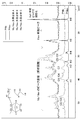
- the 13 C-NMR spectrum shown in FIG. 1 was acquired.
- the integrated value of the ⁇ -olefin-derived carbon is calculated based on the integrated value of the primary carbon (about 14 ppm) at the terminal opposite to the ⁇ -position carbon of the ⁇ -olefin and the adjacent carbon (about 23 ppm).
- the integrated value obtained by subtracting the integrated value of hexene-derived carbon from the integrated value of 25 to 55 ppm of carbons other than the above two types of carbon was specified as the integrated value derived from the norbornene (corresponding to the cyclic olefin monomer) unit. ..
- Ratio of ⁇ -olefin Integral value of ⁇ -olefin-derived carbon / (Integral value of ⁇ -olefin-derived carbon + Integral value derived from cyclic olefin monomer unit) ⁇ 100
- FIG. 1 shows the 13 C-NMR spectrum of the sample below.
- PNb Polynorbornene
- PHex Polyhexene Nb / Hex copolymer A: Copolymer of norbornene and ⁇ -olefin (1-hexene)
- Nb / Hex copolymer B Norbornene and ⁇ -olefin (1-hexene) Copolymer
- Nb / Hex Copolymer C Copolymer of norbornene and ⁇ -olefin (1-hexene)
- NMR device "BrukerAVANCE 600"
- Measuring solvent Chloroform-d Nuclide to be measured: 1 H
- Measurement temperature 323K
- Sample concentration 80 mg / mL
- Sample tube diameter 5 mm
- Measurement method Inverse gate method
- Decoupling Complete decoupling Number of integrations: 1024 times
- Chemical shift reference The peak of tetramethylsilane was set to 0 ppm.
- the integrated value of the double bond-derived proton was calculated, and the integrated value of the single bond-derived proton (2.5 to 0.2 ppm) was calculated. Then, based on the composition ratio specified by the composition analysis, the average number of hydrogens derived from the single bond contained in the 1000 structural units of the addition polymer was calculated.
- Peak of double bond derived from ⁇ -olefin (5.0 ppm to 5.5 ppm) (2) Double bond peak (4.8 ppm to 5.0 ppm) derived from norbornene (cyclic olefin monomer) unit (3) Vinylidene peak derived from ⁇ -olefin terminal unit (around 4.7 ppm)
- Glass transition temperature (Tg) Glass transition temperature (unit: ° C.) The glass transition temperature (unit: ° C.) of each addition polymer was measured under the following conditions based on the DSC method in accordance with JIS K 7121.
- DSC device Differential scanning calorimetry "DSC-7000X” (manufactured by Hitachi High-Tech Science Corporation) Measurement atmosphere: Nitrogen Heating conditions: 20 ° C / min
- Each resin film was cut into a size of 100 mm ⁇ 100 mm, and both sides of the film were irradiated with ultraviolet rays for 3 minutes using an “excimer irradiation device VUS-3100” (manufactured by ORC Manufacturing Co., Ltd.).
- a copper foil having a thickness of 12 ⁇ m obtained by cutting the irradiated film into 110 mm ⁇ 110 mm (“CF-T49A-DS-HD2 (Rzjis 1 ⁇ m,” JIS C 6515: 1998 Copper foil for printed wiring board ”” VL “corresponding to”) ", manufactured by Fukuda Metal Leaf Powder), and crimped at 250 ° C. for 5 minutes at 1 MPa using a vacuum press machine to obtain a copper-clad laminate (metal resin laminate). ..
- the obtained copper-clad laminate (metal resin laminate) was cut at intervals of 2 mm in length and width using a cutter, and 100 2 mm square cells were made on the surface of the copper-clad laminate. After attaching cellophane tape (registered trademark) on it, it was peeled off, the number of cells remaining on the resin film was counted, and the ratio (unit:%) of the cells remaining in 100 cells was calculated. The obtained values were evaluated according to the following criteria. The larger the number of remaining cells, the higher the adhesiveness between the resin film and the copper foil, and the higher the adhesiveness of the copper foil.
- the number of remaining cells is 100 ⁇ : The number of remaining cells is 80 or more and 99. ⁇ : The number of remaining cells is 79 or less.
- solder heat resistance The copper-clad laminate prepared in the same manner as in the above item (copper foil adhesiveness) was visually observed for 30 seconds after being immersed in a solder bath heated to 260 ° C., and the deformation was evaluated according to the following criteria. .. The smaller the blisters of the laminate, the higher the solder heat resistance.
- the copper-clad laminate prepared in the same manner as in the above (copper foil adhesiveness) section was heated in a gear oven (“GPH-102”, manufactured by ESPEC) heated to 150 ° C. for 24 hours.
- the heated copper-clad laminate was removed from the oven and cooled to room temperature. After cooling, the cells were cut at intervals of 2 mm in length and width using a cutter to form 100 2 mm square cells on the surface of the copper-clad laminate. After attaching cellophane tape (registered trademark) on it, it was peeled off, the number of cells remaining on the resin film was counted, and the ratio (unit:%) of the cells remaining in 100 cells was calculated.
- the obtained values were evaluated according to the following criteria. The larger the number of cells remaining, the higher the adhesiveness between the resin film and the copper foil even after the high heat treatment, and the higher the adhesiveness after the heat treatment.
- ⁇ The number of remaining cells is 100 ⁇ : The number of remaining cells is 80 or more and 99. ⁇ : The number of remaining cells is 79 or less Not implemented: Copper foil does not adhere to the resin film and copper Since a stretched laminate could not be obtained, the solder heat resistance was not evaluated.
- the metal resin laminate containing the polymer of the present invention has high heat resistance, good adhesiveness to metals, and even after being exposed to a high temperature (150 ° C.). However, the decrease in adhesiveness to the metal was suppressed.
Landscapes
- Chemical & Material Sciences (AREA)
- Health & Medical Sciences (AREA)
- Chemical Kinetics & Catalysis (AREA)
- Medicinal Chemistry (AREA)
- Polymers & Plastics (AREA)
- Organic Chemistry (AREA)
- Engineering & Computer Science (AREA)
- Manufacturing & Machinery (AREA)
- Materials Engineering (AREA)
- Laminated Bodies (AREA)
- Manufacture Of Macromolecular Shaped Articles (AREA)
- Addition Polymer Or Copolymer, Post-Treatments, Or Chemical Modifications (AREA)
Abstract
本発明の課題は、金属箔に対する良好な接着性、半田耐熱性、及び耐熱信頼性を有する環状オレフィン重合体を提供することである。 本発明は、環状オレフィンモノマーと、α-オレフィンとの付加型重合体である環状オレフィン重合体であって、前記α-オレフィンに由来する構造単位の含有量が、全構造単位に対し、0mol%超35mol%未満であり、前記付加型重合体における1000構成単位中の二重結合の含有量が0.50%以上1.60%以下であり、前記二重結合の含有量における末端ビニリデン基の含有量の比率が10%以上50%以下である、環状オレフィン重合体を提供する。
Description
本発明は、環状オレフィン重合体、溶液、フィルム、及び金属樹脂積層体に関する。
環状オレフィン重合体は、高い透明性を有し、各種分野で広く利用されている。また、ノルボルネン系重合体は、樹脂層と金属箔層とを積層することで得られる金属積層体における、樹脂層の材料としても用いられる。例えば、特許文献1~3には、環状オレフィン重合体であるノルボルネン系重合体を含む溶液から得られる樹脂層を有する金属樹脂積層体が開示されている。
上記金属積層体の用途として、プリント基板等の絶縁体が挙げられる。プリント基板とは、通常、銅配線が施された絶縁体上に電子部品が半田付けされたものを意味し、電気機器(コンピューター、モバイル通信機器等)における電子回路として作動する。
プリント基板やその部品に対しては、通常、誘電特性(低誘電率、低誘電正接等)だけではなく、金属箔に対する良好な接着性や、耐熱性が要求される。
環状オレフィン重合体の耐熱性や銅箔密着性を高めるために、従来は、例えば、重合体に官能基や極性基等を含むものが使用されてきた。しかし、このような重合体は、比誘電率及び誘電正接が高くなる傾向があるため、プリント基板の絶縁体としては適さない可能性があった。
したがって、官能基や極性基等を含まなくとも、金属箔に対する良好な接着性や、耐熱性を有する環状オレフィン重合体に対するニーズがある。
本発明は、上記の状況に鑑みてなされたものであり、金属箔に対する良好な接着性、半田耐熱性、及び耐熱信頼性を有する環状オレフィン重合体を提供することを目的とする。
本発明者らは、上記課題を解決するために鋭意研究を重ねた。その結果、環状オレフィン重合体のなかでも、α-オレフィンに由来する構造単位の含有量、二重結合の含有量、及び、該二重結合の含有量における末端ビニリデン基の含有量の比率が所定の割合である環状オレフィンモノマーとα-オレフィンの付加型重合体によれば、上記課題が解決されることを見出し、本発明を完成するに至った。より具体的には、本発明は以下のものを提供する。
(1) 環状オレフィンモノマーと、α-オレフィンとの付加型重合体である環状オレフィン重合体であって、
前記α-オレフィンに由来する構造単位の含有量が、全構造単位に対し、0mol%超35mol%未満であり、
前記付加型重合体における1000構成単位中の二重結合の含有量が0.50%以上1.60%以下であり、
前記二重結合の含有量における末端ビニリデン基の含有量の比率が10%以上50%以下である、
環状オレフィン重合体。
前記α-オレフィンに由来する構造単位の含有量が、全構造単位に対し、0mol%超35mol%未満であり、
前記付加型重合体における1000構成単位中の二重結合の含有量が0.50%以上1.60%以下であり、
前記二重結合の含有量における末端ビニリデン基の含有量の比率が10%以上50%以下である、
環状オレフィン重合体。
(2) 前記付加型重合体における1000構成単位中の二重結合の含有量が0.6%以上1.60%以下である、(1)に記載の環状オレフィン重合体。
(3) 前記二重結合の含有量における末端ビニリデン基の含有量の比率が10%以上35%以下である、(1)又は(2)に記載の環状オレフィン重合体。
(4) (1)から(3)のいずれかに記載の環状オレフィン重合体と、溶媒と、を含む溶液。
(5) (4)に記載の溶液から得られたフィルム。
(6) (5)に記載のフィルムからなる樹脂層と、前記樹脂層の片面又は両面に設けられた金属箔層とを含む、金属樹脂積層体。
本発明によれば、金属箔に対する良好な接着性、半田耐熱性、及び耐熱信頼性を有する環状オレフィン重合体が提供される。
以下、本発明の実施形態について説明する。なお、本発明は以下の実施形態に限定されない。
<環状オレフィン重合体>
本発明の環状オレフィン重合体(以下、「本発明の重合体」ともいう。)は、環状オレフィンモノマーとα-オレフィンとの付加型重合体であって、以下の要件を全て満たす。
(要件1)α-オレフィンに由来する構造単位の含有量が、全構造単位に対し、0mol%超35mol%未満である。
(要件2)本発明の重合体における1000構成単位中の二重結合の含有量が0.50%以上1.60%以下である。
(要件3)二重結合の含有量における末端ビニリデン基の含有量の比率が10%以上50%以下である。
本発明の環状オレフィン重合体(以下、「本発明の重合体」ともいう。)は、環状オレフィンモノマーとα-オレフィンとの付加型重合体であって、以下の要件を全て満たす。
(要件1)α-オレフィンに由来する構造単位の含有量が、全構造単位に対し、0mol%超35mol%未満である。
(要件2)本発明の重合体における1000構成単位中の二重結合の含有量が0.50%以上1.60%以下である。
(要件3)二重結合の含有量における末端ビニリデン基の含有量の比率が10%以上50%以下である。
本発明者らの検討の結果、上記要件を全て満たす特定の構造の重合体は、意外にも、金属箔に対する良好な接着性、耐熱性(特に半田耐熱性、及び耐熱信頼性)を有することが見出された。
本発明において「金属箔に対する接着性が良好である」とは、任意の手段で金属箔と接着された本発明の重合体が、該金属箔の表面から剥がれにくいこと、又は、剥がれないことを意味する。金属箔に対する接着性は、実施例に示した銅箔接着性試験等で評価される。
金属箔の種類、及び、金属箔と本発明の重合体との接着方法としては、特に限定されないが、下記(金属箔層)の項で挙げたものを好適に採用できる。
金属箔の種類、及び、金属箔と本発明の重合体との接着方法としては、特に限定されないが、下記(金属箔層)の項で挙げたものを好適に採用できる。
本発明において、「半田耐熱性」とは、本発明の重合体を用いた成形体(例えば、金属箔を積層させたプリント基板等)が、半田リフロー等の高温下にさらされても変形や金属箔の剥離が生じにくいことを意味する。例えば、本発明の重合体を用いた成形体が、金属箔を積層させたプリント基板である場合、高温実装プロセス(半田リフロー等)を経ても、変形や金属箔(銅箔等)の剥離を起こさずに、回路として機能することを意味する。なお、半田リフローの温度は、最高温度が260℃程度であり得る(一般社団法人電子情報技術産業協会の推奨によるリフロープロファイルを参照。)。半田耐熱性は、実施例に示した方法等で評価される。
本発明において、「耐熱信頼性」とは、本発明の重合体を用いた成形体(例えば、金属箔を積層させたプリント基板)が、高温下の加速試験に供されても、成形体の機能が損なわれにくいことを意味する。例えば、本発明の重合体を用いた成形体が、金属箔を積層させたプリント基板である場合、信頼性評価として高温保管(150℃)の加速条件で寿命評価をした後であっても、金属箔(銅箔等)の剥離を起こさずに、回路として機能することを意味する。耐熱信頼性は、実施例に示した熱処理後接着性試験等で評価される。
以下、本発明の重合体の詳細について説明する。なお、本発明の重合体は官能基や極性基等を含まないことが好ましいが、官能基や極性基等が含まれる態様は排除されない。
(環状オレフィンモノマー)
本発明の重合体を構成する環状オレフィンモノマーは、下記一般式(I)で示されるものが挙げられる。
本発明の重合体を構成する環状オレフィンモノマーは、下記一般式(I)で示されるものが挙げられる。

(式(I)中、R1~R12は、それぞれ同一でも異なっていてもよく、水素原子、ハロゲン原子、及び、炭化水素基からなる群より選ばれるものであり、
R9とR10、R11とR12は、一体化して2価の炭化水素基を形成してもよく、
R9又はR10と、R11又はR12とは、互いに環を形成していてもよい。
また、nは、0又は正の整数を示し、
nが2以上の場合には、R5~R8は、それぞれの繰り返し単位の中で、それぞれ同一でも異なっていてもよい。
ただし、n=0の場合、R1~R4及びR9~R12の少なくとも1個は、水素原子ではない。)
R9とR10、R11とR12は、一体化して2価の炭化水素基を形成してもよく、
R9又はR10と、R11又はR12とは、互いに環を形成していてもよい。
また、nは、0又は正の整数を示し、
nが2以上の場合には、R5~R8は、それぞれの繰り返し単位の中で、それぞれ同一でも異なっていてもよい。
ただし、n=0の場合、R1~R4及びR9~R12の少なくとも1個は、水素原子ではない。)
R9とR10、又はR11とR12とが一体化して2価の炭化水素基を形成する場合の具体例としては、例えば、エチリデン基、プロピリデン基、イソプロピリデン基等のアルキリデン基等を挙げることができる。
R9又はR10と、R11又はR12とが、互いに環を形成する場合には、形成される環は単環でも多環であってもよく、架橋を有する多環であってもよく、二重結合を有する環であってもよく、またこれらの環の組み合わせからなる環であってもよい。また、これらの環はメチル基等の置換基を有していてもよい。
環状オレフィンモノマーは、側鎖を有するものであってもよく、側鎖を有さないものであってもよい。ただし、低い比誘電率及び誘電正接を有する環状オレフィン重合体が得られやすいという観点から、環状オレフィンモノマーは、側鎖を有さないものが好ましい。
例えば、側鎖を有する単量体(エチリデン等)は、金属箔との接着性を向上させ得るが、意外にも、本発明の要件を満たす重合体においては、重合体を構成する単量体が側鎖を有さなくても、金属箔との接着性が高い。
例えば、側鎖を有する単量体(エチリデン等)は、金属箔との接着性を向上させ得るが、意外にも、本発明の要件を満たす重合体においては、重合体を構成する単量体が側鎖を有さなくても、金属箔との接着性が高い。
環状オレフィンモノマーとしては、ノルボルネン、テトラドデセンが挙げられる。後述するメタロセン触媒に対する反応性が高いという観点から、環状オレフィンモノマーとしては、ノルボルネンが特に好ましい。
本発明の重合体において、環状オレフィンモノマーに由来する構造単位の含有量は、半田耐熱性が高い環状オレフィン重合体が得られやすいという観点から、全構造単位に対し、好ましくは65mol%以上100mol%未満、より好ましくは90mol%以下である。65mol%以上であれば、半田耐熱性が十分に高い環状オレフィン重合体が得られる。100mol%未満(より好ましくは90mol%以下)であれば、十分な金属接着性が得られる。
重合体における、環状オレフィンモノマーに由来する構造単位の含有量は、後述の13C-NMRを用いた方法で特定する。
(α-オレフィン)
本発明の重合体を構成するα-オレフィンとしては特に限定されないが、例えば、好ましくは炭素数2以上20以下、より好ましくは炭素数6以上10以下のα-オレフィンが挙げられる。
本発明の重合体を構成するα-オレフィンとしては特に限定されないが、例えば、好ましくは炭素数2以上20以下、より好ましくは炭素数6以上10以下のα-オレフィンが挙げられる。
α-オレフィンの具体例としては、エチレン、プロピレン、1-ブテン、1-ペンテン、1-へキセン、3-メチル-1-ブテン、3-メチル-1-ペンテン、3-エチル-1-ペンテン、4-メチル-1-ペンテン、4-メチル-1-へキセン、4,4-ジメチル-1-ヘキセン、4,4-ジメチル-1-ペンテン、4-エチル-1-へキセン、3-エチル-1-ヘキセン、1-ヘプテン、1-オクテン、1-ノネン、1-デセン、1-ドデセン、1-テトラデセン、1-ヘキサデセン、1-オクタデセン、1-エイコセン等が挙げられる。上記のうち、炭素数6以上10以下のα-オレフィンが好ましく、1-ヘキセン、1-ヘプテン、1-オクテン、1-デセンがより好ましい。
重合体の精製がし易いという観点から、α-オレフィンとしては、沸点が150℃以下であるα-オレフィン(特に、1-ヘキセン、1-ヘプテン、及び1-オクテンのうちいずれか)がさらに好ましく、沸点が100℃以下であるα-オレフィン(特に、1-ヘキセン、及び1-ヘプテンのうちいずれか)が特に好ましい。
重合体の精製がし易いという観点から、α-オレフィンとしては、沸点が150℃以下であるα-オレフィン(特に、1-ヘキセン、1-ヘプテン、及び1-オクテンのうちいずれか)がさらに好ましく、沸点が100℃以下であるα-オレフィン(特に、1-ヘキセン、及び1-ヘプテンのうちいずれか)が特に好ましい。
(α-オレフィンに由来する構造単位の含有量)
本発明の重合体は、α-オレフィンに由来する構造単位の含有量(以下、「α-オレフィン量」ともいう。)が、全構造単位に対し、0mol%超35mol%未満である。溶媒に対する溶解性が高い環状オレフィン重合体が得られやすいという観点から、α-オレフィン量は、全構造単位に対し、0mol%超である。十分に高いガラス転移点を有し、半田耐熱性や強度に優れる環状オレフィン重合体が得られやすいという観点から、α-オレフィン量は、全構造単位に対し、35mol%未満である。
本発明の重合体は、α-オレフィンに由来する構造単位の含有量(以下、「α-オレフィン量」ともいう。)が、全構造単位に対し、0mol%超35mol%未満である。溶媒に対する溶解性が高い環状オレフィン重合体が得られやすいという観点から、α-オレフィン量は、全構造単位に対し、0mol%超である。十分に高いガラス転移点を有し、半田耐熱性や強度に優れる環状オレフィン重合体が得られやすいという観点から、α-オレフィン量は、全構造単位に対し、35mol%未満である。
α-オレフィン量の下限は、全構造単位に対し、好ましくは10mol%以上である。α-オレフィンに由来する構造単位が相対的に多いほど、重合体の溶解性が適度に高まり、かつ、十分な分子量の本願の重合体が得られやすい。また、α-オレフィン量がかかる範囲である重合体の製造時においては、十分量のα-オレフィンを材料として用いることになるうえ、α-オレフィンの触媒に対する反応性が環状オレフィンモノマーよりも相対的に低い結果、析出が生じにくく、重合反応が良好に進行する。
α-オレフィン量の上限は、全構造単位に対し、好ましくは25mol%以下である。かかる範囲であると、十分に高いガラス転移点を有し、半田耐熱性や強度に優れる環状オレフィン重合体が得られやすい。
重合体におけるα-オレフィン量は、13C-NMRのα-オレフィンユニット由来炭素の積分値と、環状オレフィンモノマー由来の炭素の積分値とを用いて、各成分の導入量を算出し、その比率から重合体中の共重合組成比を算出することで特定される。
具体的には、まず、本発明の重合体において、1級炭素は全てα-オレフィンユニットに帰属する。そのため、1級炭素由来のピーク(14ppm近辺の最も高磁場に存在する)、及び、該ピークの隣に現れる、1級炭素由来のピークと同等の積分値を有する2級炭素のピークに基づき、α-オレフィンユニット由来の炭素の積分値を特定できる。
一方、25ppmから55ppmには、α-オレフィンユニット由来の2級炭素及び3級炭素のピーク、並びに、環状オレフィンモノマー由来の2級炭素及び3級炭素のピークが重なり合った状態で発現する。
なお、環状オレフィンモノマーに由来する構造単位の含有量は、上記の全ピークの積分値と、α-オレフィンユニット由来の積分値との差から特定できる。
具体的には、まず、本発明の重合体において、1級炭素は全てα-オレフィンユニットに帰属する。そのため、1級炭素由来のピーク(14ppm近辺の最も高磁場に存在する)、及び、該ピークの隣に現れる、1級炭素由来のピークと同等の積分値を有する2級炭素のピークに基づき、α-オレフィンユニット由来の炭素の積分値を特定できる。
一方、25ppmから55ppmには、α-オレフィンユニット由来の2級炭素及び3級炭素のピーク、並びに、環状オレフィンモノマー由来の2級炭素及び3級炭素のピークが重なり合った状態で発現する。
なお、環状オレフィンモノマーに由来する構造単位の含有量は、上記の全ピークの積分値と、α-オレフィンユニット由来の積分値との差から特定できる。
より具体的には、α-オレフィン量は、実施例の「α-オレフィンの比率」の項に示した方法で特定する。
(二重結合の含有量)
本発明の重合体は、環状オレフィン重合体における1000構成単位中の二重結合の含有量(以下、「二重結合量」ともいう。)が0.50%以上1.60%以下である。重合体に対し、金属への十分な接着性を付与できるという観点から、二重結合量は0.50%以上である。という観点から、二重結合量は1.60%以下である。
本発明の重合体は、環状オレフィン重合体における1000構成単位中の二重結合の含有量(以下、「二重結合量」ともいう。)が0.50%以上1.60%以下である。重合体に対し、金属への十分な接着性を付与できるという観点から、二重結合量は0.50%以上である。という観点から、二重結合量は1.60%以下である。
本発明において、「環状オレフィン重合体(又は付加型重合体)における1000構成単位中の二重結合」とは、重合体の任意の位置における、連続する1000個の構成単位に含まれる二重結合を意味する。なお、環状オレフィン重合体(又は付加型重合体)における二重結合は、環状オレフィンモノマーのユニットや、α-オレフィンユニット(ヘキセンユニット等)において生成した二重結合に加え、本願の重合体の末端におけるビニリデン基中の二重結合として存在していることが確認できている。
二重結合量の下限は、好ましくは0.55%以上、より好ましくは0.60%以上である。
二重結合量の上限は、好ましくは1.55%以下である。
重合体における二重結合量は、1H-NMRを用いて特定される。具体的には、α-オレフィンユニット由来の二重結合ピーク、環状オレフィンモノマーユニット由来の二重結合ピーク、単結合由来ピークの積分値をそれぞれ算出する。組成分析により得られた組成比を用い、1000ユニット中に含まれる単結合由来の平均水素数を算出し、得られた値より、1000ユニット中に含まれる二重結合量を算出する。以下、詳細に説明する。
まず、本発明者らは、重合体中のα-オレフィン単量体と環状オレフィンモノマーのそれぞれに由来する構造を「ユニット」とみなした。それぞれのユニットに由来するプロトン数は異なるが、各々にユニットの存在比率をかけ、足し合わせると、模式的に平均化した際の1ユニットに存在するプロトン数を算出することができる。
本発明においては、0.2ppmから2.5ppmに現れるピークを、C-H単結合のプロトンピークとみなす。なお、一般的に、4.5ppmから5.5ppmの低磁場のケミカルシフトには、ビニル基やビニリデン基のような二重結合した炭素に結合するプロトン由来のピークが現れることが知られるが、本発明者らは、ビニリデン基が4.7ppm近辺に現れ、分子末端に存在することを実験的に確認した。
本発明の重合体における、二重結合由来のプロトンの積分値はごく小さいため、C-H単結合のプロトンピークの積分値は、そのまま本発明の重合体のプロトン数とみなすことができる。したがって、プロトンピーク(0.2ppmから2.5ppmのピーク)の積分値を、平均化した1ユニット当たりのプロトン数で割ることで、全体のユニット数を算出することができる。
また、本発明においては、1ユニットあたりの二重結合した炭素に結合するプロトン数を約2であるとみなすことができる。なぜならば、重合体の製造の際に、通常、脱水素反応を介して、骨格中や末端に意図的に二重結合を導入することになるためである。したがって、4.5ppmから5.5ppmの低磁場の二重結合した炭素に結合するプロトン由来のピークの積分値を2で割ることで、二重結合を有するユニット数を算出することができる。
本発明においては、0.2ppmから2.5ppmに現れるピークを、C-H単結合のプロトンピークとみなす。なお、一般的に、4.5ppmから5.5ppmの低磁場のケミカルシフトには、ビニル基やビニリデン基のような二重結合した炭素に結合するプロトン由来のピークが現れることが知られるが、本発明者らは、ビニリデン基が4.7ppm近辺に現れ、分子末端に存在することを実験的に確認した。
本発明の重合体における、二重結合由来のプロトンの積分値はごく小さいため、C-H単結合のプロトンピークの積分値は、そのまま本発明の重合体のプロトン数とみなすことができる。したがって、プロトンピーク(0.2ppmから2.5ppmのピーク)の積分値を、平均化した1ユニット当たりのプロトン数で割ることで、全体のユニット数を算出することができる。
また、本発明においては、1ユニットあたりの二重結合した炭素に結合するプロトン数を約2であるとみなすことができる。なぜならば、重合体の製造の際に、通常、脱水素反応を介して、骨格中や末端に意図的に二重結合を導入することになるためである。したがって、4.5ppmから5.5ppmの低磁場の二重結合した炭素に結合するプロトン由来のピークの積分値を2で割ることで、二重結合を有するユニット数を算出することができる。
より具体的には、二重結合量は、実施例の「二重結合量」の項に示した方法のように、二重結合含有ユニット由来のプロトンの積分値が、全プロトンの積分値に占める割合として特定する。
(末端ビニリデン基の比率)
本発明の重合体は、二重結合の含有量における末端ビニリデン基の含有量の比率(以下、「二重結合中の末端ビニリデン基量」ともいう。)が10%以上50%以下である。
本発明の重合体は、二重結合の含有量における末端ビニリデン基の含有量の比率(以下、「二重結合中の末端ビニリデン基量」ともいう。)が10%以上50%以下である。
本発明者らの検討の結果、環状オレフィン重合体における二重結合量(つまり、環状オレフィン重合体における1000構成単位中の二重結合の含有量)、及び、該二重結合量に占める末端ビニリデン基の割合(つまり、二重結合の含有量における末端ビニリデン基の含有量の比率)を調整することで、環状オレフィン重合体に高い耐熱性、及び、金属に対する良好な接着性を付与できることが見出された。
通常、付加型重合体等の共重合体に二重結合が存在すると、該共重合体の耐熱性は低下する傾向にあるが、末端ビニリデン基が所定の割合で含まれるように調整することで、耐熱性がむしろ高まることは意外な知見である。さらに、本発明の重合体は、高熱処理したとしても、耐熱性を有するだけではなく、金属への接着性が損なわれにくいという有利な効果を奏する。
本発明において、「末端ビニリデン基」とは、本発明の重合体を構成する末端基として存在するビニリデン基(H2C=CH-)を意味する。重合体に対し、金属への十分な接着性、及び十分な耐熱性を付与できるという観点から、二重結合中の末端ビニリデン基量は10%以上である。重合体を高温にさらした後でも金属への十分な接着性が損なわれにくいという観点から、二重結合中の末端ビニリデン基量は50%以下である。
二重結合中の末端ビニリデン基量の下限は、好ましくは20%以上である。
二重結合中の末端ビニリデン基量の上限は、好ましくは35%以下である。
二重結合中の末端ビニリデン基量は、上記で説明した二重結合量(環状オレフィン重合体における1000構成単位中の二重結合の含有量)における、ビニリデン基(α-オレフィン末端ユニット由来のビニリデンピーク)が占める割合として特定される。
(その他)
本発明の重合体のガラス転移温度(以下、「Tg」ともいう。)は、十分な耐熱性を奏する観点から、好ましくは200℃以上、より好ましくは250℃以上である。本発明の重合体のTgは、溶媒への溶解性や加工性が良好であるという観点から、好ましくは320℃以下、より好ましくは290℃以下である。
本発明の重合体のガラス転移温度(以下、「Tg」ともいう。)は、十分な耐熱性を奏する観点から、好ましくは200℃以上、より好ましくは250℃以上である。本発明の重合体のTgは、溶媒への溶解性や加工性が良好であるという観点から、好ましくは320℃以下、より好ましくは290℃以下である。
なお、本発明において、Tgは、DSC法(JIS K 7121記載の方法)によって昇温速度20℃/分の条件で測定した値を採用する。
本発明の重合体の数平均分子量(Mn)は、重合体から得られる樹脂膜の強度が良好となりやすいという観点から、好ましくは40000以上、より好ましくは60000以上である。また、本発明の重合体のMnは、溶媒へ溶解させた場合の粘度が高くなり過ぎにくいという観点から、好ましくは200000以下、より好ましくは150000以下である。
なお、本発明において、Mnは、ゲルパーミエーションクロマトグラフィ(GPC)によるポリスチレン換算の数平均分子量として特定される。
<本発明の重合体の製造方法>
本発明の重合体は、付加型重合体の製造方法として知られる任意の手法を採用して製造することができる。
本発明の重合体は、付加型重合体の製造方法として知られる任意の手法を採用して製造することができる。
重合触媒としては、メタロセン系触媒を特に好適に用いることができる。本発明で重合触媒として好適に用いられるメタロセン触媒の具体的な例としては、(t-ブチルアミド)ジメチル-9-フルオレニルシランチタンジメチル、ラセミ-エチリデン-ビス(インデニル)ジルコニウムジクロライド、ラセミ-ジメチルシリル-ビス(2-メチル-ベンゾインデニル)ジルコニウムジクロライド、ラセミ-イソプロピリデン-ビス(テトラヒドロインデニル)ジルコニウムジクロライド、イソプロピリデン(1-インデニル)(3-イソプロピル-シクロペンタジエニル)ジルコニウムジクロライド、(t-ブチルアミド)ジメチル-9-フルオレニルシランジルコニウムジメチル、(t-ブチルアミド)ジメチル-9-フルオレニルシランジルコニウムジクロリド、(t-ブチルアミド)ジメチル-9-(3,6-ジメチルフルオレニル)シランジルコニウムジメチル、(t-ブチルアミド)ジメチル-9-[3,6-ジ(i-プロピル)フルオレニル]シランジルコニウムジメチル、(t-ブチルアミド)ジメチル-9-[3,6-ジ(t-ブチル)フルオレニル]シランジルコニウムジメチル、(t-ブチルアミド)ジメチル-9-[2,7-ジ(t-ブチル)フルオレニル]シランジルコニウムジメチル、(t-ブチルアミド)ジメチル-9-(2,3,6,7-テトラメチルフルオレニル)シランジルコニウムジメチル、ラセミ-エチリデン-ビス(インデニル)チタンジクロライド、ラセミ-ジメチルシリル-ビス(2-メチル-ベンゾインデニル)チタンジクロライド、ラセミ-イソプロピリデン-ビス(テトラヒドロインデニル)チタンジクロライド、イソプロピリデン(1-インデニル)(3-イソプロピル-シクロペンタジエニル)チタンジクロライド、(t-ブチルアミド)ジメチル-9-フルオレニルシランチタンジクロリド、(t-ブチルアミド)ジメチル-9-(3,6-ジメチルフルオレニル)シランチタンジメチル、(t-ブチルアミド)ジメチル-9-[3,6-ジ(i-プロピル)フルオレニル]シランチタンジメチル、(t-ブチルアミド)ジメチル-9-[3,6-ジ(t-ブチル)フルオレニル]シランチタンジメチル、(t-ブチルアミド)ジメチル-9-[2,7-ジ(t-ブチル)フルオレニル]シランチタンジメチル、(t-ブチルアミド)ジメチル-9-(2,3,6,7-テトラメチルフルオレニル)シランチタンジメチルが挙げられるが、これらに限定されるものではない。
本発明の重合体は、上記重合触媒とともに、助触媒を使用するとより容易に得られやすい。助触媒は、1種単独で又は2種以上組み合わせて使用することができる。
助触媒としては、アルキルアルミノキサンが好ましく、本発明の重合体を容易に製造するに際しては、少なくも1種類の助触媒を用いる必要がある。アルキルアルミノキサンは、触媒を反応中心の環境に変え、触媒を活性化させるために有効である。
アルキルアルミノキサンの製造方法としては、特に限定されないが、通常、アルキルアルミニウムを適度に加水分解することで得られる。アルキルアルミノキサンとしては、市販品を用いてもよい。アルキルアルミノキサンの市販品としては、例えば、MMAO-3A、TMAO-200シリーズ、TMAO-340シリーズ(いずれも東ソー・ファインケム(株)製)やメチルアルミノキサン溶液(アルベマール社製)等が挙げられる。
その他の助触媒としては、アルキルアルミニウムを用いてもよい。アルキルアルミニウムは触媒活性を低下させる水等と反応するため、スカベンジャー(捕捉剤)として有効である。アルキルアルミニウムの具体例としては、トリメチルアルミニウム、トリエチルアルミニウム、トリイソプロピルアルミニウム、トリn-ブチルアルミニウム、トリイソブチルアルミニウム、トリsec-ブチルアルミニウム等のトリアルキルアルミニウム;ジメチルアルミニウムクロリド、ジイソブチルアルミニウムクロリド等のジアルキルアルミニウムハライド;ジイソブチルアルミニウムハイドライド等のジアルキルアルミニウムハイドライド;ジメチルアルミニウムメトキシド等のジアルキルアルミニウムアルコキシドが挙げられる。これらの助触媒は単独で用いてもよく、これらの助触媒のうち1以上をアルキルアルミノキサンと組み合わせて用いてもよい。
以下に、本発明の重合体の製造方法について、特に好ましい条件を説明する。
本発明の重合体は、側鎖に二重結合を有さない単量体を用いた場合であっても、その分子内、及び分子末端に二重結合が導入されるように製造される。二重結合の導入方法としては、メタロセン触媒及びアルキルアルミノキサンを用いた、α-オレフィンの連鎖移動反応を採用することが好ましい。
α-オレフィンの連鎖移動反応の機序は以下のとおりである。α-オレフィンは、そのβ位に、3級炭素に結合した水素が存在している。重合が進行すると、β水素脱離が起こり、連鎖移動が生じる。これにより、分子の骨格中(分子内)だけではなく分子末端にも二重結合を導入できる。
α-オレフィンの連鎖移動反応の機序は以下のとおりである。α-オレフィンは、そのβ位に、3級炭素に結合した水素が存在している。重合が進行すると、β水素脱離が起こり、連鎖移動が生じる。これにより、分子の骨格中(分子内)だけではなく分子末端にも二重結合を導入できる。
α-オレフィンの連鎖移動反応を良好に進行する観点から、アルキルアルミノキサンを助触媒として使用することが好ましい。重合や、二重結合の導入が制御しやすくなるという観点から、アルキルアルミノキサンは、複数の種類よりも、1種類のものを用いることが望ましい。1種類のアルミノキサンを用いることで、適切な二重結合量、及び適切な分子量の重合体をより重合しやすくなる。
なお、環状構造を有する単量体と、α-オレフィンとの重合方法として、リビング重合が知られるが、この方法は、反応機構上二重結合を導入することが困難であるため、本発明の重合体の製造方法としては適さない。
本発明の重合体のより具体的な製造方法としては、上述のようにアルミノキサンを助触媒に用いる方法、仕込み組成比の調整による方法や、重合体の加熱による方法が挙げられる。以下、各方法について説明する。
(仕込み組成比の調整による方法)
本発明の重合体は、本発明の重合体の要件を満たすように、モノマー(環状オレフィンモノマー、及びα-オレフィン)の仕込み組成比を設定し、通常の重合方法を採用することで得ることができる。
本発明の重合体は、本発明の重合体の要件を満たすように、モノマー(環状オレフィンモノマー、及びα-オレフィン)の仕込み組成比を設定し、通常の重合方法を採用することで得ることができる。
重合温度は、モノマーの重合反応を進行させることができる範囲であればよく、本発明の重合体が得られる限り特に限定されない。
重合時間は、モノマーを十分に重合させることができる範囲であればよく、本発明の重合体が得られる限り特に限定されない。
(重合体の加熱による方法)
本発明の重合体は、得られた重合体を加熱(追加加熱)することによっても得ることができる。このような追加加熱を、温度や時間を調整して行うことで、脱水素反応を進行させ、重合体中の二重結合を調整することができる。
したがって、重合体の加熱による方法は、上記の仕込み組成比の調整による方法よりも、選択できる仕込み組成比の範囲が広くなり得る。
本発明の重合体は、得られた重合体を加熱(追加加熱)することによっても得ることができる。このような追加加熱を、温度や時間を調整して行うことで、脱水素反応を進行させ、重合体中の二重結合を調整することができる。
したがって、重合体の加熱による方法は、上記の仕込み組成比の調整による方法よりも、選択できる仕込み組成比の範囲が広くなり得る。
追加加熱の温度は、特に限定されないが、好ましくは150~300℃、より好ましくは180~200℃である。通常、追加加熱の温度が高いほど、環状オレフィン重合体における1000構成単位中の二重結合の含有量が増加する傾向にある。そのため、追加加熱の温度は過度ではないことが好ましい。
追加加熱の時間は、特に限定されないが、時間が長いほど、環状オレフィン重合体における1000構成単位中の二重結合の含有量が増加する傾向にある。これにともない、二重結合の含有量における末端ビニリデン基の含有量の比率は低くなる。
追加加熱は、通常、窒素雰囲気下で行われる。
(重合体の精製による方法)
本発明の重合体の精製の有無、及び精製方法は特に限定されない。ただし、精製条件は、重合体の構成に若干影響する可能性がある。例えば、重合体を再沈殿によって精製する場合、貧溶媒の量が少なくなるほど、二重結合量が低下する可能性がある。
本発明の重合体の精製の有無、及び精製方法は特に限定されない。ただし、精製条件は、重合体の構成に若干影響する可能性がある。例えば、重合体を再沈殿によって精製する場合、貧溶媒の量が少なくなるほど、二重結合量が低下する可能性がある。
<溶液>
本発明の溶液は、本発明の重合体を、任意の溶媒とともに配合することで調製できる。このような溶液は様々な用途に利用でき、例えば、後述するフィルムや金属樹脂積層体を作製することができる。
本発明の溶液は、本発明の重合体を、任意の溶媒とともに配合することで調製できる。このような溶液は様々な用途に利用でき、例えば、後述するフィルムや金属樹脂積層体を作製することができる。
溶媒は、環状オレフィン重合体を溶解できるものであれば特に限定されず、例えば、シクロヘキサン、メチルシクロヘキサン、エチルシクロヘキサン、ジメチルシクロヘキサン、p-メンタン、デカヒドロナフタレン等の脂肪族炭化水素溶媒、トルエン、キシレン等の芳香族炭化水素溶媒、ジクロロメタン、クロロホルム、四塩化炭素等のハロゲン系炭化水素溶媒等が挙げられる。これらのうち、シクロヘキサン、メチルシクロヘキサン、ジメチルシクロヘキサン、p-メンタン、トルエン、及びキシレンが好ましい。溶媒は、1種単独で又は2種以上組み合わせて使用することができる。
本発明の溶液には、本発明の重合体及び溶媒のほか、本発明の目的を阻害しない範囲で公知の添加剤、本発明の重合体以外の樹脂を適宜配合してもよい。添加剤としては、特に限定されないが、無機フィラー、酸化防止剤、密着剤等が挙げられる。本発明の重合体以外の樹脂としては、特に限定されないが、本発明の効果を損ないにくいという観点から、比較的低極性の重合体が好ましい。比較的低極性の重合体としては、例えば、脂肪族系ポリイミド、ポリフェニレンエーテル、変性ポリフェニレンエーテル等が挙げられる。
無機フィラーとしては、特に限定されないが、例えば、シリカ、アルミナ、タルク、水酸化アルミニウム、水酸化マグネシウム、酸化チタン、マイカ、ホウ酸アルミニウム、チタン酸カリウム、硫酸バリウム、チッ化ホウ素、フォルステライト、酸化亜鉛、酸化マグネシウム、及び炭酸カルシウム等が挙げられる。
無機フィラーは、重合性不飽和結合を有する表面処理剤で表面処理されていてもよい。
重合性不飽和結合としては、ビニル基、アリル基、メタリクル基、スチリル基、アクリロイル基、メタクリロイル基、及びマレイミドル基等が挙げられる。
表面処理剤としては、重合性不飽和結合を有するシランカップリング剤が挙げられる。
重合性不飽和結合としては、ビニル基、アリル基、メタリクル基、スチリル基、アクリロイル基、メタクリロイル基、及びマレイミドル基等が挙げられる。
表面処理剤としては、重合性不飽和結合を有するシランカップリング剤が挙げられる。
なお、無機フィラーは、シクロヘキサン、メチルシクロヘキサン、ジメチルシクロヘキサン、p-メンタン、トルエン、及びキシレン等の溶媒に分散させて添加してもよい。
(本発明の溶液を用いたフィルムの形成)
本発明の溶液はフィルム形成のために好ましく用いられる。フィルム形成の方法としては、例えば、本発明の溶液を支持体上に塗布し、塗布した溶液から溶媒を除去することにより、本発明の重合体を含むフィルム(樹脂膜)を得ることができる。
本発明の溶液はフィルム形成のために好ましく用いられる。フィルム形成の方法としては、例えば、本発明の溶液を支持体上に塗布し、塗布した溶液から溶媒を除去することにより、本発明の重合体を含むフィルム(樹脂膜)を得ることができる。
本発明の溶液の塗布方法は特に限定されず、マイクログラビアコート法、ダイコート法、コンマコート法、スピンコート法等の公知の塗布方法が挙げられる。
本発明の溶液から得られるフィルムは、比誘電率及び誘電正接が低い傾向にあり、絶縁被膜として好適に使用できる。また、本発明の溶液から得られるフィルムは、高周波における比誘電率及び誘電正接が低い傾向にあり、高周波特性に優れ得るので、電気デバイス又は電子デバイスにおける層間絶縁層として特に好適に使用できる。電気デバイス又は電子デバイスとしては、特に限定されないが、1GHz以上の伝送周波数を用いるデバイス等が挙げられ、具体的には、アンテナ、SAWフィルター、イメージセンサーモジュール、ジャイロセンサーモジュール、RFID、デュプレクサ、ダイプレクサ、チュナーモジュール等が挙げられる。
<金属樹脂積層体>
本発明の金属樹脂積層体は、本発明の溶液から得られる樹脂層と、該樹脂層の片面又は両面に設けられる金属箔層とを含む。
本発明の金属樹脂積層体は、本発明の溶液から得られる樹脂層と、該樹脂層の片面又は両面に設けられる金属箔層とを含む。
(樹脂層)
樹脂層としては、本発明の溶液から得られるものであれば任意の形態であり得る。例えば、樹脂層は、上述のように本発明の溶液から得られるフィルム、繊維(ガラス繊維布、PTFE繊維布、等)に本発明の溶液を含浸して得られる繊維強化材、及び、これらを任意の組み合わせで重ねたもの等が挙げられる。樹脂層は単層であってもよく、多層であってもよい。
樹脂層としては、本発明の溶液から得られるものであれば任意の形態であり得る。例えば、樹脂層は、上述のように本発明の溶液から得られるフィルム、繊維(ガラス繊維布、PTFE繊維布、等)に本発明の溶液を含浸して得られる繊維強化材、及び、これらを任意の組み合わせで重ねたもの等が挙げられる。樹脂層は単層であってもよく、多層であってもよい。
樹脂層の厚さは、特に限定されず、例えば、一般的に採用される値である12.5μm~150μmであってもよい。
(金属箔層)
本発明の金属樹脂積層体を構成する金属箔層の材料としては、特に限定されず、配線基板において通常使用される金属であってもよく、例えば、銅、アルミニウム、金、銀、ニッケル、等が挙げられる。本発明の金属樹脂積層体は、電気伝導度が高く、コストが低い等の観点から、CCL(copper clad laminate)として好適に使用できるため、金属箔層の材料としては、銅が好ましい。
本発明の金属樹脂積層体を構成する金属箔層の材料としては、特に限定されず、配線基板において通常使用される金属であってもよく、例えば、銅、アルミニウム、金、銀、ニッケル、等が挙げられる。本発明の金属樹脂積層体は、電気伝導度が高く、コストが低い等の観点から、CCL(copper clad laminate)として好適に使用できるため、金属箔層の材料としては、銅が好ましい。
金属箔層として銅箔を採用する場合、圧延銅箔や電解銅箔等を好適に使用できる。
金属箔層として銅箔を採用する場合、高速伝送技術に好適に使用できるという観点から、低粗度の銅箔を用いることが好ましい。高粗度(粗さの程度が大きい)であると、高周波信号を伝送する際に表皮効果で導体損失が大きくなるためである。なお、本発明において「粗度」は、「JIS C 6515:1998 プリント配線板用銅はく」で説明される定義が採用される。より具体的には、10点平均粗さの最大値Rzに基づく下記分類のうち、「VL」に相当するものを低粗度の銅箔として好適に使用できる。
「S」(Standard):Rzが14μm以下である
「LS」(Low Profile):Rzが10μm以下である
「VL」(Very Low Profile):Rzが5μm以下である
「S」(Standard):Rzが14μm以下である
「LS」(Low Profile):Rzが10μm以下である
「VL」(Very Low Profile):Rzが5μm以下である
従来、プリント基板に用いられてきたノルボルネン系重合体は、低粗度(上記「VL」に分類される粗度)の銅箔への接着性が十分ではない可能性があった。しかし、本発明における樹脂層は、このような銅箔に対して良好な接着性を奏する。
金属箔層の厚さは、特に限定されず、市販の金属箔の厚さを任意に採用できる。
(金属樹脂積層体の製造方法)
金属樹脂積層体の製造方法としては、ラミネート方式、スパッタリング方式、キャスト方式、ボンディングシート等を用いた接着方式を利用できる。
金属樹脂積層体の製造方法としては、ラミネート方式、スパッタリング方式、キャスト方式、ボンディングシート等を用いた接着方式を利用できる。
金属樹脂積層体の別の製造方法としては、金属箔層(又は樹脂層)の表面に、本発明の溶液(又は金属箔)を塗布等する方法が挙げられる。
金属樹脂積層体のさらに別の製造方法としては、本発明の溶液から環状オレフィン重合体フィルムを作製して、該フィルムの表面に金属(特に、銅)をスパッタリングやイオンプレーティング等の方法により金属層を形成する方法も挙げられる。
金属箔層は、樹脂層の片面又は両面に形成してもよい。金属箔層は、樹脂層の表面の全面に形成してもよいし、表面の一部にのみ形成してもよい。
樹脂層と金属箔層との間には、その他の層(接着剤層等)が存在していてもよいし、存在していなくてもよい。必要に応じて、金属箔層の表面をキレート剤で処理して金属箔層と樹脂層との密着性を改善させてもよい。本発明の金属樹脂積層体においては、樹脂層と金属箔層との密着性が良好であるので、好ましくは、樹脂層と金属箔層とは直接接触しており、樹脂層と金属箔層との間に他の層等が存在しない。
本発明の金属樹脂積層体は、耐熱性、金属への接着性、及び高周波特性が要求される用途に好適に使用できる。例えば、本発明の金属樹脂積層体は、種々の基板(プリント基板(フレキシブルプリント基板等)、金属樹脂積層体を複数重ね合わせた多層基板、高周波用配線基板)、半導体パッケージ用配線フィルム等として好適に使用できる。
以下、実施例及び比較例を示し、本発明を具体的に説明するが、本発明はこれらの実施例に限定されるものではない。
<付加型重合体の作製>
以下の材料及び重合方法に基づき、付加型重合体(環状オレフィン重合体)を作製した。
以下の材料及び重合方法に基づき、付加型重合体(環状オレフィン重合体)を作製した。
(付加型重合体の材料)
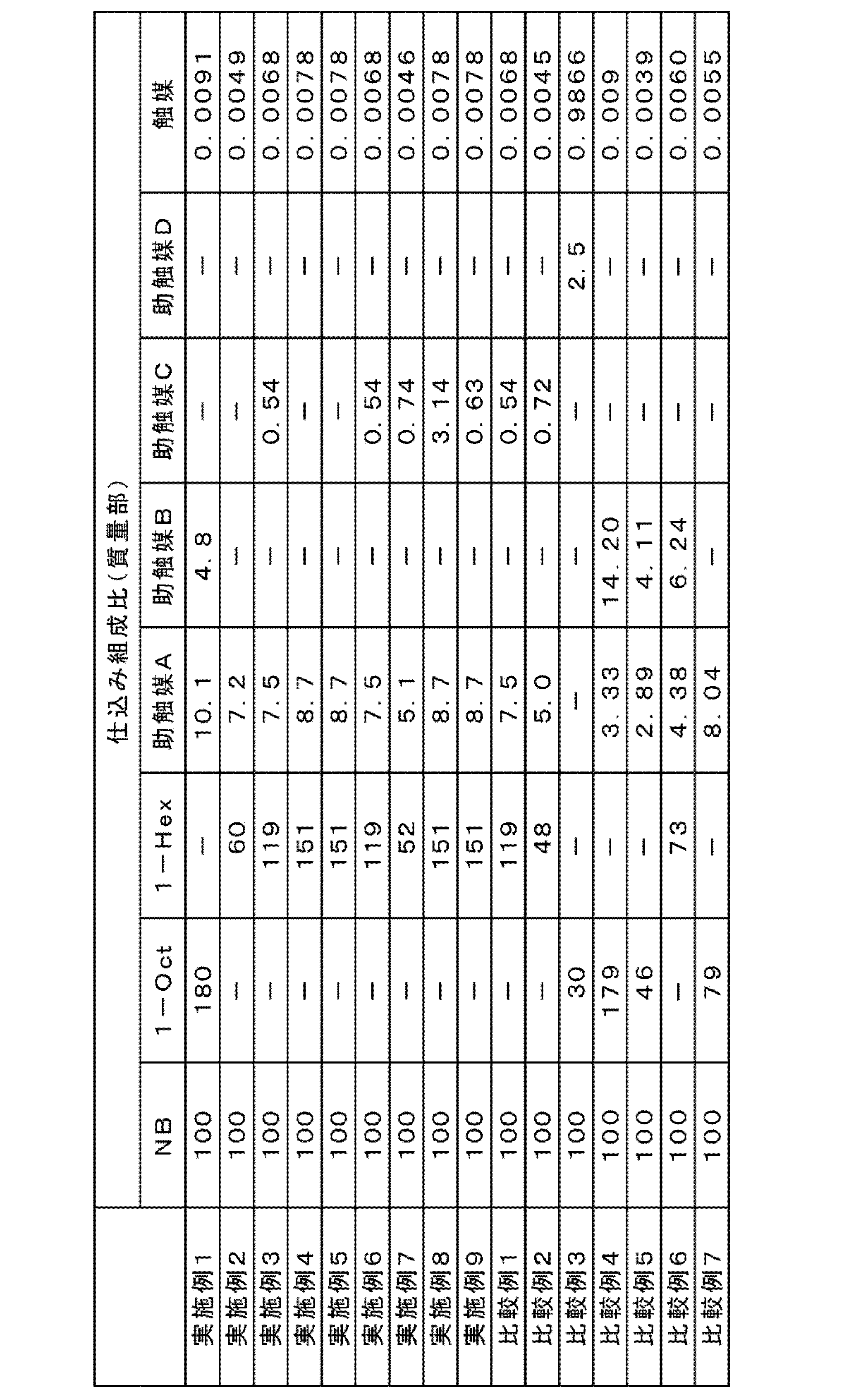
以下のモノマー、触媒、及び助触媒を用いた。なお、溶媒としてトルエンを用いた。各材料の仕込み組成比を表1に示す。
以下のモノマー、触媒、及び助触媒を用いた。なお、溶媒としてトルエンを用いた。各材料の仕込み組成比を表1に示す。
(モノマー)
2-ノルボルネン(NB):環状オレフィンモノマーに相当する
1-オクテン(1-Oct):α-オレフィンに相当する
1-ヘキセン(1-Hex):α-オレフィンに相当する
2-ノルボルネン(NB):環状オレフィンモノマーに相当する
1-オクテン(1-Oct):α-オレフィンに相当する
1-ヘキセン(1-Hex):α-オレフィンに相当する
(触媒)
(t-ブチルアミド)ジメチル-9-フルオレニルシランチタンジメチル((t-BuNSiMe2Flu)TiMe2)
(t-ブチルアミド)ジメチル-9-フルオレニルシランチタンジメチル((t-BuNSiMe2Flu)TiMe2)
(助触媒)
助触媒A:TMAO-211トルエン溶液(メチルアルミノキサンの溶液、東ソー・ファインケム(株)製)
助触媒B:MMAO-3Aトルエン溶液([(CH3)0.7(iso-C4H9)0.3AlO]nで表されるメチルイソブチルアルミノキサンの溶液、東ソー・ファインケム(株)製)
助触媒C:トリイソブチルアルミニウム
助触媒D:トリフェニルメチリウムテトラキス(ペンタフルオロフェニル)ボラート
助触媒A:TMAO-211トルエン溶液(メチルアルミノキサンの溶液、東ソー・ファインケム(株)製)
助触媒B:MMAO-3Aトルエン溶液([(CH3)0.7(iso-C4H9)0.3AlO]nで表されるメチルイソブチルアルミノキサンの溶液、東ソー・ファインケム(株)製)
助触媒C:トリイソブチルアルミニウム
助触媒D:トリフェニルメチリウムテトラキス(ペンタフルオロフェニル)ボラート
(実施例1~4、7~9、比較例2の付加型重合体の重合方法)
乾燥し、窒素雰囲気下に保ったガラス反応器に、表1に記載された量(単位:質量部)の各モノマー、各助触媒を加え、40℃の重合温度に保ったのち、表1に記載された量(単位:質量部)の触媒を加えた。なお、触媒及び助触媒は、それぞれトルエンに溶解させた状態で反応器に加えた。
40℃の重合温度及び5時間の重合時間で、反応器内を撹拌して重合を継続した後、2-プロパノール(1質量部)を添加して反応を終了させた。次いで、得られた重合反応液に、12mol/Lの塩酸水溶液を、重合反応液に含まれる金属量の10倍量となるように加えた後、蒸留水による洗浄を行って金属塩を除いた。
洗浄後の重合反応液をポリマー溶液に対し1.5倍量のアセトンに注いで重合体を完全に析出させ、濾別及び洗浄を行った後、80℃で12時間以上減圧乾燥して、各付加型重合体を得た。
乾燥し、窒素雰囲気下に保ったガラス反応器に、表1に記載された量(単位:質量部)の各モノマー、各助触媒を加え、40℃の重合温度に保ったのち、表1に記載された量(単位:質量部)の触媒を加えた。なお、触媒及び助触媒は、それぞれトルエンに溶解させた状態で反応器に加えた。
40℃の重合温度及び5時間の重合時間で、反応器内を撹拌して重合を継続した後、2-プロパノール(1質量部)を添加して反応を終了させた。次いで、得られた重合反応液に、12mol/Lの塩酸水溶液を、重合反応液に含まれる金属量の10倍量となるように加えた後、蒸留水による洗浄を行って金属塩を除いた。
洗浄後の重合反応液をポリマー溶液に対し1.5倍量のアセトンに注いで重合体を完全に析出させ、濾別及び洗浄を行った後、80℃で12時間以上減圧乾燥して、各付加型重合体を得た。
(実施例5の付加型重合体の重合方法)
以下のように、重合反応液に加えたアセトン量以外は実施例4と同様にして、実施例5の付加型重合体を得た。
乾燥し、窒素雰囲気下に保ったガラス反応器に、表1に記載された量(単位:質量部)の各モノマー、各助触媒を加え、40℃の重合温度に保ったのち、表1に記載された量(単位:質量部)の触媒を加えた。なお、触媒及び助触媒は、それぞれトルエンに溶解させた状態で反応器に加えた。
40℃の重合温度及び5時間の重合時間で、反応器内を撹拌して重合を継続した後、2-プロパノール(1質量部)を添加して反応を終了させた。次いで、得られた重合反応液に、12mol/Lの塩酸水溶液を、重合反応液に含まれる金属量の10倍量となるように加えた後、蒸留水による洗浄を行って金属塩を除いた。
洗浄後の重合反応液をポリマー溶液に対し1倍量のアセトンに注いで重合体を完全に析出させ、濾別及び洗浄を行った後、80℃で12時間以上減圧乾燥して、付加型重合体を得た。
以下のように、重合反応液に加えたアセトン量以外は実施例4と同様にして、実施例5の付加型重合体を得た。
乾燥し、窒素雰囲気下に保ったガラス反応器に、表1に記載された量(単位:質量部)の各モノマー、各助触媒を加え、40℃の重合温度に保ったのち、表1に記載された量(単位:質量部)の触媒を加えた。なお、触媒及び助触媒は、それぞれトルエンに溶解させた状態で反応器に加えた。
40℃の重合温度及び5時間の重合時間で、反応器内を撹拌して重合を継続した後、2-プロパノール(1質量部)を添加して反応を終了させた。次いで、得られた重合反応液に、12mol/Lの塩酸水溶液を、重合反応液に含まれる金属量の10倍量となるように加えた後、蒸留水による洗浄を行って金属塩を除いた。
洗浄後の重合反応液をポリマー溶液に対し1倍量のアセトンに注いで重合体を完全に析出させ、濾別及び洗浄を行った後、80℃で12時間以上減圧乾燥して、付加型重合体を得た。
(実施例6の付加型重合体の重合方法)
以下のように、実施例3と同様にして得られた付加型重合体に対して追加加熱を行い、実施例6の付加型重合体を得た。
実施例3と同様に重合を進め、付加型重合体を得た。得られた付加型重合体に対し、200℃で2時間、窒素雰囲気下で追加加熱を行い、実施例6の付加型重合体を得た。
以下のように、実施例3と同様にして得られた付加型重合体に対して追加加熱を行い、実施例6の付加型重合体を得た。
実施例3と同様に重合を進め、付加型重合体を得た。得られた付加型重合体に対し、200℃で2時間、窒素雰囲気下で追加加熱を行い、実施例6の付加型重合体を得た。
(比較例1の付加型重合体の重合方法)
以下のように、実施例3と同様にして得られた付加型重合体に対して追加加熱を行い、比較例1の付加型重合体を得た。
実施例3と同様に重合を進め、付加型重合体を得た。得られた付加型重合体に対し、250℃で3時間、窒素雰囲気下で追加加熱を行い、比較例1の重合体を得た。
以下のように、実施例3と同様にして得られた付加型重合体に対して追加加熱を行い、比較例1の付加型重合体を得た。
実施例3と同様に重合を進め、付加型重合体を得た。得られた付加型重合体に対し、250℃で3時間、窒素雰囲気下で追加加熱を行い、比較例1の重合体を得た。
(比較例3の付加型重合体の重合方法)
乾燥し、窒素雰囲気下に保ったガラス反応器に、表1に記載された量(単位:質量部)の各モノマー、各助触媒を加え、25℃の重合温度に保ったのち、表1に記載された量(単位:質量部)の触媒を加えた。なお、触媒及び助触媒は、それぞれトルエンに溶解させた状態で反応器に加えた。
25℃の重合温度及び30分間の重合時間で、反応器内を撹拌して重合を継続した後、メタノールを添加して反応を終了させた。次いで、得られた重合反応液を多量の塩酸酸性メタノール中に注いで重合体を析出させ、濾別及び洗浄を行った後、80℃で12時間減圧乾燥して、付加型重合体を得た。
乾燥し、窒素雰囲気下に保ったガラス反応器に、表1に記載された量(単位:質量部)の各モノマー、各助触媒を加え、25℃の重合温度に保ったのち、表1に記載された量(単位:質量部)の触媒を加えた。なお、触媒及び助触媒は、それぞれトルエンに溶解させた状態で反応器に加えた。
25℃の重合温度及び30分間の重合時間で、反応器内を撹拌して重合を継続した後、メタノールを添加して反応を終了させた。次いで、得られた重合反応液を多量の塩酸酸性メタノール中に注いで重合体を析出させ、濾別及び洗浄を行った後、80℃で12時間減圧乾燥して、付加型重合体を得た。
(比較例4~7の付加型重合体の重合方法)
国際公開第2015/178143号公報に記載された方法に基づき、比較例4~7の付加型重合体を得た。
具体的には、乾燥し、窒素雰囲気下に保ったガラス反応器に、表1に記載された量(単位:質量部)の各モノマー、各助触媒を加え、40℃の重合温度に保ったのち、表1に記載された量(単位:質量部)の触媒を加えた。なお、触媒及び助触媒は、それぞれトルエンに溶解させた状態で反応器に加えた。
40℃の重合温度及び1時間(比較例4)、1.5時間(比較例5)、4時間(比較例6)、又は5時間(比較例7)の重合時間で、反応器内を撹拌して重合を継続した後、2-プロパノール(1質量部)を添加して反応を終了させた。得られた重合反応液を多量の塩酸酸性メタノールに注いで重合体を析出させ、濾別及び洗浄を行った後、60℃で1日間以上減圧乾燥して付加型重合体を得た。
国際公開第2015/178143号公報に記載された方法に基づき、比較例4~7の付加型重合体を得た。
具体的には、乾燥し、窒素雰囲気下に保ったガラス反応器に、表1に記載された量(単位:質量部)の各モノマー、各助触媒を加え、40℃の重合温度に保ったのち、表1に記載された量(単位:質量部)の触媒を加えた。なお、触媒及び助触媒は、それぞれトルエンに溶解させた状態で反応器に加えた。
40℃の重合温度及び1時間(比較例4)、1.5時間(比較例5)、4時間(比較例6)、又は5時間(比較例7)の重合時間で、反応器内を撹拌して重合を継続した後、2-プロパノール(1質量部)を添加して反応を終了させた。得られた重合反応液を多量の塩酸酸性メタノールに注いで重合体を析出させ、濾別及び洗浄を行った後、60℃で1日間以上減圧乾燥して付加型重合体を得た。
<付加型重合体の諸特性の評価>
得られた各付加型重合体について、下記の各種測定を行った。その結果を表2に示す。
得られた各付加型重合体について、下記の各種測定を行った。その結果を表2に示す。
(α-オレフィンの比率)
以下の方法で、各付加型重合体における、α-オレフィンの比率(α-オレフィンに由来する構造単位の含有量)を特定した。
以下の方法で、各付加型重合体における、α-オレフィンの比率(α-オレフィンに由来する構造単位の含有量)を特定した。
用いた装置及び条件は下記のとおりである。
NMR装置:「BrukerAVANCE600」
測定溶媒:1,1,2,2-テトラクロロエタン-d2
測定核種:13C
測定温度:353K
サンプル濃度:80mg/mL
サンプルチューブ径:5mm
測定方法:Inverse gate法
デカップリング:完全デカップリング
積算回数:4096回
パルス繰り返し時間:10秒
ケミカルシフトのリファレンス:1,1,2,2-テトラクロロエタン-d2に含まれる、重水素化されていない1,1,2,2-テトラクロロエタンのピークを74.47ppmとした。
NMR装置:「BrukerAVANCE600」
測定溶媒:1,1,2,2-テトラクロロエタン-d2
測定核種:13C
測定温度:353K
サンプル濃度:80mg/mL
サンプルチューブ径:5mm
測定方法:Inverse gate法
デカップリング:完全デカップリング
積算回数:4096回
パルス繰り返し時間:10秒
ケミカルシフトのリファレンス:1,1,2,2-テトラクロロエタン-d2に含まれる、重水素化されていない1,1,2,2-テトラクロロエタンのピークを74.47ppmとした。
図1に示される13C-NMRスペクトルを取得した。該スペクトルにおいて、α-オレフィンのα位の炭素と反対側の末端の1級炭素(約14ppm)、及び、その隣接炭素(約23ppm)の積分値に基づき、α-オレフィン由来炭素の積分値を算出した。
次いで、25~55ppmの上記2種の炭素以外の炭素の積分値から、ヘキセン由来炭素の積分値を引いた積分値を、ノルボルネン(環状オレフィンモノマーに相当する。)ユニット由来の積分値として特定した。
次いで、25~55ppmの上記2種の炭素以外の炭素の積分値から、ヘキセン由来炭素の積分値を引いた積分値を、ノルボルネン(環状オレフィンモノマーに相当する。)ユニット由来の積分値として特定した。
下記の式に基づき、α-オレフィンの比率を算出した。
α-オレフィンの比率(mol%)=α-オレフィン由来炭素の積分値/(α-オレフィン由来炭素の積分値+環状オレフィンモノマーユニット由来の積分値)×100
α-オレフィンの比率(mol%)=α-オレフィン由来炭素の積分値/(α-オレフィン由来炭素の積分値+環状オレフィンモノマーユニット由来の積分値)×100
なお、図1は、下記サンプルの13C-NMRスペクトルを示す。
PNb:ポリノルボルネン
PHex:ポリヘキセン
Nb/Hex共重合体A:ノルボルネンとα-オレフィン(1-ヘキセン)との共重合体
Nb/Hex共重合体B:ノルボルネンとα-オレフィン(1-ヘキセン)との共重合体
Nb/Hex共重合体C:ノルボルネンとα-オレフィン(1-ヘキセン)との共重合体
PNb:ポリノルボルネン
PHex:ポリヘキセン
Nb/Hex共重合体A:ノルボルネンとα-オレフィン(1-ヘキセン)との共重合体
Nb/Hex共重合体B:ノルボルネンとα-オレフィン(1-ヘキセン)との共重合体
Nb/Hex共重合体C:ノルボルネンとα-オレフィン(1-ヘキセン)との共重合体
(二重結合量)
以下の方法で、各付加型重合体における1000構成単位中の二重結合の含有量を特定した。
以下の方法で、各付加型重合体における1000構成単位中の二重結合の含有量を特定した。
用いた装置及び条件は下記のとおりである。
NMR装置:「BrukerAVANCE600」
測定溶媒:クロロホルム-d
測定核種:1H
測定温度:323K
サンプル濃度:80mg/mL
サンプルチューブ径:5mm
測定方法:Inverse gate法
デカップリング:完全デカップリング
積算回数:1024回
ケミカルシフトのリファレンス:テトラメチルシランのピークを0ppmとした。
NMR装置:「BrukerAVANCE600」
測定溶媒:クロロホルム-d
測定核種:1H
測定温度:323K
サンプル濃度:80mg/mL
サンプルチューブ径:5mm
測定方法:Inverse gate法
デカップリング:完全デカップリング
積算回数:1024回
ケミカルシフトのリファレンス:テトラメチルシランのピークを0ppmとした。
以下の3つのピークに基づき、二重結合由来プロトンの積分値を算出し、単結合由来プロトン(2.5~0.2ppm)の積分値を算出した。次いで、組成分析により特定した組成比に基づき、付加型重合体1000構成単位中に含まれる単結合由来の平均水素数を算出した。
(1)α-オレフィン由来の二重結合のピーク(5.0ppm~5.5ppm)
(2)ノルボルネン(環状オレフィンモノマー)ユニット由来の二重結合のピーク(4.8ppm~5.0ppm)
(3)α-オレフィン末端ユニット由来のビニリデンピーク(4.7ppm近辺)
(1)α-オレフィン由来の二重結合のピーク(5.0ppm~5.5ppm)
(2)ノルボルネン(環状オレフィンモノマー)ユニット由来の二重結合のピーク(4.8ppm~5.0ppm)
(3)α-オレフィン末端ユニット由来のビニリデンピーク(4.7ppm近辺)
上記で特定した値(付加型重合体1000構成単位中に含まれる単結合由来の平均水素数の割合)に基づき、付加型重合体1000構成単位中の二重結合量(単位:%)を算出した。
(末端ビニリデン基の比率)
上記(二重結合量)において算出した各種二重結合由来の積分値を用い、付加型重合体中の二重結合の含有量における末端ビニリデン基の含有量の比率(単位:%)を算出した。
上記(二重結合量)において算出した各種二重結合由来の積分値を用い、付加型重合体中の二重結合の含有量における末端ビニリデン基の含有量の比率(単位:%)を算出した。
(数平均分子量(Mn))
各付加型重合体について、下記の条件で、ゲルパーミエーションクロマトグラフィ(GPC)によりポリスチレン換算の数平均分子量(Mn)を測定した。
装置:「Viscotek TDA302検出器」、及び「Pump autosampler装置」(いずれもMalvern社製)
検出器:RI
溶媒:トルエン
カラム:「TSKgel GMHHR-M」(300mm×7.8mmφ、東ソー社製)
流速:1mL/分
温度:75℃
試料濃度:2.5mg/mL
注入量:100μL
標準試料:単分散ポリスチレン
各付加型重合体について、下記の条件で、ゲルパーミエーションクロマトグラフィ(GPC)によりポリスチレン換算の数平均分子量(Mn)を測定した。
装置:「Viscotek TDA302検出器」、及び「Pump autosampler装置」(いずれもMalvern社製)
検出器:RI
溶媒:トルエン
カラム:「TSKgel GMHHR-M」(300mm×7.8mmφ、東ソー社製)
流速:1mL/分
温度:75℃
試料濃度:2.5mg/mL
注入量:100μL
標準試料:単分散ポリスチレン
(ガラス転移温度(Tg))
JIS K 7121に準拠して、DSC法に基づく下記の条件で、各付加型重合体のガラス転移温度(単位:℃)を測定した。
DSC装置:示差走査熱量計「DSC-7000X」(株式会社日立ハイテクサイエンス製)
測定雰囲気:窒素
昇温条件:20℃/分
JIS K 7121に準拠して、DSC法に基づく下記の条件で、各付加型重合体のガラス転移温度(単位:℃)を測定した。
DSC装置:示差走査熱量計「DSC-7000X」(株式会社日立ハイテクサイエンス製)
測定雰囲気:窒素
昇温条件:20℃/分
<金属樹脂積層体の作製及び評価>
各付加型重合体を用いて、以下の方法で、樹脂フィルムを作製し、該フィルムの金属への接着性を評価した。その結果を表2に示す。
(樹脂フィルムの作製)
各付加型重合体(20g)をトルエン(80g)に溶解させ、20質量%のトルエン溶液を作製した。得られた溶液を、フィルムアプリケータ(隙間厚250μm)を用いてPETフィルムに塗布し、90℃で8分間乾燥した後、さらに真空乾燥機によって100℃で12時間乾燥し、樹脂フィルムを得た。
各付加型重合体(20g)をトルエン(80g)に溶解させ、20質量%のトルエン溶液を作製した。得られた溶液を、フィルムアプリケータ(隙間厚250μm)を用いてPETフィルムに塗布し、90℃で8分間乾燥した後、さらに真空乾燥機によって100℃で12時間乾燥し、樹脂フィルムを得た。
(銅箔接着性)
各樹脂フィルムを100mm×100mmの大きさに切り出し、「エキシマ照射装置 VUS-3100」(オーク製作所製)を用いて、3分間フィルムの両面に紫外線を照射した。照射後のフィルムを、110mm×110mmにカットした12μmの厚みの銅箔(「CF-T49A-DS-HD2(Rzjis 1μm、「JIS C 6515:1998 プリント配線板用銅はく」における分類のうち「VL」に相当する。)」、福田金属箔紛製)に挟み込み、真空プレス機を用いて真空下250℃で5分、1MPaで圧着し、銅張積層体(金属樹脂積層体)を得た。
各樹脂フィルムを100mm×100mmの大きさに切り出し、「エキシマ照射装置 VUS-3100」(オーク製作所製)を用いて、3分間フィルムの両面に紫外線を照射した。照射後のフィルムを、110mm×110mmにカットした12μmの厚みの銅箔(「CF-T49A-DS-HD2(Rzjis 1μm、「JIS C 6515:1998 プリント配線板用銅はく」における分類のうち「VL」に相当する。)」、福田金属箔紛製)に挟み込み、真空プレス機を用いて真空下250℃で5分、1MPaで圧着し、銅張積層体(金属樹脂積層体)を得た。
得られた銅張積層体(金属樹脂積層体)を、カッターを用いて縦横2mm間隔に切り、100個の2mm正方形セルを銅張積層体表面に作った。その上にセロテープ(登録商標)を貼った後に剥がし、樹脂フィルム上に残存したセル数を数え、セル100個中に残存したセルの割合(単位:%)を算出した。得られた値を下記の基準で評価した。残存したセル数が多いほど、樹脂フィルムと銅箔との接着性が高く、銅箔接着性が高いことを意味する。
[銅箔接着性の評価基準]
〇:残存したセル数が100個である
△:残存したセル数が80個以上99個である
×:残存したセル数が79個以下である
〇:残存したセル数が100個である
△:残存したセル数が80個以上99個である
×:残存したセル数が79個以下である
(半田耐熱性)
上記(銅箔接着性)の項と同様に作製した銅張積層体を、260℃に加熱した半田浴に30秒間浸漬した後の変形状態を目視で観察し、以下の基準で変形を評価した。積層体のふくれが少ないほど、半田耐熱性が高いことを意味する。
上記(銅箔接着性)の項と同様に作製した銅張積層体を、260℃に加熱した半田浴に30秒間浸漬した後の変形状態を目視で観察し、以下の基準で変形を評価した。積層体のふくれが少ないほど、半田耐熱性が高いことを意味する。
[半田耐熱性の評価基準]
〇:銅張積層体にふくれが認められない
△:銅張積層体のごく一部にふくれが認められる
×:銅張積層体の全面にふくれが認められない
未実施:樹脂フィルムに銅箔が接着せず銅張積層体が得られなかったので、半田耐熱性を評価していない
〇:銅張積層体にふくれが認められない
△:銅張積層体のごく一部にふくれが認められる
×:銅張積層体の全面にふくれが認められない
未実施:樹脂フィルムに銅箔が接着せず銅張積層体が得られなかったので、半田耐熱性を評価していない
(熱処理後接着性)
上記(銅箔接着性)の項と同様に作製した銅張積層体を、150℃に加熱したギアオーブン(「GPHH-102」、エスペック製)で24時間加熱した。加熱後の銅張積層板をオーブンから取り出し、室温まで冷却した。冷却後、カッターを用いて縦横2mm間隔に切り、100個の2mm正方形セルを銅張積層体表面に作った。その上にセロテープ(登録商標)を貼った後に剥がし、樹脂フィルム上に残存したセル数を数え、セル100個中に残存したセルの割合(単位:%)を算出した。得られた値を下記の基準で評価した。残存したセル数が多いほど、高熱処理後であっても樹脂フィルムと銅箔との接着性が高く、熱処理後接着性が高いことを意味する。
上記(銅箔接着性)の項と同様に作製した銅張積層体を、150℃に加熱したギアオーブン(「GPHH-102」、エスペック製)で24時間加熱した。加熱後の銅張積層板をオーブンから取り出し、室温まで冷却した。冷却後、カッターを用いて縦横2mm間隔に切り、100個の2mm正方形セルを銅張積層体表面に作った。その上にセロテープ(登録商標)を貼った後に剥がし、樹脂フィルム上に残存したセル数を数え、セル100個中に残存したセルの割合(単位:%)を算出した。得られた値を下記の基準で評価した。残存したセル数が多いほど、高熱処理後であっても樹脂フィルムと銅箔との接着性が高く、熱処理後接着性が高いことを意味する。
[熱処理後接着性の評価基準]
〇:残存したセル数が100個である
△:残存したセル数が80個以上99個である
×:残存したセル数が79個以下である
未実施:樹脂フィルムに銅箔が接着せず銅張積層体が得られなかったので、半田耐熱性を評価していない
〇:残存したセル数が100個である
△:残存したセル数が80個以上99個である
×:残存したセル数が79個以下である
未実施:樹脂フィルムに銅箔が接着せず銅張積層体が得られなかったので、半田耐熱性を評価していない
(総合評価)
上記の3つの評価結果(銅箔接着性、半田耐熱性、及び熱処理後接着性の評価結果)に基づき、以下の基準で総合評価を行った。
〇:3つの評価結果が全て「○」である
△:3つの評価結果に1以上の「△」が含まれ、かつ、「×」が含まれない
×:3つの評価結果に1以上の「×」が含まれる
上記の3つの評価結果(銅箔接着性、半田耐熱性、及び熱処理後接着性の評価結果)に基づき、以下の基準で総合評価を行った。
〇:3つの評価結果が全て「○」である
△:3つの評価結果に1以上の「△」が含まれ、かつ、「×」が含まれない
×:3つの評価結果に1以上の「×」が含まれる
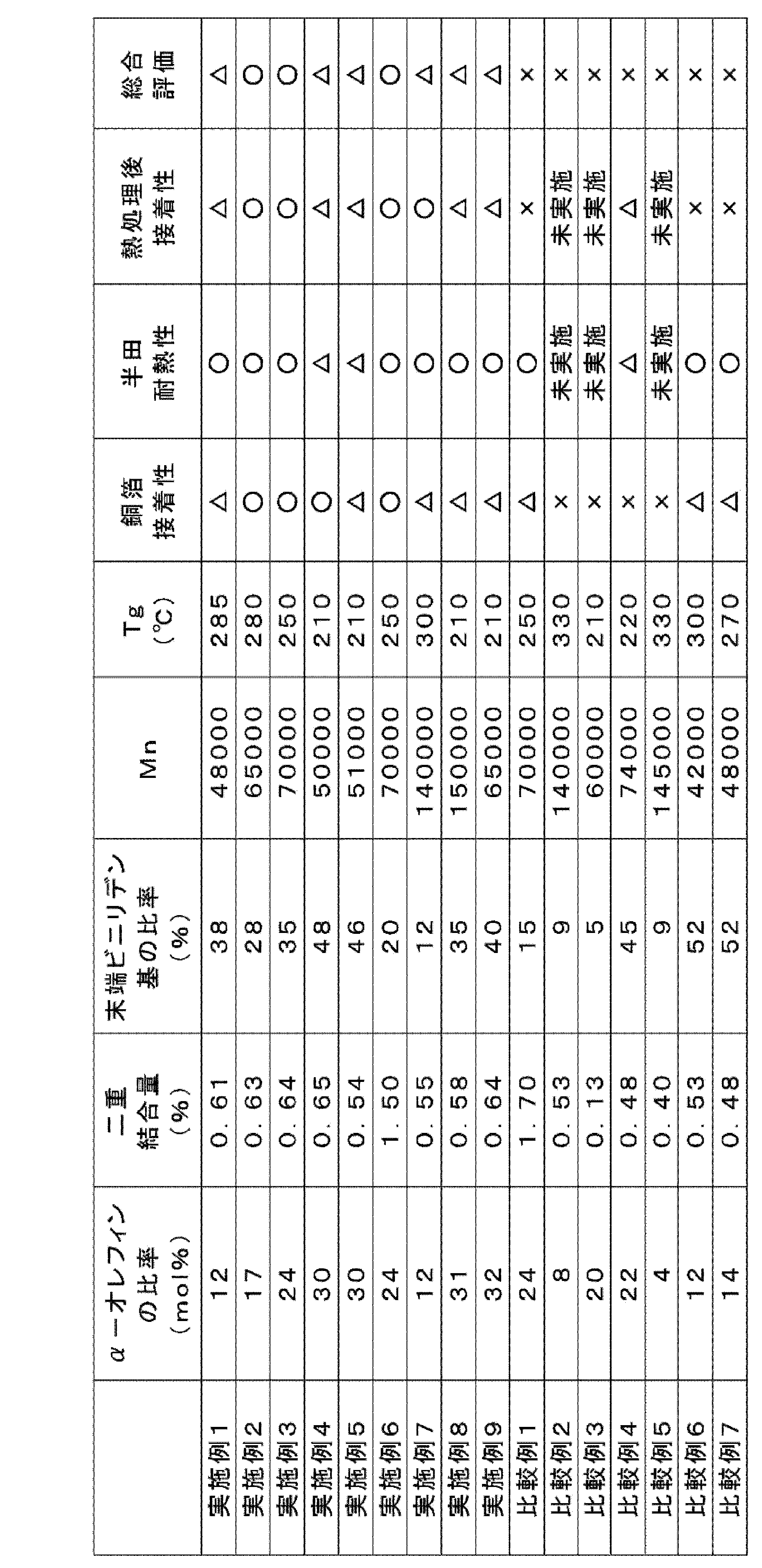
表2に示されるとおり、本発明の重合体を含む金属樹脂積層体は、耐熱性が高く、金属への接着性が良好であり、さらには、高温(150℃)にさらした後であっても、金属への接着性の低下が抑制されていた。
Claims (6)
- 環状オレフィンモノマーと、α-オレフィンとの付加型重合体である環状オレフィン重合体であって、
前記α-オレフィンに由来する構造単位の含有量が、全構造単位に対し、0mol%超35mol%未満であり、
前記付加型重合体における1000構成単位中の二重結合の含有量が0.50%以上1.60%以下であり、
前記二重結合の含有量における末端ビニリデン基の含有量の比率が10%以上50%以下である、
環状オレフィン重合体。 - 前記付加型重合体における1000構成単位中の二重結合の含有量が0.6%以上1.60%以下である、請求項1に記載の環状オレフィン重合体。
- 前記二重結合の含有量における末端ビニリデン基の含有量の比率が10%以上35%以下である、請求項1又は2に記載の環状オレフィン重合体。
- 請求項1から3のいずれかに記載の環状オレフィン重合体と、溶媒と、を含む溶液。
- 請求項4に記載の溶液から得られたフィルム。
- 請求項5に記載のフィルムからなる樹脂層と、前記樹脂層の片面又は両面に設けられた金属箔層とを含む、金属樹脂積層体。
Priority Applications (1)
| Application Number | Priority Date | Filing Date | Title |
|---|---|---|---|
| JP2021507713A JP6969029B2 (ja) | 2019-12-06 | 2020-10-29 | 環状オレフィン重合体、溶液、フィルム、及び金属樹脂積層体 |
Applications Claiming Priority (2)
| Application Number | Priority Date | Filing Date | Title |
|---|---|---|---|
| JP2019-221643 | 2019-12-06 | ||
| JP2019221643 | 2019-12-06 |
Publications (1)
| Publication Number | Publication Date |
|---|---|
| WO2021111781A1 true WO2021111781A1 (ja) | 2021-06-10 |
Family
ID=76221195
Family Applications (1)
| Application Number | Title | Priority Date | Filing Date |
|---|---|---|---|
| PCT/JP2020/040679 Ceased WO2021111781A1 (ja) | 2019-12-06 | 2020-10-29 | 環状オレフィン重合体、溶液、フィルム、及び金属樹脂積層体 |
Country Status (3)
| Country | Link |
|---|---|
| JP (1) | JP6969029B2 (ja) |
| TW (1) | TW202130679A (ja) |
| WO (1) | WO2021111781A1 (ja) |
Citations (8)
| Publication number | Priority date | Publication date | Assignee | Title |
|---|---|---|---|---|
| WO1994010216A1 (fr) * | 1992-10-28 | 1994-05-11 | Idemitsu Kosan Co., Ltd. | Copolymeres d'olefines et procede pour leur production |
| JPH08100029A (ja) * | 1994-07-13 | 1996-04-16 | Hoechst Ag | シクロオレフィンポリマー |
| JPH08109222A (ja) * | 1994-07-13 | 1996-04-30 | Hoechst Ag | シクロオレフィンポリマー |
| JPH1160632A (ja) * | 1997-08-11 | 1999-03-02 | Asahi Chem Ind Co Ltd | エチレン重合体 |
| JP2000038411A (ja) * | 1998-07-24 | 2000-02-08 | Idemitsu Petrochem Co Ltd | オレフィン重合用触媒及びポリオレフィンの製造方法 |
| US20030125495A1 (en) * | 1998-07-25 | 2003-07-03 | Bp Chemicals Limited | Alpha olefin-diene copolymers |
| WO2008026628A1 (en) * | 2006-08-31 | 2008-03-06 | Mitsui Chemicals, Inc. | Polyolefin polymer containing vinyl groups at both ends and composition thereof |
| US20170233516A1 (en) * | 2016-02-12 | 2017-08-17 | Exxonmobil Chemical Patents Inc. | Cyclic Olefin Copolymers and Methods of Making Them |
-
2020
- 2020-10-29 WO PCT/JP2020/040679 patent/WO2021111781A1/ja not_active Ceased
- 2020-10-29 JP JP2021507713A patent/JP6969029B2/ja active Active
- 2020-11-04 TW TW109138397A patent/TW202130679A/zh unknown
Patent Citations (8)
| Publication number | Priority date | Publication date | Assignee | Title |
|---|---|---|---|---|
| WO1994010216A1 (fr) * | 1992-10-28 | 1994-05-11 | Idemitsu Kosan Co., Ltd. | Copolymeres d'olefines et procede pour leur production |
| JPH08100029A (ja) * | 1994-07-13 | 1996-04-16 | Hoechst Ag | シクロオレフィンポリマー |
| JPH08109222A (ja) * | 1994-07-13 | 1996-04-30 | Hoechst Ag | シクロオレフィンポリマー |
| JPH1160632A (ja) * | 1997-08-11 | 1999-03-02 | Asahi Chem Ind Co Ltd | エチレン重合体 |
| JP2000038411A (ja) * | 1998-07-24 | 2000-02-08 | Idemitsu Petrochem Co Ltd | オレフィン重合用触媒及びポリオレフィンの製造方法 |
| US20030125495A1 (en) * | 1998-07-25 | 2003-07-03 | Bp Chemicals Limited | Alpha olefin-diene copolymers |
| WO2008026628A1 (en) * | 2006-08-31 | 2008-03-06 | Mitsui Chemicals, Inc. | Polyolefin polymer containing vinyl groups at both ends and composition thereof |
| US20170233516A1 (en) * | 2016-02-12 | 2017-08-17 | Exxonmobil Chemical Patents Inc. | Cyclic Olefin Copolymers and Methods of Making Them |
Also Published As
| Publication number | Publication date |
|---|---|
| JP6969029B2 (ja) | 2021-11-24 |
| JPWO2021111781A1 (ja) | 2021-12-02 |
| TW202130679A (zh) | 2021-08-16 |
Similar Documents
| Publication | Publication Date | Title |
|---|---|---|
| CN115698200B (zh) | 组合物及固化体 | |
| CN115996843A (zh) | 树脂组合物、预浸料、带树脂的膜、带树脂的金属箔、覆金属箔层压板、以及布线板 | |
| JP2021187939A (ja) | 樹脂組成物、溶液、フィルム、及び金属樹脂積層体 | |
| US20230331944A1 (en) | Resin composition, prepreg, resin-coated film, resin-coated metal foil, metal-cladded laminate board, and wiring board | |
| JP2009161743A (ja) | 後硬化性樹脂組成物及びそれを用いた高周波用電気絶縁材料 | |
| CN111333965A (zh) | 基于三元乙丙橡胶的介电材料、半固化片及积层板 | |
| WO2022054862A1 (ja) | 樹脂組成物、プリプレグ、樹脂付きフィルム、樹脂付き金属箔、金属張積層板、及び配線板 | |
| KR20160130998A (ko) | 다층 경화성 수지 필름, 프리프레그, 적층체, 경화물, 복합체 및 다층 회로 기판 | |
| WO2024203950A1 (ja) | プリプレグ、金属張積層板、及び配線板 | |
| JP6668012B2 (ja) | 金属樹脂積層体及び高周波用配線基板 | |
| JP6969029B2 (ja) | 環状オレフィン重合体、溶液、フィルム、及び金属樹脂積層体 | |
| JPS6229191A (ja) | 高周波電気回路基板 | |
| US7314905B2 (en) | Drawn film and process for producing the same | |
| CN116018263A (zh) | 树脂组合物、预浸料、带树脂的膜、带树脂的金属箔、覆金属箔层压板、以及布线板 | |
| JP4255073B2 (ja) | 樹脂組成物およびそれを用いた高周波回路用積層板 | |
| JP3887357B2 (ja) | めっき可能な架橋性樹脂組成物、架橋性樹脂成形品および架橋樹脂成形品 | |
| CN118829686A (zh) | 树脂组合物、预浸料、带树脂的膜、带树脂的金属箔、覆金属箔层压板、以及布线板 | |
| JP5087819B2 (ja) | 樹脂組成物、積層体、配線板および配線板の製造方法 | |
| JP2024070466A (ja) | 樹脂組成物、プリプレグ、樹脂付きフィルム、樹脂付き金属箔、金属張積層板、及び配線板 | |
| KR20230012943A (ko) | 수지 시트 및 프린트 배선판의 제조 방법 | |
| WO2006013774A1 (ja) | ポリ4-メチル-1-ペンテン樹脂組成物、フィルムおよび電子部品封止体製造用型枠 | |
| US20250382456A1 (en) | Resin composition, prepreg, film with resin, metal foil with resin, metal-clad laminate, and wiring board | |
| US20250382455A1 (en) | Resin composition, prepreg, film with resin, metal foil with resin, metal-clad laminate, and wiring board | |
| WO2025070327A1 (ja) | 積層体、金属張積層板、及び配線板 | |
| JP2022143444A (ja) | 樹脂組成物、成形体、及び金属張積層板 |
Legal Events
| Date | Code | Title | Description |
|---|---|---|---|
| ENP | Entry into the national phase |
Ref document number: 2021507713 Country of ref document: JP Kind code of ref document: A |
|
| 121 | Ep: the epo has been informed by wipo that ep was designated in this application |
Ref document number: 20896828 Country of ref document: EP Kind code of ref document: A1 |
|
| NENP | Non-entry into the national phase |
Ref country code: DE |
|
| 122 | Ep: pct application non-entry in european phase |
Ref document number: 20896828 Country of ref document: EP Kind code of ref document: A1 |