WO2021019625A1 - 細胞ピッキング装置 - Google Patents
細胞ピッキング装置 Download PDFInfo
- Publication number
- WO2021019625A1 WO2021019625A1 PCT/JP2019/029515 JP2019029515W WO2021019625A1 WO 2021019625 A1 WO2021019625 A1 WO 2021019625A1 JP 2019029515 W JP2019029515 W JP 2019029515W WO 2021019625 A1 WO2021019625 A1 WO 2021019625A1
- Authority
- WO
- WIPO (PCT)
- Prior art keywords
- suction
- unit
- rack
- control
- sample
- Prior art date
- Legal status (The legal status is an assumption and is not a legal conclusion. Google has not performed a legal analysis and makes no representation as to the accuracy of the status listed.)
- Ceased
Links
Images






Classifications
-
- G—PHYSICS
- G01—MEASURING; TESTING
- G01N—INVESTIGATING OR ANALYSING MATERIALS BY DETERMINING THEIR CHEMICAL OR PHYSICAL PROPERTIES
- G01N35/00—Automatic analysis not limited to methods or materials provided for in any single one of groups G01N1/00 - G01N33/00; Handling materials therefor
- G01N35/0099—Automatic analysis not limited to methods or materials provided for in any single one of groups G01N1/00 - G01N33/00; Handling materials therefor comprising robots or similar manipulators
-
- G—PHYSICS
- G01—MEASURING; TESTING
- G01N—INVESTIGATING OR ANALYSING MATERIALS BY DETERMINING THEIR CHEMICAL OR PHYSICAL PROPERTIES
- G01N35/00—Automatic analysis not limited to methods or materials provided for in any single one of groups G01N1/00 - G01N33/00; Handling materials therefor
- G01N35/10—Devices for transferring samples or any liquids to, in, or from, the analysis apparatus, e.g. suction devices, injection devices
- G01N35/1081—Devices for transferring samples or any liquids to, in, or from, the analysis apparatus, e.g. suction devices, injection devices characterised by the means for relatively moving the transfer device and the containers in an horizontal plane
- G01N35/109—Devices for transferring samples or any liquids to, in, or from, the analysis apparatus, e.g. suction devices, injection devices characterised by the means for relatively moving the transfer device and the containers in an horizontal plane with two horizontal degrees of freedom
-
- C—CHEMISTRY; METALLURGY
- C12—BIOCHEMISTRY; BEER; SPIRITS; WINE; VINEGAR; MICROBIOLOGY; ENZYMOLOGY; MUTATION OR GENETIC ENGINEERING
- C12M—APPARATUS FOR ENZYMOLOGY OR MICROBIOLOGY; APPARATUS FOR CULTURING MICROORGANISMS FOR PRODUCING BIOMASS, FOR GROWING CELLS OR FOR OBTAINING FERMENTATION OR METABOLIC PRODUCTS, i.e. BIOREACTORS OR FERMENTERS
- C12M23/00—Constructional details, e.g. recesses, hinges
- C12M23/02—Form or structure of the vessel
- C12M23/12—Well or multiwell plates
-
- C—CHEMISTRY; METALLURGY
- C12—BIOCHEMISTRY; BEER; SPIRITS; WINE; VINEGAR; MICROBIOLOGY; ENZYMOLOGY; MUTATION OR GENETIC ENGINEERING
- C12M—APPARATUS FOR ENZYMOLOGY OR MICROBIOLOGY; APPARATUS FOR CULTURING MICROORGANISMS FOR PRODUCING BIOMASS, FOR GROWING CELLS OR FOR OBTAINING FERMENTATION OR METABOLIC PRODUCTS, i.e. BIOREACTORS OR FERMENTERS
- C12M23/00—Constructional details, e.g. recesses, hinges
- C12M23/50—Means for positioning or orientating the apparatus
-
- C—CHEMISTRY; METALLURGY
- C12—BIOCHEMISTRY; BEER; SPIRITS; WINE; VINEGAR; MICROBIOLOGY; ENZYMOLOGY; MUTATION OR GENETIC ENGINEERING
- C12M—APPARATUS FOR ENZYMOLOGY OR MICROBIOLOGY; APPARATUS FOR CULTURING MICROORGANISMS FOR PRODUCING BIOMASS, FOR GROWING CELLS OR FOR OBTAINING FERMENTATION OR METABOLIC PRODUCTS, i.e. BIOREACTORS OR FERMENTERS
- C12M33/00—Means for introduction, transport, positioning, extraction, harvesting, peeling or sampling of biological material in or from the apparatus
- C12M33/04—Means for introduction, transport, positioning, extraction, harvesting, peeling or sampling of biological material in or from the apparatus by injection or suction, e.g. using pipettes, syringes, needles
-
- C—CHEMISTRY; METALLURGY
- C12—BIOCHEMISTRY; BEER; SPIRITS; WINE; VINEGAR; MICROBIOLOGY; ENZYMOLOGY; MUTATION OR GENETIC ENGINEERING
- C12M—APPARATUS FOR ENZYMOLOGY OR MICROBIOLOGY; APPARATUS FOR CULTURING MICROORGANISMS FOR PRODUCING BIOMASS, FOR GROWING CELLS OR FOR OBTAINING FERMENTATION OR METABOLIC PRODUCTS, i.e. BIOREACTORS OR FERMENTERS
- C12M41/00—Means for regulation, monitoring, measurement or control, e.g. flow regulation
- C12M41/46—Means for regulation, monitoring, measurement or control, e.g. flow regulation of cellular or enzymatic activity or functionality, e.g. cell viability
-
- C—CHEMISTRY; METALLURGY
- C12—BIOCHEMISTRY; BEER; SPIRITS; WINE; VINEGAR; MICROBIOLOGY; ENZYMOLOGY; MUTATION OR GENETIC ENGINEERING
- C12M—APPARATUS FOR ENZYMOLOGY OR MICROBIOLOGY; APPARATUS FOR CULTURING MICROORGANISMS FOR PRODUCING BIOMASS, FOR GROWING CELLS OR FOR OBTAINING FERMENTATION OR METABOLIC PRODUCTS, i.e. BIOREACTORS OR FERMENTERS
- C12M41/00—Means for regulation, monitoring, measurement or control, e.g. flow regulation
- C12M41/48—Automatic or computerized control
-
- G—PHYSICS
- G01—MEASURING; TESTING
- G01N—INVESTIGATING OR ANALYSING MATERIALS BY DETERMINING THEIR CHEMICAL OR PHYSICAL PROPERTIES
- G01N35/00—Automatic analysis not limited to methods or materials provided for in any single one of groups G01N1/00 - G01N33/00; Handling materials therefor
- G01N35/10—Devices for transferring samples or any liquids to, in, or from, the analysis apparatus, e.g. suction devices, injection devices
- G01N2035/1027—General features of the devices
- G01N2035/103—General features of the devices using disposable tips
Definitions
- the present invention relates to a cell picking device.
- a rack holding a plurality of replacement pipette tips is arranged in the vicinity of the suction portion.
- the suction section moves above one of the plurality of pipette tips held in the rack.
- the suction portion rises and moves from above the rack to the outside of the rack.
- the suction part can be raised sufficiently, no collision will occur between the pipette tip attached to the suction part and another pipette tip held in the rack.
- the amount of vertical movement of the suction unit may be limited. In such a case, since the suction portion cannot be raised sufficiently, a collision may occur between the pipette tip attached to the suction portion and another pipette tip held in the rack.
- An object of the present invention is to provide a cell picking device capable of preventing a collision of pipette tips.
- a support portion for supporting a rack having a plurality of holes for holding a plurality of pipette tips, a suction portion used for sucking a sample, and the suction portion are moved in the vertical direction and described above.
- the drive unit that relatively moves the suction portion and the support portion in the horizontal direction and one of the plurality of pipette tips held in the rack are sucked by the vertical movement of the suction portion.
- the control unit includes a control unit that is attached to the unit and controls the drive unit so that the suction unit moves to the outside of the rack by the relative movement of the suction unit and the support unit.
- the suction portion is located along the region between the plurality of holes in the rack, with the lower end of the pipette tip attached to the suction portion located below the upper end of the other pipette tip held in the rack.
- the present invention relates to a cell picking device that controls the driving unit so as to move from above the rack to the outside of the rack through above the region between the plurality of holes.
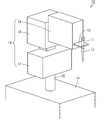
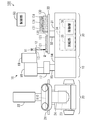
- FIG. 1 is a schematic view showing a configuration of a cell picking device according to an embodiment of the present invention.
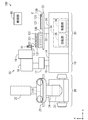
- FIG. 2 is a schematic view showing the configuration of the suction device of FIG.
- FIG. 3 is a plan view showing the configuration of the rack.
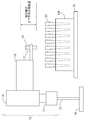
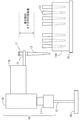
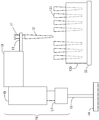
- FIG. 4 is a diagram for explaining attachment of the tip to the suction portion and movement of the suction portion.
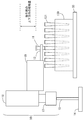
- FIG. 5 is a diagram for explaining attachment of the tip to the suction portion and movement of the suction portion.
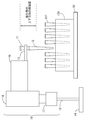
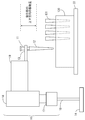
- FIG. 6 is a diagram for explaining attachment of the tip to the suction portion and movement of the suction portion.
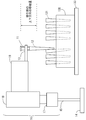
- FIG. 7 is a diagram for explaining attachment of the tip to the suction portion and movement of the suction portion.
- FIG. 8 is a diagram for explaining the movement of the suction portion in the reference example.
- FIG. 9 is a plan view for explaining the movement of the suction portion in the reference example.
- FIG. 10 is a diagram for explaining the movement of the suction portion in the comparative example.
- FIG. 11 is a diagram for explaining the movement of the suction portion in the comparative example.
- FIG. 12 is a diagram for explaining a cell suction operation by the suction device.
- FIG. 13 is a diagram for explaining a cell ejection operation by the suction device.
- FIG. 14 is a diagram for explaining a cell ejection operation by the suction device.
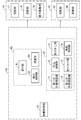
- FIG. 15 is a diagram showing the configuration of the control unit of FIG.
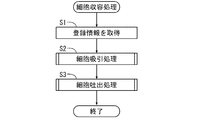
- FIG. 16 is a flowchart showing an example of an algorithm for cell containment processing executed by the control unit.
- FIG. 17 is a flowchart showing an example of the cell suction processing algorithm of FIG. 16 executed by the suction processing unit.
- FIG. 18 is a flowchart showing an example of the cell discharge processing algorithm of FIG. 16 executed by the discharge processing unit.
- FIG. 1 is a schematic view showing a configuration of a cell picking device according to an embodiment of the present invention.
- the cell picking device 100 includes a suction device 10, an observation device 20, a plate changer 30, and a control unit 50.
- the cell picking device 100 is provided with a sample container 110, a culture plate 120, and a rack 130.
- the sample container 110 is, for example, a petri dish and stores a sample containing cells.
- the culture plate 120 is a multi-well plate in which a plurality of wells 121 are arranged, and is used for culturing cells.
- the rack 130 holds a plurality of replacement pipette tips 131 (hereinafter, simply referred to as replacement tips 131). In this example, 24 wells 121 are arranged in 4 rows ⁇ 6 columns on the culture plate 120. Further, in the rack 130, 96 replacement chips 131 are held in a state of being arranged in 8 rows ⁇ 12 columns.
- the suction device 10 includes a pipette type suction unit 11. Any replacement tip 131 held in the rack 130 is attached to the tip of the suction portion 11. (Hereinafter, the replacement tip 131 attached to the suction section 11 is simply referred to as a tip 12.)
- the suction device 10 sucks the cells in the sample container 110 through the tip 12 and into any well 121 of the culture plate 120. Discharge (seed). After that, the same operation is repeated using the new replacement tip 131 and the well 121.
- the detailed configuration and operation of the suction device 10 will be described later.
- the observation device 20 includes a stage 21, a lighting unit 22, an imaging unit 23, and a microscope unit 24, and is arranged so as to be adjacent to the suction device 10.
- a sample container 110 is placed on the stage 21.
- the lighting unit 22 is arranged above the stage 21.
- the illumination unit 22 includes a light source such as a light emitting diode and illuminates the sample container 110 placed on the stage 21.
- the stage 21 is translucent. Alternatively, the stage 21 may be formed with an opening through which the light from the illumination unit 22 passes downward.
- the imaging unit 23 is arranged below the stage 21.
- the image pickup unit 23 includes a plurality of lenses, a camera, and the like, and takes an image while enlarging the sample in the sample container 110 illuminated by the illumination unit 22.
- the microscope unit 24 includes an eyepiece, a lens barrel, an objective lens, and the like, and is used by the user when magnifying and observing the sample in the sample container 110 placed on the stage 21.
- the plate changer 30 is an optional device arranged so as to face the observation device 20 with the suction device 10 interposed therebetween, and is configured to be removable from the suction device 10.
- the plate changer 30 includes a base 31, a vertical shaft 32, a support 33, and a drive 34.
- the vertical shaft 32 is provided so as to extend in the vertical direction in the base 31.
- the upper part of the vertical shaft 32 protrudes from the base 31.
- the support portion 33 is, for example, a plate member having a disk shape, and is attached to the upper end of the vertical shaft 32 in a horizontal posture.
- the culture plate 120 and the rack 130 are supported on the support portion 33.
- the drive unit 34 includes the rotating unit 35 and the moving unit 36, and is connected to the support unit 33 via the vertical shaft 32 in the base 31.
- the rotating portion 35 includes, for example, an electric motor, and rotates the supporting portion 33 in a horizontal plane. As a result, the culture plate 120 and the rack 130 supported by the support portion 33 are selectively moved to the vicinity of the suction device 10.
- the suction device 10 discharges the cells into any of the wells 121
- the culture plate 120 is moved to the vicinity of the suction device 10.
- the rack 130 is moved to the vicinity of the suction device 10. According to this configuration, it is possible to prevent the moving range of the support portion 33 from becoming large.
- the moving portion 36 includes, for example, a stepping motor, and moves the supporting portion 33 in parallel in the horizontal plane. Specifically, the moving unit 36 moves any well 121 of the culture plate 120 or any replacement tip 131 of the rack 130 to a position accessible to the suction unit 11 (eg, below the suction unit 11). This makes it possible to discharge the cells from the suction device 10 to the well 121 or attach the replacement tip 131 to the suction unit 11.
- the control unit 50 is, for example, a personal computer, and includes a CPU (central processing unit), a memory, and the like.
- the control unit 50 may be a microcomputer provided in each of the suction device 10 and the plate changer 30.
- the control unit 50 controls the operations of the suction device 10 and the plate changer 30.
- FIG. 2 is a schematic view showing the configuration of the suction device 10 of FIG.
- the suction device 10 includes a suction unit 11, a tip 12, a holder 13, a base 14, a vertical shaft 15, and a drive unit 16.
- the drive unit 16 includes rotating units 17 and 18 and a suction drive unit 19.
- the holder 13 holds the suction unit 11 in the suction drive unit 19.
- the vertical shaft 15 is provided on the upper surface of the base 14 so as to extend in the vertical direction.
- the rotating portion 17 includes, for example, an electric motor, and is rotatably attached to the upper end of the vertical shaft 15 in a horizontal plane.
- the rotating portion 18 includes, for example, an electric motor and is rotatably attached to the rotating portion 17 in a vertical plane.
- the rotating portion 17 and the rotating portion 18 may be configured by a single electric motor or the like that can rotate in a horizontal plane and in a vertical plane.
- the suction drive unit 19 includes, for example, a stepping motor, and is attached to the rotating unit 18 so as to be able to advance and retreat along a predetermined direction (vertical direction in a state where the rotating unit 18 is not rotating in a vertical plane). Further, the suction driving unit 19 includes a suction mechanism, and is configured to be able to suck and discharge cells from the suction unit 11. Further, the suction drive unit 19 includes a tip removing mechanism, and the tip 12 can be removed from the tip of the suction unit 11.
- FIG. 3 is a plan view showing the configuration of the rack 130.
- the rack 130 has a rectangular shape in a plan view.
- the short side direction of the rectangular rack 130 is referred to as a row direction
- the long side direction is referred to as a column direction.
- the short side direction or row direction is an example of the first direction
- the long side direction or column direction is an example of the second direction.
- the rack 130 is provided with 96 holes 132 arranged in 8 rows ⁇ 12 columns. Thereby, a strip-shaped region B1 extending in the column direction is defined between each of the two holes 132 adjacent to each other in the row direction. Further, a band-shaped region B2 extending in the row direction is defined between each of the two holes 132 adjacent to each other in the column direction. A replacement tip 131 is held in each hole 132.
- FIG. 4 to 7 are diagrams for explaining the attachment of the tip 12 to the suction unit 11 and the movement of the suction unit 11.
- the tip of the suction unit 11 is above the replacement chip 131 of the plurality of replacement chips 131 held in the rack 130.
- the suction unit 11 moves so as to be positioned.
- FIG. 5 as the suction portion 11 descends, the replacement tip 131 is attached to the tip of the suction portion 11 as a tip 12. Subsequently, as shown in FIG. 6, the suction unit 11 rises.
- the suction unit 11 is positioned below the upper end of the other replacement chip 131 held by the rack 130, with the lower end of the chip 12 attached to the suction unit 11 being positioned below the upper end of the rack 130. It moves horizontally from above the rack 130 to the outside of the rack 130.
- the suction unit 11 passes along the region between the plurality of holes 132 of the rack 130 and above the region between the plurality of holes 132. ..
- the suction portion 11 passes along the strip-shaped region B2 and above the strip-shaped region B2, as shown by the thick dotted arrow in FIG.
- the suction portion 11 may pass along the band-shaped region B1 and above the band-shaped region B1 instead of the band-shaped region B2.
- the lower end of the tip 12 attached to the suction portion 11 is attached to the suction portion 11 even though the lower end is located below the upper end of the other replacement tip 131 held by the rack 130.
- the suction unit 11 can be moved from above the rack 130 to the outside of the rack 130 with simple control without the tip 12 colliding with another replacement tip 131 held in the rack 130. Further, since the moving distance of the suction unit 11 in the vertical direction is short, the movement of the suction unit 11 from above the rack 130 to the outside of the rack 130 can be speeded up.
- the suction unit 11 and the rack 130 may be relatively moved in the horizontal plane. Therefore, the rack 130 may be moved without moving the suction portion 11 in the horizontal plane. In this example, the rack 130 is moved in the horizontal plane by the moving portion 36 of FIG.
- FIGS. 8 and 9 are diagrams for explaining the movement of the suction unit 11 in the reference example.
- 10 and 11 are diagrams for explaining the movement of the suction unit 11 in the comparative example.
- the amount of movement of the suction portion 11 in the vertical direction is sufficiently large.
- the suction portion 11 can be raised so that the tip of the tip 12 attached to the suction portion 11 is located above the upper end of the replacement tip 131 held by the rack 130. it can.
- the suction unit 11 does not have to pass along the region between the plurality of holes 132 of the rack 130 and above the region between the plurality of holes 132 in the state where the chip 12 is attached. .. That is, as shown by the thick dotted arrow in FIG. 9, the suction portion 11 may pass above the hole 132 of the rack 130 so as to cross the hole 132 in the state where the chip 12 is attached. Even in this case, the suction portion 11 is moved from above the rack 130 to the outside of the rack 130 without colliding with the other replacement chips 131 held in the rack 130. Can be done.
- the suction device 10 and the observation device 20 are shown so as to be sufficiently separated from each other in order to facilitate visual recognition.
- a part of the suction drive unit 19 of the suction device 10 is located below a support member (not shown) for supporting the illumination unit 22 of the observation device 20. Therefore, in order to prevent the suction driving unit 19 from interfering with the support member, the amount of movement of the suction unit 11 in the vertical direction is limited. Specifically, the amount of movement of the suction unit 11 in the vertical direction is smaller than the axial length of the tip 12.
- the suction portion 11 in the state where the tip 12 is attached moves by passing above the hole 132 so as to cross any hole 132 in the comparative example. Think of it as. Even in this configuration, when the replacement tip 131 is not held in the hole 132, the tip 12 and the replacement tip 131 do not collide with each other as shown in FIG. However, when the replacement tip 131 is held in the hole 132, a collision between the tip 12 and the replacement tip 131 occurs, as shown in FIG.
- FIG. 12 is a diagram for explaining a cell suction operation by the suction device.
- the sample container 110 placed on the stage 21 contains a liquid sample 1 having a predetermined volume.
- Sample 1 contains cells 2 to be aspirated.
- the cells 2 are adsorbed on the bottom surface of the sample container 110 at substantially the center of the sample container 110.
- the microscope unit 24 is not shown.
- the rotating unit 17 rotates in a horizontal plane so that the suction unit 11 and the chip 12 face the observation device 20. Further, the rotating portion 18 rotates in the vertical plane so that the tip 12 attached to the suction portion 11 is tilted at a predetermined angle.
- the suction drive unit 19 moves toward the tip along the axial direction of the chip 12. As a result, the tip of the chip 12 comes into contact with the cell 2. By operating the suction mechanism of the suction drive unit 19 in this state, the cells 2 adsorbed on the bottom surface of the sample container 110 are sucked into the chip 12.
- FIGS. 13 and 14 are diagrams for explaining the cell discharge operation by the suction device 10.
- the rotating portion 17 rotates in a horizontal plane so that the suction portion 11 and the tip 12 face the plate changer 30.
- the rotating portion 35 rotates in the horizontal plane so that the culture plate 120 is located closer to the suction device 10 than the rack 130.
- the moving portion 36 moves in parallel in the horizontal plane so that any well 121 of the culture plate 120 is located below the chip 12 attached to the suction portion 11.
- the suction mechanism of the suction drive unit 19 operates, so that the cells 2 in the chip 12 are discharged downward.
- the discharged cells 2 are housed in the well 121 of the culture plate 120.
- the chip removal mechanism of the suction driving unit 19 operates to remove the chip 12 from the tip of the suction unit 11.
- the removed chip 12 is discarded in a disposal section (not shown).
- the rotating portion 35 rotates in the horizontal plane so that the rack 130 is located closer to the suction device 10 than the culture plate 120. Further, the moving portion 36 moves in parallel in the horizontal plane so that any of the replacement tips 131 held by the rack 130 is located below the tip of the suction portion 11. In this state, the suction drive unit 19 moves downward. In this case, the replacement tip 131 held in the rack 130 is attached to the tip of the suction portion 11 as the tip 12. After that, the chip 12 is moved to the outside of the rack 130 as described above. This makes it possible to repeat the suction operation of the cell 2 in FIG.
- the order of the wells 121 used for accommodating the cells 2 is registered in advance in the control unit 50.
- the order of the replacement chips 131 attached to the suction unit 11 is registered in advance in the control unit 50.
- the suction operation of the cell 2 is repeated, the ejection operation of the cell 2 is repeated using the new replacement tip 131 and the well 121 according to the order of the well 121 and the replacement tip 131 registered in the control unit 50. ..
- the cells 2 can be automatically and chronologically contained in the plurality of wells 121 of the culture plate 120.
- FIG. 15 is a diagram showing the configuration of the control unit of FIG.
- FIG. 16 is a flowchart showing an example of an algorithm for cell containment processing executed by the control unit 50.
- the control unit 50 includes an information acquisition unit 51, a suction processing unit 60, and a discharge processing unit 70 as functional units.
- the CPU of the control unit 50 executes the cell containment program stored in the memory
- the functional unit of the control unit 50 is realized.
- a part or all of the functional units of the control unit 50 may be realized by hardware such as an electronic circuit.
- the cell containment process will be described with reference to the control unit 50 of FIG. 15 and the flowchart of FIG.
- the information acquisition unit 51 acquires various information (hereinafter referred to as registration information) registered by the user (step S1).
- the user can register a position in the sample container 110 where the cell 2 is likely to be present or a position in the vicinity thereof as a suction position.
- the user can register the selection of "immediately move to the discharge position after picking” or “do not immediately move to the discharge position after picking”.
- Information about the sample container 110 includes dimensions such as the depth of the sample container 110.
- Information about the culture plate 120 includes the number of wells 121 and the order of wells 121 used to contain the cells 2.
- Information about the rack 130 includes the number of replacement tips 131 held and the order of the replacement tips 131 attached to the suction section 11.
- the cell aspiration process is a process of aspirating cells 2 into the chip 12 from the sample 1 contained in the sample container 110 based on the registration information acquired in step S51.
- the tip 12 is attached to the suction unit 11 in the initial state, but when the tip 12 is not attached to the suction unit 11 in the initial state, it will be described later between steps S1 and S2. Steps S24 to S26 of FIG. 18 are executed.
- the cell ejection process is a process of ejecting the cells 2 sucked into the chip 12 in the cell suction process of step S2 into any well 121 of the culture plate 120, and then replacing the chip 12. Details of the cell suction treatment and the cell discharge treatment will be described later. After the cell ejection process, the cell containment process is completed.
- FIG. 17 is a flowchart showing an example of the cell suction processing algorithm of FIG. 16 executed by the suction processing unit 60.
- the suction processing unit 60 includes a traveling unit 61, a suction control unit 63, and a retracting unit 64 as additional functional units.
- the cell suction process will be described with reference to the suction unit 11 of FIG. 12, the suction processing unit 60 of FIG. 15, and the flowchart of FIG.
- the advancing unit 61 registers the tip of the tip 12 attached to the suction unit 11 at the position of the sample 1 of the sample container 110 (in step S1) by controlling the rotating units 17 and 18 and the suction driving unit 19. (Suction position) (FIGS. 12, FIG. 4 and step S11).
- the suction control unit 63 sucks the cells 2 into the chip 12 by controlling the suction drive unit 19 (step S12).
- the suction control unit 63 determines whether or not to continue suction (step S13). If the continuous suction is not executed, the suction control unit 63 determines that the suction is not continued, and proceeds to step S14. When continuous suction is executed, the suction control unit 63 determines that the suction is continued, and returns to step S12. When continuous suction is repeated, the tip of the tip 12 may be slightly moved.
- step S14 the retracting unit 64 retracts the chip 12 from the sample 1 by controlling the suction driving unit 19 (step S14).
- the retracted portion 64 ends the cell suction process.
- FIG. 18 is a flowchart showing an example of the cell ejection processing algorithm of FIG. 16 executed by the discharge processing unit 70.
- the discharge processing unit 70 includes a first position adjusting unit 71, a discharge control unit 72, a removing unit 73, a second position adjusting unit 74, and a mounting unit 75 as further functional units.
- the cell discharge process will be described with reference to the suction unit 11 of FIGS. 13 and 14, the discharge processing unit 70 of FIG. 15, and the flowchart of FIG.
- the first position adjusting unit 71 controls the rotating units 17, 18, 35 and the moving unit 36 according to the order of the wells 121 acquired in step S1 to position the suction unit 11 and the culture plate 120. Adjust the relationship (FIG. 13 and step S21). In this case, in the culture plate 120, the well 121 in which the cell 2 should be housed next is located below the tip of the suction portion 11.
- the discharge control unit 72 discharges the cells 2 in the chip 12 by controlling the suction drive unit 19 (step S22).
- the cells 2 are housed in the well 121.
- the removing unit 73 removes the chip 12 from the suction unit 11 by controlling the suction driving unit 19 (step S23).
- step S24 the second position adjusting unit 74 controls the rotating units 17, 18, 35 and the moving unit 36 according to the order of the replacement inserts 131 acquired in step S1 to control the suction unit 11 and the rack 130.
- the positional relationship with and is adjusted (FIG. 14 and step S24).
- the replacement tip 131 to be attached to the suction unit 11 next is located below the tip of the suction unit 11.
- the attachment unit 75 attaches the above-mentioned replacement tip 131 to the suction unit 11 by controlling the suction drive unit 19 (step S25). Specifically, the replacement tip 131 is attached to the suction section 11 as the tip 12 by moving the suction section 11 downward.
- the movement control unit 76 moves the suction unit 11 from above the rack 130 to the outside of the rack 130 by controlling the rotating units 17, 18, 35 and the moving unit 36. At this time, the suction unit 11 passes along the region between the plurality of holes 132 of the rack 130 and above the region between the plurality of holes 132. (FIG. 14 and step S26). When the suction unit 11 moves to the outside of the rack 130, the movement control unit 76 ends the cell ejection process.
- the suction unit 11 can be moved from above the rack 130 to the outside of the rack 130 with simple control.
- the suction unit 11 can be moved from above the rack 130 to the outside of the rack 130 in a short time.
- the cell picking device 100 can be miniaturized in the vertical direction.
- the observation device 20 can be easily provided so as to be adjacent to the suction device 10 without interfering with the suction device 10. Therefore, the user can magnify and observe the sample by using the observation device 20.
- the suction unit 11 is not configured to be movable in parallel in a horizontal plane, but the embodiment is not limited to this.
- the suction unit 11 may be configured to be movable in parallel in a horizontal plane.
- the suction device 10 may be provided with a moving portion similar to the moving portion 36.
- the first position adjusting unit 71 or the second position adjusting unit 74 may control the moving unit of the suction device 10 instead of the moving unit 36.
- the plate changer 30 does not have to be provided with the moving portion 36.
- the drive unit 34 includes the rotating unit 35, but the embodiment is not limited to this.
- the culture plate 120 and the rack 130 can be selectively moved to the vicinity of the suction device 10 by moving the support portion 33 sufficiently large in the horizontal plane by the moving portion 36, the driving portion 34 rotates.
- Part 35 may not be included.
- the cell picking device is A support that supports a rack with multiple holes to hold multiple pipette tips, The suction part used for sucking the sample and A drive unit that moves the suction unit in the vertical direction and relatively moves the suction unit and the support unit in the horizontal direction, and one of the plurality of pipette tips held in the rack.
- the drive unit is controlled so that the suction unit is attached to the suction unit by moving the suction unit in the vertical direction and the suction unit moves to the outside of the rack by the relative movement of the suction unit and the support unit.
- the suction unit is located between the plurality of holes in the rack while the lower end of the pipette tip attached to the suction unit is located below the upper end of another pipette tip held in the rack.
- the drive unit may be controlled to move from above the rack to the outside of the rack along the region and above the region between the plurality of holes.
- the suction part in the movement of the suction part with the chip attached, the suction part passes along the region between the plurality of holes of the rack and above the region between the plurality of holes.
- the suction part can be racked without the tip attached to the suction part colliding with other replacement tips held in the rack. It can be moved to the outside of the rack from above.
- the plurality of holes are formed on the rack at equal intervals in a first direction and a second direction intersecting the first direction.
- a first band-shaped region extending in the second direction is formed between the two holes adjacent to each other in the first direction of the rack, and between the two holes adjacent to each other in the second direction.
- a second band-shaped region extending in the first direction is formed.
- the control unit drives the suction unit so as to move from above the rack to the outside of the rack along the first or second band-shaped region and above the first or second band-shaped region.
- the unit may be controlled.
- the suction part can be moved from above the rack to the outside of the rack with simple control without the tip attached to the suction part colliding with other replacement chips held in the rack.
- a suction device including the suction part and An observation device provided adjacent to the suction device and used for observing the sample may be further provided.
- the amount of movement of the suction unit in the vertical direction can be limited, so that the observation device can be easily provided so as to be adjacent to the suction device without interfering with the suction device.
- the user can magnify and observe the sample using the observation device.
- the drive unit is configured to cause the suction unit to perform a suction operation and a discharge operation under the control of the control unit, and is configured to remove the pipette tip from the suction unit.
- the control unit has a first control of sucking a sample from a sample container containing a sample into a pipette tip by the suction unit.
- a second control of discharging the sample sucked into the pipette tip by the suction unit to any well of the culture plate having a plurality of wells.
- a third control for removing the pipette tip from the suction unit The drive unit may be controlled so as to sequentially perform a fourth control of attaching any of the pipette tips held in the rack to the suction unit.
- the sample is sucked from the sample container to the pipette tip.
- the sample is then ejected from the pipette tip into any well of the culture plate.
- the pipette tip is removed from the suction section and any pipette tip held in the rack is attached to the suction section. This allows the aspirated sample to be automatically contained in any well of the culture plate.
- the control unit may repeatedly perform the first, second, third, and fourth controls so that the sample is discharged into a well different from the well in which the sample has already been discharged in the second control. ..
- the sample is sucked from the sample container to the pipette tip.
- the sample is then ejected from the pipette tip into any well of the culture plate.
- the pipette tip is removed from the suction section and one of the pipette tips held in the rack is attached to the suction section.
- the drive unit is configured so that the support unit can rotate.
- the support further supports the culture plate and
- the control unit has the culture plate located closer to the suction unit than the rack.
- the rotation of the support portion by the drive portion may be controlled so that the rack is located closer to the suction portion than the culture plate.
- the culture plate and the rack can be selectively moved to an accessible position of the suction part without increasing the movement range of the support part.
Landscapes
- Chemical & Material Sciences (AREA)
- Health & Medical Sciences (AREA)
- Life Sciences & Earth Sciences (AREA)
- Engineering & Computer Science (AREA)
- Wood Science & Technology (AREA)
- Organic Chemistry (AREA)
- Bioinformatics & Cheminformatics (AREA)
- Zoology (AREA)
- General Health & Medical Sciences (AREA)
- Biochemistry (AREA)
- General Engineering & Computer Science (AREA)
- Analytical Chemistry (AREA)
- Microbiology (AREA)
- Biotechnology (AREA)
- Biomedical Technology (AREA)
- Sustainable Development (AREA)
- Genetics & Genomics (AREA)
- Clinical Laboratory Science (AREA)
- Molecular Biology (AREA)
- Computer Hardware Design (AREA)
- Physics & Mathematics (AREA)
- General Physics & Mathematics (AREA)
- Immunology (AREA)
- Pathology (AREA)
- Robotics (AREA)
- Cell Biology (AREA)
- Apparatus Associated With Microorganisms And Enzymes (AREA)
- Automatic Analysis And Handling Materials Therefor (AREA)
Priority Applications (4)
| Application Number | Priority Date | Filing Date | Title |
|---|---|---|---|
| PCT/JP2019/029515 WO2021019625A1 (ja) | 2019-07-26 | 2019-07-26 | 細胞ピッキング装置 |
| JP2021536469A JP7226556B2 (ja) | 2019-07-26 | 2019-07-26 | 細胞ピッキング装置 |
| CN201980098268.4A CN114096653B (zh) | 2019-07-26 | 2019-07-26 | 细胞拾取装置 |
| US17/626,545 US20220268794A1 (en) | 2019-07-26 | 2019-07-26 | Cell picking device |
Applications Claiming Priority (1)
| Application Number | Priority Date | Filing Date | Title |
|---|---|---|---|
| PCT/JP2019/029515 WO2021019625A1 (ja) | 2019-07-26 | 2019-07-26 | 細胞ピッキング装置 |
Publications (1)
| Publication Number | Publication Date |
|---|---|
| WO2021019625A1 true WO2021019625A1 (ja) | 2021-02-04 |
Family
ID=74229403
Family Applications (1)
| Application Number | Title | Priority Date | Filing Date |
|---|---|---|---|
| PCT/JP2019/029515 Ceased WO2021019625A1 (ja) | 2019-07-26 | 2019-07-26 | 細胞ピッキング装置 |
Country Status (4)
| Country | Link |
|---|---|
| US (1) | US20220268794A1 (https=) |
| JP (1) | JP7226556B2 (https=) |
| CN (1) | CN114096653B (https=) |
| WO (1) | WO2021019625A1 (https=) |
Cited By (1)
| Publication number | Priority date | Publication date | Assignee | Title |
|---|---|---|---|---|
| JP7615799B2 (ja) | 2021-03-18 | 2025-01-17 | 株式会社島津製作所 | 細胞ピッキング装置 |
Families Citing this family (2)
| Publication number | Priority date | Publication date | Assignee | Title |
|---|---|---|---|---|
| JP2022084356A (ja) * | 2020-11-26 | 2022-06-07 | 株式会社島津製作所 | 細胞ピッキング装置および細胞ピッキング方法 |
| WO2024181548A1 (ja) * | 2023-03-02 | 2024-09-06 | オムロン株式会社 | 播種装置、播種方法、及びプログラム |
Citations (5)
| Publication number | Priority date | Publication date | Assignee | Title |
|---|---|---|---|---|
| JP2013543984A (ja) * | 2010-11-23 | 2013-12-09 | アンドリュー・アライアンス・ソシエテ・アノニム | ピペットのプログラミング可能な操作のための装置及び方法 |
| JP2017070316A (ja) * | 2017-01-31 | 2017-04-13 | ヤマハ発動機株式会社 | 対象物の移動装置 |
| US9850459B1 (en) * | 2017-01-26 | 2017-12-26 | SCL Biotech Ltd. | Method and apparatus for primary cell isolation |
| JP2019041691A (ja) * | 2017-09-04 | 2019-03-22 | 横河電機株式会社 | 細胞吸引支援装置および細胞吸引支援装置の制御方法 |
| WO2019176093A1 (ja) * | 2018-03-16 | 2019-09-19 | 株式会社島津製作所 | 細胞ピッキング装置 |
Family Cites Families (3)
| Publication number | Priority date | Publication date | Assignee | Title |
|---|---|---|---|---|
| CN109414826B (zh) * | 2016-07-14 | 2022-02-22 | 西门子医疗保健诊断公司 | 用于基于样品架成像数据的动态拾取和放置选择顺序的方法、系统和装置 |
| JP6694796B2 (ja) * | 2016-10-18 | 2020-05-20 | ヤマハ発動機株式会社 | 細胞移動装置 |
| WO2018191534A1 (en) * | 2017-04-14 | 2018-10-18 | Aviva Biosciences Corporation | Methods, compositions, and devices for separating and/or enriching cells |
-
2019
- 2019-07-26 JP JP2021536469A patent/JP7226556B2/ja active Active
- 2019-07-26 WO PCT/JP2019/029515 patent/WO2021019625A1/ja not_active Ceased
- 2019-07-26 CN CN201980098268.4A patent/CN114096653B/zh active Active
- 2019-07-26 US US17/626,545 patent/US20220268794A1/en active Pending
Patent Citations (5)
| Publication number | Priority date | Publication date | Assignee | Title |
|---|---|---|---|---|
| JP2013543984A (ja) * | 2010-11-23 | 2013-12-09 | アンドリュー・アライアンス・ソシエテ・アノニム | ピペットのプログラミング可能な操作のための装置及び方法 |
| US9850459B1 (en) * | 2017-01-26 | 2017-12-26 | SCL Biotech Ltd. | Method and apparatus for primary cell isolation |
| JP2017070316A (ja) * | 2017-01-31 | 2017-04-13 | ヤマハ発動機株式会社 | 対象物の移動装置 |
| JP2019041691A (ja) * | 2017-09-04 | 2019-03-22 | 横河電機株式会社 | 細胞吸引支援装置および細胞吸引支援装置の制御方法 |
| WO2019176093A1 (ja) * | 2018-03-16 | 2019-09-19 | 株式会社島津製作所 | 細胞ピッキング装置 |
Cited By (1)
| Publication number | Priority date | Publication date | Assignee | Title |
|---|---|---|---|---|
| JP7615799B2 (ja) | 2021-03-18 | 2025-01-17 | 株式会社島津製作所 | 細胞ピッキング装置 |
Also Published As
| Publication number | Publication date |
|---|---|
| CN114096653B (zh) | 2024-12-13 |
| US20220268794A1 (en) | 2022-08-25 |
| JP7226556B2 (ja) | 2023-02-21 |
| CN114096653A (zh) | 2022-02-25 |
| JPWO2021019625A1 (https=) | 2021-02-04 |
Similar Documents
| Publication | Publication Date | Title |
|---|---|---|
| JP7255687B2 (ja) | 細胞ピッキング装置 | |
| EP3159396B1 (en) | Object moving device | |
| JP6988993B2 (ja) | 細胞ピッキング装置 | |
| JP7226556B2 (ja) | 細胞ピッキング装置 | |
| CN114591805B (zh) | 细胞拾取装置和细胞拾取方法 | |
| CN114207102A (zh) | 细胞拾取装置 | |
| JPWO2018193719A1 (ja) | 細胞移動装置及び細胞移動方法 | |
| JP5693655B2 (ja) | 自動検体処理装置 | |
| JP2005207850A (ja) | 分注装置およびそれを備えた分析装置 | |
| CN118033164A (zh) | 用于禁用转盘旋转的安全光幕 | |
| JP3299212B2 (ja) | 液の転写部材及び転写装置 | |
| JP4135567B2 (ja) | キャップ取り外し装置 | |
| JP6694796B2 (ja) | 細胞移動装置 | |
| CN114540171A (zh) | 细胞拾取装置和细胞拾取方法 | |
| JP2021007332A (ja) | 液体移替装置及び細胞培養システム | |
| JP7597999B2 (ja) | 液体吸引排出装置 | |
| JP2010158193A (ja) | 自動培養装置、自動観察方法、培養容器 | |
| JP2010136666A (ja) | 自動培養装置、自動培養方法 | |
| JP2026026502A (ja) | 吸引吐出装置、液滴除去用治具、吸引吐出装置の制御方法および液滴除去方法 | |
| JP2023164032A (ja) | 分注装置および脱離プレート | |
| JP2026037855A (ja) | 光学顕微鏡 | |
| WO2021240675A1 (ja) | 核酸分析装置 | |
| JP2014095604A (ja) | 自動分注装置 | |
| CN114324953A (zh) | 用于实验研究的检测辅助装置 | |
| JP2007064676A (ja) | 自動分注装置 |
Legal Events
| Date | Code | Title | Description |
|---|---|---|---|
| 121 | Ep: the epo has been informed by wipo that ep was designated in this application |
Ref document number: 19939280 Country of ref document: EP Kind code of ref document: A1 |
|
| ENP | Entry into the national phase |
Ref document number: 2021536469 Country of ref document: JP Kind code of ref document: A |
|
| NENP | Non-entry into the national phase |
Ref country code: DE |
|
| 122 | Ep: pct application non-entry in european phase |
Ref document number: 19939280 Country of ref document: EP Kind code of ref document: A1 |