WO2020262184A1 - ミオスタチン遺伝子のmRNAの産生を抑制する核酸医薬 - Google Patents
ミオスタチン遺伝子のmRNAの産生を抑制する核酸医薬 Download PDFInfo
- Publication number
- WO2020262184A1 WO2020262184A1 PCT/JP2020/023917 JP2020023917W WO2020262184A1 WO 2020262184 A1 WO2020262184 A1 WO 2020262184A1 JP 2020023917 W JP2020023917 W JP 2020023917W WO 2020262184 A1 WO2020262184 A1 WO 2020262184A1
- Authority
- WO
- WIPO (PCT)
- Prior art keywords
- antisense oligonucleotide
- salt
- solvate
- myostatin
- mstn
- Prior art date
- Legal status (The legal status is an assumption and is not a legal conclusion. Google has not performed a legal analysis and makes no representation as to the accuracy of the status listed.)
- Ceased
Links
Images




Classifications
-
- C—CHEMISTRY; METALLURGY
- C12—BIOCHEMISTRY; BEER; SPIRITS; WINE; VINEGAR; MICROBIOLOGY; ENZYMOLOGY; MUTATION OR GENETIC ENGINEERING
- C12N—MICROORGANISMS OR ENZYMES; COMPOSITIONS THEREOF; PROPAGATING, PRESERVING, OR MAINTAINING MICROORGANISMS; MUTATION OR GENETIC ENGINEERING; CULTURE MEDIA
- C12N15/00—Mutation or genetic engineering; DNA or RNA concerning genetic engineering, vectors, e.g. plasmids, or their isolation, preparation or purification; Use of hosts therefor
- C12N15/09—Recombinant DNA-technology
- C12N15/11—DNA or RNA fragments; Modified forms thereof; Non-coding nucleic acids having a biological activity
- C12N15/113—Non-coding nucleic acids modulating the expression of genes, e.g. antisense oligonucleotides; Antisense DNA or RNA; Triplex- forming oligonucleotides; Catalytic nucleic acids, e.g. ribozymes; Nucleic acids used in co-suppression or gene silencing
-
- A—HUMAN NECESSITIES
- A23—FOODS OR FOODSTUFFS; TREATMENT THEREOF, NOT COVERED BY OTHER CLASSES
- A23K—FODDER
- A23K20/00—Accessory food factors for animal feeding-stuffs
- A23K20/10—Organic substances
- A23K20/153—Nucleic acids; Hydrolysis products or derivatives thereof
-
- A—HUMAN NECESSITIES
- A23—FOODS OR FOODSTUFFS; TREATMENT THEREOF, NOT COVERED BY OTHER CLASSES
- A23K—FODDER
- A23K50/00—Feeding-stuffs specially adapted for particular animals
- A23K50/10—Feeding-stuffs specially adapted for particular animals for ruminants
-
- A—HUMAN NECESSITIES
- A23—FOODS OR FOODSTUFFS; TREATMENT THEREOF, NOT COVERED BY OTHER CLASSES
- A23K—FODDER
- A23K50/00—Feeding-stuffs specially adapted for particular animals
- A23K50/30—Feeding-stuffs specially adapted for particular animals for swines
-
- A—HUMAN NECESSITIES
- A23—FOODS OR FOODSTUFFS; TREATMENT THEREOF, NOT COVERED BY OTHER CLASSES
- A23K—FODDER
- A23K50/00—Feeding-stuffs specially adapted for particular animals
- A23K50/40—Feeding-stuffs specially adapted for particular animals for carnivorous animals, e.g. cats or dogs
-
- A—HUMAN NECESSITIES
- A23—FOODS OR FOODSTUFFS; TREATMENT THEREOF, NOT COVERED BY OTHER CLASSES
- A23K—FODDER
- A23K50/00—Feeding-stuffs specially adapted for particular animals
- A23K50/70—Feeding-stuffs specially adapted for particular animals for birds
- A23K50/75—Feeding-stuffs specially adapted for particular animals for birds for poultry
-
- A—HUMAN NECESSITIES
- A23—FOODS OR FOODSTUFFS; TREATMENT THEREOF, NOT COVERED BY OTHER CLASSES
- A23L—FOODS, FOODSTUFFS OR NON-ALCOHOLIC BEVERAGES, NOT OTHERWISE PROVIDED FOR; PREPARATION OR TREATMENT THEREOF
- A23L33/00—Modifying nutritive qualities of foods; Dietetic products; Preparation or treatment thereof
- A23L33/10—Modifying nutritive qualities of foods; Dietetic products; Preparation or treatment thereof using additives
- A23L33/13—Nucleic acids or derivatives thereof
-
- A—HUMAN NECESSITIES
- A61—MEDICAL OR VETERINARY SCIENCE; HYGIENE
- A61K—PREPARATIONS FOR MEDICAL, DENTAL OR TOILETRY PURPOSES
- A61K31/00—Medicinal preparations containing organic active ingredients
- A61K31/70—Carbohydrates; Sugars; Derivatives thereof
- A61K31/7088—Compounds having three or more nucleosides or nucleotides
-
- A—HUMAN NECESSITIES
- A61—MEDICAL OR VETERINARY SCIENCE; HYGIENE
- A61K—PREPARATIONS FOR MEDICAL, DENTAL OR TOILETRY PURPOSES
- A61K31/00—Medicinal preparations containing organic active ingredients
- A61K31/70—Carbohydrates; Sugars; Derivatives thereof
- A61K31/7088—Compounds having three or more nucleosides or nucleotides
- A61K31/712—Nucleic acids or oligonucleotides having modified sugars, i.e. other than ribose or 2'-deoxyribose
-
- A—HUMAN NECESSITIES
- A61—MEDICAL OR VETERINARY SCIENCE; HYGIENE
- A61K—PREPARATIONS FOR MEDICAL, DENTAL OR TOILETRY PURPOSES
- A61K31/00—Medicinal preparations containing organic active ingredients
- A61K31/70—Carbohydrates; Sugars; Derivatives thereof
- A61K31/7088—Compounds having three or more nucleosides or nucleotides
- A61K31/7125—Nucleic acids or oligonucleotides having modified internucleoside linkage, i.e. other than 3'-5' phosphodiesters
-
- A—HUMAN NECESSITIES
- A61—MEDICAL OR VETERINARY SCIENCE; HYGIENE
- A61K—PREPARATIONS FOR MEDICAL, DENTAL OR TOILETRY PURPOSES
- A61K48/00—Medicinal preparations containing genetic material which is inserted into cells of the living body to treat genetic diseases; Gene therapy
-
- A—HUMAN NECESSITIES
- A61—MEDICAL OR VETERINARY SCIENCE; HYGIENE
- A61P—SPECIFIC THERAPEUTIC ACTIVITY OF CHEMICAL COMPOUNDS OR MEDICINAL PREPARATIONS
- A61P13/00—Drugs for disorders of the urinary system
- A61P13/12—Drugs for disorders of the urinary system of the kidneys
-
- A—HUMAN NECESSITIES
- A61—MEDICAL OR VETERINARY SCIENCE; HYGIENE
- A61P—SPECIFIC THERAPEUTIC ACTIVITY OF CHEMICAL COMPOUNDS OR MEDICINAL PREPARATIONS
- A61P19/00—Drugs for skeletal disorders
- A61P19/02—Drugs for skeletal disorders for joint disorders, e.g. arthritis, arthrosis
-
- A—HUMAN NECESSITIES
- A61—MEDICAL OR VETERINARY SCIENCE; HYGIENE
- A61P—SPECIFIC THERAPEUTIC ACTIVITY OF CHEMICAL COMPOUNDS OR MEDICINAL PREPARATIONS
- A61P19/00—Drugs for skeletal disorders
- A61P19/08—Drugs for skeletal disorders for bone diseases, e.g. rachitism, Paget's disease
-
- A—HUMAN NECESSITIES
- A61—MEDICAL OR VETERINARY SCIENCE; HYGIENE
- A61P—SPECIFIC THERAPEUTIC ACTIVITY OF CHEMICAL COMPOUNDS OR MEDICINAL PREPARATIONS
- A61P21/00—Drugs for disorders of the muscular or neuromuscular system
- A61P21/02—Muscle relaxants, e.g. for tetanus or cramps
-
- A—HUMAN NECESSITIES
- A61—MEDICAL OR VETERINARY SCIENCE; HYGIENE
- A61P—SPECIFIC THERAPEUTIC ACTIVITY OF CHEMICAL COMPOUNDS OR MEDICINAL PREPARATIONS
- A61P21/00—Drugs for disorders of the muscular or neuromuscular system
- A61P21/04—Drugs for disorders of the muscular or neuromuscular system for myasthenia gravis
-
- A—HUMAN NECESSITIES
- A61—MEDICAL OR VETERINARY SCIENCE; HYGIENE
- A61P—SPECIFIC THERAPEUTIC ACTIVITY OF CHEMICAL COMPOUNDS OR MEDICINAL PREPARATIONS
- A61P29/00—Non-central analgesic, antipyretic or antiinflammatory agents, e.g. antirheumatic agents; Non-steroidal antiinflammatory drugs [NSAID]
-
- A—HUMAN NECESSITIES
- A61—MEDICAL OR VETERINARY SCIENCE; HYGIENE
- A61P—SPECIFIC THERAPEUTIC ACTIVITY OF CHEMICAL COMPOUNDS OR MEDICINAL PREPARATIONS
- A61P3/00—Drugs for disorders of the metabolism
- A61P3/08—Drugs for disorders of the metabolism for glucose homeostasis
- A61P3/10—Drugs for disorders of the metabolism for glucose homeostasis for hyperglycaemia, e.g. antidiabetics
-
- A—HUMAN NECESSITIES
- A61—MEDICAL OR VETERINARY SCIENCE; HYGIENE
- A61P—SPECIFIC THERAPEUTIC ACTIVITY OF CHEMICAL COMPOUNDS OR MEDICINAL PREPARATIONS
- A61P43/00—Drugs for specific purposes, not provided for in groups A61P1/00-A61P41/00
-
- A—HUMAN NECESSITIES
- A61—MEDICAL OR VETERINARY SCIENCE; HYGIENE
- A61P—SPECIFIC THERAPEUTIC ACTIVITY OF CHEMICAL COMPOUNDS OR MEDICINAL PREPARATIONS
- A61P7/00—Drugs for disorders of the blood or the extracellular fluid
-
- A—HUMAN NECESSITIES
- A61—MEDICAL OR VETERINARY SCIENCE; HYGIENE
- A61P—SPECIFIC THERAPEUTIC ACTIVITY OF CHEMICAL COMPOUNDS OR MEDICINAL PREPARATIONS
- A61P9/00—Drugs for disorders of the cardiovascular system
-
- A—HUMAN NECESSITIES
- A61—MEDICAL OR VETERINARY SCIENCE; HYGIENE
- A61P—SPECIFIC THERAPEUTIC ACTIVITY OF CHEMICAL COMPOUNDS OR MEDICINAL PREPARATIONS
- A61P9/00—Drugs for disorders of the cardiovascular system
- A61P9/04—Inotropic agents, i.e. stimulants of cardiac contraction; Drugs for heart failure
-
- A—HUMAN NECESSITIES
- A61—MEDICAL OR VETERINARY SCIENCE; HYGIENE
- A61P—SPECIFIC THERAPEUTIC ACTIVITY OF CHEMICAL COMPOUNDS OR MEDICINAL PREPARATIONS
- A61P9/00—Drugs for disorders of the cardiovascular system
- A61P9/10—Drugs for disorders of the cardiovascular system for treating ischaemic or atherosclerotic diseases, e.g. antianginal drugs, coronary vasodilators, drugs for myocardial infarction, retinopathy, cerebrovascula insufficiency, renal arteriosclerosis
-
- C—CHEMISTRY; METALLURGY
- C12—BIOCHEMISTRY; BEER; SPIRITS; WINE; VINEGAR; MICROBIOLOGY; ENZYMOLOGY; MUTATION OR GENETIC ENGINEERING
- C12N—MICROORGANISMS OR ENZYMES; COMPOSITIONS THEREOF; PROPAGATING, PRESERVING, OR MAINTAINING MICROORGANISMS; MUTATION OR GENETIC ENGINEERING; CULTURE MEDIA
- C12N15/00—Mutation or genetic engineering; DNA or RNA concerning genetic engineering, vectors, e.g. plasmids, or their isolation, preparation or purification; Use of hosts therefor
- C12N15/09—Recombinant DNA-technology
- C12N15/11—DNA or RNA fragments; Modified forms thereof; Non-coding nucleic acids having a biological activity
- C12N15/113—Non-coding nucleic acids modulating the expression of genes, e.g. antisense oligonucleotides; Antisense DNA or RNA; Triplex- forming oligonucleotides; Catalytic nucleic acids, e.g. ribozymes; Nucleic acids used in co-suppression or gene silencing
- C12N15/1136—Non-coding nucleic acids modulating the expression of genes, e.g. antisense oligonucleotides; Antisense DNA or RNA; Triplex- forming oligonucleotides; Catalytic nucleic acids, e.g. ribozymes; Nucleic acids used in co-suppression or gene silencing against growth factors, growth regulators, cytokines, lymphokines or hormones
-
- C—CHEMISTRY; METALLURGY
- C12—BIOCHEMISTRY; BEER; SPIRITS; WINE; VINEGAR; MICROBIOLOGY; ENZYMOLOGY; MUTATION OR GENETIC ENGINEERING
- C12N—MICROORGANISMS OR ENZYMES; COMPOSITIONS THEREOF; PROPAGATING, PRESERVING, OR MAINTAINING MICROORGANISMS; MUTATION OR GENETIC ENGINEERING; CULTURE MEDIA
- C12N2310/00—Structure or type of the nucleic acid
- C12N2310/10—Type of nucleic acid
- C12N2310/11—Antisense
-
- C—CHEMISTRY; METALLURGY
- C12—BIOCHEMISTRY; BEER; SPIRITS; WINE; VINEGAR; MICROBIOLOGY; ENZYMOLOGY; MUTATION OR GENETIC ENGINEERING
- C12N—MICROORGANISMS OR ENZYMES; COMPOSITIONS THEREOF; PROPAGATING, PRESERVING, OR MAINTAINING MICROORGANISMS; MUTATION OR GENETIC ENGINEERING; CULTURE MEDIA
- C12N2310/00—Structure or type of the nucleic acid
- C12N2310/30—Chemical structure
- C12N2310/31—Chemical structure of the backbone
- C12N2310/315—Phosphorothioates
-
- C—CHEMISTRY; METALLURGY
- C12—BIOCHEMISTRY; BEER; SPIRITS; WINE; VINEGAR; MICROBIOLOGY; ENZYMOLOGY; MUTATION OR GENETIC ENGINEERING
- C12N—MICROORGANISMS OR ENZYMES; COMPOSITIONS THEREOF; PROPAGATING, PRESERVING, OR MAINTAINING MICROORGANISMS; MUTATION OR GENETIC ENGINEERING; CULTURE MEDIA
- C12N2310/00—Structure or type of the nucleic acid
- C12N2310/30—Chemical structure
- C12N2310/32—Chemical structure of the sugar
- C12N2310/323—Chemical structure of the sugar modified ring structure
- C12N2310/3231—Chemical structure of the sugar modified ring structure having an additional ring, e.g. LNA, ENA
-
- C—CHEMISTRY; METALLURGY
- C12—BIOCHEMISTRY; BEER; SPIRITS; WINE; VINEGAR; MICROBIOLOGY; ENZYMOLOGY; MUTATION OR GENETIC ENGINEERING
- C12N—MICROORGANISMS OR ENZYMES; COMPOSITIONS THEREOF; PROPAGATING, PRESERVING, OR MAINTAINING MICROORGANISMS; MUTATION OR GENETIC ENGINEERING; CULTURE MEDIA
- C12N2310/00—Structure or type of the nucleic acid
- C12N2310/30—Chemical structure
- C12N2310/34—Spatial arrangement of the modifications
- C12N2310/344—Position-specific modifications, e.g. on every purine, at the 3'-end
Definitions
- the present invention relates to a nucleic acid drug that suppresses the production of mRNA of the myostatin gene.
- Myostatin is one of the TGF beta-type cell growth factors and is a protein encoded by the myostatin gene. Myostatin has the effect of suppressing the proliferation and hypertrophy of muscle cells. Therefore, inhibiting the function of myostatin promotes the proliferation and hypertrophy of muscle cells, and is therefore attracting attention as a therapeutic target for muscular atrophy.
- antisense oligonucleotides that control the splicing of antibodies against myostatin or myostatin genes to produce loss-of-function mRNA have been developed (Non-Patent Documents 1 and 2). However, clinically useful myostatin inhibition methods have not yet been established.
- An object of the present invention is to provide a new myostatin inhibition method.
- the myostatin (MSTN) gene has a simple structure with three exons.
- the present inventors aimed at the development of an antisense oligonucleotide (AO) targeting exon 1 of the MSTN gene. Therefore, various AOs using ENA as a monomer complementary to the sequence of the splicing factor binding site in the exon were synthesized.
- Each synthetic AO was introduced into rhabdomyosarcoma cells, and the MSTN mRNA expressed in the cells was semi-quantified by the RT-PCR method. Then, AO that reduces the expression of mRNA was identified (Fig. 3). Furthermore, it was clarified that the introduction of this AO reduced the myostatin signaling activity of cells (Fig. 8).
- the gist of the present invention is as follows. (1) The antisense oligonucleotide having a base sequence complementary to the target site of exon 1 of the myostatin gene and having a base length of 15 to 30 and capable of suppressing the production of mRNA of the myostatin gene. Nucleotides, salts thereof or solvates thereof. (2) The base sequence of exon 1 of the myostatin gene is the base sequence of SEQ ID NO: 1, and the target site of exon 1 of the myostatin gene exists in the region of base numbers 22 to 420 of the base sequence of SEQ ID NO: 1 ( 1) The antisense oligonucleotide, a salt thereof or a solvate thereof.
- the base sequence of the antisense oligonucleotide is continuous in any of the base sequences of SEQ ID NOs: 2 to 25 (however, t in the sequence may be u and u may be t).
- the base sequence of the antisense oligonucleotide is any of the base sequences of SEQ ID NOs: 2 to 25 (where t may be u and u may be t) (where t in the sequence may be u). 4) The antisense oligonucleotide, a salt thereof or a solvate thereof. (6) The antisense oligonucleotide according to any one of (1) to (5), wherein at least one nucleotide is modified, a salt or a solvate thereof.
- the medicament according to (9) for preventing and / or treating a pathological condition and / or a disease in which myostatin is involved.
- the medicament according to (10), wherein the pathological condition and / or disease in which myostatin is involved is muscular atrophy.
- the medicament according to (11), wherein the muscular atrophy is at least one selected from the group consisting of muscular dystrophy, myopathy, spinal muscular atrophy, sarcopenia and disused muscular atrophy.
- the medicament according to (10), wherein the pathological condition and / or disease in which myostatin is involved is a pathological condition and / or disease in which a therapeutic effect is brought about by muscle mass recovery.
- the pathological condition and / or disease for which the therapeutic effect is brought about by the recovery of muscle mass is at least one selected from the group consisting of cancer cachexia, diabetes, cardiovascular disease, renal disease and bone disease (13).
- the listed drug is at least one selected from the group consisting of cancer cachexia, diabetes, cardiovascular disease, renal disease and bone disease (13).
- the listed drug is administered.
- An agent for promoting muscle cell proliferation and / or hypertrophy which comprises the antisense oligonucleotide according to any one of (1) to (8), a salt or a solvate thereof.
- An agent for suppressing an increase in muscle mass and / or a decrease in muscle mass which comprises the antisense oligonucleotide according to any one of (1) to (8), a salt or a solvate thereof.
- An agent that suppresses the production of mRNA of the myostatin gene which comprises the antisense oligonucleotide according to any one of (1) to (8), a salt thereof or a solvate thereof.
- a function inhibitor of myostatin which comprises the antisense oligonucleotide according to any one of (1) to (8), a salt thereof or a solvate thereof.
- Prevention and / or prevention of diseases associated with myostatin including administration of the antisense oligonucleotide according to any one of (1) to (8), a salt thereof or a solvate thereof to a subject in an effective amount. How to treat.
- (23) Promote muscle cell proliferation and / or hypertrophy, including administering to the subject an effective amount of the antisense oligonucleotide, salt or solvate thereof according to any one of (1) to (8). how to.
- the AO of the present invention can suppress the expression of myostatin and reduce myostatin signal transduction.
- This specification includes the contents described in the Japanese patent application, Japanese Patent Application No. 2019-118446 and / or drawings which are the basis of the priority of the present application.
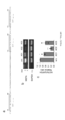
- MSTN pre-mRNA produced by transcription from the MSTN gene is composed of exon 1, exon 2, and exon 3.
- AOs (AO1, AO2, AO3) complementary to the sequence in exon 1 of MSTN pre-mRNA were prepared. Comparison of effectiveness of AO1, AO2, AO3. AO is introduced into human rhabdomyosarcoma cells and the results of RT-PCR of their MSTN mRNA are shown. a) Complementary sequences of AO1, AO2 and AO3 are shown in ⁇ . The number in the base sequence is the base number when the base at the 5'end of exon 1 of MSTN is 1.
- the upper part of the base sequence shows AO shifted by 3 bases on the 5'side and 3'side of the AO2 sequence.
- the lower part of the base sequence shows AO shifted by 1 base to the 3'side with respect to the AO2 sequence.
- the number in the base sequence is the base number when the base at the 5'end of exon 1 of MSTN is 1.
- b, d) The results of RT-PCR of MSTN mRNA and GAPDH mRNA of human rhabdomyosarcoma cells are shown.
- w / o is AO unprocessed.
- c, e) Shows the relative value when MSTN / GAPDH without AO treatment is 1. * P ⁇ 0.05, *** P ⁇ 0.001.
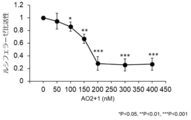
- Smad2 / 3 When mature myostatin binds to the receptor, Smad2 / 3 is phosphorylated and phosphorylated Smad2 / 3 is translocated into the nucleus. Phosphorylated Smad2 / 3 binds to the Smad-binding region present in the promoter of the target gene to induce the expression of the target gene. Decreased myostatin signaling by AO2 + 1. The verification results of myostatin signal transduction during AO treatment in human rhabdomyosarcoma cells are shown.
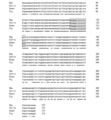
- Nucleic acid sequences of the amino acid coding region of MSTN exon 1 in humans Homo sapiens
- cattle Bos Taurus
- pigs Sus scrofa
- dogs Canis Lupus familiaris
- the target sequence of AO2 + 1 is shown in ⁇ .
- the present invention is an antisense oligonucleotide having a base sequence complementary to the target site of exon 1 of the myostatin gene and having a base length of 15 to 30 and capable of suppressing the production of mRNA of the myostatin gene.
- oligonucleotides, salts thereof or solvates thereof are provided.
- the nucleotide sequence of exon 1 of the human myostatin gene is shown in SEQ ID NO: 1.
- the target site of exon 1 of the myostatin gene exists in the region of base numbers 22 to 420 of the base sequence of SEQ ID NO: 1. It is good to do.
- the base sequence of the antisense oligonucleotide may be any of the base sequences of SEQ ID NOs: 2 to 25 (provided that t in the sequence may be u and u may be t. ) May include a sequence consisting of at least 15 consecutive bases.
- the base length of the antisense oligonucleotide may be 18, and the base sequence of the antisense oligonucleotide may be any of the base sequences of SEQ ID NOs: 2 to 25 (however, t in the sequence may be u. u may be t).
- the nucleotide constituting the antisense oligonucleotide may be a natural DNA, a natural RNA, or a modified product thereof, but it is preferable that at least one of them is a modified nucleotide.
- Modified nucleotides include those with modified sugars (eg, 2'-O-alkylated D-ribofuranose, 2'-O, 4'-C-alkyleneated D-ribofuranose).
- the 2'-hydroxyl group of D-ribofuranose is modified (for example, thioated), the phosphate diester bond is modified (for example, thioated), the base is modified, or a combination thereof.
- Etc. can be exemplified.
- At least one D-ribofuranose constituting the antisense oligonucleotide is 2'-O-alkylated or 2'-O, 4'-C-alkyleneated.
- Is expected to have a higher therapeutic effect than natural nucleotides that is, oligo DNA, oligo RNA
- natural nucleotides that is, oligo DNA, oligo RNA
- at least one constituent of the oligonucleotide that is, oligo DNA and oligo RNA
- Those having a thioated phosphate bond can also be expected to have a higher therapeutic effect than natural nucleotides (that is, oligo DNA and oligo RNA) because of their high resistance to nucleases.
- sugar modifications include 2'-O-alkylation of D-ribofuranose (eg, 2'-O-methylation, 2'-O-aminoethylation, 2'-O. -Propylation, 2'-O-allylation, 2'-O-methoxyethylation, 2'-O-butylation, 2'-O-pentylation, 2'-O-propargylation, etc.), D-ribo 2'-O, 4'-C-alkyleneation of furanose (eg 2'-O, 4'-C-ethylation, 2'-O, 4'-C-methyleneation, 2'-O, 4' -C-propyleneation, 2'-O, 4'-C-tetramethyleneation, 2'-O, 4'-C-pentamethyleneation, etc.), 3'-deoxy-3'-amino-2'-deoxy Examples thereof include -D-ribofuranose (eg, 2'-O-methylation, 2
- examples of modification of phosphate diester bond include phosphorothioate bond, methylphosphonate bond, methylthiophosphonate bond, phosphorodithioate bond, phosphoromidate bond and the like.
- examples of base modifications include 5-methylation, 5-fluorolation, 5-bromolation, 5-iodolation, N4-methylation of cytosine, and 5-demethylation of thymidine (uracil). , 5-Fluoration, 5-Bromolation, 5-Iodoation, N6-methylation of adenine, 8-bromolation, N2-methylation of guanine, 8-bromolation and the like.
- the antisense oligonucleotide of the present invention may be in the form of a salt.
- the salt is preferably a pharmaceutically acceptable salt, and such salts include alkali metal salts such as sodium salt, potassium salt and lithium salt.
- Alkaline earth metal salts such as calcium salt, magnesium salt, metal salts such as aluminum salt, iron salt, zinc salt, copper salt, nickel salt, cobalt salt; inorganic salt such as ammonium salt, t-octylamine salt , Dibenzylamine salt, morpholine salt, glucosamine salt, phenylglycine alkyl ester salt, ethylenediamine salt, N-methylglucamine salt, guanidine salt, diethylamine salt, triethylamine salt, dicyclohexylamine salt, N, N'-dibenzylethylenediamine salt , Chloroprocine salts, prokine salts, diethanolamine salts, N-benzyl-phenethylamine salts, piperazine salts, tetramethylammonium salts, amine salts such as organic salts such as tris (hydroxymethyl) aminomethane salts; hydrofluorates, Halogen atomized hydrides such as hydroch
- Organic salts such as citrate, tartrate, oxalate, maleate; amino acid salts such as glycine salt, lysine salt, arginine salt, ornithine salt, glutamate, asparaginate and the like. These salts can be produced by known methods.
- the antisense oligonucleotide may also exist as a solvate (for example, a hydrate), and may be such a solvate.
- the antisense oligonucleotide may be administered in the form of a prodrug, and examples of the prodrug include amides, esters, carbamates, carbonates, ureides, phosphates and the like. These prodrugs can be produced by known methods.
- the method for synthesizing the antisense oligonucleotide is not particularly limited, and a conventionally known method can be adopted.
- Examples of the synthesis method include a synthesis method by a genetic engineering method, a chemical synthesis method, and the like.
- Examples of the genetic engineering method include an in vitro transcription synthesis method, a method using a vector, and a method using a PCR cassette.
- the vector is not particularly limited, and examples thereof include non-viral vectors such as plasmids and viral vectors.
- the chemical synthesis method is not particularly limited, and examples thereof include a phosphoramidite method and an H-phosphonate method.
- a commercially available automatic nucleic acid synthesizer can be used.
- amidite is generally used as the chemical synthesis method.
- the amidite is not particularly limited, and in the examples described later, the antisense oligonucleotide was synthesized by the phosphoramidite method using ENA-2CE phosphoramidite and 2'OMe-2CE phosphoramidite.
- Phosphoramidite reagents include natural nucleosides and 2'-O-methylnucleosides (ie, 2'-O-methylguanosine, 2'-O-methyladenosine, 2'-O-methylcytosine, 2'-O- For methyluridine), commercially available reagents can be used.
- the 2'-O-alkylguanosine, adenosine, cytosine and uridine having 2 to 6 carbon atoms in the alkyl group are as follows.
- 2'-O-aminoethylguanosine, adenosine, cytosine, and uridine can be synthesized according to the literature (Blommers et al. Biochemistry (1998), 37, 17714-17725.).
- 2'-O-propylguanosine, adenosine, cytosine, and uridine can be synthesized according to the literature (Lesnik, E.A. et al. Biochemistry (1993), 32, 7832-7838.).
- reagents can be used for 2'-O-allyl guanosine, adenosine, cytosine, and uridine.
- 2'-O-methoxyethylguanosine, adenosine, cytosine, and uridine can be synthesized according to the patent (US6261840) or the literature (Martin, P. Helv. Chim. Acta. (1995) 78, 486-504.
- 2'-O-butylguanosine, adenosine, cytosine, and uridine can be synthesized according to the literature (Lesnik, E.A. et al. Biochemistry (1993), 32, 7832-7838.).
- 2'-O-pentylguanosine, adenosine, cytosine, and uridine can be synthesized according to the literature (Lesnik, E.A. et al. Biochemistry (1993), 32, 7832-7838.).
- 2'-O, 4'-C-methyleneguanosine, adenosine, 5-methylcytosine and thymidine 2'-O, 4 having 2 to 5 carbon atoms in the alkylene group according to the method described in WO99 / 14226.
- '-C-alkylene guanosine, adenosine, 5-methylcytosine and thymidine can be prepared according to the method described in WO 00/47599.
- Antisense having a phosphorothioate bond by reacting a reagent such as sulfur, tetraethylthiuram disulfide (TETD, Applied Biosystems), Beaucage reagent (Glen Research), or xanthan hydride after coupling the phosphoramidite reagent.
- a reagent such as sulfur, tetraethylthiuram disulfide (TETD, Applied Biosystems), Beaucage reagent (Glen Research), or xanthan hydride after coupling the phosphoramidite reagent.
- Oligonucleotides can be synthesized (Tetrahedron Letters, 32, 3005 (1991), J. Am. Chem. Soc. 112, 1253 (1990), PCT / WO98 / 54198).
- CPG controlled pore glass
- a commercially available one with 2'-O-methylnucleoside bound can be used.
- 2'-O, 4'-C-methyleneguanosine, adenosine, 5-methylcytosine and thymidine 2'-O having 2 to 5 carbon atoms in the alkylene group according to the method described in WO99 / 14226.
- nucleosides prepared according to the method described in WO00 / 47599 were prepared according to the literature (Oligonucleotide Synthesis, Edited by MJGait, Oxford University Press, 1984). Can be combined with CPG.
- CPG modified CPG
- an oligonucleotide in which a hydroxyalkyl phosphate group or an aminoalkyl phosphate group is bonded to the 3'end can be synthesized.
- the antisense oligonucleotide of the present invention can be used in medicine.
- the antisense oligonucleotide may be in the form of its pharmaceutically acceptable salt, solvate or prodrug.
- the present invention provides a medicament comprising the above antisense oligonucleotide, a pharmaceutically acceptable salt or solvate thereof.
- the drug may be for preventing and / or treating a condition and / or disease involving myostatin, and the condition and / or disease involving myostatin includes muscular atrophy (eg, muscular atrophy is muscular dystrophy, myopathy).
- the antisense oligonucleotide of the present invention may be used alone or as a pharmacologically acceptable carrier or dilution.
- active ingredient a pharmaceutically acceptable salt, solvate or prodrug thereof
- it can be administered orally or parenterally to a mammal (eg, human, rabbit, dog, cat, rat, mouse) as a formulation of suitable dosage form.
- a mammal eg, human, rabbit, dog, cat, rat, mouse
- the dose varies depending on the administration target, target disease, symptom, administration route, etc., but for example, when used for the prevention / treatment of muscular atrophy disease (for example, muscular dystrophy), it is used as a single dose of the active ingredient.
- Oral / intramuscular injection / subcutaneous injection usually about 0.1 to 50 mg / kg body weight, preferably about 0.5 mg / kg body weight, once a week to once a month, preferably about once a year. It may be administered by intravenous injection (preferably continuous or alternate day). In the case of other parenteral administration and oral administration, an equivalent amount can be administered. If the symptom is particularly severe, the dose may be increased according to the symptom. For other diseases, it is advisable to administer in an appropriately increased or decreased amount with reference to the above dose.
- Formulations for oral administration include solid or liquid dosage forms, specifically tablets (including sugar-coated tablets and film-coated tablets), pills, granules, powders, capsules (including soft capsules), and syrups. , Emulsion, suspending agent and the like.
- Such formulations can be prepared by conventional methods and may contain carriers, diluents or excipients commonly used in the formulation field.
- carriers and excipients for tablets include lactose, starch, sucrose, magnesium stearate and the like.
- injections and suppositories examples include injections and suppositories, and injections include intravenous injections, subcutaneous injections, intradermal injections, intramuscular injections, and drip injections. I hope there is.
- injections are prepared by conventional methods, that is, by dissolving, suspending or emulsifying the active ingredient in a sterile aqueous or oily solution usually used for injections.
- Aqueous solutions for injection include saline, isotonic solutions containing glucose and other adjuvants, and suitable solubilizers such as alcohols (eg ethanol), polyalcohols (eg propylene glycol, etc.).
- Polyethylene glycol a nonionic surfactant (for example, polysorbate 80, HCO-50 (polyoxythetylene (50 mol) added of hydrogenated castor oil)) and the like may be used in combination.
- a nonionic surfactant for example, polysorbate 80, HCO-50 (polyoxythetylene (50 mol) added of hydrogenated castor oil)
- the oily liquid examples include sesame oil and soybean oil, and benzyl benzoate, benzyl alcohol and the like may be used in combination as a solubilizing agent.
- the prepared injection solution is usually filled in a suitable ampoule.
- Suppositories used for rectal administration can be prepared by mixing the active ingredient with a conventional suppository base.
- the above-mentioned oral or parenteral pharmaceutical preparation may be prepared in a dosage form of a dosage unit suitable for the dose of the active ingredient.
- dosage forms of such dosage units include tablets, pills, capsules, injections (ampoules), suppositories, etc., and each dosage unit dosage form usually contains 0.1 to 1.000 mg of active ingredient. It is preferably contained.
- the antisense oligonucleotide of the present invention can also be used for foods and feeds.
- the antisense oligonucleotide of the present invention is used as an additive for foods and feeds, or as a supplement for humans or animals.
- the antisense oligonucleotide of the present invention may be in the form of a salt, solvate or prodrug acceptable for food or feed. Therefore, the present invention provides a food product containing the above-mentioned antisense oligonucleotide, a salt or solvate acceptable for the food product.
- the present invention also provides a feed containing the above antisense oligonucleotide, an acceptable salt or solvate thereof.
- food or feed acceptable salts, solvates or prodrugs include pharmaceutically acceptable salts, solvates or prodrugs, which have been described above.
- the antisense oligonucleotide of the present invention can be used to promote muscle cell proliferation and / or hypertrophy.
- Muscle cells are contractile cells that form human or animal muscle tissue, and include skeletal muscle cells, smooth muscle cells, cardiomyocytes, and the like. Inhibition of myostatin by the antisense oligonucleotide of the present invention is effective in myoblasts and can induce myoblast proliferation / differentiation promotion, resulting in myocyte proliferation / hypertrophy.
- Myocytes also include progenitor cells such as myoblasts.
- the antisense oligonucleotides of the present invention may be in the form of salts, solvates or prodrugs.
- salts, solvates or prodrugs include pharmaceutically acceptable salts, solvates or prodrugs, which have been described above.
- the animal may be any animal expressing myostatin, and is edible for use and food such as mammals such as cats, dogs, sheep, pigs, cows, chickens and yellowtails, and fish such as salmon, trout, cod, tuna and yellowtail. Can be illustrated as a domestic animal. Accordingly, the present invention provides agents for promoting muscle cell proliferation and / or hypertrophy, including the antisense oligonucleotides, salts or solvates thereof.
- the present invention also provides a method for promoting myocyte proliferation and / or hypertrophy, which comprises administering to a subject an effective amount of the antisense oligonucleotide, a salt or solvate thereof.
- the subject can be a human or an animal.
- the animals have been described above.
- the dosage form, dose, administration route, administration frequency, etc. of the drug are preferably the same as those of the above-mentioned drug, and can be appropriately changed so as to obtain the desired effect.
- the antisense oligonucleotide of the present invention can be used for promoting muscle formation and suppressing muscle loss in humans and animals.
- the antisense oligonucleotides of the present invention may be in the form of salts, solvates or prodrugs.
- Examples of salts, solvates or prodrugs include pharmaceutically acceptable salts, solvates or prodrugs, which have been described above.
- the animal may be any animal expressing myostatin, and is edible for use and food such as mammals such as cats, dogs, sheep, pigs, cows, chickens and yellowtails, and fish such as salmon, trout, cod, tuna and yellowtail. Can be illustrated as a domestic animal.
- the present invention provides an agent for promoting muscle formation and / or suppressing muscle loss, which comprises the above-mentioned antisense oligonucleotide, a salt or a solvate thereof.
- the present invention also provides a method for promoting muscle formation and / or suppressing muscle loss, which comprises administering an effective amount of the above antisense oligonucleotide, a salt or a solvate thereof to a subject.
- the subject can be a human or an animal.
- the animals have been described above.
- the dosage form, dose, administration route, administration frequency, etc. of the drug are preferably the same as those of the above-mentioned drug, and can be appropriately changed so as to obtain the desired effect.
- the antisense oligonucleotides of the present invention are plant foods, animal foods, fungal foods, fresh foods, processed foods, oriented foods, cooked foods. -Any food such as seasoning ingredients, beverages, health foods, space foods, and pet foods may be used.
- the food of the present invention includes general ingredients such as proteins, lipids, carbohydrates and sodium, minerals such as potassium, calcium, magnesium and phosphorus, trace elements such as iron, zinc, copper, selenium and chromium, vitamins A and ⁇ -.
- Vitamins such as carotene, vitamin B1, vitamin B2, vitamin B6, vitamin B12, vitamin C, niacin, folic acid, vitamin D3, vitamin E, biotin, pantothenic acid, coenzyme Q10, ⁇ -lipoic acid, galactooligosaccharide, dietary fiber, Excipients (water, carboxymethyl cellulose, lactose, etc.), sweeteners, flavoring agents (apple acid, citric acid, amino acids, etc.), fragrances, etc.
- the food product of the present invention may be in the form of powder, granules, tablets, liquid preparation or the like. In order to make it easily ingestible by the sick and the elderly, it is preferable to use a gel-like product such as jelly.
- the feed to which the antisense oligonucleotide of the present invention, an acceptable salt, a solvent, or a prodrug is added to the feed thereof includes a single feed such as grains, vegetable oil cakes, nukas, manufactured meals, and animal feeds. It may be any feed such as a mixed feed containing a feed raw material or a feed additive.
- the feed of the present invention includes antioxidants (ethoxyquin, dibutylhydroxytoluene, butylhydroxyanisole, etc.), antifungal agents (propionic acid, calcium propionate, sodium propionate, etc.), binders (sodium alginate, sodium caseinate, etc.). Sodium carboxymethyl cellulose, propylene glycol, sodium polyacrylate, etc.), emulsifiers (glycerin fatty acid ester, sucrose amino acid ester, sorbitan fatty acid ester, polyoxyethylene sorbitan fatty acid ester, polyoxyethylene glycerin fatty acid ester, etc.), modifier (girate, etc.) ), Amino acids, etc.
- the antisense oligonucleotide of the present invention can suppress the production of mRNA of the myostatin gene. Therefore, the present invention provides an agent that suppresses the production of mRNA of the myostatin gene, including the above-mentioned antisense oligonucleotide.
- the agent of the present invention can be used as a medicine for humans and animals, as an additive or supplement to foods and feeds, as an animal growth promoter, or as an experimental reagent.
- the antisense oligonucleotides of the present invention may be in the form of salts, solvates or prodrugs. Examples of salts, solvates or prodrugs include pharmaceutically acceptable salts, solvates or prodrugs, which have been described above.
- the antisense oligonucleotide of the present invention can inhibit the function of myostatin. Therefore, a function inhibitor of myostatin containing the above-mentioned antisense oligonucleotide of the present invention is provided.
- the myostatin function inhibitor of the present invention can be used as a medicine for humans and animals, as an additive or supplement to foods and feeds, as an animal growth promoter, or as an experimental reagent.
- the antisense oligonucleotide may be in the form of a salt, solvate or prodrug. Examples of salts, solvates or prodrugs include pharmaceutically acceptable salts, solvates or prodrugs, which have been described above.
- the expression of myostatin can be suppressed by treating cells, tissues or organs expressing myostatin with the antisense oligonucleotide of the present invention, a salt thereof or a solvate thereof.
- the antisense oligonucleotide of the present invention, a salt thereof and a solvate thereof may be used in an amount effective for suppressing the expression of myostatin.
- Examples of cells expressing myostatin include muscle cells, myoma cells, and cancer cells such as digestive organs, lungs, and esophagus. In addition to naturally occurring cells, recombinant cells into which the myostatin gene has been introduced can also be exemplified.
- tissues and organs expressing myostatin include skeletal muscle, myocardium, blood vessels, kidneys, gastrointestinal tract, uterus, liver, pancreas, and lungs.
- the expression of myostatin can be analyzed by analyzing the myostatin mRNA in the sample by RT-PCR, detecting the myostatin protein in the sample by Western blotting, or detecting it by mass spectrometry.
- the protected oligonucleotide analog having the target sequence is heat-treated with concentrated aqueous ammonia (55 ° C., 8 hours) to cut out the oligomer from the support, and protect the protecting group cyanoethyl group on the phosphorus atom and the nucleobase. I removed the base.
- This ammonia solution was de-DMTed in a cartridge using Glen-Pak DNA Purification Cartridge (product No. 60-5100 manufactured by Glen Research) according to the Glen Research recommended protocol, the recovered solution was distilled off under reduced pressure, and the residue was reversed.
- Phase HPLC (LC-2a manufactured by Shimadzu Corporation, column (Triart C18 (10 x 150 mm) manufactured by YMC), solution A: 0.1 M aqueous solution of triethylamine acetate (TEAA), pH 7.0, solution B: acetonitrile, B%: 10% ⁇ Purification was performed at 25% (30 min, linear gradient); 50 ° C; 4.7 mL / min; 280 nm). After distilling off the solvent, it was dissolved in a 10 mM NaOH solution and replaced with pure water by ultrafiltration using a Microsep centrifugal filtration device (product No. MCP003C manufactured by Nippon Paul Co., Ltd.), and the target compound was obtained after freeze-drying.
- a Microsep centrifugal filtration device product No. MCP003C manufactured by Nippon Paul Co., Ltd.
- Example 2 Synthesis of augCaTTaCaCagCCCCu (MSTN_Ex1_AO2) (Example 2)
- Example 2 The compound of Example 2 having the same target sequence as the compound of Example 1 was synthesized. This compound was identified by the negative ion MALDI-TOFMS (calculated value: 6395.311, measured value: 6392.585).
- nucleotide sequence of this compound is a sequence complementary to nucleotide numbers 240-257 of Homo sapiens myostatin (MSTN), RefSeq Gene (LRG_200) on chromosome 2 (Gene Bank accession No. NG_009800.1).
- Example 3 Synthesis of gauuuaguguuuuguCuC (MSTN_Ex1_AO3) (Example 3)
- the compound of Example 3 having the same target sequence as the compound of Example 1 was synthesized. This compound was identified by the negative ion MALDI-TOFMS (calculated value: 6226.921, measured value: 6220.691).
- nucleotide sequence of this compound is a sequence complementary to nucleotide number 265-282 of Homo sapiens myostatin (MSTN), RefSeq Gene (LRG_200) on chromosome 2 (Gene Bank accession No. NG_009800.1).
- Example 4 Synthesis of aagTaCaTgCaTTaCaCa (MSTN_Ex1_AO2-6) (Example 4) The compound of Example 4 having the same target sequence as the compound of Example 1 was synthesized. This compound was identified by the negative ion MALDI-TOFMS (calculated value: 6441.351, measured value: 6435.8281).
- nucleotide sequence of this compound is a sequence complementary to nucleotide number 246-263 of Homo sapiens myostatin (MSTN), RefSeq Gene (LRG_200) on chromosome 2 (Gene Bank accession No. NG_009800.1).
- Example 5 Synthesis of TaCaTgCaTTaCaCagCC (MSTN_Ex1_AO2-3) (Example 5) The compound of Example 5 having the same target sequence as the compound of Example 1 was synthesized. This compound was identified by the negative ion MALDI-TOFMS (calculated value: 6445.375, measured value: 6439.7319).
- nucleotide sequence of this compound is a sequence complementary to nucleotide number 243-260 of Homo sapiens myostatin (MSTN), RefSeq Gene (LRG_200) on chromosome 2 (Gene Bank accession No. NG_009800.1).
- Example 6 Synthesis of CaTTaCaCagCCCCTCTT (MSTN_Ex1_AO2 + 3) (Example 6) The compound of Example 6 having the same target sequence as the compound of Example 1 was synthesized. This compound was identified by the negative ion MALDI-TOFMS (calculated value: 6436.396, measured value: 6430.9077).
- nucleotide sequence of this compound is a sequence complementary to nucleotide numbers 237-254 of Homo sapiens myostatin (MSTN), RefSeq Gene (LRG_200) on chromosome 2 (Gene Bank accession No. NG_009800.1).
- Example 7 Synthesis of TaCaCagCCCCTCTTTTT (MSTN_Ex1_AO2 + 6) (Example 7) The compound of Example 7 having the same target sequence as the compound of Example 1 was synthesized. This compound was identified by the negative ion MALDI-TOFMS (calculated value: 6440.376, measured value: 6435.562).
- nucleotide sequence of this compound is a sequence complementary to nucleotide number 234-251 of Homo sapiens myostatin (MSTN), RefSeq Gene (LRG_200) on chromosome 2 (Gene Bank accession No. NG_009800.1).
- Example 8 Synthesis of aCagCCCCTCTTTTTCCa (MSTN_Ex1_AO2 + 9) (Example 8) The compound of Example 8 having the same target sequence as the compound of Example 1 was synthesized. This compound was identified by the negative ion MALDI-TOFMS (calculated value: 6439.392, measured value: 6434.6094).
- nucleotide sequence of this compound is a sequence complementary to nucleotide numbers 231-248 of Homo sapiens myostatin (MSTN), RefSeq Gene (LRG_200) on chromosome 2 (Gene Bank accession No. NG_009800.1).
- Example 9 Synthesis of TgCaTTaCaCagCCCCTC (MSTN_Ex1_AO2 + 1) (Example 9)
- the compound of Example 9 having the same target sequence as the compound of Example 1 was synthesized. This compound was identified by the negative ion MALDI-TOFMS (calculated value: 6449.399, measured value: 6443.8228).
- nucleotide sequence of this compound is a sequence complementary to nucleotide numbers 239-256 of Homo sapiens myostatin (MSTN), RefSeq Gene (LRG_200) on chromosome 2 (Gene Bank accession No. NG_009800.1).
- Example 10 Synthesis of gCaTTaCaCagCCCCTCT (MSTN_Ex1_AO2 + 2) (Example 10) The compound of Example 10 having the same target sequence as the compound of Example 1 was synthesized. This compound was identified by the negative ion MALDI-TOFMS (calculated value: 6449.399, measured value: 6443.707).
- nucleotide sequence of this compound is a sequence complementary to nucleotide numbers 238-255 of Homo sapiens myostatin (MSTN), RefSeq Gene (LRG_200) on chromosome 2 (Gene Bank accession No. NG_009800.1).
- Example 11 Synthesis of aTTaCaCagCCCCTCTTT (MSTN_Ex1_AO2 + 4) (Example 11)
- the compound of Example 11 having the same target sequence as the compound of Example 1 was synthesized. This compound was identified by the negative ion MALDI-TOFMS (calculated value: 6437.38, measured value: 6431.9209).
- nucleotide sequence of this compound is a sequence complementary to nucleotide number 236-253 of Homo sapiens myostatin (MSTN), RefSeq Gene (LRG_200) on chromosome 2 (Gene Bank accession No. NG_009800.1).
- Example 12 Synthesis of TTaCaCagCCCCTCTTTT (MSTN_Ex1_AO2 + 5) (Example 12)
- the compound of Example 12 having the same target sequence as the compound of Example 1 was synthesized. This compound was identified by the negative ion MALDI-TOFMS (calculated value: 6440.376, measured value: 6434.8232).
- nucleotide sequence of this compound is a sequence complementary to nucleotide number 235-252 of Homo sapiens myostatin (MSTN), RefSeq Gene (LRG_200) on chromosome 2 (Gene Bank accession No. NG_009800.1).
- Example 13 Synthesis of TgTaCagTCTgagagaCa (MSTN_Ex1_AO4) (Example 13) The compound of Example 13 having the same target sequence as the compound of Example 1 was synthesized. This compound was identified by the negative ion MALDI-TOFMS (calculated value: 6487.336, measured value: 6481.8237).
- nucleotide sequence of this compound is a sequence complementary to nucleotide number 22-39 of Homo sapiens myostatin (MSTN), RefSeq Gene (LRG_200) on chromosome 2 (Gene Bank accession No. NG_009800.1).
- Example 14 Synthesis of aaTgCaTgTaCagTCTga (MSTN_Ex1_AO4-6) (Example 14) The compound of Example 14 having the same target sequence as the compound of Example 1 was synthesized. This compound was identified by the negative ion MALDI-TOFMS (calculated value: 6474.333, measured value: 6468.584).
- nucleotide sequence of this compound is a sequence complementary to nucleotide numbers 28-45 of Homo sapiens myostatin (MSTN), RefSeq Gene (LRG_200) on chromosome 2 (Gene Bank accession No. NG_009800.1).
- Example 15 Synthesis of TTgCTTTTgagTaaTgCC (MSTN_Ex1_AO5) (Example 15)
- the compound of Example 15 having the same target sequence as the compound of Example 1 was synthesized. This compound was identified by the negative ion MALDI-TOFMS (calculated value: 6843.321, measured value: 6477.7007).
- nucleotide sequence of this compound is a sequence complementary to nucleotide numbers 58-75 of Homo sapiens myostatin (MSTN), RefSeq Gene (LRG_200) on chromosome 2 (Gene Bank accession No. NG_009800.1).
- Example 16 Synthesis of aaTCaaTaTaaTCTTTTT (MSTN_Ex1_AO6) (Example 16)
- the compound of Example 16 having the same target sequence as the compound of Example 1 was synthesized. This compound was identified by the negative ion MALDI-TOFMS (calculated value: 6420.309, measured value: 6414.5815).
- nucleotide sequence of this compound is a sequence complementary to nucleotide numbers 108-125 of Homo sapiens myostatin (MSTN), RefSeq Gene (LRG_200) on chromosome 2 (Gene Bank accession No. NG_009800.1).
- Example 17 Synthesis of TTgCTCaCTgTTCTCaTT (MSTN_Ex1_AO7) (Example 17)
- the compound of Example 17 having the same target sequence as the compound of Example 1 was synthesized. This compound was identified by the negative ion MALDI-TOFMS (calculated value: 6458.343, measured value: 6452.9326).
- nucleotide sequence of this compound is a sequence complementary to nucleotide number 203-220 of Homo sapiens myostatin (MSTN), RefSeq Gene (LRG_200) on chromosome 2 (Gene Bank accession No. NG_009800.1).
- Example 18 Synthesis of CTTgaagaTTTagTgTTT (MSTN_Ex1_AO3-6) (Example 18) The compound of Example 18 having the same target sequence as the compound of Example 1 was synthesized. This compound was identified by the negative ion MALDI-TOFMS (calculated value: 6482.293, measured value: 6476.7026).
- nucleotide sequence of this compound is a sequence complementary to nucleotide number 271-288 of Homo sapiens myostatin (MSTN), RefSeq Gene (LRG_200) on chromosome 2 (Gene Bank accession No. NG_009800.1).
- Example 19 Synthesis of TCTaTTCTTgaagaTTTa (MSTN_Ex1_AO3-12) (Example 19) The compound of Example 19 having the same target sequence as the compound of Example 1 was synthesized. This compound was identified by the negative ion MALDI-TOFMS (calculated value: 6452.307, measured value: 6446.8232).
- nucleotide sequence of this compound is a sequence complementary to nucleotide number 277-294 of Homo sapiens myostatin (MSTN), RefSeq Gene (LRG_200) on chromosome 2 (Gene Bank accession No. NG_009800.1).
- Example 20 Synthesis of TaCTgaggaTTTgTaTCT (MSTN_Ex1_AO8) (Example 20)
- the compound of Example 20 having the same target sequence as the compound of Example 1 was synthesized. This compound was identified by the negative ion MALDI-TOFMS (calculated value: 6481.309, measured value: 6475.8228).
- nucleotide sequence of this compound is a sequence complementary to nucleotide number 303-320 of Homo sapiens myostatin (MSTN), RefSeq Gene (LRG_200) on chromosome 2 (Gene Bank accession No. NG_009800.1).
- Example 21 Synthesis of CaTCTTTgCTgaTgTTag (MSTN_Ex1_AO9) (Example 21)
- the compound of Example 21 having the same target sequence as the compound of Example 1 was synthesized. This compound was identified by the negative ion MALDI-TOFMS (calculated value: 6843.321, measured value: 6477.6953).
- nucleotide sequence of this compound is a sequence complementary to nucleotide numbers 342-359 of Homo sapiens myostatin (MSTN), RefSeq Gene (LRG_200) on chromosome 2 (Gene Bank accession No. NG_009800.1).
- Example 22 Synthesis of gTTgTCTTaTaaCaTCTT (MSTN_Ex1_AO9-12) (Example 22)
- the compound of Example 22 having the same target sequence as the compound of Example 1 was synthesized. This compound was identified by the negative ion MALDI-TOFMS (calculated value: 6454.319, measured value: 6448.7021).
- nucleotide sequence of this compound is a sequence complementary to nucleotide numbers 354-371 of Homo sapiens myostatin (MSTN), RefSeq Gene (LRG_200) on chromosome 2 (Gene Bank accession No. NG_009800.1).
- Example 23 Synthesis of TgaTCaaTCagTTCCCgg (MSTN_Ex1_AO10) (Example 23)
- the compound of Example 23 having the same target sequence as the compound of Example 1 was synthesized. This compound was identified by the negative ion MALDI-TOFMS (calculated value: 6748.357, measured value: 6472.9458).
- nucleotide sequence of this compound is a sequence complementary to nucleotide number 394-411 of Homo sapiens myostatin (MSTN), RefSeq Gene (LRG_200) on chromosome 2 (Gene Bank accession No. NG_009800.1).
- Example 24 Synthesis of aCaTCaTaCTgaTCaaTC (MSTN_Ex1_AO10-9) (Example 24) The compound of Example 24 having the same target sequence as the compound of Example 1 was synthesized. This compound was identified by the negative ion MALDI-TOFMS (calculated value: 6430.36, measured value: 6424.8286).
- nucleotide sequence of this compound is a sequence complementary to nucleotide number 403-420 of Homo sapiens myostatin (MSTN), RefSeq Gene (LRG_200) on chromosome 2 (Gene Bank accession No. NG_009800.1).
- AO transfection 1 Opti-MEM medium (31985070, Thermo Fisher Scientific) 100 ⁇ l was mixed with 2 ⁇ l each of AO (50 pmol / ⁇ l in MilliQ sterile water). For AO untreated, 2 ⁇ l of MilliQ sterile water was mixed. 2) In a separate tube, 100 ⁇ l of Opti-MEM medium (31985070, Thermo Fisher Scientific) was mixed with 4 ⁇ l of Lipofectamine TM 2000 Transfection Reagent (11668019, Thermo Fisher Scientific). 3) The 1) and 2) solutions were mixed and left at room temperature for 20 minutes.
- Human myoblasts were cultured in DMEM medium (043-30085, Wako) containing 20% FBS (10270-106, gibco) and 2% Ultroser G, with AO at a final concentration of 0, 100, 200 400 nM. Transfected.
- RNA preparation 1 The cells transfected with each AO were cultured for 24 hours, washed once with PBS, and 300 ⁇ l of RNA extraction reagent of High Pure RNA Isolation Kit (# 11828665001, Roche Life Science) was added to the cells. 2) After leaving at room temperature for 5 minutes, the RNA extraction reagent in the well was collected in a tube. 3) RNA was extracted according to the protocol of High Pure RNA Isolation Kit (# 11828665001, Roche Life Science), and finally 50 ⁇ l of RNA lysate was obtained.
- Reverse transcription reaction 1 Random primers (# 48190011, Thermo Fisher Scientific) and dNTPs (Takara) were added to 500 ng of RNA and incubated at 65 ° C for 5 minutes and at 25 ° C for 10 minutes. 2) 1) M-MLV Reverse Transcriptase (# 28025013, Thermo Fisher Scientific), RNaseOUT TM Recombinant Ribonuclease Inhibitor (# 10777-019, Thermo Fisher Scientific), DTT (attached to MLVRT), buffer solution (attached to MLVRT) was added and incubated at 37 ° C for 55 minutes and at 70 ° C for 10 minutes to obtain cDNA.
- GAPDH H_F 5'-cccttcattgacctcaac-3': SEQ ID NO: 28
- GAPDH H_R 5'-ttcacacccatgacgaac-3': SEQ ID NO: 29
- GDF11 the above 1) to 5) were performed using primers GDF11Ex1F4 (5'-ctgcagcagatcctggacct-3': SEQ ID NO: 34) and GDF11Ex1R4 (5'-catgaacatgtactcgcact-3': SEQ ID NO: 35). ..
- Myostatin signaling is transmitted to human rhabdomyosarcoma cells (CRL-2061, ATCC) and human myoblasts (Wada et al. Development 2002, 129; 2987-2995) with a reporter gene (SBE4-Luc). It was evaluated by introducing plasmid, # 16495, Addgene) and measuring the luminescence of expression-induced luciferase.
- AO transfection 1 2 ⁇ l of AO2 + 1 (50 pmol / ⁇ l in MilliQ sterile water) was mixed with 100 ⁇ l of Opti-MEM medium (31985070, Thermo Fisher Scientific). 2) In a separate tube, 100 ⁇ l of Opti-MEM medium (31985070, Thermo Fisher Scientific), 3 ⁇ g of SBE4-Luc plasmid, 1 ⁇ g of pSV- ⁇ -Galactosidase Control Vector (E108A, Promega), and Lipofectamine TM 3000 Transfection Reagent (11668019).
- Thermo Fisher Scientific 4 ⁇ l and P3000 reagent (11668019, Thermo Fisher Scientific) 8 ⁇ l were mixed. 3) The 1) and 2) solutions were mixed and left at room temperature for 15 minutes. 4) Human rhabdomyosarcoma cells cultured in a 12-well plate were washed once with PBS, and then 800 ⁇ l of Opti-MEM medium (31985070, Thermo Fisher Scientific) was added to the wells. 5) 3) Add the solution to 4) (AO final concentration 100 nM), incubate for 3 hours under 5% CO 2 at 37 ° C, and then use RPMI medium containing 10% FBS (10270-106, gibco).
- Human myoblasts were cultured in DMEM medium (043-30085, Wako) containing 20% FBS (10270-106, gibco) and 2% Ultroser G, and the final concentration of AO was 0, 50, 100, 150, Transfected to 200, 300 400 nM.
- Cell extract preparation 1 After washing the cells 24 hours after transfection once with PBS, 250 ⁇ l of Reporter Lysis Buffer of Luciferase Assay System with Reporter Lysis Buffer (E4030, Promega) was added to the wells. 2) The cell disruption solution of 1) was centrifuged at 15000 rpm for 10 minutes at 4 ° C to obtain a supernatant. 3) Protein quantification in cell extract was performed according to the protocol using the Qubit® Protein Assay Kit (# Q33211, Thermo Fisher Scientific).
- ⁇ -galactosidase activity measurement 1) Mix 100 ⁇ l of cell extract and 100 ⁇ l of ⁇ -Galactosidase Enzyme Assay System with Reporter Lysis Buffer, # E2000, Promega on a 96-well plate and incubate at 37 ° C for 1 hour. 2) After stopping the reaction by adding 100 ⁇ l of 1 M Sodium Carbonate to the well, the absorption at 420 nm was measured with a multi-label plate reader ARVO TM X3 (PerkinElmer).
- AO transfection 1 0.4 ⁇ l of AO2 + 1 (50 pmol / ⁇ l in MilliQ sterile water) was mixed with 50 ⁇ l of Opti-MEM medium (31985070, Thermo Fisher Scientific). 2) In a separate tube, 50 ⁇ l of Opti-MEM medium (31985070, Thermo Fisher Scientific) was mixed with 0.4 ⁇ l of Lipofectamine TM 3000 Transfection Reagent (11668019, Thermo Fisher Scientific). 3) The 1) and 2) solutions were mixed and left at room temperature for 15 minutes.
- AO2 + 3 showed the most effect of reducing MSTN mRNA, so we prepared AOs shifted by 1 base from AO2 + 3 and targeted the 234th to 257th bases of MSTN exon 1 (SEQ ID NO: 1).
- SEQ ID NO: 1 The seven AOs.
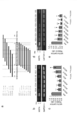
- Fig. 3a As a result of verification with human rhabdomyosarcoma cells, a significant decrease in MSTN mRNA was observed 24 hours after treatment with AO2, AO2 + 1, AO2 + 2, AO2 + 3, AO2 + 4, AO2 + 5, AO2 + 6.
- Fig. 3d, e The above screening gave AO2 + 1 as the most effective AO for suppressing MSTN expression.
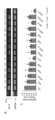
- AO was prepared in addition to the AO2 + 1 peripheral sequence, and its effectiveness was compared with AO2 + 1. Twelve AOs targeting the range of 22nd to 420th bases of MSTN exon1 (SEQ ID NO: 1) were prepared, and 13 cells including AO2 + 1 were treated with human rhabdomyosarcoma cells for 24 hours. , There was a tendency to suppress the expression of MSTN mRNA in all AOs (Fig. 4). In particular, AO6, AO7, AO3-6, AO3-12, AO8, AO9, AO9-12, AO10, AO10-9 significantly reduced MSTN mRNA.
- the transcription factor Smad2 / 3 When mature myostatin acts on a receptor on the cell membrane, the transcription factor Smad2 / 3 is phosphorylated, translocates to the nucleus, and induces the expression of the target gene (Fig. 7).
- the activation of this myostatin signal was evaluated by an in vitro myostatin transcription activity measurement system (Fig. 8).
- a plasmid in which the luciferase gene was arranged downstream of the Smad-binding promoter was used, and the myostatin signal was verified by measuring the activity of luciferase expressed from this plasmid.
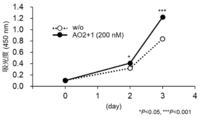
- AO2 + 1 suppresses myostatin signal because luciferase activity was suppressed by treatment with AO2 + 1 (AO2 + 1). 8 and 9). Furthermore, AO2 + 1 showed a growth promoting effect on human myoblasts (Fig. 10).
- AO2 + 1 in this study does not affect the expression of GDF11 mRNA.
- loss-of-function AOs have been developed for the purpose of skipping exons 2 of MSTN pre-mRNA, but clinically useful AOs have not been obtained.
- the AO of the present invention is an expression-suppressing type targeting exon 1 of MSTN pre-mRNA, and has a different action and effect from the conventional loss-of-function type AO, and is therefore expected to be effective as a therapeutic agent. ..
- the AO2 + 1 of the present invention was particularly effective and not only suppressed the expression of MSTN mRNA but also suppressed the myostatin signal and promoted the proliferation of myoblasts.
- diseases for which inhibition of myostatin is considered to be effective include muscular dystrophy (eg, muscular dystrophy, spinal muscular atrophy, sarcopenia, disused muscular atrophy), cardiovascular disease (eg, for example) It can be used for the prevention and / or treatment of heart disease, arteriosclerosis, etc.), renal diseases (eg, chronic renal failure, etc.), bone diseases (eg, inflammatory arthritis, etc.), cancer or diabetes.
- myostatin inhibition leads to an increase in skeletal muscle mass, an increase in exercise, and a contribution to improvement of systemic metabolism.
- myocardium can be expected to act on the myocardium to restore its function.
- myostatin inhibition acts on osteoclasts to suppress bone destruction, activates the homeostatic ability of vascular endothelial cells, induces apoptosis, and enhances sensitivity to insulin.
- the target sequence of AO2 + 1 of the present invention is also conserved in cattle and pigs, and can be used for promoting the growth of these livestock (Fig. 11). Since the suppression of MSTN expression by AO administration to livestock does not correspond to the production of genetically modified organisms, it is easy to use. Similarly, it is considered to be effective for dogs, and it is also considered that it can be used for muscle weakness in dogs, which are pet animals (Fig. 11). All publications, patents and patent applications cited herein are incorporated herein by reference in their entirety.
- the present invention can be used as a nucleic acid drug that suppresses the production of mRNA of the myostatin gene.
- the nucleotide constituting the antisense oligonucleotide may be a natural DNA, a natural RNA, a DNA / RNA chimera, or a modified product thereof, and at least one of them may be a modified nucleotide.
- ⁇ SEQ ID NOS: 30-33> The sequences used for alignment comparison of human, bovine, porcine, and dog myostatin exon 1 nucleic acid sequences are shown. Alignment comparison was performed using EMBL-EBI's Multiple Sequence Alignment. Only the amino acid coding region of exon 1 was compared. The name in parentheses is the name that was in BLAST. The sequence in ⁇ is the target sequence of AO2 + 1.
- Ex1 (ORF) ⁇ SEQ ID NOS: 34 and 35> The nucleotide sequences of the primers GDF11Ex1F4 and GDF11Ex1R4 are shown.
Landscapes
- Health & Medical Sciences (AREA)
- Life Sciences & Earth Sciences (AREA)
- Chemical & Material Sciences (AREA)
- Engineering & Computer Science (AREA)
- General Health & Medical Sciences (AREA)
- Public Health (AREA)
- Pharmacology & Pharmacy (AREA)
- Animal Behavior & Ethology (AREA)
- Medicinal Chemistry (AREA)
- Bioinformatics & Cheminformatics (AREA)
- Veterinary Medicine (AREA)
- Organic Chemistry (AREA)
- General Chemical & Material Sciences (AREA)
- Nuclear Medicine, Radiotherapy & Molecular Imaging (AREA)
- Chemical Kinetics & Catalysis (AREA)
- Molecular Biology (AREA)
- Polymers & Plastics (AREA)
- Biochemistry (AREA)
- Physical Education & Sports Medicine (AREA)
- Genetics & Genomics (AREA)
- Zoology (AREA)
- Orthopedic Medicine & Surgery (AREA)
- Food Science & Technology (AREA)
- Biomedical Technology (AREA)
- Epidemiology (AREA)
- Rheumatology (AREA)
- Cardiology (AREA)
- Diabetes (AREA)
- Biotechnology (AREA)
- Animal Husbandry (AREA)
- General Engineering & Computer Science (AREA)
- Wood Science & Technology (AREA)
- Heart & Thoracic Surgery (AREA)
- Neurology (AREA)
- Pain & Pain Management (AREA)
- Birds (AREA)
- Hematology (AREA)
- Urology & Nephrology (AREA)
- Physics & Mathematics (AREA)
- Immunology (AREA)
Priority Applications (5)
| Application Number | Priority Date | Filing Date | Title |
|---|---|---|---|
| CN202080045447.4A CN114080238B (zh) | 2019-06-26 | 2020-06-18 | 抑制肌肉生长抑制素基因的mRNA的产生的核酸药物 |
| JP2021526868A JP7715345B2 (ja) | 2019-06-26 | 2020-06-18 | ミオスタチン遺伝子のmRNAの産生を抑制する核酸医薬 |
| EP20833586.9A EP3995153A4 (en) | 2019-06-26 | 2020-06-18 | Nucleic acid drug suppressing production of myostatin gene mrna |
| US17/618,177 US20220220478A1 (en) | 2019-06-26 | 2020-06-18 | Nucleic acid drug suppressing production of myostatin gene mrna |
| CA3142918A CA3142918A1 (en) | 2019-06-26 | 2020-06-18 | Nucleic acid drug suppressing production of myostatin gene mrna |
Applications Claiming Priority (2)
| Application Number | Priority Date | Filing Date | Title |
|---|---|---|---|
| JP2019118446 | 2019-06-26 | ||
| JP2019-118446 | 2019-06-26 |
Publications (1)
| Publication Number | Publication Date |
|---|---|
| WO2020262184A1 true WO2020262184A1 (ja) | 2020-12-30 |
Family
ID=74059728
Family Applications (1)
| Application Number | Title | Priority Date | Filing Date |
|---|---|---|---|
| PCT/JP2020/023917 Ceased WO2020262184A1 (ja) | 2019-06-26 | 2020-06-18 | ミオスタチン遺伝子のmRNAの産生を抑制する核酸医薬 |
Country Status (6)
| Country | Link |
|---|---|
| US (1) | US20220220478A1 (https=) |
| EP (1) | EP3995153A4 (https=) |
| JP (1) | JP7715345B2 (https=) |
| CN (1) | CN114080238B (https=) |
| CA (1) | CA3142918A1 (https=) |
| WO (1) | WO2020262184A1 (https=) |
Citations (10)
| Publication number | Priority date | Publication date | Assignee | Title |
|---|---|---|---|---|
| JPH0787982A (ja) | 1993-01-29 | 1995-04-04 | Sankyo Co Ltd | 修飾オリゴデオキシリボヌクレオチド |
| WO1998054198A1 (en) | 1997-05-30 | 1998-12-03 | Hybridon, Inc. | Novel sulfur transfer reagents for oligonucleotide synthesis |
| WO1999014226A2 (en) | 1997-09-12 | 1999-03-25 | Exiqon A/S | Bi- and tri-cyclic nucleoside, nucleotide and oligonucleotide analogues |
| JP2000297097A (ja) | 1999-02-12 | 2000-10-24 | Sankyo Co Ltd | 新規ヌクレオシド及びオリゴヌクレオチド類縁体 |
| US6261840B1 (en) | 2000-01-18 | 2001-07-17 | Isis Pharmaceuticals, Inc. | Antisense modulation of PTP1B expression |
| JP2003517580A (ja) * | 1999-01-21 | 2003-05-27 | メタモーフイクス・インコーポレーテツド | 増殖分化因子インヒビター及びそれらの用途 |
| US20050124566A1 (en) * | 2001-05-18 | 2005-06-09 | Sirna Therapeutics, Inc. | RNA interference mediated inhibition of myostatin gene expression using short interfering nucleic acid (siNA) |
| CN106086031A (zh) * | 2016-06-17 | 2016-11-09 | 湖北省农业科学院畜牧兽医研究所 | 猪肌抑素基因编辑位点及其应用 |
| JP2017500373A (ja) * | 2013-11-11 | 2017-01-05 | サーナ・セラピューティクス・インコーポレイテッドSirna Therapeutics,Inc. | 親油性部分にコンジュゲートされたミオスタチン低分子干渉核酸(siNA)の全身性送達 |
| JP2019118446A (ja) | 2017-12-28 | 2019-07-22 | 株式会社高尾 | 弾球遊技機 |
Family Cites Families (4)
| Publication number | Priority date | Publication date | Assignee | Title |
|---|---|---|---|---|
| CN100393320C (zh) * | 2005-06-24 | 2008-06-11 | 奥林格斯技术有限公司 | 治疗肌肉萎缩的寡核苷酸药物 |
| US8097596B2 (en) * | 2006-06-30 | 2012-01-17 | Lakewood-Amedex, Inc. | Compositions and methods for the treatment of muscle wasting |
| WO2008005019A1 (en) * | 2006-07-07 | 2008-01-10 | Dale Roderic M K | Compositions and methods for the treatment of muscle wasting |
| JP6980218B2 (ja) * | 2016-04-01 | 2021-12-15 | 国立大学法人徳島大学 | Cas9タンパク質を哺乳動物の受精卵に導入する方法 |
-
2020
- 2020-06-18 JP JP2021526868A patent/JP7715345B2/ja active Active
- 2020-06-18 CA CA3142918A patent/CA3142918A1/en active Pending
- 2020-06-18 WO PCT/JP2020/023917 patent/WO2020262184A1/ja not_active Ceased
- 2020-06-18 EP EP20833586.9A patent/EP3995153A4/en active Pending
- 2020-06-18 CN CN202080045447.4A patent/CN114080238B/zh active Active
- 2020-06-18 US US17/618,177 patent/US20220220478A1/en active Pending
Patent Citations (10)
| Publication number | Priority date | Publication date | Assignee | Title |
|---|---|---|---|---|
| JPH0787982A (ja) | 1993-01-29 | 1995-04-04 | Sankyo Co Ltd | 修飾オリゴデオキシリボヌクレオチド |
| WO1998054198A1 (en) | 1997-05-30 | 1998-12-03 | Hybridon, Inc. | Novel sulfur transfer reagents for oligonucleotide synthesis |
| WO1999014226A2 (en) | 1997-09-12 | 1999-03-25 | Exiqon A/S | Bi- and tri-cyclic nucleoside, nucleotide and oligonucleotide analogues |
| JP2003517580A (ja) * | 1999-01-21 | 2003-05-27 | メタモーフイクス・インコーポレーテツド | 増殖分化因子インヒビター及びそれらの用途 |
| JP2000297097A (ja) | 1999-02-12 | 2000-10-24 | Sankyo Co Ltd | 新規ヌクレオシド及びオリゴヌクレオチド類縁体 |
| US6261840B1 (en) | 2000-01-18 | 2001-07-17 | Isis Pharmaceuticals, Inc. | Antisense modulation of PTP1B expression |
| US20050124566A1 (en) * | 2001-05-18 | 2005-06-09 | Sirna Therapeutics, Inc. | RNA interference mediated inhibition of myostatin gene expression using short interfering nucleic acid (siNA) |
| JP2017500373A (ja) * | 2013-11-11 | 2017-01-05 | サーナ・セラピューティクス・インコーポレイテッドSirna Therapeutics,Inc. | 親油性部分にコンジュゲートされたミオスタチン低分子干渉核酸(siNA)の全身性送達 |
| CN106086031A (zh) * | 2016-06-17 | 2016-11-09 | 湖北省农业科学院畜牧兽医研究所 | 猪肌抑素基因编辑位点及其应用 |
| JP2019118446A (ja) | 2017-12-28 | 2019-07-22 | 株式会社高尾 | 弾球遊技機 |
Non-Patent Citations (11)
| Title |
|---|
| "Gene Bank", Database accession no. NG_009800.1 |
| "Oligonucleotide Synthesis", 1984, OXFORD UNIVERSITY PRESS |
| BLOMMERS ET AL., BIOCHEMISTRY, vol. 37, 1998, pages 17714 - 17725 |
| J. AM. CHEM. SOC., vol. 112, 1990, pages 1253 |
| KANG ET AL., MOL THER, vol. 19, 2011, pages 159 - 64 |
| LESNIK, E.A. ET AL., BIOCHEMISTRY, vol. 32, 1993, pages 7832 - 7838 |
| MARTIN, P., HELV. CHIM. ACTA., vol. 78, 1995, pages 486 - 504 |
| See also references of EP3995153A4 |
| ST ANDRE ET AL., SKELETAL MUSCLE, vol. 7, 2017, pages 25 |
| TETRAHEDRON LETTERS, vol. 32, 1991, pages 3005 |
| WADA ET AL., DEVELOPMENT, vol. 129, 2002, pages 2987 - 2995 |
Also Published As
| Publication number | Publication date |
|---|---|
| CN114080238B (zh) | 2025-02-07 |
| JPWO2020262184A1 (https=) | 2020-12-30 |
| CA3142918A1 (en) | 2020-12-30 |
| US20220220478A1 (en) | 2022-07-14 |
| EP3995153A1 (en) | 2022-05-11 |
| CN114080238A (zh) | 2022-02-22 |
| JP7715345B2 (ja) | 2025-07-30 |
| EP3995153A4 (en) | 2023-11-22 |
Similar Documents
| Publication | Publication Date | Title |
|---|---|---|
| JP7687682B2 (ja) | 筋疾患治療用医薬組成物 | |
| US8097596B2 (en) | Compositions and methods for the treatment of muscle wasting | |
| JP2016521556A (ja) | Foxp3発現を調節するための組成物及び方法 | |
| CA3172823A1 (en) | Methods and compositions for targeting pd-l1 | |
| CN113151261A (zh) | 反义寡核苷酸作为tgf-r信号传导的抑制剂 | |
| AU2016219052B2 (en) | Compositions and methods for modulating RNA | |
| WO2019181946A1 (ja) | 毒性が軽減した核酸 | |
| AU2006345724B2 (en) | Compositions and methods for the treatment of muscle wasting | |
| JP7715345B2 (ja) | ミオスタチン遺伝子のmRNAの産生を抑制する核酸医薬 | |
| JP2025105923A (ja) | 胃癌分子標的核酸医薬 | |
| JP7833735B2 (ja) | ミオスタチンのスプライシングバリアントを発現させる核酸医薬 | |
| JP6029147B2 (ja) | miRNA機能抑制用オリゴヌクレオチド誘導体 | |
| WO2008005019A1 (en) | Compositions and methods for the treatment of muscle wasting | |
| KR20110081715A (ko) | 파골 세포내에서 HIF―1α에 특이적으로 유전자 발현을 감소시키는 siRNA | |
| JP7840056B2 (ja) | PGC-1α発現促進剤及びミトコンドリア賦活剤 | |
| JP7412668B2 (ja) | アンチセンスオリゴヌクレオチド複合体 | |
| CN117813383B (zh) | 用于抑制CIDEB基因表达的siRNA、药物及其应用 | |
| US20240327848A1 (en) | Non-natural nucleic acid ligand, uses thereof, and pharmaceutical composition for preventing or treating cancer comprising same as active ingredient | |
| JP6536911B2 (ja) | CD44遺伝子のバリアントエクソンのスキッピングを誘導し、正常型CD44mRNAの発現を増加させる核酸医薬 | |
| Wang et al. | miR-143 Promotes Osteoblast Differentiation by Targeting HDAC7 |
Legal Events
| Date | Code | Title | Description |
|---|---|---|---|
| 121 | Ep: the epo has been informed by wipo that ep was designated in this application |
Ref document number: 20833586 Country of ref document: EP Kind code of ref document: A1 |
|
| ENP | Entry into the national phase |
Ref document number: 2021526868 Country of ref document: JP Kind code of ref document: A |
|
| ENP | Entry into the national phase |
Ref document number: 3142918 Country of ref document: CA |
|
| NENP | Non-entry into the national phase |
Ref country code: DE |
|
| ENP | Entry into the national phase |
Ref document number: 2020833586 Country of ref document: EP Effective date: 20220126 |
|
| WWG | Wipo information: grant in national office |
Ref document number: 202080045447.4 Country of ref document: CN |