WO2020246335A1 - 樹脂組成物及びその製造方法 - Google Patents
樹脂組成物及びその製造方法 Download PDFInfo
- Publication number
- WO2020246335A1 WO2020246335A1 PCT/JP2020/020897 JP2020020897W WO2020246335A1 WO 2020246335 A1 WO2020246335 A1 WO 2020246335A1 JP 2020020897 W JP2020020897 W JP 2020020897W WO 2020246335 A1 WO2020246335 A1 WO 2020246335A1
- Authority
- WO
- WIPO (PCT)
- Prior art keywords
- resin
- temperature
- resin composition
- terephthalate resin
- mass
- Prior art date
- Legal status (The legal status is an assumption and is not a legal conclusion. Google has not performed a legal analysis and makes no representation as to the accuracy of the status listed.)
- Ceased
Links
Images
Classifications
-
- C—CHEMISTRY; METALLURGY
- C08—ORGANIC MACROMOLECULAR COMPOUNDS; THEIR PREPARATION OR CHEMICAL WORKING-UP; COMPOSITIONS BASED THEREON
- C08J—WORKING-UP; GENERAL PROCESSES OF COMPOUNDING; AFTER-TREATMENT NOT COVERED BY SUBCLASSES C08B, C08C, C08F, C08G or C08H
- C08J3/00—Processes of treating or compounding macromolecular substances
- C08J3/20—Compounding polymers with additives, e.g. colouring
-
- C—CHEMISTRY; METALLURGY
- C08—ORGANIC MACROMOLECULAR COMPOUNDS; THEIR PREPARATION OR CHEMICAL WORKING-UP; COMPOSITIONS BASED THEREON
- C08K—Use of inorganic or non-macromolecular organic substances as compounding ingredients
- C08K3/00—Use of inorganic substances as compounding ingredients
- C08K3/32—Phosphorus-containing compounds
-
- C—CHEMISTRY; METALLURGY
- C08—ORGANIC MACROMOLECULAR COMPOUNDS; THEIR PREPARATION OR CHEMICAL WORKING-UP; COMPOSITIONS BASED THEREON
- C08K—Use of inorganic or non-macromolecular organic substances as compounding ingredients
- C08K5/00—Use of organic ingredients
- C08K5/49—Phosphorus-containing compounds
-
- C—CHEMISTRY; METALLURGY
- C08—ORGANIC MACROMOLECULAR COMPOUNDS; THEIR PREPARATION OR CHEMICAL WORKING-UP; COMPOSITIONS BASED THEREON
- C08L—COMPOSITIONS OF MACROMOLECULAR COMPOUNDS
- C08L67/00—Compositions of polyesters obtained by reactions forming a carboxylic ester link in the main chain; Compositions of derivatives of such polymers
- C08L67/02—Polyesters derived from dicarboxylic acids and dihydroxy compounds
Definitions
- the present invention relates to a resin composition and a method for producing the same.
- Polybutylene terephthalate resin is excellent in various properties such as mechanical properties, electrical properties, heat resistance, chemical resistance and solvent resistance, and therefore, as engineering plastics, automobile parts, electric / electronic parts, etc. It is widely used for various purposes.
- the PBT resin has a property of having a relatively high crystallization rate. Therefore, for the purpose of slowing the solidification rate of the resin in the mold during molding to improve the transferability of the mold surface and thereby improving the appearance of the molded product, the PBT resin is made of polyethylene terephthalate resin (PET resin) or the like. It may be used as an alloy with the low crystalline polyester resin of.
- PET resin polyethylene terephthalate resin
- Patent Document 1 proposes a polybutylene terephthalate resin composition containing a specific PET resin as an alloy resin.
- the polyester resin composition containing the PBT resin and the PET resin tends to undergo an ester exchange reaction between the PBT resin and the PET resin when melted. If the transesterification reaction proceeds too much, the melting point and crystallization temperature of the resin composition may change significantly. In such a case, there may be a problem that the physical properties of the molded product are deteriorated, the moldability such as the releasability from the mold is deteriorated, and the thermal stability is lowered.
- An object of the present invention is to provide a resin composition suitable for producing a molded product having excellent appearance and excellent thermal stability, and a method for producing the same.
- the present inventor has found that when the crystallization temperature of the resin composition satisfies a specific condition, both good appearance and thermal stability of the molded product can be achieved, and the present invention has been completed. That is, the present invention relates to the following.
- Formula I Crystallization temperature Tc1 (° C.) ⁇ 195 ° C.
- Formula II [Crystallization temperature Tc1 (° C.)]-[Crystalization temperature Tc3 (° C.)] ⁇ 15 ° C.
- Tc1 is subjected to three cycles of raising the temperature from 40 ° C. to 280 ° C. at a heating rate of 10 ° C./min and lowering the temperature from 280 ° C. to 40 ° C. at a temperature lowering rate of 10 ° C./min based on JIS K7121.
- it represents the peak temperature (° C.) of the maximum endothermic peak of the DSC curve in the differential scanning calorimetry (DSC) at the temperature decrease in the first cycle
- Tc3 is the differential scanning calorimetry at the temperature decrease in the third cycle.
- DSC represents the peak temperature (° C.) of the maximum endothermic peak of the DSC curve.
- the phosphorus compound contains an organic phosphorus compound, and the content of the organic phosphorus compound is 0.1 to 0.2 parts by mass with respect to a total of 100 parts by mass of the polybutylene terephthalate resin and the polyethylene terephthalate resin.
- the transesterification accelerator is further contained, and the content of the transesterification accelerator is 0.01 to 2 parts by mass with respect to 100 parts by mass in total of the polybutylene terephthalate resin and the polyethylene terephthalate resin [1].
- the resin composition according to any one of [4]. [6] The resin composition according to any one of [1] to [5], which does not contain a halogen-based flame retardant or has a halogen-based flame retardant content of 5% by mass or less in the total resin composition.
- [7] The method for producing a resin composition according to any one of [1] to [6], wherein a polybutylene terephthalate resin and a polyethylene terephthalate resin are heat-treated under the condition of satisfying the following formula III to obtain a resin mixture.
- a method for producing a resin composition which comprises mixing the resin mixture and a phosphorus compound to obtain a resin composition.
- Formula III 12000 (° C. s) ⁇ temperature (° C.) x time (s) ⁇ 180000 (° C.
- the polybutylene terephthalate resin and the polyethylene terephthalate resin are melted and retained in a heating container for heat treatment, and then a phosphorus compound is added and mixed by heating in the heating container to obtain a resin composition.
- the resin composition is obtained by melt-extruding a polybutylene terephthalate resin and a polyethylene terephthalate resin to obtain a heat-treated resin mixture, and then heating and mixing the resin mixture and a phosphorus compound. Manufacturing method.
- the resin composition according to the present embodiment contains a polybutylene terephthalate resin, a polyethylene terephthalate resin, and a phosphorus compound.
- the polybutylene terephthalate resin contains a dicarboxylic acid component containing at least terephthalic acid or an ester-forming derivative thereof (C 1-6 alkyl ester, acid halide, etc.) and an alkylene glycol having at least 4 carbon atoms (1).
- PBT resin contains a dicarboxylic acid component containing at least terephthalic acid or an ester-forming derivative thereof (C 1-6 alkyl ester, acid halide, etc.) and an alkylene glycol having at least 4 carbon atoms (1).
- 4-Butandiol or a polybutylene terephthalate resin obtained by polycondensing with a glycol component containing an ester-forming derivative thereof (acetylated product, etc.).
- the polybutylene terephthalate resin is not limited to the homopolybutylene terephthalate resin (that is, the butylene terephthalate unit is 100 mol%), and may be a copolymer containing 60 mol% or more of the butylene terephthalate unit. Can also be used as a copolymer containing 75 mol% or more and 95 mol% or less. When the polybutylene terephthalate unit is less than 60 mol%, the crystallization rate is slow and the releasability is lowered.
- the amount of terminal carboxyl groups in the polybutylene terephthalate resin is not particularly limited as long as the object of the present invention is not impaired, but is preferably 30 meq / kg or less, and more preferably 25 meq / kg or less.
- the intrinsic viscosity (IV) of the polybutylene terephthalate resin is not particularly limited as long as it does not impair the object of the present invention, but is preferably 0.60 dL / g or more and 1.2 dL / g or less, and more preferably 0.65 dL / g. It is g or more and 0.9 dL / g or less.
- the obtained polybutylene terephthalate resin composition is particularly excellent in moldability. It is also possible to adjust the intrinsic viscosity by blending polybutylene terephthalate resins having different intrinsic viscosities.
- a polybutylene terephthalate resin having an intrinsic viscosity of 0.9 dL / g can be prepared by blending a polybutylene terephthalate resin having an intrinsic viscosity of 1.0 dL / g and a polybutylene terephthalate resin having an intrinsic viscosity of 0.7 dL / g. Can be done.
- the intrinsic viscosity (IV) of the polybutylene terephthalate resin can be measured, for example, in o-chlorophenol under the condition of a temperature of 35 ° C.
- aromatic dicarboxylic acid other than terephthalic acid or an ester-forming derivative thereof is used as a comonomer component in the preparation of a polybutylene terephthalate resin
- isophthalic acid, phthalic acid, 2,6-naphthalenedicarboxylic acid, 4,4'- C 8-14 aromatic dicarboxylic acid such as dicarboxydiphenyl ether
- C 4-16 alcandicarboxylic acid such as succinic acid, adipic acid, azelaic acid, sebacic acid
- C 5-10 cycloalcandicarboxylic acid such as cyclohexanedicarboxylic acid Acid
- Ester-forming derivatives of these dicarboxylic acid components (C 1-6 alkyl ester derivatives, acid halides, etc.) can be used.
- These dicarboxylic acid components can be used alone or in combination of two or more.
- C 8-12 aromatic dicarboxylic acids such as isophthalic acid and C 6-12 alkane dicarboxylic acids such as adipic acid, azelaic acid and sebacic acid are more preferable.
- glycol component other than 1,4-butanediol is used as the comonomer component in the preparation of the polybutylene terephthalate resin
- polyoxyalkylene glycols such as diethylene glycols, triethylene glycols and dipropylene glycols
- alicyclic diols such as cyclohexanedimethanol and hydride bisphenol A
- bisphenols Aromatic diols such as A, 4,4'-dihydroxybiphenyl
- C 2-4 alkylene oxide adduct of bisphenol A such as ethylene oxide 2 mol adduct of bisphenol A and propylene oxide 3 mol adduct of bisphenol A
- C 2-6 alkylene glycols such as ethylene glycol and trimethylene glycol
- polyoxyalkylene glycols such as diethylene glycol
- alicyclic diols such as cyclohexanedimethanol are more preferable.
- Examples of the comonomer component that can be used in addition to the dicarboxylic acid component and the glycol component include 4-hydroxybenzoic acid, 3-hydroxybenzoic acid, 6-hydroxy-2-naphthoic acid, 4-carboxy-4'-hydroxybiphenyl and the like.
- the crystallization temperature Tc1 PBT of the polybutylene terephthalate resin is preferably 100 ° C. to 200 ° C., more preferably 140 ° C. to 198 ° C., and 160 ° C. to 160 ° C. from the viewpoint of further enhancing the appearance of the resin composition. It is more preferably 195 ° C., and particularly preferably 180 to 195 ° C.
- the crystallization temperature Tc1 PBT is measured by DSC (differential scanning calorimetry) based on JIS K7121. After raising the temperature from 40 ° C. to 260 ° C.
- the crystallization temperature of polybutylene terephthalate resin may increase due to melt-kneading.
- a homopolybutylene terephthalate resin having an IV of 0.70 dL / g has a crystallization temperature of 176 ° C. immediately after polymerization and is melt-kneaded, the temperature may rise to 198 ° C. depending on the extrusion conditions. Therefore, the temperature is a value after melt-kneading.
- the polybutylene terephthalate resin after melt-kneading under the conditions of 260 ° C., 15 kg / hr, and 130 rpm. Refers to the crystallization temperature.
- the content of the polybutylene terephthalate resin is preferably 5 to 80% by mass, more preferably 10 to 70% by mass, and even more preferably 15 to 60% by mass, based on the total mass of the resin composition. ..
- the polyethylene terephthalate resin includes terephthalic acid or an ester-forming derivative thereof (C 1-6 alkyl ester, acid halide, etc.) as a dicarboxylic acid component, and ethylene glycol or an ester-forming derivative thereof (acetyl) as a diol component.
- PET resin terephthalic acid or an ester-forming derivative thereof (C 1-6 alkyl ester, acid halide, etc.) as a dicarboxylic acid component, and ethylene glycol or an ester-forming derivative thereof (acetyl) as a diol component.
- a polyethylene terephthalate resin obtained by polycondensing a compound or the like according to a known method can be used.
- the polyethylene terephthalate resin is a repeating unit derived from an aromatic dicarboxylic acid or an ester-forming derivative thereof (C 1-6 alkyl ester, acid halide, etc.) other than terephthalic acid or an ester-forming derivative thereof as a modifying component.
- an aromatic dicarboxylic acid or an ester-forming derivative thereof C 1-6 alkyl ester, acid halide, etc.
- it may have more than 0 mol% and 15 mol% or less with respect to all the repeating units derived from the dicarboxylic acid component.
- a repeating unit derived from an diol other than ethylene glycol or an ester-forming derivative thereof or an ester-forming derivative thereof (acetylated product, etc.) as a modifying component is converted into, for example, all repeating units derived from the diol component. On the other hand, it may have more than 0 mol% and 1 mol% or less.
- aromatic dicarboxylic acid or an ester-forming derivative thereof other than terephthalic acid isophthalic acid, phthalic acid, 2,6-naphthalene dicarboxylic acid, aromatic C 8-14, such as 4,4'-carboxymethyl ether
- dicarboxylic acids and ester-forming derivatives of these dicarboxylic acid components C 1-6 alkyl ester derivatives, acid halides, etc.
- These dicarboxylic acid components can be used alone or in combination of two or more.
- glycols other than ethylene glycol or ester-forming derivatives thereof include propylene glycol, trimethylene glycol, 1,4-butanediol, 1,3-butylene glycol, hexamethylene glycol, neopentyl glycol, and 1,3-octane.
- C 2-10 alkylene glycols such as diols; polyoxyalkylene glycols such as diethylene glycols, triethylene glycols and dipropylene glycols; alicyclic diols such as cyclohexanedimethanol and hydride bisphenol A; bisphenol A, 4,4'- Aromatic diols such as dihydroxybiphenyl; C 2-4 alkylene oxide adducts of bisphenol A such as ethylene oxide 2 mol adducts of bisphenol A, propylene oxide 3 mol adducts of bisphenol A; or ester formation of these glycols. Examples thereof include sex derivatives (acetylated products, etc.). These glycol components may be used alone or in combination of two or more.
- the crystallization temperature Tc1 PET of the polyethylene terephthalate resin is preferably 210 ° C. or lower, more preferably 205 ° C. or lower, and further preferably 200 ° C. or lower, in terms of further enhancing the appearance of the resin composition. preferable.
- the crystallization temperature Tc1 PET is measured by DSC (differential scanning calorimetry) based on JIS K7121. After raising the temperature from 40 ° C. to 280 ° C. at a heating rate of 10 ° C./min, the temperature lowering rate is ⁇ 10 ° C./ The peak of the crystallization temperature in the first cycle is taken when the operation of lowering the temperature to 40 ° C. in minutes is repeated three times.
- the content of the polyethylene terephthalate resin is preferably 50 to 80 parts by mass, more preferably 55 to 75 parts by mass, and 60 to 70 parts by mass with respect to 100 parts by mass of the polybutylene terephthalate resin. Is more preferable.
- the resin composition preferably contains polybutylene terephthalate resin and polyethylene terephthalate resin as main components.
- the "main component” means that the polybutylene terephthalate resin and the polyethylene terephthalate resin are contained in the resin composition in a total amount of 50% by mass or more, 70% by mass or more, 80% by mass or more, or 90% by mass or more. ..
- the resin composition includes polycarbonate resin (PC resin), polytrimethylene terephthalate resin (PTT resin), and polycyclohexylene methylene terephthalate resin (PCT resin), as long as the effects of the invention are not impaired.
- PC resin polycarbonate resin
- PTT resin polytrimethylene terephthalate resin
- PCT resin polycyclohexylene methylene terephthalate resin
- AS resin Acrylonitrile-styrene copolymer
- ABS resin acrylonitrile-styrene-butadiene copolymer
- PS resin polystyrene resin
- One of these amorphous resins may be used alone, or two or more thereof may be used in combination.
- the non-crystalline resin is a polyester-based resin
- the ester exchange with the PBT resin or PET resin may affect the moldability and mechanical properties, and therefore the polyester-based non-crystalline resin is contained.
- it is preferably 10% by mass or less, and more preferably 5% by mass or less of the entire resin composition.
- Phosphorus compound Phosphorus compounds include organic phosphorus compounds (eg, organic phosphate, organic phosphate, organic phosphonate, and / or organic phosphonite, etc.) and inorganic phosphorus compounds (alkali metal phosphate, and / or alkaline earth metal phosphate, etc.). Etc.), etc., and at least one selected from these can be used.
- the phosphorus compound may be either liquid or solid. By containing the phosphorus compound, the thermal stability can be enhanced, and both good appearance and excellent thermal stability can be achieved.
- organic phosphate examples include mono to trialkyl esters of phosphoric acid (for example, mono to diC 6-24 alkyl esters such as monostearyl acid phosphate and distearyl acid phosphate), and mono to triaryl esters of phosphoric acid (mono or triaryl ester).
- mono to trialkyl esters of phosphoric acid for example, mono to diC 6-24 alkyl esters such as monostearyl acid phosphate and distearyl acid phosphate
- mono to triaryl esters of phosphoric acid mono or triaryl ester.
- Mono such as diphenyl phosphate or di C 6-10 aryl ester etc.
- organic phosphite examples include bis (2,4-di-t-4 methylphenyl) pentaerythritol diphosphite, bis (2,4-di-t-butylphenyl) pentaerythritol diphosphite, and bis (2). , 6-di-t-butyl-4-methylphenyl) pentaerythritol diphosphite and the like.
- organic phosphonate examples include mono- or dialkylphosphonates such as distearylphosphonate (C 6-24 alkyl phosphonates and the like); aryl phosphonates (C 6-24 alkyl phosphonates and the like) which may have a substituent on an aryl group such as diphenyl phosphonate and di (nonylphenyl) phosphonate. C 6-10 arylphosphonate, etc.); Mono or dialalkylphosphonate ((C 6-10 aryl-C 1-6 alkyl) phosphonate, etc.) such as dibenzylphosphonate, etc. can be mentioned.
- mono- or dialkylphosphonates such as distearylphosphonate (C 6-24 alkyl phosphonates and the like); aryl phosphonates (C 6-24 alkyl phosphonates and the like) which may have a substituent on an aryl group such as diphenyl phosphonate and di (nonylphenyl)
- organic phosphonite examples include tetrakis (2,4-di-t-butylphenyl) -4,4'-biphenylene phosphonite.
- the alkali metal phosphate may be a phosphate or a corresponding hydrogen phosphate salt (eg, potassium phosphate, sodium phosphate [(monosodium phosphate (sodium dihydrogen phosphate), disodium phosphate (hydrogen phosphate)).
- Alkali metal salts such as sodium, sodium monohydrogen phosphate, disodium hydrogen phosphate))] can be exemplified.
- Alkaline earth metal phosphates include calcium phosphate [primary calcium phosphate (calcium dihydrogen phosphate, bis (dihydrogen phosphate) calcium monohydrate, etc.), dibasic calcium phosphate (calcium hydrogen phosphate, calcium hydrogen phosphate, etc.).
- alkaline earth metal salts such as magnesium phosphate (magnesium hydrogen phosphate, magnesium dihydrogen phosphate, etc.) can be exemplified.
- the alkali metal salt or alkaline earth metal salt may be either anhydrous or hydrous.
- phosphorus compounds it is preferable to use an organic phosphorus-based stabilizer from the viewpoint of better appearance.
- the content of the phosphorus compound is 0.1 to 1.0 parts by mass, more preferably 0.1 to 0.9 parts by mass, based on 100 parts by mass of the total content of the PBT resin and the PET resin. By keeping the content of the phosphorus compound within the above range, the thermal stability can be further improved.
- the phosphorus compound contains an inorganic phosphorus compound
- the content of the inorganic phosphorus compound is preferably 0.2 to 0.8 parts by mass with respect to 100 parts by mass in total of the polybutylene terephthalate resin and the polyethylene terephthalate resin. More preferably, it is 0.3 to 0.6 parts by mass.
- the content of the organic phosphorus compound is preferably 0.1 to 0.2 parts by mass with respect to 100 parts by mass in total of the polybutylene terephthalate resin and the polyethylene terephthalate resin.
- the resin composition can contain a transesterification accelerator.
- a transesterification accelerator By containing the transesterification accelerator, it is possible to maintain excellent appearance when the resin composition contains an inorganic phosphorus compound (alkali metal phosphate, alkaline earth metal phosphate, etc.) as a phosphorus compound. it can.
- ester exchange accelerator examples include antimony compounds such as antimony trioxide, antimony tetroxide, antimony pentoxide, and sodium pyroantimonate; germanium compounds such as germanium dioxide and germanium tetraoxide; tetramethyl titanate, tetraisopropyl titanate, and tetrabutyl titanate.
- Titanium alcolates such as, titanium compounds such as titanium phenolates such as tetraphenyl titanate; dibutyltin oxide, methylphenyltin oxide, tetraethyltin, hexaethylditin oxide, cyclohexahexyl distin oxide, didodecyltin oxide, triethyltin hydro Oxide, Triphenyltin Hydroxide, Triisobutyltin Acetate, Dibutyltin Diacetate, Diphenyltin Dilaurate, Monobutyltin Trichloride, Tributyltin Chloride, Dibutyltin Sulfide, Butylhydroxytinoxide, Methylstannoic Acid, Ethylstannoic Acid, Butylstannonic Acid Tin compounds such as magnesium acetate, magnesium hydroxide, magnesium carbonate, magnesium oxide, magnesium alcoxyside, magnesium hydrogen phosphate and the like; calcium acetate, calcium hydro
- the content of the transesterification accelerator is preferably 0.01 to 2 parts by mass, more preferably 0.02 to 1 part by mass, based on 100 parts by mass of the total of the polybutylene terephthalate resin and the polyethylene terephthalate resin. It is preferably 0.04 to 0.5 parts by mass, and more preferably 0.04 to 0.5 parts by mass.
- the resin composition when it contains an inorganic phosphorus compound as a phosphorus compound, it preferably further contains a transesterification accelerator, and more preferably contains an antimony compound as a transesterification accelerator.
- the resin composition can be configured to contain a polybutylene terephthalate resin, a polyethylene terephthalate resin, an inorganic phosphorus compound, and an antimony compound. The content and the like of each component in this case are as described above.
- the resin composition when the resin composition contains an organic phosphorus compound as the phosphorus compound, it can be configured so as not to contain a transesterification accelerator or to be 0.01% by mass or less in the resin composition. In addition, this description does not exclude that the resin composition further contains a transesterification accelerator when it contains an organic phosphorus compound as a phosphorus compound.
- the resin composition does not contain a halogen-based flame retardant, or the content of the halogen-based flame retardant can be 5% by mass or less, or 1% by mass or less in the total resin composition.
- the antimony compound used as the transesterification accelerator described above may be generally added to a resin composition containing a polybutylene terephthalate resin as a flame retardant aid used together with a halogen-based flame retardant.
- the antimony compound is mainly used as a transesterification accelerator instead of a flame retardant aid, the resin composition does not have to contain a halogen-based flame retardant.
- the inclusion of a halogen-based flame retardant is not excluded, and the resin composition may contain a known flame retardant such as a halogen-based flame retardant according to desired characteristics.
- a halogen-based flame retardant is contained, the antimony compound can act as a transesterification accelerator as well as a flame retardant aid.
- halogen-based flame retardants include organic halides.
- organic halides include halogen-containing acrylic resins, halogen-containing styrene-based resins, halogen-containing polycarbonate-based resins, halogen-containing epoxy compounds, halogen-containing phenoxy resins, halogen-containing phosphoric acid esters, halogen-containing triazine compounds, and halogen-containing isocyanuric acid compounds.
- Halogenated polyaryl ether compound halogenated aromatic imide compound and the like.
- the resin composition can contain, if necessary, a high fluidizing agent for improving the fluidity of the resin composition.
- a high fluidizing agent for improving the fluidity of the resin composition.
- the high fluidizing agent include polyvalent hydroxyl group-containing compounds.
- the polyvalent hydroxyl group-containing compound partial esters of polyhydric alcohols and fatty acids can be used.
- glycerin mono12 hydroxystearate, glycerin monostearate, triglycerin monostearate, and fatty acid esters of pentaerythritol and dipentaerythritol. Etc., and one or more selected from these can be used.
- the content of the high fluidizing agent is preferably 0.1 to 4.0 parts by mass, preferably 0.5 to 3.0 parts by mass, based on 100 parts by mass of the total of the polyethylene terephthalate resin and the polyethylene terephthalate resin. It is more preferable to have.
- the resin composition can contain an inorganic filler, if necessary.
- an inorganic filler By containing an inorganic filler, high mechanical strength can be imparted.
- the inorganic filler include fibrous fillers such as glass fiber, silica fiber, silica / alumina fiber, and alumina fiber; carbon black, silica, quartz powder, glass beads, calcium silicate, aluminum silicate, kaolin, talc, calcium carbonate, etc.
- Powder-granular fillers examples thereof include plate-like fillers such as silica, glass flakes, and various metal foils.
- the amount of the inorganic filler added is not particularly limited, and is preferably 200 parts by mass or less, more preferably 150 parts by mass or less, based on 100 parts by mass of the total of the polybutylene terephthalate resin and the polyethylene terephthalate resin.
- the resin composition contains a mold release agent, an antioxidant, a weather stabilizer, a molecular weight modifier, an ultraviolet absorber, an antistatic agent, a dye, a pigment, a lubricant, and a crystallization accelerator as long as the effects of the present invention are not impaired.
- Crystal nucleating agent, near-infrared absorber, organic filler and the like can be contained, but the additive is not limited to these.
- the content of the additive is not particularly limited, and may be 10% by mass or less, or 5% by mass or less in the resin composition.
- the resin composition satisfies the following formulas I and II.
- Formula I Crystallization temperature Tc1 (° C.) ⁇ 195 ° C.
- Formula II Crystallization temperature Tc1 (° C.)-Crystalization temperature Tc3 (° C.) ⁇ 15 ° C. Based on JIS K7121, Tc1 in formulas I and II is subjected to a cycle test in which the temperature is raised from 40 ° C. to 280 ° C. at a heating rate of 10 ° C./min and the temperature is lowered from 280 ° C. to 40 ° C. at a temperature lowering rate of 10 ° C./min.
- Tc1 is rounded off to the first decimal place.
- Tc1-Tc3 are assumed to be rounded to the first decimal place.
- the crystallization temperature Tc1 is 195 ° C. or lower, preferably 190 ° C. or lower, and more preferably 185 ° C. or lower.
- the difference between the crystallization temperature Tc1 and the crystallization temperature Tc3 [crystallization temperature Tc1 (° C.)]-[Crystalization temperature Tc3 (° C.)] is 15 ° C. or lower, preferably 10 ° C. or lower. , More preferably 5 ° C. or lower.
- Thermal stability can be improved by setting the difference between the crystallization temperature Tc1 and the crystallization temperature Tc3 to 15 ° C. or less.
- the crystallization temperatures Tc1 and Tc3 of the resin composition are adjusted by adjusting the crystallization temperature and / or content of the PET resin, as well as the type and / or content of the phosphorus compound, and / or the PBT resin and the PET resin. It can be carried out by adding an additive (transesterification accelerator) that promotes the transesterification reaction with and the like.
- an additive transesterification accelerator
- the crystallization temperature Tc1 tends to be lowered.
- the crystallization temperature Tc3 tends to be high.
- antimony trioxide is used as the transesterification accelerator, the difference between the crystallization temperatures Tc1 and Tc3 tends to be large.
- the crystallization temperatures Tc1 and Tc3 of the obtained resin composition can be adjusted by devising a method for producing the resin composition. The manufacturing method will be described later.
- the resin composition can produce a molded product having excellent appearance and excellent thermal stability, it can be used for interior parts and / or exterior parts for automobiles, such as door mirror stays, inner or outer door handles, and ventilator fins. It can be suitably used for molded products such as those exposed on the external surface.
- the method for producing such a molded product is not particularly limited, and can be formed by, for example, conventionally known injection molding, compression molding, or the like.
- the method for producing the resin composition is not particularly limited, and the resin composition can be produced using equipment and methods known in the art.
- the required components can be mixed and kneaded using a single-screw or twin-screw extruder or other melt-kneading device to prepare pellets for molding. Multiple extruders or other melt kneaders may be used. Further, all the components may be input from the hopper at the same time, or some components may be input from the side feed port.
- the polybutylene terephthalate resin and the polyethylene terephthalate resin satisfy the following formula III from the viewpoint of adjusting the crystallization temperatures Tc1 and Tc3 of the obtained resin composition by the production method. It can be configured to be heat-treated under the conditions to obtain a resin mixture, and then the resin mixture and a phosphorus compound are mixed to obtain a resin composition.
- Formula III 12000 (° C. s) ⁇ temperature (° C.) x time (s) ⁇ 180000 (° C. s)
- the temperature (° C.) is the temperature inside the heating container or the extrusion temperature
- the time (s) is the time for the resin to stay in the heating container.
- the flow rate Q (kg / h) of the resin when the PBT resin and the PET resin are heat-treated can be, for example, 10 to 20 kg / h, and the rotation speed N (rpm) can be, for example, 100 to 150 rpm. be able to.
- the conditions for mixing the phosphorus compound with the resin mixture containing the PBT resin and the PET resin are not particularly limited, and are, for example, 10 to 30 ° C. higher than the melting point measured by the differential scanning calorimeter of the PBT resin or the PET resin. It can be melt-kneaded at a temperature for 60 to 240 seconds.
- the flow rate Q (kg / h) of the resin during melt kneading can be, for example, 10 to 20 kg / h, and the rotation speed N (rpm) can be, for example, 100 to 150 rpm.
- the method of obtaining a resin mixture by heat-treating the PBT resin and the PET resin in advance and the method of mixing the resin mixture and the phosphorus compound are not particularly limited, and can be carried out using a known extruder or melt-kneading device.
- the step of obtaining a resin mixture by heat treatment is usually carried out while heating and kneading (heating and mixing) to obtain a resin alloy of PBT resin and PET resin.
- a step of heat-treating a PBT resin and a PET resin to obtain a resin mixture hereinafter, also referred to as a “heat treatment step” and a step of mixing a resin mixture and a phosphorus compound to obtain a resin composition (hereinafter, “melting”).
- the "kneading process”) may be a series of processes or may be a separate process.
- the PBT resin and the PET resin are melt-retained in a heating container using a plast mill or the like to heat-treat the resin, and then the heating container is used.
- the heating container is used. Examples thereof include a method of obtaining a resin composition by adding a phosphorus compound to the inside and melt-kneading.
- a composition pellet containing the PBT resin and the PET resin is obtained by melt-extruding the PBT resin and the PET resin using an extruder.
- a resin composition can be obtained by melt-kneading the composition pellets and the phosphorus compound using an extruder or a melt-kneading device.
- the number of times the PBT resin and the PET resin are melt-extruded in the heat treatment step can be selected from the viewpoint of the intrinsic viscosity of the obtained composition, and can be, for example, 1 to 10 times.
- the timing of adding the other resin, the inorganic filling and / or the other additive is not particularly limited, and the PBT resin and the PET resin may be added to the resin composition in the step of heat-treating in advance. It may be added to the resin composition in the step of adding the phosphorus compound and melt-kneading.
- the manufacturing method can also be configured to have the following steps: i) Step of mixing polybutylene terephthalate resin and polyethylene terephthalate resin to obtain a resin mixture, ii) A step of heat-treating the resin mixture under the conditions satisfying the following formula III, Formula III: 12000 (° C. s) ⁇ temperature (° C.) x time (s) ⁇ 180000 (° C. s) iii) Step of mixing the heat-treated resin mixture with the phosphorus compound
- the method of mixing the resin in step i) is not particularly limited, and for example, it can be performed using a known stirring / mixing device, extruder, melt-kneading device, or the like.
- the method of heat-treating in step ii) and the method of mixing the resin mixture and the phosphorus compound in step ii) are the method of preliminarily heat-treating the PBT resin and PET resin to obtain the resin mixture, and the method of obtaining the resin mixture and the resin mixture and phosphorus. It can be carried out in the same manner as the method of mixing the compounds.
- the molded product according to the present embodiment is a molded product molded by using the above-mentioned resin composition. Since this molded product uses the above-mentioned resin composition, it has excellent appearance and thermal stability. Since it is excellent in thermal stability, it is possible to suppress deterioration of moldability and deterioration of physical properties after melt molding. Since the molded product has excellent appearance and thermal stability, the molded product exposed to the external surface such as an interior part for an automobile and / or an exterior part for an automobile, for example, a door mirror stay, an inner / outer door handle, a ventilator fin, etc. Can be suitably used as.
- the method for producing the molded product is not particularly limited, and can be formed by, for example, conventionally known injection molding, compression molding, or the like.
- Example 1 Comparative Examples 1 to 3
- the components shown in Table 1 are blended according to the composition (part by mass) shown in Table 1 and supplied from a hopper to a twin-screw extruder (manufactured by Japan Steel Works, Ltd.) having a screw of 30 mm ⁇ , and the residence time at a cylinder temperature of 260 ° C. Was melt-kneaded for 50 seconds to obtain a pellet-shaped PBT resin composition.
- Example 2 PBT and PET are blended with the composition (part by mass) shown in "Heat treatment 1" in Table 1 and supplied from a hopper to a twin-screw extruder (manufactured by Japan Steel Works, Ltd.) having a screw of 30 mm ⁇ , as shown in Table 1.
- Examples 3 to 5 Comparative Examples 4 to 13
- a resin composition was obtained by the same method as in Example 2 except that the composition shown in Table 1, the heat treatment conditions, and the melt kneading conditions were used.
- Example 6 PBT and PET were blended with the composition (part by mass) shown in Table 1 and melt-kneaded for 10 minutes at a cylinder temperature of 280 ° C. and a screw rotation speed of 100 rpm using a lab plast mill manufactured by Toyo Seiki Co., Ltd. After kneading, the phosphorus compound was added so as to have the composition (parts by mass) shown in Table 1 and kneaded for 2 minutes to obtain a resin composition.
- Example 7 A resin composition was obtained by the same method as in Example 6 except that the heat treatment conditions and melt kneading conditions in Table 1 were used.
- the peak temperature (° C.) of the maximum endothermic peak of the DSC curve in differential scanning calorimetry (DSC) was determined as Tc3.
- the results are shown in Table 1.
- the examples and comparative examples of Table 1 are the compositions of PBT and PET alloy, and the ones in which two peaks of the melting point Tm are observed are described in the upper row and the lower row. In addition, only one peak could be confirmed at the crystallization temperature Tc in any case.
- the product was injection-molded, and the transferred state of the grain was visually observed for the molded product at the stage where the molding was stable about 10 shots after the start of molding.
- the observation results were evaluated according to the following criteria. The results are shown in Table 1. Good: Good transfer condition was confirmed on the entire grain surface. Bad: Transfer unevenness of grain was observed.
- Tc1-Tc3 The values of ⁇ Tc (Tc1-Tc3) were calculated from the crystallization temperatures Tc1 and Tc3 measured above, and the thermal stability was evaluated according to the following criteria. The results are shown in Table 1. Good: Tc1-Tc3 ⁇ 15 ° C Defective: Tc1-Tc3> 15 ° C
- the molded product using the resin composition obtained in the examples has excellent appearance and thermal stability.
Landscapes
- Chemical & Material Sciences (AREA)
- Health & Medical Sciences (AREA)
- Chemical Kinetics & Catalysis (AREA)
- Medicinal Chemistry (AREA)
- Polymers & Plastics (AREA)
- Organic Chemistry (AREA)
- Compositions Of Macromolecular Compounds (AREA)
- Processes Of Treating Macromolecular Substances (AREA)
Abstract
【課題】外観性が優れかつ熱安定性にも優れている成形品の製造に適した樹脂組成物、及びその製造方法を提供する。 【解決手段】ポリブチレンテレフタレート樹脂及びポリエチレンテレフタレート樹脂を合計100質量部に対してリン化合物を0.1~1.0質量部含有し、以下の式I及び式IIを満たす、樹脂組成物とする。 式I: 結晶化温度Tc1(℃)≦195℃ 式II: [結晶化温度Tc1(℃)]-[結晶化温度Tc3(℃)]≦15℃ (式中、Tc1は、JIS K7121に基づいて昇温速度10℃/分で40℃から280℃まで昇温させ、降温速度10℃/分で280℃から40℃まで降温させるサイクルを3サイクル行なったときの、1サイクル目の降温での示差走査熱量測定におけるDSC曲線の最大吸熱ピークのピーク温度を表し、Tc3は、3サイクル目の降温での示差走査熱量測定におけるDSC曲線の最大吸熱ピークのピーク温度(℃)を表す。)
Description
本発明は、樹脂組成物及びその製造方法に関する。
ポリブチレンテレフタレート樹脂(PBT樹脂)は、機械的特性、電気的特性、耐熱性、耐薬品性及び耐溶剤性等の諸特性に優れるため、エンジニアリングプラスチックとして、自動車用部品、電気・電子部品等の種々の用途に広く利用されている。
PBT樹脂は、結晶化速度が比較的高い性質を有している。そのため、成形時に金型内での樹脂の固化速度を遅くして金型面の転写性を高め、それにより成形品の外観性を向上させる目的で、PBT樹脂をポリエチレンテレフタレート樹脂(PET樹脂)等の低結晶性のポリエステル樹脂とアロイ化して用いることがある。例えば、特許文献1には、アロイ樹脂として特定のPET樹脂を含むポリブチレンテレフタレート樹脂組成物が提案されている。
PBT樹脂は、結晶化速度が比較的高い性質を有している。そのため、成形時に金型内での樹脂の固化速度を遅くして金型面の転写性を高め、それにより成形品の外観性を向上させる目的で、PBT樹脂をポリエチレンテレフタレート樹脂(PET樹脂)等の低結晶性のポリエステル樹脂とアロイ化して用いることがある。例えば、特許文献1には、アロイ樹脂として特定のPET樹脂を含むポリブチレンテレフタレート樹脂組成物が提案されている。
PBT樹脂とPET樹脂とを含むポリエステル系樹脂組成物は、溶融時にPBT樹脂とPET樹脂との間でエステル交換反応が進行し易い。エステル交換反応が進行し過ぎると、樹脂組成物の融点や結晶化温度が大きく変化してしまうことがある。そうした場合は成形品の物性が低下したり、金型からの離型性などの成形性が悪化したりする等の熱安定性が低下するという問題が起こる場合がある。
本発明は、外観性が優れかつ熱安定性にも優れている成形品の製造に適した樹脂組成物、及びその製造方法を提供することを課題とする。
本発明者は、樹脂組成物の結晶化温度が特定の条件を満たす場合に、成形品の良外観性及び熱安定性を両立できることを見出し、本発明を完成させるに至った。
すなわち、本発明は、以下に関するものである。
[1]ポリブチレンテレフタレート樹脂及びポリエチレンテレフタレート樹脂を合計100質量部、及びリン化合物を0.1~1.0質量部含有し、以下の式I及び式IIを満たす、樹脂組成物。
式I: 結晶化温度Tc1(℃)≦195℃
式II: [結晶化温度Tc1(℃)]-[結晶化温度Tc3(℃)]≦15℃
(式中、Tc1は、JIS K7121に基づいて昇温速度10℃/分で40℃から280℃まで昇温させ、降温速度10℃/分で280℃から40℃まで降温させるサイクルを3サイクル行なったときの、1サイクル目の降温での、示差走査熱量測定(DSC)におけるDSC曲線の最大吸熱ピークのピーク温度(℃)を表し、Tc3は、3サイクル目の降温での、示差走査熱量測定(DSC)におけるDSC曲線の最大吸熱ピークのピーク温度(℃)を表す。)
[2]ポリエチレンテレフタレート樹脂の含有量が、ポリブチレンテレフタレート樹脂100質量部に対して50~80質量部である、[1]に記載の樹脂組成物。
[3]自動車用内装部品及び/又は自動車用外装部品の製造に用いられる、[1]又は[2]に記載の樹脂組成物。
[4]リン化合物が有機リン化合物を含有し、有機リン化合物の含有量が、ポリブチレンテレフタレート樹脂及びポリエチレンテレフタレート樹脂の合計100質量部に対して0.1~0.2質量部である、[1]から[3]のいずれかに記載の樹脂組成物。
[5]エステル交換促進剤をさらに含有し、エステル交換促進剤の含有量が、ポリブチレンテレフタレート樹脂及びポリエチレンテレフタレート樹脂の合計100質量部に対して0.01~2質量部である、[1]から[4]のいずれかに記載の樹脂組成物。
[6]ハロゲン系難燃剤を含まない、又はハロゲン系難燃剤の含有量が全樹脂組成物中に5質量%以下である、[1]から[5]のいずれかに記載の樹脂組成物。
[7][1]から[6]のいずれかに記載の樹脂組成物の製造方法であり、ポリブチレンテレフタレート樹脂とポリエチレンテレフタレート樹脂とを以下の式IIIを満たす条件で熱処理して樹脂混合物を得、該樹脂混合物とリン化合物とを混合して樹脂組成物を得る、樹脂組成物の製造方法。
式III: 12000(℃・s)≦温度(℃)×時間(s)≦180000(℃・s)
[8]ポリブチレンテレフタレート樹脂とポリエチレンテレフタレート樹脂とを加熱容器内で溶融し滞留させることにより熱処理し、引き続き加熱容器内にリン化合物を添加して加熱混合し樹脂組成物を得る、[7]に記載の製造方法。
[9]ポリブチレンテレフタレート樹脂とポリエチレンテレフタレート樹脂とを溶融押出しすることにより、熱処理された樹脂混合物を得、次いで該樹脂混合物とリン化合物とを加熱混合し樹脂組成物を得る、[7]に記載の製造方法。
[10][1]から[6]のいずれかに記載の樹脂組成物の製造方法であり、ポリブチレンテレフタレート樹脂及びポリエチレンテレフタレート樹脂を混合し樹脂混合物を得ること、前記樹脂混合物を以下の式IIIを満たす条件で熱処理すること、
式III: 12000(℃・s)≦温度(℃)×時間(s)≦180000(℃・s)
及び、熱処理された前記樹脂混合物とリン化合物とを混合すること、を含む、樹脂組成物の製造方法。
[11][1]から[6]のいずれかに記載の樹脂組成物を用いた成形品。
[12]自動車用内装部品又は自動車用外装部品である、[11]に記載の成形品。
すなわち、本発明は、以下に関するものである。
[1]ポリブチレンテレフタレート樹脂及びポリエチレンテレフタレート樹脂を合計100質量部、及びリン化合物を0.1~1.0質量部含有し、以下の式I及び式IIを満たす、樹脂組成物。
式I: 結晶化温度Tc1(℃)≦195℃
式II: [結晶化温度Tc1(℃)]-[結晶化温度Tc3(℃)]≦15℃
(式中、Tc1は、JIS K7121に基づいて昇温速度10℃/分で40℃から280℃まで昇温させ、降温速度10℃/分で280℃から40℃まで降温させるサイクルを3サイクル行なったときの、1サイクル目の降温での、示差走査熱量測定(DSC)におけるDSC曲線の最大吸熱ピークのピーク温度(℃)を表し、Tc3は、3サイクル目の降温での、示差走査熱量測定(DSC)におけるDSC曲線の最大吸熱ピークのピーク温度(℃)を表す。)
[2]ポリエチレンテレフタレート樹脂の含有量が、ポリブチレンテレフタレート樹脂100質量部に対して50~80質量部である、[1]に記載の樹脂組成物。
[3]自動車用内装部品及び/又は自動車用外装部品の製造に用いられる、[1]又は[2]に記載の樹脂組成物。
[4]リン化合物が有機リン化合物を含有し、有機リン化合物の含有量が、ポリブチレンテレフタレート樹脂及びポリエチレンテレフタレート樹脂の合計100質量部に対して0.1~0.2質量部である、[1]から[3]のいずれかに記載の樹脂組成物。
[5]エステル交換促進剤をさらに含有し、エステル交換促進剤の含有量が、ポリブチレンテレフタレート樹脂及びポリエチレンテレフタレート樹脂の合計100質量部に対して0.01~2質量部である、[1]から[4]のいずれかに記載の樹脂組成物。
[6]ハロゲン系難燃剤を含まない、又はハロゲン系難燃剤の含有量が全樹脂組成物中に5質量%以下である、[1]から[5]のいずれかに記載の樹脂組成物。
[7][1]から[6]のいずれかに記載の樹脂組成物の製造方法であり、ポリブチレンテレフタレート樹脂とポリエチレンテレフタレート樹脂とを以下の式IIIを満たす条件で熱処理して樹脂混合物を得、該樹脂混合物とリン化合物とを混合して樹脂組成物を得る、樹脂組成物の製造方法。
式III: 12000(℃・s)≦温度(℃)×時間(s)≦180000(℃・s)
[8]ポリブチレンテレフタレート樹脂とポリエチレンテレフタレート樹脂とを加熱容器内で溶融し滞留させることにより熱処理し、引き続き加熱容器内にリン化合物を添加して加熱混合し樹脂組成物を得る、[7]に記載の製造方法。
[9]ポリブチレンテレフタレート樹脂とポリエチレンテレフタレート樹脂とを溶融押出しすることにより、熱処理された樹脂混合物を得、次いで該樹脂混合物とリン化合物とを加熱混合し樹脂組成物を得る、[7]に記載の製造方法。
[10][1]から[6]のいずれかに記載の樹脂組成物の製造方法であり、ポリブチレンテレフタレート樹脂及びポリエチレンテレフタレート樹脂を混合し樹脂混合物を得ること、前記樹脂混合物を以下の式IIIを満たす条件で熱処理すること、
式III: 12000(℃・s)≦温度(℃)×時間(s)≦180000(℃・s)
及び、熱処理された前記樹脂混合物とリン化合物とを混合すること、を含む、樹脂組成物の製造方法。
[11][1]から[6]のいずれかに記載の樹脂組成物を用いた成形品。
[12]自動車用内装部品又は自動車用外装部品である、[11]に記載の成形品。
本発明によれば、外観性が優れかつ熱安定性にも優れている成形品の製造に適した樹脂組成物、及びその製造方法を提供することができる。
以下、本発明の一実施形態について詳細に説明する。本発明は、以下の実施形態に限定されるものではなく、本発明の効果を阻害しない範囲で適宜変更を加えて実施することができる。
[樹脂組成物]
本実施形態に係る樹脂組成物は、ポリブチレンテレフタレート樹脂、ポリエチレンテレフタレート樹脂、及びリン化合物を含有する。
本実施形態に係る樹脂組成物は、ポリブチレンテレフタレート樹脂、ポリエチレンテレフタレート樹脂、及びリン化合物を含有する。
(ポリブチレンテレフタレート樹脂)
ポリブチレンテレフタレート樹脂(PBT樹脂)は、少なくともテレフタル酸又はそのエステル形成性誘導体(C1-6のアルキルエステルや酸ハロゲン化物等)を含むジカルボン酸成分と、少なくとも炭素原子数4のアルキレングリコール(1,4-ブタンジオール)又はそのエステル形成性誘導体(アセチル化物等)を含むグリコール成分とを重縮合して得られるポリブチレンテレフタレート樹脂である。本実施形態において、ポリブチレンテレフタレート樹脂はホモポリブチレンテレフタレート樹脂(つまりブチレンテレフタレート単位が100モル%)に限らず、ブチレンテレフタレート単位を60モル%以上含有する共重合体であればよく、ブチレンテレフタレート単位を75モル%以上95モル%以下含有する共重合体とすることもできる。ポリブチレンテレフタレート単位が60モル%未満の場合、結晶化速度が遅く、離型性が低下する。
ポリブチレンテレフタレート樹脂(PBT樹脂)は、少なくともテレフタル酸又はそのエステル形成性誘導体(C1-6のアルキルエステルや酸ハロゲン化物等)を含むジカルボン酸成分と、少なくとも炭素原子数4のアルキレングリコール(1,4-ブタンジオール)又はそのエステル形成性誘導体(アセチル化物等)を含むグリコール成分とを重縮合して得られるポリブチレンテレフタレート樹脂である。本実施形態において、ポリブチレンテレフタレート樹脂はホモポリブチレンテレフタレート樹脂(つまりブチレンテレフタレート単位が100モル%)に限らず、ブチレンテレフタレート単位を60モル%以上含有する共重合体であればよく、ブチレンテレフタレート単位を75モル%以上95モル%以下含有する共重合体とすることもできる。ポリブチレンテレフタレート単位が60モル%未満の場合、結晶化速度が遅く、離型性が低下する。
ポリブチレンテレフタレート樹脂の末端カルボキシル基量は、本発明の目的を阻害しない限り特に限定されないが、30meq/kg以下が好ましく、25meq/kg以下がより好ましい。
ポリブチレンテレフタレート樹脂の固有粘度(IV)は本発明の目的を阻害しない範囲で特に制限されないが、0.60dL/g以上1.2dL/g以下であるのが好ましく、さらに好ましくは0.65dL/g以上0.9dL/g以下である。かかる範囲の固有粘度のポリブチレンテレフタレート樹脂を用いる場合には、得られるポリブチレンテレフタレート樹脂組成物が特に成形性に優れたものとなる。また、異なる固有粘度を有するポリブチレンテレフタレート樹脂をブレンドして、固有粘度を調整することもできる。例えば、固有粘度1.0dL/gのポリブチレンテレフタレート樹脂と固有粘度0.7dL/gのポリブチレンテレフタレート樹脂とをブレンドすることにより、固有粘度0.9dL/gのポリブチレンテレフタレート樹脂を調製することができる。ポリブチレンテレフタレート樹脂の固有粘度(IV)は、例えば、o-クロロフェノール中で温度35℃の条件で測定することができる。
ポリブチレンテレフタレート樹脂の調製において、コモノマー成分としてテレフタル酸以外の芳香族ジカルボン酸又はそのエステル形成性誘導体を用いる場合、例えば、イソフタル酸、フタル酸、2,6-ナフタレンジカルボン酸、4,4’-ジカルボキシジフェニルエーテル等のC8-14の芳香族ジカルボン酸;コハク酸、アジピン酸、アゼライン酸、セバシン酸等のC4-16のアルカンジカルボン酸;シクロヘキサンジカルボン酸等のC5-10のシクロアルカンジカルボン酸;これらのジカルボン酸成分のエステル形成性誘導体(C1-6のアルキルエステル誘導体や酸ハロゲン化物等)を用いることができる。これらのジカルボン酸成分は、単独で又は2種以上を組み合わせて使用できる。
これらのジカルボン酸成分の中では、イソフタル酸等のC8-12の芳香族ジカルボン酸、及び、アジピン酸、アゼライン酸、セバシン酸等のC6-12のアルカンジカルボン酸がより好ましい。
ポリブチレンテレフタレート樹脂の調製において、コモノマー成分として1,4-ブタンジオール以外のグリコール成分を用いる場合、例えば、エチレングリコール、プロピレングリコール、トリメチレングリコール、1,3-ブチレングリコール、ヘキサメチレングリコール、ネオペンチルグリコール、1,3-オクタンジオール等のC2-10のアルキレングリコール;ジエチレングリコール、トリエチレングリコール、ジプロピレングリコール等のポリオキシアルキレングリコール;シクロヘキサンジメタノール、水素化ビスフェノールA等の脂環式ジオール;ビスフェノールA、4,4’-ジヒドロキシビフェニル等の芳香族ジオール;ビスフェノールAのエチレンオキサイド2モル付加体、ビスフェノールAのプロピレンオキサイド3モル付加体等の、ビスフェノールAのC2-4のアルキレンオキサイド付加体;又はこれらのグリコールのエステル形成性誘導体(アセチル化物等)を用いることができる。これらのグリコール成分は、単独で又は2種以上を組み合わせて使用できる。
これらのグリコール成分の中では、エチレングリコール、トリメチレングリコール等のC2-6のアルキレングリコール、ジエチレングリコール等のポリオキシアルキレングリコール、又は、シクロヘキサンジメタノール等の脂環式ジオール等がより好ましい。
ジカルボン酸成分及びグリコール成分の他に使用できるコモノマー成分としては、例えば、4-ヒドロキシ安息香酸、3-ヒドロキシ安息香酸、6-ヒドロキシ-2-ナフトエ酸、4-カルボキシ-4’-ヒドロキシビフェニル等の芳香族ヒドロキシカルボン酸;グリコール酸、ヒドロキシカプロン酸等の脂肪族ヒドロキシカルボン酸;プロピオラクトン、ブチロラクトン、バレロラクトン、カプロラクトン(ε-カプロラクトン等)等のC3-12ラクトン;これらのコモノマー成分のエステル形成性誘導体(C1-6のアルキルエステル誘導体、酸ハロゲン化物、アセチル化物等)が挙げられる。
ポリブチレンテレフタレート樹脂の結晶化温度Tc1PBT は、樹脂組成物の外観性をより高める点で、100℃~200℃であることが好ましく、140℃~198℃であることがより好ましく、160℃~195℃であることがさらに好ましく、180~195℃であることが特に好ましい。なお、結晶化温度Tc1PBTは、JIS K7121に基づいてDSC(示差走査熱量測定)により測定される、40℃から昇温速度10℃/分で260℃まで昇温後、降温速度-10℃/分にて40℃まで降温する操作を3回繰り返した際の、1サイクル目の結晶化温度のピークとする。なお、ポリブチレンテレフタレート樹脂は溶融混練により結晶化温度が上昇することがある。例えばIVが0.70dL/gのホモポリブチレンテレフタレート樹脂について重合直後は結晶化温度が176℃だったものを溶融混練すると押出条件次第で198℃まで上昇することなどがある。したがって、前記温度は溶融混練後の値であり、例えば日本製鋼所製TEX30の2軸押出機を用いた場合、260℃、15kg/hr、130rpmの条件で溶融混練した後のポリブチレンテレフタレート樹脂の結晶化温度を指す。
ポリブチレンテレフタレート樹脂の含有量は、樹脂組成物の全質量の5~80質量%であることが好ましく、10~70質量%であることがより好ましく、15~60質量%であることがさらに好ましい。
(ポリエチレンテレフタレート樹脂)
ポリエチレンテレフタレート樹脂(PET樹脂)としては、ジカルボン酸成分としてテレフタル酸又はそのエステル形成性誘導体(C1-6アルキルエステルや酸ハロゲン化物等)と、ジオール成分としてエチレングリコール又はそのエステル形成性誘導体(アセチル化物等)とを、公知の方法に従って重縮合して得られるポリエチレンテレフタレート樹脂を用いることができる。
ポリエチレンテレフタレート樹脂(PET樹脂)としては、ジカルボン酸成分としてテレフタル酸又はそのエステル形成性誘導体(C1-6アルキルエステルや酸ハロゲン化物等)と、ジオール成分としてエチレングリコール又はそのエステル形成性誘導体(アセチル化物等)とを、公知の方法に従って重縮合して得られるポリエチレンテレフタレート樹脂を用いることができる。
ポリエチレンテレフタレート樹脂は、変性成分としてテレフタル酸又はそのエステル形成性誘導体以外の他の芳香族ジカルボン酸又はそのエステル形成性誘導体(C1-6アルキルエステルや酸ハロゲン化物等)に由来する繰り返し単位を、例えばジカルボン酸成分由来の全繰り返し単位に対して、0モル%を超え15モル%以下有していてもよい。
また、ポリエチレンテレフタレート樹脂は、変性成分としてエチレングリコール又はそのエステル形成性誘導体以外の他のジオール又はそのエステル形成性誘導体(アセチル化物等)に由来する繰り返し単位を、例えばジオール成分由来の全繰り返し単位に対して0モル%を超え1モル%以下有していてもよい。
また、ポリエチレンテレフタレート樹脂は、変性成分としてエチレングリコール又はそのエステル形成性誘導体以外の他のジオール又はそのエステル形成性誘導体(アセチル化物等)に由来する繰り返し単位を、例えばジオール成分由来の全繰り返し単位に対して0モル%を超え1モル%以下有していてもよい。
テレフタル酸以外の他の芳香族ジカルボン酸又はそのエステル形成性誘導体としては、イソフタル酸、フタル酸、2,6-ナフタレンジカルボン酸、4,4’-ジカルボキシジフェニルエーテル等のC8-14の芳香族ジカルボン酸、又はこれらのジカルボン酸成分のエステル形成性誘導体(C1-6のアルキルエステル誘導体や酸ハロゲン化物等)が挙げられる。これらのジカルボン酸成分は、単独で又は2種以上を組み合わせて使用できる。
エチレングリコール以外の他のグリコール又はそのエステル形成性誘導体としては、プロピレングリコール、トリメチレングリコール、1,4-ブタンジオール、1,3-ブチレングリコール、ヘキサメチレングリコール、ネオペンチルグリコール、1,3-オクタンジオール等のC2-10のアルキレングリコール;ジエチレングリコール、トリエチレングリコール、ジプロピレングリコール等のポリオキシアルキレングリコール;シクロヘキサンジメタノール、水素化ビスフェノールA等の脂環式ジオール;ビスフェノールA、4,4’-ジヒドロキシビフェニル等の芳香族ジオール;ビスフェノールAのエチレンオキサイド2モル付加体、ビスフェノールAのプロピレンオキサイド3モル付加体等の、ビスフェノールAのC2-4のアルキレンオキサイド付加体;又はこれらのグリコールのエステル形成性誘導体(アセチル化物等)が挙げられる。これらのグリコール成分は、単独で又は2種以上を組み合わせて使用してもよい。
ポリエチレンテレフタレート樹脂の結晶化温度Tc1PETは、樹脂組成物の外観性をより高める点で、210℃以下であることが好ましく、205℃以下であることがより好ましく、200℃以下であることがさらに好ましい。なお、結晶化温度Tc1PETは、JIS K7121に基づいてDSC(示差走査熱量測定)により測定される、40℃から昇温速度10℃/分で280℃まで昇温後、降温速度-10℃/分にて40℃まで降温する操作を3回繰り返した際の、1サイクル目の結晶化温度のピークとする。
ポリエチレンテレフタレート樹脂の含有量は、ポリブチレンテレフタレート樹脂100質量部に対して、ポリエチレンテレフタレート樹脂50~80質量部であることが好ましく、55~75質量部であることがより好ましく、60~70質量部であることがさらに好ましい。ポリエチレンテレフタレート樹脂の含有量を上記範囲にすることで、成形性を高めることができるとともに、成形時に金型面の転写性をより高めて成形品の外観性をより高めることができる。
一実施形態において、樹脂組成物は、ポリブチレンテレフタレート樹脂及びポリエチレンテレフタレート樹脂を主成分とすることが好ましい。「主成分」とは、樹脂組成物中にポリブチレンテレフタレート樹脂及びポリエチレンテレフタレート樹脂を合計50質量%以上、70質量%以上、80質量%以上、又は90質量%以上含有することを意味している。
樹脂組成物は、発明の効果を阻害しない範囲で、PBT樹脂及びPET樹脂以外に、ポリカーボネート樹脂(PC樹脂)、ポリトリメチレンテレフタレート樹脂(PTT樹脂)、ポリシクロへキシレンジメチレンテレフタレート樹脂(PCT樹脂)、アクリロニトリル-スチレン共重合体(AS樹脂)、アクリロニトリル-スチレン-ブタジエン共重合体(ABS樹脂)、ポリスチレン樹脂(PS樹脂)等の他の非晶性樹脂を含んでいてもよい。これらの非晶性樹脂は、1種を単独で用いてもよいし、2種以上を組み合わせて用いてもよい。
但し、非晶性樹脂がポリエステル系樹脂である場合、PBT樹脂やPET樹脂とのエステル交換により、成形性や機械的物性に影響を与える可能性があるため、ポリエステル系の非晶性樹脂を含有する場合は、樹脂組成物全体の10質量%以下であることが好ましく、5質量%以下であることがより好ましい。
(リン化合物)
リン化合物としては、有機リン化合物(例えば、有機ホスフェート、有機ホスファイト、有機ホスホネート、及び/又は有機ホスホナイト等)、及び無機リン化合物(アルカリ金属リン酸塩、及び/又はアルカリ土類金属リン酸塩等)等が挙げられ、これらから選択された少なくとも1種を用いることができる。リン化合物は、液状又は固体状のいずれであってもよい。リン化合物を含有することで、熱安定性を高め、良外観性と優れた熱安定性とを両立することができる。
リン化合物としては、有機リン化合物(例えば、有機ホスフェート、有機ホスファイト、有機ホスホネート、及び/又は有機ホスホナイト等)、及び無機リン化合物(アルカリ金属リン酸塩、及び/又はアルカリ土類金属リン酸塩等)等が挙げられ、これらから選択された少なくとも1種を用いることができる。リン化合物は、液状又は固体状のいずれであってもよい。リン化合物を含有することで、熱安定性を高め、良外観性と優れた熱安定性とを両立することができる。
有機ホスフェートとしては、リン酸のモノ乃至トリアルキルエステル(例えば、モノステアリルアシッドホスフェート、ジステアリルアシッドホスフェート等のモノ乃至ジC6-24アルキルエステル等)、リン酸のモノ乃至トリアリールエステル(モノ又はジフェニルホスフェート等のモノ又はジC6-10アリールエステル等)等が挙げられる。
有機ホスファイトとしては、例えば、ビス(2,4-ジ-t-4メチルフェニル)ペンタエリスリトールジホスファイト、ビス(2,4-ジ-t-ブチルフェニル)ペンタエリスリトールジホスファイト、ビス(2,6-ジ-t-ブチル-4-メチルフェニル)ペンタエリスリトールジホスファイト等が挙げられる。
有機ホスホネートとしては、ジステアリルホスホネート等のモノ又はジアルキルホスホネート(C6-24アルキルホスホネート等);ジフェニルホスホネート、ジ(ノニルフェニル)ホスホネート等のアリール基に置換基を有していてもよいアリールホスホネート(C6-10アリールホスホネート等);ジベンジルホスホネート等のモノ又はジアラルキルホスホネート((C6-10アリール-C1-6アルキル)ホスホネート等)等が挙げられる。
有機ホスホナイトとしては、例えば、テトラキス(2,4-ジ-t-ブチルフェニル)-4,4’-ビフェニレンホスホナイト等が挙げられる。
アルカリ金属リン酸塩としては、リン酸塩又は対応するリン酸水素塩(例えば、リン酸カリウム、リン酸ナトリウム[(リン酸一ナトリウム(リン酸二水素ナトリウム)、リン酸二ナトリウム(リン酸水素ナトリウム、リン酸一水素ナトリウム、リン酸水素二ナトリウム)等)]等のアルカリ金属塩を例示することができる。
アルカリ土類金属リン酸塩としては、リン酸カルシウム[第一リン酸カルシウム(リン酸二水素カルシウム、ビス(リン酸二水素)カルシウム一水和物等)、第二リン酸カルシウム(リン酸水素カルシウム、リン酸水素カルシウム二水和物等)等]、リン酸マグネシウム(リン酸水素マグネシウム、リン酸二水素マグネシウム等)等のアルカリ土類金属塩が例示できる。アルカリ金属塩又はアルカリ土類金属塩は、無水物又は含水物のいずれであってもよい。
アルカリ土類金属リン酸塩としては、リン酸カルシウム[第一リン酸カルシウム(リン酸二水素カルシウム、ビス(リン酸二水素)カルシウム一水和物等)、第二リン酸カルシウム(リン酸水素カルシウム、リン酸水素カルシウム二水和物等)等]、リン酸マグネシウム(リン酸水素マグネシウム、リン酸二水素マグネシウム等)等のアルカリ土類金属塩が例示できる。アルカリ金属塩又はアルカリ土類金属塩は、無水物又は含水物のいずれであってもよい。
これらのリン化合物のうち、より優れた外観性の観点では有機リン系安定剤を用いることが好ましい。
リン化合物の含有量は、PBT樹脂とPET樹脂の含有量の合計100質量部に対して0.1~1.0質量部であり、より好ましくは0.1~0.9質量部である。リン化合物の含有量を上記範囲内にすることで、熱安定性をより高めることができる。リン化合物が無機リン化合物を含有する場合、無機リン化合物の含有量は、ポリブチレンテレフタレート樹脂及びポリエチレンテレフタレート樹脂の合計100質量部に対して、好ましくは0.2~0.8質量部であり、より好ましくは0.3~0.6質量部である。リン化合物が有機リン化合物を含有する場合、有機リン化合物の含有量は、ポリブチレンテレフタレート樹脂及びポリエチレンテレフタレート樹脂の合計100質量部に対して好ましくは0.1~0.2質量部である。
(エステル交換促進剤)
樹脂組成物は、エステル交換促進剤を含有することができる。エステル交換促進剤を含有することで、樹脂組成物がリン化合物として無機リン化合物(アルカリ金属リン酸塩、アルカリ土類金属リン酸塩等)を含有する場合に優れた外観性を維持することができる。
樹脂組成物は、エステル交換促進剤を含有することができる。エステル交換促進剤を含有することで、樹脂組成物がリン化合物として無機リン化合物(アルカリ金属リン酸塩、アルカリ土類金属リン酸塩等)を含有する場合に優れた外観性を維持することができる。
エステル交換促進剤としては、三酸化アンチモン、四酸化アンチモン、五酸化アンチモン、ピロアンチモン酸ナトリウム等のアンチモン化合物;二酸化ゲルマニウム、四酸化ゲルマニウム等のゲルマニウム化合物;テトラメチルチタネート、テトライソプロピルチタネート、テトラブチルチタネート等のチタンアルコラート、テトラフェニルチタネート等のチタンフェノラート等のチタン化合物;ジブチルスズオキサイド、メチルフェニルスズオキサイド、テトラエチルスズ、ヘキサエチルジスズオキサイド、シクロヘキサヘキシルジスズオキサイド、ジドデシルスズオキサイド、トリエチルスズハイドロオキサイド、トリフェニルスズハイドロオキサイド、トリイソブチルスズアセテート、ジブチルスズジアセテート、ジフェニルスズジラウレート、モノブチルスズトリクロライド、トリブチルスズクロライド、ジブチルスズサルファイド、ブチルヒドロキシスズオキサイド、メチルスタンノン酸、エチルスタンノン酸、ブチルスタンノン酸等のスズ化合物;酢酸マグネシウム、水酸化マグネシウム、炭酸マグネシウム、酸化マグネシウム、マグネシウムアルコキサイド、燐酸水素マグネシウム等のマグネシウム化合物;酢酸カルシウム、水酸化カルシウム、炭酸カルシウム、酸化カルシウム、カルシウムアルコキサイド、燐酸水素カルシウム等のカルシウム化合物等のアルカリ土類金属化合物の他、マンガン化合物、亜鉛化合物等を挙げることができる。これらは、1種を単独で用いてもよく、2種以上を混合して用いてもよい。
エステル交換促進剤の含有量は、ポリブチレンテレフタレート樹脂及びポリエチレンテレフタレート樹脂の合計100質量部に対して0.01~2質量部であることが好ましく、0.02~1質量部であることがより好ましく、0.04~0.5質量部であることがさらに好ましい。
一実施形態において、樹脂組成物は、リン化合物として無機リン化合物を含む場合、さらにエステル交換促進剤を含有することが好ましく、エステル交換促進剤としてアンチモン化合物を含有することがより好ましい。例えば、樹脂組成物は、ポリブチレンテレフタレート樹脂、ポリエチレンテレフタレート樹脂、無機リン化合物、及びアンチモン化合物を含有するように構成することができる。この場合の各成分の含有量等は上記のとおりである。
一実施形態において、樹脂組成物は、リン化合物として有機リン化合物を含む場合、エステル交換促進剤を含まないか、樹脂組成物中に0.01質量%以下とするように構成することができる。なお、この記載は、樹脂組成物がリン化合物として有機リン化合物を含む場合に、さらにエステル交換促進剤を含むことを排除するものではない。
(ハロゲン系難燃剤)
樹脂組成物は、ハロゲン系難燃剤を含まない、又はハロゲン系難燃剤の含有量が全樹脂組成物中に5質量%以下、又は1質量%以下であるように構成することができる。上記したエステル交換促進剤として用いられるアンチモン化合物は、一般的に、ハロゲン系難燃剤と共に用いられる難燃助剤としてポリブチレンテレフタレート樹脂を含む樹脂組成物に添加されることがある。しかし、本実施形態において、アンチモン化合物は難燃助剤ではなくエステル交換促進剤として用いることを主たる目的とするので、樹脂組成物はハロゲン系難燃剤を含んでいなくともよい。なお、本実施形態において、ハロゲン系難燃剤を含有することを排除するものではなく、樹脂組成物は所望の特性に応じてハロゲン系難燃剤等の公知の難燃剤を含有していてもよい。ハロゲン系難燃剤を含有する場合は、アンチモン化合物は、エステル交換促進剤として作用する他に、難燃助剤として作用することもできる。
樹脂組成物は、ハロゲン系難燃剤を含まない、又はハロゲン系難燃剤の含有量が全樹脂組成物中に5質量%以下、又は1質量%以下であるように構成することができる。上記したエステル交換促進剤として用いられるアンチモン化合物は、一般的に、ハロゲン系難燃剤と共に用いられる難燃助剤としてポリブチレンテレフタレート樹脂を含む樹脂組成物に添加されることがある。しかし、本実施形態において、アンチモン化合物は難燃助剤ではなくエステル交換促進剤として用いることを主たる目的とするので、樹脂組成物はハロゲン系難燃剤を含んでいなくともよい。なお、本実施形態において、ハロゲン系難燃剤を含有することを排除するものではなく、樹脂組成物は所望の特性に応じてハロゲン系難燃剤等の公知の難燃剤を含有していてもよい。ハロゲン系難燃剤を含有する場合は、アンチモン化合物は、エステル交換促進剤として作用する他に、難燃助剤として作用することもできる。
ハロゲン系難燃剤としては、有機ハロゲン化物が挙げられる。有機ハロゲン化物としては、ハロゲン含有アクリル系樹脂、ハロゲン含有スチレン系樹脂、ハロゲン含有ポリカーボネート系樹脂、ハロゲン含有エポキシ化合物、ハロゲン含有フェノキシ樹脂、ハロゲン含有リン酸エステル、ハロゲン含有トリアジン化合物、ハロゲン含有イソシアヌル酸化合物、ハロゲン化ポリアリールエーテル化合物、ハロゲン化芳香族イミド化合物等が挙げられる。
(その他の添加剤)
樹脂組成物は、必要に応じて、樹脂組成物の流動性を向上させるための高流動化剤を含有することができる。流動性を向上させることで、成形性を高めることができる。
高流動化剤としては、多価水酸基含有化合物が挙げられる。多価水酸基含有化合物としては、多価アルコールと脂肪酸の部分エステルを用いることができ、例えばグリセリンモノ12ヒドロキシステアレート、グリセリンモノステアレート、トリグリセリンモノステアレート、ペンタエリスリトールやジペンタエリスリトールの脂肪酸エステル等が挙げられ、これらから選択される1以上を用いることができる。
高流動化剤の含有量は、ポリエチレンテレフタレート樹脂及びポリエチレンテレフタレート樹脂の合計100質量部に対して、0.1~4.0質量部であることが好ましく、0.5~3.0質量部であることがより好ましい。
樹脂組成物は、必要に応じて、樹脂組成物の流動性を向上させるための高流動化剤を含有することができる。流動性を向上させることで、成形性を高めることができる。
高流動化剤としては、多価水酸基含有化合物が挙げられる。多価水酸基含有化合物としては、多価アルコールと脂肪酸の部分エステルを用いることができ、例えばグリセリンモノ12ヒドロキシステアレート、グリセリンモノステアレート、トリグリセリンモノステアレート、ペンタエリスリトールやジペンタエリスリトールの脂肪酸エステル等が挙げられ、これらから選択される1以上を用いることができる。
高流動化剤の含有量は、ポリエチレンテレフタレート樹脂及びポリエチレンテレフタレート樹脂の合計100質量部に対して、0.1~4.0質量部であることが好ましく、0.5~3.0質量部であることがより好ましい。
樹脂組成物は、必要に応じて、無機充填剤を含有することができる。無機充填剤を含有することで、高い機械的強度を付与することができる。
無機充填剤としては、ガラス繊維、シリカ繊維、シリカ・アルミナ繊維、アルミナ繊維等の繊維状充填剤;カーボンブラック、シリカ、石英粉末、ガラスビーズ、珪酸カルシウム、珪酸アルミニウム、カオリン、タルク、炭酸カルシウム等の粉粒状充填剤;マイカ、ガラスフレーク、各種の金属箔等の板状充填剤等が挙げられる。無機充填剤の添加量は特に限定されず、ポリブチレンテレフタレート樹脂及びポリエチレンテレフタレート樹脂の合計100質量部に対して200質量部以下であることが好ましく、150質量部以下であることがより好ましい。
無機充填剤としては、ガラス繊維、シリカ繊維、シリカ・アルミナ繊維、アルミナ繊維等の繊維状充填剤;カーボンブラック、シリカ、石英粉末、ガラスビーズ、珪酸カルシウム、珪酸アルミニウム、カオリン、タルク、炭酸カルシウム等の粉粒状充填剤;マイカ、ガラスフレーク、各種の金属箔等の板状充填剤等が挙げられる。無機充填剤の添加量は特に限定されず、ポリブチレンテレフタレート樹脂及びポリエチレンテレフタレート樹脂の合計100質量部に対して200質量部以下であることが好ましく、150質量部以下であることがより好ましい。
樹脂組成物は、本発明の効果を阻害しない範囲で、離型剤、酸化防止剤、耐候安定剤、分子量調整剤、紫外線吸収剤、帯電防止剤、染料、顔料、潤滑剤、結晶化促進剤、結晶核剤、近赤外線吸収剤、有機充填剤等を含有することができるが、添加剤はこれらに限定されない。添加剤の含有量は、特に限定されず、樹脂組成物中、10質量%以下、又は5質量%以下とすることができる。
(結晶化温度)
樹脂組成物は、以下の式I及び式IIを満たす。
式I: 結晶化温度Tc1(℃)≦195℃
式II: 結晶化温度Tc1(℃)-結晶化温度Tc3(℃)≦15℃
式I,II中のTc1は、JIS K7121に基づいて昇温速度10℃/分で40℃から280℃まで昇温させ、降温速度10℃/分で280℃から40℃まで降温させるサイクル試験を3サイクル行なったときの、1サイクル目の降温での、示差走査熱量測定(DSC)におけるDSC曲線の最大吸熱ピークのピーク温度(℃)を表し、式II中のTc3は、上記サイクル試験における3サイクル目の降温での、示差走査熱量測定(DSC)におけるDSC曲線の最大吸熱ピークのピーク温度(℃)を表す。なお、式Iにおいて、Tc1の値は小数点第1位を四捨五入したものとする。同様に、式IIにおいて、Tc1-Tc3の値は小数点第1位を四捨五入したものとする。
樹脂組成物は、以下の式I及び式IIを満たす。
式I: 結晶化温度Tc1(℃)≦195℃
式II: 結晶化温度Tc1(℃)-結晶化温度Tc3(℃)≦15℃
式I,II中のTc1は、JIS K7121に基づいて昇温速度10℃/分で40℃から280℃まで昇温させ、降温速度10℃/分で280℃から40℃まで降温させるサイクル試験を3サイクル行なったときの、1サイクル目の降温での、示差走査熱量測定(DSC)におけるDSC曲線の最大吸熱ピークのピーク温度(℃)を表し、式II中のTc3は、上記サイクル試験における3サイクル目の降温での、示差走査熱量測定(DSC)におけるDSC曲線の最大吸熱ピークのピーク温度(℃)を表す。なお、式Iにおいて、Tc1の値は小数点第1位を四捨五入したものとする。同様に、式IIにおいて、Tc1-Tc3の値は小数点第1位を四捨五入したものとする。
式Iに関し、結晶化温度Tc1は、195℃以下であり、好ましくは190℃以下であり、より好ましくは185℃以下である。結晶化温度Tc1を195℃以下にすることで、成形品の外観性を高めることができる。
式IIに関し、結晶化温度Tc1と結晶化温度Tc3との差[結晶化温度Tc1(℃)]-[結晶化温度Tc3(℃)]は、15℃以下であり、好ましくは10℃以下であり、より好ましくは5℃以下である。結晶化温度Tc1と結晶化温度Tc3との差を15℃以下にすることで、熱安定性を高めることができる。
式IIに関し、結晶化温度Tc1と結晶化温度Tc3との差[結晶化温度Tc1(℃)]-[結晶化温度Tc3(℃)]は、15℃以下であり、好ましくは10℃以下であり、より好ましくは5℃以下である。結晶化温度Tc1と結晶化温度Tc3との差を15℃以下にすることで、熱安定性を高めることができる。
樹脂組成物の結晶化温度Tc1,Tc3の調整は、PET樹脂の結晶化温度及び/又は含有量で調整することの他、リン化合物の種類及び/又は含有量、及び/又はPBT樹脂とPET樹脂とのエステル交換反応を促進する添加剤(エステル交換促進剤)を添加する等により行うことができる。
例えば、リン化合物の含有量を少なくすると、結晶化温度Tc1は低くなる傾向にある。また、例えば、リン化合物として無機リン化合物を用いると、結晶化温度Tc3は高くなる傾向にある。さらに、エステル交換促進剤として三酸化アンチモンを用いると、結晶化温度Tc1とTc3との差が大きくなる傾向にある。
或いは、樹脂組成物の製造方法を工夫することによって、得られる樹脂組成物の結晶化温度Tc1,Tc3を調整することもできる。製造方法については、後述する。
(用途)
樹脂組成物は、外観性が優れかつかつ熱安定性にも優れている成形品を製造することができるので、自動車用内装部品及び/又は外装部品、例えばドアミラーステー、インナー又はアウタードアハンドル、ベンチレーターフィン等の、外観面に露出する成形品用途に好適に用いることができる。こうした成形品の製造方法は、特に限定されず、例えば従来公知の射出成形、圧縮成形等によって形成することができる。
樹脂組成物は、外観性が優れかつかつ熱安定性にも優れている成形品を製造することができるので、自動車用内装部品及び/又は外装部品、例えばドアミラーステー、インナー又はアウタードアハンドル、ベンチレーターフィン等の、外観面に露出する成形品用途に好適に用いることができる。こうした成形品の製造方法は、特に限定されず、例えば従来公知の射出成形、圧縮成形等によって形成することができる。
[製造方法]
樹脂組成物の製造方法は、特に限定されるものではなく、当該技術分野で知られている設備及び方法を用いて製造することができる。例えば、必要な成分を混合し、1軸又は2軸の押出機又はその他の溶融混練装置を使用して混練し、成形用ペレットとして調製することができる。押出機又はその他の溶融混練装置は複数使用してもよい。また、全ての成分をホッパから同時に投入してもよいし、一部の成分はサイドフィード口から投入してもよい。
樹脂組成物の製造方法は、特に限定されるものではなく、当該技術分野で知られている設備及び方法を用いて製造することができる。例えば、必要な成分を混合し、1軸又は2軸の押出機又はその他の溶融混練装置を使用して混練し、成形用ペレットとして調製することができる。押出機又はその他の溶融混練装置は複数使用してもよい。また、全ての成分をホッパから同時に投入してもよいし、一部の成分はサイドフィード口から投入してもよい。
本実施形態に係る樹脂組成物の製造方法において、得られる樹脂組成物の結晶化温度Tc1,Tc3を製造方法で調整する観点から、ポリブチレンテレフタレート樹脂とポリエチレンテレフタレート樹脂とを以下の式IIIを満たす条件で熱処理して樹脂混合物を得、その後、該樹脂混合物とリン化合物とを混合して樹脂組成物を得るように構成することができる。
式III: 12000(℃・s)≦温度(℃)×時間(s)≦180000(℃・s)
なお、式IIIにおいて、温度(℃)は、加熱容器内の温度又は押出温度とし、時間(s)は、加熱容器内に樹脂を滞留させる時間とする。
なお、式IIIにおいて、温度(℃)は、加熱容器内の温度又は押出温度とし、時間(s)は、加熱容器内に樹脂を滞留させる時間とする。
熱処理の温度(℃)及び時間(s)の積が12000℃・s以上となる条件でPBT樹脂とPET樹脂とを加熱処理した後にリン化合物を添加することで、Tc1が高くなり過ぎることを防ぐことができる。
熱処理の温度(℃)及び時間(s)の積が180000℃・s以下となる条件でPBT樹脂とPET樹脂とを加熱処理した後にリン化合物を添加することで、分解により粘度が低下し過ぎるのを防ぐことができる。
PBT樹脂とPET樹脂とを熱処理する際の樹脂の流量Q(kg/h)は、例えば、10~20kg/hとすることができ、回転数N(rpm)は、例えば、100~150rpmとすることができる。
熱処理の温度(℃)及び時間(s)の積が180000℃・s以下となる条件でPBT樹脂とPET樹脂とを加熱処理した後にリン化合物を添加することで、分解により粘度が低下し過ぎるのを防ぐことができる。
PBT樹脂とPET樹脂とを熱処理する際の樹脂の流量Q(kg/h)は、例えば、10~20kg/hとすることができ、回転数N(rpm)は、例えば、100~150rpmとすることができる。
PBT樹脂及びPET樹脂を含む樹脂混合物とリン化合物とを混合する際の条件は、特に限定されず、例えば、PBT樹脂又はPET樹脂の示差走査熱量計で測定される融点よりも10~30℃高い温度で60~240秒間溶融混錬することができる。
溶融混錬する際の樹脂の流量Q(kg/h)は、例えば、10~20kg/hとすることができ、回転数N(rpm)は、例えば、100~150rpmとすることができる。
溶融混錬する際の樹脂の流量Q(kg/h)は、例えば、10~20kg/hとすることができ、回転数N(rpm)は、例えば、100~150rpmとすることができる。
PBT樹脂及びPET樹脂を事前に熱処理して樹脂混合物を得る方法、及び樹脂混合物とリン化合物とを混合する方法は、特に限定されず、公知の押出機又は溶融混練装置を用いて行うことできる。熱処理して樹脂混合物を得る工程は、通常は、加熱混錬(加熱混合)しながら行われ、PBT樹脂とPET樹脂との樹脂アロイが得られる。PBT樹脂とPET樹脂とを熱処理して樹脂混合物を得る工程(以下、「熱処理する工程」ともいう。)と、樹脂混合物とリン化合物とを混合して樹脂組成物を得る工程(以下、「溶融混錬する工程」ともいう。)とは、一連の工程としてもよく、別々の工程としてもよい。
熱処理する工程と溶融混錬する工程とを一連の工程とする方法としては、例えば、プラストミル等を用いてPBT樹脂とPET樹脂とを加熱容器内で溶融滞留させることにより熱処理した後、次いで加熱容器内にリン化合物を添加して溶融混錬することにより樹脂組成物を得る方法が挙げられる。
熱処理する工程と溶融混錬する工程とを別々の工程とする方法としては、例えば、押出機を用いてPBT樹脂とPET樹脂とを溶融押出しすることによりPBT樹脂及びPET樹脂を含む組成物ペレットを得た後、押出機又は溶融混練装置を用いて該組成物ペレットとリン化合物とを溶融混錬して樹脂組成物を得る方法が挙げられる。熱処理する工程においてPBT樹脂とPET樹脂とを溶融押出しする回数は、得られる組成物の固有粘度の観点から選択することができ、例えば、1~10回とすることができる。
なお、その他の樹脂、無機充填及び/又はその他の添加剤等を添加するタイミングは、特に限定されず、PBT樹脂及びPET樹脂を事前に熱処理する工程で樹脂組成物に添加してもよいし、リン化合物を添加して溶融混錬する工程で樹脂組成物に添加してもよい。
一実施形態において、製造方法は、以下の工程を有するように構成することもできる。
i)ポリブチレンテレフタレート樹脂及びポリエチレンテレフタレート樹脂を混合し樹脂混合物を得る工程、
ii)前記樹脂混合物を以下の式IIIを満たす条件で熱処理する工程、
式III: 12000(℃・s)≦温度(℃)×時間(s)≦180000(℃・s)
iii)熱処理された前記樹脂混合物とリン化合物とを混合する工程
i)ポリブチレンテレフタレート樹脂及びポリエチレンテレフタレート樹脂を混合し樹脂混合物を得る工程、
ii)前記樹脂混合物を以下の式IIIを満たす条件で熱処理する工程、
式III: 12000(℃・s)≦温度(℃)×時間(s)≦180000(℃・s)
iii)熱処理された前記樹脂混合物とリン化合物とを混合する工程
工程i)において樹脂を混合する方法は、特に限定されず、例えば、公知の攪拌混合装置、押出機又は溶融混練装置等を用いて行うことができる。
工程ii)において熱処理する方法、及び工程iii)において樹脂混合物とリン化合物とを混合する方法は、既に述べたPBT樹脂及びPET樹脂を事前に熱処理して樹脂混合物を得る方法、及び樹脂混合物とリン化合物とを混合する方法と、それぞれ同じ方法で行うことができる。
工程ii)において熱処理する方法、及び工程iii)において樹脂混合物とリン化合物とを混合する方法は、既に述べたPBT樹脂及びPET樹脂を事前に熱処理して樹脂混合物を得る方法、及び樹脂混合物とリン化合物とを混合する方法と、それぞれ同じ方法で行うことができる。
[成形品]
本実施形態に係る成形品は、上記した樹脂組成物を用いて成形された成形品である。この成形品は、上記した樹脂組成物を用いているので、外観性が優れ、かつ熱安定性にも優れている。熱安定性に優れているので、成形性の悪化や溶融成形後の物性の低下を抑制することができる。成形品は、外観性及び熱安定性に優れているので、自動車用内装部品及び/又は自動車用外装部品、例えばドアミラーステー、インナー/アウタードアハンドル、ベンチレーターフィン等の、外観面に露出する成形品として好適に用いることができる。成形品の製造方法は、特に限定されず、例えば従来公知の射出成形、圧縮成形等によって形成することができる。
本実施形態に係る成形品は、上記した樹脂組成物を用いて成形された成形品である。この成形品は、上記した樹脂組成物を用いているので、外観性が優れ、かつ熱安定性にも優れている。熱安定性に優れているので、成形性の悪化や溶融成形後の物性の低下を抑制することができる。成形品は、外観性及び熱安定性に優れているので、自動車用内装部品及び/又は自動車用外装部品、例えばドアミラーステー、インナー/アウタードアハンドル、ベンチレーターフィン等の、外観面に露出する成形品として好適に用いることができる。成形品の製造方法は、特に限定されず、例えば従来公知の射出成形、圧縮成形等によって形成することができる。
以下に実施例を示して本発明を更に具体的に説明するが、これらの実施例により本発明の解釈が限定されるものではない。
実施例及び比較例で用いた材料は、以下のとおりである。
ポリブチレンテレフタレート樹脂(PBT):長春応化有限公司製、IV=0.77
ポリエチレンテレフタレート樹脂(PET):Guangdong IVL PETPolymer社製、IV=0.76
有機リン化合物:ビス(2,6-ジ-t-ブチル-4-メチルフェニル)ペンタエリスリトールジホスファイト、ADEKA社製、「アデカスタブPEP36」
無機リン化合物:リン酸二水素ナトリウム、米山化学工業社製、「リン酸一ナトリム」
三酸化アンチモン:日本精鉱社製、「PATOX-M」
ガラス繊維:日本電気硝子社製、「ECS03T-187」
カーボンブラック:三菱化学社製、「♯750B」
高流動化剤:グリセリンモノ12ヒドロキシステアレート、理研ビタミン社製、「リケマール HC-100」
離型剤:ペンタエリスリトールステアリン酸エステル、日油社製、「ユニスターH476」
ポリブチレンテレフタレート樹脂(PBT):長春応化有限公司製、IV=0.77
ポリエチレンテレフタレート樹脂(PET):Guangdong IVL PETPolymer社製、IV=0.76
有機リン化合物:ビス(2,6-ジ-t-ブチル-4-メチルフェニル)ペンタエリスリトールジホスファイト、ADEKA社製、「アデカスタブPEP36」
無機リン化合物:リン酸二水素ナトリウム、米山化学工業社製、「リン酸一ナトリム」
三酸化アンチモン:日本精鉱社製、「PATOX-M」
ガラス繊維:日本電気硝子社製、「ECS03T-187」
カーボンブラック:三菱化学社製、「♯750B」
高流動化剤:グリセリンモノ12ヒドロキシステアレート、理研ビタミン社製、「リケマール HC-100」
離型剤:ペンタエリスリトールステアリン酸エステル、日油社製、「ユニスターH476」
[実施例1、比較例1~3]
表1に示す成分を表1に示す組成(質量部)でブレンドし、30mmφのスクリューを有する2軸押出機((株)日本製鋼所製)にホッパから供給してシリンダー温度260℃で滞留時間が50秒間となるように溶融混練し、ペレット状のPBT樹脂組成物を得た。
[実施例2]
PBT、PETを表1の「熱処理1」に示す組成(質量部)でブレンドし、30mmφのスクリューを有する2軸押出機((株)日本製鋼所製)にホッパから供給して表1記載の温度で溶融混錬し、ペレット状の樹脂組成物を得た。得られた樹脂組成物と表1の「熱処理2」に示す成分を表1の「熱処理2」に示す組成(質量部)でブレンドし、同様の押出機でシリンダー温度260℃にて滞留時間が50秒間になるように溶融混錬し、ペレット状の樹脂組成物を得た。
表1に示す成分を表1に示す組成(質量部)でブレンドし、30mmφのスクリューを有する2軸押出機((株)日本製鋼所製)にホッパから供給してシリンダー温度260℃で滞留時間が50秒間となるように溶融混練し、ペレット状のPBT樹脂組成物を得た。
[実施例2]
PBT、PETを表1の「熱処理1」に示す組成(質量部)でブレンドし、30mmφのスクリューを有する2軸押出機((株)日本製鋼所製)にホッパから供給して表1記載の温度で溶融混錬し、ペレット状の樹脂組成物を得た。得られた樹脂組成物と表1の「熱処理2」に示す成分を表1の「熱処理2」に示す組成(質量部)でブレンドし、同様の押出機でシリンダー温度260℃にて滞留時間が50秒間になるように溶融混錬し、ペレット状の樹脂組成物を得た。
[実施例3~5、比較例4~13]
表1の組成、熱処理条件及び溶融混錬条件とした以外は、実施例2と同じ方法で樹脂組成物を得た。
表1の組成、熱処理条件及び溶融混錬条件とした以外は、実施例2と同じ方法で樹脂組成物を得た。
[実施例6]
PBT、PETを表1に示す組成(質量部)でブレンドし、東洋精機社製ラボプラストミルを用いて、シリンダー温度280℃、スクリュー回転数100rpmにて、10分間溶融混錬させた。混錬後リン化合物を表1に示す組成(質量部)となるよう添加し、2分間混錬し、樹脂組成物を得た。
PBT、PETを表1に示す組成(質量部)でブレンドし、東洋精機社製ラボプラストミルを用いて、シリンダー温度280℃、スクリュー回転数100rpmにて、10分間溶融混錬させた。混錬後リン化合物を表1に示す組成(質量部)となるよう添加し、2分間混錬し、樹脂組成物を得た。
[実施例7]
表1の熱処理条件及び溶融混錬条件とした以外は、実施例6と同じ方法で樹脂組成物を得た。
表1の熱処理条件及び溶融混錬条件とした以外は、実施例6と同じ方法で樹脂組成物を得た。
[物性]
(結晶化温度Tc1,Tc3)
上記で得られた樹脂組成物を用いて、JIS K7121に基づき、DSC(示差走査熱量測定)により、昇温速度10℃/分で40℃から280℃まで昇温させ、降温速度10℃/分で280℃から40℃まで降温させるサイクルを3サイクル行なったときの、1サイクル目の降温での、DSC曲線の最大吸熱ピークのピーク温度(℃)をTc1として求め、3サイクル目の降温での、示差走査熱量測定(DSC)におけるDSC曲線の最大吸熱ピークのピーク温度(℃)をTc3として求めた。結果を表1に示す。
なお、表1の実施例、比較例はPBTとPETアロイの組成物であり、融点Tmのピークが2つ認められたものは上段、下段と2つ記載している。また、結晶化温度Tcは何れの場合もピークが一つしか確認できなかった。
(結晶化温度Tc1,Tc3)
上記で得られた樹脂組成物を用いて、JIS K7121に基づき、DSC(示差走査熱量測定)により、昇温速度10℃/分で40℃から280℃まで昇温させ、降温速度10℃/分で280℃から40℃まで降温させるサイクルを3サイクル行なったときの、1サイクル目の降温での、DSC曲線の最大吸熱ピークのピーク温度(℃)をTc1として求め、3サイクル目の降温での、示差走査熱量測定(DSC)におけるDSC曲線の最大吸熱ピークのピーク温度(℃)をTc3として求めた。結果を表1に示す。
なお、表1の実施例、比較例はPBTとPETアロイの組成物であり、融点Tmのピークが2つ認められたものは上段、下段と2つ記載している。また、結晶化温度Tcは何れの場合もピークが一つしか確認できなかった。
(固有粘度:IV)
上記で得られた樹脂組成物について、フェノール/テトラクロロエタン(質量比60/40)の混合溶媒を用い、35℃でウベローデ粘度管を使用して固有粘度(IV)を測定した。結果を表1に示す。
上記で得られた樹脂組成物について、フェノール/テトラクロロエタン(質量比60/40)の混合溶媒を用い、35℃でウベローデ粘度管を使用して固有粘度(IV)を測定した。結果を表1に示す。
[評価]
(外観性)
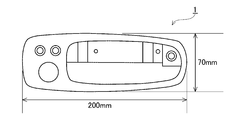
上記により得た実施例、比較例の各樹脂組成物を、140℃で3時間乾燥させた後、住友重機械工業(株)製SG-150U SYCAP-MIVにより、シリンダー温度265℃、金型温度95℃、射出速度35mm/s、保圧力80MPaの条件で、図1に示す自動車アウタードアハンドルエスカッションモデル(外観面に(株)棚澤八光社のシボ規格TH-113のシボ加工を施したもの)を射出成形し、成形開始から約10ショット後の成形が安定した段階での成形品について、目視によりシボの転写状態を観察した。観察結果を以下の基準で評価した。結果を表1に示す。
良:シボ面全体において良好な転写状態が確認されたもの
不良:シボの転写ムラが見られたもの
(外観性)
上記により得た実施例、比較例の各樹脂組成物を、140℃で3時間乾燥させた後、住友重機械工業(株)製SG-150U SYCAP-MIVにより、シリンダー温度265℃、金型温度95℃、射出速度35mm/s、保圧力80MPaの条件で、図1に示す自動車アウタードアハンドルエスカッションモデル(外観面に(株)棚澤八光社のシボ規格TH-113のシボ加工を施したもの)を射出成形し、成形開始から約10ショット後の成形が安定した段階での成形品について、目視によりシボの転写状態を観察した。観察結果を以下の基準で評価した。結果を表1に示す。
良:シボ面全体において良好な転写状態が確認されたもの
不良:シボの転写ムラが見られたもの
(熱安定性)
上記で測定した結晶化温度Tc1,Tc3からΔTc(Tc1-Tc3)の値を算出し、以下の基準で熱安定性を評価した。結果を表1に示す。
良:Tc1-Tc3≦15℃
不良:Tc1-Tc3>15℃
上記で測定した結晶化温度Tc1,Tc3からΔTc(Tc1-Tc3)の値を算出し、以下の基準で熱安定性を評価した。結果を表1に示す。
良:Tc1-Tc3≦15℃
不良:Tc1-Tc3>15℃
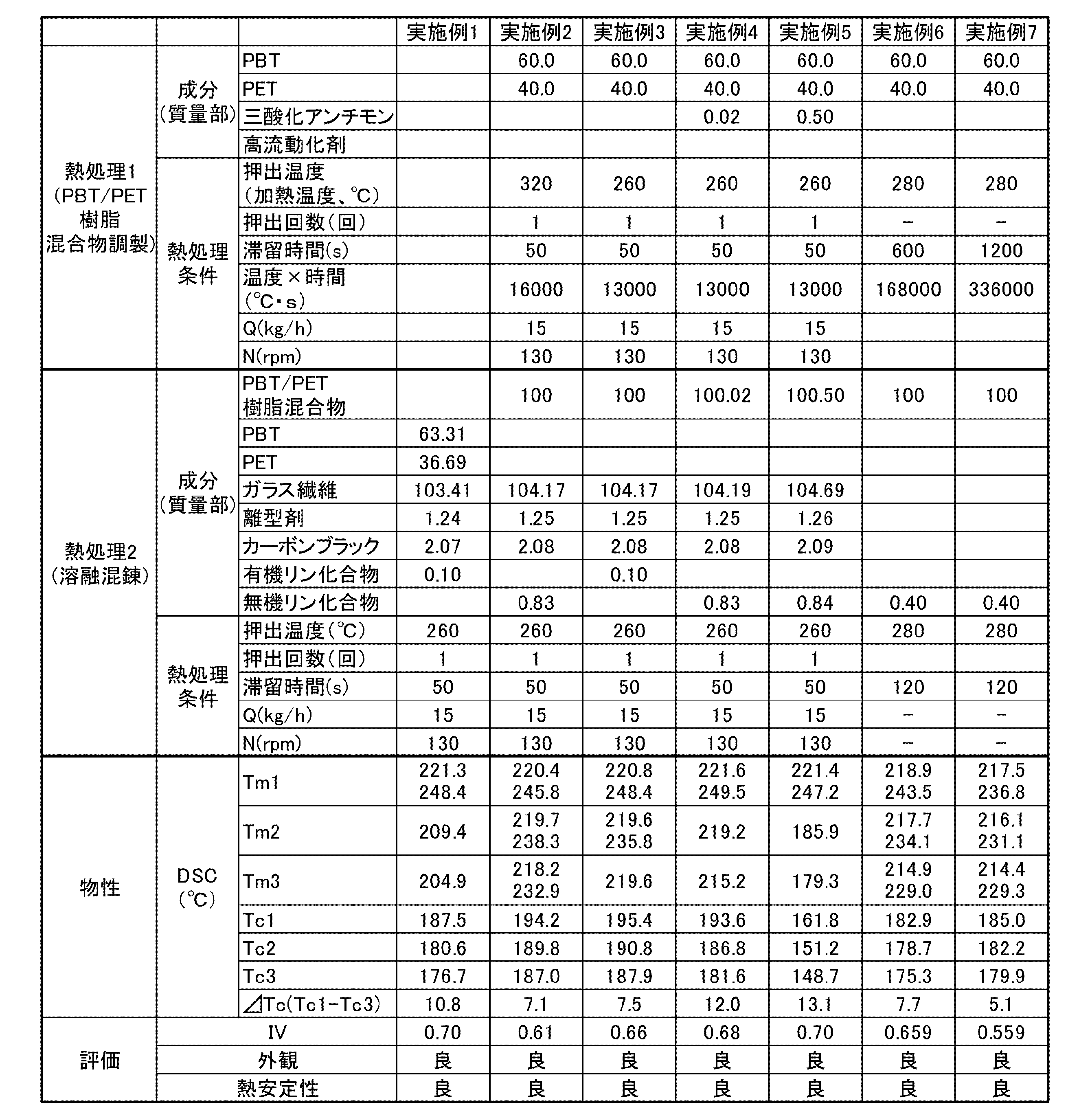

表1に示すように、実施例で得られた樹脂組成物を用いた成形品は、外観性が優れかつかつ熱安定性にも優れている。
1 成形品
Claims (12)
- ポリブチレンテレフタレート樹脂及びポリエチレンテレフタレート樹脂を合計100質量部、及びリン化合物を0.1~1.0質量部含有し、以下の式I及び式IIを満たす、樹脂組成物。
式I: 結晶化温度Tc1(℃)≦195℃
式II: [結晶化温度Tc1(℃)]-[結晶化温度Tc3(℃)]≦15℃
(式中、Tc1は、JIS K7121に基づいて昇温速度10℃/分で40℃から280℃まで昇温させ、降温速度10℃/分で280℃から40℃まで降温させるサイクルを3サイクル行なったときの、1サイクル目の降温での、示差走査熱量測定(DSC)におけるDSC曲線の最大吸熱ピークのピーク温度(℃)を表し、Tc3は、3サイクル目の降温での、示差走査熱量測定(DSC)におけるDSC曲線の最大吸熱ピークのピーク温度(℃)を表す。) - ポリエチレンテレフタレート樹脂の含有量が、ポリブチレンテレフタレート樹脂100質量部に対して50~80質量部である、請求項1に記載の樹脂組成物。
- 自動車用内装部品及び/又は自動車用外装部品の製造に用いられる、請求項1又は2に記載の樹脂組成物。
- リン化合物が有機リン化合物を含有し、
有機リン化合物の含有量が、ポリブチレンテレフタレート樹脂及びポリエチレンテレフタレート樹脂の合計100質量部に対して0.1~0.2質量部である、請求項1から3のいずれか一項に記載の樹脂組成物。 - エステル交換促進剤をさらに含有し、
エステル交換促進剤の含有量が、ポリブチレンテレフタレート樹脂及びポリエチレンテレフタレート樹脂の合計100質量部に対して0.01~2質量部である、請求項1から4のいずれか一項に記載の樹脂組成物。 - ハロゲン系難燃剤を含まない、又はハロゲン系難燃剤の含有量が全樹脂組成物中に5質量%以下である、請求項1から5のいずれか一項に記載の樹脂組成物。
- 請求項1から6のいずれか一項に記載の樹脂組成物の製造方法であり、
ポリブチレンテレフタレート樹脂とポリエチレンテレフタレート樹脂とを以下の式IIIを満たす条件で熱処理して樹脂混合物を得、該樹脂混合物とリン化合物とを混合して樹脂組成物を得る、樹脂組成物の製造方法。
式III: 12000(℃・s)≦温度(℃)×時間(s)≦180000(℃・s) - ポリブチレンテレフタレート樹脂とポリエチレンテレフタレート樹脂とを加熱容器内で溶融し滞留させることにより熱処理し、引き続き加熱容器内にリン化合物を添加して加熱混合し樹脂組成物を得る、請求項7に記載の製造方法。
- ポリブチレンテレフタレート樹脂とポリエチレンテレフタレート樹脂とを溶融押出しすることにより、熱処理された樹脂混合物を得、次いで該樹脂混合物とリン化合物とを加熱混合し樹脂組成物を得る、請求項7に記載の製造方法。
- 請求項1から6のいずれか一項に記載の樹脂組成物の製造方法であり、
ポリブチレンテレフタレート樹脂及びポリエチレンテレフタレート樹脂を混合し樹脂混合物を得ること、
前記樹脂混合物を以下の式IIIを満たす条件で熱処理すること、
式III: 12000(℃・s)≦温度(℃)×時間(s)≦180000(℃・s)
及び、熱処理された前記樹脂混合物とリン化合物とを混合すること、を含む、樹脂組成物の製造方法。 - 請求項1から6のいずれか一項に記載の樹脂組成物を用いた成形品。
- 自動車用内装部品又は自動車用外装部品である、請求項11に記載の成形品。
Priority Applications (1)
| Application Number | Priority Date | Filing Date | Title |
|---|---|---|---|
| JP2021524792A JP7507153B2 (ja) | 2019-06-03 | 2020-05-27 | 樹脂組成物及びその製造方法 |
Applications Claiming Priority (2)
| Application Number | Priority Date | Filing Date | Title |
|---|---|---|---|
| JP2019103728 | 2019-06-03 | ||
| JP2019-103728 | 2019-06-03 |
Publications (1)
| Publication Number | Publication Date |
|---|---|
| WO2020246335A1 true WO2020246335A1 (ja) | 2020-12-10 |
Family
ID=73651989
Family Applications (1)
| Application Number | Title | Priority Date | Filing Date |
|---|---|---|---|
| PCT/JP2020/020897 Ceased WO2020246335A1 (ja) | 2019-06-03 | 2020-05-27 | 樹脂組成物及びその製造方法 |
Country Status (2)
| Country | Link |
|---|---|
| JP (1) | JP7507153B2 (ja) |
| WO (1) | WO2020246335A1 (ja) |
Cited By (3)
| Publication number | Priority date | Publication date | Assignee | Title |
|---|---|---|---|---|
| WO2023100897A1 (ja) | 2021-11-30 | 2023-06-08 | 三菱エンジニアリングプラスチックス株式会社 | 樹脂組成物、成形品、複合体、および、金属樹脂複合体 |
| WO2023100895A1 (ja) | 2021-11-30 | 2023-06-08 | 三菱エンジニアリングプラスチックス株式会社 | 樹脂組成物、成形品、およびペレット |
| WO2023100896A1 (ja) | 2021-11-30 | 2023-06-08 | 三菱エンジニアリングプラスチックス株式会社 | 樹脂組成物および成形品 |
Citations (4)
| Publication number | Priority date | Publication date | Assignee | Title |
|---|---|---|---|---|
| JPH1149937A (ja) * | 1997-07-30 | 1999-02-23 | Polyplastics Co | ガスアシスト射出成形用樹脂組成物および成形方法 |
| JP2003055540A (ja) * | 2001-08-21 | 2003-02-26 | Toyobo Co Ltd | ポリエステル樹脂組成物 |
| JP2006219626A (ja) * | 2005-02-14 | 2006-08-24 | Mitsubishi Engineering Plastics Corp | ポリブチレンテレフタレート樹脂組成物、およびこれを成形してなる成形品 |
| WO2018225778A1 (ja) * | 2017-06-07 | 2018-12-13 | ウィンテックポリマー株式会社 | ポリブチレンテレフタレート樹脂組成物 |
-
2020
- 2020-05-27 WO PCT/JP2020/020897 patent/WO2020246335A1/ja not_active Ceased
- 2020-05-27 JP JP2021524792A patent/JP7507153B2/ja active Active
Patent Citations (4)
| Publication number | Priority date | Publication date | Assignee | Title |
|---|---|---|---|---|
| JPH1149937A (ja) * | 1997-07-30 | 1999-02-23 | Polyplastics Co | ガスアシスト射出成形用樹脂組成物および成形方法 |
| JP2003055540A (ja) * | 2001-08-21 | 2003-02-26 | Toyobo Co Ltd | ポリエステル樹脂組成物 |
| JP2006219626A (ja) * | 2005-02-14 | 2006-08-24 | Mitsubishi Engineering Plastics Corp | ポリブチレンテレフタレート樹脂組成物、およびこれを成形してなる成形品 |
| WO2018225778A1 (ja) * | 2017-06-07 | 2018-12-13 | ウィンテックポリマー株式会社 | ポリブチレンテレフタレート樹脂組成物 |
Cited By (3)
| Publication number | Priority date | Publication date | Assignee | Title |
|---|---|---|---|---|
| WO2023100897A1 (ja) | 2021-11-30 | 2023-06-08 | 三菱エンジニアリングプラスチックス株式会社 | 樹脂組成物、成形品、複合体、および、金属樹脂複合体 |
| WO2023100895A1 (ja) | 2021-11-30 | 2023-06-08 | 三菱エンジニアリングプラスチックス株式会社 | 樹脂組成物、成形品、およびペレット |
| WO2023100896A1 (ja) | 2021-11-30 | 2023-06-08 | 三菱エンジニアリングプラスチックス株式会社 | 樹脂組成物および成形品 |
Also Published As
| Publication number | Publication date |
|---|---|
| JP7507153B2 (ja) | 2024-06-27 |
| JPWO2020246335A1 (ja) | 2020-12-10 |
Similar Documents
| Publication | Publication Date | Title |
|---|---|---|
| CN107922717B (zh) | 热塑性聚酯树脂组合物及使用该树脂组合物的光反射体 | |
| TWI702246B (zh) | 聚對苯二甲酸丁二酯樹脂組合物的製造方法及聚對苯二甲酸丁二酯樹脂成形體的製造方法 | |
| JP2004307794A (ja) | ポリブチレンテレフタレート及びその組成物 | |
| JP2008214558A (ja) | 無機強化ポリエステル系樹脂組成物及びそれを用いた成形品の表面外観改良方法。 | |
| WO2020246335A1 (ja) | 樹脂組成物及びその製造方法 | |
| CN1980996B (zh) | 阻燃性聚对苯二甲酸丁二醇酯组合物以及成型体 | |
| TW201945465A (zh) | 阻燃性聚對苯二甲酸丁二酯樹脂組合物 | |
| EP1431344B1 (en) | Polyethylene terephthalate compositions | |
| JP2004277720A (ja) | ポリブチレンテレフタレート及びポリブチレンテレフタレート組成物 | |
| JP2004143210A (ja) | ポリブチレンテレフタレート樹脂組成物及び成形品 | |
| JP2004277718A (ja) | ポリブチレンテレフタレート及びポリブチレンテレフタレート組成物 | |
| WO2016133056A1 (ja) | 赤外光透過性ポリエステル樹脂組成物 | |
| JP2004277719A (ja) | ポリブチレンテレフタレート及びポリブチレンテレフタレート組成物 | |
| JP2004075756A (ja) | ポリブチレンテレフタレート樹脂組成物及び成形品 | |
| JP2004143208A (ja) | ポリブチレンテレフタレート樹脂組成物及び成形品 | |
| JP2007138018A (ja) | 難燃性ポリブチレンテレフタレート樹脂組成物 | |
| KR100846861B1 (ko) | 폴리에스테르 수지 조성물 | |
| JPS6241256B2 (ja) | ||
| JP2004091583A (ja) | 難燃性ポリブチレンテレフタレート樹脂組成物及び成形品 | |
| JP2005139441A (ja) | 射出成形体 | |
| JP6221486B2 (ja) | ポリブチレンテレフタレートおよびその製造方法 | |
| JP2004143209A (ja) | ポリブチレンテレフタレート樹脂組成物及び成形品 | |
| JPH07133412A (ja) | 難燃性ポリブチレンテレフタレート系樹脂組成物およびその製造方法 | |
| JP2004143211A (ja) | ポリブチレンテレフタレート樹脂組成物及びそれを用いたコネクター | |
| KR20070071592A (ko) | 공중합 폴리에스테르/폴리카보네이트 수지 조성물 및 이의제품 |
Legal Events
| Date | Code | Title | Description |
|---|---|---|---|
| 121 | Ep: the epo has been informed by wipo that ep was designated in this application |
Ref document number: 20818054 Country of ref document: EP Kind code of ref document: A1 |
|
| ENP | Entry into the national phase |
Ref document number: 2021524792 Country of ref document: JP Kind code of ref document: A |
|
| NENP | Non-entry into the national phase |
Ref country code: DE |
|
| 122 | Ep: pct application non-entry in european phase |
Ref document number: 20818054 Country of ref document: EP Kind code of ref document: A1 |