WO2020217864A1 - 耐冷凍性を有し、食品に異味異臭を与えることなく、食品本来の味を邪魔しない機能性油脂の製造方法 - Google Patents
耐冷凍性を有し、食品に異味異臭を与えることなく、食品本来の味を邪魔しない機能性油脂の製造方法 Download PDFInfo
- Publication number
- WO2020217864A1 WO2020217864A1 PCT/JP2020/014430 JP2020014430W WO2020217864A1 WO 2020217864 A1 WO2020217864 A1 WO 2020217864A1 JP 2020014430 W JP2020014430 W JP 2020014430W WO 2020217864 A1 WO2020217864 A1 WO 2020217864A1
- Authority
- WO
- WIPO (PCT)
- Prior art keywords
- oil
- food
- fat
- taste
- fatty acid
- Prior art date
- Legal status (The legal status is an assumption and is not a legal conclusion. Google has not performed a legal analysis and makes no representation as to the accuracy of the status listed.)
- Ceased
Links
Classifications
-
- A—HUMAN NECESSITIES
- A23—FOODS OR FOODSTUFFS; TREATMENT THEREOF, NOT COVERED BY OTHER CLASSES
- A23D—EDIBLE OILS OR FATS, e.g. MARGARINES, SHORTENINGS OR COOKING OILS
- A23D9/00—Other edible oils or fats, e.g. shortenings or cooking oils
-
- C—CHEMISTRY; METALLURGY
- C11—ANIMAL OR VEGETABLE OILS, FATS, FATTY SUBSTANCES OR WAXES; FATTY ACIDS THEREFROM; DETERGENTS; CANDLES
- C11C—FATTY ACIDS FROM FATS, OILS OR WAXES; CANDLES; FATS, OILS OR FATTY ACIDS BY CHEMICAL MODIFICATION OF FATS, OILS, OR FATTY ACIDS OBTAINED THEREFROM
- C11C3/00—Fats, oils, or fatty acids by chemical modification of fats, oils, or fatty acids obtained therefrom
- C11C3/04—Fats, oils, or fatty acids by chemical modification of fats, oils, or fatty acids obtained therefrom by esterification of fats or fatty oils
- C11C3/10—Ester interchange
Definitions
- the present invention relates to a method for producing a functional fat or oil, which has freezing resistance, does not give a strange odor to a food, and does not interfere with the original taste of the food.
- fats and oils are used in a wide range of food materials by taking advantage of their characteristics of exhibiting various physical properties in various temperature ranges.
- many semi-cooked foods and cooked foods are on the market, and the processing, storage, distribution and use of these foods are carried out in the refrigerated / frozen temperature range. Often referred to.
- Examples of such foods include seasonings such as salad oil, dressing and mayonnaise, frozen desserts such as ice cream, pasty emulsified foods such as custard cream and white sauce whose main ingredients are fats and oils, cereals and water, and frozen dough.
- Examples of processed foods such as margarine include processed foods such as margarine, but when stored in a refrigerated / frozen temperature range for a long period of time, there is a problem that separation occurs due to crystallization of fats and oils in the raw material and the appearance of the food is impaired.
- the freezing-resistant fats and oils having the functionality of being hard to crystallize even in the refrigerating / freezing temperature range can remarkably improve the freezing resistance of the fat-containing foods, and thereby the low temperature in the refrigerating / freezing temperature range or lower. It enables processing, storage, distribution and use underneath.
- Japanese Patent Application Laid-Open No. 6-14710 describes an unsaturated fatty acid group (U) and a medium-chain saturated fatty acid. Freezing-resistant fats and oils containing 10% or more of mixed acid group triglycerides (U2M and UM2) consisting of only a residue (M) and having a U2M / UM2 ratio of ⁇ 1: 3 have been proposed. Further, Japanese Patent Application Laid-Open No.
- monoene and diene unsaturated fatty acids having 16 or more carbon atoms are monoene and diene unsaturated fatty acids having 16 or more carbon atoms, (2) medium-chain saturated fatty acids having 6 to 12 carbon atoms at the 1st and 3rd positions of the glyceride, and 5 to 40 of the constituent fatty acids at the 1st and 3rd positions of the glyceride.
- An object of the present invention is to provide a method for producing a functional fat or oil, which has freezing resistance, does not give a food a strange taste and an offensive odor, and does not interfere with the original taste of the food.
- the present invention it is possible to provide a method for producing a functional fat or oil which has freezing resistance and does not give a strange taste or odor to a food and does not interfere with the original taste of the food.
- corn oil refers to oil in a liquid state at room temperature, which is obtained by squeezing the oil contained in corn germ.
- the composition generally contains about 60% linoleic acid and about 25% oleic acid, and linolenic acid, which can cause a particularly bad odor, is as small as about 1%.
- unkenides such as tocopherol and sterol
- corn oil is compared with other liquid oils because it contains ubiquinone, which exhibits antioxidant properties, and corn oil is not contained while soybean oil and rapeseed oil contain chlorophyll, which causes photooxidation.
- the medium-chain fatty acid refers to a saturated fatty acid having 6 to 10 carbon atoms.
- examples include caproic acid, caprylic acid and caproic acid.
- Oils and fats in which these medium-chain fatty acids are bound to a glycerol skeleton are called medium-chain fatty acid-bound triglycerides, and those that are ester-bonded to alkyl alcohols such as ethanol are called medium-chain fatty acid alkyl esters.
- transesterification examples include chemical transesterification using a metal catalyst and enzyme transesterification using lipase, which is a lipolytic enzyme. By transesterification operation using these catalysts, when a metal catalyst was used or a lipase having no position specificity was used, the fatty acids in the fats and oils were randomly rearranged, and the lipase having position specificity was used. If the case is rearranged according to its specificity.
- the catalyst used when carrying out the chemical transesterification include sodium methylate, sodium ethylate, and sodium hydroxide. In addition to these catalysts, known metal catalysts can be used, but sodium methylate is preferable.
- any lipase on the market can be used.
- the water washing step in the present invention refers to a series of operations in which water is added to fats and oils, stirred for a certain period of time, separated by an operation such as centrifugation, and the fats and oils are recovered.
- the ratio of water added to the fat and oil may be any ratio, and there is no problem even if an acidic substance such as citric acid or phosphoric acid is included in the water to be added.
- the temperature at the time of stirring is not particularly limited, and is generally 40 to 90 ° C. Further, there is no particular limitation on the time for stirring. Further, there is no problem even if these series of operations are repeated many times.
- an alkaline metal catalyst such as sodium methylate
- Example 1 Refined corn oil and medium-chain fatty acid-bound fat a (constituent fatty acids are about 60% caprylic acid and about 40% capric acid) are mixed at a weight ratio of 95: 5, and 0.1% by weight of sodium methie is mixed with oil.
- a random transesterification reaction was carried out using late under vacuum at a reaction temperature of 90 ° C. The obtained random transesterified oil was washed with warm water at 80 ° C. for several degrees, and then refined according to a conventional method to obtain a fat A.
- Example 2 Refined corn oil and medium-chain fatty acid-bound fat a (constituting fatty acids of about 60% caprylic acid and about 40% capric acid) were mixed at a weight ratio of 90:10, and the same random transesterification as in Example 1 was performed. Oil B was obtained by washing with water and refining.
- Example 3 Refined corn oil and medium-chain fatty acid-bound fat b (constituent fatty acid is about 100% caprylic acid) are mixed at a weight ratio of 95: 5, and fat C is subjected to the same random transesterification, washing with water, and refining operation as in Example 1.
- Example 4 Refined corn oil and medium-chain fatty acid-bound fat a (constituent fatty acids are about 60% caprylic acid and about 40% capric acid) are mixed at a weight ratio of 95: 5 to immobilize 2.0% by weight of oil.
- Lipase TL-IM Novozyme was blended and reacted at 60 ° C. for 1 week, and then lipase and fats and oils were separated and then washed with water and refined to obtain fats and oils D.
- chiffon cakes were prepared according to the formulation shown in Table 3. The prepared chiffon cake was frozen for one week, taken out of the freezer, and immediately eaten. Table 4 shows the melting in the mouth and the evaluation of flavor.
Landscapes
- Chemical & Material Sciences (AREA)
- Oil, Petroleum & Natural Gas (AREA)
- Life Sciences & Earth Sciences (AREA)
- Engineering & Computer Science (AREA)
- Food Science & Technology (AREA)
- Polymers & Plastics (AREA)
- General Chemical & Material Sciences (AREA)
- Chemical Kinetics & Catalysis (AREA)
- Wood Science & Technology (AREA)
- Organic Chemistry (AREA)
- Fats And Perfumes (AREA)
- Edible Oils And Fats (AREA)
Abstract
耐冷凍性を有し、食品に異味異臭を与えることなく、食品本来の味を邪魔しない機能性油脂を提供する。 コーン油:中鎖脂肪酸結合トリグリセリド又は中鎖脂肪酸アルキルエステル=85~99:15~1の比率で混合した油脂をエステル交換し、水洗することを特徴とする油脂の製造方法。
Description
本発明は、耐冷凍性を有し、食品に異味異臭を与えることなく、食品本来の味を邪魔しない機能性油脂の製造方法に関する。
油脂は、常温で固体であるものから、液状となるものまで、その脂肪酸組成等により様々な物性を示す。
一般に冷蔵温度になると、部分的に結晶化して曇りや濁りを生じ、-20℃前後の冷凍温度域では完全に固化するものが多い。
一般に冷蔵温度になると、部分的に結晶化して曇りや濁りを生じ、-20℃前後の冷凍温度域では完全に固化するものが多い。
一方で油脂は、様々な温度域で様々な物性を示す特性を生かして、幅広い食品素材に利用されている。
とりわけ近年、食品の加工技術、保存技術の発達により、半調理食品や調理済み食品が流通市場に多く出回っており、これら食品の加工、保存、流通及び使用は、冷蔵・冷凍温度域下で行われることが多い。
とりわけ近年、食品の加工技術、保存技術の発達により、半調理食品や調理済み食品が流通市場に多く出回っており、これら食品の加工、保存、流通及び使用は、冷蔵・冷凍温度域下で行われることが多い。
このような食品の例としてサラダ油、ドレッシング、マヨネーズなどの調味料や、アイスクリーム等の冷菓、油脂、穀粉及び水を主原料とするカスタードクリームやホワイトソースなどのペースト状の乳化食品、冷凍ドウ、マーガリンなどの油脂加工食品が挙げられるが、長期間冷蔵・冷凍温度域下で保存した場合に原料中の油脂の結晶化等により分離が生じ、食品の外観が損なわれるという問題があった。
そのため、冷蔵・冷凍温度域下でも結晶化しにくい機能性を持つ耐冷凍性油脂は、油脂含有食品の冷凍耐性を顕著に向上させることができ、これにより冷蔵・冷凍温度域下又はそれ以下の低温下における加工、保存、流通及び使用などを可能にしている。
従ってこれまで、油脂に「耐冷凍性」の機能を付与させるために、種々の試みが行なわれており、例えば、特開平6-14710には、不飽和脂肪酸基(U)及び中鎖飽和脂肪酸残基(M)のみからなる混酸基トリグリセリド(U2MとUM2)を10%以上含有し、かつU2M/UM2の比が≧1:3であることを特徴とする耐凍性油脂が提案されていたり、また、特開平7-179882には、炭素数16以上のモノエンおよびジエン不飽和脂肪酸と炭素数6~12の中鎖飽和脂肪酸とを含む油脂であって、(1)構成脂肪酸の60重量%以上が炭素数16以上のモノエンおよびジエン不飽和脂肪酸であり、(2)グリセリドの1,3位に炭素数6~12の中鎖飽和脂肪酸を、グリセリドの1,3位の構成脂肪酸の5~40重量%含有し、かつ(3)該油脂がエステル交換反応あるいはエステル化反応により調製されてなることを特徴とする可食性耐冷凍性油脂などが提案されている。
一方で、流通網、冷凍技術の発達や、共働き、少子高齢化、人口減少などの社会的変化に伴い、食を取り巻く環境は大きく変わってきており、現代社会において、冷凍食品、冷凍市場は大幅な拡大を続けている。
また、価値観の多様化が進み、供給が需要を上回る現代社会では、機能性は当然のこと、「よりおいしいもの」が食品求められる価値として重要となってきている。
また、価値観の多様化が進み、供給が需要を上回る現代社会では、機能性は当然のこと、「よりおいしいもの」が食品求められる価値として重要となってきている。
しかしながら、上記のような「耐冷凍性」といった機能性を有する油脂では、風味に関する検討は行われていなかったため、より風味の良い機能性油脂が望まれていた。
本発明の目的は、耐冷凍性を有し、食品に異味異臭を与えることなく、食品本来の味を邪魔しない機能性油脂の製造方法を提供することである。
本発明者は上記の課題に対して鋭意検討の結果、コーン油:中鎖脂肪酸結合トリグリセリド又は中鎖脂肪酸アルキルエステル=85~99:15~1の比率で混合した油脂をエステル交換し、水洗することで風味の良い機能性油脂が得られることを見出し、本発明を完成させるに至った。
すなわち本発明は、
コーン油:中鎖脂肪酸結合トリグリセリド又は中鎖脂肪酸アルキルエステル=85~99:15~1の比率で混合した油脂をエステル交換し、水洗することを特徴とする油脂の製造方法である。
コーン油:中鎖脂肪酸結合トリグリセリド又は中鎖脂肪酸アルキルエステル=85~99:15~1の比率で混合した油脂をエステル交換し、水洗することを特徴とする油脂の製造方法である。
本発明によれば、耐冷凍性を有し、食品に異味異臭を与えることなく、食品本来の味を邪魔しない機能性油脂の製造方法を提供することが出来る。
以下、本発明を具体的に説明する。
(コーン油)
本発明でコーン油とは、トウモロコシ胚芽中に含まれる油分を搾油して得られる、常温で液体状の油を指す。その組成は、リノール酸を約60%、オレイン酸を約25%含むものが一般的であり、特に悪臭の原因となりうるリノレン酸は約1%と少ない。また、胚芽由来であることから、トコフェロールやステロールなどの不ケン化物の含有量も他の液油と比較して高いことが知られる。さらには、抗酸化性を示すユビキノンを含むこと、光酸化の原因となるクロロフィルを大豆油や菜種油は含むのに対して、コーン油は含まないことなどから、コーン油は他の液油と比較して比較的酸化安定性の高い油として知られている。このような酸化安定性、更にはコーン油特有の風味から日本国内ではプレミアム油とされ利用されている。しかしながら当該発明者は、このコーン油特有の風味は必ずしも食品に対して好ましいものではなく、時には食品には全く適さない場合も有り得るため、あらゆる食品に異味異臭を与えない油脂を開発するに至った。
本発明でコーン油とは、トウモロコシ胚芽中に含まれる油分を搾油して得られる、常温で液体状の油を指す。その組成は、リノール酸を約60%、オレイン酸を約25%含むものが一般的であり、特に悪臭の原因となりうるリノレン酸は約1%と少ない。また、胚芽由来であることから、トコフェロールやステロールなどの不ケン化物の含有量も他の液油と比較して高いことが知られる。さらには、抗酸化性を示すユビキノンを含むこと、光酸化の原因となるクロロフィルを大豆油や菜種油は含むのに対して、コーン油は含まないことなどから、コーン油は他の液油と比較して比較的酸化安定性の高い油として知られている。このような酸化安定性、更にはコーン油特有の風味から日本国内ではプレミアム油とされ利用されている。しかしながら当該発明者は、このコーン油特有の風味は必ずしも食品に対して好ましいものではなく、時には食品には全く適さない場合も有り得るため、あらゆる食品に異味異臭を与えない油脂を開発するに至った。
(中鎖脂肪酸結合トリグリセリド)
本発明で中鎖脂肪酸とは、炭素数が6~10の飽和脂肪酸を指す。例としてカプロン酸、カプリル酸、カプリン酸が挙げられる。これらの中鎖脂肪酸がグリセロール骨格に結合した油脂を中鎖脂肪酸結合トリグリセリドと呼び、エタノールなどのアルキルアルコールとエステル結合したものを中鎖脂肪酸アルキルエステルと呼ぶ。
本発明で中鎖脂肪酸とは、炭素数が6~10の飽和脂肪酸を指す。例としてカプロン酸、カプリル酸、カプリン酸が挙げられる。これらの中鎖脂肪酸がグリセロール骨格に結合した油脂を中鎖脂肪酸結合トリグリセリドと呼び、エタノールなどのアルキルアルコールとエステル結合したものを中鎖脂肪酸アルキルエステルと呼ぶ。
(エステル交換)
本発明でのエステル交換とは、金属触媒を用いたケミカルエステル交換と、脂質分解酵素であるリパーゼを用いた酵素エステル交換が例示できる。これら触媒を用いたエステル交換操作により、金属触媒を用いた場合や位置特異性を有さないリパーゼを用いた場合、油脂中の脂肪酸はランダムに再配列され、位置特異性を有するリパーゼを用いた場合はその特異性に従って再配列される。ケミカルエステル交換を実施する際に使用される触媒は、ナトリウムメチラートやナトリウムエチラート、水酸化ナトリウムなどが例示できる。これらの触媒以外にも、既知の金属触媒を用いることが出来るが、好ましくはナトリウムメチラートが良い。また、触媒としてリパーゼを用いた場合は流通している如何なるリパーゼを使用することも出来る。具体例として、Aspergillus niger等のAspergillus属由来リパーゼ;Candida rugosa、Candida cylindracea、Candida antarctica等のCandida属由来リパーゼ;Pseudomonas fluorescens、Pseudomonas cepacia、Pseudomonas stutzeri等のPseudomonas属由来リパーゼ;Alcaligenes属由来リパーゼ;Burkholderia cepacia等のBurkholderia属由来リパーゼ;ブタ膵臓由来のリパーゼ等があげられる。また少なくともこれらと同様な性質を有するリパーゼであれば上記以外のものでも何ら差し支えない。本発明においては金属触媒もしくは位置特異性を有さないリパーゼを用いたランダムエステル交換が好ましい。
本発明でのエステル交換とは、金属触媒を用いたケミカルエステル交換と、脂質分解酵素であるリパーゼを用いた酵素エステル交換が例示できる。これら触媒を用いたエステル交換操作により、金属触媒を用いた場合や位置特異性を有さないリパーゼを用いた場合、油脂中の脂肪酸はランダムに再配列され、位置特異性を有するリパーゼを用いた場合はその特異性に従って再配列される。ケミカルエステル交換を実施する際に使用される触媒は、ナトリウムメチラートやナトリウムエチラート、水酸化ナトリウムなどが例示できる。これらの触媒以外にも、既知の金属触媒を用いることが出来るが、好ましくはナトリウムメチラートが良い。また、触媒としてリパーゼを用いた場合は流通している如何なるリパーゼを使用することも出来る。具体例として、Aspergillus niger等のAspergillus属由来リパーゼ;Candida rugosa、Candida cylindracea、Candida antarctica等のCandida属由来リパーゼ;Pseudomonas fluorescens、Pseudomonas cepacia、Pseudomonas stutzeri等のPseudomonas属由来リパーゼ;Alcaligenes属由来リパーゼ;Burkholderia cepacia等のBurkholderia属由来リパーゼ;ブタ膵臓由来のリパーゼ等があげられる。また少なくともこれらと同様な性質を有するリパーゼであれば上記以外のものでも何ら差し支えない。本発明においては金属触媒もしくは位置特異性を有さないリパーゼを用いたランダムエステル交換が好ましい。
(水洗)
本発明での水洗工程とは、油脂に対して水を添加し、一定時間攪拌後に遠心分離などの操作により分離し油脂を回収する一連の操作を指すものである。油脂に対する水の添加割合は如何なる割合でも良く、また添加する水に対してクエン酸や燐酸などの酸性物質を含めても問題ない。攪拌時の温度に特に制限はなく、一般的には40~90℃で行なわれる。また攪拌時の時間に対しても特に制限は無い。さらにこれら一連の操作を何度も繰返して実施しても問題ない。特に、ナトリウムメチラートなどのアルカリ性を示す金属触媒を用いた際は、分離後に回収した油中にこれら金属触媒が残存しないレベルまで繰り返し洗浄することが望ましい。これら水洗工程を終了した後には脱水操作を実施し、油中の水分を1000ppm以下まで低下させることが望ましい。
本発明での水洗工程とは、油脂に対して水を添加し、一定時間攪拌後に遠心分離などの操作により分離し油脂を回収する一連の操作を指すものである。油脂に対する水の添加割合は如何なる割合でも良く、また添加する水に対してクエン酸や燐酸などの酸性物質を含めても問題ない。攪拌時の温度に特に制限はなく、一般的には40~90℃で行なわれる。また攪拌時の時間に対しても特に制限は無い。さらにこれら一連の操作を何度も繰返して実施しても問題ない。特に、ナトリウムメチラートなどのアルカリ性を示す金属触媒を用いた際は、分離後に回収した油中にこれら金属触媒が残存しないレベルまで繰り返し洗浄することが望ましい。これら水洗工程を終了した後には脱水操作を実施し、油中の水分を1000ppm以下まで低下させることが望ましい。
以下に本発明の実施例を示し、本発明をより詳細に説明する。また、例中%は特に断りのない限り重量基準を意味する。
〔実施例1〕
精製コーン油と中鎖脂肪酸結合油脂a(構成脂肪酸はカプリル酸が約60%、カプリン酸が約40%)を重量比95:5の割合で混合し、対油0.1重量%のナトリウムメチラートを用いて真空下、反応温度90℃でランダムエステル交換反応を実施した。得られたランダムエステル交換油を80℃の温水にて数度にわたり洗浄し、その後常法に従い精製することで油脂Aを得た。
精製コーン油と中鎖脂肪酸結合油脂a(構成脂肪酸はカプリル酸が約60%、カプリン酸が約40%)を重量比95:5の割合で混合し、対油0.1重量%のナトリウムメチラートを用いて真空下、反応温度90℃でランダムエステル交換反応を実施した。得られたランダムエステル交換油を80℃の温水にて数度にわたり洗浄し、その後常法に従い精製することで油脂Aを得た。
〔実施例2〕
精製コーン油と中鎖脂肪酸結合油脂a(構成脂肪酸はカプリル酸が約60%、カプリン酸が約40%)を重量比90:10の割合で混合し、実施例1と同様のランダムエステル交換、水洗及び精製操作により油脂Bを得た。
精製コーン油と中鎖脂肪酸結合油脂a(構成脂肪酸はカプリル酸が約60%、カプリン酸が約40%)を重量比90:10の割合で混合し、実施例1と同様のランダムエステル交換、水洗及び精製操作により油脂Bを得た。
〔実施例3〕
精製コーン油と中鎖脂肪酸結合油脂b(構成脂肪酸はカプリル酸が約100%)を重量比95:5の割合で混合し、実施例1と同様のランダムエステル交換、水洗及び精製操作により油脂Cを得た。
精製コーン油と中鎖脂肪酸結合油脂b(構成脂肪酸はカプリル酸が約100%)を重量比95:5の割合で混合し、実施例1と同様のランダムエステル交換、水洗及び精製操作により油脂Cを得た。
〔実施例4〕
精製コーン油と中鎖脂肪酸結合油脂a(構成脂肪酸はカプリル酸が約60%、カプリン酸が約40%)を重量比95:5の割合で混合し、対油2.0重量%の固定化リパーゼTL-IM(Novozyme)を配合して60℃で1週間反応させたのち、リパーゼと油脂を分離した後に水洗及び精製操作を実施し油脂Dを得た。
精製コーン油と中鎖脂肪酸結合油脂a(構成脂肪酸はカプリル酸が約60%、カプリン酸が約40%)を重量比95:5の割合で混合し、対油2.0重量%の固定化リパーゼTL-IM(Novozyme)を配合して60℃で1週間反応させたのち、リパーゼと油脂を分離した後に水洗及び精製操作を実施し油脂Dを得た。
〔比較例1〕
精製大豆油と中鎖脂肪酸結合油脂a(構成脂肪酸はカプリル酸が約60%、カプリン酸が約40%)を重量比95:5の割合で混合し実施例1と同様のランダムエステル交換、水洗及び精製操作により油脂Eを得た
精製大豆油と中鎖脂肪酸結合油脂a(構成脂肪酸はカプリル酸が約60%、カプリン酸が約40%)を重量比95:5の割合で混合し実施例1と同様のランダムエステル交換、水洗及び精製操作により油脂Eを得た
〔比較例2〕
精製菜種油と中鎖脂肪酸結合油脂a(構成脂肪酸はカプリル酸が約60%、カプリン酸が約40%)を重量比95:5の割合で混合し実施例1と同様のランダムエステル交換、水洗及び精製操作により油脂Fを得た
精製菜種油と中鎖脂肪酸結合油脂a(構成脂肪酸はカプリル酸が約60%、カプリン酸が約40%)を重量比95:5の割合で混合し実施例1と同様のランダムエステル交換、水洗及び精製操作により油脂Fを得た
〔比較例3〕
精製コーン油を実施例1と同様のランダムエステル交換、水洗及び精製操作により油脂Gを得た
精製コーン油を実施例1と同様のランダムエステル交換、水洗及び精製操作により油脂Gを得た
〔比較例4〕
精製コーン油と中鎖脂肪酸結合油脂a(構成脂肪酸はカプリル酸が約60%、カプリン酸が約40%)を重量比95:5の割合で混合し、対油2.0重量%の固定化リパーゼTL-IM(Novozyme)を配合して60℃で1週間反応させたのち、リパーゼと油脂を分離した後に精製操作を実施し油脂Hを得た。
精製コーン油と中鎖脂肪酸結合油脂a(構成脂肪酸はカプリル酸が約60%、カプリン酸が約40%)を重量比95:5の割合で混合し、対油2.0重量%の固定化リパーゼTL-IM(Novozyme)を配合して60℃で1週間反応させたのち、リパーゼと油脂を分離した後に精製操作を実施し油脂Hを得た。
〔比較例5〕
精製コーン油と中鎖脂肪酸結合油脂a(構成脂肪酸はカプリル酸が約60%、カプリン酸が約40%)を重量比95:5の割合で混合し、油脂Iを得た。
精製コーン油と中鎖脂肪酸結合油脂a(構成脂肪酸はカプリル酸が約60%、カプリン酸が約40%)を重量比95:5の割合で混合し、油脂Iを得た。
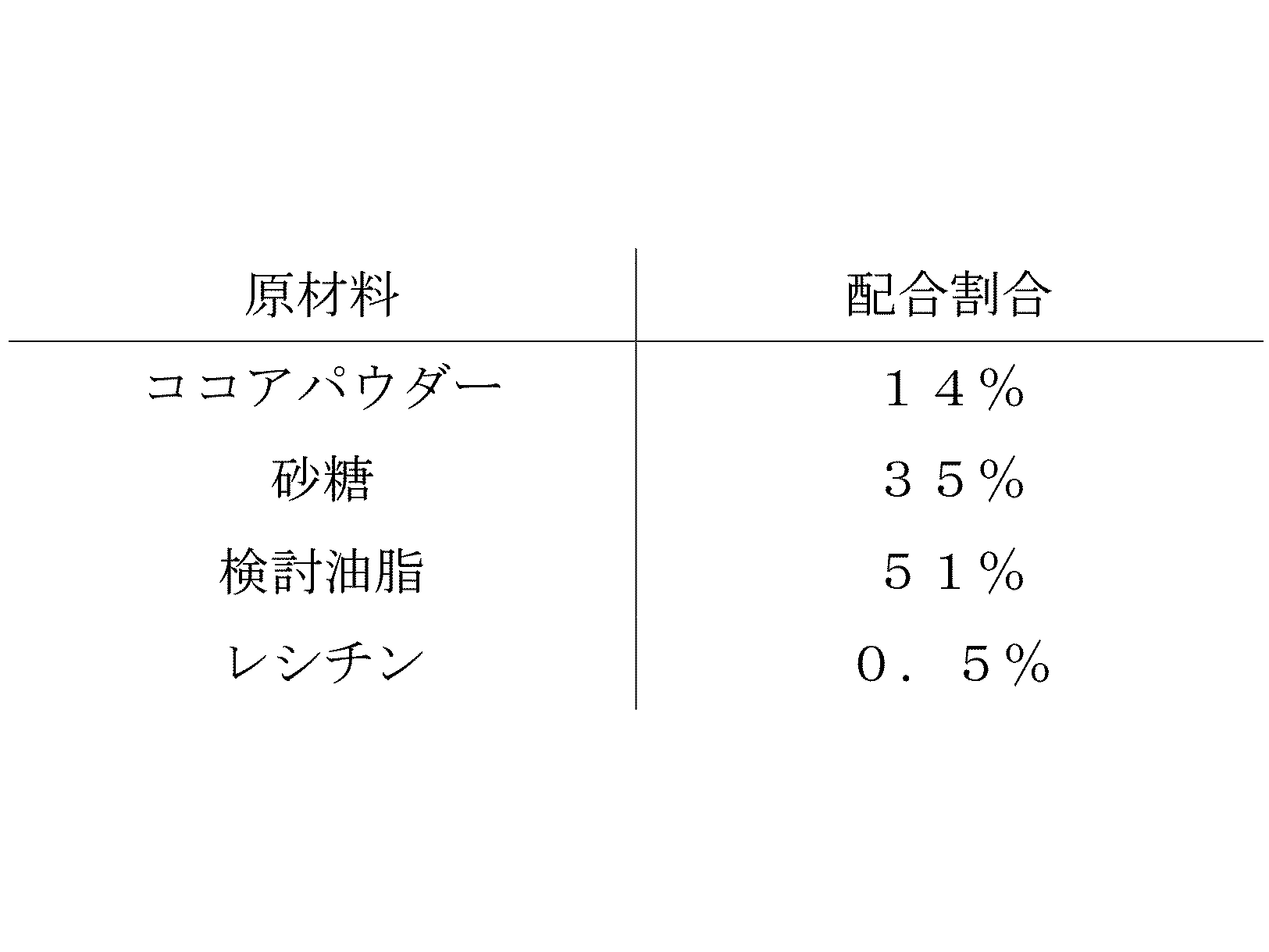
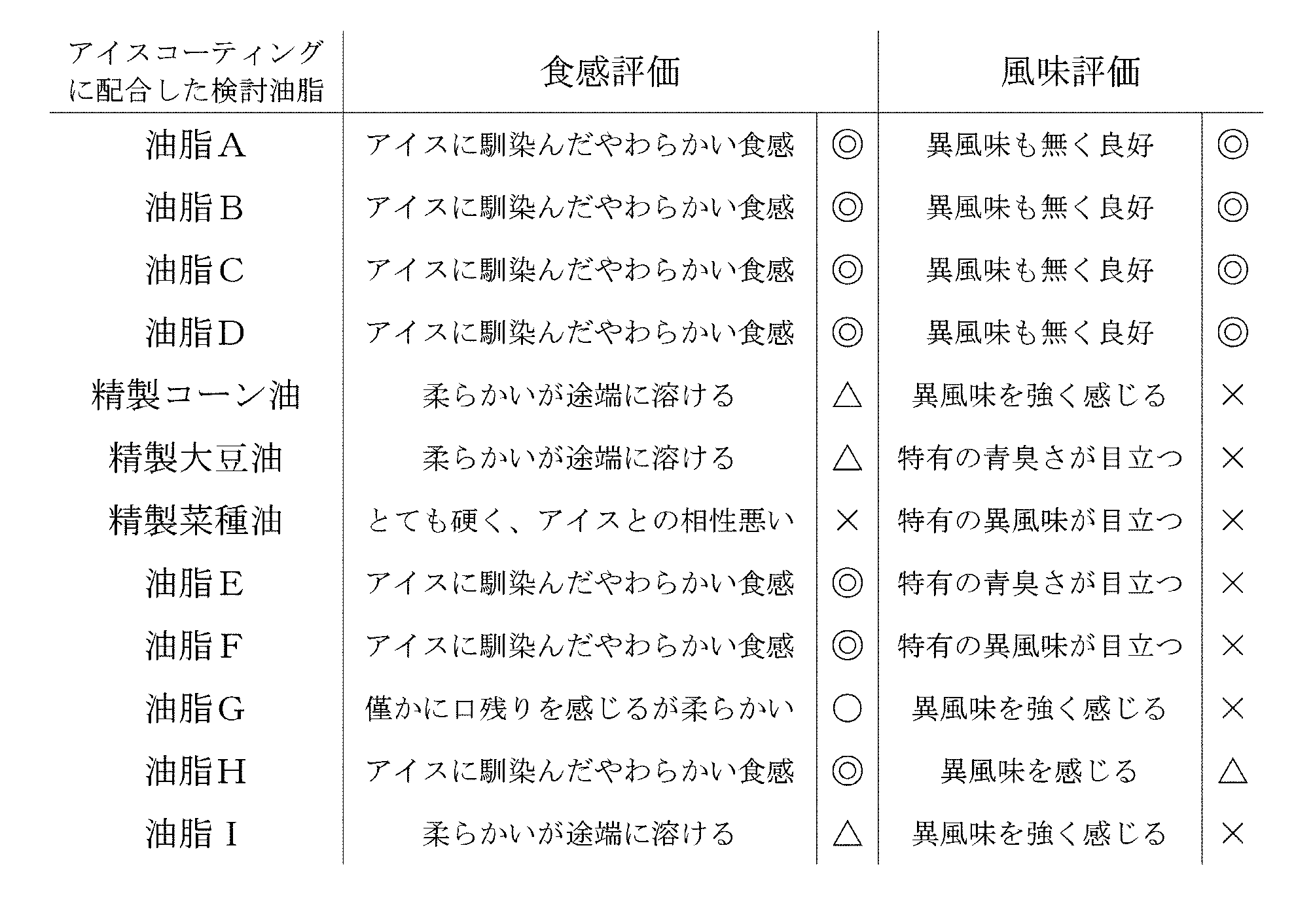
実施例1~4、精製コーン油、精製大豆油、精製菜種油及び比較例1~5を検討油脂として、表1の配合に従いアイスコーティング用チョコレートを作成した。その食感及び風味評価を表2に示す。
(表1)
(表2)
実施例1~4、精製コーン油、精製大豆油、精製菜種油及び比較例1~5を検討油脂として、表3の配合に従いシフォンケーキを作成した。作製したシフォンケーキを1週間冷凍し、冷凍から出してすぐに喫食した。その口溶け及び風味評価を表4に示す。
(表3)

(表4)

Claims (1)
- コーン油:中鎖脂肪酸結合トリグリセリド又は中鎖脂肪酸アルキルエステル=85~99:15~1の比率で混合した油脂をエステル交換し、水洗することを特徴とする油脂の製造方法。
Priority Applications (1)
| Application Number | Priority Date | Filing Date | Title |
|---|---|---|---|
| JP2021515911A JPWO2020217864A1 (ja) | 2019-04-26 | 2020-03-30 |
Applications Claiming Priority (2)
| Application Number | Priority Date | Filing Date | Title |
|---|---|---|---|
| JP2019084823 | 2019-04-26 | ||
| JP2019-084823 | 2019-04-26 |
Publications (1)
| Publication Number | Publication Date |
|---|---|
| WO2020217864A1 true WO2020217864A1 (ja) | 2020-10-29 |
Family
ID=72942533
Family Applications (1)
| Application Number | Title | Priority Date | Filing Date |
|---|---|---|---|
| PCT/JP2020/014430 Ceased WO2020217864A1 (ja) | 2019-04-26 | 2020-03-30 | 耐冷凍性を有し、食品に異味異臭を与えることなく、食品本来の味を邪魔しない機能性油脂の製造方法 |
Country Status (2)
| Country | Link |
|---|---|
| JP (1) | JPWO2020217864A1 (ja) |
| WO (1) | WO2020217864A1 (ja) |
Citations (5)
| Publication number | Priority date | Publication date | Assignee | Title |
|---|---|---|---|---|
| JP2001069914A (ja) * | 1999-09-01 | 2001-03-21 | Nisshin Oil Mills Ltd:The | 食用油脂 |
| JP2001161265A (ja) * | 1999-12-13 | 2001-06-19 | Nisshin Oil Mills Ltd:The | 油脂組成物 |
| JP2001226693A (ja) * | 2000-02-18 | 2001-08-21 | Nisshin Oil Mills Ltd:The | 油脂組成物 |
| JP2010279381A (ja) * | 1998-11-13 | 2010-12-16 | Nisshin Oillio Group Ltd | 油脂組成物および油脂組成物の製造方法 |
| JP2014000009A (ja) * | 2012-06-15 | 2014-01-09 | Nisshin Oillio Group Ltd | 油脂組成物の製造方法及び油脂組成物並びに加工食品 |
Family Cites Families (1)
| Publication number | Priority date | Publication date | Assignee | Title |
|---|---|---|---|---|
| JP4733246B2 (ja) * | 1998-11-13 | 2011-07-27 | 日清オイリオグループ株式会社 | 油脂組成物 |
-
2020
- 2020-03-30 WO PCT/JP2020/014430 patent/WO2020217864A1/ja not_active Ceased
- 2020-03-30 JP JP2021515911A patent/JPWO2020217864A1/ja active Pending
Patent Citations (5)
| Publication number | Priority date | Publication date | Assignee | Title |
|---|---|---|---|---|
| JP2010279381A (ja) * | 1998-11-13 | 2010-12-16 | Nisshin Oillio Group Ltd | 油脂組成物および油脂組成物の製造方法 |
| JP2001069914A (ja) * | 1999-09-01 | 2001-03-21 | Nisshin Oil Mills Ltd:The | 食用油脂 |
| JP2001161265A (ja) * | 1999-12-13 | 2001-06-19 | Nisshin Oil Mills Ltd:The | 油脂組成物 |
| JP2001226693A (ja) * | 2000-02-18 | 2001-08-21 | Nisshin Oil Mills Ltd:The | 油脂組成物 |
| JP2014000009A (ja) * | 2012-06-15 | 2014-01-09 | Nisshin Oillio Group Ltd | 油脂組成物の製造方法及び油脂組成物並びに加工食品 |
Also Published As
| Publication number | Publication date |
|---|---|
| JPWO2020217864A1 (ja) | 2020-10-29 |
Similar Documents
| Publication | Publication Date | Title |
|---|---|---|
| EP2194792B1 (en) | Composition suitable for use in baking | |
| JP4917523B2 (ja) | ロールイン用可塑性油脂組成物及び層状小麦粉膨化食品 | |
| JP5479700B2 (ja) | 可塑性油脂組成物 | |
| JP2002209516A (ja) | 食用油脂組成物 | |
| JP5718560B2 (ja) | 食用油の製造方法 | |
| WO2019038320A1 (en) | METHOD FOR REFINING PLANT OIL WITH REMOVAL OF UNDESIRABLE IMPURITIES | |
| JP3465926B2 (ja) | 加熱調理用油脂組成物 | |
| JP4146431B2 (ja) | スプレッド用油脂組成物 | |
| JP2014023444A (ja) | 油性食品及び該油性食品を使用した複合食品 | |
| WO2013062113A1 (ja) | 可塑性油脂組成物 | |
| JP2006115724A (ja) | 流動状油脂組成物 | |
| JP5544096B2 (ja) | 香味組成物 | |
| JP2601104B2 (ja) | 耐凍性油脂とその製造方法及び油脂含有冷凍食品 | |
| JP4049503B2 (ja) | 油脂組成物 | |
| CN115175568A (zh) | 制备随机酯交换脂肪产品的方法 | |
| JP6022851B2 (ja) | 油脂組成物 | |
| JP5153038B2 (ja) | 可塑性油脂組成物 | |
| JP2011217690A (ja) | 油脂組成物 | |
| JP6971541B2 (ja) | マヨネーズ様食品 | |
| JP5005129B2 (ja) | 保存安定性に優れた植物ステロール含有食用油脂組成物 | |
| JP4407085B2 (ja) | コーティング用油脂 | |
| JP3605608B2 (ja) | 加熱調理用油脂組成物 | |
| JP4046437B2 (ja) | 油脂組成物 | |
| JP2018050584A (ja) | マヨネーズ様食品用油脂組成物及びマヨネーズ様食品 | |
| JP2016082881A (ja) | 可塑性油脂組成物 |
Legal Events
| Date | Code | Title | Description |
|---|---|---|---|
| 121 | Ep: the epo has been informed by wipo that ep was designated in this application |
Ref document number: 20796085 Country of ref document: EP Kind code of ref document: A1 |
|
| ENP | Entry into the national phase |
Ref document number: 2021515911 Country of ref document: JP Kind code of ref document: A |
|
| NENP | Non-entry into the national phase |
Ref country code: DE |
|
| 122 | Ep: pct application non-entry in european phase |
Ref document number: 20796085 Country of ref document: EP Kind code of ref document: A1 |