WO2020189420A1 - カルコゲナイドガラスの製造方法 - Google Patents
カルコゲナイドガラスの製造方法 Download PDFInfo
- Publication number
- WO2020189420A1 WO2020189420A1 PCT/JP2020/010396 JP2020010396W WO2020189420A1 WO 2020189420 A1 WO2020189420 A1 WO 2020189420A1 JP 2020010396 W JP2020010396 W JP 2020010396W WO 2020189420 A1 WO2020189420 A1 WO 2020189420A1
- Authority
- WO
- WIPO (PCT)
- Prior art keywords
- less
- sulfur
- glass
- melting
- chalcogenide glass
- Prior art date
- Legal status (The legal status is an assumption and is not a legal conclusion. Google has not performed a legal analysis and makes no representation as to the accuracy of the status listed.)
- Ceased
Links
Images

Classifications
-
- C—CHEMISTRY; METALLURGY
- C03—GLASS; MINERAL OR SLAG WOOL
- C03B—MANUFACTURE, SHAPING, OR SUPPLEMENTARY PROCESSES
- C03B3/00—Charging the melting furnaces
- C03B3/02—Charging the melting furnaces combined with preheating, premelting or pretreating the glass-making ingredients, pellets or cullet
-
- C—CHEMISTRY; METALLURGY
- C03—GLASS; MINERAL OR SLAG WOOL
- C03C—CHEMICAL COMPOSITION OF GLASSES, GLAZES OR VITREOUS ENAMELS; SURFACE TREATMENT OF GLASS; SURFACE TREATMENT OF FIBRES OR FILAMENTS MADE FROM GLASS, MINERALS OR SLAGS; JOINING GLASS TO GLASS OR OTHER MATERIALS
- C03C3/00—Glass compositions
- C03C3/32—Non-oxide glass compositions, e.g. binary or ternary halides, sulfides or nitrides of germanium, selenium or tellurium
-
- C—CHEMISTRY; METALLURGY
- C03—GLASS; MINERAL OR SLAG WOOL
- C03C—CHEMICAL COMPOSITION OF GLASSES, GLAZES OR VITREOUS ENAMELS; SURFACE TREATMENT OF GLASS; SURFACE TREATMENT OF FIBRES OR FILAMENTS MADE FROM GLASS, MINERALS OR SLAGS; JOINING GLASS TO GLASS OR OTHER MATERIALS
- C03C4/00—Compositions for glass with special properties
- C03C4/10—Compositions for glass with special properties for infrared transmitting glass
-
- G—PHYSICS
- G02—OPTICS
- G02B—OPTICAL ELEMENTS, SYSTEMS OR APPARATUS
- G02B1/00—Optical elements characterised by the material of which they are made; Optical coatings for optical elements
-
- Y—GENERAL TAGGING OF NEW TECHNOLOGICAL DEVELOPMENTS; GENERAL TAGGING OF CROSS-SECTIONAL TECHNOLOGIES SPANNING OVER SEVERAL SECTIONS OF THE IPC; TECHNICAL SUBJECTS COVERED BY FORMER USPC CROSS-REFERENCE ART COLLECTIONS [XRACs] AND DIGESTS
- Y02—TECHNOLOGIES OR APPLICATIONS FOR MITIGATION OR ADAPTATION AGAINST CLIMATE CHANGE
- Y02P—CLIMATE CHANGE MITIGATION TECHNOLOGIES IN THE PRODUCTION OR PROCESSING OF GOODS
- Y02P40/00—Technologies relating to the processing of minerals
- Y02P40/50—Glass production, e.g. reusing waste heat during processing or shaping
- Y02P40/57—Improving the yield, e-g- reduction of reject rates
Definitions
- the present invention relates to a method for producing chalcogenide glass.
- Infrared rays are classified into near infrared rays (for example, wavelengths of 0.7 ⁇ m to 2 ⁇ m), mid-infrared rays (for example, wavelengths of 3 ⁇ m to 5 ⁇ m), and far infrared rays (for example, wavelengths of 8 ⁇ m to 13 ⁇ m) according to their wavelength bands and applications. Will be done.
- the infrared sensor is provided with optical elements such as an optical filter, an optical window, a lens that collects infrared rays, and a polarizing element for removing reflected light, depending on the application.
- optical elements such as an optical filter, an optical window, a lens that collects infrared rays, and a polarizing element for removing reflected light, depending on the application.
- Germanium (Ge), silicon, zinc sulfide (ZnS), selenium sulfide and the like are known as materials for such optical elements, but they are inferior in processability because they are crystalline materials.
- Patent Document 1 describes a method for producing chalcogenide glass by putting a purified raw material in a quartz glass ampoule, vacuum-sealing it, and stirring and melting the quartz glass ampoule while turning it upside down in a melting furnace. There is.
- Sulfur is contained in the raw material of chalcogenide glass, and the sulfur raw material is generally crystalline sulfur (mainly ⁇ -sulfur). Since crystalline sulfur has a high vapor pressure and easily volatilizes, there is a risk of explosion when melting in a closed reaction system. On the other hand, in an open reaction system, composition fluctuation may occur.
- chalcogenide glass is produced by a closed reaction system by vacuum-sealing and melting the raw material.
- mass production is extremely difficult because the amount of raw materials that can be put into the quartz glass ampoule is limited.
- the total time required to reach the melting temperature, the holding time at the melting temperature, and the cooling time is 40 to 120 hours, which is a long time. Further, it is necessary to crush the quartz glass ampoule when taking out the finished glass, and the quartz glass once crushed cannot be reused.
- the present invention has been made in view of the above circumstances, and an object of the present invention is to provide a method for efficiently and safely producing chalcogenide glass.
- sulfur indicates crystalline sulfur (mainly ⁇ -sulfur) unless otherwise specified.
- a method for producing a sulfur-containing chalcogenide glass which comprises the following steps (1) and (2).
- Mechanochemical treatment step At least one of one or more elemental substances selected from the group consisting of sulfur, germanium, gallium, antimony, tin, selenium and tellurium, and one or more compounds containing the element.
- a method for producing a sulfur-containing chalcogenide glass which comprises the following steps (1) and (2).
- Mechanochemical treatment step A step of mechanochemical treatment of sulfur to amorphize at least a part of sulfur (2)
- Second melting step A step of obtaining chalcogenide glass by melting the raw material glass containing chalcogenide glass obtained by the melting step while feeding at least one of an inert gas and a reducing gas and then cooling the glass.
- Sulfur purification process A process of heat-treating a mixture of sulfur and chloride to obtain purified sulfur.
- the present invention since the vapor pressure is suppressed by amorphizing at least a part of sulfur in the raw material, it is possible to handle it in an open system in all the steps including the melting step. In addition, the temperature rising rate and the stirring rate can be increased, and the reaction time can be shortened. Since all processes are open systems, mass production becomes possible and productivity is improved. That is, according to the present invention, it is possible to safely and efficiently produce chalcogenide glass. In addition, it can be reused without destroying the instruments and devices used for the reaction.
- FIG. 1 is a spectrum of X-ray diffraction analysis of each step of the chalcogenide glass produced in Example 1.
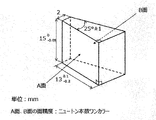
- FIG. 2 is a perspective view showing a glass shape processed when measuring the refractive index of the chalcogenide glass produced in the examples.
- the production method of the present embodiment is a method for producing chalcogenide glass, which comprises a mechanochemical treatment step for amorphizing at least a part of sulfur in the raw material and a melting step for melting the raw material reaction product.
- the raw material sulfur used in the production method of the present embodiment is preferably purified before being subjected to the mechanochemical treatment step.
- the purification method is not limited, but a method of heat-treating a mixture of sulfur and chloride is preferable from the viewpoint of eliminating the need for complicated equipment and enabling mass production.
- chlorine in the chloride reacts with water contained in sulfur and impurities derived from water, and water and impurities derived from water are removed from sulfur.
- the presence of water and moisture-derived impurities, especially oxygen-containing compounds, in sulfur causes absorption due to oxygen when the chalcogenide glass is formed, resulting in low transmittance.
- the chloride is preferably a component that does not significantly affect the characteristics of the lens even if it remains in the chalcogenide glass.
- chlorides include alkali halides such as cesium chloride (CsCl), sodium chloride (NaCl), potassium chloride (KCl) and lithium chloride (LiCl), magnesium chloride (MgCl 2 ), copper chloride (II) (CuCl 2 ). ), Silver chloride (AgCl) and the like, and cesium chloride is preferable from the viewpoint of increasing the refractive index of glass.
- the amount of chloride added to sulfur differs between monovalent chloride and divalent chloride.
- monovalent chloride in mol%, 0.1% or more is preferable, 0.2% or more is more preferable, 0.4% or more is further preferable, 0.6% or more is particularly preferable, and 0. 8% or more is most preferable.
- the amount of chloride is preferably 3% or less, more preferably 2.5% or less, further preferably 2% or less, particularly preferably 1.5% or less, and most preferably 1.2% or less.
- divalent chloride in terms of mol%, 0.05% or more is preferable, 0.1% or more is more preferable, 0.2% or more is further preferable, 0.3% or more is particularly preferable, and 0. 4% or more is most preferable.
- the amount of chloride is preferably 1.5% or less, more preferably 1.25% or less, further preferably 1% or less, particularly preferably 0.75% or less, and most preferably 0.6% or less.
- the heat treatment is preferably performed by putting a mixture of sulfur and chloride in a heat-resistant container and heating it in a dryer, an oven, an incubator, a hot plate, an electric furnace, or the like.
- the temperature of the heat treatment is not limited as long as it is at least the temperature at which sulfur begins to melt, and is preferably 110 ° C. or higher, more preferably 113 ° C. or higher, further preferably 115 ° C. or higher, particularly preferably 120 ° C. or higher, and particularly preferably 130 ° C. or higher. Is the most preferable.
- the heat treatment temperature is preferably 450 ° C. or lower, more preferably 300 ° C. or lower, further preferably 200 ° C. or lower, particularly preferably 160 ° C. or lower, and most preferably 150 ° C. or lower.
- the rate of temperature rise to the maximum temperature is better as long as the heat-resistant container is not damaged by thermal stress.
- the holding time at the maximum temperature is preferably 1 hour or more, more preferably 2 hours or more, further preferably 3 hours or more, particularly preferably 4 hours or more, and most preferably 5 hours or more.
- the holding time is preferably 24 hours or less, more preferably 18 hours or less, further preferably 12 hours or less, particularly preferably 10 hours or less, and most preferably 8 hours or less.
- the heat treatment is performed in the atmosphere of at least one of the inert gas and the reducing gas.
- the inert gas include nitrogen gas, rare gas such as helium (He), neon (Ne), and argon (Ar).
- the reducing gas include halogen gases of fluorine (F), chlorine (Cl), bromine (Br) and iodine (I).
- the heat treatment may be performed in an environment in which at least one of carbon and aluminum is present.
- carbon and aluminum as oxygen getters, the partial pressure of oxygen in the atmosphere can be extremely reduced.
- a heat-resistant container may be placed in a carbon container with a lid.
- aluminum for example, wrapping a heat-resistant container with aluminum foil can be mentioned.
- the stirring means is not limited, and examples thereof include stirring by a stirrer, stirring by shaking a container containing sulfur, stirring by bubbling in which at least one of an inert gas and a reducing gas is blown into molten sulfur.
- heating may be stopped and natural cooling may be performed while the product is left at room temperature, or forced cooling such as water cooling may be performed.
- the water content of the purified sulfur is preferably 100 ppm or less, more preferably 70 ppm or less, further preferably 50 ppm or less, particularly preferably 30 ppm or less, and most preferably 10 ppm or less.
- ppm in this specification means mass ppm, and is synonymous with weight ppm.
- the Cl content in the purified sulfur is preferably 0.1% or more, more preferably 0.2% or more, further preferably 0.4% or more, and particularly preferably 0.6% or more in terms of mol%. , 0.8% or more is most preferable.
- the Cl content is preferably 3% or less, more preferably 2.5% or less, further preferably 2% or less, particularly preferably 1.5% or less, and most preferably 1.2% or less.
- the Cs content in the purified sulfur is preferably 0.1% or more, more preferably 0.2% or more, and 0.4% in terms of mol%.
- the above is more preferable, 0.6% or more is particularly preferable, and 0.8% or more is most preferable.
- the Cs content is preferably 3% or less, more preferably 2.5% or less, further preferably 2% or less, particularly preferably 1.5% or less, and most preferably 1.2% or less.
- the purified sulfur obtained by the above method can be used as the raw material sulfur for the method for producing chalcogenide glass in the open system according to the present embodiment, and can be used as the raw material for the method for producing chalcogenide glass in the conventional closed system. It can also be used as sulfur.
- ⁇ Mechanochemical treatment process In this embodiment, at least a part of sulfur is amorphized by mechanochemical treatment. Vapor pressure can be suppressed by amorphizing sulfur from the crystalline state.
- the reason is considered to be as follows. Sulfur in the crystalline state is called ⁇ -sulfur near room temperature, and has an eight-membered ring structure in which sulfur atoms are arranged in a crown shape. Sulfur shifts from ⁇ -sulfur, which has a stable structure at room temperature, to ⁇ -sulfur ⁇ ⁇ -sulfur ⁇ ⁇ -sulfur as the temperature rises.
- amorphization is performed by mechanochemical treatment.
- heat treatment and the like sulfur reacts with other elements, so it is difficult to avoid the formation of sulfide crystals with a high melting point.
- the mechanochemical treatment the mechanical energy of the ball instantly raises the temperature to a high temperature locally and cools the ball instantly. Therefore, the mechanochemical treatment has a feature that it is easily amorphized as compared with heat treatment and the like.
- Mechanochemical treatment is a method of causing a mechanochemical phenomenon by giving mechanical energy to a substance.
- mechanical energy When mechanical energy is continuously applied to a substance, the bonding state of the substance changes and is activated, the crystal structure changes, and the surface of the substance is activated, causing a chemical reaction with surrounding substances. Yes, such a phenomenon is called a mechanochemical phenomenon.
- Mechanical energies that can cause mechanochemical phenomena include impact, compression, shear, shear stress, friction, abrasion and the like.
- the main purpose of the mechanochemical treatment is to amorphize sulfur, and the treatment may be carried out in a state of being mixed with all or a part of raw materials other than sulfur, or may be carried out only with sulfur. Therefore, all or part of the raw materials other than sulfur may be mixed in the next step. From the viewpoint of simplifying the work of each step, it is preferable to perform mechanochemical treatment in a state where all of the raw materials other than sulfur and sulfur are mixed.
- raw materials other than sulfur include components that form the skeleton of glass and impart various functions to glass, and include, for example, germanium (Ge), gallium (Ga), antimony (Sb), tin (Sn), and the like.
- One or more selected from the group consisting of selenium (Se) and tellurium (Te) is used.
- one or more selected from bismuth (Bi), tungsten (W), molybdenum (Mo), carbon (C), and titanium (Ti) may be used.
- the state of the other raw material may be a simple substance of the above element, a compound of the above element, or a mixture of the simple substance and the compound.
- Examples of the compound include Sb 2 S 3 , GeS 2 , SnS, Bi 2 S 3 , WS 2 , MoS 2 and the like.
- the properties of the other raw materials may be powdery, scaly, granular, or bulky.
- Ga having a low melting point of about 30 ° C. is preferably in a bulk form. That is, when the mechanochemical treatment is performed in a state of being mixed with a raw material other than sulfur, sulfur and germanium (Ge), gallium (Ga), antimony (Sb), tin (Sn), and selenium (Se) are used.
- a mixture containing one or more elemental substances selected from the group consisting of and tellurium (Te) and at least one of one or more compounds containing the element is mechanochemically treated to treat at least a part of sulfur. Amorphized.
- Chalcogen elements S, Se and Te are components that form a glass skeleton.
- the total content of S + Se + Te in the raw material mixture (total content of S, Se and Te) is preferably 50% or more, more preferably 53% or more, further preferably 55% or more, and 57% or more in terms of mol%. Especially preferable.
- the content is preferably 85% or less, more preferably 80% or less, further preferably 75% or less, and particularly preferably 72% or less.
- Ge and Ga are components that form the skeleton of glass and contribute to the improvement of weather resistance.
- the total content of Ge + Ga is preferably 4% or more, more preferably 5% or more, further preferably 6% or more, and particularly preferably 7% or more in terms of molar%.
- the content is preferably 30% or less, more preferably 25% or less, further preferably 23% or less, and particularly preferably 20% or less.
- Sb is a component that forms the skeleton of glass and improves weather resistance and mechanical strength.
- the content of Sb is preferably 5% or more, more preferably 10% or more, further preferably 15% or more, particularly preferably 20% or more, and most preferably 25% or more in terms of mol%.
- the Sb content is preferably 40% or less, more preferably 36% or less, further preferably 34% or less, particularly preferably 32% or less, and most preferably 30% or less.
- Sn is a component that forms the skeleton of glass and contributes to the improvement of weather resistance.
- Sn may not be contained, but the content of Sn when it is contained is preferably 0.5% or more, more preferably 1% or more, further preferably 1.5% or more, and 2% in terms of mol%. The above is particularly preferable.
- the Sn content is preferably 20% or less, more preferably 15% or less, further preferably 10% or less, particularly preferably 8% or less, and most preferably 5% or less.
- Bi is a component that improves the weather resistance, meltability, and refractive index of glass and shifts the absorption edge in the infrared transmission spectrum to the long wavelength side.
- the Bi content is preferably 20% or less, more preferably 15% or less, further preferably 10% or less, particularly preferably 8% or less, and most preferably 5% or less in terms of molar%.
- W and Mo are components that increase the refractive index of glass, and are preferably contained. On the other hand, if W and Mo are contained in a large amount, the glass may be destabilized and crystallized. Therefore, the total content of W + Mo is preferably 6% or less, more preferably 4% or less, further preferably 3% or less, particularly preferably 2% or less, and most preferably 1% or less in terms of molar%.
- C is a component that suppresses infrared absorption caused by impurities oxygen and hydrogen in glass and contributes to improvement of infrared transmittance. C may destabilize the glass and crystallize it.
- C may not be contained, but the content of C when it is contained is preferably 0.0008% or more, more preferably 0.002% or more, still more preferably 0.004% or more in terms of weight%. , 0.008% or more is particularly preferable.
- the C content is preferably 0.2% or less, more preferably 0.16% or less, further preferably 0.12% or less, particularly preferably 0.08% or less, and most preferably 0.04% or less. preferable.
- C may be added in powder form, rough form, bulk or the like, or may be added as a component of the pulverizing aid described later.
- the chemical formula of toluene used as a pulverizing aid described later is C 7 H 8 , which contains carbon, and a desired carbon can be added by adjusting the amount of toluene added.
- Ti is a component that suppresses infrared absorption caused by impurities oxygen and hydrogen in glass and contributes to improvement of infrared transmittance, and is preferably contained.
- the Ti content is preferably 0.001% or more, more preferably 0.002% or more, further preferably 0.005% or more, particularly preferably 0.01% or more, and 0.02% or more in terms of weight%. Is the most preferable.
- the Ti content is preferably 0.5% or less, more preferably 0.4% or less, further preferably 0.3% or less, particularly preferably 0.2% or less, and most preferably 0.1% or less. preferable.
- the raw material mixture may contain optional components in addition to sulfur and other raw materials, if necessary.
- optional component include Cs, Cl, Si, Cr, Mn, Fe, Co and Ni.
- Cs is a component that improves the meltability of glass and makes it possible to adjust the refractive index.
- Cs may not be contained, but when it is contained, the content of Cs is preferably 0.1% or more, more preferably 0.2% or more, further preferably 0.3% or more, and 0. 0.4% or more is particularly preferable.
- the Cs content is preferably 20% or less, more preferably 15% or less, further preferably 10% or less, particularly preferably 5% or less, and most preferably 3% or less.
- Cs derived from cesium chloride used in the purification of sulfur may be contained as it is.
- Cl is a component that removes water and compounds derived from water, or increases the transmittance of chalcogenide glass on the long wavelength side.
- Cl may not be contained, but when it is contained, the Cl content is preferably 0.08% or more, more preferably 0.16% or more, further preferably 0.24% or more, and 0. .32% or more is particularly preferable.
- the Cl content is preferably 16% or less, more preferably 12% or less, further preferably 8% or less, particularly preferably 4% or less, and most preferably 2.4% or less.
- Cl derived from cesium chloride used in the purification of sulfur may be contained as it is.
- Si, Cr, Mn, Fe, Co and Ni which are elements that can be mixed in the process, as much as possible, but it may be mixed to some extent.
- the total content of Si + Cr + Mn + Fe + Co + Ni is preferably 0.5% or less, more preferably 0.3% or less, further preferably 0.15% or less, particularly preferably 0.1% or less, and 0.05% or less in terms of mol%. % Or less is most preferable.
- the mechanochemical treatment conditions may be wet or dry.
- a pulverizing aid for the purpose of preventing the sample from sticking to the container or lid to be treated with mechanochemical treatment.
- a crushing aid it is possible to reduce the surface energy of the new surface, which is the new surface when the raw material or reactant is crushed, and to prevent the raw material or reactant from sticking to the container or the like. Carry.
- the presence of the new surface easily promotes the mechanochemical reaction, it is preferable to minimize the amount of the pulverizing aid added.
- the pulverizing aid preferably has less water and oxygen, and is not particularly limited, and examples thereof include aromatic compounds (toluene, xylene, benzene, etc.), cyclohexane, alcohol, and ether.
- aromatic compounds toluene, xylene, benzene, etc.
- cyclohexane alcohol
- alcohols and ethers in the general formula C n H 2n + 2 O, it is preferable that n is large, for example, n is 3 or more.
- these pulverizing aids may be used alone, or two or more kinds may be used in combination.
- the amount of the pulverizing aid to be blended is 0, in terms of weight% of the total weight of the sample treated with mechanochemical, from the viewpoint of promoting the mechanochemical reaction while suppressing the sticking of the sample to the container or lid. 01% or more is preferable, 0.05% or more is more preferable, 0.1% or more is further preferable, 0.2% or more is particularly preferable, and 0.3% or more is most preferable.
- the blending amount is preferably 5% or less, more preferably 3% or less, further preferably 1% or less, particularly preferably 0.7% or less, and most preferably 0.5% or less.
- the raw material is dispersed in a solvent and pulverized.
- the solvent preferably has a small amount of water and oxygen, and is not particularly limited, and examples thereof include aromatic compounds (toluene, xylene, benzene, etc.), cyclohexane, alcohol, and ether.
- aromatic compounds toluene, xylene, benzene, etc.
- cyclohexane alcohol
- alcohols and ethers in the general formula C n H 2n + 2 O, it is preferable that n is large, for example, n is 3 or more. Further, these solvents may be used alone, or two or more kinds may be used in combination.
- the apparatus used for the mechanochemical treatment is not particularly limited as long as a desired mechanochemical reactant can be obtained.
- crushers and dispersers such as jet mills and attritors.
- planetary ball mills and attritors are preferable because they can be processed in a relatively short time, and attritors are particularly preferable from the viewpoint of productivity. In the attritor, it is better to premix because a large amount of raw material is directly rotated at high speed, which puts a load on the machine.
- the premix is a process of simply mixing the raw materials at a rotation speed lower than the rotation speed at the time of performing the mechanochemical treatment.
- the material of the ball of the apparatus used for the mechanochemical treatment is not particularly limited, but a material having a large specific gravity is preferable, and the specific gravity is preferably 5 or more, more preferably 7 or more, further preferably 10 or more, and 12 or more. Is particularly preferable, and 14 or more is most preferable.
- a material having a large specific gravity is used, the mechanical energy is increased, so that the mechanochemical treatment can be performed in a short time.
- Examples of such a material include non-oxide compounds or alloys and intermetallic compounds, and preferably cemented carbides such as tungsten carbide / cobalt-based cemented carbides.
- the container of the device used for the mechanochemical treatment and the lid of the container are preferably made of the same material as the ball. If the materials are different, the brittle material side may be scraped almost unilaterally due to wear or the like.
- the spindle with the arm is rotated at high speed to rotate the ball, and the container, the lid of the container, and the arm are preferably made of the same material as the ball.
- the spindle has a small load due to the collision of the balls, and the same material as the balls or only the surface of a metal such as steel or stainless steel may be coated with the same material as the balls.
- the components mixed from balls, containers, etc. may be contained in the above-mentioned component range.
- the content of tungsten (W) is preferably 6% or less, more preferably 4% or less in terms of molar%. % Or less is more preferable, 2% or less is particularly preferable, and 1% or less is most preferable.
- the content of cobalt (Co) is preferably 0.5% or less, more preferably 0.3% or less, further preferably 0.15% or less, and particularly preferably 0.1% or less in terms of molar%. Most preferably 0.05% or less.
- the sealing material for the main shaft used for the vertical attritor or the like has high pressure resistance and excellent chemical resistance.
- the pressure resistance of the sealing material is preferably designed to withstand the pressure of the gas generated from the pulverizing aid and the pulverizing solvent.
- Examples of chemical resistant materials include fluorine-based rubber and silicone rubber.
- the rotation speed is preferably 200 ppm or more, more preferably 220 ppm or more, further preferably 230 ppm or more, particularly preferably 240 ppm or more, and most preferably 250 ppm or more in both the dry treatment and the wet treatment.
- the rotation speed is preferably 1200 ppm or less, more preferably 800 ppm or less, further preferably 600 ppm or less, particularly preferably 500 ppm or less, and most preferably 400 ppm or less.
- the direction of rotation may be one direction or may be reversed as appropriate. Further, it is preferable that the container itself rotates.
- the holding time is preferably 1 hour or more, more preferably 2 hours or more, further preferably 3 hours or more, particularly preferably 4 hours or more, and most preferably 5 hours or more.
- the holding time is preferably 100 hours or less, more preferably 50 hours or less, further preferably 30 hours or less, particularly preferably 20 hours or less, and most preferably 12 hours or less.
- the volume of the container is preferably 10 mL or more, more preferably 40 mL or more, further preferably 100 mL or more, particularly preferably 200 mL or more, and most preferably 250 mL or more.
- the capacity is preferably 30 L or less, more preferably 10 L or less, further preferably 5 L or less, particularly preferably 2.5 L or less, and most preferably 1 L or less.
- the rotation speed is preferably 200 ppm or more, more preferably 250 ppm or more, further preferably 300 ppm or more, particularly preferably 330 ppm or more, and most preferably 360 ppm or more in both the dry treatment and the wet treatment.
- the rotation speed is preferably 600 ppm or less, more preferably 500 ppm or less, further preferably 460 ppm or less, particularly preferably 440 ppm or less, and most preferably 420 ppm or less.
- the direction of rotation may be one direction or may be reversed as appropriate.
- the holding time is preferably 30 minutes or more, more preferably 1 hour or more, further preferably 2 hours or more, particularly preferably 3 hours or more, and most preferably 4 hours or more.
- the holding time is preferably 100 hours or less, more preferably 50 hours or less, further preferably 30 hours or less, particularly preferably 20 hours or less, and most preferably 15 hours or less.
- the container volume is preferably 500 mL or more, more preferably 1 L or more, further preferably 2 L or more, particularly preferably 3 L or more, and most preferably 4 L or more.
- the container capacity is preferably 500 L or less, more preferably 150 L or less, further preferably 50 L or less, particularly preferably 25 L or less, and most preferably 15 L or less. Substantially, it may be about 5L to 10L.
- the container volume is preferably 500 mL or more, more preferably 1 L or more, further preferably 2 L or more, particularly preferably 3 L or more, and most preferably 4 L or more.
- the container capacity is preferably 1200 L or less, more preferably 500 L or less, further preferably 300 L or less, particularly preferably 100 L or less, and most preferably 70 L or less. Substantially, it may be about 5L to 30L.
- the mechanochemical treatment is preferably carried out in an atmosphere containing at least one of an inert gas and a reducing gas.
- the at least one of the inert gas and the reducing gas preferably contains at least one of nitrogen, a rare gas and a halogen.
- first peak intensity of sulfur / (first peak intensity of Sb).
- IR intensity ratio
- the intensity ratio IR after the mechanochemical treatment is preferably 0.30 or less, more preferably 0.25 or less, further preferably 0.20 or less, particularly preferably 0.15 or less, and most preferably 0.12 or less.
- the sulfur obtained by the above method which is at least partially amorphized, can be used as the raw material sulfur for the method for producing chalcogenide glass in the open system according to the present embodiment, and the chalcogenide in the conventional closed system. It can also be used as a raw material sulfur for glass production methods.
- chalcogenide glass (cullet) is obtained by stirring and melting a raw material containing sulfur, which is at least partially amorphized by the above-mentioned mechanochemical treatment, and then cooling the raw material.
- raw materials other than the above-mentioned sulfur may be added as elemental substances or compounds to form a mixture in this melting step.
- the mixed reaction product may be obtained by re-adding the elemental substance or the compound in the melting step.
- a method is preferable in which the raw material mixture is placed in a heat-resistant container, the temperature is raised in a heating furnace, the raw material is stirred while being held at a desired temperature for a certain period of time until it is melted, and then cooled.
- the material of the heat-resistant container include quartz glass and carbon.
- the heating temperature is preferably 500 ° C. or higher, more preferably 540 ° C. or higher, further preferably 580 ° C. or higher, particularly preferably 620 ° C. or higher, and most preferably 660 ° C. or higher.
- the heating temperature is preferably 900 ° C. or lower, more preferably 850 ° C. or lower, further preferably 800 ° C.
- the stirring method include stirring by shaking the entire heat-resistant container, stirring by a stirrer, and stirring by bubbling.
- the holding time after heating to a desired temperature is preferably 10 minutes or more, more preferably 30 minutes or more, further preferably 1 hour or more, particularly preferably 2 hours or more, and most preferably 3 hours or more.
- the holding time is preferably 15 hours or less, more preferably 12 hours or less, further preferably 9 hours or less, particularly preferably 7 hours or less, and most preferably 5 hours or less.
- the heating rate to the desired heating temperature is 10 ° C./10 ° C. from the viewpoint that it is preferable to generate a large amount of Sb 2 S 3 which is relatively easy to melt in order to suppress the formation of Ga 2 S 3 which is difficult to melt at 1000 ° C. or lower.
- Time or more is preferable, 50 ° C./hour or more is more preferable, 80 ° C./hour or more is further preferable, 100 ° C./hour or more is particularly preferable, and 110 ° C./hour or more is most preferable.
- the rate of temperature rise is preferably 600 ° C./hour or less, more preferably 300 ° C./hour or less, further preferably 200 ° C./hour or less, particularly preferably 150 ° C./hour or less, and most preferably 130 ° C./hour or less. ..
- the temperature rise rate is as fast as the temperature range in which the desired crystals are formed.
- the temperature may be raised at 600 ° C./hour at room temperature to 200 ° C.
- the temperature may be raised at 60 ° C./hour at room temperature to 200 ° C.
- the heating rate may be adjusted as appropriate according to the purpose.
- the temperature lowering rate to 500 ° C. is preferably 150 ° C./hour or more, more preferably 190 ° C./hour or more, further preferably 220 ° C./hour or more, particularly preferably 250 ° C./hour or more, and 280 ° C./hour or more. Most preferred.
- the temperature lowering rate is preferably 450 ° C./hour or less, more preferably 420 ° C./hour or less, further preferably 380 ° C./hour or less, particularly preferably 350 ° C./hour or less, and most preferably 320 ° C./hour or less.
- the cullet of chalcogenide glass is put into an electric furnace or the like kept at a temperature of slow cooling. This is to cool the vicinity of the crystallization temperature as quickly as possible in order to avoid crystallization.
- the strain in the cullet can be removed by slowly cooling.
- the temperature for slow cooling is preferably 150 ° C. or higher, more preferably 170 ° C. or higher, further preferably 180 ° C. or higher, particularly preferably 190 ° C. or higher, and most preferably 200 ° C. or higher.
- the temperature for slow cooling is preferably 300 ° C. or lower, more preferably 280 ° C. or lower, further preferably 260 ° C. or lower, particularly preferably 240 ° C.
- the time for holding at the temperature of slow cooling is preferably 1 hour or more, more preferably 1.5 hours or more, further preferably 2 hours or more, particularly preferably 2.5 hours or more, and most preferably 3 hours or more.
- the holding time is preferably 15 hours or less, more preferably 12 hours or less, further preferably 9 hours or less, particularly preferably 7 hours or less, and most preferably 5 hours or less.
- the temperature lowering rate from the slow cooling temperature to room temperature is preferably 5 ° C./hour or more, more preferably 10 ° C./hour or more, further preferably 15 ° C./hour or more, particularly preferably 20 ° C./hour or more, and 25 ° C./hour or more. More than an hour is most preferable.
- the temperature lowering rate is preferably 60 ° C./hour or less, more preferably 50 ° C./hour or less, further preferably 45 ° C./hour or less, particularly preferably 40 ° C./hour or less, and most preferably 35 ° C./hour or less.
- cooling may be performed together with the heat-resistant container, or a hole may be provided in a part of the heat-resistant container and the molten glass may be extracted from the hole.
- the melting step is preferably carried out in an atmosphere containing at least one of an inert gas and a reducing gas.
- At least one of the inert gas and the reducing gas preferably contains at least one of nitrogen, a rare gas and a halogen.
- the chalcogenide glass obtained in the melting step has various properties such as a desired composition and a refractive index according to the application, it can be applied as it is to the desired application. Further, the chalcogenide glass obtained in the melting step can be subjected to a second melting step described later, if necessary.
- the second melting step is carried out for the purpose of homogenizing the chalcogenide glass into desired properties and removing impurities.
- the desired properties mean the composition and the refractive index.
- the raw material glass containing the chalcogenide glass obtained in the melting step is melted while feeding at least one of an inert gas and a reducing gas, and then cooled to obtain a chalcogenide glass.
- the raw material glass not only the chalcogenide glass obtained in the above-mentioned melting step, but also one or more kinds selected from such chalcogenide glass and chalcogenide glass obtained by other methods can be used.
- a chalcogenide glass having a desired composition a plurality of chalcogenide glasses having different compositions can be used in appropriate combinations. Further, if a chalcogenide glass having a desired composition is finally obtained, a raw material other than glass can be used.
- Raw materials other than glass include metals such as Ge, Ga, Sb, Sn, Bi, W, and Mo, GeS 2 , Ga 2 S 3 , Sb 2 S 3 , SnS, Bi 2 S 3 , WS 2 , MoS 2, and the like. Sulfide is mentioned.
- a melting method a method in which the raw material mixture is placed in a heat-resistant container, the temperature is raised in a heating furnace, the raw material is held at a desired temperature for a certain period of time until the raw material is completely melted, and then cooled is preferable.
- the material of the heat-resistant container include quartz glass and carbon.
- the heating temperature is preferably 550 ° C. or higher, more preferably 600 ° C. or higher, further preferably 650 ° C. or higher, particularly preferably 670 ° C. or higher, and most preferably 700 ° C. or higher.
- the heating temperature is preferably 900 ° C. or lower, more preferably 850 ° C. or lower, further preferably 800 ° C.
- the holding time after heating to a desired temperature is preferably 10 minutes or more, more preferably 20 minutes or more, still more preferably 30 minutes or more.
- the holding time is preferably 12 hours or less, more preferably 6 hours or less, further preferably 4 hours or less, particularly preferably 2 hours or less, and most preferably 1 hour or less.
- the glass is melted while feeding at least one of the inert gas and the reducing gas.
- the inert gas By sending the inert gas, it is possible to prevent oxygen and water from being mixed into the molten glass. Further, by sending a reducing gas, it is possible to remove water in the glass and impurities derived from the water.
- the second melting step is carried out in an atmosphere of at least one of an inert gas and a reducing gas. Further, preferably, at least one of the inert gas and the reducing gas is melted while bubbling into the molten glass. By bubbling the gas, the molten glass can be agitated, so that the glass becomes homogeneous.
- At least one of the inert gas and the reducing gas preferably contains at least one of nitrogen, a rare gas and a halogen.
- the rare gases helium (He) is preferable. He is a gas that easily diffuses, and by sending and dissolving it in the melt, the dissolved He gas diffuses and flows into the bubbles in the glass to grow the bubbles. Since the ascent rate increases in proportion to the square of the radius due to the expansion of the bubbles, there is an effect of reducing the residual bubbles in the glass. Since He is expensive, it is preferable to mix it with inexpensive nitrogen gas.
- the melting is performed while stirring by bubbling, stirrer, shaking, etc. by ventilation of at least one of the inert gas and the reducing gas.
- the stirrer is preferably made of quartz glass or a metal stirrer whose surface is coated with quartz glass.
- the rotation speed of the stirrer is preferably 10 rpm or more, more preferably 15 rpm or more, further preferably 20 rpm or more, particularly preferably 30 rpm or more, and most preferably 40 rpm or more.
- the rotation speed is preferably 100 rpm or less, more preferably 80 rpm or less, further preferably 70 rpm or less, particularly preferably 60 rpm or less, and most preferably 50 rpm or less.
- the molten glass may be recovered by flowing down from the lower part of the electric furnace, or a part of the molten glass in the electric furnace may be naturally cooled or forcibly cooled.
- Molten glass has a temperature range in which it is easy to crystallize, and if it is slowly cooled in this temperature range, crystals will precipitate, so it is better to cool it as quickly as possible.
- the viscosity of the molten glass is increased, which makes it difficult to allow the molten glass to flow down.
- the temperature lowering rate is preferably 1000 ° C./hour or more, more preferably 2000 ° C./hour or more, further preferably 3000 ° C./hour or more, and 4000 ° C./hour or more in the temperature range of 480 ° C. to 380 ° C. °C / hour or more is particularly preferable, and 4500 ° C./hour or more is most preferable.
- the temperature lowering rate is preferably 10000 ° C./hour or less, more preferably 8000 ° C./hour or less, further preferably 7000 ° C./hour or less, particularly preferably 6000 ° C./hour or less, and most preferably 5000 ° C./hour or less.
- the second melting process can be performed in an open environment because there is little risk of explosion. This has advantages such as high safety, no need for complicated equipment, reusable jigs, and mass production.
- chalcogenide glass that has been purified and controlled to a desired composition can be obtained.
- a glass molded body can be produced by a molding means such as mold press molding.
- the ingot of chalcogenide glass may be processed by cutting, polishing or the like to produce a preform according to the application.
- the above-mentioned melting step or the second melting step when cooling the glass that has been melted, it may be cooled while forming a preform according to the application.
- Examples of such a method include a method of directly dropping molten glass directly onto a desired mold in an atmosphere containing at least one of an inert gas and a reducing gas to form a preform.
- a method of forming a spherical preform using the surface tension of the molten glass is also possible by forming droplets of the molten glass and cooling while maintaining the shape.
- a method of forming droplets when molten glass is discharged from a nozzle at the end through a pipe, a molten glass liquid pool is formed at the tip of the nozzle, and when the liquid pool is dropped, it is smoothed by the surface tension of the droplets. Spherical shape can be obtained.
- a method of pouring molten glass into a mold provided with a frame for regulating the outer diameter dimension to form the liquid drops can be considered.
- an inert gas examples include nitrogen gas, helium (He), neon (Ne), and argon (rare gas such as Ar.
- the reducing gas examples include fluorine (F), chlorine (Cl), bromine (Br), and iodine. Examples thereof include halogens such as (I).
- the obtained spherical shape preform can be used as a preform for an optical element such as a lens without further processing. Since chalcogenide glass is expensive, soft and easily scratched, the processing yield may be low, but according to the above method, a preform can be efficiently formed.
- the chalcogenide glass in the present embodiment contains sulfur and may further contain at least one of Se and Te.
- the chalcogen elements S, Se and Te are components that form the glass skeleton.
- the total content of S + Se + Te (total content of S, Se and Te) is preferably 50% or more, more preferably 53% or more, further preferably 55% or more, and particularly preferably 57% or more in molar% representation. ..
- the total content is preferably 85% or less, more preferably 80% or less, further preferably 75% or less, and particularly preferably 72% or less.
- Ge and Ga are components that form the skeleton of glass and contribute to the improvement of weather resistance, and are preferably contained.
- the total content of Ge + Ga (total content of Ge and Ga) is preferably 4% or more, more preferably 5% or more, further preferably 6% or more, and particularly preferably 7% or more in terms of molar%.
- the total content is preferably 30% or less, more preferably 25% or less, further preferably 23% or less, and particularly preferably 20% or less.
- Sb is a component that forms a glass skeleton and improves weather resistance and mechanical strength, and is preferably contained.
- the content of Sb is preferably 5% or more, more preferably 10% or more, further preferably 15% or more, particularly preferably 20% or more, and most preferably 25% or more in terms of molar%.
- the Sb content is preferably 40% or less, more preferably 36% or less, further preferably 34% or less, particularly preferably 32% or less, and most preferably 30% or less.
- Sn is a component that forms a glass skeleton and contributes to improvement of weather resistance, and is preferably contained.
- Sb may not be contained, the content of Sb when it is contained is preferably 0.5% or more, more preferably 1% or more, further preferably 1.5% or more, and 2% in terms of mol%. The above is particularly preferable.
- the Sb content is preferably 20% or less, more preferably 15% or less, further preferably 10% or less, particularly preferably 8% or less, and most preferably 5% or less.
- Bi is a component that improves the weather resistance, meltability, and refractive index of glass and shifts the absorption edge in the infrared transmission spectrum to the long wavelength side.
- the Bi content is preferably 20% or less, more preferably 15% or less, further preferably 10% or less, particularly preferably 8% or less, and most preferably 5% or less in terms of molar%.
- W and Mo are components that increase the refractive index of glass, and are preferably contained. On the other hand, if W and Mo are contained in a large amount, the glass may be destabilized and crystallized. Therefore, the total content of W + Mo is preferably 6% or less, more preferably 4% or less, further preferably 3% or less, particularly preferably 2% or less, and most preferably 1% or less in terms of molar%.
- Ti is a component that suppresses infrared absorption caused by impurities oxygen and hydrogen in glass and contributes to improvement of infrared transmittance, and is preferably contained.
- the Ti content is preferably 0.001% or more, more preferably 0.002% or more, further preferably 0.005% or more, particularly preferably 0.01% or more, and 0.02% in terms of weight%. The above is the most preferable.
- the Ti content is preferably 0.5% or less, more preferably 0.4% or less, further preferably 0.3% or less, particularly preferably 0.2% or less, and most preferably 0.1% or less. ..
- C is a component that suppresses infrared absorption caused by impurities oxygen and hydrogen in glass and contributes to improvement of infrared transmittance. C may destabilize the glass and crystallize it. C may not be contained, but the content of C when it is contained is preferably 0.0008% or more, more preferably 0.002% or more, still more preferably 0.004% or more in terms of weight%. 0.008% or more is particularly preferable.
- the C content is preferably 0.2% or less, more preferably 0.16% or less, further preferably 0.12% or less, particularly preferably 0.08% or less, and most preferably 0.04% or less.
- Cs is a component that improves the meltability of glass and makes it possible to adjust the refractive index, and is preferably contained. However, it is also a component that lowers the weather resistance of glass and lowers the glass transition point.
- Cs may not be contained, but when it is contained, the content of Cs is preferably 0.1% or more, more preferably 0.2% or more, further preferably 0.3% or more, and 0. 4% or more is particularly preferable.
- the Cs content is preferably 20% or less, more preferably 15% or less, further preferably 10% or less, particularly preferably 5% or less, and most preferably 3% or less.
- Cs derived from cesium chloride used in the purification of sulfur may be contained as it is.
- Cl is a component that removes water and compounds derived from water, or increases the transmittance of chalcogenide glass on the long wavelength side.
- Cl may not be contained, but when it is contained, the Cl content is preferably 0.08% or more, more preferably 0.16% or more, further preferably 0.24% or more, and 0. .32% or more is particularly preferable.
- the Cl content is preferably 16% or less, more preferably 12% or less, further preferably 8% or less, particularly preferably 4% or less, and most preferably 2.4% or less.
- Cl derived from cesium chloride used in the purification of sulfur may be contained as it is.
- Si, Cr, Mn, Fe, Co and Ni which are elements that can be mixed in the process, as much as possible, but it may be mixed to some extent.
- the total content of Si + Cr + Mn + Fe + Co + Ni is preferably 0.5% or less, more preferably 0.3% or less, further preferably 0.15% or less, particularly preferably 0.1% or less, and 0.05% or less in terms of mol%. % Or less is most preferable.
- arsenic (As), cadmium (Cd), thallium (Tl), and lead (Pb), which are toxic substances, are substantially not contained.
- substantially free means that unavoidable impurities are excluded, and specifically, in the present embodiment, the content of each of As, Cd, Tl, and Pb is 5000 ppm or less in the glass.
- the chalcogenide glass in the present embodiment is amorphized to the extent that no crystal peak is observed by X-ray diffraction.
- the crystals are 0.1 mol% or less. Nano-level crystals may be included as long as the optical characteristics are not affected.
- the chalcogenide glass in the present embodiment has a water content of preferably 50 ppm or less, more preferably 30 ppm or less, further preferably 20 ppm or less, particularly preferably 10 ppm or less, and most preferably 5 ppm or less.
- the internal transmittance of the chalcogenide glass in the present embodiment at a wavelength of 8 ⁇ m to 12 ⁇ m is 2 mm
- the internal transmittance is preferably 70% or more, more preferably 75% or more, still more preferably 80% or more, and particularly preferably 85%. That is all.
- the internal transmittance can be calculated by the following. A sample 1 having a thickness of 1 mm and a sample 2 having a thickness of 5 mm are prepared, and the transmittance T including the surface reflection loss is measured by infrared spectroscopy (FT-IR).
- the internal transmittance ⁇ is calculated from the following equation 1.
- the specific gravity of the chalcogenide glass in the present embodiment is preferably 5.00 or less, more preferably 4.80 or less, further preferably 4.60 or less, particularly preferably 4.50 or less, and most preferably 4.40 or less.
- the weight of the optical system can be reduced by the range in which the specific gravity is applied. Further, since the lighter the optical system, the more preferable it is, the lower limit of the specific gravity is not particularly limited.
- the Abbe number of the chalcogenide glass in the present embodiment is preferably 20 or more, more preferably 25 or more, further preferably 28 or more, and particularly preferably 30 or more.
- the Abbe number is preferably 250 or less, more preferably 200 or less, further preferably 150 or less, and particularly preferably 130 or less.
- the temperature was lowered to room temperature with the heater turned off to obtain about 1030 g of yellow lumps.
- the yellow mass was roughly pulverized in nitrogen with a stainless steel crusher so as to have a size of 1 mm or less to obtain 1025 g of a purified product (hereinafter referred to as refined product “A1”).
- the super steel lid was closed with a screw.
- This container with a lid was placed in a planetary ball mill device and held at a rotation speed of 250 rpm for 6 hours. At that time, the rotation direction was reversed every 110 seconds. Then, the container with a lid was opened in nitrogen to obtain 98.0 g of a mechanochemical reaction product (hereinafter referred to as MC reaction product “B1”).
- the MC reaction product B1 was in the form of powder, had an average particle size of 5 ⁇ m, and had an IR of 0.10.
- the MC reaction product B1 (98.0 g) was placed in a 100 mL quartz glass beaker, and a quartz glass lid was placed on the beaker (hereinafter, referred to as a beaker with a lid).
- This beaker with a lid was further placed in a stainless steel (SUS) sheath can and installed in an electric furnace at 200 ° C. to create a nitrogen atmosphere.
- This electric furnace has a structure in which a beaker with a lid can be taken out from the upper part, and a beaker with a lid can be quickly placed on a shaking device. In nitrogen, it was heated to 450 ° C.
- the beaker with the inner lid of the SUS sheath can is shaken 30 minutes after reaching 700 ° C, 1 hour and 30 minutes after reaching 700 ° C, and 2 hours and 30 minutes after reaching 700 ° C. It was placed on the surface and shaken at a rotation speed of 200 rpm for 30 seconds. After 3 hours of reaching 700 ° C., the mixture was cooled to 550 ° C. at a cooling rate of 300 ° C./hour and kept at 550 ° C. for 30 minutes.
- a beaker with a SUS sheath can inner lid was immediately installed in an electric furnace for slow cooling at 210 ° C. Then, after holding at 210 ° C. for 4 hours, the temperature was lowered to room temperature at a cooling rate of 30 ° C./h to obtain 95.0 g of lump cullet (hereinafter referred to as cullet "C1"). The same operation was performed 8 times to obtain 760 g of cullet C1.
- cullet C1 700 g was placed in a 1 L quartz glass container.
- This quartz glass container has a structure in which a thin quartz pipe is connected to the bottom of the container and the temperature can be controlled separately from the quartz glass container.
- the temperature of the pipe portion is set to the temperature at which the melted cullet C1 solidifies so that the melted cullet C1 does not flow out of the pipe.
- the temperature of the pipe portion is raised to a temperature at which the molten cullet C1 can flow in the pipe, so that the glass can flow down arbitrarily.
- the inside of the quartz glass container was made into a nitrogen atmosphere, it was heated to 700 ° C.
- cullet C1 was in a molten state.
- a quartz glass pipe having many small holes at the tip was inserted into the molten cullet C1.
- a pipe was inserted into the molten cullet C1 and bubbling treatment was performed as follows. First, nitrogen gas was sent into a bubbler at an amount of 200 mL / min and bubbled for 10 minutes.
- the ratio of nitrogen gas: chlorine gas was set to 9: 1, and the gas was sent to a bubbler at an amount of 200 mL / min and bubbled for 20 minutes. Then, nitrogen gas was sent to a bubbler at an amount of 200 mL / min and bubbled for 10 minutes. After that, the bubbler was pulled up and left at 600 ° C. for 1 hour to remove bubbles (clarification).
- the molten cullet C1 was cooled and solidified in a quartz glass container.
- the quartz glass container in the electric furnace was opened to the atmosphere and rapidly cooled. Cooling to room temperature gave black substance D1.
- the black substance D1 did not stick to the quartz glass container and could be easily recovered.
- the refractive index was measured by the minimum declination method (manufactured by Spectrometer Co., Ltd., NRI-25J, infrared refractive index meter). It was 2.5100 at a wavelength of 8 ⁇ m, 2.4906 at a wavelength of 10 ⁇ m, and 2.4654 at a wavelength of 12 ⁇ m. Furthermore, the Abbe number was calculated. The Abbe number ⁇ was calculated from Equation 2.
- n 8 the refractive index when the wavelength is 8 ⁇ m
- n 10 the refractive index when the wavelength is 10 ⁇ m
- n 12 the refractive index when the wavelength is 12 ⁇ m.
- the Abbe number was 33. From these, it was confirmed that the black substance D1 is a chalcogenide glass having no bubbles or a crystal structure and having excellent transparency of infrared light having a wavelength of 8 to 12 ⁇ m.
- Example 2 the above-mentioned mechanochemical treatment step was as follows.
- chalcogenide glass was prepared by the same method as in Example 1.
- Metal antimon (Sb) (Yano Metal Co., Ltd., purity 4N) grain 1032.6 g
- gallium (Ga) Beijing Yoshia Co., Ltd., purity 4N) mass 159.2 g
- tin (Sn) (high purity chemical) 77.4 g of pure 4N powder
- 82.4 g of cesium chloride (CsCl) (3N pure) powder 655.0 g of refined A1 fragment
- metallic titanium (Ti) high-purity chemicals.
- the internal transmittance (in terms of thickness 2 mm) of the black substance D2 was 95% at a wavelength of 8 ⁇ m, 90% at a wavelength of 10 ⁇ m, and 78% at a wavelength of 12 ⁇ m.
- the refractive index of the black substance D2 was 2.5100 at a wavelength of 8 ⁇ m, 2.4905 at a wavelength of 10 ⁇ m, and 2.4653 at a wavelength of 12 ⁇ m.
- the Abbe number of the black substance D2 was 33. From these, it was confirmed that the black substance D2 is a chalcogenide glass having no bubbles or a crystal structure and having excellent transparency of infrared light having a wavelength of 8 to 12 ⁇ m.
- Example 3 the raw materials used in the mechanochemical treatment step were antimony sulfide and tin sulfide instead of metal Sb and metal Sn.
- chalcogenide glass was prepared by the same method as in Example 1.
- the internal transmittance (in terms of thickness 2 mm) of the black substance D3 was 92% at a wavelength of 8 ⁇ m, 88% at a wavelength of 10 ⁇ m, and 74% at a wavelength of 12 ⁇ m.
- the refractive index of the black substance D3 was 2.5098 at a wavelength of 8 ⁇ m, 2.4904 at a wavelength of 10 ⁇ m, and 2.4653 at a wavelength of 12 ⁇ m.
- the Abbe number of the black substance D3 was 33. From these, it was confirmed that the black substance D3 is a chalcogenide glass having no bubbles or a crystal structure and having excellent transparency of infrared light having a wavelength of 8 to 12 ⁇ m.
- the chalcogenide glass produced by the present invention has excellent infrared light transmission, it can be used as an optical element such as an optical filter used for an infrared sensor, an optical window, or a lens for condensing infrared light. is there.
Landscapes
- Chemical & Material Sciences (AREA)
- Organic Chemistry (AREA)
- Engineering & Computer Science (AREA)
- Materials Engineering (AREA)
- Physics & Mathematics (AREA)
- Life Sciences & Earth Sciences (AREA)
- Chemical Kinetics & Catalysis (AREA)
- General Chemical & Material Sciences (AREA)
- Geochemistry & Mineralogy (AREA)
- Optics & Photonics (AREA)
- General Physics & Mathematics (AREA)
- Glass Compositions (AREA)
- Glass Melting And Manufacturing (AREA)
Abstract
本発明は、下記工程を含む、硫黄を含有するカルコゲナイドガラスの製造方法に関する。メカノケミカル処理工程:硫黄と硫黄以外の他の原料とを含む混合物をメカノケミカル処理し、硫黄の少なくとも一部をアモルファス化する工程、および溶融工程:メカノケミカル処理後の混合反応物を撹拌溶融した後に冷却し、カルコゲナイドガラスを得る工程、またはメカノケミカル処理後の混合反応物に硫黄以外の他の原料を加えた混合反応物を撹拌溶融した後に冷却し、カルコゲナイドガラスを得る工程
Description
本発明は、カルコゲナイドガラスの製造方法に関する。
近年、安全、安心に対する意識の高まりや社会的要請などから、生体の発する赤外線を検知する赤外線センサへの注目度が増大している。赤外線は、その波長帯域と用途により、近赤外(例えば、波長0.7μm~2μm)、中赤外(例えば、波長3μm~5μm)、および遠赤外(例えば、波長8μm~13μm)に分類される。近赤外ではタッチセンサや近赤外線カメラ、中赤外ではガス分析や中赤外分光分析(官能基分析)、遠赤外ではナイトビジョン(車載用暗視カメラ)やサーモビュワーなどが、用途として挙げられる。
赤外線センサには、用途に応じ、光学フィルタや光学窓、赤外線を集光するレンズや反射光を除去するための偏光素子などの光学素子が、前方に設けられている。このような光学素子用の材料としては、ゲルマニウム(Ge)、シリコン、硫化亜鉛(ZnS)、硫化セレン等が知られているが、結晶体であるため加工性に劣る。
そこで、赤外線を透過し、加工が比較的容易な材料としてカルコゲナイドガラスが注目されている。
特許文献1には、精製した原料を石英ガラスアンプル内に入れて真空封管し、溶融炉内で石英ガラスアンプルの上下を反転させながら撹拌溶融することでカルコゲナイドガラスを製造する方法が記載されている。
特許文献1には、精製した原料を石英ガラスアンプル内に入れて真空封管し、溶融炉内で石英ガラスアンプルの上下を反転させながら撹拌溶融することでカルコゲナイドガラスを製造する方法が記載されている。
カルコゲナイドガラスの原料には硫黄が含まれており、硫黄原料は一般に結晶硫黄(主にα硫黄)である。結晶硫黄は蒸気圧が高く揮発しやすいため、密閉系の反応系で溶融の際に爆発の危険性がある。一方、開放系の反応系では組成変動を伴うおそれがある。組成変動を回避する目的で、特許文献1では原料を真空封管して溶融することで密閉系の反応系によりカルコゲナイドガラスを製造している。
しかしながら、特許文献1記載の方法では、石英ガラスアンプル内に入れることのできる原料の量は限られるため大量生産が極めて困難である。また、急激な蒸気圧上昇を防ぐために、溶融温度に達するまでの時間、溶融温度での保持時間、そして冷却時間を総合すると、40時間~120時間にもなり、長時間を要する。さらに、出来上がったガラスを取り出す際に石英ガラスアンプルを破砕する必要があり、一度破砕した石英ガラスは再利用することができない。
しかしながら、特許文献1記載の方法では、石英ガラスアンプル内に入れることのできる原料の量は限られるため大量生産が極めて困難である。また、急激な蒸気圧上昇を防ぐために、溶融温度に達するまでの時間、溶融温度での保持時間、そして冷却時間を総合すると、40時間~120時間にもなり、長時間を要する。さらに、出来上がったガラスを取り出す際に石英ガラスアンプルを破砕する必要があり、一度破砕した石英ガラスは再利用することができない。
本発明は、上記事情に鑑みてなされたものであり、カルコゲナイドガラスを効率的かつ安全に製造する方法を提供することを目的とする。以後、「硫黄」と表記したものは、特に注釈がない限り、結晶硫黄(主にα硫黄)を示す。
本発明者等は種々の検討を行った結果、原料中の硫黄の少なくとも1部をアモルファス化することで蒸気圧が抑えられ、開放系での反応系が実現できることを見出し、本発明に至った。
すなわち本発明は下記の製造方法に関する。
〔1〕下記工程(1)および(2)を含む、硫黄を含有するカルコゲナイドガラスの製造方法。
(1)メカノケミカル処理工程:硫黄と、ゲルマニウム、ガリウム、アンチモン、スズ、セレンおよびテルルからなる群より選ばれる1種以上の元素単体、並びに、前記元素を含む1種以上の化合物の少なくともいずれか一方と、を含む混合物をメカノケミカル処理し、硫黄の少なくとも一部をアモルファス化する工程、および
(2)溶融工程:前記メカノケミカル処理後の混合反応物を撹拌溶融した後に冷却し、カルコゲナイドガラスを得る工程、または
前記メカノケミカル処理後の混合反応物に、ゲルマニウム、ガリウム、アンチモン、スズ、セレンおよびテルルからなる群より選ばれる1種以上の元素単体、並びに、前記元素単体を含む1種以上の化合物の少なくともいずれか一方を加えた混合反応物を撹拌溶融した後に冷却し、カルコゲナイドガラスを得る工程
〔2〕下記工程(1)および(2)を含む、硫黄を含有するカルコゲナイドガラスの製造方法。
(1)メカノケミカル処理工程:硫黄をメカノケミカル処理し、硫黄の少なくとも一部をアモルファス化する工程
(2)溶融工程:前記メカノケミカル処理後の硫黄と、ゲルマニウム、ガリウム、アンチモン、スズ、セレンおよびテルルからなる群より選ばれる1種以上の元素単体、並びに、前記元素を含む1種以上の化合物の少なくともいずれか一方との混合物を撹拌溶融した後に冷却し、カルコゲナイドガラスを得る工程
〔3〕前記溶融工程の後に下記第2の溶融工程を行う、前記〔1〕または〔2〕に記載の製造方法。
第2の溶融工程:前記溶融工程により得られたカルコゲナイドガラスを含む原料ガラスを、不活性ガスおよび還元性ガスの少なくともいずれか一方を送り込みながら溶融した後に冷却し、カルコゲナイドガラスを得る工程
〔4〕前記メカノケミカル処理工程の前に下記硫黄精製工程を行う、前記〔1〕~〔3〕のいずれか1に記載の製造方法。
硫黄精製工程:硫黄と塩化物との混合物を熱処理し、精製された硫黄を得る工程
すなわち本発明は下記の製造方法に関する。
〔1〕下記工程(1)および(2)を含む、硫黄を含有するカルコゲナイドガラスの製造方法。
(1)メカノケミカル処理工程:硫黄と、ゲルマニウム、ガリウム、アンチモン、スズ、セレンおよびテルルからなる群より選ばれる1種以上の元素単体、並びに、前記元素を含む1種以上の化合物の少なくともいずれか一方と、を含む混合物をメカノケミカル処理し、硫黄の少なくとも一部をアモルファス化する工程、および
(2)溶融工程:前記メカノケミカル処理後の混合反応物を撹拌溶融した後に冷却し、カルコゲナイドガラスを得る工程、または
前記メカノケミカル処理後の混合反応物に、ゲルマニウム、ガリウム、アンチモン、スズ、セレンおよびテルルからなる群より選ばれる1種以上の元素単体、並びに、前記元素単体を含む1種以上の化合物の少なくともいずれか一方を加えた混合反応物を撹拌溶融した後に冷却し、カルコゲナイドガラスを得る工程
〔2〕下記工程(1)および(2)を含む、硫黄を含有するカルコゲナイドガラスの製造方法。
(1)メカノケミカル処理工程:硫黄をメカノケミカル処理し、硫黄の少なくとも一部をアモルファス化する工程
(2)溶融工程:前記メカノケミカル処理後の硫黄と、ゲルマニウム、ガリウム、アンチモン、スズ、セレンおよびテルルからなる群より選ばれる1種以上の元素単体、並びに、前記元素を含む1種以上の化合物の少なくともいずれか一方との混合物を撹拌溶融した後に冷却し、カルコゲナイドガラスを得る工程
〔3〕前記溶融工程の後に下記第2の溶融工程を行う、前記〔1〕または〔2〕に記載の製造方法。
第2の溶融工程:前記溶融工程により得られたカルコゲナイドガラスを含む原料ガラスを、不活性ガスおよび還元性ガスの少なくともいずれか一方を送り込みながら溶融した後に冷却し、カルコゲナイドガラスを得る工程
〔4〕前記メカノケミカル処理工程の前に下記硫黄精製工程を行う、前記〔1〕~〔3〕のいずれか1に記載の製造方法。
硫黄精製工程:硫黄と塩化物との混合物を熱処理し、精製された硫黄を得る工程
〔5〕カルコゲナイドガラスを、不活性ガスおよび還元性ガスの少なくともいずれか一方を送り込みながら溶融した後に冷却し、カルコゲナイドガラスを得る方法。
〔6〕硫黄と塩化物との混合物を熱処理し、精製された硫黄を得る方法。
〔7〕カルコゲナイドガラスを溶融して液滴を形成し、液滴形状を保持したまま冷却する、球面形状を有するカルコゲナイドガラスのプリフォームを製造する方法。
〔6〕硫黄と塩化物との混合物を熱処理し、精製された硫黄を得る方法。
〔7〕カルコゲナイドガラスを溶融して液滴を形成し、液滴形状を保持したまま冷却する、球面形状を有するカルコゲナイドガラスのプリフォームを製造する方法。
本発明によれば、原料中の硫黄の少なくとも一部をアモルファス化することで蒸気圧が抑えられるため、溶融工程を含む全工程において開放系での取り扱いが可能となる。また、昇温速度や撹拌速度を速めることが可能となり、反応時間を短縮できる。そして全工程が開放系となることで大量製造が可能となり、生産性が向上する。
すなわち本発明によれば、安全かつ効率的にカルコゲナイドガラスを製造することが可能となる。また、反応に供する器具や装置を破壊することがなく再利用が可能である。
すなわち本発明によれば、安全かつ効率的にカルコゲナイドガラスを製造することが可能となる。また、反応に供する器具や装置を破壊することがなく再利用が可能である。
本実施形態の製造方法は、原料中の硫黄の少なくとも一部をアモルファス化するためのメカノケミカル処理工程、および原料反応物を溶融させるための溶融工程を含む、カルコゲナイドガラスを製造する方法である。
<硫黄精製工程>
本実施形態の製造方法に用いる原料の硫黄は、メカノケミカル処理工程に供される前に精製されていることが好ましい。
精製方法としては限定されないが、硫黄と塩化物との混合物を熱処理する方法が、複雑な設備が不要となり大量生産が可能となる観点から、好ましい。塩化物と混合して熱処理することで、塩化物中の塩素が硫黄に含まれる水分や水分由来の不純物と反応し、硫黄から水分、および水分由来の不純物が除去される。硫黄に水分および水分由来の不純物、特に酸素含有化合物が存在すると、カルコゲナイドガラスにしたときに、酸素に起因した吸収が生じ、透過率が低くなる。
塩化物中のカチオンおよび未反応の塩素は、カルコゲナイドガラスに残存するため、塩化物としてはカルコゲナイドガラスに残存してもレンズの特性に大きな影響を及ぼさない成分が好ましい。塩化物としては例えば、塩化セシウム(CsCl)、塩化ナトリウム(NaCl)、塩化カリウム(KCl)、塩化リチウム(LiCl)等のアルカリハライドや、塩化マグネシウム(MgCl2)、塩化銅(II)(CuCl2)、塩化銀(AgCl)等が挙げられ、ガラスの屈折率を高くできる観点から、塩化セシウムが好ましい。
本実施形態の製造方法に用いる原料の硫黄は、メカノケミカル処理工程に供される前に精製されていることが好ましい。
精製方法としては限定されないが、硫黄と塩化物との混合物を熱処理する方法が、複雑な設備が不要となり大量生産が可能となる観点から、好ましい。塩化物と混合して熱処理することで、塩化物中の塩素が硫黄に含まれる水分や水分由来の不純物と反応し、硫黄から水分、および水分由来の不純物が除去される。硫黄に水分および水分由来の不純物、特に酸素含有化合物が存在すると、カルコゲナイドガラスにしたときに、酸素に起因した吸収が生じ、透過率が低くなる。
塩化物中のカチオンおよび未反応の塩素は、カルコゲナイドガラスに残存するため、塩化物としてはカルコゲナイドガラスに残存してもレンズの特性に大きな影響を及ぼさない成分が好ましい。塩化物としては例えば、塩化セシウム(CsCl)、塩化ナトリウム(NaCl)、塩化カリウム(KCl)、塩化リチウム(LiCl)等のアルカリハライドや、塩化マグネシウム(MgCl2)、塩化銅(II)(CuCl2)、塩化銀(AgCl)等が挙げられ、ガラスの屈折率を高くできる観点から、塩化セシウムが好ましい。
硫黄に添加する塩化物の量としては、1価の塩化物と2価の塩化物で異なる。1価の塩化物の場合は、モル%で、0.1%以上が好ましく、0.2%以上がより好ましく、0.4%以上がさらに好ましく、0.6%以上が特に好ましく、0.8%以上が最も好ましい。また、塩化物の量は3%以下が好ましく、2.5%以下がより好ましく、2%以下がさらに好ましく、1.5%以下が特に好ましく、1.2%以下が最も好ましい。2価の塩化物の場合は、モル%で、0.05%以上が好ましく、0.1%以上がより好ましく、0.2%以上がさらに好ましく、0.3%以上が特に好ましく、0.4%以上が最も好ましい。また、塩化物の量は1.5%以下が好ましく、1.25%以下がより好ましく、1%以下がさらに好ましく、0.75%以下が特に好ましく、0.6%以下が最も好ましい。
熱処理は、耐熱性容器に硫黄と塩化物との混合物を入れ、乾燥機、オーブン、インキュベーター、ホットプレート、電気炉等で加熱することにより行うことが好ましい。
熱処理の温度としては、硫黄が融解し始める温度以上であれば限定されず、110℃以上が好ましく、113℃以上がより好ましく、115℃以上がさらに好ましく、120℃以上が特に好ましく、130℃以上が最も好ましい。また、熱処理の温度は450℃以下が好ましく、300℃以下がより好ましく、200℃以下がさらに好ましく、160℃以下が特に好ましく、150℃以下が最も好ましい。
最高温度までの昇温速度は、耐熱性容器が熱応力により破損しなければ、速いほど良い。
最高温度での保持時間は、1時間以上が好ましく、2時間以上がより好ましく、3時間以上がさらに好ましく、4時間以上が特に好ましく、5時間以上が最も好ましい。また、保持時間は24時間以下が好ましく、18時間以下がより好ましく、12時間以下がさらに好ましく、10時間以下が特に好ましく、8時間以下が最も好ましい。
最高温度での保持時間は、1時間以上が好ましく、2時間以上がより好ましく、3時間以上がさらに好ましく、4時間以上が特に好ましく、5時間以上が最も好ましい。また、保持時間は24時間以下が好ましく、18時間以下がより好ましく、12時間以下がさらに好ましく、10時間以下が特に好ましく、8時間以下が最も好ましい。
また、熱処理は不活性ガスおよび還元性ガスの少なくとも一方の雰囲気中で行うことが好ましい。不活性ガスとしては窒素ガス、ヘリウム(He)、ネオン(Ne)、アルゴン(Ar)等の希ガスが挙げられる。還元性ガスとしてはフッ素(F)、塩素(Cl)、臭素(Br)、ヨウ素(I)のハロゲンガスが挙げられる。還元性ガスを用いることで、水分や水分由来の不純物を除去することができる。
さらに、熱処理は、カーボンおよびアルミニウムの少なくとも一方が存在する環境下で行われてもよい。カーボンやアルミニウムが酸素ゲッターとなることで、雰囲気中の酸素分圧を極めて低くすることができる。
カーボンが存在する環境とするには、例えば、耐熱性容器を蓋付のカーボン製容器に入れることが挙げられる。
アルミニウムが存在する環境とするには、例えば、耐熱性容器をアルミホイルで包むことが挙げられる。
カーボンが存在する環境とするには、例えば、耐熱性容器を蓋付のカーボン製容器に入れることが挙げられる。
アルミニウムが存在する環境とするには、例えば、耐熱性容器をアルミホイルで包むことが挙げられる。
精製反応を効率的に進める観点から、硫黄は撹拌しながら溶融することが好ましい。
撹拌手段としては限定されず、スターラーによる撹拌、硫黄を収容する容器を振盪することによる撹拌、不活性ガスおよび還元性ガスの少なくとも一方を溶融硫黄中に吹き込むバブリングによる撹拌等が挙げられる。
撹拌手段としては限定されず、スターラーによる撹拌、硫黄を収容する容器を振盪することによる撹拌、不活性ガスおよび還元性ガスの少なくとも一方を溶融硫黄中に吹き込むバブリングによる撹拌等が挙げられる。
所望の精製レベルに達した後は、加熱を停止し、室温に放置した状態での自然冷却や、水冷等による強制的な冷却をしてもよい。
精製された硫黄の水分含有量は、100ppm以下が好ましく、70ppm以下がより好ましく、50ppm以下がさらに好ましく、30ppm以下が特に好ましく、10ppm以下が最も好ましい。なお、本明細書におけるppmとは、質量ppmを意味し、重量ppmとも同義である。
精製された硫黄中のCl含有量は、モル%表示で、0.1%以上が好ましく、0.2%以上がより好ましく、0.4%以上がさらに好ましく、0.6%以上が特に好ましく、0.8%以上が最も好ましい。また、Cl含有量は3%以下が好ましく、2.5%以下がより好ましく、2%以下がさらに好ましく、1.5%以下が特に好ましく、1.2%以下が最も好ましい。
また、塩化物として塩化セシウムを用いた場合は、精製された硫黄中のCs含有量は、モル%表示で、0.1%以上が好ましく、0.2%以上がより好ましく、0.4%以上がさらに好ましく、0.6%以上が特に好ましく、0.8%以上が最も好ましい。また、Cs含有量は3%以下が好ましく、2.5%以下がより好ましく、2%以下がさらに好ましく、1.5%以下が特に好ましく、1.2%以下が最も好ましい。
上記方法により得られた精製された硫黄は、本実施形態に係る開放系でのカルコゲナイドガラスの製造方法の原料硫黄として用いることができ、また、従来の密閉系でのカルコゲナイドガラスの製造方法の原料硫黄としても用いることができる。
<メカノケミカル処理工程>
本実施形態では、メカノケミカル処理によって、硫黄の少なくとも一部をアモルファス化する。
硫黄を結晶状態からアモルファス化することで、蒸気圧が抑えられる。その理由は下記だと考えられる。結晶状態の硫黄は室温付近ではα硫黄と呼ばれており、王冠型に硫黄原子が配列した八員環構造を有している。硫黄は常温安定構造のα硫黄から温度の上昇とともに、β硫黄→λ硫黄→π硫黄へと転移していく。この間、八員環硫黄の可逆的なラジカル開裂が進み、環状硫黄からアモルファス状態のポリマー硫黄を形成する。その鎖長は最も粘度が高い温度187℃で100万個の硫黄鎖長に到達すると言われている。したがって、結晶状態の硫黄(α硫黄)と比較して、アモルファス状態の硫黄(ポリマー硫黄)の蒸気圧は、低くなると考えられる。
本実施形態では、メカノケミカル処理によって、硫黄の少なくとも一部をアモルファス化する。
硫黄を結晶状態からアモルファス化することで、蒸気圧が抑えられる。その理由は下記だと考えられる。結晶状態の硫黄は室温付近ではα硫黄と呼ばれており、王冠型に硫黄原子が配列した八員環構造を有している。硫黄は常温安定構造のα硫黄から温度の上昇とともに、β硫黄→λ硫黄→π硫黄へと転移していく。この間、八員環硫黄の可逆的なラジカル開裂が進み、環状硫黄からアモルファス状態のポリマー硫黄を形成する。その鎖長は最も粘度が高い温度187℃で100万個の硫黄鎖長に到達すると言われている。したがって、結晶状態の硫黄(α硫黄)と比較して、アモルファス状態の硫黄(ポリマー硫黄)の蒸気圧は、低くなると考えられる。
また、アモルファス化はメカノケミカル処理により行う。熱処理等では、硫黄が他元素と反応するため、融点の高い硫化物結晶等の生成を避けるのは困難である。これに対してメカノケミカル処理では、ボールの機械的エネルギーにより局所的に瞬時に高温状態となり、さらに瞬時に冷却される。したがってメカノケミカル処理では、熱処理等と比較してアモルファス化し易い特徴がある。
メカノケミカル処理とは、物質に機械的エネルギーを与えることで、メカノケミカル現象を生じさせる方法である。物質に機械的エネルギーを連続的に与えると、物質の結合状態が変化を起こして活性化され、結晶構造が変化したり、物質表面が活性化して周囲の物質と化学的な反応を生じることがあり、このような現象をメカノケミカル現象と言う。メカノケミカル現象を生じ得る機械的エネルギーとしては、衝撃、圧縮、せん断、ずり応力、摩擦、摩砕などが挙げられる。
メカノケミカル処理は、硫黄のアモルファス化が主目的あり、硫黄以外の他の原料の全て、または一部と混合させた状態で行ってもよいし、硫黄だけで行ってもよい。したがって、硫黄以外の他の原料の全てまたは一部は次の工程で混合してもよい。
各工程の作業を簡素化する観点から、硫黄と硫黄以外の他の原料の全てを混合した状態で、メカノケミカル処理したほうが好ましい。
各工程の作業を簡素化する観点から、硫黄と硫黄以外の他の原料の全てを混合した状態で、メカノケミカル処理したほうが好ましい。
硫黄以外の他の原料としては、ガラスの骨格を形成したりガラスに諸機能を付与する成分が挙げられ、例えば、ゲルマニウム(Ge)、ガリウム(Ga)、アンチモン(Sb)、スズ(Sn)、セレン(Se)およびテルル(Te)からなる群より選ばれる1種以上が用いられる。さらに、ビスマス(Bi)、タングステン(W)、モリブデン(Mo)、炭素(C)、チタン(Ti)から選ばれる1種以上が用いられてもよい。
他の原料の状態は、上記元素単体でもよいし、上記元素の化合物でもよいし、単体と化合物の混合物でも構わない。化合物としては、Sb2S3、GeS2、SnS、Bi2S3、WS2、MoS2等が挙げられる。さらに他の原料の性状は、粉末状、鱗片状、粒状でもよいし、バルク状でもよい。特に融点が約30℃と低いGaは、バルク状のほうが好ましい。
すなわち、メカノケミカル処理を硫黄以外の他の原料と混合させた状態で行う場合には、硫黄と、ゲルマニウム(Ge)、ガリウム(Ga)、アンチモン(Sb)、スズ(Sn)、セレン(Se)およびテルル(Te)からなる群より選ばれる1種以上の元素単体、並びに、前記元素を含む1種以上の化合物の少なくともいずれか一方と、を含む混合物をメカノケミカル処理し、硫黄の少なくとも一部をアモルファス化する。
他の原料の状態は、上記元素単体でもよいし、上記元素の化合物でもよいし、単体と化合物の混合物でも構わない。化合物としては、Sb2S3、GeS2、SnS、Bi2S3、WS2、MoS2等が挙げられる。さらに他の原料の性状は、粉末状、鱗片状、粒状でもよいし、バルク状でもよい。特に融点が約30℃と低いGaは、バルク状のほうが好ましい。
すなわち、メカノケミカル処理を硫黄以外の他の原料と混合させた状態で行う場合には、硫黄と、ゲルマニウム(Ge)、ガリウム(Ga)、アンチモン(Sb)、スズ(Sn)、セレン(Se)およびテルル(Te)からなる群より選ばれる1種以上の元素単体、並びに、前記元素を含む1種以上の化合物の少なくともいずれか一方と、を含む混合物をメカノケミカル処理し、硫黄の少なくとも一部をアモルファス化する。
カルコゲン元素であるS、SeおよびTeはガラス骨格を形成する成分である。原料混合物におけるS+Se+Teの合計の含有量(S、SeおよびTeの合計含有量)は、モル%表示で50%以上が好ましく、53%以上がより好ましく、55%以上がさらに好ましく、57%以上が特に好ましい。また、含有量は85%以下が好ましく、80%以下がより好ましく、75%以下がさらに好ましく、72%以下が特に好ましい。
GeおよびGaは、ガラスの骨格を形成し、耐候性向上に寄与する成分である。Ge+Gaの合計の含有量は、モル%表示で4%以上が好ましく、5%以上がより好ましく、6%以上がさらに好ましく、7%以上が特に好ましい。また、含有量は、30%以下が好ましく、25%以下がより好ましく、23%以下がさらに好ましく、20%以下が特に好ましい。
Sbは、ガラスの骨格を形成し、耐候性および機械的強度を向上させる成分である。Sbの含有量は、モル%表示で5%以上が好ましく、10%以上がより好ましく、15%以上がさらに好ましく、20%以上が特に好ましく、25%以上が最も好ましい。また、Sbの含有量は、40%以下が好ましく、36%以下がより好ましく、34%以下がさらに好ましく、32%以下が特に好ましく、30%以下が最も好ましい。
Snは、ガラスの骨格を形成し、耐候性向上に寄与する成分である。Snは含有しなくてもよいが、含有する場合のSnの含有量は、モル%表示で0.5%以上が好ましく、1%以上がより好ましく、1.5%以上がさらに好ましく、2%以上が特に好ましい。また、Snの含有量は、20%以下が好ましく、15%以下がより好ましく、10%以下がさらに好ましく、8%以下が特に好ましく、5%以下が最も好ましい。
Biは、ガラスの耐候性、溶融性、および屈折率を向上させるとともに、赤外線透過スペクトルにおける吸収端を長波長側にシフトさせる成分である。Biの含有量は、モル%表示で20%以下が好ましく、15%以下がより好ましく、10%以下がさらに好ましく、8%以下が特に好ましく、5%以下が最も好ましい。
WおよびMoは、ガラスの屈折率を高くする成分であり、含有することが好ましい。一方で、WおよびMoは、多量に含まれているとガラスを不安定にさせて結晶化させるおそれがある。そのため、W+Moの合計の含有量は、モル%表示で6%以下が好ましく、4%以下がより好ましく、3%以下がさらに好ましく、2%以下が特に好ましく、1%以下が最も好ましい。
Cは、ガラス中の不純物である酸素および水素に起因する赤外線吸収を抑制、赤外線の透過率向上に寄与する成分である。Cは、ガラスを不安定にさせて結晶化させるおそれがある。
Cは含有しなくてもよいが、含有する場合のCの含有量は、重量%表示で、0.0008%以上が好ましく、0.002%以上がより好ましく、0.004%以上がさらに好ましく、0.008%以上が特に好ましい。また、Cの含有量は、0.2%以下が好ましく、0.16%以下がより好ましく、0.12%以下がさらに好ましく、0.08%以下が特に好ましく、0.04%以下が最も好ましい。
Cは含有しなくてもよいが、含有する場合のCの含有量は、重量%表示で、0.0008%以上が好ましく、0.002%以上がより好ましく、0.004%以上がさらに好ましく、0.008%以上が特に好ましい。また、Cの含有量は、0.2%以下が好ましく、0.16%以下がより好ましく、0.12%以下がさらに好ましく、0.08%以下が特に好ましく、0.04%以下が最も好ましい。
Cは、粉末状、ザラメ状、バルク等で加えてもよいし、後記する粉砕助剤の成分として加えても構わない。例えば、後述する粉砕助剤として用いられるトルエンの化学式はC7H8であり、炭素が含まれており、トルエンの添加量を調整することで、所望の炭素を加えることができる。
Tiは、ガラス中の不純物である酸素および水素に起因する赤外線吸収を抑制し、赤外線の透過率向上に寄与する成分であり、含有することが好ましい。Tiの含有量は、重量%表示で0.001%以上が好ましく、0.002%以上がより好ましく、0.005%以上がさらに好ましく、0.01%以上が特に好ましく、0.02%以上が最も好ましい。また、Tiの含有量は、0.5%以下が好ましく、0.4%以下がより好ましく、0.3%以下がさらに好ましく、0.2%以下が特に好ましく、0.1%以下が最も好ましい。
原料混合物には、硫黄および他の原料の他に、必要に応じて任意成分が含まれていてもよい。任意成分としては、Cs、Cl、Si、Cr、Mn、Fe、CoおよびNi等が挙げられる。
Csはガラスの溶融性を向上させるとともに、屈折率の調整を可能にする成分である。Csは含有しなくてもよいが、含有する場合のCsの含有量はモル%表示で0.1%以上が好ましく、0.2%以上がより好ましく、0.3%以上がさらに好ましく、0.4%以上が特に好ましい。また、Csの含有量は20%以下が好ましく、15%以下がより好ましく、10%以下がさらに好ましく、5%以下が特に好ましく、3%以下が最も好ましい。なお、硫黄の精製の際に用いられた塩化セシウム由来のCsがそのまま含まれていてもよい。
また、Clは水分および水分に由来する化合物の除去、またはカルコゲナイドガラスの長波長側の透過率が高くなる成分である。Clは含有しなくてもよいが、含有する場合のClの含有量はモル%表示で0.08%以上が好ましく、0.16%以上がより好ましく、0.24%以上がさらに好ましく、0.32%以上が特に好ましい。また、Clの含有量は16%以下が好ましく、12%以下がより好ましく、8%以下がさらに好ましく、4%以下が特に好ましく、2.4%以下が最も好ましい。なお、硫黄の精製の際に用いられた塩化セシウム由来のClがそのまま含まれていてもよい。
工程上混入し得る元素である、Si、Cr、Mn、Fe、CoおよびNiはなるべく少なくしたほうが好ましいが、ある程度混入しても構わない。Si+Cr+Mn+Fe+Co+Niの合計の含有量は、モル%表示で0.5%以下が好ましく、0.3%以下がより好ましく、0.15%以下がさらに好ましく、0.1%以下が特に好ましく、0.05%以下が最も好ましい。
メカノケミカル処理条件としては、湿式でも乾式でも構わない。
乾式処理の場合は、メカノケミカル処理を行う容器や蓋へ試料が固着するのを防ぐ目的で、粉砕助剤を添加することが好ましい。粉砕助剤を添加することで、原料や反応物が粉砕されたときの新しい表面である、新生面の表面エネルギーを低下させることができ、原料や反応物が容器等へ固着するのを防ぐ役割を担う。しかしながら、新生面が存在することでメカノケミカル反応が促進し易いため、粉砕助剤の添加量は最低限に抑えたほうが好ましい。
粉砕助剤としては、水分や酸素が少ないほうが好ましく、特に限定されないが、例えば、芳香族化合物(トルエン、キシレン、ベンゼン等)やシクロヘキサン、アルコールやエーテルなどが挙げられる。アルコールやエーテルでは、一般式CnH2n+2Oにおいて、nが大きいほうが好ましく、例えばnは3以上である。また、これら粉砕助剤を単独で用いてもよく、2種以上を組み合わせて用いることもできる。
粉砕助剤としては、水分や酸素が少ないほうが好ましく、特に限定されないが、例えば、芳香族化合物(トルエン、キシレン、ベンゼン等)やシクロヘキサン、アルコールやエーテルなどが挙げられる。アルコールやエーテルでは、一般式CnH2n+2Oにおいて、nが大きいほうが好ましく、例えばnは3以上である。また、これら粉砕助剤を単独で用いてもよく、2種以上を組み合わせて用いることもできる。
粉砕助剤の配合量としては、容器や蓋への試料の固着を抑制しつつ、メカノケミカル反応を促進する観点から、メカノケミカル処理される試料の総重量に対して重量%表記で、0.01%以上が好ましく、0.05%以上がより好ましく、0.1%以上がさらに好ましく、0.2%以上が特に好ましく、0.3%以上が最も好ましい。また、配合量は5%以下が好ましく、3%以下がより好ましく、1%以下がさらに好ましく、0.7%以下が特に好ましく、0.5%以下が最も好ましい。
湿式処理の場合、原料を溶媒中に分散させて粉砕を行う。溶媒としては水分や酸素が少ないほうが好ましく、特に限定されないが、例えば、芳香族化合物(トルエン、キシレン、ベンゼン等)やシクロヘキサン、アルコールやエーテルなどが挙げられる。アルコールやエーテルでは、一般式CnH2n+2Oにおいて、nが大きいほうが好ましく、例えばnは3以上である。また、これら溶媒を単独で用いてもよく、2種以上を組み合わせて用いることもできる。
メカノケミカル処理に用いる装置としては、所望のメカノケミカル反応物が得られれば特に限定されず、例えば、ボールミル、遊星ボールミル、ビーズミル、振動ミル、ターボミル、メカノフュージョン、ディスクミル、ハンマーミル、ローラーミル、ジェットミル、アトライタなどの粉砕・分散機が挙げられる。これらの中でも比較的短時間で処理できることから、遊星ボールミルとアトライタが好ましく、生産性の観点からはアトライタが特に好ましい。アトライタでは、大量の原料を直接高速回転させると機械に負荷がかかるため、プレミックスをしたほうがよい。プレミックスとは、原料を簡易的に混合することで、メカノケミカル処理を行うときの回転数よりも低い回転数で処理する工程である。また、アトライタには縦型と横型があり、どちらでも構わない。乾式処理では粉砕助剤の外部への漏洩を防止する観点から、湿式処理では粉砕溶媒の外部への漏洩を防止する観点から、縦型アトライタのほうが好ましい。
また、メカノケミカル処理に用いる装置のボールの材質としては、特に限定されないが、比重が大きい材料が好適であり、比重は5以上が好ましく、7以上がより好ましく、10以上がさらに好ましく、12以上が特に好ましく、14以上が最も好ましい。
比重が大きい材料を用いると、前記機械的エネルギーが増すことから、短時間でメカノケミカル処理することができる。かかる材料としては、例えば、非酸化物系化合物または合金や金属間化合物などが挙げられ、好ましくはタングステンカーバイド・コバルト系超硬合金等の超硬合金が挙げられる。
比重が大きい材料を用いると、前記機械的エネルギーが増すことから、短時間でメカノケミカル処理することができる。かかる材料としては、例えば、非酸化物系化合物または合金や金属間化合物などが挙げられ、好ましくはタングステンカーバイド・コバルト系超硬合金等の超硬合金が挙げられる。
また、メカノケミカル処理に用いる装置の容器、容器の蓋としては、ボールと同じ材質が好ましい。材質が異なると、脆い材質側が摩耗等により、ほぼ一方的に削られるおそれがある。例えば縦型アトライタでは、アームのついた主軸を高速回転させてボールを回転させており、容器、容器の蓋、およびアームはボールと同じ材質が好ましい。前記主軸は、ボールの衝突による負荷が小さく、ボールと同じ材質、または鋼やステンレス等の金属の表面のみをボールと同じ材質でコーティングしても構わない。
ボールや容器等から混入する成分は、前記した成分範囲に含まれていればよく、例えばタングステン(W)の含有量は、モル%表示で6%以下が好ましく、4%以下がより好ましく、3%以下がさらに好ましく、2%以下が特に好ましく、1%以下が最も好ましい。例えば、コバルト(Co)の含有量は、モル%表示で0.5%以下が好ましく、0.3%以下がより好ましく、0.15%以下がさらに好ましく、0.1%以下が特に好ましく、0.05%以下が最も好ましい。
また、縦型アトライタ等に用いられる前記主軸のシール材は、高耐圧、耐薬品性に優れたものが好ましい。シール材の耐圧性能は、粉砕助剤や粉砕溶媒から発生する気体による圧力に耐えられる設計にしたほうが好ましい。耐薬品性のある素材としては、フッ素系ゴム、シリコーンゴムが挙げられる。
遊星ボールミルを用いる場合、乾式処理および湿式処理のいずれにおいても、回転数は、200ppm以上が好ましく、220ppm以上がより好ましく、230ppm以上がさらに好ましく、240ppm以上が特に好ましく、250ppm以上が最も好ましい。また、回転数は、1200ppm以下が好ましく、800ppm以下がより好ましく、600ppm以下がさらに好ましく、500ppm以下が特に好ましく、400ppm以下が最も好ましい。
回転方向は一方向でもよく、適宜反転させてもよい。また容器自体が自転したほうが好ましい。
保持時間は、1時間以上が好ましく、2時間以上がより好ましく、3時間以上がさらに好ましく、4時間以上が特に好ましく、5時間以上が最も好ましい。また、保持時間は100時間以下が好ましく、50時間以下がより好ましく、30時間以下がさらに好ましく、20時間以下が特に好ましく、12時間以下が最も好ましい。
容器の容量は、10mL以上が好ましく、40mL以上がより好ましく、100mL以上がさらに好ましく、200mL以上が特に好ましく、250mL以上が最も好ましい。また、容量は30L以下が好ましく、10L以下がより好ましく、5L以下がさらに好ましく、2.5L以下が特に好ましく、1L以下が最も好ましい。
回転方向は一方向でもよく、適宜反転させてもよい。また容器自体が自転したほうが好ましい。
保持時間は、1時間以上が好ましく、2時間以上がより好ましく、3時間以上がさらに好ましく、4時間以上が特に好ましく、5時間以上が最も好ましい。また、保持時間は100時間以下が好ましく、50時間以下がより好ましく、30時間以下がさらに好ましく、20時間以下が特に好ましく、12時間以下が最も好ましい。
容器の容量は、10mL以上が好ましく、40mL以上がより好ましく、100mL以上がさらに好ましく、200mL以上が特に好ましく、250mL以上が最も好ましい。また、容量は30L以下が好ましく、10L以下がより好ましく、5L以下がさらに好ましく、2.5L以下が特に好ましく、1L以下が最も好ましい。
アトライタを用いる場合、乾式処理および湿式処理のいずれにおいても、回転数は、200ppm以上が好ましく、250ppm以上がより好ましく、300ppm以上がさらに好ましく、330ppm以上が特に好ましく、360ppm以上が最も好ましい。また、回転数は600ppm以下が好ましく、500ppm以下がより好ましく、460ppm以下がさらに好ましく、440ppm以下が特に好ましく、420ppm以下が最も好ましい。
回転方向は一方向でもよく、適宜反転させてもよい。
保持時間は、30分以上が好ましく、1時間以上がより好ましく、2時間以上がさらに好ましく、3時間以上が特に好ましく、4時間以上が最も好ましい。また、保持時間は100時間以下が好ましく、50時間以下がより好ましく、30時間以下がさらに好ましく、20時間以下が特に好ましく、15時間以下が最も好ましい。
回転方向は一方向でもよく、適宜反転させてもよい。
保持時間は、30分以上が好ましく、1時間以上がより好ましく、2時間以上がさらに好ましく、3時間以上が特に好ましく、4時間以上が最も好ましい。また、保持時間は100時間以下が好ましく、50時間以下がより好ましく、30時間以下がさらに好ましく、20時間以下が特に好ましく、15時間以下が最も好ましい。
また、アトライタを用いた乾式処理の場合の容器容量は、500mL以上が好ましく、1L以上がより好ましく、2L以上がさらに好ましく、3L以上が特に好ましく、4L以上が最も好ましい。また、容器容量は500L以下が好ましく、150L以下がより好ましく、50L以下がさらに好ましく、25L以下が特に好ましく、15L以下が最も好ましい。実質的には、5L~10L程度でもよい。
アトライタを用いた湿式処理の場合の容器容量は、500mL以上が好ましく、1L以上がより好ましく、2L以上がさらに好ましく、3L以上が特に好ましく、4L以上が最も好ましい。また、容器容量は1200L以下が好ましく、500L以下がより好ましく、300L以下がさらに好ましく、100L以下が特に好ましく、70L以下が最も好ましい。実質的には、5L~30L程度でもよい。
アトライタを用いた湿式処理の場合の容器容量は、500mL以上が好ましく、1L以上がより好ましく、2L以上がさらに好ましく、3L以上が特に好ましく、4L以上が最も好ましい。また、容器容量は1200L以下が好ましく、500L以下がより好ましく、300L以下がさらに好ましく、100L以下が特に好ましく、70L以下が最も好ましい。実質的には、5L~30L程度でもよい。
メカノケミカル処理は、不活性ガスおよび還元性ガスの少なくとも一方を含む雰囲気で行われることが好ましい。不活性ガスおよび還元性ガスの少なくとも一方とは、窒素、希ガス、ハロゲンの少なくとも一つを含むことが好ましい。
硫黄のアモルファス化の評価は、例えばX線回折(XRD)の測定により可能である。アモルファス化が進むにつれ、結晶硫黄に由来する第一ピーク(2θ=23°付近)の強度が減少する。このときピーク強度の測定再現性を良くするため、他の元素のピーク強度との比で表すとよい。例えば、Sb-Ga-Sn-S系のカルコゲナイドガラスでは、メカノケミカル処理を施すと、SbやSnがアモルファスになり難い。Sbが多い組成ならば、例えば硫黄の第一ピーク強度とSbの第一ピーク強度(2θ=29°付近)の比である、(硫黄の第一ピーク強度)/(Sbの第一ピーク強度)で表すと、硫黄の第一ピーク強度の減少を、再現良く評価できる。以後、(硫黄の第一ピーク強度)/(Sbの第一ピーク強度)を、強度比「IR」で表す。
本実施形態において、結晶硫黄の全部をアモルファス化せずとも、少なくとも一部がアモルファス化されていれば足りる。メカノケミカル処理後の強度比IRは、0.30以下が好ましく、0.25以下がより好ましく、0.20以下がさらに好ましく、0.15以下が特に好ましく、0.12以下が最も好ましい。
上記方法により得られた、少なくとも一部がアモルファス化された硫黄は、本実施形態に係る開放系でのカルコゲナイドガラスの製造方法の原料硫黄として用いることができ、また、従来の密閉系でのカルコゲナイドガラスの製造方法の原料硫黄としても用いることができる。
<溶融工程>
溶融工程では、上記メカノケミカル処理により、少なくとも一部がアモルファス化された硫黄を含む原料を、撹拌溶融した後に冷却することで、カルコゲナイドガラス(カレット)を得る。結晶硫黄のみをメカノケミカル処理した場合は、この溶融工程で、上記した硫黄以外の他の原料を元素単体や化合物として加えて混合物としてもよい。また、メカノケミカル処理工程で、硫黄と硫黄以外の他の原料との混合反応物とした場合であっても、溶融工程で前記元素単体や化合物を再度加えた混合反応物としてもよい。
本実施形態の製造方法では、少なくとも一部がアモルファス化された硫黄を原料として用いることで、爆発の危険性が少ないため、密閉系とする必要がなく、開放系での溶融が可能となる。
溶融工程では、上記メカノケミカル処理により、少なくとも一部がアモルファス化された硫黄を含む原料を、撹拌溶融した後に冷却することで、カルコゲナイドガラス(カレット)を得る。結晶硫黄のみをメカノケミカル処理した場合は、この溶融工程で、上記した硫黄以外の他の原料を元素単体や化合物として加えて混合物としてもよい。また、メカノケミカル処理工程で、硫黄と硫黄以外の他の原料との混合反応物とした場合であっても、溶融工程で前記元素単体や化合物を再度加えた混合反応物としてもよい。
本実施形態の製造方法では、少なくとも一部がアモルファス化された硫黄を原料として用いることで、爆発の危険性が少ないため、密閉系とする必要がなく、開放系での溶融が可能となる。
溶融方法としては、原料混合物を耐熱性容器に入れ、加熱炉内で昇温し、原料が溶融するまで所望の温度で一定時間保持しながら撹拌し、その後冷却する方法が好ましい。
耐熱性容器の材質としては、石英ガラス、カーボン等が挙げられる。
加熱温度は500℃以上が好ましく、540℃以上がより好ましく、580℃以上がさらに好ましく、620℃以上が特に好ましく、660℃以上が最も好ましい。また、加熱温度は900℃以下が好ましく、850℃以下がより好ましく、800℃以下がさらに好ましく、770℃以下が特に好ましく、740℃以下が最も好ましい。
撹拌方法としては、耐熱性容器ごと振盪することによる撹拌、スターラーによる撹拌、バブリングによる撹拌等が挙げられる。
所望の温度に加熱した後の保持時間は、10分以上が好ましく、30分以上がより好ましく、1時間以上がさらに好ましく、2時間以上が特に好ましく、3時間以上が最も好ましい。また、保持時間は15時間以下が好ましく、12時間以下がより好ましく、9時間以下がさらに好ましく、7時間以下が特に好ましく、5時間以下が最も好ましい。
耐熱性容器の材質としては、石英ガラス、カーボン等が挙げられる。
加熱温度は500℃以上が好ましく、540℃以上がより好ましく、580℃以上がさらに好ましく、620℃以上が特に好ましく、660℃以上が最も好ましい。また、加熱温度は900℃以下が好ましく、850℃以下がより好ましく、800℃以下がさらに好ましく、770℃以下が特に好ましく、740℃以下が最も好ましい。
撹拌方法としては、耐熱性容器ごと振盪することによる撹拌、スターラーによる撹拌、バブリングによる撹拌等が挙げられる。
所望の温度に加熱した後の保持時間は、10分以上が好ましく、30分以上がより好ましく、1時間以上がさらに好ましく、2時間以上が特に好ましく、3時間以上が最も好ましい。また、保持時間は15時間以下が好ましく、12時間以下がより好ましく、9時間以下がさらに好ましく、7時間以下が特に好ましく、5時間以下が最も好ましい。
所望の加熱温度までの昇温速度は、1000℃以下で溶融し難いGa2S3の生成を抑えるため、比較的溶融し易いSb2S3を多く生成させたほうが好ましい観点から、10℃/時間以上が好ましく、50℃/時間以上がより好ましく、80℃/時間以上がさらに好ましく、100℃/時間以上が特に好ましく、110℃/時間以上が最も好ましい。また、昇温速度は、600℃/時間以下が好ましく、300℃/時間以下がより好ましく、200℃/時間以下がさらに好ましく、150℃/時間以下が特に好ましく、130℃/時間以下が最も好ましい。
また昇温速度は生産性の観点から、所望の結晶が生成する温度域までは速く昇温したほうが好ましい。例えば、200℃以上で所望の結晶が生成する組成のときは、室温~200℃では、600℃/時間で昇温させてもよい。また粉砕助剤および粉砕溶媒をなるべく揮発させる観点からは、室温~200℃ではゆっくり昇温させたほうが好ましく、例えば、室温~200℃では、60℃/時間で昇温させてもよい。目的に合わせて、適宜昇温速度は調整してもよい。
冷却方法としては、まず、500℃~900℃のうちの一定温度で10分~15時間保持することが好ましい。かかる処理により、均質なカルコゲナイドガラスのカレットが得られる。
その後、500℃までの降温速度は150℃/時間以上が好ましく、190℃/時間以上がより好ましく、220℃/時間以上がさらに好ましく、250℃/時間以上が特に好ましく、280℃/時間以上が最も好ましい。また、降温速度は450℃/時間以下が好ましく、420℃/時間以下がより好ましく、380℃/時間以下がさらに好ましく、350℃/時間以下が特に好ましく、320℃/時間以下が最も好ましい。
その後、500℃までの降温速度は150℃/時間以上が好ましく、190℃/時間以上がより好ましく、220℃/時間以上がさらに好ましく、250℃/時間以上が特に好ましく、280℃/時間以上が最も好ましい。また、降温速度は450℃/時間以下が好ましく、420℃/時間以下がより好ましく、380℃/時間以下がさらに好ましく、350℃/時間以下が特に好ましく、320℃/時間以下が最も好ましい。
その後、カルコゲナイドガラスのカレットは、徐冷する温度に保たれた電気炉等へ投入される。これは結晶化を避けるため、結晶化温度付近を極力速く冷やすためである。
その後、徐冷することでカレット内の歪みを除去することができる。徐冷する温度は、150℃以上が好ましく、170℃以上がより好ましく、180℃以上がさらに好ましく、190℃以上が特に好ましく、200℃以上が最も好ましい。また、徐冷する温度は300℃以下が好ましく、280℃以下がより好ましく、260℃以下がさらに好ましく、240℃以下が特に好ましく、220℃以下が最も好ましい。
徐冷する温度で保持する時間は、1時間以上が好ましく、1.5時間以上がより好ましく、2時間以上がさらに好ましく、2.5時間以上が特に好ましく、3時間以上が最も好ましい。また、保持する時間は15時間以下が好ましく、12時間以下がより好ましく、9時間以下がさらに好ましく、7時間以下が特に好ましく、5時間以下が最も好ましい。
その後、徐冷することでカレット内の歪みを除去することができる。徐冷する温度は、150℃以上が好ましく、170℃以上がより好ましく、180℃以上がさらに好ましく、190℃以上が特に好ましく、200℃以上が最も好ましい。また、徐冷する温度は300℃以下が好ましく、280℃以下がより好ましく、260℃以下がさらに好ましく、240℃以下が特に好ましく、220℃以下が最も好ましい。
徐冷する温度で保持する時間は、1時間以上が好ましく、1.5時間以上がより好ましく、2時間以上がさらに好ましく、2.5時間以上が特に好ましく、3時間以上が最も好ましい。また、保持する時間は15時間以下が好ましく、12時間以下がより好ましく、9時間以下がさらに好ましく、7時間以下が特に好ましく、5時間以下が最も好ましい。
徐冷する温度から室温までの降温速度は、5℃/時間以上が好ましく、10℃/時間以上がより好ましく、15℃/時間以上がさらに好ましく、20℃/時間以上が特に好ましく、25℃/時間以上が最も好ましい。また、降温速度は60℃/時間以下が好ましく、50℃/時間以下がより好ましく、45℃/時間以下がさらに好ましく、40℃/時間以下が特に好ましく、35℃/時間以下が最も好ましい。
また、冷却は、耐熱性容器ごと行ってもよいし、耐熱性容器の一部に孔を設けて、当該孔から溶融ガラスを抜き出しながら行ってもよい。
溶融工程は、不活性ガスおよび還元性ガスの少なくとも一方を含む雰囲気で行われることが好ましい。不活性ガスおよび還元性ガスの少なくとも一方は、窒素、希ガス、ハロゲンの少なくとも一つを含むことが好ましい。
溶融工程で得られたカルコゲナイドガラスが、用途に応じた所望の組成および屈折率等の諸性状を有している場合は、そのまま所望の用途に適用することができる。また、溶融工程で得られたカルコゲナイドガラスは必要に応じて、後述する第2の溶融工程に供することができる。
<第2の溶融工程>
第2の溶融工程は、カルコゲナイドガラスを所望の性状均質化し、かつ、不純物を除去する目的で行う。なお、所望の性状とは、組成及び屈折率を意味する。
第2の溶融工程では、溶融工程により得られたカルコゲナイドガラスを含む原料ガラスを、不活性ガスおよび還元性ガスの少なくともいずれか一方を送り込みながら溶融した後に冷却し、カルコゲナイドガラスを得る。
第2の溶融工程は、カルコゲナイドガラスを所望の性状均質化し、かつ、不純物を除去する目的で行う。なお、所望の性状とは、組成及び屈折率を意味する。
第2の溶融工程では、溶融工程により得られたカルコゲナイドガラスを含む原料ガラスを、不活性ガスおよび還元性ガスの少なくともいずれか一方を送り込みながら溶融した後に冷却し、カルコゲナイドガラスを得る。
原料のガラスは、上述の溶融工程で得られたカルコゲナイドガラスのみならず、かかるカルコゲナイドガラスおよび他の方法で得られたカルコゲナイドガラスから選ばれる1種以上を用いることができる。最終的に所望の組成のカルコゲナイドガラスを得るために、組成の異なる複数のカルコゲナイドガラスを適宜組み合わせて用いることができる。
また、最終的に所望の組成のカルコゲナイドガラスが得られれば、ガラスではない原料を用いることもできる。ガラスではない原料としては、Ge、Ga、Sb、Sn、Bi、W、Mo等の金属やGeS2、Ga2S3、Sb2S3、SnS、Bi2S3、WS2、MoS2等の硫化物が挙げられる。
また、最終的に所望の組成のカルコゲナイドガラスが得られれば、ガラスではない原料を用いることもできる。ガラスではない原料としては、Ge、Ga、Sb、Sn、Bi、W、Mo等の金属やGeS2、Ga2S3、Sb2S3、SnS、Bi2S3、WS2、MoS2等の硫化物が挙げられる。
溶融方法としては、原料混合物を耐熱性容器に入れ、加熱炉内で昇温し、原料が完全に溶融するまで所望の温度で一定時間保持し、その後冷却する方法が好ましい。
耐熱性容器の材質としては、石英ガラス、カーボン等が挙げられる。
加熱温度は550℃以上が好ましく、600℃以上がより好ましく、650℃以上がさらに好ましく、670℃以上が特に好ましく、700℃以上が最も好ましい。また、加熱温度は900℃以下が好ましく、850℃以下がより好ましく、800℃以下がさらに好ましく、770℃以下が特に好ましく、750℃以下が最も好ましい。
所望の温度に加熱した後の保持時間は、10分以上が好ましく、20分以上がより好ましく、30分以上がさらに好ましい。また、保持時間は12時間以下が好ましく、6時間以下がより好ましく、4時間以下がさらに好ましく、2時間以下が特に好ましく、1時間以下が最も好ましい。
耐熱性容器の材質としては、石英ガラス、カーボン等が挙げられる。
加熱温度は550℃以上が好ましく、600℃以上がより好ましく、650℃以上がさらに好ましく、670℃以上が特に好ましく、700℃以上が最も好ましい。また、加熱温度は900℃以下が好ましく、850℃以下がより好ましく、800℃以下がさらに好ましく、770℃以下が特に好ましく、750℃以下が最も好ましい。
所望の温度に加熱した後の保持時間は、10分以上が好ましく、20分以上がより好ましく、30分以上がさらに好ましい。また、保持時間は12時間以下が好ましく、6時間以下がより好ましく、4時間以下がさらに好ましく、2時間以下が特に好ましく、1時間以下が最も好ましい。
第2の溶融工程において、ガラスの溶融は不活性ガスおよび還元性ガスの少なくとも一方を送り込みながら行う。不活性ガスを送り込むことで溶融ガラスへの酸素や水分の混入を防ぐことができる。
また、還元性ガスを送り込むことで、ガラス中の水分や水分由来の不純物を除去することができる。
第2の溶融工程では、不活性ガスおよび還元性ガスの少なくとも一方の雰囲気中で行う。また、好ましくは、不活性ガスおよび還元性ガスの少なくとも一方を溶融ガラス中にバブリングしながら溶融を行う。ガスをバブリングすることで、溶融ガラスの撹拌を行うことができるため、ガラスが均質になる。
不活性ガスおよび還元性ガスの少なくとも一方は、窒素、希ガス、ハロゲンの少なくとも一つを含むことが好ましい。希ガスの中では、ヘリウム(He)が好ましい。Heは拡散しやすいガスであり、融液中に送入・溶解させることで、溶解したHeガスが、ガラス中の気泡中に拡散・流入して気泡を成長させる。気泡の拡大により半径2乗に比例して浮上速度上昇するため、ガラス中の残存気泡を減らす効果がある。Heは高価であるため、安価な窒素ガスと混合させると好ましい。
また、還元性ガスを送り込むことで、ガラス中の水分や水分由来の不純物を除去することができる。
第2の溶融工程では、不活性ガスおよび還元性ガスの少なくとも一方の雰囲気中で行う。また、好ましくは、不活性ガスおよび還元性ガスの少なくとも一方を溶融ガラス中にバブリングしながら溶融を行う。ガスをバブリングすることで、溶融ガラスの撹拌を行うことができるため、ガラスが均質になる。
不活性ガスおよび還元性ガスの少なくとも一方は、窒素、希ガス、ハロゲンの少なくとも一つを含むことが好ましい。希ガスの中では、ヘリウム(He)が好ましい。Heは拡散しやすいガスであり、融液中に送入・溶解させることで、溶解したHeガスが、ガラス中の気泡中に拡散・流入して気泡を成長させる。気泡の拡大により半径2乗に比例して浮上速度上昇するため、ガラス中の残存気泡を減らす効果がある。Heは高価であるため、安価な窒素ガスと混合させると好ましい。
溶融は、不活性ガスおよび還元性ガスの少なくとも一方の通気によるバブリング、スターラー、振盪等により撹拌しながら行うことが好ましい。スターラーは、石英ガラス製、または金属製スターラーの表面を石英ガラスでコーティングさせたものが好ましい。スターラーの回転速度は、10rpm以上が好ましく、15rpm以上がより好ましく、20rpm以上がさらに好ましく、30rpm以上が特に好ましく、40rpm以上が最も好ましい。また、回転速度は100rpm以下が好ましく、80rpm以下がより好ましく、70rpm以下がさらに好ましく、60rpm以下が特に好ましく、50rpm以下が最も好ましい。
前記の溶融ガラスは、電気炉下部から流下させて回収してもよいし、電気炉内の溶融ガラスのある部分を、自然冷却あるいは強制冷却させてもよい。溶融ガラスには結晶化し易い温度域があり、この温度域で徐冷させると結晶が析出するため、極力速く冷やしたほうが良い。しかし、溶融ガラスの温度が低くなると、溶融ガラスの粘度が高くなるため、流下させるのが困難になる。したがって、電気炉下部から冷却させる場合は、480℃~380℃の温度域では降温速度は1000℃/時間以上が好ましく、2000℃/時間以上がより好ましく、3000℃/時間以上がさらに好ましく、4000℃/時間以上が特に好ましく、4500℃/時間以上が最も好ましい。また、降温速度は10000℃/時間以下が好ましく、8000℃/時間以下がより好ましく、7000℃/時間以下がさらに好ましく、6000℃/時間以下が特に好ましく、5000℃/時間以下が最も好ましい。
第2の溶融工程は爆発の危険性が少ないため開放系環境下にて行うことができる。これにより、安全性が高い、複雑な設備が不要となる、冶具の再利用ができる、大量生産が可能となる、等の利点がある。
第2の溶融工程により、精製され、かつ所望の組成に制御されたカルコゲナイドガラスが得られる。
<形成・加工>
上記溶融工程または第2の溶融工程により得られたカルコゲナイドガラスから、例えば、モールドプレス成形のような成形手段により、ガラス成形体を作製することができる。
上記溶融工程または第2の溶融工程により得られたカルコゲナイドガラスから、例えば、モールドプレス成形のような成形手段により、ガラス成形体を作製することができる。
また、カルコゲナイドガラスのインゴットを切断、研磨等により加工し、用途に応じたプリフォームを製造してもよい。
上記溶融工程または第2の溶融工程において、溶融が完了したガラスを冷却する際に、用途に応じたプリフォームを形成しながら冷却してもよい。かかる方法としては、例えば、不活性ガスおよび還元性ガスの少なくとも一方を含む雰囲気で、溶融ガラスを所望の金型へ直接滴下しプリフォームを形成する方法が挙げられる。
上記溶融工程または第2の溶融工程において、溶融が完了したガラスを冷却する際に、用途に応じたプリフォームを形成しながら冷却してもよい。かかる方法としては、例えば、不活性ガスおよび還元性ガスの少なくとも一方を含む雰囲気で、溶融ガラスを所望の金型へ直接滴下しプリフォームを形成する方法が挙げられる。
さらにまた、溶融ガラスの液滴を形成させ、その形状を保持したまま冷却することで、溶融ガラスの表面張力を利用した球面形状のプリフォームを形成する方法も可能である。液滴を形成させる方法としては、溶融ガラスを、パイプを通して末端のノズルから流出させる際に、ノズル先端に溶融ガラス液溜りを形成させ、液溜りを滴下させる際に、液滴の表面張力で滑らかな球面形状を得ることができる。また、液滴を受ける際に、外径寸法を規制する枠を備えた金型に溶融ガラスを流し込み液滴を形成させる方法等が考えられる。なお、液滴を冷却する際は、金型の酸化による劣化やガラス液滴への水素や酸素の拡散や空気中に含まれる水蒸気により、ガラス中の硫黄との反応で、硫化水素が発生するのを防ぐ観点から、液滴の周辺を不活性ガスおよび還元性ガスの少なくとも一方の雰囲気とすることが好ましい。
不活性ガスとしては窒素ガス、ヘリウム(He)、ネオン(Ne)、アルゴン(Ar等の希ガスが挙げられる。還元性ガスとしてはフッ素(F)、塩素(Cl)、臭素(Br)、ヨウ素(I)といったハロゲンが挙げられる。得られた球面形状のプリフォームは、さらなる加工を要さずにレンズなどの光学素子のプリフォームとして利用可能である。
カルコゲナイドガラスは高価である上に柔らかくキズつきやすいため、加工の歩留まりが低くなるおそれがあるが、上記方法によれば効率的にプリフォームを形成することができる。
不活性ガスとしては窒素ガス、ヘリウム(He)、ネオン(Ne)、アルゴン(Ar等の希ガスが挙げられる。還元性ガスとしてはフッ素(F)、塩素(Cl)、臭素(Br)、ヨウ素(I)といったハロゲンが挙げられる。得られた球面形状のプリフォームは、さらなる加工を要さずにレンズなどの光学素子のプリフォームとして利用可能である。
カルコゲナイドガラスは高価である上に柔らかくキズつきやすいため、加工の歩留まりが低くなるおそれがあるが、上記方法によれば効率的にプリフォームを形成することができる。
<カルコゲナイドガラス>
本実施形態におけるカルコゲナイドガラスは、硫黄を含有し、さらに、SeおよびTeの少なくとも一方を含有してもよい。カルコゲン元素であるS、SeおよびTeはガラス骨格を形成する成分である。S+Se+Teの合計の含有量(S、SeおよびTeの合計含有量)は、モル%表示で、50%以上が好ましく、53%以上がより好ましく、55%以上がさらに好ましく、57%以上が特に好ましい。また、合計の含有量は85%以下が好ましく、80%以下がより好ましく、75%以下がさらに好ましく、72%以下が特に好ましい。
本実施形態におけるカルコゲナイドガラスは、硫黄を含有し、さらに、SeおよびTeの少なくとも一方を含有してもよい。カルコゲン元素であるS、SeおよびTeはガラス骨格を形成する成分である。S+Se+Teの合計の含有量(S、SeおよびTeの合計含有量)は、モル%表示で、50%以上が好ましく、53%以上がより好ましく、55%以上がさらに好ましく、57%以上が特に好ましい。また、合計の含有量は85%以下が好ましく、80%以下がより好ましく、75%以下がさらに好ましく、72%以下が特に好ましい。
GeおよびGaは、ガラスの骨格を形成し、耐候性向上に寄与する成分であり、含有することが好ましい。Ge+Gaの合計の含有量(GeおよびGaの合計含有量)は、モル%表示で、4%以上が好ましく、5%以上がより好ましく、6%以上がさらに好ましく、7%以上が特に好ましい。また、合計の含有量は30%以下が好ましく、25%以下がより好ましく、23%以下がさらに好ましく、20%以下が特に好ましい。
Sbは、ガラスの骨格を形成し、耐候性および機械的強度を向上させる成分であり、含有することが好ましい。Sbの含有量は、モル%表示で、5%以上が好ましく、10%以上がより好ましく、15%以上がさらに好ましく、20%以上が特に好ましく、25%以上が最も好ましい。また、Sbの含有量は40%以下が好ましく、36%以下がより好ましく、34%以下がさらに好ましく、32%以下が特に好ましく、30%以下が最も好ましい。
Snは、ガラスの骨格を形成し、耐候性向上に寄与する成分であり、含有することが好ましい。Sbは含有しなくともよいが、含有する場合のSbの含有量は、モル%表示で、0.5%以上が好ましく、1%以上がより好ましく、1.5%以上がさらに好ましく、2%以上が特に好ましい。また、Sbの含有量は20%以下が好ましく、15%以下がより好ましく、10%以下がさらに好ましく、8%以下が特に好ましく、5%以下が最も好ましい。
Biは、ガラスの耐候性、溶融性、および屈折率を向上させるとともに、赤外線透過スペクトルにおける吸収端を長波長側にシフトさせる成分である。Biの含有量は、モル%表示で20%以下が好ましく、15%以下がより好ましく、10%以下がさらに好ましく、8%以下が特に好ましく、5%以下が最も好ましい。
WおよびMoは、ガラスの屈折率を高くする成分であり、含有することが好ましい。一方で、WおよびMoは、多量に含まれるとガラスを不安定にさせて結晶化させるおそれがある。そのため、W+Moの合計の含有量は、モル%表示で6%以下が好ましく、4%以下がより好ましく、3%以下がさらに好ましく、2%以下が特に好ましく、1%以下が最も好ましい。
Tiは、ガラス中の不純物である酸素および水素に起因する赤外線吸収を抑制し、赤外線の透過率向上に寄与する成分であり、含有することが好ましい。Tiの含有量は、重量%表示で、0.001%以上が好ましく、0.002%以上がより好ましく、0.005%以上がさらに好ましく、0.01%以上が特に好ましく、0.02%以上が最も好ましい。また、Tiの含有量は0.5%以下が好ましく、0.4%以下がより好ましく、0.3%以下がさらに好ましく、0.2%以下が特に好ましく、0.1%以下が最も好ましい。
Cは、ガラス中の不純物である酸素および水素に起因する赤外線吸収を抑制、赤外線の透過率向上に寄与する成分である。Cは、ガラスを不安定にさせて結晶化させるおそれがある。
Cは含有しなくともよいが、含有する場合のCの含有量は、重量%表示で、0.0008%以上が好ましく、0.002%以上がより好ましく、0.004%以上がさらに好ましく、0.008%以上が特に好ましい。また、Cの含有量は0.2%以下が好ましく、0.16%以下がより好ましく、0.12%以下がさらに好ましく0.08%以下が特に好ましく、0.04%以下が最も好ましい。
Cは含有しなくともよいが、含有する場合のCの含有量は、重量%表示で、0.0008%以上が好ましく、0.002%以上がより好ましく、0.004%以上がさらに好ましく、0.008%以上が特に好ましい。また、Cの含有量は0.2%以下が好ましく、0.16%以下がより好ましく、0.12%以下がさらに好ましく0.08%以下が特に好ましく、0.04%以下が最も好ましい。
上記以外に、Csはガラスの溶融性を向上させるとともに、屈折率の調整を可能にする成分であり、含有することが好ましい。ただし、ガラスの耐候性を低下させるとともにガラス転移点を低下させる成分でもある。
Csは含有しなくともよいが、含有する場合のCsの含有量はモル%表示で0.1%以上が好ましく、0.2%以上がより好ましく、0.3%以上がさらに好ましく、0.4%以上が特に好ましい。また、Csの含有量は20%以下が好ましく、15%以下がより好ましく、10%以下がさらに好ましく、5%以下が特に好ましく、3%以下が最も好ましい。なお、硫黄の精製の際に用いられた塩化セシウム由来のCsがそのまま含まれていてもよい。
Csは含有しなくともよいが、含有する場合のCsの含有量はモル%表示で0.1%以上が好ましく、0.2%以上がより好ましく、0.3%以上がさらに好ましく、0.4%以上が特に好ましい。また、Csの含有量は20%以下が好ましく、15%以下がより好ましく、10%以下がさらに好ましく、5%以下が特に好ましく、3%以下が最も好ましい。なお、硫黄の精製の際に用いられた塩化セシウム由来のCsがそのまま含まれていてもよい。
また、Clは水分および水分に由来する化合物の除去、またはカルコゲナイドガラスの長波長側の透過率が高くなる成分である。Clは含有しなくてもよいが、含有する場合のClの含有量はモル%表示で0.08%以上が好ましく、0.16%以上がより好ましく、0.24%以上がさらに好ましく、0.32%以上が特に好ましい。また、Clの含有量は16%以下が好ましく、12%以下がより好ましく、8%以下がさらに好ましく、4%以下が特に好ましく、2.4%以下が最も好ましい。なお、硫黄の精製の際に用いられた塩化セシウム由来のClがそのまま含まれていてもよい。
工程上混入し得る元素である、Si、Cr、Mn、Fe、CoおよびNiはなるべく少なくしたほうが好ましいが、ある程度混入しても構わない。Si+Cr+Mn+Fe+Co+Niの合計の含有量は、モル%表示で0.5%以下が好ましく、0.3%以下がより好ましく、0.15%以下がさらに好ましく、0.1%以下が特に好ましく、0.05%以下が最も好ましい。
有毒物質であるヒ素(As)、カドミウム(Cd)、タリウム(Tl)、鉛(Pb)、は実質的に含有しないことが好ましい。ここで、「実質的に含有しない」とは、不可避的不純物を除き含有させないことを意味し、本実施形態において具体的にはAs、Cd、Tl、Pbそれぞれの含有率がガラス中において5000ppm以下であることを意味する。
また、本実施形態におけるカルコゲナイドガラスは、X線回折で結晶ピークがみられない程度までアモルファス化されていることが好ましい。一般に、X線回折のバックグラウンド以下では、結晶は0.1モル%以下である。光学特性に影響がなければ、ナノレベルの結晶が含まれていても構わない。
本実施形態におけるカルコゲナイドガラスは、水分含有量は、50ppm以下が好ましく、30ppm以下がより好ましく、20ppm以下がさらに好ましく、10ppm以下が特に好ましく、5ppm以下が最も好ましい。
本実施形態におけるカルコゲナイドガラスの、波長8μm~12μmにおける内部透過率が、厚さ2mmのときに、70%以上が好ましく、より好ましくは75%以上、さらに好ましくは80%以上、特に好ましくは85%以上である。
内部透過率は下記により算出できる。
厚さ1mmの試料1と厚さ5mmの試料2を準備し、赤外分光法(FT-IR)で表面反射損失を含む透過率Tをそれぞれ測定する。内部透過率τを下記式1から算出する。
logτ=-(logT1-logT2)/Δd×2 (式1)
τ:厚さ2mmのときの内部透過率、d1:試料1の厚さ(1mm)、d2:試料2の厚さ(5mm)、Δd:試料の厚み差(d2-d1)、T1:試料1の表面反射損失を含む透過率、T2:試料2の表面反射損失を含む透過率
内部透過率は下記により算出できる。
厚さ1mmの試料1と厚さ5mmの試料2を準備し、赤外分光法(FT-IR)で表面反射損失を含む透過率Tをそれぞれ測定する。内部透過率τを下記式1から算出する。
logτ=-(logT1-logT2)/Δd×2 (式1)
τ:厚さ2mmのときの内部透過率、d1:試料1の厚さ(1mm)、d2:試料2の厚さ(5mm)、Δd:試料の厚み差(d2-d1)、T1:試料1の表面反射損失を含む透過率、T2:試料2の表面反射損失を含む透過率
本実施形態におけるカルコゲナイドガラスの比重は、5.00以下が好ましく、4.80以下がより好ましく、4.60以下がさらに好ましく、4.50以下が特に好ましく、4.40以下が最も好ましい。比重がかかる範囲であることで、光学系を軽量化することができる。また、光学系において軽いほど好ましいことから比重の下限は特に制限はない。
本実施形態におけるカルコゲナイドガラスのアッベ数は20以上が好ましく、25以上がより好ましく、28以上がさらに好ましく、30以上が特に好ましい。また、アッベ数は250以下が好ましく、200以下がより好ましく、150以下がさらに好ましく、130以下が特に好ましい。
アッベ数νは式2から算出できる。
ν=(n10-1)/(n8-n12) (式2)
n8:波長8μmのときの屈折率、n10:波長10μmのときの屈折率、n12:波長12μmのときの屈折率
アッベ数νは式2から算出できる。
ν=(n10-1)/(n8-n12) (式2)
n8:波長8μmのときの屈折率、n10:波長10μmのときの屈折率、n12:波長12μmのときの屈折率
以下、本発明を実施例に基づいて説明するが、本発明はこれらの実施例に限定されるものではない。
(例1)
以下の方法で、カルコゲナイドガラスを作製した。
以下の方法で、カルコゲナイドガラスを作製した。
(硫黄精製)
まず、硫黄(S)(細井化学工業社製、小塊硫黄、純度3N)の小欠片1000gと、無水塩化セシウム(CsCl)(蝶理社製、純度3N)粉末50.0gを窒素中で混合した。次に、この混合粉末を1Lのテフロン(登録商標)製容器に入れて、窒素中、100℃/時間の昇温速度で140℃まで加熱し、140℃で6時間保持した。140℃に到達した後、0.8L/分の流量で窒素を流し込み、バブリングにより撹拌した。その後、ヒーターをオフにした状態で室温まで降温し、約1030gの黄色塊体を得た。
次に、窒素中でステンレス製粉砕機により、この黄色塊体を大きさが1mm以下になるように粗粉砕し、1025gの精製物(以下、精製物「A1」と称する)を得た。
まず、硫黄(S)(細井化学工業社製、小塊硫黄、純度3N)の小欠片1000gと、無水塩化セシウム(CsCl)(蝶理社製、純度3N)粉末50.0gを窒素中で混合した。次に、この混合粉末を1Lのテフロン(登録商標)製容器に入れて、窒素中、100℃/時間の昇温速度で140℃まで加熱し、140℃で6時間保持した。140℃に到達した後、0.8L/分の流量で窒素を流し込み、バブリングにより撹拌した。その後、ヒーターをオフにした状態で室温まで降温し、約1030gの黄色塊体を得た。
次に、窒素中でステンレス製粉砕機により、この黄色塊体を大きさが1mm以下になるように粗粉砕し、1025gの精製物(以下、精製物「A1」と称する)を得た。
(メカノケミカル処理)
次に、金属アンチモン(Sb)(矢野金属社製、純度4N)の粒51.6gと、ガリウム(Ga)(北京吉亜社製、純度4N)の塊8.0gと、スズ(Sn)(高純度化学社製、純度4N)粉末3.9gと、塩化セシウム(CsCl)(蝶理社製、純度3N)粉末4.1gと、精製物A1の欠片32.8gと、金属チタン(Ti)(高純度化学社製、純度4N)粉末0.05gと、トルエン(関東化学特級)160mgと、直径10mmで超鋼(WC)製のボール1140gとを、窒素中で、超鋼製容器に入れて、超鋼製蓋をネジで閉めた。
この蓋付き容器を遊星ボールミル装置に設置し、回転数250rpmで6時間保持した。その際、110秒ごとに回転方向を反転させた。その後、窒素中で蓋付き容器を開けて、98.0gのメカノケミカル反応物(以下、MC反応物「B1」と称する)を得た。MC反応物B1は粉末状であり、平均粒径は5μm、IRは0.10であった。
次に、金属アンチモン(Sb)(矢野金属社製、純度4N)の粒51.6gと、ガリウム(Ga)(北京吉亜社製、純度4N)の塊8.0gと、スズ(Sn)(高純度化学社製、純度4N)粉末3.9gと、塩化セシウム(CsCl)(蝶理社製、純度3N)粉末4.1gと、精製物A1の欠片32.8gと、金属チタン(Ti)(高純度化学社製、純度4N)粉末0.05gと、トルエン(関東化学特級)160mgと、直径10mmで超鋼(WC)製のボール1140gとを、窒素中で、超鋼製容器に入れて、超鋼製蓋をネジで閉めた。
この蓋付き容器を遊星ボールミル装置に設置し、回転数250rpmで6時間保持した。その際、110秒ごとに回転方向を反転させた。その後、窒素中で蓋付き容器を開けて、98.0gのメカノケミカル反応物(以下、MC反応物「B1」と称する)を得た。MC反応物B1は粉末状であり、平均粒径は5μm、IRは0.10であった。
(溶融工程)
次に、MC反応物B1(98.0g)を、100mLの石英ガラス製ビーカーに入れて、石英ガラス製の蓋をビーカーの上に載せた(以下、蓋付きビーカーと称する)。この蓋付きビーカーを、更にステンレススチール(SUS)製鞘缶内に入れて200℃の電気炉内に設置し、窒素雰囲気にした。この電気炉は、上部から蓋付きビーカーを取り出せる構造になっており、速やかに蓋付きビーカーを振盪装置に載置できる構造となっている。
窒素中、300℃/時間の昇温速度で450℃まで加熱した後、30分間保持し、更に120℃/時間の昇温速度で700℃まで加熱した後、700℃に3時間保持した。その際、700℃に到達した30分後、700℃に到達した1時間30分後、700℃に到達した2時間30分後の計3回、前記SUS製鞘缶内蓋付きビーカーを振盪装置に載せて、回転数200rpmで30秒間振盪させた。700℃に到達した3時間後、300℃/時間の降温速度で550℃まで冷却し、550℃に30分間保持した。550℃に30分間保持後、速やかにSUS製鞘缶内蓋付きビーカーを、210℃の徐冷用電気炉に設置した。
その後、210℃で4時間保持した後、30℃/hの冷却速度で室温まで降温し、95.0gの塊状のカレット(以下、カレット「C1」と称する)を得た。同様の作業を8回行い、760gのカレットC1を得た。
次に、MC反応物B1(98.0g)を、100mLの石英ガラス製ビーカーに入れて、石英ガラス製の蓋をビーカーの上に載せた(以下、蓋付きビーカーと称する)。この蓋付きビーカーを、更にステンレススチール(SUS)製鞘缶内に入れて200℃の電気炉内に設置し、窒素雰囲気にした。この電気炉は、上部から蓋付きビーカーを取り出せる構造になっており、速やかに蓋付きビーカーを振盪装置に載置できる構造となっている。
窒素中、300℃/時間の昇温速度で450℃まで加熱した後、30分間保持し、更に120℃/時間の昇温速度で700℃まで加熱した後、700℃に3時間保持した。その際、700℃に到達した30分後、700℃に到達した1時間30分後、700℃に到達した2時間30分後の計3回、前記SUS製鞘缶内蓋付きビーカーを振盪装置に載せて、回転数200rpmで30秒間振盪させた。700℃に到達した3時間後、300℃/時間の降温速度で550℃まで冷却し、550℃に30分間保持した。550℃に30分間保持後、速やかにSUS製鞘缶内蓋付きビーカーを、210℃の徐冷用電気炉に設置した。
その後、210℃で4時間保持した後、30℃/hの冷却速度で室温まで降温し、95.0gの塊状のカレット(以下、カレット「C1」と称する)を得た。同様の作業を8回行い、760gのカレットC1を得た。
(第2の溶融工程)
次に、カレットC1(700g)を、1Lの石英ガラス製容器に入れた。この石英ガラス製容器は、容器の底には細い石英パイプが繋がれ、石英ガラス容器とは別に温度の制御ができる構造になっている。カレットC1を溶融する際は、溶融したカレットC1が、パイプから流れ出ない様にするために、パイプ部の温度は溶融したカレットC1が固化する温度にしている。ガラスを取り出す際は、パイプ部の温度を上げて、パイプ内を溶融したカレットC1が流動できる温度とすることで任意に流下できる。
石英ガラス製容器内を窒素雰囲気にした後、300℃/時間の昇温速度で700℃まで加熱し、700℃に30分保持した。700℃では、カレットC1は溶融した状態となっていた。次に200℃/時間の冷却速度で600℃にした後、先端に小さな孔を多数有する石英ガラス製のパイプを、溶融したカレットC1内に挿入した。
溶融したカレットC1内にパイプを挿入して、次の様にバブリング処理を行った。先ず、窒素ガスを200mL/分の量でバブラーへ送り込み、10分間バブリングした。次に、還元性の混合ガスとして、窒素ガス:塩素ガスの比率を9:1として、200mL/分の量でバブラーへ送り込み、20分間バブリングした。その後、窒素ガスを200mL/分の量でバブラーへ送り込み、10分間バブリングした。その後に、バブラーを引き上げて、600℃で1時間放置し、泡抜き(清澄)をした。
次に、カレットC1(700g)を、1Lの石英ガラス製容器に入れた。この石英ガラス製容器は、容器の底には細い石英パイプが繋がれ、石英ガラス容器とは別に温度の制御ができる構造になっている。カレットC1を溶融する際は、溶融したカレットC1が、パイプから流れ出ない様にするために、パイプ部の温度は溶融したカレットC1が固化する温度にしている。ガラスを取り出す際は、パイプ部の温度を上げて、パイプ内を溶融したカレットC1が流動できる温度とすることで任意に流下できる。
石英ガラス製容器内を窒素雰囲気にした後、300℃/時間の昇温速度で700℃まで加熱し、700℃に30分保持した。700℃では、カレットC1は溶融した状態となっていた。次に200℃/時間の冷却速度で600℃にした後、先端に小さな孔を多数有する石英ガラス製のパイプを、溶融したカレットC1内に挿入した。
溶融したカレットC1内にパイプを挿入して、次の様にバブリング処理を行った。先ず、窒素ガスを200mL/分の量でバブラーへ送り込み、10分間バブリングした。次に、還元性の混合ガスとして、窒素ガス:塩素ガスの比率を9:1として、200mL/分の量でバブラーへ送り込み、20分間バブリングした。その後、窒素ガスを200mL/分の量でバブラーへ送り込み、10分間バブリングした。その後に、バブラーを引き上げて、600℃で1時間放置し、泡抜き(清澄)をした。
その後、溶融したカレットC1を石英ガラス製容器内で冷却固化した。その際、電気炉内の石英ガラス製容器を大気開放させて急冷した。室温まで冷却して黒色物質D1を得た。黒色物質D1は、石英ガラス製容器に固着することはなく、容易に回収できた。
(カルコゲナイドガラスの評価)
黒色物質D1の周囲を削ったのち、黒色物質D1の物性を評価した。
黒色物質D1の比重は、3.75であった。
走査型電子顕微鏡(SEM)観察の結果、この黒色物質D1には、直径1μm以上の泡は観察されなかった。
黒色物質D1の周囲を削ったのち、黒色物質D1の物性を評価した。
黒色物質D1の比重は、3.75であった。
走査型電子顕微鏡(SEM)観察の結果、この黒色物質D1には、直径1μm以上の泡は観察されなかった。
また、各工程のX線回折分析の結果を図1に示す。メカノケミカル処理前(原料)では、2θ=23°付近に結晶硫黄の第一ピークと、2θ=29°付近にアンチモンの第一ピークが観察された。そしてメカノケミカル処理後(MC反応物B1)では、結晶硫黄の第一ピークは極めて小さくなった。溶融工程を経ると(カレットC1)、アンチモンのピークや他の元素由来のピークも消失し、全体的にブロードな状態となったことから、アモルファス状態であることが分かる。第2の溶融工程の後も(黒色物質D1)、ブロードな状態であり、この黒色物質D1は、アモルファス構造であることが分かる。
蛍光X線による組成分析の結果、黒色物質D1の組成(モル%)は、Sb:Ga:Sn:S:Cs:Cl=28.4:7.9:2.5:56.9:2.4:1.9であった。
蛍光X線による組成分析の結果、黒色物質D1の組成(モル%)は、Sb:Ga:Sn:S:Cs:Cl=28.4:7.9:2.5:56.9:2.4:1.9であった。
(内部透過率)
次に内部透過率を測定した。試料を縦横の長さ15mm、厚さ1mm(試料1)又は厚さ5mm(試料2)に加工したのち、赤外分光法(FT-IR、装置名Nicolet iS10 FT-IR)で表面反射損失を含む透過率Tをそれぞれ測定した。内部透過率τは、式1から算出した。
logτ=-(logT1-logT2)/Δd×2 (式1)
ここで、τ:厚さ2mmのときの内部透過率、d1:試料1の厚さ(1mm)、d2:試料2の厚さ(5mm)、Δd:試料の厚み差(d2-d1)、T1:試料1の表面反射損失を含む透過率、T2:試料2の表面反射損失を含む透過率。
厚さ2mmに換算したときの例1のカルコゲナイドガラスの内部透過率は、波長8μmでは93%、波長10μmでは88%、波長12μmでは74%であった。
次に内部透過率を測定した。試料を縦横の長さ15mm、厚さ1mm(試料1)又は厚さ5mm(試料2)に加工したのち、赤外分光法(FT-IR、装置名Nicolet iS10 FT-IR)で表面反射損失を含む透過率Tをそれぞれ測定した。内部透過率τは、式1から算出した。
logτ=-(logT1-logT2)/Δd×2 (式1)
ここで、τ:厚さ2mmのときの内部透過率、d1:試料1の厚さ(1mm)、d2:試料2の厚さ(5mm)、Δd:試料の厚み差(d2-d1)、T1:試料1の表面反射損失を含む透過率、T2:試料2の表面反射損失を含む透過率。
厚さ2mmに換算したときの例1のカルコゲナイドガラスの内部透過率は、波長8μmでは93%、波長10μmでは88%、波長12μmでは74%であった。
(屈折率・アッベ数)
図2の形状に加工した後、最小偏角法(分光計器株式会社製、NRI-25J、赤外屈折率計)で屈折率を測定した。波長8μmでは2.5100、波長10μmでは2.4906、波長12μmでは2.4654であった。
さらにアッベ数を算出した。アッベ数νは式2から算出した。
ν=(n10-1)/(n8-n12) (式2)
ここで、n8:波長8μmのときの屈折率、n10:波長10μmのときの屈折率、n12:波長12μmのときの屈折率。
アッベ数は33であった。
これらから、黒色物質D1は、泡や結晶構造がなく、波長8~12μmの赤外光の透過性に優れたカルコゲナイドガラスであることが確認された。
図2の形状に加工した後、最小偏角法(分光計器株式会社製、NRI-25J、赤外屈折率計)で屈折率を測定した。波長8μmでは2.5100、波長10μmでは2.4906、波長12μmでは2.4654であった。
さらにアッベ数を算出した。アッベ数νは式2から算出した。
ν=(n10-1)/(n8-n12) (式2)
ここで、n8:波長8μmのときの屈折率、n10:波長10μmのときの屈折率、n12:波長12μmのときの屈折率。
アッベ数は33であった。
これらから、黒色物質D1は、泡や結晶構造がなく、波長8~12μmの赤外光の透過性に優れたカルコゲナイドガラスであることが確認された。
(例2)
例2では、前述のメカノケミカル処理の工程を下記のようにした。その他の条件は、例1の場合と同様の方法により、カルコゲナイドガラスを作製した。
(メカノケミカル処理)
金属アンチモン(Sb)(矢野金属社製、純度4N)の粒1032.6gと、ガリウム(Ga)(北京吉亜社製、純度4N)の塊159.2gと、スズ(Sn)(高純度化学社製、純度4N)粉末77.4gと、塩化セシウム(CsCl)(蝶理社製、純度3N)粉末82.4gと、精製物A1の欠片655.0gと、金属チタン(Ti)(高純度化学社製、純度4N)粉末1.00gと、トルエン(関東化学特級)8.0gと、直径10mmで超鋼(WC)製のボール30kgとを、窒素中で、超鋼製容器に入れて、超鋼製蓋をネジで閉めた。
この蓋付き容器を縦型アトライタ装置に設置し、プレミックスとして、回転数300rpmで30分間保持したのち、続いて350rpmで30分間保持した。さらにメカノケミカル処理を行うため、回転数400rpmで1時間保持した。その後、窒素雰囲気を保ちながら、1977.5gのメカノケミカル反応物(以下、MC反応物「B2」と称する)を得た。MC反応物B2は粉末状であり、平均粒径は6μm、IRは0.12であった。
例2では、前述のメカノケミカル処理の工程を下記のようにした。その他の条件は、例1の場合と同様の方法により、カルコゲナイドガラスを作製した。
(メカノケミカル処理)
金属アンチモン(Sb)(矢野金属社製、純度4N)の粒1032.6gと、ガリウム(Ga)(北京吉亜社製、純度4N)の塊159.2gと、スズ(Sn)(高純度化学社製、純度4N)粉末77.4gと、塩化セシウム(CsCl)(蝶理社製、純度3N)粉末82.4gと、精製物A1の欠片655.0gと、金属チタン(Ti)(高純度化学社製、純度4N)粉末1.00gと、トルエン(関東化学特級)8.0gと、直径10mmで超鋼(WC)製のボール30kgとを、窒素中で、超鋼製容器に入れて、超鋼製蓋をネジで閉めた。
この蓋付き容器を縦型アトライタ装置に設置し、プレミックスとして、回転数300rpmで30分間保持したのち、続いて350rpmで30分間保持した。さらにメカノケミカル処理を行うため、回転数400rpmで1時間保持した。その後、窒素雰囲気を保ちながら、1977.5gのメカノケミカル反応物(以下、MC反応物「B2」と称する)を得た。MC反応物B2は粉末状であり、平均粒径は6μm、IRは0.12であった。
(カルコゲナイドガラスの評価)
次に、MC反応物B2を用いて、カレットC2、黒色物質D2を得た。
黒色物質D2の周囲を削ったのち、黒色物質D2の物性を評価した。
黒色物質D2の比重は3.75であった。
X線回折分析の結果、この黒色物質D2は、アモルファス構造であった。
SEM観察の結果、この黒色物質D2には、直径1μm以上の泡は観察されなかった。
蛍光X線による組成分析の結果、この黒色物質D2の組成(モル%)は、Sb:Ga:Sn:S:Cs:Cl=28.4:7.8:2.5:57.1:2.3:1.9であった。
次に、MC反応物B2を用いて、カレットC2、黒色物質D2を得た。
黒色物質D2の周囲を削ったのち、黒色物質D2の物性を評価した。
黒色物質D2の比重は3.75であった。
X線回折分析の結果、この黒色物質D2は、アモルファス構造であった。
SEM観察の結果、この黒色物質D2には、直径1μm以上の泡は観察されなかった。
蛍光X線による組成分析の結果、この黒色物質D2の組成(モル%)は、Sb:Ga:Sn:S:Cs:Cl=28.4:7.8:2.5:57.1:2.3:1.9であった。
黒色物質D2の内部透過率(厚さ2mm換算)は、波長8μmでは95%、波長10μmでは90%、波長12μmでは78%であった。
黒色物質D2の屈折率は、波長8μmでは2.5100、波長10μmでは2.4905、波長12μmでは2.4653であった。
黒色物質D2のアッベ数は33であった。
これらから、黒色物質D2は、泡や結晶構造がなく、波長8~12μmの赤外光の透過性に優れたカルコゲナイドガラスであることが確認された。
黒色物質D2の屈折率は、波長8μmでは2.5100、波長10μmでは2.4905、波長12μmでは2.4653であった。
黒色物質D2のアッベ数は33であった。
これらから、黒色物質D2は、泡や結晶構造がなく、波長8~12μmの赤外光の透過性に優れたカルコゲナイドガラスであることが確認された。
(例3)
例3では、メカノケミカル処理工程で使用する原料を、金属Sbと金属Snではなく、硫化アンチモン、硫化スズにした。その他の条件は、例1の場合と同様の方法により、カルコゲナイドガラスを作製した。
(メカノケミカル処理)
硫化アンチモン(Sb2S3)(日本精鉱社製、純度98.5%)の粉73.5g、ガリウム(Ga)(北京吉亜社製、純度4N)の塊8.0gと、硫化スズ(SnS)(高純度化学社製、純度3N)粉末4.9gと、塩化セシウム(CsCl)(蝶理社製、純度3N)粉末4.1gと、精製物A1の欠片11.1gと、金属チタン(Ti)(高純度化学社製、純度4N)粉末0.05gと、トルエン(関東化学特級)430mgと、直径10mmで超鋼(WC)製のボール1140gとを、窒素中で、超鋼製容器に入れて、超鋼製蓋をネジで閉めた。
この蓋付き容器を遊星ボールミル装置に設置し、回転数150rpmで6時間保持した。その際、110秒ごとに回転方向を反転させた。その後、窒素中で蓋付き容器を開けて、98.0gのメカノケミカル反応物(以下、MC反応物「B3」と称する)を得た。MC反応物B3は粉末状であり、平均粒径は2μmであった。
例3では、メカノケミカル処理工程で使用する原料を、金属Sbと金属Snではなく、硫化アンチモン、硫化スズにした。その他の条件は、例1の場合と同様の方法により、カルコゲナイドガラスを作製した。
(メカノケミカル処理)
硫化アンチモン(Sb2S3)(日本精鉱社製、純度98.5%)の粉73.5g、ガリウム(Ga)(北京吉亜社製、純度4N)の塊8.0gと、硫化スズ(SnS)(高純度化学社製、純度3N)粉末4.9gと、塩化セシウム(CsCl)(蝶理社製、純度3N)粉末4.1gと、精製物A1の欠片11.1gと、金属チタン(Ti)(高純度化学社製、純度4N)粉末0.05gと、トルエン(関東化学特級)430mgと、直径10mmで超鋼(WC)製のボール1140gとを、窒素中で、超鋼製容器に入れて、超鋼製蓋をネジで閉めた。
この蓋付き容器を遊星ボールミル装置に設置し、回転数150rpmで6時間保持した。その際、110秒ごとに回転方向を反転させた。その後、窒素中で蓋付き容器を開けて、98.0gのメカノケミカル反応物(以下、MC反応物「B3」と称する)を得た。MC反応物B3は粉末状であり、平均粒径は2μmであった。
(カルコゲナイドガラスの評価)
次に、MC反応物B3を用いて、カレットC3、黒色物質D3を得た。
黒色物質D3の周囲を削ったのち、黒色物質D3の物性を評価した。
黒色物質D3の比重は3.74であった。
X線回折分析の結果、この黒色物質D3は、アモルファス構造であった。
SEM観察の結果、この黒色物質D3には、直径1μm以上の泡は観察されなかった。
蛍光X線による組成分析の結果、この黒色物質D3の組成(モル%)は、Sb:Ga:Sn:S:Cs:Cl=28.3:8.0:2.4:56.8:2.4:2.1であった。
次に、MC反応物B3を用いて、カレットC3、黒色物質D3を得た。
黒色物質D3の周囲を削ったのち、黒色物質D3の物性を評価した。
黒色物質D3の比重は3.74であった。
X線回折分析の結果、この黒色物質D3は、アモルファス構造であった。
SEM観察の結果、この黒色物質D3には、直径1μm以上の泡は観察されなかった。
蛍光X線による組成分析の結果、この黒色物質D3の組成(モル%)は、Sb:Ga:Sn:S:Cs:Cl=28.3:8.0:2.4:56.8:2.4:2.1であった。
黒色物質D3の内部透過率(厚さ2mm換算)は、波長8μmでは92%、波長10μmでは88%、波長12μmでは74%であった。
黒色物質D3の屈折率は、波長8μmでは2.5098、波長10μmでは2.4904、波長12μmでは2.4653であった。
黒色物質D3のアッベ数は33であった。
これらから、黒色物質D3は、泡や結晶構造がなく、波長8~12μmの赤外光の透過性に優れたカルコゲナイドガラスであることが確認された。
黒色物質D3の屈折率は、波長8μmでは2.5098、波長10μmでは2.4904、波長12μmでは2.4653であった。
黒色物質D3のアッベ数は33であった。
これらから、黒色物質D3は、泡や結晶構造がなく、波長8~12μmの赤外光の透過性に優れたカルコゲナイドガラスであることが確認された。
本発明を詳細に、また特定の実施態様を参照して説明したが、本発明の精神と範囲を逸脱することなく様々な変更や修正を加えることができることは当業者にとって明らかである。本出願は2019年3月20日出願の日本特許出願(特願2019-053340)に基づくものであり、その内容はここに参照として取り込まれる。
本発明により製造されるカルコゲナイドガラスは赤外光の透過性に優れることから、例えば赤外線センサに用いられる光学フィルタ、光学窓、赤外光を集光させるためのレンズ等の光学素子として利用可能である。
Claims (4)
- 下記工程(1)および(2)を含む、硫黄を含有するカルコゲナイドガラスの製造方法。
(1)メカノケミカル処理工程:硫黄と、ゲルマニウム、ガリウム、アンチモン、スズ、セレンおよびテルルからなる群より選ばれる1種以上の元素単体、並びに、前記元素を含む1種以上の化合物の少なくともいずれか一方と、を含む混合物をメカノケミカル処理し、硫黄の少なくとも一部をアモルファス化する工程
(2)溶融工程:前記メカノケミカル処理後の混合反応物を撹拌溶融した後に冷却し、カルコゲナイドガラスを得る工程、または
前記メカノケミカル処理後の混合反応物に、ゲルマニウム、ガリウム、アンチモン、スズ、セレンおよびテルルからなる群より選ばれる1種以上の元素単体、並びに、前記元素単体を含む1種以上の化合物の少なくともいずれか一方を加えた混合反応物を撹拌溶融した後に冷却し、カルコゲナイドガラスを得る工程 - 下記工程(1)および(2)を含む、硫黄を含有するカルコゲナイドガラスの製造方法。
(1)メカノケミカル処理工程:硫黄をメカノケミカル処理し、硫黄の少なくとも一部をアモルファス化する工程
(2)溶融工程:前記メカノケミカル処理後の硫黄と、ゲルマニウム、ガリウム、セレンおよびテルルからなる群より選ばれる1種以上の元素単体、並びに、前記元素を含む1種以上の化合物の少なくともいずれか一方との混合物を撹拌溶融した後に冷却し、カルコゲナイドガラスを得る工程 - 前記溶融工程の後に下記第2の溶融工程を行う、請求項1または2に記載の製造方法。
第2の溶融工程:前記溶融工程により得られたカルコゲナイドガラスを含む原料ガラスを、不活性ガスおよび還元性ガスの少なくともいずれか一方を送り込みながら溶融した後に冷却し、カルコゲナイドガラスを得る工程 - 前記メカノケミカル処理工程の前に下記硫黄精製工程を行う、請求項1~3のいずれか1項に記載の製造方法。
硫黄精製工程:硫黄と塩化物との混合物を熱処理し、精製された硫黄を得る工程
Priority Applications (2)
| Application Number | Priority Date | Filing Date | Title |
|---|---|---|---|
| JP2021507234A JP7533443B2 (ja) | 2019-03-20 | 2020-03-10 | カルコゲナイドガラスの製造方法 |
| CN202080022307.5A CN113646272A (zh) | 2019-03-20 | 2020-03-10 | 硫属化物玻璃的制造方法 |
Applications Claiming Priority (2)
| Application Number | Priority Date | Filing Date | Title |
|---|---|---|---|
| JP2019053340 | 2019-03-20 | ||
| JP2019-053340 | 2019-03-20 |
Publications (1)
| Publication Number | Publication Date |
|---|---|
| WO2020189420A1 true WO2020189420A1 (ja) | 2020-09-24 |
Family
ID=72521051
Family Applications (1)
| Application Number | Title | Priority Date | Filing Date |
|---|---|---|---|
| PCT/JP2020/010396 Ceased WO2020189420A1 (ja) | 2019-03-20 | 2020-03-10 | カルコゲナイドガラスの製造方法 |
Country Status (3)
| Country | Link |
|---|---|
| JP (1) | JP7533443B2 (ja) |
| CN (1) | CN113646272A (ja) |
| WO (1) | WO2020189420A1 (ja) |
Cited By (4)
| Publication number | Priority date | Publication date | Assignee | Title |
|---|---|---|---|---|
| WO2022215505A1 (ja) * | 2021-04-07 | 2022-10-13 | 日本電気硝子株式会社 | ガラスの製造方法 |
| WO2023095900A1 (ja) * | 2021-11-29 | 2023-06-01 | 日本電気硝子株式会社 | 赤外線透過ガラス |
| WO2023149250A1 (ja) * | 2022-02-03 | 2023-08-10 | 日本電気硝子株式会社 | 複合体、及びこの複合体を備えた気密パッケージ |
| WO2023149251A1 (ja) * | 2022-02-03 | 2023-08-10 | 日本電気硝子株式会社 | 複合体、及びこの複合体を備えた気密パッケージ |
Families Citing this family (2)
| Publication number | Priority date | Publication date | Assignee | Title |
|---|---|---|---|---|
| CN114656143B (zh) * | 2022-04-02 | 2023-04-11 | 中国科学院西安光学精密机械研究所 | 一种稀土离子掺杂硫系增益玻璃及其低温合成制备方法 |
| CN119912160A (zh) * | 2024-12-19 | 2025-05-02 | 宁波大学 | 一种柔性红外透明硫系玻璃及其作为变形透镜的应用 |
Citations (4)
| Publication number | Priority date | Publication date | Assignee | Title |
|---|---|---|---|---|
| JPH02124742A (ja) * | 1988-11-04 | 1990-05-14 | Hisankabutsu Glass Kenkyu Kaihatsu Kk | カルコゲナイドガラス原料の精製法 |
| WO1999014167A1 (fr) * | 1997-09-12 | 1999-03-25 | Hoya Corporation | Verre sulfure et procede de fabrication |
| JP2002274882A (ja) * | 2001-03-16 | 2002-09-25 | National Institute Of Advanced Industrial & Technology | 遷移金属含有カルコゲン化物ガラス発光体 |
| JP2014501687A (ja) * | 2010-12-06 | 2014-01-23 | セーエヌエールエス | 赤外線領域で光学的に透明なガラス−セラミック材料を得るための方法 |
Family Cites Families (4)
| Publication number | Priority date | Publication date | Assignee | Title |
|---|---|---|---|---|
| JP6018956B2 (ja) * | 2013-03-11 | 2016-11-02 | Hoya株式会社 | ガラス、カレットおよび光学素子の製造方法 |
| CN103359917A (zh) | 2013-06-07 | 2013-10-23 | 宁波大学 | 一种红外硫系玻璃镜片的制备方法 |
| JP6131851B2 (ja) * | 2013-12-26 | 2017-05-24 | トヨタ自動車株式会社 | 硫化物固体電解質材料の製造方法 |
| JP6780479B2 (ja) | 2016-12-09 | 2020-11-04 | トヨタ自動車株式会社 | 硫化物固体電解質の製造方法 |
-
2020
- 2020-03-10 JP JP2021507234A patent/JP7533443B2/ja active Active
- 2020-03-10 CN CN202080022307.5A patent/CN113646272A/zh active Pending
- 2020-03-10 WO PCT/JP2020/010396 patent/WO2020189420A1/ja not_active Ceased
Patent Citations (4)
| Publication number | Priority date | Publication date | Assignee | Title |
|---|---|---|---|---|
| JPH02124742A (ja) * | 1988-11-04 | 1990-05-14 | Hisankabutsu Glass Kenkyu Kaihatsu Kk | カルコゲナイドガラス原料の精製法 |
| WO1999014167A1 (fr) * | 1997-09-12 | 1999-03-25 | Hoya Corporation | Verre sulfure et procede de fabrication |
| JP2002274882A (ja) * | 2001-03-16 | 2002-09-25 | National Institute Of Advanced Industrial & Technology | 遷移金属含有カルコゲン化物ガラス発光体 |
| JP2014501687A (ja) * | 2010-12-06 | 2014-01-23 | セーエヌエールエス | 赤外線領域で光学的に透明なガラス−セラミック材料を得るための方法 |
Non-Patent Citations (1)
| Title |
|---|
| BAI XUE, LAURENT CALVEZ, MATHIEU ALLIX, GAËLLE DELAIZIR, XIANG-HUA ZHANG :: "Amorphization by Mechanical Milling for Making IR Transparent Glass-Ceramics", JOURNAL OF THE AMERICAN CERAMIC SOCIETY, vol. 99, no. 5, 2016, pages 1573 - 1578, XP055741105, DOI: Amorphization by Mechanical Milling for Making IR Transparent Glass-Ceramics 10.1111/jace.14150 * |
Cited By (11)
| Publication number | Priority date | Publication date | Assignee | Title |
|---|---|---|---|---|
| WO2022215505A1 (ja) * | 2021-04-07 | 2022-10-13 | 日本電気硝子株式会社 | ガラスの製造方法 |
| JP2022160757A (ja) * | 2021-04-07 | 2022-10-20 | 日本電気硝子株式会社 | ガラスの製造方法 |
| CN116964011A (zh) * | 2021-04-07 | 2023-10-27 | 日本电气硝子株式会社 | 玻璃的制造方法 |
| JP7608946B2 (ja) | 2021-04-07 | 2025-01-07 | 日本電気硝子株式会社 | ガラスの製造方法 |
| CN116964011B (zh) * | 2021-04-07 | 2025-10-17 | 日本电气硝子株式会社 | 玻璃的制造方法 |
| US12448312B2 (en) | 2021-04-07 | 2025-10-21 | Nippon Electric Glass Co., Ltd. | Glass production method |
| WO2023095900A1 (ja) * | 2021-11-29 | 2023-06-01 | 日本電気硝子株式会社 | 赤外線透過ガラス |
| WO2023149250A1 (ja) * | 2022-02-03 | 2023-08-10 | 日本電気硝子株式会社 | 複合体、及びこの複合体を備えた気密パッケージ |
| WO2023149251A1 (ja) * | 2022-02-03 | 2023-08-10 | 日本電気硝子株式会社 | 複合体、及びこの複合体を備えた気密パッケージ |
| JP2023113388A (ja) * | 2022-02-03 | 2023-08-16 | 日本電気硝子株式会社 | 複合体、及びこの複合体を備えた気密パッケージ |
| JP7792064B2 (ja) | 2022-02-03 | 2025-12-25 | 日本電気硝子株式会社 | 複合体、及びこの複合体を備えた気密パッケージ |
Also Published As
| Publication number | Publication date |
|---|---|
| JPWO2020189420A1 (ja) | 2020-09-24 |
| JP7533443B2 (ja) | 2024-08-14 |
| CN113646272A (zh) | 2021-11-12 |
Similar Documents
| Publication | Publication Date | Title |
|---|---|---|
| JP7533443B2 (ja) | カルコゲナイドガラスの製造方法 | |
| Calvez | Chalcogenide glasses and glass-ceramics: Transparent materials in the infrared for dual applications | |
| Rezvani et al. | Structure and optical band gap study of transparent oxyfluoride glass-ceramics containing CaF2 nanocrystals | |
| Shiryaev et al. | Preparation of high purity glasses in the Ga–Ge–As–Se system | |
| CN101164938B (zh) | 光学玻璃 | |
| CN103332851B (zh) | 一种高纯低损耗硫系玻璃的制备方法 | |
| JPWO2017086227A1 (ja) | 光学ガラス | |
| JP5826429B1 (ja) | ガラス、光学ガラス、プレス成形用ガラス素材および光学素子 | |
| WO2019167462A1 (ja) | 赤外線透過ガラス | |
| Shiryaev et al. | Heterophase inclusions and dissolved impurities in Ge25Sb10S65 glass | |
| He et al. | Optical properties of Ge–Te–Ga doping Al and AlCl3 far infrared transmitting chalcogenide glasses | |
| Wang et al. | Modified Bridgman growth and properties of mid-infrared LiInSe2 crystal | |
| KR100804882B1 (ko) | 칼코겐화 유리를 제조하는 방법 | |
| Calvez et al. | Glasses and glass-ceramics based on GeSe2–Sb2Se3 and halides for far infrared transmission | |
| CN113302164B (zh) | 红外线透射玻璃 | |
| El-Rabaie et al. | Novel PbSe nanocrystals doped fluorogermanate glass matrix | |
| JPH0397638A (ja) | 微粒子分散多成分ガラスおよびその製造方法 | |
| Churbanov et al. | Production and properties of high purity glasses of TeO2–WO3, TeO2–ZnO systems | |
| Bavafa et al. | Investigation of gallium and tin on IG5 commercial chalcogenide glass and glass ceramics | |
| Hubert | Chalcogenide glasses for infrared applications: New synthesis routes and rare earth doping | |
| CN116964011A (zh) | 玻璃的制造方法 | |
| Bodnar’ et al. | Formation and optical properties of CuInTe2 nanoparticles in silicate matrices | |
| JP2024121481A (ja) | 硫化物の製造方法、及び硫化物ガラスの製造方法 | |
| Fanelli et al. | Crystallization behaviour and nanostructuring in alkali niobiosilicate glasses | |
| Al-Mukadam et al. | Overheating-Dependent Heterogeneous Crystal Nucleation in a Lithium Disilicate Melt |
Legal Events
| Date | Code | Title | Description |
|---|---|---|---|
| 121 | Ep: the epo has been informed by wipo that ep was designated in this application |
Ref document number: 20774446 Country of ref document: EP Kind code of ref document: A1 |
|
| ENP | Entry into the national phase |
Ref document number: 2021507234 Country of ref document: JP Kind code of ref document: A |
|
| NENP | Non-entry into the national phase |
Ref country code: DE |
|
| 122 | Ep: pct application non-entry in european phase |
Ref document number: 20774446 Country of ref document: EP Kind code of ref document: A1 |