WO2020137689A1 - 鼻通り改善具 - Google Patents
鼻通り改善具 Download PDFInfo
- Publication number
- WO2020137689A1 WO2020137689A1 PCT/JP2019/049373 JP2019049373W WO2020137689A1 WO 2020137689 A1 WO2020137689 A1 WO 2020137689A1 JP 2019049373 W JP2019049373 W JP 2019049373W WO 2020137689 A1 WO2020137689 A1 WO 2020137689A1
- Authority
- WO
- WIPO (PCT)
- Prior art keywords
- nose
- exothermic composition
- nasal passage
- nasal
- sheet member
- Prior art date
- Legal status (The legal status is an assumption and is not a legal conclusion. Google has not performed a legal analysis and makes no representation as to the accuracy of the status listed.)
- Ceased
Links
Images




Classifications
-
- A—HUMAN NECESSITIES
- A61—MEDICAL OR VETERINARY SCIENCE; HYGIENE
- A61F—FILTERS IMPLANTABLE INTO BLOOD VESSELS; PROSTHESES; DEVICES PROVIDING PATENCY TO, OR PREVENTING COLLAPSING OF, TUBULAR STRUCTURES OF THE BODY, e.g. STENTS; ORTHOPAEDIC, NURSING OR CONTRACEPTIVE DEVICES; FOMENTATION; TREATMENT OR PROTECTION OF EYES OR EARS; BANDAGES, DRESSINGS OR ABSORBENT PADS; FIRST-AID KITS
- A61F5/00—Orthopaedic methods or devices for non-surgical treatment of bones or joints; Nursing devices ; Anti-rape devices
- A61F5/01—Orthopaedic devices, e.g. long-term immobilising or pressure directing devices for treating broken or deformed bones such as splints, casts or braces
- A61F5/08—Devices for correcting deformities of the nose ; Devices for enlarging the nostril, e.g. for breathing improvement
-
- A—HUMAN NECESSITIES
- A61—MEDICAL OR VETERINARY SCIENCE; HYGIENE
- A61F—FILTERS IMPLANTABLE INTO BLOOD VESSELS; PROSTHESES; DEVICES PROVIDING PATENCY TO, OR PREVENTING COLLAPSING OF, TUBULAR STRUCTURES OF THE BODY, e.g. STENTS; ORTHOPAEDIC, NURSING OR CONTRACEPTIVE DEVICES; FOMENTATION; TREATMENT OR PROTECTION OF EYES OR EARS; BANDAGES, DRESSINGS OR ABSORBENT PADS; FIRST-AID KITS
- A61F7/00—Heating or cooling appliances for medical or therapeutic treatment of the human body
- A61F7/02—Compresses or poultices for effecting heating or cooling
- A61F7/03—Compresses or poultices for effecting heating or cooling thermophore, i.e. self-heating, e.g. using a chemical reaction
-
- A—HUMAN NECESSITIES
- A61—MEDICAL OR VETERINARY SCIENCE; HYGIENE
- A61F—FILTERS IMPLANTABLE INTO BLOOD VESSELS; PROSTHESES; DEVICES PROVIDING PATENCY TO, OR PREVENTING COLLAPSING OF, TUBULAR STRUCTURES OF THE BODY, e.g. STENTS; ORTHOPAEDIC, NURSING OR CONTRACEPTIVE DEVICES; FOMENTATION; TREATMENT OR PROTECTION OF EYES OR EARS; BANDAGES, DRESSINGS OR ABSORBENT PADS; FIRST-AID KITS
- A61F7/00—Heating or cooling appliances for medical or therapeutic treatment of the human body
- A61F7/08—Warming pads, pans or mats; Hot-water bottles
Definitions
- the present invention relates to a nasal passage improvement device that is attached to a nose to improve the nasal passage.
- a nasal congestion may occur due to a cold, hay fever, or the like.
- nasal congestion occurs in this way, nasal breathing is impeded, which causes poor sleep at bedtime.
- Examples of means for improving nasal inflammation including stuffy nose include the nasal pack disclosed in Patent Document 1.
- the nasal pack of Patent Document 1 is intended to improve the condition of nasal inflammation by being worn on the face and heating the nasal cavity or the paranasal cavity with its heating element.
- the present invention has a technical problem to promptly eliminate a stuffy nose and improve sleepiness.
- the nasal passage improving device which was devised to solve the above-mentioned problems, is a nasal passage improving device that is attached to a nose portion to improve the nasal passage, and is a pair of chemotherapeutic compositions.
- a housing part and a connecting part that connects a pair of the housing parts are provided, the housing part has a ventilation part for bringing the chemically exothermic composition into contact with air, and the moisture permeability of the ventilation part is 600 g. /(M 2 ⁇ 24h) to 20000 g/(m 2 ⁇ 24h).
- the definition of water vapor transmission rate (water vapor permeability) is based on JIS K 7129 (the same applies hereinafter).
- the moisture permeability of the ventilation unit since it is 600g / (m 2 ⁇ 24h) ⁇ 20000g / (m 2 ⁇ 24h), chemical exothermic composition makes it possible quickly to contact the air .. Therefore, the temperature of the chemically exothermic composition can be raised rapidly. As a result, it becomes possible to quickly eliminate the stuffy nose after mounting and improve sleep comfortably.
- an elastic member that pulls the side wall of the nose outward when worn may be provided in the connection.
- the distance between the centers of the pair of accommodating portions may be 55 mm to 90 mm.
- the accommodation portion on the acupuncture point called “nasal passage”, which is said to be effective for stuffy nose when stimulated.
- the "nasal passage” can be warmed and the effect of eliminating stuffy nose can be enhanced.
- the elastic member when the elastic member is arranged in the connecting portion, when the accommodating portion is located on the “nasal passage", the elastic member can be arranged at an appropriate position to pull the side wall of the nose outward. become.
- a nasal congestion can be eliminated quickly and sleeping can be improved.
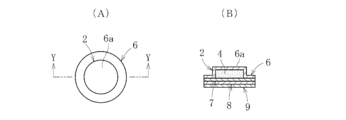
- FIG. 1 is a schematic view showing a nasal passage improvement tool according to an embodiment of the present invention
- (A) is a schematic plan view
- (B) is a schematic cross-sectional view taken along the line XX of (A).
- the nasal passage improvement device 1 according to the present embodiment is attached to the nose to improve the nasal passage, and includes a pair of housing portions 2 and a connecting portion 3 that connects the pair of housing portions 2. ..
- Each of the pair of accommodating portions 2 accommodates the chemical exothermic composition 4.
- the connecting portion 3 is provided with an elastic member 5 that pulls the side wall of the nose outward when it is worn.
- the nasal passage improvement tool 1 includes a front sheet member 6, a back sheet member 7, an adhesive layer 8, and a peeling member 9.
- the front side sheet member 6 has projecting portions 6a projecting to the front side at both ends in the longitudinal direction, and the projecting portion 6a and the back side sheet member 7 constitute the housing portion 2.
- the elastic member 5 is arranged between the front side sheet member 6 and the back side sheet member 7.
- the front side sheet member 6 and the back side sheet member 7 are adhered to each other with, for example, an adhesive agent (not shown).
- the projecting portion 6a has a circular shape in plan view, and the internal space of the accommodating portion 2 has a substantially cylindrical shape with a low height.
- the overall shape of the front side sheet member 6, the back side sheet member 7, the adhesive layer 8, and the peeling member 9 in plan view gradually increases from the central position in the longitudinal direction to the central position of the accommodating portion 2 in the longitudinal direction.
- the end portion side of the accommodation portion 2 in the longitudinal direction is circular in shape.
- the adhesive layer 8 is formed on the back surface of the back sheet member 7.
- the peeling member 9 is attached to the back surface of the adhesive layer 8 so as to be peelable from the adhesive layer 8.
- the adhesive layer 8 is formed on the entire back surface of the back sheet member 7, but may be formed only on a partial area.
- the chemical exothermic composition 4 is an exothermic composition used in a so-called disposable body warmer (chemical body warmer).
- the chemical exothermic composition 4 utilizes the heat of oxidation of metal and generally contains metal powder such as iron powder, metal halide such as salt, water, activated carbon powder, and water retention material. Further, the chemical exothermic composition 4 may further contain a temperature control agent for controlling the maximum exothermic temperature (see, for example, Japanese Patent No. 6273481).
- the chemical exothermic composition 4 is a tablet-molded article produced by tablet-molding the raw material.
- tableting means pressing a raw material into a tablet shape with a tableting machine.
- the shape of the tablet-molded body is a substantially cylindrical shape having a low height (circular shape in plan view) according to the shape of the internal space of the housing 2.
- the shape of the tablet molding is not limited to this, and may be, for example, a prismatic shape.
- the chemical exothermic composition 4 is not limited to a tablet-molded product, and may be in a powder form or the like.
- Area in plan view of the chemical exothermic composition 4 is, for example, 200 mm 2 ⁇ 500 mm 2, more preferably 250mm 2 ⁇ 450mm 2, 300mm 2 ⁇ 400mm 2 being most preferred.
- the area of the chemical exothermic composition 4 in plan view is smaller than 200 mm 2 , the effect of eliminating stuffy nose may not be sufficiently obtained.
- the area of the chemical exothermic composition 4 in plan view exceeds 500 mm 2 , a large amount of the chemical exothermic composition 4 is required, which may increase the manufacturing cost.
- the front-side sheet member 6 and the back-side sheet member 7 are air-permeable materials, and are made of, for example, a nonwoven fabric using polyethylene, polypropylene, or the like.
- the front sheet member 6 and the back sheet member 7 are made of the same material, but may be made of different materials.
- the moisture permeability of the backsheet member 7 is 600g / (m 2 ⁇ 24h) ⁇ 20000g / (m 2 ⁇ 24h), 1000g / (m 2 ⁇ 24h) ⁇ 10000g / (m 2 ⁇ 24h ) Is more preferable, and 2000 g/(m 2 ⁇ 24 h) to 8000 g/(m 2 ⁇ 24 h) is the most preferable.
- the moisture vapor transmission rate is less than 600 g/(m 2 ⁇ 24 h)
- the temperature of the chemically exothermic composition 4 does not rise rapidly, and there is a possibility that the stuffy nose cannot be eliminated quickly.
- the moisture vapor transmission rate exceeds 20000 g/(m 2 ⁇ 24 h)
- the exothermic reaction of the chemical exothermic composition 4 may proceed too much and the exothermic time may be shortened.
- the characteristics relating to the exothermic temperature include rising time (in this embodiment, time from 31.5° C. to 39.9° C.), maximum temperature, and duration (40° C. in this embodiment). There is time) while it is above.
- the method of measuring the exothermic temperature complies with the “normal method” of JIS S 4100 (hereinafter the same).
- the rise time is preferably, for example, 60 seconds or less, more preferably 50 seconds or less, and most preferably 40 seconds or less. If the rising time exceeds 60 seconds, it may be difficult to quickly eliminate the nasal congestion after mounting the nose passing improvement device 1.
- the maximum temperature is, for example, preferably 43°C to 65°C, more preferably 43°C to 60°C, most preferably 43°C to 55°C. If the maximum temperature is less than 43°C, it does not reach about 43°C required for good blood flow. If the maximum temperature is higher than 65°C, there is a possibility of low-temperature burns and a short period of heat generation.
- the duration is, for example, 10 minutes to 3 hours, preferably 10 minutes to 2 hours, and most preferably 10 minutes to 1 hour. If the duration is less than 10 minutes, the effect of eliminating stuffy nose may not be sufficiently obtained. When the duration is more than 3 hours, there is a possibility of low-temperature burn and a large amount of the chemical exothermic composition 4, which may increase the manufacturing cost.
- the chemical exothermic composition 4 comes into contact with air via the projecting portion 6a of the front side sheet member 6 of the accommodating portion 2, so that the projecting portion 6a serves to bring the chemical exothermic composition 4 into contact with air. It becomes a ventilation part.
- the shape and material of the elastic member 5 are not particularly limited as long as the side wall of the nose can be pulled outward when it is worn.
- the shape of the elastic member 5 is a long plate shape and a rectangular shape in a plan view.
- synthetic resin such as polyester can be used as the material of the elastic member 5, for example.
- the distance d between the centers of the pair of accommodating portions 2 (chemical exothermic composition 4) in plan view is, for example, 55 mm to 90 mm, more preferably 60 mm to 85 mm, and most preferably 65 mm to 80 mm. Whether the distance d is less than 55 mm or more than 90 mm, it may be difficult to arrange the accommodation portion on the acupuncture point called “nasal passage” which is said to be effective for stuffy nose when stimulated.
- the nasal passage improvement device 1 Before use, the nasal passage improvement device 1 is placed inside a bag (not shown) made of a non-breathable material, sealed and stored. When using the nasal passage improvement device 1, remove the nasal passage improvement device 1 from the bag, peel off the peeling member 9 on the back side, and attach the adhesive layer 8 to the nose portion as shown in FIG. To be installed.
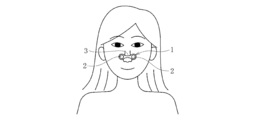
- the center of the pair of accommodation portions 2 (chemically exothermic composition 4) is arranged on the acupuncture point called “nasal passage”.
- the chemical exothermic composition 4 is housed between the projecting portion 6a of the front sheet member 6 and the back sheet member 7, but as shown in FIG.
- the breathable bag member 10 in which is previously stored may be stored between the protruding portion 6 a of the front side sheet member 6 and the back side sheet member 7.
- the bag member 10, the protruding portion 6a, and the back sheet member 7 serve as a containing portion for containing the chemically exothermic composition 4, and the bag member 10 and the protruding portion 6a bring the chemically exothermic composition 4 into contact with air. It becomes the ventilation part of.
- the breathable bag member 10 containing the chemical exothermic composition 4 in advance may be attached and fixed to the front sheet member 6 by the back side adhesive layer 11.
- the bag member 10 serves as a housing portion for housing the chemically exothermic composition 4
- the bag member 10 serves as a ventilation portion for bringing the chemically exothermic composition 4 into contact with air.
- the front side sheet member 6 and the back side sheet member 7 may be made of a non-breathable material.
- a peeling member (not shown) is attached to the adhesive layer 11 of the bag member 10 to attach the bag member 10 to a bag body (not shown) of a non-air-permeable material. ), it is sealed and stored, and when the nose passing improvement device 1 is used, the bag member 10 is taken out from this bag body, the peeling member is peeled off, and the front side sheet member 6 is stuck and fixed. You may
- the inventor of the present application evaluated the exothermic temperature of the chemically exothermic composition 4 in relation to the nose passing improvement device 1 according to the present invention.
- the sample S used for evaluation includes one accommodating portion 2 accommodating the chemically exothermic composition 4, as shown in FIG.
- the elastic member 5 is not provided. Since the other points are the same as those of the above-described embodiment, the same components are designated by the same reference numerals, and detailed description thereof will be omitted.
- the peeling member 9 was peeled off, and the sample S was placed on the measuring device with the adhesive layer 8.
- the chemical exothermic composition 4 a columnar tablet-formed product was used.
- the tablet compact had a weight of 1 g, a diameter of 15 mm and a height of 5 mm.
- the components of the chemical exothermic composition 4 are 30 to 40% by weight of iron powder, 1 to 5% by weight of salt, 20 to 30% by weight of water, 1 to 5% by weight of activated carbon powder, 10 to 20% by weight of water retention material, and temperature control agent. It was 10 to 20% by weight.
- the moisture permeability of the front side sheet member 6 and the back side sheet member 7 was 8000 g/(m 2 ⁇ 24 h).
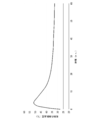
- FIG. 6 shows an exothermic temperature with respect to time as an average value of ten samples S.
- the rise time is within 40 seconds for all samples S. Further, as can be seen from FIG. 6, the time required to reach the maximum temperature is within 5 minutes. These times are very short compared with general chemical warmers. This result is due to the fact that the non-woven fabric forming the bag has a large moisture vapor transmission rate of 8000 g/(m 2 ⁇ 24 h), so the chemical exothermic composition quickly contacts the air and the chemical exothermic composition It is considered that the temperature of the object rapidly increased.
- the inventor of the present application conducted a sensory test in association with the nose passing improvement device 1 according to the present invention.
- Example 1 For this sensory test, the same sample S as that used in Example 1 was used. The test subjects were those with nasal congestion symptoms at bedtime, and the number was 15.
- the test method was as follows.
- the sample S was attached to the “nasal passage” of the subject's face, and a commercially available product (“Breeze Light” (registered trademark/made by GlaxoSmithKline Consumer Healthcare Japan KK) was applied to the subject's nose. That is, the sample S and the commercial product correspond to the products of the present invention.For comparison, the case where the commercial product was mounted on the subject's nose without mounting the sample S was also tested.
- the level of nose congestion was set to 0.00 and the condition where the nose was completely blocked was set to 1.00, and the subjects were made to quantify the degree of nose congestion on the "visual analog scale (VAS)". ..
- FIGS. 7 shows a case of breathing through both nostrils
- FIG. 8 shows a case of breathing through only one nostril with a strong nasal congestion
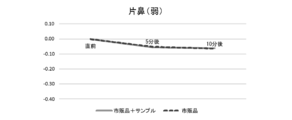
- FIG. 9 shows a case of breathing through only one nostril with a weak nasal congestion. Show.
- the solid line shows the case where the sample S and the commercial product are used at the same time
- the dotted line shows the case where only the commercial product is used.
Landscapes
- Health & Medical Sciences (AREA)
- Public Health (AREA)
- Animal Behavior & Ethology (AREA)
- Veterinary Medicine (AREA)
- Life Sciences & Earth Sciences (AREA)
- Engineering & Computer Science (AREA)
- Biomedical Technology (AREA)
- Heart & Thoracic Surgery (AREA)
- Vascular Medicine (AREA)
- General Health & Medical Sciences (AREA)
- Pulmonology (AREA)
- Orthopedic Medicine & Surgery (AREA)
- Otolaryngology (AREA)
- Nursing (AREA)
- Physics & Mathematics (AREA)
- Thermal Sciences (AREA)
- Thermotherapy And Cooling Therapy Devices (AREA)
- Orthopedics, Nursing, And Contraception (AREA)
Abstract
Description
本発明は、鼻通りを改善するために鼻部に装着される鼻通り改善具に関する。
例えば、風邪、花粉症等により鼻づまりを生じる場合がある。このように鼻づまりを生じると、鼻呼吸が妨げられるため、就寝時に寝付きが悪くなる。
鼻づまりを含めた鼻炎症状を改善する手段としては、例えば、特許文献1に開示されている鼻パックが挙げられる。特許文献1の鼻パックは、顔に装着され、その発熱体によって鼻腔又は副鼻腔を加熱することで鼻炎症状を改善しようとするものである。
ところで、特許文献1では、発熱体の組成物として、いわゆる使い捨てカイロ(化学カイロ)で使用されている発熱組成物が挙げられている。しかしながら、一般的に、化学カイロは、外気に接触してから、十分に昇温するのに、ある程度時間がかかる。従って、特許文献1の鼻パックを装着しても、鼻づまりが解消するまでに時間がかかることになり、寝付きの改善にはならない。
本発明は、上記事情に鑑み、鼻づまりを速やかに解消して寝付きを良くすることを技術的課題とする。
上記課題を解決するために創案された本発明に係る鼻通り改善具は、鼻通りを改善するために鼻部に装着される鼻通り改善具であって、化学発熱組成物を収容する一対の収容部と、一対の前記収容部を連結する連結部とを備え、前記収容部が、前記化学発熱組成物を空気に接触させるための通気部を有し、前記通気部の透湿度が、600g/(m2・24h)~20000g/(m2・24h)であることを特徴とする。ここで、透湿度(水蒸気透過度)の定義は、JIS K 7129に準拠する(以下、同様)。
この構成によれば、通気部の透湿度が、600g/(m2・24h)~20000g/(m2・24h)であるので、化学発熱組成物が速やかに空気に接触することが可能になる。従って、化学発熱組成物が、速やかに昇温することが可能になる。これにより、装着後、鼻づまりを速やかに解消することが可能になり、寝付きを良くすることが可能になる。
上記の構成において、装着した時に鼻の側壁を外側に引っ張る弾性部材が、前記連結に配設されていてもよい。
この構成であれば、弾性部材により鼻腔を拡げることが可能なので、鼻づまりを解消する効果を高めることができる。
上記の構成において、一対の前記収容部の中心間の距離が、55mm~90mmであってもよい。
この構成であれば、刺激すると鼻づまりに効果があるとされる「鼻通」と呼ばれるツボの上に、収容部を配置することが可能になる。これにより、「鼻通」を温めることができ、鼻づまりを解消する効果を高めることが可能になる。また、連結部に弾性部材が配設されている場合には、収容部が「鼻通」上に位置すると、鼻の側壁を外側に引っ張るのに適切な位置に弾性部材を配置することが可能になる。
本発明によれば、鼻づまりを速やかに解消して寝付きを良くすることができる。
以下、本発明の実施形態を図面に従って説明する。
図1は、本発明の実施形態に係る鼻通り改善具を示す概略図であり、(A)が概略平面図、(B)が(A)のX-X線矢視概略断面図である。本実施形態に係る鼻通り改善具1は、鼻通りを改善するために鼻部に装着されるものであり、一対の収容部2と、一対の収容部2を連結する連結部3とを備える。一対の収容部2のそれぞれが、化学発熱組成物4を収容している。また、連結部3には、装着した時に鼻の側壁を外側に引っ張る弾性部材5が配設されている。
また、鼻通り改善具1は、表側シート部材6と、裏側シート部材7と、粘着層8と、剥離部材9を備える。
表側シート部材6は、長手方向の両端側に、表側に突出した突出部6aを有し、この突出部6aと、裏側シート部材7とで、収容部2が構成されている。また、弾性部材5は、表側シート部材6と裏側シート部材7との間に配設されている。表側シート部材6と裏側シート部材7は、例えば、不図示の接着剤で接着されている。
突出部6aは、平面視円形状であり、収容部2の内部空間は、高さの低い略円柱状である。表側シート部材6と、裏側シート部材7と、粘着層8と、剥離部材9の平面視での全体形状は、長手方向の中央位置から長手方向の収容部2の中心位置まで漸次幅が増大し、長手方向の収容部2の中心位置より端部側では、円形状になっている。
粘着層8は、裏側シート部材7の裏面に形成されている。剥離部材9は、粘着層8に対して剥離可能な状態で、粘着層8の裏面に取り付けられている。なお、本実施形態では、粘着層8は、裏側シート部材7の裏面の全域に形成されているが、一部領域のみに形成されてもよい。
化学発熱組成物4は、いわゆる使い捨てカイロ(化学カイロ)で使用されている発熱組成物である。この化学発熱組成物4は、金属の酸化熱を利用するものであり、一般に、鉄粉等の金属粉、食塩等の金属ハロゲン化物、水、活性炭粉末、および保水材等を含有している。また、化学発熱組成物4は、最高発熱温度を制御する温度制御剤(例えば、特許第6273481号公報参照)等を更に含有してもよい。
また、本実施形態では、化学発熱組成物4が、原料を打錠成形することにより製造された打錠成形体である。なお、打錠成形とは、打錠機で、原料を加圧して錠剤の形状にすることである。打錠成形体の形は、収容部2の内部空間の形状に即した、低い高さの略円柱状(平面視で円形状)である。しかし、打錠成形体の形状は、これに限定されず、例えば、角柱状等であってもよい。また、化学発熱組成物4は、打錠成形体に限定されず、粉末状等であってもよい。
化学発熱組成物4の平面視での面積は、例えば200mm2~500mm2であり、250mm2~450mm2がより好ましく、300mm2~400mm2が最も好ましい。化学発熱組成物4の平面視での面積が、200mm2より小さい場合、鼻づまり解消効果が十分に得られなくなる可能性がある。化学発熱組成物4の平面視での面積が、500mm2を超える場合、化学発熱組成物4が多量に必要になり、製造コストが増大する可能性がある。
表側シート部材6、裏側シート部材7は、通気性を有する材料であり、例えば、ポリエチレン、ポリプロピレン等を使用した不織布等で構成される。本実施形態では、表側シート部材6と裏側シート部材7は、同一の材料であるが、異なる材料であってもよい。
表側シート部材6、裏側シート部材7の透湿度は、600g/(m2・24h)~20000g/(m2・24h)であり、1000g/(m2・24h)~10000g/(m2・24h)がより好ましく、2000g/(m2・24h)~8000g/(m2・24h)が最も好ましい。透湿度が600g/(m2・24h)未満の場合、化学発熱組成物4が速やかに昇温せず、鼻づまりを速やかに解消できなくなる可能性がある。透湿度が20000g/(m2・24h)を超える場合、化学発熱組成物4の発熱反応が進み過ぎて発熱時間が短くなる可能性がある。
発熱温度(肌側となる温度)に関する特性として、立ち上がり時間(本実施形態では、31.5℃から39.9℃になるまでの時間)、最高温度、持続時間(本実施形態では、40℃以上になっている間の時間)がある。ここで、発熱温度の測定方法は、JIS S 4100の「通常法」に準拠する(以下、同様)。
立ち上がり時間は、例えば60秒以内が好ましく、50秒以内がより好ましく、40秒以内が最も好ましい。立ち上がり時間が、60秒を超えると、鼻通り改善具1を装着後、鼻づまりを速やかに解消することが難しくなる可能性がある。
最高温度は、例えば43℃~65℃が好ましく、43℃~60℃がより好ましく、43℃~55℃が最も好ましい。最高温度が、43℃未満の場合、血流を良くするために必要とされる約43℃にならない。最高温度が、65℃を超える場合、低温火傷の可能性があると共に、発熱時間が短くなる可能性がある。
持続時間は、例えば10分~3時間が好ましく、10分~2時間がより好ましく、10分~1時間が最も好ましい。持続時間が、10分未満の場合、鼻づまり解消効果が十分に得られなくなる可能性がある。持続時間が、3時間を超える場合、低温火傷の可能性があると共に、化学発熱組成物4が多量に必要になり、製造コストが増大する可能性がある。
本実施形態では、収容部2の表側シート部材6の突出部6aを介して化学発熱組成物4が空気と接触するので、この突出部6aが、化学発熱組成物4を空気に接触させるための通気部となる。
弾性部材5の形状や材質は、装着した時に鼻の側壁を外側に引っ張ることが可能であれば特に限定されない。図1の図示例では、弾性部材5の形状は、長尺の板状であり、平面視で矩形状である。また、弾性部材5の材質としては、例えば、ポリエステル等の合成樹脂等が使用できる。
平面視での一対の収容部2(化学発熱組成物4)の中心の間の距離dは、例えば55mm~90mmであり、60mm~85mmがより好ましく、65mm~80mmが最も好ましい。距離dが55mm未満の場合も、90mmを超える場合も、刺激すると鼻づまりに効果があるとされる「鼻通」と呼ばれるツボの上に、収容部を配置することが難しくなる可能性がある。
鼻通り改善具1は、使用前には、非通気性の材質の袋体(不図示)の内部に入れ、密封して保管する。鼻通り改善具1を使用する際には、鼻通り改善具1をこの袋体から取り出し、裏側の剥離部材9を剥離し、図2に示すように、粘着層8を鼻部に貼り付けることにより装着する。図示例では、一対の収容部2(化学発熱組成物4)の中心が、「鼻通」と呼ばれるツボの上に配置されている。
以上のように構成された本実施形態の鼻通り改善具1では、表側シート部材6の透湿度が、600g/(m2・24h)~20000g/(m2・24h)であるので、化学発熱組成物4が速やかに空気に接触することが可能になる。従って、化学発熱組成物4が、速やかに昇温することが可能になる。これにより、装着後、鼻づまりを速やかに解消することが可能になり、寝付きを良くすることが可能になる。
本発明は、上記実施形態に限定されるものでは無く、その技術的思想の範囲内で、様々な変形が可能である。例えば、上記実施形態では、化学発熱組成物4を表側シート部材6の突出部6aと裏側シート部材7の間に収容していたが、図3(A)に示すように、化学発熱組成物4を予め収容した通気性の袋部材10を、表側シート部材6の突出部6aと裏側シート部材7の間に、収容してもよい。この場合は、袋部材10と突出部6aと裏側シート部材7が、化学発熱組成物4を収容する収容部となり、袋部材10と突出部6aが、化学発熱組成物4を空気に接触させるための通気部となる。
また、図3(B)に示すように、化学発熱組成物4を予め収容した通気性の袋部材10を、裏側の粘着層11により、表側シート部材6に貼り付けて固定してもよい。この場合は、袋部材10が、化学発熱組成物4を収容する収容部となり、袋部材10が、化学発熱組成物4を空気に接触させるための通気部となる。また、この場合には、表側シート部材6と裏側シート部材7は、非通気性の材料であってもよい。
更に、この場合には、鼻通り改善具1の使用前には、袋部材10の粘着層11に剥離部材(不図示)を取り付け、袋部材10を非通気性の材質の袋体(不図示)の内部に入れて密封して保管し、鼻通り改善具1を使用する際に、袋部材10をこの袋体から取り出し、剥離部材を剥離し、表側シート部材6に貼り付けて固定するようにしてもよい。
本願の発明者は、本発明に係る鼻通り改善具1に関連して、化学発熱組成物4の発熱温度を評価した。
評価に使用するサンプルSは、上記実施形態(図1参照)とは異なり、図4に示すように、化学発熱組成物4を収容した収容部2を1つ備えるものであり、連結部3、弾性部材5を備えていない。その他の点については、上記実施形態と同様なので、同一の構成には、同一の符号を付し、詳細な説明は省略する。なお、評価する際には、剥離部材9は剥離して、粘着層8でサンプルSを計測装置に設置した。
化学発熱組成物4は、円柱形状の打錠成形体のものを使用した。打錠成形体の重量は、1g、直径15mm、高さ5mmであった。化学発熱組成物4の成分は、鉄粉30~40重量%、食塩1~5重量%、水20~30重量%、活性炭粉末1~5重量%、保水材10~20重量%、温度制御剤10~20重量%であった。
表側シート部材6と裏側シート部材7の透湿度は、8000g/(m2・24h)であった。
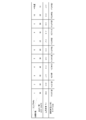
温度測定用センサST-22E-005-TS3-WT4(足立計器社製)、グラフィックレコーダーKR2S2P-NOA(チノー社製)を用いて、発熱温度(肌側となる温度)を、10個のサンプルSについて測定した。発熱特性として、立ち上がり時間(本実施例では、31.5℃から39.9℃になるまでの時間)、最高温度、持続時間(40℃以上になっている間の時間)を計測した。その結果を図5に示す。また、時間に対する発熱温度を、10個のサンプルSの平均値で示したものを図6に示す。
図5から、立ち上がり時間が、いずれのサンプルSも40秒以内であることが分かる。また、図6から分かるように、最高温度に達するまでの時間が、5分以内である。これらの時間は、一般の化学カイロと比較して非常に短いものである。このような結果となったのは、袋を構成する不織布の透湿度が、8000g/(m2・24h)と大きな値であるため、化学発熱組成物が速やかに空気に接触し、化学発熱組成物が、速やかに昇温したと考えられる。
また、本願の発明者は、本発明に係る鼻通り改善具1に関連して、官能試験を実施した。
本官能試験には、実施例1で使用したものと同一のサンプルSを使用した。被験者は、就寝時に鼻づまり症状がある人であり、その数は15人であった。
試験方法は、次のようなものであった。サンプルSを、被験者の顔の「鼻通」に装着すると共に、市販品(「ブリーズライト」(登録商標/グラクソ・スミスクライン・コンシューマー・ヘルスケア・ジャパン(株)社製)を被験者の鼻に装着した。つまり、サンプルSと市販品が本発明の実施品に相当する。比較として、サンプルSを装着せずに、市販品を被験者の鼻に装着した場合も試験した。
鼻づまりが全くない状態を0.00とすると共に、完全に鼻がつまっている状態を1.00として、「ビジュアル・アナログ・スケール(VAS)」で、被験者に、鼻づまりの程度を数値化させた。
装着直前、5分後、10分後の鼻づまりの程度を、両方の鼻穴で息をした場合、左の鼻穴だけで息をした場合、右の鼻穴だけで息をした場合のそれぞれについて数値化させた。ただし、片方の鼻穴だけで息をする場合は、左右の区別ではなく、両方の鼻穴のうちで鼻づまりが強い方の鼻穴と、鼻づまりが弱い方の鼻穴という区別により、片方の鼻穴を区別した。
試験結果を次のように処理した。鼻づまりの改善の程度を示す値として、5分後、10分後の数値から装着直前の数値を差し引いたものを算出した。この算出値が、マイナスでその絶対値が大きくなるほど鼻づまりが改善していることになる。この算出値の平均値のグラフを図7~9に示す。図7が、両方の鼻穴で息をした場合、図8が、鼻づまりが強い片方の鼻穴だけで息をした場合、図9が、鼻づまりが弱い片方の鼻穴だけで息をした場合を示す。また、何れの図でも、サンプルSと市販品を同時に使用した場合を実線で示し、市販品のみを使用した場合を点線で示している。
図7~9から分かるように、両方の鼻穴で息をした場合、鼻づまりが強い片方の鼻穴だけで息をした場合、鼻づまりが弱い片方の鼻穴だけで息をした場合のいずれの場合も、サンプルSと市販品を同時に使用した場合には、鼻づまりが改善している。特に、図8から分かるように、鼻づまりが強い片方の鼻穴だけで息をした場合には、市販品のみを使用した場合と比較して、鼻づまりが大きく改善している。
1 鼻通り改善具
2 収容部
3 連結部
4 化学発熱組成物
5 弾性部材
6 表側シート部材
6a 突出部
7 裏側シート部材
d 一対の収容部の中心間の距離
Claims (3)
-
鼻通りを改善するために鼻部に装着される鼻通り改善具であって、
化学発熱組成物を収容する一対の収容部と、一対の前記収容部を連結する連結部とを備え、前記収容部が、前記化学発熱組成物を空気に接触させるための通気部を有し、
前記通気部の透湿度が、600g/(m2・24h)~20000g/(m2・24h)であることを特徴とする鼻通り改善具。
-
装着した時に鼻の側壁を外側に引っ張る弾性部材が、前記連結部に配設されていることを特徴とする請求項1に記載の鼻通り改善具。
-
一対の前記収容部の中心間の距離が、55mm~90mmであることを特徴とする請求項1又は2に記載の鼻通り改善具。
Priority Applications (4)
| Application Number | Priority Date | Filing Date | Title |
|---|---|---|---|
| AU2019414018A AU2019414018A1 (en) | 2018-12-27 | 2019-12-17 | Nasal congestion reliever |
| SG11202105679TA SG11202105679TA (en) | 2018-12-27 | 2019-12-17 | Nasal congestion reliever |
| MYPI2021003526A MY206962A (en) | 2018-12-27 | 2019-12-17 | Nasal congestion reliever |
| CN201980040834.6A CN112312865B (zh) | 2018-12-27 | 2019-12-17 | 鼻通气改善器具 |
Applications Claiming Priority (2)
| Application Number | Priority Date | Filing Date | Title |
|---|---|---|---|
| JP2018245392A JP7296720B2 (ja) | 2018-12-27 | 2018-12-27 | 鼻通り改善具 |
| JP2018-245392 | 2018-12-27 |
Publications (1)
| Publication Number | Publication Date |
|---|---|
| WO2020137689A1 true WO2020137689A1 (ja) | 2020-07-02 |
Family
ID=71129819
Family Applications (1)
| Application Number | Title | Priority Date | Filing Date |
|---|---|---|---|
| PCT/JP2019/049373 Ceased WO2020137689A1 (ja) | 2018-12-27 | 2019-12-17 | 鼻通り改善具 |
Country Status (7)
| Country | Link |
|---|---|
| JP (1) | JP7296720B2 (ja) |
| CN (1) | CN112312865B (ja) |
| AU (1) | AU2019414018A1 (ja) |
| MY (1) | MY206962A (ja) |
| SG (1) | SG11202105679TA (ja) |
| TW (1) | TWI840466B (ja) |
| WO (1) | WO2020137689A1 (ja) |
Cited By (1)
| Publication number | Priority date | Publication date | Assignee | Title |
|---|---|---|---|---|
| WO2024126471A1 (en) | 2022-12-12 | 2024-06-20 | Nosi Health Ltd | Vibrating nasal device |
Families Citing this family (1)
| Publication number | Priority date | Publication date | Assignee | Title |
|---|---|---|---|---|
| JP2023075774A (ja) * | 2021-11-19 | 2023-05-31 | 小林製薬株式会社 | 鼻通り改善具 |
Citations (4)
| Publication number | Priority date | Publication date | Assignee | Title |
|---|---|---|---|---|
| JPH11347059A (ja) * | 1998-06-12 | 1999-12-21 | Kao Corp | 温熱鼻パック |
| JP2011136060A (ja) * | 2009-12-28 | 2011-07-14 | Kao Corp | マスク用鼻部温熱具 |
| JP2011200301A (ja) * | 2010-03-24 | 2011-10-13 | Hisahiro Momo | 発熱体 |
| JP2015029607A (ja) * | 2013-07-31 | 2015-02-16 | 桐灰化学株式会社 | 鼻通り改善具 |
Family Cites Families (16)
| Publication number | Priority date | Publication date | Assignee | Title |
|---|---|---|---|---|
| JPH08317949A (ja) * | 1995-05-24 | 1996-12-03 | Shizuko Miura | 鼻水吸収具 |
| US5611334A (en) * | 1995-07-07 | 1997-03-18 | Muchin Jerome D | Nose dilator device |
| US5890486A (en) * | 1996-12-20 | 1999-04-06 | The Procter & Gamble Company | Thermal nasal dilator and method of treatment for relief of nasal congestion and other symptoms associated with common cold and allergies |
| TW355361U (en) * | 1997-10-07 | 1999-04-01 | Shu-Lian Chen | Warmer for nose |
| JP3765264B2 (ja) * | 1998-05-22 | 2006-04-12 | 花王株式会社 | マスク |
| KR20060012733A (ko) * | 2004-08-04 | 2006-02-09 | 에스케이케미칼주식회사 | 시트형 발열체 |
| EP3034053B1 (en) * | 2005-03-04 | 2019-04-24 | Kao Corporation | Moist heating device |
| EP2002813B1 (en) * | 2006-03-31 | 2018-07-18 | Kao Corporation | Water vapor generator |
| US20080097517A1 (en) * | 2006-10-23 | 2008-04-24 | Webtec Converting, Llc. | External Nasal Dilator and Methods of Manufacture |
| JP5388724B2 (ja) * | 2009-07-02 | 2014-01-15 | 小林製薬株式会社 | 痔の予防または治療具、及び痔の予防または治療方法 |
| JP2011045658A (ja) * | 2009-08-28 | 2011-03-10 | Sanyo Electric Co Ltd | 懐炉 |
| CN104586561B (zh) * | 2013-10-09 | 2018-01-19 | 日本东洋医疗株式会社 | 鼻部冷却用品 |
| US9872795B2 (en) * | 2014-03-12 | 2018-01-23 | Rechargeable Battery Corporation | Thermoformable medical member with heater and method of manufacturing same |
| JP6721300B2 (ja) * | 2015-07-21 | 2020-07-15 | 花王株式会社 | 発熱具及びその製造方法 |
| US9827392B2 (en) * | 2016-01-18 | 2017-11-28 | Baiping Lei | Nasal breathing apparatus and method with multifunction |
| JP2017176397A (ja) * | 2016-03-30 | 2017-10-05 | 東レ・ファインケミカル株式会社 | 人工鼻 |
-
2018
- 2018-12-27 JP JP2018245392A patent/JP7296720B2/ja active Active
-
2019
- 2019-12-10 TW TW108145006A patent/TWI840466B/zh not_active IP Right Cessation
- 2019-12-17 WO PCT/JP2019/049373 patent/WO2020137689A1/ja not_active Ceased
- 2019-12-17 SG SG11202105679TA patent/SG11202105679TA/en unknown
- 2019-12-17 AU AU2019414018A patent/AU2019414018A1/en not_active Abandoned
- 2019-12-17 MY MYPI2021003526A patent/MY206962A/en unknown
- 2019-12-17 CN CN201980040834.6A patent/CN112312865B/zh active Active
Patent Citations (4)
| Publication number | Priority date | Publication date | Assignee | Title |
|---|---|---|---|---|
| JPH11347059A (ja) * | 1998-06-12 | 1999-12-21 | Kao Corp | 温熱鼻パック |
| JP2011136060A (ja) * | 2009-12-28 | 2011-07-14 | Kao Corp | マスク用鼻部温熱具 |
| JP2011200301A (ja) * | 2010-03-24 | 2011-10-13 | Hisahiro Momo | 発熱体 |
| JP2015029607A (ja) * | 2013-07-31 | 2015-02-16 | 桐灰化学株式会社 | 鼻通り改善具 |
Cited By (1)
| Publication number | Priority date | Publication date | Assignee | Title |
|---|---|---|---|---|
| WO2024126471A1 (en) | 2022-12-12 | 2024-06-20 | Nosi Health Ltd | Vibrating nasal device |
Also Published As
| Publication number | Publication date |
|---|---|
| CN112312865B (zh) | 2023-12-05 |
| TWI840466B (zh) | 2024-05-01 |
| AU2019414018A1 (en) | 2021-07-15 |
| SG11202105679TA (en) | 2021-06-29 |
| TW202037347A (zh) | 2020-10-16 |
| JP2020103590A (ja) | 2020-07-09 |
| MY206962A (en) | 2025-01-22 |
| JP7296720B2 (ja) | 2023-06-23 |
| CN112312865A (zh) | 2021-02-02 |
Similar Documents
| Publication | Publication Date | Title |
|---|---|---|
| WO2020137690A1 (ja) | 鼻通り改善具 | |
| CN100512902C (zh) | 具有整体传感器的生物面罩 | |
| KR102332796B1 (ko) | 수면 무호흡 방지 마스크 | |
| US20100204764A1 (en) | Method for Treating Hot Flashes Associated with Menopause During Sleep | |
| CN109953436A (zh) | 一种多功能腕带 | |
| JP2020103590A (ja) | 鼻通り改善具 | |
| CN206518641U (zh) | 一种重复使用蒸汽眼罩 | |
| US10434275B2 (en) | Body core temperature cooling device | |
| JP2002052082A (ja) | 医療用マスク | |
| WO2011001553A1 (ja) | 痔の予防または治療具、及び痔の予防または治療方法 | |
| CN211213777U (zh) | 一种医疗约束用具 | |
| CN214129011U (zh) | 降温帽 | |
| CN212593409U (zh) | 适用于婴幼儿的肺功能呼吸面罩 | |
| CN202588363U (zh) | 一种温度提示护膝 | |
| CN221803177U (zh) | 一种体温实时监测装置 | |
| CN217660390U (zh) | 一种慢性肾功衰的中医护理用药物热敷装置 | |
| GB2601295A (en) | Wearable assembly | |
| GB2600680A (en) | Wearable assembly | |
| US20140014101A1 (en) | Heat Retention Mask and Method of Using The Same | |
| CN215080539U (zh) | 一种新型磁扣约束带 | |
| CN221998148U (zh) | 一种骨科护理带 | |
| CN221843861U (zh) | 一种医用冰敷内裤 | |
| JP2024146932A (ja) | 不調改善器具 | |
| CN207461457U (zh) | 一种防传染病的医用口罩 | |
| CN203263371U (zh) | 患者体温无线监测系统 |
Legal Events
| Date | Code | Title | Description |
|---|---|---|---|
| 121 | Ep: the epo has been informed by wipo that ep was designated in this application |
Ref document number: 19901961 Country of ref document: EP Kind code of ref document: A1 |
|
| NENP | Non-entry into the national phase |
Ref country code: DE |
|
| ENP | Entry into the national phase |
Ref document number: 2019414018 Country of ref document: AU Date of ref document: 20191217 Kind code of ref document: A |
|
| 122 | Ep: pct application non-entry in european phase |
Ref document number: 19901961 Country of ref document: EP Kind code of ref document: A1 |