WO2020121899A1 - 1180MPa以上の引張強度を有する高強度亜鉛めっき鋼板およびその製造方法並びに表面処理液 - Google Patents
1180MPa以上の引張強度を有する高強度亜鉛めっき鋼板およびその製造方法並びに表面処理液 Download PDFInfo
- Publication number
- WO2020121899A1 WO2020121899A1 PCT/JP2019/047285 JP2019047285W WO2020121899A1 WO 2020121899 A1 WO2020121899 A1 WO 2020121899A1 JP 2019047285 W JP2019047285 W JP 2019047285W WO 2020121899 A1 WO2020121899 A1 WO 2020121899A1
- Authority
- WO
- WIPO (PCT)
- Prior art keywords
- steel sheet
- film
- metal salt
- strength
- galvanized steel
- Prior art date
- Legal status (The legal status is an assumption and is not a legal conclusion. Google has not performed a legal analysis and makes no representation as to the accuracy of the status listed.)
- Ceased
Links
Images


Classifications
-
- C—CHEMISTRY; METALLURGY
- C23—COATING METALLIC MATERIAL; COATING MATERIAL WITH METALLIC MATERIAL; CHEMICAL SURFACE TREATMENT; DIFFUSION TREATMENT OF METALLIC MATERIAL; COATING BY VACUUM EVAPORATION, BY SPUTTERING, BY ION IMPLANTATION OR BY CHEMICAL VAPOUR DEPOSITION, IN GENERAL; INHIBITING CORROSION OF METALLIC MATERIAL OR INCRUSTATION IN GENERAL
- C23C—COATING METALLIC MATERIAL; COATING MATERIAL WITH METALLIC MATERIAL; SURFACE TREATMENT OF METALLIC MATERIAL BY DIFFUSION INTO THE SURFACE, BY CHEMICAL CONVERSION OR SUBSTITUTION; COATING BY VACUUM EVAPORATION, BY SPUTTERING, BY ION IMPLANTATION OR BY CHEMICAL VAPOUR DEPOSITION, IN GENERAL
- C23C2/00—Hot-dipping or immersion processes for applying the coating material in the molten state without affecting the shape; Apparatus therefor
- C23C2/26—After-treatment
- C23C2/28—Thermal after-treatment, e.g. treatment in oil bath
-
- C—CHEMISTRY; METALLURGY
- C21—METALLURGY OF IRON
- C21D—MODIFYING THE PHYSICAL STRUCTURE OF FERROUS METALS; GENERAL DEVICES FOR HEAT TREATMENT OF FERROUS OR NON-FERROUS METALS OR ALLOYS; MAKING METAL MALLEABLE, e.g. BY DECARBURISATION OR TEMPERING
- C21D9/00—Heat treatment, e.g. annealing, hardening, quenching or tempering, adapted for particular articles; Furnaces therefor
- C21D9/46—Heat treatment, e.g. annealing, hardening, quenching or tempering, adapted for particular articles; Furnaces therefor for sheet metals
-
- C—CHEMISTRY; METALLURGY
- C23—COATING METALLIC MATERIAL; COATING MATERIAL WITH METALLIC MATERIAL; CHEMICAL SURFACE TREATMENT; DIFFUSION TREATMENT OF METALLIC MATERIAL; COATING BY VACUUM EVAPORATION, BY SPUTTERING, BY ION IMPLANTATION OR BY CHEMICAL VAPOUR DEPOSITION, IN GENERAL; INHIBITING CORROSION OF METALLIC MATERIAL OR INCRUSTATION IN GENERAL
- C23C—COATING METALLIC MATERIAL; COATING MATERIAL WITH METALLIC MATERIAL; SURFACE TREATMENT OF METALLIC MATERIAL BY DIFFUSION INTO THE SURFACE, BY CHEMICAL CONVERSION OR SUBSTITUTION; COATING BY VACUUM EVAPORATION, BY SPUTTERING, BY ION IMPLANTATION OR BY CHEMICAL VAPOUR DEPOSITION, IN GENERAL
- C23C2/00—Hot-dipping or immersion processes for applying the coating material in the molten state without affecting the shape; Apparatus therefor
- C23C2/04—Hot-dipping or immersion processes for applying the coating material in the molten state without affecting the shape; Apparatus therefor characterised by the coating material
- C23C2/06—Zinc or cadmium or alloys based thereon
-
- C—CHEMISTRY; METALLURGY
- C23—COATING METALLIC MATERIAL; COATING MATERIAL WITH METALLIC MATERIAL; CHEMICAL SURFACE TREATMENT; DIFFUSION TREATMENT OF METALLIC MATERIAL; COATING BY VACUUM EVAPORATION, BY SPUTTERING, BY ION IMPLANTATION OR BY CHEMICAL VAPOUR DEPOSITION, IN GENERAL; INHIBITING CORROSION OF METALLIC MATERIAL OR INCRUSTATION IN GENERAL
- C23C—COATING METALLIC MATERIAL; COATING MATERIAL WITH METALLIC MATERIAL; SURFACE TREATMENT OF METALLIC MATERIAL BY DIFFUSION INTO THE SURFACE, BY CHEMICAL CONVERSION OR SUBSTITUTION; COATING BY VACUUM EVAPORATION, BY SPUTTERING, BY ION IMPLANTATION OR BY CHEMICAL VAPOUR DEPOSITION, IN GENERAL
- C23C28/00—Coating for obtaining at least two superposed coatings either by methods not provided for in a single one of groups C23C2/00 - C23C26/00 or by combinations of methods provided for in subclasses C23C and C25C or C25D
-
- C—CHEMISTRY; METALLURGY
- C22—METALLURGY; FERROUS OR NON-FERROUS ALLOYS; TREATMENT OF ALLOYS OR NON-FERROUS METALS
- C22C—ALLOYS
- C22C38/00—Ferrous alloys, e.g. steel alloys
-
- C—CHEMISTRY; METALLURGY
- C22—METALLURGY; FERROUS OR NON-FERROUS ALLOYS; TREATMENT OF ALLOYS OR NON-FERROUS METALS
- C22C—ALLOYS
- C22C38/00—Ferrous alloys, e.g. steel alloys
- C22C38/04—Ferrous alloys, e.g. steel alloys containing manganese
-
- C—CHEMISTRY; METALLURGY
- C22—METALLURGY; FERROUS OR NON-FERROUS ALLOYS; TREATMENT OF ALLOYS OR NON-FERROUS METALS
- C22C—ALLOYS
- C22C38/00—Ferrous alloys, e.g. steel alloys
- C22C38/18—Ferrous alloys, e.g. steel alloys containing chromium
- C22C38/38—Ferrous alloys, e.g. steel alloys containing chromium with more than 1.5% by weight of manganese
Definitions
- the present invention relates to a high-strength galvanized steel sheet having a tensile strength of 1180 MPa or more, a method for manufacturing the same, and a surface treatment liquid.
- TECHNICAL FIELD The present invention relates to a high-strength galvanized steel sheet having a tensile strength of 1180 MPa or more, which is a steel sheet suitable mainly for strength members for automobiles and building materials, and has excellent delayed fracture resistance, and a manufacturing technique thereof.
- Delayed fracture is a state in which high-strength steel is subjected to static load stress (load stress of tensile strength or less), and when a certain time has elapsed, it appears to be suddenly brittle with almost no plastic deformation. This is a phenomenon in which various destructions occur. Delayed fracture is more likely to occur as the strength of the steel material becomes higher, and becomes more prominent particularly in high-strength steel having a tensile strength of 1180 MPa or more.
- Patent Document 1 In order to prevent such delayed fracture in high-strength steel sheets, for example, in Patent Document 1, a study is made to weaken the delayed fracture sensitivity by adjusting the structure and composition of the steel sheet. Further, in Patent Document 2, a study on a high-strength galvannealed steel sheet for preventing delayed fracture is made.
- an object of the present invention is to solve the problems of the prior art as described above and to provide a high-strength galvanized steel sheet having a tensile strength of 1180 MPa or more, which is excellent in delayed fracture resistance.
- Another object of the present invention is to provide a method for producing a high-strength galvanized steel sheet having a tensile strength of 1180 MPa or more, which has the above-mentioned excellent properties, and a surface treatment liquid.
- the "high-strength galvanized steel sheet having a tensile strength of 1180 MPa or more" of the present invention is also simply referred to as "high-strength galvanized steel sheet”.
- the present inventors have conducted extensive studies and research on means for reducing the amount of hydrogen that penetrates into the steel sheet in order to prevent delayed fracture of the galvanized steel sheet in the use environment. As a result, by forming a resin film containing a specific metal salt and not containing other specific particle components on the surface of the galvanized steel sheet, hydrogen intrusion into the steel sheet is suppressed, and excellent delayed fracture resistance It was found that
- a galvanized steel sheet having a tensile strength of 1180 MPa or more has a coating containing the coating (x), and the coating (x) is an organic resin (a).
- a metal salt (b) containing at least one of a phosphoric acid group, a phosphorous acid group, a silicic acid group, and a molybdic acid group, and the maximum particle size other than the metal salt (b) is
- the coating film (x) does not contain a particle component having a thickness equal to or larger than the film thickness, the film thickness is 0.3 ⁇ m or more, and the content of the metal salt (b) in the film (x) is 5% by mass or more, A high-strength galvanized steel sheet having a tensile strength of 1180 MPa or more.
- the metal salt (b) is a metal salt containing at least one of alkali metal, alkaline earth metal, and aluminum, and has a tensile strength of 1180 MPa or more.
- the metal salt (b) is a metal salt containing at least one of a phosphoric acid group, a phosphorous acid group, and a silicic acid group.
- the metal salt (b) has a tensile strength of 1180 MPa or more, which is 50 mg/m 2 or more per one side of the steel sheet. High strength galvanized steel sheet.
- the metal salt (b) is aluminum dihydrogen tripolyphosphate, and the film thickness of the film (x) is 1.0 ⁇ m or more.
- the coating (x) does not contain conductive particles and solid lubricant particles, and has high strength zinc having a tensile strength of 1180 MPa or more. Plated steel sheet.
- the coating (x) has high tensile strength of 1180 MPa or more, containing no particle component other than the metal salt (b). Galvanized steel sheet.
- the content of the metal salt (b) present in the coating (x) is 40% by mass or less, and a tensile strength of 1180 MPa or more. High strength galvanized steel sheet with strength.
- a high-strength galvanized steel sheet having a tensile strength of 1180 MPa or more which has a coating containing a coating (x) on the surface of a galvanized steel sheet having a tensile strength of 1180 MPa or more (including a galvannealed steel sheet).
- the film (x) comprises an organic resin (a) and a metal salt (b) containing at least one of a phosphoric acid group, a phosphorous acid group, a silicic acid group and a molybdic acid group.
- the metal salt (b) does not contain a particle component having a maximum particle size of at least the film thickness of the coating (x), and has a film thickness of 0.3 ⁇ m or more.
- the coating film (x) contains the organic resin (a) and the metal salt (b), and other than the metal salt (b) Is formed by adhering to the surface where the coating (x) is to be formed, a surface treatment liquid that does not contain a particle component having a maximum particle size that is greater than or equal to the thickness of the coating (x) to be formed.
- the metal salt (b) is a metal salt containing at least one of an alkali metal, an alkaline earth metal and aluminum, and has high tensile strength of 1180 MPa or more. Manufacturing method of galvanized steel sheet.
- the metal salt (b) is a metal salt containing at least one of a phosphoric acid group, a phosphorous acid group and a silicic acid group, 1180 MPa or more. Of manufacturing a high-strength galvanized steel sheet having the above tensile strength.
- the high-strength zinc having a tensile strength of 1180 MPa or more, in which the amount of the metal salt (b) deposited on one surface of the steel sheet is 50 mg/m 2 or more, in the manufacturing method according to any one of [10] to [12] above. Manufacturing method of plated steel sheet.
- the metal salt (b) is aluminum dihydrogen tripolyphosphate, and the film (x) has a film thickness of 1.0 ⁇ m or more.
- the coating (x) is a high-strength galvanized steel sheet having a tensile strength of 1180 MPa or more that does not contain conductive particles and solid lubricant particles. Production method.
- the surface treatment liquid is a high-strength galvanized steel sheet having a tensile strength of 1180 MPa or more that does not contain particle components other than the metal salt (b).
- Production method [17]
- the film (x) has a tensile strength of 1180 MPa or more, in which the content of the metal salt (b) is 40% by mass or less. Method for manufacturing high strength galvanized steel sheet.
- a film including a film (x) for suppressing delayed fracture of a galvanized steel sheet having a tensile strength of 1180 MPa or more (including galvannealed steel sheet) is formed on the surface of the galvanized steel sheet.
- the coating includes an inorganic coating and a coating (x) formed on the inorganic coating, and the inorganic coating is a silane compound.
- the coating includes an inorganic coating and a coating (x) formed on the inorganic coating, and at least one selected from a silane compound and a zirconium compound.
- a surface treatment solution containing a seed (component (c)) onto the galvanized steel sheet, the inorganic coating having an amount of component (c) deposited on one side of the steel sheet of 200 to 500 mg/m 2 is obtained.
- the high-strength galvanized steel sheet of the present invention has excellent delayed fracture resistance.
- the high-strength galvanized steel sheet of the present invention has an excellent delayed fracture resistance in which the specific coating formed on the galvanized surface suppresses the intrusion of hydrogen into the steel sheet through corrosion inhibition and effectively suppresses the delayed fracture. Have sex.
- the high-strength galvanized steel sheet of the present invention which has a more optimized film structure, has excellent delayed fracture resistance and good post-paint corrosion resistance.
- the high-strength galvanized steel sheet of the present invention which has a more optimized coating structure, has excellent delayed fracture resistance and good coating adhesion.
- the high-strength galvanized steel sheet of the present invention is mainly suitable for strength members for automobiles and building materials. Since the high-strength galvanized steel sheet of the present invention can reduce the thickness of the steel sheet by improving the strength of the steel sheet, it is possible to reduce the weight of the strength member applied to the fields of automobiles and construction materials.
- the high-strength galvanized steel sheet according to the first embodiment of the present invention has a coating (x) on the surface of a galvanized steel sheet (including an alloyed hot-dip galvanized steel sheet) having a tensile strength of 1180 MPa or more.
- the film (x) contains a specific metal salt.
- the steel plate (base steel plate) that serves as the base (substrate) of the high-strength galvanized steel plate of the present invention is a high-strength steel plate having a tensile strength of 1180 MPa or more, and more preferably a high-strength steel plate having a tensile strength of 1480 MPa or more. Steel sheets with low tensile strength are essentially less prone to delayed fracture.
- the effect of the present invention is exhibited even in a steel sheet having a low tensile strength, but is remarkably exhibited in a high strength steel sheet having a tensile strength of 1180 MPa or more, and is more remarkably exhibited in a high strength steel sheet having a tensile strength of 1480 MPa or more. is there.
- the chemical composition and steel structure of the base steel sheet are not particularly limited.
- a high-strength steel sheet having a tensile strength of 1180 MPa or more which is often used in an automobile field, a construction material field, and the like, particularly in an automobile field, is preferable, and a high-strength steel sheet having a tensile strength of 1480 MPa or more is more preferable.
- the high-strength steel sheet preferably used as the base steel sheet may have any composition and structure as long as it has a desired tensile strength.
- Such high-strength steel sheet is, for example, a solid solution obtained by adding an interstitial solid solution element such as C and N and a substitutional solid solution element such as Si, Mn, P and Cr in order to improve various properties such as mechanical properties.
- the composition of such a high-strength steel sheet is, for example, C: 0.1 to 0.4 mass%, Si: 0 to 2.5 mass%, Mn: 1 to 3 mass%, P: 0 to 0.05. %, S: 0 to 0.005% by mass, with the balance being Fe and inevitable impurities.
- a composition containing one or more kinds of arbitrary elements such as Cu, Ti, V, Al and Cr in the above composition can be mentioned. Generally, it is preferable that these optional elements are added in a total amount of about 10% by mass.
- Examples of commercially available high-strength steel sheets include JFE-CA1180, JFE-CA1370, JFE-CA1470, JFE-CA1180SF, JFE-CA1180Y1, JFE-CA1180Y2 (above, JFE Steel Corp.). Manufactured by Nippon Steel & Sumitomo Metal Co., Ltd. and the like can be exemplified without limitation.
- the plate thickness of the high-strength steel plate is not particularly limited, but as an example, the plate thickness of the high-strength steel plate is preferably 0.8 mm or more, more preferably 1.2 mm or more. Moreover, as an example, the plate thickness of the high-strength steel plate is preferably 2.5 mm or less, and more preferably 2.0 mm or less.
- the zinc plating that coats the high-strength steel sheet may be formed by any plating method such as hot dipping, electroplating, electroless plating, and vapor deposition plating.
- hot dip galvanization hot dip galvanized steel sheet
- electrogalvanization electrogalvanized steel sheet
- the galvanized steel sheet according to the present invention includes a galvanized steel sheet formed by the above plating method, and includes, for example, a hot-dip galvanized steel sheet, an electrogalvanized steel sheet, an electroless galvanized steel sheet, and a vapor-deposited galvanized steel sheet.
- the galvanized steel sheet of the present invention includes an alloyed hot dip galvanized steel sheet obtained by an alloying treatment after the hot dip galvanizing.
- the high-strength galvanized steel sheet of the present invention has a tensile strength of 1180 MPa or more on the surface of the galvanized steel sheet, organic resin (a), phosphoric acid group, phosphorous acid group, silicic acid group, molybdic acid group
- a film containing a film (x) containing a metal salt (b) containing at least one of them is formed.
- This film (x) may contain two or more kinds of metal salts (b).
- the metal salt (b) is retained on the surface of the steel sheet. This is because it functions as a barrier layer that shields the surface of the steel sheet from the corrosive environment when exposed to the corrosive environment, and also has a function of firmly holding the metal salt (b) on the surface of the steel sheet.
- the type of the organic resin (a) is not particularly limited, and examples thereof include epoxy resin, modified epoxy resin, urethane resin, alkyd resin, acrylic resin, polyethylene resin, polyolefin resin such as polybutadiene resin, polyester resin, amino resin, phenol resin, A fluororesin, a silicone resin, etc. are mentioned, and 1 or more types of these can be used. Further, among these, urethane resin, epoxy resin, acrylic resin, and polyethylene resin are particularly preferable because they have a high effect of blocking moisture and chloride, which are corrosion factors.
- the metal salt (b) containing at least one of a phosphoric acid group, a phosphorous acid group, a silicic acid group, and a molybdic acid group forms a chelate complex with Zn 2+ and forms a stable passive film.
- the metal salt (b) include inorganic metal salts.
- the metal salt (b) include metal salts containing alkali metals, alkaline earth metals, aluminum, zinc, zirconium and the like.
- Examples of the metal salt (b) include sodium polyphosphate (sodium diphosphate), sodium tripolyphosphate, aluminum dihydrogen tripolyphosphate, zinc polyphosphate, zinc tripolyphosphate, calcium phosphate, magnesium zinc phosphate, zinc phosphite.
- Calcium phosphite zinc calcium phosphite, zinc magnesium phosphite, calcium zirconium silicate, zirconium phosphate, zinc molybdate, calcium molybdate, aluminum phosphomolybdate, and the like, and use one or more of these. You can
- a metal salt containing at least one of alkali metal, alkaline earth metal, and aluminum is particularly preferable because it has an effect of keeping pH high (pH buffering effect).
- Alkali metals, alkaline earth metals, and aluminum have a high ionization tendency, and thus tend to form a hydroxide when ionized, as compared with other metal salts. That is, since the hydroxide ion (OH ⁇ ) is consumed less than other metal ions, it is considered that the pH is kept high (the OH concentration is high). Therefore, the metal salt (b) is preferably a metal salt containing at least one selected from alkali metals, alkaline earth metals and aluminum. Also in this case, the film (x) can contain two or more kinds of metal salts (b).
- the metal salt (b) is preferably a metal salt containing at least one of a phosphoric acid group, a phosphorous acid group and a silicic acid group from the viewpoint of cost advantage.
- the content of metal salt (b) in the film (x) (ratio to the film mass) is 5% by mass. It is necessary to be above.
- the content of the metal salt (b) is preferably 44% by mass or less, and more preferably 40% by mass or less because the property deteriorates.
- the amount of the metal salt (b) deposited on one side of the steel sheet is small, the effect of suppressing the occurrence of delayed fracture may not be sufficiently obtained. Therefore, the amount of the metal salt (b) deposited on one side of the steel sheet It is preferably 50 mg/m 2 or more.
- the film thickness of the film (x) if the film (x) is too thin, it cannot function as a barrier layer that shields the steel sheet from the corrosive environment, so the film thickness of the film (x) is 0.3 ⁇ m or more. ..
- the film thickness of the film (x) is 0.3 ⁇ m or more. ..
- the metal salt (b) is aluminum dihydrogen tripolyphosphate, and the film thickness of the film (x) is 1.0 ⁇ m or more.
- the film (x) formed on the galvanized steel sheet in the present invention contains the organic resin (a) and the specific metal salt (b) as described above.
- the metal salt (b) may be contained in the film (x) in a dissolved state or in the form of particles.
- the particle size is not particularly limited.
- the film (x) does not contain, other than the metal salt (b), a particle component having a maximum particle diameter equal to or larger than the film thickness of the film (x).
- a particle component having a maximum particle diameter equal to or larger than the film thickness of the film (x) may be added to the coating for the purpose of improving the conductivity of the coating and improving the weldability.
- particle components may be added for various purposes such as addition of a solid lubricant in order to improve press workability.
- the coating (x) does not contain any particle component other than the metal salt (b) whose maximum particle diameter is equal to or larger than the thickness of the coating (x).
- a particle component include conductive particles and solid lubricant particles.
- Examples of the conductive particles include ceramic particles, iron alloy particles, stainless particles and the like.
- Examples of the solid lubricant particles include inorganic solid lubricant particles such as molybdenum disulfide, graphite and boron nitride.
- the film (x) Since the lower limit of the film thickness of the film (x) is 0.3 ⁇ m, if the maximum particle size of the particle component allowed to be contained is less than 0.3 ⁇ m, preferably 0.2 ⁇ m or less, the film (x) The condition is satisfied regardless of the film thickness of.
- the maximum particle diameter of the particle component means that the film (x) is dissolved in an organic solvent capable of dissolving the film (x) such as toluene or acetone, and then the particle component is changed to polytetrafluoroethylene or the like. It is the maximum value of the particle size distribution obtained by collecting with a filter, washing and dispersing in an electrolyte solvent, and then measuring the volume sphere equivalent diameter by the Coulter method.
- the collected particle components are dispersed in an electrolyte solvent and then separated by a centrifugal method to separate each of the particle components.
- the volume sphere equivalent diameter of the particle component may be measured by the Coulter method.
- the catalog value of the maximum particle size of the particle component may be used as the maximum particle size of the particle component.
- the maximum particle size referred to here means the maximum particle size of the primary particles.
- the film (x) of the present invention contains the organic resin (a) and the specific metal salt (b), and does not contain the above-mentioned large particle component other than the metal salt (b).
- the metal salt (b) there are no particles that act as coating film defects in the film, and the vicinity of the particles does not become the starting point of corrosion, and delayed fracture resistance can be secured.
- the film (x) does not contain conductive particles and solid lubricant particles, and the film (x) does not contain particle components other than the metal salt (b). It can be said that the film (x) is more preferably composed of only the organic resin (a) and the metal salt (b).
- the high-strength galvanized steel sheet according to the present invention may have the coating (x) formed on one side of the steel sheet or both sides of the steel sheet.
- fluorescent X-ray analysis As a method for measuring the content of the metal salt (b) in the film (x) and the amount attached on one side of the steel sheet, there is fluorescent X-ray analysis, for example. Specifically, it can be calculated by irradiating the film surface with X-rays, measuring the intensity of fluorescent X-rays of the metal element contained in the metal salt (b), and comparing with the calibration curve.
- the cross section of the film is observed, and the thickness of the film (x) (from the galvanized steel plate surface of the substrate to the film (x) Thickness up to the surface of) is measured, and the average value thereof is taken as the film thickness.
- the cross-section processing method is not particularly limited, and examples thereof include FIB (Focused Ion Beam) processing.
- the organic resin (a), a phosphoric acid group, a phosphorous acid group, on the surface of a galvanized steel sheet having a tensile strength of 1180 MPa or more (including a galvannealed steel sheet) as described above Contains a metal salt (b) containing at least one of a silicic acid group and a molybdic acid group, and has a maximum particle size of at least the film thickness of the film (x) to be formed, other than the metal salt (b).
- the above-mentioned coating (x) is formed on the surface of the galvanized steel sheet by adhering a surface treatment liquid (surface treatment liquid for resin film formation) that does not contain a certain particle component.
- the lower limit of the film thickness of the film (x) to be formed is set in advance and the maximum value corresponding to the film thickness is set. It suffices if the surface treatment liquid contains a particle component having a particle size.
- the maximum particle diameter of the particle component contained in the surface treatment liquid is less than 0.3 ⁇ m, preferably 0.2 ⁇ m or less. For example, the above conditions are satisfied regardless of the film thickness of the film (x).
- the reasons for limiting the film thickness of the formed film (x) and the content of the metal salt (b) are the same as those for the high-strength galvanized steel sheet described above.
- the preferable conditions in this manufacturing method are as follows, and the reason is the same as the reason for the high-strength galvanized steel sheet described above.
- the metal salt (b) is a metal salt containing at least one of alkali metal, alkaline earth metal, and aluminum.
- the metal salt (b) is a metal salt containing at least one of a phosphoric acid group, a phosphorous acid group and a silicic acid group.
- the amount of the metal salt (b) deposited on one surface of the steel sheet in the film (x) is 50 mg/m 2 or more.
- the metal salt (b) is aluminum dihydrogen tripolyphosphate, the film thickness of the film (x) is 1.0 ⁇ m or more, and the content of aluminum dihydrogen tripolyphosphate in the film (x) is 17 to Must be 45% by mass.
- the surface treatment liquid should not contain conductive particles or solid lubricant particles. Preferably, the surface treatment liquid contains no particle component other than the metal salt (b). Particularly preferably, the surface treatment liquid contains only the organic resin (a) and the metal salt (b) in the solvent.
- the content of the metal salt (b) in the film (x) is 44 mass% or less, preferably 40 mass% or less.
- the film thickness of the film (x) is 4.0 ⁇ m or less.
- the organic resin (a) is dissolved and/or dispersed in a solvent (water and/or organic solvent), and the metal salt (b) (and, if necessary, And other components) are added to the surface of the galvanized steel sheet to coat the surface of the galvanized steel sheet, followed by drying (generally heat drying).
- a solvent water and/or organic solvent
- the metal salt (b) and, if necessary, And other components
- any coating means such as a bar coater, a roll coater (3 roll system, 2 roll system, etc.), a squeeze coater, a die coater, etc. may be used. It is also possible to adjust the coating amount, make the appearance uniform, and make the film thickness uniform by an air knife method or a roll squeezing method after the coating treatment using a squeeze coater, the dipping treatment, and the spray treatment.
- the method of heating and drying the surface treatment liquid that is attached to the surface of the galvanized steel sheet and coated is arbitrary, and for example, a dryer, a hot-air stove, a high-frequency induction heating furnace, an infrared furnace, or the like can be used.
- the content of the metal salt (b) in the coating (x) is the mixing ratio of the organic resin (a) and the metal salt (b). It can be adjusted by changing. Further, the amount of the metal salt (b) attached and the film thickness of the film (x) per one side of the steel sheet can be adjusted by changing the concentration of the surface treatment liquid and the amount of the attached (coating amount).
- the method for producing the high-strength steel sheet used as the plating base steel sheet in the present invention is not particularly limited. In order to facilitate understanding of the present invention, a series of processes from steelmaking will be briefly described with an example. However, the manufacturing process of the high-strength steel plate to be the plated base steel plate is not limited to the following examples.
- the surface treatment liquid of the present invention comprises a galvanized steel sheet having a coating (x) for suppressing delayed fracture of a galvanized steel sheet having a tensile strength of 1180 MPa or more (including galvannealed steel sheet).
- the lower limit of the film thickness of the film (x) to be formed by applying the surface treatment liquid is set in advance, and the film thickness It suffices to include a particle component having a maximum particle diameter corresponding to the above.
- the metal salt (b) in the total solid content of the surface treatment solution needs to be 5 mass% or more.
- the content of the metal salt (b) there is no limit to increasing the content of the metal salt (b), but if the content of the metal salt (b) is too high, it will adhere to the coating film in applications such as automobiles.
- the content of the metal salt (b) in the total solid content of the surface treatment liquid is preferably 44% by mass or less, since the corrosion resistance and the corrosion resistance after coating deteriorate. It is more preferable that the content is not more than mass %.
- the preferable conditions for this surface treatment solution are as follows, and the reason is the same as the reason for the high-strength galvanized steel sheet described above.
- the metal salt (b) is a metal salt containing at least one of alkali metal, alkaline earth metal, and aluminum.
- the metal salt (b) is a metal salt containing at least one of a phosphoric acid group, a phosphorous acid group and a silicic acid group.
- the metal salt (b) is aluminum dihydrogen tripolyphosphate.
- Conductive particles and solid lubricant particles are not included. Preferably, it does not contain a particle component other than the metal salt (b).
- the solvent contains only the organic resin (a) and the metal salt (b).
- high-strength zinc having a tensile strength of 1180 MPa or more which has a coating containing the coating (x) on the surface of a galvanized steel sheet having a tensile strength of 1180 MPa or more (however, including galvannealed steel sheet).
- a high-strength galvanized steel sheet has excellent delayed fracture resistance. Furthermore, it has good corrosion resistance after painting.
- the high-strength galvanized steel sheet according to the second embodiment of the present invention has an inorganic coating and a coating including the coating (x) on the surface of the steel.
- the high-strength galvanized steel sheet has a predetermined inorganic coating on the surface of a galvanized steel sheet (including an alloyed hot-dip galvanized steel sheet) having a tensile strength of 1180 MPa or more, and further has the above-mentioned structure thereon. It has a film (x).
- the configuration other than the inorganic film is the same as that of the above-described first embodiment, and thus detailed description thereof will be omitted.
- the inorganic coating formed on the surface of the galvanized steel sheet contains at least one type ((c) component) selected from silane compounds and zirconium compounds.
- the component (c) is not particularly limited, but as the silane compound, a silane compound having a functional group, for example, a silane having a vinyl group, an epoxy group, a methacryl group, an acryl group, an amino group, a mercapto group, an isocyanate group, or the like.
- zirconium compounds include zirconium chloride, zirconyl chloride, zirconium sulfate, zirconyl sulfate, zirconium nitrate, zirconyl nitrate, zirconium hydrofluoric acid, zirconyl bromide, zirconyl acetate, zirconyl carbonate, and ammonium zirconium carbonate.
- the amount of the component (c) deposited on one surface of the steel sheet is preferably 200 to 500 mg/m 2 .
- the coating film adhesion can be more easily enhanced.
- Fluorescent X-ray analysis is an example of a method for measuring the amount of the component (c) deposited on one side of the steel sheet. Specifically, it can be calculated by irradiating the surface of the film with X-rays, measuring the intensity of fluorescent X-rays of the metal element contained in the component (c), and comparing it with a calibration curve.
- the method for producing the high-strength galvanized steel sheet of the present embodiment includes a step of forming an inorganic film on the surface of the galvanized steel sheet, and a step of forming a film (x) on the surface of the inorganic film formed in the step There is a method.
- a surface treatment liquid surface treatment liquid for forming an inorganic coating
- a solvent mainly water
- any coating means such as a roll coater (3 roll method, 2 roll method, etc.), a squeeze coater, a die coater or the like may be used. It is also possible to adjust the coating amount, make the appearance uniform, and make the film thickness uniform by an air knife method or a roll squeezing method after the coating treatment using a squeeze coater, the dipping treatment, and the spray treatment.
- the method of heating and drying the surface treatment liquid that is attached to the surface of the galvanized steel sheet and coated is arbitrary, and for example, a dryer, a hot-air stove, a high-frequency induction heating furnace, an infrared furnace, or the like can be used.
- a film (x) is formed on the surface of the inorganic film formed on the surface of the galvanized steel sheet as described above.
- the method of forming the film (x) can be the same as in the above-described first embodiment.
- the surface of the galvanized steel sheet (including the galvannealed steel sheet) having a tensile strength of 1180 MPa or more has a predetermined inorganic coating, and further has the above-mentioned coating (x) on the surface of 1180 MPa or more.
- a high-strength galvanized steel sheet having tensile strength can be manufactured. Such a high-strength galvanized steel sheet has excellent delayed fracture resistance. Further, it has good coating film adhesion.
- Example 1 As a galvanized steel sheet as a base material, the composition of the base steel sheet is C: 0.18% by mass, Si: 1.0% by mass, Mn: 3.0% by mass, P: 0.007% by mass, S:0.
- These galvanized steel sheets were immersed in toluene and subjected to ultrasonic cleaning for 5 minutes to remove the rust preventive oil, and then a resin film was formed on the surface.
- A1 to A4 were used as the organic resin (organic resin (a)) for the resin film, and a surface treatment liquid containing one of the organic resins and a predetermined metal salt (metal salt (b)) (in some Comparative Examples
- a surface treatment solution containing only organic resin is applied to the surface of the galvanized steel sheet by any one of a coating method (bar coat), a spray method, and a dipping method (and roll squeezing), and then the reached plate temperature is 120°C.
- a resin film was formed by heating with an induction heater so that A1: Epoxy resin (manufactured by Japan Epoxy Resin Co., Ltd., trade name: jER1009) A2: Acrylic resin (manufactured by DIC Corporation, trade name: 40-418EF) A3: Urethane resin (Dainippon Paint Co., Ltd., trade name: V Top RC Clear) A4: Fluororesin (Asahi Glass Co., Ltd., trade name: Lumiflon LF552)
- the cross section obtained by FIB processing is observed by SEM, and the thickness of the resin film (thickness from the zinc-plated steel plate surface of the base material to the surface of the resin film is observed at three locations in an arbitrary field of view).
- the average value thereof was taken as the film thickness.
- other particle components particle components other than the metal salt (b)
- SUS powder manufactured by Epson Atomix Co., Ltd.
- titanium nitride particles manufactured by Nippon Shinkin Co., Ltd.
- the delayed fracture resistance test piece thus produced was subjected to a combined cycle corrosion test consisting of dry, wet, and salt water immersion steps specified in SAE J2334 defined by the American Society of Automotive Engineers (see FIG. 2). Was carried out for up to 40 cycles. Before the salt water immersion step of each cycle, the presence or absence of cracks was visually inspected and the crack generation cycle was measured. In addition, this test was carried out by three samples for each high-strength galvanized steel sheet, and the average value was evaluated. The evaluation was performed based on the number of cycles according to the following criteria. In addition, the number of crack generation cycles of more than 40 in Table 3 indicates that no crack occurred in the results of this example.
- ⁇ and ⁇ were evaluated as acceptable (excellent in delayed fracture resistance), and ⁇ and ⁇ were evaluated as unacceptable (inferior in delayed fracture resistance).
- ⁇ More than 40 cycles ⁇ : 30 cycles or more, 40 cycles or less ⁇ : 10 cycles or more, less than 30 cycles ⁇ : less than 10 cycles
- the corrosion resistance test piece subjected to this electrodeposition coating was subjected to a combined cycle corrosion test (see Fig. 2) consisting of dry, wet, and salt water immersion steps specified in SAE J2334 defined by the American Society of Automotive Engineers. After the cycle, the corrosion resistance after coating was evaluated by the following procedure. (1) Punch out the spot weld and disassemble the mating structure (2) Peel off the coating (Neos'Deathcoat 300' 15 minutes immersion) (3) Plating and rust removal (diluted hydrochloric acid immersion) (4) Maximum erosion depth generated in the mating structure is measured with a point micrometer
- the corrosion resistance after coating was evaluated as follows by calculating the maximum erosion depth ratio (A) when the maximum erosion depth of the galvanized steel sheet having no resin film formed on its surface was set to 1.
- the No. 1 steel plate is a comparative example in which a resin film is not formed on the surface of the base material (hot dip galvanized steel plate) (comparative example of the hot dip galvanized steel plate), but It can be seen that delayed fracture has occurred and resistance to delayed fracture is low.
- a surface treatment solution prepared by mixing epoxy resin (A1) with aluminum dihydrogen tripolyphosphate as a metal salt (b) was applied to the surface of the hot dip galvanized steel plate by a coating method (bar coat).
- bar coat a coating method
- the No. 2 steel plate is an example in which the surface treatment liquid of the epoxy resin (A1) to which the metal salt (b) has not been added is similarly applied to form a resin film.
- the No. 2 steel plate to which the metal salt (b) is not added and the No. 3 and No. 4 steel plates in which the content of the metal salt (b) is below the range of the present invention have a resin film.
- the delayed fracture resistance is slightly improved as compared to the No. 1 steel sheet that is not formed, the delayed fracture resistance is inferior to the steel sheets of the invention examples.
- the steel sheet No. 15 in which the content of the metal salt (b) exceeds the preferred range of the present invention has lower corrosion resistance after painting than the steel sheets No. 5 to No. 14, and therefore the normal level.
- the No. 16 and No. 17 steel plates are examples of inventions in which the film forming method of the resin film is changed from that of the No. 11 steel plate, but both have excellent delayed fracture resistance and corrosion resistance after painting. Is also good.
- the steel sheets No. 18 to No. 31 are examples of inventions in which the type of the metal salt (b) mixed with the epoxy resin (A1) is changed, and all have excellent delayed fracture resistance and, after coating, Corrosion resistance is also good.
- the steel plates No. 32 to No. 37 are examples in which the film thickness of the resin film is changed.
- the steel sheets No. 33 to No. 37 having a film thickness within the range of the present invention all have excellent delayed fracture resistance and good corrosion resistance after coating.
- the No. 32 steel sheet having a resin film thickness below the range of the present invention is inferior in delayed fracture resistance to the invention examples No. 33 to No. 37 steel sheets.
- the corrosion resistance after painting is inferior.
- the steel plate No. 37 having a resin film thickness exceeding the preferred range of the present invention cannot be joined without being energized during spot welding, so there is no particular problem in applications where weldability is not required, but weldability is It can be said that it is not suitable for the required use.
- the steel sheets No. 38 to No. 40 are examples of inventions in which the type of organic resin is changed, but all have excellent delayed fracture resistance and good corrosion resistance after painting.
- No. 41 and No. 42 are, in addition to the metal salt (b) (aluminum dihydrogen tripolyphosphate) defined by the present invention, other particle components having a maximum particle size equal to or larger than the film thickness and having a large particle size (conductivity Comparative Example in which particles such as SUS powder and titanium nitride particles) are added to the film, but the delayed fracture resistance is inferior to the invention example No. 11 steel sheet.
- No. 43 and No. 44 are examples of inventions using an electrogalvanized steel sheet and a galvannealed steel sheet, respectively, as the base material, but both have excellent delayed fracture resistance and corrosion resistance after painting. It is good.
- Example 2 As a galvanized steel sheet as a base material, the composition of the base steel sheet is C: 0.18% by mass, Si: 1.0% by mass, Mn: 3.0% by mass, P: 0.007% by mass, S:0.
- a hot-dip galvanized steel sheet having a tensile strength of 1480 MPa and a plate thickness of 1.6 mm was used, which was composed of 0.0005% by mass, the balance Fe and unavoidable impurities.
- the hot-dip galvanized steel sheet was immersed in toluene and ultrasonically cleaned for 5 minutes to remove the rust preventive oil, and then an inorganic film was first formed on the surface and then a resin film was formed.
- a surface treatment liquid containing a silane compound or a zirconium compound shown in Tables 4 and 5 as a component (c) for forming an inorganic film on the surface of a galvanized steel sheet by a coating method using a bar coating method.
- An inorganic film was formed by heating with an induction heater so that the reached plate temperature was 120°C.
- the amount of the component (c) deposited on one surface was measured by irradiating the surface of the film with X-rays, measuring the intensity of the fluorescent X-ray of the metal element contained in the component (c), and comparing it with the calibration curve. ..
- the resin film was formed on the surface of the inorganic film formed as described above in the same manner as in Example 1. Further, the film thickness of the resin film was measured by the same method as in Example 1. As the other particle components, those similar to those in Example 1 were used.
- the coating film adhesion test was performed on the test piece for coating film adhesion test, which had been subjected to this electrodeposition coating, in the following procedure.
- (3) A cellophane tape ((registered trademark), manufactured by NICHIBAN, product number CT-24) is strongly pressure-bonded to the cross-cut portion, and the end of the tape is peeled off at an angle of 45°. (4) Check the state of the grid
- the coating film adhesion was evaluated as follows by measuring the number (N) of the grids from which the coating film was peeled off in the grid of the grid and confirming the state of the coating film.
- N the number of the grids from which the coating film was peeled off in the grid of the grid.
- the steel plate of No. 51 is a comparative example in which a resin film is not formed on the surface of the base material (hot dip galvanized steel plate) (comparative example of the hot-dip galvanized steel plate), but delayed fracture occurs early and is delayed. It can be seen that the destructiveness is low.
- the steel sheets of Nos. 53 to 65 have an inorganic coating containing zirconium ammonium carbonate formed on the surface of a galvanized steel sheet by a coating method, and an epoxy resin (A1) as a metal salt (b) of dihydrogen polyphosphate as an upper layer thereon.
- an epoxy resin (A1) as a metal salt (b) of dihydrogen polyphosphate as an upper layer thereon.
- a surface treatment liquid mixed with aluminum is applied by a coating method (bar coating) to form a film.
- the steel plate No. 52 is an example in which the surface treatment liquid of the epoxy resin (A1) to which the metal salt (b) has not been added is similarly applied to form a film.
- the coating film adhesion is deteriorated as compared with No. 55 to No. 64 steel sheet, There is no particular problem in applications where a high level of coating film adhesion is required, but it can be said that it is unsuitable for applications where a particularly high level of coating film adhesion is required.
- the steel sheets No. 66 and 67 are examples of inventions in which the film forming method of the resin coating is changed from that of the steel sheet No. 61, but both have excellent delayed fracture resistance and coating film adhesion. It is good.
- Steel sheets No. 68 to 81 are examples of the invention in which the type of the metal salt (b) mixed with the epoxy resin (A1) is changed, and all of them have excellent delayed fracture resistance and coating film adhesion. Is also good.
- the steel sheets No. 82 to 87 are examples in which the film thickness of the resin film is changed.
- the steel sheets No. 83 to No. 87 having a film thickness within the range of the present invention all have excellent delayed fracture resistance and good coating film adhesion.
- the No. 82 steel sheet having a resin film thickness below the range of the present invention is inferior in delayed fracture resistance to the invention examples No. 83 to No. 87 steel sheet.
- the steel plate of No. 87 in which the film thickness of the resin film exceeds the preferred range of the present invention cannot be joined without energization during spot welding, so there is no particular problem in applications where weldability is not required, but weldability is It can be said that it is not suitable for the required use.
- the steel sheets Nos. 88 to 90 are examples of inventions in which the type of organic resin is changed, but all of them have excellent delayed fracture resistance and good coating adhesion.
- Nos. 91 and 92 are, in addition to the metal salt (b) (aluminum dihydrogen tripolyphosphate) defined by the present invention, other particle components having a maximum particle size equal to or larger than the film thickness and having a large particle size (conductive particles.
- metal salt (b) aluminum dihydrogen tripolyphosphate
- conductive particles conductive particles.
- This is a comparative example in which a certain SUS powder and titanium nitride particles) are added to the film, but the delayed fracture resistance is inferior to the steel sheet of No. 61 which is an example of the invention.
- No. 93 is an example of the invention in which the resin coating was directly formed on the hot-dip galvanized steel sheet without forming the lower inorganic coating, and although the delayed fracture resistance was excellent, the coating adhesion was poor. is there.
- Nos. 94 to 98 are invention examples in which the amount of the lower layer zirconium ammonium carbonate compound deposited on one side of the steel sheet was changed, but the amount of zirconium ammonium carbonate deposited on one side of the steel sheet was below the preferred range of the present invention.
- the .94 steel plate is inferior in coating film adhesion to Nos. 95 to 97.
- Nos. 99 to 101 are examples of the invention in which the compound contained in the lower inorganic coating was changed, and all of them showed good delayed fracture resistance and good coating adhesion.
Landscapes
- Chemical & Material Sciences (AREA)
- Engineering & Computer Science (AREA)
- Organic Chemistry (AREA)
- Materials Engineering (AREA)
- Mechanical Engineering (AREA)
- Metallurgy (AREA)
- Chemical Kinetics & Catalysis (AREA)
- Physics & Mathematics (AREA)
- Thermal Sciences (AREA)
- Oil, Petroleum & Natural Gas (AREA)
- Crystallography & Structural Chemistry (AREA)
- Other Surface Treatments For Metallic Materials (AREA)
- Laminated Bodies (AREA)
- Paints Or Removers (AREA)
Abstract
耐遅れ破壊性に優れた高強度亜鉛めっき鋼板を提供する。 高強度亜鉛めっき鋼板の表面に皮膜(x)を有し、この皮膜(x)は、有機樹脂(a)と、リン酸基、亜リン酸基、ケイ酸基、モリブデン酸基のうちの少なくとも1種を含む金属塩(b)を含有し、且つ前記金属塩(b)以外には最大粒子径が該皮膜(x)の膜厚以上の粒子成分を含有しない。金属塩(b)がZnとキレート錯体を形成することで鋼板表面に緻密な不働態皮膜が形成されること、金属塩(b)に含まれるイオンのpH緩衝効果によりpH8~11に安定することでZnの溶解が抑制され、地鉄上での水素発生が抑えられること、皮膜(x)が金属塩(b)以外の粒径の大きい微粒子成分を含有しないため、粒子と皮膜の界面が腐食の起点となることが防止されること、などの結果、鋼板内部への水素侵入が抑制され、優れた耐遅れ破壊性が得られる。
Description
本発明は、1180MPa以上の引張強度を有する高強度亜鉛めっき鋼板およびその製造方法並びに表面処理液に関する。本発明は、主として自動車、建材用の強度部材に適した鋼板であって、耐遅れ破壊性に優れた1180MPa以上の引張強度を有する高強度亜鉛めっき鋼板およびその製造技術に関する。
近年、自動車のCO2排出量の低減および安全性確保の観点から、自動車に用いられる鋼板は高強度化が図られており、引張強度が1180MPaを超えるような高強度鋼板の適用も進められている。
しかしながら、強度の高い鋼材では、遅れ破壊が発生することが知られており、特に高張力ボルトが使用環境中において破断することが、しばしば報告されている。遅れ破壊とは、高強度鋼材が静的な負荷応力(引張り強さ以下の負荷応力)を受けた状態で、ある時間が経過したとき、外見上はほとんど塑性変形を伴うことなく、突然脆性的な破壊が生じる現象である。遅れ破壊は、鋼材強度が高くなるほど生じやすく、特に引張強度が1180MPa以上の高強度鋼でより顕著となる。
鋼板の場合、遅れ破壊は、プレス加工により所定の形状に成形したときの残留応力と、応力集中部における鋼の水素脆性により生じるものであることが知られている。この水素脆性の原因となる水素は、ほとんどの場合、外部環境から鋼中に侵入、拡散した水素であると考えられており、代表的には、鋼板の腐食の際に発生した水素が鋼中に侵入、拡散したものがある。
高強度鋼板におけるこのような遅れ破壊を防止するために、例えば、特許文献1では、鋼板の組織や成分を調整することにより、遅れ破壊感受性を弱める検討がなされている。また、特許文献2では、遅れ破壊を防止する高強度合金化溶融亜鉛めっき鋼板に関する検討がなされている。
しかし、特許文献1の手法では、外部環境から鋼板内部に侵入する水素量は変化しないため、遅れ破壊の発生を遅らせることは可能であるが、遅れ破壊自体を防止することはできない。また、特許文献2の手法では、亜鉛めっきの犠牲防食効果により素地への水素の侵入が促進されるため、優れた耐遅れ破壊性は期待できない。
したがって本発明の目的は、以上のような従来技術の課題を解決し、耐遅れ破壊性に優れた1180MPa以上の引張強度を有する高強度亜鉛めっき鋼板を提供することにある。
また、本発明の他の目的は、上記のような優れた特性を有する1180MPa以上の引張強度を有する高強度亜鉛めっき鋼板の製造方法および表面処理液を提供することにある。
なお、以下、本発明の「1180MPa以上の引張強度を有する高強度亜鉛めっき鋼板」を、単に「高強度亜鉛めっき鋼板」ともいう。
なお、以下、本発明の「1180MPa以上の引張強度を有する高強度亜鉛めっき鋼板」を、単に「高強度亜鉛めっき鋼板」ともいう。
本発明者らは、使用環境中における亜鉛めっき鋼板の遅れ破壊を防止するために、鋼板内部に侵入する水素量を低減する手段について鋭意検討および研究を重ねた。その結果、亜鉛めっき鋼板の表面に特定の金属塩を含有し且つ他の特定の粒子成分を含まない樹脂皮膜を形成することにより、鋼板内部への水素侵入が抑制され、優れた耐遅れ破壊性が得られることを見出した。
本発明は、以上のような知見に基づきなされたものであり、その要旨は以下のとおりである。
[1]引張強度が1180MPa以上の亜鉛めっき鋼板(但し、合金化溶融亜鉛めっき鋼板を含む。)の表面に皮膜(x)を含む皮膜を有し、該皮膜(x)は、有機樹脂(a)と、リン酸基、亜リン酸基、ケイ酸基、モリブデン酸基のうちの少なくとも1種を含む金属塩(b)を含有し、且つ前記金属塩(b)以外には最大粒子径が該皮膜(x)の膜厚以上の粒子成分を含有せず、膜厚が0.3μm以上であり、皮膜(x)中での金属塩(b)の含有量が5質量%以上である、1180MPa以上の引張強度を有する高強度亜鉛めっき鋼板。
[2]上記[1]の高強度亜鉛めっき鋼板において、金属塩(b)が、アルカリ金属、アルカリ土類金属、アルミニウムのうちの少なくとも1種を含む金属塩である、1180MPa以上の引張強度を有する高強度亜鉛めっき鋼板。
[3]上記[1]または[2]の高強度亜鉛めっき鋼板において、金属塩(b)が、リン酸基、亜リン酸基、ケイ酸基のうちの少なくとも1種を含む金属塩である、1180MPa以上の引張強度を有する高強度亜鉛めっき鋼板。
[4]上記[1]~[3]のいずれかの高強度亜鉛めっき鋼板において、金属塩(b)の鋼板片面あたりの付着量が50mg/m2以上である、1180MPa以上の引張強度を有する高強度亜鉛めっき鋼板。
[5]上記[1]~[4]のいずれかの高強度亜鉛めっき鋼板において、金属塩(b)がトリポリリン酸二水素アルミニウムであり、皮膜(x)の膜厚が1.0μm以上であり、皮膜(x)中でのトリポリリン酸二水素アルミニウムの含有量が17~45質量%である、1180MPa以上の引張強度を有する高強度亜鉛めっき鋼板。
[6]上記[1]~[5]のいずれかの高強度亜鉛めっき鋼板において、皮膜(x)は、導電性粒子および固体潤滑剤粒子を含有しない、1180MPa以上の引張強度を有する高強度亜鉛めっき鋼板。
[7]上記[1]~[6]のいずれかの高強度亜鉛めっき鋼板において、皮膜(x)は、金属塩(b)以外の粒子成分を含有しない、1180MPa以上の引張強度を有する高強度亜鉛めっき鋼板。
[8]上記[1]~[7]のいずれかの高強度亜鉛めっき鋼板において、皮膜(x)中に存在する金属塩(b)の含有量が40質量%以下である、1180MPa以上の引張強度を有する高強度亜鉛めっき鋼板。
[9]上記[1]~[8]のいずれかの高強度亜鉛めっき鋼板において、皮膜(x)の膜厚が4.0μm以下である、1180MPa以上の引張強度を有する高強度亜鉛めっき鋼板。
[1]引張強度が1180MPa以上の亜鉛めっき鋼板(但し、合金化溶融亜鉛めっき鋼板を含む。)の表面に皮膜(x)を含む皮膜を有し、該皮膜(x)は、有機樹脂(a)と、リン酸基、亜リン酸基、ケイ酸基、モリブデン酸基のうちの少なくとも1種を含む金属塩(b)を含有し、且つ前記金属塩(b)以外には最大粒子径が該皮膜(x)の膜厚以上の粒子成分を含有せず、膜厚が0.3μm以上であり、皮膜(x)中での金属塩(b)の含有量が5質量%以上である、1180MPa以上の引張強度を有する高強度亜鉛めっき鋼板。
[2]上記[1]の高強度亜鉛めっき鋼板において、金属塩(b)が、アルカリ金属、アルカリ土類金属、アルミニウムのうちの少なくとも1種を含む金属塩である、1180MPa以上の引張強度を有する高強度亜鉛めっき鋼板。
[3]上記[1]または[2]の高強度亜鉛めっき鋼板において、金属塩(b)が、リン酸基、亜リン酸基、ケイ酸基のうちの少なくとも1種を含む金属塩である、1180MPa以上の引張強度を有する高強度亜鉛めっき鋼板。
[4]上記[1]~[3]のいずれかの高強度亜鉛めっき鋼板において、金属塩(b)の鋼板片面あたりの付着量が50mg/m2以上である、1180MPa以上の引張強度を有する高強度亜鉛めっき鋼板。
[5]上記[1]~[4]のいずれかの高強度亜鉛めっき鋼板において、金属塩(b)がトリポリリン酸二水素アルミニウムであり、皮膜(x)の膜厚が1.0μm以上であり、皮膜(x)中でのトリポリリン酸二水素アルミニウムの含有量が17~45質量%である、1180MPa以上の引張強度を有する高強度亜鉛めっき鋼板。
[6]上記[1]~[5]のいずれかの高強度亜鉛めっき鋼板において、皮膜(x)は、導電性粒子および固体潤滑剤粒子を含有しない、1180MPa以上の引張強度を有する高強度亜鉛めっき鋼板。
[7]上記[1]~[6]のいずれかの高強度亜鉛めっき鋼板において、皮膜(x)は、金属塩(b)以外の粒子成分を含有しない、1180MPa以上の引張強度を有する高強度亜鉛めっき鋼板。
[8]上記[1]~[7]のいずれかの高強度亜鉛めっき鋼板において、皮膜(x)中に存在する金属塩(b)の含有量が40質量%以下である、1180MPa以上の引張強度を有する高強度亜鉛めっき鋼板。
[9]上記[1]~[8]のいずれかの高強度亜鉛めっき鋼板において、皮膜(x)の膜厚が4.0μm以下である、1180MPa以上の引張強度を有する高強度亜鉛めっき鋼板。
[10]引張強度が1180MPa以上の亜鉛めっき鋼板(但し、合金化溶融亜鉛めっき鋼板を含む。)の表面に皮膜(x)を含む皮膜を有する1180MPa以上の引張強度を有する高強度亜鉛めっき鋼板の製造方法であって、該皮膜(x)は、有機樹脂(a)と、リン酸基、亜リン酸基、ケイ酸基、モリブデン酸基のうちの少なくとも1種を含む金属塩(b)を含有し、且つ前記金属塩(b)以外には最大粒子径が該皮膜(x)の膜厚以上の粒子成分を含有せず、膜厚が0.3μm以上であり、皮膜(x)中での金属塩(b)の含有量が5質量%以上であり、前記皮膜(x)を、前記有機樹脂(a)と、前記金属塩(b)を含有し、且つ前記金属塩(b)以外には最大粒子径が形成すべき前記皮膜(x)の膜厚以上の粒子成分を含有しない表面処理液を、前記皮膜(x)を形成すべき表面に付着させることにより形成する、1180MPa以上の引張強度を有する高強度亜鉛めっき鋼板の製造方法。
[11]上記[10]の製造方法において、金属塩(b)が、アルカリ金属、アルカリ土類金属、アルミニウムのうちの少なくとも1種を含む金属塩である、1180MPa以上の引張強度を有する高強度亜鉛めっき鋼板の製造方法。
[12]上記[10]または[11]の製造方法において、金属塩(b)が、リン酸基、亜リン酸基、ケイ酸基のうちの少なくとも1種を含む金属塩である、1180MPa以上の引張強度を有する高強度亜鉛めっき鋼板の製造方法。
[13]上記[10]~[12]のいずれかの製造方法において、金属塩(b)の鋼板片面あたりの付着量が50mg/m2以上である、1180MPa以上の引張強度を有する高強度亜鉛めっき鋼板の製造方法。
[14]上記[10]~[13]のいずれかの製造方法において、金属塩(b)がトリポリリン酸二水素アルミニウムであり、皮膜(x)の膜厚が1.0μm以上であり、皮膜(x)中でのトリポリリン酸二水素アルミニウムの含有量が17~45質量%である、1180MPa以上の引張強度を有する高強度亜鉛めっき鋼板の製造方法。
[15]上記[10]~[14]のいずれかの製造方法において、皮膜(x)は、導電性粒子および固体潤滑剤粒子を含有しない、1180MPa以上の引張強度を有する高強度亜鉛めっき鋼板の製造方法。
[16]上記[10]~[15]のいずれかの製造方法において、表面処理液は、金属塩(b)以外の粒子成分を含有しない、1180MPa以上の引張強度を有する高強度亜鉛めっき鋼板の製造方法。
[17]上記[10]~[16]のいずれかの製造方法において、皮膜(x)中に存在する金属塩(b)の含有量が40質量%以下である、1180MPa以上の引張強度を有する高強度亜鉛めっき鋼板の製造方法。
[18]上記[10]~[17]のいずれかの製造方法において、皮膜(x)の膜厚が4.0μm以下である、1180MPa以上の引張強度を有する高強度亜鉛めっき鋼板の製造方法。
[11]上記[10]の製造方法において、金属塩(b)が、アルカリ金属、アルカリ土類金属、アルミニウムのうちの少なくとも1種を含む金属塩である、1180MPa以上の引張強度を有する高強度亜鉛めっき鋼板の製造方法。
[12]上記[10]または[11]の製造方法において、金属塩(b)が、リン酸基、亜リン酸基、ケイ酸基のうちの少なくとも1種を含む金属塩である、1180MPa以上の引張強度を有する高強度亜鉛めっき鋼板の製造方法。
[13]上記[10]~[12]のいずれかの製造方法において、金属塩(b)の鋼板片面あたりの付着量が50mg/m2以上である、1180MPa以上の引張強度を有する高強度亜鉛めっき鋼板の製造方法。
[14]上記[10]~[13]のいずれかの製造方法において、金属塩(b)がトリポリリン酸二水素アルミニウムであり、皮膜(x)の膜厚が1.0μm以上であり、皮膜(x)中でのトリポリリン酸二水素アルミニウムの含有量が17~45質量%である、1180MPa以上の引張強度を有する高強度亜鉛めっき鋼板の製造方法。
[15]上記[10]~[14]のいずれかの製造方法において、皮膜(x)は、導電性粒子および固体潤滑剤粒子を含有しない、1180MPa以上の引張強度を有する高強度亜鉛めっき鋼板の製造方法。
[16]上記[10]~[15]のいずれかの製造方法において、表面処理液は、金属塩(b)以外の粒子成分を含有しない、1180MPa以上の引張強度を有する高強度亜鉛めっき鋼板の製造方法。
[17]上記[10]~[16]のいずれかの製造方法において、皮膜(x)中に存在する金属塩(b)の含有量が40質量%以下である、1180MPa以上の引張強度を有する高強度亜鉛めっき鋼板の製造方法。
[18]上記[10]~[17]のいずれかの製造方法において、皮膜(x)の膜厚が4.0μm以下である、1180MPa以上の引張強度を有する高強度亜鉛めっき鋼板の製造方法。
[19]引張強度が1180MPa以上の亜鉛めっき鋼板(但し、合金化溶融亜鉛めっき鋼板を含む。)の遅れ破壊を抑制するための皮膜(x)を含む皮膜を前記亜鉛めっき鋼板の表面に形成するための表面処理液であって、有機樹脂(a)と、リン酸基、亜リン酸基、ケイ酸基、モリブデン酸基のうちの少なくとも1種を含む金属塩(b)を含有し、且つ前記金属塩(b)以外には最大粒子径が形成すべき前記皮膜(x)の膜厚以上の粒子成分を含有せず、全固形分中での前記金属塩(b)の含有割合が5質量%以上である、表面処理液。
[20]上記[1]~[9]のいずれかの高強度亜鉛めっき鋼板において、皮膜が、無機皮膜と前記無機皮膜上に形成された皮膜(x)を含み、前記無機皮膜は、シラン化合物、ジルコニウム化合物から選ばれる少なくとも1種((c)成分)を含有し、前記(c)成分の鋼板片面あたりの付着量が200~500mg/m2である、1180MPa以上の引張強度を有する高強度亜鉛めっき鋼板。
[21]上記[10]~[18]のいずれかの製造方法において、皮膜が、無機皮膜と前記無機皮膜上に形成された皮膜(x)を含み、シラン化合物、ジルコニウム化合物から選ばれる少なくとも1種((c)成分)を含有する表面処理液を、前記亜鉛めっき鋼板に付着させることにより、前記(c)成分の鋼板片面あたりの付着量が200~500mg/m2である前記無機皮膜を形成し、その後、前記無機皮膜の表面に前記皮膜(x)を形成する、1180MPa以上の引張強度を有する高強度亜鉛めっき鋼板の製造方法。
[21]上記[10]~[18]のいずれかの製造方法において、皮膜が、無機皮膜と前記無機皮膜上に形成された皮膜(x)を含み、シラン化合物、ジルコニウム化合物から選ばれる少なくとも1種((c)成分)を含有する表面処理液を、前記亜鉛めっき鋼板に付着させることにより、前記(c)成分の鋼板片面あたりの付着量が200~500mg/m2である前記無機皮膜を形成し、その後、前記無機皮膜の表面に前記皮膜(x)を形成する、1180MPa以上の引張強度を有する高強度亜鉛めっき鋼板の製造方法。
本発明の高強度亜鉛めっき鋼板は、耐遅れ破壊性に優れる。
本発明の高強度亜鉛めっき鋼板は、亜鉛めっき表面に形成される特定の皮膜により、腐食抑制を通じて鋼板内部への水素の侵入が抑制され、遅れ破壊が効果的に抑制される優れた耐遅れ破壊性を有する。
本発明の高強度亜鉛めっき鋼板は、亜鉛めっき表面に形成される特定の皮膜により、腐食抑制を通じて鋼板内部への水素の侵入が抑制され、遅れ破壊が効果的に抑制される優れた耐遅れ破壊性を有する。
また、皮膜構成がより適正化された本発明の高強度亜鉛めっき鋼板は、優れた耐遅れ破壊性とともに、良好な塗装後耐食性を有する。
また、皮膜構成がより適正化された本発明の高強度亜鉛めっき鋼板は、優れた耐遅れ破壊性とともに、良好な塗膜密着性を有する。
また、本発明の高強度亜鉛めっき鋼板は、主として自動車、建材用の強度部材に適する。本発明の高強度亜鉛めっき鋼板は、鋼板の強度向上により鋼板の板厚を削減できるため、自動車分野、建材分野に適用する強度部材の重量削減が可能となる。
また、本発明の高強度亜鉛めっき鋼板の製造方法と表面処理液によれば、上記のような優れた特性を有する高強度亜鉛めっき鋼板を安定して製造することができる。
以下、本発明について、実施形態を示して説明する。ただし、本発明は、以下の実施形態に限定されない。
<第一実施形態>
本発明の第一実施形態にかかる高強度亜鉛めっき鋼板は、引張強度が1180MPa以上の亜鉛めっき鋼板(合金化溶融亜鉛めっき鋼板を含む。)の表面に、皮膜(x)を有する。前記皮膜(x)は特定の金属塩を含有する。
本発明の第一実施形態にかかる高強度亜鉛めっき鋼板は、引張強度が1180MPa以上の亜鉛めっき鋼板(合金化溶融亜鉛めっき鋼板を含む。)の表面に、皮膜(x)を有する。前記皮膜(x)は特定の金属塩を含有する。
本発明の高強度亜鉛めっき鋼板の下地(基質)となる鋼板(下地鋼板)は、引張強度が1180MPa以上の高強度鋼板であり、引張強度が1480MPa以上の高強度鋼板であることがより好ましい。引張強度が低い鋼板は、本質的に遅れ破壊が生じにくい。本発明の効果は、引張強度が低い鋼板でも発現されるが、引張強度が1180MPa以上の高強度鋼板で顕著に発現され、引張強度が1480MPa以上の高強度鋼板でより顕著に発現されるためである。下地鋼板の化学組成や鋼組織は特に限定されない。下地鋼板としては、自動車分野や建材分野などで用いられる、特に自動車分野などで多く用いられる引張強度が1180MPa以上の高強度鋼板が好ましく、引張強度が1480MPa以上の高強度鋼板がさらに好ましい。
本発明において、下地鋼板として好ましく用いられる高強度鋼板は、所望の引張強度を有するものであれば、いかなる組成および組織を有するものでもよい。かかる高強度鋼板としては、機械特性などの諸特性を向上させるために、例えば、C、Nなどの侵入型固溶元素およびSi、Mn、P、Crなどの置換型固溶元素の添加による固溶体強化、Ti、Nb、V、Alなどの炭・窒化物による析出強化、W、Zr、Hf、Co、B、Cu、希土類元素などの強化元素の添加などの化学組成的改質、再結晶の起こらない温度で回復焼きなましすることによる強靭化あるいは完全に再結晶させずに未再結晶領域を残す部分再結晶強化、ベイナイトやマルテンサイト単相化あるいはフェライトとこれら変態組織の複合組織化といった変態組織による強化、フェライト粒径をdとしたときのHall-Petchの式:σ=σ0+kd-1/2(式中σ:応力、σ0,k:材料定数)で表される細粒化強化、圧延などによる加工強化といった組織的ないし構造的改質を単独でまたは複数組み合わせて施した高強度鋼板を用いることができる。
このような高強度鋼板の組成としては、例えば、C:0.1~0.4質量%、Si:0~2.5質量%、Mn:1~3質量%、P:0~0.05質量%、S:0~0.005質量%、残部がFeおよび不可避的不純物からなる組成が挙げられる。さらに、前記組成にCu、Ti、V、Al、Crなどの任意元素を1種または2種以上含有する組成が挙げられる。一般にこれらの任意元素は、合計で10質量%程度を限度に添加されることが好ましい。
また、前記高強度鋼板として商業的に入手可能なものとしては、例えば、JFE-CA1180、JFE-CA1370、JFE-CA1470、JFE-CA1180SF、JFE-CA1180Y1、JFE-CA1180Y2(以上、JFEスチール(株)製)、SAFC1180D(新日鐵住金(株)製)などが非限定的に例示できる。
また、前記高強度鋼板の板厚も特に限定されないが、一例として、前記高強度鋼板の板厚は、0.8mm以上が好ましく、1.2mm以上がより好ましい。また、一例として、前記高強度鋼板の板厚は、2.5mm以下が好ましく、2.0mm以下がより好ましい。
高強度鋼板(下地鋼板)を被覆する亜鉛めっきは、溶融めっき法、電気めっき法、無電解めっき法、蒸着めっき法などのいずれのめっき方法で形成されたものでもよい。工業的には溶融亜鉛めっき(溶融亜鉛めっき鋼板)、電気亜鉛めっき(電気亜鉛めっき鋼板)などが一般的である。本発明における亜鉛めっき鋼板には、上記めっき方法で形成された亜鉛めっき鋼板が含まれ、例えば、溶融亜鉛めっき鋼板、電気亜鉛めっき鋼板、無電解亜鉛めっき鋼板、蒸着亜鉛めっき鋼板が含まれる。また、本発明の亜鉛めっき鋼板には、前記溶融亜鉛めっき後に合金化処理して得られる合金化溶融亜鉛めっき鋼板が含まれる。
本発明者らの研究および検討結果によれば、腐食過程における亜鉛めっきが被覆された鋼板内部への水素侵入は、湿潤下における腐食過程において、亜鉛めっきの犠牲防食作用により、地鉄上で多くの水素が発生することが大きく寄与していると考えられ、水素侵入を抑制するためには、腐食過程におけるZnの溶解を抑制することが重要であることが判明した。そして、亜鉛めっき表面に特定の金属塩を存在させることにより、その特定の金属塩がZnと錯体を形成することで鋼板表面に緻密な不働態皮膜が形成され、さらに、その特定の金属塩に含まれるイオンのpH緩衝効果によりpH8~11に安定することでZnの溶解が抑制され、地鉄上での水素発生が抑えられ、それらの結果、鋼板内部への水素侵入を抑制できると考えられる。
このため本発明の高強度亜鉛めっき鋼板は、引張強度が1180MPa以上である亜鉛めっき鋼板の表面に、有機樹脂(a)と、リン酸基、亜リン酸基、ケイ酸基、モリブデン酸基のうちの少なくとも1種を含む金属塩(b)を含有する皮膜(x)を含む皮膜を形成する。この皮膜(x)は2種以上の金属塩(b)を含むものでもよい。
本発明では、有機樹脂(a)により形成された樹脂皮膜中に金属塩(b)を含有させることで、金属塩(b)を鋼板表面に保持する形態を採るが、これは、樹脂皮膜が、腐食環境に晒されたときに鋼板表面を腐食環境から遮断するバリア層として機能するとともに、金属塩(b)を鋼板表面に強固に保持する機能を有するためである。
有機樹脂(a)の種類に特に制限はなく、例えば、エポキシ樹脂、変性エポキシ樹脂、ウレタン樹脂、アルキド樹脂、アクリル樹脂、ポリエチレン樹脂、ポリブタジエン樹脂等のポリオレフィン樹脂、ポリエステル樹脂、アミノ樹脂、フェノール樹脂、フッ素樹脂、シリコン樹脂などが挙げられ、これらの1種以上を用いることができる。また、これらのなかで、ウレタン樹脂、エポキシ樹脂、アクリル樹脂、ポリエチレン樹脂が、腐食因子である水分や塩化物をバリアする効果が高いため特に好ましい。
リン酸基、亜リン酸基、ケイ酸基、モリブデン酸基のうちの少なくとも1種を含む金属塩(b)は、Zn2+とキレート錯体を形成し、安定した不働態皮膜を形成するものである。前記金属塩(b)としては、無機金属塩が挙げられる。前記金属塩(b)としては、アルカリ金属、アルカリ土類金属、アルミニウム、亜鉛、ジルコニウム等を含む金属塩が挙げられる。前記金属塩(b)としては、例えば、ポリリン酸ナトリウム(二リン酸ナトリウム)、トリポリリン酸ナトリウム、トリポリリン酸二水素アルミニウム、ポリリン酸亜鉛、トリポリリン酸亜鉛、リン酸カルシウム、リン酸マグネシウム亜鉛、亜リン酸亜鉛、亜リン酸カルシウム、亜リン酸亜鉛カルシウム、亜リン酸亜鉛マグネシウム、ケイ酸カルシウムジルコニウム、リン酸ジルコニウム、モリブデン酸亜鉛、モリブデン酸カルシウム、リンモリブデン酸アルミニウムなどが挙げられ、これらの1種以上を用いることができる。
また、これらのなかでも、アルカリ金属、アルカリ土類金属、アルミニウムのうちの少なくとも1種を含む金属塩は、pHを高く保つ効果(pH緩衝効果)が得られるため、特に好ましい。アルカリ金属、アルカリ土類金属、アルミニウムは、イオン化傾向が高いため、他の金属塩に比べて、電離した際に水酸化物を作りにくい傾向がある。つまり、水酸化物イオン(OH-)の消費が他の金属イオンに比べ少ないため、pHを高く(OH濃度を高く)保つと考えられる。このため金属塩(b)は、特にアルカリ金属、アルカリ土類金属、アルミニウムのうちの少なくとも1種を含む金属塩であることが好ましい。この場合も、皮膜(x)は2種以上の金属塩(b)を含むことができる。
金属塩(b)としては、コスト的に有利である点から、リン酸基、亜リン酸基、ケイ酸基のうちの少なくとも1種を含む金属塩であることが好ましい。
腐食過程でのZnの溶解を抑制して遅れ破壊の発生を抑制する効果を発現するためには、皮膜(x)中の金属塩(b)の含有量(皮膜質量に対する割合)を5質量%以上とする必要がある。また、遅れ破壊を抑制するという観点からは金属塩(b)の含有量が多くなることに制限はないが、金属塩(b)の含有量が多すぎると、自動車などの用途において塗膜密着性が劣化するため、特に自動車などの用途の場合には、金属塩(b)の含有量は44質量%以下とすることが好ましく、40質量%以下とすることがより好ましい。
また、鋼板片面あたりの金属塩(b)の付着量が少ないと、遅れ破壊の発生を抑制する効果が十分に得られないおそれがあり、このため金属塩(b)の付着量は鋼板片面あたり50mg/m2以上とすることが好ましい。
皮膜(x)の膜厚については、皮膜(x)が薄過ぎると鋼板を腐食環境から遮断するバリア層としての機能を発揮できなくなるため、皮膜(x)の膜厚は0.3μm以上とする。一方、自動車などの用途では、鋼板はプレス加工により所定の形状に加工された後に、スポット溶接により鋼板どうしを組み付ける工程がある。このとき、皮膜(x)が厚過ぎると溶接時の電流が流れず溶接不良となる場合があるため、スポット溶接を鋼板の接合に用いる場合は、皮膜(x)の膜厚は4.0μm以下であることが好ましい。
また、耐遅れ破壊性がさらに高められる点から、金属塩(b)がトリポリリン酸二水素アルミニウムであり、皮膜(x)の膜厚が1.0μm以上であり、皮膜(x)中でのトリポリリン酸二水素アルミニウムの含有量が17~45質量%である態様が好ましい。
本発明において亜鉛めっき鋼板上に形成される皮膜(x)は、上述したように有機樹脂(a)と特定の金属塩(b)を含む。この際、前記金属塩(b)は、前記皮膜(x)中に溶解された状態で含まれてもよいし、粒子の形態で含まれてもよい。また、前記金属塩(b)が皮膜(x)中に粒子の形態で含まれる場合、その粒子径(最大粒子径)は、特に制限されない。
ただし、本発明では、皮膜(x)は、金属塩(b)以外には、最大粒子径が該皮膜(x)の膜厚以上である粒子成分を含有しないことが必要である。従来の樹脂被覆鋼板では、例えば、皮膜の導電性を向上させて溶接性を改善する目的で、皮膜中に導電性粒子を添加する場合がある。また、その他にも、プレス加工性を改善するために固体潤滑剤を添加するなど、種々の目的で粒子成分を添加する場合がある。
しかし、本発明の高強度亜鉛めっき鋼板の場合、皮膜(x)中に金属塩(b)以外の粒子成分を添加すると、粒子と皮膜(有機樹脂)の界面が腐食の起点となり、本発明の効果(耐遅れ破壊性の向上)の妨げとなりやすい。特に、粒子成分の粒径が皮膜(x)の膜厚に比べて大きいと欠陥が生じやすく、腐食の起点となる懸念がある。このため皮膜(x)には、金属塩(b)以外には、最大粒子径が皮膜(x)の膜厚以上である粒子成分を含有させない。このような粒子成分としては、導電性粒子、固体潤滑剤粒子が挙げられる。導電性粒子としては、セラミックス粒子、鉄合金粒子、ステンレス粒子等が挙げられる。固体潤滑剤粒子としては、二硫化モリブデン、グラファイト、窒化ホウ素等の無機固体潤滑剤粒子が挙げられる。
なお、皮膜(x)の膜厚の下限は0.3μmであるので、含有が許容される粒子成分の最大粒子径を0.3μm未満、好ましくは0.2μm以下とすれば、皮膜(x)の膜厚に拘わりなく、その条件を満たすことになる。
ここで、粒子成分の最大粒子径とは、皮膜(x)を、トルエンやアセトン等の前記皮膜(x)を溶解可能な有機溶媒により溶解させたのち、粒子成分を、ポリテトラフルオロエチレン等のフィルターで捕集し、洗浄、電解質溶媒に分散させたのちにコールター法により体積球相当径を測定して得られる粒度分布の最大値である。なお、皮膜(x)に複数種類の粒子成分が含まれる場合には、上記捕集後の粒子成分を電解質溶媒に分散させたのちに遠心分離法で粒子成分ごとに分離してから、それぞれの粒子成分についてコールター法により体積球相当径を測定すればよい。また、前記粒子成分が市販品として入手可能である場合、前記粒子成分の最大粒子径のカタログ値を、前記粒子成分の最大粒子径として用いてもよい。また、ここでいう最大粒子径とは一次粒子の最大粒子径を意味する。
ここで、粒子成分の最大粒子径とは、皮膜(x)を、トルエンやアセトン等の前記皮膜(x)を溶解可能な有機溶媒により溶解させたのち、粒子成分を、ポリテトラフルオロエチレン等のフィルターで捕集し、洗浄、電解質溶媒に分散させたのちにコールター法により体積球相当径を測定して得られる粒度分布の最大値である。なお、皮膜(x)に複数種類の粒子成分が含まれる場合には、上記捕集後の粒子成分を電解質溶媒に分散させたのちに遠心分離法で粒子成分ごとに分離してから、それぞれの粒子成分についてコールター法により体積球相当径を測定すればよい。また、前記粒子成分が市販品として入手可能である場合、前記粒子成分の最大粒子径のカタログ値を、前記粒子成分の最大粒子径として用いてもよい。また、ここでいう最大粒子径とは一次粒子の最大粒子径を意味する。
本発明の皮膜(x)は、有機樹脂(a)と特定の金属塩(b)を含有し、且つ金属塩(b)以外には、上述したような粒径の大きい粒子成分を含有しないため、金属塩(b)以外に皮膜中に塗膜欠陥として作用する粒子が存在せず、粒子近傍が腐食起点となることもなく、耐遅れ破壊性を担保することができる。
また、以上のような観点からは、皮膜(x)は、導電性粒子および固体潤滑剤粒子を含まないことが好ましく、皮膜(x)は、金属塩(b)以外の粒子成分を含まないことがより好ましく、また、皮膜(x)は、有機樹脂(a)と金属塩(b)のみからなることがさらに好ましいと言える。
本発明の高強度亜鉛めっき鋼板は、皮膜(x)を鋼板片面に形成したもの、鋼板両面に形成したもの、のいずれでもよい。
皮膜(x)中の金属塩(b)の含有量や鋼板片面あたりの付着量を測定する方法としては、例えば、蛍光X線分析が挙げられる。具体的には、皮膜表面にX線を照射し、金属塩(b)に含まれる金属元素の蛍光X線の強度を測定し、検量線と比較することで算出することができる。
また、皮膜(x)の膜厚については、皮膜断面を観察し、任意視野の複数箇所(例えば、3箇所)で皮膜(x)の厚さ(基材の亜鉛めっき鋼板面から皮膜(x)の表面までの厚さ)を測定し、それらの平均値を膜厚とする。断面加工の方法としては特に限定されないが、例えばFIB(Focused Ion Beam)加工などが挙げられる。
次に、以上述べた本発明の実施形態にかかる高強度亜鉛めっき鋼板の製造方法について説明する。
この製造方法では、上述したような引張強度が1180MPa以上の亜鉛めっき鋼板(但し、合金化溶融亜鉛めっき鋼板を含む)の表面に、有機樹脂(a)と、リン酸基、亜リン酸基、ケイ酸基、モリブデン酸基のうちの少なくとも1種を含む金属塩(b)を含有し、且つ金属塩(b)以外には、最大粒子径が形成すべき皮膜(x)の膜厚以上である粒子成分を含有しない表面処理液(樹脂皮膜形成用表面処理液)を付着させることにより、前記亜鉛めっき鋼板の表面に上述の皮膜(x)を形成する。
この製造方法では、上述したような引張強度が1180MPa以上の亜鉛めっき鋼板(但し、合金化溶融亜鉛めっき鋼板を含む)の表面に、有機樹脂(a)と、リン酸基、亜リン酸基、ケイ酸基、モリブデン酸基のうちの少なくとも1種を含む金属塩(b)を含有し、且つ金属塩(b)以外には、最大粒子径が形成すべき皮膜(x)の膜厚以上である粒子成分を含有しない表面処理液(樹脂皮膜形成用表面処理液)を付着させることにより、前記亜鉛めっき鋼板の表面に上述の皮膜(x)を形成する。
なお、この製造方法において、前記表面処理液に金属塩(b)以外の粒子成分を含有させる場合、形成すべき皮膜(x)の膜厚の下限を予め設定し、その膜厚に応じた最大粒子径の粒子成分を表面処理液に含有させればよい。ここで、形成される皮膜(x)の膜厚の下限は0.3μmであるので、表面処理液中に含有させる粒子成分の最大粒子径を0.3μm未満、好ましくは0.2μm以下とすれば、皮膜(x)の膜厚に拘わりなく、上記の条件を満たすことになる。
この製造方法において、表面処理液が含有する有機樹脂(a)及び金属塩(b)の詳細、表面処理液が、金属塩(b)以外には所定粒径以上の粒子成分を含有しない理由、形成される皮膜(x)の膜厚や金属塩(b)の含有量の限定理由などは、さきに説明した高強度亜鉛めっき鋼板に関する理由と同様である。
また、この製造方法における好ましい条件は以下の通りであり、その理由も、さきに説明した高強度亜鉛めっき鋼板に関する理由と同様である。
(i)金属塩(b)が、アルカリ金属、アルカリ土類金属、アルミニウムのうちの少なくとも1種を含む金属塩であること。
(ii)金属塩(b)が、リン酸基、亜リン酸基、ケイ酸基のうちの少なくとも1種を含む金属塩であること。
(iii)皮膜(x)中での鋼板片面あたりの金属塩(b)の付着量が50mg/m2以上であること。
(iv)金属塩(b)がトリポリリン酸二水素アルミニウムであり、皮膜(x)の膜厚が1.0μm以上であり、皮膜(x)中でのトリポリリン酸二水素アルミニウムの含有量が17~45質量%であること。
(v)表面処理液は、導電性粒子および固体潤滑剤粒子を含有しないこと。好ましくは、表面処理液は金属塩(b)以外の粒子成分を含有しないこと。特に好ましくは、表面処理液は、溶媒中に有機樹脂(a)と金属塩(b)のみを含有すること。
(vi)皮膜(x)中での金属塩(b)の含有量が44質量%以下であること、好ましくは40質量%以下であること。
(vii)皮膜(x)の膜厚が4.0μm以下であること。
(i)金属塩(b)が、アルカリ金属、アルカリ土類金属、アルミニウムのうちの少なくとも1種を含む金属塩であること。
(ii)金属塩(b)が、リン酸基、亜リン酸基、ケイ酸基のうちの少なくとも1種を含む金属塩であること。
(iii)皮膜(x)中での鋼板片面あたりの金属塩(b)の付着量が50mg/m2以上であること。
(iv)金属塩(b)がトリポリリン酸二水素アルミニウムであり、皮膜(x)の膜厚が1.0μm以上であり、皮膜(x)中でのトリポリリン酸二水素アルミニウムの含有量が17~45質量%であること。
(v)表面処理液は、導電性粒子および固体潤滑剤粒子を含有しないこと。好ましくは、表面処理液は金属塩(b)以外の粒子成分を含有しないこと。特に好ましくは、表面処理液は、溶媒中に有機樹脂(a)と金属塩(b)のみを含有すること。
(vi)皮膜(x)中での金属塩(b)の含有量が44質量%以下であること、好ましくは40質量%以下であること。
(vii)皮膜(x)の膜厚が4.0μm以下であること。
亜鉛めっき鋼板表面に皮膜(x)を形成するには、有機樹脂(a)を溶媒(水および/または有機溶剤)に溶解および/または分散させ、これに金属塩(b)(さらに必要に応じて他の成分)を添加した表面処理液を亜鉛めっき鋼板表面に付着させてコーティングした後、乾燥(一般に加熱乾燥)させる方法が採られる。
表面処理液を亜鉛めっき鋼板表面に付着させてコーティングする方法に特別な制限はなく、公知の方法、例えば、塗布方式、浸漬方式、スプレー方式などのいずれかを適用できる。塗布方式では、バーコーター、ロールコーター(3ロール方式、2ロール方式など)、スクイズコーター、ダイコーターなどのいずれの塗布手段を用いてもよい。また、スクイズコーターなどによる塗布処理、浸漬処理、スプレー処理の後に、エアナイフ法やロール絞り法により塗布量の調整、外観の均一化、膜厚の均一化を行うことも可能である。
亜鉛めっき鋼板表面に付着させコーティングした表面処理液を加熱乾燥する方法は任意であり、例えば、ドライヤー、熱風炉、高周波誘導加熱炉、赤外線炉等の手段を用いることができる。
上記の方法で亜鉛めっき鋼板表面に皮膜(x)を形成する際に、皮膜(x)中での金属塩(b)の含有量は、有機樹脂(a)と金属塩(b)の配合比率を変えることにより調整することができる。また、鋼板片面あたり金属塩(b)の付着量や皮膜(x)の膜厚は、表面処理液の濃度や付着量(コーティング量)を変えることにより調整することができる。
本発明においてめっき下地鋼板として使用される高強度鋼板の製造方法は特に限定されない。本発明の理解を容易にするために、製鋼からの一連のプロセスについて、一例を挙げて簡単に説明する。但し、めっき下地鋼板となる高強度鋼板の製造工程としては、以下の例示に限定されるものではない。
所定の成分組成の鋼を溶製し、常法に従い連続鋳造でスラブとする。次いで、得られたスラブを加熱炉中で1100~1300℃の温度で加熱し、750~950℃の仕上げ温度で熱間圧延を行い、500~650℃にて巻き取る。これに続いて酸洗後、圧下率30~70%の冷間圧延を行う。その後、必要に応じて、常法に従い、アルカリまたはアルカリと界面活性剤および鋼板に吸着して分子膜を形成する窒素や硫黄を含む有機化合物との混合溶液による洗浄、電解洗浄、温水洗浄、乾燥を行う清浄化処理を行った後、650~900℃にて加熱処理し、急速冷却を行い、鋼板の引張強度の調整を行う。さらに必要に応じて、常法に従い0.01~0.5%程度の調質圧延を行うことで所望の引張強度を有する鋼板を得る。
本発明の表面処理液は、引張強度が1180MPa以上の亜鉛めっき鋼板(但し、合金化溶融亜鉛めっき鋼板を含む。)の遅れ破壊を抑制するための皮膜(x)を含む皮膜を前記亜鉛めっき鋼板の表面に形成するためのものであり、有機樹脂(a)と、リン酸基、亜リン酸基、ケイ酸基、モリブデン酸基のうちの少なくとも1種を含む金属塩(b)を含有し、且つ金属塩(b)以外には最大粒子径が形成すべき皮膜(x)の膜厚以上である粒子成分を含有せず、全固形分中での金属塩(b)の含有割合が5質量%以上である。なお、この表面処理液では、金属塩(b)以外の粒子成分を含有させる場合、当該表面処理液を適用して形成すべき皮膜(x)の膜厚の下限を予め設定し、その膜厚に応じた最大粒子径の粒子成分を含有させればよい。
この表面処理液で亜鉛めっき鋼板表面に形成される皮膜によって腐食過程での遅れ破壊の発生を抑制する効果を発現するためには、表面処理液の全固形分中での金属塩(b)の含有割合(表面処理液中の全固形分の含有質量に対する前記金属塩(b)の含有質量の割合)を5質量%以上とする必要がある。また、遅れ破壊を抑制するという観点からは金属塩(b)の含有割合が多くなることに制限はないが、金属塩(b)の含有割合が多すぎると、自動車などの用途において塗膜密着性および塗装後耐食性が劣化するため、特に自動車などの用途の場合には、表面処理液の全固形分中での金属塩(b)の含有割合は44質量%以下とすることが好ましく、40質量%以下とすることがより好ましい。
また、この表面処理液において、含有する有機樹脂(a)および金属塩(b)と溶媒の詳細、金属塩(b)以外には所定粒径以上の粒子成分を含有しない理由などは、さきに説明した高強度亜鉛めっき鋼板及びその製造方法に関するものと同様である。
また、この表面処理液における好ましい条件は以下の通りであり、その理由も、さきに説明した高強度亜鉛めっき鋼板に関する理由と同様である。
(i)金属塩(b)が、アルカリ金属、アルカリ土類金属、アルミニウムのうちの少なくとも1種を含む金属塩であること。
(ii)金属塩(b)が、リン酸基、亜リン酸基、ケイ酸基のうちの少なくとも1種を含む金属塩であること。
(iii)金属塩(b)がトリポリリン酸二水素アルミニウムであること。
(iv)導電性粒子および固体潤滑剤粒子を含有しないこと。好ましくは、金属塩(b)以外の粒子成分を含有しないこと。特に好ましくは、溶媒中に有機樹脂(a)と金属塩(b)のみを含有すること。
(i)金属塩(b)が、アルカリ金属、アルカリ土類金属、アルミニウムのうちの少なくとも1種を含む金属塩であること。
(ii)金属塩(b)が、リン酸基、亜リン酸基、ケイ酸基のうちの少なくとも1種を含む金属塩であること。
(iii)金属塩(b)がトリポリリン酸二水素アルミニウムであること。
(iv)導電性粒子および固体潤滑剤粒子を含有しないこと。好ましくは、金属塩(b)以外の粒子成分を含有しないこと。特に好ましくは、溶媒中に有機樹脂(a)と金属塩(b)のみを含有すること。
以上のようにして、引張強度が1180MPa以上の亜鉛めっき鋼板(但し、合金化溶融亜鉛めっき鋼板を含む。)の表面に皮膜(x)を含む皮膜を有する1180MPa以上の引張強度を有する高強度亜鉛めっき鋼板を製造できる。かかる高強度亜鉛めっき鋼板は、耐遅れ破壊性に優れる。さらに、良好な塗装後耐食性を有する。
<第二実施形態>
次に、本発明の第二実施形態にかかる高強度亜鉛めっき鋼板について説明する。本発明の第二実施形態にかかる高強度亜鉛めっき鋼板は、鋼板表面に、無機皮膜と、上述の皮膜(x)を含む皮膜を有する。具体的には、前記高強度亜鉛めっき鋼板は、引張強度が1180MPa以上の亜鉛めっき鋼板(合金化溶融亜鉛めっき鋼板を含む。)の表面に、所定の無機皮膜を有し、さらにその上に上述の皮膜(x)を有する。なお、本実施形態において、無機皮膜以外の構成については、上述した第一実施形態と同様であるので、その詳細な説明は省略する。
次に、本発明の第二実施形態にかかる高強度亜鉛めっき鋼板について説明する。本発明の第二実施形態にかかる高強度亜鉛めっき鋼板は、鋼板表面に、無機皮膜と、上述の皮膜(x)を含む皮膜を有する。具体的には、前記高強度亜鉛めっき鋼板は、引張強度が1180MPa以上の亜鉛めっき鋼板(合金化溶融亜鉛めっき鋼板を含む。)の表面に、所定の無機皮膜を有し、さらにその上に上述の皮膜(x)を有する。なお、本実施形態において、無機皮膜以外の構成については、上述した第一実施形態と同様であるので、その詳細な説明は省略する。
本実施形態において、亜鉛めっき鋼板表面に形成される無機皮膜は、シラン化合物、ジルコニウム化合物から選ばれる少なくとも1種((c)成分)を含有する。(c)成分としては、特に限定されないが、シラン化合物としては、官能基を有するシラン化合物、例えば、ビニル基、エポキシ基、メタクリル基、アクリル基、アミノ基、メルカプト基、イソシアネート基などを有するシラン化合物が挙げられる。また、ジルコニウム化合物としては、塩化ジルコニウム、塩化ジルコニル、硫酸ジルコニウム、硫酸ジルコニル、硝酸ジルコニウム、硝酸ジルコニル、ジルコニウムフッ化水素酸、臭化ジルコニル、酢酸ジルコニル、炭酸ジルコニル、炭酸ジルコニウムアンモニウムなどが挙げられる。
前記(c)成分の鋼板片面あたりの付着量は200~500mg/m2が好ましい。鋼板片面あたりの(c)成分の付着量が前記範囲であると、塗膜密着性をより高めやすくなる。
前記(c)成分の鋼板片面あたりの付着量を測定する方法は、例えば、蛍光X線分析が挙げられる。具体的には、皮膜表面にX線を照射し、(c)成分に含まれる金属元素の蛍光X線の強度を測定し、検量線と比較することで算出することができる。
本実施形態の高強度亜鉛めっき鋼板の製造方法としては、亜鉛めっき鋼板の表面に無機皮膜を形成する工程と、前記工程で形成した無機皮膜の表面に皮膜(x)を形成する工程を有する製造方法が挙げられる。
無機皮膜を鋼板表面に形成するには、上記(c)成分を溶媒(主に水)に溶解および/または分散させた表面処理液(無機皮膜形成用表面処理液)を亜鉛めっき鋼板表面に付着させてコーティングした後、乾燥(一般に加熱乾燥)させる方法が採られる。
前記表面処理液を亜鉛めっき鋼板表面に付着させてコーティングする方法に特別な制限はなく、公知の方法、例えば、塗布方式、浸漬方式、スプレー方式などのいずれかを適用できる。塗布方式では、ロールコーター(3ロール方式、2ロール方式など)、スクイズコーター、ダイコーターなどのいずれの塗布手段を用いてもよい。また、スクイズコーターなどによる塗布処理、浸漬処理、スプレー処理の後に、エアナイフ法やロール絞り法により塗布量の調整、外観の均一化、膜厚の均一化を行うことも可能である。
亜鉛めっき鋼板表面に付着させコーティングした表面処理液を加熱乾燥する方法は任意であり、例えば、ドライヤー、熱風炉、高周波誘導加熱炉、赤外線炉等の手段を用いることができる。
そして、上記のようにして亜鉛めっき鋼板表面に形成した無機皮膜の表面に、皮膜(x)を形成する。皮膜(x)の形成方法は、上述した第一実施形態と同様とすることができる。
これにより、引張強度が1180MPa以上の亜鉛めっき鋼板(合金化溶融亜鉛めっき鋼板を含む。)の表面に、所定の無機皮膜を有し、さらにその上に上述の皮膜(x)を有する1180MPa以上の引張強度を有する高強度亜鉛めっき鋼板を製造できる。かかる高強度亜鉛めっき鋼板は、耐遅れ破壊性に優れる。さらに、良好な塗膜密着性を有する。
(実施例1)
基材である亜鉛めっき鋼板として、下地鋼板の成分組成がC:0.18質量%、Si:1.0質量%、Mn:3.0質量%、P:0.007質量%、S:0.0005質量%、残部Feおよび不可避的不純物からなり、引張強度が1480MPa、板厚が1.6mmの溶融亜鉛めっき鋼板を用いた(ただし、後掲の表2中のNo.43、No.44は、それぞれ前記下地鋼板の電気亜鉛めっき鋼板、合金化溶融亜鉛めっき鋼板を用いた)。これらの亜鉛めっき鋼板をトルエンに浸漬して5分間超音波洗浄を行って防錆油を除去した後、表面に樹脂皮膜を形成した。
基材である亜鉛めっき鋼板として、下地鋼板の成分組成がC:0.18質量%、Si:1.0質量%、Mn:3.0質量%、P:0.007質量%、S:0.0005質量%、残部Feおよび不可避的不純物からなり、引張強度が1480MPa、板厚が1.6mmの溶融亜鉛めっき鋼板を用いた(ただし、後掲の表2中のNo.43、No.44は、それぞれ前記下地鋼板の電気亜鉛めっき鋼板、合金化溶融亜鉛めっき鋼板を用いた)。これらの亜鉛めっき鋼板をトルエンに浸漬して5分間超音波洗浄を行って防錆油を除去した後、表面に樹脂皮膜を形成した。
樹脂皮膜用の有機樹脂(有機樹脂(a))として下記A1~A4を用い、いずれかの有機樹脂と所定の金属塩(金属塩(b))を含む表面処理液(比較例の一部では有機樹脂のみを含む表面処理液)を、亜鉛めっき鋼板表面に塗布方式(バーコート)、スプレー方式、浸漬方式(およびロール絞り)のいずれかで付着させてコーティングした後、到達板温が120℃となるようにインダクションヒーターで加熱することで樹脂皮膜を形成した。
A1:エポキシ樹脂(ジャパンエポキシレジン(株)製、商品名:jER1009)
A2:アクリル樹脂(DIC(株)製、商品名:40-418EF)
A3:ウレタン樹脂(大日本塗料(株)製、商品名:VトップRCクリヤー)
A4:フッ素樹脂(旭硝子(株)製、商品名:ルミフロン LF552)
A1:エポキシ樹脂(ジャパンエポキシレジン(株)製、商品名:jER1009)
A2:アクリル樹脂(DIC(株)製、商品名:40-418EF)
A3:ウレタン樹脂(大日本塗料(株)製、商品名:VトップRCクリヤー)
A4:フッ素樹脂(旭硝子(株)製、商品名:ルミフロン LF552)
上記のようにして樹脂皮膜が形成された発明例および比較例の高強度亜鉛めっき鋼板について、以下のようにして耐遅れ破壊性および塗装後耐食性を評価した。その結果を製造条件とともに表1~表3に示す。
なお、樹脂皮膜の膜厚の測定では、FIB加工により得られた断面をSEM観察し、任意視野の3箇所で樹脂皮膜の厚さ(基材の亜鉛めっき鋼板面から樹脂皮膜の表面までの厚さ)を測定し、それらの平均値を膜厚とした。また、表中の「その他の粒子成分」(金属塩(b)以外の粒子成分)としては、SUS粉(エプソンアトミックス(株)製)、窒化チタン粒子(日本新金属(株)製)を用い、これらの粒子成分の最大粒子径としてはそれぞれの商品のカタログ値を示した。
(1)耐遅れ破壊性の評価
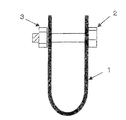
発明例および比較例の高強度亜鉛めっき鋼板を、それぞれ幅35mm×長さ100mmにせん断した後、せん断時の残留応力を除去するために幅が30mmとなるまで研削加工を施し、試験片を作製した。この試験片に対して、3点曲げ試験機を用いて180°曲げ加工を施し、図1に示すように、内側間隔が8mmとなるようにして曲げ試験片1とし、ボルト2とナット3で拘束して試験片形状を固定し、耐遅れ破壊性評価用試験片を得た。このようにして作製した耐遅れ破壊性評価用試験片に対し、米国自動車技術会で定めたSAE J2334に規定された、乾燥・湿潤・塩水浸漬の工程からなる複合サイクル腐食試験(図2参照)を、最大40サイクルまで実施した。各サイクルの塩水浸漬の工程前に目視により割れの発生の有無を調査し、割れ発生サイクルを測定した。また、本試験は、各高強度亜鉛めっき鋼板につき3検体ずつ実施し、その平均値をもって評価を行った。評価はサイクル数から、以下の基準により評価した。なお、表3中の割れ発生サイクル数40超とは、本実施例の結果では、割れが発生しなかったことを示す。この評価で、◎、〇を評価合格(耐遅れ破壊性に優れる)とし、△、×を評価不合格(耐遅れ破壊性に劣る)とした。
◎:40サイクル超
〇:30サイクル以上、40サイクル以下
△:10サイクル以上、30サイクル未満
×:10サイクル未満
発明例および比較例の高強度亜鉛めっき鋼板を、それぞれ幅35mm×長さ100mmにせん断した後、せん断時の残留応力を除去するために幅が30mmとなるまで研削加工を施し、試験片を作製した。この試験片に対して、3点曲げ試験機を用いて180°曲げ加工を施し、図1に示すように、内側間隔が8mmとなるようにして曲げ試験片1とし、ボルト2とナット3で拘束して試験片形状を固定し、耐遅れ破壊性評価用試験片を得た。このようにして作製した耐遅れ破壊性評価用試験片に対し、米国自動車技術会で定めたSAE J2334に規定された、乾燥・湿潤・塩水浸漬の工程からなる複合サイクル腐食試験(図2参照)を、最大40サイクルまで実施した。各サイクルの塩水浸漬の工程前に目視により割れの発生の有無を調査し、割れ発生サイクルを測定した。また、本試験は、各高強度亜鉛めっき鋼板につき3検体ずつ実施し、その平均値をもって評価を行った。評価はサイクル数から、以下の基準により評価した。なお、表3中の割れ発生サイクル数40超とは、本実施例の結果では、割れが発生しなかったことを示す。この評価で、◎、〇を評価合格(耐遅れ破壊性に優れる)とし、△、×を評価不合格(耐遅れ破壊性に劣る)とした。
◎:40サイクル超
〇:30サイクル以上、40サイクル以下
△:10サイクル以上、30サイクル未満
×:10サイクル未満
(2)塗装後耐食性の評価
発明例および比較例の高強度亜鉛めっき鋼板を130mm×70mmと110mm×40mmにせん断して平板試験片とし、この2枚の平板試験片の評価面どうしを重ね合わせてスポット溶接により接合し、図3に示すような耐食性試験用試験片とした。この耐食性試験用試験片に、日本パーカライジング(株)製「パルボンド」を用い、標準条件(35℃、120秒)で浸漬による化成処理を施し、次いで、関西ペイント(株)製の電着塗料「GT-100」を用いた電着塗装と焼付処理を行い塗膜を形成した。電着塗装の塗膜厚は15μmとし、市販の電磁膜厚計を用いて膜厚の測定を行った。
発明例および比較例の高強度亜鉛めっき鋼板を130mm×70mmと110mm×40mmにせん断して平板試験片とし、この2枚の平板試験片の評価面どうしを重ね合わせてスポット溶接により接合し、図3に示すような耐食性試験用試験片とした。この耐食性試験用試験片に、日本パーカライジング(株)製「パルボンド」を用い、標準条件(35℃、120秒)で浸漬による化成処理を施し、次いで、関西ペイント(株)製の電着塗料「GT-100」を用いた電着塗装と焼付処理を行い塗膜を形成した。電着塗装の塗膜厚は15μmとし、市販の電磁膜厚計を用いて膜厚の測定を行った。
この電着塗装を施した耐食性試験用試験片に対し、米国自動車技術会で定めたSAE J2334に規定された、乾燥・湿潤・塩水浸漬の工程からなる複合サイクル腐食試験(図2参照)を30サイクル実施し、下記の手順で塗装後耐食性の評価を行った。
(1)スポット溶接部を打ち抜き、合わせ構造部を分解する
(2)塗装の剥離(ネオス社製「デスコート300」15分浸漬)
(3)めっき・錆の除去(希薄塩酸浸漬)
(4)合わせ構造部に生じた最大侵食深さをポイントマイクロメーターで測定
(1)スポット溶接部を打ち抜き、合わせ構造部を分解する
(2)塗装の剥離(ネオス社製「デスコート300」15分浸漬)
(3)めっき・錆の除去(希薄塩酸浸漬)
(4)合わせ構造部に生じた最大侵食深さをポイントマイクロメーターで測定
塗装後耐食性は、表面に樹脂皮膜を形成していない亜鉛めっき鋼板の最大侵食深さを1とした場合の最大侵食深さ比(A)を算出し、以下のように評価した。
◎:A≦0.6
○:0.6<A≦0.95
△:0.95<A≦1.2
×:1.2<A
◎:A≦0.6
○:0.6<A≦0.95
△:0.95<A≦1.2
×:1.2<A


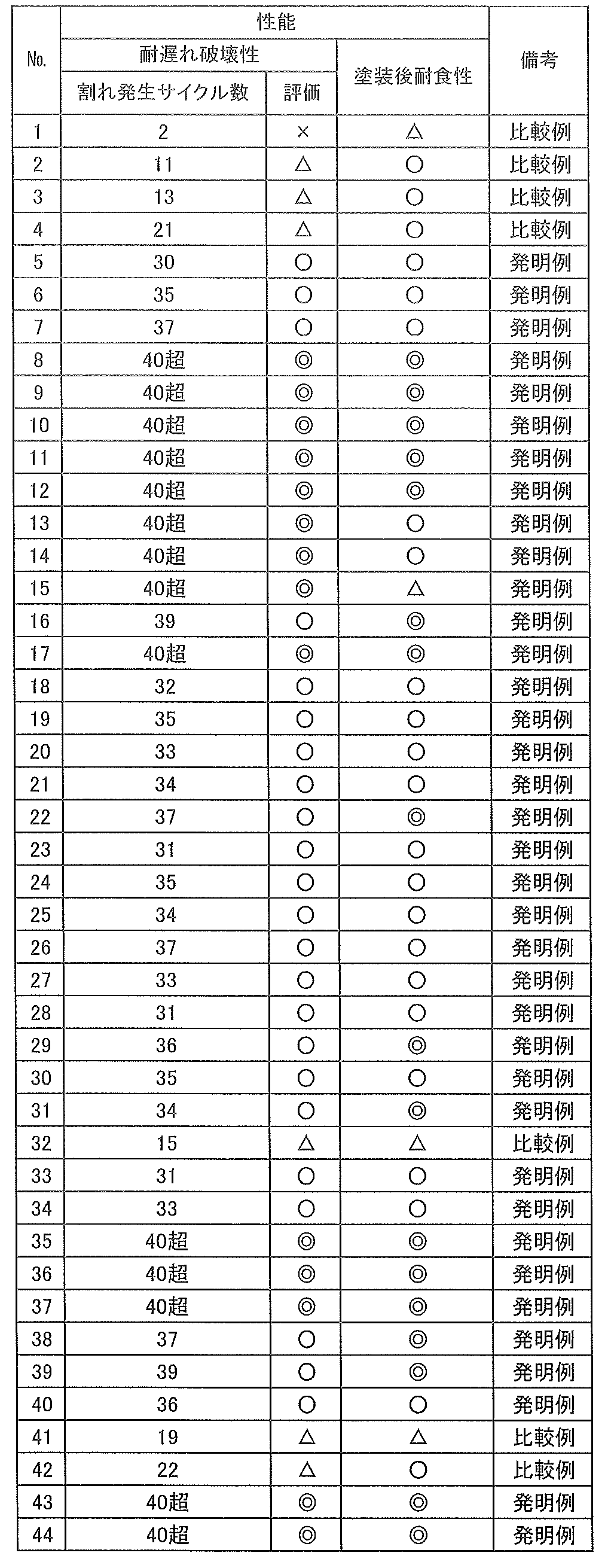
表1~表3において、No.1の鋼板は、基材(溶融亜鉛めっき鋼板)表面上に樹脂皮膜を形成していない比較例(溶融亜鉛めっき鋼板ままの比較例)であるが、早期に遅れ破壊が発生しており、耐遅れ破壊性が低いことが判る。
No.3~No.15の鋼板は、エポキシ樹脂(A1)に金属塩(b)としてトリポリリン酸二水素アルミニウムを混合した表面処理液を塗布方式(バーコート)で溶融亜鉛めっき鋼板表面に塗布し、樹脂皮膜を形成した例である。また、No.2の鋼板は、金属塩(b)が添加されていないエポキシ樹脂(A1)の表面処理液を、同様に塗布して樹脂皮膜を形成した例である。これらのうち、金属塩(b)の含有量の下限が本発明範囲を満たし、かつ本発明の好適な要件を満たすNo.5~No.14の鋼板は、いずれも優れた耐遅れ破壊性が得られるとともに、塗装後耐食性も良好である。これに対して、金属塩(b)が添加されていないNo.2の鋼板や、金属塩(b)の含有量が本発明範囲を下回るNo.3、No.4の鋼板は、樹脂皮膜を形成していないNo.1の鋼板に比べて、耐遅れ破壊性が若干向上しているが、発明例の鋼板に比べて耐遅れ破壊性が劣っている。また、金属塩(b)の含有量が本発明の好適範囲を超えるNo.15の鋼板は、塗装後耐食性がNo.5~No.14の鋼板に比べて低下しており、したがって、通常レベルの塗装後耐食性が要求される用途には特に問題はないが、特に高度な塗装後耐食性が要求される用途には不向きであると言える。
No.16、No.17の鋼板は、No.11の鋼板に対して樹脂皮膜の成膜法を変えた発明例であるが、いずれも優れた耐遅れ破壊性が得られるとともに、塗装後耐食性も良好である。
No.18~No.31の鋼板は、エポキシ樹脂(A1)に混合する金属塩(b)の種類を変えた発明例であるが、いずれも優れた耐遅れ破壊性が得られるとともに、塗装後耐食性も良好である。
No.32~No.37の鋼板は、樹脂皮膜の膜厚を変えた例である。膜厚が本発明範囲であるNo.33~No.37の鋼板は、いずれも優れた耐遅れ破壊性が得られるとともに、塗装後耐食性も良好である。これに対して、樹脂皮膜の膜厚が本発明範囲を下回るNo.32の鋼板は、発明例であるNo.33~No.37の鋼板に比べて耐遅れ破壊性が劣っている。さらに塗装後耐食性も劣っている。なお、樹脂皮膜の膜厚が本発明の好適範囲を超えるNo.37の鋼板は、スポット溶接時に通電せず接合できないことから、溶接性が要求されない用途には特に問題はないが、溶接性が要求される用途には不向きであると言える。
No.38~No.40の鋼板は、有機樹脂の種類を変えた発明例であるが、いずれも優れた耐遅れ破壊性が得られるとともに、塗装後耐食性も良好である。
No.41、No.42は、本発明が規定する金属塩(b)(トリポリリン酸二水素アルミニウム)に加えて、膜厚以上の最大粒子径を有する粒径が大きい他の粒子成分(導電性粒子であるSUS粉、窒化チタン粒子)を皮膜中に添加した比較例であるが、発明例であるNo.11の鋼板に較べて耐遅れ破壊性が劣っている。
No.43、No.44は、それぞれ基材として電気亜鉛めっき鋼板、合金化溶融亜鉛めっき鋼板を用いた発明例であるが、いずれも優れた耐遅れ破壊性が得られるとともに、塗装後耐食性も良好である。
(実施例2)
基材である亜鉛めっき鋼板として、下地鋼板の成分組成がC:0.18質量%、Si:1.0質量%、Mn:3.0質量%、P:0.007質量%、S:0.0005質量%、残部Feおよび不可避的不純物からなり、引張強度が1480MPa、板厚が1.6mmの溶融亜鉛めっき鋼板を用いた。この溶融亜鉛めっき鋼板をトルエンに浸漬して5分間超音波洗浄を行って防錆油を除去した後、表面にまず無機皮膜を形成し、その後樹脂皮膜を形成した。
基材である亜鉛めっき鋼板として、下地鋼板の成分組成がC:0.18質量%、Si:1.0質量%、Mn:3.0質量%、P:0.007質量%、S:0.0005質量%、残部Feおよび不可避的不純物からなり、引張強度が1480MPa、板厚が1.6mmの溶融亜鉛めっき鋼板を用いた。この溶融亜鉛めっき鋼板をトルエンに浸漬して5分間超音波洗浄を行って防錆油を除去した後、表面にまず無機皮膜を形成し、その後樹脂皮膜を形成した。
無機皮膜形成用の(c)成分として、表4、表5に記載のシラン化合物またはジルコニウム化合物を含む表面処理液を、亜鉛めっき鋼板表面に、バーコート方式による塗布法で付着させてコーティングした後、到達板温が120℃となるようにインダクションヒーターで加熱することで無機皮膜を形成した。(c)成分の片面あたりの付着量の測定は、皮膜表面にX線を照射し(c)成分に含まれる金属元素の蛍光X線の強度を測定し、検量線と比較することで算出した。
樹脂皮膜は、上記のようにして形成した無機皮膜の表面に、実施例1と同様の方法で形成した。また、樹脂皮膜の膜厚を、実施例1と同様の方法で測定した。その他の粒子成分としては、実施例1と同様のものを用いた。
(3)耐遅れ破壊性の評価
発明例および比較例の高強度亜鉛めっき鋼板の耐遅れ破壊性の評価を実施例1と同様にして実施した。
発明例および比較例の高強度亜鉛めっき鋼板の耐遅れ破壊性の評価を実施例1と同様にして実施した。
(4)塗膜密着性の評価
発明例および比較例の高強度亜鉛めっき鋼板を130mm×70mmにせん断して平板試験片とした。この塗膜密着性試験用試験片に、日本パーカライジング(株)製「パルボンド」を用い、標準条件(35℃、120秒)で浸漬による化成処理を施し、次いで、関西ペイント(株)製の電着塗料「GT-100」を用いた電着塗装と焼付処理を行い塗膜を形成した。電着塗装の塗膜厚は15μmとし、市販の電磁膜厚計を用いて膜厚の測定を行った。
発明例および比較例の高強度亜鉛めっき鋼板を130mm×70mmにせん断して平板試験片とした。この塗膜密着性試験用試験片に、日本パーカライジング(株)製「パルボンド」を用い、標準条件(35℃、120秒)で浸漬による化成処理を施し、次いで、関西ペイント(株)製の電着塗料「GT-100」を用いた電着塗装と焼付処理を行い塗膜を形成した。電着塗装の塗膜厚は15μmとし、市販の電磁膜厚計を用いて膜厚の測定を行った。
この電着塗装を施した塗膜密着性試験用試験片に対し、下記の手順で塗膜密着性の評価を行った。
(1)試験面にカッターナイフを用いて、素地(基材である亜鉛めっき鋼板表面)に達する11本の切り傷を1mm間隔でつける。
(2)90°向きを変え、同様に11本の切り傷をつけ、100個の碁盤目を作る。
(3)碁盤目部分にセロテープ((登録商標)、NICHIBAN社製、品番CT-24)を強く圧着させ、テープの端を45°の角度で引きはがす。
(4)碁盤目の状態を確認する
(1)試験面にカッターナイフを用いて、素地(基材である亜鉛めっき鋼板表面)に達する11本の切り傷を1mm間隔でつける。
(2)90°向きを変え、同様に11本の切り傷をつけ、100個の碁盤目を作る。
(3)碁盤目部分にセロテープ((登録商標)、NICHIBAN社製、品番CT-24)を強く圧着させ、テープの端を45°の角度で引きはがす。
(4)碁盤目の状態を確認する
塗膜密着性は、碁盤目の格子の内、塗膜が剥がれた格子数(N)を測定、さらに塗膜の状態を確認し、以下のように評価した。
◎:N=0、かつ、格子の一部も剥がれていない。
○:N=0、かつ、カット(切り傷)の交差点においてわずかに剥がれている。
△:1≦N<15
×:15≦N
◎:N=0、かつ、格子の一部も剥がれていない。
○:N=0、かつ、カット(切り傷)の交差点においてわずかに剥がれている。
△:1≦N<15
×:15≦N


表4~6において、No.51の鋼板は、基材(溶融亜鉛めっき鋼板)表面上に樹脂皮膜を形成していない比較例(溶融亜鉛めっき鋼板ままの比較例)であるが、早期に遅れ破壊が発生しており耐遅れ破壊性が低いことがわかる。
No.53~65の鋼板は、溶融亜鉛めっき鋼板表面に、コーティング法で炭酸ジルコニウムアンモニウムを含有した無機皮膜を形成し、その上層にエポキシ樹脂(A1)に金属塩(b)としてポリリン酸二水素アルミニウムを混合した表面処理液を塗布方式(バーコート)で塗布して皮膜を形成した例である。また、No.52の鋼板は、金属塩(b)が添加されていないエポキシ樹脂(A1)の表面処理液を、同様に塗布して皮膜を形成した例である。これらのうち、金属塩(b)の含有量の下限が本発明範囲を満たし、かつ本発明の好適な要件を満たすNo.55~No.64の鋼板は、いずれも優れた耐遅れ破壊性が得られるとともに、塗膜密着性も良好である。これに対して、金属塩(b)が添加されていないNo.52の鋼板や、金属塩(b)の含有量が本発明範囲を下回るNo.53、No.54の鋼板は、樹脂皮膜を形成していないNo.51の鋼板に比べて、耐遅れ破壊性が若干向上しているが、発明例の鋼板に比べて耐遅れ破壊性が劣っている。また、金属塩(b)の含有量が本発明の好適範囲を超えるNo.65の鋼板は、塗膜密着性がNo.55~No.64の鋼板に比べて劣化してしまうことから、通常レベルの塗膜密着性が要求される用途には特に問題はないが、特に高度な塗膜密着性が要求される用途には不向きであると言える。
No.66、67の鋼板は、No.61の鋼板に対して樹脂皮膜の成膜法を変えた発明例であるが、いずれも優れた耐遅れ破壊性が得られるとともに、塗膜密着性も良好である。
No.68~81の鋼板は、エポキシ樹脂(A1)に混合する金属塩(b)の種類を変えた発明例であるが、いずれも優れた耐遅れ破壊性が得られるとともに、塗膜密着性も良好である。
No.82~87の鋼板は、樹脂皮膜の膜厚を変えた例である。膜厚が本発明範囲であるNo.83~No.87の鋼板は、いずれも優れた耐遅れ破壊性が得られるとともに、塗膜密着性も良好である。これに対して、樹脂皮膜の膜厚が本発明範囲を下回るNo.82の鋼板は、発明例であるNo.83~No.87の鋼板に比べて耐遅れ破壊性が劣っている。なお、樹脂皮膜の膜厚が本発明の好適範囲を超えるNo.87の鋼板は、スポット溶接時に通電せず接合できないことから、溶接性が要求されない用途には特に問題はないが、溶接性が要求される用途には不向きであると言える。
No.88~90の鋼板は、有機樹脂の種類を変えた発明例であるが、いずれも優れた耐遅れ破壊性が得られるとともに、塗膜密着性も良好である。
No.91、92は、本発明が規定する金属塩(b)(トリポリリン酸二水素アルミニウム)に加えて、膜厚以上の最大粒子径を有する粒径が大きい他の粒子成分(導電性粒子であるSUS粉、窒化チタン粒子)を皮膜中に添加した比較例であるが、発明例であるNo.61の鋼板に較べて耐遅れ破壊性が劣っている。
No.93は、下層の無機皮膜を形成せず、溶融亜鉛めっき鋼板に直接樹脂皮膜を形成した発明例であり、優れた耐遅れ破壊性が得られているが、塗膜密着性が劣位である。また、No.94~98は、下層の炭酸ジルコニウムアンモニウム化合物の鋼板片面あたりの付着量を変えた発明例であるが、炭酸ジルコニウムアンモニウムの鋼板片面あたりの付着量が本発明の好適範囲を下回るNo.94の鋼板は、No.95~97に比べ塗膜密着性が劣っている。No.99~101は、下層の無機皮膜中に含まれる化合物を変えた発明例であるが、いずれも良好な耐遅れ破壊性と塗膜密着性が得られている。
1 曲げ試験片
2 ボルト
3 ナット
2 ボルト
3 ナット
Claims (21)
- 引張強度が1180MPa以上の亜鉛めっき鋼板(但し、合金化溶融亜鉛めっき鋼板を含む。)の表面に皮膜(x)を含む皮膜を有し、
該皮膜(x)は、
有機樹脂(a)と、リン酸基、亜リン酸基、ケイ酸基、モリブデン酸基のうちの少なくとも1種を含む金属塩(b)を含有し、且つ前記金属塩(b)以外には最大粒子径が該皮膜(x)の膜厚以上の粒子成分を含有せず、
膜厚が0.3μm以上であり、皮膜(x)中での金属塩(b)の含有量が5質量%以上である、1180MPa以上の引張強度を有する高強度亜鉛めっき鋼板。 - 金属塩(b)が、アルカリ金属、アルカリ土類金属、アルミニウムのうちの少なくとも1種を含む金属塩である、請求項1に記載の1180MPa以上の引張強度を有する高強度亜鉛めっき鋼板。
- 金属塩(b)が、リン酸基、亜リン酸基、ケイ酸基のうちの少なくとも1種を含む金属塩である、請求項1または2に記載の1180MPa以上の引張強度を有する高強度亜鉛めっき鋼板。
- 金属塩(b)の鋼板片面あたりの付着量が50mg/m2以上である、請求項1~3のいずれかに記載の1180MPa以上の引張強度を有する高強度亜鉛めっき鋼板。
- 金属塩(b)がトリポリリン酸二水素アルミニウムであり、
皮膜(x)の膜厚が1.0μm以上であり、皮膜(x)中でのトリポリリン酸二水素アルミニウムの含有量が17~45質量%である、請求項1~4のいずれかに記載の1180MPa以上の引張強度を有する高強度亜鉛めっき鋼板。 - 皮膜(x)は、導電性粒子および固体潤滑剤粒子を含有しない、請求項1~5のいずれかに記載の1180MPa以上の引張強度を有する高強度亜鉛めっき鋼板。
- 皮膜(x)は、金属塩(b)以外の粒子成分を含有しない、請求項1~6のいずれかに記載の1180MPa以上の引張強度を有する高強度亜鉛めっき鋼板。
- 皮膜(x)中に存在する金属塩(b)の含有量が40質量%以下である、請求項1~7のいずれかに記載の1180MPa以上の引張強度を有する高強度亜鉛めっき鋼板。
- 皮膜(x)の膜厚が4.0μm以下である、請求項1~8のいずれかに記載の1180MPa以上の引張強度を有する高強度亜鉛めっき鋼板。
- 引張強度が1180MPa以上の亜鉛めっき鋼板(但し、合金化溶融亜鉛めっき鋼板を含む。)の表面に皮膜(x)を含む皮膜を有する1180MPa以上の引張強度を有する高強度亜鉛めっき鋼板の製造方法であって、
該皮膜(x)は、
有機樹脂(a)と、リン酸基、亜リン酸基、ケイ酸基、モリブデン酸基のうちの少なくとも1種を含む金属塩(b)を含有し、且つ前記金属塩(b)以外には最大粒子径が該皮膜(x)の膜厚以上の粒子成分を含有せず、
膜厚が0.3μm以上であり、皮膜(x)中での金属塩(b)の含有量が5質量%以上であり、
前記皮膜(x)を、
前記有機樹脂(a)と、前記金属塩(b)を含有し、且つ前記金属塩(b)以外には最大粒子径が形成すべき前記皮膜(x)の膜厚以上の粒子成分を含有しない表面処理液を、前記皮膜(x)を形成すべき表面に付着させることにより形成する、1180MPa以上の引張強度を有する高強度亜鉛めっき鋼板の製造方法。 - 金属塩(b)が、アルカリ金属、アルカリ土類金属、アルミニウムのうちの少なくとも1種を含む金属塩である、請求項10に記載の1180MPa以上の引張強度を有する高強度亜鉛めっき鋼板の製造方法。
- 金属塩(b)が、リン酸基、亜リン酸基、ケイ酸基のうちの少なくとも1種を含む金属塩である、請求項10または11に記載の1180MPa以上の引張強度を有する高強度亜鉛めっき鋼板の製造方法。
- 金属塩(b)の鋼板片面あたりの付着量が50mg/m2以上である、請求項10~12のいずれかに記載の1180MPa以上の引張強度を有する高強度亜鉛めっき鋼板の製造方法。
- 金属塩(b)がトリポリリン酸二水素アルミニウムであり、
皮膜(x)の膜厚が1.0μm以上であり、皮膜(x)中でのトリポリリン酸二水素アルミニウムの含有量が17~45質量%である、請求項10~13のいずれかに記載の1180MPa以上の引張強度を有する高強度亜鉛めっき鋼板の製造方法。 - 皮膜(x)は、導電性粒子および固体潤滑剤粒子を含有しない、請求項10~14のいずれかに記載の1180MPa以上の引張強度を有する高強度亜鉛めっき鋼板の製造方法。
- 表面処理液は、金属塩(b)以外の粒子成分を含有しない、請求項10~15のいずれかに記載の1180MPa以上の引張強度を有する高強度亜鉛めっき鋼板の製造方法。
- 皮膜(x)中に存在する金属塩(b)の含有量が40質量%以下である、請求項10~16のいずれかに記載の1180MPa以上の引張強度を有する高強度亜鉛めっき鋼板の製造方法。
- 皮膜(x)の膜厚が4.0μm以下である、請求項10~17のいずれかに記載の1180MPa以上の引張強度を有する高強度亜鉛めっき鋼板の製造方法。
- 引張強度が1180MPa以上の亜鉛めっき鋼板(但し、合金化溶融亜鉛めっき鋼板を含む。)の遅れ破壊を抑制するための皮膜(x)を含む皮膜を前記亜鉛めっき鋼板の表面に形成するための表面処理液であって、
有機樹脂(a)と、リン酸基、亜リン酸基、ケイ酸基、モリブデン酸基のうちの少なくとも1種を含む金属塩(b)を含有し、且つ前記金属塩(b)以外には最大粒子径が形成すべき前記皮膜(x)の膜厚以上の粒子成分を含有せず、全固形分中での前記金属塩(b)の含有割合が5質量%以上である、表面処理液。 - 皮膜が、無機皮膜と前記無機皮膜上に形成された皮膜(x)を含み、
前記無機皮膜は、
シラン化合物、ジルコニウム化合物から選ばれる少なくとも1種((c)成分)を含有し、前記(c)成分の鋼板片面あたりの付着量が200~500mg/m2である、請求項1~9のいずれかに記載の1180MPa以上の引張強度を有する高強度亜鉛めっき鋼板。 - 皮膜が、無機皮膜と前記無機皮膜上に形成された皮膜(x)を含み、
シラン化合物、ジルコニウム化合物から選ばれる少なくとも1種((c)成分)を含有する表面処理液を、前記亜鉛めっき鋼板に付着させることにより、前記(c)成分の鋼板片面あたりの付着量が200~500mg/m2である前記無機皮膜を形成し、その後、前記無機皮膜の表面に前記皮膜(x)を形成する、請求項10~18のいずれかに記載の1180MPa以上の引張強度を有する高強度亜鉛めっき鋼板の製造方法。
Priority Applications (1)
| Application Number | Priority Date | Filing Date | Title |
|---|---|---|---|
| JP2020519461A JPWO2020121899A1 (ja) | 2018-12-12 | 2019-12-03 | 1180MPa以上の引張強度を有する高強度亜鉛めっき鋼板およびその製造方法並びに表面処理液 |
Applications Claiming Priority (2)
| Application Number | Priority Date | Filing Date | Title |
|---|---|---|---|
| JP2018232999 | 2018-12-12 | ||
| JP2018-232999 | 2018-12-12 |
Publications (1)
| Publication Number | Publication Date |
|---|---|
| WO2020121899A1 true WO2020121899A1 (ja) | 2020-06-18 |
Family
ID=71076006
Family Applications (1)
| Application Number | Title | Priority Date | Filing Date |
|---|---|---|---|
| PCT/JP2019/047285 Ceased WO2020121899A1 (ja) | 2018-12-12 | 2019-12-03 | 1180MPa以上の引張強度を有する高強度亜鉛めっき鋼板およびその製造方法並びに表面処理液 |
Country Status (2)
| Country | Link |
|---|---|
| JP (1) | JPWO2020121899A1 (ja) |
| WO (1) | WO2020121899A1 (ja) |
Cited By (2)
| Publication number | Priority date | Publication date | Assignee | Title |
|---|---|---|---|---|
| JPWO2023171143A1 (ja) * | 2022-03-08 | 2023-09-14 | ||
| JP2024031589A (ja) * | 2022-08-26 | 2024-03-07 | Jfeスチール株式会社 | 耐遅れ破壊特性に優れた亜鉛系めっき鋼板及びその製造方法 |
Citations (3)
| Publication number | Priority date | Publication date | Assignee | Title |
|---|---|---|---|---|
| JP2009120947A (ja) * | 2007-10-24 | 2009-06-04 | Nippon Steel Corp | 耐食性と溶接性に優れる亜鉛系合金めっき鋼材及び耐食性に優れる塗装鋼材 |
| JP2011219791A (ja) * | 2010-04-06 | 2011-11-04 | Nippon Steel Corp | コンクリート構造用塗装めっき鋼材 |
| JP2013193273A (ja) * | 2012-03-16 | 2013-09-30 | Nippon Steel & Sumitomo Metal Corp | 塗装鋼板およびこれを用いた筐体 |
-
2019
- 2019-12-03 JP JP2020519461A patent/JPWO2020121899A1/ja active Pending
- 2019-12-03 WO PCT/JP2019/047285 patent/WO2020121899A1/ja not_active Ceased
Patent Citations (3)
| Publication number | Priority date | Publication date | Assignee | Title |
|---|---|---|---|---|
| JP2009120947A (ja) * | 2007-10-24 | 2009-06-04 | Nippon Steel Corp | 耐食性と溶接性に優れる亜鉛系合金めっき鋼材及び耐食性に優れる塗装鋼材 |
| JP2011219791A (ja) * | 2010-04-06 | 2011-11-04 | Nippon Steel Corp | コンクリート構造用塗装めっき鋼材 |
| JP2013193273A (ja) * | 2012-03-16 | 2013-09-30 | Nippon Steel & Sumitomo Metal Corp | 塗装鋼板およびこれを用いた筐体 |
Cited By (7)
| Publication number | Priority date | Publication date | Assignee | Title |
|---|---|---|---|---|
| JPWO2023171143A1 (ja) * | 2022-03-08 | 2023-09-14 | ||
| WO2023171143A1 (ja) * | 2022-03-08 | 2023-09-14 | Jfeスチール株式会社 | 鋼板、めっき鋼板、プレス成形品、加工部材、プレス成形品の製造方法および加工部材の製造方法 |
| EP4471181A4 (en) * | 2022-03-08 | 2025-05-14 | JFE Steel Corporation | STEEL SHEET, PLATED STEEL SHEET, PRESS-MOLDED ARTICLE, PROCESSED MEMBER, METHOD FOR PRODUCING PRESS-MOLDED ARTICLE, AND METHOD FOR PRODUCING PROCESSED MEMBER |
| US20250171649A1 (en) * | 2022-03-08 | 2025-05-29 | Jfe Steel Corporation | Steel sheet, coated steel sheet, press-formed product, processed member, method for manufacturing press-formed product, and method for manufacturing processed member |
| JP7704197B2 (ja) | 2022-03-08 | 2025-07-08 | Jfeスチール株式会社 | 鋼板、めっき鋼板、プレス成形品、加工部材、プレス成形品の製造方法および加工部材の製造方法 |
| JP2024031589A (ja) * | 2022-08-26 | 2024-03-07 | Jfeスチール株式会社 | 耐遅れ破壊特性に優れた亜鉛系めっき鋼板及びその製造方法 |
| JP7652155B2 (ja) | 2022-08-26 | 2025-03-27 | Jfeスチール株式会社 | 耐遅れ破壊特性に優れた亜鉛系めっき鋼板及びその製造方法 |
Also Published As
| Publication number | Publication date |
|---|---|
| JPWO2020121899A1 (ja) | 2021-10-21 |
Similar Documents
| Publication | Publication Date | Title |
|---|---|---|
| EP3266900B1 (en) | Molten al-zn-mg-si-plated steel sheet | |
| JP6551518B2 (ja) | 亜鉛系めっき鋼板 | |
| JP6368730B2 (ja) | 溶融Al−Zn−Mg−Siめっき鋼板とその製造方法 | |
| JP6551519B2 (ja) | 溶融亜鉛系めっき鋼板 | |
| JP7239008B2 (ja) | 亜鉛めっき鋼板 | |
| JP5640312B2 (ja) | 耐食性と溶接性に優れる亜鉛系合金めっき鋼材及び耐食性に優れる塗装鋼材 | |
| KR102384093B1 (ko) | 란탄을 포함하는 희생 음극 보호 코팅을 구비한 강 시트 | |
| JP6631623B2 (ja) | 亜鉛系めっき鋼板 | |
| CN111527235B (zh) | 点焊性和耐蚀性优异的多层锌合金镀覆钢材 | |
| KR20200051723A (ko) | 도장 후 내식성이 우수한 용융 Zn계 도금 강판 | |
| CN110114501A (zh) | 点焊性及耐腐蚀性优异的多层镀锌合金钢材 | |
| JPWO2011152381A1 (ja) | 切断端面耐食性及び加工部耐食性に優れた溶融アルミニウム合金めっき鋼材とその製造方法 | |
| WO2020129473A1 (ja) | 表面処理鋼板 | |
| JP6638694B2 (ja) | 引張強度が1180MPa以上である耐遅れ破壊性に優れた鋼板 | |
| JP6638741B2 (ja) | 耐遅れ破壊特性に優れた鋼板 | |
| JPWO2020121899A1 (ja) | 1180MPa以上の引張強度を有する高強度亜鉛めっき鋼板およびその製造方法並びに表面処理液 | |
| JP2009120942A (ja) | 切断端面耐食性及び加工部耐食性に優れたアルミニウム合金めっき鋼板 | |
| JP6288471B2 (ja) | 引張強度が1180MPa以上である耐遅れ破壊性に優れた鋼板 | |
| JPWO2019186891A1 (ja) | 亜鉛系めっき鋼板および熱処理鋼材 | |
| JP7652155B2 (ja) | 耐遅れ破壊特性に優れた亜鉛系めっき鋼板及びその製造方法 | |
| JP2000212674A (ja) | 塗装後耐食性に優れたアルミニウム合金材 | |
| JP6530923B2 (ja) | 耐食性に優れたステンレス鋼板およびその製造方法 |
Legal Events
| Date | Code | Title | Description |
|---|---|---|---|
| ENP | Entry into the national phase |
Ref document number: 2020519461 Country of ref document: JP Kind code of ref document: A |
|
| 121 | Ep: the epo has been informed by wipo that ep was designated in this application |
Ref document number: 19895344 Country of ref document: EP Kind code of ref document: A1 |
|
| NENP | Non-entry into the national phase |
Ref country code: DE |
|
| 122 | Ep: pct application non-entry in european phase |
Ref document number: 19895344 Country of ref document: EP Kind code of ref document: A1 |