WO2020100913A1 - 変性メタクリル樹脂および成形体 - Google Patents
変性メタクリル樹脂および成形体 Download PDFInfo
- Publication number
- WO2020100913A1 WO2020100913A1 PCT/JP2019/044402 JP2019044402W WO2020100913A1 WO 2020100913 A1 WO2020100913 A1 WO 2020100913A1 JP 2019044402 W JP2019044402 W JP 2019044402W WO 2020100913 A1 WO2020100913 A1 WO 2020100913A1
- Authority
- WO
- WIPO (PCT)
- Prior art keywords
- resin
- molecular weight
- methacrylic resin
- group
- average molecular
- Prior art date
- Legal status (The legal status is an assumption and is not a legal conclusion. Google has not performed a legal analysis and makes no representation as to the accuracy of the status listed.)
- Ceased
Links
Classifications
-
- B—PERFORMING OPERATIONS; TRANSPORTING
- B29—WORKING OF PLASTICS; WORKING OF SUBSTANCES IN A PLASTIC STATE IN GENERAL
- B29C—SHAPING OR JOINING OF PLASTICS; SHAPING OF MATERIAL IN A PLASTIC STATE, NOT OTHERWISE PROVIDED FOR; AFTER-TREATMENT OF THE SHAPED PRODUCTS, e.g. REPAIRING
- B29C55/00—Shaping by stretching, e.g. drawing through a die; Apparatus therefor
- B29C55/02—Shaping by stretching, e.g. drawing through a die; Apparatus therefor of plates or sheets
-
- C—CHEMISTRY; METALLURGY
- C08—ORGANIC MACROMOLECULAR COMPOUNDS; THEIR PREPARATION OR CHEMICAL WORKING-UP; COMPOSITIONS BASED THEREON
- C08F—MACROMOLECULAR COMPOUNDS OBTAINED BY REACTIONS ONLY INVOLVING CARBON-TO-CARBON UNSATURATED BONDS
- C08F20/00—Homopolymers and copolymers of compounds having one or more unsaturated aliphatic radicals, each having only one carbon-to-carbon double bond, and only one being terminated by only one carboxyl radical or a salt, anhydride, ester, amide, imide or nitrile thereof
-
- C—CHEMISTRY; METALLURGY
- C08—ORGANIC MACROMOLECULAR COMPOUNDS; THEIR PREPARATION OR CHEMICAL WORKING-UP; COMPOSITIONS BASED THEREON
- C08F—MACROMOLECULAR COMPOUNDS OBTAINED BY REACTIONS ONLY INVOLVING CARBON-TO-CARBON UNSATURATED BONDS
- C08F8/00—Chemical modification by after-treatment
- C08F8/14—Esterification
- C08F8/16—Lactonisation
-
- C—CHEMISTRY; METALLURGY
- C08—ORGANIC MACROMOLECULAR COMPOUNDS; THEIR PREPARATION OR CHEMICAL WORKING-UP; COMPOSITIONS BASED THEREON
- C08F—MACROMOLECULAR COMPOUNDS OBTAINED BY REACTIONS ONLY INVOLVING CARBON-TO-CARBON UNSATURATED BONDS
- C08F8/00—Chemical modification by after-treatment
- C08F8/48—Isomerisation; Cyclisation
-
- G—PHYSICS
- G02—OPTICS
- G02B—OPTICAL ELEMENTS, SYSTEMS OR APPARATUS
- G02B5/00—Optical elements other than lenses
- G02B5/30—Polarising elements
Definitions
- the present invention relates to a modified methacrylic resin capable of providing a molded product having less foreign matter and excellent surface smoothness, and a molded product having less foreign matter and excellent surface smoothness.
- Patent Document 1 discloses at least one ring structure selected from the group consisting of a structural unit (M) derived from methyl methacrylate, a lactone ring unit, a glutaric anhydride unit, and an N-substituted or unsubstituted glutarimide unit. And a ratio (Mw / Mn) of the weight average molecular weight (Mw) to the polystyrene-equivalent number average molecular weight (Mn) measured by gel permeation chromatography.
- Mw weight average molecular weight
- Mn polystyrene-equivalent number average molecular weight measured by gel permeation chromatography.
- a modified methacrylic resin of 1.01 to 1.80 is disclosed. However, when this modified methacrylic resin is used, a large number of foreign matters are generated in the molded product, and the surface smoothness may not be sufficient.
- An object of the present invention is to provide a modified methacrylic resin capable of providing a molded product having less foreign matter and excellent surface smoothness, and a molded product having less foreign matter and excellent surface smoothness.
- At least one ring structure selected from the group consisting of a structural unit (M) represented by the formula (1) and a lactone ring unit, a glutaric anhydride unit, and an N-substituted or unsubstituted glutarimide unit
- Mp structural unit represented by the formula (1)
- Mw polystyrene-equivalent weight average molecular weight measured by gel permeation chromatography
- R 1 is a hydrogen atom or a methyl group
- R 2 is a hydrogen atom, an alkyl group having 1 to 18 carbon atoms, a cycloalkyl group having 3 to 12 carbon atoms, or an aromatic ring-containing carbon atom having 6 carbon atoms. ⁇ 15 organic groups.
- Mp peak top molecular weight
- Mw polystyrene-equivalent weight average molecular weight measured by gel permeation chromatography
- a molded product comprising the resin according to any one of [1] to [4] or the resin composition according to any one of [6] to [8].
- a stretched film comprising the resin according to any one of [1] to [4] or the resin composition according to any one of [6] to [8].
- a method for producing a stretched film which comprises stretching the film according to [10] above in at least one direction to have an area ratio of 1.5 to 8 times.
- a polarizer protective film comprising the resin described in any one of [1] to [4] or the resin composition described in any one of [6] to [8].
- the modified methacrylic resin or the modified methacrylic resin composition of the present invention can provide a molded article having good surface smoothness and less generation of foreign matter.
- the modified methacrylic resin or modified methacrylic resin composition of the present invention is further excellent in molding processability, good heat resistance, high transparency, small haze, and good mechanical properties such as tensile strength.
- the molded product, film or stretched film of the present invention has good surface smoothness and little foreign matter.
- the molded product, film or stretched film of the present invention is further used in applications requiring high heat resistance and high transparency, for example, optical films such as polarizer protective film, retardation plate and liquid crystal protective plate, portable type. It is suitable for surface materials of information terminals, display window protection films for portable information terminals, light guide films, front plates of various displays, and the like.
- the resin (or polymer) of the present invention comprises a structural unit (M) and a structural unit (R).
- the resin (or polymer) of this invention may be called modified methacrylic resin.
- the structural unit (M) is a structural unit represented by the formula (1).
- R 1 is a hydrogen atom or a methyl group
- R 2 is a hydrogen atom, an alkyl group having 1 to 18 carbon atoms, a cycloalkyl group having 3 to 12 carbon atoms, or an aromatic ring-containing carbon atom having 6 carbon atoms. ⁇ 15 organic groups.
- the alkyl group having 1 to 18 carbon atoms in R 2 is a group in which one hydrogen atom in the alkane is removed.
- the alkyl group may have a substituent.
- Examples of the alkyl group having 1 to 18 carbon atoms include methyl group, ethyl group, tert-butyl group, pentyl group, hexyl group, heptyl group, octyl group, 2-ethylhexyl group, nonyl group, decyl group, undecyl group and dodecyl group.
- Unsubstituted alkyl groups such as tetradecyl group, hexadecyl group, octadecyl group; substituted alkyl groups such as carboxyethyl group, hydroxyhexyl group, hydroxycarbonylethyl group, allyl group, N, N-dimethylaminomethyl group, aminomethyl group, etc.
- a group can be mentioned.
- the cycloalkyl group having 3 to 12 carbon atoms in R 2 is a group in which one hydrogen atom in cycloalkane is removed.
- the cycloalkyl group may have a substituent.
- Examples of the cycloalkyl group having 3 to 12 carbon atoms include cyclopentyl group, cyclohexyl group, bicyclo [2.2.1] heptyl group, norbornyl group, isobornyl group, 2-ethenylbicyclo [2.2.1] heptyl group, N, Examples thereof include N-dimethylamino-cyclohexyl group and tert-butyl-cyclohexyl group.
- Examples of the organic group having an aromatic ring and having 6 to 15 carbon atoms in R 2 include a pyridylmethyl group, a phenyl group, a pyrazino [2,3-b] pyrazyl group, a pyrido [2,3-b] pyrazyl group, a quinoxalyl group, Quinolyl group, naphthalenyl group, pyrido [3,4-b] quinoxalyl group, pyrido [3,4-b] [1.7] naphthyridinyl group, phenazinyl group, phenanthrolyl group, acridinyl group, anthracenyl group, phenanthrenyl group, pyrido [ 3,2-f] [1.7] phenanthrolinyl group and the like can be mentioned.
- R 1 is a methyl group and R 2 is a methyl group, that is, the structural unit (M) is
- the ratio of the structural unit (M) is preferably 70 to 99.5% by mass, more preferably 80 to 99% by mass, and further preferably 90 to 98% by mass based on the total structural units. %.
- the structural unit (R) is a structural unit having in the main chain at least one ring structure selected from the group consisting of a lactone ring unit, a glutaric anhydride unit, and an N-substituted or unsubstituted glutarimide unit.
- a lactone ring unit is a structural unit containing a> CH—O—C ( ⁇ O) — group in the ring structure.
- the ring-constituting element is preferably 4 to 8, more preferably 5 to 6, and most preferably 6.
- the structural unit containing a> CH—O—C ( ⁇ O) — group in the ring structure includes a lactonediyl structure such as a ⁇ -propiolactonediyl structural unit, a ⁇ -butyrolactonediyl structural unit, and a ⁇ -valerolactonediyl structural unit. Units can be mentioned.
- the structural unit containing a> CH—O—C ( ⁇ O) — group in the ring structure can be obtained, for example, by intramolecular cyclization of a polymer having a hydroxy group and an ester group with a hydroxy group and an ester group.
- > C means that the carbon atom C has two bonds.
- R 5 , R 6 and R 7 are each independently a hydrogen atom or an organic group having 1 to 20 carbon atoms, preferably a hydrogen atom or an organic group having 1 to 10 carbon atoms, more preferably R 5 and R 6 is a methyl group and R 7 is a hydrogen atom.
- the organic group is not particularly limited as long as it has 1 to 20 carbon atoms, and includes, for example, a linear or branched alkyl group, a linear or branched alkylene group, an aryl group, an —OCOCH 3 group, A CN group etc. can be mentioned.
- the organic group may contain a hetero atom such as an oxygen atom.
- the lactone ring unit is obtained by the method described in JP-A-2000-230016, JP-A-2001-151814, JP-A-2002-120326, JP-A-2002-254544, JP-A-2005-146084, or the like.
- it can be contained in the methacrylic resin by intramolecular cyclization of a structural unit derived from 2- (hydroxyalkyl) (meth) acrylic acid ester and a structural unit derived from methyl (meth) acrylate.
- the glutaric anhydride unit is a unit having a 2,6-dioxodihydropyrandiyl structure.
- Examples of the unit having a 2,6-dioxodihydropyrandiyl structure include a structural unit represented by the formula (II).
- R 8 is independently a hydrogen atom or an alkyl group having 1 to 5 carbon atoms, preferably a methyl group.
- the unit having a 2,6-dioxodihydropyrandiyl structure is derived from the method described in JP2007-197703A, JP2010-96919A, or the like, for example, two adjacent (meth) acrylic acids. It can be contained in the methacrylic resin by intramolecular cyclization of the structural unit, intramolecular cyclization of the structural unit derived from (meth) acrylic acid and the structural unit derived from methyl (meth) acrylate.
- the N-substituted or unsubstituted glutarimide unit is a unit having an N-substituted or unsubstituted 2,6-dioxopiperidinediyl structure.
- Examples of the unit having an N-substituted or unsubstituted 2,6-dioxopiperidinediyl structure include the structural unit represented by the formula (III).
- R 3 is independently a hydrogen atom or a methyl group, and preferably a methyl group.
- R 4 is a hydrogen atom, an alkyl group having 1 to 18 carbon atoms, a cycloalkyl group having 3 to 12 carbon atoms, or an organic group having 6 to 15 carbon atoms including an aromatic ring, preferably a hydrogen atom, a methyl group, and n.
- -A butyl group, a cyclohexyl group or a benzyl group more preferably a methyl group.
- the N-substituted or unsubstituted glutarimide unit can be obtained by the method described in WO2005 / 10838A1, JP2010-254742A, JP2008-273140A, JP2008-274187A, or the like, specifically Structural units derived from two matching methyl methacrylates include aliphatic hydrocarbon groups such as ammonia, methylamine, ethylamine, n-propylamine, isopropylamine, n-butylamine, isobutylamine, tert-butylamine, and n-hexylamine.
- Containing amine, aniline, toluidine, aromatic hydrocarbon group-containing amine such as trichloroaniline, alicyclic hydrocarbon group-containing amine such as cyclohexylamine, urea, 1,3-dimethylurea, 1,3-diethylurea, 1 , 3-dipropylurea and the like can be obtained.
- aromatic hydrocarbon group-containing amine such as trichloroaniline
- alicyclic hydrocarbon group-containing amine such as cyclohexylamine
- urea, 1,3-dimethylurea, 1,3-diethylurea, 1 , 3-dipropylurea and the like can be obtained.
- methylamine is preferred.
- the ratio of the structural unit (R) is preferably 0.5 to 30% by mass, more preferably 1 to 20% by mass, and further preferably 2 to 10% by mass based on the total structural units. %.
- the orientation birefringence of the modified methacrylic resin can be changed by changing the ratio of the structural unit (R) and the structural unit (M).
- the heat resistance of the modified methacrylic resin tends to improve as the content of the structural unit (R) increases.
- the modified methacrylic resin of the present invention may contain a structural unit (O) other than the structural units (M) and (R).
- the structural unit (O) include units derived from a vinyl-based monomer having only one polymerizable carbon-carbon double bond in one molecule such as (meth) acrylamide, (meth) acrylonitrile and styrene. be able to.
- the proportion of structural units (O) is preferably 10% by mass or less, more preferably 5% by mass or less, based on all structural units.
- the ratio of the structural units (M), (R) and (O) can be measured by 1 H-NMR or the like.
- the modified methacrylic resin of the present invention has a weight average molecular weight (Mw) of preferably 10,000 to 200,000, more preferably 40,000 to 200,000, further preferably 50,000 to 150,000, still more preferably 50,000 to 120,000, most preferably 50,000 to 100,000. Is.
- Mw weight average molecular weight
- the Mw is 10,000 or more, the strength and toughness of the molded product of the present invention are improved.
- the Mw is 200,000 or less, the fluidity of the modified methacrylic resin of the present invention is improved and the moldability is improved.
- the ratio (Mp / Mw) of the peak top molecular weight (Mp) to the weight average molecular weight (Mw) is 0.95 or more and 1.07 or less, more preferably 0.955 or more and 1.06 or less. , And most preferably 0.96 or more and 1.05 or less.
- the ratio (Mw / Mn) of the weight average molecular weight (Mw) to the number average molecular weight (Mn) is preferably 1.01 or more and 1.80 or less, more preferably 1.05 or more and 1. It is 75 or less.
- Mw / Mn is within this range, the modified methacrylic resin has an appropriate strength and a molded product or film that is hard to crack can be obtained.
- the number average molecular weight (Mn) and the weight average molecular weight (Mw) are values calculated by converting the chromatogram measured by gel permeation chromatography into the molecular weight of standard polystyrene.
- the peak top molecular weight (Mp) is the maximum value of the mode (dw / d (logM)) in the differential molecular weight distribution obtained by converting the chromatogram measured by gel permeation chromatography into the molecular weight of standard polystyrene. Molecular weight).
- Mw / Mn the value of Mw / Mn is susceptible to the presence of high molecular weight resins and low molecular weight resins.
- the value of Mp / Mw is unlikely to be affected by the presence of the low molecular weight resin. Therefore, the value of Mp / Mw has a low correlation with the value of Mw / Mn.
- the modified methacrylic resin of the present invention has a polystyrene-equivalent molecular weight distribution measured by gel permeation chromatography, in which the proportion of components having a molecular weight of 200,000 or more is preferably less than 4.0% by mass, more preferably 3.5% by mass. %, And more preferably less than 3% by mass.
- the proportion of the component having a molecular weight of 200,000 or more is 4.0% by mass or more, appearance foreign matter due to resin-derived foreign matter is likely to occur in a molded product or film obtained from the modified methacrylic resin.
- the ratio of the component having a molecular weight of 200,000 or more can be obtained from, for example, an integral molecular weight distribution curve.
- the acid value of the modified methacrylic resin of the present invention is preferably 0.01 to 0.20 mmol / g, more preferably 0.05 to 0.10 mmol / g.
- the acid value is a value proportional to the contents of the carboxylic acid unit and the carboxylic acid anhydride unit in the modified methacrylic resin.
- the acid value can be calculated, for example, by the method described in JP-A-2005-23272. When the acid value is within the above range, the balance between heat resistance, mechanical properties and molding processability is excellent.
- the modified methacrylic resin of the present invention has a melt flow rate (MFR) measured in accordance with JIS K7210 under the conditions of 230 ° C. and a load of 3.8 kg, preferably 0.1 to 20 g / 10 minutes, more preferably The amount is 0.5 to 15 g / 10 minutes, particularly preferably 1.0 to 10 g / 10 minutes.
- MFR melt flow rate
- the modified methacrylic resin of the present invention has a glass transition temperature of preferably 123 ° C or higher, more preferably 125 ° C or higher, still more preferably 128 ° C or higher.
- the upper limit of the glass transition temperature of the modified methacrylic resin of the present invention is not particularly limited, but it is preferably 160 ° C.
- the “glass transition temperature (Tg)” is measured according to JIS K7121. Specifically, the DSC curve is measured under the condition that the temperature is once raised to 230 ° C., then cooled to room temperature, and then raised from room temperature to 230 ° C. at 10 ° C./min. The midpoint obtained from the DSC curve measured during the second temperature increase is obtained as the "glass transition temperature (Tg)".
- the modified methacrylic resin of the present invention can be obtained by a method including causing a methacrylic resin (hereinafter sometimes referred to as a precursor polymer) to undergo a ring structure forming reaction.
- a methacrylic resin hereinafter sometimes referred to as a precursor polymer
- the precursor polymer used in the method for producing the modified methacrylic resin is not particularly limited by the syndiotacticity (rr) represented by triplets, but is preferably 54% or more, more preferably 56% or more, further preferably 56%. It is 80% or more and 80% or less, more preferably 56% or more and 70% or less, and particularly preferably 58% or more and 70% or less.
- the modified methacrylic resin obtained by using the precursor polymer with high syndiotacticity (rr) has higher heat resistance and tensile strength than the modified methacrylic resin obtained by using the precursor polymer with low syndiotacticity (rr). Strength tends to balance at a high level.
- the syndiotacticity (rr) in triplets is expressed as racemo (rr) by the two chains (triples, diad) of the chain of three consecutive structural units (triple, triad). ) Is a ratio.
- meso those having the same steric configuration
- racemo those having the same steric configuration
- racemo those having the same steric configuration
- racemo those having the same steric configuration
- racem and r are denoted as m and r, respectively.
- the syndiotacticity (rr) (%) represented by a triplet was determined by measuring a 1 H-NMR spectrum in deuterated chloroform at 30 ° C.
- the area (X) of the area of 0.95 ppm and the area (Y) of the area of 0.6 to 1.35 ppm can be measured and calculated by the formula: (X / Y) ⁇ 100.
- the weight average molecular weight Mw of the precursor polymer used in the method for producing a modified methacrylic resin is preferably 40,000 to 150,000, more preferably 40,000 to 120,000, and further preferably 50,000 to 100,000. If the Mw is 40,000 or more, the impact resistance, toughness and tensile rupture strength of the molded product obtained from the modified methacrylic resin tend to be improved, and if it is 150,000 or less, the flowability and molding processability of the modified methacrylic resin are improved. Tend.
- the ratio Mw / Mn of the weight average molecular weight Mw to the number average molecular weight Mn of the precursor polymer has a lower limit of preferably 1.01, more preferably 1.05, still more preferably 1.06, and an upper limit of preferably. It is 1.80, more preferably 1.75.
- the molecular weight distribution of the precursor polymer can be controlled by adjusting the polymerization method and the type, amount, and timing of addition of the polymerization initiator and chain transfer agent used in the production.
- the number average molecular weight Mn and the weight average molecular weight Mw are values calculated by converting the chromatogram measured by gel permeation chromatography into the molecular weight of standard polystyrene.
- the proportion of components having a molecular weight of 200,000 or more is preferably less than 4.0% by mass, more preferably less than 3.5% by mass, More preferably, it is less than 3% by mass. If the proportion of the component having a molecular weight of 200,000 or more is 4.0% by mass or more, appearance foreign matter due to the resin-derived foreign matter is likely to occur in the obtained molded product or film.
- the ratio of the component having a molecular weight of 200,000 or more can be obtained from, for example, an integral molecular weight distribution curve.
- the lower limit of the glass transition temperature of the precursor polymer is preferably 122 ° C, more preferably 125 ° C, even more preferably 128 ° C, and the upper limit is preferably 140 ° C.
- the glass transition temperature of the precursor polymer can be changed by adjusting the molecular weight, syndiotacticity (rr) and the like. The higher the glass transition temperature of the precursor polymer, the higher the heat resistance.
- the modified methacrylic resin obtained by using the precursor polymer having the above glass transition temperature tends to have a high level of balance between heat resistance and tensile strength.
- the content of the structural unit derived from the methacrylic acid ester in the precursor polymer is preferably 90% by mass or more, more preferably 95% by mass or more, further preferably 98% by mass or more, particularly preferably 99% by mass or more, most preferably It is preferably 100% by mass.
- the methacrylic acid ester include methacrylic acid alkyl esters such as methyl methacrylate, ethyl methacrylate, and butyl methacrylate; methacrylic acid aryl esters such as phenyl methacrylate; cycloalkyl methacrylates such as cyclohexyl methacrylate and norbornyl methacrylate. Ester; and the like.
- alkyl methacrylate is preferable, and methyl methacrylate is most preferable.
- the content of structural units derived from methyl methacrylate is preferably 90% by mass or more, more preferably 95% by mass or more, and further preferably 98% by mass. The above is particularly preferable, and it is 99% by mass or more, and most preferably 100% by mass.
- Examples of the structural unit other than the structural unit derived from the methacrylic acid ester that may be contained in the precursor polymer include, for example, acrylic acid such as methyl acrylate, ethyl acrylate, propyl acrylate, butyl acrylate, and 2-ethylhexyl acrylate.
- Acid alkyl ester acrylic acid aryl ester such as phenyl acrylate; acrylic acid cycloalkyl ester such as cyclohexyl acrylate and norbornyl acrylate; aromatic vinyl compounds such as styrene and ⁇ -methylstyrene; acrylamide; methacrylamide; acrylonitrile
- a structural unit derived from a vinyl monomer having only one polymerizable carbon-carbon double bond in one molecule such as methacrylonitrile.
- the precursor polymer can be obtained by, for example, a controlled radical polymerization (precision radical polymerization) method, an anionic polymerization method, a group transfer polymerization method, or the like.
- Polymerization can be roughly classified into bulk polymerization, solution polymerization, suspension polymerization, emulsion polymerization and the like depending on the form of the reaction solution. Among them, the productivity is high, the thermal decomposition resistance is high, the amount of foreign matters is small, the dimers and trimers of methacrylic acid ester are small, and the anion polymerization method is preferable from the viewpoint of the appearance of the molded body being excellent, The anionic solution polymerization method is more preferable.
- a precursor polymer having desired properties can be obtained by adjusting the polymerization temperature, the polymerization time, the type and amount of the chain transfer agent, the type and amount of the polymerization initiator, and the like.
- an anionic polymerization method for producing a precursor polymer for example, an anionic polymerization method using an organic alkali metal compound as a polymerization initiator in the presence of a mineral acid salt such as a salt of an alkali metal or an alkaline earth metal (Patent Publication 7-25859), a method of anionic polymerization in the presence of an organoaluminum compound using an organic alkali metal compound as a polymerization initiator (see JP-A-11-335432), and an anion using an organic rare earth metal complex as a polymerization initiator. Examples thereof include a method of polymerization (see JP-A-6-93060).
- alkyllithium such as n-butyllithium, sec-butyllithium, isobutyllithium and tert-butyllithium
- an organoaluminum compound from the viewpoint of productivity.
- the organoaluminum compound include AlR a R b R c (in the formula, R a , R b, and R c each independently have an alkyl group which may have a substituent, or a substituent which may have a substituent).
- R b and R c may each represent an arylenedioxy group which may have a substituent.
- a compound can be mentioned.
- Specific examples of the organoaluminum compound include isobutylbis (2,6-di-tert-butyl-4-methylphenoxy) aluminum, isobutylbis (2,6-di-tert-butylphenoxy) aluminum, isobutyl [2,2].
- ether, a nitrogen-containing compound, or the like can be made to coexist in order to control the polymerization reaction.
- the precursor polymer used in the method for producing a modified methacrylic resin is prepared by kneading two or more different methacrylic polymers in order to adjust the molding processability and heat resistance of the modified methacrylic resin, and the tacticity of triplets is displayed. It may be obtained by adjusting various physical properties such as the value of (rr) and the content of the structural unit derived from methacrylic acid ester so as to be within the above range. For example, a methacrylic polymer having a triadic syndiotacticity (rr) of less than 56% and a methacrylic polymer having a triadic syndiotacticity (rr) of 56% or more are kneaded. By doing so, a methacrylic resin (precursor polymer) having a syndiotacticity (rr) represented by triplets of 56% or more and 90% or less may be obtained.
- the ring structure forming reaction can be performed using, for example, an extruder.
- the extruder include a single-screw extruder, a twin-screw extruder, and a multi-screw extruder.
- a twin-screw extruder is preferable from the viewpoint of mixing performance.
- the twin-screw extruder include a non-meshing type co-rotating type, a meshing type co-directional rotating type, a non-meshing type co-rotating type, and a meshing type co-rotating type.
- the meshing type co-rotating type is preferable because high speed rotation is possible and mixing can be efficiently promoted.
- a precursor polymer as a raw material is charged from a raw material charging part of the extruder, the precursor polymer is melted, and the cylinder is filled with the addition pump.
- an imidizing agent or the like By injecting an imidizing agent or the like into the extruder by using it, a ring structure forming reaction can be progressed in the extruder.
- the resin temperature in the reaction zone in the extruder is preferably 180 to 300 ° C, more preferably 200 to 290 ° C. If the resin temperature in the reaction zone is less than 180 ° C., the reaction efficiency of the ring structure forming reaction is low, and the heat resistance of the modified methacrylic resin tends to decrease. If the resin temperature in the reaction zone exceeds 300 ° C., the decomposition of the resin becomes remarkable, and the mechanical strength such as the tensile rupture strength of the molded product and the film made of the modified methacrylic resin that can be obtained tends to decrease.
- the reaction zone in the extruder refers to the region from the injection position of the imidizing agent or the like to the resin discharge port (die part) in the cylinder of the extruder.
- the reaction time in the reaction zone of the extruder is preferably longer than 10 seconds, more preferably longer than 30 seconds. If the reaction time is 10 seconds or less, the ring structure formation reaction may hardly progress.
- the resin pressure in the extruder is preferably in the range of atmospheric pressure to 50 MPa, and more preferably in the range of 1 to 30 MPa.
- the mechanical withstand pressure of an ordinary extruder is about 50 MPa.
- a special device is required to achieve 50 MPa or more.
- -It is preferable to use an extruder having a vent hole capable of reducing the pressure to below atmospheric pressure. According to such a constitution, unreacted substances, by-products such as methanol and monomers can be removed, and the breaking strength of the molded product made of the modified methacrylic resin tends to be improved.
- a horizontal biaxial reaction device such as Sumitomo Heavy Industries, Ltd.'s Bivolac or a vertical biaxial stirring tank such as Superblend can be used for high viscosity.
- the reaction device of can also be used suitably.
- Carboxy groups may form as a by-product in the modified methacrylic resin during the ring structure formation reaction.
- This carboxy group may be converted into an ester group by an esterifying agent, a catalyst or the like, if necessary. This can reduce foaming of the resin when manufacturing the optical film.
- Such ester group contains a methyl methacrylate unit from the viewpoints of reduction of resin melt viscosity during melt molding, reactivity of esterification, and heat resistance of the resin after esterification, although it varies depending on the esterifying agent and catalyst used. It is preferable that both the methyl methacrylate unit and the ethyl methacrylate unit are contained.
- esterifying agent examples include dimethyl carbonate, diethyl carbonate, 2,2-dimethoxypropane, dimethylsulfoxide, triethylorthoformate, trimethylorthoacetate, trimethylorthoformate, diphenylcarbonate, dimethylsulfate, methyltoluenesulfonate, methyltrisulfate.
- the addition amount of the esterifying agent can be set, for example, so that the acid value of the modified methacrylic resin becomes a desired value.
- a catalyst can be used together.
- the type of catalyst is not particularly limited, but examples thereof include amine compounds such as trimethylamine, triethylamine, monomethyldiethylamine, and dimethylmonoethylamine. Among these, triethylamine is preferable from the viewpoint of cost, reactivity and the like.
- the modified methacrylic resin composition of the present invention is a resin composition containing the modified methacrylic resin of the present invention.
- One embodiment of the modified methacrylic resin composition of the present invention is one in which an additive used for a general resin is contained within a range not impairing the object of the present invention.
- additives antioxidants, heat stabilizers, light stabilizers, ultraviolet absorbers, radical scavengers, weather resistance stabilizers, plasticizers, lubricants, antistatic agents, colorants, shrinkage inhibitors, antibacterial agents / deodorants. And so on.
- an ultraviolet absorber is preferably used.
- Modified methacrylic resin composition 2 Another embodiment of the modified methacrylic resin composition of the present invention comprises a structural unit (M) represented by the formula (1), a lactone ring unit, a glutaric anhydride unit and an N-substituted or unsubstituted glutarimide unit.
- the resin composition may have a ratio (Mp / Mw) of peak top molecular weight (Mp) to 0.95 to 1.07.
- the resin composition has a structural unit (M) and a structural unit (R), ratios thereof, weight average molecular weight, number average molecular weight, peak top molecular weight, Mw / Mn, Mp / Mw, molecular weight distribution, acid value, melt flow.
- the physical properties such as rate and glass transition temperature are preferably the same as those described for the modified methacrylic resin.
- modified methacrylic resin composition 3 Another embodiment of the modified methacrylic resin composition of the present invention is one containing two or more modified methacrylic resins of the present invention having different physical properties.
- the modified methacrylic resin composition can be obtained by kneading the first modified methacrylic resin and the second modified methacrylic resin, and the second modified methacrylic resin can be obtained in the presence of the first modified methacrylic resin. It can also be obtained by in situ synthesizing a second modified methacrylic resin by reacting a monomer, an imidizing agent, an esterifying agent, etc. for constituting
- Modified methacrylic resin composition 4 Another embodiment of the modified methacrylic resin composition of the present invention contains the modified methacrylic resin of the present invention and another polymer.
- Other resins include methacrylic copolymers such as unmodified methacrylic resin and methyl methacrylate-styrene copolymer; polyolefin resins such as polyethylene, polypropylene, polybutene-1, poly-4-methylpentene-1, polynorbornene.
- Ethylene type ionomer polystyrene, styrene-maleic anhydride copolymer, high impact polystyrene, acrylonitrile-styrene (AS) resin, acrylonitrile-butadiene-styrene (ABS) resin, acrylonitrile-ethylene-styrene (AES) resin, acrylonitrile- Acrylic rubber-styrene (AAS) resin, acrylonitrile-chlorinated polyethylene-styrene (ACS) resin, methyl methacrylate-butadiene-styrene (MBS) resin and other styrene resins; polyethylene terephthalate, polybutylene terephthalate and other polyester resins; nylon 6, polyamide such as nylon 66, polyamide elastomer; polycarbonate, polyvinyl chloride, polyvinylidene chloride, polyvinyl alcohol, ethylene-vinyl alcohol copolymer
- the amount of the other polymer that can be contained in the modified methacrylic resin composition is not particularly limited, but is preferably 50% by mass or less, more preferably 20% by mass or less, and further preferably 10% by mass with respect to the composition. Hereafter, it is more preferably 5% by mass or less.
- the unmodified methacrylic resin has a ring structure such as a lactone ring unit, a maleic anhydride unit, a glutaric anhydride unit, an N-substituted or unsubstituted glutarimide unit, an N-substituted maleimide unit, and a tetrahydropyran ring unit.
- It is a polymer which does not contain a structural unit having a main chain and contains a structural unit derived from a (meth) acrylic acid ester as a main component.
- a modified methacrylic resin composition having desired physical properties can be obtained by incorporating the unmodified methacrylic resin and the modified methacrylic resin.
- the modified methacrylic resin composition can be obtained by kneading a modified methacrylic resin and an unmodified methacrylic resin, and, in the presence of the modified methacrylic resin, a monomer for constituting the unmodified methacrylic resin and the like. It can also be obtained by reacting and performing in-site synthesis of an unmodified methacrylic resin.
- the unmodified methacrylic resin used in the present invention has a content of structural units derived from methyl methacrylate of the structural units derived from methacrylic acid ester of preferably 90% by mass or more, more preferably 95% by mass or more, It is more preferably 98% by mass or more, still more preferably 99% by mass or more, and most preferably 100% by mass.
- unmodified methacrylic resin examples include homopolymers of methyl methacrylate; copolymers of methyl methacrylate and other (meth) acrylic acid esters, copolymers of methyl methacrylate and other vinyl monomers. Examples thereof include polymers.
- the unmodified methacrylic resin has a syndiotacticity (rr) represented by triplets as a lower limit of preferably 45%, more preferably 50%, further preferably 55%, even more preferably 56%, particularly preferably 57%. Is most preferably 58%, and the upper limit is preferably 99%, more preferably 85%, further preferably 77%, even more preferably 74%, most preferably 68%.
- the unmodified methacrylic resin has a weight average molecular weight (Mw) of preferably 60,000 to 200,000, more preferably 65,000 to 160000, further preferably 65,000 to 120,000.
- the modified methacrylic resin composition of the present invention has a molding processability, impact resistance or Good balance with physical properties such as toughness.
- the ratio of the weight average molecular weight to the number average molecular weight (Mw / Mn) of the unmodified methacrylic resin is preferably 1.2 to 2.5, more preferably 1.3 to 2.1.
- the unmodified methacrylic resin having a ratio (Mw / Mn) within the above range enhances fluidity without impairing the heat resistance of the modified methacrylic resin composition of the present invention, and has surface smoothness and mechanical strength of a molded article such as a film. Etc. can be improved.
- the mass ratio of modified methacrylic resin / unmodified methacrylic resin can be appropriately set according to the purpose.
- the modified methacrylic resin composition of the present invention may contain additives generally used in the resin composition, as long as the object of the present invention is not impaired.
- additives fillers, antioxidants, heat deterioration inhibitors, ultraviolet absorbers, light stabilizers, lubricants, mold release agents, polymer processing aids, antistatic agents, flame retardants, colorants, dyes, pigments, Examples thereof include light diffusing agents, organic dyes, matting agents, impact resistance modifiers, and phosphors.
- the total amount of such additives other than the filler is preferably 7% by mass or less, more preferably 5% by mass or less, and further preferably 4% by mass or less.
- filler calcium carbonate, talc, carbon black, titanium oxide, silica, clay, barium sulfate, magnesium carbonate and the like can be mentioned.
- the amount of filler that can be contained in the modified methacrylic resin composition of the present invention is preferably 3% by mass or less, more preferably 1.5% by mass or less.
- An antioxidant is effective in preventing oxidative deterioration of resin in the presence of oxygen.
- phosphorus-based antioxidants hindered phenol-based antioxidants, thioether-based antioxidants and the like can be mentioned. These antioxidants may be used alone or in combination of two or more.
- the heat deterioration inhibitor is capable of preventing heat deterioration of the resin by trapping polymer radicals generated when exposed to high heat under a substantially oxygen-free condition.
- the thermal deterioration inhibitor 2-tert-butyl-6- (3′-tert-butyl-5′-methyl-hydroxybenzyl) -4-methylphenyl acrylate (Sumitomo Chemical Co., Ltd .; trade name Sumilizer GM), 2,4-di-tert-amyl-6- (3 ′, 5′-di-tert-amyl-2′-hydroxy- ⁇ -methylbenzyl) phenyl acrylate (Sumitomo Chemical Co .; trade name Sumilizer GS) Can be mentioned.
- a UV absorber is a compound that has the ability to absorb UV light.
- the ultraviolet absorber is a compound which is said to have a function of mainly converting light energy into heat energy.
- the ultraviolet absorbers include benzophenones, benzotriazoles, triazines, benzoates, salicylates, cyanoacrylates, oxalic acid anilides, malonic acid esters, and formamidines. These may be used alone or in combination of two or more.
- benzotriazoles, triazines, or ultraviolet absorbers having a maximum molar absorption coefficient ⁇ max at a wavelength of 380 to 450 nm of 1200 dm 3 ⁇ mol ⁇ 1 cm ⁇ 1 or less are preferable.
- benzotriazoles Since benzotriazoles have a high effect of suppressing deterioration of optical properties such as coloring due to ultraviolet rays, they are preferable as an ultraviolet absorber used when the modified methacrylic resin of the present invention is applied for optical use.
- benzotriazoles include 2- (2H-benzotriazol-2-yl) -4- (1,1,3,3-tetramethylbutyl) phenol (manufactured by BASF; trade name TINUVIN329), 2- (2H- Benzotriazol-2-yl) -4,6-bis (1-methyl-1-phenylethyl) phenol (manufactured by BASF; trade name TINUVIN234), 2,2′-methylenebis [6- (2H-benzotriazole-2 -Yl) -4-tert-octylphenol] (made by ADEKA; trade name LA-31), 2- (5-octylthio-2H-benzotriazol-2-yl) -6-
- an ultraviolet absorber having a maximum molar extinction coefficient ⁇ max at a wavelength of 380 to 450 nm of 1200 dm 3 ⁇ mol -1 cm -1 or less can suppress the yellow tint of the obtained molded product.
- examples of such an ultraviolet absorber include 2-ethyl-2′-ethoxy-oxalanilide (manufactured by Clariant Japan Co .; trade name: Sunduboa VSU).
- benzotriazoles are preferably used from the viewpoint of suppressing resin deterioration due to ultraviolet rays.
- a triazine type UV absorber is preferably used.
- an ultraviolet absorber 2,4,6-tris (2-hydroxy-4-hexyloxy-3-methylphenyl) -1,3,5-triazine (made by ADEKA; trade name LA-F70) is used.
- hydroxyphenyltriazine-based UV absorbers (trade name: TINUVIN477, TINUVIN460 and TINUVIN479, manufactured by BASF), 2,4-diphenyl-6- (2-hydroxy-4-hexyloxyphenyl) -1, Examples thereof include 3,5-triazine.
- WO2011 / 089794A1 Ultraviolet absorption of a metal complex having a heterocyclic ligand disclosed in JP2013-194037A, JP2014-62228A, JP2014-88542A, JP2014-88543A, or the like. It is preferably used as an agent.
- Examples of the ligand of the heterocyclic structure include 2,2′-iminobisbenzothiazole, 2- (2-benzothiazolylamino) benzoxazole, 2- (2-benzothiazolylamino) benzimidazole, ( 2-benzothiazolyl) (2-benzimidazolyl) methane, bis (2-benzoxazolyl) methane, bis (2-benzothiazolyl) methane, bis [2- (N-substituted) benzimidazolyl] methane, and derivatives thereof
- the central metal of such a metal complex copper, nickel, cobalt and zinc are preferably used.
- the metal complexes in order to use these metal complexes as an ultraviolet absorber, it is preferable to disperse the metal complex in a medium such as a low molecular compound or a polymer.
- the addition amount of the metal complex is preferably 0.01 to 5 parts by mass, and more preferably 0.1 to 2 parts by mass with respect to 100 parts by mass of the modified methacrylic resin of the present invention. Since the metal complex has a large molar extinction coefficient at a wavelength of 380 to 400 nm, a small amount of it needs to be added to obtain a sufficient ultraviolet absorption effect. When the addition amount is small, it is possible to suppress the deterioration of the appearance of the molded product due to bleeding out or the like. In addition, since the metal complex has high heat resistance, deterioration and decomposition during molding are small. Further, since the metal complex has high light resistance, it is possible to maintain the ultraviolet absorbing performance for a long period of time.
- a light stabilizer is a compound that is said to have a function of trapping radicals mainly generated by oxidation by light.
- Suitable light stabilizers include hindered amines such as compounds having a 2,2,6,6-tetraalkylpiperidine skeleton.
- lubricants examples include stearic acid, behenic acid, stearoamide acid, methylenebis stearoamide, hydroxystearic acid triglyceride, paraffin wax, ketone wax, octyl alcohol, and hardened oil.
- the release agent examples include higher alcohols such as cetyl alcohol and stearyl alcohol; glycerin higher fatty acid esters such as stearic acid monoglyceride and stearic acid diglyceride.
- higher alcohols and glycerin fatty acid monoester in combination as a release agent.
- the ratio is not particularly limited, but the amount of higher alcohols used: the amount of glycerin fatty acid monoesters is 2.5: 1 to 3. 5: 1 is preferable, and 2.8: 1 to 3.2: 1 is more preferable.
- polymer particles non-crosslinked rubber particles having a particle diameter of 0.05 to 0.5 ⁇ m, which can be produced by an emulsion polymerization method, are usually used.
- the polymer particles may be single-layer particles composed of a polymer having a single composition ratio and a single intrinsic viscosity, or may be multi-layer particles composed of two or more polymers having a different composition ratio or an intrinsic viscosity. You may.
- the organic dye a compound having a function of converting ultraviolet rays into visible rays is preferably used.
- the light diffusing agent and matting agent include glass fine particles, polysiloxane-based crosslinked fine particles, crosslinked polymer fine particles, talc, calcium carbonate, and barium sulfate.
- the fluorescent substance include fluorescent pigments, fluorescent dyes, fluorescent white dyes, fluorescent whitening agents, and fluorescent bleaching agents.
- the modified methacrylic resin composition of the present invention has a melt flow rate determined by measuring at 230 ° C. and a load of 3.8 kg, which is preferably 0.1 g / 10 minutes or more, more preferably 0.2 to 30 g / It is 10 minutes, more preferably 0.5 to 20 g / 10 minutes, most preferably 1.0 to 10 g / 10 minutes.
- the modified methacrylic resin composition of the present invention has a glass transition temperature of preferably 123 ° C. or higher, more preferably 125 ° C. or higher, still more preferably 128 ° C. or higher.
- the upper limit of the glass transition temperature of the modified methacrylic resin composition is not particularly limited, but is preferably 160 ° C.
- the modified methacrylic resin composition of the present invention is not particularly limited by its production method, and for example, the modified methacrylic resin of the present invention is melt-kneaded with an additive such as an ultraviolet absorber and optionally other polymer. It can be manufactured.
- the melt-kneading can be performed using a melt-kneading device such as a kneader ruder, an extruder, a mixing roll, a Banbury mixer, or the like.
- the temperature during kneading can be appropriately set according to the softening temperature of the modified methacrylic resin and the other polymer, and can be set to, for example, 150 to 300 ° C.
- the shear rate during kneading can be set to, for example, 10 to 5000 sec -1 .
- the modified methacrylic resin composition of the present invention can be in the form of pellets or the like in order to enhance convenience during storage, transportation, or molding.
- the molded article of the present invention comprises the modified methacrylic resin or the modified methacrylic resin composition of the present invention.
- the method for producing the molded article of the present invention is not particularly limited.
- T-die method laminate method, co-extrusion method, etc.
- inflation method co-extrusion method, etc.
- compression molding method blow molding method
- calender molding method vacuum molding method
- injection molding method insert method, two-color method, A melt molding method such as a pressing method, a core back method, a sandwich method and the like, a solution casting method and the like can be mentioned.
- the T-die method, the inflation method or the injection molding method is preferable in terms of high productivity and cost.
- a film a planar molded product having a thickness of 5 ⁇ m or more and 250 ⁇ m or less
- a sheet a planar molded product having a thickness of more than 250 ⁇ m
- the film which is one form of the molded article of the present invention, can be produced by a solution casting method, a melt casting method, an extrusion molding method, an inflation molding method, a blow molding method, or the like.
- the extrusion molding method is preferable from the viewpoint that a film having excellent transparency, improved toughness, excellent handleability, and excellent balance between toughness, surface hardness and rigidity can be obtained.
- the temperature of the molten resin discharged from the extruder is preferably set to 160 to 270 ° C, more preferably 220 to 260 ° C.
- the T-die method is preferable from the viewpoint that a film having good surface smoothness, good specular gloss and low haze can be obtained.
- the molten resin discharged from the T-die through an extruder, a gear pump, a polymer filter, and a mixer is sandwiched between two or more mirror-finish rolls or mirror-belts to form a film.
- the bank may or may not be formed when it is sandwiched between the mirror roll or the belt.
- the die has an automatic lip opening adjustment function, and the air gap is preferably 100 mm or less.
- the mirror roll or the belt is preferably made of metal.
- the surface temperature of the mirror surface roll or the mirror surface belt is preferably 130 ° C. or lower. Further, it is preferable that at least one of the pair of mirror-finished rolls or mirror-finished belts has a surface temperature of 60 ° C. or higher. When the surface temperature is set to such a value, the molten resin discharged from the extruder can be cooled at a speed faster than natural cooling, and a film having excellent surface smoothness and low haze can be easily manufactured.
- the linear pressure between the pair of rolls or belts is preferably 10 N / mm or more, more preferably 30 N / mm or more.
- the thickness of the unstretched film obtained by extrusion molding is preferably 10 to 300 ⁇ m.
- the haze of the film at a thickness of 100 ⁇ m is preferably 0.5% or less, more preferably 0.3% or less.
- the unstretched film obtained as described above may be stretched.
- the stretching method is not particularly limited, and examples thereof include a simultaneous biaxial stretching method, a sequential biaxial stretching method, and a tuber stretching method.
- the lower limit of the temperature during stretching is 10 ° C. higher than the glass transition temperature of the modified methacrylic resin or the modified methacrylic resin composition
- the upper limit of the temperature during stretching is The temperature is 40 ° C. higher than the glass transition temperature of the modified methacrylic resin or the modified methacrylic resin composition. Stretching is usually performed at 100 to 5000% / min.
- the method for producing a stretched film of the present invention preferably includes stretching in at least one direction so as to have an area ratio of 1.5 to 8 times. By performing heat setting after stretching, a film with less heat shrinkage can be obtained.
- the thickness of the stretched film is preferably 10 to 200 ⁇ m.
- a functional layer may be provided on the surface of the film, which is one form of the molded product of the present invention.
- the functional layer include a hard coat layer, an antiglare layer, an antireflection layer, an antisticking layer, a diffusion layer, an antiglare layer, an antistatic layer, an antifouling layer, and an easily slipping layer such as fine particles.
- the film of the present invention in order to improve the adhesion strength with the functional layer, or to improve the adhesion strength in lamination with an adhesive or a pressure-sensitive adhesive with another film, under It is preferable to provide a coat layer.
- a polyester resin for example, a polyester resin, an acrylic resin, a urethane resin, a cellulose resin, a polyol resin, a polycarboxylic acid resin, a cellulose derivative resin, a polyvinyl butyral resin, or the like and a composite resin thereof are used as a resin component. .. These resins and composite resins may be modified with a hydrophilic group such as a hydroxyl group, an amino group, an isocyanate group or a carboxy group.
- a crosslinking agent having a reactive group such as an isocyanate group, an epoxy group, a silanol group, a hydrazide group, a carbodiimide group, an oxazoline group, an acetoacetyl group, or an aziridine group into these resins.
- the solvent include water; alcohols such as propanol, isopropanol, butanol, and 3-methyl-3-methoxy-1-butanol; aromatic hydrocarbons such as toluene and xylene; ketones such as methyl ethyl ketone and methyl isobutyl ketone; methoxy ethanol.
- a known solvent such as ethylene glycol ester such as ethoxyethanol can be used.
- known coating methods such as microgravure and bar coating can be used.
- its drying temperature and time are extremely important and are usually dried at a temperature of 80 ° C. or higher, preferably 85 ° C. or higher, more preferably 90 ° C. or higher, still more preferably 95 ° C. or higher.
- heat treatment is preferable.
- the modified methacrylic resin or modified methacrylic resin composition of the present invention is suitable as a molding material.
- the molded product of the present invention can be used as a member for various uses. Specific applications include, for example, signboards and marking films for advertising towers, stand signs, sleeve signs, transom signs, rooftop signs, etc .; display parts such as showcases, partition boards, store displays; fluorescent light covers, mood lighting. Lighting parts such as covers, lampshades, light ceilings, light walls, chandeliers; interior parts such as furniture, pendants, mirrors; doors, domes, safety window glass, partitions, stair wainscots, balcony wainscots, roofs of leisure buildings, etc.
- a laminate can be obtained by laminating the modified methacrylic resin or the modified methacrylic resin composition of the present invention and another material.
- other materials used for the laminate include steel materials, thermoplastic resins, wood, glass and the like.
- the laminate obtained by the present invention is suitably used as a wallpaper; a surface of an automobile interior member; a surface of an automobile exterior member such as a bumper; a surface of a mobile phone; a surface of a furniture; a surface of a personal computer; a surface of a vending machine; a surface of a bathroom member such as a bathtub. be able to.
- the thickness of the layer containing the modified methacrylic resin in the laminate is preferably 0.04 mm or more, more preferably 0.04 to 0.20 mm, particularly preferably 0.05 to 0.15 mm, most preferably 0. It is 06 to 0.10 mm. If the layer containing the modified methacrylic resin is too thin, the scratch resistance may decrease. If the layer containing the modified methacrylic resin is too thick, the impact resistance may decrease.
- the total thickness of the laminate can be appropriately set according to the application.
- the total thickness is preferably 0.5 to 3.0 mm, more preferably 0.8 to 2.5 mm. If the total thickness is too small, the rigidity may be insufficient, and if the total thickness is too large, it may hinder the weight reduction of flat panels such as liquid crystal displays and touch panel displays.
- the total thickness is preferably 3.0 to 8.0 mm, more preferably 4.0 to 6.0 mm. .. If the total thickness is too small, the rigidity may be insufficient, and if the total thickness is too large, it may hinder the weight reduction of transportation machines such as automobiles.
- the total thickness is preferably 0.1 to 0.5 mm, more preferably 0.2 to 0.4 mm. If the total thickness is too small or too large, molding workability becomes insufficient, and defects such as cracks may occur during molding.
- the thickness of the modified methacrylic resin-containing layer relative to the total thickness of the laminate is used in applications such as decorative films used as coating substitute materials used in transportation equipment such as automobiles, from the viewpoint of the balance between impact resistance and scratch resistance. (When there are a plurality of modified methacrylic resin-containing layers, the total thickness of each layer) is preferably 50% or less, more preferably 5% to 50%.
- thermoplastic resin as another material used for the laminate examples include polycarbonate, polyester resin, polystyrene and the like. Of these, polycarbonate is preferred.
- the weight average molecular weight (Mw) of the polycarbonate is not particularly limited and is preferably 10,000 to 100,000, more preferably 20,000 to 70,000.
- a layer containing a polycarbonate having an Mw of 10,000 or more has excellent impact resistance and heat resistance.
- a layer containing a polycarbonate having an Mw of 100,000 or less has excellent moldability.
- the polycarbonate-containing layer can optionally include one or more other polymers and / or various additives.
- the other polymer and various additives include those described as being contained in the modified methacrylic resin composition.
- the amount of the other polymer contained in the layer containing the polycarbonate is preferably 15% by mass or less, more preferably 10% by mass or less, and particularly preferably 5% by mass or less.
- the amount of the additive contained in the layer containing the polycarbonate can be appropriately set within a range that does not impair the effects of the present invention.
- the content of the antioxidant is 0.01 to 1 part by mass with respect to 100 parts by mass of the polycarbonate.
- the content of the ultraviolet absorber is 0.01 to 3 parts by mass
- the content of the light stabilizer is 0.01 to 3 parts by mass
- the content of the lubricant is 0.01 to 3 parts by mass
- the content of the dye / pigment is The amount is preferably 0.01 to 3 parts by mass.
- the timing of adding the other polymer and / or the additive to the polycarbonate is not particularly limited, and examples thereof include, for example, when the polycarbonate is produced by a polymerization reaction and after the production.
- the glass transition temperature of polycarbonate is preferably 120 to 160 ° C., more preferably 135 to 155 ° C., and particularly preferably 140 to 150 ° C.
- the melt flow rate of the constituent resin of the polycarbonate-containing layer is preferably 1 to 30 g / 10 minutes, more preferably 3 to 20 g / 10 minutes, and particularly preferably 5 to 10 g / 10 minutes. Is.
- the melt flow rate of the constituent resin of the polycarbonate-containing layer is a value measured using a melt indexer at a temperature of 300 ° C. and under a load of 1.2 kg.
- the polycarbonate may be a commercially available product as long as it satisfies the above physical properties.
- Examples of the method for manufacturing the laminate include a laminating method such as adhesion and fusion, a coextrusion method, and a coating method. Of these, the coextrusion method is preferred.
- the film which is one form of the molded article of the present invention, is highly transparent and has high heat resistance, and thus is suitable for optical applications, and is suitable for a polarizer protective film, a liquid crystal protective plate, a surface material of a portable information terminal, and a portable information terminal. It is particularly suitable for a display window protection film, a light guide film, a transparent conductive film having a surface coated with silver nanowires or carbon nanotubes, and a front plate of various displays. Since the film of the present invention has high transparency and heat resistance, as an application other than optical applications, an infrared cut film, a crime prevention film, a shatterproof film, a decorative film, a metal decorative film, a shrink film, a film for in-mold labels Can be used for
- the film which is one form of the molded article of the present invention, is used as a polarizer protective film or a retardation film, it may be laminated on only one side of the polarizer film or may be laminated on both sides. When laminated with a polarizer film, it can be laminated via an adhesive layer or an adhesive layer.
- a stretched film made of polyvinyl alcohol resin and iodine can be used, and the film thickness thereof is preferably 1 to 100 ⁇ m.
- Tetrahydrofuran was caused to flow as an eluent at a flow rate of 0.35 ml / min, and the column temperature was set to 40 ° C.
- the calibration curve was created using the data of 10 points of standard polystyrene.
- a standard polystyrene having a molecular weight in the range of 400 to 5,000,000 was measured by gel permeation chromatography to prepare a calibration curve showing the relationship between the retention time and the molecular weight.
- the line connecting the point where the slope on the high molecular weight side of the chromatogram changes from zero to plus and the point where the slope on the low molecular weight side changes from negative to zero was used as the baseline. If the chromatogram shows multiple peaks, connect the line connecting the point where the slope of the highest molecular weight peak changes from zero to plus and the point where the slope of the lowest molecular weight peak changes from negative to zero.
- the baseline was used.
- Glass transition temperature [Tg] Glass transition temperature [Tg]
- Tg Glass transition temperature
- the resin to be measured is heated to 230 ° C. and then cooled to room temperature using a differential scanning calorimeter (manufactured by Shimadzu Corporation; product name DSC-50) in accordance with JIS K7121, and then, It was obtained by differential scanning calorimetry during the second heating when the temperature was raised from room temperature to 230 ° C. at 10 ° C./min.
- MFR Melt flow rate
- the unstretched film was cut into a size of 90 mm ⁇ 10 mm.
- a tensile tester manufactured by Shimadzu Corporation; trade name Autograph AG-IS 5kN
- a tensile test is performed at a pulling speed of 5 mm / min, and the test piece breaks.
- Total light transmittance According to JIS K7361-1, the total light transmittance of the unstretched film was measured using a haze meter (Murakami Color Research Laboratory; trade name HM-150).
- the unstretched film was cut into a size of 1 m ⁇ 1 m. Place this on a matte black cloth and turn on the three-wavelength fluorescent lamp to visually observe foreign matter as bright spots, so count the number of bright spots and calculate as the amount of foreign matter per 1 m 2. It evaluated by the standard of. The area where the bright spots were visually observed was magnified with an optical microscope, and the value of width ⁇ length was measured in accordance with JIS P8208 and the area was calculated, and both areas exceeded 0.03 mm 2 . ⁇ : Less than 20 ⁇ : 20 or more
- Methacrylic resins [A-a] to [A-k] were prepared by the anion solution polymerization method.
- a transport section for a twin-screw extruder (manufactured by Technovel Co .; trade name: KZW20TW-45MG-NH-600), which comprises a transport section, a melt-kneading section, a devolatilization section and a discharge section, and is set at a screw rotation speed of 120 rpm and a temperature of 250 ° C.
- the methacrylic resin [Af] was supplied at a rate of 2 kg / hr, and monomethylamine was injected at a rate of 0.04 kg / hr from the additive supply port of the twin-screw extruder in the melt-kneading section where a kneading block was installed. Af] was reacted with monomethylamine. A reverse flight was installed on the screw at the end of the reaction zone. In the devolatilization section set to 20 Torr (about 2.7 kPa), by-products and excess monomethylamine were volatilized from the molten resin that had passed through the melt-kneading section, and discharged through a vent.
- the molten resin extruded as a strand from a die provided at the end of the discharge part of the twin-screw extruder was cooled in a water tank and then cut with a pelletizer to obtain pelletized methacrylic resin [1-1].
- a transport section of a twin-screw extruder (manufactured by Technovel Co .; trade name: KZW20TW-45MG-NH-600) consisting of a transport section, a melt-kneading section, a devolatilization section, and a discharge section and set to a screw rotation speed of 100 rpm and a temperature of 230 ° C.
- the methacrylic resin [1-1] was supplied at a rate of 1 kg / hr to the melt kneading section in which a kneading block was installed, and a solution containing 0.8 part by mass of carbon dimethyl and 0.2 part by mass of triethylamine was added at 0.01 kg / hr.
- a transport section of a twin-screw extruder (manufactured by Technovel Co .; trade name: KZW20TW-45MG-NH-600) consisting of a transport section, a melt-kneading section, a devolatilization section, and a discharge section and set to a screw rotation speed of 100 rpm and a temperature of 230 ° C.
- the methacrylic resin [1-2] was fed to the above at 1 kg / hr.
- the devolatilizing section set to 20 Torr (about 2.7 kPa), volatile components such as unreacted substances were volatilized from the molten resin that passed through the melt-kneading section and discharged through a vent.
- the modified methacrylic resin [1] has a weight average molecular weight Mw of 72900, a ratio Mw / Mn of the weight average molecular weight Mw to the number average molecular weight Mn of 1.72, and a ratio Mp / Mw of the peak top molecular weight Mp to the weight average molecular weight Mw.
- the content of the resin component having a molecular weight of 200,000 or more is 2.85 mass%
- the imidization ratio is 3.6 mol%
- the glass transition temperature is 128 ° C.
- the acid value is 0.27 mmol / g. there were.
- Example 1b The modified methacrylic resin [1] was dried at 80 ° C. for 12 hours. Using a 65 mm ⁇ single screw extruder, the modified methacrylic resin [1] was extruded from a T die at a resin temperature of 260 ° C. and sandwiched between a metal elastic roll having a surface temperature of 85 ° C. and a metal rigid roll having a surface temperature of 85 ° C. Then, the unstretched film having a thickness of 160 ⁇ m was obtained. With respect to the unstretched film, the total light transmittance, haze, tensile strength at break and amount of foreign matter generated were measured. The results are shown in Table 1.
- a 100 mm ⁇ 100 mm size test piece was cut out from this unstretched film.
- the test piece was set in a pantograph type biaxial stretching tester (manufactured by Toyo Seiki Seisakusho Ltd.), and at a temperature 20 ° C. higher than the glass transition temperature of the modified methacrylic resin [1], a longitudinal stretching speed of 1000% / min and a longitudinal stretching. Simultaneous biaxial stretching was carried out at a draw ratio of 2 times, a transverse draw speed of 1000% / min, and a transverse draw ratio of 2 times. The simultaneously biaxially stretched film was gradually cooled to obtain a biaxially stretched film having a thickness of 40 ⁇ m. The surface smoothness of the biaxially stretched film was evaluated. The results are shown in Table 1.
- Example 2 A modified methacrylic resin [2] was obtained in the same manner as in Example 1a, except that the methacrylic resin [Ag] was used instead of the methacrylic resin [Af].
- the modified methacrylic resin [2] has a weight average molecular weight Mw of 68600, a ratio Mw / Mn of the weight average molecular weight Mw to the number average molecular weight Mn of 1.57, and a ratio Mp / Mw of the peak top molecular weight Mp to the weight average molecular weight Mw.
- the content of the resin component having a molecular weight of 200,000 or more is 2.12 mass%
- the imidization ratio is 3.5 mol%
- the glass transition temperature is 130 ° C.
- the acid value is 0.28 mmol / g. there were.
- Example 3 A modified methacrylic resin [3] was obtained in the same manner as in Example 1a except that the methacrylic resin [Ah] was used instead of the methacrylic resin [Af].
- the modified methacrylic resin [3] has a weight average molecular weight Mw of 64600, a ratio Mw / Mn of the weight average molecular weight Mw to the number average molecular weight Mn of 1.36, and a ratio Mp / Mw of the peak top molecular weight Mp to the weight average molecular weight Mw.
- Example 4 A modified methacrylic resin [4-a] was obtained in the same manner as in Example 1a except that the methacrylic resin [Ag] was used instead of the methacrylic resin [Af].
- To 100 parts by mass of the modified methacrylic resin [4-a] 0.8 parts by mass of an ultraviolet absorber (manufactured by ADEKA; LA-F70) was added, and a twin-screw extruder (manufactured by Technovel; brand name KZW20TW-45MG-NH). The mixture was kneaded at -600) to obtain a pelletized modified methacrylic resin composition [4].
- the modified methacrylic resin composition [4] has a weight average molecular weight Mw of 68500, a ratio Mw / Mn of the weight average molecular weight Mw to the number average molecular weight Mn of 1.58, and a ratio Mp of the peak top molecular weight Mp to the weight average molecular weight Mw.
- / Mw is 0.994
- the content of the resin component having a molecular weight of 200,000 or more is 2.10 mass%
- the imidization ratio is 3.5 mol%
- the glass transition temperature is 130 ° C.
- the acid value is 0.28 mmol / It was g.
- a transport section of a twin-screw extruder (manufactured by Technovel Co .; trade name: KZW20TW-45MG-NH-600) consisting of a transport section, a melt-kneading section, a devolatilization section, and a discharge section, and set to a screw rotation speed of 120 rpm and a temperature of 250 ° C.
- Methacrylic resin [Ag] at a rate of 2 kg / hr, and monomethylamine at a rate of 0.24 kg / hr was injected from the additive supply port of the twin-screw extruder at the melt-kneading section where the kneading block was installed.
- the resin [Ag] was reacted with monomethylamine.
- a reverse flight was installed on the screw at the end of the reaction zone.
- the devolatilization section set to 20 Torr (about 2.7 kPa)
- by-products and excess monomethylamine were volatilized from the molten resin that had passed through the melt-kneading section, and discharged through a vent.
- the molten resin extruded as a strand from a die provided at the end of the discharge part of the twin-screw extruder was cooled in a water tank and then cut with a pelletizer to obtain pelletized methacrylic resin [5-1].
- a transport section of a twin-screw extruder (manufactured by Technovel Co .; trade name: KZW20TW-45MG-NH-600) consisting of a transport section, a melt-kneading section, a devolatilization section, and a discharge section and set to a screw rotation speed of 100 rpm and a temperature of 250 ° C.
- the methacrylic resin [5-1] was supplied at a rate of 1 kg / hr, and a liquid composed of 4 parts by weight of carbon dimethyl and 1 part by weight of triethylamine was injected at a rate of 0.05 kg / hr in the melt-kneading section where a kneading block was installed. Carbon dimethyl was reacted with the carboxy group in the methacrylic resin [5-1]. A reverse flight was installed on the screw at the end of the reaction zone.
- the by-product and excess dimethyl carbonate were volatilized from the molten resin that had passed through the melt-kneading section and discharged through a vent.
- the molten resin extruded as a strand from a die provided at the end of the discharge part of the twin-screw extruder was cooled in a water tank and then cut with a pelletizer to obtain pellet-shaped methacrylic resin [5-2].
- a transport section of a twin-screw extruder (manufactured by Technovel Co .; trade name: KZW20TW-45MG-NH-600) consisting of a transport section, a melt-kneading section, a devolatilization section, and a discharge section and set to a screw rotation speed of 100 rpm and a temperature of 240 ° C.
- the methacrylic resin [5-2] was supplied at 1 kg / hr.
- the devolatilizing section set to 20 Torr (about 2.7 kPa), volatile components such as unreacted substances were volatilized from the molten resin that passed through the melt-kneading section and discharged through a vent.
- the modified methacrylic resin [5] has a weight average molecular weight Mw of 68200, a ratio Mw / Mn of the weight average molecular weight Mw to the number average molecular weight Mn of 1.59, and a ratio Mp / Mw of the peak top molecular weight Mp to the weight average molecular weight Mw.
- Example 5b An unstretched film and a biaxially stretched film were obtained in the same manner as in Example 1b except that the modified methacrylic resin [5] was used instead of the modified methacrylic resin [1]. The evaluation results of the obtained unstretched film and biaxially stretched film are shown in Table 1.
- a modified methacrylic resin [6] was obtained in the same manner as in Example 1a except that the methacrylic resin [Ac] was used instead of the methacrylic resin [Af].
- the modified methacrylic resin [6] has a weight average molecular weight Mw of 98500, a ratio Mw / Mn of the weight average molecular weight Mw to the number average molecular weight Mn of 1.92, and a ratio Mp / Mw of the peak top molecular weight Mp to the weight average molecular weight Mw.
- a modified methacrylic resin [7] was obtained in the same manner as in Example 1a except that the methacrylic resin [Ae] was used instead of the methacrylic resin [Af].
- the modified methacrylic resin [7] has a weight average molecular weight Mw of 74000, a ratio Mw / Mn of the weight average molecular weight Mw to the number average molecular weight Mn of 1.84, and a ratio Mp / Mw of the peak top molecular weight Mp to the weight average molecular weight Mw.
- a modified methacrylic resin [8] was obtained in the same manner as in Example 1a except that the methacrylic resin [Ah] was used instead of the methacrylic resin [Af].
- the modified methacrylic resin [8] has a weight average molecular weight Mw of 64000, a ratio Mw / Mn of the weight average molecular weight Mw to the number average molecular weight Mn of 1.35, and a ratio Mp / Mw of the peak top molecular weight Mp to the weight average molecular weight Mw.
- a modified methacrylic resin [9] was obtained in the same manner as in Example 1a except that the methacrylic resin [Aj] was used instead of the methacrylic resin [Af].
- the modified methacrylic resin [9] has a weight average molecular weight Mw of 76000, a ratio Mw / Mn of the weight average molecular weight Mw to the number average molecular weight Mn of 1.53, and a ratio Mp / Mw of the peak top molecular weight Mp to the weight average molecular weight Mw.
- a modified methacrylic resin [10] was obtained in the same manner as in Example 1a except that the methacrylic resin [Ak] was used instead of the methacrylic resin [Af].
- the modified methacrylic resin [10] has a weight average molecular weight Mw of 102000, a ratio Mw / Mn of the weight average molecular weight Mw to the number average molecular weight Mn of 1.59, and a ratio Mp / Mw of the peak top molecular weight Mp to the weight average molecular weight Mw.
- a molded article (comparative example) using a modified methacrylic resin in which the ratio Mp / Mw of the peak top molecular weight Mp to the weight average molecular weight Mw is less than 0.95 or more than 1.07 has a smooth surface. Inferiority or a large number of foreign substances are generated.
- a molded article (Example) using a modified methacrylic resin or a modified methacrylic resin composition in which the ratio Mp / Mw of the peak top molecular weight Mp to the weight average molecular weight Mw is 0.95 or more and 1.07 or less is Excellent surface smoothness and few foreign substances are generated.
Landscapes
- Chemical & Material Sciences (AREA)
- Medicinal Chemistry (AREA)
- Organic Chemistry (AREA)
- Polymers & Plastics (AREA)
- Health & Medical Sciences (AREA)
- Chemical Kinetics & Catalysis (AREA)
- General Chemical & Material Sciences (AREA)
- Physics & Mathematics (AREA)
- Engineering & Computer Science (AREA)
- Mechanical Engineering (AREA)
- General Physics & Mathematics (AREA)
- Optics & Photonics (AREA)
- Polarising Elements (AREA)
- Addition Polymer Or Copolymer, Post-Treatments, Or Chemical Modifications (AREA)
- Laminated Bodies (AREA)
Abstract
メタクリル酸メチルなどに由来する構造単位(M)と、ラクトン環単位、無水グルタル酸単位およびN-置換若しくは無置換グルタルイミド単位からなる群より選ばれる少なくともひとつの環構造を主鎖に有する構造単位(R)と、を有して成り、且つゲルパーミエーションクロマトグラフィーで測定されるポリスチレン換算の重量平均分子量(Mw)に対するピークトップ分子量(Mp)の比(Mp/Mw)が0.95~1.07である樹脂、該樹脂を含有する樹脂組成物、ならびに該樹脂または樹脂組成物からなる成形体。
Description
本発明は、異物の発生が少なく、表面平滑性に優れる成形体を提供できる変性メタクリル樹脂、および異物の発生が少なく、表面平滑性に優れる成形体に関する。
引張破断強度を向上させることを目的として提案された変性メタクリル樹脂が知られている。例えば、特許文献1は、メタクリル酸メチルなどに由来する構造単位(M)と、ラクトン環単位、無水グルタル酸単位およびN-置換若しくは無置換グルタルイミド単位からなる群より選ばれる少なくともひとつの環構造を主鎖に有する構造単位(R)と、を含有し、且つゲルパーミエーションクロマトグラフィーで測定されるポリスチレン換算の数平均分子量(Mn)に対する重量平均分子量(Mw)の比(Mw/Mn)が1.01~1.80である変性メタクリル樹脂を開示している。ところが、この変性メタクリル樹脂を用いると成形体に少なくない数の異物が発生して表面平滑性が十分でないことがある。
本発明の目的は、異物の発生が少なく、表面平滑性に優れる成形体を提供できる変性メタクリル樹脂、および異物の発生が少なく、表面平滑性に優れる成形体を提供することである。
前記目的を達成するために検討した結果、以下の形態を包含する本発明を完成するに至った。
〔1〕 式(1)で表される構造単位(M)と、ラクトン環単位、無水グルタル酸単位およびN-置換若しくは無置換グルタルイミド単位からなる群より選ばれる少なくともひとつの環構造を主鎖に有する構造単位(R)と、を有して成り、且つ
ゲルパーミエーションクロマトグラフィーで測定されるポリスチレン換算の重量平均分子量(Mw)に対するピークトップ分子量(Mp)の比(Mp/Mw)が0.95~1.07である、樹脂。
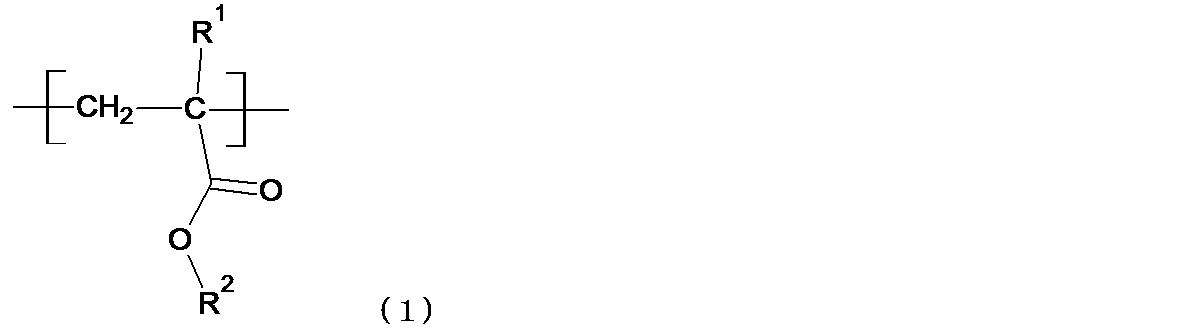
(式(1)中、R1は水素原子またはメチル基であり、R2は水素原子、炭素数1~18のアルキル基、炭素数3~12のシクロアルキル基または芳香環を含む炭素数6~15の有機基である。)
〔1〕 式(1)で表される構造単位(M)と、ラクトン環単位、無水グルタル酸単位およびN-置換若しくは無置換グルタルイミド単位からなる群より選ばれる少なくともひとつの環構造を主鎖に有する構造単位(R)と、を有して成り、且つ
ゲルパーミエーションクロマトグラフィーで測定されるポリスチレン換算の重量平均分子量(Mw)に対するピークトップ分子量(Mp)の比(Mp/Mw)が0.95~1.07である、樹脂。
(式(1)中、R1は水素原子またはメチル基であり、R2は水素原子、炭素数1~18のアルキル基、炭素数3~12のシクロアルキル基または芳香環を含む炭素数6~15の有機基である。)
〔2〕 構造単位(M)がメタクリル酸メチルに由来する単位である、〔1〕に記載の樹脂。
〔3〕 構造単位(R)が式(2)で表される単位である、〔1〕または〔2〕に記載の樹脂。
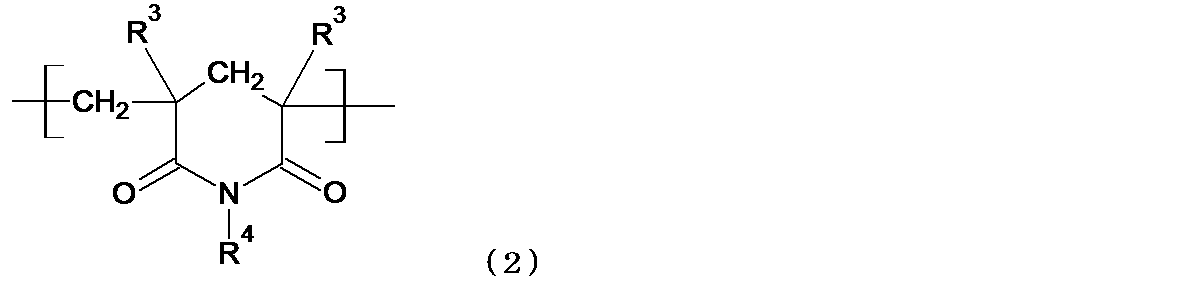 (式(2)中、R3は、それぞれ独立に、水素原子またはメチル基であり、R4は、水素原子、炭素数1~18のアルキル基、炭素数3~12のシクロアルキル基または芳香環を含む炭素数6~15の有機基である。)
〔4〕 ゲルパーミエーションクロマトグラフィーで測定されるポリスチレン換算の分子量の分布において、分子量200000以上の成分の割合が4.0質量%未満である、〔1〕~〔3〕のいずれかひとつに記載の変性メタクリル樹脂。
〔3〕 構造単位(R)が式(2)で表される単位である、〔1〕または〔2〕に記載の樹脂。
〔4〕 ゲルパーミエーションクロマトグラフィーで測定されるポリスチレン換算の分子量の分布において、分子量200000以上の成分の割合が4.0質量%未満である、〔1〕~〔3〕のいずれかひとつに記載の変性メタクリル樹脂。
〔5〕 三連子表示のシンジオタクティシティ(rr)が56%以上70%以下であるメタクリル樹脂に環構造形成反応をさせることを含む、前記〔1〕~〔4〕のいずれかひとつに記載の樹脂の製造方法。
〔6〕 前記〔1〕~〔4〕のいずれかひとつに記載の樹脂を含有する樹脂組成物。
〔7〕 紫外線吸収剤および前記〔1〕~〔4〕のいずれかひとつに記載の樹脂を含有する樹脂組成物。
〔7〕 紫外線吸収剤および前記〔1〕~〔4〕のいずれかひとつに記載の樹脂を含有する樹脂組成物。
〔8〕 式(1)で表される構造単位(M)と、ラクトン環単位、無水グルタル酸単位およびN-置換若しくは無置換グルタルイミド単位からなる群より選ばれる少なくともひとつの環構造を主鎖に有する構造単位(R)とを有して成る樹脂を含有し、且つ
ゲルパーミエーションクロマトグラフィーで測定されるポリスチレン換算の重量平均分子量(Mw)に対するピークトップ分子量(Mp)の比(Mp/Mw)が0.95~1.07である、樹脂組成物。
ゲルパーミエーションクロマトグラフィーで測定されるポリスチレン換算の重量平均分子量(Mw)に対するピークトップ分子量(Mp)の比(Mp/Mw)が0.95~1.07である、樹脂組成物。
〔9〕 前記〔1〕~〔4〕のいずれかひとつに記載の樹脂または前記〔6〕~〔8〕のいずれかひとつに記載の樹脂組成物からなる成形体。
〔10〕 前記〔1〕~〔4〕のいずれかひとつに記載の樹脂または前記〔6〕~〔8〕のいずれかひとつに記載の樹脂組成物からなるフィルム。
〔11〕 前記〔1〕~〔4〕のいずれかひとつに記載の樹脂または前記〔6〕~〔8〕のいずれかひとつに記載の樹脂組成物からなる延伸フィルム。
〔12〕 前記〔10〕に記載のフィルムを、面積比で1.5~8倍の大きさに、少なくとも1方向に延伸することを含む、延伸フィルムの製造方法。
〔13〕 前記〔1〕~〔4〕のいずれかひとつに記載の樹脂または前記〔6〕~〔8〕のいずれかひとつに記載の樹脂組成物からなる偏光子保護フィルム。
〔14〕 前記〔1〕~〔4〕のいずれかひとつに記載の樹脂または前記〔6〕~〔8〕のいずれかひとつに記載の樹脂組成物を含有する層と、他の熱可塑性樹脂を含有する層とを有する積層体。
〔15〕 他の熱可塑性樹脂がポリカーボネートである、〔14〕に記載の積層体。
〔10〕 前記〔1〕~〔4〕のいずれかひとつに記載の樹脂または前記〔6〕~〔8〕のいずれかひとつに記載の樹脂組成物からなるフィルム。
〔11〕 前記〔1〕~〔4〕のいずれかひとつに記載の樹脂または前記〔6〕~〔8〕のいずれかひとつに記載の樹脂組成物からなる延伸フィルム。
〔12〕 前記〔10〕に記載のフィルムを、面積比で1.5~8倍の大きさに、少なくとも1方向に延伸することを含む、延伸フィルムの製造方法。
〔13〕 前記〔1〕~〔4〕のいずれかひとつに記載の樹脂または前記〔6〕~〔8〕のいずれかひとつに記載の樹脂組成物からなる偏光子保護フィルム。
〔14〕 前記〔1〕~〔4〕のいずれかひとつに記載の樹脂または前記〔6〕~〔8〕のいずれかひとつに記載の樹脂組成物を含有する層と、他の熱可塑性樹脂を含有する層とを有する積層体。
〔15〕 他の熱可塑性樹脂がポリカーボネートである、〔14〕に記載の積層体。
本発明の変性メタクリル樹脂または変性メタクリル樹脂組成物は、表面平滑性が良く、異物の発生が少ない成形体を提供することができる。本発明の変性メタクリル樹脂または変性メタクリル樹脂組成物は、さらに、成形加工性に優れ、耐熱性が良好で、透明性が高く、ヘイズが小さく、引張強度等の機械的特性が良好である。
本発明の成形体、フィルムまたは延伸フィルムは、表面平滑性が良く、異物の発生が少ない。本発明の成形体、フィルムまたは延伸フィルムは、さらに、高い耐熱性と高い透明性の要求される用途、例えば、偏光子保護フィルム、位相差板、液晶保護板などのような光学フィルム、携帯型情報端末の表面材、携帯型情報端末の表示窓保護フィルム、導光フィルム、各種ディスプレイの前面板などに好適である。
本発明の成形体、フィルムまたは延伸フィルムは、表面平滑性が良く、異物の発生が少ない。本発明の成形体、フィルムまたは延伸フィルムは、さらに、高い耐熱性と高い透明性の要求される用途、例えば、偏光子保護フィルム、位相差板、液晶保護板などのような光学フィルム、携帯型情報端末の表面材、携帯型情報端末の表示窓保護フィルム、導光フィルム、各種ディスプレイの前面板などに好適である。
(変性メタクリル樹脂)
本発明の樹脂(若しくは重合体)は、構造単位(M)と構造単位(R)とを有して成るものである。なお、本明細書においては、本発明の樹脂(若しくは重合体)を、変性メタクリル樹脂ということがある。
本発明の樹脂(若しくは重合体)は、構造単位(M)と構造単位(R)とを有して成るものである。なお、本明細書においては、本発明の樹脂(若しくは重合体)を、変性メタクリル樹脂ということがある。
構造単位(M)は、式(1)で表される構造単位である。

(式(1)中、R1は水素原子またはメチル基であり、R2は水素原子、炭素数1~18のアルキル基、炭素数3~12のシクロアルキル基または芳香環を含む炭素数6~15の有機基である。)
(式(1)中、R1は水素原子またはメチル基であり、R2は水素原子、炭素数1~18のアルキル基、炭素数3~12のシクロアルキル基または芳香環を含む炭素数6~15の有機基である。)
R2における炭素数1~18のアルキル基は、アルカン中の水素原子ひとつが外れてなる基である。アルキル基は置換基を有してもよい。炭素数1~18のアルキル基としては、メチル基、エチル基、tert-ブチル基、ペンチル基、ヘキシル基、ヘプチル基、オクチル基、2-エチルヘキシル基、ノニル基、デシル基、ウンデシル基、ドデシル基、テトラデシル基、ヘキサデシル基、オクタデシル基などの無置換アルキル基;カルボキシエチル基、ヒドロキシヘキシル基、ヒドロキシカルボニルエチル基、アリル基、N,N-ジメチルアミノメチル基、アミノメチル基などのような置換アルキル基を挙げることができる。
R2における炭素数3~12のシクロアルキル基は、シクロアルカン中の水素原子ひとつが外れてなる基である。シクロアルキル基は置換基を有してもよい。炭素数3~12のシクロアルキル基としては、シクロペンチル基、シクロヘキシル基、ビシクロ[2.2.1]ヘプチル基、ノルボルニル基、イソボルニル基、2-エテニルビシクロ[2.2.1]ヘプチル基、N,N-ジメチルアミノ-シクロヘキシル基、tert-ブチル-シクロヘキシル基などを挙げることができる。
R2における芳香環を含む炭素数6~15の有機基としては、ピリジルメチル基、フェニル基、ピラジノ[2,3-b]ピラジル基、ピリド[2,3-b]ピラジル基、キノキサリル基、キノリル基、ナフタレニル基、ピリド[3,4-b]キノキサリル基、ピリド[3,4-b][1.7]ナフチリジニル基、フェナジニル基、フェナントロリル基、アクリジニル基、アントラセニル基、フェナントレニル基、ピリド[3,2-f][1.7]フェナントロリニル基などを挙げることができる。
これらのうち、R1がメチル基で、R2がメチル基であること、すなわち、構造単位(M)がメタクリル酸メチルに由来する単位であることが好ましい。
これらのうち、R1がメチル基で、R2がメチル基であること、すなわち、構造単位(M)がメタクリル酸メチルに由来する単位であることが好ましい。
本発明の変性メタクリル樹脂は、構造単位(M)の割合が、全構造単位に対して、好ましくは70~99.5質量%、より好ましくは80~99質量%、さらに好ましくは90~98質量%である。
構造単位(R)は、ラクトン環単位、無水グルタル酸単位およびN-置換若しくは無置換グルタルイミド単位からなる群より選ばれる少なくともひとつの環構造を主鎖に有する構造単位である。
ラクトン環単位は、>CH-O-C(=O)-基を環構造に含む構造単位である。>CH-O-C(=O)-基を環構造に含む構造単位は、環構成元素が好ましくは、4~8、より好ましくは5~6、最も好ましくは6である。>CH-O-C(=O)-基を環構造に含む構造単位としては、β-プロピオラクトンジイル構造単位、γ-ブチロラクトンジイル構造単位、δ-バレロラクトンジイル構造単位などのラクトンジイル構造単位を挙げることができる。>CH-O-C(=O)-基を環構造に含む構造単位は、例えば、ヒドロキシ基およびエステル基を有する重合体を、ヒドロキシ基およびエステル基による分子内環化によって得ることができる。なお、式中の「>C」は炭素原子Cに結合手が2つあることを意味する。
例えば、δ-バレロラクトンジイル構造単位としては、式(I)で表される構造単位を挙げることができる。

ラクトン環単位は、特開2000-230016号公報、特開2001-151814号公報、特開2002-120326号公報、特開2002-254544号公報、特開2005-146084号公報などに記載の方法、例えば、2-(ヒドロキシアルキル)(メタ)アクリル酸エステルに由来する構造単位と(メタ)アクリル酸メチルに由来する構造単位との分子内環化などによって、メタクリル樹脂に含有させることができる。
無水グルタル酸単位は、2,6-ジオキソジヒドロピランジイル構造を有する単位である。2,6-ジオキソジヒドロピランジイル構造を有する単位としては、式(II)で表される構造単位を挙げることができる。

式(II)中、R8はそれぞれ独立に水素原子または炭素数1~5のアルキル基であり、好ましくはメチル基である。
2,6-ジオキソジヒドロピランジイル構造を有する単位は、特開2007-197703号公報、特開2010-96919号公報などに記載の方法、例えば、隣り合う二つの(メタ)アクリル酸に由来する構造単位の分子内環化、(メタ)アクリル酸に由来する構造単位と(メタ)アクリル酸メチルに由来する構造単位との分子内環化などによって、メタクリル樹脂に含有させることができる。
N-置換若しくは無置換グルタルイミド単位は、N-置換若しくは無置換2,6-ジオキソピペリジンジイル構造を有する単位である。
N-置換若しくは無置換2,6-ジオキソピペリジンジイル構造を有する単位としては、式(III)で表される構造単位を挙げることができる。
N-置換若しくは無置換2,6-ジオキソピペリジンジイル構造を有する単位としては、式(III)で表される構造単位を挙げることができる。

式(III)中、R3はそれぞれ独立に水素原子またはメチル基であり、メチル基が好ましい。R4は水素原子、炭素数1~18のアルキル基、炭素数3~12のシクロアルキル基、または芳香環を含む炭素数6~15の有機基であり、好ましくは水素原子、メチル基、n-ブチル基、シクロヘキシル基またはベンジル基であり、より好ましくはメチル基である。
N-置換若しくは無置換グルタルイミド単位は、WO2005/10838A1、特開2010-254742号公報、特開2008-273140号公報、特開2008-274187号公報などに記載の方法、具体的には、隣り合う二つのメタクリル酸メチルに由来する構造単位に、アンモニア、メチルアミン、エチルアミン、n-プロピルアミン、イソプロピルアミン、n-ブチルアミン、イソブチルアミン、tert-ブチルアミン、n-ヘキシルアミン等の脂肪族炭化水素基含有アミン、アニリン、トルイジン、トリクロロアニリン等の芳香族炭化水素基含有アミン、シクロヘキシルアミン等などの脂環式炭化水素基含有アミン、尿素、1,3-ジメチル尿素、1,3-ジエチル尿素、1,3-ジプロピル尿素などを反応させることによって得ることができる。これらの中で、メチルアミンが好ましい。
本発明の変性メタクリル樹脂は、構造単位(R)の割合が、全構造単位に対して、好ましくは0.5~30質量%、より好ましくは1~20質量%、さらに好ましくは2~10質量%である。構造単位(R)と構造単位(M)との比率を変えることによって、変性メタクリル樹脂の配向複屈折を変更することができる。また、構造単位(R)の含有量が多い程、変性メタクリル樹脂は耐熱性が向上する傾向がある。
本発明の変性メタクリル樹脂は、構造単位(M)および(R)以外の構造単位(O)を含有してもよい。構造単位(O)としては、(メタ)アクリルアミド、(メタ)アクリロニトリル、スチレンなどの一分子中に重合性の炭素-炭素二重結合を1つだけ有するビニル系単量体に由来する単位を挙げることができる。本発明の変性メタクリル樹脂は、構造単位(O)の割合が、全構造単位に対して、好ましくは10質量%以下、より好ましくは5質量%以下である。なお、構造単位(M)、(R)および(O)の割合は、1H-NMRなどによって測定することができる。
本発明の変性メタクリル樹脂は、重量平均分子量(Mw)が、好ましくは10000~200000、より好ましくは40000~200000、さらに好ましくは50000~150000、よりさらに好ましくは50000~120000、最も好ましくは50000~100000である。Mwが10000以上であると、本発明の成形体の強度および靭性等が向上する。Mwが200000以下であると、本発明の変性メタクリル樹脂の流動性が向上し、成形加工性が向上する。
本発明の変性メタクリル樹脂は、重量平均分子量(Mw)に対するピークトップ分子量(Mp)の比(Mp/Mw)が、0.95以上1.07以下、より好ましくは0.955以上1.06以下、最も好ましくは0.96以上1.05以下である。このような範囲内にある変性メタクリル樹脂を用いると、異物の発生が少なく、表面平滑性が良好なフィルムが得られる。
本発明の変性メタクリル樹脂は、数平均分子量(Mn)に対する重量平均分子量(Mw)の比(Mw/Mn)が、好ましくは1.01以上1.80以下、より好ましくは1.05以上1.75以下である。Mw/Mnが、この範囲にあると、変性メタクリル樹脂は、適度な強度を有し、割れにくい成形体やフィルムが得られる。
数平均分子量(Mn)および重量平均分子量(Mw)は、ゲルパーミエーションクロマトグラフィーで測定されるクロマトグラムを標準ポリスチレンの分子量に換算して算出される値である。ピークトップ分子量(Mp)は、ゲルパーミエーションクロマトグラフィーで測定されるクロマトグラムを標準ポリスチレンの分子量に換算して得られる微分分子量分布における最頻値(dw/d(logM)が最大値となるときの分子量)である。一般に、Mw/Mnの値は、高分子量の樹脂の存在および低分子量の樹脂の存在によって影響を受けやすい。一方、Mp/Mwの値は、低分子量の樹脂の存在があっても影響を受け難い。そのため、Mp/Mwの値はMw/Mnの値に対する相関性が低い。
数平均分子量(Mn)および重量平均分子量(Mw)は、ゲルパーミエーションクロマトグラフィーで測定されるクロマトグラムを標準ポリスチレンの分子量に換算して算出される値である。ピークトップ分子量(Mp)は、ゲルパーミエーションクロマトグラフィーで測定されるクロマトグラムを標準ポリスチレンの分子量に換算して得られる微分分子量分布における最頻値(dw/d(logM)が最大値となるときの分子量)である。一般に、Mw/Mnの値は、高分子量の樹脂の存在および低分子量の樹脂の存在によって影響を受けやすい。一方、Mp/Mwの値は、低分子量の樹脂の存在があっても影響を受け難い。そのため、Mp/Mwの値はMw/Mnの値に対する相関性が低い。
本発明の変性メタクリル樹脂は、ゲルパーミエーションクロマトグラフィーで測定されるポリスチレン換算の分子量の分布において、分子量200000以上の成分の割合が、好ましくは4.0質量%未満、より好ましくは3.5質量%未満、さらに好ましくは3質量%未満である。分子量200000以上の成分の割合が4.0質量%以上であると変性メタクリル樹脂から得られる成形体やフィルムに、樹脂由来異物に起因する外観異物が発生しやすくなる。分子量200000以上の成分の割合は、例えば、積分分子量分布曲線から求めることができる。
本発明の変性メタクリル樹脂は、酸価が、好ましくは0.01~0.20mmol/g、より好ましくは0.05~0.10mmol/gである。酸価は、変性メタクリル樹脂中のカルボン酸単位、カルボン酸無水物単位の含有量に比例する値である。酸価は、例えば、特開2005-23272号公報に記載の方法によって算出することができる。酸価が上記範囲内にあると、耐熱性、機械物性、成形加工性のバランスに優れる。
本発明の変性メタクリル樹脂は、JIS K7210に準拠して、230℃、3.8kg荷重の条件において測定されるメルトフローレート(MFR)が、好ましくは0.1~20g/10分、さらに好ましくは0.5~15g/10分、特に好ましくは1.0~10g/10分である。
本発明の変性メタクリル樹脂は、ガラス転移温度が、好ましくは123℃以上、より好ましくは125℃以上、さらに好ましくは128℃以上である。本発明の変性メタクリル樹脂のガラス転移温度の上限は、特に制限されないが、好ましくは160℃である。
本明細書において、「ガラス転移温度(Tg)」は、JIS K7121に準拠して測定する。具体的には、230℃まで一度昇温し、次いで室温まで冷却し、その後、室温から230℃までを10℃/分で昇温させる条件にてDSC曲線を測定する。2回目の昇温時に測定されるDSC曲線から求められる中間点を「ガラス転移温度(Tg)」として求める。
本明細書において、「ガラス転移温度(Tg)」は、JIS K7121に準拠して測定する。具体的には、230℃まで一度昇温し、次いで室温まで冷却し、その後、室温から230℃までを10℃/分で昇温させる条件にてDSC曲線を測定する。2回目の昇温時に測定されるDSC曲線から求められる中間点を「ガラス転移温度(Tg)」として求める。
本発明の変性メタクリル樹脂は、メタクリル樹脂(以下、前駆体ポリマーということがある。)に環構造形成反応をさせることを含む方法によって得ることができる。
変性メタクリル樹脂の製造方法に用いられる前駆体ポリマーは、三連子表示のシンジオタクティシティ(rr)によって特に制限されないが、好ましくは54%以上、より好ましくは56%以上、さらに好ましくは56%以上80%以下、よりさらに好ましくは56%以上70%以下、特に好ましくは58%以上70%以下である。高シンジオタクティシティ(rr)の前駆体ポリマーを用いて得られる変性メタクリル樹脂は、低シンジオタクティシティ(rr)の前駆体ポリマーを用いて得られる変性メタクリル樹脂に比べて、耐熱性と引張強度とが高いレベルでバランスする傾向がある。
三連子表示のシンジオタクティシティ(rr)は、連続する3つの構造単位の連鎖(3連子、triad)が有する2つの連鎖(2連子、diad)が、ともにラセモ(rrと表記する)である割合である。なお、ポリマー分子中の構造単位の連鎖(2連子、diad)において立体配置が同じものをメソ(meso)、逆のものをラセモ(racemo)と称し、それぞれm、rと表記する。
三連子表示のシンジオタクティシティ(rr)(%)は、重水素化クロロホルム中、30℃で1H-NMRスペクトルを測定し、そのスペクトルからTMSを0ppmとした際の0.6~0.95ppmの領域の面積(X)と0.6~1.35ppmの領域の面積(Y)とを計測し、式:(X/Y)×100にて算出することができる。
三連子表示のシンジオタクティシティ(rr)(%)は、重水素化クロロホルム中、30℃で1H-NMRスペクトルを測定し、そのスペクトルからTMSを0ppmとした際の0.6~0.95ppmの領域の面積(X)と0.6~1.35ppmの領域の面積(Y)とを計測し、式:(X/Y)×100にて算出することができる。
変性メタクリル樹脂の製造方法に用いられる前駆体ポリマーは、重量平均分子量Mwが、好ましくは40000~150000、より好ましくは40000~120000、さらに好ましくは50000~100000である。Mwが40000以上であると変性メタクリル樹脂から得られる成形体の耐衝撃性や靭性、引張り破断強度が向上する傾向があり、150000以下であると変性メタクリル樹脂の流動性および成形加工性が向上する
傾向がある。
傾向がある。
前駆体ポリマーの数平均分子量Mnに対する重量平均分子量Mwの比Mw/Mnは、下限が、好ましくは1.01、より好ましくは1.05、さらに好ましくは1.06であり、上限が、好ましくは1.80、より好ましくは1.75である。Mw/Mnがこのような範囲内にある前駆体ポリマーを用いると、力学強度に優れた変性メタクリル樹脂を得易くなる。前駆体ポリマーの分子量分布は、重合方法や、製造の際に使用する重合開始剤や連鎖移動剤などの種類、量、添加時期を調整することで制御できる。数平均分子量Mnおよび重量平均分子量Mwはゲルパーミエーションクロマトグラフィーで測定されるクロマトグラムを標準ポリスチレンの分子量に換算して算出される値である。
前駆体ポリマーは、ゲルパーミエーションクロマトグラフィーで測定されるポリスチレン換算の分子量の分布において、分子量200000以上の成分の割合が、好ましくは4.0質量%未満、より好ましくは3.5質量%未満、さらに好ましくは3質量%未満である。分子量200000以上の成分の割合が4.0質量%以上であると得られる成形体やフィルムに、樹脂由来異物に起因する外観異物が発生しやすくなる。分子量200000以上の成分の割合は、例えば、積分分子量分布曲線から、求めることができる。
前駆体ポリマーのガラス転移温度は、下限が、好ましくは122℃、より好ましくは125℃、さらに好ましくは128℃であり、上限が、好ましくは140℃である。前駆体ポリマーのガラス転移温度は、分子量やシンジオタクティシティ(rr)などを調節することによって変えることができる。前駆体ポリマーのガラス転移温度が高いほど耐熱性が向上する。上記のようなガラス転移温度を有する前駆体ポリマーを用いて得られる変性メタクリル樹脂は、耐熱性と引張強度とが高いレベルでバランスする傾向がある。
前駆体ポリマーは、メタクリル酸エステルに由来する構造単位の含有量が、好ましくは90質量%以上、より好ましくは95質量%以上、さらに好ましくは98質量%以上、特に好ましくは99質量%以上、最も好ましくは100質量%である。
メタクリル酸エステルとしては、例えばメタクリル酸メチル、メタクリル酸エチル、メタクリル酸ブチルなどのメタクリル酸アルキルエステル;メタクリル酸フェニルなどのメタクリル酸アリールエステル;メタクリル酸シクロへキシル、メタクリル酸ノルボルニルなどのメタクリル酸シクロアルキルエステル;などを挙げることができる。これらのうち、メタクリル酸アルキルエステルが好ましく、メタクリル酸メチルが最も好ましい。
前駆体ポリマーは、メタクリル酸エステルに由来する構造単位のうち、メタクリル酸メチルに由来する構造単位の含有量が、好ましくは90質量%以上、より好ましくは95質量%以上、さらに好ましくは98質量%以上、特に好ましくは99質量%以上、最も好ましくは100質量%である。
メタクリル酸エステルとしては、例えばメタクリル酸メチル、メタクリル酸エチル、メタクリル酸ブチルなどのメタクリル酸アルキルエステル;メタクリル酸フェニルなどのメタクリル酸アリールエステル;メタクリル酸シクロへキシル、メタクリル酸ノルボルニルなどのメタクリル酸シクロアルキルエステル;などを挙げることができる。これらのうち、メタクリル酸アルキルエステルが好ましく、メタクリル酸メチルが最も好ましい。
前駆体ポリマーは、メタクリル酸エステルに由来する構造単位のうち、メタクリル酸メチルに由来する構造単位の含有量が、好ましくは90質量%以上、より好ましくは95質量%以上、さらに好ましくは98質量%以上、特に好ましくは99質量%以上、最も好ましくは100質量%である。
前駆体ポリマーに含有し得る、メタクリル酸エステルに由来する構造単位以外の構造単位としては、例えばアクリル酸メチル、アクリル酸エチル、アクリル酸プロピル、アクリル酸ブチル、アクリル酸2-エチルへキシルなどのアクリル酸アルキルエステル;アクリル酸フェニルなどのアクリル酸アリールエステル;アクリル酸シクロへキシル、アクリル酸ノルボルニルなどのアクリル酸シクロアルキルエステル;スチレン、α-メチルスチレンなどの芳香族ビニル化合物;アクリルアミド;メタクリルアミド;アクリロニトリル;メタクリロニトリル;などの一分子中に重合性の炭素-炭素二重結合を一つだけ有するビニル系単量体に由来する構造単位を挙げることができる。
前駆体ポリマーは、例えば、制御ラジカル重合(精密ラジカル重合)法、アニオン重合法、グループトランスファー重合法などによって得ることができる。重合は、反応液の形態によって、塊状重合、溶液重合、懸濁重合、乳化重合などに大別することができる。これらの中で、生産性が高く、耐熱分解性が高く、異物が少なく、メタクリル酸エステルの二量体や三量体が少なく、成形体の外観が優れるという観点から、アニオン重合法が好ましく、アニオン溶液重合法がより好ましい。アニオン重合法において、重合温度、重合時間、連鎖移動剤の種類や量、重合開始剤の種類や量などを調整することにより、所望の特性を有する前駆体ポリマーを得ることができる。
前駆体ポリマーの製造のためのアニオン重合法としては、例えば有機アルカリ金属化合物を重合開始剤として用いアルカリ金属またはアルカリ土類金属の塩などの鉱酸塩の存在下でアニオン重合する方法(特公平7-25859号公報参照)、有機アルカリ金属化合物を重合開始剤として用い有機アルミニウム化合物の存在下でアニオン重合する方法(特開平11-335432号公報参照)、有機希土類金属錯体を重合開始剤としてアニオン重合する方法(特開平6-93060号公報参照)などを挙げることができる。
前駆体ポリマーの製造のためのアニオン重合法においては、重合開始剤としてn-ブチルリチウム、sec-ブチルリチウム、イソブチルリチウム、tert-ブチルリチウム等のアルキルリチウムを用いることが好ましい。また、生産性の観点から有機アルミニウム化合物を共存させることが好ましい。有機アルミニウム化合物としては、AlRaRbRc(式中、Ra、RbおよびRcは、それぞれ独立して置換基を有してもよいアルキル基、置換基を有していてもよいシクロアルキル基、置換基を有してもよいアリール基、置換基を有していてもよいアラルキル基、置換基を有してもよいアルコキシル基、置換基を有してもよいアリールオキシ基またはN,N-二置換アミノ基を表す。さらに、RbおよびRcは、それらが一緒になって成る置換基を有していてもよいアリーレンジオキシ基であってもよい。)で表わされる化合物を挙げることができる。有機アルミニウム化合物の具体例としては、イソブチルビス(2,6-ジ-tert-ブチル-4-メチルフェノキシ)アルミニウム、イソブチルビス(2,6-ジ-tert-ブチルフェノキシ)アルミニウム、イソブチル〔2,2’-メチレンビス(4-メチル-6-tert-ブチルフェノキシ)〕アルミニウム等を挙げることができる。また、アニオン重合法においては、重合反応を制御するために、エーテルや含窒素化合物などを共存させることもできる。
変性メタクリル樹脂の製造方法に用いられる前駆体ポリマーは、変性メタクリル樹脂の成形加工性や耐熱性を調整するため、異なる2種以上のメタクリル系重合体を混練して、三連子表示のタクティシティ(rr)の値、メタクリル酸エステルに由来する構造単位の含有量などの各種物性を上記範囲内になるように調整して得られるものであってもよい。例えば、三連子表示のシンジオタクティシティ(rr)が56%未満であるメタクリル系重合体と三連子表示のシンジオタクティシティ(rr)が56%以上であるメタクリル系重合体とを混練することによって、三連子表示のシンジオタクティシティ(rr)が56%以上90%以下であるメタクリル樹脂(前駆体ポリマー)を得てもよい。
環構造形成反応は、例えば、押出機を用いて、行うことができる。押出機として、例えば、単軸押出機、二軸押出機、多軸押出機などを挙げることができる。混合性能の点から、二軸押出機が好ましい。二軸押出機として、非噛合い型同方向回転式、噛合い型同方向回転式、非噛合い型異方向回転式、噛合い型異方向回転式などを挙げることができる。噛合い型同方向回転式は、高速回転が可能であり、混合を効率的に促進できるので好ましい。これらの押出機は、単独で用いても、直列に繋いで用いてもよい。
押出機を用いての環構造形成反応では、例えば、原料である前駆体ポリマーを押出機の原料投入部から投入し、該前駆体ポリマーを溶融させ、シリンダ内に充満させた後、添加ポンプを用いてイミド化剤などを押出機中に注入することにより、押出機中で環構造形成反応を進行させることができる。
押出機中の反応ゾーンの樹脂温度は180~300℃の範囲にすることが好ましく、200~290℃の範囲にすることがより好ましい。反応ゾーンの樹脂温度が180℃未満だと環構造形成反応の反応効率が低く、変性メタクリル樹脂の耐熱性が低下する傾向となる。反応ゾーンの樹脂温度が300℃を超えると樹脂の分解が著しくなり得られる変性メタクリル樹脂からなる成形体およびフィルムの引張り破断強度等の機械的強度が低下する傾向となる。なお、押出機中の反応ゾーンとは、押出機のシリンダにおいてイミド化剤などの注入位置から樹脂吐出口(ダイス部)までの間の領域をいう。
押出機の反応ゾーン内での反応時間を長くすることにより、環構造形成反応をより進行させることができる。押出機の反応ゾーン内の反応時間は10秒間より長くすることが好ましく、さらには30秒間より長くすることがより好ましい。10秒間以下の反応時間では環構造形成反応がほとんど進行しない可能性がある。
押出機での樹脂圧力は、大気圧~50MPaの範囲内とすることが好ましく、さらには1~30MPaの範囲内とすることがより好ましい。通常の押出機の機械耐圧は50MPa程度である。50MPa以上とするには特殊な装置が必要となる。
大気圧以下に減圧可能なベント孔を有する押出機を使用することが好ましい。このような構成によれば、未反応物、もしくはメタノール等の副生物やモノマー類を除去することができ、変性メタクリル樹脂からなる成形体の破断強度が向上する傾向となる。
環構造形成反応には、押出機の代わりに、例えば、住友重機械工業(株)製のバイボラックのような横型二軸反応装置やスーパーブレンドのような竪型二軸攪拌槽などの高粘度対応の反応装置も好適に使用できる。
環構造形成反応時に変性メタクリル樹脂中にカルボキシ基が副生することがある。このカルボキシ基は、必要に応じてエステル化剤や触媒などによりエステル基に変換してもよい。これにより光学フィルムを製造する際の樹脂の発泡が低減できる。かかるエステル基は、使用するエステル化剤や触媒により異なるが、溶融成形時の樹脂溶融粘度の低減およびエステル化の反応性、エステル化後の樹脂の耐熱性の観点から、メタクリル酸メチル単位を含むことが好ましく、メタクリル酸メチル単位とメタクリル酸エチル単位を共に含むことがより好ましい。
エステル化剤としては、例えば、ジメチルカーボネート、ジエチルカーボネート、2,2-ジメトキシプロパン、ジメチルスルホキシド、トリエチルオルトホルメート、トリメチルオルトアセテート、トリメチルオルトホルメート、ジフェニルカーボネート、ジメチルサルフェート、メチルトルエンスルホネート、メチルトリフルオロメチルスルホネート、メチルアセテート、メタノール、エタノール、メチルイソシアネート、p-クロロフェニルイソシアネート、ジメチルカルボジイミド、ジメチル-tert-ブチルシリルクロライド、イソプロペニルアセテート、ジメチルウレア、テトラメチルアンモニウムハイドロオキサイド、ジメチルジエトキシシラン、テトラ-N-ブトキシシラン、ジメチル(トリメチルシラン)フォスファイト、トリメチルフォスファイト、トリメチルフォスフェート、トリクレジルフォスフェート、ジアゾメタン、エチレンオキサイド、プロピレンオキサイド、シクロヘキセンオキサイド、2-エチルヘキシルグリシジルエーテル、フェニルグリシジルエーテル、ベンジルグリシジルエーテルなどを挙げることができる。これらは1種単独でまたは2種類以上の組み合わせで使用することができる。これらエステル化剤の中で、コスト、反応性などの観点から、ジメチルカーボネートが好ましい。
エステル化剤の添加量は、例えば、変性メタクリル樹脂の酸価が所望の値になるように設定することができる。
上記エステル化剤に加え、触媒を併用することもできる。触媒の種類は特に限定されるものではないが、例えば、トリメチルアミン、トリエチルアミン、モノメチルジエチルアミン、ジメチルモノエチルアミン等のアミン系化合物を挙げることができる。これらの中でもコスト、反応性などの観点からトリエチルアミンが好ましい。
(変性メタクリル樹脂組成物1)
本発明の変性メタクリル樹脂組成物は、本発明の変性メタクリル樹脂を含有する樹脂組成物である。
本発明の変性メタクリル樹脂組成物の一実施形態は、一般樹脂に用いられる添加剤が本発明の目的が損なわれない範囲で含まれているものである。添加剤としては、酸化防止剤、熱安定剤、光安定剤、紫外線吸収剤、ラジカル捕捉剤、耐候性安定剤、可塑剤、滑剤、帯電防止剤、着色剤、収縮防止剤、抗菌・脱臭剤などを挙げることができる。本発明においては紫外線吸収剤が好ましく用いられる。
本発明の変性メタクリル樹脂組成物は、本発明の変性メタクリル樹脂を含有する樹脂組成物である。
本発明の変性メタクリル樹脂組成物の一実施形態は、一般樹脂に用いられる添加剤が本発明の目的が損なわれない範囲で含まれているものである。添加剤としては、酸化防止剤、熱安定剤、光安定剤、紫外線吸収剤、ラジカル捕捉剤、耐候性安定剤、可塑剤、滑剤、帯電防止剤、着色剤、収縮防止剤、抗菌・脱臭剤などを挙げることができる。本発明においては紫外線吸収剤が好ましく用いられる。
(変性メタクリル樹脂組成物2)
本発明の変性メタクリル樹脂組成物の別の一実施形態は、式(1)で表される構造単位(M)と、ラクトン環単位、無水グルタル酸単位およびN-置換若しくは無置換グルタルイミド単位からなる群より選ばれる少なくともひとつの環構造を主鎖に有する構造単位(R)とを有して成る樹脂を含有し、且つゲルパーミエーションクロマトグラフィーで測定されるポリスチレン換算の重量平均分子量(Mw)に対するピークトップ分子量(Mp)の比(Mp/Mw)が0.95~1.07である、樹脂組成物であってもよい。該樹脂組成物は、構造単位(M)および構造単位(R)、それらの比率、重量平均分子量、数平均分子量、ピークトップ分子量、Mw/Mn、Mp/Mw、分子量分布、酸価、メルトフローレート、ガラス転移温度などの物性のそれぞれは、変性メタクリル樹脂において述べたものと同じであることが好ましい。
本発明の変性メタクリル樹脂組成物の別の一実施形態は、式(1)で表される構造単位(M)と、ラクトン環単位、無水グルタル酸単位およびN-置換若しくは無置換グルタルイミド単位からなる群より選ばれる少なくともひとつの環構造を主鎖に有する構造単位(R)とを有して成る樹脂を含有し、且つゲルパーミエーションクロマトグラフィーで測定されるポリスチレン換算の重量平均分子量(Mw)に対するピークトップ分子量(Mp)の比(Mp/Mw)が0.95~1.07である、樹脂組成物であってもよい。該樹脂組成物は、構造単位(M)および構造単位(R)、それらの比率、重量平均分子量、数平均分子量、ピークトップ分子量、Mw/Mn、Mp/Mw、分子量分布、酸価、メルトフローレート、ガラス転移温度などの物性のそれぞれは、変性メタクリル樹脂において述べたものと同じであることが好ましい。
(変性メタクリル樹脂組成物3)
本発明の変性メタクリル樹脂組成物の別の一実施形態は、異なる物性を有する2以上の本発明の変性メタクリル樹脂を含有するものである。該変性メタクリル樹脂組成物は、第一の変性メタクリル樹脂と第二の変性メタクリル樹脂とを混練することによって得ることができ、また第一の変性メタクリル樹脂の存在下に、第二の変性メタクリル樹脂を構成するための単量体、イミド化剤、エステル化剤などを反応させて第二の変性メタクリル樹脂をin situ合成することによって得ることもできる。
本発明の変性メタクリル樹脂組成物の別の一実施形態は、異なる物性を有する2以上の本発明の変性メタクリル樹脂を含有するものである。該変性メタクリル樹脂組成物は、第一の変性メタクリル樹脂と第二の変性メタクリル樹脂とを混練することによって得ることができ、また第一の変性メタクリル樹脂の存在下に、第二の変性メタクリル樹脂を構成するための単量体、イミド化剤、エステル化剤などを反応させて第二の変性メタクリル樹脂をin situ合成することによって得ることもできる。
(変性メタクリル樹脂組成物4)
本発明の変性メタクリル樹脂組成物の別の一実施形態は、本発明の変性メタクリル樹脂と、他の重合体とを含有するものである。他の樹脂としては、未変性メタクリル樹脂、メタクリル酸メチル-スチレン共重合体などのメタクリル系共重合体;ポリエチレン、ポリプロピレン、ポリブテン-1、ポリ-4-メチルペンテン-1、ポリノルボルネンなどのポリオレフィン樹脂;エチレン系アイオノマー;ポリスチレン、スチレン-無水マレイン酸共重合体、ハイインパクトポリスチレン、アクリロニトリル-スチレン(AS)樹脂、アクリロニトリル-ブタジエン-スチレン(ABS)樹脂、アクリロニトリル-エチレン-スチレン(AES)樹脂、アクリロニトリル-アクリルゴム-スチレン(AAS)樹脂、アクリロニトリル-塩素化ポリエチレン-スチレン(ACS)樹脂、メタクリル酸メチル-ブタジエン-スチレン(MBS)樹脂などのスチレン系樹脂;ポリエチレンテレフタレート、ポリブチレンテレフタレートなどのポリエステル樹脂;ナイロン6、ナイロン66、ポリアミドエラストマーなどのポリアミド;ポリカーボネート、ポリ塩化ビニル、ポリ塩化ビニリデン、ポリビニルアルコール、エチレン-ビニルアルコール共重合体、ポリアセタール、ポリフッ化ビニリデン、ポリウレタン、変性ポリフェニレンエーテル、ポリフェニレンスルフィド、フェノキシ樹脂、シリコーン変性樹脂;アクリル系グラフト重合体、アクリル系ブロック共重合体、シリコーンゴム;スチレン-エチレン/プロピレン-スチレンブロック共重合体(SEPS)、スチレン-エチレン/ブタジエン-スチレンブロック共重合体(SEBS)、スチレン-イソプレン-スチレンブロック共重合体(SIS)などのスチレン系熱可塑性エラストマー;イソプレンゴム(IR)、エチレンプロピレンゴム(EPR)、エチレンプロピレンジエンゴム(EPDM)などのオレフィン系ゴムなどを挙げることができる。該変性メタクリル樹脂組成物に含有し得る他の重合体の量は、特に制限されないが、組成物に対して、好ましくは50質量%以下、より好ましくは20質量%以下、さらに好ましくは10質量%以下、よりさらに好ましくは5質量%以下である。
本発明の変性メタクリル樹脂組成物の別の一実施形態は、本発明の変性メタクリル樹脂と、他の重合体とを含有するものである。他の樹脂としては、未変性メタクリル樹脂、メタクリル酸メチル-スチレン共重合体などのメタクリル系共重合体;ポリエチレン、ポリプロピレン、ポリブテン-1、ポリ-4-メチルペンテン-1、ポリノルボルネンなどのポリオレフィン樹脂;エチレン系アイオノマー;ポリスチレン、スチレン-無水マレイン酸共重合体、ハイインパクトポリスチレン、アクリロニトリル-スチレン(AS)樹脂、アクリロニトリル-ブタジエン-スチレン(ABS)樹脂、アクリロニトリル-エチレン-スチレン(AES)樹脂、アクリロニトリル-アクリルゴム-スチレン(AAS)樹脂、アクリロニトリル-塩素化ポリエチレン-スチレン(ACS)樹脂、メタクリル酸メチル-ブタジエン-スチレン(MBS)樹脂などのスチレン系樹脂;ポリエチレンテレフタレート、ポリブチレンテレフタレートなどのポリエステル樹脂;ナイロン6、ナイロン66、ポリアミドエラストマーなどのポリアミド;ポリカーボネート、ポリ塩化ビニル、ポリ塩化ビニリデン、ポリビニルアルコール、エチレン-ビニルアルコール共重合体、ポリアセタール、ポリフッ化ビニリデン、ポリウレタン、変性ポリフェニレンエーテル、ポリフェニレンスルフィド、フェノキシ樹脂、シリコーン変性樹脂;アクリル系グラフト重合体、アクリル系ブロック共重合体、シリコーンゴム;スチレン-エチレン/プロピレン-スチレンブロック共重合体(SEPS)、スチレン-エチレン/ブタジエン-スチレンブロック共重合体(SEBS)、スチレン-イソプレン-スチレンブロック共重合体(SIS)などのスチレン系熱可塑性エラストマー;イソプレンゴム(IR)、エチレンプロピレンゴム(EPR)、エチレンプロピレンジエンゴム(EPDM)などのオレフィン系ゴムなどを挙げることができる。該変性メタクリル樹脂組成物に含有し得る他の重合体の量は、特に制限されないが、組成物に対して、好ましくは50質量%以下、より好ましくは20質量%以下、さらに好ましくは10質量%以下、よりさらに好ましくは5質量%以下である。
ここで、未変性メタクリル樹脂は、ラクトン環単位、無水マレイン酸単位、無水グルタル酸単位、N-置換若しくは無置換のグルタルイミド単位、N-置換マレイミド単位、テトラヒドロピラン環単位などのような環構造を主鎖に有する構造単位を含有せず、(メタ)アクリル酸エステルに由来する構造単位を主成分として含有する重合体である。未変性メタクリル樹脂と変性メタクリル樹脂とは相溶性に優れるので、未変性メタクリル樹脂と変性メタクリル樹脂とを含有させることによって、所望の物性を有する変性メタクリル樹脂組成物を得ることができる。該変性メタクリル樹脂組成物は、変性メタクリル樹脂と未変性メタクリル樹脂とを混練することによって得ることができ、また変性メタクリル樹脂の存在下に、未変性メタクリル樹脂を構成するための単量体などを反応させて未変性メタクリル樹脂をin site合成することによって得ることもできる。
本発明において用いられる未変性メタクリル樹脂は、メタクリル酸エステルに由来する構造単位のうち、メタクリル酸メチルに由来する構造単位の含有量が、好ましくは90質量%以上、より好ましくは95質量%以上、さらに好ましくは98質量%以上、よりさらに好ましくは99質量%以上、最も好ましくは100質量%である。
未変性メタクリル樹脂の具体例としては、メタクリル酸メチルの単独重合体;メタクリル酸メチルと他の(メタ)アクリル酸エステルとの共重合体、メタクリル酸メチルと他のビニル系単量体との共重合体等を挙げることができる。
未変性メタクリル樹脂は三連子表示のシンジオタクティシティ(rr)が、下限として好ましくは45%、より好ましくは50%、さらに好ましくは55%、よりさらに好ましくは56%、特に好ましくは57%、最も好ましくは58%であり、上限として好ましくは99%、より好ましくは85%、さらに好ましくは77%、よりさらに好ましくは74%、最も好ましくは68%である。
未変性メタクリル樹脂は、重量平均分子量(Mw)が、好ましくは60000~200000、より好ましくは65000~160000、さらに好ましくは65000~120000である。三連子表示のシンジオタクティシティ(rr)および重量平均分子量が上記の範囲内にある未変性メタクリル樹脂を用いると、本発明の変性メタクリル樹脂組成物は、成形加工性と、耐衝撃性または靭性等の物性とのバランスが良好になる。
未変性メタクリル樹脂は、重量平均分子量(Mw)が、好ましくは60000~200000、より好ましくは65000~160000、さらに好ましくは65000~120000である。三連子表示のシンジオタクティシティ(rr)および重量平均分子量が上記の範囲内にある未変性メタクリル樹脂を用いると、本発明の変性メタクリル樹脂組成物は、成形加工性と、耐衝撃性または靭性等の物性とのバランスが良好になる。
未変性メタクリル樹脂は、数平均分子量に対する重量平均分子量の比(Mw/Mn)が、好ましくは1.2~2.5、より好ましくは1.3~2.1である。比(Mw/Mn)が上記範囲内にある未変性メタクリル樹脂は、本発明の変性メタクリル樹脂組成物の耐熱性を損ねずに流動性を高め、フィルムなどの成形体の表面平滑性、機械強度等を向上させることができる。
変性メタクリル樹脂/未変性メタクリル樹脂の質量比は、目的に応じて適宜設定できる。
本発明の変性メタクリル樹脂組成物は、一般的に樹脂組成物に用いられる添加剤を、本発明の目的が損なわれない範囲で含んでいてもよい。添加剤としては、フィラー、酸化防止剤、熱劣化防止剤、紫外線吸収剤、光安定剤、滑剤、離型剤、高分子加工助剤、帯電防止剤、難燃剤、着色剤、染料、顔料、光拡散剤、有機色素、艶消し剤、耐衝撃性改質剤、蛍光体などを挙げることができる。フィラー以外のかかる添加剤の合計量は、好ましくは7質量%以下、より好ましくは5質量%以下、さらに好ましくは4質量%以下である。
フィラーとしては、炭酸カルシウム、タルク、カーボンブラック、酸化チタン、シリカ、クレー、硫酸バリウム、炭酸マグネシウムなどを挙げることができる。本発明の変性メタクリル樹脂組成物に含有し得るフィラーの量は、好ましくは3質量%以下、より好ましくは1.5質量%以下である。
酸化防止剤は、酸素存在下においてそれ単体で樹脂の酸化劣化防止に効果を有するものである。例えば、リン系酸化防止剤、ヒンダードフェノール系酸化防止剤、チオエーテル系酸化防止剤などを挙げることができる。これらの酸化防止剤は1種を単独で用いても、2種以上を併用してもよい。
熱劣化防止剤は、実質上無酸素の状態下で高熱にさらされたときに生じるポリマーラジカルを捕捉することによって樹脂の熱劣化を防止できるものである。
該熱劣化防止剤としては、2-tert-ブチル-6-(3’-tert-ブチル-5’-メチル-ヒドロキシベンジル)-4-メチルフェニルアクリレート(住友化学社製;商品名スミライザーGM)、2,4-ジ-tert-アミル-6-(3’,5’-ジ-tert-アミル-2’-ヒドロキシ-α-メチルベンジル)フェニルアクリレート(住友化学社製;商品名スミライザーGS)などを挙げることができる。
該熱劣化防止剤としては、2-tert-ブチル-6-(3’-tert-ブチル-5’-メチル-ヒドロキシベンジル)-4-メチルフェニルアクリレート(住友化学社製;商品名スミライザーGM)、2,4-ジ-tert-アミル-6-(3’,5’-ジ-tert-アミル-2’-ヒドロキシ-α-メチルベンジル)フェニルアクリレート(住友化学社製;商品名スミライザーGS)などを挙げることができる。
紫外線吸収剤は、紫外線を吸収する能力を有する化合物である。紫外線吸収剤は、主に光エネルギーを熱エネルギーに変換する機能を有すると言われる化合物である。
紫外線吸収剤としては、ベンゾフェノン類、ベンゾトリアゾール類、トリアジン類、ベンゾエート類、サリシレート類、シアノアクリレート類、蓚酸アニリド類、マロン酸エステル類、ホルムアミジン類などを挙げることができる。これらは1種を単独で用いても、2種以上を併用してもよい。これらの中でも、ベンゾトリアゾール類、トリアジン類、または波長380~450nmにおけるモル吸光係数の最大値εmaxが1200dm3・mol-1cm-1以下である紫外線吸収剤が好ましい。
紫外線吸収剤としては、ベンゾフェノン類、ベンゾトリアゾール類、トリアジン類、ベンゾエート類、サリシレート類、シアノアクリレート類、蓚酸アニリド類、マロン酸エステル類、ホルムアミジン類などを挙げることができる。これらは1種を単独で用いても、2種以上を併用してもよい。これらの中でも、ベンゾトリアゾール類、トリアジン類、または波長380~450nmにおけるモル吸光係数の最大値εmaxが1200dm3・mol-1cm-1以下である紫外線吸収剤が好ましい。
ベンゾトリアゾール類は紫外線による着色などの光学特性低下を抑制する効果が高いので、本発明の変性メタクリル樹脂を光学用途に適用する場合に用いる紫外線吸収剤として好ましい。ベンゾトリアゾール類としては、2-(2H-ベンゾトリアゾール-2-イル)-4-(1,1,3,3-テトラメチルブチル)フェノール(BASF社製;商品名TINUVIN329)、2-(2H-ベンゾトリアゾール-2-イル)-4,6-ビス(1-メチル-1-フェニルエチル)フェノール(BASF社製;商品名TINUVIN234)、2,2’-メチレンビス[6-(2H-ベンゾトリアゾール-2-イル)-4-tert-オクチルフェノール](ADEKA社製;商品名LA-31)、2-(5-オクチルチオ-2H-ベンゾトリアゾール-2-イル)-6-tert-ブチル-4-メチルフェノールなどが好ましい。
また、波長380~450nmにおけるモル吸光係数の最大値εmaxが1200dm3・mol-1cm-1以下である紫外線吸収剤は、得られる成形体の黄色味を抑制できる。このような紫外線吸収剤としては、2-エチル-2’-エトキシ-オキサルアニリド(クラリアントジャパン社製;商品名サンデュボアVSU)などを挙げることができる。
これら紫外線吸収剤の中、紫外線による樹脂劣化が抑えられるという観点からベンゾトリアゾール類が好ましく用いられる。
これら紫外線吸収剤の中、紫外線による樹脂劣化が抑えられるという観点からベンゾトリアゾール類が好ましく用いられる。
また、波長380nm以下の短波長を効率的に吸収したい場合は、トリアジン類の紫外線吸収剤が好ましく用いられる。このような紫外線吸収剤としては、2,4,6-トリス(2-ヒドロキシ-4-ヘキシルオキシ-3-メチルフェニル)-1,3,5-トリアジン(ADEKA社製;商品名LA-F70)や、その類縁体であるヒドロキシフェニルトリアジン系紫外線吸収剤(BASF社製;商品名TINUVIN477やTINUVIN460やTINUVIN479)、2,4-ジフェニル-6-(2-ヒドロキシ-4-ヘキシルオキシフェニル)-1,3,5-トリアジンなどを挙げることができる。
さらに380~400nmの波長の光を特に効果的に吸収したい場合は、WO2011/089794A1、WO2012/124395A1、特開2012-012476号公報、特開2013-023461号公報、特開2013-112790号公報、特開2013-194037号公報、特開2014-62228号公報、特開2014-88542号公報、特開2014-88543号公報等に開示される複素環構造の配位子を有する金属錯体を紫外線吸収剤として用いることが好ましい。
当該複素環構造の配位子としては、2,2’-イミノビスベンゾチアゾール、2-(2-ベンゾチアゾリルアミノ)ベンゾオキサゾール、2-(2-ベンゾチアゾリルアミノ)ベンゾイミダゾール、(2-ベンゾチアゾリル)(2-ベンゾイミダゾリル)メタン、ビス(2-ベンゾオキサゾリル)メタン、ビス(2-ベンゾチアゾリル)メタン、ビス[2-(N-置換)ベンゾイミダゾリル]メタン等およびそれらの誘導体を挙げることができる。このような金属錯体の中心金属としては、銅、ニッケル、コバルト、亜鉛が好ましく用いられる。また、これら金属錯体を紫外線吸収剤として用いるために、低分子化合物や重合体などの媒体に金属錯体を分散させることが好ましい。該金属錯体の添加量は、本発明の変性メタクリル樹脂100質量部に対して、好ましくは0.01~5質量部、より好ましくは0.1~2質量部である。前記金属錯体は380~400nmの波長におけるモル吸光係数が大きいので、十分な紫外線吸収効果を得るために添加する量が少なくて済む。添加量が少なくなればブリードアウト等による成形体外観の悪化を抑制することができる。また、前記金属錯体は耐熱性が高いので、成形加工時の劣化や分解が少ない。さらに前記金属錯体は耐光性が高いので、紫外線吸収性能を長期間保持することができる。
なお、紫外線吸収剤のモル吸光係数の最大値εmaxは、次のようにして測定する。シクロヘキサン1Lに紫外線吸収剤10.00mgを添加し、目視による観察で未溶解物がないように溶解させる。この溶液を1cm×1cm×3cmの石英ガラスセルに注入し、分光光度計(日立製作所社製;商品名U-3410)を用いて、波長380~450nmでの吸光度を測定する。紫外線吸収剤の分子量(MUV)と、測定された吸光度の最大値(Amax)とから次式により計算し、モル吸光係数の最大値εmaxを算出する。
εmax=[Amax/(10×10-3)]×MUV
εmax=[Amax/(10×10-3)]×MUV
光安定剤は、主に光による酸化で生成するラジカルを捕捉する機能を有すると言われる化合物である。好適な光安定剤としては、2,2,6,6-テトラアルキルピペリジン骨格を持つ化合物などのヒンダードアミン類を挙げることができる。
滑剤としては、例えば、ステアリン酸、ベヘニン酸、ステアロアミド酸、メチレンビスステアロアミド、ヒドロキシステアリン酸トリグリセリド、パラフィンワックス、ケトンワックス、オクチルアルコール、硬化油などを挙げることができる。
離型剤としては、セチルアルコール、ステアリルアルコールなどの高級アルコール類;ステアリン酸モノグリセライド、ステアリン酸ジグリセライドなどのグリセリン高級脂肪酸エステルなどを挙げることができる。本発明においては、離型剤として、高級アルコール類とグリセリン脂肪酸モノエステルとを併用することが好ましい。高級アルコール類とグリセリン脂肪酸モノエステルとを併用する場合、その割合は特に制限されないが、高級アルコール類の使用量:グリセリン脂肪酸モノエステルの使用量は、質量比で、2.5:1~3.5:1が好ましく、2.8:1~3.2:1がより好ましい。
高分子加工助剤としては、通常、乳化重合法によって製造できる、0.05~0.5μmの粒子径を有する重合体粒子(非架橋ゴム粒子)を用いる。該重合体粒子は、単一組成比および単一極限粘度の重合体からなる単層粒子であってもよいし、また組成比または極限粘度の異なる2種以上の重合体からなる多層粒子であってもよい。
有機色素としては、紫外線を可視光線に変換する機能を有する化合物が好ましく用いられる。
光拡散剤や艶消し剤としては、ガラス微粒子、ポリシロキサン系架橋微粒子、架橋ポリマー微粒子、タルク、炭酸カルシウム、硫酸バリウムなどを挙げることができる。
蛍光体としては、蛍光顔料、蛍光染料、蛍光白色染料、蛍光増白剤、蛍光漂白剤などを挙げることができる。
光拡散剤や艶消し剤としては、ガラス微粒子、ポリシロキサン系架橋微粒子、架橋ポリマー微粒子、タルク、炭酸カルシウム、硫酸バリウムなどを挙げることができる。
蛍光体としては、蛍光顔料、蛍光染料、蛍光白色染料、蛍光増白剤、蛍光漂白剤などを挙げることができる。
本発明の変性メタクリル樹脂組成物は、230℃および3.8kg荷重の条件で測定して決定されるメルトフローレートが、好ましくは0.1g/10分以上、より好ましくは0.2~30g/10分、さらに好ましくは0.5~20g/10分、最も好ましくは1.0~10g/10分である。
また、本発明の変性メタクリル樹脂組成物は、ガラス転移温度が、好ましくは123℃以上、より好ましくは125℃以上、さらに好ましくは128℃以上である。変性メタクリル樹脂組成物のガラス転移温度の上限は、特に制限はないが、好ましくは160℃である。
本発明の変性メタクリル樹脂組成物は、その製造方法によって特に限定されず、例えば、本発明の変性メタクリル樹脂と紫外線吸収剤などの添加剤と必要に応じて他の重合体などとを溶融混練することによって、製造することができる。溶融混練は、例えば、ニーダールーダー、押出機、ミキシングロール、バンバリーミキサーなどの溶融混練装置を用いて行うことができる。混練時の温度は、変性メタクリル樹脂および他の重合体の軟化温度に応じて適宜設定でき、例えば150~300℃に設定することができる。また、混練時の剪断速度は、例えば、10~5000sec-1に設定することができる。
本発明の変性メタクリル樹脂組成物は、保存、運搬、または成形時の利便性を高めるために、ペレットなどの形態にすることができる。
(成形体)
本発明の成形体は本発明の変性メタクリル樹脂または変性メタクリル樹脂組成物からなる。本発明の成形体の製造法は特に限定されない。例えばTダイ法(ラミネート法、共押出法など)、インフレーション法(共押出法など)、圧縮成形法、ブロー成形法、カレンダー成形法、真空成形法、射出成形法(インサート法、二色法、プレス法、コアバック法、サンドイッチ法など)などの溶融成形法ならびに溶液キャスト法などを挙げることができる。これらのうち、生産性の高さ、コストなどの点から、Tダイ法、インフレーション法または射出成形法が好ましい。成形体の種類に制限はないが、フィルム(厚さ5μm以上250μm以下の平面状成形体)やシート(250μmより厚い平面状成形体)が好ましいものとして挙げられ、その中でも特にフィルムが好ましい。
本発明の成形体は本発明の変性メタクリル樹脂または変性メタクリル樹脂組成物からなる。本発明の成形体の製造法は特に限定されない。例えばTダイ法(ラミネート法、共押出法など)、インフレーション法(共押出法など)、圧縮成形法、ブロー成形法、カレンダー成形法、真空成形法、射出成形法(インサート法、二色法、プレス法、コアバック法、サンドイッチ法など)などの溶融成形法ならびに溶液キャスト法などを挙げることができる。これらのうち、生産性の高さ、コストなどの点から、Tダイ法、インフレーション法または射出成形法が好ましい。成形体の種類に制限はないが、フィルム(厚さ5μm以上250μm以下の平面状成形体)やシート(250μmより厚い平面状成形体)が好ましいものとして挙げられ、その中でも特にフィルムが好ましい。
本発明の成形体の一形態であるフィルムは、溶液キャスト法、溶融流延法、押出成形法、インフレーション成形法、ブロー成形法などによって製造することができる。これらのうち、透明性に優れ、改善された靭性を持ち、取扱い性に優れ、靭性と表面硬度および剛性とのバランスに優れたフィルムを得ることができるという観点から、押出成形法が好ましい。押出機から吐出される溶融樹脂の温度は好ましくは160~270℃、より好ましくは220~260℃に設定する。
押出成形法のうち、良好な表面平滑性、良好な鏡面光沢、低ヘイズのフィルムが得られるという観点からTダイ法が好ましい。このTダイ法では、押出機、ギアポンプ、ポリマーフィルター、ミキサーを経てTダイから吐出される溶融樹脂を、2本以上の鏡面ロールもしくは鏡面ベルトに挟み込んでフィルムに成形することが好ましい。鏡面ロールもしくは鏡面ベルトに挟み込む際にバンクを形成させてもよいし、形成させなくてもよい。ダイは、リップ開度の自動調整機能を有したものであり、エアギャップは100mm以下が好ましい。
鏡面ロールまたは鏡面ベルトは金属製であることが好ましい。鏡面ロールとしては金属剛体ロール、金属弾性体ロールなどを用いることができ、金弾弾性体ロールと金属剛体ロールとを組み合わせて用いることが好ましい。また、鏡面ロールまたは鏡面ベルトの表面温度は共に130℃以下であることが好ましい。また、一対の鏡面ロール若しくは鏡面ベルトは、少なくとも一方の表面温度が60℃以上であることが好ましい。このような表面温度に設定すると、押出機から吐出される溶融樹脂を自然放冷よりも速い速度で冷却することができ、表面平滑性に優れ且つヘイズの低いフィルムを製造し易い。一対のロールまたはベルトの間の線圧は好ましくは10N/mm以上、より好ましくは30N/mm以上である。押出成形で得られる未延伸フィルムの厚さは、10~300μmであることが好ましい。フィルムのヘイズは、厚さ100μmにおいて、好ましくは0.5%以下、より好ましくは0.3%以下である。
鏡面ロールまたは鏡面ベルトは金属製であることが好ましい。鏡面ロールとしては金属剛体ロール、金属弾性体ロールなどを用いることができ、金弾弾性体ロールと金属剛体ロールとを組み合わせて用いることが好ましい。また、鏡面ロールまたは鏡面ベルトの表面温度は共に130℃以下であることが好ましい。また、一対の鏡面ロール若しくは鏡面ベルトは、少なくとも一方の表面温度が60℃以上であることが好ましい。このような表面温度に設定すると、押出機から吐出される溶融樹脂を自然放冷よりも速い速度で冷却することができ、表面平滑性に優れ且つヘイズの低いフィルムを製造し易い。一対のロールまたはベルトの間の線圧は好ましくは10N/mm以上、より好ましくは30N/mm以上である。押出成形で得られる未延伸フィルムの厚さは、10~300μmであることが好ましい。フィルムのヘイズは、厚さ100μmにおいて、好ましくは0.5%以下、より好ましくは0.3%以下である。
上記のようにして得られる未延伸フィルムに延伸処理を施してもよい。延伸処理によって機械的強度が高まり、ひび割れし難いフィルムを得ることができる。延伸方法は特に限定されず、同時二軸延伸法、逐次二軸延伸法、チュブラー延伸法などを挙げることができる。均一に延伸でき高い強度のフィルムが得られるという観点から、延伸時の温度の下限は変性メタクリル樹脂または変性メタクリル樹脂組成物のガラス転移温度より10℃高い温度であり、延伸時の温度の上限は変性メタクリル樹脂または変性メタクリル樹脂組成物のガラス転移温度より40℃高い温度である。延伸は通常100~5000%/分で行われる。本発明の延伸フィルムの製造方法は、面積比で1.5~8倍の大きさに、少なくとも1方向に延伸することを含むことが好ましい。延伸の後、熱固定を行うことによって、熱収縮の少ないフィルムを得ることができる。延伸後のフィルムの厚さは10~200μmであることが好ましい。
本発明の成形体の一形態であるフィルムの表面に機能層を設けてもよい。機能層としては、ハードコート層、アンチグレア層、反射防止層、スティッキング防止層、拡散層、防眩層、静電気防止層、防汚層、微粒子などの易滑性層を挙げることができる。
また、本発明のフィルムの少なくとも片面に、上記機能層との密着強度を向上させたり、他のフィルムとの接着剤もしくは粘着剤を介しての積層における接着強度を向上させたりするために、アンダーコート層を設けることが好ましい。
アンダーコート層には、樹脂成分として、例えば、ポリエステル樹脂、アクリル樹脂、ウレタン樹脂、セルロース樹脂、ポリオール樹脂、ポリカルボン酸樹脂、セルロース誘導体樹脂、ポリビニルブチラール樹脂等およびこれらの任意の複合樹脂が用いられる。これら樹脂および複合樹脂は、水酸基、アミノ基、イソシアネート基、カルボキシ基などの親水性基で変性されたものであってもよい。これらの樹脂に、イソシアナート基、エポキシ基、シラノール基、ヒドラジド基、カルボジイミド基、オキサゾリン基、アセトアセチル基、アジリジン基などの反応基を有する架橋剤を配合することが、耐久性の観点から好ましい。溶剤としては、水;プロパノール、イソプロピパノール、ブタノール、3-メチル-3-メトキシ-1-ブタノールなどのアルコール;トルエン、キシレンなどの芳香族炭化水素;メチルエチルケトン、メチルイソブチルケトンなどのケトン;メトキシエタノール、エトキシエタノールなどのエチレングリコールエステル等公知の溶剤を用いることができる。アンダーコート層を形成するにはマイクログラビア、バーコートなどの公知の塗工方式を用いることができる。アンダーコート層を形成する際には、その乾燥温度と時間が極めて重要であり、通常80℃以上、好ましくは85℃以上、より好ましくは90℃以上、更に好ましくは95℃以上の温度で乾燥させることが好ましい。さらに、架橋反応を完結させるため、熱処理することが好ましい。
本発明の変性メタクリル樹脂または変性メタクリル樹脂組成物は、成形材料として好適である。本発明の成形体は、各種用途の部材にすることができる。具体的な用途としては、例えば、広告塔、スタンド看板、袖看板、欄間看板、屋上看板等の看板部品やマーキングフィルム;ショーケース、仕切板、店舗ディスプレイ等のディスプレイ部品;蛍光灯カバー、ムード照明カバー、ランプシェード、光天井、光壁、シャンデリア等の照明部品;家具、ペンダント、ミラー等のインテリア部品;ドア、ドーム、安全窓ガラス、間仕切り、階段腰板、バルコニー腰板、レジャー用建築物の屋根等の建築用部品;航空機風防、パイロット用バイザー、オートバイ、モーターボート風防、バス用遮光板、自動車用サイドバイザー、リアバイザー、ヘッドウィング、ヘッドライトカバー、自動車内装部材、バンパーなどの自動車外装部材等の輸送機関係部品;音響映像用銘板、ステレオカバー、テレビ保護マスク、自動販売機、携帯電話、パソコン等の電子機器部品;保育器、レントゲン部品等の医療機器部品;機械カバー、計器カバー、実験装置、定規、文字盤、観察窓等の機器関係部品;液晶保護板、導光板、導光フィルム、フレネルレンズ、レンチキュラーレンズ、各種ディスプレイの前面板、拡散板等の光学関係部品;道路標識、案内板、カーブミラー、防音壁等の交通関係部品;その他、温室、大型水槽、箱水槽、浴室部材、時計パネル、バスタブ、サニタリー、デスクマット、遊技部品、玩具、楽器、熔接時の顔面保護用マスク、太陽電池のバックシート、フレキシブル太陽電池用フロントシート、加飾フィルム;パソコン、携帯電話、家具、自動販売機、浴室部材などに用いる表面材料等を挙げることができる。
本発明の変性メタクリル樹脂または変性メタクリル樹脂組成物と、他の材料とを積層することによって、積層体を得ることができる。積層体に用いられる他の材料としては、鋼材、熱可塑性樹脂、木材、ガラス等を挙げることができる。本発明によって得られる積層体は、壁紙;自動車内装部材表面;バンパーなどの自動車外装部材表面;携帯電話表面;家具表面;パソコン表面;自動販売機表面;浴槽などの浴室部材表面等に好適に用いることができる。
積層体における、変性メタクリル樹脂を含有する層の厚さは、好ましくは0.04mm以上、より好ましくは0.04~0.20mm、特に好ましくは0.05~0.15mm、最も好ましくは0.06~0.10mmである。変性メタクリル樹脂を含有する層が薄すぎると、耐擦傷性が低下する恐れがある。変性メタクリル樹脂を含有する層が厚すぎると耐衝撃性が低下する恐れがある。
積層体の総厚さは、用途に応じて適宜設定することができる。
液晶ディスプレイ等のフラットパネル及びタッチパネルディスプレイ等のディスプレイの保護板等の用途では、総厚さが、好ましくは0.5~3.0mm、より好ましくは0.8~2.5mmである。総厚さが小さすぎると剛性が不充分となる恐れがあり、総厚さが大きすぎると液晶ディスプレイ等のフラットパネル及びタッチパネルディスプレイ等の軽量化の妨げになる恐れがある。
液晶ディスプレイ等のフラットパネル及びタッチパネルディスプレイ等のディスプレイの保護板等の用途では、総厚さが、好ましくは0.5~3.0mm、より好ましくは0.8~2.5mmである。総厚さが小さすぎると剛性が不充分となる恐れがあり、総厚さが大きすぎると液晶ディスプレイ等のフラットパネル及びタッチパネルディスプレイ等の軽量化の妨げになる恐れがある。
自動車等の輸送機及び建築物等の窓部材等に使用される樹脂グレージングの用途では、総厚さが、好ましくは3.0~8.0mm、より好ましくは4.0~6.0mmである。総厚さが小さすぎると剛性が不充分となる恐れがあり、総厚さが大きすぎると自動車等の輸送機の軽量化の妨げになる恐れがある。
自動車等の輸送機等に用いられる塗装代替材料としての加飾フィルムの用途では、総厚さが、好ましくは0.1~0.5mm、より好ましくは0.2~0.4mmである。総厚さが小さすぎても大きすぎても、成形加工性が不充分となり、成形時に割れなどの欠陥が生じる恐れがある。
自動車等の輸送機等に用いられる塗装代替材料としての加飾フィルム等の用途では、耐衝撃性と耐擦傷性のバランスの観点から、積層体の総厚さに対する変性メタクリル樹脂含有層の厚さ(変性メタクリル樹脂含有層が複数ある場合は、各層の厚さの合計)が、好ましくは50%以下、より好ましくは5%~50%である。
積層体に用いられる他の材料としての熱可塑性樹脂としては、例えば、ポリカーボネート、ポリエステル樹脂、ポリスチレン等を挙げることができる。これらのうち、ポリカーボネートが好ましい。
ポリカーボネートの重量平均分子量(Mw)は特に制限されず、好ましくは10,000~100,000、より好ましくは20,000~70,000である。Mw10,000以上のポリカーボネートを含有する層は耐衝撃性及び耐熱性に優れる。Mw100,000以下のポリカーボネートを含有する層は成形性に優れる。
ポリカーボネートを含有する層は、必要に応じて、1種以上の他の重合体及び/又は各種添加剤を含むことができる。他の重合体及び各種添加剤としては、変性メタクリル樹脂組成物に含有させることができるものとして説明したものを挙げることができる。ポリカーボネートを含有する層中に含有する他の重合体の量は、好ましくは15質量%以下、より好ましくは10質量%以下、特に好ましくは5質量%以下である。ポリカーボネートを含有する層中に含有する添加剤の量は本発明の効果を損なわない範囲で適宜設定でき、例えば、ポリカーボネート100質量部に対して、酸化防止剤の含有量は0.01~1質量部、紫外線吸収剤の含有量は0.01~3質量部、光安定剤の含有量は0.01~3質量部、滑剤の含有量は0.01~3質量部、染料・顔料の含有量は0.01~3質量部が好ましい。
ポリカーボネートへの他の重合体及び/又は添加剤を添加するタイミングは、特に制限されず、例えば、ポリカーボネートを重合反応によって製造する際、製造された後などを挙げることができる。
ポリカーボネートへの他の重合体及び/又は添加剤を添加するタイミングは、特に制限されず、例えば、ポリカーボネートを重合反応によって製造する際、製造された後などを挙げることができる。
ポリカーボネートのガラス転移温度は、好ましくは120~160℃、より好ましくは135~155℃、特に好ましくは140~150℃である。
加熱溶融成形の安定性の観点から、ポリカーボネート含有層の構成樹脂のメルトフローレートは、好ましくは1~30g/10分、より好ましくは3~20g/10分、特に好ましくは5~10g/10分である。本明細書において、ポリカーボネート含有層の構成樹脂のメルトフローレートは、メルトインデクサーを用いて、温度300℃、1.2kg荷重下の条件で測定される値である。
加熱溶融成形の安定性の観点から、ポリカーボネート含有層の構成樹脂のメルトフローレートは、好ましくは1~30g/10分、より好ましくは3~20g/10分、特に好ましくは5~10g/10分である。本明細書において、ポリカーボネート含有層の構成樹脂のメルトフローレートは、メルトインデクサーを用いて、温度300℃、1.2kg荷重下の条件で測定される値である。
ポリカーボネートは上記の物性を満たす限り市販品であってもよい。例えば、住化スタイロンポリカーボネート社製「カリバー(登録商標)」及び「SDポリカ(登録商標)」、三菱エンジニアリングプラスチック社製「ユーピロン/ノバレックス(登録商標)」、出光興産社製「タフロン(登録商標)」、帝人化成社製「パンライト(登録商標)」等の市販品の中から上記物性を満たすものを選択することができる。
積層体の製造方法としては、例えば、接着、融着などによる貼合法、共押出法、塗布法などを挙げることができる。これらのうち共押出法が好ましい。
本発明の成形体の一形態であるフィルムは透明性、耐熱性が高いため、光学用途に好適であり、偏光子保護フィルム、液晶保護板、携帯型情報端末の表面材、携帯型情報端末の表示窓保護フィルム、導光フィルム、銀ナノワイヤーやカーボンナノチューブを表面に塗布した透明導電フィルム、各種ディスプレイの前面板用途に特に好適である。本発明のフィルムは透明性、耐熱性が高いため、光学用途以外の用途として、赤外線カットフィルムや、防犯フィルム、飛散防止フィルム、加飾フィルム、金属加飾フィルム、シュリンクフィルム、インモールドラベル用フィルムに使用することができる。
本発明の成形体の一形態であるフィルムを偏光子保護フィルムや位相差フィルムとして用いる場合、偏光子フィルムの片面だけに積層してもよいし、両面に積層してもよい。偏光子フィルムと積層する際は、接着層や粘着層を介して積層することができる。偏光子フィルムとしては、ポリビニルアルコール系樹脂とヨウ素からなる延伸フィルムを用いることができ、その膜厚は1~100μmであることが好ましい。
以下、実施例および比較例によって本発明を具体的に説明するが、本発明は下記実施例に限定されない。なお、物性値等の測定は以下の方法によって実施した。
(重合転化率)
ガスクロマトグラフ(島津製作所社製;商品名GC-14A)に、カラム(GL Sciences Inc.製;商品名InertCap 1(df=0.4μm、0.25mmI.D.×60m))を繋ぎ、インジェクション温度を180℃に、検出器温度を180℃に、カラム温度を60℃(5分間保持)から昇温速度10℃/分で200℃まで昇温して、10分間保持する条件にて測定を行い、この結果に基づいて重合転化率を算出した。
ガスクロマトグラフ(島津製作所社製;商品名GC-14A)に、カラム(GL Sciences Inc.製;商品名InertCap 1(df=0.4μm、0.25mmI.D.×60m))を繋ぎ、インジェクション温度を180℃に、検出器温度を180℃に、カラム温度を60℃(5分間保持)から昇温速度10℃/分で200℃まで昇温して、10分間保持する条件にて測定を行い、この結果に基づいて重合転化率を算出した。
(分子量分布)
試験対象の樹脂材料4mgをテトラヒドロフラン5mlに溶解させて、さらに0.1μmのフィルターでろ過して試験対象溶液を調製した。
TSKgel SuperMultipore HZM-M(東ソー社製)の2本とSuperHZ4000(東ソー社製)を直列に繋いだカラムが取り付けられ、且つ検出部が示差屈折率検出器であるGPC装置(東ソー社製;商品名HLC-8320)に試験対象溶液20μlを注入して、クロマトグラムを測定した。溶離液としてテトラヒドロフランを流量:0.35ml/分で流し、カラム温度を40℃に設定した。
検量線は標準ポリスチレン10点のデータを用いて作成した。分子量400~5000000の範囲の標準ポリスチレンをゲルパーミエーションクロマトグラフィー測定し、リテンションタイムと分子量との関係を示す検量線を作成した。クロマトグラムの高分子量側の傾きがゼロからプラスに変化する点と、低分子量側のピークの傾きがマイナスからゼロに変化する点を結んだ線をベースラインとした。クロマトグラムが複数のピークを示す場合は、最も高分子量側のピークの傾きがゼロからプラスに変化する点と、最も低分子量側のピークの傾きがマイナスからゼロに変化する点を結んだ線をベースラインとした。
試験対象の樹脂材料4mgをテトラヒドロフラン5mlに溶解させて、さらに0.1μmのフィルターでろ過して試験対象溶液を調製した。
TSKgel SuperMultipore HZM-M(東ソー社製)の2本とSuperHZ4000(東ソー社製)を直列に繋いだカラムが取り付けられ、且つ検出部が示差屈折率検出器であるGPC装置(東ソー社製;商品名HLC-8320)に試験対象溶液20μlを注入して、クロマトグラムを測定した。溶離液としてテトラヒドロフランを流量:0.35ml/分で流し、カラム温度を40℃に設定した。
検量線は標準ポリスチレン10点のデータを用いて作成した。分子量400~5000000の範囲の標準ポリスチレンをゲルパーミエーションクロマトグラフィー測定し、リテンションタイムと分子量との関係を示す検量線を作成した。クロマトグラムの高分子量側の傾きがゼロからプラスに変化する点と、低分子量側のピークの傾きがマイナスからゼロに変化する点を結んだ線をベースラインとした。クロマトグラムが複数のピークを示す場合は、最も高分子量側のピークの傾きがゼロからプラスに変化する点と、最も低分子量側のピークの傾きがマイナスからゼロに変化する点を結んだ線をベースラインとした。
(三連子表示のシンジオタクティシティ(rr))
樹脂試料について1H-NMR測定を実施した。TMSを0ppmとした際の0.6~0.95ppmの領域の面積(X)、0.6~1.35ppmの領域の面積(Y)とを計測し、式:(X/Y)×100にて算出した値を三連子表示のシンジオタクティシティ(rr)(%)とした。
装置:核磁気共鳴装置(Bruker社製;ULTRA SHIELD 400 PLUS)
溶媒 :重クロロホルム
測定核種:1H
測定温度:室温
積算回数:64回
樹脂試料について1H-NMR測定を実施した。TMSを0ppmとした際の0.6~0.95ppmの領域の面積(X)、0.6~1.35ppmの領域の面積(Y)とを計測し、式:(X/Y)×100にて算出した値を三連子表示のシンジオタクティシティ(rr)(%)とした。
装置:核磁気共鳴装置(Bruker社製;ULTRA SHIELD 400 PLUS)
溶媒 :重クロロホルム
測定核種:1H
測定温度:室温
積算回数:64回
(ガラス転移温度[Tg])
DSC曲線から求められる中間点ガラス転移温度をガラス転移温度として定義した。DSC曲線は、測定対象樹脂を、JIS K7121に準拠して、示差走査熱量計(島津製作所製;商品名DSC-50)を用いて、230℃まで昇温し、次いで室温まで冷却し、その後、室温から230℃までを10℃/分で昇温させたときの、2回目の昇温時の示差走査熱量測定で得た。
DSC曲線から求められる中間点ガラス転移温度をガラス転移温度として定義した。DSC曲線は、測定対象樹脂を、JIS K7121に準拠して、示差走査熱量計(島津製作所製;商品名DSC-50)を用いて、230℃まで昇温し、次いで室温まで冷却し、その後、室温から230℃までを10℃/分で昇温させたときの、2回目の昇温時の示差走査熱量測定で得た。
(イミド化率)
1H-NMR(Bruker社製;商品名ULTRA SHIELD 400 PLUS)を用いて、樹脂の1H-NMR測定を行い、3.5~3.8ppm付近のメタクリル酸メチル単位中のO-CH3基に由来するピークの面積Aと、3.0~3.3ppm付近のN-メチルグルタルイミド単位中のN-CH3基に由来するピークの面積Bより、次式で求めた値をイミド化率とした。
(イミド化率)=〔B/(A+B)〕×100
1H-NMR(Bruker社製;商品名ULTRA SHIELD 400 PLUS)を用いて、樹脂の1H-NMR測定を行い、3.5~3.8ppm付近のメタクリル酸メチル単位中のO-CH3基に由来するピークの面積Aと、3.0~3.3ppm付近のN-メチルグルタルイミド単位中のN-CH3基に由来するピークの面積Bより、次式で求めた値をイミド化率とした。
(イミド化率)=〔B/(A+B)〕×100
(酸価)
0.3gのポリマー試料を37.5mlのジクロロメタンおよび37.5mlのメタノールの混合溶媒の中で溶解した。これにフェノールフタレインエタノール溶液を2滴加えた後に、0.1N水酸化ナトリウム水溶液を5ml加えた。この溶液に中和するまで0.1N塩酸を滴下し、中和に達するまでに使用した塩酸の量と添加した塩基の量の差をミリ当量で算出して酸価とした。
0.3gのポリマー試料を37.5mlのジクロロメタンおよび37.5mlのメタノールの混合溶媒の中で溶解した。これにフェノールフタレインエタノール溶液を2滴加えた後に、0.1N水酸化ナトリウム水溶液を5ml加えた。この溶液に中和するまで0.1N塩酸を滴下し、中和に達するまでに使用した塩酸の量と添加した塩基の量の差をミリ当量で算出して酸価とした。
(メルトフローレート[MFR])
JIS K7210に準拠して、230℃、3.8kg荷重、10分間の条件で測定した。
JIS K7210に準拠して、230℃、3.8kg荷重、10分間の条件で測定した。
(引張強度)
未延伸フィルムを90mm×10mmのサイズに切り出した。切り出した試験片をチャック間70mmにセットした引張り試験機(島津製作所製;商品名オートグラフAG-IS 5kN)にセットし、引張り速度5mm/分にて引張り試験を行い、試験片が破断した時の応力を測定し引張強度を決定した。
未延伸フィルムを90mm×10mmのサイズに切り出した。切り出した試験片をチャック間70mmにセットした引張り試験機(島津製作所製;商品名オートグラフAG-IS 5kN)にセットし、引張り速度5mm/分にて引張り試験を行い、試験片が破断した時の応力を測定し引張強度を決定した。
(ヘイズ)
JIS K7136に準拠して、ヘイズメータ(村上色彩研究所製;商品名HM-150)を用いて、上記した未延伸フィルムのヘイズを測定した。
JIS K7136に準拠して、ヘイズメータ(村上色彩研究所製;商品名HM-150)を用いて、上記した未延伸フィルムのヘイズを測定した。
(全光線透過率)
JIS K7361-1に準じて、ヘイズメータ(村上色彩研究所製;商品名HM-150)を用いて未延伸フィルムの全光線透過率を測定した。
JIS K7361-1に準じて、ヘイズメータ(村上色彩研究所製;商品名HM-150)を用いて未延伸フィルムの全光線透過率を測定した。
(フィルム中の異物量)
未延伸フィルムを1m×1mのサイズに切り出した。これを艶消しの黒色布の上に置き、三波長蛍光灯を点灯すると異物が輝点として目視観察されるので、その輝点の個数を数えて、1m2当りの異物量として算出し、以下の基準にて評価した。なお、輝点が目視観察された部分を光学顕微鏡で拡大しJIS P8208に準拠して幅×長さの値を測定しその面積を算出するといずれも0.03mm2を超える。
〇:20個未満
×:20個以上
未延伸フィルムを1m×1mのサイズに切り出した。これを艶消しの黒色布の上に置き、三波長蛍光灯を点灯すると異物が輝点として目視観察されるので、その輝点の個数を数えて、1m2当りの異物量として算出し、以下の基準にて評価した。なお、輝点が目視観察された部分を光学顕微鏡で拡大しJIS P8208に準拠して幅×長さの値を測定しその面積を算出するといずれも0.03mm2を超える。
〇:20個未満
×:20個以上
(表面平滑性)
二軸延伸フィルムの表面を目視により観察し、以下の基準にて表面平滑性を評価した。
〇:表面が平滑である。
×:表面に凹凸がある。
二軸延伸フィルムの表面を目視により観察し、以下の基準にて表面平滑性を評価した。
〇:表面が平滑である。
×:表面に凹凸がある。
アニオン溶液重合法によってメタクリル樹脂〔A-a〕~〔A-k〕を用意した。
メタクリル樹脂〔A-a〕:重量平均分子量Mw=69000、数平均分子量Mnに対する重量平均分子量Mwの比Mw/Mn=1.05、三連子表示のシンジオタクティシティ(rr)=74%、ガラス転移温度=131℃、分子量200000以上の樹脂成分の含有量=0.00質量%、MFR(230℃、3.8kg)=1.6g/10分、メタクリル酸メチルに由来する構造単位の含有量=100質量%。
メタクリル樹脂〔A-b〕:重量平均分子量Mw=110000、数平均分子量Mnに対する重量平均分子量Mwの比Mw/Mn=1.05、三連子表示のシンジオタクティシティ(rr)=74%、ガラス転移温度=131℃、分子量200000以上の樹脂成分の含有量=0.50質量%、MFR(230℃、3.8kg)=0.2g/10分、メタクリル酸メチルに由来する構造単位の含有量=100質量%。
メタクリル樹脂〔A-c〕:重量平均分子量Mw=98000、数平均分子量Mnに対する重量平均分子量Mwの比Mw/Mn=1.91、三連子表示のシンジオタクティシティ(rr)=52%、ガラス転移温度=120℃、分子量200000以上の樹脂成分の含有量=9.68質量%、MFR(230℃、3.8kg)=1.6g/10分、メタクリル酸メチルに由来する構造単位の含有量=100質量%。
メタクリル樹脂〔A-d〕:重量平均分子量Mw=74400、数平均分子量Mnに対する重量平均分子量Mwの比Mw/Mn=1.90、三連子表示のシンジオタクティシティ(rr)=52%、ガラス転移温度=120℃、分子量200000以上の樹脂成分の含有量3.94質量%、MFR(230℃、3.8kg)=2.7g/10分、メタクリル酸メチルに由来する構造単位の含有量=100質量%。
メタクリル樹脂〔A-e〕:重量平均分子量Mw=74000、数平均分子量Mnに対する重量平均分子量Mwの比Mw/Mn=1.85、三連子表示のシンジオタクティシティ(rr)=55%、ガラス転移温度=121℃、分子量200000以上の樹脂成分の含有量=3.55質量%、MFR(230℃、3.8kg)=2.5g/10分、メタクリル酸メチルに由来する構造単位の含有量=100質量%。
メタクリル樹脂〔A-f〕:重量平均分子量Mw=71000、数平均分子量Mnに対する重量平均分子量Mwの比Mw/Mn=1.72、三連子表示のシンジオタクティシティ(rr)=59%、ガラス転移温度=123℃、分子量200000以上の樹脂成分の含有量=2.83質量%、MFR(230℃、3.8kg)=2.0g/10分、メタクリル酸メチルに由来する構造単位の含有量=100質量%。
メタクリル樹脂〔A-g〕:重量平均分子量Mw=69000、数平均分子量Mnに対する重量平均分子量Mwの比Mw/Mn=1.57、三連子表示のシンジオタクティシティ(rr)=63%、ガラス転移温度=125℃、分子量200000以上の樹脂成分の含有量=2.06質量%、MFR(230℃、3.8kg)=1.9g/10分、メタクリル酸メチルに由来する構造単位の含有量=100質量%。
メタクリル樹脂〔A-h〕:重量平均分子量Mw=65000、数平均分子量Mnに対する重量平均分子量Mwの比Mw/Mn=1.36、三連子表示のシンジオタクティシティ(rr)=67%、ガラス転移温度=127℃、分子量200000以上の樹脂成分の含有量=1.08質量%、MFR(230℃、3.8kg)=1.8g/10分、メタクリル酸メチルに由来する構造単位の含有量=100質量%。
メタクリル樹脂〔A-i〕:重量平均分子量Mw=64300、数平均分子量Mnに対する重量平均分子量Mwの比Mw/Mn=1.34、三連子表示のシンジオタクティシティ(rr)=70%、ガラス転移温度=128℃、分子量200000以上の樹脂成分の含有量=0.85質量%、MFR(230℃、3.8kg)=1.7g/10分、メタクリル酸メチルに由来する構造単位の含有量=100質量%。
メタクリル樹脂〔A-j〕:重量平均分子量Mw=76400、数平均分子量Mnに対する重量平均分子量Mwの比Mw/Mn=1.53、三連子表示のシンジオタクティシティ(rr)=64%、ガラス転移温度=126℃、分子量200000以上の樹脂成分の含有量=4.06質量%、MFR(230℃、3.8kg)=1.6g/10分、メタクリル酸メチルに由来する構造単位含有量=100質量%。
メタクリル樹脂〔A-k〕:重量平均分子量Mw=102400、数平均分子量Mnに対する重量平均分子量Mwの比Mw/Mn=1.59、三連子表示のシンジオタクティシティ(rr)=64%、ガラス転移温度=126℃、分子量200000以上の樹脂成分の含有量=5.10質量%、MFR(230℃、3.8kg)=0.6g/10分、メタクリル酸メチルに由来する構造単位の含有量=100質量%。
<実施例1a>
輸送部、溶融混練部、脱揮部および排出部からなり且つスクリュー回転数120rpmおよび温度250℃に設定された二軸押出機(テクノベル社製;商品名KZW20TW-45MG-NH-600)の輸送部にメタクリル樹脂〔A-f〕を2kg/hrで供給し、ニーディングブロックの設置された溶融混練部においてモノメチルアミンを0.04kg/hrで二軸押出機の添加剤供給口から注入し、メタクリル樹脂〔A-f〕とモノメチルアミンとを反応させた。なお、反応ゾーンの末端のスクリューにリバースフライトを設置した。
20Torr(約2.7kPa)に設定された脱揮部において、副生成物および過剰のモノメチルアミンを、溶融混練部を通過した溶融樹脂から揮発させ、ベントを通して排出した。
二軸押出機の排出部の末端に設けられたダイスからストランドとして押し出された溶融樹脂を、水槽で冷却し、その後、ペレタイザでカットしてペレット状のメタクリル樹脂〔1-1〕を得た。
輸送部、溶融混練部、脱揮部および排出部からなり且つスクリュー回転数120rpmおよび温度250℃に設定された二軸押出機(テクノベル社製;商品名KZW20TW-45MG-NH-600)の輸送部にメタクリル樹脂〔A-f〕を2kg/hrで供給し、ニーディングブロックの設置された溶融混練部においてモノメチルアミンを0.04kg/hrで二軸押出機の添加剤供給口から注入し、メタクリル樹脂〔A-f〕とモノメチルアミンとを反応させた。なお、反応ゾーンの末端のスクリューにリバースフライトを設置した。
20Torr(約2.7kPa)に設定された脱揮部において、副生成物および過剰のモノメチルアミンを、溶融混練部を通過した溶融樹脂から揮発させ、ベントを通して排出した。
二軸押出機の排出部の末端に設けられたダイスからストランドとして押し出された溶融樹脂を、水槽で冷却し、その後、ペレタイザでカットしてペレット状のメタクリル樹脂〔1-1〕を得た。
輸送部、溶融混練部、脱揮部および排出部からなり且つスクリュー回転数100rpmおよび温度230℃に設定された二軸押出機(テクノベル社製;商品名KZW20TW-45MG-NH-600)の輸送部にメタクリル樹脂〔1-1〕を1kg/hrで供給し、ニーディングブロックの設置された溶融混練部において、炭素ジメチル0.8質量部およびトリエチルアミン0.2質量部からなる液を0.01kg/hrで注入し、メタクリル樹脂〔1-1〕中のカルボキシ基に炭素ジメチルを反応させた。なお、反応ゾーンの末端のスクリューにリバースフライトを設置した。
20Torr(約2.7kPa)に設定された脱揮部において、副生成物および過剰の炭酸ジメチルを、溶融混練部を通過した溶融樹脂から揮発させ、ベントを通して排出した。二軸押出機の排出部の末端に設けられたダイスからストランドとして押し出された溶融樹脂を、水槽で冷却し、その後、ペレタイザでカットしてペレット状のメタクリル樹脂〔1-2〕を得た。
20Torr(約2.7kPa)に設定された脱揮部において、副生成物および過剰の炭酸ジメチルを、溶融混練部を通過した溶融樹脂から揮発させ、ベントを通して排出した。二軸押出機の排出部の末端に設けられたダイスからストランドとして押し出された溶融樹脂を、水槽で冷却し、その後、ペレタイザでカットしてペレット状のメタクリル樹脂〔1-2〕を得た。
輸送部、溶融混練部、脱揮部および排出部からなり且つスクリュー回転数100rpmおよび温度230℃に設定された二軸押出機(テクノベル社製;商品名KZW20TW-45MG-NH-600)の輸送部にメタクリル樹脂〔1-2〕を1kg/hrで供給した。20Torr(約2.7kPa)に設定された脱揮部において、未反応物などの揮発分を、溶融混練部を通過した溶融樹脂から揮発させ、ベントを通して排出した。
二軸押出機の排出部の末端に設けられたダイスからストランドとして押し出された溶融樹脂を、水槽で冷却し、その後、ペレタイザでカットしてペレット状の変性メタクリル樹脂〔1〕を得た。変性メタクリル樹脂〔1〕は、重量平均分子量Mwが72900で、数平均分子量Mnに対する重量平均分子量Mwの比Mw/Mnが1.72で、重量平均分子量Mwに対するピークトップ分子量Mpの比Mp/Mwが0.969で、分子量200000以上の樹脂成分含有量が2.85質量%で、イミド化率が3.6モル%で、ガラス転移温度が128℃で、酸価が0.27mmol/gであった。
二軸押出機の排出部の末端に設けられたダイスからストランドとして押し出された溶融樹脂を、水槽で冷却し、その後、ペレタイザでカットしてペレット状の変性メタクリル樹脂〔1〕を得た。変性メタクリル樹脂〔1〕は、重量平均分子量Mwが72900で、数平均分子量Mnに対する重量平均分子量Mwの比Mw/Mnが1.72で、重量平均分子量Mwに対するピークトップ分子量Mpの比Mp/Mwが0.969で、分子量200000以上の樹脂成分含有量が2.85質量%で、イミド化率が3.6モル%で、ガラス転移温度が128℃で、酸価が0.27mmol/gであった。
<実施例1b>
変性メタクリル樹脂〔1〕を80℃で12時間乾燥させた。65mmφ単軸押出機を用いて、樹脂温度260℃にて、変性メタクリル樹脂〔1〕をTダイから押し出し、それを表面温度85℃の金属弾性体ロールと表面温度85℃の金属剛体ロールで挟み込んで引き取り、厚さ160μmの未延伸フィルムを得た。未延伸フィルムについて、全光線透過率、ヘイズ、引張破断強度および異物発生量を測定した。その結果を表1に示す。
変性メタクリル樹脂〔1〕を80℃で12時間乾燥させた。65mmφ単軸押出機を用いて、樹脂温度260℃にて、変性メタクリル樹脂〔1〕をTダイから押し出し、それを表面温度85℃の金属弾性体ロールと表面温度85℃の金属剛体ロールで挟み込んで引き取り、厚さ160μmの未延伸フィルムを得た。未延伸フィルムについて、全光線透過率、ヘイズ、引張破断強度および異物発生量を測定した。その結果を表1に示す。
この未延伸フィルムから100mm×100mmのサイズの試験片を切り出した。試験片を、パンタグラフ式二軸延伸試験機(東洋精機製作所社製)にセットし、変性メタクリル樹脂〔1〕のガラス転移温度より20℃高い温度にて、縦延伸速度1000%/分、縦延伸倍率2倍、横延伸速度1000%/分、横延伸倍率2倍で、同時二軸延伸した。同時二軸延伸されたフィルムを徐冷して、厚さ40μmの二軸延伸フィルムを得た。二軸延伸フィルムについて、表面平滑性を評価した。その結果を表1に示す。
<実施例2>
メタクリル樹脂〔A-f〕の替わりに、メタクリル樹脂〔A-g〕を用いた以外は、実施例1aと同じ方法で、変性メタクリル樹脂〔2〕を得た。変性メタクリル樹脂〔2〕は、重量平均分子量Mwが68600で、数平均分子量Mnに対する重量平均分子量Mwの比Mw/Mnが1.57で、重量平均分子量Mwに対するピークトップ分子量Mpの比Mp/Mwが0.999で、分子量200000以上の樹脂成分含有量が2.12質量%で、イミド化率が3.5モル%で、ガラス転移温度が130℃で、酸価が0.28mmol/gであった。
メタクリル樹脂〔A-f〕の替わりに、メタクリル樹脂〔A-g〕を用いた以外は、実施例1aと同じ方法で、変性メタクリル樹脂〔2〕を得た。変性メタクリル樹脂〔2〕は、重量平均分子量Mwが68600で、数平均分子量Mnに対する重量平均分子量Mwの比Mw/Mnが1.57で、重量平均分子量Mwに対するピークトップ分子量Mpの比Mp/Mwが0.999で、分子量200000以上の樹脂成分含有量が2.12質量%で、イミド化率が3.5モル%で、ガラス転移温度が130℃で、酸価が0.28mmol/gであった。
変性メタクリル樹脂〔1〕の替わりに、変性メタクリル樹脂〔2〕を用いた以外は、実施例1bと同じ方法で、未延伸フィルムおよび二軸延伸フィルムを得た。得られた未延伸フィルムおよび二軸延伸フィルムについての、評価結果を表1に示す。
<実施例3>
メタクリル樹脂〔A-f〕の替わりに、メタクリル樹脂〔A-h〕を用いた以外は、実施例1aと同じ方法で、変性メタクリル樹脂〔3〕を得た。変性メタクリル樹脂〔3〕は、重量平均分子量Mwが64600で、数平均分子量Mnに対する重量平均分子量Mwの比Mw/Mnが1.36で、重量平均分子量Mwに対するピークトップ分子量Mpの比Mp/Mwが1.046で、分子量200000以上の樹脂成分含有量が1.10質量%で、イミド化率が3.5モル%で、ガラス転移温度が132℃で、酸価が0.28mmol/gであった。
メタクリル樹脂〔A-f〕の替わりに、メタクリル樹脂〔A-h〕を用いた以外は、実施例1aと同じ方法で、変性メタクリル樹脂〔3〕を得た。変性メタクリル樹脂〔3〕は、重量平均分子量Mwが64600で、数平均分子量Mnに対する重量平均分子量Mwの比Mw/Mnが1.36で、重量平均分子量Mwに対するピークトップ分子量Mpの比Mp/Mwが1.046で、分子量200000以上の樹脂成分含有量が1.10質量%で、イミド化率が3.5モル%で、ガラス転移温度が132℃で、酸価が0.28mmol/gであった。
変性メタクリル樹脂〔1〕の替わりに、変性メタクリル樹脂〔3〕を用いた以外は、実施例1bと同じ方法で、未延伸フィルムおよび二軸延伸フィルムを得た。得られた未延伸フィルムおよび二軸延伸フィルムについての、評価結果を表1に示す。
<実施例4>
メタクリル樹脂〔A-f〕の替わりに、メタクリル樹脂〔A-g〕を用いた以外は、実施例1aと同じ方法で、変性メタクリル樹脂〔4-a〕を得た。
変性メタクリル樹脂〔4-a〕100質量部に、紫外線吸収剤(ADEKA社製;LA-F70)0.8質量部を添加し、二軸押出機(テクノベル社製;商品名KZW20TW-45MG-NH-600)にて混練して、ペレット状の変性メタクリル樹脂組成物〔4〕を得た。変性メタクリル樹脂組成物〔4〕は、重量平均分子量Mwが68500で、数平均分子量Mnに対する重量平均分子量Mwの比Mw/Mnが1.58で、重量平均分子量Mwに対するピークトップ分子量Mpの比Mp/Mwが0.994で、分子量200000以上の樹脂成分含有量が2.10質量%で、イミド化率が3.5モル%で、ガラス転移温度が130℃で、酸価が0.28mmol/gであった。
メタクリル樹脂〔A-f〕の替わりに、メタクリル樹脂〔A-g〕を用いた以外は、実施例1aと同じ方法で、変性メタクリル樹脂〔4-a〕を得た。
変性メタクリル樹脂〔4-a〕100質量部に、紫外線吸収剤(ADEKA社製;LA-F70)0.8質量部を添加し、二軸押出機(テクノベル社製;商品名KZW20TW-45MG-NH-600)にて混練して、ペレット状の変性メタクリル樹脂組成物〔4〕を得た。変性メタクリル樹脂組成物〔4〕は、重量平均分子量Mwが68500で、数平均分子量Mnに対する重量平均分子量Mwの比Mw/Mnが1.58で、重量平均分子量Mwに対するピークトップ分子量Mpの比Mp/Mwが0.994で、分子量200000以上の樹脂成分含有量が2.10質量%で、イミド化率が3.5モル%で、ガラス転移温度が130℃で、酸価が0.28mmol/gであった。
変性メタクリル樹脂〔1〕の替わりに、変性メタクリル樹脂組成物〔4〕を用いた以外は、実施例1bと同じ方法で、未延伸フィルムおよび二軸延伸フィルムを得た。得られた未延伸フィルムおよび二軸延伸フィルムについての、評価結果を表1に示す。
<実施例5a>
輸送部、溶融混練部、脱揮部および排出部からなり且つスクリュー回転数120rpmおよび温度250℃に設定された二軸押出機(テクノベル社製;商品名KZW20TW-45MG-NH-600)の輸送部にメタクリル樹脂〔A-g〕を2kg/hrで供給し、ニーディングブロックの設置された溶融混練部においてモノメチルアミンを0.24kg/hrで二軸押出機の添加剤供給口から注入し、メタクリル樹脂〔A-g〕とモノメチルアミンとを反応させた。なお、反応ゾーンの末端のスクリューにリバースフライトを設置した。
20Torr(約2.7kPa)に設定された脱揮部において、副生成物および過剰のモノメチルアミンを、溶融混練部を通過した溶融樹脂から揮発させ、ベントを通して排出した。
二軸押出機の排出部の末端に設けられたダイスからストランドとして押し出された溶融樹脂を、水槽で冷却し、その後、ペレタイザでカットしてペレット状のメタクリル樹脂〔5-1〕を得た。
輸送部、溶融混練部、脱揮部および排出部からなり且つスクリュー回転数120rpmおよび温度250℃に設定された二軸押出機(テクノベル社製;商品名KZW20TW-45MG-NH-600)の輸送部にメタクリル樹脂〔A-g〕を2kg/hrで供給し、ニーディングブロックの設置された溶融混練部においてモノメチルアミンを0.24kg/hrで二軸押出機の添加剤供給口から注入し、メタクリル樹脂〔A-g〕とモノメチルアミンとを反応させた。なお、反応ゾーンの末端のスクリューにリバースフライトを設置した。
20Torr(約2.7kPa)に設定された脱揮部において、副生成物および過剰のモノメチルアミンを、溶融混練部を通過した溶融樹脂から揮発させ、ベントを通して排出した。
二軸押出機の排出部の末端に設けられたダイスからストランドとして押し出された溶融樹脂を、水槽で冷却し、その後、ペレタイザでカットしてペレット状のメタクリル樹脂〔5-1〕を得た。
輸送部、溶融混練部、脱揮部および排出部からなり且つスクリュー回転数100rpmおよび温度250℃に設定された二軸押出機(テクノベル社製;商品名KZW20TW-45MG-NH-600)の輸送部にメタクリル樹脂〔5-1〕を1kg/hrで供給し、ニーディングブロックの設置された溶融混練部において、炭素ジメチル4質量部およびトリエチルアミン1質量部からなる液を0.05kg/hrで注入し、メタクリル樹脂〔5-1〕中のカルボキシ基に炭素ジメチルを反応させた。なお、反応ゾーンの末端のスクリューにリバースフライトを設置した。
20Torr(約2.7kPa)に設定された脱揮部において、副生成物および過剰の炭酸ジメチルを、溶融混練部を通過した溶融樹脂から揮発させ、ベントを通して排出した。
二軸押出機の排出部の末端に設けられたダイスからストランドとして押し出された溶融樹脂を、水槽で冷却し、その後、ペレタイザでカットしてペレット状のメタクリル樹脂〔5-2〕を得た。
20Torr(約2.7kPa)に設定された脱揮部において、副生成物および過剰の炭酸ジメチルを、溶融混練部を通過した溶融樹脂から揮発させ、ベントを通して排出した。
二軸押出機の排出部の末端に設けられたダイスからストランドとして押し出された溶融樹脂を、水槽で冷却し、その後、ペレタイザでカットしてペレット状のメタクリル樹脂〔5-2〕を得た。
輸送部、溶融混練部、脱揮部および排出部からなり且つスクリュー回転数100rpmおよび温度240℃に設定された二軸押出機(テクノベル社製;商品名KZW20TW-45MG-NH-600)の輸送部にメタクリル樹脂〔5-2〕を1kg/hrで供給した。
20Torr(約2.7kPa)に設定された脱揮部において、未反応物などの揮発分を、溶融混練部を通過した溶融樹脂から揮発させ、ベントを通して排出した。
二軸押出機の排出部の末端に設けられたダイスからストランドとして押し出された溶融樹脂を、水槽で冷却し、その後、ペレタイザでカットしてペレット状の変性メタクリル樹脂〔5〕を得た。変性メタクリル樹脂〔5〕は、重量平均分子量Mwが68200で、数平均分子量Mnに対する重量平均分子量Mwの比Mw/Mnが1.59で、重量平均分子量Mwに対するピークトップ分子量Mpの比Mp/Mwが0.984で、分子量200000以上の樹脂成分含有量が2.24質量%で、イミド化率が29モル%で、ガラス転移温度が145℃で、酸価が0.09mmol/gであった。
20Torr(約2.7kPa)に設定された脱揮部において、未反応物などの揮発分を、溶融混練部を通過した溶融樹脂から揮発させ、ベントを通して排出した。
二軸押出機の排出部の末端に設けられたダイスからストランドとして押し出された溶融樹脂を、水槽で冷却し、その後、ペレタイザでカットしてペレット状の変性メタクリル樹脂〔5〕を得た。変性メタクリル樹脂〔5〕は、重量平均分子量Mwが68200で、数平均分子量Mnに対する重量平均分子量Mwの比Mw/Mnが1.59で、重量平均分子量Mwに対するピークトップ分子量Mpの比Mp/Mwが0.984で、分子量200000以上の樹脂成分含有量が2.24質量%で、イミド化率が29モル%で、ガラス転移温度が145℃で、酸価が0.09mmol/gであった。
<実施例5b>
変性メタクリル樹脂〔1〕の替わりに、変性メタクリル樹脂〔5〕を用いた以外は、実施例1bと同じ方法で、未延伸フィルムおよび二軸延伸フィルムを得た。得られた未延伸フィルムおよび二軸延伸フィルムについての、評価結果を表1に示す。
変性メタクリル樹脂〔1〕の替わりに、変性メタクリル樹脂〔5〕を用いた以外は、実施例1bと同じ方法で、未延伸フィルムおよび二軸延伸フィルムを得た。得られた未延伸フィルムおよび二軸延伸フィルムについての、評価結果を表1に示す。
<比較例1>
メタクリル樹脂〔A-f〕の替わりに、メタクリル樹脂〔A-c〕を用いた以外は、実施例1aと同じ方法で、変性メタクリル樹脂〔6〕を得た。変性メタクリル樹脂〔6〕は、重量平均分子量Mwが98500で、数平均分子量Mnに対する重量平均分子量Mwの比Mw/Mnが1.92で、重量平均分子量Mwに対するピークトップ分子量Mpの比Mp/Mwが0.934で、分子量200000以上の樹脂成分含有量が9.68質量%で、イミド化率が3.6モル%で、ガラス転移温度が125℃で、酸価が0.27mmol/gであった。
変性メタクリル樹脂〔1〕の替わりに、変性メタクリル樹脂〔6〕を用いた以外は、実施例1bと同じ方法で、未延伸フィルムおよび二軸延伸フィルムを得た。得られた未延伸フィルムおよび二軸延伸フィルムについての、評価結果を表1に示す。
メタクリル樹脂〔A-f〕の替わりに、メタクリル樹脂〔A-c〕を用いた以外は、実施例1aと同じ方法で、変性メタクリル樹脂〔6〕を得た。変性メタクリル樹脂〔6〕は、重量平均分子量Mwが98500で、数平均分子量Mnに対する重量平均分子量Mwの比Mw/Mnが1.92で、重量平均分子量Mwに対するピークトップ分子量Mpの比Mp/Mwが0.934で、分子量200000以上の樹脂成分含有量が9.68質量%で、イミド化率が3.6モル%で、ガラス転移温度が125℃で、酸価が0.27mmol/gであった。
変性メタクリル樹脂〔1〕の替わりに、変性メタクリル樹脂〔6〕を用いた以外は、実施例1bと同じ方法で、未延伸フィルムおよび二軸延伸フィルムを得た。得られた未延伸フィルムおよび二軸延伸フィルムについての、評価結果を表1に示す。
<比較例2>
メタクリル樹脂〔A-f〕の替わりに、メタクリル樹脂〔A-e〕を用いた以外は、実施例1aと同じ方法で、変性メタクリル樹脂〔7〕を得た。変性メタクリル樹脂〔7〕は、重量平均分子量Mwが74000で、数平均分子量Mnに対する重量平均分子量Mwの比Mw/Mnが1.84で、重量平均分子量Mwに対するピークトップ分子量Mpの比Mp/Mwが0.941で、分子量200000以上の樹脂成分含有量が3.55質量%で、イミド化率が3.6モル%で、ガラス転移温度が126℃で、酸価が0.27mmol/gであった。
変性メタクリル樹脂〔1〕の替わりに、変性メタクリル樹脂〔7〕を用いた以外は、実施例1bと同じ方法で、未延伸フィルムを得た。未延伸フィルムは脆く割れやすいものであった。そのため、全光線透過率、ヘイズ、引張破断強度を測定できなかった。次いで、実施例1bと同じ方法で、二軸延伸フィルムを得ようとしたが、延伸の途中でフィルムが破断して延伸フィルムを得ることができなかった。
メタクリル樹脂〔A-f〕の替わりに、メタクリル樹脂〔A-e〕を用いた以外は、実施例1aと同じ方法で、変性メタクリル樹脂〔7〕を得た。変性メタクリル樹脂〔7〕は、重量平均分子量Mwが74000で、数平均分子量Mnに対する重量平均分子量Mwの比Mw/Mnが1.84で、重量平均分子量Mwに対するピークトップ分子量Mpの比Mp/Mwが0.941で、分子量200000以上の樹脂成分含有量が3.55質量%で、イミド化率が3.6モル%で、ガラス転移温度が126℃で、酸価が0.27mmol/gであった。
変性メタクリル樹脂〔1〕の替わりに、変性メタクリル樹脂〔7〕を用いた以外は、実施例1bと同じ方法で、未延伸フィルムを得た。未延伸フィルムは脆く割れやすいものであった。そのため、全光線透過率、ヘイズ、引張破断強度を測定できなかった。次いで、実施例1bと同じ方法で、二軸延伸フィルムを得ようとしたが、延伸の途中でフィルムが破断して延伸フィルムを得ることができなかった。
<比較例3>
メタクリル樹脂〔A-f〕の替わりに、メタクリル樹脂〔A-h〕を用いた以外は、実施例1aと同じ方法で、変性メタクリル樹脂〔8〕を得た。変性メタクリル樹脂〔8〕は、重量平均分子量Mwが64000で、数平均分子量Mnに対する重量平均分子量Mwの比Mw/Mnが1.35で、重量平均分子量Mwに対するピークトップ分子量Mpの比Mp/Mwが1.077で、分子量200000以上の樹脂成分含有量が2.80質量%で、イミド化率が3.5モル%で、ガラス転移温度が133℃で、酸価が0.28mmol/gであった。
変性メタクリル樹脂〔1〕の替わりに、変性メタクリル樹脂〔8〕を用いた以外は、実施例1bと同じ方法で、未延伸フィルムおよび二軸延伸フィルムを得た。得られた未延伸フィルムおよび二軸延伸フィルムについての、評価結果を表1に示す。
メタクリル樹脂〔A-f〕の替わりに、メタクリル樹脂〔A-h〕を用いた以外は、実施例1aと同じ方法で、変性メタクリル樹脂〔8〕を得た。変性メタクリル樹脂〔8〕は、重量平均分子量Mwが64000で、数平均分子量Mnに対する重量平均分子量Mwの比Mw/Mnが1.35で、重量平均分子量Mwに対するピークトップ分子量Mpの比Mp/Mwが1.077で、分子量200000以上の樹脂成分含有量が2.80質量%で、イミド化率が3.5モル%で、ガラス転移温度が133℃で、酸価が0.28mmol/gであった。
変性メタクリル樹脂〔1〕の替わりに、変性メタクリル樹脂〔8〕を用いた以外は、実施例1bと同じ方法で、未延伸フィルムおよび二軸延伸フィルムを得た。得られた未延伸フィルムおよび二軸延伸フィルムについての、評価結果を表1に示す。
<比較例4>
メタクリル樹脂〔A-f〕の替わりに、メタクリル樹脂〔A-j〕を用いた以外は、実施例1aと同じ方法で、変性メタクリル樹脂〔9〕を得た。変性メタクリル樹脂〔9〕は、重量平均分子量Mwが76000で、数平均分子量Mnに対する重量平均分子量Mwの比Mw/Mnが1.53で、重量平均分子量Mwに対するピークトップ分子量Mpの比Mp/Mwが0.894で、分子量200000以上の樹脂成分含有量が4.06質量%で、イミド化率が3.5モル%で、ガラス転移温度が130℃で、酸価が0.28mmol/gであった。
変性メタクリル樹脂〔1〕の替わりに、変性メタクリル樹脂〔9〕を用いた以外は、実施例1bと同じ方法で、未延伸フィルムおよび二軸延伸フィルムを得た。得られた未延伸フィルムおよび二軸延伸フィルムについての、評価結果を表1に示す。
メタクリル樹脂〔A-f〕の替わりに、メタクリル樹脂〔A-j〕を用いた以外は、実施例1aと同じ方法で、変性メタクリル樹脂〔9〕を得た。変性メタクリル樹脂〔9〕は、重量平均分子量Mwが76000で、数平均分子量Mnに対する重量平均分子量Mwの比Mw/Mnが1.53で、重量平均分子量Mwに対するピークトップ分子量Mpの比Mp/Mwが0.894で、分子量200000以上の樹脂成分含有量が4.06質量%で、イミド化率が3.5モル%で、ガラス転移温度が130℃で、酸価が0.28mmol/gであった。
変性メタクリル樹脂〔1〕の替わりに、変性メタクリル樹脂〔9〕を用いた以外は、実施例1bと同じ方法で、未延伸フィルムおよび二軸延伸フィルムを得た。得られた未延伸フィルムおよび二軸延伸フィルムについての、評価結果を表1に示す。
<比較例5>
メタクリル樹脂〔A-f〕の替わりに、メタクリル樹脂〔A-k〕を用いた以外は、実施例1aと同じ方法で、変性メタクリル樹脂〔10〕を得た。変性メタクリル樹脂〔10〕は、重量平均分子量Mwが102000で、数平均分子量Mnに対する重量平均分子量Mwの比Mw/Mnが1.59で、重量平均分子量Mwに対するピークトップ分子量Mpの比Mp/Mwが1.133で、分子量200000以上の樹脂成分含有量が5.10質量%で、イミド化率が3.5モル%で、ガラス転移温度が130℃で、酸価が0.28mmol/gであった。
変性メタクリル樹脂〔1〕の替わりに、変性メタクリル樹脂〔10〕を用いた以外は、実施例1bと同じ方法で、未延伸フィルムおよび二軸延伸フィルムを得た。得られた未延伸フィルムおよび二軸延伸フィルムについての、評価結果を表1に示す。
メタクリル樹脂〔A-f〕の替わりに、メタクリル樹脂〔A-k〕を用いた以外は、実施例1aと同じ方法で、変性メタクリル樹脂〔10〕を得た。変性メタクリル樹脂〔10〕は、重量平均分子量Mwが102000で、数平均分子量Mnに対する重量平均分子量Mwの比Mw/Mnが1.59で、重量平均分子量Mwに対するピークトップ分子量Mpの比Mp/Mwが1.133で、分子量200000以上の樹脂成分含有量が5.10質量%で、イミド化率が3.5モル%で、ガラス転移温度が130℃で、酸価が0.28mmol/gであった。
変性メタクリル樹脂〔1〕の替わりに、変性メタクリル樹脂〔10〕を用いた以外は、実施例1bと同じ方法で、未延伸フィルムおよび二軸延伸フィルムを得た。得られた未延伸フィルムおよび二軸延伸フィルムについての、評価結果を表1に示す。
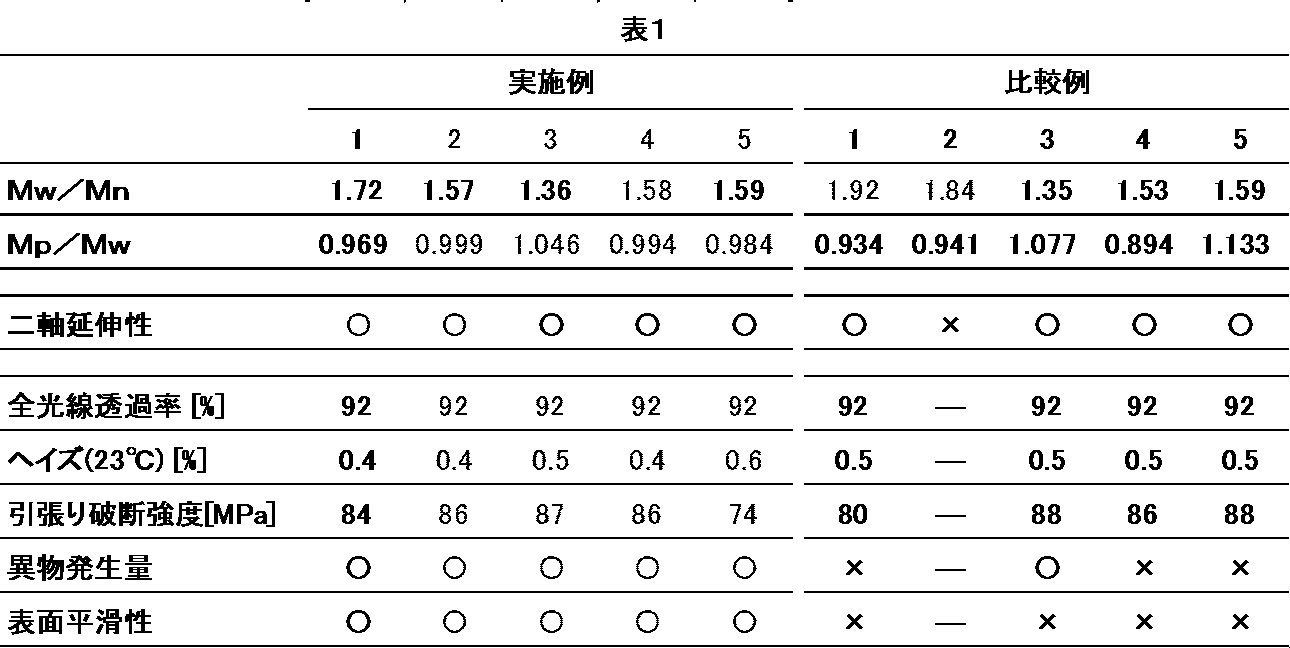
表1が示すように、重量平均分子量Mwに対するピークトップ分子量Mpの比Mp/Mwが0.95未満または1.07超過である変性メタクリル樹脂を用いてなる成形体(比較例)は、表面平滑性に劣るか、または異物の発生数が多い。
これに対して、重量平均分子量Mwに対するピークトップ分子量Mpの比Mp/Mwが0.95以上1.07以下である変性メタクリル樹脂または変性メタクリル樹脂組成物を用いてなる成形体(実施例)は、表面平滑性に優れ且つ異物の発生数が少ない。
これに対して、重量平均分子量Mwに対するピークトップ分子量Mpの比Mp/Mwが0.95以上1.07以下である変性メタクリル樹脂または変性メタクリル樹脂組成物を用いてなる成形体(実施例)は、表面平滑性に優れ且つ異物の発生数が少ない。
Claims (15)
- 式(1)で表される構造単位(M)と、ラクトン環単位、無水グルタル酸単位およびN-置換若しくは無置換グルタルイミド単位からなる群より選ばれる少なくともひとつの環構造を主鎖に有する構造単位(R)と、を有して成り、且つ
ゲルパーミエーションクロマトグラフィーで測定されるポリスチレン換算の重量平均分子量(Mw)に対するピークトップ分子量(Mp)の比(Mp/Mw)が0.95~1.07である、樹脂。

(式(1)中、R1は水素原子またはメチル基であり、R2は水素原子、炭素数1~18のアルキル基、炭素数3~12のシクロアルキル基または芳香環を含む炭素数6~15の有機基である。) - 構造単位(M)がメタクリル酸メチルに由来する単位である、請求項1に記載の樹脂。
- 構造単位(R)が式(2)で表される単位である、請求項1または2に記載の樹脂。
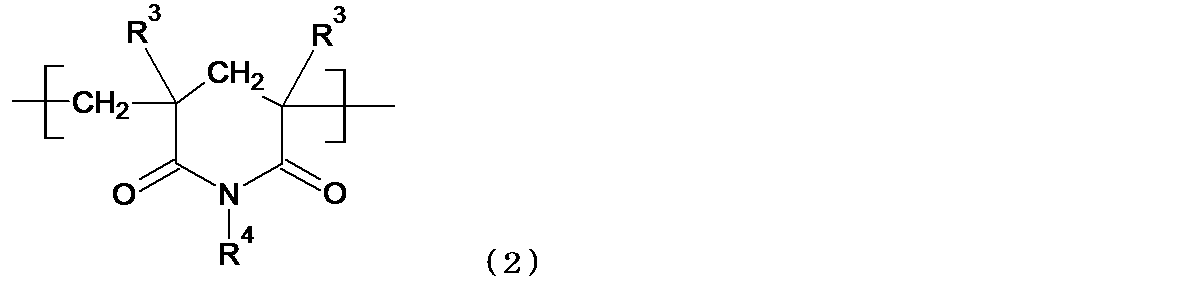
(式(2)中、R3は、それぞれ独立に、水素原子またはメチル基であり、R4は、水素原子、炭素数1~18のアルキル基、炭素数3~12のシクロアルキル基または芳香環を含む炭素数6~15の有機基である。) - ゲルパーミエーションクロマトグラフィーで測定されるポリスチレン換算の分子量の分布において、分子量200000以上の成分の割合が4.0質量%未満である、請求項1~3のいずれかひとつに記載の樹脂。
- 三連子表示のシンジオタクティシティ(rr)が56%以上70%以下であるメタクリル樹脂に環構造形成反応をさせることを含む、
請求項1~4のいずれかひとつに記載の樹脂の製造方法。 - 請求項1~4のいずれかひとつに記載の樹脂を含有する樹脂組成物。
- 紫外線吸収剤および請求項1~4のいずれかひとつに記載の樹脂を含有する樹脂組成物。
- 式(1)で表される構造単位(M)と、ラクトン環単位、無水グルタル酸単位およびN-置換若しくは無置換グルタルイミド単位からなる群より選ばれる少なくともひとつの環構造を主鎖に有する構造単位(R)とを有して成る樹脂を含有し、且つ
ゲルパーミエーションクロマトグラフィーで測定されるポリスチレン換算の重量平均分子量(Mw)に対するピークトップ分子量(Mp)の比(Mp/Mw)が0.95~1.07である、樹脂組成物。 - 請求項1~4のいずれかひとつに記載の樹脂または請求項6~8のいずれかひとつに記載の樹脂組成物からなる成形体。
- 請求項1~4のいずれかひとつに記載の樹脂または請求項6~8のいずれかひとつに記載の樹脂組成物からなるフィルム。
- 請求項1~4のいずれかひとつに記載の樹脂または請求項6~8のいずれかひとつに記載の樹脂組成物からなる延伸フィルム。
- 請求項10に記載のフィルムを、面積比で1.5~8倍の大きさに、少なくとも1方向に延伸することを含む、延伸フィルムの製造方法。
- 請求項1~4のいずれかひとつに記載の樹脂または請求項6~8のいずれかひとつに記載の樹脂組成物からなる偏光子保護フィルム。
- 請求項1~4のいずれかひとつに記載の樹脂または請求項6~8のいずれかひとつに記載の樹脂組成物を含有する層と、他の熱可塑性樹脂を含有する層とを有する積層体。
- 他の熱可塑性樹脂がポリカーボネートである、請求項14に記載の積層体。
Priority Applications (1)
| Application Number | Priority Date | Filing Date | Title |
|---|---|---|---|
| JP2020556124A JPWO2020100913A1 (ja) | 2018-11-13 | 2019-11-12 | 変性メタクリル樹脂および成形体 |
Applications Claiming Priority (2)
| Application Number | Priority Date | Filing Date | Title |
|---|---|---|---|
| JP2018-212869 | 2018-11-13 | ||
| JP2018212869 | 2018-11-13 |
Publications (1)
| Publication Number | Publication Date |
|---|---|
| WO2020100913A1 true WO2020100913A1 (ja) | 2020-05-22 |
Family
ID=70731109
Family Applications (1)
| Application Number | Title | Priority Date | Filing Date |
|---|---|---|---|
| PCT/JP2019/044402 Ceased WO2020100913A1 (ja) | 2018-11-13 | 2019-11-12 | 変性メタクリル樹脂および成形体 |
Country Status (2)
| Country | Link |
|---|---|
| JP (1) | JPWO2020100913A1 (ja) |
| WO (1) | WO2020100913A1 (ja) |
Cited By (3)
| Publication number | Priority date | Publication date | Assignee | Title |
|---|---|---|---|---|
| JP2021143284A (ja) * | 2020-03-12 | 2021-09-24 | 株式会社カネカ | アクリル系熱可塑性樹脂及びその製造方法、樹脂組成物、並びにフィルム |
| WO2024019169A1 (ja) * | 2022-07-21 | 2024-01-25 | 株式会社クラレ | 蒸着用基材フィルム、および蒸着フィルム |
| WO2024181426A1 (ja) * | 2023-02-28 | 2024-09-06 | 株式会社カネカ | 光学フィルム、偏光板、及び、液晶表示パネル |
Citations (6)
| Publication number | Priority date | Publication date | Assignee | Title |
|---|---|---|---|---|
| WO1998016561A1 (fr) * | 1996-10-11 | 1998-04-23 | Nippon Carbide Kogyo Kabushiki Kaisha | Polymere obtenue par un procede de polymerisation en emulsion |
| JP2010013613A (ja) * | 2008-06-04 | 2010-01-21 | Toray Ind Inc | アクリル系ブロック共重合体、熱可塑性共重合体組成物およびそれからなる成形品 |
| WO2016167292A1 (ja) * | 2015-04-17 | 2016-10-20 | 株式会社クラレ | メタクリル樹脂組成物 |
| JP2017132981A (ja) * | 2016-01-21 | 2017-08-03 | 旭化成株式会社 | メタクリル系樹脂組成物 |
| JP2017179103A (ja) * | 2016-03-30 | 2017-10-05 | 株式会社クラレ | 変性メタクリル樹脂および成形体 |
| JP2018035225A (ja) * | 2016-08-30 | 2018-03-08 | 旭化成株式会社 | メタクリル系樹脂 |
-
2019
- 2019-11-12 WO PCT/JP2019/044402 patent/WO2020100913A1/ja not_active Ceased
- 2019-11-12 JP JP2020556124A patent/JPWO2020100913A1/ja active Pending
Patent Citations (6)
| Publication number | Priority date | Publication date | Assignee | Title |
|---|---|---|---|---|
| WO1998016561A1 (fr) * | 1996-10-11 | 1998-04-23 | Nippon Carbide Kogyo Kabushiki Kaisha | Polymere obtenue par un procede de polymerisation en emulsion |
| JP2010013613A (ja) * | 2008-06-04 | 2010-01-21 | Toray Ind Inc | アクリル系ブロック共重合体、熱可塑性共重合体組成物およびそれからなる成形品 |
| WO2016167292A1 (ja) * | 2015-04-17 | 2016-10-20 | 株式会社クラレ | メタクリル樹脂組成物 |
| JP2017132981A (ja) * | 2016-01-21 | 2017-08-03 | 旭化成株式会社 | メタクリル系樹脂組成物 |
| JP2017179103A (ja) * | 2016-03-30 | 2017-10-05 | 株式会社クラレ | 変性メタクリル樹脂および成形体 |
| JP2018035225A (ja) * | 2016-08-30 | 2018-03-08 | 旭化成株式会社 | メタクリル系樹脂 |
Cited By (3)
| Publication number | Priority date | Publication date | Assignee | Title |
|---|---|---|---|---|
| JP2021143284A (ja) * | 2020-03-12 | 2021-09-24 | 株式会社カネカ | アクリル系熱可塑性樹脂及びその製造方法、樹脂組成物、並びにフィルム |
| WO2024019169A1 (ja) * | 2022-07-21 | 2024-01-25 | 株式会社クラレ | 蒸着用基材フィルム、および蒸着フィルム |
| WO2024181426A1 (ja) * | 2023-02-28 | 2024-09-06 | 株式会社カネカ | 光学フィルム、偏光板、及び、液晶表示パネル |
Also Published As
| Publication number | Publication date |
|---|---|
| JPWO2020100913A1 (ja) | 2021-10-07 |
Similar Documents
| Publication | Publication Date | Title |
|---|---|---|
| JP6827272B2 (ja) | 変性メタクリル樹脂および成形体 | |
| EP3162818B1 (en) | Methacrylic resin or methacrylic resin composition | |
| JP6808613B2 (ja) | メタクリル樹脂組成物 | |
| EP2918636B1 (en) | Methacrylic resin composition | |
| EP2998355B1 (en) | Methacrylic resin composition and molded body thereof | |
| JP7627263B2 (ja) | アクリル系組成物及び成形体 | |
| WO2015182750A1 (ja) | メタクリル樹脂組成物 | |
| JP7352575B2 (ja) | メタクリル樹脂組成物、フィルムおよび積層体 | |
| JP7460547B2 (ja) | アクリル樹脂組成物、成形体、フィルムおよび積層体 | |
| JP6345086B2 (ja) | 樹脂組成物および成形体 | |
| WO2018074550A1 (ja) | メタクリル樹脂組成物 | |
| WO2016103714A1 (ja) | 加飾用複層シートおよび立体成型体 | |
| CN115427227A (zh) | 层叠体 | |
| WO2020100913A1 (ja) | 変性メタクリル樹脂および成形体 | |
| JPWO2017200032A1 (ja) | メタクリル樹脂組成物および成形体 | |
| JP2025026525A (ja) | メタクリル系共重合体、組成物、成形体、フィルム又はシートの製造方法および積層体 | |
| JP7808218B2 (ja) | メタクリル系重合体およびその製造方法、並びに成形体 | |
| JP7184793B2 (ja) | メタクリル樹脂、メタクリル樹脂組成物及び成形体 | |
| JP2025065317A (ja) | メタクリル系共重合体及びその製造方法、メタクリル系共重合体組成物及び成形体 | |
| EP4082745A1 (en) | Methacrylic resin composition | |
| JP7693541B2 (ja) | メタクリル系溶融押出成形体 |
Legal Events
| Date | Code | Title | Description |
|---|---|---|---|
| 121 | Ep: the epo has been informed by wipo that ep was designated in this application |
Ref document number: 19884272 Country of ref document: EP Kind code of ref document: A1 |
|
| ENP | Entry into the national phase |
Ref document number: 2020556124 Country of ref document: JP Kind code of ref document: A |
|
| NENP | Non-entry into the national phase |
Ref country code: DE |
|
| 122 | Ep: pct application non-entry in european phase |
Ref document number: 19884272 Country of ref document: EP Kind code of ref document: A1 |