WO2020004000A1 - フッ素系共重合体、滑水性表面改質剤、硬化性樹脂組成物、及び滑水性塗膜 - Google Patents
フッ素系共重合体、滑水性表面改質剤、硬化性樹脂組成物、及び滑水性塗膜 Download PDFInfo
- Publication number
- WO2020004000A1 WO2020004000A1 PCT/JP2019/023040 JP2019023040W WO2020004000A1 WO 2020004000 A1 WO2020004000 A1 WO 2020004000A1 JP 2019023040 W JP2019023040 W JP 2019023040W WO 2020004000 A1 WO2020004000 A1 WO 2020004000A1
- Authority
- WO
- WIPO (PCT)
- Prior art keywords
- mass
- parts
- meth
- group
- acrylate
- Prior art date
- Legal status (The legal status is an assumption and is not a legal conclusion. Google has not performed a legal analysis and makes no representation as to the accuracy of the status listed.)
- Ceased
Links
Classifications
-
- C—CHEMISTRY; METALLURGY
- C08—ORGANIC MACROMOLECULAR COMPOUNDS; THEIR PREPARATION OR CHEMICAL WORKING-UP; COMPOSITIONS BASED THEREON
- C08F—MACROMOLECULAR COMPOUNDS OBTAINED BY REACTIONS ONLY INVOLVING CARBON-TO-CARBON UNSATURATED BONDS
- C08F220/00—Copolymers of compounds having one or more unsaturated aliphatic radicals, each having only one carbon-to-carbon double bond, and only one being terminated by only one carboxyl radical or a salt, anhydride ester, amide, imide or nitrile thereof
- C08F220/02—Monocarboxylic acids having less than ten carbon atoms; Derivatives thereof
- C08F220/10—Esters
- C08F220/12—Esters of monohydric alcohols or phenols
- C08F220/16—Esters of monohydric alcohols or phenols of phenols or of alcohols containing two or more carbon atoms
-
- C—CHEMISTRY; METALLURGY
- C08—ORGANIC MACROMOLECULAR COMPOUNDS; THEIR PREPARATION OR CHEMICAL WORKING-UP; COMPOSITIONS BASED THEREON
- C08F—MACROMOLECULAR COMPOUNDS OBTAINED BY REACTIONS ONLY INVOLVING CARBON-TO-CARBON UNSATURATED BONDS
- C08F220/00—Copolymers of compounds having one or more unsaturated aliphatic radicals, each having only one carbon-to-carbon double bond, and only one being terminated by only one carboxyl radical or a salt, anhydride ester, amide, imide or nitrile thereof
- C08F220/02—Monocarboxylic acids having less than ten carbon atoms; Derivatives thereof
- C08F220/10—Esters
- C08F220/22—Esters containing halogen
- C08F220/24—Esters containing halogen containing perhaloalkyl radicals
-
- C—CHEMISTRY; METALLURGY
- C08—ORGANIC MACROMOLECULAR COMPOUNDS; THEIR PREPARATION OR CHEMICAL WORKING-UP; COMPOSITIONS BASED THEREON
- C08F—MACROMOLECULAR COMPOUNDS OBTAINED BY REACTIONS ONLY INVOLVING CARBON-TO-CARBON UNSATURATED BONDS
- C08F232/00—Copolymers of cyclic compounds containing no unsaturated aliphatic radicals in a side chain, and having one or more carbon-to-carbon double bonds in a carbocyclic ring system
-
- C—CHEMISTRY; METALLURGY
- C08—ORGANIC MACROMOLECULAR COMPOUNDS; THEIR PREPARATION OR CHEMICAL WORKING-UP; COMPOSITIONS BASED THEREON
- C08F—MACROMOLECULAR COMPOUNDS OBTAINED BY REACTIONS ONLY INVOLVING CARBON-TO-CARBON UNSATURATED BONDS
- C08F299/00—Macromolecular compounds obtained by interreacting polymers involving only carbon-to-carbon unsaturated bond reactions, in the absence of non-macromolecular monomers
-
- C—CHEMISTRY; METALLURGY
- C08—ORGANIC MACROMOLECULAR COMPOUNDS; THEIR PREPARATION OR CHEMICAL WORKING-UP; COMPOSITIONS BASED THEREON
- C08F—MACROMOLECULAR COMPOUNDS OBTAINED BY REACTIONS ONLY INVOLVING CARBON-TO-CARBON UNSATURATED BONDS
- C08F8/00—Chemical modification by after-treatment
-
- C—CHEMISTRY; METALLURGY
- C08—ORGANIC MACROMOLECULAR COMPOUNDS; THEIR PREPARATION OR CHEMICAL WORKING-UP; COMPOSITIONS BASED THEREON
- C08L—COMPOSITIONS OF MACROMOLECULAR COMPOUNDS
- C08L101/00—Compositions of unspecified macromolecular compounds
-
- C—CHEMISTRY; METALLURGY
- C08—ORGANIC MACROMOLECULAR COMPOUNDS; THEIR PREPARATION OR CHEMICAL WORKING-UP; COMPOSITIONS BASED THEREON
- C08L—COMPOSITIONS OF MACROMOLECULAR COMPOUNDS
- C08L33/00—Compositions of homopolymers or copolymers of compounds having one or more unsaturated aliphatic radicals, each having only one carbon-to-carbon double bond, and only one being terminated by only one carboxyl radical, or of salts, anhydrides, esters, amides, imides or nitriles thereof; Compositions of derivatives of such polymers
- C08L33/04—Homopolymers or copolymers of esters
- C08L33/14—Homopolymers or copolymers of esters of esters containing halogen, nitrogen, sulfur, or oxygen atoms in addition to the carboxy oxygen
- C08L33/16—Homopolymers or copolymers of esters containing halogen atoms
-
- C—CHEMISTRY; METALLURGY
- C09—DYES; PAINTS; POLISHES; NATURAL RESINS; ADHESIVES; COMPOSITIONS NOT OTHERWISE PROVIDED FOR; APPLICATIONS OF MATERIALS NOT OTHERWISE PROVIDED FOR
- C09D—COATING COMPOSITIONS, e.g. PAINTS, VARNISHES OR LACQUERS; FILLING PASTES; CHEMICAL PAINT OR INK REMOVERS; INKS; CORRECTING FLUIDS; WOODSTAINS; PASTES OR SOLIDS FOR COLOURING OR PRINTING; USE OF MATERIALS THEREFOR
- C09D133/00—Coating compositions based on homopolymers or copolymers of compounds having one or more unsaturated aliphatic radicals, each having only one carbon-to-carbon double bond, and at least one being terminated by only one carboxyl radical, or of salts, anhydrides, esters, amides, imides, or nitriles thereof; Coating compositions based on derivatives of such polymers
- C09D133/04—Homopolymers or copolymers of esters
- C09D133/14—Homopolymers or copolymers of esters of esters containing halogen, nitrogen, sulfur or oxygen atoms in addition to the carboxy oxygen
- C09D133/16—Homopolymers or copolymers of esters containing halogen atoms
-
- C—CHEMISTRY; METALLURGY
- C09—DYES; PAINTS; POLISHES; NATURAL RESINS; ADHESIVES; COMPOSITIONS NOT OTHERWISE PROVIDED FOR; APPLICATIONS OF MATERIALS NOT OTHERWISE PROVIDED FOR
- C09K—MATERIALS FOR MISCELLANEOUS APPLICATIONS, NOT PROVIDED FOR ELSEWHERE
- C09K3/00—Materials not provided for elsewhere
- C09K3/18—Materials not provided for elsewhere for application to surfaces to minimize adherence of ice, mist or water thereto; Thawing or antifreeze materials for application to surfaces
Definitions
- the present invention provides a fluorine-based copolymer which can form a coating film having good water-sliding properties on the surface and which can be suitably used as a water-sliding surface modifier having a specific structure, and a curable resin using the same.
- the present invention relates to a composition and a water-slidable coating film as a cured product thereof.
- Fluorine-based surfactants or fluorine-based surface modifiers are widely used in various coating materials, surface modifiers, etc. because of their excellent leveling properties and water / oil repellency.
- a cured film obtained by curing a curable resin composition containing the fluorine-based surfactant or the fluorine-based surface modifier (hereinafter, these may be simply referred to as “fluorine-based surfactant”). Exhibits excellent water repellency (oil repellency).
- Fluorinated surfactants generally have a fluorinated hydrocarbon group in the structure of the compound in order to make use of the water and oil repellency properties possessed by fluorine atoms, and further have a phase with a curable resin in one molecule. It is a compound having another structure for expressing solubility and curability, and various compounds have been provided according to the target performance level and method of use (for example, see Patent Documents 1 and 2). ).
- the water-repellent surface only indicates that the water adhering to it is likely to become water droplets.Large water droplets fall by their own weight, but if the slipperiness is weak, the water droplets will remain strongly attached to the object surface and the surface will be vertical. May not fall when tilted.
- the problem to be solved by the present invention is to provide a fluorine-based copolymer which can be suitably used as a surface modifier capable of obtaining a surface having excellent slipperiness, a curable resin composition using the same, and this composition It is an object of the present invention to provide a water-slidable coating film which is a cured product of the product.
- the present inventors have conducted intensive studies and found that a polymerizable monomer having a fluorinated alkyl group having a specific length and a polymerizable unsaturated group, a skeleton of an alicyclic hydrocarbon, and a polymerizable unsaturated group. It has been found that a copolymer comprising a polymerizable monomer having the formula (1) and (2) as an essential monomer is a surface modifier that solves the above-mentioned problems, and has completed the present invention.
- the present invention provides a polymerizable monomer (a1) having a fluorinated alkyl group represented by C n F 2n + 1- (where n is 1 or 2) and a polymerizable unsaturated group, A polymerizable monomer (a2) having an alicyclic hydrocarbon skeleton and a polymerizable unsaturated group, A fluorine-based copolymer characterized by being a copolymer having essential raw materials, a water-slidable surface modifier using the same, a curable resin composition containing the same, and a cured product of the composition. It is intended to provide a certain water-slidable coating.
- a curable resin composition having excellent surface lubricity of a coating film or the like can be obtained.
- Various curing systems such as an energy ray curing system can be selected and applied.
- the fluorine-based copolymer of the present invention comprises a polymerizable monomer (a1) having a fluorinated alkyl group represented by C n F 2n + 1- (where n is 1 or 2) and a polymerizable unsaturated group. ) And a polymerizable monomer (a2) having an alicyclic hydrocarbon skeleton and a polymerizable unsaturated group, as a raw material.
- the polymerizable monomer (a1) having a fluorinated alkyl group represented by C n F 2n + 1- (where n is 1 or 2) and a polymerizable unsaturated group used in the present invention includes: Any compound having a fluorinated alkyl group and a polymerizable unsaturated group can be used without particular limitation.
- the fluorinated alkyl group it is particularly preferable that n is 1 from the viewpoint of obtaining a cured product having more excellent slipperiness.
- the number of fluorinated alkyl groups represented by C n F 2n + 1- (where n is 1 or 2) in one molecule is not particularly limited, and other properties required for a cured product, For example, it is preferable to adjust the fluorine atom content according to the levels of water repellency and surface smoothness.
- Examples of the polymerizable unsaturated group of the polymerizable monomer (a1) include a (meth) acryloyl group, a vinyl group, and a maleimide group.
- a (meth) acryloyl group is preferable because of easy availability of raw materials, easy control of compatibility with the components in various curable resin compositions, and good polymerization reactivity.
- a monomer represented by the following general formula (1) or (2) can be preferably exemplified.
- the polymerizable monomer (a1) may be used alone or in combination of two or more.
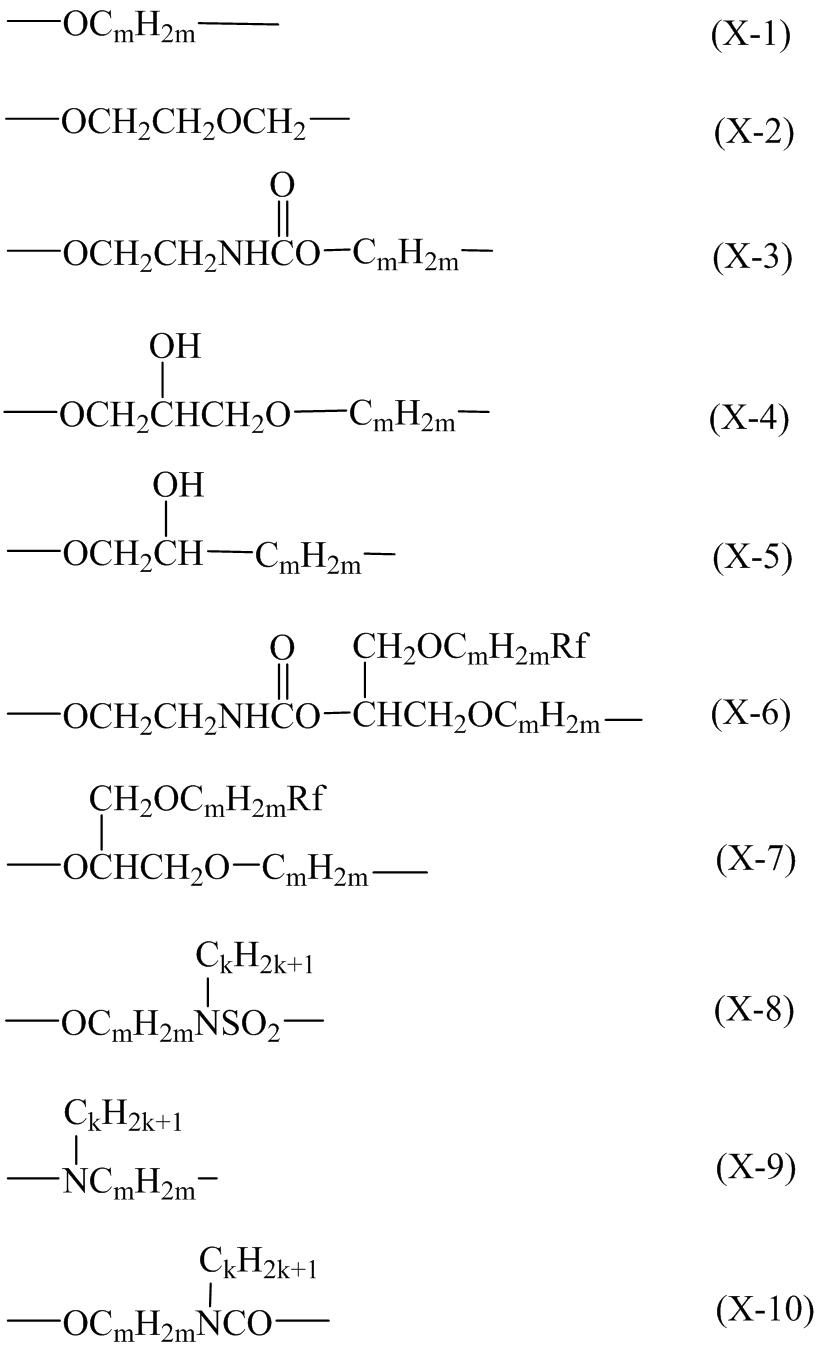
- R 1 is a hydrogen atom, a halogen atom, a methyl group, a cyano group, a phenyl group, a benzyl group, or —C m H 2m -Rf (m is an integer of 1 to 8) )
- Rf are groups represented by C n F 2n + 1 (where n is 1 or 2), and X is any one of the following formulas (X-1) to (X-10) Represent. ]
- m is an integer of 0 to 8
- k is an integer of 0 to 8
- Rf is the same as described above.
- (meth) acrylate refers to one or both of methacrylate and acrylate
- (meth) acrylic acid refers to one or both of methacrylic acid and acrylic acid.
- the polymerizable monomer (a2) used in the present invention has an alicyclic hydrocarbon skeleton and a polymerizable unsaturated group.
- Examples of the alicyclic hydrocarbon skeleton include, for example, cyclopropane, cyclopentane, cyclohexane, cycloheptane, cyclooctane, cyclodecane, dicyclohexyl, tercyclohexyl, norbornane, decahydro which may be substituted by one or more optional substituents Naphthalene, perhydrofluorene, tricyclo [5.2.1.0 2.6 ] decane, adamantane, quadricyclane, congressin, cubane, spiro [4.4] octane, cyclopentene, cyclohexene, cycloheptene, cyclooctene, cyclodecene, bicyclo [ 2.2.2] Oct-2-ene, cyclohexadiene, cycloheptadiene, cyclooctadiene, cycloheptatriene, cycl
- a skeleton having a crosslinked structure is preferable because the hardness of the obtained coating film surface is high and the slipperiness and the antifouling property are higher.
- adamantane, perhydroindene, decahydronaphthalene, Perhydrofluorene, perhydroanthracene, perhydrophenanthrene, dicyclopentane, dicyclopentene, perhydroacenaphthene, perhydrophenalene, norbornane, norbornene, and the like are preferable, and adamantane, dicyclopentane, dicyclopentene, norbornane, and norbornene are particularly preferred.
- adamantane is the most preferred skeleton.
- Examples of the polymerizable unsaturated group include a (meth) acryloyl group, a vinyl group, and a maleimide group.
- a (meth) acryloyl group is preferable because of easy availability of raw materials, easy control of compatibility with the components in various curable resin compositions, and good polymerization reactivity.
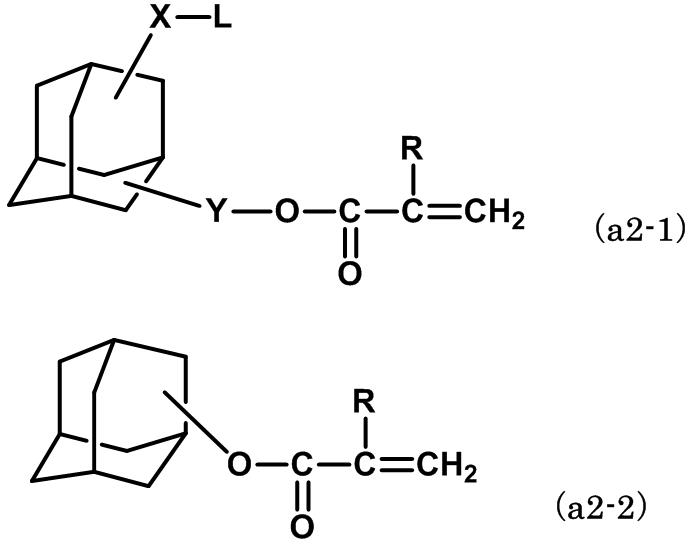
- Examples of the polymerizable monomer having an adamantane skeleton and a (meth) acryloyl group include compounds represented by the following formulas (a2-1) and (a2-2).
- L represents a reactive functional group
- X and Y represent a divalent organic group or a single bond
- R represents a hydrogen atom, a methyl group, or CF 3.
- the reactive functional group examples include a hydroxyl group, an isocyanate group, an epoxy group, a carboxyl group, a carboxylic acid halide group, and an acid anhydride group.
- a hydroxyl group is preferred from the viewpoint that a surface modifier having good compatibility with the curable resin composition can be obtained, or an active energy ray-curable group can be easily introduced into the obtained copolymer.
- the bonding position of the organic group having a reactive functional group represented by -XL in the general formula (a2-1) and Y may be bonded to any carbon atom in the adamantane skeleton.
- -XL may have two or more.
- a part or all of the hydrogen atoms bonded to the carbon atoms constituting the adamantane skeleton may be substituted with a fluorine atom, an alkyl group or the like.
- X and Y in the general formula (a2-1) are a divalent organic group or a single bond. Examples of the divalent organic group include a carbon atom such as a methylene group, a propyl group, and an isopropylidene group. Examples include alkylene groups of Formulas 1 to 8.
- the (meth) acryloyl group may be bonded to any carbon atom in the adamantane skeleton.
- the hydrogen atom bonded to the carbon atom constituting the adamantane skeleton in the general formula (a2-1) may be partially or entirely substituted with a fluorine atom, an alkyl group, or the like.
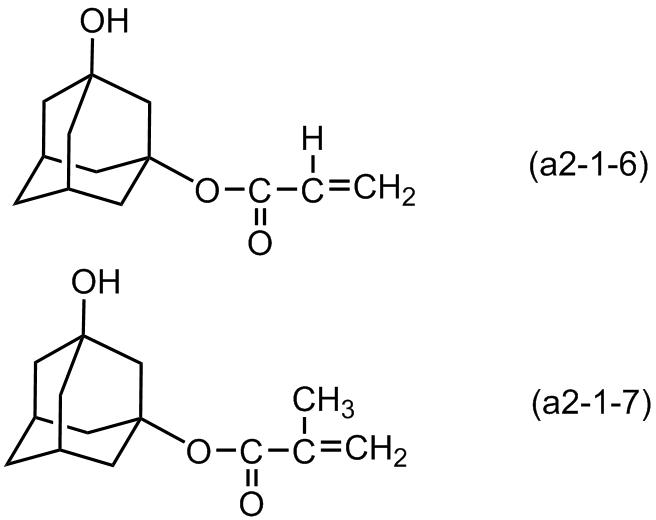
- polymerizable monomer represented by the general formula (a2-1) include, for example, compounds represented by the following.
- polymerizable monomer represented by the general formula (a2-2) include, for example, compounds represented by the following.
- the polymerizable monomer having a dicyclopentane skeleton and a polymerizable unsaturated group that can be preferably used as the polymerizable monomer (a2) in the present invention will be described.
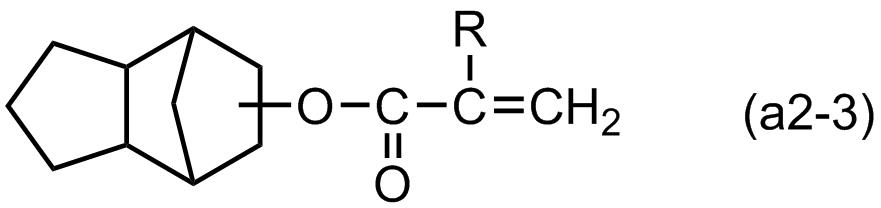
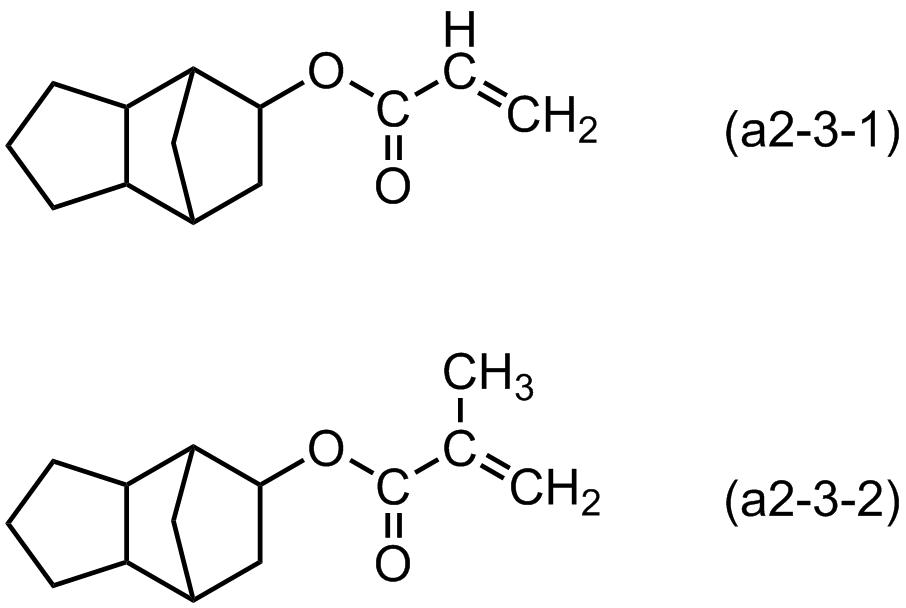
- Examples of the polymerizable monomer having a dicyclopentane skeleton and a (meth) acryloyl group include a compound represented by the following formula (a2-3).
- R represents a hydrogen atom, a methyl group, or CF 3.
- the (meth) acryloyl group may be bonded to any carbon atom in the dicyclopentane skeleton.
- the hydrogen atom bonded to the carbon atom constituting the dicyclopentane skeleton in the general formula (a2-3) may be partially or entirely substituted with a fluorine atom, an alkyl group, or the like. .
- polymerizable monomer represented by the general formula (a2-3) include, for example, compounds represented by the following.
- the compound represented by the formula (a2-3-2) is preferable because the Tg of the coating film can be further increased.
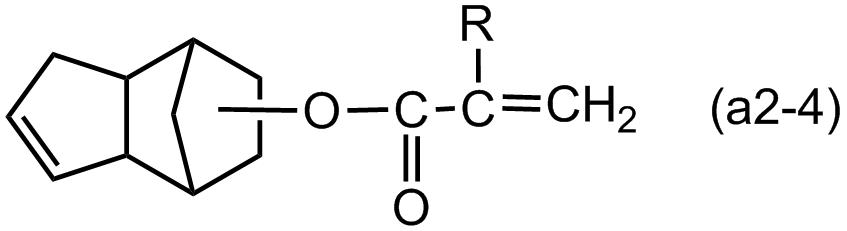
- Examples of the polymerizable monomer having a dicyclopentene skeleton and a (meth) acryloyl group include a compound represented by the following formula (a2-4).
- R represents a hydrogen atom, a methyl group, or CF 3.
- the (meth) acryloyl group may be bonded to any carbon atom in the dicyclopentene skeleton.
- the hydrogen atom bonded to the carbon atom constituting the dicyclopentene skeleton in the general formula (a2-3) may be partially or entirely substituted with a fluorine atom, an alkyl group, or the like.
- polymerizable monomer represented by the general formula (a2-4) include, for example, compounds represented by the following.
- the compounds represented by the above formulas (a2-4-3) and (a2-4-4) can be used to increase the Tg of the coating film. Are preferred.
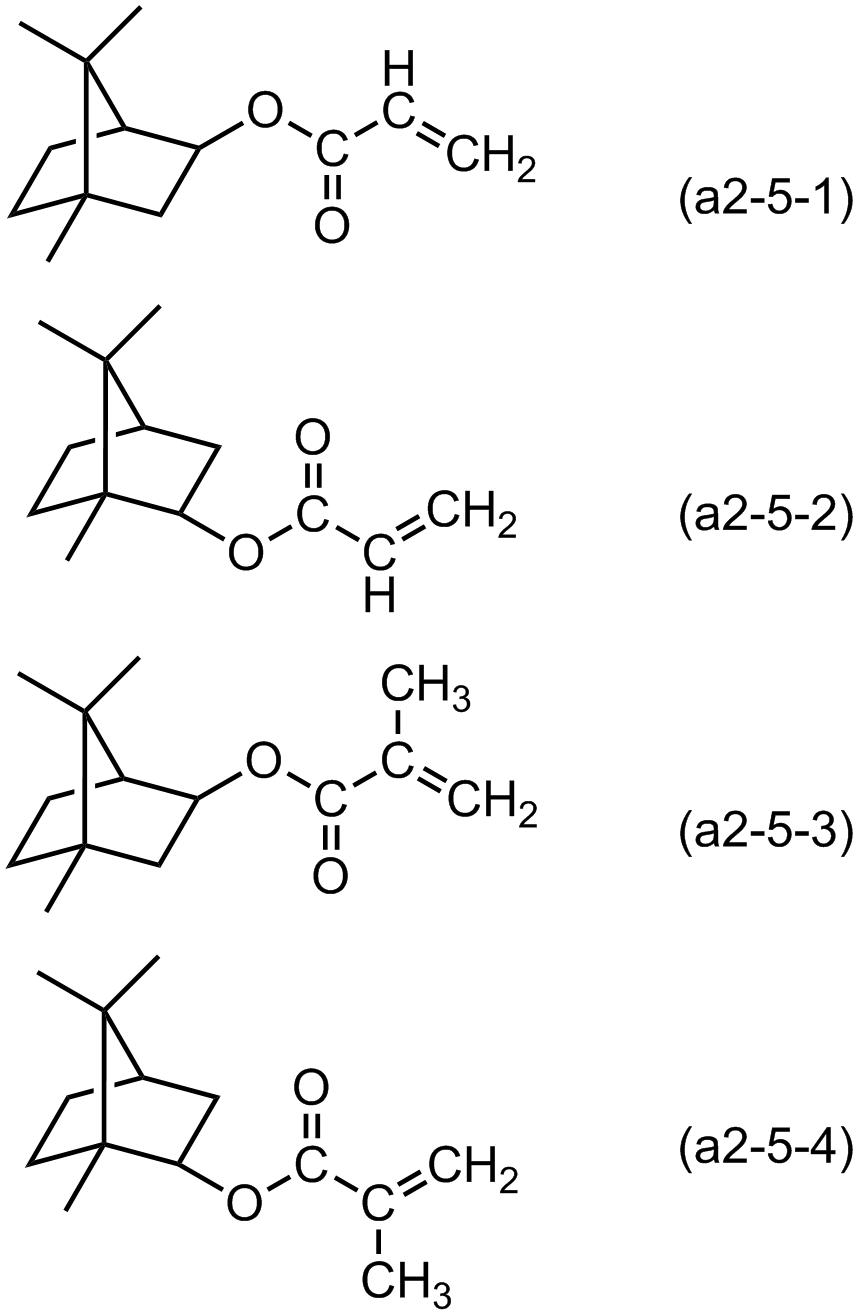
- Examples of the polymerizable monomer having a norbornane skeleton and a (meth) acryloyl group include a compound represented by the following formula (a2-5).
- R represents a hydrogen atom, a methyl group, or CF 3.
- the (meth) acryloyl group may be bonded to any carbon atom in the norbornane skeleton.
- the hydrogen atoms bonded to the carbon atoms constituting the norbornane skeleton in the general formula (a2-5) may be partially or entirely substituted with a fluorine atom, an alkyl group, or the like.
- polymerizable monomer represented by the general formula (a2-5) include, for example, compounds represented by the following.
- polymerizable monomers having a norbornane skeleton and a (meth) acryloyl group they are represented by the formulas (a2-5-3) and (a2-5-4) because the Tg of the coating film can be further increased. are preferred.
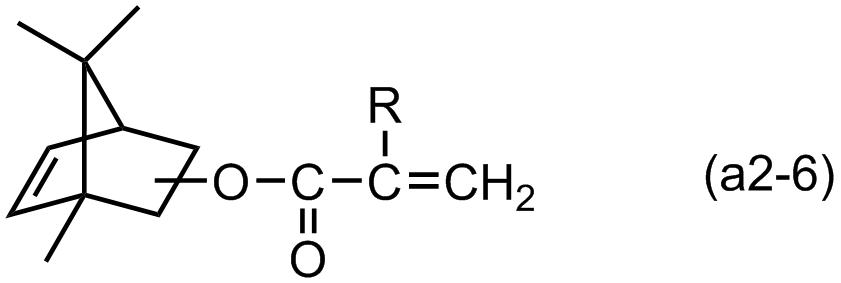
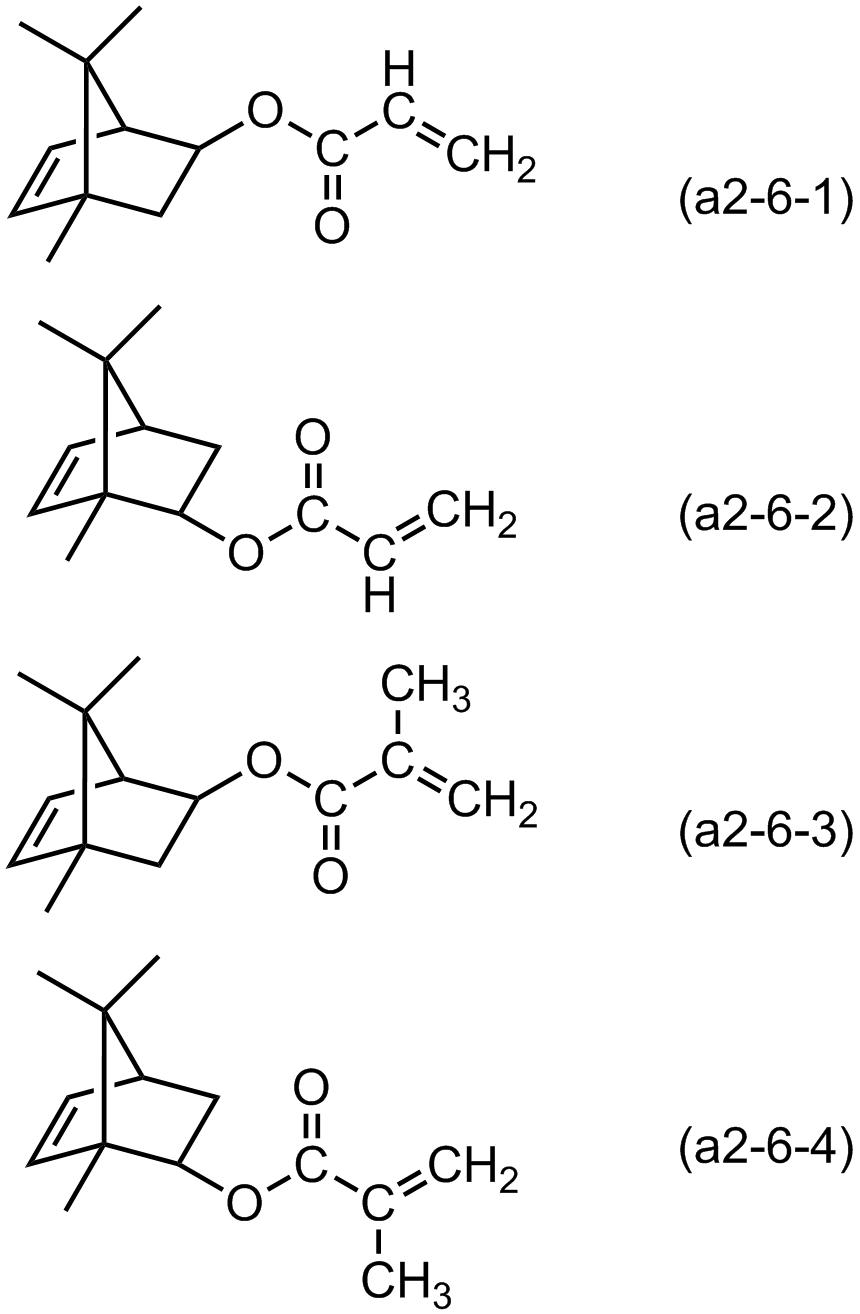
- Examples of the polymerizable monomer having a norbornene skeleton and a (meth) acryloyl group include compounds represented by the following formulas (a2-6) and (a2-7).
- R represents a hydrogen atom, a methyl group, or CF 3.
- the (meth) acryloyl group may be bonded to any carbon atom in the norbornene skeleton. Further, a part or all of the hydrogen atoms bonded to the carbon atoms constituting the norbornene skeleton in the general formula (a2-6) may be partially or entirely substituted with a fluorine atom, an alkyl group, or the like.
- polymerizable monomer represented by the general formula (a2-6) include, for example, compounds represented by the following.
- polymerizable monomers having a norbornene skeleton and a (meth) acryloyl group they are represented by the formulas (a2-6-3) and (a2-6-4) because the Tg of the coating film can be further increased. are preferred.
- the fluorinated copolymer of the present invention comprises a polymerizable monomer having a fluorinated alkyl group represented by C n F 2n + 1- (where n is 1 or 2) and a polymerizable unsaturated group. It is a copolymer comprising a monomer (a1) and a polymerizable monomer (a2) having an alicyclic hydrocarbon skeleton and a polymerizable unsaturated group as essential raw materials.
- the ratio of the polymerizable monomer (a1) to the polymerizable monomer (a2) is expressed by mass ratio because a surface modifier having better compatibility with the curable resin composition is obtained.
- a1) :( a2) 5: 95 to 95: 5 is preferable, and 10:90 to 90:10 is more preferable.
- a monomer copolymerizable with the above (a1) and (a2) may be used in combination as long as the effects of the present invention are not impaired.
- the monomer that can be used in combination include a monomer having a polyoxyalkylene chain, a monomer having a linear alkyl group having 1 to 18 carbon atoms, and a branched alkyl having 1 to 18 carbon atoms. And a monomer having a group.
- Examples of the polymerizable unsaturated group of the other copolymerizable monomer include a (meth) acryloyl group, a vinyl group, and a maleimide group, and the monomer (a1) and the monomer (a2
- the copolymerizability is improved, so that the polymerizable unsaturated group of the other monomer is also a (meth) acryloyl group. Is preferred.
- Examples of the monomer having an oxyalkylene group include a monomer represented by the following general formula (a3-1).
- R 2 is a hydrogen atom or a methyl group
- Y 1 X and Y 2 are each an independent alkylene group
- p and q are each an integer of 0 or 1 or more
- the total is 1 or more
- R 3 is a hydrogen atom or an alkyl group having 1 to 6 carbon atoms.
- Y 1 and Y 2 in the general formula (a3-1) are alkylene groups, and the alkylene groups include those having a substituent.
- Specific examples of -O- (Y 1 O) n- (Y 2 O) m- moiety include an ethylene glycol residue in which the number of repeating units p is 1, m is 0, and Y 1 is ethylene.
- the polymerization degree of the polyalkylene glycol in the formula (a3-1), that is, the sum of p and q in the general formula (a3-1) is preferably in the range of 1 to 100, and more preferably in the range of 2 to 80. More preferably, those in the range of 3 to 50 are more preferable.
- the repeating unit including Y 1 and the repeating unit including Y 2 may be arranged randomly or in blocks.
- R 3 in the general formula (a3-1) is hydrogen or an alkyl group having 1 to 6 carbon atoms.
- the monomer is a mono (meth) acrylate of an alkylene glycol such as polyethylene glycol, polypropylene glycol, polybutylene glycol, and the like.
- R 3 has 1 to 6 carbon atoms, the monomer is an alkylene glycol.
- the terminal of the mono (meth) acrylate of the glycol which is not the (meth) acrylate is sealed with an alkyl group having 1 to 6 carbon atoms.
- a monomer having a poly (oxyalkylene) group composed of a plurality of oxyalkylene groups is preferable, and specific examples thereof include polypropylene glycol mono (meth) acrylate and polyethylene glycol mono ( (Meth) acrylate, polytrimethylene glycol mono (meth) acrylate, polytetramethylene glycol mono (meth) acrylate, poly (ethylene glycol / propylene glycol) mono (meth) acrylate, polyethylene glycol / polypropylene glycol mono (meth) acrylate, poly (Ethylene glycol / tetramethylene glycol) mono (meth) acrylate, polyethylene glycol / polytetramethylene glycol mono (meth) acrylate, poly (propylene glycol) (Tetramethylene glycol) mono (meth) acrylate, polypropylene glycol / polytetramethylene glycol mono (meth) acrylate, poly (propylene glycol) (Te
- Poly (ethylene glycol / propylene glycol) means a random copolymer of ethylene glycol and propylene glycol
- polyethylene glycol / propylene glycol refers to a block copolymer of ethylene glycol and propylene glycol. means. The same applies to other items.
- a copolymer having good compatibility with other components in the curable resin composition can be obtained.
- Acrylate, polyethylene glycol mono (meth) acrylate, and polyethylene glycol / polypropylene glycol mono (meth) acrylate are preferred.
- NK Ester M-20G “NK Ester M-40G”, “NK Ester M-90G”, and “NK Ester M-90G” manufactured by Shin-Nakamura Chemical Co., Ltd.
- Examples of the monomer having an alkyl group include a monomer represented by the following general formula (a3-2).
- R 4 is a hydrogen atom or a methyl group
- R 5 is a hydrogen atom or an alkyl group having 1 to 18 carbon atoms and having a linear, branched, or cyclic structure.
- R 5 in the general formula (a3-2) is an alkyl group having 1 to 18 carbon atoms and having a linear, branched or cyclic structure, and the alkyl group is an aliphatic or aromatic alkyl group. It may have a substituent such as a hydrocarbon group, a hydroxyl group and an epoxy group.
- the monomer represented by the above formula (a3-2) include methyl (meth) acrylate, ethyl (meth) acrylate, propyl (meth) acrylate, butyl (meth) acrylate, octyl (meth) acrylate, (Meth) acrylic acid such as 2-ethylhexyl (meth) acrylate, decyl (meth) acrylate, dodecyl (meth) acrylate and stearyl (meth) acrylate having 1 to 18 carbon atoms such as alkyl ester, glycidyl methacrylate, and 4-hydroxy Epoxy group-containing unsaturated monomers such as butyl acrylate glycidyl ether; carboxyls such as (meth) acrylic acid, 2- (meth) acryloyloxyethyl succinic acid, 2- (meth) acryloyloxyethyl phthalic acid and itaconic acid Group-containing uns
- the amount of the monomer used is 100 mol in total of the monomer (a1) and the monomer (a2).
- the range of 5 to 40 mol% is preferably 5 to 40 mol%, because a copolymer capable of exhibiting other effects such as surface hardness and scratch resistance can be obtained without impairing the slipperiness. More preferably, it is in the range of 3030 mol%. From the viewpoint of water slippage, it is most preferable that no other monomer is used in combination.
- the fluorine-based copolymer of the present invention can be obtained by, for example, subjecting a monomer (a1) and a monomer (a2), or another monomer used in combination as necessary, to living cation polymerization or coexistence thereof. It is preferably produced by living polymerization such as living anion polymerization or living radical polymerization. Among these living polymerizations, it is particularly preferable to use living radical polymerization in that the control of the polymerization reaction is easy.
- the dormant species whose active polymerization terminal is protected by an atom or an atomic group reversibly generates a radical and reacts with a monomer, whereby a growth reaction proceeds.
- living radical polymerization include atom transfer radical polymerization (ATRP), reversible addition-fragmentation radical polymerization (RAFT), radical polymerization via nitroxide (NMP), and radical polymerization using organic tellurium (TERP). Is mentioned.
- ATRP atom transfer radical polymerization
- RAFT reversible addition-fragmentation radical polymerization
- NMP radical polymerization via nitroxide
- TERP radical polymerization using organic tellurium
- ATRP is polymerized using an organic halide or a sulfonyl halide compound as an initiator and a metal complex comprising a transition metal compound and a ligand as a catalyst.
- an organic halogenated compound can be used. Specifically, 1-phenylethyl chloride and 1-phenylethyl bromide, chloroform, carbon tetrachloride, 2-chloropropionitrile, ⁇ , ⁇ ′-dichloroxylene, ⁇ , ⁇ ′-dibromoxylene, hexakis ( ⁇ - Bromomethyl) benzene, a C1-C6 2-halogenated carboxylic acid (eg, 2-chloropropionic acid, 2-bromopropionic acid, 2-chloroisobutyric acid, 2-bromoisobutyric acid, etc.) having 1 to 6 carbon atoms Alkyl esters and the like.
- 2-chloropropionic acid 2-bromopropionic acid
- 2-chloroisobutyric acid 2-bromoisobutyric acid, etc.
- alkyl ester having 1 to 6 carbon atoms of a 2-halogenated carboxylic acid having 1 to 6 carbon atoms include, for example, methyl 2-chloropropionate, ethyl 2-chloropropionate, Examples thereof include methyl 2-bromopropionate and ethyl 2-bromoisobutyrate.
- M n + is a transition metal, Cu +, Cu 2+, Fe 2+, Fe 3+, Ru 2+, Ru 3+, Cr 2+, Cr 3+, Mo 0, Mo +, Mo 2+, Mo 3+, W 2+, W 3+, Rh 3+, Rh 4+, Co + , Co 2+, Re 2+, Re 3+, Ni 0, Ni +, Mn 3+, Mn 4+, V 2+, V 3+, Zn +, Zn 2+, Au +, Au 2+, Ag + And Ag 2+ .
- X is a halogen atom, an alkoxyl group having a carbon number of 1 ⁇ 6, (S0 4) 1/2, (P0 4) 1/3, (HP0 4) 1/2, (H 2 P0 4), triflate , hexafluorophosphate, methanesulfonate, arylsulfonate (preferably benzenesulfonate or toluenesulfonate), can be selected from the group consisting of SeR 1, CN and R 2 COO.
- R 1 represents an aryl or a linear or branched alkyl group having 1 to 20 carbon atoms (preferably 1 to 10 carbon atoms)
- R 2 represents a hydrogen atom or a halogen atom having 1 to 5 carbon atoms.
- n represents a formal charge on the metal, and is an integer of 0 to 7.
- the transition metal complex is not particularly limited, but preferred are transition metal complexes of groups 7, 8, 9, 10, and 11, and more preferred are zero-valent copper, monovalent copper, and divalent ruthenium. And a complex of divalent iron or divalent nickel.
- Examples of the compound having a ligand capable of coordinating with a transition metal include a ligand containing at least one nitrogen atom, oxygen atom, phosphorus atom, or sulfur atom capable of coordinating with the transition metal via a ⁇ bond.
- a compound having a ligand containing two or more carbon atoms capable of coordinating with a transition metal via a ⁇ bond, a compound having a ligand capable of coordinating with a transition metal via a ⁇ bond or ⁇ bond Is mentioned.
- the compound having the ligand include, for example, when the central metal is copper, 2,2′-bipyridyl and its derivatives, 1,10-phenanthroline and its derivatives, tetramethylethylenediamine, pentamethyldiethylenetriamine, Complexes with ligands such as polyamines such as methyltris (2-aminoethyl) amine are exemplified.
- divalent ruthenium complex examples include dichlorotris (triphenylphosphine) ruthenium, dichlorotris (tributylphosphine) ruthenium, dichloro (cyclooctadiene) ruthenium, dichlorobenzeneruthenium, dichlorop-simenruthenium, dichloro (norbornadiene) ruthenium, Cis-dichlorobis (2,2′-bipyridine) ruthenium; dichlorotris (1,10-phenanthroline) ruthenium; carbonylchlorohydridotris (triphenylphosphine) ruthenium; Further, examples of the divalent iron complex include a bistriphenylphosphine complex and a triazacyclononane complex.
- a solvent In the living radical polymerization, it is preferable to use a solvent.
- the solvent used include ester solvents such as ethyl acetate, butyl acetate and propylene glycol monomethyl ether acetate; ether solvents such as diisopropyl ether, dimethoxyethane and diethylene glycol dimethyl ether; halogen solvents such as dichloromethane and dichloroethane; Aromatic solvents such as xylene; ketone solvents such as methyl ethyl ketone, methyl isobutyl ketone and cyclohexanone; alcohol solvents such as methanol, ethanol and isopropanol; aprotic polar solvents such as dimethylformamide and dimethyl sulfoxide.
- ester solvents such as ethyl acetate, butyl acetate and propylene glycol monomethyl ether acetate
- ether solvents such as diisopropyl
- chlorinated fluorinated hydrocarbons particularly, having 2 to 5 carbon atoms
- HCFC225 diichloropentafluoropropane
- HCFC141b diichlorofluoroethane
- CFC316 2,3,3-tetrachlorohexafluorobutane,
- fluorinated ether and the like can be used.
- solvents may be used alone or in combination of two or more.
- the mixture of monomers to a living radical polymerization in the presence of a polymerization initiator, a transition metal compound, a compound having a ligand capable of coordinating with the transition metal, and a solvent.
- the polymerization temperature at the time of living radical polymerization is preferably in the range of room temperature to 120 ° C.
- the copolymer of the present invention is produced by the above-mentioned production method, a metal resulting from the transition metal compound may remain in the copolymer. Therefore, when the surface modifier of the present invention is used for an application that causes a problem when the metal remains, it is preferable to remove the residual metal by using activated alumina or the like after the polymerization reaction.
- the weight average molecular weight (Mw) of the copolymer of the present invention is preferably from 3,000 to 50,000, more preferably from 10,000 to 30,000, and more preferably from 15,000 to 10,000, because it becomes a surface modifier capable of obtaining a firmer coating film surface.
- a range of 20,000 is more preferred.
- the degree of dispersion (Mw / Mn) is preferably 1.50 or less, more preferably 1.00 to 1.50, and more preferably 1.00 to 1.50, from the viewpoint of obtaining a surface having more uniform water slip.
- a range of 1.40 is more preferred.
- the number average molecular weight (Mn) and the weight average molecular weight (Mw) are values converted into polystyrene based on gel permeation chromatography (hereinafter abbreviated as “GPC”) measurement.
- GPC gel permeation chromatography
- the measurement conditions of GPC are as follows.
- the copolymer of the present invention contains a reactive functional group such as a hydroxyl group, an isocyanate group, an epoxy group, a carboxyl group, a carboxylic acid halide group, and an acid anhydride group, that is, these reactive functional groups are used.
- these reactive functional groups are used to form a curable resin on the surface of the coating film by a chemical bond with the curable resin in the curable resin composition described below. Since the fluorine-based copolymer of the present invention can be fixed, it is preferable from the viewpoint of maintaining the long-term performance of water slippage. Further, by utilizing these reactive functional groups, an active energy ray-curable group can be introduced into the surface modifier.
- the method for including the above-mentioned reactive functional group in the copolymer of the present invention is not particularly limited, and these reactive functional groups may be used as the monomer (a1) and the monomer (a2).
- Examples of the method include a method using a monomer having a group, and a method using a monomer having a reactive functional group as the other monomer used in combination with the monomers (a1) and (a2).
- Examples of the monomer having a reactive functional group include 2-hydroxyethyl (meth) acrylate, 2-hydroxypropyl (meth) acrylate, 3-hydroxypropyl (meth) acrylate, and 2-hydroxybutyl (meth).
- Acrylate 4-hydroxybutyl (meth) acrylate, 1,4-cyclohexanedimethanol mono (meth) acrylate, N- (2-hydroxyethyl) (meth) acrylamide, glycerin mono (meth) acrylate, polyethylene glycol mono (meth) Acrylate, polypropylene glycol mono (meth) acrylate, 2-hydroxy-3-phenoxypropyl (meth) acrylate, 2- (meth) acryloyloxyethyl-2-hydroxyethyl phthalate, modified with terminal hydroxyl group-containing lactone Hydroxy group-containing unsaturated monomers such as meth) acrylate; isocyanate group-containing unsaturated monomers such as 2- (meth)
- the monomer having these reactive functional groups is charged into a reaction system simultaneously with the monomer (a1) and the monomer (a2), and is copolymerized by the polymerization method described above, thereby obtaining a copolymer.
- Reactive functional groups can be introduced into the union.
- an active energy ray-curable group can be introduced into the side chain of the copolymer, and an active energy ray-curable surface modifier can be obtained.
- the above-mentioned monomer having an isocyanate group, a glycidyl group, a carboxy group, and an acid anhydride group capable of reacting with the copolymer can be reacted with a carboxy group.
- a monomer having a glycidyl group and a hydroxyl group can be reacted, and in the case of a copolymer having an isocyanate group, a monomer having a hydroxyl group can be reacted.
- the reaction be such that the active energy ray-curable functional group does not react.
- the catalyst or The reaction can be carried out in an organic solvent, if necessary, in the presence of a polymerization inhibitor.
- a hydroxyl group is reacted with an isocyanate group, p-methoxyphenol, hydroquinone, 2,6-di-t-butyl-4-methylphenol or the like is used as a polymerization inhibitor, and a urethanization reaction catalyst is used.
- a preferred method is to use dibutyltin dilaurate, dibutyltin diacetate, tin octylate, zinc octylate and the like at a reaction temperature of 40 to 120 ° C., particularly 60 to 90 ° C.
- a glycidyl group When a glycidyl group is reacted with a carboxy group, p-methoxyphenol, hydroquinone, 2,6-di-t-butyl-4-methylphenol or the like is used as a polymerization inhibitor, and triethylamine is used as an esterification reaction catalyst.
- Tertiary amines such as quaternary ammoniums such as tetramethylammonium chloride, tertiary phosphines such as triphenylphosphine, and quaternary phosphoniums such as tetrabutylphosphonium chloride.
- the reaction is preferably carried out at a temperature of from 150 to 150 ° C., especially from 100 to 120 ° C.
- the organic solvent used in the above reaction is preferably ketones, esters, amides, sulfoxides, ethers, and hydrocarbons, specifically, acetone, methyl ethyl ketone, methyl isobutyl ketone, cyclohexanone, ethyl acetate, butyl acetate,
- Examples include propylene glycol monomethyl ether acetate, dimethylformamide, dimethylacetamide, N-methylpyrrolidone, dimethylsulfoxide, diethyl ether, diisopropyl ether, tetrahydrofuran, dioxane, toluene, xylene and the like. These may be appropriately selected in consideration of the boiling point and compatibility.
- the fluorine atom content in the fluorine-based copolymer of the present invention is preferably in the range of 5 to 40% by weight, more preferably 5 to 30% by weight, from the viewpoint of excellent balance between good leveling property and lubricity.
- the range is more preferably from 5 to 25% by weight.
- the fluorine atom content can be measured by combustion ion chromatography.
- the curable resin composition of the present invention contains the fluorinated copolymer of the present invention.
- the content of the fluorine-based copolymer in the curable resin composition varies depending on the type of curable resin to be combined, the coating method, the intended film thickness, etc. From the viewpoint of goodness, the amount is preferably 0.001 to 10 parts by mass, more preferably 0.01 to 5 parts by mass, and still more preferably 0.01 to 2 parts by mass with respect to 100 parts by mass of the solid content of the composition. .
- curable resin composition for example, for paints, natural resins such as petroleum resin paints, shellac paints, rosin paints, cellulose paints, rubber paints, lacquer paints, cashew resin paints, oil-based vehicle paints, etc. Paints used: Synthetic resins such as phenolic resin paints, alkyd resin paints, unsaturated polyester resin paints, amino resin paints, epoxy resin paints, vinyl resin paints, acrylic resin paints, polyurethane resin paints, silicone resin paints, and fluororesin paints Paints and the like.
- natural resins such as petroleum resin paints, shellac paints, rosin paints, cellulose paints, rubber paints, lacquer paints, cashew resin paints, oil-based vehicle paints, etc. Paints used: Synthetic resins such as phenolic resin paints, alkyd resin paints, unsaturated polyester resin paints, amino resin paints, epoxy resin paints, vinyl resin paints, acrylic resin paints, polyurethane resin
- the fluorine-based copolymer of the present invention can also be used in an active energy ray-curable composition in addition to the above-described coating composition.
- an active energy ray-curable composition contains an active energy ray-curable resin or an active energy ray-curable monomer as a main component.
- the active energy ray-curable resin and the active energy ray-curable monomer may be used alone or in combination.
- the active energy ray-curable resin examples include urethane (meth) acrylate resin, unsaturated polyester resin, epoxy (meth) acrylate resin, polyester (meth) acrylate resin, acrylic (meth) acrylate resin, and maleimide group-containing resin.
- a urethane (meth) acrylate resin is particularly preferable in terms of transparency and low shrinkage.
- the urethane (meth) acrylate resin used here is a resin having a urethane bond and a (meth) acryloyl group obtained by reacting an aliphatic polyisocyanate compound or an aromatic polyisocyanate compound with a hydroxy group-containing (meth) acrylate compound. And the like.
- Examples of the aliphatic polyisocyanate compound include tetramethylene diisocyanate, pentamethylene diisocyanate, hexamethylene diisocyanate, heptamethylene diisocyanate, octamethylene diisocyanate, decamethylene diisocyanate, 2-methyl-1,5-pentane diisocyanate, and 3-methyl-isocyanate.
- 1,5-pentane diisocyanate dodecamethylene diisocyanate, 2-methylpentamethylene diisocyanate, 2,2,4-trimethylhexamethylene diisocyanate, 2,4,4-trimethylhexamethylene diisocyanate, isophorone diisocyanate, norbornane diisocyanate, hydrogenated diphenylmethane diisocyanate , Hydrogenated tolylene diisocyanate, hydrogenated xylene Diisocyanate, hydrogenated tetramethylxylylene diisocyanate, cyclohexyl diisocyanate, and the like.
- aromatic polyisocyanate compound examples include tolylene diisocyanate, 4,4′-diphenylmethane diisocyanate, xylylene diisocyanate, and 1,5-naphthalene diisocyanate. , Tolidine diisocyanate, p-phenylene diisocyanate and the like.
- hydroxy group-containing acrylate compound examples include 2-hydroxyethyl (meth) acrylate, 2-hydroxypropyl (meth) acrylate, 2-hydroxybutyl (meth) acrylate, 4-hydroxybutyl (meth) acrylate, 1,5 Mono (meth) acrylates of dihydric alcohols such as pentanediol mono (meth) acrylate, 1,6-hexanediol mono (meth) acrylate, neopentyl glycol mono (meth) acrylate, and neopentyl glycol mono (meth) acrylate hydroxypivalate A) acrylate; trimethylolpropanedi (meth) acrylate, ethoxylated trimethylolpropane (meth) acrylate, propoxylated trimethylolpropanedi (meth) acrylate, glycerin di (meth) Mono- or di- (meth) acrylates of trihydric alcohols such as
- the reaction between the above-mentioned aliphatic polyisocyanate compound or aromatic polyisocyanate compound and the hydroxy group-containing acrylate compound can be carried out, for example, by a conventional method in the presence of a urethanization catalyst.
- a urethanization catalyst that can be used herein include amines such as pyridine, pyrrole, triethylamine, diethylamine, and dibutylamine; phosphines such as triphenylphosphine and triethylphosphine; dibutyltin dilaurate, octyltin trilaurate, and octyl.
- Organic tin compounds such as tin diacetate, dibutyltin diacetate, and tin octylate; and organic metal compounds such as zinc octylate.
- urethane acrylate resins those obtained by reacting an aliphatic polyisocyanate compound with a hydroxy group-containing (meth) acrylate compound are particularly excellent in transparency of a cured coating film and have good sensitivity to active energy rays. It is preferable from the viewpoint of excellent curability.
- the unsaturated polyester resin is a curable resin obtained by polycondensation of an ⁇ , ⁇ -unsaturated dibasic acid or an acid anhydride thereof, an aromatic saturated dibasic acid or an acid anhydride thereof, and glycols.
- examples of the ⁇ , ⁇ -unsaturated dibasic acid or its acid anhydride include maleic acid, maleic anhydride, fumaric acid, itaconic acid, citraconic acid, chlormaleic acid, and esters thereof.
- aromatic saturated dibasic acid or its acid anhydride phthalic acid, phthalic anhydride, isophthalic acid, terephthalic acid, nitrophthalic acid, tetrahydrophthalic anhydride, endomethylenetetrahydrophthalic anhydride, halogenated phthalic anhydride and the like Esters and the like.
- aliphatic or alicyclic saturated dibasic acid include oxalic acid, malonic acid, succinic acid, adipic acid, sebacic acid, azelaic acid, glutaric acid, hexahydrophthalic anhydride and esters thereof.
- glycols examples include ethylene glycol, propylene glycol, diethylene glycol, dipropylene glycol, 1,3-butanediol, 1,4-butanediol, 2-methylpropane-1,3-diol, neopentyl glycol, triethylene glycol, Tetraethylene glycol, 1,5-pentanediol, 1,6-hexanediol, bisphenol A, hydrogenated bisphenol A, ethylene glycol carbonate, 2,2-di- (4-hydroxypropoxydiphenyl) propane, and the like.
- Oxides such as ethylene oxide and propylene oxide can also be used.
- epoxy vinyl ester resin (meth) acrylic acid is reacted with an epoxy group of an epoxy resin such as a bisphenol A type epoxy resin, a bisphenol F type epoxy resin, a phenol novolak type epoxy resin, and a cresol novolak type epoxy resin. Obtained ones are mentioned.
- an epoxy resin such as a bisphenol A type epoxy resin, a bisphenol F type epoxy resin, a phenol novolak type epoxy resin, and a cresol novolak type epoxy resin. Obtained ones are mentioned.
- the maleimide group-containing resin a bifunctional maleimide urethane compound obtained by urethanizing N-hydroxyethyl maleimide and isophorone diisocyanate, a bifunctional maleimide ester compound obtained by esterifying maleimide acetic acid and polytetramethylene glycol, Examples thereof include a tetrafunctional maleimide ester compound obtained by esterifying maleimide caproic acid and a tetraethylene oxide adduct of pentaerythritol, and a polyfunctional maleimide ester compound obtained by esterifying maleimide acetic acid with a polyhydric alcohol compound.
- active energy ray-curable resins can be used alone or in combination of two or more.
- Examples of the active energy ray-curable monomer include ethylene glycol di (meth) acrylate, diethylene glycol di (meth) acrylate, triethylene glycol di (meth) acrylate, and polyethylene having a number average molecular weight in the range of 150 to 1,000.
- trimethylolpropane tri (meth) acrylate pentaerythritol tri (meth) acrylate, dipentaerythritol hexa (meth) acrylate, pentaerythritol tetra
- Bifunctional or higher polyfunctional (meth) acrylates such as (meth) acrylates are preferred.
- active energy ray-curable monomers can be used alone or in combination of two or more.
- the active energy ray-curable composition can be applied to a substrate and then irradiated with an active energy ray to form a cured coating film.
- the active energy rays refer to ionizing radiation such as ultraviolet rays, electron beams, ⁇ rays, ⁇ rays, and ⁇ rays.
- a photopolymerization initiator to the active energy ray-curable composition to improve curability. If necessary, a photosensitizer can be further added to improve curability.
- Examples of the photopolymerization initiator include an intramolecular cleavage type photopolymerization initiator and a hydrogen abstraction type photopolymerization initiator.
- Examples of the intramolecular cleavage type photopolymerization initiator include diethoxyacetophenone, 2-hydroxy-2-methyl-1-phenylpropan-1-one, benzyldimethylketal, and 1- (4-isopropylphenyl) -2-hydroxy -2-methylpropan-1-one, 4- (2-hydroxyethoxy) phenyl- (2-hydroxy-2-propyl) ketone, 1-hydroxycyclohexyl-phenylketone, 2-methyl-2-morpholino (4-thio Acetophenone-based compounds such as methylphenyl) propan-1-one and 2-benzyl-2-dimethylamino-1- (4-morpholinophenyl) -butanone;
- Benzoins such as benzoin, benzoin methyl ether and benzoin isopropyl ether; acylphosphine oxide compounds such as 2,4,6-trimethylbenzoindiphenylphosphine oxide and bis (2,4,6-trimethylbenzoyl) -phenylphosphine oxide; benzyl And methylphenylglyoxyester.
- Examples of the hydrogen abstraction-type photopolymerization initiator include benzophenone, methyl-4-phenylbenzophenone o-benzoylbenzoate, 4,4′-dichlorobenzophenone, hydroxybenzophenone, 4-benzoyl-4′-methyl-diphenylsulfide, Benzophenone-based compounds such as acrylated benzophenone, 3,3 ', 4,4'-tetra (t-butylperoxycarbonyl) benzophenone, 3,3'-dimethyl-4-methoxybenzophenone; 2-isopropylthioxanthone, 2,4- Thioxanthone-based compounds such as dimethylthioxanthone, 2,4-diethylthioxanthone, and 2,4-dichlorothioxanthone; aminobenzophenone-based compounds such as Michler's ketone and 4,4'-diethylaminobenzophenone; 2-chloro acridone, 2-
- 1-hydroxycyclohexyl phenyl ketone is preferred because of its excellent compatibility with the active energy ray-curable resin and the active energy ray-curable monomer in the active energy ray-curable coating composition.
- benzophenone are preferred, and 1-hydroxycyclohexylphenyl ketone is particularly preferred.
- These photopolymerization initiators can be used alone or in combination of two or more.
- the photosensitizer examples include amines such as aliphatic amines and aromatic amines, ureas such as o-tolylthiourea, sodium diethyldithiophosphate, and s-benzylisothiuronium-p-toluenesulfonate. And the like.
- photopolymerization initiators and photosensitizers are preferably used in an amount of 0.01 to 20 parts by mass, preferably 0.1 to 15 parts by mass, based on 100 parts by mass of the nonvolatile components in the active energy ray-curable composition. %, More preferably 0.3 to 7 parts by mass.
- the coating composition may contain an organic solvent; a coloring agent such as a pigment, a dye, or carbon; an inorganic solvent such as silica, titanium oxide, zinc oxide, aluminum oxide, zirconium oxide, calcium oxide, or calcium carbonate. Powder; higher fatty acid, acrylic resin, phenol resin, polyester resin, polystyrene resin, urethane resin, urea resin, melamine resin, alkyd resin, epoxy resin, polyamide resin, polycarbonate resin, petroleum resin, fluorine resin (PTFE (polytetrafluoroethylene ), Etc., fine powders of various resins such as polyethylene and polypropylene; antistatic agents, viscosity regulators, light stabilizers, weather stabilizers, heat stabilizers, antioxidants, rust inhibitors, slip agents, waxes, gloss regulators , Release agent, compatibilizer, conductivity modifier, dispersant, dispersion stabilizer, thickener, sedimentation Sealant, it is possible to suitably added various additives such as a silicone-
- the organic solvent is useful for appropriately adjusting the solution viscosity of the coating composition. In particular, in order to perform thin film coating, it is easy to adjust the film thickness.
- the organic solvent usable herein include aromatic hydrocarbons such as toluene and xylene; alcohols such as methanol, ethanol, isopropanol and t-butanol; esters such as ethyl acetate and propylene glycol monomethyl ether acetate; methyl ethyl ketone; And ketones such as methyl isobutyl ketone and cyclohexanone. These solvents can be used alone or in combination of two or more.
- the method of applying the above composition varies depending on the application, for example, gravure coater, roll coater, comma coater, knife coater, air knife coater, curtain coater, kiss coater, shower coater, wheeler coater, spin coater, dipping, screen Examples include a coating method using printing, spraying, an applicator, a bar coater, electrostatic coating, and the like, and a molding method using various molds.
- the fluorine-based copolymer of the present invention can also be used for resists.
- the composition comprises the fluorocopolymer of the present invention and a photoresist agent.
- the photoresist agent comprises (1) an alkali-soluble resin, (2) a radiation-sensitive substance (photosensitive substance), and (3) a solvent. And, if necessary, (4) other additives.
- Examples of the (1) alkali-soluble resin include a resin that is soluble in an alkaline solution, which is a developer used for patterning a resist.
- Examples of the alkali-soluble resin include, for example, phenol, cresol, xylenol, resorcinol, phloroglicinol, at least one selected from aromatic hydroxy compounds such as hydroquinone and their alkyl-substituted or halogen-substituted aromatic compounds, and formaldehyde; Novolak resins obtained by condensing with aldehyde compounds such as acetaldehyde and benzaldehyde, vinylphenol compounds such as o-vinylphenol, m-vinylphenol, p-vinylphenol and ⁇ -methylvinylphenol and the halogenated compounds thereof Copolymers or copolymers, acrylic or methacrylic polymers or copolymers such as acrylic acid, methacrylic acid, hydroxyethyl (meth
- alkali-soluble resin it is possible to use a urethane resin containing an acidic group such as carboxylic acid or sulfonic acid in the molecule, and it is also possible to use this urethane resin in combination with the above-described alkali-soluble resin. It is possible.
- a radiation-sensitive substance As a radiation-sensitive substance (photosensitive substance), it is mixed with the above alkali-soluble resin and irradiated with ultraviolet light, far ultraviolet light, excimer laser light, X-ray, electron beam, ion beam, molecular beam, ⁇ -ray, etc. By doing so, any substance that changes the solubility of the alkali-soluble resin in a developer can be used.
- Examples of the radiation-sensitive substance include quinonediazide compounds, diazo compounds, diazide compounds, onium salt compounds, halogenated organic compounds, mixtures of halogenated organic compounds and organometallic compounds, organic acid ester compounds, and organic acids.
- Examples include amide compounds, organic acid imide compounds, and poly (olefin sulfone) compounds described in JP-A-59-152.
- Examples of the quinonediazide compound include 1,2-benzoquinoneazide-4-sulfonic acid ester, 1,2-naphthoquinonediazide-4-sulfonic acid ester, 1,2-naphthoquinonediazide-5-sulfonic acid ester, 1-naphthoquinonediazide-4-sulfonic acid ester, 2,1-naphthoquinonediazide-5-sulfonic acid ester, other 1,2-benzoquinoneazide-4-sulfonic acid chloride, 1,2-naphthoquinonediazide-4-sulfonic acid chloride And sulfonic acid chlorides of quinonediazide derivatives such as 1,2-naphthoquinonediazide-5-sulfonic acid chloride, 2,1-naphthoquinonediazide-4-sulfonic acid chloride, and 2,1-naphthoquinonediazide-5-sulfonic
- diazo compound examples include salts of condensates of p-diazodiphenylamine with formaldehyde or acetaldehyde, such as hexafluorophosphate, tetrafluoroborate, perchlorate or periodate, and the above condensates And diazo resin inorganic salts which are reaction products of the above-mentioned condensates with sulfonic acids, as described in US Pat. No. 3,300,309.
- azide compound and the diazide compound examples include, for example, azidochalconic acid, diazidobenzalmethylcyclohexanone and azidocinnamylideneacetophenone as described in JP-A-58-203438; 12, p1708-1714 (1983), aromatic azide compounds and aromatic diazide compounds.
- halogenated organic compound for example, a halide of an organic compound can be used. Specific examples thereof include a halogen-containing oxadiazole-based compound, a halogen-containing triazine-based compound, a halogen-containing acetophenone-based compound, and a halogen-containing compound.
- Examples of the organic acid ester include a carboxylic acid ester and a sulfonic acid ester.
- Examples of the organic acid amide include carboxylic acid amide and sulfonic acid amide.
- examples of the organic acid imide include carboxylic imide, sulfonic imide and the like.
- Examples of the solvent include ketones such as acetone, methyl ethyl ketone, cyclohexanone, cyclopentanone, cycloheptanone, 2-heptanone, methyl isobutyl ketone, and butyrolactone; methanol, ethanol, n-propyl alcohol, and iso-propyl alcohol Alcohols such as, n-butyl alcohol, iso-butyl alcohol, tert-butyl alcohol, pentanol, heptanol, octanol, nonanol and decanol; ethers such as ethylene glycol dimethyl ether, ethylene glycol diethyl ether and dioxane;
- ketones such as acetone, methyl ethyl ketone, cyclohexanone, cyclopentanone, cycloheptanone, 2-heptanone, methyl isobutyl ketone, and butyrolactone
- Alcohol ethers such as ethylene glycol monomethyl ether, ethylene glycol monoethyl ether, ethylene glycol monopropyl ether, propylene glycol monomethyl ether, propylene glycol monoethyl ether, propylene glycol monopropyl ether; ethyl formate, propyl formate, butyl formate, methyl acetate Esters such as ethyl acetate, butyl acetate, propyl acetate, methyl propionate, ethyl propionate, propyl propionate, butyl propionate, methyl butyrate, ethyl butyrate, butyl butyrate, propyl butyrate, ethyl lactate and butyl lactate; Methyl oxypropionate, ethyl 2-oxypropionate, propyl 2-oxypropionate, butyl 2-oxypropionate, 2-methoxypropionic acid Chill, 2-methoxy eth
- Cellosolve esters such as cellosolve acetate, methyl cellosolve acetate, ethyl cellosolve acetate, propyl cellosolve acetate, butyl cellosolve acetate; propylene glycol, propylene glycol monomethyl ether, propylene glycol monomethyl ether acetate, propylene glycol monoethyl ether acetate, propylene glycol monobutyl ether etc.
- Propylene glycols diethylene glycol monomethyl ether, diethylol glycol monoethyl ether, diethylol glycol dimethyl ether, diethylol glycol diethyl ether, diethylethylene glycol such as diethyl glycol glycol methyl ethyl ether, etc .; trichloroethylene, Freon solvent, HCFC, H Halogenated hydrocarbons such as C; perfluorinated solvents such as perfluorooctane; aromatics such as toluene and xylene; polar solvents such as dimethylacetamide, dimethylformamide, N-methylacetamide, N-methylpyrrolidone Solvents described in the book "Solvent Pocket Handbook" (edited by the Society of Synthetic Organic Chemistry, Ohmsha). These solvents can be used alone or in combination of two or more.
- Examples of the method of applying the composition adjusted for resist use include spin coating, roll coating, dip coating, spray coating, blade coating, slit coating, curtain coating, and gravure coating. To remove solid impurities.
- Examples of the active energy rays for curing the composition adjusted for the resist application include active energy rays such as light, electron beam, and radiation.
- Specific energy sources or curing devices include, for example, germicidal lamps, ultraviolet fluorescent lamps, carbon arcs, xenon lamps, high-pressure mercury lamps for copying, medium or high-pressure mercury lamps, ultra-high pressure mercury lamps, electrodeless lamps, metal halide lamps, natural light, etc. Or a scanning or curtain electron beam accelerator. When curing with an electron beam, it is not necessary to mix a polymerization initiator.
- ultraviolet rays are particularly preferable. Irradiation in an atmosphere of an inert gas such as nitrogen gas is preferable because the surface curability of the coating film is improved. Further, if necessary, heat may be used as an energy source, and after curing with an active energy ray, heat treatment may be performed.
- Synthesis Example 1 A flask purged with nitrogen was charged with 109 parts by mass of methyl ethyl ketone as a solvent, 50 parts by mass of 1-adamantyl methacrylate, and 25 parts by mass of 2,2,2-trifluoroethyl methacrylate, and stirred at 25 ° C. for 1 hour under a nitrogen stream. . Next, 1.9 parts by mass of 2,2′-bipyridyl and 0.5 parts by mass of cuprous chloride were added, and the temperature was raised to 60 ° C. Thereafter, 1.2 parts by mass of ethyl 2-bromoisobutyrate was added, and the mixture was reacted at 60 ° C. for 12 hours under a nitrogen stream.
- Synthesis Example 2 A flask purged with nitrogen was charged with 86 parts by mass of methyl ethyl ketone, 36 parts by mass of cyclohexyl methacrylate, and 24 parts by mass of 2,2,2-trifluoroethyl methacrylate as a solvent, and stirred at 25 ° C. for 1 hour under a nitrogen stream. . Next, 1.9 parts by mass of 2,2′-bipyridyl and 0.5 parts by mass of cuprous chloride were added, and the temperature was raised to 60 ° C. Thereafter, 1.2 parts by mass of ethyl 2-bromoisobutyrate was added, and the mixture was reacted at 60 ° C. for 12 hours under a nitrogen stream.
- Synthesis Example 4 A flask purged with nitrogen was charged with 95 parts by mass of methyl ethyl ketone, 44 parts by mass of dicyclopentanyl methacrylate, and 22 parts by mass of 2,2,2-trifluoroethyl methacrylate as a solvent, and stirred at 25 ° C. under a nitrogen stream for 1 hour. did. Next, 1.9 parts by mass of 2,2′-bipyridyl and 0.5 parts by mass of cuprous chloride were added, and the temperature was raised to 60 ° C. Thereafter, 1.2 parts by mass of ethyl 2-bromoisobutyrate was added, and the mixture was reacted at 60 ° C. for 12 hours under a nitrogen stream.
- Synthesis Example 5 A flask purged with nitrogen was charged with 109 parts by mass of methyl ethyl ketone as a solvent, 45 parts by mass of 1-adamantyl methacrylate, and 30 parts by mass of 2,2,3,3,3-pentafluoropropyl methacrylate at 25 ° C. under a nitrogen stream. Stir for 1 hour. Next, 1.9 parts by mass of 2,2′-bipyridyl and 0.5 parts by mass of cuprous chloride were added, and the temperature was raised to 60 ° C. Thereafter, 1.2 parts by mass of ethyl 2-bromoisobutyrate was added, and the mixture was reacted at 60 ° C. for 12 hours under a nitrogen stream.
- Synthesis Example 6 A flask purged with nitrogen was charged with 84 parts by mass of methyl ethyl ketone as a solvent, 34 parts by mass of 1-adamantyl methacrylate, and 24 parts by mass of 1,1,1,3,3,3-hexafluoroisopropyl methacrylate. Stirred under 1 hour. Next, 1.9 parts by mass of 2,2′-bipyridyl and 0.5 parts by mass of cuprous chloride were added, and the temperature was raised to 60 ° C. Thereafter, 1.2 parts by mass of ethyl 2-bromoisobutyrate was added, and the mixture was reacted at 60 ° C. for 12 hours under a nitrogen stream.
- Synthesis Example 7 A flask purged with nitrogen was charged with 110 parts by mass of methyl ethyl ketone as a solvent and 50 parts by mass of 1-adamantyl methacrylate, and stirred at 25 ° C. for 1 hour under a nitrogen stream. Next, 1.8 parts by mass of 2,2′-bipyridyl and 0.5 parts by mass of cuprous chloride were added, the temperature was raised to 60 ° C., 1.2 parts by mass of ethyl 2-bromoisobutyrate was added, and the mixture was reacted for 12 hours. . Thereafter, 25 parts by mass of 2,2,2-trifluoroethyl methacrylate was added, and the mixture was further reacted for 12 hours.
- Synthesis Example 8 108 parts by mass of methyl ethyl ketone, 53 parts by mass of 1-adamantyl methacrylate, and 27 parts by mass of 2,2,2-trifluoroethyl methacrylate were charged into a flask purged with nitrogen as a solvent, and stirred at 25 ° C. for 1 hour under a nitrogen stream. . Next, 6.2 parts by mass of 2,2′-bipyridyl and 1.8 parts by mass of cuprous chloride were added, and the temperature was raised to 60 ° C. Thereafter, 3.9 parts by mass of ethyl 2-bromoisobutyrate was added, and the mixture was reacted at 60 ° C. for 12 hours under a nitrogen stream.
- Synthesis Example 9 A flask purged with nitrogen was charged with 92 parts by mass of methyl ethyl ketone, 42 parts by mass of 1-adamantyl methacrylate, and 21 parts by mass of 2,2,2-trifluoroethyl methacrylate as a solvent, and stirred at 25 ° C. for 1 hour under a nitrogen stream. . Next, 1.1 parts by mass of 2,2′-bipyridyl and 0.3 parts by mass of cuprous chloride were added, and the temperature was raised to 60 ° C. Thereafter, 0.68 parts by mass of ethyl 2-bromoisobutyrate was added, and the mixture was reacted at 60 ° C. for 12 hours under a nitrogen stream.
- Comparative Synthesis Example 7 A flask purged with nitrogen was charged with 56 parts by mass of methyl ethyl ketone and 56 parts by mass of 2-propanol, 60 parts by mass of a methacrylate containing a polypropylene oxide chain, and 18 parts by mass of 2,2,2-trifluoroethyl methacrylate as a solvent, and heated at 25 ° C. The mixture was stirred for 1 hour under a stream of air. Next, 1.9 parts by mass of 2,2′-bipyridyl and 0.5 parts by mass of cuprous chloride were added, and the temperature was raised to 60 ° C.
- Synthesis Example 13 75 parts by mass of the copolymer (14) obtained in Synthesis Example 10 was dissolved in 75 parts by mass of propylene glycol monomethyl ether acetate (hereinafter abbreviated as "PGMEA") in a flask in which the air had been replaced with dry air, and octyl was used as a urethanization catalyst. 0.03 parts by mass of tin oxide and 0.04 parts by mass of p-methoxyphenol as a polymerization inhibitor were added, and the temperature was raised to 75 ° C. In an atmosphere under dry air, 30 parts by mass of 2-acryloyloxyethyl isocyanate (hereinafter abbreviated as “AOI”) was added dropwise over 1 hour.
- AOI 2-acryloyloxyethyl isocyanate
- Synthesis Example 14 66 parts by mass of the copolymer (16) obtained in Synthesis Example 15 was dissolved in 66 parts by mass of PGMEA in a flask replaced with dry air, 0.02 parts by mass of tin octylate as a urethanization catalyst, and p-methoxyphenol as a polymerization inhibitor 0.03 parts by mass was added and the temperature was raised to 75 ° C. Under an atmosphere under dry air, 16 parts by mass of AOI was added dropwise over 1 hour. After completion of the dropwise addition, the mixture was stirred at 75 ° C for 1 hour, and then heated to 80 ° C and stirred for 3 hours.
- Comparative Synthesis Example 9 75 parts by mass of the copolymer (17) obtained in Comparative Synthesis Example 5 was dissolved in 75 parts by mass of propyl PGMEA in a flask replaced with dry air, 0.03 parts by mass of tin octylate as a urethanization catalyst, and p-type as a polymerization inhibitor. 0.04 parts by mass of methoxyphenol was added, and the temperature was raised to 75 ° C. Under an atmosphere under dry air, 20 parts by mass of AOI was added dropwise over 1 hour. After completion of the dropwise addition, the mixture was stirred at 75 ° C for 1 hour, and then heated to 80 ° C and stirred for 3 hours.
- Comparative Synthesis Example 10 60 parts by mass of the copolymer (18) obtained in Comparative Synthesis Example 6 was dissolved in 60 parts by mass of propyl PGMEA in a flask replaced with dry air, 0.02 parts by mass of tin octylate as a urethanization catalyst, and p-type as a polymerization inhibitor. 0.03 parts by weight of methoxyphenol was added, and the temperature was raised to 75 ° C. Under an atmosphere under dry air, 21 parts by mass of AOI was added dropwise over 1 hour. After completion of the dropwise addition, the mixture was stirred at 75 ° C for 1 hour, and then heated to 80 ° C and stirred for 3 hours.
- X is a perfluoromethylene group and a perfluoroethylene group, and per molecule, there are an average of 7 perfluoromethylene groups and an average of 8 perfluoroethylene groups, and the number of fluorine atoms is The average is 46.
- the number average molecular weight by GPC is 1,500.
- the compound having a poly (perfluoroalkylene ether) chain represented by the following formula was obtained by distilling off the solvent under reduced pressure.
- X is a perfluoromethylene group and a perfluoroethylene group, and per molecule, there are an average of 7 perfluoromethylene groups and an average of 8 perfluoroethylene groups, and the number of fluorine atoms is The average is 46.
- Comparative Synthesis Example 12 A flask purged with nitrogen was charged with 100 parts by mass of methyl isobutyl ketone as a solvent, and heated to 95 ° C. while stirring under a nitrogen stream. Next, a monomer obtained by dissolving 20 parts by mass of the compound having a poly (perfluoroalkylene ether) chain obtained in Comparative Synthesis Example 11 and 50.1 parts by mass of 3-hydroxy-1-adamantyl methacrylate in 120 parts by mass of methyl isobutyl ketone Separate dropping apparatuses for each of three types of dripping liquids of a solution and a polymerization initiator solution in which 10.5 parts by mass of t-butylperoxy-2-ethylhexanoate as a polymerization initiator were dissolved in 80 parts by mass of methyl isobutyl ketone.
- the falling angle of the coating film surface was evaluated by measuring the falling angle of water. Note that DM-500 manufactured by Kyowa Interface Science Co., Ltd. was used for the evaluation of the slipperiness. A water droplet of 50 ⁇ L was dropped on the substrate, the stage was tilted at a speed of 2 ° / sec, and the angle at which the water droplet began to move was defined as the value of the falling angle. The measurement was performed five times, and the average value was used as the value.
- UV-curable urethane acrylate resin (“Unidick 17-806” manufactured by DIC Corporation; butyl acetate solution with a resin content of 80% by mass), 1-hydroxycyclohexyl phenyl ketone (manufactured by BASF Japan Ltd.) as a photopolymerization initiator "Irgacure 184") 5 parts by mass of a solvent, 54 parts by mass of toluene, 28 parts by mass of 2-propanol, 28 parts by mass of ethyl acetate, and 28 parts by mass of propylene glycol monomethyl ether are mixed and dissolved to obtain an active energy ray curable composition.
- a UV-curable urethane acrylate resin (“Unidick 17-806” manufactured by DIC Corporation; butyl acetate solution with a resin content of 80% by mass)
- 1-hydroxycyclohexyl phenyl ketone manufactured by BASF Japan Ltd.
- Irgacure 184 photopol
- One part by mass of the compound obtained in the synthesis example was added to 268 parts by mass of the obtained base resin composition, and the mixture was uniformly mixed to obtain an active energy ray-curable composition.
- the active energy ray-curable composition was applied to a 1 mm-thick 7 cm ⁇ 7 cm glass plate with a spin coater, and then placed in a dryer at 60 ° C. for 5 minutes to volatilize the solvent.
- the dried coating film was irradiated with ultraviolet rays using an ultraviolet curing device (under a nitrogen atmosphere, a high-pressure mercury lamp, an ultraviolet irradiation amount of 2 kJ / m 2 ) to obtain a cured coating film. Then, the falling angle of the obtained coating film was measured.
- thermosetting coating film 100 parts by mass of CERANATE SSA-500 manufactured by DIC Corporation, 186 parts by mass of Vernock DN-980, and 0.1% by mass of the compound obtained above at a solid content ratio were added, and diluted with butyl acetate to 40%.
- a solution was prepared as follows. 1 mL of the prepared solution was applied to a 1 mm thick glass substrate of 15 cm length ⁇ 7 cm width using a 6 mil applicator. Then, it dried at 23 degreeC for 7 days, produced the coating film, and measured the falling angle.
- Synthesis Example 15 A flask purged with nitrogen was charged with 109 parts by mass of methyl ethyl ketone as a solvent, 9.5 parts by mass of 1-adamantyl methacrylate, and 65 parts by mass of 2,2,2-trifluoroethyl methacrylate. Stirred for hours. Next, 1.8 parts by mass of 2,2'-bipyridyl and 0.5 parts by mass of cuprous chloride were added, and the temperature was raised to 60 ° C. Thereafter, 1.2 parts by mass of ethyl 2-bromoisobutyrate was added, and the mixture was reacted at 60 ° C. for 12 hours under a nitrogen stream.
- Synthesis Example 16 A flask purged with nitrogen was charged with 109 parts by mass of methyl ethyl ketone, 69 parts by mass of 1-adamantyl methacrylate, and 5.9 parts by mass of 2,2,2-trifluoroethyl methacrylate as a solvent, and was heated at 25 ° C. under a nitrogen stream for 1 hour. Stirred. Next, 1.8 parts by mass of 2,2'-bipyridyl and 0.5 parts by mass of cuprous chloride were added, and the temperature was raised to 60 ° C. Thereafter, 1.2 parts by mass of ethyl 2-bromoisobutyrate was added, and the mixture was reacted at 60 ° C. for 12 hours under a nitrogen stream.
Landscapes
- Chemical & Material Sciences (AREA)
- Organic Chemistry (AREA)
- Health & Medical Sciences (AREA)
- Chemical Kinetics & Catalysis (AREA)
- Medicinal Chemistry (AREA)
- Polymers & Plastics (AREA)
- Engineering & Computer Science (AREA)
- Materials Engineering (AREA)
- Combustion & Propulsion (AREA)
- Life Sciences & Earth Sciences (AREA)
- Wood Science & Technology (AREA)
- General Chemical & Material Sciences (AREA)
- Addition Polymer Or Copolymer, Post-Treatments, Or Chemical Modifications (AREA)
- Materials Applied To Surfaces To Minimize Adherence Of Mist Or Water (AREA)
- Compositions Of Macromolecular Compounds (AREA)
- Paints Or Removers (AREA)
Abstract
Description
脂環式炭化水素骨格と重合性不飽和基とを有する重合性単量体(a2)と、
を必須の原料とする共重合体であることを特徴とするフッ素系共重合体、これを用いる滑水性表面改質剤、これを含有する硬化性樹脂組成物、及び該組成物の硬化物である滑水性塗膜を提供するものである。







測定装置:東ソー株式会社製「HLC-8220 GPC」、
カラム:東ソー株式会社製ガードカラム「HHR-H」(6.0mmI.D.×4cm)+東ソー株式会社製「TSK-GEL GMHHR-N」(7.8mmI.D.×30cm)+東ソー株式会社製「TSK-GEL GMHHR-N」(7.8mmI.D.×30cm)+東ソー株式会社製「TSK-GEL GMHHR-N」(7.8mmI.D.×30cm)+東ソー株式会社製「TSK-GEL GMHHR-N」(7.8mmI.D.×30cm)
検出器:ELSD(オルテックジャパン株式会社製「ELSD2000」)
データ処理:東ソー株式会社製「GPC-8020モデルIIデータ解析バージョン4.30」
測定条件:カラム温度 40℃
展開溶媒 テトラヒドロフラン(THF)
流速 1.0ml/分
試料:樹脂固形分換算で1.0質量%のテトラヒドロフラン溶液をマイクロフィルターでろ過したもの(5μl)。
標準試料:前記「GPC-8020モデルIIデータ解析バージョン4.30」の測定マニュアルに準拠して、分子量が既知の下記の単分散ポリスチレンを用いた。
東ソー株式会社製「A-500」
東ソー株式会社製「A-1000」
東ソー株式会社製「A-2500」
東ソー株式会社製「A-5000」
東ソー株式会社製「F-1」
東ソー株式会社製「F-2」
東ソー株式会社製「F-4」
東ソー株式会社製「F-10」
東ソー株式会社製「F-20」
東ソー株式会社製「F-40」
東ソー株式会社製「F-80」
東ソー株式会社製「F-128」
東ソー株式会社製「F-288」
東ソー株式会社製「F-550」
窒素置換したフラスコに、溶剤としてメチルエチルケトン109質量部と、1-アダマンチルメタクリレート50質量部、2,2,2-トリフルオロエチルメタクリレート25質量部を仕込み、25℃、窒素気流下にて1時間攪拌した。次いで、2,2’-ビピリジル1.9質量部、塩化第一銅0.5質量部を加え60℃に昇温した。その後2-ブロモイソ酪酸エチル1.2質量部を加え、窒素気流下、60℃で12時間反応させた。得られた反応物に、活性アルミナ9.0質量部を加えて攪拌した。活性アルミナを濾過後、溶媒を減圧留去し共重合体(1)を得た。共重合体(1)の分子量をGPCで測定した結果、重量平均分子量(Mw)15,200、数平均分子量(Mn)12,100であった。
窒素置換したフラスコに、溶剤としてメチルエチルケトン86質量部と、シクロへキシルメタクリレート36質量部、2,2,2-トリフルオロエチルメタクリレート24質量部を仕込み、25℃、窒素気流下にて1時間攪拌した。次いで、2,2’-ビピリジル1.9質量部、塩化第一銅0.5質量部を加え60℃に昇温した。その後2-ブロモイソ酪酸エチル1.2質量部を加え、窒素気流下、60℃で12時間反応させた。得られた反応物に、活性アルミナ9.0質量部を加えて攪拌した。活性アルミナを濾過後、溶媒を減圧留去し共重合体(2)を得た。共重合体(2)の分子量をGPCで測定した結果、重量平均分子量(Mw)12,300、数平均分子量(Mn)9,500であった。
窒素置換したフラスコに、溶剤としてメチルエチルケトン68質量部と、イソボルニルメタクリレート32質量部、2,2,2-トリフルオロエチルメタクリラレート16質量部を仕込み、25℃、窒素気流下にて1時間攪拌した。次いで、2,2’-ビピリジル1.9質量部、塩化第一銅0.5質量部を加え60℃に昇温した。その後2-ブロモイソ酪酸エチル1.2質量部を加え、窒素気流下、60℃で12時間反応させた。得られた反応物に、活性アルミナ9.0質量部を加えて攪拌した。活性アルミナを濾過後、溶媒を減圧留去し共重合体(3)を得た。共重合体(3)の分子量をGPCで測定した結果、重量平均分子量(Mw)9,800、数平均分子量(Mn)7,800であった。
窒素置換したフラスコに、溶剤としてメチルエチルケトン95質量部と、ジシクロペンタニルメタクリレート44質量部、2,2,2-トリフルオロエチルメタクリレート22質量部を仕込み、25℃、窒素気流下にて1時間攪拌した。次いで、2,2’-ビピリジル1.9質量部、塩化第一銅0.5質量部を加え60℃に昇温した。その後2-ブロモイソ酪酸エチル1.2質量部を加え、窒素気流下、60℃で12時間反応させた。得られた反応物に、活性アルミナ9.0質量部を加えて攪拌した。活性アルミナを濾過後、溶媒を減圧留去し共重合体(4)を得た。共重合体(4)の分子量をGPCで測定した結果、重量平均分子量(Mw)13,500、数平均分子量(Mn)10,500であった。
窒素置換したフラスコに、溶剤としてメチルエチルケトン109質量部と、1-アダマンチルメタクリレート45質量部、2,2,3,3,3-ペンタフルオロプロピルメタクリレート30質量部を仕込み、25℃、窒素気流下にて1時間攪拌した。次いで、2,2’-ビピリジル1.9質量部、塩化第一銅0.5質量部を加え60℃に昇温した。その後2-ブロモイソ酪酸エチル1.2質量部を加え、窒素気流下、60℃で12時間反応させた。得られた反応物に、活性アルミナ9.0gを加えて攪拌した。活性アルミナを濾過後、溶媒を減圧留去し共重合体(5)を得た。共重合体(5)の分子量をGPCで測定した結果、重量平均分子量(Mw)14,800、数平均分子量(Mn)11,700であった。
窒素置換したフラスコに、溶剤としてメチルエチルケトン84質量部と、1-アダマンチルメタクリレート34質量部、メタクリル酸1,1,1,3,3,3-ヘキサフルオロイソプロピル24質量部を仕込み、25℃、窒素気流下にて1時間攪拌した。次いで、2,2’-ビピリジル1.9質量部、塩化第一銅0.5質量部を加え60℃に昇温した。その後2-ブロモイソ酪酸エチル1.2質量部を加え、窒素気流下、60℃で12時間反応させた。得られた反応物に、活性アルミナ9.0質量部を加えて攪拌した。活性アルミナを濾過後、溶媒を減圧留去し共重合体(6)を得た。共重合体(6)の分子量をGPCで測定した結果、重量平均分子量(Mw)11,500、数平均分子量(Mn)9,500であった。
窒素置換したフラスコに、溶剤としてメチルエチルケトン110質量部と、1-アダマンチルメタクリレート50質量部を仕込み、25℃、窒素気流下にて1時間攪拌した。次いで、2,2’-ビピリジル1.8質量部、塩化第一銅0.5質量部を加え60℃に昇温し、2-ブロモイソ酪酸エチル1.2質量部を加え、12時間反応させた。その後、2,2,2-トリフルオロエチルメタクリレート25質量部を加え、更に12時間反応させた。得られた反応物に、活性アルミナ9.0質量部を加えて攪拌した。活性アルミナを濾過後、溶媒を減圧留去し共重合体(7)を得た。共重合体(7)の分子量をGPCで測定した結果、重量平均分子量(Mw)15,300、数平均分子量(Mn)11,500であった。
窒素置換したフラスコに、溶剤としてメチルエチルケトン108質量部と、1-アダマンチルメタクリレート53質量部、2,2,2-トリフルオロエチルメタクリレート27質量部を仕込み、25℃、窒素気流下にて1時間攪拌した。次いで、2,2’-ビピリジル6.2質量部、塩化第一銅1.8質量部を加え60℃に昇温した。その後2-ブロモイソ酪酸エチル3.9質量部を加え、窒素気流下、60℃で12時間反応させた。得られた反応物に、活性アルミナ30質量部を加えて攪拌した。活性アルミナを濾過後、溶媒を減圧留去し共重合体(8)を得た。共重合体(8)の分子量をGPCで測定した結果、重量平均分子量(Mw)5,200、数平均分子量(Mn)4,200であった。
窒素置換したフラスコに、溶剤としてメチルエチルケトン92質量部と、1-アダマンチルメタクリレート42質量部、2,2,2-トリフルオロエチルメタクリレート21質量部を仕込み、25℃、窒素気流下にて1時間攪拌した。次いで、2,2’-ビピリジル1.1質量部、塩化第一銅0.3質量部を加え60℃に昇温した。その後2-ブロモイソ酪酸エチル0.68質量部を加え、窒素気流下、60℃で12時間反応させた。得られた反応物に、活性アルミナ5.0質量部を加えて攪拌した。活性アルミナを濾過後、溶媒を減圧留去し共重合体(9)を得た。共重合体(9)の分子量をGPCで測定した結果、重量平均分子量(Mw)22,100、数平均分子量(Mn)18,200であった。
窒素置換したフラスコに、溶剤としてメチルエチルケトン109質量部と、イソデシルメタクリレート50質量部、2,2,2-トリフルオロエチルメタクリレート25質量部を仕込み、25℃、窒素気流下にて1時間攪拌した。次いで、2,2’-ビピリジル1.8質量部、塩化第一銅0.5質量部を加え60℃に昇温した。その後2-ブロモイソ酪酸エチル1.2質量部を加え、窒素気流下、60℃で12時間反応させた。得られた反応物に、活性アルミナ9.0質量部を加えて攪拌した。活性アルミナを濾過後、溶媒を減圧留去し共重合体(10)を得た。共重合体(10)の分子量をGPCで測定した結果、重量平均分子量(Mw)14,600、数平均分子量(Mn)12,300であった。
窒素置換したフラスコに、溶剤としてメチルエチルケトン95質量部と、ターシャリーブチルメタクリレート37質量部、2,2,2-トリフルオロエチルメタクリレート29質量部を仕込み、25℃、窒素気流下にて1時間攪拌した。次いで、2,2’-ビピリジル1.9質量部、塩化第一銅0.5質量部を加え60℃に昇温した。その後2-ブロモイソ酪酸エチル1.2質量部を加え、窒素気流下、60℃で12時間反応させた。得られた反応物に、活性アルミナ9.0質量部を加えて攪拌した。活性アルミナを濾過後、溶媒を減圧留去し共重合体(11)を得た。共重合体(11)の分子量をGPCで測定した結果、重量平均分子量(Mw)13,100、数平均分子量(Mn)10,800であった。
窒素置換したフラスコに、溶剤としてメチルエチルケトン104質量部と、1-アダマンチルメタクリレート36質量部、2-(パーフルオロブチル)エチルメタクリレート36質量部を仕込み、25℃、窒素気流下にて1時間攪拌した。次いで、2,2’-ビピリジル1.9質量部、塩化第一銅0.5質量部を加え60℃に昇温した。その後2-ブロモイソ酪酸エチル1.2質量部を加え、窒素気流下、60℃で12時間反応させた。得られた反応物に、活性アルミナ9.0質量部を加えて攪拌した。活性アルミナを濾過後、溶媒を減圧留去し共重合体(12)を得た。共重合体(12)の分子量をGPCで測定した結果、重量平均分子量(Mw)14,600、数平均分子量(Mn)11,700であった。
窒素置換したフラスコに、溶剤としてメチルエチルケトン109質量部と、1-アダマンチルメタクリレート33質量部、3,3,4,4,5,5,6,6,7,7,8,8,8-トリデカフルオロオクチルメタクリレート43質量部を仕込み、25℃、窒素気流下にて1時間攪拌した。次いで、2,2’-ビピリジル1.9質量部、塩化第一銅0.5質量部を加え60℃に昇温した。その後2-ブロモイソ酪酸エチル1.2質量部を加え、窒素気流下、60℃で12時間反応させた。得られた反応物に、活性アルミナ9.0質量部を加えて攪拌した。活性アルミナを濾過後、溶媒を減圧留去し共重合体(13)を得た。共重合体(13)の分子量をGPCで測定した結果、重量平均分子量(Mw)15,400、数平均分子量(Mn)12,300であった。
窒素置換したフラスコに、溶剤としてメチルエチルケトン55質量部と2-プロパノール55質量部、3-ヒドロキシ-1-アダマンチルメタクリレート51質量部、2,2,2-トリフルオロエチルメタクリラート24質量部を仕込み、25℃、窒素気流下にて1時間攪拌した。次いで、2,2’-ビピリジル1.9質量部、塩化第一銅0.5質量部を加え60℃に昇温した。その後2-ブロモイソ酪酸エチル1.2gを加え、窒素気流下、60℃で12時間反応させた。次いで、得られた反応物に、活性アルミナ9.0gを加えて攪拌した。活性アルミナを濾過後、溶媒を減圧留去して共重合体(14)を得た。この共重合体(14)の分子量をGPCで測定した結果、重量平均分子量(Mw)15,800、数平均分子量(Mn)12,100であった。
窒素置換したフラスコに、溶剤としてメチルエチルケトン45質量部と2-プロパノール45質量部、1-アダマンチルメタクリレート20質量部、3-ヒドロキシ-1-アダマンチルメタクリレート22質量部、2,2,2-トリフルオロエチルメタクリラート21質量部を仕込み、25℃、窒素気流下にて1時間攪拌した。次いで、2,2’-ビピリジル1.9質量部、塩化第一銅0.5質量部を加え60℃に昇温した。その後2-ブロモイソ酪酸エチル1.2質量部を加え、窒素気流下、60℃で12時間反応させた。次いで、得られた反応物に、活性アルミナ9.03gを加えて攪拌した。活性アルミナを濾過後、溶媒を減圧留去して共重合体(15)を得た。この共重合体(15)の分子量をGPCで測定した結果、重量平均分子量(Mw)12,600、数平均分子量(Mn)10,100であった。
窒素置換したフラスコに、溶剤としてメチルエチルケトン47質量部と2-プロパノール47質量部、1-アダマンチルメタクリレート25質量部、2-ヒドロキシエチルメタクリレート15質量部、2,2,2-トリフルオロエチルメタクリラート26質量部を仕込み、25℃、窒素気流下にて1時間攪拌した。次いで、2,2’-ビピリジル1.9質量部、塩化第一銅0.5質量部を加え60℃に昇温した。その後2-ブロモイソ酪酸エチル1.2質量部を加え、窒素気流下、60℃で12時間反応させた。次いで、得られた反応物に、活性アルミナ9.0質量部を加えて攪拌した。活性アルミナを濾過後、溶媒を減圧留去して共重合体(16)を得た。この共重合体(16)の分子量をGPCで測定した結果、重量平均分子量(Mw)13,800、数平均分子量(Mn)10,700であった。
窒素置換したフラスコに、溶剤としてメチルエチルケトン55質量部と2-プロパノール55質量部、3-ヒドロキシ-1-アダマンチルメタクリレート34質量部、3,3,4,4,5,5,6,6,7,7,8,8,8-トリデカフルオロオクチルメタクリレート41質量部を仕込み、25℃、窒素気流下にて1時間攪拌した。次いで、2,2’-ビピリジル1.9質量部、塩化第一銅0.5質量部を加え60℃に昇温した。その後2-ブロモイソ酪酸エチル1.2質量部を加え、窒素気流下、60℃で12時間反応させた。次いで、得られた反応物に、活性アルミナ9.0質量部を加えて攪拌した。活性アルミナを濾過後、溶媒を減圧留去して共重合体(17)を得た。この共重合体(17)の分子量をGPCで測定した結果、重量平均分子量(Mw)15,300、数平均分子量(Mn)12,100であった。
窒素置換したフラスコに、溶剤としてメチルエチルケトン43質量部と2-プロパノール43質量部、2-ヒドロキシエチルメタクリレート19質量部、3,3,4,4,5,5,6,6,7,7,8,8,8-トリデカフルオロオクチルメタクリレート41質量部を仕込み、25℃、窒素気流下にて1時間攪拌した。次いで、2,2’-ビピリジル1.9質量部、塩化第一銅0.5質量部を加え60℃に昇温した。その後2-ブロモイソ酪酸エチル1.2質量部を加え、窒素気流下、60℃で12時間反応させた。次いで、得られた反応物に、活性アルミナ9.0質量部を加えて攪拌した。活性アルミナを濾過後、溶媒を減圧留去して共重合体(18)を得た。この共重合体(18)の分子量をGPCで測定した結果、重量平均分子量(Mw)11,500、数平均分子量(Mn)9,700であった。
窒素置換したフラスコに、溶剤としてメチルエチルケトン56質量部と2-プロパノール56質量部、ポリプロピレンオキシド鎖含有メタクリレート60質量部、2,2,2-トリフルオロエチルメタクリラート18質量部を仕込み、25℃、窒素気流下にて1時間攪拌した。次いで、2,2’-ビピリジル1.9質量部、塩化第一銅0.5質量部を加え60℃に昇温した。その後2-ブロモイソ酪酸エチル1.2質量部を加え、窒素気流下、60℃で12時間反応させた。次いで、得られた反応物に、活性アルミナ9.0質量部を加えて攪拌した。活性アルミナを濾過後、溶媒を減圧留去して共重合体(19)を得た。この共重合体(19)の分子量をGPCで測定した結果、重量平均分子量(Mw)15,800、数平均分子量(Mn)12,900であった。
窒素置換したフラスコに、溶剤としてメチルエチルケトン55質量部と2-プロパノール55質量部、ポリプロピレンオキシド鎖含有メタクリレート42質量部、3,3,4,4,5,5,6,6,7,7,8,8,8-トリデカフルオロオクチルメタクリレート33質量部を仕込み、25℃、窒素気流下にて1時間攪拌した。次いで、2,2’-ビピリジル1.9質量部、塩化第一銅0.5質量部を加え60℃に昇温した。その後2-ブロモイソ酪酸エチル1.2質量部を加え、窒素気流下、60℃で12時間反応させた。次いで、得られた反応物に、活性アルミナ9.0質量部を加えて攪拌した。活性アルミナを濾過後、溶媒を減圧留去して共重合体(20)を得た。この共重合体(20)の分子量をGPCで測定した結果、重量平均分子量(Mw)15,100、数平均分子量(Mn)11,800であった。
乾燥空気置換したフラスコに合成例10で得た共重合体(14)75質量部をプロピレングリコールモノメチルエーテルアセテート(以下、「PGMEA」と略記する。)75質量部に溶解させ、ウレタン化触媒としてオクチル酸スズ0.03質量部、重合禁止剤としてp-メトキシフェノール0.04質量部を加えて75℃に昇温した。乾燥空気下雰囲気下、2-アクリロイルオキシエチルイソシアネート(以下、「AOI」と略記する。)30質量部を1時間かけ滴下した。滴下終了後、75℃で1時間撹拌した後、80℃に昇温して3時間撹拌した。なお、反応の終了は、反応物のIRスペクトル測定によりイソシアネート基の吸収が消失したことで確認した。次いで、PGMEA希釈して、共重合体(21)を20質量%含むPGMEA溶液を得た。この共重合体(21)の分子量をGPCで測定した結果、重量平均分子量19,900、数平均分子量17,600であった。
乾燥空気置換したフラスコに合成例15で得た共重合体(16)66質量部をPGMEA66質量部に溶解させ、ウレタン化触媒としてオクチル酸スズ0.02質量部、重合禁止剤としてp-メトキシフェノール0.03質量部を加えて75℃に昇温した。乾燥空気下雰囲気下、AOI16質量部を1時間かけ滴下した。滴下終了後、75℃で1時間撹拌した後、80℃に昇温して3時間撹拌した。なお、反応の終了は、反応物のIRスペクトル測定によりイソシアネート基の吸収が消失したことで確認した。次いで、PGMEA希釈して、共重合体(22)を20質量%含むPGMEA溶液を得た。この共重合体(22)の分子量をGPCで測定した結果、重量平均分子量15,900、数平均分子量13,700であった。
乾燥空気置換したフラスコに比較合成例5で得た共重合体(17)75質量部をプロピPGMEA75質量部に溶解させ、ウレタン化触媒としてオクチル酸スズ0.03質量部、重合禁止剤としてp-メトキシフェノール0.04質量部を加えて75℃に昇温した。乾燥空気下雰囲気下、AOI20質量部を1時間かけ滴下した。滴下終了後、75℃で1時間撹拌した後、80℃に昇温して3時間撹拌した。なお、反応の終了は、反応物のIRスペクトル測定によりイソシアネート基の吸収が消失したことで確認した。次いで、PGMEA希釈して、共重合体(23)を20質量%含むPGMEA溶液を得た。この共重合体(23)の分子量をGPCで測定した結果、重量平均分子量17,100、数平均分子量13,400であった。
乾燥空気置換したフラスコに比較合成例6で得た共重合体(18)60質量部をプロピPGMEA60質量部に溶解させ、ウレタン化触媒としてオクチル酸スズ0.02質量部、重合禁止剤としてp-メトキシフェノール0.03質量部を加えて75℃に昇温した。乾燥空気下雰囲気下、AOI21質量部を1時間かけ滴下した。滴下終了後、75℃で1時間撹拌した後、80℃に昇温して3時間撹拌した。なお、反応の終了は、反応物のIRスペクトル測定によりイソシアネート基の吸収が消失したことで確認した。次いで、PGMEA希釈して、共重合体(24)を20質量%含むPGMEA溶液を得た。この共重合体(24)の分子量をGPCで測定した結果、重量平均分子量17,000、数平均分子量13,300であった。
乾燥空気置換したフラスコに、下記式で表される両末端に水酸基を有するパーフルオロポリエーテル化合物20質量部、溶媒としてジイソプロピルエーテル10質量部、重合禁止剤としてp-メトキシフェノール0.006質量部及び中和剤としてトリエチルアミン3.3質量部を仕込み、空気気流下にて攪拌を開始し、フラスコ内を10℃に保ちながらメタクリル酸クロライド3.1質量部を2時間かけて滴下した。滴下終了後、10℃で1時間攪拌し、昇温して30℃で1時間攪拌した後、50℃に昇温して10時間攪拌することにより反応を行い、ガスクロマトグラフィー測定にてメタクリル酸クロライドの消失が確認された。次いで、溶媒としてジイソプロピルエーテル70質量部を追加した後、イオン交換水80質量部を混合して攪拌してから静置し水層を分離させて取り除く方法による洗浄を3回繰り返した。次いで、重合禁止剤としてp-メトキシフェノール0.02質量部を添加し、脱水剤として硫酸マグネシウム8質量部を添加して1日間静置することで完全に脱水した後、脱水剤を濾別した。


窒素置換したフラスコに、溶媒としてメチルイソブチルケトン100質量部を仕込み、窒素気流下にて攪拌しながら95℃に昇温した。次いで、比較合成例11で得られたポリ(パーフルオロアルキレンエーテル)鎖を有する化合物20質量部と、3-ヒドロキシ-1-アダマンチルメタクリレート50.1質量部をメチルイソブチルケトン120質量部に溶解したモノマー溶液と、重合開始剤としてt-ブチルペルオキシ-2-エチルヘキサノエート10.5質量部をメチルイソブチルケトン80質量部に溶解した重合開始剤溶液との3種類の滴下液をそれぞれ別々の滴下装置にセットし、フラスコ内を95℃に保ちながら同時に3時間かけて滴下した。滴下終了後95℃で5時間撹拌し、次いで105℃で2時間攪拌した後、減圧下で溶媒262.1質量部を留去することによって、共重合体(26)の溶液を得た。
塗膜表面の転落角の評価は、水の転落角を測定して行った。なお、滑り性の評価には、協和界面科学社製DM-500を用いた。基材の上に50μLの水滴を滴下し、2°/秒のスピードでステージを傾け、水滴が動き出した角度を転落角の値とした。測定は5回行い、その平均値を値とした。
紫外線硬化型ウレタンアクリレート樹脂(DIC株式会社製「ユニディック17-806」;樹脂分80質量%の酢酸ブチル溶液)125質量部、光重合開始剤として1-ヒドロキシシクロヘキシルフェニルケトン(BASFジャパン株式会社製「イルガキュア184」)5質量部、溶剤としてトルエン54質量部、2-プロパノール28質量部、酢酸エチル28質量部、プロピレングリコールモノメチルエーテル28質量部を混合し溶解させて、活性エネルギー線硬化型組成物のベース樹脂組成物を得た。得られたベース樹脂組成物268質量部に、合成例で得た化合物を1質量部加えて均一に混合して、活性エネルギー線硬化型組成物を得た。次いで、この活性エネルギー線硬化型組成物をスピンコーターで、厚さ1mmの縦7cm×横7cmガラス板に塗布した後、60℃の乾燥機に5分間入れて溶剤を揮発させた。次に、乾燥した塗膜に紫外線硬化装置(窒素雰囲気下、高圧水銀灯、紫外線照射量2kJ/m2)で紫外線を照射して硬化塗膜を得た。そして、得られた塗膜の転落角を測定した。

DIC株式会社製セラネートSSA-500を100質量部、バーノックDN-980を186質量部、上記で得られた化合物を固形分比で0.1質量%添加し、酢酸ブチルで希釈し、40%になるように溶液を調製した。調製溶液1mLを厚さ1mmの縦15cm×横7cmのガラス基板に6milアプリケーターで塗工した。その後、23℃で7日間乾燥させ塗膜を作製し、転落角を測定した。

窒素置換したフラスコに、溶剤としてメチルエチルケトン109質量部と、2,2,2-トリフルオロエチルメタクリレート75質量部を仕込み、25℃、窒素気流下にて1時間攪拌した。次いで、2,2’-ビピリジル1.8質量部、塩化第一銅0.5質量部を加え60℃に昇温した。その後2-ブロモイソ酪酸エチル1.2質量部を加え、窒素気流下、60℃で12時間反応させた。得られた反応物に、活性アルミナ9.0質量部を加えて攪拌した。活性アルミナを濾過後、溶媒を減圧留去し共重合体(27)を得た。共重合体(27)の分子量をGPCで測定した結果、重量平均分子量(Mw)15,100、数平均分子量(Mn)11,600であった。
窒素置換したフラスコに、溶剤としてメチルエチルケトン109質量部と、1-アダマンチルメタクリレート9.5質量部、2,2,2-トリフルオロエチルメタクリラート65質量部を仕込み、25℃、窒素気流下にて1時間攪拌した。次いで、2,2’-ビピリジル1.8質量部、塩化第一銅0.5質量部を加え60℃に昇温した。その後2-ブロモイソ酪酸エチル1.2質量部を加え、窒素気流下、60℃で12時間反応させた。得られた反応物に、活性アルミナ9.0質量部を加えて攪拌した。活性アルミナを濾過後、溶媒を減圧留去し共重合体(28)を得た。共重合体(28)の分子量をGPCで測定した結果、重量平均分子量(Mw)14,800、数平均分子量(Mn)11,800であった。
窒素置換したフラスコに、溶剤としてメチルエチルケトン109質量部と、1-アダマンチルメタクリレート69質量部、2,2,2-トリフルオロエチルメタクリレート5.9質量部を仕込み、25℃、窒素気流下にて1時間攪拌した。次いで、2,2’-ビピリジル1.8質量部、塩化第一銅0.5質量部を加え60℃に昇温した。その後2-ブロモイソ酪酸エチル1.2質量部を加え、窒素気流下、60℃で12時間反応させた。得られた反応物に、活性アルミナ9.0質量部を加えて攪拌した。活性アルミナを濾過後、溶媒を減圧留去し共重合体(29)を得た。共重合体(29)の分子量をGPCで測定した結果、重量平均分子量(Mw)15,500、数平均分子量(Mn)12,400であった。
窒素置換したフラスコに、溶剤としてメチルエチルケトン110質量部と、1-アダマンチルメタクリレート75質量部を仕込み、25℃、窒素気流下にて1時間攪拌した。次いで、2,2’-ビピリジル1.8質量部、塩化第一銅0.5質量部を加え60℃に昇温した。その後2-ブロモイソ酪酸エチル1.2質量部を加え、窒素気流下、60℃で12時間反応させた。得られた反応物に、活性アルミナ9.0質量部を加えて攪拌した。活性アルミナを濾過後、溶媒を減圧留去し共重合体(30)を得た。共重合体(30)の分子量をGPCで測定した結果、重量平均分子量(Mw)15,200、数平均分子量(Mn)11,600であった。

Claims (11)
- CnF2n+1-(但し、nは1又は2である)で表されるフッ素化アルキル基と重合性不飽和基とを有する重合性単量体(a1)と、
脂環式炭化水素骨格と重合性不飽和基とを有する重合性単量体(a2)と、
を必須の原料とする共重合体であることを特徴とするフッ素系共重合体。 - 前記重合性単量体(a2)中の脂環式炭化水素骨格が橋かけ環炭化水素骨格である請求項1記載のフッ素系共重合体。
- 前記共重合体の、重量平均分子量(Mw)と数平均分子量(Mn)との比(Mw/Mn)が1.00~1.40の範囲である請求項1又は2記載のフッ素系共重合体。
- 前記重合性単量体(a2)中の脂環式炭化水素骨格が、アダマンタン環、ジシクロペンタン環、ジシクロペンテン環、ノルボルナン環またはノルボルネン環である請求項1~3の何れか1項記載のフッ素系共重合体。
- 前記重合性単量体(a1)が、下記一般式(1)または(2)で表される単量体である請求項1~4の何れか1項記載のフッ素系共重合体。

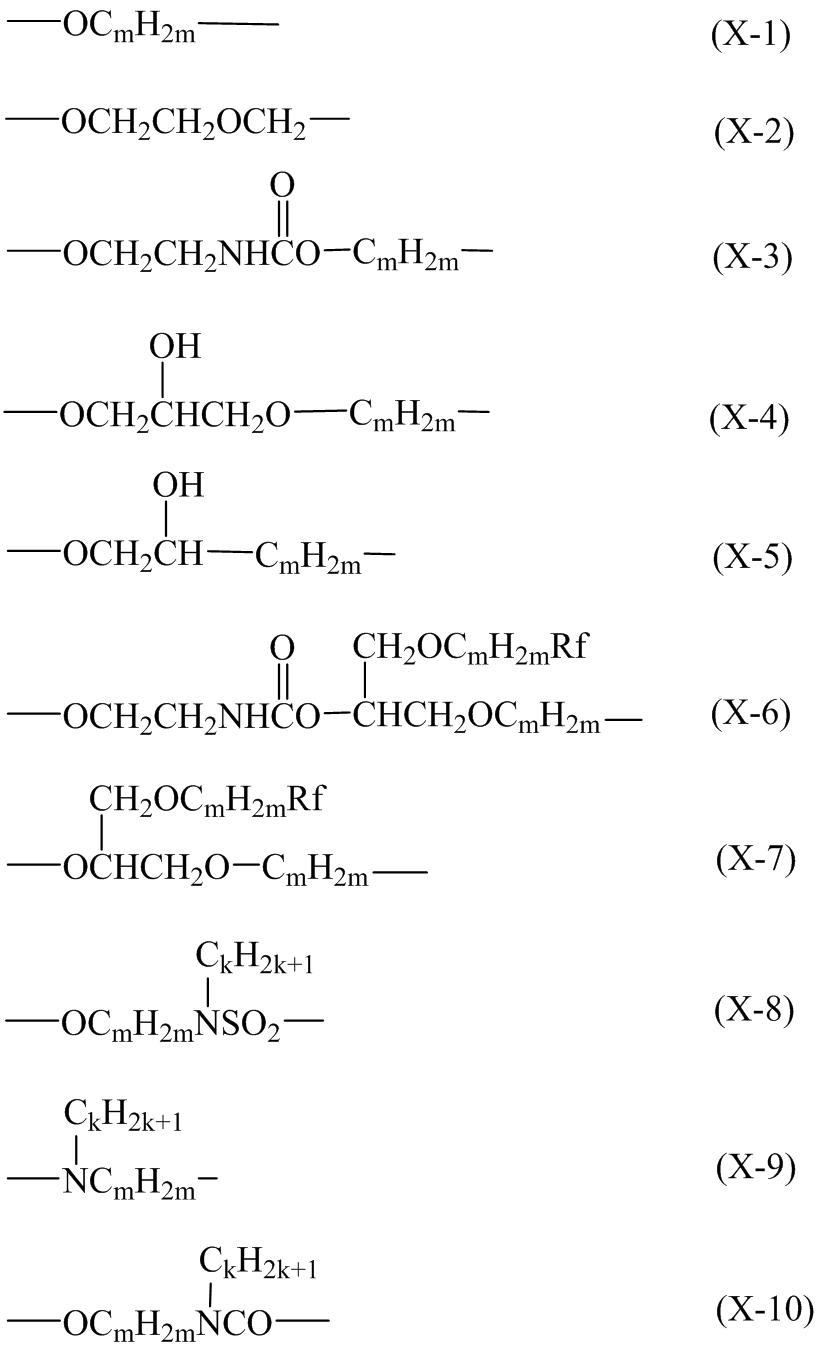
- 前記重合性単量体(a2)が更に水酸基を有するものである請求項1~5の何れか1項記載のフッ素系共重合体。
- 前記共重合体が更に活性エネルギー線硬化性基を有するものである請求項1~5の何れか1項記載のフッ素系共重合体。
- 前記共重合体がランダム共重合体である請求項1~7の何れか1項記載のフッ素系共重合体。
- 請求項1~8の何れか1項記載の共重合体からなることを特徴とする滑水性表面改質剤。
- 請求項1~8の何れか1項記載のフッ素系共重合体と硬化性樹脂とを含有することを特徴とする硬化性樹脂組成物。
- 請求項10記載の硬化性樹脂組成物の硬化膜である滑水性塗膜。
Priority Applications (3)
| Application Number | Priority Date | Filing Date | Title |
|---|---|---|---|
| JP2020527363A JP6908193B2 (ja) | 2018-06-27 | 2019-06-11 | フッ素系共重合体、滑水性表面改質剤、硬化性樹脂組成物、及び滑水性塗膜 |
| CN201980043361.5A CN112334501B (zh) | 2018-06-27 | 2019-06-11 | 氟系共聚物、滑水性表面改性剂、固化性树脂组合物、和滑水性涂膜 |
| KR1020207033182A KR102761339B1 (ko) | 2018-06-27 | 2019-06-11 | 불소계 공중합체, 활수성 표면개질제, 경화성 수지 조성물, 및 활수성 도막 |
Applications Claiming Priority (2)
| Application Number | Priority Date | Filing Date | Title |
|---|---|---|---|
| JP2018-121934 | 2018-06-27 | ||
| JP2018121934 | 2018-06-27 |
Publications (1)
| Publication Number | Publication Date |
|---|---|
| WO2020004000A1 true WO2020004000A1 (ja) | 2020-01-02 |
Family
ID=68984832
Family Applications (1)
| Application Number | Title | Priority Date | Filing Date |
|---|---|---|---|
| PCT/JP2019/023040 Ceased WO2020004000A1 (ja) | 2018-06-27 | 2019-06-11 | フッ素系共重合体、滑水性表面改質剤、硬化性樹脂組成物、及び滑水性塗膜 |
Country Status (5)
| Country | Link |
|---|---|
| JP (1) | JP6908193B2 (ja) |
| KR (1) | KR102761339B1 (ja) |
| CN (1) | CN112334501B (ja) |
| TW (1) | TWI783153B (ja) |
| WO (1) | WO2020004000A1 (ja) |
Families Citing this family (1)
| Publication number | Priority date | Publication date | Assignee | Title |
|---|---|---|---|---|
| CN113527612A (zh) * | 2020-04-13 | 2021-10-22 | 大金工业株式会社 | 聚氨酯化合物 |
Citations (7)
| Publication number | Priority date | Publication date | Assignee | Title |
|---|---|---|---|---|
| JP2013185072A (ja) * | 2012-03-08 | 2013-09-19 | Agc Seimi Chemical Co Ltd | 滑水性表面処理剤 |
| JP2014010436A (ja) * | 2012-07-03 | 2014-01-20 | Fujifilm Corp | パターン形成方法及び該方法に使用するための感活性光線性又は感放射線性樹脂組成物 |
| JP2014081633A (ja) * | 2012-09-28 | 2014-05-08 | Jsr Corp | フォトレジスト組成物、レジストパターン形成方法、重合体及び化合物 |
| JP2016133579A (ja) * | 2015-01-19 | 2016-07-25 | 東洋インキScホールディングス株式会社 | 光散乱層用樹脂組成物、光散乱層、および有機エレクトロルミネッセンス装置 |
| JP2017016122A (ja) * | 2015-06-26 | 2017-01-19 | 住友化学株式会社 | レジスト組成物 |
| JP2017037320A (ja) * | 2011-12-28 | 2017-02-16 | Jsr株式会社 | 感放射線性樹脂組成物及び重合体 |
| JP2019085572A (ja) * | 2017-11-08 | 2019-06-06 | 積水化学工業株式会社 | 粘着付与樹脂、アクリル粘着剤及び粘着テープ |
Family Cites Families (9)
| Publication number | Priority date | Publication date | Assignee | Title |
|---|---|---|---|---|
| JP3008493B2 (ja) * | 1989-12-01 | 2000-02-14 | 大日本インキ化学工業株式会社 | 絶縁被覆電線及びその製造方法 |
| JP2000007980A (ja) * | 1998-04-24 | 2000-01-11 | Kansai Paint Co Ltd | 塗料組成物 |
| JP4863898B2 (ja) * | 2006-02-24 | 2012-01-25 | ハニー化成株式会社 | アニオン型艶消電着塗料用樹脂組成物、及びそれを電着塗装してなる塗膜 |
| JP4743452B2 (ja) * | 2008-10-30 | 2011-08-10 | 信越化学工業株式会社 | 高分子化合物、レジスト保護膜材料、及びパターン形成方法 |
| KR20100088531A (ko) * | 2009-01-30 | 2010-08-09 | 디아이씨 가부시끼가이샤 | 함불소 라디칼 중합성 공중합체, 그것을 사용한 활성 에너지선 경화형 수지 조성물 및 함불소 라디칼 중합성 공중합체의 제조 방법 |
| WO2012002361A1 (ja) | 2010-07-02 | 2012-01-05 | Dic株式会社 | フッ素系界面活性剤、それを用いたコーティング組成物及びレジスト組成物 |
| JP5923878B2 (ja) | 2011-06-23 | 2016-05-25 | Dic株式会社 | フッ素系界面活性剤、それを用いたコーティング組成物及びレジスト組成物 |
| JP6672801B2 (ja) * | 2015-04-09 | 2020-03-25 | Jsr株式会社 | 液晶配向剤 |
| US11130855B2 (en) * | 2017-07-27 | 2021-09-28 | Nissan Chemical Corporation | Composition for forming release layer, and release layer |
-
2019
- 2019-06-11 KR KR1020207033182A patent/KR102761339B1/ko active Active
- 2019-06-11 JP JP2020527363A patent/JP6908193B2/ja active Active
- 2019-06-11 WO PCT/JP2019/023040 patent/WO2020004000A1/ja not_active Ceased
- 2019-06-11 CN CN201980043361.5A patent/CN112334501B/zh active Active
- 2019-06-18 TW TW108121039A patent/TWI783153B/zh active
Patent Citations (7)
| Publication number | Priority date | Publication date | Assignee | Title |
|---|---|---|---|---|
| JP2017037320A (ja) * | 2011-12-28 | 2017-02-16 | Jsr株式会社 | 感放射線性樹脂組成物及び重合体 |
| JP2013185072A (ja) * | 2012-03-08 | 2013-09-19 | Agc Seimi Chemical Co Ltd | 滑水性表面処理剤 |
| JP2014010436A (ja) * | 2012-07-03 | 2014-01-20 | Fujifilm Corp | パターン形成方法及び該方法に使用するための感活性光線性又は感放射線性樹脂組成物 |
| JP2014081633A (ja) * | 2012-09-28 | 2014-05-08 | Jsr Corp | フォトレジスト組成物、レジストパターン形成方法、重合体及び化合物 |
| JP2016133579A (ja) * | 2015-01-19 | 2016-07-25 | 東洋インキScホールディングス株式会社 | 光散乱層用樹脂組成物、光散乱層、および有機エレクトロルミネッセンス装置 |
| JP2017016122A (ja) * | 2015-06-26 | 2017-01-19 | 住友化学株式会社 | レジスト組成物 |
| JP2019085572A (ja) * | 2017-11-08 | 2019-06-06 | 積水化学工業株式会社 | 粘着付与樹脂、アクリル粘着剤及び粘着テープ |
Also Published As
| Publication number | Publication date |
|---|---|
| KR20210021955A (ko) | 2021-03-02 |
| JPWO2020004000A1 (ja) | 2021-02-15 |
| JP6908193B2 (ja) | 2021-07-21 |
| CN112334501B (zh) | 2022-09-27 |
| KR102761339B1 (ko) | 2025-02-04 |
| CN112334501A (zh) | 2021-02-05 |
| TW202006084A (zh) | 2020-02-01 |
| TWI783153B (zh) | 2022-11-11 |
Similar Documents
| Publication | Publication Date | Title |
|---|---|---|
| CN102971391B (zh) | 氟系表面活性剂、使用其的涂层组合物以及抗蚀剂组合物 | |
| JP6198058B2 (ja) | 界面活性剤組成物、コーティング組成物及びレジスト組成物 | |
| JP4873107B2 (ja) | 含フッ素硬化性樹脂及びそれを用いた活性エネルギー線硬化性組成物 | |
| CN102532432B (zh) | 含氟聚合性树脂、使用其的活性能量射线固化型组合物及其固化物 | |
| JP5668899B1 (ja) | 消泡剤、界面活性剤組成物、コーティング組成物及びレジスト組成物 | |
| CN103502306B (zh) | 含氟固化性树脂、活性能量射线固化性组合物及其固化物 | |
| TWI464224B (zh) | A fluoropolymerizable polymer and an active energy ray hardening type composition using the same | |
| JP5737553B2 (ja) | フッ素系界面活性剤、それを用いたコーティング組成物及びレジスト組成物 | |
| JP6210309B2 (ja) | 界面活性剤組成物、コーティング組成物及びレジスト組成物 | |
| KR102761339B1 (ko) | 불소계 공중합체, 활수성 표면개질제, 경화성 수지 조성물, 및 활수성 도막 | |
| JP2014062233A (ja) | 界面活性剤、コーティング組成物及びレジスト組成物 | |
| JP6210295B2 (ja) | 界面活性剤組成物、コーティング組成物及びレジスト組成物 | |
| TW201141880A (en) | Fluorine-containing styrene compound and active energy ray curable composition using the same | |
| JP2015214640A (ja) | 界面活性剤、コーティング組成物及びレジスト組成物 | |
| JP2014152286A (ja) | 界面活性剤、コーティング組成物及びレジスト組成物 | |
| JP2013091749A (ja) | 反射防止塗料組成物及び反射防止フィルム | |
| WO2022190937A1 (ja) | ハードコート用硬化性組成物 |
Legal Events
| Date | Code | Title | Description |
|---|---|---|---|
| 121 | Ep: the epo has been informed by wipo that ep was designated in this application |
Ref document number: 19824507 Country of ref document: EP Kind code of ref document: A1 |
|
| ENP | Entry into the national phase |
Ref document number: 2020527363 Country of ref document: JP Kind code of ref document: A |
|
| ENP | Entry into the national phase |
Ref document number: 20207033182 Country of ref document: KR Kind code of ref document: A |
|
| NENP | Non-entry into the national phase |
Ref country code: DE |
|
| 122 | Ep: pct application non-entry in european phase |
Ref document number: 19824507 Country of ref document: EP Kind code of ref document: A1 |