WO2019220864A1 - 泡保持性を有する発泡性飲料および発泡性飲料における泡保持性を改善する方法 - Google Patents
泡保持性を有する発泡性飲料および発泡性飲料における泡保持性を改善する方法 Download PDFInfo
- Publication number
- WO2019220864A1 WO2019220864A1 PCT/JP2019/016870 JP2019016870W WO2019220864A1 WO 2019220864 A1 WO2019220864 A1 WO 2019220864A1 JP 2019016870 W JP2019016870 W JP 2019016870W WO 2019220864 A1 WO2019220864 A1 WO 2019220864A1
- Authority
- WO
- WIPO (PCT)
- Prior art keywords
- ppm
- reb
- sparkling beverage
- content
- sparkling
- Prior art date
- Legal status (The legal status is an assumption and is not a legal conclusion. Google has not performed a legal analysis and makes no representation as to the accuracy of the status listed.)
- Ceased
Links
Images




Classifications
-
- A—HUMAN NECESSITIES
- A23—FOODS OR FOODSTUFFS; TREATMENT THEREOF, NOT COVERED BY OTHER CLASSES
- A23L—FOODS, FOODSTUFFS OR NON-ALCOHOLIC BEVERAGES, NOT OTHERWISE PROVIDED FOR; PREPARATION OR TREATMENT THEREOF
- A23L2/00—Non-alcoholic beverages; Dry compositions or concentrates therefor; Preparation or treatment thereof
- A23L2/40—Effervescence-generating compositions
-
- A—HUMAN NECESSITIES
- A23—FOODS OR FOODSTUFFS; TREATMENT THEREOF, NOT COVERED BY OTHER CLASSES
- A23L—FOODS, FOODSTUFFS OR NON-ALCOHOLIC BEVERAGES, NOT OTHERWISE PROVIDED FOR; PREPARATION OR TREATMENT THEREOF
- A23L2/00—Non-alcoholic beverages; Dry compositions or concentrates therefor; Preparation or treatment thereof
- A23L2/52—Adding ingredients
- A23L2/54—Mixing with gases
-
- A—HUMAN NECESSITIES
- A23—FOODS OR FOODSTUFFS; TREATMENT THEREOF, NOT COVERED BY OTHER CLASSES
- A23L—FOODS, FOODSTUFFS OR NON-ALCOHOLIC BEVERAGES, NOT OTHERWISE PROVIDED FOR; PREPARATION OR TREATMENT THEREOF
- A23L2/00—Non-alcoholic beverages; Dry compositions or concentrates therefor; Preparation or treatment thereof
- A23L2/52—Adding ingredients
- A23L2/56—Flavouring or bittering agents
-
- A—HUMAN NECESSITIES
- A23—FOODS OR FOODSTUFFS; TREATMENT THEREOF, NOT COVERED BY OTHER CLASSES
- A23L—FOODS, FOODSTUFFS OR NON-ALCOHOLIC BEVERAGES, NOT OTHERWISE PROVIDED FOR; PREPARATION OR TREATMENT THEREOF
- A23L2/00—Non-alcoholic beverages; Dry compositions or concentrates therefor; Preparation or treatment thereof
- A23L2/52—Adding ingredients
- A23L2/60—Sweeteners
-
- A—HUMAN NECESSITIES
- A23—FOODS OR FOODSTUFFS; TREATMENT THEREOF, NOT COVERED BY OTHER CLASSES
- A23V—INDEXING SCHEME RELATING TO FOODS, FOODSTUFFS OR NON-ALCOHOLIC BEVERAGES AND LACTIC OR PROPIONIC ACID BACTERIA USED IN FOODSTUFFS OR FOOD PREPARATION
- A23V2002/00—Food compositions, function of food ingredients or processes for food or foodstuffs
Definitions
- the present invention relates to an effervescent beverage having foam retention and a method for improving foam retention in an effervescent beverage.
- the present invention further provides Reb. For improving foam retention of sparkling beverages. It also relates to the use of B and a foam retention improver.
- Effervescent drinks are favored by a wide range of consumers. There are a wide variety of sparkling beverages currently on the market, but when the container is opened or when it is poured into a container such as a cup, the beverage is visually entertained or refreshed over the drinker. It has characteristics such as giving a feeling.
- Patent Document 1 reports an aerated beverage with improved foam retention containing one or more selected from proline, hesperidin sugar adduct and methyl hesperidin.
- Patent Document 2 reports a beverage characterized by containing a water-soluble soybean polysaccharide.
- the present inventors have conducted extensive research to solve the above problems, and as a result, a small amount of Reb. It was learned that the foam retention of the sparkling beverage can be improved unexpectedly by containing B (Rebaudioside B).
- B Rebaudioside B
- the present invention includes the following aspects of the invention.
- One or more steviol glycosides selected from the group consisting of R, dulcoside A, rubusoside, steviolmonoside, steviolbioside and stevioside, Reb.
- the sparkling beverage according to crab [10] The sparkling beverage according to any one of [1] to [9], wherein the gas pressure is 3.0 kgf / cm 2 to 3.5 kgf / cm 2 .
- the sparkling beverage according to any one of [1] to [10] which has a pH of 2.0 to 4.0.
- a method comprising the step of preparing an effervescent beverage containing B.
- Reb. for improving foam retention of sparkling beverages.
- Use of B. [19] Use according to [18], wherein the foam is stabilized for more than 5 seconds.
- Reb. A foam retention improver comprising B.
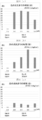
- (A) is the result of a gas pressure of 3.2 kgf / cm 2
- (b) is the result of a gas pressure of 2.3 kgf / cm 2
- (c) is the result of a gas pressure of 0.8 kgf / cm 2.
- Reb. B and / or Reb. It is a graph which shows the foam retention test result in the drink containing A. Reb. It is a graph which shows the foam retention test result at the time of containing B.
- rebaudioside In this specification, “rebaudioside”, “rebaudioside” and “Reb.” Have the same meaning, and all mean “rebaudioside”. Similarly, in the present specification, “zulcoside” has the same meaning as “zulcoside”, and both mean “dulcoside”.
- ppm means “mass ppm” unless otherwise specified. Moreover, since the specific gravity of a normal sparkling beverage is 1, “mass ppm” can be regarded as “mg / L”.
- the present inventors have added a small amount of Reb.
- B an effervescent beverage having foam retention was unexpectedly obtained. Therefore, the sparkling beverage of the present invention is obtained from Reb.
- the content of B is 6 to a 45 ppm, effervescent beverage gas pressure is 2.2kgf / cm 2 ⁇ 4.0kgf / cm 2.
- the “effervescent beverage” is a beverage in which foam is generated from the beverage, and includes, for example, a beverage in which a foam layer is formed on the liquid surface of the beverage when poured into a container.
- foams bubbles generated in a beverage are sometimes referred to as “bubbles”, and bubbles formed on the liquid surface of the beverage are sometimes referred to as “foams”.
- having foam retention means that the foam is maintained, and “improvement of foam retention” means that the foam is improved to be maintained for a longer time. To do.
- An example of the sparkling beverage of the present invention is a carbonated beverage.
- Carbonated beverages are beverages containing carbon dioxide, and examples of such carbon dioxide include carbon dioxide separately injected into the beverage and carbon dioxide generated by fermentation of a part of the raw material.
- a soft drink, a non-alcoholic drink, an alcoholic beverage, etc. are mentioned.
- Specific examples include sparkling beverages, colas, diet colas, ginger ales, ciders, fruit flavored carbonated beverages, carbonated water to which fruit juice flavor has been imparted, and the like, but are not limited thereto.
- the B content is 6 to 45 ppm.
- the content of B is 6-40 ppm, 6-35 ppm, 6-30 ppm, 6-25 ppm, 6-20 ppm, 6-15 ppm, 6-10 ppm, 6-8 ppm, 7-45 ppm, 7-40 ppm, 7-35 ppm, 7-30 ppm, 7-25 ppm, 7-20 ppm, 7-15 ppm, 7-10 ppm, 7-8 ppm, 8-45 ppm, 8-40 ppm, 8-35 ppm, 8-30 ppm, 8-25 ppm, 8-20 ppm, 8- 15 ppm, 8-10 ppm, 9-45 ppm, 9-40 ppm, 9-35 ppm, 9-30 ppm, 9-25 ppm, 9-20 ppm, 9-15 ppm, 9-10 ppm, 10-45 ppm, 10-40 ppm, 10-
- Reb. B generally has a slight bitter taste, but if it is within the above range, while providing a foam retention effect, Reb. The influence of B on the beverage having a bitter taste can be suppressed.
- Reb. The B content is 6 ppm or more and less than the sweetness threshold, 10 ppm or more and less than the sweetness threshold, or 12 ppm or more and less than the sweetness threshold.
- sweetness threshold means the minimum concentration at which sweetness is felt when a sweetening compound is added to a beverage. The sweetness threshold may vary slightly depending on the beverage composition, but Reb. In the case of B, it is generally 25 ppm to 40 ppm. Reb.
- the beverage is reb.
- the content of B may be calculated from the amount of raw material added or measured using a known analysis method such as liquid chromatography.
- B is not particularly limited, but may be a plant-derived product, a chemical synthesis product, or a biosynthesis product.
- Reb. Although it may be isolated and purified from a plant body rich in B, it may be obtained by chemical synthesis or biosynthesis.
- Reb. B may not be 100% pure and may be a mixture with other steviol glycosides.
- Reb. B is a purified Stevia extract. Steviol glycosides other than B may also be contained in the purified product.
- Reb. B is Reb. M, Reb. D or Reb. It may be obtained by decomposing A.
- Gas pressure effervescent beverage of the present invention is 2.2kgf / cm 2 ⁇ 4.0kgf / cm 2.
- the gas pressure of the sparkling beverage is 2.2 kgf / cm 2 to 3.5 kgf / cm 2 , 2.2 kgf / cm 2 to 3.3 kgf / cm 2 , 2.2 kgf / cm 2.
- the gas content in the sparkling beverage can be defined by the gas pressure.
- gas pressure refers to the gas pressure of carbon dioxide in the sparkling beverage in the container unless otherwise specified. Therefore, the sparkling beverage of the present invention can be packaged.
- a container of any form / material can be used, and for example, a container such as a glass bottle, a can, a barrel, or a plastic bottle may be used.
- the gas pressure is measured by fixing the beverage at a liquid temperature of 20 ° C. to the gas internal pressure gauge, once opening the gas internal pressure gauge stopcock and releasing the carbon dioxide in the headspace by opening to the atmosphere, then closing the stopcock again, This can be done by swinging the gas internal pressure gauge and reading the value when the pointer reaches a certain position.
- the gas pressure of the sparkling beverage is measured using the method.
- the sparkling beverage of the present invention is Reb.
- Other steviol glycosides other than B may be included.
- the sparkling beverage of the present invention is Reb. A, Reb. C, Reb. D, Reb. E, Reb. F, Reb. G, Reb. I, Reb. J, Reb. K, Reb. N, Reb. M, Reb. O, Reb. Q, Reb.
- It further comprises one or more steviol glycosides selected from the group consisting of R, dulcoside A, rubusoside, steviolmonoside, steviolbioside and stevioside.
- the content of A is 0 to 100 ppm, 1 to 100 ppm, 1 to 60 ppm, 1 to 50 ppm, 1 to 40 ppm, 1 to 30 ppm, 1 to 20 ppm, 1 to 10 ppm, or 1 to 5 ppm.
- the content of C is 0 to 300 ppm, 1 to 300 ppm, 1 to 200 ppm, 1 to 150 ppm, 1 to 100 ppm, 1 to 80 ppm, 1 to 50 ppm, 1 to 30 ppm or 1 to 10 ppm.
- the content of D is 0 to 600 ppm, 1 to 600 ppm, 5 to 500 ppm, 10 to 450 ppm, 20 to 400 ppm, 30 to 350 ppm, 40 to 300 ppm, 50 to 250 ppm, 60 to 200 ppm, 70 to 180 ppm, 80 to 160 ppm or 90 to 150 ppm.
- the content of E is 0 to 300 ppm, 1 to 300 ppm, 1 to 200 ppm, 1 to 150 ppm, 1 to 100 ppm, 1 to 80 ppm, 1 to 50 ppm, or 1 to 30 ppm.
- the content of F is 0 to 300 ppm, 1 to 300 ppm, 1 to 200 ppm, 1 to 150 ppm, 1 to 100 ppm, 1 to 80 ppm, 1 to 50 ppm or 1 to 30 ppm.
- the content of G is 0 to 300 ppm, 1 to 300 ppm, 1 to 200 ppm, 1 to 150 ppm, 1 to 100 ppm, 1 to 80 ppm, 1 to 50 ppm, or 1 to 30 ppm.
- the content of I is 0 to 300 ppm, 1 to 300 ppm, 1 to 200 ppm, 1 to 150 ppm, 1 to 100 ppm, 1 to 80 ppm, 1 to 50 ppm, or 1 to 30 ppm.
- the J content is 0 to 300 ppm, 1 to 300 ppm, 1 to 200 ppm, 1 to 150 ppm, 1 to 100 ppm, 1 to 80 ppm, 1 to 50 ppm, or 1 to 30 ppm.
- the content of K is 0 to 300 ppm, 1 to 300 ppm, 1 to 200 ppm, 1 to 150 ppm, 1 to 100 ppm, 1 to 80 ppm, 1 to 50 ppm or 1 to 30 ppm.
- the N content is 0 to 300 ppm, 1 to 300 ppm, 1 to 200 ppm, 1 to 150 ppm, 1 to 100 ppm, 1 to 80 ppm, 1 to 50 ppm, or 1 to 30 ppm.
- the content of M is 0 to 600 ppm, 1 to 600 ppm, 5 to 500 ppm, 10 to 450 ppm, 20 to 400 ppm, 30 to 350 ppm, 40 to 300 ppm, 50 to 250 ppm, 60 to 200 ppm, 70 to 180 ppm, 80 to 160 ppm or 90 to 150 ppm.
- the O content is 0 to 300 ppm, 1 to 300 ppm, 1 to 200 ppm, 1 to 150 ppm, 1 to 100 ppm, 1 to 80 ppm, 1 to 50 ppm, or 1 to 30 ppm.
- the Q content is 0 to 300 ppm, 1 to 300 ppm, 1 to 200 ppm, 1 to 150 ppm, 1 to 100 ppm, 1 to 80 ppm, 1 to 50 ppm, or 1 to 30 ppm.
- the content of R is 0 to 300 ppm, 1 to 300 ppm, 1 to 200 ppm, 1 to 150 ppm, 1 to 100 ppm, 1 to 80 ppm, 1 to 50 ppm, or 1 to 30 ppm.
- the content of zulcoside A is 0 to 300 ppm, 1 to 300 ppm, 1 to 200 ppm, 1 to 150 ppm, 1 to 100 ppm, 1 to 80 ppm, 1 to 50 ppm, or 1 to 30 ppm.
- the content of rubusoside is 0 to 300 ppm, 1 to 300 ppm, 1 to 200 ppm, 1 to 150 ppm, 1 to 100 ppm, 1 to 80 ppm, 1 to 50 ppm, or 1 to 30 ppm.
- the content of steviol monoside is 0 to 300 ppm, 1 to 300 ppm, 1 to 200 ppm, 1 to 150 ppm, 1 to 100 ppm, 1 to 80 ppm, 1 to 50 ppm, or 1 to 30 ppm.
- the content of steviolbioside is 0 to 300 ppm, 1 to 300 ppm, 1 to 200 ppm, 1 to 150 ppm, 1 to 100 ppm, 1 to 80 ppm, 1 to 50 ppm, or 1 to 30 ppm.
- the content of stevioside is 0 to 300 ppm, 1 to 300 ppm, 1 to 200 ppm, 1 to 150 ppm, 1 to 100 ppm, 1 to 80 ppm, 1 to 50 ppm, or 1 to 30 ppm.
- the sparkling beverage of the present invention comprises Reb. A, Reb. C, Reb. E, Reb. F, Reb. G, Reb. I, Reb. J, Reb. K, Reb. N, Reb. O, Reb. Q, Reb.
- the content of the above steviol glycosides was adjusted to Reb. By limiting the content to 5 times or less of the content of B, Reb.
- the deterioration of the taste quality of the drink by steviol glycosides other than B can also be suppressed.
- the content of steviol glycosides other than B is Reb. 4 times or less of B content, 3 times or less, 2 times or less, 1.5 times or less, 1.2 times or less, 1.0 times or less, 0.8 times or less, 0.5 times or less, 0.3 times Or less, or 0.1 times or less.
- the lower limit of the content of steviol glycosides other than B may be substantially 0 ppm or more.
- Substantially 0 ppm means Reb. It means that impurities such as other steviol glycosides inevitably contained in the process of preparation of B (purification and biosynthesis of stevia extract, etc.) may be included.
- the content of A is 0 ppm or more, and Reb.
- the amount may be 5 times or less the content of B.
- Reb. By limiting the content of A to this range, Reb. The influence of the bitterness of A can be suppressed.
- the upper limit of the content of A is Reb. 4 times or less of B content, 3 times or less, 2 times or less, 1.5 times or less, 1.2 times or less, 1.0 times or less, 0.8 times or less, 0.5 times or less, 0.3 times Or less, or 0.1 times or less.
- the lower limit value of the A content may be substantially 0 ppm or more.
- the sparkling beverage of the present invention may contain a sweetener other than steviol glycosides.
- sweeteners include, but are not limited to, for example, sucrose, fructose glucose liquid sugar, erythritol, mogroside V, corn syrup, aspartame (also referred to as L-phenylalanine compound), sucralose, acesulfame potassium, saccharin and xylitol.
- Aspartame also referred to as L-phenylalanine compound
- sucralose also referred to as L-phenylalanine compound
- acesulfame potassium saccharin and xylitol.
- One or more sweeteners selected from the group may be further included.
- natural sweeteners are preferably used from the viewpoints of refreshing, ease of drinking, natural taste, and imparting a proper richness
- fructose-glucose liquid sugar, sucrose, and corn syrup are particularly preferably used. Only one kind of these sweetening ingredients may be used, or a plurality of kinds may be used.
- These sweeteners are 5.0 or less, 4.5 or less, 4.0 or less, 3.5 or less, 3.0 or less, 2.5 or less, 2.5 or less, 1.5 or less, 1.5 or less in terms of Brix in beverages. Hereinafter, it may be contained in an amount of 1.0 or less or 0.5 or less, and the lower limit may be 0.1 or more.
- the pH of the sparkling beverage of the present invention is not particularly limited, but is preferably 2.0 to 4.0, more preferably 2.2 to 3.7, and still more preferably 2.3 to 3.3. By adjusting the pH to the above range, generation of microorganisms during storage can be suppressed and a refreshing taste can be provided.
- pH of the effervescent beverage of the present invention is 2.5 to 3.0
- the gas pressure is 2.3kgf / cm 2 ⁇ 3.2kgf / cm 2.
- the Brix of the sparkling beverage of the present invention is not particularly limited, but is preferably 3 to 15, more preferably 5 to 13, and further preferably 7 to 11.
- Brix can be calculated from the sweetness of each sweetener such as steviol glycosides to sucrose (sucrose) and the content of each sweetener.
- sucrose sucrose
- Reb. B is 325 times
- Reb. A is 300 times
- Reb. D is 250 times
- Reb. M has a sweetness of 250 times. Therefore, the amount of steviol glycoside corresponding to Brix1 is Reb.
- B 30.7 ppm
- A 33.3 ppm
- Reb. D (same for Reb.M) can be calculated to be 40.0 ppm.
- Brix can be calculated for other steviol glycosides and sweeteners other than steviol glycosides.
- acesulfame potassium is about 200 times sweeter than sucrose
- sucralose is about 600 times
- aspartame is about 180 times sweeter.
- the relative ratio of the sweetness of various sweeteners to the sweetness 1 of sucrose can be obtained from a known sugar sweetness conversion table (for example, Beverage Japan “Beverage Glossary”, page 11).
- the sparkling beverage of the present invention may contain alcohol.
- the alcoholic beverage is a beverage containing alcohol, but the alcohol here means ethyl alcohol (ethanol) unless otherwise specified.
- the alcohol beverage according to the present invention is not particularly limited as long as it contains alcohol. It may be a beverage with an alcohol content of 0.05 to 40 v / v%, such as beer, sparkling wine, Chuhai or cocktail, and the alcohol content of non-alcoholic beer, Chuhi-taste beverage or soft drink is 0
- the beverage may be less than 0.05 v / v%.
- the sparkling beverage of the present invention preferably has an alcohol content of less than 0.05 v / v%, and more preferably 0.00 v / v%.
- alcohol content shall be shown by the percentage (v / v%) of volume / volume basis.
- alcohol content of a drink can be measured by any well-known method, it can be measured with a vibration-type density meter, for example.
- the flavor (flavor) of the sparkling beverage of the present invention is not particularly limited, and can be adjusted to various flavors.
- the sparkling beverage of the present invention may be an orange flavor, lemon flavor, lime flavor, grape flavor, ginger ale flavor, cassis flavor or cola flavored beverage.
- the flavor of the sparkling beverage of the present invention is a component approved as a food additive, such as fruit juice, acidulant, fragrance, plant extract, dairy product, other flavors, etc. Adjustments can be made by adding ingredients that are experienced and generally recognized as safe.
- the sparkling beverage of the present invention is not a beer-taste beverage.
- the sparkling beverage of the present invention may further contain one or more selected from the group consisting of caramel, cinnamaldehyde (cinnamaldehyde), phosphoric acid, vanilla and caffeine.
- caramel cinnamaldehyde
- phosphoric acid phosphoric acid
- vanilla phosphoric acid
- caffeine is a refined product that can be used as a food additive (a refined product with a caffeine content of 98.5% or more) and a crude product that can be used as a food (a caffeine content of 50 to 98.5%).
- it may be in the form of an extract of a plant containing caffeine (tea leaf, cola fruit, coffee bean, guarana, etc.) or a concentrate thereof.
- the content of caffeine in the sparkling beverage can be 1 to 200 ppm.
- Caffeine may be quantified using any method. For example, a sparkling beverage is filtered through a membrane filter (manufactured by ADVANTEC, cellulose acetate membrane 0.45 ⁇ m), and the sample is subjected to high-performance liquid chromatography (HPLC). Can be done.
- a membrane filter manufactured by ADVANTEC, cellulose acetate membrane 0.45 ⁇ m
- HPLC high-performance liquid chromatography
- the sparkling beverage of the present invention can contain cinnamaldehyde.
- cinnamaldehyde (Cinnamaldehyde, C 6 H 5 CH ⁇ CH—CHO, molecular weight 132.16) is a kind of aromatic aldehyde known as a cinnamon scent component, and is available as a fragrance preparation.
- the sparkling beverage can contain cinnamaldehyde in a specific range amount.
- the content of cinnamaldehyde in the sparkling beverage of the present invention can be 0.5 to 50 ppm, preferably 0.5 to 32 ppm, 1.0 to 20 ppm.
- Cinnamaldehyde can be quantified by, for example, a method using gas chromatography, a mass spectrometer or the like.
- the sparkling beverage of the present invention can contain caramel (or caramel pigment).
- caramel a known caramel color suitable for food can be used.
- the thing obtained by heat-processing the edible carbohydrate represented by sugar or glucose the thing which heat-processed the edible carbohydrate by adding an acid or an alkali, etc. can be used.
- the sugar content contained in fruit juice and vegetable juice can also be caramelized, and in this case, the sugar content can be caramelized by heat treatment, treatment with acid or alkali, and the like.
- the sparkling beverage of the present invention can contain caramel color in a specific range.
- the foamed beverage of the present invention has a stable foam.
- foam generated when the sparkling beverage of the present invention is poured into a container is maintained for a longer time than a general sparkling beverage.
- the foam retention of the sparkling beverage can be evaluated as follows.
- To the test solution whose pH was adjusted with phosphoric acid, Reb. B and optional additives are added and the gas pressure is adjusted using carbon dioxide gas.
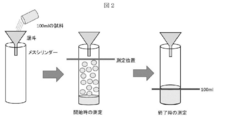
- the container containing the obtained sample (for example, a 100 ml glass bottle) is sealed, then the container is opened, and the sample contained in the container is transferred to the funnel wall on a 500 mL graduated cylinder with a funnel on top. Pour at a rate of 100 ml / 2 seconds.
- the foam retention time of the sparkling beverage of the present invention is preferably 5 seconds or more, more preferably 10 seconds or more, and even more preferably 20 seconds or more when measured by the above method.
- the sparkling beverage of the present invention may be prepared as a packaged beverage that has been sterilized by heating and packed in a container.
- the container is not particularly limited, and examples thereof include a PET bottle, an aluminum can, a steel can, a paper pack, a chilled cup, and a bottle.
- heat sterilization the kind is not specifically limited, For example, it can carry out using normal techniques, such as UHT sterilization and retort sterilization.
- the temperature of the heat sterilization step is not particularly limited, but is, for example, 65 to 130 ° C., preferably 85 to 120 ° C. and 10 to 40 minutes. However, if a sterilization value equivalent to the above conditions is obtained, sterilization at a suitable temperature for several seconds, for example, 5 to 30 seconds is not problematic.
- the energy (total energy amount) of the beverage of the present invention is not particularly limited, but is 0 to 50 Kcal / 100 ml, 0 to 45 Kcal / 100 ml, 0 to 40 Kcal / 100 ml, 0 to 35 Kcal / 100 ml, 0 to 30 Kcal / 100 ml, 0 to 24Kcal / 100ml, 0-22Kcal / 100ml, 0-20Kcal / 100ml, 0-15Kcal / 100ml, 0-10Kcal / 100ml, 0-5Kcal / 100ml, 0.1-50Kcal / 100ml, 0.1-45Kcal / 100ml, 0.1-40 Kcal / 100 ml, 0.1-35 Kcal / 100 ml, 0.1-30 Kcal / 100 ml, 0.1-24 Kcal / 100 ml, 0.1-22 Kcal / 100 ml, 0.1-20 Kcal / 100 ml 0.1 to 15 K
- the production method of the sparkling beverage of the present invention is not particularly limited, and can be produced by an ordinary sparkling beverage manufacturing method.
- a syrup in which the components contained in the sparkling beverage of the present invention are concentrated may be prepared, and the sparkling drinking water may be added to adjust to a predetermined concentration.
- a sparkling beverage may be prepared by supplying gas. Or you may prepare the sparkling beverage of this invention by adding a predetermined component directly to a sparkling beverage, without preparing the above syrups.
- the present invention provides, as a second aspect, a method for improving foam retention in sparkling beverage.
- a method for improving foam retention in a sparkling beverage of the present invention is described in Reb.
- a step of preparing a sparkling beverage containing B “the step of preparing an effervescent beverage containing 6 to 45 ppm of Reb.B” means that 6 to 45 ppm of Reb. B, a predetermined amount of Reb.
- the method for containing B is not particularly limited. Therefore, Reb. B may be blended in advance as a raw material during the production of the sparkling beverage, may be added separately after the sparkling beverage is manufactured, or may be generated by decomposition or the like from the blended raw material.
- the method for improving foam retention according to the present invention may include other steps in addition to the above steps.
- the step of adjusting the pH of the sparkling beverage and the step of adjusting the gas pressure are performed using 6 to 45 ppm of Reb. It may be included before or after the step of preparing the sparkling beverage containing B.
- the method for improving foam retention is 6-40 ppm, 6-35 ppm, 6-30 ppm, 6-25 ppm, 6-20 ppm, 6-15 ppm, 6-10 ppm, 6-8 ppm, 7-45 ppm.
- the effervescent beverage used in the method for improving foam retention of the present invention is Reb.
- Steviol glycosides other than B and sweeteners other than steviol glycosides may be included.
- the pH and gas pressure of the sparkling beverage may also be the same as in “1. Sparkling beverage having foam retention”.
- Reb For improving foam retention of sparkling beverages.
- the present invention relates to Reb. Provide the use of B.
- the present inventors have surprisingly found that a kind of steviol glycoside, Reb. The effect of improving the foam retention of the sparkling beverage was learned in B, and the present invention was conceived.
- Reb. B is 6 to 45 ppm, 6 to 40 ppm, 6 to 35 ppm, 6 to 30 ppm, 6 to 25 ppm, 6 to 20 ppm, 6 to 15 ppm, 6 to 10 ppm, 6 to 8 ppm, 7 to 45 ppm, 7 with respect to the sparkling beverage -40ppm, 7-35ppm, 7-30ppm, 7-25ppm, 7-20ppm, 7-15ppm, 7-10ppm, 7-8ppm, 8-45ppm, 8-40ppm, 8-35ppm, 8-30ppm, 8-25ppm 8-20 ppm, 8-15 ppm, 8-10 ppm, 9-45 ppm, 9-40 ppm, 9-35 ppm, 9-30 ppm, 9-25 ppm, 9-20 ppm, 9-15 ppm, 8-10 ppm, 9-45 ppm, 9-40 ppm, 9-35 ppm, 9-30 ppm, 9-25 ppm, 9-20 ppm,
- Reb. for improving foam retention of the sparkling beverage of the present invention.
- B Reb. It does not specifically limit as an effervescent drink which uses B, A general carbonated drink etc. can be selected. Although it does not specifically limit as a carbonated drink, A soft drink, a non-alcoholic drink, an alcoholic beverage, etc. are mentioned. Specific examples include sparkling beverages, colas, diet colas, ginger ales, ciders, fruit flavored carbonated beverages, carbonated water to which fruit juice flavor has been imparted, and the like, but are not limited thereto.
- the pH and gas pressure of the sparkling beverage may be the same as those in “1. Sparkling beverage having foam retention”.
- the foam retention time improved by the use of B is preferably 5 seconds or more, preferably 10 seconds or more when measured by the method described in “1. Foamable beverage having foam retention”. More preferably, it is more preferably 20 seconds or longer.
- Foam retention improving agent refers to a substance that, when added to an effervescent beverage, improves the foam retention of the effervescent beverage.
- the foam retention improving agent of the present invention preferably improves the foam retention of the sparkling beverage itself without being recognized by the consumer when added to the sparkling beverage. be able to.
- the foam retention improver of the present invention is Reb. B is included.
- the foam retention improver of the present invention is not limited to Reb. Steviol glycosides other than B and sweeteners other than steviol glycosides may be included.
- the amount of B is not particularly limited, but may be 30 to 100% by weight, 40 to 99% by weight, 50 to 98% by weight, 60 to 97% by weight, 70 to 96% by weight, or 80 to 95% by weight.
- the foam retention-improving agent of the present invention substantially comprises Reb. You may consist only of B. In the present specification, “substantially consisting only of Reb.B” means “Reb. It means that impurities such as other steviol glycosides inevitably contained in the process of preparation of B (purification and biosynthesis of stevia extract, etc.) may be included.
- Example A Reb. Examination of B content [Preparation of sparkling beverage] The pH was adjusted to 2.5 by adding phosphoric acid (manufactured by Nippon Chemical Industry Co., Ltd.) to the drinking water. After the pH adjustment, the Reb. Samples of Examples 1 to 7 were obtained by adding B (purity 98%) to drinking water and adjusting the gas pressure to 3.2 kgf / cm 2 . The gas pressure was adjusted at 20 ° C.
- FIGS. 1 and 2 The apparatus used for the test and the outline of the test are shown in FIGS. 1 and 2, respectively. As shown in FIG. 1, a 500 ml graduated cylinder (FIG. 1 (a)), a 200ml graduated cylinder (FIG. 1 (b)) and a funnel (FIG. 1 (c)) were used for the test. Details of each instrument are shown below.
- Measurement cylinder height 373mm ⁇ Measuring cylinder diameter: 47mm ⁇ Height from the funnel outlet to the bottom: 260mm ⁇ 200ml graduated cylinder> ⁇ Measurement cylinder height: 258mm ⁇ Measuring cylinder diameter: 37mm ⁇ Height from funnel outlet to bottom: 163mm ⁇ Funnel> -Funnel spout: 119mm -Funnel height: 165mm ⁇ Funnel outlet diameter: 15mm ⁇ Funnel outlet height: 78mm
- the container (100 ml glass bottle) containing the sample obtained by preparing the sparkling beverage was sealed. Then, the container was opened, and the sample contained in the container was poured into a 500 mL graduated cylinder (NALGENE.CAT.No3663-0500) with a funnel at the upper end at a rate of 100 ml / 2 seconds so as to pass through the funnel wall. .
- the scale on the rising surface of the bubbles was read and taken as the liquid level height (ml) at the start of the test. The height of the liquid level was confirmed every predetermined time, and the time until the liquid level reached 100 ml (that is, until all the bubbles on the liquid level disappeared) was measured and recorded. This evaluation was performed on the samples of Examples 1 to 7. The results are shown in Table 1 and FIG. In the table, Reb. The B content is calculated based on the purity and blending amount of the raw materials.
- Example B Examination of influence of pH and gas pressure on foam retention
- various pH and gas pressures were adjusted as shown in Table 3.
- Samples (Examples 12 to 26) were prepared as in Example A.
- Reb. The B concentration was 0 ppm and 20 ppm.
- the foam retention of the obtained sample was evaluated in the same manner as in Example A using a 500 ml graduated cylinder. The results are shown in Table 3 and FIG. In the table, Reb.
- the B content is calculated based on the purity and blending amount of the raw materials.
- Example C Examination of effects of other steviol glycosides on foam retention and taste quality
- Table 4 shows the effects of other steviol glycosides on foam retention and taste quality.
- Reb. A purity 99.1%, including 0.4% Reb.B as an impurity
- Samples containing B (Examples 27 to 30) were prepared in the same manner as Example A. The pH was adjusted to 2.5, and the gas pressure was adjusted to 3.2 kgf / cm 2 . The foam retention of the obtained sample was evaluated in the same manner as in Example A using a 500 ml graduated cylinder. The results are shown in Table 4 and FIG. In the table, Reb. A and Reb. The content of B is calculated based on the purity and blending amount of each raw material.
- Reb. B in addition to Reb. It was confirmed that the foam retention was similarly improved when A was contained. In addition, Reb. Even in the samples to which only A was added (Example 27 and Example 29), improvement in foam retention was confirmed, but Reb. Compared to the sample to which only B was added (Example 6), Reb. In the sample to which 20 ppm of B was added, the time until disappearance of bubbles was 41 seconds, whereas Reb. In the sample to which 20 ppm of A was added, the time until the disappearance of the foam was 7 seconds. The foam retention improvement effect of B is Reb. It was confirmed that it was significantly higher than A.
- the evaluation criteria for the sensory test were as follows. No bitterness (1), little bitterness (2), bitterness (3), bitterness (4), bitterness (5). The results are shown in Table 5. In the table, Reb. The B content is calculated based on the purity and blending amount of the raw materials.
- Example D Reb. Examination of influence on foam retention by containing B Reb. In order to investigate the effect of B content on foam retention, Reb. B was included to evaluate the foam retention.
- the sample was prepared as follows. First, commercially available beverages such as cola flavored carbonated beverages (gas pressure: about 3.2 kgf / cm 2 ), ginger ale flavored carbonated beverages (gas pressure: about 3.0 kgf / cm 2 ), grape flavored carbonated beverages (gas pressure: About 2.5 kgf / cm 2 ) was transferred to a container (100 ml glass bottle) and 20 ppm Reb. B was contained. Thereafter, the container (100 ml glass bottle) was sealed and allowed to stand at 4 ° C. for 1 hour in a refrigerator. Evaluation of foam retention was performed in the same procedure as in Example A. In the same procedure, Reb. The sample that did not contain B was also evaluated for foam retention. The results are shown in Table 6 and FIG. In the table, Reb. The B content is calculated based on the purity and blending amount of the raw materials.
Landscapes
- Health & Medical Sciences (AREA)
- Nutrition Science (AREA)
- Life Sciences & Earth Sciences (AREA)
- Chemical & Material Sciences (AREA)
- Engineering & Computer Science (AREA)
- Food Science & Technology (AREA)
- Polymers & Plastics (AREA)
- Non-Alcoholic Beverages (AREA)
Priority Applications (6)
| Application Number | Priority Date | Filing Date | Title |
|---|---|---|---|
| SG11202010717WA SG11202010717WA (en) | 2018-05-18 | 2019-04-19 | Sparkling beverage having effervescence retainability and method for improving effervescence retainability of sparkling beverage |
| EP19803415.9A EP3794954A4 (en) | 2018-05-18 | 2019-04-19 | SPARKLING BEVERAGE HAVING EFFERVESCENCE RETENTION CAPACITY AND METHOD FOR IMPROVING THE EFFERVESCENCE RETENTION CAPACITY OF A SPARKLING BEVERAGE |
| AU2019270688A AU2019270688B2 (en) | 2018-05-18 | 2019-04-19 | Sparkling beverage having effervescence retainability and method for improving effervescence retainability of sparkling beverage |
| CN201980033118.5A CN112135525A (zh) | 2018-05-18 | 2019-04-19 | 具有泡保持性的发泡性饮料及改善发泡性饮料的泡保持性的方法 |
| MYPI2020005952A MY203610A (en) | 2018-05-18 | 2019-04-19 | Sparkling beverage having effervescence retainability and method for improving effervescence retainability of sparkling beverage |
| US16/956,166 US20210068428A1 (en) | 2018-05-18 | 2019-04-19 | Sparkling beverage having effervescence retainability and method for improving effervescence retainability of sparkling beverage |
Applications Claiming Priority (2)
| Application Number | Priority Date | Filing Date | Title |
|---|---|---|---|
| JP2018-095987 | 2018-05-18 | ||
| JP2018095987A JP6824223B2 (ja) | 2018-05-18 | 2018-05-18 | 泡保持性を有する発泡性飲料および発泡性飲料における泡保持性を改善する方法 |
Publications (1)
| Publication Number | Publication Date |
|---|---|
| WO2019220864A1 true WO2019220864A1 (ja) | 2019-11-21 |
Family
ID=68540291
Family Applications (1)
| Application Number | Title | Priority Date | Filing Date |
|---|---|---|---|
| PCT/JP2019/016870 Ceased WO2019220864A1 (ja) | 2018-05-18 | 2019-04-19 | 泡保持性を有する発泡性飲料および発泡性飲料における泡保持性を改善する方法 |
Country Status (8)
| Country | Link |
|---|---|
| US (1) | US20210068428A1 (https=) |
| EP (1) | EP3794954A4 (https=) |
| JP (1) | JP6824223B2 (https=) |
| CN (1) | CN112135525A (https=) |
| AU (1) | AU2019270688B2 (https=) |
| MY (1) | MY203610A (https=) |
| SG (1) | SG11202010717WA (https=) |
| WO (1) | WO2019220864A1 (https=) |
Cited By (1)
| Publication number | Priority date | Publication date | Assignee | Title |
|---|---|---|---|---|
| WO2020138310A1 (ja) * | 2018-12-28 | 2020-07-02 | サントリーホールディングス株式会社 | 泡保持性を有する発泡性飲料および発泡性飲料における泡保持性を改善する方法 |
Families Citing this family (2)
| Publication number | Priority date | Publication date | Assignee | Title |
|---|---|---|---|---|
| JP6824222B2 (ja) * | 2018-05-18 | 2021-02-03 | サントリーホールディングス株式会社 | 泡保持性を有する発泡性飲料および発泡性飲料における泡保持性を改善する方法 |
| CN113100366A (zh) * | 2021-03-26 | 2021-07-13 | 中北大学 | 一种类啤酒的功能气泡水及其制备方法 |
Citations (7)
| Publication number | Priority date | Publication date | Assignee | Title |
|---|---|---|---|---|
| JP2015502404A (ja) * | 2011-12-19 | 2015-01-22 | プラカシュ, インドラPRAKASH, Indra | ステビオールグリコシドの精製方法およびその使用 |
| JP2015181361A (ja) | 2014-03-20 | 2015-10-22 | 花王株式会社 | 起泡性飲料 |
| JP2016129510A (ja) | 2015-01-15 | 2016-07-21 | 不二製油株式会社 | 水溶性大豆多糖類を使用した飲料 |
| WO2017119169A1 (ja) * | 2016-01-05 | 2017-07-13 | サントリー食品インターナショナル株式会社 | 飲料、飲料の製造方法、及び飲料の泡立ちを抑制する方法 |
| WO2017171016A1 (ja) * | 2016-03-31 | 2017-10-05 | サントリーホールディングス株式会社 | 香立ちが改善された炭酸飲料 |
| WO2017171014A1 (ja) * | 2016-03-31 | 2017-10-05 | サントリーホールディングス株式会社 | 甘味度低下が抑制された飲料 |
| JP2017535275A (ja) * | 2014-11-24 | 2017-11-30 | カーギル・インコーポレイテッド | グリコシド組成物 |
Family Cites Families (14)
| Publication number | Priority date | Publication date | Assignee | Title |
|---|---|---|---|---|
| CN100539879C (zh) * | 2002-12-19 | 2009-09-16 | 株式会社林原生物化学研究所 | 抑制组合物中的水份变动的方法及其用途 |
| JP5157913B2 (ja) * | 2006-11-28 | 2013-03-06 | 不二製油株式会社 | 泡安定剤及びそれを含有してなる発泡性飲料 |
| JP5774310B2 (ja) * | 2008-09-29 | 2015-09-09 | サントリー食品インターナショナル株式会社 | 炭酸飲料及び炭酸飲料の製造方法 |
| US20150344512A1 (en) * | 2011-12-19 | 2015-12-03 | Purecircle Usa Inc. | Methods of purifying steviol glycosides and uses of the same |
| US10696706B2 (en) * | 2010-03-12 | 2020-06-30 | Purecircle Usa Inc. | Methods of preparing steviol glycosides and uses of the same |
| EP2532232A1 (en) * | 2011-06-10 | 2012-12-12 | InterMed Discovery GmbH | Long chain glycolipids useful to avoid perishing or microbial contamination of materials |
| WO2013066490A1 (en) * | 2011-09-06 | 2013-05-10 | Pepsico, Inc. | Rebaudioside d sweeteners and food products sweetened with rebaudioside d |
| GB201118169D0 (en) * | 2011-10-21 | 2011-12-07 | Soft Brew Licensing Ltd | Beverage |
| JP5613342B1 (ja) * | 2013-07-30 | 2014-10-22 | キリン株式会社 | 容器詰め炭酸飲料 |
| EP3202269B1 (en) * | 2014-09-30 | 2020-04-08 | Suntory Holdings Limited | Carbonated beverage, syrup to be used for preparing carbonated beverage, method for manufacturing carbonated beverage, and method for suppressing generation of bubbles in carbonated beverage |
| EP3017708B1 (en) * | 2014-10-24 | 2018-05-02 | Red Bull GmbH | Sweetening composition |
| BR112017024772A2 (pt) * | 2015-05-20 | 2018-07-31 | Cargill Inc | composição de adoçante e bebida |
| CN107846939B (zh) * | 2015-07-31 | 2022-08-12 | 不二制油集团控股株式会社 | 多糖类-蛋白质复合体的制造方法 |
| JP6824222B2 (ja) * | 2018-05-18 | 2021-02-03 | サントリーホールディングス株式会社 | 泡保持性を有する発泡性飲料および発泡性飲料における泡保持性を改善する方法 |
-
2018
- 2018-05-18 JP JP2018095987A patent/JP6824223B2/ja active Active
-
2019
- 2019-04-19 EP EP19803415.9A patent/EP3794954A4/en active Pending
- 2019-04-19 US US16/956,166 patent/US20210068428A1/en not_active Abandoned
- 2019-04-19 MY MYPI2020005952A patent/MY203610A/en unknown
- 2019-04-19 AU AU2019270688A patent/AU2019270688B2/en active Active
- 2019-04-19 CN CN201980033118.5A patent/CN112135525A/zh active Pending
- 2019-04-19 SG SG11202010717WA patent/SG11202010717WA/en unknown
- 2019-04-19 WO PCT/JP2019/016870 patent/WO2019220864A1/ja not_active Ceased
Patent Citations (7)
| Publication number | Priority date | Publication date | Assignee | Title |
|---|---|---|---|---|
| JP2015502404A (ja) * | 2011-12-19 | 2015-01-22 | プラカシュ, インドラPRAKASH, Indra | ステビオールグリコシドの精製方法およびその使用 |
| JP2015181361A (ja) | 2014-03-20 | 2015-10-22 | 花王株式会社 | 起泡性飲料 |
| JP2017535275A (ja) * | 2014-11-24 | 2017-11-30 | カーギル・インコーポレイテッド | グリコシド組成物 |
| JP2016129510A (ja) | 2015-01-15 | 2016-07-21 | 不二製油株式会社 | 水溶性大豆多糖類を使用した飲料 |
| WO2017119169A1 (ja) * | 2016-01-05 | 2017-07-13 | サントリー食品インターナショナル株式会社 | 飲料、飲料の製造方法、及び飲料の泡立ちを抑制する方法 |
| WO2017171016A1 (ja) * | 2016-03-31 | 2017-10-05 | サントリーホールディングス株式会社 | 香立ちが改善された炭酸飲料 |
| WO2017171014A1 (ja) * | 2016-03-31 | 2017-10-05 | サントリーホールディングス株式会社 | 甘味度低下が抑制された飲料 |
Non-Patent Citations (2)
| Title |
|---|
| PRAKASH, I. ET AL.: "Development of next generation stevia sweetener: rebaudioside M.", FOODS, vol. 3, 2014, pages 162 - 175, XP055309887, DOI: 10.3390/foods3010162 * |
| See also references of EP3794954A4 |
Cited By (1)
| Publication number | Priority date | Publication date | Assignee | Title |
|---|---|---|---|---|
| WO2020138310A1 (ja) * | 2018-12-28 | 2020-07-02 | サントリーホールディングス株式会社 | 泡保持性を有する発泡性飲料および発泡性飲料における泡保持性を改善する方法 |
Also Published As
| Publication number | Publication date |
|---|---|
| US20210068428A1 (en) | 2021-03-11 |
| CN112135525A (zh) | 2020-12-25 |
| AU2019270688B2 (en) | 2024-05-23 |
| EP3794954A1 (en) | 2021-03-24 |
| SG11202010717WA (en) | 2020-12-30 |
| EP3794954A4 (en) | 2022-02-09 |
| JP6824223B2 (ja) | 2021-02-03 |
| AU2019270688A1 (en) | 2020-12-10 |
| MY203610A (en) | 2024-07-10 |
| JP2019198292A (ja) | 2019-11-21 |
Similar Documents
| Publication | Publication Date | Title |
|---|---|---|
| CN107072255B (zh) | 碳酸饮料、用于碳酸饮料的制备的糖浆、碳酸饮料的制造方法及抑制碳酸饮料起泡的方法 | |
| JP7649831B2 (ja) | 泡保持性を有する発泡性飲料および発泡性飲料における泡保持性を改善する方法 | |
| WO2019220864A1 (ja) | 泡保持性を有する発泡性飲料および発泡性飲料における泡保持性を改善する方法 | |
| JP2024144719A (ja) | 飲料のアルコール感付与または増強剤 | |
| JP5357744B2 (ja) | 呈味の改善されたアルコール飲料 | |
| US20220386654A1 (en) | Sparkling beverage having effervescence retainability and method for improving effervescence retainability of sparkling beverage | |
| TWI681723B (zh) | 含果汁之低卡路里飲料 | |
| EP4112711B1 (en) | Container-packed carbonated alcoholic beverage | |
| JP2014132896A (ja) | 弱酸性重合高分子色素を含むノンアルコール飲料 | |
| EP4461801A1 (en) | Low-brix wine-flavoured beverage | |
| US12302932B2 (en) | Beverage having foam retentivity and method for improving foam retentivity of beverage | |
| JP7755493B2 (ja) | ワイン風味飲料 | |
| EP4461800A1 (en) | Wine-flavoured beverage | |
| EP4461799A1 (en) | Wine-flavoured beverage |
Legal Events
| Date | Code | Title | Description |
|---|---|---|---|
| 121 | Ep: the epo has been informed by wipo that ep was designated in this application |
Ref document number: 19803415 Country of ref document: EP Kind code of ref document: A1 |
|
| NENP | Non-entry into the national phase |
Ref country code: DE |
|
| ENP | Entry into the national phase |
Ref document number: 2019270688 Country of ref document: AU Date of ref document: 20190419 Kind code of ref document: A |
|
| WWE | Wipo information: entry into national phase |
Ref document number: 2019803415 Country of ref document: EP |