WO2019065931A1 - 正極活物質塗料、正極、および二次電池 - Google Patents
正極活物質塗料、正極、および二次電池 Download PDFInfo
- Publication number
- WO2019065931A1 WO2019065931A1 PCT/JP2018/036168 JP2018036168W WO2019065931A1 WO 2019065931 A1 WO2019065931 A1 WO 2019065931A1 JP 2018036168 W JP2018036168 W JP 2018036168W WO 2019065931 A1 WO2019065931 A1 WO 2019065931A1
- Authority
- WO
- WIPO (PCT)
- Prior art keywords
- positive electrode
- active material
- electrode active
- mass
- polyvinyl alcohol
- Prior art date
- Legal status (The legal status is an assumption and is not a legal conclusion. Google has not performed a legal analysis and makes no representation as to the accuracy of the status listed.)
- Ceased
Links
Classifications
-
- H—ELECTRICITY
- H01—ELECTRIC ELEMENTS
- H01M—PROCESSES OR MEANS, e.g. BATTERIES, FOR THE DIRECT CONVERSION OF CHEMICAL ENERGY INTO ELECTRICAL ENERGY
- H01M10/00—Secondary cells; Manufacture thereof
- H01M10/05—Accumulators with non-aqueous electrolyte
- H01M10/056—Accumulators with non-aqueous electrolyte characterised by the materials used as electrolytes, e.g. mixed inorganic/organic electrolytes
- H01M10/0564—Accumulators with non-aqueous electrolyte characterised by the materials used as electrolytes, e.g. mixed inorganic/organic electrolytes the electrolyte being constituted of organic materials only
- H01M10/0566—Liquid materials
-
- H—ELECTRICITY
- H01—ELECTRIC ELEMENTS
- H01M—PROCESSES OR MEANS, e.g. BATTERIES, FOR THE DIRECT CONVERSION OF CHEMICAL ENERGY INTO ELECTRICAL ENERGY
- H01M4/00—Electrodes
- H01M4/02—Electrodes composed of, or comprising, active material
- H01M4/13—Electrodes for accumulators with non-aqueous electrolyte, e.g. for lithium-accumulators; Processes of manufacture thereof
-
- H—ELECTRICITY
- H01—ELECTRIC ELEMENTS
- H01M—PROCESSES OR MEANS, e.g. BATTERIES, FOR THE DIRECT CONVERSION OF CHEMICAL ENERGY INTO ELECTRICAL ENERGY
- H01M4/00—Electrodes
- H01M4/02—Electrodes composed of, or comprising, active material
- H01M4/13—Electrodes for accumulators with non-aqueous electrolyte, e.g. for lithium-accumulators; Processes of manufacture thereof
- H01M4/139—Processes of manufacture
-
- H—ELECTRICITY
- H01—ELECTRIC ELEMENTS
- H01M—PROCESSES OR MEANS, e.g. BATTERIES, FOR THE DIRECT CONVERSION OF CHEMICAL ENERGY INTO ELECTRICAL ENERGY
- H01M4/00—Electrodes
- H01M4/02—Electrodes composed of, or comprising, active material
- H01M4/62—Selection of inactive substances as ingredients for active masses, e.g. binders, fillers
-
- Y—GENERAL TAGGING OF NEW TECHNOLOGICAL DEVELOPMENTS; GENERAL TAGGING OF CROSS-SECTIONAL TECHNOLOGIES SPANNING OVER SEVERAL SECTIONS OF THE IPC; TECHNICAL SUBJECTS COVERED BY FORMER USPC CROSS-REFERENCE ART COLLECTIONS [XRACs] AND DIGESTS
- Y02—TECHNOLOGIES OR APPLICATIONS FOR MITIGATION OR ADAPTATION AGAINST CLIMATE CHANGE
- Y02E—REDUCTION OF GREENHOUSE GAS [GHG] EMISSIONS, RELATED TO ENERGY GENERATION, TRANSMISSION OR DISTRIBUTION
- Y02E60/00—Enabling technologies; Technologies with a potential or indirect contribution to GHG emissions mitigation
- Y02E60/10—Energy storage using batteries
Definitions
- the present invention relates to a positive electrode active material paint, a positive electrode, and a secondary battery.
- PVDF polyvinylidene fluoride
- N-methylpyrrolidone N-methylpyrrolidone
- PVDF has a weak binding property to the current collector and needs to be used for the active material more than the amount of binder used in the aqueous positive electrode or the negative electrode. It is necessary to reduce the amount of PVDF added.
- Patent Document 1 proposes a thixotropic binder which uses a polyacrylonitrile-based resin as a binder and which is difficult in this system.
- Patent Document 2 proposes using polyvinyl pyrrolidone (hereinafter also referred to as PVP) for dispersing the conductive aid.
- Patent Document 1 when a polyacrylonitrile-based resin is used as a binder, sufficient dispersion performance can not be exhibited for the dispersion of a highly hydrophobic conductive auxiliary agent (Patent Document 1). Also, PVP is not suitable because it dissolves in the electrolyte and works to increase the internal resistance (Patent Document 2). Then, this invention aims at providing the positive electrode active material coating material which can provide the secondary battery excellent in battery characteristics, a positive electrode, and a non-aqueous secondary battery.
- the first embodiment of the present invention is a positive electrode active material paint containing a positive electrode active material, a conductive support agent, a dispersion medium, and a dispersant, wherein the dispersion medium is N-methylpyrrolidone and the dispersant is polyvinyl alcohol.
- a positive electrode active material paint comprising an alcohol-polyvinylpyrrolidone graft copolymer, wherein the content of polyvinyl alcohol is 10% by mass to 90% by mass with respect to 100% by mass of the polyvinyl alcohol-polyvinylpyrrolidone graft copolymer.
- the content of the dispersant is 0.1% by mass or more and 20% by mass or less based on 100% by mass of the total amount of the positive electrode active material, the conductive additive, and the dispersant.
- Another embodiment of the present invention is a positive electrode comprising a current collector and a positive electrode active material mixture layer formed on the current collector, wherein the positive electrode active material mixture layer is the positive electrode active material.
- Another embodiment of the present invention is a secondary battery including a negative electrode, a positive electrode, a separator disposed between the negative electrode and the positive electrode, and an electrolytic solution, wherein the positive electrode is a secondary battery that is the above-described positive electrode. It is a battery.
- the present invention can provide a positive electrode active material paint, a positive electrode, and a non-aqueous secondary battery capable of providing a secondary battery excellent in battery characteristics.
- the positive electrode active material paint (hereinafter sometimes referred to simply as paint) according to the present embodiment is a positive electrode active material paint containing a positive electrode active material, a conductive support agent, a dispersion medium, and a dispersant, and the dispersion medium is N-methyl pyrrolidone, the dispersing agent contains polyvinyl alcohol-polyvinyl pyrrolidone graft copolymer (hereinafter sometimes referred to simply as graft copolymer), containing polyvinyl alcohol relative to 100% by mass of the polyvinyl alcohol-polyvinyl pyrrolidone graft copolymer The amount is 10% by mass or more and 90% by mass or less.
- the positive electrode active material is not particularly limited as long as lithium ions can be inserted and released.
- metal oxides such as CuO, Cu 2 O, MnO 2 , MoO 3 , V 2 O 5 , CrO 3 , MoO 3 , Fe 2 O 3 , Ni 2 O 3 , CoO 3 and the like, Li Complex oxides of lithium and transition metal such as x CoO 2 , Li x NiO 2 , Li x Mn 2 O 4 , metal chalcogenides such as TiS 2 , MoS 2 , NbSe 3 , polyacene, polyparaphenylene, polypyrrole, Conductive polymer compounds such as polyaniline and the like can be mentioned.
- composite oxides of at least one selected from transition metals such as cobalt, nickel, manganese and the like, which are generally called high voltage systems, and lithium are preferable in terms of easy release of lithium ions and high voltage.
- any electron conductive material that does not adversely affect the battery performance can be used without particular limitation.
- carbon blacks such as acetylene black and kettin black are used, but natural graphite (scaly graphite, scaly graphite, earthy graphite etc.), artificial graphite, carbon whiskers, carbon fibers and metals (copper, nickel, aluminum, etc.) It may be a conductive material such as silver, gold, etc.) powder, metal fiber, conductive ceramic material and the like.
- graphite, acetylene black, carbon black, ketjen black, carbon nanotubes and derivatives thereof, and carbon fibers can be mentioned.
- the addition amount thereof is preferably 0.1% by mass or more and 30% by mass or less, and particularly preferably 0.2% by mass or more and 20% by mass or less with respect to 100% by mass of the positive electrode active material.
- the dispersion medium is N-methylpyrrolidone, but other dispersion mediums can be used in combination as long as the effects of the present invention are not impaired.
- Other dispersion media are not particularly limited, but specifically, N-ethylpyrrolidone, N, N-dimethylformamide, tetrahydrofuran, dimethylacetamide, dimethylsulfoxide, hexamethylsulfamide, tetramethylurea, acetone And methyl ethyl ketone.
- the dispersant contains polyvinyl alcohol-polyvinyl pyrrolidone graft copolymer, and the content of polyvinyl alcohol is 10 mass% or more and 90 mass% or less with respect to 100 mass% of polyvinyl alcohol-polyvinyl pyrrolidone graft copolymer.
- the lower limit of the polymerization degree of the polyvinyl alcohol is preferably 200 or more, more preferably 500 or more, and still more preferably 1000 or more.
- the upper limit is preferably 4000 or less, more preferably 3000 or less, and still more preferably 2000 or less.
- the lower limit of the degree of saponification of the polyvinyl alcohol is preferably 70 mol% or more, more preferably 80% or more, and the upper limit is preferably 100 mol% or less, more preferably 90 mol% or less.
- the degree of saponification is in the above range, the dispersibility of the conductive additive is excellent.
- the lower limit of the polyvinyl alcohol content in 100% by mass of the polyvinyl alcohol-polyvinylpyrrolidone graft copolymer is 10% by mass or more, preferably 20% by mass or more, and more preferably 40% by mass or more.
- the upper limit is 90% by mass or less, preferably 80% by mass or less, and more preferably 60% by mass or less.
- the graft copolymer can be produced by the method described in the examples described below as one embodiment.
- the said dispersing agent can contain another dispersing agent in the range which does not prevent the effect of this invention.
- Other dispersants are not particularly limited, but specifically, styrene-butadiene rubber, polyvinyl pyrrolidone, poly (meth) acrylonitrile, ethylene-vinyl alcohol copolymer, polyvinyl pyrrolidone-polyacrylonitrile graft copolymer, vinyl acetate polymer And polymers such as polyvinylidene fluoride, tetrafluoroethylene, pentafluoropropylene and the like. These can be used 1 type or in combination of 2 or more types.
- the content of the dispersant is 0.1% by mass to 20% by mass of the dispersant based on 100% by mass of the total amount of the positive electrode active material, the conductive additive, and the dispersant. It is below.
- the lower limit of the content is preferably 1% by mass or more.
- the lower limit of the content is preferably 10% by mass or less.
- the positive electrode active material coating can be prepared by adding and mixing a positive electrode active material, a conductive additive, a dispersant and other additives, and further diluting with a dispersion medium.
- the above-mentioned mixing / dispersion is not particularly limited, but it can be carried out by a usual production method using a planetary mixer or a disper.
- the viscosity of the positive electrode active material coating can be set appropriately, but specifically, the lower limit is 1,000 mPa ⁇ s (25 ° C.) or more, preferably 2,000 mPa ⁇ s (25 ° C.) or more.
- the upper limit is preferably 10,000 mPa ⁇ s (25 ° C.) or less, and more preferably 7,000 mPa ⁇ s (25 ° C.) or less.
- the said viscosity is in the said range, since it becomes a coating material excellent in coating property, it is preferable.
- the positive electrode forms the positive electrode active material layer by applying the positive electrode active material paint to the current collector and volatilizing the dispersion medium.
- any electron conductor which does not adversely affect the constructed battery can be used.
- any electron conductor which does not adversely affect the constructed battery can be used.
- the surface of the above may be treated with carbon, nickel, titanium, silver or the like. It is also possible to oxidize the surface of these current collector materials.
- a film, sheet, net, punched or expanded product, a molded body such as a lath body, a porous body or a foam may be used.
- the thickness is not particularly limited, but 1 to 100 ⁇ m is usually used.
- the basis weight per unit area of the positive electrode active material layer is appropriately set, but is usually 3 to 20 mg / cm 2 or more.
- the secondary battery of the present invention includes the above-described positive electrode as a positive electrode.
- the structure of the secondary battery according to one embodiment is not particularly limited.
- the secondary battery can be composed of a positive electrode, a negative electrode, a separator, and an electrolyte, and the electrode according to the present embodiment is used for the negative electrode.
- the battery comprises a laminate in which positive electrodes and negative electrodes are alternately stacked via a separator, a container for containing the laminate, and an electrolyte such as an electrolytic solution injected into the container. Good.
- (Graft copolymer 2) Graft copolymer except for partially saponified polyvinyl alcohol (polymerization degree 1700, saponification degree 88%, product name; PVA-217, manufactured by Kuraray Co., Ltd.) 160 parts by mass, and 40 parts by mass of N-vinylpyrrolidone It manufactured similarly to 1, and obtained graft copolymer 2 (polyvinyl alcohol content 80 mass%).
- (Graft copolymer 3) It is manufactured in the same manner as graft copolymer 1 except that polyvinyl alcohol is changed to partially saponified polyvinyl alcohol (polymerization degree 1700, saponification degree 88%, product name; PVA-217, manufactured by Kuraray Co., Ltd.), and graft copolymer 3 ( The polyvinyl alcohol content was 50% by mass).
- Coatings 2 to 6 were obtained in the same manner as Coating 1 except that the dispersant was changed as shown in Table 1 below.
- viscosity The viscosity of the positive electrode active material paint at 25 ° C. was measured using a BM viscometer (single cylindrical rotational viscometer) according to JIS Z8803. At that time, (a) Measure the rotor rotational speed as 60 rpm, (b) Change the rotor rotational speed to 30 rpm and measure when the measured value in (a) is 8000 mPa ⁇ s or more, (c) When the measured value in the above (b) was 16000 mPa ⁇ s or more, the rotor rotational speed was changed to 12 rpm for measurement.
- BM viscometer single cylindrical rotational viscometer
- the dispersion state of the positive electrode active material of the positive electrode active material coating and the conductive additive was evaluated according to the following evaluation criteria ⁇ : There was no small solidified positive electrode active material or conductive additive due to poor dispersion visually. :: A small amount of solidified positive electrode active material or conductive auxiliary due to poor dispersion visually observed. ⁇ : Large solidified positive electrode active material or conductive auxiliary agent is visually recognized as being apparently poor dispersion.
- paints 1 to 4 using graft copolymers 1 to 4 were obtained in a paint having a good dispersion state.
- the paint 5 using polyvinylidene fluoride instead of the graft copolymers 1 to 4 has a poor dispersion state, and the paint 6 using polyvinyl alcohol and polyvinyl pyrrolidone in combination gelled.
- Positive electrode 1 The applicator 1 was adjusted and coated on an aluminum foil (thickness 10 ⁇ m) to a thickness of 100 ⁇ m, and preliminary drying was performed at 100 ° C., and then vacuum drying was performed at 130 ° C. for 8 hours.
- the electrode obtained by drying was pressure-formed by a roller press to obtain an electrode sheet having a positive electrode mixture layer in which the electrode density on one side of the copper foil is 2.1 g / cm 3 . Thereafter, the electrode sheet was circularly punched by a ⁇ 12 mm punching machine to obtain a positive electrode 1 for evaluation.
- Positive electrodes 2 to 5 A positive electrode 2 to 5 was obtained in the same manner as the positive electrode 1 except that the paint was changed as shown in Table 2. In addition, since the coating material 6 was gelled after standing overnight, no positive electrode was prepared.
- the electrode sheet is cut into a strip of 18 cm ⁇ 2 cm, a steel plate with a thickness of 1 mm is adhered to the current collector side with a double-sided tape, the coated surface is attached to the double-sided tape, a cellophane adhesive tape is attached to the current collector, and a tensile test
- the stress at the time of releasing in the 180 ° direction at a speed of 50 mm / min was measured by a machine (Shimadzu Corporation, Autograph AGS-X).
- Electrode state The electrode conditions of the positive electrode active material and the conductive material of the positive electrode active material paint were evaluated according to the following evaluation criteria ⁇ : within an electrode section of 5 cm ⁇ 5 cm, convex upward from above the electrode surface judged to be a dispersion defect by visual observation There is no solidification of the small positive electrode active material or conductive auxiliary agent in the form of ⁇ : in the 5 cm ⁇ 5 cm segment of the electrode, it becomes convex from above the electrode surface that is judged to be a dispersion defect by visual observation One or less solidified positive electrode active material or conductive additive was present. ⁇ : In the electrode section of 5 cm ⁇ 5 cm, it was convex upward from above the electrode surface judged to be a dispersion defect by visual observation.
- Small solid of positive electrode active material or conductive auxiliary agent was present by 2 or more ⁇ : A small convex on the surface of the electrode which is judged to be a dispersion defect visually in a 5 cm ⁇ 5 cm segment of the electrode Solid state of positive electrode active material or conductive aid That things there were 10 or more
- the positive electrodes 1 to 4 prepared from the coatings 1 to 4 using the graft copolymers 1 to 4 were good in positive electrodes free from the occurrence of dry cracking.
- the positive electrode 5 made of the paint 5 using polyvinylidene fluoride instead of the graft copolymers 1 to 4 resulted in extremely low peel strength.
- Example 1 The positive electrode 1 obtained as described above, a separator (Celgard 2325 manufactured by Sunk Metal Co., Ltd.), and a lithium metal ( ⁇ 15 mm) as a working electrode were disposed in this order at predetermined positions in a TJ-AC coin cell manufactured by Tomcell Japan. Moreover, ethylene carbonate containing LiPF 6 of 1 mol / L, the electrolytic solution concentration with the addition of vinylene carbonate to a mixed solution of methyl ethyl carbonate was injected to prepare a secondary battery.
- ethylene carbonate containing LiPF 6 of 1 mol / L the electrolytic solution concentration with the addition of vinylene carbonate to a mixed solution of methyl ethyl carbonate was injected to prepare a secondary battery.
- Example 2 A secondary battery was obtained in the same manner as in Example 1 except that the positive electrode 1 was changed to the positive electrode 2 to 4, respectively. In addition, since the paint 5 was not well dispersed and the mixture layer was cracked and dropped when the electrode was punched out, the secondary battery was not prepared.
- the positive electrode active material paint of the present invention, the positive electrode using the same, and the secondary battery can be widely used for portable devices and the like.
Landscapes
- Chemical & Material Sciences (AREA)
- General Chemical & Material Sciences (AREA)
- Engineering & Computer Science (AREA)
- Chemical Kinetics & Catalysis (AREA)
- Electrochemistry (AREA)
- Manufacturing & Machinery (AREA)
- Materials Engineering (AREA)
- General Physics & Mathematics (AREA)
- Condensed Matter Physics & Semiconductors (AREA)
- Inorganic Chemistry (AREA)
- Physics & Mathematics (AREA)
- Battery Electrode And Active Subsutance (AREA)
- Secondary Cells (AREA)
Abstract
電池特性に優れた二次電池を供することが出来る正極活物質塗料、正極、および二次電池を提供すること。
正極活物質、導電助剤、分散媒、分散剤を含有する正極活物質塗料であって、分散媒が、N-メチルピロリドンであり、分散剤がポリビニルアルコール-ポリビニルピロリドングラフトコポリマーを含有し、上記ポリビニルアルコール-ポリビニルピロリドングラフトコポリマー100質量%に対しポリビニルアルコールの含有量が10質量%以上90質量%以下であることを特徴とする正極活物質塗料。
Description
本発明は、正極活物質塗料、正極、および二次電池に関する。
近年、二次電池として、高エネルギー密度、高出力密度が達成できるリチウムイオン二次電池に注目が集まっている。二次電池の電極の製造に用いられる溶剤処方では、N-メチルピロリドンを溶媒にポリフッ化ビニリデン(以下、PVDFということもある)が集電体と活物質の結着剤として機能する。しかし、PVDFは集電体との結着性が弱く、水系正極あるいは負極のバインダーの使用量と比べて、活物質に対して多く使用する必要があるため、電池の高容量化を進めるにはPVDFの添加量が減量する必要がある。また正極においては、活物質の体積変化に合わせて導電パスを確保するために、導電助剤を体積的に活物質と同量程度が必要とされることから、その分散も十分行う必要がある。特許文献1には、ポリアクリルニトリル系樹脂をバインダーとして用い、さらにこの系では難しかったチキソトロピーを付与したバインダーが提案されている。特許文献2には導電助剤の分散にポリビニルピロリドン(以下、PVPということもある)を用いることを提案している。
しかし、ポリアクリルニトリル系樹脂をバインダーとして用いた場合、疎水性の強い導電助剤の分散には十分な分散性能を発揮できない(特許文献1)。また、PVPは電解液に溶解し、内部抵抗の上昇に働くため、適さない(特許文献2)。そこで、本発明は電池特性に優れた二次電池を供することが出来る正極活物質塗料、正極、および非水系二次電池を提供することを目的とする。
本発明の第一の実施形態としては、正極活物質、導電助剤、分散媒、分散剤を含有する正極活物質塗料であって、分散媒が、N-メチルピロリドンであり、分散剤がポリビニルアルコール-ポリビニルピロリドングラフトコポリマーを含有し、上記ポリビニルアルコール-ポリビニルピロリドングラフトコポリマー100質量%に対しポリビニルアルコールの含有量が10質量%以上90質量%以下であることを特徴とする正極活物質塗料。
好ましい実施形態としては、正極活物質、導電助剤、および分散剤の合計量100質量%に対し、分散剤の含有量が0.1質量%以上20質量%以下である
本発明の他の実施形態としては、集電体および上記集電体上に形成された正極活物質合剤層を備えた正極であって、上記正極活物質合剤層が、上記正極活物質塗料を乾燥させてなるものであることを特徴とする正極である。
本発明の他の実施形態としては、負極と正極と、負極と正極との間に配置されるセパレーターと、電解液とを備えた二次電池であって、正極が、上記正極である二次電池である。
本発明は、電池特性に優れた二次電池を供することが出来る正極活物質塗料、正極、および非水系二次電池を提供することができる。
つぎに、本発明の実施の形態を詳しく説明する。
本実施形態にかかる正極活物質塗料(以下、単に塗料ということがある。)は、正極活物質、導電助剤、分散媒、分散剤を含有する正極活物質塗料であって、分散媒が、N-メチルピロリドンであり、分散剤がポリビニルアルコール-ポリビニルピロリドングラフトコポリマー(以下、単にグラフトコポリマーということがある。)を含有し、上記ポリビニルアルコール-ポリビニルピロリドングラフトコポリマー100質量%に対しポリビニルアルコールの含有量が10質量%以上90質量%以下であるものである。
上記正極活物質としては、リチウムイオンの挿入、脱離が可能であるものであれば、特に制限されることはない。例えば、正極活物質としては、CuO、Cu2O、MnO2、MoO3、V2O5、CrO3、MoO3、Fe2O3、Ni2O3、CoO3等の金属酸化物、LixCoO2、LixNiO2、LixMn2O4等のリチウムと遷移金属との複合酸化物や、TiS2、MoS2、NbSe3等の金属カルコゲン化物、ポリアセン、ポリパラフェニレン、ポリピロール、ポリアニリン等の導電性高分子化合物等が挙げられる。
これらのうち、一般に高電圧系と呼ばれる、コバルト、ニッケル、マンガン等の遷移金属から選ばれる1種以上とリチウムとの複合酸化物がリチウムイオンの放出性、高電圧が得られやすい点で好ましい。コバルト、ニッケル、マンガンとリチウムとの複合酸化物の具体例としては、LiCoO2、LiMnO2、LiMn2O4、LiNiO2、LiNixCo(1-x)O2、LiMnaNibCoc(a+b+c=1)などが挙げられる。
上記導電助剤としては、電池性能に悪影響を及ぼさない電子伝導性材料であれば、特に限定なく使用することができる。通常、アセチレンブラックやケッチンブラック等のカーボンブラックが使用されるが、天然黒鉛(鱗状黒鉛、鱗片状黒鉛、土状黒鉛など)、人造黒鉛、カーボンウイスカー、炭素繊維や金属(銅、ニッケル、アルミニウム、銀、金等)粉末、金属繊維、導電性セラミックス材料等の導電性材料でもよい。これらの導電剤の内、グラファイト、アセチレンブラック、カーボンブラック、ケッチェンブラック、カーボンナノチューブやその誘導体、炭素繊維が挙げられる。これらは2種類以上の混合物として使用することもできる。その添加量は正極活物質量100質量%に対して0.1質量%以上30質量%以下が好ましく、特に0.2質量%以上20質量%以下が好ましい。
上記分散媒はN-メチルピロリドンであるが、本発明の効果を妨げない限り他の分散媒を併用することが出来る。他の分散媒としては特に限定されるものではないが具体的には、N-エチルピロリドン、N,N-ジメチルホルムアミド、テトラヒドロフラン、ジメチルアセトアミド、ジメチルスルホキシド、ヘキサメチルスルホルアミド、テトラメチル尿素、アセトン、メチルエチルケトン等が挙げられる。
上記分散剤は、ポリビニルアルコール-ポリビニルピロリドングラフトコポリマーを含有し、ポリビニルアルコール-ポリビニルピロリドングラフトコポリマー100質量%に対し、ポリビニルアルコールの含有量が10質量%以上90質量%以下のものである。
上記ポリビニルアルコールの重合度の下限は200以上が好ましく500以上がより好ましく、1000以上が更に好ましい。上限は4000以下が好ましく、3000以下がより好ましく、2000以下が更に好ましい。ポリビニルアルコールの重合度が上記範囲内である場合、少量の分散剤で正極活物質および分散助剤を分散することができ、電池特性に優れた正極活物質塗料を得ることが出来る。
上記ポリビニルアルコールのケン化度は下限は70モル%以上が好ましく、80%以上がより好ましい、一方、上限は100モル%以下が好ましく90モル%以下がより好ましい。上記ケン化度が上記範囲内である場合、導電助剤の分散性が優れたもののなる。
上記ポリビニルアルコール-ポリビニルピロリドングラフトコポリマー100質量%におけるポリビニルアルコールの含有量の下限は10質量%以上であるが、20質量%以上が好ましく、40質量%以上がより好ましい。一方、上限は90質量%以下であるが、好ましくは80質量%以下であり、より好ましくは60質量%以下である。含有量が上記範囲内である場合、少量の分散剤で正極活物質および分散助剤を分散することができ、剥離強度に優れた正極および電池特性に優れた正極活物質塗料を得ることが出来る。
上記グラフトコポリマーは一実施形態として後述する実施例に記載の方法で製造することができる。
上記分散剤は、本発明の効果を妨げない範囲で他の分散剤を含有することができる。他の分散剤としては特に限定されるものではないが具体的には、スチレン-ブタジエンゴム、ポリビニルピロリドン、ポリ(メタ)アクリロニトリル、エチレン-ビニルアルコールコポリマー、ポリビニルピロリドン-ポリアクリロニトリルグラフトコポリマー、酢酸ビニルポリマー等の重合体;ポリビニリデンフルオライド、テトラフルオロエチレン、ペンタフルオロプロピレン等のフッ素系重合体が挙げられる。これらは1種または2種以上を併用して使用することができる。
上記正極活物質塗料において、上記分散剤の含有量は、正極活物質、導電助剤、および分散剤の合計量100質量%に対し、分散剤の含有量が0.1質量%以上20質量%以下である。含有量の下限は1質量%以上が好ましい。また含有量の下限は10質量%以下が好ましい。含有量が上記範囲内である場合、少量の分散剤で正極活物質および分散助剤を分散することができ、電池特性に優れた正極活物質塗料を得ることが出来る。
上記正極活物質塗料は、正極活物質、導電助剤、分散剤およびその他添加剤を添加・混合し、さらに分散媒で希釈する事により調製することが出来る。上記混合・分散には特に制限されないが、プラネタリーミキサーあるいはディスパーなどによる通常の製法にて行うことが出来る。上記正極活物質塗料の粘度は適宜設定できるものであるが、具体的には下限が1,000mPa・s(25℃)以上、好ましくは2,000mPa・s(25℃)以上である。一方、上限は10,000mPa・s(25℃)以下が好ましく、7,000mPa・s(25℃)以下がより好ましい。上記粘度が上記範囲内である場合、塗工性が優れた塗料となるため好ましい。
上記正極は、上記正極活物質塗料を集電体に塗工し、分散媒を揮発させることにより正極活物質層を形成するものである。
上記集電体は、構成された電池において悪影響を及ぼさない電子伝導体であれば何でも使用可能である。例えば、銅、ステンレス鋼、ニッケル、アルミニウム、チタン、焼成炭素、導電性高分子、導電性ガラス、Al-Cd合金等の他に、接着性、導電性、耐酸化性向上の目的で、銅等の表面をカーボン、ニッケル、チタンや銀等で処理したものを用いることができる。これらの集電体材料は表面を酸化処理することも可能である。また、その形状については、フォイル状の他、フィルム状、シート状、ネット状、パンチ又はエキスパンドされた物、ラス体、多孔質体、発泡体等の成形体も用いられる。厚みは特に限定はないが、1~100μmのものが通常用いられる。
上記正極活物質層の単位面積当たりの目付け量は、適宜設定されるものであるが、通常は3~20mg/cm2以上である。
本発明の二次電池は、正極として上記正極を備えるものである。一実施形態に係る二次電池の構造は、特に限定されず、例えば、正極、負極、セパレーター、および電解質で構成することができ、負極に上記本実施形態に係る電極が用いられる。一実施形態として、電池は、セパレーターを介して正極と負極を交互に積層した積層体と、該積層体を収容する容器と、容器内に注入された電解液など電解質とを備えてなるものでもよい。
つぎに、実施例について比較例とあわせて説明する。ただし、本発明はこれらの実施例に限定されるものではない。なお、例中、「%」とあるのは、特に限定のない限り質量基準を意味する。
[グラフトコポリマーの合成]
(グラフトコポリマー1)
純水800質量部にポリビニルアルコール(重合度1700、完全ケン化、製品名:PVA-117、クラレ株式会社製、)100質量部を溶解させ、次いでN-ビニルピロリドン100質量部を添加、混合し、窒素パージにより脱酸素を行った。続いて、反応系を70℃に温度調節した。これに1重量%硫酸銅0.01質量部、28重量%アンモニア水1質量部及び30質量%過酸化水素水1.5g質量部(濃度450ppm対系)を添加し、重合を開始させた。重合中は温度を70~80℃、アンモニアによりpH5.5~6.5に維持し、30重量%過酸化水素水1.5質量部を15分おきに10回添加することで重合率は90%以上となった。この間、過酸化水素濃度は600ppm以下であった。続いて残存N-ビニルピロリドン処理工程として30質量%過酸化水素水4質量部を添加し、アンモニア水によりpH5以上に保持しながら合計210分間反応させ、グラフトコポリマー1の水溶液を得た。得られた水溶液をスプレー乾燥してグラフトコポリマー1(ポリビニルアルコール含有量50質量%)を得た。
(グラフトコポリマー1)
純水800質量部にポリビニルアルコール(重合度1700、完全ケン化、製品名:PVA-117、クラレ株式会社製、)100質量部を溶解させ、次いでN-ビニルピロリドン100質量部を添加、混合し、窒素パージにより脱酸素を行った。続いて、反応系を70℃に温度調節した。これに1重量%硫酸銅0.01質量部、28重量%アンモニア水1質量部及び30質量%過酸化水素水1.5g質量部(濃度450ppm対系)を添加し、重合を開始させた。重合中は温度を70~80℃、アンモニアによりpH5.5~6.5に維持し、30重量%過酸化水素水1.5質量部を15分おきに10回添加することで重合率は90%以上となった。この間、過酸化水素濃度は600ppm以下であった。続いて残存N-ビニルピロリドン処理工程として30質量%過酸化水素水4質量部を添加し、アンモニア水によりpH5以上に保持しながら合計210分間反応させ、グラフトコポリマー1の水溶液を得た。得られた水溶液をスプレー乾燥してグラフトコポリマー1(ポリビニルアルコール含有量50質量%)を得た。
(グラフトコポリマー2)
ポリビニルアルコールを部分ケン化ポリビニルアルコール(重合度1700、ケン化度88%、製品名;PVA-217、クラレ株式会社製)160質量部に、N-ビニルピロリドン40質量部に変更した以外はグラフトコポリマー1と同様に製造し、グラフトコポリマー2(ポリビニルアルコール含有量80質量%)を得た。
ポリビニルアルコールを部分ケン化ポリビニルアルコール(重合度1700、ケン化度88%、製品名;PVA-217、クラレ株式会社製)160質量部に、N-ビニルピロリドン40質量部に変更した以外はグラフトコポリマー1と同様に製造し、グラフトコポリマー2(ポリビニルアルコール含有量80質量%)を得た。
(グラフトコポリマー3)
ポリビニルアルコールを部分ケン化ポリビニルアルコール(重合度1700、ケン化度88%、製品名;PVA-217、クラレ株式会社製)に変更した以外は、グラフトコポリマー1と同様に製造し、グラフトコポリマー3(ポリビニルアルコール含有量50質量%)を得た。
ポリビニルアルコールを部分ケン化ポリビニルアルコール(重合度1700、ケン化度88%、製品名;PVA-217、クラレ株式会社製)に変更した以外は、グラフトコポリマー1と同様に製造し、グラフトコポリマー3(ポリビニルアルコール含有量50質量%)を得た。
(グラフトコポリマー4)
ポリビニルアルコールを部分ケン化ポリビニルアルコール(重合度1700、ケン化度88%、製品名;PVA-217、クラレ株式会社製)40質量部に、N-ビニルピロリドン160質量部に変更した以外は、グラフトコポリマー1と同様に製造し、グラフトコポリマー4(ポリビニルアルコール含有量20質量%)を得た。
ポリビニルアルコールを部分ケン化ポリビニルアルコール(重合度1700、ケン化度88%、製品名;PVA-217、クラレ株式会社製)40質量部に、N-ビニルピロリドン160質量部に変更した以外は、グラフトコポリマー1と同様に製造し、グラフトコポリマー4(ポリビニルアルコール含有量20質量%)を得た。
[正極活物質塗料の調製]
(塗料1)
トールビーカーに分散剤(グラフトコポリマー1)を4質量部と分散媒(N-メチルピロリドン)66.7質量部を添加し、混合し、ディスパーにて1000rpmで攪拌しながら、予め粉粉混合した正極活物質(LiMnaNibCoc(a+b+c=1))92質量部と導電助剤(導電性カーボンブラック、製品名:SuperP、イメリス・ジーシー・ジャパン株式会社製)4質量部を徐々に加え、2000rpmで90分間攪拌し、さらに一晩静置して塗料1を得た。
(塗料1)
トールビーカーに分散剤(グラフトコポリマー1)を4質量部と分散媒(N-メチルピロリドン)66.7質量部を添加し、混合し、ディスパーにて1000rpmで攪拌しながら、予め粉粉混合した正極活物質(LiMnaNibCoc(a+b+c=1))92質量部と導電助剤(導電性カーボンブラック、製品名:SuperP、イメリス・ジーシー・ジャパン株式会社製)4質量部を徐々に加え、2000rpmで90分間攪拌し、さらに一晩静置して塗料1を得た。
(塗料2ないし6)
分散剤を下記表1に示す通りに変更した以外は、塗料1と同様に調製し塗料2ないし6を得た。
分散剤を下記表1に示す通りに変更した以外は、塗料1と同様に調製し塗料2ないし6を得た。
[塗料の評価]
塗料1ないし6を以下の評価基準にて評価を行った。その結果を下記表1に示す。
塗料1ないし6を以下の評価基準にて評価を行った。その結果を下記表1に示す。
(粘度)
JIS Z8803に準じてBM型粘度計(単一円筒型回転粘度計)を用いて25℃における正極活物質塗料の粘度を測定した。その際、(a)ロータ回転数を60rpmとして測定し、(b)上記(a)での測定値が8000mPa・s以上の場合にはロータ回転数を30rpmに変更して測定し、(c)上記(b)での測定値が16000mPa・s以上の場合にはロータ回転数を12rpmに変更して測定した。
JIS Z8803に準じてBM型粘度計(単一円筒型回転粘度計)を用いて25℃における正極活物質塗料の粘度を測定した。その際、(a)ロータ回転数を60rpmとして測定し、(b)上記(a)での測定値が8000mPa・s以上の場合にはロータ回転数を30rpmに変更して測定し、(c)上記(b)での測定値が16000mPa・s以上の場合にはロータ回転数を12rpmに変更して測定した。
(分散状態)
正極活物質塗料の正極活物質および導電助剤の分散状態を以下の評価基準にて評価した
◎:目視にて分散不良による小さな正極活物質または導電助剤の固化物が存在しないこと。
○:目視にて分散不良による小さな正極活物質または導電助剤の固化物がわずかに存在すること。
△:目視にて明らかに分散不良とわかる大きな正極活物質または導電助剤の固化物が存在すること。
正極活物質塗料の正極活物質および導電助剤の分散状態を以下の評価基準にて評価した
◎:目視にて分散不良による小さな正極活物質または導電助剤の固化物が存在しないこと。
○:目視にて分散不良による小さな正極活物質または導電助剤の固化物がわずかに存在すること。
△:目視にて明らかに分散不良とわかる大きな正極活物質または導電助剤の固化物が存在すること。
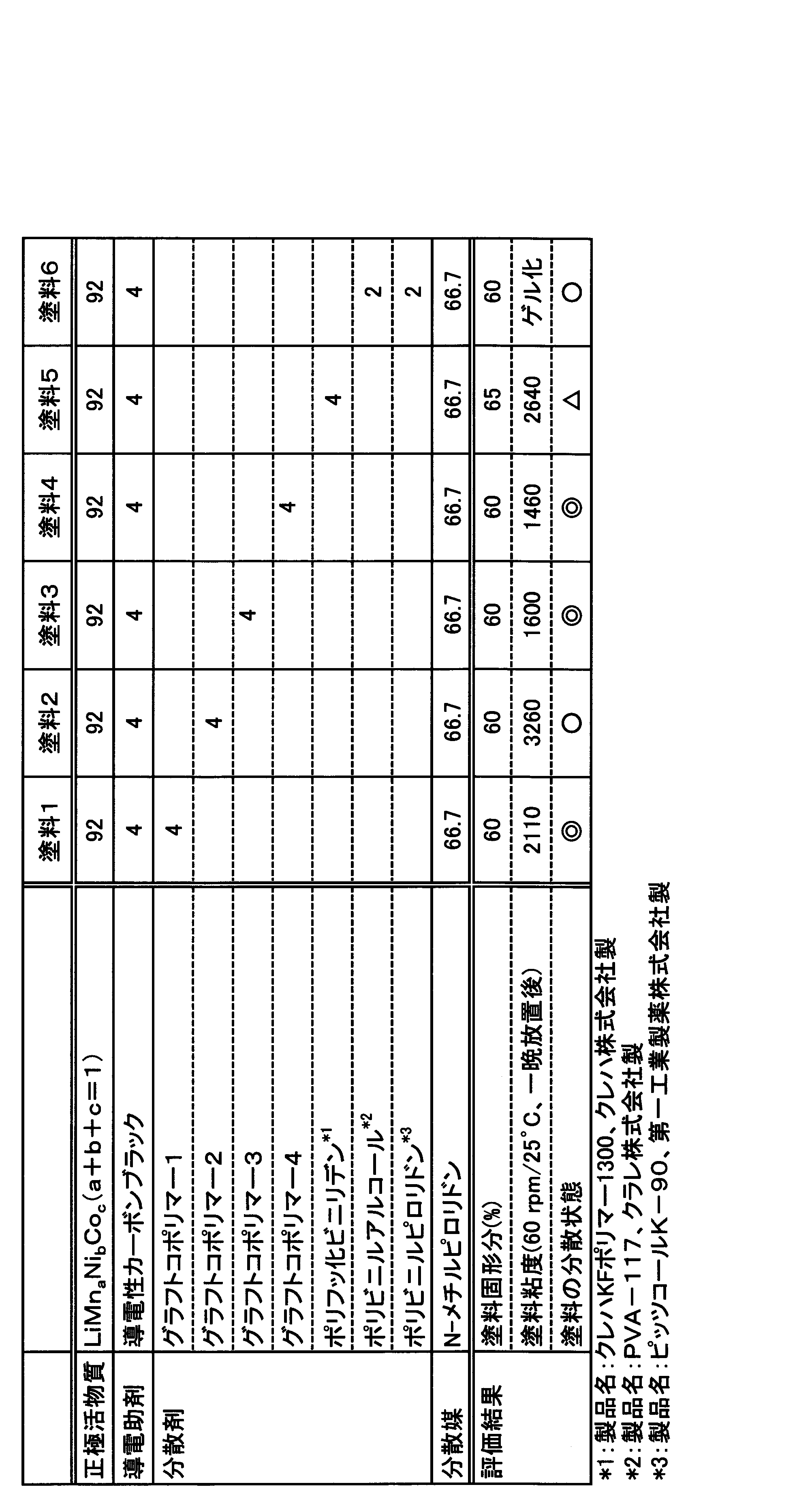
表1よりグラフトコポリマー1ないし4を使用した塗料1ないし4は分散状態が良好な塗料が得られた。一方、グラフトコポリマー1ないし4の代わりにポリフッ化ビニリデンを使用した塗料5は分散状態が不良となり、およびポリビニルアルコールとポリビニルピロリドンを併用した塗料6はゲル化した。
[正極の作製]
(正極1)
塗料1をアルミ箔(厚さ10μm)に、厚みが100μmとなるようにアプリケーターを調整・塗工し、100℃で予備乾燥を行った後、130℃で8時間真空乾燥を行った。乾燥して得られた電極をローラープレス機により加圧成形することにより、銅箔の片面の電極密度が2.1g/cm3の正極合剤層を有する電極シートを得た。その後、上記電極シートをφ12mmの打ち抜き機で円形に打ち抜き、評価用の正極1を得た。
(正極1)
塗料1をアルミ箔(厚さ10μm)に、厚みが100μmとなるようにアプリケーターを調整・塗工し、100℃で予備乾燥を行った後、130℃で8時間真空乾燥を行った。乾燥して得られた電極をローラープレス機により加圧成形することにより、銅箔の片面の電極密度が2.1g/cm3の正極合剤層を有する電極シートを得た。その後、上記電極シートをφ12mmの打ち抜き機で円形に打ち抜き、評価用の正極1を得た。
(正極2ないし5)
塗料を表2に示すとおり変更した以外は、正極1と同様に作成し、正極2ないし5を得た。尚、塗料6は一晩静置後ゲル化していたため、正極の作製を行わなかった。
塗料を表2に示すとおり変更した以外は、正極1と同様に作成し、正極2ないし5を得た。尚、塗料6は一晩静置後ゲル化していたため、正極の作製を行わなかった。
[正極の評価]
正極1ないし5を下記の評価基準にて評価した。評価結果を表2に示す。
正極1ないし5を下記の評価基準にて評価した。評価結果を表2に示す。
(剥離強度の測定)
上記電極シートを18cm×2cmの短冊状に切り出し、集電体側に厚み1mmの鋼板を両面テープで接着し、塗工面を両面テープに貼り付け、集電体にセロハン粘着テープを貼り付け、引張試験機(島津製作所、オートグラフAGS-X)にて50mm/minの速さで180°方向にはく離させる際の応力を測定した。
上記電極シートを18cm×2cmの短冊状に切り出し、集電体側に厚み1mmの鋼板を両面テープで接着し、塗工面を両面テープに貼り付け、集電体にセロハン粘着テープを貼り付け、引張試験機(島津製作所、オートグラフAGS-X)にて50mm/minの速さで180°方向にはく離させる際の応力を測定した。
(電極状態)
正極活物質塗料の正極活物質および導電材の電極状態を以下の評価基準にて評価した
◎:5cm×5cmの電極切片内に、目視にて分散不良と判断される電極表面上から上に凸状となった小さな正極活物質あるいは導電助剤の固化物が全く存在しないこと
○:5cm×5cmの電極切片内に、目視にて分散不良と判断される電極表面上から上に凸状となった小さな正極活物質あるいは導電助剤の固化物が1個以下存在したこと
△:5cm×5cmの電極切片内に、目視にて分散不良と判断される電極表面上から上に凸状となった小さな正極活物質あるいは導電助剤の固化物が2個以上存在したこと
×:5cm×5cmの電極切片内に、目視にて分散不良と判断される電極表面上から上に凸状となった小さな正極活物質あるいは導電助剤の固化物が10個以上存在したこと
正極活物質塗料の正極活物質および導電材の電極状態を以下の評価基準にて評価した
◎:5cm×5cmの電極切片内に、目視にて分散不良と判断される電極表面上から上に凸状となった小さな正極活物質あるいは導電助剤の固化物が全く存在しないこと
○:5cm×5cmの電極切片内に、目視にて分散不良と判断される電極表面上から上に凸状となった小さな正極活物質あるいは導電助剤の固化物が1個以下存在したこと
△:5cm×5cmの電極切片内に、目視にて分散不良と判断される電極表面上から上に凸状となった小さな正極活物質あるいは導電助剤の固化物が2個以上存在したこと
×:5cm×5cmの電極切片内に、目視にて分散不良と判断される電極表面上から上に凸状となった小さな正極活物質あるいは導電助剤の固化物が10個以上存在したこと
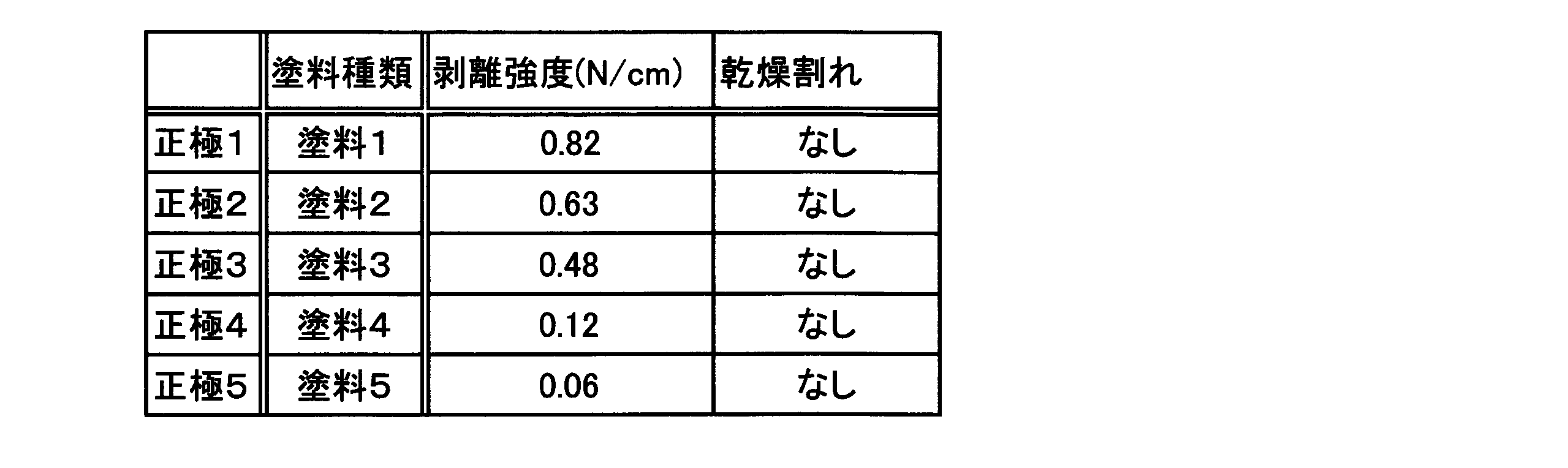
表2より、グラフトコポリマー1ないし4を使用した塗料1ないし4より作成した正極1ないし4は乾燥割れの生じない良好な正極が得られた。一方、グラフトコポリマー1ないし4の代わりにポリフッ化ビニリデンを使用した塗料5で作成した正極5は剥離強度が著しく低い結果となった。
[リチウムイオン二次電池の作製]
(実施例1)
上記で得られた正極1、セパレーター(サンクメタル社製セルガード2325)、作用極としてリチウム金属(φ15mm)の順で、日本トムセル製TJ-ACコインセル内の所定の位置に配置した。さらに、1mol/LのLiPF6を含むエチレンカーボネート、メチルエチルカーボネートの混合溶液にビニレンカーボネートを添加した電解液濃度を注液し、二次電池を作製した。
(実施例1)
上記で得られた正極1、セパレーター(サンクメタル社製セルガード2325)、作用極としてリチウム金属(φ15mm)の順で、日本トムセル製TJ-ACコインセル内の所定の位置に配置した。さらに、1mol/LのLiPF6を含むエチレンカーボネート、メチルエチルカーボネートの混合溶液にビニレンカーボネートを添加した電解液濃度を注液し、二次電池を作製した。
(実施例2~4)
正極1をそれぞれ正極2ないし4に変更した以外は、実施例1と同様に作成し二次電池を得た。尚、塗料5は分散状態が芳しくない上、電極を打ち抜いた際に合剤層が割れ、粉落ちするため、二次電池の作製を行わなかった。
正極1をそれぞれ正極2ないし4に変更した以外は、実施例1と同様に作成し二次電池を得た。尚、塗料5は分散状態が芳しくない上、電極を打ち抜いた際に合剤層が割れ、粉落ちするため、二次電池の作製を行わなかった。
[電池特性の評価]
実施例1ないし4で得た二次電池を以下の評価方法及び評価基準にて評価を行った。その結果を表3に示す。
実施例1ないし4で得た二次電池を以下の評価方法及び評価基準にて評価を行った。その結果を表3に示す。
(初回充放電特性)
20℃の雰囲気下、上記正極の実効容量に基づいて得られた0.1Cの電流値で電圧値が0.01Vとなるまで定電流定電圧条件で充電を行い、電流値が0.05Cに低下した時点で充電を停止した。次いで、電流値0.1Cの条件で金属Liに対する電圧が1.0Vとなるまで放電を行い、初回放電容量を測定した。
20℃の雰囲気下、上記正極の実効容量に基づいて得られた0.1Cの電流値で電圧値が0.01Vとなるまで定電流定電圧条件で充電を行い、電流値が0.05Cに低下した時点で充電を停止した。次いで、電流値0.1Cの条件で金属Liに対する電圧が1.0Vとなるまで放電を行い、初回放電容量を測定した。
(放電レート特性)
20℃の雰囲気下、2回目放電容量に基づいて得られた0.2Cの電流値で電圧値が0.01Vとなるまで定電流定電圧条件で充電を行い、電流値が0.05Cに低下した時点で充電を停止した。次いで、電流値1Cの条件で金属Liに対する電圧が1.0Vとなるまで放電を行い、1Cの放電容量を測定した。さらに同様に充電を行い、電流値3Cの条件で放電を行い、3Cの放電容量を測定した。1Cの放電容量を100%としたときの3Cの放電容量を3C容量維持率とした。
20℃の雰囲気下、2回目放電容量に基づいて得られた0.2Cの電流値で電圧値が0.01Vとなるまで定電流定電圧条件で充電を行い、電流値が0.05Cに低下した時点で充電を停止した。次いで、電流値1Cの条件で金属Liに対する電圧が1.0Vとなるまで放電を行い、1Cの放電容量を測定した。さらに同様に充電を行い、電流値3Cの条件で放電を行い、3Cの放電容量を測定した。1Cの放電容量を100%としたときの3Cの放電容量を3C容量維持率とした。

本発明の正極活物質塗料およびこれを用いた正極ならびに二次電池は携帯機器などに広く利用することができる。
Claims (4)
- 正極活物質、導電助剤、分散媒、分散剤を含有する正極活物質塗料であって、分散媒が、N-メチルピロリドンであり、分散剤がポリビニルアルコール-ポリビニルピロリドングラフトコポリマーであってポリビニルアルコールの含有量が10質量%以上90質量%以下であることを特徴とする正極活物質塗料。
- 正極活物質、導電助剤、および分散剤の合計量100質量%に対し、分散剤の含有量が0.1質量%以上20質量%以下であることを特徴とする請求項1に記載の正極活物質塗料。
- 集電体および上記集電体上に形成された正極活物質合材層を備えた正極であって、上記正極活物質合材層が、請求項1または2に記載の正極活物質塗料を乾燥させてなるものであることを特徴とする正極。
- 負極と正極と、負極と正極との間に配置されるセパレーターと、電解液とを備えた二次電池であって、正極が、請求項3に記載の正極であることを特徴とする二次電池。
Applications Claiming Priority (2)
| Application Number | Priority Date | Filing Date | Title |
|---|---|---|---|
| JP2017190048A JP2019067567A (ja) | 2017-09-29 | 2017-09-29 | 正極活物質塗料、正極、および二次電池 |
| JP2017-190048 | 2017-09-29 |
Publications (1)
| Publication Number | Publication Date |
|---|---|
| WO2019065931A1 true WO2019065931A1 (ja) | 2019-04-04 |
Family
ID=65902929
Family Applications (1)
| Application Number | Title | Priority Date | Filing Date |
|---|---|---|---|
| PCT/JP2018/036168 Ceased WO2019065931A1 (ja) | 2017-09-29 | 2018-09-28 | 正極活物質塗料、正極、および二次電池 |
Country Status (3)
| Country | Link |
|---|---|
| JP (1) | JP2019067567A (ja) |
| TW (1) | TWI770263B (ja) |
| WO (1) | WO2019065931A1 (ja) |
Cited By (1)
| Publication number | Priority date | Publication date | Assignee | Title |
|---|---|---|---|---|
| WO2022138322A1 (ja) * | 2020-12-24 | 2022-06-30 | 昭和電工株式会社 | 非水系二次電池用セパレータバインダー、非水系二次電池用セパレータ、非水系二次電池用セパレータスラリーの製造方法、及び非水系二次電池 |
Citations (1)
| Publication number | Priority date | Publication date | Assignee | Title |
|---|---|---|---|---|
| JP2015125964A (ja) * | 2013-12-27 | 2015-07-06 | 東洋インキScホールディングス株式会社 | 二次電池電極形成用組成物、二次電池用電極および二次電池 |
-
2017
- 2017-09-29 JP JP2017190048A patent/JP2019067567A/ja active Pending
-
2018
- 2018-09-03 TW TW107130801A patent/TWI770263B/zh active
- 2018-09-28 WO PCT/JP2018/036168 patent/WO2019065931A1/ja not_active Ceased
Patent Citations (1)
| Publication number | Priority date | Publication date | Assignee | Title |
|---|---|---|---|---|
| JP2015125964A (ja) * | 2013-12-27 | 2015-07-06 | 東洋インキScホールディングス株式会社 | 二次電池電極形成用組成物、二次電池用電極および二次電池 |
Cited By (2)
| Publication number | Priority date | Publication date | Assignee | Title |
|---|---|---|---|---|
| WO2022138322A1 (ja) * | 2020-12-24 | 2022-06-30 | 昭和電工株式会社 | 非水系二次電池用セパレータバインダー、非水系二次電池用セパレータ、非水系二次電池用セパレータスラリーの製造方法、及び非水系二次電池 |
| CN116601193A (zh) * | 2020-12-24 | 2023-08-15 | 株式会社力森诺科 | 非水系二次电池用隔板粘合剂、非水系二次电池用隔板、非水系二次电池用隔板浆料的制造方法和非水系二次电池 |
Also Published As
| Publication number | Publication date |
|---|---|
| TW201916443A (zh) | 2019-04-16 |
| JP2019067567A (ja) | 2019-04-25 |
| TWI770263B (zh) | 2022-07-11 |
Similar Documents
| Publication | Publication Date | Title |
|---|---|---|
| KR102210264B1 (ko) | 리튬 이온 2 차 전지 정극용 결착재 조성물, 리튬 이온 2 차 전지 정극용 슬러리 조성물 및 그 제조 방법, 리튬 이온 2 차 전지용 정극의 제조 방법, 그리고 리튬 이온 2 차 전지 | |
| KR102129829B1 (ko) | 리튬 이온 이차 전지 부극용 슬러리, 리튬 이온 이차 전지용 전극 및 그 제조 방법, 그리고 리튬 이온 이차 전지 | |
| CN104335394B (zh) | 用于制作保护膜的组合物和保护膜以及蓄电器件 | |
| JP6149730B2 (ja) | 二次電池用正極及びその製造方法、スラリー組成物、並びに二次電池 | |
| JP6519581B2 (ja) | 電気化学素子電極用導電性接着剤組成物及び電気化学素子電極用集電体 | |
| CN109565050B (zh) | 电极用导电性树脂组合物和电极组合物以及使用了其的电极和锂离子电池 | |
| WO2017094252A1 (ja) | 非水系二次電池接着層用組成物、非水系二次電池用接着層、積層体および非水系二次電池 | |
| JP6413242B2 (ja) | 二次電池正極用スラリーの製造方法、二次電池用正極の製造方法、及び二次電池の製造方法 | |
| JP6774415B2 (ja) | リチウムイオン二次電池の正極用スラリー、リチウムイオン二次電池の正極用スラリーを用いて得られるリチウムイオン二次電池用正極およびその製造方法、並びに、リチウムイオン二次電池用正極を備えたリチウムイオン二次電池およびその製造方法 | |
| WO2019107463A1 (ja) | 電気化学素子用導電材ペースト、電気化学素子正極用スラリー組成物及びその製造方法、電気化学素子用正極、並びに電気化学素子 | |
| CN115244731A (zh) | 具有含磷酸铁锂的底漆层的用于锂二次电池的正极 | |
| WO2017155059A1 (ja) | 非水系二次電池電極用バインダー、非水系二次電池電極用スラリー、非水系二次電池用電極、および非水系二次電池 | |
| WO2013042591A1 (ja) | リチウムイオン二次電池用正極材、およびリチウムイオン二次電池 | |
| JP2009110883A (ja) | 電気化学セル用バインダー | |
| JP2020077620A (ja) | 電気化学素子用バインダー組成物 | |
| JP2014137916A (ja) | 電気化学素子電極用導電性接着剤組成物 | |
| JP2013131381A (ja) | 非水電解質二次電池 | |
| JPWO2018016528A1 (ja) | リチウムイオン電池用電極およびリチウムイオン電池 | |
| WO2016152833A1 (ja) | リチウム二次電池用電極の製造方法 | |
| JP2016021391A (ja) | 電気化学素子用導電材分散液、電気化学素子正極用スラリー、電気化学素子用正極および電気化学素子 | |
| JP2005339938A (ja) | リチウムイオン二次電池用電極の製造方法 | |
| JP2014212028A (ja) | 蓄電デバイス用電極および蓄電デバイス | |
| JP2014212029A (ja) | 蓄電デバイス用電極および蓄電デバイス | |
| WO2010082240A1 (ja) | 複合酸化物およびその製造方法、ならびにその複合酸化物を用いた非水電解質二次電池 | |
| JP4151459B2 (ja) | 極板の製造方法およびこの製造方法によって得られる極板を用いた非水電解液二次電池 |
Legal Events
| Date | Code | Title | Description |
|---|---|---|---|
| 121 | Ep: the epo has been informed by wipo that ep was designated in this application |
Ref document number: 18860362 Country of ref document: EP Kind code of ref document: A1 |
|
| NENP | Non-entry into the national phase |
Ref country code: DE |
|
| 122 | Ep: pct application non-entry in european phase |
Ref document number: 18860362 Country of ref document: EP Kind code of ref document: A1 |