WO2019039441A1 - 液状食品の塩味増強方法 - Google Patents
液状食品の塩味増強方法 Download PDFInfo
- Publication number
- WO2019039441A1 WO2019039441A1 PCT/JP2018/030709 JP2018030709W WO2019039441A1 WO 2019039441 A1 WO2019039441 A1 WO 2019039441A1 JP 2018030709 W JP2018030709 W JP 2018030709W WO 2019039441 A1 WO2019039441 A1 WO 2019039441A1
- Authority
- WO
- WIPO (PCT)
- Prior art keywords
- chloride
- mol
- potassium
- compound
- ion
- Prior art date
- Legal status (The legal status is an assumption and is not a legal conclusion. Google has not performed a legal analysis and makes no representation as to the accuracy of the status listed.)
- Ceased
Links
Images


Classifications
-
- A—HUMAN NECESSITIES
- A23—FOODS OR FOODSTUFFS; TREATMENT THEREOF, NOT COVERED BY OTHER CLASSES
- A23L—FOODS, FOODSTUFFS OR NON-ALCOHOLIC BEVERAGES, NOT OTHERWISE PROVIDED FOR; PREPARATION OR TREATMENT THEREOF
- A23L27/00—Spices; Flavouring agents or condiments; Artificial sweetening agents; Table salts; Dietetic salt substitutes; Preparation or treatment thereof
-
- A—HUMAN NECESSITIES
- A23—FOODS OR FOODSTUFFS; TREATMENT THEREOF, NOT COVERED BY OTHER CLASSES
- A23L—FOODS, FOODSTUFFS OR NON-ALCOHOLIC BEVERAGES, NOT OTHERWISE PROVIDED FOR; PREPARATION OR TREATMENT THEREOF
- A23L5/00—Preparation or treatment of foods or foodstuffs, in general; Food or foodstuffs obtained thereby; Materials therefor
Definitions
- the present invention relates to a method for enhancing saltiness of liquid food and a saltiness enhancer for liquid food.
- the present invention also relates to a liquid food with enhanced saltiness and a method for producing the same.
- Sodium chloride containing sodium chloride as a main component is used for food in various applications such as imparting saltiness.
- excessive intake of sodium is considered to increase the risk of causing hypertension and heart disease. For this reason, it is important to reduce sodium intake from the viewpoint of health.
- Sodium intake can be reduced by reducing the amount of salt used (reduced salt) when producing food, but such reduced-salt foods have the problem that their satisfaction is reduced due to the lack of saltiness. There is. Therefore, there is a need for the development of techniques for enhancing the saltiness of food without increasing sodium intake.
- salt substitutes including inactivated yeast and salt compounds selected from sodium chloride, potassium salts, ammonium salts, magnesium salts, and mixtures thereof, can reduce the amount of sodium chloride in bread products.
- Patent Document 1 in a food additive salt composition composed of a mixture of physiologically usable compounds, the composition ratio of sodium chloride is reduced, and instead, main minerals such as potassium, magnesium, calcium and the like are well balanced.
- An object of the present invention is to provide a method capable of enhancing saltiness of liquid food by suppressing an increase in sodium intake.
- chloride ion (Cl -) approximately obtained contribute to savory food
- chloride ions contributes to saltiness
- chloride ion It was found that there was a difference depending on the type of compound derived.
- the present inventors have identified that the liquid food contains chloride ion so that the eating concentrations of sodium ion, chloride ion and potassium ion in the liquid food satisfy a specific relationship. It has been found that the saltiness of the liquid food can be enhanced by adding the compound of The present inventors have completed the present invention by conducting further studies based on these findings. That is, the present invention is as follows.
- X 0 is in the range of 10 to 1000
- X 0 , Y 0 and Z 0 satisfy the relationship of the following formula (I)
- Adding at least one compound selected from the group consisting of potassium chloride, ammonium chloride, calcium chloride, magnesium chloride, lysine hydrochloride and arginine hydrochloride except that the compound is potassium chloride only
- the dietary concentration of sodium ion, chloride ion and potassium ion of the liquid food after the addition of the compound is X 1 mol / m 3 , Y 1 mol / m 3 and Z 1 mol / m 3 respectively after addition of the compound.
- the above compounds include three compounds selected from the group consisting of potassium chloride, ammonium chloride, calcium chloride, magnesium chloride, lysine hydrochloride and arginine hydrochloride [1] and [3] to [6] The method described in any one of the above.
- [8] The compound according to any one of [1] to [7], wherein the compound comprises three compounds selected from the group consisting of potassium chloride, ammonium chloride, calcium chloride, magnesium chloride and lysine hydrochloride.
- Method [9] The method according to any one of [1] to [8], wherein the compound comprises potassium chloride, ammonium chloride and lysine hydrochloride.
- the liquid food has an eating concentration of sodium ion, chloride ion and potassium ion as X 0 mol / m 3 , Y 0 mol / m 3 and Z 0 mol / m 3 respectively, and X 0 is 10 to 1000.
- X 1 , Y 1 and Z 1 Is a liquid food satisfying the relationship of the following formula (II), Assuming that the dietary concentrations of sodium ion, chloride ion and potassium ion are X 0 mol / m 3 , Y 0 mol / m 3 and Z 0 mol / m 3 , respectively, X 0 is in the range of 10 to 1000.
- X 0 , Y 0 and Z 0 selected from the group consisting of potassium chloride, ammonium chloride, calcium chloride, magnesium chloride, lysine hydrochloride and arginine hydrochloride for liquid food satisfying the relationship of the following formula (I)
- [20] The food according to [19], wherein the compound is at least one selected from the group consisting of potassium chloride, ammonium chloride, calcium chloride, magnesium chloride and lysine hydrochloride.
- X 0 is in the range of 10 to 1000 Liquid food in which X 0 , Y 0 and Z 0 satisfy the following formula (I): potassium chloride, ammonium chloride, calcium chloride, magnesium chloride, lysine hydrochloride and arginine hydrochloride Including the addition of at least one compound selected from the group, with the exception of the case where the compound is only potassium chloride;
- the dietary concentration of sodium ion, chloride ion and potassium ion of the liquid food after the addition of the compound is X 1 mol / m 3 , Y 1 mol / m 3 and Z 1 mol / m 3 respectively after addition of the compound.
- a method of producing a liquid food wherein X 1 , Y 1 and Z 1 are carried out so as to satisfy the relationship of the following formula (II).
- the production method according to [28] wherein the compound is at least one selected from the group consisting of potassium chloride, ammonium chloride, calcium chloride, magnesium chloride and lysine hydrochloride.
- Y 1 is in the range of 10 to 1000.
- a liquid food composition comprising When the eating concentration of sodium ion, chloride ion and potassium ion of liquid food after addition of the composition is X 1 mol / m 3 , Y 1 mol / m 3 and Z 1 mol / m 3 respectively, X 1 , Y 1 and Z 1 are added to satisfy the relationship of the following formula (II), The composition, wherein the liquid food is selected from the group consisting of soup and soup.
- the increase in sodium intake can be suppressed, and the saltiness of liquid food can be effectively enhanced. Therefore, according to the present invention, it is possible to provide, for example, a liquid food having sufficient saltiness even when the liquid food is reduced in salt and sodium intake is reduced.
- the present invention provides a method (sometimes referred to herein as “the saltiness enhancing method of the present invention") for enhancing the saltiness of liquid food, which comprises adding a specific compound containing a chloride ion. .
- the method for enhancing saltiness according to the present invention comprises potassium chloride, ammonium chloride, calcium chloride, magnesium chloride, lysine hydrochloride and arginine hydrochloride, preferably potassium chloride, ammonium chloride, calcium chloride, magnesium chloride and lysine hydrochloride. It is preferable to add a compound selected from the group consisting of potassium chloride, ammonium chloride, magnesium chloride and lysine hydrochloride (sometimes referred to as "Cl salt compound" in the present specification for convenience). Including.
- the Cl salt compound may consist of any one of the above compounds (except when the compound is only potassium chloride), or any two or more (preferably three) Or the like).
- the Cl salt compound used in the method for enhancing salt taste according to the present invention is preferably selected from the group consisting of potassium chloride, ammonium chloride, magnesium chloride, lysine hydrochloride and arginine hydrochloride in one aspect.
- the Cl salt compound used in the method for enhancing saltiness according to the present invention is a group consisting of potassium chloride, ammonium chloride, calcium chloride, magnesium chloride, lysine hydrochloride and arginine hydrochloride (preferably, potassium chloride, ammonium chloride, calcium chloride, chloride It may at least include three compounds selected from the group consisting of magnesium and lysine hydrochloride.
- potassium chloride, ammonium chloride, calcium chloride, magnesium chloride, lysine hydrochloride and arginine hydrochloride (preferably, the group consisting of potassium chloride, ammonium chloride, calcium chloride, magnesium chloride and lysine hydrochloride)
- arginine hydrochloride preferably, the group consisting of potassium chloride, ammonium chloride, calcium chloride, magnesium chloride and lysine hydrochloride
- combinations of three compounds to be A) Potassium chloride, ammonium chloride and calcium chloride, (B) potassium chloride, ammonium chloride and magnesium chloride, (C) potassium chloride, ammonium chloride and lysine hydrochloride, (D) Potassium chloride, calcium chloride and lysine hydrochloride, (E) Potassium chloride, magnesium chloride and lysine hydrochloride, (F) Ammonium chloride, calcium chloride and lysine hydrochloride, and (g) ammonium chloride
- the weight ratio of the addition amount of potassium chloride to the addition amount of ammonium chloride is From the viewpoint of the contribution to the saltiness of the chloride ion in each Cl salt compound and the relationship between the added concentration of each Cl salt compound and the flavor, it is preferably 1: 0.01 to 1, more preferably 1: 0 It is from 0.5 to 0.75, particularly preferably from 1: 0.1 to 0.5.
- the weight ratio of the addition amount of potassium chloride to the addition amount of lysine hydrochloride represents the contribution of chloride ions in each Cl salt compound to saltiness and each Cl salt compound From the viewpoint of the relationship between the additive concentration and taste, the ratio is preferably 1: 0.5 to 15, more preferably 1: 1 to 12, and particularly preferably 1: 1.5 to 10.
- the Cl salt compound used in the saltiness enhancing method of the present invention at least contains potassium chloride, ammonium chloride and lysine hydrochloride
- the Cl salt compound may further include magnesium chloride and / or arginine hydrochloride in one aspect. .
- the Cl salt compound used in the method for enhancing saltiness according to the present invention further includes magnesium chloride and / or arginine hydrochloride in addition to potassium chloride, ammonium chloride and lysine hydrochloride, the amount of potassium chloride added and the amount of magnesium chloride added
- the weight ratio (potassium chloride: magnesium chloride) is preferably 1: 0. From the viewpoint of the contribution of chloride ions in each Cl salt compound to saltiness and the relationship between the added concentration of each Cl salt compound and the flavor. It is from 01 to 3, more preferably from 1: 0.05 to 2, particularly preferably from 1: 0.1 to 1.5.
- the weight ratio of the addition amount of potassium chloride to the addition amount of arginine hydrochloride is the contribution of chloride ions in each Cl salt compound to saltiness and each Cl salt compound From the viewpoint of the relationship between the additive concentration and taste, the ratio is preferably 1: 0.05 to 10, more preferably 1: 0.1 to 5, and particularly preferably 1: 0.3 to 3.
- the methods for producing potassium chloride, ammonium chloride, calcium chloride, magnesium chloride, lysine hydrochloride and arginine hydrochloride used in the method for enhancing saltiness of the present invention are not particularly limited, and any method known per se (for example, chemical synthesis method) , Produced by an enzymatic method, a fermentation method, etc.) may be used. Commercially available products may be used as these compounds, and such compounds are preferable because they are simple.
- the saltiness enhancing method of the present invention may optionally include the addition of a substance other than the Cl salt compound, as long as the object of the present invention is not impaired, in addition to the addition of the Cl salt compound.
- the "liquid food” capable of enhancing saltiness by the saltiness enhancing method of the present invention refers to a food having fluidity at 25 ° C.
- the liquid food may contain solid ingredients and ingredients.
- Specific examples of liquid food include, for example, soups such as noodle soup, udon soup, buckwheat soup, somen soup, ramen soup, chanpon soup etc. (eg, noodle soup etc.); rooster chicken soup, Chinese style soup, corn cream soup, Examples include, but are not limited to, potage soup, consomme soup, curry-flavored soup, soup, soup such as miso soup, and the like.
- the liquid food which can enhance saltiness by the saltiness enhancing method of the present invention may be a reduced salt food.
- the "reduced-salt food” refers to a food whose salt concentration at the time of eating is lower than the general salt concentration of the food.
- a food wherein the salt concentration at the time of eating is A% relative to the general salt concentration of the food is referred to as "A% reduced salt food", and the saltiness is enhanced by the saltiness enhancing method of the present invention.
- the liquid food that can be enhanced is preferably a 20-80% reduced salt food (ie, a food whose salt concentration at eating is 20-80% relative to the general salt concentration of the food), Preferably, it is a 30 to 70% low salt food (ie, a food whose salt concentration at eating is 30 to 70% with respect to the general salt concentration of the food).
- the liquid food (i.e., the liquid food before addition of the Cl salt compound) before the salty taste is enhanced by the saltiness enhancing method of the present invention is the sodium ion (Na + ), chloride ion (Cl ⁇ ) and potassium ion (K X 0 , Y 0 and Z 0 satisfy a specific relationship, where X 0 mol / m 3 , Y 0 mol / m 3 and Z 0 mol / m 3 respectively represent the dietary concentration of + ) Is preferred. Specifically, it is preferable that X 0 , Y 0 and Z 0 satisfy the relationship of the following formula (I), and the saltiness enhancing effect of the present invention can be more significantly exhibited.
- X 0 and Z 0 are respectively the weight of sodium ion and potassium ion measured by atomic absorption method, and eating It is calculated from the weight of the liquid food.
- Y 0 that is, the eating concentration of chloride ion in the liquid food before adding the Cl salt compound
- diet concentration refers to the concentration in liquid food in a state suitable for eating.
- the concentration in the concentrate is made to make the concentrate suitable for eating.
- the eating concentration can be calculated by conversion at a dilution rate of
- sodium ions, chloride ions and potassium ions contained in the solid components and ingredients are not counted as X 0 , Y 0 and Z 0 .
- X 0 (congestion concentration of sodium ion in liquid food before addition of Cl salt compound) is usually in the range of 10 to 1000 (mol / m 3 ), preferably 10 in view of suppressing an increase in sodium intake as much as possible. It is in the range of ⁇ 600 (mol / m 3 ), more preferably in the range of 10 to 400 (mol / m 3 ).
- Y 0 (the eating concentration of chloride ion in liquid food before addition of Cl salt compound) is usually in the range of 10 to 1000 (mol / m 3 ), preferably in the range of 10 to 600 (mol / m 3 ) And more preferably in the range of 10 to 400 (mol / m 3 ).
- Z 0 concentration of potassium ion in liquid food before addition of Cl salt compound
- Z 0 is usually in the range of 0 to 300 (mol / m 3 ), preferably in the range of 0 to 200 (mol / m 3 ) And more preferably in the range of 0 to 50 (mol / m 3 ).
- the Cl salt compound is added to the eating concentration of sodium ion, chloride ion and potassium ion of liquid food after addition of the Cl salt compound respectively at X 1 mol / m 3 and Y 1 mol /
- X 1 , Y 1 and Z 1 are preferably performed so as to satisfy a specific relationship.
- the saltiness of the liquid food can be effectively enhanced by satisfying the specific relationship between the X 1 , Y 1 and Z 1 .
- X 1 , Y 1 and Z 1 satisfy the relationship of the following formula (II), and provide a more preferable salt taste, so that the relationship of the following formula (II ′) should be satisfied.
- X 1 , Y 1 and Z 1 preferably further satisfy the relationship of the following formula (III), and satisfy the relationship of the following formula (III ′) Is more preferable, it is more preferable to satisfy the relationship of the following formula (III ′ ′), and it is particularly preferable to satisfy the relationship of the following formula (III ′ ′ ′), and the relationship of the following formula (III ′ ′ ′) It is most preferable to satisfy
- X 1 , Y 1 and Z 1 can suppress the occurrence of off-flavors. If the off-flavor becomes strong, the desirable saltiness may be lost, and by suppressing the off-flavor, the more desirable saltiness can be enhanced.
- each of X 1 , Y 1 and Z 1 (that is, the eating concentration of sodium ion, chloride ion and potassium ion in liquid food after addition of a Cl salt compound) is a Cl salt compound measured by the method described above. It is calculated from the eating concentrations (X 0 , Y 0 and Z 0 ) of sodium ion, chloride ion and potassium ion in the liquid food before addition, and the addition amount of the Cl salt compound.
- X 1 concentration of sodium ion in liquid food after addition of Cl salt compound
- X 0 condense concentration of sodium ion in liquid food before the addition of Cl salt compound
- X 1 is usually in the range of 10 to 1000 (mol / m 3 ), and preferably from 10 to 600 (mol / m 3 ) from the viewpoint of suppressing the increase in sodium intake as much as possible. And more preferably in the range of 10 to 400 (mol / m 3 ).
- Y 1 (the eating concentration of chloride ion in liquid food after addition of a Cl salt compound) is preferably in the range of 10 to 1000 (mol / m 3 ) because it can provide more preferable saltiness, and is more preferable. Is in the range of 10 to 800 (mol / m 3 ), and particularly preferably in the range of 10 to 600 (mol / m 3 ).
- Z 1 concentration of potassium ion in liquid food after addition of Cl salt compound
- Z 1 is preferably in the range of 1 to 300 (mol / m 3 ), and more preferably, because it can provide more preferable salty taste. It is in the range of 5 to 200 (mol / m 3 ), and particularly preferably in the range of 10 to 100 (mol / m 3 ).
- the ratio of Y 0 to Y 1 is preferably 1.01 to 5.0, and more preferably 1.05 to 2.5 because it can further enhance saltiness. Particularly preferably, it is 1.1 to 2.0.
- the ratio of Z 0 to Z 1 is preferably 1.1 to 10, and more preferably 1.1 to 7 because it can further enhance saltiness and provide a preferable taste. And particularly preferably 1.1 to 5.
- the time of adding the Cl salt compound to the liquid food is not particularly limited and may be added at any time, for example, during the production of the liquid food, after completion of the liquid food (eg, Just before eating liquid food, eating liquid food etc.) and the like.
- a Cl salt compound may be added in advance to a food material used for producing a liquid food.
- the increase in sodium intake can be suppressed to effectively enhance the saltiness of liquid food.
- the salty taste of the liquid food may be evaluated by a method known per se, and may be performed by, for example, the method of Examples described below.
- the “different flavor” refers to an unpleasant taste (eg, bitter taste and the like) and a flavor that are not felt in ordinary liquid food.
- the presence or absence and degree of off-flavor can be evaluated by sensory evaluation by a specialized panel.
- the saltiness enhancing method of the present invention may be used in combination with a saltiness enhancing method known per se, as long as the object of the present invention is not impaired.
- the present invention provides a salty taste enhancer for liquid food (sometimes referred to herein as “the salty taste enhancer of the present invention"), which contains a specific compound containing a chloride ion.
- the salty taste enhancer of the present invention may contain the same compound as the Cl salt compound used in the salty taste enhancement method of the present invention, and its preferred embodiment (e.g., the number of compounds, combination, etc.) is also a salty taste enhancement method of the present invention Are the same as described above.
- the form of the salty taste enhancer of the present invention is not particularly limited, and examples thereof include solid (including powder, granular and the like), liquid (including slurry and the like), gel, and paste.
- the saltiness enhancer of the present invention may consist only of a Cl salt compound, but in addition to the Cl salt compound, components other than the Cl salt compound (for example, food additives) as long as the object of the present invention is not impaired. Bases etc. conventionally used in the field may optionally be contained.
- the content of the Cl salt compound in the saltiness enhancer of the present invention is usually 0.1 to 100% by weight, more preferably 1 to 99% by weight.
- “the content of the Cl salt compound in the saltiness enhancer according to the present invention” is the content of the compound when the Cl salt compound consists of only one compound, and the compound having two or more Cl salt compounds. When it consists of these, it is the total content of those compounds.
- Examples of the base in the case where the salty taste enhancer of the present invention is in the form of liquid include water, ethanol, glycerin, propylene glycol, various animal and vegetable oils and the like.
- Examples of the base when the salty taste enhancer of the present invention is in a solid form include starch, dextrin, cyclodextrin, various saccharides such as sucrose and glucose, proteins, peptides, solid fats, silicon dioxide, and mixtures thereof And yeast cells and various powder extracts.
- the salty taste enhancer of the present invention is added to the Cl salt compound as long as the object of the present invention is not impaired.
- excipients pH adjusters, antioxidants, thickening stabilizers, sweeteners (eg, sugars) Etc.), acidulants, spices, coloring agents and the like may be further contained.
- the preparation of the salty taste enhancer of the present invention can be carried out according to conventional procedures in the field of food additives.
- the saltiness enhancer of the present invention may be applied alone or in combination, for example, concentration treatment, drying treatment, decolorization treatment and the like.
- the saltiness enhancer of the present invention is preferably used for liquid food, that is, used to enhance the saltiness of liquid food.
- the "liquid food” which can use the saltiness enhancer of the present invention is the same as the “liquid food” whose saltiness can be enhanced by the saltiness enhancing method of the present invention, and the specific examples thereof are also the same.
- the liquid food before the salty taste enhancer of the present invention is added has eating concentrations of its sodium ion, chloride ion and potassium ion as X 0 mol / m 3 , Y 0 mol / m 3 and Z 0 mol /, respectively.
- the X 0, Y 0 and Z 0 it is preferable to satisfy the same specific relation to X 0, Y 0 and Z 0 in salty taste enhancing method of the present invention, also the X 0, Y 0 and Z 0 are preferably in the same range as X 0 , Y 0 and Z 0 in the saltiness enhancing method of the present invention, respectively.
- the saltiness enhancer of the present invention is characterized in that the eating concentration of sodium ion, chloride ion and potassium ion of liquid food after the addition of saltiness enhancer is X 1 mol / m 3 , Y 1 mol / m 3 and Z 1 mol /
- X 1 , Y 1 and Z 1 are preferably added so as to satisfy the same specific relationship as X 1 , Y 1 and Z 1 in the saltiness enhancing method of the present invention, also the X 1, Y 1 and Z 1 is preferably in the same range as X 1, Y 1 and Z 1 in the salty taste enhancing method of the present invention, respectively.
- Y 0 and Y 1 ratio and the ratio of the Z 0 and Z 1 is, Y 0 and Y 1 ratio in the salty taste enhancing method of the present invention, respectively, and Z 0 and is within the same range as the ratio of Z 1 Is preferred.
- the timing to add the salty taste enhancer of the present invention to the liquid food is not particularly limited and may be added at any time, for example, during the production of the liquid food, after completion of the liquid food (eg, just before eating the liquid food) , Eating of liquid food, etc.).
- the saltiness enhancer of the present invention may be added in advance to a food material used for producing a liquid food.
- the increase in sodium intake can be suppressed and the saltiness of liquid food can be effectively enhanced.
- the saltiness enhancer of the present invention it is possible to effectively enhance the saltiness of liquid food by suppressing an increase in sodium intake without generating an off-flavor.
- the saltiness enhancer of the present invention may be used in combination with a saltiness enhancer known per se, a composition for enhancing saltiness, etc., as long as the object of the present invention is not impaired.
- the salty taste enhancer of the present invention can be used for liquid food as described above, so the salty taste enhancer of the present invention is a composition for liquid food (when referred to as "the composition of the present invention” in the present specification) Can be provided as well).
- the composition of the present invention is preferably a composition for enhancing the saltiness of liquid food.
- the present invention provides a liquid food (sometimes referred to herein as "the liquid food of the present invention") to which a specific compound containing a chloride ion is added.
- liquid food of the present invention is the same as the “liquid food” in the method for enhancing saltiness of the present invention, and the specific examples thereof are also the same.
- Liquid food of the present invention sodium ions, when the eating concentration of chloride ions and potassium ions, and the X 1 mol / m 3, Y 1 mol / m 3 and Z 1 mol / m 3 respectively, the X 1, Y 1 and Z 1 is preferable to satisfy the same specific relation to X 1, Y 1 and Z 1 in the salty taste enhancing method of the present invention, also the X 1, Y 1 and Z 1, the present invention respectively It is preferable to be in the same range as X 1 , Y 1 and Z 1 in the method for enhancing saltiness of
- the liquid food of the present invention has the dietary concentrations of sodium ion, chloride ion and potassium ion as X 0 mol / m 3 , Y 0 mol / m 3 and Z 0 mol / m 3 respectively, the X 0 , Y 0 and Z 0 are the liquid food to satisfy similar specific relation to X 0, Y 0 and Z 0 in salty taste enhancing method of the present invention, similar to the Cl salt compound used in the salty taste enhancing method of the present invention
- the compound is added.
- the X 0, Y 0 and Z 0 are each preferably within the same range as X 0, Y 0 and Z 0 in salty taste enhancing method of the present invention.
- preferred embodiments (for example, the number of compounds, combinations, etc.) of the compounds to be added to the liquid food are the same as the Cl salt compounds described in relation to the saltiness enhancing method of the present invention.
- Y 0 and Y 1 ratio and the ratio of the Z 0 and Z 1 is, Y 0 and Y 1 ratio in the salty taste enhancing method of the present invention, respectively, and Z 0 and is within the same range as the ratio of Z 1 Is preferred.
- the liquid food of the present invention may be provided (sold, distributed) in a state suitable for eating, or provided in a mode requiring predetermined treatment or cooking to be in a state suitable for eating. It may be For example, the liquid food of the present invention may be provided as a concentrate or the like which needs to be diluted with water or the like to be in a state suitable for eating.
- the method for producing a liquid food according to the present invention (sometimes referred to herein as “the production method according to the present invention”) is characterized in that the eating concentration of sodium ion, chloride ion and potassium ion is X 0 mol / m 3 respectively. , And Y 0 mol / m 3 and Z 0 mol / m 3 , the X 0 , Y 0 and Z 0 have the same specific relationship as X 0 , Y 0 and Z 0 in the saltiness enhancing method of the present invention. And adding a compound similar to the Cl salt compound used in the method for enhancing saltiness of the present invention.
- the addition concentration of the compound concerned is the eating concentration of sodium ion, chloride ion and potassium ion of liquid food after compound addition, respectively X 1 mol / m 3 , Y 1 mol / m 3 and In the case of Z 1 mol / m 3 , the X 1 , Y 1 and Z 1 are carried out so as to satisfy the same specific relationship as X 1 , Y 1 and Z 1 in the saltiness enhancing method of the present invention And X 1 , Y 1 and Z 1 are preferably in the same range as X 1 , Y 1 and Z 1 in the saltiness enhancing method of the present invention, respectively.
- Y 0 and Y 1 ratio and the ratio of the Z 0 and Z 1 is, Y 0 and Y 1 ratio in the salty taste enhancing method of the present invention, respectively, and Z 0 and is within the same range as the ratio of Z 1 Is preferred.
- the production method of the present invention is not particularly limited except that it includes the addition of a specific compound to a liquid food, and materials (foodstuffs, seasonings) generally used for the production of liquid food according to the type of liquid food to be produced
- materials foodstuffs, seasonings
- the processing and cooking steps conventionally used in the production of liquid food may be appropriately carried out using
- the production method of the present invention it is possible to provide a liquid food having a sufficient saltiness even when the sodium intake is reduced. Moreover, according to the production method of the present invention, it is possible to provide a liquid food which has a sufficient salty taste and does not produce an off-flavor even when sodium intake is reduced.
- the eating concentrations (X 0 and Z 0 ) of sodium ion and potassium ion before addition of the Cl salt compound were calculated from the weight measured by the Japan Food Research Laboratories, Inc. by atomic absorption spectrometry.
- the eating concentration (Y 0 ) of chloride ion was calculated from the weight measured at the Japan Food Research Laboratories, Japan by the potentiometric titration method.
- the first decimal place was rounded off.
- the eating concentrations (X 1 , Y 1 and Z 1 ) of sodium ion, chloride ion and potassium ion after addition of the Cl salt compound were calculated from the mass of the added Cl salt compound.
- the eating concentration (X 0 ) of the sodium ion of 50% reduced salt noodle soup prepared is 139 mol / m 3
- the eating concentration of chloride ion (Y 0 ) is 130 mol / m 3
- the eating concentration of potassium ion (Z 0 ) was 10 mol / m 3 . Therefore, Y 0 / (X 0 + Z 0) of the 50% salt-reduced noodle soup is 0.87.
- a 50% reduced-salt round-chicken soup is a normal round chicken broth (trade name, manufactured by Ajinomoto Co., Ltd.) excluding salt and sodium glutamate (except that sodium chloride and sodium salt have been removed from the raw materials) Hot water was added to 2 g of the product (made similarly to the product) to a total volume of 100 ml and dissolved.
- the sodium ion eating concentration (X 0 ) of the prepared 50% low-salt round chicken breast soup is 69 mol / m 3
- the chloride ion eating concentration (Y 0 ) is 66 mol / m 3
- potassium ion is The eating concentration (Z 0 ) of was 13 mol / m 3 . Therefore, Y 0 / (X 0 + Z 0) of the 50% salt-reduced round chicken stock is 0.80.
- 50% salt-free corn cream soup 50% reduced-salt corn cream soup is the same as a normal product except that “Knoll (registered trademark) corn cream soup” (trade name, manufactured by Ajinomoto Co., Ltd.) is free of salt (except that salt is removed from the raw materials)
- the solution was prepared by adding water to 18 g and preparing a total amount of 150 ml. Eating concentration of sodium ions of the prepared 50% salt-reduced corn cream soup (X 0) is 68 mol / m 3, eating concentration of chloride ions (Y 0) is 60 mol / m 3, the potassium ion The eating concentration (Z 0 ) was 15 mol / m 3 . Therefore, Y 0 / (X 0 + Z 0 ) of the 50% low-salt corn cream soup is 0.72.
- ⁇ Test Example 1> (Preparation of food sample) Potassium chloride, ammonium chloride, lysine hydrochloride and magnesium chloride are added to 50% reduced salt noodles in amounts as shown in Table 1 below (the weight of each compound added relative to the total weight of the 50% reduced salt noodles), The food sample of Example 1 was prepared. Potassium chloride, ammonium chloride, lysine hydrochloride and magnesium chloride in the amounts shown in Table 1 below (the weight of each compound added to the total weight of 50% reduced corn corn soup) to 50% reduced salt corn cream soup Were added to prepare a food sample of Comparative Example 1.
- the eating concentration (X 1 ) of sodium ion is 139 mol / m 3
- the eating concentration (Y 1 ) of chloride ion is 162 mol / m 3
- the eating concentration of potassium ion (Z 1 ) was 20 mol / m 3 . Therefore, Y 1 / (X 1 + Z 1 ) of the food sample of Example 1 is 1.02.
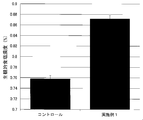
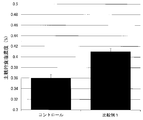
- the subjective salt concentration (%) of the food samples of Example 1 and Comparative Example 1 was measured. Also, as a control of Example 1, the subjective salt concentration (%) of 50% reduced-salt starch syrup without addition of potassium chloride, ammonium chloride, lysine hydrochloride and magnesium chloride was measured, and as a control of Comparative Example 1, chloride was measured. The subjective salt concentration (%) of 50% reduced salt corn cream soup without addition of potassium, ammonium chloride, lysine hydrochloride and magnesium chloride was measured.
- the subjective salt concentration (%) was measured by a specialized panel (5 persons) under a non-blind condition, adjusted to 0.75 to 1.00% sodium chloride equivalent (in 0.05% increments) with Noodle or 0.35
- a simple concentration determination method was performed using a corn cream soup adjusted to ⁇ 0.60% sodium chloride equivalent (in 0.05% increments) as a reference.
- the simple concentration determination method is a method of performing sensory evaluation of saltiness of a sample, and estimating the salt concentration of the sample in light of the relationship between the salt concentration and saltiness of the reference sample. The results are shown in FIG. 1 and FIG.
- the subjective salt concentration (0.872%) of the food sample of Example 1 to which the Cl salt compound was added such that Y 1 / (X 1 + Z 1 ) exceeded 1 ) was significantly higher (p ⁇ 0.001) compared to the subjective salt concentration of the control (0.758%), and it was confirmed that the saltiness of the food sample of Example 1 was effectively enhanced. Moreover, the food sample of Example 1 did not produce off-flavor.
- the subjective salt concentration (0.41%) of the food sample of Comparative Example 1 in which Y 1 / (X 1 + Z 1 ) does not exceed 1 is the subjectivity of the control.
- Test Example 2 (Preparation of food sample) Ammonium chloride, potassium chloride, lysine hydrochloride and magnesium chloride are added to 50% reduced salt noodles in the amounts shown in Table 2 below (total weight of each compound added to the weight of 50% reduced salt noodles), Food samples of Example 2 were prepared.
- the eating concentration (X 1 ) of sodium ion is 139 mol / m 3
- the eating concentration (Y 1 ) of chloride ion is 216 mol / m 3
- the eating concentration of potassium ion (Z 1 ) was 37 mol / m 3 . Therefore, Y 1 / (X 1 + Z 1 ) of the food sample of Example 1 is 1.23.
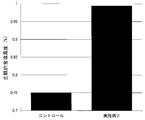
- the subjective salt concentration (%) of the food sample of Example 2 was measured.
- the results are shown in FIG.
- the actual salt concentration (%) of 50% reduced salt starch syrup without addition of ammonium chloride, potassium chloride, lysine hydrochloride and magnesium chloride is also shown in FIG.
- the subjective salt concentration (0.994%) of the food sample of Example 2 to which the Cl salt compound was added such that Y 1 / (X 1 + Z 1 ) exceeded 1 ) was significantly higher than the salt concentration of the control (0.75%, actual salt concentration), and it was confirmed that the saltiness of the food sample of Example 2 was effectively enhanced. Moreover, the food sample of Example 2 did not produce off-flavor. From the results, according to the present invention, it was confirmed that the saltiness of the liquid food can be effectively enhanced by suppressing an increase in sodium intake without generating an off-flavor.
- Example 3 (Preparation of food sample) Ammonium chloride, potassium chloride and lysine hydrochloride are added to a 0.5% aqueous solution of sodium chloride in the amounts shown in Table 3 below (the weight of each compound added to the total weight of the 0.5% aqueous solution of sodium chloride) , Food samples of Example 3 were prepared.
- the dietary concentration (X 0 ) of sodium ion in the 0.5% sodium chloride aqueous solution is 86 mol / m 3
- the dietary concentration (Y 0 ) of chloride ion is 86 mol / m 3
- the dietary concentration of potassium ion is The concentration (Z 0 ) was 0 mol / m 3 . Therefore, Y 0 / (X 0 + Z 0 ) of the 0.5% sodium chloride aqueous solution is 1.
- the food concentration (X 1 ) of sodium ions in the food sample of Example 3 is 86 mol / m 3
- the food concentration (Y 1 ) of chloride ions is 131 mol / m 3
- the food concentration of potassium ions (Z 1 ) was 13 mol / m 3 . Therefore, Y 1 / (X 1 + Z 1 ) of the food sample of Example 3 is 1.31.
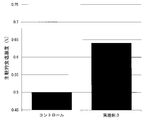
- the subjective salt concentration (%) of the food sample of Example 3 was measured.
- the subjective salt concentration (%) was measured by a specialized panel (4 persons) under blind conditions in a simple concentration determination method using a 0.50 to 0.90% sodium chloride aqueous solution as a reference. The results are shown in FIG.
- the actual salt concentration (%) of 0.5% aqueous sodium chloride solution without addition of ammonium chloride, potassium chloride and lysine hydrochloride is also shown in FIG.
- the subjective salt concentration (0.64%) of the food sample of Example 3 to which the Cl salt compound was added such that Y 1 / (X 1 + Z 1 ) exceeded 1 ) was significantly higher than the salt concentration of the control (0.5%, actual salt concentration), and it was confirmed that the saltiness of the food sample of Example 3 was effectively enhanced. Moreover, the food sample of Example 3 did not produce off-flavor. From the results, according to the present invention, it was confirmed that the saltiness of the liquid food can be effectively enhanced by suppressing an increase in sodium intake without generating an off-flavor.
- Example 4 (Preparation of food sample) Ammonium chloride, potassium chloride and lysine hydrochloride were added to a 50% reduced salted chicken broth in the amounts shown in Table 4 below (the weight of each compound added to the total weight of the 50% reduced salted chicken broth) Then, a food sample of Example 4 was prepared.
- the eating concentration (X 1 ) of sodium ion of the food sample of Example 4 is 69 mol / m 3
- the eating concentration (Y 1 ) of chloride ion is 120 mol / m 3
- the eating concentration of potassium ion (Z 1 ) was 40 mol / m 3 . Therefore, Y 1 / (X 1 + Z 1 ) of the food sample of Example 4 is 1.10.
- the subjective salt concentration (%) of the food sample of Example 4 was measured.
- the results are shown in FIG.
- the actual salt concentration (%) of 50% reduced salted chicken broth without addition of ammonium chloride, potassium chloride and lysine hydrochloride is also shown in FIG.
- the subjective salt concentration (0.598%) of the food sample of Example 4 to which the Cl salt compound was added such that Y 1 / (X 1 + Z 1 ) exceeded 1 ) was significantly higher than the salt concentration of the control (0.39%, actual salt concentration), and it was confirmed that the saltiness of the food sample of Example 4 was effectively enhanced. Moreover, the food sample of Example 4 did not produce off-flavor. From the results, according to the present invention, it was confirmed that the saltiness of the liquid food can be effectively enhanced by suppressing an increase in sodium intake without generating an off-flavor.
- Example 5 (Preparation of food sample) Ammonium chloride, potassium chloride, lysine hydrochloride and magnesium chloride in the amounts shown in Table 5 below (the weight of each compound added with respect to the total weight of 50% reduced-salt corn cream soup) in 50% reduced-salt corn cream soup Were added to prepare a food sample of Example 5.
- the subjective salt concentration (%) of the food sample of Example 5 was measured. Measurement of subjective salt concentration (%) was performed by PSE (Subjective Equivalent Point) method and Probit method under blind conditions by a specialized panel (8 persons). The results are shown in FIG. As a control, the actual salt concentration (%) of 50% reduced-salt corn cream soup without addition of ammonium chloride, potassium chloride, lysine hydrochloride and magnesium chloride is also shown in FIG.
- the subjective salt concentration (0.472%) of the food sample of Example 5 to which the Cl salt compound was added such that Y 1 / (X 1 + Z 1 ) exceeded 1 ) was significantly higher than the salt concentration of the control (0.35%, actual salt concentration), and it was confirmed that the saltiness of the food sample of Example 5 was effectively enhanced. Moreover, the food sample of Example 5 did not produce off-flavor. From the results, according to the present invention, it was confirmed that the saltiness of the liquid food can be effectively enhanced by suppressing an increase in sodium intake without generating an off-flavor.
- Test Example 6 (Preparation of 50% reduced salt noodle broth 2 times concentrated base) 9.06 g of concentrated soy sauce, 1.00 g of mirin, 2.50 g of granulated sugar, 4.00 g of fructose glucose liquid sugar, 0.30 g of sodium glutamate, "honzoku ichiban soup" (trade name, manufactured by Ajinomoto Co., Ltd.) 12 g and 95 Water was added to 1.30 g of a% alcohol so that the total amount would be 100 ml, to prepare a 50% reduced salted starch syrup 2-fold concentrated base.
- a control 1 food sample was prepared by adding water to the 50% reduced salt noodle broth 2-fold concentrated base in the amount (unit: g) shown in Table 6 below.
- the eating concentration (X 0 ) of sodium ions in the food sample of Control 1 is 139 mol / m 3
- the eating concentration (Y 0 ) of chloride ions is 130 mol / m 3
- the eating concentration of potassium ions (Z 0 ) was 10 mol / m 3 . Therefore, Y 0 / (X 0 + Z 0 ) of the control 1 food sample is 0.87.
- Example 2 Water and sodium chloride were added to the 50% reduced salt starch syrup 2-fold concentrated base in the amounts (unit: g) shown in Table 6 below to prepare food samples of Controls 2 and 3. Water, potassium chloride, ammonium chloride, lysine hydrochloride and magnesium chloride are added in the amounts (unit: g) shown in Table 6 below to 50% reduced salt starch syrup 2-fold concentrated, Examples 6 to 10 and Comparative The food sample of Example 2 was prepared. Water, potassium chloride, ammonium chloride, lysine hydrochloride, magnesium chloride and arginine hydrochloride were added in the amounts (unit: g) shown in Table 6 below to 50% reduced salt starch syrup 2-fold concentrated, Example 11 Food samples were prepared.
- the eating concentration (Z 1 ) (unit: mol / m 3 ) of potassium ion is shown in Table 7 below.
- Example 7 (Preparation of food sample) A low-salt round chicken soup stock ("round chicken soup” (trade name, manufactured by Ajinomoto Co., Ltd.) excluding sodium chloride and glutamate) (except that sodium chloride and glutamate are removed from the raw materials) The hot water was added to the amount (unit: g) shown in the following Table 9), and food samples of Control 4 were prepared.
- the eating concentration (X 0 ) of sodium ions in the food sample of Control 4 is 69 mol / m 3
- the eating concentration (Y 0 ) of chloride ions is 66 mol / m 3
- the eating concentration of potassium ions (Z 0 ) was 13 mol / m 3 .
- the Y 0 / (X 0 + Z 0 ) of the control 4 food sample is 0.80.
- Hot water and sodium chloride were added to the base of the low-salt round chicken broth in amounts shown in Table 9 below (unit: g) to prepare food samples of Controls 5 and 6.
- Hot water, potassium chloride, ammonium chloride and lysine hydrochloride are added to the low-salt round chicken broth in the amounts shown in Table 9 below (unit: g), and the food of Examples 12 to 17 and Comparative Example 3 A sample was prepared.
- Hot water, potassium chloride, ammonium chloride, lysine hydrochloride and magnesium chloride are added to the reduced-salt chicken stock in the amounts shown in Table 10 below (unit: g), and the food samples of Examples 18 to 22 Was prepared.
- Test Example 8 (Preparation of food sample)
- Raw material of low-salt corn cream soup ("Knoll (registered trademark) corn cream soup” (trade name, manufactured by Ajinomoto Co., Ltd.) excluding salt) (except that salt is removed from the raw materials) is the same as a normal product
- Hot water was added to the prepared product) in amounts (unit: g) shown in the following Table 15 to prepare a food sample of control 7.
- Eating concentration of sodium ions in food samples of Control 7 (X 0) is 68 mol / m 3
- eating concentration of chloride ions (Y 0) is 60 mol / m 3
- eating potassium ion concentration (Z 0 ) was 15 mol / m 3 .
- Y 0 / (X 0 + Z 0 ) of the food sample of the control 7 is 0.72.
- Hot water and sodium chloride were added to the ingredients of the low-salt corn cream soup in amounts shown in Table 15 below (unit: g) to prepare control 8 and 9 food samples.
- Hot water, potassium chloride, ammonium chloride, lysine hydrochloride and magnesium chloride are added to the ingredients of the low-salt corn cream soup in the amounts shown in Table 15 below (unit: g), and Examples 24 to 28 and Comparative Example 4 Food samples were prepared.
- Hot water, potassium chloride, ammonium chloride, lysine hydrochloride, magnesium chloride and arginine hydrochloride were added to the reduced-salt chicken stock in the amounts shown in Table 15 below (unit: g), and Example 29 Food samples were prepared.
- the eating concentration (Z 1 ) (unit: mol / m 3 ) of potassium ion is shown in Table 16 below.
- the saltiness of the liquid food (corn cream soup) can be preferably enhanced by suppressing the occurrence of off-flavors. That was confirmed.
- the increase in sodium intake can be suppressed, and the saltiness of liquid food can be effectively enhanced. Therefore, according to the present invention, it is possible to provide, for example, a liquid food having sufficient saltiness even when the liquid food is reduced in salt and sodium intake is reduced.
Landscapes
- Health & Medical Sciences (AREA)
- Nutrition Science (AREA)
- Life Sciences & Earth Sciences (AREA)
- Chemical & Material Sciences (AREA)
- Engineering & Computer Science (AREA)
- Food Science & Technology (AREA)
- Polymers & Plastics (AREA)
- Seasonings (AREA)
- General Preparation And Processing Of Foods (AREA)
- Seeds, Soups, And Other Foods (AREA)
- Soy Sauces And Products Related Thereto (AREA)
- Coloring Foods And Improving Nutritive Qualities (AREA)
Abstract
本発明の目的は、ナトリウム摂取量の増加を抑えて、液状食品の塩味を増強させ得る方法を提供することにある。 本発明は、ナトリウムイオン、塩化物イオン及びカリウムイオンの喫食濃度を、それぞれX0mol/m3、Y0mol/m3及びZ0mol/m3としたとき、X0が10~1000の範囲内であり、かつ、X0、Y0及びZ0が下式(I)の関係を充足する液状食品の塩味を増強する方法であって、 塩化カリウム、塩化アンモニウム、塩化カルシウム、塩化マグネシウム、リジン塩酸塩及びアルギニン塩酸塩からなる群より選択される少なくとも一つの化合物(但し、当該化合物が塩化カリウムのみである場合を除く)を添加することを含み、 前記化合物の添加が、化合物添加後の液状食品のナトリウムイオン、塩化物イオン及びカリウムイオンの喫食濃度を、それぞれX1mol/m3、Y1mol/m3及びZ1mol/m3としたとき、X1、Y1及びZ1が下式(II)の関係を充足するように行われる、方法に関する。 Y0/(X0+Z0)≦1 ・・・(I) Y1/(X1+Z1)>1 ・・・(II)
Description
本発明は、液状食品の塩味増強方法及び液状食品用の塩味増強剤に関する。また本発明は、塩味が増強された液状食品及びその製造方法に関する。
塩化ナトリウムを主成分とする食塩は、塩味の付与等の種々の用途で食品に利用されている。しかしながらナトリウムの過剰摂取は、高血圧や心疾患等を引き起こすリスクを高めると考えられている。そのため健康面から、ナトリウム摂取量を低減することが重要視されている。
ナトリウム摂取量は、食品を製造する際に、食塩の使用量を減らすこと(減塩)等により低減できるが、そのような減塩された食品は、塩味の不足により満足感が低下するという問題がある。そのため、ナトリウム摂取量を増加させることなく、食品の塩味を増強する技術の開発が求められている。
一方、不活化酵母並びに塩化ナトリウム、カリウム塩、アンモニウム塩、マグネシウム塩、及びこれらの混合物から選択される塩化合物を含む、塩代替品が、製パン製品中の塩化ナトリウムの量を低減し得ること(特許文献1)、生理学的に使用可能な化合物類の混合物で構成される食品添加用塩組成物において、塩化ナトリウムの組成割合を減らし、代わりにカリウム、マグネシウム、カルシウム等の主要ミネラルをバランスよく配合することにより、食生活における減塩とミネラルバランスの向上を図ることができること(特許文献2)、メチオノールに塩味増強作用があり、これを含有する塩味増強剤は、さらに塩化カリウム、塩化マグネシウム、塩化アンモニウム等を含有し得ること(特許文献3)、塩化カリウムや塩化ナトリウム等のアルカリ土類金属塩化物、塩化マグネシウムや塩化カルシウム等のアルカリ金属塩化物、並びに塩化アンモニウムを、共結晶化することにより、微生物の抑制特性に優れ、易流動性であり、かつ分離しない塩生成物が得られること(特許文献4)が、従来報告されている。しかしながら、特許文献1~4のいずれにも、液状食品におけるナトリウムイオン、塩化物イオン及びカリウムイオンの喫食濃度が特定の関係を充足することにより、当該液状食品の塩味が増強することは記載されていない。
本発明は、ナトリウム摂取量の増加を抑えて、液状食品の塩味を増強させ得る方法の提供を目的とする。
本発明者らは、上述の課題を解決するべく種々検討した結果、塩化物イオン(Cl-)が食品の塩味に寄与し得、また塩化物イオンが塩味に寄与する程度は、塩化物イオンの由来する化合物の種類によって差違があることを見出した。また本発明者らは、更に検討を進めた結果、液状食品におけるナトリウムイオン、塩化物イオン及びカリウムイオンの喫食濃度が特定の関係を充足するように、当該液状食品に、塩化物イオンを含む特定の化合物を添加することにより、当該液状食品の塩味を増強させ得ることを見出した。
本発明者らは、これらの知見に基づき、さらに研究を重ねることによって、本発明を完成するに至った。
即ち、本発明は以下の通りである。
本発明者らは、これらの知見に基づき、さらに研究を重ねることによって、本発明を完成するに至った。
即ち、本発明は以下の通りである。
[1]ナトリウムイオン、塩化物イオン及びカリウムイオンの喫食濃度を、それぞれX0mol/m3、Y0mol/m3及びZ0mol/m3としたとき、X0が10~1000の範囲内であり、かつ、X0、Y0及びZ0が下式(I)の関係を充足する液状食品の塩味を増強する方法であって、
塩化カリウム、塩化アンモニウム、塩化カルシウム、塩化マグネシウム、リジン塩酸塩及びアルギニン塩酸塩からなる群より選択される少なくとも一つの化合物(但し、当該化合物が塩化カリウムのみである場合を除く)を添加することを含み、
前記化合物の添加が、化合物添加後の液状食品のナトリウムイオン、塩化物イオン及びカリウムイオンの喫食濃度を、それぞれX1mol/m3、Y1mol/m3及びZ1mol/m3としたとき、X1、Y1及びZ1が下式(II)の関係を充足するように行われる、方法。
Y0/(X0+Z0)≦1 ・・・(I)
Y1/(X1+Z1)>1 ・・・(II)
[2]前記化合物が、塩化カリウム、塩化アンモニウム、塩化カルシウム、塩化マグネシウム及びリジン塩酸塩からなる群より選択される少なくとも一つである、[1]記載の方法。
[3]Y1が10~1000の範囲内である、[1]又は[2]記載の方法。
[4]Y0とY1の比(Y1/Y0)が、1.01~5.0である、[1]~[3]のいずれか一つに記載の方法。
[5]Z0とZ1の比(Z1/Z0)が、1.1~10である、[1]~[4]のいずれか一つに記載の方法。
[6]X1、Y1及びZ1が、下式(III)の関係を更に充足する、[1]~[5]のいずれか一つに記載の方法。
1.35>Y1/(X1+Z1) ・・・(III)
[7]前記化合物が、塩化カリウム、塩化アンモニウム、塩化カルシウム、塩化マグネシウム、リジン塩酸塩及びアルギニン塩酸塩からなる群より選択される三つの化合物を含む、[1]及び[3]~[6]のいずれか一つに記載の方法。
[8]前記化合物が、塩化カリウム、塩化アンモニウム、塩化カルシウム、塩化マグネシウム及びリジン塩酸塩からなる群より選択される三つの化合物を含む、[1]~[7]のいずれか一つに記載の方法。
[9]前記化合物が、塩化カリウム、塩化アンモニウム及びリジン塩酸塩を含む、[1]~[8]のいずれか一つに記載の方法。
[10]塩化カリウム、塩化アンモニウム、塩化カルシウム、塩化マグネシウム、リジン塩酸塩及びアルギニン塩酸塩からなる群より選択される少なくとも一つの化合物(但し、当該化合物が塩化カリウムのみである場合を除く)を含有する、液状食品用の塩味増強剤であって、
前記液状食品は、ナトリウムイオン、塩化物イオン及びカリウムイオンの喫食濃度を、それぞれX0mol/m3、Y0mol/m3及びZ0mol/m3としたとき、X0が10~1000の範囲内であり、かつ、X0、Y0及びZ0が下式(I)の関係を充足し、
塩味増強剤添加後の液状食品のナトリウムイオン、塩化物イオン及びカリウムイオンの喫食濃度を、それぞれX1mol/m3、Y1mol/m3及びZ1mol/m3としたとき、X1、Y1及びZ1が下式(II)の関係を充足するように添加される、塩味増強剤。
Y0/(X0+Z0)≦1 ・・・(I)
Y1/(X1+Z1)>1 ・・・(II)
[11]前記化合物が、塩化カリウム、塩化アンモニウム、塩化カルシウム、塩化マグネシウム及びリジン塩酸塩からなる群より選択される少なくとも一つである、[10]記載の剤。
[12]Y1が10~1000の範囲内である、[10]又は[11]記載の剤。
[13]Y0とY1の比(Y1/Y0)が、1.01~5.0である、[10]~[12]のいずれか一つに記載の剤。
[14]Z0とZ1の比(Z1/Z0)が、1.1~10である、[10]~[13]のいずれか一つに記載の剤。
[15]X1、Y1及びZ1が下式(III)の関係を更に充足する、[10]~[14]のいずれか一つに記載の剤。
1.35>Y1/(X1+Z1) ・・・(III)
[16]塩化カリウム、塩化アンモニウム、塩化カルシウム、塩化マグネシウム、リジン塩酸塩及びアルギニン塩酸塩からなる群より選択される三つの化合物を含有する、[10]及び[12]~[15]のいずれか一つに記載の剤。
[17]塩化カリウム、塩化アンモニウム、塩化カルシウム、塩化マグネシウム及びリジン塩酸塩からなる群より選択される三つの化合物を含有する、[10]~[16]のいずれか一つに記載の剤。
[18]塩化カリウム、塩化アンモニウム及びリジン塩酸塩を含有する、[10]~[17]のいずれか一つに記載の剤。
[19]ナトリウムイオン、塩化物イオン及びカリウムイオンの喫食濃度を、それぞれX1mol/m3、Y1mol/m3及びZ1mol/m3としたとき、X1、Y1及びZ1が下式(II)の関係を充足する液状食品であって、
ナトリウムイオン、塩化物イオン及びカリウムイオンの喫食濃度を、それぞれX0mol/m3、Y0mol/m3及びZ0mol/m3としたとき、X0が10~1000の範囲内であり、かつ、X0、Y0及びZ0が下式(I)の関係を充足する液状食品に、塩化カリウム、塩化アンモニウム、塩化カルシウム、塩化マグネシウム、リジン塩酸塩及びアルギニン塩酸塩からなる群より選択される少なくとも一つの化合物(但し、当該化合物が塩化カリウムのみである場合を除く)が添加されてなる、液状食品。
Y0/(X0+Z0)≦1 ・・・(I)
Y1/(X1+Z1)>1 ・・・(II)
[20]前記化合物が、塩化カリウム、塩化アンモニウム、塩化カルシウム、塩化マグネシウム及びリジン塩酸塩からなる群より選択される少なくとも一つである、[19]記載の食品。
[21]Y1が10~1000の範囲内である、[19]又は[20]記載の食品。
[22]Y0とY1の比(Y1/Y0)が、1.01~5.0である、[19]~[21]のいずれか一つに記載の食品。
[23]Z0とZ1の比(Z1/Z0)が、1.1~10である、[19]~[22]のいずれか一つに記載の食品。
[24]X1、Y1及びZ1が下式(III)の関係を更に充足する、[19]~[23]のいずれか一つに記載の食品。
1.35>Y1/(X1+Z1) ・・・(III)
[25]前記化合物が、塩化カリウム、塩化アンモニウム、塩化カルシウム、塩化マグネシウム、リジン塩酸塩及びアルギニン塩酸塩からなる群より選択される三つの化合物を含む、[19]及び[21]~[24]のいずれか一つに記載の食品。
[26]前記化合物が、塩化カリウム、塩化アンモニウム、塩化カルシウム、塩化マグネシウム及びリジン塩酸塩からなる群より選択される三つの化合物を含む、[19]~[25]のいずれか一つに記載の食品。
[27]前記化合物が、塩化カリウム、塩化アンモニウム及びリジン塩酸塩を含む、[19]~[26]のいずれか一つに記載の食品。
[28]ナトリウムイオン、塩化物イオン及びカリウムイオンの喫食濃度を、それぞれX0mol/m3、Y0mol/m3及びZ0mol/m3としたとき、X0が10~1000の範囲内であり、かつ、X0、Y0及びZ0が下式(I)の関係を充足する液状食品に、塩化カリウム、塩化アンモニウム、塩化カルシウム、塩化マグネシウム、リジン塩酸塩及びアルギニン塩酸塩からなる群より選択される少なくとも一つの化合物(但し、当該化合物が塩化カリウムのみである場合を除く)を添加することを含み、
前記化合物の添加が、化合物添加後の液状食品のナトリウムイオン、塩化物イオン及びカリウムイオンの喫食濃度を、それぞれX1mol/m3、Y1mol/m3及びZ1mol/m3としたとき、X1、Y1及びZ1が下式(II)の関係を充足するように行われる、液状食品の製造方法。
Y0/(X0+Z0)≦1 ・・・(I)
Y1/(X1+Z1)>1 ・・・(II)
[29]前記化合物が、塩化カリウム、塩化アンモニウム、塩化カルシウム、塩化マグネシウム及びリジン塩酸塩からなる群より選択される少なくとも一つである、[28]記載の製造方法。
[30]Y1が10~1000の範囲内である、[28]又は[29]記載の製造方法。
[31]Y0とY1の比(Y1/Y0)が、1.01~5.0である、[28]~[30]のいずれか一つに記載の製造方法。
[32]Z0とZ1の比(Z1/Z0)が、1.1~10である、[28]~[31]のいずれか一つに記載の製造方法。
[33]X1、Y1及びZ1が下式(III)の関係を更に充足する、[28]~[32]のいずれか一つに記載の製造方法。
1.35>Y1/(X1+Z1) ・・・(III)
[34]前記化合物が、塩化カリウム、塩化アンモニウム、塩化カルシウム、塩化マグネシウム、リジン塩酸塩及びアルギニン塩酸塩からなる群より選択される三つの化合物を含む、[28]及び[30]~[33]のいずれか一つに記載の製造方法。
[35]前記化合物が、塩化カリウム、塩化アンモニウム、塩化カルシウム、塩化マグネシウム及びリジン塩酸塩からなる群より選択される三つの化合物を含む、[28]~[34]のいずれか一つに記載の製造方法。
[36]前記化合物が、塩化カリウム、塩化アンモニウム及びリジン塩酸塩を含む、[28]~[35]のいずれか一つに記載の製造方法。
[37]塩化カリウム、塩化アンモニウム、塩化カルシウム、塩化マグネシウム、リジン塩酸塩及びアルギニン塩酸塩からなる群より選択される少なくとも一つの化合物(但し、当該化合物が塩化カリウムのみである場合を除く)を含有する、液状食品用組成物であって、
前記組成物添加後の液状食品のナトリウムイオン、塩化物イオン及びカリウムイオンの喫食濃度を、それぞれX1mol/m3、Y1mol/m3及びZ1mol/m3としたとき、X1、Y1及びZ1が下式(II)の関係を充足するように添加され、
前記液状食品が、つゆ及びスープからなる群より選択される、組成物。
Y1/(X1+Z1)>1 ・・・(II)
[38]前記化合物が、塩化カリウム、塩化アンモニウム、塩化カルシウム、塩化マグネシウム及びリジン塩酸塩からなる群より選択される少なくとも一つである、[37]記載の組成物。
[39]液状食品用組成物が、液状食品の塩味増強用組成物である、[37]又は[38]記載の組成物。
[40]液状食品が、減塩食品である、[37]~[39]のいずれか一つに記載の組成物。
[41]Y1が10~1000の範囲内である、[37]~[40]のいずれか一つに記載の組成物。
[42]Y0とY1の比(Y1/Y0)が、1.01~5.0である、[37]~[41]のいずれか一つに記載の組成物。
[43]Z0とZ1の比(Z1/Z0)が、1.1~10である、[37]~[42]のいずれか一つに記載の組成物。
[44]X1、Y1及びZ1が下式(III)の関係を更に充足する、[37]~[43]のいずれか一つに記載の組成物。
1.35>Y1/(X1+Z1) ・・・(III)
[45]塩化カリウム、塩化アンモニウム、塩化カルシウム、塩化マグネシウム、リジン塩酸塩及びアルギニン塩酸塩からなる群より選択される三つの化合物を含有する、[37]及び[39]~[44]のいずれか一つに記載の組成物。
[46]塩化カリウム、塩化アンモニウム、塩化カルシウム、塩化マグネシウム及びリジン塩酸塩からなる群より選択される三つの化合物を含有する、[37]~[45]のいずれか一つに記載の組成物。
[47]塩化カリウム、塩化アンモニウム及びリジン塩酸塩を含有する、[37]~[46]のいずれか一つに記載の組成物。
塩化カリウム、塩化アンモニウム、塩化カルシウム、塩化マグネシウム、リジン塩酸塩及びアルギニン塩酸塩からなる群より選択される少なくとも一つの化合物(但し、当該化合物が塩化カリウムのみである場合を除く)を添加することを含み、
前記化合物の添加が、化合物添加後の液状食品のナトリウムイオン、塩化物イオン及びカリウムイオンの喫食濃度を、それぞれX1mol/m3、Y1mol/m3及びZ1mol/m3としたとき、X1、Y1及びZ1が下式(II)の関係を充足するように行われる、方法。
Y0/(X0+Z0)≦1 ・・・(I)
Y1/(X1+Z1)>1 ・・・(II)
[2]前記化合物が、塩化カリウム、塩化アンモニウム、塩化カルシウム、塩化マグネシウム及びリジン塩酸塩からなる群より選択される少なくとも一つである、[1]記載の方法。
[3]Y1が10~1000の範囲内である、[1]又は[2]記載の方法。
[4]Y0とY1の比(Y1/Y0)が、1.01~5.0である、[1]~[3]のいずれか一つに記載の方法。
[5]Z0とZ1の比(Z1/Z0)が、1.1~10である、[1]~[4]のいずれか一つに記載の方法。
[6]X1、Y1及びZ1が、下式(III)の関係を更に充足する、[1]~[5]のいずれか一つに記載の方法。
1.35>Y1/(X1+Z1) ・・・(III)
[7]前記化合物が、塩化カリウム、塩化アンモニウム、塩化カルシウム、塩化マグネシウム、リジン塩酸塩及びアルギニン塩酸塩からなる群より選択される三つの化合物を含む、[1]及び[3]~[6]のいずれか一つに記載の方法。
[8]前記化合物が、塩化カリウム、塩化アンモニウム、塩化カルシウム、塩化マグネシウム及びリジン塩酸塩からなる群より選択される三つの化合物を含む、[1]~[7]のいずれか一つに記載の方法。
[9]前記化合物が、塩化カリウム、塩化アンモニウム及びリジン塩酸塩を含む、[1]~[8]のいずれか一つに記載の方法。
[10]塩化カリウム、塩化アンモニウム、塩化カルシウム、塩化マグネシウム、リジン塩酸塩及びアルギニン塩酸塩からなる群より選択される少なくとも一つの化合物(但し、当該化合物が塩化カリウムのみである場合を除く)を含有する、液状食品用の塩味増強剤であって、
前記液状食品は、ナトリウムイオン、塩化物イオン及びカリウムイオンの喫食濃度を、それぞれX0mol/m3、Y0mol/m3及びZ0mol/m3としたとき、X0が10~1000の範囲内であり、かつ、X0、Y0及びZ0が下式(I)の関係を充足し、
塩味増強剤添加後の液状食品のナトリウムイオン、塩化物イオン及びカリウムイオンの喫食濃度を、それぞれX1mol/m3、Y1mol/m3及びZ1mol/m3としたとき、X1、Y1及びZ1が下式(II)の関係を充足するように添加される、塩味増強剤。
Y0/(X0+Z0)≦1 ・・・(I)
Y1/(X1+Z1)>1 ・・・(II)
[11]前記化合物が、塩化カリウム、塩化アンモニウム、塩化カルシウム、塩化マグネシウム及びリジン塩酸塩からなる群より選択される少なくとも一つである、[10]記載の剤。
[12]Y1が10~1000の範囲内である、[10]又は[11]記載の剤。
[13]Y0とY1の比(Y1/Y0)が、1.01~5.0である、[10]~[12]のいずれか一つに記載の剤。
[14]Z0とZ1の比(Z1/Z0)が、1.1~10である、[10]~[13]のいずれか一つに記載の剤。
[15]X1、Y1及びZ1が下式(III)の関係を更に充足する、[10]~[14]のいずれか一つに記載の剤。
1.35>Y1/(X1+Z1) ・・・(III)
[16]塩化カリウム、塩化アンモニウム、塩化カルシウム、塩化マグネシウム、リジン塩酸塩及びアルギニン塩酸塩からなる群より選択される三つの化合物を含有する、[10]及び[12]~[15]のいずれか一つに記載の剤。
[17]塩化カリウム、塩化アンモニウム、塩化カルシウム、塩化マグネシウム及びリジン塩酸塩からなる群より選択される三つの化合物を含有する、[10]~[16]のいずれか一つに記載の剤。
[18]塩化カリウム、塩化アンモニウム及びリジン塩酸塩を含有する、[10]~[17]のいずれか一つに記載の剤。
[19]ナトリウムイオン、塩化物イオン及びカリウムイオンの喫食濃度を、それぞれX1mol/m3、Y1mol/m3及びZ1mol/m3としたとき、X1、Y1及びZ1が下式(II)の関係を充足する液状食品であって、
ナトリウムイオン、塩化物イオン及びカリウムイオンの喫食濃度を、それぞれX0mol/m3、Y0mol/m3及びZ0mol/m3としたとき、X0が10~1000の範囲内であり、かつ、X0、Y0及びZ0が下式(I)の関係を充足する液状食品に、塩化カリウム、塩化アンモニウム、塩化カルシウム、塩化マグネシウム、リジン塩酸塩及びアルギニン塩酸塩からなる群より選択される少なくとも一つの化合物(但し、当該化合物が塩化カリウムのみである場合を除く)が添加されてなる、液状食品。
Y0/(X0+Z0)≦1 ・・・(I)
Y1/(X1+Z1)>1 ・・・(II)
[20]前記化合物が、塩化カリウム、塩化アンモニウム、塩化カルシウム、塩化マグネシウム及びリジン塩酸塩からなる群より選択される少なくとも一つである、[19]記載の食品。
[21]Y1が10~1000の範囲内である、[19]又は[20]記載の食品。
[22]Y0とY1の比(Y1/Y0)が、1.01~5.0である、[19]~[21]のいずれか一つに記載の食品。
[23]Z0とZ1の比(Z1/Z0)が、1.1~10である、[19]~[22]のいずれか一つに記載の食品。
[24]X1、Y1及びZ1が下式(III)の関係を更に充足する、[19]~[23]のいずれか一つに記載の食品。
1.35>Y1/(X1+Z1) ・・・(III)
[25]前記化合物が、塩化カリウム、塩化アンモニウム、塩化カルシウム、塩化マグネシウム、リジン塩酸塩及びアルギニン塩酸塩からなる群より選択される三つの化合物を含む、[19]及び[21]~[24]のいずれか一つに記載の食品。
[26]前記化合物が、塩化カリウム、塩化アンモニウム、塩化カルシウム、塩化マグネシウム及びリジン塩酸塩からなる群より選択される三つの化合物を含む、[19]~[25]のいずれか一つに記載の食品。
[27]前記化合物が、塩化カリウム、塩化アンモニウム及びリジン塩酸塩を含む、[19]~[26]のいずれか一つに記載の食品。
[28]ナトリウムイオン、塩化物イオン及びカリウムイオンの喫食濃度を、それぞれX0mol/m3、Y0mol/m3及びZ0mol/m3としたとき、X0が10~1000の範囲内であり、かつ、X0、Y0及びZ0が下式(I)の関係を充足する液状食品に、塩化カリウム、塩化アンモニウム、塩化カルシウム、塩化マグネシウム、リジン塩酸塩及びアルギニン塩酸塩からなる群より選択される少なくとも一つの化合物(但し、当該化合物が塩化カリウムのみである場合を除く)を添加することを含み、
前記化合物の添加が、化合物添加後の液状食品のナトリウムイオン、塩化物イオン及びカリウムイオンの喫食濃度を、それぞれX1mol/m3、Y1mol/m3及びZ1mol/m3としたとき、X1、Y1及びZ1が下式(II)の関係を充足するように行われる、液状食品の製造方法。
Y0/(X0+Z0)≦1 ・・・(I)
Y1/(X1+Z1)>1 ・・・(II)
[29]前記化合物が、塩化カリウム、塩化アンモニウム、塩化カルシウム、塩化マグネシウム及びリジン塩酸塩からなる群より選択される少なくとも一つである、[28]記載の製造方法。
[30]Y1が10~1000の範囲内である、[28]又は[29]記載の製造方法。
[31]Y0とY1の比(Y1/Y0)が、1.01~5.0である、[28]~[30]のいずれか一つに記載の製造方法。
[32]Z0とZ1の比(Z1/Z0)が、1.1~10である、[28]~[31]のいずれか一つに記載の製造方法。
[33]X1、Y1及びZ1が下式(III)の関係を更に充足する、[28]~[32]のいずれか一つに記載の製造方法。
1.35>Y1/(X1+Z1) ・・・(III)
[34]前記化合物が、塩化カリウム、塩化アンモニウム、塩化カルシウム、塩化マグネシウム、リジン塩酸塩及びアルギニン塩酸塩からなる群より選択される三つの化合物を含む、[28]及び[30]~[33]のいずれか一つに記載の製造方法。
[35]前記化合物が、塩化カリウム、塩化アンモニウム、塩化カルシウム、塩化マグネシウム及びリジン塩酸塩からなる群より選択される三つの化合物を含む、[28]~[34]のいずれか一つに記載の製造方法。
[36]前記化合物が、塩化カリウム、塩化アンモニウム及びリジン塩酸塩を含む、[28]~[35]のいずれか一つに記載の製造方法。
[37]塩化カリウム、塩化アンモニウム、塩化カルシウム、塩化マグネシウム、リジン塩酸塩及びアルギニン塩酸塩からなる群より選択される少なくとも一つの化合物(但し、当該化合物が塩化カリウムのみである場合を除く)を含有する、液状食品用組成物であって、
前記組成物添加後の液状食品のナトリウムイオン、塩化物イオン及びカリウムイオンの喫食濃度を、それぞれX1mol/m3、Y1mol/m3及びZ1mol/m3としたとき、X1、Y1及びZ1が下式(II)の関係を充足するように添加され、
前記液状食品が、つゆ及びスープからなる群より選択される、組成物。
Y1/(X1+Z1)>1 ・・・(II)
[38]前記化合物が、塩化カリウム、塩化アンモニウム、塩化カルシウム、塩化マグネシウム及びリジン塩酸塩からなる群より選択される少なくとも一つである、[37]記載の組成物。
[39]液状食品用組成物が、液状食品の塩味増強用組成物である、[37]又は[38]記載の組成物。
[40]液状食品が、減塩食品である、[37]~[39]のいずれか一つに記載の組成物。
[41]Y1が10~1000の範囲内である、[37]~[40]のいずれか一つに記載の組成物。
[42]Y0とY1の比(Y1/Y0)が、1.01~5.0である、[37]~[41]のいずれか一つに記載の組成物。
[43]Z0とZ1の比(Z1/Z0)が、1.1~10である、[37]~[42]のいずれか一つに記載の組成物。
[44]X1、Y1及びZ1が下式(III)の関係を更に充足する、[37]~[43]のいずれか一つに記載の組成物。
1.35>Y1/(X1+Z1) ・・・(III)
[45]塩化カリウム、塩化アンモニウム、塩化カルシウム、塩化マグネシウム、リジン塩酸塩及びアルギニン塩酸塩からなる群より選択される三つの化合物を含有する、[37]及び[39]~[44]のいずれか一つに記載の組成物。
[46]塩化カリウム、塩化アンモニウム、塩化カルシウム、塩化マグネシウム及びリジン塩酸塩からなる群より選択される三つの化合物を含有する、[37]~[45]のいずれか一つに記載の組成物。
[47]塩化カリウム、塩化アンモニウム及びリジン塩酸塩を含有する、[37]~[46]のいずれか一つに記載の組成物。
本発明によれば、ナトリウム摂取量の増加を抑えて、液状食品の塩味を効果的に増強させ得る。したがって、本発明によれば、例えば、液状食品を減塩し、ナトリウム摂取量を低減した場合であっても、十分な塩味を有する液状食品を提供できる。
(塩味増強方法)
本発明は、塩化物イオンを含む特定の化合物を添加することを含む、液状食品の塩味を増強する方法(本明細書中、「本発明の塩味増強方法」と称する場合がある)を提供する。
本発明は、塩化物イオンを含む特定の化合物を添加することを含む、液状食品の塩味を増強する方法(本明細書中、「本発明の塩味増強方法」と称する場合がある)を提供する。
本発明の塩味増強方法は、塩化カリウム、塩化アンモニウム、塩化カルシウム、塩化マグネシウム、リジン塩酸塩及びアルギニン塩酸塩からなる群、好ましくは、塩化カリウム、塩化アンモニウム、塩化カルシウム、塩化マグネシウム及びリジン塩酸塩からなる群、より好ましくは、塩化カリウム、塩化アンモニウム、塩化マグネシウム及びリジン塩酸塩からなる群より選択される化合物(本明細書中、便宜上「Cl塩化合物」と称する場合がある)を添加することを含む。Cl塩化合物は、前記化合物のうち、いずれか一つのみからなるものであってよく(但し、当該化合物が塩化カリウムのみである場合を除く)、又はいずれか二つ以上(好ましくは、三つ以上)からなるものであってもよい。
本発明の塩味増強方法において用いられるCl塩化合物は、一態様として、塩化カリウム、塩化アンモニウム、塩化マグネシウム、リジン塩酸塩及びアルギニン塩酸塩からなる群より選択されることが好ましい。
本発明の塩味増強方法において用いられるCl塩化合物は、塩化カリウム、塩化アンモニウム、塩化カルシウム、塩化マグネシウム、リジン塩酸塩及びアルギニン塩酸塩からなる群(好ましくは、塩化カリウム、塩化アンモニウム、塩化カルシウム、塩化マグネシウム及びリジン塩酸塩からなる群)より選択される三つの化合物を少なくとも含むものであり得る。その場合、塩化カリウム、塩化アンモニウム、塩化カルシウム、塩化マグネシウム、リジン塩酸塩及びアルギニン塩酸塩からなる群(好ましくは、塩化カリウム、塩化アンモニウム、塩化カルシウム、塩化マグネシウム及びリジン塩酸塩からなる群)より選択される三つの化合物の組み合わせとしては、例えば、
(a)塩化カリウム、塩化アンモニウム及び塩化カルシウム、
(b)塩化カリウム、塩化アンモニウム及び塩化マグネシウム、
(c)塩化カリウム、塩化アンモニウム及びリジン塩酸塩、
(d)塩化カリウム、塩化カルシウム及びリジン塩酸塩、
(e)塩化カリウム、塩化マグネシウム及びリジン塩酸塩、
(f)塩化アンモニウム、塩化カルシウム及びリジン塩酸塩、並びに
(g)塩化アンモニウム、塩化マグネシウム及びリジン塩酸塩
等が挙げられ、各Cl塩化合物中の塩化物イオンの塩味への寄与度及び各Cl塩化合物の添加濃度と風味との関係の観点から、好ましくは、(c)塩化カリウム、塩化アンモニウム及びリジン塩酸塩である。
(a)塩化カリウム、塩化アンモニウム及び塩化カルシウム、
(b)塩化カリウム、塩化アンモニウム及び塩化マグネシウム、
(c)塩化カリウム、塩化アンモニウム及びリジン塩酸塩、
(d)塩化カリウム、塩化カルシウム及びリジン塩酸塩、
(e)塩化カリウム、塩化マグネシウム及びリジン塩酸塩、
(f)塩化アンモニウム、塩化カルシウム及びリジン塩酸塩、並びに
(g)塩化アンモニウム、塩化マグネシウム及びリジン塩酸塩
等が挙げられ、各Cl塩化合物中の塩化物イオンの塩味への寄与度及び各Cl塩化合物の添加濃度と風味との関係の観点から、好ましくは、(c)塩化カリウム、塩化アンモニウム及びリジン塩酸塩である。
本発明の塩味増強方法において用いられるCl塩化合物が、塩化カリウム、塩化アンモニウム及びリジン塩酸塩を含む場合、塩化カリウムの添加量と塩化アンモニウムの添加量の重量比(塩化カリウム:塩化アンモニウム)は、各Cl塩化合物中の塩化物イオンの塩味への寄与度及び各Cl塩化合物の添加濃度と風味との関係の観点から、好ましくは1:0.01~1であり、より好ましくは1:0.05~0.75であり、特に好ましくは1:0.1~0.5である。また、この場合、塩化カリウムの添加量とリジン塩酸塩の添加量の重量比(塩化カリウム:リジン塩酸塩)は、各Cl塩化合物中の塩化物イオンの塩味への寄与度及び各Cl塩化合物の添加濃度と風味との関係の観点から、好ましくは1:0.5~15であり、より好ましくは1:1~12であり、特に好ましくは1:1.5~10である。
本発明の塩味増強方法において用いられるCl塩化合物が、塩化カリウム、塩化アンモニウム及びリジン塩酸塩を少なくとも含む場合、当該Cl塩化合物は、一態様として、塩化マグネシウム及び/又はアルギニン塩酸塩を更に含み得る。
本発明の塩味増強方法において用いられるCl塩化合物が、塩化カリウム、塩化アンモニウム及びリジン塩酸塩に加え、塩化マグネシウム及び/又はアルギニン塩酸塩を更に含む場合、塩化カリウムの添加量と塩化マグネシウムの添加量の重量比(塩化カリウム:塩化マグネシウム)は、各Cl塩化合物中の塩化物イオンの塩味への寄与度及び各Cl塩化合物の添加濃度と風味との関係の観点から、好ましくは1:0.01~3であり、より好ましくは1:0.05~2であり、特に好ましくは1:0.1~1.5である。また、この場合、塩化カリウムの添加量とアルギニン塩酸塩の添加量の重量比(塩化カリウム:アルギニン塩酸塩)は、各Cl塩化合物中の塩化物イオンの塩味への寄与度及び各Cl塩化合物の添加濃度と風味との関係の観点から、好ましくは1:0.05~10であり、より好ましくは1:0.1~5であり、特に好ましくは1:0.3~3である。
本発明の塩味増強方法において用いられる塩化カリウム、塩化アンモニウム、塩化カルシウム、塩化マグネシウム、リジン塩酸塩及びアルギニン塩酸塩の製造方法は、いずれも特に制限されず、自体公知の方法(例えば、化学合成法、酵素法、発酵法等)によって製造したものを用いてよい。これらの化合物は市販品を用いてもよく、簡便であることから好ましい。
本発明の塩味増強方法は、Cl塩化合物を添加することに加え、本発明の目的を損なわない限り、Cl塩化合物以外の物質を添加することを任意で含んでよい。
本発明の塩味増強方法によって、塩味を増強し得る「液状食品」とは、25℃において流動性を有する食品をいう。液状食品は、固形の成分、具材を含むものであってよい。液状食品の具体例としては、例えば、めんつゆ、うどんつゆ、そばつゆ、ソーメンつゆ、ラーメンスープ、ちゃんぽんスープ等のつゆ(例、麺類のつゆ等);丸鶏がらスープ、中華風スープ、コーンクリームスープ、ポタージュスープ、コンソメスープ、カレー風味スープ、お吸い物、味噌汁等のスープ等が挙げられるが、これらに限定されない。
本発明の塩味増強方法によって、塩味を増強し得る液状食品は、減塩食品であってよい。本発明において「減塩食品」とは、喫食時の食塩濃度が、その食品の一般的な食塩濃度に比べて低い食品をいう。本発明において、喫食時の食塩濃度が、その食品の一般的な食塩濃度に対して、A%である食品を、「A%減塩食品」といい、本発明の塩味増強方法によって、塩味を増強し得る液状食品は、好ましくは20~80%減塩食品(すなわち、喫食時の食塩濃度が、その食品の一般的な食塩濃度に対して、20~80%である食品)であり、より好ましくは30~70%減塩食品(すなわち、喫食時の食塩濃度が、その食品の一般的な食塩濃度に対して、30~70%である食品)である。
本発明の塩味増強方法によって塩味が増強される前の液状食品(すなわち、Cl塩化合物添加前の液状食品)は、そのナトリウムイオン(Na+)、塩化物イオン(Cl-)及びカリウムイオン(K+)の喫食濃度を、それぞれX0mol/m3、Y0mol/m3及びZ0mol/m3としたとき、当該X0、Y0及びZ0が、特定の関係を充足することが好ましい。
具体的には、X0、Y0及びZ0は、下式(I)の関係を充足することが好ましく、本発明の塩味増強効果がより顕著に発揮され得ることから、下式(I’)の関係を充足することがより好ましく、下式(I’’)の関係を充足することが特に好ましい。
Y0/(X0+Z0)≦1 ・・・(I)
Y0/(X0+Z0)≦0.95 ・・・(I’)
Y0/(X0+Z0)≦0.9 ・・・(I’’)
具体的には、X0、Y0及びZ0は、下式(I)の関係を充足することが好ましく、本発明の塩味増強効果がより顕著に発揮され得ることから、下式(I’)の関係を充足することがより好ましく、下式(I’’)の関係を充足することが特に好ましい。
Y0/(X0+Z0)≦1 ・・・(I)
Y0/(X0+Z0)≦0.95 ・・・(I’)
Y0/(X0+Z0)≦0.9 ・・・(I’’)
本発明において、X0及びZ0(すなわち、Cl塩化合物添加前の液状食品におけるナトリウムイオン及びカリウムイオンの喫食濃度)は、それぞれ原子吸光度法により測定されるナトリウムイオン及びカリウムイオンの重量と、喫食時の液状食品の重量とから算出される。また、Y0(すなわち、Cl塩化合物添加前の液状食品における塩化物イオンの喫食濃度)は、電位差滴定法により測定される塩化物イオンの重量と、喫食時の液状食品の重量とから算出される。
本発明において「喫食濃度」とは、喫食に適した状態の液状食品における濃度をいう。例えば、液状食品が、喫食に適した状態になるために水等で希釈することを必要とする濃縮物である場合は、濃縮物における濃度を、当該濃縮物を喫食に適した状態とするための希釈倍率で換算することにより、喫食濃度を算出し得る。
尚、液状食品が、固形の成分、具材を含むものである場合、当該固形の成分、具材に含まれるナトリウムイオン、塩化物イオン及びカリウムイオンは、X0、Y0及びZ0に算入されない。
本発明において「喫食濃度」とは、喫食に適した状態の液状食品における濃度をいう。例えば、液状食品が、喫食に適した状態になるために水等で希釈することを必要とする濃縮物である場合は、濃縮物における濃度を、当該濃縮物を喫食に適した状態とするための希釈倍率で換算することにより、喫食濃度を算出し得る。
尚、液状食品が、固形の成分、具材を含むものである場合、当該固形の成分、具材に含まれるナトリウムイオン、塩化物イオン及びカリウムイオンは、X0、Y0及びZ0に算入されない。
X0(Cl塩化合物添加前の液状食品におけるナトリウムイオンの喫食濃度)は、通常10~1000(mol/m3)の範囲内であり、ナトリウム摂取量の増加をなるべく抑える観点から、好ましくは10~600(mol/m3)の範囲内であり、より好ましくは10~400(mol/m3)の範囲内である。
Y0(Cl塩化合物添加前の液状食品における塩化物イオンの喫食濃度)は、通常10~1000(mol/m3)の範囲内であり、好ましくは10~600(mol/m3)の範囲内であり、より好ましくは10~400(mol/m3)の範囲内である。
Z0(Cl塩化合物添加前の液状食品におけるカリウムイオンの喫食濃度)は、通常0~300(mol/m3)の範囲内であり、好ましくは0~200(mol/m3)の範囲内であり、より好ましくは0~50(mol/m3)の範囲内である。
本発明の塩味増強方法は、Cl塩化合物の添加が、Cl塩化合物添加後の液状食品のナトリウムイオン、塩化物イオン及びカリウムイオンの喫食濃度を、それぞれX1mol/m3、Y1mol/m3及びZ1mol/m3としたとき、当該X1、Y1及びZ1が、特定の関係を充足するように、行われることが好ましい。当該X1、Y1及びZ1が、特定の関係を充足することにより、液状食品の塩味が効果的に増強し得る。
具体的には、X1、Y1及びZ1は下式(II)の関係を充足することが好ましく、より好ましい塩味を提供し得ることから、下式(II’)の関係を充足することがより好ましく、下式(II’’)の関係を充足することが特に好ましい。
Y1/(X1+Z1)>1 ・・・(II)
Y1/(X1+Z1)>1.05 ・・・(II’)
Y1/(X1+Z1)>1.1 ・・・(II’’)
具体的には、X1、Y1及びZ1は下式(II)の関係を充足することが好ましく、より好ましい塩味を提供し得ることから、下式(II’)の関係を充足することがより好ましく、下式(II’’)の関係を充足することが特に好ましい。
Y1/(X1+Z1)>1 ・・・(II)
Y1/(X1+Z1)>1.05 ・・・(II’)
Y1/(X1+Z1)>1.1 ・・・(II’’)
X1、Y1及びZ1は、前述の特定の関係を充足することに加え、更に、下式(III)の関係を充足することが好ましく、下式(III’)の関係を充足することがより好ましく、下式(III’’)の関係を充足することが更に好ましく、下式(III’’’)の関係を充足することが特に好ましく、下式(III’’’’)の関係を充足することが最も好ましい。X1、Y1及びZ1が、当該関係を充足することにより、異風味の発生を抑え得る。異風味が強くなると、好ましい塩味が損なわれる場合があり、異風味の発生を抑えることによって、より好ましい塩味を増強し得る。
1.35>Y1/(X1+Z1) ・・・(III)
1.33>Y1/(X1+Z1) ・・・(III’)
1.3>Y1/(X1+Z1) ・・・(III’’)
1.25>Y1/(X1+Z1) ・・・(III’’’)
1.2>Y1/(X1+Z1) ・・・(III’’’’)
1.35>Y1/(X1+Z1) ・・・(III)
1.33>Y1/(X1+Z1) ・・・(III’)
1.3>Y1/(X1+Z1) ・・・(III’’)
1.25>Y1/(X1+Z1) ・・・(III’’’)
1.2>Y1/(X1+Z1) ・・・(III’’’’)
本発明において、X1、Y1及びZ1(すなわち、Cl塩化合物添加後の液状食品におけるナトリウムイオン、塩化物イオン及びカリウムイオンの喫食濃度)は、それぞれ、上述の方法により測定したCl塩化合物添加前の液状食品におけるナトリウムイオン、塩化物イオン及びカリウムイオンの喫食濃度(X0、Y0及びZ0)と、Cl塩化合物の添加量から算出される。
X1(Cl塩化合物添加後の液状食品におけるナトリウムイオンの喫食濃度)は、X0(Cl塩化合物添加前の液状食品におけるナトリウムイオンの喫食濃度)と同程度であることが好ましい。具体的には、X1は、通常10~1000(mol/m3)の範囲内であり、ナトリウム摂取量の増加をなるべく抑える観点から、好ましくは10~600(mol/m3)の範囲内であり、より好ましくは10~400(mol/m3)の範囲内である。
Y1(Cl塩化合物添加後の液状食品における塩化物イオンの喫食濃度)は、より好ましい塩味を提供し得ることから、好ましくは10~1000(mol/m3)の範囲内であり、より好ましくは10~800(mol/m3)の範囲内であり、特に好ましくは10~600(mol/m3)の範囲内である。
Z1(Cl塩化合物添加後の液状食品におけるカリウムイオンの喫食濃度)は、より好ましい塩味を提供し得ることから、好ましくは1~300(mol/m3)の範囲内であり、より好ましくは5~200(mol/m3)の範囲内であり、特に好ましくは10~100(mol/m3)の範囲内である。
Y0とY1の比(Y1/Y0)は、塩味をより増強し得ることから、好ましくは1.01~5.0であり、より好ましくは1.05~2.5であり、特に好ましくは1.1~2.0である。
Z0とZ1の比(Z1/Z0)は、塩味をより増強し得、好ましい風味を提供し得ることから、好ましくは1.1~10であり、より好ましくは1.1~7であり、特に好ましくは1.1~5である。
本発明の塩味増強方法において、Cl塩化合物を液状食品に添加する時期は特に限定されず、いかなる時点で添加してもよいが、例えば、液状食品の製造中、液状食品の完成後(例、液状食品の喫食直前、液状食品の喫食中等)等が挙げられる。液状食品の製造に用いられる食品原料にCl塩化合物を予め添加してもよい。
本発明の塩味増強方法によれば、ナトリウム摂取量の増加を抑えて、液状食品の塩味を効果的に増強させ得る。液状食品の塩味の評価は、自体公知の方法で行えばよく、例えば、後述の実施例の方法等で行い得る。
また本発明の塩味増強方法によれば、異風味を生じることなく、ナトリウム摂取量の増加を抑えて、液状食品の塩味を効果的に増強させ得る。本発明において「異風味」とは、通常の液状食品には感じられない不快な味(例、苦味等)、風味をいう。異風味の有無や程度は、専門パネルによる官能評価によって評価できる。
また本発明の塩味増強方法によれば、異風味を生じることなく、ナトリウム摂取量の増加を抑えて、液状食品の塩味を効果的に増強させ得る。本発明において「異風味」とは、通常の液状食品には感じられない不快な味(例、苦味等)、風味をいう。異風味の有無や程度は、専門パネルによる官能評価によって評価できる。
本発明の塩味増強方法は、本発明の目的を損なわない限り、自体公知の塩味増強方法と併用してよい。
(塩味増強剤)
本発明は、塩化物イオンを含む特定の化合物を含有する、液状食品用の塩味増強剤(本明細書中、「本発明の塩味増強剤」と称する場合がある)を提供する。
本発明は、塩化物イオンを含む特定の化合物を含有する、液状食品用の塩味増強剤(本明細書中、「本発明の塩味増強剤」と称する場合がある)を提供する。
本発明の塩味増強剤は、本発明の塩味増強方法において用いられるCl塩化合物と同様の化合物を含有し得、その好ましい態様(例、化合物の数、組合せ等)も、本発明の塩味増強方法に関して説明したものと同様である。
本発明の塩味増強剤の形態は特に制限されず、例えば、固体状(粉末状、顆粒状等を含む)、液体状(スラリー状等を含む)、ゲル状、ペースト状等が挙げられる。
本発明の塩味増強剤は、Cl塩化合物のみからなるものであってよいが、本発明の目的を損なわない限り、Cl塩化合物に加えて、Cl塩化合物以外の成分(例えば、食品添加物の分野において慣用の基剤等)を任意で含有してよい。本発明の塩味増強剤におけるCl塩化合物の含有量は、通常0.1~100重量%であり、より好ましくは1~99重量%である。ここで「本発明の塩味増強剤におけるCl塩化合物の含有量」とは、Cl塩化合物が一つの化合物のみからなる場合は、その化合物の含有量であり、Cl塩化合物が二つ以上の化合物からなる場合は、それらの化合物の合計の含有量である。
本発明の塩味増強剤の形態が液体状の場合の基剤としては、例えば、水、エタノール、グリセリン、プロピレングリコール、各種動植物油類等が挙げられる。
本発明の塩味増強剤の形態が固体状の場合の基剤としては、例えば、澱粉、デキストリン、シクロデキストリン、スクロースやグルコースなどの各種糖類、蛋白質、ペプチド、固形脂、二酸化ケイ素、およびそれらの混合物、また酵母菌体や各種の粉末エキス類等が挙げられる。
本発明の塩味増強剤の形態が固体状の場合の基剤としては、例えば、澱粉、デキストリン、シクロデキストリン、スクロースやグルコースなどの各種糖類、蛋白質、ペプチド、固形脂、二酸化ケイ素、およびそれらの混合物、また酵母菌体や各種の粉末エキス類等が挙げられる。
本発明の塩味増強剤は、本発明の目的を損なわない限り、Cl塩化合物に加えて、例えば、賦形剤、pH調整剤、酸化防止剤、増粘安定剤、甘味料(例、砂糖類等)、酸味料、香辛料、着色料等を更に含有してよい。
本発明の塩味増強剤の製造は、食品添加物の分野において慣用の手法により行い得る。本発明の塩味増強剤は、例えば、濃縮処理、乾燥処理、脱色処理等を、単独で又は組み合わせて施されてもよい。
本発明の塩味増強剤は、液状食品用であること、すなわち液状食品の塩味を増強するために用いられることが好ましい。本発明の塩味増強剤を使用し得る「液状食品」は、本発明の塩味増強方法によって塩味が増強され得る「液状食品」と同様であり、その具体例も同様である。
本発明の塩味増強剤が添加される前の液状食品は、そのナトリウムイオン、塩化物イオン及びカリウムイオンの喫食濃度を、それぞれX0mol/m3、Y0mol/m3及びZ0mol/m3としたとき、当該X0、Y0及びZ0は、本発明の塩味増強方法におけるX0、Y0及びZ0と同様の特定の関係を充足することが好ましく、また当該X0、Y0及びZ0は、それぞれ本発明の塩味増強方法におけるX0、Y0及びZ0と同様の範囲内であることが好ましい。
本発明の塩味増強剤は、塩味増強剤添加後の液状食品のナトリウムイオン、塩化物イオン及びカリウムイオンの喫食濃度を、それぞれX1mol/m3、Y1mol/m3及びZ1mol/m3としたとき、当該X1、Y1及びZ1が、本発明の塩味増強方法におけるX1、Y1及びZ1と同様の特定の関係を充足するように添加されることが好ましく、また当該X1、Y1及びZ1は、それぞれ本発明の塩味増強方法におけるX1、Y1及びZ1と同様の範囲内であることが好ましい。
Y0とY1の比、及びZ0とZ1の比は、それぞれ本発明の塩味増強方法におけるY0とY1の比、及びZ0とZ1の比と同様の範囲内であることが好ましい。
本発明の塩味増強剤を液状食品に添加する時期は特に限定されず、いかなる時点で添加してもよいが、例えば、液状食品の製造中、液状食品の完成後(例、液状食品の喫食直前、液状食品の喫食中等)等が挙げられる。液状食品の製造に用いられる食品原料に本発明の塩味増強剤を予め添加してもよい。
本発明の塩味増強剤によれば、ナトリウム摂取量の増加を抑えて、液状食品の塩味を効果的に増強させ得る。
また本発明の塩味増強剤によれば、異風味を生じることなく、ナトリウム摂取量の増加を抑えて、液状食品の塩味を効果的に増強させ得る。
また本発明の塩味増強剤によれば、異風味を生じることなく、ナトリウム摂取量の増加を抑えて、液状食品の塩味を効果的に増強させ得る。
本発明の塩味増強剤は、本発明の目的を損なわない限り、自体公知の塩味増強剤、塩味増強用組成物等と併用してよい。
本発明の塩味増強剤は、上述の通り、液状食品用であり得ることから、本発明の塩味増強剤は、液状食品用組成物(本明細書中、「本発明の組成物」と称する場合がある)としても提供され得る。本発明の組成物は、液状食品の塩味増強用組成物であることが好ましい。
(液状食品)
本発明は、塩化物イオンを含む特定の化合物が添加されてなる液状食品(本明細書中、「本発明の液状食品」と称する場合がある)を提供する。
本発明は、塩化物イオンを含む特定の化合物が添加されてなる液状食品(本明細書中、「本発明の液状食品」と称する場合がある)を提供する。
本発明の「液状食品」とは、本発明の塩味増強方法における「液状食品」と同様のものをいい、その具体例も同様である。
本発明の液状食品は、ナトリウムイオン、塩化物イオン及びカリウムイオンの喫食濃度を、それぞれX1mol/m3、Y1mol/m3及びZ1mol/m3としたとき、当該X1、Y1及びZ1が、本発明の塩味増強方法におけるX1、Y1及びZ1と同様の特定の関係を充足することが好ましく、また当該X1、Y1及びZ1は、それぞれ本発明の塩味増強方法におけるX1、Y1及びZ1と同様の範囲内であることが好ましい。
本発明の液状食品は、ナトリウムイオン、塩化物イオン及びカリウムイオンの喫食濃度を、それぞれX0mol/m3、Y0mol/m3及びZ0mol/m3としたとき、当該X0、Y0及びZ0が、本発明の塩味増強方法におけるX0、Y0及びZ0と同様の特定の関係を充足する液状食品に、本発明の塩味増強方法において用いられるCl塩化合物と同様の化合物を添加されてなることが好ましい。当該X0、Y0及びZ0は、それぞれ本発明の塩味増強方法におけるX0、Y0及びZ0と同様の範囲内であることが好ましい。また液状食品に添加される化合物の好ましい態様(例、化合物の数、組合せ等)は、本発明の塩味増強方法に関して説明したCl塩化合物と同様である。
Y0とY1の比、及びZ0とZ1の比は、それぞれ本発明の塩味増強方法におけるY0とY1の比、及びZ0とZ1の比と同様の範囲内であることが好ましい。
本発明の液状食品は、喫食に適した状態で提供(販売、流通)されるものであってよく、又は喫食に適した状態になるための所定の処理や調理を必要とする態様で提供されるものであってもよい。例えば、本発明の液状食品は、喫食に適した状態となるために水等で希釈することを必要とする濃縮物等として提供されてよい。
(液状食品の製造方法)
本発明の液状食品の製造方法(本明細書中、「本発明の製造方法」と称する場合がある)は、ナトリウムイオン、塩化物イオン及びカリウムイオンの喫食濃度を、それぞれX0mol/m3、Y0mol/m3及びZ0mol/m3としたとき、当該X0、Y0及びZ0が、本発明の塩味増強方法におけるX0、Y0及びZ0と同様の特定の関係を充足する液状食品に、本発明の塩味増強方法において用いられるCl塩化合物と同様の化合物を添加することを含む。また本発明の製造方法は、当該化合物の添加が、化合物添加後の液状食品のナトリウムイオン、塩化物イオン及びカリウムイオンの喫食濃度を、それぞれX1mol/m3、Y1mol/m3及びZ1mol/m3としたとき、当該X1、Y1及びZ1が、本発明の塩味増強方法におけるX1、Y1及びZ1と同様の特定の関係を充足するように行われることが好ましく、当該X1、Y1及びZ1は、それぞれ本発明の塩味増強方法におけるX1、Y1及びZ1と同様の範囲内であることが好ましい。
本発明の液状食品の製造方法(本明細書中、「本発明の製造方法」と称する場合がある)は、ナトリウムイオン、塩化物イオン及びカリウムイオンの喫食濃度を、それぞれX0mol/m3、Y0mol/m3及びZ0mol/m3としたとき、当該X0、Y0及びZ0が、本発明の塩味増強方法におけるX0、Y0及びZ0と同様の特定の関係を充足する液状食品に、本発明の塩味増強方法において用いられるCl塩化合物と同様の化合物を添加することを含む。また本発明の製造方法は、当該化合物の添加が、化合物添加後の液状食品のナトリウムイオン、塩化物イオン及びカリウムイオンの喫食濃度を、それぞれX1mol/m3、Y1mol/m3及びZ1mol/m3としたとき、当該X1、Y1及びZ1が、本発明の塩味増強方法におけるX1、Y1及びZ1と同様の特定の関係を充足するように行われることが好ましく、当該X1、Y1及びZ1は、それぞれ本発明の塩味増強方法におけるX1、Y1及びZ1と同様の範囲内であることが好ましい。
Y0とY1の比、及びZ0とZ1の比は、それぞれ本発明の塩味増強方法におけるY0とY1の比、及びZ0とZ1の比と同様の範囲内であることが好ましい。
本発明の製造方法は、液状食品に特定の化合物を添加すること含むこと以外は特に制限されず、製造する液状食品の種類等に応じて、液状食品の製造に通常用いられる材料(食材、調味料等)を用い、液状食品の製造において慣用の処理工程、調理工程を適宜行ってよい。
本発明の製造方法によれば、ナトリウム摂取量を低減した場合であっても、十分な塩味を有する液状食品を提供できる。
また本発明の製造方法によれば、ナトリウム摂取量を低減した場合であっても、十分な塩味を有し、かつ、異風味の生じない液状食品を提供できる。
また本発明の製造方法によれば、ナトリウム摂取量を低減した場合であっても、十分な塩味を有し、かつ、異風味の生じない液状食品を提供できる。
以下の実施例において本発明を更に具体的に説明するが、本発明はこれらの例によってなんら限定されるものではない。尚、以下の実施例において「%」と記載されている場合は、特に断りのない限り「重量%」を意味する。
以下の実施例において、Cl塩化合物添加前のナトリウムイオン及びカリウムイオンの喫食濃度(X0及びZ0)は、原子吸光度法により一般財団法人日本食品分析センターにおいて測定した重量から算出した。また、塩化物イオンの喫食濃度(Y0)は、電位差滴定法により一般財団法人日本食品分析センターにおいて測定した重量から算出した。尚、測定した重量から喫食濃度を計算する際、小数点以下第一位を四捨五入した。Cl塩化合物添加後のナトリウムイオン、塩化物イオンおよびカリウムイオンの喫食濃度(X1、Y1及びZ1)は添加したCl塩化合物の質量から算出した。
以下の試験例1、2、4及び5において用いた「50%減塩めんつゆ」、「50%減塩丸鶏がらスープ」及び「50%減塩コーンクリームスープ」は、それぞれ下記の方法で調製した。
(50%減塩めんつゆの調製)
50%減塩めんつゆは、濃口醤油9.06g、みりん1.00g、グラニュー糖2.50g、果糖ブドウ糖液糖4.00g、グルタミン酸ナトリウム0.30g、「本造り一番だし」(商品名、味の素株式会社製)12g及び95%アルコール1.30gに、水を全量が100mlとなるように加えて調製したものを、更に水で2倍希釈して調製した。
調製した50%減塩めんつゆのナトリウムイオンの喫食濃度(X0)は、139mol/m3であり、塩化物イオンの喫食濃度(Y0)は、130mol/m3であり、カリウムイオンの喫食濃度(Z0)は、10mol/m3であった。したがって、当該50%減塩めんつゆのY0/(X0+Z0)は、0.87である。
50%減塩めんつゆは、濃口醤油9.06g、みりん1.00g、グラニュー糖2.50g、果糖ブドウ糖液糖4.00g、グルタミン酸ナトリウム0.30g、「本造り一番だし」(商品名、味の素株式会社製)12g及び95%アルコール1.30gに、水を全量が100mlとなるように加えて調製したものを、更に水で2倍希釈して調製した。
調製した50%減塩めんつゆのナトリウムイオンの喫食濃度(X0)は、139mol/m3であり、塩化物イオンの喫食濃度(Y0)は、130mol/m3であり、カリウムイオンの喫食濃度(Z0)は、10mol/m3であった。したがって、当該50%減塩めんつゆのY0/(X0+Z0)は、0.87である。
(50%減塩丸鶏がらスープの調製)
50%減塩丸鶏がらスープは、「丸鶏がらスープ」(商品名、味の素株式会社製)から食塩及びグルタミン酸ナトリウムを除いたもの(原材料から食塩及びグルタミン酸ナトリウムを除いたこと以外は、通常の製品と同様に作製されたもの)2gに、お湯を全量が100mlとなるように加え、溶解して調製した。
調製した50%減塩丸鶏がらスープのナトリウムイオンの喫食濃度(X0)は、69mol/m3であり、塩化物イオンの喫食濃度(Y0)は、66mol/m3であり、カリウムイオンの喫食濃度(Z0)は、13mol/m3であった。したがって、当該50%減塩丸鶏がらスープのY0/(X0+Z0)は、0.80である。
50%減塩丸鶏がらスープは、「丸鶏がらスープ」(商品名、味の素株式会社製)から食塩及びグルタミン酸ナトリウムを除いたもの(原材料から食塩及びグルタミン酸ナトリウムを除いたこと以外は、通常の製品と同様に作製されたもの)2gに、お湯を全量が100mlとなるように加え、溶解して調製した。
調製した50%減塩丸鶏がらスープのナトリウムイオンの喫食濃度(X0)は、69mol/m3であり、塩化物イオンの喫食濃度(Y0)は、66mol/m3であり、カリウムイオンの喫食濃度(Z0)は、13mol/m3であった。したがって、当該50%減塩丸鶏がらスープのY0/(X0+Z0)は、0.80である。
(50%減塩コーンクリームスープの調製)
50%減塩コーンクリームスープは、「クノール(登録商標)コーンクリームスープ」(商品名、味の素株式会社製)から食塩を除いたもの(原材料から食塩を除いたこと以外は、通常の製品と同様に作製されたもの)18gに、水を全量が150mlとなるように加え、溶解して調製した。
調製した50%減塩コーンクリームスープのナトリウムイオンの喫食濃度(X0)は、68mol/m3であり、塩化物イオンの喫食濃度(Y0)は、60mol/m3であり、カリウムイオンの喫食濃度(Z0)は、15mol/m3であった。したがって、当該50%減塩コーンクリームスープのY0/(X0+Z0)は、0.72である。
50%減塩コーンクリームスープは、「クノール(登録商標)コーンクリームスープ」(商品名、味の素株式会社製)から食塩を除いたもの(原材料から食塩を除いたこと以外は、通常の製品と同様に作製されたもの)18gに、水を全量が150mlとなるように加え、溶解して調製した。
調製した50%減塩コーンクリームスープのナトリウムイオンの喫食濃度(X0)は、68mol/m3であり、塩化物イオンの喫食濃度(Y0)は、60mol/m3であり、カリウムイオンの喫食濃度(Z0)は、15mol/m3であった。したがって、当該50%減塩コーンクリームスープのY0/(X0+Z0)は、0.72である。
<試験例1>
(食品サンプルの調製)
50%減塩めんつゆに、下表1に示される量(50%減塩めんつゆの全重量に対する、添加した各化合物の重量)で、塩化カリウム、塩化アンモニウム、リジン塩酸塩及び塩化マグネシウムを添加し、実施例1の食品サンプルを調製した。
50%減塩コーンクリームスープに、下表1に示される量(50%減塩コーンクリームスープの全重量に対する、添加した各化合物の重量)で、塩化カリウム、塩化アンモニウム、リジン塩酸塩及び塩化マグネシウムを添加し、比較例1の食品サンプルを調製した。
(食品サンプルの調製)
50%減塩めんつゆに、下表1に示される量(50%減塩めんつゆの全重量に対する、添加した各化合物の重量)で、塩化カリウム、塩化アンモニウム、リジン塩酸塩及び塩化マグネシウムを添加し、実施例1の食品サンプルを調製した。
50%減塩コーンクリームスープに、下表1に示される量(50%減塩コーンクリームスープの全重量に対する、添加した各化合物の重量)で、塩化カリウム、塩化アンモニウム、リジン塩酸塩及び塩化マグネシウムを添加し、比較例1の食品サンプルを調製した。

実施例1の食品サンプルの、ナトリウムイオンの喫食濃度(X1)は、139mol/m3であり、塩化物イオンの喫食濃度(Y1)は、162mol/m3であり、カリウムイオンの喫食濃度(Z1)は、20mol/m3であった。したがって、実施例1の食品サンプルのY1/(X1+Z1)は、1.02である。
比較例1の食品サンプルの、ナトリウムイオンの喫食濃度(X1)は、68mol/m3であり、塩化物イオンの喫食濃度(Y1)は、92mol/m3であり、カリウムイオンの喫食濃度(Z1)は、25mol/m3であった。したがって、比較例1の食品サンプルのY1/(X1+Z1)は、0.99である。
(塩味増強効果の評価)
実施例1及び比較例1の食品サンプルの主観的食塩濃度(%)を測定した。また実施例1のコントロールとして、塩化カリウム、塩化アンモニウム、リジン塩酸塩及び塩化マグネシウムを添加していない50%減塩めんつゆの主観的食塩濃度(%)を測定し、比較例1のコントロールとして、塩化カリウム、塩化アンモニウム、リジン塩酸塩及び塩化マグネシウムを添加していない50%減塩コーンクリームスープの主観的食塩濃度(%)を測定した。
主観的食塩濃度(%)の測定は、専門パネル(5名)により、ノンブラインド条件で、0.75~1.00%塩化ナトリウム相当(0.05%刻み)に調整しためんつゆ又は0.35~0.60%塩化ナトリウム相当(0.05%刻み)に調整したコーンクリームスープを参照に用いた簡易的濃度決定法にて行った。ここで簡易的濃度決定法とは、試料の塩味の官能評価を行い、その結果を、参照用サンプルの食塩濃度と塩味の関係に照らして、試料の食塩濃度を推定する方法である。
結果を図1及び図2に示す。
実施例1及び比較例1の食品サンプルの主観的食塩濃度(%)を測定した。また実施例1のコントロールとして、塩化カリウム、塩化アンモニウム、リジン塩酸塩及び塩化マグネシウムを添加していない50%減塩めんつゆの主観的食塩濃度(%)を測定し、比較例1のコントロールとして、塩化カリウム、塩化アンモニウム、リジン塩酸塩及び塩化マグネシウムを添加していない50%減塩コーンクリームスープの主観的食塩濃度(%)を測定した。
主観的食塩濃度(%)の測定は、専門パネル(5名)により、ノンブラインド条件で、0.75~1.00%塩化ナトリウム相当(0.05%刻み)に調整しためんつゆ又は0.35~0.60%塩化ナトリウム相当(0.05%刻み)に調整したコーンクリームスープを参照に用いた簡易的濃度決定法にて行った。ここで簡易的濃度決定法とは、試料の塩味の官能評価を行い、その結果を、参照用サンプルの食塩濃度と塩味の関係に照らして、試料の食塩濃度を推定する方法である。
結果を図1及び図2に示す。
図1に示される結果から明らかなように、Y1/(X1+Z1)が1を超えるようにCl塩化合物が添加された実施例1の食品サンプルの主観的食塩濃度(0.872%)は、コントロールの主観的食塩濃度(0.758%)に比べて有意に高く(p<0.001)、実施例1の食品サンプルの塩味が効果的に増強したことが確認された。また実施例1の食品サンプルは、異風味を生じていなかった。
一方、図2に示される結果から明らかなように、Y1/(X1+Z1)が1を超えない比較例1の食品サンプルの主観的食塩濃度(0.41%)は、コントロールの主観的食塩濃度(0.36%)と有意な差はなく(p>0.01)、実施例1と同一のCl塩化合物(塩化カリウム、塩化アンモニウム、リジン塩酸塩及び塩化マグネシウム)を同一の濃度で添加されているにもかかわらず、所望の塩味増強効果が得られなかった。
これらの結果から、Cl塩化合物を添加して液状食品の塩味を効果的に増強させるには、Y1/(X1+Z1)が1を超えるように添加することが重要であることが示唆された。
一方、図2に示される結果から明らかなように、Y1/(X1+Z1)が1を超えない比較例1の食品サンプルの主観的食塩濃度(0.41%)は、コントロールの主観的食塩濃度(0.36%)と有意な差はなく(p>0.01)、実施例1と同一のCl塩化合物(塩化カリウム、塩化アンモニウム、リジン塩酸塩及び塩化マグネシウム)を同一の濃度で添加されているにもかかわらず、所望の塩味増強効果が得られなかった。
これらの結果から、Cl塩化合物を添加して液状食品の塩味を効果的に増強させるには、Y1/(X1+Z1)が1を超えるように添加することが重要であることが示唆された。
<試験例2>
(食品サンプルの調製)
50%減塩めんつゆに、下表2に示される量(50%減塩めんつゆの重量に対する、添加した各化合物の全重量)で、塩化アンモニウム、塩化カリウム、リジン塩酸塩及び塩化マグネシウムを添加し、実施例2の食品サンプルを調製した。
(食品サンプルの調製)
50%減塩めんつゆに、下表2に示される量(50%減塩めんつゆの重量に対する、添加した各化合物の全重量)で、塩化アンモニウム、塩化カリウム、リジン塩酸塩及び塩化マグネシウムを添加し、実施例2の食品サンプルを調製した。
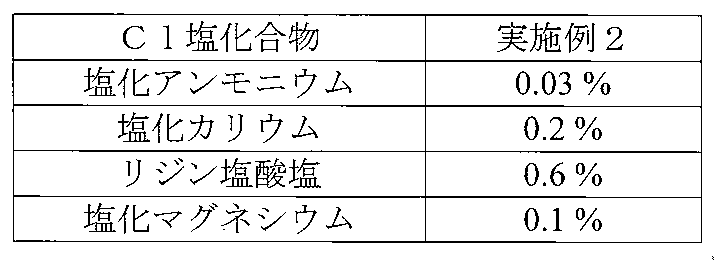
実施例2の食品サンプルの、ナトリウムイオンの喫食濃度(X1)は、139mol/m3であり、塩化物イオンの喫食濃度(Y1)は、216mol/m3であり、カリウムイオンの喫食濃度(Z1)は、37mol/m3であった。したがって、実施例1の食品サンプルのY1/(X1+Z1)は、1.23である。
(塩味増強効果の評価)
実施例2の食品サンプルの主観的食塩濃度(%)を測定した。主観的食塩濃度(%)の測定は、専門パネル(5名)の2回繰り返し試験(n=10)により、ブラインド条件で、PSE(主観的等価点)法及びプロビット法にて行った。
結果を図3に示す。コントロールとして、塩化アンモニウム、塩化カリウム、リジン塩酸塩及び塩化マグネシウムを添加していない50%減塩めんつゆの実際の食塩濃度(%)も図3に示す。
実施例2の食品サンプルの主観的食塩濃度(%)を測定した。主観的食塩濃度(%)の測定は、専門パネル(5名)の2回繰り返し試験(n=10)により、ブラインド条件で、PSE(主観的等価点)法及びプロビット法にて行った。
結果を図3に示す。コントロールとして、塩化アンモニウム、塩化カリウム、リジン塩酸塩及び塩化マグネシウムを添加していない50%減塩めんつゆの実際の食塩濃度(%)も図3に示す。
図3に示される結果から明らかなように、Y1/(X1+Z1)が1を超えるようにCl塩化合物が添加された実施例2の食品サンプルの主観的食塩濃度(0.994%)は、コントロールの食塩濃度(0.75%、実際の食塩濃度)に比べて顕著に高く、実施例2の食品サンプルの塩味が効果的に増強したことが確認された。また実施例2の食品サンプルは、異風味を生じていなかった。
当該結果から、本発明によれば、異風味を生じることなく、ナトリウム摂取量の増加を抑えて、液状食品の塩味を効果的に増強させ得ることが確認された。
当該結果から、本発明によれば、異風味を生じることなく、ナトリウム摂取量の増加を抑えて、液状食品の塩味を効果的に増強させ得ることが確認された。
<試験例3>
(食品サンプルの調製)
0.5%塩化ナトリウム水溶液に、下表3に示される量(0.5%塩化ナトリウム水溶液の全重量に対する、添加した各化合物の重量)で、塩化アンモニウム、塩化カリウム及びリジン塩酸塩を添加し、実施例3の食品サンプルを調製した。
(食品サンプルの調製)
0.5%塩化ナトリウム水溶液に、下表3に示される量(0.5%塩化ナトリウム水溶液の全重量に対する、添加した各化合物の重量)で、塩化アンモニウム、塩化カリウム及びリジン塩酸塩を添加し、実施例3の食品サンプルを調製した。
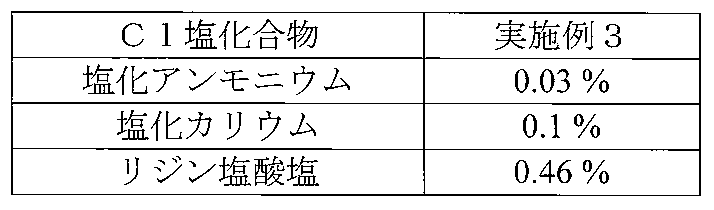
0.5%塩化ナトリウム水溶液の、ナトリウムイオンの喫食濃度(X0)は、86mol/m3であり、塩化物イオンの喫食濃度(Y0)は、86mol/m3であり、カリウムイオンの喫食濃度(Z0)は、0mol/m3であった。したがって、当該0.5%塩化ナトリウム水溶液のY0/(X0+Z0)は、1である。
また実施例3の食品サンプルのナトリウムイオンの喫食濃度(X1)は、86mol/m3であり、塩化物イオンの喫食濃度(Y1)は、131mol/m3であり、カリウムイオンの喫食濃度(Z1)は、13mol/m3であった。したがって、実施例3の食品サンプルのY1/(X1+Z1)は、1.31である。
また実施例3の食品サンプルのナトリウムイオンの喫食濃度(X1)は、86mol/m3であり、塩化物イオンの喫食濃度(Y1)は、131mol/m3であり、カリウムイオンの喫食濃度(Z1)は、13mol/m3であった。したがって、実施例3の食品サンプルのY1/(X1+Z1)は、1.31である。
(塩味増強効果の評価)
実施例3の食品サンプルの主観的食塩濃度(%)を測定した。主観的食塩濃度(%)の測定は、専門パネル(4名)により、ブラインド条件で、0.50~0.90%塩化ナトリウム水溶液を参照に用いた簡易的濃度決定法にて行った。
結果を図4に示す。コントロールとして、塩化アンモニウム、塩化カリウム及びリジン塩酸塩を添加していない0.5%塩化ナトリウム水溶液の実際の食塩濃度(%)も図4に示す。
実施例3の食品サンプルの主観的食塩濃度(%)を測定した。主観的食塩濃度(%)の測定は、専門パネル(4名)により、ブラインド条件で、0.50~0.90%塩化ナトリウム水溶液を参照に用いた簡易的濃度決定法にて行った。
結果を図4に示す。コントロールとして、塩化アンモニウム、塩化カリウム及びリジン塩酸塩を添加していない0.5%塩化ナトリウム水溶液の実際の食塩濃度(%)も図4に示す。
図4に示される結果から明らかなように、Y1/(X1+Z1)が1を超えるようにCl塩化合物が添加された実施例3の食品サンプルの主観的食塩濃度(0.64%)は、コントロールの食塩濃度(0.5%、実際の食塩濃度)に比べて顕著に高く、実施例3の食品サンプルの塩味が効果的に増強したことが確認された。また実施例3の食品サンプルは、異風味を生じていなかった。
当該結果から、本発明によれば、異風味を生じることなく、ナトリウム摂取量の増加を抑えて、液状食品の塩味を効果的に増強させ得ることが確認された。
当該結果から、本発明によれば、異風味を生じることなく、ナトリウム摂取量の増加を抑えて、液状食品の塩味を効果的に増強させ得ることが確認された。
<試験例4>
(食品サンプルの調製)
50%減塩丸鶏がらスープに、下表4に示される量(50%減塩丸鶏がらスープの全重量に対する、添加した各化合物の重量)で、塩化アンモニウム、塩化カリウム及びリジン塩酸塩を添加し、実施例4の食品サンプルを調製した。
(食品サンプルの調製)
50%減塩丸鶏がらスープに、下表4に示される量(50%減塩丸鶏がらスープの全重量に対する、添加した各化合物の重量)で、塩化アンモニウム、塩化カリウム及びリジン塩酸塩を添加し、実施例4の食品サンプルを調製した。

実施例4の食品サンプルの、ナトリウムイオンの喫食濃度(X1)は、69mol/m3であり、塩化物イオンの喫食濃度(Y1)は、120mol/m3であり、カリウムイオンの喫食濃度(Z1)は、40mol/m3であった。したがって、実施例4の食品サンプルのY1/(X1+Z1)は、1.10である。
(塩味増強効果の評価)
実施例4の食品サンプルの主観的食塩濃度(%)を測定した。主観的食塩濃度(%)の測定は、専門パネル(4名)の2回繰り返し試験(n=8)により、ブラインド条件で、PSE(主観的等価点)法及びプロビット法にて行った。
結果を図5に示す。コントロールとして、塩化アンモニウム、塩化カリウム及びリジン塩酸塩を添加していない50%減塩丸鶏がらスープの実際の食塩濃度(%)も図5に示す。
実施例4の食品サンプルの主観的食塩濃度(%)を測定した。主観的食塩濃度(%)の測定は、専門パネル(4名)の2回繰り返し試験(n=8)により、ブラインド条件で、PSE(主観的等価点)法及びプロビット法にて行った。
結果を図5に示す。コントロールとして、塩化アンモニウム、塩化カリウム及びリジン塩酸塩を添加していない50%減塩丸鶏がらスープの実際の食塩濃度(%)も図5に示す。
図5に示される結果から明らかなように、Y1/(X1+Z1)が1を超えるようにCl塩化合物が添加された実施例4の食品サンプルの主観的食塩濃度(0.598%)は、コントロールの食塩濃度(0.39%、実際の食塩濃度)に比べて顕著に高く、実施例4の食品サンプルの塩味が効果的に増強したことが確認された。また実施例4の食品サンプルは、異風味を生じていなかった。
当該結果から、本発明によれば、異風味を生じることなく、ナトリウム摂取量の増加を抑えて、液状食品の塩味を効果的に増強させ得ることが確認された。
当該結果から、本発明によれば、異風味を生じることなく、ナトリウム摂取量の増加を抑えて、液状食品の塩味を効果的に増強させ得ることが確認された。
<試験例5>
(食品サンプルの調製)
50%減塩コーンクリームスープに、下表5に示される量(50%減塩コーンクリームスープの全重量に対する、添加した各化合物の重量)で、塩化アンモニウム、塩化カリウム、リジン塩酸塩及び塩化マグネシウムを添加し、実施例5の食品サンプルを調製した。
(食品サンプルの調製)
50%減塩コーンクリームスープに、下表5に示される量(50%減塩コーンクリームスープの全重量に対する、添加した各化合物の重量)で、塩化アンモニウム、塩化カリウム、リジン塩酸塩及び塩化マグネシウムを添加し、実施例5の食品サンプルを調製した。

実施例5の食品サンプルの、ナトリウムイオンの喫食濃度(X1)は、68mol/m3であり、塩化物イオンの喫食濃度(Y1)は、109mol/m3であり、カリウムイオンの喫食濃度(Z1)は、21mol/m3であった。したがって、実施例5の食品サンプルのY1/(X1+Z1)は、1.22である。
(塩味増強効果の評価)
実施例5の食品サンプルの主観的食塩濃度(%)を測定した。主観的食塩濃度(%)の測定は、専門パネル(8名)により、ブラインド条件で、PSE(主観的等価点)法及びプロビット法にて行った。
結果を図6に示す。コントロールとして、塩化アンモニウム、塩化カリウム、リジン塩酸塩及び塩化マグネシウムを添加していない50%減塩コーンクリームスープの実際の食塩濃度(%)も図6に示す。
実施例5の食品サンプルの主観的食塩濃度(%)を測定した。主観的食塩濃度(%)の測定は、専門パネル(8名)により、ブラインド条件で、PSE(主観的等価点)法及びプロビット法にて行った。
結果を図6に示す。コントロールとして、塩化アンモニウム、塩化カリウム、リジン塩酸塩及び塩化マグネシウムを添加していない50%減塩コーンクリームスープの実際の食塩濃度(%)も図6に示す。
図6に示される結果から明らかなように、Y1/(X1+Z1)が1を超えるようにCl塩化合物が添加された実施例5の食品サンプルの主観的食塩濃度(0.472%)は、コントロールの食塩濃度(0.35%、実際の食塩濃度)に比べて顕著に高く、実施例5の食品サンプルの塩味が効果的に増強したことが確認された。また実施例5の食品サンプルは、異風味を生じていなかった。
当該結果から、本発明によれば、異風味を生じることなく、ナトリウム摂取量の増加を抑えて、液状食品の塩味を効果的に増強させ得ることが確認された。
当該結果から、本発明によれば、異風味を生じることなく、ナトリウム摂取量の増加を抑えて、液状食品の塩味を効果的に増強させ得ることが確認された。
<試験例6>
(50%減塩めんつゆ2倍濃縮ベースの調製)
濃口醤油9.06g、みりん1.00g、グラニュー糖2.50g、果糖ブドウ糖液糖4.00g、グルタミン酸ナトリウム0.30g、「本造り一番だし」(商品名、味の素株式会社製)12g及び95%アルコール1.30gに、水を全量が100mlとなるように加えて、50%減塩めんつゆ2倍濃縮ベースを調製した。
(50%減塩めんつゆ2倍濃縮ベースの調製)
濃口醤油9.06g、みりん1.00g、グラニュー糖2.50g、果糖ブドウ糖液糖4.00g、グルタミン酸ナトリウム0.30g、「本造り一番だし」(商品名、味の素株式会社製)12g及び95%アルコール1.30gに、水を全量が100mlとなるように加えて、50%減塩めんつゆ2倍濃縮ベースを調製した。
(食品サンプルの調製)
50%減塩めんつゆ2倍濃縮ベースに、下表6に示される量(単位:g)で、水を添加し、コントロール1の食品サンプルを調製した。
コントロール1の食品サンプルのナトリウムイオンの喫食濃度(X0)は、139mol/m3であり、塩化物イオンの喫食濃度(Y0)は、130mol/m3であり、カリウムイオンの喫食濃度(Z0)は、10mol/m3であった。したがって、当該コントロール1の食品サンプルのY0/(X0+Z0)は、0.87である。
50%減塩めんつゆ2倍濃縮ベースに、下表6に示される量(単位:g)で、水及び塩化ナトリウムを添加し、コントロール2及び3の食品サンプルを調製した。
50%減塩めんつゆ2倍濃縮ベースに、下表6に示される量(単位:g)で、水、塩化カリウム、塩化アンモニウム、リジン塩酸塩及び塩化マグネシウムを添加し、実施例6~10及び比較例2の食品サンプルを調製した。
50%減塩めんつゆ2倍濃縮ベースに、下表6に示される量(単位:g)で、水、塩化カリウム、塩化アンモニウム、リジン塩酸塩、塩化マグネシウム及びアルギニン塩酸塩を添加し、実施例11の食品サンプルを調製した。
実施例6~11及び比較例2の食品サンプルの、ナトリウムイオンの喫食濃度(X1)(単位:mol/m3)、塩化物イオンの喫食濃度(Y1)(単位:mol/m3)、カリウムイオンの喫食濃度(Z1)(単位:mol/m3)を下表7に示す。
50%減塩めんつゆ2倍濃縮ベースに、下表6に示される量(単位:g)で、水を添加し、コントロール1の食品サンプルを調製した。
コントロール1の食品サンプルのナトリウムイオンの喫食濃度(X0)は、139mol/m3であり、塩化物イオンの喫食濃度(Y0)は、130mol/m3であり、カリウムイオンの喫食濃度(Z0)は、10mol/m3であった。したがって、当該コントロール1の食品サンプルのY0/(X0+Z0)は、0.87である。
50%減塩めんつゆ2倍濃縮ベースに、下表6に示される量(単位:g)で、水及び塩化ナトリウムを添加し、コントロール2及び3の食品サンプルを調製した。
50%減塩めんつゆ2倍濃縮ベースに、下表6に示される量(単位:g)で、水、塩化カリウム、塩化アンモニウム、リジン塩酸塩及び塩化マグネシウムを添加し、実施例6~10及び比較例2の食品サンプルを調製した。
50%減塩めんつゆ2倍濃縮ベースに、下表6に示される量(単位:g)で、水、塩化カリウム、塩化アンモニウム、リジン塩酸塩、塩化マグネシウム及びアルギニン塩酸塩を添加し、実施例11の食品サンプルを調製した。
実施例6~11及び比較例2の食品サンプルの、ナトリウムイオンの喫食濃度(X1)(単位:mol/m3)、塩化物イオンの喫食濃度(Y1)(単位:mol/m3)、カリウムイオンの喫食濃度(Z1)(単位:mol/m3)を下表7に示す。
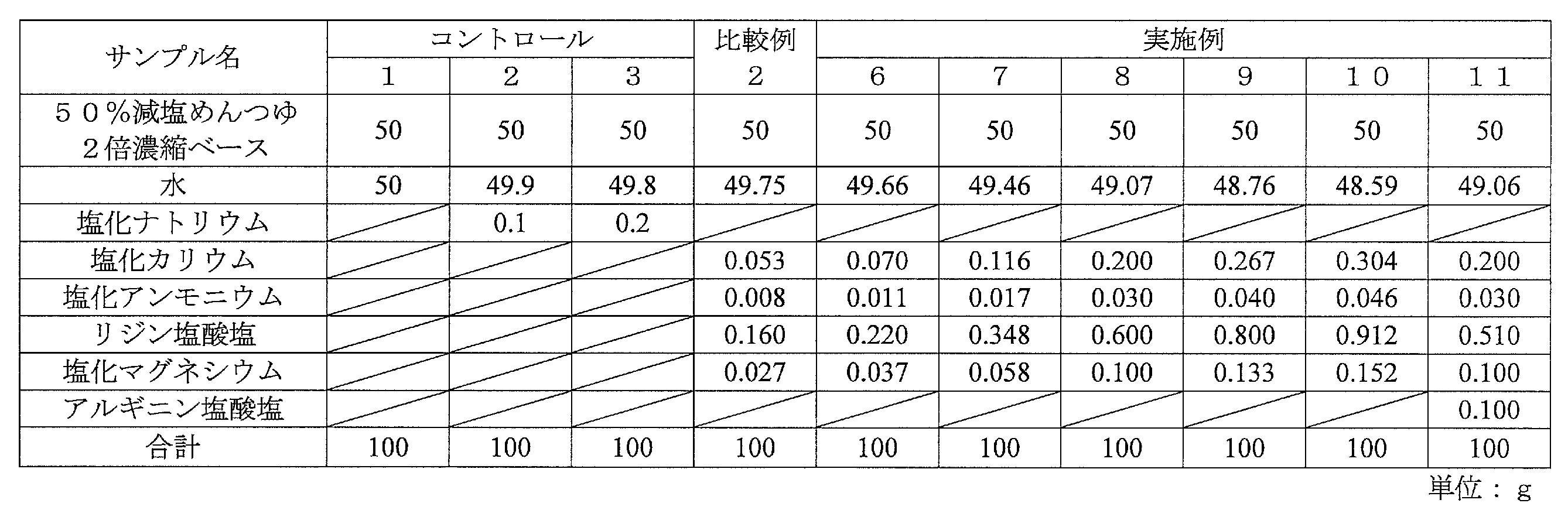

(塩味の評価)
実施例6~11及び比較例2の食品サンプルの塩味の強さを、2名の専門パネルにて、ノンブラインド条件で、下記の基準に基づき合議法により評価した(n=2)。
[塩味の評価基準]
×:コントロール1の食品サンプル未満
△:コントロール1の食品サンプル以上、コントロール2の食品サンプル未満
○:コントロール2の食品サンプル以上、コントロール3の食品サンプル未満
◎:コントロール3の食品サンプル以上
実施例6~11及び比較例2の食品サンプルの塩味の強さを、2名の専門パネルにて、ノンブラインド条件で、下記の基準に基づき合議法により評価した(n=2)。
[塩味の評価基準]
×:コントロール1の食品サンプル未満
△:コントロール1の食品サンプル以上、コントロール2の食品サンプル未満
○:コントロール2の食品サンプル以上、コントロール3の食品サンプル未満
◎:コントロール3の食品サンプル以上
結果を下表8に示す。

表8に示される結果から明らかなように、Y1/(X1+Z1)が1を超えるようにCl塩化合物が添加された実施例6~11の食品サンプルは、いずれも十分な塩味を有するものであった。実施例10の食品サンプルには、異風味が生じていた。一方、比較例2の食品サンプルでは、十分な塩味増強効果は得られなかった。
当該結果から、Y1/(X1+Z1)が1を超えるようにCl塩化合物を添加することにより、液状食品(めんつゆ)の塩味を効果的に増強させ得、特にY1/(X1+Z1)が1を超え、かつ1.35未満となるようにCl塩化合物を添加することにより、液状食品(めんつゆ)の塩味を、異風味の発生を抑えて好ましく増強させ得ることが確認された。
当該結果から、Y1/(X1+Z1)が1を超えるようにCl塩化合物を添加することにより、液状食品(めんつゆ)の塩味を効果的に増強させ得、特にY1/(X1+Z1)が1を超え、かつ1.35未満となるようにCl塩化合物を添加することにより、液状食品(めんつゆ)の塩味を、異風味の発生を抑えて好ましく増強させ得ることが確認された。
<試験例7>
(食品サンプルの調製)
減塩丸鶏がらスープの素(「丸鶏がらスープ」(商品名、味の素株式会社製)から食塩及びグルタミン酸ナトリウムを除いたもの(原材料から食塩及びグルタミン酸ナトリウムを除いたこと以外は、通常の製品と同様に作製されたもの))に、下表9に示される量(単位:g)で、お湯を添加し、コントロール4の食品サンプルを調製した。
コントロール4の食品サンプルのナトリウムイオンの喫食濃度(X0)は、69mol/m3であり、塩化物イオンの喫食濃度(Y0)は、66mol/m3であり、カリウムイオンの喫食濃度(Z0)は、13mol/m3であった。したがって、当該コントロール4の食品サンプルのY0/(X0+Z0)は、0.80である。
減塩丸鶏がらスープの素に、下表9に示される量(単位:g)で、お湯及び塩化ナトリウムを添加し、コントロール5及び6の食品サンプルを調製した。
減塩丸鶏がらスープの素に、下表9に示される量(単位:g)で、お湯、塩化カリウム、塩化アンモニウム及びリジン塩酸塩を添加し、実施例12~17及び比較例3の食品サンプルを調製した。
減塩丸鶏がらスープの素に、下表10に示される量(単位:g)で、お湯、塩化カリウム、塩化アンモニウム、リジン塩酸塩及び塩化マグネシウムを添加し、実施例18~22の食品サンプルを調製した。
減塩丸鶏がらスープの素に、下表10に示される量(単位:g)で、お湯、塩化カリウム、塩化アンモニウム、リジン塩酸塩及びアルギニン塩酸塩を添加し、実施例23の食品サンプルを調製した。
実施例12~23及び比較例3の食品サンプルの、ナトリウムイオンの喫食濃度(X1)(単位:mol/m3)、塩化物イオンの喫食濃度(Y1)(単位:mol/m3)、カリウムイオンの喫食濃度(Z1)(単位:mol/m3)を下表11、12に示す。
(食品サンプルの調製)
減塩丸鶏がらスープの素(「丸鶏がらスープ」(商品名、味の素株式会社製)から食塩及びグルタミン酸ナトリウムを除いたもの(原材料から食塩及びグルタミン酸ナトリウムを除いたこと以外は、通常の製品と同様に作製されたもの))に、下表9に示される量(単位:g)で、お湯を添加し、コントロール4の食品サンプルを調製した。
コントロール4の食品サンプルのナトリウムイオンの喫食濃度(X0)は、69mol/m3であり、塩化物イオンの喫食濃度(Y0)は、66mol/m3であり、カリウムイオンの喫食濃度(Z0)は、13mol/m3であった。したがって、当該コントロール4の食品サンプルのY0/(X0+Z0)は、0.80である。
減塩丸鶏がらスープの素に、下表9に示される量(単位:g)で、お湯及び塩化ナトリウムを添加し、コントロール5及び6の食品サンプルを調製した。
減塩丸鶏がらスープの素に、下表9に示される量(単位:g)で、お湯、塩化カリウム、塩化アンモニウム及びリジン塩酸塩を添加し、実施例12~17及び比較例3の食品サンプルを調製した。
減塩丸鶏がらスープの素に、下表10に示される量(単位:g)で、お湯、塩化カリウム、塩化アンモニウム、リジン塩酸塩及び塩化マグネシウムを添加し、実施例18~22の食品サンプルを調製した。
減塩丸鶏がらスープの素に、下表10に示される量(単位:g)で、お湯、塩化カリウム、塩化アンモニウム、リジン塩酸塩及びアルギニン塩酸塩を添加し、実施例23の食品サンプルを調製した。
実施例12~23及び比較例3の食品サンプルの、ナトリウムイオンの喫食濃度(X1)(単位:mol/m3)、塩化物イオンの喫食濃度(Y1)(単位:mol/m3)、カリウムイオンの喫食濃度(Z1)(単位:mol/m3)を下表11、12に示す。
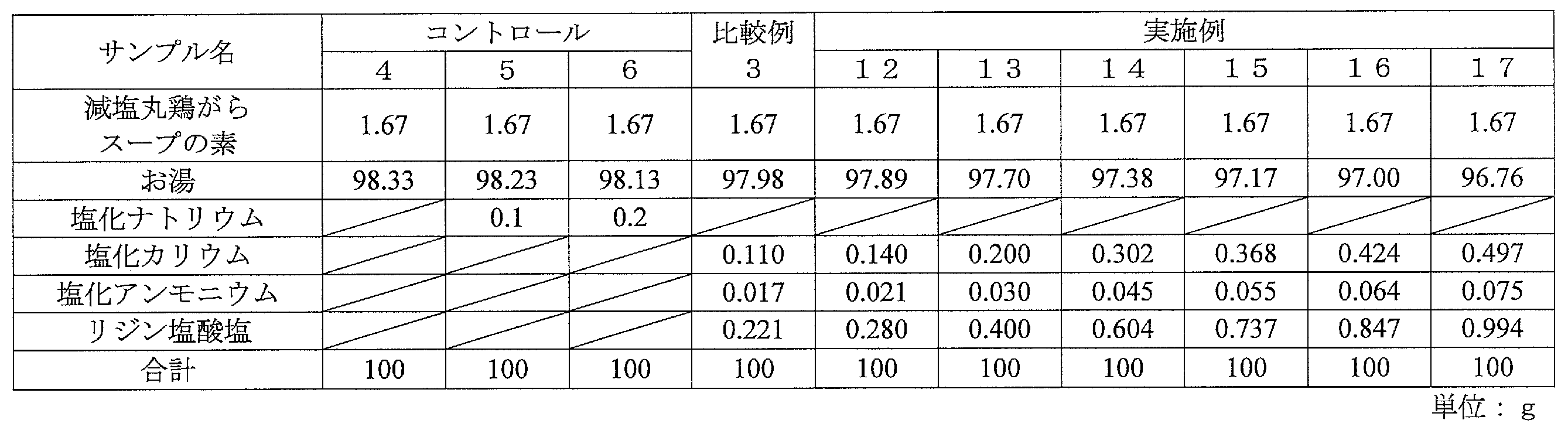


(塩味の評価)
実施例12~23及び比較例3の食品サンプルの塩味の強さを、2名の専門パネルにて、ノンブラインド条件で、下記の基準に基づき合議法により評価した(n=2)。
[塩味の評価基準]
×:コントロール4の食品サンプル未満
△:コントロール4の食品サンプル以上、コントロール5の食品サンプル未満
○:コントロール5の食品サンプル以上、コントロール6の食品サンプル未満
◎:コントロール6の食品サンプル以上
実施例12~23及び比較例3の食品サンプルの塩味の強さを、2名の専門パネルにて、ノンブラインド条件で、下記の基準に基づき合議法により評価した(n=2)。
[塩味の評価基準]
×:コントロール4の食品サンプル未満
△:コントロール4の食品サンプル以上、コントロール5の食品サンプル未満
○:コントロール5の食品サンプル以上、コントロール6の食品サンプル未満
◎:コントロール6の食品サンプル以上
結果を下表13及び14に示す。


表13及び14に示される結果から明らかなように、Y1/(X1+Z1)が1を超えるようにCl塩化合物が添加された実施例12~23の食品サンプルは、いずれも十分な塩味を有するものであった。実施例17及び22の食品サンプルには、異風味が生じていた。一方、比較例3の食品サンプルでは、十分な塩味増強効果は得られなかった。
当該結果から、Y1/(X1+Z1)が1を超えるようにCl塩化合物を添加することにより、液状食品(丸鶏がらスープ)の塩味を効果的に増強させ得、特にY1/(X1+Z1)が1を超え、かつ1.35未満となるようにCl塩化合物を添加することにより、液状食品(丸鶏がらスープ)の塩味を、異風味の発生を抑えて好ましく増強させ得ることが確認された。
当該結果から、Y1/(X1+Z1)が1を超えるようにCl塩化合物を添加することにより、液状食品(丸鶏がらスープ)の塩味を効果的に増強させ得、特にY1/(X1+Z1)が1を超え、かつ1.35未満となるようにCl塩化合物を添加することにより、液状食品(丸鶏がらスープ)の塩味を、異風味の発生を抑えて好ましく増強させ得ることが確認された。
<試験例8>
(食品サンプルの調製)
減塩コーンクリームスープの素(「クノール(登録商標)コーンクリームスープ」(商品名、味の素株式会社製)から食塩を除いたもの(原材料から食塩を除いたこと以外は、通常の製品と同様に作製されたもの))に、下表15に示される量(単位:g)で、お湯を添加し、コントロール7の食品サンプルを調製した。
コントロール7の食品サンプルのナトリウムイオンの喫食濃度(X0)は、68mol/m3であり、塩化物イオンの喫食濃度(Y0)は、60mol/m3であり、カリウムイオンの喫食濃度(Z0)は、15mol/m3であった。したがって、当該コントロール7の食品サンプルのY0/(X0+Z0)は、0.72である。
減塩コーンクリームスープの素に、下表15に示される量(単位:g)で、お湯及び塩化ナトリウムを添加し、コントロール8及び9の食品サンプルを調製した。
減塩コーンクリームスープの素に、下表15に示される量(単位:g)で、お湯、塩化カリウム、塩化アンモニウム、リジン塩酸塩及び塩化マグネシウムを添加し、実施例24~28及び比較例4の食品サンプルを調製した。
減塩丸鶏がらスープの素に、下表15に示される量(単位:g)で、お湯、塩化カリウム、塩化アンモニウム、リジン塩酸塩、塩化マグネシウム及びアルギニン塩酸塩を添加し、実施例29の食品サンプルを調製した。
実施例24~29及び比較例4の食品サンプルの、ナトリウムイオンの喫食濃度(X1)(単位:mol/m3)、塩化物イオンの喫食濃度(Y1)(単位:mol/m3)、カリウムイオンの喫食濃度(Z1)(単位:mol/m3)を下表16に示す。
(食品サンプルの調製)
減塩コーンクリームスープの素(「クノール(登録商標)コーンクリームスープ」(商品名、味の素株式会社製)から食塩を除いたもの(原材料から食塩を除いたこと以外は、通常の製品と同様に作製されたもの))に、下表15に示される量(単位:g)で、お湯を添加し、コントロール7の食品サンプルを調製した。
コントロール7の食品サンプルのナトリウムイオンの喫食濃度(X0)は、68mol/m3であり、塩化物イオンの喫食濃度(Y0)は、60mol/m3であり、カリウムイオンの喫食濃度(Z0)は、15mol/m3であった。したがって、当該コントロール7の食品サンプルのY0/(X0+Z0)は、0.72である。
減塩コーンクリームスープの素に、下表15に示される量(単位:g)で、お湯及び塩化ナトリウムを添加し、コントロール8及び9の食品サンプルを調製した。
減塩コーンクリームスープの素に、下表15に示される量(単位:g)で、お湯、塩化カリウム、塩化アンモニウム、リジン塩酸塩及び塩化マグネシウムを添加し、実施例24~28及び比較例4の食品サンプルを調製した。
減塩丸鶏がらスープの素に、下表15に示される量(単位:g)で、お湯、塩化カリウム、塩化アンモニウム、リジン塩酸塩、塩化マグネシウム及びアルギニン塩酸塩を添加し、実施例29の食品サンプルを調製した。
実施例24~29及び比較例4の食品サンプルの、ナトリウムイオンの喫食濃度(X1)(単位:mol/m3)、塩化物イオンの喫食濃度(Y1)(単位:mol/m3)、カリウムイオンの喫食濃度(Z1)(単位:mol/m3)を下表16に示す。

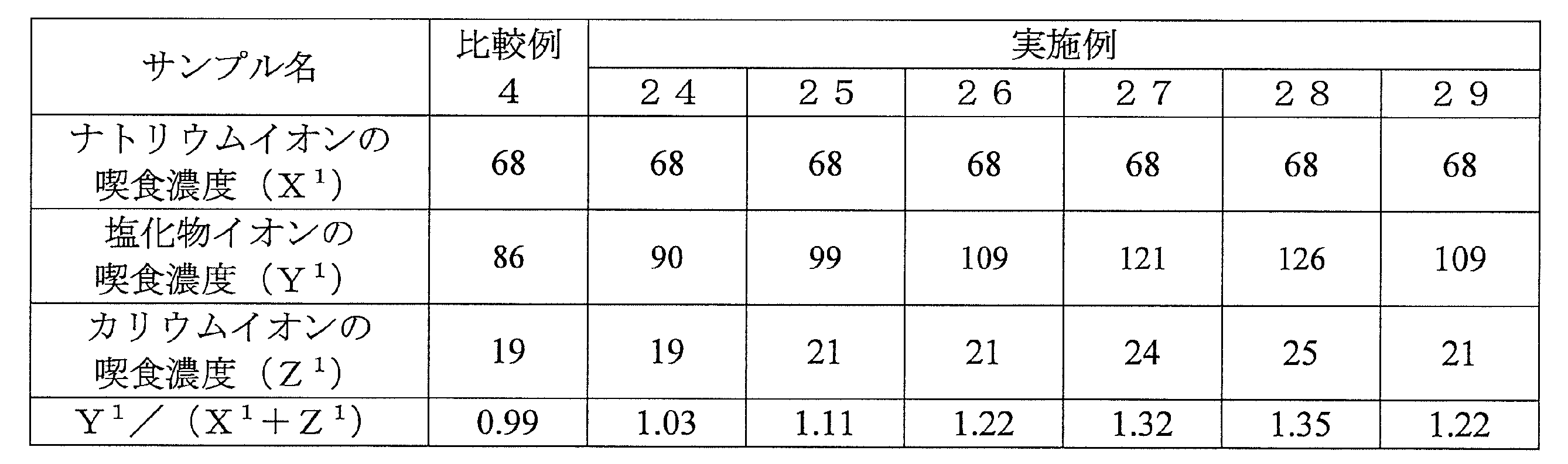
(塩味の評価)
実施例24~29及び比較例4の食品サンプルの塩味の強さを、2名の専門パネルにて、ノンブラインド条件で、下記の基準に基づき合議法により評価した(n=2)。
[塩味の評価基準]
×:コントロール7の食品サンプル未満
△:コントロール7の食品サンプル以上、コントロール8の食品サンプル未満
○:コントロール8の食品サンプル以上、コントロール9の食品サンプル未満
◎:コントロール9の食品サンプル以上
実施例24~29及び比較例4の食品サンプルの塩味の強さを、2名の専門パネルにて、ノンブラインド条件で、下記の基準に基づき合議法により評価した(n=2)。
[塩味の評価基準]
×:コントロール7の食品サンプル未満
△:コントロール7の食品サンプル以上、コントロール8の食品サンプル未満
○:コントロール8の食品サンプル以上、コントロール9の食品サンプル未満
◎:コントロール9の食品サンプル以上
結果を下表17に示す。

表17に示される結果から明らかなように、Y1/(X1+Z1)が1を超えるようにCl塩化合物が添加された実施例24~29の食品サンプルは、いずれも十分な塩味を有するものであった。実施例28の食品サンプルには、異風味が生じていた。一方、比較例4の食品サンプルでは、十分な塩味増強効果は得られなかった。
当該結果から、Y1/(X1+Z1)が1を超えるようにCl塩化合物を添加することにより、液状食品(コーンクリームスープ)の塩味を効果的に増強させ得、特にY1/(X1+Z1)が1を超え、かつ1.35未満となるようにCl塩化合物を添加することにより、液状食品(コーンクリームスープ)の塩味を、異風味の発生を抑えて好ましく増強させ得ることが確認された。
当該結果から、Y1/(X1+Z1)が1を超えるようにCl塩化合物を添加することにより、液状食品(コーンクリームスープ)の塩味を効果的に増強させ得、特にY1/(X1+Z1)が1を超え、かつ1.35未満となるようにCl塩化合物を添加することにより、液状食品(コーンクリームスープ)の塩味を、異風味の発生を抑えて好ましく増強させ得ることが確認された。
本発明によれば、ナトリウム摂取量の増加を抑えて、液状食品の塩味を効果的に増強させ得る。したがって、本発明によれば、例えば、液状食品を減塩し、ナトリウム摂取量を低減した場合であっても、十分な塩味を有する液状食品を提供できる。
本出願は、日本で出願された特願2017-158701(出願日:2017年8月21日)を基礎としており、その内容は本明細書に全て包含されるものである。
Claims (26)
- ナトリウムイオン、塩化物イオン及びカリウムイオンの喫食濃度を、それぞれX0mol/m3、Y0mol/m3及びZ0mol/m3としたとき、X0が10~1000の範囲内であり、かつ、X0、Y0及びZ0が下式(I)の関係を充足する液状食品の塩味を増強する方法であって、
塩化カリウム、塩化アンモニウム、塩化カルシウム、塩化マグネシウム、リジン塩酸塩及びアルギニン塩酸塩からなる群より選択される少なくとも一つの化合物(但し、当該化合物が塩化カリウムのみである場合を除く)を添加することを含み、
前記化合物の添加が、化合物添加後の液状食品のナトリウムイオン、塩化物イオン及びカリウムイオンの喫食濃度を、それぞれX1mol/m3、Y1mol/m3及びZ1mol/m3としたとき、X1、Y1及びZ1が下式(II)の関係を充足するように行われる、方法。
Y0/(X0+Z0)≦1 ・・・(I)
Y1/(X1+Z1)>1 ・・・(II) - 前記化合物が、塩化カリウム、塩化アンモニウム、塩化カルシウム、塩化マグネシウム及びリジン塩酸塩からなる群より選択される少なくとも一つである、請求項1記載の方法。
- Y1が10~1000の範囲内である、請求項1又は2記載の方法。
- Y0とY1の比(Y1/Y0)が、1.01~5.0である、請求項1~3のいずれか一項に記載の方法。
- Z0とZ1の比(Z1/Z0)が、1.1~10である、請求項1~4のいずれか一項に記載の方法。
- X1、Y1及びZ1が、下式(III)の関係を更に充足する、請求項1~5のいずれか一項に記載の方法。
1.35>Y1/(X1+Z1) ・・・(III) - 前記化合物が、塩化カリウム、塩化アンモニウム、塩化カルシウム、塩化マグネシウム、リジン塩酸塩及びアルギニン塩酸塩からなる群より選択される三つの化合物を含む、請求項1及び3~6のいずれか一項に記載の方法。
- 前記化合物が、塩化カリウム、塩化アンモニウム、塩化カルシウム、塩化マグネシウム及びリジン塩酸塩からなる群より選択される三つの化合物を含む、請求項1~7のいずれか一項に記載の方法。
- 前記化合物が、塩化カリウム、塩化アンモニウム及びリジン塩酸塩を含む、請求項1~8のいずれか一項に記載の方法。
- 塩化カリウム、塩化アンモニウム、塩化カルシウム、塩化マグネシウム、リジン塩酸塩及びアルギニン塩酸塩からなる群より選択される少なくとも一つの化合物(但し、当該化合物が塩化カリウムのみである場合を除く)を含有する、液状食品用の塩味増強剤であって、
前記液状食品は、ナトリウムイオン、塩化物イオン及びカリウムイオンの喫食濃度を、それぞれX0mol/m3、Y0mol/m3及びZ0mol/m3としたとき、X0が10~1000の範囲内であり、かつ、X0、Y0及びZ0が下式(I)の関係を充足し、
塩味増強剤添加後の液状食品のナトリウムイオン、塩化物イオン及びカリウムイオンの喫食濃度を、それぞれX1mol/m3、Y1mol/m3及びZ1mol/m3としたとき、X1、Y1及びZ1が下式(II)の関係を充足するように添加される、塩味増強剤。
Y0/(X0+Z0)≦1 ・・・(I)
Y1/(X1+Z1)>1 ・・・(II) - 前記化合物が、塩化カリウム、塩化アンモニウム、塩化カルシウム、塩化マグネシウム及びリジン塩酸塩からなる群より選択される少なくとも一つである、請求項10記載の剤。
- Y1が10~1000の範囲内である、請求項10又は11記載の剤。
- Y0とY1の比(Y1/Y0)が、1.01~5.0である、請求項10~12のいずれか一項に記載の剤。
- Z0とZ1の比(Z1/Z0)が、1.1~10である、請求項10~13のいずれか一項に記載の剤。
- X1、Y1及びZ1が、下式(III)の関係を更に充足する、請求項10~14のいずれか一項に記載の剤。
1.35>Y1/(X1+Z1) ・・・(III) - 塩化カリウム、塩化アンモニウム、塩化カルシウム、塩化マグネシウム、リジン塩酸塩及びアルギニン塩酸塩からなる群より選択される三つの化合物を含有する、請求項10及び12~15のいずれか一項に記載の剤。
- 塩化カリウム、塩化アンモニウム、塩化カルシウム、塩化マグネシウム及びリジン塩酸塩からなる群より選択される三つの化合物を含有する、請求項10~16のいずれか一項に記載の剤。
- 塩化カリウム、塩化アンモニウム及びリジン塩酸塩を含有する、請求項10~17のいずれか一項に記載の剤。
- ナトリウムイオン、塩化物イオン及びカリウムイオンの喫食濃度を、それぞれX1mol/m3、Y1mol/m3及びZ1mol/m3としたとき、X1、Y1及びZ1が下式(II)の関係を充足する液状食品であって、
ナトリウムイオン、塩化物イオン及びカリウムイオンの喫食濃度を、それぞれX0mol/m3、Y0mol/m3及びZ0mol/m3としたとき、X0が10~1000の範囲内であり、かつ、X0、Y0及びZ0が下式(I)の関係を充足する液状食品に、塩化カリウム、塩化アンモニウム、塩化カルシウム、塩化マグネシウム、リジン塩酸塩及びアルギニン塩酸塩からなる群より選択される少なくとも一つの化合物(但し、当該化合物が塩化カリウムのみである場合を除く)が添加されてなる、液状食品。
Y0/(X0+Z0)≦1 ・・・(I)
Y1/(X1+Z1)>1 ・・・(II) - 前記化合物が、塩化カリウム、塩化アンモニウム、塩化カルシウム、塩化マグネシウム及びリジン塩酸塩からなる群より選択される少なくとも一つである、請求項19記載の液状食品。
- ナトリウムイオン、塩化物イオン及びカリウムイオンの喫食濃度を、それぞれX0mol/m3、Y0mol/m3及びZ0mol/m3としたとき、X0が10~1000の範囲内であり、かつ、X0、Y0及びZ0が下式(I)の関係を充足する液状食品に、塩化カリウム、塩化アンモニウム、塩化カルシウム、塩化マグネシウム、リジン塩酸塩及びアルギニン塩酸塩からなる群より選択される少なくとも一つの化合物(但し、当該化合物が塩化カリウムのみである場合を除く)を添加することを含み、
前記化合物の添加が、化合物添加後の液状食品のナトリウムイオン、塩化物イオン及びカリウムイオンの喫食濃度を、それぞれX1mol/m3、Y1mol/m3及びZ1mol/m3としたとき、X1、Y1及びZ1が下式(II)の関係を充足するように行われる、液状食品の製造方法。
Y0/(X0+Z0)≦1 ・・・(I)
Y1/(X1+Z1)>1 ・・・(II) - 前記化合物が、塩化カリウム、塩化アンモニウム、塩化カルシウム、塩化マグネシウム及びリジン塩酸塩からなる群より選択される少なくとも一つである、請求項21記載の製造方法。
- 塩化カリウム、塩化アンモニウム、塩化カルシウム、塩化マグネシウム、リジン塩酸塩及びアルギニン塩酸塩からなる群より選択される少なくとも一つの化合物(但し、当該化合物が塩化カリウムのみである場合を除く)を含有する、液状食品用組成物であって、
前記組成物添加後の液状食品のナトリウムイオン、塩化物イオン及びカリウムイオンの喫食濃度を、それぞれX1mol/m3、Y1mol/m3及びZ1mol/m3としたとき、X1、Y1及びZ1が下式(II)の関係を充足するように添加され、
前記液状食品が、つゆ及びスープからなる群より選択される、組成物。
Y1/(X1+Z1)>1 ・・・(II) - 前記化合物が、塩化カリウム、塩化アンモニウム、塩化カルシウム、塩化マグネシウム及びリジン塩酸塩からなる群より選択される少なくとも一つである、請求項23記載の組成物。
- 液状食品用組成物が、液状食品の塩味増強用組成物である、請求項23又は24記載の組成物。
- 液状食品が、減塩食品である、請求項23~25のいずれか一項に記載の組成物。
Priority Applications (1)
| Application Number | Priority Date | Filing Date | Title |
|---|---|---|---|
| JP2019537624A JP7160039B2 (ja) | 2017-08-21 | 2018-08-20 | 液状食品の塩味増強方法 |
Applications Claiming Priority (2)
| Application Number | Priority Date | Filing Date | Title |
|---|---|---|---|
| JP2017-158701 | 2017-08-21 | ||
| JP2017158701 | 2017-08-21 |
Publications (1)
| Publication Number | Publication Date |
|---|---|
| WO2019039441A1 true WO2019039441A1 (ja) | 2019-02-28 |
Family
ID=65439332
Family Applications (1)
| Application Number | Title | Priority Date | Filing Date |
|---|---|---|---|
| PCT/JP2018/030709 Ceased WO2019039441A1 (ja) | 2017-08-21 | 2018-08-20 | 液状食品の塩味増強方法 |
Country Status (2)
| Country | Link |
|---|---|
| JP (1) | JP7160039B2 (ja) |
| WO (1) | WO2019039441A1 (ja) |
Cited By (4)
| Publication number | Priority date | Publication date | Assignee | Title |
|---|---|---|---|---|
| JP2020150881A (ja) * | 2019-03-20 | 2020-09-24 | 味の素株式会社 | 減塩パンまたは無塩パンの製造方法および製造用添加剤、ならびに減塩パンまたは無塩パン |
| IT202100030395A1 (it) * | 2021-12-01 | 2023-06-01 | Attilio Morrone | Sostitutivo sale |
| JPWO2025013813A1 (ja) * | 2023-07-10 | 2025-01-16 | ||
| WO2025110150A1 (ja) * | 2023-11-20 | 2025-05-30 | 味の素株式会社 | 飲食品の塩味増強剤 |
Citations (4)
| Publication number | Priority date | Publication date | Assignee | Title |
|---|---|---|---|---|
| JPH06343417A (ja) * | 1993-06-07 | 1994-12-20 | Chiyoujiyuen Kk | 塩化調味料 |
| JP2015015910A (ja) * | 2013-07-09 | 2015-01-29 | 味の素株式会社 | 塩味の減弱が抑制された冷凍食品 |
| JP2017046595A (ja) * | 2014-01-21 | 2017-03-09 | 味の素株式会社 | 塩味増強剤 |
| JP2017135996A (ja) * | 2016-02-02 | 2017-08-10 | 日清食品ホールディングス株式会社 | 塩味増強剤 |
-
2018
- 2018-08-20 JP JP2019537624A patent/JP7160039B2/ja active Active
- 2018-08-20 WO PCT/JP2018/030709 patent/WO2019039441A1/ja not_active Ceased
Patent Citations (4)
| Publication number | Priority date | Publication date | Assignee | Title |
|---|---|---|---|---|
| JPH06343417A (ja) * | 1993-06-07 | 1994-12-20 | Chiyoujiyuen Kk | 塩化調味料 |
| JP2015015910A (ja) * | 2013-07-09 | 2015-01-29 | 味の素株式会社 | 塩味の減弱が抑制された冷凍食品 |
| JP2017046595A (ja) * | 2014-01-21 | 2017-03-09 | 味の素株式会社 | 塩味増強剤 |
| JP2017135996A (ja) * | 2016-02-02 | 2017-08-10 | 日清食品ホールディングス株式会社 | 塩味増強剤 |
Cited By (6)
| Publication number | Priority date | Publication date | Assignee | Title |
|---|---|---|---|---|
| JP2020150881A (ja) * | 2019-03-20 | 2020-09-24 | 味の素株式会社 | 減塩パンまたは無塩パンの製造方法および製造用添加剤、ならびに減塩パンまたは無塩パン |
| JP7293773B2 (ja) | 2019-03-20 | 2023-06-20 | 味の素株式会社 | 減塩パンまたは無塩パンの製造方法および製造用添加剤、ならびに減塩パンまたは無塩パン |
| IT202100030395A1 (it) * | 2021-12-01 | 2023-06-01 | Attilio Morrone | Sostitutivo sale |
| JPWO2025013813A1 (ja) * | 2023-07-10 | 2025-01-16 | ||
| WO2025013813A1 (ja) | 2023-07-10 | 2025-01-16 | 国立大学法人 東京大学 | 塩味を増強するための呈味組成物並びにそれを用いて製造される減塩調味料及び減塩飲食品 |
| WO2025110150A1 (ja) * | 2023-11-20 | 2025-05-30 | 味の素株式会社 | 飲食品の塩味増強剤 |
Also Published As
| Publication number | Publication date |
|---|---|
| JPWO2019039441A1 (ja) | 2020-07-30 |
| JP7160039B2 (ja) | 2022-10-25 |
Similar Documents
| Publication | Publication Date | Title |
|---|---|---|
| JP6335883B2 (ja) | 飲食物の塩味増強方法および該方法により得られる飲食物並びに塩味増強剤 | |
| JP7160039B2 (ja) | 液状食品の塩味増強方法 | |
| JP5634069B2 (ja) | 呈味が改善された液体調味料 | |
| JPWO2008126678A1 (ja) | 飲食品の塩味様呈味増強方法及び塩味様呈味増強剤 | |
| WO2019177003A1 (ja) | 塩味及び/又はスパイス感増強剤 | |
| JPWO2017141986A1 (ja) | コク味付与機能を有する組成物 | |
| JP2002325554A (ja) | 液体調味料 | |
| JPS609465A (ja) | こく味調味料又はこく味の増強された食品の製造法 | |
| EP3349594B1 (en) | Salt substitute composition and use thereof | |
| JP2017158543A (ja) | 塩味増強組成物 | |
| WO2015111428A1 (ja) | 塩味増強剤 | |
| TWI289044B (en) | Low-salt soy sauce | |
| JP2001299266A (ja) | 調味料 | |
| JP7734585B2 (ja) | 塩味増強剤 | |
| JP7398195B2 (ja) | 食品の塩味持続性向上剤 | |
| CN101980618B (zh) | 赋予加热烹饪感的调味料组合物 | |
| JP5053912B2 (ja) | ビタミンb2関連物質を含有する呈味改善剤、及びそれを用いる食品の呈味改善方法 | |
| JP6044159B2 (ja) | 塩味が増強された飲食品及びその製造方法 | |
| JP2020103231A (ja) | 甘味増強剤 | |
| JPS6167458A (ja) | こく味調味料又はこく味の増強された食品の製法 | |
| JP7467081B2 (ja) | 経口組成物 | |
| JP2013138614A (ja) | 肉質様の呈味付与組成物 | |
| JP2017118867A (ja) | 塩味増強剤、塩味増強・味質改善剤、塩味増強方法及び塩味増強・味質改善方法 | |
| JP6348077B2 (ja) | Perlolyrineを含有する呈味改善剤、hTRPV1の活性化剤または食品。 | |
| JP2017176077A (ja) | コク味付与機能を有する組成物 |
Legal Events
| Date | Code | Title | Description |
|---|---|---|---|
| 121 | Ep: the epo has been informed by wipo that ep was designated in this application |
Ref document number: 18848073 Country of ref document: EP Kind code of ref document: A1 |
|
| ENP | Entry into the national phase |
Ref document number: 2019537624 Country of ref document: JP Kind code of ref document: A |
|
| NENP | Non-entry into the national phase |
Ref country code: DE |
|
| 122 | Ep: pct application non-entry in european phase |
Ref document number: 18848073 Country of ref document: EP Kind code of ref document: A1 |