WO2019013312A1 - Mgat2阻害活性を有する縮合環誘導体 - Google Patents
Mgat2阻害活性を有する縮合環誘導体 Download PDFInfo
- Publication number
- WO2019013312A1 WO2019013312A1 PCT/JP2018/026418 JP2018026418W WO2019013312A1 WO 2019013312 A1 WO2019013312 A1 WO 2019013312A1 JP 2018026418 W JP2018026418 W JP 2018026418W WO 2019013312 A1 WO2019013312 A1 WO 2019013312A1
- Authority
- WO
- WIPO (PCT)
- Prior art keywords
- compound
- mmol
- solution
- formula
- added
- Prior art date
- Legal status (The legal status is an assumption and is not a legal conclusion. Google has not performed a legal analysis and makes no representation as to the accuracy of the status listed.)
- Ceased
Links
- 0 C*C1=C(*)C(*)=N[N+]1 Chemical compound C*C1=C(*)C(*)=N[N+]1 0.000 description 1
Classifications
-
- A—HUMAN NECESSITIES
- A61—MEDICAL OR VETERINARY SCIENCE; HYGIENE
- A61K—PREPARATIONS FOR MEDICAL, DENTAL OR TOILETRY PURPOSES
- A61K31/00—Medicinal preparations containing organic active ingredients
- A61K31/33—Heterocyclic compounds
- A61K31/395—Heterocyclic compounds having nitrogen as a ring hetero atom, e.g. guanethidine or rifamycins
- A61K31/435—Heterocyclic compounds having nitrogen as a ring hetero atom, e.g. guanethidine or rifamycins having six-membered rings with one nitrogen as the only ring hetero atom
- A61K31/438—The ring being spiro-condensed with carbocyclic or heterocyclic ring systems
-
- A—HUMAN NECESSITIES
- A61—MEDICAL OR VETERINARY SCIENCE; HYGIENE
- A61K—PREPARATIONS FOR MEDICAL, DENTAL OR TOILETRY PURPOSES
- A61K31/00—Medicinal preparations containing organic active ingredients
- A61K31/33—Heterocyclic compounds
- A61K31/395—Heterocyclic compounds having nitrogen as a ring hetero atom, e.g. guanethidine or rifamycins
- A61K31/435—Heterocyclic compounds having nitrogen as a ring hetero atom, e.g. guanethidine or rifamycins having six-membered rings with one nitrogen as the only ring hetero atom
- A61K31/44—Non condensed pyridines; Hydrogenated derivatives thereof
- A61K31/4427—Non condensed pyridines; Hydrogenated derivatives thereof containing further heterocyclic ring systems
- A61K31/444—Non condensed pyridines; Hydrogenated derivatives thereof containing further heterocyclic ring systems containing a six-membered ring with nitrogen as a ring heteroatom, e.g. amrinone
-
- A—HUMAN NECESSITIES
- A61—MEDICAL OR VETERINARY SCIENCE; HYGIENE
- A61K—PREPARATIONS FOR MEDICAL, DENTAL OR TOILETRY PURPOSES
- A61K31/00—Medicinal preparations containing organic active ingredients
- A61K31/33—Heterocyclic compounds
- A61K31/395—Heterocyclic compounds having nitrogen as a ring hetero atom, e.g. guanethidine or rifamycins
- A61K31/495—Heterocyclic compounds having nitrogen as a ring hetero atom, e.g. guanethidine or rifamycins having six-membered rings with two or more nitrogen atoms as the only ring heteroatoms, e.g. piperazine or tetrazines
- A61K31/4965—Non-condensed pyrazines
- A61K31/497—Non-condensed pyrazines containing further heterocyclic rings
-
- A—HUMAN NECESSITIES
- A61—MEDICAL OR VETERINARY SCIENCE; HYGIENE
- A61K—PREPARATIONS FOR MEDICAL, DENTAL OR TOILETRY PURPOSES
- A61K31/00—Medicinal preparations containing organic active ingredients
- A61K31/33—Heterocyclic compounds
- A61K31/395—Heterocyclic compounds having nitrogen as a ring hetero atom, e.g. guanethidine or rifamycins
- A61K31/495—Heterocyclic compounds having nitrogen as a ring hetero atom, e.g. guanethidine or rifamycins having six-membered rings with two or more nitrogen atoms as the only ring heteroatoms, e.g. piperazine or tetrazines
- A61K31/50—Pyridazines; Hydrogenated pyridazines
- A61K31/501—Pyridazines; Hydrogenated pyridazines not condensed and containing further heterocyclic rings
-
- A—HUMAN NECESSITIES
- A61—MEDICAL OR VETERINARY SCIENCE; HYGIENE
- A61K—PREPARATIONS FOR MEDICAL, DENTAL OR TOILETRY PURPOSES
- A61K31/00—Medicinal preparations containing organic active ingredients
- A61K31/33—Heterocyclic compounds
- A61K31/395—Heterocyclic compounds having nitrogen as a ring hetero atom, e.g. guanethidine or rifamycins
- A61K31/495—Heterocyclic compounds having nitrogen as a ring hetero atom, e.g. guanethidine or rifamycins having six-membered rings with two or more nitrogen atoms as the only ring heteroatoms, e.g. piperazine or tetrazines
- A61K31/505—Pyrimidines; Hydrogenated pyrimidines, e.g. trimethoprim
- A61K31/506—Pyrimidines; Hydrogenated pyrimidines, e.g. trimethoprim not condensed and containing further heterocyclic rings
-
- A—HUMAN NECESSITIES
- A61—MEDICAL OR VETERINARY SCIENCE; HYGIENE
- A61K—PREPARATIONS FOR MEDICAL, DENTAL OR TOILETRY PURPOSES
- A61K31/00—Medicinal preparations containing organic active ingredients
- A61K31/33—Heterocyclic compounds
- A61K31/395—Heterocyclic compounds having nitrogen as a ring hetero atom, e.g. guanethidine or rifamycins
- A61K31/495—Heterocyclic compounds having nitrogen as a ring hetero atom, e.g. guanethidine or rifamycins having six-membered rings with two or more nitrogen atoms as the only ring heteroatoms, e.g. piperazine or tetrazines
- A61K31/505—Pyrimidines; Hydrogenated pyrimidines, e.g. trimethoprim
- A61K31/527—Pyrimidines; Hydrogenated pyrimidines, e.g. trimethoprim spiro-condensed
-
- A—HUMAN NECESSITIES
- A61—MEDICAL OR VETERINARY SCIENCE; HYGIENE
- A61P—SPECIFIC THERAPEUTIC ACTIVITY OF CHEMICAL COMPOUNDS OR MEDICINAL PREPARATIONS
- A61P3/00—Drugs for disorders of the metabolism
-
- A—HUMAN NECESSITIES
- A61—MEDICAL OR VETERINARY SCIENCE; HYGIENE
- A61P—SPECIFIC THERAPEUTIC ACTIVITY OF CHEMICAL COMPOUNDS OR MEDICINAL PREPARATIONS
- A61P3/00—Drugs for disorders of the metabolism
- A61P3/04—Anorexiants; Antiobesity agents
-
- A—HUMAN NECESSITIES
- A61—MEDICAL OR VETERINARY SCIENCE; HYGIENE
- A61P—SPECIFIC THERAPEUTIC ACTIVITY OF CHEMICAL COMPOUNDS OR MEDICINAL PREPARATIONS
- A61P3/00—Drugs for disorders of the metabolism
- A61P3/06—Antihyperlipidemics
-
- A—HUMAN NECESSITIES
- A61—MEDICAL OR VETERINARY SCIENCE; HYGIENE
- A61P—SPECIFIC THERAPEUTIC ACTIVITY OF CHEMICAL COMPOUNDS OR MEDICINAL PREPARATIONS
- A61P3/00—Drugs for disorders of the metabolism
- A61P3/08—Drugs for disorders of the metabolism for glucose homeostasis
- A61P3/10—Drugs for disorders of the metabolism for glucose homeostasis for hyperglycaemia, e.g. antidiabetics
-
- A—HUMAN NECESSITIES
- A61—MEDICAL OR VETERINARY SCIENCE; HYGIENE
- A61P—SPECIFIC THERAPEUTIC ACTIVITY OF CHEMICAL COMPOUNDS OR MEDICINAL PREPARATIONS
- A61P43/00—Drugs for specific purposes, not provided for in groups A61P1/00-A61P41/00
-
- A—HUMAN NECESSITIES
- A61—MEDICAL OR VETERINARY SCIENCE; HYGIENE
- A61P—SPECIFIC THERAPEUTIC ACTIVITY OF CHEMICAL COMPOUNDS OR MEDICINAL PREPARATIONS
- A61P9/00—Drugs for disorders of the cardiovascular system
- A61P9/10—Drugs for disorders of the cardiovascular system for treating ischaemic or atherosclerotic diseases, e.g. antianginal drugs, coronary vasodilators, drugs for myocardial infarction, retinopathy, cerebrovascula insufficiency, renal arteriosclerosis
-
- C—CHEMISTRY; METALLURGY
- C07—ORGANIC CHEMISTRY
- C07D—HETEROCYCLIC COMPOUNDS
- C07D471/00—Heterocyclic compounds containing nitrogen atoms as the only ring hetero atoms in the condensed system, at least one ring being a six-membered ring with one nitrogen atom, not provided for by groups C07D451/00 - C07D463/00
- C07D471/02—Heterocyclic compounds containing nitrogen atoms as the only ring hetero atoms in the condensed system, at least one ring being a six-membered ring with one nitrogen atom, not provided for by groups C07D451/00 - C07D463/00 in which the condensed system contains two hetero rings
- C07D471/04—Ortho-condensed systems
-
- C—CHEMISTRY; METALLURGY
- C07—ORGANIC CHEMISTRY
- C07D—HETEROCYCLIC COMPOUNDS
- C07D471/00—Heterocyclic compounds containing nitrogen atoms as the only ring hetero atoms in the condensed system, at least one ring being a six-membered ring with one nitrogen atom, not provided for by groups C07D451/00 - C07D463/00
- C07D471/02—Heterocyclic compounds containing nitrogen atoms as the only ring hetero atoms in the condensed system, at least one ring being a six-membered ring with one nitrogen atom, not provided for by groups C07D451/00 - C07D463/00 in which the condensed system contains two hetero rings
- C07D471/10—Spiro-condensed systems
-
- C—CHEMISTRY; METALLURGY
- C07—ORGANIC CHEMISTRY
- C07D—HETEROCYCLIC COMPOUNDS
- C07D471/00—Heterocyclic compounds containing nitrogen atoms as the only ring hetero atoms in the condensed system, at least one ring being a six-membered ring with one nitrogen atom, not provided for by groups C07D451/00 - C07D463/00
- C07D471/12—Heterocyclic compounds containing nitrogen atoms as the only ring hetero atoms in the condensed system, at least one ring being a six-membered ring with one nitrogen atom, not provided for by groups C07D451/00 - C07D463/00 in which the condensed system contains three hetero rings
- C07D471/20—Spiro-condensed systems
-
- C—CHEMISTRY; METALLURGY
- C07—ORGANIC CHEMISTRY
- C07D—HETEROCYCLIC COMPOUNDS
- C07D487/00—Heterocyclic compounds containing nitrogen atoms as the only ring hetero atoms in the condensed system, not provided for by groups C07D451/00 - C07D477/00
- C07D487/02—Heterocyclic compounds containing nitrogen atoms as the only ring hetero atoms in the condensed system, not provided for by groups C07D451/00 - C07D477/00 in which the condensed system contains two hetero rings
- C07D487/10—Spiro-condensed systems
-
- C—CHEMISTRY; METALLURGY
- C07—ORGANIC CHEMISTRY
- C07D—HETEROCYCLIC COMPOUNDS
- C07D491/00—Heterocyclic compounds containing in the condensed ring system both one or more rings having oxygen atoms as the only ring hetero atoms and one or more rings having nitrogen atoms as the only ring hetero atoms, not provided for by groups C07D451/00 - C07D459/00, C07D463/00, C07D477/00 or C07D489/00
- C07D491/12—Heterocyclic compounds containing in the condensed ring system both one or more rings having oxygen atoms as the only ring hetero atoms and one or more rings having nitrogen atoms as the only ring hetero atoms, not provided for by groups C07D451/00 - C07D459/00, C07D463/00, C07D477/00 or C07D489/00 in which the condensed system contains three hetero rings
- C07D491/14—Ortho-condensed systems
- C07D491/147—Ortho-condensed systems the condensed system containing one ring with oxygen as ring hetero atom and two rings with nitrogen as ring hetero atom
-
- C—CHEMISTRY; METALLURGY
- C07—ORGANIC CHEMISTRY
- C07D—HETEROCYCLIC COMPOUNDS
- C07D491/00—Heterocyclic compounds containing in the condensed ring system both one or more rings having oxygen atoms as the only ring hetero atoms and one or more rings having nitrogen atoms as the only ring hetero atoms, not provided for by groups C07D451/00 - C07D459/00, C07D463/00, C07D477/00 or C07D489/00
- C07D491/12—Heterocyclic compounds containing in the condensed ring system both one or more rings having oxygen atoms as the only ring hetero atoms and one or more rings having nitrogen atoms as the only ring hetero atoms, not provided for by groups C07D451/00 - C07D459/00, C07D463/00, C07D477/00 or C07D489/00 in which the condensed system contains three hetero rings
- C07D491/20—Spiro-condensed systems
-
- C—CHEMISTRY; METALLURGY
- C07—ORGANIC CHEMISTRY
- C07D—HETEROCYCLIC COMPOUNDS
- C07D519/00—Heterocyclic compounds containing more than one system of two or more relevant hetero rings condensed among themselves or condensed with a common carbocyclic ring system not provided for in groups C07D453/00 or C07D455/00
Definitions
- the present invention relates to a compound having a monoacylglycerol acyltransferase 2 (monoacylglyceryl acyltransferase 2, hereinafter also referred to as MGAT2) inhibitory action, or a pharmaceutically acceptable salt thereof, and a pharmaceutical composition containing the same.
- MGAT2 monoacylglycerol acyltransferase 2
- Body mass index is a simple index of height-to-weight ratio commonly used to classify an adult (age 15 or older) population or individual as overweight or obese. It is defined as the weight (kg / m 2 ) in kilograms divided by the square of the height in meters.
- BMI is 25kg / m 2 or more "overweight", and 30kg / m 2 or more as the "obesity”.
- the Japan Bariatrics Association defines BMI of 25 kg / m 2 or more as “obese”.
- MGAT As MGAT, three isoforms of MGAT1, MGAT2 and MGAT3 have been identified. Among these, MGAT2 and MGAT3 are highly expressed in the small intestine, and are considered to be involved in fat absorption in the small intestine. It has been reported by experiments with MGAT2 knockout mice that expression of MGAT2 in the small intestine is enhanced by high fat diet loading, and MGAT activity is increased (Non-patent Document 1). Furthermore, in MGAT2 knockout mice, suppression of weight gain by high fat diet loading, suppression of induction of insulin resistance, suppression of blood cholesterol elevation, suppression of fatty liver formation, etc. and enhancement of energy consumption have been confirmed (non-patent) Literature 2). So far, compounds having MGAT2 inhibitory activity have been reported (patent documents 1 to 19, non-patent documents 3 to 13), but there is no disclosure of the compounds of the present invention shown below.
- An object of the present invention is to provide a compound having MGAT2 inhibitory activity or a pharmaceutically acceptable salt thereof and a pharmaceutical composition containing them.
- the present inventors succeeded in synthesizing an excellent compound having MGAT2 inhibitory activity. That is, the present invention relates to the following.
- Ring B has the formula: (In the formula, each symbol is as defined above in [1] Or the pharmaceutically acceptable salt thereof.
- R 2a has the formula: (Wherein each symbol is as defined in the above [1]), The compound of the above-mentioned [1] or a pharmaceutically acceptable salt thereof, wherein R 2b is alkyl or haloalkyl.
- [7] The pharmaceutical composition of the above-mentioned [6], which has an MGAT2 inhibitory action.
- a method for treating or preventing a disease involving MGAT2 which comprises administering the compound according to any one of the above [1] to [5], or a pharmaceutically acceptable salt thereof.
- the compound according to the present invention has an MGAT2 inhibitory action, and is a preventive agent for obesity, metabolic syndrome, hyperlipidemia, hypertriglyceridemia, hyperVLDLemia, hyperlipidemia, diabetes or arteriosclerosis, And / or useful as a therapeutic agent.
- halogen includes a fluorine atom, a chlorine atom, a bromine atom and an iodine atom.
- a fluorine atom and a chlorine atom are preferred.
- alkyl includes straight or branched hydrocarbon groups having 1 to 15 carbon atoms, preferably 1 to 10 carbon atoms, more preferably 1 to 6 carbon atoms, and still more preferably 1 to 4 carbon atoms. Do. For example, methyl, ethyl, n-propyl, isopropyl, n-butyl, isobutyl, sec-butyl, tert-butyl, n-pentyl, isopentyl, neopentyl, n-hexyl, isohexyl, n-heptyl, isoheptyl, n-octyl , Isooctyl, n-nonyl, n-decyl and the like.
- alkyl examples include methyl, ethyl, n-propyl, isopropyl, n-butyl, isobutyl, sec-butyl, tert-butyl and n-pentyl. Further preferred embodiments include methyl, ethyl, n-propyl, isopropyl and tert-butyl.
- Alkylene is a linear or branched divalent hydrocarbon having 1 to 15 carbon atoms, preferably 1 to 10 carbon atoms, more preferably 1 to 6 carbon atoms, and still more preferably 1 to 4 carbon atoms. Include groups. For example, methylene, ethylene, propylene, tetramethylene, pentamethylene, hexamethylene and the like can be mentioned.
- aromatic carbocyclic group means a monocyclic or two or more cyclic aromatic hydrocarbon group.
- aromatic carbocyclic group phenyl, naphthyl, anthryl, phenanthryl and the like can be mentioned.
- Preferred embodiments of the "aromatic carbocyclic group” include phenyl.
- non-aromatic carbocyclic group means a monocyclic or two or more cyclic saturated hydrocarbon group or a cyclic non-aromatic unsaturated hydrocarbon group.
- the “two or more non-aromatic carbocyclic groups” also include those in which the ring in the above “aromatic carbocyclic group” is fused to a single ring or two or more non-aromatic carbocyclic groups.
- non-aromatic carbocyclic group also includes a group bridged as follows or a group forming a spiro ring.
- the monocyclic non-aromatic carbocyclic group preferably has 3 to 16 carbon atoms, more preferably 3 to 12 carbon atoms, and still more preferably 4 to 8 carbon atoms.
- the nonaromatic carbocyclic group having 2 or more rings preferably has 8 to 20 carbon atoms, and more preferably 8 to 16 carbon atoms.
- indanyl, indenyl, acenaphthyl, tetrahydronaphthyl, fluorenyl and the like can be mentioned.
- the “aromatic heterocyclic group” means a monocyclic or bicyclic aromatic cyclic group having one or more identical or different hetero atoms selected from O, S and N in the ring. Do.
- the aromatic heterocyclic group having two or more rings also includes one in which the ring in the above "aromatic carbocyclic group” is fused to a monocyclic or two or more aromatic heterocyclic group.
- the monocyclic aromatic heterocyclic group preferably has 5 to 8 members, more preferably 5 or 6 members.
- pyrrolyl imidazolyl, pyrazolyl, pyridyl, pyridazinyl, pyrimidinyl, pyrazinyl, triazolyl, triazinyl, triazolyl, furyl, thienyl, isoxazolyl, oxazolyl, oxadiazolyl, isothiazolyl, thiazolyl, thiadiazolyl and the like.
- the two-ring aromatic heterocyclic group is preferably 8 to 10 members, more preferably 9 members or 10 members.
- indolyl isoindolyl, indazolyl, indolizinyl, quinolinyl, isoquinolinyl, cinnolinyl, phthalazinyl, quinazolinyl, naphthyridinyl, quinoxalinyl, purinyl, pteridinyl, benzimidazolyl, benzisoxazolyl, benzoxazolyl, benzoxadiazolyl, benzisothiazole Ryl, benzothiazolyl, benzothiadiazolyl, benzofuryl, isobenzofuryl, benzothienyl, benzotriazolyl, imidazopyridyl, triazolopyridyl, imidazothiazolyl, pyrazinopyridazinyl, oxazolopyridyl, thiazolopyridyl etc.
- aromatic heterocyclic group having 3 or more rings examples include carbazolyl, acridinyl, xanthenyl, phenothiazinyl, phenoxatyinyl, phenoxazinyl, dibenzofuryl and the like.
- non-aromatic heterocyclic group is a monocyclic or two or more cyclic non-aromatic cyclic group having one or more identical or different hetero atoms optionally selected from O, S and N in the ring. Means a group.
- the nonaromatic heterocyclic group having two or more rings is a single ring or a nonaromatic heterocyclic group having two or more rings, and the above “aromatic carbocyclic group”, “nonaromatic carbocyclic group”, and And / or each of the rings in the "aromatic heterocyclic group” is condensed, and further, the ring in the above “aromatic heterocyclic group” is condensed to a monocyclic or two or more nonaromatic carbocyclic group Also include those that Furthermore, "non-aromatic heterocyclic group” also includes a group which is bridged as follows or a group which forms a spiro ring.
- the monocyclic non-aromatic heterocyclic group is preferably a 3- to 8-membered, more preferably 5- or 6-membered.
- the non-aromatic heterocyclic group having 2 or more rings is preferably 8 to 20 members, more preferably 8 to 10 members.
- indolinyl, isoindolinyl, chromanyl, isochromanyl and the like can be mentioned.
- substituent group ⁇ may mean that a carbon atom, a nitrogen atom or a sulfur atom at any position may be bonded to one or more groups selected from substituent group ⁇ .
- substituent group ⁇ may be substituted with substituent group ⁇ ”.
- the feature of the compound according to the present invention is that the ring A is condensed to a single ring such as dihydropyridone of the formula (I) to have an MGAT2 inhibitory action. Another feature is that the ring A is condensed to a single ring such as dihydropyridone, whereby the enone structure can be avoided and the toxicity can be suppressed.
- the compounds represented by the formula (I) are not limited to specific isomers, and all possible isomers (for example, keto-enol isomers, imine-enamine isomers, diastereoisomers, optical isomers , Rotamers, etc.), racemates or mixtures thereof.
- One or more of the hydrogen, carbon and / or other atoms of the compounds of formula (I) may be replaced by isotopes of hydrogen, carbon and / or other atoms, respectively.
- isotopes are 2 H, 3 H, 11 C, 13 C, 14 C, 15 N, 18 O, 17 O, 31 P, 32 P, 35 S, 18 F, 123 I and respectively.
- hydrogen, carbon, nitrogen, oxygen, phosphorus, sulfur, fluorine, iodine and chlorine are included.
- the compounds of formula (I) also encompass such isotopically substituted compounds.
- the isotopically substituted compounds are also useful as pharmaceuticals, and include all radioactive labels of the compounds of formula (I).
- the present invention also includes a "radiolabeling method" for producing the "radioactive label", and the "radioactive label” is useful as a research and / or diagnostic tool in metabolism pharmacokinetic study, binding assay. It is.
- Radioactive labels of the compounds of formula (I) can be prepared by methods well known in the art.
- a tritium labeled compound represented by the formula (I) can be prepared by introducing tritium into a specific compound represented by the formula (I) by a catalytic dehalogenation reaction using tritium.
- tritium gas is suitably reacted with a halogen-substituted precursor of a compound of formula (I) in the presence or absence of a base in the presence of a suitable catalyst such as Pd / C.
- a suitable catalyst such as Pd / C.
- Other suitable methods for preparing tritium labeled compounds can be referred to in "Isotopes in the Physical and Biomedical Sciences, Vol. 1, Labeled Compounds (Part A), Chapter 6 (1987)".
- the 14 C-labeled compound can be prepared by using a raw material having 14 C carbon.
- an alkali metal eg, lithium, sodium, potassium etc.
- an alkaline earth metal eg, Calcium, barium, etc., magnesium, transition metals (eg, zinc, iron etc.)
- ammonia organic bases (eg, trimethylamine, triethylamine, dicyclohexylamine, ethanolamine, diethanolamine, triethanolamine, meglumine, ethylenediamine, pyridine, picoline, Salts with quinoline etc.) and amino acids, or inorganic acids (eg, hydrochloric acid, sulfuric acid, nitric acid, carbonic acid, hydrobromic acid, phosphoric acid, hydroiodic acid etc.), and organic acids (eg, formic acid, acetic acid, propionic acid) , Trifluoroacetic acid, citric acid, lactic acid, tartaric acid, oxalic acid, Maleic acid, fuma, sodium acetic acid, sodium, potassium etc.
- an alkaline earth metal eg, Calcium
- the compound represented by the formula (I) of the present invention or a pharmaceutically acceptable salt thereof may form a solvate (eg, hydrate etc.), co-crystal and / or crystal polymorph, and the present invention Also includes such various solvates, co-crystals and crystal polymorphs.
- the “solvate” may be coordinated with any number of solvent molecules (eg, water molecule etc.) with respect to the compound represented by the formula (I).
- solvent molecules eg, water molecule etc.
- the compound represented by formula (I) or a pharmaceutically acceptable salt thereof may be recrystallized to form a crystalline polymorph.
- “Co-crystal” means that the compound or salt of Formula (I) and the counter molecule are present in the same crystal lattice, and may be formed with any number of counter molecules.
- the compound represented by the formula (I) of the present invention or a pharmaceutically acceptable salt thereof may form a prodrug, and the present invention also encompasses such various prodrugs.
- Prodrugs are derivatives of the compounds of the present invention having chemically or metabolically degradable groups and are compounds which become pharmaceutically active compounds of the present invention by solvolysis or under physiological conditions in vivo.
- Prodrugs are compounds that are enzymatically oxidized, reduced, hydrolyzed, etc. under physiological conditions in vivo to be converted to compounds of formula (I), hydrolyzed by gastric acid, etc. The compound etc. which are converted into the compound shown are included. Methods for selecting and producing suitable prodrug derivatives are described, for example, in "Design of Prodrugs, Elsevier, Amsterdam, 1985". Prodrugs may themselves have activity.
- the compound of the formula (I) or a pharmaceutically acceptable salt thereof has a hydroxyl group, for example, a compound having a hydroxyl group and an appropriate acyl halide, an appropriate acid anhydride, an appropriate sulfonyl chloride, an appropriate Examples are prodrugs such as acyloxy derivatives and sulfonyloxy derivatives which are produced by reacting sulfonyl anhydride and mixed an hydride or by using a condensing agent.
- the compounds represented by the formula (I) according to the present invention can be produced, for example, by the general synthetic method shown below. Extraction, purification and the like may be carried out by ordinary organic chemistry experiments. The compounds of the present invention can be synthesized by referring to methods known in the art.
- the compound represented by the formula (I) according to the present invention (the following a5) can be produced, for example, by the following process.
- X 1 is chlorine, bromine, iodine, trifluoromethanesulfonate
- X 2 is chlorine, bromine, iodine; each symbol is as defined above
- the compound a3 can be obtained by reacting the compound a2 with a base in the compound a1.
- the base include triethylamine, diisopropylethylamine, sodium hydrogen carbonate, cesium carbonate, potassium carbonate and the like.
- the reaction temperature is 0 ° C to 100 ° C.
- the reaction time is 1 hour to 10 hours.
- Step 2 Compound a4 can be obtained by reacting compound a3 with a halogenating agent such as copper chloride or copper bromide, an acid, and an aqueous solution such as sodium nitrite.
- a halogenating agent such as copper chloride or copper bromide
- an acid such as sodium nitrite.
- the acid include hydrochloric acid and acetic acid.
- the reaction temperature is 0 ° C to 100 ° C.
- the reaction time is 1 hour to 10 hours.
- Step 3 The compound a4 can be obtained by reacting the compound a4 with a boronic acid or a boronic ester or a trialkylstannane in the presence of a metal catalyst and a base.
- metal catalyst palladium acetate, bis (dibenzylideneacetone) palladium, tetrakis (triphenylphosphine) palladium, bis (triphenylphosphine) palladium (II) dichloride, bis (tri-tert-butylphosphine) palladium etc. It can be used at 0.001 to 0.5 molar equivalent relative to the compound a4.
- Examples thereof include hydrogen potassium and the like, which can be used at 1 to 10 molar equivalents relative to the compound a4.
- the boronic acid or boronic ester or trialkylstannane can be used at 1 to 10 molar equivalents relative to the compound a4.
- the reaction temperature is 20 ° C. to the reflux temperature of the solvent, optionally under microwave irradiation.
- the reaction time is 0.1 to 48 hours, preferably 0.5 to 12 hours.
- the reaction solvent may, for example, be tetrahydrofuran, toluene, DMF, dioxane, water or the like, which may be used alone or in combination.
- a compound a5 having an amine or imine or cyanide at R 4a can be synthesized by reacting the compound a4 with an amine or imine or potassium cyanide or the like.
- R 4a is carbonylamino, sulfonylamino or the like, it can be synthesized by adding various functional groups to the compound a 3.
- the compound a3 can be produced, for example, by the following production method. (In the formula, each symbol is as defined above.)
- Step 1 Compound a6 can be obtained by reacting compound a1 with hydrazine hydrate. The reaction temperature is 0 ° C to 100 ° C. The reaction time is 1 hour to 20 hours. As the reaction solvent, methanol, ethanol, tetrahydrofuran and the like can be mentioned.
- Step 2 Compound a6 can be obtained by reacting compound a6 with a base and a halide.
- sodium hydrogencarbonate, sodium carbonate, potassium carbonate, cesium carbonate, triethylamine, diisopropylethylamine, sodium hydride and the like can be mentioned.
- the reaction temperature is 0 ° C to 100 ° C.
- the reaction time is 1 hour to 10 hours.
- a reaction solvent tetrahydrofuran, dichloromethane, dimethylformamide and the like can be mentioned.
- the compound according to the present invention has an MGAT2 inhibitory action and is a preventive agent for obesity, metabolic syndrome, hyperlipidemia, hypertriglyceridemia, hyperVLDLemia, hyperlipidemia, diabetes, arteriosclerosis and the like. Or useful as a therapeutic agent.
- the compounds of the present invention have not only MGAT2 inhibitory activity but also utility as pharmaceuticals, and possess any of the following or all of the excellent features. a) Metabolic stability is high. b) show high solubility. c) There is little concern about phototoxicity. d) Concern about hepatotoxicity is small. e) There is little concern about nephrotoxicity. f) There is little concern of cardiovascular toxicity. g) There is little concern about digestive tract disorders.
- the pharmaceutical composition of the present invention can be administered orally or parenterally.
- the method of parenteral administration includes percutaneous, subcutaneous, intravenous, intraarterial, intramuscular, intraperitoneal, transmucosal, inhalation, transnasal, instillation, instillation, intravaginal administration and the like.
- a solid preparation for internal use for example, tablet, powder, granule, capsule, pill, film, etc.
- liquid for internal use for example, suspension, emulsion, elixir, syrup
- a medicine for example, a limonade, an alcoholic liquor, an aromatic liquid, an extract, a decoction, a tincture and the like.
- the tablets may be sugar coated tablets, film coated tablets, enteric coated tablets, sustained release tablets, troche tablets, sublingual tablets, buccal tablets, chewable tablets or orally disintegrating tablets and the powder and granules are dry syrup
- the capsule may be a soft capsule, a microcapsule or a sustained release capsule.
- injections, drops, external preparations for example, eye drops, nose drops, ear drops, aerosols, inhalants, lotions, infusates, injections, gargles, enemas
- the injection may be an emulsion of O / W, W / O, O / W / O, W / O / W, etc.
- the dose of the pharmaceutical composition of the present invention is usually 0.05 to 100 mg / mg when orally administered. It is kg / day, preferably in the range of 0.1 to 10 mg / kg / day. In the case of parenteral administration, although it largely depends on the administration route, it is usually 0.005 to 10 mg / kg / day, preferably 0.01 to 1 mg / kg / day. It may be administered once to several times a day.
- the dose of the concomitant drug can be appropriately selected based on the dose clinically used.
- the compounding ratio of the compound of the present invention and the concomitant drug can be appropriately selected depending on the administration subject, administration route, target disease, condition, combination and the like. For example, when the administration subject is a human, 0.01 to 100 parts by weight of the concomitant drug may be used based on 1 part by weight of the compound of the present invention.
- the pharmaceutical composition of the present invention is also used for obesity (but only for cases with both type 2 diabetes and dyslipidemia and having a BMI of 25 kg / m 2 or more despite diet and exercise). It is valid.
- the pharmaceutical composition of the present invention is also effective against severe obesity in which the effects of a pre-applied diet and exercise therapy are insufficient.
- the pharmaceutical composition of the present invention can also be used in combination with other anti-obesity agents (pharmaceutical compositions containing compounds having an anti-obesity action, agents that can be used for weight management in obesity and obesity, etc.) .
- pharmaceutical compositions containing compounds having an anti-obesity action for weight management in obesity and obesity, etc.
- it can be used for the prevention and / or treatment of obesity, weight management in obesity and the like.
- a pharmaceutical composition containing the compound of the present invention in combination with a pharmaceutical composition containing a compound having an anti-obesity effect it can be used for prevention and / or treatment of obesity, weight management in obesity, etc. it can.
- the administration therapy of the pharmaceutical composition of the present invention can be used in combination with diet therapy, drug therapy, exercise and the like.
- DIEA N, N-diisopropylethylamine
- DMA dimethylacetamide
- DMF N, N-dimethylformamide
- DMSO dimethylsulfoxide
- HATU O- (7-azabenzotriazol-1-yl) -1,1,3,3-tetramethyl Uronium hexafluorophosphate
- Example 1 Step 1 Known compound 1 (WO2015069224A1) (54.7 mg, 0.142 mmol) was dissolved in tetrahydrofuran (1.1 mL), phenylhydrazine (28 ⁇ L, 0.28 mmol) was added under ice-cooling and stirred for 20 minutes. To the reaction solution was added DIEA (50 ⁇ L, 0.28 mmol) under ice-cooling, and the mixture was stirred at room temperature for 3 hours, and further stirred at 70 ° C. for 1 hour. The solvent of the reaction solution was evaporated under reduced pressure, and the obtained residue was purified by column chromatography (chloroform-methanol) to obtain compound 2 (59.4 mg, yield 92%).
- Example 2 Step 1 Compound 1 (1.0 g, 2.60 mmol) was dissolved in ethanol (15 mL), hydrazine monohydrate (0.65 ml, 13.0 mmol) was added, and the mixture was stirred at room temperature to 80 ° C. for 18 hours. At room temperature, the reaction mixture was added with aqueous sodium bicarbonate, extracted with chloroform, and dried over sodium sulfate. The solvent was distilled off under reduced pressure and suspension purification (ethyl acetate / hexane) gave compound 3 (890 mg, yield 90%).
- Step 3 The crude product of compound 4 (0.24 mmol) is dissolved in toluene (1 mL), 2- (methanesulfonyl) acetic acid (66.2 mg, 0.48 mmol) and N, N'-dicyclohexylcarbodiimide (99.0 mg, 0 .48 mmol) was added at room temperature and stirred for 1 hour. Water was added to the reaction mixture at room temperature, extracted with ethyl acetate, and dried over sodium sulfate.
- Example 3 Step 1 Dissolve compound 3 (719 mg, 1.89 mmol) in DMF (7 mL), add 2-cyclopropylethyl methanesulfonate (466 mg, 2.84 mmol) and potassium carbonate (1.31 g, 9.45 mmol), 80 Stir at 5 ° C for 5 hours. Water was added to the reaction mixture at room temperature, extracted with chloroform, and dried over sodium sulfate. The solvent was evaporated under reduced pressure, and the obtained residue was purified by column chromatography (ethyl acetate) to give compound 5 (358 mg, yield 42%).
- Step 2 Compound 5 (2.30 g, 5.13 mmol) and copper dichloride (1.38 g, 10.3 mmol) are dissolved in acetic acid (7 mL) and concentrated hydrochloric acid (11 mL) and sodium nitrite (460 mg, 6.67 mmol) The aqueous solution of (1 mL) was added dropwise under ice-cooling and stirred for 45 minutes under ice-cooling. The reaction solution was extracted with chloroform, and the organic layer was washed with saturated aqueous ammonium chloride solution and 2M aqueous sodium carbonate solution, and then dried over sodium sulfate.
- Step 3 Compound 6 (1.57 g, 3.36 mmol) was dissolved in DMA (16 ml), potassium cyanide (678 mg, 10.4 mmol) was added, and the mixture was stirred at 200 ° C. for 3 hours under microwave irradiation. The reaction mixture was allowed to cool to room temperature, saturated aqueous sodium hydrogen carbonate solution and water were added, and the aqueous layer was extracted with hexane-ethyl acetate (2: 1). The organic layer was washed with water and saturated brine and then dried over sodium sulfate. The solvent was distilled off under reduced pressure to give a crude product of compound 7 (1.46 g).
- Step 4 The crude product of compound 7 (212 mg), sodium azide (150 mg, 2.31 mmol) and ammonium chloride (124 mg, 2.31 mmol) are suspended in DMF (4.2 mL) and water (0.4 mL), 140 Stir at ⁇ RTIgt; C ⁇ / RTI> for 3 hours.
- the reaction solution is allowed to cool to room temperature, aqueous citric acid solution is added, and the aqueous layer is extracted with ethyl acetate.
- the organic layer was dried over sodium sulfate and the solvent was evaporated under reduced pressure.
- the resulting residue was purified by silica gel column chromatography (chloroform-methanol) to give compound I-24 (162 mg, two-step yield 66%).
- Example 4 Step 1 Compound 7 (1.46 g, 3.18 mmol) is dissolved in tetohydrofuran (6 mL) and methanol (6 mL), 5N aqueous solution of sodium hydroxide (6.4 mL, 3.2 mmol) is added, and the solution is irradiated with microwave 120 Stir at 75 ° C for 75 minutes. The reaction solution was returned to room temperature, 2N hydrochloric acid (30 mL) was added, the aqueous layer was extracted with chloroform, and the organic layer was dried over sodium sulfate.
- Step 2 Compound 2 (486 mg, 1.02 mmol) and carbonyldiimidazole (495 mg, 3.05 mmol) were dissolved in tetrahydrofuran (5 mL) and stirred at 70 ° C. for 100 minutes. The reaction mixture was allowed to cool to room temperature, methanesulfonic acid amide (484 mg, 5.09 mmol) and diazabicycloundecene (0.77 mL, 5.1 mmol) were added, and the mixture was stirred at room temperature for 14 hours.
- Example 5 Step 1 Compound 7 (23.1 mg, 50.4 ⁇ mol) and 5% palladium carbon (23 mg) were suspended in methanol (1.5 mL) and concentrated hydrochloric acid (0.2 mL), and stirred at room temperature for 4 hours under a hydrogen atmosphere . The reaction mixture was filtered, and the solvent was evaporated under reduced pressure to give compound 9 (24.9 mg, yield 99%).
- Step 2 Compound 9 (6.0 mg, 12 ⁇ mol) was suspended in tetrahydrofuran (0.7 mL), acetic anhydride (6 ⁇ L, 0.06 mmol) and triethylamine (17 ⁇ L, 0.12 mmol) were added and stirred at room temperature for 20 minutes. After adding methanol (2 mL), the solvent was evaporated under reduced pressure. The obtained residue was purified by silica gel column chromatography (chloroform-methanol) to give compound I-10 (4.6 mg, yield 76%).
- Example 11 Step 1 Tetraethoxy titanium (141 mL, 666 mmol), compound 51 (100 g, 444 mmol) in tetrahydrofuran (250 mL) in a solution of (R) -2-methylpropane-2-sulfinamide (134 g, 1.11 mol) in toluene (500 mL) A toluene (250 mL) solution was added and stirred at 90 ° C. for 12 hours. To the reaction mixture was added saturated aqueous ammonium chloride solution at room temperature, and the mixture was extracted with ethyl acetate. The organic layer was washed with saturated aqueous ammonium chloride solution and then dried over anhydrous sodium sulfate.
- Step 2 Methyl acetate (26.5 mL, 333 mmol) was added to 1 mol / L lithium hexamethyldisilazide tetrahydrofuran solution (334 mL, 333 mmol) at -78 ° C. and stirred for 1 hour.
- a solution of titanium triisopropoxide chloride (110 g, 424 mmol) in tetrahydrofuran (250 mL) was added dropwise at -78.degree. C. and stirred for 2 hours.
- a solution of compound 52 (50.0 g, 151 mmol) in tetrahydrofuran (250 mL) was added dropwise to the reaction solution at ⁇ 78 ° C.
- Step 3 Compound 53 (1.4 g, 3.46 mmol) in dioxane (15 mL), bis (pinacolato) diboron (1.32 g, 5.19 mmol), [1,1′-bis (diphenylphosphino) ferrocene] palladium (Pd) II)
- Dichloride Dichloromethane complex (1: 1) (0.141 g, 0.17 mmol) and potassium acetate (1.02 g, 10.4 mmol) were added and stirred at 100 ° C. for 4 hours.
- 30% aqueous hydrogen peroxide (1.96 mL, 17.3 mmol
- reaction solution is added with 10% aqueous citric acid solution, extracted with ethyl acetate, washed with saturated aqueous sodium bicarbonate solution and saturated aqueous sodium chloride solution and then dried over anhydrous sodium sulfate, and the solvent is distilled off under reduced pressure. Purification by silica gel column chromatography (hexane-ethyl acetate) gave compound 54 (1.23 g, yield 84%).
- Step 4 To a solution of compound 54 (545 mg, 1.29 mmol) in methanol (1.1 mL) was added 4 mol / L hydrochloric acid in dioxane (0.64 mL, 2.57 mmol), and the mixture was stirred at room temperature for 1 hour.
- Step 5 To a solution of compound 55 (497 mg, 1.29 mmol) in methanol (2.5 mL) was added 28% sodium methoxide methanol solution (993 mg, 5.15 mmol), and the mixture was stirred at room temperature for 1 hour. To the reaction mixture were added 2 mol / L aqueous hydrochloric acid solution (6 mL) and water, and the mixture was extracted with ethyl acetate. The organic layer was washed with water and then dried over anhydrous magnesium sulfate. After concentration, the resulting residue was dissolved in ethyl acetate and back extracted with saturated aqueous sodium bicarbonate.
- Step 6 To a solution of compound 56 (500 mg, 1.41 mmol) in dichloroethane (5 mL) was added a solution of phosphoryl chloride (0.152 mL, 1.69 mmol) and DMF (0.136 mL, 1.70 mmol) in dichloroethane (5 ml) at room temperature Stir for 75 hours.
- Step 8 In a solution of compound 58 (430 mg, 0.94 mmol) in dichloromethane (5 mL), a solution of 2- (methanesulfonyl) acetyl chloride (3.74 mmol) in dichloromethane (3 ml) and pyridine (0.303 ml, 3.74 mmol) at 0 ° C. And stirred for one and a half hours. At room temperature, water was added, extracted with ethyl acetate, and dried over magnesium sulfate.
- Example 12 Step 1 To compound 51 (1.75 g, 7.69 mmol) was added (S) -2-methylpropane-2-sulfinamide (1.03 g, 8.45 mmol) and tetraethoxytitanium (3.22 mL, 6 mmol), and the mixture was heated to 100 ° C. And stirred for 2 and a half hours. The reaction solution was diluted with ethyl acetate and water, and extracted with ethyl acetate.
- Step 2 Tetrahydrofuran (15 mL) and methyl acetate (0.72 mL, 9.01 mmol) were added to 1 mol / L lithium hexamethyldisilazide tetrahydrofuran solution (9.01 mL, 9.01 mmol) at -78 ° C. and stirred for 30 minutes.
- the reaction solution was added dropwise with a 1 mol / L solution of titanium triisopropoxide chloride in hexane (11.3 mL, 11.3 mmol) at ⁇ 78 ° C. and stirred for 20 minutes.
- Step 3 Bis (pinacolato) diboron (341 mg, 1.34 mmol), potassium acetate (359 mg, 3.66 mmol) and [1,1'-bis in a solution of compound 60 (512 mg, 1.22 mmol) in 1,4-dioxane (5 mL) (Diphenylphosphino) ferrocene] palladium (II) dichloride Dichloromethane adduct (19.9 mg, 0.024 mmol) was added, and nitrogen substitution was repeated three times under reduced pressure, and the mixture was heated under reflux for 3 hours. After cooling to room temperature, insolubles are filtered through Celite and the solvent is distilled off under reduced pressure.
- Step 4 Compound 61 (380 mg, 1.11 mmol) in DMF (1.5 mL), 2,2,2-trifluoroethyl trifluoromethanesulfonate (310 mg, 1.34 mmol) and potassium carbonate (185 mg, 1.34 mmol) And stirred at room temperature for 14 hours, then warmed to 60 ° C. and further stirred for 2 hours.
- reaction solution is diluted with ethyl acetate and water, and the organic layer is washed with water, and then the solvent is evaporated away under reduced pressure, and a solution of the obtained residue in methanol (2 mL) solution of 4 mol / L hydrochloric acid in dioxane (0.557 mL, 2 .23 mmol) was added and stirred at room temperature for 1 hour.
- Step 6 N-dimethylformamide (63.5 mg, 0.869 mmol) and phosphorus oxychloride (133 mg, 0.869 mmol) in a suspension of compound 63 (308 mg, 0.869 mmol) in 1,2-dichloroethane (6.2 mL) ) And stirred at room temperature for 18.5 hours. Water was added to the reaction solution, and the precipitated solid was collected by filtration to give compound 64 (312 mg, yield 96%).
- Step 7 Hydrazine monohydrate (225 mg, 3.35 mmol) was added to a solution of compound 64 (500 mg, 1.34 mmol) in tetrahydrofuran (4 mL), and the mixture was stirred at room temperature for 1 hour. Water was added to the reaction solution, extraction was performed with ethyl acetate, and the solvent was evaporated under reduced pressure. The obtained residue was purified by silica gel column chromatography (chloroform-methanol) to give compound 65 (432 mg, yield 87%).
- Step 9 To a solution of compound 67 (137 mg, 0.28 mmol) in toluene (2 mL), 2- (methanesulfonyl) acetic acid (191 mg, 1.38 mmol) and N, N'-diisopropylcarbodiimide (0.22 ml, 1.38 mmol) at room temperature And stirred for 3 hours. Water was added under room temperature, extraction was performed with ethyl acetate, and the organic layer was washed with saturated aqueous sodium bicarbonate, and then the solvent was evaporated under reduced pressure.
- Example 13 Step 1 To a solution of compound 53 (5.50 g, 13.6 mmol) in methanol (60 mL) was added 4 mol / L hydrochloric acid in dioxane (3.40 mL, 13.6 mmol), and the mixture was stirred at room temperature for 1 hour.
- Step 3 To a solution of compound 69 (2.00 g, 5.97 mmol) in dichloroethane (20 mL), DMF (4.64 mL, 59.7 mmol) and phosphoryl chloride (0.61 mL, 6.56 mmol) were added and stirred at room temperature for 19 hours . Water was added to the reaction mixture, and the mixture was extracted with chloroform, washed with saturated aqueous sodium bicarbonate solution and saturated aqueous sodium chloride solution, dried over anhydrous magnesium sulfate, and the solvent was evaporated under reduced pressure.
- Step 4 To a solution of compound 70 (250 mg, 0.71 mmol) in ethanol (5 mL) was added 2-hydrazinyl-5-methylpyridine hydrochloride (135 mg, 0.85 mmol) and sodium hydrogen carbonate (148 mg, 1.77 mmol), and 70 ° C. And stirred for one and a half hours. Water is added to the reaction mixture, and the mixture is extracted with chloroform, dried over anhydrous magnesium sulfate, the solvent is evaporated under reduced pressure, and diisopropyl ether is added to the obtained residue to powderize, whereby compound 71 (237 mg, yield 76) %) Got.
- Step 5 A solution of compound 71 (100 mg, 0.23 mmol) in toluene (2 mL) and water (0.4 mL) was combined with potassium cyclopropyl trifluoroborate (101 mg, 0.68 mmol), [1,1′-bis (di-tert-) Butyl phosphino) ferrocene] palladium (II) dichloride (0.148 g, 0.227 mmol) and cesium carbonate (0.222 g, 0.681 mmol) were added and stirred at 100 ° C. for 3 hours.
- Step 6 A solution of compound 72 (20.4 mg, 0.051 mmol) in dichloromethane (1 mL), a solution of 2- (methanesulfonyl) acetyl chloride (0.20 mmol) in dichloromethane (0.3 ml) and pyridine (0.016 ml, 0.20 mmol) ) was added at 0 ° C. and stirred for 3 hours. Water was added to the reaction mixture at room temperature, extracted with ethyl acetate, and dried over magnesium sulfate. The solvent was distilled off under reduced pressure, and the obtained residue was purified by silica gel column chromatography (chloroform-methanol, amino silica gel) to give compound II-168 (14.2 mg, 54%).
- Example 14 Step 1 To a solution of (R) -2-methylpropane-2-sulfinamide (631 mg, 5.21 mmol) in toluene (2.5 mL) was added tetraethoxytitanium (0.654 mL, 3.12 mmol), and Compound 73 (384 mg, A solution of 2.08 mmol) in toluene (2.5 mL) was added and stirred at 100 ° C. for 3 hours. To the reaction solution were added an aqueous citric acid solution and ethyl acetate at room temperature, and the insolubles were filtered and extracted with ethyl acetate.
- Step 2 Tetrahydrofuran (1 mL) and methyl acetate (0.178 mL, 2.23 mmol) were added to 1 mol / L lithium hexamethyldisilazide tetrahydrofuran solution (2.23 mL, 2.23 mmol) at -78 ° C. and stirred for 1 hour. Thereafter, 1 mol / L titanium triisopropoxide chloride in hexane (2.98 mL, 2.98 mmol) was added dropwise at ⁇ 78 ° C. and stirred for 30 minutes. Thereafter, a solution of compound 74 (428 mg, 1.49 mmol) in tetrahydrofuran (1 mL) was added dropwise at ⁇ 78 ° C.
- Step 3 To a solution of compound 75 (305 mg, 0.85 mmol) in methanol (2.6 mL) was added 4 mol / L hydrochloric acid in dioxane (0.44 mL, 1.77 mmol), and the mixture was stirred at 0 ° C. for 1 hour. The solvent of the reaction solution is evaporated under reduced pressure, and the obtained residue is dissolved in tetrahydrofuran (2.5 ml), 2-cyanoacetic acid (108 mg, 1.27 mmol), HATU (482 mg, 1.27 mmol) and triethylamine (0 Add .29 mL, 2.11 mmol) and stir at room temperature for 4 hours.
- Step 4 To a solution of compound 76 (393 mg, 1.21 mmol) in methanol (4 mL) and tetrahydrofuran (1 mL) was added 1 mol / L sodium methoxide methanol solution (2.6 mL, 2.6 mmol), and the mixture was stirred at room temperature for 7 hours. A 2 mol / L aqueous hydrochloric acid solution (1.3 mL) was added to the reaction solution, methanol was added to the residue obtained after concentration, insolubles were removed by filtration, and the solvent was evaporated under reduced pressure. Ethyl acetate was added to the obtained residue to make a powder, and compound 77 (213 mg, 60%) was obtained.
- II-276 is an optically active compound although no stereochemical structure determination has been performed.
- RT in the table represents the retention time (minutes) in LC / MS (liquid chromatography / mass spectrometry), and “MS” represents the mass (M + H) in LC / MS Indicated, “LCMS Method” represents any of the following measurement conditions of LC / MS.
- Preparation Example 1 (Preparation of Recombinant Human MGAT2) The full-length human MGAT2 gene to which Flag-tag was added at the N-terminus was inserted into pFastBac (manufactured by Invitrogen). According to the protocol of Bac-to-Bac baculovirus expression system (manufactured by Invitrogen), recombinant baculovirus was produced and Sf-9 cells were infected. The collected cells were sonicated and then the membrane fraction was collected by centrifugation. The expression was confirmed by Western blot analysis with an anti-Flag antibody, and used as a recombinant human MGAT2 enzyme solution.
- Test Example 1 Measurement of Human MGAT2 Inhibitory Activity
- Assay buffer 100 mmol / L phosphate buffer (pH 7.4) containing 2 mmol / L DTT
- a Corning polystyrene 384-well microplate into which 0.2 ⁇ L of each compound of the present invention in DMSO was dispensed
- Add 5 ⁇ L of the prepared enzyme solution and 5 ⁇ L of substrate solution 100 mmol / L phosphate buffer (pH 7.4), 30 ⁇ mol / L 2-Oleoylglycerol, 10 ⁇ mol / L Oleoyl-CoA) in the wet box after stirring and centrifuging Incubation was for 1 hour at room temperature.
- the reaction was stopped by adding 50 ⁇ L of a stop solution (containing 0.2 ⁇ mol / L Diolein-d5, 0.4% formic acid and 50% isopropanol) containing Internal Standard (IS) to a plate made by Shimadzu GLC. After sealing, they were stirred and centrifuged, and measurement was performed by electrospray ionization using RapidFire 360 and Agilent 6550 Q-TOF mass spectrometer.
- the reaction product (P) Diolein of substrate 2-oleoylglycerol and ammonium adduct ion of IS were detected, peak intensity ratio P / IS was calculated using the peak height, and the inhibitory activity was evaluated.
- the inhibitory activity is defined as Control (+) / Control (-) with or without enzyme addition, and the inhibition ratio is 0% and 100% inhibition respectively, and the peak intensity ratio P / IS when the invention compound is added is Sample It calculated with TIBCO Spotfire (made by TIBCO Software) according to the following formula.
- Inhibitory activity (%) [1- ⁇ Sample-Control (-) ⁇ / ⁇ Control (+)-Control (-) ⁇ ] * 100
- the inhibitory activity results of each of the compounds of the present invention are shown in the following table.
- the IC 50 (nM) in the table indicates the concentration exhibiting 50% enzyme inhibition.
- Test Example 2 (metabolic stability test) A commercially available pooled human liver microsome and the compound of the present invention were reacted for a certain period of time, the residual rate was calculated by comparing the reaction sample and the unreacted sample, and the degree of metabolism of the compound of the present invention in the liver was evaluated.
- the compound of the present invention in the supernatant of the centrifugation was quantified by LC / MS / MS, and the remaining amount of the compound of the present invention after reaction was calculated assuming that the amount of compound at the time of 0 minutes reaction was 100%.
- the residual rate at a compound concentration of 0.5 ⁇ mol / L is shown.
- Test Example 4 As an in vitro phototoxicity test, an erythrocyte light hemolysis test (Wolfgang JW Pepe et al., ATLA29, 145-162, 2001), which is an evaluation method using action on biological membranes and photoperoxidation as an index, was performed. In this method, a mixed solution (concentration: 0.1 to 0.0008%) obtained by adding 2.5% (v / v) of sheep erythrocyte liquid to a prepared solution of the compound of the present invention using dimethylsulfoxide as a medium is used. Using.
- the absorbance obtained from the compound of the present invention is the value obtained by subtracting the absorbance of the medium with light and without irradiation.
- the light hemolysis rate was determined from the difference between the light irradiation and the non-irradiated absorbance (540 nm), and for light peroxidation, the change amount of the light irradiation and the non-irradiated absorbance (630 nm) was determined.
- the absorbance (540 nm) obtained from 2.5% (v / v) sheep red blood cell fluid forcibly hemolyzed using distilled water was used as a standard for the light hemolysis rate 100%.
- Test example 5 The number of cells after compound exposure was automatically measured using a cell image analyzer, Toxinsight (Thermofisher Scientific), and the cytotoxicity of the compound of the present invention was evaluated.
- HepG2 cells derived from human hepatoma cells
- the compound solution was added to each well.
- a DMSO solution containing the compound of the present invention maximum concentration is set to 50 ⁇ mol / L and 5-fold dilution by 2-fold common ratio, minimum concentration is about 3.1 ⁇ mol / L
- DMSO only solution as negative control
- Camptothecin solution was used as a positive control.
- a DMSO solution of the compound of the present invention, a negative control solution, or a positive control solution was added to each well.
- Hoechst 33342 solution diluted with Dulbecco's phosphate buffer (D-PBS) was added to each well.
- D-PBS Dulbecco's phosphate buffer
- Staining was performed. After staining, the cells were fixed in 4% paraformaldehyde for 20 minutes in a 37 ° C. CO 2 incubator.
- Toxinsight was used to count the number of fluoresced nuclei per well.
- the compound exposure concentration (IC 50 ) at which the mean value decreases by 50% or more from the mean value of the negative control is calculated as compared to the negative control group. The smaller the IC 50 value, the higher the risk of cytotoxicity.
- Test Example 7 O-deethylation of 7-ethoxyresorufin (CYP1A2), methyl tolbutamide as a typical substrate metabolic reaction of human major CYP5 species (CYP1A2, 2C9, 2C19, 2D6, 3A4) using commercially available pooled human liver microsomes
- the amount of each metabolite is calculated by using -hydroxylation (CYP2C9), 4'-hydroxylation of mephenytoin (CYP2C19), O demethylation of dextromethorphan (CYP2D6), and hydroxylation of terfenadine (CYP3A4) as indexes.
- the degree of inhibition by the compounds of the invention was evaluated.
- reaction conditions are as follows: substrate, 0.5 ⁇ mol / L ethoxyresorufin (CYP1A2), 100 ⁇ mol / L tolbutamide (CYP2C9), 50 ⁇ mol / L S-mephenytoin (CYP2C19), 5 ⁇ mol / L dextromethorphan (CYP2D6), Reaction time, 15 minutes; reaction temperature, 37 ° C .; enzyme, pooled human liver microsome 0.2 mg protein / mL; compound concentration of the present invention: 1, 5, 10, 20 ⁇ mol / L (4 points) .
- resorufin CYP1A2 metabolite
- LC / MS / MS fluorescent multilabel counter
- CYP2C9 metabolite mephenytoin 4 'hydroxylate
- CYP3A4 metabolite terfenadine alcohol
- a control (100%) was prepared by adding only DMSO, which is a solvent in which the drug was dissolved, as a control (100%), the residual activity (%) was calculated, and IC 50 was calculated by inverse estimation using a logistic model using concentration and inhibition rate. Calculated. (result) Compound II-103: 5 species> 20 ⁇ mol / L
- Intravenous administration was performed from the tail vein or the femoral vein by a syringe with a needle.
- Test Example 9 CYP3A4 (MDZ) MBI Test
- MBI mechanism based inhibition
- reaction conditions are as follows: substrate, 10 ⁇ mol / L MDZ; pre-reaction time, 0 or 30 minutes; reaction time, 2 minutes; reaction temperature, 37 ° C .; pooled human liver microsomes, 0.5 mg / mL at pre-reaction time, 0.05 mg / mL (at 10-fold dilution); concentration at the time of pre-reaction of the compound of the present invention, 1, 5, 10, 20 ⁇ mol / L (4 points).
- a control (100%) is obtained by adding only DMSO, which is a solvent in which the compound of the present invention is dissolved, to the reaction system, and the remaining activity (%) when each concentration of the compound of the present invention is added is calculated.
- IC was calculated by inverse estimation with a logistic model using. IC of the Preincubataion 0 min / IC of the Preincubataion 30 min was set as the Shifted IC value, and if the Shifted IC was 1.5 or more, it was regarded as Positive, and if the Shifted IC was 1.0 or less, it was regarded as Negative. (result) Compound II-103: Negative
- Test Example 10 An appropriate amount of the compound of the present invention is placed in a suitable container, and JP-1 solution (sodium chloride 2.0 g, 7.0 mL of hydrochloric acid and water is added to make 1000 mL), JP-2 solution (phosphoric acid of pH 6.8) is added to each container 200 mL of each of 500 mL of a salt buffer solution and 500 mmol of water), 20 mmol / L sodium taurocholate (TCA) / JP-2 solution (JPA 2 solution is added to 1.08 g of TCA to make 100 mL) were added. When the entire solution was dissolved after addition of the test solution, the compound of the present invention was appropriately added.
- JP-1 solution sodium chloride 2.0 g, 7.0 mL of hydrochloric acid and water is added to make 1000 mL
- JP-2 solution phosphoric acid of pH 6.8
- TCA sodium taurocholate
- JPA 2 solution is added to 1.08 g of TCA to make 100 mL
- Test example 11 Fluctuation Ames test
- S. typhimurium S. typhimurium strain TA98 strain, strain TA100
- 10 mL liquid nutrient medium (2.5% Oxoid nutrient broth No. 2)
- the TA98 strain was subjected to centrifugation (2000 ⁇ g, 10 minutes) to remove the culture solution by centrifugation of 8.0 mL of the bacterial solution.
- Micro F buffer K 2 HPO 4 : 3.5 g / L, KH 2 PO 4 : 1 g / L, (NH 4 ) 2 SO 4 : 1 g / L, trisodium citrate dihydrate: 0.25g / L, MgSO 4 ⁇ 7H 2 0: 0.1g / L
- Exposure number media 120 mL (biotin: 8 [mu] g / mL, histidine: 0.2 [mu] g / mL, glucose: an 8 mg / mL (In MicroF buffer).
- the TA100 strain was added to 120 mL of Exposure medium with respect to 3.1 mL of bacterial solution to prepare a test bacterial solution.
- the compound of the present invention DMSO solution (maximum dose 50 mg / mL to a few dilutions by 2-3 fold common ratio), DMSO as a negative control, 50 ⁇ g / mL Nitroquinoline-1-oxide DMSO solution, 0.25 ⁇ g / mL 2- (2-furyl) -3- (5-nitro-2-furyl) acrylamide DMSO solution for strain TA100, TA98 for metabolic activation conditions 12 ⁇ L each of 40 ⁇ g / mL 2-aminoanthracene DMSO solution for the strain and 20 ⁇ g / mL 2-aminoanthracene DMSO solution for the TA 100 strain (588 ⁇ L of the test solution under metabolic activation conditions and S98 of S9 solution) mix (90 ⁇ L of mixture) was mixed and shake cultured at
- Test example 12 Delayed rectification plays an important role in ventricular repolarization process using CHO cells expressing human ether-a-go-go related gene (hERG) channel for the purpose of risk evaluation of ECG QT interval prolongation of the compound of the present invention
- I Kr K + current
- Cells are kept at a membrane potential of -80 mV by whole cell patch clamp method using a fully automatic patch clamp system (QPatch; Sophion Bioscience A / S), and after applying a leak potential of -50 mV, +20 mV depolarization stimulation For 2 seconds, and an additional ⁇ 50 mV repolarization stimulus for 2 seconds was used to record I Kr induced.
- the compounds of the present invention may be administered by any conventional route, in particular enterally, for example orally, for example in the form of tablets or capsules, or parenterally, for example in the form of injection solutions or suspensions. It can be administered topically, for example, in the form of lotions, gels, ointments or creams, or as a pharmaceutical composition in nasal or suppository form.
- Pharmaceutical compositions comprising the compounds of the present invention in free form or in the form of a pharmaceutically acceptable salt, combined with at least one pharmaceutically acceptable carrier or diluent, are mixed in a conventional manner, It can be produced by granulation or coating methods.
- the composition for oral use can be a tablet, a granule, or a capsule containing an excipient, a disintegrant, a binder, a lubricant, and the like and an active ingredient and the like.
- the composition for injection may be a solution or suspension, may be sterilized, and may contain a preservative, a stabilizer, a buffer, and the like.
- MGAT2 such as obesity, metabolic syndrome, hyperlipidemia, hypertriglyceridemia, hyperVLDLemia, hyperlipidemia, diabetes, arteriosclerosis and the like It is useful as a medicine for the diseases involved.
Landscapes
- Health & Medical Sciences (AREA)
- Chemical & Material Sciences (AREA)
- Organic Chemistry (AREA)
- Animal Behavior & Ethology (AREA)
- Pharmacology & Pharmacy (AREA)
- Life Sciences & Earth Sciences (AREA)
- General Health & Medical Sciences (AREA)
- Public Health (AREA)
- Veterinary Medicine (AREA)
- Medicinal Chemistry (AREA)
- Engineering & Computer Science (AREA)
- Bioinformatics & Cheminformatics (AREA)
- Diabetes (AREA)
- Chemical Kinetics & Catalysis (AREA)
- General Chemical & Material Sciences (AREA)
- Nuclear Medicine, Radiotherapy & Molecular Imaging (AREA)
- Hematology (AREA)
- Obesity (AREA)
- Epidemiology (AREA)
- Urology & Nephrology (AREA)
- Emergency Medicine (AREA)
- Endocrinology (AREA)
- Child & Adolescent Psychology (AREA)
- Vascular Medicine (AREA)
- Cardiology (AREA)
- Heart & Thoracic Surgery (AREA)
- Pharmaceuticals Containing Other Organic And Inorganic Compounds (AREA)
- Nitrogen Condensed Heterocyclic Rings (AREA)
- Nitrogen And Oxygen Or Sulfur-Condensed Heterocyclic Ring Systems (AREA)
- Heterocyclic Carbon Compounds Containing A Hetero Ring Having Oxygen Or Sulfur (AREA)
- Acyclic And Carbocyclic Compounds In Medicinal Compositions (AREA)
- Pyridine Compounds (AREA)
- Nitrogen- Or Sulfur-Containing Heterocyclic Ring Compounds With Rings Of Six Or More Members (AREA)
Abstract
Description
肥満症の原因として中性脂肪の過剰摂取がある。食事によって摂取された中性脂肪(トリグリセロール)は、消化管内において膵リパーゼにより2-モノアシルグリセロールと遊離脂肪酸に分解され、小腸上皮細胞に吸収される。モノアシルグリセロールアシルトランスフェラーゼ(MGAT)によって遊離脂肪酸のアシル基が2-モノアシルグリセロールへ転移される。生成されたジアシルグリセロールは、さらにジアシルグリセロールアシルトランスフェラーゼ(DGAT)によって中性脂肪まで変換される。
MGATはMGAT1、MGAT2、およびMGAT3の3種類のアイソフォームが同定されている。このうち、MGAT2およびMGAT3は小腸で高発現しており、小腸における脂肪吸収に関与していると考えられている。
MGAT2ノックアウトマウスによる実験により、高脂肪食負荷により小腸におけるMGAT2の発現が亢進し、MGAT活性が上昇したことが報告されている(非特許文献1)。さらに、MGAT2ノックアウトマウスにおいて、高脂肪食負荷による体重増加の抑制、インスリン抵抗性惹起の抑制、血中コレステロール上昇の抑制、脂肪肝形成などの抑制、エネルギー消費の亢進が確認されている(非特許文献2)。
これまでに、MGAT2阻害活性を有する化合物が報告されているが(特許文献1~19、非特許文献3~13)、下記に示される本発明の化合物の開示はない。
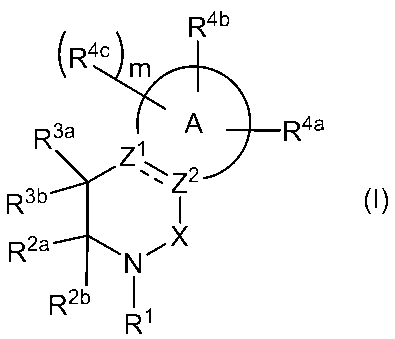
(式中、
式:

で示される部分が

であり;
Xは、C(=O)であり;
R1は、水素であり;
R2aは、式:
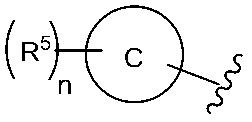
(式中、環Cは、ベンゼンまたはピリジンであり;
R5は、それぞれ独立して、ハロゲン、ハロアルキル、ハロアルキルオキシ、ハロゲンまたはハロアルキルで置換されてもよい非芳香族炭素環式基、またはハロゲンまたはハロアルキルで置換されてもよい非芳香族複素環式基であり、
nは、1~3の整数である)であり、
R2bは、アルキル、またはハロアルキルであり、
R2aおよびR2bは、隣接する炭素原子と一緒になって、環Bを形成してもよく、
環Bは、式:
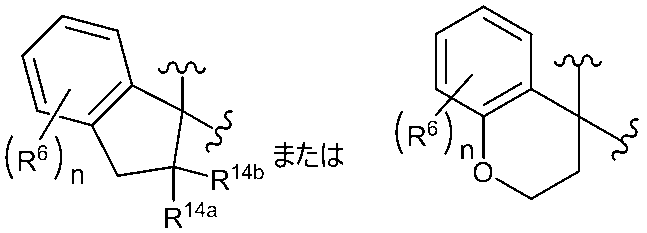
(式中、R6は、それぞれ独立して、ハロゲン、ハロアルキル、ハロアルキルオキシ、ハロゲンまたはハロアルキルで置換されてもよい非芳香族炭素環式基、またはハロゲンまたはハロアルキルで置換されてもよい非芳香族複素環式基であり、
R14aおよびR14bは、それぞれ独立して、水素またはハロゲンであり、
nは、1~3の整数である)であり;
R3aは、水素であり、
R3bは、水素であり;
R4aは、カルボキシまたは式:

であり;
L3は、単結合またはアルキレンであり、
R7は、水素、ハロゲン、アルキルスルホニル、オキソで置換されていてもよい非芳香族複素環式基、アルキルで置換されていてもよい非芳香族炭素環スルホニル、または式:-S(=O)(=N-H)-RS1であり、
R4bは、置換基群αで置換されていてもよいアルキル、置換基群βで置換されていてもよい芳香族炭素環式基、または置換基群βで置換されていてもよい芳香族複素環式基であり、
RS1はアルキルであり、
置換基群αは、ハロゲン、ハロアルキルオキシ、および非芳香族炭素環であり、
置換基群βは、ハロゲン、シアノ、アルキル、ハロアルキル、およびアルキルオキシである)で示される化合物、またはその製薬上許容される塩。
[2]R2aおよびR2bが、隣接する炭素原子と一緒になって、環Bを形成し、
環Bは、式:
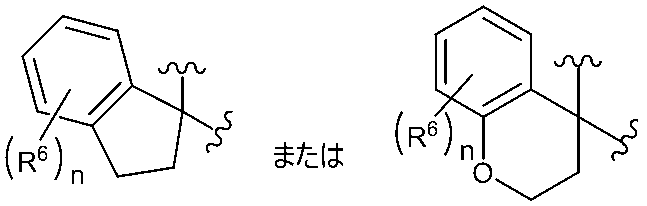
(式中、各記号は前記[1]と同意義)
である、前記[1]記載の化合物またはその製薬上許容される塩。
[3]R2aが、式:
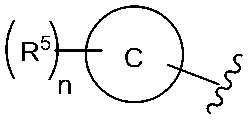
(式中、各記号は前記[1]と同意義)であり、
R2bは、アルキルまたはハロアルキルである、上記[1]記載の化合物またはその製薬上許容される塩。
[4]化合物I-8、I-10、I-12、I-23、I-24、I-34、I-67、I-170、I-190、I-212、I-236、I-253、I-275、I-276、II-93、II-94、II-103、II-121、II-151、II-168、II-174、II-203、II-225、II-233、II-270、II-276およびII-295からなる群から選択される、前記[1]記載の化合物またはその製薬上許容される塩。
[5]化合物I-9、I-72、I-97、I-100、I-104、I-110、I-122、I-131、I-133、I-163、I-167、I-168、I-186、I-193、I-200、I-242、I-280、I-284、II-67、II-72、II-87、II-137、II-147、II-201、II-202、II-214、II-238、II-262、II-273およびII-274からなる群から選択される、前記[1]記載の化合物またはその製薬上許容される塩。
[6]前記[1]~[5]のいずれかに記載の化合物またはその製薬上許容される塩を含有する、医薬組成物。
[7]MGAT2阻害作用を有する、前記[6]記載の医薬組成物。
[8]MGAT2の関与する疾患の治療または予防のために用いる、前記[6]または[7]記載の医薬組成物。
[9]肥満症、メタボリックシンドローム、高脂血症、高中性脂肪血症、高VLDL血症、高脂肪酸血症、糖尿病または動脈硬化症の治療または予防のために用いる、前記[8]記載の医薬組成物。
[10]前記[1]~[5]のいずれかに記載の化合物、またはその製薬上許容される塩を投与することを特徴とする、MGAT2の関与する疾患の治療または予防方法。
[11]MGAT2の関与する疾患の治療または予防のための、前記[1]~[5]のいずれかに記載の化合物、またはその製薬上許容される塩。
[12]MGAT2の関与する疾患の治療または予防のための、前記[1]~[5]のいずれかに記載の化合物、またはその製薬上許容される塩の使用。
「からなる」という用語は、構成要件のみを有することを意味する。
「含む」という用語は、構成要件に限定されず、記載されていない要素を排除しないことを意味する。
「アルキル」の好ましい態様として、メチル、エチル、n-プロピル、イソプロピル、n-ブチル、イソブチル、sec-ブチル、tert-ブチル、n-ペンチルが挙げられる。さらに好ましい態様として、メチル、エチル、n-プロピル、イソプロピル、tert-ブチルが挙げられる。
「芳香族炭素環式基」の好ましい態様として、フェニルが挙げられる。
さらに、「非芳香族炭素環式基」は、以下のように架橋している基、またはスピロ環を形成する基も包含する。
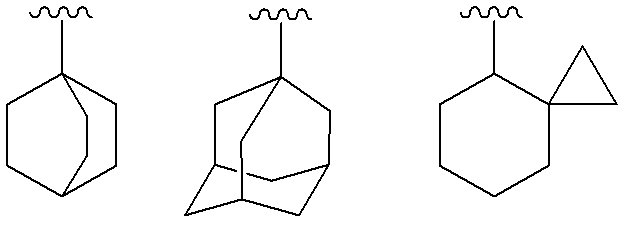
単環の非芳香族炭素環式基としては、炭素数3~16が好ましく、より好ましくは炭素数3~12、さらに好ましくは炭素数4~8である。例えば、シクロプロピル、シクロブチル、シクロペンチル、シクロヘキシル、シクロヘプチル、シクロオクチル、シクロノニル、シクロデシル、シクロプロペニル、シクロブテニル、シクロペンテニル、シクロヘキセニル、シクロヘプテニル、シクロヘキサジエニル等が挙げられる。
2環以上の非芳香族炭素環式基としては、炭素数8~20が好ましく、より好ましくは炭素数8~16である。例えば、インダニル、インデニル、アセナフチル、テトラヒドロナフチル、フルオレニル等が挙げられる。
単環の芳香族複素環式基としては、5~8員が好ましく、より好ましくは5員または6員である。例えば、ピロリル、イミダゾリル、ピラゾリル、ピリジル、ピリダジニル、ピリミジニル、ピラジニル、トリアゾリル、トリアジニル、テトラゾリル、フリル、チエニル、イソオキサゾリル、オキサゾリル、オキサジアゾリル、イソチアゾリル、チアゾリル、チアジアゾリル等が挙げられる。
2環の芳香族複素環式基としては、8~10員が好ましく、より好ましくは9員または10員である。例えば、インドリル、イソインドリル、インダゾリル、インドリジニル、キノリニル、イソキノリニル、シンノリニル、フタラジニル、キナゾリニル、ナフチリジニル、キノキサリニル、プリニル、プテリジニル、ベンズイミダゾリル、ベンズイソオキサゾリル、ベンズオキサゾリル、ベンズオキサジアゾリル、ベンズイソチアゾリル、ベンゾチアゾリル、ベンゾチアジアゾリル、ベンゾフリル、イソベンゾフリル、ベンゾチエニル、ベンゾトリアゾリル、イミダゾピリジル、トリアゾロピリジル、イミダゾチアゾリル、ピラジノピリダジニル、オキサゾロピリジル、チアゾロピリジル等が挙げられる。
3環以上の芳香族複素環式基としては、例えば、カルバゾリル、アクリジニル、キサンテニル、フェノチアジニル、フェノキサチイニル、フェノキサジニル、ジベンゾフリル等が挙げられる。
さらに、「非芳香族複素環式基」は、以下のように架橋している基、またはスピロ環を形成する基も包含する。
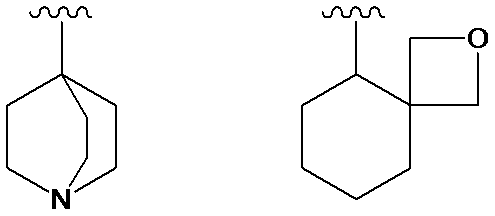
単環の非芳香族複素環式基としては、3~8員が好ましく、より好ましくは5員または6員である。例えば、ジオキサニル、チイラニル、オキシラニル、オキセタニル、オキサチオラニル、アゼチジニル、チアニル、チアゾリジニル、ピロリジニル、ピロリニル、イミダゾリジニル、イミダゾリニル、ピラゾリジニル、ピラゾリニル、ピペリジル、ピペラジニル、モルホリニル、モルホリノ、チオモルホリニル、チオモルホリノ、ジヒドロピリジル、テトラヒドロピリジル、テトラヒドロフリル、テトラヒドロピラニル、ジヒドロチアゾリル、テトラヒドロチアゾリル、テトラヒドロイソチアゾリル、ジヒドロオキサジニル、ヘキサヒドロアゼピニル、テトラヒドロジアゼピニル、テトラヒドロピリダジニル、ヘキサヒドロピリミジニル、ジオキソラニル、ジオキサジニル、アジリジニル、ジオキソリニル、オキセパニル、チオラニル、チイニル、チアジニル等が挙げられる。
2環以上の非芳香族複素環式基としては、8~20員が好ましく、より好ましくは8~10員である。例えば、インドリニル、イソインドリニル、クロマニル、イソクロマニル等が挙げられる。
本発明に係る式(I)で示される化合物は、例えば、下記に示す一般的合成法によって製造することができる。抽出、精製等は、通常の有機化学の実験で行う処理を行えばよい。
本発明の化合物は、当該分野において公知の手法を参考にしながら合成することができる。
本発明に係る式(I)で示される化合物(下記a5)は、例えば下記の製法によって製造することができる。
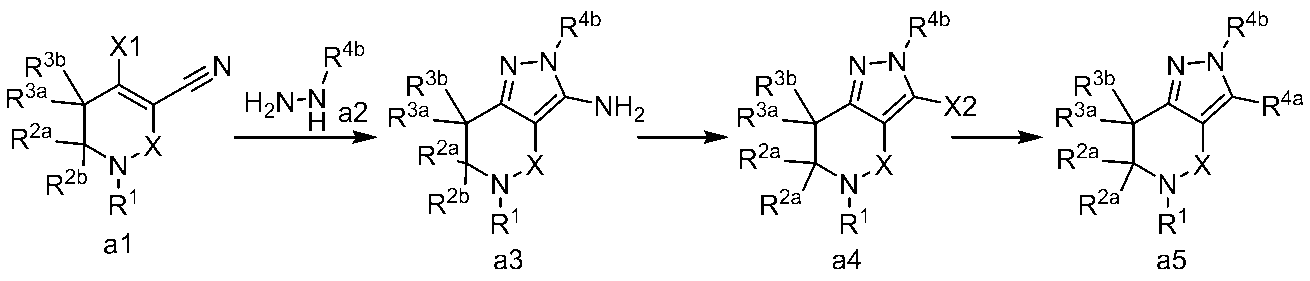
(式中、X1は塩素、臭素、ヨウ素、トリフルオロメタンスルホナート;X2は塩素、臭素、ヨウ素;その他各記号は、前記と同意義である。)
工程1
化合物a1に化合物a2と塩基を反応させることで、化合物a3を得ることができる。
塩基としては、トリエチルアミン、ジイソプロピルエチルアミン、炭酸水素ナトリウム、炭酸セシウム、炭酸カリウムなどが挙げられる。
反応温度は0℃~100℃である。
反応時間は1時間~10時間である。
反応溶媒としてはメタノール、エタノール、テトラヒドロフラン等が挙げられる。
工程2
化合物a3に塩化銅や臭化銅などのハロゲン化剤と酸と亜硝酸ナトリウムなど水溶液を反応させることで、化合物a4を得ることができる。
酸としては、塩酸や酢酸などが挙げられる。
反応温度は0℃~100℃である。
反応時間は1時間~10時間である。
工程3
金属触媒および塩基存在下、化合物a4とボロン酸またはボロン酸エステルまたはトリアルキルスタンナンなどを反応させることにより、化合物a5を得ることができる。
金属触媒としては、酢酸パラジウム、ビス(ジベンジリデンアセトン)パラジウム、テトラキス(トリフェニルホスフィン)パラジウム、ビス(トリフェニルホスフィン)パラジウム(II)二塩化物、ビス(トリ-tert-ブチルホスフィン)パラジウムなどが挙げられ、化合物a4に対して、0.001~0.5モル当量用いることができる。
塩基として、水酸化リチウム、水酸化ナトリウム、水酸化カリウム、カリウムtert-ブトキシド、ナトリウムtert-ブトキシド、炭酸ナトリウム、炭酸カリウム、炭酸水素ナトリウム、リン酸ナトリウム、リン酸水素ナトリウム、リン酸カリウム、リン酸水素カリウム等が挙げられ、化合物a4に対して、1~10モル当量用いることができる。
ボロン酸またはボロン酸エステルまたはトリアルキルスタンナンなどは、化合物a4に対して、1~10モル当量用いることができる。
反応温度は、20℃~溶媒の還流温度、場合によってはマイクロウェーブ照射下の温度で行う。
反応時間は、0.1~48時間、好ましくは0.5時間~12時間である。
反応溶媒としては、テトラヒドロフラン、トルエン、DMF、ジオキサン、水等が挙げられ、単独または混合して用いることができる。
なお、アミンまたはイミンまたはシアン化カリウムなどと化合物a4を反応させることで、R4aにアミンまたはイミンまたはシアンなどを有する化合物a5を合成することができる。
また、R4aがカルボニルアミノ、スルホニルアミノ等の場合は、化合物a3に種々官能基を付加することで合成できる。
上記化合物a3は、例えば下記の製法によって製造することができる。

(式中、各記号は、前記と同意義である。)
工程1
化合物a1にヒドラジン水和物を反応させることで、化合物a6を得ることができる。
反応温度は0℃~100℃である。
反応時間は1時間~20時間である。
反応溶媒としてはメタノール、エタノール、テトラヒドロフラン等が挙げられる。
工程2
化合物a6に塩基とハロゲン化物など反応させることで、化合物a3を得ることができる。
塩基としては、炭酸水素ナトリウム、炭酸ナトリウム、炭酸カリウム、炭酸セシウム、トリエチルアミン、ジイソプロピルエチルアミン、水素化ナトリウムなどが挙げられる。
反応温度は0℃~100℃である。
反応時間は1時間~10時間である。
反応溶媒としてはテトラヒドロフラン、ジクロロメタン、ジメチルホルムアミド等が挙げられる。
本発明化合物は、MGAT2阻害作用のみならず、医薬としての有用性を備えており、下記いずれか、あるいは全ての優れた特徴を有している。
a)代謝安定性が高い。
b)高い溶解性を示す。
c)光毒性の懸念が小さい。
d)肝毒性の懸念が小さい。
e)腎毒性の懸念が小さい。
f)心血管系への毒性懸念が小さい。
g)消化管障害の懸念が小さい。
h)薬物相互作用の懸念が小さい。
i)経口吸収性が高い。
j)クリアランスが小さい。
k)標的組織への移行性が高い。
l)酵素活性が強い。
m)薬物代謝酵素の誘導が少ない。
n)薬効が強い。
o)MGAT2阻害作用の選択性が高い。
p)化学的安定性が高い。
DIEA:N,N-ジイソプロピルエチルアミン
DMA:ジメチルアセトアミド
DMF:N,N-ジメチルホルムアミド
DMSO:ジメチルスルホキシド
HATU:O-(7-アザベンゾトリアゾール-1-イル)-1,1,3,3-テトラメチルウロニウムヘキサフルオロホスフェート
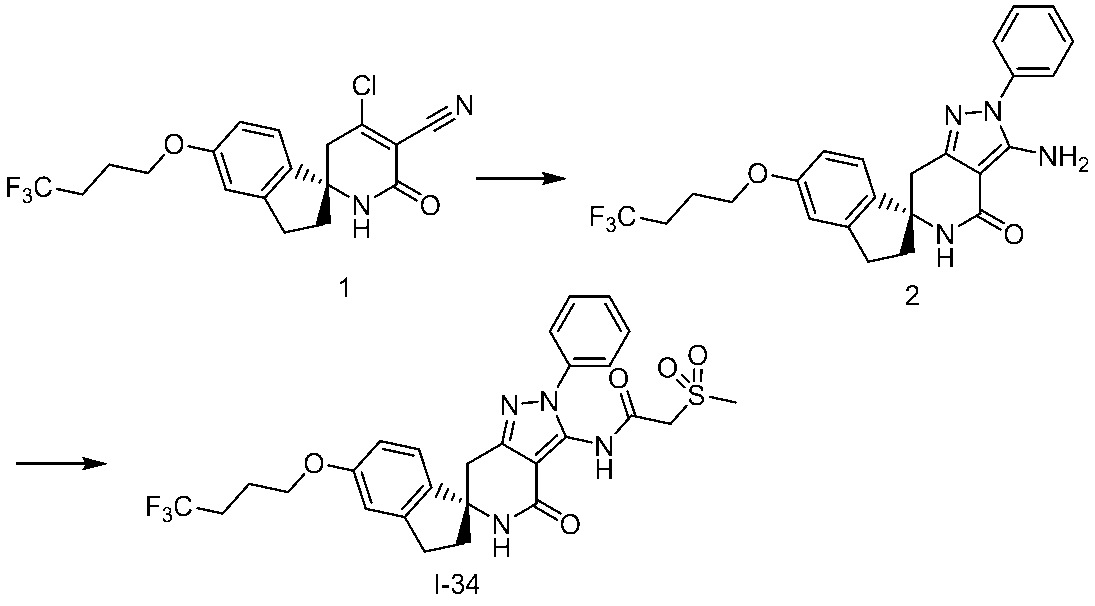
工程1
既知化合物1(WO2017069224A1)(54.7mg、0.142mmol)をテトラヒドロフラン(1.1mL)に溶解し、フェニルヒドラジン(28μL、0.28mmol)を氷冷下で加えて、20分間撹拌した。反応液にDIEA(50μL、0.28mmol)を氷冷下で加え、室温にて3時間撹拌した後、さらに70℃にて1時間撹拌した。反応液の溶媒を減圧留去し、得られた残渣をカラムクロマトグラフィー(クロロホルム-メタノール)により精製し、化合物2(59.4mg、収率92%)を得た。
1H-NMR (CDCl3) δ: 2.01-2.10(2H, m), 2.17(1H, dt, J=12.8, 8.3 Hz), 2.24-2.39(2H, m), 2.49(1H, ddd, J=12.8, 7.4, 3.8 Hz), 2.83-3.01(2H, m), 2.93(1H, d, J=15.9 Hz), 3.06(1H, d, J=15.9 Hz), 4.02(2H, t, J=6.0 Hz), 5.12(2H, s), 5.37(1H, s), 6.78(1H, s), 6.79(1H, d, J=7.5 Hz), 7.29(1H, d, J=7.5 Hz), 7.39(1H, t, J=7.3 Hz), 7.51(2H, t, J=7.8 Hz), 7.57(2H, d, J=7.5 Hz).
工程2
化合物2(44.9mg、98.4μmol)、2-メタンスルホニル酢酸(54mg、0.40mmol)、およびN、N-ジシクロヘキシルカルボジイミド(82mg、0.40mmol)をジクロロメタン(2mL)に懸濁し、室温にて25時間撹拌した。反応液にN、N-ジメチルアミノ-4-ピリジン(2.4mg、20μmol)を追加し、室温にてさらに4時間撹拌した。反応液に2-メタンスルホニル酢酸(27mg、0.20mmol)およびN、N-ジシクロヘキシルカルボジイミド(41mg、0.20mmol)を追加し、室温にてさらに24時間撹拌した。反応液をろ過し、ろ液の溶媒を減圧留去した。得られた残渣をシリカゲルクロマトグラフィー(クロロホルム-メタノール)により精製した。さらに得られた固体をジイソプロピルエーテルで洗浄し、化合物I-34(36.3mg、収率64%)を得た。
1H-NMR (CDCl3) δ: 1.95-2.06(2H, m), 2.19-2.32(3H, m), 2.44-2.54(1H, m), 2.90(3H, s), 2.91-3.04(2H, m), 3.09(1H, d, J=15.8 Hz), 3.18(1H, d, J=15.8 Hz), 3.88-3.97(2H, m), 4.02(1H, d, J=14.3 Hz), 4.22(1H, d, J=14.3 Hz), 6.12(1H, s), 6.66-6.72(1H, m), 6.76-6.79(1H, m), 7.18(1H, d, J=8.3 Hz), 7.35-7.52(5H, m), 9.66(1H, s).
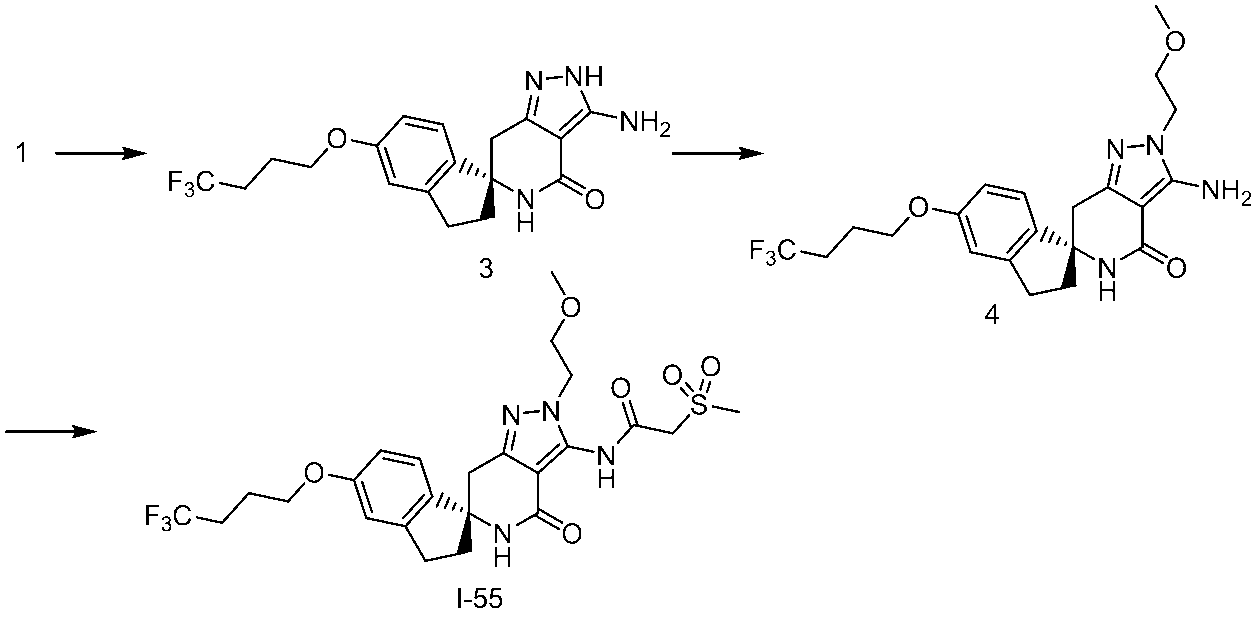
工程1
化合物1(1.0g、2.60mmol)をエタノール(15mL)に溶解し、ヒドラジン1水和物(0.65ml、13.0mmol)を加え、室温から80℃で18時間撹拌した。室温下、反応液に重層水を加え、クロロホルムで抽出し、硫酸ナトリウムで乾燥した。溶媒を減圧留去し、懸濁精製(酢酸エチル/ヘキサン)して化合物3(890mg、収率90%)を得た。
1H-NMR (CDCl3) δ: 2.01-2.18(m, 3H), 2.25-2.42(m, 3H), 2.81-3.02(m, 4H), 4.00(t, J=5.9 Hz, 2H), 5.49(s, 1H), 6.75-6.77(m, 2H), 7.22(d, J=9.0 Hz, 1H).
工程2
化合物3の(100mg、0.24mmol)をジクロロメタン(1.0mL)に溶解し、1-ブロモ-2-メトキシエタン(66.7mg、0.48mmol)および炭酸セシウム(313mg、0.96mmol)を加え、90℃で2時間撹拌した。室温下、反応液に水を加え、酢酸エチルで抽出し、硫酸ナトリウムで乾燥した。溶媒を減圧留去し、化合物4を粗生成物として得た。
工程3
化合物4の粗生成物(0.24mmol)をトルエン(1mL)に溶解し、2-(メタンスルホニル)酢酸(66.2mg、0.48mmol)およびN,N’-ジシクロヘキシルカルボジイミド(99.0mg、0.48mmol)を室温で加え、1時間撹拌した。室温下、反応液に水を加え、酢酸エチルで抽出し、硫酸ナトリウムで乾燥した。溶媒を減圧留去し、得られた残渣をシリカゲルカラムクロマトグラフィー(ヘキサン‐酢酸エチル)および逆相クロマトグラフィーにより精製して化合物I-55(30.0mg、2段階収率22%)を得た。
1H-NMR (CDCl3) δ: 2.01-2.20(m, 3H), 2.25-2.44(m, 3H), 2.85-2.97(m, 3H), 3.09(d, J=15.8 Hz, 1H), 3.30(br-s, 3H), 3.39(s, 3H), 3.72(t, J=5.0 Hz, 2H), 3.99(t, J=5.9 Hz, 2H), 4.13(br-s, 2H), 4.28(br-s, 2H), 5.68(s, 1H), 6.77(br-s, 2H), 7.20-7.22(m, 1H).
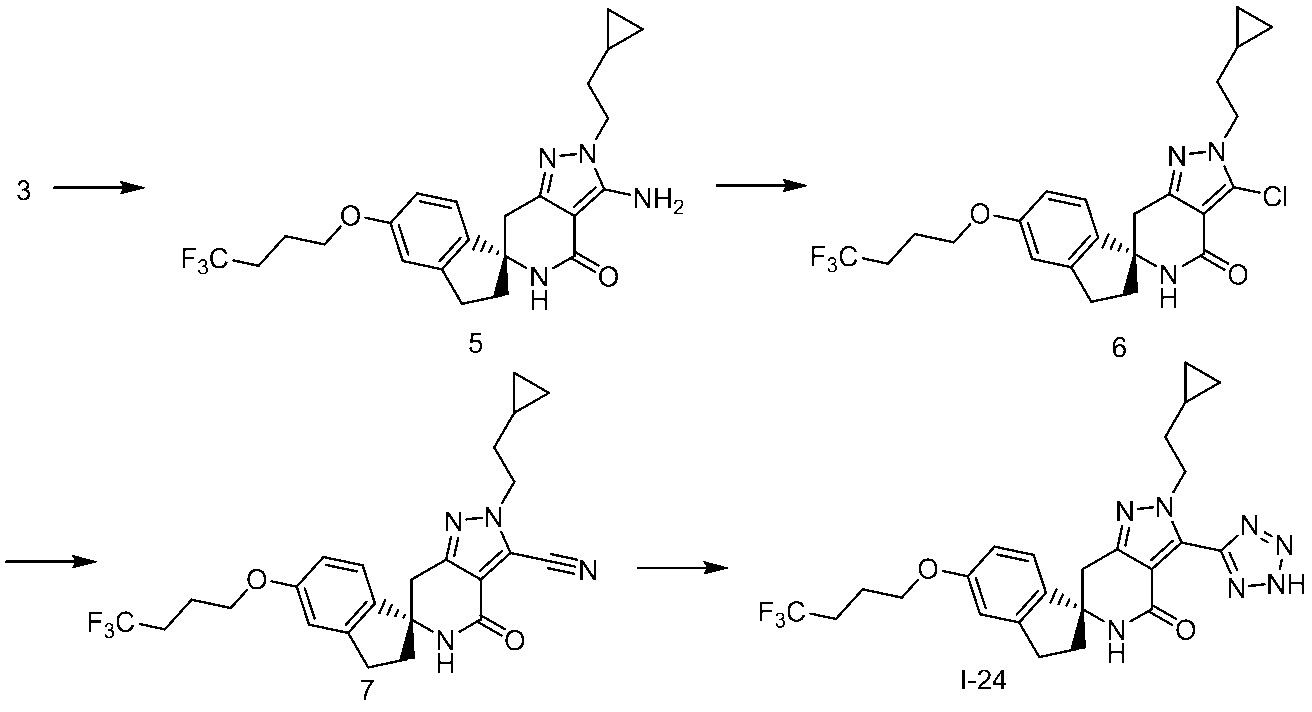
工程1
化合物3の(719mg、1.89mmol)をDMF(7mL)に溶解し、2-シクロプロピルエチルメタンスルホナート(466mg、2.84mmol)および炭酸カリウム(1.31g、9.45mmol)を加え、80℃で5時間撹拌した。室温下、反応液に水を加え、クロロホルムで抽出し、硫酸ナトリウムで乾燥した。溶媒を減圧留去し、得られた残渣をカラムクロマトグラフィー(酢酸エチル)により精製し、化合物5(358mg、収率42%)を得た。
1H-NMR (CDCl3) δ: 0.06-0.10(m, 2H), 0.46-0.51(m, 2H), 0.63-0.72(m, 1H), 1.69-1.75(m, 2H), 2.03-2.15(dt, J=30.7, 9.3 Hz, 3H), 2.28-2.43(m, 3H), 2.82-3.00(m, 4H), 3.93-4.02(m, 4H), 4.78(br-s, 2H), 5.23(s, 1H), 6.76-9.78(m, 2H), 7.23-7.25(m, 1H).
工程2
化合物5(2.30g、5.13mmol)および二塩化銅(1.38g、10.3mmol)を、酢酸(7mL)および濃塩酸(11mL)に溶解し、亜硝酸ナトリウム(460mg、6.67mmol)の水溶液(1mL)を氷冷下で滴下し、氷冷下にて45分間撹拌した。反応液をクロロホルムで抽出し、有機層を飽和塩化アンモニウム水溶液と2M炭酸ナトリウム水溶液で洗浄した後、硫酸ナトリウムで乾燥した。溶媒を減圧留去し、得られた残渣をカラムクロマトグラフィー(クロロホルム-酢酸エチル)により精製し、化合物6(1.24g、収率52%)を得た。
1H-NMR (CDCl3) δ: -0.04-0.05(2H, m), 0.40-0.51(2H, m), 0.61-0.72(1H, m), 1.69-1.82(2H, m), 2.01-2.10(2H, m), 2.14(1H, dt, J=13.1, 8.3 Hz), 2.25-2.42(3H, m), 2.82-3.00(2H, m), 2.94(1H, d, J=15.8 Hz), 3.08(1H, d, J=15.8 Hz), 4.01(2H, t, J=5.9 Hz), 4.24(2H, t, J=7.0 Hz), 5.59(1H, s), 6.76-6.80(2H, m), 7.22(1H, d, J=9.0 Hz).
工程3
化合物6(1.57g、3.36mmol)をDMA(16ml)に溶解し、シアン化カリウム(678mg、10.4mmol)を加え、マイクロ波照射下、200℃にて3時間撹拌した。反応液を室温に戻した後、飽和炭酸水素ナトリウム水溶液および水を加え、水層をヘキサン-酢酸エチル(2:1)で抽出した。有機層を水および飽和食塩水で洗浄した後、硫酸ナトリウムで乾燥した。溶媒を減圧留去し、化合物7の粗生成物(1.46g)を得た。
工程4
化合物7の粗生成物(212mg)、アジ化ナトリウム(150mg、2.31mmol)および塩化アンモニウム(124mg、2.31mmol)を、DMF(4.2mL)および水(0.4mL)に懸濁し、140℃にて3時間撹拌した。反応液を室温に戻した後、クエン酸水溶液を加え、水層を酢酸エチルで抽出した。有機層を硫酸ナトリウムで乾燥し、溶媒を減圧留去した。得られた残渣をシリカゲルカラムクロマトグラフィー(クロロホルム‐メタノール)により精製して化合物I-24(162mg、2段階収率66%)を得た。
1H-NMR (CDCl3) δ: 0.01-0.06(2H, m), 0.36-0.42(2H, m), 0.73-0.82(1H, m), 1.88(2H, q, J=7.1 Hz), 2.02-2.11(2H, m), 2.18(1H, s), 2.20(1H, dt, J=13.3, 8.2 Hz), 2.26-2.39(2H, m), 2.45(1H, ddd, J=13.0, 7.7, 4.5 Hz), 2.88-3.06(2H, m), 3.12(1H, d, J=15.9 Hz), 3.22(1H, d, J=15.9 Hz), 4.03 (2H, t, J=6.0 Hz), 4.99-5.13(2H, m), 5.97(1H, s), 6.79-6.83(2H, m), 7.24(1H, d, J=9.3 Hz).
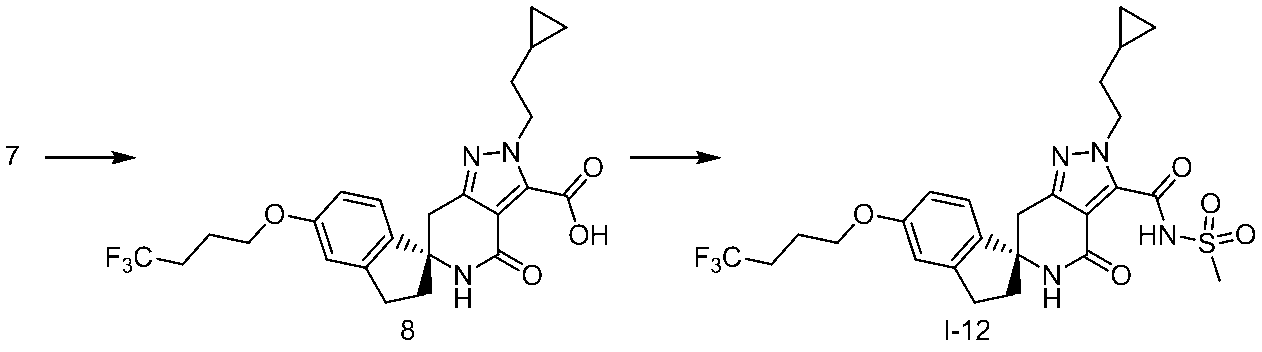
工程1
化合物7(1.46g、3.18mmol)をテトヒドロフラン(6mL)およびメタノール(6mL)に溶解し、5N水酸化ナトリウム水溶液(6.4mL、3.2mmol)を加え、マイクロ波照射下、120℃にて75分間撹拌した。反応液を室温に戻した後、2N塩酸(30mL)を加え、水層をクロロホルムで抽出し、有機層を硫酸ナトリウムで乾燥した。溶媒を減圧留去し、得られた残渣をシリカゲルカラムクロマトグラフィー(クロロホルム-メタノール)により精製して、化合物2(1.12g、収率73%)を得た。
1H-NMR (CDCl3) δ: -0.02-0.02(2H, m), 0.39-0.45(2H, m), 0.69-0.77(1H, m), 1.78(2H, q, J=7.2 Hz), 2.02-2.11(2H, m), 2.21(1H, dt, J=13.2, 8.2 Hz), 2.26-2.39(2H, m), 2.45(1H, ddd, J=13.0, 7.7, 4.5 Hz), 2.93(1H, dt, J=16.2, 7.7 Hz), 3.01(1H, ddd, J=16.5, 8.6, 4.3 Hz), 3.09(1H, d, J = 16.2 Hz), 3.19(1H, d, J=16.1 Hz), 4.03(2H, t, J=6.0 Hz), 4.76-4.89(2H, m), 6.01(1H, s), 6.79-6.84(2H, m), 7.19-7.23(1H, m), 15.66(1H, s).
工程2
化合物2(486mg、1.02mmol)およびカルボニルジイミダゾール(495mg、3.05mmol)をテトラヒドロフラン(5mL)に溶解し、70℃にて100分間撹拌した。反応液を室温に戻した後、メタンスルホン酸アミド(484mg、5.09mmol)およびジアザビシクロウンデセン(0.77mL、5.1mmol)を加え、室温にて14時間撹拌した。溶媒を減圧留去した後、残渣に2N塩酸(20mL)を加え、水層をクロロホルムで抽出し、有機層を硫酸ナトリウムで乾燥した。溶媒を減圧留去し、得られた残渣を固体化(ジイソプロピルエーテル-クロロホルム)により精製して、化合物I-12(281mg、収率50%)を得た。
1H-NMR (CDCl3) δ: 0.00-0.04(2H, m), 0.41-0.47(2H, m), 0.67-0.76(1H, m), 1.78(2H, qd, J=7.2, 1.4 Hz), 2.02-2.11(2H, m), 2.18(1H, dt, J=13.2, 8.2 Hz), 2.26-2.36(2H, m), 2.40(1H, ddd, J=13.1, 7.7, 4.4 Hz), 2.91(1H, dt, J=16.4, 8.1 Hz), 2.99(1H, ddd, J=16.5, 8.6, 4.5 Hz), 3.07(1H, d, J=15.8 Hz), 3.18(1H, d, J=15.8 Hz), 3.38(3H, s), 4.02(2H, t, J=6.0 Hz), 4.75-4.87(2H, m), 5.95(1H, s), 6.79-6.83(2H, m), 7.20-7.23(1H, m), 14.99(1H, s).
工程1
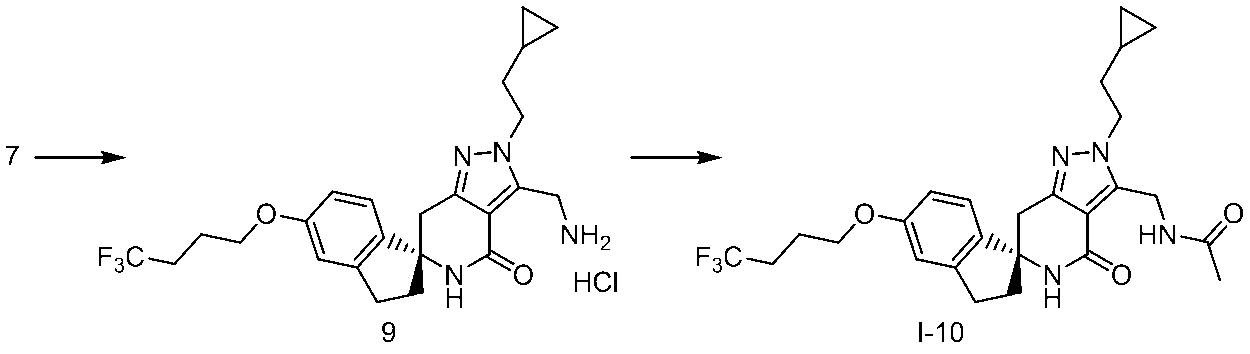
化合物7(23.1mg、50.4μmol)および5%パラジウム炭素(23mg)を、メタノール(1.5mL)および濃塩酸(0.2mL)に懸濁し、水素雰囲気下、室温にて4時間撹拌した。反応液をろ過した後、溶媒を減圧留去し、化合物9(24.9mg、収率99%)を得た。
1H-NMR (DMSO-D6) δ: -0.08-0.04(2H, m), 0.34-0.41(2H, m), 0.58-0.67(1H, m), 1.59-1.67(2H, m), 1.91(2H, dt, J=15.6, 6.4 Hz), 2.14-2.28(2H, m), 2.36-2.45(2H, m), 2.90(2H, t, J=6.7 Hz), 2.94(1H, d, J=15.8 Hz), 3.01(1H, d, J = 15.8 Hz), 4.01(2H, t, J=6.1 Hz), 4.22(2H, t, J=6.7 Hz), 4.38(1H, d, J=15.2 Hz), 4.43(1H, d, J=15.2 Hz), 6.68(1H, dd, J=8.4, 2.3 Hz), 6.85(1H, d, J=2.3 Hz), 7.01(1H, d, J=8.4 Hz), 8.42(1H, s), 8.73(3H, s).
工程2
化合物9(6.0mg、12μmol)をテトラヒドロフラン(0.7mL)に懸濁し、無水酢酸(6μL、0.06mmol)およびトリエチルアミン(17μL、0.12mmol)を加え、室温にて20分間撹拌した。メタノール(2mL)を加えた後、溶媒を減圧留去した。得られた残渣をシリカゲルカラムクロマトグラフィー(クロロホルム-メタノール)により精製して、化合物I-10(4.6mg、収率76%)を得た。
1H-NMR (CDCl3) δ: -0.05-0.05(2H, m), 0.39-0.48(2H, m), 0.60-0.72(1H, m), 1.75(2H, q, J=7.0 Hz), 2.02(3H, s), 2.03-2.10(2H, m), 2.14(1H, dt, J=13.1, 8.0 Hz), 2.25-2.36(2H, m), 2.40(1H, ddd, J=12.9, 7.7, 4.2 Hz), 2.83-2.97(2H, m), 2.96(1H, d, J=15.8 Hz), 3.07(1H, d, J=15.8 Hz), 4.02(2H, t, J=6.0 Hz), 4.27(2H, t, J=7.2 Hz), 4.55(1H, dd, J=16.1, 4.8 Hz), 4.76(1H, dd, J=16.1, 6.0 Hz), 5.73(1H, s), 6.76-6.81(2H, m), 7.19-7.24(1H, m), 8.65-8.72(1H, m).
工程1
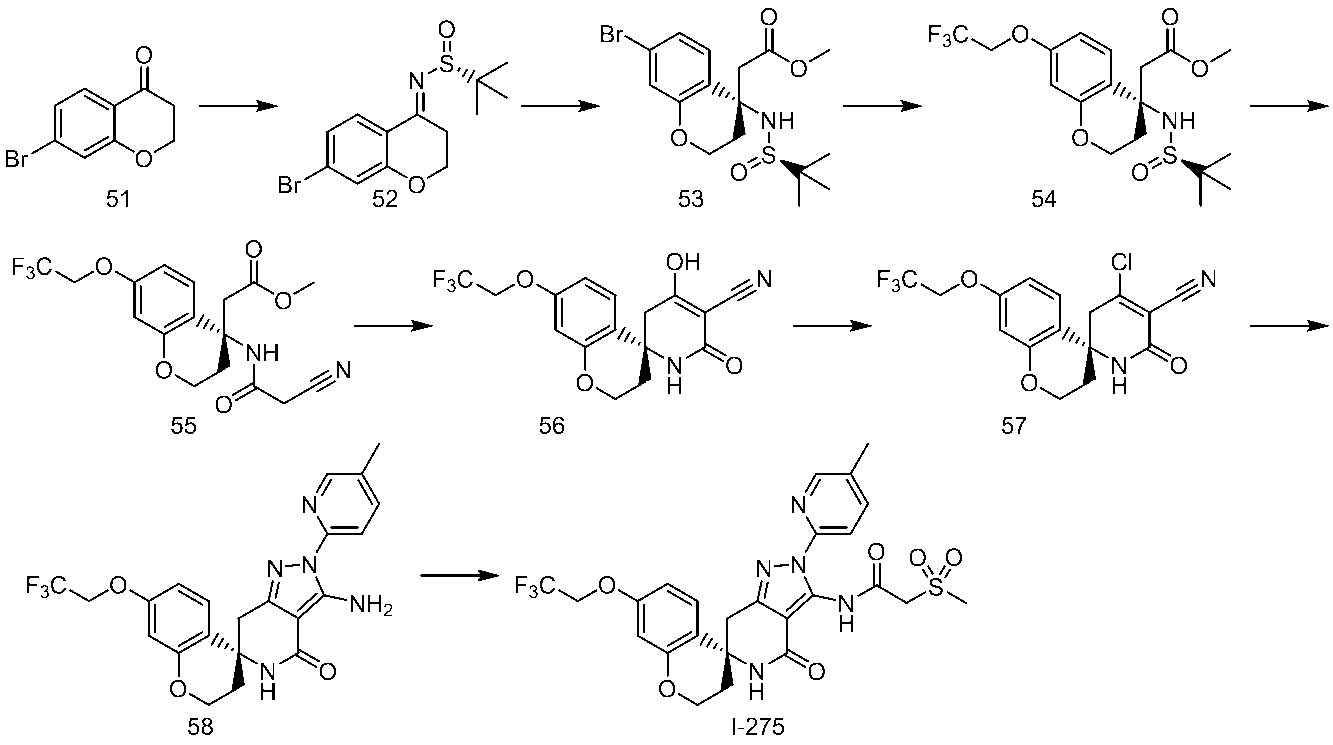
(R)-2-メチルプロパン-2-スルフィンアミド(134g、1.11mol)のトルエン(500mL)溶液に、テトラエトキシチタン(141mL、666mmol)、化合物51(100g、444mmol)のテトラヒドロフラン(250mL)とトルエン(250mL)溶液を加え、90℃で12時間撹拌した。反応液に室温下、飽和塩化アンモニウム水溶液を加えた後、酢酸エチルで抽出した。有機層を飽和塩化アンモニウム水溶液で洗浄した後、無水硫酸ナトリウムで乾燥した。溶媒を減圧留去し、得られた残渣をシリカゲルカラムクロマトグラフィー(ヘキサン-酢酸エチル)により精製して化合物52(82g、収率56%)を得た。
1H-NMR (CDCl3) δ: 1.32(s, 9H), 3.24-3.31(m, 1H), 3.45-3.53(m, 1H), 4.27-4.41(m, 2H), 7.09-7.12(m, 2H), 7.83(d, 1H, J=8.31 Hz).
工程2
1mol/Lリチウムヘキサメチルジシラジド テトラヒドロフラン溶液(334mL、333mmol)に、酢酸メチル(26.5mL、333mmol)を-78℃で加え、1時間撹拌した。反応液に、塩化チタントリイソプロポキド(110g、424mmol)のテトラヒドロフラン(250mL)溶液を、-78℃で滴下し、2時間撹拌した。反応液に、化合物52(50.0g、151mmol)のテトラヒドロフラン(250mL)溶液を、-78℃で滴下し、30分撹拌した。飽和塩化アンモニウム水溶液とロッシェル塩を加え、室温に昇温して12時間撹拌した。その後、酢酸エチルで抽出し、有機層を水で洗浄した後、無水硫酸ナトリウムで乾燥した。溶媒を減圧留去し、得られた残渣をシリカゲルカラムクロマトグラフィー(ヘキサン-酢酸エチル)により精製して化合物53(35g、収率57%)を得た。
1H NMR (400 MHz, DMSO-d6) δ: 1.09(s, 9H), 2.26-2.36(m, 2H), 3.04(q, 2H, J=5.6 Hz), 3.53(s, 3H), 4.22-4.26(m, 1H), 4.34-4.37(m, 1H), 5.45(s, 1H), 7.01-7.07(m, 2H), 7.28(d, 1H, J=8.56 Hz).
工程3
化合物53(1.4g、3.46mmol)のジオキサン(15mL)溶液に、ビス(ピナコラト)ジボロン(1.32g、5.19mmol)、[1,1’-ビス(ジフェニルホスフィノ)フェロセン]パラジウム(II)ジクロリド ジクロロメタン錯体(1:1)(0.141g、0.17mmol)と酢酸カリウム(1.02g、10.4mmol)を加え、100℃で4時間撹拌した。反応液に、30%過酸化水素水(1.96mL、17.3mmol)を室温下加え、2時間撹拌した。反応液に水を加え、酢酸エチルで抽出し、有機層を10%チオ硫酸ナトリウム水溶液水で洗浄した後、無水硫ナトリウムで乾燥し、溶媒を減圧留去した。得られた残渣をDMF(10mL)に溶解させ、炭酸セシウム(1.69g、5.19mmol)とトリフルオロメタンスルホン酸2,2,2-トリフルオロエチルエステル(597mL、4.16mmmol)を加え、室温下12時間撹拌した。反応液に、10%クエン酸水溶液を加え、酢酸エチルで抽出し、飽和重層水と飽和塩化ナトリウム水溶液で洗浄した後、無水硫酸ナトリウムで乾燥し、溶媒を減圧留去し、得られた残渣をシリカゲルカラムクロマトグラフィー(ヘキサン-酢酸エチル)により精製して化合物54(1.23g、収率84%)を得た。
1H-NMR (CDCl3) δ: 1.22(s, 9H), 2.21-2.28(m, 1H), 2.52-2.57(m, 1H), 2.77(d, J=15.7 Hz, 1H), 2.96(d, J=15.7 Hz, 1H), 3.71(s, 3H), 4.19-4.25(m, 1H), 4.31(q, J=8.1 Hz, 2H), 4.45-4.51(m, 1H), 5.13(s, 1H), 6.40(d, J=2.6 Hz, 1H), 6.56(dd, J=8.8, 2.6 Hz, 1H), 7.17(d, J=8.8 Hz, 1H).
工程4
化合物54(545mg、1.29mmol)のメタノール(1.1mL)溶液に、4mol/L 塩酸ジオキサン溶液(0.64mL、2.57mmol)を加え、室温で1時間撹拌した。反応液の溶媒を減圧留去した後、得られた残渣をテトラヒドロフラン(4.5ml)に溶解させ、2-シアノ酢酸(219mg、2.57mmol)、1-エチル-3-(3-ジメチルアミノプロピル)カルボジイミド塩酸塩(493mg、2.57mmol)とトリエチルアミン(0.71mL、5.15mmol)を加え、室温で3時間撹拌した。反応液に水を加え、酢酸エチルで抽出し、飽和重層水と飽和塩化ナトリウム水溶液で洗浄した後、無水硫酸ナトリウムで乾燥し、溶媒を減圧留去し、化合物55(483mg、97%)を得た。
1H-NMR (CDCl3) δ: 2.14-2.20(m, 1H), 2.81-2.88(m, 1H), 3.02(d, J=15.1 Hz, 1H), 3.17(d, J=15.1 Hz, 1H), 3.33(dd, J=20.2, 18.9 Hz, 2H), 3.70(s, 3H), 4.19-4.32(m, 4H), 6.40(d, J=2.8 Hz, 1H), 6.54(dd, J=8.8, 2.8 Hz, 1H), 7.15(s, 1H), 7.20(d, J=8.8 Hz, 1H).
工程5
化合物55(497mg、1.29mmol)のメタノール(2.5mL)溶液に、28%ソジウムメトキシド メタノール溶液(993mg、5.15mmol)を加え、室温下1時間撹拌した。反応液に2mol/Lの塩酸水溶液(6mL)と水を加え、酢酸エチルで抽出した。有機層を水で洗浄した後、無水硫酸マグネシウムで乾燥した。濃縮後、得られた残渣を酢酸エチルに溶解させ、飽和重層水で逆抽出した。その後、水層に濃塩酸を氷冷下加え、析出した固体を濾取することで、化合物56(340mg、75%)を得た。
1H-NMR (DMSO-D6) δ: 1.99-2.15(m, 2H), 2.67(d, J=17.3 Hz, 1H), 3.21(d, J=17.3 Hz, 1H), 4.09-4.15(m, 1H), 4.20-4.25(m, 1H), 4.72(q, J=8.9 Hz, 2H), 6.49(d, J=2.6 Hz, 1H), 6.64(dd, J=8.8, 2.6 Hz, 1H), 7.41(d, J=8.8 Hz, 1H), 7.89(s, 1H).
工程6
化合物56(500mg、1.41mmol)のジクロロエタン(5mL)溶液に、塩化ホスホリル(0.152mL、1.69mmol)とDMF(0.136mL、1.70mmol)のジクロロエタン(5ml)溶液を加え、室温で75時間撹拌した。反応液に水を加え、酢酸エチルで抽出し、飽和重層水と飽和塩化ナトリウム水溶液で洗浄した後、無水硫酸マグネシウムで乾燥し、溶媒を減圧留去し、化合物57(486mg、92%)を得た。
1H-NMR (CDCl3) δ: 2.24-2.27(m, 2H), 3.00(d, J=18.8 Hz, 1H), 3.43(d, J=18.8 Hz, 1H), 4.17-4.35(m, 4H), 5.92(s, 1H), 6.42(d, J=2.5 Hz, 1H), 6.63(dd, J=8.8, 2.5 Hz, 1H), 7.33(d, J=8.8 Hz, 1H).
工程7
化合物57(100mg、0.27mmol)のエタノール(2mL)溶液に、2-ヒドラジニル-5-メチルピリジン塩酸塩(51.4mg、0.32mmol)と炭酸水素ナトリウム(56.3mg、0.67mmol)を加え、70℃にて7時間撹拌した。その後、水を加え、クロロホルムで抽出し、飽和塩化ナトリウム水溶液で洗浄した後、無水硫酸マグネシウムで乾燥し、溶媒を減圧留去し、得られた残渣をシリカゲルカラムクロマトグラフィー(クロロホルム-メタノール)により精製して化合物58(77.6mg、収率63%)を得た。
1H-NMR (CDCl3) δ: 2.15-2.26(m, 2H), 2.36(s, 3H), 3.01(d, J=16.2 Hz, 1H), 3.27(d, J=16.2 Hz, 1H), 4.21-4.24(m, 2H), 4.32(q, J=8.1 Hz, 2H), 5.20(s, 1H), 6.42(d, J=2.6 Hz, 1H), 6.61(dd, J=8.8, 2.6 Hz, 1H), 7.18(s, 2H), 7.50(d, J=8.8 Hz, 1H), 7.63(dd, J=8.6, 2.2 Hz, 1H), 7.77(d, J=8.4 Hz, 1H), 8.19(s, 1H).
工程8
化合物58(430mg、0.94mmol)のジクロロメタン(5mL)溶液に、2-(メタンスルホニル)アセチルクロライド(3.74mmol)のジクロロメタン(3ml)溶液とピリジン(0.303ml、3.74mmol)を0℃で加え、1時間半撹拌した。室温下、水を加え、酢酸エチルで抽出し、硫酸マグネシウムで乾燥した。溶媒を減圧留去し、得られた残渣をシリカゲルカラムクロマトグラフィー(クロロホルム‐メタノール、アミノシリカゲル)により精製して、ヘキサン―酢酸エチルで粉末化させることで化合物I-275(320mg、59%)を得た。
1H-NMR (CDCl3) δ: 2.19-2.31(m, 2H), 2.40(s, 3H), 3.11(d, J=16.3 Hz, 1H), 3.22(s, 3H), 3.41(d, J=16.3 Hz, 1H), 4.14(s, 2H), 4.23-4.25(m, 2H), 4.33(q, J=8.0 Hz, 2H), 5.59(s, 1H), 6.44(d, J=2.6 Hz, 1H), 6.62(dd, J=8.8, 2.6 Hz, 1H), 7.49(d, J=8.8 Hz, 1H), 7.69-7.72(m, 1H), 7.81(d, J=8.3 Hz, 1H), 8.30(br-s, 1H), 11.19(s, 1H).
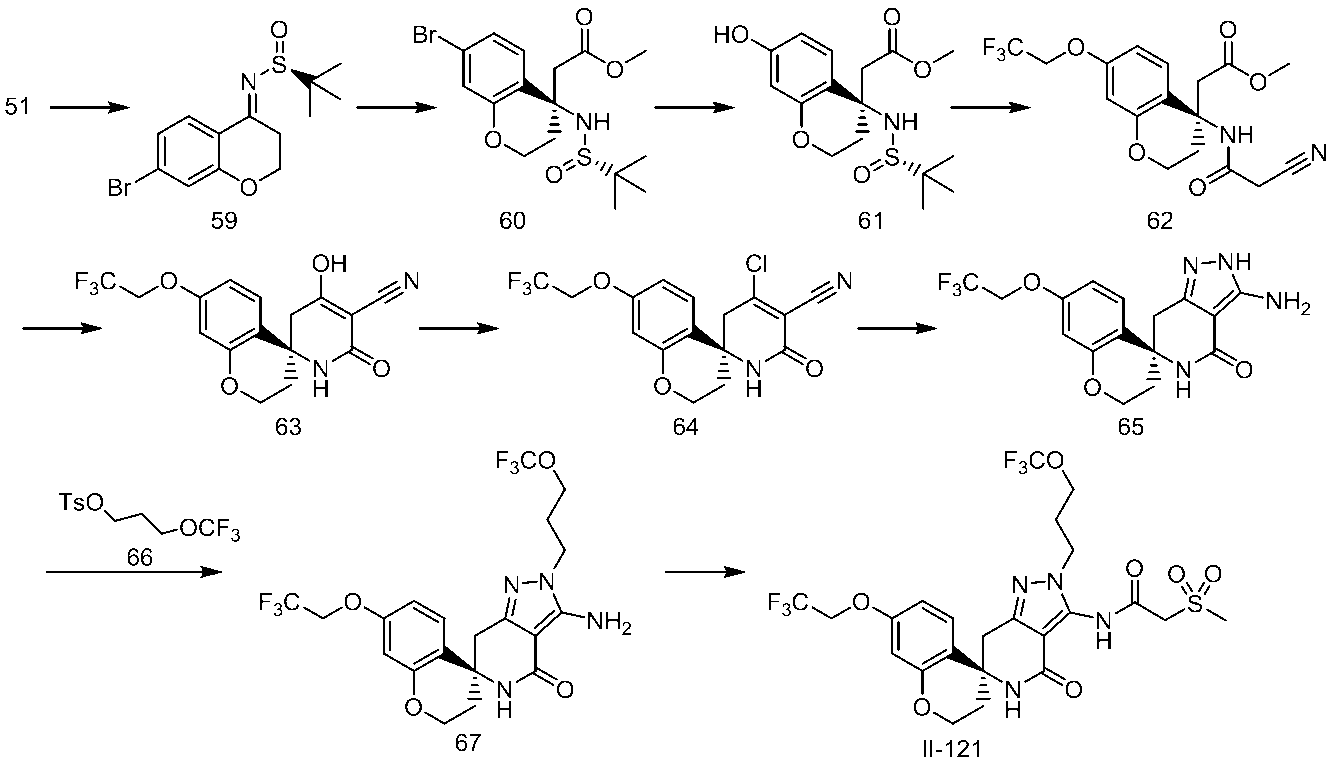
工程1
化合物51(1.75g、7.69mmol)に(S)-2-メチルプロパン-2-スルフィンアミド(1.03g、8.45mmol)とテトラエトキシチタン(3.22mL、6mmol)を加え、100℃で2時間半撹拌した。反応液を酢酸エチルと水で希釈し、酢酸エチルで抽出した。有機層を飽和塩化ナトリウム水溶液で洗浄した後、溶媒を減圧留去し、得られた残渣をシリカゲルカラムクロマトグラフィー(ヘキサン-酢酸エチル)により精製して化合物59(1.86g、収率73%)を得た。
1H-NMR (CDCl3) δ: 1.32(s, 9H), 3.24-3.31(m, 2H), 3.46-3.53(m, 2H), 4.28-4.41(m, 2H), 7.09-7.13(m, 2H), 7.84(d, J=8.4 Hz, 1H).
工程2
1mol/Lリチウムヘキサメチルジシラジド テトラヒドロフラン溶液(9.01mL、9.01mmol)に、テトラヒドロフラン(15mL)と酢酸メチル(0.72mL、9.01mmol)を-78℃で加え、30分間撹拌した。反応液に1mol/L塩化チタントリイソプロポキドのヘキサン溶液(11.3mL、11.3mmol)-78℃で滴下し、20分間撹拌した。その後、化合物59(1.86g、5.63mmol)のテトラヒドロフラン(16mL)溶液を、-78℃で滴下し、1時間撹拌した。飽和塩化ナトリウム水溶液を加え、酢酸エチルで抽出し、有機層を水で洗浄した後、溶媒を減圧留去し、得られた残渣をシリカゲルカラムクロマトグラフィー(ヘキサン-酢酸エチル)により精製して化合物60(2.07g、収率77%)を得た。
1H-NMR (CDCl3) δ: 1.22(s, 9H), 2.22-2.29(m, 1H), 2.56-2.61(m, 2H), 2.78(d, J=15.8 Hz, 1H), 2.93(d, J=15.8 Hz, 1H), 3.71(s, 3H), 4.20-4.25(m, 1H), 4.43-4.49(m, 1H), 5.17(s, 1H), 7.02-7.05(m, 2H), 7.11(d, J=8.3 Hz, 1H).
工程3
化合物60(512mg、1.22mmol)の1、4-ジオキサン(5mL)溶液にビス(ピナコラト)ジボロン(341mg、1.34mmol)、酢酸カリウム(359mg、3.66mmol)と[1、1’-ビス(ジフェニルホスフィノ)フェロセン]パラジウム(II)ジクロリド ジクロロメタン付加物(19.9mg、0.024mmol)を加え、減圧、窒素置換を3回繰り返した後3時間加熱還流した。室温に冷却後、不溶物をセライト濾過し溶媒を減圧留去して得られた残渣をテトラヒドロフラン(5mL)で希釈し、30%過酸化水素水溶液(277mg、2.44mmol)と1mol/L水酸化ナトリウム水溶液(0.244mL、0.244mmol)を加え室温で19時間半撹拌した。反応液をチオ硫酸ナトリウム5水和物(606mg、2.44mmol)で処理し、酢酸エチルで抽出し、有機層を水で洗浄した後、溶媒を減圧留去し、得られた残渣をヘキサン-酢酸エチルで粉末化し、化合物61(391mg、収率94%)を得た。
1H-NMR (CDCl3) δ: 1.23(s, 9H), 2.21-2.28(m, 1H), 2.45-2.50(m, 1H), 2.78(d, J=15.9 Hz, 1H), 2.99(d, J=15.9 Hz, 1H), 3.71(s, 3H), 4.17-4.22(m, 1H), 4.43-4.50(m, 1H), 5.10(s, 1H), 6.23(s, 1H), 6.34(s, 1H), 6.40(d, J=8.3 Hz, 1H), 7.05(d, J=8.6 Hz, 1H).
工程4
化合物61(380mg、1.11mmol)のDMF(1.5mL)溶液に、2、2、2-トリフルオロエチルトリフルオロメタンスルフォネート(310mg、1.34mmol)と炭酸カリウム(185mg、1、34mmol)を加え室温で14時間撹拌後、60℃に加温しさらに2時間撹拌した。反応液を酢酸エチルと水で希釈し、有機層を水で洗浄した後、溶媒を減圧留去し、得られた残渣のメタノール(2mL)溶液に4mol/L塩酸ジオキサン溶液(0.557mL、2.23mmol)を加え室温で1時間撹拌した。反応液の溶媒を減圧留去し、さらにトルエンを加えて溶媒を減圧留去し、得られた残渣のジクロロメタン(4mL)溶液に、2-シアノ酢酸(161mg、1.89mmol)、1-(3-ジメチルアミノプロピル)-3-エチルカルボジイミド塩酸塩(363mg、1.89mmol)とトリエチルアミン(0.463mL、3.34mmol)を加え室温で19時間撹拌した。反応液の溶媒を減圧留去し、酢酸エチルと水で希釈し、有機層を水で洗浄し、溶媒を減圧留去し、化合物62の粗生成物を得た。
工程5
化合物62の粗生成物のメタノール(4mL)溶液に、60%水素化ナトリウム(270mg、6.75mmol)を加え室温で5時間撹拌した。2mol/L塩酸水溶液(3.34mL、6.68mmol)を加えた後に溶媒を減圧留去し、酢酸エチルと水で希釈し、有機層を水で洗浄した後、溶媒を減圧留去し、得られた残渣をヘキサン-酢酸エチルで粉末化し、化合物63(324mg、収率82%)を得た。
1H-NMR (DMSO-D6) δ: 1.99-2.13(m, 2H), 2.65(d, J=17.1 Hz, 1H), 3.19(d, J=17.1 Hz, 1H), 4.09-4.17(m, 1H), 4.20-4.25(m, 1H), 4.72(q, J=8.9 Hz, 2H), 6.48(d, J=2.3 Hz, 1H), 6.64(dd, J=8.8, 2.3 Hz, 1H), 7.41(d, J=8.8 Hz, 1H), 7.84(s, 1H).
工程6
化合物63(308mg、0.869mmol)の1、2-ジクロロエタン(6.2mL)懸濁液に、N、N-ジメチルホルムアミド(63.5mg、0.869mmol)とオキシ塩化リン(133mg、0.869mmol)加え室温で18.5時間撹拌した。反応液に水を加え、析出した固体をろ取し化合物64(312mg、収率96%)を得た。
1H-NMR (CDCl3) δ: 2.26(2H, t, J=5.5 Hz), 3.00(1H, d, J=18.8 Hz), 3.44(1H, d, J=18.8 Hz), 4.15-4.29(2H, m), 4.30(1H, d, J=7.9 Hz), 4.34(1H, d, J=7.9 Hz), 5.83(1H, s), 6.42(1H, d, J=2.5 Hz), 6.63(1H, dd, J=8.8, 2.4 Hz), 7.33(1H, d, J=8.8 Hz).
工程7
化合物64(500mg、1.34mmol)のテトラヒドロフラン(4mL)溶液に、ヒドラジン1水和物(225mg、3.35mmol)を加え、室温で1時間撹拌した。反応液に水を加え、酢酸エチルで抽出し、溶媒を減圧留去した。得られた残渣をシリカゲルカラムクロマトグラフィー(クロロホルム-メタノール)により精製して化合物65(432mg、収率87%)を得た。
[M+H]=369.00、測定条件C
工程8
化合物65の(333mg、0.91mmol)のアセトニトリル(2mL)溶液に、化合物66(324mg、1.09mmol)と炭酸セシウム(397mg、1.22mmol)を加え、80℃で1時間半撹拌した。反応液に水を加え、酢酸エチルで抽出し、溶媒を減圧留去した。得られた残渣をシリカゲルカラムクロマトグラフィー(クロロホルム‐メタノール)により精製して化合物67(137mg、収率31%)を得た。
1H-NMR (CDCl3) δ: 2.14-2.26(m, 4H), 2.93(d, J=16.1 Hz, 1H), 3.21(d, J=16.1 Hz, 1H), 3.97-4.03(m, 4H), 4.19-4.21(m, 2H), 4.32(q, J=8.1 Hz, 2H), 4.83(s, 2H), 5.19(s, 1H), 6.41(d, J=2.5 Hz, 1H), 6.60(dd, J=8.8, 2.5 Hz, 1H), 7.46(d, J=8.8 Hz, 1H).
工程9
化合物67(137mg、0.28mmol)のトルエン(2mL)溶液に、2-(メタンスルホニル)酢酸(191mg、1.38mmol)とN,N’-ジイソプロピルカルボジイミド(0.22ml、1.38mmol)を室温で加え、3時間撹拌した。室温下、水を加え、酢酸エチルで抽出し、有機層を飽和重層水で洗浄した後、溶媒を減圧留去した。得られた残渣をシリカゲルカラムクロマトグラフィー(クロロホルム-メタノール)により精製し、メタノール-水で粉末化することで、化合物II-121(82.4mg、収率49%)を得た。
1H-NMR (CDCl3) δ: 2.09-2.18(m, 2H), 2.29-2.36(m, 2H), 3.03(d, J=16.3 Hz, 1H), 3.21(s, 3H), 3.31(d, J=16.3 Hz, 1H), 3.99-4.35(m, 10H), 5.92(s, 1H), 6.40(d, J=2.4 Hz, 1H), 6.60(dd, J=8.8, 2.4 Hz, 1H), 7.41(d, J=8.8 Hz, 1H), 9.56(s, 1H).
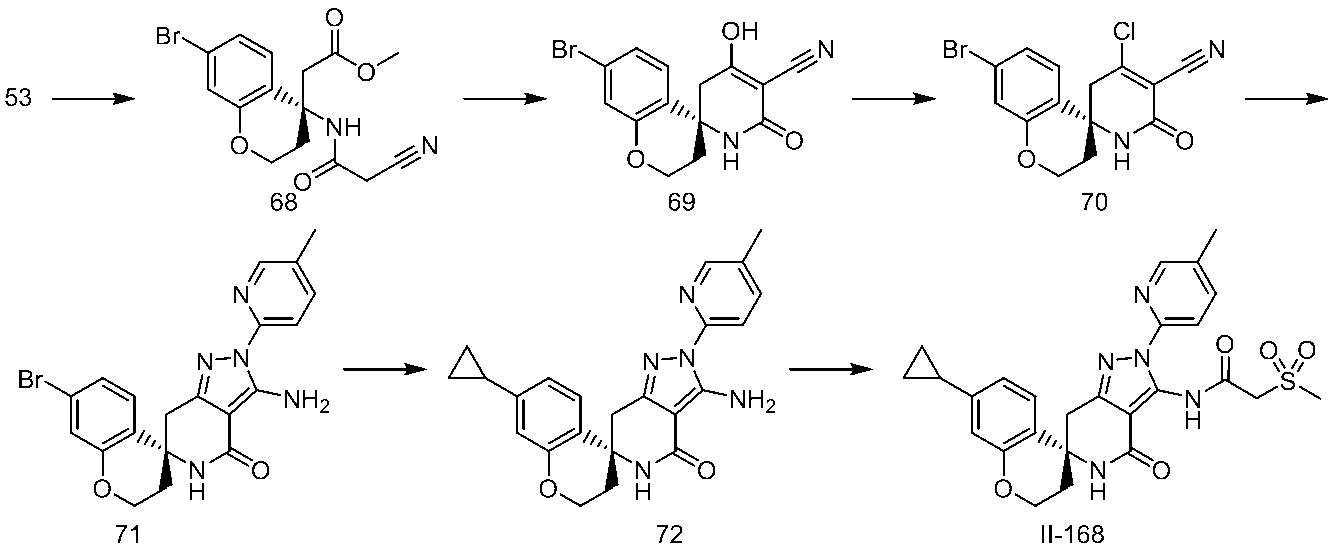
工程1
化合物53(5.50g、13.6mmol)のメタノール(60mL)溶液に、4mol/L塩酸ジオキサン溶液(3.40mL、13.6mmol)を加え、室温で1時間撹拌した。その後、溶媒を減圧留去した後、得られた残渣をテトラヒドロフラン(60ml)に溶解させ、2-シアノ酢酸(2.31g、27.2mmol)、1-エチル-3-(3-ジメチルアミノプロピル)カルボジイミド塩酸塩(5.22g、27.2mmol)とトリエチルアミン(7.54mL、54.4mmol)を加え、室温で1時間撹拌した。反応液に飽和塩化アンモニウム水溶液を加え、酢酸エチルで抽出し、水で洗浄した後、無水硫酸ナトリウムで乾燥し、溶媒を減圧留去し、得られた残渣をシリカゲルカラムクロマトグラフィー(ヘキサン-酢酸エチル)により精製して化合物68(4.80g、収率96%)を得た。
工程2
化合物68(4.80g、13.1mmol)に、1mol/Lソジウムメトキシド メタノール溶液(26.1mL、26.1mmol)を加え、室温下3時間撹拌した。反応液に1mol/L塩酸水溶液(150mL)を加え、酢酸エチルで抽出した。有機層を水で洗浄した後、無水硫酸ナトリウムで乾燥した。濃縮後、得られた残渣をヘキサン―酢酸エチルで粉末化させ、化合物69(3.75g、86%)を得た。
1H NMR (DMSO-d6) δ: 2.06-2.12(2H, m), 2.71(1H, d, J=17.5 Hz), 3.19(1H, d, J=17.0 Hz), 4.12-4.17(1H, m), 4.22-4.27(1H, m), 7.01(1H, d, J=2.0 Hz), 7.11(1H, dd, J=8.5, 2.0 Hz), 7.42(1H, d, J=8.5 Hz), 7.91(1H, s).
工程3
化合物69(2.00g、5.97mmol)のジクロロエタン(20mL)溶液に、DMF(4.64mL、59.7mmol)と塩化ホスホリル(0.61mL、6.56mmol)を加え、室温で19時間撹拌した。反応液に水を加え、クロロホルムで抽出し、飽和重層水と飽和塩化ナトリウム水溶液で洗浄した後、無水硫酸マグネシウムで乾燥し、溶媒を減圧留去した。得られた残渣をシリカゲルカラムクロマトグラフィー(ヘキサン-酢酸エチル)により精製して、ヘキサン―酢酸エチルで粉末化させ、化合物70(1.03g、収率49%)を得た。
1H-NMR (CDCl3) δ: 2.27(br-s, 2H), 3.03(d, J=18.6 Hz, 1H), 3.41(d, J=18.8 Hz, 1H), 4.17-4.31(m, 2H), 5.96(s, 1H), 7.07-7.27(m, 3H).
工程4
化合物70(250mg、0.71mmol)のエタノール(5mL)溶液に、2-ヒドラジニル-5-メチルピリジン塩酸塩(135mg、0.85mmol)と炭酸水素ナトリウム(148mg、1.77mmol)を加え、70℃にて1時間半撹拌した。反応液に水を加え、クロロホルムで抽出し、無水硫酸マグネシウムで乾燥し、溶媒を減圧留去し、得られた残渣にジイソプロピルエーテルを加えて粉末化することで、化合物71(237mg、収率76%)を得た。
1H-NMR (CDCl3) δ: 2.15-2.29(m, 2H), 2.36(s, 3H), 3.03(d, J=16.1 Hz, 1H), 3.24(d, J=16.1 Hz, 1H), 4.22-4.24(m, 2H), 5.23(s, 1H), 7.04(d, J=2.0 Hz, 1H), 7.10(dd, J=8.4, 2.0 Hz, 1H), 7.19(br-s, 2H), 7.42(d, J=8.4 Hz, 1H), 7.61-7.64(m, 1H), 7.76(d, J=8.5 Hz, 1H), 8.19(br-s, 1H).
工程5
化合物71(100mg、0.23mmol)のトルエン(2mL)と水(0.4mL)溶液に、ポタシウムシクロプロピルトリフルオロボレート(101mg、0.68mmol)、[1,1’-ビス(ジ-tert-ブチルホスフィノ)フェロセン]パラジウム(II)ジクロリド (0.148g、0.227mmol)と炭酸セシウム(0.222g、0.681mmol)を加え、100℃で3時間撹拌した。反応液に水を加え、酢酸エチルで抽出し、有機層を飽和塩化ナトリウム水溶液で洗浄し、無水硫酸マグネシウムで乾燥し、溶媒を減圧留去した。得られた残渣をシリカゲルカラムクロマトグラフィー(ヘキサン-酢酸エチル)により精製して、ヘキサン―酢酸エチルで粉末化させ、化合物72(20.4mg、収率22%)を得た。
工程6
化合物72(20.4mg、0.051mmol)のジクロロメタン(1mL)溶液に、2-(メタンスルホニル)アセチルクロライド(0.20mmol)のジクロロメタン(0.3ml)溶液とピリジン(0.016ml、0.20mmol)を0℃で加え、3時間撹拌した。室温下、反応液に水を加え、酢酸エチルで抽出し、硫酸マグネシウムで乾燥した。溶媒を減圧留去し、得られた残渣をシリカゲルカラムクロマトグラフィー(クロロホルム‐メタノール、アミノシリカゲル)により精製して、化合物II-168(14.2mg、54%)を得た。
1H-NMR (CDCl3) δ: 0.68-0.72(m, 2H), 0.95-1.00(m, 2H), 1.81-1.88(m, 1H), 2.19-2.28(m, 2H), 2.40(s, 3H), 3.11(d, J=16.3 Hz, 1H), 3.23(s, 3H), 3.42(d, J=16.3 Hz, 1H), 4.14(s, 2H), 4.20-4.22(m, 2H), 5.61(s, 1H), 6.57(d, J=1.8 Hz, 1H), 6.73(dd, J=8.2, 1.8 Hz, 1H), 7.42(d, J=8.2 Hz, 1H), 7.70 (dd, J=8.4, 1.8 Hz, 1H), 7.81(d, J=8.4 Hz, 1H), 8.30(s, 1H), 11.17(s, 1H).
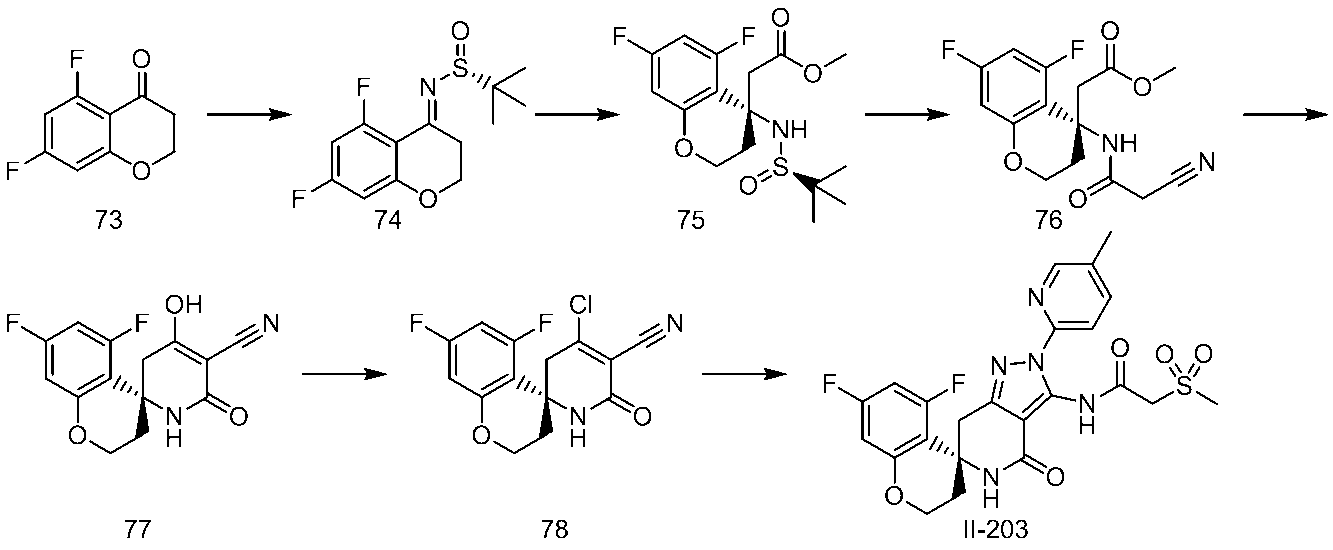
工程1
(R)-2-メチルプロパン-2-スルフィンアミド(631mg、5.21mmol)のトルエン(2.5mL)溶液に、テトラエトキシチタン(0.654mL、3.12mmol)を加え、化合物73(384mg、2.08mmol)のトルエン(2.5mL)溶液を加え、100℃で3時間撹拌した。反応液に、室温下クエン酸水溶液と酢酸エチル加えて、不溶物を濾過し、酢酸エチルで抽出した。有機層を飽和塩化ナトリウム水溶液で洗浄した後、無水硫酸マグネシウムで乾燥した。溶媒を減圧留去し、得られた残渣をシリカゲルカラムクロマトグラフィー(ヘキサン-酢酸エチル)により精製して化合物74(428mg、収率72%)を得た。
1H-NMR (CDCl3) δ: 1.32(s, 9H), 3.31-3.38(m, 1H), 3.45-3.52(m, 1H), 4.27-4.33(m, 1H), 4.36-4.41(m, 1H), 6.43-6.49(m, 2H).
工程2
1mol/Lリチウムヘキサメチルジシラジド テトラヒドロフラン溶液(2.23mL、2.23mmol)に、テトラヒドロフラン(1mL)と酢酸メチル(0.178mL、2.23mmol)を-78℃で加え、1時間撹拌した。その後、1mol/L塩化チタントリイソプロポキド ヘキサン溶液(2.98mL、2.98mmol)を-78℃で滴下し、30分間撹拌した。その後、化合物74(428mg、1.49mmol)のテトラヒドロフラン(1mL)溶液を、-78℃で滴下し、4時間撹拌した。反応液に10%のクエン酸水溶液とロッシェル塩を加え、室温に昇温して12時間撹拌し、酢酸エチルで抽出し、有機層を飽和重層水と飽和塩化ナトリウム水溶液で洗浄した後、無水硫酸マグネシウムで乾燥した。溶媒を減圧留去し、得られた残渣をシリカゲルカラムクロマトグラフィー(ヘキサン-酢酸エチル)により精製して化合物75(305mg、収率57%)を得た。
1H-NMR (CDCl3) δ: 1.22(s, 9H), 2.19-2.27(m, 1H), 2.45-2.49(m, 1H), 2.74(d, J=15.9 Hz, 1H), 3.40(d, J=15.9 Hz, 1H), 3.70(s, 3H), 4.19-4.24(m, 1H), 4.51-4.57(m, 1H), 5.02(s, 1H), 6.36-6.47(m, 2H).
工程3
化合物75(305mg、0.85mmol)のメタノール(2.6mL)溶液に、4mol/L塩酸ジオキサン溶液(0.44mL、1.77mmol)を加え、0℃で1時間撹拌した。反応液の溶媒を減圧留去した後、得られた残渣をテトラヒドロフラン(2.5ml)に溶解させ、2-シアノ酢酸(108mg、1.27mmol)、HATU(482mg、1.27mmol)とトリエチルアミン(0.29mL、2.11mmol)を加え、室温で4時間撹拌した。反応液に水を加え、酢酸エチルで抽出し、飽和重層水と飽和塩化ナトリウム水溶液で洗浄した後、無水硫酸ナトリウムで乾燥し、溶媒を減圧留去した。得られた残渣をシリカゲルカラムクロマトグラフィー(ヘキサン-酢酸エチル)により精製し、ヘキサン―酢酸エチルで粉末化し、化合物76(170mg、収率62%)を得た。
1H-NMR (CDCl3) δ: 2.08-2.14(m, 1H), 2.83-2.90(m, 1H), 2.96(d, J=14.7 Hz, 1H), 3.26-3.33(m, 3H), 3.75(s, 3H), 4.13-4.18(m, 1H), 4.27-4.33(m, 1H), 6.35-6.44(m, 2H), 7.51(s, 1H).
工程4
化合物76(393mg、1.21mmol)のメタノール(4mL)とテトラヒドロフラン(1mL)溶液に、1mol/Lソジウムメトキシド メタノール溶液(2.6mL、2.6mmol)を加え、室温下7時間撹拌した。反応液に2mol/Lの塩酸水溶液(1.3mL)を加え、濃縮後得られた残渣にメタノールを加え、不溶物を濾過により除き、溶媒を減圧留去した。得られた残渣に酢酸エチルを加えて粉末化させ、化合物77(213mg、60%)を得た。
1H-NMR (DMSO-D6) δ: 2.07-2.17(m, 2H), 2.72(d, J=17.7 Hz, 1H), 3.19(d, J=17.7 Hz, 1H), 4.10-4.22(m, 2H), 6.61(br-d, J=10.2 Hz, 1H), 6.78-6.84(m, 1H), 7.89(s, 1H).
工程5
化合物77(1.0g、3.42mmol)のジクロロエタン(10mL)溶液に、DMF(2.66mL、34.2mmol)と塩化ホスホリル(0.35mL、3.76mmol)を加え、室温で20時間撹拌した。反応液に水を加え、クロロホルムで抽出し、飽和重層水と飽和塩化ナトリウム水溶液で洗浄した後、無水硫酸マグネシウムで乾燥し、溶媒を減圧留去した。得られた残渣をシリカゲルカラムクロマトグラフィー(ヘキサン-酢酸エチル)により精製し、化合物78(413mg、収率39%)を得た。
[M+H]=310.95、測定条件C
工程6
化合物78(50mg、0.16mmol)のエタノール(1mL)溶液に、2-ヒドラジニル-5-メチルピリジン塩酸塩(30.8mg、0.19mmol)と炭酸水素ナトリウム(34mg、0.40mmol)を加え、80℃にて2時間撹拌した。反応液に水を加え、酢酸エチルで抽出し、飽和塩化ナトリウム水溶液で洗浄した後、無水硫酸マグネシウムで乾燥し、溶媒を減圧留去した。得られた残渣をジクロロメタン(1.0mL)に溶解し、2-(メタンスルホニル)アセチルクロライド(0.64mmol)のジクロロメタン(1.0ml)溶液とピリジン(0.052ml、0.64mmol)を0℃で加え、3時間撹拌した。室温下、水を加え、酢酸エチルで抽出し、硫酸マグネシウムで乾燥した。溶媒を減圧留去し、得られた残渣をシリカゲルカラムクロマトグラフィー(クロロホルム‐メタノール、アミノシリカゲル)により精製して、ヘキサン―酢酸エチルで粉末化させることで化合物II-203(52.7mg、41%)を得た。
1H-NMR (CDCl3) δ: 2.19-2.26(m, 1H), 2.32-2.40(m, 4H), 2.99(d, J=16.2 Hz, 1H), 3.22(s, 3H), 3.81(d, J=16.2 Hz, 1H), 4.15-4.20(m, 4H), 5.77(s, 1H), 6.47-6.52(m, 2H), 7.69-7.71(m, 1H), 7.81(d, J=8.3 Hz, 1H), 8.30(br-s, 1H).
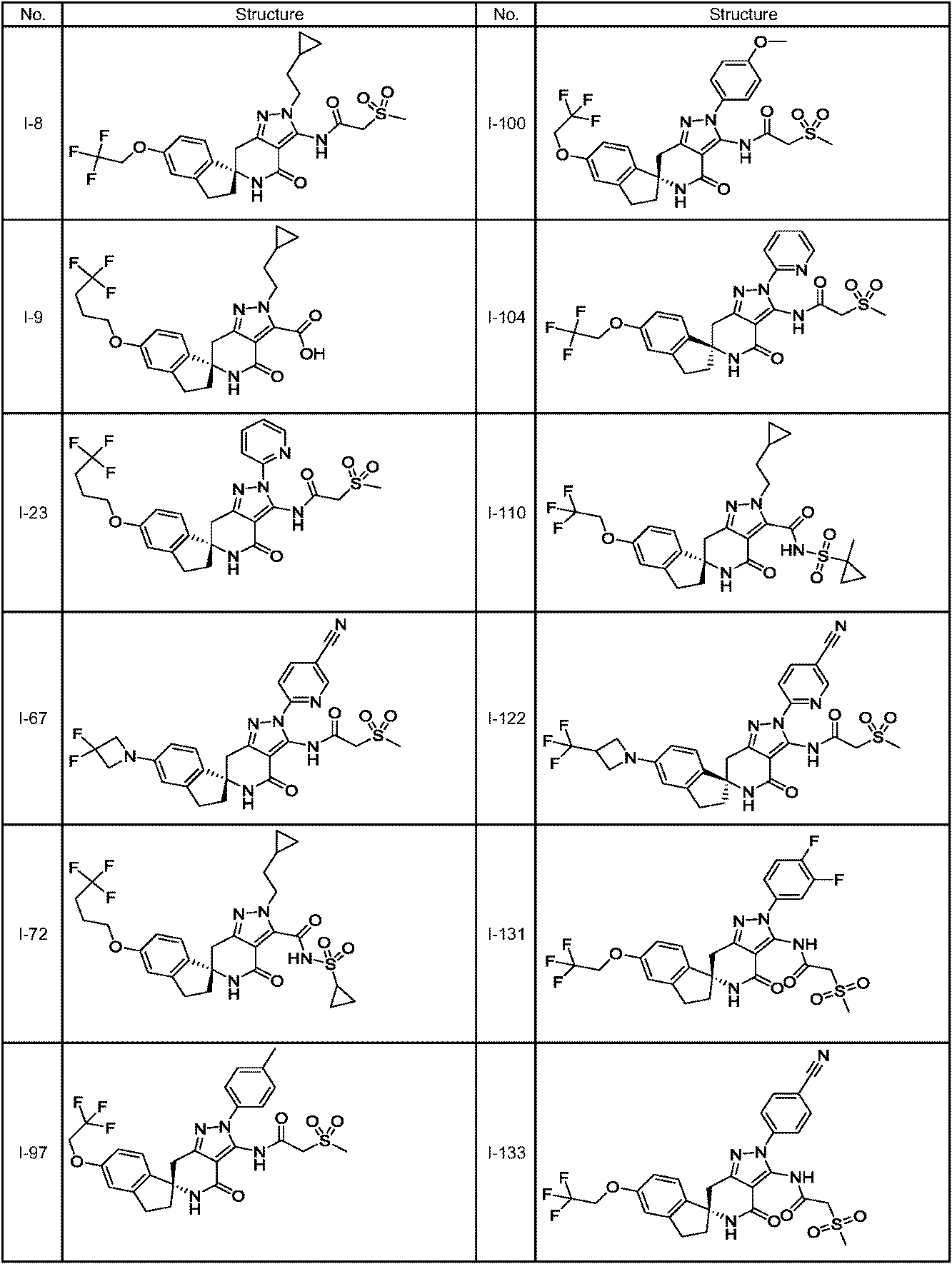

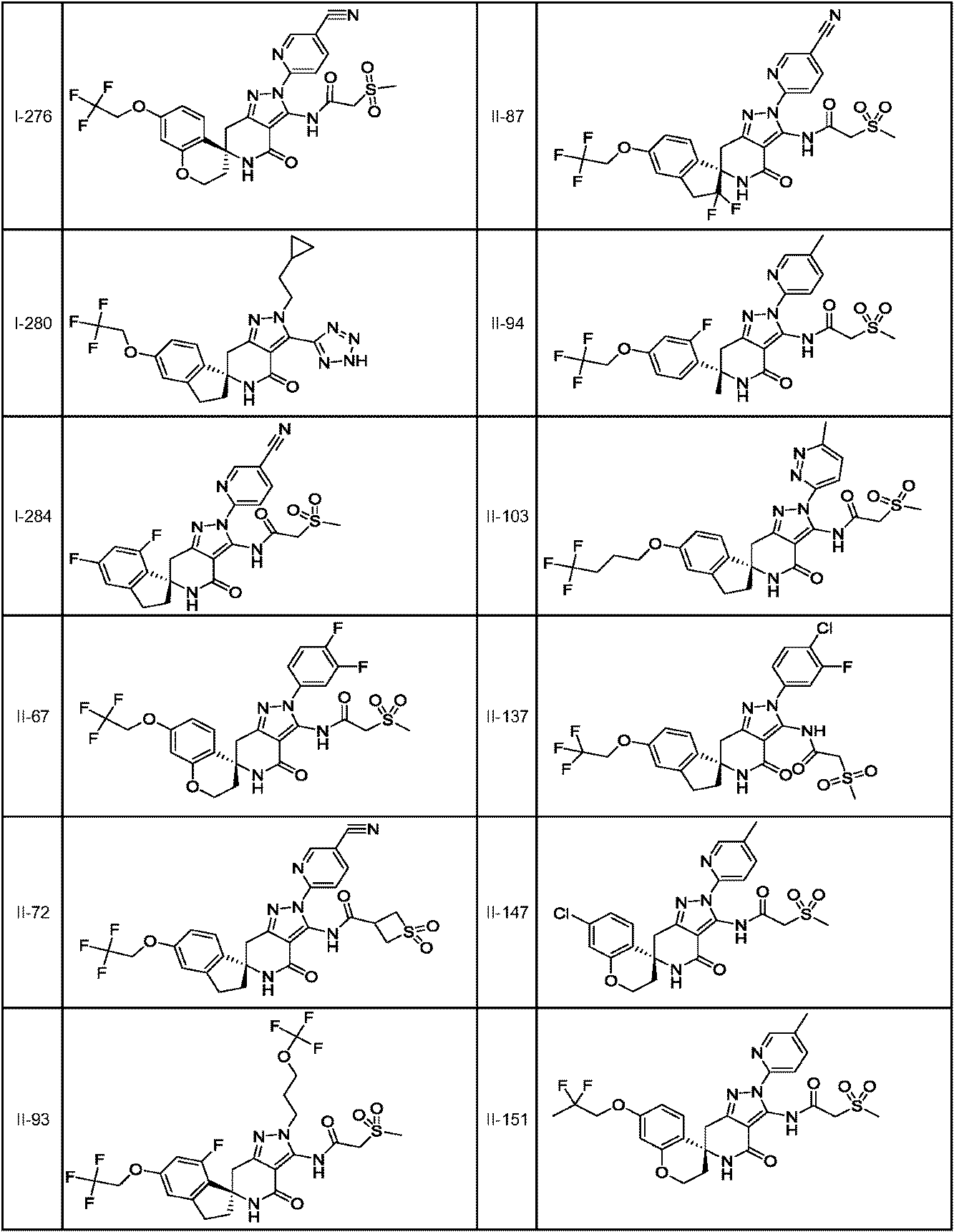
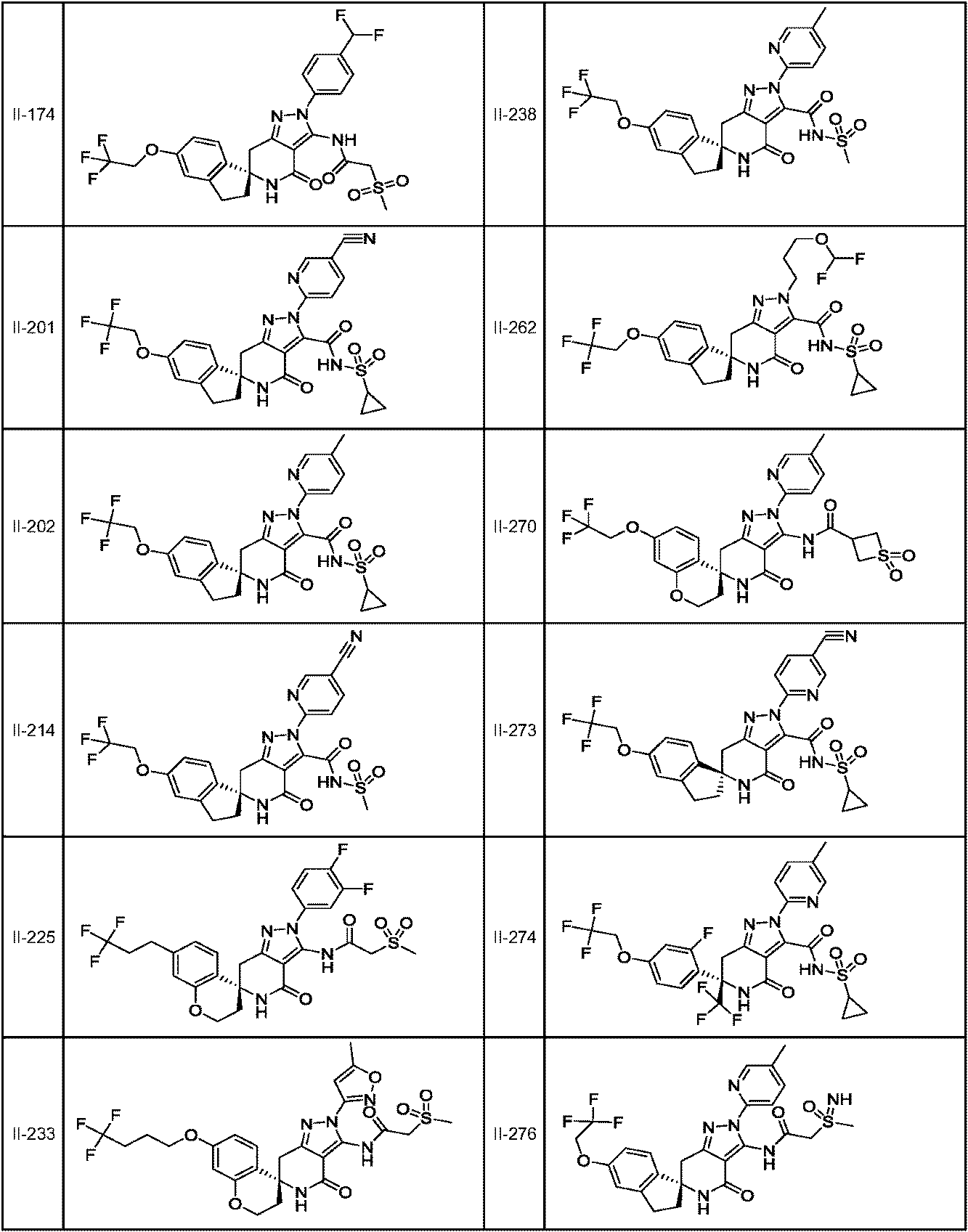
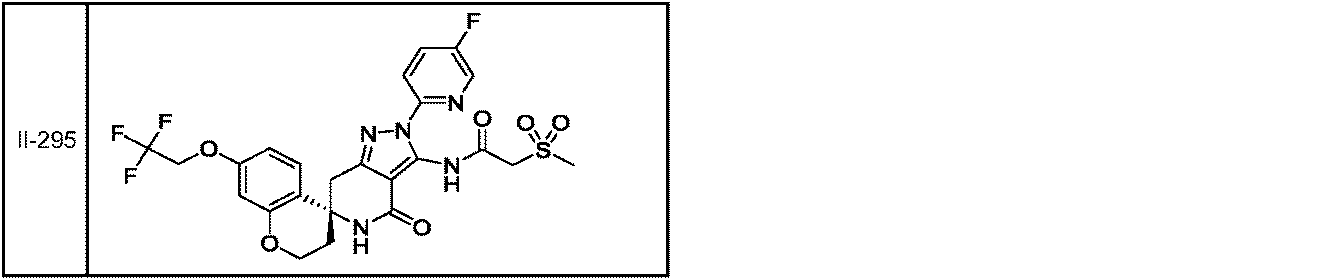
表中に「RT」とあるのは、LC/MS(液体クロマトグラフィー/質量分析)での保持時間(分)を表し、「MS」とあるのは、LC/MSでの質量(M+H)を表し、「LCMS Method」とあるのは、LC/MSの以下のいずれかの測定条件を表す。
[測定条件A]
カラム:ACQUITY UPLC(登録商標)BEH C18 (1.7μm i.d.2.1x50mm)(Waters)
流速:0.8 mL/分
UV検出波長:254nm
移動相:[A]は0.1%ギ酸含有水溶液[B]は0.1%ギ酸含有アセトニトリル溶液
3.5分間で5%-100%溶媒[B]のリニアグラジエントを行った後、0.5分間、100%溶媒[B]を維持した。
[測定条件B]
カラム:Shim-pack XR-ODS (2.2μm i.d.50x3.0mm) (Shimadzu)
流速:1.6 mL/分
UV検出波長:254nm;
移動相:[A]は0.1%ギ酸含有水溶液、[B]は0.1%ギ酸含有アセトニトリル溶液
グラジェント:3分間で10%-100%溶媒[B]のリニアグラジエントを行い、0.5分間、100%溶媒[B]を維持した。
[測定条件C]
カラム:ACQUITY UPLC(登録商標)BEH C18 (1.7μm i.d.2.1x50mm)(Waters)
流速:0.55 mL/分
UV検出波長:254nm
移動相:[A]は0.1%ギ酸含有水溶液、[B]は0.1%ギ酸含有アセトニトリル溶液
グラジェント:3分間で5%-100%溶媒[B]のリニアグラジエントを行い、0.5分間、100%溶媒[B]を維持した。
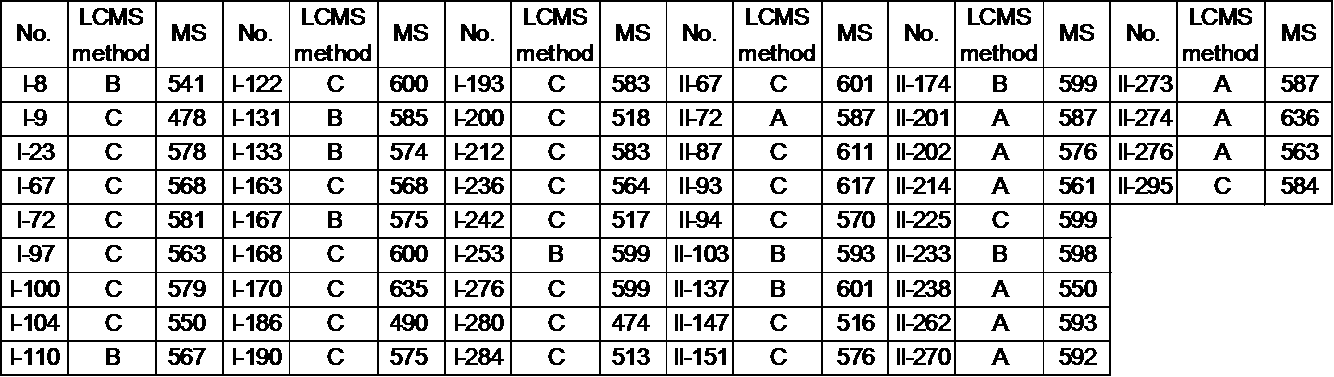
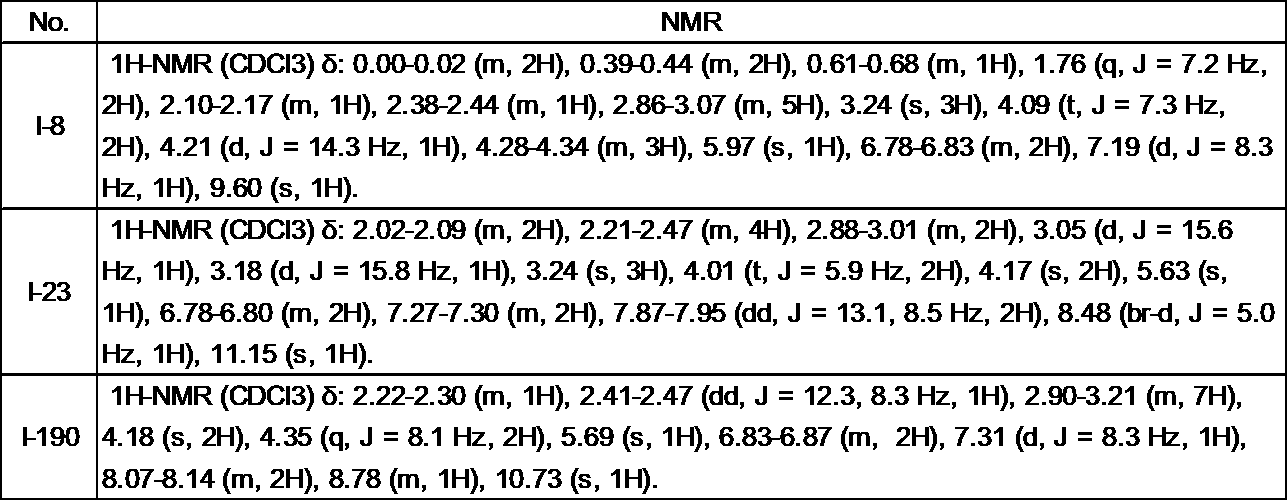
N末端にFlag-tagを付加した全長のヒトMGAT2遺伝子をpFastBac(Invitrogen社製)に挿入した。Bac-to-Bacバキュロウイルス発現システム(Invitrogen社製)のプロトコールに従い、組換えバキュロウイルスを作製し、Sf-9細胞に感染した。回収した細胞を超音波破砕後、遠心分離によって膜画分を回収した。抗Flag抗体によるウェスタンブロット分析により発現を確認し、リコンビナントヒトMGAT2酵素液とした。
各々の本発明化合物のDMSO溶液0.2μLを分注したコーニング社製ポリスチレン製384穴マイクロプレートに、アッセイ緩衝液(2mmol/l DTTを含む100mmol/Lリン酸緩衝液(pH7.4))で調製した酵素溶液5μLと基質溶液(100mmol/Lリン酸緩衝液(pH7.4)、30μmol/L 2-Oleoylglycerol、10μmol/L Oleoyl-CoA)5μLを添加し、撹拌および遠心後、湿潤箱中で室温1時間インキュベーションした。酵素反応後、Internal Standard(IS)を含む停止液(0.2μmol/L Diolein-d5、0.4%ギ酸および50%イソプロパノールを含む)50μLを添加により反応を停止し、島津GLC社製プレートにシール後、撹拌および遠心し、RapidFire360およびAgilent 6550 Q-TOF質量分析装置を用いてエレクトロスプレーイオン化法で測定を行った。基質である2-Oleoylglycerolの反応産物(P) DioleinとISのアンモニウム付加体イオンを検出し、そのピーク高さを用いてピーク強度比P/ISを算出し阻害活性を評価した。阻害活性は酵素添加あり/なしをそれぞれControl(+)/Control(-)と規定し、阻害率をそれぞれ0%および100%阻害として、発明化合物を添加した時のピーク強度比P/ISをSampleとして、下記の数式によりTIBCO Spotfire(TIBCO Software社製)にて算出した。
阻害活性(%)=[1-{Sample-Control(-)} / {Control(+)-Control(-)}] * 100
各々の本発明化合物の阻害活性結果を次の表に示す。表中のIC50(nM)とは、50%の酵素阻害を呈する濃度を示す。
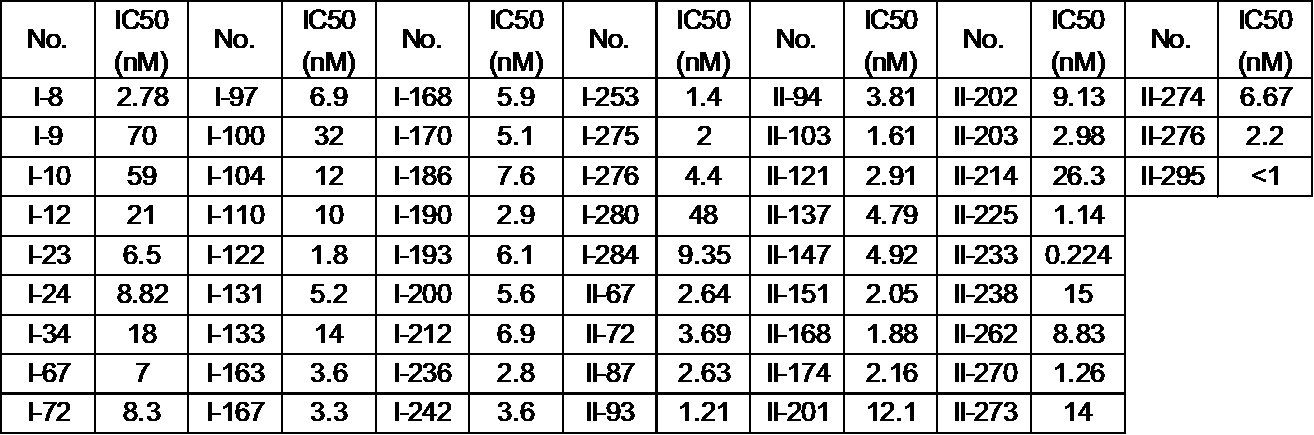
市販のプールドヒト肝ミクロソームと本発明化合物を一定時間反応させ、反応サンプルと未反応サンプルの比較により残存率を算出し、本発明化合物が肝で代謝される程度を評価した。
(結果)化合物濃度0.5μmol/Lでの残存率を示す。

本発明化合物の溶解度は、1%DMSO添加条件下で決定した。DMSOにて10mmol/L化合物溶液を調製し、本発明化合物溶液6μLをpH6.8人工腸液(0.2mol/L リン酸二水素カリウム試液250mLに0.2mol/L NaOH試液118mL、水を加えて1000mLとした)594μLに添加した。25℃で16時間静置させた後、混液を吸引濾過した。濾液をメタノール/水=1/1(V/V)にて2倍希釈し、絶対検量線法によりHPLCまたはLC/MS/MSを用いて濾液中濃度を測定した。
(結果)
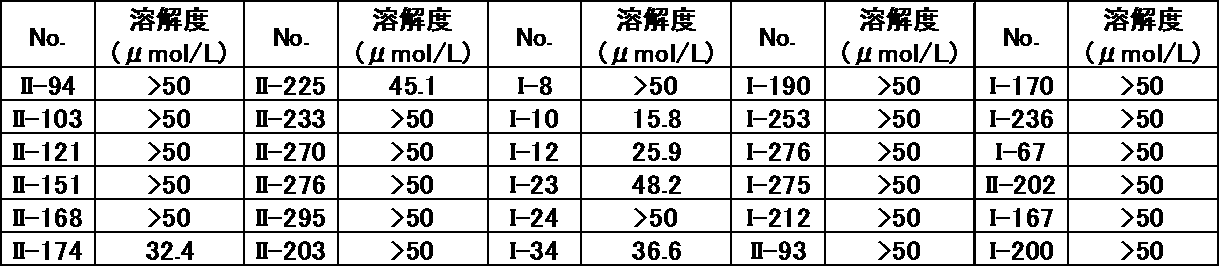
In vitro光毒性試験として、生体膜に対する作用および光過酸化を指標とした評価法である赤血球光溶血試験(Wolfgang J.W. Pepe et al., ATLA29, 145-162, 2001)を行った。本法では、ジメチルスホキシドを媒体とした本発明化合物の調製液に対し2.5%(v/v)のヒツジ赤血球液を添加した混合液(濃度:0.1~0.0008%)を用いた。この混合液を添加したマイクロプレートを二つ用意し、一つのマイクロプレートに紫外線蛍光ランプ(GL20SEランプ、三共電気及びFL20S-BLBランプ、パナソニック)を用いてUVA及びUVB領域での光照射(10J/cm2、290~400nm)を行い、光照射を行わなかったマイクロプレートと共に遠心操作を加えた後、上清の吸光度(540nmまたは630nm)を測定した。光毒性の判定に用いる二つの指標(生体膜に対する作用および光過酸化)を求めるために、本発明化合物から得られた吸光度について光照射および未照射のそれぞれで媒体での吸光度を差し引いた値を算出し、以降の計算に供した。生体膜に対する作用に関しては光照射と未照射の吸光度(540nm)の差から光溶血率を求め、光過酸化に対しては光照射と未照射の吸光度(630nm)の変化量を求めた。なお光溶血率の計算においては蒸留水を用いて強制溶血させた2.5%(v/v)のヒツジ赤血球液から得られた吸光度(540nm)を光溶血率100%の基準とした。光溶血率が10%未満であり、630nmでの吸光度の変化量が0.05未満の場合を(-)とし、光溶血率が10%以上であり、630nmでの吸光度の変化量が0.05以上の場合を(+)とした。
(結果)
化合物I-34:(-)
細胞イメージアナライザーであるToxinsight(Thermofisher Scientific社)を用いて、化合物曝露後の細胞数を自動測定し、本発明化合物の細胞障害性を評価した。
HepG2細胞(ヒト肝がん細胞由来)を384ウェルプレートに60000cells/mLとなるように播種し、24時間後に各ウェルに化合物溶液を添加した。化合物溶液としては、本発明化合物を含むDMSO溶液(最高濃度を50μmol/Lに設定し2倍公比で5段階希釈、最低濃度は約3.1μmol/L)、陰性対照としてDMSOのみの溶液、陽性対照としてカンプトテシン溶液を用いた。本発明化合物のDMSO溶液、陰性対照溶液、または陽性対照溶液を各ウェルに添加した。71時間後に、最終濃度1μg/mLになるようにダルベッコリン酸緩衝液(D-PBS)で希釈したHoechst 33342溶液を各ウェルに添加し、37℃、5%CO2インキュベーター内で1時間核の染色を行った。染色後、4%パラフォルムアルデヒドを用いて20分間、37℃のCO2インキュベーター内で固定した。最後に、D-PBSで3回洗浄後、Toxinsight(Thermofisher Scientific社)を用いて、ウェル毎の蛍光発色した核の数を計測した。1濃度あたり4ウェルを設け、4ウェル中の核の数(障害性がみられなかった細胞数)の平均値とばらつき(SD)算出した。陰性対照群と比較し、平均値が陰性対照の平均値から50%以上減少する化合物曝露濃度(IC50)を算出する。IC50の値が小さいほど細胞障害性のリスクが高いと判断した。
実施例の化合物の抗肥満作用を、高脂肪食(TestDiet;58Y1)を与えたC57BL/6jマウス(DIOマウス)において検討した。
5週齢の雄性C57BL/6j(日本クレア)を購入し、12時間の明暗サイクル下、高脂肪食を与え、4週間飼育し、DIOマウスを作成した。化合物投与の3週間前より1日2回、媒体(0.5%HPMC)を投与した。馴化投与期間中の体重、摂餌量変化によって無作為化を行い、群分けを実施した(n=7)。Day1よりDay28まで1日2回、実施例化合物または媒体(0.5%HPMC)の強制経ロ投与を行った。体重、摂餌量は毎日測定した。Day28に解剖し、精巣上体脂肪重量の測定、および採取した血液の生化学検査を実施した。
市販のプールドヒト肝ミクロソームを用いて、ヒト主要CYP5分子種(CYP1A2、2C9、2C19、2D6、3A4)の典型的基質代謝反応として7-エトキシレゾルフィンのO-脱エチル化(CYP1A2)、トルブタミドのメチル-水酸化(CYP2C9)、メフェニトインの4’-水酸化(CYP2C19)、デキストロメトルファンのO脱メチル化(CYP2D6)、テルフェナジンの水酸化(CYP3A4)を指標とし、それぞれの代謝物生成量が本発明化合物によって阻害される程度を評価した。
反応条件は以下のとおり:基質、0.5μmol/L エトキシレゾルフィン(CYP1A2)、100μmol/L トルブタミド(CYP2C9)、50μmol/L S-メフェニトイン(CYP2C19)、5μmol/L デキストロメトルファン(CYP2D6)、1μmol/L テルフェナジン(CYP3A4);反応時間、15分;反応温度、37℃;酵素、プールドヒト肝ミクロソーム0.2mg タンパク質/mL;本発明化合物濃度、1、5、10、20μmol/L(4点)。
96穴プレートに反応溶液として、50mmol/L Hepes緩衝液中に各5種の基質、ヒト肝ミクロソーム、本発明化合物を上記組成で加え、補酵素であるNADPHを添加して、指標とする代謝反応を開始した。37℃、15分間反応した後、メタノール/アセトニトリル=1/1(V/V)溶液を添加することで反応を停止した。3000rpm、15分間の遠心後、遠心上清中のレゾルフィン(CYP1A2代謝物)を蛍光マルチラベルカウンタまたはLC/MS/MSで定量し、トルブタミド水酸化体(CYP2C9代謝物)、メフェニトイン4’水酸化体(CYP2C19代謝物)、デキストロルファン(CYP2D6代謝物)、テルフェナジンアルコール体(CYP3A4代謝物)をLC/MS/MSで定量した。
薬物を溶解した溶媒であるDMSOのみを反応系に添加したものをコントロール(100%)とし、残存活性(%)を算出し、濃度と抑制率を用いて、ロジスティックモデルによる逆推定によりIC50を算出した。
(結果)
化合物II-103:5種 >20μmol/L
経口吸収性の検討実験材料と方法
(1)使用動物:マウスあるいはSDラットを使用した。
(2)飼育条件:マウスあるいはSDラットは、固形飼料および滅菌水道水を自由摂取させた。
(3)投与量、群分けの設定:経口投与、静脈内投与を所定の投与量により投与した。以下のように群を設定した。(化合物ごとで投与量は変更有)
経口投与 1~30mg/kg(n=2~3)
静脈内投与 0.5~10mg/kg(n=2~3)
(4)投与液の調製:経口投与は溶液または懸濁液として投与した。静脈内投与は可溶化して投与した。
(5)投与方法:経口投与は、経口ゾンデにより強制的に胃内に投与した。静脈内投与は、注射針を付けたシリンジにより尾静脈または大腿静脈から投与した。
(6)評価項目:経時的に採血し、血漿中本発明化合物濃度をLC/MS/MSを用いて測定した。
(7)統計解析:血漿中本発明化合物濃度推移について、非線形最小二乗法プログラムWinNonlin(登録商標)を用いて血漿中濃度‐時間曲線下面積(AUC)を算出し、経口投与群と静脈内投与群のAUCから本発明化合物のバイオアベイラビリティ(BA)を算出した。
(結果)
化合物II-94:73%
本発明化合物のCYP3A4阻害に関して代謝反応による増強からMechanism based inhibition(MBI)能を評価する試験である。プールドヒト肝ミクロソームを用いてミダゾラム(MDZ)の1-水酸化反応を指標としてCYP3A4阻害を評価した。
反応条件は以下のとおり:基質、10μmol/L MDZ;プレ反応時間、0または30分;反応時間、2分;反応温度、37℃;プールドヒト肝ミクロソーム、プレ反応時0.5mg/mL、反応時0.05mg/mL(10倍希釈時);本発明化合物プレ反応時の濃度、1、5、10、20μmol/L(4点)。
96穴プレートにプレ反応液としてK-Pi緩衝液(pH7.4)中にプールドヒト肝ミクロソーム、本発明化合物溶液を上記のプレ反応の組成で加え、別の96穴プレートに基質とK-Pi緩衝液で1/10希釈されるようにその一部を移行し、補酵素であるNADPHを添加して指標とする反応を開始し(プレ反応無)、所定の時間反応後、メタノール/アセトニトリル=1/1(V/V)溶液を加えることによって反応を停止した。また残りのプレ反応液にもNADPHを添加しプレ反応を開始し(プレ反応有)、所定時間プレ反応後、別のプレートに基質とK-Pi緩衝液で1/10希釈されるように一部を移行し指標とする反応を開始した。所定の時間反応後、メタノール/アセトニトリル=1/1(V/V)溶液を加えることによって反応を停止する。それぞれの指標反応を行ったプレートを3000rpm、15分間の遠心後、遠心上清中の1-水酸化ミダゾラムをLC/MS/MSで定量した。
本発明化合物を溶解した溶媒であるDMSOのみを反応系に添加したものをコントロール(100%)とし、本発明化合物をそれぞれの濃度添加したときの残存活性(%)を算出し、濃度と阻害率を用いて、ロジスティックモデルによる逆推定によりICを算出した。Preincubataion 0minのIC/Preincubataion 30minのICをShifted IC値とし、Shifted ICが1.5以上であればPositive、Shifted ICが1.0以下であればNegativeとした。
(結果)
化合物II-103:Negative
適当な容器に本発明化合物を適量入れ、各容器にJP-1液(塩化ナトリウム2.0g、塩酸7.0mLに水を加えて1000mLとする)、JP-2液(pH6.8のリン酸塩緩衝液500mLに水500mLを加える)、20mmol/L タウロコール酸ナトリウム(TCA)/JP-2液(TCA1.08gにJP-2液を加え100mLとする)を200μLずつ添加した。試験液添加後に全量溶解した場合には、適宜、本発明化合物を追加した。密閉して37℃で1時間振とう後に濾過し、各濾液100μLにメタノール100μLを添加して2倍希釈を行う。希釈倍率は、必要に応じて変更する。気泡および析出物がないかを確認し、密閉して振とうした。絶対検量線法によりHPLCを用いて本発明化合物を定量した。
(結果)
化合物II-94:JP-2液:3.4μmol/L
本発明化合物の変異原性を評価した。
凍結保存しているネズミチフス菌(Salmonella typhimurium TA98株、TA100株)20μLを10mL液体栄養培地(2.5% Oxoid nutrient broth No.2)に接種し37℃にて10時間、振盪前培養した。TA98株は8.0mLの菌液を遠心(2000×g、10分間)して培養液を除去した。8.0mLのMicro F緩衝液(K2HPO4:3.5g/L、KH2PO4:1g/L、(NH4)2SO4:1g/L、クエン酸三ナトリウム二水和物:0.25g/L、MgSO4・7H20:0.1g/L)に菌を懸濁し、120mLのExposure培地(ビオチン:8μg/mL、ヒスチジン:0.2μg/mL、グルコース:8mg/mLを含むMicroF緩衝液)に添加した。TA100株は3.1mL菌液に対しExposure培地120mLに添加し試験菌液を調製した。本発明化合物DMSO溶液(最高用量50mg/mLから2~3倍公比で数段階希釈)、陰性対照としてDMSO、陽性対照として非代謝活性化条件ではTA98株に対しては50μg/mLの4-ニトロキノリン-1-オキシドDMSO溶液、TA100株に対しては0.25μg/mLの2-(2-フリル)-3-(5-ニトロ-2-フリル)アクリルアミドDMSO溶液、代謝活性化条件ではTA98株に対して40μg/mLの2-アミノアントラセンDMSO溶液、TA100株に対しては20μg/mLの2-アミノアントラセンDMSO溶液それぞれ12μLと試験菌液588μL(代謝活性化条件では試験菌液498μLとS9 mix 90μLの混合液)を混和し、37℃にて90分間、振盪培養した。本発明化合物を暴露した菌液230μLを、Indicator培地(ビオチン:8μg/mL、ヒスチジン:0.2μg/mL、グルコース:8mg/mL、ブロモクレゾールパープル:37.5μg/mLを含むMicroF緩衝液)1150μLに混和し、50μLずつマイクロプレート48ウェル/用量に分注し、37℃にて3日間、静置培養した。アミノ酸(ヒスチジン)合成酵素遺伝子の突然変異によって増殖能を獲得した菌を含むウェルは、pH変化により紫色から黄色に変色するため、1用量あたり48ウェル中の黄色に変色した菌増殖ウェルを計数し、陰性対照群と比較して評価した。変異原性が陰性のものを(-)、陽性のものを(+)として示す。
(結果)
化合物I-24:(-)
本発明化合物の心電図QT間隔延長リスク評価を目的として、human ether-a-go-go related gene (hERG)チャネルを発現させたCHO細胞を用いて、心室再分極過程に重要な役割を果たす遅延整流K+電流(IKr)への本発明化合物の作用を検討した。
全自動パッチクランプシステム(QPatch;Sophion Bioscience A/S)を用い、ホールセルパッチクランプ法により、細胞を-80mVの膜電位に保持し、-50mVのリーク電位を与えた後、+20mVの脱分極刺激を2秒間、さらに-50mVの再分極刺激を2秒間与えた際に誘発されるIKrを記録した。発生する電流が安定した後、本発明化合物を目的の濃度で溶解させた細胞外液(NaCl:145 mmol/L、KCl:4 mmol/L、CaCl2:2 mmol/L、MgCl2:1 mmol/L、グルコース:10 mmol/L、HEPES(4-(2-hydroxyethyl)-1-piperazineethanesulfonic acid、4-(2-ヒドロキシエチル)-1-ピペラジンエタンスルホン酸):10mmol/L、pH=7.4)を室温条件下で、10分間細胞に適用させる。得られたIKrから、解析ソフト(Falster Patch;Sophion Bioscience A/S)を使用して、保持膜電位における電流値を基準に最大テール電流の絶対値を計測した。さらに、本発明化合物適用前の最大テール電流に対する阻害率を算出し、本発明化合物のIKrへの影響を評価した。
(結果)化合物濃度10μmol/Lでの阻害率を示す。
化合物I-253:6.9%
本発明化合物は、任意の従来の経路により、特に、経腸、例えば、経口で、例えば、錠剤またはカプセル剤の形態で、または非経口で、例えば注射液剤または懸濁剤の形態で、局所で、例えば、ローション剤、ゲル剤、軟膏剤またはクリーム剤の形態で、または経鼻形態または座剤形態で医薬組成物として投与することができる。少なくとも1種の薬学的に許容される担体または希釈剤と一緒にして、遊離形態または薬学的に許容される塩の形態の本発明の化合物を含む医薬組成物は、従来の方法で、混合、造粒またはコーティング法によって製造することができる。例えば、経口用組成物としては、賦形剤、崩壊剤、結合剤、滑沢剤等および有効成分等を含有する錠剤、顆粒剤、カプセル剤とすることができる。また、注射用組成物としては、溶液剤または懸濁剤とすることができ、滅菌されていてもよく、また、保存剤、安定化剤、緩衝化剤等を含有してもよい。
Claims (9)
- 式(I):
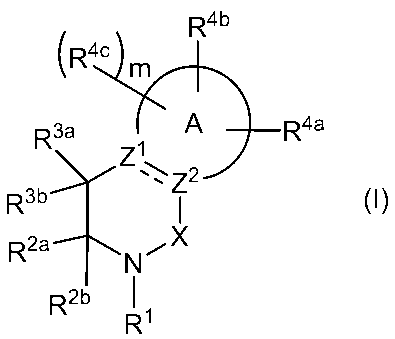
(式中、
式:
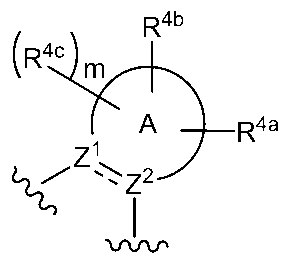
で示される部分が
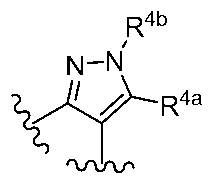
であり;
Xは、C(=O)であり;
R1は、水素であり;
R2aは、式:
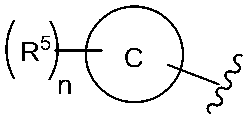
(式中、環Cは、ベンゼンまたはピリジンであり;
R5は、それぞれ独立して、ハロゲン、ハロアルキル、ハロアルキルオキシ、ハロゲンまたはハロアルキルで置換されてもよい非芳香族炭素環式基、またはハロゲンまたはハロアルキルで置換されてもよい非芳香族複素環式基であり、
nは、1~3の整数である)であり、
R2bは、アルキル、またはハロアルキルであり、または
R2aおよびR2bは、隣接する炭素原子と一緒になって、環Bを形成してもよく、
環Bは、式:

(式中、R6は、それぞれ独立して、ハロゲン、ハロアルキル、ハロアルキルオキシ、ハロゲンまたはハロアルキルで置換されてもよい非芳香族炭素環式基、またはハロゲンまたはハロアルキルで置換されてもよい非芳香族複素環式基であり、
R14aおよびR14bは、それぞれ独立して、水素またはハロゲンであり、
nは、1~3の整数である)であり;
R3aは、水素であり、
R3bは、水素であり;
R4aは、カルボキシまたは式:

であり;
L3は、単結合またはアルキレンであり、
R7は、水素、ハロゲン、アルキルスルホニル、オキソで置換されていてもよい非芳香族複素環式基、アルキルで置換されていてもよい非芳香族炭素環スルホニル、または式:-S(=O)(=N-H)-RS1であり、
R4bは、置換基群αで置換されていてもよいアルキル、置換基群βで置換されていてもよい芳香族炭素環式基、または置換基群βで置換されていてもよい芳香族複素環式基であり、
RS1は、アルキルであり、
置換基群αは、ハロゲン、ハロアルキルオキシ、および非芳香族炭素環式基であり、
置換基群βは、ハロゲン、シアノ、アルキル、ハロアルキル、およびアルキルオキシである)で示される化合物、またはその製薬上許容される塩。
- R2aおよびR2bが、隣接する炭素原子と一緒になって、環Bを形成し、
環Bは、式:
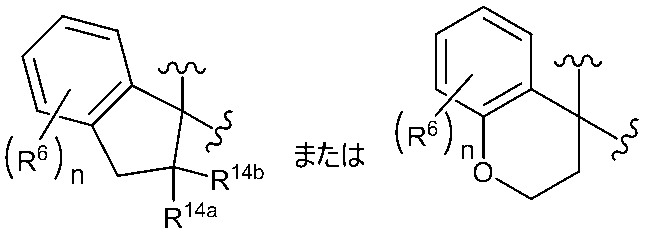
(式中、各記号は請求項1と同意義)
である、請求項1記載の化合物またはその製薬上許容される塩。
- R2aが、式:

(式中、各記号は請求項1と同意義)であり、
R2bは、アルキルまたはハロアルキルである、請求項1記載の化合物またはその製薬上許容される塩。
- 化合物I-8、I-10、I-12、I-23、I-24、I-34、I-67、I-170、I-190、I-212、I-236、I-253、I-275、I-276、II-93、II-94、II-103、II-121、II-151、II-168、II-174、II-203、II-225、II-233、II-270、II-276およびII-295からなる群から選択される、請求項1記載の化合物またはその製薬上許容される塩。
- 請求項1~4のいずれかに記載の化合物またはその製薬上許容される塩を含有する、医薬組成物。
- MGAT2阻害作用を有する、請求項5記載の医薬組成物。
- MGAT2の関与する疾患の治療または予防のために用いる、請求項5または6記載の医薬組成物。
- 肥満症、メタボリックシンドローム、高脂血症、高中性脂肪血症、高VLDL血症、高脂肪酸血症、糖尿病または動脈硬化症の治療または予防のために用いる、請求項7記載の医薬組成物。
- MGAT2の関与する疾患の治療または予防のための、請求項1~4のいずれかに記載の化合物、またはその製薬上許容される塩の使用。
Priority Applications (6)
| Application Number | Priority Date | Filing Date | Title |
|---|---|---|---|
| RU2020106727A RU2770437C2 (ru) | 2017-07-14 | 2018-07-13 | Конденсированное циклическое производное, обладающее ингибирующей активностью в отношении mgat-2 |
| BR112020000401-4A BR112020000401A2 (pt) | 2017-07-14 | 2018-07-13 | derivado de anel fundido com atividade inibidora de mgat2 |
| CA3069799A CA3069799A1 (en) | 2017-07-14 | 2018-07-13 | Fused-ring derivative having mgat2 inhibitory activity |
| AU2018298733A AU2018298733B2 (en) | 2017-07-14 | 2018-07-13 | Fused-ring derivative having MGAT2 inhibitory activity |
| KR1020207004424A KR102612176B1 (ko) | 2017-07-14 | 2018-07-13 | Mgat2 저해 활성을 갖는 축합환 유도체 |
| MX2020000286A MX394836B (es) | 2017-07-14 | 2018-07-13 | Derivado de anillo fusionado que tiene una actividad inhibidora de monoacilglicerol aciltransferasa 2 (mgat-2) |
Applications Claiming Priority (2)
| Application Number | Priority Date | Filing Date | Title |
|---|---|---|---|
| JP2017137678 | 2017-07-14 | ||
| JP2017-137678 | 2017-07-14 |
Publications (1)
| Publication Number | Publication Date |
|---|---|
| WO2019013312A1 true WO2019013312A1 (ja) | 2019-01-17 |
Family
ID=65001726
Family Applications (2)
| Application Number | Title | Priority Date | Filing Date |
|---|---|---|---|
| PCT/JP2018/026418 Ceased WO2019013312A1 (ja) | 2017-07-14 | 2018-07-13 | Mgat2阻害活性を有する縮合環誘導体 |
| PCT/JP2018/026417 Ceased WO2019013311A1 (ja) | 2017-07-14 | 2018-07-13 | Mgat2阻害活性を有する縮合環誘導体 |
Family Applications After (1)
| Application Number | Title | Priority Date | Filing Date |
|---|---|---|---|
| PCT/JP2018/026417 Ceased WO2019013311A1 (ja) | 2017-07-14 | 2018-07-13 | Mgat2阻害活性を有する縮合環誘導体 |
Country Status (23)
| Country | Link |
|---|---|
| US (3) | US11198695B2 (ja) |
| EP (2) | EP4043463B1 (ja) |
| JP (3) | JP7224086B2 (ja) |
| KR (1) | KR102612176B1 (ja) |
| CN (2) | CN113501821B (ja) |
| AU (1) | AU2018298733B2 (ja) |
| BR (1) | BR112020000401A2 (ja) |
| CA (1) | CA3069799A1 (ja) |
| CL (1) | CL2020000086A1 (ja) |
| DK (1) | DK3653625T3 (ja) |
| ES (1) | ES2974287T3 (ja) |
| FI (1) | FI3653625T3 (ja) |
| HR (1) | HRP20240295T1 (ja) |
| HU (1) | HUE065838T2 (ja) |
| LT (1) | LT3653625T (ja) |
| MX (1) | MX394836B (ja) |
| PL (1) | PL3653625T3 (ja) |
| PT (1) | PT3653625T (ja) |
| RU (1) | RU2770437C2 (ja) |
| SA (1) | SA520411017B1 (ja) |
| SI (1) | SI3653625T1 (ja) |
| TW (1) | TWI782056B (ja) |
| WO (2) | WO2019013312A1 (ja) |
Cited By (3)
| Publication number | Priority date | Publication date | Assignee | Title |
|---|---|---|---|---|
| JP2020111571A (ja) * | 2019-01-11 | 2020-07-27 | 塩野義製薬株式会社 | Mgat2阻害活性を有する縮合環誘導体を含有する医薬組成物 |
| WO2023038039A1 (ja) | 2021-09-08 | 2023-03-16 | 塩野義製薬株式会社 | 抗肥満作用の関与する疾患の予防及び治療用医薬 |
| WO2023243616A1 (ja) | 2022-06-13 | 2023-12-21 | 塩野義製薬株式会社 | ジヒドロピリジノン誘導体またはその溶媒和物の結晶 |
Families Citing this family (13)
| Publication number | Priority date | Publication date | Assignee | Title |
|---|---|---|---|---|
| TWI782056B (zh) * | 2017-07-14 | 2022-11-01 | 日商鹽野義製藥股份有限公司 | 具有mgat2抑制活性的縮合環衍生物 |
| MX2021008050A (es) * | 2019-01-11 | 2021-08-05 | Shionogi & Co | Derivado de dihidropirazolopirazinona que tiene actividad inhibidora de monoacilglicerol aciltransferasa 2 (mgat2). |
| HRP20241159T1 (hr) | 2020-02-07 | 2024-12-06 | Gasherbrum Bio, Inc. | Heterociklički agonisti za glp-1 |
| JP2022016394A (ja) * | 2020-07-10 | 2022-01-21 | 塩野義製薬株式会社 | Mgat2阻害活性を有するジヒドロピラゾロピラジノン誘導体を含有する医薬組成物 |
| CN116368140A (zh) | 2020-09-10 | 2023-06-30 | 加舒布鲁姆生物公司 | 杂环glp-1激动剂 |
| CN114685502A (zh) * | 2020-12-25 | 2022-07-01 | 由理生物医药(上海)有限公司 | 作为kras-g12c抑制剂的螺环类化合物 |
| CA3243798A1 (en) * | 2022-02-09 | 2023-08-17 | Quanta Therapeutics, Inc. | Kras Modulators and Their Uses |
| WO2023230190A1 (en) | 2022-05-25 | 2023-11-30 | Quanta Therapeutics, Inc. | Pyrimidine based modulators and uses thereof |
| CN120957993A (zh) | 2023-02-16 | 2025-11-14 | 加舒布鲁姆生物公司 | 杂环glp-1激动剂 |
| KR20260041941A (ko) | 2023-03-15 | 2026-03-27 | 콴타 테라퓨틱스, 인크. | Kras 조절 인자 및 이의 용도 |
| WO2025127097A1 (ja) * | 2023-12-13 | 2025-06-19 | 塩野義製薬株式会社 | 脂肪性肝疾患の治療用医薬 |
| JP2024100975A (ja) * | 2024-01-31 | 2024-07-26 | 塩野義製薬株式会社 | ジヒドロピリジノン誘導体を含有する医薬組成物 |
| WO2026008045A1 (zh) * | 2024-07-04 | 2026-01-08 | 苏州信诺维医药科技股份有限公司 | 一种含有炔基的螺环化合物及其用途 |
Citations (25)
| Publication number | Priority date | Publication date | Assignee | Title |
|---|---|---|---|---|
| JP2006514043A (ja) * | 2002-12-20 | 2006-04-27 | ファルマシア・コーポレーション | マイトジェン活性化タンパク質キナーゼ−活性化タンパク質キナーゼ−2を阻害する化合物 |
| WO2010095767A1 (en) * | 2009-02-23 | 2010-08-26 | Banyu Pharmaceutical Co.,Ltd. | Pyrimidin-4(3h)-one derivatives |
| WO2012091010A1 (ja) * | 2010-12-28 | 2012-07-05 | 大日本住友製薬株式会社 | 二環性ピリミジン誘導体 |
| CN103012397A (zh) * | 2011-09-26 | 2013-04-03 | 赛诺菲 | 吡唑并喹啉酮衍生物、其制备方法及其治疗用途 |
| JP2013067595A (ja) * | 2011-09-26 | 2013-04-18 | Sanofi | ピラゾロキノリノン誘導体、その調製および治療上の使用 |
| JP2013515729A (ja) * | 2009-12-23 | 2013-05-09 | 武田薬品工業株式会社 | Syk阻害剤としての縮合複素芳香族ピロリジノン |
| WO2013082345A1 (en) * | 2011-12-02 | 2013-06-06 | Bristol-Myers Squibb Company | Aryl dihydropyridinone and piperidinone as mgat2 inhibitors |
| JP2014005245A (ja) * | 2012-06-26 | 2014-01-16 | Dainippon Sumitomo Pharma Co Ltd | 二環性ピリミジン誘導体を含有する医薬組成物 |
| JP2014009165A (ja) * | 2012-06-27 | 2014-01-20 | Dainippon Sumitomo Pharma Co Ltd | 二環性ピリミジン化合物 |
| JP2014506907A (ja) * | 2011-03-01 | 2014-03-20 | ジヤンセン・フアーマシユーチカ・ナームローゼ・フエンノートシヤツプ | β−セクレターゼ(BACE)の阻害剤として有用な6,7−ジヒドロ−ピラゾロ[1,5−a]ピラジン−4−イルアミン誘導体 |
| WO2014133134A1 (ja) * | 2013-02-28 | 2014-09-04 | 味の素株式会社 | 新規テトラヒドロピリドピリミジノン誘導体 |
| WO2014154586A1 (en) * | 2013-03-25 | 2014-10-02 | Sanofi | Pyrazolonaphthyridinone derivatives as metap2 inhibitors (methionine aminopeptidase type-2) |
| JP2014526545A (ja) * | 2011-09-26 | 2014-10-06 | サノフイ | ピラゾロキノリノン誘導体、その製造およびその治療的使用 |
| CN104109160A (zh) * | 2013-04-17 | 2014-10-22 | 上海捷森药物化学科技有限公司 | 吡咯并n杂环类化合物及其制备方法和医药用途 |
| WO2015134701A1 (en) * | 2014-03-07 | 2015-09-11 | Bristol-Myers Squibb Company | Dihydropyridinone mgat2 inhibitors for use in the treatment of metabolic disorders |
| WO2015134699A1 (en) * | 2014-03-07 | 2015-09-11 | Bristol-Myers Squibb Company | Tetrazolone-substituted dihydropyridinone mgat2 inhibitors |
| JP2015535848A (ja) * | 2012-10-03 | 2015-12-17 | アドビナス セラピューティクス リミテッド | スピロ環化合物、その組成物及びその医薬応用 |
| WO2015191681A2 (en) * | 2014-06-11 | 2015-12-17 | Bristol-Myers Squibb Company | Substituted pyridinones as mgat2 inhibitors |
| JP2016514116A (ja) * | 2013-03-13 | 2016-05-19 | サノフイ | N−(4−(アザインダゾール−6−イル)−フェニル)−スルホンアミド類及び医薬としてのそれらの使用 |
| WO2016090382A1 (en) * | 2014-12-06 | 2016-06-09 | Intra-Cellular Therapies, Inc. | Organic compounds |
| WO2016121782A1 (ja) * | 2015-01-28 | 2016-08-04 | 武田薬品工業株式会社 | スルホンアミド化合物 |
| JP2016164154A (ja) * | 2015-02-26 | 2016-09-08 | 塩野義製薬株式会社 | オートタキシン阻害活性を有する7位無置換縮合ピラゾール誘導体 |
| JP2016537369A (ja) * | 2013-11-14 | 2016-12-01 | ブリストル−マイヤーズ スクイブ カンパニーBristol−Myers Squibb Company | カゼインキナーゼ1d/e阻害剤としての置換された4,5,6,7−テトラヒドロピラゾロ[1,5−a]ピラジン誘導体 |
| JP2017508779A (ja) * | 2014-03-27 | 2017-03-30 | ヤンセン ファーマシューティカ エヌ.ベー. | ROS1阻害剤としての置換4,5,6,7−テトラヒドロ−ピラゾロ[1,5−α]ピラジン誘導体および5,6,7,8−テトラヒドロ−4H−ピラゾロ[1,5−α][1,4]ジアゼピン誘導体 |
| WO2017069224A1 (ja) * | 2015-10-22 | 2017-04-27 | 塩野義製薬株式会社 | Mgat2阻害活性を有するスピロ環誘導体 |
Family Cites Families (20)
| Publication number | Priority date | Publication date | Assignee | Title |
|---|---|---|---|---|
| EP2078719A4 (en) | 2006-09-28 | 2009-11-11 | Dainippon Sumitomo Pharma Co | COMPOUND WITH BICYCLIC PYRIMIDINE STRUCTURE AND THE COMPOUND CONTAINING PHARMACEUTICAL COMPOSITION |
| CA2673888A1 (en) * | 2007-01-04 | 2008-07-17 | Merck And Co., Inc. | Bicyclic spiropiperidine beta-secretase inhibitors for the treatment of alzheimer's disease |
| US8389533B2 (en) * | 2008-04-07 | 2013-03-05 | Amgen Inc. | Gem-disubstituted and spirocyclic amino pyridines/pyrimidines as cell cycle inhibitors |
| KR20100097077A (ko) * | 2009-02-25 | 2010-09-02 | 주식회사 중외제약 | Hsp90에 대한 억제 효능을 갖는 피리디논 유도체 |
| JPWO2012124744A1 (ja) | 2011-03-14 | 2014-07-24 | 大正製薬株式会社 | 含窒素縮合複素環化合物 |
| US9073856B2 (en) | 2012-01-23 | 2015-07-07 | Eli Lilly And Company | Phenyl methanesulfonamide derivatives useful as MGAT-2 inhibitors |
| BR112014018712A8 (pt) | 2012-01-31 | 2017-07-11 | Lilly Co Eli | Derivados de morfolinila úteis como inibidores de mogat-2 |
| AR089771A1 (es) | 2012-01-31 | 2014-09-17 | Lilly Co Eli | Derivados de bencil sulfonamida utiles como inhibidores de mogat-2 |
| TW201348226A (zh) | 2012-02-28 | 2013-12-01 | Amgen Inc | 作為pim抑制劑之醯胺 |
| EP2855483B1 (en) * | 2012-05-24 | 2017-10-25 | Novartis AG | Pyrrolopyrrolidinone compounds |
| US9416138B2 (en) | 2012-11-06 | 2016-08-16 | Eli Lilly And Company | Benzyl sulfonamide compounds useful as MoGAT-2 inhibitors |
| KR102291444B1 (ko) | 2013-05-29 | 2021-08-18 | 브리스톨-마이어스 스큅 컴퍼니 | 디히드로피리디논 mgat2 억제제 |
| EP3097095A1 (en) * | 2014-01-24 | 2016-11-30 | AbbVie Inc. | Furo-3-carboxamide derivatives and methods of use |
| WO2015112465A1 (en) | 2014-01-24 | 2015-07-30 | Merck Sharp & Dohme Corp. | Isoquinoline derivatives as mgat2 inhibitors |
| EP3112369A4 (en) | 2014-02-27 | 2017-09-20 | The University of Tokyo | Fused pyrazole derivative having autotaxin inhibitory activity |
| JP2017078024A (ja) | 2014-02-28 | 2017-04-27 | 味の素株式会社 | 新規テトラヒドロピリドピリミジノン誘導体 |
| JP2017171579A (ja) | 2014-08-11 | 2017-09-28 | 味の素株式会社 | 新規テトラヒドロピリドピリミジノン誘導体 |
| US9868738B2 (en) | 2014-09-19 | 2018-01-16 | Merck Sharp & Dohme Corp. | Diazine-fused amidines as BACE inhibitors, compositions, and their use |
| US9879029B2 (en) * | 2014-12-22 | 2018-01-30 | Eli Lilly And Company | ERK inhibitors |
| TWI782056B (zh) * | 2017-07-14 | 2022-11-01 | 日商鹽野義製藥股份有限公司 | 具有mgat2抑制活性的縮合環衍生物 |
-
2018
- 2018-07-12 TW TW107124096A patent/TWI782056B/zh active
- 2018-07-13 CN CN202110774911.XA patent/CN113501821B/zh active Active
- 2018-07-13 KR KR1020207004424A patent/KR102612176B1/ko active Active
- 2018-07-13 FI FIEP18831430.6T patent/FI3653625T3/fi active
- 2018-07-13 DK DK18831430.6T patent/DK3653625T3/da active
- 2018-07-13 CA CA3069799A patent/CA3069799A1/en active Pending
- 2018-07-13 BR BR112020000401-4A patent/BR112020000401A2/pt not_active Application Discontinuation
- 2018-07-13 EP EP22165122.7A patent/EP4043463B1/en active Active
- 2018-07-13 US US16/628,753 patent/US11198695B2/en active Active
- 2018-07-13 PT PT188314306T patent/PT3653625T/pt unknown
- 2018-07-13 MX MX2020000286A patent/MX394836B/es unknown
- 2018-07-13 JP JP2019529794A patent/JP7224086B2/ja active Active
- 2018-07-13 PL PL18831430.6T patent/PL3653625T3/pl unknown
- 2018-07-13 HU HUE18831430A patent/HUE065838T2/hu unknown
- 2018-07-13 HR HRP20240295TT patent/HRP20240295T1/hr unknown
- 2018-07-13 WO PCT/JP2018/026418 patent/WO2019013312A1/ja not_active Ceased
- 2018-07-13 EP EP18831430.6A patent/EP3653625B1/en active Active
- 2018-07-13 SI SI201831073T patent/SI3653625T1/sl unknown
- 2018-07-13 AU AU2018298733A patent/AU2018298733B2/en active Active
- 2018-07-13 LT LTEPPCT/JP2018/026417T patent/LT3653625T/lt unknown
- 2018-07-13 RU RU2020106727A patent/RU2770437C2/ru active
- 2018-07-13 WO PCT/JP2018/026417 patent/WO2019013311A1/ja not_active Ceased
- 2018-07-13 CN CN201880059379.XA patent/CN111094288B/zh active Active
- 2018-07-13 ES ES18831430T patent/ES2974287T3/es active Active
-
2020
- 2020-01-09 SA SA520411017A patent/SA520411017B1/ar unknown
- 2020-01-10 CL CL2020000086A patent/CL2020000086A1/es unknown
-
2021
- 2021-11-12 US US17/525,010 patent/US12024519B2/en active Active
-
2022
- 2022-02-25 JP JP2022027456A patent/JP7060298B1/ja active Active
-
2023
- 2023-02-02 JP JP2023014333A patent/JP7493635B2/ja active Active
-
2024
- 2024-05-16 US US18/665,923 patent/US12454533B2/en active Active
Patent Citations (25)
| Publication number | Priority date | Publication date | Assignee | Title |
|---|---|---|---|---|
| JP2006514043A (ja) * | 2002-12-20 | 2006-04-27 | ファルマシア・コーポレーション | マイトジェン活性化タンパク質キナーゼ−活性化タンパク質キナーゼ−2を阻害する化合物 |
| WO2010095767A1 (en) * | 2009-02-23 | 2010-08-26 | Banyu Pharmaceutical Co.,Ltd. | Pyrimidin-4(3h)-one derivatives |
| JP2013515729A (ja) * | 2009-12-23 | 2013-05-09 | 武田薬品工業株式会社 | Syk阻害剤としての縮合複素芳香族ピロリジノン |
| WO2012091010A1 (ja) * | 2010-12-28 | 2012-07-05 | 大日本住友製薬株式会社 | 二環性ピリミジン誘導体 |
| JP2014506907A (ja) * | 2011-03-01 | 2014-03-20 | ジヤンセン・フアーマシユーチカ・ナームローゼ・フエンノートシヤツプ | β−セクレターゼ(BACE)の阻害剤として有用な6,7−ジヒドロ−ピラゾロ[1,5−a]ピラジン−4−イルアミン誘導体 |
| CN103012397A (zh) * | 2011-09-26 | 2013-04-03 | 赛诺菲 | 吡唑并喹啉酮衍生物、其制备方法及其治疗用途 |
| JP2013067595A (ja) * | 2011-09-26 | 2013-04-18 | Sanofi | ピラゾロキノリノン誘導体、その調製および治療上の使用 |
| JP2014526545A (ja) * | 2011-09-26 | 2014-10-06 | サノフイ | ピラゾロキノリノン誘導体、その製造およびその治療的使用 |
| WO2013082345A1 (en) * | 2011-12-02 | 2013-06-06 | Bristol-Myers Squibb Company | Aryl dihydropyridinone and piperidinone as mgat2 inhibitors |
| JP2014005245A (ja) * | 2012-06-26 | 2014-01-16 | Dainippon Sumitomo Pharma Co Ltd | 二環性ピリミジン誘導体を含有する医薬組成物 |
| JP2014009165A (ja) * | 2012-06-27 | 2014-01-20 | Dainippon Sumitomo Pharma Co Ltd | 二環性ピリミジン化合物 |
| JP2015535848A (ja) * | 2012-10-03 | 2015-12-17 | アドビナス セラピューティクス リミテッド | スピロ環化合物、その組成物及びその医薬応用 |
| WO2014133134A1 (ja) * | 2013-02-28 | 2014-09-04 | 味の素株式会社 | 新規テトラヒドロピリドピリミジノン誘導体 |
| JP2016514116A (ja) * | 2013-03-13 | 2016-05-19 | サノフイ | N−(4−(アザインダゾール−6−イル)−フェニル)−スルホンアミド類及び医薬としてのそれらの使用 |
| WO2014154586A1 (en) * | 2013-03-25 | 2014-10-02 | Sanofi | Pyrazolonaphthyridinone derivatives as metap2 inhibitors (methionine aminopeptidase type-2) |
| CN104109160A (zh) * | 2013-04-17 | 2014-10-22 | 上海捷森药物化学科技有限公司 | 吡咯并n杂环类化合物及其制备方法和医药用途 |
| JP2016537369A (ja) * | 2013-11-14 | 2016-12-01 | ブリストル−マイヤーズ スクイブ カンパニーBristol−Myers Squibb Company | カゼインキナーゼ1d/e阻害剤としての置換された4,5,6,7−テトラヒドロピラゾロ[1,5−a]ピラジン誘導体 |
| WO2015134701A1 (en) * | 2014-03-07 | 2015-09-11 | Bristol-Myers Squibb Company | Dihydropyridinone mgat2 inhibitors for use in the treatment of metabolic disorders |
| WO2015134699A1 (en) * | 2014-03-07 | 2015-09-11 | Bristol-Myers Squibb Company | Tetrazolone-substituted dihydropyridinone mgat2 inhibitors |
| JP2017508779A (ja) * | 2014-03-27 | 2017-03-30 | ヤンセン ファーマシューティカ エヌ.ベー. | ROS1阻害剤としての置換4,5,6,7−テトラヒドロ−ピラゾロ[1,5−α]ピラジン誘導体および5,6,7,8−テトラヒドロ−4H−ピラゾロ[1,5−α][1,4]ジアゼピン誘導体 |
| WO2015191681A2 (en) * | 2014-06-11 | 2015-12-17 | Bristol-Myers Squibb Company | Substituted pyridinones as mgat2 inhibitors |
| WO2016090382A1 (en) * | 2014-12-06 | 2016-06-09 | Intra-Cellular Therapies, Inc. | Organic compounds |
| WO2016121782A1 (ja) * | 2015-01-28 | 2016-08-04 | 武田薬品工業株式会社 | スルホンアミド化合物 |
| JP2016164154A (ja) * | 2015-02-26 | 2016-09-08 | 塩野義製薬株式会社 | オートタキシン阻害活性を有する7位無置換縮合ピラゾール誘導体 |
| WO2017069224A1 (ja) * | 2015-10-22 | 2017-04-27 | 塩野義製薬株式会社 | Mgat2阻害活性を有するスピロ環誘導体 |
Non-Patent Citations (6)
Cited By (6)
| Publication number | Priority date | Publication date | Assignee | Title |
|---|---|---|---|---|
| JP2020111571A (ja) * | 2019-01-11 | 2020-07-27 | 塩野義製薬株式会社 | Mgat2阻害活性を有する縮合環誘導体を含有する医薬組成物 |
| JP7068743B2 (ja) | 2019-01-11 | 2022-05-17 | 塩野義製薬株式会社 | Mgat2阻害活性を有する縮合環誘導体を含有する医薬組成物 |
| WO2023038039A1 (ja) | 2021-09-08 | 2023-03-16 | 塩野義製薬株式会社 | 抗肥満作用の関与する疾患の予防及び治療用医薬 |
| KR20240056719A (ko) | 2021-09-08 | 2024-04-30 | 시오노기 앤드 컴파니, 리미티드 | 항비만 작용이 관여하는 질환의 예방 및 치료용 의약 |
| WO2023243616A1 (ja) | 2022-06-13 | 2023-12-21 | 塩野義製薬株式会社 | ジヒドロピリジノン誘導体またはその溶媒和物の結晶 |
| KR20250022711A (ko) | 2022-06-13 | 2025-02-17 | 시오노기 앤드 컴파니, 리미티드 | 다이하이드로피리딘온 유도체 또는 그 용매화물의 결정 |
Also Published As
Similar Documents
| Publication | Publication Date | Title |
|---|---|---|
| JP7060298B1 (ja) | Mgat2阻害活性を有する縮合環誘導体 | |
| TWI625330B (zh) | 經取代之多環性吡啶酮衍生物及其前體藥物 | |
| JP7068743B2 (ja) | Mgat2阻害活性を有する縮合環誘導体を含有する医薬組成物 | |
| WO2017069224A1 (ja) | Mgat2阻害活性を有するスピロ環誘導体 | |
| JP7608166B2 (ja) | Mgat2阻害活性を有するジヒドロピラゾロピラジノン誘導体 | |
| JPWO2017110841A1 (ja) | Mgat2阻害活性を有する非芳香族複素環誘導体 | |
| JP2022016394A (ja) | Mgat2阻害活性を有するジヒドロピラゾロピラジノン誘導体を含有する医薬組成物 | |
| WO2018235785A1 (ja) | Mgat2阻害活性を有するジヒドロピリドン誘導体 | |
| HK40059861A (en) | Fused ring derivative having mgat-2 inhibitory activity | |
| JP2026046943A (ja) | Mgat2阻害活性を有するジヒドロピリドピラジノン誘導体 | |
| HK40059861B (zh) | 具有mgat-2抑制活性的稠合环衍生物 | |
| WO2026042788A1 (ja) | 複素環誘導体 | |
| WO2023033018A1 (ja) | Hiv複製阻害作用を有する縮合複素環誘導体 | |
| JP2024033679A (ja) | Hiv複製阻害作用を有する複素環誘導体 |
Legal Events
| Date | Code | Title | Description |
|---|---|---|---|
| 121 | Ep: the epo has been informed by wipo that ep was designated in this application |
Ref document number: 18832618 Country of ref document: EP Kind code of ref document: A1 |
|
| ENP | Entry into the national phase |
Ref document number: 3069799 Country of ref document: CA |
|
| NENP | Non-entry into the national phase |
Ref country code: DE |
|
| REG | Reference to national code |
Ref country code: BR Ref legal event code: B01A Ref document number: 112020000401 Country of ref document: BR |
|
| ENP | Entry into the national phase |
Ref document number: 2018298733 Country of ref document: AU Date of ref document: 20180713 Kind code of ref document: A |
|
| ENP | Entry into the national phase |
Ref document number: 20207004424 Country of ref document: KR Kind code of ref document: A |
|
| ENP | Entry into the national phase |
Ref document number: 112020000401 Country of ref document: BR Kind code of ref document: A2 Effective date: 20200108 |
|
| 122 | Ep: pct application non-entry in european phase |
Ref document number: 18832618 Country of ref document: EP Kind code of ref document: A1 |
|
| NENP | Non-entry into the national phase |
Ref country code: JP |