WO2018199341A1 - アレルギーの抗原およびそのエピトープ - Google Patents
アレルギーの抗原およびそのエピトープ Download PDFInfo
- Publication number
- WO2018199341A1 WO2018199341A1 PCT/JP2018/017472 JP2018017472W WO2018199341A1 WO 2018199341 A1 WO2018199341 A1 WO 2018199341A1 JP 2018017472 W JP2018017472 W JP 2018017472W WO 2018199341 A1 WO2018199341 A1 WO 2018199341A1
- Authority
- WO
- WIPO (PCT)
- Prior art keywords
- amino acid
- seq
- polypeptide
- acid sequence
- nos
- Prior art date
- Legal status (The legal status is an assumption and is not a legal conclusion. Google has not performed a legal analysis and makes no representation as to the accuracy of the status listed.)
- Ceased
Links
Images






Classifications
-
- G—PHYSICS
- G01—MEASURING; TESTING
- G01N—INVESTIGATING OR ANALYSING MATERIALS BY DETERMINING THEIR CHEMICAL OR PHYSICAL PROPERTIES
- G01N33/00—Investigating or analysing materials by specific methods not covered by groups G01N1/00 - G01N31/00
- G01N33/48—Biological material, e.g. blood, urine; Haemocytometers
- G01N33/50—Chemical analysis of biological material, e.g. blood, urine; Testing involving biospecific ligand binding methods; Immunological testing
- G01N33/68—Chemical analysis of biological material, e.g. blood, urine; Testing involving biospecific ligand binding methods; Immunological testing involving proteins, peptides or amino acids
- G01N33/6878—Chemical analysis of biological material, e.g. blood, urine; Testing involving biospecific ligand binding methods; Immunological testing involving proteins, peptides or amino acids in epitope analysis
-
- G—PHYSICS
- G01—MEASURING; TESTING
- G01N—INVESTIGATING OR ANALYSING MATERIALS BY DETERMINING THEIR CHEMICAL OR PHYSICAL PROPERTIES
- G01N33/00—Investigating or analysing materials by specific methods not covered by groups G01N1/00 - G01N31/00
- G01N33/48—Biological material, e.g. blood, urine; Haemocytometers
- G01N33/50—Chemical analysis of biological material, e.g. blood, urine; Testing involving biospecific ligand binding methods; Immunological testing
- G01N33/68—Chemical analysis of biological material, e.g. blood, urine; Testing involving biospecific ligand binding methods; Immunological testing involving proteins, peptides or amino acids
- G01N33/6893—Chemical analysis of biological material, e.g. blood, urine; Testing involving biospecific ligand binding methods; Immunological testing involving proteins, peptides or amino acids related to diseases not provided for elsewhere
-
- A—HUMAN NECESSITIES
- A23—FOODS OR FOODSTUFFS; TREATMENT THEREOF, NOT COVERED BY OTHER CLASSES
- A23L—FOODS, FOODSTUFFS OR NON-ALCOHOLIC BEVERAGES, NOT OTHERWISE PROVIDED FOR; PREPARATION OR TREATMENT THEREOF
- A23L5/00—Preparation or treatment of foods or foodstuffs, in general; Food or foodstuffs obtained thereby; Materials therefor
- A23L5/20—Removal of unwanted matter, e.g. deodorisation or detoxification
-
- A—HUMAN NECESSITIES
- A61—MEDICAL OR VETERINARY SCIENCE; HYGIENE
- A61K—PREPARATIONS FOR MEDICAL, DENTAL OR TOILETRY PURPOSES
- A61K38/00—Medicinal preparations containing peptides
-
- A—HUMAN NECESSITIES
- A61—MEDICAL OR VETERINARY SCIENCE; HYGIENE
- A61K—PREPARATIONS FOR MEDICAL, DENTAL OR TOILETRY PURPOSES
- A61K39/00—Medicinal preparations containing antigens or antibodies
- A61K39/35—Allergens
-
- A—HUMAN NECESSITIES
- A61—MEDICAL OR VETERINARY SCIENCE; HYGIENE
- A61P—SPECIFIC THERAPEUTIC ACTIVITY OF CHEMICAL COMPOUNDS OR MEDICINAL PREPARATIONS
- A61P37/00—Drugs for immunological or allergic disorders
- A61P37/08—Antiallergic agents
-
- C—CHEMISTRY; METALLURGY
- C07—ORGANIC CHEMISTRY
- C07K—PEPTIDES
- C07K14/00—Peptides having more than 20 amino acids; Gastrins; Somatostatins; Melanotropins; Derivatives thereof
- C07K14/435—Peptides having more than 20 amino acids; Gastrins; Somatostatins; Melanotropins; Derivatives thereof from animals; from humans
-
- C—CHEMISTRY; METALLURGY
- C07—ORGANIC CHEMISTRY
- C07K—PEPTIDES
- C07K14/00—Peptides having more than 20 amino acids; Gastrins; Somatostatins; Melanotropins; Derivatives thereof
- C07K14/435—Peptides having more than 20 amino acids; Gastrins; Somatostatins; Melanotropins; Derivatives thereof from animals; from humans
- C07K14/43504—Peptides having more than 20 amino acids; Gastrins; Somatostatins; Melanotropins; Derivatives thereof from animals; from humans from invertebrates
- C07K14/43509—Peptides having more than 20 amino acids; Gastrins; Somatostatins; Melanotropins; Derivatives thereof from animals; from humans from invertebrates from crustaceans
-
- C—CHEMISTRY; METALLURGY
- C07—ORGANIC CHEMISTRY
- C07K—PEPTIDES
- C07K16/00—Immunoglobulins [IG], e.g. monoclonal or polyclonal antibodies
- C07K16/18—Immunoglobulins [IG], e.g. monoclonal or polyclonal antibodies against material from animals or humans
-
- C—CHEMISTRY; METALLURGY
- C12—BIOCHEMISTRY; BEER; SPIRITS; WINE; VINEGAR; MICROBIOLOGY; ENZYMOLOGY; MUTATION OR GENETIC ENGINEERING
- C12N—MICROORGANISMS OR ENZYMES; COMPOSITIONS THEREOF; PROPAGATING, PRESERVING, OR MAINTAINING MICROORGANISMS; MUTATION OR GENETIC ENGINEERING; CULTURE MEDIA
- C12N15/00—Mutation or genetic engineering; DNA or RNA concerning genetic engineering, vectors, e.g. plasmids, or their isolation, preparation or purification; Use of hosts therefor
- C12N15/09—Recombinant DNA-technology
-
- C—CHEMISTRY; METALLURGY
- C12—BIOCHEMISTRY; BEER; SPIRITS; WINE; VINEGAR; MICROBIOLOGY; ENZYMOLOGY; MUTATION OR GENETIC ENGINEERING
- C12Q—MEASURING OR TESTING PROCESSES INVOLVING ENZYMES, NUCLEIC ACIDS OR MICROORGANISMS; COMPOSITIONS OR TEST PAPERS THEREFOR; PROCESSES OF PREPARING SUCH COMPOSITIONS; CONDITION-RESPONSIVE CONTROL IN MICROBIOLOGICAL OR ENZYMOLOGICAL PROCESSES
- C12Q1/00—Measuring or testing processes involving enzymes, nucleic acids or microorganisms; Compositions therefor; Processes of preparing such compositions
- C12Q1/68—Measuring or testing processes involving enzymes, nucleic acids or microorganisms; Compositions therefor; Processes of preparing such compositions involving nucleic acids
- C12Q1/6876—Nucleic acid products used in the analysis of nucleic acids, e.g. primers or probes
- C12Q1/6883—Nucleic acid products used in the analysis of nucleic acids, e.g. primers or probes for diseases caused by alterations of genetic material
-
- G—PHYSICS
- G01—MEASURING; TESTING
- G01N—INVESTIGATING OR ANALYSING MATERIALS BY DETERMINING THEIR CHEMICAL OR PHYSICAL PROPERTIES
- G01N33/00—Investigating or analysing materials by specific methods not covered by groups G01N1/00 - G01N31/00
- G01N33/48—Biological material, e.g. blood, urine; Haemocytometers
- G01N33/50—Chemical analysis of biological material, e.g. blood, urine; Testing involving biospecific ligand binding methods; Immunological testing
- G01N33/53—Immunoassay; Biospecific binding assay; Materials therefor
- G01N33/564—Immunoassay; Biospecific binding assay; Materials therefor for pre-existing immune complex or autoimmune disease, i.e. systemic lupus erythematosus, rheumatoid arthritis, multiple sclerosis, rheumatoid factors or complement components C1-C9
-
- G—PHYSICS
- G01—MEASURING; TESTING
- G01N—INVESTIGATING OR ANALYSING MATERIALS BY DETERMINING THEIR CHEMICAL OR PHYSICAL PROPERTIES
- G01N33/00—Investigating or analysing materials by specific methods not covered by groups G01N1/00 - G01N31/00
- G01N33/48—Biological material, e.g. blood, urine; Haemocytometers
- G01N33/50—Chemical analysis of biological material, e.g. blood, urine; Testing involving biospecific ligand binding methods; Immunological testing
- G01N33/68—Chemical analysis of biological material, e.g. blood, urine; Testing involving biospecific ligand binding methods; Immunological testing involving proteins, peptides or amino acids
- G01N33/6854—Immunoglobulins
-
- A—HUMAN NECESSITIES
- A23—FOODS OR FOODSTUFFS; TREATMENT THEREOF, NOT COVERED BY OTHER CLASSES
- A23V—INDEXING SCHEME RELATING TO FOODS, FOODSTUFFS OR NON-ALCOHOLIC BEVERAGES AND LACTIC OR PROPIONIC ACID BACTERIA USED IN FOODSTUFFS OR FOOD PREPARATION
- A23V2002/00—Food compositions, function of food ingredients or processes for food or foodstuffs
-
- G—PHYSICS
- G01—MEASURING; TESTING
- G01N—INVESTIGATING OR ANALYSING MATERIALS BY DETERMINING THEIR CHEMICAL OR PHYSICAL PROPERTIES
- G01N2333/00—Assays involving biological materials from specific organisms or of a specific nature
- G01N2333/435—Assays involving biological materials from specific organisms or of a specific nature from animals; from humans
- G01N2333/43504—Assays involving biological materials from specific organisms or of a specific nature from animals; from humans from invertebrates
- G01N2333/43508—Assays involving biological materials from specific organisms or of a specific nature from animals; from humans from invertebrates from crustaceans
-
- G—PHYSICS
- G01—MEASURING; TESTING
- G01N—INVESTIGATING OR ANALYSING MATERIALS BY DETERMINING THEIR CHEMICAL OR PHYSICAL PROPERTIES
- G01N2800/00—Detection or diagnosis of diseases
- G01N2800/24—Immunology or allergic disorders
Definitions
- the present invention relates to a novel antigen that is allergic to shrimp.
- the present invention also relates to a diagnostic kit, diagnostic composition, and diagnostic method for allergy to shrimp.
- the present invention also relates to a pharmaceutical composition containing the antigen, and a shrimp or processed shrimp product from which the antigen has been removed or reduced.
- the present invention further relates to a tester composition for determining the presence or absence of shrimp antigens in an object.
- the present invention also relates to a polypeptide containing an epitope of an antigen.
- the present invention also relates to an allergy diagnostic kit, a diagnostic composition, and a diagnostic method comprising the polypeptide.
- the present invention also relates to a pharmaceutical composition containing the polypeptide, and a raw material or processed product from which the polypeptide has been removed or reduced.
- the present invention further relates to a method for producing a processed product from which the polypeptide is removed or reduced.
- the present invention further relates to a tester composition for determining the presence or absence of an antigen containing the polypeptide in an object.
- IgE antibodies specific for specific antigens are produced in the serum and tissues of allergic patients. Allergic reactions are triggered by the physiological results produced by the interaction of this IgE antibody with a specific antigen.
- antigen refers to foods / foods that cause allergic symptoms in a broad sense, and refers to proteins (hereinafter also referred to as allergen components) contained in foods / foods to which specific IgE antibodies bind in a narrow sense.
- allergen reagents are often prepared simply by grinding foods / food ingredients, etc., of allergen candidates (Patent Document 1). For this reason, a positive reaction in an allergy test is detected only when the content of the allergen components contained in a conventional antigen reagent exceeds the threshold that allows a positive reaction to be determined for binding to an IgE antibody. The diagnostic efficiency was not high enough.
- allergen candidate foods and ingredients some allergen components are suggested and commercialized as test kits.
- test kits In order to increase the reliability of the allergy test, it is necessary to comprehensively identify allergen components, but the patient detection rate by measuring the allergen components is still insufficient. Identification of new shrimp allergens is not only important for improving the accuracy of diagnostics, but also very important as a target for low-allergen foods, low-allergen foods and therapeutics.
- the allergen-specific IgE antibody recognizes and binds to an epitope that is a specific amino acid sequence in the allergen component.
- Non-Patent Document 1 Non-Patent Document 1
- allergen components have been analyzed up to the epitope
- allergy diagnostic kit using a polypeptide containing an epitope on the market at present there is no allergy diagnostic kit using a polypeptide containing an epitope on the market at present.
- JP 2002-286716 A JP2011-33544 JP2011-33546A JP2011-33547 JP2011-33548
- the present invention provides a novel antigen that is allergic to shrimp.
- the present invention also provides a diagnostic method and diagnostic kit for allergy to shrimp.
- the present invention also provides a pharmaceutical composition containing the antigen, and a shrimp or processed shrimp product from which the antigen has been removed or reduced.
- the present invention further provides a tester composition for determining the presence or absence of shrimp antigens in an object.
- the present invention also provides a polypeptide containing an epitope of an antigen.
- the present invention also provides an allergy diagnostic kit, a diagnostic composition, and a diagnostic method comprising the polypeptide.
- the present invention also provides a pharmaceutical composition containing the polypeptide and a raw material or processed product from which the antigen containing the polypeptide has been removed or reduced.
- the present invention further relates to a method for producing a processed product from which the antigen has been removed or reduced.
- the present invention further provides a tester composition for determining the presence or absence of an antigen containing the polypeptide in a subject.
- the present inventors conducted intensive research on the identification of causative antigens for allergies to shrimp. As a result, the inventors succeeded in identifying a novel antigen that specifically binds to an IgE antibody in the serum of a patient having shrimp allergy. Based on this finding, the present invention has been completed.
- the present invention may be as follows.
- a shrimp allergy diagnostic kit comprising at least one of the following proteins (1) to (11): (1) (1A) a protein containing a C-terminal part of myosin heavy chain type 1 or a C-terminal part of myosin heavy chain type a or a variant thereof, Any of the following proteins (1A-a) to (1A-e), which is an allergic antigen against shrimp: (1A-a) a protein comprising an amino acid sequence in which one or several amino acids are deleted, substituted, inserted or added in SEQ ID NO: 2, 45 or 87; (1A-b) a protein comprising an amino acid sequence having 70% or more identity with the amino acid sequence represented by SEQ ID NO: 2, 45 or 87; (1A-c) a protein comprising an amino acid sequence encoded by a base sequence in which one or several nucleotides are deleted, substituted, inserted or added in SEQ ID NO: 1, 44 or 86; (1A-d) a protein comprising an amino acid sequence encoded by a base sequence having 70% or more identity
- 3A a protein containing a C-terminal part of myosin heavy chain type 2 or a C-terminal part of myosin heavy chain type b or a variant thereof, Any of the following proteins (3A-a) to (3A-e), which is an antigen of allergy to shrimp: (3A-a) a protein comprising an amino acid sequence in which one or several amino acids are deleted, substituted, inserted or added in SEQ ID NO: 161, 179 or 230; (3A-b) a protein comprising an amino acid sequence having 70% or more identity with the amino acid sequence represented by SEQ ID NO: 161, 179 or 230; (3A-c) a protein comprising an amino acid sequence encoded by a base sequence in which one or several nucleotides are deleted, substituted, inserted or added in SEQ ID NO: 160, 178 or 229; (3A-d) a protein comprising an amino acid sequence encoded by a base sequence in which one or several nucleotides are deleted, substituted, inserted or added in
- 5A Any one of the following proteins (5A-a) to (5A-e), which is a protein containing glycogen phosphorylase or a variant thereof, and is an antigen of allergy to shrimp: (5A-a) a protein comprising an amino acid sequence in which one or several amino acids are deleted, substituted, inserted or added in SEQ ID NO: 362; (5A-b) a protein comprising an amino acid sequence having 70% or more identity with the amino acid sequence represented by SEQ ID NO: 362; (5A-c) a protein comprising an amino acid sequence encoded by a base sequence in which one or several nucleotides are deleted, substituted, inserted or added in SEQ ID NO: 361; (5A-d) a protein comprising an amino acid sequence encoded by a base sequence having 70% or more identity with the base sequence represented by SEQ ID NO: 361; or (5A-e) complementary to the base sequence represented by SEQ ID NO:
- a composition for diagnosing shrimp allergy comprising at least one of the proteins specified as (1) to (11) in [1] as an antigen.
- a method for providing an index for diagnosing shrimp allergy in a subject comprising the following steps: (I) contacting a sample obtained from a subject with an antigen, wherein the sample is a solution containing IgE antibodies; (Ii) detecting binding between the IgE antibody and the antigen in a sample obtained from the subject; (Iii) if binding of the subject IgE antibody to the antigen is detected, an indication is provided that the subject is allergic to shrimp; Wherein the antigen is at least one of the proteins identified as (1) to (11) in [1] above.
- a pharmaceutical composition comprising at least one of the proteins specified as (1) to (11) in [1] above.
- the shrimp or shrimp processed product is characterized in that the antigen is removed or reduced, and the antigen is at least one of the proteins specified as (1) to (11) in [1] above.
- a tester composition for determining the presence or absence of a shrimp antigen in an object comprising an antibody that binds to at least one of the proteins specified as (1) to (11) in [1] above .
- the present inventors have also succeeded in finding an epitope for a shrimp-derived antigen containing the above antigen.
- the IgE antibody can bind to a plurality of allergen components if the same amino acid sequence is present in different allergen components.
- the allergic patient's IgE antibody binds to both, so the antigen is cross-linked. Therefore, the epitope specified by the present application enables diagnosis and treatment of allergy including cross-ability and detection of a plurality of allergen components including the epitope.
- the present invention has been completed. That is, in another aspect, the present invention may be as follows.
- An allergy diagnostic kit comprising at least one of the following polypeptides: (E1) (i) a polypeptide comprising the amino acid sequence of SEQ ID NOs: 558-565; (ii) in SEQ ID NOs: 558 to 565, one or more amino acid residues corresponding to the 4, 5, 7, 8, 10, 11, 12, 13, 14, 15th amino acid residues of SEQ ID NO: 558 are A polypeptide comprising an amino acid sequence, substituted with any amino acid residue; (E2) (i) a polypeptide comprising the amino acid sequence of SEQ ID NOs: 566-581, 949; (Ii) one or more amino acid residues corresponding to the first, third, fourth, fifth, sixth, seventh, eighth, ninth, eleventh, and twelfth amino acid residues of SEQ ID NO: 566 in SEQ ID NOS: 566-581,949 A polypeptide comprising an amino acid sequence, wherein the group is substituted with any amino acid residue; (E3) (i) a polypeptide
- E32 (i) a polypeptide comprising the amino acid sequence of SEQ ID NOs: 793-809, 974, 975;
- (Ii) corresponds to amino acid residues at positions 3, 4, 5, 6, 7, 8, 9, 10, 11, 12, 13, 14, 15 of SEQ ID NO: 793 in SEQ ID NOs: 793-809, 974, 975
- E33 (i) a polypeptide comprising the amino acid sequence of SEQ ID NO: 810-816;
- Ii) in SEQ ID NO: 810-816, one or more amino acid residues corresponding to the 2, 4, 5, 6, 7, 8, 9, 10, 12, 14th amino acid residues of SEQ ID NO: 810 are A polypeptide comprising an amino acid sequence, substituted with any amino acid residue;
- E34 (i) a polypeptide comprising the amino acid sequence of SEQ ID
- a polypeptide comprising an amino acid sequence substituted with an amino acid residue of (E36) (i) a polypeptide comprising the amino acid sequence of SEQ ID NO: 833-846, 976; (Ii) corresponds to amino acid residues at positions 1, 2, 3, 4, 5, 6, 7, 8, 9, 10, 11, 12, 13, 14 of SEQ ID NO: 833 in SEQ ID NO: 833-846,976 A polypeptide comprising an amino acid sequence, wherein one or more amino acid residues are substituted with any amino acid residue; (E37) (i) a polypeptide comprising the amino acid sequence of SEQ ID NOs: 847-857, 977; (Ii) one or more amino acid residues corresponding to the fifth, sixth, seventh, ninth, tenth, eleventh, twelfth, thirteenth and fourteenth amino acid residues of SEQ ID NO: 847 in SEQ ID NOS: 847-857, 977 A polypeptide comprising an amino acid sequence, substituted with any amino acid residue; (E38) (i)
- a diagnostic composition for allergy which comprises at least one of the polypeptides according to aspect 1.
- a method for providing an index for diagnosing a subject's allergy comprising the following steps: (I) contacting a sample obtained from a subject with an antigen, wherein the sample is a solution containing IgE antibodies; (Ii) detecting binding between the IgE antibody and the antigen in a sample obtained from the subject; (Iii) if binding of the subject IgE antibody to the antigen is detected, an indication is provided that the subject is allergic; Wherein said antigen is at least one of the polypeptides of embodiment 3.
- a pharmaceutical composition comprising at least one of the polypeptides according to aspect 3.
- a tester composition for determining the presence or absence of an antigen in a subject comprising an antibody that binds to at least one of the polypeptides according to aspect 3.
- any of the following primers (A) a primer comprising a part of the base sequence of the nucleic acid encoding the polypeptide of embodiment 3 and / or part of its complementary strand; or (b) SEQ ID NOs: 1, 44, 86, 116, 140, 145 , 160, 178, 229, 275, 299, 305, 361, 380, 398, 413, 420, 454, 480, 485, 519, 540 or a primer that is part of at least one of the base sequences shown in FIG.
- a primer that is part of a sequence that is complementary to at least one of the selected base sequences comprising:
- a method for determining the presence or absence of a polypeptide according to aspect 3 in a raw material / processed product comprising detecting the polypeptide according to aspect 3 in the raw material / processed product.
- a method for producing a processed product from which an antigen has been removed or reduced comprising the step of confirming that the antigen has been removed or reduced in the process of producing the processed product, wherein the antigen is described in Aspect 3.
- the production method which is at least one of the polypeptides.
- a novel antigen of allergy against shrimp can be provided. Since a novel allergen component causing shrimp allergy is identified in the present invention, a highly sensitive diagnostic method and diagnostic kit for allergy to shrimp, a pharmaceutical composition containing the antigen, shrimp or shrimp from which the antigen has been removed or reduced A processed product and a tester composition for determining the presence or absence of a shrimp antigen in an object can be provided.
- a novel polypeptide containing an epitope of an antigen can be provided.
- allergy-sensitive diagnostic kit, diagnostic composition, and diagnostic method pharmaceutical composition containing the polypeptide, and the presence or absence of an antigen containing the polypeptide in the target are determined.
- the tester composition for carrying out, the raw material or processed product from which the said polypeptide was removed or reduced, and the manufacturing method of the processed product can be provided.
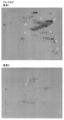
- FIG. 1 is a photograph of a gel showing the migration pattern of proteins by two-dimensional electrophoresis for proteins contained in vaname shrimp.
- the band on the left side of the photograph is the molecular weight marker band, and the value on the left side of the photograph is the molecular weight (KDa) of each molecular weight marker.
- the numerical value at the top of the photo represents the isoelectric point.
- FIG. 2 is a photograph of an immunoblot using the serum of a shrimp allergic patient against a two-dimensional electrophoresis pattern of a protein contained in vaname shrimp. Spots 1 to 11 where the IgE antibody in the serum of shrimp allergic patients specifically reacted are shown in white frames, respectively.
- FIG. 1 is a photograph of a gel showing the migration pattern of proteins by two-dimensional electrophoresis for proteins contained in vaname shrimp.
- the band on the left side of the photograph is the molecular weight marker band
- KDa molecular weight (KDa) of each molecular weight marker.
- FIG. 3 is a photograph of a gel showing a protein migration pattern by two-dimensional electrophoresis for proteins contained in black tiger.
- the band on the left side of the photograph is the molecular weight marker band, and the value on the left side of the photograph is the molecular weight (KDa) of each molecular weight marker.
- the numerical value at the top of the photo represents the isoelectric point.
- FIG. 4 is a photograph of an immunoblot using the serum of a shrimp allergic patient against a two-dimensional electrophoresis pattern of a protein contained in a black tiger. Spots 1 to 11 where the IgE antibody in the serum of shrimp allergic patients specifically reacted are shown in white frames, respectively.
- FIG. 5 is a photograph of a gel showing a protein migration pattern by two-dimensional electrophoresis for proteins contained in the prawn.
- the band on the left side of the photograph is the molecular weight marker band, and the value on the left side of the photograph is the molecular weight (KDa) of each molecular weight marker.
- the numerical value at the top of the photo represents the isoelectric point.
- FIG. 6 is a photograph of an immunoblot using sera from shrimp allergic patients with respect to the two-dimensional electrophoresis pattern of the protein contained in the prawn. Spots 1 to 6 and 8 to 11 where the IgE antibody in the serum of shrimp allergic patients specifically reacted are shown in white boxes, respectively.
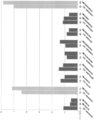
- FIG. 7 shows the results of examining the cross-reactivity of the peptides having the amino acid sequences of the respective epitopes by ELISA using sera from patients who are allergic to shrimp and wheat or crabs.
- FIG. 8 shows the results of examining the cross-reactivity of the peptides having the amino acid sequences of the respective epitopes by ELISA using sera from patients who are allergic to shrimp and wheat or crabs.
- FIG. 9 shows the results of examining the cross-reactivity of the peptides having the amino acid sequences of the respective epitopes by ELISA using sera from patients who are allergic to shrimp and wheat or crabs.
- FIG. 8 shows the results of examining the cross-reactivity of the peptides having the amino acid sequences of the respective epitopes by ELISA using sera from patients who are allergic to shrimp and wheat or crabs.
- FIG. 9 shows the results of examining the cross-reactivity of the peptides having the amino acid sequences of the respective epitopes by ELISA using
- FIG. 10 shows the results of examining the cross-reactivity of the peptides having the amino acid sequence of each epitope by ELISA using the serum of a patient who has allergies to shrimp and wheat or crabs.
- FIG. 11 shows the results of examining cross-reactivity of a peptide having an amino acid sequence of each epitope by ELISA using sera from patients who are allergic to shrimp and wheat or crabs.
- FIG. 12 shows the results of examining the cross-reactivity of the peptides having the amino acid sequences of the respective epitopes by ELISA using the serum of a patient who has allergies to shrimp and wheat or crabs.
- allergy refers to a state in which a hypersensitivity reaction unfavorable to the living body, which occurs when the antigen enters the living body sensitized to a certain antigen again.
- Allergic reactions can occur when in contact with an antigen or when ingested.
- contact refers to touching an object, and particularly refers to adhesion to the skin, mucous membranes (eye, lips, etc.) and the like for the human body.
- Ingestion means taking into the body, and taking by inhalation or oral means.
- an allergic reaction that occurs when food is ingested is called food allergy.
- the allergy may be a food allergy.
- IgE antibodies specific for antigens are produced in blood and tissues.
- IgE antibodies bind to mast cells or basophils.
- the antigen specific to the IgE antibody enters the body of the allergic disease patient again, the antigen combines with the IgE antibody bound to mast cells or basophils, resulting in the physiological effect of the IgE antibody-antigen interaction.
- physiological effects include the release of histamine, serotonin, heparin, eosinophil migration factor or various leukotrienes.
- These released substances elicit allergic reactions caused by the combination of IgE antibodies and specific antigens.
- an IgE antibody recognizes and binds to an epitope that is a specific amino acid sequence in a specific antigen, and an allergic reaction due to the antigen appears through the above-described pathway.
- the allergy targeted by the present invention is not particularly limited as long as it is an allergy to the allergen containing the epitope to be used.
- the allergen is a seafood, fruit, vegetable, nuts (seed and seeds), edible grass, cereal, livestock meat, milk, dairy product, etc., or a living body (particularly human) ingested by a living body (particularly human).
- Parasites that parasitize are included.
- Non-limiting examples of seafood include shrimp and crab belonging to the Decapoda (shrimp). What is generally recognized as “crustacea” is mostly included in the decapod (shrimp). Decapods (shrimps) include decapodal short tails (aka: crab bottoms) and decapodic tails (hermit crabs). Of the decapods (shrimps), all the names except for the decapods, short tails (aka: crab bottoms) and decapodic tails (hermit crabs) are “shrimp”. Shrimp will be described later.
- the decapodic short tail (aka crab lower) is a crab family (eg, Erimacrus isenbeckii), crabs (eg, Chionoecetescetopilio), Portunus trituberculatus)).
- crabs eg, Chionoecetescetopilio
- Portunus trituberculatus e.g., the Decapoda Coleoptera (hermit crab) include the king crab family (eg, Paralithodes camtschaticus).
- Non-limiting, seafood is also a squid belonging to the order of tsutsui and octopus. Including octopus.
- Seafood further includes fish belonging to the mackerel family and the cod family.
- Seafood further includes marsdalae shellfish.
- Non-limiting examples of the cuttle squid include Todarodes pacificus. The squid is also called “true squid”.
- Octopus octopus includes octopus (Octopus vulgaris).
- Mackerel fish include tuna (Thunnus orientalis) and cassava (Scomber japonicas).
- Cod fish include the cod (Gadus macrocephalus).
- Marsdalegaid shellfish include clams, clams and swordfish. In one embodiment, it includes clams (Ruditapes philippinarum).
- Non-limiting examples of the fruit include fruits belonging to the family Matabidae, Pineapple, Ursi, Cucurbitaceae, Citrus, Citrus, and Rosaceae.
- examples of vegetables include fruits belonging to the eggplant family, the cucurbitaceae family, and the camphor family.
- Examples of nuts (seed and seeds) include nuts (seed and seeds) belonging to Ursiaceae, Rosaceae and Walnuts.
- Examples of edible grass include edible grass belonging to the family Asteraceae.
- Examples of cereals include cereals belonging to the family Gramineae and Capaceae.
- Non-limiting, fruit of the family Tabidae includes kiwi (Actinidia deliciosa). Pineapple fruits include pineapple (Ananas comosus).
- the Urushi family includes nuts (seed and seeds) such as cashew nuts (Anacardium occidentale) in addition to fruits such as mango (Mangifera indica).
- Cucurbitaceae includes vegetables such as cucumber (Cucumis sativus) in addition to fruits such as melon (Cucumis melo).
- the fruit of the family Paceae contains banana (Musa acuminate). Citrus fruits include orange (Citrus sinensis).
- the Rosaceae include nuts (seed and berries) such as almonds in addition to fruits such as peach, strawberry, apple, pear and loquat.
- the Rosaceae includes apples (Malus domestica), almonds (Prunus dulcis).
- Non-limiting examples of solanaceous vegetables include eggplant (Solanum melongena) and tomato (Solanum lycopersicum).
- a camphoraceae vegetable includes avocado (Persea americana).
- Non-limiting examples of nuts (seed and seeds) include Urushiaceae cashew nuts (Anacardium occidentale), Rosaceae almonds (Prunus dulcis). Nuts of the walnut family (seed and seeds) include shinaguru (Juglans regia).
- Non-limiting examples of asteraceae edible grass include mugwort (Artemisia indica var. Maximowiczii or Artemisia indica). Gramineous grains include bread wheat (Triticum aestivum). The cereal family includes, for example, Fagopyrum esculentum.
- the type of livestock meat is not particularly limited. In one embodiment, it includes avian (chicken, duck, etc.) meat, pork, beef, lamb and the like. In one embodiment, it is avian meat. In one embodiment, chicken (Gallus gallus) meat.
- the origin of milk is not particularly limited. In one embodiment, it includes milk from cows, goats, sheep and the like. In one embodiment, it is milk (Bos Taurus). Dairy products are processed milk products. Non-limiting examples include butter, whipped cream, cheese, yogurt and ice cream.
- Parasites are, but are not limited to, for example, Anisakisae parasites. Parasites of the family Anisakis include Anisakis) simplex.
- the allergen is any of the following: Shrimp, crayfish (Erimacrus isenbeckii), snow crab (Chionoecetes opilio), blue crab (Portunus trituberculatus), king crab (Paralithodes camtschaticus), common squid (Todarodes pacificus), octopus (cientus berulshun) Madara (Gadus macrocephalus), clams (Ruditapes philippinarum), kiwi (Actinidia deliciosa), pineapple (Ananas comosus), mango (Mangifera indica), cashew nut (Anacardium occidentale), melon (Cucumis melo), banana (inate) Citrus sinensis), apples (Malus domestica), almonds (Prunusuldulcis), eggplants (Solanum melongena), tomatoes (Solanum lycopersicum), cucumbers (Cucumis sativus), avocados (
- maxim owiczii or Artemisia indica bread wheat (Triticum aestivum), buckwheat (Fagopyrum esculentum), chicken (Gallus gallus) meat, milk (Bos Taurus), anisakis (Anisakis simplex).
- the term “shrimp” refers to a shrimp belonging to the Eucarida.
- the shrimp belonging to the upper shrimp may be, for example, a shrimp belonging to the family Shrimp, Vietnamese tiger, Kurma shrimp
- the shrimp belonging to the lobster family may be, for example, lobster or prickly shrimp
- the shrimp belonging to the Shrimp family is, for example, Omar shrimp (lobster) It may be.
- the shrimp belonging to the familyshrimp can be, for example, a cherry shrimp, the shrimp belonging to the familyshrimp can be, for example, a white shrimp, and the shrimp belonging to the family Shrimp can be, for example, a sweet shrimp, a button shrimp, a shrimp Well, the shrimp belonging to the krill family may be, for example, krill.
- the shrimp targeted by the present invention may be any of the above shrimp.
- the shrimp targeted by the present invention is a shrimp belonging to the familyshrimp family (family Panaeidae).
- allergy to shrimp refers to a state having an allergic reaction that occurs using proteins contained in shrimp as antigens. Allergy to shrimp can cause an allergic reaction when contacted with an antigen contained in shrimp or when the antigen is ingested. In general, an allergic reaction that occurs when food is ingested is called food allergy.
- the allergy to shrimp may be food allergy.
- an antigen is a substance that induces an allergic reaction.
- it is a protein contained in raw materials such as foods, it is also called an allergen component.
- the antigen is preferably a protein.
- a protein is a molecule having a structure in which natural amino acids are linked by peptide bonds.
- the number of amino acids contained in the protein is not particularly limited.
- the term “polypeptide” also means a molecule having a structure in which natural amino acids are linked by peptide bonds.
- the number of amino acids contained in the polypeptide is not particularly limited.
- Polypeptide is a concept that includes “protein”. A polypeptide in which about 2 to 50 amino acids are linked by peptide bonds may be particularly referred to as a peptide.
- L form is shown unless otherwise specified.
- the notation of the amino acid sequence of a protein, polypeptide or peptide used in the present specification is represented by a single letter of amino acid based on standard usage and notation commonly used in the art, and the left direction is the amino terminal direction. Yes, and the right direction is the carboxy-terminal direction.
- X may be any substance having an amino group and a carboxyl group capable of binding to amino acids at both ends, and particularly represents any of 20 kinds of natural amino acids.
- the alanine scan method creates mutants in which residues in a protein are mutated one by one to alanine (glycine if the original amino acid is alanine). It is a method for site-specific identification of residues important for function. If the binding to the patient's IgE antibody remains even after mutation to alanine (glycine if the original amino acid is alanine), the residue is not important for binding to the IgE antibody, and other amino acids Even if it is changed to, binding properties remain.
- the binding property of IgE antibody means that the binding and reaction of the target epitope and IgE antibody are detected.
- binding and maintenance of IgE and antigen is important for the subsequent allergic reaction, and this binding and maintenance is responsible for epitope charge, hydrophobic bond, hydrogen bond, and aromatic interaction.
- the ability to bind and maintain them by losing them by changing to alanine or glycine means that the amino acid is not important.
- the protein contained in the shrimp specific shrimp was subjected to two-dimensional electrophoresis under the following conditions to identify the allergic antigen to shrimp.
- the first dimension electrophoresis is an isoelectric focusing gel
- the gel length is in the range of 5-10 cm
- the gel pH range is 3-10
- the pH gradient of the gel with respect to the migration direction is
- a gel length up to pH 5 is a
- a gel length of pH 5-7 is b
- a gel length of pH 7 or higher is c
- a is in the range of 0.15-0.3
- b Is a gel having a range of 0.4 to 0.7
- c is in a range of 0.15 to 0.3.
- Isoelectric focusing was carried out using an IPG gel Immobiline® Drystrip® (pH 3-10NL).
- IPGphor manufactured by GE was used as the electrophoresis apparatus.
- the upper limit of the current value of the electrophoresis apparatus is set to 75 ⁇ A per gel, and the voltage program is (1) a constant voltage process is performed at a constant voltage of 300 V up to 750 Vhr (the current change width for 30 minutes before the end of the process is (2) Gradually increase the voltage to 1000V over 300Vhr, (3) Gradually increase the voltage to 5000V over 4500Vhr, and (4) then the total Vhr to 12000 at 5000V constant voltage Until then, isoelectric focusing of the first dimension was performed.
- the gel concentration at the base end of the migration direction is set to 3 to 6%, and the gel concentration at the tip end in the migration direction is set higher than the gel concentration at the base end of the migration direction.
- SDS-PAGE was performed using NuPAGE 4-12% Bris-Tris Gels IPG well mini 1 mm manufactured by Life Technologies.
- As an electrophoresis instrument XCell SureLock Mini-Cell manufactured by life Technologies was used.
- electrophoresis was performed at 200 V constant voltage for about 45 minutes.
- spot 1 As a result of mass identification of antigen spot 1 of antigen (1) spot 1 , the amino acid sequences of SEQ ID NOs: 3 to 43 for vaname shrimp, SEQ ID NOs: 46 to 85 for black tiger, and SEQ ID NOs: 88 to 115 for prawns were obtained. was detected.
- SEQ ID NOs: 3 to 43 were identified to be the C-terminal portion of myosin heavy chain type 1 derived from vaname shrimp (amino acid sequence: SEQ ID NO: 2, nucleotide sequence encoding it: SEQ ID NO: 1).
- ⁇ 85 is identified to be the C-terminal portion of myosin heavy chain type ⁇ ⁇ 1 from the black tiger (amino acid sequence: SEQ ID NO: 45, base sequence encoding it: SEQ ID NO: 44), and SEQ ID NO: 88-115
- the amino acid sequence was identified to be the C-terminal part of myosin heavy chain type a from amino acid prawn (amino acid sequence: SEQ ID NO: 87, base sequence encoding it: SEQ ID NO: 86).
- the antigen of spot 1 may be any of (1A-a) to (1A-e) and (1B) below.
- (1A-a) a protein comprising an amino acid sequence in which one or several amino acids are deleted, substituted, inserted or added in SEQ ID NO: 2, 45 or 87.
- (1A-b) 70% or more, preferably 75% or more, 80% or more, 85% or more, 90% or more, 95% or more, 97% or more, with the amino acid sequence represented by SEQ ID NO: 2, 45 or 87 , A protein comprising 98% or more, 99% or more amino acid sequence.
- a protein comprising an amino acid sequence encoded by a nucleotide sequence in which one or several nucleotides are deleted, substituted, inserted or added in SEQ ID NO: 1, 44 or 86.
- (1A-d) 70% or more, preferably 75% or more, 80% or more, 85% or more, 90% or more, 95% or more, 97% or more, with the nucleotide sequence represented by SEQ ID NO: 1, 44 or 86 ,
- a protein comprising an amino acid sequence encoded by 98% or more and 99% or more of a base sequence.
- a protein comprising an amino acid sequence encoded by a nucleic acid that hybridizes under stringent conditions with a nucleic acid consisting of a base sequence complementary to the base sequence represented by SEQ ID NO: 1, 44 or 86.
- a protein comprising at least one amino acid sequence selected from the group consisting of SEQ ID NOs: 2 to 43, the group consisting of SEQ ID NOs: 45 to 85, or the group consisting of SEQ ID NOs: 87 to 115, preferably the amino acid sequence A protein comprising at least 2, 3, 4, 5, 6, 7, 8, 9, 10, 15, 20, 25, 30, 45, 50 or all of the sequences.
- amino acid sequence represented by any of SEQ ID NOs: 2 to 43, SEQ ID NOs: 45 to 85, and SEQ ID NOs: 87 to 115 one or several amino acids may be deleted, substituted, inserted or added. .
- the proteins (1A-a) to (1A-e) and (1B) have a molecular weight of 80 to 260 kDa, when gels are subjected to two-dimensional electrophoresis under the conditions described in the above-mentioned section “Identification of antigen”.
- the molecular weight is around 90 to 230 kDa, more preferably 100 to 200 kDa, and an isoelectric point of 3.0 to 7.0, preferably 4.0 to 6.5, more preferably 5.0 to 6.0. It may be a protein that appears as a spot.
- SEQ ID NOs: 118 to 139 are the N-terminal portion of myosin heavy chain ⁇ type 1 derived from vannamei (amino acid sequence: SEQ ID NO: 117, base sequence encoding it: SEQ ID NO: 116).
- ⁇ 144 was identified to be the N-terminal part of myosin heavy chain type 1 from the black tiger (amino acid sequence: SEQ ID NO: 141, base sequence encoding it: SEQ ID NO: 140), and SEQ ID NOs: 147 to 159
- the amino acid sequence was identified to be the N-terminal part (amino acid sequence: SEQ ID NO: 146, base sequence encoding it: SEQ ID NO: 145) of myosin heavy chain type a derived from prawns.
- the antigen of spot 2 may be any of (2A-a) to (2A-e) and (2B) below.
- (2A-a) a protein comprising an amino acid sequence in which one or several amino acids are deleted, substituted, inserted or added in SEQ ID NO: 117, 141 or 146.
- (2A-b) 70% or more, preferably 75% or more, 80% or more, 85% or more, 90% or more, 95% or more, 97% or more, with the amino acid sequence represented by SEQ ID NO: 117, 141 or 146 , A protein comprising 98% or more, 99% or more amino acid sequence.
- (2A-c) A protein comprising an amino acid sequence encoded by a base sequence in which one or several nucleotides are deleted, substituted, inserted or added in SEQ ID NO: 116, 140 or 145.
- (2A-d) 70% or more, preferably 75% or more, 80% or more, 85% or more, 90% or more, 95% or more, 97% or more, with the base sequence represented by SEQ ID NO: 116, 140 or 145 ,
- a protein comprising an amino acid sequence encoded by 98% or more and 99% or more of a base sequence.
- (2A-e) A protein comprising an amino acid sequence encoded by a nucleic acid that hybridizes under stringent conditions with a nucleic acid comprising a base sequence complementary to the base sequence represented by SEQ ID NO: 116, 140 or 145.
- (2B) a protein comprising at least one amino acid sequence selected from the group consisting of SEQ ID NOs: 117 to 139, the group consisting of SEQ ID NOs: 141 to 144, or the group consisting of SEQ ID NOs: 146 to 159, preferably the amino acid sequence A protein comprising at least 2, 3, 4, 5, 6, 7, 8, 9, 10, 15, 20 or all of the sequences.
- a protein comprising one, preferably a protein comprising at least 2, 3, 4, 5, 6, 7, 8, 9, 10, 15 or all sequences of the amino acid sequence.
- amino acid sequence represented by any of SEQ ID NOs: 117 to 139, SEQ ID NOs: 141 to 144, and SEQ ID NOs: 146 to 159 one or several amino acids may be deleted, substituted, inserted, or added. .
- the proteins (2A-a) to (2A-e) and (2B) have a molecular weight of 50 to 160 kDa in a gel subjected to two-dimensional electrophoresis under the conditions described in the above-mentioned section “Identification of antigen”.
- the molecular weight is around 55 to 150 kDa, more preferably 60 to 130 kDa, and an isoelectric point of 4.5 to 10.0, preferably 5.0 to 9.5, more preferably 5.5 to 9.0. It may be a protein that appears as a spot.
- SEQ ID NOs: 162 to 177 were the C-terminal portion of myosin heavy chain type 2 derived from vaname shrimp (amino acid sequence: SEQ ID NO: 161, base sequence encoding it: SEQ ID NO: 160).
- ⁇ 228 is identified to be the C-terminal part of myosin : heavy chain type ⁇ 2 derived from black tiger (amino acid sequence: SEQ ID NO: 179, base sequence encoding it: SEQ ID NO: 178), and SEQ ID NOs: 231 to 274
- the amino acid sequence was identified to be the C-terminal part of myosin heavy chain type b derived from prawns (amino acid sequence: SEQ ID NO: 230, base sequence encoding it: SEQ ID NO: 229).
- the antigen of spot 3 may be any one of (3A-a) to (3A-e) and (3B) below.
- (3A-a) a protein comprising an amino acid sequence in which one or several amino acids are deleted, substituted, inserted or added in SEQ ID NO: 161, 179 or 230.
- (3A-b) 70% or more identity with the amino acid sequence represented by SEQ ID NO: 161, 179 or 230, preferably 75% or more, 80% or more, 85% or more, 90% or more, 95% or more, 97% or more , A protein comprising 98% or more, 99% or more amino acid sequence.
- (3A-d) 70% or more identity with the base sequence represented by SEQ ID NO: 160, 178 or 229, preferably 75% or more, 80% or more, 85% or more, 90% or more, 95% or more, 97% or more ,
- a protein comprising an amino acid sequence encoded by 98% or more and 99% or more of a base sequence.
- (3A-e) A protein comprising an amino acid sequence encoded by a nucleic acid that hybridizes under stringent conditions with a nucleic acid comprising a base sequence complementary to the base sequence represented by SEQ ID NO: 160, 178 or 229.
- (3B) a protein comprising at least one amino acid sequence selected from the group consisting of SEQ ID NOs: 161 to 177, the group consisting of SEQ ID NOs: 179 to 228, or the group consisting of SEQ ID NOs: 230 to 274, preferably the amino acid sequence A protein comprising at least 2, 3, 4, 5, 6, 7, 8, 9, 10, 15, 20, 25, 30, 35, 40, 45 or all of the sequences.
- amino acid sequence represented by any of SEQ ID NO: 161 to 177, SEQ ID NO: 179 to 228, and SEQ ID NO: 230 to 274 one or several amino acids may be deleted, substituted, inserted or added. .
- the proteins (3A-a) to (3A-e) and (3B) have a molecular weight of 80 to 260 kDa in a gel subjected to two-dimensional electrophoresis under the conditions described in the above-mentioned section “Identification of antigen”.
- the molecular weight is around 90 to 230 kDa, more preferably 100 to 200 kDa, and an isoelectric point of 3.0 to 7.0, preferably 4.0 to 6.5, more preferably 5.0 to 6.0. It may be a protein that appears as a spot.
- SEQ ID NO: 277-298 is the N-terminal part of myosin ⁇ heavy chain type 2 derived from vannamei shrimp (amino acid sequence: SEQ ID NO: 276, base sequence encoding it: SEQ ID NO: 275).
- ⁇ 304 is identified as the N-terminal part of myosin ⁇ ⁇ heavy chain type 2 derived from black tiger (amino acid sequence: SEQ ID NO: 300, base sequence encoding it: SEQ ID NO: 299), and SEQ ID NO: 307-320
- the amino acid sequence was identified to be the N-terminal portion (amino acid sequence: SEQ ID NO: 306, base sequence encoding it: SEQ ID NO: 305) of myosin heavy chain type b derived from prawns.
- the antigen of spot 4 may be any of the following (4A-a) to (4A-e) and (4B).
- (4A-c) a protein comprising an amino acid sequence encoded by a base sequence in which one or several nucleotides are deleted, substituted, inserted or added in SEQ ID NO: 275, 299 or 305.
- (4A-d) 70% or more, preferably 75% or more, 80% or more, 85% or more, 90% or more, 95% or more, 97% or more, the identity with the base sequence represented by SEQ ID NO: 275, 299 or 305 ,
- a protein comprising an amino acid sequence encoded by 98% or more and 99% or more of a base sequence.
- (4A-e) A protein comprising an amino acid sequence encoded by a nucleic acid that hybridizes under stringent conditions with a nucleic acid comprising a base sequence complementary to the base sequence represented by SEQ ID NO: 275, 299 or 305.
- (4B) a protein comprising at least one amino acid sequence selected from the group consisting of SEQ ID NOs: 276 to 298, the group consisting of SEQ ID NOs: 300 to 304, or the group consisting of SEQ ID NOs: 306 to 320, preferably the amino acid sequence A protein comprising at least 2, 3, 4, 5, 6, 7, 8, 9, 10, 15, 20 or all of the sequences.
- At least an amino acid sequence selected from the group consisting of SEQ ID NOs: 276-293 and 295-298, the group consisting of SEQ ID NOs: 300-304, or the group consisting of SEQ ID NOs: 306, 307, and 309-319 A protein comprising one, preferably a protein comprising at least 2, 3, 4, 5, 6, 7, 8, 9, 10, 15, 20 or all sequences of the amino acid sequence.
- amino acid sequence represented by any of SEQ ID NOs: 276 to 298, SEQ ID NOs: 300 to 304, and SEQ ID NOs: 306 to 320 one or several amino acids may be deleted, substituted, inserted, or added. .
- the proteins (4A-a) to (4A-e) and (4B) have a molecular weight of 50 to 160 kDa, when gels are subjected to two-dimensional electrophoresis under the conditions described in the above item “Identification of antigen”.
- the molecular weight is around 55 to 150 kDa, more preferably 60 to 130 kDa, and an isoelectric point of 4.5 to 10.0, preferably 5.0 to 9.5, more preferably 5.5 to 9.0. It may be a protein that appears as a spot.
- SEQ ID NOS: 363 to 379 are glycogen phosphorylases derived from prawns (amino acid sequence: SEQ ID NO: 362, base sequence encoding it: SEQ ID NO: 361).
- SEQ ID NOs: 321 to 336 and SEQ ID NOs: 337 to 360 glycogen-derived phosphorylase derived from prawns was hit. That is, since a protein with high homology was detected in vaname shrimp and black tiger, glycogen phosphorylase and its homologue were judged to be shrimp antigens.
- the antigen of spot 5 may be any of (5A-a) to (5A-e) and (5B) below.
- (5A-a) a protein comprising an amino acid sequence in which one or several amino acids are deleted, substituted, inserted or added in SEQ ID NO: 362.
- (5A-b) 70% or more identity with the amino acid sequence represented by SEQ ID NO: 362, preferably 75% or more, 80% or more, 85% or more, 90% or more, 95% or more, 97% or more, 98% or more , A protein comprising 99% or more amino acid sequence.
- (5A-c) a protein comprising an amino acid sequence encoded by a base sequence in which one or several nucleotides are deleted, substituted, inserted or added in SEQ ID NO: 361.
- (5A-d) 70% or more identity with the base sequence represented by SEQ ID NO: 361, preferably 75% or more, 80% or more, 85% or more, 90% or more, 95% or more, 97% or more, 98% or more , A protein comprising an amino acid sequence encoded by 99% or more of the base sequence.
- (5A-e) a protein comprising an amino acid sequence encoded by a nucleic acid that hybridizes under stringent conditions with a nucleic acid comprising a base sequence complementary to the base sequence represented by SEQ ID NO: 361.
- a protein comprising at least one amino acid sequence selected from the group consisting of SEQ ID NOs: 321 to 336, the group consisting of SEQ ID NOs: 337 to 360, or the group consisting of SEQ ID NOs: 362 to 379, preferably the amino acid sequence A protein comprising at least 2, 3, 4, 5, 6, 7, 8, 9, 10, 15, 20 or all of the sequences.
- amino acid sequence represented by any of SEQ ID NOs: 321 to 336, SEQ ID NOs: 337 to 360, and SEQ ID NOs: 362 to 379 one or several amino acids may be deleted, substituted, inserted, or added. .
- the proteins (5A-a) to (5A-e) and (5B) have a molecular weight of 70 to 160 kDa in a gel subjected to two-dimensional electrophoresis under the conditions described in the above-mentioned section “Identification of antigen”.
- the molecular weight is around 75 to 140 kDa, more preferably 80 to 130 kDa, and an isoelectric point of 5.0 to 9.0, preferably 5.5 to 8.5, more preferably 6.0 to 8.0. It may be a protein that appears as a spot.
- SEQ ID NOs: 382 to 397 are a part of the hemocyanin subunit L1 derived from lobster shrimp (amino acid sequence: SEQ ID NO: 381, base sequence encoding it: SEQ ID NO: 380), and SEQ ID NOs: 400 to 412 Is identified as a hemocyanin derived from black tiger (amino acid sequence: SEQ ID NO: 399, base sequence encoding it: SEQ ID NO: 398), and the amino acid sequence of SEQ ID NOs: 415 to 419 is a hemocyanin subunit L derived from prawn (Amino acid sequence: SEQ ID NO: 414, base sequence encoding it: SEQ ID NO: 413) was identified.
- the antigen of spot 6 may be any of the following (6A-a) to (6A-e) and (6B).
- (6A-a) a protein comprising an amino acid sequence in which one or several amino acids are deleted, substituted, inserted or added in SEQ ID NO: 381, 399 or 414.
- (6A-b) 70% or more identity with the amino acid sequence represented by SEQ ID NO: 381, 399 or 414, preferably 75% or more, 80% or more, 85% or more, 90% or more, 95% or more, 97% or more , A protein comprising 98% or more, 99% or more amino acid sequence.
- (6A-c) A protein comprising an amino acid sequence encoded by a base sequence in which one or several nucleotides are deleted, substituted, inserted or added in SEQ ID NO: 380, 398 or 413.
- (6A-d) 70% or more, preferably 75% or more, 80% or more, 85% or more, 90% or more, 95% or more, 97% or more, the identity with the base sequence represented by SEQ ID NO: 380, 398 or 413 , A protein comprising an amino acid sequence encoded by 98% or more and 99% or more of a base sequence.
- a protein comprising at least one of the amino acid sequences, preferably a protein comprising at least 2, 3, 4, 5, 6, 7, 8, 9, 10 or all sequences of said amino acid sequence.
- amino acid sequence represented by any of SEQ ID NOs: 381 to 397, SEQ ID NOs: 399 to 412 and SEQ ID NOs: 414 to 419 one or several amino acids may be deleted, substituted, inserted or added. .
- the proteins (6A-a) to (6A-e) and (6B) have a molecular weight of 50 to 110 kDa, when gels are subjected to two-dimensional electrophoresis under the conditions described in the above-mentioned section “Identification of antigen”.
- the molecular weight is around 55 to 100 kDa, more preferably 60 to 90 kDa
- the isoelectric point is 4.0 to 7.0, preferably 4.5 to 6.5, more preferably 5.0 to 6.0. It may be a protein that appears as a spot.
- the spot 7 was analyzed by comparing the mass data obtained from the mass spectrometer with the protein data of NCBI. As a result, it was identified that SEQ ID NOs: 422 to 435 were pyruvate kinase 3 (amino acid sequence: SEQ ID NO: 421, base sequence encoding it: SEQ ID NO: 420) derived from lobster shrimp. In addition, as for SEQ ID NOs: 436 to 441, pyruvate kinase ⁇ 3 derived from vaname shrimp was hit. That is, since a protein with high homology was detected in Black Tiger, it was determined that pyruvate kinase 3 and its homologue are shrimp antigens.
- the antigen of spot 7 may be any of (7A-a) to (7A-e) and (7B) below.
- (7A-a) a protein comprising an amino acid sequence in which one or several amino acids are deleted, substituted, inserted or added in SEQ ID NO: 421.
- (7A-b) 70% or more identity with the amino acid sequence represented by SEQ ID NO: 421, preferably 75% or more, 80% or more, 85% or more, 90% or more, 95% or more, 97% or more, 98% or more , A protein comprising 99% or more amino acid sequence.
- (7A-c) A protein comprising an amino acid sequence encoded by a base sequence in which one or several nucleotides are deleted, substituted, inserted or added in SEQ ID NO: 420.
- (7A-d) 70% or more identity with the base sequence represented by SEQ ID NO: 420, preferably 75% or more, 80% or more, 85% or more, 90% or more, 95% or more, 97% or more, 98% or more , A protein comprising an amino acid sequence encoded by 99% or more of the base sequence.
- (7A-e) A protein comprising an amino acid sequence encoded by a nucleic acid that hybridizes under stringent conditions with a nucleic acid comprising a base sequence complementary to the base sequence represented by SEQ ID NO: 420.
- a protein comprising at least one amino acid sequence selected from the group consisting of SEQ ID NOs: 421 to 435 or the group consisting of SEQ ID NOs: 436 to 441, preferably at least 2, 3, 4, 5, A protein comprising 6, 7, 8, 9, 10 or all sequences.
- amino acid sequence represented by any of SEQ ID NOs: 421 to 435 and SEQ ID NOs: 436 to 441 one or several amino acids may be deleted, substituted, inserted or added.
- the proteins (7A-a) to (7A-e) and (7B) are those having a molecular weight of 45 to 80 kDa in gels subjected to two-dimensional electrophoresis under the conditions described in the above-mentioned “Identification of antigen”, Preferably, the molecular weight is around 50 to 75 kDa, more preferably 55 to 70 kDa, and an isoelectric point of 4.5 to 9.0, preferably 5.0 to 8.5, more preferably 5.5 to 8.0. It may be a protein that appears as a spot.
- the spot 8 was analyzed by comparing the mass data obtained from the mass spectrometer with the protein data of NCBI. As a result, it was identified that SEQ ID NOs: 456 to 479 were phosphopyruvate hydratase derived from black tiger (amino acid sequence: SEQ ID NO: 455, base sequence encoding it: SEQ ID NO: 454). In addition, as for SEQ ID NOs: 442 to 453, phosphopyruvate hydratase derived from black tiger was hit. That is, since a protein with high homology was detected in vaname shrimp, it was determined that phosphopyruvate hydratase and its homolog are the shrimp antigens.
- SEQ ID NOs: 482 to 484 are phosphopyruvate hydratase derived from tiger prawn (amino acid sequence: SEQ ID NO: 481, base sequence encoding it: SEQ ID NO: 480).
- the antigen of spot 8 may be any of the following (8A-a) to (8A-e) and (8B).
- a protein comprising an amino acid sequence encoded by a base sequence in which one or several nucleotides are deleted, substituted, inserted or added in SEQ ID NO: 454 or 480.
- (8A-d) 70% or more of identity with the base sequence represented by SEQ ID NO: 454 or 480, preferably 75% or more, 80% or more, 85% or more, 90% or more, 95% or more, 97% or more, 98 % Or more, a protein comprising an amino acid sequence encoded by 99% or more of a base sequence.
- a protein comprising an amino acid sequence encoded by a nucleic acid that hybridizes under stringent conditions with a nucleic acid comprising a base sequence complementary to the base sequence represented by SEQ ID NO: 454 or 480.
- 8B a protein comprising at least one amino acid sequence selected from the group consisting of SEQ ID NOs: 442 to 453, the group consisting of SEQ ID NOs: 455 to 479, or the group consisting of SEQ ID NOs: 481 to 484, preferably the amino acid sequence A protein comprising at least 2, 3, 4, 5, 6, 7, 8, 9, 10, 15, 20 or all of the sequences.
- a protein comprising at least one of the amino acid sequences preferably a protein comprising at least 2, 3, 4, 5, 6, 7, 8, 9, 10, 15 or all of the amino acid sequences.
- amino acid sequence represented by any of SEQ ID NOs: 442 to 453, SEQ ID NOs: 455 to 479, and SEQ ID NOs: 481 to 484 one or several amino acids may be deleted, substituted, inserted or added. .
- the proteins (8A-a) to (8A-e) and (8B) have a molecular weight of 35 to 80 kDa in a gel subjected to two-dimensional electrophoresis under the conditions described in the above-mentioned section “Identification of antigen”.
- the molecular weight is around 40 to 75 kDa, more preferably 45 to 70 kDa, and an isoelectric point of 4.0 to 8.0, preferably 4.5 to 7.5, more preferably 5.0 to 7.0. It may be a protein that appears as a spot.
- the spot 9 was analyzed by comparing the mass data obtained from the mass spectrometer with the protein data of NCBI.
- SEQ ID NOs: 487 to 490 were mitochondrial ATP synthase subunit alpha precursor (amino acid sequence: SEQ ID NO: 486, nucleotide sequence encoding the same: SEQ ID NO: 485) derived from lobster shrimp.
- SEQ ID NOs: 491 to 497 and SEQ ID NOs: 498 to 518 mitochondrial ATP synthase subunit alpha precursor derived from lobster shrimp was hit.
- the antigen of spot 9 may be any of (9A-a) to (9A-e) and (9B) below.
- (9A-a) a protein comprising an amino acid sequence in which one or several amino acids are deleted, substituted, inserted or added in SEQ ID NO: 486.
- (9A-b) 70% or more identity with the amino acid sequence represented by SEQ ID NO: 486, preferably 75% or more, 80% or more, 85% or more, 90% or more, 95% or more, 97% or more, 98% or more , A protein comprising 99% or more amino acid sequence.
- (9A-c) A protein comprising an amino acid sequence encoded by a base sequence in which one or several nucleotides are deleted, substituted, inserted or added in SEQ ID NO: 485.
- (9A-d) 70% or more identity with the base sequence represented by SEQ ID NO: 485, preferably 75% or more, 80% or more, 85% or more, 90% or more, 95% or more, 97% or more, 98% or more , A protein comprising an amino acid sequence encoded by 99% or more of the base sequence.
- (9A-e) A protein comprising an amino acid sequence encoded by a nucleic acid that hybridizes under stringent conditions with a nucleic acid comprising a base sequence complementary to the base sequence represented by SEQ ID NO: 485.
- a protein comprising at least one amino acid sequence selected from the group consisting of SEQ ID NOs: 486 to 490, the group consisting of SEQ ID NOs: 491 to 497, or the group consisting of SEQ ID NOs: 498 to 518, preferably the amino acid sequence A protein comprising at least 2, 3, 4, 5, 6, 7, 8, 9, 10, 15, 20 or all of the sequences.
- a protein comprising one, preferably a protein comprising at least 2, 3, 4, 5, 6, 7, 8, 9, 10, 15 or all sequences of the amino acid sequence.
- amino acid sequence represented by any of SEQ ID NOs: 486 to 490, SEQ ID NOs: 491 to 497 and SEQ ID NOs: 498 to 518 one or several amino acids may be deleted, substituted, inserted or added. .
- the proteins (9A-a) to (9A-e) and (9B) are those having a molecular weight of 40 to 70 kDa, when gels are subjected to two-dimensional electrophoresis under the conditions described in the above item “Identification of antigen”.
- the molecular weight is around 45 to 65 kDa, more preferably 50 to 60 kDa
- the isoelectric point is 5.0 to 10.0, preferably 5.5 to 9.5, more preferably 6.0 to 9.0. It may be a protein that appears as a spot.
- the spot 10 was analyzed by comparing the mass data obtained from the mass spectrometer with the protein data of NCBI. As a result, it was identified that SEQ ID NOs: 521 to 527 were troponin I derived from the lobster shrimp (amino acid sequence: SEQ ID NO: 520, base sequence encoding it: SEQ ID NO: 519). In addition, with regard to SEQ ID NOs: 528 to 532 and SEQ ID NOs: 533 to 539, troponin I derived from the lobster shrimp was hit. That is, since proteins with high homology were detected in black tiger and car prawns, it was determined that troponin I and its homologues are shrimp antigens.
- the antigen of the spot 10 may be any of the following (10A-a) to (10A-e) and (10B).
- (10A-c) A protein comprising an amino acid sequence encoded by a base sequence in which one or several nucleotides are deleted, substituted, inserted or added in SEQ ID NO: 519.
- (10A-d) 70% or more identity with the base sequence represented by SEQ ID NO: 519, preferably 75% or more, 80% or more, 85% or more, 90% or more, 95% or more, 97% or more, 98% or more , A protein comprising an amino acid sequence encoded by 99% or more of the base sequence.
- (10A-e) A protein comprising an amino acid sequence encoded by a nucleic acid that hybridizes under stringent conditions with a nucleic acid comprising a base sequence complementary to the base sequence represented by SEQ ID NO: 519.
- a protein comprising at least one amino acid sequence selected from the group consisting of SEQ ID NOs: 520 to 527, the group consisting of SEQ ID NOs: 528 to 532, or the group consisting of SEQ ID NOs: 533 to 539, preferably the amino acid sequence A protein comprising at least 2, 3, 4, 5, 6 or all of the sequences. More preferably, it comprises at least one amino acid sequence selected from the group consisting of SEQ ID NOs: 520 to 525 and 527, the group consisting of SEQ ID NOs: 528 to 530 and 532, or the group consisting of SEQ ID NOs: 533 to 537 and 539.
- a protein preferably a protein comprising at least 2, 3, 4, 5 or all sequences of the amino acid sequence.
- amino acid sequence represented by any of SEQ ID NOs: 520 to 527, SEQ ID NOs: 528 to 532, and SEQ ID NOs: 533 to 539 one or several amino acids may be deleted, substituted, inserted, or added. .
- the proteins of the above (10A-a) to (10A-e) and (10B) have a molecular weight of 10 to 50 kDa, when gel is subjected to two-dimensional electrophoresis under the conditions described in the above-mentioned “Identification of antigen”.
- the molecular weight is around 15-40 kDa, more preferably 20-40 kDa, and an isoelectric point of 7.0-11.0, preferably 7.5-10.5, more preferably 8.0-10.0. It may be a protein that appears as a spot.
- SEQ ID NOs: 542 to 547 are cyclophilin A derived from the tiger shrimp (amino acid sequence: SEQ ID NO: 541, base sequence encoding it: SEQ ID NO: 540).
- SEQ ID NOs: 554 to 557 cyclophilin A derived from vannamei shrimp was hit. That is, since a protein with high homology was detected in the prawn, it was determined that cyclophilin A and its homologue were the shrimp antigens.
- SEQ ID NOs: 550 to 553 are black tiger-derived cyclophilin A (amino acid sequence: SEQ ID NO: 549, base sequence encoding it: SEQ ID NO: 548).
- the antigen of the spot 11 may be any of the following (11A-a) to (11A-e) and (11B).
- (11A-a) A protein comprising an amino acid sequence in which one or several amino acids are deleted, substituted, inserted or added in SEQ ID NO: 541 or 549.
- (11A-b) 70% or more identity with the amino acid sequence represented by SEQ ID NO: 541 or 549, preferably 75% or more, 80% or more, 85% or more, 90% or more, 95% or more, 97% or more, 98 % Or more, protein containing 99% or more amino acid sequence.
- (11A-c) A protein comprising an amino acid sequence encoded by a base sequence in which one or several nucleotides are deleted, substituted, inserted or added in SEQ ID NO: 540 or 548. (11A-d) 70% or more of identity with the base sequence represented by SEQ ID NO: 540 or 548, preferably 75% or more, 80% or more, 85% or more, 90% or more, 95% or more, 97% or more, 98 % Or more, a protein comprising an amino acid sequence encoded by 99% or more of a base sequence.
- (11A-e) A protein comprising an amino acid sequence encoded by a nucleic acid that hybridizes under stringent conditions with a nucleic acid comprising a base sequence complementary to the base sequence represented by SEQ ID NO: 540 or 548.
- (11B) a protein comprising at least one amino acid sequence selected from the group consisting of SEQ ID NOs: 541 to 547, the group consisting of SEQ ID NOs: 549 to 553, or the group consisting of SEQ ID NOs: 554 to 557, preferably the amino acid sequence A protein comprising at least 2, 3, 4, 5 or all of the sequences.
- a protein comprising at least one amino acid sequence selected from the group consisting of SEQ ID NOs: 541 to 543, 545, and 546, the group consisting of SEQ ID NOs: 549 to 553, or the group consisting of SEQ ID NOs: 554 to 556, Preferably a protein comprising at least two, three or all of the amino acid sequences.
- amino acid sequence represented by any of SEQ ID NOs: 541 to 547, SEQ ID NOs: 549 to 553, and SEQ ID NOs: 554 to 557 one or several amino acids may be deleted, substituted, inserted or added. .
- the proteins (11A-a) to (11A-e) and (11B) have a molecular weight of 10 to 30 kDa in a gel subjected to two-dimensional electrophoresis under the conditions described in the above-mentioned section “Identification of antigen”.
- the molecular weight is in the vicinity of 13 to 25 kDa, more preferably 15 to 20 kDa, and the isoelectric point is 7.0 to 11.0, preferably 7.5 to 10.5, more preferably 8.0 to 10.0. It may be a protein that appears as a spot.
- the above proteins (1) to (11), which are antigens and the polypeptides (E1) to (E50) described later, are subjected to phosphorylation, sugar chain modification, aminoacylation, ring opening, deamination, etc. Alternatively, embodiments in which the amino acid residue of the polypeptide is modified are also included.
- the proteins (1) to (11) described above and the polypeptides (E1) to (E50) described later are allergic antigens.
- amino acids when “one or several amino acids are deleted, substituted, inserted or added” in the amino acid sequence, one or several amino acids are deleted in the target amino acid sequence. Or an amino acid sequence in which other amino acids are substituted, other amino acids are inserted, and / or other amino acids are added.
- Several amino acids means, but not limited to, 200 or less, 100 or less, 50 or less, 30 or less, 20 or less, 15 or less, 12 or less, 10 or less, 8 or less, Means 6 amino acids, 4 amino acids, 3 amino acids or less.
- several amino acids mean 30%, preferably 25%, 20%, 15%, 10%, 5%, 3%, 2% or 1% of amino acids relative to the total length of the amino acid sequence.
- substitution is preferably a conservative substitution.
- a conservative substitution is the replacement of a particular amino acid residue with a residue having similar physicochemical characteristics, but any substitution that does not substantially change the structural characteristics of the original sequence. For example, any substitution may be made so long as the substituted amino acid does not destroy the helix present in the original sequence or other types of secondary structures characterizing the original sequence.
- conservative substitution of amino acid residues is exemplified for each substitutable residue, but the substitutable amino acid residues are not limited to those described below.
- Group A leucine, isoleucine, valine, alanine, methionine
- B group aspartic acid
- glutamic acid glutamic acid
- C group asparagine
- glutamine D group: lysine
- arginine arginine
- Group E Serine
- Threonine Group F: Phenylalanine, Tyrosine
- one member of the above types can be exchanged for another type of member.
- the amino acids of the above groups B, D, and E may be substituted with amino acids of other groups.
- cysteines may be deleted or substituted with other amino acids to prevent folding in the protein with tertiary structure.
- the hydropathic index of amino acids J.P.
- J.P. which is a measure of hydrophobicity / hydrophilicity for amino acids, so that the hydrophilic / hydrophobic balance is maintained or the hydrophilicity is increased to facilitate synthesis.
- Kyte and R. Doolittle, J. Mol. Biol., Vol.157, p.105-132, 1982), amino acids may be substituted.
- substitution with an amino acid having less steric hindrance than the original amino acid for example, substitution from the F group to the A, B, C, D, E group; substitution from a charged amino acid to an uncharged amino acid
- substitution from group B to group C may be performed.
- the percent identity between two amino acid sequences can be determined by visual inspection and mathematical calculation.
- the percent identity can also be determined using a computer program. Examples of such computer programs include BLAST and ClustalW. In particular, various conditions (parameters) for identity search by the BLAST program are described in Altschul et al. (Nucl. Acids. Res., 25, p. 3389-3402, 1997), NCBI and DNA Data Bank of Japan. (BDB manual, Altschul et al. NCB / NLM / NIH Bethesda, MD 20894; Altschul et al.). It can also be determined by using programs such as genetic information processing software GENETYX Ver.7 (Genetics), DNASIS Pro (Hitachi Software), Vector NTI (Infomax).
- nucleotides when “one or several nucleotides are deleted, substituted, inserted or added” in the base sequence, one or several nucleotides are deleted in the target base sequence. Or a base sequence in which another nucleotide is substituted, another nucleotide is inserted, and / or another nucleotide is added. “Several nucleotides” means, but not limited to, within 600, within 300, within 150, within 100, within 50, within 30, within 20, within 15, within 12, It means no more than 10, no more than 8, no more than 6, no more than 4, no more than 3 nucleotide acids.
- nucleotides mean 30%, preferably 25%, 20%, 15%, 10%, 5%, 3%, 2% or 1% nucleotides relative to the entire length of the base sequence. It is preferable that no frame shift occurs in the sequence encoding the amino acid due to the deletion, substitution, insertion or addition of the nucleotide.
- the percent identity of two base sequences can be determined by visual inspection and mathematical calculation.
- the percent identity can also be determined using a computer program.
- sequence comparison computer program examples include the BLASTN program (Altschul et al. (1990) available from the website of the National Library of Medicine: https://blast.ncbi.nlm.nih.gov/Blast.cgi. ) J. Mol. Biol. 215: 403-10: Version 2.2.7, WU-BLAST 2.0 algorithm or the like. Standard default parameter settings for WU-BLAST 2.0 can be those described in the following Internet site: http://blast.wustl.edu.
- under stringent conditions means to hybridize under moderately or highly stringent conditions.
- moderately stringent conditions can be easily determined by those skilled in the art having general techniques based on, for example, the length of DNA. The basic conditions are shown in Sambrook et al., Molecular Cloning: A Laboratory Manual, 3rd Edition, Chapters 6-7, Cold Spring Harbor Laboratory Press, 2001.
- moderately stringent conditions are as hybridization conditions: 1 ⁇ SSC to 6 ⁇ SSC, 42 ° C. to 55 ° C., more preferably 1 ⁇ SSC to 3 ⁇ SSC, 45 ° C. to 50 ° C.
- the most preferable conditions are 2 ⁇ SSC and 50 ° C.
- the hybridization solution contains, for example, about 50% formamide
- a temperature 5 to 15 ° C. lower than the above temperature is adopted.
- Cleaning conditions include 0.5 ⁇ SSC to 6 ⁇ SSC, 40 ° C. to 60 ° C.
- 0.05% to 0.2%, preferably about 0.1% SDS may generally be added.
- Highly stringent conditions can also be readily determined by one skilled in the art based on, for example, the length of the DNA.
- highly stringent conditions include hybridization and / or washing at higher temperatures and / or lower salt concentrations than moderately stringent conditions.
- the hybridization conditions are 0.1 ⁇ SSC to 2 ⁇ SSC, 55 ° C.
- Washing conditions include 0.2 ⁇ SSC to 2 ⁇ SSC, 50 ° C. to 68 ° C., more preferably 0.2 ⁇ SSC, 60 to 65 ° C.
- the antigen may be obtained from shrimp by separating and purifying by a combination of protein purification methods well known to those skilled in the art.
- the antigen may be obtained by expressing the antigen as a recombinant protein by a gene recombination technique well known to those skilled in the art, and separating and purifying it by a protein purification method well known to those skilled in the art.
- Protein purification methods include, for example, methods using solubility such as salting out, solvent precipitation, methods using molecular weight differences such as dialysis, ultrafiltration, gel filtration, and SDS-PAGE, ion exchange chromatography and hydroxylation. Methods that use charge such as apatite chromatography, methods that use specific affinity such as affinity chromatography, methods that use the difference in hydrophobicity such as reversed-phase high-performance liquid chromatography, isoelectric focusing, etc. For example, a method using the difference in electric points can be used.
- an expression vector containing a nucleic acid encoding an antigen is prepared, the expression vector is introduced into an appropriate host cell by gene transfer or transformation, and the host cell is transformed into a recombinant protein. Culturing under conditions suitable for expression and recovering the recombinant protein expressed in the host cell.
- a “vector” is a nucleic acid that can be used to introduce a nucleic acid linked thereto into a host cell, and an “expression vector” can direct the expression of a protein encoded by the nucleic acid introduced by the vector. It is a vector. Vectors include plasmid vectors, viral vectors and the like. One skilled in the art can select an appropriate expression vector for expression of the recombinant protein depending on the type of host cell used.
- a “host cell” is a cell that is subjected to gene transfer or transformation with a vector.
- the host cell can be appropriately selected by those skilled in the art depending on the vector to be used.
- the host cell can be derived from a prokaryote such as, for example, E. coli.
- the antigen of the present invention may contain an N-terminal methionine residue to facilitate expression of the recombinant protein in the prokaryotic cell. This N-terminal methionine can also be cleaved from the recombinant protein after expression.
- cells or silkworms derived from eukaryotes such as unicellular eukaryotes such as yeast, plant cells, animal cells (eg, human cells, monkey cells, hamster cells, rat cells, mouse cells or insect cells).
- eukaryotes such as yeast, plant cells, animal cells (eg, human cells, monkey cells, hamster cells, rat cells, mouse cells or insect cells).
- Gene transfer or transformation of an expression vector into a host cell can be appropriately performed by a method known to those skilled in the art.
- those skilled in the art can express the recombinant protein by appropriately selecting conditions suitable for the expression of the recombinant protein according to the type of the host cell and culturing the host cell.
- the host cell which expressed the recombinant protein is homogenized
- the antigen expressed as a recombinant protein can be isolate
- the antigen can also be prepared by introducing the expression vector or the synthesized double-stranded DNA, or mRNA transcribed therefrom, into a cell-free protein synthesis system and expressing it, and separating and purifying the expressed protein.
- the present invention is a method for providing an index for diagnosing shrimp allergy in a subject, comprising the following steps: (I) contacting a sample obtained from a subject with an antigen, wherein the sample is a solution containing IgE antibodies; (Ii) detecting binding between the IgE antibody and the antigen in a sample obtained from the subject; (Iii) if binding of the subject IgE antibody to the antigen is detected, an indication is provided that the subject is allergic to shrimp; Wherein the antigen is at least one of the proteins identified as the antigens (1) to (11) above.
- diagnosis generally includes simple “detection” including possibility in addition to (deterministic) diagnosis by a doctor.
- the sample obtained from the subject is a solution containing IgE antibody collected from the subject.
- solutions include, for example, blood, saliva, sputum, runny nose, urine, sweat, tears.
- the sample obtained from the subject may be subjected to a pretreatment for increasing the IgE antibody concentration in the sample before contacting with the antigen.
- Sample pretreatment may include, for example, obtaining serum or plasma from blood.
- the Fab portion that is a binding portion with an antigen may be purified.
- the step (i) is performed by contacting an antigen with IgE antibody in serum obtained from the subject.
- the IgE antibody may be an IgE antibody itself or a mast cell to which the IgE antibody is bound.
- the contact between the sample obtained from the subject and the antigen and the detection of the binding can be performed by a known method.
- a known method for example, detection by ELISA (Enzyme-Linked Immunosorvent Assay), sandwich immunoassay, immunoblotting, immunoprecipitation, or immunochromatography can be used.
- the target IgE antibody is brought into contact with and bound to the antigen, and an enzyme-labeled secondary antibody is allowed to act on the IgE antibody specifically bound to the antigen, whereby the enzyme substrate (usually color development or luminescence).
- This is a technique for detecting the binding between an antigen and a target IgE antibody by adding a reagent) and detecting the product of the enzyme reaction.
- a fluorescently labeled secondary antibody it is a method for detecting a fluorescently labeled secondary antibody.
- detection by a measuring method capable of evaluating the binding between an antigen and an IgE antibody, such as surface plasmon resonance (SPR), can also be used.
- SPR surface plasmon resonance
- Plural types of antigen-specific IgE antibodies may be mixed.
- the antigen may be in a state where the isolated antigen is immobilized on a carrier.
- ELISA sandwich immunoassay
- immunochromatography immunochromatography
- surface plasmon resonance etc.
- the sample obtained from the subject is treated with the antigen. This is done by bringing it into contact with a fixed surface.
- An isolated antigen may be obtained from shrimp by separating and purifying by a combination of protein purification methods well known to those skilled in the art, or by preparing by genetic recombination techniques. Alternatively, an antibody may be attached.
- the antigen may not be fixed to the carrier.
- flow cytometry or the like can be used in the above steps (i) and (ii), and the presence of the antigen bound by the antibody can be confirmed by laser light.
- BAT basophil activation test
- HRT histamine release test
- the antigen may be transferred from a state separated by two-dimensional electrophoresis and detected by immunoblotting.
- Two-dimensional electrophoresis is a technique for separating protein samples by performing isoelectric focusing in the first dimension and SDS-PAGE in the second dimension.
- the conditions for two-dimensional electrophoresis are not particularly limited as long as the antigens of the present invention can be separated.
- the two-dimensional electrophoresis conditions described in the item “Identification of antigen” can be used.
- electrophoresis conditions can be determined with reference to the descriptions in Patent Documents 1 to 4 described above, for example:
- (A) As a first-dimension isoelectric focusing gel, the gel length is in the range of 5 to 10 cm, the pH range of the gel is 3 to 10, and the gel pH gradient with respect to the migration direction is up to pH 5. Satisfying the relationship of “a ⁇ b” and “b> c”, where a is the gel length of b, the gel length of pH 5-7 is b, and the gel length of pH 7 or higher is c;
- (B) In the case of (A), when the total length of the gel is 1, a is in the range of 0.15 to 0.3, b is in the range of 0.4 to 0.7, and c is 0.
- a constant voltage step is performed by applying a constant voltage having a value in the range of 100 V to 600 V for each gel containing a specimen, and the change width of electrophoresis per 30 minutes of electrophoresis is Start the voltage increasing process to increase the voltage from the constant voltage after being in the range of 5 ⁇ A;
- the final voltage in the voltage raising step is within the range of 3000V to 6000V;
- the gel length in the longitudinal direction of the first-dimension isoelectric focusing gel is 5 to 10 cm, and the gel concentration at the proximal end in the migration direction of the second-dimensional electrophoresis gel is 3 to 6%;
- the gel concentration at the front end portion in the migration direction of the second-dimensional electrophoresis gel is set higher than the gel concentration at the base end portion in the migration direction;
- Two-dimensional electrophoresis can be performed under
- the antigens (1) to (11) above are antigens that specifically bind to IgE antibodies of patients who are allergic to shrimp. Thus, when binding of the subject IgE antibody to the antigen is detected, an indication that the subject is allergic to shrimp is provided.
- the present invention also provides a diagnostic kit for allergy to shrimp, comprising at least one of the antigens (1) to (11).
- the diagnostic kit of the present invention may be used in a method for providing an index for diagnosing the above-mentioned allergy to shrimp or the following diagnostic method.
- the diagnostic kit of the present invention may contain an enzyme-labeled anti-IgE antibody and a chromogenic or luminescent substrate as a substrate of the enzyme, in addition to containing at least one of the antigens (1) to (11) above. .
- a fluorescently labeled anti-IgE antibody may be used.
- the antigen may be provided in a state immobilized on a carrier.
- the diagnostic kit of the present invention may also be provided together with instructions for a procedure for diagnosis and a package containing the instructions.
- the diagnostic kit includes a companion diagnostic agent for allergy to shrimp.
- Companion diagnostic agents are used to identify patients who are expected to benefit from the drug, to identify patients who are at risk of serious side effects of the drug, or to examine the reactivity of the drug to optimize treatment with the drug. It is used for this purpose.
- the optimization of treatment includes, for example, determination of dosage volume, determination of discontinuation of administration, confirmation of which allergen component is used for immune tolerance, and the like.
- the present invention also provides a composition for diagnosing allergies to shrimp, comprising at least one of the antigens (1) to (11).
- the diagnostic composition of the present invention can be used in the following diagnostic methods.
- the diagnostic composition of the present invention may contain a pharmaceutically acceptable carrier or additive generally used with the antigen of the present invention, if necessary.
- the present invention is a method for diagnosing allergy to shrimp in a subject comprising the following steps: (I) contacting a sample obtained from a subject with an antigen; (Ii) detecting binding between the IgE antibody and the antigen in a sample obtained from the subject; (Iii) If binding between the subject IgE antibody and the antigen is detected, it is determined that the subject is allergic to shrimp; Wherein the antigen is at least one of the proteins specified as the antigens (1) to (11) above.
- steps (i) and (ii) are performed as described for each step of the method for providing an index for diagnosing allergy to shrimp.
- the present invention provides a method for diagnosing allergy to shrimp in a subject, comprising administering to the subject at least one of the antigens (1) to (11) above.
- the method may be performed in the form of a skin test characterized by applying an antigen to the skin.
- the skin test after applying the diagnostic composition on the skin, the prick test and diagnostic composition were applied to observe the skin reaction by infiltrating the skin with the antigen by making a minute wound so as not to bleed. Scratch test to observe reaction by scratching skin a little, patch test to observe reaction by applying diagnostic composition such as cream or ointment to skin, and observe reaction by administering antigen intradermally Includes forms such as an intradermal test. If a skin reaction such as swelling occurs in the skin to which the antigen is applied, the subject is diagnosed as having an allergy to shrimp.
- the amount of the antigen applied to the skin may be, for example, a dose of 100 ⁇ g or less per one time.
- the antigen protein used for the load test may be a protein that has been expressed and purified, such as pollen rice in which rice is transformed with a cedar pollen antigen gene and the antigen protein is expressed in rice. It may be expressed in raw materials and processed products.
- the above-described diagnostic composition and diagnostic kit can be used for prick tests, scratch tests, patch tests, intradermal tests, and the like.
- the present invention provides at least one of the antigens (1) to (11) described above for use in diagnosis of allergy to shrimp.
- it also includes providing at least one of the antigens (1) to (11) above mixed with a known antigen.
- the present invention provides use of at least one of the antigens (1) to (11) in the manufacture of a composition for diagnosing allergies to shrimp.
- composition / treatment method (1) The present invention provides a pharmaceutical composition comprising at least one of the antigens (1) to (11).
- the pharmaceutical composition is used to treat allergies to shrimp.
- treatment of allergy is to increase the limit amount of antigen that does not develop even if it is taken into the body, and ultimately aims at a state (remission) that does not develop with normal antigen intake. is there.
- the present invention also provides a method for treating allergy to shrimp, comprising administering at least one of the antigens (1) to (11) to a patient in need of treatment for allergy to shrimp. .
- the present invention provides at least one of the above antigens (1) to (11) for use in the treatment of allergy to shrimp. In still another aspect, the present invention provides use of at least one of the antigens (1) to (11) above for the manufacture of a therapeutic agent for allergy to shrimp.
- desensitization therapy is often performed with the goal of inducing immune tolerance by administering an antigen to a patient.
- At least one of the above antigens (1) to (11) can be used as an active ingredient for desensitization therapy against allergy to shrimp.
- the antigen protein used for the desensitization therapy may be an expression-purified protein.
- a pollen rice obtained by transforming a rice cedar pollen antigen gene into rice and expressing the antigen protein in rice. Thus, it may be expressed in the raw material / processed product.
- the pharmaceutical composition of the present invention can be administered by a usual administration route.
- Common routes of administration include, for example, oral, sublingual, transdermal, intradermal, subcutaneous, intravascular, intranasal, intramuscular, intraperitoneal, and rectal administration.
- the pharmaceutical composition of the present invention comprises a pharmaceutically acceptable adjuvant, excipient, or various additives (for example, a stabilizer, a solubilizing agent, milk, etc.) that are generally used together with the antigen of the present invention as necessary.
- a suspending agent, a buffering agent, a preservative, a coloring agent, etc. can be used as a pharmaceutical composition added by a conventional method.
- the dosage form of the pharmaceutical composition can be appropriately selected by those skilled in the art depending on the administration route. For example, it may be in the form of tablets, capsules, troches, sublingual tablets, injections, intranasal sprays, poultices, solutions, creams, lotions, suppositories, and the like.
- the dosage, frequency and / or administration period of the pharmaceutical composition of the present invention can be appropriately selected by a doctor according to the administration route, symptoms, patient characteristics such as age and weight, and the like. For example, in the case of an adult, it may be administered at a dose of 100 ⁇ g or less per dose.
- the dosing interval may be, for example, about once a week, once a week, twice a month, or about once every three months.
- the administration period can be, for example, several weeks to several years. It may be an administration method in which the dosage is increased stepwise within the administration period.
- Tester composition (1) The present invention provides a tester composition comprising an antibody against at least one of the antigens (1) to (11).
- the antibody can be prepared by a conventional method. For example, it may be prepared by immunizing a mammal such as a rabbit with the antigens (1) to (11).
- the antibody may be an Ig antibody, a polyclonal antibody, a monoclonal antibody, or an antigen-binding fragment thereof (eg, Fab, F (ab ′) 2 , Fab ′).
- the antibody may be provided in a form bound to a carrier.
- the carrier is not particularly limited as long as it is a carrier that can be used for detecting the binding between the antibody and the antigen. Any carrier known to those skilled in the art can be utilized.
- Examples of the method for examining the presence or absence of an antigen include the following methods. -The tester composition containing the prepared Ig antibody is brought into contact with the sample obtained from the raw material / processed product, etc., and the binding between the Ig antibody and the antigen in the sample is detected using, for example, ELISA, and the Ig antibody A method for determining that a target raw material / processed product contains the antigen when binding between the antigen and the antigen is detected. -A method in which raw materials and processed products are soaked in filter paper and the antibody solution is reacted so as to detect the antigen contained therein.
- a tester composition for determining the presence or absence of an allergic antigen to shrimp in an object comprising a primer having a base sequence complementary to at least a part of the base sequence represented by 519, 540 or 548 Including things.
- Non-limiting examples of the primer include, for example, SEQ ID NOs: 1, 44, 86, 116, 140, 145, 160, 178, 229, 275, 299, 305, 361, 380, 398, 413, 420, 454, 480, Preferably complementary to 12 residues, 15 bases, 20 bases, 25 bases of the sequence at the 3 ′ end part or the central part of at least one part of the base sequence represented by 485, 519, 540 or 548 It has a typical base sequence. In particular, when targeting mRNA, it has a complementary primer of poly A tail.
- the tester composition comprising the above primer further comprises SEQ ID NOs: 1, 44, 86, 116, 140, 145, 160, 178, 229, 275, 299, 305, 361, 380, 398, 413, 420. 454, 480, 485, 519, 540 or a base sequence of at least one sequence of the base sequence represented by 548, preferably a base sequence consisting of 12 bases, 15 bases, 20 bases, 25 bases An included primer may be included.
- cDNA was amplified by PCR (PolymerasemerChain Reaction) including RT-PCR (Reverse Transcription-Polymerase Chain Reaction)
- the sequence of the cDNA is SEQ ID NO: 1, 44, 86, 116, 140, 145, 160, 178, 229, 275, 299, 305, 361, 380, 398, 413, 420, 454, 480, 485, 519, 540 or By comparing with 548, the presence or absence of the antigen is determined.
- the method of amplification by PCR include the RACE (Rapid Amplification of cDNA End) method.
- the amino acid sequence encoded by the cDNA is SEQ ID NO: 2, 45, 87, 117, 141, 146, 161.
- 179, 230, 276, 300, 306, 362, 381, 399, 414, 421, 455, 481, 486, 520, 541 or 549 have an identity of 70% or more, preferably 80, 90, When it is 95, 98, 99% or more, it is determined that the antigen is present.
- the above tester composition is used for examining the presence or absence of an antigen in an object such as a food (shrimp) or a food production line.
- the tester composition may be used for quality inspection of production lines and pre-shipment products by the manufacturer, or for checking the presence or absence of antigens in the target raw material / processed product by the eater himself.
- the present invention relates to the antigen of (1) to (11) above, which comprises contacting an antibody against at least one of the antigens (1) to (11) with a raw material / processed product (including a liquid). Includes a method for determining the presence or absence of a target substance.
- the raw material may be a food material, a cosmetic raw material, a pharmaceutical raw material, or the like.
- the processed product may be an edible processed product, and may be a cosmetic product, a pharmaceutical product, or the like.
- the antibody a method for producing the antibody, a method for bringing the antibody into contact with the raw material / processed product, a binding between the antibody and the antigen, and the like are as described above in “Tester composition (1)”.
- the present invention provides a shrimp or a shrimp processed product, wherein at least one of the antigens (1) to (11) is removed or reduced.
- the method for removing or reducing the antigen of the present invention in shrimp or shrimp processed products is not limited.
- the removal or reduction of the antigen may be performed by any method as long as the antigen of the present invention is removed or reduced.
- shrimp in which the expression of the antigen of the present invention has been modified may be prepared using a gene modification technique.
- any technique known to those skilled in the art can be used.
- Oishi, et al. (Scientific Reports, Vol.6, Article number: 23980, 2016, doi: 10.1038 / srep23980) applies CRISPER / Cas9, a genome editing technology, to primordial germ cells in chickens. It describes obtaining genetically deleted individuals.
- Shrimp from which the antigen of the present invention has been removed may be obtained using a similar technique.
- shrimp with reduced antigens of the present invention may be obtained by mating by artificial insemination with shrimp that does not contain or contain little antigen.
- Artificial mating of shrimp is carried out by the National Fisheries Research and Education Agency, National Institute of Fisheries Science and Technology (“Maturation of Eggs, Oviposition and Egg Collection Technology” (Takuji Okumura and Katsuki Mito), Aichi Prefectural Fisheries Promotion Fund, 2014) Etc., and can be carried out by conventional methods.
- the processed shrimp from which the antigen of the present invention has been removed or reduced may be a processed product made from shrimp from which the antigen of the present invention has been removed or reduced.
- a treatment for removing or reducing the antigen of the present invention is performed before or after the preparation of a shrimp processed product.
- protein components in raw materials and processed products such as high-pressure treatment and elution with a neutral salt solution, and high-temperature steam are removed.
- the present invention relates to a method for producing shrimp or a shrimp processed product from which antigen has been removed or reduced, comprising the step of confirming that the antigen has been removed or reduced in the process of manufacturing the processed product, wherein Provided is the production method, wherein the antigen is at least one of the antigens (1) to (11).
- the step of confirming that the antigen has been removed or reduced during the production of the shrimp or processed shrimp product from which the antigen has been removed or reduced is carried out by the method described in the above item “Tester (1)”. You may carry out by checking the presence or absence.
- Antigen Epitope For the antigen and arginine kinase specified as shown in Example 1-3, as shown in Example 4, the epitope and amino acids important for binding to IgE antibodies of allergic patients within the epitope Identified.
- the present invention includes, or consists of, each amino acid sequence of SEQ ID NOs: 558 to 984 shown in Table 3 below as a polypeptide containing an amino acid sequence that specifically binds to an IgE antibody of an allergic patient.
- SEQ ID NOs: 558 to 984 shown in Table 3 below as a polypeptide containing an amino acid sequence that specifically binds to an IgE antibody of an allergic patient.
- To (E50) are provided.
- Each of (E1) to (E50) is an amino acid sequence that binds to an IgE antibody derived from the protein described in “Derivation” in Table 3 (hereinafter sometimes referred to as “epitope”).
- the polypeptide containing the amino acid sequence of (E1)-(E50) may be prepared by a chemical synthesis method such as solid phase synthesis of the peptide.
- a polypeptide containing an epitope may be obtained by expressing it as a recombinant polypeptide by a gene recombination technique well known to those skilled in the art, and separating and producing it by a protein production method well known to those skilled in the art.
- Polypeptides may be linked in combination of two or more, or may be those in which one epitope is linked repeatedly. In that case, generally, the binding property with the Ig antibody is improved.
- the length of the polypeptide containing the amino acid sequence (E1)-(E50) is not particularly limited.
- the length of the polypeptide comprising the amino acid sequence of (E1)-(E50) is 500 amino acids or less, 300 amino acids or less, 200 amino acids or less, 100 amino acids or less, 50 amino acids or less, 30 amino acids or less, 20 amino acids.
- it may be 15 amino acids or less, 10 amino acids or less, or 5 amino acids or less.
- the length of the amino acid sequence portion is 1000 amino acids or less, It may be 750 amino acids or less, 500 amino acids or less, 250 amino acids or less, 100 amino acids or less, 75 amino acids or less, 50 amino acids or less, 30 amino acids or less, 15 amino acids or less, 10 amino acids or less, or 5 amino acids or less.
- the number of amino acid residues described in a preferred embodiment as the length of the polypeptide is the total length of the sequences before and after the spacer (excluding the spacer).
- SEQ ID NOs: 558 to 984 described in Table 3 SEQ ID NOs: 558, 566, 582, 586, 594, 599, 614, 624, 634, 640, 654 described in “Common 15 residue sequences” in Table 3 , 671, 672, 678, 681, 686, 691, 697, 704, 705, 708, 717, 725, 729, 741, 750, 752, 765, 770, 778, 788, 793, 810, 817, 826, 833 , 847, 858, 865, 879, 881, 892, 908, 912, 915, 917, 928, 935, 939, and 943, (E1)-(E50 ) Common 15 amino acids identified as epitopes that bind to IgE antibodies at each epitope It is a residue sequence.
- the present invention is a polypeptide comprising or consisting of these amino acid sequences.
- the epitope sequence contained in the polypeptide of the present invention can be the entire common epitope 15 amino acid residues or a part thereof.
- Epitope sequence is 4 amino acid residues or more, 5 amino acid residues or more, 6 amino acid residues or more, 7 amino acid residues or more, 8 amino acid residues or more, 9 amino acid residues or more, 10 amino acid residues or more, 11 amino acid residues These are 12 amino acid residues or more, 13 amino acid residues or more, or 14 amino acid residues or more.
- a polypeptide consisting of 4 amino acid residues for example, SEQ ID NOs: 587, 593, 595, 636, 655, 662, 663, 679, 707, 726, 727, 794, 880, etc.
- SEQ ID NOs: 587, 593, 595, 636, 655, 662, 663, 679, 707, 726, 727, 794, 880, etc. was confirmed. Furthermore, epitope cross-reactivity was confirmed in many cases of 5 amino acid residues or more. Therefore, if at least 4 amino acid residues are present, it is useful as an epitope sequence for detecting cross-reactivity with various antigens.
- SEQ ID NOs: 558 to 984 “a common 15 residue sequence”, ie, SEQ ID NOs: 558, 566, 582, 586, 594, 599, 614, 624, 634, 640, 654, 671, 672, 678, 681 , 686, 691, 697, 704, 705, 708, 717, 725, 729, 741, 750, 752, 765, 770, 778, 788, 793, 810, 817, 826, 833, 847, 858, 865, 879 , 881, 892, 908, 912, 915, 917, 928, 935, 939 and 943, polypeptides comprising these amino acid sequences or consisting of these amino acid sequences are also included in the present invention.
- the “preferred” sequence is a shorter partial sequence that can function as an epitope in the “common 15-residue sequence”.
- a “key” sequence refers to a sequence that appears to be particularly important among “common 15 residue sequences” or “key” sequences.
- the amino acid sequence indicated by “X” is binding to IgE antibody even if it is changed to any alanine (glycine when the original amino acid residue is alanine) by alanine glycine scanning. Is an amino acid residue that has been confirmed to remain.
- X is any amino acid residue, preferably alanine (or glycine).
- an amino acid residue that was confirmed to remain binding to IgE antibody by alanine glycine scan was not found. Is the case.
- amino acid residue represented by X in SEQ ID NOs: 560, 562, 564, and 565 was confirmed to remain binding to IgE antibody even if it was changed It is. Therefore, in SEQ ID NOs: 558 to 565, one or more amino acid residues corresponding to the 4, 5, 7, 8, 10, 11, 12, 13, 14, 15th amino acid residues of SEQ ID NO: 558 are arbitrary.
- the amino acid residue may be substituted.
- one or a plurality of amino acid residues represented by X in the “key sequence” corresponding to each “preferred sequence” may be substituted with any amino acid residue. .
- the corresponding key sequence in SEQ ID NO: 559 which is a preferred sequence, is SEQ ID NO: 560.
- the 2, 6, 7, 8, 9th amino acid residues which are X in SEQ ID NO: 560 (the 8, 12, 13, 14, 15th amino acid residues of SEQ ID NO: 558) Is an amino acid residue that can be optionally substituted.
- the corresponding key sequence in SEQ ID NO: 563 is a preferred sequence is SEQ ID NO: 564.
- amino acid residues 1, 2, 4, 5, 7, and 8 that are X in SEQ ID NO: 564 are amino acid residues that can be optionally substituted.
- amino acid residues 1, 2, 4, 5, 7, and 8 that are X in SEQ ID NO: 564 are amino acid residues that can be optionally substituted.
- the number of amino acid residues that may be substituted is not limited, and is preferably 6 or less, 5 or less, 4 or less, 3 or less, 2 or less, or 1 or less.
- Table 1 summarizes information on the epitopes (E1)-(E50).
- the polypeptide of the present invention includes a polypeptide comprising or consisting of these amino acid sequences.
- the IgE antibody in the serum of each allergic patient is 1.05 times or more, 1.10 times or more, 1.15 times higher than the IgE antibody in the serum of non-allergic subjects against the polypeptide of the present invention. It exhibits a binding property that is twice or more, 1.20 times or more, or 1.25 times or more.
- polypeptide comprising the amino acid sequence of (E1) to (E50) includes a polypeptide comprising or consisting of each amino acid sequence of SEQ ID NOs: 558 to 984, as described above. Any embodiment in which amino acid residues are substituted is included. “Including each amino acid sequence of SEQ ID NO: 558-984” means binding of each amino acid sequence of SEQ ID NO: 558-984 (including the above-mentioned substituted embodiments) to an IgE antibody (ie, as these epitopes) It means that any other amino acid sequence may be included as long as it does not affect the function).
- the present invention provides a method for providing an index for diagnosing an allergy in a subject, comprising the following steps: (I) contacting a sample obtained from a subject with an antigen, wherein the sample is a solution containing IgE antibodies; (Ii) detecting binding between the IgE antibody and the antigen in a sample obtained from the subject; (Iii) if binding of the subject IgE antibody to the antigen is detected, an indication is provided that the subject is allergic; Wherein the antigen is a polypeptide that is at least one of the polypeptides comprising the amino acid sequence of (E1)-(E50), or a polypeptide comprising two or more amino acid sequences of (E1)-(E50). The above method is provided wherein the peptide is a polypeptide linked via or without a spacer.
- polypeptide that is at least one of the polypeptides comprising the amino acid sequence of (E1)-(E50) above, or a polypeptide comprising two or more amino acid sequences of (E1)-(E50) described above via a spacer
- the polypeptide linked without intervention may be referred to as “antigen containing (E1)-(E50)” in the present specification.
- the type of spacer is not particularly limited, and spacers commonly used by those skilled in the art for linking a plurality of peptides can be used.
- the spacer may be, for example, a polypeptide such as a hydrocarbon chain such as Acp (6) -OH or an amino acid chain.
- the number of polypeptides to be linked is not particularly limited. In one embodiment, the number is 2 or more, 3 or more, 4 or more, 5 or more, 6 or more, 8 or more, 10 or more, 15 or more. In one aspect, 30 or less, 20 or less. 15 or less. 10 or less, 8 or less, 6 or less, 5 or less, 3 or less, 2 or less.
- polypeptides containing the amino acid sequences (E1) to (E50) above the same one may be repeated or a plurality of different ones may be linked. Thus, even when a plurality of polypeptides containing the amino acid sequences (E1) to (E50) are linked, the polypeptide of the present invention can be applied to the method, kit, and composition of the present invention.
- the sample obtained from the subject is as described in the above item “Diagnostic kit / diagnostic method (1)”.
- Detection of the contact between the sample obtained from the subject and the polypeptide and the binding thereof can be performed by a known method described in the above item “Diagnostic Kit / Diagnostic Method (1)”, for example, ELISA (Enzyme-Linked Immunosorvent Assay). , Sandwich immunoassay, immunoblotting, immunoprecipitation, immunochromatography, and the like.
- the polypeptide containing the amino acid sequence (E1)-(E50) may be in a state of being immobilized on a carrier.
- ELISA sandwich immunoassay, immunochromatography, surface plasmon resonance, etc.
- the sample obtained from the subject is subjected to the above (E1).
- -It is carried out by bringing the polypeptide comprising the amino acid sequence of (E50) into contact with the fixed surface.
- the target IgE antibody may be immobilized on a carrier, and the binding to the polypeptide containing the amino acid sequence (E1)-(E50) may be detected by the above-described method.
- a tag such as a spacer or biotin may be attached to the N-terminus or C-terminus of the polypeptide for binding to the carrier, for providing a space with the carrier, or for facilitating contact of the antibody with the polypeptide.
- the carrier preferably has avidin.
- the polypeptide containing the amino acid sequence (E1)-(E50) may not be immobilized on a carrier.
- flow cytometry or the like can be used in the above steps (i) and (ii), and the presence of the polypeptide containing the amino acid sequence of (E1)-(E50) to which the IgE antibody is bound by laser light is confirmed. it can.
- This method is, for example, a method for detecting a surface antigen CD203c that appears when a basophil is activated by contact with a polypeptide comprising the amino acid sequence of (E1)-(E50) described above. BAT). Further, there is a histamine release test (HRT) for examining whether or not histamine is released by further contacting a polypeptide containing the amino acid sequence of (E1)-(E50) with a blood cell in a sample.
- HRT histamine release test
- the polypeptide containing the amino acid sequence of (E1)-(E50) is an antigen that specifically binds to an IgE antibody of an allergic patient. Therefore, when the binding between the subject IgE antibody and the antigen is detected, an indication that the subject is allergic is provided, including cross-linking.
- sequences may be added before and after the epitope to increase the sequence length. In such a case, if the binding between the IgE antibody of interest and the amino acid sequence of (E1)-(E50) is detected, an indication that the subject is allergic, including crossover properties, is provided. Therefore, anything may be added before and after the amino acid sequence of the above (E1)-(E50) which is an epitope.
- the present invention also provides an allergy diagnostic kit comprising at least one of the polypeptides comprising the amino acid sequences (E1) to (E50).
- the diagnostic kit of the present invention may be used in a method for providing an index for diagnosing the above-mentioned allergy or the following diagnostic method.
- the diagnostic kit of the present invention comprises at least one of the polypeptides comprising the amino acid sequences (E1) to (E50) above, an enzyme-labeled anti-IgE antibody, and a chromogenic substrate or luminescent substrate serving as a substrate for the enzyme. May be included. Alternatively, a fluorescently labeled anti-IgE antibody may be used.
- the polypeptide containing the amino acid sequence (E1)-(E50) may be provided in a state immobilized on a carrier.
- the diagnostic kit of the present invention may also be provided together with instructions for a procedure for diagnosis and a package containing the instructions.
- the diagnostic kit includes a companion diagnostic for allergies.
- Companion diagnostic agents are used to identify patients who are expected to benefit from the drug, to identify patients who are at risk of serious side effects of the drug, or to examine the reactivity of the drug to optimize treatment with the drug. It is used for this purpose.
- the optimization of treatment includes, for example, determination of dosage volume, determination of discontinuation of administration, confirmation of which allergen component is used for immune tolerance, and the like.
- the present invention also provides a composition for diagnosing allergy comprising at least one of the polypeptides comprising the amino acid sequences (E1) to (E50).
- the diagnostic composition of the present invention can be used in the following diagnostic methods.
- the diagnostic composition of the present invention may contain a pharmaceutically acceptable carrier or additive generally used with the polypeptide of the present invention, if necessary.
- the invention is a method of diagnosing an allergy in a subject comprising the following steps: (I) contacting a sample obtained from a subject with an antigen; (Ii) detecting binding between the IgE antibody and the antigen in a sample obtained from the subject; (Iii) If binding between the subject IgE antibody and the antigen is detected, it is determined that the subject is allergic; Wherein the antigen is at least one polypeptide identified as a polypeptide comprising the amino acid sequence of (E1)-(E50) above.
- steps (i) and (ii) are performed as described for each step of the method for providing an index for diagnosing allergy.
- the present invention relates to a method for diagnosing allergy in a subject, which comprises administering to the subject at least one of the polypeptides comprising the amino acid sequence of (E1)-(E50) above.
- the method may be performed in the form of a skin test characterized by applying a polypeptide containing the amino acid sequence (E1)-(E50) to the skin.
- the skin containing the amino acid sequence (E1)-(E50) is penetrated into the skin by making a slight scratch so as not to bleed.
- a prick test for observing the reaction a scratch test for observing the reaction by scratching the skin a little after applying the diagnostic composition
- examples include a test, an intradermal test in which a polypeptide containing the amino acid sequence of (E1)-(E50) is administered intradermally and the reaction is observed, and the like.
- the amount of the polypeptide applied to the skin may be, for example, a dose of 100 ⁇ g or less per one time.
- the polypeptide used for the oral challenge test may be an expression-purified polypeptide, for example, a pollen rice obtained by transforming a rice cedar pollen antigen gene into rice and expressing the polypeptide in rice. Thus, it may be expressed in the raw material / processed product.
- the above-described diagnostic composition and diagnostic kit can be used for prick tests, scratch tests, patch tests, intradermal tests, and the like.
- the present invention provides at least one of the polypeptides comprising the amino acid sequences (E1) to (E50) described above for use in diagnosis of allergy.
- the present invention provides the use of at least one polypeptide comprising the amino acid sequence of (E1)-(E50) above in the manufacture of a diagnostic agent for allergy.
- the allergy to be diagnosed may be an allergy to a polypeptide containing the amino acid sequence (E1)-(E50) above. That is, the diagnosis of allergy including detection of allergy and provision of a diagnostic index diagnoses allergy including not only allergy to a polypeptide containing the single amino acid sequence of (E1)-(E50) but also cross-ability. Can be a thing.
- composition / treatment method (2) The present invention provides a pharmaceutical composition comprising at least one polypeptide comprising the amino acid sequence of (E1)-(E50).
- the above pharmaceutical composition is used to treat allergies.
- the treatment of allergy is to increase the limit amount of a polypeptide that does not develop even if it is taken into the body, and ultimately aims at a state (remission) that does not develop with a normal polypeptide intake.
- the present invention also provides a method for treating allergy, comprising administering at least one of the polypeptides comprising the amino acid sequences (E1) to (E50) to a patient in need of treatment for allergy. To do.
- the present invention provides at least one polypeptide comprising the amino acid sequence of (E1)-(E50) above for use in the treatment of allergy. In yet another aspect, the present invention provides at least one use of a polypeptide comprising the amino acid sequence of (E1)-(E50) above for the manufacture of a therapeutic agent for allergy.
- desensitization therapy is often performed with the goal of inducing immune tolerance by administering an antigen to a patient.
- At least one of the polypeptides containing the amino acid sequences (E1) to (E50) can be used as an active ingredient for desensitization therapy for allergy.
- the antigen used for the desensitization therapy may be an expression-purified polypeptide, for example, an antigen expressed in a raw material / processed product such as pollen rice.
- the above-mentioned “Pharmaceutical composition / treatment method (1)” is used. It may be as described in the item.
- the dose in the case of using the polypeptide containing the amino acid sequence of (E1)-(E50) may be, for example, 100 ⁇ g or less per dose in the case of an adult.
- the allergy to be treated may be an allergy to a polypeptide containing the amino acid sequence (E1)-(E50) above. That is, the treatment of allergy can treat not only allergy to a polypeptide containing a single amino acid sequence of the above (E1)-(E50), but also allergy including crossing.
- Tester composition (2) The present invention provides a tester composition comprising an antibody against at least one of the polypeptides comprising the amino acid sequences (E1) to (E50).
- the antibody can be prepared by a conventional method. For example, it may be produced by immunizing a mammal such as a rabbit with a polypeptide containing the amino acid sequence of (E1)-(E50).
- the antibody may be an Ig antibody, a polyclonal antibody, a monoclonal antibody, or an antigen-binding fragment thereof (eg, Fab, F (ab ′) 2 , Fab ′).
- the antibody may be provided in a form bound to a carrier.
- the carrier is not particularly limited as long as it is a carrier that can be used for detecting the binding between the antibody and the polypeptide comprising the amino acid sequence (E1)-(E50). Any carrier known to those skilled in the art can be utilized.
- an antibody against a polypeptide comprising the amino acid sequence of (E1)-(E50) is an antibody against a polypeptide having the same amino acid sequence as the epitope described in the item “Epitope of antigen” and the important amino acid. Preferably there is. Thereby, it can be set as the tester composition which can be detected including a crossing property.
- Examples of the method for examining the presence or absence of the polypeptide containing the amino acid sequence (E1) to (E50) include the following methods.
- -A tester composition containing the prepared antibody is brought into contact with a sample obtained from a raw material / processed product, etc., and the amino acid sequence containing the antibody and the above (E1)-(E50) in the sample using, for example, ELISA
- the amino acid sequence of the target raw material / processed product is detected.
- the method of judging that the polypeptide containing is contained. (In the “method for examining the presence or absence of polypeptide”, the polypeptide is removed or reduced when the binding between the antibody and the polypeptide containing the amino acid sequence of (E1)-(E50) is decreased.
- the amino acid sequence of (E1)-(E50) above for allergy in a subject comprising a primer corresponding to a polypeptide whose epitope and important amino acid have the same amino acid sequence
- the primer may be designed to include, for example, a part of the base sequence of the nucleic acid encoding the amino acid sequence specified in (E1) to (E50) or a complementary strand thereof. .
- the primer is a nucleic acid encoding a protein comprising a polypeptide having the same amino acid sequence as the epitope that is the amino acid sequence specified in (E1) to (E50) above, and the epitope and the important amino acid.
- Examples of such a primer include SEQ ID NOs: 1, 44, 86, 116, 140, 145, 160, 178, 229, 275, 299, 305, 361, 380, 398, 413, 420, 454, 480, 485, 519.
- the position of the epitope in the full length sequence of the antigen is as specified in Table 3 of Example 4 below.
- DNA or mRNA obtained from a sample is used as a template, the primer is used, DNA is amplified by PCR (Polymerase Chain Reaction) including RT-PCR, and the amplified DNA sequence (E1)-( By determining whether or not the nucleic acid encoding the amino acid sequence specified in E50) is included, the presence or absence of the antigen including (E1) to (E50) is determined.
- PCR Polymerase Chain Reaction
- E1-(E50) By determining whether or not the nucleic acid encoding the amino acid sequence specified in E50) is included, the presence or absence of the antigen including (E1) to (E50) is determined.
- Examples of a method for amplifying mRNA by PCR include the RACE method. When one of the amino acid sequences encoded by the three possible open reading frames in the amplified DNA contains the amino acid sequence specified in the above (E1)-(E50), it is determined that it has an antigen. If the DNA is not amplified, it is determined that
- the above tester composition is used for examining the presence or absence of a polypeptide containing the amino acid sequence (E1)-(E50) in an object such as a raw material or a processed product production line.
- the raw materials may be food materials, cosmetic raw materials, pharmaceutical raw materials and the like.
- the processed product may be an edible processed product, and may be a cosmetic product, a pharmaceutical product, or the like.
- the tester composition may be used for searching for biological species contained as a raw material, or may be used for quality inspection of a production line by a manufacturer and a product before shipment. It may be used for checking whether the processed product contains an antigen.
- the present invention includes a method for determining the presence or absence of a polypeptide comprising the amino acid sequence of (E1)-(E50) in a raw material / processed product.
- the method includes detecting a polypeptide having the whole or part of the amino acid sequence of the polypeptide containing the amino acid sequence of (E1)-(E50) in the raw material / processed product.
- the method of the present invention comprises contacting an antibody against at least one of the polypeptides comprising the amino acid sequence of (E1)-(E50) with a raw material / processed product (including a liquid). Determining the presence or absence of the polypeptide comprising the amino acid sequence of (E1) to (E50) in the target substance.
- the method for determining the presence or absence of the antigen includes an embodiment in which an epitope portion of a polypeptide containing the amino acid sequence (E1)-(E50) contained in the antigen is detected.
- the “epept portion” is preferably 4 amino acid residues or more, 6 amino acid residues or more, or 8 amino acid residues or more.
- the detection of the part of the epitope can be performed by a known method for detecting a specific amino acid sequence of a part of the polypeptide. For example, whether or not the peak of any epitope peptide has been reduced by the antigen removal treatment by cleaving the protein of the target raw material / processed product (eg food) with a digestive enzyme for antigen removal treatment and separating it with HPLC etc.
- the method etc. which measure can be considered.
- an antibody that recognizes a portion of the polypeptide containing the amino acid sequence of (E1)-(E50) in the target substance of the antigen containing the polypeptide containing the amino acid sequence of (E1)-(E50) The presence or absence may be determined.
- Allergen removal raw materials (2) The present invention provides a raw material or processed product in which at least one of the polypeptides comprising the amino acid sequences (E1) to (E50) is removed or reduced.
- the method for removing or reducing the antigen of the present invention in the raw material or processed product is not limited.
- the removal or reduction of the antigen may be performed by any method as long as the polypeptide containing the amino acid sequence of (E1)-(E50) is removed or reduced.
- the described technique may be used.
- the removal or reduction of at least one of the polypeptides comprising the amino acid sequence of (E1)-(E50) above may be achieved by removing or reducing the entire amino acid sequence, or from the antigen protein.
- the amino acid sequence portion of (E1)-(E50) may be cleaved or removed. “Removed” includes deletion and modification of all or part of the sequence portion specified in (E1)-(E50) above.
- the raw material from which the polypeptide containing the amino acid sequence of (E1)-(E50) is removed or reduced is expressed using the gene modification technique to express the polypeptide containing the amino acid sequence of (E1)-(E50). You may prepare the raw material which is no longer damaged.
- the genetic modification knockout technique any technique known to those skilled in the art can be used.
- the processed product from which the polypeptide containing the amino acid sequence of (E1)-(E50) is removed or reduced has the amino acid sequence of (E1)-(E50) as in the case of powdered milk using a protein digest as a raw material. It may be a processed product using a raw material from which the polypeptide contained is removed or reduced. When ordinary raw materials are used, a treatment for removing or reducing the polypeptide containing the amino acid sequence (E1) to (E50) is performed before, during or after the preparation of the processed product. “Preparation of processed product” means preparation of a processed food product (eg, shrimp processed product such as fried shrimp) from, for example, a food raw material (eg shrimp).
- a processed food product eg, shrimp processed product such as fried shrimp
- the method described in the above item “Allergen-removed foods” may be used.
- the method for cleaving the polypeptide containing the amino acid sequence of (E1)-(E50) include a method of cleaving with a specific digestive enzyme.
- the present invention relates to a method for producing a processed product from which at least one of the polypeptides comprising the amino acid sequence of (E1)-(E50) has been removed or reduced, wherein the antigen is removed or reduced in the process of producing the processed product.
- the manufacturing method including the step of confirming that
- the polypeptide containing the amino acid sequence of (E1)-(E50) is removed or reduced means that the polypeptide containing the amino acid sequence of (E1)-(E50) (E1)-(E50) It means that at least one of the peptides has been removed or reduced, or the sequence portion specified by (E1)-(E50) above has been cleaved or removed from the antigen.
- the method for confirming that the polypeptide is removed or reduced during the manufacturing process of the processed product is not particularly limited, and at least one of the polypeptides containing the amino acid sequences (E1) to (E50) can be detected. Any method may be used. For example, due to the binding between a sample containing a material produced during the manufacturing process of the processed product and an antibody against at least one of the polypeptides containing the amino acid sequences (E1) to (E50), the poly The presence or absence of the peptide may be confirmed. Details of such a method are as described in the above item “Diagnostic Kit / Diagnostic Method (2)”.
- the “target IgE antibody” in the item “diagnostic kit / diagnostic method (2)” is defined as “at least one polypeptide comprising the amino acid sequence of (E1)-(E50)”.
- “Antibody” and “antigen” and “polypeptide” in the above item “diagnostic kit / diagnostic method (2)” are replaced with “sample containing materials generated during the manufacturing process of processed products” and “diagnosis kit / diagnostic”
- the method described in the item “Method (2)” can be used to confirm that the antigen is removed or reduced in the process of manufacturing the processed product.
- the tester composition described in the item “Tester composition (2)” can also be used.
- Example 1 Confirmation of protein pattern Using the following two-dimensional electrophoresis method, proteins contained in shrimp (Banamei shrimp, black tiger shrimp and prawn) were examined.
- precipitation was performed twice using a 2D-CleanUP kit (manufactured by GE).
- TCA trichloroacetic acid
- TCA precipitation was recovered.
- acetone was added to the recovered TCA precipitate to perform precipitation, and the precipitate (specimen) obtained by the operation was recovered.
- GE DeStreak Rehydration Solution
- GE DeStreak Rehydration Solution
- a specimen solution for second-order isoelectric focusing (swelling specimen solution) was used.
- DeStreak Rehyd The composition of ration Solution is as follows. 7M thiourea 2M urea 4% (w / v) CHAPS 0.5% (v / v) IPG buffer; appropriate amount of BPB (bromophenol blue) manufactured by GE
- First-order isoelectric focusing of the first-dimension isoelectric focusing gel The first-dimension isoelectric focusing gel (GE: IPG gel Immobiline Drystrip (pH 3-10NL)) described above
- the sample solution for electrophoresis was immersed in 140 ⁇ l and allowed to permeate overnight at room temperature.
- IPGphor manufactured by GE was used as an electrophoresis apparatus.
- the electrophoresis tray was filled with silicon oil.
- a filter paper moistened with water was provided at both ends of the gel infiltrated with the specimen, and the gel was set on an electrophoresis tray so as to be covered with silicone oil, and an electrode was set with the filter paper sandwiched between the gel and the gel.
- the upper limit of the current value of the isoelectric focusing device is set to 75 ⁇ A per gel, and the voltage program is set to (1) a constant voltage step to 750 Vhr at a constant voltage of 300 V (current for 30 minutes before the end of the step) (2) The voltage was gradually increased to 1000V over 300Vhr), (3) the voltage was gradually increased to 5000V over 4500Vhr, and (4) the total Vhr at a constant voltage of 5000V. The first-dimension isoelectric focusing was performed until the value reached 12000.
- the composition of the equilibration buffer containing the alkylating agent is as follows. 100 mM Tris-HCl (pH 8.0) 6M urea 30% (v / v) glycerol 2% (w / v) SDS 2.5% (w / v) iodoacetamide
- Second dimension SDS-PAGE In this example, XCell SureLock Mini-Cell manufactured by life technologies was used as an electrophoresis apparatus. As the gel for the second dimension electrophoresis, NuPAGE 4-12% Bis-Tris Gels manufactured by life technologies was used. In addition, an electrophoresis buffer having the following composition was prepared and used. 50 mM MOPS 50 mM Tris base 0.1% (w / v) SDS 1 mM EDTA
- an agarose solution for adhesion in which 0.5% (w / v) agarose S (manufactured by Nippon Gene) and an appropriate amount of BPB (bromophenol blue) were dissolved in the electrophoresis buffer was used.
- the sealed container to be used was thoroughly washed with 98% (v / v) ethanol in advance.
- Remove the gel for the second dimensional electrophoresis after electrophoresis from the SDS-PAGE instrument, place it in a washed sealed container, and immerse it in an aqueous solution containing 50% (v / v) methanol and 7% (v / v) acetic acid for 30 minutes was performed twice. Thereafter, the aqueous solution was replaced with water and immersed for 10 minutes.
- the 2D gel was immersed in 40 ml of SYPRO Ruby and shaken overnight at room temperature.
- Example 2 Confirmation of antigen by immunoblot Antigen confirmation by immunoblot was carried out by performing the procedure described in Example 1 for “Baname shrimp”, “Black tiger” and “Kuruma shrimp” until “second-dimensional SDS-PAGE”. Were performed by performing the operations of “transfer to membrane”, “immunoblot” and “analysis”.
- Transfer to the membrane Transfer to the membrane was performed using the following transfer device and transfer buffer.
- Transcriptor XCell SureLock Mini-Cell and XCell II Blot Module (life technologies)
- Transfer buffer NuPAGE transfer buffer (x20) (life technologies) was diluted 20 times with milliQ water and used.
- the protein in the two-dimensional electrophoresis gel was transferred to a membrane (PVDF membrane) according to the following procedure.
- the PVDF membrane was dipped in 100% methanol, then dipped in milliQ water, then transferred to a transfer buffer solution, and the PVDF membrane was hydrophilized.
- Immunoblotting of the immunoblot membrane was performed using sera from patients with allergy to shrimp or sera from non-shrimp allergic subjects as the primary antibody.
- the immunoblotting of the membrane was performed according to the following procedure.
- (1) The transferred membrane was shaken in a 5% skim milk / PBST solution (PBS buffer containing 0.1% of the nonionic surfactant Tween 20) at room temperature for 1 hour.
- (2) The primary antibody was allowed to stand at room temperature for 1 hour in a 5% serum / 5% skim milk / PBST solution.
- Anti-human IgE-HRP horsedish peroxidase
- (6) The mixture was allowed to stand for 5 minutes with Pierce Western Blotting Substrate Plus (manufactured by Thermo).
- the molecular weight and isoelectric point of the 11 spots are as follows (FIGS. 2, 4, and 6).
- Spot 1 molecular weight 100-200 kDa
- Spot 2 molecular weight 60-130 kDa
- Spot 3 molecular weight 100-200 kDa
- Spot 4 molecular weight 60-130 kDa, pI 5.5-9.0
- Spot 5 molecular weight 80-130 kDa
- Spot 6 molecular weight 60-90 kDa
- Spot 7 molecular weight 55-70 kDa
- Spot 8 molecular weight 45-70 kDa
- 9 molecular weight 50-60 kDa
- Spot 10 molecular weight 20-40
- Example 3 Mass Spectrometry and Identification of Antigen The amino acid sequence was identified by mass spectrometry for the antigen that produced the above three spots.
- each spot mass data obtained from the mass spectrometer was analyzed by NCBI, and each spot was identified as the following protein.
- troponin I (NCBI protein accession number AFW99839.1, GenBank DNA accession number JX683730.1) (amino acid sequence: SEQ ID NO: 520, base sequence encoding it: SEQ ID NO: 519)
- NCBI protein accession number AFW99839.1 was a hit. From this, it was shown that a homolog of troponin I exists in black tiger and tiger shrimp, and it becomes an antigen of shrimp allergy.
- NCBI protein accession AEP83534.1 GenBank DNA accession number JN546074.1 (amino acid sequence: SEQ ID NO: 541, base sequence encoding it: SEQ ID NO: 540)
- cyclophilin A derived from black tiger NCBI protein accession AGS46493.1, GenBank DNA accession number KF214635.1
- amino acid sequence: SEQ ID NO: 549, base sequence encoding it: SEQ ID NO: 548 ⁇
- NCBI protein accession AEP83534.1 was a hit. From this, it was shown that a homologue of cyclophilin A exists in the prawn, which is an antigen of shrimp allergy.
- Example 4 Epitope identification Epitope of shrimp allergen component The epitope was identified for the shrimp allergen component by the following procedure.
- Epitope mapping was performed using a library of overlapping peptides (length: 15 amino acids) corresponding to the amino acid sequence identified as the allergic component of shrimp and the amino acid sequence of arginine kinase. Specifically, SEQ ID NOs: 117, 141, 146, 2, 45, 87, 276, 161, 230, 179, 362, 381, 399, 421, 455, 481, 486, 520, 541, 300, 306 and arginine A library of overlapping peptides was prepared based on the amino acid sequence of the kinase.
- Each peptide to be synthesized was shifted by 10 amino acids. That is, each peptide has a 5 amino acid overlap with the previous and subsequent peptides.
- Intavis® CelluSpots TM technology was used for peptide array preparation. That is, the following procedure: (1) The target peptide is synthesized on an amino-modified cellulose disk using an automated synthesizer (Intavis® MultiPep® RS), and (2) the amino-modified cellulose disk is dissolved to obtain a cellulose-binding peptide solution. (3) A peptide array was prepared by spotting the cellulose-binding peptide on a glass slide coated. Details of each procedure are as follows.
- Peptide synthesis was performed stepwise using 9-fluorenylmethoxycarbonyl (Fmoc) chemical reaction on an amino-modified cellulose disk in a 384-well synthesis plate. That is, an amino acid in which an Fmoc group is bonded to an amino group is activated with a solution of N, N′-diisopropylcarbodiimide (DIC) and 1-hydroxybenzotriazole (HOBt) in dimethylformamide (DMF) and added dropwise to the cellulose disk.
- Fmoc 9-fluorenylmethoxycarbonyl
- the Fmoc group-bound amino acid is coupled to the amino group on the cellulose disk (coupling), the unreacted amino group is capped with acetic anhydride, washed with DMF, further treated with piperidine and washed with DMF, The Fmoc group was removed from the amino group of the amino acid bonded to the amino group on the cellulose disk.
- Peptide synthesis was performed by extending the amino terminus of the amino acid bound to the amino group on the cellulose disk by repeating the above coupling, capping, and removal of the Fmoc group.
- Anti-human IgE antibody-HRP (1: 20,000, Pierce Protein-Free (PBS) Blocking Buffer (manufactured by Thermo) was added and shaken at room temperature for 1 hour.
- the amount of chemiluminescence was quantified using ImageQuant TM TL (GE Healthcare). Obtained from the results of using the serum of 37 patients, with the second highest value among the values obtained from the images obtained from the results of using the serum of 5 non-shrimp allergic subjects. A peptide having a value of 35,000 or more in the value obtained by taking the difference between the N2nd values of the peptides from the values quantified from the obtained images was judged to be a peptide specifically bound to the IgE antibody.
- Each peptide to be synthesized was shifted by one amino acid. That is, each peptide has a 9 amino acid overlap with the previous and subsequent peptides.
- the library was prepared by the same procedure as in the above (A), and whether or not IgE antibody in the patient's serum was bound was measured for each peptide fragment by the same method as described above. (3)
- Each of the values obtained from the results obtained by performing only (1) and (4) to (6) described in the column of the spot of the cellulose-binding peptide solution is used as a control value.
- one amino acid at a time Peptides that lost or markedly reduced the patient's binding to IgE antibody due to the shifted peptide were judged to be peptides without IgE antibody binding.
- the amount of chemiluminescence was quantified with respect to the image obtained by measurement. It was digitized from the image obtained from the results (secondary antibody measurement values) when only (1), (4) to (6) described in the column of (3) cellulose-binding peptide solution were performed.
- the sequence (SEQ ID NO: 558, 566, 582, 586, 594, 599, 614, 624, 634, 640, 654, 671, 672, 678, 681, 686, 691, 697, 704, 705, 708, 717, 725, 729, 741, 750, 752, 765, 770, 778, 788, 793, 810, 817, 826, 833, 847, 858, 865, 879, 881, 8 2, 908, 912, 915, 917, 928, 935, 939 and 943), when the value obtained is 100%, less than 30% has no binding with IgE antibody, and 30% or more but less than 50% is IgE.
- the binding property with an antibody is inferior, the binding property with an IgE antibody is 50% or more and less than 70%, the binding property with an IgE antibody is somewhat inferior, but the binding property with an IgE antibody is 70% or more. As a result, it was determined that the peptide remained binding to IgE antibody.
- alanine the original amino acid is changed from the amino terminal side
- alanine glycine scan a technique called alanine glycine scan
- a library of peptide fragments substituted with glycine in the case of alanine is prepared by the same method as described above, and whether or not IgE antibody in the patient's serum binds by the same method as described above is measured for each peptide fragment did.
- amino acid at the position where the binding to the IgE antibody of the patient is lost or markedly reduced by alanine glycine substitution is determined to be an amino acid important for the original antigenic expression or an amino acid affecting the original antigenic expression.
- Amino acids whose patient's binding to IgE antibody was not lost or significantly decreased were not important for the original antigenic expression and were considered as replaceable amino acids.
- the control value is the value quantified from the image obtained from the secondary antibody measurement value, and the difference between the control value of the peptide from the value quantified from the image obtained from the results of using the serum of 37 patients.
- each patient has obtained interview information indicating that he / she is allergic to the food shown in Table 4 below.
- IgE antibodies of patients shown in Table 5 below showed binding to the common 15-residue sequence of (E1)-(E50).
- Example 5 Confirmation of cross-reactivity of epitopes Each epitope sequence (SEQ ID NOs: 559, 561, 563, 567, 569, 571, 573, 576, 578, 580, etc.) found in each of the shrimp proteins in Table 3 above.
- the ELISA was specifically performed according to the following procedure.
- Peptides having these amino acid sequences were prepared by the same procedure as in Example 4 (A), and it was measured whether IgE antibodies in the serum of allergic patients and the serum of non-allergic subjects were bound. For the serum of non-allergic subjects, the value obtained by measuring two patients and dividing by the average value was shown.
Landscapes
- Health & Medical Sciences (AREA)
- Life Sciences & Earth Sciences (AREA)
- Chemical & Material Sciences (AREA)
- Engineering & Computer Science (AREA)
- Immunology (AREA)
- Molecular Biology (AREA)
- General Health & Medical Sciences (AREA)
- Medicinal Chemistry (AREA)
- Biomedical Technology (AREA)
- Organic Chemistry (AREA)
- Hematology (AREA)
- Urology & Nephrology (AREA)
- Proteomics, Peptides & Aminoacids (AREA)
- Biochemistry (AREA)
- Microbiology (AREA)
- Biotechnology (AREA)
- Food Science & Technology (AREA)
- Analytical Chemistry (AREA)
- Physics & Mathematics (AREA)
- Genetics & Genomics (AREA)
- Pathology (AREA)
- General Physics & Mathematics (AREA)
- Cell Biology (AREA)
- Zoology (AREA)
- Pharmacology & Pharmacy (AREA)
- Veterinary Medicine (AREA)
- Public Health (AREA)
- Animal Behavior & Ethology (AREA)
- Biophysics (AREA)
- Bioinformatics & Cheminformatics (AREA)
- Gastroenterology & Hepatology (AREA)
- Epidemiology (AREA)
- Toxicology (AREA)
- Wood Science & Technology (AREA)
- Tropical Medicine & Parasitology (AREA)
- Pulmonology (AREA)
- Insects & Arthropods (AREA)
- Mycology (AREA)
- Nuclear Medicine, Radiotherapy & Molecular Imaging (AREA)
- General Chemical & Material Sciences (AREA)
Priority Applications (11)
| Application Number | Priority Date | Filing Date | Title |
|---|---|---|---|
| KR1020197032673A KR20200002888A (ko) | 2017-04-28 | 2018-05-01 | 알레르기 항원 및 그 에피토프 |
| CN201880043071.6A CN110799646B (zh) | 2017-04-28 | 2018-05-01 | 变态反应的抗原及其表位 |
| US16/608,239 US20200188510A1 (en) | 2017-04-28 | 2018-05-01 | Allergy antigen and epitope thereof |
| KR1020267000997A KR20260017488A (ko) | 2017-04-28 | 2018-05-01 | 알레르기 항원 및 그 에피토프 |
| JP2019514694A JP7184259B2 (ja) | 2017-04-28 | 2018-05-01 | アレルギーの抗原およびそのエピトープ |
| EP18792322.2A EP3617312B1 (en) | 2017-04-28 | 2018-05-01 | Allergy antigen and epitope for same |
| CN202411414860.XA CN119086940A (zh) | 2017-04-28 | 2018-05-01 | 变态反应的抗原及其表位 |
| JP2022181605A JP2023027061A (ja) | 2017-04-28 | 2022-11-14 | アレルギーの抗原およびそのエピトープ |
| US18/471,906 US20240108719A1 (en) | 2017-04-28 | 2023-09-21 | Allergy antigen and epitope thereof |
| JP2023200039A JP2024026181A (ja) | 2017-04-28 | 2023-11-27 | アレルギーの抗原およびそのエピトープ |
| JP2025076714A JP2025118770A (ja) | 2017-04-28 | 2025-05-02 | アレルギーの抗原およびそのエピトープ |
Applications Claiming Priority (2)
| Application Number | Priority Date | Filing Date | Title |
|---|---|---|---|
| JP2017-090438 | 2017-04-28 | ||
| JP2017090438 | 2017-04-28 |
Related Child Applications (2)
| Application Number | Title | Priority Date | Filing Date |
|---|---|---|---|
| US16/608,239 A-371-Of-International US20200188510A1 (en) | 2017-04-28 | 2018-05-01 | Allergy antigen and epitope thereof |
| US18/471,906 Division US20240108719A1 (en) | 2017-04-28 | 2023-09-21 | Allergy antigen and epitope thereof |
Publications (1)
| Publication Number | Publication Date |
|---|---|
| WO2018199341A1 true WO2018199341A1 (ja) | 2018-11-01 |
Family
ID=63919715
Family Applications (1)
| Application Number | Title | Priority Date | Filing Date |
|---|---|---|---|
| PCT/JP2018/017472 Ceased WO2018199341A1 (ja) | 2017-04-28 | 2018-05-01 | アレルギーの抗原およびそのエピトープ |
Country Status (6)
| Country | Link |
|---|---|
| US (2) | US20200188510A1 (https=) |
| EP (1) | EP3617312B1 (https=) |
| JP (4) | JP7184259B2 (https=) |
| KR (2) | KR20260017488A (https=) |
| CN (2) | CN110799646B (https=) |
| WO (1) | WO2018199341A1 (https=) |
Cited By (2)
| Publication number | Priority date | Publication date | Assignee | Title |
|---|---|---|---|---|
| CN114729015A (zh) * | 2019-07-22 | 2022-07-08 | 第一美肤公司 | 具有抗衰老效果的多肽及其用途 |
| WO2024128080A1 (ja) * | 2022-12-16 | 2024-06-20 | 東亞合成株式会社 | 合成ペプチド及び構築物 |
Families Citing this family (4)
| Publication number | Priority date | Publication date | Assignee | Title |
|---|---|---|---|---|
| US20230251269A1 (en) * | 2020-07-15 | 2023-08-10 | The Johns Hopkins University | Comprehensive analysis of anti-allergen antibodies using phage display |
| CN115974994B (zh) * | 2022-10-08 | 2025-09-05 | 汕头大学 | 一种来源于凡纳对虾血蓝蛋白的降低血氨毒性及浓度的降解片段PvHMCs27及其应用 |
| CN115963273B (zh) * | 2022-10-09 | 2024-04-12 | 中国海洋大学 | 一种三疣梭子蟹nSCP或rSCP的应用与试剂盒 |
| KR102803104B1 (ko) * | 2023-05-15 | 2025-05-09 | 아주대학교산학협력단 | 새우에 대한 아나필락시스 진단용 바이오마커 조성물 및 이의 용도 |
Citations (5)
| Publication number | Priority date | Publication date | Assignee | Title |
|---|---|---|---|---|
| JP2002286716A (ja) | 2001-03-28 | 2002-10-03 | Iatron Lab Inc | 複数項目同時分析可能なイムノクロマトグラフ法及びイムノクロマトグラフ用ストリップ |
| JP2011033546A (ja) | 2009-08-04 | 2011-02-17 | Hoyu Co Ltd | 等電点電気泳動方法及び粗雑物除去の判定方法 |
| JP2011033547A (ja) | 2009-08-04 | 2011-02-17 | Hoyu Co Ltd | 2次元電気泳動方法 |
| JP2011033544A (ja) | 2009-08-04 | 2011-02-17 | Hoyu Co Ltd | 等電点電気泳動用ゲル及び等電点電気泳動方法 |
| JP2011033548A (ja) | 2009-08-04 | 2011-02-17 | Hoyu Co Ltd | 2次元電気泳動方法 |
Family Cites Families (9)
| Publication number | Priority date | Publication date | Assignee | Title |
|---|---|---|---|---|
| US5449669A (en) * | 1993-11-10 | 1995-09-12 | The United States Of America As Represented By The Department Of Health And Human Services | IgE-binding epitopes of a major heat-stable crustacean allergen derived from shrimp |
| JP2006508163A (ja) * | 2002-11-27 | 2006-03-09 | アジェンシス, インコーポレイテッド | 癌の処置および検出において有用な24p4c12と称される、核酸および対応タンパク質 |
| US20060210590A1 (en) * | 2005-02-03 | 2006-09-21 | Alk-Abello A/S | Minor allergen control to increase safety of immunotherapy |
| JP4444306B2 (ja) * | 2007-04-05 | 2010-03-31 | 博 宮澤 | エビアレルゲン及び抗エビアレルゲン抗体並びにその利用 |
| WO2011014866A1 (en) * | 2009-07-31 | 2011-02-03 | Mount Sinai School Of Medicine Of New York University | Materials and methods for diagnosing and treating shellfish allergy |
| MX2014009285A (es) * | 2012-02-07 | 2015-02-04 | Jolla Inst Allergy Immunolog | Alergenos del fleo de los prados y metodos y usos para la modulacion de respuesta inmune. |
| CN106662578B (zh) * | 2014-04-03 | 2021-11-12 | 艾勒詹尼斯有限责任公司 | 用于检测食物变态反应的肽、试剂和方法 |
| US11505581B2 (en) * | 2015-05-14 | 2022-11-22 | La Jolla Institute For Allergy And Immunology | Antigens and T cell epitopes from cockroach and methods of making and using same |
| JP5894695B1 (ja) * | 2015-05-25 | 2016-03-30 | ホーユー株式会社 | ウズラの卵アレルギーの抗原 |
-
2018
- 2018-05-01 JP JP2019514694A patent/JP7184259B2/ja active Active
- 2018-05-01 US US16/608,239 patent/US20200188510A1/en not_active Abandoned
- 2018-05-01 WO PCT/JP2018/017472 patent/WO2018199341A1/ja not_active Ceased
- 2018-05-01 EP EP18792322.2A patent/EP3617312B1/en active Active
- 2018-05-01 KR KR1020267000997A patent/KR20260017488A/ko active Pending
- 2018-05-01 KR KR1020197032673A patent/KR20200002888A/ko not_active Ceased
- 2018-05-01 CN CN201880043071.6A patent/CN110799646B/zh active Active
- 2018-05-01 CN CN202411414860.XA patent/CN119086940A/zh active Pending
-
2022
- 2022-11-14 JP JP2022181605A patent/JP2023027061A/ja not_active Withdrawn
-
2023
- 2023-09-21 US US18/471,906 patent/US20240108719A1/en active Pending
- 2023-11-27 JP JP2023200039A patent/JP2024026181A/ja active Pending
-
2025
- 2025-05-02 JP JP2025076714A patent/JP2025118770A/ja active Pending
Patent Citations (5)
| Publication number | Priority date | Publication date | Assignee | Title |
|---|---|---|---|---|
| JP2002286716A (ja) | 2001-03-28 | 2002-10-03 | Iatron Lab Inc | 複数項目同時分析可能なイムノクロマトグラフ法及びイムノクロマトグラフ用ストリップ |
| JP2011033546A (ja) | 2009-08-04 | 2011-02-17 | Hoyu Co Ltd | 等電点電気泳動方法及び粗雑物除去の判定方法 |
| JP2011033547A (ja) | 2009-08-04 | 2011-02-17 | Hoyu Co Ltd | 2次元電気泳動方法 |
| JP2011033544A (ja) | 2009-08-04 | 2011-02-17 | Hoyu Co Ltd | 等電点電気泳動用ゲル及び等電点電気泳動方法 |
| JP2011033548A (ja) | 2009-08-04 | 2011-02-17 | Hoyu Co Ltd | 2次元電気泳動方法 |
Non-Patent Citations (15)
| Title |
|---|
| "GenBank", Database accession no. KF214635.1 |
| "Maturation and hatching of kuruma prawn Marsupenaeus japonicus", 2014, AICHI SEA-FARMING INSTITUTE |
| "NCBI", Database accession no. AGS46493.1 |
| ALTSCHUL ET AL., J. MOL. BIOL., vol. 215, 1990, pages 403 - 10 |
| ALTSCHUL ET AL., NUCL. ACIDS. RES., vol. 25, 1997, pages 3389 - 3402 |
| AYUSO R. ET AL.: "Myosin light chain is a novel shrimp allergen, Lit v 3", JOURNAL OF ALLERGY AND CLINICAL IMMUNOLOGY, vol. 122, no. 4, October 2008 (2008-10-01), pages 795 - 802, XP025493926 * |
| GARCIA-OROZCO K.D. ET AL.: "Molecular characterization of arginine kinase, an allergen from the shrimp Litopenaeus vannamei", INT. ARCH. ALLERGY IMMUNOL., vol. 144, no. 1, August 2007 (2007-08-01), pages 23 - 28, XP009517535, ISSN: 1018-2438, DOI: 10.1159/000102610 * |
| J. KYTER. DOOLITTLE, J. MOL. BIOL., vol. 157, 1982, pages 105 - 132 |
| KHANARUKSOMBAT S. ET AL.: "Identification of a novel allergen from muscle and various organs in banana shrimp (Fenneropenaeus merguiensis)", ANNALS OF ALLERGY, ASTHMA & IMMUNOLOGY, vol. 113, no. 3, 31 August 2014 (2014-08-31), pages 301 - 306, XP009517536, ISSN: 1081-1206, DOI: 10.1016/j.anai.2014.06.002 * |
| KOYAMA H. ET AL.: "Cloning, expression, and localization of two types of fast skeletal myosin heavy chain genes from black tiger and pacific white shrimps", JOURNAL OF EXPERIMENTAL ZOOLOGY PART A: ECOLOGICAL GENETICS AND PHYSIOLOGY, vol. 317, no. 10, December 2012 (2012-12-01), pages 608 - 621, XP055528407 * |
| LIN R. Y. ET AL.: "Identification and characterization of a 30 kd major allergen from Parapenaeus fissurus", JOURNAL OF ALLERGY AND CLINICAL IMMUNOLOGY, vol. 92, no. 6, December 1993 (1993-12-01), pages 837 - 845, XP000926734 * |
| MATSUO, H. ET AL., J. BIOL. CHEM., vol. 279, no. 13, 2004, pages 12135 - 12140 |
| OISHI ET AL., SCIENTIFIC REPORTS, vol. 6, 2016 |
| SAMBROOK ET AL.: "Molecular Cloning: A Laboratory Manual", 2001, COLD SPRING HARBOR LABORATORY PRESS |
| YU C. J. ET AL.: "Proteomics and immunological analysis of a novel shrimp allergen, Pen m 2", THE JOURNAL OF IMMUNOLOGY, vol. 170, no. 1, January 2003 (2003-01-01), pages 445 - 453, XP002487131 * |
Cited By (5)
| Publication number | Priority date | Publication date | Assignee | Title |
|---|---|---|---|---|
| CN114729015A (zh) * | 2019-07-22 | 2022-07-08 | 第一美肤公司 | 具有抗衰老效果的多肽及其用途 |
| CN114729015B (zh) * | 2019-07-22 | 2024-01-12 | 第一美肤公司 | 具有抗衰老效果的多肽及其用途 |
| US12268746B2 (en) | 2019-07-22 | 2025-04-08 | Oneskin, Inc. | Polypeptides having anti-senescent effects and uses thereof |
| US12268747B2 (en) | 2019-07-22 | 2025-04-08 | Oneskin, Inc. | Polypeptides having anti-senescent effects and uses thereof |
| WO2024128080A1 (ja) * | 2022-12-16 | 2024-06-20 | 東亞合成株式会社 | 合成ペプチド及び構築物 |
Also Published As
| Publication number | Publication date |
|---|---|
| JP7184259B2 (ja) | 2022-12-06 |
| CN110799646A (zh) | 2020-02-14 |
| CN119086940A (zh) | 2024-12-06 |
| EP3617312A1 (en) | 2020-03-04 |
| KR20260017488A (ko) | 2026-02-05 |
| EP3617312C0 (en) | 2026-02-18 |
| JPWO2018199341A1 (ja) | 2020-03-26 |
| US20200188510A1 (en) | 2020-06-18 |
| CN110799646B (zh) | 2024-10-22 |
| KR20200002888A (ko) | 2020-01-08 |
| EP3617312A4 (en) | 2021-04-07 |
| JP2023027061A (ja) | 2023-03-01 |
| JP2024026181A (ja) | 2024-02-28 |
| JP2025118770A (ja) | 2025-08-13 |
| US20240108719A1 (en) | 2024-04-04 |
| EP3617312A8 (en) | 2020-04-29 |
| EP3617312B1 (en) | 2026-02-18 |
Similar Documents
| Publication | Publication Date | Title |
|---|---|---|
| JP7184259B2 (ja) | アレルギーの抗原およびそのエピトープ | |
| JP7470934B2 (ja) | アレルギーの抗原およびそのエピトープ | |
| JP7834292B2 (ja) | アレルギーの抗原およびそのエピトープ | |
| CN111051336B (zh) | 变态反应的抗原及其表位 | |
| JP2025093999A (ja) | 牛乳アレルギーの新規抗原 | |
| US20210231678A1 (en) | Allergy antigen and epitope thereof |
Legal Events
| Date | Code | Title | Description |
|---|---|---|---|
| 121 | Ep: the epo has been informed by wipo that ep was designated in this application |
Ref document number: 18792322 Country of ref document: EP Kind code of ref document: A1 |
|
| ENP | Entry into the national phase |
Ref document number: 2019514694 Country of ref document: JP Kind code of ref document: A |
|
| NENP | Non-entry into the national phase |
Ref country code: DE |
|
| ENP | Entry into the national phase |
Ref document number: 20197032673 Country of ref document: KR Kind code of ref document: A |
|
| WWE | Wipo information: entry into national phase |
Ref document number: 2018792322 Country of ref document: EP |
|
| ENP | Entry into the national phase |
Ref document number: 2018792322 Country of ref document: EP Effective date: 20191128 |
|
| WWR | Wipo information: refused in national office |
Ref document number: 1020197032673 Country of ref document: KR |
|
| WWD | Wipo information: divisional of initial pct application |
Ref document number: 1020267000997 Country of ref document: KR |
|
| WWP | Wipo information: published in national office |
Ref document number: 1020267000997 Country of ref document: KR |
|
| WWG | Wipo information: grant in national office |
Ref document number: 2018792322 Country of ref document: EP |