WO2018186487A1 - 魚類の行動制御技術 - Google Patents
魚類の行動制御技術 Download PDFInfo
- Publication number
- WO2018186487A1 WO2018186487A1 PCT/JP2018/014712 JP2018014712W WO2018186487A1 WO 2018186487 A1 WO2018186487 A1 WO 2018186487A1 JP 2018014712 W JP2018014712 W JP 2018014712W WO 2018186487 A1 WO2018186487 A1 WO 2018186487A1
- Authority
- WO
- WIPO (PCT)
- Prior art keywords
- receptor
- adenosine
- fish
- behavior
- protein
- Prior art date
- Legal status (The legal status is an assumption and is not a legal conclusion. Google has not performed a legal analysis and makes no representation as to the accuracy of the status listed.)
- Ceased
Links
Images





Classifications
-
- A—HUMAN NECESSITIES
- A01—AGRICULTURE; FORESTRY; ANIMAL HUSBANDRY; HUNTING; TRAPPING; FISHING
- A01K—ANIMAL HUSBANDRY; AVICULTURE; APICULTURE; PISCICULTURE; FISHING; REARING OR BREEDING ANIMALS, NOT OTHERWISE PROVIDED FOR; NEW BREEDS OF ANIMALS
- A01K83/00—Fish-hooks
-
- A—HUMAN NECESSITIES
- A01—AGRICULTURE; FORESTRY; ANIMAL HUSBANDRY; HUNTING; TRAPPING; FISHING
- A01K—ANIMAL HUSBANDRY; AVICULTURE; APICULTURE; PISCICULTURE; FISHING; REARING OR BREEDING ANIMALS, NOT OTHERWISE PROVIDED FOR; NEW BREEDS OF ANIMALS
- A01K85/00—Artificial bait for fishing
-
- A—HUMAN NECESSITIES
- A23—FOODS OR FOODSTUFFS; TREATMENT THEREOF, NOT COVERED BY OTHER CLASSES
- A23K—FODDER
- A23K20/00—Accessory food factors for animal feeding-stuffs
- A23K20/10—Organic substances
- A23K20/153—Nucleic acids; Hydrolysis products or derivatives thereof
-
- A—HUMAN NECESSITIES
- A23—FOODS OR FOODSTUFFS; TREATMENT THEREOF, NOT COVERED BY OTHER CLASSES
- A23K—FODDER
- A23K50/00—Feeding-stuffs specially adapted for particular animals
- A23K50/80—Feeding-stuffs specially adapted for particular animals for aquatic animals, e.g. fish, crustaceans or molluscs
-
- A—HUMAN NECESSITIES
- A61—MEDICAL OR VETERINARY SCIENCE; HYGIENE
- A61K—PREPARATIONS FOR MEDICAL, DENTAL OR TOILETRY PURPOSES
- A61K31/00—Medicinal preparations containing organic active ingredients
- A61K31/70—Carbohydrates; Sugars; Derivatives thereof
- A61K31/7042—Compounds having saccharide radicals and heterocyclic rings
- A61K31/7052—Compounds having saccharide radicals and heterocyclic rings having nitrogen as a ring hetero atom, e.g. nucleosides, nucleotides
- A61K31/706—Compounds having saccharide radicals and heterocyclic rings having nitrogen as a ring hetero atom, e.g. nucleosides, nucleotides containing six-membered rings with nitrogen as a ring hetero atom
- A61K31/7064—Compounds having saccharide radicals and heterocyclic rings having nitrogen as a ring hetero atom, e.g. nucleosides, nucleotides containing six-membered rings with nitrogen as a ring hetero atom containing condensed or non-condensed pyrimidines
- A61K31/7076—Compounds having saccharide radicals and heterocyclic rings having nitrogen as a ring hetero atom, e.g. nucleosides, nucleotides containing six-membered rings with nitrogen as a ring hetero atom containing condensed or non-condensed pyrimidines containing purines, e.g. adenosine, adenylic acid
-
- A—HUMAN NECESSITIES
- A61—MEDICAL OR VETERINARY SCIENCE; HYGIENE
- A61P—SPECIFIC THERAPEUTIC ACTIVITY OF CHEMICAL COMPOUNDS OR MEDICINAL PREPARATIONS
- A61P1/00—Drugs for disorders of the alimentary tract or the digestive system
- A61P1/14—Prodigestives, e.g. acids, enzymes, appetite stimulants, antidyspeptics, tonics, antiflatulents
-
- A—HUMAN NECESSITIES
- A61—MEDICAL OR VETERINARY SCIENCE; HYGIENE
- A61P—SPECIFIC THERAPEUTIC ACTIVITY OF CHEMICAL COMPOUNDS OR MEDICINAL PREPARATIONS
- A61P43/00—Drugs for specific purposes, not provided for in groups A61P1/00-A61P41/00
-
- C—CHEMISTRY; METALLURGY
- C07—ORGANIC CHEMISTRY
- C07K—PEPTIDES
- C07K14/00—Peptides having more than 20 amino acids; Gastrins; Somatostatins; Melanotropins; Derivatives thereof
- C07K14/435—Peptides having more than 20 amino acids; Gastrins; Somatostatins; Melanotropins; Derivatives thereof from animals; from humans
- C07K14/705—Receptors; Cell surface antigens; Cell surface determinants
-
- C—CHEMISTRY; METALLURGY
- C07—ORGANIC CHEMISTRY
- C07K—PEPTIDES
- C07K16/00—Immunoglobulins [IG], e.g. monoclonal or polyclonal antibodies
- C07K16/18—Immunoglobulins [IG], e.g. monoclonal or polyclonal antibodies against material from animals or humans
- C07K16/28—Immunoglobulins [IG], e.g. monoclonal or polyclonal antibodies against material from animals or humans against receptors, cell surface antigens or cell surface determinants
-
- C—CHEMISTRY; METALLURGY
- C12—BIOCHEMISTRY; BEER; SPIRITS; WINE; VINEGAR; MICROBIOLOGY; ENZYMOLOGY; MUTATION OR GENETIC ENGINEERING
- C12N—MICROORGANISMS OR ENZYMES; COMPOSITIONS THEREOF; PROPAGATING, PRESERVING, OR MAINTAINING MICROORGANISMS; MUTATION OR GENETIC ENGINEERING; CULTURE MEDIA
- C12N5/00—Undifferentiated human, animal or plant cells, e.g. cell lines; Tissues; Cultivation or maintenance thereof; Culture media therefor
- C12N5/10—Cells modified by introduction of foreign genetic material
Definitions
- the present invention relates to a fish behavior control technique, and more particularly to a substance that induces fish attraction and bait behavior and an adenosine receptor involved in the substance.
- Non-Patent Document 1 Olfactory sensation is an important sensory organ in fish and is involved in various important behavioral controls such as prey behavior, courtship behavior and danger avoidance behavior. So far, it has been clarified that nucleotides released from food sources are detected by various species of fish (Non-Patent Document 1).
- Adenosine binds to an adenosine receptor expressed in nerve cells as a neurotransmitter and controls signal transmission of nerve cells.
- A1 receptor, A2a receptor, A2b receptor and A3 receptor have been discovered so far as P1 receptors.
- P2X receptor family and P2Y receptor family have been discovered as P2 receptors. However, it was unclear which receptor is involved in nucleotide detection.
- the main raw material for fish feed is fish meal.
- the supply of fish meals has not been able to catch up due to the increase in global aquaculture and the reduction in production of fish meals, and the international transaction price of fish meals is expected to remain high for the time being. .
- the mixing ratio of fish meal to the feed is decreased, the rearing performance of the fish farms is lowered. Under such circumstances, there is a demand for the development of a feed that can replace fish meal or reduce the amount of fish meal used.
- the present invention provides adenosine as a substance that induces fish attraction and bait behavior and provides a novel adenosine receptor as an adenosine receptor.
- the present inventors have found that adenosine induces fish attracting and feeding behavior.
- the present inventors have also found that a novel adenosine receptor is involved in the induction of the above-mentioned attracting behavior and bait behavior and named it the A2c receptor.
- the A2c receptor is widely conserved in fish, that amphibians also have the A2c receptor gene, and that the adenosine putative binding site of the A2c receptor is widely conserved between species. I found out.
- the present invention is based on these findings.
- a composition for use in activating the A2c receptor comprising adenosine.
- a composition for adding to water to control fish behavior comprising adenosine.
- the composition according to (2) above wherein the fish behavior control is to increase appetite, to attract fish, and / or to activate prey behavior.
- Fish feed comprising adenosine or the composition described in (1) to (3) above.
- the feed according to (4) above which is a fish-free feed.
- a fishing hook or simulated bait coating comprising adenosine or the composition described in (1) to (3) above.
- A2c receptor protein A nucleic acid encoding the protein according to (7) above.
- FIG. 1 shows a system for evaluating fish attraction and that the fish attracts adenosine.
- FIG. 2 shows that fish attracts to adenosine.
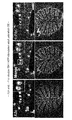
- FIG. 3 shows that a cell expressing a receptor discovered as a novel adenosine receptor and named A2c matches a cell expressing c-Fos upon ATP stimulation.
- FIG. 4A shows a scheme for characterization of the A2c receptor.
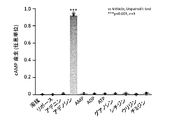
- FIG. 4B shows that the A2c receptor is activated adenosine specifically and induces cAMP production.
- FIG. 4C shows a comparison result between the effect of adenosine and the effect of ATP on cAMP production by A2c receptor activation.
- FIG. 5 shows that the surrounding genomic structure where the A2c receptor gene is present is conserved between species.
- FIG. 6 shows a phylogenetic tree by the neighborhood joining method of A2c receptor genes of 28 fish species and 2 amphibian species.
- fish refers to so-called fish, and particularly includes cartilaginous fish and teleost fish (striated fish).
- mammals include rodents such as mice and rats, and primates such as monkeys and humans.
- adenosine is a nucleoside composed of adenine and ribose.
- an adenosine receptor means a G protein-coupled receptor molecule for adenosine.
- Adenosine receptors are also called P1 receptors, and four subtypes of A1, A2A, A2B and A3 are known in humans.
- P2 receptors are receptors having extracellular nucleotides (ATP, ADP, UTP, UDP, etc.) as ligands, and are roughly divided into two families, P2X receptors and P2Y receptors. Is different.
- an effective amount means an amount suitable for use in a designated application, and an effective amount of an active ingredient can achieve the purpose to be achieved in the designated application.
- A2c receptor is a subtype of an adenosine receptor that is widely found in aquatic vertebrates (fish and amphibians) and exists between the fourth and fifth exons of the parp1 gene. It is a gene that exists in the intron in the direction opposite to the transcription direction of the parp1 gene. Since A2c receptors are found throughout lampreys, sharks and fish, and amphibians, they are considered to be adenosine receptors shared by fish and amphibians.
- the nucleotide sequence of the zebrafish A2c receptor cDNA is shown in SEQ ID NO: 1, and the amino acid sequence is shown in SEQ ID NO: 2.
- the A2c receptor includes a protein having the base sequence of SEQ ID NO: 1 or the amino acid sequence of SEQ ID NO: 2, and an ortholog thereof.
- the A2c receptor ortholog means an A2c receptor of another species corresponding to the A2c receptor having the amino acid sequence of SEQ ID NO: 2 encoded by the base sequence of zebrafish SEQ ID NO: 1. .
- the A2c receptor transcends the species in the region from Y82 to I350 considered to be important for binding to adenosine (this region corresponds to Y12 to I274 of the human A1 receptor: the amino acid sequence part shown in SEQ ID NO: 3). The amino acid sequence is widely conserved.
- the A2c receptor can be identified based on homology with the base sequence or amino acid sequence of the zebrafish A2c receptor.
- the A2c receptor was present in the intron existing between the fourth and fifth exons of the parp1 gene in the direction opposite to the transcription direction of the parp1 gene, and this synteny was conserved across species. Accordingly, the A2c receptor can be identified by searching for introns existing between the fourth and fifth exons of the parp1 gene based on homology with other A2c receptors.
- the amino acid sequence shown in SEQ ID NO: 3 for example, the amino acid sequence shown in SEQ ID NO: 3 and, for example, 80% or more, for example 90% or more, or for example, 95% or more of the sequence It can be identified by searching for a gene encoding a peptide having an amino acid sequence having similarity. Similarity is determined by aligning two sequences to be compared. The alignment can be performed using a method well known to those skilled in the art, for example, Clastal W. With Cluster W, the similarity of two aligned sequences can also be determined.
- an A2c receptor protein is provided.
- A2c receptor protein is a receptor commonly found in aquatic vertebrates.
- the amino acid sequence of the A2c receptor is widely conserved across species in the region from Y82 to I350 considered to be important for binding to adenosine (this region corresponds to Y12 to I274 of the human A1 receptor). Therefore, it is considered that any species of A2c receptor binds to adenosine and induces the attraction behavior of the species.
- a fragment (eg, extracellular region) of the A2c receptor protein is provided. Since the extracellular region of the A2c receptor protein does not have a transmembrane region, it can be a secreted protein. Such an extracellular domain of the A2c receptor protein can be used, for example, for immunization of animals.
- a nucleic acid encoding an A2c receptor protein or a fragment thereof is provided.
- the nucleic acid includes DNA and RNA, and the DNA includes genomic DNA and cDNA.
- Examples of RNA include messenger RNA.
- vertebrate cells particularly fish cells, avian cells, or mammalian cells, into which a foreign nucleic acid encoding an A2c receptor protein has been introduced.
- the cells may be olfactory neurons or non-olfactory neurons.
- a cell expressing A2c receptor protein is provided.
- Cells expressing the A2c receptor protein are isolated from olfactory epithelial tissue by proteolytic enzyme treatment and / or chelating agent treatment, and an antibody against the A2c receptor expressed on the cell surface is used, for example, using a cell sorter. Can be separated.
- Other cells that have expressed the A2c receptor protein include allogeneic cells, heterologous vertebrate cells, heterologous fish cells, avian cells, or mammalian cells that have expressed the A2c receptor protein.
- heterologous means that the A2c receptor and the cell species are different.
- the “same species” means that the A2c receptor matches the cell species.
- the cells may be olfactory neurons or non-olfactory neurons. These cells can be used, for example, to examine the function of the A2c receptor or as an immunogen of an antibody against the A2c receptor.
- an antibody that binds to the A2c receptor protein is provided.
- An antibody that binds to the A2c receptor protein can be obtained, for example, by solubilizing the A2c receptor protein and immunizing an animal.
- the antibody that binds to the A2c receptor protein may be obtained by immunizing an animal with cells in which the A2c receptor protein is forcibly expressed. From animals immunized with the A2c receptor, spleen cells can be obtained to obtain hybridomas that produce antibodies that bind to the A2c receptor protein and monoclonal antibodies that bind to the A2c receptor protein.
- a polyclonal antibody that binds to the A2c receptor protein binds to the A2c receptor protein
- a monoclonal antibody that binds to the A2c receptor protein a hybridoma that produces an antibody that binds to the A2c receptor protein
- a mammal immunized with the A2c receptor protein or Birds eg, chickens
- the antibody may be obtained as a chimeric antibody, a humanized antibody or a human antibody by a conventional method.
- the antibody that binds to the A2c receptor protein binds to the A2c receptor protein with a stronger affinity (eg, 10 times or more, 100 times or more, 1000 times or more) than other adenosine receptors.
- An antibody that binds to an A2c receptor protein in certain embodiments, does not substantially bind to other adenosine receptors.
- Such antibodies that bind to the A2c receptor protein can be easily obtained using techniques well known to those skilled in the art based on the affinity between the A2c receptor and other adenosine receptors.
- the antibody that binds to the A2c receptor protein in certain embodiments, binds to the extracellular region of the A2c receptor. These antibodies can be used for various applications such as affinity purification of A2c receptor, expression analysis of A2c receptor, staining of A2c receptor, Western blotting of A2c receptor, and the like.
- composition for use in activating the A2c receptor comprising adenosine.
- Activating A2c receptor means reacting with A2c receptor to activate A2c receptor signal. Activation of the A2c receptor signal can be confirmed by increased c-fos expression or increased cAMP production in A2c receptor-expressing cells.
- a composition comprising adenosine for use in enhancing fish appetite, attracting fish and / or activating fish feeding behavior is provided.
- Adenosine not only attracted fish, but also induced foraging behavior to those that could not function as foamy food. Therefore, adenosine can be used to increase appetite of fish and to activate (activate) prey behavior.
- the present invention provides a fish feed, particularly a non-fish meal feed (ie, a feed free of fish meal) containing adenosine.
- the present invention also provides a fishhook or simulated bait coating comprising adenosine.
- adenosine can be used to increase appetite of fish and activate (activate) prey behavior.
- adenosine is gradually used as the coating agent.
- a coating agent comprising a composition to be released is preferred.
- compositions for sustained release of adenosine include a composition containing adenosine in a sustained release material used as a preparation.
- sustained-release material pharmaceutical materials generally used for sustained-release preparations can be used.
- the present invention further provides a fishing hook or simulated bait coated with adenosine.
- the present invention still further provides a fishhook or simulated bait having a coating comprising adenosine.
- a method for activating an adenosine receptor in an aquatic vertebrate comprising contacting the aquatic vertebrate with adenosine.
- a method for controlling the behavior of an aquatic vertebrate comprising contacting the aquatic vertebrate with adenosine.
- a method for increasing appetite of an aquatic vertebrate (eg, fish), attracting fish, and / or activating foraging behavior wherein the aquatic vertebrate is contacted with adenosine. And a method is provided.
- a method for attracting an aquatic vertebrate comprising contacting aquatic vertebrates existing in water with adenosine or a composition containing adenosine from a direction to be attracted.
- a method of including is provided.
- a method of activating foraging behavior of aquatic vertebrates comprising providing aquatic vertebrates present in water with adenosine or a composition containing adenosine.
- a method is provided.
- an aquatic vertebrate for example, fish
- adenosine or a composition containing adenosine is added to a location where the aquatic vertebrates are to be collected; Capturing aquatic vertebrates collected in
- a method for controlling or avoiding harmful fish for example, sharks, specific alien species, etc.
- a method for moving the target harmful fish to a target location at least the target location is adenosine.
- a method is provided that includes releasing a composition containing adenosine.
- Example 1 Attracting behavior of fish by adenosine
- the properties of adenosine and adenosine triphosphate (ATP) as attractants were verified using alanine known as an attractant as a comparison target.
- ATP adenosine triphosphate
- Each 5-15 month old male zebrafish was acclimated in 600 mL reverse osmosis water supplemented with 0.03% synthetic sea salt (TetraMarin Salt Pro, Tetra) for at least 1 hour. After adaptation, 600 ⁇ L of water containing various concentrations of ATP adenosine or alanine (10 ⁇ 7 to 10 ⁇ 4 M) was added to the aquarium and the behavior of zebrafish was observed.
- 600 ⁇ L of water containing various concentrations of ATP adenosine or alanine (10 ⁇ 7 to 10 ⁇ 4 M) was added to the aquarium and the behavior of zebrafish was observed.
- the average mobility was determined as a ratio (%) of the moving distance of the zebrafish before and after the addition to the total length of the tank. The result was as shown in FIG.
- the concentration of alanine that causes statistically significant zebrafish attraction was 100 ⁇ M, whereas 1 ⁇ M was sufficient for adenosine.
- Attraction index ⁇ (stay time t 1 on the odorant side) ⁇ (stay time t 2 on the control side) ⁇ / observation time ⁇ where the observation time is t 1 + t 2 . ⁇
- Example 2 Identification of adenosine receptors
- the attraction behavior is considered to be based on the sense of smell of zebrafish, and in this example, which adenosine receptor activation is related to the attraction behavior of adenosine. Examined.
- olfactory epithelium OE
- olfactory epithelium OE
- the olfactory epithelium was fixed overnight at 4 ° C. with a phosphate buffer containing paraformaldehyde and 15% saturated picric acid aqueous solution, and cryoprotected with a phosphate buffer containing 30% sucrose.
- 10 ⁇ m pressure sections were treated with HistoVT One (Nacalai Tesque, 06380-05) and blocked with phosphate buffered saline containing 0.01% Triton X-100 and 5-10% goat serum.
- the cells were incubated overnight with a rabbit anti-pERK1 / 2 monoclonal antibody (1: 500, Cell Signaling Technology, 4370) and a rat anti-GFP monoclonal antibody (1: 1000, Nacalai Tesque, 04404). After washing, incubate with Cy3-labeled donkey anti-rabbit IgG antibody (1: 300, Jackson ImmunoResearch, 711-165-152) and Alexa488-labeled donkey anti-rabbit IgG antibody (1: 300, Molecular Probes, A11006) for 2-4 hours. did. Thereafter, the sections were observed with an erecting confocal laser scanning microscope (FV1000, Olympus).
- FV1000 erecting confocal laser scanning microscope
- PCR was carried out zebrafish of genomic DNA, olfactory epithelium cDNA, or a brain cDNA as a template and cloned into the vector.
- the cRNA probe was prepared as described in Yabuki, Y. et al. (2016) Nat. Neurosci. 19, 897-904.
- Antisense cRNA probes were synthesized using T7 or SP6 polymerase using digoxigenin labeled UTP or fluorescein labeled UTP.
- p2ry1 (XM_001343319), p2ry1-like (XM_692784), p2ry2.1 (XM_695238), p2ry2.2 (XM_001340029), p2ry2.3 (XM_017352075) ), P2ry4 (XM_005173268), p2ry5.1 (BC056587), p2ry5.2 (BC162776), p2ry6 (ENSDARG00000042595), p2ry8 (ENSDARG00000055560), p2ry10 (NM_001089527), p2ry11 (NM_001204454), p2ry12 (NM_002617) , P2ry14 (ENSDARG00000078833), enpp1 (NM_001030168), enpp2 (NM_200603), enpp4 (NM_001017887), enpp5 (NM_001030176), enpp
- Dual fluorescence in situ hybridization 10 ⁇ m thick tissue sections of zebrafish olfactory epithelium in response to adenosine were prepared and hybridized with digoxigenin-labeled or fluorescein-labeled cRNA probes.
- Fluorescein is detected with a biotinylated anti-fluorescein antibody (1: 500, Vector, BA-0601) and Alexa488-labeled streptavidin (1: 300, Molecular Probes, S11223), and digoxigenin is detected with an alkaline phosphatase-labeled anti-digoxigenin antibody (1: 500, Roche, 11093274910) and then stained with HNPP / Fast Red substrate (HNPP Fluorescent Detection Set, Roche, 11758888001) for detection.
- a biotinylated anti-fluorescein antibody 1: 500, Vector, BA-0601
- Alexa488-labeled streptavidin 1: 300, Molecular Probes, S11223
- digoxigenin is detected with an alkaline phosphatase-labeled anti-digoxigenin antibody (1: 500, Roche, 11093274910) and then stained with HNPP / Fast Red substrate (HNPP Fluorescent Detection Set, Roche
- Example 3 Cloning of a novel adenosine receptor
- a sequence having certain similarity to a known adenosine receptor was examined on the zebrafish genome, a new gene having similarity to A2aa, A2ab and A2b was examined. I found The discovered gene is an unknown gene that has not been annotated on the database, and the present inventors have named this new gene “A2c”.
- the cDNA sequence of the zebrafish A2c gene is shown in SEQ ID NO: 1.
- A2c When the expression of A2c was examined, the expression was observed in the olfactory epithelium of zebrafish.
- A2c mRNA was found to be expressed in a part of the outermost olfactory nerve around the median raphe of the olfactory epithelium, and this expression was expressed by c-fos signal induced by ATP stimulation as shown in FIG. And markedly colocalized.
- cells expressing A2c were positive for Golf and adenylyl cyclase III (ACIII).
- the A2c receptor which was discovered and named as a novel adenosine receptor, is a receptor that mediates the attraction of zebrafish to adenosine.
- the A2c receptor gene was searched in fish other than zebrafish, amphibians, reptiles, birds and mammals. As shown in FIG. 5, in the zebrafish, the A2c receptor gene was present in the intron of the other gene parp1 gene (between the fourth exon and the fifth exon) in the opposite direction. Therefore, as a result of searching genomes of medaka and other fish, a sequence highly homologous to the zebrafish A2c receptor gene was found in the intron of the parp1 gene in other fish and amphibians, and the synteny was common. It became clear that Therefore, the A2c gene is a reversely located gene that is present in the intron of the parp1 gene (between the fourth and fifth exons) and has homology with the zebrafish A2c receptor gene. It became clear.
- the A2c receptor gene was present in fish and amphibians, but was not present in any species of reptiles, birds and mammals. From this, it was considered that the A2c receptor is a receptor unique to aquatic vertebrates, and disappeared in the process of the organism rising to the land.
- adenosine receptor the structure of the complex of adenosine A1 receptor and adenosine has been clarified (Gluknhova A. et al. (2017) Cell 168: 657-877). According to this structural analysis result, it is clear that Y12, L88, F171, M177, W247, L250, L253, N254, Y271, and I274 of the A1 receptor are involved in binding to adenosine. It has been shown that these amino acids are also conserved in the receptor. As for these conserved amino acids, the zebrafish A2c receptor was confirmed and was highly conserved. In addition, these amino acid sequences were highly conserved in other fish and amphibians. From these results, it was considered that the newly discovered A2c receptor is a receptor that is conserved across species and responds to adenosine.
- Example 4 Characterization of A2c receptor
- characterization of a newly discovered A2c receptor was performed.
- zebrafish A2c receptor cDNA was cloned and forced to express in CHO-K1 cells, stimulated with adenosine, AMP, ADP or ATP after 24 hours, and cells were harvested after 30 minutes. . The supernatant obtained by sonicating cells and centrifuging was collected, and the purified cAMP concentration was measured by ELISA. As negative controls, cells stimulated with solvent, ribose, adenine, guanosine, cytidine, uridine or thymidine were used. The result was as shown in FIG. 4B.
- cAMP production occurred only when stimulated with adenosine, and cAMP production was not observed at all with AMP, ADP, and ATP.
- FIG. 4C shows the result of a more detailed analysis of adenosine and ATP at different concentrations.
- adenosine had an EC 50 of 3.15 ⁇ 10 ⁇ 5 M, but ATP did not activate the receptor in the measured concentration range.
- the A2c receptor is a receptor that selectively reacts with adenosine and activates downstream signals.
- the zebrafish also exhibits an attraction to ATP. Since ATP itself does not activate the A2c receptor, it was considered that adenosine generated by the degradation of ATP causes attraction behavior.
- Example 5 Attracting behavior of fish by adenosine
Landscapes
- Life Sciences & Earth Sciences (AREA)
- Health & Medical Sciences (AREA)
- Chemical & Material Sciences (AREA)
- Organic Chemistry (AREA)
- Engineering & Computer Science (AREA)
- General Health & Medical Sciences (AREA)
- Medicinal Chemistry (AREA)
- Zoology (AREA)
- Genetics & Genomics (AREA)
- Animal Husbandry (AREA)
- Polymers & Plastics (AREA)
- Molecular Biology (AREA)
- Environmental Sciences (AREA)
- Bioinformatics & Cheminformatics (AREA)
- Biochemistry (AREA)
- Pharmacology & Pharmacy (AREA)
- Public Health (AREA)
- Veterinary Medicine (AREA)
- Animal Behavior & Ethology (AREA)
- Immunology (AREA)
- Biotechnology (AREA)
- Biodiversity & Conservation Biology (AREA)
- Wood Science & Technology (AREA)
- Cell Biology (AREA)
- Biophysics (AREA)
- Nuclear Medicine, Radiotherapy & Molecular Imaging (AREA)
- General Chemical & Material Sciences (AREA)
- Proteomics, Peptides & Aminoacids (AREA)
- Marine Sciences & Fisheries (AREA)
- Biomedical Technology (AREA)
- Chemical Kinetics & Catalysis (AREA)
- Food Science & Technology (AREA)
- Birds (AREA)
- Toxicology (AREA)
- Microbiology (AREA)
- Gastroenterology & Hepatology (AREA)
- General Engineering & Computer Science (AREA)
- Insects & Arthropods (AREA)
- Epidemiology (AREA)
- Nutrition Science (AREA)
Abstract
本発明は、魚の誘引行動および策餌行動を誘発する物質としてアデノシンを、およびアデノシンの受容体として新規アデノシン受容体を提供する。
Description
本発明は、魚類の行動制御技術、特には魚の誘引行動および策餌行動を誘発する物質並びにこれに関与するアデノシン受容体に関する。
魚において嗅覚は、重要な感覚器官であり、策餌行動、求愛行動、危険回避行動など様々な重要な行動制御に関与している。これまでに食料源から放出されるヌクレオチドが様々な種の魚に感知されることが明らかにされている(非特許文献1)。
アデノシンは、神経伝達物質として神経細胞に発現するアデノシン受容体に結合し、神経細胞の信号伝達を制御する。アデノシン受容体としては、これまでのところP1受容体としてA1受容体、A2a受容体、A2b受容体およびA3受容体が発見されている。また、ヌクレオチドの受容体としては、P2受容体として、P2X受容体ファミリーとP2Y受容体ファミリーとが発見されている。しかし、いずれの受容体がヌクレオチドの検知に関与しているのかは不明であった。
魚の餌に関して、養魚用飼料の主原料は魚粉である。近年では、世界的な養殖漁業の増加と、魚粉の減産の影響から、魚粉の供給が追いつかず、魚粉の国際的な取引価格は高値で推移し、この状況は当面変わらないと予想されている。一方で、飼料への魚粉の配合比率を減少させると養魚の飼育成績は低下する。このような状況で、魚粉を代替できる、あるいは魚粉の使用量を減らした飼料の開発が求められている。
Carr, W. E. S. (1988). The Molecular Nature of Chemical Stimuli in the Aquatic Environment. (New York: Springer), pp. 3-27.
本発明は、魚の誘引行動および策餌行動を誘発する物質としてアデノシンを提供し、およびアデノシンの受容体として新規アデノシン受容体を提供する。
本発明者らは、アデノシンが魚の誘引行動および策餌行動を誘発することを見出した。本発明者らはまた、上記誘引行動および策餌行動の誘発には、新規のアデノシン受容体が関与していることを見出し、A2c受容体と命名した。本発明者らはさらに、A2c受容体は、魚類に広く保存され、両生類もA2c受容体遺伝子を有することが確認できること、および、A2c受容体のアデノシンの推定結合部位は種間で広く保存されていることを見出した。本発明はこれらの知見に基づく発明である。
すなわち、本発明によれば以下の発明が提供される。
(1)アデノシンを含む、A2c受容体を活性化させることに用いるための組成物。
(2)水中に添加して魚の行動を制御するための組成物であって、アデノシンを含む、組成物。
(3)魚の行動制御が、食欲を増進すること、魚を誘引すること、及び/又は、策餌行動を活発化させることである、上記(2)に記載の組成物。
(4)アデノシンまたは上記(1)~(3)に記載の組成物を含む、魚の飼料。
(5)無魚粉化飼料である、上記(4)記載の飼料。
(6)アデノシンまたは上記(1)~(3)に記載の組成物を含む、釣り針または疑似餌のコーティング剤。
(7)A2c受容体タンパク質。
(8)上記(7)に記載のタンパク質をコードする核酸。
(9)上記(7)に記載のタンパク質を発現する細胞。
(10)上記(7)に記載のタンパク質を認識する抗体。
(1)アデノシンを含む、A2c受容体を活性化させることに用いるための組成物。
(2)水中に添加して魚の行動を制御するための組成物であって、アデノシンを含む、組成物。
(3)魚の行動制御が、食欲を増進すること、魚を誘引すること、及び/又は、策餌行動を活発化させることである、上記(2)に記載の組成物。
(4)アデノシンまたは上記(1)~(3)に記載の組成物を含む、魚の飼料。
(5)無魚粉化飼料である、上記(4)記載の飼料。
(6)アデノシンまたは上記(1)~(3)に記載の組成物を含む、釣り針または疑似餌のコーティング剤。
(7)A2c受容体タンパク質。
(8)上記(7)に記載のタンパク質をコードする核酸。
(9)上記(7)に記載のタンパク質を発現する細胞。
(10)上記(7)に記載のタンパク質を認識する抗体。
本明細書では、「魚類」には、いわゆる魚であり、特に軟骨魚類、および硬骨魚類(条鰭魚類)が含まれる。本明細書では、「ほ乳類」には、マウスやラットなどの齧歯類、サルやヒトなどの霊長類が含まれる。
本明細書では、アデノシンとは、アデニンとリボースとからなるヌクレオシドである。
本明細書では、アデノシン受容体とは、アデノシンに対するGタンパク質共役型の受容体分子を意味する。アデノシン受容体は、P1受容体ともよばれ、ヒトではA1、A2A、A2BおよびA3の4種類のサブタイプが知られている。なお、P2受容体は、細胞外ヌクレオチド(ATP、ADP、UTP、UDPなど)をリガンドとする受容体であり、P2X受容体およびP2Y受容体の2つのファミリーに大別され、上記アデノシン受容体とは異なる。
本明細書では、「有効量」とは、指定された用途に用いるために適した量を意味し、有効量の有効成分は、指定された用途で達成すべき目的を達成することができる。
本明細書では、「A2c受容体」とは、水生脊椎動物(魚類及び両生類)において広く発見されるアデノシン受容体のサブタイプであり、parp1遺伝子の第4エキソンと第5エキソンとの間に存在するイントロンにparp1遺伝子の転写方向とは逆向きに存在する遺伝子である。ヤツメウナギ、サメおよび魚、さらには両生類にわたってA2c受容体が見出されることから、魚類や両生類で共有されるアデノシン受容体であると考えられる。ゼブラフィッシュのA2c受容体のcDNAの塩基配列は配列番号1に示され、アミノ酸配列は配列番号2に示されている。
A2c受容体は、配列番号1の塩基配列または配列番号2のアミノ酸配列を有するタンパク質、およびそのオーソログを含む。本明細書では、A2c受容体のオーソログとは、ゼブラフィッシュの配列番号1の塩基配列によりコードされる配列番号2のアミノ酸配列を有するA2c受容体に対応する他の種のA2c受容体を意味する。A2c受容体は、アデノシンとの結合に重要と考えられるY82からI350の領域(この領域はヒトA1受容体のY12からI274に対応する:配列番号3に示されるアミノ酸配列部分)において種を超えて広くアミノ酸配列が保存されている。従って、A2c受容体は、ゼブラフィッシュのA2c受容体の塩基配列またはアミノ酸配列との相同性を元に特定することができる。また、A2c受容体は、parp1遺伝子の第4エキソンと第5エキソンとの間に存在するイントロンにparp1遺伝子の転写方向とは逆向きに存在し、このシンテニーは種を超えて保存されていた。従って、A2c受容体は、parp1遺伝子の第4エキソンと第5エキソンとの間に存在するイントロンを他のA2c受容体との相同性に基づいて検索することで特定され得る。例えば、parp1遺伝子の第4エキソンと第5エキソンとの間に存在するイントロンについて、例えば、配列番号3に示されるアミノ酸配列と、例えば80%以上、例えば90%以上、または例えば95%以上の配列類似性を有するアミノ酸配列を有するペプチドをコードする遺伝子を検索することで特定され得る。類似性は、比較する2つの配列をアラインメントして決定される。アラインメントは、当業者に周知の方法、例えばClastal Wを用いて行うことができる。Clastal Wでは、アライメントした2つの配列の類似性も決定することができる。
本発明によれば、A2c受容体タンパク質が提供される。A2c受容体タンパク質は水生脊椎動物において共通して見出される受容体である。また、A2c受容体は、アデノシンとの結合に重要と考えられるY82からI350の領域(この領域はヒトA1受容体のY12からI274に対応する)において種を超えて広くアミノ酸配列が保存されていることから、いずれの種のA2c受容体もアデノシンと結合し、当該生物種の誘引行動を惹起するものと考えられる。本発明では、A2c受容体タンパク質の断片(例えば、細胞外領域)が提供される。A2c受容体タンパク質の細胞外領域は、膜貫通領域を有しないため、分泌型タンパク質であり得る。このようなA2c受容体タンパク質の細胞外ドメインは、例えば、動物への免疫等に用いることができる。
本発明によれば、A2c受容体タンパク質またはその断片をコードする核酸が提供される。核酸としては、DNAおよびRNAが挙げられ、DNAとしてはゲノムDNAおよびcDNAが挙げられる。RNAとしては、メッセンジャーRNAが挙げられる。
本発明によれば、A2c受容体タンパク質をコードする外来核酸が導入された脊椎動物細胞、特に魚類細胞、鳥類細胞、またはほ乳類細胞が提供される。細胞は、嗅覚神経細胞であってもよいし、非嗅覚神経細胞であってもよい。
本発明によれば、A2c受容体タンパク質を発現した細胞が提供される。A2c受容体タンパク質を発現した細胞は、嗅覚上皮組織からタンパク質分解酵素処理および/またはキレート剤処理により細胞を単離し、細胞表面に発現したA2c受容体に対する抗体を用いて、例えばセルソーターを用いて単離することができる。A2c受容体タンパク質を発現した細胞としては、その他には、A2c受容体タンパク質を発現した同種細胞、異種脊椎動物細胞、異種魚類細胞、鳥類細胞、またはほ乳類細胞が挙げられる。ここで、「異種」とは、A2c受容体と細胞の種が異なることを意味する。また、「同種」とは、A2c受容体と細胞の種が一致することを意味する。細胞は、嗅覚神経細胞であってもよいし、非嗅覚神経細胞であってもよい。これらの細胞は、例えば、A2c受容体の機能を調べるために、または、A2c受容体に対する抗体の免疫原として用いることができる。
本発明によれば、A2c受容体タンパク質に結合する抗体が提供される。A2c受容体タンパク質に結合する抗体は、例えば、A2c受容体タンパク質を可溶化して動物に免疫することにより得ることができる。あるいは、A2c受容体タンパク質に結合する抗体は、A2c受容体タンパク質を強制発現させた細胞を動物に免疫して得てもよい。A2c受容体で免疫された動物からは、脾臓細胞を入手して、A2c受容体タンパク質に結合する抗体を産生するハイブリドーマや、A2c受容体タンパク質に結合するモノクローナル抗体を得ることができる。従って、本発明では、A2c受容体タンパク質に結合するポリクローナル抗体、A2c受容体タンパク質に結合するモノクローナル抗体、A2c受容体タンパク質に結合する抗体を産生するハイブリドーマ、およびA2c受容体タンパク質で免疫した哺乳動物または鳥類(例えば、ニワトリ)が提供される。抗体は、常法により、キメラ抗体、ヒト化抗体またはヒト抗体として得てもよい。
A2c受容体タンパク質に結合する抗体は、ある態様では、他のアデノシン受容体に対するよりも強い親和性(例えば、10倍以上、100倍以上、1000倍以上)でA2c受容体タンパク質に結合する。A2c受容体タンパク質に結合する抗体は、ある態様では、他のアデノシン受容体には実質的に結合しない。このようなA2c受容体タンパク質に結合する抗体は、A2c受容体と他のアデノシン受容体との親和性に基づいて、当業者に周知の技術を用いて容易に得ることができる。A2c受容体タンパク質に結合する抗体は、ある態様では、A2c受容体の細胞外領域に結合する。これらの抗体は、例えば、A2c受容体のアフィニティー精製、A2c受容体の発現解析、A2c受容体の染色、A2c受容体のウェスタンブロット等の様々な用途に用いることができる。
本発明によれば、アデノシンを含む、A2c受容体を活性化させることに用いるための組成物が提供される。
A2c受容体を活性化させるとは、A2c受容体と反応して、A2c受容体シグナルを活性化することを意味する。A2c受容体シグナルの活性化は、A2c受容体発現細胞においてc-fosの発現の増加またはcAMPの産生の増加により確認することができる。
本発明によれば、アデノシンを含む、魚の食欲を増進すること、魚を誘引すること、及び/又は、魚の策餌行動を活発化させることに用いるための組成物が提供される。アデノシンは、魚を誘引するだけでなく、泡のような餌としての機能を果たし得ないものへの求餌行動を誘発した。従って、アデノシンは、魚の食欲増進や策餌行動の活性化(活発化)に用いることができる。
また、このアデノシンの特性を利用して、アデノシンを魚のための飼料に混ぜることにより、魚が好む飼料となる。従って、本発明では、アデノシンを含む、魚の飼料、特には無魚粉化飼料(すなわち、魚粉を含まない飼料)が提供される。本発明ではまた、アデノシンを含む、釣り針または疑似餌のコーティング剤が提供される。上述の通り、アデノシンは、魚の食欲増進や策餌行動の活性化(活発化)に用いることができるが、水中では早くに拡散される特徴を有することから、当該コーティング剤としては、アデノシンを徐放する組成物を含むコーティング剤が好ましい。アデノシンを徐放する組成物としては、例えば、製剤として利用される徐放性材料にアデノシンを含有した組成物が挙げられる。当該徐放性材料としては、一般に徐放性製剤に用いられる製剤材料を利用することができる。本発明ではさらに、アデノシンを塗布した釣り針または疑似餌が提供される。本発明ではさらにまた、アデノシンを含むコーティングを有する釣り針または疑似餌が提供される。
本発明によれば、水生脊椎動物(例えば、魚類)においてアデノシン受容体を活性化させる方法であって、前記水生脊椎動物とアデノシンとを接触させることを含む、方法が提供される。本発明によれば、水生脊椎動物(例えば、魚類)の行動を制御する方法であって、前記水生脊椎動物とアデノシンとを接触させることを含む、方法が提供される。本発明によれば、水生脊椎動物(例えば、魚類)の食欲を増進する、魚を誘引する、及び/又は、策餌行動を活発化させる方法であって、前記水生脊椎動物とアデノシンとを接触させることを含む、方法が提供される。
本発明によれば、水生脊椎動物(例えば、魚類)を誘引する方法であって、水中に存在する水生脊椎動物に対して、誘引したい方向からアデノシンまたはアデノシンを含有する組成物を接触させることを含む方法が提供される。本発明によれば、水生脊椎動物(例えば、魚類および両生類)の策餌行動を活発化させる方法であって、水中に存在する水生脊椎動物にアデノシンまたはアデノシンを含有する組成物を与えることを含む方法が提供される。
本発明によれば、水生脊椎動物(例えば、魚類)の捕獲方法または漁業方法であって、水生脊椎動物を集めたい箇所にアデノシンまたはアデノシンを含有する組成物を添加することと、その後、当該箇所に集まった水生脊椎動物を捕獲することとを含む、方法が提供される。
本発明によれば、害魚(例えば、サメ、特定外来種など)を駆除または忌避する方法であって、対象とする害魚を目的の箇所に移動させるために、少なくとも当該目的の箇所にアデノシンまたはアデノシンを含有する組成物を放出することを含む方法が提供される。
実施例1:アデノシンによる魚の誘引行動
本実施例では、誘引物質として知られるアラニンを比較対象として、アデノシン、およびアデノシン三リン酸(ATP)の誘引物質としての性質を検証した。
本実施例では、誘引物質として知られるアラニンを比較対象として、アデノシン、およびアデノシン三リン酸(ATP)の誘引物質としての性質を検証した。
5~15ヶ月齢の雄のゼブラフィッシュ1匹ずつを、0.03%の合成海塩(TetraMarin Salt Pro, Tetra)を添加した600mLの逆浸透水中で少なくとも1時間以上順応させた。順応後、ATPアデノシンまたはアラニンを様々な濃度(10-7~10-4M)で含む600μLの水を水槽に添加して、ゼブラフィッシュの行動を観察した。
まず、試験毎に9~11回の反復実験を行い、平均移動度を求めた。平均移動度は、タンクの全長に対する添加前と添加後のゼブラフィッシュの移動距離の割合(%)として求めた。結果は図1に示される通りであった。
図1に示されるように、統計学的に有意なゼブラフィッシュの誘引行動を引き起こすアラニン濃度は100μMであったのに対して、アデノシンでは1μMで十分であった。ATPでは、高濃度(100μM)で誘引行動が消失したのに対して、アデノシンではこの濃度でも誘引行動が維持された。
次に、以下の誘引指数を指標としてゼブラフィッシュの誘引行動を観察した。
誘引指数={(匂い物質側での滞在時間t1)-(対照側での滞在時間t2)}/観察時間{ここで、観察時間は、t1+t2である。}
誘引指数={(匂い物質側での滞在時間t1)-(対照側での滞在時間t2)}/観察時間{ここで、観察時間は、t1+t2である。}
結果は、図2に示される通りであった。図2に示されるように、統計学的に有意なゼブラフィッシュの誘引行動を引き起こすアラニン濃度は100μMであったのに対して、アデノシンでは1μMで十分であった。ATPでは、高濃度(100μM)で誘引行動が消失したのに対して、アデノシンではこの濃度でも誘引行動が維持された。
このことから、アデノシンに対してゼブラフィッシュは誘引行動を示すことが明らかとなった。
また、ゼブラフィッシュの行動をより詳細に観察すると、アデノシンを添加した水槽ではゼブラフィッシュは水中の泡を食べようとして、泡を追いかけては口に入れようとする様子が観察された。このことから、アデノシンは、ゼブラフィッシュの誘引行動を引き起こすと共に、策餌行動を誘発することが明らかとなった。
実施例2:アデノシン受容体の同定
上記誘引行動は、ゼブラフィッシュの嗅覚に基づくものであると考え、本実施例では、いずれのアデノシン受容体の活性化がアデノシンの上記誘引行動と関係するかを調べた。
上記誘引行動は、ゼブラフィッシュの嗅覚に基づくものであると考え、本実施例では、いずれのアデノシン受容体の活性化がアデノシンの上記誘引行動と関係するかを調べた。
免疫組織化学染色
免疫組織化学染色のために嗅覚上皮(OE)の薄層切片を作製した。嗅覚上皮を常法によりパラホルムアルデヒドと15%飽和ピクリン酸水溶液を含むリン酸緩衝液で4℃で一晩固定し、30%スクロースを含むリン酸緩衝液で凍結保護して、O.C.T.化合物(Sakura, 4583)に包埋した。10μm圧の切片をHistoVT One (Nacalai Tesque, 06380-05)で処理し、0.01% Triton X-100と5~10%のヤギ血清を含むリン酸緩衝生理食塩水でブロッキングした。その後、ウサギ抗pERK1/2モノクローナル抗体(1:500, Cell Signaling Technology, 4370)、およびラット抗GFPモノクローナル抗体(1:1000, Nacalai Tesque, 04404)で一晩インキュベートした。洗浄後、Cy3-標識ロバ抗ウサギIgG抗体(1:300, Jackson ImmunoResearch, 711-165-152)およびAlexa488-標識ロバ抗ウサギIgG抗体(1:300, Molecular Probes, A11006)で2~4時間インキュベートした。その後、正立共焦点レーザー走査顕微鏡(FV1000, Olympus)で切片を観察した。
免疫組織化学染色のために嗅覚上皮(OE)の薄層切片を作製した。嗅覚上皮を常法によりパラホルムアルデヒドと15%飽和ピクリン酸水溶液を含むリン酸緩衝液で4℃で一晩固定し、30%スクロースを含むリン酸緩衝液で凍結保護して、O.C.T.化合物(Sakura, 4583)に包埋した。10μm圧の切片をHistoVT One (Nacalai Tesque, 06380-05)で処理し、0.01% Triton X-100と5~10%のヤギ血清を含むリン酸緩衝生理食塩水でブロッキングした。その後、ウサギ抗pERK1/2モノクローナル抗体(1:500, Cell Signaling Technology, 4370)、およびラット抗GFPモノクローナル抗体(1:1000, Nacalai Tesque, 04404)で一晩インキュベートした。洗浄後、Cy3-標識ロバ抗ウサギIgG抗体(1:300, Jackson ImmunoResearch, 711-165-152)およびAlexa488-標識ロバ抗ウサギIgG抗体(1:300, Molecular Probes, A11006)で2~4時間インキュベートした。その後、正立共焦点レーザー走査顕微鏡(FV1000, Olympus)で切片を観察した。
In situハイブリダイゼーション
138種のOR(Niimura, Y., and Nei, M. (2005) Proc. Natl. Acad. Sci. USA. 102, 6039-6044)、6種のV1R(Saraiva, L. R., and Korsching, S. I. (2007) Genome Res. 17, 1448-1457)、1種のV2R(Alioto, T. S., and Ngai, J. (2006) BMC Genomics. 7, 309)、85種のTAAR(Hussain, A., Saraiva, L. R., and Korsching, S. I. (2009) Proc. Natl. Acad. Sci. USA 106, 4313-4318)、9種のP2X(Appelbaum, L. et al. (2007) Brain Res. 1174, 66-75)、15種のP2Y(下記登録番号)、9種のアデノシン受容体(Boehmler, W. et al. (2009) Gene Expr. Patterns 9, 144-151)、29種のエクト-ヌクレオチダーゼ(Rosemberg, D. B. et al. (2010) Mol. Biol. 155, 230-240およびYang, Y. et al. (2012) Front. Immunol. 3, 314)、Golf(Gnal)およびACIII(Adcy3b)のコード領域(それぞれ0.5~1.5kb)について、ゼブラフィッシュのゲノムDNA、嗅覚上皮cDNA、または脳cDNAを鋳型としてPCRを行い、ベクターにクローニングした。cRNAプローブは、Yabuki, Y. et al. (2016) Nat. Neurosci. 19, 897-904に記載の通り調製した。また、アンチセンスcRNAプローブは、ジゴキシゲニン標識UTPまたはフルオレセイン標識UTPを用いてT7またはSP6ポリメラーゼを用いて合成した。なお、遺伝子とそのGenbank登録番号との関係は以下の通りであった:p2ry1 (XM_001343319)、p2ry1-like (XM_692784)、p2ry2.1 (XM_695238)、p2ry2.2 (XM_001340029)、p2ry2.3 (XM_017352075)、p2ry4(XM_005173268)、p2ry5.1 (BC056587)、p2ry5.2 (BC162776)、p2ry6 (ENSDARG00000042595)、p2ry8 (ENSDARG00000055560)、p2ry10 (NM_001089527)、p2ry11 (NM_001204454)、p2ry12 (NM_001308557)、pp2ry13 (XM_002664517)、p2ry14 (ENSDARG00000078833)、enpp1(NM_001030168)、enpp2 (NM_200603)、enpp4 (NM_001017887)、enpp5 (NM_001030176)、enpp6 (NM_001013527)、enpp7.1 (NM_001256805)、enpp7.2 (NM_001328040)、zgc:153896-001 (NM_001045194)、CD73 (NM_200932)、acp1 (NM_001014302)、acp2 (NM_001013337)、acp5a (NM_214773)、acp5b (NM_001002452)、acp6 (NM_001110380)、papl (NM_001099250)。
138種のOR(Niimura, Y., and Nei, M. (2005) Proc. Natl. Acad. Sci. USA. 102, 6039-6044)、6種のV1R(Saraiva, L. R., and Korsching, S. I. (2007) Genome Res. 17, 1448-1457)、1種のV2R(Alioto, T. S., and Ngai, J. (2006) BMC Genomics. 7, 309)、85種のTAAR(Hussain, A., Saraiva, L. R., and Korsching, S. I. (2009) Proc. Natl. Acad. Sci. USA 106, 4313-4318)、9種のP2X(Appelbaum, L. et al. (2007) Brain Res. 1174, 66-75)、15種のP2Y(下記登録番号)、9種のアデノシン受容体(Boehmler, W. et al. (2009) Gene Expr. Patterns 9, 144-151)、29種のエクト-ヌクレオチダーゼ(Rosemberg, D. B. et al. (2010) Mol. Biol. 155, 230-240およびYang, Y. et al. (2012) Front. Immunol. 3, 314)、Golf(Gnal)およびACIII(Adcy3b)のコード領域(それぞれ0.5~1.5kb)について、ゼブラフィッシュのゲノムDNA、嗅覚上皮cDNA、または脳cDNAを鋳型としてPCRを行い、ベクターにクローニングした。cRNAプローブは、Yabuki, Y. et al. (2016) Nat. Neurosci. 19, 897-904に記載の通り調製した。また、アンチセンスcRNAプローブは、ジゴキシゲニン標識UTPまたはフルオレセイン標識UTPを用いてT7またはSP6ポリメラーゼを用いて合成した。なお、遺伝子とそのGenbank登録番号との関係は以下の通りであった:p2ry1 (XM_001343319)、p2ry1-like (XM_692784)、p2ry2.1 (XM_695238)、p2ry2.2 (XM_001340029)、p2ry2.3 (XM_017352075)、p2ry4(XM_005173268)、p2ry5.1 (BC056587)、p2ry5.2 (BC162776)、p2ry6 (ENSDARG00000042595)、p2ry8 (ENSDARG00000055560)、p2ry10 (NM_001089527)、p2ry11 (NM_001204454)、p2ry12 (NM_001308557)、pp2ry13 (XM_002664517)、p2ry14 (ENSDARG00000078833)、enpp1(NM_001030168)、enpp2 (NM_200603)、enpp4 (NM_001017887)、enpp5 (NM_001030176)、enpp6 (NM_001013527)、enpp7.1 (NM_001256805)、enpp7.2 (NM_001328040)、zgc:153896-001 (NM_001045194)、CD73 (NM_200932)、acp1 (NM_001014302)、acp2 (NM_001013337)、acp5a (NM_214773)、acp5b (NM_001002452)、acp6 (NM_001110380)、papl (NM_001099250)。
二重蛍光in situハイブリダイゼーション
アデノシンに応答したゼブラフィッシュの嗅覚上皮の10μm厚の組織切片を作製し、ジゴキシゲニン標識またはフルオレセイン標識cRNAプローブとハイブリダイゼーションさせた。フルオレセインは、ビオチン化抗フルオレセイン抗体(1:500, Vector, BA-0601)とAlexa488標識ストレプトアビジン(1:300, Molecular Probes, S11223)で検出し、ジゴキシゲニンは、アルカリフォスファターゼ標識抗ジゴキシゲニン抗体(1:500, Roche, 11093274910)と反応させた後にHNPP/Fast Red substrate (HNPP Fluorescent Detection Set, Roche, 11758888001)で染色して検出した。
アデノシンに応答したゼブラフィッシュの嗅覚上皮の10μm厚の組織切片を作製し、ジゴキシゲニン標識またはフルオレセイン標識cRNAプローブとハイブリダイゼーションさせた。フルオレセインは、ビオチン化抗フルオレセイン抗体(1:500, Vector, BA-0601)とAlexa488標識ストレプトアビジン(1:300, Molecular Probes, S11223)で検出し、ジゴキシゲニンは、アルカリフォスファターゼ標識抗ジゴキシゲニン抗体(1:500, Roche, 11093274910)と反応させた後にHNPP/Fast Red substrate (HNPP Fluorescent Detection Set, Roche, 11758888001)で染色して検出した。
その結果、いずれの既知の嗅覚受容体シグナルも、アデノシンで活性化されたc-fos陽性細胞と共染色されることは無かった。また、8種のアデノシン受容体全てを同様に観察したところ、いずれもc-fos陽性細胞と共染色されることは無かった。このことから、アデノシンは、確認した全ての嗅覚受容体およびアデノシン受容体を活性化するものではないことが明らかになった。
実施例3:新規アデノシン受容体のクローニング
次に、ゼブラフィッシュゲノム上で既知のアデノシン受容体と一定の類似性を有する配列を調べていたところ、A2aa、A2abおよびA2bと類似性を有する、新しい遺伝子を発見した。発見された遺伝子は、データベース上ではアノテーションされていない未知の遺伝子であり、本発明者らはこの新規遺伝子を「A2c」と命名した。ゼブラフィッシュのA2c遺伝子のcDNA配列は、配列番号1に示される。
次に、ゼブラフィッシュゲノム上で既知のアデノシン受容体と一定の類似性を有する配列を調べていたところ、A2aa、A2abおよびA2bと類似性を有する、新しい遺伝子を発見した。発見された遺伝子は、データベース上ではアノテーションされていない未知の遺伝子であり、本発明者らはこの新規遺伝子を「A2c」と命名した。ゼブラフィッシュのA2c遺伝子のcDNA配列は、配列番号1に示される。
A2cの発現を調べたところ、ゼブラフィッシュの嗅覚上皮で発現が観察された。特にA2cのmRNAは、嗅覚上皮の正中縫線の周辺の最表層の嗅覚神経の一部に発現を認め、この発現は、図3に示されるように、ATP刺激により誘導されたc-fosシグナルと顕著に共局在を示した。また、A2cの発現細胞は、GolfおよびアデニリルシクラーゼIII(ACIII)陽性であった。
これらの結果から、新規アデノシン受容体として発見され、命名されたA2c受容体がアデノシンに対するゼブラフィッシュの誘引行動の媒介する受容体であると考えられた。
A2c受容体遺伝子をゼブラフィッシュ以外の魚類、両生類、は虫類、鳥類およびほ乳類で検索した。A2c受容体遺伝子は、図5に示されるように、ゼブラフィッシュでは、他の遺伝子parp1遺伝子のイントロン中(第4エキソンと第5エキソンとの間)に逆向きに存在していた。そこで、メダカその他の魚類のゲノムを検索したところ、他の魚類および両生類においても、parp1遺伝子のイントロン中にゼブラフィッシュのA2c受容体遺伝子と相同性の高い配列が見出され、シンテニーが共通していることが明らかになった。このことから、parp1遺伝子のイントロン中(第4エキソンと第5エキソンとの間)に存在し、ゼブラフィッシュのA2c受容体遺伝子と相同性を有する、逆向きに配置された遺伝子がA2c遺伝子であることが明らかとなった。
また、A2c受容体遺伝子は、魚類および両生類には存在する一方で、は虫類、鳥類およびほ乳類のいずれの種にも存在しなかった。このことから、A2c受容体は、水生脊椎動物特有の受容体であり、生物が陸に上がる過程で消失したものと考えられた。
なお、アデノシン受容体に関しては、アデノシンA1受容体とアデノシンとの複合体の構造が明らかとなっている(Gluknhova A. et al. (2017) Cell 168: 657-877)。この構造解析結果によると、A1受容体のY12、L88、F171、M177、W247、L250、L253、N254、Y271、およびI274がアデノシンとの結合に関与していることが明らかとなっており、A2A受容体でもこれらのアミノ酸は保存されていることが示されている。これらの保存されているアミノ酸について、ゼブラフィッシュA2c受容体を確認したところ、高度に保存されていた。また、他の魚類および両生類においてもこれらのアミノ酸配列は高度に保存されていた。これらのことから、新しく発見されたA2c受容体は、種を超えて保存され、アデノシンに応答する受容体であると考えられた。
実施例4:A2c受容体の特性解析
本実施例では、新しく発見されたA2c受容体の特性解析を行った。
本実施例では、新しく発見されたA2c受容体の特性解析を行った。
図4Aに示されるように、ゼブラフィッシュのA2c受容体のcDNAをクローニングし、CHO-K1細胞に強制発現させ、24時間後にアデノシン、AMP、ADPまたはATPにより刺激し、30分後に細胞を回収した。細胞を超音波破砕して遠心分離した上清を回収し、精製されたcAMP濃度をELISA法により測定した。陰性対照としては、溶媒、リボース、アデニン、グアノシン、シチジン、ウリジンまたはチミジンで刺激した細胞を用いた。結果は図4Bに示される通りであった。
図4Bに示されるように、アデノシンで刺激した場合のみcAMPの産生が生じ、AMP、ADPおよびATPでは全くcAMP産生が見られなかった。
また、図4Cでは、アデノシンとATPとを濃度をそれぞれ変えてより詳細に解析した結果を示す。図4Cに示されるように、アデノシンは、3.15×10⁻⁵MのEC50を有していたが、ATPは測定した濃度域では受容体を活性化することがなかった。
このことから、A2c受容体は、アデノシンに選択的に反応して下流シグナルを活性化させる受容体であることが明らかとなった。
図1および2によれば、ゼブラフィッシュは、ATPに対しても誘引行動を示す。ATPそのものはA2c受容体を活性化しないため、ATPが分解されて生じるアデノシンが誘引行動の原因になっていると考えられた。
上記実施例から魚および両生類がA2c受容体を共通して有することが明らかになり、また、A2c受容体は、アデノシンによる魚の誘引行動の原因となっていることが明らかとなった。このことから魚および両生類では広くA2c受容体を介してアデノシンへの誘引行動が生じることが明らかになった。
実施例5:アデノシンによる魚の誘引行動
本実施例では、魚としてブリを用いてアデノシンへの誘引行動が生じることを確認した。
本実施例では、魚としてブリを用いてアデノシンへの誘引行動が生じることを確認した。
生後5ヶ月程度、体長20cm程度のぶりを直径1.5mの水槽で飼育した。水槽には、排泄物等が溜まらないように、一方向に流れる水流を設けた。ブリが水流の方向に沿って遊泳している際に、約1gのアデノシンを水槽に添加した。その結果、ブリは水流に逆らってアデノシン添加箇所に集まった。このように、アデノシンは魚に誘引行動を引き起こすことが確認された。
なお、実施例3で明らかとなった魚類および両生類のA2c受容体の一部についての近隣接合法による系統樹を図6に示す。A2c受容体のアミノ酸配列は種を超えて高度に保存されている。
なお、実施例3で明らかとなった魚類および両生類のA2c受容体の一部についての近隣接合法による系統樹を図6に示す。A2c受容体のアミノ酸配列は種を超えて高度に保存されている。
Claims (10)
- アデノシンを含む、A2c受容体を活性化させることに用いるための組成物。
- 水中に添加して魚の行動を制御することに用いるための組成物であって、アデノシンを含む、組成物。
- 魚の行動制御が、食欲を増進すること、魚を誘引すること、及び/又は、策餌行動を活発化させることである、請求項2に記載の組成物。
- アデノシンまたは請求項1~3に記載の組成物を含む、魚の飼料。
- 無魚粉化飼料である、請求項4に記載の飼料。
- アデノシンまたは請求項1~3に記載の組成物を含む、釣り針または疑似餌のコーティング剤。
- A2c受容体タンパク質。
- 請求項7に記載のタンパク質をコードする核酸。
- 請求項7に記載のタンパク質を発現する細胞。
- 請求項7に記載のタンパク質を認識する抗体。
Priority Applications (1)
| Application Number | Priority Date | Filing Date | Title |
|---|---|---|---|
| JP2019511317A JPWO2018186487A1 (ja) | 2017-04-06 | 2018-04-06 | 魚類の行動制御技術 |
Applications Claiming Priority (2)
| Application Number | Priority Date | Filing Date | Title |
|---|---|---|---|
| JP2017-075796 | 2017-04-06 | ||
| JP2017075796 | 2017-04-06 |
Publications (1)
| Publication Number | Publication Date |
|---|---|
| WO2018186487A1 true WO2018186487A1 (ja) | 2018-10-11 |
Family
ID=63712494
Family Applications (1)
| Application Number | Title | Priority Date | Filing Date |
|---|---|---|---|
| PCT/JP2018/014712 Ceased WO2018186487A1 (ja) | 2017-04-06 | 2018-04-06 | 魚類の行動制御技術 |
Country Status (2)
| Country | Link |
|---|---|
| JP (1) | JPWO2018186487A1 (ja) |
| WO (1) | WO2018186487A1 (ja) |
Citations (1)
| Publication number | Priority date | Publication date | Assignee | Title |
|---|---|---|---|---|
| JPH03297340A (ja) * | 1990-04-13 | 1991-12-27 | Nippon Shokubai Co Ltd | 集魚剤組成物 |
-
2018
- 2018-04-06 JP JP2019511317A patent/JPWO2018186487A1/ja active Pending
- 2018-04-06 WO PCT/JP2018/014712 patent/WO2018186487A1/ja not_active Ceased
Patent Citations (1)
| Publication number | Priority date | Publication date | Assignee | Title |
|---|---|---|---|---|
| JPH03297340A (ja) * | 1990-04-13 | 1991-12-27 | Nippon Shokubai Co Ltd | 集魚剤組成物 |
Non-Patent Citations (5)
| Title |
|---|
| DATABASE DATABASE NCBI [o] 31 October 2006 (2006-10-31), HENDERSON, C . ET AL.: "Novel protein similar to vertebrate adenosine A3 receptor (ADORA3", Database accession no. Q5RHQ9 * |
| HARADA, KATSUHIKO ET AL.: "Application of Logistic Curve as an Index of the Attractive Effect of Food for Oriental Weatherfish", NIPPON SUISAN GAKKAISHI, vol. 48, no. 1, 1982, pages 21 - 29, ISSN: 0021-5392 * |
| HARADA, KATSUHIKO: "Feeding Attraction Activities of Nucleic Acid-Related Compounds for Abalone, Oriental Weatherfish and Yellowtail", NIPPON SUISAN GAKKAISHI, vol. 52, no. 11, 1986, pages 1961 - 1968, ISSN: 0021-5392 * |
| HARADA, KATSUHIKO: "The Attractive Effect of Food Based on the Behavioral Responses of Juvenile Yellowtail Seriola quinqueradiata", NIPPON SUISAN GAKKAISHI, vol. 48, no. 8, 1982, pages 1047 - 1054, ISSN: 0021-5392 * |
| HARADA, KATSUHIKO: "The Attractive Effect of Seaweeds Based on the Behavioral Responses of Young Herbivorous Abalone Haliotis discus", NIPPON SUISAN GAKKAISHI, vol. 48, no. 5, 1982, pages 617 - 621, ISSN: 0021-5392 * |
Also Published As
| Publication number | Publication date |
|---|---|
| JPWO2018186487A1 (ja) | 2020-05-14 |
Similar Documents
| Publication | Publication Date | Title |
|---|---|---|
| JP2000157286A (ja) | アミノ酸輸送蛋白及びその遺伝子 | |
| Yeh et al. | Using CRISPR/Cas9-mediated gene editing to further explore growth and trade-off effects in myostatin-mutated F4 medaka (Oryzias latipes) | |
| JP2009168820A (ja) | 遺伝子破壊、組成物、およびそれに関連する方法 | |
| JP2006136323A (ja) | 新規なポリペプチド及びそれをコードする核酸 | |
| JP2009148278A (ja) | Gタンパク質共役型レセプターChemR23の天然リガンドとその使用 | |
| De Mendonça et al. | A functionally conserved member of the FTZ‐F1 nuclear receptor family from Schistosoma mansoni | |
| JP2008517625A (ja) | 分泌されたタンパク質をコードする遺伝子の破壊、それに関連する組成物および方法 | |
| MXPA05005385A (es) | Composicion y metodo para tratar lupus nefritico. | |
| CN101835799A (zh) | 超敏反应调节剂 | |
| Offermanns | Mammalian G-protein function in vivo: new insights through altered gene expression | |
| JPWO2018186487A1 (ja) | 魚類の行動制御技術 | |
| JP2009516514A (ja) | 新規遺伝子破壊、それらに関する組成物および方法 | |
| JP2010518361A (ja) | 新規の遺伝子破壊、組成物、およびそれに関連する方法 | |
| WO2006068326A1 (ja) | 新規ポリペプチドおよびその用途 | |
| JP2008173122A (ja) | 新規蛋白質およびその用途 | |
| US20100329987A1 (en) | Uses of Sperm Membrane Protein OBF | |
| JP2003245076A (ja) | 新規タンパク質およびそのdna | |
| WO2006118328A1 (ja) | 脱顆粒抑制剤 | |
| Wang et al. | Subtractive phage display technology identifies zebrafish marcksb that is required for gastrulation | |
| JP4169651B2 (ja) | 新規蛋白質およびその用途 | |
| AU2006248304B2 (en) | Method for amelioration of disease condition induced by mood disorder | |
| RU2822370C2 (ru) | Гуманизированные мыши с нокином sirpa-il15 и способы их использования | |
| JP2006288387A (ja) | 気分障害又は関連障害による疾患症状を改善させる方法 | |
| Theeranukul | Pax2a is expressed in oocytes and is responsible for early development and oogenesis in zebrafish | |
| Wilson | The role of RDC1/CXCR7b in the migration of the zebrafish posterior lateral line |
Legal Events
| Date | Code | Title | Description |
|---|---|---|---|
| 121 | Ep: the epo has been informed by wipo that ep was designated in this application |
Ref document number: 18781454 Country of ref document: EP Kind code of ref document: A1 |
|
| ENP | Entry into the national phase |
Ref document number: 2019511317 Country of ref document: JP Kind code of ref document: A |
|
| NENP | Non-entry into the national phase |
Ref country code: DE |
|
| 122 | Ep: pct application non-entry in european phase |
Ref document number: 18781454 Country of ref document: EP Kind code of ref document: A1 |