WO2018182102A1 - 담지된 금속셀레나이드 촉매, 이의 제조방법 및 이를 이용한 우레탄 제조방법 - Google Patents
담지된 금속셀레나이드 촉매, 이의 제조방법 및 이를 이용한 우레탄 제조방법 Download PDFInfo
- Publication number
- WO2018182102A1 WO2018182102A1 PCT/KR2017/008285 KR2017008285W WO2018182102A1 WO 2018182102 A1 WO2018182102 A1 WO 2018182102A1 KR 2017008285 W KR2017008285 W KR 2017008285W WO 2018182102 A1 WO2018182102 A1 WO 2018182102A1
- Authority
- WO
- WIPO (PCT)
- Prior art keywords
- mse
- supported catalyst
- metal selenide
- metal
- urethane
- Prior art date
- Legal status (The legal status is an assumption and is not a legal conclusion. Google has not performed a legal analysis and makes no representation as to the accuracy of the status listed.)
- Ceased
Links
Images





Classifications
-
- B—PERFORMING OPERATIONS; TRANSPORTING
- B01—PHYSICAL OR CHEMICAL PROCESSES OR APPARATUS IN GENERAL
- B01J—CHEMICAL OR PHYSICAL PROCESSES, e.g. CATALYSIS OR COLLOID CHEMISTRY; THEIR RELEVANT APPARATUS
- B01J27/00—Catalysts comprising the elements or compounds of halogens, sulfur, selenium, tellurium, phosphorus or nitrogen; Catalysts comprising carbon compounds
- B01J27/02—Sulfur, selenium or tellurium; Compounds thereof
- B01J27/057—Selenium or tellurium; Compounds thereof
- B01J27/0573—Selenium; Compounds thereof
-
- B—PERFORMING OPERATIONS; TRANSPORTING
- B01—PHYSICAL OR CHEMICAL PROCESSES OR APPARATUS IN GENERAL
- B01J—CHEMICAL OR PHYSICAL PROCESSES, e.g. CATALYSIS OR COLLOID CHEMISTRY; THEIR RELEVANT APPARATUS
- B01J21/00—Catalysts comprising the elements, oxides, or hydroxides of magnesium, boron, aluminium, carbon, silicon, titanium, zirconium, or hafnium
- B01J21/02—Boron or aluminium; Oxides or hydroxides thereof
- B01J21/04—Alumina
-
- B—PERFORMING OPERATIONS; TRANSPORTING
- B01—PHYSICAL OR CHEMICAL PROCESSES OR APPARATUS IN GENERAL
- B01J—CHEMICAL OR PHYSICAL PROCESSES, e.g. CATALYSIS OR COLLOID CHEMISTRY; THEIR RELEVANT APPARATUS
- B01J23/00—Catalysts comprising metals or metal oxides or hydroxides, not provided for in group B01J21/00
- B01J23/16—Catalysts comprising metals or metal oxides or hydroxides, not provided for in group B01J21/00 of arsenic, antimony, bismuth, vanadium, niobium, tantalum, polonium, chromium, molybdenum, tungsten, manganese, technetium or rhenium
-
- B—PERFORMING OPERATIONS; TRANSPORTING
- B01—PHYSICAL OR CHEMICAL PROCESSES OR APPARATUS IN GENERAL
- B01J—CHEMICAL OR PHYSICAL PROCESSES, e.g. CATALYSIS OR COLLOID CHEMISTRY; THEIR RELEVANT APPARATUS
- B01J23/00—Catalysts comprising metals or metal oxides or hydroxides, not provided for in group B01J21/00
- B01J23/70—Catalysts comprising metals or metal oxides or hydroxides, not provided for in group B01J21/00 of the iron group metals or copper
-
- B—PERFORMING OPERATIONS; TRANSPORTING
- B01—PHYSICAL OR CHEMICAL PROCESSES OR APPARATUS IN GENERAL
- B01J—CHEMICAL OR PHYSICAL PROCESSES, e.g. CATALYSIS OR COLLOID CHEMISTRY; THEIR RELEVANT APPARATUS
- B01J27/00—Catalysts comprising the elements or compounds of halogens, sulfur, selenium, tellurium, phosphorus or nitrogen; Catalysts comprising carbon compounds
- B01J27/02—Sulfur, selenium or tellurium; Compounds thereof
- B01J27/057—Selenium or tellurium; Compounds thereof
-
- B—PERFORMING OPERATIONS; TRANSPORTING
- B01—PHYSICAL OR CHEMICAL PROCESSES OR APPARATUS IN GENERAL
- B01J—CHEMICAL OR PHYSICAL PROCESSES, e.g. CATALYSIS OR COLLOID CHEMISTRY; THEIR RELEVANT APPARATUS
- B01J37/00—Processes, in general, for preparing catalysts; Processes, in general, for activation of catalysts
- B01J37/02—Impregnation, coating or precipitation
-
- B—PERFORMING OPERATIONS; TRANSPORTING
- B01—PHYSICAL OR CHEMICAL PROCESSES OR APPARATUS IN GENERAL
- B01J—CHEMICAL OR PHYSICAL PROCESSES, e.g. CATALYSIS OR COLLOID CHEMISTRY; THEIR RELEVANT APPARATUS
- B01J37/00—Processes, in general, for preparing catalysts; Processes, in general, for activation of catalysts
- B01J37/02—Impregnation, coating or precipitation
- B01J37/0201—Impregnation
-
- C—CHEMISTRY; METALLURGY
- C07—ORGANIC CHEMISTRY
- C07C—ACYCLIC OR CARBOCYCLIC COMPOUNDS
- C07C269/00—Preparation of derivatives of carbamic acid, i.e. compounds containing any of the groups, the nitrogen atom not being part of nitro or nitroso groups
- C07C269/08—Separation; Purification; Stabilisation; Use of additives
Definitions
- the present invention relates to a supported catalyst supported by amide, a method for preparing the same, and a method for preparing urethane using the same.
- Polyurethane resin is a plastic with a three-dimensional structure. It is a plastic with high tensile strength and resistance to chemicals, and has excellent chemical durability. It is used in various industrial fields such as electrical insulators, structural materials, and open insulation, and has good elasticity. It is also widely used as a substitute. Urethane is used as a starting material for various materials such as synthetic fibers and synthetic rubber as a preparation material for producing polyurethane. Furthermore, urethane itself is used in various ways as a material for manufacturing various chemicals such as pesticides, herbicides, insecticides, and pharmaceuticals.
- the phosgene manufacturing method is used to manufacture urethane.
- the phosgene manufacturing method is a method of producing urethane as a final product through a step of reacting an amine compound with phosgene to prepare an isocyanate.
- the phosgene manufacturing method has to use phosgene, which is a highly toxic substance, and thus it is not easy to handle the reactants, and there is a problem that the reaction is not completed in one step one vessel. There was also a problem of poor yield.
- Reference 1 Japanese Patent No. 1994-062544 (hereinafter referred to as Reference 1) has disclosed a 2-step process by a urethane synthesis method using no phosgene, which is a highly toxic substance.
- an aromatic first amine, an aromatic nitro compound, and carbon monoxide are added to a catalyst under a solvent, followed by reaction to prepare a substituted urea, and after the first step, the substituted urea is removed from the reactant of the first step.
- a method of preparing a urethane from an amine compound including a second step of separating and recovering and then reacting an organic compound containing a hydroxyl group.
- the 2-step process is complicated in the reaction step, it is difficult to proceed the reaction in one container at once, there was a process cumbersome to neutralize the hydrogen chloride produced after the reaction with a basic material.
- U.S. Patent Publication No. 2009-0275771 discloses the oxidation of carbohydrates of amino compounds under a mixed gas of carbon monoxide and oxygen to improve the complexity of the process step in the 2-step process. It has been disclosed a method of producing urethane by nilation. However, the mixed gas of carbon monoxide and oxygen has a difficulty in controlling the partial pressure, and there is a disadvantage that an explosion of an oxidant is caused under high temperature oxidation reaction conditions.
- Patent Document 1 Japanese Patent No. 1994-062544
- Patent Document 2 United States Patent Publication No. 2009-0275771
- the present invention has been made in an effort to provide a supported catalyst having a metal selenide supported thereon, a method of preparing the supported catalyst, and a method of preparing a urethane using the supported catalyst, which enables the production of urethane through a simple process.
- urethane when using a metal selenide-supported catalyst, urethane can be prepared directly in one step by using nitro compound, carbon monoxide, and alcohol compound as a reaction, and the reaction is simple and Since it can proceed in a container, urethane can be manufactured economically in terms of time and cost.
- the metal is divalent iron (Fe (II)), trivalent iron (Fe (III)), mono-copper (Cu (I)), bi-copper (Cu (II) )), Nickel (Ni), chromium (Cr), zinc (Zn) and manganese (Mn) may be any one selected from.
- the solid support is alumina (Al 2 O 3 ), ceria (CeO 2 ), activated carbon (AC), montmorillonite (Montmorillonite), silica (SiO 2 ), magnesium oxide (MgO ), Zeolite (Zeolite) and manaseite (Hydrotalcite) may be any one or more selected from.
- the metal selenide (MSe 2 ) may be contained from 2wt% to 10wt%.
- an embodiment of the present invention comprises the steps of preparing a first solution by mixing a metal compound, selenium dioxide (SeO 2 ) and a stabilizer; Injecting a solid carrier into the first solution; Injecting carbon monoxide into the first solution into which the solid carrier is introduced; And metal selenide (MSe 2 ) adsorbed on the surface of the solid support to carry and react the solid support and the carbon monoxide added to the first solution. (MSe 2 ) It is possible to provide a supported catalyst production method.
- the metal compound is a metal halide compound (MX a ), the metal halide compound (MX a ), iron chloride (II) (FeCl 2 ), iron chloride (III) (FeCl 3 ), It may be one of nickel chloride (NiCl 2 ), chromium chloride (CrCl 3 ) and manganese chloride (MnCl 2 ).
- the metal halide compound (MX a ) is any one of iron bromide (FeBr 3 ), nickel bromide (NiBr 2 ), chromium bromide (CrBr 3 ) and manganese bromide (MnBr 2 ) It may be.
- the stabilizer may be an amine compound or a quaternary ammonium compound.
- the amine-based compound or the quaternary ammonium-based compound is, cetyl trimethyl ammonium bromide (CTAB), tetraethylammonium chloride (TBAC: Tetra-n-Butyl Ammonium Chloride), tetra Butylammonium bromide (TBAB: Tetra-n-ButylAmmonium Bromide), tetrabutylphosphonium bromide (TBPB: Tetra-n-ButylPhosphonium Bromide), polyvinylpyrrolidone (PVP: PolyVinylPyrrolidone), choline chloride, pyridine Pyridine, Tetraethylammonium chloride, Imidazole, dimethylaminopyridine and at least one selected from 2,2-bipyridyl It may be.
- CAB cetyl trimethyl ammonium bromide
- TBAC Tetraethylammonium chloride
- TBAC Tetra-n-But
- the solvent of the first solution may be an alcohol solvent.
- the pressure of the carbon monoxide may be 200psig to 1600psig.
- the reaction temperature may be 100 °C to 200 °C
- the reaction time may be 1 hour to 6 hours.
- an embodiment of the present invention comprises the steps of preparing a metal selenide (MSe 2 ) supported catalyst; Preparing a reactant consisting of a nitro compound, carbon monoxide and an alcohol solvent; And carbonylating the reactant under the metal selenide (MSe 2 ) supported catalyst.
- the molar ratio of the metal selenide (MSe 2 ) supported catalyst may be from 1/1000 to 1/20 of the reactant.
- the step of carbonylating, the carbon monoxide may be a pressure of 200psig to 1600psig.
- the carbonylating may be performed for 1 hour to 6 hours at a temperature condition of 100 °C to 200 °C.
- the present invention may be a reaction proceeding in a single step in a single vessel.
- another embodiment of the present invention can provide a urethane prepared according to the production method.
- the urethane can be produced in a simple manner using a metal supported selenide (MSe 2 ) supported catalyst in a single step in a single step, and thus the urethane can be produced in an economical manner in terms of time and cost. Can be prepared.
- MSe 2 metal supported selenide
- urethane may be safely manufactured without using an oxidizing agent such as nitro compound, carbon monoxide, and alcohol solvent, without the risk of explosion, without using an oxidizing agent.
- an oxidizing agent such as nitro compound, carbon monoxide, and alcohol solvent
- a metal selenide (MSe 2 ) catalyst is used and supported to provide a metal selenide (MSe 2 ) supported catalyst, the metal than when not supported
- the amount of selenide (MSe 2 ) may be reduced to less than 1/50 times, and a relatively small amount of byproducts may be generated after the reaction, as well as urethane yield and selectivity, and the metal selenide (MSe 2) may be increased.
- the recovery rate of the supported catalyst is also high, so that it can be used several times in the reaction, and thus, urethane can be produced economically.
- MSe 2 metal selenide
- FIG. 2 is a flowchart illustrating a method of preparing urethane using a metal selenide (MSe 2 ) supported catalyst.
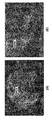
- FIG 3 and 4 are photographs showing SEM images of the metal selenide (MSe 2 ) supported catalyst.
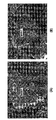
- 5 and 6 are photographs showing TEM images of a metal selenide (MSe 2 ) supported catalyst.
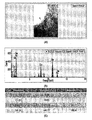
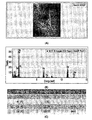
- FIG. 7 and 8 are graphs illustrating the EDX data of the metal selenide (MSe 2 ) supported catalyst.
- the polyurethane comprising a metal selenide (MSe 2) that is adsorbed supported on the surface of the solid carrier and the carrier of the solid for producing a metal selenide (MSe 2) supported A catalyst can be provided.
- the solid supporting material is a material for stably dispersing and maintaining a compound formed of the metal selenide (Mse 2 ), and generally a solid material may be used.
- a solid support for use as a supported catalyst generally uses a porous or large area material for highly dispersed support to increase the exposed surface area so that the function of the catalyst can be activated.
- the solid support may use a thermally and chemically stable material to maintain a constant shape and function in the chemical reaction.
- the solid support may be alumina (Al 2 O 3 ), ceria (CeO 2 ), activated carbon (AC), montmorillonite, silica (SiO 2 ), magnesium oxide (MgO), zeolite (Zeolite) And manaseite (Hydrotalcite) may be any one or more selected from.
- zeolite may be zeolite (ZSM-5), zeolite 4A, or the like, but the zeolite type is not limited to the above listed types.
- the solid support is not limited to the materials listed above, and any solid support may be used as long as it is a porous material or a solid material having a large surface area and which does not cause a chemical or physical reaction so as to disperse the catalyst material highly. It can be used as a delay.
- M denotes a transition meatal (M)
- metal selenide means a compound of selenium (Se) and a metal.
- the metal may be any one of transition metals. Also called the transition element to be used, generally means the d-zone element of the periodic table.
- the periodic table includes all Group 3 to 12 elements. Transition metals generally form complexes.
- the metal constituting the metal selenide (MSe 2 ) is divalent iron (Fe (II)), trivalent iron (Fe (III)), monovalent copper (Cu (I)), 2 It may be any one selected from kauri (Cu (II)), nickel (Ni), chromium (Cr), zinc (Zn) and manganese (Mn). However, it is not limited to the metals listed above, and may form any compound with selenium (Se), and any metal that may play a role in increasing the activity of the urethane manufacturing reaction may be included.
- the metal selenide (MSe 2 ) may be adsorbed on the surface of the solid support, which is due to the adsorption of the metal selenide (MSe 2 ) and the solid support with each other by physical and chemical bonds
- the metal selenide (MSe 2 ) may be positioned in each of the pores constituting the porous surface, and the chemical bond is formed through the reaction according to the following. It is generated between the carrier and the metal selenide (MSe 2 ) it is possible to stably support the metal selenide (Mse 2 ).
- the metal selenide (MSe 2 ) may be included 2wt% to 10wt%.
- the weight percent (wt%) is a metal selenide (MSe 2) is a metal selenide bearing (MSe 2) that calculates, based on the weight of the entire supported catalyst, containing a metal selenide (MSe 2) in the range It is preferable to form a metal selenide (MSe 2 ) supported catalyst, and if it contains less than the above range, the reactants may not proceed sufficiently in the remaining state, and the reaction rate may be significantly reduced, and exceeds the above range.
- the reaction rate is the same as or less than the case of using the catalyst within the above range, whereas the metal selenide (MSe 2 ) supported catalyst does not contribute to the activation of the reaction and remains, which is economic in terms of cost of the process. Since there may be a problem, it is preferable to fall within the above range.
- the metal selenide (MSe 2 ) supported catalyst may be a heterogeneous catalytically active species that is insoluble in an organic solvent including the above-mentioned solvent, and may be formed of black solid particles.
- MSe 2 metal selenide
- a step of preparing a first solution by mixing a metal compound, selenium dioxide (SeO 2 ), and a stabilizer (S110), and injecting a solid carrier into the first solution (S120) Injecting carbon monoxide into the first solution into which the carrier is added (S130) and reacting the solid carrier and the carbon monoxide injected into the first solution to adsorb the metal selenide (MSe 2 ) to the surface of the solid carrier. It is possible to provide a method for preparing a metal selenide (MSe 2 ) supported catalyst for producing urethane, comprising the step (S140) of being supported.
- the metal compound, selenium dioxide (SeO 2 ) and the stabilizer may be considered as a preparation material for preparing the metal selenide (MSe 2 ) catalyst in the future.
- the metal compound may be a metal halide compound (MX a ) (M is a metal, X is a halogen element, a may mean an integer of any one of 1 to 3, wherein a is Depending on the cation index when the metal is in the ionic state).
- MX a metal halide compound
- the halogen element X may be any one selected from F, Cl, Br, and I, and in particular, Cl, Br may be used.
- metal chloride compound MX a
- FeCl 3 iron chloride
- NiCl 2 nickel chloride
- CrCl 3 chromium chloride
- MnCl 2 manganese chloride
- any one of iron bromide (FeBr 3 ), nickel bromide (NiBr 2 ), chromium bromide (CrBr 3 ) and manganese bromide (MnBr 2 ) may be one, but is not limited to the metal bromide compounds listed above, other metals may be used, and thus metal bromide compounds may also be included.
- the metal compound may be a di-copper (Cu (II)) compound or a mono-copper (I) compound,
- the cupric (Cu (II)) compound includes copper chloride (CuCl- 2 ), copper sulfate (CuSO 4 ), copper acetate (Cu (COOCH 3 ) 2 ) and copper nitrate trihydrate (Cu ( NO 3 ) 2 ) 3 H 2 O) is at least one selected from,
- the cuprous (I) compound may be copper chloride (CuCl).
- CuCl copper chloride
- the cation valence may vary when ionized (Cu +1 or Cu +2 ) and thus, when forming the compound, the material may also vary.
- a stabilizer is a ligand, which forms a complex through coordination bonds with the metal compound, and reduces the metal compound and the selenium dioxide (SeO 2 ) in the presence of carbon monoxide, and thus is prepared accordingly.
- a stabilizer By reducing the size of the catalytic material to increase the specific surface area, to stabilize the particles to increase the catalytic activity, it may serve to help the production of solid particles to prepare a solid catalyst.
- an amine compound or a quaternary ammonium compound can be used as the stabilizer.
- the amine-based compound or the quaternary ammonium-based compound cetyl trimethyl ammonium bromide (CTAB), tetraethylammonium chloride (TBAC: Tetra-n-Butyl Ammonium Chloride), tetrabutyl ammonium bromide (TBAB) Tetra-n-ButylAmmonium Bromide, tetrabutylphosphonium bromide (TBPB: Tetra-n-ButylPhosphonium Bromide), polyvinylpyrrolidone (PVP: PolyVinylPyrrolidone), choline chloride, pyridine, tetraethyl It may be at least one selected from ammonium chloride (Tetraethylammonium chloride), imidazole, dimethylaminopyridine (4- (Dimethylamino) pyridine) and 2,2-bipyridyl (2,2-Bipyridyl).
- CAB cety
- the metal compound, selenium dioxide (SeO 2 ) and the stabilizer may be mixed in a mass ratio of 1: 4: 0.3, but is not limited to the mass ratio, specific metal compounds and stabilizers, solvent used. And reaction conditions.
- the solvent of the first solution may be an alcohol solvent (ROH).
- R may be an alkyl group having 1 to 4 carbon atoms
- ROH may be a monohydric alcohol having one hydroxyl group (-OH) in the entire alkyl group, but is not limited thereto and has two hydroxyl groups (-OH).
- the same solvent may be used until the reaction is completed through each step.
- the alcohol solvent is methanol (CH 3 OH), ethanol (C 2 H 5 OH), propanol (C 3 H 8 OH), n-butanol (C 4 H 9 OH), iso-butanol (C 4 H 9 OH) and tert-butanol (C 4 H 9 OH)) may be any one or more selected from, but is not limited thereto.
- a solid support material is a material that stably disperses and maintains a compound formed of the metal selenide (MSe 2 ), and generally a solid material may be used.
- a solid support for use as a supported catalyst generally uses a porous or large area material for highly dispersed support to increase the exposed surface area so that the function of the catalyst can be activated.
- the solid support may use a thermally and chemically stable material to maintain a constant shape and function in the chemical reaction.
- the solid support may be alumina (Al 2 O 3 ), ceria (CeO 2 ), activated carbon (AC), montmorillonite, silica (SiO 2 ), magnesium oxide (MgO), zeolite (Zeolite) And manaseite (Hydrotalcite) may be any one or more selected from.
- the solid support is not limited to the above-listed materials, and solid supports are not limited so long as they are porous materials or solid materials having a large surface area and which do not cause chemical or physical reactions so as to disperse the catalyst material highly. It can be used as a delay.
- the solid carrier may be added to the first solution, followed by stirring for about 10 minutes to 1 hour, thereby adsorbing a substance mixed in the first solution to the solid carrier.
- the stirring time is sufficient if the material mixed in the first solution is adsorbed to the solid carrier and is not necessarily limited to the above time range.
- the solid carrier and the first solution is mixed with the material may be chemically and physically combined and adsorbed.
- the solid carrier generally has a porous form, the metal selenide (MSe 2 ) may be located in each of the pores constituting the porous surface, and the chemical bond is supported by the solid carrier as it is subjected to the reaction according to the following. Is generated between the metal selenide (MSe 2 ) and the metal selenide (Mse 2 ) may be supported.
- step (S130) of injecting carbon monoxide into the first solution in which the solid carrier is added
- the first solution may be prepared through the step S110 in one vessel reactor, when the solid carrier is added in the same reactor, carbon monoxide may be directly injected into the reactor, and the carbon monoxide is in the form of a gas. It can be injected to have a certain level or more pressure. Therefore, the supported catalyst can be produced at one time in one container. Furthermore, after the preparation of the metal selenide (Mse 2 ) supported catalyst according to the above process and the following process, the reactant may be added immediately to prepare the urethane, thus preparing the catalyst, as well as preparing the urethane using the catalyst. Everything can be done in a single container.
- the pressure of the injected carbon monoxide (CO) may be 200psig to 1600psig.
- the pressure of the carbon monoxide is injected below the above range, even if the reaction is performed according to the following last step (S140), the metal selenide (MSe 2 ) supported catalyst may not be prepared in a desired yield, and the pressure of the carbon monoxide is in the above range. If the amount is exceeded, there is a possibility that side reactions may occur, and even after the metal selenide (MSe 2 ) -supported catalyst is prepared, the residual amount of carbon monoxide may be high, so the process may not operate economically. It may be desirable to control the injection of carbon monoxide within the range.
- step (S140) in which the metal carrier (MSe 2 ) is adsorbed and supported on the surface of the solid carrier by reacting the solid carrier and the carbon monoxide introduced into the first solution.
- the first solution in which the metal compound, selenium dioxide (SeO 2 ), and the stabilizer are mixed, may be considered to contain precursor materials for preparing a metal selenide (MSe 2 ) supported catalyst. It is not possible to prepare the supported catalyst immediately after the step (S120) of injecting the solid carrier into the first solution, and the precursor materials contained in the first solution are located on the surface of the solid carrier. That is, carbon monoxide is introduced and, to is a certain time after the reaction time in the range of the metallic selenide (Mse 2) on the surface of the carrier of said solid under specific temperature conditions absorption is presented in the metal selenide (Mse 2 Supported catalyst can be prepared.
- the metal selenide (MSe 2 ) and the solid support are adsorbed to each other by physical and chemical bonds through the reaction, and the solid support generally has a porous form, thereby forming a porous surface.
- the metal selenide (MSe 2 ) may be located in each of the pores, and the chemical bond is generated between the solid carrier and the metal selenide (MSe 2 ) while undergoing a reaction according to the following. Mse 2 ) can be supported stably.
- the reaction temperature is 100 ° C. to 200 ° C., and the solid carrier and carbon monoxide on which the first solution is loaded may be reacted for 1 to 6 hours.
- the reaction temperature is a temperature range suitable for the support of the solid support on which carbon monoxide and the first solution are loaded to support the metal selenide (MSe 2 ) on the solid support. It may be set differently depending on the type, and is not necessarily limited to the reaction proceeds within the temperature range.
- the reaction time may be set differently according to the kind of the first solution to be injected and the type of the solid carrier, and the reaction time range is within the general time range in which the reaction proceeds and the reaction is necessarily It is not limited to proceeding.
- the metal selenide (MSe 2 ) may be included from 2wt% to 10wt%.
- the weight percent (wt%) is a metal selenide (MSe 2) is to be calculated based on the metal selenide (MSe 2) by weight of the total supported catalyst supported thereon, it is contained a metal selenide (MSe 2) in the range It is preferable to form a metal selenide (MSe 2 ) supported catalyst, and if it contains less than the above range, the reactant may not proceed sufficiently in a remaining state and thus the reaction rate may be significantly reduced.
- the reaction rate is the same as or less than the case of using a catalyst within the above range, whereas the metal selenide (MSe 2 ) -supported catalyst does not contribute to the activation of the reaction and remains, which is not economical in terms of cost of the process.
- the problem may be present, it is preferably included in the above range.
- the metal selenide (MSe 2 ) supported catalyst prepared through each step of the preparation method may be a heterogeneous catalytically active species that is insoluble in an organic solvent including the aforementioned solvent, and may be formed of black solid particles.
- FIG. 2 is a flowchart illustrating a method of preparing urethane using a metal selenide (MSe 2 ) supported catalyst.
- preparing a metal selenide (MSe 2 ) supported catalyst (S210), preparing a reactant consisting of a nitro compound, carbon monoxide and alcohol solvent (S220) and the metal selenide (MSe 2 ) Carbonylation reaction of the reactants under a supported catalyst may be provided a urethane manufacturing method comprising the step (S230).
- the urethane is also called carbamate, and may be prepared by the same process as in Scheme 1 below.
- R-NO 2 can be seen as a nitro compound
- R'OH can be seen as an alcohol solvent
- catalyst is a metal selenide (MSe 2 ) supported catalyst, and the result is urethane It can be seen that carbon dioxide is generated as a byproduct.
- the metal selenide (MSe 2 ) supported catalyst may be prepared by the above-described method.
- the nitro compound may be any compound having a nitro functional group (-NO 2 ).
- a substance having a nitro group attached to a benzene compound, such as nitrobenzene may be used.
- the present invention is not limited to the above-mentioned substance, and in addition to the nitro functional group, all compounds having a nitro functional group may be used as reactants of the reaction unless the substance further has a separate functional group capable of participating in the reaction.
- the molar ratio of the metal selenide (MSe 2 ) supported catalyst may be 1/1000 to 1/20 of the reactant.
- the range of the molar ratio depends on the optimum amount of the metal selenide (MSe 2 ) supported catalyst to allow the reaction to occur, but is not limited to the above range, depending on the overall conditions of the reaction, in order to proceed with the reaction.
- the metal selenide (MSe 2 ) supported catalyst may be further added, or the metal selenide (MSe 2 ) supported catalyst below the above range may be added.
- the pressure of the carbon monoxide (CO) may be 200psig to 1600psig.
- Carbon monoxide in this step is an essential reactant for the carbonyl reaction, and can react with a metal selenide (MSe 2 ) supported catalyst at high pressure to form a metal carbonyl compound as a reaction intermediate.
- the metal carbonyl compound and the nitro compound may be reacted to prepare the final product urethane (the metal selenide (MSe 2 supported catalyst is recovered again and does not finally participate in the reaction).
- the pressure of the carbon monoxide (CO) is less than the pressure range, the metal selenide (MSe 2) react with the supported catalyst metal carbonyl can not form a compound can not also take place after the reaction for preparing the final products of polyurethane, the desired Yields of urethane may not be prepared.
- urethane may be manufactured in a certain yield or more, but carbon monoxide that does not participate in the reaction may be left as a by-product, and thus the by-product may be generated in a high pressure environment. It is preferable to proceed with reaction within the range.
- the reaction temperature for the carbonylation reaction is 100 °C to 200 °C, it is possible to react the solid carrier and carbon monoxide on which the first solution is supported for 1 hour to 6 hours.
- the reaction temperature is an appropriate temperature range for the carbonylation reaction to be carried out, and may be set differently according to the metal selenide (MSe 2 ) supported catalyst and the kind of the reactant, and the reaction may be limited within the temperature range. It is not.
- the reaction time may be set differently according to the kind of the first solution to be injected and the type of the solid carrier, and the reaction time range is within the general time range in which the reaction proceeds and the reaction is necessarily It is not limited to proceeding.
- Urethane manufacturing method is a reaction proceeding in a single step in a single-pot (one-pot), the urethane is produced through a one-step reaction in one reactor without having to prepare the reactor for each step It is possible to produce urethane economically in terms of time and cost to enter the process due to the simple process-wide steps.
- According to one embodiment of the present invention can provide a urethane prepared according to the above method.
- FIG. 3 and 4 are SEM images of a metal selenide (MSe 2 ) supported catalyst. More specifically, in FIG. 3, the metal selenide (MSe 2 ) is CuSe 2 and the solid carrier is AC. . In the case of Figure 4, the metal selenide (MSe 2 ) is FeSe 2 , the carrier is Al 2 O 3 .
- FIG. 5 and 6 are photographs showing TEM images of a metal selenide (MSe 2 ) supported catalyst. More specifically, in the case of Figure 5, the metal selenide (MSe 2 ) is CuSe 2 , the solid carrier is AC. In the case of Figure 6, the metal selenide (MSe 2 ) is FeSe 2 , the solid carrier is Al 2 O 3 . Referring to FIG. 5, it can be seen that CuSe 2 is well dispersed in nano size, and referring to FIG. 6, it can be seen that FeSe 2 is well dispersed in nano size.
- FIG. 7 and 8 are graphs illustrating the EDX data of the metal selenide (MSe 2 ) supported catalyst. More specifically, in the case of Figure 7, the metal selenide (MSe 2 ) is CuSe 2 , the solid support is AC. In the case of Figure 8, the metal selenide (MSe 2 ) is FeSe 2 , the solid carrier is Al 2 O 3 . Referring to the EDX data of FIG. 7, it can be seen that the ratio of Cu: Se is 1: 2. Referring to the EDX data of FIG. 8, it can be seen that the ratio of Fe: Se is 1: 2.
- Example 1 100 82.9 82.9
- Example 2 62.3 51.0 81.9
- Example 3 100 75.2 75.2
- Example 4 97.2 87.7 90.2
- Example 5 68.2 62.6 91.8
- Example 6 59.5 57.7 97.0
- Example 7 87.8 11.5 13.1
- Example 8 21.2 0 0
- Example 9 52.2 43.3 83.2
- Example 10 100 91.6 91.6
- Example 11 78.4 71.5 91.3
- Example 12 100 75.9 75.9
- Example 13 18.2 12.4 68.3
- Example 14 50.8 43.2 85.0
- Example 15 76.4 71.7 93.8
- Example 16 100 86.7 86.7
- Example 17 11.7 8.1 69.3
- Example 18 9.3 1.9 20.5
- Example 19 100 88.7 88.7
- Example 16 which uses 2 ) as a solid carrier, has a relatively higher catalytic activity compared to other examples.
- the urethane production yield may vary depending on the type of metal selenide and the type of the solid carrier.
- Example 3 100 75.2 75.2
- Example 3-1 94.0 86.8 92.3
- Example 4 97.2 87.7 90.2
- Example 4-1 100 79.0 79.0
- Phenyl carbamate according to the Catalyst Preparation Time a review of (MPC Methyl N -phenyl carbamate) yield changes result, it is possible to check that each yield almost without a difference, the catalyst preparation time difference between the change in catalyst activity, and hence yields It can be seen that it does not significantly affect.
- FIG. 9 is a graph showing the yield of urethane (Methyl N- phenyl carbamate) according to reaction time (h) when a metal selenide (MSe 2 ) supported catalyst is used.
- Metal selenide (MSe 2 ) supported catalyst prepared according to Example 3 was used.
Landscapes
- Chemical & Material Sciences (AREA)
- Organic Chemistry (AREA)
- Engineering & Computer Science (AREA)
- Materials Engineering (AREA)
- Chemical Kinetics & Catalysis (AREA)
- Organic Low-Molecular-Weight Compounds And Preparation Thereof (AREA)
- Catalysts (AREA)
Abstract
본 발명의 일실시예는 고형의 담지체 및 상기 고형의 담지체의 표면에 흡착되어 담지되는 금속셀레나이드(MSe2)를 포함하는 것을 특징으로 하는 우레탄 제조용 금속셀레나이드(MSe2) 담지 촉매 및 이의 제조방법, 상기 금속셀레나이드(Mse2) 담지 촉매를 사용하여 우레탄 제조하는 방법 및 이에 의하여 제조되는 우레탄을 제공한다.
Description
본 발명은 금속셀레나이드(MSe2, M=금속)가 담지된 담지 촉매에 관한 것으로, 더욱 상세하게는 니트로화합물 및 일산화탄소의 반응에 의하여 우레탄(카바메이트라고도 불림)을 제조하기 위해 사용되는 금속셀레나이드가 담지된 담지 촉매, 이의 제조방법 및 이를 이용한 우레탄 제조방법에 관한 것이다.
폴리우레탄수지는 3차원 구조를 가지는 플라스틱의 일종으로 물리적으로 인장강도가 크며 화학약품에 잘 견뎌 화학적 내구성 또한 우수한 플라스틱으로서, 전기절연체, 구조재, 개포단열재 등 다양한 산업분야에서 사용되고 있으며 신축성이 좋아 고무의 대체재로도 많이 사용되고 있다. 우레탄은 폴리우레탄을 제조하기 위한 준비물질로서, 합성섬유, 합성고무 등 다양한 소재의 출발물질로서 사용되고 있다. 나아가, 우레탄 자체는 농약, 제초제, 살충제, 의약품 등 다양한 화학물질을 제조하기 위한 재료로서 다양하게 사용되고 있다.
일반적으로 우레탄을 제조하기 위해서는 포스겐 제법을 사용한다. 포스겐 제법이란 아민 화합물과 포스겐을 반응시켜 이소시아네이트를 제조하는 단계를 거쳐 최종 산물로서 우레탄을 제조하는 방법이다. 그러나, 포스겐 제법은 맹독성 물질인 포스겐을 사용하여야 하므로 반응물 취급이 용이하지 않으며, 일 단계 일 용기 내에서 반응이 한번에 완료되지 못한다는 문제점이 있으며, 반응 부산물로 염화수소가 다량 발생되는 문제점 또한 존재하여 우레탄 수율이 좋지 않다는 문제점 또한 있었다.
상기 포스겐법과 관련하여 일본 등록특허 제1994-062544호(이하 인용문헌 1이라 함)에서는 맹독성 물질인 포스겐을 이용하지 않는 우레탄 합성 방법으로 2-step 공정을 개시한 바 있다. 2-step 공정 중 제1 단계는 방향족 제 1 아민, 방향족 니트로화합물 및 일산화탄소를 용매 하에서 촉매를 첨가한 후 반응시켜 치환우레아를 제조하는 단계, 제 1단계 이후, 제1단계의 반응물로부터 치환우레아를 분리회수한 뒤 정제하여 수산기를 함유하는 유기화합물을 반응시키는 제 2단계를 포함하여 아민 화합물로부터 우레탄을 제조하는 방법을 개시하고 있다. 그러나 상기 2-step 공정은 반응 단계가 복잡하고 일 용기 내에서 반응이 한 번에 진행되기는 어렵고, 반응 후 생성되는 염화수소를 염기성 물질로 중성화 해야 하는 공정상의 번거로움이 있었다.
상기 2-step 공정과 관련하여 미국 공개특허 제2009-0275771호(이하 인용문헌 2라 함)에서는 2-step 공정에서 공정 단계의 복잡함을 개선하고자 일산화탄소 및 산소의 혼합기체 하에서 아미노화합물의 산화 카르보닐화에 의해 우레탄을 제조하는 방법을 개시한 바 있다. 그러나 일산화탄소와 산소의 혼합가스는 분압 조절의 어려움이 있고, 고온의 산화반응 조건에서 산화제등의 폭발의 위험성이 따른다는 단점이 있었다.
따라서, 전술한 종래기술들의 단점들을 해소할 수 있으면서도 경제적으로 고수율의 우레탄을 합성하는 기술개발이 요구되고 있는 실정이다.
[선행기술문헌]
[특허문헌]
(특허문헌 1) 일본 등록특허 제1994-062544호
(특허문헌 2) 미국 공개특허 제2009-0275771호
본 발명이 이루고자 하는 기술적 과제는 단순한 공정을 거쳐 우레탄을 제조할 수 있도록 하는 금속셀레나이드가 담지된 담지 촉매, 상기 담지 촉매의 제조방법 및 상기 담지 촉매로 우레탄을 제조하는 방법을 제공하는 것이다.
기존의 2단계 이상을 거치는 우레탄 제조방법과 달리, 금속셀레나이드 담지 촉매를 사용하는 경우, 니트로화합물, 일산화탄소, 알코올화합물을 반응물질로 하여 일 단계로 우레탄을 바로 제조할 수 있어 반응이 단순하고 일 용기 내에서 진행할 수 있어서 시간적·비용적 측면에서 경제적으로 우레탄을 제조할 수 있다.
또한, 기존의 공법으로 우레탄을 제조하는 경우 맹독성의 포스겐을 사용하거나, 폭발의 위험이 있는 산화제 등을 사용하게 되어 위험한 환경에서 공정의 안전성이 위협받는 문제가 있었으나, 금속 셀레나이드 담지 촉매를 사용하는 경우 공정이 사용되는 반응물질이 모두 폭발의 위험이 없고 무독성 물질로서 공정을 안전하게 수행할 수 있다.
본 발명이 이루고자 하는 기술적 과제는 이상에서 언급한 기술적 과제로 제한되지 않으며, 언급되지 않은 또 다른 기술적 과제들은 아래의 기재로부터 본 발명이 속하는 기술 분야에서 통상의 지식을 가진 자에게 명확하게 이해될 수 있을 것이다.
상기 기술적 과제를 달성하기 위하여, 본 발명의 일실시예는, 고형의 담지체; 및 상기 고형의 담지체의 표면에 흡착되어 담지되는 금속셀레나이드(MSe2, M = 금속)를 포함하는 것을 특징으로 하는 우레탄 제조용 금속셀레나이드(MSe2) 담지 촉매를 제공할 수 있다.
본 발명의 일 실시예에 있어서, 상기 금속은, 2가 철(Fe(Ⅱ)), 3가 철(Fe(Ⅲ)), 1가구리(Cu(Ⅰ)), 2가구리(Cu(Ⅱ)), 니켈(Ni), 크롬(Cr), 아연(Zn) 및 망간(Mn) 중 선택되는 어느 하나인 것일 수 있다.
본 발명의 일 실시예에 있어서, 상기 고형의 담지체는, 알루미나(Al2O3), 세리아(CeO2), 활성탄(AC), 몬모릴로나이트(Montmorillonite), 실리카(SiO2), 산화마그네슘(MgO), 제올라이트(Zeolite) 및 마나세아이트(Hydrotalcite) 중 선택되는 어느 하나 이상인 것일 수 있다.
본 발명의 일 실시예에 있어서, 상기 금속셀레나이드(MSe2)가 2wt% 내지 10wt% 포함되는 것일 수 있다.
상기 기술적 과제를 달성하기 위하여, 본 발명의 일 실시예는, 금속화합물, 이산화셀레늄(SeO2) 및 안정제를 혼합하여 제1용액을 제조하는 단계; 상기 제1용액에 고형의 담지체를 투입하는 단계; 상기 고형의 담지체가 투입된 상기 제1용액에 일산화탄소를 주입하는 단계; 및 상기 제1용액에 투입된 고형의 담지체 및 상기 일산화탄소를 반응시켜 금속셀레나이드(MSe2)가 상기 고형의 담지체의 표면에 흡착되어 담지되는 단계를 포함하는 것을 특징으로 하는 우레탄 제조용 금속셀레나이드(MSe2) 담지 촉매 제조방법을 제공할 수 있다.
본 발명의 일 실시예에 있어서, 상기 금속화합물은 금속할라이드화합물(MXa)이고, 상기 금속할라이드화합물(MXa)은, 염화철(Ⅱ)(FeCl2), 염화철(Ⅲ)(FeCl3), 염화니켈(NiCl2), 염화크롬(CrCl3) 및 염화망간(MnCl2) 중 어느 하나인 것일 수 있다.
본 발명의 다른 실시예에 있어서, 상기 금속할라이드화합물(MXa)은, 브롬화철(FeBr3), 브롬화니켈(NiBr2), 브롬화크롬(CrBr3) 및 브롬화망간(MnBr2) 중 어느 하나인 것일 수 있다.
본 발명의 일 실시예에 있어서, 상기 안정제는, 아민계 화합물 또는 4차 암모늄계 화합물인 것일 수 있다.
본 발명의 다른 실시예에 있어서, 상기 아민계 화합물 또는 상기 4차 암모늄계 화합물은, 세트리모늄브로마이드(CTAB: Cetyl TrimethylAmmonium Bromide), 테트라에틸암모늄클로라이드(TBAC: Tetra-n-ButylAmmonium Chloride), 테트라부틸암모늄브로마이드(TBAB: Tetra-n-ButylAmmonium Bromide), 테트라부틸포스포늄브로마이드(TBPB: Tetra-n-ButylPhosphonium Bromide), 폴리비닐피롤리돈(PVP: PolyVinylPyrrolidone), 염화콜린(Choline chloride), 피리딘(Pyridine), 테트라에틸암모늄클로라이드(Tetraethylammonium chloride), 이미다졸(Imidazole), 디메틸아미노피리딘(4-(Dimethylamino)pyridine) 및 2,2-바이피리딜(2,2-Bipyridyl) 중 선택되는 어느 하나 이상인 것일 수 있다.
본 발명의 일 실시예에 있어서, 상기 제1용액의 용매는 알코올 용매인 것일 수 있다.
본 발명의 다른 실시예에 있어서, 상기 일산화탄소의 압력은 200psig 내지 1600psig 인 것일 수 있다.
본 발명의 일 실시예에 있어서, 상기 금속셀레나이드(MSe2) 담지 촉매를 제조하는 단계에 있어서, 반응온도는 100℃ 내지 200℃이고, 반응시간은 1시간 내지 6시간인 것일 수 있다.
상기 기술적 과제를 달성하기 위하여 본 발명의 일 실시예는, 금속셀레나이드(MSe2) 담지 촉매를 준비하는 단계; 니트로화합물, 일산화탄소 및 알코올 용매로 구성되는 반응물을 준비하는 단계; 및 상기 금속셀레나이드(MSe2) 담지 촉매 하에 상기 반응물을 카르보닐화 반응시키는 단계;를 포함하는 우레탄 제조방법일 수 있다.
본 발명의 일 실시예에 있어서, 상기 금속셀레나이드(MSe2) 담지 촉매의 몰비율은 상기 반응물 대비 1/1000 내지 1/20인 것일 수 있다.
본 발명의 다른 실시예에 있어서, 상기 카르보닐화 시키는 단계는, 상기 일산화탄소의 압력이 200psig 내지 1600psig 인 것일 수 있다.
본 발명의 일 실시예에 있어서, 상기 카르보닐화 시키는 단계는, 100 ℃ 내지 200 ℃ 의 온도 조건에서, 1 시간 내지 6 시간 동안 수행되는 것일 수 있다.
상기 기술적 과제를 달성하기 위하여, 본 발명은 단일 용기 내에 단일 단계로 진행되는 반응인 것일 수 있다.
상기 기술적 과제를 달성하기 위하여, 본발명의 또 다른 실시예는 상기 제조방법에 따라 제조되는 우레탄을 제공할 수 있다.
본 발명의 실시예에 따르면, 상기 금속셀레나이드(MSe2) 담지 촉매를 사용하여 단일 용기 내에 단일 단계를 거쳐 간단한 방법으로 우레탄을 제조할 수 있어 공정의 시간적, 비용적 측면에서 경제적인 방법으로 우레탄을 제조할 수 있다.
또한, 본 발명의 실시예에 따르면, 폭발의 위험이 있는 산화제 등을 사용하지 않고, 니트로화합물, 일산화탄소 및 알코올 용매와 같은 반응물질만을 사용하여 폭발의 위험없이 안전하게 우레탄을 제조할 수 있다.
나아가, 본 발명의 실시예에 따르면, 기존의 촉매와 달리 금속셀레나이드(MSe2) 촉매를 사용하고, 이를 담지하여 금속셀레나이드(MSe2) 담지 촉매를 제공하는바, 담지하지 않았을 경우보다 금속셀레나이드(MSe2)의 투입량이 1/50 배 미만으로 적어질 수 있으며, 반응 후 부산물이 상대적으로 적게 생성될 수 있음은 물론, 우레탄 수율과 선택도가 증대되며, 상기 금속셀레나이드(MSe2) 담지 촉매의 회수율 또한 높아 반응에 여러 번 사용할 수 있게 되어 경제적으로 우레탄을 제조할 수 있다.
본 발명의 효과는 상기한 효과로 한정되는 것은 아니며, 본 발명의 상세한 설명 또는 특허청구범위에 기재된 발명의 구성으로부터 추론 가능한 모든 효과를 포함하는 것으로 이해되어야 한다.
도 1은 우레탄 제조용 금속셀레나이드(MSe2) 담지 촉매 제조방법을 나타낸 순서도이다.
도 2는 금속셀레나이드(MSe2) 담지 촉매를 이용하여 우레탄을 제조하는 방법을 나타낸 순서도이다.
도 3, 도 4는 금속셀레나이드(MSe2) 담지 촉매의 SEM 이미지를 나타낸 사진이다.
도 5, 도 6은 금속셀레나이드(MSe2) 담지 촉매의 TEM 이미지를 나타낸 사진이다.
도 7, 도 8은 금속셀레나이드(MSe2) 담지 촉매의 EDX 데이터를 도식화한 그래프이다.
도 9는 금속셀레나이드(MSe2) 담지 촉매를 사용하는 경우, 반응시간(reaction time(h))에 따른 우레탄 수율을 나타낸 그래프이다.
이하에서는 첨부한 도면을 참조하여 본 발명을 설명하기로 한다. 그러나 본 발명은 여러 가지 상이한 형태로 구현될 수 있으며, 따라서 여기에서 설명하는 실시예로 한정되는 것은 아니다. 그리고 도면에서 본 발명을 명확하게 설명하기 위해서 설명과 관계없는 부분은 생략하였으며, 명세서 전체를 통하여 유사한 부분에 대해서는 유사한 도면 부호를 붙였다.
명세서 전체에서, 어떤 부분이 다른 부분과 "연결(접속, 접촉, 결합)"되어 있다고 할 때, 이는 "직접적으로 연결"되어 있는 경우뿐 아니라, 그 중간에 다른 부재를 사이에 두고 "간접적으로 연결"되어 있는 경우도 포함한다. 또한 어떤 부분이 어떤 구성요소를 "포함"한다고 할 때, 이는 특별히 반대되는 기재가 없는 한 다른 구성요소를 제외하는 것이 아니라 다른 구성요소를 더 구비할 수 있다는 것을 의미한다.
본 명세서에서 사용한 용어는 단지 특정한 실시예를 설명하기 위해 사용된 것으로, 본 발명을 한정하려는 의도가 아니다. 단수의 표현은 문맥상 명백하게 다르게 뜻하지 않는 한, 복수의 표현을 포함한다. 본 명세서에서, "포함하다" 또는 "가지다" 등의 용어는 명세서상에 기재된 특징, 숫자, 단계, 동작, 구성요소, 부품 또는 이들을 조합한 것이 존재함을 지정하려는 것이지, 하나 또는 그 이상의 다른 특징들이나 숫자, 단계, 동작, 구성요소, 부품 또는 이들을 조합한 것들의 존재 또는 부가 가능성을 미리 배제하지 않는 것으로 이해되어야 한다.
이하 첨부된 도면을 참고하여 본 발명의 실시예를 상세히 설명하기로 한다.
본 발명의 일 실시예에 있어서, 고형의 담지체 및 상기 고형의 담지체의 표면에 흡착되어 담지되는 금속셀레나이드(MSe2)를 포함하는 것을 특징으로 하는 우레탄 제조용 금속셀레나이드(MSe2) 담지 촉매를 제공할 수 있다.
상기 고형의 담지체(supporting material)는 상기 금속셀레나이드(Mse2)로 형성되는 화합물을 분산시켜서 안정하게 담아 유지하는 물질로서, 일반적으로 고형상의 물질을 사용할 수 있다. 특히 담지 촉매로서 사용되기 위한 고형의 담지체는, 촉매의 기능이 활성화될 수 있도록 노출 표면적이 커지도록 고도로 분산시켜 담지하기 위해서 보통 다공성이나 면적이 큰 물질을 사용한다. 또한 고형의 담지체는 화학적 반응에서 일정한 형상 및 기능을 유지하기 위해서 열적, 화학적으로 안정한 물질을 사용할 수 있다.
예를들어, 고형의 담지체는, 알루미나(Al2O3), 세리아(CeO2), 활성탄(AC), 몬모릴로나이트(Montmorillonite), 실리카(SiO2), 산화마그네슘(MgO), 제올라이트(Zeolite) 및 마나세아이트(Hydrotalcite) 중 선택되는 어느 하나 이상인 것일 수 있다. 이때 제올라이트(Zeolite)는 제올라이트(ZSM-5), 제올라이트(4A) 등이 사용될 수 있으나, 상기 제올라이트 종류는 상기 나열된 종류에 한정되는 것은 아니다. 나아가, 고형의 담지체는 상기 나열된 물질들에 한정되지 않고, 촉매물질을 고도로 분산시킬 수 있도록 다공성 물질이거나 표면적이 큰 고형상의 물질이면서, 화학적, 물리적 반응을 일으키지 않는 물질이라면 제한없이 고형의 담지체로서 사용될 수 있다.
상기 금속셀레나이드(MSe2)에 있어서, M은 금속(transition meatal, M이라고 표시함)을 의미하고, 금속셀레나이드는 셀레늄(Selenium, Se)과 금속의 화합물을 의미한다.
상기 금속은 전이금속 중 어느 하나 일 수도 있다. 사용될 전이원소라고도 불리며, 일반적으로 주기율표의 d-구역 원소를 의미한다. 주기율표에 있어서 3족 내지 12족 원소가 모두 포함된다. 전이금속은 일반적으로 착화합물을 형성하는 것이 일반적이다.
예를 들어, 상기 금속셀레나이드(MSe2)를 구성하는 상기 금속은, 2가 철(Fe(Ⅱ)), 3가 철(Fe(Ⅲ)), 1가구리(Cu(Ⅰ)), 2가구리(Cu(Ⅱ)), 니켈(Ni), 크롬(Cr), 아연(Zn) 및 망간(Mn) 중 선택되는 어느 하나인 것일 수 있다. 다만, 상기 나열된 금속에 한정되는 것은 아니고, 셀레늄(Se)과 화합물을 형성할 수 있고, 우레탄 제조반응의 활성을 증대시킬 수 있는 역할을 할 수 있는 금속이라면 모두 포함될 수 있다.
이때, 상기 금속셀레나이드(MSe2)는 상기 고형의 담지체의 표면에 흡착되는 것일 수 있는데, 이는 금속셀레나이드(MSe2)와 고형의 담지체가 물리적, 화학적 결합에 의하여 서로 흡착되는 것에 기인하는 것으로, 상기 고형의 담지체는 일반적으로 다공성 형태를 가지므로 다공성 표면을 구성하는 기공 각각에 상기 금속셀레나이드(MSe2)가 위치할 수 있고, 하기에 따른 반응을 거치게 되면서 화학적 결합이 상기 고형의 담지체와 상기 금속셀레나이드(MSe2) 간에 발생하게 되어 상기 금속셀레나이드(Mse2)가 안정적으로 담지될 수 있게 된다.
본 발명의 일 실시예에 있어서, 상기 금속셀레나이드(MSe2)는 2wt% 내지 10wt% 포함될 수 있다. 상기 중량퍼센트(wt%)는 상기 금속셀레나이드(MSe2)가 담지된 금속셀레나이드(MSe2) 담지 촉매 전체의 질량을 기준으로 계산한 것으로, 상기 범위 내의 금속셀레나이드(MSe2)가 함유되어 금속셀레나이드(MSe2) 담지 촉매를 형성하는 것이 바람직하고, 상기 범위 미만을 함유하는 경우에는 반응물은 잔여된 상태로 반응이 충분히 진행되지 않아 반응속도가 현저히 감소할 수 있으며, 상기 범위를 초과하는 경우에는 반응속도는 상기 범위 내의 촉매를 사용하는 경우와 동일하거나 차이가 거의 없는 반면, 금속셀레나이드(MSe2) 담지 촉매가 반응 활성화에 기여하지 못하고, 잔여하게 되어 공정의 비용측면상 경제적이지 못하다는 문제점이 존재할 수 있는 바, 상기 범위 내로 포함되는 것이 바람직하다.
상기 금속셀레나이드(MSe2) 담지 촉매는 상기 언급된 용매를 비롯한 유기용매에 녹지 않는 불균일 촉매 활성종일 수 있으며, 검정색 고체입자로 형성될 수 있다.
도 1은 우레탄 제조용 금속셀레나이드(MSe2) 담지 촉매 제조방법을 나타낸 순서도이다.
도 1을 참조하면, 금속화합물, 이산화셀레늄(SeO2) 및 안정제를 혼합하여 제1용액을 제조하는 단계(S110), 상기 제1용액에 고형의 담지체를 투입하는 단계(S120) 상기 고형의 담지체가 투입된 상기 제1용액에 일산화탄소를 주입하는 단계(S130) 및 상기 제1용액에 투입된 고형의 담지체 및 상기 일산화탄소를 반응시켜 금속셀레나이드(MSe2)가 상기 고형의 담지체의 표면에 흡착되어 담지되는 단계(S140)를 포함하는 것을 특징으로 하는 우레탄 제조용 금속셀레나이드(MSe2) 담지 촉매 제조방법을 제공할 수 있다.
우선적으로, 금속화합물, 이산화셀레늄(SeO2) 및 안정제를 혼합하여 제1용액을 제조하는 단계(S110)에 있어서,
상기 금속화합물, 이산화셀레늄(SeO2) 및 안정제는 향후 상기 금속셀레나이드(MSe2)촉매를 제조하기 위한 준비물질로 볼 수 있다.
보다 구체적으로, 상기 금속화합물은, 금속할라이드화합물(MXa)일 수 있다(M은 금속, X는 할로젠 원소이고, a는 1 내지 3 중 어느 하나의 정수를 의미할 수 있으며, 상기 a는 금속이 이온 상태로 존재하는 경우의 양이온 지수에 따라 달라질 수 있다).
예를 들어 할로젠 원소인 X는, F, Cl, Br 및 I 중 선택되는 어느 하나 일 수 있으며, 특히 Cl, Br이 사용될 수 있다.
구체적으로, 상기 금속할라이드화합물(MXa)에 있어서 X가 Cl인 경우, 염화철(FeCl3), 염화니켈(NiCl2), 염화크롬(CrCl3) 및 염화망간(MnCl2) 중 어느 하나인 것일 수 있으나, 상기 나열된 염화금속화합물에 한정되지 않고, 이외의 금속이 사용될 수 있으며, 그에 따른 염화금속화합물 또한 포함될 수 있다.
다른 예를 들어, 상기 금속할라이드화합물(MXa)에 있어서 X가 Br인 경우, 브롬화철(FeBr3), 브롬화니켈(NiBr2), 브롬화크롬(CrBr3) 및 브롬화망간(MnBr2) 중 어느 하나인 것일 수 있으나, 상기 나열된 브롬화금속화합물에 한정되지 않고, 이외의 금속이 사용될 수 있으며, 그에 따른 브롬화금속화합물 또한 포함될 수 있다.
상기 금속화합물은 2가구리(Cu(Ⅱ)) 화합물 또는 1가구리(Ⅰ) 화합물일 수 있으며,
예를들어, 상기 2가구리(Cu(Ⅱ)) 화합물은, 염화구리(CuCl-2), 황산구리(CuSO4), 구리아세테이트(Cu(COOCH3)2) 및 구리나이트레이트 트리하이드레이트(Cu(NO3)2)3H2O) 중 선택되는 어느 하나 이상인 것이고,
또 다른 예를들어, 상기 1가구리(Ⅰ) 화합물은, 염화구리(CuCl)인 것일 수 있다. 구리의 경우, 이온화되는 경우 양이온 가수가 달라질 수 있으며(Cu+1 또는 Cu+2) 이에 따라, 화합물을 이루는 경우 그 물질 또한 달라질 수 있다.
다음으로, 안정제(stabilizer)는 리간드(ligand)로서, 상기 금속화합물과 배위결합을 통하여 착화물을 형성하며, 상기 금속화합물 및 상기 이산화셀레늄(SeO2)을 일산화탄소 존재 하에 환원시킴은 물론 이에 따라 제조되는 촉매물질의 크기를 작게하여 비표면적을 크게 하며, 입자를 안정화시켜 촉매활성을 증대시키고, 고형의 촉매를 제조하기 위하여 고체입자의 생성을 돕는 역할을 할 수 있다.
예를 들어, 상기 안정제로서, 아민계 화합물 또는 4차 암모늄계 화합물을 사용할 수 있다.
보다 구체적으로, 상기 아민계 화합물 또는 상기 4차 암모늄계 화합물은, 세트리모늄브로마이드(CTAB: Cetyl TrimethylAmmonium Bromide), 테트라에틸암모늄클로라이드(TBAC: Tetra-n-ButylAmmonium Chloride), 테트라부틸암모늄브로마이드(TBAB: Tetra-n-ButylAmmonium Bromide), 테트라부틸포스포늄브로마이드(TBPB: Tetra-n-ButylPhosphonium Bromide), 폴리비닐피롤리돈(PVP: PolyVinylPyrrolidone), 염화콜린(Choline chloride), 피리딘(Pyridine), 테트라에틸암모늄클로라이드(Tetraethylammonium chloride), 이미다졸(Imidazole), 디메틸아미노피리딘(4-(Dimethylamino)pyridine) 및 2,2-바이피리딜(2,2-Bipyridyl) 중 선택되는 어느 하나 이상인 것일 수 있다.
다른 예를 들어, 상기 금속화합물, 이산화셀레늄(SeO2) 및 안정제는 1:4:0.3의 질량비로 혼합될 수 있으나, 상기 질량비에 한정되는 것은 아니고, 구체적인 금속화합물 및 안정제의 종류, 사용되는 용매, 반응조건 등에 따라 달라질 수 있다.
다른 예를 들어, 상기 제1용액의 용매는 알코올 용매(ROH)일 수 있다. 이때, R은 1 내지 4의 탄소수를 가지는 알킬기일 수 있고, ROH는 알킬기 전체에 수산화기(-OH)를 하나 가지고 있는 1가알코올일 수 있으나, 이에 한정되지 않고 수산화기(-OH)를 2개 가지고 있는 2가알코올이거나, 수산화기(-OH)를 3개 가지고 있는 3가알코올일 수 있다. 나아가, 상기 제1용액에 하기 방법에 따라 고형의 담지체를 담지시키게 되므로, 각 단계를 거쳐 반응이 완료될 때까지 모두 동일한 용매를 사용하는 것일 수 있다.
예를 들어, 상기 알코올 용매는 메탄올(CH3OH), 에탄올(C2H5OH), 프로판올(C3H8OH), n-부탄올(C4H9OH), iso-부탄올(C4H9OH) 및 tert-부탄올(C4H9OH)) 중 선택되는 어느 하나 이상인 것일 수 있으나 이에 한정되는 것은 아니다.
상기 제1용액에 고형의 담지체를 투입하는 단계(S120)에 있어서,
예를 들어, 고형의 담지체(supporting material)는 상기 금속셀레나이드(MSe2)로 형성되는 화합물을 분산시켜서 안정하게 담아 유지하는 물질로서, 일반적으로 고형상의 물질을 사용할 수 있다. 특히 담지 촉매로서 사용되기 위한 고형의 담지체는, 촉매의 기능이 활성화될 수 있도록 노출 표면적이 커지도록 고도로 분산시켜 담지하기 위해서 보통 다공성이나 면적이 큰 물질을 사용한다. 또한 고형의 담지체는 화학적 반응에서 일정한 형상 및 기능을 유지하기 위해서 열적, 화학적으로 안정한 물질을 사용할 수 있다.
예를들어, 고형의 담지체는, 알루미나(Al2O3), 세리아(CeO2), 활성탄(AC), 몬모릴로나이트(Montmorillonite), 실리카(SiO2), 산화마그네슘(MgO), 제올라이트(Zeolite) 및 마나세아이트(Hydrotalcite) 중 선택되는 어느 하나 이상인 것일 수 있다. 다만, 고형의 담지체는 상기 나열된 물질들에 한정되지 않고, 촉매물질을 고도로 분산시킬 수 있도록 다공성 물질이거나 표면적이 큰 고형상의 물질이면서, 화학적, 물리적 반응을 일으키지 않는 물질이라면 제한없이 고형의 담지체로서 사용될 수 있다.
다른 예를 들어, 상기 제1용액에 상기 고형의 담지체를 넣은 후 10분 내지 1시간 정도로 교반시켜 상기 고형의 담지체에 상기 제1용액에 혼합되어 있는 물질이 흡착될 수 있다. 교반시키는 시간은 상기 고형의 담지체에 상기 제1용액에 혼합되어 있는 물질이 흡착되기에 충분한 시간이면 족하고 상기 시간범위 내로 반드시 한정되는 것은 아니다. 이때, 상기 고형의 담지체와 상기 제1용액에 혼합되어 물질은 화학적, 물리적으로 결합되어 흡착되는 것일 수 있다. 상기 고형의 담지체는 일반적으로 다공성 형태를 가지므로 다공성 표면을 구성하는 기공 각각에 상기 금속셀레나이드(MSe2)가 위치할 수 있고, 하기에 따른 반응을 거치게 되면서 화학적 결합이 상기 고형의 담지체와 상기 금속셀레나이드(MSe2) 간에 발생하게 되어 상기 금속셀레나이드(Mse2)가 담지될 수 있게 된다.
상기 고형의 담지체가 투입된 상기 제1용액에 일산화탄소를 주입하는 단계(S130)에 있어서,
상기 제1용액은 일 용기 반응기 내에서 상기 S110단계를 거쳐 제조될 수 있고, 동일한 반응기 내에서 상기 고형의 담지체를 투입한 경우, 상기 반응기 내에 일산화탄소를 곧바로 주입할 수 있으며, 상기 일산화탄소는 기체 형태로서 일정 수준 이상의 압력을 가지도록 하여 주입될 수 있다. 따라서, 하나의 용기 내에서 담지 촉매를 한 번에 제조할 수 있게 된다. 나아가, 상기 공정 및 하기 공정에 따라 금속셀레나이드(Mse2) 담지 촉매를 제조한 이후에 곧바로 반응물질을 투입하여 우레탄을 제조할 수도 있으므로, 촉매의 제조는 물론, 상기 촉매를 사용하여 우레탄을 제조하는 것까지 모두 단일 용기 내에서 진행될 수 있다.
상기 주입되는 일산화탄소(CO)의 압력은 200psig 내지 1600psig 인 것일 수 있다. 상기 일산화탄소의 압력이 상기 범위 미만으로 주입되는 경우 하기 마지막 단계(S140)에 따라 반응을 거치더라도 금속셀레나이드(MSe2) 담지 촉매가 원하는 수율로 제조되지 않을 수 있으며, 상기 일산화탄소의 압력이 상기 범위를 초과하여 주입되는 경우에는 부반응이 발생될 수 있는 여지가 있으며, 상기 금속셀레나이드(MSe2) 담지 촉매를 제조한 이후에도 일산화탄소의 잔여량이 많을 수 있는바, 공정이 경제적으로 운영되지 않을 수 있으므로 상기 범위 내로 일산화탄소의 압력을 조절하여 주입하는 것이 바람직할 수 있다.
상기 제1용액에 투입된 고형의 담지체 및 상기 일산화탄소를 반응시켜 금속셀레나이드(MSe2)가 상기 고형의 담지체의 표면에 흡착되어 담지되는 단계(S140)에 있어서,
예를 들어, 상기 금속화합물, 이산화셀레늄(SeO2) 및 안정제가 혼합되어 있는 상기 제1용액에는 금속셀레나이드(MSe2) 담지 촉매를 제조하기 위한 전구체 물질들이 함유되어 있는 것으로 볼 수 있는데, 상기 제1용액에 상기 고형의 담지체를 투입하는 단계(S120)만을 거쳐서는 곧바로 담지 촉매를 제조할 수 있는 것은 아니며, 상기 제1용액에 함유된 상기 전구체 물질들이 고형의 담지체의 표면 상에 위치하게 되며, 일산화탄소가 주입되고, 하기에서 제시되는 특정 온도 조건 하에서 일정 시간 범위의 반응시간을 거쳐 상기 고형의 담지체의 표면에 상기 금속셀레나이드(Mse2)가 흡착되어 상기 금속셀레나이드(Mse2) 담지 촉매를 제조할 수 있다.
이때, 상기 반응을 거쳐 금속셀레나이드(MSe2)와 고형의 담지체가 물리적, 화학적 결합에 의하여 서로 흡착되는 것에 기인하는 것으로, 상기 고형의 담지체는 일반적으로 다공성 형태를 가지므로 다공성 표면을 구성하는 기공 각각에 상기 금속셀레나이드(MSe2)가 위치할 수 있고, 하기에 따른 반응을 거치게 되면서 화학적 결합이 상기 고형의 담지체와 상기 금속셀레나이드(MSe2) 간에 발생하게 되어 상기 금속셀레나이드(Mse2)가 안정적으로 담지될 수 있게 된다.
다른 예를 들어, 상기 일산화탄소를 주입한 이후에 반응온도는 100℃ 내지 200℃으로 하고, 1시간 내지 6시간 동안 상기 제1용액이 담지된 고형의 담지체 및 일산화탄소를 반응시킬 수 있다. 상기 반응온도는 일산화탄소 및 제1용액이 담지된 고형의 담지체가 반응하여 고형의 담지체에 금속셀레나이드(MSe2)가 담지될 수 있도록 하기에 적정한 온도범위로서, 반응물질 및 고형의 담지체의 종류에 따라 다르게 설정될 수 있는 것이고, 반드시 상기 온도범위 내에 반응이 진행되도록 한정되는 것은 아니다. 또한, 상기 반응시간도, 주입되는 제1용액의 종류, 고형의 담지체 종류에 따라 다르게 설정될 수 있는 것이고, 상기 반응시간 범위는 반응이 진행되는 일반적인 시간범위 내이며 반드시 상기 시간범위 내에 반응이 진행되도록 한정되는 것은 아니다.
예를들어, 상기 금속셀레나이드(MSe2)는 2wt% 내지 10wt% 포함될 수 있다. 상기 중량퍼센트(wt%)는 금속셀레나이드(MSe2)가 담지된 금속셀레나이드(MSe2) 담지 촉매 전체의 질량을 기준으로 계산한 것으로, 상기 범위 내의 금속셀레나이드(MSe2)가 함유되어 금속셀레나이드(MSe2) 담지 촉매를 형성하는 것이 바람직하고, 상기 범위 미만을 함유하는 경우에는 반응물은 잔여된 상태로 반응이 충분히 진행되지 않아 반응속도가 현저히 감소할 수 있으며, 상기 범위를 초과하는 경우에는 반응속도는 상기 범위 내의 촉매를 사용하는 경우와 동일하거나 차이가 거의 없는 반면, 금속셀레나이드(MSe2) 담지 촉매가 반응 활성화에 기여하지 못하고, 잔여하게 되어 공정의 비용측면상 경제적이지 못하다는 문제점이 존재할 수 있는 바, 상기 범위 내로 포함되는 것이 바람직하다.
상기 제조방법의 각 단계를 거쳐 제조되는 금속셀레나이드(MSe2) 담지 촉매는, 상기 언급된 용매를 비롯한 유기용매에 녹지 않는 불균일 촉매 활성종일 수 있으며, 검정색 고체입자로 형성될 수 있다.
도 2는 금속셀레나이드(MSe2) 담지 촉매를 이용하여 우레탄을 제조하는 방법을 나타낸 순서도이다.
도 2를 참조하면, 금속셀레나이드(MSe2) 담지 촉매를 준비하는 단계(S210), 니트로화합물, 일산화탄소 및 알코올 용매로 구성되는 반응물을 준비하는 단계(S220) 및 상기 금속셀레나이드(MSe2) 담지 촉매 하에 상기 반응물을 카르보닐화 반응시키는 단계(S230)를 포함하는 우레탄 제조방법을 제공할 수 있다.
상기 우레탄은 카바메이트라고도 불리며, 하기의 반응식 1과 같은 공정을 거쳐서 제조될 수 있다.
[반응식 1]

상기 반응식 1을 기초로 할 때, R-NO2가 니트로 화합물로 볼 수 있고, R'OH는 알코올 용매로 볼 수 있으며, catalyst가 금속셀레나이드(MSe2) 담지 촉매이고, 상기 결과물이 우레탄으로 볼 수 있으며, 부산물로 이산화탄소가 발생되는 것을 확인할 수 있다.
우선적으로, 금속셀레나이드(MSe2) 담지 촉매를 준비하는 단계(S210)에 있어서, 상기 전술한 방법에 의하여 금속셀레나이드(MSe2) 담지 촉매를 준비할 수 있다.
다음으로, 니트로화합물, 일산화탄소 및 알코올 용매로 구성되는 반응물을 준비하는 단계(S220)에 있어서,
반응물로서 상기 니트로화합물은 니트로작용기(-NO2)를 가지는 화합물은 모두 사용될 수 있으며, 예를 들어, 니트로벤젠과 같이 벤젠화합물에 니트로기가 부착되어 있는 물질 등을 사용할 수 있다. 다만, 상기 물질에 한정되는 것은 아니고, 니트로작용기 이외에 반응에 참여할 수 있는 별도의 작용기를 더 가지고 있는 물질이 아닌 경우에는 니트로작용기를 가지는 화합물은 모두 상기 반응의 반응물질로서 사용될 수 있다.
예를 들어, 금속셀레나이드(MSe2) 담지 촉매의 몰비율은 상기 반응물 대비 1/1000 내지 1/20인 것일 수 있다. 상기 몰비율의 범위는 반응이 일어날 수 있도록 하는 금속셀레나이드(MSe2) 담지 촉매의 최적량에 따른 것이나, 상기 범위에 한정되는 것은 아니며, 반응의 조건 전반에 따라서, 반응을 진행시키기 위해서는 상기 범위를 초과하여 상기 금속셀레나이드(MSe2) 담지 촉매를 더 첨가하거나, 상기 범위 미만의 상기 금속셀레나이드(MSe2) 담지 촉매를 첨가할 수도 있다.
또한, 상기 일산화탄소(CO)의 압력은 200psig 내지 1600psig 일 수 있다.
상기 단계에서의 일산화탄소는 카르보닐 반응(Carbonyl reaction)에 필수적인 반응물질로서, 고압상태에서 금속셀레나이드(MSe2) 담지 촉매와 반응하여 반응 중간물질로서 금속카르보닐 화합물을 형성할 수 있고, 이후 상기 금속카르보닐 화합물과 니트로화합물이 반응하여 최종 산물인 우레탄을 제조할 수 있도록 할 수 있다(금속셀레나이드(MSe2) 담지 촉매는 다시 회수되어 최종적으로 반응에 참여하지는 않는다).
상기 일산화탄소(CO)의 압력이 상기 압력 범위 미만인 경우, 금속셀레나이드(MSe2) 담지 촉매와 반응하여 금속카르보닐 화합물을 형성할 수 없어 이후 최종 산물인 우레탄을 제조하는 반응 또한 진행될 수 없으므로, 원하는 수율의 우레탄을 제조할 수 없게 될 수 있다. 또한 상기 압력 범위를 초과하는 경우에, 일정 수율 이상의 우레탄을 제조할 수는 있으나, 부산물로 반응에 참여하지 못한 일산화탄소가 잔여하게 될 수 있고, 이에 따라 고압의 환경에서 부산물이 발생될 수도 있으므로 상기 압력 범위 이내에서 반응을 진행하는 것이 바람직하다.
다른 예를 들어, 상기 카르보닐화 반응시키기 위한 반응온도는 100℃ 내지 200℃으로 하고, 1시간 내지 6시간 동안 상기 제1용액이 담지된 고형의 담지체 및 일산화탄소를 반응시킬 수 있다. 상기 반응온도는 카르보닐화 반응이 진행되기에 적정한 온도범위로서, 금속셀레나이드(MSe2) 담지 촉매 및 반응물의 종류에 따라 다르게 설정될 수 있는 것이고, 반드시 상기 온도범위 내에 반응이 진행되도록 한정되는 것은 아니다. 또한, 상기 반응시간도, 주입되는 제1용액의 종류, 고형의 담지체 종류에 따라 다르게 설정될 수 있는 것이고, 상기 반응시간 범위는 반응이 진행되는 일반적인 시간범위 내이며 반드시 상기 시간범위 내에 반응이 진행되도록 한정되는 것은 아니다.
본 발명의 일 실시예에 따른 우레탄 제조방법은 단일 용기(one-pot) 내에 단일 단계로 진행되는 반응으로, 반응기를 각 단계별로 준비할 필요없이 하나의 반응기 내에서 일 단계 반응을 거쳐 우레탄을 제조할 수 있는바, 공정 전반적인 단계가 단순하여 공정에 들어가는 시간 및 비용적 측면에서 경제적으로 우레탄을 제조할 수 있다.
본 발명의 일 실시예에 따라 상기 방법에 따라 제조되는 우레탄을 제공할 수 있다.
이하, 실시예 및 비교예를 이용하여 본 발명에 대하여 더욱 상세하게 설명한다. 이들 실시예는 본 발명의 실시형태를 더욱 구체적으로 예시하기 위한 목적으로 제공되는 것이며 본 발명의 범위를 한정하기 위한 것은 아님은 물론이다.
도 3, 도 4는 금속셀레나이드(MSe2) 담지 촉매의 SEM 이미지를 나타낸 사진으로, 보다 구체적으로 도 3의 경우, 금속셀레나이드(MSe2)는 CuSe2이고, 고형의 담지체는 AC이다. 도 4의 경우, 금속셀레나이드(MSe2)는 FeSe2이고, 담지체는 Al2O3이다.
도 5, 도 6은 금속셀레나이드(MSe2) 담지 촉매의 TEM 이미지를 나타낸 사진이다. 보다 구체적으로 도 5의 경우, 금속셀레나이드(MSe2)는 CuSe2이고, 고형의 담지체는 AC이다. 도 6의 경우, 금속셀레나이드(MSe2)는 FeSe2이고, 고형의 담지체는 Al2O3이다. 상기 도 5를 참조하면, CuSe2가 나노크기로 잘 분산되어 있는 것을 확인할 수 있으며, 상기 도 6을 참조하면, FeSe2가 나노크기로 잘 분산되어 있는 것을 확인할 수 있다.
도7, 도 8은 금속셀레나이드(MSe2) 담지 촉매의 EDX 데이터를 도식화한 그래프이다. 보다 구체적으로 도 7의 경우, 금속셀레나이드(MSe2)는 CuSe2이고, 고형의 담지체는 AC이다. 도 8의 경우, 금속셀레나이드(MSe2)는 FeSe2이고, 고형의 담지체는 Al2O3이다. 도 7의 EDX 데이터를 참조하면, Cu:Se 의 비율이 1:2임을 확인할 수 있고, 도 8의 EDX 데이터를 참조하면, Fe:Se 의 비율이 1:2임을 확인할 수 있다.
[실시예 1] 금속셀레나이드(MSe2) 담지 촉매 제조
5wt% CuSe2
담지 촉매 제조 - 알루미나(Al2O3)를 고형의 담지체로 사용
① CuCl2 0.1 g, SeO2 0.33 g, CTAB 0.1 g (1:4:0.3)을 30 ml 메탄올에 녹인다. ② 3.1 g의 고형의 담지체(Al2O3)를 상기 용액에 넣고 30 분간 교반시킨다. ③ 일산화탄소(CO) 82 bar(1200psi)를 반응기에 주입하고 160 oC에서 4시간 동안 반응 시킨다. ④ 메탄올을 용매로 사용하여 soxhlet으로 세척하고 거른다. ⑤ 다시 메탄올로 3번 이상 세척하고 진공 상태에서 12시간 동안 건조시킨다.
[실시예 2] 금속셀레나이드(MSe2) 담지 촉매 제조
5wt% CuSe2
담지 촉매 제조 - 실리카(SiO2)-commercial을 고형의 담지체로 사용
실시예 1과 동일한 방법으로 제조하되, 고형의 담지체의 종류만을 실리카(SiO2)- commercial로 변경하여 제조한다.
[실시예 3] 금속셀레나이드(MSe2) 담지 촉매 제조
5wt% CuSe2
담지 촉매 제조 - 활성탄(AC)을 고형의 담지체로 사용
실시예 1과 동일한 방법으로 제조하되, 고형의 담지체의 종류만을 활성탄(AC)으로 변경하여 제조한다.
[실시예 4] 금속셀레나이드(MSe2) 담지 촉매 제조
5wt% CuSe2
담지 촉매 제조 - 세리아(CeO2)를 고형의 담지체로 사용
실시예 1과 동일한 방법으로 제조하되, 고형의 담지체의 종류만을 세리아(CeO2)로 변경하여 제조한다.
[실시예 5] 금속셀레나이드(MSe2) 담지 촉매 제조
5wt% CuSe2
담지 촉매 제조 - 실리카(SiO2)-110을 고형의 담지체로 사용
실시예 1과 동일한 방법으로 제조하되, 고형의 담지체의 종류만을 실리카(SiO2)- 110으로 변경하여 제조한다.
[실시예 6] 금속셀레나이드(MSe2) 담지 촉매 제조
5wt% CuSe2
담지 촉매 제조 - 실리카(SiO2)-240을 고형의 담지체로 사용
실시예 1과 동일한 방법으로 제조하되, 고형의 담지체의 종류만을 실리카(SiO2)- 240으로 변경하여 제조한다.
[실시예 7] 금속셀레나이드(MSe2) 담지 촉매 제조
5wt% CuSe2
담지 촉매 제조 - 산화마그네슘(MgO)을 고형의 담지체로 사용
실시예 1과 동일한 방법으로 제조하되, 고형의 담지체의 종류만을 산화마그네슘(MgO)으로 변경하여 제조한다.
[실시예 8] 금속셀레나이드(MSe2) 담지 촉매 제조
5wt% CuSe2
담지 촉매 제조 - 마나세아이트(Hydrotalcite)를 고형의 담지체로 사용
실시예 1과 동일한 방법으로 제조하되, 고형의 담지체의 종류만을 마나세아이트(Hydrotalcite)로 변경하여 제조한다.
[실시예 9] 금속셀레나이드(MSe2) 담지 촉매 제조
5wt% CuSe2
담지 촉매 제조 - 몬모릴로나이트(Montmorillonite)를 고형의 담지체로 사용
실시예 1과 동일한 방법으로 제조하되, 고형의 담지체의 종류만을 몬모릴로나이트(Montmorillonite)로 변경하여 제조한다.
[실시예 10] 금속셀레나이드(MSe2) 담지 촉매 제조
5wt% FeSe2
담지 촉매 제조 - 알루미나(Al2O3)를 고형의 담지체로 사용
실시예 1과 동일한 방법으로 제조하되, 금속셀레나이드(MSe2)를 FeSe2로 변경하고, 고형의 담지체의 종류를 알루미나(Al2O3)로 변경하여 제조한다.
[실시예 11] 금속셀레나이드(MSe2) 담지 촉매 제조
5wt% FeSe2
담지 촉매 제조 - 실리카(SiO2)-commercial을 고형의 담지체로 사용
실시예 1과 동일한 방법으로 제조하되, 금속셀레나이드(MSe2)를 FeSe2로 변경하고, 고형의 담지체의 종류를 실리카(SiO2)- commercial로 변경하여 제조한다.
[실시예 12] 금속셀레나이드(MSe2) 담지 촉매 제조
5wt% FeSe2
담지 촉매 제조 - 활성탄(AC)을 고형의 담지체로 사용
실시예 1과 동일한 방법으로 제조하되, 금속셀레나이드(MSe2)를 FeSe2로 변경하고, 고형의 담지체의 종류를 활성탄(AC)으로 변경하여 제조한다.
[실시예 13] 금속셀레나이드(MSe2) 담지 촉매 제조
5wt% FeSe2
담지 촉매 제조 - 세리아(CeO2)를 고형의 담지체로 사용
실시예 1과 동일한 방법으로 제조하되, 금속셀레나이드(MSe2)를 FeSe2로 변경하고, 고형의 담지체의 종류를 세리아(CeO2)로 변경하여 제조한다.
[실시예 14] 금속셀레나이드(MSe2) 담지 촉매 제조
5wt% FeSe2
담지 촉매 제조 - 몬모릴로나이트(Montmorillonite)를 고형의 담지체로 사용
실시예 1과 동일한 방법으로 제조하되, 금속셀레나이드(MSe2)를 FeSe2로 변경하고, 고형의 담지체의 종류를 몬모릴로나이트(Montmorillonite)로 변경하여 제조한다.
[실시예 15] 금속셀레나이드(MSe2) 담지 촉매 제조
5wt% FeSe2
담지 촉매 제조 - 실리카(SiO2)-110을 고형의 담지체로 사용
실시예 1과 동일한 방법으로 제조하되, 금속셀레나이드(MSe2)를 FeSe2로 변경하고, 고형의 담지체의 종류를 실리카(SiO2)-110로 변경하여 제조한다.
[실시예 16] 금속셀레나이드(MSe2) 담지 촉매 제조
5wt% FeSe2
담지 촉매 제조 - 실리카(SiO2)-240을 고형의 담지체로 사용
실시예 1과 동일한 방법으로 제조하되, 금속셀레나이드(MSe2)를 FeSe2로 변경하고, 고형의 담지체의 종류를 실리카(SiO2)-240로 변경하여 제조한다.
[실시예 17] 금속셀레나이드(MSe2) 담지 촉매 제조
5wt% FeSe2
담지 촉매 제조 - 제올라이트(Zeolite)를 고형의 담지체로 사용
실시예 1과 동일한 방법으로 제조하되, 금속셀레나이드(MSe2)를 FeSe2로 변경하고, 고형의 담지체의 종류를 제올라이트(Zeolite)로 변경하여 제조한다.
[실시예 18] 금속셀레나이드(MSe2) 담지 촉매 제조
5wt% FeSe2
담지 촉매 제조 - 망간코발트스피넬(MnCo2O4) 를 고형의 담지체로 사용
실시예 1과 동일한 방법으로 제조하되, 금속셀레나이드(MSe2)를 FeSe2로 변경하고, 고형의 담지체의 종류를 망간코발트스피넬(MnCo2O4)로 변경하여 제조한다.
[실험예 1] 금속셀레나이드(MSe2) 담지 촉매를 사용하여 우레탄 제조
니트로벤젠(Nitrobenzene, NB) 20mmol에 상기 실시예 1 내지 18에 따라 제조되는 금속셀레나이드(MSe2) 담지 촉매 2g를 메탄올 30ml에 넣은 후, 일산화탄소(CO) 82 bar(1200psi)를 반응기에 주입하고 160 oC에서 4시간 동안 반응 시켜 메틸페닐카바메이트(MPC: Methyl N-phenyl carbamate)를 제조하였고(카바메이트는 우레탄과 동일한 물질에 해당됨), 그에 대한 실험 결과를 하기 표 1에 나타내었다.
| 순번 | 변환율(Conv. (%)) | 전환율(YMPC (%)) | 수득률(SMPC (%)) |
| 실시예 1 | 100 | 82.9 | 82.9 |
| 실시예 2 | 62.3 | 51.0 | 81.9 |
| 실시예 3 | 100 | 75.2 | 75.2 |
| 실시예 4 | 97.2 | 87.7 | 90.2 |
| 실시예 5 | 68.2 | 62.6 | 91.8 |
| 실시예 6 | 59.5 | 57.7 | 97.0 |
| 실시예 7 | 87.8 | 11.5 | 13.1 |
| 실시예 8 | 21.2 | 0 | 0 |
| 실시예 9 | 52.2 | 43.3 | 83.2 |
| 실시예 10 | 100 | 91.6 | 91.6 |
| 실시예 11 | 78.4 | 71.5 | 91.3 |
| 실시예 12 | 100 | 75.9 | 75.9 |
| 실시예 13 | 18.2 | 12.4 | 68.3 |
| 실시예 14 | 50.8 | 43.2 | 85.0 |
| 실시예 15 | 76.4 | 71.7 | 93.8 |
| 실시예 16 | 100 | 86.7 | 86.7 |
| 실시예 17 | 11.7 | 8.1 | 69.3 |
| 실시예 18 | 9.3 | 1.9 | 20.5 |
| 실시예 19 | 100 | 88.7 | 88.7 |
상기 실시예들의 결과값을 기초로 할 때, 금속셀레나이드(MSe2)를 CuSe2로 하는 경우, 알루미나(Al2O3)를 고형의 담지체로 사용한 실시예 1, 활성탄(AC)을 고형의 담지체로 사용한 실시예 3, 세리아(CeO2)를 고형의 담지체로 사용한 실시예 4가 다른 실시예들과 비교할 때 상대적으로 촉매 활성이 더 높은 것을 확인할 수 있다.
또한, 금속셀레나이드(MSe2)를 CuSe2로 하는 경우, 알루미나(Al2O3)를 고형의 담지체로 사용한 실시예 10, 활성탄(AC)을 고형의 담지체로 사용한 실시예 12, 실리카(SiO2)를 고형의 담지체로 사용한 실시예 16이 다른 실시예들과 비교할 때 상대적으로 촉매 활성이 더 높은 것을 확인할 수 있다.
따라서, 금속셀레나이드의 종류 및 고형의 담지체의 종류에 따라서 우레탄 제조 수율이 달라질 수 있는 것을 확인할 수 있다.
[실시예 3-1] 반응시간을 달리하여 제조된 금속셀레나이드(MSe2) 담지 촉매 제조
상기 실시예 3과 동일한 방법으로 제조하되, 촉매제조시간(촉매를 제조하는 단계에서의 반응시간)을 4시간에서 10시간으로 바꾸어 제조한다.
[실시예 4-1] 반응시간을 달리하여 제조된 금속셀레나이드(MSe2) 담지 촉매 제조
상기 실시예 4와 동일한 방법으로 제조하되, 촉매제조시간을 4시간에서 10시간으로 바꾸어 제조한다.
[실험예 2] 촉매제조하는 시간을 달리하여 제조된 금속셀레나이드(MSe2) 담지 촉매를 사용하여 우레탄 제조
상기 실험예 1과 동일한 방법으로 제조하되, 실시예 3과 실시예 3-1을 비교하고, 실시예 4와 실시예 4-1을 비교하여 촉매제조시간을 달리하여 금속셀레나이드(MSe2) 담지 촉매를 제조하는 경우의 수율을 비교한다.
| 순번 | 변환율(Conv. (%)) | 전환율(YMPC (%)) | 수득률(SMPC (%)) |
| 실시예 3 | 100 | 75.2 | 75.2 |
| 실시예 3-1 | 94.0 | 86.8 | 92.3 |
| 실시예 4 | 97.2 | 87.7 | 90.2 |
| 실시예 4-1 | 100 | 79.0 | 79.0 |
상기 촉매제조시간에 따른 메틸페닐카바메이트(MPC: Methyl N-phenyl carbamate) 수율 변화를 조사한 결과, 각각의 수율이 거의 차이가 없는 것을 확인할 수 있어, 촉매제조시간은 촉매 활성 변화 및 그에 따른 수율의 차이에 크게 영향을 미치지 않는 것을 확인할 수 있다.
[실험예 3] 금속셀레나이드(MSe2) 담지 촉매를 사용하여 반응시간을 달리하여 우레탄 제조
실험예 1과 동일한 방법으로 우레탄을 제조하되, 실시예 3에 따라 제조되는 금속셀레나이드(MSe2) 담지 촉매를 사용하는 것으로 메틸페닐카바메이트(MPC: Methyl N-phenyl carbamate)를 제조하기 위한 반응시간만을 달리하여 우레탄을 제조하였다. 이에 따른 결과를 도 9에 나타내었다.
도 9는 금속셀레나이드(MSe2) 담지 촉매를 사용하는 경우, 반응시간(reaction time(h))에 따른 우레탄(메틸페닐카바메이트(MPC: Methyl N-phenyl carbamate)) 수율을 나타낸 그래프로서, 실시예 3에 따라 제조되는 금속셀레나이드(MSe2) 담지 촉매를 사용한 것이다.
도 9를 참조할 때, 반응시간이 증가할수록 전환율과 수율이 증가하는 것을 확인할 수 있었고, 8시간 동안 반응하는 경우 메틸페닐카바메이트(MPC: Methyl N-phenyl carbamate)의 수율이 96.9%까지 향상되는 것을 확인할 수 있었다.
전술한 본 발명의 설명은 예시를 위한 것이며, 본 발명이 속하는 기술분야의 통상의 지식을 가진 자는 본 발명의 기술적 사상이나 필수적인 특징을 변경하지 않고서 다른 구체적인 형태로 쉽게 변형이 가능하다는 것을 이해할 수 있을 것이다. 그러므로 이상에서 기술한 실시예들은 모든 면에서 예시적인 것이며 한정적이 아닌 것으로 이해해야만 한다. 예를 들어, 단일형으로 설명되어 있는 각 구성 요소는 분산되어 실시될 수도 있으며, 마찬가지로 분산된 것으로 설명되어 있는 구성 요소들도 결합된 형태로 실시될 수 있다.
본 발명의 범위는 후술하는 특허청구범위에 의하여 나타내어지며, 특허청구범위의 의미 및 범위 그리고 그 균등 개념으로부터 도출되는 모든 변경 또는 변형된 형태가 본 발명의 범위에 포함되는 것으로 해석되어야 한다.
Claims (21)
- 고형의 담지체; 및상기 고형의 담지체의 표면에 흡착되어 담지되는 금속셀레나이드(MSe2)를 포함하는 것을 특징으로 하는 우레탄 제조용 금속셀레나이드(MSe2) 담지 촉매.
- 제1항에 있어서,상기 금속은, 2가 철(Fe(Ⅱ)), 3가 철(Fe(Ⅲ)), 1가구리(Cu(Ⅰ)), 2가구리(Cu(Ⅱ)), 니켈(Ni), 크롬(Cr), 아연(Zn) 및 망간(Mn) 중 선택되는 어느 하나인 것을 특징으로 하는 우레탄 제조용 금속셀레나이드(MSe2) 담지 촉매.
- 제1항에 있어서,상기 고형의 담지체는, 알루미나(Al2O3), 세리아(CeO2), 활성탄(AC), 몬모릴로나이트(Montmorillonite), 실리카(SiO2), 산화마그네슘(MgO), 제올라이트(Zeolite) 및 마나세아이트(Hydrotalcite) 중 선택되는 어느 하나 이상인 것을 특징으로 하는 우레탄 제조용 금속셀레나이드(MSe2) 담지 촉매.
- 제1항에 있어서,금속셀레나이드(MSe2)가 2wt% 내지 10wt% 포함되는 것을 특징으로 하는 우레탄 제조용 금속셀레나이드(MSe2) 담지 촉매.
- 금속화합물, 이산화셀레늄(SeO2) 및 안정제를 혼합하여 제1용액을 제조하는 단계;상기 제1용액에 고형의 담지체를 투입하는 단계;상기 고형의 담지체가 투입된 상기 제1용액에 일산화탄소를 주입하는 단계; 및상기 제1용액에 투입된 고형의 담지체 및 상기 일산화탄소를 반응시켜 금속셀레나이드(MSe2)가 상기 고형의 담지체의 표면에 흡착되어 담지되는 단계;를 포함하는 것을 특징으로 하는 우레탄 제조용 금속셀레나이드(MSe2) 담지 촉매 제조방법.
- 제5항에 있어서,상기 금속화합물은 금속할라이드화합물(MXa)이고,상기 금속할라이드화합물(MXa)은, 염화철(Ⅱ)(FeCl2), 염화철(Ⅲ)(FeCl3), 염화니켈(NiCl2), 염화크롬(CrCl3) 및 염화망간(MnCl2) 중 어느 하나인 것을 특징으로 하는 우레탄 제조용 금속셀레나이드(MSe2) 담지 촉매 제조방법.
- 제6항에 있어서,상기 금속할라이드화합물(MXa)은, 브롬화철(FeBr3), 브롬화니켈(NiBr2), 브롬화크롬(CrBr3) 및 브롬화망간(MnBr2) 중 어느 하나인 것을 특징으로 하는 우레탄 제조용 금속셀레나이드(MSe2) 담지 촉매 제조방법.
- 제5항에 있어서,상기 금속화합물은 2가구리(Cu(Ⅱ)) 화합물 또는 1가구리(Ⅰ) 화합물이며,상기 2가구리(Cu(Ⅱ)) 화합물은, 염화구리(CuCl-2), 황산구리(CuSO4), 구리아세테이트(Cu(COOCH3)2) 및 구리나이트레이트 트리하이드레이트(Cu(NO3)2)3H2O) 중 선택되는 어느 하나 이상인 것이고,상기 1가구리(Ⅰ) 화합물은, 염화구리(CuCl)인 것을 특징으로 하는 우레탄 제조용 금속셀레나이드(MSe2) 담지 촉매 제조방법.
- 제5항에 있어서,상기 안정제는, 아민계 화합물 또는 4차 암모늄계 화합물인 것을 특징으로 하는 우레탄 제조용 금속셀레나이드(MSe2) 담지 촉매 제조방법.
- 제9항에 있어서,상기 아민계 화합물 또는 상기 4차 암모늄계 화합물은, 세트리모늄브로마이드(CTAB: Cetyl TrimethylAmmonium Bromide), 테트라에틸암모늄클로라이드(TBAC: Tetra-n-ButylAmmonium Chloride), 테트라부틸암모늄브로마이드(TBAB: Tetra-n-ButylAmmonium Bromide), 테트라부틸포스포늄브로마이드(TBPB: Tetra-n-ButylPhosphonium Bromide), 폴리비닐피롤리돈(PVP: PolyVinylPyrrolidone), 염화콜린(Choline chloride), 피리딘(Pyridine), 테트라에틸암모늄클로라이드(Tetraethylammonium chloride), 이미다졸(Imidazole), 디메틸아미노피리딘(4-(Dimethylamino)pyridine) 및 2,2-바이피리딜(2,2-Bipyridyl) 중 선택되는 어느 하나 이상인 것을 특징으로 하는 우레탄 제조용 금속셀레나이드(MSe2) 담지 촉매 제조방법.
- 제5항에 있어서,상기 제1용액의 용매는 알코올 용매인 것을 특징으로 하는 우레탄 제조용 금속셀레나이드(MSe2) 담지 촉매 제조방법.
- 제5항에 있어서,상기 고형의 담지체는, 알루미나(Al2O3), 세리아(CeO2), 활성탄(AC), 몬모릴로나이트(Montmorillonite), 실리카(SiO2), 산화마그네슘(MgO), 제올라이트(Zeolite) 및 마나세아이트(Hydrotalcite) 중 선택되는 어느 하나 이상인 것을 특징으로 하는 우레탄 제조용 금속셀레나이드(MSe2) 담지 촉매 제조방법.
- 제5항에 있어서,상기 금속셀레나이드(MSe2) 담지 촉매는, 금속셀레나이드(MSe2)가 2wt% 내지 10wt% 포함되는 것을 특징으로 하는 우레탄 제조용 금속셀레나이드(MSe2) 담지 촉매 제조방법.
- 제5항에 있어서,상기 일산화탄소의 압력은 200psig 내지 1600psig 인 것을 특징으로 하는 우레탄 제조용 금속셀레나이드(MSe2) 담지 촉매 제조방법.
- 제5항에 있어서,금속셀레나이드(MSe2)가 상기 고형의 담지체의 표면에 흡착되어 담지되는 단계에 있어서, 반응온도는 100℃ 내지 200℃이고, 반응시간은 1시간 내지 6시간인 것을 특징으로 하는 우레탄 제조용 금속셀레나이드(MSe2) 담지 촉매 제조방법.
- 금속셀레나이드(MSe2) 담지 촉매를 준비하는 단계;니트로화합물, 일산화탄소 및 알코올 용매로 구성되는 반응물을 준비하는 단계; 및상기 금속셀레나이드(MSe2) 담지 촉매 하에 상기 반응물을 카르보닐화 반응시키는 단계;를 포함하는 것을 특징으로 하는 우레탄 제조방법.
- 제16항에 있어서,상기 금속셀레나이드(MSe2) 담지 촉매의 몰비율은 상기 반응물 대비 1/1000 내지 1/20인 것을 특징으로 하는 우레탄 제조방법.
- 제16항에 있어서,상기 카르보닐화 반응시키는 단계는, 상기 일산화탄소의 압력이 200psig 내지 1600psig 인 것을 특징으로 하는 우레탄 제조방법.
- 제16항에 있어서,상기 카르보닐화 반응시키는 단계는, 100 ℃ 내지 200 ℃ 의 온도 조건에서, 1 시간 내지 6 시간 동안 수행되는 것을 특징으로 하는 우레탄 제조방법.
- 제16항에 있어서,상기 우레탄 제조방법의 각 단계는 단일 용기 내에 단일 단계로 진행되는 반응인 것을 특징으로 하는 우레탄 제조방법.
- 제16항의 제조방법에 따라 제조되는 우레탄.
Applications Claiming Priority (2)
| Application Number | Priority Date | Filing Date | Title |
|---|---|---|---|
| KR10-2017-0040303 | 2017-03-29 | ||
| KR1020170040303A KR101921112B1 (ko) | 2017-03-29 | 2017-03-29 | 담지된 금속셀레나이드 촉매, 이의 제조방법 및 이를 이용한 우레탄 제조방법 |
Publications (1)
| Publication Number | Publication Date |
|---|---|
| WO2018182102A1 true WO2018182102A1 (ko) | 2018-10-04 |
Family
ID=63677673
Family Applications (1)
| Application Number | Title | Priority Date | Filing Date |
|---|---|---|---|
| PCT/KR2017/008285 Ceased WO2018182102A1 (ko) | 2017-03-29 | 2017-08-01 | 담지된 금속셀레나이드 촉매, 이의 제조방법 및 이를 이용한 우레탄 제조방법 |
Country Status (2)
| Country | Link |
|---|---|
| KR (1) | KR101921112B1 (ko) |
| WO (1) | WO2018182102A1 (ko) |
Cited By (2)
| Publication number | Priority date | Publication date | Assignee | Title |
|---|---|---|---|---|
| CN112121827A (zh) * | 2020-09-21 | 2020-12-25 | 哈尔滨理工大学 | 一种高效电催化合成氨FeSe2/MoSe2纳米片及其制备方法和应用 |
| CN114345378A (zh) * | 2021-12-08 | 2022-04-15 | 青岛农业大学 | 一种塑化剂降解方法 |
Families Citing this family (1)
| Publication number | Priority date | Publication date | Assignee | Title |
|---|---|---|---|---|
| KR102414147B1 (ko) * | 2020-12-04 | 2022-06-28 | 한국생산기술연구원 | 카보네이트 유도체 제조용 셀레늄계 촉매 시스템 및 그를 이용한 카보네이트 유도체의 제조방법 |
Citations (3)
| Publication number | Priority date | Publication date | Assignee | Title |
|---|---|---|---|---|
| US3956360A (en) * | 1973-06-21 | 1976-05-11 | Atlantic Richfield Company | Process for the manufacture of urethanes |
| US4258201A (en) * | 1979-01-29 | 1981-03-24 | Halcon Research And Development Corp. | Process for the manufacture of carbamates |
| KR20150027560A (ko) * | 2013-09-04 | 2015-03-12 | 부산대학교 산학협력단 | 입자 크기 및 조성을 제어할 수 있는 구리 셀레나이드의 제조방법 |
Family Cites Families (5)
| Publication number | Priority date | Publication date | Assignee | Title |
|---|---|---|---|---|
| US3147231A (en) | 1960-01-04 | 1964-09-01 | Monsanto Co | Preparation of a catalyst comprising iron selenide dispersed on a porous support |
| DE2808980A1 (de) | 1978-03-02 | 1979-09-13 | Bayer Ag | Verfahren zur herstellung von urethanen |
| KR100277207B1 (ko) | 1998-04-03 | 2001-01-15 | 박호군 | 셀레늄 촉매계를 이용한 카바메이트의 제조방법 |
| KR101776101B1 (ko) | 2016-10-12 | 2017-09-08 | 한국생산기술연구원 | 니트로화합물로부터 우레탄을 제조하기 위한 Cu-Se계 촉매 및 이를 이용한 우레탄의 제조방법 |
| KR101828431B1 (ko) | 2016-10-12 | 2018-02-13 | 한국생산기술연구원 | 니트로화합물로부터 우레탄을 제조하기 위한 Fe-Se계 촉매 및 이를 이용한 우레탄의 제조방법 |
-
2017
- 2017-03-29 KR KR1020170040303A patent/KR101921112B1/ko active Active
- 2017-08-01 WO PCT/KR2017/008285 patent/WO2018182102A1/ko not_active Ceased
Patent Citations (3)
| Publication number | Priority date | Publication date | Assignee | Title |
|---|---|---|---|---|
| US3956360A (en) * | 1973-06-21 | 1976-05-11 | Atlantic Richfield Company | Process for the manufacture of urethanes |
| US4258201A (en) * | 1979-01-29 | 1981-03-24 | Halcon Research And Development Corp. | Process for the manufacture of carbamates |
| KR20150027560A (ko) * | 2013-09-04 | 2015-03-12 | 부산대학교 산학협력단 | 입자 크기 및 조성을 제어할 수 있는 구리 셀레나이드의 제조방법 |
Non-Patent Citations (3)
| Title |
|---|
| JANG, SEONGWAN: "Facile preparation and control of Cu-Se compounds with various preparation conditions", JOURNAL OF THE KOREAN PHYSICAL SOCIETY, vol. 66, no. 2, pages 171 - 174, XP035439459, DOI: doi:10.3938/jkps.66.171 * |
| NGUYEN, TRAM HUYNH ET AL.: "Ferric selenide as catalyst for reductive carbonylation of nitrobenzene for generating urethanes", KOREA NATIONAL CLEANER PRODUCTION CENTER FALL CONFERENCE- POSTER PRESENTATION, 28 September 2016 (2016-09-28) * |
| TRAN, VY ANH ET AL.: "Copper selenide as catalyst system for reductive carbonylation of nitrobenzene for generating urethanes", KOREA NATIONAL CLEANER PRODUCTION CENTER FALL CONFERENCE- POSTER PRESENTATION, 28 September 2016 (2016-09-28) * |
Cited By (4)
| Publication number | Priority date | Publication date | Assignee | Title |
|---|---|---|---|---|
| CN112121827A (zh) * | 2020-09-21 | 2020-12-25 | 哈尔滨理工大学 | 一种高效电催化合成氨FeSe2/MoSe2纳米片及其制备方法和应用 |
| CN112121827B (zh) * | 2020-09-21 | 2023-09-19 | 哈尔滨理工大学 | 一种高效电催化合成氨FeSe2/MoSe2纳米片及其制备方法和应用 |
| CN114345378A (zh) * | 2021-12-08 | 2022-04-15 | 青岛农业大学 | 一种塑化剂降解方法 |
| CN114345378B (zh) * | 2021-12-08 | 2023-04-25 | 青岛农业大学 | 一种塑化剂降解方法 |
Also Published As
| Publication number | Publication date |
|---|---|
| KR101921112B1 (ko) | 2018-11-22 |
| KR20180119172A (ko) | 2018-11-02 |
Similar Documents
| Publication | Publication Date | Title |
|---|---|---|
| WO2018088815A1 (ko) | 올레핀 복분해 반응용 촉매 및 이의 제조방법 | |
| WO2018182102A1 (ko) | 담지된 금속셀레나이드 촉매, 이의 제조방법 및 이를 이용한 우레탄 제조방법 | |
| WO2020101234A1 (ko) | 5-히드록시메틸퍼퓨랄로부터 2,5-퓨란디메탄올 및 2,5-테트라히드로퓨란 디메탄올의 제조방법 | |
| WO2013105779A1 (ko) | 카본나노튜브 및 그 제조방법 | |
| WO2019004777A1 (ko) | 하이드록시메틸푸르푸랄로부터 2,5-퓨란디메틸카르복실레이트의 제조방법 | |
| WO2018124782A1 (ko) | 올레핀 제조용 촉매 및 이를 이용한 연속 반응-재생 올레핀 제조방법 | |
| WO2018074652A1 (en) | Catalyst and continuous process for mass production of multi-walled carbon nanotube | |
| WO2013015605A2 (en) | Method of producing aromatic hydrocarbons from byproducts of aromatic carboxylic acid and/or aromatic carboxylic acid alkylester preparation processes | |
| WO2017010600A1 (ko) | 탄화수소의 탈수소화를 통해 올레핀을 제조하기 위한 촉매 및 그 제조방법 | |
| WO2023090585A1 (ko) | 메탄 개질용 촉매 및 이의 제조방법 | |
| EP2694436A1 (en) | Continuous manufacturing apparatus and method for carbon nanotubes having gas seperation units | |
| WO2022119070A1 (ko) | 카보네이트 유도체 제조용 셀레늄계 촉매 시스템 및 그를 이용한 카보네이트 유도체의 제조방법 | |
| WO2019107884A1 (ko) | 산화적 탈수소화 반응용 촉매 시스템, 이를 포함하는 부타디엔 제조용 반응기 및 1,3-부타디엔의 제조방법 | |
| WO2018030552A1 (ko) | 중합성 조성물 | |
| WO2017003014A1 (ko) | 환원가스 전처리 후 연속 반응-재생 및 유동식 올레핀 제조방법 | |
| WO2023033285A1 (ko) | 하이브리드형 불소계 비이온 계면활성제의 제조방법 | |
| WO2012148246A2 (en) | A preparation method of sitagliptin | |
| WO2022025675A1 (ko) | 프로필렌의 암모산화용 촉매, 이의 제조 방법, 이를 이용한 프로필렌의 암모산화 방법 | |
| WO2023090583A1 (ko) | 메탄 개질용 촉매 및 이의 제조방법 | |
| WO2021133138A1 (ko) | 1,4-사이클로헥산디메탄올의 제조방법 | |
| WO2020190047A1 (ko) | 불균일계 수소화 촉매, 그의 제조 방법, 및 상기 촉매를 사용한 이산화탄소 수소화 방법 | |
| WO2018139776A1 (ko) | 산화적 탈수소화 반응용 페라이트 촉매, 이의 제조방법 및 이를 이용한 부타디엔의 제조방법 | |
| WO2017179805A1 (ko) | 아크릴산의 제조방법 | |
| WO2020105891A1 (ko) | 폴리부텐 올리고머의 제조 방법 | |
| WO2023068629A1 (ko) | 3족 금속 전구체, 이의 제조방법 및 이를 이용하는 박막의 제조방법 |
Legal Events
| Date | Code | Title | Description |
|---|---|---|---|
| 121 | Ep: the epo has been informed by wipo that ep was designated in this application |
Ref document number: 17903574 Country of ref document: EP Kind code of ref document: A1 |
|
| NENP | Non-entry into the national phase |
Ref country code: DE |
|
| 122 | Ep: pct application non-entry in european phase |
Ref document number: 17903574 Country of ref document: EP Kind code of ref document: A1 |