WO2018123237A1 - パンツ型吸収性物品 - Google Patents
パンツ型吸収性物品 Download PDFInfo
- Publication number
- WO2018123237A1 WO2018123237A1 PCT/JP2017/038301 JP2017038301W WO2018123237A1 WO 2018123237 A1 WO2018123237 A1 WO 2018123237A1 JP 2017038301 W JP2017038301 W JP 2017038301W WO 2018123237 A1 WO2018123237 A1 WO 2018123237A1
- Authority
- WO
- WIPO (PCT)
- Prior art keywords
- region
- absorbent article
- skin
- main body
- type absorbent
- Prior art date
- Legal status (The legal status is an assumption and is not a legal conclusion. Google has not performed a legal analysis and makes no representation as to the accuracy of the status listed.)
- Ceased
Links
Images
Classifications
-
- A—HUMAN NECESSITIES
- A61—MEDICAL OR VETERINARY SCIENCE; HYGIENE
- A61F—FILTERS IMPLANTABLE INTO BLOOD VESSELS; PROSTHESES; DEVICES PROVIDING PATENCY TO, OR PREVENTING COLLAPSING OF, TUBULAR STRUCTURES OF THE BODY, e.g. STENTS; ORTHOPAEDIC, NURSING OR CONTRACEPTIVE DEVICES; FOMENTATION; TREATMENT OR PROTECTION OF EYES OR EARS; BANDAGES, DRESSINGS OR ABSORBENT PADS; FIRST-AID KITS
- A61F13/00—Bandages or dressings; Absorbent pads
- A61F13/15—Absorbent pads, e.g. sanitary towels, swabs or tampons for external or internal application to the body; Supporting or fastening means therefor; Tampon applicators
- A61F13/45—Absorbent pads, e.g. sanitary towels, swabs or tampons for external or internal application to the body; Supporting or fastening means therefor; Tampon applicators characterised by the shape
- A61F13/49—Absorbent pads, e.g. sanitary towels, swabs or tampons for external or internal application to the body; Supporting or fastening means therefor; Tampon applicators characterised by the shape specially adapted to be worn around the waist, e.g. diapers, nappies
-
- A—HUMAN NECESSITIES
- A61—MEDICAL OR VETERINARY SCIENCE; HYGIENE
- A61F—FILTERS IMPLANTABLE INTO BLOOD VESSELS; PROSTHESES; DEVICES PROVIDING PATENCY TO, OR PREVENTING COLLAPSING OF, TUBULAR STRUCTURES OF THE BODY, e.g. STENTS; ORTHOPAEDIC, NURSING OR CONTRACEPTIVE DEVICES; FOMENTATION; TREATMENT OR PROTECTION OF EYES OR EARS; BANDAGES, DRESSINGS OR ABSORBENT PADS; FIRST-AID KITS
- A61F13/00—Bandages or dressings; Absorbent pads
- A61F13/15—Absorbent pads, e.g. sanitary towels, swabs or tampons for external or internal application to the body; Supporting or fastening means therefor; Tampon applicators
- A61F13/45—Absorbent pads, e.g. sanitary towels, swabs or tampons for external or internal application to the body; Supporting or fastening means therefor; Tampon applicators characterised by the shape
- A61F13/49—Absorbent pads, e.g. sanitary towels, swabs or tampons for external or internal application to the body; Supporting or fastening means therefor; Tampon applicators characterised by the shape specially adapted to be worn around the waist, e.g. diapers, nappies
- A61F13/496—Absorbent pads, e.g. sanitary towels, swabs or tampons for external or internal application to the body; Supporting or fastening means therefor; Tampon applicators characterised by the shape specially adapted to be worn around the waist, e.g. diapers, nappies in the form of pants or briefs
-
- A—HUMAN NECESSITIES
- A61—MEDICAL OR VETERINARY SCIENCE; HYGIENE
- A61F—FILTERS IMPLANTABLE INTO BLOOD VESSELS; PROSTHESES; DEVICES PROVIDING PATENCY TO, OR PREVENTING COLLAPSING OF, TUBULAR STRUCTURES OF THE BODY, e.g. STENTS; ORTHOPAEDIC, NURSING OR CONTRACEPTIVE DEVICES; FOMENTATION; TREATMENT OR PROTECTION OF EYES OR EARS; BANDAGES, DRESSINGS OR ABSORBENT PADS; FIRST-AID KITS
- A61F13/00—Bandages or dressings; Absorbent pads
- A61F13/15—Absorbent pads, e.g. sanitary towels, swabs or tampons for external or internal application to the body; Supporting or fastening means therefor; Tampon applicators
- A61F13/51—Absorbent pads, e.g. sanitary towels, swabs or tampons for external or internal application to the body; Supporting or fastening means therefor; Tampon applicators characterised by the outer layers of the pads
-
- A—HUMAN NECESSITIES
- A61—MEDICAL OR VETERINARY SCIENCE; HYGIENE
- A61F—FILTERS IMPLANTABLE INTO BLOOD VESSELS; PROSTHESES; DEVICES PROVIDING PATENCY TO, OR PREVENTING COLLAPSING OF, TUBULAR STRUCTURES OF THE BODY, e.g. STENTS; ORTHOPAEDIC, NURSING OR CONTRACEPTIVE DEVICES; FOMENTATION; TREATMENT OR PROTECTION OF EYES OR EARS; BANDAGES, DRESSINGS OR ABSORBENT PADS; FIRST-AID KITS
- A61F13/00—Bandages or dressings; Absorbent pads
- A61F13/15—Absorbent pads, e.g. sanitary towels, swabs or tampons for external or internal application to the body; Supporting or fastening means therefor; Tampon applicators
- A61F13/53—Absorbent pads, e.g. sanitary towels, swabs or tampons for external or internal application to the body; Supporting or fastening means therefor; Tampon applicators characterised by the absorbing medium
- A61F13/531—Absorbent pads, e.g. sanitary towels, swabs or tampons for external or internal application to the body; Supporting or fastening means therefor; Tampon applicators characterised by the absorbing medium having a homogeneous composition through the thickness of the pad
- A61F13/532—Absorbent pads, e.g. sanitary towels, swabs or tampons for external or internal application to the body; Supporting or fastening means therefor; Tampon applicators characterised by the absorbing medium having a homogeneous composition through the thickness of the pad inhomogeneous in the plane of the pad
Definitions
- the present invention relates to a pants-type absorbent article.
- Patent Document 1 includes an exterior body and an absorbent main body fixed to the inner surface side of the exterior body, and both sides of the ventral side and the back side of the exterior body.
- An underpants type diaper in which a pair of side seal portions is formed by joining together.
- MFR fluidity of the resin in a molten state
- Gain flexibility by increasing the MFR (fluidity of the resin in a molten state) of the outermost layer sheet constituting the exterior body, the MFR of the innermost layer sheet is increased, while increasing the bonding strength of the side seal portion, Gain flexibility.
- the outermost layer sheet (non-skin side sheet) and the innermost layer sheet (skin side sheet) so that the abdomen side portion and the back side portion (belt portion) of the outer body fit around the waist of the wearer.
- the elastic member is fixed in an extended state in the lateral direction.
- the absorptive main body is being fixed to the innermost layer sheet. Therefore, as in Patent Document 1, when the basis weight of the innermost layer sheet is small, the contraction force of the elastic member is not easily buffered by the innermost layer sheet and is easily transmitted to the absorbent main body. When the absorbent main body contracts due to the shrinkage of the elastic member, wrinkles are generated in the absorbent main body, and excrement is liable to leak or wearing comfort is reduced.
- the present invention has been made in view of the conventional problems as described above, and an object thereof is to provide a pant-type absorbent article in which the absorbent main body is not easily affected by the contraction of the belt portion.
- a main invention for achieving the above object has a longitudinal direction, a lateral direction, and a thickness direction, is folded in half in the longitudinal direction, and the longitudinal direction extends along the longitudinal direction, and the transverse direction
- a pant-type absorbent article having a pair of belt portions, the belt portion being a skin-side sheet, a non-skin-side sheet, and an adhesive between the skin-side sheet and the non-skin-side sheet.
- a pair of elastic members that can be expanded and contracted in the lateral direction, and a non-skin side surface of the longitudinal end of the absorbent main body and a skin side surface of the skin side sheet are bonded together
- the basis weight of the fibers of the skin-side sheet is greater than the basis weight of the fibers of the non-skin-side sheet, and the elastic member per unit length and the skin-side sheet are joined.
- the amount of adhesive includes the elastic member and the non-skin side sheet per unit length. Less than the amount of the adhesives combined and it is a pant-type absorbent article characterized by.
- the present invention it is possible to provide a pant-type absorbent article in which the absorbent main body is hardly affected by the contraction of the belt portion.
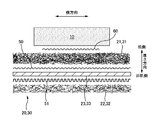
- FIG. 5 is an explanatory diagram of a bonding region 60.
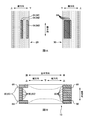
- FIG. 7A is an explanatory diagram of the first application region 64, and FIG. 7B is an explanatory diagram of the second application region 65. It is explanatory drawing of the joining area
- a pants type having a longitudinal direction, a lateral direction, and a thickness direction, folded in half in the longitudinal direction, the longitudinal direction being along the longitudinal direction, and a pair of belt portions along the lateral direction It is an absorbent article, and the belt portion is stretchable in the lateral direction, which is joined with an adhesive between a skin side sheet, a non-skin side sheet, and the skin side sheet and the non-skin side sheet.
- An elastic member and has a pair of joining regions in which a non-skin side surface of the longitudinal end portion of the absorbent main body and a skin side surface of the skin side sheet are joined, and the skin side sheet
- the basis weight of the fibers is larger than the basis weight of the fibers of the non-skin side sheet, and the amount of the adhesive bonding the elastic member and the skin side sheet per unit length is per unit length. Less than the amount of the adhesive bonding the elastic member and the non-skin side sheet When a pant-type absorbent article characterized by.
- the cushioning property of the skin-side sheet is high, and the cushioning property is not easily inhibited by the adhesive, so that the contraction force of the elastic member is easily buffered by the skin-side sheet. Therefore, the absorbent main body is hardly affected by the contraction of the belt portion, and wrinkles are hardly generated in the absorbent main body.
- At least one of the pair of joining regions connects a pair of first regions having a length in the lateral direction and the lateral ends of the pair of first regions.
- a pair of second regions having a length in the longitudinal direction, and the absorbent main body and the skin sheet are joined between the pair of first regions and between the pair of second regions.
- the non-joining area reduces the joining area between the absorbent main body and the belt part, and the absorbent main body is less susceptible to the contraction of the belt part.
- the pair of first regions can prevent the lower end portion of the belt portion and the upper end portion of the absorbent main body from being turned up. Further, when the absorbent article is pulled up, the pair of second regions makes it easy for the lifting force to be transmitted from the belt portion to the absorbent main body, and the absorbent main body is easily pulled up.
- pant-type absorbent article wherein the length in the longitudinal direction is longer in the non-joining region than in the first region below the pair of first regions. This is a mold absorbent article.
- the joining area between the absorbent main body and the belt portion becomes smaller, and the absorbent main body becomes less susceptible to the contraction of the belt portion.
- Such a pant-type absorbent article characterized in that, in the pair of first regions, the upper first region is longer in the longitudinal direction than the lower first region. It is a pants-type absorbent article.
- the joining area between the absorbent main body and the belt portion becomes smaller, and the absorbent main body becomes less susceptible to the contraction of the belt portion.
- the upper end of the absorbent main body is firmly joined to the belt portion, it is possible to prevent a decrease in wearing comfort due to turning of the absorbent main body.
- Such a pant-type absorbent article wherein the joint region located on the wearer's belly side of the pair of joint regions has the non-joint region, and the joint region located on the back side of the wearer is the A pants-type absorbent article characterized by having no non-bonded region.
- the back belt portion is easier to separate from the absorbent main body than the abdominal belt portion due to rubbing during sleeping, etc., but the back belt portion is the absorbent main body. Firmly joined. And an absorptive main body becomes difficult to receive to the influence of contraction of the belt part of a ventral side.
- pant-type absorbent article in the belt portion, a plurality of the elastic members are arranged in the longitudinal direction, and all the elastic members overlapping the absorbent main body in the thickness direction are
- the pants-type absorbent article is characterized by overlapping with the joining region in the thickness direction.
- a plurality of the elastic members are arranged in the longitudinal direction, and the belt portion located on the back side of the wearer is A portion of the joining region that overlaps with the elastic member disposed in the protruding region and in the thickness direction, and the other elastic member
- the pants-type absorbent article is characterized in that a length in the lateral direction is shorter than a portion of the joint region overlapping in a thickness direction.
- the joining area on the back side becomes small, and the absorbent main body is hardly affected by the contraction of the belt part on the back side.
- a portion of the joining region overlapping with the lower elastic member in the thickness direction is the upper elastic member
- the pants-type absorbent article is characterized in that the length in the lateral direction is shorter than the portion of the joining region overlapping in the thickness direction.
- the back-side joining area becomes smaller, and the absorbent main body becomes less susceptible to the contraction of the back-side belt portion.
- Such a pant-type absorbent article wherein the absorbent main body has an absorbent body, and a part of the absorbent body located on the abdomen side of the wearer and a part of the absorbent body located on the back side of the wearer
- the pants-type absorbent article is characterized in that at least one of them is thicker than a portion of the absorbent body located in the crotch portion of the wearer.
- the absorbent body that is overlapped with the belt portion is thick and has high rigidity, so that the absorbent main body is less susceptible to the contraction of the belt portion.
- the pants-type absorbent article according to the present invention is not limited to diapers for adults, and can be used as, for example, diapers for infants, shorts-type sanitary napkins, and the like.
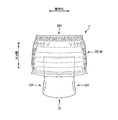
- FIG. 1 is a schematic front view of a pants-type disposable diaper 1 (hereinafter referred to as “diaper”) of the first embodiment.
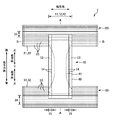
- FIG. 2 is a schematic plan view of the developed and extended diaper 1 as seen from the skin side.
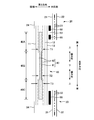
- FIG. 3 is a schematic sectional view taken along line AA in FIG.
- FIG. 4 is a schematic sectional view taken along line BB in FIG.
- the extended state of the diaper 1 is a state in which the diaper 1 is extended to such an extent that the wrinkles generated in the diaper 1 are substantially not visually recognized. Specifically, it is a state in which each member constituting the diaper 1 (for example, skin-side sheets 21 and 31 to be described later) is extended until the dimensions thereof are equal to or close to the dimensions of the member itself.
- the diaper 1 has a longitudinal direction, a lateral direction, and a thickness direction in a pants-type state, and is formed with a waistline opening BH and a pair of leghole openings LH.
- the torso side of the wearer is the upper side
- the inseam side of the wearer is the lower side.
- the thickness direction is a direction in which the members constituting the diaper 1 are laminated as shown in FIGS. 3 and 4.
- the side in contact with the wearer is defined as “skin side”, and the opposite side is defined as “non-skin side”.
- the diaper 1 is a three-piece type diaper having an absorbent main body 10 and a pair of belt members 20 and 30 (a pair of belt portions of the present invention) which are three rectangular members.
- the pair of belt members 20, 30 the one located on the wearer's stomach side is referred to as the abdomen side belt member 20, and the one located on the wearer's back side is referred to as the back side belt member 30.
- the abdomen belt member 20 and the back belt member 30 are arranged such that their longitudinal directions are along the lateral direction of the diaper 1.
- the center part of the horizontal direction of the abdominal side belt member 20 is distribute
- a central portion in the lateral direction of the member 30 is disposed.
- the absorbent main body 10 is folded in half at the approximate center of the longitudinal direction so that the longitudinal direction of the absorbent main body 10 is along the longitudinal direction of the diaper 1.
- the pants-type diaper 1 shown in FIG. 1 is obtained by joining both sides in the horizontal direction and both sides in the horizontal direction of the back belt member 30 by welding or the like.
- the absorbent main body 10 includes an absorbent body 40, a top sheet 11 disposed on the skin side in the thickness direction from the absorbent body 40, and a back sheet 12 disposed on the non-skin side in the thickness direction from the absorbent body 40.
- the exterior sheet 13 is a liquid-permeable sheet, and examples thereof include a hydrophilic spunbond nonwoven fabric and a hydrophilic air-through nonwoven fabric.
- the back sheet 12 is a liquid-impermeable sheet, and examples thereof include a polyethylene film. Examples of the exterior sheet 13 include a hydrophobic SMS nonwoven fabric.
- the top sheet 11 and the back sheet 12 viewed in the thickness direction have the same planar shape and size as the absorbent main body 10 and cover both surfaces of the absorber 40. Moreover, as shown in FIG. 4, the both sides of the lateral direction of the exterior sheet 13 are folded twice toward the skin side.
- An elastic member 14 for a three-dimensional gathered portion such as rubber thread is fixed in a state of being stretched in the longitudinal direction between the exterior sheets 13 that are turned into two layers by the first folding. Part of the exterior sheet 13 is folded back to the skin side with respect to the top sheet 11 by the second folding, and a three-dimensional gather portion 15 that can stand on the skin side is formed.
- the absorber 40 has an absorbent core 41 that absorbs and holds excrement such as urine, and a core wrap sheet 42 that covers the absorbent core 41.
- the absorbent core 41 include those in which liquid absorbent fibers such as pulp containing a super absorbent polymer (SAP) are formed into a predetermined shape (here, an hourglass shape).
- the core wrap sheet 42 include liquid permeable sheets such as tissue paper and nonwoven fabric.
- the abdominal side belt member 20 and the back side belt member 30 are each a skin side sheet 21, 31, a non-skin side sheet 22, 32, and a plurality of waistline elastic members 23, 33, Cover sheets 24 and 34.
- seat which comprises the stomach side belt member 20 and the back side belt member 30, flexible sheets, such as a SMS nonwoven fabric, can be illustrated.
- the waistline elastic members 23 and 33 include thread-like elastic members such as rubber and spandex, but may be sheet-like elastic members such as a stretchable nonwoven fabric and a stretchable film.
- the skin side sheets 21 and 31 and the non-skin side sheets 22 and 32 are arranged on the non-skin side in the thickness direction with respect to the absorbent main body 10.
- the plurality of waistline elastic members 23, 33 are arranged side by side in the vertical direction between the skin side sheets 21, 31 and the non-skin side sheets 22, 32.
- the plurality of waistline elastic members 23 and 33 are adhesive (for example, hot) between the skin-side sheets 21 and 31 and the non-skin-side sheets 22 and 32 in a state of being stretched in the lateral direction so as to be stretchable in the lateral direction. Melted adhesive etc.).
- the cover sheets 24 and 34 are shorter in the longitudinal direction than the skin-side sheets 21 and 31 and the non-skin-side sheets 22 and 32, and are arranged on the skin side in the thickness direction of the absorbent main body 10. 10 end portions in the longitudinal direction are covered.
- the 3 piece type diaper was illustrated here, even if it is a diaper provided with the site
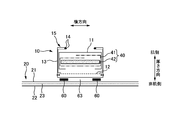
- FIG. 5 is an explanatory diagram of the amounts of the adhesives 50 and 51 that join the elastic members 23 and 33 to the skin-side sheets 21 and 31 and the non-skin-side sheets 22 and 32.
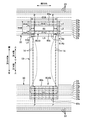
- FIG. 6 is an explanatory diagram of a joining region 60 where the belt members 20 and 30 and the absorbent main body 10 are joined.
- the diaper 1 has a non-skin side surface at the end in the longitudinal direction of the absorbent main body 10 and the skin side surfaces of the skin side sheets 21, 31 included in the belt members 20, 30. It has a pair of joining area
- the lateral contraction force of the belt members 20, 30, that is, the lateral contraction force of the waistline elastic members 23, 33 is transmitted to the absorbent main body 10.
- the contraction force of the elastic members 23 and 33 is largely transmitted to the absorbent main body 10
- vertical fistulas are formed on the portion of the absorbent main body 10 that overlaps with the belt members 20 and 30, and excrement is generated from the gap generated by the wrinkles. Almost leaks or the comfort of wearing decreases.
- the basis weight of the fibers of the skin-side sheets 21 and 31 to which the absorbent main body 10 is joined is made larger than the basis weight of the fibers of the non-skin-side sheets 22 and 32.
- the basis weight of the skin-side sheets 21 and 31 may be 15 g / m 2
- the basis weight of the non-skin-side sheets 22 and 32 may be 13 g / m 2 .
- the amount (for example, g / m) of the adhesive 50 that joins the waistline elastic members 23 and 33 and the skin side sheets 21 and 31 per unit length is the unit length.
- the amount is smaller than the amount of the adhesive 51 (for example, g / m) that joins the corresponding waistline elastic members 23 and 33 and the non-skin side sheets 22 and 32. Therefore, the cushioning properties of the skin side sheets 21 and 31 can be further suppressed from being hindered by the rigidity of the adhesive 50.
- the waistline elastic members 23 and 33 and the skin side sheets 21 and 31 since the amount of the adhesive 50 that joins the waistline elastic members 23 and 33 and the skin side sheets 21 and 31 is small, the skin side sheets 21 and 31 and the waistline elastic member 23, The bonding strength of 33 is weaker than the bonding strength of the non-skin side sheets 22 and 32 and the waistline elastic members 23 and 33.
- the absorbent main body 10 is not easily affected by the contraction of the belt members 20 and 30, and the absorbent main body 10 is less likely to wrinkle. As a result, the adherence between the absorbent main body 10 and the wearer is enhanced, the excrement leakage is suppressed, and the wearing comfort is also improved.
- the skin side sheets 21 and 31 are in direct contact with the wearer. Therefore, by reducing the amount of the adhesive 50 on the skin side sheets 21 and 31 side, the rigidity of the skin side sheets 21 and 31 is suppressed, and the feel of the belt members 20 and 30 is also improved.
- the basis weight of the non-skin side layer may be larger than the basis weight of the skin side layer.
- the basis weight of the skin S layer is 4.5 g / m 2 and the basis weight of the M layer is 1.5 g. / m with respect to a 2, a basis weight of S layer of the non-skin side better to 9 g / m 2.
- the absorbent main body 10 is the belt members 20 and 30. It is less susceptible to shrinkage.
- the adhesive is not applied to the skin-side sheets 21 and 31 and the non-skin-side sheets 22 and 32, but the adhesive 50 is applied to the waistline elastic members 23 and 33 by, for example, the V slot method. , 51 shall be applied directly. Further, by adjusting the positions of the adhesives 50 and 51 and the positions of the waistline elastic members 23 and 33 in the V slot, the number of the waistline elastic members 23 and 33 on the side joined to the non-skin side sheets 22 and 32 is increased. The amount of the adhesive 51 is applied. By doing so, the amount of the adhesive 50 that joins the waistline elastic members 23 and 33 and the skin side sheets 21 and 31 per unit length is set to the waistline elastic members 23 and 33 per unit length and the non-skin side. The amount can be smaller than the amount of the adhesive 51 that joins the sheets 22 and 32.
- the comparison of the basis weight (mass per unit area) of the fibers of the skin side sheets 21 and 31 and the non-skin side sheets 22 and 32 may be performed by a known method.
- the skin-side sheets 21 and 31 and the non-skin-side sheets 22 and 32 are separated from the belt members 20 and 30 of the target diaper 1 and cut into an appropriate size, and the samples of the skin-side sheets 21 and 31 and the non-skin Samples of the side sheets 22 and 32 are obtained. And it is good to measure the mass and area of each sample, and to calculate and compare the mass per unit area.
- the comparison with the amount of the adhesive 51 that joins 32 may be performed by a known method. For example, a sample obtained by cutting the belt members 20 and 30 of the target diaper 1 to an appropriate size is obtained, and a liquid such as ink that allows the adhesives 50 and 51 to be visually recognized on the skin side surface and the non-skin side surface of the sample. Apply. Then, the longitudinal section of the waistline elastic members 23 and 33 and a cross section cut in the orthogonal direction are enlarged and photographed with an electron microscope. Based on the photographed image, the amount of the adhesive 50 on the skin side sheets 21 and 31 side and the amount of the adhesive 51 on the non-skin side sheets 22 and 32 side are visually compared or the areas are calculated and compared. Or better.
- the bonding strength between the skin-side sheets 21 and 31 and the waistline elastic members 23 and 33 is weaker than the bonding strength between the non-skin-side sheets 22 and 32 and the waistline elastic members 23 and 33.
- a tensile tester that the bonding strength between the skin-side sheets 21 and 31 and the waistline elastic members 23 and 33 is weaker than the bonding strength between the non-skin-side sheets 22 and 32 and the waistline elastic members 23 and 33. May be.
- two samples that are long in the longitudinal direction of the waistline elastic members 23 and 33 and that include the one waistline elastic members 23 and 33 are obtained. To do. And while separating the non-skin side sheet
- FIG. 7A is an explanatory diagram of the first application region 64 where the adhesive is applied to the belt members 20 and 30, and FIG. 7B is an explanatory diagram of the second application region 65 where the adhesive is applied to the absorbent main body 10. It is.
- a first application region 64 (FIG. 7A) in which an adhesive is applied to the belt members 20 and 30 and a second application region 65 (FIG. 7B) in which an adhesive is applied to the absorbent main body 10. )
- a joining region 60 (FIG. 6).
- the joint region 60 located on the wearer's ventral side is also referred to as the ventral side joint region 61
- the joint region 60 located on the wearer's back side is also referred to as the back side joint region 62.
- region 64 is an area
- a plurality (six in this case) of first application regions 64 are arranged at a minute interval in the longitudinal direction of the diaper 1.
- three first application regions 64 are arranged in the vertical direction.
- interval is a space
- region 65 is an area
- a plurality (seven in this case) of second application regions 65 are arranged in the lateral direction of the diaper 1 without being spaced apart or with a minute spacing.
- a plurality (seven in this case) of second application regions 65 are also arranged in the lateral direction at a minute interval without being spaced apart at the end on the ventral side of the absorbent main body 10.
- the length in the vertical direction of the second application region 651 at both ends in the horizontal direction is equal to that of the second application region 65 on the back side, whereas the vertical direction of the intermediate second application region 652 Is shorter than the second application area 65 on the back side, and is arranged close to the end of the absorbent main body 10.
- the back-side joining region 62 has a substantially rectangular shape by overlapping the first coating region 64 and the second coating region 65, and almost the entire inner region absorbs the back side joining region 62. This is a joining region between the main body 10 and the belt members 20 and 30.
- the ventral joint region 61 is formed by overlapping the first application region 64 and the second application region 65, so that the outer shape becomes a substantially rectangular shape, and the adhesive is not applied to the inside thereof.
- the ventral junction region 61 connects a pair of first regions 61A having a length in the horizontal direction and a pair of first regions 61A in the horizontal direction, and a pair of first regions 61A having a length in the vertical direction. 2 region 61B, and a region between the pair of first regions 61A and no adhesive applied between the pair of second regions 61B, that is, the absorbent main body 10 and the skin side sheet 21. , 31 have non-bonded regions 63 that are not bonded.
- the joining region 60 between the absorbent main body 10 and the belt members 20 and 30 becomes small, and the absorbent main body 10 becomes less susceptible to the contraction of the belt members 20 and 30.
- the upper end portion of the absorbent main body 10 is joined to the belt members 20 and 30 by the upper first region 61A1, and the lower end portions of the belt members 20 and 30 are joined to the absorbent main body 10 by the lower first region 61A2.
- the upper end part of the absorptive main body 10 and the lower end part of the belt members 20 and 30 are prevented from being turned over, and the occurrence of wrinkles in the absorptive main body 10 is achieved by forming a non-joining region 63 therebetween. Is suppressed.
- the absorbent main body 10 bends and absorbs in the non-bonding region 63 when the wearer holds the belt members 20 and 30 and pulls up the diaper 1. It becomes difficult to pull up the main body 10.
- the diaper 1 of this embodiment is provided with a pair of second regions 61B that connect the pair of first regions 61A. Therefore, the lifting force is easily transmitted from the belt members 20 and 30 to the absorbent main body 10 by the second region 61B continuous in the vertical direction of the diaper 1, and the absorbent main body 10 can be firmly pulled up.
- the second region 61B at the lateral end of the first region 61A, the absorbent main body 10 is difficult to sway and is pulled up in a wide state. In close contact.
- the lateral ends of the abdominal and dorsal joining regions 60 (61, 62) (the second region 61 ⁇ / b> B in the abdominal joining region 61) and the elasticity for the three-dimensional gather portion.
- the end of the member 14 in the longitudinal direction overlaps. Therefore, the lifting force is easily transmitted from the belt members 20, 30 to the elastic member 14, and the entire absorbent main body 10 is easily lifted in conjunction with the rising of the elastic member 14.
- the effective length portion that exhibits stretchability in the elastic member 14 is shown in the drawing, and the effective length portion of the joining region 60 and the elastic member 14 may overlap as shown in the drawing.
- the lower end 61Bb of the second region 61B is positioned below the lower end 61Ab of the first region 61A excluding the second region 61B. Therefore, the length in the vertical direction is shortened in the central portion in the lateral direction in the ventral side joining region 61 and is not easily affected by the contraction of the belt portion 20, and the length overlapping the elastic member 14 at the lateral end portion. Thus, the absorbent main body 10 is easily lifted.
- an adhesive may be applied to the entire area of the first application region 64 and the second application region 65, or an adhesive may be applied partially.
- the partial application pattern of the adhesive include a linear application pattern such as a spiral shape, and a pattern in which dots or the like are arranged.
- the pattern is continuous in the lateral direction of the diaper 1 or minute. It is assumed that the adhesive is applied at regular intervals, and in the second application region 65, the adhesive is applied in the longitudinal direction of the diaper 1 or at minute intervals.
- the length L2 of the non-joining region 63 can be made longer than the length L1 of the first region 61A2 below the pair of first regions 61A. Preferred (L1 ⁇ L2).
- the non-joining area 63 becomes large and the joining area 60 between the absorbent main body 10 and the belt members 20 and 30 becomes small, so that the absorbent main body 10 is less susceptible to the contraction of the belt members 20 and 30.
- the lower end portions of the belt members 20 and 30 are turned over, the influence on the wearing comfort is small. Therefore, even if the longitudinal length L1 of the lower first region 61A2 is shortened, a problem hardly occurs.
- the length L5 of the non-joining region 63 is longer than the length L4 of the second region 61B (L4 ⁇ L5).
- the length L5 of the non-bonding region 63 is about five times the length L4 of the second region 61B.
- the length L3 of the upper first region 61A1 is longer than the length L1 of the lower first region 61A2 (L1 ⁇ L3). If the upper end portion of the absorbent main body 10 is turned over, a step is generated in the diaper 1 and the influence on wearing comfort is great. Therefore, the longitudinal length L3 of the upper first region 61A1 is increased and the upper end portion of the absorbent main body 10 is firmly joined to the belt members 20 and 30 to prevent a decrease in wearing comfort.
- the length L1 of the lower first region 61A2 in the vertical direction is not made as long as the upper first region 61A1, so that the non-joining region 63 can be enlarged, and the absorbent main body 10 is formed of the belt member 20. , 30 is less susceptible to shrinkage.
- region 63 is provided only in the ventral
- the back belt member 30 is easily rubbed between the floor, a chair, etc. and the wearer when the wearer is sleeping or seated, and is easily separated from the absorbent main body 10. . Therefore, as in the diaper 1 of the present embodiment, it is preferable that the non-joining region 63 is provided in the ventral joining region 61 and the non-joining region is not provided in the dorsal joining region 62 (this non-joining region). Is a relatively large region, for example, a region in which the length in the horizontal direction and the vertical direction is larger than the interval between the waistline elastic members 33). By doing so, the absorptive main body 10 becomes less susceptible to the contraction of the abdominal belt member 20 while preventing the back side belt member 30 and the absorptive main body 10 from being separated.
- ventral joint region 61 is located at the center of the wearer's abdomen, but the abdomen dents and swells due to breathing. Therefore, by providing the non-joining area
- the absorbent main body 10 has a non-application area 66 where no adhesive is applied between the second application area 651 at both ends in the lateral direction and the second application area 652 therebetween. , Present on the ventral side and dorsal side, respectively. Therefore, as shown in FIG. 6, the adhesive is not applied at the lateral position P corresponding to the non-application area 66 in the abdominal and dorsal bonding areas 60 (61, 62), or the belt member. The adhesive is applied only on the 20th and 30th side. Therefore, at the position P of the joining region 60, the amount of adhesive applied is small and the rigidity is low compared to the region adjacent in the lateral direction, so that the belt members 20 and 30 are likely to be bent.
- the belt members 20 and 30 are easily rounded along the wearer's waist, and the wearing comfort is improved.
- the abdomen side belt member 20 can be easily bent, so that the uncomfortable feeling during breathing can be further reduced.
- the waistline elastic members 23 and 33 that do not overlap the joining region 60 when viewed in the thickness direction of the diaper 1 are more easily contracted in the lateral direction than the waistline elastic members 23 and 33 that overlap the joining region 60. Therefore, part of the waistline elastic member that overlaps with the absorbent main body 10 (23a to 23i and 33a to 33i in FIG. 6) overlaps with the joining region 60, but part of it does not overlap with the joining region 60. Then, a part of the belt members 20 and 30 are locally contracted, and the belt members 20 and 30 are likely to be twisted.
- all the waistline elastic members (23a to 23i, 33a to 33i) overlapping with the absorbent main body 10 in the thickness direction overlap with the joining region 60 in the thickness direction.
- the upper end 60 a of the joining region 60 is located at a position corresponding to or above the uppermost waistline elastic members 23 a and 33 a overlapping with the absorbent main body 10
- the lower end 60b of the region 60 is located at a position corresponding to or below the lowermost waistline elastic members 23i and 33i overlapping the absorbent main body 10.
- the thickness of the absorber 40 may be varied depending on the longitudinal portions 40A to 40C of the absorber 40.
- the thickness T1 of the abdominal side 40A of the absorbent body 40 located on the abdomen side of the wearer than the thickness T2 of the crotch part 40B of the absorbent body 40 located on the crotch part of the wearer, or the back of the wearer The thickness T3 of the back side portion 40C of the absorber 40 located on the side may be increased (T2 ⁇ T1, T3).
- the back-side joining region 62 does not have a non-joining region, so that the back side portion 40B of the absorbent body 40 has a thickness T1 that is larger than the thickness T1 of the abdominal side portion 40A of the absorbent body 40.
- the thickness T3 may be thicker (T2 ⁇ T1 ⁇ T3).
- the absorber 40 is separated from the target diaper 1 and a dial thickness gauge (ID-C1012C) manufactured by Mitutoyo Corporation or its equivalent is used at an appropriate contact pressure (for example, 3 gf / cm 2 ). It is recommended that the target portions 40A to 40C of the absorbent body 40 be measured under pressure and compared. In addition, you may compare visually or may compare using the image which image
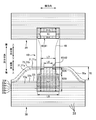
- FIG. 8 is an explanatory diagram of the bonding region 60 of the diaper 1 of the second embodiment.
- the back belt member 30 has a protruding region 70 that protrudes downward from the abdominal belt member 20.
- the lateral end 70a of the protruding region 70 is inclined inward in the lateral direction toward the lower side in the longitudinal direction.
- the protruding region 70 covers the wearer's buttocks.
- the shape of the abdominal side belt member 20 and the back side belt member 30 differs, it can prevent that the diaper 1 will be mounted
- a plurality of elastic members 71 are arranged along the lower end portion of the protruding region 70. Book) are arranged side by side.
- the elastic member 71 of the protruding region 70 (hereinafter referred to as the protruding region elastic member 71) is bonded between the skin-side sheet 31 and the non-skin-side sheet 32 so that it can expand and contract in the lateral direction. It is joined with the agent.
- all the waistline elastic members 33 a to 33 i and the protruding region elastic members 71 a to 71 c overlapping with the absorbent main body 10 in the thickness direction It is preferable to overlap with 62 in the thickness direction. By doing so, it is possible to prevent kinking due to local contraction of the back belt member 30 and to firmly cover the wearer's waist and buttocks.
- the lateral lengths L6 and L7 of the lower portion 62A of the back side joining region 62 that overlaps the protruding region elastic members 71a to 71c in the thickness direction overlap with the waistline elastic members 33a to 33i in the thickness direction. It is preferably shorter than the lateral length L8 of the upper portion 62B of the side joining region 62 (L6, L7 ⁇ L8).
- the lateral length L6 of the portion of the dorsal joint region 62 that overlaps with the lower elastic members 71b and 71c in the thickness direction is equal to the upper protruding region elastic member 71a. It is preferably shorter than the length L7 in the lateral direction of the portion of the dorsal junction region 62 overlapping in the thickness direction (L6 ⁇ L7). Moreover, it is preferable that the lower part 62 ⁇ / b> A of the back-side joining region 62 does not intersect with the outline of the absorbent core 41, that is, it does not protrude outward in the lateral direction from the absorbent core 41.
- the back side belt member 30 is large, the back side joining area
- the absorptive core 41 shown in FIG. 8 has an hourglass shape, and a central portion in the longitudinal direction is bounded inward in the width direction.
- both sides in the lateral direction of the absorbent main body 10 are likely to stand on the skin side along the side of the absorbent core 41 due to the sandwiching of the legs of the wearer. Therefore, as described above, it is preferable that the back-side joining region 62 is gradually shortened in the lateral direction toward the center in the longitudinal direction as the absorbent core 41 is constricted.
Landscapes
- Health & Medical Sciences (AREA)
- Epidemiology (AREA)
- Engineering & Computer Science (AREA)
- Biomedical Technology (AREA)
- Heart & Thoracic Surgery (AREA)
- Vascular Medicine (AREA)
- Life Sciences & Earth Sciences (AREA)
- Animal Behavior & Ethology (AREA)
- General Health & Medical Sciences (AREA)
- Public Health (AREA)
- Veterinary Medicine (AREA)
- Absorbent Articles And Supports Therefor (AREA)
Abstract
吸収性本体(10)と一対のベルト部(20,30)を有するパンツ型吸収性物品(1)であり、ベルト部(20,30)は、肌側シート(21,31)と非肌側シート(22,32)の間に接着剤で接合されている横方向に伸縮可能な弾性部材(23,33)を有し、吸収性本体(10)の長手方向の端部の非肌側面と、肌側シート(21,31)の肌側面とが接合されている一対の接合領域(60)を有し、肌側シート(21,31)の繊維の坪量が非肌側シート(22,32)の繊維の坪量よりも大きく、単位長さ当たりの弾性部材(23,33)と肌側シート(21,31)を接合している接着剤の量が、単位長さ当たりの弾性部材(23,33)と非肌側シート(22,32)を接合している接着剤の量よりも少ない。
Description
本発明は、パンツ型吸収性物品に関する。
パンツ型吸収性物品として、例えば特許文献1には、外装体と、外装体の内面側に固定された吸収性本体とを備え、外装体における腹側部の両側部と背側部の両側部とが接合されて一対のサイドシール部が形成されているパンツ型おむつが開示されている。特許文献1では、外装体を構成する最外層シートのMFR(溶融状態にある樹脂の流動性)を最内層シートのMFRよりも大きくすることで、サイドシール部の接合強度を高めつつ、外側の柔軟性を得ている。また、最内層シートの溶融状態の均一化の観点から、最内層シートの坪量(目付)を最外層シートよりも小さくすることが好ましいとしている。
パンツ型吸収性物品では、外装体の腹側部及び背側部(ベルト部)が着用者の胴回りにフィットするように、最外層シート(非肌側シート)と最内層シート(肌側シート)の間に弾性部材が横方向に伸長状態で固定されている。また、最内層シートに吸収性本体が固定されている。そのため、上記特許文献1のように、最内層シートの坪量が小さいと、弾性部材の収縮力が最内層シートで緩衝され難く、吸収性本体に伝達され易くなる。弾性部材の収縮の影響を受けて吸収性本体が収縮すると、吸収性本体に皺が生じ、排泄物が漏れ易くなったり、着け心地が低下したりしてしまう。
本発明は、上記のような従来の問題に鑑みてなされたものであって、その目的は、吸収性本体がベルト部の収縮の影響を受け難いパンツ型吸収性物品を提供することにある。
上記目的を達成するための主たる発明は、縦方向と横方向と厚さ方向とを有し、長手方向に二つ折りされ、前記長手方向が前記縦方向に沿う吸収性本体と、前記横方向に沿う一対のベルト部と、を有するパンツ型吸収性物品であって、前記ベルト部は、肌側シートと、非肌側シートと、前記肌側シートと前記非肌側シートの間に接着剤で接合されている前記横方向に伸縮可能な弾性部材とを有し、前記吸収性本体の前記長手方向の端部の非肌側面と、前記肌側シートの肌側面とが接合されている一対の接合領域を有し、前記肌側シートの繊維の坪量が、前記非肌側シートの繊維の坪量よりも大きく、単位長さ当たりの前記弾性部材と前記肌側シートを接合している前記接着剤の量が、前記単位長さ当たりの前記弾性部材と前記非肌側シートを接合している前記接着剤の量よりも少ないこと、を特徴とするパンツ型吸収性物品である。
本発明の他の特徴については、本明細書及び添付図面の記載により明らかにする。
本発明の他の特徴については、本明細書及び添付図面の記載により明らかにする。
本発明によれば、吸収性本体がベルト部の収縮の影響を受け難いパンツ型吸収性物品を提供することができる。
本明細書及び添付図面の記載により、少なくとも以下の事項が明らかとなる。
縦方向と横方向と厚さ方向とを有し、長手方向に二つ折りされ、前記長手方向が前記縦方向に沿う吸収性本体と、前記横方向に沿う一対のベルト部と、を有するパンツ型吸収性物品であって、前記ベルト部は、肌側シートと、非肌側シートと、前記肌側シートと前記非肌側シートの間に接着剤で接合されている前記横方向に伸縮可能な弾性部材とを有し、前記吸収性本体の前記長手方向の端部の非肌側面と、前記肌側シートの肌側面とが接合されている一対の接合領域を有し、前記肌側シートの繊維の坪量が、前記非肌側シートの繊維の坪量よりも大きく、単位長さ当たりの前記弾性部材と前記肌側シートを接合している前記接着剤の量が、前記単位長さ当たりの前記弾性部材と前記非肌側シートを接合している前記接着剤の量よりも少ないこと、を特徴とするパンツ型吸収性物品である。
縦方向と横方向と厚さ方向とを有し、長手方向に二つ折りされ、前記長手方向が前記縦方向に沿う吸収性本体と、前記横方向に沿う一対のベルト部と、を有するパンツ型吸収性物品であって、前記ベルト部は、肌側シートと、非肌側シートと、前記肌側シートと前記非肌側シートの間に接着剤で接合されている前記横方向に伸縮可能な弾性部材とを有し、前記吸収性本体の前記長手方向の端部の非肌側面と、前記肌側シートの肌側面とが接合されている一対の接合領域を有し、前記肌側シートの繊維の坪量が、前記非肌側シートの繊維の坪量よりも大きく、単位長さ当たりの前記弾性部材と前記肌側シートを接合している前記接着剤の量が、前記単位長さ当たりの前記弾性部材と前記非肌側シートを接合している前記接着剤の量よりも少ないこと、を特徴とするパンツ型吸収性物品である。
このようなパンツ型吸収性物品によれば、肌側シートのクッション性が高く、且つ、そのクッション性が接着剤で阻害され難いため、弾性部材の収縮力が肌側シートにて緩衝され易い。よって、吸収性本体はベルト部の収縮の影響を受け難く、吸収性本体に皺が生じ難くなる。
かかるパンツ型吸収性物品であって、前記一対の接合領域の少なくとも一方は、前記横方向に長さを有する一対の第1領域と、前記一対の第1領域の前記横方向の端部を繋ぎ、前記縦方向に長さを有する一対の第2領域とを有し、前記一対の第1領域の間であり前記一対の第2領域の間に、前記吸収性本体と前記肌側シートが接合されていない非接合領域を有すること、を特徴とするパンツ型吸収性物品である。
このようなパンツ型吸収性物品によれば、非接合領域により、吸収性本体とベルト部の接合領域が小さくなり、吸収性本体はベルト部の収縮の影響をより受け難くなる。また、一対の第1領域により、ベルト部の下端部と吸収性本体の上端部のめくれを防止できる。また、吸収性物品の引き上げ時、一対の第2領域により、引き上げ力がベルト部から吸収性本体に伝達され易く、吸収性本体を引き上げ易い。
かかるパンツ型吸収性物品であって、前記一対の第1領域のうち下方の前記第1領域に比べて前記非接合領域の方が、前記縦方向の長さが長いこと、を特徴とするパンツ型吸収性物品である。
このようなパンツ型吸収性物品によれば、吸収性本体とベルト部の接合領域がより小さくなり、吸収性本体はベルト部の収縮の影響をより受け難くなる。
かかるパンツ型吸収性物品であって、前記一対の第1領域のうち下方の前記第1領域に比べて上方の前記第1領域の方が、前記縦方向の長さが長いこと、を特徴とするパンツ型吸収性物品である。
このようなパンツ型吸収性物品によれば、吸収性本体とベルト部の接合領域がより小さくなり、吸収性本体はベルト部の収縮の影響をより受け難くなる。一方、吸収性本体の上端部はベルト部にしっかりと接合されるため、吸収性本体のめくれによる着け心地の低下を防止できる。
かかるパンツ型吸収性物品であって、前記一対の接合領域のうち着用者の腹側に位置する前記接合領域は前記非接合領域を有し、着用者の背側に位置する前記接合領域は前記非接合領域を有さないこと、を特徴とするパンツ型吸収性物品である。
このようなパンツ型吸収性物品によれば、就寝時の擦れ等により背側のベルト部は腹側のベルト部に比べると吸収性本体から分離し易いが、背側のベルト部が吸収性本体にしっかりと接合される。且つ、吸収性本体は腹側のベルト部の収縮の影響を受け難くなる。
かかるパンツ型吸収性物品であって、前記ベルト部において、複数の前記弾性部材が前記縦方向に並んで配されており、前記厚さ方向に前記吸収性本体と重複する全ての前記弾性部材が、前記接合領域と前記厚さ方向に重複していること、を特徴とするパンツ型吸収性物品である。
このようなパンツ型吸収性物品によれば、接合領域と重複しない弾性部材が大きく収縮することによるベルト部の局所的な収縮を防止できる。
かかるパンツ型吸収性物品であって、前記ベルト部において、複数の前記弾性部材が前記縦方向に並んで配されており、着用者の背側に位置する前記ベルト部は、着用者の腹側に位置する前記ベルト部よりも下方に突出する突出領域を有し、前記突出領域に配された前記弾性部材と前記厚さ方向に重複する前記接合領域の部位は、その他の前記弾性部材と前記厚さ方向に重複する前記接合領域の部位に比べて、前記横方向の長さが短いこと、を特徴とするパンツ型吸収性物品である。
このようなパンツ型吸収性物品によれば、背側の接合領域が小さくなり、吸収性本体は背側のベルト部の収縮の影響を受け難くなる。
かかるパンツ型吸収性物品であって、前記突出領域に配された複数の前記弾性部材のうち、下方の前記弾性部材と前記厚さ方向に重複する前記接合領域の部位は、上方の前記弾性部材と前記厚さ方向に重複する前記接合領域の部位に比べて、前記横方向の長さが短いこと、を特徴とするパンツ型吸収性物品である。
このようなパンツ型吸収性物品によれば、背側の接合領域がより小さくなり、吸収性本体は背側のベルト部の収縮の影響を受け難くなる。
かかるパンツ型吸収性物品であって、前記吸収性本体は吸収体を有し、着用者の腹側に位置する吸収体の部位と、着用者の背側に位置する吸収体の部位とのうちの少なくとも一方が、着用者の股間部に位置する前記吸収体の部位に比べて厚いこと、を特徴とするパンツ型吸収性物品である。
このようなパンツ型吸収性物品によれば、ベルト部と重複する吸収体の部位が厚く、剛性が高いため、吸収性本体はベルト部の収縮の影響をより受け難くなる。
以下、本発明に係るパンツ型吸収性物品として、大人向けのパンツ型使い捨ておむつを例に挙げて実施形態を説明する。但し、本発明に係るパンツ型吸収性物品は、大人向けのおむつに限定されず、例えば、乳幼児向けのおむつや、ショーツ型の生理用ナプキン等としても利用可能である。
===第1実施形態===
<<パンツ型使い捨ておむつの基本構成>>
図1は第1実施形態のパンツ型使い捨ておむつ1(以下「おむつ」という)の概略正面図である。図2は展開且つ伸長状態のおむつ1を肌側から見た概略平面図である。図3は図2のAA線の概略断面図である。図4は図2のBB線の概略断面図である。
<<パンツ型使い捨ておむつの基本構成>>
図1は第1実施形態のパンツ型使い捨ておむつ1(以下「おむつ」という)の概略正面図である。図2は展開且つ伸長状態のおむつ1を肌側から見た概略平面図である。図3は図2のAA線の概略断面図である。図4は図2のBB線の概略断面図である。
なお、おむつ1の伸長状態とは、おむつ1に生じていた皺が実質的に視認されなくなる程におむつ1を伸長させた状態である。具体的には、おむつ1を構成する各部材(例えば後述する肌側シート21,31等)の寸法がその部材単体の寸法と一致又はそれに近い長さになるまで伸長させた状態である。
おむつ1は、パンツ型の状態において、縦方向と横方向と厚さ方向とを有し、胴回り開口部BHと一対の脚回り開口部LHとが形成されている。縦方向において着用者の胴側を上側とし、着用者の股下側を下側とする。厚さ方向とは、図3や図4に示すように、おむつ1を構成する各部材が積層された方向である。厚さ方向において、着用者に接する側を「肌側」とし、その反対側を「非肌側」とする。
おむつ1は、長方形状の3つの部材である吸収性本体10及び一対のベルト部材20,30(本発明の一対のベルト部)を有する3ピースタイプのおむつである。一対のベルト部材20,30のうち着用者の腹側に位置するものを腹側ベルト部材20といい、着用者の背側に位置するものを背側ベルト部材30という。図2に示す展開状態において、腹側ベルト部材20及び背側ベルト部材30は、それらの長手方向がおむつ1の横方向に沿うように配されている。そして、吸収性本体10の長手方向の一方側の端部に、腹側ベルト部材20の横方向の中央部が配され、吸収性本体10の長手方向の他方側の端部に、背側ベルト部材30の横方向の中央部が配されている。
図2に示す展開状態のおむつ1において、吸収性本体10の長手方向がおむつ1の縦方向に沿うように、吸収性本体10が長手方向の略中央で二つ折りされ、腹側ベルト部材20の横方向の両側部と背側ベルト部材30の横方向の両側部とが溶着等で接合されることにより、図1に示すパンツ型状態のおむつ1となる。
吸収性本体10は、吸収体40と、吸収体40よりも厚さ方向の肌側に配されたトップシート11と、吸収体40よりも厚さ方向の非肌側に配されたバックシート12、及び、外装シート13とを有する。トップシート11は、液透過性シートであり、親水性のスパンボンド不織布や親水性のエアスルー不織布等を例示できる。バックシート12は、液不透過性シートであり、ポリエチレンフィルム等を例示できる。外装シート13としては、疎水性のSMS不織布等を例示できる。
厚さ方向に見たトップシート11及びバックシート12は、その平面形状及び大きさが吸収性本体10と同じであり、吸収体40の両面を覆っている。また、図4に示すように、外装シート13の横方向の両側部は肌側に2回折り返されている。1回目の折り返しで2層になった外装シート13の間に、糸ゴム等の立体ギャザー部用の弾性部材14が長手方向に伸長した状態で固定されている。2回目の折り返しで外装シート13の一部がトップシート11よりも肌側に折り返され、肌側に起立可能な立体ギャザー部15が形成されている。
吸収体40は、尿等の排泄物を吸収して保持する吸収性コア41と、吸収性コア41を覆うコアラップシート42とを有する。吸収性コア41としては、高吸収性ポリマー(SAP)を含むパルプ等の液体吸収性繊維が所定の形状(ここでは砂時計形状)に成形されたものを例示できる。コアラップシート42としてはティッシュペーパーや不織布等の液透過性シートを例示できる。
腹側ベルト部材20、及び、背側ベルト部材30は、それぞれ図3に示すように、肌側シート21,31と、非肌側シート22,32と、複数の胴回り弾性部材23,33と、カバーシート24,34とを有する。腹側ベルト部材20、及び、背側ベルト部材30を構成するシートとしては、SMS不織布等の柔軟なシートを例示できる。胴回り弾性部材23,33としては、ゴムやスパンデックス等の糸状の弾性部材を例示できるが、伸縮性不織布や伸縮性フィルム等のシート状の弾性部材であってもよい。
肌側シート21,31、及び、非肌側シート22,32は、吸収性本体10よりも厚さ方向の非肌側に配されている。複数の胴回り弾性部材23,33は、肌側シート21,31と非肌側シート22、32の間に縦方向に並んで配されている。また、複数の胴回り弾性部材23,33は、横方向に伸縮可能なように、横方向に伸長した状態で肌側シート21,31と非肌側シート22,32の間に接着剤(例えばホットメルト接着剤等)で接合されている。
カバーシート24,34は、肌側シート21,31や非肌側シート22,32よりも縦方向の長さが短く、吸収性本体10よりも厚さ方向の肌側に配され、吸収性本体10の長手方向の端部を覆っている。
なお、ここでは3ピースタイプのおむつを例示したが、一対のベルト部を繋ぐ部位が設けられたおむつ、つまり、一対のベルト部が1つの部材で形成された2ピースタイプのおむつであってもよい。
<<ベルト部材20,30と吸収性本体10の接合について>>
図5は弾性部材23,33と肌側シート21,31及び非肌側シート22,32とを接合している接着剤50,51の量の説明図である。図6はベルト部材20,30と吸収性本体10が接合されている接合領域60の説明図である。
図5は弾性部材23,33と肌側シート21,31及び非肌側シート22,32とを接合している接着剤50,51の量の説明図である。図6はベルト部材20,30と吸収性本体10が接合されている接合領域60の説明図である。
おむつ1は、図3や図6に示すように、吸収性本体10の長手方向の端部の非肌側面と、ベルト部材20,30が有する肌側シート21,31の肌側面とが、ホットメルト接着剤等の接着剤で接合されている一対の接合領域60を有し、吸収性本体10と一対のベルト部材20,30が一体化されている。
そのため、おむつ1では、ベルト部材20,30の横方向の収縮力、すなわち胴回り弾性部材23,33の横方向の収縮力が吸収性本体10に伝達される。但し、弾性部材23,33の収縮力が吸収性本体10に大きく伝達されてしまうと、ベルト部材20,30と重なる吸収性本体10の部位に縦皺ができ、皺により生じた隙間から排泄物が漏れ易くなったり、着け心地が低下したりしてしまう。
そこで、本実施形態のおむつ1では、吸収性本体10が接合されている肌側シート21,31の繊維の坪量を、非肌側シート22,32の繊維の坪量よりも大きくしている。例えば、肌側シート21,31の坪量を15g/m2とするのに対して、非肌側シート22,32の坪量を13g/m2にするとよい。肌側シート21,31の坪量を大きくすることで、肌側シート21,31のクッション性が高まり、胴回り弾性部材23,33の収縮力が肌側シート21,31にて緩衝され易くなる。よって、胴回り弾性部材23,33の収縮力が吸収性本体10に伝達され難くなる。
また、図5に示すように、肌側シート21,31の坪量を大きくすることで、肌側シート21,31では繊維間の空隙が小さくなる。よって、肌側シート21,31と胴回り弾性部材23,33を接合する接着剤51が含浸し難くなる。つまり、肌側シート21,31では接着剤が内部まで浸透し難いため、肌側シート21,31のクッション性が接着剤51の剛性により阻害されてしまうことを抑制できる。
更に、本実施形態のおむつ1では、単位長さ当たりの胴回り弾性部材23,33と肌側シート21,31を接合している接着剤50の量(例:g/m)が、単位長さ当たりの胴回り弾性部材23,33と非肌側シート22,32を接合している接着剤51の量(例:g/m)よりも少なくなっている。そのため、肌側シート21,31のクッション性が接着剤50の剛性により阻害されてしまうことをより一層抑制できる。
換言すると、本実施形態のおむつ1では、胴回り弾性部材23,33と肌側シート21,31を接合している接着剤50の量が少ないため、肌側シート21,31と胴回り弾性部材23,33の接合強度が、非肌側シート22,32と胴回り弾性部材23,33の接合強度よりも弱くなっている。
以上のように、本実施形態のおむつ1では、肌側シート21,31のクッション性が高く、且つ、そのクッション性が接着剤50で阻害され難いため、胴回り弾性部材23,33の収縮力が肌側シート21,31にて緩衝され易い。よって、吸収性本体10はベルト部材20,30の収縮の影響を受け難く、吸収性本体10に皺が生じ難くなっている。その結果、吸収性本体10と着用者の密着性が高まり、排泄物の漏れが抑制され、着け心地も向上する。
また、肌側シート21,31は直接着用者に接する。そのため、肌側シート21,31側の接着剤50の量を少なくすることで、肌側シート21,31の剛性が抑えられ、ベルト部材20,30の肌触りも向上する。
また、肌側シート21,31が積層不織布である場合、非肌側の層(胴回り弾性部材23,33側の層)の坪量を、肌側の層の坪量より大きくするとよい。例えば、肌側シート21,31がSMS不織布(スパンボンド/メルトブローン/スパンボンド不織布)である場合、肌側のS層の坪量を4.5g/m2、M層の坪量を1.5g/m2とするのに対して、非肌側のS層の坪量を9g/m2にするとよい。そうすることで、肌側シート21,31に接着剤50がより含浸し難くなり、肌側シート21,31のクッション性が接着剤50で阻害され難く、吸収性本体10がベルト部材20,30の収縮の影響をより受け難くなる。
なお、本実施形態のおむつ1では、肌側シート21,31及び非肌側シート22,32に接着剤が塗布されるのではなく、例えばVスロット方式によって胴回り弾性部材23,33に接着剤50,51が直接塗工されるものとする。そして、Vスロットにおける接着剤50,51の位置と胴回り弾性部材23,33の位置を調整することで、非肌側シート22,32に接合される側の胴回り弾性部材23,33の部位により多くの量の接着剤51が塗工されるようにする。そうすることで、単位長さ当たりの胴回り弾性部材23,33と肌側シート21,31を接合している接着剤50の量を、単位長さ当たりの胴回り弾性部材23,33と非肌側シート22,32を接合している接着剤51の量よりも少なくできる。
また、肌側シート21,31と非肌側シート22,32の繊維の坪量(単位面積当たりの質量)の比較は周知の方法で行うとよい。例えば、対象のおむつ1のベルト部材20,30から肌側シート21,31と非肌側シート22,32を分離して適当な大きさに裁断し、肌側シート21,31のサンプルと非肌側シート22,32のサンプルを取得する。そして、各サンプルの質量及び面積を測定し、単位面積当たりの質量を算出して比較するとよい。
また、単位長さ当たりの胴回り弾性部材23,33と肌側シート21,31を接合している接着剤50の量と、単位長さ当たりの胴回り弾性部材23,33と非肌側シート22,32を接合している接着剤51の量との比較は、周知の方法で行うとよい。例えば、対象のおむつ1のベルト部材20,30を適当な大きさに裁断したサンプルを取得し、そのサンプルの肌側面及び非肌側面に、接着剤50,51が視認可能となる墨などの液体を塗布する。そして、胴回り弾性部材23,33の長手方向及びその直交方向に切った断面を電子顕微鏡で拡大して撮影する。撮影した画像に基づき、肌側シート21,31側の接着剤50の量と非肌側シート22,32側の接着剤51の量とを、目視で比較したり、面積を算出して比較したりするとよい。
その他、肌側シート21,31と胴回り弾性部材23,33の接合強度が、非肌側シート22,32と胴回り弾性部材23,33の接合強度よりも弱いことを、引張試験機を用いて確認してもよい。具体的には、対象のおむつ1のベルト部材20,30から、胴回り弾性部材23,33の長手方向に長いサンプルであり、1本の胴回り弾性部材23,33が含まれたサンプルを2つ取得する。そして、一方のサンプルから非肌側シート22,32を分離して、肌側シート21,31に胴回り弾性部材23,33が接合されているサンプルを作成するとともに、他方のサンプルから肌側シート21,31を分離して、非肌側シート22,32に胴回り弾性部材23,33が接合されているサンプルを作成する。そして、サンプル毎に、胴回り弾性部材23,33の長手方向が引張方向となるように、引張試験機のチャックの一端にシート(肌側シート21,31又は非肌側シート22,32)を取り付け、他端に胴回り弾性部材23,33を取り付ける。そして、所定の速度(例えば300mm/min)でサンプルを引っ張り、シートと胴回り弾性部材23,33を引き剥がす。このときの応力(最大応力や平均応力等)を、シートと胴回り弾性部材23,33の接合強度として比較するとよい。
<<接合領域60について>>
図7Aはベルト部材20,30に接着剤が塗布されている第1塗布領域64の説明図であり、図7Bは吸収性本体10に接着剤が塗布されている第2塗布領域65の説明図である。本実施形態のおむつ1では、ベルト部材20,30に接着剤が塗布された第1塗布領域64(図7A)と、吸収性本体10に接着剤が塗布された第2塗布領域65(図7B)とが重ね合されることにより、接合領域60(図6)が形成されている。なお、以下の説明では、着用者の腹側に位置する接合領域60を腹側接合領域61ともいい、着用者の背側に位置する接合領域60を背側接合領域62ともいう。
図7Aはベルト部材20,30に接着剤が塗布されている第1塗布領域64の説明図であり、図7Bは吸収性本体10に接着剤が塗布されている第2塗布領域65の説明図である。本実施形態のおむつ1では、ベルト部材20,30に接着剤が塗布された第1塗布領域64(図7A)と、吸収性本体10に接着剤が塗布された第2塗布領域65(図7B)とが重ね合されることにより、接合領域60(図6)が形成されている。なお、以下の説明では、着用者の腹側に位置する接合領域60を腹側接合領域61ともいい、着用者の背側に位置する接合領域60を背側接合領域62ともいう。
詳しく説明すると、第1塗布領域64は、ベルト部材20,30の肌側シート21,31の肌側面に接着剤が塗布された領域であり、図7Aに示すように、おむつ1の横方向に長い長方形状の領域である。背側ベルト部材30では、おむつ1の縦方向に複数(ここでは6個)の第1塗布領域64が微小な間隔で並んでいる。腹側ベルト部材20では、縦方向に3個の第1塗布領域64が並んでいる。但し、上方の2個の第1塗布領域641,612の間隔は微小であるが、上方から2番目の第1塗布領域642と3番目の第1塗布領域643の間隔が大きくなっている。なお、微小な間隔とは、例えば縦方向に並ぶ胴回り弾性部材23,33の間隔よりも小さい間隔である。
第2塗布領域65は、吸収性本体10の非肌側面に接着剤が塗布された領域であり、図7Bに示すように、おむつ1の縦方向に長い長方形状の領域である。吸収性本体10の背側の端部では、おむつ1の横方向に複数(ここでは7個)の第2塗布領域65が間隔を空けずに或いは微小な間隔で並んでいる。吸収性本体10の腹側の端部でも、横方向に複数(ここでは7個)の第2塗布領域65が間隔を空けずに或いは微小な間隔で並んでいる。但し、腹側では、横方向の両端の第2塗布領域651の縦方向の長さは背側の第2塗布領域65と同等であるのに対して、中間の第2塗布領域652の縦方向の長さは背側の第2塗布領域65よりも短く、且つ、吸収性本体10の端に寄って配されている。
そのため、図6に示すように、背側接合領域62は、第1塗布領域64と第2塗布領域65が重ね合されることで、その外形が略長方形状となり、その内部のほぼ全域が吸収性本体10とベルト部材20,30の接合領域となる。
一方、腹側接合領域61は、第1塗布領域64と第2塗布領域65が重ね合されることで、その外形が略長方形状となり、その内部に接着剤が塗布されていない略長方形状の領域が存在する。換言すると、腹側接合領域61は、横方向に長さを有する一対の第1領域61Aと、一対の第1領域61Aの横方向の端部を繋ぎ、縦方向に長さを有する一対の第2領域61Bとを有し、また、一対の第1領域61Aの間であり一対の第2領域61Bの間に、接着剤が塗布されていない領域、つまり、吸収性本体10と肌側シート21,31が接合されていない非接合領域63を有する。
このように非接合領域63が設けられることで、吸収性本体10とベルト部材20,30の接合領域60は小さくなり、吸収性本体10はベルト部材20,30の収縮の影響を受け難くなる。一方、吸収性本体10の上端部は、上方の第1領域61A1によりベルト部材20,30に接合され、ベルト部材20,30の下端部は、下方の第1領域61A2により吸収性本体10に接合されている。これにより、おむつ1では、吸収性本体10の上端部とベルト部材20,30の下端部のめくれが防止され、且つ、その間を非接合領域63にすることで、吸収性本体10の皺の発生が抑制されている。
また、接合領域60が一対の第1領域61Aを有するだけでは、着用者がベルト部材20,30を把持しておむつ1を引き上げる際に、非接合領域63において吸収性本体10が撓み、吸収性本体10を引き上げ難くなってしまう。これに対して、本実施形態のおむつ1には、一対の第1領域61Aを繋ぐ一対の第2領域61Bが設けられている。そのため、おむつ1の縦方向に連続する第2領域61Bによって、ベルト部材20,30から吸収性本体10に引き上げ力が伝達され易く、吸収性本体10をしっかりと引き上げることができる。また、第1領域61Aの横方向の端部に第2領域61Bを配することで、吸収性本体10がよれ難く、幅広の状態のまま引き上げられるため、吸収性本体10が着用者に適切に密着する。
また、図6に示すように、腹側及び背側の接合領域60(61,62)の横方向の端部(腹側の接合領域61における第2領域61B)と、立体ギャザー部用の弾性部材14の長手方向の端部とが重複している。そのため、ベルト部材20,30から弾性部材14に引き上げ力が伝達され易く、弾性部材14の上昇に連動して吸収性本体10全体も引き上げられ易くなっている。なお、図には弾性部材14のうち伸縮性を発現する有効長部分のみを示し、図のように接合領域60と弾性部材14の有効長部分を重複させるとよい。
また、腹側接合領域61では、第2領域61Bを除く第1領域61Aの下端61Abよりも、第2領域61Bの下端61Bbの方が下方に位置している。そのため、腹側接合領域61のうち横方向の中央部では、縦方向の長さが短くなり、ベルト部20の収縮の影響を受け難く、横方向の端部では、弾性部材14と重複する長さが長くなり、吸収性本体10が引き上げられ易くなっている。
なお、第1塗布領域64及び第2塗布領域65には、その全域に接着剤が塗布されていてもよいし、部分的に接着剤が塗布されていてもよい。部分的な接着剤の塗布パターンとしては、スパイラル形状等の線状の塗布パターンやドット等が並んだパターンを例示でき、第1塗布領域64内では、おむつ1の横方向に連続するか或いは微小な間隔おきに接着剤が塗布され、第2塗布領域65内では、おむつ1の縦方向に連続するか或いは微小な間隔おきに接着剤が塗布されているものとする。
また、図6に示すように、おむつ1の縦方向において、一対の第1領域61Aのうち下方の第1領域61A2の長さL1よりも、非接合領域63の長さL2を長くすることが好ましい(L1<L2)。そうすることで、非接合領域63が大きくなり、吸収性本体10とベルト部材20,30の接合領域60が小さくなるため、吸収性本体10はベルト部材20,30の収縮の影響をより受け難くなる。よって、吸収性本体10の皺の発生をより抑制できる。また、ベルト部材20,30の下端部が仮にめくれてしまっても着け心地への影響は小さいため、下方の第1領域61A2の縦方向の長さL1を短くしても問題が生じ難い。
同様に、おむつ1の横方向において、第2領域61Bの長さL4よりも、非接合領域63の長さL5を長くすることが好ましい(L4<L5)。図6では、非接合領域63の長さL5が第2領域61Bの長さL4の5倍程度の長さになっている。そうすることで、吸収性本体10はベルト部材20,30の収縮の影響をより受け難くなる。
また、おむつ1の縦方向において、下方の第1領域61A2の長さL1よりも、上方の第1領域61A1の長さL3を長くすることが好ましい(L1<L3)。吸収性本体10の上端部が仮にめくれてしまうと、おむつ1内にて段差が生じる等して、着け心地への影響が大きい。そのため、上方の第1領域61A1の縦方向の長さL3を長くして、吸収性本体10の上端部をベルト部材20,30にしっかりと接合することで、着け心地の低下を防止できる。換言すると、下方の第1領域61A2の縦方向の長さL1を、上方の第1領域61A1程に長くしないことで、非接合領域63を大きくすることができ、吸収性本体10はベルト部材20,30の収縮の影響をより受け難くなる。
また、本実施形態のおむつ1では腹側接合領域61にのみ非接合領域63が設けられているが、これに限らず、背側接合領域62の中央にも非接合領域を設けてもよい。逆に、腹側接合領域61に非接合領域63を設けずに、背側接合領域62にのみ非接合領域を設けてもよい。
但し、背側ベルト部材30は腹側ベルト部材20に比べると、着用者の就寝時や着席時において床や椅子等と着用者との間に挟まれて擦れ易く、吸収性本体10から分離し易い。そこで、本実施形態のおむつ1のように、腹側接合領域61には非接合領域63を設け、背側接合領域62には非接合領域を設けないようにするとよい(なお、この非接合領域とは、比較的に大きい領域であり、例えば横方向及び縦方向の長さが胴回り弾性部材33の間隔よりも大きい領域である)。そうすることで、背側ベルト部材30と吸収性本体10の分離を防ぎつつ、吸収性本体10は腹側ベルト部材20の収縮の影響をより受け難くなる。
また、腹側接合領域61は着用者の腹部の中心に位置するが、腹部は呼吸のためにへこんだり膨らんだりする。そのため、腹側接合領域61に非接合領域63を設けることで、着用者の腹部の中心に当接するベルト部材20の剛性を出来る限り低くでき、呼吸時の違和感を軽減できる。
また、図7Bに示すように、吸収性本体10には、横方向の両端の第2塗布領域651とその間の第2塗布領域652との間に接着剤が塗布されていない非塗布領域66が、腹側及び背側にそれぞれ存在する。そのため、図6に示すように、腹側及び背側の接合領域60(61,62)のうち非塗布領域66に対応する横方向の位置Pでは、接着剤が塗布されていなかったり、ベルト部材20,30側にだけしか接着剤が塗布されていなかったりする。よって、接合領域60の位置Pでは、横方向に隣接する領域に比べて接着剤の塗布量が少なく、剛性が低いため、ベルト部材20,30の折れ起点となり易い。したがって、ベルト部材20,30は着用者の胴回りに沿って丸く湾曲し易く、着け心地が向上する。特に腹部は呼吸のためにへこんだり膨らんだりするため、腹側ベルト部材20が湾曲し易いことで、呼吸時の違和感をより軽減できる。
また、おむつ1の厚さ方向に見て接合領域60と重複しない胴回り弾性部材23,33は、接合領域60と重複する胴回り弾性部材23,33に比べて横方向に収縮し易い。そのため、仮に、吸収性本体10と重複する胴回り弾性部材のうち(図6の23a~23i,33a~33i)の一部は接合領域60と重複するが、一部は接合領域60と重複しないとすると、ベルト部材20,30の一部が局所的に収縮し、ベルト部材20,30がよれ易くなってしまう。
そこで、図6に示すように、厚さ方向に吸収性本体10と重複する全ての胴回り弾性部材(23a~23i,33a~33i)が、接合領域60と厚さ方向に重複していることが好ましい。換言すると、おむつ1の縦方向において、接合領域60の上端60aが、吸収性本体10と重複する最も上方の胴回り弾性部材23a,33aと一致する位置或いはそれよりも上方に位置し、また、接合領域60の下端60bが、吸収性本体10と重複する最も下方の胴回り弾性部材23i,33iと一致する位置或いはそれよりも下方に位置することが好ましい。そうすることで、ベルト部材20,30の局所的な収縮によるよれを防ぎ、着用者の胴回りをしっかりと被覆できる。また、外観の低下、及び、着用時の違和感を防止できる。
また、図3に示すように、吸収体40の長手方向の部位40A~40Cに応じて、吸収体40の厚さを異ならせてもよい。例えば、着用者の股間部に位置する吸収体40の股間部40Bの厚さT2よりも、着用者の腹側に位置する吸収体40の腹側部40Aの厚さT1や、着用者の背側に位置する吸収体40の背側部40Cの厚さT3を厚くするとよい(T2<T1,T3)。そうすることで、ベルト部材20,30と厚さ方向に重なる吸収性本体10の部位が厚くなり、剛性が高まるため、ベルト部材20,30の収縮による吸収性本体10の皺の発生を抑制できる。このように吸収性本体10の肌側面の皺の発生を抑制することで、皺に沿って排泄物が流れて漏れてしまうことを抑制できる。
特に、本実施形態のおむつ1の場合、背側接合領域62は非接合領域を有さないので、吸収体40の腹側部40Aの厚さT1よりも、吸収体40の背側部40Bの厚さT3をより厚くするとよい(T2<T1<T3)。そうすることで、吸収性本体10の腹側の端部に比べてベルト部材30の影響を受け易い吸収性本体10の背側の端部の剛性が高まるため、ベルト部材30の収縮による吸収性本体10の皺の発生をより確実に抑制できる。
なお、吸収体40の厚さの比較は周知の方法で行うとよい。例えば、対象のおむつ1から吸収体40を分離し、ミツトヨ(株)製のダイアルシックネスゲージ(ID-C1012C)又はそれと同等のものを使用し、適当な接触圧(例えば3gf/cm2)にて吸収体40の対象部位40A~40Cをそれぞれ加圧して測定し、比較するとよい。その他、目視で比較したり、吸収体40を長手方向に切った断面を撮影した画像を用いて比較したりしてもよい。
===第2実施形態===
図8は第2実施形態のおむつ1の接合領域60の説明図である。第2実施形態のおむつ1では、背側ベルト部材30が、腹側ベルト部材20よりも下方に突出する突出領域70を有する。突出領域70の横方向の側端70aは縦方向の下方に向かって横方向の内側に傾斜している。この突出領域70により着用者の臀部が覆われる。また、腹側ベルト部材20と背側ベルト部材30の形状が異なるため、おむつ1が前後逆に装着されてしまうことを防止できる。
図8は第2実施形態のおむつ1の接合領域60の説明図である。第2実施形態のおむつ1では、背側ベルト部材30が、腹側ベルト部材20よりも下方に突出する突出領域70を有する。突出領域70の横方向の側端70aは縦方向の下方に向かって横方向の内側に傾斜している。この突出領域70により着用者の臀部が覆われる。また、腹側ベルト部材20と背側ベルト部材30の形状が異なるため、おむつ1が前後逆に装着されてしまうことを防止できる。
第2実施形態の背側ベルト部材30には、横方向に沿って配された胴回り弾性部材33に加えて、突出領域70の下端部に沿って弾性部材71が縦方向に複数(ここでは3本)並んで配されている。この突出領域70の弾性部材71(以下、突出領域弾性部材71)も、胴回り弾性部材33と同様に、横方向に伸縮可能なように、肌側シート31と非肌側シート32の間に接着剤で接合されている。
そして、背側ベルト部材30が有する弾性部材33,71のうち、厚さ方向に吸収性本体10と重複する全ての胴回り弾性部材33a~33i及び突出領域弾性部材71a~71cが、背側接合領域62と厚さ方向に重複していることが好ましい。そうすることで、背側ベルト部材30の局所的な収縮によるよれを防ぎ、着用者の胴回り及び臀部をしっかりと被覆できる。
また、突出領域弾性部材71a~71cと厚さ方向に重複する背側接合領域62の下方部位62Aの横方向の長さL6,L7が、胴回り弾性部材33a~33iと厚さ方向に重複する背側接合領域62の上方部位62Bの横方向の長さL8に比べて短いことが好ましい(L6,L7<L8)。
更に、突出領域弾性部材71a~71cのうち、下方の弾性部材71b,71cと厚さ方向に重複する背側接合領域62の部位の横方向の長さL6が、上方の突出領域弾性部材71aと厚さ方向に重複する背側接合領域62の部位の横方向の長さL7に比べて短いことが好ましい(L6<L7)。また、背側接合領域62の下方部位62Aが、吸収性コア41の外形線と交差していないことが好ましい、つまり、吸収性コア41よりも横方向の外側に突出していないことが好ましい。
そうすることで、第2実施形態のおむつ1では背側ベルト部材30が大きいが、できる限り背側接合領域62を小さくでき、背側ベルト部材30と吸収性本体10が接合されていない領域を大きくできる。よって、吸収性本体10は背側ベルト部材30の収縮の影響を受け難くなり、吸収性本体10の皺の発生を抑制でき、排泄物の漏れを抑制できる。また、仮に背側ベルト部材30の下端部がめくれてしまっても、着け心地への影響は小さいため、背側接合領域62の下方の部位の横方向の長さを短くしても問題が生じ難い。換言すると、仮に背側ベルト部材30の下端部がめくれてしまっても、背側接合領域62の上方の部位の横方向の長さは長く、背側ベルト部材30の上方の部位は吸収性本体10にしっかりと接合されているため、背側ベルト部材30と吸収性本体10の分離の進行を防止できる。
また、図8に示す吸収性コア41は砂時計形状であり、長手方向の中央部が幅方向の内側に括れている。この場合、吸収性本体10の横方向の両側部は、着用者の脚の挟み込みにより、吸収性コア41の側辺に沿って肌側に起立し易い。そのため、上記のように、吸収性コア41の括れにともなって、背側接合領域62も長手方向の中央側に向かって段階的に横方向の長さを短くするとよい。そうすることで、着用者の脚の挟み込みにより起立する吸収性本体10の横方向の両側部に連動して突出領域70が横方向の内側に入り込んでしまうことを防止でき、突出領域70が臀部を覆う状態が維持される。
以上、本発明の実施形態について説明したが、上記の実施形態は、本発明の理解を容易にするためのものであり、本発明を限定して解釈するためのものではない。また、本発明は、その趣旨を逸脱することなく、変更や改良され得るとともに、本発明にはその等価物が含まれるのはいうまでもない。
1 おむつ(パンツ型吸収性物品)、BH 胴回り開口部、LH 脚回り開口部、
10 吸収性本体、11 トップシート、12 バックシート、13 外装シート、
14 立体ギャザー部用の弾性部材、15 立体ギャザー部、
20 腹側ベルト部材(ベルト部)、21 肌側シート、22 非肌側シート、
23 胴回り弾性部材、24 カバーシート、
30 背側ベルト部材(ベルト部)、31 肌側シート、32 非肌側シート、
33 胴回り弾性部材(弾性部材)、34 カバーシート、
40 吸収体、41 吸収性コア、42 コアラップシート、
50 接着剤、51 接着剤、
60 接合領域、61 腹側接合領域、61A 第1領域、
61B 第2領域、62 背側接合領域、63 非接合領域、
64 第1塗布領域、65 第2塗布領域、
70 突出領域、71 突出領域弾性部材(弾性部材)
10 吸収性本体、11 トップシート、12 バックシート、13 外装シート、
14 立体ギャザー部用の弾性部材、15 立体ギャザー部、
20 腹側ベルト部材(ベルト部)、21 肌側シート、22 非肌側シート、
23 胴回り弾性部材、24 カバーシート、
30 背側ベルト部材(ベルト部)、31 肌側シート、32 非肌側シート、
33 胴回り弾性部材(弾性部材)、34 カバーシート、
40 吸収体、41 吸収性コア、42 コアラップシート、
50 接着剤、51 接着剤、
60 接合領域、61 腹側接合領域、61A 第1領域、
61B 第2領域、62 背側接合領域、63 非接合領域、
64 第1塗布領域、65 第2塗布領域、
70 突出領域、71 突出領域弾性部材(弾性部材)
Claims (9)
- 縦方向と横方向と厚さ方向とを有し、
長手方向に二つ折りされ、前記長手方向が前記縦方向に沿う吸収性本体と、
前記横方向に沿う一対のベルト部と、を有するパンツ型吸収性物品であって、
前記ベルト部は、肌側シートと、非肌側シートと、前記肌側シートと前記非肌側シートの間に接着剤で接合されている前記横方向に伸縮可能な弾性部材とを有し、
前記吸収性本体の前記長手方向の端部の非肌側面と、前記肌側シートの肌側面とが接合されている一対の接合領域を有し、
前記肌側シートの繊維の坪量が、前記非肌側シートの繊維の坪量よりも大きく、
単位長さ当たりの前記弾性部材と前記肌側シートを接合している前記接着剤の量が、前記単位長さ当たりの前記弾性部材と前記非肌側シートを接合している前記接着剤の量よりも少ないこと、を特徴とするパンツ型吸収性物品。 - 請求項1に記載のパンツ型吸収性物品であって、
前記一対の接合領域の少なくとも一方は、前記横方向に長さを有する一対の第1領域と、前記一対の第1領域の前記横方向の端部を繋ぎ、前記縦方向に長さを有する一対の第2領域とを有し、
前記一対の第1領域の間であり前記一対の第2領域の間に、前記吸収性本体と前記肌側シートが接合されていない非接合領域を有すること、を特徴とするパンツ型吸収性物品。 - 請求項2に記載のパンツ型吸収性物品であって、
前記一対の第1領域のうち下方の前記第1領域に比べて前記非接合領域の方が、前記縦方向の長さが長いこと、を特徴とするパンツ型吸収性物品。 - 請求項2又は請求項3に記載のパンツ型吸収性物品であって、
前記一対の第1領域のうち下方の前記第1領域に比べて上方の前記第1領域の方が、前記縦方向の長さが長いこと、を特徴とするパンツ型吸収性物品。 - 請求項2から請求項4の何れか1項に記載のパンツ型吸収性物品であって、
前記一対の接合領域のうち着用者の腹側に位置する前記接合領域は前記非接合領域を有し、着用者の背側に位置する前記接合領域は前記非接合領域を有さないこと、を特徴とするパンツ型吸収性物品。 - 請求項1から請求項5の何れか1項に記載のパンツ型吸収性物品であって、
前記ベルト部において、複数の前記弾性部材が前記縦方向に並んで配されており、
前記厚さ方向に前記吸収性本体と重複する全ての前記弾性部材が、前記接合領域と前記厚さ方向に重複していること、を特徴とするパンツ型吸収性物品。 - 請求項1から請求項6の何れか1項に記載のパンツ型吸収性物品であって、
前記ベルト部において、複数の前記弾性部材が前記縦方向に並んで配されており、
着用者の背側に位置する前記ベルト部は、着用者の腹側に位置する前記ベルト部よりも下方に突出する突出領域を有し、
前記突出領域に配された前記弾性部材と前記厚さ方向に重複する前記接合領域の部位は、その他の前記弾性部材と前記厚さ方向に重複する前記接合領域の部位に比べて、前記横方向の長さが短いこと、を特徴とするパンツ型吸収性物品。 - 請求項7に記載のパンツ型吸収性物品であって、
前記突出領域に配された複数の前記弾性部材のうち、下方の前記弾性部材と前記厚さ方向に重複する前記接合領域の部位は、上方の前記弾性部材と前記厚さ方向に重複する前記接合領域の部位に比べて、前記横方向の長さが短いこと、を特徴とするパンツ型吸収性物品。 - 請求項1から請求項8の何れか1項に記載のパンツ型吸収性物品であって、
前記吸収性本体は吸収体を有し、
着用者の腹側に位置する吸収体の部位と、着用者の背側に位置する吸収体の部位とのうちの少なくとも一方が、着用者の股間部に位置する前記吸収体の部位に比べて厚いこと、を特徴とするパンツ型吸収性物品。
Priority Applications (1)
| Application Number | Priority Date | Filing Date | Title |
|---|---|---|---|
| CN201780080621.7A CN110114045B (zh) | 2016-12-27 | 2017-10-24 | 内裤型吸收性物品 |
Applications Claiming Priority (2)
| Application Number | Priority Date | Filing Date | Title |
|---|---|---|---|
| JP2016252816A JP6718809B2 (ja) | 2016-12-27 | 2016-12-27 | パンツ型吸収性物品 |
| JP2016-252816 | 2016-12-27 |
Publications (1)
| Publication Number | Publication Date |
|---|---|
| WO2018123237A1 true WO2018123237A1 (ja) | 2018-07-05 |
Family
ID=62707393
Family Applications (1)
| Application Number | Title | Priority Date | Filing Date |
|---|---|---|---|
| PCT/JP2017/038301 Ceased WO2018123237A1 (ja) | 2016-12-27 | 2017-10-24 | パンツ型吸収性物品 |
Country Status (3)
| Country | Link |
|---|---|
| JP (1) | JP6718809B2 (ja) |
| CN (1) | CN110114045B (ja) |
| WO (1) | WO2018123237A1 (ja) |
Cited By (1)
| Publication number | Priority date | Publication date | Assignee | Title |
|---|---|---|---|---|
| EP4023198A1 (de) * | 2020-12-30 | 2022-07-06 | Paul Hartmann AG | Inkontinenzartikel in höschenform für die aufnahme von körperausscheidungen |
Families Citing this family (5)
| Publication number | Priority date | Publication date | Assignee | Title |
|---|---|---|---|---|
| JP7282611B2 (ja) * | 2019-06-20 | 2023-05-29 | ユニ・チャーム株式会社 | 吸収性物品 |
| JP6920403B2 (ja) * | 2019-11-29 | 2021-08-18 | ユニ・チャーム株式会社 | パンツ型使い捨ておむつ |
| JP6976383B1 (ja) * | 2020-05-29 | 2021-12-08 | ユニ・チャーム株式会社 | 吸収性物品 |
| JP2024088404A (ja) * | 2022-12-20 | 2024-07-02 | ユニ・チャーム株式会社 | ショーツ型ナプキン |
| CN119679571A (zh) * | 2023-09-22 | 2025-03-25 | 尤妮佳股份有限公司 | 吸收性物品 |
Citations (5)
| Publication number | Priority date | Publication date | Assignee | Title |
|---|---|---|---|---|
| JP2005253732A (ja) * | 2004-03-12 | 2005-09-22 | Uni Charm Corp | 使い捨ての着用物品 |
| JP2008272426A (ja) * | 2007-03-30 | 2008-11-13 | Daio Paper Corp | パンツ型使い捨ておむつ |
| JP2011147614A (ja) * | 2010-01-21 | 2011-08-04 | Unicharm Corp | 使い捨てのパンツ型着用物品 |
| JP2013144246A (ja) * | 2013-04-30 | 2013-07-25 | Unicharm Corp | 着用物品 |
| WO2016033282A1 (en) * | 2014-08-27 | 2016-03-03 | The Procter & Gamble Company | Pant structure with efficiently manufactured and aesthetically pleasing rear leg edge profile |
Family Cites Families (5)
| Publication number | Priority date | Publication date | Assignee | Title |
|---|---|---|---|---|
| JP4605972B2 (ja) * | 2000-02-08 | 2011-01-05 | 株式会社リブドゥコーポレーション | 使い捨てパンツ |
| JP4363842B2 (ja) * | 2002-12-20 | 2009-11-11 | ユニ・チャーム株式会社 | 使い捨て着用物品 |
| CN101835443B (zh) * | 2007-09-05 | 2014-03-05 | 尤妮佳股份有限公司 | 吸收性物品 |
| DE102012208393A1 (de) * | 2012-05-18 | 2013-11-21 | Paul Hartmann Ag | Inkontinenzartikel in Höschenform |
| MX368714B (es) * | 2015-02-09 | 2019-10-11 | Essity Hygiene & Health Ab | Artículo absorbente de tipo calzoncillo. |
-
2016
- 2016-12-27 JP JP2016252816A patent/JP6718809B2/ja active Active
-
2017
- 2017-10-24 WO PCT/JP2017/038301 patent/WO2018123237A1/ja not_active Ceased
- 2017-10-24 CN CN201780080621.7A patent/CN110114045B/zh active Active
Patent Citations (5)
| Publication number | Priority date | Publication date | Assignee | Title |
|---|---|---|---|---|
| JP2005253732A (ja) * | 2004-03-12 | 2005-09-22 | Uni Charm Corp | 使い捨ての着用物品 |
| JP2008272426A (ja) * | 2007-03-30 | 2008-11-13 | Daio Paper Corp | パンツ型使い捨ておむつ |
| JP2011147614A (ja) * | 2010-01-21 | 2011-08-04 | Unicharm Corp | 使い捨てのパンツ型着用物品 |
| JP2013144246A (ja) * | 2013-04-30 | 2013-07-25 | Unicharm Corp | 着用物品 |
| WO2016033282A1 (en) * | 2014-08-27 | 2016-03-03 | The Procter & Gamble Company | Pant structure with efficiently manufactured and aesthetically pleasing rear leg edge profile |
Cited By (1)
| Publication number | Priority date | Publication date | Assignee | Title |
|---|---|---|---|---|
| EP4023198A1 (de) * | 2020-12-30 | 2022-07-06 | Paul Hartmann AG | Inkontinenzartikel in höschenform für die aufnahme von körperausscheidungen |
Also Published As
| Publication number | Publication date |
|---|---|
| JP6718809B2 (ja) | 2020-07-08 |
| CN110114045A (zh) | 2019-08-09 |
| JP2018102654A (ja) | 2018-07-05 |
| CN110114045B (zh) | 2022-03-15 |
Similar Documents
| Publication | Publication Date | Title |
|---|---|---|
| US11357670B2 (en) | Absorbent article with leak-proof walls | |
| JP4966355B2 (ja) | パンツ型吸収性物品 | |
| JP6427535B2 (ja) | 吸収性物品 | |
| WO2018123237A1 (ja) | パンツ型吸収性物品 | |
| JP5838077B2 (ja) | パンツ型吸収性物品 | |
| JP6311872B2 (ja) | パンツ型吸収性物品 | |
| JP5977928B2 (ja) | 吸収性物品 | |
| JP6835532B2 (ja) | パンツ型使い捨ておむつ | |
| JP2012061138A (ja) | パンツ型吸収性物品 | |
| JP2014103982A (ja) | パンツ型吸収性物品 | |
| JP2016154654A (ja) | パンツ型吸収性物品 | |
| WO2020189280A1 (ja) | 吸収性物品 | |
| WO2014087970A1 (ja) | 吸収性物品 | |
| JP2018033528A (ja) | パンツ型吸収性物品 | |
| JP2018082865A (ja) | 使い捨ておむつ | |
| JP5871506B2 (ja) | 使い捨て着用物品 | |
| JP7366597B2 (ja) | 吸収性物品 | |
| JP2022157105A (ja) | パンツ型使い捨ておむつ | |
| JP6255203B2 (ja) | 吸収性物品 | |
| JP3240673U (ja) | 吸収性物品 | |
| JP6145559B1 (ja) | パンツ型おむつ、及び、パンツ型おむつの着用方法 | |
| JP5225758B2 (ja) | 使い捨ておむつの製造方法 | |
| JP2018079058A (ja) | パンツ型使い捨ておむつ | |
| JP2017012273A (ja) | 吸収性物品 | |
| JP6236420B2 (ja) | 吸収性物品 |
Legal Events
| Date | Code | Title | Description |
|---|---|---|---|
| 121 | Ep: the epo has been informed by wipo that ep was designated in this application |
Ref document number: 17886676 Country of ref document: EP Kind code of ref document: A1 |
|
| NENP | Non-entry into the national phase |
Ref country code: DE |
|
| 122 | Ep: pct application non-entry in european phase |
Ref document number: 17886676 Country of ref document: EP Kind code of ref document: A1 |