WO2018117153A1 - Crystalline forms of a janus kinase inhibitor - Google Patents
Crystalline forms of a janus kinase inhibitor Download PDFInfo
- Publication number
- WO2018117153A1 WO2018117153A1 PCT/JP2017/045731 JP2017045731W WO2018117153A1 WO 2018117153 A1 WO2018117153 A1 WO 2018117153A1 JP 2017045731 W JP2017045731 W JP 2017045731W WO 2018117153 A1 WO2018117153 A1 WO 2018117153A1
- Authority
- WO
- WIPO (PCT)
- Prior art keywords
- crystalline form
- composition
- crystalline
- peak
- compound
- Prior art date
- Legal status (The legal status is an assumption and is not a legal conclusion. Google has not performed a legal analysis and makes no representation as to the accuracy of the status listed.)
- Ceased
Links
Images






Classifications
-
- C—CHEMISTRY; METALLURGY
- C07—ORGANIC CHEMISTRY
- C07D—HETEROCYCLIC COMPOUNDS
- C07D487/00—Heterocyclic compounds containing nitrogen atoms as the only ring hetero atoms in the condensed system, not provided for by groups C07D451/00 - C07D477/00
- C07D487/02—Heterocyclic compounds containing nitrogen atoms as the only ring hetero atoms in the condensed system, not provided for by groups C07D451/00 - C07D477/00 in which the condensed system contains two hetero rings
- C07D487/10—Spiro-condensed systems
-
- C—CHEMISTRY; METALLURGY
- C07—ORGANIC CHEMISTRY
- C07D—HETEROCYCLIC COMPOUNDS
- C07D519/00—Heterocyclic compounds containing more than one system of two or more relevant hetero rings condensed among themselves or condensed with a common carbocyclic ring system not provided for in groups C07D453/00 or C07D455/00
-
- A—HUMAN NECESSITIES
- A61—MEDICAL OR VETERINARY SCIENCE; HYGIENE
- A61K—PREPARATIONS FOR MEDICAL, DENTAL OR TOILETRY PURPOSES
- A61K31/00—Medicinal preparations containing organic active ingredients
- A61K31/33—Heterocyclic compounds
- A61K31/395—Heterocyclic compounds having nitrogen as a ring hetero atom, e.g. guanethidine or rifamycins
- A61K31/40—Heterocyclic compounds having nitrogen as a ring hetero atom, e.g. guanethidine or rifamycins having five-membered rings with one nitrogen as the only ring hetero atom, e.g. sulpiride, succinimide, tolmetin, buflomedil
- A61K31/407—Heterocyclic compounds having nitrogen as a ring hetero atom, e.g. guanethidine or rifamycins having five-membered rings with one nitrogen as the only ring hetero atom, e.g. sulpiride, succinimide, tolmetin, buflomedil condensed with other heterocyclic ring systems, e.g. ketorolac, physostigmine
-
- A—HUMAN NECESSITIES
- A61—MEDICAL OR VETERINARY SCIENCE; HYGIENE
- A61K—PREPARATIONS FOR MEDICAL, DENTAL OR TOILETRY PURPOSES
- A61K31/00—Medicinal preparations containing organic active ingredients
- A61K31/33—Heterocyclic compounds
- A61K31/395—Heterocyclic compounds having nitrogen as a ring hetero atom, e.g. guanethidine or rifamycins
- A61K31/495—Heterocyclic compounds having nitrogen as a ring hetero atom, e.g. guanethidine or rifamycins having six-membered rings with two or more nitrogen atoms as the only ring heteroatoms, e.g. piperazine or tetrazines
- A61K31/505—Pyrimidines; Hydrogenated pyrimidines, e.g. trimethoprim
- A61K31/519—Pyrimidines; Hydrogenated pyrimidines, e.g. trimethoprim ortho- or peri-condensed with heterocyclic rings
-
- A—HUMAN NECESSITIES
- A61—MEDICAL OR VETERINARY SCIENCE; HYGIENE
- A61P—SPECIFIC THERAPEUTIC ACTIVITY OF CHEMICAL COMPOUNDS OR MEDICINAL PREPARATIONS
- A61P17/00—Drugs for dermatological disorders
- A61P17/06—Antipsoriatics
-
- A—HUMAN NECESSITIES
- A61—MEDICAL OR VETERINARY SCIENCE; HYGIENE
- A61P—SPECIFIC THERAPEUTIC ACTIVITY OF CHEMICAL COMPOUNDS OR MEDICINAL PREPARATIONS
- A61P17/00—Drugs for dermatological disorders
- A61P17/14—Drugs for dermatological disorders for baldness or alopecia
-
- C—CHEMISTRY; METALLURGY
- C07—ORGANIC CHEMISTRY
- C07B—GENERAL METHODS OF ORGANIC CHEMISTRY; APPARATUS THEREFOR
- C07B2200/00—Indexing scheme relating to specific properties of organic compounds
- C07B2200/13—Crystalline forms, e.g. polymorphs
Definitions
- the present invention relates to crystalline forms of the Janus kinase (JAK) inhibitor 3-((3S,4R)-3-methyl-6-(7H-pyrrolo[2,3-d]pyrimidin-4-yl)-1,6-diazaspiro[3.4]octan-1-yl)-3-oxopropanenitrile (Compound A), as well as, compositions thereof, methods of their preparation, methods of use thereof, and methods of quantitation.
- JK Janus kinase
- Janus kinase (JAK) inhibitors are of current interest for the treatment of various diseases including autoimmune diseases, inflammatory diseases, and cancer.
- JAK inhibitors have been approved by the U.S. Food & Drug Administration (FDA).
- Ruxolitinib has been approved for the treatment of primary myelofibrosis and polycythemia vera (PV)
- tofacitinib has been approved for the treatment of rheumatoid arthritis.
- Other JAK inhibitors are in the literature.
- Compound A The compound 3-((3S,4R)-3-methyl-6-(7H-pyrrolo[2,3-d]pyrimidin-4-yl)-1,6-diazaspiro[3.4]octan-1-yl)-3-oxopropanenitrile (Compound A) (see structure below) is an example of a spirocyclic JAK inhibitor reported in U.S. Pat. Pub. Nos. 2011/0136778 and International Pat. Pub. No. PCT/JP2016/070046.
- Drug compounds like, for example, Compound A are typically combined with other pharmaceutically acceptable ingredients to form compositions suitable for administration to patients.
- Solid formulations often require that the drug compound have workable solid state characteristics such as stability to heat and humidity, ease of handling, and other characteristics that facilitate preparation of solid dosage forms. Accordingly, there is an ongoing need for solid forms of existing drug molecules.
- the crystalline forms of Compound A described herein are directed toward this end.
- the present invention is directed to, inter alia, crystalline Forms ⁇ and ⁇ of 3-((3S,4R)-3-methyl-6-(7H-pyrrolo[2,3-d]pyrimidin-4-yl)-1,6-diazaspiro[3.4]octan-1-yl)-3-oxopropanenitrile (Compound A).
- the present invention is further directed to compositions comprising Form ⁇ together with Form ⁇ or Form ⁇ or both.
- the present invention is further directed to pharmaceutical compositions comprising one or more crystalline forms or compositions of the invention.
- the present invention is further directed to methods of preparing the crystalline forms of the invention.
- the present invention is further directed to methods of quantitating the crystalline forms of the invention.
- the present invention is further directed to methods of inhibition of Janus kinase comprising contacting a crystalline form of the invention with a Janus kinase.
- the present invention is further directed to a method of treating or preventing a disease in a patient comprising administering to a patient a therapeutically effective amount of a crystalline form or composition of the invention.
- the present invention is further directed to a crystalline form or composition of the invention for use in prophylaxis or therapy.
- the present invention is further directed to use of a crystalline form or composition of the invention for the preparation of a medicament for use in therapy or prophylaxis.
- Figure 1 depicts an XRPD pattern consistent with Form ⁇ .
- Figure 2 depicts an XRPD pattern consistent with Form ⁇ .
- Figure 3 depicts an XRPD pattern consistent with Form ⁇ .
- Figure 4 depicts a DSC thermogram consistent with Form ⁇ .
- Figure 5 depicts a DSC thermogram consistent with Form ⁇ .
- Figure 6 depicts a DSC thermogram consistent with Form ⁇ .
- Figure 7 depicts TG-DTA data consistent with Form ⁇ .
- Figure 8 depicts TG-DTA data consistent with Form ⁇ .
- Figure 9 depicts TG-DTA data consistent with Form ⁇ .
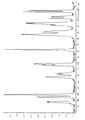
- Figure 10 depicts solid state 13 C NMR data consistent with Form ⁇ .
- Figure 11 depicts solid state 13 C NMR data consistent with Form ⁇ .
- Figure 12 depicts solid state 13 C NMR data consistent with Form ⁇ .
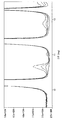
- Figure 13 depicts overlayed XRPD patterns obtained from the standard sample of Compound A containing 0, 2, 5, and 10% Form ⁇ (See Example 4).
- Figure 14 depicts overlayed XRPD patterns obtained from the standard sample of Compound A containing 0, 1, 2, 5, and 10% Form ⁇ (See Example 4).
- Figure 15 depicts XRPD patterns in Example 6 for Form ⁇ of Compound A used, Form ⁇ of Compound A used, the 1:1-by-weight mixture of Forms ⁇ and ⁇ of Compound A before stirring, and the crystal obtained after stirring, from the bottom.
- Figure 16 depicts XRPD patterns in Example 7 for Form ⁇ of Compound A used, Form ⁇ of Compound A used, the 1:1-by-weight mixture of Forms ⁇ and ⁇ of Compound A before stirring, and the crystal obtained after stirring, from the bottom.
- Figure 17 depicts XRPD patterns in Example 8 for Form ⁇ of Compound A used, Form ⁇ of Compound A used, the 1:1-by-weight mixture of Forms ⁇ and ⁇ of Compound A before stirring, the crystal obtained from formamide, that from N,N-dimethylformamide, and that from dimethylsulfoxide, from the bottom.
- the present invention provides, inter alia, crystalline forms of 3-((3S,4R)-3-methyl-6-(7H-pyrrolo[2,3-d]pyrimidin-4-yl)-1,6-diazaspiro[3.4]octan-1-yl)-3-oxopropanenitrile which is an inhibitor of Janus kinase (JAK) and is useful in the treatment of various diseases associated with Janus kinase upregulation or overexpression.
- the crystalline forms of the invention inhibit JAK3.
- the crystalline forms of the invention inhibit JAK2.
- One aspect of the present invention is as follows. [Item 1] A crystalline form of 3-((3S,4R)-3-methyl-6-(7H-pyrrolo[2,3-d]pyrimidin-4-yl)-1,6-diazaspiro[3.4]octan-1-yl)-3-oxopropanenitrile having Form ⁇ .
- Item 2 The crystalline form of Item 1, having an X-ray powder diffraction pattern comprising a characteristic peak, in terms of 2 ⁇ (°), at about 11.8.
- Item 3 The crystalline form of Item 1, having an X-ray powder diffraction pattern comprising two or more characteristic peaks, in terms of 2 ⁇ (°), selected from about 10.5, about 11.8, about 19.3, and about 22.0.
- Item 4 The crystalline form of Item 1, having an X-ray powder diffraction pattern comprising three or more characteristic peaks, in terms of 2 ⁇ (°), selected from about 7.8, about 10.5, about 11.8, about 13.4, about 13.9, about 17.8, about 19.3, about 22.0, about 23.6, and about 28.0.
- Item 15 The crystalline form of Item 14, having an X-ray powder diffraction pattern comprising a characteristic peak, in terms of 2 ⁇ (°), at about 16.5.
- Item 16 The crystalline form of Item 14, having an X-ray powder diffraction pattern comprising two or more characteristic peaks, in terms of 2 ⁇ (°), selected from about 16.5, about 17.7, about 21.4, about 21.8, and about 23.1.
- Item 17 The crystalline form of Item 14, having an X-ray powder diffraction pattern comprising three or more characteristic peaks, in terms of 2 ⁇ (°), selected from about 7.7, about 10.6, about 13.3, about 13.9, about 15.5, about 16.5, about 17.7, about 17.9, about 19.0, about 21.4, about 21.8, and about 23.1, about 23.7, and about 28.1.
- Item 32 A method of Item 31, comprising stirring 3-((3S,4R)-3-methyl-6-(7H-pyrrolo[2,3-d]pyrimidin-4-yl)-1,6-diazaspiro[3.4]octan-1-yl)-3-oxopropanenitrile, Form ⁇ , in dimethylformamide (DMF).
- Item 33 A method of Item 31, comprising stirring 3-((3S,4R)-3-methyl-6-(7H-pyrrolo[2,3-d]pyrimidin-4-yl)-1,6-diazaspiro[3.4]octan-1-yl)-3-oxopropanenitrile, Form ⁇ , in formamide.
- a pharmaceutical composition comprising the crystalline form or composition of any one of Items 1 to 48, and a pharmaceutically acceptable carrier.
- Item 51 The pharmaceutical composition of Item 49 or 50 which is suitable for oral, parenteral, pulmonary, local, or topical administration.
- Item 53 The pharmaceutical composition of Item 49 or 50 in the form of a tablet, capsule, pill, powder, or ointment.
- Item 54 The pharmaceutical composition of Item 49 or 50 in the form of a powder suitable for reconstitution in liquid for IV, IM, or SC administration.
- Item 55 The pharmaceutical composition of Item 49 or 50, comprising white soft paraffin, hard paraffin, squalene, or a mixture thereof.
- a method for treating or preventing a disease selected from organ transplant rejection, graft versus host reaction after transplantation, autoimmune disease, allergic diseases, and chronic myeloproliferative disease comprising administering to a mammal a therapeutically effective amount of the crystalline form or composition of any one of Items 1 to 55.
- a method for treating or preventing rheumatoid arthritis, psoriasis, alopecia areata, dry eye, atopic dermatitis, eczema, or hand eczema comprising administering to a mammal a therapeutically effective amount of the crystalline form or composition of any one of Items 1 to 55.
- a method of measuring the amount of Form ⁇ present in a preparation of 3-((3S,4R)-3-methyl-6-(7H-pyrrolo[2,3-d]pyrimidin-4-yl)-1,6-diazaspiro[3.4]octan-1-yl)-3-oxopropanenitrile, Form ⁇ comprising measuring the peak area of an XRPD peak that is characteristic of Form ⁇ , and comparing the peak area to a standard.
- a method of measuring the amount of Form ⁇ present in a preparation of 3-((3S,4R)-3-methyl-6-(7H-pyrrolo[2,3-d]pyrimidin-4-yl)-1,6-diazaspiro[3.4]octan-1-yl)-3-oxopropanenitrile, Form ⁇ comprising measuring the peak area of an XRPD peak that is characteristic of Form ⁇ , and comparing the peak area to a standard.
- crystalline form is meant to refer to a certain lattice configuration of a crystalline substance.
- Different crystalline forms of the same substance typically have different crystalline lattices (e.g., unit cells) and different physical properties attributed to their different crystalline lattices, and in some instances, have different water or solvent content.
- the different crystalline lattices can be identified by solid state characterization methods such as by X-ray powder diffraction (XRPD). Other characterization methods such as differential scanning calorimetry (DSC), thermogravimetric analysis (TGA), dynamic vapor sorption (DVS), solid state NMR and the like further help identify the crystalline form as well as help determine stability and solvent/water content.
- Different crystalline forms of a particular substance can include both anhydrous forms of that substance and solvated/hydrated forms of that substance, where each of the anhydrous forms and solvated/hydrated forms are distinguished from each other by different XRPD patterns, thereby signifying different crystalline lattices.
- a single crystalline form e.g., identified by a unique XRPD pattern
- An XRPD pattern of reflections is typically considered a fingerprint of a particular crystalline form. It is well known that the relative intensities of the XRPD peaks can vary depending on, inter alia, the sample preparation technique, crystal size distribution, the sample mounting procedure, and the particular instrument employed. In some instances, new peaks may be observed or existing peaks may disappear, depending on the type of the machine or the settings (for example, whether a Ni filter is used or not). Moreover, instrument variation and other factors can affect the 2-theta values.
- peak assignments such as those reported herein, can vary by ⁇ 0.2°, ⁇ 0.1° or ⁇ 0.04° (2-theta), and the term “substantially” as used in the context of XRPD herein is meant to encompass the above-mentioned variations.
- temperature readings in connection with DSC, TGA, or other thermal experiments can vary about ⁇ 3°C depending on the instrument, particular settings, sample preparation, etc.
- temperature values such as those reported herein, can vary by ⁇ 3°C, and a crystalline form reported herein having a DSC thermogram or other thermogram “substantially” as shown in any of the Figures is understood to accommodate such variation.
- Form ⁇ The present invention provides a crystalline form of 3-((3S,4R)-3-methyl-6-(7H-pyrrolo[2,3-d]pyrimidin-4-yl)-1,6-diazaspiro[3.4]octan-1-yl)-3-oxopropanenitrile (Compound A) having Form ⁇ .
- the crystalline form corresponding to Form ⁇ is believed to be anhydrous as evidenced by, for example, DSC and TG-DTA (see Example 2).
- Form ⁇ has an X-ray powder diffraction pattern comprising a characteristic peak, in terms of 2 ⁇ (°), at about 11.8.
- Form ⁇ has an X-ray powder diffraction pattern comprising two or more characteristic peaks, in terms of 2 ⁇ (°), selected from about 10.5, about 11.8, about 19.3, and about 22.0. In yet further embodiments, Form ⁇ has an X-ray powder diffraction pattern comprising three or more characteristic peaks, in terms of 2 ⁇ (°), selected from about 7.8, about 10.5, about 11.8, about 13.4, about 13.9, about 17.8, about 19.3, about 22.0, about 23.6, and about 28.0. In yet further embodiments, Form ⁇ has an X-ray powder diffraction pattern comprising three or more characteristic peaks, in terms of 2 ⁇ (°), selected from any of the peaks listed in Table 2-1 (see Example 2). In yet further embodiments, Form ⁇ has an XRPD pattern substantially as shown in Figure 2.
- Form ⁇ has a DSC thermogram which is characterized by an endothermic peak at about 186°C. In some embodiments, Form ⁇ has a DSC thermogram which is characterized by an extrapolated onset temperature at about 185°C. In yet further embodiments, Form ⁇ has a DSC thermogram substantially as shown in Figure 5.
- Form ⁇ has a solid state 13 C NMR spectrum which is characterized by at least one peak at about 165.1 ppm. In further embodiments, Form ⁇ has a solid state 13 C NMR spectrum which is characterized by at least 5 peaks selected from about 16.5, about 25.8, about 26.5, about 33.1, about 34.8, about 36.7, about 38.8, about 48.2, about 53.4, about 77.7, about 79.5, about 101.2, about 102.6, about 117.5, about 120.6, about 151.1, about 154.3, and about 165.1 ppm. In yet further embodiments, Form ⁇ has a 13 C NMR spectrum substantially as shown in Figure 11.
- Form ⁇ has space group P1 with unit cell parameters: as determined by single crystal X-ray diffraction (see Example 5).
- Form ⁇ can have a purity level of at least about 50%, at least about 75%, at least about 85%, at least about 90%, or at least about 95%. In some embodiments, Form ⁇ is substantially pure.
- Form ⁇ can be prepared by crystallizing 3-((3S,4R)-3-methyl-6-(7H-pyrrolo[2,3-d]pyrimidin-4-yl)-1,6-diazaspiro[3.4]octan-1-yl)-3-oxopropanenitrile (Compound A) from solvent.
- Compound A e.g., as Form ⁇
- the solvent includes a nitrile such as acetonitrile or a mixture of 1-butanol and acetonitrile.
- the solvent comprises about 1:3 (v/v) of 1-butanol and acetonitrile, respectively.
- Compound A can be combined with solvent and heated to a temperature between about 30 and about 50°C. In some embodiments, the mixture can be heated to between about 35 and about 45°C, or to about 40°C. After heating, the mixture can be cooled, such as to about room temperature (e.g., about 23°C), to provide Form ⁇ crystalline product.
- the present invention further provides Form ⁇ prepared by any one of the methods described above.
- Form ⁇ The present invention also provides a crystalline form of 3-((3S,4R)-3-methyl-6-(7H-pyrrolo[2,3-d]pyrimidin-4-yl)-1,6-diazaspiro[3.4]octan-1-yl)-3-oxopropanenitrile (Compound A) having Form ⁇ .
- the crystalline form corresponding to Form ⁇ is believed to be anhydrous as evidenced by, for example, DSC and TG-DTA (see Example 3).
- Form ⁇ has an X-ray powder diffraction pattern comprising a characteristic peak, in terms of 2 ⁇ (°), at about 16.5.
- Form ⁇ has an X-ray powder diffraction pattern comprising two or more characteristic peaks, in terms of 2 ⁇ (°), selected from about 16.5, about 17.7, about 21.4, about 21.8, and about 23.1.
- Form ⁇ has an X-ray powder diffraction pattern comprising three or more characteristic peaks, in terms of 2 ⁇ (°), selected from about 7.7, about 10.6, about 13.3, about 13.9, about 15.2, about 16.5, about 17.7, about 17.9, about 19.0, about 21.4, about 21.8, and about 23.1, about 23.7, and about 28.1.
- Form ⁇ has an X-ray powder diffraction pattern comprising three or more characteristic peaks, in terms of 2 ⁇ (°), selected from any of the peaks listed in Table 3-1 (see Example 3). In yet further embodiments, Form ⁇ has an XRPD pattern substantially as shown in Figure 3.
- Form ⁇ has a DSC thermogram which is characterized by an endothermic peak at about 196°C. In some embodiments, Form ⁇ has a DSC thermogram which is characterized by an extrapolated onset temperature at about 196°C. In yet further embodiments, Form ⁇ has a DSC thermogram substantially as shown in Figure 6.
- Form ⁇ has a solid state 13 C NMR spectrum which is characterized by at least one peak at about 162.9 ppm. In further embodiments, Form ⁇ has a solid state 13 C NMR spectrum which is characterized by at least 5 peaks selected from about 16.9, about 26.5, about 32.9, about 36.4, about 48.1, about 53.7, about 78.6, about 102.6, about 116.4, about 117.9, about 121.5, about 151.8, about 154.6, and about 162.9 ppm. In yet further embodiments, Form ⁇ has a 13 C NMR spectrum substantially as shown in Figure 11.
- Form ⁇ has space group P2 1 with unit cell parameters: as determined by single crystal X-ray diffraction (see Example 5).
- Form ⁇ can have a purity level of at least about 50%, at least about 75%, at least about 85%, at least about 90%, or at least about 95%. In some embodiments, Form ⁇ is substantially pure.
- Form ⁇ can be prepared by converting 3-((3S,4R)-3-methyl-6-(7H-pyrrolo[2,3-d]pyrimidin-4-yl)-1,6-diazaspiro[3.4]octan-1-yl)-3-oxopropanenitrile, Form ⁇ , into Form ⁇ .
- the conversion can be carried out, for example, by stirring Form ⁇ in dimethylformamide (DMF).
- the stirring can be carried out at, for example, room temperature.
- Form ⁇ can be prepared by combining Compound A with formamide and adding Form ⁇ seed crystal. The preparation can be carried out at room temperature and optionally under inert atmosphere such as nitrogen.
- the present invention further provides Form ⁇ prepared by any one of the methods described above.
- Compound A can be prepared and obtained as anhydrous crystalline Form ⁇ , which is described in Example 1. Accordingly, the present invention provides mixtures of two or more of Forms ⁇ , ⁇ , and ⁇ of Compound A.
- the present invention provides a composition of crystalline 3-((3S,4R)-3-methyl-6-(7H-pyrrolo[2,3-d]pyrimidin-4-yl)-1,6-diazaspiro[3.4]octan-1-yl)-3-oxopropanenitrile (Compound A) comprising both Form ⁇ and Form ⁇ .
- Form ⁇ is present in an amount of about 1 to about 50% w/w with respect to Form ⁇ .
- Form ⁇ is present in an amount of about 1 to about 20% w/w with respect to Form ⁇ .
- Form ⁇ is present in an amount of about 1 to about 10% w/w with respect to Form ⁇ .
- Form ⁇ is present in an amount of about 1 to about 5% w/w with respect to Form ⁇ .
- the composition comprises Form ⁇ and Form ⁇ and is substantially free of other crystalline forms of Compound A.
- the composition comprising Form ⁇ and Form ⁇ further comprises Form ⁇ .
- the composition consists essentially of Form ⁇ and Form ⁇ .
- the present invention provides a composition of crystalline 3-((3S,4R)-3-methyl-6-(7H-pyrrolo[2,3-d]pyrimidin-4-yl)-1,6-diazaspiro[3.4]octan-1-yl)-3-oxopropanenitrile (Compound A) comprising both Form ⁇ and Form ⁇ .
- Form ⁇ is present in an amount of about 1 to about 50% w/w with respect to Form ⁇ .
- Form ⁇ is present in an amount of about 1 to about 20% w/w with respect to Form ⁇ .
- Form ⁇ is present in an amount of about 1 to about 10% w/w with respect to Form ⁇ .
- Form ⁇ is present in an amount of about 1 to about 5% w/w with respect to Form ⁇ .
- the composition comprises Form ⁇ and Form ⁇ and is substantially free of other crystalline forms of Compound A.
- the composition comprising Form ⁇ and Form ⁇ further comprises Form ⁇ .
- the composition consists essentially of Form ⁇ and Form ⁇ .
- the present invention further provides compositions containing Form ⁇ or Form ⁇ and one or more other substances.
- the composition contains at least about 50%, at least about 70%, at least about 80%, at least about 90%, at least about 95%, at least about 97%, at least about 98%, or at least about 99%, by weight of Form ⁇ or Form ⁇ .
- the present invention provides a method of determining the amount of Form ⁇ present in a preparation of Form ⁇ comprising measuring the peak area of an XRPD peak that is characteristic of Form ⁇ , and comparing the peak area to a standard.
- the peak characteristic of Form ⁇ occurs at about 10.6° 2-theta.
- the standard can be a standard curve calculated from peak areas of known amounts of Form ⁇ in Form ⁇ .
- the present invention provides a method of measuring the amount of Form ⁇ present in a preparation of Form ⁇ comprising measuring the peak area of an XRPD peak that is characteristic of Form ⁇ , and comparing the peak area to a standard.
- the peak characteristic of Form ⁇ occurs at about 16.6° 2-theta.
- the standard can be a standard curve calculated from peak areas of known amounts of Form ⁇ in Form ⁇ .
- compositions and Uses The crystalline forms of the invention can be prepared as pharmaceutical compositions which comprise a crystalline form of the invention, or a composition of the invention, together with at least one pharmaceutically acceptable carrier (or excipient).
- the pharmaceutical composition is suitable for oral, parenteral, pulmonary, local, or topical administration.
- the pharmaceutical composition is in the form of an oral preparation such as tablet, capsule, granule, powder, lozenge, syrup, emulsion, suspension, or a parenteral preparation such as external preparation, suppository, injection, drop, nasal drug, pulmonary drug.
- the pharmaceutical composition is suitable for topical application, such as an ointment.
- the pharmaceutical compositions of the present invention may be prepared by mixing one or more crystalline forms of the invention, or a composition of the invention, with at least one or more pharmaceutically acceptable carriers in appropriate amounts according to known methods in the medicinal preparation field.
- the amount of Compound A in the pharmaceutical composition depends on its dosage forms, dosage amounts, etc., and can be, for example, about 0.1 to 100% by weight of the composition.
- the pharmaceutical compositions of the present invention can be, for example, in the form of a tablet, capsule, pill, powder, or ointment.
- the pharmaceutical compositions of the present invention can be in the form of a powder suitable for reconstitution in liquid for intravenous (IV), intramuscular (IM), or subcutaneous (SC) administration.
- the pharmaceutical compositions of the present invention may further comprise a second therapeutic agent.
- the “pharmaceutically acceptable carrier” includes various conventional organic or inorganic carrier substances for pharmaceutical materials, e.g., a diluent, a disintegrant, a binder, a fluidizer, and a lubricant for solid preparations, a solvent, a solubilizing agent, a suspending agent, a tonicity agent, a buffer, and a soothing agent for liquid preparations, and a base, an emulsifier, a humectant, a stabilizer, a stabilizing agent, a dispersant, a plasticizer, a pH regulator, an absorption promoter, a gelling agent, an antiseptic, a filler, a resolvent, a solubilizing agent, and a suspending agent for semisolid preparations.
- an additive including a preserving agent, an antioxidant agent, a colorant, and a sweetening agent may be used, if needed.
- diluents include lactose, sucrose, D-mannitol, D-sorbitol, cornstarch, dextrin, microcrystalline cellulose, crystalline cellulose, carmellose, carmellose calcium, sodium carboxymethyl starch, low-substituted hydroxypropylcellulose, gum arabic, etc.
- disintegrants examples include carmellose, carmellose calcium, carmellose sodium, sodium carboxymethyl starch, croscarmellose sodium, crospovidone, low-substituted hydroxypropylcellulose, hydroxypropylmethylcellulose, crystalline cellulose, etc.
- binders examples include hydroxypropylcellulose, hydroxypropylmethylcellulose, povidone, crystalline cellulose, sucrose, dextrin, starch, gelatin, carmellose sodium, gum arabic, etc.
- fluidizers examples include light anhydrous silicic acid, magnesium stearate, etc.
- lubricants examples include magnesium stearate, calcium stearate, talc, etc.
- Examples of a solvent medium include purified water, ethanol, propylene glycol, macrogol, sesame oil, corn oil, olive oil, etc.
- solubilizing agent examples include propylene glycol, D-mannitol, benzyl benzoate, ethanol, triethanolamine, sodium carbonate, sodium citrate, etc.
- suspending agents examples include benzalkonium chloride, carmellose, hydroxypropylcellulose, propylene glycol, povidone, methylcellulose, glyceryl monostearate, etc.
- tonicity agents examples include glucose, D-sorbitol, sodium chloride, D-mannitol, etc.
- buffers include sodium hydrogen phosphate, sodium acetate, sodium carbonate, sodium citrate, etc.
- Examples of soothing agents include benzyl alcohol, etc.
- preserving agents include ethyl paraoxybenzoate, chlorobutanol, benzyl alcohol, sodium dehydroacetate, sorbic acid, etc.
- antioxidant agents examples include sodium sulfite, ascorbic acid, etc.
- colorants examples include food dye (e.g., Food Red No. 2 or 3, Food Yellow No. 4 or 5, etc.), ⁇ -carotene, etc.
- sweetening agents examples include saccharin sodium, dipotassium glycyrrhizinate, aspartame, etc.
- compositions of the present invention may be orally or parenterally (e.g., locally, rectally, intravenously, etc.) administered to a patient such as a non-human mammal (e.g., mice, rats, hamsters, guinea pigs, rabbits, cats, dogs, pigs, cows, horses, sheep, monkeys, etc.) or to human beings in a therapeutically effective amount for the treatment or prevention of disease.
- a patient such as a non-human mammal (e.g., mice, rats, hamsters, guinea pigs, rabbits, cats, dogs, pigs, cows, horses, sheep, monkeys, etc.) or to human beings in a therapeutically effective amount for the treatment or prevention of disease.
- a patient such as a non-human mammal (e.g., mice, rats, hamsters, guinea pigs, rabbits, cats, dogs, pigs, cows, horses, sheep, monkey
- the dose for orally administering to adult patients can be, for example, in the range from about 1 mg to 1 g per day.
- the dose may be administered at one time or in several divided doses.
- the carrier can comprise white soft paraffin, hard paraffin, squalene, or a combination thereof.
- White soft paraffin, hard paraffin and squalane may be combined at a blend ratio of 70 to 90% by weight, 5 to 10% by weight and 5 to 20% by weight, respectively.
- An example preparation contains Compound A, white soft paraffin, 5 ⁇ 2% by weight of hard paraffin and 10 ⁇ 2% by weight of squalane.
- a topical agent can be applied, for example, by application, inunction or spraying depending on the dosage form, etc.
- An application amount of the topical agent to the affected area can be selected depending on the content of the active ingredient, etc., and the topical agent can be applied, for example, at a time or in several divided amounts per day. In some embodiments, application is once daily or twice daily.
- compositions can be prepared in accordance with acceptable pharmaceutical procedures, such as, for example, those described in Remingtons Pharmaceutical Sciences, 17th edition, ed. Alfonoso R. Gennaro, Mack Publishing Company, Easton, PA (1985), which is incorporated herein by reference in its entirety.
- the crystalline forms of the invention can be used in a method for inhibiting a Janus kinase, such as inhibiting JAK3, JAK2, or both, comprising contacting the crystalline form of the invention with the Janus kinase inhibitor.
- the contacting can occur in vitro or in vivo.
- the crystalline forms or compositions of the invention may be used as the active ingredient in a method of treating or preventing one or more of the following diseases in a patient: (a) organ transplant rejection, or graft versus host reaction after transplantation; (b) autoimmune diseases including rheumatoid arthritis, psoriasis, psoriatic arthritis, multiple sclerosis, ulcerative colitis, Crohn’s disease, systemic lupus erythematosus, type I diabetes, myasthenia gravis, Castleman’s disease, juvenile idiopathic arthritis, dry eye; and (c) allergic diseases including asthma, atopic dermatitis, rhinitis.
- the crystalline forms of the invention may be used as the active ingredient of a therapeutic or preventive agent for rheumatoid arthritis, psoriasis, alopecia areata, dry eye, atopic dermatitis, eczema, or hand eczema.
- the crystalline forms of the invention may be used as the active ingredient of a therapeutic or preventive agent for chronic myeloproliferative diseases including polycythemia vera, primary myelofibrosis, essential thrombocythemia, etc.
- terapéuticaally effective amount of the compound as used herein means an amount sufficient to cure, alleviate or partially arrest the clinical manifestations of a given disease and its complications. An amount adequate to accomplish this is defined as “therapeutically effective amount”. Effective amounts for each purpose will depend on the severity of the disease or injury as well as the weight and general state of the subject.
- treating includes amelioration of a symptom, prevention of an aggravation, maintenance of a remission, prevention of an exacerbation, and prevention of a recurrence.
- the term “treating” may also include the delaying of the progression of the disease, disorder or condition, the amelioration, alleviation or relief of symptoms and complications, and/or cure or elimination of the disease, disorder or condition.
- treating may also mean the management and care of a patient for the purpose of combating the disease, condition or disorder.
- preventing refers to suppressing occurrence of a symptom.
- the crystalline forms of the invention can be administered to a patient in combination with a therapeutically effective amount of one or more additional therapeutic agents.
- the crystalline form of the invention can be administered concurrently (e.g., together) with the additional therapeutic agent (e.g., in a single fixed-dosage form or in separate dosage forms).
- the crystalline form of the invention and additional therapeutic agent can be administered to a patient sequentially.
- the additional therapeutic agent is administered while the crystalline form of the invention exerts its therapeutic effect, or vice versa.
- Example 1 Preparation of 3-((3S,4R)-3-methyl-6-(7H-pyrrolo[2,3-d]pyrimidin-4-yl)-1,6-diazaspiro[3.4]octan-1-yl)-3-oxopropanenitrile (Compound A) and Characterization of Crystalline Form ⁇ .
- Preparation of Compound A Compound A was prepared by the synthetic method below as described in PCT/JP2016/070046 (Examples 1-15). In the crystallization steps, seed crystal was used to facilitate the crystallizations, but it is possible to prepare the crystals of each compound according to the processes described without seed crystal.
- S-BAPO (S)-2-(benzylamino) propan-1-ol
- S-BBMO tert-butyl (S)-N-benzyl-N-(1-hydroxypropan-2-yl)glycinate
- R-BCAB tert-butyl (R)-N-benzyl-N-(2-chloropropyl)glycinate
- S-MABB tert-butyl (3S)-1-benzyl-3-methylazetidine-2-carboxylate
- S-MABB-HC tert-butyl (3S)-1-benzyl-3-methylazetidine-2-carboxylate hydrochloride
- S-MACB-HC tert-butyl (3S)-3-methylazetidine-2-carboxylate hydrochloride
- S-ZMAB 1-benzyl 2-(tert-butyl) (3S)-3-methylazetidine-1,2-dicarbox
- the measuring instruments and measuring conditions used are as follows. 1 H-NMR spectra were analyzed in CDCl 3 or DMSO-d 6 using tetramethylsilane as an internal standard, and all ⁇ values are shown as ppm. Unless otherwise indicated, a 400 MHz NMR instrument was used. The symbols in the examples are meant as follows. s: singlet d: doublet t: triplet q: quartet dd: double doublet ddd: double double doublet brs: broad singlet m: multiplet J: coupling constant The ion content in the samples was determined by averaging 3 observed data thereof.
- Measuring instrument Ion chromatograph LC-20 System (SHIMADZU) Measuring condition: Electric-conductivity detector SHIMADZU CDD-10A VP Column for anion analysis SHIMADZU SHIM-PAC IC-A3 Column for cation analysis SHIMADZU SHIM-PAC IC-C1 The water content in the samples was measured by Karl Fischer’s method.
- Measuring instrument Karl Fischer Moisture Meter CA-06 (MITSUBISHI CHEMICAL) Measuring condition: Sample amount: about 20 mg Reagent: Anode solution Aquamicron AX (API Corporation) Catholyte Aquamicron CXU (API Corporation) By elemental analysis, each weight % of carbon, hydrogen, and nitrogen in the samples was measured.
- Step A Preparation of S-MABB-HC (Compound [5]) Step 1 S-BAPO [1] (35.0 g, 212 mmol) was added to water (175 mL) at room temperature under nitrogen atmosphere. To the resulting suspension were added toluene (53 mL) and potassium carbonate (32.2 g, 233 mmol) at room temperature. To the resulting solution was added dropwise TBBA (434.4 g, 223 mmol) at room temperature, and then the used dropping funnel was washed with toluene (17 mL) and the washings were added to the reaction mixture. The reaction mixture was stirred at 65°C for 21 hours, and then cooled to room temperature.
- Step 2 To the toluene solution of S-BBMO [2] (74.0 g, 212 mmol) were added toluene (200 mL), tetrahydrofuran (35 mL), and then triethylamine (25.7 g, 254 mmol) at room temperature under nitrogen atmosphere. To the mixture was added dropwise methanesulfonyl chloride (26.7 g, 233 mmol) at 0°C, and then the used dropping funnel was washed with toluene (10 mL) and the washings were added to the reaction mixture. The reaction mixture was stirred at room temperature for 2 hours and further at 65°C for 22 hours, and then cooled to room temperature.
- Step 3 To the toluene solution of R-BCAB [3] (75.3 g, 212 mmol) were added tetrahydrofuran (88.0 mL) and 1,3-dimethyl-3,4,5,6-tetrahydro-2(1H)-pyrimidinone (42.0 mL) at room temperature under nitrogen atmosphere. To the resulting solution was added dropwise a solution of lithium bis(trimethylsilyl)amide /tetrahydrofuran (195 mL, 233 mmol) at 0°C, and then the used dropping funnel was washed with tetrahydrofuran (17.0 mL) and the washings were added to the reaction mixture.
- tetrahydrofuran 88.0 mL
- 1,3-dimethyl-3,4,5,6-tetrahydro-2(1H)-pyrimidinone 42.0 mL
- Step 4 To the ethyl acetate solution of S-MABB [4] (66.5 g, 212 mmol in theory) were added ethyl acetate (175 mL) and active carbon (3.5 g) under nitrogen atmosphere, and then the mixture was stirred at room temperature for 2 hours. The active carbon was removed by filtration, and the residue on the filter was washed with ethyl acetate (175 mL). The washings were added to the filtrate. To the solution was added S-MABB-HC crystal (17.5 mg) that was prepared according to the method described herein at 0°C, and then 4 M hydrogen chloride/ethyl acetate (53.0 mL, 212 mmol) was dropped thereto at 0°C.
- Step B Preparation of S-MACB-HC (Compound [6])
- S-MABB-HC [5] 5.0 g, 16.8 mmol
- methanol 15.0 mL
- 5 % palladium carbon made by Kawaken Fine Chemicals Co., Ltd., PH type, 54.1 % water-content 1.0 g
- the reaction vessel was filled with hydrogen, the reaction mixture was stirred at hydrogen pressure of 0.4 MPa at room temperature for 12 hours, the hydrogen in the reaction vessel was replaced with nitrogen, and then the 5 % palladium carbon was removed by filtration.
- the reaction vessel and the 5 % palladium carbon were washed with methanol (10 mL).
- Step C Preparation of S-ZMAB (Compound [7])
- S-MACB-HC [6] (24.8 g, 16.8 mmol in theory) was added dropwise N,N-diisopropylethylamine (4.8 g, 36.9 mmol) at room temperature under nitrogen atmosphere, and then the used dropping funnel was washed with tetrahydrofuran (2.5 mL) and the washings were added to the reaction mixture.
- Step D Preparation of RS-ZMBB (Compound [8])
- S-ZMAB [7] (6.9 g, 16.8 mmol) was added tetrahydrofuran (15.0 mL) at room temperature under nitrogen atmosphere.
- the used dropping funnel was washed with tetrahydrofuran (2.5 mL) and the washings were added to the reaction mixture.
- reaction mixture was stirred at -70°C for 6 hours, and then a solution of TBBA (3.4 g, 17.6 mmol) in tetrahydrofuran (2.5 mL) was added dropwise to the reaction mixture at -70°C.
- the used dropping funnel was washed with tetrahydrofuran (2.5 mL) and the washings were added to the reaction mixture.
- the reaction mixture was stirred at -70°C for 1 hour, and then warmed to room temperature.
- an aqueous ammonium chloride 25 mL
- toluene 25 mL
- the resulting organic layer was washed with an aqueous solution of citric acid (25 mL, x 2), sodium bicarbonate water (25 mL), and then water (25 mL), and then the solvent was removed out of the organic layer in vacuo.
- Acetonitrile (15 mL) was added to the residue and the acetonitrile solution was concentrated. The operation was repeated two more times.
- Acetonitrile (15 mL) and active carbon (0.25 g) were added to the residue, the mixture was stirred at room temperature for 2 hours. The active carbon was removed by filtration, and the reaction vessel and the residue on the filter was washed with acetonitrile (10 mL).
- Step E Preparation of RS-ZMAA-DN . 2H 2 O (Compound [9])
- acetonitrile solution of RS-ZMBB [8] (13.2 g, 16.8 mmol in theory) was added acetonitrile (15 mL) at room temperature under nitrogen atmosphere.
- p-Toluenesulfonic acid mono-hydrate (6.4 g, 33.6 mmol) was added to the solution at room temperature.
- the reaction mixture was stirred at 50°C for 12 hours, and then cooled to room temperature, and water (7.5 mL) was added dropwise to the reaction mixture.
- Step F Preparation of RS-ZMAA (Compound [10])
- RS-ZMAA-DN 2H 2 O [9] (30 g, 77.5 mmol) and acetonitrile (60 mL)
- ethyl acetate 240 mL was added to the reaction mixture and then the mixture was stirred, the organic layer was separated out. The organic layer was washed with 10 % brine (60 mL x 2).
- Step G Preparation of RS-ZMOO (Compound [11])
- RS-ZMAA tetrahydrofuran
- 50 mL tetrahydrofuran
- Boron trifluoride etherate complex 4.40 g was added dropwise thereto at 0°C to 5°C.
- the used dropping funnel was washed with tetrahydrofuran (5 mL) and the washings were added to the reaction mixture.
- the sodium bicarbonate left in the vessel was washed with water (10 mL), and the washings were added to the reaction mixture.
- the reaction mixture was stirred at room temperature for 2 hours, and then toluene (50 mL) was added thereto and the reaction mixture was further stirred.
- the organic layer was separated out.
- the resulting organic layer was washed with 10 % brine (20 mL x 1), a mixture (x 3) of 5 % sodium bicarbonate water (20 mL) and 10 % brine (20 mL), a mixture (x 1) of 5 % aqueous potassium hydrogensulfate (10 mL) and 10 % brine (10 mL), and then 10 % brine (20 mL x 2).
- Step H Preparation of RS-ZMSS (Compound [12])
- triethylamine (5.27 g) was added dropwise thereto at -10°C to 10°C, and the used dropping funnel was washed with toluene (1.8 mL) and the washings were added to the reaction mixture.
- Step I Preparation of SR-ZMDB (Compound [13])
- RS-ZMSS [12] (23.7 mmol in theory) was added toluene (55 mL) under nitrogen atmosphere.
- benzylamine (17.8 g) was added dropwise thereto at room temperature, and the used dropping funnel was washed with toluene (9.2 mL) and the washings were added to the reaction mixture.
- the reaction mixture was stirred at room temperature for about 1 hour, at 55°C to 65°C for about 3 hours, and then at 70°C to 80°C for 6 hours.
- Step J Preparation of SR-MDOZ (Compound [14])
- SR-MDOZ Compound [14]
- triethylamine (718 mg) at 0°C to 10°C, and the reaction mixture was stirred at 15°C to 25°C for about 2 hours.
- methyl alcohol 46 mL was added to the reaction mixture, and the mixture was stirred at 50°C to 60°C for additional about 2 hours.
- the solvent of the reaction mixture was removed in vacuo to a volume of about less than 37 mL.
- To the concentrated residue was added dropwise 2 mol/L hydrochloric acid (46 mL) at 15°C to 20°C, and the mixture was stirred, and the aqueous layer was separated out. The resulting aqueous layer was washed with toluene (28 mL, x 2).
- Step K Preparation of SR-MDOZ-OX (Compound [15]) Under nitrogen atmosphere, oxalic acid (761 mg) was dissolved in tetrahydrofuran (40 mL), and the tetrahydrofuran solution of SR-MDOZ [14] (3.84 mmol in theory) was added dropwise to the solution of oxalic acid at room temperature. To the solution was added SR-MDOZ-OX crystal (1 mg) that was prepared according to the method described herein at room temperature, and the mixture was stirred at room temperature for about 3.5 hours to precipitate the crystal.
- Step L Preparation of SR-MDPZ (Compound [16])
- SR-MDOZ-OX [15] (12.0 g, 34.2 mmol) were added ethanol (36 mL), water (72 mL), CPPY [20] (5.36 g, 34.9 mmol), and then K 3 PO 4 (21.8 g, 103 mmol) under nitrogen atmosphere.
- the reaction mixture was stirred at 80°C for 5 hours, and then cooled to 40°C.
- Toluene (120 mL) was added thereto at 40°C, and the organic layer was separated out.
- the resulting organic layer was washed with 20 % aqueous potassium carbonate (48 mL), followed by washing twice with water (48 mL).
- tert-butanol 60 mL was added to the residue and the tert-butanol solution was concentrated. The operation was repeated two more times.
- tert-Butanol 36 mL was added to the concentrated residue to give a solution of SR-MDPZ [16] in tert-butanol (61.1 g, 34.2 mmol in theory). The given tert-butanol solution of SR-MDPZ was used in the next step, assuming that the yield was 100 %.
- Step M Preparation of SR-MDOP (Compound [17])
- SR-MDPZ [16] To the solution of SR-MDPZ [16] in tert-butanol (34.2 mmol in theory) were added ammonium formate (10.8 g, 171 mmol), water (60 mL), and 10 % palladium carbon (made by Kawaken Fine Chemicals Co., Ltd., M type, 52.6 % water-content, 1.20 g) under nitrogen atmosphere.
- the reaction mixture was stirred at 40°C for 13 hours, and then cooled to room temperature, and the resulting precipitate was removed by filtration.
- the reaction vessel and the residue on the filter were washed with tert-butanol (24 mL), the washings was added to the filtrate, and 8 M aqueous sodium hydroxide (25.7 mL, 205 mmol) and sodium chloride (13.2 g) were added to the filtrate.
- the reaction mixture was stirred at 50°C for 2 hours, and then toluene (84 mL) was added thereto at room temperature, and the organic layer was separated out.
- the resulting organic layer was washed with 20 % brine (60 mL), stirred with anhydrous sodium sulfate, and then the sodium sulfate was removed by filtration.
- SR-MDOP [17] (7.07 g, 29.1 mmol, yield: 84.8 %).
- SR-MDOP which was prepared by the same process was measured about NMR and MS.
- Step N Preparation of Compound A mono-ethanolate (Compound [18]) Under nitrogen atmosphere, acetonitrile (60 mL) and triethylamine (416 mg, 4.11 mmol) were added to SR-MDOP [17] (5.00 g, 20.5 mmol), and to the solution was added dropwise a solution of DPCN [21] (3.69 g, 22.6 mmol) in acetonitrile (35 mL) at 45°C, and then the used dropping funnel was washed with acetonitrile (5.0 mL) and the washings were added to the reaction mixture. The reaction mixture was stirred at 45°C for 3 hours, and then cooled to room temperature.
- Step O Purification of Compound A (Compound [19])
- Compound A mono-ethanolate [18] (4.00 g, 11.2 mmol) and n-butanol (32 mL) were mixed under nitrogen atmosphere, and the mixture was dissolved at 110°C.
- the mixture was cooled to 85°C, and Compound A crystal (4.0 mg) that was prepared according to the method described herein was added thereto, and the mixture was stirred at 85°C for 2 hours, at 75°C for 1 hour, and then at room temperature for 16 hours.
- the precipitated solid was collected on a filter, and washed with n-butanol (8.0 mL) and then ethyl acetate (8.0 mL).
- Form ⁇ X-Ray Powder Diffraction (XRPD)
- XRPD X-Ray Powder Diffraction
- DSC Differential Scanning Calorimetry
- TG-DTA Thermogravimetric Differential Thermal Analysis
- Solid State 13 C NMR Solid state 13 C NMR data was collected on a Bruker BioSpin Corporation AVANCE III 400 instrument with the following parameters: Probe: 4 mm CP/MAS probe Measurement temperature: room temperature Reference material: glycine (External standard: a peak of lower magnetic field was set on 176.03 ppm) Measurement core: 13 C (100.6228303 MHz) Rotating speed: 14.3 kHz Pulse repetition time: 5 seconds Cumulated number: 3072 times Pulse mode: CP/MAS measurement Solid state 13 C NMR data for Form ⁇ is presented in Figure 10 showing peaks at: 14.8, 17.0, 24.5, 27.2, 35.0, 35.9, 38.6, 48.8, 49.5, 53.6, 78.3, 101.4, 103.0, 116.2, 118.0, 122.0, 122.7, 151.2, 154.8, 162.4, and 163.3 ppm.
- Example 2 Preparation and Characterization of Compound A, Form ⁇ Preparation
- Compound A (3992.3 g, crystalline Form ⁇ ), which had been passed through a sieve of 500 ⁇ m, was ground with a Spiral Jet Mill 100AS (manufactured by Hosokawa Micron Corporation) under the conditions below to give a ground product (3473.6 g) with Compound A (361.0 g) adhering to the nozzle-ring part.
- DSC Differential Scanning Calorimetry
- TG-DTA Thermogravimetric Differential Thermal Analysis
- Solid State 13 C NMR Solid state 13 C NMR data was collected for Form ⁇ as described above in Example 1.
- the 13 C NMR spectrum is provided in Figure 11 showing peaks at: 16.5, 25.8, 26.5, 33.1, 34.8, 36.7, 38.8, 48.2, 53.4, 77.7, 79.5, 101.2, 102.6, 117.5, 120.6, 151.1, 154.3, and 166.1 ppm.
- Example 3 Preparation and Characterization of Compound A, Form ⁇ Preparation 1
- Compound A (2491.5 g, crystalline Form ⁇ ), which had been passed through a sieve of 500 ⁇ m, was ground with a Spiral Jet Mill 100AS (manufactured by Hosokawa Micron Corporation) under the conditions below to give a ground product (2106.5 g) and Compound A (247.9 g) adhering to the nozzle-ring part.
- Spiral Jet Mill 100AS manufactured by Hosokawa Micron Corporation
- DSC Differential Scanning Calorimetry
- TG-DTA Thermogravimetric Differential Thermal Analysis
- Solid State 13 C NMR Solid state 13 C NMR data was collected for Form ⁇ as described above in Example 1.
- the 13 C NMR spectrum is provided in Figure 12 showing peaks at: 16.9, 26.5, 32.9, 36.4, 48.1, 53.7, 78.6, 102.6, 116.4, 117.9, 121.5, 151.8, 154.6, and 162.9 ppm.
- Test for Form ⁇ Preparation of the Test Sample (Compound A, Form ⁇ , Drug Substance)
- Compound A test sample was ground in an agate mortar to a fine powder. About 10 mg was mounted in the sample holder.
- Test Sample About 1 g of ointment test sample was suspended in 80 mL of n-hexane. The flask was stoppered and shaken vigorously for 30 seconds. The mixture was filtered by suction using quantitative filter paper (5B), the washed with 5 mL portions of n-hexane five times. About 10 mg of precipitate was mounted in the sample holder.
- Test for Form ⁇ Preparation of the Test Sample (Compound A, Form ⁇ , Drug Substance)
- Compound A test sample was ground in an agate mortar to a fine powder. About 10 mg was mounted in the sample holder.
- Test Sample About 1 g of ointment test sample was suspended in 80 mL of n-hexane. The flask was stoppered and shaken vigorously for 30 seconds. The mixture was filtered by suction using quantitative filter paper (5B), the washed with 5 mL portions of n-hexane five times. About 10 mg of precipitate was mounted in the sample holder.
- Example 5 Single Crystal X-Ray Data Single crystal X-ray structures were obtained for Forms ⁇ , ⁇ and ⁇ according to the below parameters. Crystal structure data is provided in Table 5-1. For Form ⁇ , single crystal data was obtained with a Rayonix MX225HE detector and SPring-8 BL41XU beam line using irradiation wavelength 0.71068 ⁇ . For Forms ⁇ and ⁇ , single crystal data was obtained with a DECTRIS PILATUS3 6M detector and SPring-8 BL41XU beam line using irradiation wavelength 0.71068 ⁇ .
- Forms ⁇ and ⁇ of Compound A were mixed with the ratio of 1:1 by weight, and 1-butanol (800 ⁇ L) was added to the mixture (80 mg).
- the resulted suspension was stirred at room temperature for 12 days.
- the resultant was filtered at the same temperature, and then dried under reduced pressure at room temperature for 19 hours.
- Diffraction angles 2 ⁇ and diffraction intensities were measured by powder X-ray diffractometry for Forms ⁇ and ⁇ of Compound A used, the 1:1-by-weight mixture of Forms ⁇ and ⁇ of Compound A before stirring, and the resulted crystals.
- the instrument and data acquisition parameters herein are the same as those described above for the characterization of Form ⁇ in Example 1.
- the spectra measured are shown in Figure 15.
- the figure shows spectra for Form ⁇ of Compound A used, Form ⁇ of Compound A used, the 1:1-by-weight mixture of Forms ⁇ and ⁇ of Compound A before stirring, and the crystal obtained after stirring, from the bottom.
- the diffraction intensity ratios were compared between before and after stirring for the 10.2° peak of diffraction angle 2 ⁇ of Form ⁇ and the 10.6° peak of diffraction angle 2 ⁇ of Form ⁇ .
- the diffraction intensity ratio of the peak from Form ⁇ to the peak from Form ⁇ after being stirred was increased compared to the ratio before being stirred.
- Example 7 Competition experiment between Forms ⁇ and ⁇ of Compound A Forms ⁇ and ⁇ of Compound A were mixed with the ratio of 1:1 by weight, and 1-butanol (1 mL) was added to the mixture (100 mg). The resulted suspension was stirred at room temperature for 11 days. The resultant was filtered at the same temperature. Diffraction angles 2 ⁇ and diffraction intensities were measured by powder X-ray diffractometry for Forms ⁇ and ⁇ of Compound A used, the 1:1-by-weight mixture of Forms ⁇ and ⁇ of Compound A before stirring, and the resulted crystals.
- the instrument and data acquisition parameters herein are the same as those described above for the characterization of Form ⁇ in Example 1. The spectra measured are shown in Figure 16.
- the figure shows spectra for Form ⁇ of Compound A used, Form ⁇ of Compound A used, the 1:1-by-weight mixture of Forms ⁇ and ⁇ of Compound A before stirring, and the crystal obtained after stirring, from the bottom.
- the diffraction intensity ratios were compared between before and after stirring for the 10.2° peak of diffraction angle 2 ⁇ of Form ⁇ and the 10.7° peak of diffraction angle 2 ⁇ of Form ⁇ .
- the diffraction intensity ratio of the peak from Form ⁇ to the peak from Form ⁇ after being stirred was increased compared to the ratio before being stirred.
- Example 8 Competition experiment between Forms ⁇ and ⁇ of Compound A (1) Forms ⁇ and ⁇ of Compound A were mixed with the ratio of 1:1 by weight, and formamide (1 mL) was added to the mixture (150 mg). The resulted suspension was stirred at room temperature for 1 day. The resultant was filtered at the same temperature. (2) Forms ⁇ and ⁇ of Compound A were mixed with the ratio of 1:1 by weight, and N,N-dimethylformamide (1 mL) was added to the mixture (150 mg). The resulted suspension was stirred at room temperature for 1 day. The resultant was filtered at the same temperature.
- the figure shows spectra for Form ⁇ of Compound A used, Form ⁇ of Compound A used, the 1:1-by-weight mixture of Forms ⁇ and ⁇ of Compound A before stirring, the crystal obtained from formamide, that from N,N-dimethylformamide, and that from dimethylsulfoxide, from the bottom. According to the results of the above (1), (2), and (3), the mixed crystals formed a ⁇ -single crystal.
- Example 9 Solubility test Each sample (i.e., Forms ⁇ , ⁇ , and ⁇ of Compound A) was weighed to a 4-mL-volume glass vial. A test solution (3 mL) was added to the vial and the mixture was suspended. About 150 mg of the sample was weighed for the test solution of the 1st fluid for solubility test of The Japanese Pharmacopoeia and about 15 mg was weighed for the test solutions of the 2nd fluid for solubility test of The Japanese Pharmacopoeia and water. Each mixture was shaken with a constant temperature incubator shaker (manufactured by TAITEC) at 20°C for 3 hours.
- TAITEC constant temperature incubator shaker
- Example 10 Formulations Examples of formulations comprising Compound A (e.g., as Form ⁇ , Form ⁇ , Form ⁇ , or a mixture of any of the aforementioned) are provided below and are not intended to be limiting.
- Compound A e.g., as Form ⁇ , Form ⁇ , Form ⁇ , or a mixture of any of the aforementioned
- Formulation 1 (Preparation of Capsule) 1) Compound A 30 mg 2) Microcrystalline cellulose 10 mg 3) Lactose 19 mg 4) Magnesium stearate 1 mg 1), 2), 3) and 4) are mixed to fill a gelatin capsule.
- Formulation 2 (Preparation of Tablet) 1) Compound A 10 g 2) Lactose 50 g 3) Cornstarch 15 g 4) Carmellose calcium 44 g 5) Magnesium stearate 1 g The whole amount of 1), 2) and 3) and 30 g of 4) are combined with water, dried in vacuo, and then granulated. The resulting granules are mixed with 14 g of 4) and 1 g of 5), and tableted by a tableting machine. Then, 1000 tablets are obtained where 10 mg of Compound A is comprised in each tablet.
Landscapes
- Health & Medical Sciences (AREA)
- Chemical & Material Sciences (AREA)
- Organic Chemistry (AREA)
- Pharmacology & Pharmacy (AREA)
- Veterinary Medicine (AREA)
- Public Health (AREA)
- General Health & Medical Sciences (AREA)
- Animal Behavior & Ethology (AREA)
- Medicinal Chemistry (AREA)
- Life Sciences & Earth Sciences (AREA)
- Chemical Kinetics & Catalysis (AREA)
- General Chemical & Material Sciences (AREA)
- Dermatology (AREA)
- Bioinformatics & Cheminformatics (AREA)
- Engineering & Computer Science (AREA)
- Nuclear Medicine, Radiotherapy & Molecular Imaging (AREA)
- Epidemiology (AREA)
- Pharmaceuticals Containing Other Organic And Inorganic Compounds (AREA)
- Nitrogen Condensed Heterocyclic Rings (AREA)
- Nitrogen And Oxygen Or Sulfur-Condensed Heterocyclic Ring Systems (AREA)
- Medicines Containing Plant Substances (AREA)
- Medicines Containing Material From Animals Or Micro-Organisms (AREA)
- Medicines That Contain Protein Lipid Enzymes And Other Medicines (AREA)
- Medicinal Preparation (AREA)
Priority Applications (15)
| Application Number | Priority Date | Filing Date | Title |
|---|---|---|---|
| JP2019533666A JP2020502224A (ja) | 2016-12-21 | 2017-12-20 | ヤヌスキナーゼ阻害剤の結晶形 |
| EP17829724.8A EP3559003B1 (en) | 2016-12-21 | 2017-12-20 | Crystalline forms of a janus kinase inhibitor |
| CN202511159370.4A CN121045220A (zh) | 2016-12-21 | 2017-12-20 | Janus激酶抑制剂的晶体形式 |
| CA3044771A CA3044771A1 (en) | 2016-12-21 | 2017-12-20 | Crystalline forms of a janus kinase inhibitor |
| AU2017380213A AU2017380213B2 (en) | 2016-12-21 | 2017-12-20 | Crystalline forms of a janus kinase inhibitor |
| ES17829724T ES2926986T3 (es) | 2016-12-21 | 2017-12-20 | Formas cristalinas de un inhibidor de la cinasa Janus |
| CN201780086980.3A CN110325536A (zh) | 2016-12-21 | 2017-12-20 | Janus激酶抑制剂的晶体形式 |
| MX2019007462A MX386181B (es) | 2016-12-21 | 2017-12-20 | Formas cristalinas de un inhibidor de quinasa janus |
| BR112019012210-9A BR112019012210A2 (pt) | 2016-12-21 | 2017-12-20 | formas cristalinas de um inibidor de janus cinase |
| US16/470,854 US11339181B2 (en) | 2016-12-21 | 2017-12-20 | Crystalline forms of a Janus kinase inhibitor |
| KR1020197017128A KR102788829B1 (ko) | 2016-12-21 | 2017-12-20 | 야누스 키나제 억제제의 결정질 형태 |
| RU2019122566A RU2838992C2 (ru) | 2016-12-21 | 2017-12-20 | Кристаллические формы ингибитора янус-киназы |
| IL267393A IL267393B2 (en) | 2016-12-21 | 2019-06-16 | Crystal forms of a Janus kinase inhibitor |
| JP2022207814A JP2023024729A (ja) | 2016-12-21 | 2022-12-26 | ヤヌスキナーゼ阻害剤の結晶形 |
| JP2024134769A JP2024161449A (ja) | 2016-12-21 | 2024-08-13 | ヤヌスキナーゼ阻害剤の結晶形 |
Applications Claiming Priority (2)
| Application Number | Priority Date | Filing Date | Title |
|---|---|---|---|
| US201662437262P | 2016-12-21 | 2016-12-21 | |
| US62/437,262 | 2016-12-21 |
Publications (1)
| Publication Number | Publication Date |
|---|---|
| WO2018117153A1 true WO2018117153A1 (en) | 2018-06-28 |
Family
ID=60991475
Family Applications (1)
| Application Number | Title | Priority Date | Filing Date |
|---|---|---|---|
| PCT/JP2017/045731 Ceased WO2018117153A1 (en) | 2016-12-21 | 2017-12-20 | Crystalline forms of a janus kinase inhibitor |
Country Status (13)
| Country | Link |
|---|---|
| US (1) | US11339181B2 (https=) |
| EP (1) | EP3559003B1 (https=) |
| JP (3) | JP2020502224A (https=) |
| KR (1) | KR102788829B1 (https=) |
| CN (2) | CN121045220A (https=) |
| AU (1) | AU2017380213B2 (https=) |
| BR (1) | BR112019012210A2 (https=) |
| CA (1) | CA3044771A1 (https=) |
| ES (1) | ES2926986T3 (https=) |
| IL (1) | IL267393B2 (https=) |
| MX (1) | MX386181B (https=) |
| TW (1) | TWI822666B (https=) |
| WO (1) | WO2018117153A1 (https=) |
Cited By (4)
| Publication number | Priority date | Publication date | Assignee | Title |
|---|---|---|---|---|
| EP3560932A4 (en) * | 2016-12-21 | 2020-10-28 | Japan Tobacco, Inc. | PROCESS FOR THE PRODUCTION OF A 7H-PYROLLO [2,3-D] PYRIMIDINE DERIVATIVE AND ITS SYNTHETIC INTERMEDIATE |
| CN114173788A (zh) * | 2019-08-07 | 2022-03-11 | 乐敦制药株式会社 | 泪液分泌促进用眼科组合物 |
| WO2024180493A1 (en) * | 2023-02-28 | 2024-09-06 | Assia Chemical Industries Ltd. | Solid state forms of delgocitinib and process thereof |
| WO2024225445A1 (en) * | 2023-04-27 | 2024-10-31 | Japan Tobacco Inc. | Crystalline form of delgocitinib |
Families Citing this family (3)
| Publication number | Priority date | Publication date | Assignee | Title |
|---|---|---|---|---|
| CN111606929B (zh) * | 2020-06-30 | 2023-07-07 | 中瀚(齐河县)生物医药科技有限公司 | 德高替尼的制备方法 |
| JP7807247B2 (ja) * | 2021-02-05 | 2026-01-27 | ロート製薬株式会社 | シェーグレン症候群治療剤 |
| US20250041304A1 (en) * | 2021-07-30 | 2025-02-06 | Eli Lilly And Company | Treatment of Hand Eczema with Baricitinib |
Citations (2)
| Publication number | Priority date | Publication date | Assignee | Title |
|---|---|---|---|---|
| US20110136778A1 (en) | 2009-07-31 | 2011-06-09 | Japan Tobacco Inc. | Nitrogen-containing spirocyclic compounds and pharmaceutical uses thereof |
| AU2016289061A1 (en) * | 2015-07-07 | 2017-12-21 | Japan Tobacco Inc. | Method for producing 7H-pyrrolo[2, 3-d]pyrimidine derivative and intermediate thereof |
Family Cites Families (6)
| Publication number | Priority date | Publication date | Assignee | Title |
|---|---|---|---|---|
| JP2009500666A (ja) * | 2005-07-07 | 2009-01-08 | トムソン ライセンシング | 対応スタンドを備えたフラット画面ディスプレイシステム |
| EP2108641A1 (en) * | 2008-04-11 | 2009-10-14 | Laboratorios Almirall, S.A. | New substituted spiro[cycloalkyl-1,3'-indo]-2'(1'H)-one derivatives and their use as p38 mitogen-activated kinase inhibitors |
| SI2432472T1 (sl) * | 2009-05-22 | 2019-11-29 | Incyte Holdings Corp | 3-(4-(7H-pirolo(2,3-d)pirimidin-4-il)-1H-pirazol-1-il)oktan- ali heptan-nitril kot inhibitorji JAK |
| GB201004200D0 (en) * | 2010-03-15 | 2010-04-28 | Univ Basel | Spirocyclic compounds and their use as therapeutic agents and diagnostic probes |
| US20140343034A1 (en) * | 2013-04-25 | 2014-11-20 | Japan Tobacco Inc. | Skin barrier function improving agent |
| JP6427497B2 (ja) * | 2013-10-21 | 2018-11-21 | 日本たばこ産業株式会社 | 眼疾患の治療剤又は予防剤 |
-
2017
- 2017-12-20 EP EP17829724.8A patent/EP3559003B1/en active Active
- 2017-12-20 CN CN202511159370.4A patent/CN121045220A/zh active Pending
- 2017-12-20 MX MX2019007462A patent/MX386181B/es unknown
- 2017-12-20 KR KR1020197017128A patent/KR102788829B1/ko active Active
- 2017-12-20 BR BR112019012210-9A patent/BR112019012210A2/pt not_active Application Discontinuation
- 2017-12-20 US US16/470,854 patent/US11339181B2/en active Active
- 2017-12-20 CA CA3044771A patent/CA3044771A1/en active Pending
- 2017-12-20 WO PCT/JP2017/045731 patent/WO2018117153A1/en not_active Ceased
- 2017-12-20 AU AU2017380213A patent/AU2017380213B2/en active Active
- 2017-12-20 ES ES17829724T patent/ES2926986T3/es active Active
- 2017-12-20 CN CN201780086980.3A patent/CN110325536A/zh active Pending
- 2017-12-20 JP JP2019533666A patent/JP2020502224A/ja active Pending
- 2017-12-20 TW TW106144831A patent/TWI822666B/zh active
-
2019
- 2019-06-16 IL IL267393A patent/IL267393B2/en unknown
-
2022
- 2022-12-26 JP JP2022207814A patent/JP2023024729A/ja active Pending
-
2024
- 2024-08-13 JP JP2024134769A patent/JP2024161449A/ja active Pending
Patent Citations (2)
| Publication number | Priority date | Publication date | Assignee | Title |
|---|---|---|---|---|
| US20110136778A1 (en) | 2009-07-31 | 2011-06-09 | Japan Tobacco Inc. | Nitrogen-containing spirocyclic compounds and pharmaceutical uses thereof |
| AU2016289061A1 (en) * | 2015-07-07 | 2017-12-21 | Japan Tobacco Inc. | Method for producing 7H-pyrrolo[2, 3-d]pyrimidine derivative and intermediate thereof |
Non-Patent Citations (3)
| Title |
|---|
| "Remingtons Pharmaceutical Sciences", 1985, MACK PUBLISHING COMPANY |
| "The Japanese Pharmacopoeia", 1 April 2016, article "X-ray Powder Diffraction Method, General Tests, Processes and Apparatus", pages: 79 - 83 |
| CAIRA M R ED - MONTCHAMP JEAN-LUC: "CRYSTALLINE POLYMORPHISM OF ORGANIC COMPOUNDS", TOPICS IN CURRENT CHEMISTRY; [TOPICS IN CURRENT CHEMISTRY], SPRINGER, BERLIN, DE, vol. 198, 1 January 1998 (1998-01-01), pages 163 - 208, XP001156954, ISSN: 0340-1022, DOI: 10.1007/3-540-69178-2_5 * |
Cited By (8)
| Publication number | Priority date | Publication date | Assignee | Title |
|---|---|---|---|---|
| EP3560932A4 (en) * | 2016-12-21 | 2020-10-28 | Japan Tobacco, Inc. | PROCESS FOR THE PRODUCTION OF A 7H-PYROLLO [2,3-D] PYRIMIDINE DERIVATIVE AND ITS SYNTHETIC INTERMEDIATE |
| US11673900B2 (en) | 2016-12-21 | 2023-06-13 | Japan Tobacco Inc. | Process for preparing 7H-pyrrolo[2,3-d]pyrimidine derivatives and synthetic intermediates thereof |
| US12195481B2 (en) | 2016-12-21 | 2025-01-14 | Japan Tobacco Inc. | Process for preparing 7H-pyrrolo[2,3-d]pyrimidine derivatives and synthetic intermediates thereof |
| CN114173788A (zh) * | 2019-08-07 | 2022-03-11 | 乐敦制药株式会社 | 泪液分泌促进用眼科组合物 |
| US20220280515A1 (en) * | 2019-08-07 | 2022-09-08 | Rohto Pharmaceutical Co., Ltd. | Ophthalmic Composition for Promoting Tear Secretion |
| EP4011450A4 (en) * | 2019-08-07 | 2023-08-09 | Rohto Pharmaceutical Co., Ltd. | Ophthalmic composition for promoting tear secretion |
| WO2024180493A1 (en) * | 2023-02-28 | 2024-09-06 | Assia Chemical Industries Ltd. | Solid state forms of delgocitinib and process thereof |
| WO2024225445A1 (en) * | 2023-04-27 | 2024-10-31 | Japan Tobacco Inc. | Crystalline form of delgocitinib |
Also Published As
| Publication number | Publication date |
|---|---|
| AU2017380213A1 (en) | 2019-05-23 |
| IL267393A (en) | 2019-08-29 |
| US20200017527A1 (en) | 2020-01-16 |
| AU2017380213B2 (en) | 2022-01-06 |
| EP3559003A1 (en) | 2019-10-30 |
| TWI822666B (zh) | 2023-11-21 |
| JP2020502224A (ja) | 2020-01-23 |
| KR102788829B1 (ko) | 2025-03-31 |
| JP2023024729A (ja) | 2023-02-16 |
| MX2019007462A (es) | 2019-08-29 |
| CN110325536A (zh) | 2019-10-11 |
| IL267393B1 (en) | 2023-03-01 |
| CA3044771A1 (en) | 2018-06-28 |
| ES2926986T3 (es) | 2022-10-31 |
| BR112019012210A2 (pt) | 2019-11-12 |
| TW201829423A (zh) | 2018-08-16 |
| RU2019122566A3 (https=) | 2021-12-22 |
| IL267393B2 (en) | 2023-07-01 |
| MX386181B (es) | 2025-03-18 |
| EP3559003B1 (en) | 2022-08-24 |
| US11339181B2 (en) | 2022-05-24 |
| JP2024161449A (ja) | 2024-11-19 |
| CN121045220A (zh) | 2025-12-02 |
| RU2019122566A (ru) | 2021-01-22 |
| KR20190092440A (ko) | 2019-08-07 |
Similar Documents
| Publication | Publication Date | Title |
|---|---|---|
| US11339181B2 (en) | Crystalline forms of a Janus kinase inhibitor | |
| EP4332102A1 (en) | Isoquinolone compound and use thereof | |
| KR20220130184A (ko) | 2-[3-[4-아미노-3-(2-플루오로-4-페녹시-페닐)-1H-피라졸로[3,4-d]피리미딘-1-일]피페리딘-1-카르보닐]-4-메틸-4-[4-(옥세탄-3-일)피페라진-1-일]펜트-2-엔니트릴의 결정질 형태 | |
| CA3022327C (en) | INDAZOLE SYNTHESIS | |
| BR122021004509B1 (pt) | Sais de inibidor de pi3k e processos para seu preparo | |
| EP3670500A1 (en) | Chemical compound, pharmaceutical composition thereof, and use and application thereof | |
| EP3286190B1 (en) | Pharmaceutical salt forms of an inhibitor of semicarbazide-sensitive amine oxidase (ssao) | |
| EP3286189B1 (en) | Crystalline mesylate salt as semicarbazide-sensitive amine oxidase (ssao) enzyme inhibitor | |
| US20230399331A1 (en) | Solid forms of jak inhibitor and process of preparing the same | |
| EP3816162B1 (en) | Diarylpyrazole compound, composition comprising same, and use thereof | |
| RU2838992C2 (ru) | Кристаллические формы ингибитора янус-киназы | |
| CN112543634A (zh) | Ebna1抑制剂晶体形式及其制备和使用方法 | |
| BR122024025362A2 (pt) | Formas cristalinas de um inibidor de janus cinase, composição farmacêutica compreendendo as ditas formas cristalinas, seu uso e métodos de medição | |
| US10822336B2 (en) | Crystals of [2-(1-methyl-1H-pyrazol-4-yl)-6(morpholin-4-yl)-9H-purin-8-yl][4-(morpholin-4-yl)piperidin-1-yl]methanone and pharmaceutically acceptable salt thereof | |
| WO2026037254A1 (zh) | 作为mrgprx2拮抗剂的化合物 | |
| HK40050819A (en) | Ebna1 inhibitor crystalline forms, and methods of preparing and using same | |
| EA052157B1 (ru) | Фармацевтическая композиция для перорального введения, содержащая производное аминопиримидина или его соль | |
| HK1249906B (en) | Pharmaceutical salt forms of an inhibitor of semicarbazide-sensitive amine oxidase (ssao) |
Legal Events
| Date | Code | Title | Description |
|---|---|---|---|
| 121 | Ep: the epo has been informed by wipo that ep was designated in this application |
Ref document number: 17829724 Country of ref document: EP Kind code of ref document: A1 |
|
| ENP | Entry into the national phase |
Ref document number: 2017380213 Country of ref document: AU Date of ref document: 20171220 Kind code of ref document: A Ref document number: 3044771 Country of ref document: CA |
|
| ENP | Entry into the national phase |
Ref document number: 20197017128 Country of ref document: KR Kind code of ref document: A |
|
| ENP | Entry into the national phase |
Ref document number: 2019533666 Country of ref document: JP Kind code of ref document: A |
|
| NENP | Non-entry into the national phase |
Ref country code: DE |
|
| REG | Reference to national code |
Ref country code: BR Ref legal event code: B01A Ref document number: 112019012210 Country of ref document: BR |
|
| ENP | Entry into the national phase |
Ref document number: 2017829724 Country of ref document: EP Effective date: 20190722 |
|
| ENP | Entry into the national phase |
Ref document number: 112019012210 Country of ref document: BR Kind code of ref document: A2 Effective date: 20190614 |
|
| WWG | Wipo information: grant in national office |
Ref document number: 2019122566 Country of ref document: RU |