WO2018062147A1 - 熱転写シート - Google Patents
熱転写シート Download PDFInfo
- Publication number
- WO2018062147A1 WO2018062147A1 PCT/JP2017/034683 JP2017034683W WO2018062147A1 WO 2018062147 A1 WO2018062147 A1 WO 2018062147A1 JP 2017034683 W JP2017034683 W JP 2017034683W WO 2018062147 A1 WO2018062147 A1 WO 2018062147A1
- Authority
- WO
- WIPO (PCT)
- Prior art keywords
- colored layer
- thermal transfer
- mass
- transfer sheet
- layer
- Prior art date
- Legal status (The legal status is an assumption and is not a legal conclusion. Google has not performed a legal analysis and makes no representation as to the accuracy of the status listed.)
- Ceased
Links
Images

Classifications
-
- B—PERFORMING OPERATIONS; TRANSPORTING
- B41—PRINTING; LINING MACHINES; TYPEWRITERS; STAMPS
- B41M—PRINTING, DUPLICATING, MARKING, OR COPYING PROCESSES; COLOUR PRINTING
- B41M5/00—Duplicating or marking methods; Sheet materials for use therein
- B41M5/26—Thermography ; Marking by high energetic means, e.g. laser otherwise than by burning, and characterised by the material used
- B41M5/382—Contact thermal transfer or sublimation processes
- B41M5/385—Contact thermal transfer or sublimation processes characterised by the transferable dyes or pigments
-
- B—PERFORMING OPERATIONS; TRANSPORTING
- B41—PRINTING; LINING MACHINES; TYPEWRITERS; STAMPS
- B41M—PRINTING, DUPLICATING, MARKING, OR COPYING PROCESSES; COLOUR PRINTING
- B41M5/00—Duplicating or marking methods; Sheet materials for use therein
- B41M5/26—Thermography ; Marking by high energetic means, e.g. laser otherwise than by burning, and characterised by the material used
- B41M5/382—Contact thermal transfer or sublimation processes
- B41M5/392—Additives, other than colour forming substances, dyes or pigments, e.g. sensitisers, transfer promoting agents
-
- B—PERFORMING OPERATIONS; TRANSPORTING
- B41—PRINTING; LINING MACHINES; TYPEWRITERS; STAMPS
- B41M—PRINTING, DUPLICATING, MARKING, OR COPYING PROCESSES; COLOUR PRINTING
- B41M5/00—Duplicating or marking methods; Sheet materials for use therein
- B41M5/26—Thermography ; Marking by high energetic means, e.g. laser otherwise than by burning, and characterised by the material used
- B41M5/382—Contact thermal transfer or sublimation processes
- B41M5/392—Additives, other than colour forming substances, dyes or pigments, e.g. sensitisers, transfer promoting agents
- B41M5/395—Macromolecular additives, e.g. binders
-
- B—PERFORMING OPERATIONS; TRANSPORTING
- B41—PRINTING; LINING MACHINES; TYPEWRITERS; STAMPS
- B41M—PRINTING, DUPLICATING, MARKING, OR COPYING PROCESSES; COLOUR PRINTING
- B41M5/00—Duplicating or marking methods; Sheet materials for use therein
- B41M5/26—Thermography ; Marking by high energetic means, e.g. laser otherwise than by burning, and characterised by the material used
- B41M5/40—Thermography ; Marking by high energetic means, e.g. laser otherwise than by burning, and characterised by the material used characterised by the base backcoat, intermediate, or covering layers, e.g. for thermal transfer dye-donor or dye-receiver sheets; Heat, radiation filtering or absorbing means or layers; combined with other image registration layers or compositions; Special originals for reproduction by thermography
- B41M5/42—Intermediate, backcoat, or covering layers
Definitions
- the present invention relates to a thermal transfer sheet.
- a colored layer (sometimes referred to as a hot melt ink layer) is provided on the base material so as to be peelable from the base material.
- a thermal transfer sheet containing a color material such as black and a heat-meltable wax or binder resin is known.
- a melt type thermal transfer method is usually used.
- an energy corresponding to image information is applied to a thermal transfer sheet by a heating device such as a thermal head to melt or soften the colored layer, and the molten or softened colored layer is transferred onto the transfer target ( This is a thermal transfer system in which a colored layer is transferred.
- the melt-type thermal transfer method is suitable for image formation of binary images such as characters and line drawings.
- the thermal transfer sheet used in the melt type thermal transfer system is required to be capable of forming a high density image (high density image).
- measures are generally taken such as increasing the content of the coloring material contained in the colored layer.
- the content of the coloring material to be contained in the colored layer is increased, the content of the adhesion imparting component with respect to the total mass of the colored layer is reduced accordingly, and the transferred material is transferred to the colored layer. It becomes difficult to give sufficient adhesiveness to. That is, it can be said that there is a trade-off relationship between enabling high-density image formation and improving the adhesion to the transfer target.
- Patent Document 1 discloses a thermal transfer recording medium in which a primer layer, a heat-meltable ink layer, and an overcoat layer are sequentially laminated on a base material.
- Patent Document 1 in the case where an overcoat layer is provided on the colored layer, the adhesion of the colored layer (the heat-meltable ink layer referred to in Patent Document 1) to the transfer object.
- the thermal transfer sheet is wound and stored, a new problem that blocking is likely to occur occurs.
- the thermal transfer sheet it is desirable to simplify the layer configuration of the thermal transfer sheet, and when providing other layers such as an overcoat layer on the colored layer, the manufacturing process of the thermal transfer sheet Tends to be complicated, and the yield during production tends to decrease. In consideration of this point, it is possible to form an image with high density without providing another layer on the colored layer, that is, the colored layer itself has good adhesion to the transfer target. It is desirable to have a function capable of suppressing blocking.
- the present invention has been made in view of such a situation, and a thermal transfer sheet capable of forming a high-density image and suppressing blocking while improving the adhesion of the colored layer to the transfer target.
- the main issue is to provide.
- the present invention for solving the above problems is a thermal transfer sheet provided with a colored layer on a base material so as to be peelable from the base material, and the colored layer is located on the outermost surface of the thermal transfer sheet,
- the colored layer contains at least an ethylene-vinyl acetate copolymer, a terpene phenol resin, and carbon black, and the ethylene-vinyl acetate copolymer and the terpene phenol resin with respect to the total mass of the colored layer.
- the carbon black having a total mass of 35% by mass or more, the mass of the terpene phenol resin in the range of 12% by mass to 35% by mass with respect to the total mass of the colored layer, and the total mass of the colored layer Is in the range of 30% by mass or more and 60% by mass or less.
- the present invention for solving the above problems is a thermal transfer sheet provided with a colored layer on a base material so as to be peelable from the base material, and the colored layer is located on the outermost surface of the thermal transfer sheet,
- the colored layer contains at least carnauba wax, a terpene phenol resin, and a colorant.
- the SP value of the terpene phenol resin may be 9 or more.
- a transfer layer is provided on the base material so as to be peelable from the base material, and the transfer layer has a laminated structure in which the release layer and the colored layer are laminated in this order from the base material side. It may be.
- an image having a high density can be formed and blocking can be suppressed while the adhesion of the colored layer to the transfer medium is good.
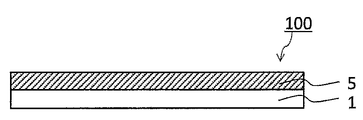
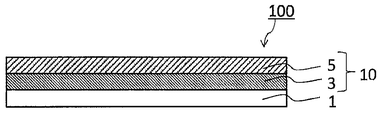
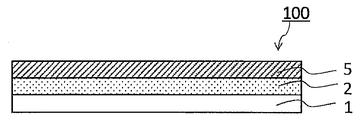
- thermo transfer sheet of this invention It is a schematic sectional drawing which shows an example of the thermal transfer sheet of this invention. It is a schematic sectional drawing which shows an example of the thermal transfer sheet of this invention. It is a schematic sectional drawing which shows an example of the thermal transfer sheet of this invention. It is a schematic sectional drawing which shows an example of the thermal transfer sheet of this invention.
- a thermal transfer sheet 100 according to an embodiment of the present invention (hereinafter referred to as a thermal transfer sheet according to an embodiment) has a configuration in which a colored layer 5 is provided on one surface of a substrate 1 so as to be peelable from the substrate 1. (See FIGS. 1 to 4).
- the colored layer 5 is located on the outermost surface of the thermal transfer sheet 100, and a colored layer that has been melted or softened by a fusion type thermal transfer method is used by combining the transfer target and the thermal transfer sheet 100 of one embodiment. When transferring onto the body, it becomes a layer in direct contact with the transfer target.
- the melt-type thermal transfer method refers to a method in which an energy corresponding to image information is applied to a colored layer of a thermal transfer sheet by a heating device such as a thermal head, and the colored layer melted or softened by the application of energy is covered.
- a thermal transfer method in which an image is formed by transferring onto a transfer body.
- the base material 1 is an essential configuration in the thermal transfer sheet 100 of one embodiment, and the colored layer 5 provided on one surface of the base material 1 or an optional provided between the base material 1 and the colored layer 5. Keep the layer of.
- the material of the substrate 1 is not particularly limited.
- polyester such as polyethylene terephthalate, polyarylate, polycarbonate, polyurethane, polyimide, polyetherimide, cellulose derivative, polyethylene, ethylene-vinyl acetate copolymer, polypropylene, polystyrene, Acrylic, polyvinyl chloride, polyvinylidene chloride, polyvinyl alcohol, polyvinyl butyral, nylon, polyether ether ketone, polysulfone, polyether sulfone, tetrafluoroethylene-perfluoroalkyl vinyl ether copolymer, polyvinyl fluoride, tetrafluoroethylene Ethylene copolymer, tetrafluoroethylene-hexafluoropropylene copolymer, polychlorotrifluoroethylene, polyvinylidene
- plastic films such as fluoride, or a sheet or the like can be used. Other than these can also be used.
- the substrate 1 may be subjected to a surface treatment.
- the surface treatment method include corona discharge treatment, flame treatment, ozone treatment, ultraviolet treatment, radiation treatment, surface roughening treatment, chemical treatment, plasma treatment, low temperature plasma treatment, primer treatment, grafting treatment and the like. be able to.
- the thickness of the substrate 1 is not particularly limited, and is usually in the range of 2.5 ⁇ m to 6.0 ⁇ m.
- a colored layer 5 is provided on one surface (upper surface in the illustrated form) of the substrate 1.
- the colored layer 5 may be provided so as to be in direct contact with the base material 1, and indirectly provided via an arbitrary layer as shown in FIGS. 2 and 3. It may be done.
- 2 is provided with a transfer layer 10 on a base material 1 so as to be peelable from the base material 1, and the transfer layer 10 is formed from the base material 1 side from the release layer 3.
- the colored layer 5 is laminated in this order.
- 3 has a configuration in which a release layer 2 and a colored layer 5 are laminated on a base material 1 in this order.
- the peeling layer 3 and the release layer 2 are arbitrary structures in the thermal transfer sheet 100 of one Embodiment.
- the colored layer 5 contains an ethylene-vinyl acetate copolymer, a terpene phenol resin, and carbon black as essential components.
- the colored layer 5 may contain arbitrary components together with these essential components.
- the total mass of the ethylene-vinyl acetate copolymer and the terpene phenol resin with respect to the total mass of the colored layer 5 is 35% by mass or more.
- the mass of the phenol resin is in the range of 12% by mass to 35% by mass
- the mass of the carbon black with respect to the total mass of the colored layer is in the range of 30% by mass to 60% by mass.
- the thermal transfer sheet 100 of one embodiment having the above characteristics, when the colored layer 5 that has been melted or softened is transferred onto the transfer target by the melt-type thermal transfer method, the adhesion of the colored layer to the transfer target is improved. Can be good. In addition, a high-density image can be formed on the transfer target. Further, it is possible to suppress blocking during storage of the thermal transfer sheet. Moreover, the transfer sensitivity when the colored layer 5 is transferred onto the transfer target can be improved.
- the transfer sensitivity of the colored layer as used in the specification of the present application refers to how much energy is applied when the energy is applied to transfer the colored layer onto the transfer target, and the energy is applied.
- the ethylene-vinyl acetate copolymer and the terpene phenol resin contained in the colored layer 5 are components for imparting adhesion to the colored layer 5, and the ethylene-vinyl acetate copolymer with respect to the total mass of the colored layer 5.
- the ethylene-vinyl acetate copolymer and the terpene phenol resin By adding the ethylene-vinyl acetate copolymer and the terpene phenol resin to the colored layer 5 so that the total mass of the polymer and the terpene phenol resin is 35% by mass or more, the colored layer 5 is formed on the transfer target. Can be transferred with good adhesion.
- the total mass of the ethylene-vinyl acetate copolymer and the terpene phenol resin is 50% by mass or more with respect to the total mass of the colored layer 5.
- the ethylene-vinyl acetate copolymer and the terpene phenol resin are components for imparting adhesion to the colored layer 5, but without having the terpene phenol resin contained in the colored layer,
- adhesion to the colored layer can be imparted, but the transfer sensitivity of the colored layer becomes insufficient. Therefore, in this case, unless a sufficiently high energy is applied to the colored layer, the colored layer cannot be transferred onto the transferred material, and damage to the transferred material tends to increase due to the applied energy. . Note that when the transfer target is damaged, the transfer target is easily damaged or deformed.
- the thermal transfer sheet 100 of one embodiment defines the mass of the terpene phenol resin as 12% by mass or more with respect to the total mass of the colored layer 5 in order to impart sufficient transfer sensitivity to the colored layer 5. ing.
- the thermal transfer sheet 100 in consideration of such points, the mass of the terpene phenol resin with respect to the total mass of the colored layer 5 is defined as 35% by mass or less.
- the blocking suppression effect is a synergistic effect by defining the upper limit value of the terpene phenol resin content and defining the lower limit value of the carbon black content described later. It is assumed that there is.
- the surface of the colored layer 5 can be appropriately roughened by using the colored layer 5 containing carbon black, which will be described later, and the surface of the colored layer 5 can be roughened and blocked. It is presumed that blocking is suppressed by a synergistic effect by defining an upper limit value of the content of the terpene phenol resin that is easily generated.
- the weight of the terpene phenol resin with respect to the total weight of the colored layer 5 is within the range of 12% by mass or more and 35% by mass or less. 5 has a sufficient transfer sensitivity. Further, by making the total mass of the ethylene-vinyl acetate copolymer and the terpene phenol resin with respect to the total mass of the colored layer 5 35% by mass or more, sufficient adhesion to the transferred material is imparted to the colored layer 5. ing. More preferably, the colored layer 5 has a terpene phenol resin mass in the range of 12% by mass to 30% by mass, more preferably 17% by mass to 30% by mass with respect to the total mass of the colored layer 5. Within range.
- the ethylene-vinyl acetate copolymer contained in the colored layer plays a role of compensating for the insufficient adhesion of the colored layer by defining the upper limit of the terpene phenol resin content. Accordingly, the content of the ethylene-vinyl acetate copolymer is not particularly limited, and may be appropriately adjusted according to the content of the terpene phenol resin.
- the condition that the total mass of the ethylene-vinyl acetate copolymer and the terpene phenol resin is 35% by mass or more with respect to the total mass of the colored layer 5, and the terpene phenol resin with respect to the total mass of the colored layer 5
- the terpene phenol resin with respect to the total mass of the colored layer 5 What is necessary is just to adjust suitably in the range which satisfy
- the terpene phenol resin referred to in the present specification includes both a copolymer of a terpene and a phenol monomer, and a terpene homopolymer or a phenol-modified copolymer of the terpene.
- Terpenes mean a monomer in which isoprene (C 5 H 8 ) is a structural unit, and two or more of the isoprene are polymerized, and monoterpene (C 10 ), sesquiterpene (C 15 ), diterpene (C 20 ), Sesterterpenes (C 25 ), triterpenes (C 30 ), tetraterpenes (C 40 ) and the like, and terpenoids having a substituent such as a carbonyl group and a hydroxy group are also included.
- terpenes include pinene, dipentene, karen, myrcene, ocimene, limonene, terpinolene, terpinene, sabinene, tricyclene and the like.
- phenolic monomer include phenol, cresol, bisphenol A, and the like.
- the colored layer 5 may contain 1 type as a terpene phenol resin, and may contain 2 or more types. When the colored layer 5 contains two or more types of terpene phenol resins, the mass of the terpene phenol resins means the total mass of the two or more types of terpene phenol resins.
- the colored layer 5 contains carbon black together with the ethylene-vinyl acetate copolymer and the terpene phenol resin.
- the mass of the carbon black with respect to the total mass of the colored layer 5 is calculated. It is specified within the range of 30% by mass or more and 60% by mass or less.
- the thermal transfer sheet of one embodiment in which the mass of carbon black is defined in the range of 30% by mass or more and 60% by mass or less with respect to the total mass of the colored layer 5, the thermal transfer sheet of the one embodiment is sufficient. An image having a density can be formed, and the occurrence of blocking can be sufficiently suppressed.
- the particle size of the carbon black is not particularly limited, but is preferably in the range of 0.01 ⁇ m or more and 0.2 ⁇ m or less, more preferably in the range of 0.01 ⁇ m or more and 0.15 ⁇ m or less, and 0.01 ⁇ m or more and 0.1 ⁇ m or less. Within the range is more preferable, and within the range of 0.02 ⁇ m to 0.08 ⁇ m is particularly preferable.
- the particle size of carbon black means an arithmetic average particle size obtained by observation with an electron microscope, and can be calculated by a method based on JIS-Z-8827-1 (2008).
- the total mass of the ethylene-vinyl acetate copolymer, the terpene phenol resin, and the carbon black with respect to the total mass of the colored layer may be 65% by mass or more, preferably 70% by mass or more. It is more preferable that it is 80 mass% or more.
- the colored layer 5 is an arbitrary component as long as it does not interfere with the content of each essential component described above together with the ethylene-vinyl acetate copolymer, terpene phenol resin, and carbon black, which are the essential components described above. It may contain components.
- the optional component include a conventionally known binder resin, a conventionally known organic or inorganic pigment or dye, and a heat conductive substance.
- the thickness of the colored layer 5 is not particularly limited, but is preferably in the range of 0.5 ⁇ m to 2 ⁇ m.
- the method for forming the colored layer 5 is not particularly limited, and for example, ethylene-vinyl acetate copolymer, terpene phenol resin, carbon black, and optional components added as necessary are dispersed or dissolved in an appropriate solvent.
- a colored layer coating solution is prepared, and this coating solution can be formed by coating and drying on one surface of the substrate 1 or on a layer arbitrarily provided on one surface of the substrate 1. .
- the coating method include a gravure printing method, a screen printing method, a reverse coating method using a gravure plate, and the like.
- the coating method other than this can also be used. This is the same also about the coating method of the various coating liquid mentioned later.
- the transfer layer 10 may be provided on the substrate 1, and the transfer layer 10 may have a stacked structure in which the release layer 3 and the colored layer 5 are stacked in this order.
- the transfer layer 10 is a layer that is provided so as to be peelable from the substrate 1 and is transferred onto a transfer target by a melt type thermal transfer method.
- the release layer 3 constituting the transfer layer may be a resin having peelability from the substrate 1.
- the resin having peelability include acrylic resin, phenoxy resin, polycarbonate resin, polystyrene resin, and silicone-modified resin. These components may be used alone or in combination of two or more.
- the release layer 3 is a layer positioned on the outermost surface of the print product. Therefore, a lubricant may be contained in the release layer 3 in order to improve the scratch resistance of the printed material.
- the lubricant include silicones such as modified silicone oil and silicone-modified resin, metal soaps such as zinc stearate, zinc stearyl phosphate, calcium stearate, magnesium stearate, fatty acid amide, polyethylene wax, carnauba wax, paraffin wax. , Etc.
- the release layer 3 is coated with a methacrylate ester copolymer, vinyl chloride-vinyl acetate copolymer, polyester resin, polycarbonate resin, acrylic resin, ultraviolet absorbing resin, epoxy resin, polystyrene.
- a resin, a polyurethane resin, an acrylic urethane resin, a resin obtained by modifying each of these resins with silicone, a mixture of these resins, an ionizing radiation curable resin, an ultraviolet absorbing resin, or the like may be included.
- the release layer 3 preferably contains carnauba wax.
- the ultraviolet absorbing resin for example, a resin obtained by reacting and bonding a reactive ultraviolet absorber to a thermoplastic resin or the above ionizing radiation curable resin can be used. More specifically, addition-polymerizable double-reactive organic UV absorbers such as salicylates, benzophenones, benzotriazoles, substituted acrylonitriles, nickel chelates, hindered amines, etc. Examples thereof include a bond (for example, a vinyl group, an acryloyl group, a methacryloyl group, etc.), an alcoholic hydroxyl group, an amino group, a carboxyl group, an epoxy group, and a reactive group such as an isocyanate group.
- a bond for example, a vinyl group, an acryloyl group, a methacryloyl group, etc.
- an alcoholic hydroxyl group an amino group
- a carboxyl group an epoxy group
- a reactive group such as an isocyanate group.
- the release layer 3 includes, for example, a light stabilizer such as a hindered amine or Ni chelate, an antioxidant such as a hindered phenol, sulfur, phosphorus or lactone. Etc. may be contained.
- a light stabilizer such as a hindered amine or Ni chelate
- an antioxidant such as a hindered phenol, sulfur, phosphorus or lactone. Etc. may be contained.
- One of these optional components may be used alone, or two or more thereof may be used in combination.
- the release layer 3 is prepared by preparing a release layer coating solution in which the components exemplified above are dissolved or dispersed in an appropriate solvent-based solvent, and applying this coating solution on one surface of the substrate 1 or the substrate. It can be formed by coating and drying on a layer arbitrarily provided on one surface of 1.
- the thickness of the release layer 3 is generally in the range of 0.1 ⁇ m to 5 ⁇ m, and preferably in the range of 0.5 ⁇ m to 5 ⁇ m.
- a primer layer may be provided between the release layer 3 and the colored layer 5 (not shown) in order to improve the adhesion between the release layer 3 and the colored layer 5.
- the components constituting the primer layer include, for example, an ultraviolet absorbing resin, a polyester resin, a polycarbonate resin, a butyral resin, a polyurethane resin, a polyamide resin, an epoxy resin, a phenol resin, a polyvinyl chloride resin, Polyvinyl acetate resin, vinyl chloride-vinyl acetate copolymer, acid-modified polyolefin resin, copolymer of ethylene and vinyl acetate or acrylic acid, (meth) acrylic resin, polyvinyl alcohol resin, polyvinyl acetal resin , Polybutadiene resins, rubber compounds, and the like.
- a release layer 2 may be provided between the base material 1 and the colored layer 5.
- the release layer 2 is a layer that remains on the substrate 1 side when the colored layer 5 is transferred onto the transfer target by a melt type thermal transfer method.
- Examples of the resin constituting the release layer include waxes, silicone wax, silicone resin, silicone-modified resin, fluorine resin, fluorine-modified resin, polyvinyl alcohol, acrylic resin, thermosetting epoxy-amino copolymer, and heat. Examples thereof include a curable alkyd-amino copolymer (thermosetting aminoalkyd resin). These resins may be used alone or in combination of two or more. Although there is no limitation in particular about the thickness of a mold release layer, the inside of the range of 0.5 micrometer or more and 5 micrometers or less is common.
- a release layer may be provided between the substrate 1 and the transfer layer 10.
- a back layer (not shown) may be provided on the other surface of the substrate 1 in order to improve the heat resistance and the runnability of the thermal head during printing.
- a back surface layer is arbitrary structures in the thermal transfer sheet 100 of one Embodiment.
- the back layer can be formed by appropriately selecting a conventionally known thermoplastic resin or the like.
- thermoplastic resins include polyester resins, polyacrylate resins, polyvinyl acetate resins, styrene acrylate resins, polyurethane resins, polyethylene resins, and polyolefin resins such as polypropylene resins.
- polyvinyl acetal resins, and silicone-modified products thereof include polyester resins, polyacrylate resins, polyvinyl acetate resins, styrene acrylate resins, polyurethane resins, polyethylene resins, and polyolefin resins such as polypropylene resins.
- the back layer has a wax, a higher fatty acid amide, a phosphoric ester compound, a metal soap, a silicone oil, a surfactant release agent, etc., a fluororesin for the purpose of improving slip properties.
- various additives such as organic powder such as silica, clay, talc, calcium carbonate and the like are contained, and it is particularly preferable that at least one kind of phosphate ester or metal soap is contained. .
- the back layer is prepared by, for example, preparing a coating solution in which the thermoplastic resin and various additives added as necessary are dispersed or dissolved in an appropriate solvent. It can be formed by coating and drying on the surface.
- the thickness of the back layer is preferably in the range of 0.01 ⁇ m or more and 5 ⁇ m or less, and more preferably in the range of 0.03 ⁇ m or more and 2 ⁇ m or less from the viewpoint of improvement in heat resistance or the like.
- another layer can be provided on one surface of the substrate 1 in the surface order with the colored layer 5 or the transfer layer 10 including the colored layer 5.
- a color material layer of each color can be provided in the surface order with the colored layer 5 or the transfer layer 10 (not shown).
- any one or all of a yellow color material layer containing a yellow sublimation dye, a magenta color material layer containing a magenta sublimation dye, a cyan color material layer containing a cyan sublimation dye It can also be provided in the surface order with the colored layer 5 or the transfer layer 10.
- Transfer material examples of the material to be transferred used in combination with the thermal transfer sheet of one embodiment when forming a printed material include paper substrates such as plain paper, high-quality paper, and tracing paper, polyethylene terephthalate vinyl chloride, and chloride. Examples thereof include a plastic film composed of a vinyl-vinyl acetate copolymer, polycarbonate, polypropylene and the like, a plastic card, and the like.
- the thermal transfer sheet 100 of one embodiment has good transfer sensitivity of the colored layer 5, and can transfer the colored layer 5 or the transfer layer 10 including the colored layer 5 onto the transfer target body by applying low energy.
- the thermal transfer sheet 100 of one embodiment even if the transfer target is easily damaged by heat, or the transfer target is thinned, the transfer target is not damaged, or the transfer target An image formed by transferring the colored layer 5 onto the transfer target can be formed while suppressing the damage received.
- thermal transfer sheet 100 is provided on one surface of the base material 1 so as to be peelable from the base material 1. (See FIGS. 1 to 4).
- the thermal transfer sheet 100 of the other embodiment is common to the thermal transfer sheet 100 of the embodiment described above except that the configuration of the colored layer 5 is different. Therefore, for the configuration other than the colored layer 5, the configuration of the thermal transfer sheet 100 of the embodiment described above can be appropriately selected and used, and detailed description thereof is omitted here.
- the colored layer 5 in the thermal transfer sheet 100 according to another embodiment contains carnauba wax, a terpene phenol resin, and a colorant as essential components.
- a colored layer according to another embodiment contains carnauba wax, a terpene phenol resin, and a colorant as essential components.
- the transfer target when the colored layer 5 of another embodiment that has been melted or softened is transferred onto the transfer target by the melt-type thermal transfer method. Adhesiveness with the colored layer of other embodiment can be made favorable.
- the colored layer 5 of the other embodiment has particularly good adhesion to the paper substrate, and therefore the thermal transfer sheet 100 of the other embodiment is suitable when a paper substrate is used as the transfer target.
- the colored layer 5 of another preferred embodiment contains terpene phenol having an SP value of 9 or more as the terpene phenol. According to the colored layer 5 of another embodiment containing terpene phenol having an SP value of 9 or more, durability can be imparted to an image formed using the colored layer 5.
- the SP value as used in the present specification means a compatibility parameter and means a value calculated using Hoy's constant.
- the colorant contained in the color layer 5 of the other embodiment is not particularly limited, and a conventionally known colorant can be appropriately selected and used in the field of the color layer applied to the melt type thermal transfer system. .
- the color of the colorant is not limited to cyan, magenta, yellow, and black, and various colorants can be used. Examples of the colorant include the carbon black described above and a pigment.
- the colored layer 5 of other embodiments may contain arbitrary components other than the carnauba wax, the terpene phenol resin, and the colorant.
- the thermal transfer sheet 100 of another preferred embodiment contains an ethylene-vinyl acetate copolymer and the like, similar to the thermal transfer sheet 100 of one embodiment.
- the content of carnauba wax, terpene phenol resin, and colorant contained in the colored layer 5 of the other embodiment is not particularly limited, but the amount of carnauba wax relative to the total mass of the colored layer 5 of the other embodiment is not limited.
- the content is preferably in the range of 10% by mass to 50% by mass, and more preferably in the range of 20% by mass to 40% by mass.
- the content of terpene phenol with respect to the total mass of the colored layer 5 of other embodiments is preferably in the range of 15% by mass to 35% by mass, and more preferably in the range of 10% by mass to 30% by mass.
- the content of the colorant with respect to the total mass of the colored layer 5 of other embodiments is preferably in the range of 20% by mass to 60% by mass, and more preferably in the range of 30% by mass to 50% by mass.
- the total content of carnauba wax, terpene phenol, and colorant is 70% by mass or more with respect to the total mass of the colored layer of the other embodiment. More preferably, it is 80 mass% or more. There is no limitation in particular about an upper limit, and it is 100 mass%.
- Example 1 Using a 4.5 ⁇ m thick biaxially stretched polyethylene terephthalate film (hereinafter referred to as “PET”) (Lumirror (registered trademark) Toray Industries, Inc.) as a base material, a back layer having the following composition on one surface of the base material The coating liquid was applied and dried to form a back layer having a dry thickness of 0.06 ⁇ m. Next, a release layer coating solution having the following composition was applied and dried on the other surface of the substrate to form a release layer having a thickness of 0.7 ⁇ m when dried. Subsequently, the thermal transfer sheet 1 of Example 1 is formed by applying and drying a colored layer coating liquid 1 having the following composition on the release layer to form a colored layer having a dry thickness of 0.8 ⁇ m. did.
- PET biaxially stretched polyethylene terephthalate film
- ⁇ Coating liquid for release layer > Carnauba wax (melting point 86 ° C) 100 parts (WE-95 Konishi Co., Ltd.) ⁇ Water 25 parts ⁇ Isopropyl alcohol 75 parts
- ⁇ Coloring layer coating solution 1> Carbon black 50 parts (C / B # 44 Mitsubishi Chemical Corporation) -30 parts of ethylene-vinyl acetate copolymer (Evaflex (registered trademark) EV250 Mitsui-DuPont Polychemical Co., Ltd.) ⁇ Terpene phenol resin 20 parts (YS Polystar T100 Yasuhara Chemical Co., Ltd.) ⁇ Methyl ethyl ketone 1 part ⁇ Toluene 20 parts
- Example 2 A thermal transfer sheet of Example 2 was obtained in the same manner as in Example 1 except that the colored layer coating solution 1 was changed to the colored layer coating solution 2 having the following composition.
- Example 3 A thermal transfer sheet of Example 3 was obtained in the same manner as in Example 1 except that the colored layer coating solution 1 was changed to the colored layer coating solution 3 having the following composition.
- Example 4 A thermal transfer sheet of Example 4 was obtained in the same manner as in Example 1 except that the colored layer coating solution 1 was changed to the colored layer coating solution 4 having the following composition.
- Example 5 A thermal transfer sheet of Example 5 was obtained in the same manner as in Example 1 except that the colored layer coating solution 1 was changed to the colored layer coating solution 5 having the following composition.
- Comparative Example 1 A thermal transfer sheet of Comparative Example 1 was obtained in the same manner as Example 1 except that the colored layer coating solution 1 was changed to the colored layer coating solution A having the following composition.
- Comparative Example 2 A thermal transfer sheet of Comparative Example 2 was obtained in the same manner as in Example 1 except that the colored layer coating solution 1 was changed to the colored layer coating solution B having the following composition.
- Comparative Example 3 A thermal transfer sheet of Comparative Example 3 was obtained in the same manner as in Example 1 except that the colored layer coating solution 1 was changed to the colored layer coating solution C having the following composition.
- Comparative Example 4 A thermal transfer sheet of Comparative Example 4 was obtained in the same manner as in Example 1 except that the colored layer coating solution 1 was changed to the colored layer coating solution D having the following composition.
- Comparative Example 5 A thermal transfer sheet of Comparative Example 5 was obtained in the same manner as in Example 1 except that the colored layer coating solution 1 was changed to a colored layer coating solution E having the following composition.
- Comparative Example 6 A thermal transfer sheet of Comparative Example 6 was obtained in the same manner as in Example 1 except that the colored layer coating solution 1 was changed to the colored layer coating solution F having the following composition.
- Comparative Example 7 A thermal transfer sheet of Comparative Example 7 was obtained in the same manner as in Example 1 except that the colored layer coating solution 1 was changed to the colored layer coating solution G having the following composition.
- the OPP / CPP laminated film is a laminated film of a biaxially stretched polypropylene film (Oriented Polypropylene) that is an OPP film and an unstretched polypropylene film (Cast Polypropylene) that is a CPP film.
- Evaluation criteria A: The reflection density is 1.8 or more. NG: The reflection density is less than 1.8.
- Example 6 A thermal transfer sheet of Example 6 was obtained in the same manner as in Example 1 except that the colored layer coating solution 1 was changed to the colored layer coating solution 6 having the following composition to form a colored layer.
- Example 7 A thermal transfer sheet of Example 7 was obtained in the same manner as in Example 1 except that the colored layer coating solution 1 was changed to the colored layer coating solution 7 having the following composition to form a colored layer.
- Example 8 A thermal transfer sheet of Example 8 was obtained in the same manner as in Example 1 except that the colored layer coating solution 1 was changed to a colored layer coating solution 8 having the following composition to form a colored layer.
- Example 9 A thermal transfer sheet of Example 9 was obtained in the same manner as in Example 1 except that the colored layer coating solution 1 was changed to the colored layer coating solution 9 having the following composition to form a colored layer.
- Example 10 A thermal transfer sheet of Example 10 was obtained in the same manner as in Example 1 except that the colored layer coating solution 1 was changed to the colored layer coating solution 10 having the following composition to form a colored layer.
- thermal transfer sheet obtained in Examples 6 to 10 was superposed on a coated paper (Avery 3209 Avery Dennison) as a transfer target 3, and a melt transfer type thermal transfer printer (Zebra140Xi4 printer Sebra Co., Ltd.) was used.
- a thermal pattern with a resolution of 203 dpi is used to print a character pattern and barcode with a line thickness of 2 dots (the printed character pattern and barcode are collectively called This was referred to as a thermal transfer image), and prints 3 of each example were obtained.
- Evaluation criteria A: There is no change in the image before and after the evaluation test. B: Although there was no change in the image after 50 reciprocations, the image was missing and chipped after 100 reciprocations. C: The image is missing and chipped after 50 reciprocations.
Landscapes
- Physics & Mathematics (AREA)
- Optics & Photonics (AREA)
- Thermal Transfer Or Thermal Recording In General (AREA)
Abstract
被転写体に対する着色層の密着性を良好なものとしつつも、濃度の高い画像を形成でき、さらに、ブロッキングを抑制できる熱転写シートを提供すること。 基材1上に、基材1から剥離可能に着色層5が設けられた熱転写シートにおいて、着色層5、熱転写シートの最表面に位置させ、着色層5に、少なくとも、エチレン-酢酸ビニル共重合体、テルペンフェノール樹脂、及びカーボンブラックを含有せしめ、着色層5の総質量に対する、エチレン-酢酸ビニル共重合体とテルペンフェノール樹脂の合計質量を35質量%以上とし、着色層5の総質量に対する、テルペンフェノール樹脂の質量を12質量%以上35質量%以下とし、着色層5の総質量に対する、カーボンブラックの質量が30質量%以上60質量%以下とすることで上記課題を解決する。
Description
本発明は、熱転写シートに関する。
印画物の形成に用いられる熱転写シートの一形態として、基材上に、当該基材から剥離可能に着色層(熱溶融インキ層と称される場合もある)が設けられ、着色層に、カーボンブラック等の色材、及び熱溶融性のワックスやバインダー樹脂等を含有せしめた熱転写シートが知られている。このような熱転写シートを用いた印画物の形成には、通常、溶融型熱転写方式が用いられる。溶融型熱転写方式は、サーマルヘッド等の加熱デバイスにより熱転写シートに画像情報に応じたエネルギーを印加して着色層を溶融或いは軟化させ、被転写体上に、溶融或いは軟化した着色層を転写する(着色層を移行させる)熱転写方式である。溶融型熱転写方式は、文字、線画等の2値画像の画像形成に適している。
溶融型熱転写方式に用いられる熱転写シートには、濃度の高い画像(高濃度画像)の形成が可能であることが求められている。この要求に対しては、通常、着色層に含有せしめる色材の含有量を多くする等の対策がとられている。ところで、溶融型熱転写方式を用いた印画物の形成にあたり、被転写体上に、熱転写シートの着色層を密着性よく転写させるためには、熱転写シートの着色層自体が、被転写体に対する良好な密着性を有していることが必要となる。着色層自体に、被転写体に対する良好な密着性を付与するためには、着色層に、密着性を有する成分を多く含有せしめることが必要となるものの、高濃度画像を形成することを主眼として、着色層に含有せしめる色材の含有量を多くしていった場合には、その分、着色層の総質量に対する密着性付与成分の含有量は減少することとなり、着色層に、被転写体に対する十分な密着性を付与することが困難となる。つまりは、濃度の高い画像形成を可能とすることと、被転写体に対する密着性を向上させることは、トレードオフの関係にあるといえる。
このような状況下、着色層上に、被転写体に対する密着性を向上させるための層を設けた熱転写シート等が提案されている。例えば、特許文献1には、基材上に、プライマー層、熱溶融性インキ層、及びオーバーコート層を順次積層した熱転写記録媒体が開示されている。しかしながら、特許文献1に開示がされているように、着色層上に、オーバーコート層を設けた場合には、被転写体に対する着色層(特許文献1で言う熱溶融性インキ層)の密着性を向上させることができる一方で、熱転写シートを巻取り保存した場合に、ブロッキングが発生しやすくなるといった新たな問題が生ずることとなる。また、熱転写シートを製造するにあたっては、熱転写シートの層構成を簡略なものとすることが望ましく、着色層上に、オーバーコート層等の他の層を設ける場合には、当該熱転写シートの製造工程が煩雑になり、製造時の歩留まりが低下する傾向にある。この点を考慮すると、着色層上に他の層を設けることなく、つまりは、着色層自体が、被転写体に対する良好な密着性を有し、且つ濃度の高い画像形成が可能であり、さらには、ブロッキングを抑制できる機能を有していることが望ましい。
本発明はこのような状況に鑑みてなされたものであり、被転写体に対する着色層の密着性を良好なものとしつつも、濃度の高い画像を形成でき、さらに、ブロッキングを抑制できる熱転写シートを提供することを主たる課題とする。
上記課題を解決するための本発明は、基材上に、前記基材から剥離可能に着色層が設けられた熱転写シートであって、前記着色層は、前記熱転写シートの最表面に位置し、前記着色層は、少なくとも、エチレン-酢酸ビニル共重合体、テルペンフェノール樹脂、及びカーボンブラックを含有しており、前記着色層の総質量に対する、前記エチレン-酢酸ビニル共重合体と前記テルペンフェノール樹脂の合計質量が35質量%以上であり、前記着色層の総質量に対する、前記テルペンフェノール樹脂の質量が12質量%以上35質量%以下の範囲内であり、前記着色層の総質量に対する、前記カーボンブラックの質量が30質量%以上60質量%以下の範囲内であることを特徴とする。
上記課題を解決するための本発明は、基材上に、前記基材から剥離可能に着色層が設けられた熱転写シートであって、前記着色層は、前記熱転写シートの最表面に位置し、前記着色層は、少なくとも、カルナバワックス、テルペンフェノール樹脂、及び着色剤を含有していることを特徴とする。
前記テルペンフェノール樹脂のSP値が、9以上であってもよい。
また、前記基材上に、前記基材から剥離可能に転写層が設けられ、前記転写層が、前記基材側から、剥離層、前記着色層がこの順で積層されてなる積層構成を呈していてもよい。
本発明の熱転写シートによれば、被転写体に対する着色層の密着性を良好なものとしつつも、濃度の高い画像を形成でき、さらに、ブロッキングを抑制できる。
以下、本発明の熱転写シートの実施の形態を、図面等を参照しながら説明する。なお、本発明は多くの異なる態様での実施が可能であり、以下に例示する実施の形態の記載内容に限定して解釈されるものではない。また、図面は説明をより明確にするため、実際の態様に比べ、各部の幅、厚さ、形状等について模式的に表される場合があるが、あくまで一例であって、本発明の解釈を限定するものではない。また、本願明細書と各図において、既出の図に関して前述したものと同様の要素には、同一の符号を付して、詳細な説明を適宜省略することがある。また、説明の便宜上、上方又は下方等という語句を用いて説明するが、上下方向が逆転してもよい。左右方向についても同様である。
<<熱転写シート>>
本発明の一実施形態の熱転写シート100(以下、一実施形態の熱転写シートと言う)は、基材1の一方の面上に、当該基材1から剥離可能に着色層5が設けられた構成を呈している(図1~図4参照)。着色層5は、熱転写シート100の最表面に位置しており、被転写体と一実施形態の熱転写シート100とを組合せて用い、溶融型熱転写方式により、溶融、或いは軟化した着色層を被転写体上に転写するときに、被転写体と直接的に接する層となる。本願明細書で言う溶融型熱転写方式とは、サーマルヘッド等の加熱デバイスにより、熱転写シートの着色層に画像情報に応じたエネルギーを印加し、エネルギーの印加により溶融、或いは軟化した着色層を、被転写体上に転写して画像を形成する熱転写方式である。
本発明の一実施形態の熱転写シート100(以下、一実施形態の熱転写シートと言う)は、基材1の一方の面上に、当該基材1から剥離可能に着色層5が設けられた構成を呈している(図1~図4参照)。着色層5は、熱転写シート100の最表面に位置しており、被転写体と一実施形態の熱転写シート100とを組合せて用い、溶融型熱転写方式により、溶融、或いは軟化した着色層を被転写体上に転写するときに、被転写体と直接的に接する層となる。本願明細書で言う溶融型熱転写方式とは、サーマルヘッド等の加熱デバイスにより、熱転写シートの着色層に画像情報に応じたエネルギーを印加し、エネルギーの印加により溶融、或いは軟化した着色層を、被転写体上に転写して画像を形成する熱転写方式である。
(基材)
基材1は、一実施形態の熱転写シート100における必須の構成であり、基材1の一方の面上に設けられる着色層5、或いは、基材1と着色層5との間に設けられる任意の層を保持する。基材1の材料については特に限定はなく、例えば、ポリエチレンテレフタレート等のポリエステル、ポリアリレート、ポリカーボネート、ポリウレタン、ポリイミド、ポリエーテルイミド、セルロース誘導体、ポリエチレン、エチレン-酢酸ビニル共重合体、ポリプロピレン、ポリスチレン、アクリル、ポリ塩化ビニル、ポリ塩化ビニリデン、ポリビニルアルコール、ポリビニルブチラール、ナイロン、ポリエーテルエーテルケトン、ポリサルフォン、ポリエーテルサルフォン、テトラフルオロエチレン-パーフルオロアルキルビニルエーテル共重合体、ポリビニルフルオライド、テトラフルオロエチレン-エチレン共重合体、テトラフルオロエチレン-ヘキサフルオロプロピレン共重合体、ポリクロロトリフルオロエチレン、ポリビニリデンフルオライド等の各種プラスチックフィルム、又はシート等を用いることができる。また、これ以外を用いることもできる。
基材1は、一実施形態の熱転写シート100における必須の構成であり、基材1の一方の面上に設けられる着色層5、或いは、基材1と着色層5との間に設けられる任意の層を保持する。基材1の材料については特に限定はなく、例えば、ポリエチレンテレフタレート等のポリエステル、ポリアリレート、ポリカーボネート、ポリウレタン、ポリイミド、ポリエーテルイミド、セルロース誘導体、ポリエチレン、エチレン-酢酸ビニル共重合体、ポリプロピレン、ポリスチレン、アクリル、ポリ塩化ビニル、ポリ塩化ビニリデン、ポリビニルアルコール、ポリビニルブチラール、ナイロン、ポリエーテルエーテルケトン、ポリサルフォン、ポリエーテルサルフォン、テトラフルオロエチレン-パーフルオロアルキルビニルエーテル共重合体、ポリビニルフルオライド、テトラフルオロエチレン-エチレン共重合体、テトラフルオロエチレン-ヘキサフルオロプロピレン共重合体、ポリクロロトリフルオロエチレン、ポリビニリデンフルオライド等の各種プラスチックフィルム、又はシート等を用いることができる。また、これ以外を用いることもできる。
また、基材1に表面処理を施してもよい。表面処理の方法としては、例えば、コロナ放電処理、火炎処理、オゾン処理、紫外線処理、放射線処理、粗面化処理、化学薬品処理、プラズマ処理、低温プラズマ処理、プライマー処理、グラフト化処理等を挙げることができる。
基材1の厚みについて特に限定はなく、通常、2.5μm以上6.0μm以下の範囲内である。
(着色層)
基材1の一方の面(図示する形態では上面)には、着色層5が設けられている。着色層5は、図1に示すように、基材1と直接的に接するように設けられていてもよく、図2、図3に示すように、任意の層を介して、間接的に設けられていてもよい。なお、図2に示す形態の熱転写シート100は、基材1上に、当該基材1から剥離可能に転写層10が設けられており、転写層10は、基材1側から、剥離層3、着色層5がこの順で積層されてなる積層構成を呈している。また、図3に示す形態の熱転写シート100は、基材1上に、離型層2、着色層5がこの順で積層されてなる構成を呈している。なお、剥離層3、離型層2は、一実施形態の熱転写シート100における任意の構成である。
基材1の一方の面(図示する形態では上面)には、着色層5が設けられている。着色層5は、図1に示すように、基材1と直接的に接するように設けられていてもよく、図2、図3に示すように、任意の層を介して、間接的に設けられていてもよい。なお、図2に示す形態の熱転写シート100は、基材1上に、当該基材1から剥離可能に転写層10が設けられており、転写層10は、基材1側から、剥離層3、着色層5がこの順で積層されてなる積層構成を呈している。また、図3に示す形態の熱転写シート100は、基材1上に、離型層2、着色層5がこの順で積層されてなる構成を呈している。なお、剥離層3、離型層2は、一実施形態の熱転写シート100における任意の構成である。
着色層5は、必須の成分として、エチレン-酢酸ビニル共重合体、テルペンフェノール樹脂、及びカーボンブラックを含有している。着色層5は、これら必須の成分とともに、任意の成分を含有していてもよい。そして、一実施形態の熱転写シート100は、着色層5の総質量に対する、エチレン-酢酸ビニル共重合体とテルペンフェノール樹脂の合計質量が35質量%以上であり、着色層5の総質量に対する、テルペンフェノール樹脂の質量が12質量%以上35質量%以下の範囲内であり、着色層の総質量に対する、カーボンブラックの質量が30質量%以上60質量%以下の範囲内であることを特徴としている。
上記特徴を有する一実施形態の熱転写シート100によれば、溶融型熱転写方式により、被転写体上に、溶融或いは軟化した着色層5を転写するときに、被転写体に対する着色層の密着性を良好なものとできる。また、被転写体上に濃度の高い画像を形成できる。また、熱転写シートの保存中等にブロッキングが生ずることを抑制できる。また、被転写体上に着色層5を転写するときの転写感度を向上させることができる。なお、本願明細書でいう着色層の転写感度とは、エネルギーを印加して着色層を被転写体上に転写していくときに、どの程度のエネルギーを印加することで、当該エネルギーが印加された領域の着色層を、抜けや、カスレなく、狙い通りに被転写体上に転写できるかを示す指標である。したがって、着色層の転写感度が高いという場合には、低いエネルギーで、抜けや、カスレを生じさせることなく、着色層を狙い通りに被転写体上に転写できることを意味する。
着色層5が含有しているエチレン-酢酸ビニル共重合体、及びテルペンフェノール樹脂は、着色層5に密着性を付与するための成分であり、着色層5の総質量に対する、エチレン-酢酸ビニル共重合体とテルペンフェノール樹脂の合計質量が35質量%以上となるように、着色層5に、エチレン-酢酸ビニル共重合体、及びテルペンフェノール樹脂を含有せしめることで、被転写体上に着色層5を密着性よく転写できる。好ましい形態の着色層5は、着色層5の総質量に対する、エチレン-酢酸ビニル共重合体とテルペンフェノール樹脂の合計質量が50質量%以上となっている。
上記で説明したように、エチレン-酢酸ビニル共重合体、及びテルペンフェノール樹脂は、着色層5に密着性を付与するための成分であるものの、着色層に、テルペンフェノール樹脂を含有せしめることなく、エチレン-酢酸ビニル共重合体を含有せしめた場合には、着色層に密着性を付与できる一方で、着色層の転写感度が不十分となる。したがって、この場合には、着色層に十分に高いエネルギーを印加しなければ、被転写体上に着色層を転写できず、印加されるエネルギーによって、被転写体が受けるダメージは増大する傾向にある。なお、被転写体がダメージを受けた場合には、被転写体の破損、変形等が生じやすくなる。
このような点を考慮した一実施形態の熱転写シート100は、着色層5に十分な転写感度を付与するべく、着色層5の総質量に対する、テルペンフェノール樹脂の質量を12質量%以上と規定している。
他方、着色層の総質量に対する、テルペンフェノール樹脂の含有量が多くなるにつれ、当該着色層を備える熱転写シートを巻取り保存等したときに、熱転写シートにブロッキングが生じやすくなる傾向にある。このような点を考慮した一実施形態の熱転写シート100は、着色層5の総質量に対する、テルペンフェノール樹脂の質量を35質量%以下と規定している。なお、一実施形態の熱転写シート100における、ブロッキングの抑制効果は、テルペンフェノール樹脂の含有量の上限値を規定することと、後述するカーボンブラックの含有量の下限値を規定することによる相乗効果であると推察される。具体的には、後述するカーボンブラックを含有する着色層5とすることで、着色層5の表面を適度に粗面化させることができ、この着色層5の表面の粗面化と、ブロッキングを生じさせやすいテルペンフェノール樹脂の含有量の上限値を規定することによる相乗効果によって、ブロッキングの抑制が図られるものと推察される。
つまり、一実施形態の熱転写シート100においては、着色層5の総質量に対する、テルペンフェノール樹脂の質量を12質量%以上35質量%以下の範囲内とすることで、ブロッキングを抑制しつつ、着色層5に十分な転写感度を付与している。また、着色層5の総質量に対する、エチレン-酢酸ビニル共重合体とテルペンフェノール樹脂の合計質量を35質量%以上とすることで、着色層5に、被転写体に対する十分な密着性を付与している。より好ましい形態の着色層5は、着色層5の総質量に対する、テルペンフェノール樹脂の質量が12質量%以上30質量%以下の範囲内であり、さらに好ましくは、17質量%以上30質量%以下の範囲内である。
着色層が含有しているエチレン-酢酸ビニル共重合体は、テルペンフェノール樹脂の含有量の上限値を規定することで不足する着色層の密着性を補填する役割を果たしている。したがって、エチレン-酢酸ビニル共重合体の含有量について特に限定はなく、テルペンフェノール樹脂の含有量に応じて適宜調整すればよい。具体的には、着色層5の総質量に対する、エチレン-酢酸ビニル共重合体とテルペンフェノール樹脂の合計質量が35質量%以上であるとの条件、及び着色層5の総質量に対する、テルペンフェノール樹脂の質量が12質量%以上35質量%以下の範囲内であるとの条件を満たす範囲で適宜調整すればよい。
また、本願明細書で言うテルペンフェノール樹脂には、テルペン類とフェノールモノマーとの共重合体と、テルペン類の単独重合体または共重合体をフェノール変性したものの双方が含まれる。テルペン類とは、イソプレン(C5H8)を構成単位とし、当該イソプレンが2個以上重合したモノマーを意味し、モノテルペン(C10)、セスキテルペン(C15)、ジテルペン(C20)、セスタテルペン(C25)、トリテルペン(C30)、テトラテルペン(C40)等、さらにカルボニル基、ヒドロキシ基等の置換基を有するテルペノイド等が含まれる。テルペン類の具体例としては、ピネン、ジペンテン、カレン、ミルセン、オシメン、リモネン、テルピノレン、テルピネン、サビネン、トリシクレン等を挙げることができる。また、フェノール系モノマーの具体例としては、フェノール、クレゾール、ビスフェノールA等を挙げることができる。着色層5は、テルペンフェノール樹脂として1種を含有していてもよく、2種以上を含有していてもよい。着色層5が2種以上のテルペンフェノール樹脂を含有する場合には、テルペンフェノール樹脂の質量は、2種以上のテルペンフェノール樹脂の合計質量を意味する。
着色層5は、上記エチレン-酢酸ビニル共重合体、テルペンフェノール樹脂とともに、カーボンブラックを含有しており、一実施形態の熱転写シート100においては、着色層5の総質量に対する、カーボンブラックの質量を30質量%以上60質量%以下の範囲内に規定している。
着色層5の総質量に対する、カーボンブラックの質量を30質量%以上60質量%以下の範囲内に規定した一実施形態の熱転写シートによれば、当該一実施形態の熱転写シートを用いて、十分な濃度を有する画像を形成でき、また、ブロッキングの発生を十分に抑制できる。
カーボンブラックの粒子径について特に限定はないが、0.01μm以上0.2μm以下の範囲内が好ましく、0.01μm以上0.15μm以下の範囲内がより好ましく、0.01μm以上0.1μm以下の範囲内がさらに好ましく、0.02μm以上0.08μm以下の範囲内が特に好ましい。粒子径がこの範囲内のカーボンブラックを含有する着色層5とすることで、ブロッキングの抑制効果の更なる向上を図ることができる。なお、カーボンブラックの粒子径とは、電子顕微鏡観察にて求めた算術平均粒子径を意味し、JIS-Z-8827-1(2008)に準拠する方法により算出できる。
また、着色層の総質量に対する、エチレン-酢酸ビニル共重合体とテルペンフェノール樹脂とカーボンブラックの合計質量は、65質量%以上となっていればよいが、70質量%以上であることが好ましく、80質量%以上であることがより好ましい。
着色層5は、上記で説明した必須の成分である、エチレン-酢酸ビニル共重合体、テルペンフェノール樹脂、カーボンブラックとともに、上記で説明した各必須の成分の含有量を妨げない範囲で、任意の成分を含有していてもよい。任意の成分としては、従来公知のバインダー樹脂、従来公知の有機又は無機の顔料或いは染料、熱導電性物質などを挙げることができる。
着色層5の厚みについて特に限定はないが、0.5μm以上2μm以下の範囲内が好ましい。
着色層5の形成方法について特に限定はなく、例えば、エチレン-酢酸ビニル共重合体、テルペンフェノール樹脂、カーボンブラック、必要に応じて添加される任意の成分を、適当な溶媒に分散、或いは溶解した着色層用塗工液を調製し、この塗工液を、基材1の一方の面上、又は基材1の一方の面上に任意に設けられる層上に、塗布・乾燥して形成できる。塗布方法としては、例えば、グラビア印刷法、スクリーン印刷法、グラビア版を用いたリバースコーティング法等を挙げることができる。また、これ以外の塗布方法を用いることもできる。このことは、後述する各種塗工液の塗布方法についても同様である。
(転写層)
図2に示すように、基材1上に転写層10を設け、転写層10を、剥離層3、着色層5がこの順で積層されてなる積層構成としてもよい。転写層10は、基材1から剥離可能に設けられ、溶融型熱転写方式により、被転写体上に転写される層である。
図2に示すように、基材1上に転写層10を設け、転写層10を、剥離層3、着色層5がこの順で積層されてなる積層構成としてもよい。転写層10は、基材1から剥離可能に設けられ、溶融型熱転写方式により、被転写体上に転写される層である。
転写層を構成する剥離層3は、基材1からの剥離性を有する樹脂であればよい。剥離性を有する樹脂としては、例えば、アクリル樹脂、フェノキシ樹脂、ポリカーボネート樹脂、ポリスチレン樹脂、シリコーン変性樹脂等を挙げることができる。これらの成分は1種を単独で用いてもよく、2種以上を併用して用いることができる。
また、図2に示す形態の熱転写シートでは、被転写体上に転写層10を転写して印画物を形成したときに、剥離層3が、印画物の最表面に位置する層となる。したがって、印画物の耐擦過性の向上を図るべく、剥離層3に滑剤を含有してもよい。滑剤としては、例えば、変性シリコーンオイル、シリコーン変性樹脂などのシリコーン類、ステアリン酸亜鉛、ステアリルリン酸亜鉛、ステアリン酸カルシウム、ステアリン酸マグネシウムなどの金属石鹸類、脂肪酸アミド、ポリエチレンワックス、カルナバワックス、パラフィンワックス、などを挙げることができる。また、滑剤にかえて、或いはこれとともに、剥離層3に、メタクリル酸エステル共重合体、塩化ビニル-酢酸ビニル共重合体、ポリエステル樹脂、ポリカーボネート樹脂、アクリル樹脂、紫外線吸収性樹脂、エポキシ樹脂、ポリスチレン樹脂、ポリウレタン樹脂、アクリルウレタン樹脂、これらの各樹脂をシリコーン変性させた樹脂、これらの各樹脂の混合物、電離放射線硬化性樹脂、紫外線吸収性樹脂等を含有せしめてもよい。耐擦過性等のさらなる向上を目的とする場合には、剥離層3は、カルナバワックスを含有していることが好ましい。
紫外線吸収性樹脂としては、例えば、反応性紫外線吸収剤を熱可塑性樹脂又は上記の電離放射線硬化性樹脂に反応、結合させて得た樹脂を使用できる。より具体的には、サリシレート系、ベンゾフェノン系、ベンゾトリアゾール系、置換アクリロニトリル系、ニッケルキレート系、ヒンダートアミン系のような従来公知の非反応性の有機系紫外線吸収剤に、付加重合性二重結合(例えばビニル基、アクリロイル基、メタアクリロイル基など)、アルコール性水酸基、アミノ基、カルボキシル基、エポキシ基、イソシアネート基のような反応性基を導入したものが挙げられる。
また、剥離層3には、上記で例示した任意の成分以外に、例えば、ヒンダードアミン系、Niキレート系などの光安定剤、ヒンダードフェノール系、硫黄系、リン系、ラクトン系などの酸化防止剤等の成分が含有されていてもよい。これら任意の成分は、1種を単独で用いてもよく、2種以上を併用して用いることもできる。
剥離層3は、上記で例示した成分を適当な溶剤系溶媒に溶解或いは分散させた剥離層用塗工液を調製し、この塗工液を、基材1の一方の面上、又は基材1の一方の面上に任意に設けられる層上に、塗布・乾燥して形成できる。剥離層3の厚みは、0.1μm以上5μm以下の範囲内が一般的であり、0.5μm以上5μm以下の範囲内であることが好ましい。
また、剥離層3と着色層5との密着性を向上させるべく、剥離層3と着色層5との間にプライマー層を設けてもよい(図示しない)。プライマー層を構成する成分としては、例えば、紫外線吸収性樹脂、ポリエステル系樹脂、ポリカーボネート系樹脂、ブチラール系樹脂、ポリウレタン系樹脂、ポリアミド系樹脂、エポキシ系樹脂、フェノール系樹脂、ポリ塩化ビニル系樹脂、ポリ酢酸ビニル系樹脂、塩化ビニル-酢酸ビニル共重合体、酸変性ポリオレフィン系樹脂、エチレンと酢酸ビニル或いはアクリル酸などとの共重合体、(メタ)アクリル系樹脂、ポリビニルアルコール系樹脂、ポリビニルアセタール樹脂、ポリブタジエン系樹脂、ゴム系化合物などを挙げることができる。また、マイクロシリカやポリエチレンワックスなどのフィラーを併用してもよい。
(離型層)
また、図3に示すように、基材1と着色層5との間に、離型層2を設けてもよい。離型層2は、溶融型熱転写方式により、被転写体上に着色層5を転写するときに、基材1側に残る層である。
また、図3に示すように、基材1と着色層5との間に、離型層2を設けてもよい。離型層2は、溶融型熱転写方式により、被転写体上に着色層5を転写するときに、基材1側に残る層である。
離型層を構成する樹脂としては、例えば、ワックス類、シリコーンワックス、シリコーン樹脂、シリコーン変性樹脂、フッ素樹脂、フッ素変性樹脂、ポリビニルアルコール、アクリル樹脂、熱硬化性エポキシ-アミノ共重合体、及び熱硬化性アルキッド-アミノ共重合体(熱硬化性アミノアルキド樹脂)等を挙げることができる。これらの樹脂は1種を単独で用いてもよく、2種以上を併用して用いてもよい。離型層の厚みについて特に限定はないが、0.5μm以上5μm以下の範囲内が一般的である。
また、図2に示す形態において、基材1と転写層10との間に離型層を設けてもよい。
(背面層)
また、基材1の他方の面上に、耐熱性、及び印画時におけるサーマルヘッドの走行性等を向上させるための背面層(図示しない)を設けてもよい。なお、背面層は、一実施形態の熱転写シート100における任意の構成である。
また、基材1の他方の面上に、耐熱性、及び印画時におけるサーマルヘッドの走行性等を向上させるための背面層(図示しない)を設けてもよい。なお、背面層は、一実施形態の熱転写シート100における任意の構成である。
背面層は、従来公知の熱可塑性樹脂等を適宜選択して形成できる。このような、熱可塑性樹脂として、例えば、ポリエステル系樹脂、ポリアクリル酸エステル系樹脂、ポリ酢酸ビニル系樹脂、スチレンアクリレート系樹脂、ポリウレタン系樹脂、ポリエチレン系樹脂や、ポリプロピレン系樹脂等のポリオレフィン系樹脂、ポリスチレン系樹脂、ポリ塩化ビニル系樹脂、ポリエーテル系樹脂、ポリアミド系樹脂、ポリイミド系樹脂、ポリアミドイミド系樹脂、ポリカーボネート系樹脂、ポリアクリルアミド樹脂、ポリビニルクロリド樹脂、ポリビニルブチラール樹脂やポリビニルアセトアセタール樹脂等のポリビニルアセタール樹脂、及びこれらのシリコーン変性物等が挙げられる。
また、背面層には、上記熱可塑性樹脂に加え、スリップ性を向上させる目的で、ワックス、高級脂肪酸アミド、リン酸エステル化合物、金属石鹸、シリコーンオイル、界面活性剤等の離型剤、フッ素樹脂等の有機粉末、シリカ、クレー、タルク、炭酸カルシウム等の無機粒子等の各種添加材が含有されていることが好ましく、リン酸エステル又は金属石鹸の少なくとも1種が含有されていることが特に好ましい。
背面層は、例えば、上記熱可塑性樹脂、必要に応じて添加される各種添加材を適当な溶媒に分散又は溶解させた塗工液を調整し、この塗工液を、基材1の他方の面上に、塗布・乾燥して形成できる。背面層の厚みは、耐熱性等の向上等の点から、0.01μm以上5μm以下の範囲内が好ましく、0.03μm以上2μm以下の範囲内がより好ましい。
図4に示すように、基材1の一方の面上に、着色層5、或いは着色層5を含む転写層10と面順次に、他の層を設けることもできる。図4に示す形態の熱転写シート100は、基材1の一方の面上に、着色層5と面順次に、保護層20が設けられている。また、保護層20にかえて、或いは保護層20とともに、各色の色材層を、着色層5、或いは転写層10と面順次に設けることもできる(図示しない)。例えば、イエローの昇華性染料を含有するイエロー色材層、マゼンタの昇華性染料を含有するマゼンタ色材層、シアンの昇華性染料を含有するシアン色材層の何れか1つ、或いは全部を、着色層5、或いは転写層10と面順次に設けることもできる。
(被転写体)
印画物を形成するときに、一実施形態の熱転写シートと組合せて用いられる被転写体としては、例えば、普通紙、上質紙、トレーシングペーパー等の紙基材、また、ポリエチレンテレフタレート塩化ビニル、塩化ビニル-酢酸ビニル共重合体、ポリカーボネート、ポリプロピレンなどから構成されるプラスチックフィルムや、プラスチックカード等を挙げることができる。なお、一実施形態の熱転写シート100は、着色層5の転写感度が良好であり、低いエネルギーの印加によって被転写体上に、着色層5、或いは着色層5を含む転写層10を転写できる。したがって、一実施形態の熱転写シート100によれば、熱によりダメージが受けやすい被転写体や、厚みを薄くした被転写体であっても、被転写体がダメージを受けることなく、或いは被転写体が受けるダメージを抑制しつつ、被転写体上に着色層5が転写されてなる画像を形成できる。
印画物を形成するときに、一実施形態の熱転写シートと組合せて用いられる被転写体としては、例えば、普通紙、上質紙、トレーシングペーパー等の紙基材、また、ポリエチレンテレフタレート塩化ビニル、塩化ビニル-酢酸ビニル共重合体、ポリカーボネート、ポリプロピレンなどから構成されるプラスチックフィルムや、プラスチックカード等を挙げることができる。なお、一実施形態の熱転写シート100は、着色層5の転写感度が良好であり、低いエネルギーの印加によって被転写体上に、着色層5、或いは着色層5を含む転写層10を転写できる。したがって、一実施形態の熱転写シート100によれば、熱によりダメージが受けやすい被転写体や、厚みを薄くした被転写体であっても、被転写体がダメージを受けることなく、或いは被転写体が受けるダメージを抑制しつつ、被転写体上に着色層5が転写されてなる画像を形成できる。
<<他の実施形態の熱転写シート>>
次に、本発明の他の実施形態の熱転写シート100(以下、他の実施形態の熱転写シートと言う)は、基材1の一方の面上に、当該基材1から剥離可能に着色層5が設けられた構成を呈している(図1~図4参照)。
次に、本発明の他の実施形態の熱転写シート100(以下、他の実施形態の熱転写シートと言う)は、基材1の一方の面上に、当該基材1から剥離可能に着色層5が設けられた構成を呈している(図1~図4参照)。
他の実施形態の熱転写シート100は、着色層5の構成が相違している点を除いて、それ以外は、全て上記で説明した一実施形態の熱転写シート100と共通している。したがって、着色層5以外の構成については、上記で説明した一実施形態の熱転写シート100の構成を適宜選択して用いることができ、ここでの詳細な説明は省略する。
(他の実施形態の熱転写シートにおける着色層)
他の実施形態の熱転写シート100における着色層5(以下、他の実施形態の着色層と言う)は、必須の成分として、カルナバワックス、テルペンフェノール樹脂、及び着色剤を含有している。この特徴を有する他の実施形態の熱転写シート100によれば、溶融型熱転写方式により、被転写体上に、溶融或いは軟化した他の実施形態の着色層5を転写するときの、被転写体と他の実施形態の着色層との密着性を良好なものとできる。他の実施形態の着色層5は、特に、紙基材に対する密着性が良好であり、したがって、他の実施形態の熱転写シート100は、被転写体として紙基材を用いる場合に好適である。
他の実施形態の熱転写シート100における着色層5(以下、他の実施形態の着色層と言う)は、必須の成分として、カルナバワックス、テルペンフェノール樹脂、及び着色剤を含有している。この特徴を有する他の実施形態の熱転写シート100によれば、溶融型熱転写方式により、被転写体上に、溶融或いは軟化した他の実施形態の着色層5を転写するときの、被転写体と他の実施形態の着色層との密着性を良好なものとできる。他の実施形態の着色層5は、特に、紙基材に対する密着性が良好であり、したがって、他の実施形態の熱転写シート100は、被転写体として紙基材を用いる場合に好適である。
また、好ましい他の実施形態の着色層5は、上記テルペンフェノールとして、SP値が9以上のテルペンフェノールを含有している。SP値が9以上のテルペンフェノールを含有する、他の実施形態の着色層5によれば、当該着色層5を用いて、形成される画像に耐久性を付与できる。
本願明細書でいうSP値とは、相溶性パラメータ(Solubilityy Parameter)を意味し、Hoyの定数を使用して算出された値を意味する。
他の実施形態の着色層5が含有している着色剤についても特に限定はなく、溶融型熱転写方式に適用される着色層の分野で、従来公知の着色剤を適宜選択して用いることができる。着色剤の色としては、シアン、マゼンタ、イエロー、ブラックに限定されるものではなく、種々の色の着色剤を使用できる。着色剤の一例としては、上記で説明したカーボンブラックや、顔料等を挙げることができる。
また、他の実施形態の着色層5は、上記カルナバワックス、テルペンフェノール樹脂、及び着色剤以外に任意の成分を含有していてもよい。好ましい他の実施形態の熱転写シート100は、上記一実施形態の熱転写シート100と同様に、エチレン-酢酸ビニル共重合体等を含有していている。
他の実施形態の着色層5が含有している、カルナバワックス、テルペンフェノール樹脂、及び着色剤の含有量について特に限定はないが、他の実施形態の着色層5の総質量に対する、カルナバワックスの含有量は、10質量%以上50質量%以下の範囲が好ましく、20質量%以上40質量%以下の範囲がより好ましい。カルナバワックスを上記好ましい範囲で含有する他の実施形態の着色層5とすることで、被転写体に対する着色層の密着性をさらに向上させることができる。
また、他の実施形態の着色層5の総質量に対する、テルペンフェノールの含有量は、15質量%以上35質量%以下の範囲が好ましく、10質量%以上30質量%以下の範囲がより好ましい。特には、SP値が9以上のテルペンフェノールを、上記好ましい範囲で含有していることが好ましい。
また、他の実施形態の着色層5の総質量に対する、着色剤の含有量は、20質量%以上60質量%以下の範囲が好ましく、30質量%以上50質量%以下の範囲がより好ましい。
また、好ましい他の実施形態の着色層5は、さらに、他の実施形態の着色層の総質量に対する、カルナバワックスと、テルペンフェノールと、着色剤の合計の含有量が、70質量%以上となっており、より好ましくは、80質量%以上となっている。上限値について特に限定はなく、100質量%である。
次に実施例及び比較例を挙げて本発明を更に具体的に説明する。以下、特に断りのない限り、部または%は質量基準である。
(実施例1)
基材として厚さ4.5μmの2軸延伸ポリエチレンテレフタレートフィルム(以下PETと表示)(ルミラー(登録商標) 東レ(株))を用い、当該基材の一方の面に、下記組成からなる背面層用塗工液を塗布・乾燥して、乾燥時の厚みが0.06μmの背面層を形成した。次に、基材の他方の面に、下記組成からなる剥離層用塗工液を塗布・乾燥して、乾燥時の厚みが0.7μmの剥離層を形成した。続いて、剥離層上に下記組成からなる着色層用塗工液1を塗布・乾燥して、乾燥時の厚みが0.8μmの着色層を形成することで実施例1の熱転写シート1を形成した。
基材として厚さ4.5μmの2軸延伸ポリエチレンテレフタレートフィルム(以下PETと表示)(ルミラー(登録商標) 東レ(株))を用い、当該基材の一方の面に、下記組成からなる背面層用塗工液を塗布・乾燥して、乾燥時の厚みが0.06μmの背面層を形成した。次に、基材の他方の面に、下記組成からなる剥離層用塗工液を塗布・乾燥して、乾燥時の厚みが0.7μmの剥離層を形成した。続いて、剥離層上に下記組成からなる着色層用塗工液1を塗布・乾燥して、乾燥時の厚みが0.8μmの着色層を形成することで実施例1の熱転写シート1を形成した。
<背面層用塗工液>
・アクリル変性シリコーン 10部
(ポリアロイ NSA-X55 ナトコ(株))
・シリコーンイソシアネート 2部
(ダイアロマー(登録商標)SP901 大日精化工業(株))
・メチルエチルケトン 20部
・トルエン 20部
・アクリル変性シリコーン 10部
(ポリアロイ NSA-X55 ナトコ(株))
・シリコーンイソシアネート 2部
(ダイアロマー(登録商標)SP901 大日精化工業(株))
・メチルエチルケトン 20部
・トルエン 20部
<剥離層用塗工液>
・カルナバワックス(融点86℃) 100部
(WE-95 コニシ(株))
・水 25部
・イソプロピルアルコール 75部
・カルナバワックス(融点86℃) 100部
(WE-95 コニシ(株))
・水 25部
・イソプロピルアルコール 75部
<着色層用塗工液1>
・カーボンブラック 50部
(C/B#44 三菱ケミカル(株))
・エチレン-酢酸ビニル共重合体 30部
(エバフレックス(登録商標)EV250 三井・デュポンポリケミカル(株))
・テルペンフェノール樹脂 20部
(YSポリスターT100 ヤスハラケミカル(株))
・メチルエチルケトン 1部
・トルエン 20部
・カーボンブラック 50部
(C/B#44 三菱ケミカル(株))
・エチレン-酢酸ビニル共重合体 30部
(エバフレックス(登録商標)EV250 三井・デュポンポリケミカル(株))
・テルペンフェノール樹脂 20部
(YSポリスターT100 ヤスハラケミカル(株))
・メチルエチルケトン 1部
・トルエン 20部
(実施例2)
着色層用塗工液1を下記組成の着色層用塗工液2に変更した以外は、全て実施例1と同様にして実施例2の熱転写シートを得た。
着色層用塗工液1を下記組成の着色層用塗工液2に変更した以外は、全て実施例1と同様にして実施例2の熱転写シートを得た。
<着色層用塗工液2>
・カーボンブラック 50部
(C/B#44 三菱ケミカル(株))
・エチレン-酢酸ビニル共重合体 37.5部
(エバフレックス(登録商標)EV250 三井・デュポンポリケミカル(株))
・テルペンフェノール樹脂 12.5部
(YSポリスターT100 ヤスハラケミカル(株))
・メチルエチルケトン 1部
・トルエン 20部
・カーボンブラック 50部
(C/B#44 三菱ケミカル(株))
・エチレン-酢酸ビニル共重合体 37.5部
(エバフレックス(登録商標)EV250 三井・デュポンポリケミカル(株))
・テルペンフェノール樹脂 12.5部
(YSポリスターT100 ヤスハラケミカル(株))
・メチルエチルケトン 1部
・トルエン 20部
(実施例3)
着色層用塗工液1を下記組成の着色層用塗工液3に変更した以外は、全て実施例1と同様にして実施例3の熱転写シートを得た。
着色層用塗工液1を下記組成の着色層用塗工液3に変更した以外は、全て実施例1と同様にして実施例3の熱転写シートを得た。
<着色層用塗工液3>
・カーボンブラック 50部
(C/B#44 三菱ケミカル(株))
・エチレン-酢酸ビニル共重合体 20部
(エバフレックス(登録商標)EV250 三井・デュポンポリケミカル(株))
・テルペンフェノール樹脂 30部
(YSポリスターT100 ヤスハラケミカル(株))
・メチルエチルケトン 1部
・トルエン 20部
・カーボンブラック 50部
(C/B#44 三菱ケミカル(株))
・エチレン-酢酸ビニル共重合体 20部
(エバフレックス(登録商標)EV250 三井・デュポンポリケミカル(株))
・テルペンフェノール樹脂 30部
(YSポリスターT100 ヤスハラケミカル(株))
・メチルエチルケトン 1部
・トルエン 20部
(実施例4)
着色層用塗工液1を下記組成の着色層用塗工液4に変更した以外は、全て実施例1と同様にして実施例4の熱転写シートを得た。
着色層用塗工液1を下記組成の着色層用塗工液4に変更した以外は、全て実施例1と同様にして実施例4の熱転写シートを得た。
<着色層用塗工液4>
・カーボンブラック 50部
(C/B#44 三菱ケミカル(株))
・エチレン-酢酸ビニル共重合体 30部
(エバフレックス(登録商標)EV250 三井・デュポンポリケミカル(株))
・テルペンフェノール樹脂 20部
(YSポリスターT80 ヤスハラケミカル(株))
・メチルエチルケトン 1部
・トルエン 20部
・カーボンブラック 50部
(C/B#44 三菱ケミカル(株))
・エチレン-酢酸ビニル共重合体 30部
(エバフレックス(登録商標)EV250 三井・デュポンポリケミカル(株))
・テルペンフェノール樹脂 20部
(YSポリスターT80 ヤスハラケミカル(株))
・メチルエチルケトン 1部
・トルエン 20部
(実施例5)
着色層用塗工液1を下記組成の着色層用塗工液5に変更した以外は、全て実施例1と同様にして実施例5の熱転写シートを得た。
着色層用塗工液1を下記組成の着色層用塗工液5に変更した以外は、全て実施例1と同様にして実施例5の熱転写シートを得た。
<着色層用塗工液5>
・カーボンブラック 40部
(C/B#44 三菱ケミカル(株))
・エチレン-酢酸ビニル共重合体 30部
(エバフレックス(登録商標)EV250 三井・デュポンポリケミカル(株))
・テルペンフェノール樹脂 15部
(YSポリスターT100 ヤスハラケミカル(株))
・合成石油樹脂 15部
(セラマー1608 東洋アドレ(株))
・メチルエチルケトン 1部
・トルエン 20部
・カーボンブラック 40部
(C/B#44 三菱ケミカル(株))
・エチレン-酢酸ビニル共重合体 30部
(エバフレックス(登録商標)EV250 三井・デュポンポリケミカル(株))
・テルペンフェノール樹脂 15部
(YSポリスターT100 ヤスハラケミカル(株))
・合成石油樹脂 15部
(セラマー1608 東洋アドレ(株))
・メチルエチルケトン 1部
・トルエン 20部
(比較例1)
着色層用塗工液1を下記組成の着色層用塗工液Aに変更した以外は、全て実施例1と同様にして比較例1の熱転写シートを得た。
着色層用塗工液1を下記組成の着色層用塗工液Aに変更した以外は、全て実施例1と同様にして比較例1の熱転写シートを得た。
<着色層用塗工液A>
・カーボンブラック 50部
(C/B#44 三菱ケミカル(株))
・エチレン-酢酸ビニル共重合体 40部
(エバフレックス(登録商標)EV250 三井・デュポンポリケミカル(株))
・テルペンフェノール樹脂 10部
(YSポリスターT100 ヤスハラケミカル(株))
・メチルエチルケトン 1部
・トルエン 20部
・カーボンブラック 50部
(C/B#44 三菱ケミカル(株))
・エチレン-酢酸ビニル共重合体 40部
(エバフレックス(登録商標)EV250 三井・デュポンポリケミカル(株))
・テルペンフェノール樹脂 10部
(YSポリスターT100 ヤスハラケミカル(株))
・メチルエチルケトン 1部
・トルエン 20部
(比較例2)
着色層用塗工液1を下記組成の着色層用塗工液Bに変更した以外は、全て実施例1と同様にして比較例2の熱転写シートを得た。
着色層用塗工液1を下記組成の着色層用塗工液Bに変更した以外は、全て実施例1と同様にして比較例2の熱転写シートを得た。
<着色層用塗工液B>
・カーボンブラック 40部
(C/B#44 三菱ケミカル(株))
・エチレン-酢酸ビニル共重合体 22.5部
(エバフレックス(登録商標)EV250 三井・デュポンポリケミカル(株))
・テルペンフェノール樹脂 37.5部
(YSポリスターT100 ヤスハラケミカル(株))
・メチルエチルケトン 1部
・トルエン 20部
・カーボンブラック 40部
(C/B#44 三菱ケミカル(株))
・エチレン-酢酸ビニル共重合体 22.5部
(エバフレックス(登録商標)EV250 三井・デュポンポリケミカル(株))
・テルペンフェノール樹脂 37.5部
(YSポリスターT100 ヤスハラケミカル(株))
・メチルエチルケトン 1部
・トルエン 20部
(比較例3)
着色層用塗工液1を下記組成の着色層用塗工液Cに変更した以外は、全て実施例1と同様にして比較例3の熱転写シートを得た。
着色層用塗工液1を下記組成の着色層用塗工液Cに変更した以外は、全て実施例1と同様にして比較例3の熱転写シートを得た。
<着色層用塗工液C>
・カーボンブラック 25部
(C/B#44 三菱ケミカル(株))
・エチレン-酢酸ビニル共重合体 45部
(エバフレックス(登録商標)EV250 三井・デュポンポリケミカル(株))
・テルペンフェノール樹脂 30部
(YSポリスターT100 ヤスハラケミカル(株))
・メチルエチルケトン 1部
・トルエン 20部
・カーボンブラック 25部
(C/B#44 三菱ケミカル(株))
・エチレン-酢酸ビニル共重合体 45部
(エバフレックス(登録商標)EV250 三井・デュポンポリケミカル(株))
・テルペンフェノール樹脂 30部
(YSポリスターT100 ヤスハラケミカル(株))
・メチルエチルケトン 1部
・トルエン 20部
(比較例4)
着色層用塗工液1を下記組成の着色層用塗工液Dに変更した以外は、全て実施例1と同様にして比較例4の熱転写シートを得た。
着色層用塗工液1を下記組成の着色層用塗工液Dに変更した以外は、全て実施例1と同様にして比較例4の熱転写シートを得た。
<着色層用塗工液D>
・カーボンブラック 70部
(C/B#44 三菱ケミカル(株))
・エチレン-酢酸ビニル共重合体 18部
(エバフレックス(登録商標)EV250 三井・デュポンポリケミカル(株))
・テルペンフェノール樹脂 12部
(YSポリスターT100 ヤスハラケミカル(株))
・メチルエチルケトン 1部
・トルエン 20部
・カーボンブラック 70部
(C/B#44 三菱ケミカル(株))
・エチレン-酢酸ビニル共重合体 18部
(エバフレックス(登録商標)EV250 三井・デュポンポリケミカル(株))
・テルペンフェノール樹脂 12部
(YSポリスターT100 ヤスハラケミカル(株))
・メチルエチルケトン 1部
・トルエン 20部
(比較例5)
着色層用塗工液1を下記組成の着色層用塗工液Eに変更した以外は、全て実施例1と同様にして比較例5の熱転写シートを得た。
着色層用塗工液1を下記組成の着色層用塗工液Eに変更した以外は、全て実施例1と同様にして比較例5の熱転写シートを得た。
<着色層用塗工液E>
・カーボンブラック 50部
(C/B#44 三菱ケミカル(株))
・ポリエステル樹脂 30部
(バイロン(登録商標)200 東洋紡(株))
・テルペンフェノール樹脂 20部
(YSポリスターT100 ヤスハラケミカル(株))
・メチルエチルケトン 1部
・トルエン 20部
・カーボンブラック 50部
(C/B#44 三菱ケミカル(株))
・ポリエステル樹脂 30部
(バイロン(登録商標)200 東洋紡(株))
・テルペンフェノール樹脂 20部
(YSポリスターT100 ヤスハラケミカル(株))
・メチルエチルケトン 1部
・トルエン 20部
(比較例6)
着色層用塗工液1を下記組成の着色層用塗工液Fに変更した以外は、全て実施例1と同様にして比較例6の熱転写シートを得た。
着色層用塗工液1を下記組成の着色層用塗工液Fに変更した以外は、全て実施例1と同様にして比較例6の熱転写シートを得た。
<着色層用塗工液F>
・カーボンブラック 50部
(C/B#44 三菱ケミカル(株))
・エチレン-酢酸ビニル共重合体 30部
(エバフレックス(登録商標)EV250 三井・デュポンポリケミカル(株))
・合成石油樹脂 20部
(セラマー1608 東洋アドレ(株))
・メチルエチルケトン 1部
・トルエン 20部
・カーボンブラック 50部
(C/B#44 三菱ケミカル(株))
・エチレン-酢酸ビニル共重合体 30部
(エバフレックス(登録商標)EV250 三井・デュポンポリケミカル(株))
・合成石油樹脂 20部
(セラマー1608 東洋アドレ(株))
・メチルエチルケトン 1部
・トルエン 20部
(比較例7)
着色層用塗工液1を下記組成の着色層用塗工液Gに変更した以外は、全て実施例1と同様にして比較例7の熱転写シートを得た。
着色層用塗工液1を下記組成の着色層用塗工液Gに変更した以外は、全て実施例1と同様にして比較例7の熱転写シートを得た。
<着色層用塗工液G>
・カーボンブラック 30部
(C/B#44 三菱ケミカル(株))
・エチレン-酢酸ビニル共重合体 18部
(エバフレックス(登録商標)EV250 三井・デュポンポリケミカル(株))
・テルペンフェノール樹脂 12部
(YSポリスターT100 ヤスハラケミカル(株))
・キャンデリラワックス 40部
・メチルエチルケトン 1部
・トルエン 20部
・カーボンブラック 30部
(C/B#44 三菱ケミカル(株))
・エチレン-酢酸ビニル共重合体 18部
(エバフレックス(登録商標)EV250 三井・デュポンポリケミカル(株))
・テルペンフェノール樹脂 12部
(YSポリスターT100 ヤスハラケミカル(株))
・キャンデリラワックス 40部
・メチルエチルケトン 1部
・トルエン 20部
(印画物の形成)
実施例1~5、及び比較例1~7で得られた各熱転写シートと、被転写体1としてPET/低密度ポリエチレンの積層フィルム(大日本印刷(株))のPET面側と重ね合わせて、溶融型熱転写プリンタ(SD3C Markem Imaje社)を使用して、印字条件(Darkness: 130%、Printer Speed: 15m/min.)により、解像度が300dpiのサーマルヘッドで線の太さが2ドットの文字パターン、バーコードを印字(印字された文字パターン、バーコードを総称して熱転写画像と言う)し、各実施例、及び比較例の印画物1を得た。また被転写体1としてのPETにかえて、被転写体2としてOPP/CPP積層フィルム(大日本印刷(株))を用い、OPP面側と重ね合わせて、同様の条件にて印字を行い、各実施例、及び比較例の印画物2を得た。なお、OPP/CPP積層フィルムは、OPPフィルムである2軸延伸ポリプロピレンフィルム(Oriented Polypropylene)と、CPPフィルムである無延伸ポリプロピレンフィルム(Cast Polypropylene)との積層フィルムである。
実施例1~5、及び比較例1~7で得られた各熱転写シートと、被転写体1としてPET/低密度ポリエチレンの積層フィルム(大日本印刷(株))のPET面側と重ね合わせて、溶融型熱転写プリンタ(SD3C Markem Imaje社)を使用して、印字条件(Darkness: 130%、Printer Speed: 15m/min.)により、解像度が300dpiのサーマルヘッドで線の太さが2ドットの文字パターン、バーコードを印字(印字された文字パターン、バーコードを総称して熱転写画像と言う)し、各実施例、及び比較例の印画物1を得た。また被転写体1としてのPETにかえて、被転写体2としてOPP/CPP積層フィルム(大日本印刷(株))を用い、OPP面側と重ね合わせて、同様の条件にて印字を行い、各実施例、及び比較例の印画物2を得た。なお、OPP/CPP積層フィルムは、OPPフィルムである2軸延伸ポリプロピレンフィルム(Oriented Polypropylene)と、CPPフィルムである無延伸ポリプロピレンフィルム(Cast Polypropylene)との積層フィルムである。
(転写感度評価)
各実施例、比較例の熱転写シートを用いて得られた、各実施例、比較例の印画物1、及び印画物2を目視にて確認し、熱転写画像に抜けやカスレ部分があるかどうかを確認し、以下の評価基準に基づいて転写感度評価を行った。評価結果を表1に示す。
各実施例、比較例の熱転写シートを用いて得られた、各実施例、比較例の印画物1、及び印画物2を目視にて確認し、熱転写画像に抜けやカスレ部分があるかどうかを確認し、以下の評価基準に基づいて転写感度評価を行った。評価結果を表1に示す。
「評価基準」
A:被転写体1、被転写体2の双方にて印字された熱転写画像に抜けやカスレが発生していない。
B:被転写体1上に印字された熱転写画像に抜けやカスレが発生していないが、被転写体2に印字された熱転写画像に抜けやカスレが発生している。
NG:被転写体1、被転写体2の双方にて印字された熱転写画像に抜けやカスレが発生している。
A:被転写体1、被転写体2の双方にて印字された熱転写画像に抜けやカスレが発生していない。
B:被転写体1上に印字された熱転写画像に抜けやカスレが発生していないが、被転写体2に印字された熱転写画像に抜けやカスレが発生している。
NG:被転写体1、被転写体2の双方にて印字された熱転写画像に抜けやカスレが発生している。
(濃度評価)
各実施例、比較例の熱転写シートを用いて得られた、各実施例、比較例の印画物1が有する熱転写画像の反射濃度を測定し、以下の評価基準に基づいて濃度評価を行った。反射濃度の測定は、反射濃度計(マクベスRD-918 X-Rite社)により測定した。評価結果を表1に併せて示す。
各実施例、比較例の熱転写シートを用いて得られた、各実施例、比較例の印画物1が有する熱転写画像の反射濃度を測定し、以下の評価基準に基づいて濃度評価を行った。反射濃度の測定は、反射濃度計(マクベスRD-918 X-Rite社)により測定した。評価結果を表1に併せて示す。
「評価基準」
A:反射濃度が1.8以上。
NG:反射濃度が濃度1.8未満。
A:反射濃度が1.8以上。
NG:反射濃度が濃度1.8未満。
(耐ブロッキング性評価)
各実施例、及び比較例の熱転写シートを枚葉の状態で重ね合わせ、0.196MPa(2kgf/cm2)の荷重を加え、50℃85%RHで24時間保存を行い、以下の評価基準により耐ブロッキング性の評価を行った。評価結果を表1に併せて示す。なお、荷重放置の条件は、取り扱われる通常の保存条件よりも厳しい保存条件としたもので、強制的な促進条件である。
各実施例、及び比較例の熱転写シートを枚葉の状態で重ね合わせ、0.196MPa(2kgf/cm2)の荷重を加え、50℃85%RHで24時間保存を行い、以下の評価基準により耐ブロッキング性の評価を行った。評価結果を表1に併せて示す。なお、荷重放置の条件は、取り扱われる通常の保存条件よりも厳しい保存条件としたもので、強制的な促進条件である。
「評価基準」
A:ブロッキングの発生がない。
B:ブロッキングが僅かに発生。
NG:ブロッキングが大きく発生。
A:ブロッキングの発生がない。
B:ブロッキングが僅かに発生。
NG:ブロッキングが大きく発生。
(密着性評価)
各実施例、比較例の熱転写シートを用いて得られた、各実施例、比較例の印画物1、及び印画物2にテープ(Scotch(登録商標) tape(BK-24) スリーエム社)を貼り付け、テープを剥がしたときの、印画物1、印画物2における熱転写画像の状態を確認し、以下の評価基準に基づいて密着性評価を行った。評価結果を表1に併せて示す。
各実施例、比較例の熱転写シートを用いて得られた、各実施例、比較例の印画物1、及び印画物2にテープ(Scotch(登録商標) tape(BK-24) スリーエム社)を貼り付け、テープを剥がしたときの、印画物1、印画物2における熱転写画像の状態を確認し、以下の評価基準に基づいて密着性評価を行った。評価結果を表1に併せて示す。
「評価基準」
A:印画物1、2の双方において、熱転写画像がテープ側に移行しておらず、密着性が良好である。
B:印画物1では、熱転写画像がテープ側に移行しておらず密着性は良好であるが、印画物2では、熱転写画像の一部がテープ側に移行している。
NG:印画物1、2の双方において、熱転写画像の一部、又は全部がテープ側に移行しており、密着性が不良である。
A:印画物1、2の双方において、熱転写画像がテープ側に移行しておらず、密着性が良好である。
B:印画物1では、熱転写画像がテープ側に移行しておらず密着性は良好であるが、印画物2では、熱転写画像の一部がテープ側に移行している。
NG:印画物1、2の双方において、熱転写画像の一部、又は全部がテープ側に移行しており、密着性が不良である。

(実施例6)
着色層用塗工液1を、下記組成の着色層用塗工液6に変更して着色層を形成した以外は、全て実施例1と同様にして、実施例6の熱転写シートを得た。
着色層用塗工液1を、下記組成の着色層用塗工液6に変更して着色層を形成した以外は、全て実施例1と同様にして、実施例6の熱転写シートを得た。
<着色層用塗工液6>
・カーボンブラック 30部
(C/B#44 三菱ケミカル(株))
・カルナバワックス 20部
(カルナバワックス2号(フレーク状))
・エチレン-酢酸ビニル共重合体 10部
(エバフレックス(登録商標)EV250 三井・デュポンポリケミカル(株))
・テルペンフェノール樹脂(SP値:9.18) 10部
(YSポリスターN125 ヤスハラケミカル(株))
・メチルエチルケトン 20部
・トルエン 200部
・カーボンブラック 30部
(C/B#44 三菱ケミカル(株))
・カルナバワックス 20部
(カルナバワックス2号(フレーク状))
・エチレン-酢酸ビニル共重合体 10部
(エバフレックス(登録商標)EV250 三井・デュポンポリケミカル(株))
・テルペンフェノール樹脂(SP値:9.18) 10部
(YSポリスターN125 ヤスハラケミカル(株))
・メチルエチルケトン 20部
・トルエン 200部
(実施例7)
着色層用塗工液1を、下記組成の着色層用塗工液7に変更して着色層を形成した以外は、全て実施例1と同様にして、実施例7の熱転写シートを得た。
着色層用塗工液1を、下記組成の着色層用塗工液7に変更して着色層を形成した以外は、全て実施例1と同様にして、実施例7の熱転写シートを得た。
<着色層用塗工液7>
・カーボンブラック 30部
(C/B#44 三菱ケミカル(株))
・カルナバワックス 20部
(カルナバワックス2号(フレーク状))
・エチレン-酢酸ビニル共重合体 10部
(エバフレックス(登録商標)EV250 三井・デュポンポリケミカル(株))
・テルペンフェノール樹脂(SP値:9.32) 10部
(YSポリスターK125 ヤスハラケミカル(株))
・メチルエチルケトン 20部
・トルエン 200部
・カーボンブラック 30部
(C/B#44 三菱ケミカル(株))
・カルナバワックス 20部
(カルナバワックス2号(フレーク状))
・エチレン-酢酸ビニル共重合体 10部
(エバフレックス(登録商標)EV250 三井・デュポンポリケミカル(株))
・テルペンフェノール樹脂(SP値:9.32) 10部
(YSポリスターK125 ヤスハラケミカル(株))
・メチルエチルケトン 20部
・トルエン 200部
(実施例8)
着色層用塗工液1を、下記組成の着色層用塗工液8に変更して着色層を形成した以外は、全て実施例1と同様にして、実施例8の熱転写シートを得た。
着色層用塗工液1を、下記組成の着色層用塗工液8に変更して着色層を形成した以外は、全て実施例1と同様にして、実施例8の熱転写シートを得た。
<着色層用塗工液8>
・カーボンブラック 30部
(C/B#44 三菱ケミカル(株))
・カルナバワックス 20部
(カルナバワックス2号(フレーク状))
・エチレン-酢酸ビニル共重合体 10部
(エバフレックス(登録商標)EV250 三井・デュポンポリケミカル(株))
・テルペンフェノール樹脂(SP値:8.69) 10部
(YSポリスターU115 ヤスハラケミカル(株))
・メチルエチルケトン 20部
・トルエン 200部
・カーボンブラック 30部
(C/B#44 三菱ケミカル(株))
・カルナバワックス 20部
(カルナバワックス2号(フレーク状))
・エチレン-酢酸ビニル共重合体 10部
(エバフレックス(登録商標)EV250 三井・デュポンポリケミカル(株))
・テルペンフェノール樹脂(SP値:8.69) 10部
(YSポリスターU115 ヤスハラケミカル(株))
・メチルエチルケトン 20部
・トルエン 200部
(実施例9)
着色層用塗工液1を、下記組成の着色層用塗工液9に変更して着色層を形成した以外は、全て実施例1と同様にして、実施例9の熱転写シートを得た。
着色層用塗工液1を、下記組成の着色層用塗工液9に変更して着色層を形成した以外は、全て実施例1と同様にして、実施例9の熱転写シートを得た。
<着色層用塗工液9>
・カーボンブラック 30部
(C/B#44 三菱ケミカル(株))
・カルナバワックス 20部
(カルナバワックス2号(フレーク状))
・エチレン-酢酸ビニル共重合体 10部
(エバフレックス(登録商標)EV250 三井・デュポンポリケミカル(株))
・テルペンフェノール樹脂(SP値:8.81) 10部
(YSポリスターT100 ヤスハラケミカル(株))
・メチルエチルケトン 20部
・トルエン 200部
・カーボンブラック 30部
(C/B#44 三菱ケミカル(株))
・カルナバワックス 20部
(カルナバワックス2号(フレーク状))
・エチレン-酢酸ビニル共重合体 10部
(エバフレックス(登録商標)EV250 三井・デュポンポリケミカル(株))
・テルペンフェノール樹脂(SP値:8.81) 10部
(YSポリスターT100 ヤスハラケミカル(株))
・メチルエチルケトン 20部
・トルエン 200部
(実施例10)
着色層用塗工液1を、下記組成の着色層用塗工液10に変更して着色層を形成した以外は、全て実施例1と同様にして、実施例10の熱転写シートを得た。
着色層用塗工液1を、下記組成の着色層用塗工液10に変更して着色層を形成した以外は、全て実施例1と同様にして、実施例10の熱転写シートを得た。
<着色層用塗工液10>
・カーボンブラック 30部
(C/B#44 三菱ケミカル(株))
・カルナバワックス 20部
(カルナバワックス2号(フレーク状))
・エチレン-酢酸ビニル共重合体 10部
(エバフレックス(登録商標)EV250 三井・デュポンポリケミカル(株))
・テルペンフェノール樹脂(SP値:8.81) 10部
(YSポリスターT130 ヤスハラケミカル(株))
・メチルエチルケトン 20部
・トルエン 200部
・カーボンブラック 30部
(C/B#44 三菱ケミカル(株))
・カルナバワックス 20部
(カルナバワックス2号(フレーク状))
・エチレン-酢酸ビニル共重合体 10部
(エバフレックス(登録商標)EV250 三井・デュポンポリケミカル(株))
・テルペンフェノール樹脂(SP値:8.81) 10部
(YSポリスターT130 ヤスハラケミカル(株))
・メチルエチルケトン 20部
・トルエン 200部
(印画物の形成)
実施例6~10で得られた各熱転写シートと、被転写体3としてのコート紙(Avery3209 Avery Dennison社)と重ね合わせて、溶融転写型熱転写プリンタ(Zebra140Xi4プリンタ セブラ(株))を使用して、印字条件(Darkness: 24、Printer Speed:6IPS)により、解像度が203dpiのサーマルヘッドで線の太さが2ドットの文字パターン、バーコードを印字(印字された文字パターン、バーコードを総称して熱転写画像と言う)し、各実施例の印画物3を得た。
実施例6~10で得られた各熱転写シートと、被転写体3としてのコート紙(Avery3209 Avery Dennison社)と重ね合わせて、溶融転写型熱転写プリンタ(Zebra140Xi4プリンタ セブラ(株))を使用して、印字条件(Darkness: 24、Printer Speed:6IPS)により、解像度が203dpiのサーマルヘッドで線の太さが2ドットの文字パターン、バーコードを印字(印字された文字パターン、バーコードを総称して熱転写画像と言う)し、各実施例の印画物3を得た。
(密着性評価)
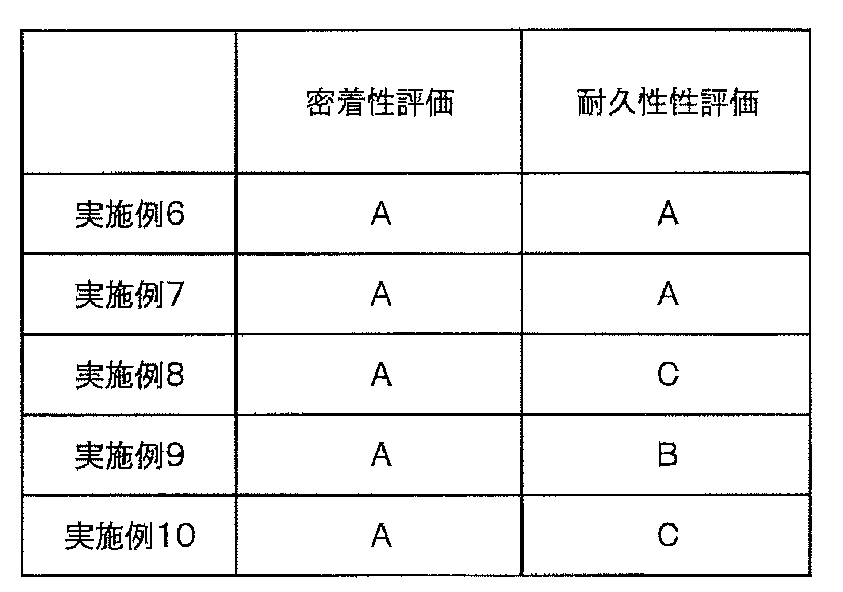
上記で得られた各実施例の印画物3に対し、上記密着性評価と同様の方法にて、印画物3における熱転写画像の状態を確認した。評価結果を表2に示す。
上記で得られた各実施例の印画物3に対し、上記密着性評価と同様の方法にて、印画物3における熱転写画像の状態を確認した。評価結果を表2に示す。
(耐久性評価)
上記で得られた各実施例の印画物3に対し、耐摩擦試験機(スガ試験機(株))を用い、800gの負荷をかけ、ダンボール紙により、印字面を100往復擦り、50回毎に印画物表面を確認する事で、画像の耐久性を下記評価基準に基づいて評価した。評価結果を表2に併せて示す。
上記で得られた各実施例の印画物3に対し、耐摩擦試験機(スガ試験機(株))を用い、800gの負荷をかけ、ダンボール紙により、印字面を100往復擦り、50回毎に印画物表面を確認する事で、画像の耐久性を下記評価基準に基づいて評価した。評価結果を表2に併せて示す。
「評価基準」
A:評価試験前後で、画像に変化がない。
B:50往復では画像に変化が無かったものの、100往復で画像に抜け、欠けが生じている。
C:50往復で画像に抜け、欠けが生じている。
1…基材
2…離型層
3…剥離層
5…着色層
10…転写層
20…保護層
100…熱転写シート
2…離型層
3…剥離層
5…着色層
10…転写層
20…保護層
100…熱転写シート
Claims (4)
- 基材上に、前記基材から剥離可能に着色層が設けられた熱転写シートであって、
前記着色層は、前記熱転写シートの最表面に位置し、
前記着色層は、少なくとも、エチレン-酢酸ビニル共重合体、テルペンフェノール樹脂、及びカーボンブラックを含有しており、
前記着色層の総質量に対する、前記エチレン-酢酸ビニル共重合体と前記テルペンフェノール樹脂の合計質量が35質量%以上であり、
前記着色層の総質量に対する、前記テルペンフェノール樹脂の質量が12質量%以上35質量%以下であり、
前記着色層の総質量に対する、前記カーボンブラックの質量が30質量%以上60質量%以下であることを特徴とする熱転写シート。 - 基材上に、前記基材から剥離可能に着色層が設けられた熱転写シートであって、
前記着色層は、前記熱転写シートの最表面に位置し、
前記着色層は、少なくとも、カルナバワックス、テルペンフェノール樹脂、及び着色剤を含有していることを特徴とする熱転写シート。 - 前記テルペンフェノール樹脂のSP値が、9以上であることを特徴とする請求項2に記載の熱転写シート。
- 前記基材上に、前記基材から剥離可能に転写層が設けられ、
前記転写層が、前記基材側から、剥離層、前記着色層がこの順で積層されてなる積層構成を呈していることを特徴とする請求項1乃至3の何れか1項に記載の熱転写シート。
Priority Applications (1)
| Application Number | Priority Date | Filing Date | Title |
|---|---|---|---|
| JP2018542582A JPWO2018062147A1 (ja) | 2016-09-28 | 2017-09-26 | 熱転写シート |
Applications Claiming Priority (2)
| Application Number | Priority Date | Filing Date | Title |
|---|---|---|---|
| JP2016189957 | 2016-09-28 | ||
| JP2016-189957 | 2016-09-28 |
Publications (1)
| Publication Number | Publication Date |
|---|---|
| WO2018062147A1 true WO2018062147A1 (ja) | 2018-04-05 |
Family
ID=61763429
Family Applications (1)
| Application Number | Title | Priority Date | Filing Date |
|---|---|---|---|
| PCT/JP2017/034683 Ceased WO2018062147A1 (ja) | 2016-09-28 | 2017-09-26 | 熱転写シート |
Country Status (2)
| Country | Link |
|---|---|
| JP (1) | JPWO2018062147A1 (ja) |
| WO (1) | WO2018062147A1 (ja) |
Cited By (3)
| Publication number | Priority date | Publication date | Assignee | Title |
|---|---|---|---|---|
| JP2019209529A (ja) * | 2018-05-31 | 2019-12-12 | 大日本印刷株式会社 | 熱転写シート |
| JP2020001225A (ja) * | 2018-06-26 | 2020-01-09 | 大日本印刷株式会社 | 熱転写シート |
| JP7159698B2 (ja) | 2018-08-29 | 2022-10-25 | 大日本印刷株式会社 | 熱転写シート |
Citations (4)
| Publication number | Priority date | Publication date | Assignee | Title |
|---|---|---|---|---|
| JPH07172070A (ja) * | 1993-08-17 | 1995-07-11 | Ricoh Co Ltd | 熱転写記録媒体 |
| JP2000153672A (ja) * | 1998-11-19 | 2000-06-06 | Dainippon Printing Co Ltd | 熱転写シート |
| JP2006347057A (ja) * | 2005-06-17 | 2006-12-28 | General Technology Kk | 熱転写媒体 |
| JP2009083255A (ja) * | 2007-09-28 | 2009-04-23 | General Technology Kk | 熱転写媒体 |
Family Cites Families (2)
| Publication number | Priority date | Publication date | Assignee | Title |
|---|---|---|---|---|
| JP2001301343A (ja) * | 2000-04-24 | 2001-10-31 | Ricoh Co Ltd | 熱転写記録媒体 |
| JP4368503B2 (ja) * | 2000-07-31 | 2009-11-18 | フジコピアン株式会社 | 画像形成方法 |
-
2017
- 2017-09-26 JP JP2018542582A patent/JPWO2018062147A1/ja active Pending
- 2017-09-26 WO PCT/JP2017/034683 patent/WO2018062147A1/ja not_active Ceased
Patent Citations (4)
| Publication number | Priority date | Publication date | Assignee | Title |
|---|---|---|---|---|
| JPH07172070A (ja) * | 1993-08-17 | 1995-07-11 | Ricoh Co Ltd | 熱転写記録媒体 |
| JP2000153672A (ja) * | 1998-11-19 | 2000-06-06 | Dainippon Printing Co Ltd | 熱転写シート |
| JP2006347057A (ja) * | 2005-06-17 | 2006-12-28 | General Technology Kk | 熱転写媒体 |
| JP2009083255A (ja) * | 2007-09-28 | 2009-04-23 | General Technology Kk | 熱転写媒体 |
Cited By (4)
| Publication number | Priority date | Publication date | Assignee | Title |
|---|---|---|---|---|
| JP2019209529A (ja) * | 2018-05-31 | 2019-12-12 | 大日本印刷株式会社 | 熱転写シート |
| JP2020001225A (ja) * | 2018-06-26 | 2020-01-09 | 大日本印刷株式会社 | 熱転写シート |
| JP7087721B2 (ja) | 2018-06-26 | 2022-06-21 | 大日本印刷株式会社 | 熱転写シート |
| JP7159698B2 (ja) | 2018-08-29 | 2022-10-25 | 大日本印刷株式会社 | 熱転写シート |
Also Published As
| Publication number | Publication date |
|---|---|
| JPWO2018062147A1 (ja) | 2019-03-28 |
Similar Documents
| Publication | Publication Date | Title |
|---|---|---|
| CN108602371B (zh) | 中间转印介质、中间转印介质与热转印片的组合、以及印刷物的形成方法 | |
| WO2012029590A1 (ja) | 中間転写媒体 | |
| WO2014050880A1 (ja) | 中間転写媒体、及び中間転写媒体と熱転写シートとの組合せ | |
| JP5104930B2 (ja) | 中間転写媒体 | |
| JP5516805B2 (ja) | 中間転写媒体 | |
| JP5686168B2 (ja) | 中間転写媒体と熱転写シートの組合せ | |
| WO2018062147A1 (ja) | 熱転写シート | |
| JP5003836B1 (ja) | 中間転写媒体 | |
| WO2013129415A1 (ja) | 中間転写媒体 | |
| JP5625633B2 (ja) | 中間転写媒体 | |
| JP2002036795A (ja) | 転写絵付方法 | |
| JP5056925B2 (ja) | 中間転写媒体 | |
| JP5703636B2 (ja) | 中間転写媒体 | |
| JP6024513B2 (ja) | 中間転写媒体 | |
| CN107848316A (zh) | 热转印片 | |
| JP2011062824A (ja) | 昇華型熱転写媒体 | |
| JP5992137B2 (ja) | 熱転写シート | |
| JP7688531B2 (ja) | ラベル | |
| JP5370516B2 (ja) | 中間転写媒体 | |
| JP6657697B2 (ja) | 熱転写シート | |
| JP2015080919A (ja) | 感熱転写記録媒体 | |
| JP6264992B2 (ja) | 熱転写シート | |
| JP5370518B2 (ja) | 中間転写媒体 | |
| JP2003025733A (ja) | 熱転写記録媒体 | |
| JP5703581B2 (ja) | 熱転写シート |
Legal Events
| Date | Code | Title | Description |
|---|---|---|---|
| ENP | Entry into the national phase |
Ref document number: 2018542582 Country of ref document: JP Kind code of ref document: A |
|
| 121 | Ep: the epo has been informed by wipo that ep was designated in this application |
Ref document number: 17856097 Country of ref document: EP Kind code of ref document: A1 |
|
| NENP | Non-entry into the national phase |
Ref country code: DE |
|
| 122 | Ep: pct application non-entry in european phase |
Ref document number: 17856097 Country of ref document: EP Kind code of ref document: A1 |