WO2018012371A1 - 液晶性樹脂組成物 - Google Patents
液晶性樹脂組成物 Download PDFInfo
- Publication number
- WO2018012371A1 WO2018012371A1 PCT/JP2017/024674 JP2017024674W WO2018012371A1 WO 2018012371 A1 WO2018012371 A1 WO 2018012371A1 JP 2017024674 W JP2017024674 W JP 2017024674W WO 2018012371 A1 WO2018012371 A1 WO 2018012371A1
- Authority
- WO
- WIPO (PCT)
- Prior art keywords
- resin composition
- mass
- filler
- liquid crystalline
- crystalline resin
- Prior art date
- Legal status (The legal status is an assumption and is not a legal conclusion. Google has not performed a legal analysis and makes no representation as to the accuracy of the status listed.)
- Ceased
Links
Images

Classifications
-
- C—CHEMISTRY; METALLURGY
- C08—ORGANIC MACROMOLECULAR COMPOUNDS; THEIR PREPARATION OR CHEMICAL WORKING-UP; COMPOSITIONS BASED THEREON
- C08K—Use of inorganic or non-macromolecular organic substances as compounding ingredients
- C08K7/00—Use of ingredients characterised by shape
-
- C—CHEMISTRY; METALLURGY
- C08—ORGANIC MACROMOLECULAR COMPOUNDS; THEIR PREPARATION OR CHEMICAL WORKING-UP; COMPOSITIONS BASED THEREON
- C08K—Use of inorganic or non-macromolecular organic substances as compounding ingredients
- C08K7/00—Use of ingredients characterised by shape
- C08K7/02—Fibres or whiskers
-
- C—CHEMISTRY; METALLURGY
- C08—ORGANIC MACROMOLECULAR COMPOUNDS; THEIR PREPARATION OR CHEMICAL WORKING-UP; COMPOSITIONS BASED THEREON
- C08K—Use of inorganic or non-macromolecular organic substances as compounding ingredients
- C08K7/00—Use of ingredients characterised by shape
- C08K7/02—Fibres or whiskers
- C08K7/04—Fibres or whiskers inorganic
- C08K7/14—Glass
-
- C—CHEMISTRY; METALLURGY
- C08—ORGANIC MACROMOLECULAR COMPOUNDS; THEIR PREPARATION OR CHEMICAL WORKING-UP; COMPOSITIONS BASED THEREON
- C08K—Use of inorganic or non-macromolecular organic substances as compounding ingredients
- C08K7/00—Use of ingredients characterised by shape
- C08K7/16—Solid spheres
- C08K7/18—Solid spheres inorganic
-
- C—CHEMISTRY; METALLURGY
- C08—ORGANIC MACROMOLECULAR COMPOUNDS; THEIR PREPARATION OR CHEMICAL WORKING-UP; COMPOSITIONS BASED THEREON
- C08K—Use of inorganic or non-macromolecular organic substances as compounding ingredients
- C08K7/00—Use of ingredients characterised by shape
- C08K7/16—Solid spheres
- C08K7/18—Solid spheres inorganic
- C08K7/20—Glass
-
- C—CHEMISTRY; METALLURGY
- C08—ORGANIC MACROMOLECULAR COMPOUNDS; THEIR PREPARATION OR CHEMICAL WORKING-UP; COMPOSITIONS BASED THEREON
- C08L—COMPOSITIONS OF MACROMOLECULAR COMPOUNDS
- C08L101/00—Compositions of unspecified macromolecular compounds
Definitions
- the present invention relates to a liquid crystalline resin composition having a good balance between mechanical strength and low warpage of an injection-molded molded article and having a stable measurement time during injection molding, and the liquid crystalline resin composition
- the present invention relates to a molded product obtained by molding.
- Liquid crystalline resins typified by liquid crystalline polyester resins are widely used as high-performance engineering plastics because they have excellent mechanical strength, heat resistance, chemical resistance, electrical properties, etc. in a well-balanced manner.
- Liquid crystalline resin filled with fibrous reinforcing material typified by glass fiber or carbon fiber or inorganic powder such as silica, mica, clay, glass beads, etc. in liquid crystalline resin has fluidity and mechanical strength. Since the balance is good, it is a material suitable for an electric / electronic component having a thin portion or a complicated shape. For example, it is used for relay parts, coil bobbins, connectors, volume parts, motor parts such as commutators and separators, sealing materials such as coils, crystal resonators, IC chips, etc., OA equipment parts such as printers, etc. Yes.
- liquid crystalline resin is often formed by injection molding. In injection molding, it is required to shorten and stabilize the measurement time so as not to affect the quality of the molded product.
- Patent Document 1 as a technique for stabilizing the short measurement time at the time of injection molding while maintaining good physical properties of the liquid crystalline resin composition, in Patent Document 1, 4 masses of glass beads are used with respect to 100 mass parts of the liquid crystalline resin composition. A liquid crystalline resin composition containing 7% by mass to 7% by mass and 20% by mass to 40% by mass of glass fiber has been proposed. In Patent Document 2, a fibrous filler, a plate-like filler, a granular filler, and a liquid crystal polyester are contained, and the mass ratio of the content of the plate-like filler to the total content of the fibrous filler and the granular filler is 0. A liquid crystal polyester composition of .6 or less has been proposed.
- ⁇ Liquid crystalline resin is characterized by low viscosity. Due to this, at the time of injection molding, there is a problem that the melted liquid crystalline resin composition flows back through the backflow prevention valve provided at the tip of the screw and the measurement time is not stable. In particular, when a relatively large part such as a part of an OA device such as a printer is molded, the problem is likely to occur.
- the present invention has been made to solve the above-mentioned problems, and the balance between the mechanical strength and the low warpage of the injection-molded molded article is good, and the measurement time during injection molding is stable.
- An object is to provide a liquid crystalline resin composition.
- the inventors In the process of studying a liquid crystalline resin composition that can achieve both low warpage and measurement stability, the inventors have improved the melt viscosity of the liquid crystalline resin composition by adding a spherical filler having a large particle size. As a result, it was found that the measuring time is shortened, the measuring time variation is small, and the measuring stability improving effect is observed. In addition, spherical fillers with a large particle size have an effect of improving the measurement stability even if the addition amount is small, and can be used in combination with a plate-like filler, and low warpage of injection molded products. And the measurement stability of the liquid crystalline resin composition were found to be compatible. Obtaining the above knowledge, the present inventors have completed the present invention.
- the liquid crystalline resin composition according to the present invention contains a liquid crystalline resin, a fibrous filler, a plate-like filler, and a spherical filler, and the content of the fibrous filler is the total resin composition. It is 12 mass% or more and 18 mass% or less, and the content of the plate-like filler is 18 mass% or more and 30 mass% or less in the total resin composition, and the content of the spherical filler is in the total resin composition. 1 to 12% by mass and the total content of the filler is 40% to 50% by mass in the total resin composition.
- the content of the plate-like filler is 25% by mass or more and 30% by mass or less in the total resin composition
- the content of the spherical filler is 1% by mass or more and 5% by mass or less in the total resin composition.
- the particle diameter of the spherical filler is preferably 30 ⁇ m or more and 80 ⁇ m or less.
- the fibrous filler is preferably glass fiber.
- the plate-like filler is preferably at least one plate-like filler selected from the group consisting of talc and mica.
- the spherical filler is preferably at least one spherical filler selected from the group consisting of glass beads and silica.
- the molded product according to the present invention is obtained by molding the liquid crystalline resin composition according to the present invention.
- the molded product according to the present invention is preferably obtained by injection molding.
- Fibrous filler, plate-like filler, spherical filling A liquid crystalline resin composition containing an agent can be provided.
- the liquid crystalline resin composition according to the present invention contains a liquid crystalline resin, a fibrous filler, a plate-like filler, and a spherical filler.
- the liquid crystalline resin composition When the liquid crystalline resin composition is injection-molded, if the molding material cannot be transferred properly, the measurement time becomes long, and the productivity of the injection-molded product decreases. Further, if the transfer does not proceed smoothly, the difference in measurement time for each shot becomes large. When the measurement time varies, the quality of the obtained injection-molded product such as the warp deformation amount and mechanical strength is affected.
- a liquid crystalline resin, a fibrous filler, a plate-like filler, and a spherical filler are contained, and the content of the fibrous filler is 12% by mass or more and 18% by mass in the total resin composition.
- the plate-like filler content is 18% by mass to 30% by mass in the total resin composition, and the spherical filler content is 1% by mass to 12% by mass in the total resin composition.
- Measurement stability means that the measurement time is short, the measurement time for each shot is exactly the same, and the measurement time variation for each shot is small. This is because if the measurement time is short and the variation in the measurement time is small, the decrease in productivity can be eliminated and the quality of the obtained molded product is not affected.
- liquid crystal resin the fibrous filler, the plate filler, the spherical filler, and the liquid crystal resin composition will be described in this order.
- the liquid crystalline resin refers to a melt processable polymer having a property capable of forming an optically anisotropic molten phase.
- the property of the anisotropic molten phase can be confirmed by a conventional polarization inspection method using an orthogonal polarizer. More specifically, the anisotropic molten phase can be confirmed by using a Leitz polarizing microscope and observing a molten sample placed on a Leitz hot stage under a nitrogen atmosphere at a magnification of 40 times.
- the liquid crystalline resin is inspected between crossed polarizers, the polarized light is normally transmitted even in a molten stationary state, and optically anisotropic.
- the liquid crystalline resin is not particularly limited, but is preferably an aromatic polyester or an aromatic polyester amide. Further, it is also possible to use a polyester partially containing an aromatic polyester or an aromatic polyester amide in the same molecular chain.
- the aromatic polyester or aromatic polyester amide is particularly preferably an aromatic polyester having at least one compound selected from the group consisting of aromatic hydroxycarboxylic acids, aromatic hydroxyamines, and aromatic diamines as a constituent component, or Aromatic polyester amide.
- the liquid crystalline resin may be a mixture of two or more liquid crystalline resins selected from the above.
- specific compounds (monomers) constituting the liquid crystalline resin include aromatic hydroxycarboxylic acids such as p-hydroxybenzoic acid and 6-hydroxy-2-naphthoic acid, 2,6-dihydroxynaphthalene, 1, Aromatic diols such as 4-dihydroxynaphthalene, 4,4′-dihydroxybiphenyl, hydroquinone, resorcin, a compound represented by the following general formula (I), and a compound represented by the following general formula (II); terephthalic acid, Aromatic dicarboxylic acids such as isophthalic acid, 4,4′-diphenyldicarboxylic acid, 2,6-naphthalenedicarboxylic acid, and compounds represented by the following general formula (III); p-aminophenol, p-phenylenediamine, etc.
- aromatic hydroxycarboxylic acids such as p-hydroxybenzoic acid and 6-hydroxy-2-naphthoic acid, 2,6-dihydroxyna
- Aromatic amines can be mentioned.
- X is a group selected from alkylene (C 1 -C 4 ), alkylidene, —O—, —SO—, —SO 2 —, —S—, and —CO—
- the content of the liquid crystalline resin is 50% by mass or more and 60% by mass or less in the total resin composition, preferably 51% by mass or more and 59% by mass or less, more preferably 52% by mass or more and 58% by mass or less. Most preferably, it is 54 mass% or more and 56 mass% or less.
- the method for preparing the liquid crystalline resin is not particularly limited, and can be prepared by a known method using a direct polymerization method or a transesterification method using the monomer compound (or a mixture of monomers) described above. Usually, a melt polymerization method or a slurry polymerization method is used. In the case of a compound having ester forming ability, it may be used for polymerization as it is. Moreover, you may use what was modified
- catalysts that can be used include dialkyl tin oxides, diaryl tin oxides, titanium dioxide, alkoxy titanium silicates, titanium alcoholates, alkali metal salts of carboxylic acids and alkaline earth metal salts of carboxylic acids, A Lewis acid salt such as BF 3 can be mentioned.
- the amount of the catalyst used is generally about 0.001 to 1% by weight, particularly about 0.01 to 0.2% by weight, based on the total weight of the monomers. If necessary, the polymer produced by these polymerization methods can be increased in molecular weight by solid-phase polymerization that is heated under reduced pressure or in an inert gas.
- the liquid crystalline resin composition of the present invention contains a fibrous filler. By containing the fibrous filler, the mechanical strength of the injection-molded molded product can be improved.
- the fibrous filler those conventionally used as fillers or reinforcing agents in various resin compositions can be used without particular limitation.
- Specific examples of the fibrous filler include glass fiber, milled glass fiber, asbestos fiber, carbon fiber, silica fiber, silica / alumina fiber, alumina fiber, zirconia fiber, boron nitride fiber, boron fiber, potassium titanate fiber, wall
- examples thereof include inorganic fibers such as silicate fibers such as lastite, magnesium sulfate fibers, aluminum borate fibers, and metal fibers such as stainless steel, aluminum, titanium, copper, and brass.
- These fibrous fillers can be used in combination of two or more.
- glass fiber is preferable because it is inexpensive and easily available.
- the glass fiber one having a circular or substantially circular cross section is usually used, but a glass fiber having a so-called irregular cross section can also be used.
- the shape of the irregular cross section is not limited to these, but includes polygons such as rectangles and rhombuses, ellipses, eyebrows, and the like.
- the fibrous filler those having an average different diameter ratio of 1 to 4 and an aspect ratio of 2 to 1500 are preferable. These numerical values relate to the shape of the fibrous filler before the fibrous filler is blended in the liquid crystalline resin composition.
- the content of the fibrous filler is 12% by mass to 18% by mass in the total resin composition, preferably 13% by mass to 17% by mass, and more preferably 14% by mass to 16% by mass. is there.
- the content of the fibrous filler is 12% by mass or more and 18% by mass or less in the total resin composition, an effect is obtained that the injection-molded molded article has low warpage and high mechanical strength. be able to.
- the liquid crystalline resin composition of the present invention contains a plate-like filler.
- the plate-like filler include talc, mica, glass flake, graphite, various metal foils (for example, aluminum foil, iron foil, copper foil) and the like. The above can be used. Of these, talc and mica are preferable.
- the plate-like filler those having an average particle diameter of 5 ⁇ m or more and 100 ⁇ m or less and an aspect ratio of 5 or more are preferable.
- the average particle diameter is a value measured by a laser diffraction / scattering particle size distribution measuring method, and is a particle diameter (median diameter) of an integrated value of 50% in a volume-based particle size distribution. These numerical values relate to the shape of the plate-like filler before the plate-like filler is blended into the liquid crystalline resin composition.
- the content of the plate-like filler is 18% by mass or more and 30% by mass or less, preferably 20% by mass or more and 30% by mass or less, more preferably 22% by mass or more and 30% by mass or less in the total resin composition. Yes, more preferably from 24% by weight to 30% by weight, and most preferably from 25% by weight to 30% by weight.
- the total amount of filler content can be made into 50 mass% or less in all the resin compositions by making content of a plate-shaped filler into 30 mass% or less in all the resin compositions.
- the liquid crystalline resin composition of the present invention contains a spherical filler.
- the spherical filler include glass beads, silica, alumina, and the like, and one or more selected from these can be used. Among these, glass beads and silica are preferable from the viewpoint of improving the measurement stability when the liquid crystalline resin composition is injection-molded.
- the content of the spherical filler is 1% by mass or more and 12% by mass or less in the total resin composition, preferably 1% by mass or more and 11% by mass or less, and more preferably 1% by mass or more and 10% by mass or less. Most preferably, it is 1 mass% or more and 5 mass% or less.
- the average particle diameter of the spherical filler is 5 ⁇ m or more and 80 ⁇ m or less, preferably 10 ⁇ m or more and 80 ⁇ m or less, more preferably 20 ⁇ m or more and 80 ⁇ m or less, further preferably 30 ⁇ m or more and 80 ⁇ m or less, and most preferably 40 ⁇ m or more. 80 ⁇ m or less.
- the average particle diameter is a value measured by a laser diffraction / scattering particle size distribution measuring method, and is a particle diameter (median diameter) of an integrated value of 50% in a volume-based particle size distribution.
- the liquid crystalline resin composition of the present invention can contain other additives for imparting desired physical properties within a range not inhibiting the effects of the present invention.
- other additives include nucleating agents, carbon black, pigments, antioxidants, stabilizers, plasticizers, lubricants, mold release agents, and flame retardants.
- the content of other additives can be appropriately adjusted according to desired physical properties.
- the liquid crystalline resin composition of the present invention contains a liquid crystalline resin, a fibrous filler, a plate-like filler, and a spherical filler, and the content of the fibrous filler is in the total resin composition. 12% by mass or more and 18% by mass or less, the content of the plate-like filler is 18% by mass or more and 30% by mass or less in the total resin composition, and the content of the spherical filler is 1 in the total resin composition.
- the total content of the filler is 40% by mass or more and 50% by mass or less in the total resin composition.
- the method for producing the liquid crystalline resin composition of the present invention is not particularly limited as long as the components in the resin composition can be uniformly mixed, and can be appropriately selected from conventionally known methods for producing resin compositions. .
- each component is melt-kneaded and extruded using a melt-kneader such as a single-screw extruder or twin-screw extruder, and then the resulting resin composition is processed into a desired form such as powder, flakes, and pellets. The method of doing is mentioned.
- injection molding Using the liquid crystalline resin composition of the present invention as a material, it is molded by an injection molding method to produce a molded body. Injection molding can be divided into, for example, a weighing process, an injection process, and a pressure holding / cooling process. As a molding apparatus to be used, a conventionally known general injection molding apparatus can be used.
- the weighing step is a step of plasticizing and weighing the resin. Resin pellets made of the liquid crystalline resin composition described above are transferred from the hopper side to the nozzle direction side by the rotation of the screw. And the melted liquid crystalline resin composition is stored in the screw front part.
- back pressure refers to a pressure that pressurizes the resin by acting in the injection direction opposite to the reverse direction of the screw when the screw is retracted by the molten resin sent to the tip.
- the injection process is a process of extruding molten resin from a cylinder into a mold. Depending on the molding material used, injection is performed at a preferable injection speed and injection pressure. After injection, a small amount of molten resin is left at the tip of the screw in order to effectively apply the holding pressure.
- the pressure-holding step is a step of continuing the pressurization from the injection molding machine to the resin in the mold after the injection step and at the beginning of the cooling step to compensate for the shrinkage resin accompanying cooling.
- the resin In injection molding, the resin is weighed by retracting the screw while cooling the resin in the mold in the cooling process in order to increase the productivity of the molded product. If the resin takes a long time for cooling, even if the measurement time is somewhat long, the effect on the productivity is small. However, since the liquid crystalline resin has a short cooling time, it is necessary to stabilize the measurement time. The measurement time can be stabilized by using the liquid crystalline resin composition of the present invention.
- the obtained pellets were heat-treated at 300 ° C. for 10 hours under a nitrogen stream.
- the obtained polymer had a melting point of 363 ° C. and a melt viscosity of 45.0 Pa ⁇ s.
- IV Isophthalic acid; 78 g (3 mol%)
- V 4,4′-dihydroxybiphenyl; 711 g (24.3 mol%) 110 mg of metal catalyst (potassium acetate catalyst) Acylating agent (acetic anhydride); 1645 g
- melt viscosity of the liquid crystalline resin compositions of Examples and Comparative Examples was measured using the pellets. Specifically, a capillary type rheometer (manufactured by Toyo Seiki Seisakusho Co., Ltd., “Capillograph 1D”, piston diameter 10 mm) has a shear rate of 1000 sec ⁇ 1 at a temperature 10-30 ° C. higher than the melting point of the liquid crystalline resin. Under conditions, the apparent melt viscosity was measured according to ISO 11443. For the measurement, an orifice having an inner diameter of 1 mm and a length of 20 mm was used. The specific measurement temperature was 380 ° C.
- ⁇ War deformation amount> The pellets of the examples and comparative examples were molded under the following molding conditions using a molding machine (manufactured by Sumitomo Heavy Industries, Ltd., “SE-100D”), and flat plate test pieces of 80 mm ⁇ 80 mm ⁇ 1 mm Five sheets were produced. The first flat plate-shaped test piece was left on a horizontal plane, and a CNC image measuring machine (manufactured by Mitutoyo Co., Ltd., “QVBHU404-PRO1F”) was used at nine locations on the flat plate-shaped test piece from the horizontal plane. The height was measured, and the average height was calculated from the obtained measurement values.
- the position where the height was measured is that each vertex of this square is placed on a principal plane of a flat specimen when a square with a side of 74 mm is placed so that the distance from each side of the principal plane is 3 mm.
- the height from the horizontal plane was the same as the average height, and a plane parallel to the horizontal plane was used as a reference plane.
- the maximum height and the minimum height from the reference plane were selected from the heights measured at the nine locations, and the difference between the two was calculated.
- the above difference was calculated, and the obtained five values were averaged to obtain the value of warpage deformation.
- ⁇ Load deflection temperature> The pellets of Examples and Comparative Examples were molded under the following molding conditions using a molding machine (“SE-100DU” manufactured by Sumitomo Heavy Industries, Ltd.) to obtain a molded product of 80 mm ⁇ 10 mm ⁇ 4 mm, The deflection temperature under load was measured in accordance with ISO75-1,2. ⁇ Molding condition ⁇ Cylinder temperature: 370 ° C Mold temperature: 80 °C Injection speed: 33mm / sec Holding pressure: 60 MPa
- Example 5 in which the total amount of the filler content is in the range of 40% by mass or more and 50% by mass or less in the total resin composition, injection molding The mechanical strength of the product was excellent.
- Comparative Example 3 in which the total content of the filler was 55% by mass in the total resin composition, the mechanical strength (bending strength, bending fracture strain) of the injection-molded molded product was low.
- the content of the plate-like filler is 25% by mass or more and 30% by mass or less in the total resin composition
- the content of the spherical filler is 1% by mass or more and 5% by mass or less in the total resin composition.
- Example 5 in which the particle size of the spherical filler is 30 ⁇ m or more and 80 ⁇ m or less, the measurement time at the time of injection molding is short, and the characteristics of the injection-molded molded product are excellent in all cases.
- the larger the particle size of the spherical filler the shorter the measurement time at the time of injection molding and the smaller the variation in the measurement time.
- the larger the particle size of the spherical filler the higher the melt viscosity of the liquid crystalline resin composition, and the better the metering stability when injection molding the liquid crystalline resin composition. The effect was obtained.
Landscapes
- Chemical & Material Sciences (AREA)
- Health & Medical Sciences (AREA)
- Chemical Kinetics & Catalysis (AREA)
- Medicinal Chemistry (AREA)
- Polymers & Plastics (AREA)
- Organic Chemistry (AREA)
- Compositions Of Macromolecular Compounds (AREA)
- Injection Moulding Of Plastics Or The Like (AREA)
Abstract
【課題】射出成形された成形品の機械的強度と低反り性とのバランスが良好で、射出成形する際の計量安定性が高い、液晶性樹脂組成物を提供する。
【解決手段】液晶性樹脂と、繊維状充填剤と、板状充填剤と、球状充填剤と、を含有し、繊維状充填剤の含有量が、全樹脂組成物中12質量%以上18質量%以下であり、板状充填剤の含有量が、全樹脂組成物中18質量%以上30質量%以下であり、球状充填剤の含有量が、全樹脂組成物中1質量%以上12質量%以下であり、及び、充填剤の含有量の総量が、全樹脂組成物中40質量%以上50質量%以下である液晶性樹脂組成物により上記課題を解決する。
Description
本発明は、射出成形された成形品の機械的強度と低反り性とのバランスが良好で、射出成形する際の計量時間が安定している液晶性樹脂組成物、及びこの液晶性樹脂組成物を成形して得られる成形品に関する。
液晶性ポリエステル樹脂に代表される液晶性樹脂は、優れた機械的強度、耐熱性、耐薬品性、電気的性質等をバランス良く有するため、高機能エンジニアリングプラスチックとして広く利用されている。
液晶性樹脂にガラス繊維や炭素繊維に代表される繊維状補強材や、シリカ、マイカ、クレー、ガラスビーズ等の無機粉粒体等を充填した液晶性樹脂は、流動性と機械的強度とのバランスが良好であるため、薄肉部又は複雑な形状を有する電気・電子部品に好適な材料となる。例えば、リレー部品、コイルボビン、コネクター、ボリューム部品、コンミテーターやセパレーター等のモーター部品、又はコイル、水晶振動子、ICチップ等の素子等の封止材、プリンター等のOA機器の部品等に使用されている。
液晶性樹脂の大部分は、射出成形により成形される場合が多い。射出成形においては、成形品の品質に影響を与えないように、計量時間を短く、安定させることが求められている。
液晶性樹脂組成物の良好な物性を維持したまま、射出成形する際の計量時間を短く安定させる技術として、特許文献1では、液晶性樹脂組成物100質量部に対して、ガラスビーズを4質量%から7質量%、ガラス繊維を20質量%から40質量%になるように配合した液晶性樹脂組成物が提案されている。特許文献2では、繊維状充填材、板状充填材、粒状充填材及び液晶ポリエステルを含有し、繊維状充填材及び粒状充填材の合計含有量に対する板状充填材の含有量の質量比率が0.6以下である液晶ポリエステル組成物が提案されている。
液晶性樹脂は粘度が低いという特徴を有する。これに起因して、射出成形の際、溶融した液晶性樹脂組成物が、スクリュー先端に設けられた逆流防止弁をすり抜けて逆流してしまい、計量時間が安定しないことが問題となっている。特に、プリンター等のOA機器の部品のように比較的大きい部品を成形する場合は、その問題が発生しやすい。
本発明は上記の問題を解決するためになされたものであり、射出成形された成形品の機械的強度と低反り性とのバランスが良好で、射出成形する際の計量時間が安定している、液晶性樹脂組成物を提供することを課題とする。
本発明者らは、低反り性と計量安定性が両立できる液晶性樹脂組成物について研究する過程で、粒子径の大きい球状充填剤を添加することで、液晶性樹脂組成物の溶融粘度が向上して計量時間が短くなり、計量時間のバラつきが少ない、計量安定性改善効果が観察されることを見出した。また、粒子径の大きい球状充填剤は、添加量が少なくても計量安定性改善効果を有し、板状充填剤との併用を可能とすること、及び射出成形された成形品の低反り性と、液晶性樹脂組成物の計量安定性とを両立させることが可能であることを突き止めた。以上の知見を得て、本発明者は本発明を完成させるに至った。
本発明に係る液晶性樹脂組成物は、液晶性樹脂と、繊維状充填剤と、板状充填剤と、球状充填剤と、を含有し、繊維状充填剤の含有量が、全樹脂組成物中12質量%以上18質量%以下であり、板状充填剤の含有量が、全樹脂組成物中18質量%以上30質量%以下であり、球状充填剤の含有量が、全樹脂組成物中1質量%以上12質量%以下であり、及び、充填剤の含有量の総量が、全樹脂組成物中40質量%以上50質量%以下であることを特徴とする。
本発明において、板状充填剤の含有量が、全樹脂組成物中25質量%以上30質量%以下であり、球状充填剤の含有量が、全樹脂組成物中1質量%以上5質量%以下であり、及び、球状充填剤の粒子径が、30μm以上80μm以下であることが好ましい。
本発明において、繊維状充填剤がガラス繊維であることが好ましい。
本発明において、板状充填剤がタルク、マイカからなる群から選択される少なくとも1種以上の板状充填剤であることが好ましい。
本発明において、球状充填剤がガラスビーズ、シリカからなる群から選択される少なくとも1種以上の球状充填剤であることが好ましい。
本発明に係る成形品は、本発明に係る液晶性樹脂組成物を成形して得られることを特徴とする。
本発明に係る成形品は、射出成形により得られることが好ましい。
本発明によれば、射出成形された成形品の機械的強度と低反り性とのバランスが良好で、射出成形する際の計量安定性が高い、繊維状充填剤、板状充填剤、球状充填剤を含有する液晶性樹脂組成物を提供することができる。
以下、本発明の一実施形態について詳細に説明する。本発明は、以下の実施形態に限定されるものではなく、本発明の効果を阻害しない範囲で適宜変更を加えて実施することができる。
[液晶性樹脂組成物]
本発明に係る液晶性樹脂組成物は、液晶性樹脂と、繊維状充填剤と、板状充填剤と、球状充填剤と、を含有する。
本発明に係る液晶性樹脂組成物は、液晶性樹脂と、繊維状充填剤と、板状充填剤と、球状充填剤と、を含有する。
液晶性樹脂組成物を射出成形する際、成形材料の移送が上手くいかなくなると計量時間が長くなり、射出成形品の生産性が低下する。また、移送がスムーズに進まないとショット毎の計量時間の差が大きくなる。計量時間がバラつくことによって、反り変形量や、機械的強度等の、得られる射出成形品の品質に影響を与える。本発明では、液晶性樹脂と、繊維状充填剤と、板状充填剤と、球状充填剤と、を含有し、繊維状充填剤の含有量が、全樹脂組成物中12質量%以上18質量%以下であり、板状充填剤の含有量が、全樹脂組成物中18質量%以上30質量%以下であり、球状充填剤の含有量が、全樹脂組成物中1質量%以上12質量%以下であり、及び、充填剤の含有量の総量が、全樹脂組成物中40質量%以上50質量%以下である液晶性樹脂組成物を使用することで、上記の問題を解消し、計量安定性を改善させることができる。
「計量安定性」とは、計量時間が短く、ショット毎の計量時間が全く同じ場合の他、ショット毎の計量時間のバラつきが小さいことをいう。計量時間が短く、計量時間のバラつきが小さければ、生産性の低下を解消でき、さらに得られる成形品の品質にも影響を与えないからである。
以下、液晶性樹脂、繊維状充填剤、板状充填剤、球状充填剤、液晶性樹脂組成物の順で説明する。
(液晶性樹脂)
液晶性樹脂とは、光学異方性溶融相を形成し得る性質を有する溶融加工性ポリマーのことをいう。異方性溶融相の性質は、直交偏光子を利用した慣用の偏光検査法により確認することが出来る。より具体的には、異方性溶融相の確認は、Leitz偏光顕微鏡を使用し、Leitzホットステージに載せた溶融試料を窒素雰囲気下で40倍の倍率で観察することにより実施できる。液晶性樹脂は、直交偏光子の間で検査したときに、たとえ溶融静止状態であっても偏光は通常透過し、光学的に異方性を示す。
液晶性樹脂とは、光学異方性溶融相を形成し得る性質を有する溶融加工性ポリマーのことをいう。異方性溶融相の性質は、直交偏光子を利用した慣用の偏光検査法により確認することが出来る。より具体的には、異方性溶融相の確認は、Leitz偏光顕微鏡を使用し、Leitzホットステージに載せた溶融試料を窒素雰囲気下で40倍の倍率で観察することにより実施できる。液晶性樹脂は、直交偏光子の間で検査したときに、たとえ溶融静止状態であっても偏光は通常透過し、光学的に異方性を示す。
液晶性樹脂としては、特に限定されないが、芳香族ポリエステル又は芳香族ポリエステルアミドであることが好ましい。また、芳香族ポリエステル又は芳香族ポリエステルアミドを同一分子鎖中に部分的に含むポリエステルを用いることもできる。
芳香族ポリエステル又は芳香族ポリエステルアミドとしては、特に好ましくは、芳香族ヒドロキシカルボン酸、芳香族ヒドロキシアミン、芳香族ジアミンからなる群から選ばれる少なくとも1種以上の化合物を構成成分として有する芳香族ポリエステル又は芳香族ポリエステルアミドである。液晶性樹脂は、上記から選ばれる2種以上の液晶性樹脂の混合物であってもよい。
より具体的には、
(1)主として芳香族ヒドロキシカルボン酸及びその誘導体の1種又は2種以上からなるポリエステル;
(2)主として(a)芳香族ヒドロキシカルボン酸及びその誘導体の1種又は2種以上と、(b)芳香族ジカルボン酸、脂環族ジカルボン酸、及びそれらの誘導体の1種又は2種以上と、(c)芳香族ジオール、脂環族ジオール、脂肪族ジオール、及びそれらの誘導体の少なくとも1種又は2種以上、とからなるポリエステル;
(3)主として(a)芳香族ヒドロキシカルボン酸及びその誘導体の1種又は2種以上と、(b)芳香族ヒドロキシアミン、芳香族ジアミン、及びそれらの誘導体の1種又は2種以上と、(c)芳香族ジカルボン酸、脂環族ジカルボン酸、及びそれらの誘導体の1種又は2種以上、とからなるポリエステルアミド;
(4)主として(a)芳香族ヒドロキシカルボン酸及びその誘導体の1種又は2種以上と、(b)芳香族ヒドロキシアミン、芳香族ジアミン、及びそれらの誘導体の1種又は2種以上と、(c)芳香族ジカルボン酸、脂環族ジカルボン酸、及びそれらの誘導体の1種又は2種以上と、(d)芳香族ジオール、脂環族ジオール、脂肪族ジオール、及びそれらの誘導体の少なくとも1種又は2種以上、とからなるポリエステルアミド等、を挙げることができる。さらに上記の構成成分に必要に応じ分子量調整剤を併用してもよい。
(1)主として芳香族ヒドロキシカルボン酸及びその誘導体の1種又は2種以上からなるポリエステル;
(2)主として(a)芳香族ヒドロキシカルボン酸及びその誘導体の1種又は2種以上と、(b)芳香族ジカルボン酸、脂環族ジカルボン酸、及びそれらの誘導体の1種又は2種以上と、(c)芳香族ジオール、脂環族ジオール、脂肪族ジオール、及びそれらの誘導体の少なくとも1種又は2種以上、とからなるポリエステル;
(3)主として(a)芳香族ヒドロキシカルボン酸及びその誘導体の1種又は2種以上と、(b)芳香族ヒドロキシアミン、芳香族ジアミン、及びそれらの誘導体の1種又は2種以上と、(c)芳香族ジカルボン酸、脂環族ジカルボン酸、及びそれらの誘導体の1種又は2種以上、とからなるポリエステルアミド;
(4)主として(a)芳香族ヒドロキシカルボン酸及びその誘導体の1種又は2種以上と、(b)芳香族ヒドロキシアミン、芳香族ジアミン、及びそれらの誘導体の1種又は2種以上と、(c)芳香族ジカルボン酸、脂環族ジカルボン酸、及びそれらの誘導体の1種又は2種以上と、(d)芳香族ジオール、脂環族ジオール、脂肪族ジオール、及びそれらの誘導体の少なくとも1種又は2種以上、とからなるポリエステルアミド等、を挙げることができる。さらに上記の構成成分に必要に応じ分子量調整剤を併用してもよい。
液晶性樹脂を構成する具体的化合物(モノマー)の好ましい具体例としては、p-ヒドロキシ安息香酸、6-ヒドロキシ-2-ナフトエ酸等の芳香族ヒドロキシカルボン酸、2,6-ジヒドロキシナフタレン、1,4-ジヒドロキシナフタレン、4,4’-ジヒドロキシビフェニル、ハイドロキノン、レゾルシン、下記一般式(I)で表される化合物、及び下記一般式(II)で表される化合物等の芳香族ジオール;テレフタル酸、イソフタル酸、4,4’-ジフェニルジカルボン酸、2,6-ナフタレンジカルボン酸、及び下記一般式(III)で表される化合物等の芳香族ジカルボン酸;p-アミノフェノール、p-フェニレンジアミン等の芳香族アミン類が挙げられる。

(X:アルキレン(C1~C4)、アルキリデン、-O-、-SO-、-SO2-、-S-、及び-CO-より選ばれる基である)


(Y:-(CH2)n-(n=1~4)及び-O(CH2)nO-(n=1~4)より選ばれる基である。)
(X:アルキレン(C1~C4)、アルキリデン、-O-、-SO-、-SO2-、-S-、及び-CO-より選ばれる基である)
(Y:-(CH2)n-(n=1~4)及び-O(CH2)nO-(n=1~4)より選ばれる基である。)
液晶性樹脂の含有量は、全樹脂組成物中50質量%以上60質量%以下であり、好ましくは51質量%以上59質量%以下であり、より好ましくは52質量%以上58質量%以下であり、最も好ましくは54質量%以上56質量%以下である。液晶性樹脂の含有量を全樹脂組成物中50質量%以上60質量%以下とすることで、射出成形された成形品が高い機械的強度を有するという効果を得ることができる。
液晶性樹脂の調製方法は、特に限定されず、上述したモノマー化合物(又はモノマーの混合物)を用いて、直接重合法やエステル交換法を用いて、公知の方法で調製することができる。通常は、溶融重合法やスラリー重合法等が用いられる。エステル形成能を有する化合物である場合は、そのままの形で重合に用いてもよい。また、重合の前段階で前駆体からエステル形成能を有する誘導体に変性されたものを用いてもよい。重合に際しては、種々の触媒の使用が可能である。使用可能な触媒の代表的なものとしては、ジアルキル錫酸化物、ジアリール錫酸化物、二酸化チタン、アルコキシチタン珪酸塩類、チタンアルコラート類、カルボン酸のアルカリ金属塩類及びカルボン酸のアルカリ土類金属塩類、BF3のようなルイス酸塩等を挙げることができる。触媒の使用量は、一般にはモノマーの全質量に対して、約0.001~1質量%であり、特に、約0.01~0.2質量%が好ましい。これらの重合方法により製造されたポリマーは、さらに必要があれば、減圧下又は不活性ガス中で加熱する固相重合により分子量の増加を図ることができる。
(繊維状充填剤)
本発明の液晶性樹脂組成物は、繊維状充填剤を含有する。繊維状充填剤を含有することで、射出成形された成形品の機械的強度を向上させることができる。
本発明の液晶性樹脂組成物は、繊維状充填剤を含有する。繊維状充填剤を含有することで、射出成形された成形品の機械的強度を向上させることができる。
繊維状充填剤としては、従来から種々の樹脂組成物において充填剤又は強化剤として使用されているものを特に制限なく使用することができる。繊維状充填剤の具体例としては、ガラス繊維、ミルドガラスファイバー、アスベスト繊維、カーボン繊維、シリカ繊維、シリカ・アルミナ繊維、アルミナ繊維、ジルコニア繊維、窒化硼素繊維、硼素繊維、チタン酸カリウム繊維、ウォラストナイト等の珪酸塩の繊維、硫酸マグネシウム繊維、ホウ酸アルミニウム繊維、さらにステンレス、アルミニウム、チタン、銅、真鍮等金属の繊維状物等の無機質繊維状物質を挙げることができる。これらの繊維状充填剤は、2種以上を組み合わせて用いることができる。
これらの中では、安価であり入手しやすいこと等から、ガラス繊維が好ましい。ガラス繊維としては、通常、断面形状が円形又は略円形であるものが使用されるが、所謂異形断面を有するガラス繊維を用いることもできる。異形断面の形状としては、これらに限定されないが、長方形やひし形等の多角形、楕円形、まゆ型等が挙げられる。
繊維状充填剤としては、異径比の平均値が1以上4以下であり、アスペクト比が2以上1500以下であるものが好ましい。なお、これらの数値は、繊維状充填剤が液晶性樹脂組成物に配合される前の繊維状充填剤の形状に関するものである。
繊維状充填剤の含有量は、全樹脂組成物中12質量%以上18質量%以下であり、好ましくは13質量%以上17質量%以下であり、より好ましくは14質量%以上16質量%以下である。繊維状充填剤の含有量を全樹脂組成物中12質量%以上18質量%以下とすることで、射出成形された成形品が低反り性を有し、高い機械的強度を有するという効果を得ることができる。
(板状充填剤)
本発明の液晶性樹脂組成物は、板状充填剤を含有する。板状充填剤としては、例えば、タルク、マイカ、ガラスフレーク、黒鉛、各種の金属箔(例えば、アルミ箔、鉄箔、銅箔)等を挙げることができ、これらから選ばれる1種又は2種以上を用いることができる。中でも、タルク、マイカが好ましい。
本発明の液晶性樹脂組成物は、板状充填剤を含有する。板状充填剤としては、例えば、タルク、マイカ、ガラスフレーク、黒鉛、各種の金属箔(例えば、アルミ箔、鉄箔、銅箔)等を挙げることができ、これらから選ばれる1種又は2種以上を用いることができる。中でも、タルク、マイカが好ましい。
板状充填剤としては、平均粒子径が5μm以上100μm以下であり、アスペクト比が5以上であるものが好ましい。平均粒子径とは、レーザ回折/散乱式粒度分布測定法で測定した値であり、体積基準の粒度分布における積算値50%の粒子径(メジアン径)である。なお、これらの数値は、板状充填剤が液晶性樹脂組成物に配合される前の板状充填剤の形状に関するものである。
板状充填剤の含有量は、全樹脂組成物中18質量%以上30質量%以下であり、好ましくは20質量%以上30質量%以下であり、より好ましくは22質量%以上30質量%以下であり、さらに好ましくは24質量%以上30質量%以下であり、最も好ましくは25質量%以上30質量%以下である。板状充填剤の含有量を全樹脂組成物中18質量%以上とすることで、射出成形された成形品が低反り性を有するという効果を得ることができる。また、板状充填剤の含有量を全樹脂組成物中30質量%以下とすることで、充填剤の含有量の総量を全樹脂組成物中50質量%以下とすることができる。
(球状充填剤)
本発明の液晶性樹脂組成物は、球状充填剤を含有する。球状充填剤としては、例えば、ガラスビーズ、シリカ、アルミナ等を挙げることができ、これらから選ばれる1種又は2種以上を用いることができる。中でも、液晶性樹脂組成物を射出成形する際の計量安定性改善の観点から、ガラスビーズ、シリカが好ましい。
本発明の液晶性樹脂組成物は、球状充填剤を含有する。球状充填剤としては、例えば、ガラスビーズ、シリカ、アルミナ等を挙げることができ、これらから選ばれる1種又は2種以上を用いることができる。中でも、液晶性樹脂組成物を射出成形する際の計量安定性改善の観点から、ガラスビーズ、シリカが好ましい。
球状充填剤の含有量は、全樹脂組成物中1質量%以上12質量%以下であり、好ましくは1質量%以上11質量%以下であり、さらに好ましくは1質量%以上10質量%以下であり、最も好ましくは1質量%以上5質量%以下である。球状充填剤の含有量を全樹脂組成物中1質量%以上12質量%以下とすることで、液晶性樹脂組成物を射出成形する際の計量時間の短縮や、射出成形された成形品の低反り性に寄与することができる。
球状充填剤の平均粒子径は、5μm以上80μm以下であり、好ましくは10μm以上80μm以下であり、より好ましくは20μm以上80μm以下であり、さらに好ましくは30μm以上80μm以下であり、最も好ましくは40μm以上80μm以下である。球状充填剤の平均粒子径を上記の範囲とすることで、液晶性樹脂組成物の溶融粘度が向上し、液晶性樹脂組成物を射出成形する際の計量安定性が改善されるという効果が得られる。平均粒子径とは、レーザ回折/散乱式粒度分布測定法で測定した値であり、体積基準の粒度分布における積算値50%の粒子径(メジアン径)である。なお、これらの数値は、球状充填剤が液晶性樹脂組成物に配合される前の球状充填剤の形状に関するものである。
(その他の添加剤)
本発明の液晶性樹脂組成物は、本発明の効果を阻害しない範囲で、所望の物性付与のために、他の添加剤を含有することができる。他の添加剤としては、核剤、カーボンブラック、顔料、酸化防止剤、安定剤、可塑剤、滑剤、離型剤又は難燃剤等を挙げることができる。他の添加剤の含有量は、所望の物性に応じて適宜調整できる。
本発明の液晶性樹脂組成物は、本発明の効果を阻害しない範囲で、所望の物性付与のために、他の添加剤を含有することができる。他の添加剤としては、核剤、カーボンブラック、顔料、酸化防止剤、安定剤、可塑剤、滑剤、離型剤又は難燃剤等を挙げることができる。他の添加剤の含有量は、所望の物性に応じて適宜調整できる。
(液晶性樹脂組成物)
本発明の液晶性樹脂組成物は、液晶性樹脂と、繊維状充填剤と、板状充填剤と、球状充填剤と、を含有し、繊維状充填剤の含有量が、全樹脂組成物中12質量%以上18質量%以下であり、板状充填剤の含有量が、全樹脂組成物中18質量%以上30質量%以下であり、球状充填剤の含有量が、全樹脂組成物中1質量%以上12質量%以下であり、及び、充填剤の含有量の総量が、全樹脂組成物中40質量%以上50質量%以下であることを特徴とする。このような構成とすることで、射出成形された成形品の機械的強度と低反り性とのバランスが良好で、射出成形する際の計量安定性が改善するという効果を得ることができる。すなわち、射出成形された成形品の反り変形量が少ない性質を維持しながら機械的強度を高め、溶融粘度を向上させることにより液晶性樹脂組成物の計量安定性を高めるという効果を得ることができる。
本発明の液晶性樹脂組成物は、液晶性樹脂と、繊維状充填剤と、板状充填剤と、球状充填剤と、を含有し、繊維状充填剤の含有量が、全樹脂組成物中12質量%以上18質量%以下であり、板状充填剤の含有量が、全樹脂組成物中18質量%以上30質量%以下であり、球状充填剤の含有量が、全樹脂組成物中1質量%以上12質量%以下であり、及び、充填剤の含有量の総量が、全樹脂組成物中40質量%以上50質量%以下であることを特徴とする。このような構成とすることで、射出成形された成形品の機械的強度と低反り性とのバランスが良好で、射出成形する際の計量安定性が改善するという効果を得ることができる。すなわち、射出成形された成形品の反り変形量が少ない性質を維持しながら機械的強度を高め、溶融粘度を向上させることにより液晶性樹脂組成物の計量安定性を高めるという効果を得ることができる。
(液晶性樹脂組成物の製造方法)
本発明の液晶性樹脂組成物の製造方法は、この樹脂組成物中の成分を均一に混合できる方法であれば特に限定されず、従来知られる樹脂組成物の製造方法から適宜選択することができる。例えば、1軸押出機又は2軸押出機等の溶融混練装置を用いて、各成分を溶融混練して押出した後、得られた樹脂組成物を粉末、フレーク、ペレット等の所望の形態に加工する方法が挙げられる。
本発明の液晶性樹脂組成物の製造方法は、この樹脂組成物中の成分を均一に混合できる方法であれば特に限定されず、従来知られる樹脂組成物の製造方法から適宜選択することができる。例えば、1軸押出機又は2軸押出機等の溶融混練装置を用いて、各成分を溶融混練して押出した後、得られた樹脂組成物を粉末、フレーク、ペレット等の所望の形態に加工する方法が挙げられる。
[射出成形]
本発明の液晶性樹脂組成物を材料にして、射出成形法により成形して成形体を作製する。射出成形は、例えば、計量工程、射出工程、保圧・冷却工程に分けることができる。なお、使用する成形装置は従来公知の一般的な射出成形装置を使用することができる。
本発明の液晶性樹脂組成物を材料にして、射出成形法により成形して成形体を作製する。射出成形は、例えば、計量工程、射出工程、保圧・冷却工程に分けることができる。なお、使用する成形装置は従来公知の一般的な射出成形装置を使用することができる。
(計量工程)
計量工程は、樹脂を可塑化するとともに計量する工程である。上述の液晶性樹脂組成物からなる樹脂ペレットが、スクリューの回転によりホッパー側からノズル方向側に移送される。そして溶融した液晶性樹脂組成物がスクリュー前部に溜められる。
計量工程は、樹脂を可塑化するとともに計量する工程である。上述の液晶性樹脂組成物からなる樹脂ペレットが、スクリューの回転によりホッパー側からノズル方向側に移送される。そして溶融した液晶性樹脂組成物がスクリュー前部に溜められる。
また、溶融樹脂が空気を抱き込んだままスクリュー前部に送られた場合には、背圧により空気を抜く。「背圧」とは、先端に送られる溶融樹脂によってスクリューが後退する際スクリューの後退方向とは逆に射出方向に働かせて樹脂を加圧する圧力のことをいう。
(射出工程)
射出工程とは、溶融した樹脂をシリンダーから金型内へ押出す工程である。用いる成形材料によって、好ましい射出速度や射出圧力で射出する。射出後、保圧を有効に効かすためにスクリュー先端部に溶融樹脂を少量残す。
射出工程とは、溶融した樹脂をシリンダーから金型内へ押出す工程である。用いる成形材料によって、好ましい射出速度や射出圧力で射出する。射出後、保圧を有効に効かすためにスクリュー先端部に溶融樹脂を少量残す。
(保圧・冷却工程)
保圧工程とは、射出工程後から冷却工程の始めに、射出成形機から金型内の樹脂への加圧を続け、冷却に伴う収縮分の樹脂を補う工程である。
保圧工程とは、射出工程後から冷却工程の始めに、射出成形機から金型内の樹脂への加圧を続け、冷却に伴う収縮分の樹脂を補う工程である。
射出成形では成形品の生産性を高めるために冷却工程で金型内の樹脂を冷却している間に、スクリューを後退させて樹脂の計量を行う。冷却に時間の掛かる樹脂であれば、計量時間が多少長くても生産性に与える影響は少ないが、液晶性樹脂は冷却時間が短いため計量時間を短く安定させる必要がある。本発明の液晶性樹脂組成物を用いることで計量時間を安定させることができる。
以下に実施例を示して本発明をさらに具体的に説明するが、本発明はこれらの実施例により限定されるものではない。
<液晶性樹脂>
重合容器に下記の原料を仕込んだ後、反応系の温度を140℃に上げ、140℃で1時間反応させた。その後、さらに360℃まで5.5時間かけて昇温し、そこから20分かけて10Torr(すなわち1330Pa)まで減圧し、酢酸、過剰の無水酢酸、その他の低沸分を留出させながら溶融重合を行った。撹拌トルクが所定の値に達した後、窒素を導入して減圧状態から常圧を経て加圧状態にして、重合容器の下部からポリマーを排出し、ストランドをペレタイズしてペレット化した。得られたペレットについて、窒素気流下、300℃で10時間の熱処理を行った。得られたポリマーの融点は363 ℃、溶融粘度は45.0Pa・sであった。
(I)4-ヒドロキシ安息香酸;1041g(48モル%)
(II)2-ヒドロキシ-6-ナフトエ酸;89g(3モル%)
(III)テレフタル酸;565g(21.7モル%)
(IV)イソフタル酸;78g(3モル%)
(V)4,4’-ジヒドロキシビフェニル;711g(24.3モル%)
金属触媒(酢酸カリウム触媒);110mg
アシル化剤(無水酢酸);1645g
重合容器に下記の原料を仕込んだ後、反応系の温度を140℃に上げ、140℃で1時間反応させた。その後、さらに360℃まで5.5時間かけて昇温し、そこから20分かけて10Torr(すなわち1330Pa)まで減圧し、酢酸、過剰の無水酢酸、その他の低沸分を留出させながら溶融重合を行った。撹拌トルクが所定の値に達した後、窒素を導入して減圧状態から常圧を経て加圧状態にして、重合容器の下部からポリマーを排出し、ストランドをペレタイズしてペレット化した。得られたペレットについて、窒素気流下、300℃で10時間の熱処理を行った。得られたポリマーの融点は363 ℃、溶融粘度は45.0Pa・sであった。
(I)4-ヒドロキシ安息香酸;1041g(48モル%)
(II)2-ヒドロキシ-6-ナフトエ酸;89g(3モル%)
(III)テレフタル酸;565g(21.7モル%)
(IV)イソフタル酸;78g(3モル%)
(V)4,4’-ジヒドロキシビフェニル;711g(24.3モル%)
金属触媒(酢酸カリウム触媒);110mg
アシル化剤(無水酢酸);1645g
<液晶性樹脂以外の材料>
(繊維状充填剤)
・ガラス繊維:日本電気硝子(株)製ECS03T-786H、繊維径10μm、長さ3mmのチョプドストランド
(板状充填剤)
・タルク:松村産業(株)製クラウンタルクPP、平均粒子径10μm
(球状充填剤)
・ガラスビーズ1:ポッターズバロティーニ社製EMB-20
・ガラスビーズ2:ポッターズバロティーニ社製EGB731
・ガラスビーズ3:ユニチカ(株)製UB26E
(繊維状充填剤)
・ガラス繊維:日本電気硝子(株)製ECS03T-786H、繊維径10μm、長さ3mmのチョプドストランド
(板状充填剤)
・タルク:松村産業(株)製クラウンタルクPP、平均粒子径10μm
(球状充填剤)
・ガラスビーズ1:ポッターズバロティーニ社製EMB-20
・ガラスビーズ2:ポッターズバロティーニ社製EGB731
・ガラスビーズ3:ユニチカ(株)製UB26E
<液晶性樹脂組成物の製造>
上記成分を、表1に示す割合で二軸押出機((株)日本製鋼所製、TEX30α型)を用いて、下記のシリンダー温度で溶融混練し、液晶性樹脂組成物ペレットを得た。
〔押出条件〕
シリンダー温度:370℃
上記成分を、表1に示す割合で二軸押出機((株)日本製鋼所製、TEX30α型)を用いて、下記のシリンダー温度で溶融混練し、液晶性樹脂組成物ペレットを得た。
〔押出条件〕
シリンダー温度:370℃
<溶融粘度>
実施例及び比較例の液晶性樹脂組成物の溶融粘度を、上記ペレットを用いて測定した。具体的には、キャピラリー式レオメーター((株)東洋精機製作所製、「キャピログラフ1D」、ピストン径10mm)により、液晶性樹脂の融点よりも10~30℃高い温度で、せん断速度1000sec-1の条件で、見かけの溶融粘度をISO 11443に準拠して測定した。測定には、内径1mm、長さ20mmのオリフィスを用いた。なお、具体的な測定温度は380℃であった。
実施例及び比較例の液晶性樹脂組成物の溶融粘度を、上記ペレットを用いて測定した。具体的には、キャピラリー式レオメーター((株)東洋精機製作所製、「キャピログラフ1D」、ピストン径10mm)により、液晶性樹脂の融点よりも10~30℃高い温度で、せん断速度1000sec-1の条件で、見かけの溶融粘度をISO 11443に準拠して測定した。測定には、内径1mm、長さ20mmのオリフィスを用いた。なお、具体的な測定温度は380℃であった。
<平均粒子径>
ガラスビーズの平均粒子径(メジアン径)を、レーザ回折/散乱式粒度分布測定装置((株)堀場製作所製、「LA920」)を用いて以下の条件で測定した。
〔測定条件〕
分散媒:水
相対屈折率:1.15
〔平均粒子径(メジアン径)〕
・ガラスビーズ1:9μm
・ガラスビーズ2:22μm
・ガラスビーズ3:65μm
ガラスビーズの平均粒子径(メジアン径)を、レーザ回折/散乱式粒度分布測定装置((株)堀場製作所製、「LA920」)を用いて以下の条件で測定した。
〔測定条件〕
分散媒:水
相対屈折率:1.15
〔平均粒子径(メジアン径)〕
・ガラスビーズ1:9μm
・ガラスビーズ2:22μm
・ガラスビーズ3:65μm
<計量安定性>
実施例及び比較例のペレットを、成形機(住友重機械工業(株)製、「SE-100D」、スクリュー径Φ36)を用いて、以下の成形条件で80mm×80mm×8mmの平板状試験片を成形する際の計量時間の変動を測定した。30ショット行い、平均計量時間、および最大計量時間と最小計量時間との差をバラつきとして算出した。
〔成形条件〕
シリンダー温度:370℃
金型温度:80℃
射出速度:33mm/sec
保圧:60MPa
計量ストローク:72mm
スクリュー回転数:300rpm
背圧:0.5MPa
実施例及び比較例のペレットを、成形機(住友重機械工業(株)製、「SE-100D」、スクリュー径Φ36)を用いて、以下の成形条件で80mm×80mm×8mmの平板状試験片を成形する際の計量時間の変動を測定した。30ショット行い、平均計量時間、および最大計量時間と最小計量時間との差をバラつきとして算出した。
〔成形条件〕
シリンダー温度:370℃
金型温度:80℃
射出速度:33mm/sec
保圧:60MPa
計量ストローク:72mm
スクリュー回転数:300rpm
背圧:0.5MPa
<反り変形量>
実施例及び比較例のペレットを、成形機(住友重機械工業(株)製、「SE-100D」)を用いて、以下の成形条件で成形し、80mm×80mm×1mmの平板状試験片を5枚作製した。1枚目の平板状試験片を水平面に静置し、CNC画像測定機((株)ミツトヨ製、「QVBHU404-PRO1F」)を用いて、上記平板状試験片上の9箇所において、上記水平面からの高さを測定し、得られた測定値から平均の高さを算出した。高さを測定した位置は、平板状試験片の主平面上に、この主平面の各辺からの距離が3mmとなるように、一辺が74mmの正方形を置いたときに、この正方形の各頂点、この正方形の各辺の中点、及びこの正方形の2本の対角線の交点に該当する位置である。上記水平面からの高さが上記平均の高さと同一であり、上記水平面と平行な面を基準面とした。上記9箇所で測定された高さの中から、基準面からの最大高さと最小高さとを選択し、両者の差を算出した。同様にして、他の4枚の平板状試験片についても上記の差を算出し、得られた5個の値を平均して、反り変形量の値とした。
〔成形条件〕
シリンダー温度:370℃
金型温度:80℃
射出速度:33mm/sec
保圧:60MPa
実施例及び比較例のペレットを、成形機(住友重機械工業(株)製、「SE-100D」)を用いて、以下の成形条件で成形し、80mm×80mm×1mmの平板状試験片を5枚作製した。1枚目の平板状試験片を水平面に静置し、CNC画像測定機((株)ミツトヨ製、「QVBHU404-PRO1F」)を用いて、上記平板状試験片上の9箇所において、上記水平面からの高さを測定し、得られた測定値から平均の高さを算出した。高さを測定した位置は、平板状試験片の主平面上に、この主平面の各辺からの距離が3mmとなるように、一辺が74mmの正方形を置いたときに、この正方形の各頂点、この正方形の各辺の中点、及びこの正方形の2本の対角線の交点に該当する位置である。上記水平面からの高さが上記平均の高さと同一であり、上記水平面と平行な面を基準面とした。上記9箇所で測定された高さの中から、基準面からの最大高さと最小高さとを選択し、両者の差を算出した。同様にして、他の4枚の平板状試験片についても上記の差を算出し、得られた5個の値を平均して、反り変形量の値とした。
〔成形条件〕
シリンダー温度:370℃
金型温度:80℃
射出速度:33mm/sec
保圧:60MPa
<曲げ試験>
実施例及び比較例のペレットを、成形機(住友重機械工業(株)製、「SE-100DU」)を用いて、以下の成形条件で成形し、80mm×10mm×4mmの成形品を得、ISO178に準拠し、曲げ強度、曲げ弾性率、及び曲げ破断歪を測定した。
〔成形条件〕
シリンダー温度:370℃
金型温度:80℃
射出速度:33mm/sec
保圧:60MPa
実施例及び比較例のペレットを、成形機(住友重機械工業(株)製、「SE-100DU」)を用いて、以下の成形条件で成形し、80mm×10mm×4mmの成形品を得、ISO178に準拠し、曲げ強度、曲げ弾性率、及び曲げ破断歪を測定した。
〔成形条件〕
シリンダー温度:370℃
金型温度:80℃
射出速度:33mm/sec
保圧:60MPa
<荷重たわみ温度>
実施例及び比較例のペレットを、成形機(住友重機械工業(株)製、「SE-100DU」)を用いて、以下の成形条件で成形し、 80mm×10mm×4mmの成形品を得、ISO75-1,2に準拠し、荷重たわみ温度を測定した。
〔成形条件〕
シリンダー温度:370℃
金型温度:80℃
射出速度:33mm/sec
保圧:60MPa
実施例及び比較例のペレットを、成形機(住友重機械工業(株)製、「SE-100DU」)を用いて、以下の成形条件で成形し、 80mm×10mm×4mmの成形品を得、ISO75-1,2に準拠し、荷重たわみ温度を測定した。
〔成形条件〕
シリンダー温度:370℃
金型温度:80℃
射出速度:33mm/sec
保圧:60MPa

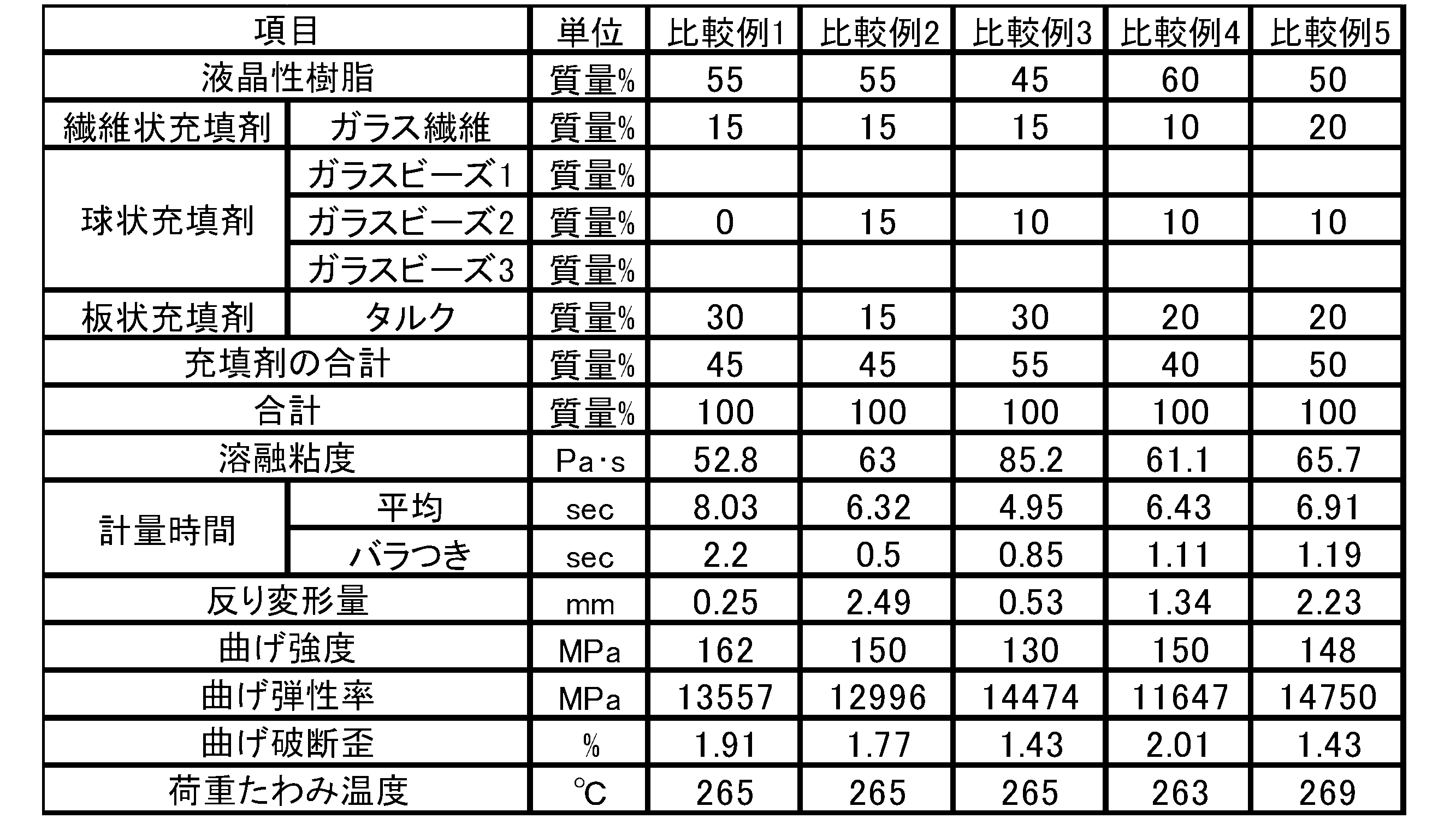
表1、2から明らかなように、繊維状充填剤(ガラス繊維)の含有量が全樹脂組成物中12質量%から18質量%の範囲内にある実施例1~5では、射出成形された成形品の反り変形量が少なく、曲げ強度・曲げ弾性率・曲げ破断歪・荷重たわみ温度で示される機械的強度においても優れていた。これに対し、繊維状充填剤の含有量が全樹脂組成物中10質量%の比較例4では、射出成形された成形品の機械的強度(曲げ弾性率)が低かった。また、繊維状充填剤の含有量が全樹脂組成物中20質量%の比較例5では、射出成形された成形品の反り変形量が大きく、機械的強度(曲げ破断歪)が低かった。
また表1、2から明らかなように、板状充填剤(タルク)の含有量が全樹脂組成物中18質量%から30質量%の範囲内にある実施例1~5では、射出成形された成形品の反り変形量が少なかった。これに対し、板状充填剤の含有量が全樹脂組成物中15質量%の比較例2では、射出成形された成形品の反り変形量が大きかった。また、球状充填剤(ガラスビーズ)の含有量が全樹脂組成物中1質量%から12質量%の範囲内にある実施例1~5では、射出成形時の計量時間が短く、射出成形された成形品の反り変形量が少なかった。これに対し、球状充填剤の含有量が全樹脂組成物中0質量%の比較例1では、射出成形時の計量時間が長かった。また、球状充填剤の含有量が全樹脂組成物中15質量%の比較例2では、射出成形された成形品の反り変形量が大きかった。
さらに表1、2から明らかなように、充填剤の含有量の総量が、全樹脂組成物中40質量%以上50質量%以下の範囲内にある実施例1~5では、射出成形された成形品の機械的強度が優れていた。これに対し、充填剤の含有量の総量が全樹脂組成物中55質量%の比較例3では、射出成形された成形品の機械的強度(曲げ強度、曲げ破断歪)が低かった。また、板状充填剤の含有量が、全樹脂組成物中25質量%以上30質量%以下であり、球状充填剤の含有量が、全樹脂組成物中1質量%以上5質量%以下であり、球状充填剤の粒子径が、30μm以上80μm以下である実施例5では、射出成形時の計量時間が短く、射出成形された成形品の特性はいずれにおいても優れていた。
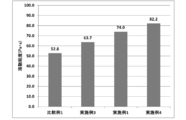
また図1の結果から明らかなように、球状充填剤の粒子径が大きい程、射出成形時の計量時間が短く、計量時間のバラつきが小さかった。さらに図2に示されるように、球状充填剤の粒子径が大きい程、液晶性樹脂組成物の溶融粘度が向上し、液晶性樹脂組成物を射出成形する際の計量安定性が改善されるという効果が得られた。
以上の結果から、本願発明の構成を有することにより、液晶性樹脂組成物の射出成形時の計量時間が短く、射出成形された成形品の特性はいずれにおいても優れているという効果が得られることが確認された。
Claims (7)
- 液晶性樹脂と、繊維状充填剤と、板状充填剤と、球状充填剤と、を含有し、
繊維状充填剤の含有量が、全樹脂組成物中12質量%以上18質量%以下であり、
板状充填剤の含有量が、全樹脂組成物中18質量%以上30質量%以下であり、
球状充填剤の含有量が、全樹脂組成物中1質量%以上12質量%以下であり、及び、
充填剤の含有量の総量が、全樹脂組成物中40質量%以上50質量%以下である、液晶性樹脂組成物。 - 板状充填剤の含有量が、全樹脂組成物中25質量%以上30質量%以下であり、
球状充填剤の含有量が、全樹脂組成物中1質量%以上5質量%以下であり、及び、
球状充填剤の平均粒子径が、30μm以上80μm以下である、請求項1に記載の液晶性樹脂組成物。 - 繊維状充填剤がガラス繊維である、請求項1または2に記載の液晶性樹脂組成物。
- 板状充填剤がタルク、マイカからなる群から選択される少なくとも1種以上の板状充填剤である、請求項1から3のいずれか一項に記載の液晶性樹脂組成物。
- 球状充填剤がガラスビーズ、シリカからなる群から選択される少なくとも1種以上の球状充填剤である、請求項1から4のいずれか一項に記載の液晶性樹脂組成物。
- 請求項1から5のいずれか一項に記載の液晶性樹脂組成物を成形して得られる成形品。
- 射出成形により得られる、請求項6に記載の成形品。
Priority Applications (2)
| Application Number | Priority Date | Filing Date | Title |
|---|---|---|---|
| JP2017560646A JP6400861B2 (ja) | 2016-07-11 | 2017-07-05 | 液晶性樹脂組成物 |
| CN201780041916.3A CN109476922A (zh) | 2016-07-11 | 2017-07-05 | 液晶性树脂组合物 |
Applications Claiming Priority (2)
| Application Number | Priority Date | Filing Date | Title |
|---|---|---|---|
| JP2016136590 | 2016-07-11 | ||
| JP2016-136590 | 2016-07-11 |
Publications (1)
| Publication Number | Publication Date |
|---|---|
| WO2018012371A1 true WO2018012371A1 (ja) | 2018-01-18 |
Family
ID=60951777
Family Applications (1)
| Application Number | Title | Priority Date | Filing Date |
|---|---|---|---|
| PCT/JP2017/024674 Ceased WO2018012371A1 (ja) | 2016-07-11 | 2017-07-05 | 液晶性樹脂組成物 |
Country Status (3)
| Country | Link |
|---|---|
| JP (1) | JP6400861B2 (ja) |
| CN (1) | CN109476922A (ja) |
| WO (1) | WO2018012371A1 (ja) |
Cited By (6)
| Publication number | Priority date | Publication date | Assignee | Title |
|---|---|---|---|---|
| US10829634B2 (en) | 2017-12-05 | 2020-11-10 | Ticona Llc | Aromatic polymer composition for use in a camera module |
| WO2020230890A1 (ja) * | 2019-05-16 | 2020-11-19 | ポリプラスチックス株式会社 | 液晶性樹脂組成物及びそれを用いた成形体 |
| US11086200B2 (en) | 2019-03-20 | 2021-08-10 | Ticona Llc | Polymer composition for use in a camera module |
| US11722759B2 (en) | 2019-03-20 | 2023-08-08 | Ticona Llc | Actuator assembly for a camera module |
| US12209163B2 (en) | 2021-05-06 | 2025-01-28 | Ticona Llc | Polymer composition for use in a camera module |
| US12282005B2 (en) | 2021-12-13 | 2025-04-22 | Tiocona LLC | Technique for testing the ball dent properties of a sample |
Families Citing this family (2)
| Publication number | Priority date | Publication date | Assignee | Title |
|---|---|---|---|---|
| KR102748762B1 (ko) * | 2020-12-07 | 2025-01-03 | 포리프라스틱 가부시키가이샤 | 도전성 액정성 수지 조성물 |
| US12104010B2 (en) | 2021-02-04 | 2024-10-01 | Ticona Llc | Polymer composition for an electric circuit protection device |
Citations (7)
| Publication number | Priority date | Publication date | Assignee | Title |
|---|---|---|---|---|
| JP2011122148A (ja) * | 2009-11-16 | 2011-06-23 | Sumitomo Chemical Co Ltd | コネクタ用液晶ポリエステル組成物およびこれを用いたコネクタ |
| JP2012087171A (ja) * | 2010-10-15 | 2012-05-10 | Jx Nippon Oil & Energy Corp | 液晶ポリエステル樹脂組成物及びカメラモジュール部品 |
| WO2012131829A1 (ja) * | 2011-03-25 | 2012-10-04 | 東レ株式会社 | 熱可塑性樹脂組成物およびそれを用いた成形品 |
| JP2012193343A (ja) * | 2011-02-28 | 2012-10-11 | Sumitomo Chemical Co Ltd | 液晶ポリエステル組成物 |
| JP2012206296A (ja) * | 2011-03-29 | 2012-10-25 | Sumitomo Chemical Co Ltd | 液晶ポリエステル組成物の製造方法 |
| JP2013072070A (ja) * | 2011-09-29 | 2013-04-22 | Sumitomo Chemical Co Ltd | 液晶ポリエステル組成物及びコネクタ |
| JP2015000949A (ja) * | 2013-06-17 | 2015-01-05 | ポリプラスチックス株式会社 | カメラモジュール用液晶性樹脂組成物 |
Family Cites Families (2)
| Publication number | Priority date | Publication date | Assignee | Title |
|---|---|---|---|---|
| WO2012144411A1 (ja) * | 2011-04-21 | 2012-10-26 | 積水化学工業株式会社 | エレクトレットシート |
| JP2015040249A (ja) * | 2013-08-21 | 2015-03-02 | 上野製薬株式会社 | 液晶ポリマー組成物 |
-
2017
- 2017-07-05 WO PCT/JP2017/024674 patent/WO2018012371A1/ja not_active Ceased
- 2017-07-05 JP JP2017560646A patent/JP6400861B2/ja active Active
- 2017-07-05 CN CN201780041916.3A patent/CN109476922A/zh active Pending
Patent Citations (7)
| Publication number | Priority date | Publication date | Assignee | Title |
|---|---|---|---|---|
| JP2011122148A (ja) * | 2009-11-16 | 2011-06-23 | Sumitomo Chemical Co Ltd | コネクタ用液晶ポリエステル組成物およびこれを用いたコネクタ |
| JP2012087171A (ja) * | 2010-10-15 | 2012-05-10 | Jx Nippon Oil & Energy Corp | 液晶ポリエステル樹脂組成物及びカメラモジュール部品 |
| JP2012193343A (ja) * | 2011-02-28 | 2012-10-11 | Sumitomo Chemical Co Ltd | 液晶ポリエステル組成物 |
| WO2012131829A1 (ja) * | 2011-03-25 | 2012-10-04 | 東レ株式会社 | 熱可塑性樹脂組成物およびそれを用いた成形品 |
| JP2012206296A (ja) * | 2011-03-29 | 2012-10-25 | Sumitomo Chemical Co Ltd | 液晶ポリエステル組成物の製造方法 |
| JP2013072070A (ja) * | 2011-09-29 | 2013-04-22 | Sumitomo Chemical Co Ltd | 液晶ポリエステル組成物及びコネクタ |
| JP2015000949A (ja) * | 2013-06-17 | 2015-01-05 | ポリプラスチックス株式会社 | カメラモジュール用液晶性樹脂組成物 |
Cited By (11)
| Publication number | Priority date | Publication date | Assignee | Title |
|---|---|---|---|---|
| US10829634B2 (en) | 2017-12-05 | 2020-11-10 | Ticona Llc | Aromatic polymer composition for use in a camera module |
| US11725106B2 (en) | 2017-12-05 | 2023-08-15 | Ticona Llc | Aromatic polymer composition for use in a camera module |
| US11086200B2 (en) | 2019-03-20 | 2021-08-10 | Ticona Llc | Polymer composition for use in a camera module |
| US11722759B2 (en) | 2019-03-20 | 2023-08-08 | Ticona Llc | Actuator assembly for a camera module |
| US12032272B2 (en) | 2019-03-20 | 2024-07-09 | Ticona Llc | Polymer composition for use in a camera module |
| WO2020230890A1 (ja) * | 2019-05-16 | 2020-11-19 | ポリプラスチックス株式会社 | 液晶性樹脂組成物及びそれを用いた成形体 |
| JPWO2020230890A1 (ja) * | 2019-05-16 | 2021-05-20 | ポリプラスチックス株式会社 | 液晶性樹脂組成物及びそれを用いた成形体 |
| JP7026842B2 (ja) | 2019-05-16 | 2022-02-28 | ポリプラスチックス株式会社 | 液晶性樹脂組成物及びそれを用いた成形体 |
| TWI884149B (zh) * | 2019-05-16 | 2025-05-21 | 日商寶理塑料股份有限公司 | 液晶性樹脂組合物及使用此之成形體 |
| US12209163B2 (en) | 2021-05-06 | 2025-01-28 | Ticona Llc | Polymer composition for use in a camera module |
| US12282005B2 (en) | 2021-12-13 | 2025-04-22 | Tiocona LLC | Technique for testing the ball dent properties of a sample |
Also Published As
| Publication number | Publication date |
|---|---|
| CN109476922A (zh) | 2019-03-15 |
| JPWO2018012371A1 (ja) | 2018-07-19 |
| JP6400861B2 (ja) | 2018-10-03 |
Similar Documents
| Publication | Publication Date | Title |
|---|---|---|
| JP6400861B2 (ja) | 液晶性樹脂組成物 | |
| KR101945912B1 (ko) | 액정성 수지 조성물 | |
| JP5308800B2 (ja) | 液晶ポリエステル樹脂組成物 | |
| JP6837184B2 (ja) | 液晶性樹脂組成物 | |
| JP2016014137A (ja) | 液晶ポリエステル樹脂組成物、コネクターおよび液晶ポリエステル樹脂組成物の製造方法 | |
| TW201925343A (zh) | 耐滑動磨耗構件用液晶性樹脂組合物及使用該組合物的耐滑動磨耗構件 | |
| WO2018079611A1 (ja) | 液晶ポリエステル樹脂組成物 | |
| TW202204522A (zh) | 耐滾珠軸承滑動磨耗部件用液晶性樹脂組合物及使用其之耐滾珠軸承滑動磨耗部件 | |
| JP5727229B2 (ja) | 液晶性樹脂組成物 | |
| EP2206744B1 (en) | Liquid crystalline polyester resin composition | |
| JP5717347B2 (ja) | 射出成形用液晶性樹脂組成物、成形体及び耐ブリスター性を向上する方法 | |
| JP5815061B2 (ja) | 射出成形品とその製造方法 | |
| JP5869983B2 (ja) | 液晶性樹脂組成物 | |
| JP7373080B2 (ja) | 導電性液晶性樹脂組成物 | |
| JP7026842B2 (ja) | 液晶性樹脂組成物及びそれを用いた成形体 | |
| KR20230131203A (ko) | 액정 폴리에스테르 조성물, 액정 폴리에스테르 조성물의제조 방법 및 사출 성형체의 제조 방법 | |
| JP5558738B2 (ja) | 成形体の製造方法及びブリスター発生を抑制する方法 |
Legal Events
| Date | Code | Title | Description |
|---|---|---|---|
| ENP | Entry into the national phase |
Ref document number: 2017560646 Country of ref document: JP Kind code of ref document: A |
|
| 121 | Ep: the epo has been informed by wipo that ep was designated in this application |
Ref document number: 17827499 Country of ref document: EP Kind code of ref document: A1 |
|
| NENP | Non-entry into the national phase |
Ref country code: DE |
|
| 122 | Ep: pct application non-entry in european phase |
Ref document number: 17827499 Country of ref document: EP Kind code of ref document: A1 |