WO2017221910A1 - 新規スギ花粉タンパク質 - Google Patents
新規スギ花粉タンパク質 Download PDFInfo
- Publication number
- WO2017221910A1 WO2017221910A1 PCT/JP2017/022604 JP2017022604W WO2017221910A1 WO 2017221910 A1 WO2017221910 A1 WO 2017221910A1 JP 2017022604 W JP2017022604 W JP 2017022604W WO 2017221910 A1 WO2017221910 A1 WO 2017221910A1
- Authority
- WO
- WIPO (PCT)
- Prior art keywords
- cedar pollen
- protein
- cedar
- acid sequence
- seq
- Prior art date
- Legal status (The legal status is an assumption and is not a legal conclusion. Google has not performed a legal analysis and makes no representation as to the accuracy of the status listed.)
- Ceased
Links
Images


Classifications
-
- A—HUMAN NECESSITIES
- A61—MEDICAL OR VETERINARY SCIENCE; HYGIENE
- A61K—PREPARATIONS FOR MEDICAL, DENTAL OR TOILETRY PURPOSES
- A61K38/00—Medicinal preparations containing peptides
- A61K38/02—Peptides of undefined number of amino acids; Derivatives thereof
-
- C—CHEMISTRY; METALLURGY
- C07—ORGANIC CHEMISTRY
- C07K—PEPTIDES
- C07K14/00—Peptides having more than 20 amino acids; Gastrins; Somatostatins; Melanotropins; Derivatives thereof
- C07K14/415—Peptides having more than 20 amino acids; Gastrins; Somatostatins; Melanotropins; Derivatives thereof from plants
-
- A—HUMAN NECESSITIES
- A61—MEDICAL OR VETERINARY SCIENCE; HYGIENE
- A61P—SPECIFIC THERAPEUTIC ACTIVITY OF CHEMICAL COMPOUNDS OR MEDICINAL PREPARATIONS
- A61P37/00—Drugs for immunological or allergic disorders
- A61P37/08—Antiallergic agents
-
- C—CHEMISTRY; METALLURGY
- C07—ORGANIC CHEMISTRY
- C07K—PEPTIDES
- C07K16/00—Immunoglobulins [IG], e.g. monoclonal or polyclonal antibodies
- C07K16/16—Immunoglobulins [IG], e.g. monoclonal or polyclonal antibodies against material from plants
-
- C—CHEMISTRY; METALLURGY
- C12—BIOCHEMISTRY; BEER; SPIRITS; WINE; VINEGAR; MICROBIOLOGY; ENZYMOLOGY; MUTATION OR GENETIC ENGINEERING
- C12N—MICROORGANISMS OR ENZYMES; COMPOSITIONS THEREOF; PROPAGATING, PRESERVING, OR MAINTAINING MICROORGANISMS; MUTATION OR GENETIC ENGINEERING; CULTURE MEDIA
- C12N15/00—Mutation or genetic engineering; DNA or RNA concerning genetic engineering, vectors, e.g. plasmids, or their isolation, preparation or purification; Use of hosts therefor
- C12N15/09—Recombinant DNA-technology
-
- G—PHYSICS
- G01—MEASURING; TESTING
- G01N—INVESTIGATING OR ANALYSING MATERIALS BY DETERMINING THEIR CHEMICAL OR PHYSICAL PROPERTIES
- G01N33/00—Investigating or analysing materials by specific methods not covered by groups G01N1/00 - G01N31/00
- G01N33/48—Biological material, e.g. blood, urine; Haemocytometers
- G01N33/50—Chemical analysis of biological material, e.g. blood, urine; Testing involving biospecific ligand binding methods; Immunological testing
- G01N33/68—Chemical analysis of biological material, e.g. blood, urine; Testing involving biospecific ligand binding methods; Immunological testing involving proteins, peptides or amino acids
- G01N33/6854—Immunoglobulins
-
- A—HUMAN NECESSITIES
- A61—MEDICAL OR VETERINARY SCIENCE; HYGIENE
- A61K—PREPARATIONS FOR MEDICAL, DENTAL OR TOILETRY PURPOSES
- A61K38/00—Medicinal preparations containing peptides
-
- G—PHYSICS
- G01—MEASURING; TESTING
- G01N—INVESTIGATING OR ANALYSING MATERIALS BY DETERMINING THEIR CHEMICAL OR PHYSICAL PROPERTIES
- G01N2800/00—Detection or diagnosis of diseases
- G01N2800/24—Immunology or allergic disorders
Definitions
- Pollenosis is an allergic disease that develops by inhaling pollen scattered in the air and presents symptoms such as allergic conjunctivitis such as itching and pain in the eyes, rhinitis, skin inflammation or asthma.
- Many plants that cause hay fever are known, but the most common hay fever in Japan is cedar pollinosis (allergic disease caused by cedar pollen).
- cedar pollinosis allergic disease caused by cedar pollen.
- the prevalence of cedar pollinosis is estimated to be 19.4% as of 2001 (Non-patent Document 1), and it is estimated that at least 20 million people suffer from cedar pollinosis. It is no exaggeration to say that it is a national illness.
- Non-Patent Document 2 Japanese cedar pollinosis patients is expected to increase easily in the future, and there is a risk of damaging the health of the Japanese people.
- Non-patent Document 3 it has been reported that the prevalence of cedar pollinosis increased 2.6 times from 1980 to 2000.
- Cry j 1, Cry j 2, and Cry j 3 have been reported as main cedar pollen allergens related to the development of Japanese cedar pollinosis (Non-Patent Documents 4, 5, and 6), and in particular, Cry j 1 Standardized Japanese cedar pollen extract (Non-patent Document 7) based on them has been developed for Cry j 2, and allergen immunotherapy for Japanese cedar pollinosis has been carried out in Japan.
- Non-patent Document 8 there are also groups of patients who do not succeed in allergen immunotherapy. It has been suggested that there is a novel allergen that has not yet been identified in Japanese cedar pollen (Non-patent Document 8), and a novel novel allergen protein for the purpose of more useful immunotherapy for Japanese cedar pollinosis Is required.
- the present invention relates to providing a novel cedar pollen protein, a diagnostic agent, a preventive agent, a therapeutic agent and the like for allergic diseases caused by cedar pollen using the same.
- cedar pollen protein of the present invention is a protein selected from the following (a) to (c).
- A a protein consisting of the amino acid sequence shown in SEQ ID NO: 2
- b consisting of an amino acid sequence in which one or several amino acids are substituted, deleted or added in the amino acid sequence shown in SEQ ID NO: 2
- Protein having pollen allergen activity c
- a protein comprising an amino acid sequence having 90% or more identity with the amino acid sequence represented by SEQ ID NO: 2 and having cedar pollen allergen activity
- the cedar pollen protein of the present invention comprises a protein consisting of an amino acid sequence in which one or several amino acids are substituted, deleted or added in the amino acid sequence represented by SEQ ID NO: 2.
- the above (b)) is included.
- the cedar pollen protein which consists of such an amino acid sequence the isoform of the cedar pollen protein which has an amino acid sequence shown by sequence number 2, etc. are mentioned, for example.
- the several amino acids to be deleted, substituted or added mean, for example, 1 to 10, more preferably 1 to 5 amino acids.
- the above addition or deletion includes addition or deletion of 1 to several amino acids at both ends. Specific examples of isoforms include deletion of 4 residues at the C-terminus.
- the cedar pollen protein of the present invention has 90% or more of the amino acid sequence represented by SEQ ID NO: 2 when the corresponding sequence in the amino acid sequence represented by SEQ ID NO: 2 is appropriately aligned as long as it has cedar pollen allergen activity.
- Proteins consisting of proteins having the same identity ((c) above) are included.
- the identity with the amino acid sequence represented by SEQ ID NO: 2 is preferably 95% or more, more preferably 98% or more.
- a basic local alignment search tool at the National Center for Biological Information (BLAST) is used, and a method of calculating an optional parameter with an initial setting value can be applied.
- cedar pollen protein of the present invention may form a fusion with a sequence useful for purification such as multiple histidine residues, a protein for ensuring stability during recombinant production, and the like.
- Polynucleotide encoding cedar pollen protein encodes the above cedar pollen protein, and preferably (d) a polynucleotide comprising the base sequence shown in SEQ ID NO: 1, (e) SEQ ID NO: A polynucleotide that hybridizes with a polynucleotide comprising a nucleotide sequence complementary to the nucleotide sequence represented by 1 under stringent conditions and encodes a protein having cedar pollen allergen activity, (f) represented by SEQ ID NO: 1 Examples thereof include a polynucleotide that encodes a protein consisting of a base sequence having 90% or more identity with the base sequence and having cedar pollen allergen activity.
- polynucleotides (e) and (f) include variants of the polynucleotide (d). Such variants include naturally occurring allelic variants and non-naturally occurring variants that can be generated using mutagenesis techniques well known in the art.
- the polynucleotide of the present invention includes not only double-stranded DNA but also various single-stranded DNA and RNA such as sense strand and antisense strand constituting the DNA.
- the antisense strand can be used as a probe or the like.
- DNA includes, for example, cDNA and genomic DNA obtained by cloning, chemical synthesis techniques, or a combination thereof.
- a nucleotide sequence such as an untranslated region (UTR) sequence or a vector sequence (including an expression vector sequence) is added to the polynucleotide according to the present invention. It may be.
- the stringent conditions include, for example, conditions described in Molecular Cloning: A Laboratory Manual (Second Edition, J. Sambrook et. Al, 1989). That is, in a solution containing 6 ⁇ SSC (composition of 1 ⁇ SSC: 0.15M sodium chloride, 0.015M sodium citrate, pH 7.0), 0.5% SDS, 5 ⁇ Denhart and 100 mg / mL herring sperm DNA. Examples of the conditions include hybridization with a probe at 65 ° C. for 8 to 16 hours. Further, the identity with the base sequence represented by SEQ ID NO: 1 is preferably 95% or more, more preferably 98% or more. For the identity of the base sequence, for example, a method of using BLAST and calculating an optional parameter with an initial setting value can be applied.
- polynucleotide variants include, for example, the 4th a of the base sequence represented by SEQ ID NO: 1 is g, the 898th t is c, the 1029th g is a, and the 1643th t is a. Are each mutated.
- the polynucleotide encoding a cedar pollen protein of the present invention can be cloned from a cedar pollen.
- a cloning method known means such as a shotgun method and a PCR method can be used. The method of using it is mentioned.
- a probe that specifically hybridizes with a part of the base sequence of the polynucleotide of the present invention may be prepared, and a genomic DNA library or cDNA library may be screened using the probe.
- any probe having any sequence and length may be used as long as it specifically hybridizes to at least part of the polynucleotide according to the present invention or its complementary strand.
- the method of synthesizing a polynucleotide artificially is mentioned. (Kosuri S et. Al., Nature Methods 11, 499-507, 2014)
- the polynucleotide of the present invention can also be obtained by obtaining a sequence that hybridizes to a polynucleotide containing a part or all of the polynucleotide of the present invention using an appropriate principle. Examples thereof include a PCR method using a polynucleotide containing a part of the polynucleotide of the present invention as a primer, and a method using a polynucleotide containing a part of the polynucleotide of the present invention as a probe.
- primers are prepared from the 5 ′ side and 3 ′ side sequences (or their complementary sequences) of the polynucleotide of the present invention, and genomic DNA ( Alternatively, by performing an amplification reaction such as PCR using cDNA) as a template and amplifying a DNA region sandwiched between both primers, a large amount of DNA fragments containing the polynucleotide can be obtained.
- amplification means such as PCR
- the polynucleotide provided by the present invention can also be prepared by modifying the polynucleotide consisting of the base sequence shown in SEQ ID NO: 1 by a method such as planned or random mutagenesis.
- the design of the mutation when introducing the mutation systematically can be performed, for example, by taking into account the characteristic sequence on the polynucleotide sequence.
- methods for randomly introducing mutations include a PCR method and a mutagen treatment method.
- site-directed mutagenesis can be mentioned, and more specifically, for example, using Site-Directed Mutagenesis System Mutan-Super Express Km kit (Takara Bio) etc. Can do.
- the recombinant PCR method (PCR protocols, Academic Press, New York, 1990) can also be used.
- cedar pollen protein of the present invention can be obtained by separating and purifying from cedar pollen.
- the separation and purification method is not particularly limited.
- the cedar pollen extract may be separated and purified using a conventionally known method such as gel filtration, ion exchange chromatography, affinity chromatography, or the like.
- the host is not particularly limited as long as it is a living cell that can be transformed. Examples include animal cells, plants, or plant-derived cells.
- the vector for inserting the polynucleotide of the present invention is not particularly limited as long as it is replicable in the above-mentioned host, and can be appropriately determined according to the type of host to be introduced, the introduction method, and the like.
- plasmid DNA, phage DNA, viral vector and the like can be mentioned.
- the vector DNA used for the construction of the expression vector a widely spread and easily available DNA is used.
- Examples include pUC19 (Takara Bio), pTV118N (Takara Bio), pMAMneo (Clontech), pGEX (GE Healthcare), pET160 (Invitrogen), pDEST (Invitrogen), pIEx (Merck Millipore), pBacPAK (Clontech), etc. .
- virus vectors examples include baculovirus vectors, retrovirus vectors, lentivirus vectors such as human immunodeficiency virus (HIV), adenovirus vectors, adeno-associated virus vectors (AAV vectors), herpes viruses, vaccinia viruses, Examples thereof include DNA viruses and RNA viruses such as poxvirus, poliovirus, sinbisvirus, Sendai virus, and simian virus-40 (SV-40).
- HIV human immunodeficiency virus
- AAV vectors adeno-associated virus vectors
- herpes viruses examples thereof include DNA viruses and RNA viruses such as poxvirus, poliovirus, sinbisvirus, Sendai virus, and simian virus-40 (SV-40).
- a protoplast method, a competent cell method, an electroporation method, or the like can be used.
- the obtained transformant may be cultured under suitable conditions using a medium containing an assimilating carbon source, nitrogen source, metal salt, vitamin and the like.
- the cedar pollen protein of the present invention can be obtained from the culture solution thus obtained by collecting and purifying the protein by a general method. For example, when Escherichia coli is used as the host, the methods described in pET System Manual, 10th edition (Novagen), etc. may be mentioned.
- the cedar pollen protein of the present invention becomes a preventive or therapeutic agent for allergic disease caused by cedar pollen, and is administered to a human (patient) in need thereof. It can be used to prevent or treat allergic diseases caused by pollen.
- allergic diseases caused by cedar pollen include allergic diseases caused by a specific antigen of cedar pollen. Specifically, for example, atopic bronchial asthma, allergic rhinitis, allergic conjunctivitis, atopy Include dermatitis.
- Such an agent for preventing or treating allergic diseases caused by cedar pollen can be used, for example, as a desensitizing therapeutic agent for allergic diseases caused by cedar pollen.
- the cedar pollen protein of the present invention is reported as the main cedar pollen allergens related to the development of cedar pollinosis CryCj 1, Cry j 2, Cry j No homology with Cry j 1, Cry j 2, or Cry j 3, which is considered to be a protein different from the previously known ones. Become.
- the cedar pollen protein of the present invention is used as it is or dried to form a powder, or as required.
- conventional additives such as adjuvants and various additives such as stabilizers, excipients, solubilizers, emulsifying agents, buffering agents, soothing agents, preservatives, coloring agents, etc.
- powdered purified cedar pollen protein can be dissolved in physiological saline supplemented with phenol and used as a stock solution for antigen for desensitization treatment.
- the preventive or therapeutic agent for allergic diseases caused by cedar pollen of the present invention can be carried out by a usual administration route such as transdermal, oral, intradermal, subcutaneous, intramuscular, intraperitoneal administration. Furthermore, it can also be used as transdermal, transmucosal drugs such as lozenges, sublingual tablets, eye drops, intranasal sprays, poultices, creams, lotions and the like.
- the dose and frequency of administration of the preventive or therapeutic agent for allergic diseases caused by cedar pollen of the present invention vary depending on the administration route, symptoms, etc., but for example, it is in the range of about 0.1 to 1000 ⁇ g per adult.
- the dose is appropriately selected and administered once to several times a week.
- the cedar pollen protein of the present invention becomes a diagnostic agent for allergic diseases caused by cedar pollen and can be used to diagnose allergic diseases caused by cedar pollen.
- a diagnostic agent for allergic diseases caused by cedar pollen is used, for example, as a skin reaction diagnosis for allergic diseases caused by cedar pollen, that is, as an intradermal test or prick test reagent.
- diagnosis using patient serum or plasma is possible by preparing a specific IgE antibody test reagent.
- the cedar pollen protein of the present invention When used as a diagnostic reagent for skin reaction, the cedar pollen protein of the present invention obtained by the above-described method is used, for example, by drying to form a powder, which is dissolved in physiological saline containing phenol or glycerin and diluted. .
- IgE antibody test reagent IgE antibody in a patient sample is bound to the cedar pollen protein of the present invention in an aqueous phase or solid phase, and based on the principle of Fluoro enzyme immunoassay, Chemiluminescence enzyme immunoassay, enzymeme immunoassay, etc.
- a detection method is not limited to these.
- the antibody to the cedar pollen protein of the present invention is an antibody that can specifically bind to the cedar pollen protein of the present invention.
- the above antibody means an immunoglobulin (IgA, IgD, IgE, IgG, IgM and their Fab fragment, F (ab ′) 2 fragment, Fc fragment), for example, polyclonal antibody, monoclonal antibody, single chain antibody, anti-antibody Examples include, but are not limited to, idiotype antibodies and humanized antibodies.
- the antibody can be produced using various known methods, and the production method is not particularly limited.
- the above antibody can be used for identification of an organism expressing the cedar pollen protein of the present invention, or a tissue or cell thereof. For example, it can be used to measure the presence or absence of cedar pollen protein in the atmosphere, indoor space, or human mucous membrane. The measurement can be performed by a known immunological method, for example, by the ELISA method.
- EXAMPLES Hereinafter, although an Example demonstrates this invention concretely, this invention is not limited by these Examples.
- Example 1 Rough purification of new cedar pollen protein ⁇ Rough purification of cedar pollen protein> To 2 g of cedar pollen, 50 mL of an extraction buffer (20 mM Tris-HCl, pH 9.0) was added and subjected to ultrasonic crushing for 10 minutes. Subsequently, after mixing at room temperature for 10 minutes, the supernatant was obtained by centrifugation (10,000 g, 10 minutes). The supernatant was further ultracentrifuged (50,000 g, 60 minutes), and the supernatant was recovered.
- an extraction buffer (20 mM Tris-HCl, pH 9.0
- the supernatant was removed by centrifugation (1,000 g, 10 minutes), and the protein adsorbed on the resin was eluted.
- the same procedure was carried out using 0.025 M NaCl-containing extraction buffer (20 mM Tris-HCl, pH 9.0), 0.05 M NaCl-containing extraction buffer (20 mM Tris-HCl, pH 9.0), and 0.1 M NaCl-containing extraction buffer (20 mM Tris).
- the gel in the vicinity of the molecular weight 70 kDa band was chopped, and the pieces were combined and washed with water and acetonitrile, and subjected to alkylation treatment with DTT and iodoacetamide. Subsequently, trypsin was added to the sample, and a hydrolysis reaction was performed by incubating at 37 ° C. for 16 hours. After the reaction, peptides were extracted from the gel pieces using 25 mM ammonium bicarbonate, 5% formic acid, and acetonitrile. Finally, the extraction solution was dried under reduced pressure.
- the dried sample is dissolved in a solvent consisting of water, acetonitrile and trifluoroacetic acid (volume ratio 98: 2: 0.1), and LC-MS / MS system (Paradigm MS4 (Michrom Bioresources), MS / MS: LTQ OrbiTrap XL mass spectrometer (ThermoFisher)).
- Example 2 Preparation of purified recombinant protein ⁇ Extraction of cedar total RNA> 2 g of cedar male flowers (buds) frozen and ground in liquid nitrogen were added to and mixed with a 50 mL tube containing 25 mL of Plant RNA Isolation Reagent (Invitrogen), and allowed to stand at room temperature for 5 minutes. After centrifugation at 2 ° C. (2600 ⁇ g, 5 minutes), the upper layer was filtered through a mesh having a mesh size of 100 ⁇ m by decanting. Subsequently, 1 / 5-fold amount of 5M NaCl and 3 / 5-fold amount of chloroform were added to the collected filtrate. After centrifugation at 2 ° C.
- Plant RNA Isolation Reagent Invitrogen
- RNA pellet was washed with 10 mL of 75% ethanol. Furthermore, after centrifugation at 2 ° C. (2600 ⁇ g, 5 minutes), after removing the supernatant, the total RNA was dried at room temperature and then dissolved in 200 ⁇ L of RNase free water.
- DNase treatment was performed using RNase-Free DNase Set (Qiagen). Specifically, 15 ⁇ L Buffer RDD and 5 ⁇ L DNase I stock solution were added to 180 ⁇ L of the total RNA solution supernatant and allowed to stand at room temperature for 10 minutes. Subsequently, total RNA was cleaned up using RNeasy mini kit (Qiagen). That is, after DNase treatment, 700 ⁇ L of Buffer RLT and 500 ⁇ L of ethanol were added to 200 ⁇ L of the sample, and then added to the column attached to the RNeasy mini kit and centrifuged (8000 ⁇ g, 15 seconds).
- RNeasy mini kit Qiagen
- CDNA was synthesized from the obtained clean-up total RNA using Superscript III First-Strand Synthesis System for RT-PCR (Invitrogen). 2 ⁇ g of total RNA was dissolved in 8 ⁇ L of purified water, 1 ⁇ L of 50 ⁇ M oligo (dT) 20 and 1 ⁇ L of 10 mM dNTP were added, and incubated at 65 ° C. for 5 minutes.
- a primer set used for cloning was designed and subjected to the following examination. That is, in order to obtain the polynucleotide shown in SEQ ID NO: 1, using cedar cDNA as a template, Primer 1 (GATTTCATGRCAGCGACAG: SEQ ID NO: 3) as a sense primer and downstream Primer 2 (CATGRCAGCGACAGSGAT: SEQ ID NO: 4), as an antisense primer Nested PCR was performed by KOD Fx Neo (TOYOBO) using Primer 3 (TCAAAGTTGATGCAACAATTG: SEQ ID NO: 5). The PCR product was purified by Wizard SV Gel and PCR Clean-Up System (Promega).
- the purified PCR product was incorporated into pCR 2.1-TOPO TA Vector using the TOPO TA Cloning Kit for Sequencing (Thermo Fischer) kit to prepare a vector containing the polynucleotide shown in SEQ ID NO: 1.
- Recombinant protein with a Flag tag added to the C-terminus of the primary amino acid sequence shown in SEQ ID NO: 2 (excluding amino acids from the 1st to 26th positions, which is presumed to be the signal sequence portion), was added to the SysCex Corporation ProCube (registered trademark) service. Then, it was carried out according to the method of JP 2014-195411 A. That is, the polynucleotide shown in SEQ ID NO: 1 from the vector prepared above (excluding the 1-78th polynucleotide encoding the 1-26 amino acid presumed to be the signal sequence portion) is used as the silkworm expression signal sequence.
- FIG. 1 shows the result of SDS-PAGE analysis of the purified recombinant protein.
- Example 3 Confirmation of Allergen Activity of Purified Recombinant Protein
- Peripheral blood mononuclear cells were isolated from 30 mL of peripheral blood obtained from a Japanese cedar pollinosis patient (ImmunoCAP score ⁇ 2). Suspended in RPMI-1640 medium with activated autologous plasma to 1.11 ⁇ 10 6 cells / mL. The prepared cell suspension (180 ⁇ L) and 20 ⁇ L of the recombinant protein solution of the present invention (concentration: 100 ⁇ g / mL) were seeded in a 96-well plate (2 ⁇ 10 5 cells / well). After culturing at 37 ° C.
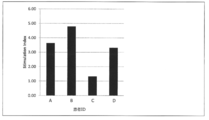
- FIG. 2 shows the result of calculating the value obtained by dividing the 3 H-thymidine incorporation amount when the purified recombinant protein was added by the incorporation amount when the purified recombinant protein was not added as a stimulation index.
- a stimulation index of 1.8 or higher is regarded as a positive standard (Shigeyuki Uchida et al., Liver Vol. 30, No. 4, 439-443, 1989). By following this criterion, 3 out of 4 cases (75%) were judged positive. From the above results, it was shown that the recombinant protein of the present invention was frequently sensitized at the T cell level in patients with cedar pollinosis.
- Basophils stimulated and activated by allergens are known to enhance CD203c expression (De Weck, AL. et al., Int. Arch. Allergy Immunol., 146: 177-189, 2008).
- Basophil activation in the blood of cedar pollinosis patients (ImmunoCAP score ⁇ 2) or healthy subjects (ImmunoCAP score ⁇ 2) was analyzed using an Allergenicity kit (Beckman Coulter) based on this principle.
- 20 ⁇ L of the recombinant protein solution of the present invention was added to 100 ⁇ L of heparin-collected whole blood to a final concentration of 3 ⁇ g / mL, and 20 ⁇ L of PBS ( ⁇ ) was added to the negative control sample. Subsequently, 20 ⁇ L of an antibody cocktail containing CD3-PC7, CRTH2-FITC and CD203c-PE was added to all the samples and incubated at 37 ° C. for 15 minutes. 100 ⁇ L of the reaction stop solution and 2 mL of hemolytic fixative were added and reacted at room temperature for 10 minutes.
- the data show the ratio of CD203c positive basophils (%) in each negative control sample from the ratio of CD203c positive basophils (%) in the protein solution-stimulated sample of the present invention, 1.6 or more, which is twice the maximum value of 0.8% in healthy subjects The value of was determined as positive.
- FIG. 3 in 2 of 2 healthy subjects, enhanced expression of CD203c was not observed when recombinant protein was added, whereas in 7 cases (54%) of 13 patients with cedar pollinosis CD203c expression was enhanced and the difference was significant (p ⁇ 0.05, Welch's t test). Therefore, it was shown that cedar pollinosis patients frequently have IgE binding to the recombinant protein of the present invention, and that the recombinant protein of the present invention has allergen activity.
Landscapes
- Health & Medical Sciences (AREA)
- Life Sciences & Earth Sciences (AREA)
- Chemical & Material Sciences (AREA)
- Organic Chemistry (AREA)
- General Health & Medical Sciences (AREA)
- Engineering & Computer Science (AREA)
- Immunology (AREA)
- Medicinal Chemistry (AREA)
- Molecular Biology (AREA)
- Genetics & Genomics (AREA)
- Proteomics, Peptides & Aminoacids (AREA)
- Biochemistry (AREA)
- Bioinformatics & Cheminformatics (AREA)
- Biophysics (AREA)
- Botany (AREA)
- Biomedical Technology (AREA)
- Animal Behavior & Ethology (AREA)
- Public Health (AREA)
- Veterinary Medicine (AREA)
- Pharmacology & Pharmacy (AREA)
- Biotechnology (AREA)
- Hematology (AREA)
- Urology & Nephrology (AREA)
- Gastroenterology & Hepatology (AREA)
- Microbiology (AREA)
- Physics & Mathematics (AREA)
- Nuclear Medicine, Radiotherapy & Molecular Imaging (AREA)
- General Chemical & Material Sciences (AREA)
- Pulmonology (AREA)
- Chemical Kinetics & Catalysis (AREA)
- Zoology (AREA)
- Wood Science & Technology (AREA)
- General Engineering & Computer Science (AREA)
- Epidemiology (AREA)
- Cell Biology (AREA)
- Food Science & Technology (AREA)
- Analytical Chemistry (AREA)
- General Physics & Mathematics (AREA)
- Pathology (AREA)
- Plant Pathology (AREA)
Abstract
Description
1)以下の(a)~(c)から選択されるスギ花粉タンパク質。
(a)配列番号2で示されるアミノ酸配列からなるタンパク質
(b)配列番号2で示されるアミノ酸配列において、1個若しくは数個のアミノ酸が置換、欠失又は付加されたアミノ酸配列からなり、且つスギ花粉アレルゲン活性を有するタンパク質
(c)配列番号2で示されるアミノ酸配列と90%以上の同一性を有するアミノ酸配列からなり、且つスギ花粉アレルゲン活性を有するタンパク質
2)以下の(a)~(c)から選択されるスギ花粉タンパク質をコードするポリヌクレオチド。
(a)配列番号2で示されるアミノ酸配列からなるタンパク質
(b)配列番号2で示されるアミノ酸配列において、1個若しくは数個のアミノ酸が置換、欠失又は付加されたアミノ酸配列からなり、且つスギ花粉アレルゲン活性を有するタンパク質
(c)配列番号2で示されるアミノ酸配列と90%以上の同一性を有するアミノ酸配列からなり、且つスギ花粉アレルゲン活性を有するタンパク質
3)以下の(d)~(f)から選択されるポリヌクレオチド。
(d)配列番号1で示される塩基配列からなるポリヌクレオチド
(e)配列番号1で示される塩基配列と相補的な塩基配列からなるポリヌクレオチドとストリンジェントな条件下でハイブリダイズし、スギ花粉アレルゲン活性を有するタンパク質をコードするポリヌクレオチド
(f)配列番号1で示される塩基配列と90%以上の同一性を有する塩基配列からなり、且つスギ花粉アレルゲン活性を有するタンパク質をコードするポリヌクレオチド
4)上記1)のスギ花粉タンパク質を有効成分とするスギ花粉を原因とするアレルギー疾患の予防又は治療剤。
5)上記1)のスギ花粉タンパク質を有効成分とするスギ花粉を原因とするアレルギー疾患の診断薬。
6)上記1)のスギ花粉タンパク質に対する抗体。
7)モノクローナル抗体である上記6)のスギ花粉タンパク質に対する抗体。
8)スギ花粉を原因とするアレルギー疾患の予防又は治療剤を製造するための、上記1)のスギ花粉タンパク質の使用。
9)スギ花粉を原因とするアレルギー疾患の診断薬を製造するための、上記1)のスギ花粉タンパク質の使用。
10)スギ花粉を原因とするアレルギー疾患を予防又は治療するための、上記1)のスギ花粉タンパク質。
11)スギ花粉を原因とするアレルギー疾患を診断するための、上記1)のスギ花粉タンパク質。
12)上記1)のスギ花粉タンパク質を患者に投与することを特徴とするスギ花粉を原因とするアレルギー疾患の予防又は治療方法。
13)上記1)のスギ花粉タンパク質を患者に投与することを特徴とするスギ花粉を原因とするアレルギー疾患の診断方法。
本発明のスギ花粉タンパク質は、以下の(a)~(c)から選択されるタンパク質である。
(a)配列番号2で示されるアミノ酸配列からなるタンパク質
(b)配列番号2で示されるアミノ酸配列において、1個若しくは数個のアミノ酸が置換、欠失又は付加されたアミノ酸配列からなり、且つスギ花粉アレルゲン活性を有するタンパク質
(c)配列番号2で示されるアミノ酸配列と90%以上の同一性を有するアミノ酸配列からなり、且つスギ花粉アレルゲン活性を有するタンパク質
ここで、欠失、置換又は付加される数個のアミノ酸とは、例えば1~10個、さらに好ましくは1~5個のアミノ酸を意味する。また、上記の付加又は欠失には、両末端への1~数個のアミノ酸の付加や欠失が含まれる。
アイソフォームの具体例としては、例えば、C末端の4残基の欠失が挙げられる。
ここで、配列番号2で示されるアミノ酸配列との同一性は、好ましくは95%以上、より好ましくは98%以上である。当該アミノ酸配列の同一性は、例えばBLAST(Basic Local Alignment Search Tool at the National Center for Biological Information)を使用し、オプションパラメータを初期設定値で計算する方法が適用できる。
本発明のポリヌクレオチドは、上記スギ花粉タンパク質をコードするものであり、好適には、(d)配列番号1に示す塩基配列からなるポリヌクレオチド、(e)配列番号1で示される塩基配列と相補的な塩基配列からなるポリヌクレオチドとストリンジェントな条件下でハイブリダイズし、且つスギ花粉アレルゲン活性を有するタンパク質をコードするポリヌクレオチド、(f)配列番号1に示される塩基配列と90%以上の同一性を有する塩基配列からなり、且つスギ花粉アレルゲン活性を有するタンパク質をコードするポリヌクレオチドが挙げられる。
(e)及び(f)のポリヌクレオチドには、(d)のポリヌクレオチドの変異体が含まれる。当該変異体には、天然の対立遺伝子変異体や、当該分野で周知の変異誘発技術を用いて生成され得る天然に存在しない変異体が包含される。
また、配列番号1で示される塩基配列との同一性は、好ましくは95%以上、より好ましくは98%以上である。当該塩基配列の同一性は、例えばBLASTを使用し、オプションパラメータを初期設定値で計算する方法が適用できる。
本発明のスギ花粉タンパク質をコードするポリヌクレオチドは、スギ花粉からクローン化することができ、クローニング方法としては、既知の手段、例えばショットガン法、PCR法を用いて行う方法が挙げられる。
例えば、本発明のポリヌクレオチドの塩基配列の一部と特異的にハイブリダイズするプローブを調製し、当該プローブを用いてゲノムDNAライブラリーやcDNAライブラリーに対してスクリーニングを行えばよい。このようなプローブとしては、本発明にかかるポリヌクレオチドまたはその相補鎖の少なくとも一部に特異的にハイブリダイズするプローブであれば、いかなる配列および長さのものを用いてもよい。また人工的にポリヌクレオチドを合成する方法が挙げられる。(Kosuri S et. al., Nature Methods 11, 499-507, 2014)
例えば、PCR等の増幅手段を用いる方法は、本発明のポリヌクレオチドの5'側および3'側の配列(またはその相補配列)の中からそれぞれプライマーを調製し、これらプライマーを用いてゲノムDNA(またはcDNA)等を鋳型にしてPCR等の増幅反応を行い、両プライマー間に挟まれるDNA領域を増幅することで、当該ポリヌクレオチドを含むDNA断片を大量に取得することができる。
ここで、計画的に変異を導入する際の変異の計画は、例えば、ポリヌクレオチド配列上の特徴的な配列を参酌することにより行うことができる。また、ランダムに変異を導入する方法としては、例えば、PCR法、変異原処理による方法が挙げられる。計画的に変異を導入する方法としては、部位特異的突然変異誘発法が挙げられ、より具体的には、例えばSite-Directed Mutagenesis System Mutan-Super Express Kmキット(タカラバイオ)等を用いて行うことができる。また、リコンビナントPCR法(PCR protocols,Academic Press,New York,1990)を用いることもできる。
本発明のスギ花粉タンパク質は、スギ花粉から分離精製することにより得ることができる。分離精製方法は特に限定されるものではないが、例えば、スギ花粉抽出液をゲルろ過、イオン交換クロマトグラフィー、アフィニティークロマトグラフィー、等の従来公知の手法を用いて分離・精製すればよい。
また、適当なベクターに本発明のポリヌクレオチドを組み込むことにより作製された組換えベクターを宿主細胞に導入して、スギ花粉タンパク質を細胞内或いは細胞外に発現させて、採取することが可能である。
例えば、プラスミド DNA、ファージDNA、ウイルスベクター等が挙げられる。発現ベクターの構築に用いられるベクターDNAは、広く普及した入手の容易なものが用いられる。例えば、pUC19(タカラバイオ)、pTV118N (タカラバイオ)、pMAMneo(クロンテック)、pGEX(GEヘルスケア)、pET160(Invitrogen)、pDEST(Invitrogen)、pIEx(メルクミリポア)、pBacPAK(クロンテック)等が挙げられる。また、ウイルスベクターとしては、例えば、バキュロウイルスベクター、レトロウイルスベクター、ヒト免疫不全症ウイルス(HIV)等のレンチウイルスベクター、アデノウイルスベクター、アデノ随伴ウイルスベクター(AAVベクター)、ヘルペスウイルス、ワクシニアウイルス、ポックスウイルス、ポリオウイルス、シンビスウイルス、センダイウイルス、シミアンウイルス-40(SV-40)等のDNAウイルスやRNAウイルス等が挙げられる。
本発明のスギ花粉タンパク質は、スギ花粉を原因とするアレルギー疾患の予防又は治療剤となり、それを必要とするヒト(患者)に投与してスギ花粉を原因とするアレルギー疾患を予防又は治療するために使用できる。
ここで、スギ花粉を原因とするアレルギー疾患としては、スギ花粉の特異抗原が原因となるあらゆるアレルギー疾患が挙げられ、具体的には、例えばアトピー性気管支喘息、アレルギー性鼻炎、アレルギー性結膜炎、アトピー性皮膚炎等が挙げられる。
斯かるスギ花粉を原因とするアレルギー疾患の予防又は治療剤は、例えば、スギ花粉を原因とするアレルギー疾患に対する減感作療法剤として用いることができる。
例えば、粉末状の精製されたスギ花粉タンパク質を、フェノールを添加した生理食塩水に溶解し、減感作治療用抗原の原液として用いることができる。
本発明のスギ花粉タンパク質は、スギ花粉を原因とするアレルギー疾患診断薬となり、スギ花粉を原因とするアレルギー疾患を診断するために使用できる。
斯かるスギ花粉を原因とするアレルギー疾患診断薬は、例えばスギ花粉を原因とするアレルギー疾患に対する皮膚反応診断、すなわち皮内テスト又はプリックテスト試薬等として用いられる。加えて、特異的IgE抗体検査用試薬を調製することで患者血清または血漿を用いた診断が可能である。(鼻アレルギー診療ガイドライン-通年性鼻炎と花粉症-2013年版、株式会社ライフ・サイエンス)
本発明のスギ花粉タンパク質に対する抗体は、本発明のスギ花粉タンパク質と特異的に結合することができる抗体である。上記抗体とは免疫グロブリン(IgA、IgD、IgE、IgG、IgMおよびこれらのFabフラグメント、F(ab')2フラグメント、Fcフラグメント)を意味し、例えば、ポリクローナル抗体、モノクローナル抗体、単鎖抗体、抗イディオタイプ抗体およびヒト化抗体が挙げられるがこれらに限定されるものではない。
上記抗体は、種々の公知の方法を用いて作製することができ、作製方法は特に限定されるものではない。
以下、実施例により本発明を具体的に説明するが、本発明はこれらの実施例により限定されるものではない。
<スギ花粉タンパク質の粗精製>
2gのスギ花粉に抽出緩衝液(20mM Tris-HCl、pH9.0)50mLを加え、10分間超音波破砕を行った。続いて室温にて10分間混和した後、遠心(10,000g、10分)して上清を得た。この上清をさらに超遠心分離(50,000g、60分)し、上清を回収した。この上清17mLに対し、抽出緩衝液(20mM Tris-HCl、pH9.0)で平衡化させたQ sepharose high performance樹脂 (GEヘルスケア)懸濁液を等量加え、30分間室温で振盪させた。遠心分離により(1,000g、10分)上清を除去後、抽出緩衝液(20mM Tris-HCl、pH9.0)にて50mLまでメスアップし、転倒混和後、再度遠心分離することで樹脂を洗浄した。続いて、洗浄した樹脂に0.0125M NaCl含有抽出緩衝液(20mM Tris-HCl、pH9.0)を10mL加え、5分間室温で振盪させた。遠心分離(1,000g、10分)により上清を除去し樹脂に吸着したタンパク質を溶出させた。同じ操作を、0.025M NaCl含有抽出緩衝液(20mM Tris-HCl、pH9.0) 、 0.05M NaCl含有抽出緩衝液(20mM Tris-HCl、pH9.0)、0.1M NaCl含有抽緩衝液(20mM Tris-HCl、pH9.0) 、0.2M NaCl含有抽出緩衝液(20mM Tris-HCl、pH9.0) 、0.4M NaCl含有抽出緩衝液(20mM Tris-HCl、pH9.0) 、0.6M NaCl含有抽出緩衝液(20mM Tris-HCl、pH9.0)で繰り返した。最後に、0.6M NaCl含有抽出緩衝液(20mM Tris-HCl、pH9.0)を用いて溶出させたタンパク質溶液を粗精製液として回収した。
回収した粗精製液を、100,000MWCOスピンカラムにて濃縮操作を行った。濃縮したサンプルに対し、Novex(登録商標) NuPAGE(登録商標) SDS-PAGE system(invitrogen)の一般的なプロトコルを用いて還元及びSDS-PAGEを行った。電気泳動後のSDS-PAGEゲルは、SilverQuest(登録商標) Silver Staining Kit(ThermoFisher)の標準プロトコルを用いて銀染色した。続いて本発明タンパク質内部の部分アミノ酸配列を明らかにするために、プロテアーゼにより限定分解して得られる断片の解析を行った。即ち、分子量70 kDaバンド付近のゲルを細断後、細片をまとめて水及びアセトニトリルで洗浄し、DTT及びヨードアセトアミドによるアルキル化処理に供した。続いてサンプルにトリプシンを加え、37℃で16時間保温して加水分解反応を行った。反応後、25 mM 重炭酸アンモニウム、5%ギ酸、及びアセトニトリルを用いてゲル片からペプチドを抽出した。最後に抽出溶液を減圧下で乾燥した。乾燥済みのサンプルを、水、アセトニトリルおよびトリフルオロ酢酸からなる溶媒(体積比 98:2:0.1)に溶解させ、LC-MS/MSシステム(Paradigm MS4(Michrom Bioresources社)、MS/MS: LTQ OrbiTrap XL質量分析計(ThermoFisher))にて分析した.カラムは分析用 C18 カラム L-Column Micro(化学物質評価研究機構)を、移動相A([水]:[アセトニトリル]:[ギ酸] = 98:2:0.1(体積比))及び移動相B( [水]:[アセトニトリル]:[ギ酸] = 5:95:0.1(体積比))を選択した.サンプルを添加後、アセトニトリル送液勾配(分, %B): (0, 5) → (20, 35) → (25, 90) → (30, 90) → (30.01, 5) → (40, 5)条件で溶出、分画し、MS/MSにてペプチド分子量を測定した。得られた分子量はMascot(Matrix Science)ソフトウェアを用いてペプチド配列を決定した。その結果、部分配列WIVDEATGLRが得られた。
<スギtotal RNAの抽出>
液体窒素中で凍結粉砕したスギ雄花(葯)2gを、Plant RNA Isolation Reagent (Invitrogen)25mLが入っている50mLチューブに添加して混和した後、室温にて5分間静置した。
4℃にて遠心(2600 x g、5分)の後、上層をデカントにより網目サイズ100μmのメッシュで濾過した。続いて回収した濾液に1/5倍量の5M NaClと3/5倍量のクロロホルムを加えた。4℃にて遠心(2600 x g、30分)の後、上層20mLを回収し、9/10倍量のイソプロピルアルコールを加え、撹拌した。室温にて10分間静置した後、4℃にて遠心(2600 x g、30分)し、RNAを沈殿させた。上清を除去後、RNAペレットに75%エタノール10mLを加えて洗浄した。さらに4℃にて遠心(2600 x g、5分)の後、上清除去後Total RNAを室温で乾燥してから、200μLのRNase free waterに溶解させた。室温にて遠心(12000 x g、3分)後、RNase-Free DNase Set(キアゲン)を用いてDNase処理を行った。すなわちTotal RNA溶液上清180μLに15μL Buffer RDD、5μL DNase I stock solutionを加え室温にて10分間静置させて実施した。続いてRNeasy mini kit(キアゲン)を用いてtotal RNAのクリーンアップを実施した。すなわち、DNase処理後サンプル200μLに700μLのBuffer RLT、500μLのエタノールを添加後,RNeasy mini kit添付のカラムに添加し遠心(8000x g、15秒)した。
続いて、カラムに500μLのBuffer RPEを加え室温にて遠心(8000x g、15秒)し,本操作を2回繰り返した。次に、30μLのRNase free waterをカラムに加え室温にて遠心(8000x g、1分)し、得られた溶液をクリーンアップ済みtotal RNAとして回収した。
得られたクリーンアップ済みtotal RNAから、Superscript III First-Strand Synthesis System for RT-PCR(Invitrogen)を用いてcDNAを合成した。Total RNA 2μgを8μLの精製水に溶解し、50μM oligo(dT)20を1μL、10mM dNTPを1μL加えてから、65℃で5分間インキュベートした。サンプルを氷上で冷却した後、10X RT bufferを2μL、25mM MgCl2を4μL、0.1M DTTを2μL、RNaseOUT(40U/μL)を1μL、SuperScript III Reverse Transcriptaseを1μL加えて混和した。50℃で50分間インキュベートした後、85℃で5分間処理して反応を停止した。続いてサンプルにRNase Hを1μL加え37℃で20分間インキュベートすることで、スギcDNAとした。
得られた部分配列WIVDEATGLRについて、GENETYX Ver.12.0.4ソフトウェアを用いてcDNA配列の推定を行い、ForestGEN (http://forestgen.ffpri.affrc.go.jp/ja/index.html)データベースにてホモロジー検索を行った。その結果、cluster ID: Cj5792がヒットした。さらにヒットしたCj5796の相同遺伝子であるVitis vinifera由来未同定タンパク遺伝子配列gi|157358255|emb|CAO65892.1| は、ForestGEN cluster ID: Cj822が含まれていることを見出した。加えて、Cj5792及びCj822はスギcDNAライブラリーBY882225.1、 BY900252.1とそれぞれ高い相同性を有していた。これら情報に基づき、クローニングに用いるプライマーセットをデザインし下記検討に供した。即ち、配列番号1で示すポリヌクレオチドを得るため、スギのcDNAを鋳型として、センスプライマーとしてPrimer 1(GATTTCATGRCAGCGACAG:配列番号3)及びその下流のPrimer 2(CATGRCAGCGACAGSGAT:配列番号4)、アンチセンスプライマーとしてPrimer 3(TCAAAGTTGATGCAACAATTG:配列番号5)を用いて、KOD Fx Neo(TOYOBO)によりnested PCRを行った。PCR産物をWizard SV Gel and PCR Clean-Up System (Promega)にて精製した。精製したPCR産物をTOPO TA Cloning Kit for Sequencing(Thermo Fischer)キットを用いてpCR 2.1-TOPO TA Vectorに組み込み、配列番号1で示すポリヌクレオチドを含むベクターを作製した。
配列番号2に示すアミノ酸一次配列(シグナル配列部分と推測される1-26番目までのアミノ酸は除く)のC末端にFlagタグを付加したリコンビナントタンパク質を、シスメックス株式会社のProCube(登録商標)サービスにて、特開2014-195411公報の方法に従って実施した。すなわち、前述で作製したベクターから配列番号1で示すポリヌクレオチド(シグナル配列部分と推測される1-26のアミノ酸をコードする1-78番目までのポリヌクレオチドは除く)を、カイコ発現用シグナル配列を有し、FlagタグをC末端に融合発現するトランスファープラスミドに組換え、バキュロウイルスを作成後、カイコ蛹に接種後、7日目に得られた蛹を磨砕バッファー(20mM Trs-HCl, 100mM NaCl, Complete EDTA free 1錠/50mL, フェニルチオウレア)で磨砕した。磨砕物を超遠心後、上清を回収し、DDDDK-tagged Protein PURIFICATION GEL(MBL)を用いて添付文書に準じてアフィニティ精製することで、精製リコンビナントタンパク質を調製した。精製したリコンビナントタンパク質をSDS-PAGEにより解析した結果を図1に示す。
(i) スギ花粉症患者リンパ球増殖応答
スギ花粉症患者(ImmunoCAP score≧2)より得た末梢血30mLより末梢血単核細胞を単離し、10%非働化自己血漿入りRPMI-1640培地に1.11×10⁶cells/mLとなるよう懸濁した。調製した細胞懸濁液180μLと、20μLの本発明のリコンビナントタンパク質溶液(濃度100μg/mL)を96 穴プレートに播種した(2×10⁵cells/well)。37℃、5% CO2条件で3日間培養した後、3H-チミジンを添加し、16時間後までの取込量を放射活性として測定することにより細胞増殖を評価した。精製リコンビナントタンパク質添加時の3H-チミジン取込量を非添加時の取込量で除した値をStimulation indexとして算出した結果を、図2に示す。一般に、臨床検査におけるリンパ球刺激試験では、Stimulation index 1.8以上が陽性基準とされている(内田重行ら、肝臓 30巻4号439-443, 1989)。この基準に則ることにより、4例中3例(75%)が陽性と判定された。以上の結果より、スギ花粉症患者において高頻度に本発明のリコンビナントタンパク質にT細胞レベルで感作されていることが示された。
アレルゲンで刺激され活性化された好塩基球では、CD203cの発現が増強することが知られている(De Weck, AL. et al., Int. Arch. Allergy Immunol., 146:177-189, 2008)。この原理に基づくAllergenicityキット(ベックマン・コールター)を用いて、スギ花粉症患者(ImmunoCAP score≧2)又は健常者 (ImmunoCAP score<2)血液中の好塩基球活性化を解析した。すなわち、ヘパリン採血した全血100μLに本発明のリコンビナントタンパク質溶液20μLを最終濃度 3 μg/mLとなるように加え、陰性対照サンプルにはPBS(-)20μLを加えた。続いて全てのサンプルにCD3-PC7,CRTH2-FITC及びCD203c-PEを含む抗体カクテル20μLを加え、37℃で15分間インキュベートした。反応停止液100μLと溶血固定液2mLを加え、室温で10分間反応させた。遠心(200 x g、5分)後、上清を除去し、リン酸緩衝液(PBS) 3mLを加えて再び遠心した。上清を除去後、細胞を0.1%ホルムアルデヒド加PBSに懸濁し、フローサイトメーター(FACScanto、BD Biosciences)により測定した。得られたデータについて、CD3-PC7陰性かつCRTH2-FITC陽性であることを指標として血球の中の好塩基球を選別し、CD203cの発現強度を解析した。データは、本発明タンパク質溶液刺激サンプルにおけるCD203c陽性好塩基球割合(%)から各陰性対照サンプルにおけるCD203c陽性好塩基球割合(%)を示し、健常者における最高値0.8%の2倍にあたる1.6以上の値を陽性と判定した。その結果、図3で示した通り健常者2例中2例にて、リコンビナントタンパク質添加時におけるCD203cの発現増強が認められなかった一方、スギ花粉症患者において13例中7例(54%)でCD203cの発現増強が認められ、その差は有意であった(p<0.05, Welch's t test)。従って、スギ花粉症患者は頻度よく本発明のリコンビナントタンパク質に結合するIgEを有しており、さらに本発明のリコンビナントタンパク質にアレルゲン活性があることが示された。
Claims (13)
- 以下の(a)~(c)から選択されるスギ花粉タンパク質。
(a)配列番号2で示されるアミノ酸配列からなるタンパク質
(b)配列番号2で示されるアミノ酸配列において、1個若しくは数個のアミノ酸が置換、欠失又は付加されたアミノ酸配列からなり、且つスギ花粉アレルゲン活性を有するタンパク質
(c)配列番号2で示されるアミノ酸配列と90%以上の同一性を有するアミノ酸配列からなり、且つスギ花粉アレルゲン活性を有するタンパク質 - 以下の(a)~(c)から選択されるスギ花粉タンパク質をコードするポリヌクレオチド。
(a)配列番号2で示されるアミノ酸配列からなるタンパク質
(b)配列番号2で示されるアミノ酸配列において、1個若しくは数個のアミノ酸が置換、欠失又は付加されたアミノ酸配列からなり、且つスギ花粉アレルゲン活性を有するタンパク質
(c)配列番号2で示されるアミノ酸配列と90%以上の同一性を有するアミノ酸配列からなり、且つスギ花粉アレルゲン活性を有するタンパク質 - 以下の(d)~(f)から選択されるポリヌクレオチド。
(d)配列番号1で示される塩基配列からなるポリヌクレオチド
(e)配列番号1で示される塩基配列と相補的な塩基配列からなるポリヌクレオチドとストリンジェントな条件下でハイブリダイズし、スギ花粉アレルゲン活性を有するタンパク質をコードするポリヌクレオチド
(f)配列番号1で示される塩基配列と90%以上の同一性を有する塩基配列からなり、且つスギ花粉アレルゲン活性を有するタンパク質をコードするポリヌクレオチド - 請求項1記載のスギ花粉タンパク質を有効成分とするスギ花粉を原因とするアレルギー疾患の予防又は治療剤。
- 請求項1記載のスギ花粉タンパク質を有効成分とするスギ花粉を原因とするアレルギー疾患の診断薬。
- 請求項1記載のスギ花粉タンパク質に対する抗体。
- モノクローナル抗体である請求項6記載のスギ花粉タンパク質に対する抗体。
- スギ花粉を原因とするアレルギー疾患の予防又は治療剤を製造するための、請求項1記載のスギ花粉タンパク質の使用。
- スギ花粉を原因とするアレルギー疾患の診断薬を製造するための、請求項1記載のスギ花粉タンパク質の使用。
- スギ花粉を原因とするアレルギー疾患を予防又は治療するための、請求項1記載のスギ花粉タンパク質。
- スギ花粉を原因とするアレルギー疾患を診断するための、請求項1記載のスギ花粉タンパク質。
- 請求項1記載のスギ花粉タンパク質を患者に投与することを特徴とするスギ花粉を原因とするアレルギー疾患の予防又は治療方法。
- 請求項1記載のスギ花粉タンパク質を患者に投与することを特徴とするスギ花粉を原因とするアレルギー疾患の診断方法。
Priority Applications (3)
| Application Number | Priority Date | Filing Date | Title |
|---|---|---|---|
| CN201780036197.6A CN109312325B (zh) | 2016-06-21 | 2017-06-20 | 新型杉树花粉蛋白 |
| JP2018524100A JP6813577B2 (ja) | 2016-06-21 | 2017-06-20 | 新規スギ花粉タンパク質 |
| KR1020187034576A KR102156006B1 (ko) | 2016-06-21 | 2017-06-20 | 신규 삼나무 화분 단백질 |
Applications Claiming Priority (2)
| Application Number | Priority Date | Filing Date | Title |
|---|---|---|---|
| JP2016-122318 | 2016-06-21 | ||
| JP2016122318 | 2016-06-21 |
Publications (1)
| Publication Number | Publication Date |
|---|---|
| WO2017221910A1 true WO2017221910A1 (ja) | 2017-12-28 |
Family
ID=60784287
Family Applications (1)
| Application Number | Title | Priority Date | Filing Date |
|---|---|---|---|
| PCT/JP2017/022604 Ceased WO2017221910A1 (ja) | 2016-06-21 | 2017-06-20 | 新規スギ花粉タンパク質 |
Country Status (5)
| Country | Link |
|---|---|
| JP (1) | JP6813577B2 (ja) |
| KR (1) | KR102156006B1 (ja) |
| CN (1) | CN109312325B (ja) |
| TW (1) | TWI762488B (ja) |
| WO (1) | WO2017221910A1 (ja) |
Families Citing this family (1)
| Publication number | Priority date | Publication date | Assignee | Title |
|---|---|---|---|---|
| CN115927275B (zh) * | 2022-07-22 | 2025-10-03 | 江苏省肿瘤医院 | 一种果糖二磷酸醛缩酶类型的花粉过敏原及其应用 |
Citations (7)
| Publication number | Priority date | Publication date | Assignee | Title |
|---|---|---|---|---|
| JPH06197768A (ja) * | 1993-01-07 | 1994-07-19 | Meiji Seika Kaisha Ltd | スギ花粉抗原およびそれをコードする遺伝子 |
| JPH07188289A (ja) * | 1993-12-27 | 1995-07-25 | Hayashibara Biochem Lab Inc | ポリペプチドとその製造方法並びに用途 |
| JPH08502163A (ja) * | 1992-09-01 | 1996-03-12 | イミュロジック ファーマスーティカル コーポレイション | 杉花粉由来のアレルゲン性蛋白質及びペプチド |
| JP2006217830A (ja) * | 2005-02-08 | 2006-08-24 | Hiroshima Univ | スギ花粉由来の新規タンパク質およびそのタンパク質をコードする遺伝子並びにそれらの利用 |
| JP2006217896A (ja) * | 2005-02-14 | 2006-08-24 | Japan Science & Technology Agency | スギ花粉由来の新規アレルゲン |
| JP2006238861A (ja) * | 2005-02-07 | 2006-09-14 | Hiroshima Univ | スギ花粉由来の新規アレルゲンおよびその利用 |
| JP2007014311A (ja) * | 2005-07-11 | 2007-01-25 | Japan Science & Technology Agency | スギ花粉由来の新規アレルゲン |
Family Cites Families (3)
| Publication number | Priority date | Publication date | Assignee | Title |
|---|---|---|---|---|
| WO2011052697A1 (ja) * | 2009-10-30 | 2011-05-05 | 日本製紙株式会社 | スギ花粉の免疫原性を有するタンパク質、当該タンパク質をコードするポリヌクレオチド及びこれらの用途 |
| JP5875246B2 (ja) * | 2010-12-10 | 2016-03-02 | 日東電工株式会社 | シート状製剤及びシート状製剤の製造方法 |
| GB201211586D0 (en) * | 2012-06-29 | 2012-08-15 | Circassia Ltd | Japanese cedar peptides for preventing or treating allergy |
-
2017
- 2017-06-20 KR KR1020187034576A patent/KR102156006B1/ko active Active
- 2017-06-20 WO PCT/JP2017/022604 patent/WO2017221910A1/ja not_active Ceased
- 2017-06-20 CN CN201780036197.6A patent/CN109312325B/zh active Active
- 2017-06-20 JP JP2018524100A patent/JP6813577B2/ja active Active
- 2017-06-21 TW TW106120701A patent/TWI762488B/zh active
Patent Citations (7)
| Publication number | Priority date | Publication date | Assignee | Title |
|---|---|---|---|---|
| JPH08502163A (ja) * | 1992-09-01 | 1996-03-12 | イミュロジック ファーマスーティカル コーポレイション | 杉花粉由来のアレルゲン性蛋白質及びペプチド |
| JPH06197768A (ja) * | 1993-01-07 | 1994-07-19 | Meiji Seika Kaisha Ltd | スギ花粉抗原およびそれをコードする遺伝子 |
| JPH07188289A (ja) * | 1993-12-27 | 1995-07-25 | Hayashibara Biochem Lab Inc | ポリペプチドとその製造方法並びに用途 |
| JP2006238861A (ja) * | 2005-02-07 | 2006-09-14 | Hiroshima Univ | スギ花粉由来の新規アレルゲンおよびその利用 |
| JP2006217830A (ja) * | 2005-02-08 | 2006-08-24 | Hiroshima Univ | スギ花粉由来の新規タンパク質およびそのタンパク質をコードする遺伝子並びにそれらの利用 |
| JP2006217896A (ja) * | 2005-02-14 | 2006-08-24 | Japan Science & Technology Agency | スギ花粉由来の新規アレルゲン |
| JP2007014311A (ja) * | 2005-07-11 | 2007-01-25 | Japan Science & Technology Agency | スギ花粉由来の新規アレルゲン |
Non-Patent Citations (1)
| Title |
|---|
| DATABASE NUCLEOTIDE [online] 5 April 2017 (2017-04-05), FUTAMURA: "TSA: Cryptomeria japonica mRNA, contig: CMFL047_007, expressed in male strobili, mRNA sequence", XP055601796, retrieved from NCBI Database accession no. FX344979 * |
Also Published As
| Publication number | Publication date |
|---|---|
| JPWO2017221910A1 (ja) | 2019-03-14 |
| CN109312325A (zh) | 2019-02-05 |
| KR20180137563A (ko) | 2018-12-27 |
| TW201802111A (zh) | 2018-01-16 |
| KR102156006B1 (ko) | 2020-09-15 |
| CN109312325B (zh) | 2022-04-26 |
| TWI762488B (zh) | 2022-05-01 |
| JP6813577B2 (ja) | 2021-01-13 |
Similar Documents
| Publication | Publication Date | Title |
|---|---|---|
| Burgener et al. | Comprehensive proteomic study identifies serpin and cystatin antiproteases as novel correlates of HIV-1 resistance in the cervicovaginal mucosa of female sex workers | |
| AU2008221383B2 (en) | Brachyury polypeptides and methods for use | |
| JP6813577B2 (ja) | 新規スギ花粉タンパク質 | |
| JP5937970B2 (ja) | 新規ヒノキ花粉アレルゲン | |
| KR102530161B1 (ko) | 제대혈 혈장 유래의 엑소좀 또는 이의 모방체 및 이의 면역억제 용도 | |
| JP7744998B2 (ja) | 新規ビャクシン花粉タンパク質 | |
| JP6813359B2 (ja) | 新規コナヒョウヒダニタンパク質 | |
| CN115927275B (zh) | 一种果糖二磷酸醛缩酶类型的花粉过敏原及其应用 | |
| RU2409589C2 (ru) | ВАРИАНТ АЛЛЕРГЕНА ГРУППЫ I ИЗ Роасеае, ХАРАКТЕРИЗУЮЩИЙСЯ СНИЖЕННОЙ АЛЛЕРГЕННОСТЬЮ И СОХРАНЕННОЙ Т-КЛЕТОЧНОЙ РЕАКТИВНОСТЬЮ (ВАРИАНТЫ), КОДИРУЮЩАЯ ЕГО МОЛЕКУЛА ДНК И ЕГО ПРИМЕНЕНИЕ | |
| HK40000836A (en) | New cedar pollen protein | |
| HK40000836B (en) | New cedar pollen protein | |
| CN105388299B (zh) | 人类细胞因子ccdc134在自身免疫性疾病中的应用 | |
| Huang | The influence of increased Kallikrein 5 in keratinocytes in inflammatory immuno-response | |
| JP5196364B2 (ja) | スギ花粉由来の新規ポリペプチドおよび当該ポリペプチドをコードするポリヌクレオチド、並びにそれらの利用 | |
| KR20240167684A (ko) | 새로운 1형 당뇨병 치료제로서 MHC Ib-매개의 섬-항원-특이적인 면역억제 | |
| JP2005065536A (ja) | スギ花粉由来の新規アレルゲン | |
| HK1238653A1 (en) | Novel dermatophagoides farinae protein | |
| AU2012261687B2 (en) | Brachyury polypeptides and methods for use | |
| HK1238653B (zh) | 新型粉尘蟎蛋白质 |
Legal Events
| Date | Code | Title | Description |
|---|---|---|---|
| ENP | Entry into the national phase |
Ref document number: 2018524100 Country of ref document: JP Kind code of ref document: A |
|
| 121 | Ep: the epo has been informed by wipo that ep was designated in this application |
Ref document number: 17815378 Country of ref document: EP Kind code of ref document: A1 |
|
| ENP | Entry into the national phase |
Ref document number: 20187034576 Country of ref document: KR Kind code of ref document: A |
|
| NENP | Non-entry into the national phase |
Ref country code: DE |
|
| 122 | Ep: pct application non-entry in european phase |
Ref document number: 17815378 Country of ref document: EP Kind code of ref document: A1 |