WO2017204020A1 - 高分子薄膜の製造方法 - Google Patents
高分子薄膜の製造方法 Download PDFInfo
- Publication number
- WO2017204020A1 WO2017204020A1 PCT/JP2017/018223 JP2017018223W WO2017204020A1 WO 2017204020 A1 WO2017204020 A1 WO 2017204020A1 JP 2017018223 W JP2017018223 W JP 2017018223W WO 2017204020 A1 WO2017204020 A1 WO 2017204020A1
- Authority
- WO
- WIPO (PCT)
- Prior art keywords
- reaction solution
- monomer
- polymer
- particulate polymer
- polymerization
- Prior art date
- Legal status (The legal status is an assumption and is not a legal conclusion. Google has not performed a legal analysis and makes no representation as to the accuracy of the status listed.)
- Ceased
Links
- 0 C*CC(C)*CCC(C([*-][*-][*-]NC(C*(C)*)C(**OC(*)C1)=O)=O)NC1=O Chemical compound C*CC(C)*CCC(C([*-][*-][*-]NC(C*(C)*)C(**OC(*)C1)=O)=O)NC1=O 0.000 description 1
Images



Classifications
-
- C—CHEMISTRY; METALLURGY
- C08—ORGANIC MACROMOLECULAR COMPOUNDS; THEIR PREPARATION OR CHEMICAL WORKING-UP; COMPOSITIONS BASED THEREON
- C08F—MACROMOLECULAR COMPOUNDS OBTAINED BY REACTIONS ONLY INVOLVING CARBON-TO-CARBON UNSATURATED BONDS
- C08F2/00—Processes of polymerisation
- C08F2/12—Polymerisation in non-solvents
- C08F2/16—Aqueous medium
- C08F2/22—Emulsion polymerisation
- C08F2/24—Emulsion polymerisation with the aid of emulsifying agents
- C08F2/26—Emulsion polymerisation with the aid of emulsifying agents anionic
-
- C—CHEMISTRY; METALLURGY
- C08—ORGANIC MACROMOLECULAR COMPOUNDS; THEIR PREPARATION OR CHEMICAL WORKING-UP; COMPOSITIONS BASED THEREON
- C08J—WORKING-UP; GENERAL PROCESSES OF COMPOUNDING; AFTER-TREATMENT NOT COVERED BY SUBCLASSES C08B, C08C, C08F, C08G or C08H
- C08J5/00—Manufacture of articles or shaped materials containing macromolecular substances
- C08J5/18—Manufacture of films or sheets
-
- Y—GENERAL TAGGING OF NEW TECHNOLOGICAL DEVELOPMENTS; GENERAL TAGGING OF CROSS-SECTIONAL TECHNOLOGIES SPANNING OVER SEVERAL SECTIONS OF THE IPC; TECHNICAL SUBJECTS COVERED BY FORMER USPC CROSS-REFERENCE ART COLLECTIONS [XRACs] AND DIGESTS
- Y02—TECHNOLOGIES OR APPLICATIONS FOR MITIGATION OR ADAPTATION AGAINST CLIMATE CHANGE
- Y02P—CLIMATE CHANGE MITIGATION TECHNOLOGIES IN THE PRODUCTION OR PROCESSING OF GOODS
- Y02P20/00—Technologies relating to chemical industry
- Y02P20/50—Improvements relating to the production of bulk chemicals
- Y02P20/54—Improvements relating to the production of bulk chemicals using solvents, e.g. supercritical solvents or ionic liquids
Definitions
- the present invention relates to a method for efficiently producing a polymer film having low water absorption.
- a monomer is polymerized using a surfactant and a polymerization initiator in an aqueous solvent.
- a monomer having a vinyl group is usually insoluble or hardly soluble in water, but is taken in and dispersed in micelles formed of a surfactant in an aqueous solvent.
- the monomer is polymerized by radicals generated from the polymerization initiator.
- the size of such micelles is about several nanometers, and the polymer obtained by the emulsion polymerization method has an excellent characteristic that the degree of polymerization is large while being very fine, from several tens of nanometers to several hundred nanometers. Is.
- the polymer dispersion obtained by the emulsion polymerization method may be used as it is as a paint or an adhesive.
- a surfactant is not used, and a monomer and a polymerization initiator are mechanically vigorously stirred in an aqueous solvent to form droplets composed of the monomer.
- a method of polymerizing is larger than the micelles of the emulsion polymerization method, and usually have a size of about 0.01 to 1 mm.
- these droplets are bonded to each other to form large particles, which may impair the original advantages of suspension polymerization. Therefore, in order to stabilize the droplets, a water-soluble polymer such as gelatin, starch, polyvinyl alcohol, or carboxymethyl cellulose, or an insoluble powder such as calcium carbonate or magnesium carbonate is added.
- the polymer obtained by the emulsion polymerization method or the suspension polymerization method has a problem that the above-mentioned surfactant and droplet stabilizer are mixed and give up the original characteristics of the polymer.
- these surfactants and the like are hydrophilic, they may absorb moisture even if the polymer itself is non-hydrophilic.
- Acrylic resins are known to have high transparency, but such transparency is reduced by water absorption.
- surfactants and the like are also mixed in the drained liquid after separating the polymer, but some of them have an adverse effect on the environment and need to be reduced.
- a monomer that is insoluble or hardly soluble in water is subjected to emulsion polymerization or the like, a predetermined amount of surfactant or the like is required to disperse the micelles and droplets of the monomer. is there. If the amount of the surfactant or the like is reduced, the proportion of the monomer in the polymerization reaction solution must be reduced, or the stability of the emulsion containing the particulate polymer may be reduced.
- surfactin is known as a biosurfactant (surfactant derived from a living organism).
- Surfactin has a cyclic peptide structure, and since the structure of the cyclic portion exhibiting hydrophilicity is much larger than that of conventional surfactants, it exhibits an excellent surfactant activity. Therefore, for example, the sodium salt is used in cosmetics and the like as a surfactant (Patent Document 1).
- Patent Documents 2 to 9 mention surfactin salts as surfactants used in the emulsion polymerization method. Furthermore, the present applicant has developed a method for polymerizing a vinyl monomer using a surfactin salt at a low concentration (Patent Document 10).
- an emulsion polymerization method and a suspension polymerization method are known as methods for producing a particulate polymer.
- the concentration of the raw material monomer in the polymerization reaction solution cannot be increased, and efficient production may not be possible.
- the surfactant should be reduced as much as possible because it is an impurity for the product and gives off its quality, and is often harmful to the environment.
- the amount of surfactant used is not sufficient, in emulsion polymerization or suspension polymerization, monomer droplets or micelles coalesce and fine particles cannot be produced, and the particle size becomes non-uniform, There was a tendency for the particles to bind.
- an object of the present invention is to provide a method for efficiently producing a polymer film having low water absorption.
- the inventors of the present invention have made extensive studies to solve the above problems. As a result, when using a surfactin salt as a surfactant, even if the monomer concentration in the polymerization reaction solution is significantly increased compared to the conventional case, the monomer droplets and micelles can be combined and bound.
- the present invention was completed by finding that a sufficiently suppressed, uniform and independent particulate polymer can be produced with very good efficiency, and that the polymer thin film obtained from such a particulate polymer has extremely low water absorption. did.
- the present invention will be described.
- the method of the present invention it is possible to emulsion-polymerize or suspension-polymerize a vinyl monomer with a relatively small amount of a surfactant. Therefore, a polymer thin film in which the residual amount of the surfactant is remarkably reduced can be produced. Such a polymer thin film is of high quality with extremely low water absorption. Moreover, since the residual amount of the surfactant in the drainage liquid can be remarkably suppressed, the necessity for the drainage treatment can be eliminated or the labor can be reduced. Further, according to the method of the present invention, even when the monomer concentration in the polymerization reaction solution is significantly increased as compared with the conventional method, the particulate monomer and the coalescence and binding of the monomer droplets and micelles are suppressed.
- a polymer thin film is produced without further purification from the reaction solution itself obtained by the emulsion polymerization according to the present invention or the particulate polymer obtained by drying the reaction solution.
- its water absorption is low. Accordingly, the present invention is industrially excellent as a method capable of efficiently producing a high-quality polymer thin film.
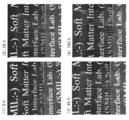
- FIG. 1 is a photograph of the appearance of a reaction liquid obtained by emulsion polymerization of styrene using 8 mM SFNa or 80 mM SDS, and the amount of aggregation of polymer particles.
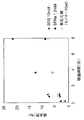
- FIG. 2 is a photograph showing the results of a water absorption test of a film prepared from polystyrene particles obtained using 8 mM SFNa or 80 mM SDS. In each photograph, the left side is a film produced using 8 mM SFNa, and the right side is a film produced using 80 mM SDS.
- FIG. 3 is a graph showing the results of a water absorption test of a film prepared from polystyrene particles obtained using 8 mM SFNa or 80 mM SDS.
- FIG. 4 is a photograph of the appearance of a reaction solution obtained by emulsion polymerization of n-butyl methacrylate using 1.2 mM SFNa or 12 mM SDS, and the amount of aggregation of polymer particles.
- FIG. 5 is a graph showing the results of water absorption tests of films made from poly n-butyl methacrylate particles obtained with 1.2 mM SFNa or 12 mM SDS or without an emulsifier.
- the method for producing a polymer thin film according to the present invention comprises polymerizing a monomer in a reaction solution containing at least surfactin salt (I), a monomer having a vinyl group, a polymerization initiator, and an aqueous solvent. Including a step of obtaining a particulate polymer and a step of obtaining a polymer thin film from the particulate polymer, wherein the concentration of the monomer in the reaction solution is 10% by mass or more and 60% by mass or less. To do.
- the method of the present invention will be described in the order of execution.
- surfactin salt (I) represents an amino acid residue selected from leucine, isoleucine and valine; R represents a C 9-18 alkyl group; M + represents an alkali metal ion or a quaternary ammonium ion.
- surfactin salt (I) may be abbreviated as “surfactin salt (I)”.
- amino acid residue as X may be L-form or D-form, but L-form is preferred.
- C 9-18 alkyl group refers to a linear or branched monovalent saturated hydrocarbon group having 9 to 18 carbon atoms.
- Alkali metal ions are not particularly limited, but represent lithium ions, sodium ions, potassium ions, and the like.
- Examples of the quaternary ammonium ion substituent include alkyl groups such as methyl, ethyl, n-propyl, isopropyl, n-butyl and tert-butyl; aralkyl groups such as benzyl, methylbenzyl and phenylethyl; phenyl and toluyl And organic groups such as aryl groups such as xylyl.
- Examples of quaternary ammonium ions include tetramethylammonium ions, tetraethylammonium ions, pyridinium ions, and the like.
- the surfactin salt (I) may be used alone or in combination of two or more.
- a mixture containing a plurality of surfactin salts (I) having different R groups from each other may be used.
- Surfactin salt (I) can be cultivated from a microorganism, for example, a strain belonging to Bacillus subtilis, and separated from the culture solution according to a known method. Can also be used. Moreover, what is obtained by a chemical synthesis method can be used similarly.
- the concentration of the surfactin salt (I) in the reaction solution may be appropriately determined within a range where monomer droplets and micelles in the polymerization reaction solution do not coalesce or bind.
- concentration even when the concentration is 20 mM or less, a particulate polymer can be efficiently produced from a polymerization reaction solution containing a monomer at a high concentration.
- the concentration is preferably 0.1 mM or more.
- the concentration is preferably 0.5 mM or more, more preferably 1 mM or more, more preferably 10 mM or less, and further preferably 5 mM or less.
- the ratio of the surfactin salt (I) to 100 parts by mass of the monomer is preferably 0.02 parts by mass or more and 10 parts by mass or less.
- 0.1 mass part or more is more preferable, 0.2 mass part or more is further more preferable, 5 mass part or less is more preferable, and 1.5 mass part or less is further more preferable.
- the polymerization initiator may be appropriately selected.
- peroxides of ketones or aldehydes such as cyclohexanone peroxide
- diacyl peroxides such as acetyl peroxide
- hydroperoxides such as t-butyl hydroperoxide and cumene hydroperoxide
- di-t-butyl peroxide Dialkyl peroxides
- alkyl peresters such as t-butyl perisobutyrate
- organic peroxides such as percarbonates such as t-butyl peroxyisopropyl carbonate
- Inorganic peroxides such as 2,2′-azobisisobutyronitrile and the like, but are not limited thereto.
- these when using an organic peroxide and / or an inorganic peroxide, these may be used as a thermal decomposition polymerization initiator, and a reducing agent such as sodium ascorbate or sodium formaldehyde sulfonate, If necessary, a cocatalyst such as ferrous sulfate and a chelating agent such as ethylenediaminetetraacetate may be used in combination as a redox type polymerization initiator.
- a water-soluble polymerization initiator when performing suspension polymerization, an oil-soluble polymerization initiator is used.
- the usage-amount of a polymerization initiator may be adjusted suitably, it can be 0.1 mass part or more and 5 mass parts or less with respect to 100 mass parts of monomers, for example.
- a reducing agent that can be used in combination with a polymerization initiator may be used.
- the reducing agent include sodium bisulfite, sodium sulfooxylate formaldehyde, and sodium pyrosulfite.
- a reducing agent may also be adjusted suitably, it can be 0.1 mass part or more and 5 mass parts or less with respect to 100 mass parts of monomers, for example.
- the aqueous solvent used in the method of the present invention refers to a solvent containing water and containing water as a main component, and may be water alone or a mixed solvent of water and a water-miscible organic solvent.
- the kind of water here is not particularly limited, and any of distilled water, pure water, ultrapure water, tap water, and the like can be used.
- the ratio of water in the mixed solvent is 50% by volume or more. As the said ratio, 60 volume% or more is more preferable, 70 volume% or more is further more preferable, and 80 volume% or more is especially preferable. More preferably, only water is used as the solvent.
- water-miscible organic solvent used by mixing with water examples include alcohol solvents such as methanol and ethanol; ether solvents such as tetrahydrofuran; ketone solvents such as acetone; amide solvents such as dimethylformamide and dimethylacetamide, If it is miscible with water at normal temperature, it will not be restrict
- the monomer to be polymerized by the method of the present invention is a vinyl monomer having a vinyl group capable of radical polymerization.
- vinyl ester monomers such as vinyl acetate and vinyl propionate
- aromatic vinyl compound monomers such as styrene and vinyl toluene
- ⁇ -olefin monomers such as ethylene and propylene
- (meth) acrylic acid (Meth) such as methyl (meth) acrylate, n-butyl (meth) acrylate, 2-hydroxyethyl (meth) acrylate, ethylene glycol di (meth) acrylate, (meth) acrylic acid amide, diacetone acrylamide
- Acrylic acid monomers vinyl halide monomers such as vinyl chloride, vinylidene chloride, and vinylidene fluoride. These may be used alone or in combination of two or more.
- the amount of the monomer to be used is not particularly limited and may be appropriately adjusted.
- the concentration of the monomer in the reaction solution can be 10 parts by mass or more and 60 parts by mass or less.
- the reaction solution may contain general additive components for emulsion polymerization.
- other additive components include a pH adjuster.
- the pH adjuster include alkali metal hydrogencarbonates, carbonates, hydroxides, and amines such as ammonia and dimethylaminoethanol.
- the pH of the reaction solution is not particularly limited as long as it is appropriately adjusted. For example, it can be adjusted to 4 or more and 12 or less, and is preferably adjusted to 7 or more and 10 or less from the viewpoint of the stability of the surfactin salt (I). .
- a conventional method may be referred to.
- the reaction may be started by heating, or one or more of the above components may be divided and added.
- a pre-emulsion is prepared by mixing a part of the aqueous solvent, a part of the water-soluble polymerization initiator, a part of the surfactin salt (I) and the monomer, and then the polymerization with the remaining aqueous solvent is started.
- the agent and the surfactin salt (I) are mixed to form a solution, and the pre-emulsion can be dropped while stirring the solution.
- the reaction atmosphere is preferably replaced with an inert gas such as nitrogen gas or argon gas in order to stabilize radicals necessary for the polymerization reaction.
- an inert gas such as nitrogen gas or argon gas
- reaction temperature and reaction time are not particularly limited and may be adjusted as appropriate.
- the reaction temperature can be about 40 ° C. or more and 120 ° C. or less, and the reaction time can be about 1 hour or more and 20 hours or less.
- the reaction solution obtained in the above polymerization step can be used as it is as an adhesive, paint, coating material and the like because the particulate polymer produced with high stability is difficult to settle.
- a surfactin salt is used as a surfactant, and the amount of the surfactant may be smaller than that of the conventional one. Therefore, the reaction solution (latex) obtained has a small amount of the surfactant and the adverse effect thereof is suppressed. It can be said that.
- additive components are not particularly limited, and examples thereof include water-soluble resins, solvents, plasticizers, antifoaming agents, thickeners, leveling agents, dispersants, colorants, water resistance agents, lubricants, pH adjusters, and preservatives. , Inorganic pigments, organic pigments, surfactants, crosslinking agents and the like.
- the reaction solution can be used as it is.
- the produced particulate polymer can be separated from the liquid phase, and the surfactant can be further reduced. Therefore, in this step, the particulate polymer is solidified.
- this step is optional and may not be performed.
- the particulate polymer it is preferable to solidify the particulate polymer by adding alkali metal ions to the reaction solution after the reaction.
- the coagulant of the particulate polymer prevents ionization of the hydrophilic group of the surfactant, attenuates the surface activation ability of the surfactant, and aggregates the particulate polymer by a hydrophobic interaction.
- coagulants conventionally used are aluminum potassium sulfate, triethylenetetramine, sodium hydroxide, potassium hydroxide, sodium chloride, magnesium chloride, calcium chloride, hydrochloric acid, sulfuric acid, sodium sulfate, and the like. Since sufficient cohesive force cannot be obtained by itself, polyvalent metal ions and sodium hydroxide have been used in combination.
- an alkali metal salt of surfactin since an alkali metal salt of surfactin is used as a surfactant, an alkali metal ion alone cannot reduce the surface activation ability of the surfactin salt, and solidifies the particulate polymer. Was thought to be impossible. However, contrary to expectation, it was found that the particulate polymer solidifies even when only alkali metal ions are added to the reaction solution after the reaction.
- alkali metal ions include sodium ions, potassium ions, and lithium ions. Sodium ions and potassium ions are preferable, and sodium ions are more preferable.
- Alkali metal ions are highly convenient when used in the form of a salt. Examples of such salts include halide salts such as chlorides and bromides, sulfates, carbonates, bicarbonates, and the like. In addition, it is easy to add an aqueous solution of an alkali metal ion to the reaction solution.
- the amount of alkali metal ion used may be appropriately adjusted within a range in which the particulate polymer can be sufficiently solidified.
- the temperature at which the particulate polymer is solidified is not particularly limited and may be appropriately adjusted.
- the temperature is preferably 5 ° C. or higher and 50 ° C. or lower.
- the particulate polymer can be separated from the liquid phase regardless of whether or not the solidification step is performed.
- the particulate polymer can be separated from the liquid phase containing the surfactant, and the amount of the surfactant mixed into the particulate polymer can be further reduced.
- the implementation of this step is optional, and as described above, it can be used as a mixture of the particulate polymer and the liquid phase.
- a conventional method can be used. For example, filtration or centrifugation can be used, and after the solidified polymer is allowed to settle by allowing the mixture that has undergone the above solidification step to settle, the supernatant liquid phase is removed by decantation or the like. May be.
- the volatile component such as a solvent may be simply distilled off by heating the reaction solution.
- solid components such as surfactin salt (I) remain in the obtained particulate polymer.
- surfactin salt (I) remained. Even when a polymer thin film is prepared from a particulate polymer, the water absorption of the polymer thin film is low. The reason is not necessarily clear, but the surfactin salt (I) may not impair the low water absorption of the polymer in addition to the small amount of surfactin salt (I) originally used.
- the liquid phase obtained by filtration, centrifugation, decantation, etc. contains surfactin salt (I).
- the amount of the surfactin salt (I) in the liquid phase is reduced by solidifying the surfactin salt (I). That is, since the amount of surfactant in the liquid phase can be reduced by this step, even if the liquid phase obtained in this step is released into the environment, the influence on the environment can be suppressed, and wastewater treatment is easy. become. Furthermore, the recovered surfactin can be reused.
- the surfactin salt can be solidified by adding a polyvalent metal ion to the surfactin salt solution.
- the polyvalent metal ion means a metal ion having a valence of 2 or more.
- Examples of the polyvalent metal ions include alkaline earth metal ions such as magnesium ions and calcium ions; trivalent metal ions such as aluminum.
- polyvalent metal ions are highly convenient when used in the form of salts.
- examples of such salts include halide salts such as chlorides and bromides, sulfates, carbonates and the like.
- halide salts such as chlorides and bromides, sulfates, carbonates and the like.
- the amount of polyvalent metal ions used may be appropriately adjusted within a range where the surfactin salt can be sufficiently solidified. For example, it may be added in an equimolar amount or more with respect to the used surfactin salt.
- the upper limit is not particularly limited, but may be, for example, about 20 times or less in the above ratio.
- the temperature at which surfactin is coagulated is not particularly limited and may be adjusted as appropriate.
- the temperature is preferably 5 ° C. or higher and 50 ° C. or lower.
- the surfactin salt coagulated by the coagulation process of the surfactin salt can be separated from the liquid phase.
- Surfactin salt which is a surfactant is removed from the obtained liquid phase, and its content is remarkably reduced. Therefore, the liquid phase obtained by this step can be discharged as it is, or its processing is extremely easy.
- the separated surfactin salt can be solubilized again and reused by treating with a large amount of alkali metal ions or quaternary ammonium ions, for example.
- the above-mentioned methods exemplified as the method for separating the polymer and the liquid phase can be used.
- a polymer thin film is obtained from the particulate polymer.
- the polymer thin film is not particularly limited as long as it is a thin film mainly composed of a polymer constituting the particulate polymer.
- the reaction solution obtained in the polymerization step is used as it is as an adhesive, paint, coating material, etc., it is formed by applying the reaction solution and then distilling off the solvent.
- the reaction solution is formed by applying the reaction solution and then distilling off the solvent.
- a particulate polymer simply separated from the reaction solution obtained in the emulsion polymerization step by filtration, centrifugation, etc., a particulate polymer obtained by drying the reaction solution, or a purified particulate polymer
- the film may be heated and melted and then pressed to form a film, or the solution may be prepared and formed into a film by casting. Any polymer thin film can be produced by applying a known technique.
- Example 1 (1) Emulsion polymerization In a 200 mL separable flask equipped with an anchor type stirring blade, 67 g of pure water as a solvent, 0.14 g of sodium bicarbonate as a pH adjuster, and 0.6 g of surfactin sodium as an emulsifier (for the reaction solution) 8 mM) was added and dissolved. Further, 12 g of styrene was added and the temperature of the reaction solution was raised to 70 ° C. in a water bath. After replacing the gas phase in the separable flask with nitrogen, 0.2 g of potassium persulfate dissolved in 5 g of pure water was used as a polymerization initiator.
- Comparative Example 1 A film was prepared in the same manner as in Example 1 except that surfactin sodium, which is an emulsifier, was changed to sodium dodecyl sulfate (SDS) and emulsion polymerization was performed with the composition shown in Table 2. In addition, since the monomer aggregated when the concentration of SDS was 8 mM as in Example 1 above, 80 mM, which is 10 times the amount of SDS, was used.
- surfactin sodium which is an emulsifier
- Test Example 1 Stability of Emulsion The stability of the reaction liquid obtained by the emulsion polymerization of Example 1 and Comparative Example 1 was tested. Specifically, the agglomerates contained in the emulsion obtained after polymerization are separated by a mesh having an opening of 160 ⁇ m, dried by heating at 80 ° C. for 12 hours or more using an oven, the weight thereof is measured, and the emulsion is contained in the emulsion. The ratio to the solid content weight was calculated. The results are shown in FIG. As shown in FIG. 1, when 80 mM SDS was used as the emulsifier, the amount of aggregation of the particulate polymer was 19%.
- Test Example 2 Water absorption test of thin film The polystyrene film obtained in Example 1 and Comparative Example 1 was immersed in water and allowed to stand at 25 ° C for 8 days. After 18 hours, 45 hours, 90 hours and 190 hours from the start of immersion, the film was taken out of water and dried. The appearance was photographed and the mass was measured. The appearance photograph is shown in FIG. 2, and the change in water absorption is shown in FIG. As shown in FIGS. 2 and 3, the polystyrene film prepared using SDS (in FIG. 2, the right side of each photograph) absorbed water when immersed in water, and the transparency decreased with time. On the other hand, the polystyrene film produced using SFNa (the left side of each photograph in FIG.
- Example 2 In a 200 mL separable flask equipped with an anchor type stirring blade, 79 g of pure water as a solvent, 0.1 g of sodium bicarbonate as a pH adjuster, and 0.1 g of surfactin sodium as an emulsifier (1.2 mM with respect to the reaction solution) was added and dissolved. Further, 36 g of n-butyl methacrylate (30% by mass with respect to the reaction solution) was added and the temperature of the reaction solution was set to 70 ° C. in a water bath. After the gas phase in the separable flask was replaced with nitrogen, 5 g of pure water was added. 0.15 g of dissolved potassium persulfate was added as a polymerization initiator, and polymerization was carried out for 12 hours while stirring at 240 rpm.
- the obtained reaction solution was dried at 80 ° C. using an oven to obtain a powder.
- About 0.1 g of the obtained powder was melt-pressed at 90 ° C. and 6 MPa for 10 minutes to prepare a poly n-butyl methacrylate film having a thickness of about 200 ⁇ m.
- Comparative Example 2 A film was produced in the same manner as in Example 2 except that surfactin sodium, which is an emulsifier, was changed to sodium dodecyl sulfate (SDS) and emulsion polymerization was carried out with the composition shown in Table 4.
- surfactin sodium which is an emulsifier
- SDS sodium dodecyl sulfate
- Comparative Example 3 In a 200 mL separable flask equipped with an anchor type stirring blade, 103 g of pure water as a solvent and 0.035 g of sodium bicarbonate as a pH adjuster were added and dissolved. Further, 12 g of n-butyl methacrylate (10% by mass with respect to the reaction solution) was added and the temperature of the reaction solution was raised to 70 ° C. in a water bath. After the gas phase in the separable flask was replaced with nitrogen, 5 g of pure water was added. 0.05 g of dissolved potassium persulfate was added as a polymerization initiator, and polymerization was performed for 12 hours while stirring at 240 rpm. A poly n-butyl methacrylate film was produced from the resulting reaction solution in the same manner as in Example 2 above.
- Test Example 3 Emulsion Stability
- the stability of the reaction liquid obtained by the emulsion polymerization of Example 3 and Comparative Example 2 was tested. The results are shown in FIG. As shown in FIG. 4, when 12 mM SDS was used as the emulsifier, the amount of aggregation of the particulate polymer was 18.3%. When the concentration of SDS in the reaction solution was reduced to 4 mM, the amount of aggregation was 50%. Further, when the polymerization was carried out without using an emulsifier, the monomer concentration was limited to 10% by mass, and the particulate polymer was completely aggregated at a concentration higher than that.
- Test Example 4 Thin Film Water Absorption Test Regarding the poly n-butyl methacrylate films obtained in Example 3 and Comparative Examples 2 and 3, 4 hours, 18 hours, 24 hours, and 90 hours after the start of immersion in water, 90% Water absorption was tested in the same manner as in Test Example 3 except that after time and 190 hours, the sample was taken out of water and dried to measure the mass. The change in water absorption is shown in FIG. As shown in FIG. 5, the water absorption of the poly n-butyl methacrylate film produced using SFNa is clearly suppressed as compared with the poly n-butyl methacrylate film produced using SDS. Was comparable to a poly n-butyl methacrylate film prepared without using an emulsifier. Thus, it was experimentally proved that the thin film produced using SFNa has low water absorption.
Landscapes
- Chemical & Material Sciences (AREA)
- Engineering & Computer Science (AREA)
- Manufacturing & Machinery (AREA)
- Health & Medical Sciences (AREA)
- Chemical Kinetics & Catalysis (AREA)
- Medicinal Chemistry (AREA)
- Polymers & Plastics (AREA)
- Organic Chemistry (AREA)
- Materials Engineering (AREA)
- Polymerisation Methods In General (AREA)
- Addition Polymer Or Copolymer, Post-Treatments, Or Chemical Modifications (AREA)
- Manufacture Of Macromolecular Shaped Articles (AREA)
Abstract
本発明は、低吸水性の高分子薄膜を効率的に製造する方法を提供することを目的とする。本発明に係る高分子薄膜の製造方法は、サーファクチン塩、ビニル基を有する単量体、重合開始剤および水系溶媒を含む反応液中、当該単量体を重合させることにより粒子状重合体を得る工程、および、上記粒子状重合体から高分子薄膜を得る工程を含み、上記反応液における上記単量体の濃度を10質量%以上、60質量%以下とすることを特徴とする。
Description
本発明は、低吸水性の高分子薄膜を効率的に製造するための方法に関するものである。
ビニル基を有する単量体を重合する方法としては様々なものがあるが、重要な方法としては乳化重合方法と懸濁重合方法がある。これら方法では水系溶媒が用いられるので重合反応により生じる熱の除去が容易であり、反応温度を制御し易いという利点がある。また、生成物である重合体が小粒状で得られ、液相からの分離や洗浄、乾燥が容易であるという利点もある。
より詳しくは、乳化重合方法では、水系溶媒中、界面活性剤と重合開始剤を用いて単量体を重合させる。ビニル基を有する単量体は、通常、水に対して不溶性や難溶性を示すが、水系溶媒中、界面活性剤により形成されたミセルに取り込まれて分散する。このミセル中で、重合開始剤から生じたラジカルにより単量体が重合する。かかるミセルの大きさは数nm程度であり、乳化重合方法により得られる重合体は、数十nm~数百nmと非常に微細なものでありながら、その重合度は大きいという優れた特性を有するものである。乳化重合方法で得られる重合体の分散液は、そのまま塗料や接着剤などとして用いられることもある。
懸濁重合は、一般的には界面活性剤を用いず、単量体と重合開始剤を水系溶媒中で機械的に激しく攪拌することにより単量体からなる液滴を形成させ、単量体を重合させる方法である。かかる液滴は、乳化重合方法のミセルより大きく、通常、0.01~1mm程度の大きさとなる。また、この液滴は互いに結合して巨大粒子化し、懸濁重合本来の利点が損なわれるおそれがある。そこで、液滴を安定化するために、ゼラチン、デンプン、ポリビニルアルコール、カルボキシメチルセルロースなどの水溶性ポリマーや、炭酸カルシウム、炭酸マグネシウムなどの不溶性粉末を添加する。
しかし、乳化重合方法や懸濁重合方法で得られる重合体には、上記の界面活性剤や液滴安定化剤が混入し、重合体本来の特性を貶めるという問題がある。例えば、これら界面活性剤等は親水性であるため、たとえ重合体自体は非親水性であっても、水分を吸収してしまうことがある。アクリル樹脂は透明性が高いことが知られているが、かかる透明性は吸水により低下してしまう。
また、これら界面活性剤等は、重合体を分離した後の排液中にも混入するが、環境に悪影響を与えるものもあるため低減する必要がある。その一方で、水に対して不溶性や難溶性を示す単量体を乳化重合等に付す場合には、単量体のミセルや液滴を分散させるため、所定量の界面活性剤等が必要である。界面活性剤等の使用量を低減すると、重合反応液における単量体の割合を低減せざるを得なくなったり、粒子状重合体を含むエマルションの安定性が低下するおそれがある。
ところで、バイオサーファクタント(生物由来の界面活性化剤)としてサーファクチンが知られている。サーファクチンは環状ペプチド構造を有し、親水性を示すその環状部分の構造が従来の界面活性剤よりも非常に大きいため、優れた界面活性作用を示す。よって、例えばそのナトリウム塩は、界面活性剤として化粧品などに利用されている(特許文献1)。
また、特許文献2~9には、乳化重合方法に用いる界面活性剤としてサーファクチン塩が挙げられている。さらに、本出願人は、サーファクチン塩を低濃度で用いてビニル系単量体を重合する方法を開発している(特許文献10)。
上述したように、粒子状の重合体を製造する方法としては、乳化重合方法や懸濁重合方法が知られている。しかし、これら方法では重合反応液における原料単量体の濃度を高くすることができず、効率的な製造ができないことがあった。
具体的には、界面活性剤は製品にとっては不純物であってその品質を貶めるものであり、また、環境にとり有害なものである場合が多いことから、その使用量はできるだけ低減すべきである。しかし、界面活性剤の使用量が十分でないと、乳化重合や懸濁重合においては単量体の液滴やミセルが合体して微細な粒子が製造できなかったり、粒子径が不均一となり、さらに、粒子同士が結着してしまう傾向があった。そこで、界面活性剤を用いない、或いは少量のみ用いる無乳化剤乳化重合の場合、重合反応液における単量体の濃度はせいぜい5~10質量%とするのが一般的である。このような重合反応液から得られるエマルションにおける粒子状重合体の濃度は低く、利用し難いことがあり得る。また、重合後、重合体からは界面活性剤などを除去するために精製することが好ましいが、かかる精製は全体的な製造効率を貶めることがある。
そこで本発明は、低吸水性の高分子薄膜を効率的に製造する方法を提供することを目的とする。
具体的には、界面活性剤は製品にとっては不純物であってその品質を貶めるものであり、また、環境にとり有害なものである場合が多いことから、その使用量はできるだけ低減すべきである。しかし、界面活性剤の使用量が十分でないと、乳化重合や懸濁重合においては単量体の液滴やミセルが合体して微細な粒子が製造できなかったり、粒子径が不均一となり、さらに、粒子同士が結着してしまう傾向があった。そこで、界面活性剤を用いない、或いは少量のみ用いる無乳化剤乳化重合の場合、重合反応液における単量体の濃度はせいぜい5~10質量%とするのが一般的である。このような重合反応液から得られるエマルションにおける粒子状重合体の濃度は低く、利用し難いことがあり得る。また、重合後、重合体からは界面活性剤などを除去するために精製することが好ましいが、かかる精製は全体的な製造効率を貶めることがある。
そこで本発明は、低吸水性の高分子薄膜を効率的に製造する方法を提供することを目的とする。
本発明者らは、上記課題を解決するために鋭意研究を重ねた。その結果、界面活性剤としてサーファクチン塩を用いる場合には、重合反応液における単量体濃度を従来に比して大幅に高めても、単量体の液滴やミセルの合体や結着が十分に抑制され、均一で独立した粒子状重合体を極めて良好な効率で製造でき、且つ、かかる粒子状重合体から得られる高分子薄膜は吸水性が極めて低いことを見出して、本発明を完成した。
以下、本発明を示す。
以下、本発明を示す。
[1] 高分子薄膜を製造するための方法であって、
少なくとも、下記式(I)で表されるサーファクチン塩:
少なくとも、下記式(I)で表されるサーファクチン塩:
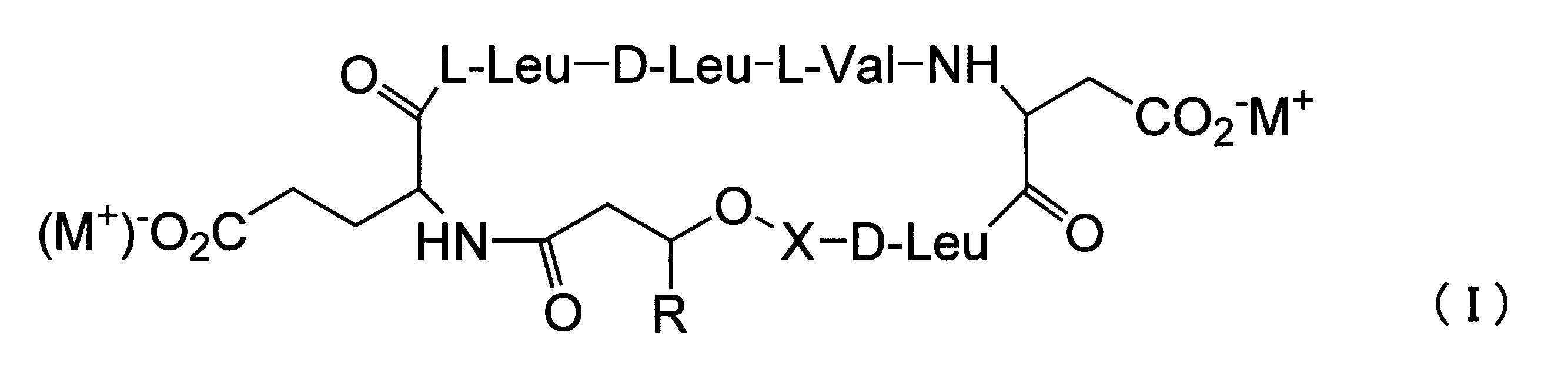
[式中、
Xは、ロイシン、イソロイシンおよびバリンから選択されるアミノ酸残基を示し;
RはC9-18アルキル基を示し;
M+はアルカリ金属イオンまたは第四級アンモニウムイオンを示す]、
ビニル基を有する単量体、重合開始剤および水系溶媒を含む反応液中、当該単量体を重合させることにより粒子状重合体を得る工程、および、
上記粒子状重合体から高分子薄膜を得る工程を含み、
上記反応液における上記単量体の濃度を10質量%以上、60質量%以下とすることを特徴とする方法。
Xは、ロイシン、イソロイシンおよびバリンから選択されるアミノ酸残基を示し;
RはC9-18アルキル基を示し;
M+はアルカリ金属イオンまたは第四級アンモニウムイオンを示す]、
ビニル基を有する単量体、重合開始剤および水系溶媒を含む反応液中、当該単量体を重合させることにより粒子状重合体を得る工程、および、
上記粒子状重合体から高分子薄膜を得る工程を含み、
上記反応液における上記単量体の濃度を10質量%以上、60質量%以下とすることを特徴とする方法。
[2] 上記反応液における上記サーファクチン塩(I)の濃度を10mM以下にする上記[1]に記載の方法。
[3] 上記単量体100質量部に対する上記サーファクチン塩(I)の割合を1.5質量部以下にする上記[1]に記載の方法。
[4] さらに、得られた粒子状重合体を上記反応液の液相から分離する工程;
液相に多価金属イオンを加えてサーファクチン塩を凝固させる工程;および
凝固させたサーファクチン塩を分離する工程
を含む上記[1]~[3]のいずれかに記載の製造方法。
液相に多価金属イオンを加えてサーファクチン塩を凝固させる工程;および
凝固させたサーファクチン塩を分離する工程
を含む上記[1]~[3]のいずれかに記載の製造方法。
[5] 重合工程後、粒子状重合体の分離工程の前に、アルカリ金属イオンを重合反応液に添加することにより粒子状重合体を凝固させる工程を含む上記[4]に記載の製造方法。
本発明方法によれば、比較的少ない量の界面活性剤でビニル系単量体を乳化重合または懸濁重合することが可能である。よって、界面活性剤の残留量が顕著に低減された高分子薄膜を製造することができる。かかる高分子薄膜は、吸水性が極めて低い高品質なものである。また、排液中への界面活性剤の残留量も顕著に抑制できるので、排液処理の必要が無くなったり、その手間を低減することができる。また、本発明方法によれば、重合反応液における単量体濃度を従来方法より大幅に高めても、単量体の液滴やミセルの合体や結着を抑制しつつ、粒子状単量体の製造が可能である。さらに、驚くべきことに、本発明に係る乳化重合により得られた反応液自体、または当該反応液を乾燥して得られた粒子状重合体から、それ以上精製することなく高分子薄膜を製造しても、その吸水性は低い。従って本発明は、高品質な高分子薄膜を効率的に製造可能な方法として、産業上非常に優れている。
本発明に係る高分子薄膜の製造方法は、少なくとも、サーファクチン塩(I)、ビニル基を有する単量体、重合開始剤および水系溶媒を含む反応液中、当該単量体を重合させることにより粒子状重合体を得る工程と、上記粒子状重合体から高分子薄膜を得る工程を含み、上記反応液における上記単量体の濃度を10質量%以上、60質量%以下とすることを特徴とする。以下、本発明方法を実施の順番に従って説明する。
(1) 重合工程
本発明では、界面活性剤として、下記式(I)で表されるサーファクチン塩:
本発明では、界面活性剤として、下記式(I)で表されるサーファクチン塩:
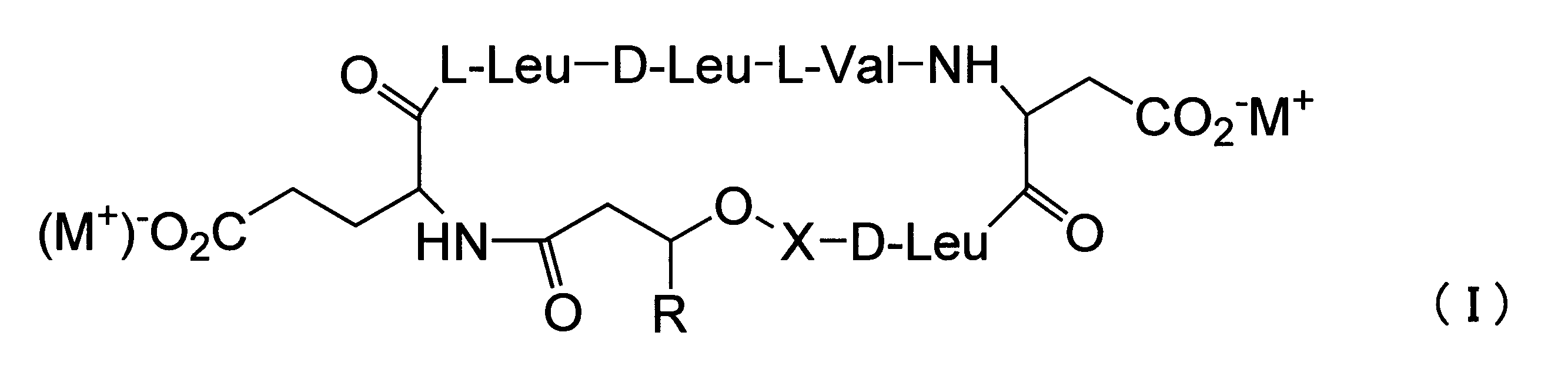
[式中、
Xは、ロイシン、イソロイシンおよびバリンから選択されるアミノ酸残基を示し;
RはC9-18アルキル基を示し;
M+はアルカリ金属イオンまたは第四級アンモニウムイオンを示す]
を用いる。かかるサーファクチン塩は、従来の重合条件で用いられるより少ない量であっても、乳化重合においてはミセルを形成することができ、懸濁重合においては液滴を安定化することができる。なお、本開示においては、式(I)で表されるサーファクチン塩を「サーファクチン塩(I)」と略記する場合がある。
Xは、ロイシン、イソロイシンおよびバリンから選択されるアミノ酸残基を示し;
RはC9-18アルキル基を示し;
M+はアルカリ金属イオンまたは第四級アンモニウムイオンを示す]
を用いる。かかるサーファクチン塩は、従来の重合条件で用いられるより少ない量であっても、乳化重合においてはミセルを形成することができ、懸濁重合においては液滴を安定化することができる。なお、本開示においては、式(I)で表されるサーファクチン塩を「サーファクチン塩(I)」と略記する場合がある。
Xとしてのアミノ酸残基は、L体でもD体でもよいが、L体が好ましい。
「C9-18アルキル基」は、炭素数9以上、18以下の直鎖状または分枝鎖状の一価飽和炭化水素基をいう。例えば、n-ノニル、6-メチルオクチル、7-メチルオクチル、n-デシル、8-メチルノニル、n-ウンデシル、9-メチルデシル、n-ドデシル、10-メチルウンデシル、n-トリデシル、11-メチルドデシル、n-テトラデシル、n-ペンタデシル、n-ヘキサデシル、n-ヘプタデシル、n-オクタデシルなどが挙げられる。
アルカリ金属イオンは特に限定されないが、リチウムイオン、ナトリウムイオン、カリウムイオンなどを表す。
第四級アンモニウムイオンの置換基としては、例えば、メチル、エチル、n-プロピル、イソプロピル、n-ブチル、tert-ブチル等のアルキル基;ベンジル、メチルベンジル、フェニルエチル等のアラルキル基;フェニル、トルイル、キシリル等のアリール基等の有機基が挙げられる。第四級アンモニウムイオンとしては、例えば、テトラメチルアンモニウムイオン、テトラエチルアンモニウムイオン、ピリジニウムイオン等が挙げられる。
上記サーファクチン塩(I)は1種、または2種以上使用してもよい。例えば、R基が互いに異なる複数のサーファクチン塩(I)を含む混合物を用いてもよい。
サーファクチン塩(I)は、公知方法に従って、微生物、例えばバチルス・ズブチリスに属する菌株を培養し、その培養液から分離することができ、精製品であっても、未精製、例えば培養液のまま使用することも出来る。また、化学合成法によって得られるものでも同様に使用できる。
本発明では、上記反応液におけるサーファクチン塩(I)の濃度は、重合反応液における単量体の液滴やミセルが合体や結着しない範囲で適宜決定すればよい。例えば、当該濃度が20mM以下であっても、単量体を高濃度で含む重合反応液からでも、粒子状重合体を効率良く製造することが可能である。一方、当該濃度が高いほど単量体の液滴やミセルは均一でかつ独立に存在し易いので、当該濃度としては0.1mM以上が好ましい。当該濃度としては、0.5mM以上がより好ましく、1mM以上がさらに好ましく、また、10mM以下がより好ましく、5mM以下がさらに好ましい。
また、重合反応液におけるサーファクチン塩(I)濃度と同様の理由から、単量体100質量部に対するサーファクチン塩(I)の割合は0.02質量部以上10質量部以下が好ましい。当該割合としては、0.1質量部以上がより好ましく、0.2質量部以上がさらに好ましく、また、5質量部以下がより好ましく、1.5質量部以下がさらに好ましい。
重合開始剤は、適宜選択すればよい。例えば、シクロヘキサノンパーオキサイドなどケトンまたはアルデヒドの過酸化物;アセチルパーオキサイドなどのジアシルパーオキサイド類;t-ブチルハイドロパーオキサイド、クメンハイドロパーオキサイドなどのハイドロパーオキサイド類;ジ-t-ブチルパーオキサイドなどのジアルキルパーオキサイド類;t-ブチルパーイソブチレートなどのアルキルパーエステル類;t-ブチルパーオキシイソプロピルカルボネートなどのパーカルボネート類などの有機過酸化物;過酸化水素、過硫酸カリウムなどの無機過酸化物;2,2’-アゾビスイソブチロニトリルなどのアゾ化合物などが挙げられるが、これらに限定されるものではない。これらのうち有機過酸化物および/または無機過酸化物を用いる場合には、これらを熱分解型重合開始剤として用いてよく、またアスコルビン酸ナトリウム、ホルムアルデヒドスルフォキシル酸ナトリウムなどの還元剤や、必要に応じ硫酸第1鉄などの助触媒、エチレンジアミンテトラアセテートなどのキレート剤を併用してレドックス型重合開始剤として用いてもよい。なお、乳化重合を行う場合には水溶性の重合開始剤を用い、懸濁重合を行う場合には油溶性の重合開始剤を用いる。
重合開始剤の使用量は適宜調整すればよいが、例えば、単量体100質量部に対して0.1質量部以上、5質量部以下とすることができる。
また、重合開始剤と併用可能な還元剤を用いてもよい。かかる還元剤としては、例えば、亜硫酸水素ナトリウム、ナトリウムスルホオキシレートホルムアルデヒド、ピロ亜硫酸ソーダなどを挙げることができる。
還元剤の使用量も適宜調整すればよいが、例えば、単量体100質量部に対して0.1質量部以上、5質量部以下とすることができる。
本発明方法で用いる水系溶媒とは、水を含み且つ水を主成分とする溶媒をいい、水単独であってもよいし、水と水混和性有機溶媒との混合溶媒であってもよい。ここでいう水の種類は特に制限されず、蒸留水、純水、超純水、水道水などいずれも用いることができる。水と水混和性有機溶媒との混合溶媒を用いる場合には、当該混合溶媒における水の割合を50容量%以上とする。当該割合としては、60容量%以上がより好ましく、70容量%以上がさらに好ましく、80容量%以上が特に好ましい。より好適には、水のみを溶媒として用いる。
水と混合して用いる水混和性有機溶媒としては、メタノールやエタノールなどのアルコール溶媒;テトラヒドロフランなどのエーテル溶媒;アセトンなどのケトン溶媒;ジメチルホルムアミドやジメチルアセトアミドなどのアミド溶媒を挙げることができるが、常温で水に混和できるものであれば特に制限されない。
本発明方法で重合させるべき単量体は、ラジカル重合可能なビニル基を有するビニル系単量体である。例えば、酢酸ビニル、プロピオン酸ビニルなどのビニルエステル系単量体;スチレンやビニルトルエンなどの芳香族ビニル化合物系単量体;エチレンやプロピレンなどのα-オレフィン系単量体;(メタ)アクリル酸、(メタ)アクリル酸メチル、(メタ)アクリル酸n-ブチル、(メタ)アクリル酸2-ヒドロキシエチル、エチレングリコールジ(メタ)アクリレート、(メタ)アクリル酸アミド、ジアセトンアクリルアミドなどの(メタ)アクリル酸系単量体;塩化ビニル、塩化ビニリデン、フッ化ビニリデンなどのハロゲン化ビニル系単量体などを挙げることができる。これらは、一種のみを単独で用いてもよいし、二種以上を併用して共重合させてもよい。
使用する単量体の量は特に制限されず、適宜調整すればよいが、例えば、反応液における単量体の濃度を10質量部以上、60質量部以下とすることができる。
反応液には、サーファクチン塩(I)、ビニル基含有単量体、重合開始剤および水系溶媒以外に、乳化重合のため一般的な添加成分を配合してもよい。その他の添加成分としては、例えば、pH調整剤を挙げることができる。pH調整剤としては、例えば、アルカリ金属の炭酸水素塩、炭酸塩、水酸化物の他、アンモニアやジメチルアミノエタノールなどのアミン類が挙げられる。反応液のpHは適宜調整すればよく特に制限されないが、例えば、4以上12以下に調整することができ、サーファクチン塩(I)の安定性の観点から7以上10以下に調整することが好ましい。
重合反応の具体的な条件は、従来方法を参照すればよい。例えば、上記成分をすべて混合した後に加熱して反応を開始してもよいし、上記成分のうち1種以上を分割して添加してもよい。その他、水系溶媒の一部、水溶性の重合開始剤の一部、サーファクチン塩(I)の一部および単量体を混合してプレエマルションを調製しておき、残りの水系溶媒と重合開始剤とサーファクチン塩(I)とを混合して溶液とし、当該溶液を攪拌しつつ、プレエマルションを滴下することができる。
反応雰囲気は、重合反応に必要なラジカルを安定化するために、窒素ガスやアルゴンガスなどの不活性ガスで置換することが好ましい。また、同様の理由から、不活性ガスを吹き込むなどの処理をすることにより、水系溶媒から溶存酸素を除去することが好ましい。
反応温度や反応時間も特に制限されず、適宜調整すればよい。例えば反応温度は、40℃以上、120℃以下程度とすることができ、反応時間は1時間以上、20時間以下程度とすることができる。
上記重合工程において得られた反応液は、安定性が高く生成した粒子状重合体が沈降し難いので、接着剤、塗料、コーティング材などとしてそのまま利用することもできる。本発明においては、界面活性剤としてサーファクチン塩を用い、その量は従来に比べて少なくてもよいことから、得られる反応液(ラテックス)は界面活性剤の混入量が少なく、その悪影響が抑制されているといえる。
上記反応液をそのまま利用する場合には、各製品に一般的な添加成分を配合してもよい。かかる添加成分は特に制限されないが、例えば、水溶性樹脂、溶媒、可塑剤、消泡剤、増粘剤、レベリング剤、分散剤、着色剤、耐水化剤、潤滑剤、pH調整剤、防腐剤、無機顔料、有機顔料、界面活性剤、架橋剤などを挙げることができる。
(2) 粒子状重合体の凝固工程
上記の通り、上記反応液はそのまま利用することも可能である。しかし、生成した粒子状重合体を液相から分離し、さらに界面活性剤の低減を図ることもできる。そのため、本工程では、粒子状重合体を凝固させる。但し、本工程は任意であり、実施しなくてもよい。
上記の通り、上記反応液はそのまま利用することも可能である。しかし、生成した粒子状重合体を液相から分離し、さらに界面活性剤の低減を図ることもできる。そのため、本工程では、粒子状重合体を凝固させる。但し、本工程は任意であり、実施しなくてもよい。
本発明では、反応後の反応液にアルカリ金属イオンを添加することにより粒子状重合体を凝固させることが好ましい。
粒子状重合体の凝固剤は、界面活性剤の親水性基のイオン化を妨げ、界面活性剤の界面活性化能を減弱させ、疎水性相互作用により粒子状重合体を凝集させるものである。かかる凝固剤としては、従来、硫酸アルミニウムカリウム、トリエチレンテトラミン、水酸化ナトリウム、水酸化カリウム、塩化ナトリウム、塩化マグネシウム、塩化カルシウム、塩酸、硫酸、硫酸ナトリウムなどが用いられていたが、アルカリ金属イオン単独では十分な凝集力が得られないため、多価金属イオンと水酸化ナトリウムなどが併用されてきた。特に本発明では、サーファクチンのアルカリ金属塩などを界面活性剤として用いているので、アルカリ金属イオン単独ではサーファクチン塩の界面活性化能を減ずることはできず、粒子状重合体を凝固させることはできないと考えられていた。しかし予想に反して、反応後の反応液にアルカリ金属イオンのみを添加しても、粒子状重合体が凝固することが見出された。
アルカリ金属イオンとしては、ナトリウムイオン、カリウムイオン、リチウムイオンを挙げることができ、ナトリウムイオンおよびカリウムイオンが好ましく、ナトリウムイオンがより好ましい。また、アルカリ金属イオンは、塩の形で用いると利便性が高い。かかる塩としては、塩化物や臭化物などのハロゲン化物塩、硫酸塩、炭酸塩、炭酸水素塩などを挙げることができる。また、アルカリ金属イオンは、その塩の水溶液を反応液に添加するのが容易である。
アルカリ金属イオンの使用量は、粒子状重合体が十分に凝固できる範囲で適宜調整すればよい。また、粒子状重合体を凝固させる際の温度は特に制限されず、適宜調整すればよいが、例えば、5℃以上、50℃以下とすることが好ましい。
(3) 粒子状重合体の分離工程
上記凝固工程を実施するか否かを問わず、粒子状重合体を液相から分離することができる。本工程により、界面活性剤を含む液相から粒子状重合体を分離できることになり、粒子状重合体への界面活性剤の混入量をより一層低減することが可能になる。但し、本工程の実施は任意であり、粒子状重合体と液相との混合物のまま利用することができることは、上述したとおりである。
上記凝固工程を実施するか否かを問わず、粒子状重合体を液相から分離することができる。本工程により、界面活性剤を含む液相から粒子状重合体を分離できることになり、粒子状重合体への界面活性剤の混入量をより一層低減することが可能になる。但し、本工程の実施は任意であり、粒子状重合体と液相との混合物のまま利用することができることは、上述したとおりである。
粒子状重合体と液相を分離する方法としては、常法を用いることができる。例えば、濾過や遠心分離を用いることができるし、また、上記凝固工程を経た混合物を静置して凝固した粒子状重合体を沈降させた後、上澄みである液相をデカンテーションなどにより除去してもよい。
或いは、上記反応液を加熱するなどして、単に溶媒などの揮発性成分を留去するのみでもよい。単に溶媒などを留去するのみでは、得られる粒子状重合体にはサーファクチン塩(I)などの固形成分が残留することになるが、驚くべきことに、サーファクチン塩(I)が残留した粒子状重合体から高分子薄膜を作製しても、かかる高分子薄膜の吸水性は低い。その理由は必ずしも明らかではないが、サーファクチン塩(I)の元々の使用量が少ないことの他、サーファクチン塩(I)が高分子の低吸水性を損なわない可能性もある。
(4) サーファクチン塩の凝固工程
上記の粒子状重合体の分離工程において、濾過、遠心分離、デカンテーションなどにより得られた液相は、サーファクチン塩(I)を含んでいる。本工程では、このサーファクチン塩(I)を凝固させることにより、液相中のサーファクチン塩(I)の量の低減を図る。即ち、本工程により液相中の界面活性剤の量を低減できることから、本工程で得られた液相を環境中へ放出したとしても環境への影響を抑制できるし、また、排水処理が容易になる。さらに、回収したサーファクチンの再利用も可能である。
上記の粒子状重合体の分離工程において、濾過、遠心分離、デカンテーションなどにより得られた液相は、サーファクチン塩(I)を含んでいる。本工程では、このサーファクチン塩(I)を凝固させることにより、液相中のサーファクチン塩(I)の量の低減を図る。即ち、本工程により液相中の界面活性剤の量を低減できることから、本工程で得られた液相を環境中へ放出したとしても環境への影響を抑制できるし、また、排水処理が容易になる。さらに、回収したサーファクチンの再利用も可能である。
一般的な界面活性剤は、その溶液から固体として凝固させることは極めて困難である。しかし本発明者らは、サーファクチン塩の溶液に多価金属イオンを添加することにより、サーファクチン塩を凝固できることを見出した。
多価金属イオンとは、二価以上の金属イオンをいうものとする。多価金属イオンとしては、例えば、マグネシウムイオンやカルシウムイオンなどのアルカリ土類金属イオン;アルミニウムなどの三価金属イオンを挙げることができる。
また、多価金属イオンは、塩の形で用いると利便性が高い。かかる塩としては、塩化物や臭化物などのハロゲン化物塩、硫酸塩、炭酸塩などを挙げることができる。また、多価金属イオンは、その塩の水溶液を反応液に添加するのが容易である。
多価金属イオンの使用量は、サーファクチン塩が十分に凝固できる範囲で適宜調整すればよいが、例えば、使用したサーファクチン塩に対して等モル以上添加すればよい。一方、上限は特に制限されないが、例えば上記割合で20倍モル以下程度とすればよい。
サーファクチンを凝固させる際の温度は特に制限されず、適宜調整すればよいが、例えば、5℃以上、50℃以下とすることが好ましい。
(5) サーファクチン塩の分離工程
上記のサーファクチン塩の凝固工程により凝固したサーファクチン塩は、液相から分離することができる。得られる液相からは、界面活性剤であるサーファクチン塩が除去されており、その含有量は顕著に低減されている。よって、本工程により得られる液相は、そのまま排出することも可能であり得、或いは、その処理が極めて容易である。さらに、分離されたサーファクチン塩は、例えば、多量のアルカリ金属イオンや第四級アンモニウムイオンで処理することにより再び可溶化し、再利用することが可能になる。
上記のサーファクチン塩の凝固工程により凝固したサーファクチン塩は、液相から分離することができる。得られる液相からは、界面活性剤であるサーファクチン塩が除去されており、その含有量は顕著に低減されている。よって、本工程により得られる液相は、そのまま排出することも可能であり得、或いは、その処理が極めて容易である。さらに、分離されたサーファクチン塩は、例えば、多量のアルカリ金属イオンや第四級アンモニウムイオンで処理することにより再び可溶化し、再利用することが可能になる。
凝固したサーファクチン塩と液相を分離する方法としては、重合体と液相とを分離する方法として挙げた上記方法を利用することができる。
(6) 高分子薄膜の作製工程
本工程では、粒子状重合体から高分子薄膜を得る。高分子薄膜は、粒子状重合体を構成する重合体を主成分とする薄膜であれば特に制限されない。例えば、上述したように上記重合工程において得られた反応液をそのまま接着剤、塗料、コーティング材などとして用いる場合には、当該反応液を塗布した後、溶媒を留去することで形成されるものも高分子薄膜に含まれるものとする。また、乳化重合工程で得られた反応液から濾過や遠心分離などにより単に分離した粒子状重合体、同反応液を乾燥することにより得られた粒子状重合体、または精製された粒子状重合体などを加熱溶融した上で加圧してフィルム化してもよいし、或いはその溶液を調製してキャスティングによりフィルム化してもよい。いずれの高分子薄膜も、公知技術を適用して作製することが可能である。
本工程では、粒子状重合体から高分子薄膜を得る。高分子薄膜は、粒子状重合体を構成する重合体を主成分とする薄膜であれば特に制限されない。例えば、上述したように上記重合工程において得られた反応液をそのまま接着剤、塗料、コーティング材などとして用いる場合には、当該反応液を塗布した後、溶媒を留去することで形成されるものも高分子薄膜に含まれるものとする。また、乳化重合工程で得られた反応液から濾過や遠心分離などにより単に分離した粒子状重合体、同反応液を乾燥することにより得られた粒子状重合体、または精製された粒子状重合体などを加熱溶融した上で加圧してフィルム化してもよいし、或いはその溶液を調製してキャスティングによりフィルム化してもよい。いずれの高分子薄膜も、公知技術を適用して作製することが可能である。
本願は、2016年5月24日に出願された日本国特許出願第2016-103524号に基づく優先権の利益を主張するものである。2016年5月24日に出願された日本国特許出願第2016-103524号の明細書の全内容が、本願に参考のため援用される。
以下、実施例を挙げて本発明をより具体的に説明するが、本発明はもとより下記実施例によって制限を受けるものではなく、前・後記の趣旨に適合し得る範囲で適当に変更を加えて実施することも勿論可能であり、それらはいずれも本発明の技術的範囲に包含される。
実施例1
(1) 乳化重合
アンカー型の撹拌翼を設置した200mLセパラブルフラスコに、溶媒として純水67g、pH調整剤として炭酸水素ナトリウム0.14g、および乳化剤としてサーファクチンナトリウム0.6g(反応液に対して8mM)を加えて溶解させた。さらにスチレン12gを加えて水浴で反応液温度を70℃にした後、セパラブルフラスコ中の気相を窒素で置換してから、純水5gに溶解した過硫酸カリウム0.2gを重合開始剤として添加し、表1に示す組成の反応液を240rpmで攪拌しつつ12時間重合をおこなった。その間、スチレン12gを1.5時間おきに3回追加し、反応液に対するスチレン濃度を40質量%とした。
(1) 乳化重合
アンカー型の撹拌翼を設置した200mLセパラブルフラスコに、溶媒として純水67g、pH調整剤として炭酸水素ナトリウム0.14g、および乳化剤としてサーファクチンナトリウム0.6g(反応液に対して8mM)を加えて溶解させた。さらにスチレン12gを加えて水浴で反応液温度を70℃にした後、セパラブルフラスコ中の気相を窒素で置換してから、純水5gに溶解した過硫酸カリウム0.2gを重合開始剤として添加し、表1に示す組成の反応液を240rpmで攪拌しつつ12時間重合をおこなった。その間、スチレン12gを1.5時間おきに3回追加し、反応液に対するスチレン濃度を40質量%とした。
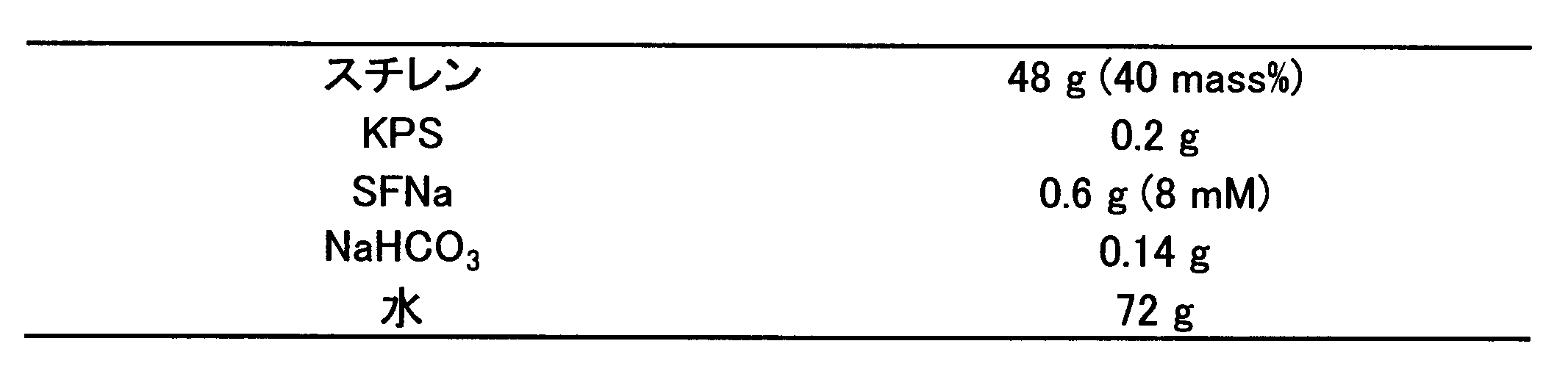
(2) 薄膜化 上記(1)で得られた反応液を、オーブンを用いて80℃で乾燥して粉末を得た。得られた粉末のうち約0.1gを170℃、6MPaの条件で1分間メルトプレスすることにより、厚さ約200μmのポリスチレンフィルムを作製した。
比較例1
上記実施例1において、乳化剤であるサーファクチンナトリウムをドデシル硫酸ナトリウム(SDS)に変更し、表2に示す組成で乳化重合を行った以外は同様にして、フィルムを作製した。なお、SDSの濃度を上記実施例1と同様に8mMとするとモノマーが凝集してしまったので、SDSはその10倍量である80mM用いた。
上記実施例1において、乳化剤であるサーファクチンナトリウムをドデシル硫酸ナトリウム(SDS)に変更し、表2に示す組成で乳化重合を行った以外は同様にして、フィルムを作製した。なお、SDSの濃度を上記実施例1と同様に8mMとするとモノマーが凝集してしまったので、SDSはその10倍量である80mM用いた。

試験例1: エマルションの安定性
上記実施例1と比較例1の乳化重合で得られた反応液の安定性を試験した。詳しくは、重合後に得られたエマルションに含まれる凝集物を目開き160μmのメッシュによって分離し、オーブンを用いて80℃で12時間以上加熱して乾燥させ、その重量を測定し、エマルションに含まれる固形分重量に対する割合を算出した。結果を図1に示す。
図1の通り、乳化剤として80mMのSDSを用いた場合には、粒子状重合体の凝集量は19%であった。なお、反応液中におけるSDSの濃度を40mMに低減とすると、凝集量は100%となった。
それに対して乳化剤として8mMのSFNaを用いた場合には、凝集量は9%に抑制されており、エマルションは安定であった。このように乳化剤としてサーファクチンを用いれば、反応液中のモノマー濃度を高めても、より少ない乳化剤濃度で安定なエマルションが得られることが明らかとなった。
上記実施例1と比較例1の乳化重合で得られた反応液の安定性を試験した。詳しくは、重合後に得られたエマルションに含まれる凝集物を目開き160μmのメッシュによって分離し、オーブンを用いて80℃で12時間以上加熱して乾燥させ、その重量を測定し、エマルションに含まれる固形分重量に対する割合を算出した。結果を図1に示す。
図1の通り、乳化剤として80mMのSDSを用いた場合には、粒子状重合体の凝集量は19%であった。なお、反応液中におけるSDSの濃度を40mMに低減とすると、凝集量は100%となった。
それに対して乳化剤として8mMのSFNaを用いた場合には、凝集量は9%に抑制されており、エマルションは安定であった。このように乳化剤としてサーファクチンを用いれば、反応液中のモノマー濃度を高めても、より少ない乳化剤濃度で安定なエマルションが得られることが明らかとなった。
試験例2: 薄膜の吸水性試験
上記実施例1と比較例1で得られたポリスチレンフィルムを水に浸漬し、25℃で8日間静置した。浸漬開始から18時間後、45時間後、90時間後および190時間後に水から取り出して乾燥させ、その外観を撮影すると共に、質量を測定した。外観写真を図2に、吸水量の変化を図3に示す。
図2,3に示す結果の通り、SDSを用いて作製したポリスチレンフィルム(図2中、各写真の右側)は、水への浸漬により吸水し、経時的に透明度が低下した。一方、SFNaを用いて作製したポリスチレンフィルム(図2中、各写真の左側)は、SDSを用いて作製したポリスチレンフィルムに比べて吸水率が約1/2に抑制されており、透明度も低下し難いことが明らかとなった。このようにSFNaを用いて作製した薄膜は低吸水性であることが実験的に証明された。
上記実施例1と比較例1で得られたポリスチレンフィルムを水に浸漬し、25℃で8日間静置した。浸漬開始から18時間後、45時間後、90時間後および190時間後に水から取り出して乾燥させ、その外観を撮影すると共に、質量を測定した。外観写真を図2に、吸水量の変化を図3に示す。
図2,3に示す結果の通り、SDSを用いて作製したポリスチレンフィルム(図2中、各写真の右側)は、水への浸漬により吸水し、経時的に透明度が低下した。一方、SFNaを用いて作製したポリスチレンフィルム(図2中、各写真の左側)は、SDSを用いて作製したポリスチレンフィルムに比べて吸水率が約1/2に抑制されており、透明度も低下し難いことが明らかとなった。このようにSFNaを用いて作製した薄膜は低吸水性であることが実験的に証明された。
実施例2
アンカー型の撹拌翼を設置した200mLセパラブルフラスコに、溶媒として純水79g、pH調整剤として炭酸水素ナトリウム0.1g、および乳化剤としてサーファクチンナトリウム0.1g(反応液に対して1.2mM)を加えて溶解させた。さらにn-ブチルメタクリレート36g(反応液に対して30質量%)を加えて水浴で反応液温度を70℃にした後、セパラブルフラスコ中の気相を窒素で置換してから、純水5gに溶解した過硫酸カリウム0.15gを重合開始剤として添加し、240rpmで攪拌しつつ12時間重合をおこなった。
アンカー型の撹拌翼を設置した200mLセパラブルフラスコに、溶媒として純水79g、pH調整剤として炭酸水素ナトリウム0.1g、および乳化剤としてサーファクチンナトリウム0.1g(反応液に対して1.2mM)を加えて溶解させた。さらにn-ブチルメタクリレート36g(反応液に対して30質量%)を加えて水浴で反応液温度を70℃にした後、セパラブルフラスコ中の気相を窒素で置換してから、純水5gに溶解した過硫酸カリウム0.15gを重合開始剤として添加し、240rpmで攪拌しつつ12時間重合をおこなった。

得られた反応液を、オーブンを用いて80℃で乾燥して粉末を得た。得られた粉末のうち約0.1gを90℃、6MPaの条件で10分間メルトプレスすることにより、厚さ約200μmのポリn-ブチルメタクリレートフィルムを作製した。
比較例2
上記実施例2において、乳化剤であるサーファクチンナトリウムをドデシル硫酸ナトリウム(SDS)に変更し、表4に示す組成で乳化重合を行った以外は同様にして、フィルムを作製した。
上記実施例2において、乳化剤であるサーファクチンナトリウムをドデシル硫酸ナトリウム(SDS)に変更し、表4に示す組成で乳化重合を行った以外は同様にして、フィルムを作製した。

比較例3
アンカー型の撹拌翼を設置した200mLセパラブルフラスコに、溶媒として純水103g、およびpH調整剤として炭酸水素ナトリウム0.035gを加えて溶解させた。さらにn-ブチルメタクリレート12g(反応液に対して10質量%)を加えて水浴で反応液温度を70℃にした後、セパラブルフラスコ中の気相を窒素で置換してから、純水5gに溶解した過硫酸カリウム0.05gを重合開始剤として添加し、240rpmで攪拌しつつ12時間重合をおこなった。得られた反応液から、上記実施例2と同様にしてポリn-ブチルメタクリレートフィルムを作製した。
アンカー型の撹拌翼を設置した200mLセパラブルフラスコに、溶媒として純水103g、およびpH調整剤として炭酸水素ナトリウム0.035gを加えて溶解させた。さらにn-ブチルメタクリレート12g(反応液に対して10質量%)を加えて水浴で反応液温度を70℃にした後、セパラブルフラスコ中の気相を窒素で置換してから、純水5gに溶解した過硫酸カリウム0.05gを重合開始剤として添加し、240rpmで攪拌しつつ12時間重合をおこなった。得られた反応液から、上記実施例2と同様にしてポリn-ブチルメタクリレートフィルムを作製した。

試験例3: エマルションの安定性
上記試験例1と同様にして、実施例3と比較例2の乳化重合で得られた反応液の安定性を試験した。結果を図4に示す。
図4の通り、乳化剤として12mMのSDSを用いた場合には、粒子状重合体の凝集量は18.3%であった。なお、反応液中におけるSDSの濃度を4mMに低減とすると、凝集量は50%となった。また、乳化剤を用いないで重合を行った場合には、モノマー濃度としては10質量%が限界であり、それ以上の濃度では粒子状重合体は完全に凝集した。
それに対して乳化剤として1.2mMのSFNaを用いた場合には、乳化剤量は1/10であっても凝集量は7.5%に抑制されており、エマルションは安定であった。このように乳化剤としてサーファクチンを用いれば、反応液中のモノマー濃度を高めても、より少ない乳化剤濃度で安定なエマルションが得られることが明らかとなった。
上記試験例1と同様にして、実施例3と比較例2の乳化重合で得られた反応液の安定性を試験した。結果を図4に示す。
図4の通り、乳化剤として12mMのSDSを用いた場合には、粒子状重合体の凝集量は18.3%であった。なお、反応液中におけるSDSの濃度を4mMに低減とすると、凝集量は50%となった。また、乳化剤を用いないで重合を行った場合には、モノマー濃度としては10質量%が限界であり、それ以上の濃度では粒子状重合体は完全に凝集した。
それに対して乳化剤として1.2mMのSFNaを用いた場合には、乳化剤量は1/10であっても凝集量は7.5%に抑制されており、エマルションは安定であった。このように乳化剤としてサーファクチンを用いれば、反応液中のモノマー濃度を高めても、より少ない乳化剤濃度で安定なエマルションが得られることが明らかとなった。
試験例4: 薄膜の吸水性試験
上記実施例3と比較例2,3で得られたポリn-ブチルメタクリレートフィルムに関し、水への浸漬開始から4時間後、18時間後、24時間後、90時間後および190時間後に水から取り出して乾燥させて質量を測定した以外は上記試験例3と同様にして、吸水性を試験した。吸水量の変化を図5に示す。
図5に示す結果の通り、SFNaを用いて作製したポリn-ブチルメタクリレートフィルムは、SDSを用いて作製したポリn-ブチルメタクリレートフィルムに比べて吸水率が明らかに抑制されており、その吸水率は、乳化剤を用いずに作製したポリn-ブチルメタクリレートフィルムに匹敵する程のものであった。このようにSFNaを用いて作製した薄膜は低吸水性であることが実験的に証明された。
上記実施例3と比較例2,3で得られたポリn-ブチルメタクリレートフィルムに関し、水への浸漬開始から4時間後、18時間後、24時間後、90時間後および190時間後に水から取り出して乾燥させて質量を測定した以外は上記試験例3と同様にして、吸水性を試験した。吸水量の変化を図5に示す。
図5に示す結果の通り、SFNaを用いて作製したポリn-ブチルメタクリレートフィルムは、SDSを用いて作製したポリn-ブチルメタクリレートフィルムに比べて吸水率が明らかに抑制されており、その吸水率は、乳化剤を用いずに作製したポリn-ブチルメタクリレートフィルムに匹敵する程のものであった。このようにSFNaを用いて作製した薄膜は低吸水性であることが実験的に証明された。
Claims (5)
- 高分子薄膜を製造するための方法であって、
少なくとも、下記式(I)で表されるサーファクチン塩:

Xは、ロイシン、イソロイシンおよびバリンから選択されるアミノ酸残基を示し;
RはC9-18アルキル基を示し;
M+はアルカリ金属イオンまたは第四級アンモニウムイオンを示す]、
ビニル基を有する単量体、重合開始剤および水系溶媒を含む反応液中、当該単量体を重合させることにより粒子状重合体を得る工程、および、
上記粒子状重合体から高分子薄膜を得る工程を含み、
上記反応液における上記単量体の濃度を10質量%以上、60質量%以下とすることを特徴とする方法。 - 上記反応液における上記サーファクチン塩(I)の濃度を10mM以下にする請求項1に記載の方法。
- 上記単量体100質量部に対する上記サーファクチン塩(I)の割合を1.5質量部以下にする請求項1に記載の方法。
- さらに、得られた粒子状重合体を上記反応液の液相から分離する工程;
液相に多価金属イオンを加えてサーファクチン塩を凝固させる工程;および
凝固させたサーファクチン塩を分離する工程
を含む請求項1~3のいずれかに記載の製造方法。 - 重合工程後、粒子状重合体の分離工程の前に、アルカリ金属イオンを重合反応液に添加することにより粒子状重合体を凝固させる工程を含む請求項4に記載の製造方法。
Priority Applications (2)
| Application Number | Priority Date | Filing Date | Title |
|---|---|---|---|
| CN201780031776.1A CN109563279A (zh) | 2016-05-24 | 2017-05-15 | 高分子薄膜的制造方法 |
| JP2018519197A JP6991485B2 (ja) | 2016-05-24 | 2017-05-15 | 高分子薄膜の製造方法 |
Applications Claiming Priority (2)
| Application Number | Priority Date | Filing Date | Title |
|---|---|---|---|
| JP2016-103524 | 2016-05-24 | ||
| JP2016103524 | 2016-05-24 |
Publications (1)
| Publication Number | Publication Date |
|---|---|
| WO2017204020A1 true WO2017204020A1 (ja) | 2017-11-30 |
Family
ID=60411307
Family Applications (1)
| Application Number | Title | Priority Date | Filing Date |
|---|---|---|---|
| PCT/JP2017/018223 Ceased WO2017204020A1 (ja) | 2016-05-24 | 2017-05-15 | 高分子薄膜の製造方法 |
Country Status (3)
| Country | Link |
|---|---|
| JP (1) | JP6991485B2 (ja) |
| CN (1) | CN109563279A (ja) |
| WO (1) | WO2017204020A1 (ja) |
Citations (5)
| Publication number | Priority date | Publication date | Assignee | Title |
|---|---|---|---|---|
| JP2000327722A (ja) * | 1999-05-24 | 2000-11-28 | Clariant Internatl Ltd | 微粒子エマルジョン及びその製造方法 |
| JP2005015537A (ja) * | 2003-06-24 | 2005-01-20 | Saitama Daiichi Seiyaku Kk | 感圧性粘着テープ |
| JP2005015353A (ja) * | 2003-06-24 | 2005-01-20 | Saitama Daiichi Seiyaku Kk | 医療用経皮吸収テープ製剤用水性エマルジョン粘着剤並びに医療用経皮吸収テープ製剤及びその製造法 |
| WO2014142177A1 (ja) * | 2013-03-14 | 2014-09-18 | 株式会社カネカ | 重合体の製造方法 |
| WO2016129596A1 (ja) * | 2015-02-13 | 2016-08-18 | 株式会社カネカ | 粒子状重合体の製造方法 |
Family Cites Families (2)
| Publication number | Priority date | Publication date | Assignee | Title |
|---|---|---|---|---|
| JP2005015573A (ja) * | 2003-06-24 | 2005-01-20 | Mitsubishi Engineering Plastics Corp | 帯電防止性樹脂組成物 |
| CN102580609A (zh) * | 2011-12-29 | 2012-07-18 | 华东理工大学 | 一种表面活性剂及其制备方法 |
-
2017
- 2017-05-15 JP JP2018519197A patent/JP6991485B2/ja active Active
- 2017-05-15 WO PCT/JP2017/018223 patent/WO2017204020A1/ja not_active Ceased
- 2017-05-15 CN CN201780031776.1A patent/CN109563279A/zh active Pending
Patent Citations (5)
| Publication number | Priority date | Publication date | Assignee | Title |
|---|---|---|---|---|
| JP2000327722A (ja) * | 1999-05-24 | 2000-11-28 | Clariant Internatl Ltd | 微粒子エマルジョン及びその製造方法 |
| JP2005015537A (ja) * | 2003-06-24 | 2005-01-20 | Saitama Daiichi Seiyaku Kk | 感圧性粘着テープ |
| JP2005015353A (ja) * | 2003-06-24 | 2005-01-20 | Saitama Daiichi Seiyaku Kk | 医療用経皮吸収テープ製剤用水性エマルジョン粘着剤並びに医療用経皮吸収テープ製剤及びその製造法 |
| WO2014142177A1 (ja) * | 2013-03-14 | 2014-09-18 | 株式会社カネカ | 重合体の製造方法 |
| WO2016129596A1 (ja) * | 2015-02-13 | 2016-08-18 | 株式会社カネカ | 粒子状重合体の製造方法 |
Also Published As
| Publication number | Publication date |
|---|---|
| CN109563279A (zh) | 2019-04-02 |
| JPWO2017204020A1 (ja) | 2019-03-22 |
| JP6991485B2 (ja) | 2022-01-12 |
Similar Documents
| Publication | Publication Date | Title |
|---|---|---|
| KR101857476B1 (ko) | 폴리머 캡슐화된 이산화티탄 입자 | |
| EP2822976B1 (fr) | Polymérisation radicalaire contrôlée en dispersion eau-dans-l'eau | |
| JP2021503368A (ja) | バイオ系モノマーから調製される熱膨張性ミクロスフェア | |
| KR102439007B1 (ko) | 양쪽성이온 공중합체의 제조 방법 | |
| WO2019049881A1 (ja) | 熱膨張性マイクロカプセル、その製造方法、及び発泡成形品 | |
| JPS5981314A (ja) | カルボキシル含有ポリマ−の重合プロセス | |
| JP6329938B2 (ja) | 重合体の製造方法 | |
| JP7435710B2 (ja) | 水溶性ポリマーの製造方法 | |
| WO2017204020A1 (ja) | 高分子薄膜の製造方法 | |
| WO2016129596A1 (ja) | 粒子状重合体の製造方法 | |
| JP7279369B2 (ja) | ポリ塩化ビニル系ペースト樹脂及びそれを含む樹脂組成物 | |
| TW200844119A (en) | Composites with emulsion polymer films | |
| CN1950401A (zh) | 用于制备大分子单体的自由基聚合方法 | |
| KR910005674B1 (ko) | 그라프트화 전구체 및 그 제조방법 | |
| JP5250265B2 (ja) | 合成樹脂エマルジョンおよびその製造方法 | |
| JP7276315B2 (ja) | 重合体微粒子の製造方法 | |
| JP2002179880A (ja) | ポリマー水溶液 | |
| JPH11209417A (ja) | カチオン性ラテックス及びその製造方法 | |
| JP2008138106A (ja) | 親水性ポリマー懸濁液の製造法 | |
| JP5835613B2 (ja) | 末端二重結合を有する化合物の製造法 | |
| CN109415463A (zh) | 具有小的平均粒度的聚合物 | |
| JP2003002910A (ja) | 重合体の製造方法、分散剤、およびこれを用いた懸濁重合方法 | |
| JPS6025537A (ja) | 低重合度ポリマ−乳化剤 | |
| JP2018145058A (ja) | 表面処理剤 | |
| BE609411A (ja) |
Legal Events
| Date | Code | Title | Description |
|---|---|---|---|
| WWE | Wipo information: entry into national phase |
Ref document number: 2018519197 Country of ref document: JP |
|
| NENP | Non-entry into the national phase |
Ref country code: DE |
|
| 121 | Ep: the epo has been informed by wipo that ep was designated in this application |
Ref document number: 17802613 Country of ref document: EP Kind code of ref document: A1 |
|
| 122 | Ep: pct application non-entry in european phase |
Ref document number: 17802613 Country of ref document: EP Kind code of ref document: A1 |