WO2017200087A1 - 新規5H-ピロロ[2,3-d]ピリミジン-6(7H)-オン誘導体 - Google Patents
新規5H-ピロロ[2,3-d]ピリミジン-6(7H)-オン誘導体 Download PDFInfo
- Publication number
- WO2017200087A1 WO2017200087A1 PCT/JP2017/018825 JP2017018825W WO2017200087A1 WO 2017200087 A1 WO2017200087 A1 WO 2017200087A1 JP 2017018825 W JP2017018825 W JP 2017018825W WO 2017200087 A1 WO2017200087 A1 WO 2017200087A1
- Authority
- WO
- WIPO (PCT)
- Prior art keywords
- group
- compound
- salt
- hydrogen atom
- amino
- Prior art date
- Legal status (The legal status is an assumption and is not a legal conclusion. Google has not performed a legal analysis and makes no representation as to the accuracy of the status listed.)
- Ceased
Links
Classifications
-
- A—HUMAN NECESSITIES
- A61—MEDICAL OR VETERINARY SCIENCE; HYGIENE
- A61K—PREPARATIONS FOR MEDICAL, DENTAL OR TOILETRY PURPOSES
- A61K31/00—Medicinal preparations containing organic active ingredients
- A61K31/33—Heterocyclic compounds
- A61K31/395—Heterocyclic compounds having nitrogen as a ring hetero atom, e.g. guanethidine or rifamycins
- A61K31/495—Heterocyclic compounds having nitrogen as a ring hetero atom, e.g. guanethidine or rifamycins having six-membered rings with two or more nitrogen atoms as the only ring heteroatoms, e.g. piperazine or tetrazines
- A61K31/505—Pyrimidines; Hydrogenated pyrimidines, e.g. trimethoprim
- A61K31/519—Pyrimidines; Hydrogenated pyrimidines, e.g. trimethoprim ortho- or peri-condensed with heterocyclic rings
-
- A—HUMAN NECESSITIES
- A61—MEDICAL OR VETERINARY SCIENCE; HYGIENE
- A61P—SPECIFIC THERAPEUTIC ACTIVITY OF CHEMICAL COMPOUNDS OR MEDICINAL PREPARATIONS
- A61P35/00—Antineoplastic agents
-
- A—HUMAN NECESSITIES
- A61—MEDICAL OR VETERINARY SCIENCE; HYGIENE
- A61P—SPECIFIC THERAPEUTIC ACTIVITY OF CHEMICAL COMPOUNDS OR MEDICINAL PREPARATIONS
- A61P43/00—Drugs for specific purposes, not provided for in groups A61P1/00-A61P41/00
-
- C—CHEMISTRY; METALLURGY
- C07—ORGANIC CHEMISTRY
- C07D—HETEROCYCLIC COMPOUNDS
- C07D487/00—Heterocyclic compounds containing nitrogen atoms as the only ring hetero atoms in the condensed system, not provided for by groups C07D451/00 - C07D477/00
- C07D487/02—Heterocyclic compounds containing nitrogen atoms as the only ring hetero atoms in the condensed system, not provided for by groups C07D451/00 - C07D477/00 in which the condensed system contains two hetero rings
- C07D487/04—Ortho-condensed systems
Definitions
- the present invention relates to an inhibitor for at least one selected from the group consisting of novel 5H-pyrrolo [2,3-d] pyrimidin-6 (7H) -one derivatives, Akt kinase, Rsk kinase and S6K kinase, Akt kinase,
- the present invention relates to a pharmaceutical composition for treating a disease involving at least one selected from the group consisting of Rsk kinase and S6K kinase, and an antitumor agent.
- Akt kinase (hereinafter referred to as “Akt”) is a serine / threonine kinase also called PKB, and is a molecule that plays a central role in cell survival, proliferation, metabolism, and the like (Non-patent Document 1). .
- Non-Patent Documents 4 and 5 In addition, clinical effects have not been confirmed for these inhibitors.
- the cancer types for which the Akt inhibitor has shown a certain effect in the previous reports are limited to cells and models such as breast cancer, prostate cancer, glioma (Non-patent Documents 4 and 6), and other cancers. There are no examples showing strong effects on species such as colon cancer.
- Rsk serine / threonine kinases that phosphorylate 40S ribosomal protein S6, those having a molecular weight of 90 kDa are referred to as Rsk kinase or p90Rsk kinase (hereinafter referred to as “Rsk”).
- Rsk exists downstream of the Ras-Raf-MAPK signal cascade, and is an important signaling molecule that functions to control cell growth, survival, metabolism, and motility. It is reported that it has a function (nonpatent literature 7).
- Non-Patent Documents 7, 8, and 9 several compounds showing inhibitory activity against Rsk have been reported. However, its antitumor effect is limited. Until now, lung cancer, breast cancer, thyroid cancer, prostate cancer and the like have been reported as carcinomas for which Rsk inhibitors have shown a certain effect in non-clinical studies, but there are no Rsk inhibitors in the clinical development stage yet.
- S6K kinase (hereinafter referred to as “S6K”) is a serine / threonine kinase essential for phosphorylation control of 40S ribosomal protein S6 together with Rsk.
- S6K is activated through the PI3K / mTOR signaling pathway by stimulating growth factors such as insulin-like growth factor, and phosphorylates various functional molecules necessary for various properties of cancer (proliferation, survival, invasion / metastasis, etc.) It is thought that it is controlling by doing (nonpatent literature 10).
- S6K inhibition has been expected to show an antitumor effect.
- Non-patent Document 11 compounds with selective inhibitory activity on S6K have been reported, but clinical trials have not been successful even at MTD doses.
- An object of the present invention is to provide an inhibitor for at least one selected from the group consisting of a novel 5H-pyrrolo [2,3-d] pyrimidin-6 (7H) -one derivative, Akt, Rsk and S6K, Akt, Rsk and The object is to provide a pharmaceutical composition or an antitumor agent for treating a disease involving at least one selected from the group consisting of S6K.
- R 1 is an optionally substituted 4- to 6-membered monocyclic unsaturated heterocyclic group having 1 to 3 heteroatoms selected from N, S and O;
- R 2 represents a hydrogen atom, halogen atom, hydroxyl group, amino group, cyano group, nitro group, C1-C6 alkyl group, C1-C6 haloalkyl group, C2-C6 alkenyl group, C2-C6 alkynyl group, or C3-C6 A cycloalkyl group;
- R 3 , R 4 and R 5 are the same or different and are a hydrogen atom, a C1-C6 alkyl group, a C1-C6 haloalkyl group, or a C3-C6 cycloalkyl group, or
- R 3 and R 4 are Together with the nitrogen atom to which they are attached, forms a 4-6 membered monocyclic saturated heterocyclic ring having 1-3 heteroatom
- R 3 is a hydrogen atom, a C1-C6 alkyl group , C1-C6 haloalkyl group, or C3- A C6 cycloalkyl group
- R 6 is a hydrogen atom, a C1-C6 alkyl group, a C1-C6 haloalkyl group, or a C3-C6 cycloalkyl group
- R 7 and R 8 are the same or different and each represents a hydrogen atom, a halogen atom, a hydroxyl group, an amino group, a cyano group, a nitro group, a C1-C6 alkyl group, a C1-C6 haloalkyl group, a C2-C6 alkenyl group, a C2- A C6 alkynyl group, or a C3-C6 cycloalkyl
- R 1 has 1 to 3 substituents selected from a halogen atom, a C1-C6 alkyl group, a C1-C6 haloalkyl group, a C1-C6 alkoxy group, and a C3-C10 cycloalkyl group.
- R 2 is a hydrogen atom or a halogen atom
- R 6 is a hydrogen atom
- R 7 is a C1-C6 alkyl group
- R 8 is a hydrogen atom or a C1-C6 alkyl group.
- X 1 is N or CR 9
- R 9 is a hydrogen atom or a halogen atom
- X 2 is N or CH, or a compound or salt thereof according to [1] or [2] .
- R 1 has 1 to 3 substituents selected from a halogen atom, a C1-C6 alkyl group, a C1-C6 haloalkyl group, a C1-C6 alkoxy group, and a C3-C10 cycloalkyl group.
- R 3 , R 4 and R 5 are the same or different and are a hydrogen atom or a C1-C6 alkyl group, or R 3 and R 4 are combined with a nitrogen atom to which they are bonded.
- R 1 is a pyridinyl group having a halogen atom or a C1-C6 alkoxy group, a pyrazolyl group having a C1-C6 alkyl group and a C1-C6 haloalkyl group, an oxadiazolyl group having a C1-C6 haloalkyl group, or an unsubstituted group
- R 2 , R 5 and R 6 are hydrogen atoms
- R 3 is a hydrogen atom and R 4 is a C1-C6 alkyl group or R 3 and R 4 together with the nitrogen atom to which they are attached have 4 nitrogen atoms
- R 7 is a C1-C6 alkyl group
- R 8 is a hydrogen atom or a C1-C6 alkyl group
- X 1 and X 2 are different from each other and are N or CH;
- An Akt inhibitor comprising the compound according to any one of [1] to [8] or a salt thereof as an active ingredient.
- An Rsk inhibitor comprising the compound according to any one of [1] to [8] or a salt thereof as an active ingredient.
- An S6K inhibitor comprising the compound or salt thereof according to any one of [1] to [8] as an active ingredient.
- An inhibitor against Akt, Rsk and S6K comprising as an active ingredient the compound according to any one of [1] to [8] or a salt thereof.
- a pharmaceutical composition for treating a disease involving Akt comprising as an active ingredient the compound according to any one of [1] to [8] or a salt thereof.
- a pharmaceutical composition for treating a disease involving Rsk comprising the compound or salt thereof according to any one of [1] to [8] as an active ingredient.
- a pharmaceutical composition for treating a disease involving S6K comprising as an active ingredient the compound according to any one of [1] to [8] or a salt thereof.
- a pharmaceutical composition for treating a disease involving Akt, Rsk and S6K comprising the compound according to any one of [1] to [8] or a salt thereof as an active ingredient.
- An antitumor agent comprising the compound according to any one of [1] to [8] or a salt thereof as an active ingredient.
- the present invention further includes the following.
- [20-1] The compound according to any one of [1] to [8] or a salt thereof for inhibiting Akt.
- [20-2] The compound according to any one of [1] to [8] or a salt thereof for inhibiting Rsk.
- [20-3] The compound according to any one of [1] to [8] or a salt thereof for inhibiting S6K.
- [20-4] The compound according to any one of [1] to [8] or a salt thereof for inhibiting at least two selected from the group consisting of Akt, Rsk and S6K.
- [20-5] The compound according to any one of [1] to [8] or a salt thereof for inhibiting Akt, Rsk and S6K.
- [23-1] Use of the compound of any one of [1] to [8] or a salt thereof for inhibiting Akt.
- [23-2] Use of the compound of any one of [1] to [8] or a salt thereof for inhibiting Rsk.
- [23-3] Use of a compound of any one of [1] to [8] or a salt thereof for inhibiting S6K.
- [23-5] Use of the compound of any one of [1] to [8] or a salt thereof for inhibiting Akt, Rsk and S6K.
- [24-1] Use of the compound of any one of [1] to [8] or a salt thereof for treating a disease involving Akt.
- [24-2] Use of the compound of any one of [1] to [8] or a salt thereof for treating a disease involving Rsk.
- [24-3] Use of the compound of any one of [1] to [8] or a salt thereof for treating a disease involving S6K.
- [24-4] Use of the compound according to any one of [1] to [8] or a salt thereof for treating a disease involving at least two selected from the group consisting of Akt, Rsk and S6K.
- [24-5] Use of the compound of any one of [1] to [8] or a salt thereof for treating a disease involving Akt, Rsk and S6K.
- [25] Use of the compound of any one of [1] to [8] or a salt thereof for treating a tumor.
- [26-1] Use of the compound of any one of [1] to [8] or a salt thereof in the manufacture of a medicament for inhibiting Akt.
- [26-2] Use of a compound or a salt thereof according to any one of [1] to [8] in the manufacture of a medicament for inhibiting Rsk.
- [26-3] Use of the compound of any one of [1] to [8] or a salt thereof in the manufacture of a medicament for inhibiting S6K.
- [26-4] Use of the compound of any of [1] to [8] or a salt thereof in the manufacture of a medicament for inhibiting at least two selected from the group consisting of Akt, Rsk and S6K.
- [26-5] Use of the compound of any of [1] to [8] or a salt thereof in the manufacture of a medicament for inhibiting Akt, Rsk and S6K.
- [27-1] Use of the compound of any one of [1] to [8] or a salt thereof in the manufacture of a medicament for treating a disease involving Akt.
- [27-2] Use of the compound of any of [1] to [8] or a salt thereof in the manufacture of a medicament for treating a disease involving Rsk.
- [27-3] Use of a compound or a salt thereof according to any one of [1] to [8] in the manufacture of a medicament for treating a disease involving S6K.
- [27-4] Use of a compound or a salt thereof according to any one of [1] to [8] in the manufacture of a medicament for treating a disease involving at least two selected from the group consisting of Akt, Rsk and S6K .
- [27-5] Use of the compound or salt thereof according to any one of [1] to [8] in the manufacture of a medicament for treating a disease involving Akt, Rsk and S6K.
- [28] Use of the compound of any one of [1] to [8] or a salt thereof in the manufacture of a medicament for treating a tumor.
- [29-1] A method for inhibiting Akt, comprising administering to a patient in need thereof an effective amount of a compound of any one of [1] to [8] or a salt thereof.
- [29-2] A method for inhibiting Rsk, comprising administering to a patient in need thereof an effective amount of any compound of [1] to [8] or a salt thereof.
- [29-3] A method for inhibiting S6K, comprising administering to a patient in need thereof an effective amount of a compound of any one of [1] to [8] or a salt thereof.
- [29-4] A method for inhibiting at least two selected from the group consisting of Akt, Rsk and S6K, wherein an effective amount of a compound according to any one of [1] to [8] or a patient in need thereof Administering a salt thereof.
- [29-5] A method of inhibiting Akt, Rsk, and S6K, comprising administering an effective amount of a compound of any one of [1] to [8] or a salt thereof to a patient in need thereof.
- [30-1] A method for treating a disease involving Akt, comprising administering an effective amount of any one of the compounds of [1] to [8] or a salt thereof to a patient in need thereof.
- [30-2] A method for treating a disease involving Rsk, comprising administering an effective amount of any compound of [1] to [8] or a salt thereof to a patient in need thereof.
- [30-3] A method for treating a disease involving S6K, comprising administering an effective amount of a compound of any one of [1] to [8] or a salt thereof to a patient in need thereof.
- [30-4] A method for treating a disease involving at least two selected from the group consisting of Akt, Rsk, and S6K, wherein an effective amount of any of [1] to [8] is provided to a patient in need thereof Or a salt thereof.
- a method for treating a disease involving Akt, Rsk, and S6K comprising administering an effective amount of any compound of [1] to [8] or a salt thereof to a patient in need thereof Including methods.
- a method for treating a tumor comprising administering to a patient in need thereof an effective amount of a compound of any one of [1] to [8] or a salt thereof.
- an inhibitor for at least one selected from the group consisting of novel 5H-pyrrolo [2,3-d] pyrimidin-6 (7H) -one derivatives, Akt, Rsk and S6K, Akt, Rsk and A pharmaceutical composition or an antitumor agent for treating a disease involving at least one selected from the group consisting of S6K is provided.
- the compound of the present invention or a salt thereof has an excellent inhibitory activity against at least one selected from the group consisting of Akt, Rsk and S6K, and exhibits a growth-suppressing effect on cancer cell lines. Became clear. Therefore, the compound of the present invention or a salt thereof is useful as a prophylactic and / or therapeutic agent for diseases involving at least one selected from the group consisting of Akt, Rsk and S6K, for example, cancer.
- the compound represented by the above formula (I) of the present invention has 5H-pyrrolo [2,3-d] pyrimidin-6 (7H) -one as a basic structure, and is 6-membered via piperazine or piperidine at the 4-position.
- examples of the “substituent” include a halogen atom, a hydroxyl group, a cyano group, a nitro group, a C1-C6 alkyl group, a C1-C6 haloalkyl group, a C3-C10 cycloalkyl group, and a C2-C6 alkenyl group.
- 1 to 4 hetero selected from C2-C6 alkynyl group, C1-C6 alkoxy group, amino group, mono- or dialkylamino group, acyl group, carboxyl group, alkoxycarbonyl group, carbamoyl group, N, S and O
- Examples thereof include a 4- to 10-membered saturated heterocyclic group having an atom, a 4- to 10-membered unsaturated heterocyclic group, a C6-C14 aromatic hydrocarbon group, and the number of such substituents is typical. There are 1 to 3 pieces.
- halogen atom examples include a chlorine atom, a bromine atom, a fluorine atom, and an iodine atom, preferably a chlorine atom and a fluorine atom, and particularly preferably a fluorine atom.
- C1-C6 alkyl group refers to a linear or branched saturated hydrocarbon group having 1 to 6 carbon atoms, and specifically includes a methyl group, an ethyl group, and an n-propyl group.
- Isopropyl group, n-butyl group, isobutyl group, sec-butyl group, tert-butyl group, pentyl group, hexyl group, etc. preferably a linear alkyl group having 1 to 4 carbon atoms or 3 carbon atoms.
- To 4 branched alkyl groups more preferably a methyl group, an isopropyl group, and a tert-butyl group.
- C2-C6 alkenyl group refers to a linear or branched hydrocarbon group having 2 to 6 carbon atoms containing at least one carbon-carbon double bond, specifically examples thereof include a vinyl group, an allyl group, a methylvinyl group, a propenyl group, a butenyl group, a pentenyl group, and a hexenyl group, and preferably a linear or branched group having 2 to 4 carbon atoms containing at least one carbon-carbon double bond. It is a branched hydrocarbon group.
- C2-C6 alkynyl group refers to a linear or branched hydrocarbon group having 2 to 6 carbon atoms and containing at least one carbon-carbon triple bond, specifically ethynyl.
- C1-C6 haloalkyl group means that 1 to all hydrogen atoms in a linear or branched saturated hydrocarbon group having 1 to 6 carbon atoms are substituted with the above halogen atoms.
- a group in which ⁇ 3 hydrogen atoms are substituted with the above halogen atom more preferably a difluoromethyl group or a trifluoromethyl group.
- C1-C6 alkoxy group refers to an oxy group to which a linear or branched saturated hydrocarbon group having 1 to 6 carbon atoms is bonded, specifically, a methoxy group, an ethoxy group, or the like. , N-propoxy group, isopropoxy group, n-butoxy group, isobutoxy group, tert-butoxy group and the like, preferably a linear or branched saturated hydrocarbon group having 1 to 4 carbon atoms is bonded.
- An oxy group more preferably a methoxy group.
- C3-C10 cycloalkyl group refers to a monocyclic or polycyclic saturated hydrocarbon group having 3 to 10 carbon atoms, and specifically includes a cyclopropyl group, a cyclobutyl group, a cyclopentyl group.
- a cyclohexyl group, a cycloheptyl group, a decalyl group, and the like preferably a monocyclic saturated hydrocarbon group having 3 to 6 carbon atoms, more preferably a cyclopropyl group.
- the “4- to 10-membered saturated heterocyclic group” refers to a 4- to 10-membered monocyclic or polycyclic fully saturated heterocyclic group, and specifically includes an azetidinyl group and a pyrrolidinyl group.
- a 4- to 10-membered monocyclic or polycyclic fully saturated heterocyclic group having a heteroatom preferably 1 to 4 selected from N, S and O
- a 4- to 10-membered monocyclic or polycyclic fully saturated heterocyclic group having a heteroatom preferably 1 to 4 selected from N, S and O
- the “4- to 6-membered monocyclic saturated heterocyclic group” refers to a 4- to 6-membered monocyclic fully saturated heterocyclic group, and specifically includes an azetidinyl group and a pyrrolidinyl group.
- the “4- to 10-membered unsaturated heterocyclic group” refers to a 4- to 10-membered monocyclic or polycyclic fully unsaturated or partially saturated heterocyclic group, specifically As a fully unsaturated unsaturated heterocyclic group, pyrrolyl group, imidazolyl group, pyrazolyl group, triazolyl group, tetrazolyl group, furanyl group, oxazolyl group, isoxazolyl group, oxadiazolyl group, thienyl group, thiazolyl group, isothiazolyl group, thiadiazolyl group, Pyridinyl group, pyrimidinyl group, pyrazinyl group, pyridazinyl group, indolyl group, isoindolyl group, indazolyl group, benzimidazolyl group, benztriazolyl group, azaindolyl group, pyrrolopyridinyl
- a 4- to 10-membered monocyclic or polycyclic fully unsaturated or partially saturated heterocyclic group having 1 to 4 heteroatoms selected from N, S and O is preferable.
- the “4- to 6-membered monocyclic unsaturated heterocyclic group” refers to a 4- to 6-membered monocyclic fully unsaturated or partially unsaturated heterocyclic group, specifically Is a fully unsaturated unsaturated heterocyclic group such as pyrrolyl, imidazolyl, pyrazolyl, triazolyl, tetrazolyl, furanyl, oxazolyl, isoxazolyl, oxadiazolyl, thienyl, thiazolyl, isothiazolyl, thiadiazolyl , Pyridinyl group, pyrimidinyl group, pyridazinyl group and the like, and partially unsaturated unsaturated heterocyclic groups include tetradihydrofuranyl group, dihydropyranyl group, dihydrothienyl group, tetrahydropyridinyl group, dihydrothiopyranyl group Groups and the like.
- it is a 4-6 membered monocyclic fully unsaturated heterocyclic group having 1 to 4 heteroatoms selected from N, S and O, more preferably selected from N, S and O 5 to 6-membered monocyclic fully unsaturated heterocyclic group having 1 to 3 heteroatoms, particularly preferably pyridinyl group, pyrazolyl group, thiazolyl group, oxazolyl group, oxadiazolyl group, thiadiazolyl group, A furanyl group and a thienyl group;
- C6-C14 aromatic hydrocarbon group refers to a monocyclic or polycyclic aromatic hydrocarbon group having 6 to 14 carbon atoms, specifically a phenyl group, a naphthyl group, A tetrahydronaphthyl group, an anthracenyl group, etc. are mentioned.
- R 1 represents “an optionally substituted 4- to 6-membered monocyclic unsaturated heterocycle having 1 to 3 heteroatoms selected from N, S and O”.
- the “4- to 6-membered monocyclic unsaturated heterocyclic group having 1 to 3 heteroatoms selected from N, S and O” includes the above-mentioned “4 to 6-membered monocyclic” Preferably 5 to 6-membered monocyclic fully unsaturated heterocyclic group having 1 to 3 heteroatoms selected from N, S and O. More preferred are a pyridinyl group, a pyrazolyl group, a thiazolyl group, an oxazolyl group, an oxadiazolyl group, a thiadiazolyl group, a furanyl group, and a thienyl group.
- the 4 to 6-membered monocyclic unsaturated heterocyclic group having 1 to 3 heteroatoms selected from N, S and O may be substituted or unsubstituted.
- the number of preferred substituents is 1 to 3.
- examples of the substituent include the above-mentioned “substituent”, preferably from a halogen atom, a C1-C6 alkyl group, a C1-C6 alkoxy group, a C1-C6 haloalkyl group, and a C3-C10 cycloalkyl group.
- it can be selected from the group consisting of a halogen atom, a C1-C6 alkyl group, a C1-C6 alkoxy group, and a C1-C6 haloalkyl group, and more preferably a C1-C6 alkyl group.
- a halogen atom a C1-C6 alkyl group, a C1-C6 alkoxy group, and a C1-C6 haloalkyl group, and more preferably a C1-C6 alkyl group.
- R 1 is 1 to 3 selected from a halogen atom, a C1-C6 alkyl group, a C1-C6 haloalkyl group, a C1-C6 alkoxy group, and a C3-C10 cycloalkyl group.
- R 1 is 1 to 3 selected from a halogen atom, a C1-C6 alkyl group, a C1-C6 haloalkyl group, a C1-C6 alkoxy group, and a C3-C10 cycloalkyl group.
- R 1 is 1 to 3 selected from a halogen atom, a C1-C6 alkyl group, a C1-C6 haloalkyl group, a C1-C6 alkoxy group, and a C3-C10 cycloalkyl group.
- R 1 has a pyridinyl group having a halogen atom or a C1-C6 alkoxy group, a pyrazolyl group having a C1-C6 alkyl group and a C1-C6 haloalkyl group, or a C1-C6 haloalkyl group.
- R 1 is a pyrazolyl group having a C1-C6 alkyl group and a C1-C6 haloalkyl group, or an oxadiazolyl group having a C1-C6 haloalkyl group.
- R 2 represents a hydrogen atom, a halogen atom, a hydroxyl group, an amino group, a cyano group, a nitro group, a C1-C6 alkyl group, a C1-C6 haloalkyl group, a C2-C6 alkenyl group, a C2-C6 alkynyl group. Or a C3-C6 cycloalkyl group.
- R 2 is a hydrogen atom, a halogen atom or a C1-C6 alkyl group, more preferably a hydrogen atom or a halogen atom, and particularly preferably a hydrogen atom.
- R 3 , R 4 and R 5 are the same or different and are a hydrogen atom, a C1-C6 alkyl group, a C1-C6 haloalkyl group, or a C3-C6 cycloalkyl group, or R 3 and R 4 together with the nitrogen atom to which they are attached form a 4-6 membered monocyclic saturated heterocycle having 1 to 3 heteroatoms selected from N, S and O
- R 5 is a hydrogen atom, a C1-C6 alkyl group, a C1-C6 haloalkyl group, or a C3-C6 cycloalkyl group, or R 4 and R 5 are a nitrogen atom to which they are bonded and an adjacent one.
- R 3 is a hydrogen atom C1-C6 alkyl group, C1-C6 haloalkyl group Or a C3-C6 cycloalkyl group.
- Examples of the “monocyclic saturated heterocyclic ring” include the above-mentioned “4- to 6-membered monocyclic saturated heterocyclic ring”, and preferably a 4- to 6-membered monocyclic ring having one nitrogen atom. And particularly preferably a pyrrolidinyl group.
- R 4 and R 5 together with the nitrogen atom to which they are bonded and the adjacent carbon atom, 1 to 3 heteroatoms selected from N, S and O
- the “4- to 6-membered monocyclic saturated heterocyclic ring” include the above-mentioned “4- to 6-membered monocyclic saturated heterocyclic ring”, preferably 4 to 6 having one nitrogen atom. It is a monocyclic saturated heterocyclic member, and particularly preferably a pyrrolidinyl group.
- R 3 , R 4 and R 5 are the same or different and are a hydrogen atom or a C1-C6 alkyl group, or R 3 and R 4 are bonded to each other. Together with the nitrogen atom forms a 4-6 membered monocyclic saturated heterocyclic ring having one nitrogen atom, and R 5 is a hydrogen atom or a C1-C6 alkyl group, or , R 4 and R 5 together with the nitrogen atom to which they are attached and the adjacent carbon atom form a 4-6 membered monocyclic saturated heterocycle having one nitrogen atom, and R 4 3 is a hydrogen atom or a C1-C6 alkyl group.
- R 3 and R 5 are hydrogen atoms and R 4 is a C1-C6 alkyl group, or R 3 and R 4 are a nitrogen atom to which they are bonded and Together they form a 4-6 membered monocyclic saturated heterocycle and R 5 is a hydrogen atom.
- R 6 is a hydrogen atom, a C1-C6 alkyl group, a C1-C6 haloalkyl group, or a C3-C6 cycloalkyl group.
- R 6 is a hydrogen atom or a C1-C6 alkyl group, and particularly preferably a hydrogen atom.
- R 7 and R 8 are the same or different and each represents a hydrogen atom, a halogen atom, a hydroxyl group, an amino group, a cyano group, a nitro group, a C1-C6 alkyl group, a C1-C6 haloalkyl group, C2- A C6 alkenyl group, a C2-C6 alkynyl group, or a C3-C6 cycloalkyl group, or R 7 and R 8 together with the carbon atom to which they are attached form a C3-C10 cycloalkyl group To do.
- R 7 and R 8 are the same or different and each represents a hydrogen atom or a C1-C6 alkyl group. More preferably, in formula (I), R 7 is a C1-C6 alkyl group, R 8 is a hydrogen atom or a C1-C6 alkyl group, and particularly preferably, R 7 is a methyl group. , R 8 is a hydrogen atom or a methyl group.
- X 1 and X 2 are the same or different and are N or CR 9 , and R 9 is a hydrogen atom, a halogen atom, a hydroxyl group, an amino group, a cyano group, a nitro group, C1-C6 An alkyl group, a C1-C6 haloalkyl group, a C2-C6 alkenyl group, a C2-C6 alkynyl group, or a C3-C6 cycloalkyl group. However, at least one of X 1 and X 2 is N.
- X 1 is N or CR 9
- R 9 is a hydrogen atom, a halogen atom, or a C1-C6 alkyl group
- X 2 is N or CH (provided that , At least one of X 1 and X 2 is N). More preferably, X 1 is N and X 2 is CH, or X 1 is CR 9 , R 9 is a hydrogen atom or a halogen atom, and X 2 is N. More preferably, X 1 and X 2 are different from each other and are N or CH. Particularly preferably, X 1 is N and X 2 is CH.
- R 1 is selected from a halogen atom, a C1-C6 alkyl group, a C1-C6 haloalkyl group, a C1-C6 alkoxy group, and a C3-C10 cycloalkyl group.
- R 2 is a hydrogen atom or a halogen atom
- R 3 , R 4 and R 5 are the same or different and are a hydrogen atom or a C1-C6 alkyl group, or R 3 and R 4 together with the nitrogen atom to which they are attached are 1
- a 4- to 6-membered monocyclic saturated heterocyclic ring having one nitrogen atom and R 5 is a hydrogen atom or a C1-C6 alkyl group, or R 4 and R 5 are Together with the nitrogen atom to which is bonded and the adjacent carbon atom form a 4-6 membered monocyclic saturated heterocyclic ring having one nitrogen atom
- R 3 is a hydrogen atom, or C1-C6 Are alkyl groups
- R 3 and R 5 are hydrogen atoms and R 4 is a C1-C6 alkyl group, or
- a 4-6 membered monocyclic saturated heterocyclic ring having one nitrogen atom Form and R 5 is a hydrogen atom, R 6 is a hydrogen atom, R 7 is a C1-C6 alkyl group, R 8 is a hydrogen atom or a C1-C6 alkyl group, X 1 and X 2 are different from each other and are N or CH; More preferably, R 1 has 1 to 3 substituents selected from a halogen atom, a C1-C6 alkyl group, a C1-C6 haloalkyl group, a C1-C6 alkoxy group, and a C3-C10 cycloalkyl group.
- R 2 and R 6 are hydrogen atoms;
- R 3 , R 4 and R 5 are the same or different and are a hydrogen atom or a C1-C6 alkyl group, or R 3 and R 4 together with the nitrogen atom to which they are attached are 1
- a 4- to 6-membered monocyclic saturated heterocyclic ring having 1 nitrogen atom and R 5 is a hydrogen atom or a C1-C6 alkyl group, or R 4 and R 5 are Together with the nitrogen atom to which is bonded and the adjacent carbon atom form a 4-6 membered monocyclic saturated heterocyclic ring having one nitrogen atom,
- R 3 is a hydrogen atom, or C1-C6 Is an alkyl group, or
- R 2 , R 5 and R 6 are hydrogen atoms
- R 3 is a hydrogen atom and R 4 is a C1-C6 alkyl group or R 3 and R 4 together with the nitrogen atom to which they are attached have 4 nitrogen atoms Form a ⁇ 6-membered monocyclic saturated heterocycle
- R 7 is a C1-C6 alkyl group
- R 8 is a hydrogen atom or a C1-C6 alkyl group
- X 1 and X 2 are different from each other and are N or CH; More preferably, R 1 is a pyrazolyl group having a C1-C6 alkyl group and a C1-C6 haloalkyl group, or an oxadiazolyl group having a C1-C6 haloalkyl group,
- R 2 , R 5 and R 6 are hydrogen atoms
- R 3 is a hydrogen atoms
- R 4 is a C1-C6 alkyl group or R 3 and R 4
- Examples of suitable compounds of the invention include the following: 4- (4- (5-((2- (tert-butylamino) ethyl) amino) -5′-fluoro- [2,3′-bipyridin] -6-yl) piperidin-1-yl) -5, 5-dimethyl-5H-pyrrolo [2,3-d] pyrimidin-6 (7H) -one (compound (1)); 4- (4- (2′-fluoro-5-((2- (pyrrolidin-1-yl) ethyl) amino)-[2,4′-bipyridin] -6-yl) piperidin-1-yl) -5 -Methyl-5H-pyrrolo [2,3-d] pyrimidin-6 (7H) -one (compound (13)); 4- (4- (6- (furan-3-yl) -3-((2- (pyrrolidin-1-yl) ethyl) amino) pyridin-2-yl) piperidin-1-yl)
- More preferred examples of the compound of the present invention include the following: 4- (4- (5-((2- (tert-butylamino) ethyl) amino) -5′-fluoro- [2,3′-bipyridin] -6-yl) piperidin-1-yl) -5, 5-dimethyl-5H-pyrrolo [2,3-d] pyrimidin-6 (7H) -one (compound (1)); 4- (4- (2′-fluoro-5-((2- (pyrrolidin-1-yl) ethyl) amino)-[2,4′-bipyridin] -6-yl) piperidin-1-yl) -5 -Methyl-5H-pyrrolo [2,3-d] pyrimidin-6 (7H) -one (compound (13)); 4- (4- (6- (furan-3-yl) -3-((2- (pyrrolidin-1-yl) ethyl) amino) pyridin-2-yl) piperidin-1-
- Particularly preferred compounds of the present invention include the following from the viewpoint of oral absorption and hERG test (cardiotoxicity): 4- (4- (6- (5- (difluoromethyl) -1,3,4-oxadiazol-2-yl) -3-((2- (pyrrolidin-1-yl) ethyl) amino) pyridine) 2-yl) piperidin-1-yl) -5,5-dimethyl-5H-pyrrolo [2,3-d] pyrimidin-6 (7H) -one (compound (30)); 4- (4- (3-((2- (tert-butylamino) ethyl) amino) -6- (5- (trifluoromethyl) -1,3,4-oxadiazol-2-yl) pyridine- 2-yl) piperidin-1-yl) -5,5-dimethyl-5H-pyrrolo [2,3-d] pyrimidin-6 (7H) -one (compound (32)); and 4- (4- (3 -((2- (
- the compound represented by the formula (I) of the present invention can be produced, for example, by the following production method or the method shown in the examples. However, the production method of the compound represented by the formula (I) of the present invention is not limited to these reaction examples.
- the product obtained in each step is isolated or purified by a known separation and purification means, for example, concentration, concentration under reduced pressure, crystallization, solvent extraction, reprecipitation, chromatography, etc. Can be attached.
- Step 1 This step is a step in which the compound represented by the formula (II) is treated with a base and an alkylating agent to produce the compound represented by the formula (III) by an alkylation reaction.
- the base used in this step is, for example, triethylamine, diisopropylethylamine, pyridine, 4-dimethylaminopyridine, potassium-tert-butyrate, sodium-tert-butyrate, sodium methoxide, sodium ethoxide, lithium hexamethyldisilazide, sodium Organic bases such as hexamethyldisilazide, potassium hexamethyldisilazide, lithium diisopropylamide, and butyllithium, or inorganic bases such as sodium bicarbonate, sodium carbonate, potassium carbonate, cesium carbonate, sodium hydroxide, sodium hydride It can be illustrated.
- the alkylating agent used in this step is not particularly limited as long as R 7 and R 8 can be introduced, but iodomethane, iodoethane, 1,2-dibromoethane, 1,3-dibromopropane, 1,4-dibromo An example is butane.
- the base is usually 0.5 mol to 5 mol, preferably 1 to 2 mol, the alkylating agent 0.5 mol to 5 mol, relative to 1 mol of the compound represented by the formula (II). Preferably 1 to 3 moles are used.
- the reaction solvent is not particularly limited as long as it does not interfere with the reaction.
- the reaction temperature is usually -78 ° C to the reflux temperature of the solvent, preferably 0 ° C to room temperature.
- the reaction time is usually 10 minutes to 24 hours, preferably 10 minutes to 1 hour.
- Step 2 This step is a step of producing a compound represented by the formula (V) by an S N Ar reaction between a compound represented by the formula (III) and a compound represented by the formula (IV). .
- PG 1 and PG 2 are not particularly limited as long as they are commonly used amino-protecting groups, but PG 1 includes 2,4,6-trimethoxybenzyl group, 2,4-dimethoxybenzyl group or 4-methoxy group.
- a benzyl group is preferred, and PG 2 is preferably a tert-butoxycarbonyl group, a benzyloxycarbonyl group, or a 4-methoxybenzyl group.
- This step is usually carried out using 0.5 to 5 moles, preferably 1 to 2 moles of the compound represented by formula (IV) with respect to 1 mole of the compound represented by formula (III).
- Examples of the base used in this step include triethylamine, diisopropylethylamine, pyridine, lutidine, collidine, 4-dimethylaminopyridine, potassium tert-butyrate, sodium-tert-butyrate, sodium methoxide, sodium ethoxide, lithium hexamethyldiethyl.
- Organic bases such as silazide, sodium hexamethyldisilazide, potassium hexamethyldisilazide, butyllithium, or sodium bicarbonate, sodium carbonate, potassium carbonate, cesium carbonate, sodium hydroxide, sodium hydride, sodium phosphate,
- An inorganic base such as potassium phosphate can be exemplified.
- the reaction solvent is not particularly limited as long as it does not interfere with the reaction.
- the reaction temperature is generally 0 ° C. to 200 ° C., preferably 80 ° C. to 180 ° C.
- the reaction time is usually 10 minutes to 3 days, preferably 1 hour to 10 hours.
- Step 3 This step is a step of producing the compound represented by the formula (X) by a cross-coupling reaction between the compound represented by the formula (VIII) and the compound represented by the formula (IX).
- This reaction can be carried out, for example, by heating in a suitable solvent in the range of 20 ° C. to 200 ° C. in the presence or absence of a palladium catalyst.
- Examples of the palladium catalyst that can be used include palladium acetate, palladium chloride, tetrakis (triphenylphosphine) palladium, dichlorobis (triphenylphosphine) palladium, dichloro [1,1′-bis (diphenylphosphino) ferrocene] palladium, Examples thereof include dichlorobisacetonitrile palladium and tris (dibenzylideneacetone) dipalladium (0).
- the amount of the palladium catalyst that can be used is suitably in the range of 0.001 to 1 mol with respect to 1 mol of the compound represented by the formula (VIII).
- 1-1′-bis (diphenylphosphino) ferrocene, 4,5-bis (diphenylphosphino) -9,9′-dimethylxanthene, 2-dicyclohexylphosphino-2 ′, 4 ', 6'-triisopropylbiphenyl, 2-dicyclohexylphosphino-2', 6'-dimethoxybiphenyl, 2-di-tert-butylphosphino-3,4,5,6-tetramethyl-2 ', 4', 6'-tri-i-propylbiphenyl and the like can be used.
- the reaction solvent that can be used is not particularly limited as long as it does not participate in the reaction.
- ethers such as tetrahydrofuran and 1,4-dioxane
- alcohols such as methanol and ethanol
- N N-dimethylformamide
- Examples thereof include amides such as N-dimethylacetamide and N-methyl-2-pyrrolidone, hydrocarbons such as benzene and toluene, acetonitrile, dimethyl sulfoxide, water, or a mixed solvent thereof.
- An organic base such as lithium or an inorganic base such as sodium carbonate, potassium carbonate, cesium carbonate, sodium hydroxide, sodium phosphate, potassium phosphate can be used.
- the reaction time varies depending on the type of raw material used and the reaction temperature, but it is usually within the range of 30 minutes to 24 hours.
- R 2 , R 12 , X 1 , and X 2 are as defined above.
- R 1b is a hydrogen atom, a cyano group, CO 2 R 11 , or has the same meaning as R 1 .
- R 13 is PG 2 or Formula (XIII) (In the formula, R 7 , R 8 and R 9 are as defined above.) It is a substituent represented by these.
- PG 2 is as defined above.
- Step 4 This step is a step of reducing the compound represented by the formula (XI) to produce the compound represented by the formula (XII).
- hydrogen source such as hydrogen, formic acid, ammonium formate, cyclohexadiene is used in a suitable solvent that does not interfere with the reaction such as acetonitrile, ethyl acetate, THF, methanol, ethanol, DMF, DMA, NMP, Palladium / carbon, palladium hydroxide / carbon or the like can be used as a catalyst.
- This step is usually performed using 0.01 mol to 5 mol, preferably 0.05 to 1 mol, of the catalyst with respect to 1 mol of the compound represented by the formula (XI).
- the reaction temperature is usually from room temperature to the reflux temperature of the solvent.
- the reaction time is usually 1 hour to 24 hours.
- R 1b , R 2 , R 12 , R 13 , X 1 , X 2 , and X 3 are as defined above.
- R 1C represents a halogen group.
- Step 5 This step is a step of producing a compound represented by the formula (XV) by halogenating a compound represented by the formula (XIV).
- This step can be performed using N-chlorosuccinimide, N-bromosuccinimide, N-iodosuccinimide, bromine, iodine and the like.
- the solvent is not particularly limited as long as it does not interfere with the reaction. For example, it is carried out in an appropriate solvent that does not interfere with the reaction, such as acetonitrile, ethyl acetate, THF, methanol, ethanol, DMF, DMA, and NMP. I can do it.
- the reaction temperature is generally 0 ° C. to 100 ° C., preferably room temperature to reflux temperature.
- the reaction time is usually 10 minutes to 3 days, preferably 30 minutes to 24 hours.
- Step 6 This step is a cross-coupling of a compound represented by the formula (XV) with a cyanation reaction of sodium cyanide, potassium cyanide or the like, or an organic boron reagent, an organic tin reagent, an organic zinc reagent, or the like.
- a compound represented by the formula (XVI) is produced by a reaction or an ester synthesis reaction by carbon monoxide insertion. This reaction can be performed, for example, by heating in a suitable solvent within a range of 20 ° C. to 200 ° C. in the presence or absence of a palladium catalyst.
- the palladium catalyst examples include palladium acetate, palladium chloride, tetrakis (triphenylphosphine) palladium, dichlorobis (triphenylphosphine) palladium, dichloro [1,1′-bis (diphenylphosphino) ferrocene] palladium, Examples thereof include dichlorobisacetonitrile palladium and tris (dibenzylideneacetone) dipalladium (0).
- the amount of the palladium catalyst that can be used is suitably in the range of 0.001 to 1 mol with respect to 1 mol of the compound represented by the formula (XV).
- 1-1′-bis (diphenylphosphino) ferrocene, 4,5-bis (diphenylphosphino) -9,9′-dimethylxanthene, 2-dicyclohexylphosphino-2 ′, 4 ', 6'-triisopropylbiphenyl, 2-dicyclohexylphosphino-2', 6'-dimethoxybiphenyl, 2-di-tert-butylphosphino-3,4,5,6-tetramethyl-2 ', 4', 6'-tri-i-propylbiphenyl and the like can be used.
- An organic base such as lithium or an inorganic base such as sodium carbonate, potassium carbonate, cesium carbonate, sodium hydroxide, sodium phosphate, potassium phosphate can be used.
- the reaction solvent that can be used is not particularly limited as long as it does not participate in the reaction.
- ethers such as tetrahydrofuran and 1,4-dioxane
- alcohols such as methanol and ethanol
- N, N-dimethylformamide N
- examples thereof include amides such as N-dimethylacetamide and N-methyl-2-pyrrolidone
- hydrocarbons such as benzene and toluene, acetonitrile, dimethyl sulfoxide, water, or a mixed solvent thereof.
- the reaction time varies depending on the type of raw material used and the reaction temperature, but it is usually within the range of 30 minutes to 24 hours.
- R 14 represents a hydrogen atom, an optionally substituted alkyl group, or an optionally substituted cycloalkyl group.
- Step 7 is a step of producing a compound represented by the formula (XVIII) by a reaction between the compound represented by the formula (XVII) and hydroxyamine.
- Hydroxyamine can be used as an aqueous solution or a salt such as hydrochloric acid and a base as appropriate.
- the base include organic bases such as triethylamine and diisopropylethylamine, or inorganic bases such as sodium carbonate and potassium phosphate.
- the reaction solvent is not particularly limited as long as it does not hinder the reaction.
- reaction temperature is usually 0 ° C. to the reflux temperature of the solvent, preferably room temperature to the reflux temperature of the solvent.
- reaction time is usually 10 minutes to 24 hours, preferably 10 minutes to 1 hour.
- Step 8 This step is a step of producing a compound represented by the formula (XIX) from the compound represented by the formula (XVIII) by acylation and cyclization reaction.
- the acylating agent carboxylic acid anhydride, mixed acid anhydride, acid chloride, or carboxylic acid having R 14 can be used.
- the subsequent cyclization reaction may be carried out by using an excess of the aforementioned acylating agent or by using a dehydrating condensing agent such as triphenylphosphine-carbon tetrabromide, phosphoryl chloride, propylphosphonic acid anhydride (cyclic trimer), or dicyclohexylcarbodiimide. It can be done by using.
- the reaction solvent is not particularly limited as long as it does not interfere with the reaction.
- toluene, benzene, methylene chloride, chloroform, tetrahydrofuran, 1,4-dioxane, N, N-dimethylformamide, N, N-dimethyl Acetamide, N-methylpyrrolidinone or a mixed solvent thereof is preferred.
- the reaction temperature is usually 0 ° C. to the reflux temperature of the solvent, preferably room temperature to the reflux temperature of the solvent.
- the reaction time is usually 10 minutes to 24 hours, preferably 10 minutes to 1 hour.
- Step 9 This step is a step of producing a compound represented by the formula (XX) from a compound represented by the formula (XIX) by an isomerization reaction.
- This step is performed by using a reaction solvent such as toluene, benzene, methylene chloride, chloroform, tetrahydrofuran, 1,4-dioxane, N, N-dimethylformamide, N, N-dimethylacetamide, N-methylpyrrolidinone, or a mixed solvent thereof. Among them, it can be carried out by allowing hydroxyamine to act.
- the reaction solvent is not particularly limited as long as it does not hinder the reaction.
- the reaction temperature is usually 0 ° C. to the reflux temperature of the solvent, preferably room temperature to the reflux temperature of the solvent.
- the reaction time is usually 10 minutes to 24 hours, preferably 10 minutes to 1 hour.
- R 2 , R 11 , R 12 , R 14 , X 1 and X 2 have the same meanings as described above.
- X 4 represents an oxygen atom or a sulfur atom.
- R 15 represents a hydrogen atom, a halogen group, or a formula (XXIV) (Wherein X 3 and R 13 are as defined above.) It is a substituent represented by these. ]
- Step 10 This step is a step of producing a compound represented by the formula (XXII) from a compound represented by the formula (XXI) and hydrazine.
- Hydrazine can be used as a hydrate or a salt such as hydrochloric acid.
- carboxylic acid is used as a raw material
- a dehydrating condensing agent such as carbonyldiimidazole, phosphoryl chloride, propylphosphonic anhydride (cyclic trimer), or dicyclohexylcarbodiimide can be used as an activator.
- the reaction solvent is not particularly limited as long as it does not hinder the reaction.
- reaction temperature is usually 0 ° C. to the reflux temperature of the solvent, preferably room temperature to the reflux temperature of the solvent.
- reaction time is usually 10 minutes to 24 hours, preferably 30 minutes to 12 hours.
- Step 11 This step is a step for producing a compound represented by the formula (XXIII) by acylation of a compound represented by the formula (XXII) and a cyclization reaction. This step can be performed in the same manner as step 8.
- R 1a , R 2 , R 3 , R 4 , R 5 , R 6 , R 15 , X 1 , and X 2 are as defined above.
- R 16 is a halogen group, a tosyl group, or a mesyl group. Or a leaving group such as a trifluoromethanesulfonyl group, R 17 represents a halogen group.
- Step 12 This step is a step for producing a compound represented by the formula (XXVI) by reducing the nitro group of the compound represented by the formula (XXV).
- This step can be performed by a hydrogenation reaction using a catalyst such as palladium carbon, a reaction using a metal such as iron or zinc, or tin (II) chloride as a reducing agent.
- the reaction solvent is not particularly limited as long as it does not hinder the reaction.
- reaction temperature is usually 0 ° C. to the reflux temperature of the solvent, preferably room temperature to the reflux temperature of the solvent.
- reaction time is usually 10 minutes to 24 hours, preferably 30 minutes to 12 hours.
- This step is a step for producing a compound represented by the formula (XXVII) by a reductive amination reaction between the compound represented by the formula (XXVI) and an aldehyde or an equivalent thereof.
- aldehyde used in this step or an equivalent thereof 1,4-dioxane-2,5-diol, 2-hydroxyacetaldehyde and the like can be used.
- reducing agent sodium borohydride, sodium cyanoborohydride, sodium triacetoxyborate, etc. can be used.
- the reaction solvent is not particularly limited as long as it does not hinder the reaction.
- reaction temperature is usually 0 ° C. to the reflux temperature of the solvent, preferably room temperature to the reflux temperature of the solvent.
- reaction time is usually 10 minutes to 24 hours, preferably 30 minutes to 12 hours.
- Step 14 This step converts the hydroxyl group of the compound represented by the formula (XXVII) into a leaving group such as .BR> N rogen group, methanesulfonyl group, etc., and the compound represented by the formula (XXVIII) It is a manufacturing process.
- the conditions for the sulfonyl esterification include conditions using methanesulfonyl chloride, toluenesulfonyl chloride and the like and an appropriate base.
- Conditions for the halogenation include conditions using a halogenating agent such as carbon tetrachloride, carbon tetrabromide, or iodine and triphenylphosphine or the like, or treating the aforementioned sulfonyl ester with lithium halide or the like, Examples of conditions for conversion to a group can be given.
- a halogenating agent such as carbon tetrachloride, carbon tetrabromide, or iodine and triphenylphosphine or the like
- the compound represented by the formula (XXVIII) can also be synthesized directly from the compound represented by the formula (XXVI) by reductive amination or the like.
- 2-chloroacetaldehyde, 2-bromoacetaldehyde, or the like can be used as the aldehyde and synthesized in the same manner as in Step 13.
- Step 15 This step is a step for producing a compound represented by the formula (XXIX) by reaction of a compound represented by the formula (XXVIII) with an amine represented by HNR 3 R 4 .
- This step can be performed by using an excess amount of an amine represented by HNR 3 R 4 or by reacting an amine represented by HNR 3 R 4 in the presence of a suitable base. This step can be carried out without using a solvent.
- reaction temperature is usually 0 ° C. to the reflux temperature of the solvent, preferably room temperature to the reflux temperature of the solvent.
- reaction time is usually 10 minutes to 24 hours, preferably 30 minutes to 12 hours.
- Step 16 This step is performed by mixing the compound represented by the formula (XXX) with the formula (XXXI) (In the formula, R 3 , R 4 , R 5 , and R 6 are as defined above.)
- This step can be performed using an excess amount of an amine represented by the formula (XXXI) or using an amine represented by the formula (XXXI) and an appropriate base.
- a catalyst such as palladium or copper can be used.
- Examples of the palladium catalyst that can be used include palladium acetate, palladium chloride, tetrakis (triphenylphosphine) palladium, dichlorobis (triphenylphosphine) palladium, dichloro [1,1′-bis (diphenylphosphino) ferrocene] palladium, Examples thereof include dichlorobisacetonitrile palladium and tris (dibenzylideneacetone) dipalladium (0).
- the amount of the palladium catalyst that can be used is suitably in the range of 0.001 to 1 mol with respect to 1 mol of the compound represented by the formula (XXX).
- 1-1′-bis (diphenylphosphino) ferrocene, 4,5-bis (diphenylphosphino) -9,9′-dimethylxanthene, 2-dicyclohexylphosphino-2 ′, 4 ', 6'-triisopropylbiphenyl, 2-dicyclohexylphosphino-2', 6'-dimethoxybiphenyl, 2-di-tert-butylphosphino-3,4,5,6-tetramethyl-2 ', 4', 6'-tri-i-propylbiphenyl and the like can be used.
- Organic bases such as disilazide, or inorganic bases such as sodium carbonate, potassium carbonate, cesium carbonate, sodium hydroxide, sodium phosphate, potassium phosphate can be used.
- reaction solvent examples include ethanol, propanol, toluene, benzene, tetrahydrofuran, 1,4-dioxane, N, N-dimethylformamide, N, N-dimethylacetamide, N-methylpyrrolidinone, dimethyl sulfoxide, or a mixed solvent thereof. Is preferred.
- the reaction temperature is usually 0 ° C. to the reflux temperature of the solvent, preferably room temperature to the reflux temperature of the solvent.
- the reaction time is usually 10 minutes to 24 hours, preferably 30 minutes to 12 hours.
- Step 17 This step is performed by mixing the compound represented by the formula (XXX) with the formula (XXXII) (Wherein R 5 and R 6 are as defined above. R 18 represents a protecting group or a hydrogen atom.) By reaction with an amine represented by the formula (XXVII) It is a manufacturing process. This step can be performed in the same manner as (Step 16).
- the compound of the present invention or a salt thereof may be amorphous or crystalline, and is included in the compound of the present invention or a salt thereof regardless of whether the crystal form is single or polymorphic.
- the crystal can be produced by crystallization by applying a known crystallization method.
- the compound of the present invention or a salt thereof may be a solvate (such as a hydrate) or a non-solvate, and both are included in the compound of the present invention or a salt thereof.
- a compound labeled with an isotope eg, 3 H, 14 C, 35 S, 125 I, etc. is also encompassed in the compound of the present invention or a salt thereof.
- the salt of the compound of the present invention means a pharmaceutically acceptable salt.
- the compound of the present invention or a salt thereof includes a prodrug thereof.
- a prodrug is a compound that is converted into the compound of the present invention or a salt thereof by a reaction with an enzyme, gastric acid or the like under physiological conditions in vivo, that is, enzymatically oxidizes, reduces, hydrolyzes, etc. to the compound of the present invention or a salt thereof.
- the compound may be converted to the compound of the present invention or a salt thereof under physiological conditions as described in Hirokawa Shoten 1990, “Development of Pharmaceuticals”, Volume 7, Molecular Design, pages 163 to 198.
- the compound of the present invention or a salt thereof has excellent Akt inhibitory activity.
- Akt includes human or non-human mammal Akt, preferably human Akt.
- Akt includes a plurality of isoforms.
- the compound of the present invention or a salt thereof has inhibitory activity against at least one of these isoforms, preferably two or more, more preferably three or more, more preferably all isoforms.
- Akt1 or Akt2 is preferable, and Akt1 is more preferable.
- the inhibitory activity of the compounds of the present invention against Akt can be measured by a general method known in the art (Biochem. J. vol. 385, pp 399-408 (2005) and Cancer Res. Vol. 68, pp 2366). -2374 (2008)).
- the compound of the present invention or a salt thereof has excellent Rsk inhibitory activity.
- Rsk includes human or non-human mammal Rsk, preferably human Rsk.
- Rsk includes a plurality of isoforms.
- Rsk1 RPS6KA1
- Rsk2 RPS6KA3
- Rsk3 RPS6KA2
- Rsk4 RPS6KA6
- the compound of the present invention or a salt thereof has inhibitory activity against at least one of these isoforms, preferably two or more, more preferably three or more, more preferably all isoforms.
- Rsk1 is preferable.
- the inhibitory activity of the compound of the present invention against Rsk can be measured by a general method known in the art (Biol. Pharm. Bull. Vol. 39. pp 547-555 (2016)).
- the compound of the present invention or a salt thereof has excellent S6K inhibitory activity.
- S6K includes human or non-human mammal S6K, preferably human S6K.
- S6K includes a plurality of isoforms.
- S6K1 RPS6KB1
- S6K2 RPS6KB2
- the compound of the present invention or a salt thereof has inhibitory activity against at least one of these isoforms, preferably all isoforms.
- S6K1 is preferable.
- the inhibitory activity of the compound of the present invention against S6K can be measured by a general standard method known in the art (J. Biol. Chem. Vol. 285. pp 4587-4594 (2010)).
- the compound of the present invention or a salt thereof is useful as a medicament for the prevention or treatment of diseases involving Akt due to its excellent inhibitory activity of Akt.
- the “disease in which Akt is involved” includes a disease in which the rate of onset is reduced, symptoms are ameliorated, alleviated, and / or completely cured by deleting, suppressing, and / or inhibiting the function of Akt.
- the compound of the present invention or a salt thereof is useful as a medicament for the prevention or treatment of diseases involving Rsk due to its excellent Rsk inhibitory activity.
- Diseases involving Rsk include diseases in which the rate of onset is reduced, symptoms are ameliorated, alleviated, and / or completely cured by deleting, suppressing and / or inhibiting Rsk function.
- the compound of the present invention or a salt thereof is useful as a medicament for the prevention or treatment of diseases involving S6K due to its excellent S6K inhibitory activity.
- Diseases involving S6K include diseases in which the rate of onset is reduced, symptoms are ameliorated, alleviated, and / or completely cured by deleting, suppressing and / or inhibiting S6K function.
- Examples of “disease related to Akt”, “disease related to Rsk” or “disease related to S6K” include, but are not limited to, cancer, autoimmune disease, macroglobulinemia and the like.
- the target tumor of the present invention is not particularly limited.
- stomach cancer esophageal cancer, stomach cancer, duodenal cancer, liver cancer, biliary tract cancer (gallbladder / bile duct cancer etc.), pancreatic cancer, colon cancer (Colorectal cancer, colon cancer, rectal cancer, etc.), lung cancer (non-small cell lung cancer, small cell lung cancer, mesothelioma, etc.), breast cancer, genital cancer (ovarian cancer, uterine cancer (cervical cancer, endometrial cancer) Etc.), urological cancer (renal cancer, bladder cancer, prostate cancer, testicular tumor, etc.), hematopoietic tumor (leukemia, malignant lymphoma, multiple myeloma, etc.), bone / soft tissue tumor, skin cancer, brain tumor, etc. It is done.
- the tumors that are the subject of the present invention are preferably digestive organ cancers and genital cancers, more preferably colon cancers and endometrial cancers.
- the compound of the present invention or a salt thereof simultaneously inhibits at least two selected from the group consisting of Akt, Rsk and S6K.
- the compound of the present invention or a salt thereof simultaneously inhibits Akt and Rsk.
- the compound of the present invention or a salt thereof simultaneously inhibits Akt and S6K.
- the compound of the present invention or a salt thereof simultaneously inhibits Rsk and S6K.
- the compound of the present invention or a salt thereof simultaneously inhibits Akt, Rsk and S6K.
- a pharmaceutical carrier can be blended as necessary, and various administration forms can be adopted depending on the purpose of prevention or treatment. Any of injections, suppositories, ointments, inhalants, patches and the like may be used, and oral preparations are preferably employed. Each of these dosage forms can be produced by a conventional formulation method known to those skilled in the art.
- a pharmaceutically acceptable carrier various organic or inorganic carrier substances commonly used as a pharmaceutical material are used, and excipients, binders, disintegrants, lubricants, colorants, solvents in liquid formulations, It is blended as a solubilizing agent, suspending agent, isotonic agent, buffer, soothing agent and the like. Moreover, formulation additives such as preservatives, antioxidants, colorants, sweeteners, stabilizers and the like can be used as necessary.
- a tablet is prepared by a conventional method. Coated tablets, granules, powders, capsules and the like can be produced.
- a pH adjuster, buffer, stabilizer, tonicity agent, local anesthetic, etc. are added to the compound of the present invention, and subcutaneous, intramuscular and intravenous injections are prepared by conventional methods. Can be manufactured.
- the amount of the compound of the present invention to be formulated in each of the above dosage unit forms is not constant depending on the symptom of the patient to which this compound is to be applied, or its dosage form, but generally it is about an oral dosage form per dosage unit form. 0.05 to 1000 mg, about 0.01 to 500 mg for injections, and about 1 to 1000 mg for suppositories are desirable.
- the daily dose of the drug having the above dosage form varies depending on the patient's symptoms, body weight, age, sex, etc., and cannot be determined unconditionally.
- the dose may be 0.05 to 5000 mg, preferably 0.1 to 1000 mg, and is preferably administered once a day or divided into 2 to 3 times a day.
- Ciceri Danielle; Broeker, Gerd; Edwards, Christopher H .; McFarlane, William; Winter, Joachim; Buckel, Wolfgang; Golding, Bernard T .; Journal of the American Chemical Society, 124 (47), 14039-14048; A mixture of triethyl propane-1,1,2-tricarboxylate (3.0 g), methanol (7.0 ml), sodium methoxide (25%, methanol solution, 0.050 ml) synthesized by the method described in 1. And stirred for 3 hours.
- the reaction mixture was concentrated under reduced pressure, sodium methoxide (25%, methanol solution, 5.3 g), methanol (2 ml) and formamidine acetate (1.3 g) were added, and the mixture was stirred at room temperature for 15 hr. Hydrogen chloride (5-10%, methanol solution, 19 ml) was added to the reaction mixture, and the mixture was stirred at 0 ° C. for 15 minutes. The resulting solid was collected by filtration, washed with methanol, and dried under reduced pressure to give methyl 2- (4,6-dihydroxypyrimidin-5-yl) propionate (Reference Example (2-1)) as a white solid. .
- Step 2 A mixture of Reference Example (2-1) (1.2 g), phosphorus oxychloride (3.5 ml) and N, N-diethylaniline (4.0 ml) was stirred at 130 ° C. for 3 hours. The obtained mixture was cooled to room temperature, diluted with toluene (40 ml), and poured into ice water. The organic layer was separated, dried over anhydrous sodium sulfate, filtered and concentrated. The obtained residue was purified by silica gel column chromatography to obtain methyl 2- (4,6-dichloropyrimidin-5-yl) propionate (Reference Example (2-2)) as a brown solid.
- Step 3 A mixture of Reference Example (2-2) (0.50 g), 2,4-dimethoxybenzylamine (0.35 ml), DIPEA (0.44 ml) and DMF (5 ml) was added at 60 ° C. for 2.5. Stir for hours. The reaction mixture was cooled to room temperature, diluted with ethyl acetate, and washed sequentially with water, 1N hydrochloric acid, water, and saturated brine. The organic layer was dried over anhydrous sodium sulfate, filtered and concentrated. The obtained residue was dissolved in toluene (10 ml), p-toluenesulfonic acid hydrate (20 mg) was added, and the mixture was heated to reflux for 2.5 hours.
- Reference Example (2) (1.1 g), DMSO (7.0 ml) and DIPEA (2.3 ml) were added, and 120 ⁇ g under microwave irradiation. Stir at 4 ° C. for 4 hours. After cooling to room temperature, water was added and extracted with ethyl acetate. The organic layer was dried over anhydrous sodium sulfate, filtered and concentrated. The obtained residue was purified by Kagel column chromatography to obtain Reference Example (3) with the above title as a white amorphous substance.
- Step 1 A mixture of Reference Example (1) (6.22 g), DIPEA (6.23 ml), 4-hydroxypiperidine (1.99 g) and DMSO (24 ml) was stirred at 130 ° C. for 3 hours under microwave irradiation. . The reaction mixture was diluted with ethyl acetate and washed with water. The organic layer was dried over anhydrous sodium sulfate, filtered, and the filtrate was concentrated.
- Step 2 Iodine (6.81 g), triphenylphosphine (7.04 g), imidazole (1.83 g) in a mixture of Reference Example (4-1) (7.14 g) and THF (89.4 ml) at 0 ° C. ) was added and the temperature was raised to room temperature and stirred for 1 hour. A saturated aqueous sodium thiosulfate solution was added to the reaction mixture, and the mixture was extracted with ethyl acetate. The organic layer was dried over anhydrous sodium sulfate, filtered, and the filtrate was concentrated. The obtained residue was purified by silica gel column chromatography and then recrystallized from methanol (80 ml). The obtained solid was collected by filtration and dried to obtain Reference Example (4) having the above title as a white powder.
- Example 1 4- (4- (5-((2- (tert-Butylamino) ethyl) amino) -5′-fluoro- [2,3′-bipyridin] -6-yl) piperidin-1-yl) -5,5-Dimethyl-5H-pyrrolo [2,3-d] pyrimidin-6 (7H) -one (compound (1))
- Step 1 4.0 g of 3-amino-2-bromopyridine, 4- (4,4,5,5-tetramethyl-1,3,2-dioxaborolan-2-yl) -1,2,3,6- Tert-Butyl tetrahydropyridine-1-carboxylate (9.0 g), 1,1′-bis (diphenylphosphino) ferrocene-palladium (II) dichloride-dichloromethane complex (1.9 g), 1,4-dioxane (25 ml) ) And an aqueous sodium carbonate solution (2M, 15
- Step 2 A mixture of compound (1-1) (9.0 g), ethyl acetate (80 ml), 10% palladium on carbon (2.5 g) was stirred at room temperature for 14 hours in a hydrogen atmosphere. After purging with nitrogen, the reaction mixture was filtered. The filtrate was concentrated to obtain tert-butyl 4- (3-aminopyridin-2-yl) piperidine-1-carboxylate (compound (1-2)) as a brown amorphous substance.
- Step 3 To a mixture of compound (1-2) (7.5 g), THF (60 ml) and glycol aldehyde dimer (4.2 g), 0.5 M sodium cyanoborohydride-0. A 25M zinc chloride methanol solution (30 ml) was added. After stirring the reaction mixture at room temperature for 16 hours, water and 28% aqueous ammonia solution were added and stirred, and then the organic solvent was distilled off under reduced pressure. The obtained mixture was extracted with chloroform, and the organic layer was dried over anhydrous sodium sulfate, filtered and concentrated.
- Step 4 NBS (3.2 g) was added to a mixture of the compound (1-3) (5.5 g) and THF (100 ml), and the mixture was stirred at room temperature for 90 minutes. A saturated aqueous sodium bicarbonate solution and a saturated aqueous sodium sulfite solution were added to the obtained mixture, followed by extraction with chloroform. The organic layer was separated, dried over anhydrous sodium sulfate, filtered and concentrated. The obtained residue was purified by basic silica gel column chromatography, and tert-butyl 4- (6-bromo-3-((2-hydroxyethyl) amino) pyridin-2-yl) piperidine-1-carboxylate ( Compound (1-4)) was obtained as a brown solid.
- Step 5 Compound (1-4) (6.9 g) was dissolved in TFA (20 ml) and stirred at room temperature for 30 minutes. After the reaction mixture was concentrated, ammonia methanol solution (7 M, 10 ml) was added to the residue, and the mixture was stirred at room temperature. Brine was added to the reaction mixture, and the mixture was extracted with a chloroform-ethanol mixed solvent (4: 1). The organic layer was separated, dried over anhydrous sodium sulfate and filtered. The filtrate was concentrated to give 2-((6-bromo-2- (piperidin-4-yl) pyridin-3-yl) amino) ethanol (compound (1-5)) as a brown amorphous substance.
- Step 6 A mixture of Compound (1-5) (5.1 g), Reference Example (1) (6.6 g), DMSO (34 ml), DIPEA (30 ml) was stirred at 150 ° C. for 16 hours. After cooling, water was added and extracted with ethyl acetate. The organic layer was dried over anhydrous sodium sulfate, filtered and concentrated.
- Step 7 Carbon tetrabromide (7.8 g) was added to a mixture of the compound (1-6) (11 g), triphenylphosphine (6.1 g), and THF (90 ml) under ice cooling. The resulting mixture was stirred at room temperature for 30 minutes, saturated aqueous sodium hydrogen carbonate was added, and the mixture was extracted with ethyl acetate. The organic layer was washed sequentially with water and saturated brine, and then dried over anhydrous sodium sulfate. The insoluble material was filtered off, and the filtrate was concentrated. The obtained residue was recrystallized with a mixed solvent of chloroform (8 ml) and methanol (110 ml).
- Step 8 A mixture of compound (1-7) (0.85 g), THF (3 ml), and tert-butylamine (0.66 ml) was stirred at 75 ° C. overnight. After concentration of the reaction mixture, the resulting residue was purified by basic silica gel column chromatography, and 4- (4- (6-bromo-3-((2- (tert-butylamino) ethyl) amino) pyridine)- 2-yl) piperidin-1-yl) -7- (2,4-dimethoxybenzyl) -5,5-dimethyl-5H-pyrrolo [2,3-d] pyrimidin-6 (7H) -one (compound (1 -8)) was obtained as a white solid.
- Step 9 Compound (1-8) (0.15 g), 3-fluoropyridine-5-boronic acid (0.050 g), 1,4-dioxane (3.5 ml), aqueous sodium carbonate solution (2M, 0.40 ml) ), Chloro (2-dicyclohexylphosphino-2 ′, 4 ′, 6′-triisopropyl-1,1′-biphenyl) [2- (2′-amino-1,1′-biphenyl)] palladium (II) (0.020 g) was stirred at 100 ° C. for 2 hours, then cooled and diluted with ethyl acetate.
- Step 10 A mixture of compound (1-9) (0.050 g), anisole (0.2 ml) and TFA (2 ml) was stirred at 140 ° C. for 1 hour under microwave irradiation. After concentration of the reaction mixture, the resulting residue was purified by basic silica gel column chromatography to obtain the title compound (1).
- Example 2 4- (4- (6′-Fluoro-5-((2- (pyrrolidin-1-yl) ethyl) amino)-[2,3′-bipyridin] -6-yl) piperidin-1-yl) ) -5,5-Dimethyl-5H-pyrrolo [2,3-d] pyrimidin-6 (7H) -one (compound (2))
- pyrrolidine instead of tert-butylamine
- 2-fluoropyridine-5-boronic acid instead of fluoropyridine-5-boronic acid
- Example 3 4- (4- (6- (1,3-Dimethyl-1H-pyrazol-5-yl) -3-((2- (pyrrolidin-1-yl) ethyl) amino) pyridin-2-yl) Piperidin-1-yl) -5,5-dimethyl-5H-pyrrolo [2,3-d] pyrimidin-6 (7H) -one (compound (3))
- pyrrolidine was used instead of tert-butylamine, and 1,3-dimethyl-5- (4,4,5,5-tetramethyl-1, instead of 3-fluoropyridine-5-boronic acid
- the title compound (3) was obtained using 3,2-dioxaborolan-2-yl) pyrazole.
- Example 4 4- (4- (3-((2- (tert-Butylamino) ethyl) amino) -6- (1-difluoromethyl) -1H-pyrazol-4-yl) pyridin-2-yl) piperidine -1-yl) -5,5-dimethyl-5H-pyrrolo [2,3-d] pyrimidin-6 (7H) -one (compound (4))
- Example 1 1- (difluoromethyl) -4- (4,4,5,5-tetramethyl-1,3,2-dioxaborolan-2-yl instead of 3-fluoropyridine-5-boronic acid )
- the title compound (4) was obtained using pyrazole.
- Example 5 4- (4- (5 ′, 6′-difluoro-5-((2- (isopropylamino) ethyl) amino)-[2,3′-bipyridin] -6-yl) piperidin-1-yl) ) -5,5-Dimethyl-5H-pyrrolo [2,3-d] pyrimidin-6 (7H) -one (compound (5))
- isopropylamine was used instead of tert-butylamine
- 2,3-difluoropyridine-5-boronic acid pinacol ester was used instead of 3-fluoropyridine-5-boronic acid, and the above compound ( 5) was obtained.
- Example 6 4- (4- (6- (2,4-Dimethylthiazol-5-yl) -3-((2- (isopropylamino) ethyl) amino) pyridin-2-yl) piperidin-1-yl) -5,5-Dimethyl-5H-pyrrolo [2,3-d] pyrimidin-6 (7H) -one (compound (6))
- isopropylamine was used instead of tert-butylamine
- 2,4-dimethyl-5- (4,4,5,5-tetramethyl-1 was used instead of 3-fluoropyridine-5-boronic acid.
- 3,2-Dioxaborolan-2-yl) -1,3-thiazole was used to obtain the above-titled compound (6).
- Example 7 4- (4- (5′-methoxy-5-((2- (pyrrolidin-1-yl) ethyl) amino)-[2,3′-bipyridin] -6-yl) piperidin-1-yl) ) -5,5-Dimethyl-5H-pyrrolo [2,3-d] pyrimidin-6 (7H) -one (compound (7))
- pyrrolidine instead of tert-butylamine
- 3-methoxypyridine-5-boronic acid pinacol ester instead of fluoropyridine-5-boronic acid
- Example 8 4- (4- (5′-Fluoro-5-((2- (pyrrolidin-1-yl) ethyl) amino)-[2,3′-bipyridin] -6-yl) piperidin-1-yl) ) -5,5-dimethyl-5H-pyrrolo [2,3-d] pyrimidin-6 (7H) -one (compound (8)) According to Example 1, using pyrrolidine instead of tert-butylamine, Compound (8) was obtained.
- Example 9 4- (4- (6- (3-Chloro-1-methyl-1H-pyrazol-5-yl) -3-((2- (dimethylamino) ethyl) amino) pyridin-2-yl) piperidine -1-yl) -5,5-dimethyl-5H-pyrrolo [2,3-d] pyrimidin-6 (7H) -one (compound (9))
- dimethylamine (2M, THF solution) was used instead of tert-butylamine, and 3-chloro-1-methyl-5- (4,4,4) instead of 3-fluoropyridine-5-boronic acid.
- the title compound (9) was obtained using 5,5-tetramethyl-1,3,2-dioxaborolan-2-yl) pyrazole.
- Example 10 4- (4- (3-((2- (isopropylamino) ethyl) amino) -6- (1-methyl-3- (trifluoromethyl) -1H-pyrazol-5-yl) pyridine-2 -Yl) piperidin-1-yl) -5,5-dimethyl-5H-pyrrolo [2,3-d] pyrimidin-6 (7H) -one (compound (10))
- Example 1 using isopropylamine instead of tert-butylamine, 1-methyl-3-trifluoromethylpyrazole-5-boronic acid instead of 3-fluoropyridine-5-boronic acid, Compound (10) was obtained.
- Example 11 4- (4- (6- (3-Chloro-1-methyl-1H-pyrazol-5-yl) -3-((2- (isopropylamino) ethyl) amino) pyridin-2-yl) piperidine -1-yl) -5,5-dimethyl-5H-pyrrolo [2,3-d] pyrimidin-6 (7H) -one (compound (11))
- Example 1 using isopropylamine instead of tert-butylamine and 3-chloro-1-methyl-5- (4,4,5,5-tetramethyl instead of 3-fluoropyridine-5-boronic acid
- the title compound (11) was obtained using -1,3,2-dioxaborolan-2-yl) pyrazole.
- Example 12 4- (4- (5-((2- (Ethylamino) ethyl) amino) -5′-fluo-BR> fragrance
- ethylamine (2M, THF solution) was used instead of tert-butylamine to obtain the above-titled compound (12).
- Example 13 4- (4- (2′-Fluoro-5-((2- (pyrrolidin-1-yl) ethyl) amino)-[2,4′-bipyridin] -6-yl) piperidin-1-yl ) -5-Methyl-5H-pyrrolo [2,3-d] pyrimidin-6 (7H) -one (compound (13))
- Reference Example (2) was used instead of Reference Example (1)
- pyrrolidine was used instead of tert-butylamine
- 2-fluoropyridine-4 instead of 3-fluoropyridine-5-boronic acid Using boronic acid, the above-titled compound (13) was obtained.
- Example 14 4- (4- (6- (furan-3-yl) -3-((2- (pyrrolidin-1-yl) ethyl) amino) pyridin-2-yl) piperidin-1-yl) -5 -Methyl-5H-pyrrolo [2,3-d] pyrimidin-6 (7H) -one (compound 14)
- Reference Example (2) was used instead of Reference Example (1)
- pyrrolidine was used instead of tert-butylamine
- Example 15 4- (4- (5-((2- (isopropylamino) ethyl) amino) -5′-methoxy- [2,3′-bipyridin] -6-yl) piperidin-1-yl) -5 -Methyl-5H-pyrrolo [2,3-d] pyrimidin-6 (7H) -one (compound (15))
- Reference Example (2) was used instead of Reference Example (1)
- Isopropylamine was used instead of tert-butylamine
- 3-methoxypyridine instead of 3-fluoropyridine-5-boronic acid
- the title compound (15) was obtained using 5-boronic acid pinacol ester.
- Example 16 4- (4- (5′-Fluoro-2′-methoxy-5-((2- (pyrrolidin-1-yl) ethyl) amino)-[2,4′-bipyridin] -6-yl) Piperidin-1-yl) -5-methyl-5H-pyrrolo [2,3-d] pyrimidin-6 (7H) -one (compound (16))
- Reference Example (2) was used instead of Reference Example (1)
- Pyrrolidine was used instead of tert-butylamine
- 5-Fluoro-2- The title compound (16) was obtained using methoxypyridine-4-boronic acid.
- Example 17 4- (4- (2′-Fluoro-5-((2- (pyrrolidin-1-yl) ethyl) amino)-[2,3′-bipyridin] -6-yl) piperidin-1-yl ) -5-Methyl-5H-pyrrolo [2,3-d] pyrimidin-6 (7H) -one (compound (17))
- Reference Example (2) was used instead of Reference Example (1)
- pyrrolidine was used instead of tert-butylamine
- 2-fluoropyridine-3 instead of 3-fluoropyridine-5-boronic acid Using boronic acid, the above-titled compound (17) was obtained.
- Example 18 5-methyl-4- (4- (3-((2- (pyrrolidin-1-yl) ethyl) amino) -6- (thiophen-3-yl) pyridin-2-yl) piperidine-1- Yl) -5H-pyrrolo [2,3-d] pyrimidin-6 (7H) -one (compound (18))
- Reference Example (2) was used instead of Reference Example (1)
- pyrrolidine was used instead of tert-butylamine
- 3-thienylboronic acid was used instead of 3-fluoropyridine-5-boronic acid. Used to obtain the above-titled compound (18).
- Example 19 4- (4- (5′-Fluoro-5-((2- (pyrrolidin-1-yl) ethyl) amino)-[2,3′-bipyridin] -6-yl) piperidin-1-yl ) -5-Methyl-5H-pyrrolo [2,3-d] pyrimidin-6 (7H) -one (compound (19))
- Reference Example (2) was used instead of Reference Example (1), and pyrrolidine was used instead of tert-butylamine to obtain the above-titled compound (19).
- Example 20 5-methyl-4- (4- (6- (1-methyl-3- (trifluoromethyl) -1H-pyrazol-5-yl) -3-((2- (pyrrolidin-1-yl) Ethyl) amino) pyridin-2-yl) piperidin-1-yl) -5H-pyrrolo [2,3-d] pyrimidin-6 (7H) -one (compound (20))
- Reference Example (2) was used instead of Reference Example (1)
- pyrrolidine was used instead of tert-butylamine
- 1-methyl-3-methyl was used instead of 3-fluoropyridine-5-boronic acid.
- the above-titled compound (20) was obtained using trifluoromethylpyrazole-5-boronic acid.
- Example 21 4- (4- (5-((2- (dimethylamino) ethyl) amino) -5′-methoxy- [2,3′-bipyridin] -6-yl) piperidin-1-yl) -5 -Methyl-5H-pyrrolo [2,3-d] pyrimidin-6 (7H) -one (compound (21))
- Reference Example (2) was used instead of Reference Example (1)
- Dimethylamine (2M, THF solution) was used instead of tert-butylamine
- 3-Fluoropyridine-5-boronic acid was used instead.
- the title compound (21) was obtained using 3-methoxypyridine-5-boronic acid pinacol ester.
- Example 22 5-Methyl-4- (4- (2′-methyl-5-((2- (pyrrolidin-1-yl) ethyl) amino)-[2,3′-bipyridin] -6-yl) piperidine -1-yl) -5H-pyrrolo [2,3-d] pyrimidin-6 (7H) -one (compound (22))
- Reference Example (2) was used instead of Reference Example (1)
- pyrrolidine was used instead of tert-butylamine
- 2-methylpyridine-3 instead of 3-fluoropyridine-5-boronic acid Using boronic acid, the above-titled compound (22) was obtained.
- Example 23 4- (4- (3-((2- (dimethylamino) ethyl) amino) -6- (thiophen-3-yl) pyridin-2-yl) piperidin-1-yl) -5-methyl- 5H-pyrrolo [2,3-d] pyrimidin-6 (7H) -one (compound (23))
- Reference Example (2) was used instead of Reference Example (1)
- Dimethylamine (2M, THF solution) was used instead of tert-butylamine
- 3-Fluoropyridine-5-boronic acid was used instead.
- 3-thienylboronic acid the above-titled compound (23) was obtained.
- Example 24 5-methyl-4- (4- (3-((2- (pyrrolidin-1-yl) ethyl) amino) -6- (thiazol-2-yl) pyridin-2-yl) piperidine-1- Yl) -5H-pyrrolo [2,3-d] pyrimidin-6 (7H) -one (compound (24))
- Step 1 According to Steps 1 to 8 of Example 1, Reference Example (2) was used instead of Reference Example (1), pyrrolidine was used instead of tert-butylamine, and 4- (4- (6-bromo- 3-((2- (Pyrrolidin-1-yl) ethyl) amino) pyridin-2-yl) piperidin-1-yl) -7- (2,4-dimethoxybenzyl) -5-methyl-5H-pyrrolo [2 , 3-d] pyrimidin-6 (7H) -one (compound (24-1)) was obtained as a yellow amorphous substance.
- Step 2 Compound (24-1) (0.044 g), 2- (tributylstannyl) thiazole (0.032 ml), bis (triphenylphosphine) palladium (II) chloride (4.7 mg), 1,4- A mixture of dioxane (1.5 ml) was stirred at 100 ° C. for 1 hour under microwave irradiation.
- Step 3 According to Step 10 of Example 1, compound (24-2) was used instead of compound (1-9) to obtain the above-titled compound (24).
- Example 25 5-methyl-4- (4- (6- (oxazol-2-yl) -3-((2- (pyrrolidin-1-yl) ethyl) amino) pyridin-2-yl) piperidine-1- Yl) -5H-pyrrolo [2,3-d] pyrimidin-6 (7H) -one (compound (25))
- 2- (trimethylstannyl) oxazole was used instead of 2- (tributylstannyl) thiazole to obtain the above-titled compound (25).
- Example 26 4- (5-Fluoro-5 '-((2- (pyrrolidin-1-yl) ethyl) amino) -5 ", 6" -dihydro- [3,2': 6 ', 4''-Terpyridine] -1 ′′ (2 ′′ H) -yl) -5-methyl-5H-pyrrolo [2,3-d] pyrimidin-6 (7H) -one (compound (26))
- Step 1 5-bromo-2-chloropyridine (10 g), ethanolamine (6.3 ml), copper (I) iodide (0.99 g), L-proline (1.2 g), potassium carbonate (14 g), A mixture of DMSO (40 ml) was stirred for 1 hour at 100 ° C.
- Step 2 Compound (26-1) (7.2 g) was dissolved in THF (150 ml), cooled to 0 ° C., and NBS (7.4 g) was slowly added. The reaction mixture was stirred at room temperature for 30 minutes, then cooled again to 0 ° C., and triphenylphosphine (16 g) and carbon tetrabromide (21 g) were sequentially added. The reaction mixture was stirred at room temperature for 30 minutes, 10% aqueous sodium sulfite solution was added, and the mixture was extracted with ethyl acetate. The organic layer was separated and then washed in turn with water and saturated brine.
- Step 3 A mixture of compound (26-2) (0.51 g), THF (2 ml), and pyrrolidine (0.30 ml) was stirred at 80 ° C. for 30 minutes. After cooling to room temperature, the reaction mixture was diluted with ethyl acetate and washed with saturated brine. The organic layer was dried over anhydrous sodium sulfate and filtered. The filtrate was concentrated to give 2-bromo-6-chloro-N- (2- (pyrrolidin-1-yl) ethyl) pyridin-3-amine (compound (26-3)) as a brown oil.
- Step 4 Compound (26-3) (0.10 g), Reference Example (3) (0.10 g), dichloro [1,1′-bis (diphenylphosphino) ferrocene] palladium (II) dichloromethane complex (30 mg)
- a mixture of sodium carbonate aqueous solution (2M, 0.30 ml) and 1,4-dioxane (2 ml) was stirred at 115 ° C. for 30 minutes, ethyl acetate was added at room temperature, and the mixture was washed with water. The organic layer was dried over anhydrous sodium sulfate and concentrated.
- Step 5 According to the steps 9 and 10 of Example 1, the compound (26-4) was used instead of the compound (1-8) to obtain the title compound (26).
- Step 2 A mixture of compound (27-1) (2.7 g), ethyl acetate (20 ml) and 20% palladium hydroxide / carbon (1 g) was stirred overnight at room temperature in a hydrogen atmosphere. After purging with nitrogen, the reaction mixture was filtered. The filtrate was concentrated to obtain tert-butyl 4- (2-fluoropyridin-3-yl) piperidine-1-carboxylate (compound (27-2)) as a pale yellow solid.
- Step 3 A mixture of the compound (27-2) (0.22 g) and 2-pyrrolidin-1-ylethanamine (2 ml) was stirred at 130 ° C. for 7 days. After cooling to room temperature, the reaction mixture was diluted with ethyl acetate and washed successively with water and saturated brine. The organic layer was dried over anhydrous sodium sulfate, filtered and concentrated. The obtained residue was purified by basic silica gel column chromatography, and 4- (2-((2- (pyrrolidin-1-yl) ethyl) amino) pyridin-3-yl) piperidine-1-carboxylic acid tert- Butyl (compound (27-3)) was obtained as a pale yellow oil.
- Step 4 NBS (96 mg) was added to a mixture of the compound (27-3) (0.17 g) and acetic acid (5 ml) at room temperature. After stirring at room temperature for 40 minutes, the reaction mixture was concentrated. The obtained residue was diluted with ethyl acetate, and washed successively with saturated aqueous sodium hydrogen carbonate, saturated aqueous sodium sulfite, water, and saturated brine. The organic layer was dried over anhydrous sodium sulfate and filtered, and the filtrate was concentrated.
- Step 5 Compound (27-4) (0.060 g), tetrakis (triphenylphosphine) palladium (0) (0.023 g), 1,4-dioxane 1 ml, 1-methyl-3-trifluoromethylpyrazole-5
- boronic acid 77 mg
- aqueous sodium carbonate 2M, 0.20 ml
- Step 6 A mixture of compound (27-5) (74 mg) and TFA (1 ml) was stirred at room temperature for 30 minutes and then concentrated. The obtained residue was dissolved in DMSO (1 ml), Reference Example (2) (42 mg) and DIPEA (0.18 ml) were added, and the mixture was stirred at 130 ° C. for 3 hours. After cooling to room temperature, the reaction mixture was diluted with ethyl acetate and washed successively with water and saturated brine. The organic layer was dried over anhydrous sodium sulfate and filtered, and the filtrate was concentrated.
- Step 7 According to Step 10 of Example 1, Compound (27-6) was used instead of Compound (1-9) to obtain the above-titled compound (27).
- Example 28 4- (4- (3,5′-difluoro-5-((2- (isopropylamino) ethyl) amino)-[2,3′-bipyridin] -6-yl) piperidin-1-yl) -5,5-Dimethyl-5H-pyrrolo [2,3-d] pyrimidin-6 (7H) -one (compound (28))
- Step 1 2-Bromo-5-fluoro-3-nitropyridine (1.0 g), 4- (4,4,5,5-tetramethyl-1,3,2-dioxaborolan-2-yl) -1, Tert-butyl 2,3,6-tetrahydropyridine-1-carboxylate (1.7 g), 1,1′-bis (diphenylphosphino) ferrocene-palladium (II) dichloride-dichloromethane complex (66 mg), 1,4 A mixture of dioxane (15 ml), sodium carbonate (0.96 g) and water (6 ml
- Step 2 According to steps 2 to 10 of Example 1, compound (28-1) was used instead of compound (1-1), isopropylamine was used instead of tert-butylamine, and the above-titled compound (28) Got.
- Example 29 4- (4- (5-((2- (dimethylamino) ethyl) amino) -5'-fluoro- [2,3'-bipyridin] -6-yl) piperazin-1-yl) -5 -Methyl-5H-pyrrolo [2,3-d] pyrimidin-6 (7H) -one (compound (29))
- Step 1 To a mixture of 1- (tert-butoxycarbonyl) -piperazine (4.5 g), 2-propanol (30 ml) and DIPEA (6.1 ml), 2,6-dichloro-3-nitropyridine (3.8 g) was added. ) In THF (30 ml) was added and stirred at room temperature for 2.5 hours.
- Step 2 A mixture of compound (29-1) (1.0 g), ethanol (10 ml), water (2 ml), iron (0.80 g), ammonium chloride (1.2 g) at 60 ° C. for 1.5 hours. Stir. After cooling the reaction mixture to room temperature, saturated aqueous sodium hydrogen carbonate and ethyl acetate were added. The insoluble material was filtered off, and the organic layer was separated and washed with saturated brine. The organic layer was dried over anhydrous sodium sulfate and filtered, and the filtrate was concentrated. The obtained residue was purified by silica gel column chromatography to obtain tert-butyl 4- (3-amino-6-chloropyridin-2-yl) piperazine-1-carboxylate (compound (29-2)). .
- Step 3 A mixture of compound (29-2) (0.94 g), N, N-dimethylglycine (0.45 g), DMF (10 ml), HATU (1.8 g), DIPEA (2 ml) at room temperature 18 Stir for hours. HATU (0.90 g) was added again, and the mixture was stirred for 18 hours. The reaction mixture was diluted with ethyl acetate, and washed successively with water and saturated brine. The organic layer was dried over anhydrous sodium sulfate and filtered, and the filtrate was concentrated.
- Step 4 Borane / dimethyl sulfide complex (2 ml) was added to a THF solution (10 ml) of the compound (29-3) (0.66 g), and the mixture was stirred at room temperature for 18 hours. After slowly adding water, 2N hydrochloric acid (4 ml) was added and stirred at 60 ° C. for 12 hours. After cooling the reaction mixture to room temperature, 5N aqueous sodium hydroxide solution (5 ml) and di-tert-butyl dicarbonate (1M, THF solution, 1.7 ml) were added, and the mixture was stirred for 24 hours. The reaction mixture was diluted with water and extracted with ethyl acetate.
- Step 5 According to Steps 5 to 7 of Example 27, using compound (29-4) instead of compound (27-4), instead of 1-methyl-3-trifluoromethylpyrazole-5-boronic acid
- the title compound (29) was obtained using 3-fluoropyridine-5-boronic acid.
- Example 30 4- (4- (6- (5- (Difluoromethyl) -1,3,4-oxadiazol-2-yl) -3-((2- (pyrrolidin-1-yl) ethyl) amino) ) Pyridin-2-yl) piperidin-1-yl) -5,5-dimethyl-5H-pyrrolo [2,3-d] pyrimidin-6 (7H) -one (compound (30))
- Step 1 Compound (1-6) (2.74 g), 1,1′-bis (diphenylphosphino) ferrocene-palladium (II) dichloride-dichloromethane complex (366 mg), triethylamine (1.87 ml), N, N
- a mixture of dimethylformylamide (8 ml) and methanol (8 ml) was stirred for 12 hours at 80 MPa at 0.4 MPa in a carbon monoxide atmosphere.
- Step 2 A mixture of compound (30-1) (2.60 g), hydrazine monohydrate (5 ml) and ethanol (12 ml) was heated to reflux for 1 hour. The reaction mixture was cooled to room temperature, diluted with ethyl acetate, and washed with water. The organic layer is dried over anhydrous sodium sulfate, filtered, and the filtrate is concentrated to give 6- (1- (7- (2,4-dimethoxybenzyl) -5,5-dimethyl-6-oxo-6,7-dihydro).
- Step 3 Difluoroacetic anhydride (0.11 ml) was added to a mixture of the compound (30-2) (500 mg), dichloromethane (8.47 ml) and triethylamine (0.24 ml), and the mixture was stirred at room temperature for 15 minutes. Difluoroacetic acid (0.11 ml) was further added, and the mixture was stirred at room temperature for 15 minutes and then concentrated. To the residue was added ammonia methanol solution (7M, 8 ml), and the mixture was stirred at room temperature.
- Step 4 Mixture of compound (30-3) (621.2 mg), triphenylphosphine (710.5 mg), carbon tetrabromide (898.3 mg), imidazole (207.5 mg), and dichloromethane (8.47 ml) was stirred at room temperature for 3 hours. The mixture was further stirred at 40 ° C. for 1 hour, triphenylphosphine (710.5 mg) and carbon tetrabromide (898.3 mg) were added, and the mixture was stirred at 40 ° C. for 2 days. After the mixture was concentrated, the obtained residue was purified by silica gel column chromatography to obtain compound (30-4) as a white amorphous substance.
- Step 5 According to steps 8 and 10 of Example 1, compound (30-4) was used instead of compound (1-7), pyrrolidine was used instead of tert-butylamine, and the above-titled compound (30) was obtained. Obtained.
- Example 31 4- (4- (6- (5- (difluoromethyl) -1,3,4-oxadiazol-2-yl) -3-((2- (isopropylamino) ethyl) amino) pyridine) 2-yl) piperidin-1-yl) -5,5-dimethyl-5H-pyrrolo [2,3-d] pyrimidin-6 (7H) -one (compound (31)) According to Example 30, the title compound (31) was obtained using isopropylamine instead of pyrrolidine.
- Example 32 4- (4- (3-((2- (tert-butylamino) ethyl) amino) -6- (5- (trifluoromethyl) -1,3,4-oxadiazol-2-yl) ) Pyridin-2-yl) piperidin-1-yl) -5,5-dimethyl-5H-pyrrolo [2,3-d] pyrimidin-6 (7H) -one (compound (32))
- trifluoroacetic anhydride was used in place of difluoroacetic anhydride and tert-butylamine was used in place of pyrrolidine to obtain the above-titled compound (32).
- Example 33 4- (4- (3-((2- (isopropylamino) ethyl) amino) -6- (5- (trifluoromethyl) -1,3,4-oxadiazol-2-yl) pyridine -2-yl) piperidin-1-yl) -5,5-dimethyl-5H-pyrrolo [2,3-d] pyrimidin-6 (7H) -one (compound (33))
- trifluoroacetic anhydride was used instead of difluoroacetic anhydride, and isopropylamine was used instead of pyrrolidine to obtain the above-titled compound (33).
- Example 34 4- (4- (3-((2- (tert-butyl (methyl) amino) ethyl) amino) -6- (5- (trifluoromethyl) -1,3,4-oxadiazole- 2-yl) pyridin-2-yl) piperidin-1-yl) -5,5-dimethyl-5H-pyrrolo [2,3-d] pyrimidin-6 (7H) -one (compound (34))
- trifluoroacetic anhydride was used instead of difluoroacetic anhydride, and methyl-tert-butylamine was used instead of pyrrolidine to obtain the above-titled compound (34).
- Step 2 NBS (319 mg) was added to a mixture of the compound (35-1) (601 mg) and THF (9 ml) at room temperature and stirred for 1 hour. A saturated aqueous sodium bicarbonate solution and a saturated aqueous sodium sulfite solution were added to the resulting mixture, and the mixture was extracted with ethyl acetate. The organic layer was separated, dried over anhydrous sodium sulfate, filtered and concentrated.
- Step 3 Trimethylsilyl chloride (0.06 ml) was added to a mixture of zinc powder (512 mg) and N, N-dimethylacetamide (5 ml), and stirred at room temperature for 10 minutes. Subsequently, Reference Example (4) (1.2 g) was added and stirred at 60 ° C. for 1 hour to obtain an N, N-dimethylacetamide solution of an organozinc reagent. In a separate reaction vessel, compound (35-2) (649 mg), palladium acetate (35 mg), 2-dicyclohexylphosphino-2 ′, 6′-dimethoxybiphenyl (64 mg), N, N-dimethylacetamide (1.5 ml) And stirred at room temperature for 10 minutes.
- Step 4 According to Steps 2 to 4 of Example 30, compound (35-3) was used instead of compound (30-1), trifluoroacetic anhydride was used instead of difluoroacetic anhydride, and (S) -Tert-butyl 2-(((2- (1- (7- (2,4-dimethoxybenzyl) -5,5-dimethyl-6-oxo-6,7-dihydro-5H-pyrrolo [2,3- d] pyrimidin-4-yl) piperidin-4-yl) -6- (5- (trifluoromethyl) -1,3,4-oxadiazol-2-yl) pyridin-3-yl) amino) methyl) Pyrrolidine-1-carboxylic acid (compound (35-4)) was obtained as a pale yellow amorphous substance.
- Step 5 According to Step 10 of Example 1, the compound (35-4) was used instead of the compound (1-9) to obtain the title compound (35).
- the obtained residue was diluted with ethyl acetate and washed with water, saturated aqueous sodium hydrogen carbonate, and saturated brine in this order.
- the organic layer was dried over anhydrous magnesium sulfate and filtered, and the filtrate was concentrated.
- Ethanol (50 ml) and hydrazine monohydrate (10 ml) were added to the resulting residue, heated under reflux for 3 hours, and then the reaction mixture was concentrated. Water was added to the obtained residue, and the resulting solid was collected by filtration to give 5-bromopicolinic acid hydrazide (compound (36-1)) as a yellow solid.
- Step 2 Acetic anhydride (0.79 ml) was added to a mixture of the compound (36-1) (1.5 g), acetonitrile (25 ml) and triethylamine (1 ml), and the mixture was stirred at room temperature for 30 minutes. Water was added to the reaction mixture, and the resulting solid was collected by filtration to obtain N′-acetyl-5-bromopicolinic acid hydrazide (compound (36-2)) as a white solid.
- Step 3 A mixture of compound (36-2) (1.78 g), Lawesson's reagent (2.8 g), and 1,4-dioxane (35 ml) was heated to reflux for 1 hour, and then the reaction mixture was concentrated. The obtained residue was purified by silica gel column chromatography. The resulting solid was suspended in methanol: water (5: 1). The solid was collected by filtration to give 2- (5-bromopyridin-2-yl) -5-methyl-1,3,4-thiadiazol (compound (36-3)) as a white solid.
- Step 4 Compound (36-3) (1.15 g), ethanolamine (0.81 ml), copper (I) iodide (85 mg), L-proline (103 mg), potassium carbonate (1.24 g), and A mixture of DMSO (10 ml) was stirred at 80 ° C. overnight. After cooling to room temperature, the mixture was diluted with water and ethyl acetate, filtered, and extracted three times with chloroform. The organic layer was dried over anhydrous magnesium sulfate and concentrated. The resulting residue was diluted with methanol, and then a methanolic hydrochloric acid solution was added and concentrated. The obtained residue was suspended in ethyl acetate and collected by filtration.
- Step 5 NBS (421 mg) was added to a mixture of the compound (36-4) (559 mg), THF (10 ml) and acetonitrile (5 ml), and the mixture was stirred at room temperature for 30 minutes. To the reaction mixture were added aqueous sodium sulfite solution and saturated brine, and the mixture was extracted 5 times with chloroform / methanol (10: 1). The organic layers were combined, dried over anhydrous magnesium sulfate, and concentrated.
- Step 6 Trimethylsilyl chloride (0.03 ml) was added to a mixture of zinc powder (705 mg) and N, N-dimethylacetamide (6 ml) and stirred at room temperature for 10 minutes. Subsequently, Reference Example (4) (2.25 g) was added and stirred at 60 ° C. for 30 minutes to obtain an N, N-dimethylacetamide solution of an organozinc reagent. To another reaction vessel was added compound (36-5) (680 mg), palladium acetate (24 mg), 2-dicyclohexylphosphino-2 ′, 6′-dimethoxybiphenyl (89 mg), N, N-dimethylacetamide (6 ml). And stirred for 10 minutes at room temperature.
- Step 7 Carbon tetrabromide (634 mg) was added to a mixture of the compound (36-6) (804 mg), triphenylphosphine (501 mg), and THF (6 ml) under ice cooling. The resulting mixture was stirred at room temperature for 1 hour, saturated aqueous sodium hydrogen carbonate was added, and the mixture was extracted with ethyl acetate. The organic layer was washed successively with water and saturated brine, dried over anhydrous magnesium sulfate and concentrated.
- Step 8 According to Steps 8 and 10 of Example 1, compound (36-7) was used instead of compound (1-7), pyrrolidine was used instead of tert-butylamine, and the above-titled compound (36) was obtained. Obtained.
- Example 37 4- (4- (3-((2- (tert-butylamino) ethyl) amino) -6- (5- (difluoromethyl) -1,3,4-thiadiazol-2-yl) pyridine- 2-yl) piperidin-1-yl) -5,5-dimethyl-5H-pyrrolo [2,3-d] pyrimidin-6 (7H) -one (compound (37))
- difluoroacetic anhydride was used in place of acetic anhydride
- tert-butylamine was used in place of pyrrolidine to obtain the above-titled compound (37).
- Example 38 4- (4- (6- (5- (difluoromethyl) -1,3,4-thiadiazol-2-yl) -3-((2- (dimethylamino) ethyl) amino) pyridine-2- Yl) piperidin-1-yl) -5,5-dimethyl-5H-pyrrolo [2,3-d] pyrimidin-6 (7H) -one (compound (38))
- difluoroacetic anhydride was used in place of acetic anhydride, and dimethylamine was used in place of pyrrolidine to obtain the above-titled compound (38).
- Example 39 4- (4- (6- (5- (difluoromethyl) -1,3,4-thiadiazol-2-yl) -3-((2- (isopropylamino) ethyl) amino) pyridine-2- Yl) piperidin-1-yl) -5,5-dimethyl-5H-pyrrolo [2,3-d] pyrimidin-6 (7H) -one (compound (39))
- Example 37 using isopropylamine instead of tert-butylamine, the above-titled compound (39) was obtained.
- Example 40 4- (4- (3-((2- (tert-butylamino) ethyl) amino) -6- (5-cyclopropyl-1,3,4-thiadiazol-2-yl) pyridin-2- Yl) piperidin-1-yl) -5,5-dimethyl-5H-pyrrolo [2,3-d] pyrimidin-6 (7H) -one (compound (40))
- cyclopropanecarboxylic acid chloride was used in place of acetic anhydride and tert-butylamine was used in place of pyrrolidine to obtain the above-titled compound (40).
- Example 41 4- (4- (3-((2- (tert-butylamino) ethyl) amino) -6- (5- (difluoromethyl) -1,2,4-oxadiazol-3-yl) Pyridin-2-yl) piperidin-1-yl) -5,5-dimethyl-5H-pyrrolo [2,3-d] pyrimidin-6 (7H) -one (compound (41))
- Step 1 A mixture of 5-fluoropicolinonitrile (25 g), DMSO (100 ml) and 2-aminoethanol (25 ml) was stirred at 75 ° C. for 40 minutes. After cooling to room temperature, it was diluted with water and extracted with ethyl acetate. The organic layer was dried over anhydrous sodium sulfate and filtered. The filtrate was concentrated to give 5-((2-hydroxyethyl) amino) picolinonitrile (compound (41-1)) as a white solid.
- Step 2 NBS (32 g) was added to a mixture of the compound (41-1) (29 g) and THF (300 ml), and the mixture was stirred at room temperature for 3 hours. A sodium thiosulfate aqueous solution (10%, 100 ml) was added to the obtained mixture, followed by extraction with ethyl acetate. The organic layer was separated, dried over anhydrous sodium sulfate, filtered and concentrated. The obtained residue was recrystallized from ethyl acetate (110 ml). The obtained solid was collected by filtration and dried to give 6-bromo-5-((2-hydroxyethyl) amino) picolinonitrile (compound (41-2)) as a white solid.
- Step 3 Acetic anhydride (4.0 ml) was added to a mixture of the compound (41-2) (3.4 g) and pyridine (4.0 ml), and the mixture was stirred at room temperature for 30 minutes. The obtained mixture was diluted with ethyl acetate, washed successively with water and saturated brine, and dried over anhydrous sodium sulfate. After filtration and concentration, the resulting residue was recrystallized from isopropyl acetate to give 2-((2-bromo-6-cyanopyridin-3-yl) amino) ethyl acetate (compound (41-3)). Obtained as a white solid.
- Step 4 Trimethylsilyl chloride (0.089 ml) was added to a mixture of zinc powder (0.97 g) and N, N-dimethylacetamide (5 ml) and reacted at 50 ° C. for 15 minutes under ultrasonic irradiation. After cooling to room temperature, N, N-dimethylacetamide (44 ml) and Reference Example (4) (4.8 g) were added and reacted at 50 ° C. for 20 minutes under ultrasonic irradiation.
- Step 5 A hydroxylamine aqueous solution (50%, 2.8 ml) was added to a mixture of the compound (41-4) (8.5 g) and ethanol (100 ml), and the mixture was stirred at 60 ° C. for 10 minutes.
- Step 6 A mixture of the compound (41-5) and THF (100 ml) was cooled to 0 ° C., difluoroacetic anhydride (2.2 ml) and pyridine (25 ml) were sequentially added, and the mixture was stirred at room temperature for 5 minutes. . The resulting mixture was further stirred at 60 ° C. for 2 hours. After cooling, hydrochloric acid (0.5M, 30 ml) was added and extracted with ethyl acid. The organic layer was separated, washed successively with water and saturated brine, and dried over anhydrous sodium sulfate. After filtration, it was concentrated.
- Step 7 A mixture of compound (41-6) (9.8 g), methanol (100 ml), and THF (50 ml) was cooled to 0 ° C., an aqueous sodium hydroxide solution (5 M, 0.85 ml) was added, and 0 Stir at 1 ° C. for 1 hour. Hydrochloric acid (5M, 0.85 ml) was added to the resulting mixture and stirred at room temperature for 2 hours. The resulting solid was collected by filtration, washed with methanol (50 ml) and dried under reduced pressure to give 4- (4- (6- (5- (difluoromethyl) -1,2,4-oxadiazol-3-yl).
- Step 8 According to Steps 7, 8 and 10 of Example 1, Compound (41-7) was used instead of Compound (1-6) to obtain the above-titled compound (41).
- Example 42 4- (4- (3-((2- (isopropylamino) ethyl) amino) -6- (5- (trifluoromethyl) -1,2,4-oxadiazol-3-yl) pyridine -2-yl) piperidin-1-yl) -5,5-dimethyl-5H-pyrrolo [2,3-d] pyrimidin-6 (7H) -one (compound (42))
- trifluoroacetic anhydride was used instead of difluoroacetic anhydride, and isopropylamine was used instead of tert-butylamine to obtain the above-titled compound (42).
- Example 43 4- (4- (3-((2- (tert-butylamino) ethyl) amino) -6- (3- (trifluoromethyl) -1,2,4-oxadiazol-5-yl ) Pyridin-2-yl) piperidin-1-yl) -5,5-dimethyl-5H-pyrrolo [2,3-d] pyrimidin-6 (7H) -one (compound (43))
- Step 1 According to Steps 1 to 6 of Example 41, using trifluoroacetic anhydride instead of difluoroacetic anhydride, acetic acid 2-((2- (1- (7- (2,4-dimethoxybenzyl) -5,5-dimethyl-6-oxo-6,7-dihydro-5H-pyrrolo [2,3-d] pyrimidin-4-yl) piperidin-4-yl) -6- (5- (trifluoromethyl) -1,2,4-oxadiazol-3-yl) pyridin-3-y
- Step 2 A mixture of compound (43-1) (0.44 g), DMF (10 ml), hydroxyamine hydrochloride (0.43 g), and tert-butoxypotassium (0.69 g) was stirred at 70 ° C. for 1 hour. . The reaction mixture was cooled to room temperature, diluted with ethyl acetate, and washed successively with water and saturated brine. The organic layer was dried over anhydrous sodium sulfate and filtered.
- Step 3 According to Steps 7 and 8 of Example 41, compound (43-2) was used instead of compound (41-6) to obtain the above-titled compound (43).
- Example 44 5,5-dimethyl-4- (4- (3-((2- (pyrrolidin-1-yl) ethyl) amino) -6- (3- (trifluoromethyl) -1,2,4- Oxadiazol-5-yl) pyridin-2-yl) piperidin-1-yl) -5H-pyrrolo [2,3-d] pyrimidin-6 (7H) -one (compound (44))
- pyrrolidine was used instead of tert-butylamine to obtain the above-titled compound (44).
- Step 2 Comparative Example B (1-1) (212 mg), 5-fluoropyridine-3-boronic acid (50 mg), tetrakis (triphenylphosphine) palladium (0) (82.8 mg), aqueous sodium carbonate (2M, 0.39 ml) and 1,4-dioxane (7.16 ml) were stirred at 100 ° C. for 1 hour. Water was added to the reaction mixture, and the mixture was extracted with ethyl acetate. The organic layer was dried over anhydrous sodium sulfate and filtered, and the filtrate was concentrated.
- Step 3 Comparative Example B (1-2) Crude product, carbon tetrabromide (237.6 mg), triphenylphosphine (187.9 mg), THF (3 ml), and dichloromethane (1 ml) were mixed at room temperature. Stir for 30 minutes. Saturated aqueous sodium hydrogen carbonate and water were added to the reaction mixture, and the mixture was extracted with ethyl acetate. The organic layer was dried over anhydrous sodium sulfate and filtered, and the filtrate was concentrated.
- Step 4 A mixture of Comparative Example B (1-3) (65.7 mg), tert-butylamine (0.2 ml), and THF (1 ml) was stirred at 80 ° C. for 4 hours. To the reaction mixture was added tert-butylamine (0.2 ml), and the mixture was stirred at 90 ° C. for 2 hours. Water was added to the reaction mixture, and the mixture was extracted with ethyl acetate. The organic layer was dried over anhydrous sodium sulfate and filtered, and the filtrate was concentrated.
- Step 5 Comparative Example B (1-4) (57.5 mg), Reference Example (5) (69.5 mg), 1,1′-bis (diphenylphosphino) ferrocene-palladium (II) dichloride-dichloromethane complex ( 12.8 mg), a sodium carbonate aqueous solution (2M, 0.10 ml) and 1,4-dioxane (1.57 ml) were stirred at 100 ° C. for 3 hours. Water was added to the reaction mixture, and the mixture was extracted with ethyl acetate. The organic layer was dried over anhydrous sodium sulfate, filtered, and the filtrate was concentrated.
- Step 6 Comparative Example B (1-5) (16 mg), 20% palladium hydroxide / carbon (15 mg), ethyl acetate (1 ml), ethanol (0.1 ml), methanol (0.1 ml), THF (0. 1 ml), DMF (0.1 ml), and TFA (0.01 ml) were stirred under a hydrogen atmosphere at room temperature for 4 hours. After purging with nitrogen, the reaction mixture was filtered. The filtrate was concentrated, and the resulting residue was purified by basic silica gel column chromatography to obtain Comparative Example B having the above title.
- Akt1 and the compound of the present invention were preincubated for 120 minutes at 25 ° C. in a reaction buffer (15 mM Tris-HCl pH 7.5, 0.01% Tween-20, 2 mM DTT). .
- a reaction buffer 15 mM Tris-HCl pH 7.5, 0.01% Tween-20, 2 mM DTT.
- biotinylated Crosstide biotin-KGSGSGRPRTSFAEG, manufactured by Millipore
- MgCl 2 and ATP were added as substrates to a final concentration of 500 nM, 10 mM and 150 ⁇ M, respectively, and reacted at 25 ° C. for 60 minutes.
- the reaction was stopped by adding EDTA to a final concentration of 40 mM, and then Eu-labeled anti-phosphorylated Crosstide antibody (PerkinElmer) and SureLight APC-SA (PerkinElmer) were each added at a final concentration of 0.5 nM. And a detection solution containing 62.5 nM were added and reacted at room temperature for 2 hours. Finally, the amount of fluorescence when irradiated with excitation light having a wavelength of 337 nm was measured at two wavelengths of 620 nm and 665 nm using PHERAstar FS (manufactured by BMG LABTECH) or PHERAstar (manufactured by BMG LABTECH). The amount of phosphorylation reaction was determined from the ratio of fluorescence amounts of two wavelengths, and the compound concentration capable of suppressing the phosphorylation reaction by 50% was defined as IC 50 value (nM) and is shown in Table 2 below.
- Test Example 2 Confirmation of Rsk1 Kinase Activity Inhibitory Action
- In vitro inhibitory activity of the compound of the present invention for Rsk1 kinase activity was measured using a QSS Assist TM FP assay kit manufactured by Carna Biosciences.
- the test compound was serially diluted with dimethyl sulfoxide (DMSO).
- DMSO dimethyl sulfoxide
- the amount of phosphorylation reaction is determined from the degree of fluorescence polarization obtained by measurement with PHERAstar (BMG LABTECH, excitation wavelength 485 nm, detection wavelength 520 nm), and the phosphorylation reaction is suppressed by 50%.
- the compound concentration which can be defined is defined as IC50 value (nM) and is shown in Table 3 below.
- Test Example 3 Confirmation of S6K1 Kinase Activity Inhibitory Activity
- S6K1 Kinase Activity Inhibitory Activity In vitro inhibitory activity of the compound of the present invention for S6K1 kinase activity was measured using a QSS Assist TM FP assay kit from Carna Biosciences. In measuring the inhibitory activity of a compound, first, the test compound was serially diluted with dimethyl sulfoxide (DMSO).
- DMSO dimethyl sulfoxide
- S6K protein, substrate peptide (final concentration is 100 nM), magnesium chloride (final concentration is 5 mM) in kinase reaction buffer (20 mM HEPES (pH 7.4), 2 mM dithiothreitol, 0.01% Tween-20) ATP (final concentration is 25 ⁇ M) and a test compound DMSO solution (final concentration of DMSO is 5%) were added and incubated at 25 ° C. for 30 minutes to perform a kinase reaction.
- the kinase reaction was stopped by adding IMAP Progressive Binding Reagent diluted 400 times with IMAP Progressive Binding Buffer A of Molecular Devices.
- the amount of phosphorylation reaction is determined from the degree of fluorescence polarization obtained by measurement with PHERAstar (BMG LABTECH, excitation wavelength 485 nm, detection wavelength 520 nm), and the phosphorylation reaction is suppressed by 50%.
- the compound concentration that can be defined is defined as IC50 value (nM) and shown in Table 4 below.
- Test Example 4 Cell Proliferation Inhibition Test An in vitro cell proliferation suppression test for RKO cells (human colorectal cancer cell line) was performed under the following conditions.
- an RKO cell culture plate prepared separately was allowed to stand at room temperature for 30 minutes. After removing 100 ⁇ l of the medium, 50 ⁇ l of CellTiter-Glo (registered trademark) 2.0 Assay (Promega, Cat #: G9242) was added to each well. Added.
- the amount of luminescence derived from living cells in the wells at the time of compound addition was measured with a Multimode Plate Reader (PerkinElmer, EnSpire). Cells to which only the compound or dimethyl sulfoxide was added were further cultured for 3 days in an incubator containing 37% at 5% carbon dioxide gas. After culturing, the mixture was allowed to stand at room temperature for 30 minutes, and 150 ⁇ l of the supernatant was removed from each well so that 50 ⁇ l of cell culture medium remained. An equal amount of CellTiter-Glo (registered trademark) 2.0 Assay was added to 50 ⁇ l of the remaining cell culture solution.
- a Multimode Plate Reader PerkinElmer, EnSpire
- the amount of luminescence derived from living cells in each well was measured with a Multimode Plate Reader.
- the cell growth rate was calculated from the following formula, and the concentration at which the cell growth rate was 50%, that is, the concentration of the compound of the present invention that inhibits cell growth by 50% (GI 50 value (nM)) was determined.
- the compound of the present invention has significantly higher cell growth inhibitory activity than the piperazine derivative having known Akt inhibitory activity. Further, the comparison between Compound 1 and Comparative Example B revealed that the substitution position of the amino side chain containing R 3 , R 4 , R 5 and R 6 significantly affects the cell growth inhibitory activity. Such a difference in activity depending on the substitution position is not known at all, which is a surprising finding.
- Test Example 5 Cell Proliferation Inhibition Test An in vitro cell proliferation inhibition test for HEC-6 cells (endometrial cancer cell line) was performed under the following conditions.
- HEC-6 cells Health Science Research Resources Bank, cell number: JCRB1118, cultured in MEM medium (GIBCO, Cat #: 10370) containing 15% FBS were transferred to 384 well flat bottom microplates (CORNING, Cat #: 3571).
- MEM medium GEM medium
- CORNING Cat #: 3571
- ) was inoculated into 500 wells (20 ⁇ l) and cultured for one day in an incubator containing 37% at 5% carbon dioxide gas.
- the compound of the present invention serially diluted with dimethyl sulfoxide or dimethyl sulfoxide alone was added to MEM medium containing 15% FBS.
- Cells to which only the compound or dimethyl sulfoxide was added were further cultured for 3 days in an incubator containing 37% at 5% carbon dioxide gas. After incubation, the plate was allowed to stand at room temperature for 30 minutes, and 25 ⁇ l of CellTiter-Glo (registered trademark) 2.0 Assay was added to each well. After stirring on a plate shaker for 10 minutes and allowing to stand in the dark for 30 minutes, the amount of luminescence derived from living cells in each well was measured with a Multimode Plate Reader. The cell growth rate was calculated from the following formula, and the concentration at which the cell growth rate was 50%, that is, the concentration of the compound of the present invention that inhibits cell growth by 50% (GI 50 value ( ⁇ M)) was determined.
- GI 50 value concentration of the compound of the present invention that inhibits cell growth by 50%
- Comparative Example A (WO2010 / 056563 (Example 31)) having the known Akt inhibitory activity and Comparative Example B were used as control compounds.
Landscapes
- Chemical & Material Sciences (AREA)
- Health & Medical Sciences (AREA)
- Organic Chemistry (AREA)
- General Health & Medical Sciences (AREA)
- Veterinary Medicine (AREA)
- Pharmacology & Pharmacy (AREA)
- Life Sciences & Earth Sciences (AREA)
- Animal Behavior & Ethology (AREA)
- Medicinal Chemistry (AREA)
- Public Health (AREA)
- Chemical Kinetics & Catalysis (AREA)
- General Chemical & Material Sciences (AREA)
- Nuclear Medicine, Radiotherapy & Molecular Imaging (AREA)
- Epidemiology (AREA)
- Engineering & Computer Science (AREA)
- Bioinformatics & Cheminformatics (AREA)
- Pharmaceuticals Containing Other Organic And Inorganic Compounds (AREA)
- Nitrogen Condensed Heterocyclic Rings (AREA)
Abstract
Description
[1] 下記式(I)
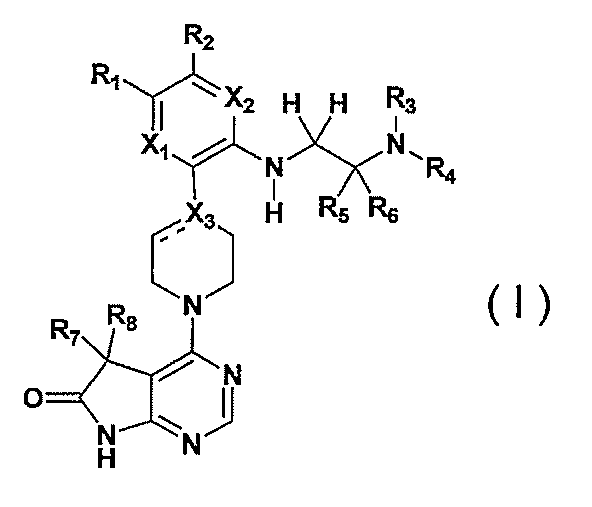
R1は、置換基を有していても良い、N、S及びOから選択される1~3個のヘテロ原子を有する4~6員の単環式の不飽和複素環基であり;
R2は、水素原子、ハロゲン原子、ヒドロキシル基、アミノ基、シアノ基、ニトロ基、C1-C6アルキル基、C1-C6ハロアルキル基、C2-C6アルケニル基、C2-C6アルキニル基、又はC3-C6シクロアルキル基であり;
R3、R4及びR5は、同一又は異なって、水素原子、C1-C6アルキル基、C1-C6ハロアルキル基、又はC3-C6シクロアルキル基であるか、或いは、R3及びR4は、それらが結合する窒素原子と一緒になって、N、S及びOから選択される1~3個のヘテロ原子を有する4~6員の単環式の飽和複素環を形成し、かつR5は、水素原子、C1-C6アルキル基、C1-C6ハロアルキル基、又はC3-C6シクロアルキル基であるか、或いは、R4及びR5は、それらが結合する窒素原子及び隣接する炭素原子と一緒になって、N、S及びOから選択される1~3個のヘテロ原子を有する4~6員の単環式の飽和複素環を形成し、かつR3は、水素原子、C1-C6アルキル基、C1-C6ハロアルキル基、又はC3-C6シクロアルキル基であり;
R6は、水素原子、C1-C6アルキル基、C1-C6ハロアルキル基、又はC3-C6シクロアルキル基であり;
R7及びR8は、同一又は異なって、水素原子、ハロゲン原子、ヒドロキシル基、アミノ基、シアノ基、ニトロ基、C1-C6アルキル基、C1-C6ハロアルキル基、C2-C6アルケニル基、C2-C6アルキニル基、又はC3-C6シクロアルキル基であるか、或いは、R7及びR8は、それらが結合する炭素原子と一緒になって、C3-C10シクロアルキル基を形成し;
X1及びX2は、同一又は異なって、N又はCR9であり、R9は、水素原子、ハロゲン原子、ヒドロキシル基、アミノ基、シアノ基、ニトロ基、C1-C6アルキル基、C1-C6ハロアルキル基、C2-C6アルケニル基、C2-C6アルキニル基、又はC3-C6シクロアルキル基であり;

[2] R1が、ハロゲン原子、C1-C6アルキル基、C1-C6ハロアルキル基、C1-C6アルコキシ基、及びC3-C10シクロアルキル基から選択される1~3個の置換基を有していても良い、N、S及びOから選択される1~3個のヘテロ原子を有する4~6員の単環式の不飽和複素環基である、[1]の化合物又はその塩。
[3] R2は、水素原子又はハロゲン原子であり、R6は、水素原子であり、R7は、C1-C6アルキル基であり、R8は、水素原子、又はC1-C6アルキル基であり、X1は、N又はCR9であり、R9は、水素原子、又はハロゲン原子であり、X2は、N又はCHである、[1]又は[2]に記載の化合物又はその塩。
[4] R1が、ハロゲン原子、C1-C6アルキル基、C1-C6ハロアルキル基、C1-C6アルコキシ基、及びC3-C10シクロアルキル基から選択される1~3個の置換基を有していても良い、フラニル基、チエニル基、チアゾリル基、チアジアゾリル基、オキサゾリル基、オキサジアゾリル基、ピリジニル基、又はピラゾリル基である、[1]~[3]のいずれかの化合物又はその塩。
[5] R3、R4及びR5は、同一又は異なって、水素原子、又はC1-C6アルキル基であるか、或いは、R3及びR4は、それらが結合する窒素原子と一緒になって、1個の窒素原子を有する4~6員の単環式の飽和複素環を形成し、かつR5は、水素原子、又はC1-C6アルキル基であるか、或いは、R4及びR5は、それらが結合する窒素原子及び隣接する炭素原子と一緒になって、1個の窒素原子を有する4~6員の単環式の飽和複素環を形成し、かつR3は、水素原子、又はC1-C6アルキル基である、[1]~[4]のいずれかの化合物又はその塩。
[6] R1が、ハロゲン原子又はC1-C6アルコキシ基を有するピリジニル基、C1-C6アルキル基及びC1-C6ハロアルキル基を有するピラゾリル基、C1-C6ハロアルキル基を有するオキサジアゾリル基、或いは無置換のフラニル基、又はチアゾリル基であり、
R2、R5及びR6は、水素原子であり、
R3は、水素原子であり、かつR4は、C1-C6アルキル基であるか、R3及びR4は、それらが結合する窒素原子と一緒になって、1個の窒素原子を有する4~6員の単環式の飽和複素環を形成し、
R7は、C1-C6アルキル基であり、R8は、水素原子、又はC1-C6アルキル基であり、
X1及びX2は、互いに異なって、N又はCHであり、

[8] 化合物が以下の化合物群から選択されるものである、[1]~[7]のいずれかの化合物又はその塩:
4-(4-(6-(5-(ジフルオロメチル)-1,3,4-オキサジアゾール-2-イル)-3-((2-(ピロリジン-1-イル)エチル)アミノ)ピリジン-2-イル)ピペリジン-1-イル)-5,5-ジメチル-5H-ピロロ[2,3-d]ピリミジン-6(7H)-オン;
4-(4-(3-((2-(tert-ブチルアミノ)エチル)アミノ)-6-(5-(トリフルオロメチル)-1,3,4-オキサジアゾール-2-イル)ピリジン-2-イル)ピペリジン-1-イル)-5,5-ジメチル-5H-ピロロ[2,3-d]ピリミジン-6(7H)-オン;及び
4-(4-(3-((2-(tert-ブチルアミノ)エチル)アミノ)-6-(5-(ジフルオロメチル)-1,2,4-オキサジアゾール-3-イル)ピリジン-2-イル)ピペリジン-1-イル)-5,5-ジメチル-5H-ピロロ[2,3-d]ピリミジン-6(7H)-オン。
[9] [1]~[8]のいずれかの化合物又はその塩を有効成分とするAkt阻害剤。
[10] [1]~[8]のいずれかの化合物又はその塩を有効成分とするRsk阻害剤。
[11] [1]~[8]のいずれかの化合物又はその塩を有効成分とするS6K阻害剤。
[12] [1]~[8]のいずれかの化合物又はその塩を有効成分とする、Akt、Rsk及びS6Kからなる群から選択される少なくとも2つに対する阻害剤。
[13] [1]~[8]のいずれかの化合物又はその塩を有効成分とする、Akt、Rsk及びS6Kに対する阻害剤。
[14] [1]~[8]のいずれかの化合物又はその塩を有効成分として含有する、Aktが関与する疾患を治療するための医薬組成物。
[15] [1]~[8]のいずれかの化合物又はその塩を有効成分として含有する、Rskが関与する疾患を治療するための医薬組成物。
[16] [1]~[8]のいずれかの化合物又はその塩を有効成分として含有する、S6Kが関与する疾患を治療するための医薬組成物。
[17] [1]~[8]のいずれかの化合物又はその塩を有効成分として含有する、Akt、Rsk及びS6Kからなる群から選択される少なくとも2つが関与する疾患を治療するための医薬組成物。
[18] [1]~[8]のいずれかの化合物又はその塩を有効成分として含有する、Akt、Rsk及びS6Kが関与する疾患を治療するための医薬組成物。
[19] [1]~[8]のいずれかの化合物又はその塩を有効成分とする抗腫瘍剤。
[20-1] Aktを阻害するための、[1]~[8]のいずれかの化合物又はその塩。
[20-2] Rskを阻害するための、[1]~[8]のいずれかの化合物又はその塩。
[20-3] S6Kを阻害するための、[1]~[8]のいずれかの化合物又はその塩。
[20-4] Akt、Rsk及びS6Kからなる群から選択される少なくとも2つを阻害するための、[1]~[8]のいずれかの化合物又はその塩。
[20-5] Akt、Rsk及びS6Kを阻害するための、[1]~[8]のいずれかの化合物又はその塩。
[21-1] Aktが関与する疾患を治療するための、[1]~[8]のいずれかの化合物又はその塩。
[21-2] Rskが関与する疾患を治療するための、[1]~[8]のいずれかの化合物又はその塩。
[21-3] S6Kが関与する疾患を治療するための、[1]~[8]のいずれかの化合物又はその塩。
[21-4] Akt、Rsk及びS6Kからなる群から選択される少なくとも2つが関与する疾患を治療するための、[1]~[8]のいずれかの化合物又はその塩。
[21-5] Akt、Rsk及びS6Kが関与する疾患を治療するための、[1]~[8]のいずれかの化合物又はその塩。
[22] 腫瘍を治療するための、[1]~[8]のいずれかの化合物又はその塩。
[23-1] Aktを阻害するための、[1]~[8]のいずれかの化合物又はその塩の使用。
[23-2] Rskを阻害するための、[1]~[8]のいずれかの化合物又はその塩の使用。
[23-3] S6Kを阻害するための、[1]~[8]のいずれかの化合物又はその塩の使用。
[23-4] Akt、Rsk及びS6Kからなる群から選択される少なくとも2つを阻害するための、[1]~[8]のいずれかの化合物又はその塩の使用。
[23-5] Akt、Rsk及びS6Kを阻害するための、[1]~[8]のいずれかの化合物又はその塩の使用。
[24-1] Aktが関与する疾患を治療するための、[1]~[8]のいずれかの化合物又はその塩の使用。
[24-2] Rskが関与する疾患を治療するための、[1]~[8]のいずれかの化合物又はその塩の使用。
[24-3] S6Kが関与する疾患を治療するための、[1]~[8]のいずれかの化合物又はその塩の使用。
[24-4] Akt、Rsk及びS6Kからなる群から選択される少なくとも2つが関与する疾患を治療するための、[1]~[8]のいずれかの化合物又はその塩の使用。
[24-5] Akt、Rsk及びS6Kが関与する疾患を治療するための、[1]~[8]のいずれかの化合物又はその塩の使用。
[25] 腫瘍を治療するための、[1]~[8]のいずれかの化合物又はその塩の使用。
[26-1] Aktを阻害するための医薬の製造における、[1]~[8]のいずれかの化合物又はその塩の使用。
[26-2] Rskを阻害するための医薬の製造における、[1]~[8]のいずれかの化合物又はその塩の使用。
[26-3] S6Kを阻害するための医薬の製造における、[1]~[8]のいずれかの化合物又はその塩の使用。
[26-4] Akt、Rsk及びS6Kからなる群から選択される少なくとも2つを阻害するための医薬の製造における、[1]~[8]のいずれかの化合物又はその塩の使用。
[26-5] Akt、Rsk及びS6Kを阻害するための医薬の製造における、[1]~[8]のいずれかの化合物又はその塩の使用。
[27-1] Aktが関与する疾患を治療するための医薬の製造における、[1]~[8]のいずれかの化合物又はその塩の使用。
[27-2] Rskが関与する疾患を治療するための医薬の製造における、[1]~[8]のいずれかの化合物又はその塩の使用。
[27-3] S6Kが関与する疾患を治療するための医薬の製造における、[1]~[8]のいずれかの化合物又はその塩の使用。
[27-4] Akt、Rsk及びS6Kからなる群から選択される少なくとも2つが関与する疾患を治療するための医薬の製造における、[1]~[8]のいずれかの化合物又はその塩の使用。
[27-5] Akt、Rsk及びS6Kが関与する疾患を治療するための医薬の製造における、[1]~[8]のいずれかの化合物又はその塩の使用。
[28] 腫瘍を治療するための医薬の製造における、[1]~[8]のいずれかの化合物又はその塩の使用。
[29-1] Aktを阻害する方法であって、その必要のある患者に有効量の[1]~[8]のいずれかの化合物又はその塩を投与することを含む方法。
[29-2] Rskを阻害する方法であって、その必要のある患者に有効量の[1]~[8]のいずれかの化合物又はその塩を投与することを含む方法。
[29-3] S6Kを阻害する方法であって、その必要のある患者に有効量の[1]~[8]のいずれかの化合物又はその塩を投与することを含む方法。
[29-4] Akt、Rsk及びS6Kからなる群から選択される少なくとも2つを阻害する方法であって、その必要のある患者に有効量の[1]~[8]のいずれかの化合物又はその塩を投与することを含む方法。
[29-5] Akt、Rsk及びS6Kを阻害する方法であって、その必要のある患者に有効量の[1]~[8]のいずれかの化合物又はその塩を投与することを含む方法。
[30-1] Aktが関与する疾患を治療する方法であって、その必要のある患者に有効量の[1]~[8]のいずれかの化合物又はその塩を投与することを含む方法。
[30-2] Rskが関与する疾患を治療する方法であって、その必要のある患者に有効量の[1]~[8]のいずれかの化合物又はその塩を投与することを含む方法。
[30-3] S6Kが関与する疾患を治療する方法であって、その必要のある患者に有効量の[1]~[8]のいずれかの化合物又はその塩を投与することを含む方法。
[30-4] Akt、Rsk及びS6Kからなる群から選択される少なくとも2つが関与する疾患を治療する方法であって、その必要のある患者に有効量の[1]~[8]のいずれかの化合物又はその塩を投与することを含む方法。
[30-5] Akt、Rsk及びS6Kが関与する疾患を治療する方法であって、その必要のある患者に有効量の[1]~[8]のいずれかの化合物又はその塩を投与することを含む方法。
[31] 腫瘍を治療する方法であって、その必要のある患者に有効量の[1]~[8]のいずれかの化合物又はその塩を投与することを含む方法。

R2は、水素原子又はハロゲン原子であり、
R3、R4及びR5は、同一又は異なって、水素原子、又はC1-C6アルキル基であるか、或いは、R3及びR4は、それらが結合する窒素原子と一緒になって、1個の窒素原子を有する4~6員の単環式の飽和複素環を形成し、かつR5は、水素原子、又はC1-C6アルキル基であるか、或いは、R4及びR5は、それらが結合する窒素原子及び隣接する炭素原子と一緒になって、1個の窒素原子を有する4~6員の単環式の飽和複素環を形成し、R3は、水素原子、又はC1-C6アルキル基であるか、或いはR3及びR5は、水素原子であり、かつR4は、C1-C6アルキル基であるか、或いは、R3及びR4は、それらが結合する窒素原子と一緒になって、1個の窒素原子を有する4~6員の単環式の飽和複素環を形成し、かつR5は水素原子であり、
R6は、水素原子であり、
R7は、C1-C6アルキル基であり、R8は、水素原子、又はC1-C6アルキル基であり、
X1及びX2は、互いに異なって、N又はCHであり、

R2、及びR6は、水素原子であり、
R3、R4及びR5は、同一又は異なって、水素原子、又はC1-C6アルキル基であるか、或いは、R3及びR4は、それらが結合する窒素原子と一緒になって、1個の窒素原子を有する4~6員の単環式の飽和複素環を形成し、かつR5は、水素原子、又はC1-C6アルキル基であるか、又は、R4及びR5は、それらが結合する窒素原子及び隣接する炭素原子と一緒になって、1個の窒素原子を有する4~6員の単環式の飽和複素環を形成し、R3は、水素原子、又はC1-C6アルキル基であるか、或いは、R3及びR5は、水素原子であり、かつR4は、C1-C6アルキル基であるか、或いは、R3及びR4は、それらが結合する窒素原子と一緒になって、1個の窒素原子を有する4~6員の単環式の飽和複素環を形成し、かつR5は水素原子であり、
R7は、C1-C6アルキル基であり、R8は、水素原子、又はC1-C6アルキル基であり、
X1及びX2は、互いに異なって、N又はCHであり、

R2、R5及びR6は、水素原子であり、
R3は、水素原子であり、かつR4は、C1-C6アルキル基であるか、R3及びR4は、それらが結合する窒素原子と一緒になって、1個の窒素原子を有する4~6員の単環式の飽和複素環を形成し、
R7は、C1-C6アルキル基であり、R8は、水素原子、又はC1-C6アルキル基であり、
X1及びX2は、互いに異なって、N又はCHであり、

R2、R5及びR6は、水素原子であり、
R3は、水素原子であり、かつR4は、C1-C6アルキル基であるか、R3及びR4は、それらが結合する窒素原子と一緒になって、1個の窒素原子を有する4~6員の単環式の飽和複素環を形成し、
R7は、C1-C6アルキル基であり、R8は、水素原子、又はC1-C6アルキル基であり、
X1及びX2は、互いに異なって、N又はCHであり、

R2、R5及びR6は、水素原子であり、
R3は、水素原子であり、かつR4は、イソプロピル基又はtert-ブチル基であるか、R3及びR4は、それらが結合する窒素原子と一緒になって、ピロリジニル基を形成し、
R7は、メチル基であり、R8は、水素原子、又はメチル基であり、
X1及びX2は、互いに異なって、N又はCHであり、

4-(4-(5-((2-(tert-ブチルアミノ)エチル)アミノ)-5’-フルオロ-[2,3’-ビピリジン]-6-イル)ピペリジン-1-イル)-5,5-ジメチル-5H-ピロロ[2,3-d]ピリミジン-6(7H)-オン(化合物(1));
4-(4-(2’-フルオロ-5-((2-(ピロリジン-1-イル)エチル)アミノ)-[2,4’-ビピリジン]-6-イル)ピペリジン-1-イル)-5-メチル-5H-ピロロ[2,3-d]ピリミジン-6(7H)-オン(化合物(13));
4-(4-(6-(フラン-3-イル)-3-((2-(ピロリジン-1-イル)エチル)アミノ)ピリジン-2-イル)ピペリジン-1-イル)-5-メチル-5H-ピロロ[2,3-d]ピリミジン-6(7H)-オン(化合物14);
4-(4-(5-((2-(イソプロピルアミノ)エチル)アミノ)-5’-メトキシ-[2,3’-ビピリジン]-6-イル)ピペリジン-1-イル)-5-メチル-5H-ピロロ[2,3-d]ピリミジン-6(7H)-オン(化合物(15));
5-メチル-4-(4-(3-((2-(ピロリジン-1-イル)エチル)アミノ)-6-(チアゾール-2-イル)ピリジン-2-イル)ピペリジン-1-イル)-5H-ピロロ[2,3-d]ピリミジン-6(7H)-オン(化合物(24));
4-(5-フルオロ-5’-((2-(ピロリジン-1-イル)エチル)アミノ)-5’’,6’’-ジヒドロ-[3,2’:6’,4’’-テルピリジン]-1’’(2’’H)-イル)-5-メチル-5H-ピロロ[2,3-d]ピリミジン-6(7H)-オン(化合物(26));
5-メチル-4-(4-(5-(1-メチル-3-(トリフルオロメチル)-1H-ピラゾール-5-イル)-2-((2-(ピロリジン-1-イル)エチル)アミノ)ピリジン-3-イル)ピペリジン-1-イル)-5H-ピロロ[2,3-d]ピリミジン-6(7H)-オン(化合物(27));
4-(4-(6-(5-(ジフルオロメチル)-1,3,4-オキサジアゾール-2-イル)-3-((2-(ピロリジン-1-イル)エチル)アミノ)ピリジン-2-イル)ピペリジン-1-イル)-5,5-ジメチル-5H-ピロロ[2,3-d]ピリミジン-6(7H)-オン(化合物(30));
4-(4-(3-((2-(tert-ブチルアミノ)エチル)アミノ)-6-(5-(トリフルオロメチル)-1,3,4-オキサジアゾール-2-イル)ピリジン-2-イル)ピペリジン-1-イル)-5,5-ジメチル-5H-ピロロ[2,3-d]ピリミジン-6(7H)-オン(化合物(32));
4-(4-(3-((2-(tert-ブチルアミノ)エチル)アミノ)-6-(5-(ジフルオロメチル)-1,2,4-オキサジアゾール-3-イル)ピリジン-2-イル)ピペリジン-1-イル)-5,5-ジメチル-5H-ピロロ[2,3-d]ピリミジン-6(7H)-オン(化合物(41));及び
5,5-ジメチル-4-(4-(3-((2-(ピロリジン-1-イル)エチル)アミノ)-6-(3-(トリフルオロメチル)-1,2,4-オキサジアゾール-5-イル)ピリジン-2-イル)ピペリジン-1-イル)-5H-ピロロ[2,3-d]ピリミジン-6(7H)-オン(化合物(44))。
4-(4-(5-((2-(tert-ブチルアミノ)エチル)アミノ)-5’-フルオロ-[2,3’-ビピリジン]-6-イル)ピペリジン-1-イル)-5,5-ジメチル-5H-ピロロ[2,3-d]ピリミジン-6(7H)-オン(化合物(1));
4-(4-(2’-フルオロ-5-((2-(ピロリジン-1-イル)エチル)アミノ)-[2,4’-ビピリジン]-6-イル)ピペリジン-1-イル)-5-メチル-5H-ピロロ[2,3-d]ピリミジン-6(7H)-オン(化合物(13));
4-(4-(6-(フラン-3-イル)-3-((2-(ピロリジン-1-イル)エチル)アミノ)ピリジン-2-イル)ピペリジン-1-イル)-5-メチル-5H-ピロロ[2,3-d]ピリミジン-6(7H)-オン(化合物14);
4-(4-(5-((2-(イソプロピルアミノ)エチル)アミノ)-5’-メトキシ-[2,3’-ビピリジン]-6-イル)ピペリジン-1-イル)-5-メチル-5H-ピロロ[2,3-d]ピリミジン-6(7H)-オン(化合物(15));
4-(4-(6-(5-(ジフルオロメチル)-1,3,4-オキサジアゾール-2-イル)-3-((2-(ピロリジン-1-イル)エチル)アミノ)ピリジン-2-イル)ピペリジン-1-イル)-5,5-ジメチル-5H-ピロロ[2,3-d]ピリミジン-6(7H)-オン(化合物(30));
4-(4-(3-((2-(tert-ブチルアミノ)エチル)アミノ)-6-(5-(トリフルオロメチル)-1,3,4-オキサジアゾール-2-イル)ピリジン-2-イル)ピペリジン-1-イル)-5,5-ジメチル-5H-ピロロ[2,3-d]ピリミジン-6(7H)-オン(化合物(32));
4-(4-(3-((2-(tert-ブチルアミノ)エチル)アミノ)-6-(5-(ジフルオロメチル)-1,2,4-オキサジアゾール-3-イル)ピリジン-2-イル)ピペリジン-1-イル)-5,5-ジメチル-5H-ピロロ[2,3-d]ピリミジン-6(7H)-オン(化合物(41));及び
5,5-ジメチル-4-(4-(3-((2-(ピロリジン-1-イル)エチル)アミノ)-6-(3-(トリフルオロメチル)-1,2,4-オキサジアゾール-5-イル)ピリジン-2-イル)ピペリジン-1-イル)-5H-ピロロ[2,3-d]ピリミジン-6(7H)-オン(化合物(44))。
4-(4-(6-(5-(ジフルオロメチル)-1,3,4-オキサジアゾール-2-イル)-3-((2-(ピロリジン-1-イル)エチル)アミノ)ピリジン-2-イル)ピペリジン-1-イル)-5,5-ジメチル-5H-ピロロ[2,3-d]ピリミジン-6(7H)-オン(化合物(30));
4-(4-(3-((2-(tert-ブチルアミノ)エチル)アミノ)-6-(5-(トリフルオロメチル)-1,3,4-オキサジアゾール-2-イル)ピリジン-2-イル)ピペリジン-1-イル)-5,5-ジメチル-5H-ピロロ[2,3-d]ピリミジン-6(7H)-オン(化合物(32));及び
4-(4-(3-((2-(tert-ブチルアミノ)エチル)アミノ)-6-(5-(ジフルオロメチル)-1,2,4-オキサジアゾール-3-イル)ピリジン-2-イル)ピペリジン-1-イル)-5,5-ジメチル-5H-ピロロ[2,3-d]ピリミジン-6(7H)-オン(化合物(41))。


本工程は、通常、式(II)で表される化合物1モルに対して、塩基を0.5モルないし5モル、好ましくは1ないし2モル、アルキル化剤を0.5モルないし5モル、好ましくは1ないし3モル用いて行われる。
反応時間は、通常、10分ないし24時間、好ましくは10分ないし1時間である。
反応時間は、通常、10分ないし3日間、好ましくは1時間ないし10時間である。
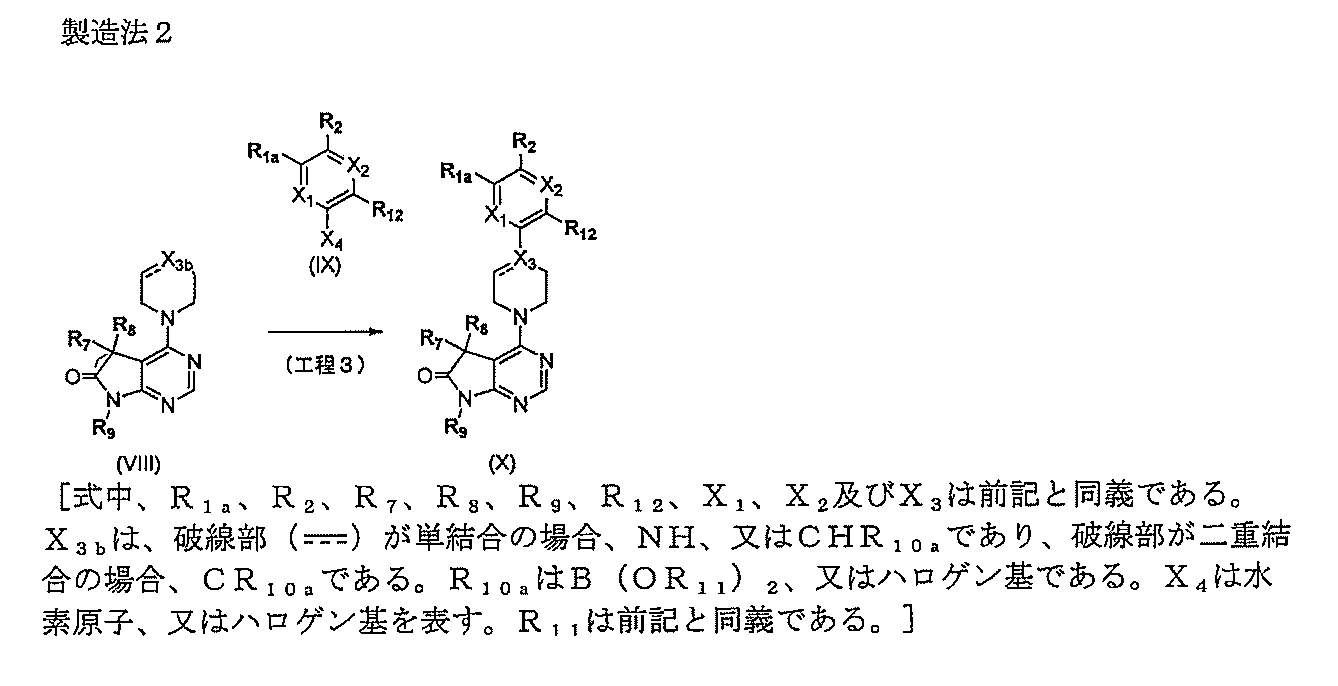
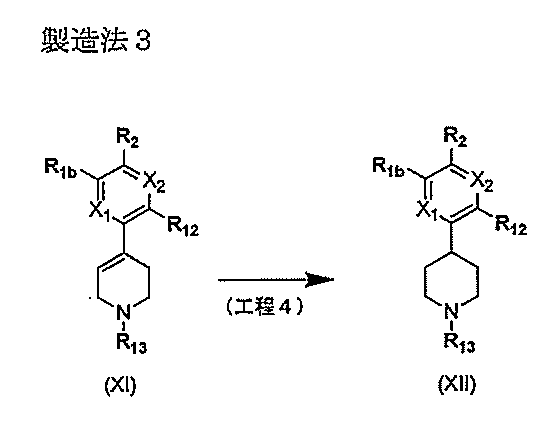
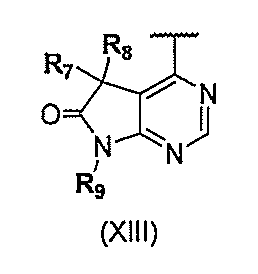
で表される置換基である。PG2は前記と同義である。]
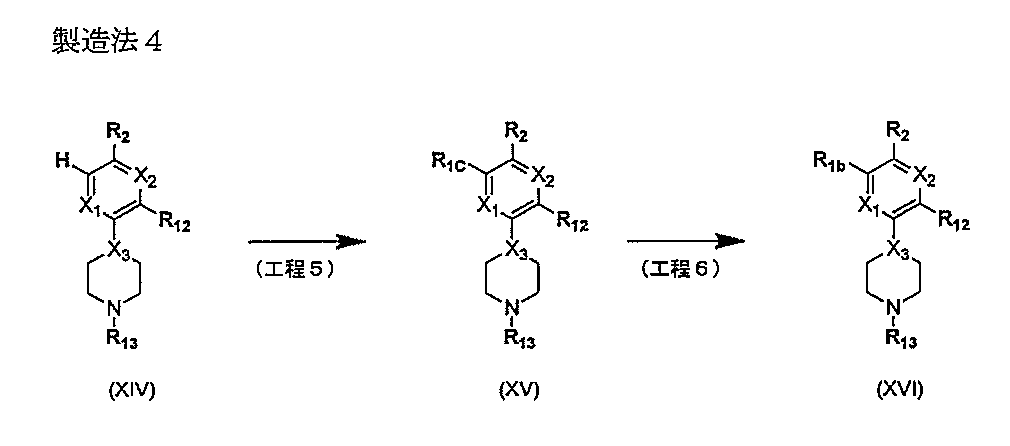


で表される置換基である。]

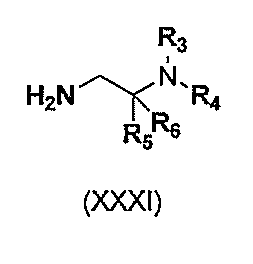
で表されるアミンとの反応により、式(XXIX)で表される化合物を製造する工程である。本工程は、式(XXXI)で表されるアミンを過剰量用いるか、式(XXXI)で表されるアミンと適当な塩基を用いて行うことが出来る。また、本反応にはパラジウム、又は銅などの触媒を用いることが出来る。使用しうるパラジウム触媒としては、例えば、酢酸パラジウム、塩化パラジウム、テトラキス(卜リフェニルホスフィン)パラジウム、ジクロロビス(トリフェニルホスフィン)パラジウム、ジクロロ[1,1’-ビス(ジフェニルホスフィノ)フェロセン]パラジウム、ジクロロビスアセトニトリルパラジウム、トリス(ジベンジリデンアセトン)ジパラジウム(0)等を挙げることができる。
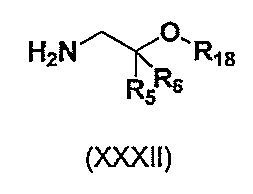
本発明化合物又はその塩には、そのプロドラッグも含まれる。プロドラッグは、生体内における生理条件下で酵素や胃酸等による反応により本発明化合物又はその塩に変換する化合物、即ち酵素的に酸化、還元、加水分解等を起こして本発明化合物又はその塩に変化する化合物、胃酸等により加水分解等を起こして本発明化合物又はその塩に変化する化合物をいう。また、広川書店1990年刊「医薬品の開発」第7巻分子設計163頁から198頁に記載されているような生理的条件で本発明化合物又はその塩に変化するものであってもよい。
カラム:Acquity BEH C18、2.1X50mm,1.7μm
MS検出:ESI positive
UV検出:254及び210nm
カラム流速:0.5mL/分
移動相:水/アセトニトリル(0.1%ギ酸)
インジェクション量:1μL
グラディエント
時間(分) 水 アセトニトリル
0 95 5
0.1 95 5
2.1 5 95
3.0 停止
s:シングレット
d:ダブレット
t:トリプレット
q:カルテット
dd:ダブル ダブレット
dt:ダブル トリプレット
ddd:ダブル ダブル ダブレット
m:マルチプレット
br:ブロード
DMSO-D6:重ジメチルスルホキシド
CDCl3:重クロロホルム
THF:テトラヒドロフラン
DMF:N,N-ジメチルホルムアミド
DMSO:ジメチルスルホキシド
DIPEA:N,N-ジイソプロピルエチルアミン
HATU:O-(7-アザベンゾトリアゾ-1-イル)-N,N,N’,N’-テトラメチルウロニウム ヘキサフルオロホスフェート
NBS:N-ブロモスクシンイミド
TFA:トリフルオロ酢酸
4-クロロ-7-(2,4-ジメトキシベンジル)-5H-ピロロ[2,3-d]ピリミジン-6(7H)-オン(6g)、THF(93.8ml)、tert―ブトキシカリウム(6.32g)の混合物にヨウ化メチル(3.51ml)をゆっくり滴下し、その後室温にて2時間撹拌した。反応混合物に飽和塩化アンモニウム水溶液を加えた後、クロロホルムにて抽出した。有機層を無水硫酸ナトリウムにて乾燥後、濾過、濾液を濃縮した。得られた残渣をシリカゲルカラムクロマトグラフィーにて精製し、上記表題の参考例(1)を白色固体として得た。
工程1: Pierik,Antonio J.;Ciceri,Daniele;Broeker,Gerd;Edwards,Christopher H.;McFarlane,William;Winter,Joachim;Buckel,Wolfgang;Golding,Bernard T.;Journal of the American Chemical Society,124(47),14039-14048;2002.に記載の方法で合成したプロパン-1,1,2-トリカルボン酸トリエチル(3.0g)、メタノール(7.0ml)、ナトリウムメトキシド(25%、メタノール溶液、0.050ml)の混合物を室温にて3時間撹拌した。反応混合物を減圧濃縮した後、ナトリウムメトキシド(25%、メタノール溶液、5.3g)、メタノール(2ml)、ホルムアミジン酢酸塩(1.3g)を加え、室温にて15時間撹拌した。反応混合物に塩化水素(5-10%、メタノール溶液、19ml)を加え、0℃にて15分間撹拌した。生じた固体を濾取し、メタノールにて洗浄後、減圧乾燥し、2-(4,6-ジヒドロキシピリミジン-5-イル)プロピオン酸メチル(参考例(2-1))を白色固体として得た。
4-(4,4,5,5-テトラメチル-1,3,2-ジオキサボロラン-2-イル)-5,6-ジヒドロピリジン-1(2H)-カルボン酸tert-ブチル(1.0g)をジクロロメタン(2.0ml)、TFA(2.0ml)に溶解し、室温にて15分間撹拌した。反応混合物を濃縮し、乾燥させて得られた残渣に、参考例(2)(1.1g)、DMSO(7.0ml)、及び、DIPEA(2.3ml)を加え、マイクロウェーブ照射下、120℃にて4時間撹拌した。室温に冷却後、水を加え、酢酸エチルにて抽出した。有機層を無水硫酸ナトリウムにて乾燥後、濾過し、濃縮した。得られた残渣をカゲルカラムクロマトグラフィーにて精製し、上記表題の参考例(3)を白色アモルファス状物質として得た。
工程1: 参考例(1)(6.22g)、DIPEA(6.23ml)、4-ヒドロキシピペリジン(1.99g)及びDMSO(24ml)の混合物をマイクロウェーブ照射下130℃にて3時間撹拌した。反応混合物を酢酸エチルで希釈後、水で洗浄した。有機層を無水硫酸ナトリウムにて乾燥後、濾過、濾液を濃縮した。得られた残渣をシリカゲルカラムクロマトグラフィーにて精製し、7-(2,4-ジメトキシベンジル)-4-(4-ヒドロキシピペリジン-1-イル)-5,5-ジメチル-5H-ピロロ[2,3-d]ピリミジン-6(7H)-オン(参考例(4-1))を黄色固体として得た。
4-(4,4,5,5-テトラメチル-1,3,2-ジオキサボロラン-2-イル)-1,2,3,6-テトラヒドロピリジン-1-カルボン酸tert-ブチル(2.25g)、塩化水素(1,4-ジオキサン溶液、4M、6ml)、クロロホルム(3ml)の混合物を室温にて3時間撹拌した。反応混合物を濃縮し、得られた残渣にShepherd,Timothy Alan;Dally,Robert Dean;Joseph,Sajan;US20100120801A1.に記載の方法で合成した4-クロロ-5,5-ジメチル-5H-ピロロ[2,3-d]ピリミジン-6(7H)-オン(1.31g)、DIPEA(4.62ml)、及びDMSO(10ml)を加え、この混合物を140℃にて終夜撹拌した。反応混合物に水を加え、酢酸エチルにて抽出した。有機層を無水硫酸ナトリウムにて乾燥後、濾過し、濾液を濃縮した。得られた残渣をシリカゲルカラムクロマトグラフィーにて精製し、上記表題の参考例(5)を淡黄色アモルファス状物質として得た。
工程1: 3-アミノ-2-ブロモピリジン4.0g、4-(4,4,5,5-テトラメチル-1,3,2-ジオキサボロラン-2-イル)-1,2,3,6-テトラヒドロピリジン-1-カルボン酸tert-ブチル(9.0g)、1,1’-ビス(ジフェニルホスフィノ)フェロセン-パラジウム(II)ジクロリド-ジクロロメタン錯体(1.9g)、1,4-ジオキサン(25ml)、及び、炭酸ナトリウム水溶液(2M、15ml)の混合物を100℃にて3時間撹拌した。室温に冷却後、水で希釈し、酢酸エチルにて抽出した。有機層を無水硫酸ナトリウムにて乾燥後、濾過し、濾液を濃縮した。得られた残渣を塩基性シリカゲルカラムクロマトグラフィーにて精製し、3-アミノ-5’,6’-ジヒドロ-[2,4’-ビピリジン]-1’(2’H)-カルボン酸tert-ブチル(化合物(1-1))を褐色油状物質として得た。
実施例1に準じ、tert-ブチルアミンの代わりにピロリジンを用い、3-フルオロピリジン-5-ボロン酸の代わりに1,3-ジメチル-5-(4,4,5,5-テトラメチル-1,3,2-ジオキサボロラン-2-イル)ピラゾールを用い、上記表題の化合物(3)を得た。
実施例1に準じ、3-フルオロピリジン-5-ボロン酸の代わりに1-(ジフルオロメチル)-4-(4,4,5,5-テトラメチル-1,3,2-ジオキサボロラン-2-イル)ピラゾールを用い、上記表題の化合物(4)を得た。
実施例1に準じ、tert-ブチルアミンの代わりにイソプロピルアミンを用い、3-フルオロピリジン-5-ボロン酸の代わりに2,3-ジフルオロピリジン-5-ボロン酸ピナコールエステルを用い、上記表題の化合物(5)を得た。
実施例1に準じ、tert-ブチルアミンの代わりにイソプロピルアミンを用い、3-フルオロピリジン-5-ボロン酸の代わりに2,4-ジメチル-5-(4,4,5,5-テトラメチル-1,3,2-ジオキサボロラン-2-イル)-1,3-チアゾールを用い、上記表題の化合物(6)を得た。
実施例1に準じ、tert-ブチルアミンの代わりにジメチルアミン(2M、THF溶液)を用い、3-フルオロピリジン-5-ボロン酸の代わりに3-クロロ-1-メチル-5-(4,4,5,5-テトラメチル-1,3,2-ジオキサボロラン-2-イル)ピラゾールを用い、上記表題の化合物(9)を得た。
実施例1に準じ、tert-ブチルアミンの代わりにイソプロピルアミンを用い、3-フルオロピリジン-5-ボロン酸の代わりに1-メチル-3-トリフルオロメチルピラゾール-5-ボロン酸を用い、上記表題の化合物(10)を得た。
実施例1に準じ、tert-ブチルアミンの代わりにイソプロピルアミンを用い、3-フルオロピリジン-5-ボロン酸の代わりに3-クロロ-1-メチル-5-(4,4,5,5-テトラメチル-1,3,2-ジオキサボロラン-2-イル)ピラゾールを用い、上記表題の化合物(11)を得た。
実施例1に準じ、tert-ブチルアミンの代わりにエチルアミン(2M,THF溶液)を用い、上記表題の化合物(12)を得た。
実施例1に準じ、参考例(1)の代わりに参考例(2)を用い、tert-ブチルアミンの代わりにピロリジンを用い、3-フルオロピリジン-5-ボロン酸の代わりに2-フルオロピリジン-4-ボロン酸を用い、上記表題の化合物(13)を得た。
実施例1に準じ、参考例(1)の代わりに参考例(2)を用い、tert-ブチルアミンの代わりにピロリジンを用い、3-フルオロピリジン-5-ボロン酸の代わりに3-(4,4,5,5-テトラメチル-1,3,2-ジオキサボロラン-2-イル)フランを用い、上記表題の化合物(14)を得た。
実施例1に準じ、参考例(1)の代わりに参考例(2)を用い、tert-ブチルアミンの代わりにイソプロピルアミンを用い、3-フルオロピリジン-5-ボロン酸の代わりに3-メトキシピリジン-5-ボロン酸ピナコールエステルを用い、上記表題の化合物(15)を得た。
実施例1に準じ、参考例(1)の代わりに参考例(2)を用い、tert-ブチルアミンの代わりにピロリジンを用い、3-フルオロピリジン-5-ボロン酸の代わりに5-フルオロ-2-メトキシピリジン-4-ボロン酸を用い、上記表題の化合物(16)を得た。
実施例1に準じ、参考例(1)の代わりに参考例(2)を用い、tert-ブチルアミンの代わりにピロリジンを用い、3-フルオロピリジン-5-ボロン酸の代わりに2-フルオロピリジン-3-ボロン酸を用い、上記表題の化合物(17)を得た。
実施例1に準じ、参考例(1)の代わりに参考例(2)を用い、tert-ブチルアミンの代わりにピロリジンを用い、3-フルオロピリジン-5-ボロン酸の代わりに3-チエニルボロン酸を用い、上記表題の化合物(18)を得た。
実施例1に準じ、参考例(1)の代わりに参考例(2)を用い、tert-ブチルアミンの代わりにピロリジンを用い、上記表題の化合物(19)を得た。
実施例1に準じ、参考例(1)の代わりに参考例(2)を用い、tert-ブチルアミンの代わりにピロリジンを用い、3-フルオロピリジン-5-ボロン酸の代わりに1-メチル-3-トリフルオロメチルピラゾール-5-ボロン酸を用い、上記表題の化合物(20)を得た。
実施例1に準じ、参考例(1)の代わりに参考例(2)を用い、tert-ブチルアミンの代わりにジメチルアミン(2M、THF溶液)を用い、3-フルオロピリジン-5-ボロン酸の代わりに3-メトキシピリジン-5-ボロン酸ピナコールエステルを用い、上記表題の化合物(21)を得た。
実施例1に準じ、参考例(1)の代わりに参考例(2)を用い、tert-ブチルアミンの代わりにピロリジンを用い、3-フルオロピリジン-5-ボロン酸の代わりに2-メチルピリジン-3-ボロン酸を用い、上記表題の化合物(22)を得た。
実施例1に準じ、参考例(1)の代わりに参考例(2)を用い、tert-ブチルアミンの代わりにジメチルアミン(2M、THF溶液)を用い、3-フルオロピリジン-5-ボロン酸の代わりに3-チエニルボロン酸を用い、上記表題の化合物(23)を得た。
工程1: 実施例1の工程1~8に準じ、参考例(1)の代わりに参考例(2)を用い、tert-ブチルアミンの代わりにピロリジンを用い、4-(4-(6-ブロモ-3-((2-(ピロリジン-1-イル)エチル)アミノ)ピリジン-2-イル)ピペリジン-1-イル)-7-(2,4-ジメトキシベンジル)-5-メチル-5H-ピロロ[2,3-d]ピリミジン-6(7H)-オン(化合物(24-1))を黄色アモルファス状物質として得た。
実施例24に準じ、2-(トリブチルスタニル)チアゾールの代わりに2-(トリメチルスタニル)オキサゾールを用い、上記表題の化合物(25)を得た。
工程1: 5-ブロモ-2-クロロピリジン(10g)、エタノールアミン(6.3ml)、ヨウ化銅(I)(0.99g)、L-プロリン(1.2g)、炭酸カリウム(14g)、DMSO(40ml)の混合物をマイクロウェーブ照射下、100℃にて1時間撹拌した。得られた混合物を酢酸エチルにて希釈後、濾過し、濾液を水、飽和食塩水にて順に洗浄した。有機層を無水硫酸ナトリウムにて乾燥後濾過、濃縮し、2-((6-クロロピリジン-3-イル)アミノ)エタノール(化合物(26-1))を得た。
工程1: 3-ブロモ-2-フルオロピリジン(1.8g)、4-(4,4,5,5-テトラメチル-1,3,2-ジオキサボロラン-2-イル)-1,2,3,6-テトラヒドロピリジン-1-カルボン酸tert-ブチル(3.4g)、テトラキス(トリフェニルホスフィン)パラジウム(0)(0.60g)、炭酸ナトリウム水溶液(2M、6.5ml)、1,4-ジオキサン(25ml)の混合物を110℃にて20時間撹拌した。室温に冷却後、酢酸エチルにて希釈し、飽和食塩水にて洗浄した。有機層を無水硫酸ナトリウムにて乾燥後、濾過し、濾液を濃縮した。得られた残渣をシリカゲルカラムクロマトグラフィーにて精製し、2-フルオロ-5’,6’-ジヒドロ-[3,4’-ビピリジン]-1’(2’H)-カルボン酸tert-ブチル(化合物(27-1))を淡黄色固体として得た。
工程1: 2-ブロモ-5-フルオロ-3-ニトロピリジン(1.0g)、4-(4,4,5,5-テトラメチル-1,3,2-ジオキサボロラン-2-イル)-1,2,3,6-テトラヒドロピリジン-1-カルボン酸tert-ブチル(1.7g)、1,1’-ビス(ジフェニルホスフィノ)フェロセン-パラジウム(II)ジクロリド-ジクロロメタン錯体(66mg)、1,4-ジオキサン(15ml)、炭酸ナトリウム(0.96g)、及び、水(6ml)の混合物を16時間加熱還流した。反応混合物を室温に冷却後、濾過し、濾液を酢酸エチルにて希釈後、飽和食塩水にて洗浄した。有機層を分離後、無水硫酸ナトリウムにて乾燥し、不溶物を濾別した。濾液を濃縮後、得られた残渣をシリカゲルカラムクロマトグラフィーにて精製し、5-フルオロ-3-ニトロ-5’,6’-ジヒドロ-[2,4’-ビピリジン]-1’(2’H)カルボン酸tert-ブチル(化合物(28-1))を褐色アモルファス状物質として得た。
工程1: 1-(tert-ブトキシカルボニル)-ピペラジン(4.5g)、2-プロパノール(30ml)、DIPEA(6.1ml)の混合物に、2,6-ジクロロ-3-ニトロピリジン(3.8g)のTHF溶液(30ml)を加え、室温にて2.5時間撹拌した。反応混合物に10%リン酸水溶液を加えた後、有機溶媒を減圧留去した。生じた固体を濾取し、水にて洗浄した。得られた固体を酢酸エチルにて懸濁し、不溶物を濾別した。得られた濾液を飽和重曹水、飽和食塩水にて順に洗浄し、有機層を分離後、無水硫酸ナトリウムにて乾燥した。不溶物を濾別後、濾液を濃縮した。得られた残渣をシリカゲルカラムクロマトグラフィーにて精製し、4-(6-クロロ-3-ニトロピリジン-2-イル)ピペラジン-1-カルボン酸tert-ブチル(化合物(29-1))を得た。
工程1: 化合物(1-6)(2.74g)、1,1’-ビス(ジフェニルホスフィノ)フェロセン-パラジウム(II)ジクロリド-ジクロロメタン錯体(366mg)、トリエチルアミン(1.87ml)、N,N-ジメチルホルミルアミド(8ml)及びメタノール(8ml)の混合物を一酸化炭素雰囲気下0.4MPa、80℃にて12時間撹拌した。室温に冷却後、反応混合物を酢酸エチルにて希釈し、水にて洗浄した。有機層を無水硫酸ナトリウムにて乾燥後、濾過し、濾液を濃縮した。得られた残渣をシリカゲルカラムクロマトグラフィーにて精製し、6-(1-(7-(2,4-ジメトキシベンジル)-5,5-ジメチル-6-オキソ-6,7-ジヒドロ-5H-ピロロ[2,3-d]ピリミジン-4-イル)ピペリジン-4-イル)-5-((2-ヒドロキシエチル)アミノ)ピコリン酸メチル(化合物(30-1))を褐色アモルファス状物質として得た。
実施例30に準じ、ピロリジンの代わりにイソプロピルアミンを用い、上記表題の化合物(31)を得た。
実施例30に準じ、ジフルオロ酢酸無水物の代わりにトリフルオロ酢酸無水物を用い、ピロリジンの代わりにtert-ブチルアミンを用い、上記表題の化合物(32)を得た。
実施例30に準じ、ジフルオロ酢酸無水物の代わりにトリフルオロ酢酸無水物を用い、ピロリジンの代わりにイソプロピルアミンを用い、上記表題の化合物(33)を得た。
実施例30に準じ、ジフルオロ酢酸無水物の代わりにトリフルオロ酢酸無水物を用い、ピロリジンの代わりにメチル-tert-ブチルアミンを用い、上記表題の化合物(34)を得た。
工程1: 5-フルオロピリジン-2-カルボン酸メチル(0.5g)、(S)-2-(アミノメチル)ピロリジン-1-カルボン酸tert-ブチル(1.0g)、DIPEA(0.67ml)、DMSO(3.0ml)の混合物を130℃にて1.5時間、140℃にて1時間撹拌した。室温に冷却後、シリカゲルカラムクロマトグラフィーにて精製し、(S)-5-(((1-(tert-ブトキシカルボニル)ピロリジン-2-イル)メチル)アミノ)ピコリン酸メチル(化合物(35-1))を無色油状物質として得た。
工程1: 5-ブロモピコリン酸(10g)、メタノ-ル(50ml)の混合物に濃硫酸(1ml)を加え、3時間加熱環流した後、反応混合物を濃縮した。得られた残渣を酢酸エチルにて希釈し、水、飽和重曹水、飽和食塩水の順に洗浄した。有機層を無水硫酸マグネシウムにて乾燥後、濾過し、濾液を濃縮した。得られた残渣にエタノ-ル(50ml)、ヒドラジン1水和物(10ml)を加え、3時間加熱環流を行った後、反応混合物を濃縮した。得られた残渣に水を加え、生じた固体を濾取し、5-ブロモピコリン酸ヒドラジド(化合物(36-1))を黄色固体として得た。
実施例36に準じ、無水酢酸の代わりにジフルオロ酢酸無水物を用い、ピロリジンの代わりにtert-ブチルアミンを用い、上記表題の化合物(37)を得た。
実施例36に準じ、無水酢酸の代わりにジフルオロ酢酸無水物を用い、ピロリジンの代わりにジメチルアミンを用い、上記表題の化合物(38)を得た。
実施例37に準じ、tert-ブチルアミンの代わりにイソプロピルアミンを用い、上記表題の化合物(39)を得た。
実施例36に準じ、無水酢酸の代わりにシクロプロパンカルボン酸クロリドを用い、ピロリジンの代わりにtert-ブチルアミンを用い、上記表題の化合物(40)を得た。
工程1: 5-フルオロピコリノニトリル(25g)、DMSO(100ml)、2-アミノエタノール(25ml)の混合物を75℃にて40分間攪拌した。室温に冷却後、水で希釈し、酢酸エチルにて抽出した。有機層を無水硫酸ナトリウムにて乾燥後濾過した。濾液を濃縮し、5-((2-ヒドロキシエチル)アミノ)ピコリノニトリル(化合物(41-1))を白色固体として得た。
実施例41に準じ、ジフルオロ酢酸無水物の代わりにトリフルオロ酢酸無水物を用い、tert-ブチルアミンの代わりにイソプロピルアミンを用い、上記表題の化合物(42)を得た。
工程1: 実施例41の工程1~6に準じ、ジフルオロ酢酸無水物の代わりにトリフルオロ酢酸無水物を用い、酢酸2-((2-(1-(7-(2,4-ジメトキシベンジル)-5,5-ジメチル-6-オキソ-6,7-ジヒドロ-5H-ピロロ[2,3-d]ピリミジン-4-イル)ピペリジン-4-イル)-6-(5-(トリフルオロメチル)-1,2,4-オキサジアゾール-3-イル)ピリジン-3-イル)アミノ)エチル(化合物(43-1))を得た。
実施例43に準じ、tert-ブチルアミンの代わりにピロリジンを用い、上記表題の化合物(44)を得た。
工程1: 2,6-ジブロモ-4-ニトロピリジン(1g)、炭酸カリウム(490.3mg)、2-アミノエタノール(0.32ml)、及びDMSO(10ml)の混合物を60℃にて1.5時間撹拌した。反応混合物に水を加え、酢酸エチルにて抽出した。有機層を無水硫酸ナトリウムにて乾燥後、濾過し、濾液を濃縮した。得られた残渣をシリカゲルカラムクロマトグラフィーにて精製し、2-((2,6-ジブロモピリジン-4-イル)アミノ)エタノール(比較例B(1-1))を褐色油状物質として得た。


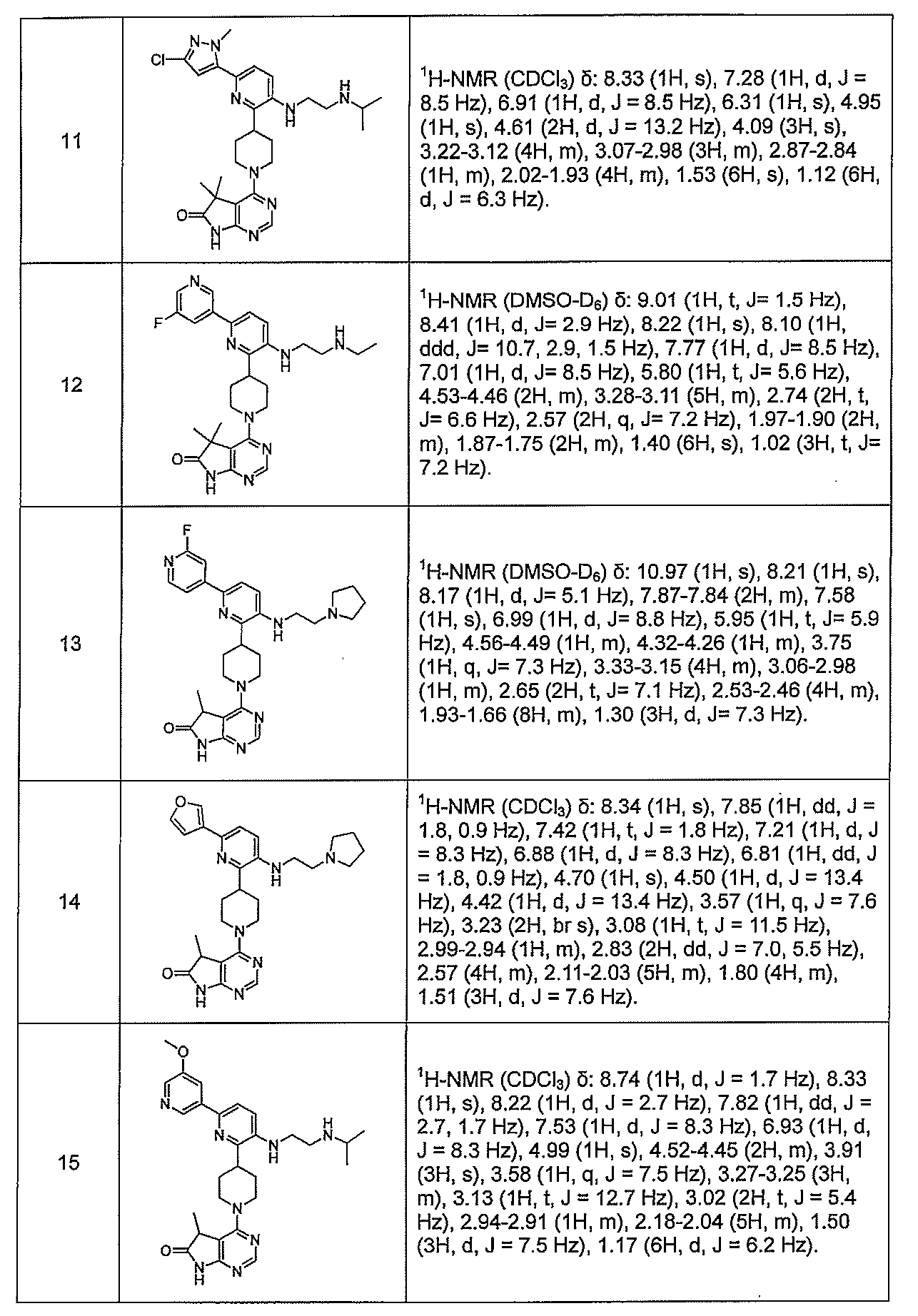
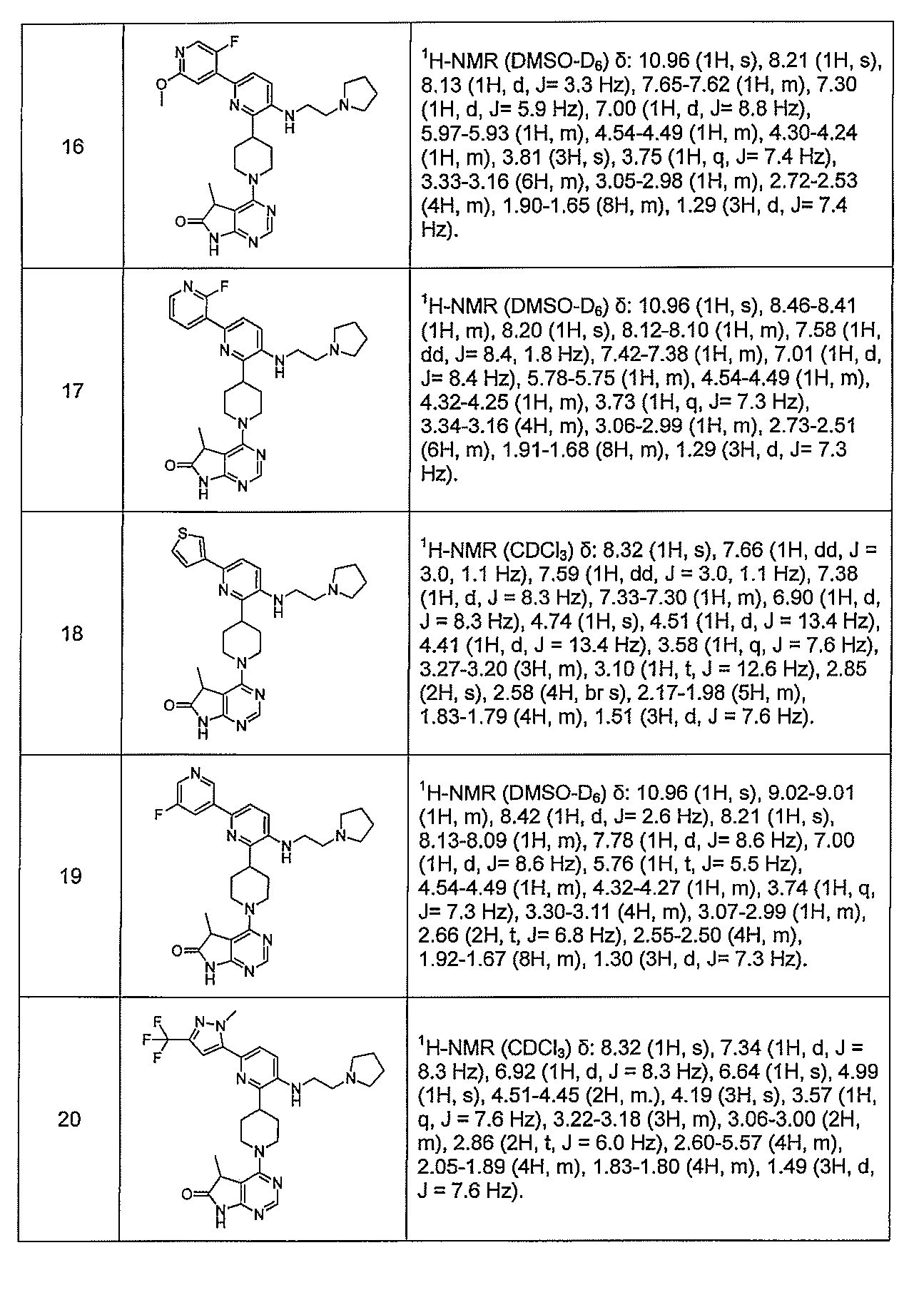

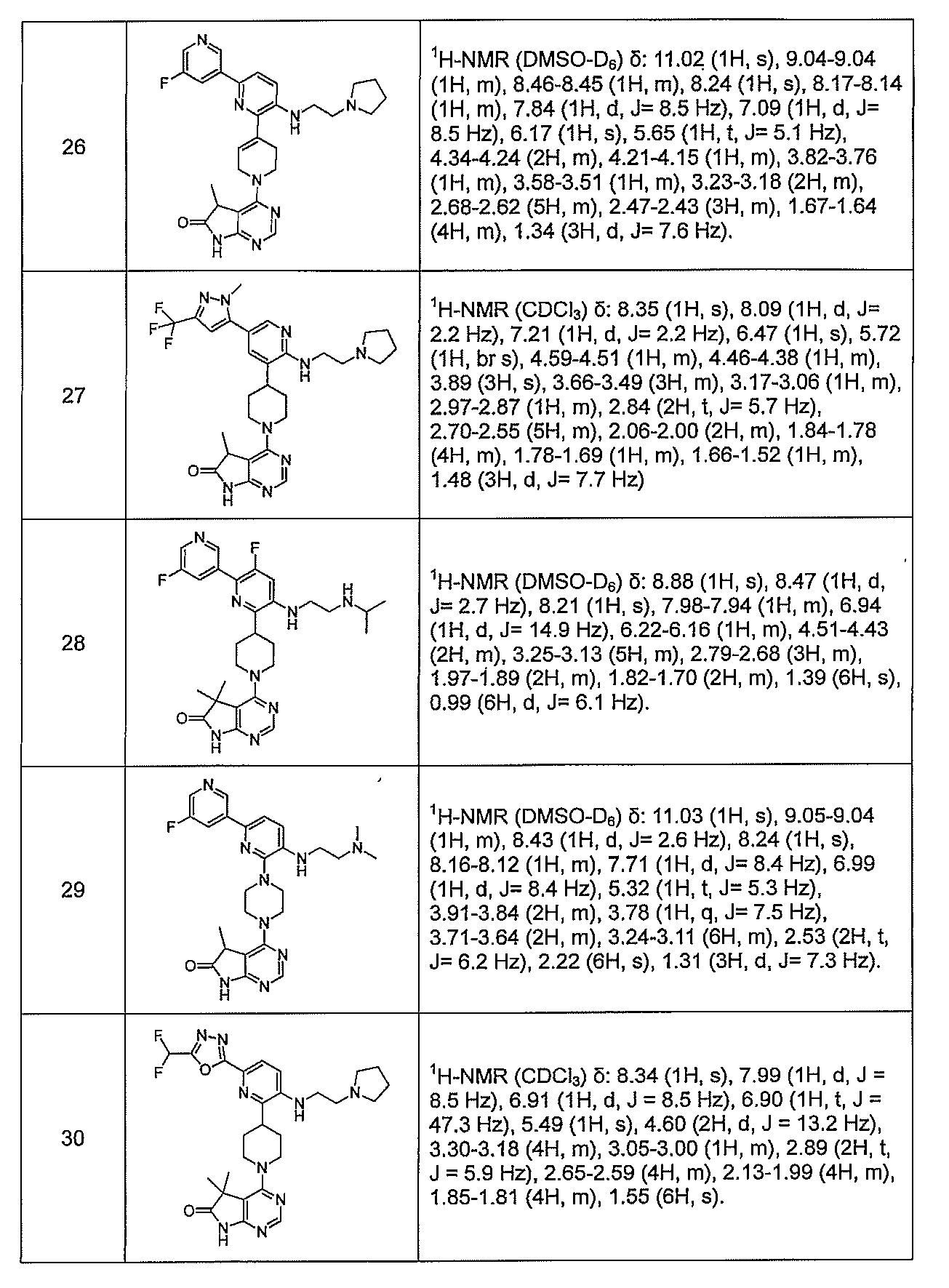
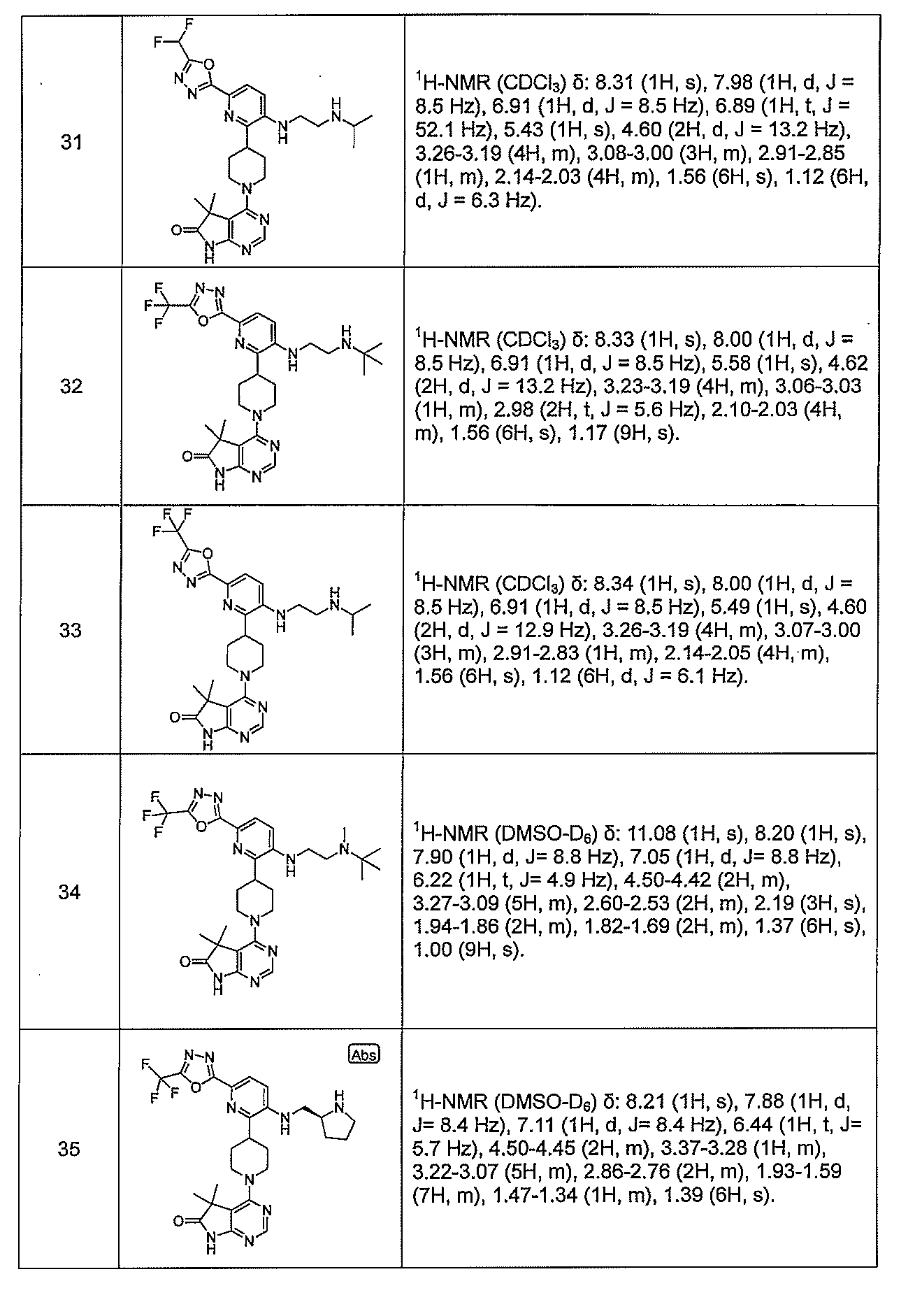
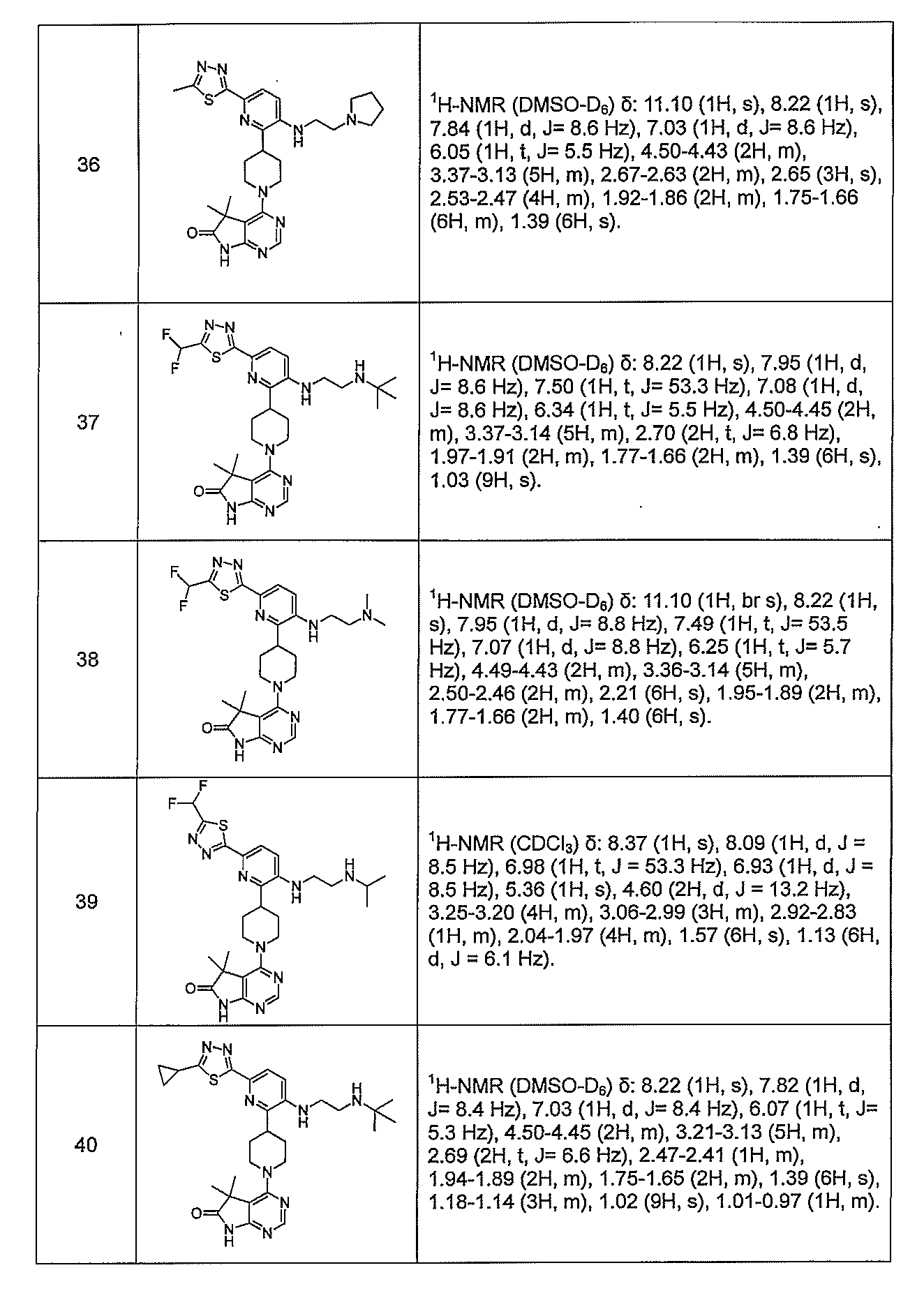
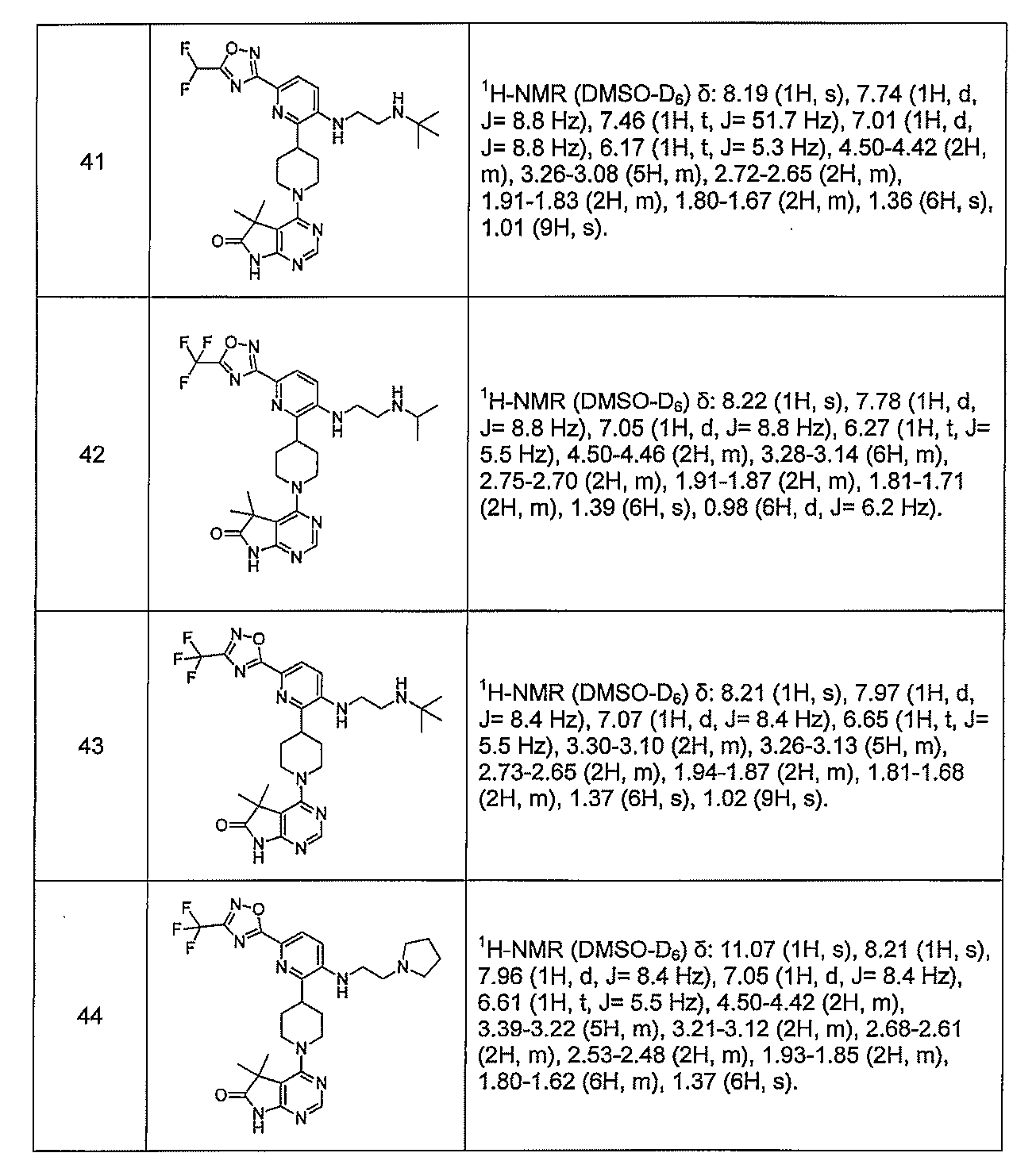
Akt1の調製並びにAkt1のキナーゼ活性に対する本発明化合物のインビトロでの阻害活性測定法は、Biochem.J.vol.385,pp399-408(2005)及びCancer Res.vol.68,pp2366-2374(2008)の文献に記載されている方法を参考にして実施した。Akt1の調製においては、まず、昆虫細胞Sf9でMiddle T antigenタグを付加させたヒトAkt1を発現させ、その後アフィニティー精製とPDK1による活性化を経てAkt1を調製し、化合物の阻害活性測定時まで-80℃で保存した。化合物の阻害活性測定においては、まず、反応用緩衝液(15mM Tris-HCl pH7.5,0.01% Tween-20,2mM DTT)中でAkt1と本発明化合物を25℃で120分間プレインキュベーションした。次に、基質としてビオチン化Crosstide(biotin-KGSGSGRPRTSSFAEG、Millipore社製)とMgCl2とATPをそれぞれ終濃度500nMと10mMと150μMとなるように加え、25℃で60分間反応させた。そこへ終濃度40mMになるようEDTAを加えることで反応を停止させた後、Euラベル化抗リン酸化Crosstide抗体(PerkinElmer社製)とSureLight APC-SA(PerkinElmer社製)をそれぞれ終濃度0.5nMと62.5nMになるように含む検出液を添加し、室温で2時間反応した。最後に、PHERAstar FS(BMG LABTECH社製)またはPHERAstar(BMG LABTECH社製)で波長337nmの励起光照射時における蛍光量を620nmと665nmの二波長で測定した。二波長の蛍光量比からリン酸化反応量を求め、リン酸化反応を50%抑制することのできる化合物濃度をIC50値(nM)と定義し以下の表2に示した。
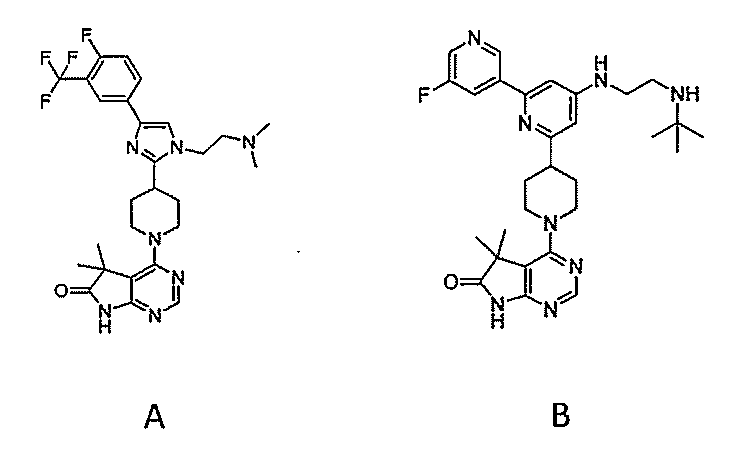
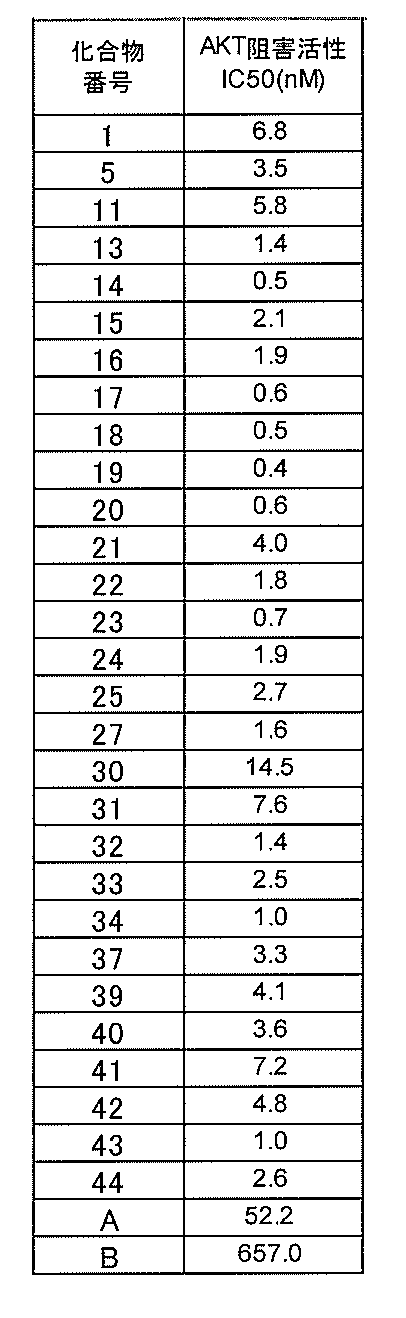
Rsk1キナーゼ活性に対する本発明化合物のインビトロでの阻害活性測定はカルナバイオサイエンス社のQSS AssistTM FPアッセイキットを用いて実施した。
化合物の阻害活性測定においては、まず、被験化合物をジメチルスルホキシド(DMSO)で段階希釈した。次に、キナーゼ反応用緩衝液(20mM HEPES(pH7.4),2mM dithiothreitol,0.01% Tween-20)中にRsk1蛋白質、基質ペプチド(終濃度は100nM)、塩化マグネシウム(終濃度は10mM)、ATP(終濃度は30μM)と被験化合物DMSO溶液(DMSOの終濃度は5%)を加えて25℃で40分間インキュベーションしキナーゼ反応を行った。そこへモレキュラーデバイス社のIMAP Progressive Binding Buffer Aにて400倍希釈したIMAP Progressive Binding Reagentを加えてキナーゼ反応を停止させた。室温で暗所に120分間静置後に、PHERAstar(BMG LABTECH社、励起波長485nm、検出波長520nm)で測定して得られた蛍光偏光度よりリン酸化反応量を求め、リン酸化反応を50%抑制することのできる化合物濃度をIC50値(nM)と定義し下記の表3に示した。
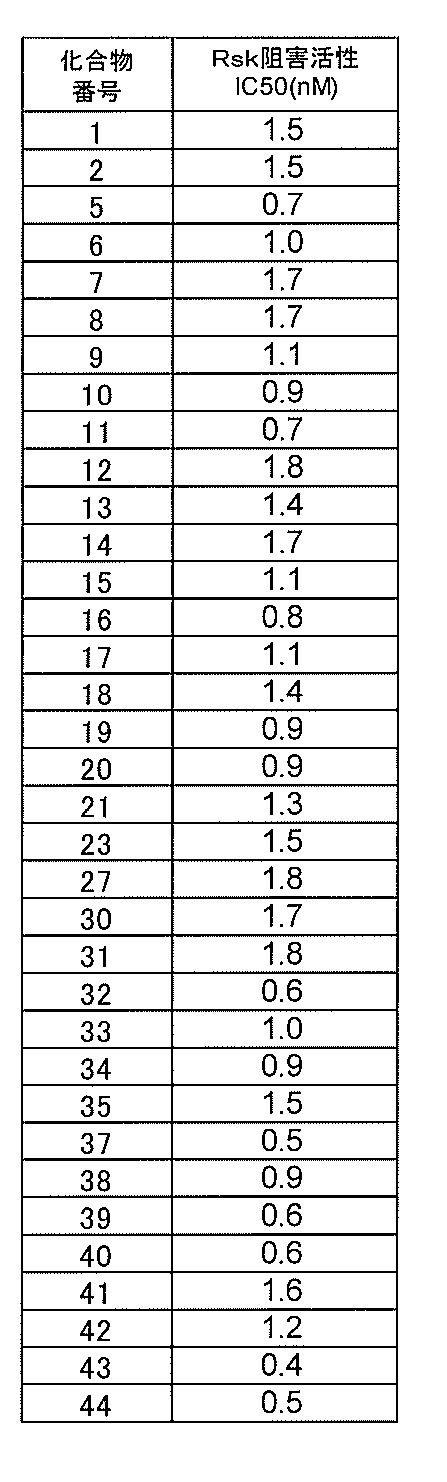
S6K1キナーゼ活性に対する本発明化合物のインビトロでの阻害活性測定はカルナバイオサイエンス社のQSS AssistTM FPアッセイキットを用いて実施した。
化合物の阻害活性測定においては、まず、被験化合物をジメチルスルホキシド(DMSO)で段階希釈した。次に、キナーゼ反応用緩衝液(20mM HEPES(pH7.4),2mM dithiothreitol,0.01% Tween-20)中にS6K蛋白質、基質ペプチド(終濃度は100nM)、塩化マグネシウム(終濃度は5mM)、ATP(終濃度は25μM)と被験化合物DMSO溶液(DMSOの終濃度は5%)を加えて25℃で30分間インキュベーションしキナーゼ反応を行った。そこへモレキュラーデバイス社のIMAP Progressive Binding Buffer Aにて400倍希釈したIMAP Progressive Binding Reagentを加えてキナーゼ反応を停止させた。室温で暗所に120分間静置後に、PHERAstar(BMG LABTECH社、励起波長485nm、検出波長520nm)で測定して得られた蛍光偏光度よりリン酸化反応量を求め、リン酸化反応を50%抑制することのできる化合物濃度をIC50値(nM)と定義し下記の表4に示した。

RKO細胞(ヒト大腸癌細胞株)に対するin vitro細胞増殖抑制試験を以下の条件で実施した。
細胞増殖率(%)=(T-C0)/C0×100;T<C0の場合
C0:化合物添加時のウェルの発光量(count per second)
C:ジメチルスルホキシドのみを添加したウェルの発光量(count per second)
T:被検化合物を添加したウェルの発光量(count per second)
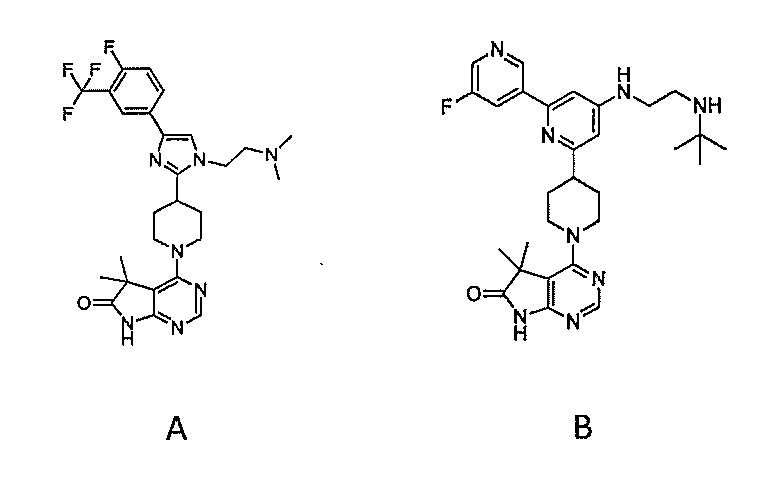

HEC-6細胞(子宮体癌細胞株)に対するin vitro細胞増殖抑制試験を以下の条件で実施した。
細胞増殖率(%)=(T-C0)/C0×100;T<C0の場合
C0:化合物添加時のウェルの発光量(count per second)
C:ジメチルスルホキシドのみを添加したウェルの発光量(count per second)
T:被検化合物を添加したウェルの発光量(count per second)
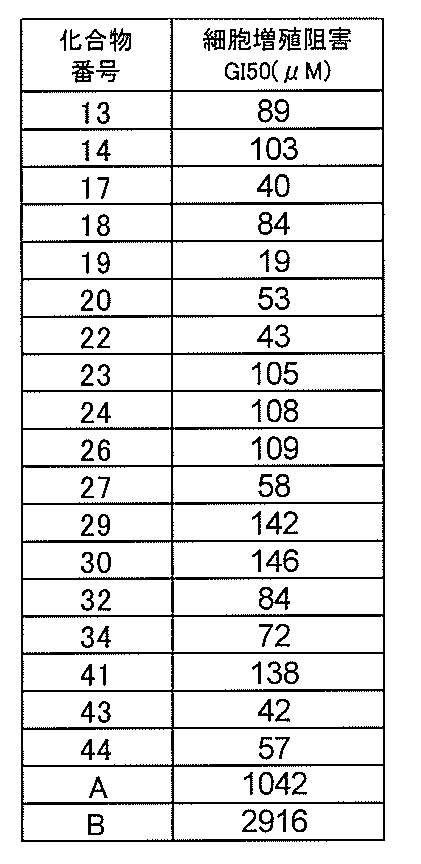
Claims (19)
- 下記式(I)

R1は、置換基を有していても良い、N、S及びOから選択される1~3個のヘテロ原子を有する4~6員の単環式の不飽和複素環基であり;
R2は、水素原子、ハロゲン原子、ヒドロキシル基、アミノ基、シアノ基、ニトロ基、C1-C6アルキル基、C1-C6ハロアルキル基、C2-C6アルケニル基、C2-C6アルキニル基、又はC3-C6シクロアルキル基であり;
R3、R4及びR5は、同一又は異なって、水素原子、C1-C6アルキル基、C1-C6ハロアルキル基、又はC3-C6シクロアルキル基であるか、或いは、R3及びR4は、それらが結合する窒素原子と一緒になって、N、S及びOから選択される1~3個のヘテロ原子を有する4~6員の単環式の飽和複素環を形成し、かつR5は、水素原子、C1-C6アルキル基、C1-C6ハロアルキル基、又はC3-C6シクロアルキル基であるか、或いは、R4及びR5は、それらが結合する窒素原子及び隣接する炭素原子と一緒になって、N、S及びOから選択される1~3個のヘテロ原子を有する4~6員の単環式の飽和複素環を形成し、かつR3は、水素原子、C1-C6アルキル基、C1-C6ハロアルキル基、又はC3-C6シクロアルキル基であり;
R6は、水素原子、C1-C6アルキル基、C1-C6ハロアルキル基、又はC3-C6シクロアルキル基であり;
R7及びR8は、同一又は異なって、水素原子、ハロゲン原子、ヒドロキシル基、アミノ基、シアノ基、ニトロ基、C1-C6アルキル基、C1-C6ハロアルキル基、C2-C6アルケニル基、C2-C6アルキニル基、又はC3-C6シクロアルキル基であるか、或いは、R7及びR8は、それらが結合する炭素原子と一緒になって、C3-C10シクロアルキル基を形成し;
X1及びX2は、同一又は異なって、N又はCR9であり、R9は、水素原子、ハロゲン原子、ヒドロキシル基、アミノ基、シアノ基、ニトロ基、C1-C6アルキル基、C1-C6ハロアルキル基、C2-C6アルケニル基、C2-C6アルキニル基、又はC3-C6シクロアルキル基であり;
で表される、化合物又はその塩。
- R1が、ハロゲン原子、C1-C6アルキル基、C1-C6ハロアルキル基、C1-C6アルコキシ基、及びC3-C10シクロアルキル基から選択される1~3個の置換基を有していても良い、N、S及びOから選択される1~3個のヘテロ原子を有する4~6員の単環式の不飽和複素環基である、請求項1に記載の化合物又はその塩。
- R2は、水素原子又はハロゲン原子であり、R6は、水素原子であり、R7は、C1-C6アルキル基であり、R8は、水素原子、又はC1-C6アルキル基であり、X1は、N又はCR9であり、R9は、水素原子、又はハロゲン原子であり、X2は、N又はCHである、請求項1又は2に記載の化合物又はその塩。
- R1が、ハロゲン原子、C1-C6アルキル基、C1-C6ハロアルキル基、C1-C6アルコキシ基、及びC3-C10シクロアルキル基から選択される1~3個の置換基を有していても良い、フラニル基、チエニル基、チアゾリル基、チアジアゾリル基、オキサゾリル基、オキサジアゾリル基、ピリジニル基、又はピラゾリル基である、請求項1~3のいずれか1項に記載の化合物又はその塩。
- R3、R4及びR5は、同一又は異なって、水素原子、又はC1-C6アルキル基であるか、或いは、R3及びR4は、それらが結合する窒素原子と一緒になって、1個の窒素原子を有する4~6員の単環式の飽和複素環を形成し、かつR5は、水素原子、又はC1-C6アルキル基であるか、或いは、R4及びR5は、それらが結合する窒素原子及び隣接する炭素原子と一緒になって、1個の窒素原子を有する4~6員の単環式の飽和複素環を形成し、かつR3は、水素原子、又はC1-C6アルキル基である、請求項1~4のいずれか1項に記載の化合物又はその塩。
- R1が、ハロゲン原子又はC1-C6アルコキシ基を有するピリジニル基、C1-C6アルキル基及びC1-C6ハロアルキル基を有するピラゾリル基、C1-C6ハロアルキル基を有するオキサジアゾリル基、或いは無置換のフラニル基、又はチアゾリル基であり、
R2、R5及びR6は、水素原子であり、
R3は、水素原子であり、かつR4は、C1-C6アルキル基であるか、R3及びR4は、それらが結合する窒素原子と一緒になって、1個の窒素原子を有する4~6員の単環式の飽和複素環を形成し、
R7は、C1-C6アルキル基であり、R8は、水素原子、又はC1-C6アルキル基であり、
X1及びX2は、互いに異なって、N又はCHであり、
請求項1~5のいずれか1項に記載の化合物又はその塩。
- R1が、C1-C6アルキル基及びC1-C6ハロアルキル基を有するピラゾリル基、或いは、C1-C6ハロアルキル基を有するオキサジアゾリル基である、請求項6に記載の化合物又はその塩。
- 化合物が以下の化合物群から選択されるものである、請求項1~7のいずれか1項記載の化合物又はその塩:
4-(4-(6-(5-(ジフルオロメチル)-1,3,4-オキサジアゾール-2-イル)-3-((2-(ピロリジン-1-イル)エチル)アミノ)ピリジン-2-イル)ピペリジン-1-イル)-5,5-ジメチル-5H-ピロロ[2,3-d]ピリミジン-6(7H)-オン;
4-(4-(3-((2-(tert-ブチルアミノ)エチル)アミノ)-6-(5-(トリフルオロメチル)-1,3,4-オキサジアゾール-2-イル)ピリジン-2-イル)ピペリジン-1-イル)-5,5-ジメチル-5H-ピロロ[2,3-d]ピリミジン-6(7H)-オン;及び
4-(4-(3-((2-(tert-ブチルアミノ)エチル)アミノ)-6-(5-(ジフルオロメチル)-1,2,4-オキサジアゾール-3-イル)ピリジン-2-イル)ピペリジン-1-イル)-5,5-ジメチル-5H-ピロロ[2,3-d]ピリミジン-6(7H)-オン。 - 請求項1~8のいずれか1項に記載の化合物又はその塩を有効成分とするAktキナーゼ阻害剤。
- 請求項1~8のいずれか1項に記載の化合物又はその塩を有効成分とするRskキナーゼ阻害剤。
- 請求項1~8のいずれか1項に記載の化合物又はその塩を有効成分とするS6Kキナーゼ阻害剤。
- 請求項1~8のいずれか1項に記載の化合物又はその塩を有効成分とする、Aktキナーゼ、Rskキナーゼ及びS6Kキナーゼからなる群から選択される少なくとも2つに対する阻害剤。
- 請求項1~8のいずれか1項に記載の化合物又はその塩を有効成分とする、Aktキナーゼ、Rskキナーゼ及びS6Kキナーゼに対する阻害剤。
- 請求項1~8のいずれか1項に記載の化合物又はその塩を有効成分として含有する、Aktキナーゼが関与する疾患を治療するための医薬組成物。
- 請求項1~8のいずれか1項に記載の化合物又はその塩を有効成分として含有する、Rskキナーゼが関与する疾患を治療するための医薬組成物。
- 請求項1~8のいずれか1項に記載の化合物又はその塩を有効成分として含有する、S6Kキナーゼが関与する疾患を治療するための医薬組成物。
- 請求項1~8のいずれか1項に記載の化合物又はその塩を有効成分として含有する、Aktキナーゼ、Rskキナーゼ及びS6Kキナーゼからなる群から選択される少なくとも2つが関与する疾患を治療するための医薬組成物。
- 請求項1~8のいずれか1項に記載の化合物又はその塩を有効成分として含有する、Aktキナーゼ、Rskキナーゼ及びS6Kキナーゼが関与する疾患を治療するための医薬組成物。
- 請求項1~8のいずれか1項に記載の化合物又はその塩を有効成分とする抗腫瘍剤。
Priority Applications (17)
| Application Number | Priority Date | Filing Date | Title |
|---|---|---|---|
| JP2018518384A JP6576553B2 (ja) | 2016-05-20 | 2017-05-19 | 新規5H−ピロロ[2,3−d]ピリミジン−6(7H)−オン誘導体 |
| RU2018144542A RU2713181C1 (ru) | 2016-05-20 | 2017-05-19 | Новое производное 5h-пирроло[2,3-d]пиримидин-6(7h)-она |
| PL17799511T PL3459953T3 (pl) | 2016-05-20 | 2017-05-19 | Nowa pochodna 5h-pirolo[2,3-d]pirymidyn-6(7h)-onu |
| MYPI2018704229A MY185962A (en) | 2016-05-20 | 2017-05-19 | Novel 5h-pyrrolo[2,3-d]pyrimidin-6(7h)-one derivative |
| CA3024831A CA3024831C (en) | 2016-05-20 | 2017-05-19 | Novel 5h-pyrrolo[2,3-d]pyrimidin-6(7h)-one derivative |
| ES17799511T ES2882018T3 (es) | 2016-05-20 | 2017-05-19 | Nuevo derivado de 5H-pirrolo[2,3-d]pirimidin-6(7H)-ona |
| DK17799511.5T DK3459953T3 (da) | 2016-05-20 | 2017-05-19 | Hidtil ukendt 5h-pyrrolo[2,3-d]pyrimidin-6(7h)-on-derivat |
| KR1020187030344A KR102149734B1 (ko) | 2016-05-20 | 2017-05-19 | 신규 5H-피로로[2,3-d]피리미딘-6(7H)-온 유도체 |
| MX2018014022A MX374576B (es) | 2016-05-20 | 2017-05-19 | Derivado de 5h-pirrolo[2,3-d]pirimidin-6(7h)-ona novedoso. |
| US16/302,829 US10538528B2 (en) | 2016-05-20 | 2017-05-19 | 5H-pyrrolo[2,3-D]pyrimidin-6(7H)-one derivative |
| SG11201810360YA SG11201810360YA (en) | 2016-05-20 | 2017-05-19 | Novel 5h-pyrrolo[2,3-d]pyrimidin-6(7h)-one derivative |
| CN201780030144.3A CN109153681B (zh) | 2016-05-20 | 2017-05-19 | 新型5H-吡咯并[2,3-d]嘧啶-6(7H)-酮衍生物 |
| EP17799511.5A EP3459953B1 (en) | 2016-05-20 | 2017-05-19 | Novel 5h-pyrrolo[2,3-d]pyrimidin-6(7h)-one derivative |
| HK19101800.7A HK1259613B (zh) | 2016-05-20 | 2017-05-19 | 新型5H-吡咯并[2,3-d]嘧啶-6(7H)-酮衍生物 |
| BR112018073721-6A BR112018073721B1 (pt) | 2016-05-20 | 2017-05-19 | Derivado de 5h-pirrolo[2,3-d]pirimidin-6(7h)-ona ou um sal do mesmo, seu uso, agente antitumor e composição farmacêutica |
| AU2017265769A AU2017265769B9 (en) | 2016-05-20 | 2017-05-19 | Novel 5H-Pyrrolo(2,3-D)Pyrimidin-6(7H)-one derivative |
| PH12018502411A PH12018502411A1 (en) | 2016-05-20 | 2018-11-15 | Novel 5h-pyrrolo[2,3-d]pyrimidin-6(7h)-one derivative |
Applications Claiming Priority (2)
| Application Number | Priority Date | Filing Date | Title |
|---|---|---|---|
| JP2016101599 | 2016-05-20 | ||
| JP2016-101599 | 2016-05-20 |
Publications (1)
| Publication Number | Publication Date |
|---|---|
| WO2017200087A1 true WO2017200087A1 (ja) | 2017-11-23 |
Family
ID=60325930
Family Applications (1)
| Application Number | Title | Priority Date | Filing Date |
|---|---|---|---|
| PCT/JP2017/018825 Ceased WO2017200087A1 (ja) | 2016-05-20 | 2017-05-19 | 新規5H-ピロロ[2,3-d]ピリミジン-6(7H)-オン誘導体 |
Country Status (21)
| Country | Link |
|---|---|
| US (1) | US10538528B2 (ja) |
| EP (1) | EP3459953B1 (ja) |
| JP (1) | JP6576553B2 (ja) |
| KR (1) | KR102149734B1 (ja) |
| CN (1) | CN109153681B (ja) |
| AU (1) | AU2017265769B9 (ja) |
| BR (1) | BR112018073721B1 (ja) |
| CA (1) | CA3024831C (ja) |
| DK (1) | DK3459953T3 (ja) |
| ES (1) | ES2882018T3 (ja) |
| HU (1) | HUE055846T2 (ja) |
| MA (1) | MA45048A (ja) |
| MX (1) | MX374576B (ja) |
| MY (1) | MY185962A (ja) |
| PH (1) | PH12018502411A1 (ja) |
| PL (1) | PL3459953T3 (ja) |
| PT (1) | PT3459953T (ja) |
| RU (1) | RU2713181C1 (ja) |
| SG (1) | SG11201810360YA (ja) |
| TW (2) | TWI732187B (ja) |
| WO (1) | WO2017200087A1 (ja) |
Cited By (4)
| Publication number | Priority date | Publication date | Assignee | Title |
|---|---|---|---|---|
| WO2023063432A1 (en) * | 2021-10-13 | 2023-04-20 | Taiho Pharmaceutical Co., Ltd. | Treatment methods for subjects having cancer with a dysregulated mapk and/or pi3k pathway |
| WO2023143424A1 (zh) * | 2022-01-27 | 2023-08-03 | 四川海思科制药有限公司 | 一种氮杂并环衍生物及其在医药上的应用 |
| WO2024009977A1 (ja) | 2022-07-05 | 2024-01-11 | 大鵬薬品工業株式会社 | 5H-ピロロ[2,3-d]ピリミジン-6(7H)-オン及びその塩体の結晶 |
| WO2025260014A1 (en) * | 2024-06-14 | 2025-12-18 | Tenvie Therapeutics, Inc. | Compounds, compositions, and methods |
Families Citing this family (1)
| Publication number | Priority date | Publication date | Assignee | Title |
|---|---|---|---|---|
| CN115850244B (zh) * | 2023-02-24 | 2023-05-16 | 成都大学 | 一种托吡司他的制备方法 |
Citations (3)
| Publication number | Priority date | Publication date | Assignee | Title |
|---|---|---|---|---|
| WO2005117909A2 (en) | 2004-04-23 | 2005-12-15 | Exelixis, Inc. | Kinase modulators and methods of use |
| US20100120801A1 (en) | 2008-11-11 | 2010-05-13 | Timothy Alan Shepherd | Akt and p70 s6 kinase inhibitors |
| JP2016101599A (ja) | 2014-11-28 | 2016-06-02 | アイシン・エィ・ダブリュ株式会社 | 歯形部品の製造方法および歯形部品製造装置 |
Family Cites Families (5)
| Publication number | Priority date | Publication date | Assignee | Title |
|---|---|---|---|---|
| GB0608184D0 (en) * | 2006-04-25 | 2006-06-07 | Astex Therapeutics Ltd | Pharmaceutical compounds |
| AR064416A1 (es) * | 2006-12-21 | 2009-04-01 | Cancer Rec Tech Ltd | Derivados de purina, piridina y pirimidina condensadas con heterociclos, moduladores de pka y/o pkb, composiciones farmaceuticas que los contienen, y usos para el tratamiento de enfermedades hiperproliferativas. |
| JP5608647B2 (ja) * | 2008-08-08 | 2014-10-15 | ネステク ソシエテ アノニム | 持ち運びハンドルおよび設定変更可能な外観ならびに副次的機能を伴う飲料装置 |
| EA020151B1 (ru) * | 2009-10-23 | 2014-09-30 | Эли Лилли Энд Компани | Ингибиторы akt и фармацевтические составы, их содержащие |
| AR095202A1 (es) * | 2013-03-11 | 2015-09-30 | Merck Patent Gmbh | Heterociclos como moduladores de la actividad quinasa |
-
2017
- 2017-05-19 PT PT177995115T patent/PT3459953T/pt unknown
- 2017-05-19 MA MA045048A patent/MA45048A/fr unknown
- 2017-05-19 CN CN201780030144.3A patent/CN109153681B/zh active Active
- 2017-05-19 HU HUE17799511A patent/HUE055846T2/hu unknown
- 2017-05-19 ES ES17799511T patent/ES2882018T3/es active Active
- 2017-05-19 TW TW108107835A patent/TWI732187B/zh active
- 2017-05-19 AU AU2017265769A patent/AU2017265769B9/en active Active
- 2017-05-19 MY MYPI2018704229A patent/MY185962A/en unknown
- 2017-05-19 RU RU2018144542A patent/RU2713181C1/ru active
- 2017-05-19 BR BR112018073721-6A patent/BR112018073721B1/pt active IP Right Grant
- 2017-05-19 PL PL17799511T patent/PL3459953T3/pl unknown
- 2017-05-19 US US16/302,829 patent/US10538528B2/en active Active
- 2017-05-19 KR KR1020187030344A patent/KR102149734B1/ko active Active
- 2017-05-19 DK DK17799511.5T patent/DK3459953T3/da active
- 2017-05-19 CA CA3024831A patent/CA3024831C/en active Active
- 2017-05-19 WO PCT/JP2017/018825 patent/WO2017200087A1/ja not_active Ceased
- 2017-05-19 MX MX2018014022A patent/MX374576B/es active IP Right Grant
- 2017-05-19 EP EP17799511.5A patent/EP3459953B1/en active Active
- 2017-05-19 TW TW106116606A patent/TWI679202B/zh active
- 2017-05-19 JP JP2018518384A patent/JP6576553B2/ja active Active
- 2017-05-19 SG SG11201810360YA patent/SG11201810360YA/en unknown
-
2018
- 2018-11-15 PH PH12018502411A patent/PH12018502411A1/en unknown
Patent Citations (6)
| Publication number | Priority date | Publication date | Assignee | Title |
|---|---|---|---|---|
| WO2005117909A2 (en) | 2004-04-23 | 2005-12-15 | Exelixis, Inc. | Kinase modulators and methods of use |
| JP2007534687A (ja) * | 2004-04-23 | 2007-11-29 | エグゼリクシス, インコーポレイテッド | キナーゼ調節因子および使用方法 |
| US20100120801A1 (en) | 2008-11-11 | 2010-05-13 | Timothy Alan Shepherd | Akt and p70 s6 kinase inhibitors |
| WO2010056563A1 (en) | 2008-11-11 | 2010-05-20 | Eli Lilly And Company | Akt and p70 s6 kinase inhibitors |
| JP2012508274A (ja) * | 2008-11-11 | 2012-04-05 | イーライ リリー アンド カンパニー | Aktおよびp70s6キナーゼ阻害剤 |
| JP2016101599A (ja) | 2014-11-28 | 2016-06-02 | アイシン・エィ・ダブリュ株式会社 | 歯形部品の製造方法および歯形部品製造装置 |
Non-Patent Citations (18)
| Title |
|---|
| "Iyakuhin no Kaihatsu (Pharmaceutical Research and Development", vol. vol. 7, 1990, BUNSHI SEKKEI (DRUG DESIGN, pages: 163 - 198 |
| BIOCHEM. J., vol. 385, 2005, pages 399 - 408 |
| BIOCHEM. J., vol. 441, no. 2, 2012, pages 553 - 69 |
| BIOL. PHARM. BULL., vol. 39, 2016, pages 547 - 555 |
| CANCER RES., vol. 68, 2008, pages 2366 - 2374 |
| CANCER RES., vol. 68, no. 7, 2008, pages 2366 - 74 |
| CURR. CANCER DRUG TARGETS, vol. 8, no. 1, 2008, pages 27 - 36 |
| EUR. J. CANCER., vol. 50, no. 5, 2014, pages 867 - 75 |
| INT. J. BIOCHEM. CELL BIOL., vol. 43, no. 1, 2011, pages 47 - 59 |
| J. BIOL. CHEM., vol. 285, 2010, pages 4587 - 4594 |
| J. CELL SCI., vol. 118, 2005, pages 5675 - 8 |
| MOL. CANCER RES., vol. 12, no. 5, 2014, pages 803 - 12 |
| MOL. CANCER THER., vol. 15, no. 11, 2016, pages 2598 - 2608 |
| MOL. CANCER THER., vol. 4, no. 6, 2005, pages 977 - 86 |
| MOL. CANCER THER., vol. 9, no. 7, 2010, pages 1956 - 67 |
| NATURE, vol. 448, no. 7152, 2007, pages 439 - 44 |
| PIERIK, ANTONIO J.; CICERI, DANIELE; BROEKER, GERD; EDWARDS, CHRISTOPHER H.; MCFARLANE, WILLIAM; WINTER, JOACHIM; BUCKEL, WOLFGANG, JOURNAL OF THE AMERICAN CHEMICAL SOCIETY, vol. 124, no. 47, 2002, pages 14039 - 14048 |
| See also references of EP3459953A4 |
Cited By (5)
| Publication number | Priority date | Publication date | Assignee | Title |
|---|---|---|---|---|
| WO2023063432A1 (en) * | 2021-10-13 | 2023-04-20 | Taiho Pharmaceutical Co., Ltd. | Treatment methods for subjects having cancer with a dysregulated mapk and/or pi3k pathway |
| WO2023143424A1 (zh) * | 2022-01-27 | 2023-08-03 | 四川海思科制药有限公司 | 一种氮杂并环衍生物及其在医药上的应用 |
| WO2024009977A1 (ja) | 2022-07-05 | 2024-01-11 | 大鵬薬品工業株式会社 | 5H-ピロロ[2,3-d]ピリミジン-6(7H)-オン及びその塩体の結晶 |
| JPWO2024009977A1 (ja) * | 2022-07-05 | 2024-01-11 | ||
| WO2025260014A1 (en) * | 2024-06-14 | 2025-12-18 | Tenvie Therapeutics, Inc. | Compounds, compositions, and methods |
Also Published As
Similar Documents
| Publication | Publication Date | Title |
|---|---|---|
| US10851080B2 (en) | Methods of treatment using pyrrolidinyl urea, thiourea, guanidine and cyanoguanidine compounds | |
| US9809578B2 (en) | Pyrazolyl urea, thiourea, guanidine and cyanoguanidine compounds as trkA kinase inhibitors | |
| JP2020196726A (ja) | Cdk阻害剤としての置換型ヘテロシクリル誘導体 | |
| JP6576553B2 (ja) | 新規5H−ピロロ[2,3−d]ピリミジン−6(7H)−オン誘導体 | |
| KR20220054894A (ko) | Ret 키나아제 억제제로서의 헤테로사이클릭 화합물 | |
| CN107635986A (zh) | 取代的喹喔啉衍生物 | |
| CN110167941B (zh) | 取代的稠合杂芳基化合物作为激酶抑制剂及其应用 | |
| WO2015022926A1 (ja) | 新規な縮合ピリミジン化合物又はその塩 | |
| US11040981B2 (en) | Pyrrolotriazine compounds and methods of inhibiting TAM kinases | |
| CN107021963A (zh) | 吡唑稠环类衍生物、其制备方法及其在治疗癌症、炎症和免疫性疾病上的应用 | |
| WO2023091726A1 (en) | Inhibitors of cyclin‑dependent kinase 12 (cdk12) | |
| KR20220085735A (ko) | 아이소옥사졸리딘 유도체 화합물 및 이의 용도 | |
| JP2014533661A (ja) | 三環系PI3K及び/又はmTOR抑制剤 | |
| KR102645237B1 (ko) | 7H-피롤로[2,3-d]피리미딘-4-아민 유도체 | |
| KR20170133511A (ko) | 키나아제 억제제의 제조 및 응용 | |
| AU2016213030A1 (en) | Preventive and/or therapeutic agent of immune disease | |
| HK1259613B (zh) | 新型5H-吡咯并[2,3-d]嘧啶-6(7H)-酮衍生物 |
Legal Events
| Date | Code | Title | Description |
|---|---|---|---|
| WWE | Wipo information: entry into national phase |
Ref document number: 2018518384 Country of ref document: JP |
|
| ENP | Entry into the national phase |
Ref document number: 20187030344 Country of ref document: KR Kind code of ref document: A |
|
| ENP | Entry into the national phase |
Ref document number: 3024831 Country of ref document: CA |
|
| NENP | Non-entry into the national phase |
Ref country code: DE |
|
| REG | Reference to national code |
Ref country code: BR Ref legal event code: B01A Ref document number: 112018073721 Country of ref document: BR |
|
| 121 | Ep: the epo has been informed by wipo that ep was designated in this application |
Ref document number: 17799511 Country of ref document: EP Kind code of ref document: A1 |
|
| ENP | Entry into the national phase |
Ref document number: 2017265769 Country of ref document: AU Date of ref document: 20170519 Kind code of ref document: A |
|
| ENP | Entry into the national phase |
Ref document number: 2017799511 Country of ref document: EP Effective date: 20181220 |
|
| ENP | Entry into the national phase |
Ref document number: 112018073721 Country of ref document: BR Kind code of ref document: A2 Effective date: 20181119 |