WO2017190553A1 - 一种双重限域结构的过渡金属纳米粒子催化剂及其催化对苯二甲酸二甲酯选择加氢的应用 - Google Patents
一种双重限域结构的过渡金属纳米粒子催化剂及其催化对苯二甲酸二甲酯选择加氢的应用 Download PDFInfo
- Publication number
- WO2017190553A1 WO2017190553A1 PCT/CN2017/076444 CN2017076444W WO2017190553A1 WO 2017190553 A1 WO2017190553 A1 WO 2017190553A1 CN 2017076444 W CN2017076444 W CN 2017076444W WO 2017190553 A1 WO2017190553 A1 WO 2017190553A1
- Authority
- WO
- WIPO (PCT)
- Prior art keywords
- transition metal
- catalyst
- double
- metal nanoparticle
- nanoparticle catalyst
- Prior art date
- Legal status (The legal status is an assumption and is not a legal conclusion. Google has not performed a legal analysis and makes no representation as to the accuracy of the status listed.)
- Ceased
Links
Images
Classifications
-
- B—PERFORMING OPERATIONS; TRANSPORTING
- B01—PHYSICAL OR CHEMICAL PROCESSES OR APPARATUS IN GENERAL
- B01J—CHEMICAL OR PHYSICAL PROCESSES, e.g. CATALYSIS OR COLLOID CHEMISTRY; THEIR RELEVANT APPARATUS
- B01J23/00—Catalysts comprising metals or metal oxides or hydroxides, not provided for in group B01J21/00
- B01J23/70—Catalysts comprising metals or metal oxides or hydroxides, not provided for in group B01J21/00 of the iron group metals or copper
- B01J23/74—Iron group metals
- B01J23/755—Nickel
-
- B—PERFORMING OPERATIONS; TRANSPORTING
- B01—PHYSICAL OR CHEMICAL PROCESSES OR APPARATUS IN GENERAL
- B01J—CHEMICAL OR PHYSICAL PROCESSES, e.g. CATALYSIS OR COLLOID CHEMISTRY; THEIR RELEVANT APPARATUS
- B01J23/00—Catalysts comprising metals or metal oxides or hydroxides, not provided for in group B01J21/00
- B01J23/002—Mixed oxides other than spinels, e.g. perovskite
-
- B—PERFORMING OPERATIONS; TRANSPORTING
- B01—PHYSICAL OR CHEMICAL PROCESSES OR APPARATUS IN GENERAL
- B01J—CHEMICAL OR PHYSICAL PROCESSES, e.g. CATALYSIS OR COLLOID CHEMISTRY; THEIR RELEVANT APPARATUS
- B01J23/00—Catalysts comprising metals or metal oxides or hydroxides, not provided for in group B01J21/00
- B01J23/70—Catalysts comprising metals or metal oxides or hydroxides, not provided for in group B01J21/00 of the iron group metals or copper
- B01J23/72—Copper
-
- B—PERFORMING OPERATIONS; TRANSPORTING
- B01—PHYSICAL OR CHEMICAL PROCESSES OR APPARATUS IN GENERAL
- B01J—CHEMICAL OR PHYSICAL PROCESSES, e.g. CATALYSIS OR COLLOID CHEMISTRY; THEIR RELEVANT APPARATUS
- B01J23/00—Catalysts comprising metals or metal oxides or hydroxides, not provided for in group B01J21/00
- B01J23/70—Catalysts comprising metals or metal oxides or hydroxides, not provided for in group B01J21/00 of the iron group metals or copper
- B01J23/74—Iron group metals
- B01J23/745—Iron
-
- B—PERFORMING OPERATIONS; TRANSPORTING
- B01—PHYSICAL OR CHEMICAL PROCESSES OR APPARATUS IN GENERAL
- B01J—CHEMICAL OR PHYSICAL PROCESSES, e.g. CATALYSIS OR COLLOID CHEMISTRY; THEIR RELEVANT APPARATUS
- B01J23/00—Catalysts comprising metals or metal oxides or hydroxides, not provided for in group B01J21/00
- B01J23/70—Catalysts comprising metals or metal oxides or hydroxides, not provided for in group B01J21/00 of the iron group metals or copper
- B01J23/74—Iron group metals
- B01J23/75—Cobalt
-
- B—PERFORMING OPERATIONS; TRANSPORTING
- B01—PHYSICAL OR CHEMICAL PROCESSES OR APPARATUS IN GENERAL
- B01J—CHEMICAL OR PHYSICAL PROCESSES, e.g. CATALYSIS OR COLLOID CHEMISTRY; THEIR RELEVANT APPARATUS
- B01J35/00—Catalysts, in general, characterised by their form or physical properties
- B01J35/30—Catalysts, in general, characterised by their form or physical properties characterised by their physical properties
- B01J35/396—Distribution of the active metal ingredient
-
- B—PERFORMING OPERATIONS; TRANSPORTING
- B01—PHYSICAL OR CHEMICAL PROCESSES OR APPARATUS IN GENERAL
- B01J—CHEMICAL OR PHYSICAL PROCESSES, e.g. CATALYSIS OR COLLOID CHEMISTRY; THEIR RELEVANT APPARATUS
- B01J35/00—Catalysts, in general, characterised by their form or physical properties
- B01J35/40—Catalysts, in general, characterised by their form or physical properties characterised by dimensions, e.g. grain size
-
- B—PERFORMING OPERATIONS; TRANSPORTING
- B82—NANOTECHNOLOGY
- B82Y—SPECIFIC USES OR APPLICATIONS OF NANOSTRUCTURES; MEASUREMENT OR ANALYSIS OF NANOSTRUCTURES; MANUFACTURE OR TREATMENT OF NANOSTRUCTURES
- B82Y30/00—Nanotechnology for materials or surface science, e.g. nanocomposites
-
- B—PERFORMING OPERATIONS; TRANSPORTING
- B82—NANOTECHNOLOGY
- B82Y—SPECIFIC USES OR APPLICATIONS OF NANOSTRUCTURES; MEASUREMENT OR ANALYSIS OF NANOSTRUCTURES; MANUFACTURE OR TREATMENT OF NANOSTRUCTURES
- B82Y40/00—Manufacture or treatment of nanostructures
-
- C—CHEMISTRY; METALLURGY
- C07—ORGANIC CHEMISTRY
- C07C—ACYCLIC OR CARBOCYCLIC COMPOUNDS
- C07C67/00—Preparation of carboxylic acid esters
- C07C67/30—Preparation of carboxylic acid esters by modifying the acid moiety of the ester, such modification not being an introduction of an ester group
- C07C67/303—Preparation of carboxylic acid esters by modifying the acid moiety of the ester, such modification not being an introduction of an ester group by hydrogenation of unsaturated carbon-to-carbon bonds
-
- C—CHEMISTRY; METALLURGY
- C07—ORGANIC CHEMISTRY
- C07C—ACYCLIC OR CARBOCYCLIC COMPOUNDS
- C07C69/00—Esters of carboxylic acids; Esters of carbonic or haloformic acids
- C07C69/74—Esters of carboxylic acids having an esterified carboxyl group bound to a carbon atom of a ring other than a six-membered aromatic ring
- C07C69/75—Esters of carboxylic acids having an esterified carboxyl group bound to a carbon atom of a ring other than a six-membered aromatic ring of acids with a six-membered ring
Definitions
- the invention belongs to the technical field of catalyst preparation, in particular to a method for controlling reduction and preparation of a hydrotalcite-like precursor, wherein a metal nanoparticle is sequentially embedded in a double shell of a metal oxide and an amorphous alumina to form a transition metal having a double confinement structure.
- the industrial hydrogenation of dimethyl terephthalate to produce dimethyl 1,4-cyclohexanedicarboxylate mainly uses a supported noble metal Pd, Ru or Rh-based catalyst.
- noble metal catalysts have higher hydrogenation activity and selectivity, but their process conditions are more demanding, and their price is relatively expensive, which is not conducive to the further development of industrialization. Therefore, the focus of current research is mostly on the use of non-precious metals, mainly using transition metal Ni instead of precious metals.
- the conventional preparation of supported catalysts mostly adopts the impregnation method, which is simple in preparation and low in process cost.
- the impregnation method is easy to cause metal particle agglomeration to grow due to factors such as solvation effect in the preparation of the supported catalyst.
- the prepared catalyst active component has poor dispersion, resulting in poor reactivity and service life of the catalyst.
- LDHs are compounds formed by the orderly assembly of interlayer anions and positively charged layers.
- the chemical composition is generally as follows: [M 2+ 1-x M 3+ x (OH) 2 ] x+ [A n- ] x/n ⁇ yH 2 O, wherein M 2+ and M 3+ are divalent and trivalent metal cations, respectively, on the host layer; A n- is an interlayer anion; x is M 3+ /(M 2+ The molar ratio of +M 3+ ); y is the number of water molecules in the interlayer.
- the LDHs have the characteristics of tunable denaturation of the metal ion composition of the main layer, the charge density of the main layer and its variability, the variability of the type and amount of intercalated anion, the variability of the intra-layer space, and the variability of the interaction between the host and the guest.
- Such structural features make LDHs a meaningful platform for the development of new catalysts, catalyst precursors and catalyst supports with variable structure and properties.
- the metal oxide catalyst materials can be obtained by calcination under certain conditions (temperature, time). The structure of such materials is good and the catalytic activity sites are relatively uniform.
- the active metal nanoparticles prepared by the heat treatment under a reducing atmosphere are large, the interaction force between the metal and the substrate is weak, and the reactivity is still limited.
- the oxide reduction is difficult, and the degree of reduction of Ni metal is reduced.
- the invention firstly synthesizes a hydrotalcite-like precursor containing a transition metal and an aluminum ion in a laminate, and then obtains a transition metal nanoparticle catalyst having a double confinement structure by reduction.
- the structure of the catalyst is characterized in that the transition metal nanoparticles are sequentially embedded in the double-shell of the aluminum-doped transition metal oxide and the amorphous alumina to form a double-limited nano metal particle structure.
- the catalyst is applied to the selective hydrogenation reaction of dimethyl terephthalate, which can effectively improve the conversion rate, selectivity and stability of the reaction.
- the double-domain structure transition metal nanoparticle catalyst of the invention has the following structure: the transition metal nanoparticles are limited in the aluminum-doped transition metal oxide shell layer, and the outermost part is composed of amorphous alumina.
- the shell structure forms a double-limited nano metal particle structure; the catalyst is a black powdery substance having a single particle diameter of 4-8 nm; and the total loading of the transition metal is 60-66 wt% based on the total mass of the catalyst.
- the preparation method of the double-domain structure transition metal nanoparticle catalyst of the invention is as follows:
- the hydrotalcite precursor is dried at 60-100 ° C for 24-36 h, then calcined in a muffle furnace at 300-700 ° C for 2-8 h in an air atmosphere, and the heating rate is 2-10 ° C / min to obtain aluminum doping.
- Miscellaneous transition metal oxides
- the aluminum-doped transition metal oxide is placed in an atmosphere furnace, heat-treated at 300-700 ° C for 0.5-6 h under a hydrogen atmosphere, the heating rate is 2-10 ° C / min; the hydrogen flow rate is 30-80 mL / min, the reaction is completed.
- the transition metal nanoparticle catalyst with double confinement structure is obtained.
- the preparation method of the double-domain-structured transition metal nanoparticle catalyst of the invention is as follows: the hydrotalcite precursor is placed in an atmosphere furnace, heat-treated at 300-700 ° C for 0.5-6 h under a hydrogen atmosphere, and the heating rate is 2-10. °C/min; hydrogen flow rate is 30-80mL / min, after the reaction is completed, the transition metal nanoparticle catalyst with double confinement structure is obtained.
- the divalent metal ions in the laminate of the hydrotalcite precursor are selected from transition metal ions, and the trivalent metal ions are aluminum ions.
- the transition metal ion is one or more of Ni 2+ , Co 2+ , Cu 2+ , Fe 2+ .
- the double-domain-structured transition metal nanoparticle catalyst prepared by the above method catalyzes the selective hydrogenation of dimethyl terephthalate.
- the catalytic process conditions are: dimethyl terephthalate is 0.5-2.5 g, the amount of transition metal nanoparticle catalyst with double confinement structure is 0.15-0.5 g, solvent is 80-100 mL, reaction temperature is 80-130 ° C, hydrogen The pressure is 2-8 MPa and the reaction time is 3-6 h.
- the solvent is selected from one or more of isopropanol, ethanol, and ethyl acetate.
- the invention adopts the method of controlled reduction of hydrotalcite precursor to prepare a transition nano metal nanoparticle catalyst with double confinement structure, the two oxide shell structures make the dispersion of the transition metal more uniform, and the interaction between the transition metal and the carrier is stronger. It prevents the loss of sintering and transition metals and provides the reactive sites for the reaction.
- the catalyst not only improves the conversion rate of dimethyl terephthalate, but also greatly improves the selectivity of dimethyl 1,4-cyclohexanedicarboxylate, and has outstanding reaction stability, thereby improving the hydrogenation reaction. performance.
- the conversion rate of the selective hydrogenation reaction of dimethyl terephthalate was 99.9% and the selectivity was 93.3% under the conditions of 90 ° C, 6 MPa hydrogen pressure and 4:1 reactant/catalyst.
- the catalyst preparation process does not require the use of an organic solvent or an additive, and the method is simple and environmentally friendly.
- the catalyst can also be used in the reaction of pyrolysis gasoline for selective hydrogenation, methane reforming, and hydrogenation of CO and CO 2 to produce low carbon hydrocarbons and alcohols.
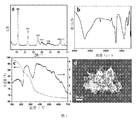
- Example 1 is a powder X-ray diffraction pattern (a), a Fourier transform infrared pattern (b), a thermogravimetric thermal analysis pattern (c), and a scanning electron microscope image (d) of Ni 2 Al-LDHs prepared in Example 1. .
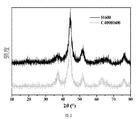
- Example 2 is an XRD pattern of R600 prepared in Example 1 and a C400R600 sample prepared in Example 2.
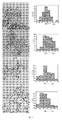
- FIG. 3 is a photograph of a high-resolution transmission electron microscope of R400 (a), R600 (b) prepared in Example 1, and C400R400 (c), C400R600 (d) prepared in Example 2, and corresponding particle size distribution maps (based on each Sample 150 particles calculated).
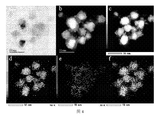
- FIG. 4 is a bright field diagram (a), a dark field diagram (b) of a transition metal nanoparticle catalyst R600 sample of the double-domain structure in Example 1, and a dark field after adding an energy scatter spectrum accessory.
- the salt solution was kept at pH 10; after the addition was completed, the obtained slurry was transferred to a 250 mL Teflon autoclave, crystallized at 130 ° C for 24 h, filtered, washed with deionized water and filtered to pH 7. Finally, it was dried at 70 ° C for 24 h to obtain a highly dispersed hydrotalcite precursor, which was recorded as Ni 2 Al-LDHs (XRD, FT-IR, TG-DTA spectrum and SEM image shown in Figure 1);
- step B The high-dispersion hydrotalcite precursor Ni 2 Al-LDHs prepared in step A was placed in a high-temperature atmosphere furnace, and H 2 having a purity of 99.999% was introduced at a flow rate of 60 mL/min, and the temperature in the furnace was increased to 400 ° C, respectively. And at 600 ° C, the heating rate is 5 ° C / min, held for 5 h, and then naturally cooled to room temperature, to obtain a double-domain structure of transition metal nanoparticle catalysts are recorded as Ni / NiAlO x / AlO x (R400) and Ni / NiAlO x /AlO x (R600) sample (XRD pattern is shown in Figure 2).
- Ni 2 Al-LDHs precursors were characterized by XRD, FTIR, TG-DTA and SEM. The results are shown in Fig. 1. It can be seen from the figure that the layered structure of hydrotalcite-like structure is obtained, and the overall structure of the material is uniform and uniform, Ni 2 The precursor of Al-LDHs is a hexagonal plate-like structure of several tens of nanometers, and the overall thickness is only a dozen nanometers.
- the double-domain-structured transition metal nanoparticle catalyst prepared above has a composition structure in which nickel nanoparticles are bounded in an aluminum-doped nickel oxide shell layer, and the outermost layer is a shell structure composed of amorphous alumina. Double-limited nano metal particle structure; the catalyst is a black powdery substance with a single particle size of 4-8 nm; and the total loading of nickel is 65 wt% based on the total mass of the catalyst.
- the hydrotalcite precursor prepared in the step A of Example 1 was placed in a muffle furnace, air-fired, the furnace temperature was raised to 400 ° C, the heating rate was 5 ° C / min, held for 5 h, and then naturally cooled to room temperature; Then placed in a high-temperature atmosphere furnace, and passed H 2 with a purity of 99.999%, the flow rate was 60mL/min, respectively increased the furnace temperature to 400 ° C and 600 ° C, the heating rate was 5 ° C / min, held for 5 h, then naturally cooled At room temperature, the transition metal nanoparticle catalysts with double confinement structure were recorded as Ni/NiAlO x /AlO x (C400R400) and Ni/NiAlO x /AlO x (C400R600) samples (see Figure 2 for XRD pattern).
- the double-domain-structured transition metal nanoparticle catalyst prepared above has a composition structure in which nickel nanoparticles are bounded in an aluminum-doped nickel oxide shell layer, and the outermost layer is a shell structure composed of amorphous alumina. Double-limited nano metal particle structure; the catalyst is a black powdery substance with a single particle size of 4-8 nm; and the total loading of nickel is 65 wt% based on the total mass of the catalyst.
- Example 2 The R600 obtained in Example 1 and the C400R600 sample material obtained in Example 2 were characterized by XRD. The results are shown in Fig. 2. It can be seen from Fig. 2 that the R600 sample obtained is stronger than the C400R600 sample, and the characteristic peak of Ni is stronger. The degree of reduction is higher, and the characteristic peak of NiO is relatively flat. In the C400R600 sample, NiO still accounts for the majority of the total phase composition.
- the R400 and R600 obtained in Example 1 and the C400R400 and C400R600 sample materials obtained in Example 2 were subjected to HRETEM characterization.
- the results are shown in Fig. 3.
- the 3.0-5.0 nm particle size of the obtained R400 sample accounted for 86. %, while the 4.0-6.0 nm particles in the C400R400 sample accounted for 90%.
- the R600 sample Particles larger than 5.5-7.5 nm accounted for 85%, while particles of 9.0-12.0 nm in the C400R600 sample accounted for 83%.
- the obtained nano-metal particle catalyst Ni/NiAlO x /AlO x obtained by double-domain structure was characterized by Cs-corrected STEM.
- the results are shown in Fig. 4. It can be seen from Fig. 4 that the size of the obtained nanoparticles is mostly 4-7 nm. Between the Ni elements are mainly distributed in the central region of the nanoparticles, and the Al elements are mainly distributed at the edges of the particles and at the junctions of some of the voids. It shows that the obtained nanoparticles have higher dispersion, smaller particle size and uniform shape, especially the nano metal particle catalyst Ni/NiAlO x /AlO x which forms a double confinement structure.
- the salt solution was kept at pH 10; after the addition was completed, the obtained slurry was transferred to a 250 mL Teflon autoclave, crystallized at 130 ° C for 24 h, filtered, washed with deionized water and filtered to pH 7. Finally, drying at 70 ° C for 24 h, to obtain a highly dispersed hydrotalcite precursor, denoted as Co 2 Al-LDHs;
- the high-dispersion hydrotalcite precursor Co 2 Al-LDHs prepared in the step A is placed in a high-temperature atmosphere furnace, and H 2 having a purity of 99.999% is passed, the flow rate is 60 mL/min, and the temperature in the furnace is raised to 300 ° C.
- the heating rate was 5 ° C / min, held for 5 h, and then naturally cooled to room temperature, to obtain a double-domain structure of transition metal nanoparticle catalyst, denoted as Co / CoAlO x / AlO x .
- the double-domain-structured transition metal nanoparticle catalyst prepared above has a composition structure in which cobalt nanoparticles are confined in an aluminum-doped cobalt oxide shell layer, and the outermost layer is a shell structure composed of amorphous alumina.
- the double-limited nano metal particle structure; the catalyst is a black powdery substance having a single particle diameter of 4-8 nm; and the total loading of cobalt is 65 wt% based on the total mass of the catalyst.
- the salt solution was kept at pH 10; after the addition was completed, the obtained slurry was transferred to a 250 mL Teflon autoclave, crystallized at 130 ° C for 24 h, filtered, washed with deionized water and filtered to pH 7. Finally, drying at 70 ° C for 24 h, to obtain a highly dispersed hydrotalcite precursor, denoted as Cu 2 Al-LDHs;
- the high-dispersion hydrotalcite precursor Cu 2 Al-LDHs prepared in the step A is placed in a high-temperature atmosphere furnace, and H 2 having a purity of 99.999% is introduced, the flow rate is 60 mL/min, and the temperature in the furnace is raised to 700 ° C.
- the heating rate was 5 ° C / min, held for 5 h, and then naturally cooled to room temperature, to obtain a double-domain structure of the transition metal nanoparticle catalyst, denoted as Cu / CuAlO x / AlO x .
- the double-domain-structured transition metal nanoparticle catalyst prepared above has a composition structure in which copper nanoparticles are bounded in an aluminum-doped copper oxide shell layer, and the outermost layer is a shell structure composed of amorphous alumina. Double-domain nano metal particle structure; the catalyst is a black powdery substance with a single particle diameter of 4-8 nm; and the total loading of copper is 65 wt% based on the total mass of the catalyst.
- the salt solution was kept at pH 10; after the addition was completed, the obtained slurry was transferred to a 250 mL Teflon autoclave, crystallized at 130 ° C for 24 h, filtered, washed with deionized water and filtered to pH 7. Finally, drying at 70 ° C for 24 h, to obtain a highly dispersed hydrotalcite precursor, denoted as Fe 2 Al-LDHs;
- step B The high-dispersion hydrotalcite precursor Fe 2 Al-LDHs prepared in step A was placed in a high-temperature atmosphere furnace, and H 2 having a purity of 99.999% was introduced at a flow rate of 60 mL/min, and the temperature in the furnace was increased to 500 ° C, respectively.
- the heating rate was 5 ° C / min, held for 5 h, and then naturally cooled to room temperature to obtain a double-domain structure of the transition metal nanoparticle catalyst, denoted as Fe / FeAlO x / AlO x .
- the double-domain-structured transition metal nanoparticle catalyst prepared above has a composition structure in which iron nanoparticles are bounded in an aluminum-doped iron oxide shell layer, and the outermost layer is a shell structure composed of amorphous alumina.
- the double-limited nano metal particle structure; the catalyst is a black powdery substance, the single particle diameter is 4-8 nm; and the total loading of iron is 65 wt% based on the total mass of the catalyst.
- Example 1 0.25 g of the catalyst sample prepared in Example 1 and Example 2 was placed in a 300 mL high temperature autoclave, 1.0 g of dimethyl terephthalate reactant was added, and 80 mL of isopropanol was added as a solvent; The second N 2 was refilled and discharged 3 times of H 2 , and finally the hydrogen pressure was maintained at 6 MPa, the reaction temperature was set to 90 ° C, stirring was started, and the time was recorded. When the reaction time was 4 h, the stirring and heating apparatus were stopped, and after waiting for cooling to room temperature, the liquid in the autoclave was taken to obtain a reaction product. The reaction product was analyzed by gas chromatography (the reaction results are shown in Table 1). Table 1 is a table showing the conversion and selectivity data for the catalytic hydrogenation of dimethyl terephthalate in R400, R600, C400R400, C400R600 and commercial 65% Ni-based catalyst samples in Example 1.
- the nano metal particle catalyst Ni/NiAlO x /AlO x prepared by the double confinement structure is particularly suitable for the selective hydrogenation reaction of dimethyl terephthalate.
- the results are shown in Table 1:
- the nano metal particle catalyst R600 sample of the double confinement structure has the highest conversion rate of 99.9% for the dimethyl terephthalate reactant.
Landscapes
- Chemical & Material Sciences (AREA)
- Engineering & Computer Science (AREA)
- Organic Chemistry (AREA)
- Materials Engineering (AREA)
- Chemical Kinetics & Catalysis (AREA)
- Nanotechnology (AREA)
- Crystallography & Structural Chemistry (AREA)
- Condensed Matter Physics & Semiconductors (AREA)
- General Physics & Mathematics (AREA)
- Physics & Mathematics (AREA)
- Composite Materials (AREA)
- Manufacturing & Machinery (AREA)
- Catalysts (AREA)
- Organic Low-Molecular-Weight Compounds And Preparation Thereof (AREA)
Abstract
一种制备双重限域结构的过渡金属纳米粒子催化剂的方法以及将该催化剂应用于催化对苯二甲酸二甲酯选择加氢反应。催化剂的制备方法包括:首先合成出层板含过渡金属和铝离子的类水滑石前驱体,然后通过还原制备得到双重限域结构的过渡金属纳米粒子催化剂。该催化剂结构特点为过渡金属纳米粒子依次包埋于铝掺杂的过渡金属氧化物和无定型的氧化铝双重壳体之内,形成双重限域纳米金属粒子结构。该催化剂不仅提高了对苯二甲酸二甲酯的转化率,而且大大提高了1,4‑环己烷二甲酸二甲酯的选择性和反应稳定性。
Description
本发明属于催化剂制备技术领域,特别涉及一种类水滑石前驱体控制还原制备以金属纳米粒子依次包埋于金属氧化物和无定型的氧化铝双重壳体之内,形成双重限域结构的过渡金属纳米粒子催化剂及其催化对苯二甲酸二甲酯选择加氢反应的应用。
工业上对苯二甲酸二甲酯加氢制备1,4-环己烷二甲酸二甲酯主要采用负载型贵金属Pd、Ru或Rh基催化剂。但贵金属催化剂具有较高的加氢活性以及选择性,但其工艺条件比较苛刻,加之其价格比较昂贵,并不利于工业化的进一步发展。所以,现在的研究的关注点大多在使用非贵金属,主要使用过渡金属Ni来替代贵金属。另一方面,传统制备负载型催化剂多采用浸渍法,该方法制备简便且工艺成本较低,但浸渍法在制备负载型催化剂过程由于受到溶剂化效应等因素的影响,易造成金属颗粒团聚长大,所制备的催化剂活性组分分散度较差,导致催化剂的反应活性和使用寿命较差。
LDHs是由层间阴离子与带正电荷层板有序组装而形成的化合物,其化学组成通式一般如下:[M2+
1-xM3+
x(OH)2]x+[An-]x/n·yH2O,其中M2+和M3+分别为二价和三价金属阳离子,位于主体层板上;An-为层间阴离子;x为M3+/(M2++M3+)的摩尔比值;y为层间水分子的个数。由于LDHs具有主体层板金属离子组成可调变性、主体层板电荷密度及其分布可调变性、插层阴离子客体种类及数量可调变性、层内空间可调变性、主客体相互作用可调变性等结构特点,使得LDHs为我们发展新型催化剂、催化剂前体以及可调变结构及性质的催化剂载体提供了很有意义的平台。以LDHs作为前驱体,在一定条件(温度、时间)下经过焙烧处理可得到金属氧化物类催化材料,这类材料的结构良好,催化活性位分散比较均匀。但是以这类材料为基础上,通过还原气氛下热处理,制备得到的活性金属纳米颗粒较大,金属与基底之间的相互作用力较弱,反应活性仍受到限制。并且在还原过程中,氧化物还原难度大,Ni金属的还原程度会减小。
发明内容
本发明的目的是提供一种简便制备双重限域结构的过渡金属纳米粒子催化剂的方法以及将该催化剂应用于催化对苯二甲酸二甲酯选择加氢反应。
本发明首先合成出层板含过渡金属和铝离子的类水滑石前驱体,然后通过还原制备得到双重限域结构的过渡金属纳米粒子催化剂。该催化剂结构特点为过渡金属纳米粒子依次包埋于铝掺杂的过渡金属氧化物和无定型的氧化铝双重壳体之内,形成双重限域纳米金属粒子结构。将该催化剂应用于对苯二甲酸二甲酯选择加氢反应中,可有效提高反应的转化率、选择性及稳定性。
本发明所述的双重限域结构的过渡金属纳米粒子催化剂,其组成结构为:过渡金属纳米粒子限域在铝掺杂的过渡金属氧化物壳层中,最外围是由无定型氧化铝组成的壳层结构,形成双重限域纳米金属粒子结构;该催化剂为黑色粉末状物质,单个颗粒粒径在4-8nm;以催化剂总质量为基准,过渡金属的总负载量为60-66wt%。
本发明所述的双重限域结构的过渡金属纳米粒子催化剂的制备方法一:
A.将水滑石前体在60-100℃下干燥24-36h,然后在马弗炉中,空气气氛下300-700℃焙烧2-8h,升温速率为2-10℃/min,得到铝掺杂的过渡金属氧化物;
B.将铝掺杂的过渡金属氧化物置于气氛炉中,在氢气气氛下300-700℃热处理0.5-6h,升温速率为2-10℃/min;氢气流速为30-80mL/min,反应完成后即得双重限域结构的过渡金属纳米粒子催化剂。
本发明所述的双重限域结构的过渡金属纳米粒子催化剂的制备方法二:将水滑石前体置于气氛炉中,在氢气气氛下300-700℃热处理0.5-6h,升温速率为2-10℃/min;氢气流速为30-80mL/min,反应完成后即得双重限域结构的过渡金属纳米粒子催化剂。
所述的水滑石前体的层板中二价金属离子选自过渡金属离子,三价金属离子为铝离子。
所述的过渡金属离子为Ni2+、Co2+、Cu2+、Fe2+中的一种或几种。
上述方法制备的双重限域结构的过渡金属纳米粒子催化剂催化对苯二甲酸二甲酯选择加氢的应用。其催化工艺条件是:对苯二甲酸二甲酯为0.5-2.5g,双重限域结构的过渡金属纳米粒子催化剂用量为0.15-0.5g,溶剂80-100mL,反应温度为80-130℃,氢气压力为2-8MPa,反应时间3-6h。
所述溶剂选自异丙醇、乙醇、乙酸乙酯中的一种或几种。
本发明采用水滑石前驱体控制还原的方法制备了双重限域结构的过渡纳米金属纳米粒子催化剂,两个氧化物壳体结构使得过渡金属的分散更均匀,过渡金属与载体之间相互作用更强,防止了烧结与过渡金属流失,并且为反应物提供了反应的活性位点。该催化剂不仅提高了对苯二甲酸二甲酯的转化率,而且大大提高了1,4-环己烷二甲酸二甲酯的选择性,并且具有突出的反应稳定性,进而提高加氢的反应性能。其在90℃、6MPa氢压、反应物/催化剂为4:1条件下,对苯二甲酸二甲酯选择加氢反应转化率为99.9%,选择性为93.3%。并且该催化剂制备过程无需使用有机溶剂或添加剂,方法简便,环境友好。该催化剂还可用于裂解汽油一段选择加氢、甲烷重整和CO、CO2加氢制备低碳烃和醇等反应中。
图1是实施例1制备的Ni2Al-LDHs的粉末X射线衍射图样(a)、傅里叶变换红外图样(b)、热重差热分析图样(c)、扫描电子显微镜图片(d)。
图2是实施例1制备的R600以及实施例2制备的C400R600样品的XRD图。
图3是实施例1制备的R400(a)、R600(b)和实施例2制备的C400R400(c)、C400R600(d)的高分辨透射电镜的照片以及相应的颗粒尺寸分布图(基于每个样品150个颗粒计算)。
图4是实施例1中双重限域结构的过渡金属纳米粒子催化剂R600样品的扫描透射电子显微镜下的明场图(a)、暗场图(b),以及加入能量散射能谱附件后的暗场图(c)、Ni元素分布(d)、铝元素分布(e)、NiAl元素分布合图(f)。
实施例1
A.将19.2g的Ni(NO3)2·6H2O、12.4g的Al(NO3)2·9H2O加入到150mL去离子水中,超声溶解得到混合盐溶液;将6.3g的氢氧化钠和7.0g的碳酸钠加入到150mL去离子水中,超声溶解得到混合碱溶液;取150mL去离子水放入500mL三口烧瓶中,然后逐步滴入混合碱溶液至pH为10,再同时滴加混合盐溶液使pH一直保持在10;滴加完成后,将得到的浆液转移到250mL的特氟龙高压釜中,130℃下晶化24h,过滤,用去离子水洗涤并过滤至pH为7,最后在70℃下干燥24h,得到高分散的水滑石前体,记为Ni2Al-LDHs(XRD,FT-IR,TG-DTA谱图以及SEM图见图1);
B.将步骤A中制备的高分散水滑石前体Ni2Al-LDHs放置于高温气氛炉中,通入纯度为99.999%的H2,流速为60mL/min,升高炉内温度分别至400℃和600℃,升温速率为5℃/min,保持5h,然后自然冷却至室温,得到双重限域结构的过渡金属纳米粒子催化剂分别记为Ni/NiAlOx/AlOx(R400)和Ni/NiAlOx/AlOx(R600)样品(XRD图见图2)。
对得到的Ni2Al-LDHs前体进行XRD,FTIR,TG-DTA和SEM表征,结果见图1,由图可以看出得到了类水滑石的层状结构,且材料整体结构均匀一致,Ni2Al-LDHs前体为几十个纳米的六方片状结构,整体厚度只有十几个纳米。
上述制备的双重限域结构的过渡金属纳米粒子催化剂,其组成结构为:镍纳米粒子限域在铝掺杂的氧化镍壳层中,最外围是由无定型氧化铝组成的壳层结构,形成双重限域纳米金属粒子结构;该催化剂为黑色粉末状物质,单个颗粒粒径在4-8nm;以催化剂总质量为基准,镍的总负载量为65wt%。
实施例2
将实施例1中步骤A制备的水滑石前体放置于马弗炉中,空气焙烧,升高炉内温度至400℃,升温速率为5℃/min,保持5h,然后自然冷却至室温;取出后再放置于高温气氛炉中,通入纯度为99.999%的H2,流速为60mL/min,分别升高炉内温度至400℃和600℃,升温速率为5℃/min,保持5h,然后自然冷却至室温,得到双重限域结构的过渡金属纳米粒子催化剂分别记为Ni/NiAlOx/AlOx(C400R400)和Ni/NiAlOx/AlOx(C400R600)样品(XRD图见图2)。
上述制备的双重限域结构的过渡金属纳米粒子催化剂,其组成结构为:镍纳米粒子限域在铝掺杂的氧化镍壳层中,最外围是由无定型氧化铝组成的壳层结构,形成双重限域纳米金属粒子结构;该催化剂为黑色粉末状物质,单个颗粒粒径在4-8nm;以催化剂总质量为基准,镍的总负载量为65wt%。
对实施例1得到的R600和实施例2得到的C400R600样品材料进行XRD表征,结果见图2,由图2可以看出得到的R600样品与C400R600样品相比,Ni的特征峰更强,Ni的还原程度更高,并且NiO的特征峰较为低平。C400R600样品中,NiO仍然占总相组成的大部分。
对实施例1得到的R400和R600以及实施例2得到的C400R400和C400R600样品材料进行HRETEM表征,结果见图3,由图3可以看出得到的R400样品中,3.0-5.0nm颗粒尺寸占到了86%,而C400R400样品中4.0-6.0nm的颗粒占到90%。R600样品里
大于5.5-7.5nm颗粒占到了85%,而C400R600样品中9.0-12.0nm的颗粒占到83%。
对得到的双重限域结构的纳米金属粒子催化剂Ni/NiAlOx/AlOx进行Cs-corrected STEM表征,结果见图4,由图4可以看出得到的纳米颗粒尺寸大多数在4-7个纳米之间,其中Ni元素主要分布在纳米颗粒的中心区域,而Al元素主要分布于颗粒的边缘以及一些空隙的连接处。表明得到的纳米颗粒分散度较高,颗粒尺寸较小,形状均匀,特别是形成了双重限域结构的纳米金属粒子催化剂Ni/NiAlOx/AlOx。
实施例3
A.将19.2g的Co(NO3)2·6H2O、12.4g的Al(NO3)2·9H2O加入到150mL去离子水中,超声溶解得到混合盐溶液;将6.3g的氢氧化钠和7.0g的碳酸钠加入到150mL去离子水中,超声溶解得到混合碱溶液;取150mL去离子水放入500mL三口烧瓶中,然后逐步滴入混合碱溶液至pH为10,再同时滴加混合盐溶液使pH一直保持在10;滴加完成后,将得到的浆液转移到250mL的特氟龙高压釜中,130℃下晶化24h,过滤,用去离子水洗涤并过滤至pH为7,最后在70℃下干燥24h,得到高分散的水滑石前体,记为Co2Al-LDHs;
B.将步骤A中制备的高分散水滑石前体Co2Al-LDHs放置于高温气氛炉中,通入纯度为99.999%的H2,流速为60mL/min,升高炉内温度至300℃,升温速率为5℃/min,保持5h,然后自然冷却至室温,得到双重限域结构的过渡金属纳米粒子催化剂,记为Co/CoAlOx/AlOx。
上述制备的双重限域结构的过渡金属纳米粒子催化剂,其组成结构为:钴纳米粒子限域在铝掺杂的氧化钴壳层中,最外围是由无定型氧化铝组成的壳层结构,形成双重限域纳米金属粒子结构;该催化剂为黑色粉末状物质,单个颗粒粒径在4-8nm;以催化剂总质量为基准,钴的总负载量为65wt%。
实施例4
A.将19.5g的Cu(NO3)2·6H2O、12.4g的Al(NO3)2·9H2O加入到150mL去离子水中,超声溶解得到混合盐溶液;将6.3g的氢氧化钠和7.0g的碳酸钠加入到150mL去离子水中,超声溶解得到混合碱溶液;取150mL去离子水放入500mL三口烧瓶中,然后逐步滴入混合碱溶液至pH为10,再同时滴加混合盐溶液使pH一直保持在10;滴加完成后,将得到的浆液转移到250mL的特氟龙高压釜中,130℃下晶化24h,过滤,用去离子水洗涤并过滤至pH为7,最后在70℃下干燥24h,得到高分散的水
滑石前体,记为Cu2Al-LDHs;
B.将步骤A中制备的高分散水滑石前体Cu2Al-LDHs放置于高温气氛炉中,通入纯度为99.999%的H2,流速为60mL/min,升高炉内温度至700℃,升温速率为5℃/min,保持5h,然后自然冷却至室温,得到双重限域结构的过渡金属纳米粒子催化剂,记为Cu/CuAlOx/AlOx。
上述制备的双重限域结构的过渡金属纳米粒子催化剂,其组成结构为:铜纳米粒子限域在铝掺杂的氧化铜壳层中,最外围是由无定型氧化铝组成的壳层结构,形成双重限域纳米金属粒子结构;该催化剂为黑色粉末状物质,单个颗粒粒径在4-8nm;以催化剂总质量为基准,铜的总负载量为65wt%。
实施例5
A.将26.7g的Fe(NO3)2·9H2O、12.4g的Al(NO3)2·9H2O加入到150mL去离子水中,超声溶解得到混合盐溶液;将6.3g的氢氧化钠和7.0g的碳酸钠加入到150mL去离子水中,超声溶解得到混合碱溶液;取150mL去离子水放入500mL三口烧瓶中,然后逐步滴入混合碱溶液至pH为10,再同时滴加混合盐溶液使pH一直保持在10;滴加完成后,将得到的浆液转移到250mL的特氟龙高压釜中,130℃下晶化24h,过滤,用去离子水洗涤并过滤至pH为7,最后在70℃下干燥24h,得到高分散的水滑石前体,记为Fe2Al-LDHs;
B.将步骤A中制备的高分散水滑石前体Fe2Al-LDHs放置于高温气氛炉中,通入纯度为99.999%的H2,流速为60mL/min,升高炉内温度分别至500℃,升温速率为5℃/min,保持5h,然后自然冷却至室温,得到双重限域结构的过渡金属纳米粒子催化剂,记为Fe/FeAlOx/AlOx。
上述制备的双重限域结构的过渡金属纳米粒子催化剂,其组成结构为:铁纳米粒子限域在铝掺杂的氧化铁壳层中,最外围是由无定型氧化铝组成的壳层结构,形成双重限域纳米金属粒子结构;该催化剂为黑色粉末状物质,单个颗粒粒径在4-8nm;以催化剂总质量为基准,铁的总负载量为65wt%。
应用例1
将实施例1和实施例2制备的催化剂样品0.25g放置于300mL高温高压反应釜中,加入1.0g对苯二甲酸二甲酯反应物,再加入80mL异丙醇作为溶剂;先充入排出3次N2,再充入排出3次H2,最后将氢气压力保持在6MPa,设置反应温度为90℃,开启搅拌并记录时间。至反应时间4h时,停止搅拌与加热装置,等待冷却至室温
后取釜内液体得到反应产物。使用气相色谱对反应产物进行分析(反应结果见表1)。表1为实施例1中R400,R600,C400R400,C400R600以及商业65%Ni基催化剂样品对催化加氢对苯二甲酸二甲酯的转化率与选择性数据表。
表1

本发明所提供的制备方法,制备出的双重限域结构的纳米金属粒子催化剂Ni/NiAlOx/AlOx,特别适合用于对苯二甲酸二甲酯选择加氢反应。与R400以及C400R400,C400R600以及Commercial Ni催化剂样品相比较,结果如表1所示:
1)从表1中可以看出,双重限域结构的纳米金属粒子催化剂R600样品具有对对苯二甲酸二甲酯反应物最高的转化率为99.9%。
2)从表1中可以看出,与直接还原的样品相比,先于空气中焙烧样品的转化率较低,C400R400只有30.3%,C400R600只有79.8%。并且从图3中可以看出,R400较C400R400拥有更小的粒径,R600与C400R600粒径相差较大。这说明直接还原法制备的催化剂有着金属与基底的相互作用更强,金属活性位点更温度,使得在相同还原度下活性提高。
3)从表1中可以看出,较低温度还原的样品R400比R600样品有更小的颗粒尺寸(图3),但转化率明显低于后者,可知双重限域结构具有的更高的还原度及金属与基底之间的相互作用带来更高的催化活性。
4)从表1可以看出,得到的双重限域结构的纳米金属粒子催化剂对于加氢对苯二甲酸二甲酯的活性远高于商用催化剂,商用催化剂转化率仅为32.2%。
5)从表1可以看出,各样品对于反应的转化率影响不明显,对于反应活性的影响比较明显。
Claims (8)
- 一种双重限域结构的过渡金属纳米粒子催化剂,其特征在于,其组成结构为:过渡金属纳米粒子限域在铝掺杂的过渡金属氧化物壳层中,最外围是由无定型氧化铝组成的壳层结构,形成双重限域纳米金属粒子结构;该催化剂为黑色粉末状物质,单个颗粒粒径在4-8nm;以催化剂总质量为基准,过渡金属的总负载量为60-66wt%。
- 一种双重限域结构的过渡金属纳米粒子催化剂的制备方法,其特征在于,其具体操作步骤为:A.将水滑石前体在60-100℃下干燥24-36h,然后在马弗炉中,空气气氛下300-700℃焙烧2-8h,升温速率为2-10℃/min,得到铝掺杂的过渡金属氧化物;B.将铝掺杂的过渡金属氧化物置于气氛炉中,在氢气气氛下300-700℃热处理0.5-6h,升温速率为2-10℃/min;氢气流速为30-80mL/min,反应完成后即得双重限域结构的过渡金属纳米粒子催化剂。
- 一种双重限域结构的过渡金属纳米粒子催化剂的制备方法,其特征在于,其具体操作条件为:将水滑石前体置于气氛炉中,在氢气气氛下300-700℃热处理0.5-6h,升温速率为2-10℃/min;氢气流速为30-80mL/min,反应完成后即得双重限域结构的过渡金属纳米粒子催化剂。
- 根据权利要求2或3所述的制备方法,其特征在于,所述的水滑石前体的层板中二价金属离子选自过渡金属离子,三价金属离子为铝离子。
- 根据权利要求4所述的制备方法,其特征在于,所述的过渡金属离子为Ni2+、Co2+、Cu2+、Fe2+中的一种或几种。
- 根据权利要求2或3所述的方法制备得到的双重限域结构的过渡金属纳米粒子催化剂催化对苯二甲酸二甲酯选择加氢的应用。
- 根据权利要求6所述的应用,其特征在于,所述的双重限域结构的过渡金属纳米粒子催化剂催化对苯二甲酸二甲酯选择加氢的反应条件是:对苯二甲酸二甲酯为0.5-2.5g,双重限域结构的过渡金属纳米粒子催化剂用量为0.15-0.5g,溶剂80-100mL,反应温度为80-130℃,氢气压力为2-8MPa,反应时间3-6h。
- 根据权利要求7所述的应用,其特征在于,所述溶剂选自异丙醇、乙醇、乙酸乙酯中的一种或几种。
Applications Claiming Priority (2)
| Application Number | Priority Date | Filing Date | Title |
|---|---|---|---|
| CN201610299467.X | 2016-05-06 | ||
| CN201610299467.XA CN105964258A (zh) | 2016-05-06 | 2016-05-06 | 一种双重限域结构的过渡金属纳米粒子催化剂及其催化对苯二甲酸二甲酯选择加氢的应用 |
Publications (1)
| Publication Number | Publication Date |
|---|---|
| WO2017190553A1 true WO2017190553A1 (zh) | 2017-11-09 |
Family
ID=56992786
Family Applications (1)
| Application Number | Title | Priority Date | Filing Date |
|---|---|---|---|
| PCT/CN2017/076444 Ceased WO2017190553A1 (zh) | 2016-05-06 | 2017-03-13 | 一种双重限域结构的过渡金属纳米粒子催化剂及其催化对苯二甲酸二甲酯选择加氢的应用 |
Country Status (2)
| Country | Link |
|---|---|
| CN (1) | CN105964258A (zh) |
| WO (1) | WO2017190553A1 (zh) |
Cited By (3)
| Publication number | Priority date | Publication date | Assignee | Title |
|---|---|---|---|---|
| CN114456831A (zh) * | 2021-10-22 | 2022-05-10 | 宁波中金石化有限公司 | 一种石脑油加氢处理系统 |
| CN116060037A (zh) * | 2021-10-29 | 2023-05-05 | 中国石油化工股份有限公司 | 一种负载型NiPd/氧化铝催化剂及其制备方法和应用 |
| CN119368206A (zh) * | 2024-09-18 | 2025-01-28 | 湖北兴发化工集团股份有限公司 | 一种草酸二甲酯高选择性加氢催化剂的制备及应用 |
Families Citing this family (8)
| Publication number | Priority date | Publication date | Assignee | Title |
|---|---|---|---|---|
| CN105964258A (zh) * | 2016-05-06 | 2016-09-28 | 北京化工大学 | 一种双重限域结构的过渡金属纳米粒子催化剂及其催化对苯二甲酸二甲酯选择加氢的应用 |
| CN107413344B (zh) * | 2017-05-18 | 2020-07-24 | 北京化工大学 | 一种限域结构六面体形貌纳米镍基催化剂的制备方法及其催化加氢的应用 |
| CN110732335B (zh) * | 2018-07-20 | 2020-07-07 | 中国科学院大连化学物理研究所 | 一种用于甲烷干气重整反应的过渡金属@BOx核-壳结构纳米催化剂及其制备方法 |
| CN110918097B (zh) * | 2018-09-20 | 2022-11-18 | 中国科学院理化技术研究所 | 一种光热催化一氧化碳加氢制备高碳烃用钴基催化剂及其制备方法和应用 |
| CN110102313B (zh) * | 2019-05-20 | 2021-01-19 | 北京化工大学 | 一种限域结构钌镍核壳双金属纳米催化剂的制备及其催化对苯二甲酸二甲酯选择加氢的应用 |
| CN114433130B (zh) * | 2020-10-31 | 2023-07-28 | 中国石油化工股份有限公司 | 一种嵌入式氧化铜纳米管催化剂及其制备方法和应用 |
| CN115364866B (zh) * | 2022-08-26 | 2023-12-29 | 南京工业大学 | 一种Ni-M@NiO-Al2O3催化剂及其制备和应用 |
| CN115845848B (zh) * | 2022-12-08 | 2024-07-19 | 中国石油大学(华东) | 一种油脂加氢制备高碳烷烃的铜基催化剂及其制备方法 |
Citations (3)
| Publication number | Priority date | Publication date | Assignee | Title |
|---|---|---|---|---|
| US20120046160A1 (en) * | 2010-08-19 | 2012-02-23 | Mark Crocker | Conversion of triglycerides to hydrocarbons by means of a mixed oxide catalyst |
| CN103962140A (zh) * | 2014-05-12 | 2014-08-06 | 北京化工大学 | 一种微球形中空结构镍基加氢催化剂及其制备方法 |
| CN105964258A (zh) * | 2016-05-06 | 2016-09-28 | 北京化工大学 | 一种双重限域结构的过渡金属纳米粒子催化剂及其催化对苯二甲酸二甲酯选择加氢的应用 |
-
2016
- 2016-05-06 CN CN201610299467.XA patent/CN105964258A/zh active Pending
-
2017
- 2017-03-13 WO PCT/CN2017/076444 patent/WO2017190553A1/zh not_active Ceased
Patent Citations (3)
| Publication number | Priority date | Publication date | Assignee | Title |
|---|---|---|---|---|
| US20120046160A1 (en) * | 2010-08-19 | 2012-02-23 | Mark Crocker | Conversion of triglycerides to hydrocarbons by means of a mixed oxide catalyst |
| CN103962140A (zh) * | 2014-05-12 | 2014-08-06 | 北京化工大学 | 一种微球形中空结构镍基加氢催化剂及其制备方法 |
| CN105964258A (zh) * | 2016-05-06 | 2016-09-28 | 北京化工大学 | 一种双重限域结构的过渡金属纳米粒子催化剂及其催化对苯二甲酸二甲酯选择加氢的应用 |
Cited By (4)
| Publication number | Priority date | Publication date | Assignee | Title |
|---|---|---|---|---|
| CN114456831A (zh) * | 2021-10-22 | 2022-05-10 | 宁波中金石化有限公司 | 一种石脑油加氢处理系统 |
| CN114456831B (zh) * | 2021-10-22 | 2023-08-25 | 宁波中金石化有限公司 | 一种石脑油加氢处理系统 |
| CN116060037A (zh) * | 2021-10-29 | 2023-05-05 | 中国石油化工股份有限公司 | 一种负载型NiPd/氧化铝催化剂及其制备方法和应用 |
| CN119368206A (zh) * | 2024-09-18 | 2025-01-28 | 湖北兴发化工集团股份有限公司 | 一种草酸二甲酯高选择性加氢催化剂的制备及应用 |
Also Published As
| Publication number | Publication date |
|---|---|
| CN105964258A (zh) | 2016-09-28 |
Similar Documents
| Publication | Publication Date | Title |
|---|---|---|
| CN105964258A (zh) | 一种双重限域结构的过渡金属纳米粒子催化剂及其催化对苯二甲酸二甲酯选择加氢的应用 | |
| CN109304178B (zh) | 一种烷烃类化合物的合成方法 | |
| CN112403493B (zh) | 一种PtCu单原子合金纳米催化剂的制备方法及应用 | |
| Elazab et al. | Microwave-assisted synthesis of Pd nanoparticles supported on Fe3O4, Co3O4, and Ni (OH) 2 nanoplates and catalysis application for CO oxidation | |
| CN111389416A (zh) | 一种基于水滑石结构的单原子催化剂及其制备方法 | |
| CN104475126B (zh) | 燃料电池用碳载核壳型铂钴‑铂催化剂及其制备方法 | |
| Chen et al. | Fabricating nickel phyllosilicate-like nanosheets to prepare a defect-rich catalyst for the one-pot conversion of lignin into hydrocarbons under mild conditions | |
| CN108856706A (zh) | 一种碳包覆镍铝复合材料及其制备方法和应用 | |
| CN108654625B (zh) | 一种片层限域结构镍铁基纳米复合电催化剂及其制备方法和应用 | |
| CN110102313B (zh) | 一种限域结构钌镍核壳双金属纳米催化剂的制备及其催化对苯二甲酸二甲酯选择加氢的应用 | |
| CN114534722B (zh) | 一种贵金属甲醇制氢催化剂及其制备方法和应用 | |
| CN103223345A (zh) | 一种负载型Ni-In金属间化合物催化剂及其制备方法 | |
| Wang et al. | Nearly atomic precise gold nanoclusters on nickel-based layered double hydroxides for extraordinarily efficient aerobic oxidation of alcohols | |
| CN104645991B (zh) | 混合氧化物掺杂的纳米铜钴合金催化剂的制备和应用 | |
| CN105148939B (zh) | 一种高分散负载型PtCo纳米合金催化剂及其制备方法和应用 | |
| CN102068991B (zh) | 一种高分散负载型纳米金属Ni催化剂及其制备方法 | |
| Fu et al. | Highly dispersed rhodium atoms supported on defect-rich Co (OH) 2 for the chemoselective hydrogenation of nitroarenes | |
| CN111013592A (zh) | 一种具有插层结构的水滑石镍基纳米催化剂及其制备方法与应用 | |
| Prabu et al. | Improved catalytic effect and metal nanoparticle stability using graphene oxide surface coating and reduced graphene oxide for hydrogen generation from ammonia–borane dehydrogenation | |
| CN109746016A (zh) | 金属性氮化镍/氮化碳纳米片光催化材料及制备方法和应用 | |
| Zhang et al. | Hydrogen production from complete dehydrogenation of hydrazine borane on carbon-doped TiO 2-supported NiCr catalysts | |
| Zhao et al. | Preparation of Pt/CeO2/HCSs anode electrocatalysts for direct methanol fuel cells | |
| CN102059113B (zh) | 一种碳纳米纤维生长用层状双金属氢氧化物的应用 | |
| CN104148064B (zh) | 一种活性中心高分散的负载型双金属催化剂的制备方法 | |
| CN116196937B (zh) | 一种负载型单原子合金催化剂及其制备方法和应用 |
Legal Events
| Date | Code | Title | Description |
|---|---|---|---|
| NENP | Non-entry into the national phase |
Ref country code: DE |
|
| 121 | Ep: the epo has been informed by wipo that ep was designated in this application |
Ref document number: 17792380 Country of ref document: EP Kind code of ref document: A1 |
|
| 122 | Ep: pct application non-entry in european phase |
Ref document number: 17792380 Country of ref document: EP Kind code of ref document: A1 |