WO2017170917A1 - タンパク質の製造方法 - Google Patents
タンパク質の製造方法 Download PDFInfo
- Publication number
- WO2017170917A1 WO2017170917A1 PCT/JP2017/013377 JP2017013377W WO2017170917A1 WO 2017170917 A1 WO2017170917 A1 WO 2017170917A1 JP 2017013377 W JP2017013377 W JP 2017013377W WO 2017170917 A1 WO2017170917 A1 WO 2017170917A1
- Authority
- WO
- WIPO (PCT)
- Prior art keywords
- protein
- culture
- xylan
- inducer
- cellulase composition
- Prior art date
- Legal status (The legal status is an assumption and is not a legal conclusion. Google has not performed a legal analysis and makes no representation as to the accuracy of the status listed.)
- Ceased
Links
Images

Classifications
-
- C—CHEMISTRY; METALLURGY
- C12—BIOCHEMISTRY; BEER; SPIRITS; WINE; VINEGAR; MICROBIOLOGY; ENZYMOLOGY; MUTATION OR GENETIC ENGINEERING
- C12P—FERMENTATION OR ENZYME-USING PROCESSES TO SYNTHESISE A DESIRED CHEMICAL COMPOUND OR COMPOSITION OR TO SEPARATE OPTICAL ISOMERS FROM A RACEMIC MIXTURE
- C12P19/00—Preparation of compounds containing saccharide radicals
- C12P19/04—Polysaccharides, i.e. compounds containing more than five saccharide radicals attached to each other by glycosidic bonds
-
- C—CHEMISTRY; METALLURGY
- C12—BIOCHEMISTRY; BEER; SPIRITS; WINE; VINEGAR; MICROBIOLOGY; ENZYMOLOGY; MUTATION OR GENETIC ENGINEERING
- C12N—MICROORGANISMS OR ENZYMES; COMPOSITIONS THEREOF; PROPAGATING, PRESERVING, OR MAINTAINING MICROORGANISMS; MUTATION OR GENETIC ENGINEERING; CULTURE MEDIA
- C12N1/00—Microorganisms; Compositions thereof; Processes of propagating, maintaining or preserving microorganisms or compositions thereof; Processes of preparing or isolating a composition containing a microorganism; Culture media therefor
- C12N1/14—Fungi; Culture media therefor
-
- C—CHEMISTRY; METALLURGY
- C12—BIOCHEMISTRY; BEER; SPIRITS; WINE; VINEGAR; MICROBIOLOGY; ENZYMOLOGY; MUTATION OR GENETIC ENGINEERING
- C12N—MICROORGANISMS OR ENZYMES; COMPOSITIONS THEREOF; PROPAGATING, PRESERVING, OR MAINTAINING MICROORGANISMS; MUTATION OR GENETIC ENGINEERING; CULTURE MEDIA
- C12N1/00—Microorganisms; Compositions thereof; Processes of propagating, maintaining or preserving microorganisms or compositions thereof; Processes of preparing or isolating a composition containing a microorganism; Culture media therefor
- C12N1/38—Chemical stimulation of growth or activity by addition of chemical compounds which are not essential growth factors; Stimulation of growth by removal of a chemical compound
-
- C—CHEMISTRY; METALLURGY
- C12—BIOCHEMISTRY; BEER; SPIRITS; WINE; VINEGAR; MICROBIOLOGY; ENZYMOLOGY; MUTATION OR GENETIC ENGINEERING
- C12N—MICROORGANISMS OR ENZYMES; COMPOSITIONS THEREOF; PROPAGATING, PRESERVING, OR MAINTAINING MICROORGANISMS; MUTATION OR GENETIC ENGINEERING; CULTURE MEDIA
- C12N9/00—Enzymes; Proenzymes; Compositions thereof; Processes for preparing, activating, inhibiting, separating or purifying enzymes
- C12N9/14—Hydrolases (3)
- C12N9/24—Hydrolases (3) acting on glycosyl compounds (3.2)
- C12N9/2402—Hydrolases (3) acting on glycosyl compounds (3.2) hydrolysing O- and S- glycosyl compounds (3.2.1)
- C12N9/2405—Glucanases
- C12N9/2434—Glucanases acting on beta-1,4-glucosidic bonds
- C12N9/2437—Cellulases (3.2.1.4; 3.2.1.74; 3.2.1.91; 3.2.1.150)
-
- C—CHEMISTRY; METALLURGY
- C12—BIOCHEMISTRY; BEER; SPIRITS; WINE; VINEGAR; MICROBIOLOGY; ENZYMOLOGY; MUTATION OR GENETIC ENGINEERING
- C12N—MICROORGANISMS OR ENZYMES; COMPOSITIONS THEREOF; PROPAGATING, PRESERVING, OR MAINTAINING MICROORGANISMS; MUTATION OR GENETIC ENGINEERING; CULTURE MEDIA
- C12N9/00—Enzymes; Proenzymes; Compositions thereof; Processes for preparing, activating, inhibiting, separating or purifying enzymes
- C12N9/14—Hydrolases (3)
- C12N9/24—Hydrolases (3) acting on glycosyl compounds (3.2)
- C12N9/2402—Hydrolases (3) acting on glycosyl compounds (3.2) hydrolysing O- and S- glycosyl compounds (3.2.1)
- C12N9/2477—Hemicellulases not provided in a preceding group
- C12N9/248—Xylanases
-
- C—CHEMISTRY; METALLURGY
- C12—BIOCHEMISTRY; BEER; SPIRITS; WINE; VINEGAR; MICROBIOLOGY; ENZYMOLOGY; MUTATION OR GENETIC ENGINEERING
- C12P—FERMENTATION OR ENZYME-USING PROCESSES TO SYNTHESISE A DESIRED CHEMICAL COMPOUND OR COMPOSITION OR TO SEPARATE OPTICAL ISOMERS FROM A RACEMIC MIXTURE
- C12P19/00—Preparation of compounds containing saccharide radicals
- C12P19/02—Monosaccharides
-
- C—CHEMISTRY; METALLURGY
- C12—BIOCHEMISTRY; BEER; SPIRITS; WINE; VINEGAR; MICROBIOLOGY; ENZYMOLOGY; MUTATION OR GENETIC ENGINEERING
- C12P—FERMENTATION OR ENZYME-USING PROCESSES TO SYNTHESISE A DESIRED CHEMICAL COMPOUND OR COMPOSITION OR TO SEPARATE OPTICAL ISOMERS FROM A RACEMIC MIXTURE
- C12P19/00—Preparation of compounds containing saccharide radicals
- C12P19/14—Preparation of compounds containing saccharide radicals produced by the action of a carbohydrase (EC 3.2.x), e.g. by alpha-amylase, e.g. by cellulase, hemicellulase
-
- C—CHEMISTRY; METALLURGY
- C13—SUGAR INDUSTRY
- C13K—SACCHARIDES OBTAINED FROM NATURAL SOURCES OR BY HYDROLYSIS OF NATURALLY OCCURRING DISACCHARIDES, OLIGOSACCHARIDES OR POLYSACCHARIDES
- C13K1/00—Glucose; Glucose-containing syrups
- C13K1/02—Glucose; Glucose-containing syrups obtained by saccharification of cellulosic materials
-
- C—CHEMISTRY; METALLURGY
- C13—SUGAR INDUSTRY
- C13K—SACCHARIDES OBTAINED FROM NATURAL SOURCES OR BY HYDROLYSIS OF NATURALLY OCCURRING DISACCHARIDES, OLIGOSACCHARIDES OR POLYSACCHARIDES
- C13K13/00—Sugars not otherwise provided for in this class
Definitions
- the present invention relates to a method for producing a protein using a Trichoderma fungus.
- Filamentous fungi are very suitable for protein production because of their high protein secretion ability. Therefore, many protein production methods using filamentous fungi have been performed so far. However, since filamentous fungi are aerobic microorganisms, it is necessary to supply oxygen to the medium when liquid culturing the filamentous fungi, and to maintain the dissolved oxygen saturation in the medium at a certain level or higher during the culture. . Since filamentous fungi have mycelia, the viscosity of the medium increases as the culture proceeds.
- the oxygen transfer capacity coefficient becomes lower. Therefore, in order to keep the dissolved oxygen saturation during the culture at a certain level or more, it is necessary to increase the number of stirring and the amount of oxygen supply. However, when the number of stirring is increased, there is a problem that large shear damage is given to the bacterial cells, and there is a problem that more energy is required to increase the oxygen supply amount.
- Patent Document 1 discloses a method in which a mycelial elongation inhibitor is added to a culture medium to form a mycelial form into a pellet
- Patent Document 2 is a causative substance of viscosity. Disclosed are mutants of filamentous fungi that suppress protein secretion.
- Patent Document 3 discloses the production of cellulase as a protein.
- a method of adding cellulose or xylan or the like as an inducer to the medium is disclosed.
- the main problems of scale-up of filamentous fungus culture were an increase in stirring energy accompanying the scale-up and an oxygen supply amount to the culture solution.
- the oxygen utilization rate is higher than in the culture in which cellulose or xylan is added alone. I found a new issue of becoming higher.
- the oxygen utilization rate increases, the dissolved oxygen saturation during the culture further decreases.
- the rate of oxygen utilization of Trichoderma fungi is determined by using Trichoderma in which the BXL1 gene encoding ⁇ -xylosidase of Trichoderma fungi is disrupted. It was found that the decrease in dissolved oxygen saturation during culture was suppressed, and the present invention was completed.
- the present invention provides the following (1) to (16).
- a method for producing a protein using a Trichoderma fungus comprising culturing a Trichoderma fungus having a BXL1 gene disrupted using a biomass containing cellulose and xylan as an inducer.
- Trichoderma reesei is a strain in which carbon catabolite repression is released.
- the protein is a cellulase composition.
- the ⁇ -xylosidase specific activity of the cellulase composition is 0.006 U / mg protein or less per mg of protein of the cellulase composition as the enzyme activity for degrading p-nitrophenyl- ⁇ -D-xylopyranoside, and the ratio of cellobiohydrolase
- the activity of the enzyme degrading p-nitrophenyl- ⁇ -D-lactopyranoside is 0.1 U / mg protein or more per mg of protein of the cellulase composition
- the specific activity of ⁇ -glucosidase is p-nitrophenyl- ⁇ -D-glucopyranoside (6)
- the method according to (6), wherein the enzyme activity for degrading the protein is 0.25 U / mg protein or more per mg of protein of the cellulase composition.
- a cellulase composition having the following characteristics (a) to (d):
- (A) ⁇ -xylosidase specific activity is an enzyme activity that degrades p-nitrophenyl- ⁇ -D-xylopyranoside, 0.006 U / mg protein or less per mg protein of the cellulase composition
- cellobiohydrolase specific activity is p -Enzyme activity for decomposing nitrophenyl- ⁇ -D-lactopyranoside is 0.1 U / mg protein or more per mg protein of the cellulase composition
- ⁇ -glucosidase specific activity is p-nitrophenyl- ⁇ -D-glucopyranoside
- the protein concentration of the cellulase composition is 3 g / L or more (13) The protein concentration is 9 g / L or more (mg).
- Trichoderma fungus having a disrupted BXL1 gene when used, it is possible to suppress a decrease in dissolved oxygen saturation even when xylose and cellulose are used as inducers.
- the inducer refers to an agent that has the function of inducing the production of proteins by filamentous fungi and increasing the amount of protein production.
- cellulose and the like are known.
- the inducer used in the present invention is a biomass containing cellulose and xylan.
- Biomass containing xylan and cellulose is not particularly limited as long as it is a plant-derived resource containing xylan and cellulose.
- plants such as seed plants, fern plants, moss plants, algae, aquatic plants, pulp, waste building materials, etc. Can be used. Seed plants are classified into gymnosperms and angiosperms, and both can be preferably used.
- gymnosperms include cycad, ginkgo, pine, fir, spruce, cedar and the like.
- Angiosperms are further classified into monocotyledonous plants and dicotyledonous plants.
- monocotyledonous plants include bagasse, switchgrass, napiergrass, eliansus, corn stover, corn cob, rice straw, and straw.
- dicotyledonous plants beet pulp, eucalyptus, oak, birch and the like are preferably used.
- inducers may be treated so as to be easily added to the culture solution.
- known methods such as acid treatment, sulfuric acid treatment, dilute sulfuric acid treatment, alkali treatment, hydrothermal treatment, subcritical treatment, fine pulverization treatment, and steaming treatment can be used.
- the xylan content contained in the biomass as the inducer is not particularly limited, but is preferably 5% by weight or more, more preferably 10% by weight or more, and still more preferably 15% by weight or more, based on the biomass solids weight. More preferably, they are 15% weight or more and 50% weight or less, More preferably, they are 15% weight or more and 40% weight or less, More preferably, they are 15% weight or more and 30% weight or less. Further, the cellulose content is not particularly limited, but is preferably 50% by weight or more, more preferably 60% by weight or more, more preferably 70% by weight or more, and further preferably 80% by weight or more based on the weight of biomass solids. is there.
- the total of the xylan content and the cellulose content does not exceed 100% by weight.
- components other than cellulose and xylan, such as lignin and hemicellulose, may be contained in biomass.
- the measuring method of the cellulose content contained in biomass and a xylan content is not specifically limited, Specifically, it can measure with the following method. First, a biomass sample to be measured is air-dried and then pulverized by a Willet mill or the like, an appropriate amount is taken, and the moisture content (wt%) is calculated from the weight loss after drying at 105 ° C.
- the amount of biomass used as the inducer is preferably 2% by weight or more as the final concentration with respect to the medium. Furthermore, the more the amount of the inducer added, the higher the minimum saturation of the dissolved oxygen concentration during the culture period described later than the parent strain, and the amount of protein production increases.
- the final concentration is 4% by weight or more, more preferably 5% by weight or more, more preferably 6% by weight or more, further preferably 7% by weight or more, and further preferably 8% by weight or more.
- the Trichoderma fungus having a disrupted BXL1 gene of the present invention is cultured and the obtained protein is used as a cellulase composition
- the amount of biomass added as an inducer increases during the cultivation, ⁇ ⁇ Glucosidase activity and cellobiohydrase activity increase, and ⁇ -xylosidase activity decreases.
- the amount of biomass added to obtain a cellulase composition suitable for the production of glucose and xylo-oligosaccharides is 4% by weight or more, more preferably 5% by weight or more, more preferably 6% by weight or more, and more preferably 7% as a final concentration.
- the amount of inducer added is increased.
- the amount of protein produced by the filamentous fungus is increased, and glucose and xylooligosaccharides are efficiently used during the saccharification reaction.
- the timing for adding the inducer is not particularly limited, but it is preferably added at the start of the culture.
- 30 weight% or less is preferable, More preferably, it is 20 weight% or less.
- the Trichoderma fungus used in the present invention is not particularly limited as long as it belongs to the genus Trichoderma and has the ability to produce proteins. Trichoderma reesei is preferable.
- a mutant strain derived from the genus Trichoderma and subjected to a mutation treatment with a mutation agent or ultraviolet irradiation to improve protein productivity may be used.
- QM6a strain NBRC31326), QM9414 strain (NBRC31329), PC-3-7 strain (ATCC66589), QM9123 strain (NBRC31327), RutC-30 strain (ATCC56765), which are known mutants derived from Trichoderma reesei CL-847 strain (Enzyme. Microbiol. Technol. 10, 341-346 (1988)), MCG77 strain (Biotechnol. Bioeng. Symp. 8, 89 (1978)), MCG80 strain (Biotechnol. Bioeng. 12, 451-459) (1982)) and derivatives thereof.
- the Trichoderma fungus used in the present invention is preferably released from carbon catabolite repression. Strains from which carbon catabolite repression has been released can produce more protein because the production of proteins such as cellulase is improved. More preferably, it is a strain in which carbon catabolite repression made through carbon catabolite repressor I is released. For example, when a mutation is introduced into the carbon catabolite repressor I gene (cre1), the carbon catabolite repression made through the carbon catabolite repressor I is released.
- the CRE1 protein encoded by the cre1 gene is known to suppress cellulase gene expression by catabolite repression by glucose (FEBS Lett., 376, 103-107, 1995).
- a strain having a mutation in the cre1 gene is more suitable for producing a protein or cellulase composition.
- the mutation of the carbon cre1 gene in the cre1 gene of the PC-3-7 strain (ATCC66589), the 232nd A was replaced with C, and as a result, the 78th threonine in the amino acid sequence was replaced with proline. It is substituted. It is known that the production of cellulase is improved by the introduction of this mutation (Biosci. Biotechnol. Biochem., 77 (3), 534-543, 2013).
- a strain having a mutation in the cre1 gene refers to a frame codon due to deletion or insertion of a base in the cre1 gene region due to a gene mutation agent, ultraviolet irradiation, etc., or a stop codon mutation due to base substitution
- a strain containing a cut is also included, and a strain in which all or part of the cre1 gene is removed or replaced with another gene by recombination or the like is also included.
- strains inheriting the characteristics of PC-3-7 strain (ATCC66589) and RutC-30 strain (ATCC56765), PC-3-7 strain (ATCC66589) and RutC-30 strain (ATCC56765) are preferably used. More preferably, the strain inherited the characteristics of the PC-3-7 strain (ATCC 66589) or the PC-3-7 strain (ATCC 66589).
- strains that have inherited the characteristics of PC-3-7 (ATCC66589) and RutC-30 strain (ATCC56765) are those that have inherited the characteristics of PC-3-7 strain (ATCC66589) and RutC-30 strain (ATCC56765). Also included are strains that have been newly mutated and strains that have been improved in function by recombination.
- Trichoderma fungi in which the BXL1 gene is disrupted are cultured.
- the BXL1 gene has ⁇ -xylosidase activity.
- ⁇ -xylosidase is an enzyme that produces xylose by decomposing xylobiose with ⁇ -1,4-linked xylose.
- the method for measuring ⁇ -xylosidase activity is not particularly limited.
- the activity can be measured using p-nitrophenyl- ⁇ -xylopyranoside (pNP-Xyl) as a substrate. Specifically, it is as follows.
- a solution of p-nitrophenyl- ⁇ -D-xylopyranoside dissolved in 50 mM sodium acetate buffer adjusted to pH 5.0, which is the optimum pH of cellulase, to be 1 mM is used as a substrate solution, and the enzyme solution is added to 90 ⁇ L of the substrate solution. 10 ⁇ L is added and allowed to stand at 30 ° C. The reaction time is basically 30 minutes, and is appropriately changed from 10 to 60 minutes depending on the enzyme activity. After the reaction, 10 ⁇ L of sodium carbonate solution is added to stop the reaction, and p-nitrophenol is quantified by measuring the absorbance at 405 nm.
- the amount of enzyme that generates 1 ⁇ mol of p-nitrophenol per minute is defined as 1 U.
- the activity is calculated as U per 1 mg of protein contained in the enzyme solution.
- the method for measuring the protein concentration is not particularly limited.
- the protein concentration can be measured using a commercially available protein concentration measurement reagent (Quick Start Bradford protein assay, manufactured by Bio-Rad). Specifically, it is as follows. 5 ⁇ L of the enzyme solution diluted to 250 ⁇ L of the protein concentration measuring reagent returned to room temperature is added, and the absorbance at 595 nm after standing at room temperature for 5 to 40 minutes is measured with a microplate reader. Using BSA as a standard, calculate the protein concentration against the calibration curve.
- BXL1 gene is disrupted means that there are mutations, insertions and deletions in the BXL1 gene, and ⁇ -xylosidase activity decreases.
- the decrease in ⁇ -xylosidase activity means that ⁇ -xylosidase activity is decreased as compared to the parent strain before the BXL1 gene is destroyed.
- ⁇ -xylosidase activity is preferably reduced by a factor of 2 or less, more preferably by a factor of 5 or less, more preferably by a factor of 10 or less, compared to before the destruction of the BXL1 gene.
- it is 1/20 or less, more preferably 1/50 or less, particularly preferably 1/80 or less, and most preferably 1/100 or less.
- the method for destroying the BXL1 gene is not particularly limited.
- a frame shift mutation is introduced into the BXL1 gene or a stop codon is inserted by a gene mutation treatment using a gene mutation agent, ultraviolet irradiation, or a site-specific mutation method. Or by removing all or part of the BXL1 gene or replacing it with another gene by gene recombination (homologous recombination with other genes, etc., see the examples below). It can be carried out. Since the BXL1 gene (Gene ID; 18483060) of Trichoderma fungi is known, the BXL1 gene can be easily disrupted by a conventional method.
- the culture method is not particularly limited as long as it is a method for producing a protein, and a method commonly used for culturing Trichoderma fungi can be employed.
- a method commonly used for culturing Trichoderma fungi can be employed.
- the carbon source contained in the medium to be used biomass containing cellulose and xylan used for the above-mentioned inducer is preferably used.
- the nitrogen source for example, polypeptone, gravy, CSL, soybean meal and the like are used.
- components required for producing the target cellulase can be added to the medium.
- the culture various culture methods such as shake culture, agitation culture, agitation shake culture, stationary culture, and continuous culture can be adopted, and shake culture or agitation culture is preferred.
- the culture temperature is usually 20 ° C. to 35 ° C., preferably 25 ° C. to 31 ° C.
- the Trichoderma fungus in which the BXL1 gene of the present invention is disrupted has a higher protein concentration than the parent strain before being disrupted, and is more suitable for protein production.
- the increase rate of the protein concentration is not particularly limited as long as it is increased, but is preferably 0.01% or more, more preferably 0.02% or more, further preferably 0.04% or more, and further preferably 0.8.
- 05% or more more preferably 0.06% or more, more preferably 0.08% or more, more preferably 0.1% or more, more preferably 0.5% or more, more preferably 1% or more, and further preferably 2% or more, more preferably 3% or more, more preferably 4% or more, more preferably 5% or more, more preferably 6% or more, more preferably 7% or more, still more preferably 8% or more, more preferably 9 % Or more, more preferably 10% or more, further preferably 11% or more, and further preferably 12% or more.
- the oxygen utilization rate (Oxygen Uptake Rate) of Trichoderma fungi when cultured with cellulose and xylan added to the medium as an inducer is reduced and being cultured.
- the dissolved oxygen saturation can be suppressed.
- the oxygen utilization rate (mM / L / hr) in the present invention refers to the oxygen consumption rate per liter of culture solution per unit time 24 hours after the start of culture.
- the specific calculation method is to maintain the culture conditions constant, stop the supply of oxygen 24 hours after the start of culture, and plot the dissolved oxygen (mg / L) value (DO value) every 10 seconds. Then, the slope (A) (unit: mg / L / sec) is obtained for a plot of three or more points that are logarithmically decreasing in the curve.
- the formula for calculating the oxygen utilization rate is as follows.
- Oxygen utilization rate (mM / L / hr) ( ⁇ A) ⁇ (1/32) ⁇ 60 ⁇ 60 (Formula 1).
- a commercially available DO meter can be used to measure the DO value. There is no restriction
- the dissolved oxygen saturation is calculated as the dissolved oxygen saturation, which is the ratio of dissolved oxygen during the culture period to saturated dissolved oxygen, assuming that the saturated dissolved oxygen before the start of culture is 100%.
- Dissolved oxygen (mg / L) represents the concentration of oxygen dissolved in water.
- Saturated dissolved oxygen refers to dissolved oxygen in a state in which dissolved oxygen is kept constant by aeration and agitation in the absence of bacterial cells under the culture conditions for actual culture.
- the culture conditions such as the aeration conditions are not changed during the culture period.
- oxygen demand decreases, dissolved oxygen saturation increases.
- the minimum saturation when the dissolved oxygen saturation during the culture period is measured over time, the value at which the dissolved oxygen saturation is the lowest is described as the minimum saturation. The higher the minimum saturation value, the better the scale-up.
- the amount of inoculation should be 10% (v / v) with respect to the main culture.
- the strain with the BXL1 gene disrupted has a higher minimum saturation value than the non-disrupted strain.
- a method for producing a protein is provided.
- areas such as an industry, a medical treatment, agriculture, and foodstuff, is mentioned as an example.
- proteins are not limited to natural proteins derived from filamentous fungi, and heterologous proteins other than filamentous fungi may be produced by filamentous fungi.
- proteins include cellulase, xylanase, pectinase, lyase, protease, kinase, amylase, pullulanase, lipase, esterase, perhydrolase, transferase, laccase, catalase, oxidase, reductase, chlorophyllase, hydrophobin, chymosin, carbonic acid It can be expressed in dehydrase, thymidylate synthase, dihydrofolate reductase, tyrosine kinase, multidrug resistance protein, carmibar-P synthase, aspartate transcarbamylase, dihydroorotase, topoisonerase, ribonucleotide reductase, and antibodies, filamentous fungi Other enzymes and non-enzymatic proteins that can be mentioned.
- the promoter to be used is not particularly limited, but it is preferable to express the target gene using
- the present invention further provides the use of the protein obtained by the production method of the present invention as a cellulase composition.
- the cellulase composition in the present invention is a mixture of various hydrolases that hydrolyze ⁇ -1,4-glucan glycosidic bonds.
- hydrolase contained in cellulase examples include cellobiohydrase, xylanase, endoglucanase, ⁇ -glucosidase, ⁇ -xylosidase, arabinofuranosidase, xylan esterase, ferulic acid esterase, ⁇ -glucuronidase, chitosanase, chitinase, mannanase , Mannosidase, ⁇ -galactosidase, ⁇ -galactosidase and the like.
- the cellulase composition obtained by culturing a Trichoderma fungus having a disrupted BXL1 gene of the present invention has a ⁇ -glucosidase activity that is higher than that obtained by culturing the parent strain before destruction, Since the amount of glucose production during the saccharification reaction increases, it is suitable for the production of glucose.
- the rate of increase in ⁇ -glucosidase activity is not particularly limited as long as it increases, but is preferably 0.5% or more, more preferably 1% or more, still more preferably 2% or more, still more preferably 3% or more, and even more preferably. Is 4% or more, more preferably 5% or more.
- ⁇ -xylosidase can be measured as described above, and the value is specifically preferably 0.040 U / mg protein or less, more preferably 0.030 U / mg protein or less, more preferably 0.020 U / mg protein or less, more preferably 0.01 U / mg protein or less, more preferably 0.0080 U / mg protein or less, more preferably 0.0060 U / mg protein or less, more preferably 0.0050 U / mg protein or less, more preferably 0.0040 U / mg protein or less, more preferably 0.003 U / mg protein or less, more preferably 0.0020 U / mg p. below the rotein.
- the method for measuring ⁇ -glucosidase activity is not particularly limited.
- the activity can be measured using p-nitrophenyl- ⁇ -glucopyranoside (pNP-gyl) as a substrate.
- pNP-gyl p-nitrophenyl- ⁇ -glucopyranoside
- a solution of 4-nitrophenyl- ⁇ -D-glucopyranoside dissolved in 50 mM sodium acetate buffer adjusted to pH 5.0, which is the optimum pH for cellulase, to be 1 mM is used as a substrate solution, and the enzyme solution is added to 90 ⁇ L of the substrate solution. 10 ⁇ L is added and allowed to stand at 30 ° C.
- the reaction time is basically 10 minutes, and is appropriately changed from 10 to 60 minutes depending on the level of enzyme activity.
- the value of ⁇ -glucosidase activity of the cellulase composition obtained in the present invention is preferably 0.200 U / mg protein or more, more preferably 0.250 U / mg protein or more, and further preferably 0.280 U / mg. It is more than mg protein, More preferably, it is 0.300 U / mg protein or more, More preferably, it is 0.320 U / mg protein or more.
- the method for measuring cellobiohydrolase activity is not particularly limited.
- the activity can be measured using p-nitrophenyl- ⁇ -lactopyranoside (pNP-lac) as a substrate.
- pNP-lac p-nitrophenyl- ⁇ -lactopyranoside
- a solution of p-nitrophenyl- ⁇ -D-lactopyranoside dissolved in 50 mM sodium acetate buffer adjusted to pH 5.0 which is the optimum pH of cellulase to 1 mM is used as a substrate solution, and the enzyme solution is added to 90 ⁇ L of the substrate solution. 10 ⁇ L is added and allowed to stand at 30 ° C.
- the reaction time is basically 60 minutes, and is appropriately changed from 10 to 60 minutes depending on the level of enzyme activity.
- the cellobiohydrolase activity value of the cellulase composition obtained in the present invention is preferably 0.100 U / mg protein or more, more preferably 0.120 U / mg protein or more, and further preferably 0.150 U. / Mg protein or more, more preferably 0.160 U / mg protein or more.
- the method for using the cellulase composition produced in the present invention is not particularly limited, but is preferably used for the production of sugar. More preferably, it is used for the production of xylo-oligosaccharides, more preferably it is used for the production of xylo-oligosaccharides and glucose.
- the xylooligosaccharide in the present invention refers to a xylooligosaccharide in which at least two xyloses are linked by a ⁇ -glycoside bond.
- the degree of polymerization of xylo-oligosaccharide is not particularly limited, but it is preferably disaccharide (xylobiose) to hexasaccharide (xylohexaose) having high water solubility. Most preferably, it contains xylobiose, xylotriose, and xylotetraose, which enterobacteria easily assimilate as a carbon source.
- the cellulase composition is obtained by culturing Trichoderma fungi and used for biomass saccharification reaction.
- the method for preparing the cellulase composition is not particularly limited, but it is preferable that the cells of Trichoderma fungi contained in the culture solution are not removed or grown. This is to prevent glucose and xylo-oligosaccharides generated when saccharifying the cellulase composition and biomass from being consumed by the cells.
- Examples of the method for removing the cells include centrifugation, membrane separation and the like.
- the treatment method for preventing the bacterial cells from growing include heat treatment, chemical treatment, acid / alkali treatment, and UV treatment.
- the method for producing sugar using the cellulase composition obtained by culturing Trichoderma fungi is not particularly limited, but biomass can be saccharified with the cellulase composition.
- biomass used for the saccharification reaction the above-described biomass containing cellulose and xylan can be used.
- the biomass used for the saccharification reaction may be pretreated in advance.
- the pretreatment method is not particularly limited. Specifically, a known method such as acid treatment, sulfuric acid treatment, dilute sulfuric acid treatment, alkali treatment, hydrothermal treatment, subcritical treatment, pulverization treatment, and steaming treatment may be used. it can.
- the reaction pH is not particularly limited, but the pH is preferably in the vicinity of 3 to 7, more preferably 4 to 6, and more preferably in the vicinity of 5.
- the reaction temperature is not particularly limited, but is preferably 40 to 70 degrees.
- Xylo-oligosaccharide can be obtained by saccharification reaction. Alternatively, xylooligosaccharide and glucose can be obtained. In addition to xylo-oligosaccharides and glucose, monosaccharides such as mannose, arabinose, galactose, etc. produced by hydrolase contained in cellulase composition, oligosaccharides such as cellobiose, cellotriose, cellotetraose, mannobiose, galactobiose, etc. It may be.
- the post-reaction solution produced from the saccharification reaction of the present invention may contain inorganic salts, amino acids, proteins, lignin, and the like as impurities, and a purification operation is performed to remove these impurities. Also good.
- a purification operation known methods such as ion exchange, membrane separation, crystallization, and desalting can be applied.
- the monosaccharide fraction (glucose, xylose, etc.) and the xylooligosaccharide fraction produced according to the present invention are preferably separated in a subsequent step.
- Glucose is preferably used as a fermentation raw material for the production of chemicals
- xylo-oligosaccharide is preferably used for feed, food and cosmetics.
- Specific examples of chemical products include ethanol, 1,3-propanediol, 1,4-butanediol, glycerol and other alcohols, acetic acid, lactic acid, pyruvic acid, succinic acid, malic acid, itaconic acid, citric acid, and other organic substances.
- xylose has limited microorganisms that can be used as fermentation raw materials. Furthermore, about half of xylose is excreted as urine when given to pigs as feed. For this reason, it is preferable to minimize the decomposition of xylan and xylooligosaccharides to xylose and improve the yield of xylooligosaccharides.
- the method for separating the monosaccharide fraction and the xylooligosaccharide fraction is not particularly limited, but membrane separation is preferably used.
- membrane separation is preferably used.
- the amount of xylose mixed in the oligosaccharide fraction such as xylooligosaccharide and cellobiose decreases as the ratio of xylose decreases, it works advantageously in the membrane separation step.
- the present invention further provides a cellulase composition suitable for producing xylooligosaccharides and glucose.
- the cellulase composition of the present invention is defined such that ⁇ -xylosidase activity, cellobiohydrase activity, ⁇ -glucosidase activity, and protein concentration have the following characteristics.
- ⁇ -xylosidase activity can be measured as described above. Specifically, the value is 0.006 U / mg protein or less per 1 mg of protein in the cellulase composition, more preferably 0.005 U / mg protein. Hereinafter, it is more preferably 0.004 U / mg protein or less, further preferably 0.003 U / mg protein or less, and further preferably 0.002 U / mg protein or less.
- the cellobiohydrase activity can be measured as described above, and specifically, the value is preferably 0.100 U / mg protein or more per 1 mg of protein in the cellulase composition, more preferably 0. 120 U / mg protein or more, more preferably 0.150 U / mg protein or more, and still more preferably 0.160 U / mg protein or more.
- ⁇ -glucosidase activity can be measured as described above, and specifically, the value is preferably 0.200 U / mg protein or more per 1 mg of protein in the cellulase composition, more preferably 0.250 U.
- the protein concentration can be measured as described above, and the value is preferably 3 g / L or more, more preferably 4 g / L or more, further preferably 5 g / L or more, and further preferably 6 g / L or more. More preferably, it is 7 g / L or more, More preferably, it is 8 g / L or more, More preferably, it is 9 g / L or more.
- the cellulase composition of the present invention further provides a cellulase composition suitable for the production of xylooligosaccharide and glucose by defining the decomposition activity of p-nitrophenyl- ⁇ -D-xylobioside.
- the degradation activity of p-nitrophenyl- ⁇ -D-xylobioside can be measured using p-nitrophenyl- ⁇ -D-xylobioside as a substrate. Specifically, it is as follows.
- a solution of p-nitrophenyl- ⁇ -D-xylobioside dissolved in 50 mM sodium acetate buffer adjusted to pH 5.0, which is the optimum pH of cellulase, to a concentration of 0.5 mM is used as a substrate solution.
- 10 ⁇ L of enzyme solution is added and allowed to stand at 30 ° C.
- the reaction time is basically 30 minutes, and is appropriately changed from 10 to 60 minutes depending on the enzyme activity.
- 10 ⁇ L of sodium carbonate solution is added to stop the reaction, and p-nitrophenol is quantified by measuring the absorbance at 405 nm.
- the amount of enzyme that generates 1 ⁇ mol of p-nitrophenol per minute is defined as 1 U.
- the cellulase composition obtained in the present invention preferably has a p-nitrophenyl- ⁇ -D-xylobioside degrading activity value of 2 U / mg protein or more, more preferably 3 U / mg protein or more. Is 4 U / mg protein or more, more preferably 5 U / mg protein or more, more preferably 6 U / mg protein or more.
- the production of the protein by Trichoderma fungi according to the present invention suppresses the decrease in dissolved oxygen saturation, and therefore the present invention also cultures Trichoderma fungi using biomass containing cellulose and xylan as an inducer.
- a method for suppressing a decrease in dissolved oxygen saturation using a Trichoderma fungus having a disrupted BXL1 gene as the Trichoderma fungus is also provided. .
- Reference Example 2 ⁇ -xylosidase activity measurement method 10 ⁇ L of enzyme dilution solution was added to 90 ⁇ L of 50 mM acetate buffer containing 1 mM p-nitrophenyl- ⁇ -xylopyranoside (Sigma Aldrich Japan), and reacted at 30 ° C. for 30 minutes. Thereafter, 10 ⁇ L of 2M sodium carbonate was added and mixed well to stop the reaction, and the increase in absorbance at 405 nm was measured. The activity that liberates 1 ⁇ mol of p-nitrophenol per minute was defined as 1 U.
- the blank was mixed well by adding 10 ⁇ L of 2M sodium carbonate to 90 ⁇ L of 50 mM acetate buffer containing 1 mM p-nitrophenyl- ⁇ -xylopyranoside, and then 10 ⁇ L of enzyme dilution was added and reacted at 30 ° C. for 30 minutes. Thereafter, the increase in absorbance at 405 nm was measured. At this time, the enzyme solution was diluted so that the absorbance at 405 nm did not exceed 1.
- the blank was mixed well by adding 10 ⁇ L of 2M sodium carbonate to 90 ⁇ L of 50 mM acetate buffer containing 1 mM p-nitrophenyl- ⁇ -glucopyranoside, and then 10 ⁇ L of enzyme diluted solution was added and reacted at 30 ° C. for 30 minutes. Thereafter, the increase in absorbance at 405 nm was measured. At this time, the enzyme solution was diluted so that the absorbance at 405 nm did not exceed 1.
- Reference Example 4 Method for measuring cellobiohydrolase activity 10 ⁇ L of enzyme diluent was added to 90 ⁇ L of 50 mM acetate buffer containing 1 mM p-nitrophenyl- ⁇ -lactopyranoside (manufactured by Sigma-Aldrich Japan), and reacted at 30 ° C. for 60 minutes. Thereafter, 10 ⁇ L of 2M sodium carbonate was added and mixed well to stop the reaction, and the increase in absorbance at 405 nm was measured. The activity that liberates 1 ⁇ mol of p-nitrophenol per minute was defined as 1 U.
- Quantitative analysis was performed based on calibration curves prepared with samples of xylobiose, xylotriose, xylotetraose, xylopentaose, xylohexaose, and glucose and xylose, which are xylo-oligosaccharides.
- the xylooligosaccharide described in the present example refers to a xylooligosaccharide in which 2 to 6 xylose units are bonded by ⁇ glycoside bonds.
- Mobile phase Water detection method: RI Flow rate: 0.5 mL / min Temperature: 75 ° C
- Example 1 Production of BXL1 gene disruption recombinant strain of PC-3-7 strain
- PC-3-7 / ⁇ A BXL1 strain was prepared and used in the following experiment as a strain in which the BXL1 gene was disrupted.
- primers designed to construct a plasmid for destruction so as to add a homologous portion to the target introduction site of the BXL1 locus upstream and downstream of the DNA sequence containing the AmdS gene (SEQ ID NO: 1, SEQ ID NO: 2) was used to amplify the AmdS gene containing the homologous region by PCR, and the obtained PCR fragment was transformed into PC-3-7 strain. Transformation was performed by the standard method, protoplast-PEG method. More specifically, homologous recombination and transformation were performed as described in Gene, 61, 165-176 (1987).
- Trace element solutions are 0.3 g / L H 3 BO 3 , 1.3 g / L (NH 4 ) 6 Mo 7 O 24 ⁇ 4H 2 O, 5 g / L FeCl 3 ⁇ 6H 2 O, 2 g / L CuSO 4 ⁇ 5H 2 O, 0.4g / L MnCl 2 ⁇ 4H 2 O, containing 10g / L ZnCl 2.
- ** Mandels contains 7 g / L (NH 4 ) 2 SO 4 , 10 g / L KH 2 PO 4 , 3 g / L CaCl 2 , 3 g / L MgSO 4 .7H 2 O.
- Trace element solutions are 0.3 g / L H 3 BO 3 , 1.3 g / L (NH 4 ) 6 Mo 7 O 24 ⁇ 4H 2 O, 5 g / L FeCl 3 ⁇ 6H 2 O, 2 g / L CuSO 4 ⁇ 5H 2 O, 0.4g / L MnCl 2 ⁇ 4H 2 O, containing 10g / L ZnCl 2. ** Mandels contains 7 g / L (NH 4 ) 2 SO 4 , 10 g / L KH 2 PO 4 , 3 g / L CaCl 2 , 3 g / L MgSO 4 .7H 2 O. *** Biomass is added after mixing and mixing up other ingredients.
- Oxygen supply was stopped 24 hours after the start of culture, and the time-dependent change in the dissolved oxygen content (DO value) in the culture solution was measured every 10 seconds and plotted. The slope of the plot of three or more points decreasing logarithmically in the plotted curve was determined, and the oxygen utilization rate was determined from the slope (Table 4).
- Example 2 Culture evaluation using biomass containing cellulose and xylan as an inducer using PC-3-7 / ⁇ BXL1 strain (addition of 8% inducer)
- the enzyme activity (Table 3) and oxygen utilization rate (Table 4) were determined in the same manner as in Comparative Example 1 except that the strain used was Trichoderma reesei PC-3-7 / ⁇ BXL1 strain prepared in Example 1. .
- the strain used was Trichoderma reesei PC-3-7 / ⁇ BXL1 strain prepared in Example 1.
- the biomass used as the inducer is Arbocel (trade name), and has a cellulose content of about 80% by weight and a xylan content of about 20% by weight.
- the oxygen supply rate was calculated in the same manner as in Comparative Example 1 except that beech wood xylan (manufactured by Sigma-Aldrich) was used as the inducer (Table 4).
- Comparative Example 3 Culture evaluation using biomass containing xylan as an inducer using PC-3-7 / ⁇ BXL1 strain (addition of 8% inducer) The rate of oxygen utilization (Table 4) was the same as in Comparative Example 1 except that beech wood xylan (manufactured by Sigma-Aldrich) was used as the inducer and the strain used was Trichoderma reesei PC-3-7 / ⁇ BXL1 strain. ) As a result, when xylan was used as an inducer, the oxygen utilization rate of Comparative Example 3 was increased to 296% of that of the parent strain as compared to the culture result (Comparative Example 2) of the parent strain (PC-3-7 strain). did.
- Comparative Example 4 Culture evaluation in which biomass containing cellulose using PC-3-7 was added as an inducer (addition of 8% inducer) The oxygen utilization rate was calculated in the same manner as in Comparative Example 1 except that Cellulose microcrystalline line (manufactured by Merck), which is microcrystalline cellulose, was used as the inducer (Table 4).
- Comparative Example 5 Culture evaluation in which biomass containing cellulose using PC-3-7 / ⁇ BXL1 strain was added as an inducer (addition of 8% inducer)
- the oxygen utilization rate (Table 4) was determined in the same manner as in Comparative Example 1 except that Cellulose microcrystallin (Merck) was used as the inducer and the strain used was Trichoderma reesei PC-3-7 / ⁇ BXL1. Asked.
- the oxygen utilization rate of Comparative Example 5 was reduced to 73% of that of the parent strain as compared with the culture result (Comparative Example 4) of the parent strain (PC-3-7 strain). did.
- the protein concentration of the culture solution obtained when xylan alone is added as an inducer is very low, and is reduced to 1/10 or less compared to when cellulose and xylan are added as inducers, It was found to be unsuitable for protein production.
- Comparative Example 6 Cultivation Evaluation Using Cellulose and Xylan as Inducing Agent Using PC-3-7 (Adding Inducing Agent 8%) Comparative Example 1 except that 8.5 g of cellulosic microcrystalline line (manufactured by Merck) and 1.5 g of beech wood xylan (manufactured by Sigma-Aldrich) are used as inducers for 100 mL of the main culture solution. Similarly, the oxygen utilization rate was calculated (Table 5). As a result, when an inducer having a xylan content of 15% by weight was used, oxygen utilization was compared to when an inducer of xylan alone (Comparative Example 2) or cellulose alone (Comparative Example 4) was used. The speed was found to increase significantly.
- Example 3 Culture Evaluation Using Cellulose and Xylan as Inducing Agents Using PC-3-7 / ⁇ BXL1 Strain (Adding Inducing Agent 8%) Comparative Example 1 except that 8.5 g of cellulosic microcrystalline line (manufactured by Merck) and 1.5 g of beech wood xylan (manufactured by Sigma-Aldrich) are used as inducers for 100 mL of the main culture solution. Similarly, the oxygen utilization rate was calculated (Table 5). As a result, when an inducer having a xylan content of 15% by weight was used, the oxygen utilization rate of Example 3 was compared with the culture result (Comparative Example 6) of the parent strain (PC-3-7 strain). It decreased to 56% of the parent strain.
- Comparative Example 7 Evaluation of culture using PC-3-7 and adding cellulose and xylan as inducers (addition of 8% inducer) In the same manner as in Comparative Example 1, except that 7 g of cellulosic microcrystalline line (manufactured by Merck) and 3 g of beech wood xylan (manufactured by Sigma-Aldrich) are used as inducers for 100 mL of the main culture solution. The oxygen utilization rate was calculated (Table 5). As a result, when an inducer having a xylan content of 30% by weight was used, oxygen utilization was compared to when an inducer of xylan alone (Comparative Example 2) or cellulose alone (Comparative Example 4) was used. The speed was found to increase significantly.
- Example 4 Cultivation Evaluation Using Cellulose and Xylan Using PC-3-7 / ⁇ BXL1 Strain as Inducing Agent (Adding Inducing Agent 8%)
- 7 g of cellulosic microcrystalline line manufactured by Merck
- 3 g of beech wood xylan manufactured by Sigma-Aldrich
- the oxygen utilization rate was calculated (Table 5).
- the oxygen utilization rate of Example 4 was compared with the culture result of the parent strain (PC-3-7 strain) (Comparative Example 7). It decreased to 55% of the parent stock.
- Comparative Example 8 Evaluation of culture using PC-3-7 and adding cellulose and xylan as inducers (addition of 8% inducer) In the same manner as in Comparative Example 1, except that 6 g of cellulosic microcrystalline line (manufactured by Merck) and 4 g of beech wood xylan (manufactured by Sigma-Aldrich) were used as inducers for 100 mL of the main culture solution. The oxygen utilization rate was calculated (Table 6). As a result, when an inducer having a xylan content of 30% by weight was used, oxygen utilization was compared to when an inducer of xylan alone (Comparative Example 2) or cellulose alone (Comparative Example 4) was used. The speed was found to increase significantly.
- Example 5 Evaluation of culture using PC-3-7 / ⁇ BXL1 strain with addition of cellulose and xylan as inducers (addition of inducer 8%)
- 6 g of cellulosic microcrystalline line manufactured by Merck
- 4 g of beech wood xylan manufactured by Sigma-Aldrich
- the oxygen utilization rate was calculated (Table 6).
- the oxygen utilization rate of Example 5 was as compared with the culture result (Comparative Example 8) of the parent strain (PC-3-7 strain). It decreased to 85% of the parent stock.
- Comparative Example 9 Cultivation evaluation using a PC-3-7 strain and adding biomass containing cellulose and xylan as inducers (5 L jar) (8% inducer added) Since the effect of reducing the oxygen utilization rate in a 200 mL jar was confirmed, the culturing was performed on a larger 5 L scale, and the DO value transition over the entire culture period was measured. Pre-culture was performed in the same manner as in Comparative Example 1.
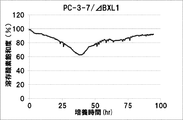
- Example 6 Cultivation evaluation using a PC-3-7 / ⁇ BXL1 strain and adding biomass containing cellulose and xylan as inducers (5 L jar) (8% inducer added) Except that the strain used was Trichoderma reesei PC-3-7 / ⁇ BXL1, the transition of dissolved oxygen saturation during the whole culture period was measured in the same manner as in Comparative Example 9 (FIG. 2), and the minimum saturation was calculated. (Table 6), the protein concentration 4 days after the start of culture was measured (Table 6). At that time, the amount of cells in the preculture was the same as that in Comparative Example 9.
- Comparative Example 10 Cultivation evaluation using a PC-3-7 strain and adding biomass containing cellulose and xylan as inducers (5 L jar) (added with 2% inducer) The minimum saturation was calculated in the same manner as in Comparative Example 9 except that the main culture medium had the composition shown in Table 7, and the protein concentration 4 days after the start of culture was measured (Table 6). It was 2 weight% (wt / wt) as a result of measuring the addition amount of the biomass at the time of culture
- Trace element solutions are 0.3 g / L H 3 BO 3 , 1.3 g / L (NH 4 ) 6 Mo 7 O 24 ⁇ 4H 2 O, 5 g / L FeCl 3 ⁇ 6H 2 O, 2 g / L CuSO 4 ⁇ 5H 2 O, 0.4g / L MnCl 2 ⁇ 4H 2 O, containing 10g / L ZnCl 2. ** Mandels contains 7 g / L (NH 4 ) 2 SO 4 , 10 g / L KH 2 PO 4 , 3 g / L CaCl 2 , 3 g / L MgSO 4 .7H 2 O. *** Biomass is added after mixing and mixing up other ingredients.
- Example 7 Cultivation evaluation using a PC-3-7 / ⁇ BXL1 strain and adding biomass containing cellulose and xylan as inducers (5L jar) (added with 2% inducer)
- the minimum saturation was calculated in the same manner as in Comparative Example 10 except that the strain used was Trichoderma reesei PC-3-7 / ⁇ BXL1 strain, and the protein concentration 4 days after the start of culture was measured (Table 6).
- the minimum saturation increased even in the case of 2% of the inducer, and the protein concentration increased by 1% compared to the parent strain.
- Comparative Example 11 Cultivation evaluation using a PC-3-7 strain and adding biomass containing cellulose and xylan as inducers (5L jar) (4% inducer added)
- the biomass to be added to the main culture medium was changed to 46 g with respect to 1 L of the medium, the other components had the composition shown in Table 7, the minimum saturation was calculated in the same manner as in Comparative Example 9, and the protein concentration 4 days after the start of the culture was determined. Measured (Table 8). It was 4 weight% (wt / wt) as a result of measuring the addition amount of the biomass at the time of a culture
- Example 8 Cultivation evaluation using a PC-3-7 / ⁇ BXL1 strain and adding biomass containing cellulose and xylan as inducers (5 L jar) (4% inducer added)
- the minimum saturation was calculated in the same manner as in Comparative Example 11 except that the strain used was Trichoderma reesei PC-3-7 / ⁇ BXL1 strain, and the protein concentration 4 days after the start of culture was measured (Table 8). Furthermore, the activity was measured (Table 10). When compared with the result of Comparative Example 11, it was found that the minimum saturation increased even in the case of 4% of the inducer, and the protein concentration increased by 1% compared to the parent strain.
- Comparative Example 12 Cultivation evaluation using a PC-3-7 strain and adding biomass containing cellulose and xylan as inducers (5 L jar) (5% inducer added)
- the biomass to be added to the main culture medium was changed to 58 g with respect to 1 L of the medium, the other components had the composition shown in Table 7, the minimum saturation was calculated in the same manner as in Comparative Example 9, and the protein concentration 4 days after the start of the culture was calculated. Measured (Table 8). It was 5 weight% (wt / wt) as a result of measuring the addition amount of the biomass at the time of a culture
- Example 9 Cultivation evaluation using a PC-3-7 / ⁇ BXL1 strain and adding biomass containing cellulose and xylan as inducers (5 L jar) (5% inducer added)
- the minimum saturation was calculated in the same manner as in Comparative Example 12 except that the strain used was Trichoderma reesei PC-3-7 / ⁇ BXL1 strain, and the protein concentration 4 days after the start of culture was measured (Table 8). Furthermore, the activity was measured (Table 10). When compared with the result of Comparative Example 12, it was found that the minimum saturation increased even in the case of 5% of the inducer, and the protein concentration increased by 8% compared to the parent strain.
- Comparative Example 13 Cultivation evaluation using a PC-3-7 strain and adding biomass containing cellulose and xylan as inducers (5 L jar) (6% inducer added)
- the biomass to be added to the main culture medium was changed to 70 g with respect to 1 L of the medium, the other components had the composition shown in Table 7, the minimum saturation was calculated in the same manner as in Comparative Example 9, and the protein concentration 4 days after the start of the culture was determined. Measured (Table 9). It was 6 weight% (wt / wt) as a result of measuring the addition amount of the biomass at the time of a culture
- Example 10 Cultivation evaluation using a PC-3-7 / ⁇ BXL1 strain and adding biomass containing cellulose and xylan as an inducer (5 L jar) (6% inducer added)
- the minimum saturation was calculated in the same manner as in Comparative Example 13 except that the strain used was Trichoderma reesei PC-3-7 / ⁇ BXL1 strain, and the protein concentration 4 days after the start of culture was measured (Table 9). Furthermore, the activity was measured (Table 10). When compared with the result of Comparative Example 13, it was found that the minimum saturation increased even in the case of 6% of the inducer, and the protein concentration increased by 10% compared to the parent strain.
- Comparative Example 14 Cultivation evaluation using a PC-3-7 strain and adding biomass containing cellulose and xylan as inducers (5 L jar) (7% inducer added)
- the biomass to be added to the main culture medium was changed to 83 g with respect to 1 L of the medium, the other components had the composition shown in Table 7, the minimum saturation was calculated in the same manner as in Comparative Example 9, and the protein concentration after 4 days from the start of culture was calculated. Measured (Table 9). It was 7 weight% (wt / wt) as a result of measuring the addition amount of the biomass at the time of a culture
- Example 11 Culture evaluation using a PC-3-7 / ⁇ BXL1 strain and adding biomass containing cellulose and xylan as inducers (5 L jar) (7% inducer added) The minimum saturation was calculated in the same manner as in Comparative Example 14 except that the strain used was Trichoderma reesei PC-3-7 / ⁇ BXL1 strain, and the protein concentration 4 days after the start of culture was measured (Table 9). Furthermore, the activity was measured (Table 10). When compared with the result of Comparative Example 14, it was found that the minimum saturation increased even in the case of 7% of the inducer, and the protein concentration increased by 11% compared to the parent strain.
- Comparative Example 15 Evaluation of Bagasse Saccharification Reaction Using Cellulase Composition Obtained from Culture (Addition of 8% Inducing Agent) Using Cellulose and Xylan Biomass Using PC-3-7 Strain as an Inducing Agent Comparative Example 9
- the culture solution obtained 4 days after the start of culture was centrifuged, and the supernatant was filtered through an ultrafiltration membrane to remove the cells.
- the obtained filtrate was used for the saccharification reaction.
- the bagasse used for the saccharification reaction was bagasse that had been subjected to alkali treatment (pretreatment).
- the saccharification reaction was performed as follows.
- the supernatant was filtered through a 0.22 ⁇ m filter, and the filtrate was subjected to xylooligosaccharide and glucose analysis according to Reference Example 5.
- the results for xylooligosaccharides are shown in Table 11, and the results for glucose are shown in Table 12.
- Example 12 Evaluation of bagasse saccharification reaction using a cellulase composition obtained from a culture in which a biomass containing cellulose and xylan was added as an inducer using a PC-3-7 / ⁇ BXL1 strain (8% inducer added)
- the culture solution obtained in Example 6 4 days after the start of the culture was centrifuged, and then the supernatant was filtered through an ultrafiltration membrane to remove the cells.
- the saccharification reaction was performed in the same manner as in Comparative Example 15 and was used for analysis of xylooligosaccharide and glucose (Tables 11 and 12).
- Comparative Example 16 Bagasse using a cellulase composition obtained from a culture using a PC-3-7 strain and containing biomass containing cellulose and xylan as an inducer (xylan content 15%, inducer 8% added) Evaluation of saccharification reaction
- the culture solution obtained in Comparative Example 6 after 4 days from the start of culture was centrifuged, and the supernatant was filtered through an ultrafiltration membrane to remove the cells.
- the saccharification reaction was performed in the same manner as in Comparative Example 15 and was subjected to glucose analysis (Table 13).
- Example 13 Use of a cellulase composition obtained from a culture using PC-3-7 / ⁇ BXL1 strain and containing biomass containing cellulose and xylan as an inducer (xylan content 15%, inducer 8% added) Evaluation of Saccharification Reaction of Bagasse After centrifuging the culture solution obtained 4 days after the start of cultivation obtained in Example 3, the supernatant was filtered through an ultrafiltration membrane to remove the cells. The saccharification reaction was performed in the same manner as in Comparative Example 15 and was subjected to glucose analysis (Table 13).
- Comparative Example 17 Bagasse using a cellulase composition obtained from a culture using a PC-3-7 strain and containing biomass containing cellulose and xylan as an inducer (30% xylan content, 8% inducer added) Evaluation of saccharification reaction
- the culture solution obtained in Comparative Example 7 after 4 days from the start of culture was centrifuged, and the supernatant was filtered through an ultrafiltration membrane to remove the cells.
- the saccharification reaction was performed in the same manner as in Comparative Example 15 and was subjected to glucose analysis (Table 13).
- Example 14 Use of a cellulase composition obtained from a culture using a PC-3-7 / ⁇ BXL1 strain and containing biomass containing cellulose and xylan as an inducer (xylan content 30%, inducer 8% added) Evaluation of Saccharification Reaction of Bagasse After centrifuging the culture solution obtained 4 days after the start of cultivation obtained in Example 4, the supernatant was filtered through an ultrafiltration membrane to remove the cells. The saccharification reaction was performed in the same manner as in Comparative Example 15 and was subjected to glucose analysis (Table 13).
- Comparative Example 18 Bagasse using a cellulase composition obtained from a culture using a PC-3-7 strain and containing biomass containing cellulose and xylan as an inducer (xylan content 40%, inducer 8% added) Evaluation of saccharification reaction
- the culture solution obtained in Comparative Example 8 after 4 days from the start of culture was centrifuged, and the supernatant was filtered through an ultrafiltration membrane to remove the cells.
- the saccharification reaction was performed in the same manner as in Comparative Example 15 and was subjected to glucose analysis (Table 14).
- Example 15 Use of a cellulase composition obtained from a culture using a PC-3-7 / ⁇ BXL1 strain and containing a biomass containing cellulose and xylan as an inducer (xylan content 40%, inducer 8% added) Evaluation of Saccharification Reaction of Bagasse After centrifuging the culture solution obtained 4 days after the start of cultivation obtained in Example 5, the supernatant was filtered through an ultrafiltration membrane to remove the cells. The saccharification reaction was performed in the same manner as in Comparative Example 15 and was subjected to glucose analysis (Table 14).
- Comparative Example 19 Evaluation of Bagasse Saccharification Reaction Using Cellulase Composition Obtained from Culture (Addition of 8% Inducing Agent) Using Biomass Containing Xylan Using PC-3-7 / ⁇ BXL1 Strain as an Inducing Agent Comparative Example After centrifuging the culture solution 4 days after the start of culture obtained in 3, the supernatant was filtered through an ultrafiltration membrane to remove the cells. The culture solution 4 days after the start of culture was centrifuged, and the supernatant was filtered through an ultrafiltration membrane to remove the cells. The obtained filtrate was measured for activity and protein concentration (Table 16) and used for the saccharification reaction.
- the saccharification reaction was performed in the same manner as in Comparative Example 15 except that the addition amount of the cellulase composition (protein) was 2 mg / g-biomass and the reaction time was 24 hours, and was used for analysis of xylooligosaccharides (Table 15).
- Comparative Example 20 Evaluation of Bagasse Saccharification Reaction Using Cellulase Composition Obtained from Culture (Addition of 8% of Inducing Agent) Using Cellulose-containing Biomass Using PC-3-7 / ⁇ BXL1 Strain After centrifuging the culture solution 4 days after the start of culture obtained in 5, the supernatant was filtered through an ultrafiltration membrane to remove the cells. The obtained filtrate was used for the saccharification reaction. The saccharification reaction was performed in the same manner as in Comparative Example 19 and was used for analysis of xylo-oligosaccharides (Table 15).
- Example 16 Evaluation of saccharification reaction of bagasse using cellulase composition obtained from a culture using a PC-3-7 / ⁇ BXL1 strain to which a biomass containing cellulose and xylan was added as an inducer (added with 8% inducer) After centrifuging the culture solution obtained 4 days after the start of culture obtained in Example 2, the supernatant was filtered through an ultrafiltration membrane to remove the cells. The obtained filtrate was measured for activity and protein concentration (Table 16) and then used for the saccharification reaction. The saccharification reaction was performed in the same manner as in Comparative Example 19 and was used for analysis of xylo-oligosaccharides (Table 15).
- the culture solution to which cellulose and xylan were added as inducers had the highest yield of xylo-oligosaccharide.
- the second highest yield was when xylan was used as the inducer.
- the ratio of xylose / (xylose + xylooligosaccharide) was lower when cellulose and xylan were used as inducers, and it was found that membrane separation of xylooligosaccharide and xylose becomes easier.
- protein cellulase composition
- a culture solution is required.
- the addition amount of the inducer is 6% by weight or more, the ⁇ -glucosidase activity is remarkably increased as compared with the case of adding 2% by weight, which is suitable for producing glucose and xylooligosaccharide.
- Comparative Example 21 Bagasse Saccharification Reaction Evaluation Using Cellulase Composition Obtained from Culture (Addition of 2% Inducing Agent) Using Biomass Containing Xylan Using PC-3-7 / ⁇ BXL1 Strain as an Inducing Agent
- PC-3-7 / ⁇ BXL1 Strain as an Inducing Agent
- the composition of the main culture was as shown in Table 7, and beech wood xylan (manufactured by Sigma-Aldrich) was used as the biomass.
- the culture was performed. The culture solution 4 days after the start of culture was centrifuged, and the supernatant was filtered through an ultrafiltration membrane to remove the cells.
- the obtained filtrate was measured for activity and protein concentration (Table 16) and used for the saccharification reaction.
- the saccharification reaction was performed in the same manner as in Comparative Example 19 and was used for analysis of xylooligosaccharide and glucose (Tables 17 and 18).
- Example 17 Evaluation of Bagasse Saccharification Reaction Using Cellulase Composition Obtained from Culture (Addition of 2% Inducing Agent) Using Biomass Containing Cellulose and Xylan Using PC-3-7 / ⁇ BXL1 Strain as Inducing Agent . Culturing was carried out under the same conditions as in Comparative Example 1 except that the strain used was PC-3-7 / ⁇ BXL1 and the composition of the main culture was changed to the composition shown in Table 7. The culture solution 4 days after the start of culture was centrifuged, and the supernatant was filtered through an ultrafiltration membrane to remove the cells. The resulting filtrate was measured for activity (Table 16).
- the ratio of addition of the inducer was the same, the yield of xylo-oligosaccharide and glucose was higher when cellulose and xylan were used as inducers than xylan. Furthermore, the ratio of xylose / (xylose + xylooligosaccharide) was lower when cellulose and xylan were used as inducers than when xylan was used as an inducer. In addition, when cellulose and xylan are used as inducers, the yield of xylooligosaccharides and glucose increases when cellulase composition obtained by adding 8% of inducer to 2% and culturing is used.
- the ratio of / (xylose + xylooligosaccharide) was also decreased. From these results, it was found that the cellulase composition obtained by adding 8% cellulose and xylan as inducers and culturing was most suitable for the production of xylo-oligosaccharides and glucose.
- Trichoderma fungus with a disrupted BXL1 gene makes it possible to produce a protein under conditions with high dissolved oxygen saturation and facilitate scale-up.
- xylooligosaccharide and glucose can be efficiently produced by using the protein obtained in the present invention as a cellulase composition.
Landscapes
- Chemical & Material Sciences (AREA)
- Life Sciences & Earth Sciences (AREA)
- Organic Chemistry (AREA)
- Engineering & Computer Science (AREA)
- Health & Medical Sciences (AREA)
- Wood Science & Technology (AREA)
- Zoology (AREA)
- Genetics & Genomics (AREA)
- Bioinformatics & Cheminformatics (AREA)
- Biotechnology (AREA)
- Biochemistry (AREA)
- General Health & Medical Sciences (AREA)
- General Engineering & Computer Science (AREA)
- Microbiology (AREA)
- Biomedical Technology (AREA)
- General Chemical & Material Sciences (AREA)
- Medicinal Chemistry (AREA)
- Chemical Kinetics & Catalysis (AREA)
- Virology (AREA)
- Tropical Medicine & Parasitology (AREA)
- Molecular Biology (AREA)
- Botany (AREA)
- Mycology (AREA)
- Emergency Medicine (AREA)
- Preparation Of Compounds By Using Micro-Organisms (AREA)
- Enzymes And Modification Thereof (AREA)
- Micro-Organisms Or Cultivation Processes Thereof (AREA)
- Peptides Or Proteins (AREA)
Priority Applications (9)
| Application Number | Priority Date | Filing Date | Title |
|---|---|---|---|
| CN201780017453.7A CN108779456B (zh) | 2016-03-31 | 2017-03-30 | 蛋白质的制造方法 |
| EP21205370.6A EP3974527A1 (en) | 2016-03-31 | 2017-03-30 | Description method for producing protein |
| AU2017239832A AU2017239832B2 (en) | 2016-03-31 | 2017-03-30 | Method for producing protein |
| BR112018069854-7A BR112018069854B1 (pt) | 2016-03-31 | 2017-03-30 | Método para produzir uma composição de celulase, método para produzir xilo-oligossacarídeos e método para produzir xilo-oligossacarídeos e glicose |
| JP2017519022A JP6319515B2 (ja) | 2016-03-31 | 2017-03-30 | タンパク質の製造方法 |
| US16/088,950 US11453899B2 (en) | 2016-03-31 | 2017-03-30 | Method of producing protein |
| EP17775451.2A EP3438262B1 (en) | 2016-03-31 | 2017-03-30 | Method for producing protein |
| CA3019297A CA3019297A1 (en) | 2016-03-31 | 2017-03-30 | Method for producing protein |
| PH12018502082A PH12018502082A1 (en) | 2016-03-31 | 2018-09-27 | Method for producing protein |
Applications Claiming Priority (2)
| Application Number | Priority Date | Filing Date | Title |
|---|---|---|---|
| JP2016-070584 | 2016-03-31 | ||
| JP2016070584 | 2016-03-31 |
Publications (1)
| Publication Number | Publication Date |
|---|---|
| WO2017170917A1 true WO2017170917A1 (ja) | 2017-10-05 |
Family
ID=59965909
Family Applications (1)
| Application Number | Title | Priority Date | Filing Date |
|---|---|---|---|
| PCT/JP2017/013377 Ceased WO2017170917A1 (ja) | 2016-03-31 | 2017-03-30 | タンパク質の製造方法 |
Country Status (8)
| Country | Link |
|---|---|
| US (1) | US11453899B2 (https=) |
| EP (2) | EP3974527A1 (https=) |
| JP (2) | JP6319515B2 (https=) |
| CN (1) | CN108779456B (https=) |
| AU (1) | AU2017239832B2 (https=) |
| CA (1) | CA3019297A1 (https=) |
| PH (1) | PH12018502082A1 (https=) |
| WO (1) | WO2017170917A1 (https=) |
Cited By (5)
| Publication number | Priority date | Publication date | Assignee | Title |
|---|---|---|---|---|
| JP2018507892A (ja) * | 2015-03-13 | 2018-03-22 | 4エスツェー アクチェンゲゼルシャフト | Kv1.3阻害剤およびその医学的適用 |
| WO2020008988A1 (ja) * | 2018-07-04 | 2020-01-09 | 花王株式会社 | タンパク質の製造方法 |
| WO2020027010A1 (ja) | 2018-07-30 | 2020-02-06 | 東レ株式会社 | トリコデルマ属糸状菌の変異株およびタンパク質の製造方法 |
| WO2020156087A1 (zh) * | 2019-01-31 | 2020-08-06 | 中国科学院分子植物科学卓越创新中心 | 一种bxl基因或其编码蛋白的应用 |
| JPWO2021153587A1 (https=) * | 2020-01-28 | 2021-08-05 |
Families Citing this family (2)
| Publication number | Priority date | Publication date | Assignee | Title |
|---|---|---|---|---|
| US11279960B2 (en) | 2016-03-31 | 2022-03-22 | Toray Industries, Inc. | Method of producing xylo-oligosaccharide |
| MX2022014382A (es) * | 2020-05-19 | 2022-12-15 | Toray Industries | Metodo para producir proteinas utilizando cascarilla de maiz. |
Citations (10)
| Publication number | Priority date | Publication date | Assignee | Title |
|---|---|---|---|---|
| JPH0731467A (ja) * | 1993-07-20 | 1995-02-03 | Mitsui Toatsu Chem Inc | 糸状菌の培養法 |
| JPH11507837A (ja) * | 1995-06-23 | 1999-07-13 | ダニスコ・イングレディエンツ・アー/エス(ダニスコ・アー/エス) | 新規β−キシロシダーゼ、それをコードするヌクレオチド配列、およびそれらの使用 |
| JP2009171885A (ja) * | 2008-01-23 | 2009-08-06 | Nippon Paper Industries Co Ltd | セルロース含有物から糖を製造する方法 |
| JP2013515482A (ja) * | 2009-12-23 | 2013-05-09 | ダニスコ・ユーエス・インク | 同時糖化発酵反応の効率を改善するための方法 |
| JP2013533751A (ja) * | 2010-08-25 | 2013-08-29 | ダニスコ・ユーエス・インク | 粘性の表現型を変化させた糸状菌 |
| JP2014150745A (ja) * | 2013-02-06 | 2014-08-25 | Nagaoka Univ Of Technology | トリコデルマ属に属する微生物の変異株および該変異株の使用 |
| WO2014208493A1 (ja) * | 2013-06-25 | 2014-12-31 | 東レ株式会社 | 糖液の製造方法 |
| WO2015099109A1 (ja) * | 2013-12-27 | 2015-07-02 | 東レ株式会社 | 糖液の製造方法 |
| WO2016068223A1 (ja) * | 2014-10-31 | 2016-05-06 | 東レ株式会社 | 糖液およびキシロオリゴ糖の製造方法 |
| WO2016100825A1 (en) * | 2014-12-18 | 2016-06-23 | Danisco Us Inc | Engineered multifunctional enzymes and methods of use |
Family Cites Families (10)
| Publication number | Priority date | Publication date | Assignee | Title |
|---|---|---|---|---|
| CN1188510A (zh) * | 1995-06-23 | 1998-07-22 | 丹尼斯科成分公司(丹尼斯科公司) | 新的β-木糖苷酶和编码该酶的核苷酸序列以及该酶的用途 |
| DK2268804T3 (en) * | 2008-03-21 | 2017-12-11 | Danisco Us Inc | HEMICELLULASE-ENRICHED COMPOSITIONS FOR IMPROVED BIOMASS HYDROLYSE |
| WO2010059424A2 (en) * | 2008-11-18 | 2010-05-27 | Novozymes, Inc. | Methods and compositions for degrading cellulosic material |
| MX353237B (es) * | 2009-09-23 | 2018-01-08 | Danisco Us Inc | Enzimas de glicosil hidrolasa novedosas y usos de las mismas. |
| CA2901967C (en) | 2013-02-20 | 2020-11-17 | Chiaki Yamada | Sugar-solution production method |
| BR112016003282B8 (pt) | 2013-08-22 | 2022-04-05 | Toray Industries | Métodos de produção de um líquido de açúcar e de uma substância química |
| AU2015269381B2 (en) * | 2014-06-06 | 2019-04-18 | Novozymes A/S | Enzyme compositions and uses thereof |
| US10041136B2 (en) * | 2014-07-10 | 2018-08-07 | The United States Of America As Represented By The Secretary Of Agriculture | Glycosyl hydrolase xylanases, compositions and methods of use for efficient hydrolysis and processing of xylan |
| US10590497B2 (en) | 2016-03-31 | 2020-03-17 | Toray Industries, Inc. | Trichoderma fungus having mutant-type BXL1 gene and method of producing xylooligosaccharide and glucose by using same |
| US11279960B2 (en) | 2016-03-31 | 2022-03-22 | Toray Industries, Inc. | Method of producing xylo-oligosaccharide |
-
2017
- 2017-03-30 EP EP21205370.6A patent/EP3974527A1/en not_active Withdrawn
- 2017-03-30 CA CA3019297A patent/CA3019297A1/en active Pending
- 2017-03-30 CN CN201780017453.7A patent/CN108779456B/zh active Active
- 2017-03-30 US US16/088,950 patent/US11453899B2/en active Active
- 2017-03-30 AU AU2017239832A patent/AU2017239832B2/en active Active
- 2017-03-30 JP JP2017519022A patent/JP6319515B2/ja not_active Expired - Fee Related
- 2017-03-30 WO PCT/JP2017/013377 patent/WO2017170917A1/ja not_active Ceased
- 2017-03-30 EP EP17775451.2A patent/EP3438262B1/en not_active Not-in-force
-
2018
- 2018-02-15 JP JP2018025165A patent/JP6939624B2/ja active Active
- 2018-09-27 PH PH12018502082A patent/PH12018502082A1/en unknown
Patent Citations (10)
| Publication number | Priority date | Publication date | Assignee | Title |
|---|---|---|---|---|
| JPH0731467A (ja) * | 1993-07-20 | 1995-02-03 | Mitsui Toatsu Chem Inc | 糸状菌の培養法 |
| JPH11507837A (ja) * | 1995-06-23 | 1999-07-13 | ダニスコ・イングレディエンツ・アー/エス(ダニスコ・アー/エス) | 新規β−キシロシダーゼ、それをコードするヌクレオチド配列、およびそれらの使用 |
| JP2009171885A (ja) * | 2008-01-23 | 2009-08-06 | Nippon Paper Industries Co Ltd | セルロース含有物から糖を製造する方法 |
| JP2013515482A (ja) * | 2009-12-23 | 2013-05-09 | ダニスコ・ユーエス・インク | 同時糖化発酵反応の効率を改善するための方法 |
| JP2013533751A (ja) * | 2010-08-25 | 2013-08-29 | ダニスコ・ユーエス・インク | 粘性の表現型を変化させた糸状菌 |
| JP2014150745A (ja) * | 2013-02-06 | 2014-08-25 | Nagaoka Univ Of Technology | トリコデルマ属に属する微生物の変異株および該変異株の使用 |
| WO2014208493A1 (ja) * | 2013-06-25 | 2014-12-31 | 東レ株式会社 | 糖液の製造方法 |
| WO2015099109A1 (ja) * | 2013-12-27 | 2015-07-02 | 東レ株式会社 | 糖液の製造方法 |
| WO2016068223A1 (ja) * | 2014-10-31 | 2016-05-06 | 東レ株式会社 | 糖液およびキシロオリゴ糖の製造方法 |
| WO2016100825A1 (en) * | 2014-12-18 | 2016-06-23 | Danisco Us Inc | Engineered multifunctional enzymes and methods of use |
Non-Patent Citations (9)
| Title |
|---|
| HAYN M ET AL.: "Separation and partial characterization of trichoderma reesei cellulase by fast chromatofocusing", JOURNAL OF CHROMATOGRAPHY A, vol. 329, 1985, pages 379 - 387, XP026488128 * |
| HERRMANN MC ET AL.: "The beta-d-xylosidase of Trichoderma reesei is a multifunctional beta- d-xylan xylohydrolase", BIOCHEMICAL JOURNAL, vol. 321, no. 2, 1997, pages 375 - 381, XP055429712 * |
| JIANG X ET AL.: "New isolate of Trichoderma viride strain for enhanced cellulolytic enzyme complex production", J. BIOSCI. BIOENG., vol. 111, no. 2, 2011, pages 121 - 127, XP028128167 * |
| MAO LS ET AL.: "Study on production of xylo- oligosaccharides from xylan hydrolyzed by selectively purified endo-b-xylanase", CHEMISTRY AND INDUS TRY OF FO RES T PRODUCTS, vol. 26, no. 1, 1 March 2006 (2006-03-01), pages 124 - 126, XP055578942 * |
| MARGOLLES-CLARK E ET AL.: "Cloning of genes encoding alpha-L-arabinofuranosidase and beta- xylosidase from Trichoderma reesei by expression in Saccharomyces cerevisiae", APPL. ENVIRON. MICROBIOL., vol. 62, no. 10, 1996, pages 3840 - 3846, XP000900963 * |
| RASMUSSEN LE ET AL.: "Mode of action and properties of the beta-xylosidases from Talaromyces emersonii and Trichoderma reesei", BIOTECHNOL. BIOENG., vol. 94, no. 5, 2006, pages 869 - 876, XP002558855 * |
| See also references of EP3438262A4 * |
| WURLEITNER E ET AL.: "Transcriptional regulation of xyn2 in Hypocrea jecorina", EUKARYOTIC CELL, vol. 2, no. 1, 2003, pages 150 - 158, XP055430136 * |
| XU J ET AL.: "A third xylanase from Trichoderma reesei PC-3-7", APPL. MICROBIOL. BIOTECHNOL., vol. 49, no. 6, 1998, pages 718 - 724, XP000990807 * |
Cited By (14)
| Publication number | Priority date | Publication date | Assignee | Title |
|---|---|---|---|---|
| JP2018507892A (ja) * | 2015-03-13 | 2018-03-22 | 4エスツェー アクチェンゲゼルシャフト | Kv1.3阻害剤およびその医学的適用 |
| WO2020008988A1 (ja) * | 2018-07-04 | 2020-01-09 | 花王株式会社 | タンパク質の製造方法 |
| JPWO2020008988A1 (ja) * | 2018-07-04 | 2021-07-15 | 花王株式会社 | タンパク質の製造方法 |
| US12227782B2 (en) | 2018-07-04 | 2025-02-18 | Kao Corporation | Method for producing protein |
| JP7360386B2 (ja) | 2018-07-04 | 2023-10-12 | 花王株式会社 | タンパク質の製造方法 |
| US12037624B2 (en) | 2018-07-30 | 2024-07-16 | Toray Industries, Inc. | Mutant of Trichoderma filamentous fungus and method of producing protein |
| WO2020027010A1 (ja) | 2018-07-30 | 2020-02-06 | 東レ株式会社 | トリコデルマ属糸状菌の変異株およびタンパク質の製造方法 |
| JPWO2020027010A1 (ja) * | 2018-07-30 | 2021-08-02 | 東レ株式会社 | トリコデルマ属糸状菌の変異株およびタンパク質の製造方法 |
| AU2019313902B2 (en) * | 2018-07-30 | 2025-07-24 | Toray Industries, Inc. | Mutant of trichoderma filamentous fungus and method for producing protein |
| JP7459509B2 (ja) | 2018-07-30 | 2024-04-02 | 東レ株式会社 | トリコデルマ属糸状菌の変異株およびタンパク質の製造方法 |
| WO2020156087A1 (zh) * | 2019-01-31 | 2020-08-06 | 中国科学院分子植物科学卓越创新中心 | 一种bxl基因或其编码蛋白的应用 |
| WO2021153587A1 (ja) * | 2020-01-28 | 2021-08-05 | 東レ株式会社 | トリコデルマ属糸状菌変異株 |
| JPWO2021153587A1 (https=) * | 2020-01-28 | 2021-08-05 | ||
| JP7824570B2 (ja) | 2020-01-28 | 2026-03-05 | 東レ株式会社 | トリコデルマ属糸状菌変異株 |
Also Published As
| Publication number | Publication date |
|---|---|
| JP6319515B2 (ja) | 2018-05-09 |
| JP2018117620A (ja) | 2018-08-02 |
| EP3974527A1 (en) | 2022-03-30 |
| CN108779456A (zh) | 2018-11-09 |
| CN108779456B (zh) | 2022-04-05 |
| AU2017239832B2 (en) | 2023-04-27 |
| JPWO2017170917A1 (ja) | 2018-04-05 |
| AU2017239832A1 (en) | 2018-10-25 |
| US20200165647A1 (en) | 2020-05-28 |
| EP3438262A4 (en) | 2019-09-04 |
| JP6939624B2 (ja) | 2021-09-22 |
| EP3438262B1 (en) | 2021-12-01 |
| US11453899B2 (en) | 2022-09-27 |
| PH12018502082A1 (en) | 2019-07-08 |
| CA3019297A1 (en) | 2017-10-05 |
| BR112018069854A2 (pt) | 2019-01-29 |
| EP3438262A1 (en) | 2019-02-06 |
Similar Documents
| Publication | Publication Date | Title |
|---|---|---|
| JP6319515B2 (ja) | タンパク質の製造方法 | |
| EP3296394A1 (en) | Novel glycosyl hydrolase enzymes and uses thereof | |
| US10590497B2 (en) | Trichoderma fungus having mutant-type BXL1 gene and method of producing xylooligosaccharide and glucose by using same | |
| EP3438272B1 (en) | Method for producing xylo-oligosaccharide | |
| CN101809151A (zh) | 纤维素酶的生产方法 | |
| CN111094562A (zh) | 具有海藻糖酶活性的多肽及其在产生发酵产物的方法中的用途 | |
| US10550376B2 (en) | Xylanase | |
| JP2020065514A (ja) | 新規アラビノフラノシダーゼ | |
| Kawamori et al. | Production of cellulases from alkali-treated bagasse in Trichoderma reesei | |
| US20210324437A1 (en) | Trichoderma reesei mutant strain, and method of producing protein | |
| JP7824570B2 (ja) | トリコデルマ属糸状菌変異株 | |
| JP6849749B2 (ja) | 新規キシラナーゼ | |
| Ximenes et al. | Evaluation of a Hypocrea jecorina enzyme preparation for hydrolysis of Tifton 85 bermudagrass | |
| US20250327051A1 (en) | Process for producing cellulolytic and/or hemicellulolytic enzymes | |
| JP7836209B2 (ja) | バイオマス糖化のための酵素組成物 | |
| BR112018069854B1 (pt) | Método para produzir uma composição de celulase, método para produzir xilo-oligossacarídeos e método para produzir xilo-oligossacarídeos e glicose | |
| US20220356499A1 (en) | Endoglucanase, and use thereof | |
| da Silva et al. | Research Article Effect of pH, Temperature, and Chemicals on the Endoglucanases and 𝛽-Glucosidases from the Thermophilic Fungus Myceliophthora heterothallica F. 2.1. 4. Obtained by Solid-State and Submerged Cultivation | |
| BR112017028171B1 (pt) | Polinucleotídeo que codifica uma proteína tendo atividade de xilanase, vetor compreendendo o dito polinucleotídeo, método para fabricação de um transformante, transformante transformado com o dito vetor, agente de sacarificação de biomassa compreendendo proteína com atividade de xilanase e método para fabricação de açúcar a partir de biomassa |
Legal Events
| Date | Code | Title | Description |
|---|---|---|---|
| ENP | Entry into the national phase |
Ref document number: 2017519022 Country of ref document: JP Kind code of ref document: A |
|
| ENP | Entry into the national phase |
Ref document number: 3019297 Country of ref document: CA |
|
| NENP | Non-entry into the national phase |
Ref country code: DE |
|
| REG | Reference to national code |
Ref country code: BR Ref legal event code: B01A Ref document number: 112018069854 Country of ref document: BR |
|
| ENP | Entry into the national phase |
Ref document number: 2017239832 Country of ref document: AU Date of ref document: 20170330 Kind code of ref document: A |
|
| WWE | Wipo information: entry into national phase |
Ref document number: 2017775451 Country of ref document: EP |
|
| ENP | Entry into the national phase |
Ref document number: 2017775451 Country of ref document: EP Effective date: 20181031 |
|
| 121 | Ep: the epo has been informed by wipo that ep was designated in this application |
Ref document number: 17775451 Country of ref document: EP Kind code of ref document: A1 |
|
| ENP | Entry into the national phase |
Ref document number: 112018069854 Country of ref document: BR Kind code of ref document: A2 Effective date: 20180927 |