WO2017081963A1 - 表面処理キット並びに複合成形体及びその製造方法 - Google Patents
表面処理キット並びに複合成形体及びその製造方法 Download PDFInfo
- Publication number
- WO2017081963A1 WO2017081963A1 PCT/JP2016/079741 JP2016079741W WO2017081963A1 WO 2017081963 A1 WO2017081963 A1 WO 2017081963A1 JP 2016079741 W JP2016079741 W JP 2016079741W WO 2017081963 A1 WO2017081963 A1 WO 2017081963A1
- Authority
- WO
- WIPO (PCT)
- Prior art keywords
- group
- layer
- molded body
- liquid composition
- groups
- Prior art date
- Legal status (The legal status is an assumption and is not a legal conclusion. Google has not performed a legal analysis and makes no representation as to the accuracy of the status listed.)
- Ceased
Links
Classifications
-
- B—PERFORMING OPERATIONS; TRANSPORTING
- B32—LAYERED PRODUCTS
- B32B—LAYERED PRODUCTS, i.e. PRODUCTS BUILT-UP OF STRATA OF FLAT OR NON-FLAT, e.g. CELLULAR OR HONEYCOMB, FORM
- B32B27/00—Layered products comprising a layer of synthetic resin
- B32B27/34—Layered products comprising a layer of synthetic resin comprising polyamides
-
- C—CHEMISTRY; METALLURGY
- C09—DYES; PAINTS; POLISHES; NATURAL RESINS; ADHESIVES; COMPOSITIONS NOT OTHERWISE PROVIDED FOR; APPLICATIONS OF MATERIALS NOT OTHERWISE PROVIDED FOR
- C09D—COATING COMPOSITIONS, e.g. PAINTS, VARNISHES OR LACQUERS; FILLING PASTES; CHEMICAL PAINT OR INK REMOVERS; INKS; CORRECTING FLUIDS; WOODSTAINS; PASTES OR SOLIDS FOR COLOURING OR PRINTING; USE OF MATERIALS THEREFOR
- C09D7/00—Features of coating compositions, not provided for in group C09D5/00; Processes for incorporating ingredients in coating compositions
- C09D7/40—Additives
- C09D7/47—Levelling agents
-
- B—PERFORMING OPERATIONS; TRANSPORTING
- B32—LAYERED PRODUCTS
- B32B—LAYERED PRODUCTS, i.e. PRODUCTS BUILT-UP OF STRATA OF FLAT OR NON-FLAT, e.g. CELLULAR OR HONEYCOMB, FORM
- B32B27/00—Layered products comprising a layer of synthetic resin
- B32B27/38—Layered products comprising a layer of synthetic resin comprising epoxy resins
-
- C—CHEMISTRY; METALLURGY
- C08—ORGANIC MACROMOLECULAR COMPOUNDS; THEIR PREPARATION OR CHEMICAL WORKING-UP; COMPOSITIONS BASED THEREON
- C08G—MACROMOLECULAR COMPOUNDS OBTAINED OTHERWISE THAN BY REACTIONS ONLY INVOLVING UNSATURATED CARBON-TO-CARBON BONDS
- C08G59/00—Polycondensates containing more than one epoxy group per molecule; Macromolecules obtained by polymerising compounds containing more than one epoxy group per molecule using curing agents or catalysts which react with the epoxy groups
- C08G59/18—Macromolecules obtained by polymerising compounds containing more than one epoxy group per molecule using curing agents or catalysts which react with the epoxy groups ; e.g. general methods of curing
- C08G59/20—Macromolecules obtained by polymerising compounds containing more than one epoxy group per molecule using curing agents or catalysts which react with the epoxy groups ; e.g. general methods of curing characterised by the epoxy compounds used
- C08G59/22—Di-epoxy compounds
- C08G59/24—Di-epoxy compounds carbocyclic
-
- C—CHEMISTRY; METALLURGY
- C08—ORGANIC MACROMOLECULAR COMPOUNDS; THEIR PREPARATION OR CHEMICAL WORKING-UP; COMPOSITIONS BASED THEREON
- C08L—COMPOSITIONS OF MACROMOLECULAR COMPOUNDS
- C08L63/00—Compositions of epoxy resins; Compositions of derivatives of epoxy resins
-
- C—CHEMISTRY; METALLURGY
- C09—DYES; PAINTS; POLISHES; NATURAL RESINS; ADHESIVES; COMPOSITIONS NOT OTHERWISE PROVIDED FOR; APPLICATIONS OF MATERIALS NOT OTHERWISE PROVIDED FOR
- C09D—COATING COMPOSITIONS, e.g. PAINTS, VARNISHES OR LACQUERS; FILLING PASTES; CHEMICAL PAINT OR INK REMOVERS; INKS; CORRECTING FLUIDS; WOODSTAINS; PASTES OR SOLIDS FOR COLOURING OR PRINTING; USE OF MATERIALS THEREFOR
- C09D163/00—Coating compositions based on epoxy resins; Coating compositions based on derivatives of epoxy resins
-
- C—CHEMISTRY; METALLURGY
- C09—DYES; PAINTS; POLISHES; NATURAL RESINS; ADHESIVES; COMPOSITIONS NOT OTHERWISE PROVIDED FOR; APPLICATIONS OF MATERIALS NOT OTHERWISE PROVIDED FOR
- C09D—COATING COMPOSITIONS, e.g. PAINTS, VARNISHES OR LACQUERS; FILLING PASTES; CHEMICAL PAINT OR INK REMOVERS; INKS; CORRECTING FLUIDS; WOODSTAINS; PASTES OR SOLIDS FOR COLOURING OR PRINTING; USE OF MATERIALS THEREFOR
- C09D179/00—Coating compositions based on macromolecular compounds obtained by reactions forming in the main chain of the macromolecule a linkage containing nitrogen, with or without oxygen, or carbon only, not provided for in groups C09D161/00 - C09D177/00
- C09D179/04—Polycondensates having nitrogen-containing heterocyclic rings in the main chain; Polyhydrazides; Polyamide acids or similar polyimide precursors
- C09D179/08—Polyimides; Polyester-imides; Polyamide-imides; Polyamide acids or similar polyimide precursors
-
- C—CHEMISTRY; METALLURGY
- C09—DYES; PAINTS; POLISHES; NATURAL RESINS; ADHESIVES; COMPOSITIONS NOT OTHERWISE PROVIDED FOR; APPLICATIONS OF MATERIALS NOT OTHERWISE PROVIDED FOR
- C09D—COATING COMPOSITIONS, e.g. PAINTS, VARNISHES OR LACQUERS; FILLING PASTES; CHEMICAL PAINT OR INK REMOVERS; INKS; CORRECTING FLUIDS; WOODSTAINS; PASTES OR SOLIDS FOR COLOURING OR PRINTING; USE OF MATERIALS THEREFOR
- C09D5/00—Coating compositions, e.g. paints, varnishes or lacquers, characterised by their physical nature or the effects produced; Filling pastes
Definitions
- the present invention relates to a surface treatment kit for treating the surface of a molded body required to have slidability, heat resistance, etc., a composite molded body, and a method for producing the same.
- An epoxy resin excellent in adhesiveness is used as a coating agent for treating the surface of various molded products.
- Patent Document 1 after forming a wear-resistant first coating layer containing polyamideimide or polyimide and a solid lubricant, a first coating is formed on the first coating layer.
- An internal combustion engine piston having a second coating layer formed of an epoxy resin having a lower hardness than the layer is disclosed.
- the first coating layer is formed of polyamideimide or polyimide in order to improve wear resistance, compared to a conventional epoxy resin-based single layer coating containing fluororesin, which has excellent initial conformability. Yes.
- Patent Document 2 discloses a photo-curing property that can be suitably used for automotive clear paints, plastic film top coat agents, plastic component protection coat agents, color filter protective film formation coat agents, and the like.
- the resin composition an alicyclic diepoxy compound containing a 3,4,3′4′-diepoxybicyclohexyl compound, an epoxy compound other than the alicyclic diepoxy compound, an oxetane compound, a vinyl ether compound, an acrylic polymer, and A combination with at least one compound selected from the group consisting of bi- to hexa-functional polyol compounds is disclosed.
- Patent Document 3 discloses that 3,4,3′4′-diepoxybicyclohexyl, a hydroxyl group-containing silicone compound and / or a silica filler are formed on at least one surface of a plastic substrate.
- a hard coat film in which a hard coat layer formed of a curable composition containing an acid generator is laminated is disclosed.
- this hard coat layer is formed on the surface of a plastic substrate, and this document does not intend to improve heat resistance.
- alicyclic epoxy compounds are generally excellent in slidability and rigidity, but have low adhesion and adhesion. It has characteristics. Furthermore, slidability and adhesion are contradictory properties, and it has been difficult to achieve both properties.
- JP-A-7-189804 (Claim 1, paragraphs [0002] [0003], Table 1)
- JP 2008-189853 A (claim 1, paragraph [0014], example)
- JP 2014-191173 A (Claim 1)
- the object of the present invention was obtained by treating with a surface treatment kit capable of imparting slidability and heat resistance to the surface of the molded body, a laminate or a curable composition formed with this kit, and the kit. It is providing the composite molded object and its manufacturing method.
- Another object of the present invention is to provide a surface treatment kit capable of forming a highly rigid film with high adhesion on the surface of a molded body by coating, a laminate or a curable composition formed with this kit, and treatment with the kit.
- Another object of the present invention is to provide a composite molded body and a method for producing the same.
- the present inventors combined the curable liquid composition containing a specific alicyclic epoxy compound and the liquid composition containing a polyamideimide resin to form a surface of the molded product.
- the present inventors By processing, it discovered that slidability and heat resistance could be provided to the surface of a molded object, and completed this invention.
- the surface treatment kit of the present invention is a surface treatment kit for treating the surface of a molded body formed of metal, and is represented by the formula (1)
- R 1 to R 18 are the same or different and each represents a hydrogen atom, a halogen atom, an oxo group, a hydroxy group, a hydroperoxy group, an amino group, a sulfo group or an organic group, and X is a direct bond or Indicates a linking group
- the curable liquid composition (A) containing the alicyclic epoxy compound represented by these, and the liquid composition (B) containing a polyamideimide resin are included.
- the curable liquid composition (A) may further contain a curing agent and / or a leveling agent.
- the liquid composition (B) may further contain at least one solid lubricant selected from the group consisting of fluorine compounds, metal sulfides, and carbon materials.
- at least one of R 1 to R 18 may be a hydrogen atom, and X may be a direct bond.
- the present invention also includes a laminate having a first layer containing a polyamideimide resin and a second layer containing a cured product of the curable liquid composition (A).
- the indentation hardness by the microhardness meter of the second layer may be 300 N / mm 2 or more.
- the arithmetic average roughness Ra of the surface of the second layer is about 1 to 100 nm.
- the average thickness of the second layer may be about 2 to 100 times the average thickness of the first layer.
- the present invention includes a composite including a molded body formed of metal and the laminated body laminated on the molded body, and the first layer of the laminated body is bonded or bonded to the molded body. A molded body is also included.
- the metal may be an aluminum simple substance or an alloy containing aluminum.
- This composite molded body may be a sliding member.
- the composite molded body includes a first layer forming step of coating and solidifying the liquid composition (B) on the surface of a molded body formed of metal, and the curable liquid on the surface of the obtained first layer. It may be manufactured by a manufacturing method including a second layer forming step of coating and curing the composition (A).
- the surface of the molded body is treated with a combination of a curable liquid composition containing a specific alicyclic epoxy compound and a liquid composition containing a polyamideimide resin, the surface of the molded body is slidable. And heat resistance. Furthermore, in spite of using an alicyclic epoxy compound with low adhesion, a combination with a polyamide-imide resin can form a highly rigid film on the surface of the molded body with high adhesion by coating.
- the surface treatment kit of the present invention is a surface treatment kit for treating the surface of a molded body formed of metal, and includes a curable liquid composition (A) containing an alicyclic epoxy compound.
- the alicyclic epoxy compound is represented by the formula (1).
- examples of the halogen atom include a fluorine atom, a chlorine atom, a bromine atom, and an iodine atom. It is done.
- the organic group is not particularly limited as long as it contains a carbon atom, for example, a hydrocarbon group, an alkoxy group, an alkenyloxy group, an aryloxy group, an aralkyloxy group, an acyl group, an acyloxy group, an alkylthio group, an alkenylthio group, Arylthio group, aralkylthio group, carboxyl group, alkoxycarbonyl group, aryloxycarbonyl group, aralkyloxycarbonyl group, epoxy group, epoxy-containing group, oxetanyl group, oxetanyl-containing group, cyano group, isocyanate group, carbamoyl group, isothiocyanate Examples thereof include a narate group and a substituted amino group.
- hydrocarbon group examples include an aliphatic hydrocarbon group, an alicyclic hydrocarbon group, and an aromatic hydrocarbon group.
- Examples of the aliphatic hydrocarbon group include an alkyl group, an alkenyl group, and an alkynyl group.
- Examples of the alkyl group include C 1-20 alkyl groups such as methyl group, ethyl group, propyl group, isopropyl group, butyl group, hexyl group, octyl group, isooctyl group, decyl group, and dodecyl group (preferably C 1-1 10 alkyl group, more preferably C 1-4 alkyl group).
- alkenyl group examples include C 2-20 alkenyl groups such as vinyl group, allyl group, methallyl group, 1-propenyl group, isopropenyl group, butenyl group, pentenyl group, hexenyl group (preferably C 2-10 alkenyl group). And more preferably a C 2-4 alkenyl group).
- alkynyl group examples include C 2-20 alkynyl groups such as ethynyl group and propynyl group (preferably C 2-10 alkynyl group, more preferably C 2-4 alkynyl group).
- Examples of the alicyclic hydrocarbon group include a C 3-12 cycloalkyl group (particularly a C 5-8 cycloalkyl group) such as a cyclopropyl group, a cyclobutyl group, a cyclopentyl group, a cyclohexyl group, and a cyclododecyl group; a cyclohexenyl group And C 3-12 cycloalkenyl groups such as C 4-15 bridged cyclic hydrocarbon groups such as bicycloheptanyl group and bicycloheptenyl group.
- a C 3-12 cycloalkyl group such as a cyclopropyl group, a cyclobutyl group, a cyclopentyl group, a cyclohexyl group, and a cyclododecyl group
- C 3-12 cycloalkenyl groups such as C 4-15 bridged cyclic hydrocarbon groups such as bicycloh
- aromatic hydrocarbon group examples include C 6-14 aryl groups (particularly C 6-10 aryl groups) such as a phenyl group and a naphthyl group.
- alkoxy group examples include C 1-10 alkoxy groups such as methoxy group, ethoxy group, propoxy group, isopropyloxy group, butoxy group, isobutyloxy group (preferably C 1-6 alkoxy group, more preferably C 1-4 alkoxy group).
- alkenyloxy group examples include a C 2-10 alkenyloxy group such as an allyloxy group (preferably a C 2-6 alkenyloxy group, more preferably a C 2-4 alkenyloxy group).
- aryloxy group examples include a C 6-20 aryloxy group (particularly a C 6-14 aryloxy group) such as a phenoxy group, a tolyloxy group, and a naphthyloxy group.
- aralkyloxy group examples include a C 7-20 aralkyloxy group (particularly a C 7-18 aralkyloxy group) such as a benzyloxy group and a phenethyloxy group.
- acyl group examples include C 1-20 acyl groups such as acetyl group, propionyl group, (meth) acryloyl group, and benzoyl group (particularly, C 1-12 acyl group).
- acyloxy group examples include C 1-20 acyloxy groups such as acetyloxy group, propionyloxy group, (meth) acryloyloxy group, and benzoyloxy group (particularly, C 1-12 acyloxy group).
- alkylthio group examples include a C 1-6 alkylthio group such as a methylthio group and an ethylthio group (particularly a C 1-4 alkylthio group).
- alkenylthio group examples include a C 2-6 alkenylthio group such as an allylthio group (particularly a C 2-4 alkenylthio group).
- arylthio group examples include 6-20 arylthio groups (particularly C 6-14 arylthio groups) such as a phenylthio group, a tolylthio group, and a naphthylthio group.
- aralkylthio group examples include a C 6-20 aralkylthio group (particularly a C 7-18 aralkylthio group) such as a benzylthio group and a phenethylthio group.
- alkoxycarbonyl group examples include a C 1-10 alkoxy-carbonyl group such as a methoxycarbonyl group, an ethoxycarbonyl group, a propoxycarbonyl group, and a butoxycarbonyl group (particularly a C 1-6 alkoxy-carbonyl group).
- aryloxycarbonyl group examples include a C 6-20 aryloxy-carbonyl group such as a phenoxycarbonyl group, a tolyloxycarbonyl group, and a naphthyloxycarbonyl group (particularly a C 6-14 aryloxy-carbonyl group).
- aralkyloxycarbonyl group examples include a C 7-20 aralkyloxy-carbonyl group such as a benzyloxycarbonyl group (particularly a C 7-18 aralkyloxy-carbonyl group).
- Examples of the epoxy-containing group include a glycidyl group and a glycidyloxy group.
- Examples of the oxetanyl-containing group include a C 1-10 alkyl oxetanyloxy group such as an ethyl oxetanyloxy group.
- substituted amino group examples include mono- or dialkylamino groups (particularly mono- or di-C 1-6 alkylamino groups) such as methylamino group, ethylamino group, dimethylamino group, and diethylamino group, acetylamino group, and propionylamino.
- acylamino groups such as benzoylamino group (particularly C 1-11 acylamino group).
- organic groups may be groups in which two or more organic groups are combined (bonded).
- combinations of two or more organic groups include a combination of an aliphatic hydrocarbon group and an alicyclic hydrocarbon group (such as a cyclohexylmethyl group or a methylcyclohexyl group), an aliphatic hydrocarbon group, and an aromatic hydrocarbon.
- a combination with a group [a C 7-18 aralkyl group such as a benzyl group or a phenethyl group (particularly a C 7-10 aralkyl group), a C 6-10 aryl-C 2-6 alkenyl group such as a cinnamyl group, a tolyl group, etc.
- a combination with a group such as a methylphenoxy group
- the organic group may further have a substituent.
- substituents include a halogen atom, an oxo group, a hydroxy group, a hydroperoxy group, an amino group, and a sulfo group.
- R 1 to R 18 a hydrogen atom, a linear or branched C 1-6 alkyl group (particularly, a linear C 1-3 alkyl group such as a methyl group), etc. are widely used and rigid
- at least one of R 1 to R 18 is preferably a hydrogen atom, and all of them are particularly preferably hydrogen atoms.
- examples of the linking group include a divalent hydrocarbon group, a carbonyl group, an ether bond, an ester bond, a carbonate bond, an amide bond, a urethane bond, and a group in which a plurality of these linking groups are connected.
- the divalent hydrocarbon group includes a divalent aliphatic hydrocarbon group, a divalent alicyclic hydrocarbon group, and a divalent aromatic hydrocarbon group.
- divalent aliphatic hydrocarbon group examples include an alkylene group, an alkenylene group, and an alkynylene group.
- alkylene group examples include C 1 such as methylene group, ethylene group, propylene group, trimethylene group, butylene group, tetramethylene group, hexamethylene group, isohexylene group, octamethylene group, isooctylene group, decamethylene group, and dodecamethylene group. And a -20 alkylene group.
- alkenylene group examples include C such as vinylene group, arylene group, metalrylene group, 1-propenylene group, isopropenylene group, 1-butenylene group, 2-butenylene group, butadienylene group, pentenylene group, hexenylene group, octenylene group, and the like. And a 2-20 alkenylene group.
- the alkenylene group may be an alkenylene group in which part or all of the carbon-carbon double bond is epoxidized.
- alkynylene group examples include C 2-20 alkynylene groups such as ethynylene group and propynylene group.
- divalent alicyclic hydrocarbon group examples include a cyclopropylene group, a cyclobutylene group, a 1,2-cyclopentylene group, a 1,3-cyclopentylene group, a cyclopentylidene group, and a 1,3-cyclohexene group.
- cyclohexylene 1,4-cyclohexylene group, cyclohexylidene group, cyclododecane - C 3-12 cycloalkylene groups (especially C 5-8 cycloalkylene group), such diyl group; C, such as cyclohexylene group 3 12 cycloalkenylene group; C 4-15 bridged cyclic hydrocarbon linking group such as bicycloheptanylene group and bicycloheptenylene group.
- the divalent alicyclic hydrocarbon group may have an epoxy group, and may be, for example, an epoxy C 5-12 cycloalkylene group such as an epoxycyclohexylene group.
- divalent aromatic hydrocarbon group examples include a C 6-14 arylene group such as a phenylene group and a naphthylene group.
- These divalent hydrocarbon groups may have a substituent.
- substituents include C 1-4 alkyl groups such as a methyl group and an ethyl group, C groups such as a methoxy group and an ethoxy group, in addition to the substituents exemplified as the substituents of the organic group in R 1 to R 18.
- substituents include 1-4 alkoxy groups and carbonyl groups.
- linking groups may be groups in which two or more linking groups are combined (bonded or connected).
- a combination of two or more kinds of linking groups for example, a combination of a divalent aliphatic hydrocarbon group and a divalent alicyclic hydrocarbon group (for example, cyclohexylene methylene group, methylene cyclohexylene group, dicyclohexyl methane).
- a combination of a divalent aliphatic hydrocarbon group and a divalent aromatic hydrocarbon group eg, a tolylene group, a xylylene group) , Diphenylmethane-4,4′-diyl group, diphenylpropane-4,4′-diyl group, etc.
- a combination of an ester bond and a divalent hydrocarbon group for example, carbonyloxymethylene group, carbonyloxyhydrogenated xylylene Oxycarbonyl group
- a combination of a carbonate bond and a divalent hydrocarbon group for example, methyleneoxycarboni) Oxymethylene group, methyleneoxycarbonyloxy hydrogenated xylyleneoxycarbonyloxymethylene group, etc.
- a combination of a plurality of ester bonds for example, a polyester bond such as polycaprolact
- X a direct bond, an alkylene group (C 1-4 alkylene group which may have a C 1-4 alkyl group such as a methylene group, a methylmethylene group, a dimethylmethylene group, an ethylene group, etc.)
- An ether bond-containing group for example, C 1-4 alkyleneoxy C 1-4 alkylene group such as methyleneoxymethylene group
- a combination of an ester bond and an alkylene group for example, carbonyloxy C 1 such as carbonyloxymethylene group
- alkylene group a combination of a carbonate bond and an alkylene group (e.g., a C 1-4 alkylene oxy carbonyloxy C 1-4 alkylene group such as methylene oxycarbonyl oxymethylene group) are preferred, such as sliding property ( Direct bonding is particularly preferred because of its excellent surface smoothness and rigidity. Yes.
- the alicyclic epoxy compound represented by the formula (1) may be only the same alicyclic epoxy compound, and a plurality of types of fats having different types of substituents R 1 to R 18 and / or group X It may be a combination of cyclic epoxy compounds.
- Preferred alicyclic epoxy compounds include, for example, methyl groups such as 3,4,3 ′, 4′-diepoxybicyclohexyl and (3,4,3 ′, 4′-diepoxy-6-methyl) bicyclohexyl.
- Diepoxybi C 5-8 cycloalkyl optionally having a C 1-4 alkyl group; 3,4-epoxycyclohexylmethyl (3,4-epoxy) cyclohexanecarboxylate, 3,4-epoxy-6-methylcyclohexyl
- Examples include alkane carboxylates. These alicyclic epoxy compounds can be used alone or in combination of two or more.
- the curable liquid composition (A) preferably further contains a curing agent.
- Curing agents include cationic polymerization initiators (acid generators) and conventional curing agents [for example, acid and acid anhydride curing agents, amine curing agents, polyaminoamide curing agents, imidazole curing agents, organic acid hydrazides. -Based curing agents, latent curing agents (such as dicyandiamides), polymercaptan-based curing agents, phenol-based curing agents, etc.].
- cationic polymerization initiators (acid generators) and amine curing agents are widely used.
- the cationic polymerization initiator includes a photoacid generator and a thermal acid generator depending on the type of polymerization.
- the photoacid generator examples include a sulfonium salt (a salt of a sulfonium ion and an anion), an iodonium salt (a salt of an iodonium ion and an anion), a selenium salt (a salt of a selenium ion and an anion), and an ammonium salt (ammonium ion). And a phosphonium salt (a salt of a phosphonium ion and an anion), a salt of a transition metal complex ion and an anion, and the like.
- These photoacid generators can be used alone or in combination of two or more.
- an acid generator having a high acidity for example, a sulfonium salt is preferable from the viewpoint that the reactivity can be improved and the hardness of the cured product can be improved.
- sulfonium salt examples include triphenylsulfonium salt, tri-p-tolylsulfonium salt, tri-o-tolylsulfonium salt, tris (4-methoxyphenyl) sulfonium salt, 1-naphthyldiphenylsulfonium salt, and 2-naphthyldiphenylsulfonium salt.
- Tris (4-fluorophenyl) sulfonium salt tri-1-naphthylsulfonium salt, tri-2-naphthylsulfonium salt, tris (4-hydroxyphenyl) sulfonium salt, diphenyl [4- (phenylthio) phenyl] sulfonium salt, [4- (4-biphenylthio) phenyl] -4-biphenylphenylsulfonium salts, triarylsulfonium salts such as 4- (p-tolylthio) phenyldi- (p-phenyl) sulfonium salts; Diarylsulfonium salts such as nium salt, diphenyl 4-nitrophenacylsulfonium salt, diphenylbenzylsulfonium salt, diphenylmethylsulfonium salt; phenylmethylbenzylsulfonium salt, 4-
- anion (counter ion) for forming a salt with the cation examples include SbF 6 ⁇ , PF 6 ⁇ , BF 4 ⁇ , fluorinated alkyl fluorophosphate ion [(CF 3 CF 2 ) 3 PF 3 ⁇ , ( CF 3 CF 2 CF 2 ) 3 PF 3- etc.], (C 6 F 5 ) 4 B ⁇ , (C 6 F 5 ) 4 Ga ⁇ , sulfonate anion (trifluoromethanesulfonate anion, pentafluoroethanesulfonate anion Nonafluorobutanesulfonate anion, methanesulfonate anion, benzenesulfonate anion, p-toluenesulfonate anion, etc.), (CF 3 SO 2 ) 3 C ⁇ , (CF 3 SO 2 ) 2 N ⁇ , perhalogen acid Ion, halogenated sulf
- a commercially available photoacid generator can be used as the photoacid generator.
- Examples of commercially available photoacid generators include “CPI-101A”, “CPI-110A”, “CPI-100P”, “CPI-110P”, “CPI-210S”, “CPI-200K” manufactured by San Apro Co., Ltd. Can be used.
- thermal acid generator examples include arylsulfonium salts, aryliodonium salts, allene-ion complexes, quaternary ammonium salts, aluminum chelates, and boron trifluoride amine complexes. These thermal acid generators can be used alone or in combination of two or more. Among these thermal acid generators, an acid generator having a high acidity, for example, an arylsulfonium salt is preferable from the viewpoint that reactivity can be improved and hardness of the cured product can be improved.
- the anion include the same anions as those of the photoacid generator, and may be an antimony fluoride ion such as SbF 6- .
- thermal acid generator can also be used as the thermal acid generator.
- thermal acid generators include “Sun-Aid SI-60L”, “Sun-Aid SI-60S”, “Sun-Aid SI-80L”, “Sun-Aid SI-100L” manufactured by Sanshin Chemical Industry Co., Ltd. ) "SP-66", “SP-77” manufactured by ADEKA can be used.
- amine curing agent examples include aliphatic polyamines such as ethylenediamine, diethylenetriamine, triethylenetetramine, tetraethylenepentamine, dipropylenediamine, diethylaminopropylamine, hexamethylenediamine, and polypropylenetriamine; mensendiamine, isophoronediamine, bis (4-amino-3-methyldicyclohexyl) methane, diaminodicyclohexylmethane, bis (aminomethyl) cyclohexane, N-aminoethylpiperazine, 3,9-bis (3-aminopropyl) -3,4,8,10-tetra Cycloaliphatic polyamines such as oxaspiro [5.5] undecane; m-phenylenediamine, p-phenylenediamine, tolylene-2,4-diamine, tolylene-2,6-diamine, mesitylene 2,4-d
- amine curing agents can be used alone or in combination of two or more.
- aliphatic polyamines ethylenediamine, diethylenetriamine, triethylenediamine, tetraethylenepentamine, diethylaminopropylamine, hexamethylenediamine, etc.
- alicyclic polyamines mensendiamine, isophoronediamine, etc.
- aromatic polyamines xylenediamine
- Metaphenylenediamine etc.
- cationic polymerization initiators are preferred because they can promote polymerization and improve the hardness of the cured product.
- the proportion of the curing agent can be selected from a range of about 0.01 to 200 parts by weight (for example, 0.1 to 150 parts by weight) with respect to 100 parts by weight of the alicyclic epoxy compound depending on the type of the curing agent.
- the proportion of the cationic polymerization initiator can be selected from the range of about 0.01 to 10 parts by weight, for example 0.05 to 5 parts by weight, preferably 0.1 to 3 parts by weight, based on 100 parts by weight of the alicyclic epoxy compound. Part, more preferably about 0.3 to 2 parts by weight (particularly 0.5 to 1.5 parts by weight). If the proportion of the cationic polymerization initiator is too small, the progress of the curing reaction may be reduced and the hardness of the cured product may be lowered. If the proportion is too large, the storage stability of the composition may be reduced, or the cured product may be colored. There is a fear.
- the proportion of a conventional curing agent such as an amine-based curing agent may be, for example, about 50 to 200 parts by weight, preferably about 80 to 150 parts by weight with respect to 100 parts by weight of the alicyclic epoxy compound.
- Leveling agent As the leveling agent, any conventional leveling agent (such as an ethylene oxide adduct of acetylene glycol) may be used as long as it has the ability to lower the surface tension. From the viewpoint of excellent surface tension reducing ability, a silicone leveling agent, Fluorine leveling agents are preferred. In the present invention, surface smoothness can be improved and slidability can be improved by combining the alicyclic epoxy compound and the leveling agent. Furthermore, not only can the hardness be maintained by using a specific leveling agent, but also the hardness can be improved by controlling the blending ratio.
- the silicone leveling agent may be a leveling agent having a polyorganosiloxane skeleton.
- the polyorganosiloxane skeleton includes a monofunctional M unit (generally represented by R 3 SiO 1/2 ) and a bifunctional D unit (generally represented by R 2 SiO 2/2 ). Unit), trifunctional T unit (generally expressed as RSiO 3/2 ), tetrafunctional Q unit (generally expressed as SiO 4/2 ), polyorgano Siloxane may be used, but polyorganosiloxane formed with D units is usually used.
- the organic group (R) of the polyorganosiloxane can be selected from the hydrocarbon groups exemplified as R 1 to R 18 in the formula (1) of the alicyclic epoxy compound, and is usually C 1-4 alkyl. Groups and aryl groups are used, and methyl groups and phenyl groups (particularly methyl groups) are widely used.
- the number of repeating siloxane units (degree of polymerization) is, for example, about 2 to 3000, preferably about 3 to 2000, and more preferably about 5 to 1000.
- the fluorine-based leveling agent may be any leveling agent having a fluoroaliphatic hydrocarbon skeleton.
- the fluoroaliphatic hydrocarbon skeleton include fluoroC 1-10 alkanes such as fluoromethane, fluoroethane, fluoropropane, fluoroisopropane, fluorobutane, fluoroisobutane, fluoro t-butane, fluoropentane, and fluorohexane. Can be mentioned.
- fluoroaliphatic hydrocarbon skeletons it is sufficient that at least some of the hydrogen atoms are substituted with fluorine atoms, but from the viewpoint of improving slidability and rigidity, all of the hydrogen atoms are substituted with fluorine atoms.
- a perfluoroaliphatic hydrocarbon skeleton is preferred.
- the fluoroaliphatic hydrocarbon skeleton may form a polyfluoroalkylene ether skeleton that is a repeating unit via an ether bond.
- the fluoroaliphatic hydrocarbon group as the repeating unit is at least one selected from the group consisting of fluoro C 1-4 alkylene groups such as a fluoromethylene group, a fluoroethylene group, a fluoropropylene group, and a fluoroisopropylene group. Also good.
- These fluoroaliphatic hydrocarbon groups may be the same or a combination of plural kinds.
- the number of repeating fluoroalkylene ether units (degree of polymerization) may be, for example, about 10 to 3000, preferably 30 to 1000, and more preferably about 50 to 500.
- the polyorganosiloxane skeleton is preferable because of its excellent affinity with the cationic curable silicone resin.
- the leveling agent having such a skeleton has various functionalities such as a hydrolytic condensable group, a functional group such as a reactive group with respect to an epoxy group, a radical polymerizable group, a polyether group, a polyester group, It may have a polyurethane group or the like. Further, the silicone leveling agent may have a fluoroaliphatic hydrocarbon group, and the fluorine leveling agent may have a polyorganosiloxane group.
- hydrolyzable groups include hydroxysilyl groups; trihalosilyl groups such as trichlorosilyl groups; dihaloC 1-4 alkylsilyl groups such as dichloromethylsilyl groups; dihaloarylsilyl groups such as dichlorophenylsilyl groups; Haroji C 1-4 alkylsilyl group such as group; trimethoxysilyl group, tri C 1-4 alkoxysilyl group such as triethoxysilyl group; dimethoxymethylsilyl group, di-C 1-4 alkoxy such as diethoxymethyl silyl group C 1-4 alkylsilyl group; diC 1-4 alkoxyarylsilyl group such as dimethoxyphenylsilyl group and diethoxyphenylsilyl group; C1-4 alkoxydiC 1 ⁇ such as methoxydimethylsilyl group and ethoxydimethylsilyl group 4 alkylsilyl group; Metokishijifu Nirushir
- Examples of the reactive group for the epoxy group include a hydroxyl group, an amino group, a carboxyl group, an acid anhydride group (such as a maleic anhydride group), and an isocyanate group.
- a hydroxyl group, an amino group, an acid anhydride group, an isocyanate group and the like are widely used from the viewpoint of reactivity and the like, and a hydroxyl group is preferable from the viewpoint of handleability and availability.
- radical polymerizable group examples include a (meth) acryloyloxy group and a vinyl group. Of these, (meth) acryloyloxy groups are widely used.
- polyether group examples include polyoxy C 2-4 alkylene groups such as a polyoxyethylene group, a polyoxypropylene group, a polyoxybutylene group, and a polyoxyethylene-polyoxypropylene group.
- the number of repeating oxyalkylene groups is, for example, about 2 to 1000, preferably about 3 to 100, and more preferably about 5 to 50.
- polyoxyC 2-3 alkylene groups such as polyoxyethylene groups and polyoxypropylene groups (particularly polyoxyethylene groups) are preferred.
- polyester group examples include a polyester group formed by a reaction between a dicarboxylic acid (an aromatic carboxylic acid such as terephthalic acid or an aliphatic carboxylic acid such as adipic acid) and a diol (an aliphatic diol such as ethylene glycol).
- polyester groups formed by ring-opening polymerization of cyclic esters for example, lactones such as caprolactone).
- polyurethane group examples include a conventional polyester type polyurethane group and a polyether type polyurethane group.
- These functional groups may be directly bonded to the polyorganosiloxane skeleton or fluoroaliphatic hydrocarbon skeleton, and may be a linking group (for example, an alkylene group, a cycloalkylene group, an ether bond, an ester bond, An amide bond, a urethane bond, a linking group combining these, or the like).
- a linking group for example, an alkylene group, a cycloalkylene group, an ether bond, an ester bond, An amide bond, a urethane bond, a linking group combining these, or the like.
- a hydrolytic condensable group and a reactive group with respect to the epoxy group are preferred from the viewpoint of reacting with the alicyclic epoxy compound to improve the hardness of the cured product, and a reactive group with respect to the epoxy group ( Particularly preferred is a hydroxyl group.
- the hydroxyl group may be a terminal hydroxyl group of a (poly) oxyalkylene group [(poly) oxyethylene group or the like].
- a leveling agent for example, a silicone leveling agent in which a (poly) oxy C 2-3 alkylene group such as a (poly) oxyethylene group is introduced into a side chain of a polyorganosiloxane skeleton such as polydimethylsiloxane ( Fluorine leveling agents in which a fluoroaliphatic hydrocarbon group is introduced into the side chain of a (poly) oxy C 2-3 alkylene skeleton such as (polydimethylsiloxane polyoxyethylene) and (poly) oxyethylene (fluoroalkyl polyoxyethylene) Etc.).
- a commercially available silicone leveling agent can be used as the silicone leveling agent.
- examples of commercially available silicone leveling agents include BYK series leveling agents (“BYK-300”, “BYK-301 / 302”, “BYK-306”, “BYK-307”, manufactured by BYK Japan KK), “BYK-310”, “BYK-315”, “BYK-313”, “BYK-320”, “BYK-322”, “BYK-323”, “BYK-325”, “BYK-330”, “BYK” -331 ",” BYK-333 “,” BYK-337 “,” BYK-341 ",” BYK-344 “,” BYK-345 / 346 ",” BYK-347 “,” BYK-348 “,” BYK -349 ",” BYK-370 “,” BYK-375 “,” BYK-377 “,” BYK-378 “,” BYK-UV3500 “,” BYK-UV3 " 10 ”,“ B
- KP series leveling agents KP-323 “,” KP-326 “,” KP-341 “,” KP-104 “, “KP-110”, “KP-112”, etc.
- Toray Da Leveling agents LP-7001”, “LP-7002”, “8032ADDITIVE”, “57ADDITIVE”, “L-7604”, “FZ-2110”, “FZ-2105”, “67ADDITIVE”, manufactured by Corning Corp., "8618ADDITIVE”, “3ADDITIVE”, “56ADDITIVE”, etc.).
- a commercially available fluorine leveling agent can be used as the fluorine leveling agent.
- commercially available fluorine-based leveling agents include leveling agents ("DSX” and “DAC-HP”) manufactured by Daikin Industries, Ltd., and Surflon series leveling agents (“DSX” and “DAC-HP") manufactured by AGC Seimi Chemical Co., Ltd. S-242 ",” S-243 “,” S-420 “,” S-611 “,” S-651 “,” S-386 “, etc.), BYK series leveling agents manufactured by Big Chemie Japan K.K.
- PF series leveling agents (“ PF-136A “,” PF-156A “,” PF-151N ”,“ PF-636 ”,“ PF-6320 ”,“ PF-656 ”,“ PF-6520 ”,“ PF-651 ”,“ PF-652 ”,“ PF-3320 ”, etc.) Can be mentioned.
- leveling agents can be used alone or in combination of two or more.
- a plurality of types of silicone leveling agents and a plurality of types of fluorine leveling agents may be combined. Silicone leveling agents and fluorine leveling agents And may be used in combination.
- a silicone-based leveling agent having a hydroxyl group is preferable because it has excellent affinity with an alicyclic epoxy compound, can react with an epoxy group, and can improve the hardness and appearance of a cured product.
- silicone-based leveling agent having a hydroxyl group examples include a polyether-modified polyorganosiloxane having a polyether group introduced into the main chain or side chain of a polyorganosiloxane skeleton (such as polydimethylsiloxane) or the main chain of a polyorganosiloxane skeleton.
- a polyether-modified polyorganosiloxane having a polyether group introduced into the main chain or side chain of a polyorganosiloxane skeleton such as polydimethylsiloxane
- transduced the polyorganosiloxane to the (meth) acrylic resin, etc. are mentioned.
- the hydroxyl group may have a polyorganosiloxane skeleton, or a polyether group, a polyester group, or a (meth) acryloyl group.
- a leveling agent for example, “BYK-370”, “BYK-SILCLEAN3700”, “BYK-SILCLEAN3720” manufactured by Big Chemie Japan Co., Ltd. can be used.
- the ratio of the leveling agent can be selected from the range of about 0.01 to 20 parts by weight with respect to 100 parts by weight of the alicyclic epoxy compound, for example, 0.05 to 15 parts by weight, preferably 0.1 to 10 parts by weight, More preferably, it is about 0.2 to 5 parts by weight. If the ratio of the leveling agent is too small, the slidability of the cured product may be reduced, and if too high, the hardness of the cured product may be reduced.
- the ratio of the silicone leveling agent is, for example, 0.1 to 10 parts by weight, preferably 0.2 to 5 parts by weight, and more preferably 0.3 to 3 parts by weight with respect to 100 parts by weight of the alicyclic epoxy compound. Part (especially 0.5 to 2 parts by weight).
- the ratio of the fluorine leveling agent is, for example, 0.05 to 5 parts by weight, preferably 0.1 to 3 parts by weight, more preferably 0.2 to 1 part by weight (100 parts by weight based on 100 parts by weight of the alicyclic epoxy compound. In particular, it may be about 0.3 to 0.8 part by weight).
- the curable liquid composition (A) may contain another curable resin.
- curable resins include other epoxy resins (epoxy resins other than alicyclic epoxy compounds), oxetane resins, vinyl ether resins, and the like. These curable resins can be used alone or in combination of two or more. Among these curable resins, other epoxy resins are preferable in terms of reactivity and miscibility. Examples of the other epoxy resins include glycidyl ether type epoxy resins, glycidyl ester type epoxy resins, glycidyl amine type epoxy resins, and long chain aliphatic epoxy resins.
- the ratio of the other curable resin is about 100 parts by weight or less with respect to 100 parts by weight of the alicyclic epoxy compound, for example, 50 parts by weight or less (for example, 1 to 50 parts by weight), preferably 30 parts by weight or less. (For example, about 5 to 30 parts by weight).
- the curable liquid composition (A) may contain a conventional additive as long as it does not impair slidability and rigidity.
- conventional additives include curing accelerators (imidazoles, alkali metal or alkaline earth metal alkoxides, phosphines, amide compounds, Lewis acid complex compounds, sulfur compounds, boron compounds, condensable organometallic compounds, etc.) Fillers (inorganic fillers such as titanium oxide and alumina), stabilizers (antioxidants, UV absorbers, light stabilizers, heat stabilizers, etc.), plasticizers, lubricants, antifoaming agents, antistatic agents, It may contain a flame retardant. These additives can be used alone or in combination of two or more.
- the total proportion of these additives is about 100 parts by weight or less with respect to 100 parts by weight of the alicyclic epoxy compound, for example, 30 parts by weight or less (eg, 0.01 to 30 parts by weight), preferably 10 parts by weight or less. (For example, 0.1 to 10 parts by weight).
- the curable liquid composition (A) is an organic solvent such as ketones (acetone, methyl ethyl ketone, methyl isobutyl ketone, cyclohexanone, etc.), ethers (dioxane, tetrahydrofuran, etc.), aliphatic hydrocarbons (hexane, etc.).
- ketones acetone, methyl ethyl ketone, methyl isobutyl ketone, cyclohexanone, etc.
- ethers dioxane, tetrahydrofuran, etc.
- aliphatic hydrocarbons hexane, etc.
- Alicyclic hydrocarbons (cyclohexane, etc.), aromatic hydrocarbons (benzene, toluene, etc.), halogenated carbons (dichloromethane, dichloroethane, etc.), esters (methyl acetate, ethyl acetate, etc.), water, alcohols (Ethanol, isopropanol, butanol, cyclohexanol, etc.), cellosolves (methyl cellosolve, ethyl cellosolve, etc.), cellosolve acetates, amides (dimethylformamide, dimethylacetamide, etc.) and the like may be contained. These solvents can be used alone or in combination of two or more.
- the solid content weight of the curable liquid composition (A) can be arbitrarily selected according to the process of the molding process, and is not particularly limited, in order to adjust the viscosity of the liquid composition suitable for the process.
- the liquid composition (B) contains a polyamideimide resin, and the polyamideimide resin can improve the heat resistance of the coating layer covering the molded body, and can also improve the adhesion to the metal molded body.
- the polyamideimide resin is a polymer having an imide bond and an amide bond in the main chain, and a polyamideimide obtained by reacting a tricarboxylic acid anhydride (or a reactive derivative such as a halide or a lower alkyl ester thereof) with a polyvalent isocyanate, It may be a polyamideimide formed by reacting a tricarboxylic acid anhydride with a polyvalent amine to form an imide bond and then amidating with a polyisocyanate.
- Polyamideimide resin is usually a resin obtained by using trimellitic anhydride as the tricarboxylic acid anhydride, for example, the formula (2)
- Y represents a group containing a divalent hydrocarbon group
- the resin which has a repeating unit represented by these may be sufficient.
- examples of the divalent hydrocarbon group include the divalent hydrocarbon groups exemplified as X in the formula (1).
- the divalent hydrocarbon group may be a C 1-10 alkylene group such as an ethylene group or a C 5-8 cycloalkylene group such as a cyclohexylene group, but from the viewpoint of heat resistance, a phenylene group or a naphthylene group.
- a group containing a divalent aromatic hydrocarbon group is a direct bond; an alkylene group (for example, a C 1-4 alkylene group such as a methylene group, an ethylene group, a dimethylmethylene group (propane-2,2-diyl group), etc.)
- a divalent aromatic hydrocarbon group and an alkylene group are substituted (for example, a C 1-4 alkyl group such as a methyl group or an ethyl group, a C 1-4 alkoxy group such as a methoxy group or an ethoxy group, A halogen atom such as a chlorine atom or a fluorine atom, or a hydroxyl group).
- Examples of Y include a phenylene group (1,4-phenylene group, 1,3-phenylene group, etc.), a naphthylene group (1,5-naphthylene group, 2,6-naphthylene group, etc.), a biphenylene group (4,4 '-Biphenylene group, 3,3'-biphenylene group, etc.), bisphenol residue [diphenylmethane-4,4'-diyl group (bisphenol F residue), dimethyldiphenylmethane-4,4'-diyl group (bisphenol A residue) ), Diphenylcarbonyl-4,4′-diyl group, diphenylsulfonyl-4,4′-diyl group (bisphenol S residue), diphenylthio-4,4′-diyl group, diphenyloxy-4,4′-diyl Group, etc.], or these groups are further directly bonded or linking groups (carbonyl group,
- phenylene groups, biphenylene groups, bisphenol residues, etc. are widely used, and substituents (halogen atoms such as fluorine atoms and chlorine atoms, C 1-3 alkyl groups such as methyl groups, C groups such as methoxy groups, etc.) are added to the benzene ring.
- substituents halogen atoms such as fluorine atoms and chlorine atoms, C 1-3 alkyl groups such as methyl groups, C groups such as methoxy groups, etc.
- a biphenylene group or a diphenylmethane-4,4′-diyl group (bisphenol F residue) which may have a 1-3 alkoxy group or the like is preferable.
- the number average molecular weight of the polyamideimide resin is, for example, 1,000 or more in terms of polystyrene in gel permeation chromatography (GPC), for example, 3,000 to 500,000, preferably 5,000 to 300,000, Preferably, it is about 8,000 to 100,000 (particularly 10,000 to 50,000). If the molecular weight is too small, heat resistance and mechanical properties may be reduced.
- GPC gel permeation chromatography
- the glass transition temperature of the polyamide-imide resin may be 150 ° C. or higher, for example, 180 to 400 ° C., preferably 200 to 380 ° C., more preferably 250 to 350 ° C. (especially 280 to 330 ° C.). If the glass transition temperature is too low, the heat resistance may be reduced. In the present invention, the glass transition temperature of the polyamideimide resin can be measured using a differential scanning calorimeter (DSC).
- DSC differential scanning calorimeter
- the liquid composition (B) may contain a solid lubricant in addition to the polyamideimide resin.
- the solid lubricant include conventional solid lubricants such as fluorine compounds (fluorine resins such as polytetrafluoroethylene, fluorinated graphite), boron compounds (such as boron nitride), and sulfides such as metal sulfides (such as molybdenum disulfide). Examples thereof include molybdenum, tungsten sulfide such as tungsten disulfide), carbon materials (such as graphite and carbon black), simple metals (such as silver, lead, and nickel), mica, organic molybdenum compounds, and melamine cyanurate.
- fluorine compounds fluorine resins such as polytetrafluoroethylene, fluorinated graphite
- boron compounds such as boron nitride
- sulfides such as metal sulfides (such as molybdenum dis
- solid lubricants can be used alone or in combination of two or more.
- fluorine compounds particularly polytetrafluoroethylene
- metal sulfides particularly molybdenum disulfide
- carbon materials particularly graphite
- the ratio of the solid lubricant is about 500 parts by weight or less (for example, 0.1 to 500 parts by weight, preferably 10 to 200 parts by weight) with respect to 100 parts by weight of the polyamideimide resin. If the ratio of the solid lubricant is too large, the mechanical properties of the solidified coating film may be deteriorated.
- the liquid layer composition (B) may contain a solid lubricant at the above-mentioned ratio depending on the use, but it is preferable not to contain a solid lubricant from the viewpoint of adhesion to the substrate.
- the liquid composition (B) may also contain other additives as long as the heat resistance and slidability are not impaired.
- Conventional additives include curing agents (such as epoxy resins), fillers (such as inorganic fillers such as titanium oxide and alumina), stabilizers (antioxidants, UV absorbers, light stabilizers, heat stabilizers, etc.) ), Plasticizers, antifoaming agents, antistatic agents, flame retardants, and the like. These additives can be used alone or in combination of two or more.
- the ratio of these additives is about 100 parts by weight or less with respect to 100 parts by weight of the polyamideimide resin, for example, 30 parts by weight or less (for example, 0.01 to 30 parts by weight), preferably 10 parts by weight or less (for example, 0.1 to 10 parts by weight).
- the liquid composition (B) may be an organic solvent such as an amide (for example, N-mono or di C 1-4 alkylformamide such as N-methylformamide, N, N-dimethylformamide; N-methylacetamide, N-mono or di-C 1-4 alkylacetamide such as N, N-dimethylacetamide; N-methylpyrrolidone etc.), ketones (acetone, methyl ethyl ketone, methyl isobutyl ketone, cyclohexanone etc.), ethers (dioxane, tetrahydrofuran etc.) , Aliphatic hydrocarbons (such as hexane), alicyclic hydrocarbons (such as cyclohexane), aromatic hydrocarbons (such as benzene and toluene), halogenated carbons (such as dichloromethane and dichloroethane), esters (methyl acetate) , Ethyl acetate, etc.
- the solid content weight of the liquid composition (B) can be arbitrarily selected according to the process of the molding step to adjust the viscosity of the liquid composition suitable for the step, and is not particularly limited. It can be selected from a range of about wt%.
- the surface of the molded body may be treated using the surface treatment kit, and the curable liquid composition obtained by mixing the curable liquid composition (A) and the liquid composition (B) is coated.
- a first layer a heat-resistant layer or a primer layer
- a second product containing a cured product of the curable liquid composition (A). It is preferable to form a laminate having a layer (sliding layer or topcoat layer).
- the manufacturing method of this laminated body is not particularly limited, and the second layer and the first layer, which are independently manufactured, may be integrated via an adhesive layer or the like, but the first layer adheres to the second layer. Since the property is excellent, the surface of the first layer obtained by coating and solidifying the liquid composition (B) is coated with the curable liquid composition (A) and cured to form the second layer.
- the forming method is preferred.
- the second layer has a high hardness and may have an indentation hardness of 300 N / mm 2 or more (for example, 300 to 1000 N / mm 2 ), preferably 450 N / mm 2 or more (for example, 450 to 800 N / mm). mm 2 ), more preferably 550 N / mm 2 or more (for example, about 550 to 700 N / mm 2 ). If the indentation hardness is too small, it may be difficult to maintain the wear resistance of the second layer for a long period of time. In addition, in this invention, indentation hardness can be measured by the method as described in the Example mentioned later.
- the surface of the second layer is excellent in smoothness, and the arithmetic average roughness Ra based on JIS B0601 (2001) may be 100 nm or less (for example, 1 to 100 nm), for example, 2 to 50 nm, preferably 3 It is about 30 nm (for example, 4-20 nm), more preferably about 5-15 nm (especially 7-10 nm).
- a combination of the polyamideimide resin contained in the first layer and the alicyclic epoxy compound represented by (1) contained in the second layer especially an alicyclic epoxy compound in which X is a direct bond).
- the average thickness of the first layer may be, for example, 0.5 ⁇ m or more, for example, 0.5 to 30 ⁇ m, preferably 0.8 to 10 ⁇ m, and more preferably 1 to 5 ⁇ m (especially 1.5 to 3 ⁇ m). is there. If the first layer is too thin, heat resistance and adhesion to the metal molded body and the second layer may be reduced.
- the average thickness of the second layer may be 1 ⁇ m or more, for example, 1 to 100 ⁇ m, preferably 5 to 80 ⁇ m, and more preferably about 10 to 50 ⁇ m. If the second layer is too thin, the slidability and rigidity may be reduced.
- the average thickness of the first layer and the second layer can be measured as an average value at any 10 locations using, for example, an optical film thickness meter.
- the composite molded body of the present invention includes a molded body formed of a metal and the laminated body laminated on the molded body, and the first layer of the laminated body is bonded or adhered to the molded body. .
- the first layer of the laminate is excellent not only in adhesion to the second layer but also in adhesion to the molded body, and can be joined to the molded body without interposing an adhesive layer. Therefore, the composite molded body of the present invention is a first layer forming step of coating and solidifying the liquid composition (B) on the surface of the molded body formed of metal, on the surface of the obtained first layer, You may manufacture through the 2nd layer formation process which coats and hardens
- the liquid composition (B) is coated by a conventional method such as roll coating, air knife coating, blade coating, rod coating, reverse coating, bar coating, comma coating, die coating, gravure.
- a conventional method such as roll coating, air knife coating, blade coating, rod coating, reverse coating, bar coating, comma coating, die coating, gravure.
- Examples include coating, screen coating method, spray method, spinner method and the like.
- a blade coating method, a bar coating method, a gravure coating method and the like are widely used.
- the method of solidifying the liquid composition (B) may be natural drying, but the method of heating and drying is preferred from the viewpoint of improving the strength of the first layer and the adhesion to the molded body.
- the heating temperature for drying may be, for example, about 60 ° C. or higher (for example, 60 to 300 ° C.).
- the solidification method of the liquid composition (B) is particularly preferably a method of further baking after heating and drying (preheating) from the viewpoint that the strength of the first layer and the adhesion to the molded body can be further improved. preferable.
- the preheating temperature is, for example, about 40 to 150 ° C., preferably 50 to 120 ° C., more preferably about 60 to 100 ° C. (especially 70 to 90 ° C.).
- the preheating time may be about 3 minutes or more (for example, 3 minutes to 2 hours), preferably 5 minutes or more (for example, 5 minutes to 1 hour), more preferably about 8 minutes or more (for example, 8 to 30 minutes). .
- the calcination temperature may be 120 ° C. or higher, for example, 120 to 300 ° C., preferably 150 to 280 ° C., more preferably 160 to 250 ° C. (especially 180 to 230 ° C.). If the firing temperature is too low, the strength of the first layer and the adhesion to the molded body may be reduced.
- the firing time is 1 minute or longer (for example, 1 minute to 3 hours), preferably 10 minutes or longer (for example, 10 minutes to 2 hours), and more preferably 30 minutes or longer (for example, 30 minutes to 1.5 hours).
- the baking treatment for forming the first layer may be a heat treatment for forming the second layer in the second layer forming step (for example, an aging treatment in the second layer forming step described later), In that case, the aging treatment for forming the second layer also serves as the firing treatment for the first layer. From the viewpoint that the surface smoothness of the second layer can be improved, the firing treatment for forming the first layer is preferably performed in the first layer forming step, not in the second layer forming step.
- the same coating method as in the first layer forming step can be used, and a blade coater method, a bar coater method, a gravure coater method, etc. are widely used. Is done.
- the curable liquid composition (A) may be heated and dried (preliminary heating) before the curing treatment.
- the preheating temperature is, for example, about 40 to 150 ° C., preferably 50 to 120 ° C., more preferably 60 to 100 ° C. (especially 70 to 90 ° C.).
- the preheating time may be 10 seconds or longer (for example, 10 seconds to 10 minutes), preferably 20 seconds or longer (for example, 20 seconds to 5 minutes), and more preferably 30 seconds or longer (for example, 30 seconds to 2 minutes). Good.
- the curable liquid composition (A) may be cured by irradiating an active energy ray depending on the kind of the curing agent, or may be cured by heating. Among these, it can be usually cured by irradiating with active energy rays.
- Heat and / or light energy rays can be used as the active energy rays, and it is particularly useful to irradiate light using the light energy rays.
- As light energy rays radiation (gamma rays, X-rays, etc.), ultraviolet rays, visible rays, electron beams (EB), etc. can be used, and usually ultraviolet rays and electron beams are often used.
- irradiation with an electron beam may be performed.
- a Deep UV lamp for example, in the case of ultraviolet rays, a Deep UV lamp, a low-pressure mercury lamp, a high-pressure mercury lamp, an ultra-high pressure mercury lamp, a halogen lamp, a laser light source (light source such as helium-cadmium laser or excimer laser), etc. may be used. it can.
- Irradiation light amount varies depending on the thickness of the coating film, for example, 50 ⁇ 10000mJ / cm 2, preferably 70 ⁇ 5000mJ / cm 2, more preferably may be 100 ⁇ 1000mJ / cm 2 approximately.
- the light amount and the irradiation time may be increased.
- the irradiation light amount is, for example, 300 to 10,000 mJ / cm 2 (particularly 400 to 3000 mJ / cm 2 ). It may be a degree.
- a method of irradiating an electron beam with an exposure source such as an electron beam irradiation apparatus can be used.
- the irradiation amount (dose) varies depending on the thickness of the coating film, but is, for example, about 1 to 200 kGy (gray), preferably 5 to 150 kGy, more preferably 10 to 100 kGy (especially 20 to 80 kGy).
- the acceleration voltage is, for example, about 10 to 1000 kV, preferably about 50 to 500 kV, and more preferably about 100 to 300 kV.
- Irradiation with active energy rays may be performed in an inert gas (for example, nitrogen gas, argon gas, helium gas, etc.) atmosphere if necessary.
- an inert gas for example, nitrogen gas, argon gas, helium gas, etc.
- the heating temperature is, for example, about 30 to 250 ° C., preferably 50 to 220 ° C., more preferably 60 to 200 ° C. (particularly 120 to 160 ° C.).
- the heating time is, for example, about 10 minutes to 10 hours, preferably about 30 minutes to 5 hours, and more preferably about 45 minutes to 3 hours.
- the heating temperature is, for example, about 30 to 200 ° C, preferably about 50 to 190 ° C, and more preferably about 60 to 180 ° C.
- a curing treatment using active energy rays such as ultraviolet rays is preferable because it can be used for a wide range of supports.
- the metal forming the molded body to be processed by the surface treatment kit is not particularly limited, and examples thereof include aluminum, iron, nickel, copper, and chromium.
- the metal may be the single metal or an alloy of the metal (for example, stainless steel or steel).
- the metal surface may be subjected to plating treatment such as galvanization for rust prevention treatment.
- metals containing aluminum and iron are widely used, and metals containing aluminum (such as aluminum alone or aluminum alloys) are preferable.
- Alicyclic epoxy compound A 3,4,3 ′, 4′-diepoxybicyclohexyl
- Alicyclic epoxy compound B 3,4-epoxycyclohexylmethyl (3,4-epoxy) cyclohexanecarboxylate, Daicel Corporation “Celoxide 2021P” Bisphenol A type epoxy resin: “jER828” manufactured by Mitsubishi Chemical Corporation (Resin for primer layer)
- Polyamideimide A “Viromax HR-11NN” manufactured by Toyobo Co., Ltd.
- Polyamideimide B “Dry coat 3500” manufactured by Sumiko Lubricant Co., Ltd.
- Acrylic oligomer “Ray Magic” manufactured by Kana Sakai Paint Co., Ltd.
- Curing agent [4- (4-biphenylthio) phenyl] -4-biphenylphenylsulfonium tris (pentafluoroethyl) trifluorophosphate
- Leveling agent Polyether-modified polydimethylsiloxane solution having a hydroxyl group, manufactured by BYK Japan Co., Ltd. “BYK-SILCLEAN3720”.
- Adhesion (cross-cut method)
- the adhesion of the coating film that has been coated and hardened on the aluminum plate is made by making 25 squares of 2 mm x 2 mm on the painted surface, 5 squares x 5 squares, and sticking an adhesive cellophane tape on the surface. After peeling, the adhesiveness was simply evaluated by counting the number of squares in which 80% or more of the total area remained out of 25 squares.
- Measurement mode Load-unload mode
- Example 1 Polyamideimide A was applied as a primer layer (first layer) on an aluminum plate degreased with acetone using wire bar # 3, preheated (prebaked) at 80 ° C. for 15 minutes, and then 200 ° C. Baked for 60 minutes.
- top coat layer 100 parts by weight of alicyclic epoxy compound A, 0.25 parts by weight of curing agent and 1 part by weight of leveling agent were applied using wire bar # 20.
- pre-baking was performed at 80 ° C. for 1 minute, and then using a belt conveyor type high-pressure mercury lamp (“UVC-02516S1” manufactured by USHIO INC.), A 120 W lamp output and a conveyor speed of 5.5 m / min. And processed with ultraviolet rays having an integrated light quantity of 400 mJ / cm 2 .
- the coating film of the topcoat layer was cured by heat treatment (aging treatment) at 150 ° C. for 1 hour, and a composite molded body (painted aluminum plate) having a primer layer and a topcoat layer was produced.
- the average thickness of the coating film was 37 ⁇ m.
- Example 2 A composite molded body was produced in the same manner as in Example 1 except that the treatment temperature of the aging treatment of the topcoat layer was changed to 200 ° C. The average thickness of the coating film was 36 ⁇ m.
- Example 3 Polyamideimide A was applied as a primer layer (first layer) on an aluminum plate degreased with acetone using wire bar # 3, and then heated at 80 ° C. for 60 minutes.
- top coat layer 100 parts by weight of alicyclic epoxy compound A, 0.25 parts by weight of curing agent and 1 part by weight of leveling agent were applied using wire bar # 20.
- pre-baking was performed at 80 ° C. for 1 minute, and then using a belt conveyor type high-pressure mercury lamp (“UVC-02516S1” manufactured by USHIO INC.), A 120 W lamp output and a conveyor speed of 5.5 m / min. And processed with ultraviolet rays having an integrated light quantity of 400 mJ / cm 2 .
- the coating film of the topcoat layer is cured by further heat treatment at 200 ° C. for 1 hour, and a composite molded body having a primer layer and a topcoat layer ( A painted aluminum plate) was prepared.
- the average thickness of the coating film was 31 ⁇ m.
- Example 4 A composite molded body was produced in the same manner as in Example 3 except that the aging treatment of the topcoat layer was changed to 200 ° C. for 1 hour. The average thickness of the coating film was 36 ⁇ m.
- Example 5 A composite molded body was produced in the same manner as in Example 1 except that polyamideimide B was used instead of polyamideimide A.
- the average thickness of the coating film was 29 ⁇ m.
- Example 6 A composite molded body was produced in the same manner as in Example 1 except that the alicyclic epoxy compound B was used instead of the alicyclic epoxy compound A.
- the average thickness of the coating film was 31 ⁇ m.
- Comparative Example 2 A composite molded body was produced in the same manner as in Comparative Example 1 except that the alicyclic epoxy compound B was used instead of the alicyclic epoxy compound A.
- the average thickness of the coating film was 26 ⁇ m.
- Comparative Example 3 A composite molded body was produced in the same manner as in Comparative Example 1 except that a bisphenol A type epoxy resin was used in place of the alicyclic epoxy compound A. The average thickness of the coating film was 32 ⁇ m.
- Comparative Example 4 After applying 100 parts by weight of an alicyclic epoxy compound A, 0.25 parts by weight of a curing agent and 1 part by weight of a leveling agent as a top coat layer on an aluminum plate degreased with acetone using a wire bar # 20, Pre-baked at 1 ° C. for 1 minute, and then irradiated with ultraviolet rays at a conveyor speed of 5.5 m / min with a 120 W lamp output using a belt conveyor type high-pressure mercury lamp (“UVC-02516S1” manufactured by USHIO INC.) It processed with the ultraviolet-ray of integrated light quantity 400mJ / cm ⁇ 2 >. Finally, the coating film of the topcoat layer was cured by heat treatment (aging treatment) at 150 ° C. for 1 hour, and a composite molded body (painted aluminum plate) having only the topcoat layer was produced. The average thickness of the coating film (thickness only of the topcoat layer) was 37 ⁇ m.
- Comparative Example 5 A composite molded body was produced in the same manner as in Example 1 except that a bisphenol A type epoxy resin was used instead of the alicyclic epoxy compound A. The average thickness of the coating film was 38 ⁇ m.
- a topcoat layer was formed on the obtained primer layer in the same manner as in Example 1 to produce a composite molded body.
- the average thickness of the coating film was 38 ⁇ m.
- Table 1 shows the results of evaluating the composite molded bodies obtained in Examples and Comparative Examples.
- the composite molded bodies of the examples had high adhesion and heat resistance, and had excellent surface smoothness.
- the composite molded bodies of Comparative Examples 1 to 4 had low adhesion
- the composite molded body of Comparative Example 5 had low indentation hardness
- the composite molded body of Comparative Example 6 had low heat resistance.
- the surface treatment kit of the present invention can be used as a surface treatment agent for coating various molded products (two-dimensional or three-dimensional molded products) formed of a metal that is required to have slidability and heat resistance. It can be effectively used as a surface treatment agent for various industrial equipment, transportation equipment such as automobiles and airplanes, electronic and electrical equipment members (for example, sliding members such as cylinders, pistons, and bearings).
Landscapes
- Chemical & Material Sciences (AREA)
- Organic Chemistry (AREA)
- Life Sciences & Earth Sciences (AREA)
- Engineering & Computer Science (AREA)
- Materials Engineering (AREA)
- Wood Science & Technology (AREA)
- Chemical Kinetics & Catalysis (AREA)
- Health & Medical Sciences (AREA)
- Medicinal Chemistry (AREA)
- Polymers & Plastics (AREA)
- Laminated Bodies (AREA)
- Application Of Or Painting With Fluid Materials (AREA)
- Paints Or Removers (AREA)
- Other Surface Treatments For Metallic Materials (AREA)
Abstract
下記式(1)で表される脂環式エポキシ化合物を含む硬化性液状組成物(A)とポリアミドイミド樹脂を含む液状組成物(B)とを含む表面処理キットで金属成形体の表面を処理すると、成形体の表面に摺動性と耐熱性とを付与できる。 (式中、R1~R18は、同一又は異なって、水素原子、ハロゲン原子、オキソ基、ヒドロキシ基、ヒドロパーオキシ基、アミノ基、スルホ基又は有機基を示し、Xは、直接結合又は連結基を示す)
Description
本発明は、摺動性や耐熱性などを要求される成形体の表面を処理するための表面処理キット並びに複合成形体及びその製造方法に関する。
各種成形体の表面を処理するためのコーティング剤として、接着性に優れたエポキシ樹脂が利用されている。特開平7-189804号公報(特許文献1)には、ポリアミドイミド又はポリイミド及び固体潤滑材を含む耐磨耗性の第1コーティング層を形成した後、第1コーティング層の上に、第1コーティング層よりも低い硬度を有するエポキシ樹脂で形成された第2コーティング層を形成した内燃機関のピストンが開示されている。この文献では、初期なじみ性に優れ、フッ素樹脂を含む従来のエポキシ樹脂ベースの単層コーティングに対して、耐磨耗性を向上させるために、第1コーティング層をポリアミドイミド又はポリイミドで形成している。
しかし、この文献には、エポキシ樹脂の詳細は記載されておらず、汎用のエポキシ樹脂では摺動性や剛性(硬さ)が低い。
特開2008-189853号公報(特許文献2)には、自動車クリア塗料、プラスチックフィルム用トップコート剤、プラスチック部品保護用コート剤、カラーフィルター保護膜形成用コート剤などに好適に利用できる光硬化性樹脂組成物として、3,4,3’4’-ジエポキシビシクロヘキシル化合物を含む脂環式ジエポキシ化合物と、この脂環式ジエポキシ化合物以外のエポキシ化合物、オキセタン化合物、ビニルエーテル化合物、アクリル系重合体及び2~6官能ポリオール化合物からなる群より選択された少なくとも1種の化合物との組み合わせが開示されている。
しかし、この組成物で形成された塗膜でも、耐熱性が低く、摺動性や剛性が十分でない。
特開2014-191173号公報(特許文献3)には、プラスチック基材の少なくとも一方の表面に、3,4,3’4’-ジエポキシビシクロヘキシルと、水酸基含有シリコーン化合物及び/又はシリカフィラーと、酸発生剤とを含む硬化性組成物で形成されたハードコート層が積層されたハードコートフィルムが開示されている。
しかし、このハードコート層は、プラスチック基材の表面に形成することが前提であり、この文献では耐熱性の向上は意図されていない。
特に、汎用の接着剤として利用されているビスフェノールA型エポキシ化合物などのエポキシ樹脂に比べて、脂環式エポキシ化合物は、一般的に摺動性や剛性に優れるものの、接着性や密着性が低い特性を有している。さらに、摺動性と密着性とは相反する特性であり、両特性を両立させるのは困難であった。
従って、本発明の目的は、成形体の表面に摺動性と耐熱性とを付与できる表面処理キット及びこのキットで形成された積層体又は硬化性組成物並びに前記キットで処理して得られた複合成形体及びその製造方法を提供することにある。
本発明の他の目的は、コーティングにより成形体の表面に、剛性の高い被膜を高い密着力で形成できる表面処理キット及びこのキットで形成された積層体又は硬化性組成物並びに前記キットで処理して得られた複合成形体及びその製造方法を提供することにある。
本発明者らは、前記課題を達成するため鋭意検討した結果、特定の脂環式エポキシ化合物を含む硬化性液状組成物と、ポリアミドイミド樹脂を含む液状組成物とを組み合わせて成形体の表面を処理することにより、成形体の表面に摺動性と耐熱性とを付与できることを見出し、本発明を完成した。
すなわち、本発明の表面処理キットは、金属で形成された成形体の表面を処理するための表面処理キットであって、式(1)

(式中、R1~R18は、同一又は異なって、水素原子、ハロゲン原子、オキソ基、ヒドロキシ基、ヒドロパーオキシ基、アミノ基、スルホ基又は有機基を示し、Xは、直接結合又は連結基を示す)
で表される脂環式エポキシ化合物を含む硬化性液状組成物(A)と、ポリアミドイミド樹脂を含む液状組成物(B)とを含む。
で表される脂環式エポキシ化合物を含む硬化性液状組成物(A)と、ポリアミドイミド樹脂を含む液状組成物(B)とを含む。
前記硬化性液状組成物(A)は硬化剤及び/又はレベリング剤をさらに含んでいてもよい。前記液状組成物(B)は、フッ素化合物、金属硫化物及び炭素材からなる群より選択された少なくとも1種の固体潤滑剤をさらに含んでいてもよい。前記式(1)において、R1~R18のうち、少なくとも1つが水素原子であり、かつXは直接結合であってもよい。
本発明には、ポリアミドイミド樹脂を含む第1層と、前記硬化性液状組成物(A)の硬化物を含む第2層とを有する積層体も含まれる。前記第2層の微小硬度計による押し込み硬さは300N/mm2以上であってもよい。前記第2層の表面の算術平均粗さRaは1~100nm程度である。前記第2層の平均厚みは、第1層の平均厚みに対して2~100倍程度であってもよい。また、本発明には、金属で形成された成形体と、この成形体に積層された前記積層体とを含み、かつこの積層体の第1層が前記成形体に接合又は接着している複合成形体も含まれる。前記金属はアルミニウム単体又はアルミニウムを含む合金であってもよい。この複合成形体は摺動部材であってもよい。前記複合成形体は、金属で形成された成形体の表面に、前記液状組成物(B)をコーティングして固化する第1層形成工程、得られた第1層の表面に、前記硬化性液状組成物(A)をコーティングして硬化する第2層形成工程を含む製造方法によって製造されてもよい。
本発明では、特定の脂環式エポキシ化合物を含む硬化性液状組成物と、ポリアミドイミド樹脂を含む液状組成物との組み合わせで成形体の表面が処理されるため、成形体の表面に摺動性と耐熱性とを付与できる。さらに、密着性の低い脂環式エポキシ化合物を用いるにも拘わらず、ポリアミドイミド樹脂との組み合わせによって、コーティングにより成形体の表面に、剛性の高い被膜を高い密着力で形成できる。
[硬化性液状組成物(A)]
本発明の表面処理キットは、金属で形成された成形体の表面を処理するための表面処理キットであり、脂環式エポキシ化合物を含む硬化性液状組成物(A)を含む。
本発明の表面処理キットは、金属で形成された成形体の表面を処理するための表面処理キットであり、脂環式エポキシ化合物を含む硬化性液状組成物(A)を含む。
(脂環式エポキシ化合物)
脂環式エポキシ化合物は、前記式(1)で表され、前記式(1)のR1~R18において、ハロゲン原子としては、例えば、フッ素原子、塩素原子、臭素原子、ヨウ素原子などが挙げられる。
脂環式エポキシ化合物は、前記式(1)で表され、前記式(1)のR1~R18において、ハロゲン原子としては、例えば、フッ素原子、塩素原子、臭素原子、ヨウ素原子などが挙げられる。
有機基としては、炭素原子を含む限り、特に限定されず、例えば、炭化水素基、アルコキシ基、アルケニルオキシ基、アリールオキシ基、アラルキルオキシ基、アシル基、アシルオキシ基、アルキルチオ基、アルケニルチオ基、アリールチオ基、アラルキルチオ基、カルボキシル基、アルコキシカルボニル基、アリールオキシカルボニル基、アラルキルオキシカルボニル基、エポキシ基、エポキシ含有基、オキセタニル基、オキセタニル含有基、シアノ基、イソシアナート基、カルバモイル基、イソチオシアナート基、置換アミノ基などが挙げられる。
炭化水素基には、例えば、脂肪族炭化水素基、脂環式炭化水素基、芳香族炭化水素基が含まれる。
脂肪族炭化水素基としては、例えば、アルキル基、アルケニル基、アルキニル基が挙げられる。アルキル基としては、例えば、メチル基、エチル基、プロピル基、イソプロピル基、ブチル基、ヘキシル基、オクチル基、イソオクチル基、デシル基、ドデシル基などのC1-20アルキル基(好ましくはC1-10アルキル基、さらに好ましくはC1-4アルキル基)などが挙げられる。アルケニル基としては、例えば、ビニル基、アリル基、メタリル基、1-プロペニル基、イソプロペニル基、ブテニル基、ペンテニル基、ヘキセニル基などのC2-20アルケニル基(好ましくはC2-10アルケニル基、さらに好ましくはC2-4アルケニル基)などが挙げられる。アルキニル基としては、例えば、エチニル基、プロピニル基などのC2-20アルキニル基(好ましくはC2-10アルキニル基、さらに好ましくはC2-4アルキニル基)などが挙げられる。
脂環式炭化水素基としては、例えば、シクロプロピル基、シクロブチル基、シクロペンチル基、シクロヘキシル基、シクロドデシル基などのC3-12シクロアルキル基(特にC5-8シクロアルキル基);シクロヘキセニル基などのC3-12シクロアルケニル基;ビシクロヘプタニル基、ビシクロヘプテニル基などのC4-15架橋環式炭化水素基などが挙げられる。
芳香族炭化水素基としては、例えば、フェニル基、ナフチル基などのC6-14アリール基(特にC6-10アリール基)などが挙げられる。
アルコキシ基としては、メトキシ基、エトキシ基、プロポキシ基、イソプロピルオキシ基、ブトキシ基、イソブチルオキシ基などのC1-10アルコキシ基(好ましくはC1-6アルコキシ基、さらに好ましくはC1-4アルコキシ基)などが挙げられる。アルケニルオキシ基としては、例えば、アリルオキシ基などのC2-10アルケニルオキシ基(好ましくはC2-6アルケニルオキシ基、さらに好ましくはC2-4アルケニルオキシ基)が挙げられる。アリールオキシ基としては、例えば、フェノキシ基、トリルオキシ基、ナフチルオキシ基などのC6-20アリールオキシ基(特にC6-14アリールオキシ基)などが挙げられる。アラルキルオキシ基としては、例えば、ベンジルオキシ基、フェネチルオキシ基などのC7-20アラルキルオキシ基(特にC7-18アラルキルオキシ基)などが挙げられる。
アシル基としては、例えば、アセチル基、プロピオニル基、(メタ)アクリロイル基、ベンゾイル基などのC1-20アシル基(特にはC1-12アシル基)などが挙げられる。アシルオキシ基としては、例えば、アセチルオキシ基、プロピオニルオキシ基、(メタ)アクリロイルオキシ基、ベンゾイルオキシ基などのC1-20アシルオキシ基(特にはC1-12アシルオキシ基)などが挙げられる。
アルキルチオ基としては、例えば、メチルチオ基、エチルチオ基などのC1-6アルキルチオ基(特にC1-4アルキルチオ基)などが挙げられる。アルケニルチオ基としては、例えば、アリルチオ基などのC2-6アルケニルチオ基(特にC2-4アルケニルチオ基)などが挙げられる。アリールチオ基としては、例えば、フェニルチオ基、トリルチオ基、ナフチルチオ基などの6-20アリールチオ基(特にC6-14アリールチオ基)などが挙げられる。アラルキルチオ基としては、例えば、ベンジルチオ基、フェネチルチオ基などのC6-20アラルキルチオ基(特にC7-18アラルキルチオ基)などが挙げられる。
アルコキシカルボニル基としては、例えば、メトキシカルボニル基、エトキシカルボニル基、プロポキシカルボニル基、ブトキシカルボニル基などのC1-10アルコキシ-カルボニル基(特にC1-6アルコキシ-カルボニル基)などが挙げられる。アリールオキシカルボニル基としては、例えば、フェノキシカルボニル基、トリルオキシカルボニル基、ナフチルオキシカルボニル基などのC6-20アリールオキシ-カルボニル基(特にC6-14アリールオキシ-カルボニル基)などが挙げられる。アラルキルオキシカルボニル基としては、例えば、ベンジルオキシカルボニル基などのC7-20アラルキルオキシ-カルボニル基(特にC7-18アラルキルオキシ-カルボニル基)などが挙げられる。
エポキシ含有基としては、例えば、グリシジル基、グリシジルオキシ基などが挙げられる。オキセタニル含有基としては、例えば、エチルオキセタニルオキシ基などのC1-10アルキルオキセタニルオキシ基などが挙げられる。
置換アミノ基としては、例えば、メチルアミノ基、エチルアミノ基、ジメチルアミノ基、ジエチルアミノ基などのモノ又はジアルキルアミノ基(特にモノ又はジ-C1-6アルキルアミノ基)、アセチルアミノ基、プロピオニルアミノ基、ベンゾイルアミノ基などのアシルアミノ基(特にC1-11アシルアミノ基)などが挙げられる。
これらの有機基は、二種以上の有機基を組み合わせた(結合した)基であってもよい。二種以上の有機基の組み合わせとしては、例えば、脂肪族炭化水素基と脂環式炭化水素基との組み合わせ(シクロへキシルメチル基、メチルシクロヘキシル基など)、脂肪族炭化水素基と芳香族炭化水素基との組み合わせ[ベンジル基、フェネチル基などのC7-18アラルキル基(特に、C7-10アラルキル基)、シンナミル基などのC6-10アリール-C2-6アルケニル基、トリル基などのC1-4アルキル置換アリール基、スチリル基などのC2-4アルケニル置換アリール基など]、アルコキシ基と脂肪族炭化水素基との組み合わせ(メトキシエチル基など)、脂肪族炭化水素基とアリールオキシ基との組み合わせ(メチルフェノキシ基など)などが挙げられる。
前記有機基は、さらに置換基を有していてもよい。置換基としては、例えば、ハロゲン原子、オキソ基、ヒドロキシ基、ヒドロパーオキシ基、アミノ基、スルホ基などが挙げられる。
これらのうち、R1~R18としては、水素原子、直鎖又は分岐鎖状のC1-6アルキル基(特にメチル基などの直鎖状C1-3アルキル基)などが汎用され、剛性の点から、R1~R18のうち、少なくとも1つが水素原子であるのが好ましく、全てが水素原子であるのが特に好ましい。
Xにおいて、連結基としては、例えば、二価の炭化水素基、カルボニル基、エーテル結合、エステル結合、カーボネート結合、アミド結合、ウレタン結合、及びこれらの連結基が複数連接した基などが挙げられる。前記二価の炭化水素基には、二価の脂肪族炭化水素基、二価の脂環式炭化水素基、二価の芳香族炭化水素基が含まれる。
二価の脂肪族炭化水素基としては、例えば、アルキレン基、アルケニレン基、アルキニレン基などが挙げられる。
アルキレン基としては、例えば、メチレン基、エチレン基、プロピレン基、トリメチレン基、ブチレン基、テトラメチレン基、ヘキサメチレン基、イソヘキシレン基、オクタメチレン基、イソオクチレン基、デカメチレン基、ドデカメチレン基などのC1-20アルキレン基などが挙げられる。
アルケニレン基としては、例えば、ビニレン基、アリレン基、メタリレン基、1-プロペニレン基、イソプロペニレン基、1-ブテニレン基、2-ブテニレン基、ブタジエニレン基、ペンテニレン基、ヘキセニレン基、オクテニレン基などのC2-20アルケニレン基などが挙げられる。アルケニレン基は、炭素-炭素二重結合の一部又は全部がエポキシ化されたアルケニレン基であってもよい。
アルキニレン基としては、例えば、エチニレン基、プロピニレン基などのC2-20アルキニレン基などが挙げられる。
二価の脂環式炭化水素基としては、例えば、シクロプロピレン基、シクロブチレン基、1,2-シクロペンチレン基、1,3-シクロペンチレン基、シクロペンチリデン基、1,3-シクロヘキシレン基、1,4-シクロヘキシレン基、シクロヘキシリデン基、シクロドデカン-ジイル基などのC3-12シクロアルキレン基(特にC5-8シクロアルキレン基);シクロヘキセニレン基などのC3-12シクロアルケニレン基;ビシクロヘプタニレン基、ビシクロヘプテニレン基などのC4-15架橋環式炭化水素連結基などが挙げられる。二価の脂環式炭化水素基は、エポキシ基を有していてもよく、例えば、エポキシシクロへキシレン基などのエポキシC5-12シクロアルキレン基であってもよい。
二価の芳香族炭化水素基としては、例えば、フェニレン基、ナフチレン基などのC6-14アリーレン基などが挙げられる。
これら二価の炭化水素基は、置換基を有していてもよい。置換基としては、例えば、R1~R18で有機基の置換基として例示された置換基に加えて、メチル基やエチル基などのC1-4アルキル基、メトキシ基やエトキシ基などのC1-4アルコキシ基、カルボニル基などが挙げられる。
これらの連結基は、二種以上の連結基を組み合わせた(結合又は連接した)基であってもよい。二種以上の連結基の組み合わせとしては、例えば、二価の脂肪族炭化水素基と二価の脂環式炭化水素基との組み合わせ(例えば、シクロへキシレンメチレン基、メチレンシクロヘキシレン基、ジシクロヘキシルメタン-4,4’-ジイル基、ジシクロヘキシルプロパン-4,4’-ジイル基など)、二価の脂肪族炭化水素基と二価の芳香族炭化水素基との組み合わせ(例えば、トリレン基、キシリレン基、ジフェニルメタン-4,4’-ジイル基、ジフェニルプロパン-4,4’-ジイル基など)、エステル結合と二価の炭化水素基との組み合わせ(例えば、カルボニルオキシメチレン基、カルボニルオキシ水添キシリレンオキシカルボニル基など)、カーボネート結合と二価の炭化水素基との組み合わせ(例えば、メチレンオキシカルボニルオキシメチレン基、メチレンオキシカルボニルオキシ水添キシリレンオキシカルボニルオキシメチレン基など)、複数のエステル結合の組み合わせ(例えば、ポリカプロラクトンなどのポリエステル結合など)、複数のエーテル結合の組み合わせ(例えば、ポリオキシエチレン基などのポリエーテル結合など)、複数のエーテル結合と複数のエステル結合との組み合わせ(ポリエーテルエステル結合)、複数のウレタン結合の組み合わせ(ポリウレタン結合)、エポキシシクロアルキレン基とポリエステル結合との組み合わせなどが挙げられる。
これらのうち、Xとしては、直接結合、アルキレン基(メチレン基、メチルメチレン基、ジメチルメチレン基、エチレン基などのC1-4アルキル基を有していてもよいC1-4アルキレン基など)、エーテル結合含有基(例えば、メチレンオキシメチレン基などのC1-4アルキレンオキシC1-4アルキレン基など)、エステル結合とアルキレン基との組み合わせ(例えば、カルボニルオキシメチレン基などのカルボニルオキシC1-4アルキレン基など)、カーボネート結合とアルキレン基との組み合わせ(例えば、メチレンオキシカルボニルオキシメチレン基などのC1-4アルキレンオキシカルボニルオキシC1-4アルキレン基など)などが好ましく、摺動性(表面平滑性)及び剛性に優れる点から、直接結合が特に好ましい。
前記式(1)で表される脂環式エポキシ化合物は、同一の脂環式エポキシ化合物のみであってもよく、置換基R1~R18及び/又は基Xの種類が異なる複数種の脂環式エポキシ化合物の組み合わせであってもよい。
好ましい脂環式エポキシ化合物としては、例えば、3,4,3’,4’-ジエポキシビシクロヘキシル、(3,4,3’,4’-ジエポキシ-6-メチル)ビシクロヘキシルなどのメチル基などのC1-4アルキル基を有していてもよいジエポキシビC5-8シクロアルキル;3,4-エポキシシクロヘキシルメチル(3,4-エポキシ)シクロヘキサンカルボキシレート、3,4-エポキシ-6-メチルシクロヘキシルメチル(3,4-エポキシ-6-メチル)シクロヘキサンカルボキシレートなどのC1-4アルキル基を有していてもよいエポキシC5-8シクロアルキルC1-4アルキル(エポキシ)C5-8シクロアルカンカルボキシレートなどが挙げられる。これらの脂環式エポキシ化合物は、単独で又は二種以上組み合わせて使用できる。
(硬化剤)
硬化性液状組成物(A)は、さらに硬化剤を含むのが好ましい。硬化剤としては、カチオン重合開始剤(酸発生剤)や慣用の硬化剤[例えば、酸及び酸無水物系硬化剤、アミン系硬化剤、ポリアミノアミド系硬化剤、イミダゾール系硬化剤、有機酸ヒドラジド系硬化剤、潜在性硬化剤(ジシアンジアミド類など)、ポリメルカプタン系硬化剤、フェノール系硬化剤など]などが挙げられる。
硬化性液状組成物(A)は、さらに硬化剤を含むのが好ましい。硬化剤としては、カチオン重合開始剤(酸発生剤)や慣用の硬化剤[例えば、酸及び酸無水物系硬化剤、アミン系硬化剤、ポリアミノアミド系硬化剤、イミダゾール系硬化剤、有機酸ヒドラジド系硬化剤、潜在性硬化剤(ジシアンジアミド類など)、ポリメルカプタン系硬化剤、フェノール系硬化剤など]などが挙げられる。
これらのうち、カチオン重合開始剤(酸発生剤)やアミン系硬化剤が汎用される。カチオン重合開始剤には、重合の種類に応じて、光酸発生剤及び熱酸発生剤が含まれる。
光酸発生剤としては、例えば、スルホニウム塩(スルホニウムイオンとアニオンとの塩)、ヨードニウム塩(ヨードニウムイオンとアニオンとの塩)、セレニウム塩(セレニウムイオンとアニオンとの塩)、アンモニウム塩(アンモニウムイオンとアニオンとの塩)、ホスホニウム塩(ホスホニウムイオンとアニオンとの塩)、遷移金属錯体イオンとアニオンとの塩などが挙げられる。これらの光酸発生剤は、単独で又は二種以上組み合わせて使用できる。これらの光酸発生剤のうち、反応性を向上でき、硬化物の硬度を向上できる点から、酸性度の高い酸発生剤、例えば、スルホニウム塩が好ましい。
スルホニウム塩としては、例えば、トリフェニルスルホニウム塩、トリ-p-トリルスルホニウム塩、トリ-o-トリルスルホニウム塩、トリス(4-メトキシフェニル)スルホニウム塩、1-ナフチルジフェニルスルホニウム塩、2-ナフチルジフェニルスルホニウム塩、トリス(4-フルオロフェニル)スルホニウム塩、トリ-1-ナフチルスルホニウム塩、トリ-2-ナフチルスルホニウム塩、トリス(4-ヒドロキシフェニル)スルホニウム塩、ジフェニル[4-(フェニルチオ)フェニル]スルホニウム塩、[4-(4-ビフェニルチオ)フェニル]-4-ビフェニルフェニルスルホニウム塩、4-(p-トリルチオ)フェニルジ-(p-フェニル)スルホニウム塩などのトリアリールスルホニウム塩;ジフェニルフェナシルスルホニウム塩、ジフェニル4-ニトロフェナシルスルホニウム塩、ジフェニルベンジルスルホニウム塩、ジフェニルメチルスルホニウム塩などのジアリールスルホニウム塩;フェニルメチルベンジルスルホニウム塩、4-ヒドロキシフェニルメチルベンジルスルホニウム塩、4-メトキシフェニルメチルベンジルスルホニウム塩などのモノアリールスルホニウム塩;ジメチルフェナシルスルホニウム塩、フェナシルテトラヒドロチオフェニウム塩、ジメチルベンジルスルホニウム塩などのトリアルキルスルホニウム塩などが挙げられる。これらのスルホニウム塩は、単独で又は二種以上組み合わせて使用できる。これらのスルホニウム塩のうち、トリアリールスルホニウム塩が好ましい。
カチオンと塩を形成するためのアニオン(対イオン)としては、例えば、SbF6-、PF6-、BF4-、フッ化アルキルフルオロリン酸イオン[(CF3CF2)3PF3-、(CF3CF2CF2)3PF3-など]、(C6F5)4B-、(C6F5)4Ga-、スルホン酸アニオン(トリフルオロメタンスルホン酸アニオン、ペンタフルオロエタンスルホン酸アニオン、ノナフルオロブタンスルホン酸アニオン、メタンスルホン酸アニオン、ベンゼンスルホン酸アニオン、p-トルエンスルホン酸アニオンなど)、(CF3SO2)3C-、(CF3SO2)2N-、過ハロゲン酸イオン、ハロゲン化スルホン酸イオン、硫酸イオン、炭酸イオン、アルミン酸イオン、ヘキサフルオロビスマス酸イオン、カルボン酸イオン、アリールホウ酸イオン、チオシアン酸イオン、硝酸イオンなどが挙げられる。これらのアニオンのうち、溶解性などの点から、フッ化アルキルフルオロリン酸イオンが好ましい。
光酸発生剤は市販の光酸発生剤を使用できる。市販の光酸発生剤としては、例えば、サンアプロ(株)製「CPI-101A」、「CPI-110A」、「CPI-100P」、「CPI-110P」、「CPI-210S」、「CPI-200K」などを利用できる。
熱酸発生剤としては、例えば、アリールスルホニウム塩、アリールヨードニウム塩、アレン-イオン錯体、第4級アンモニウム塩、アルミニウムキレート、三フッ化ホウ素アミン錯体などが挙げられる。これらの熱酸発生剤は、単独で又は二種以上組み合わせて使用できる。これらの熱酸発生剤のうち、反応性を向上でき、硬化物の硬度を向上できる点から、酸性度の高い酸発生剤、例えば、アリールスルホニウム塩が好ましい。アニオンとしては、光酸発生剤と同様のアニオンなどが挙げられ、SbF6-などのアンチモンのフッ化物イオンであってもよい。
熱酸発生剤も市販の熱酸発生剤を使用できる。市販の熱酸発生剤としては、例えば、三新化学工業(株)製「サンエイドSI-60L」、「サンエイドSI-60S」、「サンエイドSI-80L」、「サンエイドSI-100L」や、(株)ADEKA製「SP-66」、「SP-77」などを利用できる。
アミン系硬化剤としては、例えば、エチレンジアミン、ジエチレントリアミン、トリエチレンテトラミン、テトラエチレンペンタミン、ジプロピレンジアミン、ジエチルアミノプロピルアミン、ヘキサメチレンジアミン、ポリプロピレントリアミンなどの脂肪族ポリアミン;メンセンジアミン、イソホロンジアミン、ビス(4-アミノ-3-メチルジシクロヘキシル)メタン、ジアミノジシクロヘキシルメタン、ビス(アミノメチル)シクロヘキサン、N-アミノエチルピペラジン、3,9-ビス(3-アミノプロピル)-3,4,8,10-テトラオキサスピロ[5.5]ウンデカンなどの脂環式ポリアミン;m-フェニレンジアミン、p-フェニレンジアミン、トリレン-2,4-ジアミン、トリレン-2,6-ジアミン、メシチレン-2,4-ジアミン、3,5-ジエチルトリレン-2,4-ジアミン、3,5-ジエチルトリレン-2,6-ジアミン、ビフェニレンジアミン、4,4-ジアミノジフェニルメタン、2,5-ナフチレンジアミン、2,6-ナフチレンジアミンなどの芳香族ポリアミンなどが挙げられる。これらのアミン系硬化剤は、単独で又は二種以上組み合わせて使用できる。これらのうち、脂肪族ポリアミン(エチレンジアミン、ジエチレントリアミン、トリエチレンジアミン、テトラエチレンペンタミン、ジエチルアミノプロピルアミン、ヘキサメチレンジアミンなど)、脂環式ポリアミン(メンセンジアミン、イソホロンジアミンなど)、芳香族ポリアミン(キシレンジアミン、メタフェニレンジアミンなど)などが汎用される。
これらのうち、重合を促進し、硬化物の硬度を向上できる点から、カチオン重合開始剤(酸発生剤)が好ましい。
硬化剤の割合は、硬化剤の種類に応じて、脂環式エポキシ化合物100重量部に対して0.01~200重量部(例えば0.1~150重量部)程度の範囲から選択できる。
カチオン重合開始剤の割合は、脂環式エポキシ化合物100重量部に対して0.01~10重量部程度の範囲から選択でき、例えば0.05~5重量部、好ましくは0.1~3重量部、さらに好ましくは0.3~2重量部(特に0.5~1.5重量部)程度である。カチオン重合開始剤の割合が少なすぎると、硬化反応の進行が低下し、硬化物の硬度が低くなる虞があり、多すぎると、組成物の保存安定性が低下したり、硬化物が着色する虞がある。
アミン系硬化剤などの慣用の硬化剤の割合は、脂環式エポキシ化合物100重量部に対して、例えば50~200重量部、好ましくは80~150重量部程度であってもよい。
(レベリング剤)
レベリング剤としては、表面張力低下能を有していればよく、慣用のレベリング剤(アセチレングリコールのエチレンオキサイド付加体など)を使用できるが、表面張力低下能に優れる点から、シリコーン系レベリング剤、フッ素系レベリング剤が好ましい。本発明では、前記脂環式エポキシ化合物とレベリング剤とを組み合わせることにより、表面平滑性を向上でき、摺動性を向上できる。さらに、特定のレベリング剤を用いることにより、硬度を維持できるだけでなく、配合割合を制御することにより硬度を向上させることもできる。
レベリング剤としては、表面張力低下能を有していればよく、慣用のレベリング剤(アセチレングリコールのエチレンオキサイド付加体など)を使用できるが、表面張力低下能に優れる点から、シリコーン系レベリング剤、フッ素系レベリング剤が好ましい。本発明では、前記脂環式エポキシ化合物とレベリング剤とを組み合わせることにより、表面平滑性を向上でき、摺動性を向上できる。さらに、特定のレベリング剤を用いることにより、硬度を維持できるだけでなく、配合割合を制御することにより硬度を向上させることもできる。
シリコーン系レベリング剤としては、ポリオルガノシロキサン骨格を有するレベリング剤であればよい。ポリオルガノシロキサン骨格としては、単官能性のM単位(一般的にR3SiO1/2で表される単位)、二官能性のD単位(一般的にR2SiO2/2で表される単位)、三官能性のT単位(一般的にRSiO3/2で表される単位)、四官能性のQ単位(一般的にSiO4/2で表される単位)で形成されたポリオルガノシロキサンであればよいが、通常、D単位で形成されたポリオルガノシロキサンが使用される。ポリオルガノシロキサンの有機基(R)としては、前記脂環式エポキシ化合物の式(1)のR1~R18として例示された炭化水素基の中から選択できるが、通常、C1-4アルキル基、アリール基が使用され、メチル基、フェニル基(特にメチル基)が汎用される。シロキサン単位の繰り返し数(重合度)は、例えば2~3000、好ましくは3~2000、さらに好ましくは5~1000程度である。
フッ素系レベリング剤としては、フルオロ脂肪族炭化水素骨格を有するレベリング剤であればよい。フルオロ脂肪族炭化水素骨格としては、例えば、フルオロメタン、フルオロエタン、フルオロプロパン、フルオロイソプロパン、フルオロブタン、フルオロイソブタン、フルオロt-ブタン、フルオロペンタン、フルオロヘキサンなどのフルオロC1-10アルカンなどが挙げられる。
これらのフルオロ脂肪族炭化水素骨格は、少なくとも一部の水素原子がフッ素原子に置換されていればよいが、摺動性及び剛性を向上できる点から、全ての水素原子がフッ素原子で置換されたパーフルオロ脂肪族炭化水素骨格が好ましい。
さらに、フルオロ脂肪族炭化水素骨格は、エーテル結合を介した繰り返し単位であるポリフルオロアルキレンエーテル骨格を形成していてもよい。繰り返し単位としてのフルオロ脂肪族炭化水素基は、フルオロメチレン基、フルオロエチレン基、フルオロプロピレン基、フルオロイソプロピレン基などのフルオロC1-4アルキレン基からなる群より選択された少なくとも1種であってもよい。これらのフルオロ脂肪族炭化水素基は、同一であってもよく、複数種の組み合わせであってもよい。フルオロアルキレンエーテル単位の繰り返し数(重合度)は、例えば10~3000、好ましくは30~1000、さらに好ましくは50~500程度であってもよい。
これらの骨格のうち、カチオン硬化性シリコーン樹脂との親和性に優れ、ポリオルガノシロキサン骨格が好ましい。
このような骨格を有するレベリング剤は、各種の機能性を付与するために、加水分解縮合性基、エポキシ基に対する反応性基などの機能性基、ラジカル重合性基、ポリエーテル基、ポリエステル基、ポリウレタン基などを有していてもよい。また、シリコーン系レベリング剤がフルオロ脂肪族炭化水素基を有していてもよく、フッ素系レベリング剤がポリオルガノシロキサン基を有していてもよい。
加水分解性基としては、例えば、ヒドロキシシリル基;トリクロロシリル基などのトリハロシリル基;ジクロロメチルシリル基などのジハロC1-4アルキルシリル基;ジクロロフェニルシリル基などのジハロアリールシリル基;クロロジメチルシリル基などのハロジC1-4アルキルシリル基;トリメトキシシリル基、トリエトキシシリル基などのトリC1-4アルコキシシリル基;ジメトキシメチルシリル基、ジエトキシメチルシリル基などのジC1-4アルコキシC1-4アルキルシリル基;ジメトキシフェニルシリル基、ジエトキシフェニルシリル基などのジC1-4アルコキシアリールシリル基;メトキシジメチルシリル基、エトキシジメチルシリル基などのC1-4アルコキシジC1-4アルキルシリル基;メトキシジフェニルシリル、エトキシジフェニルシリルなどのC1-4アルコキシジアリールシリル基;メトキシメチルフェニルシリル基、エトキシメチルフェニルシリル基などのC1-4アルコキシC1-4アルキルアリールシリル基などが挙げられる。これらのうち、反応性などの点から、トリメトキシシリル基などのトリC1-4アルコキシシリル基が好ましい。
エポキシ基に対する反応性基としては、例えば、ヒドロキシル基、アミノ基、カルボキシル基、酸無水物基(無水マレイン酸基など)、イソシアネート基などが挙げられる。これらのうち、反応性などの点から、ヒドロキシル基、アミノ基、酸無水物基、イソシアネート基などが汎用され、取り扱い性や入手容易性などの点から、ヒドロキシル基が好ましい。
ラジカル重合性基としては、例えば、(メタ)アクリロイルオキシ基、ビニル基などが挙げられる。これらのうち、(メタ)アクリロイルオキシ基が汎用される。
ポリエーテル基としては、例えば、ポリオキシエチレン基、ポリオキシプロピレン基、ポリオキシブチレン基、ポリオキシエチレン-ポリオキシプロピレン基などのポリオキシC2-4アルキレン基などが挙げられる。ポリエーテル基において、オキシアルキレン基の繰り返し数(付加モル数)は、例えば、2~1000、好ましくは3~100、さらに好ましくは5~50程度である。これらのうち、ポリオキシエチレン基やポリオキシプロピレン基などのポリオキシC2-3アルキレン基(特にポリオキシエチレン基)が好ましい。
ポリエステル基としては、例えば、ジカルボン酸(テレフタル酸などの芳香族カルボン酸やアジピン酸などの脂肪族カルボン酸など)とジオール(エチレングリコールなどの脂肪族ジオールなど)との反応により形成されるポリエステル基、環状エステル(例えば、カプロラクトンなどのラクトン類)の開環重合により形成されるポリエステル基などが挙げられる。
ポリウレタン基としては、例えば、慣用のポリエステル型ポリウレタン基、ポリエーテル型ポリウレタン基などが挙げられる。
これらの機能性基は、ポリオルガノシロキサン骨格又はフルオロ脂肪族炭化水素骨格に対して、直接結合で導入されていてもよく、連結基(例えば、アルキレン基、シクロアルキレン基、エーテル結合、エステル結合、アミド結合、ウレタン結合、又はこれらを組み合わせた連結基など)を介して導入されていてもよい。
これらの機能性基のうち、脂環式エポキシ化合物と反応して、硬化物の硬度を向上できる点から、加水分解縮合性基、エポキシ基に対する反応性基が好ましく、エポキシ基に対する反応性基(特にヒドロキシル基)が特に好ましい。
なお、ヒドロキシル基は、(ポリ)オキシアルキレン基[(ポリ)オキシエチレン基など]の末端ヒドロキシル基であってもよい。このようなレベリング剤としては、例えば、ポリジメチルシロキサンなどのポリオルガノシロキサン骨格の側鎖に(ポリ)オキシエチレン基などの(ポリ)オキシC2-3アルキレン基が導入されたシリコーン系レベリング剤(ポリジメチルシロキサンポリオキシエチレンなど)、(ポリ)オキシエチレンなどの(ポリ)オキシC2-3アルキレン骨格の側鎖にフルオロ脂肪族炭化水素基が導入されたフッ素系レベリング剤(フルオロアルキルポリオキシエチレンなど)などが挙げられる。
シリコーン系レベリング剤としては、市販のシリコーン系レベリング剤を使用できる。市販のシリコーン系レベリング剤としては、例えば、ビックケミー・ジャパン(株)製BYKシリーズのレベリング剤(「BYK-300」、「BYK-301/302」、「BYK-306」、「BYK-307」、「BYK-310」、「BYK-315」、「BYK-313」、「BYK-320」、「BYK-322」、「BYK-323」、「BYK-325」、「BYK-330」、「BYK-331」、「BYK-333」、「BYK-337」、「BYK-341」、「BYK-344」、「BYK-345/346」、「BYK-347」、「BYK-348」、「BYK-349」、「BYK-370」、「BYK-375」、「BYK-377」、「BYK-378」、「BYK-UV3500」、「BYK-UV3510」、「BYK-UV3570」、「BYK-3550」、「BYK-SILCLEAN3700」、「BYK-SILCLEAN3720」など)、Algin Chemie社製ACシリーズのレベリング剤(「AC FS180」、「AC FS360」、「AC S20」など)、共栄社化学(株)製ポリフローシリーズのレベリング剤(「ポリフローKL-400X」、「ポリフローKL-400HF」、「ポリフローKL-401」、「ポリフローKL-402」、「ポリフローKL-403」、「ポリフローKL-404」など)、信越化学工業(株)製KPシリーズのレベリング剤(「KP-323」、「KP-326」、「KP-341」、「KP-104」、「KP-110」、「KP-112」など)、東レ・ダウコーニング(株)製レベリング剤(「LP-7001」、「LP-7002」、「8032ADDITIVE」、「57ADDITIVE」、「L-7604」、「FZ-2110」、「FZ-2105」、「67ADDITIVE」、「8618ADDITIVE」、「3ADDITIVE」、「56ADDITIVE」など)などが挙げられる。
フッ素系レベリング剤としては、市販のフッ素系レベリング剤を使用できる。市販のフッ素系レベリング剤としては、例えば、ダイキン工業(株)製オプツールシリーズのレベリング剤(「DSX」、「DAC-HP」)、AGCセイミケミカル(株)製サーフロンシリーズのレベリング剤(「S-242」、「S-243」、「S-420」、「S-611」、「S-651」、「S-386」など)、ビックケミー・ジャパン(株)製BYKシリーズのレベリング剤(「BYK-340」など)、Algin Chemie社製ACシリーズのレベリング剤(「AC 110a」、「AC 100a」など)、DIC(株)製メガファックシリーズのレベリング剤(「メガファックF-114」、「メガファックF-410」、「メガファックF-444」、「メガファックEXP TP-2066」、「メガファックF-430」、「メガファックF-472SF」、「メガファックF-477」、「メガファックF-552」、「メガファックF-553」、「メガファックF-554」、「メガファックF-555」、「メガファックR-94」、「メガファックRS-72-K」、「メガファックRS-75」、「メガファックF-556」、「メガファックEXP TF-1367」、「メガファックEXP TF-1437」、「メガファックF-558」、「メガファックEXP TF-1537」など)、住友スリーエム(株)製FCシリーズのレベリング剤(「FC-4430」、「FC-4432」など)、(株)ネオス製フタージェントシリーズのレベリング剤(「フタージェント100」、「フタージェント100C」、「フタージェント110」、「フタージェント150」、「フタージェント150CH」、「フタージェントA-K」、「フタージェント501」、「フタージェント250」、「フタージェント251」、「フタージェント222F」、「フタージェント208G」、「フタージェント300」、「フタージェント310」、「フタージェント400SW」など)、北村化学産業(株)製PFシリーズのレベリング剤(「PF-136A」、「PF-156A」、「PF-151N」、「PF-636」、「PF-6320」、「PF-656」、「PF-6520」、「PF-651」、「PF-652」、「PF-3320」など)などが挙げられる。
これらのレベリング剤は、単独で又は二種以上組み合わせて使用でき、例えば、複数種のシリコーン系レベリング剤、複数種のフッ素系レベリング剤をそれぞれ組み合わせてもよく、シリコーン系レベリング剤とフッ素系レベリング剤とを組み合わせて使用してもよい。これらのレベリング剤のうち、脂環式エポキシ化合物との親和性に優れ、エポキシ基と反応でき、硬化物の硬度や外観を向上できる点から、ヒドロキシル基を有するシリコーン系レベリング剤が好ましい。
ヒドロキシル基を有するシリコーン系レベリング剤としては、例えば、ポリオルガノシロキサン骨格(ポリジメチルシロキサンなど)の主鎖又は側鎖にポリエーテル基を導入したポリエーテル変性ポリオルガノシロキサン、ポリオルガノシロキサン骨格の主鎖又は側鎖にポリエステル基を導入したポリエステル変性ポリオルガノシロキサン、(メタ)アクリル系樹脂にポリオルガノシロキサンを導入したシリコーン変性(メタ)アクリル系樹脂などが挙げられる。これらのレベリング剤において、ヒドロキシル基は、ポリオルガノシロキサン骨格が有していてもよく、ポリエーテル基、ポリエステル基、(メタ)アクリロイル基が有していてもよい。このようなレベリング剤としては、例えば、ビックケミー・ジャパン(株)製「BYK-370」、「BYK-SILCLEAN3700」、「BYK-SILCLEAN3720」などを使用できる。
レベリング剤の割合は、脂環式エポキシ化合物100重量部に対して0.01~20重量部程度の範囲から選択でき、例えば0.05~15重量部、好ましくは0.1~10重量部、さらに好ましくは0.2~5重量部程度である。レベリング剤の割合が少なすぎると、硬化物の摺動性が低下する虞があり、多すぎると、硬化物の硬度が低下する虞がある。
特に、シリコーン系レベリング剤の割合は、脂環式エポキシ化合物100重量部に対して、例えば0.1~10重量部、好ましくは0.2~5重量部、さらに好ましくは0.3~3重量部(特に0.5~2重量部)程度であってもよい。フッ素系レベリング剤の割合は、脂環式エポキシ化合物100重量部に対して、例えば0.05~5重量部、好ましくは0.1~3重量部、さらに好ましくは0.2~1重量部(特に0.3~0.8重量部)程度であってもよい。レベリング剤の割合をこれらの範囲に調整すると、硬化物の摺動性を向上できるだけでなく、従来はレベリング剤の機能として想定されていなかった硬化物の硬度も向上できる。
(他の添加剤)
硬化性液状組成物(A)は、他の硬化性樹脂を含んでいてもよい。他の硬化性樹脂としては、例えば、他のエポキシ樹脂(脂環式エポキシ化合物以外のエポキシ樹脂)、オキセタン樹脂、ビニルエーテル樹脂などが挙げられる。これらの硬化性樹脂は、単独で又は二種以上組み合わせて使用できる。これらの硬化性樹脂のうち、反応性や混和性などの点から、他のエポキシ樹脂が好ましい。他のエポキシ樹脂としては、例えば、グリシジルエーテル型エポキシ樹脂、グリシジルエステル型エポキシ樹脂、グリシジルアミン型エポキシ樹脂、長鎖脂肪族エポキシ樹脂などが例示できる。他の硬化性樹脂の割合は、脂環式エポキシ化合物100重量部に対して100重量部以下程度であり、例えば、50重量部以下(例えば、1~50重量部)、好ましくは30重量部以下(例えば、5~30重量部)程度である。
硬化性液状組成物(A)は、他の硬化性樹脂を含んでいてもよい。他の硬化性樹脂としては、例えば、他のエポキシ樹脂(脂環式エポキシ化合物以外のエポキシ樹脂)、オキセタン樹脂、ビニルエーテル樹脂などが挙げられる。これらの硬化性樹脂は、単独で又は二種以上組み合わせて使用できる。これらの硬化性樹脂のうち、反応性や混和性などの点から、他のエポキシ樹脂が好ましい。他のエポキシ樹脂としては、例えば、グリシジルエーテル型エポキシ樹脂、グリシジルエステル型エポキシ樹脂、グリシジルアミン型エポキシ樹脂、長鎖脂肪族エポキシ樹脂などが例示できる。他の硬化性樹脂の割合は、脂環式エポキシ化合物100重量部に対して100重量部以下程度であり、例えば、50重量部以下(例えば、1~50重量部)、好ましくは30重量部以下(例えば、5~30重量部)程度である。
硬化性液状組成物(A)は、摺動性や剛性を損なわない範囲で、慣用の添加剤を含んでいてもよい。慣用の添加剤としては、例えば、硬化促進剤(イミダゾール類、アルカリ金属又はアルカリ土類金属アルコキシド、ホスフィン類、アミド化合物、ルイス酸錯体化合物、硫黄化合物、ホウ素化合物、縮合性有機金属化合物など)、充填剤(酸化チタン、アルミナなどの無機充填剤など)、安定化剤(酸化防止剤、紫外線吸収剤、耐光安定剤、熱安定剤など)、可塑剤、滑剤、消泡剤、帯電防止剤、難燃剤などを含有していてもよい。これらの添加剤は、単独で又は二種以上組み合わせて使用できる。これらの添加剤の合計割合は、脂環式エポキシ化合物100重量部に対して100重量部以下程度であり、例えば30重量部以下(例えば0.01~30重量部)、好ましくは10重量部以下(例えば0.1~10重量部)程度である。
さらに、硬化性液状組成物(A)は、有機溶媒、例えば、ケトン類(アセトン、メチルエチルケトン、メチルイソブチルケトン、シクロヘキサノンなど)、エーテル類(ジオキサン、テトラヒドロフランなど)、脂肪族炭化水素類(ヘキサンなど)、脂環式炭化水素類(シクロヘキサンなど)、芳香族炭化水素類(ベンゼン、トルエンなど)、ハロゲン化炭素類(ジクロロメタン、ジクロロエタンなど)、エステル類(酢酸メチル、酢酸エチルなど)、水、アルコール類(エタノール、イソプロパノール、ブタノール、シクロヘキサノールなど)、セロソルブ類(メチルセロソルブ、エチルセロソルブなど)、セロソルブアセテート類、アミド類(ジメチルホルムアミド、ジメチルアセトアミドなど)などを含有していてもよい。これらの溶媒は、単独で又は二種以上組み合わせて使用できる。
硬化性液状組成物(A)の固形分重量は、成形工程のプロセスに応じて、その工程に適した液状組成物の粘度に調整するために、任意に選択でき、特に限定されない。
[液状組成物(B)]
液状組成物(B)は、ポリアミドイミド樹脂を含み、ポリアミドイミド樹脂が成形体を被覆する被覆層の耐熱性を向上できるとともに、金属成形体に対する密着性も向上できる。ポリアミドイミド樹脂は、主鎖にイミド結合及びアミド結合を有するポリマーであり、トリカルボン酸無水物(又はそのハライドや低級アルキルエステルなどの反応性誘導体)と多価イソシアネートとを反応させたポリアミドイミドや、トリカルボン酸無水物と多価アミンとを反応させてイミド結合を形成した後、多価イソシアネートを反応させてアミド化したポリアミドイミドなどであってもよい。
液状組成物(B)は、ポリアミドイミド樹脂を含み、ポリアミドイミド樹脂が成形体を被覆する被覆層の耐熱性を向上できるとともに、金属成形体に対する密着性も向上できる。ポリアミドイミド樹脂は、主鎖にイミド結合及びアミド結合を有するポリマーであり、トリカルボン酸無水物(又はそのハライドや低級アルキルエステルなどの反応性誘導体)と多価イソシアネートとを反応させたポリアミドイミドや、トリカルボン酸無水物と多価アミンとを反応させてイミド結合を形成した後、多価イソシアネートを反応させてアミド化したポリアミドイミドなどであってもよい。
ポリアミドイミド樹脂は、通常、前記トリカルボン酸無水物としてトリメリット酸無水物を用いて得られた樹脂であり、例えば、式(2)

(式中、Yは、二価の炭化水素基を含む基を示す)
で表される繰り返し単位を有する樹脂であってもよい。
で表される繰り返し単位を有する樹脂であってもよい。
前記式(2)のYにおいて、二価の炭化水素基としては、前記式(1)のXとして例示された二価の炭化水素基などが挙げられる。二価の炭化水素基は、エチレン基などのC1-10アルキレン基やシクロヘキシレン基などのC5-8シクロアルキレン基などであってもよいが、耐熱性の点から、フェニレン基やナフチレン基などの二価の芳香族炭化水素基を含むのが好ましい。二価の芳香族炭化水素基を含む基は、直接結合;アルキレン基(例えば、メチレン基、エチレン基、ジメチルメチレン基(プロパン-2,2-ジイル基)などのC1-4アルキレン基など);カルボニル基;スルホニル基;エーテル結合;チオエーテル(スルフィド)結合などの連結基を介して、複数の二価の芳香族炭化水素基(例えば、1,4-フェニレン基など)が結合した基であってもよい。この基において、二価の芳香族炭化水素基及びアルキレン基は、置換基(例えば、メチル基やエチル基などのC1-4アルキル基、メトキシ基やエトキシ基などのC1-4アルコキシ基、塩素原子やフッ素原子などのハロゲン原子、ヒドロキシル基など)を有していてもよい。
Yとしては、例えば、フェニレン基(1,4-フェニレン基、1,3-フェニレン基など)、ナフチレン基(1,5-ナフチレン基、2,6-ナフチレン基など)、ビフェニレン基(4,4’-ビフェニレン基、3,3’-ビフェニレン基など)、ビスフェノール残基[ジフェニルメタン-4,4’-ジイル基(ビスフェノールF残基)、ジメチルジフェニルメタン-4,4’-ジイル基(ビスフェノールA残基)、ジフェニルカルボニル-4,4’-ジイル基、ジフェニルスルホニル-4,4’-ジイル基(ビスフェノールS残基)、ジフェニルチオ-4,4’-ジイル基、ジフェニルオキシ-4,4’-ジイル基など]、又はこれらの基がさらに直接結合や前記連結基(カルボニル基、スルホニル基、エーテル結合、チオエーテル結合など)を介して結合した基や、これらの基のベンゼン環に前記置換基が置換した基などが挙げられる。これらの基は、単独で又は二種以上組み合わせて使用できる。
これらのうち、フェニレン基、ビフェニレン基、ビスフェノール残基などが汎用され、ベンゼン環に置換基(フッ素原子や塩素原子などのハロゲン原子、メチル基などのC1-3アルキル基、メトキシ基などのC1-3アルコキシ基など)を有していてもよいビフェニレン基やジフェニルメタン-4,4’-ジイル基(ビスフェノールF残基)が好ましい。
ポリアミドイミド樹脂の数平均分子量は、ゲルパーミエーションクロマトグラフィ(GPC)において、ポリスチレン換算で、例えば1,000以上であり、例えば3,000~500,000、好ましくは5,000~300,000、さらに好ましくは8,000~100,000(特に10,000~50,000)程度である。分子量が小さすぎると、耐熱性や機械的特性が低下する虞がある。
ポリアミドイミド樹脂のガラス転移温度は150℃以上であってもよく、例えば180~400℃、好ましくは200~380℃、さらに好ましくは250~350℃(特に280~330℃)程度である。ガラス転移温度が低すぎると、耐熱性が低下する虞がある。本発明では、ポリアミドイミド樹脂のガラス転移温度は、示差走査熱量計(DSC)を用いて測定できる。
液状組成物(B)は、ポリアミドイミド樹脂に加えて、固体潤滑剤を含んでいてもよい。固体潤滑剤としては、慣用の固体潤滑剤、例えば、フッ素化合物(ポリテトラフルオロエチレンなどのフッ素樹脂、フッ化黒鉛など)、ホウ素化合物(窒化ホウ素など)、金属硫化物(二硫化モリブデンなどの硫化モリブデン、二硫化タングステンなどの硫化タングステンなど)、炭素材(グラファイトやカーボンブラックなど)、金属単体(銀、鉛、ニッケルなど)、マイカ、有機モリブデン化合物、メラミンシアヌレートなどが挙げられる。これらの固体潤滑剤は、単独で又は二種以上組み合わせて使用できる。これらの固体潤滑剤のうち、フッ素化合物(特にポリテトラフルオロエチレン)、金属硫化物(特に二硫化モリブデン)、炭素材(特にグラファイト)が好ましい。
固体潤滑剤の割合は、ポリアミドイミド樹脂100重量部に対して500重量部以下(例えば0.1~500重量部、好ましくは10~200重量部)程度である。固体潤滑剤の割合が多すぎると、固化した塗膜の機械的特性が低下する虞がある。
液層状組成物(B)は、用途に応じて、前記割合で固体潤滑剤を含んでいてもよいが、基材に対する密着性の点からは、固体潤滑剤を含まないのが好ましい。
液状組成物(B)も、耐熱性や摺動性を損なわない範囲で、他の添加剤を含んでいてもよい。慣用の添加剤としては、硬化剤(エポキシ樹脂など)、充填剤(酸化チタン、アルミナなどの無機充填剤など)、安定化剤(酸化防止剤、紫外線吸収剤、耐光安定剤、熱安定剤など)、可塑剤、消泡剤、帯電防止剤、難燃剤などを含有していてもよい。これらの添加剤は、単独で又は二種以上組み合わせて使用できる。これらの添加剤の割合は、ポリアミドイミド樹脂100重量部に対して100重量部以下程度であり、例えば30重量部以下(例えば、0.01~30重量部)、好ましくは10重量部以下(例えば、0.1~10重量部)程度である。
さらに、液状組成物(B)は、有機溶媒、例えば、アミド類(例えば、N-メチルホルムアミド、N,N-ジメチルホルムアミドなどのN-モノ又はジC1-4アルキルホルムアミド;N-メチルアセトアミド、N,N-ジメチルアセトアミドなどのN-モノ又はジC1-4アルキルアセトアミド;N-メチルピロリドンなど)、ケトン類(アセトン、メチルエチルケトン、メチルイソブチルケトン、シクロヘキサノンなど)、エーテル類(ジオキサン、テトラヒドロフランなど)、脂肪族炭化水素類(ヘキサンなど)、脂環式炭化水素類(シクロヘキサンなど)、芳香族炭化水素類(ベンゼン、トルエンなど)、ハロゲン化炭素類(ジクロロメタン、ジクロロエタンなど)、エステル類(酢酸メチル、酢酸エチルなど)、水、アルコール類(メタノール、エタノール、イソプロパノール、ブタノール、シクロヘキサノールなど)、セロソルブ類(メチルセロソルブ、エチルセロソルブなど)、セロソルブアセテート類などを含有していてもよい。これらの溶媒は、単独で又は二種以上組み合わせて使用できる。これらの溶媒のうち、N-メチルピロリドンなどのポリアミドイミド樹脂に対する良溶媒が好ましい。
液状組成物(B)の固形分重量は、成形工程のプロセスに応じて、その工程に適した液状組成物の粘度に調整するために、任意に選択でき、特に限定されないが、例えば1~80重量%程度の範囲から選択できる。
[積層体及び複合成形体]
本発明では、前記表面処理キットを用いて、成形体の表面を処理すればよく、前記硬化性液状組成物(A)と前記液状組成物(B)とを混合した硬化性液状組成物をコーティング剤として用いてもよいが、摺動性をより向上できる点から、ポリアミドイミド樹脂を含む第1層(耐熱層又はプライマー層)と、硬化性液状組成物(A)の硬化物を含む第2層(摺動層又はトップコート層)とを有する積層体を形成するのが好ましい。この積層体の製造方法は、特に限定されず、各々独立して製造した第2層と第1層とを接着層などを介して一体化してもよいが、第1層の第2層に対する密着性が優れているため、液状組成物(B)をコーティングして固化して得られた第1層の表面に、硬化性液状組成物(A)をコーティングして硬化することにより第2層を形成する方法が好ましい。
本発明では、前記表面処理キットを用いて、成形体の表面を処理すればよく、前記硬化性液状組成物(A)と前記液状組成物(B)とを混合した硬化性液状組成物をコーティング剤として用いてもよいが、摺動性をより向上できる点から、ポリアミドイミド樹脂を含む第1層(耐熱層又はプライマー層)と、硬化性液状組成物(A)の硬化物を含む第2層(摺動層又はトップコート層)とを有する積層体を形成するのが好ましい。この積層体の製造方法は、特に限定されず、各々独立して製造した第2層と第1層とを接着層などを介して一体化してもよいが、第1層の第2層に対する密着性が優れているため、液状組成物(B)をコーティングして固化して得られた第1層の表面に、硬化性液状組成物(A)をコーティングして硬化することにより第2層を形成する方法が好ましい。
第2層は、硬度が高く、微小硬度計による押し込み硬さが300N/mm2以上(例えば300~1000N/mm2)であってもよく、好ましくは450N/mm2以上(例えば450~800N/mm2)、さらに好ましくは550N/mm2以上(例えば550~700N/mm2程度)である。押し込み硬さが小さすぎると、第2層の耐磨耗性を長期間持続するのが困難となる虞がある。なお、本発明では、押し込み硬さは、後述する実施例に記載の方法で測定できる。
第2層の表面は、平滑性に優れており、JIS B0601(2001)に準拠した算術平均粗さRaが100nm以下(例えば1~100nm)であってもよく、例えば2~50nm、好ましくは3~30nm(例えば4~20nm)、さらに好ましくは5~15nm(特に7~10nm)程度である。本発明では、第1層に含まれるポリアミドイミド樹脂と第2層に含まれる前記(1)で表される脂環式エポキシ化合物(特にXが直接結合である脂環式エポキシ化合物)との組み合わせにより、算術平均粗さRaが20nm以下(特に10nm以下)の高い表面平滑性も実現できる。算術平均粗さRaが大きすぎると、表面平滑性が低下して摺動性の低下に繋がる虞がある。
第1層の平均厚みは、例えば0.5μm以上であってもよく、例えば0.5~30μm、好ましくは0.8~10μm、さらに好ましくは1~5μm(特に1.5~3μm)程度である。第1層が薄すぎると、耐熱性及び金属成形体及び第2層に対する密着性が低下する虞がある。
第2層の平均厚みは、例えば1μm以上であってもよく、例えば1~100μm、好ましくは5~80μm、さらに好ましくは10~50μm程度である。第2層が薄すぎると、摺動性及び剛性が低下する虞がある。
本発明では、第1層及び第2層の平均厚みは、例えば、光学式膜厚計を用いて、任意の10箇所の平均値として測定できる。
本発明の複合成形体は、金属で形成された成形体と、この成形体に積層された前記積層体とを含み、かつこの積層体の第1層が前記成形体に接合又は接着している。前記積層体の第1層は、第2層に対する密着性だけでなく、前記成形体に対する密着性にも優れており、接着層を介在させることなく、成形体に接合できる。そのため、本発明の複合成形体は、金属で形成された成形体の表面に、前記液状組成物(B)をコーティングして固化する第1層形成工程、得られた第1層の表面に、前記硬化性液状組成物(A)をコーティングして硬化する第2層形成工程を経て製造してもよい。
第1層形成工程において、液状組成物(B)のコーティング方法としては、慣用の方法、例えば、ロールコーティング、エアナイフコーティング、ブレードコーティング、ロッドコーティング、リバースコーティング、バーコーティング、コンマコーティング、ダイコーティング、グラビアコーティング、スクリーンコーティング法、スプレー法、スピナー法などが挙げられる。これらの方法のうち、ブレードコーティング法、バーコーティング法、グラビアコーティング法などが汎用される。
液状組成物(B)を固化する方法は、自然乾燥であってもよいが、第1層の強度及び成形体に対する密着性を向上できる点から、加熱して乾燥する方法が好ましい。乾燥のための加熱温度は、例えば60℃以上(例えば60~300℃)程度であってもよい。
本発明では、液状組成物(B)の固化方法は、第1層の強度及び成形体に対する密着性をより向上できる点から、加熱して乾燥(予備加熱)した後、さらに焼成する方法が特に好ましい。
予備加熱温度は、例えば40~150℃、好ましくは50~120℃、さらに好ましくは60~100℃(特に70~90℃)程度である。予備加熱時間は、3分以上(例えば3分~2時間)、好ましくは5分以上(例えば5分~1時間)、さらに好ましくは8分以上(例えば8~30分)程度であってもよい。
焼成温度は120℃以上あってもよく、例えば120~300℃、好ましくは150~280℃、さらに好ましくは160~250℃(特に180~230℃)程度である。焼成温度が低すぎると、第1層の強度及び成形体に対する密着性が低下する虞がある。焼成時間は1分以上(例えば1分~3時間)、好ましくは10分以上(例えば10分~2時間)、さらに好ましくは30分以上(例えば30分~1.5時間)程度である。
なお、第1層を形成するための焼成処理は、第2層形成工程において第2層を形成するための加熱処理(例えば、後述する第2層形成工程におけるエージング処理)であってもよく、その場合、第2層を形成するためのエージング処理が第1層の焼成処理も兼ねる。第2層の表面平滑性を向上できる点から、第1層を形成するための焼成処理は、第2層形成工程ではなく、第1層形成工程で焼成するのが好ましい。
第2層形成工程において、硬化性液状組成物(A)のコーティング方法としては、前記第1層形成工程と同様のコーティング方法を利用でき、ブレードコーター法、バーコーター法、グラビアコーター法などが汎用される。
第2層形成工程において、硬化性液状組成物(A)は、硬化処理の前に、加熱して乾燥(予備加熱)してもよい。予備加熱温度は、例えば40~150℃、好ましくは50~120℃、さらに好ましくは60~100℃(特に70~90℃)程度である。予備加熱時間は、10秒以上(例えば10秒~10分)、好ましくは20秒以上(例えば20秒~5分)、さらに好ましくは30秒以上(例えば30秒~2分)程度であってもよい。
硬化処理において、硬化性液状組成物(A)は、硬化剤の種類に応じて、活性エネルギー線を照射することにより硬化してもよく、加熱して硬化してもよい。これらのうち、通常、活性エネルギー線を照射することにより硬化できる。
活性エネルギー線として、熱及び/又は光エネルギー線を利用でき、特に光エネルギー線を利用して光照射するのが有用である。光エネルギー線としては、放射線(ガンマー線、X線など)、紫外線、可視光線、電子線(EB)などが利用でき、通常、紫外線、電子線である場合が多い。特に、硬化剤を使用せずに重合ができ、高い耐候性を要求される用途では、電子線で照射してもよい。
光源としては、例えば、紫外線の場合は、Deep UV ランプ、低圧水銀ランプ、高圧水銀ランプ、超高圧水銀ランプ、ハロゲンランプ、レーザー光源(ヘリウム-カドミウムレーザー、エキシマレーザーなどの光源)などを用いることができる。照射光量(照射エネルギー)は、塗膜の厚みにより異なるが、例えば50~10000mJ/cm2、好ましくは70~5000mJ/cm2、さらに好ましくは100~1000mJ/cm2程度であってもよい。さらに、二次元又は三次元状成形体に対する密着性を向上させるために、光量や照射時間を増加してもよく、照射光量は、例えば300~10000mJ/cm2(特に400~3000mJ/cm2)程度であってもよい。
電子線の場合は、電子線照射装置などの露光源によって、電子線を照射する方法が利用できる。照射量(線量)は、塗膜の厚みにより異なるが、例えば1~200kGy(グレイ)、好ましくは5~150kGy、さらに好ましくは10~100kGy(特に20~80kGy)程度である。加速電圧は、例えば10~1000kV、好ましくは50~500kV、さらに好ましくは100~300kV程度である。
活性エネルギー線(特に電子線)の照射は、必要であれば、不活性ガス(例えば、窒素ガス、アルゴンガス、ヘリウムガスなど)雰囲気中で行ってもよい。
なお、活性エネルギー線により硬化した後、硬化後の第2層を加熱処理(アニール処理又はエージング処理)してもよい。エージング処理においては、加熱温度は、例えば30~250℃、好ましくは50~220℃、さらに好ましくは60~200℃(特に120~160℃)程度である。加熱時間は、例えば、10分~10時間、好ましくは30分~5時間、さらに好ましくは45分~3時間程度である。
一方、熱カチオン重合開始剤を用いて、熱硬化させる場合、加熱温度は、例えば30~200℃、好ましくは50~190℃、さらに好ましくは60~180℃程度である。
硬化処理としては、幅広い支持体に利用できる点から、紫外線などの活性エネルギー線を用いた硬化処理が好ましい。
本発明では、前記表面処理キットで処理される成形体を形成する金属としては、材質は特に限定されないが、例えば、アルミニウム、鉄、ニッケル、銅、クロムなどが挙げられる。金属は、前記金属単体であってもよく、前記金属の合金(例えば、ステンレス、鋼など)であってもよい。さらに、金属の表面は、防錆処理のために、亜鉛メッキなどのメッキ処理が施されていてもよい。これらのうち、アルミニウムや鉄を含む金属が汎用され、アルミニウムを含む金属(アルミニウム単体又はアルミニウム合金など)が好ましい。
以下に、実施例に基づいて本発明をより詳細に説明するが、本発明はこれらの実施例によって限定されるものではない。なお、実施例及び比較例で使用した原料の詳細は下記の通りであり、実施例及び比較例で得られた積層体を以下の項目で評価した。
[原料]
(トップコート層用樹脂)
脂環式エポキシ化合物A:3,4,3’,4’-ジエポキシビシクロヘキシル
脂環式エポキシ化合物B:3,4-エポキシシクロヘキシルメチル(3,4-エポキシ)シクロヘキサンカルボキシレート、(株)ダイセル製「セロキサイド2021P」
ビスフェノールA型エポキシ樹脂:三菱化学(株)製「jER828」
(プライマー層用樹脂)
ポリアミドイミドA:東洋紡(株)製「バイロマックスHR-11NN」
ポリアミドイミドB:住鉱潤滑剤(株)製「ドライコート3500」
アクリルオリゴマー:カナヱ塗料(株)製「レイマジック」
(添加剤)
硬化剤:[4-(4-ビフェニルチオ)フェニル]-4-ビフェニルフェニルスルホニウムトリス(ペンタフルオロエチル)トリフルオロホスフェート
レベリング剤:水酸基を有するポリエーテル変性ポリジメチルシロキサン溶液、ビックケミー・ジャパン(株)製「BYK-SILCLEAN3720」。
(トップコート層用樹脂)
脂環式エポキシ化合物A:3,4,3’,4’-ジエポキシビシクロヘキシル
脂環式エポキシ化合物B:3,4-エポキシシクロヘキシルメチル(3,4-エポキシ)シクロヘキサンカルボキシレート、(株)ダイセル製「セロキサイド2021P」
ビスフェノールA型エポキシ樹脂:三菱化学(株)製「jER828」
(プライマー層用樹脂)
ポリアミドイミドA:東洋紡(株)製「バイロマックスHR-11NN」
ポリアミドイミドB:住鉱潤滑剤(株)製「ドライコート3500」
アクリルオリゴマー:カナヱ塗料(株)製「レイマジック」
(添加剤)
硬化剤:[4-(4-ビフェニルチオ)フェニル]-4-ビフェニルフェニルスルホニウムトリス(ペンタフルオロエチル)トリフルオロホスフェート
レベリング剤:水酸基を有するポリエーテル変性ポリジメチルシロキサン溶液、ビックケミー・ジャパン(株)製「BYK-SILCLEAN3720」。
[膜厚]
アルミニウム板上に塗装して硬化した塗装膜の厚みは、デュアルタイプ膜厚計((株)ケツト科学研究所製「LZ-990」)を用いて測定した。
アルミニウム板上に塗装して硬化した塗装膜の厚みは、デュアルタイプ膜厚計((株)ケツト科学研究所製「LZ-990」)を用いて測定した。
[付着性(クロスカット法)]
アルミニウム板上に塗装して硬化した塗装膜の密着性は、塗装面に2mm×2mmのマス目を5マス×5マスの25個作成し、その表面に粘着セロハンテープを貼着し、急激に剥がした後に、25個のマスのうち、全面積の80%以上が残っているマスの数をカウントすることによって、簡易的に密着性を評価した。
アルミニウム板上に塗装して硬化した塗装膜の密着性は、塗装面に2mm×2mmのマス目を5マス×5マスの25個作成し、その表面に粘着セロハンテープを貼着し、急激に剥がした後に、25個のマスのうち、全面積の80%以上が残っているマスの数をカウントすることによって、簡易的に密着性を評価した。
[沸騰水耐性]
精製水を入れたSUS製ビーカー中に、クリップで塗装アルミニウム板(複合成形体)を浸漬し、ホットプレートで加熱し、5時間沸騰させた後、塗装面の状態を目視及びクロスカット法で評価した。
精製水を入れたSUS製ビーカー中に、クリップで塗装アルミニウム板(複合成形体)を浸漬し、ホットプレートで加熱し、5時間沸騰させた後、塗装面の状態を目視及びクロスカット法で評価した。
[スクラッチ試験]
スクラッチ試験によりアルミニウム板上に塗装した塗膜の耐久性及び密着性を評価した。Macro Mechanical Tester(NANOVEA社製)を用いて、荷重0.3N~50Nの範囲で、荷重負荷速度50N/min、スクラッチ速度10mm/minで直線スクラッチテストを実施し、摺動痕の観察から、塗装の変形開始荷重と、剥離荷重とを評価した。
スクラッチ試験によりアルミニウム板上に塗装した塗膜の耐久性及び密着性を評価した。Macro Mechanical Tester(NANOVEA社製)を用いて、荷重0.3N~50Nの範囲で、荷重負荷速度50N/min、スクラッチ速度10mm/minで直線スクラッチテストを実施し、摺動痕の観察から、塗装の変形開始荷重と、剥離荷重とを評価した。
[押し込み硬さ]
微小硬度計((株)エリオニクス製「ENT-2100」)を用いて、以下の条件で測定し、平均値(n=9)を求めた。
微小硬度計((株)エリオニクス製「ENT-2100」)を用いて、以下の条件で測定し、平均値(n=9)を求めた。
測定モード:負荷-除荷モード
表面検出:傾斜(2.0)
負荷曲線:10秒かけて5mN(線形)
クリープ:10秒間 5mN
除荷曲線:10秒かけて0mN(線形)
圧子:バーコビッチ圧子。
表面検出:傾斜(2.0)
負荷曲線:10秒かけて5mN(線形)
クリープ:10秒間 5mN
除荷曲線:10秒かけて0mN(線形)
圧子:バーコビッチ圧子。
[平滑性]
微細形状測定機((株)小坂研究所製「ET4000A」)を用いて、JIS B0601(2001)に準拠して、算術平均粗さRaを測定した。
微細形状測定機((株)小坂研究所製「ET4000A」)を用いて、JIS B0601(2001)に準拠して、算術平均粗さRaを測定した。
実施例1
アセトンにて脱脂したアルミニウム板上に、プライマー層(第1層)として、ポリアミドイミドAをワイヤーバー♯3を用いて塗布した後、80℃で15分間予備加熱(プリベイク)し、続いて200℃で60分間焼成した。
アセトンにて脱脂したアルミニウム板上に、プライマー層(第1層)として、ポリアミドイミドAをワイヤーバー♯3を用いて塗布した後、80℃で15分間予備加熱(プリベイク)し、続いて200℃で60分間焼成した。
得られたプライマー層の上に、トップコート層(第2層)として、脂環式エポキシ化合物A100重量部、硬化剤0.25重量部及びレベリング剤1重量部をワイヤーバー♯20を用いて塗布した後、80℃で1分間プリベイクし、続いてベルトコンベア式高圧水銀ランプ(ウシオ電機(株)製「UVC-02516S1」)を用いて、120Wランプ出力で、コンベア速度5.5m/分で紫外線を照射し、積算光量400mJ/cm2の紫外線で処理した。最後に、150℃で1時間熱処理(エージング処理)することによって、トップコート層の塗工膜を硬化させ、プライマー層及びトップコート層を有する複合成形体(塗装アルミニウム板)を作製した。塗膜の平均厚み(プライマー層及びトップコート層の合計厚み)は37μmであった。
実施例2
トップコート層のエージング処理の処理温度を200℃に変更する以外は実施例1と同様にして複合成形体を作製した。塗膜の平均厚みは36μmであった。
トップコート層のエージング処理の処理温度を200℃に変更する以外は実施例1と同様にして複合成形体を作製した。塗膜の平均厚みは36μmであった。
実施例3
アセトンにて脱脂したアルミニウム板上に、プライマー層(第1層)として、ポリアミドイミドAをワイヤーバー♯3を用いて塗布した後、80℃で60分間加熱した。
アセトンにて脱脂したアルミニウム板上に、プライマー層(第1層)として、ポリアミドイミドAをワイヤーバー♯3を用いて塗布した後、80℃で60分間加熱した。
得られたプライマー層の上に、トップコート層(第2層)として、脂環式エポキシ化合物A100重量部、硬化剤0.25重量部及びレベリング剤1重量部をワイヤーバー♯20を用いて塗布した後、80℃で1分間プリベイクし、続いてベルトコンベア式高圧水銀ランプ(ウシオ電機(株)製「UVC-02516S1」)を用いて、120Wランプ出力で、コンベア速度5.5m/分で紫外線を照射し、積算光量400mJ/cm2の紫外線で処理した。最後に、エージング処理として、150℃で1時間熱処理した後、さらに200℃で1時間熱処理することによって、トップコート層の塗工膜を硬化させ、プライマー層及びトップコート層を有する複合成形体(塗装アルミニウム板)を作製した。塗膜の平均厚み(プライマー層及びトップコート層の合計厚み)は31μmであった。
実施例4
トップコート層のエージング処理を200℃で1時間に変更する以外は実施例3と同様にして複合成形体を作製した。塗膜の平均厚みは36μmであった。
トップコート層のエージング処理を200℃で1時間に変更する以外は実施例3と同様にして複合成形体を作製した。塗膜の平均厚みは36μmであった。
実施例5
ポリアミドイミドAの代わりにポリアミドイミドBを用いる以外は実施例1と同様にして複合成形体を作製した。塗膜の平均厚みは29μmであった。
ポリアミドイミドAの代わりにポリアミドイミドBを用いる以外は実施例1と同様にして複合成形体を作製した。塗膜の平均厚みは29μmであった。
実施例6
脂環式エポキシ化合物Aの代わりに脂環式エポキシ化合物Bを用いる以外は実施例1と同様にして複合成形体を作製した。塗膜の平均厚みは31μmであった。
脂環式エポキシ化合物Aの代わりに脂環式エポキシ化合物Bを用いる以外は実施例1と同様にして複合成形体を作製した。塗膜の平均厚みは31μmであった。
比較例1
アセトンにて脱脂したアルミニウム板上に、トップコート層として、脂環式エポキシ化合物A100重量部及び硬化剤0.25重量部をワイヤーバー♯20を用いて塗布した後、80℃で1分間プリベイクし、続いてベルトコンベア式高圧水銀ランプ(ウシオ電機(株)製「UVC-02516S1」)を用いて、120Wランプ出力で、コンベア速度5.5m/分で紫外線を照射し、積算光量400mJ/cm2の紫外線で処理した。最後に、150℃で1時間熱処理(エージング処理)することによって、トップコート層の塗工膜を硬化させ、トップコート層のみを有する複合成形体(塗装アルミニウム板)を作製した。塗膜の平均厚み(トップコート層のみの厚み)は29μmであった。
アセトンにて脱脂したアルミニウム板上に、トップコート層として、脂環式エポキシ化合物A100重量部及び硬化剤0.25重量部をワイヤーバー♯20を用いて塗布した後、80℃で1分間プリベイクし、続いてベルトコンベア式高圧水銀ランプ(ウシオ電機(株)製「UVC-02516S1」)を用いて、120Wランプ出力で、コンベア速度5.5m/分で紫外線を照射し、積算光量400mJ/cm2の紫外線で処理した。最後に、150℃で1時間熱処理(エージング処理)することによって、トップコート層の塗工膜を硬化させ、トップコート層のみを有する複合成形体(塗装アルミニウム板)を作製した。塗膜の平均厚み(トップコート層のみの厚み)は29μmであった。
比較例2
脂環式エポキシ化合物Aの代わりに脂環式エポキシ化合物Bを用いる以外は比較例1と同様にして複合成形体を作製した。塗膜の平均厚みは26μmであった。
脂環式エポキシ化合物Aの代わりに脂環式エポキシ化合物Bを用いる以外は比較例1と同様にして複合成形体を作製した。塗膜の平均厚みは26μmであった。
比較例3
脂環式エポキシ化合物Aの代わりにビスフェノールA型エポキシ樹脂を用いる以外は比較例1と同様にして複合成形体を作製した。塗膜の平均厚みは32μmであった。
脂環式エポキシ化合物Aの代わりにビスフェノールA型エポキシ樹脂を用いる以外は比較例1と同様にして複合成形体を作製した。塗膜の平均厚みは32μmであった。
比較例4
アセトンにて脱脂したアルミニウム板上に、トップコート層として、脂環式エポキシ化合物A100重量部、硬化剤0.25重量部及びレベリング剤1重量部をワイヤーバー♯20を用いて塗布した後、80℃で1分間プリベイクし、続いてベルトコンベア式高圧水銀ランプ(ウシオ電機(株)製「UVC-02516S1」)を用いて、120Wランプ出力で、コンベア速度5.5m/分で紫外線を照射し、積算光量400mJ/cm2の紫外線で処理した。最後に、150℃で1時間熱処理(エージング処理)することによって、トップコート層の塗工膜を硬化させ、トップコート層のみを有する複合成形体(塗装アルミニウム板)を作製した。塗膜の平均厚み(トップコート層のみの厚み)は37μmであった。
アセトンにて脱脂したアルミニウム板上に、トップコート層として、脂環式エポキシ化合物A100重量部、硬化剤0.25重量部及びレベリング剤1重量部をワイヤーバー♯20を用いて塗布した後、80℃で1分間プリベイクし、続いてベルトコンベア式高圧水銀ランプ(ウシオ電機(株)製「UVC-02516S1」)を用いて、120Wランプ出力で、コンベア速度5.5m/分で紫外線を照射し、積算光量400mJ/cm2の紫外線で処理した。最後に、150℃で1時間熱処理(エージング処理)することによって、トップコート層の塗工膜を硬化させ、トップコート層のみを有する複合成形体(塗装アルミニウム板)を作製した。塗膜の平均厚み(トップコート層のみの厚み)は37μmであった。
比較例5
脂環式エポキシ化合物Aの代わりにビスフェノールA型エポキシ樹脂を用いる以外は実施例1と同様にして複合成形体を作製した。塗膜の平均厚みは38μmであった。
脂環式エポキシ化合物Aの代わりにビスフェノールA型エポキシ樹脂を用いる以外は実施例1と同様にして複合成形体を作製した。塗膜の平均厚みは38μmであった。
比較例6
アセトンにて脱脂したアルミニウム板上に、プライマー層(第1層)として、アクリルオリゴマーをワイヤーバー♯3を用いて塗布した後、80℃で1分間プリベイクし、続いてベルトコンベア式高圧水銀ランプ(ウシオ電機(株)製「UVC-02516S1」)を用いて、80Wランプ出力で、コンベア速度6.7m/分で紫外線を照射し、積算光量200mJ/cm2の紫外線で処理した。
アセトンにて脱脂したアルミニウム板上に、プライマー層(第1層)として、アクリルオリゴマーをワイヤーバー♯3を用いて塗布した後、80℃で1分間プリベイクし、続いてベルトコンベア式高圧水銀ランプ(ウシオ電機(株)製「UVC-02516S1」)を用いて、80Wランプ出力で、コンベア速度6.7m/分で紫外線を照射し、積算光量200mJ/cm2の紫外線で処理した。
得られたプライマー層の上に、実施例1と同様の方法でトップコート層を形成し、複合成形体を作製した。塗膜の平均厚みは38μmであった。
実施例及び比較例で得られた複合成形体を評価した結果を表1に示す。
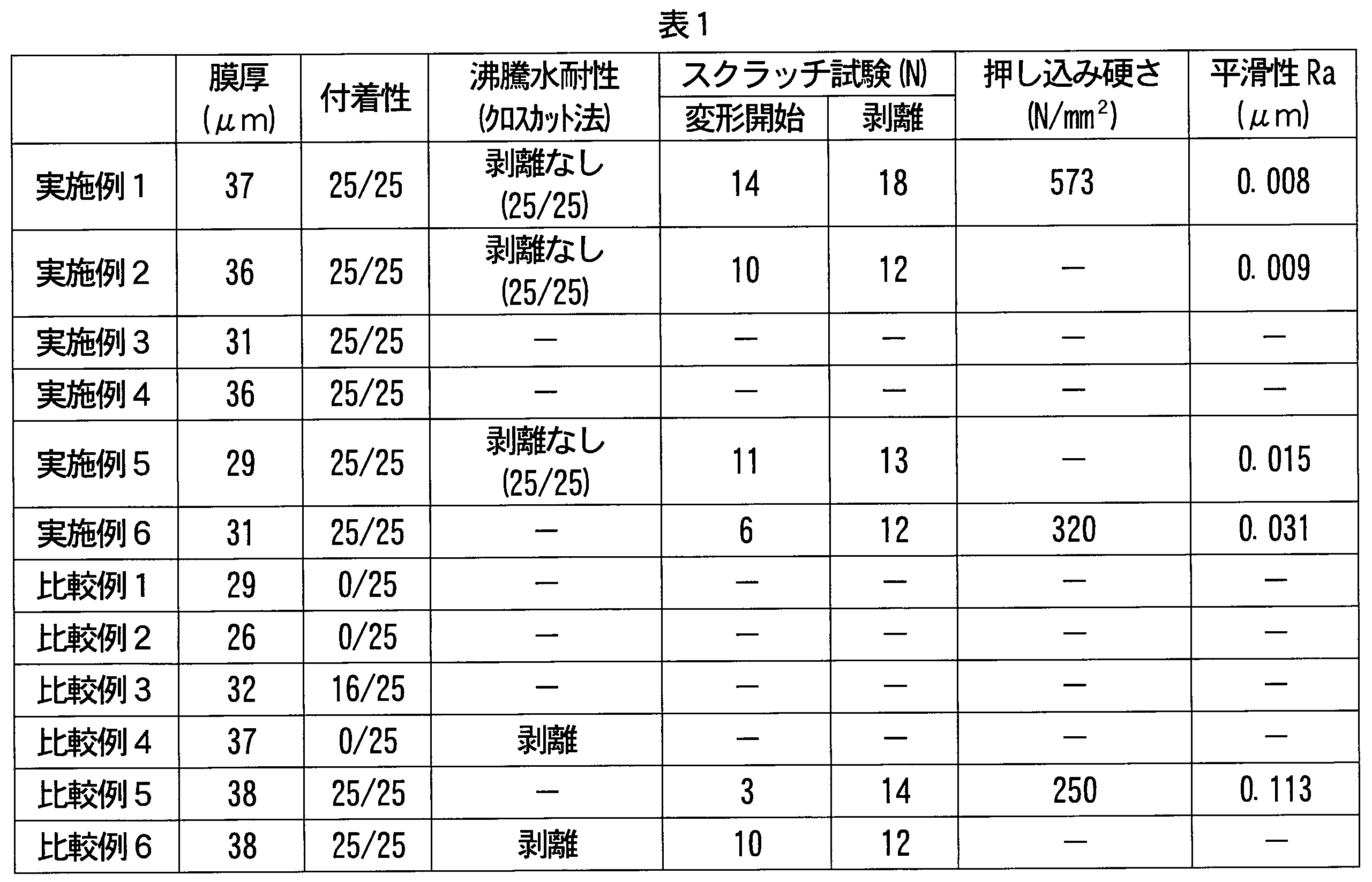
表1の結果から明らかなように、実施例の複合成形体が高い密着性及び耐熱性を有しており、表面の平滑性が優れていた。これに対して、比較例1~4の複合成形体は、密着性が低く、比較例5の複合成形体は、押し込み硬さが低く、比較例6の複合成形体は耐熱性が低かった。
本発明の表面処理キットは、摺動性及び耐熱性を要求される金属で形成された各種成形体(二次元又は三次元状成形体)を被覆するための表面処理剤として利用でき、例えば、各種産業機器、自動車や航空機などの輸送機、電子及び電気機器などの部材(例えば、シリンダー、ピストン、ベアリングなどの摺動部材など)の表面処理剤として有効に利用できる。
Claims (13)
- 金属で形成された成形体の表面を処理するための表面処理キットであって、式(1)
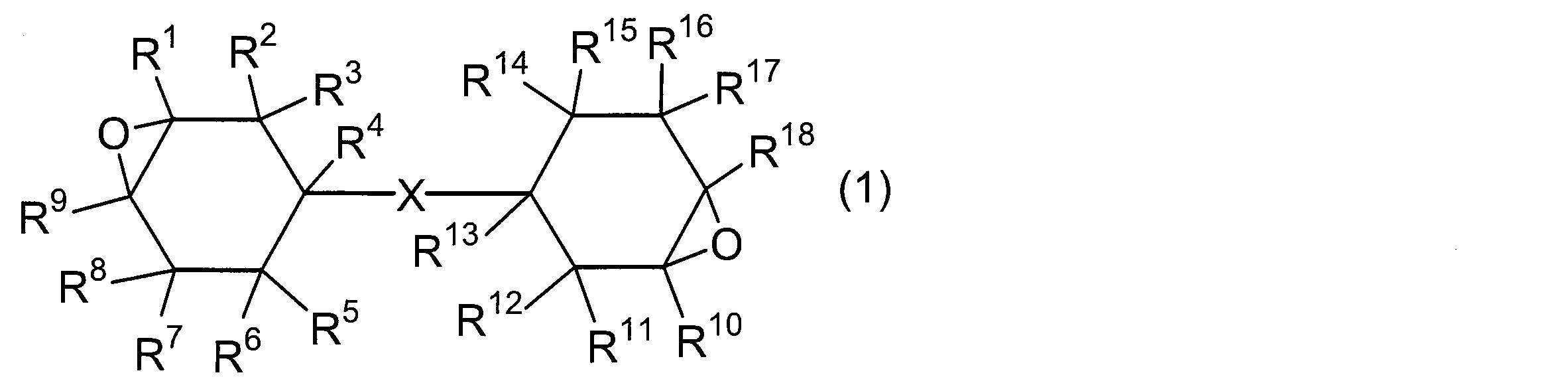
で表される脂環式エポキシ化合物を含む硬化性液状組成物(A)と、ポリアミドイミド樹脂を含む液状組成物(B)とを含む表面処理キット。 - 硬化性液状組成物(A)が硬化剤をさらに含む請求項1記載の表面処理キット。
- 硬化性液状組成物(A)がレベリング剤をさらに含む請求項1又は2記載の表面処理キット。
- 液状組成物(B)が、フッ素化合物、金属硫化物及び炭素材からなる群より選択された少なくとも1種の固体潤滑剤をさらに含む請求項1~3のいずれかに記載の表面処理キット。
- 式(1)において、R1~R18のうち、少なくとも1つが水素原子であり、かつXが直接結合である請求項1~4のいずれかに記載の表面処理キット。
- ポリアミドイミド樹脂を含む第1層と、請求項1記載の硬化性液状組成物(A)の硬化物を含む第2層とを有する積層体。
- 第2層の微小硬度計による押し込み硬さが300N/mm2以上である請求項6記載の積層体。
- 第2層の表面の算術平均粗さRaが1~100nmである請求項6又は7記載の積層体。
- 第2層の平均厚みが、第1層の平均厚みに対して2~100倍である請求項6~8のいずれかに記載の積層体。
- 金属で形成された成形体と、この成形体に積層された請求項6~9のいずれかに記載の積層体とを含み、かつこの積層体の第1層が前記成形体に接合又は接着している複合成形体。
- 金属がアルミニウム単体又はアルミニウムを含む合金である請求項10記載の複合成形体。
- 摺動部材である請求項10又は11記載の複合成形体。
- 金属で形成された成形体の表面に、液状組成物(B)をコーティングして固化する第1層形成工程、得られた第1層の表面に、硬化性液状組成物(A)をコーティングして硬化する第2層形成工程を含む請求項10~12のいずれかに記載の複合成形体の製造方法。
Priority Applications (1)
| Application Number | Priority Date | Filing Date | Title |
|---|---|---|---|
| JP2017550028A JPWO2017081963A1 (ja) | 2015-11-10 | 2016-10-06 | 表面処理キット並びに複合成形体及びその製造方法 |
Applications Claiming Priority (2)
| Application Number | Priority Date | Filing Date | Title |
|---|---|---|---|
| JP2015220433 | 2015-11-10 | ||
| JP2015-220433 | 2015-11-10 |
Publications (1)
| Publication Number | Publication Date |
|---|---|
| WO2017081963A1 true WO2017081963A1 (ja) | 2017-05-18 |
Family
ID=58695036
Family Applications (1)
| Application Number | Title | Priority Date | Filing Date |
|---|---|---|---|
| PCT/JP2016/079741 Ceased WO2017081963A1 (ja) | 2015-11-10 | 2016-10-06 | 表面処理キット並びに複合成形体及びその製造方法 |
Country Status (2)
| Country | Link |
|---|---|
| JP (1) | JPWO2017081963A1 (ja) |
| WO (1) | WO2017081963A1 (ja) |
Citations (10)
| Publication number | Priority date | Publication date | Assignee | Title |
|---|---|---|---|---|
| JPS6067531A (ja) * | 1983-09-22 | 1985-04-17 | Toshiba Corp | 樹脂組成物 |
| JPS6071631A (ja) * | 1983-09-29 | 1985-04-23 | Toshiba Corp | 光硬化性組成物 |
| JPH07189804A (ja) * | 1993-12-27 | 1995-07-28 | Toyota Motor Corp | 内燃機関のピストンおよびその製造方法 |
| JPH08217813A (ja) * | 1995-02-17 | 1996-08-27 | Toyo Ink Mfg Co Ltd | 光開始剤組成物、光重合性組成物および光重合方法 |
| JPH09143248A (ja) * | 1995-11-20 | 1997-06-03 | Toyo Ink Mfg Co Ltd | 紫外線硬化型樹脂組成物およびこれを含む被覆剤 |
| JPH11349895A (ja) * | 1998-06-08 | 1999-12-21 | Kansai Paint Co Ltd | カチオン重合性塗料組成物 |
| JP2008189853A (ja) * | 2007-02-06 | 2008-08-21 | Daicel Chem Ind Ltd | 光硬化性樹脂組成物及び塗装物 |
| JP2015185504A (ja) * | 2014-03-26 | 2015-10-22 | 日立金属株式会社 | エナメル線の製造方法 |
| JP2016121314A (ja) * | 2014-12-25 | 2016-07-07 | 株式会社ダイセル | 耐摩耗剤 |
| JP2016120476A (ja) * | 2014-12-25 | 2016-07-07 | トヨタ自動車株式会社 | 摺動部材およびその製造方法 |
-
2016
- 2016-10-06 WO PCT/JP2016/079741 patent/WO2017081963A1/ja not_active Ceased
- 2016-10-06 JP JP2017550028A patent/JPWO2017081963A1/ja active Pending
Patent Citations (10)
| Publication number | Priority date | Publication date | Assignee | Title |
|---|---|---|---|---|
| JPS6067531A (ja) * | 1983-09-22 | 1985-04-17 | Toshiba Corp | 樹脂組成物 |
| JPS6071631A (ja) * | 1983-09-29 | 1985-04-23 | Toshiba Corp | 光硬化性組成物 |
| JPH07189804A (ja) * | 1993-12-27 | 1995-07-28 | Toyota Motor Corp | 内燃機関のピストンおよびその製造方法 |
| JPH08217813A (ja) * | 1995-02-17 | 1996-08-27 | Toyo Ink Mfg Co Ltd | 光開始剤組成物、光重合性組成物および光重合方法 |
| JPH09143248A (ja) * | 1995-11-20 | 1997-06-03 | Toyo Ink Mfg Co Ltd | 紫外線硬化型樹脂組成物およびこれを含む被覆剤 |
| JPH11349895A (ja) * | 1998-06-08 | 1999-12-21 | Kansai Paint Co Ltd | カチオン重合性塗料組成物 |
| JP2008189853A (ja) * | 2007-02-06 | 2008-08-21 | Daicel Chem Ind Ltd | 光硬化性樹脂組成物及び塗装物 |
| JP2015185504A (ja) * | 2014-03-26 | 2015-10-22 | 日立金属株式会社 | エナメル線の製造方法 |
| JP2016121314A (ja) * | 2014-12-25 | 2016-07-07 | 株式会社ダイセル | 耐摩耗剤 |
| JP2016120476A (ja) * | 2014-12-25 | 2016-07-07 | トヨタ自動車株式会社 | 摺動部材およびその製造方法 |
Also Published As
| Publication number | Publication date |
|---|---|
| JPWO2017081963A1 (ja) | 2018-08-30 |
Similar Documents
| Publication | Publication Date | Title |
|---|---|---|
| JP2017089494A (ja) | 自動車部品及びその製造方法 | |
| US11104824B2 (en) | Curable composition and shaped product | |
| US10563091B2 (en) | Curable composition, and moulded body | |
| US20190292342A1 (en) | Hard coat film | |
| KR102378239B1 (ko) | 디스플레이 장치용 폴리머 | |
| JP6909775B2 (ja) | 硬化性組成物 | |
| TWI796000B (zh) | 積層膜、及可撓性裝置 | |
| JP5272338B2 (ja) | フッ素系重合体および樹脂組成物 | |
| CN110885609A (zh) | 汽车部件及其制造方法 | |
| US10759966B1 (en) | Optical laminate and flexible display apparatus comprising the same | |
| JP2007284613A (ja) | 活性エネルギー線硬化性コーティング剤およびその用途 | |
| JP2017218545A (ja) | 硬化性組成物、硬化物、硬化物の製造方法、及び成形体 | |
| TWI787508B (zh) | 積層膜及可折器件 | |
| US12398301B2 (en) | Adhesives comprising cyclic imide addition-fragmentation and adhesion agents | |
| WO2017081963A1 (ja) | 表面処理キット並びに複合成形体及びその製造方法 | |
| JP2020041059A (ja) | 硬化性組成物及びその硬化物並びにその用途 | |
| JP2018040974A (ja) | ハードコート積層体並びに成形体及びその製造方法 | |
| JP2018176516A (ja) | 積層体並びに複合成形体及びその製造方法 | |
| JPWO2019003991A1 (ja) | 有機el素子の封止用のカチオン重合硬化型インクジェット用樹脂組成物 | |
| WO2018190061A1 (ja) | 摺動部材及びその製造方法 | |
| CN109983051A (zh) | 含有环氧基的有机聚硅氧烷、紫外线固化型硅酮组合物及固化覆膜形成方法 | |
| KR102747616B1 (ko) | 광학 적층 필름 및 이를 포함하는 플렉서블 디스플레이 장치 | |
| KR102779865B1 (ko) | 광학 적층 필름 및 이를 포함하는 플렉서블 디스플레이 장치 | |
| JP2023520198A (ja) | 光学積層体およびこれを含むフレキシブルディスプレイ装置 | |
| WO2022004746A1 (ja) | 積層体、積層体の製造方法、積層体を含む画像表示装置用表面保護フィルム、積層体を備えた物品及び画像表示装置 |
Legal Events
| Date | Code | Title | Description |
|---|---|---|---|
| 121 | Ep: the epo has been informed by wipo that ep was designated in this application |
Ref document number: 16863927 Country of ref document: EP Kind code of ref document: A1 |
|
| ENP | Entry into the national phase |
Ref document number: 2017550028 Country of ref document: JP Kind code of ref document: A |
|
| NENP | Non-entry into the national phase |
Ref country code: DE |
|
| 122 | Ep: pct application non-entry in european phase |
Ref document number: 16863927 Country of ref document: EP Kind code of ref document: A1 |