WO2017057491A1 - タブ用アルミニウム合金板及びその製造方法 - Google Patents
タブ用アルミニウム合金板及びその製造方法 Download PDFInfo
- Publication number
- WO2017057491A1 WO2017057491A1 PCT/JP2016/078681 JP2016078681W WO2017057491A1 WO 2017057491 A1 WO2017057491 A1 WO 2017057491A1 JP 2016078681 W JP2016078681 W JP 2016078681W WO 2017057491 A1 WO2017057491 A1 WO 2017057491A1
- Authority
- WO
- WIPO (PCT)
- Prior art keywords
- mass
- plate
- tab
- aluminum alloy
- hot
- Prior art date
- Legal status (The legal status is an assumption and is not a legal conclusion. Google has not performed a legal analysis and makes no representation as to the accuracy of the status listed.)
- Ceased
Links
Images

Classifications
-
- C—CHEMISTRY; METALLURGY
- C22—METALLURGY; FERROUS OR NON-FERROUS ALLOYS; TREATMENT OF ALLOYS OR NON-FERROUS METALS
- C22C—ALLOYS
- C22C21/00—Alloys based on aluminium
- C22C21/06—Alloys based on aluminium with magnesium as the next major constituent
-
- C—CHEMISTRY; METALLURGY
- C22—METALLURGY; FERROUS OR NON-FERROUS ALLOYS; TREATMENT OF ALLOYS OR NON-FERROUS METALS
- C22F—CHANGING THE PHYSICAL STRUCTURE OF NON-FERROUS METALS AND NON-FERROUS ALLOYS
- C22F1/00—Changing the physical structure of non-ferrous metals or alloys by heat treatment or by hot or cold working
- C22F1/04—Changing the physical structure of non-ferrous metals or alloys by heat treatment or by hot or cold working of aluminium or alloys based thereon
- C22F1/047—Changing the physical structure of non-ferrous metals or alloys by heat treatment or by hot or cold working of aluminium or alloys based thereon of alloys with magnesium as the next major constituent
-
- C—CHEMISTRY; METALLURGY
- C22—METALLURGY; FERROUS OR NON-FERROUS ALLOYS; TREATMENT OF ALLOYS OR NON-FERROUS METALS
- C22F—CHANGING THE PHYSICAL STRUCTURE OF NON-FERROUS METALS AND NON-FERROUS ALLOYS
- C22F1/00—Changing the physical structure of non-ferrous metals or alloys by heat treatment or by hot or cold working
Definitions
- the present invention relates to an aluminum alloy plate for a tab suitable as a material for a tab attached to a can lid and a method for manufacturing the same.
- Steel cans and aluminum cans are widely used as beverage and food packaging containers. These cans have a can body and a can lid for sealing the contents, and a tab for opening the can lid.
- a can lid of a beverage can has a structure of either a pull tab method in which the score portion of the can lid is removed together with the tab or a steion tab method in which the score portion of the can lid is pushed by the tab. .
- steion tab type can lids have become mainstream from the viewpoint of environmental problems.
- the tab is attached to a rivet formed on the can lid.
- the score portion of the can lid is pushed into the inside of the can according to the principle of lever by causing the tab.
- the pushing force applied to the score portion is insufficient, the score portion may not be fully opened.
- the tab is bent back to the original position, it is necessary to cause the tab again. Therefore, when the bendability of the tab is low, there is a problem that the joint portion of the tab with the rivet cannot withstand the above-described repeated operation of the triggering operation and the bending return operation, and the tab is torn off and detached from the can lid. To do.
- the tab is made of a JIS A5082 alloy plate or a JIS A5182 alloy plate.
- it is required to reduce the thickness of the aluminum alloy plate used for manufacturing the tab.
- it is necessary to increase the strength of the aluminum alloy plate as a raw material.
- a high-strength aluminum alloy plate has low bendability, the tab is broken due to repetition of the raising operation and the bending return operation, and there is a high possibility that the tab is detached from the can lid.
- Patent Document 1 discloses an aluminum alloy plate that suppresses the area ratio of intermetallic compounds by controlling the amount of Fe and Mn that contribute to an increase in intermetallic compounds, and has improved repeated bendability.
- Patent Document 2 discloses an aluminum alloy plate having improved bendability by specifying the number of intermetallic compounds having a maximum size of 5 ⁇ m or more, the amount of solute Mn, and homogenization treatment conditions, and a method for producing the same. .
- Patent Document 1 and Patent Document 2 tend to concentrate stress on the interface between the aluminum matrix and the intermetallic compound during bending deformation. As a result, the bendability of the tab may be deteriorated. Thus, in order to obtain an aluminum alloy sheet for tabs that achieves both high strength and excellent bendability, it is not sufficient to control the amount of intermetallic compounds, and further improvements are strongly desired. .
- the present invention has been made in view of such a background, and an object of the present invention is to provide an aluminum alloy plate for tabs that can achieve both high strength and excellent bendability at a low manufacturing cost, and a method for manufacturing the same.
- Si silicon: 0.01 to 0.20 mass%
- Fe iron: 0.01 to 0.35 mass%
- Cu copper
- Mn manganesium
- Cr chromium
- Chemical components with the balance being Al (aluminum) and inevitable impurities;
- the Cube orientation density has a texture that is 1.5 times or more of the random orientation sample, 0.2% proof stress is 280 to 360 MPa
- the aluminum alloy sheet for tabs has an elongation of 5% or more.
- Other embodiments of the present invention include Si: 0.01 to 0.20 mass%, Fe: 0.01 to 0.35 mass%, Cu: 0.005 to 0.15 mass%, Mn: 0.005 to An ingot containing 0.50% by mass, Mg: 4.0-5.0% by mass, Cr: 0.005-0.15% by mass, the balance having chemical components composed of Al and inevitable impurities is prepared. And The ingot is heated at 450 to 540 ° C.
- the average rolling reduction per pass between the plate thickness of less than 150 mm and the end is 8 to 40%
- the plate thickness at the end is 20 to 32 mm
- the plate temperature at the end Perform multiple passes of hot rough rolling so that the temperature becomes 400 to 500 ° C.
- the plate surface from the plate center in the thickness direction is obtained.
- the tab aluminum alloy plate has the specific chemical component. Thereby, the intensity
- the aluminum alloy plate has the strength in the specific range, the plate thickness can be easily reduced as compared with the conventional aluminum alloy plate.
- the aluminum alloy plate has a texture in which the Cube orientation density is 1.5 times or more that of the random orientation sample in the entire range from the plate center to the plate surface in the thickness direction.
- the aluminum alloy plate in which the orientation density of the Cube orientation ( ⁇ 001 ⁇ ⁇ 100>) is within the specific range can alleviate stress concentration during bending deformation. Therefore, the aluminum alloy plate can suppress the occurrence and development of cracks that are the starting points of tab tearing, and can suppress tab separation due to repetition of the triggering action and the bending return action.
- the aluminum alloy plate has the above-mentioned specific chemical composition and texture, and 0.2% proof stress and elongation are within the above-mentioned specific range, so that high strength and excellent bendability are obtained. Can be made compatible.
- the manufacturing method of the said aluminum alloy plate makes the conditions of the said hot rough rolling and the said hot finish rolling into the said specific range, between the passes at the time of a hot rough rolling, and at the time of a hot finish rolling. Recrystallization that occurs between passes can be suppressed. As a result, the hot-rolled sheet having a high Cube orientation density can be produced. And the Cube orientation density of the said aluminum alloy plate can be easily made into the said specific range by performing cold rolling to the said hot-rolled sheet.
- the Cube orientation density of the hot-rolled sheet can be sufficiently increased. Therefore, it is not necessary to perform intermediate annealing to increase the Cube orientation density after the hot finish rolling is completed and before the cold rolling is completed. Therefore, according to the said manufacturing method, the heat processing process can be reduced rather than before, and the effect of reducing the manufacturing cost of the said aluminum alloy plate can also be acquired.
- Si (silicon): 0.01 to 0.20 mass% When Si coexists with Mg, it forms Mg 2 Si precipitates. This deposit has an effect of suppressing the softening of the tab during baking of the coating. The softening of the tab can be suppressed by setting the Si content in the specific range.
- the Si content is less than 0.01% by mass, the effect of suppressing the softening of the tab is insufficient. Moreover, in this case, since it is necessary to use a high purity aluminum ingot at the time of casting, the productivity is deteriorated and the manufacturing cost is increased. From the viewpoint of avoiding these problems, the Si content is preferably 0.03% by mass or more.
- the Si content is excessively large, the content of Si-containing intermetallic compounds increases. If this intermetallic compound is present in a large amount in the aluminum alloy plate, in addition to promoting the generation and propagation of cracks during bending, it causes randomization of the texture. As a result, the bendability of the tab may be deteriorated.
- the Si content is 0.20 mass% or less. From the same viewpoint, the Si content is preferably 0.15% by mass or less.
- Fe (iron): 0.01 to 0.35 mass% Fe has an effect of suppressing the softening of the tab at the time of paint baking. Softening of the tab can be suppressed by setting the Fe content in the specific range.
- the Fe content is less than 0.01% by mass, the effect of suppressing the softening of the tab is insufficient. Moreover, in this case, since it is necessary to use a high purity aluminum ingot at the time of casting, the productivity is deteriorated and the manufacturing cost is increased. From the viewpoint of avoiding these problems, the Fe content is preferably 0.05% by mass or more.
- the Fe content is set to 0.35 mass% or less. From the same viewpoint, the Fe content is preferably 0.30% by mass or less.
- Cu (copper): 0.005 to 0.15 mass% Cu has the effect of improving the strength of the tab by solid solution strengthening. By setting the Cu content in the specific range, the strength of the tab can be sufficiently increased.
- the Cu content is less than 0.005% by mass, the effect of increasing the strength of the tab is insufficient.
- the Cu content is preferably 0.01% by mass or more.
- the Cu content is 0.15% by mass or less. From the same viewpoint, the Cu content is preferably 0.13% by mass or less.
- Mn (manganese): 0.005 to 0.50 mass% Mn has the effect of improving the strength of the tab by solid solution strengthening. By setting the Mn content in the above specific range, the strength of the tab can be sufficiently increased.
- the Mn content is less than 0.005% by mass, the effect of increasing the strength of the tab is insufficient.
- the Mn content is preferably 0.01% by mass or more.
- the Mn content is 0.50 mass% or less. From the same viewpoint, the Mn content is preferably 0.40% by mass or less.
- Mg (magnesium): 4.0 to 5.0% by mass Mg has the effect of improving the strength of the tab by solid solution strengthening. By setting the Mg content in the specific range, the strength of the tab can be sufficiently increased.
- the Mg content is less than 4.0% by mass, the effect of improving the strength of the tab is insufficient.
- the Mg content is preferably 4.2% by mass or more.
- the content of Mg is excessively large, the strength of the aluminum alloy plate becomes excessively high. As a result, there is a possibility that problems such as cracking of the aluminum alloy plate during tab formation or deterioration of the tab bendability may occur. In this case, the hot rolling property is deteriorated, and the end portion in the plate width direction may be broken during rolling. From the viewpoint of avoiding these problems, the Mg content is 5.0% by mass or less. From the same viewpoint, the Mg content is preferably 4.9% by mass or less.
- Cr chromium: 0.005 to 0.15 mass% Cr has the effect of improving the strength of the tab by solid solution strengthening. By setting the Cr content within the above specific range, the strength of the tab can be sufficiently increased.
- the Cr content is less than 0.005% by mass, the effect of improving the strength of the tab is insufficient.
- the Cr content is preferably 0.01% by mass or more.
- the Cr content is excessively large, a coarse intermetallic compound containing Cr is formed.
- this intermetallic compound is formed, problems such as the generation and development of cracks during bending are promoted, or the strength of the aluminum alloy plate is excessively increased, and the bendability of the tab is deteriorated.
- the Cr content is 0.15% by mass or less.
- the Cr content is preferably 0.10% by mass or less.
- 0.2% proof stress 280 to 360 MPa
- the 0.2% proof stress of the aluminum alloy plate is 280 to 360 MPa.
- the 0.2% proof stress is less than 280 MPa, the strength of the tab is insufficient, and the tab may be broken in the middle of opening.
- the 0.2% proof stress exceeds 360 MPa, the strength becomes too high and the bendability of the tab deteriorates.
- the 0.2% proof stress is preferably 290 to 340 MPa.
- Elongation 5% or more
- the elongation of the aluminum alloy plate is 5% or more.
- the bendability of the tab is deteriorated.
- the elongation of the aluminum alloy plate is preferably 7% or more.
- the elongation is preferably 15% or less.
- the aluminum alloy plate has a texture in which the Cube orientation density is 1.5 times or more that of the random orientation sample in the entire range from the plate center to the plate surface in the thickness direction. Thereby, the bendability of the aluminum alloy plate can be improved.
- a plate surface means the surface of the side used as the outer surface of a tab when producing a tab from the said aluminum alloy plate.
- a random orientation sample refers to a sample in which the crystal orientation in the sample is not oriented in a specific direction.
- the Cube orientation density of the aluminum alloy plate is less than 1.5 times, the stress concentration during bending is not sufficiently relaxed. As a result, the effect of suppressing the generation and development of cracks during bending becomes insufficient, leading to deterioration of bendability.
- the Cube orientation density is preferably 2.0 times or more that of the random orientation sample.
- the Cube orientation density of the aluminum alloy plate is preferably 12 times or less that of the random orientation sample.
- an ingot is produced from an aluminum alloy having a chemical component in the specific range.
- a conventionally known method such as semi-continuous casting can be employed.
- the obtained ingot is heated at 450 to 540 ° C. for 1 to 24 hours and subjected to a homogenization treatment.
- a homogenization treatment By setting the heating temperature and the heating time within the specific range, sufficient homogenization can be performed. As a result, the bendability of the tab can be improved.
- the heating temperature in the homogenization treatment is less than 450 ° C., homogenization may be insufficient. As a result, the bendability of the tab may be deteriorated. From the viewpoint of avoiding such a problem, the heating temperature is preferably set to 470 ° C. or higher.
- the heating temperature in the homogenization treatment exceeds 540 ° C., oxidation or blistering occurs on the ingot surface, which may cause deterioration of the surface quality.
- the heating temperature is preferably set to 520 ° C. or lower.
- the heating time in the homogenization treatment is less than 1 hour, homogenization may be insufficient. As a result, the bendability of the tab may be deteriorated. From the viewpoint of avoiding such a problem, it is preferable to set the heating time to 2 hours or more.
- the heating time exceeds 24 hours, the productivity is deteriorated. From the viewpoint of avoiding such a problem, it is preferable to set the heating time to 12 hours or less.
- hot rough rolling and hot finish rolling are performed to produce hot rolled sheets.
- hot rough rolling usually, multiple passes are rolled using a reverse rolling mill. At this time, the average rolling reduction per pass from the time when the plate thickness is less than 150 mm to the end of hot rough rolling is 8 to 40%, the plate thickness at the end is 20 to 32 mm, and at the end
- the hot rough rolling is performed under the above specific conditions for rolling the ingot by controlling the rolling rate of each pass so that the plate temperature is 400 to 500 ° C. Thickness and texture can be made into an appropriate range.
- the average rolling reduction mentioned above is less than 8%, the number of rolling passes increases excessively, resulting in a decrease in the plate temperature. As a result, the end of the plate may break during rolling. From the viewpoint of avoiding such a problem, it is preferable that the average rolling reduction is 10% or more.
- the average rolling reduction exceeds 40%, the recrystallization driving force increases and recrystallization between passes is promoted. As a result, the recrystallized texture may be randomized and the bendability of the tab may deteriorate. From the viewpoint of avoiding such a problem, it is preferable that the average rolling reduction is 30% or less.
- the plate thickness at the end of hot rough rolling is less than 20 mm, the reduction amount during hot finish rolling is small, and thus there is a possibility that the rolled structure remains on the hot rolled plate. As a result, the Cube orientation density of the aluminum alloy plate is lowered, and the bendability of the tab may be deteriorated. From the viewpoint of avoiding such a problem, it is preferable to set the plate thickness at the end of hot rough rolling to 22 mm or more.
- the plate thickness at the end exceeds 32 mm, the recrystallization driving force is increased by increasing the reduction amount during hot finish rolling. As a result, the recrystallized texture may be randomized and the bendability of the tab may deteriorate. From the viewpoint of avoiding such a problem, it is preferable to set the plate thickness at the end of hot rough rolling to 30 mm or less.
- the plate temperature at the end of hot rough rolling is less than 400 ° C.
- the plate temperature is too low, and the end of the plate may crack during hot finish rolling. From the viewpoint of avoiding such a problem, it is preferable to set the plate temperature at the end of hot rough rolling to 420 ° C. or higher.
- the plate temperature at the end of the hot rough rolling exceeds 500 ° C.
- the recrystallization driving force increases.
- the recrystallized texture becomes random and the bendability of the tab deteriorates.
- the plate temperature at the end of hot rough rolling is preferably 490 ° C. or lower.
- hot finish rolling a multi-pass rolling is usually performed using a tandem mill.
- the hot finish rolling is performed so that the strain rate in the first pass is 1 to 25 / sec and the temperature of the hot rolled sheet is 310 to 390 ° C. at the end of the hot finish rolling.
- the thickness and texture of the hot-rolled sheet can be within an appropriate range.
- the strain rate in the first pass in the hot finish rolling is less than 1 / sec, the Cube orientation density decreases due to the progress of recrystallization between passes. As a result, the bendability of the tab may be deteriorated. From the viewpoint of avoiding such a problem, it is preferable to set the strain rate of the first pass to 5 / sec or more.
- the strain rate in the first pass exceeds 25 / sec, the plate surface becomes rough due to insufficient lubrication, leading to a reduction in surface quality. From the viewpoint of avoiding such a problem, it is preferable to set the strain rate of the first pass to 20 / sec or less.
- the temperature of the hot rolled sheet at the end of hot finish rolling is less than 310 ° C.
- the rolled structure remains in the hot rolled sheet, leading to a decrease in Cube orientation density.
- the bendability of the tab may be deteriorated.
- the temperature of the hot-rolled sheet at the end of hot finish rolling is 320 ° C. or higher.
- the temperature of the hot rolled sheet at the end of hot finish rolling exceeds 390 ° C., lubrication is insufficient because the temperature during rolling is high. As a result, the plate surface becomes rough and the surface quality is degraded. From the viewpoint of avoiding such a problem, the temperature of the hot-rolled sheet at the end of hot finish rolling is preferably 370 ° C. or lower.
- the Cube orientation density is 8.0 times or more that of the random orientation sample.
- a plate can be made.
- the Cube orientation density of the aluminum alloy sheet can be increased. As a result, an aluminum alloy plate having high bendability can be easily produced.
- the Cube orientation density of the hot-rolled sheet is less than 8.0 times the random orientation, it may be difficult to make the Cube orientation density of the aluminum alloy sheet within the specific range. From the viewpoint of avoiding such a problem, it is preferable that the Cube orientation density of the hot-rolled sheet is 10 times or more that of the random orientation sample.
- the Cube orientation density of the hot-rolled plate In order to increase the Cube orientation density of the aluminum alloy plate, it is preferable to increase the Cube orientation density of the hot-rolled plate.
- hot finish rolling After hot finish rolling, cold rolling is performed on the hot-rolled sheet. At this time, intermediate annealing may be performed on the hot-rolled sheet as necessary after the hot finish rolling is completed and before the cold rolling is performed. When hot rough rolling and hot finish rolling are performed under the above specific conditions, cold rolling can be performed without performing intermediate annealing.
- Cold rolling is performed so that the total rolling reduction is 75 to 95%. Thereby, an aluminum alloy plate having both high strength and bendability can be obtained.
- the total rolling reduction is less than 75%, the strength of the finally obtained tab is insufficient, and there is a possibility that tab breakage may occur in the middle of opening. From the viewpoint of avoiding such a problem, it is preferable that the total rolling reduction of cold rolling is 80% or more.
- the total rolling reduction exceeds 95%, there is a possibility that problems such as a decrease in the Cube orientation density or an excessive increase in the strength of the aluminum alloy plate may occur. As a result, the bendability of the tab may be deteriorated. From the viewpoint of avoiding such a problem, it is preferable to set the total rolling reduction of cold rolling to 90% or less.
- the coating baking temperature can be appropriately determined according to the physical properties of the coating film. Usually, when the baking temperature is in the range of 240 to 300 ° C., there is no possibility of adversely affecting the bendability and strength of the obtained tab.
- ingots of aluminum alloys (alloys A to P) having chemical components shown in Table 1 were manufactured by a DC casting method.
- This ingot was subjected to homogenization treatment, hot rough rolling and hot finish rolling under the conditions shown in Table 2 to produce hot rolled sheets.
- this hot-rolled sheet was cold-rolled under the conditions shown in Table 2 to produce aluminum alloy sheets (test materials 1 to 42) having a sheet thickness of 0.33 mm.
- the hot rough rolling a plurality of passes were rolled using a reverse rolling mill.
- the hot finish rolling was performed using a 4-stand tandem mill.
- cold rolling rolling was performed for 4 to 7 passes using a single mill.
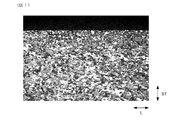
- the complete recrystallized structure is composed of a large number of granular crystals as shown in FIG.
- the rolling structure is a fibrous structure extending in the rolling direction.
- the vertical direction in FIG.1 and FIG.2 is a thickness direction (ST direction), and a horizontal direction is a rolling direction (L direction).
- the Cube orientation density of the above-mentioned plate cross section (L-ST plane) where the structure was observed was calculated by SEM-EBSD (scanning electron microscope-electron beam backscatter diffraction) method. And the Cube orientation density of the whole range from the center in the thickness direction to the plate surface was averaged. This average value was converted into a magnification with respect to the Cube orientation density of a randomly calculated random orientation sample, and shown in the column of “Cube orientation density” in Tables 3 and 4.
- the Cube orientation density was calculated from all crystal grains within an inclination angle of 15 ° from ⁇ 001 ⁇ ⁇ 100> which is the plane index of the Cube orientation.
- a random orientation sample an aluminum powder having no texture was used.
- OSL Orientation Imaging Microscopy manufactured by TSL was used.
- test material was evaluated for tensile properties, texture, tab bendability, tab strength and formability.
- JIS No. 5 tensile test specimens were collected from each test material, and the coating film was removed. Thereafter, a tensile test was performed in accordance with the provisions of JIS Z2241, and 0.2% proof stress and elongation were evaluated. In addition, the test piece was extract
- the Cube orientation density of the plate surface and the plate center plane in the thickness direction (ST direction) was measured. Then, the average value of the Cube orientation density on the plate surface and the Cube orientation density on the plate center plane was calculated. This average value was converted into a magnification with respect to the Cube orientation density of a randomly calculated random orientation sample, and shown in the column of “Cube orientation density” in Tables 3 and 4. Note that the Cube orientation density was calculated from all crystal grains within an inclination angle of 15 ° from ⁇ 001 ⁇ ⁇ 100>, which is the plane index of the Cube orientation, as in the evaluation of the hot-rolled sheet. Further, as the random orientation sample, aluminum powder having no texture was used.
- Tab strength After attaching the tab 1 to the rivet 21 of the can lid 2 in the same manner as described above, the tab 1 was rotated by 90 ° around the rivet 21 as shown in FIG. At that time, only the tab 1 was loaded. In this state, the tab was raised by a can opener and the load until the tab 1 was broken was measured. The results are shown in Tables 3 and 4. In the "Tab strength" column in Tables 3 and 4, the symbol A is shown when the load when the tab is broken is 30 N or more, and the symbol B is shown when it is less than 30 N.
- test materials 1 to 20 had the chemical components and texture in the specific range, and the tensile strength and elongation were in the specific range. Therefore, these test materials were able to achieve both high strength and bendability. And the tab produced from these test materials had favorable moldability, bendability, and intensity
- test materials 21 and 22 As shown in Table 1, Table 2, and Table 4, in the test materials 21 and 22, either the amount of Si or the amount of Fe was larger than the specific range, so that a large amount of intermetallic compounds were formed. As a result, these test materials had poor tab bendability.
- Test materials 23, 25 and 27 had a tensile strength lower than the specific range because any one of the Cu amount, the Mn amount and the Mg amount was smaller than the specific range. Therefore, these test materials had low tab strength.
- test material 24 had a larger amount of Cu than the specific range, the tensile strength was higher than the specific range. Therefore, the test material 24 had poor tab moldability and bendability. Since the test material 26 had a Mn amount larger than the specific range, the tensile strength was higher than the specific range. Therefore, the test material 26 had poor tab bendability.
- test material 29 had a Cr amount smaller than the specific range, the tensile strength was lower than the specific range. Therefore, the test material 29 had low tab strength. Since the test material 30 had a larger amount of Cr than the specific range, the tensile strength was higher than the specific range. In addition, a coarse intermetallic compound was formed on the test material 30. Therefore, the test material 30 had poor tab bendability.
- the homogenization temperature of the test material 31 was higher than the above specific range, the surface was strongly oxidized and the surface quality was deteriorated. Therefore, the production of the test material 31 was stopped without performing the steps after hot rolling.
- test material 32 had an average rolling reduction during the hot rough rolling smaller than the specific range, the number of passes in the hot rough rolling was increased, and the plate temperature at the end of the hot rough rolling was within the specific range. Lower than. As a result, cracks occurred at the edge of the plate during hot finish rolling. Therefore, the production of the test material 32 was stopped without performing cold rolling.
- the test material 33 had an average rolling reduction during the hot rough rolling larger than the specific range. As a result of the progress of recrystallization during hot rolling, the Cube orientation density of the test material 33 was lower than the specific range. Therefore, the test material 33 had poor tab bendability.
- the test material 34 had a plate temperature higher than the specific range at the end of the hot rough rolling. As a result, recrystallization during hot rolling proceeded, so that the Cube orientation density of the test material 34 was lower than the specific range. As a result, the test material 34 had poor tab bendability.
- the test material 35 at the end of hot rough rolling was thinner than the specific range, the amount of reduction during hot finish rolling was insufficient. As a result, as a result of the rolling structure remaining on the hot-rolled sheet, the Cube orientation density of the test material 35 was lower than the specific range. Therefore, the test material 35 had poor tab bendability.
- the test material 36 at the end of the hot rough rolling was larger than the above specific range, the amount of reduction during the hot finish rolling increased. As a result of the progress of recrystallization during hot rolling, the Cube orientation density of the test material 36 was lower than the specific range. Therefore, the test material 36 had poor tab bendability.
- the test material 37 had a strain rate at the first stand (first pass) of hot finish rolling smaller than the specific range. As a result of the progress of recrystallization during hot rolling, the Cube orientation density of the test material 37 was lower than the specific range. Therefore, the test material 37 had poor tab bendability.
- test material 38 had insufficient lubrication during rolling because the strain rate at the first stand of hot finish rolling was larger than the specific range. As a result, the plate surface was rough and the surface quality was deteriorated. Therefore, the production of the test material 38 was stopped without performing cold rolling.
- the temperature of the hot-rolled sheet was lower than the specific range, so that recrystallization could not be completed, and the rolled structure remained on the hot-rolled sheet.
- the Cube orientation density of the test material 39 was lower than the specific range. Therefore, the test material 39 had poor tab bendability.
- test material 40 was insufficiently lubricated during rolling because the temperature of the hot-rolled sheet was higher than the specific range. As a result, the plate surface was rough and the surface quality was deteriorated. Therefore, the production of the test material 40 was stopped without performing cold rolling.
- the test material 41 had a total rolling reduction in cold rolling smaller than the specific range, so that the tensile strength was lower than the specific range. As a result, the test material 41 had low tab strength.
- the test material 42 had a total rolling reduction in cold rolling higher than the above specific range, so that the tensile strength was higher than the above specific range. As a result, the test material 42 had poor tab bendability.
Landscapes
- Chemical & Material Sciences (AREA)
- Engineering & Computer Science (AREA)
- Materials Engineering (AREA)
- Mechanical Engineering (AREA)
- Metallurgy (AREA)
- Organic Chemistry (AREA)
- Physics & Mathematics (AREA)
- Thermal Sciences (AREA)
- Crystallography & Structural Chemistry (AREA)
- Metal Rolling (AREA)
Abstract
製造コストが低く、高い強度と優れた曲げ性とを両立できるタブ用アルミニウム合金板およびその製造方法を提供する。タブ用アルミニウム合金板は、Si:0.01~0.20質量%、Fe:0.01~0.35質量%、Cu:0.005~0.15質量%、Mn:0.005~0.50質量%、Mg:4.0~5.0質量%及びCr:0.005~0.15質量%を含有し、残部がAl及び不可避的不純物からなる化学成分と、厚み方向における板中央から板表面までの全範囲において、Cube方位密度がランダム方位試料の1.5倍以上である集合組織とを有している。0.2%耐力が280~360MPaである。伸びが5%以上である。
Description
本発明は、缶蓋に取り付けられるタブの素材として好適なタブ用アルミニウム合金板およびその製造方法に関する。
スチール缶やアルミニウム缶は、飲料や食品の包装容器として広く使用されている。これらの缶は、内容物を密封するための缶胴及び缶蓋と、缶蓋を開口させるためのタブとを有している。例えば、飲料缶の缶蓋は、タブとともに缶蓋のスコア部を除去するプルタブ方式、または、缶蓋のスコア部をタブにより押し込むステイオンタブ方式のいずれかの構造を有していることが多い。近年においては、環境問題の観点等によりステイオンタブ方式の缶蓋が主流となっている。
タブは、缶蓋に形成されたリベットに取り付けられている。例えばステイオンタブ方式の缶蓋を開口させる場合には、タブを引き起こすことによって、梃子の原理により缶蓋のスコア部を缶の内側に押し込む。しかし、スコア部に加わる押込み力が不足すると、スコア部が開ききらないことがある。この場合、タブを元の位置に曲げ戻した後、再度タブを引き起こす必要がある。それ故、タブの曲げ性が低い場合には、タブにおけるリベットとの結合部が上述した引き起こし動作と曲げ戻し動作との繰り返しに耐え切れず、タブがちぎれて缶蓋より離脱するという問題が発生する。
従来、タブは、JIS A5082合金板やJIS A5182合金板から作製されている。しかし、近年、コストの削減を目的として、タブの作製に用いるアルミニウム合金板の薄肉化が要求されている。アルミニウム合金板を薄肉化しつつ得られるタブの強度を十分に確保するためには、素材のアルミニウム合金板を高強度化する必要がある。ところが、高強度のアルミニウム合金板は、曲げ性が低いため、引き起こし動作と曲げ戻し動作との繰り返しによりタブがちぎれ、缶蓋から離脱するおそれが高くなる。
そこで、高い強度と優れた曲げ性とを両立させたアルミニウム合金板およびその製造方法が検討されている。例えば、特許文献1には、金属間化合物の増加に寄与するFe量及びMn量を規制することで、金属間化合物の面積率を抑制し、繰り返し曲げ性を高めたアルミニウム合金板が開示されている。また、特許文献2には、最大5μm以上の金属間化合物の数、固溶Mn量および均質化処理条件を規定することで、曲げ性を高めたアルミニウム合金板およびその製造方法が開示されている。
しかし、特許文献1や特許文献2に開示されたアルミニウム合金板は、曲げ変形時に、アルミニウムマトリクスと金属間化合物との界面に応力が集中しやすい。その結果、タブの曲げ性が悪化するおそれがある。このように、高い強度と優れた曲げ性とを両立させたタブ用アルミニウム合金板を得るためには、金属間化合物量を制御するだけでは不十分であり、更なる改良が強く望まれている。
本発明は、かかる背景に鑑みてなされたものであり、製造コストが低く、高い強度と優れた曲げ性とを両立できるタブ用アルミニウム合金板およびその製造方法を提供することを目的とする。
本発明の一態様は、Si(シリコン):0.01~0.20質量%、Fe(鉄):0.01~0.35質量%、Cu(銅):0.005~0.15質量%、Mn(マンガン):0.005~0.50質量%、Mg(マグネシウム):4.0~5.0質量%及びCr(クロム):0.005~0.15質量%を含有し、残部がAl(アルミニウム)及び不可避的不純物からなる化学成分と、
厚み方向における板中央から板表面までの全範囲において、Cube方位密度がランダム方位試料の1.5倍以上である集合組織とを有しており、
0.2%耐力が280~360MPaであり、
伸びが5%以上である、タブ用アルミニウム合金板にある。
厚み方向における板中央から板表面までの全範囲において、Cube方位密度がランダム方位試料の1.5倍以上である集合組織とを有しており、
0.2%耐力が280~360MPaであり、
伸びが5%以上である、タブ用アルミニウム合金板にある。
本発明の他の態様は、Si:0.01~0.20質量%、Fe:0.01~0.35質量%、Cu:0.005~0.15質量%、Mn:0.005~0.50質量%、Mg:4.0~5.0質量%、Cr:0.005~0.15質量%を含有し、残部がAl及び不可避的不純物からなる化学成分を有する鋳塊を準備し、
該鋳塊を450~540℃で1~24時間加熱して均質化処理を行い、
上記鋳塊に、板厚が150mmを下回ってから終了時までの間の1パス当たりの圧下率の平均が8~40%、終了時の板厚が20~32mm、及び、終了時の板温度が400~500℃となるようにして複数パスの熱間粗圧延を行い、
次いで、1パス目のひずみ速度が1~25/secかつ終了時の板温度が310~390℃となるようにして複数パスの熱間仕上圧延を行うことにより、厚み方向における板中央から板表面までの全範囲において、Cube方位密度がランダム方位試料の8.0倍以上である集合組織を有する熱延板を作製し、
その後、該熱延板に冷間圧延を行う、タブ用アルミニウム合金板の製造方法にある。
該鋳塊を450~540℃で1~24時間加熱して均質化処理を行い、
上記鋳塊に、板厚が150mmを下回ってから終了時までの間の1パス当たりの圧下率の平均が8~40%、終了時の板厚が20~32mm、及び、終了時の板温度が400~500℃となるようにして複数パスの熱間粗圧延を行い、
次いで、1パス目のひずみ速度が1~25/secかつ終了時の板温度が310~390℃となるようにして複数パスの熱間仕上圧延を行うことにより、厚み方向における板中央から板表面までの全範囲において、Cube方位密度がランダム方位試料の8.0倍以上である集合組織を有する熱延板を作製し、
その後、該熱延板に冷間圧延を行う、タブ用アルミニウム合金板の製造方法にある。
上記タブ用アルミニウム合金板は、上記特定の化学成分を有している。これにより、タブとして好適な強度及び伸びを容易に得ることができる。
また、上記アルミニウム合金板は、上記特定の範囲の強度を有しているため、従来のアルミニウム合金板よりも容易に板厚を薄くすることができる。
さらに、上記アルミニウム合金板は、厚み方向における板中央から板表面までの全範囲において、Cube方位密度がランダム方位試料の1.5倍以上である集合組織を有している。Cube方位({001}<100>)の方位密度が上記特定の範囲内である上記アルミニウム合金板は、曲げ変形中の応力集中を緩和することができる。それ故、上記アルミニウム合金板は、タブちぎれの起点となる亀裂の発生や進展を抑制し、引き起こし動作と曲げ戻し動作との繰り返しによるタブの離脱を抑制することができる。
このように、上記アルミニウム合金板は、上記特定の化学成分及び集合組織を有し、かつ、0.2%耐力及び伸びが上記特定の範囲内にあることにより、高い強度と優れた曲げ性とを両立させることができる。
また、上記アルミニウム合金板の製造方法は、上記熱間粗圧延及び上記熱間仕上圧延の条件を上記特定の範囲とすることにより、熱間粗圧延時のパス間や、熱間仕上圧延時のパス間等に起こる再結晶を抑制することができる。その結果、Cube方位密度が高い上記熱延板を作製することができる。そして、上記熱延板に冷間圧延を行うことにより、上記アルミニウム合金板のCube方位密度を、容易に上記特定の範囲にすることができる。
また、上記製造方法によれば、上記熱延板のCube方位密度を十分に高くすることができる。そのため、熱間仕上圧延終了後から冷間圧延終了までの間に、中間焼鈍を実施してCube方位密度を高める必要がない。従って、上記製造方法によれば、従来よりも熱処理工程を削減し、上記アルミニウム合金板の製造コストを低減する効果を得ることもできる。
上記アルミニウム合金板における化学成分の限定理由について説明する。
Si(シリコン):0.01~0.20質量%
Siは、Mgと共存した場合、Mg2Si析出物を形成する。この析出物は、塗装焼付時などにタブが軟化することを抑制する効果を有する。Siの含有量を上記特定の範囲とすることにより、タブの軟化を抑制することができる。
Siは、Mgと共存した場合、Mg2Si析出物を形成する。この析出物は、塗装焼付時などにタブが軟化することを抑制する効果を有する。Siの含有量を上記特定の範囲とすることにより、タブの軟化を抑制することができる。
Siの含有量が0.01質量%未満の場合には、タブの軟化を抑制する効果が不十分となる。また、この場合には、鋳造時に高純度のアルミニウム地金を使用する必要があるため、生産性の悪化や製造コストの増大を招く。これらの問題を回避する観点からは、Siの含有量は0.03質量%以上であることが好ましい。
一方、Si量の含有量が過度に多くなると、Siを含有する金属間化合物の含有量が増加する。この金属間化合物が上記アルミニウム合金板中に多量に存在すると、曲げ時の亀裂の発生や進展が促進されることに加え、集合組織のランダム化を招く。その結果、タブの曲げ性が悪化するおそれがある。これらの問題を回避する観点から、Siの含有量は0.20質量%以下とする。同様の観点から、Siの含有量は0.15質量%以下であることが好ましい。
Fe(鉄):0.01~0.35質量%
Feは、塗装焼付時などにタブが軟化することを抑制する効果を有する。Feの含有量を上記特定の範囲にすることにより、タブの軟化を抑制することができる。
Feは、塗装焼付時などにタブが軟化することを抑制する効果を有する。Feの含有量を上記特定の範囲にすることにより、タブの軟化を抑制することができる。
Feの含有量が0.01質量%未満の場合には、タブの軟化を抑制する効果が不十分である。また、この場合には、鋳造時に高純度のアルミニウム地金を使用する必要があるため、生産性の悪化や製造コストの増大を招く。これらの問題を回避する観点からは、Feの含有量は0.05質量%以上であることが好ましい。
一方、Feの含有量が過度に多くなると、Feを含有する金属間化合物が増加する。この金属間化合物が上記アルミニウム合金板中に多量に存在すると、曲げ時の亀裂の発生や進展が促進されることに加え、集合組織のランダム化を招く。その結果、タブの曲げ性が悪化するおそれがある。これらの問題を回避する観点から、Feの含有量は0.35質量%以下とする。同様の観点から、Feの含有量は0.30質量%以下であることが好ましい。
Cu(銅):0.005~0.15質量%
Cuは、固溶強化により、タブの強度を向上させる効果を有する。Cuの含有量を上記特定の範囲にすることにより、タブの強度を十分に高くすることができる。
Cuは、固溶強化により、タブの強度を向上させる効果を有する。Cuの含有量を上記特定の範囲にすることにより、タブの強度を十分に高くすることができる。
Cuの含有量が0.005質量%未満の場合には、タブの強度を高くする効果が不十分である。タブの強度を十分に高くするためには、Cuの含有量は0.01質量%以上であることが好ましい。
一方、Cuの含有量が過度に多い場合には、上記アルミニウム合金板の強度が過度に高くなる。その結果、タブの成形中に上記アルミニウム合金板が割れる、あるいは、タブの曲げ性が悪化するなどの問題が生じるおそれがある。これらの問題を回避する観点から、Cuの含有量は0.15質量%以下とする。同様の観点から、Cuの含有量は0.13質量%以下であることが好ましい。
Mn(マンガン):0.005~0.50質量%
Mnは、固溶強化により、タブの強度を向上させる効果を有する。Mnの含有量を上記特定の範囲にすることにより、タブの強度を十分に高くすることができる。
Mnは、固溶強化により、タブの強度を向上させる効果を有する。Mnの含有量を上記特定の範囲にすることにより、タブの強度を十分に高くすることができる。
Mnの含有量が0.005質量%未満の場合には、タブの強度を高くする効果が不十分である。タブの強度を十分に高くするためには、Mnの含有量は0.01質量%以上であることが好ましい。
一方、Mnの含有量が過度に多い場合には、上記アルミニウム合金板の強度が過度に高くなる。その結果、タブの成形中に上記アルミニウム合金板が割れる、あるいは、タブの曲げ性が悪化するなどの問題が生じるおそれがある。また、この場合には、Mnを含有する金属間化合物が増加する。この金属間化合物が上記アルミニウム合金板中に多量に存在すると、曲げ時の亀裂の発生や進展が促進されることに加え、集合組織のランダム化を招く。その結果、タブの曲げ性の悪化を招く。従って、これらの問題を回避する観点から、Mnの含有量は0.50質量%以下とする。同様の観点から、Mnの含有量は0.40質量%以下であることが好ましい。
Mg(マグネシウム):4.0~5.0質量%
Mgは、固溶強化により、タブの強度を向上させる作用を有する。Mgの含有量を上記特定の範囲とすることにより、タブの強度を十分に高くすることができる。
Mgは、固溶強化により、タブの強度を向上させる作用を有する。Mgの含有量を上記特定の範囲とすることにより、タブの強度を十分に高くすることができる。
Mgの含有量が4.0質量%未満の場合には、タブの強度を向上させる効果が不十分である。タブの強度を十分に高くするためには、Mgの含有量は4.2質量%以上であることが好ましい。
一方、Mgの含有量が過度に多い場合には、上記アルミニウム合金板の強度が過度に高くなる。その結果、タブの成形中に上記アルミニウム合金板が割れる、あるいは、タブの曲げ性が悪化するなどの問題が生じるおそれがある。また、この場合には、熱間圧延性を悪化させ、圧延中に板幅方向における端部が割れてしまうおそれがある。これらの問題を回避する観点から、Mgの含有量は5.0質量%以下とする。同様の観点から、Mgの含有量は4.9質量%以下であることが好ましい。
Cr(クロム):0.005~0.15質量%
Crは、固溶強化により、タブの強度を向上させる作用を有する。Crの含有量を上記特定の範囲とすることにより、タブの強度を十分に高くすることができる。
Crは、固溶強化により、タブの強度を向上させる作用を有する。Crの含有量を上記特定の範囲とすることにより、タブの強度を十分に高くすることができる。
Crの含有量が0.005質量%未満の場合には、タブの強度を向上させる効果が不十分である。タブの強度を十分に高くするためには、Crの含有量は0.01質量%以上であることが好ましい。
一方、Crの含有量が過度に多い場合には、Crを含有する粗大な金属間化合物が形成される。この金属間化合物が形成されると、曲げ時の亀裂の発生や進展が促進される、あるいは上記アルミニウム合金板の強度が過度に高くなる等の問題が生じ、タブの曲げ性の悪化を招く。これらの問題を回避する観点から、Crの含有量は0.15質量%以下とする。同様の観点から、Crの含有量は0.10質量%以下であることが好ましい。
0.2%耐力:280~360MPa
上記アルミニウム合金板の0.2%耐力は280~360MPaである。0.2%耐力が280MPa未満の場合には、タブの強度が不足し、開口途中にタブが折れてしまうおそれがある。一方、0.2%耐力が360MPaを超える場合には、強度が高くなりすぎ、タブの曲げ性が悪化する。適度な強度のタブを得る観点からは、0.2%耐力は290~340MPaであることが好ましい。
上記アルミニウム合金板の0.2%耐力は280~360MPaである。0.2%耐力が280MPa未満の場合には、タブの強度が不足し、開口途中にタブが折れてしまうおそれがある。一方、0.2%耐力が360MPaを超える場合には、強度が高くなりすぎ、タブの曲げ性が悪化する。適度な強度のタブを得る観点からは、0.2%耐力は290~340MPaであることが好ましい。
伸び:5%以上
上記アルミニウム合金板の伸びは5%以上である。伸びが5%未満の場合には、タブの曲げ性が悪化する。タブの曲げ性を向上させる観点からは、上記アルミニウム合金板の伸びは7%以上であることが好ましい。
上記アルミニウム合金板の伸びは5%以上である。伸びが5%未満の場合には、タブの曲げ性が悪化する。タブの曲げ性を向上させる観点からは、上記アルミニウム合金板の伸びは7%以上であることが好ましい。
タブの曲げ性を高くするためには、伸びを高くすることが好ましい。しかし、伸びを高くするためには、上記アルミニウム合金板の集合組織を回復させる必要がある。そして、集合組織の回復は、0.2%耐力の低下を招き、ひいてはタブの強度の低下を招く。従って、強度と曲げ性とのバランスの観点からは、伸びを15%以下にすることが好ましい。
・集合組織
上記アルミニウム合金板は、厚み方向における板中央から板表面までの全範囲において、Cube方位密度がランダム方位試料の1.5倍以上である集合組織を有している。これにより、上記アルミニウム合金板の曲げ性を向上させることができる。なお、板表面とは、上記アルミニウム合金板からタブを作製した際に、タブの外表面となる側の面をいう。また、ランダム方位試料とは、試料中の結晶方位が特定の方向に配向していない試料をいう。
上記アルミニウム合金板は、厚み方向における板中央から板表面までの全範囲において、Cube方位密度がランダム方位試料の1.5倍以上である集合組織を有している。これにより、上記アルミニウム合金板の曲げ性を向上させることができる。なお、板表面とは、上記アルミニウム合金板からタブを作製した際に、タブの外表面となる側の面をいう。また、ランダム方位試料とは、試料中の結晶方位が特定の方向に配向していない試料をいう。
アルミニウム合金板のCube方位密度が1.5倍未満の場合には、曲げ時の応力集中の緩和が不十分となる。その結果、曲げ時の亀裂の発生や進展を抑制する効果が不十分となり、曲げ性の悪化を招く。曲げ性を向上させる観点からは、Cube方位密度はランダム方位試料の2.0倍以上であることが好ましい。
上記アルミニウム合金板の曲げ性を向上させるためには、Cube方位密度を高くすることが好ましい。しかし、アルミニウム合金板のCube方位密度を高くするためには、Si、Fe及びMnの含有量を低減する、あるいは熱間粗圧延における圧延パスを多くする等の方法を採用する必要がある。それ故、アルミニウム合金板のCube方位密度を過度に高くしようとすると、かえって製造コストや生産性の悪化を招く。かかる問題を回避する観点からは、アルミニウム合金板のCube方位密度は、ランダム方位試料の12倍以下であることが好ましい。
次に、上記アルミニウム合金板の製造方法を説明する。まず、上記特定の範囲の化学成分を有するアルミニウム合金から鋳塊を作製する。鋳塊の作製には、例えば半連続鋳造等の従来公知の方法を採用することができる。得られた鋳塊を450~540℃で1~24時間加熱して均質化処理を施す。加熱温度及び加熱時間を上記特定の範囲内にすることにより、十分に均質化を行うことができる。その結果、タブの曲げ性を向上させることができる。
均質化処理における加熱温度が450℃未満の場合には、均質化が不十分となるおそれがある。その結果、タブの曲げ性が悪化するおそれがある。かかる問題を回避する観点からは、加熱温度を470℃以上にすることが好ましい。
一方、均質化処理における加熱温度が540℃を越える場合には、鋳塊表面に酸化や膨れが生じ、表面品質の低下を招くおそれがある。かかる問題を回避する観点からは、加熱温度を520℃以下にすることが好ましい。
均質化処理における加熱時間が1時間未満の場合には、均質化が不十分となるおそれがある。その結果、タブの曲げ性が悪化するおそれがある。かかる問題を回避する観点からは、加熱時間を2時間以上にすることが好ましい。
一方、加熱時間が24時間を越える場合には、生産性が悪くなる。かかる問題を回避する観点からは、加熱時間を12時間以下にすることが好ましい。
均質化処理の後、熱間粗圧延及び熱間仕上圧延を行い、熱延板を作製する。熱間粗圧延においては、通常、リバース式圧延機を用いて複数パスの圧延を行う。このとき、板厚が150mmを下回ってから熱間粗圧延が終了するまでの間の1パスあたりの圧下率の平均が8~40%、終了時の板厚が20~32mm、及び、終了時の板温度が400~500℃となるように、各パスの圧延率を制御して上記鋳塊を圧延する上記特定の条件で熱間粗圧延を行うことにより、熱間仕上圧延に供する板の厚みや集合組織を適正な範囲にすることができる。
上述した圧下率の平均が8%未満となる場合には、圧延パス数が過度に多くなるため、板温度の低下を招く。その結果、圧延中に板の端部が割れるおそれがある。かかる問題を回避する観点からは、圧下率の平均を10%以上にすることが好ましい。
一方、圧下率の平均が40%を超える場合には、再結晶駆動力が高くなり、パス間での再結晶が促進される。その結果、再結晶集合組織がランダム化し、タブの曲げ性が悪化するおそれがある。かかる問題を回避する観点からは、圧下率の平均を30%以下にすることが好ましい。
また、熱間粗圧延の終了時における板厚が20mm未満の場合には、熱間仕上圧延時の圧下量が小さくなるため、熱延板に圧延組織が残存するおそれがある。その結果、アルミニウム合金板のCube方位密度が低くなり、タブの曲げ性が悪化するおそれがある。かかる問題を回避する観点からは、熱間粗圧延の終了時における板厚を22mm以上にすることが好ましい。
一方、終了時の板厚が32mmを越える場合には、熱間仕上圧延時の圧下量が高くなることにより、再結晶駆動力が高くなる。その結果、再結晶集合組織がランダム化し、タブの曲げ性が悪化するおそれがある。かかる問題を回避する観点からは、熱間粗圧延の終了時における板厚を30mm以下にすることが好ましい。
また、熱間粗圧延の終了時における板温度が400℃未満である場合には、板温度が低すぎるため、熱間仕上圧延中に板の端部が割れるおそれがある。かかる問題を回避する観点からは、熱間粗圧延の終了時における板温度を420℃以上にすることが好ましい。
一方、熱間粗圧延の終了時における板温度が500℃を超える場合には、再結晶駆動力が高くなる。その結果、再結晶集合組織がランダム化し、タブの曲げ性が悪化する。かかる問題を回避する観点からは、熱間粗圧延の終了時における板温度を490℃以下にすることが好ましい。
熱間仕上圧延においては、通常、タンデムミルを用いて複数パスの圧延を行う。熱間仕上圧延は、1パス目のひずみ速度を1~25/secとし、熱間仕上圧延の終了時における熱延板の温度が310~390℃となるように実施する。上記特定の条件で熱間仕上圧延を行うことにより、熱延板の厚みや集合組織を適正な範囲にすることができる。
熱間仕上圧延における1パス目のひずみ速度が1/sec未満の場合には、パス間での再結晶の進行により、Cube方位密度が低下する。その結果、タブの曲げ性が悪化するおそれがある。かかる問題を回避する観点からは、1パス目のひずみ速度を5/sec以上にすることが好ましい。
一方、1パス目のひずみ速度が25/secを超える場合には、潤滑不足により板面が荒れてしまい、表面品質の低下を招く。かかる問題を回避する観点からは、1パス目のひずみ速度を20/sec以下にすることが好ましい。
また、熱間仕上圧延の終了時における熱延板の温度が310℃未満の場合には、熱延板中に圧延組織が残存し、Cube方位密度の低下を招く。その結果、タブの曲げ性が悪化するおそれがある。かかる問題を回避する観点からは、熱間仕上圧延の終了時における熱延板の温度を320℃以上にすることが好ましい。
一方、熱間仕上圧延の終了時の熱延板の温度が390℃を超える場合には、圧延中の温度が高いため、潤滑が不足する。その結果、板面が荒れ、表面品質の低下を招く。かかる問題を回避する観点からは、熱間仕上圧延の終了時における熱延板の温度を370℃以下にすることが好ましい。
熱間粗圧延及び熱間仕上圧延を上記特定の条件で行うことにより、厚み方向における板中央から板表面までの全範囲において、Cube方位密度がランダム方位試料の8.0倍以上である熱延板を作製することができる。上記熱延板の集合組織を上記特定の範囲に制御することにより、上記アルミニウム合金板のCube方位密度を高くすることができる。その結果、高い曲げ性を有するアルミニウム合金板を容易に作製することができる。
熱延板のCube方位密度がランダム方位に対して8.0倍未満の場合には、上記アルミニウム合金板のCube方位密度を上記特定の範囲にすることが難しくなるおそれがある。かかる問題を回避する観点からは、熱延板のCube方位密度をランダム方位試料の10倍以上にすることが好ましい。
上記アルミニウム合金板のCube方位密度を高くするためには、熱延板のCube方位密度を高くすることが好ましい。しかし、熱延板のCube方位密度を高くするためには、Si、Fe及びMnの含有量を低減する、あるいは熱間粗圧延における圧延パスを多くする等の方法を採用する必要がある。それ故、熱延板のCube方位密度を過度に高くしようとすると、製造コストや生産性が悪化するおそれがある。かかる問題を回避する観点からは、熱延板のCube方位密度をランダム方位試料の60倍以下にすることが好ましい。
熱間仕上圧延を行った後、熱延板に冷間圧延を行う。このとき、熱間仕上圧延が完了してから冷間圧延を行うまでの間に、必要に応じて熱延板に中間焼鈍を行ってもよい。熱間粗圧延及び熱間仕上圧延を上記特定の条件で行った場合には、中間焼鈍を実施することなく冷間圧延を行うことができる。
冷間圧延は、総圧下率が75~95%となるようにして実施する。これにより、高い強度と曲げ性とを両立させたアルミニウム合金板を得ることができる。総圧下率が75%未満の場合には、最終的に得られるタブの強度が不足し、開口途中にタブ折れが発生するおそれがある。かかる問題を回避する観点からは、冷間圧延の総圧下率を80%以上にすることが好ましい。
一方、総圧下率が95%を超える場合には、Cube方位密度が低下する、あるいはアルミニウム合金板の強度が過度に高くなる等の問題が生じるおそれがある。その結果、タブの曲げ性が悪化するおそれがある。かかる問題を回避する観点からは、冷間圧延の総圧下率を90%以下にすることが好ましい。
冷間圧延終了後、必要に応じて塗装処理を実施してもよい。塗装焼付温度は、塗膜物性に応じて適宜決定することができる。通常、焼付温度が240~300℃の範囲であれば、得られるタブの曲げ性や強度に悪影響を与えるおそれはない。
上記アルミニウム合金板の実施例を以下に説明する。なお、本発明は、この実施例に限定されるものではなく、本発明の趣旨を損なわない範囲で適宜変更することができる。
本例においては、まず、DC鋳造法により、表1に示す化学成分を有するアルミニウム合金(合金A~P)の鋳塊を製造した。この鋳塊に、表2に示す条件で均質化処理、熱間粗圧延及び熱間仕上圧延を行い、熱延板を作製した。次いで、この熱延板に、表2に示す条件で冷間圧延を行い、板厚0.33mmのアルミニウム合金板(試験材1~42)を製造した。なお、熱間粗圧延においては、リバース式圧延機を用いて複数パスの圧延を行った。また、熱間仕上圧延は、4スタンドのタンデムミルを用いて行った。冷間圧延においては、シングルミルを用いて4~7パスの圧延を行った。
<熱延板の評価>
各試験材の製造途中で熱延板の一部を採取し、組織観察及び集合組織の解析を行った。
各試験材の製造途中で熱延板の一部を採取し、組織観察及び集合組織の解析を行った。
・組織観察
バーカー法を用いて熱延板を研磨し、圧延方向に平行な板断面(L-ST面)を観察した。その結果を表3及び表4に示した。なお、表3及び表4中の「組織観察」の欄には、組織観察の結果、完全な再結晶組織であった場合にA、圧延組織が残存していた場合はBの記号を記載した。
バーカー法を用いて熱延板を研磨し、圧延方向に平行な板断面(L-ST面)を観察した。その結果を表3及び表4に示した。なお、表3及び表4中の「組織観察」の欄には、組織観察の結果、完全な再結晶組織であった場合にA、圧延組織が残存していた場合はBの記号を記載した。
完全な再結晶組織は、例えば図1に示すように、多数の粒状結晶から構成されている。一方、圧延組織は、例えば図2に示すように、圧延方向に伸びた繊維状の組織となる。なお、図1及び図2における縦方向は厚み方向(ST方向)であり、横方向は圧延方向(L方向)である。
・集合組織の解析
SEM-EBSD(走査電子顕微鏡-電子線後方散乱回折)法により、組織観察を行った上記の板断面(L-ST面)のCube方位密度を算出した。そして、厚み方向における中央から板表面までの全範囲のCube方位密度を平均した。この平均値を、別途算出したランダム方位試料のCube方位密度に対する倍率に換算し、表3及び表4の「Cube方位密度」の欄に示した。なお、Cube方位密度は、Cube方位の面指数である{001}<100>から傾角15°以内の全ての結晶粒から算出した。ランダム方位試料としては、集合組織を持たないアルミニウム粉末を使用した。また、集合組織の解析には、TSL社製OIM(Orientation Imaging Microscopy)を使用した。
SEM-EBSD(走査電子顕微鏡-電子線後方散乱回折)法により、組織観察を行った上記の板断面(L-ST面)のCube方位密度を算出した。そして、厚み方向における中央から板表面までの全範囲のCube方位密度を平均した。この平均値を、別途算出したランダム方位試料のCube方位密度に対する倍率に換算し、表3及び表4の「Cube方位密度」の欄に示した。なお、Cube方位密度は、Cube方位の面指数である{001}<100>から傾角15°以内の全ての結晶粒から算出した。ランダム方位試料としては、集合組織を持たないアルミニウム粉末を使用した。また、集合組織の解析には、TSL社製OIM(Orientation Imaging Microscopy)を使用した。
<試験材の評価>
各試験材について、引張特性、集合組織、タブの曲げ性、タブの強度及び成形性を評価した。
各試験材について、引張特性、集合組織、タブの曲げ性、タブの強度及び成形性を評価した。
・引張特性
各試験材からJIS5号引張試験片を採取し、塗膜を除去した。その後、JIS Z2241の規定に従って引張試験を行い、0.2%耐力と伸びを評価した。なお、試験片は、長手方向が圧延方向と平行になるように採取した。
各試験材からJIS5号引張試験片を採取し、塗膜を除去した。その後、JIS Z2241の規定に従って引張試験を行い、0.2%耐力と伸びを評価した。なお、試験片は、長手方向が圧延方向と平行になるように採取した。
・集合組織
X線回折法により、厚み方向(ST方向)における板表面及び板中央面のCube方位密度をそれぞれ測定した。そして、板表面のCube方位密度と板中央面のCube方位密度との平均値を算出した。この平均値を、別途算出したランダム方位試料のCube方位密度に対する倍率に換算し、表3及び表4の「Cube方位密度」の欄に示した。なお、Cube方位密度は、熱延板の評価と同様に、Cube方位の面指数である{001}<100>から傾角15°以内の全ての結晶粒から算出した。また、ランダム方位試料としては、集合組織を持たないアルミニウム粉末を使用した。
X線回折法により、厚み方向(ST方向)における板表面及び板中央面のCube方位密度をそれぞれ測定した。そして、板表面のCube方位密度と板中央面のCube方位密度との平均値を算出した。この平均値を、別途算出したランダム方位試料のCube方位密度に対する倍率に換算し、表3及び表4の「Cube方位密度」の欄に示した。なお、Cube方位密度は、熱延板の評価と同様に、Cube方位の面指数である{001}<100>から傾角15°以内の全ての結晶粒から算出した。また、ランダム方位試料としては、集合組織を持たないアルミニウム粉末を使用した。
・成形性
各試験材から、金型を用いてDRT社タイプのステイオンタブを成形し、加工中の割れ発生の有無を評価した。その結果を表3及び表4に示す。なお、表3及び表4中の「成形性」の欄には、割れが発生しなかった場合にはA、発生した場合にはBの記号を記載した。
各試験材から、金型を用いてDRT社タイプのステイオンタブを成形し、加工中の割れ発生の有無を評価した。その結果を表3及び表4に示す。なお、表3及び表4中の「成形性」の欄には、割れが発生しなかった場合にはA、発生した場合にはBの記号を記載した。
・タブの曲げ性
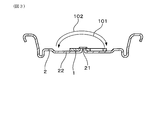
上記と同様にステイオンタブ1を成形した後、図3に示すように、缶蓋2のリベット21にタブ1を取り付けた。このタブ1を手で引き起こしてスコア部22を通常開口させた後、タブ1が元の位置の反対側、即ちスコア部22側に倒れるまで、タブ1を曲げた(矢印101参照)。その後、タブ1を元の位置に曲げ戻した(矢印102参照)。この引き起こし動作と曲げ戻し動作とを繰り返し行い、タブのちぎれの有無を評価した。その結果を表3及び表4に示す。なお、表3及び表4の「曲げ性」の欄には、タブ1が2往復半した時点でちぎれなかった場合にA、2往復半未満でタブ1がちぎれた場合にBの記号を記載した。
上記と同様にステイオンタブ1を成形した後、図3に示すように、缶蓋2のリベット21にタブ1を取り付けた。このタブ1を手で引き起こしてスコア部22を通常開口させた後、タブ1が元の位置の反対側、即ちスコア部22側に倒れるまで、タブ1を曲げた(矢印101参照)。その後、タブ1を元の位置に曲げ戻した(矢印102参照)。この引き起こし動作と曲げ戻し動作とを繰り返し行い、タブのちぎれの有無を評価した。その結果を表3及び表4に示す。なお、表3及び表4の「曲げ性」の欄には、タブ1が2往復半した時点でちぎれなかった場合にA、2往復半未満でタブ1がちぎれた場合にBの記号を記載した。
・タブの強度
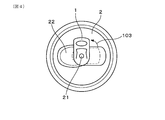
上記と同様に缶蓋2のリベット21にタブ1を取り付けた後、図4に示すようにタブ1をリベット21の周りに90°回転させ(矢印103)、タブ1を引き起こした際にタブ1のみに荷重がかかる状態にした。この状態において開缶試験機によりタブを引き起こし、タブ1が折れるまでの荷重を測定した。その結果を表3及び表4に示す。なお、表3及び表4の「タブ強度」の欄には、タブが折れた際の荷重が30N以上であった場合にA、30N未満であった場合にBの記号を記載した。
上記と同様に缶蓋2のリベット21にタブ1を取り付けた後、図4に示すようにタブ1をリベット21の周りに90°回転させ(矢印103)、タブ1を引き起こした際にタブ1のみに荷重がかかる状態にした。この状態において開缶試験機によりタブを引き起こし、タブ1が折れるまでの荷重を測定した。その結果を表3及び表4に示す。なお、表3及び表4の「タブ強度」の欄には、タブが折れた際の荷重が30N以上であった場合にA、30N未満であった場合にBの記号を記載した。
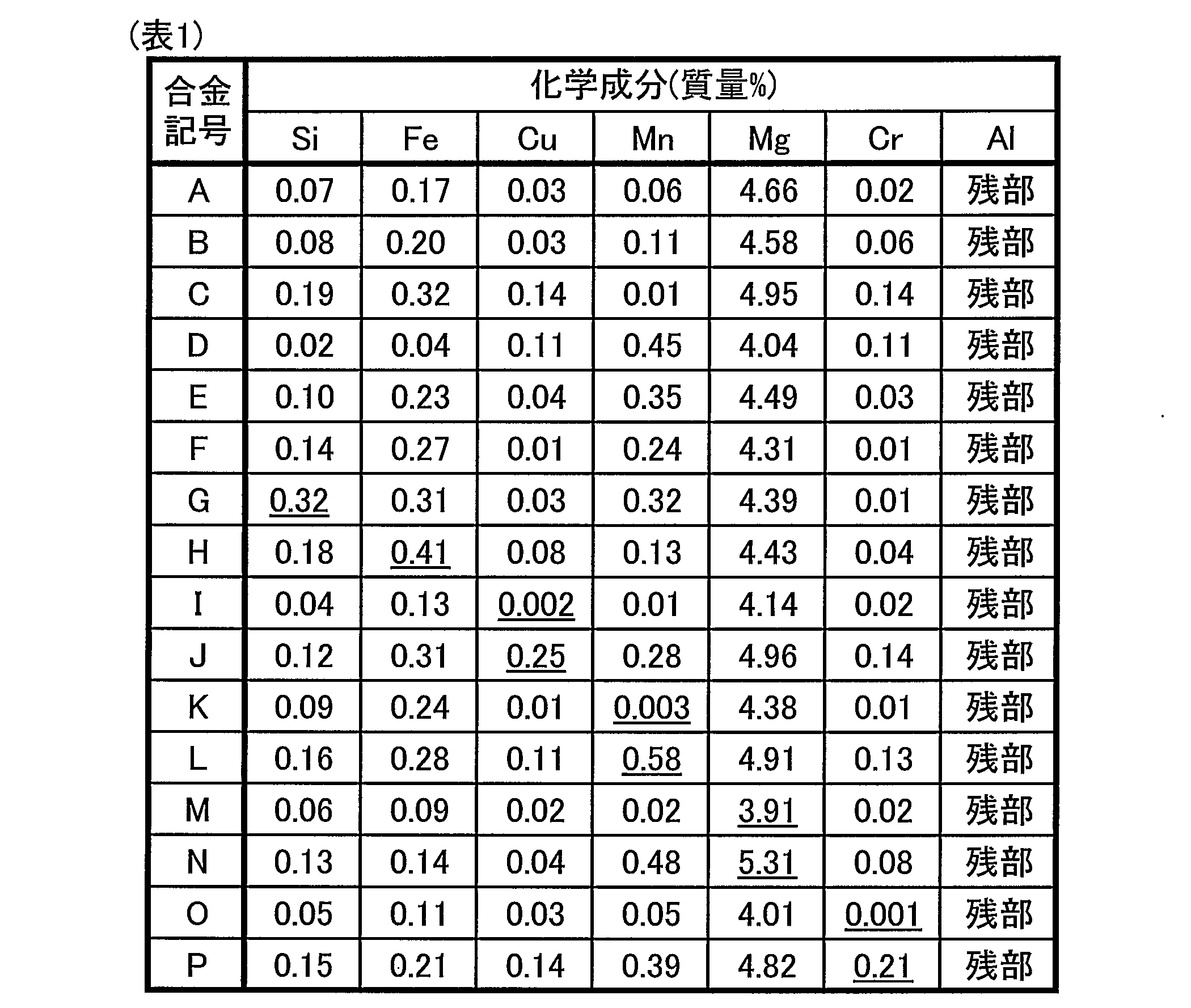
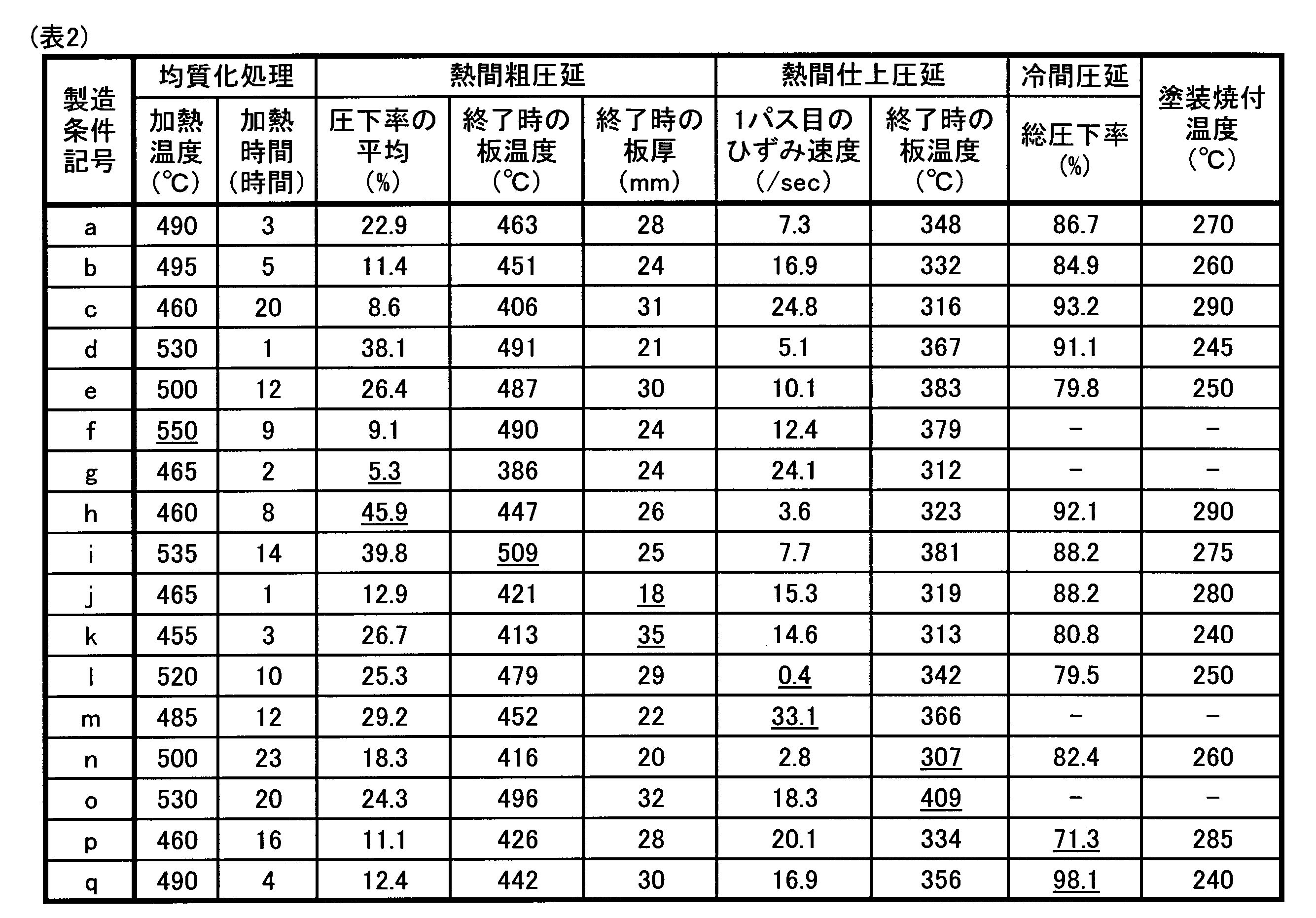
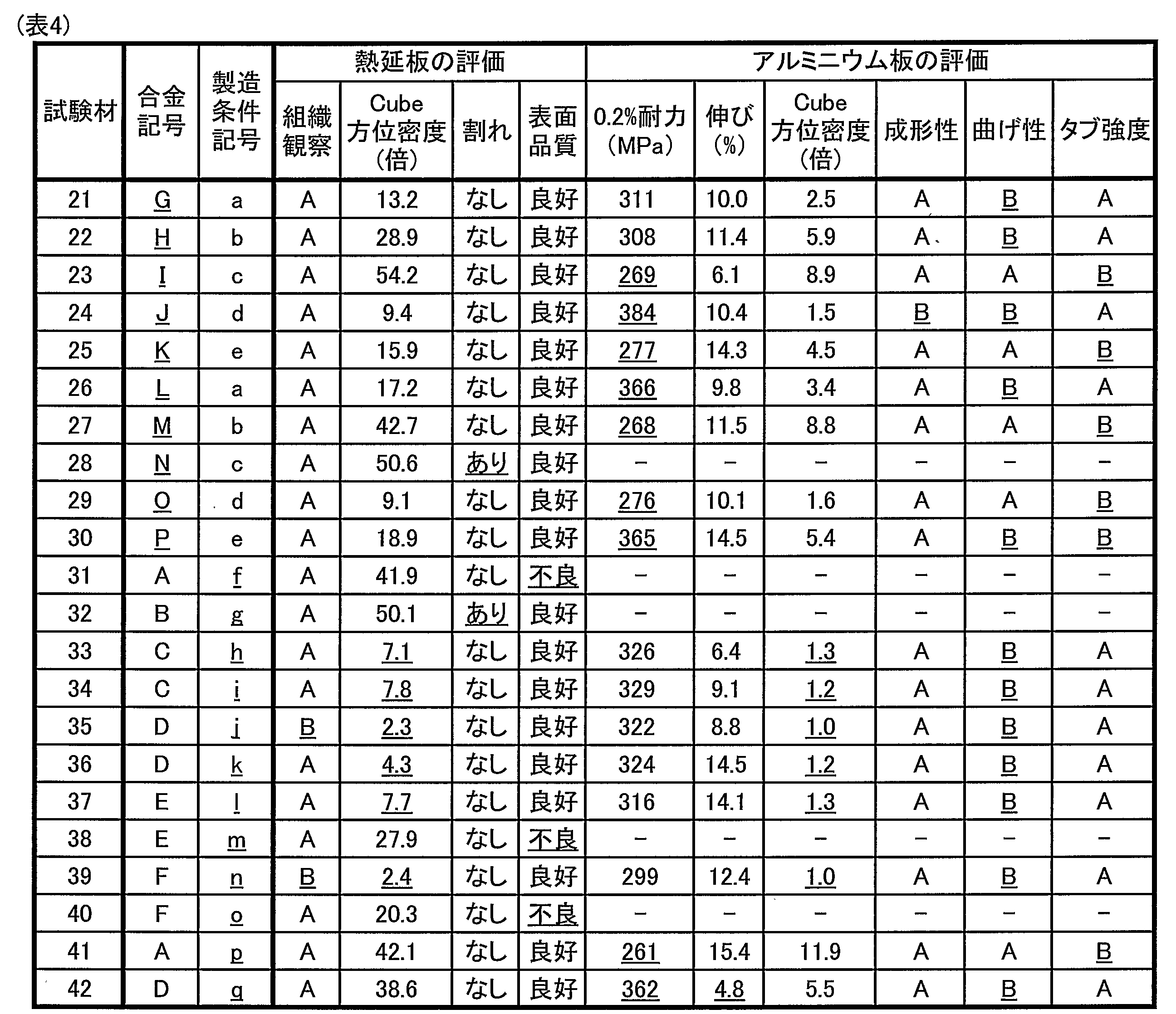
表1~表3に示すように、試験材1~20は、上記特定の範囲の化学成分及び集合組織を有するとともに、引張強さ及び伸びが上記特定の範囲内であった。それ故、これらの試験材は、高い強度と曲げ性とを両立することができた。そして、これらの試験材から作製したタブは、成形性、曲げ性及び強度が良好であった。
表1、表2及び表4に示すように、試験材21及び22は、Si量またはFe量のいずれかが上記特定の範囲よりも多かったため、金属間化合物が多量に形成された。その結果、これらの試験材は、タブの曲げ性が悪かった。
試験材23、25及び27は、Cu量、Mn量、またはMg量のいずれかが上記特定の範囲よりも少なかったため、引張強さが上記特定の範囲よりも低くなった。それ故、これらの試験材は、タブの強度が低かった。
試験材24は、Cu量が上記特定の範囲よりも多かったため、引張強さが上記特定の範囲よりも高くなった。それ故、試験材24は、タブの成形性及び曲げ性が悪かった。
試験材26は、Mn量が上記特定の範囲よりも多かったため、引張強さが上記特定の範囲よりも高くなった。それ故、試験材26は、タブの曲げ性が悪かった。
試験材26は、Mn量が上記特定の範囲よりも多かったため、引張強さが上記特定の範囲よりも高くなった。それ故、試験材26は、タブの曲げ性が悪かった。
試験材28は、Mg量が上記特定の範囲よりも多かったため、熱間圧延中に板端部に割れが発生した。そのため、冷間圧延を行うことなく、試験材28の製造を中止した。
試験材29は、Cr量が上記特定の範囲よりも少なかったため、引張強さが上記特定の範囲よりも低くなった。それ故、試験材29は、タブの強度が低かった。
試験材30は、Cr量が上記特定の範囲よりも多かったため、引張強さが上記特定の範囲よりも高くなった。また、試験材30には、粗大な金属間化合物が形成された。それ故、試験材30はタブの曲げ性が悪かった。
試験材30は、Cr量が上記特定の範囲よりも多かったため、引張強さが上記特定の範囲よりも高くなった。また、試験材30には、粗大な金属間化合物が形成された。それ故、試験材30はタブの曲げ性が悪かった。
試験材31は、均質化温度が上記特定の範囲よりも高かったため、表面が強く酸化し、表面品質が低下した。そのため、熱間圧延以降の工程を行うことなく、試験材31の製造を中止した。
試験材32は、熱間粗圧延時の圧下率の平均が上記特定の範囲よりも小さかったため、熱間粗圧延におけるパス数が増え、熱間粗圧延の終了時における板温度が上記特定の範囲よりも低くなった。その結果、熱間仕上圧延時に板端部に割れが発生した。そのため、冷間圧延を行うことなく、試験材32の製造を中止した。
試験材33は、熱間粗圧延時の圧下率の平均が上記特定の範囲よりも大きかった。これにより熱間圧延中の再結晶が進行した結果、試験材33のCube方位密度は上記特定の範囲よりも低くなった。それ故、試験材33は、タブの曲げ性が悪かった。
試験材34は、熱間粗圧延の終了時における板温度が上記特定の範囲よりも高かった。これにより熱間圧延中の再結晶が進行したため、試験材34のCube方位密度は上記特定の範囲よりも低くなった。その結果、試験材34は、タブの曲げ性が悪かった。
試験材35は、熱間粗圧延の終了時における板厚が上記特定の範囲よりも薄かったため、熱間仕上圧延時の圧下量が不足した。これにより熱延板に圧延組織が残存した結果、試験材35のCube方位密度は上記特定の範囲よりも低くなった。それ故、試験材35は、タブの曲げ性が悪かった。
試験材36は、熱間粗圧延の終了時における板厚が上記特定の範囲よりも厚かったため、熱間仕上圧延時の圧下量が多くなった。これにより熱間圧延中の再結晶が進行した結果、試験材36のCube方位密度は上記特定の範囲よりも低くなった。それ故、試験材36は、タブの曲げ性が悪かった。
試験材37は、熱間仕上圧延の1スタンド目(1パス目)におけるひずみ速度が上記特定の範囲よりも小さかった。これにより熱間圧延中の再結晶が進行した結果、試験材37のCube方位密度は上記特定の範囲よりも低くなった。それ故、試験材37は、タブの曲げ性が悪かった。
試験材38は、熱間仕上圧延の1スタンド目におけるひずみ速度が上記特定の範囲よりも大きかったため、圧延中の潤滑が不足した。その結果、板面が荒れ、表面品質が低下した。それ故、冷間圧延を行うことなく、試験材38の製造を中止した。
試験材39は、熱延板の温度が上記特定の範囲よりも低かったため、再結晶が完了できず、熱延板に圧延組織が残存した。その結果、試験材39のCube方位密度は上記特定の範囲よりも低くなった。それ故、試験材39は、タブの曲げ性が悪かった。
試験材40は、熱延板の温度が上記特定の範囲よりも高かったため、圧延中の潤滑が不足した。その結果、板面が荒れ、表面品質が低下した。それ故、冷間圧延を行うこと無く、試験材40の製造を中止した。
試験材41は、冷間圧延における総圧下率が上記特定の範囲よりも小さかったため、引張強さが上記特定の範囲よりも低くなった。その結果、試験材41は、タブの強度が低かった。
試験材42は、冷間圧延における総圧下率が上記特定の範囲よりも高かったため、引張強さが上記特定の範囲よりも高くなった。その結果、試験材42は、タブの曲げ性が悪かった。
Claims (5)
- Si:0.01~0.20質量%、Fe:0.01~0.35質量%、Cu:0.005~0.15質量%、Mn:0.005~0.50質量%、Mg:4.0~5.0質量%及びCr:0.005~0.15質量%を含有し、残部がAl及び不可避的不純物からなる化学成分と、
厚み方向における板中央から板表面までの全範囲において、Cube方位密度がランダム方位試料の1.5倍以上である集合組織とを有しており、
0.2%耐力が280~360MPaであり、
伸びが5%以上である、タブ用アルミニウム合金板。 - 厚み方向における板中央から板表面までの全範囲において、Cube方位密度がランダム方位試料の2.0倍以上12.0倍以下である上記集合組織を有する、請求項1に記載のタブ用アルミニウム合金板。
- Si:0.01~0.20質量%、Fe:0.01~0.35質量%、Cu:0.005~0.15質量%、Mn:0.005~0.50質量%、Mg:4.0~5.0質量%、Cr:0.005~0.15質量%を含有し、残部がAl及び不可避的不純物からなる化学成分を有する鋳塊を準備し、
該鋳塊を450~540℃で1~24時間加熱して均質化処理を行い、
上記鋳塊に、板厚が150mmを下回ってから終了時までの間の1パス当たりの圧下率の平均が8~40%、終了時の板厚が20~32mm、及び、終了時の板温度が400~500℃となるようにして複数パスの熱間粗圧延を行い、
次いで、1パス目のひずみ速度が1~25/secかつ終了時の板温度が310~390℃となるようにして複数パスの熱間仕上圧延を行うことにより、厚み方向における板中央から板表面までの全範囲において、Cube方位密度がランダム方位試料の8.0倍以上である集合組織を有する熱延板を作製し、
その後、該熱延板に冷間圧延を行う、タブ用アルミニウム合金板の製造方法。 - 板中央から板表面までの厚み方向の全位置において、Cube方位密度がランダム方位試料の10~60倍である上記集合組織を有する上記熱延板を作製する、請求項3に記載のタブ用アルミニウム合金板の製造方法。
- 上記冷間圧延における総圧下率は75~95%である、請求項3または4に記載のタブ用アルミニウム合金板の製造方法。
Priority Applications (1)
| Application Number | Priority Date | Filing Date | Title |
|---|---|---|---|
| CN201680049761.3A CN107923005B (zh) | 2015-09-29 | 2016-09-28 | 拉环用铝合金板及其制造方法 |
Applications Claiming Priority (2)
| Application Number | Priority Date | Filing Date | Title |
|---|---|---|---|
| JP2015192022A JP6667189B2 (ja) | 2015-09-29 | 2015-09-29 | タブ用アルミニウム合金板及びその製造方法 |
| JP2015-192022 | 2015-09-29 |
Publications (1)
| Publication Number | Publication Date |
|---|---|
| WO2017057491A1 true WO2017057491A1 (ja) | 2017-04-06 |
Family
ID=58423748
Family Applications (1)
| Application Number | Title | Priority Date | Filing Date |
|---|---|---|---|
| PCT/JP2016/078681 Ceased WO2017057491A1 (ja) | 2015-09-29 | 2016-09-28 | タブ用アルミニウム合金板及びその製造方法 |
Country Status (3)
| Country | Link |
|---|---|
| JP (1) | JP6667189B2 (ja) |
| CN (1) | CN107923005B (ja) |
| WO (1) | WO2017057491A1 (ja) |
Families Citing this family (7)
| Publication number | Priority date | Publication date | Assignee | Title |
|---|---|---|---|---|
| CN108707791B (zh) * | 2018-05-11 | 2020-03-13 | 广西南南铝加工有限公司 | 一种超大规格高Mg铝合金圆锭制备方法 |
| JP6640958B1 (ja) * | 2018-11-15 | 2020-02-05 | 株式会社神戸製鋼所 | 磁気ディスク用アルミニウム合金板、磁気ディスク用アルミニウム合金ブランクおよび磁気ディスク用アルミニウム合金サブストレート |
| CN116121506B (zh) * | 2022-12-23 | 2025-06-27 | 湖南华菱涟源钢铁有限公司 | 高铝钢连铸坯及其加热方法 |
| JP2024119162A (ja) | 2023-02-22 | 2024-09-03 | 株式会社Uacj | アルミニウム合金板、及びその製造方法 |
| JP2024121892A (ja) | 2023-02-28 | 2024-09-09 | 株式会社Uacj | 圧延用クラッドスラブ、圧延用クラッドスラブの製造方法、及びクラッド材の製造方法 |
| JP7420998B1 (ja) * | 2023-04-17 | 2024-01-23 | 株式会社Uacj | タブ用アルミニウム合金板 |
| JP7420997B1 (ja) | 2023-04-17 | 2024-01-23 | 株式会社Uacj | タブ用アルミニウム合金板 |
Citations (6)
| Publication number | Priority date | Publication date | Assignee | Title |
|---|---|---|---|---|
| US5469912A (en) * | 1993-02-22 | 1995-11-28 | Golden Aluminum Company | Process for producing aluminum alloy sheet product |
| JPH09268341A (ja) * | 1996-04-01 | 1997-10-14 | Furukawa Electric Co Ltd:The | スコア部の耐応力腐食割れ性に優れた缶蓋材用Al合金焼付塗装板とその製造方法 |
| JPH108176A (ja) * | 1996-04-25 | 1998-01-13 | Nippon Light Metal Co Ltd | 耐力が低く極限変形能に優れたアルミニウム合金板およびその製造方法 |
| JP2007277694A (ja) * | 2006-04-12 | 2007-10-25 | Furukawa Sky Kk | 陽圧缶蓋用アルミニウム合金塗装板およびその製造方法 |
| JP2011225977A (ja) * | 2010-03-31 | 2011-11-10 | Kobe Steel Ltd | タブ用アルミニウム合金板およびその製造方法 |
| CN103014452A (zh) * | 2012-12-27 | 2013-04-03 | 亚洲铝业(中国)有限公司 | 5182铝合金拉环料基材及其生产方法 |
Family Cites Families (1)
| Publication number | Priority date | Publication date | Assignee | Title |
|---|---|---|---|---|
| CN102974726B (zh) * | 2012-11-30 | 2015-01-21 | 河南明泰铝业股份有限公司 | 易拉罐拉环料的轧制方法 |
-
2015
- 2015-09-29 JP JP2015192022A patent/JP6667189B2/ja active Active
-
2016
- 2016-09-28 CN CN201680049761.3A patent/CN107923005B/zh active Active
- 2016-09-28 WO PCT/JP2016/078681 patent/WO2017057491A1/ja not_active Ceased
Patent Citations (6)
| Publication number | Priority date | Publication date | Assignee | Title |
|---|---|---|---|---|
| US5469912A (en) * | 1993-02-22 | 1995-11-28 | Golden Aluminum Company | Process for producing aluminum alloy sheet product |
| JPH09268341A (ja) * | 1996-04-01 | 1997-10-14 | Furukawa Electric Co Ltd:The | スコア部の耐応力腐食割れ性に優れた缶蓋材用Al合金焼付塗装板とその製造方法 |
| JPH108176A (ja) * | 1996-04-25 | 1998-01-13 | Nippon Light Metal Co Ltd | 耐力が低く極限変形能に優れたアルミニウム合金板およびその製造方法 |
| JP2007277694A (ja) * | 2006-04-12 | 2007-10-25 | Furukawa Sky Kk | 陽圧缶蓋用アルミニウム合金塗装板およびその製造方法 |
| JP2011225977A (ja) * | 2010-03-31 | 2011-11-10 | Kobe Steel Ltd | タブ用アルミニウム合金板およびその製造方法 |
| CN103014452A (zh) * | 2012-12-27 | 2013-04-03 | 亚洲铝业(中国)有限公司 | 5182铝合金拉环料基材及其生产方法 |
Non-Patent Citations (1)
| Title |
|---|
| ZHAO PI ZHI ET AL.: "Effect of Mn contents on ultimate deformation ability of 5182 alloy sheet by twin belt casting", THE JAPAN INSTITUTE OF LIGHT METALS DAI 91 KAI SHUKI TAIKAI KOEN GAIYO, October 1996 (1996-10-01), pages 137 - 138 * |
Also Published As
| Publication number | Publication date |
|---|---|
| JP2017066458A (ja) | 2017-04-06 |
| JP6667189B2 (ja) | 2020-03-18 |
| CN107923005A (zh) | 2018-04-17 |
| CN107923005B (zh) | 2020-06-12 |
Similar Documents
| Publication | Publication Date | Title |
|---|---|---|
| WO2017057491A1 (ja) | タブ用アルミニウム合金板及びその製造方法 | |
| US11591674B2 (en) | Aluminum-alloy sheet | |
| CN105960474B (zh) | 罐盖用铝合金板及其制造方法 | |
| JP6326485B2 (ja) | Dr缶ボディ用アルミニウム合金板及びその製造方法 | |
| JP5581254B2 (ja) | タブ用アルミニウム合金板およびその製造方法 | |
| CN105316545B (zh) | 铝合金轧制材料 | |
| WO2014129385A1 (ja) | 缶ボディ用アルミニウム合金板及びその製造方法 | |
| JP5379883B2 (ja) | アルミニウム合金板およびその製造方法 | |
| JP4989221B2 (ja) | AlFeSi合金製の箔あるいは薄いシート | |
| JP2019056163A (ja) | アルミニウム合金板及びその製造方法 | |
| JP3998387B2 (ja) | 缶蓋用アルミニウム合金硬質板の製造方法 | |
| JP2016079501A (ja) | 缶蓋用アルミニウム合金板 | |
| WO2019021899A1 (ja) | アルミニウム合金板およびその製造方法 | |
| JP5054364B2 (ja) | アルミニウム合金板の製造方法 | |
| JP2007070672A (ja) | 疲労特性に優れたアルミニウム合金厚板の製造方法 | |
| JP4256791B2 (ja) | 包装容器タブ用アルミニウム合金板およびその製造方法 | |
| TW202507020A (zh) | 拉環用鋁合金板 | |
| JP7705744B2 (ja) | アルミニウム合金、アルミニウム合金熱間加工材及びその製造方法 | |
| JP2007277694A (ja) | 陽圧缶蓋用アルミニウム合金塗装板およびその製造方法 | |
| JP2017150043A (ja) | 缶蓋用アルミニウム合金板及びその製造方法 | |
| JP7235634B2 (ja) | 缶胴用アルミニウム合金板 | |
| WO2016063876A1 (ja) | 缶蓋用アルミニウム合金板 | |
| JP7549563B2 (ja) | タブ用アルミニウム合金塗装板 | |
| TWI730689B (zh) | 罐用鋼板及其製造方法 | |
| JP2019073765A (ja) | Al−Fe−Ca系アルミニウム合金、アルミニウム合金板及びその製造方法 |
Legal Events
| Date | Code | Title | Description |
|---|---|---|---|
| 121 | Ep: the epo has been informed by wipo that ep was designated in this application |
Ref document number: 16851662 Country of ref document: EP Kind code of ref document: A1 |
|
| NENP | Non-entry into the national phase |
Ref country code: DE |
|
| 122 | Ep: pct application non-entry in european phase |
Ref document number: 16851662 Country of ref document: EP Kind code of ref document: A1 |