WO2016199783A1 - ポリカーボネート樹脂組成物及び光学成形品 - Google Patents
ポリカーボネート樹脂組成物及び光学成形品 Download PDFInfo
- Publication number
- WO2016199783A1 WO2016199783A1 PCT/JP2016/066973 JP2016066973W WO2016199783A1 WO 2016199783 A1 WO2016199783 A1 WO 2016199783A1 JP 2016066973 W JP2016066973 W JP 2016066973W WO 2016199783 A1 WO2016199783 A1 WO 2016199783A1
- Authority
- WO
- WIPO (PCT)
- Prior art keywords
- polycarbonate resin
- group
- resin composition
- mass
- compound
- Prior art date
- Legal status (The legal status is an assumption and is not a legal conclusion. Google has not performed a legal analysis and makes no representation as to the accuracy of the status listed.)
- Ceased
Links
- 0 *C1(C2CC3(*)OC3CC2)OC1 Chemical compound *C1(C2CC3(*)OC3CC2)OC1 0.000 description 1
Classifications
-
- F—MECHANICAL ENGINEERING; LIGHTING; HEATING; WEAPONS; BLASTING
- F21—LIGHTING
- F21S—NON-PORTABLE LIGHTING DEVICES; SYSTEMS THEREOF; VEHICLE LIGHTING DEVICES SPECIALLY ADAPTED FOR VEHICLE EXTERIORS
- F21S43/00—Signalling devices specially adapted for vehicle exteriors, e.g. brake lamps, direction indicator lights or reversing lights
- F21S43/20—Signalling devices specially adapted for vehicle exteriors, e.g. brake lamps, direction indicator lights or reversing lights characterised by refractors, transparent cover plates, light guides or filters
- F21S43/26—Refractors, transparent cover plates, light guides or filters not provided in groups F21S43/235 - F21S43/255
-
- C—CHEMISTRY; METALLURGY
- C08—ORGANIC MACROMOLECULAR COMPOUNDS; THEIR PREPARATION OR CHEMICAL WORKING-UP; COMPOSITIONS BASED THEREON
- C08K—Use of inorganic or non-macromolecular organic substances as compounding ingredients
- C08K5/00—Use of organic ingredients
- C08K5/49—Phosphorus-containing compounds
- C08K5/51—Phosphorus bound to oxygen
- C08K5/52—Phosphorus bound to oxygen only
- C08K5/524—Esters of phosphorous acids, e.g. of H3PO3
-
- C—CHEMISTRY; METALLURGY
- C08—ORGANIC MACROMOLECULAR COMPOUNDS; THEIR PREPARATION OR CHEMICAL WORKING-UP; COMPOSITIONS BASED THEREON
- C08L—COMPOSITIONS OF MACROMOLECULAR COMPOUNDS
- C08L67/00—Compositions of polyesters obtained by reactions forming a carboxylic ester link in the main chain; Compositions of derivatives of such polymers
- C08L67/04—Polyesters derived from hydroxycarboxylic acids, e.g. lactones
-
- C—CHEMISTRY; METALLURGY
- C08—ORGANIC MACROMOLECULAR COMPOUNDS; THEIR PREPARATION OR CHEMICAL WORKING-UP; COMPOSITIONS BASED THEREON
- C08L—COMPOSITIONS OF MACROMOLECULAR COMPOUNDS
- C08L69/00—Compositions of polycarbonates; Compositions of derivatives of polycarbonates
-
- C—CHEMISTRY; METALLURGY
- C08—ORGANIC MACROMOLECULAR COMPOUNDS; THEIR PREPARATION OR CHEMICAL WORKING-UP; COMPOSITIONS BASED THEREON
- C08L—COMPOSITIONS OF MACROMOLECULAR COMPOUNDS
- C08L71/00—Compositions of polyethers obtained by reactions forming an ether link in the main chain; Compositions of derivatives of such polymers
- C08L71/02—Polyalkylene oxides
-
- G—PHYSICS
- G02—OPTICS
- G02B—OPTICAL ELEMENTS, SYSTEMS OR APPARATUS
- G02B1/00—Optical elements characterised by the material of which they are made; Optical coatings for optical elements
- G02B1/04—Optical elements characterised by the material of which they are made; Optical coatings for optical elements made of organic materials, e.g. plastics
-
- G—PHYSICS
- G02—OPTICS
- G02B—OPTICAL ELEMENTS, SYSTEMS OR APPARATUS
- G02B6/00—Light guides; Structural details of arrangements comprising light guides and other optical elements, e.g. couplings
- G02B6/02—Optical fibres with cladding with or without a coating
Definitions
- the present invention relates to a polycarbonate resin composition and an optical molded product.
- Aromatic polycarbonate is excellent in transparency, mechanical properties, thermal properties, electrical properties, weather resistance, etc., and makes use of its properties to guide light (Daytime® Running® Lights light guide and liquid crystal light guide plate, etc.) It is used for optical molded products such as lenses and optical fibers.
- the light transmittance which is one of the indexes indicating the transparency, is lower than that of polymethyl methacrylate (PMMA) or the like, and there is a tendency that the luminance is lowered when used for the light guide member. Therefore, the development of a method for increasing the luminance and light transmittance of the light guide member made of aromatic polycarbonate has been advanced.
- Patent Document 1 discloses that a polyethylene resin, a polypropylene glycol, and an aromatic polycarbonate resin are provided for the purpose of providing a polycarbonate resin composition for a light guide plate that is free from white turbidity and transmittance and has good transmittance and hue.
- An aromatic polycarbonate resin composition for a light guide plate containing a polyoxyalkylene glycol or a fatty acid ester thereof mainly composed of is disclosed.
- the heat resistance of polyoxyalkylene glycol is low, if molding is performed at a temperature exceeding 320 ° C. or if the molding cycle is long, yellowing becomes large, and luminance and light transmittance are large. The optical performance of the light guide product may be adversely affected.
- Patent document 2 discloses that an aromatic polycarbonate resin composition that can withstand the molding at high temperatures is improved by improving the lack of heat resistance, which is a drawback of the method of patent document 1, and polyoxy An aromatic polycarbonate resin composition containing tetramethylene polyoxyethylene glycol is disclosed. According to the method of patent document 2, it can shape
- Patent Document 3 provides a resin composition that is excellent in thermal stability in high-temperature molding, has excellent light transmittance and luminance, and can obtain a molded product in which discoloration and internal cracks do not occur after a wet heat resistance test.
- an aromatic polycarbonate resin composition in which a specific diphosphite compound and an alicyclic epoxy compound are contained in an aromatic polycarbonate resin is disclosed. According to the method of patent document 3, it can shape
- the problem to be solved by the present invention is to provide a polycarbonate resin composition that does not deteriorate in optical properties due to deterioration during molding even when molded in a wide temperature range. It is another object of the present invention to provide a polycarbonate resin composition from which a light guide member that is less likely to turn yellow or deteriorate in light guide performance even when used under severe environmental conditions for automotive applications.
- the present inventors have blended a specific amount of a specific phosphorus compound and polycaprolactone polyol excellent in heat resistance and hydrolysis resistance into an aromatic polycarbonate resin, so that a wide temperature range can be obtained. It has been found that a polycarbonate resin composition can be obtained which does not deteriorate the optical properties due to deterioration during molding even when molded with 1. Furthermore, optical lenses molded with this polycarbonate resin composition maintain high optical performance compared to polycarbonate resin compositions that do not contain polycaprolactone polyol even in severe environmental tests such as 1,000 hours in a 120 ° C oven. As a result, the present invention has been completed. That is, this invention relates to the following polycarbonate resin composition, the manufacturing method of an optical molded product, and an optical molded product.
- Containing When the phosphorus compound (B) is left standing at 40 ° C. and a humidity of 90%, the amount of the compound having a phenol structure that is decomposed and generated after 1,500 hours is reduced in the phosphorus compound (B).
- the phosphorus compound (B) has a temperature at which the weight decreases by 2% from the weight before measurement when the weight is measured using a differential thermo-thermogravimetry (TG-DTA) machine in a nitrogen atmosphere.
- a polycarbonate resin composition which is a compound having a temperature of at least ° C. ⁇ 2>
- R D1 and R D2 represent an alkylene group having 1 or more carbon atoms, and R D1 and R D2 may be the same or different.
- M + n is 5 or more and less than 300.
- R D1 may be the same or different, and when n is 2 or more, R D2 may be the same or different, and R D3 and R D4 are each a hydrogen atom having 1 carbon atom.
- R D3 and R D4 may be the same or different.
- R A1 and R A2 represent an alkyl group or an alkoxy group having 1 to 6 carbon atoms, and R A1 and R A2 may be the same or different.
- X is a single bond and 1 or more carbon atoms.
- R A1 When a is 2 or more, R A1 may be the same or different, and b is 2 In these cases, R A2 may be the same or different.
- phosphorus compound (B) is a phosphorus compound having a phosphite structure.
- phosphorus compound (B) is a pentaerythritol diphosphite compound represented by the following general formula (II): object.
- Y 1 to Y 4 represent a hydrocarbon group having 6 to 15 carbon atoms, and may be the same or different.
- Y 1 to Y 4 are each independently an unsubstituted or substituted cumyl group, an unsubstituted or substituted phenyl group, an unsubstituted or substituted substituent.
- the polycarbonate resin composition according to the above ⁇ 5> which may be a naphthyl group which may be substituted or a biphenyl group which may be unsubstituted or substituted.
- R B1 and R B2 , R B3 and R B4 , R B5 and R B6 , R B7 and R B8 may be bonded to each other to form a ring
- R B9 to R B12 each represent a hydrogen atom or an alkyl group, and may be the same or different
- m1 to m4 are integers of 0 or more and 5 or less.
- Z 1 to Z 4 may represent a single bond or a carbon atom, and may be the same or different, and when Z 1 to Z 4 represent a single bond, R B1 to R B8 are generally (Excluded from Formula (II-1)) ⁇ 8>
- polycaprolactone polyol (C) is at least one selected from the group consisting of polycaprolactone diol, polycaprolactone triol and polycaprolactone tetraol having a molecular weight of 500 or more and 5,000 or less.
- the polyether compound (D) is a polyether compound in which R D1 and R D2 in the formula (1) are alkylene groups having 2 to 5 carbon atoms, and R D3 and R D4 are hydrogen atoms.
- ⁇ 11> The polycarbonate resin composition according to any one of ⁇ 1> to ⁇ 10>, wherein the aromatic polycarbonate resin (A) has a viscosity average molecular weight (Mv) of 9,000 to 50,000. .
- a method for producing an optical molded article comprising molding the polycarbonate resin composition according to any one of the above items ⁇ 1> to ⁇ 11>.
- ⁇ 14> An optical molded article comprising the polycarbonate resin composition according to any one of the above items ⁇ 1> to ⁇ 11>.
- ⁇ 15> The optical molded product according to ⁇ 13> or ⁇ 14>, wherein the optical molded product is a light guide member.
- ⁇ 16> The optical molded product according to any one of ⁇ 13> to ⁇ 15>, wherein the optical molded product is a vehicle light guide component.
- ⁇ 17> A light guide component for a vehicle used for a daytime running lamp, comprising the molded product according to ⁇ 16>.
- ⁇ 18> A daytime running light including the optical molded product according to ⁇ 16>.
- a polycarbonate resin composition and an optically molded article that are not deteriorated in optical properties due to deterioration during molding even when molded in a wide temperature range, and have little yellowing deterioration even when used for a long time under severe environmental conditions.
- the manufacturing method and optical molded product can be provided.
- the polycarbonate resin composition may be molded at a temperature exceeding 340 ° C., particularly at a temperature exceeding 360 ° C. From this point of view, the method of International Publication No. 2011/083635 is insufficient, and further improvement is required.
- daylight lamps attached to the outer periphery of automobile headlamps and tail lamps and called Daytime Running Lights (or Daytime Running Lamps) (abbreviated as DRL) are light guide rings with a thick lens structure. Such a thick-walled DRL is often molded at a low temperature of around 280 ° C.
- the reason for this is that since the DRL has a thick structure, if the cooling time is not sufficient, the product surface will be pulled or shrunk and distortion will occur, so it is necessary to take a longer molding cycle. If the molding cycle is long and the molding temperature is high, the molten resin remaining in the molding machine is baked, so the molding temperature must be made as low as possible to prevent stagnant burning. Furthermore, in order to suppress this burning, there are many examples in which burning is prevented while performing nitrogen molding or the like in which the air in the molding machine is replaced with nitrogen. As described above, the polycarbonate resin used for the light guide application is required to have a performance capable of being molded without yellowing, even if the molding requires a wide temperature range and a long residence time.
- optical polycarbonate resins used in automotive applications such as DRL are subjected to severe environmental tests such as a heat-resistant oven test at 120 ° C. for 1000 hours or more.
- Polyether polyols such as those shown in Japanese Patent No. 4069364, International Publication No. 2011/083635 and International Publication No. 2013/088796 show remarkable effects in terms of improving optical performance, but have low long-term heat resistance.
- a severe environmental test such as a 120 ° C. oven test
- there is a disadvantage that the optical performance is remarkably deteriorated. Since this is a problem of heat resistance of the polyether polyols themselves, the heat resistance performance cannot be improved with other additives.
- a polycarbonate resin composition that can be used for an optical lens for automobiles depends only on the optical performance of the polycarbonate itself, but there is a strong demand for improvement in luminance and blue hue.
- the present inventors provide a polycarbonate resin composition that meets the performance and demands of each of the above applications.
- the polycarbonate resin composition of the present invention is a polycarbonate resin composition containing an aromatic polycarbonate resin (A), a phosphorus compound (B) having an aryl group, and a polycaprolactone polyol (C), wherein the aromatic polycarbonate resin (A) 0.00100 parts by mass or more and 1 part by mass or less of the phosphorus compound (B) and 0.005 parts by mass or more and 5 parts by mass or less of the polycaprolactone polyol (C) with respect to 100 parts by mass, The amount of the compound having a phenol structure generated by decomposition after 1500 hours when the phosphorous compound (B) is left under conditions of 40 ° C.
- the phosphorus compound (B) is a compound having a mass% or less using a differential thermal-thermogravimetric (TG-DTA) machine in a nitrogen atmosphere. Te, characterized in that it is a compound temperature is 340 ° C. or more 2% of the weight is reduced from the weight before the measurement when measured weight.
- TG-DTA differential thermal-thermogravimetric
- the aromatic polycarbonate resin (A) contained in the polycarbonate resin composition of the present invention is not particularly limited and those produced by a known method can be used.
- an aromatic polycarbonate resin (A) an interfacial polycondensation method in which a reaction is carried out or a product produced by reacting a dihydric phenol with diphenyl carbonate or the like in the presence of a terminal stopper by a transesterification method or the like. it can.
- dihydric phenols can be mentioned, and in particular, 2,2-bis (4-hydroxyphenyl) propane [bisphenol A], bis (4-hydroxyphenyl) methane, 1,1-bis (4 -Hydroxyphenyl) ethane, 2,2-bis (4-hydroxy-3,5-dimethylphenyl) propane, 4,4'-dihydroxydiphenyl, bis (4-hydroxyphenyl) cycloalkane, bis (4-hydroxyphenyl) Examples thereof include oxide, bis (4-hydroxyphenyl) sulfide, bis (4-hydroxyphenyl) sulfone, bis (4-hydroxyphenyl) sulfoxide, and bis (4-hydroxyphenyl) ketone.
- hydroquinone, resorcin, catechol and the like can also be mentioned. These may be used alone or in combination of two or more. Among them, bis (hydroxyphenyl) alkane is preferable, and bisphenol A is particularly preferable.
- the carbonate precursor examples include carbonyl halide, carbonyl ester, or haloformate, and specifically include phosgene, dihaloformate of dihydric phenol, diphenyl carbonate, dimethyl carbonate, and diethyl carbonate.
- the component (A) may have a branched structure.
- the branching agent include 1,1,1-tris (4-hydroxyphenyl) ethane, ⁇ , ⁇ ′, ⁇ ′′ -tris. (4-hydroxyphenyl) -1,3,5-triisopropylbenzene, phloroglucin, trimellitic acid and 1,3-bis (o-cresol).
- monovalent carboxylic acid and derivatives thereof, and monovalent phenol can be used.
- the aromatic polycarbonate resin (A) is preferably a polycarbonate having a main chain having a repeating unit represented by the following general formula (I).
- R A1 and R A2 each independently represents an alkyl group or alkoxy group having 1 to 6 carbon atoms, and R A1 and R A2 may be the same or different.
- X is a single bond or a carbon number.
- R A1 may be the same or different; In the case of 2 or more, R A2 may be the same or different.
- Examples of the alkyl group represented by R A1 and R A2 include a methyl group, an ethyl group, an n-propyl group, an isopropyl group, and various butyl groups (“various” includes linear and all branched ones). And the same applies hereinafter), various pentyl groups, and various hexyl groups.
- Examples of the alkoxy group represented by R A1 and R A2 include a case where the alkyl group moiety is the alkyl group.
- Each of R A1 and R A2 is preferably an alkyl group having 1 to 4 carbon atoms or an alkoxy group having 1 to 4 carbon atoms.
- Examples of the alkylene group represented by X include a methylene group, an ethylene group, a trimethylene group, a tetramethylene group, a hexamethylene group, and the like, and an alkylene group having 1 to 5 carbon atoms is preferable.
- Examples of the alkylidene group represented by X include an ethylidene group and an isopropylidene group.
- Examples of the cycloalkylene group represented by X include a cyclopentanediyl group, a cyclohexanediyl group, a cyclooctanediyl group, and the like, and a cycloalkylene group having 5 to 10 carbon atoms is preferable.
- Examples of the cycloalkylidene group represented by X include a cyclohexylidene group, 3,5,5-trimethylcyclohexylidene group, 2-adamantylidene group, etc., and a cycloalkylidene group having 5 to 10 carbon atoms. Is preferable, and a cycloalkylidene group having 5 to 8 carbon atoms is more preferable.
- a and b each independently represent an integer of 0 or more and 4 or less, preferably 0 or more and 2 or less, and more preferably 0 or 1.
- the aromatic polycarbonate resin (A) preferably contains a polycarbonate resin having a bisphenol A structure from the viewpoint of the transparency, mechanical properties, thermal properties, and the like of the obtained molded product.
- Specific examples of the polycarbonate resin having a bisphenol A structure include those in which X is an isopropylidene group in the general formula (I).
- the content of the polycarbonate resin having a bisphenol A structure in the aromatic polycarbonate resin (A) is preferably 50% by mass to 100% by mass, more preferably 75% by mass to 100% by mass, and still more preferably 85% by mass. It is 100 mass% or less.
- the viscosity average molecular weight (Mv) of the component (A) is preferably 9,000 to 50,000, more preferably 10,000 to 30,000, and still more preferably 11 from the viewpoint of fluidity. From 5,000 to 25,000.
- the Mv of the aromatic polycarbonate resin (A) is preferably from 9,000 to 17,000.
- Component (B): Phosphorus compound having an aryl group The phosphorus compound (B) having an aryl group contained in the polycarbonate resin composition of the present invention has a phenol structure that decomposes and is generated after 1,500 hours when left under conditions of 40 ° C. and 90% humidity.
- the amount of the compound is 5% by mass or less, preferably 3% by mass or less, more preferably 1% by mass or less, and particularly preferably 0.5% by mass or less with respect to the phosphorus compound (B). That is, the phosphorus compound (B) having an aryl group used in the present invention is excellent in hydrolysis resistance and produces a small amount of a compound having a phenol structure.
- the amount of the compound having a phenol structure can be quantified by a gas chromatograph, and is specifically measured by the method described in Examples.
- the phosphorus compound (B) contained in the polycarbonate resin composition of the present invention is a weight before measurement when the weight is measured using a differential thermo-thermogravimetry (TG-DTA) machine in a nitrogen atmosphere.
- the temperature at which the weight decreases by 2% is 340 ° C. or higher. In the present specification, the temperature at which the 2% weight decreases is also referred to as “98% holding temperature”.
- the temperature at which the weight of 2% decreases is preferably 345 ° C. or higher, more preferably 350 ° C. or higher.
- the conventional phosphite-based antioxidant having a pentaerythritol diphosphite structure exhibits good antioxidant action at the processing temperature of a normal polycarbonate resin, but causes thermal decomposition at a high temperature exceeding 340 ° C., suddenly loses antioxidant effect. Furthermore, since the cause of yellowing is generated by thermal decomposition, insufficient heat resistance is a problem. In addition, many phosphite-based antioxidants are easily hydrolyzed, and in the moisture and heat resistance test of the light guide plate, the antioxidant in the light guide plate is hydrolyzed, and the light guide plate is discolored or clouded due to the decomposition product. Problems are likely to occur.
- WO2013 / 088796 specific antioxidants represented by bis (2,4-dicumylphenyl) pentaerythritol diphosphite are used as antioxidants that can satisfy both required properties of heat resistance and hydrolysis resistance. It is disclosed that a diphosphite antioxidant is effective.
- the method of International Publication No. 2013/088796 requires an alicyclic epoxy compound from the viewpoint of heat and moisture resistance. In addition, this method is excellent in thermal stability in high-temperature molding, but cannot exhibit sufficient performance in a molding temperature range of less than 300 ° C.
- the present inventors use a specific phosphorus compound (B) and a polycaprolactone polyol (C) in combination, so that the polycarbonate resin composition does not deteriorate optical characteristics due to deterioration during molding even when molded in a wide temperature range. I found that I can get things.
- the phosphorus compound (B) having an aryl group used in the present invention is preferably a phosphorus compound having a phosphite structure, more preferably a pentaerythritol diphosphite compound represented by the following general formula (II): It is. (Wherein Y 1 to Y 4 represent a hydrocarbon group having 6 to 15 carbon atoms, and may be the same or different.)
- Y 1 to Y 4 are preferably each independently an unsubstituted or optionally substituted cumyl group, an unsubstituted or optionally substituted phenyl group, an unsubstituted or optionally substituted naphthyl group, or unsubstituted. It is a biphenyl group which may be substituted or substituted.
- the phosphorus compound (B) used in the present invention is preferably a pentaerythritol diphosphite compound represented by the following general formula (II-1).
- R B1 to R B8 represent an alkyl group or an alkenyl group, and may be the same or different.
- R B1 and R B2 , R B3 and R B4 , R B5 and R B6 , R B7 and R B8 may be bonded to each other to form a ring
- R B9 to R B12 each represent a hydrogen atom or an alkyl group, and may be the same or different
- m1 to m4 are integers of 0 or more and 5 or less.
- Z 1 to Z 4 may represent a single bond or a carbon atom, and may be the same or different, and when Z 1 to Z 4 represent a single bond, R B1 to R B8 are generally (Excluded from Formula (II-1))
- R B1 to R B8 preferably have 1 to 5 carbon atoms, more preferably 1 to 3 carbon atoms, and most preferably 1 carbon atom.
- R B9 to R B12 are preferably hydrogen atoms.
- m1 to m4 are preferably 0 or more and 3 or less, more preferably 0 or more and 1 or less, and most preferably 0.
- Z 1 to Z 4 are preferably carbon atoms.
- the pentaerythritol diphosphite compound represented by the general formula (II) or (II-1) is obtained by adding a chlorine solvent to phosphorus trichloride and pentaerythritol to obtain pentaerythritol dichlorophosphite, It can be obtained by heating and mixing in the presence of a solvent and an organic nitrogen-containing base compound (see, for example, JP-A-2004-018406).
- the polycarbonate resin composition can be imparted with good heat resistance and hydrolysis resistance, and is also available. Since it is easy, bis (2,4-dicumylphenyl) pentaerythritol diphosphite represented by the following formula (II-2) is particularly preferable. This compound is commercially available, and for example, “Doverphos (registered trademark) S-9228PC” manufactured by Dover Chemical can be used.
- the heat resistance of a general pentaerythritol diphosphite compound is such that the 98% holding temperature measured in a nitrogen atmosphere using a differential thermo-thermogravimetry (TG-DTA) machine is about 240 ° C. to 280 ° C. is there.
- TG-DTA differential thermo-thermogravimetry
- the bis (2,4-dicumylphenyl) pentaerythritol diphosphite shown above has a 98% holding temperature of 340 ° C. or higher. Because of such heat resistance, even high temperature molding exceeding 340 ° C. does not impair its performance. Rather, the antioxidant action tends to be activated by molding at a high temperature.
- Hydrolysis of the polycarbonate resin molded body is mainly caused by free phenol and phosphoric acid produced by hydrolysis of the phosphorus antioxidant contained therein. For this reason, when the phosphorus antioxidant which is easy to proceed with hydrolysis is used, the polycarbonate molded body itself is hydrolyzed to lower the molecular weight and become white turbid.
- the phosphorus compound (B) having an aryl group used in the present invention has a free phenol and a phosphoric acid amount generated by hydrolysis after 1,500 hours when left at 40 ° C. and a humidity of 90%. The ratio is 1/100 or less as compared with a compound having a general pentaerythritol diphosphite structure.
- the molded body using the polycarbonate resin composition containing the present phosphorus compound (B) can be stably used for a long time without deteriorating optical properties.
- the content of the phosphorus compound (B) having an aryl group in the aromatic polycarbonate resin of the present invention is from the viewpoint of obtaining a polycarbonate resin composition that does not deteriorate in optical properties due to deterioration during molding even when molded in a wide temperature range. , 0.005 parts by mass to 1 part by mass, preferably 0.01 parts by mass to 0.8 parts by mass, and more preferably 0.03 parts by mass with respect to 100 parts by mass of the aromatic polycarbonate resin (A).
- the amount is 0.5 parts by mass or less, more preferably 0.03 parts by mass or more and 0.3 parts by mass or less.
- the polycaprolactone polyol is obtained, for example, by ring-opening polymerization of a lactone monomer using a polyhydric alcohol as an initiator.
- a polyhydric alcohol include, for example, ethylene glycol, 1,2-propylene glycol, 1,3-propylene glycol, 1,2-butanediol, 1,3-butanediol, 2-methyl-1,3- Propanediol, 1,4-butanediol, neopentyl glycol, 1,5-pentanediol, 3-methyl-1,5-pentanediol, 1,6-hexanediol, 2,2,4-trimethyl-1,3 -Pentanediol, 2-ethyl-1,3-hexanediol, 2-methyl-1,8-octanediol, 1,9-nonanediol, 1,
- Lactone monomers include ⁇ -caprolactone, ⁇ -methyl- ⁇ -caprolactone, ⁇ -methyl- ⁇ -caprolactone, ⁇ -methyl- ⁇ -caprolactone, ⁇ , ⁇ -dimethyl- ⁇ -caprolactone, 3,3,5-trimethyl -Caprolactones such as - ⁇ -caprolactone; polyvalerolactones such as ⁇ -valerolactone and ⁇ -methyl- ⁇ -valerolactone; propiolactones; butyrolactones; enanthlactones; dodecanolactone. It may be a derivative of a lactone monomer.
- polycaprolactone polyol (C) examples include those described in paragraph [0016] of JP-A No. 11-228905.
- this polycaprolactone polyol for example, (In the formula, m + n is an integer of 4 to 35, and R is C 2 H 4 , C 2 H 4 OC 2 H 4 , or C (CH 3 ) 2 (CH 2 ) 2 )
- Bifunctional polycaprolactone diols such as (In the formula, l + m + n is an integer of 3 to 30, and R is CH 2 CHCH 2 , CH 3 C (CH 2 ) 3 , or CH 3 CH 2 C (CH 2 ) 3 ) Trifunctional polycaprolactone triols, tetrafunctional polycaprolactone tetraol, and the like can be used.
- the polycaprolactone polyol (C) is preferably at least one selected from the group consisting of the above polycaprolactone diol, polycaprolactone triol, and polycaprolactone tetraol.
- the molecular weight (number average molecular weight) is in the range of 500 to 5,000, preferably 850 to 4,000, more preferably 1,000 to 3,000. If the molecular weight is less than 500, the heat resistance is low, and it cannot be used during high temperature molding. If the molecular weight exceeds 5,000, it solidifies and does not dissolve easily and is difficult to handle. When the molecular weight is about 10,000, it can be pelletized as a thermoplastic resin, but it is difficult to disperse in polycarbonate, the compatibility with the antioxidant (B) is poor, and the color tone deteriorates.
- polycaprolactone polyol (C) examples include commercially available product names “Placcel 205”, “Placcel 208”, “Placcel 210”, “Placcel 210CP”, “Placcel 212” manufactured by Daicel Corporation. ”,“ Placcel 220 ”,“ Placcel 220 CPB ”(polycaprolactone diol),“ Placcel 305 ”,“ Placcel 308 ”,“ Placcel 312 ”,“ Placcel 320 ”(Polycaprolactone triol),“ Placcel 410 ”(Polycaprolactone tetra) All).
- polycaprolactone polyol polycaprolactone diol is preferable.
- the content of the polycaprolactone polyol (C) in the aromatic polycarbonate resin of the present invention is 0.005 parts by mass or more and 5 parts by mass or less, preferably 0.01 with respect to 100 parts by mass of the aromatic polycarbonate resin (A).
- Part by mass to 5 parts by mass more preferably from 0.02 to 3 parts by mass, even more preferably from 0.03 to 2 parts by mass, and even more preferably from 0.1 to 2 parts by mass. Most preferably, it is 0.3 parts by mass or more and 1.5 parts by mass or less.
- the polycarbonate resin composition of the present invention preferably contains a polyether compound (D) having a polyoxyalkylene structure.
- the polyether compound (D) is a compound represented by the following formula (1).
- M + n is 5 or more and less than 300.
- m is 2 or more.
- R D1 may be the same as or different from each other, and R D2 may be the same or different when n is 2 or more, R D3 and R D4 are hydrogen atoms and have 1 or more carbon atoms.
- R D1 and R D2 preferably have 1 to 8 carbon atoms, more preferably 1 to 6 carbon atoms, and most preferably 1 to 5 carbon atoms.
- a methylene group, ethylene group, trimethylene group, propylene group, tetramethylene group, hexamethylene group and the like can be mentioned.
- the polyoxyalkylene group represented by (R D1 O) m is not limited to those having a single oxyalkylene unit such as a polyoxyethylene group or a polyoxypropylene group as a repeating unit. It may have a plurality of oxyalkylene units having different carbon numbers such as units as a repeating unit.
- the polyoxyalkylene group represented by (R D2 O) m is not limited to those having a single oxyalkylene unit such as a polyoxyethylene group or a polyoxypropylene group as a repeating unit. It may have a plurality of oxyalkylene units having different carbon numbers such as units as a repeating unit.
- Examples of the hydrocarbon group having 1 to 30 carbon atoms represented by R D3 and R D4 include an alkyl group having 1 to 30 carbon atoms, an alkenyl group having 2 to 30 carbon atoms, and an aryl group having 6 to 30 carbon atoms. Alternatively, an aralkyl group having 7 to 30 carbon atoms can be used.
- the alkyl group and alkenyl group may be linear, branched or cyclic, for example, methyl group, ethyl group, n-propyl group, isopropyl group, various butyl groups, various pentyl groups, various hexyl groups.
- octyl groups cyclopentyl groups, cyclohexyl groups, allyl groups, propenyl groups, various butenyl groups, various hexenyl groups, various octenyl groups, cyclopentenyl groups, and cyclohexenyl groups.
- the aryl group include a phenyl group, a tolyl group, and a xylyl group.
- the aralkyl group include a benzyl group, a phenethyl group, and a methylbenzyl group.
- the alkanoyl group having 1 to 30 carbon atoms represented by R D3 and R D4 may be linear or branched, for example, methanoyl group, ethanoyl group, n-propanoyl group, isopropanoyl group, n-butanoyl group Group, t-butanoyl group, n-hexanoyl group, n-octanoyl group, n-decanoyl group, n-dodecanoyl group, benzoyl group and the like.
- an alkanoyl group having 1 to 20 carbon atoms is preferable from the viewpoints of compatibility, thermal stability, and ease of production.
- the alkenoyl group having 2 to 30 carbon atoms represented by R D3 and R D4 may be linear or branched.
- R D1 and R D2 are alkylene groups having 2 to 5 carbon atoms
- R D3 and R D4 are hydrogen atoms
- polyether compound (D) having a polyoxyalkylene structure represented by the general formula (1) examples include polyethylene glycol, polypropylene glycol, polytetramethylene glycol, polyoxyethylene polyoxypropylene glycol, polyoxyethylene.
- the “polyserine DC” series of the random copolymer type and the “polyserine DCB” series of the random copolymer type of polyoxypropylene glycol and polyoxytetramethylene glycol are particularly preferable.
- the polyether compound (D) is excellent in processing stability at the time of processing as compared with polycaprolactone polyol, but is inferior in long-term heat resistance such as oven heat resistance. Therefore, in an optical product that requires long-term heat resistance, it is desirable to suppress the addition amount of the polyether compound (D).
- the content of the polyether compound (D) having a polyoxyalkylene structure in the aromatic polycarbonate resin of the present invention is preferably 0 part by mass or more and 5 parts by mass or less with respect to 100 parts by mass of the aromatic polycarbonate resin (A). Is 0 to 4 parts by mass, more preferably 0 to 3 parts by mass.
- polyether (D) is not added for products that require long-term heat resistance at high temperatures such as DRL.
- an arbitrary additive such as polyorganosiloxane can be appropriately added to the polycarbonate resin composition of the present invention as long as the effects of the present invention are not impaired.
- the polyorganosiloxane is preferably a compound having at least one functional group such as an alkoxy group, aryloxy group, polyoxyalkylene group, carboxy group, silanol group, amino group, mercapto group, epoxy group and vinyl group. .
- the addition amount of the polyorganosiloxane is preferably 0.01 parts by mass or more and 0.15 parts by mass or less, more preferably 0.02 parts by mass or more and 0.15 parts by mass with respect to 100 parts by mass of the aromatic polycarbonate resin (A). Or less, more preferably 0.05 parts by mass or more and 0.1 parts by mass or less. If it is within the above range, it is possible to improve releasability in concert with other components. Furthermore, even under high-temperature molding conditions exceeding 340 ° C., particularly continuous molding conditions, generation of silver, gold Mold deposits can be greatly reduced.
- the kinematic viscosity of the polyorganosiloxane is preferably 10 mm 2 / s or more at 25 ° C. from the viewpoint of the lubricity effect as the releasability, and preferably 200 mm 2 / s from the viewpoint of dispersibility in the polycarbonate resin. It is as follows. From the above viewpoint, the viscosity of the polyorganosiloxane is more preferably in the range of 20 mm 2 / s to 150 mm 2 / s, and still more preferably in the range of 40 mm 2 / s to 120 mm 2 / s.
- the refractive index of polyorganosiloxane does not decrease transparency when added to polycarbonate, it is preferable to make the difference in refractive index from polycarbonate as small as possible. Since the refractive index of polycarbonate is 1.58, the refractive index of polyorganosiloxane is preferably 1.45 or more, more preferably 1.50 or more, and further preferably 1.52 or more.
- An aliphatic cyclic epoxy compound may be blended with the aromatic polycarbonate resin composition of the present invention in order to further improve hydrolysis resistance.
- the alicyclic epoxy compound refers to a cycloaliphatic compound having an alicyclic epoxy group, that is, an epoxy group in which one oxygen atom is added to an ethylene bond in an aliphatic ring, and specifically, JP-A-11-158364. Those represented by the following formulas (1) to (10) shown in the publication are preferably used.
- R is H or CH 3
- R is H or CH 3
- a + b 1 or 2
- a + b + c + d 1 to 3
- R is a hydrocarbon group
- n is an integer
- R is a hydrocarbon group
- R is a hydrocarbon group
- the compound represented by the formula (1), the formula (7) or the formula (10) is excellent in compatibility with the aromatic polycarbonate resin and does not impair the transparency. More preferably used.
- the compound represented by the formula (1) is obtained as 3,4-epoxycyclohexylmethyl-3 ′, 4′-epoxycyclohexanecarboxylate (“Celoxide 2021P” (registered trademark), manufactured by Daicel Corporation). be able to.
- the compounding amount of the alicyclic epoxy compound is usually about 0.001 part by mass or more and 0.5 part by mass or less, preferably 0.005 part by mass or more and 0.1 part by mass with respect to 100 parts by mass of the (A) aromatic polycarbonate resin. 2 parts by mass or less, more preferably 0.01 parts by mass or more and 0.1 parts by mass or less.
- the method for producing the polycarbonate resin composition of the present invention is not particularly limited.
- the components (A) to (C), the component (D) and other additives as necessary are mixed and melt-kneaded.
- melt-kneading after mixing by a commonly used method, for example, a ribbon blender, Henschel mixer, Banbury mixer, drum tumbler, a single screw extruder, a twin screw extruder, a kneader, a multi screw extruder, etc. It can be melted and kneaded.
- polycaprolactone polyol (C) and polyether (D) it is generally performed by appropriately heating and lowering the viscosity, blending while dropping into a blender, or mixing while dropping directly into a kneader hopper port. .
- the heating temperature at the time of melt kneading is appropriately selected in the range of usually about 220 ° C. or higher and 300 ° C. or lower.
- the polycarbonate resin composition of the present invention is a known molding method such as a hollow molding method, an injection molding method, an injection compression molding method, an extrusion molding method, a vacuum, using the above melt-kneaded product or the obtained resin pellet as a raw material.
- a molding method such as a molding method, a blow molding method, a press molding method, a pressure molding method, a foam molding method, a heat bending molding method, a compression molding method, a calendar molding method, and a rotational molding method can be applied.
- the polycarbonate resin composition of the present invention is improved in insufficient heat resistance and can withstand molding at a high temperature exceeding 340 ° C. Therefore, it is suitable for molding methods that require high fluidity in molding materials such as injection molding methods. Is preferred.
- the YI value measured by the following measurement methods (1) and (2) is 1.2 or less, and the difference between the YI values measured by the following measurement methods (1) and (2) Is preferably 0.1 or less. More preferably, the polycarbonate resin composition according to the present invention has a YI value measured by the following measurement methods (1) and (2) of 1.15 or less, and is measured by the following measurement methods (1) and (2). The difference in YI values is 0.08 or less.
- the polycarbonate resin composition according to the present invention preferably has a YI value measured by the following measuring method (1) of 1.25 or less, and the YI value measured by the following measuring method (2) is 1. It is preferable that it is 10 or less.
- Measuring method (1) The polycarbonate resin molding material is pelletized and then dried. Next, a molded body of 50 mm ⁇ 80 mm ⁇ thickness 5 mm is molded by an injection molding method at a cylinder temperature of 360 ° C., a mold temperature of 80 ° C., and a cycle time of 50 seconds. Using a spectrophotometer, the YI value of the compact is measured under the conditions of a C light source and a two-degree field of view.
- Measurement method (2) The polycarbonate resin molding material is pelletized and then dried. Next, a molded body of 50 mm ⁇ 80 mm ⁇ thickness 5 mm is molded by an injection molding method at a cylinder temperature of 280 ° C., a mold temperature of 80 ° C., and a cycle time of 50 seconds. Using a spectrophotometer, the YI value of the compact is measured under the conditions of a C light source and a two-degree field of view.
- the difference ⁇ YI between the YI values of the molded bodies before and after the test is preferably 0.2 (0.20) or less.
- a molded body having a cylinder temperature of 350 ° C., a mold temperature of 80 ° C., and a cycle time of 30 seconds is molded into 40 mm ⁇ 80 mm ⁇ thickness 3 mm. This molded body is put in a constant temperature and humidity chamber set at a temperature of 85 ° C. and a relative humidity of 95% for 500 hours.
- the difference ⁇ YI between the YI values of the molded bodies before and after the test is 0.5 (0.50) or less.
- Heat resistance test method After the polycarbonate resin molding material is pelletized and dried, a molded body having a cylinder temperature of 350 ° C., a mold temperature of 80 ° C., and a cycle time of 30 seconds is molded into 40 mm ⁇ 80 mm ⁇ thickness 3 mm. This molded body is placed in a gear oven heat tester at a temperature of 120 ° C. for 1,000 hours.
- a preferred embodiment of the polycarbonate resin composition of the present invention is a polycarbonate resin composition comprising only the aromatic polycarbonate resin (A), the phosphorus compound (B) and the polycaprolactone polyol (C). Further, another preferred embodiment of the polycarbonate resin composition of the present invention includes only the aromatic polycarbonate resin (A), the phosphorus compound (B), the polycaprolactone polyol (C) and the polyether compound (D). This is a polycarbonate resin composition.
- the polycarbonate resin composition of the present invention is a resin composition that is excellent in light transmittance and brightness, can withstand molding at high temperatures and long molding cycles, and is particularly suitable for injection molding.
- the low temperature molding suitability is high, a molded product excellent in light transmittance can be obtained even by molding other than injection molding, and it is useful as an optical molded product, particularly as a light guide member.
- the polycarbonate resin composition of the present invention can be stably molded over a wide temperature range, and preferably an optical molded product can be obtained by molding at a temperature of 280 ° C. or higher and 360 ° C. or lower.
- the molded product is excellent in moisture resistance and heat resistance, it can be used for applications requiring moisture resistance and heat resistance.
- the optically molded product include a vehicle light guide component, and in particular, can be used as a vehicle light guide component used for DRL. More preferably, the thickness of the DRL is 5 mm or more.
- the light guide plate is not particularly limited, and may be a flat plate having a thickness of several mm to several hundred ⁇ m, and may be a curved plate having a lens effect or a prism transfer plate.
- the molding method is not particularly limited, and the shape and the molding method may be appropriately selected according to the purpose and application.
- C Polycaprolactone polyol
- C1 “Placcel 210CP” (manufactured by Daicel Corporation, polycaprolactone diol molecular weight 1000)
- C2 “Placcel 220CPB” (manufactured by Daicel Corporation, polycaprolactone diol molecular weight 2000)
- C3 “Placcel H1P” (manufactured by Daicel Corporation, high molecular weight polycaprolactone (thermoplastic resin), molecular weight 10,000)
- each component was blended at a quantitative ratio shown in Tables 1 and 2 to prepare a polycarbonate resin composition.
- a single screw extruder with a screw diameter of 40 mm (“VS-40” manufactured by Tanabe Plastics Machine Co., Ltd.)
- the polycarbonate resin composition is melt-kneaded at a cylinder temperature of 250 ° C., and pellets are obtained by strand cutting. It was. After drying the obtained pellets at 110 ° C. for 5 hours, using an injection molding machine (“ES1000” manufactured by Nissei Plastic Industry Co., Ltd.) at a cylinder temperature setting of 280 ° C.
- a flat plate test piece of 50 mm ⁇ 80 mm ⁇ thickness 5 mm was molded.
- the heat-and-moisture resistance test was done as follows. The pellets after drying were molded into flat test pieces of 40 mm ⁇ 80 mm ⁇ thickness 3 mm using an injection molding machine (“EC40N” manufactured by Toshiba Machine Co., Ltd.) at a cylinder temperature of 350 ° C. and a cycle time of 30 seconds. .
- This flat plate test piece was placed in a constant temperature and humidity chamber of model name “LH33-12P” manufactured by Nagano Science Co., Ltd., set at a temperature of 85 ° C. and a relative humidity of 95%.
- the pellets after the drying were injected into an injection molding machine (“EC40N” manufactured by Toshiba Machine Co., Ltd.), the cylinder temperature was 350 ° C., the mold temperature was 80 ° C., and the cycle time was 30 seconds, 40 mm ⁇ 80 mm ⁇ thickness.
- a 3 mm flat plate test piece was molded. The flat plate test piece was placed in a gear oven “GPS-222” manufactured by Tabai Co., Ltd. adjusted to a temperature of 120 ° C. for 1,000 hours.
- the spectrophotometer (“U-4100” manufactured by Hitachi High-Technologies Corporation)
- the YI value of the test piece obtained above was measured under the conditions of a C light source and a 2-degree visual field. The results are shown in Tables 1 and 2.
- the acceptance criteria for a 5 mm thick test piece is that the YI value (280 ° C. molding) of the test piece molded at 280 ° C. is 1.10 or less and the YI value of the test piece molded at 360 ° C. (360 ° C. molding). ) Is 1.25 or less (shown as “Plate YI” value in the table). Further, the difference in color tone between 280 ° C. molding and 360 ° C. molding is represented by ⁇ YI.
- the YI after the heat and humidity resistance test using a constant temperature and humidity test tank (500 hours) is not particularly specified, but ⁇ YI before and after the test is required to be 0.2 (0.20) or less.
- the YI after the heat test using a gear oven heat tester (1,000 hours) is not particularly specified, but ⁇ YI before and after the test is preferably 0.5 (0.50) or less.
- Comparative Example 2 which does not contain the polycaprolactone polyol (C) and contains the specific phosphorus compound (B), the color tone in the high temperature molding is reasonable, but the color tone in the low temperature molding is insufficient.
- Comparative Examples 3, 4, 7, and 8 a specific phosphorus antioxidant is not used as an antioxidant and polycaprolactone polyol is included, but the color tone of high temperature molding is poor.
- Comparative Examples 5 and 9 contain high molecular weight polycaprolactone, but the color tone at the time of high temperature molding (360 ° C. molding) is worse. Except for Comparative Example 2, there is a large decrease in color tone after the wet heat resistance test, and there is a high possibility that hydrolysis has occurred.
- the implementation includes a phosphorus compound (B) having an aryl group having a high decomposition temperature and having a phenol structure generated after a hydrolysis resistance test and having an aryl group of 5% by mass or less, and polycaprolactone polyol (C).
- the color tone difference during high and low temperature molding is small.
- the polyether compound (D) was further used, the color tone at the time of low temperature molding (at 280 ° C. molding) was improved. In the heat and humidity resistance test, it showed high hydrolysis resistance.
- the polycarbonate resin composition of the present invention is excellent in thermal stability at high temperature molding, and even when molded in a wide temperature range, it is possible to obtain a molded product that does not deteriorate in optical characteristics due to deterioration during molding, and is resistant to moisture. Excellent heat and long-term heat resistance. Therefore, it is suitable for optical products such as a light guide plate, specifically, a large-screen thin light guide plate such as a smartphone or a tablet PC, and also suitable for a thick lens such as a DRL for automobiles.
Landscapes
- Chemical & Material Sciences (AREA)
- Medicinal Chemistry (AREA)
- Health & Medical Sciences (AREA)
- Chemical Kinetics & Catalysis (AREA)
- Polymers & Plastics (AREA)
- Organic Chemistry (AREA)
- Physics & Mathematics (AREA)
- Optics & Photonics (AREA)
- General Physics & Mathematics (AREA)
- Engineering & Computer Science (AREA)
- General Engineering & Computer Science (AREA)
- Compositions Of Macromolecular Compounds (AREA)
- Liquid Crystal (AREA)
Abstract
芳香族ポリカーボネート樹脂(A)、アリール基を有するリン系化合物(B)及びポリカプロラクトンポリオール(C)を含有するポリカーボネート樹脂組成物であって、前記芳香族ポリカーボネート樹脂(A)100質量部に対して、前記リン系化合物(B)0.005~1質量部及びポリカプロラクトンポリオール(C)0.005~5質量部を含有し、前記リン系化合物(B)は、40℃、湿度90%の条件下で放置したときに1,500時間後に分解して発生するフェノール構造を有する化合物の量が、前記リン系化合物(B)に対して5質量%以下である化合物であり、前記リン系化合物(B)は、窒素雰囲気下、示差熱-熱重量測定(TG-DTA)機を使って、重量を測定した場合に測定前の重量から2%の重量が減少する温度が340℃以上である化合物である、ポリカーボネート樹脂組成物。
Description
本発明は、ポリカーボネート樹脂組成物及び光学成形品に関する。
芳香族ポリカーボネートは、透明性、機械的性質、熱的性質、電気的性質及び耐候性等に優れ、その特性を活かして導光部材(Daytime Running Lightsの導光部や液晶用の導光板等)、レンズ、光ファイバー等の光学成形品に使用されている。しかしながら、その透明性を示す指標の1つである光線透過率はポリメチルメタクリレート(PMMA)等に比べ低く、導光部材に用いた場合に輝度が低くなるという傾向があった。そのため、芳香族ポリカーボネート製の導光部材の輝度及び光線透過率を高める方法について開発が進められている。
特許文献1には、白濁や透過率の低下がなく、透過率及び色相の良好な導光板用ポリカーボネート樹脂組成物を提供することを目的として、芳香族ポリカーボネート樹脂に対して、ポリエチレングリコール、ポリプロピレングリコールを主体としたポリオキシアルキレングリコール又はその脂肪酸エステルを含有させた導光板用芳香族ポリカーボネート樹脂組成物が開示されている。
しかし、特許文献1の方法では、ポリオキシアルキレングリコールの耐熱性が低いため、320℃を超える温度で成形したり、成形サイクルが長かったりすると、黄変が大きくなり、輝度及び光線透過率が大きく低下してしまい、導光製品の光学性能に悪影響を及ぼすおそれがある。更に、340℃を超えるような温度で成形した場合は、ポリオキシアルキレングリコールの分解ガスによって、成形品表面にシルバー痕も発生して、導光製品としての機能を果たせなくなってしまう。このため、流動性を上げるために温度を上げることが制限されて、薄肉、大面積の導光板は成形できず、280℃前後の低温で成形する、一部の小型導光板の成形材料にポリカーボネート樹脂組成物の用途が限定され、実用範囲が狭く、充分ではない。
しかし、特許文献1の方法では、ポリオキシアルキレングリコールの耐熱性が低いため、320℃を超える温度で成形したり、成形サイクルが長かったりすると、黄変が大きくなり、輝度及び光線透過率が大きく低下してしまい、導光製品の光学性能に悪影響を及ぼすおそれがある。更に、340℃を超えるような温度で成形した場合は、ポリオキシアルキレングリコールの分解ガスによって、成形品表面にシルバー痕も発生して、導光製品としての機能を果たせなくなってしまう。このため、流動性を上げるために温度を上げることが制限されて、薄肉、大面積の導光板は成形できず、280℃前後の低温で成形する、一部の小型導光板の成形材料にポリカーボネート樹脂組成物の用途が限定され、実用範囲が狭く、充分ではない。
特許文献2には、特許文献1の方法の欠点である耐熱不足を改善させ、高温での成形にも耐え得る芳香族ポリカーボネート樹脂組成物を提供することを目的として、芳香族ポリカーボネート樹脂にポリオキシテトラメチレンポリオキシエチレングリコールを配合してなる芳香族ポリカーボネート樹脂組成物が開示されている。特許文献2の方法によれば、280℃以上340℃以下の温度域にて黄変せずに成形可能である。
一方、特許文献3には、高温成形での熱安定性に優れると共に、光線透過率及び輝度に優れ、耐湿熱試験後に変色や内部クラックが発生しない成形品を得ることができる樹脂組成物を提供することを目的として、芳香族ポリカーボネート樹脂に特定のジフォスファイト化合物及び脂環式エポキシ化合物を含有させた芳香族ポリカーボネート樹脂組成物が開示されている。特許文献3の方法によれば、340℃を超える温度にて黄変せずに成形可能である。
また、導光部材の用途によっては、高温多湿条件で長期間使用しても黄変が少ないことが求められる場合がある。
また、導光部材の用途によっては、高温多湿条件で長期間使用しても黄変が少ないことが求められる場合がある。
本発明が解決しようとする課題は、幅広い温度域で成形しても成形時の劣化による光学特性の低下のないポリカーボネート樹脂組成物を提供することにある。
また、自動車用途の厳しい環境条件で長期間使用しても黄変したり、導光性能が低下したりすることが少ない導光部材が得られるポリカーボネート樹脂組成物を提供することにある。
また、自動車用途の厳しい環境条件で長期間使用しても黄変したり、導光性能が低下したりすることが少ない導光部材が得られるポリカーボネート樹脂組成物を提供することにある。
本発明者らは、鋭意研究を重ねた結果、芳香族ポリカーボネート樹脂に、耐熱性と耐加水分解性に優れた特定のリン系化合物とポリカプロラクトンポリオールとを特定量配合することで、幅広い温度域で成形しても成形時の劣化による光学特性の低下のないポリカーボネート樹脂組成物を得ることができることを見出した。更には、本ポリカーボネート樹脂組成物で成形した光学レンズは、120℃オーブンで1,000時間のような厳しい環境試験においても、ポリカプロラクトンポリオールを含まないポリカーボネート樹脂組成物に比べて高い光学性能を維持することを見出し、本発明を完成させた。
すなわち、本発明は以下のポリカーボネート樹脂組成物、光学成形品の製造方法及び光学成形品に関する。
すなわち、本発明は以下のポリカーボネート樹脂組成物、光学成形品の製造方法及び光学成形品に関する。
<1>芳香族ポリカーボネート樹脂(A)、アリール基を有するリン系化合物(B)及びポリカプロラクトンポリオール(C)を含有するポリカーボネート樹脂組成物であって、
前記芳香族ポリカーボネート樹脂(A)100質量部に対して、前記リン系化合物(B)0.005質量部以上1質量部以下及び前記ポリカプロラクトンポリオール(C)0.005質量部以上5質量部以下を含有し、
前記リン系化合物(B)は、40℃、湿度90%の条件下で放置したときに1,500時間後に分解して発生するフェノール構造を有する化合物の量が、前記リン系化合物(B)に対して5質量%以下である化合物であり、
前記リン系化合物(B)は、窒素雰囲気下、示差熱-熱重量測定(TG-DTA)機を使って、重量を測定した場合に測定前の重量から2%の重量が減少する温度が340℃以上である化合物である、ポリカーボネート樹脂組成物。
<2>前記芳香族ポリカーボネート樹脂(A)100質量部に対して、下記式(1)で示すポリエーテル化合物(D)5質量部以下を更に含む、上記<1>に記載のポリカーボネート樹脂組成物。
RD3O-(RD1O)m(RD2O)n-RD4 (1)
(式中、RD1及びRD2は炭素数1以上のアルキレン基を示し、RD1とRD2とは同一でも異なっていてもよい。m+nは5以上300未満である。mが2以上の場合にRD1は、同一であっても異なっていてもよく、nが2以上の場合にRD2は、同一であっても異なっていてもよい。RD3及びRD4は水素原子、炭素数1以上30以下の炭化水素基、炭素数1以上30以下のアルカノイル基、炭素数2以上30以下のアルケノイル基又はグリシジル基を示し、RD3とRD4は同一でも異なっていてもよい。)
<3>前記芳香族ポリカーボネート樹脂(A)が、主鎖が下記一般式(I)で表される繰り返し単位を有するポリカーボネートである、上記<1>又は<2>に記載のポリカーボネート樹脂組成物。
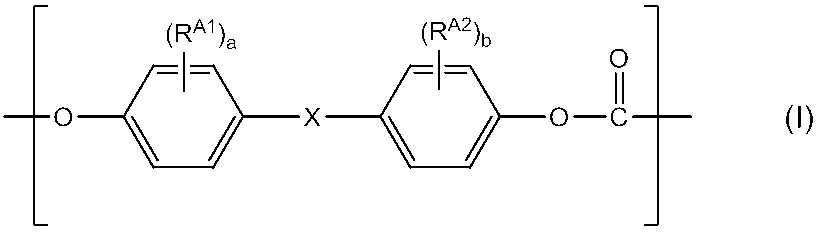
(式中、RA1及びRA2は、炭素数1以上6以下のアルキル基又はアルコキシ基を示し、RA1とRA2とは同一でも異なっていてもよい。Xは単結合、炭素数1以上8以下のアルキレン基、炭素数2以上8以下のアルキリデン基、炭素数5以上15以下のシクロアルキレン基、炭素数5以上15以下のシクロアルキリデン基、-S-、-SO-、-SO2-、-O-又は-CO-を示し、a及びbは、それぞれ独立に0以上4以下の整数を示す。aが2以上の場合にはRA1は同一でも異なっていてもよく、bが2以上の場合にはRA2は同一でも異なっていてもよい。)
<4>前記リン系化合物(B)がフォスファイト構造を有するリン系化合物である、上記<1>~<3>のいずれか1つに記載のポリカーボネート樹脂組成物。
<5>前記リン系化合物(B)が、下記一般式(II)で表されるペンタエリスリトールジフォスファイト化合物である、上記<1>~<4>のいずれか1つに記載のポリカーボネート樹脂組成物。

(式中、Y1~Y4は炭素数6以上15以下の炭化水素基を示し、同一でも異なっていてもよい。)
<6>前記式(II)におけるY1~Y4がそれぞれ独立に、無置換でも置換されていてもよいクミル基、無置換でも置換されていてもよいフェニル基、無置換でも置換されていてもよいナフチル基、又は無置換でも置換されていてもよいビフェニル基である、上記<5>に記載のポリカーボネート樹脂組成物。
<7>前記リン系化合物(B)が、下記一般式(II-1)で表されるペンタエリスリトールジフォスファイト化合物である、上記<1>~<6>のいずれか1つに記載のポリカーボネート樹脂組成物。

(式中、RB1~RB8はアルキル基又はアルケニル基を示し、同一であっても異なっていてもよい。RB1とRB2、RB3とRB4、RB5とRB6、RB7とRB8は、互いに結合して環を形成してもよい。RB9~RB12は水素原子又はアルキル基を示し、同一でも異なっていてもよい。m1~m4は0以上5以下の整数であり、同一でも異なっていてもよい。Z1~Z4は単結合又は炭素原子を示し、同一でも異なっていてもよい。Z1~Z4が単結合を示す場合、RB1~RB8は一般式(II-1)から除外される。)
<8>前記リン系化合物(B)が、ビス(2,4-ジクミルフェニル)ペンタエリスリトールジフォスファイトである、上記<1>~<7>のいずれか1つに記載のポリカーボネート樹脂組成物。
<9>前記ポリカプロラクトンポリオール(C)が、分子量が500以上5,000以下である、ポリカプロラクトンジオール、ポリカプロラクトントリオール及びポリカプロラクトンテトラオールからなる群から選ばれる少なくとも1つである、上記<1>~<8>のいずれか1つに記載のポリカーボネート樹脂組成物。
<10>前記ポリエーテル化合物(D)が、式(1)中のRD1及びRD2が炭素数2以上5以下のアルキレン基であり、RD3及びRD4が水素原子であるポリエーテル化合物である、上記<2>~<9>のいずれか1つに記載のポリカーボネート樹脂組成物。
<11>前記芳香族ポリカーボネート樹脂(A)の粘度平均分子量(Mv)が9,000以上50,000以下である、上記<1>~<10>のいずれか1つに記載のポリカーボネート樹脂組成物。
<12>上記<1>~<11>のいずれか1つに記載のポリカーボネート樹脂組成物を成形する光学成形品の製造方法。
<13>上記<12>に記載の製造方法により得られる光学成形品。
<14>上記<1>~<11>のいずれか1つに記載のポリカーボネート樹脂組成物を含む光学成形品。
<15>光学成形品が導光部材である、上記<13>又は<14>に記載の光学成形品。
<16>前記光学成形品が車両用導光部品である、上記<13>~<15>のいずれか1つに記載の光学成形品。
<17>上記<16>に記載の成形品からなる、デイタイムランニングランプに使用される車両用導光部品。
<18>上記<16>に記載の光学成形品を含むデイタイムランニングライト。
前記芳香族ポリカーボネート樹脂(A)100質量部に対して、前記リン系化合物(B)0.005質量部以上1質量部以下及び前記ポリカプロラクトンポリオール(C)0.005質量部以上5質量部以下を含有し、
前記リン系化合物(B)は、40℃、湿度90%の条件下で放置したときに1,500時間後に分解して発生するフェノール構造を有する化合物の量が、前記リン系化合物(B)に対して5質量%以下である化合物であり、
前記リン系化合物(B)は、窒素雰囲気下、示差熱-熱重量測定(TG-DTA)機を使って、重量を測定した場合に測定前の重量から2%の重量が減少する温度が340℃以上である化合物である、ポリカーボネート樹脂組成物。
<2>前記芳香族ポリカーボネート樹脂(A)100質量部に対して、下記式(1)で示すポリエーテル化合物(D)5質量部以下を更に含む、上記<1>に記載のポリカーボネート樹脂組成物。
RD3O-(RD1O)m(RD2O)n-RD4 (1)
(式中、RD1及びRD2は炭素数1以上のアルキレン基を示し、RD1とRD2とは同一でも異なっていてもよい。m+nは5以上300未満である。mが2以上の場合にRD1は、同一であっても異なっていてもよく、nが2以上の場合にRD2は、同一であっても異なっていてもよい。RD3及びRD4は水素原子、炭素数1以上30以下の炭化水素基、炭素数1以上30以下のアルカノイル基、炭素数2以上30以下のアルケノイル基又はグリシジル基を示し、RD3とRD4は同一でも異なっていてもよい。)
<3>前記芳香族ポリカーボネート樹脂(A)が、主鎖が下記一般式(I)で表される繰り返し単位を有するポリカーボネートである、上記<1>又は<2>に記載のポリカーボネート樹脂組成物。
(式中、RA1及びRA2は、炭素数1以上6以下のアルキル基又はアルコキシ基を示し、RA1とRA2とは同一でも異なっていてもよい。Xは単結合、炭素数1以上8以下のアルキレン基、炭素数2以上8以下のアルキリデン基、炭素数5以上15以下のシクロアルキレン基、炭素数5以上15以下のシクロアルキリデン基、-S-、-SO-、-SO2-、-O-又は-CO-を示し、a及びbは、それぞれ独立に0以上4以下の整数を示す。aが2以上の場合にはRA1は同一でも異なっていてもよく、bが2以上の場合にはRA2は同一でも異なっていてもよい。)
<4>前記リン系化合物(B)がフォスファイト構造を有するリン系化合物である、上記<1>~<3>のいずれか1つに記載のポリカーボネート樹脂組成物。
<5>前記リン系化合物(B)が、下記一般式(II)で表されるペンタエリスリトールジフォスファイト化合物である、上記<1>~<4>のいずれか1つに記載のポリカーボネート樹脂組成物。
(式中、Y1~Y4は炭素数6以上15以下の炭化水素基を示し、同一でも異なっていてもよい。)
<6>前記式(II)におけるY1~Y4がそれぞれ独立に、無置換でも置換されていてもよいクミル基、無置換でも置換されていてもよいフェニル基、無置換でも置換されていてもよいナフチル基、又は無置換でも置換されていてもよいビフェニル基である、上記<5>に記載のポリカーボネート樹脂組成物。
<7>前記リン系化合物(B)が、下記一般式(II-1)で表されるペンタエリスリトールジフォスファイト化合物である、上記<1>~<6>のいずれか1つに記載のポリカーボネート樹脂組成物。
(式中、RB1~RB8はアルキル基又はアルケニル基を示し、同一であっても異なっていてもよい。RB1とRB2、RB3とRB4、RB5とRB6、RB7とRB8は、互いに結合して環を形成してもよい。RB9~RB12は水素原子又はアルキル基を示し、同一でも異なっていてもよい。m1~m4は0以上5以下の整数であり、同一でも異なっていてもよい。Z1~Z4は単結合又は炭素原子を示し、同一でも異なっていてもよい。Z1~Z4が単結合を示す場合、RB1~RB8は一般式(II-1)から除外される。)
<8>前記リン系化合物(B)が、ビス(2,4-ジクミルフェニル)ペンタエリスリトールジフォスファイトである、上記<1>~<7>のいずれか1つに記載のポリカーボネート樹脂組成物。
<9>前記ポリカプロラクトンポリオール(C)が、分子量が500以上5,000以下である、ポリカプロラクトンジオール、ポリカプロラクトントリオール及びポリカプロラクトンテトラオールからなる群から選ばれる少なくとも1つである、上記<1>~<8>のいずれか1つに記載のポリカーボネート樹脂組成物。
<10>前記ポリエーテル化合物(D)が、式(1)中のRD1及びRD2が炭素数2以上5以下のアルキレン基であり、RD3及びRD4が水素原子であるポリエーテル化合物である、上記<2>~<9>のいずれか1つに記載のポリカーボネート樹脂組成物。
<11>前記芳香族ポリカーボネート樹脂(A)の粘度平均分子量(Mv)が9,000以上50,000以下である、上記<1>~<10>のいずれか1つに記載のポリカーボネート樹脂組成物。
<12>上記<1>~<11>のいずれか1つに記載のポリカーボネート樹脂組成物を成形する光学成形品の製造方法。
<13>上記<12>に記載の製造方法により得られる光学成形品。
<14>上記<1>~<11>のいずれか1つに記載のポリカーボネート樹脂組成物を含む光学成形品。
<15>光学成形品が導光部材である、上記<13>又は<14>に記載の光学成形品。
<16>前記光学成形品が車両用導光部品である、上記<13>~<15>のいずれか1つに記載の光学成形品。
<17>上記<16>に記載の成形品からなる、デイタイムランニングランプに使用される車両用導光部品。
<18>上記<16>に記載の光学成形品を含むデイタイムランニングライト。
本発明によれば、幅広い温度域で成形しても成形時の劣化による光学特性の低下もなく、厳しい環境条件下で長期間使用しても黄変劣化が少ないポリカーボネート樹脂組成物、光学成形品の製造方法及び光学成形品を提供することができる。
以下に、本発明を説明する。なお、本発明において、好ましい態様の組み合わせは、より好ましい態様である。
導光部材の用途によっては薄肉化が要求されるケースがあり、340℃を超える温度、特に360℃を超える温度でポリカーボネート樹脂組成物を成形する場合がある。この観点からは、国際公開第2011/083635号の方法では不十分であり、更なる改良が求められている。
一方、自動車のヘッドランプやテールランプの外周等に付属され、Daytime Running Lights(あるいはDaytime Running Lamps)(略してDRL)と呼ばれる昼光ランプは、厚肉のレンズ構造の導光リングである。このような厚肉構造のDRLは、280℃前後の低温で成形されることが多い。その理由は、DRLが厚肉構造であるため、冷却時間を充分取らないと、製品面が引けたり、収縮したりして歪が出てしまうため、成形サイクルを長く取る必要がある。成形サイクルが長くて成形温度が高いと、成形機内に残留している溶融樹脂が焼けるため、できるだけ成形温度を低くして滞留焼けしないようにしなければいけない。更には、この焼けを抑えるため、成形機内の空気を窒素で置換しながら成形する窒素成形等も行いながら、焼けを防止している例も多い。このように、導光用途に使われるポリカーボネート樹脂は、幅広い温度域や長い滞留時間を要する成形であっても、黄変することなく成形可能な性能が求められる。
一方、自動車のヘッドランプやテールランプの外周等に付属され、Daytime Running Lights(あるいはDaytime Running Lamps)(略してDRL)と呼ばれる昼光ランプは、厚肉のレンズ構造の導光リングである。このような厚肉構造のDRLは、280℃前後の低温で成形されることが多い。その理由は、DRLが厚肉構造であるため、冷却時間を充分取らないと、製品面が引けたり、収縮したりして歪が出てしまうため、成形サイクルを長く取る必要がある。成形サイクルが長くて成形温度が高いと、成形機内に残留している溶融樹脂が焼けるため、できるだけ成形温度を低くして滞留焼けしないようにしなければいけない。更には、この焼けを抑えるため、成形機内の空気を窒素で置換しながら成形する窒素成形等も行いながら、焼けを防止している例も多い。このように、導光用途に使われるポリカーボネート樹脂は、幅広い温度域や長い滞留時間を要する成形であっても、黄変することなく成形可能な性能が求められる。
また、DRLのように自動車用途で使われる光学用ポリカーボネート樹脂では、120℃で1000時間以上の耐熱オーブン試験等の厳しい環境試験が行われる。特許第4069364号公報,国際公開第2011/083635号、国際公開第2013/088796号に示されるようなポリエーテルポリオール類は、光学性能を上げる点では顕著な効果を示す一方、長期耐熱性が低く、120℃オーブン試験のような厳しい環境試験では著しく光学性能が低下してしまう欠点がある。これは、ポリエーテルポリオール類自体の耐熱性の問題であるため、その他の添加剤では耐熱性能の改善ができない。このため、自動車用の光学レンズに使えるポリカーボネート樹脂組成物は、ポリカーボネート自体の光学性能に頼るしかないが、輝度向上や青色相向上の要望は強い。
本発明者等は、上記各用途における性能や要望に応えるポリカーボネート樹脂組成物を提供するものである。
本発明のポリカーボネート樹脂組成物は、芳香族ポリカーボネート樹脂(A)、アリール基を有するリン系化合物(B)及びポリカプロラクトンポリオール(C)を含有するポリカーボネート樹脂組成物であって、前記芳香族ポリカーボネート樹脂(A)100質量部に対して、前記リン系化合物(B)0.005質量部以上1質量部以下及び前記ポリカプロラクトンポリオール(C)0.005質量部以上5質量部以下を含有し、前記リン系化合物(B)は、40℃、湿度90%の条件下で放置したときに1500時間後に分解して発生するフェノール構造を有する化合物の量が、前記リン系化合物(B)に対して5質量%以下である化合物であり、前記リン系化合物(B)は、窒素雰囲気下、示差熱-熱重量測定(TG-DTA)機を使って、重量を測定した場合に測定前の重量から2%の重量が減少する温度が340℃以上である化合物であることを特徴とする。
本発明のポリカーボネート樹脂組成物は、芳香族ポリカーボネート樹脂(A)、アリール基を有するリン系化合物(B)及びポリカプロラクトンポリオール(C)を含有するポリカーボネート樹脂組成物であって、前記芳香族ポリカーボネート樹脂(A)100質量部に対して、前記リン系化合物(B)0.005質量部以上1質量部以下及び前記ポリカプロラクトンポリオール(C)0.005質量部以上5質量部以下を含有し、前記リン系化合物(B)は、40℃、湿度90%の条件下で放置したときに1500時間後に分解して発生するフェノール構造を有する化合物の量が、前記リン系化合物(B)に対して5質量%以下である化合物であり、前記リン系化合物(B)は、窒素雰囲気下、示差熱-熱重量測定(TG-DTA)機を使って、重量を測定した場合に測定前の重量から2%の重量が減少する温度が340℃以上である化合物であることを特徴とする。
[成分(A):芳香族ポリカーボネート樹脂]
本発明のポリカーボネート樹脂組成物に含有される芳香族ポリカーボネート樹脂(A)としては、特に制限なく、公知の方法により製造したものを用いることができる。
例えば、二価フェノールとカーボネート前駆体とを溶液法(界面重縮合法)又は溶融法(エステル交換法)により反応させて製造したもの、すなわち、末端停止剤の存在下に、二価フェノールとホスゲンとを反応させる界面重縮合法、又は末端停止剤の存在下に、二価フェノールとジフェニルカーボネート等とをエステル交換法等により反応させて製造したものを芳香族ポリカーボネート樹脂(A)として用いることができる。
本発明のポリカーボネート樹脂組成物に含有される芳香族ポリカーボネート樹脂(A)としては、特に制限なく、公知の方法により製造したものを用いることができる。
例えば、二価フェノールとカーボネート前駆体とを溶液法(界面重縮合法)又は溶融法(エステル交換法)により反応させて製造したもの、すなわち、末端停止剤の存在下に、二価フェノールとホスゲンとを反応させる界面重縮合法、又は末端停止剤の存在下に、二価フェノールとジフェニルカーボネート等とをエステル交換法等により反応させて製造したものを芳香族ポリカーボネート樹脂(A)として用いることができる。
二価フェノールとしては、様々なものを挙げることができるが、特に2,2-ビス(4-ヒドロキシフェニル)プロパン〔ビスフェノールA〕、ビス(4-ヒドロキシフェニル)メタン、1,1-ビス(4-ヒドロキシフェニル)エタン、2,2-ビス(4-ヒドロキシ-3,5-ジメチルフェニル)プロパン、4,4’-ジヒドロキシジフェニル、ビス(4-ヒドロキシフェニル)シクロアルカン、ビス(4-ヒドロキシフェニル)オキシド、ビス(4-ヒドロキシフェニル)スルフィド、ビス(4-ヒドロキシフェニル)スルホン、ビス(4-ヒドロキシフェニル)スルホキシド及びビス(4-ヒドロキシフェニル)ケトン等を挙げることができる。この他、ハイドロキノン、レゾルシン及びカテコール等を挙げることもできる。これらは、それぞれ単独で用いてもよいし、2種以上を組み合わせて用いてもよいが、これらの中で、ビス(ヒドロキシフェニル)アルカン系が好ましく、特にビスフェノールAが好適である。
カーボネート前駆体としては、カルボニルハライド、カルボニルエステル、又はハロホルメート等であり、具体的にはホスゲン、二価フェノールのジハロホルメート、ジフェニルカーボネート、ジメチルカーボネート及びジエチルカーボネート等である。
なお、本発明において成分(A)は、分岐構造を有していてもよく、分岐剤としては、1,1,1-トリス(4-ヒドロキシフェニル)エタン、α,α’,α”-トリス(4-ヒドロキシフェニル)-1,3,5-トリイソプロピルベンゼン、フロログルシン、トリメリット酸及び1,3-ビス(o-クレゾール)等がある。
なお、本発明において成分(A)は、分岐構造を有していてもよく、分岐剤としては、1,1,1-トリス(4-ヒドロキシフェニル)エタン、α,α’,α”-トリス(4-ヒドロキシフェニル)-1,3,5-トリイソプロピルベンゼン、フロログルシン、トリメリット酸及び1,3-ビス(o-クレゾール)等がある。
末端停止剤としては、一価のカルボン酸とその誘導体や、一価のフェノールを用いることができる。例えば、p-tert-ブチル-フェノール、p-フェニルフェノール、p-クミルフェノール、p-パーフルオロノニルフェノール、p-(パーフルオロノニルフェニル)フェノール、p-(パーフルオロへキシルフェニル)フェノール、p-tert-パーフルオロブチルフェノール、1-(p-ヒドロキシベンジル)パーフルオロデカン、p-〔2-(1H,1H-パーフルオロトリドデシルオキシ)-1,1,1,3,3,3-ヘキサフルオロプロピル〕フェノール、3,5-ビス(パーフルオロヘキシルオキシカルボニル)フェノール、p-ヒドロキシ安息香酸パーフルオロドデシル、p-(1H,1H-パーフルオロオクチルオキシ)フェノール、2H,2H,9H-パーフルオロノナン酸、1,1,1,3,3,3-ヘキサフルオロ-2-プロパノール等を挙げることができる。
芳香族ポリカーボネート樹脂(A)としては、主鎖が下記一般式(I)で表される繰り返し単位を有するポリカーボネートであることが好ましい。

(式中、RA1及びRA2はそれぞれ独立に炭素数1以上6以下のアルキル基又はアルコキシ基を示し、RA1とRA2とは同一でも異なっていてもよい。Xは単結合、炭素数1以上8以下のアルキレン基、炭素数2以上8以下のアルキリデン基、炭素数5以上15以下のシクロアルキレン基、炭素数5以上15以下のシクロアルキリデン基、-S-、-SO-、-SO2-、-O-又は-CO-を示し、a及びbはそれぞれ独立に0以上4以下の整数を示す。aが2以上の場合にはRA1は同一でも異なっていてもよく、bが2以上の場合にはRA2は同一でも異なっていてもよい。)
(式中、RA1及びRA2はそれぞれ独立に炭素数1以上6以下のアルキル基又はアルコキシ基を示し、RA1とRA2とは同一でも異なっていてもよい。Xは単結合、炭素数1以上8以下のアルキレン基、炭素数2以上8以下のアルキリデン基、炭素数5以上15以下のシクロアルキレン基、炭素数5以上15以下のシクロアルキリデン基、-S-、-SO-、-SO2-、-O-又は-CO-を示し、a及びbはそれぞれ独立に0以上4以下の整数を示す。aが2以上の場合にはRA1は同一でも異なっていてもよく、bが2以上の場合にはRA2は同一でも異なっていてもよい。)
RA1及びRA2で示されるアルキル基としては、メチル基、エチル基、n-プロピル基、イソプロピル基、各種ブチル基(「各種」とは、直鎖状及びあらゆる分岐鎖状のものを含むことを示し、以下、同様である。)、各種ペンチル基、各種ヘキシル基が挙げられる。RA1及びRA2で示されるアルコキシ基としては、アルキル基部位が前記アルキル基である場合が挙げられる。
RA1及びRA2は、いずれも、好ましくは炭素数1以上4以下のアルキル基又は炭素数1以上4以下のアルコキシ基である。
RA1及びRA2は、いずれも、好ましくは炭素数1以上4以下のアルキル基又は炭素数1以上4以下のアルコキシ基である。
Xで示されるアルキレン基としては、例えば、メチレン基、エチレン基、トリメチレン基、テトラメチレン基、ヘキサメチレン基等が挙げられ、炭素数1以上5以下のアルキレン基が好ましい。Xで示されるアルキリデン基としては、エチリデン基、イソプロピリデン基等が挙げられる。Xで示されるシクロアルキレン基としては、シクロペンタンジイル基やシクロヘキサンジイル基、シクロオクタンジイル基等が挙げられ、炭素数5以上10以下のシクロアルキレン基が好ましい。Xで示されるシクロアルキリデン基としては、例えば、シクロヘキシリデン基、3,5,5-トリメチルシクロヘキシリデン基、2-アダマンチリデン基等が挙げられ、炭素数5以上10以下のシクロアルキリデン基が好ましく、炭素数5以上8以下のシクロアルキリデン基がより好ましい。
a及びbは、それぞれ独立に0以上4以下の整数を示し、好ましくは0以上2以下、より好ましくは0又は1である。
a及びbは、それぞれ独立に0以上4以下の整数を示し、好ましくは0以上2以下、より好ましくは0又は1である。
本発明において、芳香族ポリカーボネート樹脂(A)は、得られる成形体の透明性、機械的特性、熱的特性等の観点から、ビスフェノールA構造を有するポリカーボネート樹脂を含むことが好ましい。ビスフェノールA構造を有するポリカーボネート樹脂としては、具体的には前記一般式(I)において、Xがイソプロピリデン基のものが挙げられる。芳香族ポリカーボネート樹脂(A)中のビスフェノールA構造を有するポリカーボネート樹脂の含有量は、好ましくは50質量%以上100質量%以下、より好ましくは75質量%以上100質量%以下、更に好ましくは85質量%以上100質量%以下である。
本発明において、成分(A)の粘度平均分子量(Mv)は、流動性の観点から、好ましくは9,000以上50,000以下、より好ましくは10,000以上30,000以下、更に好ましくは11,000以上25,000以下である。特に、本発明のポリカーボネート樹脂組成物を導光板等の薄肉光学成形品として用いる場合には、芳香族ポリカーボネート樹脂(A)のMvは9,000以上17,000以下であることが好ましい。
本発明において、この粘度平均分子量(Mv)は、ウベローデ型粘度計を用いて、20℃における塩化メチレン溶液(濃度単位:g/L)の粘度を測定し、これより極限粘度[η]を求め、次式にて算出するものである。
[η]=1.23×10⁻⁵Mv0.83
本発明において、この粘度平均分子量(Mv)は、ウベローデ型粘度計を用いて、20℃における塩化メチレン溶液(濃度単位:g/L)の粘度を測定し、これより極限粘度[η]を求め、次式にて算出するものである。
[η]=1.23×10⁻⁵Mv0.83
[成分(B):アリール基を有するリン系化合物]
本発明のポリカーボネート樹脂組成物に含有されるアリール基を有するリン系化合物(B)は、40℃、湿度90%の条件下で放置したときに1,500時間後に分解して発生するフェノール構造を有する化合物の量が前記リン系化合物(B)に対して5質量%以下、好ましくは3質量%以下、より好ましくは1質量%以下、特に好ましくは0.5質量%以下となる化合物である。すなわち、本発明に使用されるアリール基を有するリン系化合物(B)は、耐加水分解性に優れ、フェノール構造を有する化合物の生成量が少ないものである。なお、上記のフェノール構造を有する化合物の量は、ガスクロマトグラフにて定量でき、詳しくは実施例に記載の方法により測定される。
本発明のポリカーボネート樹脂組成物に含有される前記リン系化合物(B)は、窒素雰囲気下、示差熱-熱重量測定(TG-DTA)機を使って、重量を測定した場合に測定前の重量から2%の重量が減少する温度が340℃以上である。なお、本明細書において、当該2%の重量が減少する温度を「98%保持温度」ともいう。
ここで、2%の重量が減少する温度が345℃以上であることが好ましく、より好ましくは350℃以上である。
本発明のポリカーボネート樹脂組成物に含有されるアリール基を有するリン系化合物(B)は、40℃、湿度90%の条件下で放置したときに1,500時間後に分解して発生するフェノール構造を有する化合物の量が前記リン系化合物(B)に対して5質量%以下、好ましくは3質量%以下、より好ましくは1質量%以下、特に好ましくは0.5質量%以下となる化合物である。すなわち、本発明に使用されるアリール基を有するリン系化合物(B)は、耐加水分解性に優れ、フェノール構造を有する化合物の生成量が少ないものである。なお、上記のフェノール構造を有する化合物の量は、ガスクロマトグラフにて定量でき、詳しくは実施例に記載の方法により測定される。
本発明のポリカーボネート樹脂組成物に含有される前記リン系化合物(B)は、窒素雰囲気下、示差熱-熱重量測定(TG-DTA)機を使って、重量を測定した場合に測定前の重量から2%の重量が減少する温度が340℃以上である。なお、本明細書において、当該2%の重量が減少する温度を「98%保持温度」ともいう。
ここで、2%の重量が減少する温度が345℃以上であることが好ましく、より好ましくは350℃以上である。
従来のペンタエリスリトールジフォスファイト構造を有するフォスファイト系酸化防止剤は、通常のポリカーボネート樹脂の加工温度では良好な酸化防止作用を発揮するものの、340℃を超えるような高温度では熱分解を起こし、酸化防止作用を急激に失う。更には、熱分解によって黄変の原因物を自ら生成するので、耐熱不足が課題である。また、フォスファイト系酸化防止剤は加水分解しやすいものが多く、導光板の耐湿熱試験において、導光板内の酸化防止剤が加水分解して、その分解物の影響で導光板が変色又は白濁する問題が発生しやすい。国際公開第2013/088796号には、耐熱性及び耐加水分解性の両要求特性を満足できる酸化防止剤として、ビス(2,4-ジクミルフェニル)ペンタエリスリトールジフォスファイトに代表される特定のジフォスファイト系酸化防止剤が有効であることが開示されている。
しかし、国際公開第2013/088796号の方法では、耐湿熱性の観点から脂環式エポキシ化合物を必要とする。また、この方法では、高温成形での熱安定性には優れるものの、300℃未満の成形温度域では十分な性能を発現できない。
本発明者らは、特定のリン系化合物(B)とポリカプロラクトンポリオール(C)とを併用することで、幅広い温度域で成形しても成形時の劣化による光学特性の低下のないポリカーボネート樹脂組成物を得ることができることを見出した。
しかし、国際公開第2013/088796号の方法では、耐湿熱性の観点から脂環式エポキシ化合物を必要とする。また、この方法では、高温成形での熱安定性には優れるものの、300℃未満の成形温度域では十分な性能を発現できない。
本発明者らは、特定のリン系化合物(B)とポリカプロラクトンポリオール(C)とを併用することで、幅広い温度域で成形しても成形時の劣化による光学特性の低下のないポリカーボネート樹脂組成物を得ることができることを見出した。
本発明に使用されるアリール基を有するリン系化合物(B)は、好ましくはフォスファイト構造を有するリン系化合物であり、より好ましくは下記一般式(II)で表されるペンタエリスリトールジフォスファイト化合物である。

(式中、Y1~Y4は炭素数6以上15以下の炭化水素基を示し、同一でも異なっていてもよい。)
(式中、Y1~Y4は炭素数6以上15以下の炭化水素基を示し、同一でも異なっていてもよい。)
Y1~Y4は、好ましくはそれぞれ独立に無置換でも置換されていてもよいクミル基、無置換でも置換されていてもよいフェニル基、無置換でも置換されていてもよいナフチル基、あるいは無置換でも置換されていてもよいビフェニル基である。
本発明に使用されるリン系化合物(B)は、好ましくは下記一般式(II-1)で表されるペンタエリスリトールジフォスファイト化合物である。
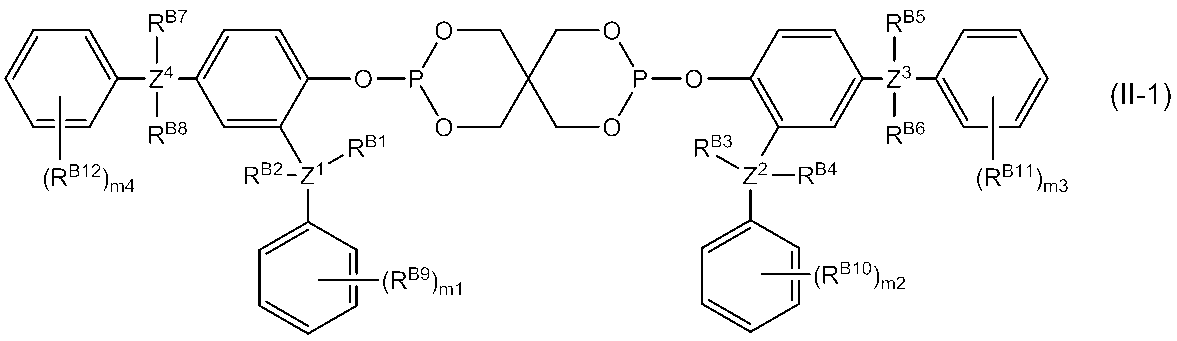
(式中、RB1~RB8はアルキル基又はアルケニル基を示し、同一であっても異なっていてもよい。RB1とRB2、RB3とRB4、RB5とRB6、RB7とRB8は、互いに結合して環を形成してもよい。RB9~RB12は水素原子又はアルキル基を示し、同一でも異なっていてもよい。m1~m4は0以上5以下の整数であり、同一でも異なっていてもよい。Z1~Z4は単結合又は炭素原子を示し、同一でも異なっていてもよい。Z1~Z4が単結合を示す場合、RB1~RB8は一般式(II-1)から除外される。)
(式中、RB1~RB8はアルキル基又はアルケニル基を示し、同一であっても異なっていてもよい。RB1とRB2、RB3とRB4、RB5とRB6、RB7とRB8は、互いに結合して環を形成してもよい。RB9~RB12は水素原子又はアルキル基を示し、同一でも異なっていてもよい。m1~m4は0以上5以下の整数であり、同一でも異なっていてもよい。Z1~Z4は単結合又は炭素原子を示し、同一でも異なっていてもよい。Z1~Z4が単結合を示す場合、RB1~RB8は一般式(II-1)から除外される。)
RB1~RB8は、好ましくは炭素数1以上5以下であり、より好ましくは炭素数1以上3以下であり、最も好ましくは炭素数1である。RB9~RB12は、水素原子であることが好ましい。m1~m4は、0以上3以下が好ましく、より好ましくは0以上1以下であり、最も好ましくは0である。Z1~Z4は炭素原子であることが好ましい。
上記一般式(II)又は(II-1)で表されるペンタエリスリトールジフォスファイト化合物は、三塩化リン及びペンタエリスリトールに塩素系溶剤を加えてペンタエリスリトールジクロロフォスファイトを得た後、芳香族系溶剤及び有機窒素含有塩基化合物の存在下で加熱混合することで得ることができる(例えば特開2004-018406号公報を参照)。
上記一般式(II)又は(II-1)で表されるペンタエリスリトールジフォスファイト化合物の中でも、ポリカーボネート樹脂組成物に対して耐熱性及び耐加水分解性を良好に付与することができ、また入手容易であることから、下記式(II-2)で表されるビス(2,4-ジクミルフェニル)ペンタエリスリトールジフォスファイトが特に好適である。この化合物は市販品として入手可能であり、例えばDover Chemical社製の「Doverphos(登録商標)S-9228PC」を使用することができる。

一般的なペンタエリスリトールジフォスファイト化合物の耐熱性は、示差熱-熱重量測定(TG-DTA)機を使って、窒素雰囲気下で測定された98%保持温度が240℃以上280℃以下程度である。これに対し、上に示すビス(2,4-ジクミルフェニル)ペンタエリスリトールジフォスファイトは98%保持温度が340℃以上である。このような耐熱性を持つため、340℃超えるような高温成形であっても、その性能を損なうことは無い。むしろ高温で成形する方が、酸化防止作用が活性化される傾向にある。
ポリカーボネート樹脂成形体の加水分解は、主に、含まれるリン系酸化防止剤の加水分解によって生成する遊離フェノール、リン酸が原因で引き起こされる。このため、加水分解が進みやすいリン系酸化防止剤を使うと、ポリカーボネート成形体自体が加水分解して分子量が低下、白濁化する。
本発明で用いられるアリール基を有するリン系化合物(B)は、40℃、湿度90%の条件下で放置したときに、1,500時間後に加水分解して発生する遊離フェノール、リン酸量が、一般的なペンタエリスリトールジフォスファイト構造を有する化合物に比べて1/100以下である。このように耐加水分解性に優れるので、長期保管したものを使ったとしても、加水分解物が入り込むことはなく、成形体に配合された後も加水分解は起きにくい。よって、本リン系化合物(B)を配合しているポリカーボネート樹脂組成物を使った成形体は、光学特性を落とすことなく長期に安定使用できる。
ポリカーボネート樹脂成形体の加水分解は、主に、含まれるリン系酸化防止剤の加水分解によって生成する遊離フェノール、リン酸が原因で引き起こされる。このため、加水分解が進みやすいリン系酸化防止剤を使うと、ポリカーボネート成形体自体が加水分解して分子量が低下、白濁化する。
本発明で用いられるアリール基を有するリン系化合物(B)は、40℃、湿度90%の条件下で放置したときに、1,500時間後に加水分解して発生する遊離フェノール、リン酸量が、一般的なペンタエリスリトールジフォスファイト構造を有する化合物に比べて1/100以下である。このように耐加水分解性に優れるので、長期保管したものを使ったとしても、加水分解物が入り込むことはなく、成形体に配合された後も加水分解は起きにくい。よって、本リン系化合物(B)を配合しているポリカーボネート樹脂組成物を使った成形体は、光学特性を落とすことなく長期に安定使用できる。
本発明の芳香族ポリカーボネート樹脂におけるアリール基を有するリン系化合物(B)の含有量は、幅広い温度域で成形しても成形時の劣化による光学特性の低下のないポリカーボネート樹脂組成物を得る観点から、芳香族ポリカーボネート樹脂(A)100質量部に対し、0.005質量部以上1質量部以下であり、好ましくは0.01質量部以上0.8質量部以下、より好ましくは0.03質量部以上0.5質量部以下、更に好ましくは0.03質量部以上0.3質量部以下である。
[成分(C):ポリカプロラクトンポリオール]
ポリカプロラクトンポリオールは、例えば、多価アルコール類を開始剤とし、ラクトンモノマーを開環重合して得られる。
多価アルコールの具体例としては、例えば、エチレングリコール、1,2-プロピレングリコール、1,3-プロピレングリコール、1,2-ブタンジオール、1,3-ブタンジオール、2-メチル-1,3-プロパンジオール、1,4-ブタンジオール、ネオペンチルグリコール、1,5-ペンタンジオール、3-メチル-1,5-ペンタンジオール、1,6-ヘキサンジオール、2,2,4-トリメチル-1,3-ペンタンジオール、2-エチル-1,3-ヘキサンジオール、2-メチル-1,8-オクタンジオール、1,9-ノナンジオール、1,10-デカンジオール、1,12-オクタデカンジオール、グリセリン、トリメチロールプロパン、トリメチロールオクタン、ペンタエリスリトールなどが挙げられる。
ラクトンモノマーとしては、ε-カプロラクトン、α-メチル-ε-カプロラクトン、β-メチル-ε-カプロラクトン、γ-メチル-ε-カプロラクトン、β,δ-ジメチル-ε-カプロラクトン、3,3,5-トリメチル-ε-カプロラクトンなどのカプロラクトン類;δ-バレロラクトン、β-メチル-δ-バレロラクトンなどのポリバレロラクトン類;プロピオラクトン類;ブチロラクトン類;エナントラクトン;ドデカノラクトンなどが挙げられる。ラクトンモノマーの誘導体であってもよい。
ポリカプロラクトンポリオールは、例えば、多価アルコール類を開始剤とし、ラクトンモノマーを開環重合して得られる。
多価アルコールの具体例としては、例えば、エチレングリコール、1,2-プロピレングリコール、1,3-プロピレングリコール、1,2-ブタンジオール、1,3-ブタンジオール、2-メチル-1,3-プロパンジオール、1,4-ブタンジオール、ネオペンチルグリコール、1,5-ペンタンジオール、3-メチル-1,5-ペンタンジオール、1,6-ヘキサンジオール、2,2,4-トリメチル-1,3-ペンタンジオール、2-エチル-1,3-ヘキサンジオール、2-メチル-1,8-オクタンジオール、1,9-ノナンジオール、1,10-デカンジオール、1,12-オクタデカンジオール、グリセリン、トリメチロールプロパン、トリメチロールオクタン、ペンタエリスリトールなどが挙げられる。
ラクトンモノマーとしては、ε-カプロラクトン、α-メチル-ε-カプロラクトン、β-メチル-ε-カプロラクトン、γ-メチル-ε-カプロラクトン、β,δ-ジメチル-ε-カプロラクトン、3,3,5-トリメチル-ε-カプロラクトンなどのカプロラクトン類;δ-バレロラクトン、β-メチル-δ-バレロラクトンなどのポリバレロラクトン類;プロピオラクトン類;ブチロラクトン類;エナントラクトン;ドデカノラクトンなどが挙げられる。ラクトンモノマーの誘導体であってもよい。
ポリカプロラクトンポリオール(C)としては、特開平11-228905号公報の段落[0016]に記載のものを例示できる。このポリカプロラクトンポリオールとしては、例えば、

(式中、m+nは4以上35以下の整数であり、RはC2H4、C2H4OC2H4、又はC(CH3)2(CH2)2である)
のような2官能ポリカプロラクトンジオール類、
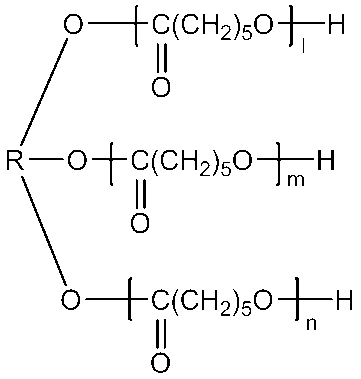
(式中、l+m+nは3以上30以下の整数であり、RはCH2CHCH2、CH3C(CH2)3、又はCH3CH2C(CH2)3である)
のような3官能ポリカプロラクトントリオール類、及び4官能ポリカプロラクトンテトラオール等を使用することができる。ポリカプロラクトンポリオール(C)は、上記ポリカプロラクトンジオール、ポリカプロラクトントリオール及びポリカプロラクトンテトラオールからなる群から選ばれる少なくとも1つであることが好ましい。分子量(数平均分子量)としては、500以上5,000以下、好ましくは850以上4,000以下、より好ましくは1,000以上3,000以下の範囲である。分子量が500未満であると耐熱性が低く、高温成形時に対応できない。分子量が5,000を超えると固形化して容易に溶けず扱いづらい。分子量が10,000程度になると熱可塑性樹脂としてペレット化できるが、ポリカーボネートに分散しづらく、酸化防止剤(B)とも相溶性も悪く、色調が悪化する。
(式中、m+nは4以上35以下の整数であり、RはC2H4、C2H4OC2H4、又はC(CH3)2(CH2)2である)
のような2官能ポリカプロラクトンジオール類、
(式中、l+m+nは3以上30以下の整数であり、RはCH2CHCH2、CH3C(CH2)3、又はCH3CH2C(CH2)3である)
のような3官能ポリカプロラクトントリオール類、及び4官能ポリカプロラクトンテトラオール等を使用することができる。ポリカプロラクトンポリオール(C)は、上記ポリカプロラクトンジオール、ポリカプロラクトントリオール及びポリカプロラクトンテトラオールからなる群から選ばれる少なくとも1つであることが好ましい。分子量(数平均分子量)としては、500以上5,000以下、好ましくは850以上4,000以下、より好ましくは1,000以上3,000以下の範囲である。分子量が500未満であると耐熱性が低く、高温成形時に対応できない。分子量が5,000を超えると固形化して容易に溶けず扱いづらい。分子量が10,000程度になると熱可塑性樹脂としてペレット化できるが、ポリカーボネートに分散しづらく、酸化防止剤(B)とも相溶性も悪く、色調が悪化する。
ポリカプロラクトンポリオール(C)の具体例としては、市販品として、例えば、(株)ダイセル社製の商品名「プラクセル205」、「プラクセル208」、「プラクセル210」、「プラクセル210CP」、「プラクセル212」、「プラクセル220」、「プラクセル220CPB」(ポリカプロラクトンジオール)、「プラクセル305」、「プラクセル308」、「プラクセル312」、「プラクセル320」(ポリカプロラクトントリオール)、「プラクセル410」(ポリカプロラクトンテトラオール)などが挙げられる。ポリカプロラクトンポリオールとしてはポリカプロラクトンジオールが好ましい。
本発明の芳香族ポリカーボネート樹脂におけるポリカプロラクトンポリオール(C)の含有量は、芳香族ポリカーボネート樹脂(A)100質量部に対し、0.005質量部以上5質量部以下であり、好ましくは0.01質量部以上5質量部以下、より好ましくは0.02質量部以上3質量部以下、更に好ましくは0.03質量部以上2質量部以下、更により好ましくは0.1質量部以上2質量部以下、最も好ましくは0.3質量部以上1.5質量部以下である。
本発明の芳香族ポリカーボネート樹脂におけるポリカプロラクトンポリオール(C)の含有量は、芳香族ポリカーボネート樹脂(A)100質量部に対し、0.005質量部以上5質量部以下であり、好ましくは0.01質量部以上5質量部以下、より好ましくは0.02質量部以上3質量部以下、更に好ましくは0.03質量部以上2質量部以下、更により好ましくは0.1質量部以上2質量部以下、最も好ましくは0.3質量部以上1.5質量部以下である。
[成分(D):ポリオキシアルキレン構造を有するポリエーテル化合物]
本発明のポリカーボネート樹脂組成物は、ポリオキシアルキレン構造を有するポリエーテル化合物(D)を含有することが好ましい。当該ポリエーテル化合物(D)は下記式(1)で表される化合物である。
RD3O-(RD1O)m(RD2O)n-RD4 (1)
(式中、RD1及びRD2は炭素数1以上のアルキレン基を示し、RD1とRD2とは、同一でも異なっていてもよい。m+nは5以上300未満である。mが2以上の場合にRD1は同一であっても異なっていてもよく、nが2以上の場合にRD2は同一であっても異なっていてもよい。RD3及びRD4は水素原子、炭素数1以上30以下の炭化水素基、炭素数1以上30以下のアルカノイル基、炭素数2以上30以下のアルケノイル基、又はグリシジル基を示し、RD3とRD4は同一でも異なっていてもよい。)
本発明のポリカーボネート樹脂組成物は、ポリオキシアルキレン構造を有するポリエーテル化合物(D)を含有することが好ましい。当該ポリエーテル化合物(D)は下記式(1)で表される化合物である。
RD3O-(RD1O)m(RD2O)n-RD4 (1)
(式中、RD1及びRD2は炭素数1以上のアルキレン基を示し、RD1とRD2とは、同一でも異なっていてもよい。m+nは5以上300未満である。mが2以上の場合にRD1は同一であっても異なっていてもよく、nが2以上の場合にRD2は同一であっても異なっていてもよい。RD3及びRD4は水素原子、炭素数1以上30以下の炭化水素基、炭素数1以上30以下のアルカノイル基、炭素数2以上30以下のアルケノイル基、又はグリシジル基を示し、RD3とRD4は同一でも異なっていてもよい。)
RD1及びRD2は炭素数が1以上8以下であることが好ましく、1以上6以下がより好ましく、1以上5以下が最も好ましい。例えば、メチレン基、エチレン基、トリメチレン基、プロピレン基、テトラメチレン基、ヘキサメチレン基等を挙げることができる。
(RD1O)mで表されるポリオキシアルキレン基は、ポリオキシエチレン基やポリオキシプロピレン基等の単一のオキシアルキレン単位を繰り返し単位として有するものに限定されず、オキシエチレン単位及びオキシプロピレン単位など炭素数の異なる複数のオキシアルキレン単位を繰り返し単位として有するものであってもよい。
(RD2O)mで表されるポリオキシアルキレン基は、ポリオキシエチレン基やポリオキシプロピレン基等の単一のオキシアルキレン単位を繰り返し単位として有するものに限定されず、オキシエチレン単位及びオキシプロピレン単位など炭素数の異なる複数のオキシアルキレン単位を繰り返し単位として有するものであってもよい。
(RD1O)mで表されるポリオキシアルキレン基は、ポリオキシエチレン基やポリオキシプロピレン基等の単一のオキシアルキレン単位を繰り返し単位として有するものに限定されず、オキシエチレン単位及びオキシプロピレン単位など炭素数の異なる複数のオキシアルキレン単位を繰り返し単位として有するものであってもよい。
(RD2O)mで表されるポリオキシアルキレン基は、ポリオキシエチレン基やポリオキシプロピレン基等の単一のオキシアルキレン単位を繰り返し単位として有するものに限定されず、オキシエチレン単位及びオキシプロピレン単位など炭素数の異なる複数のオキシアルキレン単位を繰り返し単位として有するものであってもよい。
RD3及びRD4で示される炭素数1以上30以下の炭化水素基としては、炭素数1以上30以下のアルキル基、炭素数2以上30以下のアルケニル基、炭素数6以上30以下のアリール基又は炭素数7以上30以下のアラルキル基等が挙げられる。
アルキル基及びアルケニル基は、直鎖状、分岐状又は環状のいずれであってもよく、例えば、メチル基、エチル基、n-プロピル基、イソプロピル基、各種ブチル基、各種ペンチル基、各種ヘキシル基、各種オクチル基、シクロペンチル基、シクロヘキシル基、アリル基、プロペニル基、各種ブテニル基、各種ヘキセニル基、各種オクテニル基、シクロペンテニル基、シクロヘキセニル基等が挙げられる。アリール基としては、例えばフェニル基、トリル基、キシリル基等が挙げられる。アラルキル基としては、例えばベンジル基、フェネチル基、メチルベンジル基等が挙げられる。
RD3及びRD4で示される炭素数1以上30以下のアルカノイル基としては、直鎖状でも分岐鎖状でもよく、例えばメタノイル基、エタノイル基、n-プロパノイル基、イソプロパノイル基、n-ブタノイル基、t-ブタノイル基、n-ヘキサノイル基、n-オクタノイル基、n-デカノイル基、n-ドデカノイル基、ベンゾイル基等が挙げられる。これらの中でも、相溶性や、熱安定性及び製造容易性の観点から、炭素数1以上20以下のアルカノイル基が好ましい。
RD3及びRD4で示される炭素数2以上30以下のアルケノイル基としては、直鎖状でも分岐鎖状でもよく、例えばエテノイル基、n-プロペノイル基、イソプロペノイル基、n-ブテノイル基、t-ブテノイル基、n-ヘキセノイル基、n-オクテノイル基、n-デセノイル基、n-ドデセノイル基等が挙げられる。これらの中でも、低分子量とする観点、相溶性や溶解性の観点及び製造容易性の観点から、炭素数2以上10以下のアルケノイル基が好ましく、炭素数2以上6以下のアルケノイル基がより好ましい。
また、上記一般式(1)中RD1及びRD2が炭素数2以上5以下のアルキレン基であり、RD3及びRD4が水素原子である、ポリオキシアルキレン構造を有するポリエーテル化合物(D)が特に好ましい。
アルキル基及びアルケニル基は、直鎖状、分岐状又は環状のいずれであってもよく、例えば、メチル基、エチル基、n-プロピル基、イソプロピル基、各種ブチル基、各種ペンチル基、各種ヘキシル基、各種オクチル基、シクロペンチル基、シクロヘキシル基、アリル基、プロペニル基、各種ブテニル基、各種ヘキセニル基、各種オクテニル基、シクロペンテニル基、シクロヘキセニル基等が挙げられる。アリール基としては、例えばフェニル基、トリル基、キシリル基等が挙げられる。アラルキル基としては、例えばベンジル基、フェネチル基、メチルベンジル基等が挙げられる。
RD3及びRD4で示される炭素数1以上30以下のアルカノイル基としては、直鎖状でも分岐鎖状でもよく、例えばメタノイル基、エタノイル基、n-プロパノイル基、イソプロパノイル基、n-ブタノイル基、t-ブタノイル基、n-ヘキサノイル基、n-オクタノイル基、n-デカノイル基、n-ドデカノイル基、ベンゾイル基等が挙げられる。これらの中でも、相溶性や、熱安定性及び製造容易性の観点から、炭素数1以上20以下のアルカノイル基が好ましい。
RD3及びRD4で示される炭素数2以上30以下のアルケノイル基としては、直鎖状でも分岐鎖状でもよく、例えばエテノイル基、n-プロペノイル基、イソプロペノイル基、n-ブテノイル基、t-ブテノイル基、n-ヘキセノイル基、n-オクテノイル基、n-デセノイル基、n-ドデセノイル基等が挙げられる。これらの中でも、低分子量とする観点、相溶性や溶解性の観点及び製造容易性の観点から、炭素数2以上10以下のアルケノイル基が好ましく、炭素数2以上6以下のアルケノイル基がより好ましい。
また、上記一般式(1)中RD1及びRD2が炭素数2以上5以下のアルキレン基であり、RD3及びRD4が水素原子である、ポリオキシアルキレン構造を有するポリエーテル化合物(D)が特に好ましい。
前記一般式(1)で表されるポリオキシアルキレン構造を有するポリエーテル化合物(D)の具体例としては、ポリエチレングリコール、ポリプロピレングリコール、ポリテトラメチレングリコール、ポリオキシエチレンポリオキシプロピレングリコール、ポリオキシエチレンポリオキシテトラメチレングリコール、ポリオキシプロピレンポリオキシテトラメチレングリコール、ポリオキシエチレンモノメチルエーテル、ポリオキシエチレンジメチルエーテル、ポリオキシエチレン-ビスフェノールAエーテル、ポリオキシプロピレン-ビスフェノールAエーテル、ポリオキシエチレン-ポリオキシプロピレン-ビスフェノールAエーテル、ポリエチレングリコール-アリルエーテル、ポリエチレングリコール-ジアリルエーテル、ポリプロピレングリコール-アリルエーテル、ポリプロピレングリコール-ジアリルエーテル、ポリエチレングリコール-ポリプロピレングリコール-アリルエーテル、ポリエチレングリコールジメタクリレート、ポリプロピレングリコールジメタクリレート、ポリプロピレングリコールジステアレート等が挙げられる。
これらは市販品として入手可能であり、例えば日油(株)製の「ユニオックス(登録商標)」、「ユニオール(登録商標)」、「ユニルーブ(登録商標)」、「ユニセーフ(登録商標)」、「ポリセリン(登録商標)」、「エピオール(登録商標)」等を使用することができる。
これらは市販品として入手可能であり、例えば日油(株)製の「ユニオックス(登録商標)」、「ユニオール(登録商標)」、「ユニルーブ(登録商標)」、「ユニセーフ(登録商標)」、「ポリセリン(登録商標)」、「エピオール(登録商標)」等を使用することができる。
これらの中でも、分子量(平均分子量)が1,000以上5,000以下のポリオキシエチレングリコールとポリオキシプロピレングリコールのランダム共重合タイプの「ユニルーブDE」シリーズ、ポリオキシエチレングリコールとポリオキシテトラメチレングリコールのランダム共重合タイプの「ポリセリンDC」シリーズ、ポリオキシプロピレングリコールとポリオキシテトラメチレングリコールのランダム共重合タイプの「ポリセリンDCB」シリーズが特に好ましい。
ポリエーテル化合物(D)は、ポリカプロラクトンポリオールに比べて、加工時の加工安定性には優れるが、オーブン耐熱性等の長期耐熱性が劣る。よって、長期耐熱性を要する光学製品では、ポリエーテル化合物(D)の添加量は抑えるほうが望ましい。本発明の芳香族ポリカーボネート樹脂におけるポリオキシアルキレン構造を有するポリエーテル化合物(D)の含有量は、芳香族ポリカーボネート樹脂(A)100質量部に対して0質量部以上5質量部以下であり、好ましくは0質量部以上4質量部以下、より好ましくは0質量部以上3質量部以下である。なお、YI値の上昇を抑えるためには、0.05質量部以上5質量部以下が好ましく、0.1質量部以上3質量部以下がより好ましい。
例えば、DRLのような高温で長期耐熱性を要求されるような製品向けには、ポリエーテル(D)の添加は行わない。
例えば、DRLのような高温で長期耐熱性を要求されるような製品向けには、ポリエーテル(D)の添加は行わない。
[添加剤]
本発明のポリカーボネート樹脂組成物には、上述の成分(A)~(D)の他にポリオルガノシロキサン等の任意の添加剤を、本発明の効果を阻害しない範囲で適宜添加することができる。
本発明のポリカーボネート樹脂組成物には、上述の成分(A)~(D)の他にポリオルガノシロキサン等の任意の添加剤を、本発明の効果を阻害しない範囲で適宜添加することができる。
[ポリオルガノシロキサン]
ポリオルガノシロキサンとしては、アルコキシ基、アリールオキシ基、ポリオキシアルキレン基、カルボキシ基、シラノール基、アミノ基、メルカプト基、エポキシ基及びビニル基等の官能基を1種以上有する化合物であることが好ましい。
ポリオルガノシロキサンの添加量は、芳香族ポリカーボネート樹脂(A)100質量部に対して、好ましくは0.01質量部以上0.15質量部以下、より好ましくは0.02質量部以上0.15質量部以下、更に好ましくは0.05質量部以上0.1質量部以下である。上記範囲内であれば、他の成分と協奏して、離型性を向上させることができ、更に340℃を超える高温の成形条件、特に連続成形条件であっても、シルバーの発生や、金型付着物を大幅に低減することができる。
ポリオルガノシロキサンとしては、アルコキシ基、アリールオキシ基、ポリオキシアルキレン基、カルボキシ基、シラノール基、アミノ基、メルカプト基、エポキシ基及びビニル基等の官能基を1種以上有する化合物であることが好ましい。
ポリオルガノシロキサンの添加量は、芳香族ポリカーボネート樹脂(A)100質量部に対して、好ましくは0.01質量部以上0.15質量部以下、より好ましくは0.02質量部以上0.15質量部以下、更に好ましくは0.05質量部以上0.1質量部以下である。上記範囲内であれば、他の成分と協奏して、離型性を向上させることができ、更に340℃を超える高温の成形条件、特に連続成形条件であっても、シルバーの発生や、金型付着物を大幅に低減することができる。
ポリオルガノシロキサンの動粘度は、離型性としての滑性効果の観点から、25℃において、好ましくは10mm2/s以上であり、ポリカーボネート樹脂への分散性の観点から、好ましくは200mm2/s以下である。上記観点から、ポリオルガノシロキサンの粘度は、より好ましくは20mm2/s以上150mm2/s以下、更に好ましくは40mm2/s以上120mm2/s以下の範囲である。
ポリオルガノシロキサンの屈折率は、ポリカーボネートに添加した際に透明性を低下させないために、ポリカーボネートとの屈折率の差をできるだけ小さくすることが好ましい。ポリカーボネートの屈折率が1.58であることから、ポリオルガノシロキサンの屈折率は、好ましくは1.45以上、より好ましくは1.50以上、更に好ましくは1.52以上である。
ポリオルガノシロキサンの屈折率は、ポリカーボネートに添加した際に透明性を低下させないために、ポリカーボネートとの屈折率の差をできるだけ小さくすることが好ましい。ポリカーボネートの屈折率が1.58であることから、ポリオルガノシロキサンの屈折率は、好ましくは1.45以上、より好ましくは1.50以上、更に好ましくは1.52以上である。
[脂肪族環状エポキシ化合物]
本発明の芳香族ポリカーボネート樹脂組成物には、耐加水分解性を更に向上させるために脂肪族環状エポキシ化合物を配合してもよい。脂環式エポキシ化合物とは、脂環式エポキシ基、すなわち脂肪族環内のエチレン結合に酸素1原子が付加したエポキシ基を持つ環状脂肪族化合物をいい、具体的には特開平11-158364号公報に示される下記式(1)~(10)で表されるものが好適に用いられる。
本発明の芳香族ポリカーボネート樹脂組成物には、耐加水分解性を更に向上させるために脂肪族環状エポキシ化合物を配合してもよい。脂環式エポキシ化合物とは、脂環式エポキシ基、すなわち脂肪族環内のエチレン結合に酸素1原子が付加したエポキシ基を持つ環状脂肪族化合物をいい、具体的には特開平11-158364号公報に示される下記式(1)~(10)で表されるものが好適に用いられる。
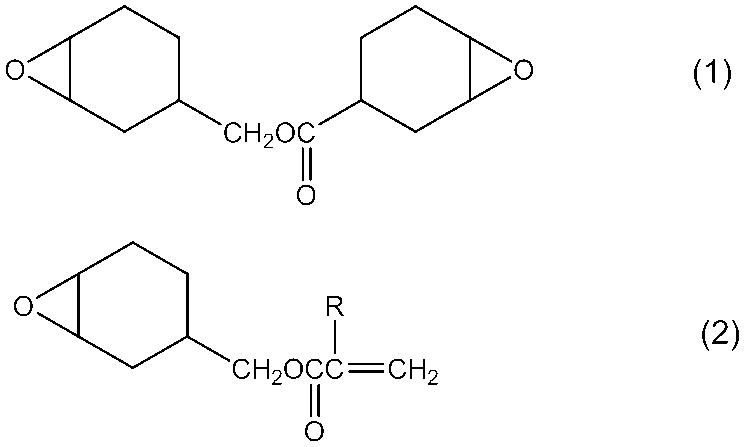
(式中、RはH又はCH3)

(式中、RはH又はCH3)

(式中、a+b=1又は2)

(式中、a+b+c+d=1以上3以下)

(式中、a+b+c=n(整数),Rは炭化水素基)

(式中、nは整数)
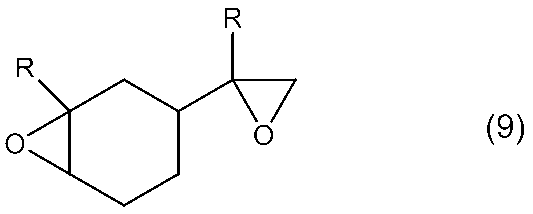
(式中、Rは炭化水素基)
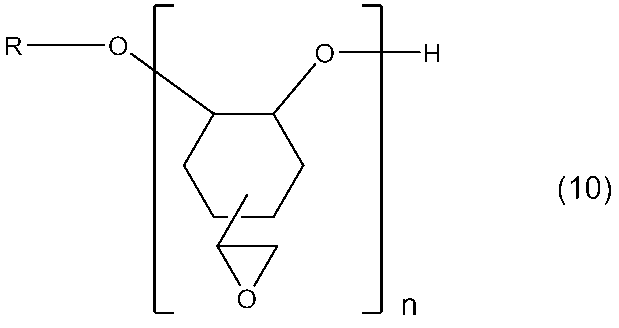
(式中、nは整数,Rは炭化水素基)
上記脂環式エポキシ化合物の中でも、式(1)、式(7)又は式(10)で表される化合物が、芳香族ポリカーボネート樹脂への相溶性に優れ、透明性を損なうことがない点でより好ましく用いられる。例えば、式(1)で表される化合物は、3,4-エポキシシクロヘキシルメチル-3’,4’-エポキシシクロヘキサンカルボキシレート(「セロキサイド2021P」(登録商標)、(株)ダイセル製)として入手することができる。また、式(10)で表される化合物として、2,2-ビス(ヒドロキシメチル)-1-ブタノールの1,2-エポキシ-4-(2-オキシラニル)シクロヘキサン付加物(「EHPE3150」(登録商標)、(株)ダイセル製)として入手することができる。
また、「セロキサイド2021P」と「EHPE3150」との混合物として、(株)ダイセルから市販されている「EHPE3150CE」(登録商標)も好ましく用いることができる。
本発明の芳香族ポリカーボネート樹脂組成物に脂環式エポキシ化合物を配合することにより、上述した通り耐加水分解性が更に向上すると共に、より透明性を向上させることが可能となる。脂環式エポキシ化合物の配合量は、(A)芳香族ポリカーボネート樹脂100質量部に対し、通常0.001質量部以上0.5質量部以下程度であり、好ましくは0.005質量部以上0.2質量部以下、より好ましくは、0.01質量部以上0.1質量部以下である。
また、「セロキサイド2021P」と「EHPE3150」との混合物として、(株)ダイセルから市販されている「EHPE3150CE」(登録商標)も好ましく用いることができる。
本発明の芳香族ポリカーボネート樹脂組成物に脂環式エポキシ化合物を配合することにより、上述した通り耐加水分解性が更に向上すると共に、より透明性を向上させることが可能となる。脂環式エポキシ化合物の配合量は、(A)芳香族ポリカーボネート樹脂100質量部に対し、通常0.001質量部以上0.5質量部以下程度であり、好ましくは0.005質量部以上0.2質量部以下、より好ましくは、0.01質量部以上0.1質量部以下である。
[芳香族ポリカーボネート樹脂組成物及び光学成形品]
本発明のポリカーボネート樹脂組成物の製造方法は特に限定されない。
例えば前記成分(A)~(C)、及び必要に応じ(D)成分、その他添加剤を混合し、溶融混練を行う。溶融混練は、通常用いられている方法、例えば、リボンブレンダー、ヘンシェルミキサー、バンバリーミキサー、ドラムタンブラーで混合したのち、単軸スクリュー押出機、二軸スクリュー押出機、コニーダ、多軸スクリュー押出機等を用いて、溶融、混練できる。ポリカプロラクトンポリオール(C)、及びポリエーテル(D)については、適宜加熱して粘度を下げ、ブレンダーに滴下しながらブレンドしたり、混練機ホッパー口に直接滴下しながら混合を行うことが一般に行われる。溶融混練に際しての加熱温度は、通常220℃以上300℃以下程度の範囲で適宜選定される。
本発明のポリカーボネート樹脂組成物の製造方法は特に限定されない。
例えば前記成分(A)~(C)、及び必要に応じ(D)成分、その他添加剤を混合し、溶融混練を行う。溶融混練は、通常用いられている方法、例えば、リボンブレンダー、ヘンシェルミキサー、バンバリーミキサー、ドラムタンブラーで混合したのち、単軸スクリュー押出機、二軸スクリュー押出機、コニーダ、多軸スクリュー押出機等を用いて、溶融、混練できる。ポリカプロラクトンポリオール(C)、及びポリエーテル(D)については、適宜加熱して粘度を下げ、ブレンダーに滴下しながらブレンドしたり、混練機ホッパー口に直接滴下しながら混合を行うことが一般に行われる。溶融混練に際しての加熱温度は、通常220℃以上300℃以下程度の範囲で適宜選定される。
本発明のポリカーボネート樹脂組成物は、上記の溶融混練物、あるいは、得られた樹脂ペレットを原料として、公知の成形方法、例えば中空成形法、射出成形法、射出圧縮成形法、押出成形法、真空成形法、ブロー成形法、プレス成形法、圧空成形法、発泡成形法、熱曲げ成形法、圧縮成形法、カレンダー成形法及び回転成形法等の成形法を適用することができる。
本発明のポリカーボネート樹脂組成物は、耐熱不足を改善したものであり、340℃を超える高温での成形にも耐え得ることから、射出成形法など、成形材料に高い流動性を要求する成形法に好適である。また、DRL等の厚肉レンズ成形のような、成形サイクルの長い成形や、窒素を成形機内に導入する窒素成形にも好適である。一方、押出成形法では、220℃以上280℃以下程度の低温で成形することで、透明性が高く、黄変のない高い光学特性のシート又はフィルム等の製品を得ることができる。
本発明のポリカーボネート樹脂組成物は、耐熱不足を改善したものであり、340℃を超える高温での成形にも耐え得ることから、射出成形法など、成形材料に高い流動性を要求する成形法に好適である。また、DRL等の厚肉レンズ成形のような、成形サイクルの長い成形や、窒素を成形機内に導入する窒素成形にも好適である。一方、押出成形法では、220℃以上280℃以下程度の低温で成形することで、透明性が高く、黄変のない高い光学特性のシート又はフィルム等の製品を得ることができる。
本発明に係るポリカーボネート樹脂組成物は、下記測定方法(1)及び(2)により測定されるYI値が1.2以下、下記測定方法(1)及び(2)により測定されるYI値の差が0.1以下であることが好ましい。
より好ましくは、本発明に係るポリカーボネート樹脂組成物は、下記測定方法(1)及び(2)により測定されるYI値が1.15以下、下記測定方法(1)及び(2)により測定されるYI値の差が0.08以下である。
また、本発明に係るポリカーボネート樹脂組成物は、下記測定方法(1)により測定されるYI値が1.25以下であることが好ましく、下記測定方法(2)により測定されるYI値が1.10以下であることが好ましい。
より好ましくは、本発明に係るポリカーボネート樹脂組成物は、下記測定方法(1)及び(2)により測定されるYI値が1.15以下、下記測定方法(1)及び(2)により測定されるYI値の差が0.08以下である。
また、本発明に係るポリカーボネート樹脂組成物は、下記測定方法(1)により測定されるYI値が1.25以下であることが好ましく、下記測定方法(2)により測定されるYI値が1.10以下であることが好ましい。
測定方法(1)
ポリカーボネート樹脂成形材料をペレット化した上で乾燥させる。次に射出成形法により、シリンダー温度が360℃の温度、金型温度80℃、サイクル時間50秒にて50mm×80mm×厚さ5mmの成形体を成形する。分光光度計を用いて、C光源、2度視野の条件で前記成形体のYI値を測定する。
ポリカーボネート樹脂成形材料をペレット化した上で乾燥させる。次に射出成形法により、シリンダー温度が360℃の温度、金型温度80℃、サイクル時間50秒にて50mm×80mm×厚さ5mmの成形体を成形する。分光光度計を用いて、C光源、2度視野の条件で前記成形体のYI値を測定する。
測定方法(2)
ポリカーボネート樹脂成形材料をペレット化した上で乾燥させる。次に射出成形法により、シリンダー温度が280℃の温度、金型温度80℃、サイクル時間50秒にて50mm×80mm×厚さ5mmの成形体を成形する。分光光度計を用いて、C光源、2度視野の条件で前記成形体のYI値を測定する。
ポリカーボネート樹脂成形材料をペレット化した上で乾燥させる。次に射出成形法により、シリンダー温度が280℃の温度、金型温度80℃、サイクル時間50秒にて50mm×80mm×厚さ5mmの成形体を成形する。分光光度計を用いて、C光源、2度視野の条件で前記成形体のYI値を測定する。
また、本発明のポリカーボネート樹脂組成物は、下記の耐湿熱試験を行った場合に、試験前後の成形体のYI値の差ΔYIが0.2(0.20)以下であることが好ましい。
[耐湿熱試験方法]
ポリカーボネート樹脂成形材料をペレット化した上で乾燥させた後、シリンダー温度が350℃、金型温度が80℃、サイクル時間30秒で40mm×80mm×厚さ3mmの成形体を成形する。この成形体を温度85℃、相対湿度95%に設定した恒温恒湿槽に500時間入れる。
[耐湿熱試験方法]
ポリカーボネート樹脂成形材料をペレット化した上で乾燥させた後、シリンダー温度が350℃、金型温度が80℃、サイクル時間30秒で40mm×80mm×厚さ3mmの成形体を成形する。この成形体を温度85℃、相対湿度95%に設定した恒温恒湿槽に500時間入れる。
また、本発明のポリカーボネート樹脂組成物は、下記耐熱試験を行った場合に、試験前後の成形体のYI値の差ΔYIが0.5(0.50)以下であることが好ましい。
[耐熱試験方法]
ポリカーボネート樹脂成形材料をペレット化した上で乾燥させた後、シリンダー温度が350℃、金型温度が80℃、サイクル時間30秒で40mm×80mm×厚さ3mmの成形体を成形する。この成形体を温度120℃のギアーオーブン耐熱試験機内に1,000時間入れる。
[耐熱試験方法]
ポリカーボネート樹脂成形材料をペレット化した上で乾燥させた後、シリンダー温度が350℃、金型温度が80℃、サイクル時間30秒で40mm×80mm×厚さ3mmの成形体を成形する。この成形体を温度120℃のギアーオーブン耐熱試験機内に1,000時間入れる。
本発明のポリカーボネート樹脂組成物の好ましい一実施態様は、前記の芳香族ポリカーボネート樹脂(A)、リン系化合物(B)及びポリカプロラクトンポリオール(C)のみからなるポリカーボネート樹脂組成物である。また、本発明のポリカーボネート樹脂組成物の別の好ましい一実施態様は、前記の芳香族ポリカーボネート樹脂(A)、リン系化合物(B)、ポリカプロラクトンポリオール(C)及びポリエーテル化合物(D)のみからなるポリカーボネート樹脂組成物である。
本発明のポリカーボネート樹脂組成物は、光線透過率及び輝度に優れ、高温での成形や長い成形サイクルにも耐え得る樹脂組成物であって、特に射出成形に適する。一方、低温成形適性も高いことから、射出成形以外の成形でも、光透過性に優れた成形品を得ることができ、光学成形品、特に導光部材として有用である。
本発明のポリカーボネート樹脂組成物は、上記した通り広い温度範囲で安定して成形することができ、好ましくは280℃以上360℃以下の温度で成形することにより光学成形品を得ることができる。
また、成形後の製品の耐湿性や耐熱性に優れるため、耐湿性や耐熱性が要求される用途に用いることができる。
光学成形品としては車両用導光部品を挙げることができ、特にDRLに使用される車両用導光部品として用いることができる。DRLは成形品の厚みが5mm以上であることがより好ましい。
導光板としては、特に制限はなく、数mm~数百μmの厚みの平板でもよく、レンズ効果を有する曲面板やプリズム転写板でもよい。成形法も特に限定されず、目的・用途に応じて適宜、形状や成形法を選定すればよい。
本発明のポリカーボネート樹脂組成物は、上記した通り広い温度範囲で安定して成形することができ、好ましくは280℃以上360℃以下の温度で成形することにより光学成形品を得ることができる。
また、成形後の製品の耐湿性や耐熱性に優れるため、耐湿性や耐熱性が要求される用途に用いることができる。
光学成形品としては車両用導光部品を挙げることができ、特にDRLに使用される車両用導光部品として用いることができる。DRLは成形品の厚みが5mm以上であることがより好ましい。
導光板としては、特に制限はなく、数mm~数百μmの厚みの平板でもよく、レンズ効果を有する曲面板やプリズム転写板でもよい。成形法も特に限定されず、目的・用途に応じて適宜、形状や成形法を選定すればよい。
以下、実施例により本発明を更に詳細に説明するが、本発明はこれらの実施例に限定されるものではない。
[粘度平均分子量(Mv)の測定]
ウベローデ型粘度計にて、20℃における塩化メチレン溶液(濃度単位:g/L)の粘度を測定し、これより極限粘度[η]を求めた後、次式にて算出した。
[η]=1.23×10⁻⁵Mv0.83
ウベローデ型粘度計にて、20℃における塩化メチレン溶液(濃度単位:g/L)の粘度を測定し、これより極限粘度[η]を求めた後、次式にて算出した。
[η]=1.23×10⁻⁵Mv0.83
[リン系化合物の示差熱-熱重量測定(TG-DTA)]
リン系化合物を10~15mg採取し、それをSII(株)社製の示差熱-熱重量測定機「TG/DTA7200型」を使用して、窒素雰囲気下で、20℃/分の昇温速度で550℃まで昇温した際の重量変化を各温度毎に測定し記録した。初期の重量を100%として、重量が2%減量した時の温度を見て、98%保持温度とした。
[リン系化合物の耐加水分解試験]
リン系化合物を40℃、湿度90%の条件下で1,500時間放置した。その後、分解して発生するフェノール構造を有する化合物の質量を(株)島津製作所製のガスクロマトグラフ装置「GC-2014」を用いて定量し、リン系化合物に対する割合を測定した。
リン系化合物を10~15mg採取し、それをSII(株)社製の示差熱-熱重量測定機「TG/DTA7200型」を使用して、窒素雰囲気下で、20℃/分の昇温速度で550℃まで昇温した際の重量変化を各温度毎に測定し記録した。初期の重量を100%として、重量が2%減量した時の温度を見て、98%保持温度とした。
[リン系化合物の耐加水分解試験]
リン系化合物を40℃、湿度90%の条件下で1,500時間放置した。その後、分解して発生するフェノール構造を有する化合物の質量を(株)島津製作所製のガスクロマトグラフ装置「GC-2014」を用いて定量し、リン系化合物に対する割合を測定した。
実施例及び比較例で使用した各成分は以下のとおりである。
<芳香族ポリカーボネート樹脂(A)>
(A1):「タフロン FN1500」(出光興産(株)製、ビスフェノールAポリカーボネート樹脂、粘度平均分子量(Mv)=14,500)
(A2):「タフロン FN1200」(出光興産(株)製、ビスフェノールAポリカーボネート樹脂、粘度平均分子量(Mv)=11,500)
<芳香族ポリカーボネート樹脂(A)>
(A1):「タフロン FN1500」(出光興産(株)製、ビスフェノールAポリカーボネート樹脂、粘度平均分子量(Mv)=14,500)
(A2):「タフロン FN1200」(出光興産(株)製、ビスフェノールAポリカーボネート樹脂、粘度平均分子量(Mv)=11,500)
<リン系化合物(B)>
(B1):「Doverphos S-9228PC」(Dover Chemical社製、ビス(2,4-ジクミルフェニル)ペンタエリスリトールジフォスファイト、上記耐加水分解試験後にジクミルフェノールが0.15質量%生成した。)
(B2):「アデカスタブ PEP-36」((株)ADEKA製、ビス(2,6-ジ-tert-ブチル-4-メチルフェニル)ペンタエリスリトールジフォスファイト、上記耐加水分解試験後に2,6-ジ-tert-ブチル-4-メチルフェノールが45質量%生成した。)
各リン系化合物についての上記した示差熱-熱重量測定(TG-DTA)及び耐加水分解試験の結果を下記の表3にまとめる。
(B1):「Doverphos S-9228PC」(Dover Chemical社製、ビス(2,4-ジクミルフェニル)ペンタエリスリトールジフォスファイト、上記耐加水分解試験後にジクミルフェノールが0.15質量%生成した。)
(B2):「アデカスタブ PEP-36」((株)ADEKA製、ビス(2,6-ジ-tert-ブチル-4-メチルフェニル)ペンタエリスリトールジフォスファイト、上記耐加水分解試験後に2,6-ジ-tert-ブチル-4-メチルフェノールが45質量%生成した。)
各リン系化合物についての上記した示差熱-熱重量測定(TG-DTA)及び耐加水分解試験の結果を下記の表3にまとめる。
<ポリカプロラクトンポリオール(C)>
(C1):「プラクセル 210CP」((株)ダイセル製 ポリカプロラクトンジオール 分子量1000)
(C2):「プラクセル 220CPB」((株)ダイセル製 ポリカプロラクトンジオール 分子量2000)
(C3):「プラクセル H1P」((株)ダイセル製 高分子量ポリカプロラクトン(熱可塑性樹脂) 分子量10000)
(C1):「プラクセル 210CP」((株)ダイセル製 ポリカプロラクトンジオール 分子量1000)
(C2):「プラクセル 220CPB」((株)ダイセル製 ポリカプロラクトンジオール 分子量2000)
(C3):「プラクセル H1P」((株)ダイセル製 高分子量ポリカプロラクトン(熱可塑性樹脂) 分子量10000)
<ポリエーテル化合物(D)>
(D1):「ユニルーブ 50DE-25」(日油(株)製、ポリオキシエチレングリコール-ポリオキシプロピレングリコール 分子量1750)
<その他の添加剤>
「セロキサイド 2021P」((株)ダイセル製、3,4-エポキシシクロヘキシルメチル-3’,4’-エポキシシクロヘキサンカルボキシレート)
「KR-511」(信越化学工業(株)製、ポリオルガノシロキサン化合物)
(D1):「ユニルーブ 50DE-25」(日油(株)製、ポリオキシエチレングリコール-ポリオキシプロピレングリコール 分子量1750)
<その他の添加剤>
「セロキサイド 2021P」((株)ダイセル製、3,4-エポキシシクロヘキシルメチル-3’,4’-エポキシシクロヘキサンカルボキシレート)
「KR-511」(信越化学工業(株)製、ポリオルガノシロキサン化合物)
実施例1~10及び比較例1~9
各例において、表1及び2に示す量比で各成分を配合してポリカーボネート樹脂組成物を調製した。スクリュー径40mmのベント付単軸押出機(田辺プラスチックス機械(株)製「VS-40」)を使用して、シリンダー温度250℃でポリカーボネート樹脂組成物を溶融混練し、ストランドカットによりペレットを得た。得られたペレットを110℃で5時間乾燥した後、射出成形機(日精樹脂工業(株)製「ES1000」)を用いて、280℃及び360℃のシリンダー温度設定で、サイクル時間50秒で、50mm×80mm×厚さ5mmの平板試験片を成形した。
また、以下の通りに耐湿熱試験を行った。上記乾燥後のペレットを、射出成形機(東芝機械(株)製「EC40N」)を用いて、シリンダー温度350℃、サイクル時間30秒で、40mm×80mm×厚さ3mmの平板試験片を成形した。この平板試験片を温度85℃、相対湿度95%に設定したナガノサイエンス(株)製の型式名「LH33-12P」の恒温恒湿槽に500時間入れた。
さらに、上記乾燥後のペレットを、射出成形機(東芝機械(株)製「EC40N」)を用いて、シリンダー温度が350℃、金型温度が80℃、サイクル時間30秒で40mm×80mm×厚さ3mmの平板試験片を成形した。この平板試験片を、温度120℃に調整した、TABAI社製ギアーオーブン「GPS-222」内に1,000時間入れた。
上記で得られた試験片について、分光光度計((株)日立ハイテクノロジーズ製「U-4100」)を用い、C光源、2度視野の条件でYI値を測定した。結果を表1及び2に示す。なお、厚さ5mm試験片における合格基準は、280℃で成形した試験片のYI値(280℃成形)が1.10以下であり、かつ360℃で成形した試験片のYI値(360℃成形)が1.25以下である(表中、「プレートYI」値として示す)。また、280℃成形時と360℃成形時の色調差をΔYIで示す。
恒温恒湿試験槽を用いた耐湿熱試験後(500時間)のYIについては特に規定はないが、試験前後のΔYIは0.2(0.20)以下が要求される。ギアーオーブン耐熱試験機を用いた耐熱試験後(1,000時間)のYIについては特に規定はないが、試験前後のΔYIは0.5(0.50)以下であることが好ましい。
各例において、表1及び2に示す量比で各成分を配合してポリカーボネート樹脂組成物を調製した。スクリュー径40mmのベント付単軸押出機(田辺プラスチックス機械(株)製「VS-40」)を使用して、シリンダー温度250℃でポリカーボネート樹脂組成物を溶融混練し、ストランドカットによりペレットを得た。得られたペレットを110℃で5時間乾燥した後、射出成形機(日精樹脂工業(株)製「ES1000」)を用いて、280℃及び360℃のシリンダー温度設定で、サイクル時間50秒で、50mm×80mm×厚さ5mmの平板試験片を成形した。
また、以下の通りに耐湿熱試験を行った。上記乾燥後のペレットを、射出成形機(東芝機械(株)製「EC40N」)を用いて、シリンダー温度350℃、サイクル時間30秒で、40mm×80mm×厚さ3mmの平板試験片を成形した。この平板試験片を温度85℃、相対湿度95%に設定したナガノサイエンス(株)製の型式名「LH33-12P」の恒温恒湿槽に500時間入れた。
さらに、上記乾燥後のペレットを、射出成形機(東芝機械(株)製「EC40N」)を用いて、シリンダー温度が350℃、金型温度が80℃、サイクル時間30秒で40mm×80mm×厚さ3mmの平板試験片を成形した。この平板試験片を、温度120℃に調整した、TABAI社製ギアーオーブン「GPS-222」内に1,000時間入れた。
上記で得られた試験片について、分光光度計((株)日立ハイテクノロジーズ製「U-4100」)を用い、C光源、2度視野の条件でYI値を測定した。結果を表1及び2に示す。なお、厚さ5mm試験片における合格基準は、280℃で成形した試験片のYI値(280℃成形)が1.10以下であり、かつ360℃で成形した試験片のYI値(360℃成形)が1.25以下である(表中、「プレートYI」値として示す)。また、280℃成形時と360℃成形時の色調差をΔYIで示す。
恒温恒湿試験槽を用いた耐湿熱試験後(500時間)のYIについては特に規定はないが、試験前後のΔYIは0.2(0.20)以下が要求される。ギアーオーブン耐熱試験機を用いた耐熱試験後(1,000時間)のYIについては特に規定はないが、試験前後のΔYIは0.5(0.50)以下であることが好ましい。


特定のリン系化合物(B)及びポリカプロラクトンポリオール(C)を含まない比較例1及び6では、低温成形では色調は良好であるが、高温成形で色調が悪く、低温成形と高温成形の色調差(ΔYI)が大きい。ポリカプロラクトンポリオール(C)を含まず、特定のリン系化合物(B)を含む比較例2では、高温成形での色調はまずまずであるが、低温成形での色調が不十分である。比較例3、4、7及び8では酸化防止剤として特定のリン系酸化防止剤を用いておらず、ポリカプロラクトンポリオールを含んでいるが、高温成形の色調が悪い。比較例5及び9は高分子量のポリカプロラクトンを含むが、高温成形時(360℃成形時)の色調はより悪い。比較例2を除き、耐湿熱試験後の色調低下が大きく、加水分解を起こしていた可能性が高い。
これに対し、分解温度が高く、耐加水分解試験後に発生するフェノール構造を有する化合物の量が5質量%以下のアリール基を有するリン系化合物(B)と、ポリカプロラクトンポリオール(C)を含む実施例1~10では、高低温成形時の色調差が小さい。また、更にポリエーテル化合物(D)を併用した実施例5及び6では、低温成形時(280℃成形時)の色調が改善した。耐湿熱試験でも高い耐加水分解性能を示した。
これに対し、分解温度が高く、耐加水分解試験後に発生するフェノール構造を有する化合物の量が5質量%以下のアリール基を有するリン系化合物(B)と、ポリカプロラクトンポリオール(C)を含む実施例1~10では、高低温成形時の色調差が小さい。また、更にポリエーテル化合物(D)を併用した実施例5及び6では、低温成形時(280℃成形時)の色調が改善した。耐湿熱試験でも高い耐加水分解性能を示した。
本発明のポリカーボネート樹脂組成物は、高温成形での熱安定性に優れ、また、幅広い温度域で成形しても成形時の劣化による光学特性の低下のない成形品を得ることができると共に、耐湿熱性、長期耐熱性に優れる。このことから、光学製品、例えば導光板等具体的にはスマートフォンやタブレットPC等の大画面薄型の導光板に適すると共に、自動車用のDRL等、厚肉レンズにも好適である。
Claims (15)
- 芳香族ポリカーボネート樹脂(A)、アリール基を有するリン系化合物(B)及びポリカプロラクトンポリオール(C)を含有するポリカーボネート樹脂組成物であって、
前記芳香族ポリカーボネート樹脂(A)100質量部に対して、前記リン系化合物(B)0.005質量部以上1質量部以下及び前記ポリカプロラクトンポリオール(C)0.005質量部以上5質量部以下を含有し、
前記リン系化合物(B)は、40℃、湿度90%の条件下で放置したときに1,500時間後に分解して発生するフェノール構造を有する化合物の量が、前記リン系化合物(B)に対して5質量%以下である化合物であり、
前記リン系化合物(B)は、窒素雰囲気下、示差熱-熱重量測定(TG-DTA)機を使って、重量を測定した場合に測定前の重量から2%の重量が減少する温度が340℃以上である化合物である、ポリカーボネート樹脂組成物。 - 前記芳香族ポリカーボネート樹脂(A)100質量部に対して、下記式(1)で示すポリエーテル化合物(D)5質量部以下を更に含む、請求項1に記載のポリカーボネート樹脂組成物。
RD3O-(RD1O)m(RD2O)n-RD4 (1)
(式中、RD1及びRD2は炭素数1以上のアルキレン基を示し、RD1とRD2とは同一でも異なっていてもよい。m+nは5以上300未満である。mが2以上の場合にRD1は、同一であっても異なっていてもよく、nが2以上の場合にRD2は、同一であっても異なっていてもよい。RD3及びRD4は水素原子、炭素数1以上30以下の炭化水素基、炭素数1以上30以下のアルカノイル基、炭素数2以上30以下のアルケノイル基又はグリシジル基を示し、RD3とRD4は同一でも異なっていてもよい。) - 前記芳香族ポリカーボネート樹脂(A)が、主鎖が下記一般式(I)で表される繰り返し単位を有するポリカーボネートである、請求項1又は2に記載のポリカーボネート樹脂組成物。

(式中、RA1及びRA2は、炭素数1以上6以下のアルキル基又はアルコキシ基を示し、RA1とRA2とは同一でも異なっていてもよい。Xは単結合、炭素数1以上8以下のアルキレン基、炭素数2以上8以下のアルキリデン基、炭素数5以上15以下のシクロアルキレン基、炭素数5以上15以下のシクロアルキリデン基、-S-、-SO-、-SO2-、-O-又は-CO-を示し、a及びbは、それぞれ独立に0以上4以下の整数を示す。aが2以上の場合にはRA1は同一でも異なっていてもよく、bが2以上の場合にはRA2は同一でも異なっていてもよい。) - 前記リン系化合物(B)がフォスファイト構造を有するリン系化合物である、請求項1~3のいずれか1つに記載のポリカーボネート樹脂組成物。
- 前記リン系化合物(B)が、下記一般式(II)で表されるペンタエリスリトールジフォスファイト化合物である、請求項1~4のいずれか1つに記載のポリカーボネート樹脂組成物。

(式中、Y1~Y4は炭素数6以上15以下の炭化水素基を示し、同一でも異なっていてもよい。) - 前記式(II)におけるY1~Y4がそれぞれ独立に、無置換でも置換されていてもよいクミル基、無置換でも置換されていてもよいフェニル基、無置換でも置換されていてもよいナフチル基、又は無置換でも置換されていてもよいビフェニル基である、請求項5に記載のポリカーボネート樹脂組成物。
- 前記リン系化合物(B)が、下記一般式(II-1)で表されるペンタエリスリトールジフォスファイト化合物である、請求項1~6のいずれか1つに記載のポリカーボネート樹脂組成物。

(式中、RB1~RB8はアルキル基又はアルケニル基を示し、同一であっても異なっていてもよい。RB1とRB2、RB3とRB4、RB5とRB6、RB7とRB8は、互いに結合して環を形成してもよい。RB9~RB12は水素原子又はアルキル基を示し、同一でも異なっていてもよい。m1~m4は0以上5以下の整数であり、同一でも異なっていてもよい。Z1~Z4は単結合又は炭素原子を示し、同一でも異なっていてもよい。Z1~Z4が単結合を示す場合、RB1~RB8は一般式(II-1)から除外される。) - 前記リン系化合物(B)が、ビス(2,4-ジクミルフェニル)ペンタエリスリトールジフォスファイトである、請求項1~7のいずれか1つに記載のポリカーボネート樹脂組成物。
- 前記ポリカプロラクトンポリオール(C)が、分子量が500以上5,000以下である、ポリカプロラクトンジオール、ポリカプロラクトントリオール及びポリカプロラクトンテトラオールからなる群から選ばれる少なくとも1つである、請求項1~8のいずれか1つに記載のポリカーボネート樹脂組成物。
- 前記ポリエーテル化合物(D)が、式(1)中のRD1及びRD2が炭素数2以上5以下のアルキレン基であり、RD3及びRD4が水素原子であるポリエーテル化合物である、請求項2~9のいずれか1つに記載のポリカーボネート樹脂組成物。
- 前記芳香族ポリカーボネート樹脂(A)の粘度平均分子量(Mv)が9,000以上50,000以下である、請求項1~10のいずれか1つに記載のポリカーボネート樹脂組成物。
- 請求項1~11のいずれか1つに記載のポリカーボネート樹脂組成物を含む光学成形品。
- 光学成形品が導光部材である、請求項12に記載の光学成形品。
- 前記光学成形品が車両用導光部品である、請求項12又は13に記載の光学成形品。
- 請求項14に記載の光学成形品を含むデイタイムランニングライト。
Priority Applications (2)
| Application Number | Priority Date | Filing Date | Title |
|---|---|---|---|
| CN201680031781.8A CN107636075B (zh) | 2015-06-08 | 2016-06-07 | 聚碳酸酯树脂组合物和光学成形品 |
| JP2017523655A JP6702615B2 (ja) | 2015-06-08 | 2016-06-07 | ポリカーボネート樹脂組成物及び光学成形品 |
Applications Claiming Priority (2)
| Application Number | Priority Date | Filing Date | Title |
|---|---|---|---|
| JP2015116116 | 2015-06-08 | ||
| JP2015-116116 | 2015-06-08 |
Publications (1)
| Publication Number | Publication Date |
|---|---|
| WO2016199783A1 true WO2016199783A1 (ja) | 2016-12-15 |
Family
ID=57503918
Family Applications (1)
| Application Number | Title | Priority Date | Filing Date |
|---|---|---|---|
| PCT/JP2016/066973 Ceased WO2016199783A1 (ja) | 2015-06-08 | 2016-06-07 | ポリカーボネート樹脂組成物及び光学成形品 |
Country Status (4)
| Country | Link |
|---|---|
| JP (1) | JP6702615B2 (ja) |
| CN (1) | CN107636075B (ja) |
| TW (1) | TWI725032B (ja) |
| WO (1) | WO2016199783A1 (ja) |
Cited By (9)
| Publication number | Priority date | Publication date | Assignee | Title |
|---|---|---|---|---|
| JP2018119071A (ja) * | 2017-01-26 | 2018-08-02 | 住化ポリカーボネート株式会社 | 車両ランプ用ライトガイド |
| WO2018173616A1 (ja) * | 2017-03-23 | 2018-09-27 | 三菱エンジニアリングプラスチックス株式会社 | 芳香族ポリカーボネート樹脂成形品の製造方法 |
| WO2018225340A1 (ja) * | 2017-06-05 | 2018-12-13 | 三菱エンジニアリングプラスチックス株式会社 | 光学部品用ポリカーボネート樹脂組成物および光学部品 |
| WO2019146693A1 (ja) * | 2018-01-26 | 2019-08-01 | 住化ポリカーボネート株式会社 | 芳香族ポリカーボネート樹脂組成物および光学用成形品 |
| JP2019131794A (ja) * | 2018-01-26 | 2019-08-08 | 住化ポリカーボネート株式会社 | 芳香族ポリカーボネート樹脂組成物および光学用成形品 |
| WO2021230016A1 (ja) * | 2020-05-12 | 2021-11-18 | 帝人株式会社 | ポリカーボネート樹脂組成物およびその成形品 |
| JP2022154124A (ja) * | 2021-03-30 | 2022-10-13 | 帝人株式会社 | ポリカーボネート樹脂組成物およびその成形品 |
| WO2025047066A1 (ja) * | 2023-08-30 | 2025-03-06 | 三菱エンジニアリングプラスチックス株式会社 | ポリカーボネート樹脂組成物 |
| WO2025192177A1 (ja) * | 2024-03-12 | 2025-09-18 | 帝人株式会社 | ポリカーボネート樹脂組成物およびその成形品 |
Citations (7)
| Publication number | Priority date | Publication date | Assignee | Title |
|---|---|---|---|---|
| JP2007023264A (ja) * | 2005-06-15 | 2007-02-01 | Mitsubishi Engineering Plastics Corp | ポリカーボネート樹脂組成物及び成形品 |
| JP2007131679A (ja) * | 2005-11-08 | 2007-05-31 | Mitsubishi Engineering Plastics Corp | 導光板 |
| JP2007138022A (ja) * | 2005-11-18 | 2007-06-07 | Sumitomo Dow Ltd | 光拡散性に優れた熱可塑性樹脂組成物およびそれからなる光拡散板 |
| JP2009155377A (ja) * | 2007-12-25 | 2009-07-16 | Teijin Chem Ltd | ポリカーボネート樹脂組成物 |
| JP2010531365A (ja) * | 2007-06-28 | 2010-09-24 | 住友ダウ株式会社 | 光拡散性熱可塑性樹脂組成物及びそれからなる光拡散板 |
| JP2013231899A (ja) * | 2012-05-01 | 2013-11-14 | Mitsubishi Engineering Plastics Corp | 導光板用ポリカーボネート樹脂組成物および導光板 |
| JP2015093912A (ja) * | 2013-11-11 | 2015-05-18 | 出光興産株式会社 | ポリカーボネート樹脂組成物 |
Family Cites Families (6)
| Publication number | Priority date | Publication date | Assignee | Title |
|---|---|---|---|---|
| JPH09194711A (ja) * | 1996-01-19 | 1997-07-29 | Mitsubishi Eng Plast Kk | ポリカーボネート樹脂組成物 |
| DE602006015640D1 (de) * | 2005-06-15 | 2010-09-02 | Mitsubishi Eng Plastics Corp | Polycarbonatharzzusammensetzung und formkörper |
| JP2012140472A (ja) * | 2010-12-17 | 2012-07-26 | Sumika Styron Polycarbonate Ltd | 光学用ポリカーボネート樹脂組成物およびそれからなる導光板 |
| JP6023534B2 (ja) * | 2011-09-28 | 2016-11-09 | 積水フーラー株式会社 | 湿気硬化型ホットメルト接着剤 |
| WO2013088796A1 (ja) * | 2011-12-13 | 2013-06-20 | 出光興産株式会社 | 芳香族ポリカーボネート樹脂組成物及び光学成形品 |
| US20160046846A1 (en) * | 2014-08-15 | 2016-02-18 | H.B. Fuller Company | Re-workable moisture curable hot melt adhesive composition, methods of using the same, and articles including the same |
-
2016
- 2016-06-07 JP JP2017523655A patent/JP6702615B2/ja active Active
- 2016-06-07 WO PCT/JP2016/066973 patent/WO2016199783A1/ja not_active Ceased
- 2016-06-07 CN CN201680031781.8A patent/CN107636075B/zh active Active
- 2016-06-08 TW TW105118196A patent/TWI725032B/zh active
Patent Citations (7)
| Publication number | Priority date | Publication date | Assignee | Title |
|---|---|---|---|---|
| JP2007023264A (ja) * | 2005-06-15 | 2007-02-01 | Mitsubishi Engineering Plastics Corp | ポリカーボネート樹脂組成物及び成形品 |
| JP2007131679A (ja) * | 2005-11-08 | 2007-05-31 | Mitsubishi Engineering Plastics Corp | 導光板 |
| JP2007138022A (ja) * | 2005-11-18 | 2007-06-07 | Sumitomo Dow Ltd | 光拡散性に優れた熱可塑性樹脂組成物およびそれからなる光拡散板 |
| JP2010531365A (ja) * | 2007-06-28 | 2010-09-24 | 住友ダウ株式会社 | 光拡散性熱可塑性樹脂組成物及びそれからなる光拡散板 |
| JP2009155377A (ja) * | 2007-12-25 | 2009-07-16 | Teijin Chem Ltd | ポリカーボネート樹脂組成物 |
| JP2013231899A (ja) * | 2012-05-01 | 2013-11-14 | Mitsubishi Engineering Plastics Corp | 導光板用ポリカーボネート樹脂組成物および導光板 |
| JP2015093912A (ja) * | 2013-11-11 | 2015-05-18 | 出光興産株式会社 | ポリカーボネート樹脂組成物 |
Cited By (23)
| Publication number | Priority date | Publication date | Assignee | Title |
|---|---|---|---|---|
| JP2018119071A (ja) * | 2017-01-26 | 2018-08-02 | 住化ポリカーボネート株式会社 | 車両ランプ用ライトガイド |
| WO2018173616A1 (ja) * | 2017-03-23 | 2018-09-27 | 三菱エンジニアリングプラスチックス株式会社 | 芳香族ポリカーボネート樹脂成形品の製造方法 |
| JPWO2018173616A1 (ja) * | 2017-03-23 | 2019-07-04 | 三菱エンジニアリングプラスチックス株式会社 | 芳香族ポリカーボネート樹脂成形品の製造方法 |
| US11111381B2 (en) | 2017-06-05 | 2021-09-07 | Mitsubishi Engineering-Plastics Corporation | Polycarbonate resin composition for optical component, and optical component |
| WO2018225340A1 (ja) * | 2017-06-05 | 2018-12-13 | 三菱エンジニアリングプラスチックス株式会社 | 光学部品用ポリカーボネート樹脂組成物および光学部品 |
| JP2018203985A (ja) * | 2017-06-05 | 2018-12-27 | 三菱エンジニアリングプラスチックス株式会社 | 光学部品用ポリカーボネート樹脂組成物および光学部品 |
| CN110719936B (zh) * | 2017-06-05 | 2022-03-04 | 三菱工程塑料株式会社 | 光学部件用聚碳酸酯树脂组合物和光学部件 |
| CN110719936A (zh) * | 2017-06-05 | 2020-01-21 | 三菱工程塑料株式会社 | 光学部件用聚碳酸酯树脂组合物和光学部件 |
| WO2019146693A1 (ja) * | 2018-01-26 | 2019-08-01 | 住化ポリカーボネート株式会社 | 芳香族ポリカーボネート樹脂組成物および光学用成形品 |
| JP2019131794A (ja) * | 2018-01-26 | 2019-08-08 | 住化ポリカーボネート株式会社 | 芳香族ポリカーボネート樹脂組成物および光学用成形品 |
| CN111630108A (zh) * | 2018-01-26 | 2020-09-04 | 住化Pc有限公司 | 芳香族聚碳酸酯树脂组合物和光学用成型品 |
| JP2021088712A (ja) * | 2018-01-26 | 2021-06-10 | 住化ポリカーボネート株式会社 | 芳香族ポリカーボネート樹脂組成物および光学用成形品 |
| JP2020125438A (ja) * | 2018-01-26 | 2020-08-20 | 住化ポリカーボネート株式会社 | 芳香族ポリカーボネート樹脂組成物および光学用成形品 |
| CN111630108B (zh) * | 2018-01-26 | 2022-12-27 | 住化Pc有限公司 | 芳香族聚碳酸酯树脂组合物和光学用成型品 |
| JP7026682B2 (ja) | 2018-01-26 | 2022-02-28 | 住化ポリカーボネート株式会社 | 芳香族ポリカーボネート樹脂組成物および光学用成形品 |
| JPWO2019146693A1 (ja) * | 2018-01-26 | 2020-08-27 | 住化ポリカーボネート株式会社 | 芳香族ポリカーボネート樹脂組成物および光学用成形品 |
| WO2021230016A1 (ja) * | 2020-05-12 | 2021-11-18 | 帝人株式会社 | ポリカーボネート樹脂組成物およびその成形品 |
| CN115605542A (zh) * | 2020-05-12 | 2023-01-13 | 帝人株式会社(Jp) | 聚碳酸酯树脂组合物及其成型品 |
| JP2022154124A (ja) * | 2021-03-30 | 2022-10-13 | 帝人株式会社 | ポリカーボネート樹脂組成物およびその成形品 |
| JP7737805B2 (ja) | 2021-03-30 | 2025-09-11 | 帝人株式会社 | ポリカーボネート樹脂組成物およびその成形品 |
| WO2025047066A1 (ja) * | 2023-08-30 | 2025-03-06 | 三菱エンジニアリングプラスチックス株式会社 | ポリカーボネート樹脂組成物 |
| JP7644315B1 (ja) * | 2023-08-30 | 2025-03-11 | 三菱エンジニアリングプラスチックス株式会社 | ポリカーボネート樹脂組成物 |
| WO2025192177A1 (ja) * | 2024-03-12 | 2025-09-18 | 帝人株式会社 | ポリカーボネート樹脂組成物およびその成形品 |
Also Published As
| Publication number | Publication date |
|---|---|
| JPWO2016199783A1 (ja) | 2018-03-29 |
| TWI725032B (zh) | 2021-04-21 |
| CN107636075A (zh) | 2018-01-26 |
| CN107636075B (zh) | 2020-08-14 |
| TW201708383A (zh) | 2017-03-01 |
| JP6702615B2 (ja) | 2020-06-03 |
Similar Documents
| Publication | Publication Date | Title |
|---|---|---|
| JP6702615B2 (ja) | ポリカーボネート樹脂組成物及び光学成形品 | |
| JP6770434B2 (ja) | ポリカーボネート樹脂組成物 | |
| JP6408760B2 (ja) | ポリカーボネート樹脂組成物 | |
| JP5613178B2 (ja) | 芳香族ポリカーボネート樹脂組成物及びそれを用いた光学成形品 | |
| TWI663208B (zh) | 聚碳酸酯樹脂組成物及光學用成形品 | |
| JP7271860B2 (ja) | ポリカーボネート樹脂組成物及びその成形品 | |
| JP6501099B2 (ja) | ポリカーボネート樹脂組成物 | |
| JP6441538B1 (ja) | ポリカーボネート樹脂組成物 |
Legal Events
| Date | Code | Title | Description |
|---|---|---|---|
| 121 | Ep: the epo has been informed by wipo that ep was designated in this application |
Ref document number: 16807490 Country of ref document: EP Kind code of ref document: A1 |
|
| ENP | Entry into the national phase |
Ref document number: 2017523655 Country of ref document: JP Kind code of ref document: A |
|
| NENP | Non-entry into the national phase |
Ref country code: DE |
|
| 122 | Ep: pct application non-entry in european phase |
Ref document number: 16807490 Country of ref document: EP Kind code of ref document: A1 |