WO2016186260A1 - 범용성 인플루엔자 바이러스 백신 조성물 - Google Patents
범용성 인플루엔자 바이러스 백신 조성물 Download PDFInfo
- Publication number
- WO2016186260A1 WO2016186260A1 PCT/KR2015/009618 KR2015009618W WO2016186260A1 WO 2016186260 A1 WO2016186260 A1 WO 2016186260A1 KR 2015009618 W KR2015009618 W KR 2015009618W WO 2016186260 A1 WO2016186260 A1 WO 2016186260A1
- Authority
- WO
- WIPO (PCT)
- Prior art keywords
- seq
- influenza
- vaccine
- polypeptide represented
- influenza virus
- Prior art date
- Legal status (The legal status is an assumption and is not a legal conclusion. Google has not performed a legal analysis and makes no representation as to the accuracy of the status listed.)
- Ceased
Links
Images


Classifications
-
- A—HUMAN NECESSITIES
- A61—MEDICAL OR VETERINARY SCIENCE; HYGIENE
- A61K—PREPARATIONS FOR MEDICAL, DENTAL OR TOILETRY PURPOSES
- A61K39/00—Medicinal preparations containing antigens or antibodies
- A61K39/395—Antibodies; Immunoglobulins; Immune serum, e.g. antilymphocytic serum
-
- A—HUMAN NECESSITIES
- A61—MEDICAL OR VETERINARY SCIENCE; HYGIENE
- A61P—SPECIFIC THERAPEUTIC ACTIVITY OF CHEMICAL COMPOUNDS OR MEDICINAL PREPARATIONS
- A61P31/00—Antiinfectives, i.e. antibiotics, antiseptics, chemotherapeutics
- A61P31/12—Antivirals
- A61P31/14—Antivirals for RNA viruses
- A61P31/16—Antivirals for RNA viruses for influenza or rhinoviruses
-
- A—HUMAN NECESSITIES
- A61—MEDICAL OR VETERINARY SCIENCE; HYGIENE
- A61K—PREPARATIONS FOR MEDICAL, DENTAL OR TOILETRY PURPOSES
- A61K39/00—Medicinal preparations containing antigens or antibodies
- A61K39/12—Viral antigens
-
- A—HUMAN NECESSITIES
- A61—MEDICAL OR VETERINARY SCIENCE; HYGIENE
- A61K—PREPARATIONS FOR MEDICAL, DENTAL OR TOILETRY PURPOSES
- A61K39/00—Medicinal preparations containing antigens or antibodies
- A61K39/12—Viral antigens
- A61K39/145—Orthomyxoviridae, e.g. influenza virus
-
- C—CHEMISTRY; METALLURGY
- C07—ORGANIC CHEMISTRY
- C07K—PEPTIDES
- C07K14/00—Peptides having more than 20 amino acids; Gastrins; Somatostatins; Melanotropins; Derivatives thereof
- C07K14/005—Peptides having more than 20 amino acids; Gastrins; Somatostatins; Melanotropins; Derivatives thereof from viruses
-
- C—CHEMISTRY; METALLURGY
- C07—ORGANIC CHEMISTRY
- C07K—PEPTIDES
- C07K14/00—Peptides having more than 20 amino acids; Gastrins; Somatostatins; Melanotropins; Derivatives thereof
- C07K14/005—Peptides having more than 20 amino acids; Gastrins; Somatostatins; Melanotropins; Derivatives thereof from viruses
- C07K14/08—RNA viruses
- C07K14/11—Orthomyxoviridae, e.g. influenza virus
-
- C—CHEMISTRY; METALLURGY
- C07—ORGANIC CHEMISTRY
- C07K—PEPTIDES
- C07K16/00—Immunoglobulins [IG], e.g. monoclonal or polyclonal antibodies
- C07K16/08—Immunoglobulins [IG], e.g. monoclonal or polyclonal antibodies against material from viruses
- C07K16/10—RNA viruses
-
- C—CHEMISTRY; METALLURGY
- C07—ORGANIC CHEMISTRY
- C07K—PEPTIDES
- C07K16/00—Immunoglobulins [IG], e.g. monoclonal or polyclonal antibodies
- C07K16/08—Immunoglobulins [IG], e.g. monoclonal or polyclonal antibodies against material from viruses
- C07K16/10—RNA viruses
- C07K16/108—Orthomyxoviridae (F), e.g. influenza virus
-
- A—HUMAN NECESSITIES
- A61—MEDICAL OR VETERINARY SCIENCE; HYGIENE
- A61K—PREPARATIONS FOR MEDICAL, DENTAL OR TOILETRY PURPOSES
- A61K39/00—Medicinal preparations containing antigens or antibodies
- A61K2039/54—Medicinal preparations containing antigens or antibodies characterised by the route of administration
-
- A—HUMAN NECESSITIES
- A61—MEDICAL OR VETERINARY SCIENCE; HYGIENE
- A61K—PREPARATIONS FOR MEDICAL, DENTAL OR TOILETRY PURPOSES
- A61K39/00—Medicinal preparations containing antigens or antibodies
- A61K2039/555—Medicinal preparations containing antigens or antibodies characterised by a specific combination antigen/adjuvant
- A61K2039/55511—Organic adjuvants
- A61K2039/55566—Emulsions, e.g. Freund's adjuvant, MF59
-
- A—HUMAN NECESSITIES
- A61—MEDICAL OR VETERINARY SCIENCE; HYGIENE
- A61K—PREPARATIONS FOR MEDICAL, DENTAL OR TOILETRY PURPOSES
- A61K39/00—Medicinal preparations containing antigens or antibodies
- A61K2039/57—Medicinal preparations containing antigens or antibodies characterised by the type of response, e.g. Th1, Th2
- A61K2039/575—Medicinal preparations containing antigens or antibodies characterised by the type of response, e.g. Th1, Th2 humoral response
-
- A—HUMAN NECESSITIES
- A61—MEDICAL OR VETERINARY SCIENCE; HYGIENE
- A61K—PREPARATIONS FOR MEDICAL, DENTAL OR TOILETRY PURPOSES
- A61K39/00—Medicinal preparations containing antigens or antibodies
- A61K2039/70—Multivalent vaccine
-
- C—CHEMISTRY; METALLURGY
- C12—BIOCHEMISTRY; BEER; SPIRITS; WINE; VINEGAR; MICROBIOLOGY; ENZYMOLOGY; MUTATION OR GENETIC ENGINEERING
- C12N—MICROORGANISMS OR ENZYMES; COMPOSITIONS THEREOF; PROPAGATING, PRESERVING, OR MAINTAINING MICROORGANISMS; MUTATION OR GENETIC ENGINEERING; CULTURE MEDIA
- C12N2760/00—MICROORGANISMS OR ENZYMES; COMPOSITIONS THEREOF; PROPAGATING, PRESERVING, OR MAINTAINING MICROORGANISMS; MUTATION OR GENETIC ENGINEERING; CULTURE MEDIA ssRNA viruses negative-sense
- C12N2760/00011—Details
- C12N2760/16011—Orthomyxoviridae
- C12N2760/16111—Influenzavirus A, i.e. influenza A virus
- C12N2760/16122—New viral proteins or individual genes, new structural or functional aspects of known viral proteins or genes
-
- C—CHEMISTRY; METALLURGY
- C12—BIOCHEMISTRY; BEER; SPIRITS; WINE; VINEGAR; MICROBIOLOGY; ENZYMOLOGY; MUTATION OR GENETIC ENGINEERING
- C12N—MICROORGANISMS OR ENZYMES; COMPOSITIONS THEREOF; PROPAGATING, PRESERVING, OR MAINTAINING MICROORGANISMS; MUTATION OR GENETIC ENGINEERING; CULTURE MEDIA
- C12N2760/00—MICROORGANISMS OR ENZYMES; COMPOSITIONS THEREOF; PROPAGATING, PRESERVING, OR MAINTAINING MICROORGANISMS; MUTATION OR GENETIC ENGINEERING; CULTURE MEDIA ssRNA viruses negative-sense
- C12N2760/00011—Details
- C12N2760/16011—Orthomyxoviridae
- C12N2760/16111—Influenzavirus A, i.e. influenza A virus
- C12N2760/16134—Use of virus or viral component as vaccine, e.g. live-attenuated or inactivated virus, VLP, viral protein
Definitions
- the present invention relates to a universal influenza virus vaccine composition using the HA2 helical domain of the hemagglutinin protein, an influenza surface protein, and a pharmaceutical composition for preventing or treating influenza infectious diseases.
- Influenza is an acute pyrogenic disease caused by influenza virus respiratory infections. Influenza viruses are classified into types A, B, and C according to differences in surface structure proteins, and there are some differences in host, epidemiology, and clinical features. Influenza viruses are spherical viruses with a diameter of 80-120 nm. Subtypes are determined by the types of hemagglutinin (HA) and neuraminidase (NA) glycoproteins exposed on the surface. Subtypes are mainly classified as influenza A. Currently, 16 HAs and 9 NAs from N1 to N9 are found from H1 to H16, and a total of 144 subtypes (for example, H1N1 and H1N2) are found within A type influenza. Will be distributed.
- HA hemagglutinin
- NA neuraminidase
- Antigen Variation is an antigenic urine in which a slight antigenic mutation occurs due to an antigenic shift (e.g., H3N2 ⁇ H2N2), which is replaced with a new HA or NA, and a point mutation of the existing HA and NA genes. There is an antigenic drift. Antigen mutants occur almost every year, mainly around influenza A and B, which is the cause of seasonal epidemic.
- influenza vaccines include inactivated vaccines and live vaccines, and inactivated vaccines are made by purifying viruses grown in embryonated eggs and inactivating them with formarin.
- Whole virus vaccine using whole inactivated virus, split vaccine crushed virus envelope with ether, subunit vaccine purified from hemagglutinin and neuramidase components (subunit vaccine) and live attenuated influenza vaccine (LAIV) have been developed and used.
- a vaccine containing an adjuvant such as MF-59 or a virosome vaccine that forms a virus-like vesicle has been developed and used in some countries to enhance an immune response.
- Antibodies to certain subtypes or influenza viruses obtained through spontaneous infection or vaccine do not form protective antibodies against other types or subtypes of influenza virus and do not exhibit sufficient immunogenicity against new variants in one antigen. have.
- Influenza viruses cause large and small mutations every year, so the epidemic strain changes every year, and therefore, there is a difficulty in inoculating each year because it is difficult to expect a protective effect from the vaccine given in the previous year.
- Influenza viruses worldwide are a serious and persistent threat to human health. Each year, 3-5 million people suffer serious infections, 500,000 die, and seasonal influenza pandemics can potentially kill millions. Antagonists against neuraminidase, a viral surface glycoprotein, have been widely used to treat influenza infections, but their efficacy has been dramatically reduced by drug resistant viral strains. Vaccines are the most effective way to prevent influenza virus infection, but as previously mentioned, the protective efficacy of vaccines is not optimized for high-risk groups, such as those with weak immunity, such as children and the elderly. In addition, post-vaccine immunity typically responds specifically to new strains, but vaccines must be produced almost every year because the influenza virus changes rapidly.
- hemagglutinin hemagglutinin
- HA1 hemagglutinin head domain
- influenza antibodies attach to sialic acid receptors and mediate the virus into the host cell. Means to find.
- anti-HA headdomain monoantibodies indicate that this type of antibody blocks the attachment of the virus to sialic acid on the surface of the host cell, preventing the virus from entering the cell.
- antibodies directed against hemagglutinin head are effective only for very similar variants.
- HA hemagglutinin stem domain
- Another object of the present invention is to provide a method for inducing influenza immunity.
- the present invention provides a polypeptide represented by SEQ ID NO: 3.
- the present invention also provides a monoclonal antibody against the polypeptide represented by the 379 to 474 residues of SEQ ID NO: 1 or the polypeptide represented by SEQ ID NO: 3.
- the present invention also provides an influenza virus vaccine composition comprising a polypeptide represented by 379 to 474 residues of SEQ ID NO: 1 or a polypeptide represented by SEQ ID NO: 3.
- the present invention also provides a pharmaceutical composition for the prevention or treatment of influenza infection disease comprising a polypeptide represented by 379 to 474 residues of SEQ ID NO: 1 or a polypeptide represented by SEQ ID NO: 3.
- the present invention is to administer a polypeptide represented by 379 to 474 residues of SEQ ID NO: 1 or a polypeptide represented by SEQ ID NO: 3 to an individual; It provides an influenza immune induction method comprising a.
- Polypeptides represented by SEQ ID NO: 3 and polypeptides represented by 379 to 474 residues of SEQ ID NO: 1 of the present invention can be mass-produced in E. coli and effectively produce neutralizing antibodies against various influenza subtypes. It can be widely used as a universal vaccine against.
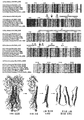
- 1 is a diagram showing the results of analyzing the amino acid sequence of hemagglutinin HA1 head domain using ESPript 3.0.
- Figure 2 is a diagram showing the results of analyzing the structure-based hemagglutinin HA2 stem domain amino acid sequence using ESPript 3.0 and its tripolymer domain form.
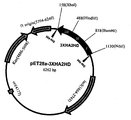
- Figure 3 shows the E. coli expression vector pET28a-3XHA2HD.
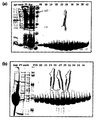
- FIG. 4 is a diagram showing the results of identifying a single HA2 helical domain (a) and its triple polymerization helical domain (b) using SDS-PAGE.
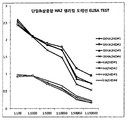
- FIG. 5 is a diagram showing the results of confirming the immune antibody formation effect of the single HA2 helical domain (HA2HD) and triplex HA2 helical domain (3XHA2HD) through ELISA TEST.
- Figure 6 is a diagram showing the binding effect of the triplex HA2 helical domain (3XHA2HD) inducing antibody against influenza subtypes pH1N1, cH3N2, hH3N2, aH5N1, dH7N9.
- 3XHA2HD triplex HA2 helical domain
- the present invention provides a polypeptide represented by SEQ ID NO: 3.
- the present invention also provides an antibody against a polypeptide represented by 379 to 474 residues of SEQ ID NO: 1 or a polypeptide represented by SEQ ID NO: 3.
- Polypeptides represented by residues 379 to 474 of SEQ ID NO: 1 and polypeptides represented by SEQ ID NO: 3 may effectively neutralize antibodies against various subtypes such as H1, H3, H5, H7 and H9 of influenza viruses.
- polypeptides one can induce an immune response against influenza by acting as an antigen in an individual to induce an antigen-antibody response.
- polypeptide represented by 379 to 474 residues of SEQ ID NO: 1 or polypeptide represented by SEQ ID NO: 3 is not only the same polypeptide but also a polypeptide whose amino acid is substituted by conservative substitution, 80-99% of the sequence thereof. All polypeptides having homology, preferably 85-99%, more preferably 90-99% homology, may be included.
- conservative substitutions refers to the replacement of one class of amino acids with another amino acid of the same class. Conservative substitutions do not alter the structure or function of the polypeptide or both. Classes of amino acids for the purpose of conservative substitutions are hydrophobic (eg Met, Ala, Val, Leu), neutral hydrophilic (eg Cys, Ser, Thr), acidic (eg Asp, Glu) , Basics (eg Asn, Gln, His, Lys, Arg), conformational disruptors (eg Gly, Pro) and aromatics (eg Trp, Tyr, Phe) .
- hydrophobic eg Met, Ala, Val, Leu
- neutral hydrophilic eg Cys, Ser, Thr
- acidic eg Asp, Glu
- Basics eg Asn, Gln, His, Lys, Arg
- conformational disruptors eg Gly, Pro
- aromatics eg Trp, Tyr, Phe
- antigen is an antigen component that can cause immune function among the components of a virus, and is preferably a protein expressed by a virus.
- the polypeptide represented by residues 379 to 474 of SEQ ID NO: 1 or the polypeptide represented by SEQ ID NO: 3 is derived from a hemagglutinin stem domain expressing an influenza virus and induces an immune response when administered to an individual. Can act as an antigen.
- antigens can be prepared by methods well known in the art from the nucleotide sequences of SEQ ID NO: 4 and SEQ ID NO: 2.
- the present invention also provides an influenza virus vaccine composition comprising a polypeptide represented by 379 to 474 residues of SEQ ID NO: 1 or a polypeptide represented by SEQ ID NO: 3.
- the "vaccine” is to induce an antigen-antibody response in an individual for the purpose of preventing or treating a common influenza virus.
- polypeptide represented by 379 to 474 residues of SEQ ID NO: 1 refers to a single HA2 helical domain of the full length sequence of influenza hemagglutinin.
- polypeptide represented by SEQ ID NO: 3 refers to the triple polymerized HA2 helical domain of influenza hemagglutinin.
- the triple polymerized HA2 helical domain may be composed of segment 1 represented by 379-480 sequence of SEQ ID NO: 3, segment 2 represented by 373-480 sequence, and segment 3 represented by 373-480 sequence.
- Fragments 1 to 3 of such terpolymers have the same or conservative substitutions of the residues described above or 80-99% sequence homology thereof, preferably 85-99%, more preferably 90-99% It can include all polypeptides having homology.
- polypeptide represented by Singe SEQ ID NO: 3 may be encoded by the nucleotide sequence of SEQ ID NO: 2.
- influenza virus is classified into influenza virus types of A, B and C.
- the term “influenza virus subtype” as used herein refers to influenza A virus variants characterized by a combination of hemagglutinin (H) and neuramidase (N) virus surface proteins.
- influenza virus subtypes are determined by their H numbers, for example, by “influenza viruses comprising HA of H3 subtype", “influenza virus of H3 subtype” or "H3 influenza", or by H number. And combinations of N numbers, eg, "influenza virus subtype H3N2" or "H3N2".
- subtype specifically includes all individual “strains” within each subtype resulting from normal mutations, including natural isolates and artificial mutants or rearrangements, etc., and exhibit different pathological profiles. Such strains may also be referred to as various “isolates” of viral subtypes. Thus, the terms “strain” and “isolate” may be used interchangeably.
- the vaccine of the present invention can effectively induce the formation of neutralizing antibodies against various influenza virus subtypes, preferably the formation of antibodies against one or more influenza virus subtypes selected from the group consisting of H1, H3, H5, H7 and H9. And all of the antibodies thus formed can bind to various subtypes of hemagglutinin of influenza viruses, and more preferably to subtypes such as pH1N1, cH3N2, hH3N2, aH5N1, dH7N9.
- the present invention provides an influenza virus vaccine composition
- an influenza virus vaccine composition comprising a polypeptide represented by 379 to 474 residues of SEQ ID NO: 1 or a polypeptide represented by SEQ ID NO: 3, wherein the virus is selected from the group consisting of H1, H3, H5, H7, and H9.
- a vaccine composition is provided that is at least one influenza virus subtype selected.
- the present invention also provides a vaccine composition wherein the vaccine is a universal vaccine.
- universal vaccine refers to a vaccine with a wide range of applications that can neutralize a variety of influenza viruses at once, including influenza virus subtypes and novel variants thereof.
- the vaccine of the present invention may be one or more selected from the group consisting of sub unit vaccines, synthetic vaccines and genetic engineering vaccines.
- subunit vaccine refers to a vaccine prepared by extracting only an antigen component capable of generating an immune function among virus components, and can minimize side effects by inducing immunization only for antigen sites necessary for virus defense.
- synthetic vaccine refers to a vaccine comprising peptides synthesized only by the antigen or epitope of the virus chemically or produced by recombinant DNA technology.
- genetic vaccine may be a modification or removal of a specific gene causing the pathogenicity of the virus.
- Vaccine of the present invention can be used as a combination or combination vaccine to prevent other diseases including influenza by mixing with inactivated cells or antigens used for the production of vaccines used to prevent influenza have.
- mixed vaccine refers to a vaccine using a combination of different viral vaccines
- combined vaccine refers to a vaccine using a combination of a viral vaccine and a bacterial vaccine.
- the vaccine composition of the present invention may further include one or more selected from the group consisting of a solvent, an adjuvant and an excipient.
- the solvent may be physiological saline or distilled water
- an immunopotentiator may include Freund's incomplete or complete adjuvant, aluminum hydroxide gel, and vegetable and mineral oils
- excipients include aluminum phosphate and aluminum hydroxide.
- lockside or aluminum potassium sulfate may further include all known materials used in the manufacture of vaccines well known to those skilled in the art.
- the vaccine composition of the present invention may be prepared in oral or parenteral preparations, preferably in parenteral preparations, injectable solutions, intradermal, intramuscular, intraperitoneal, intravenous, subcutaneous, nasal or epidural ( administration by the eidural route.
- the present invention also provides a pharmaceutical composition for the prevention or treatment of influenza infection disease comprising a polypeptide represented by 379 to 474 residues of SEQ ID NO: 1 or a polypeptide represented by SEQ ID NO: 3.
- Polypeptides represented by residues 379 to 474 of SEQ ID NO: 1 or polypeptides represented by SEQ ID NO: 3 form an antibody in the subject and induce an immune response when administered to the subject, thereby preventing or treating influenza infectious diseases. It can be usefully used.
- influenza virus disease refers to a condition resulting from the presence of influenza virus, eg, influenza A or B virus, in a cell or subject, or from invasion of the cell or subject by an influenza virus.
- influenza virus eg, influenza A or B virus
- the term refers to respiratory disease caused by influenza virus, and may preferably be one or more selected from the group consisting of sinusitis, paroxysmal asthma, otitis media, cystic fibroma, bronchitis, pneumonia and diarrhea.
- composition of the present invention is administered in a pharmaceutically effective amount.
- pharmaceutically effective amount means an amount sufficient to treat a disease at a reasonable benefit / risk ratio applicable to medical treatment, with an effective dose level of the individual type and severity, age, sex, type of virus infected, drug Activity, sensitivity to drug, time of administration, route of administration and rate of release, duration of treatment, factors including drug used concurrently, and other factors well known in the medical arts.
- the compositions of the present invention may be administered as individual therapeutic agents or in combination with other therapeutic agents and may be administered sequentially or simultaneously with conventional therapeutic agents. And single or multiple administrations. Taking all of the above factors into consideration, it is important to administer an amount that can obtain the maximum effect in a minimum amount without side effects, and can be easily determined by those skilled in the art.
- the present invention is to administer a polypeptide represented by 379 to 474 residues of SEQ ID NO: 1 or a polypeptide represented by SEQ ID NO: 3 to an individual; It provides an influenza immune induction method comprising a.
- subject an animal already infected with or capable of being infected with the influenza virus.
- administering a composition of the present invention to a subject animals infected with various influenza virus subtypes or variants can be treated.
- the individual refers to any kind of animal that can be transmitted to the individual.
- the subject may be an individual except a human.
- hemagglutinin In order to identify the sequence of influenza hemagglutinin (hereinafter HA) that can be used as a universal antigen, hemagglutinin of various subtypes was used using a structure-based protein sequencing comparison program (Clustal W & ESPript 3.0). Six of the amino acid sequences of the protein were compared and analyzed, and HA2 helical domains with conserved sequences between subtypes were determined. The results of sequence analysis of such structure-based influenza hemagglutinin HA2 head and stem domains are shown in FIGS. 1 and 2. The sequence analysis as described above confirmed the HA2 helical domain having the amino acid sequence conserved in common in hemagglutinin, which was prepared with the following antigens.
- the hemagglutinin protein (567 amino acids) of Influenza A virus (A / California / 04/2009 (H1N1)) used in the experiment was synthesized in Bioneer, Inc., and its base sequence is shown in SEQ ID NO: 4.
- the HA2 helical domain (residues 379-474) having the amino acid sequence commonly conserved in hemagglutinin (A / California / 04/2009 (H1N1), NCBI: FJ966082.1) represented by SEQ ID NO: 1 was substituted with NdeI of pET21a. Subclone to the XhoI site and Escherichia coli ) was overexpressed using the BL21 (DE3) RIL strain.
- fragment 1 used amino acids residues 379-480 of the HA2 helical domain, fragment 2 373-480, fragment 3 373-480, respectively, using NdeI, BamHI, BamHI, HindIII, HindIII, and XhoI.
- PET28a was subcloned to attach six histidines to the N- and C-sock ends of the protein, and Escherichia coli ) overexpressed using BL21 (DE3) Star strain. Each protein was inoculated into Escherichia coli, and 0.2 mM IPTG was added between 0.6 and 0.8 at OD 600 nm and incubated at 291 K for 16 hours.
- the E. coli expression vector pET28a-3XHA2HD used is shown in FIG. 3.
- His-tagged single HA2 domain or triplex HA2 helical domain was purified by nickel-affinity chromatography and buffered with 20 mM Tris-HCl (pH 7.5), 0.2 M NaCl, 5% (v / v) glycerol Dialysis in solution gave purified single HA2 domain and tripolymer HA2. The results are shown in FIG.
- a single HA2 helical domain and its triple polymerized helical domain were identified on SDS-PAGE, and were purified to a purity of 96% or higher by nickel-affinity chromatography.
- the base sequence for expressing the triple polymerized HA2 helical domain is shown in SEQ ID NO: 2, and the 351 amino acid sequence prepared thereby is shown in SEQ ID NO: 3.
- Example 1 In order to confirm whether the single or triple HA2 helical domain antigen obtained in Example 1 effectively induces antibodies, the effect of antibody production was confirmed.
- IP Intraperitoneal
- the antigen was used 100 ng per well, the immune serum was diluted in a ratio of 1: 100 to 1: 100,000 with 1 XPBS, and the anti-mouse IgG-HRP (ABC5001) was diluted 1: 10,000 for the second confirmation. It was. Color development was detected at an optical density of 405 nm to confirm whether the immune antibody was finally produced, which is shown in FIG. 5.
- a single HA2 helical domain showed immune antibody formation effects in all four rats.
- the triple polymerized HA2 helical domain also showed much higher immunity than the single domain in all four rats and produced better antibody production.
- the recombinant triple-polymerized HA2 helical domain shows an excellent antibody inducing effect, it was confirmed whether it can be used as a universal vaccine of various influenza antigens. More specifically, a mouse monoclonal antibody was prepared using purified triple-polymerized HA2 helical domain antigen, using ascites obtained from a total of two clones. Whether the recombinant hemagglutinin (pH1N1, cH3N2, hH3N2, aH5N1, dH7N9) expressed in insects can be detected was confirmed by Western blot. The results are shown in FIG.
- the monoclonal antibody of the triple polymerization HA2 helical domain binds to various subtypes of hemagglutinin.
- the triple polymerization HA2 helical domain can be used as a universal vaccine for various subtypes. It was confirmed.
- the single HA2 helical domain and the triple polymerized HA2 helical domain thereof of the present invention can effectively induce antibodies against influenza of various subtypes by acting as antigens, and thus have a useful therapeutic effect against various influenza.
- Polypeptides represented by SEQ ID NO: 3 and polypeptides represented by 379 to 474 residues of SEQ ID NO: 1 according to the present invention can be mass-produced in Escherichia coli, and can effectively produce neutralizing antibodies against various influenza subtypes. It can be widely used as a universal vaccine against influenza.
Landscapes
- Health & Medical Sciences (AREA)
- Life Sciences & Earth Sciences (AREA)
- Chemical & Material Sciences (AREA)
- Virology (AREA)
- Organic Chemistry (AREA)
- Medicinal Chemistry (AREA)
- General Health & Medical Sciences (AREA)
- Molecular Biology (AREA)
- Immunology (AREA)
- Genetics & Genomics (AREA)
- Biophysics (AREA)
- Proteomics, Peptides & Aminoacids (AREA)
- Biochemistry (AREA)
- Public Health (AREA)
- Veterinary Medicine (AREA)
- Animal Behavior & Ethology (AREA)
- Pharmacology & Pharmacy (AREA)
- Pulmonology (AREA)
- Mycology (AREA)
- Microbiology (AREA)
- Epidemiology (AREA)
- Communicable Diseases (AREA)
- Gastroenterology & Hepatology (AREA)
- Oncology (AREA)
- Chemical Kinetics & Catalysis (AREA)
- General Chemical & Material Sciences (AREA)
- Nuclear Medicine, Radiotherapy & Molecular Imaging (AREA)
- Engineering & Computer Science (AREA)
- Bioinformatics & Cheminformatics (AREA)
- Medicines Containing Antibodies Or Antigens For Use As Internal Diagnostic Agents (AREA)
- Peptides Or Proteins (AREA)
Abstract
본 발명은 인플루엔자 표면 단백질인 헤마글루티닌 단백질의 HA2 헬리컬 도메인을 이용한 범용성 인플루엔자 바이러스 백신 조성물 및 인플루엔자 감염 질환의 예방 또는 치료용 약학적 조성물에 관한 것이다. 본 발명의 서열번호 3으로 표시되는 폴리펩티드 및 서열번호 1의 379 내지 474 잔기로 표시되는 폴리펩티드는 대장균에서 대량 생산이 가능하고 다양한 인플루엔자 아형에 대하여 중화항체를 효과적으로 생산할 수 있으므로, 인플루엔자 아형 및 신종 변이 인플루엔자에 대한 범용성 백신으로 널리 활용될 수 있다.
Description
본 발명은 인플루엔자 표면 단백질인 헤마글루티닌 단백질의 HA2 헬리컬 도메인을 이용한 범용성 인플루엔자 바이러스 백신 조성물 및 인플루엔자 감염 질환의 예방 또는 치료용 약학적 조성물에 관한 것이다.
인플루엔자는 인플루엔자 바이러스 호흡기 감염으로 발생하는 급성 발열성 질환이이다. 인플루엔자 바이러스는 표면 구조단백질의 차이에 따라 A, B, C형으로 분류되며, 각각에 따라 숙주 및 역학과 임상양상에 다소 차이가 있다. 인플루엔자 바이러스는 직경 80~120nm 크기의 구형바이러스로 표면에 노출된 헤마글루티닌(hemagglutinin, HA)와 뉴라미니데이즈(neuraminidase, NA) 당단백질의 종류에 따라 아형(subtype)이 결정된다. 아형은 주로 A형 인플루엔자를 중심으로 구분하는데 현재 H1~H16까지 16가지의 HA와 N1~N9의 9가지 NA가 발견되어 단순히 계산해도 총 144종 (예컨대 H1N1, H1N2)의 아형이 A형 인플루엔자 내에 분포하게 된다. 인플루엔자는 항원변이를 통하여 매년 크고 작은 새로운 유행을 일으킨다. 항원변이는 새로운 HA 또는 NA로 교체되어 아형이 바뀌게 되는 항원대변이(antigenic shift; 예) H3N2 →H2N2)와 기존의 HA, NA 유전자의 점상돌연변이(point mutation)로 근소한 항원변이가 발생하는 항원 소변이(antigenic drift)가 있다. 항원소변이는 A, B형 인플루엔자를 중심으로 거의 매년 일어나기 때문에 계절인플루엔자유행(seasonal epidemic)의 원인이 된다.
HA와 NA 표면항원 중에 특히 HA에 대한 면역이 인플루엔자 예방 및 병의 중증도와 관련된다. 따라서 인플루엔자 백신의 가장 중요한 구성요소는 헤마글루티닌에 대해 체내에서 생산된 중화항체가 인플루엔자 바이러스 감염 예방에 결정적 역할을 하게 된다. 인플루엔자 백신에는 비활성화백신과 생백신이 있으며, 비활성화 백신은 부화란(embryonated egg)에서 배양한 바이러스를 정제하여 포르마린 등으로 비활성화시켜서 만든다. 비활성화시킨 바이러스 전체를 사용하는 전바이러스백신(whole virus vaccine), 에테르 등으로 바이러스 외피(envelope)를 분쇄시킨 분할 백신(split vaccine), 헤마글루티닌과 뉴라미다아제 성분을 정제한 아단위 백신(subunit vaccine)등이 있고, 생백신은 약독화 생백신(live attenuated influenza vaccine, LAIV)이 개발되어 사용되고 있다. 전바이러스 백신은 소아에서 부작용을 유발하므로 현재 국내를 비롯하여 세계적으로 잘 사용되지 않으며, 일부 국가에서만 이용되는 실정이다. 반면, 분할백신이나 아단위백신과 같은 성분백신은 매우 안전하며 효과가 인정되어 가장 많이 사용되고 있다. 이외에 면역반응을 증강시키기 위하여 MF-59와 같은 면역보강제가 포함된 백신이나 바이러스 유사 형태의 소포를 형성하는 virosome 백신 등이 개발되어 일부 국가에서 사용되고 있다. 자연감염이나 백신을 통하여 얻어진 특정 아형 또는 인플루엔자 바이러스에 대한 항체는 다른 형이나 아형의 인플루엔자 바이러스에 보호항체를 형성하지 못하며, 한 가지 항원내의 새로운 변이(variant)에 대해서도 충분한 면역원성을 나타내지 못하는 문제점들이 있다. 인플루엔자 바이러스는 해마다 크고 작은 변이를 일으키기 때문에 매년 유행주가 변하게 되고, 따라서 전년에 접종한 백신으로 인한 보호 효과를 기대하기 어렵기 때문에 해마다 접종해야 하는 어려움이 있다.
세계적으로 인플루엔자 바이러스는 인류건강에 심각하면서 지속적인 위협이 되고 있다. 매해 3~5 백만 명이 감염으로 인한 심각한 증세를 보이고 50 만 명이 사망하며, 계절성 인플루엔자 유행병은 잠재적으로 수백만을 사망시킬 수 있다. 바이러스 표면 당단백질인 뉴라미니데이즈에 대한 길항제는 인플루엔자 감염 치료를 위해 광범위하게 사용되고 있지만, 그 효능은 약물 저항적인 바이러스 변종에 의해 급격히 감소되었다. 백신은 인플루엔자 바이러스 감염을 막는 가장 효과적인 방법이나, 앞서 언급한 바와 같이 소아, 노인과 같이 면역이 약한 환자들과 같이 높은 위험성이 있는 그룹에게는 백신의 보호적인 효능이 최적화되어 있지 않다. 또한 백신 후 면역은 전형적으로 새로운 변종에 특정적으로 반응하지만, 인플루엔자 바이러스가 빠르게 변화하기 때문에 백신은 거의 매해 새롭게 생산되어야만 한다. 백신의 항원적 조성에 대한 결정은 새해에 유행하게 될 변종에 대한 예상을 기반으로 한다. 따라서 백신 변종과 유행하는 변종이 다른 경우 백신은 효과가 떨어진다. 결과적으로 인플루엔자 바이러스에 대해 광범하게 보호할 수 있는 새로운 예방적이고 치료적 효과를 갖은 백신이 절실히 필요한 실정이다.
인플루엔자 바이러스에 대한 면역은 주로 헤마글루티닌 (hemagglutinin, HA)을 목표로 하는 중화항체에 의해 거의 매개된다. 헤마글루티닌에서 항원적 위치를 동정하는 것은 인플루엔자 항체들이 시알산 (sialic acid) 수용체에 부착하여 숙주세포 안으로 바이러스가 들어가도록 매개하는 면역적으로 우세한 헤마글루티닌 헤드 도메인(head domain, HA1)을 찾아낸 것을 의미한다. 항-HA 헤드도메인 단일항체를 이용한 연구는 이러한 항체 종류가 숙주 세포 표면에 있는 시알릭 산에 바이러스가 부착되는 것을 차단하여 바이러스가 세포 안으로 유입되는 것을 막는다는 것을 의미한다. 그러나, 헤마글루티닌 헤드 도메인에서 높은 돌연변이 발생률과 항원적 변화에 대한 관용 때문에 헤마글루티닌 헤드를 목표로 한 항체들은 매우 유사한 변종에만 효과적이다. 그러므로 수용체 부착 위치를 목표로 하는 좀 더 광범위한 항체는 구조적으로 밝혀져 있지 않다. 반대로 세포막에 근접한 헤마글루티닌 스템 도메인(stem domain, HA2)에 부착하는 항체들은 항체들은 바이러스와 숙주의 엔도조멀 세포막 (endosomal membranes)의 융합에 필수적인 HA의 주요한 구조적 재배열을 차단하여 바이러스가 세포 안으로 유입되는 것을 막는다. HA 스템도메인은 헤드도메인보다 돌연변이가 덜 발생되어 다양한 인플루엔자에서 상대적으로 아미노산 서열이 잘 보존되어 있다. 그러나 헤마글루티닌 헤드 도메인 내에서 발견되는 항원자극성의 다양성으로 인해 이 도메인을 목표로 하는 대부분의 단일 항체들은 특정한 단일 바이러스만을 일반적으로 중화시키는 것으로 알려져 있다.
그러나 아직까지 다양한 인플루엔자 바이러스 아형을 한번에 중화시킬 수 있는 범용성의 광범위 중화 단일항체(broadly neutralizing monoclonal antibodies, bNAbs)에 대해서는 많은 연구가 이루어지지 않아, 다양한 변이형에 대해서 광범위한 범용성 백신으로 활용될 수 있는 새로운 백신에 대한 필요성이 절실하다.
본 발명의 목적은 다양한 인플루엔자 바이러스 아형에 효과를 나타낼 수 있어, 새로운 변종 인플루엔자 출현에 대비할 수 있는 신규한 인플루엔자 범용 백신을 제공하는 것이다.
따라서 본 발명의 목적은 인플루엔자 헤마글루티닌의 단일 HA2 헬리컬 도메인 또는 이의 삼중합 HA2 헬리컬 도메인에 대한 항체, 이를 포함하는 인플루엔자 바이러스 백신 조성물 및 약학적 조성물을 제공하는 것이다.
본 발명의 또다른 목적은 인플루엔자 면역 유도 방법을 제공하는 것이다.
상기 목적을 달성하기 위하여 본 발명은 서열번호 3으로 표시되는 폴리펩티드를 제공한다.
또한 본 발명은 서열번호 1의 379 내지 474 잔기로 표시되는 폴리펩티드 또는 서열번호 3으로 표시되는 폴리펩티드에 대한 단클론 항체를 제공한다.
또한 본 발명은 서열번호 1의 379 내지 474 잔기로 표시되는 폴리펩티드 또는 서열번호 3으로 표시되는 폴리펩티드를 포함하는 인플루엔자 바이러스 백신 조성물을 제공한다.
또한 본 발명은 서열번호 1의 379 내지 474 잔기로 표시되는 폴리펩티드 또는 서열번호 3으로 표시되는 폴리펩티드를 포함하는 인플루엔자 감염 질환의 예방 또는 치료용 약학적 조성물을 제공한다.
또한 본 발명은 서열번호 1의 379 내지 474 잔기로 표시되는 폴리펩티드 또는 서열번호 3으로 표시되는 폴리펩티드를 개체에 투여하는 단계; 를 포함하는 인플루엔자 면역 유도 방법을 제공한다.
본 발명의 서열번호 3으로 표시되는 폴리펩티드 및 서열번호 1의 379 내지 474 잔기로 표시되는 폴리펩티드는 대장균에서 대량 생산이 가능하고 다양한 인플루엔자 아형에 대하여 중화항체를 효과적으로 생산할 수 있으므로, 인플루엔자 아형 및 신종 변이 인플루엔자에 대한 범용성 백신으로 널리 활용될 수 있다.
도 1은 도 1은 ESPript 3.0을 이용하여 헤마글루티닌 HA1 헤드도메인의 아미노산 서열을 분석한 결과를 나타낸 도이다.
도 2는 ESPript 3.0을 이용하여 구조기반 헤마글루티닌 HA2 스템도메인 아미노산 서열을 분석한 결과 및 이의 삼중합체 도메인 형태를 나타낸 도이다.
도 3은 대장균 발현 벡터 pET28a-3XHA2HD를 나타낸 도이다.
도 4는 SDS-PAGE 를 이용하여 단일 HA2 헬리컬 도메인(a) 및 이의 삼중합 헬리컬 도메인(b)을 확인한 결과를 나타낸 도이다.
도 5는 단일 HA2 헬리컬 도메인(HA2HD) 및 삼중합 HA2 헬리컬 도메인(3XHA2HD)의 면역 항체 형성 효과를 ELISA TEST를 통해 확인한 결과를 나타낸 도이다.
도 6는 인플루엔자 아형 pH1N1, cH3N2, hH3N2, aH5N1, dH7N9 에 대한 삼중합 HA2 헬리컬 도메인(3XHA2HD) 유도 항체의 결합 효과를 나타낸 도이다.
본 발명은 서열번호 3으로 표시되는 폴리펩티드를 제공한다.
또한 본 발명은 서열번호 1의 379 내지 474 잔기로 표시되는 폴리펩티드 또는 서열번호 3으로 표시되는 폴리펩티드에 대한 항체를 제공한다.
본 발명의 서열번호 1의 379 내지 474 잔기로 표시되는 폴리펩티드 및 서열번호 3으로 표시되는 폴리펩티드는 인플루엔자 바이러스의 H1, H3, H5, H7 및 H9 과 같은 다양한 아형에 대하여 효과적으로 중화항체를 형성할 수 있는 폴리펩티드로, 개체 내에서 항원으로 작용하여 항원-항체 반응을 유도함으로서 인플루엔자에 대한 면역 반응을 유도할 수 있다.
이하, 본 발명을 상세히 설명한다.
본 발명의 “서열번호 1의 379 내지 474 잔기로 표시되는 폴리펩티드 또는 서열번호 3으로 표시되는 폴리펩티드”는 이와 동일한 폴리펩티드 뿐만 아니라 이의 아미노산이 보존적 치환에 의하여 치환된 폴리펩티드, 이와 80 내지 99%의 서열상동성, 바람직하게는 85 내지 99%, 더욱 바람직하게는 90 내지 99%의 상동성을 갖는 폴리펩티드를 모두 포함할 수 있다.
용어 “보존적 치환”은 한 부류의 아미노산이 동일한 부류의 다른 아미노산으로 대체되는 것을 말한다. 보존적 치환은 폴리펩티드의 구조 또는 기능 또는 둘 모두를 변경시키지 않는다. 보존적 치환의 목적을 위한 아미노산의 부류는 소수성(예를 들어, Met, Ala, Val, Leu), 중성 친수성(예를 들어, Cys, Ser, Thr), 산성 (예를 들어, Asp, Glu), 염기성(예를 들어, Asn, Gln, His, Lys, Arg), 입체형태 파괴물질(disrupter)(예를 들어, Gly, Pro) 및 방향족(예를 들어, Trp, Tyr, Phe)을 포함한다.
용어 “항원”은 바이러스의 구성성분 중 면역기능을 일으킬 수 있는 항원성분으로, 바람직하게는 바이러스가 발현하는 단백질이다. 특정 구현예에서, 서열번호 1의 379 내지 474 잔기로 표시되는 폴리펩티드 또는 서열번호 3으로 표시되는 폴리펩티드는 인플루엔자 바이러스가 발현하는 헤마글루티닌 스템 도메인으로부터 유래한 것으로 개체에 투여되었을 때 면역 반응을 유도하는 항원으로 작용할 수 있다. 이와 같은 항원들은 서열번호 4 및 서열번호 2의 염기서열로부터 당업계에 널리 알려진 방법을 통해 제조할 수 있다.
또한 본 발명은 서열번호 1의 379 내지 474 잔기로 표시되는 폴리펩티드 또는 서열번호 3으로 표시되는 폴리펩티드를 포함하는 인플루엔자 바이러스 백신 조성물을 제공한다.
상기 “백신”이란 일반적인 인플루엔자 바이러스에 대한 예방 또는 치료를 목적으로 개체에서 항원-항체 반응을 유도하는 것이다.
상기 “서열번호 1의 379 내지 474 잔기로 표시되는 폴리펩티드”는 인플루엔자 헤마글루티닌의 전장 서열의 단일 HA2 헬리컬 도메인을 말한다.
또한 상기 “서열번호 3으로 표시되는 폴리펩티드”는 인플루엔자 헤마글루티닌의 삼중합 HA2 헬리컬 도메인을 말한다. 여기에서 삼중합 HA2 헬리컬 도메인은 서열번호 3의 379-480 서열로 표시되는 절편 1, 373-480 서열로 표시되는 절편 2, 373-480서열로 표시되는 절편 3으로 구성되는 것을 특징으로 할 수 있으며, 이와 같은 삼중합체의 절편 1 내지 3은 앞서 설명한 잔기와 동일한 또는 이의 보존적 치환 또는 이와 80 내지 99%의 서열 상동성, 바람직하게는 85 내지 99%, 더욱 바람직하게는 90 내지 99%의 상동성을 갖는 폴리펩티드를 모두 포함할 수 있다.
싱기 서열번호 3으로 표시되는 폴리펩티드는 서열번호 2의 염기서열에 의해 코딩될 수 있다.
상기 “인플루엔자 바이러스”는 A, B 및 C의 인플루엔자 바이러스 타입으로 분류된다. 본 명세서에 사용되는 바와 같은 용어 "인플루엔자 바이러스 아형(subtpye)"은 헤마글루티닌(H) 및 뉴라미다제(N) 바이러스 표면 단백질의 조합을 특징으로 하는 인플루엔자 A 바이러스 변이체를 말한다. 본 발명에 따르면, 인플루엔자 바이러스 아형은 이들의 H 번호에 의해, 예를 들어, "H3 아형의 HA를 포함하는 인플루엔자 바이러스", "H3 아형의 인플루엔자 바이러스" 또는 "H3 인플루엔자"에 의해, 또는 H 번호 및 N 번호의 조합, 예를 들어, "인플루엔자 바이러스 아형 H3N2" 또는 "H3N2"에 의해 지칭될 수 있다. 용어 "아형"은 구체적으로 보통 돌연변이로부터 야기되는 각각의 아형 내의 모든 개별 "균주"를 포함하며, 천연 분리주 및 인공 돌연변이체 또는 재배열 등을 포함하고, 상이한 병리학적 프로파일을 보인다. 이러한 균주는 또한 바이러스 아형의 다양한 "분리주"로 호칭될 수도 있다. 따라서, 용어 "균주" 및 "분리주"는 상호교환가능하게 사용될 수 있다.
본 발명의 백신은 다양한 인플루엔자 바이러스 아형에 대하여 효과적으로 중화항체의 형성을 유도할 수 있으며, 바람직하게는 H1, H3, H5, H7 및 H9으로 이루어진 군에서 선택된 1종 이상의 인플루엔자 바이러스 아형에 대하여 항체의 형성을 유도할 수 있고, 이와 같이 형성된 항체는 모두 인플루엔자 바이러스의 헤마글루티닌의 다양한 아형에 결합할 수 있으며, 더욱 바람직하게는 pH1N1, cH3N2, hH3N2, aH5N1, dH7N9와 같은 아형에 결합할 수 있다.
따라서 본 발명은 서열번호 1의 379 내지 474 잔기로 표시되는 폴리펩티드 또는 서열번호 3으로 표시되는 폴리펩티드를 포함하는 인플루엔자 바이러스 백신 조성물에 있어서, 상기 바이러스가 H1, H3, H5, H7 및 H9으로 이루어진 군에서 선택된 1종 이상의 인플루엔자 바이러스 아형인, 백신 조성물을 제공한다.
또한 본 발명은 상기 백신이 범용성 백신인 백신 조성물을 제공한다.
용어 “범용성 백신”은 인플루엔자 바이러스 아형 및 이의 신규한 변이체를 포함하는 다양한 인플루엔자 바이러스를 한번에 중화시킬 수 있는 광범위한 적용 범위를 가진 백신을 말한다.
본 발명의 백신은 아단위(sub unit) 백신, 합성 백신 및 유전공학 백신으로 이루어진 군으로부터 선택된 1 종 이상일 수 있다.
용어 "아단위 백신"은 바이러스의 구성성분 중 면역기능을 일으킬 수 있는 항원 성분만을 추출하여 제조한 백신으로, 바이러스 방어에 필요한 항원 부위에 대해서만 면역형성을 유도함으로써 부작용을 최소화할 수 있다.
용어 "합성 백신"은 바이러스의 항원 또는 항원결정기만을 화학적으로 합성하거나 또는 재조합 DNA 기술로 생산한 펩티드를 포함한 백신을 말한다.
용어 "유전공학 백신"은 바이러스의 병원성을 일으키는 특이 유전자를 변형하거나 제거한 것일 수 있다.
본 발명의 백신은 인플루엔자를 예방하기 위해 사용되는 다른 백신의 제조 백신의 제조에 사용되는 불활화된 균체들 또는 항원들과 혼합하여 인플루엔자를 포함한 다른 질병들을 함께 예방할 수 있는 혼합 또는 복합 백신으로 사용될 수 있다. 용어 "혼합 백신"이란 서로다른 바이러스 백신을 함께 사용한 백신을 말하며, 용어 "복합 백신"이란 바이러스 백신과 세균 백신을 함께 사용한 백신을 말한다.
또한, 본 발명의 백신 조성물은 추가적으로 용매, 면역증강제(adjuvant) 및 부형제로 이루어진 군으로부터 선택된 1종 이상을 더욱 포함할 수 있다. 상기 용매로는 생리식염수 또는 증류수가 있으며, 면역증강제로는 프로인트(Freund's) 불완전체 또는 완전체 어쥬번트, 알루미늄 하이드록사이드 겔, 및 식물성 및 광물성 오일 등이 있으며, 부형제로는 알루미늄 포스페이트, 알루미늄 하이드록사이드 또는 알루미늄 포타슘 설페이트(alum)가 있으나, 이에 한정되는 것은 아니며, 당해 분야의 통상의 지식을 가진 기술자에게 잘 알려진 백신 제조에 사용되는 공지의 물질을 더 모두 포함할 수 있다.
본 발명의 백신 조성물은 경구형 또는 비경구형 제제로 제조할 수 있으며, 바람직하게는 비경구형 제제인 주사액제로 제조하며, 진피내, 근육내, 복막내, 정맥내, 피하내, 비강 또는 경막외(eidural) 경로로 투여할 수 있다.
또한 본 발명은 서열번호 1의 379 내지 474 잔기로 표시되는 폴리펩티드 또는 서열번호 3으로 표시되는 폴리펩티드를 포함하는 인플루엔자 감염 질환의 예방 또는 치료용 약학적 조성물을 제공한다.
본 발명의 서열번호 1의 379 내지 474 잔기로 표시되는 폴리펩티드 또는 서열번호 3으로 표시되는 폴리펩티드는 개체에 투여되는 경우 개체 내에서 항체를 형성하여 면역반응을 유도하므로, 인플루엔자 감염 질환을 예방하거나 치료하는데 유용하게 사용될 수 있다.
본 명세서에 사용되는 용어 "인플루엔자 바이러스 질병"은 세포 또는 대상에서의 인플루엔자 바이러스, 예를 들어, 인플루엔자 A 또는 B 바이러스의 존재로부터 야기되거나, 또는 인플루엔자 바이러스에 의한 세포 또는 대상의 침습으로부터 야기되는 병태를 지칭한다. 특정 구현예에서, 상기 용어는 인플루엔자 바이러스에 의해 야기되는 호흡기 병을 지칭하며, 바람직하게는 부비강염, 발작성 천식, 중이염, 낭성 섬유종, 기관지염, 폐렴 및 설사로 이루어진 군으로부터 선택된 1 종 이상일 수 있다.
본 발명의 조성물은 약제학적으로 유효한 양으로 투여한다. 용어 "약제학적으로 유효한 양"은 의학적 치료에 적용 가능한 합리적인 수혜/위험 비율로 질환을 치료하기에 충분한 양을 의미하며, 유효 용량 수준은 개체 종류 및 중증도, 연령, 성별, 감염된 바이러스 종류, 약물의 활성, 약물에 대한 민감도, 투여 시간, 투여 경로 및 배출 비율, 치료기간, 동시에 사용되는 약물을 포함한 요소 및 기타 의학 분야에 잘 알려진 요소에 따라 결정될 수 있다. 본 발명의 조성물은 개별 치료제로 투여하거나 다른 치료제와 병용하여 투여될 수 있고 종래의 치료제와는 순차적 또는 동시에 투여될 수 있다. 그리고 단일 또는 다중 투여될 수 있다. 상기 요소를 모두 고려하여 부작용없이 최소한의 양으로 최대 효과를 얻을 수 있는 양을 투여하는 것이 중요하며, 당업자에 의해 용이하게 결정될 수 있다.
또한 본 발명은 서열번호 1의 379 내지 474 잔기로 표시되는 폴리펩티드 또는 서열번호 3으로 표시되는 폴리펩티드를 개체에 투여하는 단계; 를 포함하는 인플루엔자 면역 유도 방법을 제공한다.
상기 개체는 인플루엔자 바이러스에 이미 감염되었거나 감염될 수 있는 동물을 의미한다. 본 발명의 조성물을 개체에 투여함으로써, 다양한 인플루엔자 바이러스 아형 또는 변이형에 감염된 동물을 치료할 수 있다. 보다 구체적으로 개체란 개체에 전파시킬 수 있는 모든 종류의 동물을 말한다. 상기 개체는 인간을 제외한 개체일 수 있다.
이하, 본 발명을 제조예 및 실시예에 의해 상세히 설명한다. 단, 하기 제조예 및 실시예는 본 발명을 예시하는 것일 뿐, 본 발명의 내용이 하기 제조예 및 실시예에 의해 한정되는 것은 아니다.
실시예
1. 인플루엔자
헤마글루티닌
HA2
헬리컬
도메인의 단일 및
삼중합체
제조
범용 항원으로 사용될 수 있는 인플루엔자 헤마글루티닌(이하, HA)의 서열을 동정하기 위하여, 구조를 기반에 둔 단백질 서열분석 비교 프로그램(Clustal W & ESPript 3.0)을 이용하여 다양한 아형의 헤마글루티닌 단백질의 아미노산 서열 중 6종의 서열을 비교 분석하고, 아형 간의 보존된 서열을 가진 HA2 헬리컬 도메인을 결정하였다. 이와 같은 구조 기반 인플루엔자 헤마글루티닌 HA2 헤드 및 스템 도메인의 서열 분석결과를 도 1 및 도 2에 나타내었다. 상기와 같은 서열 분석을 통해 헤마글루티닌에 공통적으로 보존된 아미노산 서열을 갖는 HA2 헬리컬 도메인을 확인하였으며, 이를 이하의 항원으로 제조하였다.
실험에 사용된 인플루엔자 (Influenza) A 바이러스(A/California/04/2009(H1N1))의 헤마글루티닌 단백질(567개 아미노산)은 ㈜바이오니아에서 합성하였으며, 이의 염기서열은 서열번호 4와 같다. 서열번호 1로 표시되는 헤마글루티닌(A/California/04/2009(H1N1), NCBI:FJ966082.1)에 공통으로 보존된 아미노산서열을 가지는 HA2 헬리컬 도메인(잔기 379-474)을 pET21a의 NdeI과 XhoI 부위에 서브클론(subclone)하고 대장균(Escherichia
coli) BL21(DE3) RIL 균주(strain)를 사용하여 이를 과발현시켰다.
삼중합 HA2 헬리컬 도메인을 제조하기 위하여 절편1은 HA2 헬리컬 도메인의 아미노산잔기 379-480, 절편2는 373-480 그리고 절편3은 373-480을 각각 NdeI과 BamHI, BamHI과 HindIII 그리고 HindIII와 XhoI을 사용하여 pET28a에 단백질의 N-, C- 양말단에 6개의 히스티딘이 붙도록 서브클론하고 대장균(Escherichia
coli) BL21(DE3) Star 균주(strain)를 사용하여 과발현시켰다. 각각의 단백질을 대장균에 접종하고 OD 600nm에서 0.6~0.8사이에 0.2mM IPTG를 넣고 16시간 동안 291K에서 배양하였다. 사용된 대장균 발현 벡터 pET28a-3XHA2HD를 도 3에 나타내었다.
His-태그된 단일 HA2 도메인 또는 삼중합 HA2 헬리컬도메인을 니켈-친화성 크로마토그래피로 정제하였고, 20 mM Tris-HCl (pH 7.5), 0.2 M NaCl, 5 %(v/v) 글리세롤을 포함하는 완충용액에서 투석하여, 정제된 단일 HA2 도메인 및 삼중합 HA2을 얻었다. 결과를 도 4에 나타내었다.
도 4에 나타낸 바와 같이, 단일 HA2 헬리컬 도메인 및 이의 삼중합 헬리컬 도메인이 SDS-PAGE 상에서 확인되었으며, 니켈-친화성 크로마토그래피에 의하여 순도 96%이상으로 정제된 것을 확인하였다. 삼중합 HA2 헬리컬 도메인을 발현하기 위한 염기서열은 서열번호 2에 표시하였으며, 이에 의해 제조되는 351개의 아미노산 서열을 서열번호 3에 표시하였다. 이하 제조된 단일 HA2 헬리컬 도메인 및 이의 삼중합 헬리컬 도메인을 항원으로 하여, 이들이 인플루엔자 범용성 백신으로 유용성이 있는지 여부를 확인하였다.
실시예
2. 단일 HA2
헬리컬
도메인 및
삼중합
HA2
헬리컬
도메인의 항체 생성 확인
상기 실시예 1에서 얻은 단일 또는 삼중합 HA2 헬리컬도메인 항원이 효과적으로 항체를 유도하는지 여부를 확인하기 위하여, 이의 항체 생성 효과를 확인하였다.
먼저, 이들 각각을 랫트(Rat)에 주사하기 전에 전-면역 혈청(pre-immune serum)을 채취하여 이를 음성대조군으로 사용하였다. 일차적 면역화(Primary immunize)를 위하여 각각 정제된 단일 또는 삼중합 HA2 헬리컬 도메인 항원 200ug을 완전 프로인트 어쥬번트(complete freund's adjuvant)(sigma)와 혼합하여 복강(IP)주사하고, 2주 후 완전 프로인트 어주번트 (sigma)와 혼합하여 1차 부스팅(boosting)을 하였다. 1주 후 1차 혈액을 채취하여 ELISA 테스트를 진행하고 1주 간격으로 부스팅과 혈액 채취(bleeding)를 하였으며, 3차 부스팅 1주 후 랫트의 심장으로부터 채혈하였으며, 4주 후 최종 혈청을 분리하여 최종 ELISA 테스트를 수행하였다. ELISA 테스트에서 항원은 웰 당 100ng을 사용하였으며, 면역 혈청은 1XPBS로 1:100 내지 1:100,000 비율로 희석하였고, 2차 확인을 위해서는 항-마우스 IgG-HRP(ABC5001)를 1:10,000 희석하여 사용하였다. 광학 밀도 405nm 에서 발색을 검출하여 최종적으로 면역 항체 생성 여부를 확인하였으며, 이를 도 5에 나타내었다.
도 5에 나타낸 바와 같이, 단일 HA2 헬리컬 도메인은 4 마리의 랫트 모두에서 면역 항체 형성 효과를 나타내었다. 또한 삼중합 HA2 헬리컬 도메인은 4 마리의 랫트 모두에서 단일 도메인보다 훨씬 높은 면역력을 나타내고 항체가 더 잘 생성되는 효과를 나타내었다. 이와 같은 결과를 통해 단일 HA2 헬리컬 도메인과 삼중합 HA2 헬리컬 도메인이 모두 개체 내에서 항체를 효과적으로 유도할 수 있다는 것을 확인하였다.
실시예 3. 삼중합 HA2 헬리컬 도메인의 범용성 백신 이용성 확인
재조합 삼중합 HA2 헬리컬 도메인이 우수한 항체 유도 효과를 나타냄을 확인하였으므로, 이를 다양한 인플루엔자 항원의 범용성 백신으로 활용할 수 있는지 여부를 확인하였다. 보다 구체적으로 정제된 삼중합 HA2 헬리컬 도메인 항원을 이용하여 마우스 단일클론 항체를 제조하였으며, 총 2개의 클론에서 얻은 복수(ascites)를 이용하여 곤충에서 발현한 재조합 헤마글루티닌 (pH1N1, cH3N2, hH3N2, aH5N1, dH7N9)을 감지할 수 있는지 여부를 웨스턴 블랏을 통해 확인하였다. 결과를 도 6에 나타내었다.
도 6에 나타낸 바와 같이, 삼중합 HA2 헬리컬 도메인의 단클론 항체는 헤마글루티닌의 다양한 아형에 모두 결합을 하였으며, 이와 같은 결과를 통해 삼중합 HA2 헬리컬 도메인을 다양한 아형에 대한 범용성 백신으로 이용할 수 있음을 확인하였다.
따라서 본 발명의 단일 HA2 헬리컬 도메인 및 이의 삼중합 HA2 헬리컬 도메인은 항원으로 작용하여 다양한 아형의 인플루엔자에 대해서 항체를 효과적으로 유도할 수 있으므로 다양한 인플루엔자에 대한 치료 효과를 나타낼 수 있는 유용성이 있음을 확인하였다.
본 발명에 따른 서열번호 3으로 표시되는 폴리펩티드 및 서열번호 1의 379 내지 474 잔기로 표시되는 폴리펩티드는 대장균에서 대량 생산이 가능하고 다양한 인플루엔자 아형에 대하여 중화항체를 효과적으로 생산할 수 있으므로, 인플루엔자 아형 및 신종 변이 인플루엔자에 대한 범용성 백신으로 널리 활용될 수 있다.
Claims (13)
- 서열번호 3으로 표시되는 폴리펩티드.
- 서열번호 1의 379 내지 474 잔기로 표시되는 폴리펩티드 또는 서열번호 3으로 표시되는 폴리펩티드에 대한 단클론 항체.
- 서열번호 1의 379 내지 474 잔기로 표시되는 폴리펩티드 또는 서열번호 3으로 표시되는 폴리펩티드를 포함하는 인플루엔자 바이러스 백신 조성물.
- 제3항에 있어서, 상기 서열번호 3으로 표시되는 폴리펩티드는 서열번호 2의 염기서열에 의해 코딩되는 것을 특징으로 하는, 백신 조성물.
- 제3항에 있어서, 상기 서열번호 1의 379 내지 474 잔기로 표시되는 폴리펩티드는 인플루엔자 헤마글루티닌의 단일 HA2 헬리컬 도메인인, 백신 조성물.
- 제3항에 있어서, 상기 서열번호 3으로 표시되는 폴리펩티드는 인플루엔자 헤마글루티닌의 삼중합 HA2 헬리컬 도메인인, 백신 조성물.
- 제6항에 있어서, 상기 삼중합 HA2 헬리컬 도메인은 서열번호 3의 379-480 서열로 표시되는 절편 1, 373-480 서열로 표시되는 절편 2, 373-480서열로 표시되는 절편 3으로 구성되는 것을 특징으로 하는, 백신 조성물.
- 제3항에 있어서, 상기 바이러스는 H1, H3, H5, H7 및 H9으로 이루어진 군에서 선택된 1종 이상의 인플루엔자 바이러스 아형인, 백신 조성물.
- 제3항에 있어서, 상기 백신은 범용성 백신인, 백신 조성물.
- 제3항에 있어서, 상기 백신은 아단위(sub unit) 백신, 합성 백신 및 유전공학 백신으로 이루어진 군으로부터 선택된 1 종 이상인 것을 특징으로 하는, 백신 조성물.
- 서열번호 1의 379 내지 474 잔기로 표시되는 폴리펩티드 또는 서열번호 3으로 표시되는 폴리펩티드를 포함하는 인플루엔자 감염 질환의 예방 또는 치료용 약학적 조성물.
- 제11항에 있어서, 상기 인플루엔자 감염 질환은 부비강염, 발작성 천식, 중이염, 낭성 섬유종, 기관지염, 폐렴 및 설사로 이루어진 군으로부터 선택된 1 종 이상인 것을 특징으로 하는 인플루엔자 바이러스 감염 질환의 예방 또는 치료용 약학적 조성물.
- 서열번호 1의 379 내지 474 잔기로 표시되는 폴리펩티드 또는 서열번호 3으로 표시되는 폴리펩티드를 개체에 투여하는 단계; 를 포함하는 인플루엔자 면역 유도 방법.
Priority Applications (1)
| Application Number | Priority Date | Filing Date | Title |
|---|---|---|---|
| US15/574,274 US10195266B2 (en) | 2015-05-18 | 2015-09-14 | Versatile influenza virus vaccine composition |
Applications Claiming Priority (2)
| Application Number | Priority Date | Filing Date | Title |
|---|---|---|---|
| KR10-2015-0069106 | 2015-05-18 | ||
| KR1020150069106A KR101637955B1 (ko) | 2015-05-18 | 2015-05-18 | 범용성 인플루엔자 바이러스 백신 조성물 |
Publications (1)
| Publication Number | Publication Date |
|---|---|
| WO2016186260A1 true WO2016186260A1 (ko) | 2016-11-24 |
Family
ID=56504656
Family Applications (1)
| Application Number | Title | Priority Date | Filing Date |
|---|---|---|---|
| PCT/KR2015/009618 Ceased WO2016186260A1 (ko) | 2015-05-18 | 2015-09-14 | 범용성 인플루엔자 바이러스 백신 조성물 |
Country Status (3)
| Country | Link |
|---|---|
| US (1) | US10195266B2 (ko) |
| KR (1) | KR101637955B1 (ko) |
| WO (1) | WO2016186260A1 (ko) |
Families Citing this family (3)
| Publication number | Priority date | Publication date | Assignee | Title |
|---|---|---|---|---|
| KR102211378B1 (ko) * | 2019-02-12 | 2021-02-04 | 한국생명공학연구원 | 인플루엔자 바이러스 백신 조성물 |
| KR102654379B1 (ko) | 2019-08-28 | 2024-04-04 | 주식회사 엔에이백신연구소 | 신규한 핵산을 기반으로 하는 인플루엔자 백신 조성물 |
| WO2022034934A1 (ko) * | 2020-08-10 | 2022-02-17 | 한국생명공학연구원 | 인플루엔자 바이러스 백신 조성물 |
Citations (3)
| Publication number | Priority date | Publication date | Assignee | Title |
|---|---|---|---|---|
| KR20100137804A (ko) * | 2009-06-23 | 2010-12-31 | 한밭대학교 산학협력단 | 생체 안전성이 뛰어난 인플루엔자 바이러스 백신용 항원성 에피토프로서의 재조합 헤마글루티닌 단백질 |
| US20120014972A1 (en) * | 2010-01-26 | 2012-01-19 | The Regents Of The University Of Colorado, A Body Corporate | Influenza virus compositions and methods for universal vaccines |
| KR20140010583A (ko) * | 2012-07-13 | 2014-01-27 | 서울대학교산학협력단 | 면역원성이 향상된 인플루엔자 바이러스의 ha2 공통 에피톱의 제조 방법 |
Family Cites Families (1)
| Publication number | Priority date | Publication date | Assignee | Title |
|---|---|---|---|---|
| CA2615372A1 (en) * | 2007-07-13 | 2009-01-13 | Marc-Andre D'aoust | Influenza virus-like particles (vlps) comprising hemagglutinin |
-
2015
- 2015-05-18 KR KR1020150069106A patent/KR101637955B1/ko not_active Expired - Fee Related
- 2015-09-14 US US15/574,274 patent/US10195266B2/en not_active Expired - Fee Related
- 2015-09-14 WO PCT/KR2015/009618 patent/WO2016186260A1/ko not_active Ceased
Patent Citations (3)
| Publication number | Priority date | Publication date | Assignee | Title |
|---|---|---|---|---|
| KR20100137804A (ko) * | 2009-06-23 | 2010-12-31 | 한밭대학교 산학협력단 | 생체 안전성이 뛰어난 인플루엔자 바이러스 백신용 항원성 에피토프로서의 재조합 헤마글루티닌 단백질 |
| US20120014972A1 (en) * | 2010-01-26 | 2012-01-19 | The Regents Of The University Of Colorado, A Body Corporate | Influenza virus compositions and methods for universal vaccines |
| KR20140010583A (ko) * | 2012-07-13 | 2014-01-27 | 서울대학교산학협력단 | 면역원성이 향상된 인플루엔자 바이러스의 ha2 공통 에피톱의 제조 방법 |
Non-Patent Citations (2)
| Title |
|---|
| FAN ET AL.: "Targeting the HA2 Subuniit of Influenza A Virus Hemagglutinin via CD 40L provides Universal Protection against Diverse Subtypes", MUCOSAL IMMUNOLOGY, vol. 8, no. 1, January 2015 (2015-01-01), pages 211 - 220, XP055331190 * |
| SCHNEEMANN ET AL.: "A Virus-like Particle that Elicits Cross-Reactive Antibodies to the Conserved Stem of Influenza Virus Hemagglutinin", JOURNAL OF VIROLOGY, vol. 86, no. 21, 2012, pages 11686 - 11697, XP009165224 * |
Also Published As
| Publication number | Publication date |
|---|---|
| US20180133305A1 (en) | 2018-05-17 |
| KR101637955B1 (ko) | 2016-07-08 |
| US10195266B2 (en) | 2019-02-05 |
Similar Documents
| Publication | Publication Date | Title |
|---|---|---|
| CN105452270B (zh) | 流行性感冒病毒疫苗及其用途 | |
| CN111228483A (zh) | 用于新型冠状病毒和非典病毒的广谱抗体喷剂 | |
| CN116075315B (zh) | 嵌合流感疫苗 | |
| JP7009625B2 (ja) | H3n2亜型インフルエンザウイルスのヘマグルチニンタンパク質の突然変異体及びその使用 | |
| ES2765073T3 (es) | Vacunas de H5 de influenza | |
| WO2022003119A1 (en) | Cross-reactive coronavirus vaccine | |
| EP2168987A1 (en) | Multifunctional linker protein containing an antibody against hemagglutinin, a conserved influenza antigen and an immunostimulating carrier binding domain | |
| AU2026200025A1 (en) | Immunogenic composition | |
| WO2016186260A1 (ko) | 범용성 인플루엔자 바이러스 백신 조성물 | |
| Yang et al. | Protection against influenza H7N9 virus challenge with a recombinant NP–M1–HSP60 protein vaccine construct in BALB/c mice | |
| Zhao et al. | Induction of protection against divergent H5N1 influenza viruses using a recombinant fusion protein linking influenza M2e to Onchocerca volvulus activation associated protein-1 (ASP-1) adjuvant | |
| WO2022269343A1 (en) | Multivalent vaccine for protection against multiple virus infection | |
| KR20230059897A (ko) | SARS-CoV-2의 스파이크 단백질 전부 또는 일부를 포함하는 바이러스 유사입자 및 이를 이용한 백신 | |
| CN101015691B (zh) | 重组噬菌体流感疫苗 | |
| ES2689878T3 (es) | Proteínas H5 del virus de la gripe H5N1 para su uso como un medicamento | |
| KR102873285B1 (ko) | 스캐폴드 기반의 다중항원을 포함하는 코로나바이러스 감염병 예방 또는 치료용 항원 조성물 | |
| WO2016186259A1 (ko) | 범용성 개 인플루엔자 바이러스 백신 조성물 | |
| KR101557191B1 (ko) | 넓은 범위의 방어능력을 갖는 인플루엔자 단독 또는 보강 백신 | |
| KR20120047780A (ko) | 호흡기 신시치아 바이러스 백신 조성물 및 그의 제조방법 | |
| WO2019177256A1 (ko) | 재조합 아데노바이러스를 이용한 다가형 인플루엔자 생백신 플랫폼 | |
| KR20080093382A (ko) | 독감 예방용 백신 조성물 | |
| WO2022034934A1 (ko) | 인플루엔자 바이러스 백신 조성물 | |
| HK40085361A (en) | Chimeric influenza vaccines | |
| CN104593386A (zh) | 甲型副伤寒沙门菌ompN基因原核表达系统及其重组表达蛋白的应用 | |
| EA046906B1 (ru) | Вакцины против вируса гриппа и пути их применения |
Legal Events
| Date | Code | Title | Description |
|---|---|---|---|
| 121 | Ep: the epo has been informed by wipo that ep was designated in this application |
Ref document number: 15892671 Country of ref document: EP Kind code of ref document: A1 |
|
| WWE | Wipo information: entry into national phase |
Ref document number: 15574274 Country of ref document: US |
|
| NENP | Non-entry into the national phase |
Ref country code: DE |
|
| 122 | Ep: pct application non-entry in european phase |
Ref document number: 15892671 Country of ref document: EP Kind code of ref document: A1 |