WO2016129636A1 - 藍藻変異株及びそれを用いたコハク酸及びd-乳酸産生方法 - Google Patents
藍藻変異株及びそれを用いたコハク酸及びd-乳酸産生方法 Download PDFInfo
- Publication number
- WO2016129636A1 WO2016129636A1 PCT/JP2016/053972 JP2016053972W WO2016129636A1 WO 2016129636 A1 WO2016129636 A1 WO 2016129636A1 JP 2016053972 W JP2016053972 W JP 2016053972W WO 2016129636 A1 WO2016129636 A1 WO 2016129636A1
- Authority
- WO
- WIPO (PCT)
- Prior art keywords
- protein
- gene
- seq
- acka
- cyanobacteria
- Prior art date
- Legal status (The legal status is an assumption and is not a legal conclusion. Google has not performed a legal analysis and makes no representation as to the accuracy of the status listed.)
- Ceased
Links
Images


Classifications
-
- C—CHEMISTRY; METALLURGY
- C12—BIOCHEMISTRY; BEER; SPIRITS; WINE; VINEGAR; MICROBIOLOGY; ENZYMOLOGY; MUTATION OR GENETIC ENGINEERING
- C12N—MICROORGANISMS OR ENZYMES; COMPOSITIONS THEREOF; PROPAGATING, PRESERVING, OR MAINTAINING MICROORGANISMS; MUTATION OR GENETIC ENGINEERING; CULTURE MEDIA
- C12N1/00—Microorganisms; Compositions thereof; Processes of propagating, maintaining or preserving microorganisms or compositions thereof; Processes of preparing or isolating a composition containing a microorganism; Culture media therefor
- C12N1/12—Unicellular algae; Culture media therefor
-
- C—CHEMISTRY; METALLURGY
- C12—BIOCHEMISTRY; BEER; SPIRITS; WINE; VINEGAR; MICROBIOLOGY; ENZYMOLOGY; MUTATION OR GENETIC ENGINEERING
- C12N—MICROORGANISMS OR ENZYMES; COMPOSITIONS THEREOF; PROPAGATING, PRESERVING, OR MAINTAINING MICROORGANISMS; MUTATION OR GENETIC ENGINEERING; CULTURE MEDIA
- C12N15/00—Mutation or genetic engineering; DNA or RNA concerning genetic engineering, vectors, e.g. plasmids, or their isolation, preparation or purification; Use of hosts therefor
- C12N15/09—Recombinant DNA-technology
-
- C—CHEMISTRY; METALLURGY
- C12—BIOCHEMISTRY; BEER; SPIRITS; WINE; VINEGAR; MICROBIOLOGY; ENZYMOLOGY; MUTATION OR GENETIC ENGINEERING
- C12P—FERMENTATION OR ENZYME-USING PROCESSES TO SYNTHESISE A DESIRED CHEMICAL COMPOUND OR COMPOSITION OR TO SEPARATE OPTICAL ISOMERS FROM A RACEMIC MIXTURE
- C12P7/00—Preparation of oxygen-containing organic compounds
- C12P7/40—Preparation of oxygen-containing organic compounds containing a carboxyl group including Peroxycarboxylic acids
- C12P7/44—Polycarboxylic acids
- C12P7/48—Tricarboxylic acids, e.g. citric acid
Definitions
- the present invention relates to a cyanobacteria mutant and a method for efficiently producing succinic acid and D-lactic acid, which are raw materials for biodegradable biomass plastics, using the mutant.
- Synthetic resins so-called plastics, are lightweight and strong materials that are easy to mold and color, have high corrosion resistance, and have excellent advantages such as mass production. It is extremely convenient and is used in various ways in daily life and industrial fields, making it an indispensable material in modern life. However, on the other hand, it has many problems to be solved.
- the first problem is plastic raw materials. Many of the plastics currently used are made from petroleum. Oil is feared to be depleted in the future due to the increase in international consumption accompanying the rise of emerging countries. Moreover, since it is a non-renewable resource, carbon dioxide discharged into the atmosphere upon combustion is a major cause of global warming.
- waste plastic The second problem is the disposal of waste plastic.
- waste plastic processing involves many problems. For example, when plastic is incinerated, not only a large amount of carbon dioxide is generated, but also harmful gases such as dioxins can be generated.
- the calorific value at the time of incineration is high, it may cause destruction of the incinerator. Furthermore, it remains in nature without being decomposed by microorganisms due to its high corrosion resistance.
- Biomass is a renewable resource and has the advantage of not causing the depletion problem of fossil fuels.
- Carbon dioxide generated by the combustion of biomass is carbon-neutral circulatory energy because carbon dioxide in the atmosphere is originally fixed by photosynthesis of plants, etc., and the amount of carbon dioxide in the atmosphere There is also an advantage that it does not increase. Therefore, it can also contribute to prevention of global warming (Non-Patent Document 1).
- biodegradable plastics have been developed to solve the problem of waste plastic treatment.
- a biodegradable plastic is a plastic that has the properties and properties of a plastic and has the property of being completely decomposed by the action of microorganisms in nature.
- Biodegradable plastics also have the advantage that they do not hurt the incinerator because they generate less heat even when incinerated, and do not release harmful substances.
- biodegradable biomass plastics which have both the properties of biomass plastics and biodegradable plastics, have been developed and have recently attracted attention.
- biodegradable biomass plastics for example, polylactic acid (PLA), starch resin, polyhydroxyalkanoate (PHA), polybutylene succinate (PBS) and the like are known.
- PLA is a biodegradable plastic obtained by using corn, sugarcane or the like as a raw material, breaking down the starch into glucose, converting it into lactic acid, and polymerizing it. It is a chemically synthesized polymer that is highly transparent, hard, and has properties similar to polystyrene, and has already been put into practical use.
- plants such as corn and sugarcane that are raw materials are food-based plants (agricultural crops)
- corn has a problem of competing between food and feed, resulting in a price increase.
- Another problem is that the required amount cannot be secured stably as a result of market prices.
- L-lactic acid is abundant in nature and can be obtained at a relatively low price, whereas D-lactic acid has a low natural abundance, and stereocomplex PLA is therefore very expensive. there were. Therefore, in order to improve the market distribution of PLA having heat resistance, development of a method capable of producing D-lactic acid at a low cost is an issue.
- PHA is a biosynthetic polymer produced by microorganisms. It is a hard biomass plastic obtained by refining what is synthesized and accumulated in the cell using glucose as a carbon source. Expected to be applied in various fields such as pharmaceuticals, agricultural chemicals, medical materials, and industrial materials. Has been.
- Various methods for producing PHA with microorganisms have been disclosed so far.
- Patent Document 1 discloses a method for producing polyhydroxybutyrate (PHB) which is a kind of PHA.
- PHB polyhydroxybutyrate
- each method has a drawback that an organic carbon source is required as an assimilating carbon source.
- the productivity of PHA in microorganisms is low, and as a result, there is a problem that the manufacturing cost is high.
- PBS is a chemically synthesized plastic synthesized by a condensation reaction from succinic acid and 1-4 butanediol (Non-patent Document 3). It is a representative of soft biomass plastics, and has the advantage that its mechanical strength is 2 to 3 times higher than that of polyethylene, and its biodegradation rate in soil is faster than that of PHA.
- succinic acid and 1-4 butanediol as raw materials are both synthesized from petroleum, and there is a problem that does not meet the purpose of not relying on fossil fuels. Therefore, in recent years, succinic acid, which is one of the raw materials, has been shifted to a bio-based and inexpensive production.
- Succinic acid has been conventionally produced by fermentation of heterotrophic bacteria using carbohydrates derived from food-based plants such as corn and sugarcane. However, when food-based plants are used as raw materials, there are problems in terms of stable supply as described above.
- Cyanobacteria (cyanobacterium) are non-food biomass and do not compete with food plants. In addition, it is easy to culture and can be cultured not only in tropical and subtropical regions but also in temperate regions, and indoor culture such as plant factories is also possible. Therefore, there is an advantage that the fluctuation range of the yield is small and stable supply is possible.
- cyanobacteria are known to produce various organic acids such as lactic acid, acetic acid, and PHA. Organic acids produced in cyanobacteria cells are predominantly acetic acid, followed by lactic acid and succinic acid. Therefore, in order to put the succinic acid production system using cyanobacteria into practical use, it is an issue to improve the production amount of succinic acid per cell while suppressing the production amount of other organic acids.
- the present invention relates to an organic acid production system that is a raw material for biodegradable biomass plastics using cyanobacteria, which suppresses the production of other organic acids such as acetic acid and efficiently produces succinic acid and D-lactic acid.
- the purpose is to create new strains that can be produced and to increase the production of succinic acid and D-lactic acid using these strains.
- the present inventors treated a cyanobacterial mutant having a mutation in the ackA gene, and further a cyanobacterial double mutant that overexpresses the sigE gene under fermentation conditions, so that the conventional method for producing succinic acid using cyanobacteria was used. It was found that succinic acid can be produced efficiently. It has also been found that most of the lactic acid obtained simultaneously by this method is D-lactic acid. Furthermore, we found that treating these mutants in a solution containing potassium chloride increased succinic acid production by more than 3 times and D-lactic acid by more than 5 times. This invention is based on the said knowledge, Comprising: The following invention is included.
- a cyanobacterial mutant strain having a deletion mutation, loss-of-function mutation, or gene expression suppression mutation of a gene encoding AckA protein (2) The cyanobacterium mutant according to (1), wherein the AckA protein is any one of the following proteins (a) to (c):
- A a protein comprising the amino acid sequence represented by SEQ ID NO: 1
- B a protein comprising an amino acid sequence in which one or several amino acids are deleted, substituted or added in the amino acid sequence represented by SEQ ID NO: 1 and having AckA enzyme activity
- c represented by SEQ ID NO: 1.
- the gene encoding the AckA protein is any of the following (d) to (g) The cyanobacteria mutant according to (2), which is a gene.
- (H) a protein comprising the amino acid sequence represented by SEQ ID NO: 3,
- (I) a protein consisting of an amino acid sequence in which one or several amino acids are deleted, substituted or added in the amino acid sequence shown in SEQ ID NO: 3 and having SigE activity; and
- the gene encoding the SigE protein is any of the following genes (k) to (n): The cyanobacteria mutant according to (5).
- (K) a gene consisting of the base sequence represented by SEQ ID NO: 4,
- (L) a gene consisting of a base sequence in which one or several bases are deleted, substituted or added in the base sequence represented by SEQ ID NO: 4 and encoding a protein having SigE activity;
- (M) a gene consisting of a base sequence having 90% or more base identity to the base sequence shown in SEQ ID NO: 4 and encoding a protein having SigE activity, and (n) a base sequence shown in SEQ ID NO: 4
- Overexpression of the gene encoding the SigE protein is expressed The cyanobacteria mutant according to any one of (4) to (6), which is derived from a vector.
- a fermentation process in which the cyanobacteria mutant according to at least one of (1) to (11) is fermented in an anaerobic dark condition, and recovery for recovering succinic acid from the solution after the fermentation process A method for producing succinic acid comprising a step.
- a fermentation step of fermenting the cyanobacteria mutant strain according to at least one of (1) to (11) in an anaerobic dark condition, and recovering D-lactic acid from the solution after the fermentation step A method for producing D-lactic acid including a recovery step.
- succinic acid and D-lactic acid which are raw materials for biodegradable biomass plastics, can be produced more efficiently than cyanobacterium wild strains.
- the production rate is overwhelming in the organic acid production system of cyanobacteria by performing fermentation treatment in the presence of potassium chloride using the cyanobacteria mutant of the present invention.
- the production amount of acetic acid and the like can be suppressed, and the desired succinic acid or D-lactic acid can be efficiently produced.
- Cyanobacteria mutant 1-1 Outline
- the cyanobacteria mutant of the present invention has a mutation in the ackA gene, and efficiently produces succinic acid and / or D-lactic acid while suppressing the production of other organic acids by treatment under fermentation conditions. can do.
- the cyanobacterial mutant of the present invention has a deletion mutation, loss-of-function mutation, or gene expression suppression mutation of the gene encoding AckA protein.
- cyanobacterium is an eubacteria that performs oxygen-generating photosynthesis, also called cyanobacteria (cyanobacteria).
- cyanobacteria cyanobacteria
- a single-cell form, an aggregate form composed of a small number of cell clusters, and a filamentous form in which a plurality of cells are linked in a chain form are known, but the form of cyanobacteria in the present specification is not particularly limited.
- a single cell form is preferred.
- Cyanobacteria include Synechocystis genus cyanobacteria (eg, Synechocystis sp. PCC6803), Microcystis genus cyanobacteria (eg, Microcystis aeruginosa), Arthrospira genus cyanobacteria (eg, Arthrospira platensis), Thermosynechococcus genus cyanobacteria (eg, Thermosynechococcus elongatscar) , Gloeobacter genus cyanobacteria (eg Gloeobacteractviolaceus), Nostoc genus cyanobacteria (eg Nostoc punctiforme), Cyanothece genus cyanobacteria, Anabaena genus cyanobacteria, Synechococcus genus cyanobacteria, Trichodesmium genus cyanobacteria, Pro
- the cyanobacteria of the invention may be cyanobacteria belonging to any genus. Synechocystis genus cyanobacteria are preferable. However, in the present invention, cyanobacteria having the ability to produce succinic acid and / or D-lactic acid are used from the viewpoint of increasing the production amount of succinic acid and / or D-lactic acid.
- a cyanobacterium having a succinic acid synthase gene specifically a succinic acid dehydrogenase gene (sdh gene).
- the sdh gene encodes an enzyme having an activity that catalyzes the interconversion between fumaric acid and succinic acid.
- cyanobacteria to which succinic acid-producing ability has been imparted by genetic modification or mutation induction. For example, a cyanobacteria into which a succinic acid synthase gene has been introduced corresponds.
- the “cyanobacterium mutant” refers to a cyanobacteria having a different phenotype from a wild strain. “Mutation” refers to a physical or structural change in the base sequence generated in a specific wild-type gene, and a structural or quantitative change in the transcription product or translation product of that gene.
- the cyanobacterial mutant strain of the present invention has at least a gene encoding AckA protein, that is, a deletion mutation, loss-of-function mutation, or gene expression suppression mutation generated in the ackA gene. Details of the AckA protein and the ackA gene will be described later.
- ackA gene deletion refers to a mutation in which the entire region of the ackA gene existing on the genome is completely or partially lost.
- ackA gene deletion is often referred to as “ ⁇ ackA (gene)”.
- ⁇ ackA mutant the function of the AckA protein is completely deficient because the endogenous ackA gene does not exist.
- loss of function mutation means deletion of a part of the base constituting the ackA gene on the genome, substitution with another base, or addition of a base into the ackA gene. Refers to a mutation that has lost the original phenotypic ability of the wild-type ackA gene. For example, a deletion of a base sequence encoding an active domain in the AckA protein and a base deletion or substitution at a splice site (including a donor site, an acceptor site, and a branch point) of the ackA gene are applicable.
- the ackA gene is present in the ackA gene loss-of-function mutant of cyanobacteria. However, the AckA protein is not expressed or even if it is expressed, the activity of the AckA protein (for example, enzyme activity) is completely lost.
- gene expression-suppressing mutation refers to a mutation in which expression of the ackA gene is inhibited or suppressed as a result of a mutation caused by deletion, substitution or addition of a base in the expression control region of the ackA gene, or the ackA gene A mutation caused by gene recombination into which a gene expression system (for example, an expression vector) that expresses an RNAi molecule or RNA aptamer is introduced.
- a gene expression system for example, an expression vector
- the “expression control region” is a region that controls the expression of the ackA gene in cyanobacteria cells.
- the promoter of ackA gene, an enhancer, etc. are mentioned.
- RNAi molecule refers to inducing RNA interference (RNA ⁇ ⁇ interference) in vivo, and suppressing (silencing) the expression of the gene after transcription and before translation through degradation of the transcription product of the target gene. It is a small RNA that can be produced. For example, siRNA (small interfering RNA) or shRNA (short hairpin RNA) is applicable.
- siRNA small interfering RNA
- shRNA short hairpin RNA
- RNA aptamer is a nucleic acid aptamer composed of RNA. Nucleic acid aptamers bind tightly and specifically to a target molecule through the three-dimensional structure formed based on the secondary structure and tertiary structure of a single-stranded nucleic acid molecule through hydrogen bonding, etc. A ligand molecule having the ability to specifically inhibit or suppress a function such as activity.
- the RNA aptamer of the present specification uses AckA protein or ackA mRNA as a target molecule.
- AckA (Acetate kinase A) protein
- AckA is an enzyme that catalyzes the interconversion of acetic acid and acetyl phosphate. Specifically, it catalyzes the reaction of converting acetic acid and diphosphate into acetyl phosphate and phosphate, or the reaction of converting acetyl phosphate and phosphate into acetic acid and diphosphate into acetyl phosphate. .
- AckA protein Synechocystis sp. Consisting of the amino acid sequence of 413 residues represented by SEQ ID NO: 1.
- AckA protein derived from PCC6803 can be mentioned.
- AckA protein variants having functionally equivalent activity to the AckA protein represented by SEQ ID NO: 1 and other biological species, particularly AckA protein orthologs of other cyanobacteria species also fall under this category.
- the amino acid sequence represented by SEQ ID NO: 1 has an amino acid sequence in which one or more amino acids have been deleted, substituted, or added, or 90% or more than 95% of the amino acid sequence represented by SEQ ID NO: 1. 97% or more, 98% or more, or 99% or more of AckA protein having amino acid identity.
- “plurality” means, for example, 2 to 20, 2 to 15, 2 to 10, 2 to 7, 2 to 5, 2 to 4, or 2 to 3.
- the amino acid substitution is preferably conservative amino acid substitution.
- “Conservative amino acid substitution” refers to substitution between amino acids having similar properties such as charge, side chain, polarity, aromaticity and the like.
- Amino acids with similar properties include, for example, basic amino acids (arginine, lysine, histidine), acidic amino acids (aspartic acid, glutamic acid), uncharged polar amino acids (glycine, asparagine, glutamine, serine, threonine, cysteine, tyrosine), nonpolar
- functional amino acids leucine, isoleucine, alanine, valine, proline, phenylalanine, tryptophan, methionine
- branched chain amino acids leucine, valine, isoleucine
- aromatic amino acids phenylalanine, tyrosine, tryptophan, histidine
- Amino acid identity is represented by SEQ ID NO: 1 when two amino acid sequences are aligned (aligned), and a gap is introduced as necessary so that the amino acid identity between the two becomes the highest. The ratio (%) of the same amino acid residue between two amino acid sequences with respect to the total number of amino acid residues of the AckA protein consisting of amino acid sequences.
- Amino acid identity can be calculated using protein search systems with BLAST and FASTA (Karlin, S. et al., 1993, Proc. Natl.tlAcad.cadSci. USA, 90: 5873-5877; Altschul, S.F. et al., 1990, J. Mol. Biol., 215: 403-410; Pearson, WR et al., 1988, Proc. Natl. Acad. Sci. USA, 85: 2444-2448 ).
- AckA gene is a gene encoding the AckA protein. Both the endogenous ackA gene present in the cyanobacteria genome and the exogenous ackA gene introduced from the outside world are included, but the endogenous ackA gene is more preferably applied. Specific examples of the ackA gene include the ackA gene encoding the AckA protein consisting of the amino acid sequence represented by SEQ ID NO: 1. More specifically, Synechocystis sp. Consisting of the base sequence represented by SEQ ID NO: 2. An example is the ackA gene derived from PCC6803.
- ackA genes encoding AckA protein variants and AckA protein orthologs having functionally equivalent activity to the AckA protein encoded by the ackA gene represented by SEQ ID NO: 2, ie, AckA enzyme activity. Specifically, 90% or more than 95% of the base sequence represented by SEQ ID NO: 2 with one or more bases deleted, substituted or added, or the base sequence represented by SEQ ID NO: 2. AckA gene having a base identity of 97% or more, 98% or more, or 99% or more.
- hybridize under high stringency conditions refers to hybridization and washing under conditions of low salt concentration and / or high temperature. For example, 6 ⁇ SSC, 5 ⁇ Denhardt reagent, 0.5% SDS, 100 ⁇ g / ml denatured fragmented salmon sperm DNA is incubated with the probe at 65 ° C.
- base identity refers to SEQ ID NO: 2 when two base sequences are aligned and a gap is introduced as necessary to maximize the base coincidence between the two. The ratio (%) of the same base between the two base sequences with respect to all bases of the ackA gene of the base sequence.
- the ackA gene (all2561) of Anabaena sp. PCC1201200 consisting of the base sequence shown in SEQ ID NO: 19, and the ackA of Thermosynechococcus elongates BP-1 consisting of the base sequence shown in SEQ ID NO: 20
- the gene (tlr2340), the ackA gene of Gloeobacter violaceus consisting of the nucleotide sequence shown in SEQ ID NO: 21 (glr1000), the ackA gene (MAE02800) of Mycrocystis aeruginosa NIES-843 consisting of the nucleotide sequence shown in SEQ ID NO: 22, and SEQ ID NO: 23
- AckA gene (SYNW0155) of Synechococcus sp.810WH8102 consisting of the nucleotide sequence shown, Acaryochloris marina MBIC11017 (AM1_0445) consisting of the nucleotide sequence shown, Acaryochloris marina
- PCC 7424 ackA gene (PCC7424_3504) consisting of the base sequence shown in SEQ ID NO: 27, and Arthrospira platensis NIES-39 ackA gene (NIES39_L03090) consisting of the base sequence shown in SEQ ID NO: 28 Is mentioned.
- Such nucleotide sequence information of the ackA gene can be searched from public databases (GenBank, EMBL, DDBJ). For example, based on the known base sequence information of the ackA gene represented by SEQ ID NO: 2, a gene having high base identity can be searched from a database and obtained.
- the base sequence information of the ackA gene derived from cyanobacteria whose genetic information is not sufficiently registered is known in the art using the known base sequence information of the blue algae ackA gene such as the ackA gene shown in SEQ ID NO: 2. It can be obtained by cloning techniques. Regarding cloning techniques, protocols such as Green & Sambrook, 2012 (described above) may be referred to.
- the cyanobacterial mutant of the present invention may include a mutation that overexpresses a gene encoding the SigE protein in addition to the mutation of the ackA gene. This is because succinic acid production can be further increased by double mutation with the ackA gene.
- SigE protein is one of RNA polymerase ⁇ (sigma) factors involved in promoter recognition and transcription initiation. There are a plurality of different types of sigma factors classified by the specificity of promoter recognition. Specifically, group I ⁇ factor essential for survival in the main type, group II ⁇ factor similar to group I ⁇ factor but not essential for survival, and group different in promoter recognition specificity from group I ⁇ factor and group I ⁇ factor III ⁇ factor. SigE proteins are classified into group II ⁇ .
- the SigE protein Synechocystis sp. Consisting of the amino acid sequence represented by SEQ ID NO: 3.
- An example is SigE protein derived from PCC6803.
- SigE protein variants having functionally equivalent activity to the SigE protein represented by SEQ ID NO: 3 and SigE protein orthologs of other biological species, particularly other cyanobacterial species are also applicable.
- the amino acid sequence represented by SEQ ID NO: 3 has an amino acid sequence in which one or more amino acids have been deleted, substituted or added, or 90% or more than 95% of the amino acid sequence represented by SEQ ID NO: 3.
- SigE proteins having 97% or more, 98% or more, or 99% or more amino acid identity is preferably a conservative amino acid substitution.
- SigE gene is a gene encoding the SigE protein.
- the sigE gene-derived species to be overexpressed in the cyanobacterium mutant of the present invention is not particularly limited as long as it is a sigE gene functionally equivalent to the sigE gene derived from the host cyanobacterium.
- it is a sigE gene derived from cyanobacteria, particularly host cyanobacteria.
- a specific example of the sigE gene is a sigE gene encoding a SigE protein consisting of the amino acid sequence represented by SEQ ID NO: 3. More specifically, Synechocystis sp. Consisting of the base sequence represented by SEQ ID NO: 4.
- sigE gene derived from PCC6803.
- the sigE gene which codes the SigE protein variant and SigE protein ortholog which have an activity equivalent to the SigE protein which the sigE gene shown by sequence number 4 codes is included.
- the nucleotide sequence represented by SEQ ID NO: 4 has a nucleotide sequence in which one or more bases are deleted, substituted or added, or 90% of the nucleotide sequence represented by SEQ ID NO: 4.
- SigE genes having base identity of%, 95% or more, 97% or more, 98% or more, or 99% or more are included.
- a protein that hybridizes with a nucleic acid fragment consisting of a part of the base sequence complementary to the base sequence shown in SEQ ID NO: 4 under highly stringent conditions and has an activity equivalent to that of the SigE protein The gene encoding is included.
- nucleotide sequence information of the sigE gene can be searched from public databases (GenBank, EMBL, DDBJ) in the same manner as the ackA gene. For example, based on the known base sequence information of the sigE gene represented by SEQ ID NO: 4, a gene having high base identity can be searched from a database and obtained.
- the base sequence information of the sigE gene derived from cyanobacteria whose genetic information is not sufficiently registered is known in the art using the known base sequence information of the blue algae sigE gene such as the sigE gene shown in SEQ ID NO: 4. It can be obtained by cloning techniques.
- the cyanobacterial mutant of the present invention may include a mutation that overexpresses a gene encoding a clock protein in addition to the mutation of the ackA gene, or the mutation of the ackA gene and the overexpression mutation of the sigE gene. This is because the amount of succinic acid produced can be further increased by using a combination mutation in combination with a mutation of the ackA gene or a double mutation of the ackA gene and the sigE gene.
- clock protein refers to a protein that generates a circadian rhythm that fluctuates in a cycle of about 24 hours.
- KaiA protein is involved in phosphorylation of KaiC protein
- KaiB protein promotes dephosphorylation of KaiC protein.
- KaiC protein is known to go back and forth between autophosphorylation and dephosphorylation in a 24-hour cycle. It has been found that phosphorylation of the KaiC protein is promoted by KaiA protein.
- cyanobacteria it is known that the kaiA to C genes encoding the KaiA to C proteins constitute a clock gene cluster.
- the clock gene cluster kaiABC is composed of two operons: the kaiA operon and the kaiBC operon.
- the expression of the kaiBC operon is promoted by KaiA and suppressed by KaiC. This is thought to be feedback control in the biological clock of cyanobacteria.
- KaiB protein and KaiC protein Three types of variants are known for KaiB protein and KaiC protein, which are called KaiB1, KaiB2 and KaiB3 proteins, and KaiC1, KaiC2 and KaiC3 proteins, respectively.
- the KaiA protein Synechocystis sp. Consisting of the amino acid sequence represented by SEQ ID NO: 5. Examples include KaiA protein derived from PCC6803.
- KaiB1 protein Synechocystis. sp. Consisting of the amino acid sequence represented by SEQ ID NO: 7.
- Examples include KaiB1 protein derived from PCC6803.
- KaiB2 protein Synechocystis sp. Consisting of the amino acid sequence represented by SEQ ID NO: 9 is used.
- Examples include KaiB2 protein derived from PCC6803. As a specific example of KaiB3 protein, Synechocystis sp. Consisting of the amino acid sequence represented by SEQ ID NO: 11. Examples include KaiB3 protein derived from PCC6803. Specific examples of KaiC1 protein include Synechocystis sp. Consisting of the amino acid sequence represented by SEQ ID NO: 13. Examples include KaiC1 protein derived from PCC6803. As a specific example of KaiC2 protein, Synechocystis sp. Consisting of the amino acid sequence shown in SEQ ID NO: 15 is used. Examples include KaiC2 protein derived from PCC6803. As a specific example of KaiC3 protein, Synechocystis. sp.
- examples include KaiC3 protein derived from PCC6803.
- the substitution is preferably a conservative amino acid substitution.
- the KaiA protein is kaiA gene
- KaiB1 protein is kaiB1 gene
- KaiB2 protein is kaiB2 gene
- KaiB3 protein is kaiB3 gene
- KaiC1 protein is kaiC1 gene
- KaiC2 protein is kaiC2 gene
- KaiC3 protein is kaiC3 gene.
- the species of origin of the kaiA, kaiB1, kaiB2, kaiB3, kaiC1, kaiC2 and kaiC3 genes that are to be overexpressed in the cyanobacterium mutant of the present invention are As long as it is a gene functionally equivalent to each kaiABC gene derived from the host blue-green algae, it may be derived from a species different from the host blue-green algae, and is not particularly limited.
- the kaiABC gene derived from cyanobacteria, particularly host cyanobacteria is preferred. More preferred is a kaiB3 gene encoding a KaiB3 protein or a kaiC3 gene encoding a KaiC3 protein.
- the kaiABC gene includes two or more kaiABC genes, ie, two of the kaiABC genes (eg, kaiB3 and kaiC3 genes), three (eg, kaiA, kaiB3 and kaiC3 genes), and four (eg, kaiA, kaiB3, kaiC2 and kaiC3 gene), 5, 6 or 7 may be overexpressed in one cyanobacterial mutant.
- two of the kaiABC genes eg, kaiB3 and kaiC3 genes
- three eg, kaiA, kaiB3 and kaiC3 genes
- four eg, kaiA, kaiB3, kaiC2 and kaiC3 gene
- the kaiABC gene Synechocystis sp. It is derived from PCC6803, encodes the KaiA protein represented by SEQ ID NO: 5, encodes the kaiA gene consisting of the base sequence represented by SEQ ID NO: 6, encodes the KaiB1 protein represented by SEQ ID NO: 7, and comprises the base represented by SEQ ID NO: 8
- the kaiB1 gene comprising the sequence encodes the KaiB2 protein represented by SEQ ID NO: 9
- the kaiB2 gene comprising the base sequence represented by SEQ ID NO: 10 and the KaiB3 protein represented by SEQ ID NO: 11 encodes the base represented by SEQ ID NO: 12.
- the kaiB3 gene comprising the sequence encodes the KaiC1 protein represented by SEQ ID NO: 13, the kaiC1 gene comprising the nucleotide sequence represented by SEQ ID NO: 14 and the KaiC2 protein represented by SEQ ID NO: 15 and the base represented by SEQ ID NO: 16
- the kaiC2 gene consisting of the sequence and the KaiC3 protein represented by SEQ ID NO: 17 are encoded, and the nucleotide sequence represented by SEQ ID NO: 18
- the kaiC3 gene consists of rows.
- the kaiABC gene includes genes functionally equivalent to the kaiABC genes consisting of the nucleotide sequences of SEQ ID NOs: 6, 8, 10, 12, 14, 16, and 18.
- Examples of known kaiA gene SequenceIDs include slr0756, cce_0424, PCC8801_4233, MAE31730, PCC7424_0601, SYNPCC7002_A0289, Cyan7425_0346, AM1_0994, tlr0481, NIES39_L01230, Synpcc7942_1218, syc0332 .
- SequenceIDs of known kaiB1 genes include slr0757, MAE31740, PCC7424_0600, PCC8801_4232, cce_0423, Tery_3804, Ava_1017, alr2885, NIES39_L01220, Cyan7425_0347, tlr0482, Npun_R2887, P1 Can be mentioned.
- sequence IDs of known kaiB2 genes include sll1596, RPA0008, MAE31740, sll0486, MAE42960, PCC7424_3005, cce_0423, PCC7424_0600, PCC8801_4232, P9515_15041, CYA_1901, CYB_0489, Tery_3804, P9301 Can be mentioned.
- SequenceIDs for the kaiB3 gene include sll0486, cce_4715, PCC8801_3933, PCC7424_3005, MAE42960, sll1596, Pro1424, CYA_1901, CYB_0489, tlr0482, MAE31740, P9515_15041, PMM1343, PTT93111_1441, PMT93111_1441 Can be mentioned.
- SequenceID known kaiC1 gene slr0758, PCC8801_4231, PCC7424_0599, cce_0422, MAE31750, SYNPCC7002_A0287, Ava_1016, alr2886, Tery_3805, Npun_R2886, Cyan7425_0348, AM1_0992, tlr0483, syc0334_d, Synpcc7942_1216, NIES39_L01210, CYB_0488, CYA_1900, SynRCC307_1824, is Syncc9902_0549 Can be mentioned.
- Examples of known kaiC2 gene SequenceIDs are sll1595, RPA0009, CYB_0488, CYA_1900, tlr0483, AM1_0992, syc0334_d, Synpcc7942_1216, P9211_13961, Syncc9605_2124, MAE31750, SynWH7803_1964, 11_2, SynRCC307_1824, T930 Can be mentioned.
- SequenceIDs of known kaiC3 genes include slr1942, PCC7424_3006, PCC8801_3934, MAE39130, cce_4716, Tery_3805, Cyan7425_0348, tlr0483, syc0334_d, Synpcc7942_1216, AM1_0992, CYA_1423, PCC0880 Can be mentioned.
- a gene intended for overexpression such as sigE gene and clock protein gene in cyanobacteria cells
- target gene such as sigE gene and clock protein gene in cyanobacteria cells
- An overexpression mutation of the target gene may be introduced into the cyanobacteria.
- Such overexpression mutations can be broadly classified into endogenous mutations and exogenous mutations. Giving or introducing each mutation can be achieved by a method known in the art.
- Endogenous mutation is a mutation that enhances the absolute expression level of an endogenous target gene by introducing the mutation into the target gene or its expression control region (promoter, enhancer, etc.) in the genome.
- a gene mutation introducing technique known in the art can be used.
- the TALEN Transcription Activator-Like Effector Nuclease method
- ZFN Zainc Finger Nuclease
- a genome editing technique such as the CRISPR / Cas9 system (Cong, L. et.al., 2013, Science, 339, 819-823.) May be used.
- CRISPR / Cas9 system Cong, L. et.al., 2013, Science, 339, 819-823.
- These techniques can introduce a desired mutation by cleaving a desired sequence on the target genome.
- the TALEN method when the TALEN method is used, Synechocystis sp. Consisting of the base sequence shown in SEQ ID NO: 2 is used.
- a DNA base sequence recognition site (repeat site) targeting the region corresponding to the base encoding the active domain in the sigE gene of PCC6803 is constructed and inserted into the TALEN expression vector.
- Synechocystis sp This can be achieved by introducing it into PCC6803 using conventional methods.
- a homologous recombination method using a knock-in vector can be used.
- a vector containing a drug marker Km resistance gene, Cm resistance gene, Sp resistance gene or Gm resistance gene
- a fragment in which an overexpression promoter of the target gene and the target gene are linked downstream thereof is used for the purpose of the cyanobacterial genome.
- mutations to the endogenous target gene can be performed by commercially available mutagenesis kits using site-directed mutagenesis such as the Kunkel method or the Gapped duplex method, such as Mutan-K (Takara Bio), LA PCR. It can also be introduced using in vitro mutagenesis kit (Takara Bio).
- an exogenous wild-type target gene is introduced into the cyanobacterial mutant of the present invention, and the absolute expression amount of the target gene per cell is increased to enhance the relative expression level of the target gene.
- Absolute expression of an endogenous target gene by introducing an expression control region having a mutation and a constitutively activated mutation that constitutively expresses the target gene into cyanobacteria cells to replace the endogenous wild type expression control region Examples include mutations that increase the amount.
- expression control region having a constitutively activated mutation herein refers to an expression control region such as a promoter of a target gene in which a constitutively activated mutation has occurred.
- Gene transfer into cyanobacteria can be performed via an expression vector containing the target gene or an active fragment thereof.
- the “active fragment” here is a part of the target gene, and when introduced into the host, it is functionally related to the protein encoded by the target gene (in this case, SigE protein or clock protein). It refers to a polypeptide or oligopeptide having equivalent activity.
- an “expression vector” is a gene expression system capable of transporting a target gene to be encapsulated or an active fragment thereof into cyanobacteria cells for expression.
- vectors using plasmids, phages or cosmids that can autonomously grow in cyanobacteria cells can be mentioned.
- the plasmid portion serving as a mother nucleus is not particularly limited as long as it can replicate in cyanobacteria cells.
- plasmids derived from E. coli pUC plasmids, pBR plasmids, pBluescript plasmids, pGEX plasmids, pET plasmids, etc. can be used.
- ⁇ phage ⁇ gt11, ⁇ ZAP, etc.
- phage expression vector ⁇ gt11, ⁇ ZAP, etc.
- the expression vector may contain an expression regulatory region essential for gene expression in addition to the target gene or an active fragment thereof.
- An example is a promoter.
- a terminator, a ribosome binding sequence (SD sequence), a label or a selectable marker gene can be included as desired.
- the promoter used is not limited as long as it is a promoter that expresses the target gene or an active fragment thereof, and may be appropriately selected by those skilled in the art depending on the host. Examples include a promoter of a gene encoding a photosynthetic system II reaction center protein (for example, psbAII gene), a promoter of a cpcA gene encoding the chromoprotein phycocyanin, a promoter of an rbcL gene encoding a carbon anabolic enzyme rubisco subunit, and the like.
- a constitutive promoter may also be used.
- a constitutive promoter refers to a promoter that causes a structural gene to be expressed at a certain level regardless of stimulation inside or outside the host cell. Examples of the constitutive promoter include, but are not limited to, an artificial synthetic promoter trc and the like.
- the terminator is not particularly limited as long as it is a sequence capable of terminating the transcription of the target gene transcribed by the promoter. Examples thereof include 3 'terminator of E. coli lipopolyprotein lpp, trp operon terminator, amyB terminator, ADH1 gene terminator and the like.
- the marker or selectable marker gene is not limited, for example, a drug resistance gene (for example, tetracycline resistance gene, ampicillin resistance gene, kanamycin resistance gene, hygromycin resistance gene, spectinomycin resistance gene, chloramphenicol resistance gene, Gentamicin resistance gene or neomycin resistance gene), fluorescent or luminescent protein gene (eg, green fluorescence protein (GFP) gene, luciferase gene), enzyme gene (eg, ⁇ -galactosidase gene, ⁇ -glucuronidase (GUS) gene, dihydrofolate) Reductase, blasticidin S resistance gene) and the like.
- a drug resistance gene for example, tetracycline resistance gene, ampicillin resistance gene, kanamycin resistance gene, hygromycin resistance gene, spectinomycin resistance gene, chloramphenicol resistance gene, Gentamicin resistance gene or neomycin resistance gene
- fluorescent or luminescent protein gene eg, green fluorescence
- a homologous recombination method may be used.
- homologous recombination a nucleic acid molecule in which a promoter and a target gene or an active fragment thereof are inserted into a base sequence that is homologous to an arbitrary base sequence on the genome is prepared and introduced into the cell to cause homologous recombination. This can be achieved.
- a nucleic acid for homologous recombination having a base sequence obtained by selecting an appropriate base sequence on the cyanobacteria genome as a homologous sequence and then bisecting the homologous sequence and adding each sequence to both ends of the target gene in the same direction
- the fragment may be prepared by chemical synthesis or by a nucleic acid amplification method using PCR or the like.
- a drug resistance gene and a gene that is lethal under specific conditions are inserted into the genome by homologous recombination as described above, and then the drug resistance gene and the specific gene are identified using homologous recombination.
- the target gene can also be introduced in the form of replacing a gene that is lethal under conditions.
- the homologous recombination method may also be used when an expression control region having a constitutively activating mutation is introduced into the cyanobacteria genome of the present invention.
- an expression control region having a constitutively activating mutation is introduced into the host cyanobacteria, the expression control region is replaced with the desired wild-type expression control region on the cyanobacteria genome via homologous recombination.
- any appropriate method known in the art may be used.
- a natural transformation method, a conjugation method, an electroporation method, and the like that can be achieved by bringing the host blue-green algae into contact with the expression vector or DNA fragment can be used.
- the cyanobacteria mutant of the present invention can be cryopreserved by a method known in the art.
- the cells may be suspended in a BG-11 medium (described later) containing 5% DMSO, placed in a cryotube, etc., and then stored in an ultra-low temperature freezer.
- BG-11 medium described later
- 5% DMSO 5% DMSO
- the 2nd aspect of this invention is a production method of the succinic acid used as the raw material of biodegradable biomass plastics.
- the production method of the present invention is characterized in that fermentation is performed under specific conditions using the cyanobacteria mutant described in the first aspect. According to the production method of the present invention, the production amount of acetic acid can be suppressed in cyanobacteria cells, and the production efficiency of the target succinic acid can be improved.
- the succinic acid production method of the present invention includes a fermentation process and a recovery process as essential processes, and includes a culture process as a selection process. Hereinafter, each step will be specifically described. 2-2-1.
- the “culturing process” is a selection process performed before the fermentation process, and is a process of culturing the cyanobacterial mutant under aerobic light conditions (light and aerobic conditions). This step is for the purpose of growing the cyanobacteria mutant.
- aerobic condition refers to a condition in which there is an oxygen amount that allows a cyanobacteria to perform aerobic respiration. At this time, it is more preferable that carbon dioxide is aerated at a concentration of 0.01 to 10%, preferably 0.1 to 5%, usually 1 to 3%, since the growth rate of cyanobacteria increases.
- aerobic conditions can be achieved by ventilating the atmosphere in the gas phase in the culture vessel or culture vessel in which this step is performed, and adding carbon dioxide as necessary.
- the stirring method is not particularly limited. Examples thereof include a method using a stirring bar, a method of shaking or rotating a culture tank or a culture vessel, and the like.
- the “bright condition” refers to a condition of irradiating light having a light intensity that allows a cyanobacteria to perform photosynthesis.
- Light intensity means the photon flux density, which is the number of photons per unit area per unit time, that is, the total number of photons contained in the irradiated surface, multiplied by the irradiation area (m 2 ) and the irradiation time (seconds). It is expressed as the value divided by the numerical value.
- the light intensity under these conditions may be in the range of 20 to 150 ⁇ mol photons / m 2 s, preferably 50 to 100 ⁇ mol photons / m 2 s.
- the culture temperature is not particularly limited as long as it is in a temperature range in which cyanobacteria can grow.
- it may be 20 to 60 ° C., preferably 25 to 55 ° C.
- the range of 20 to 35 ° C. is preferable, and in the case of thermophilic cyanobacteria such as Thermosynechococcus genus cyanobacteria, the range of 40 to 55 ° C. is preferable.
- cultivate as a culture medium used for culture
- Various culture media are known as culture media for cyanobacteria such as nutrient rich medium, nutrient-rich medium, nitrogen source deficient medium, poor nutrient condition medium lacking nutrient salt, or marine cyanobacteria culture medium. , Either can be used.
- a BG-11 medium, an MDM medium, an AO medium, an ATCC medium, a CRBIP medium, an SP medium, or the like can be used as long as the nutrient rich medium.
- the source of nitrogen deficient medium able to use the BG-11 0 medium and the like.
- an AA medium can be used.
- the pH of the culture solution is 6 to 12, preferably 7 to 10.
- the composition of the BG-11 medium is shown in Table 1 below.
- the composition of the BG-11 0 medium in the composition of the BG-11 medium was removed 17.65mM NaNO 3.
- the culture time may be 4 to 168 hours, preferably 8 to 48 hours.
- Fermentation process is an essential process for fermenting the cyanobacterial mutant strain described in the first embodiment under anaerobic dark conditions (dark anaerobic conditions) in a solution. This step is an essential step and aims to produce organic acids such as succinic acid in the cells of the cyanobacterial mutant and to release a part of the succinic acid outside the cells.
- “fermentation” means that the cyanobacteria, which are target microorganisms, acquire energy under anaerobic conditions by oxidizing organic substances by anaerobic respiration, and organic acids (including lactic acid, succinic acid, and acetic acid) and carbon dioxide. Catabolic metabolism that produces carbon.
- the “anaerobic condition” is a condition that is less than the minimum oxygen amount at which cyanobacteria can perform aerobic respiration and is substantially free of oxygen.
- the oxygen concentration is 0% to 1%.
- the oxygen amount is 0% to 0.5%, more preferably 0% to 0.2%, and still more preferably 0%, that is, an oxygen-free state.
- Anaerobic conditions can be achieved by adjusting the oxygen concentration in the gas phase in the fermentor or fermentation vessel in which this step is performed within the above range. For example, a method of replacing the gas in the gas phase with another gas can be mentioned.
- the gas to be substituted is preferably a gas with low reactivity such as an inert gas. Typical examples include nitrogen and argon. Nitrogen is preferred from the standpoint of cost.
- composition of the solution used in this step is not particularly limited as long as it can maintain or grow cyanobacteria. Suitable examples include buffers and media.
- the buffer is not particularly limited as long as the cyanobacteria can be maintained in a viable state.
- a buffer having a maximum buffer capacity in the neutral range of pH 6.0 to 8.0 is preferable.
- An example is a good buffer such as a HEPES buffer.
- the composition of the medium is as described in detail in the culture step.
- the solution used in this step preferably contains potassium chloride. This is because the amount of succinic acid produced is increased by the addition of potassium chloride.
- the concentration of potassium chloride contained in the solution may be in the range of 50 mM to 350 mM. It is preferably 80 mM to 320 mM, more preferably 100 mM to 300 mM.
- potassium chloride may be added to the culture solution so that the potassium chloride concentration in the culture solution falls within the above range.
- dark conditions refers to conditions under which cyanobacteria can carry out little or no photosynthesis. Specifically, it refers to a weak light condition with a light intensity of 1 ⁇ mol photons / m 2 s or less, or a dark condition without light.
- the temperature of this step is not particularly limited as long as it is a temperature range in which cyanobacteria can survive. Any temperature within which the cyanobacteria can operate, for example, within a range of 20 to 60 ° C. may be used. The range of 20 to 35 ° C. is preferable for ordinary cyanobacteria, and the range of 40 to 55 ° C. is preferable for thermophilic cyanobacteria such as Thermosynechococcus genus cyanobacteria.
- the fermentation period may be in the range of 4 hours to 168 hours. 24 hours to 96 hours, or 48 hours to 72 hours is appropriate.
- the solution may be stirred as necessary.
- the stirring method is not particularly limited. Examples thereof include a method using a stirring bar, a method of shaking or rotating a fermenter or a fermentation vessel, and the like.
- Recovery process is a process of recovering succinic acid from the solution after the fermentation process. The purpose of this step is to recover succinic acid released into the solution and / or succinic acid contained in the microbial cells by a physical and / or chemical method.
- This step can be achieved by removing impurities other than succinic acid contained in the solution or cells after the fermentation step.
- impurities herein include cyanobacteria cells and cell disruptions thereof, medium components, buffer components, and other organic acids.
- recovery of succinic acid and recovery of succinic acid contained in cyanobacteria cells can be performed stepwise or collectively.
- the solution after the fermentation process is separated into a supernatant or a filtrate and cells by centrifugation or filtration.
- the supernatant may be collected by centrifugation at 2000 ⁇ g for about 5 to 10 minutes.
- succinic acid is extracted from the supernatant or the filtrate.
- the extraction method a known method for extracting succinic acid from a succinic acid-containing liquid may be used.
- an acidic substance such as sulfuric acid or hydrochloric acid is added to the supernatant or the filtrate to convert succinate in the solution into free succinic acid.
- a crude succinic acid solution may be obtained by a known purification method such as ion exchange or membrane separation. Further, if necessary, the crude succinic acid solution is concentrated, and succinic acid is crystallized by a known method, whereby high-purity succinic acid can be obtained in a crystalline state.
- succinic acid accumulated in the cells is recovered from the recovered cells. First, the cells are crushed by a physical method and / or a chemical method. A known technique may be used for the crushing method. If it is a physical method, the method by the hypotonic destruction of a microbial cell, crushing, ultrasonic crushing, or those combinations is mentioned, for example.
- cells are diluted 10 times with HEM buffer (50 mM HEPES-NaOH (pH 7.5); 2 mM EGTA; 10 mM NaCl; 1 mM MgCl 2 ; 0.5 M sucrose) or HEMS buffer (50 mM)
- HEM buffer 50 mM HEPES-NaOH (pH 7.5); 2 mM EGTA; 10 mM NaCl; 1 mM MgCl 2 ; 0.5 M sucrose
- HEMS buffer 50 mM
- the method by crushing there is a method in which the cells are physically ground using glass beads, plastic beads, a grind mill or the like to obtain a cell lysate.
- the method by ultrasonic crushing there is a method in which cells are placed in an ultrasonic crushing device (sonicator) and the cells are crushed with an appropriate oscillation frequency and output to obtain a cell lysate.
- the method for extracting and purifying succinic acid from the succinic acid-containing liquid is in accordance with the above method.
- it is a chemical method the method of obtaining a cell disruption liquid by melt
- a succinic acid-containing liquid can be obtained by denaturing and removing the bacterial cell-derived protein component from the obtained cell disruption liquid. If necessary, density gradient centrifugation may be performed with Percoll or the like. 2-3. Effect According to the succinic acid production method of the present invention, in an organic acid production system using cyanobacteria, the production amount of acetic acid having a high production rate can be suppressed, and succinic acid can be produced efficiently. For example, in the case of Synechocystis sp. PCC6803 ackA gene-deficient sigE gene overexpression cyanobacteria mutant ( ⁇ ackA / SigEox strain), 1.0 mg / L / hr succinic acid can be produced.
- a third aspect of the present invention is a production method of D-lactic acid that is a raw material for biodegradable biomass plastics.
- the production method of the present invention is characterized in that the cyanobacterial mutant strain described in the first aspect is fermented under the same specific conditions as in the second aspect. That is, D-lactic acid, which is the target product of this embodiment, is produced at the same time as succinic acid, which is the target product of the second embodiment, by the same production method as that of the second embodiment. Accordingly, basic processes and methods are the same as those described in the second embodiment. Therefore, description of points that are common to the second mode is omitted here, and only different points are described below.
- the solution used in the fermentation process of this aspect preferably contains a chloride salt. More preferred is potassium chloride or calcium chloride. This is because the production amount of D-lactic acid is increased by the addition of chloride.
- the concentration of the chloride contained in the solution may be in the range of 50 mM to 350 mM. It is preferably 80 mM to 320 mM, more preferably 100 mM to 300 mM.
- chloride may be added to the culture solution so that the chloride concentration in the culture solution falls within the above range.
- Example 1 Production of ackA gene-deficient cyanobacteria mutant ⁇ ackA strain> (the purpose) A cyanobacterium mutant ⁇ ackA of the present invention in which the gene is deleted is prepared using a knock-in vector of the ackA gene.
- Method 1 Cyanobacteria Cyanobacteria used the unicellular cyanobacterium Synechocystis sp. PCC6803 (hereinafter often referred to as “PCC6803”). PCC6803 was obtained from Pasteur Institute (France).
- the end of the obtained amplification product of about 900 to 1000 bp was cleaved with SphI and EcoRV (TAKARA BIO) and inserted into the SphI / SmaI site of pUC119.
- DNA Ligation Kit (TAKARA BIO) was used for the ligation.
- the obtained plasmid was designated as “pUC-ackA”.
- the sequence of the ackA gene in pUC-ackA was confirmed by sequencing.
- (3) Construction of ackA gene knock-in vector A promoter and a drug resistance marker were introduced into pUC-ackA to construct a ackA gene knock-in vector.
- chloramphenicol drug using pKRP10 (Reece and Phillips, 1995, Gene, 165: 141-142) as a template and primer pair pTCP2031F (SEQ ID NO: 33: AAATTTCTCGAGGAATTCGAGCTCGGTACC) and pTCP2031R (SEQ ID NO: 34: AAACCCGACGTCGACTCACTATAGGGAGAC)
- pKRP10 Reece and Phillips, 1995, Gene, 165: 141-142
- primer pair pTCP2031F SEQ ID NO: 33: AAATTTCTCGAGGAATTCGAGCTCGGTACC
- pTCP2031R SEQ ID NO: 34: AAACCCGACGTCGACTCACTATAGGGAGAC
- the marker region was amplified by PCR. PCR was performed using KOD polymerase (TOYOBO) under the same conditions as described above.
- pTCP2031 The end of the amplification product obtained after PCR was cleaved with XhoI and AatII, and then inserted into the XhoI-AatII site of pTKP2031V (Osanai et al., 2011 J. Biol. Chem. 286: 30962-30971).
- DNA Ligation Kit (TAKARA BIO) was used for the ligation.
- the obtained vector was designated as “pTCP2031”.
- DNA Ligation Kit (TAKARA BIO) was used for the ligation.
- the obtained ackA gene knock-in vector was designated as “pTCP1299”.
- pTCP1299 (4) Transformation of PCC6803 pTCP1299 was introduced into the GT strain of PCC6803 for transformation.
- PCC 6803 is taken up into cells when DNA is added to a normal culture solution, and then undergoes homologous recombination (Natural Transformation). By this operation, ⁇ ackA strain is obtained.
- the GT strain was inoculated in a BG-11 liquid medium and cultured for 3 days under normal culture conditions of 30 ° C., 1 to 3% CO 2 , and 30 to 100 imol photons / m 2 s.
- OD 730 1 to 2 was reached, 100 ⁇ L to 500 ⁇ L of the culture solution was collected and transferred to a 1.5 mL tube.
- 1 to 3 ⁇ L of a 100 to 300 ng / ⁇ L pTCP1299 solution was added to the culture medium.
- Place nitrocellulose membrane (Millipore, Immobilon-NC, Cat. No.
- HATF08250 Pore size 0.45 ⁇ m, Cut size 82 mm
- BG-11 plate which has been dried for several minutes, and apply pTCP1299 mixed culture on it. did.
- the membrane was transferred to a BG-11 plate containing 20 ⁇ g / mL chloramphenicol.
- colonies that grew after culturing under normal culture conditions for 2 to 3 weeks were picked and re-inoculated on a BG-11 plate containing 20 ⁇ g / mL chloramphenicol.
- the operation of planting colonies was repeated 2-3 times. About the obtained transformant, it was confirmed by PCR that the ackA gene was deleted.
- Example 2 Production of sigE overexpression type ⁇ ackA strain> (the purpose) A sigE gene overexpression type ⁇ ack strain derived from Synechocystis sp. PCC6803 GT strain is prepared. (Method) (1) Construction of sigE gene overexpression type-ackA gene knock-in type vector The ackA gene knock-in type vector pTCP1299 constructed in Example 1 was cleaved with HpaI.
- Example 3 Effect of solution in fermentation process> (the purpose) Verify the effect of the solution used in the fermentation process on the amount of organic acid produced.
- Method Verify the effect of the solution used in the fermentation process on the amount of organic acid produced.
- Method Verify the effect of the solution used in the fermentation process on the amount of organic acid produced.
- the solution in the fermentation process includes medium (BG-11 0 +5 mM NH 4 Cl and BG-11 0 ) and buffer (20 mM HEPES-KOH (pH 7.8) +5 mM NH 4 Cl and 20 mM HEPES- KOH (pH 7.8)) was used.
- Hepes (-N) and Hepes (+ N) are both 20 mM HEPES-KOH (pH 7.8) buffer, (+ N) is a Hepes buffer to which 5 mM NH 4 Cl is added, (-N) Indicates a Hepes buffer without NH 4 Cl.
- HEPES-KOH 20 mM HEPES-KOH (pH 7.8) was used for the solution (cyanobacteria suspension) in the fermentation process.
- salts NaCl, KCl, and CaCl 2 were added to the HEPES buffer to a final concentration of 100 mM.
- Example 5 Verification of organic acid production in cyanobacteria mutant> (the purpose) The production amount of organic acid using the cyanobacteria mutant of the present invention is verified. (Method) As the cyanobacterial mutant, the ⁇ ackA strain prepared in Example 1 and the ⁇ ackA / SigEox strain prepared in Example 2 were used. Wild type GT strain was used as a control.
- the culture conditions of cyanobacteria and the measurement of organic acids were the same as in Example 3.
- the solution used for suspension was 20 mM HEPES-KOH (pH 7.8). (result)
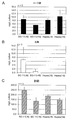
- the results are shown in FIG.
- the production of lactic acid and succinic acid increased about 2.5 times in the ⁇ ackA strain and more than 5 times in the ⁇ ackA / SigEox strain compared with the GT strain.
- the amount of acetic acid produced was significantly reduced in both the ⁇ ackA strain and the ⁇ ackA / SigEox strain compared to the GT strain.
- the cyanobacterial mutant of the present invention can suppress the production amount of acetic acid and increase the production amount of succinic acid in the fermentation process.
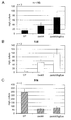
- ⁇ Example 6 Verification of organic acid production efficiency by treatment of potassium algae mutant with potassium chloride> (the purpose) The production amount of the organic acid in the fermentation process containing potassium chloride using the cyanobacteria mutant of the present invention is verified. (Method) The ⁇ ackA / SigEox strain prepared in Example 2 was used as the cyanobacterial mutant. A wild type GT strain was used as a control.
- the culture conditions of cyanobacteria and the measurement of organic acids were the same as in Example 3.
- the solution used for suspension was 20 mM HEPES-KOH (pH 7.8). However, 100 mM, 200 mM, and 300 mM KCl were added to the solution in the fermentation process at final concentrations. A state in which no potassium chloride was added was used as a control group. (result) The results are shown in FIG. When potassium chloride was added to the solution of the fermentation process, the production amount of succinic acid increased more than twice compared with the case of no addition (0 mM) at any concentration of 100 mM, 200 mM, and 300 mM.
Landscapes
- Engineering & Computer Science (AREA)
- Life Sciences & Earth Sciences (AREA)
- Chemical & Material Sciences (AREA)
- Organic Chemistry (AREA)
- Health & Medical Sciences (AREA)
- Zoology (AREA)
- Biotechnology (AREA)
- Genetics & Genomics (AREA)
- Wood Science & Technology (AREA)
- Bioinformatics & Cheminformatics (AREA)
- General Engineering & Computer Science (AREA)
- General Health & Medical Sciences (AREA)
- Biochemistry (AREA)
- Biomedical Technology (AREA)
- Microbiology (AREA)
- Medicinal Chemistry (AREA)
- Virology (AREA)
- Tropical Medicine & Parasitology (AREA)
- Cell Biology (AREA)
- Botany (AREA)
- Chemical Kinetics & Catalysis (AREA)
- General Chemical & Material Sciences (AREA)
- Physics & Mathematics (AREA)
- Biophysics (AREA)
- Molecular Biology (AREA)
- Plant Pathology (AREA)
- Preparation Of Compounds By Using Micro-Organisms (AREA)
- Micro-Organisms Or Cultivation Processes Thereof (AREA)
Abstract
生分解性バイオマスプラスチックの原料となる有機酸生産系において、乳酸や酢酸の生産量を抑え、コハク酸を効率的に生産する新たな藍藻産生系を構築し、その生産系を用いてコハク酸の生産量を増加させることを目的とする。 ackA遺伝子に変異を有する藍藻変異株、さらにsigE遺伝子を過剰発現する藍藻変異株を作出し、該変異株を塩化カリウム存在下で培養する。
Description
本発明は、藍藻変異株及びそれを用いて生分解性バイオマスプラスチック原料となるコハク酸及びD-乳酸を効率的に生産する方法に関する。
合成樹脂、いわゆるプラスチックは、軽量かつ丈夫で成形や着色が容易であり、耐腐食性も高く、大量生産が可能等の優れた利点を有する素材である。利便性が極めて高く、日常生活や産業分野において様々な形で利用され、現代生活において不可欠な素材となっている。しかし、その反面、解決すべき多くの問題も抱えている。
第1の問題は、プラスチックの原料である。現在使用されているプラスチックの多くは、石油を原料としている。石油は、新興国の台頭に伴う国際的な消費量の増大により、将来の枯渇が懸念されている。また、非再生可能資源であるため、燃焼に伴い大気中に排出される二酸化炭素が地球温暖化の大きな原因になっている。
第2の問題は、廃プラスチックの処理である。プラスチックは、現在、主要国において年間2億5千万トン以上が生産されており、その一方で年間数千トンに及ぶ廃プラスチックが排出されている。しかし、廃プラスチック処理には多くの問題を伴う。例えば、プラスチックを焼却処理した場合には、多量の二酸化炭素が発生するだけでなく、ダイオキシン等の有害ガスも発生し得る。また、焼却時の発熱量が高いため焼却炉を破壊する原因になり得る。さらに、高い耐腐食性から微生物等により分解されることなく、自然界で残存し続ける。
そこで、上記石油系プラスチックに替わる新たなプラスチック素材として、バイオマスを原料とするバイオマスプラスチックの研究開発が進められており、その一部は既に実用化されている。バイオマスは、再生可能資源であり、化石燃料のような枯渇問題が生じないという利点がある。また、バイオマスの燃焼に伴い発生する二酸化炭素は、元来、植物等の光合成によって大気中の二酸化炭素が固定化されたものであることからカーボンニュートラルな循環エネルギーであり、大気中の二酸化炭素量を上昇させることがないという利点もある。それ故に、地球温暖化防止にも寄与し得る(非特許文献1)。
また、廃プラスチック処理の問題を解決するために、生分解性プラスチックが開発されている。生分解性プラスチックは、プラスチックとしての機能や物性を有しながら、自然界において微生物の作用により完全分解される性質を有するプラスチックである。生分解性プラスチックは、焼却しても発熱量が低いことから焼却炉を痛めることもなく、また有害物質も放出しないという利点も備える。
さらに、バイオマスプラスチックと生分解性プラスチックの双方の性質を有する生分解性バイオマスプラスチックも開発されており、近年脚光を浴びている。生分解性バイオマスプラスチックには、例えば、ポリ乳酸(PLA)、澱粉樹脂、ポリヒドロキシアルカノエート(PHA)、及びポリブチレンサクシネート(PBS)等が知られている。
PLAは、トウモロコシやサトウキビ等を原料とし、そのデンプンをグルコースに分解した後に乳酸に変換し、重合することで得られる生分解性プラスチックである。透明性が高く、硬質で、ポリスチレンに類似した性質を有する化学合成系ポリマーで、既に実用化もされている。しかし、原料となるトウモロコシやサトウキビ等の植物が食料系植物(農作物)であることから、安定供給の点で大きな問題がある。例えば、トウモロコシは、食料及び飼料用との間で競合問題が発生し、価格高騰を招く問題がある。また、市場価格に左右される結果、必要量を安定的に確保できないという問題もある。サトウキビは、栽培地が熱帯、亜熱帯地域に限られ、需要増大に伴う耕作地の拡大により森林原野の伐採等の環境破壊が大きな問題となっている。さらに、天候によって、年ごとの収穫量が変動するという問題も伴う。また、PLAは、通常、L-乳酸を重合して得られるが、L-乳酸ホモポリマーは耐熱性が低いという物性上の問題があった。一方、D-乳酸重合体とL-乳酸重合体をそれぞれ規則的に重合した後に混合するとステレオコンプレックス型PLAが得られる。ステレオコンプレックス型PLAは、耐熱性がL-乳酸ホモポリマーと比較して40℃以上も高いことから前述の耐熱性の問題を解決し得る。しかし、L-乳酸は自然界に多量に存在するため比較的安価で入手可能であるのに対して、D-乳酸は天然存在量が少なく、それ故に、ステレオコンプレックス型PLAは非常に高価という問題があった。したがって、耐熱性を有するPLAの市場流通性を高めるためには、D-乳酸を安価に製造できる方法の開発が課題となっている。
PHAは、微生物が生産するバイオ合成系ポリマーである。微生物が、グルコースを炭素源として細胞内で合成、蓄積したものを精製することによって得られる硬質系バイオマスプラスチックであり、医薬類、農薬類、医療材料、工業材料等の多方面での応用が期待されている。PHAを微生物により生産させる方法は、これまでに種々開示されている。例えば、特許文献1には、PHAの一種であるポリヒドロキシブチレート(PHB)の製造方法が開示されている。しかしながら、いずれの方法も資化性炭素源として有機炭素源を必要とするという欠点があった。さらに、微生物におけるPHAの生産性は低く、結果的に製造コストが高くなるという問題もあった。そこで、有機炭素源の還元物質を必要とすることなく微生物から効率的にPHAを生産させる方法が種々模索された。これまでに藍藻を用いたPHAに関する研究報告は数多くなされているが、局所的な酵素活性の増大は、PHA量の増加につながらないことが明らかとなっている(非特許文献2)。
PBSは、コハク酸と1-4ブタンジオールから縮合反応によって合成される化学合成系プラスチックである(非特許文献3)。軟質系バイオマスプラスチックの代表格であり、機械的強度がポリエチレンに比べて2~3倍高く、また土中での生分解速度がPHAよりも速いという利点を有する。有用性の高い生分解性バイオマスプラスチックではあるが、従来は、原料のコハク酸と1-4ブタンジオールをいずれも石油から合成しており、化石燃料に依存しないという目的にそぐわない問題があった。そこで、近年は、原料の一つであるコハク酸をバイオベースで安価に生産する方向にシフトしている。コハク酸は、従来、トウモロコシやサトウキビ等の食糧系植物由来の糖質を用いて、従属栄養細菌の発酵によって生産していた。しかし、食糧系植物を原料とした場合、前述のように安定供給面での問題を伴う。
上記問題を解決するために、藍藻を用いたコハク酸の生産系が開発されている。藍藻(ラン藻)は、非食料系バイオマスであるため食糧系植物と競合することがない。また、培養が容易であり、熱帯、亜熱帯地域のみならず、温帯地域でも培養できる他、植物工場のような屋内培養も可能である。それ故に、収穫量の変動幅が少なく、安定的な供給が可能という利点を有する。藍藻は、コハク酸以外にも乳酸、酢酸、及びPHA等の様々な有機酸を生産することが知られている。藍藻細胞内で生産される有機酸は、酢酸が圧倒的に多く、乳酸及びコハク酸がそれに次ぐ。したがって、藍藻を用いたコハク酸生産系を実用化するためには、他の有機酸の生産量を抑制しながら、細胞あたりのコハク酸の生産量の向上させることが課題となっている。
Mooney B.M., 2009, Biochem. J., 418: 219-232
Kumar S., et al., 2002, International Journal of Biological Macromolecules,30: 97-104
Xu J. and Guo B-H., 2010, Biotechnol. J., 5: 1149-1163
本発明は、藍藻を用いた生分解性バイオマスプラスチックの原料となる有機酸生産系において、酢酸等の他の有機酸の生産量を抑え、コハク酸とD-乳酸を効率的に生産することのできる新たな株を作出し、その株を用いてコハク酸及びD-乳酸の生産量を増加させることを目的とする。
本発明者らは、ackA遺伝子に変異を有する藍藻変異株、さらにsigE遺伝子を過剰発現する藍藻二重変異株を発酵条件下で処理することにより、従来の藍藻を用いたコハク酸生産方法よりも効率的にコハク酸を生産できることを見出した。また、この方法で同時に得られる乳酸のほとんどがD-乳酸であることも判明した。さらに、塩化カリウムを含む溶液中でそれらの変異株を処理することで、コハク酸の生産量が3倍以上、D-乳酸は5倍以上増加することも見出した。本発明は、当該知見に基づくものであって、下記発明を包含する。
(1)AckAタンパク質をコードする遺伝子の欠失変異、機能喪失変異、又は遺伝子発現抑制変異を有する藍藻変異株。
(2)前記AckAタンパク質が以下の(a)~(c)のいずれかのタンパク質である、(1)に記載の藍藻変異株。
(1)AckAタンパク質をコードする遺伝子の欠失変異、機能喪失変異、又は遺伝子発現抑制変異を有する藍藻変異株。
(2)前記AckAタンパク質が以下の(a)~(c)のいずれかのタンパク質である、(1)に記載の藍藻変異株。
(a)配列番号1で示されるアミノ酸配列からなるタンパク質、
(b)配列番号1で示されるアミノ酸配列において1若しくは数個のアミノ酸が欠失、置換又は付加されたアミノ酸配列からなり、かつAckA酵素活性を有するタンパク質、及び
(c)配列番号1で示されるアミノ酸配列に対して90%以上のアミノ酸同一性を有するアミノ酸配列からなり、かつAckA酵素活性を有するタンパク質
(3)前記AckAタンパク質をコードする遺伝子が以下の(d)~(g)のいずれかの遺伝子である、(2)に記載の藍藻変異株。
(b)配列番号1で示されるアミノ酸配列において1若しくは数個のアミノ酸が欠失、置換又は付加されたアミノ酸配列からなり、かつAckA酵素活性を有するタンパク質、及び
(c)配列番号1で示されるアミノ酸配列に対して90%以上のアミノ酸同一性を有するアミノ酸配列からなり、かつAckA酵素活性を有するタンパク質
(3)前記AckAタンパク質をコードする遺伝子が以下の(d)~(g)のいずれかの遺伝子である、(2)に記載の藍藻変異株。
(d)配列番号2で示される塩基配列からなる遺伝子、
(e)配列番号2で示される塩基配列において1若しくは数個の塩基が欠失、置換又は付加された塩基配列からなり、かつAckA酵素活性を有するタンパク質をコードする遺伝子、
(f)配列番号2で示される塩基配列に対して90%以上の塩基同一性を有する塩基配列からなり、かつAckA酵素活性を有するタンパク質をコードする遺伝子、及び
(g)配列番号2に示す塩基配列に相補的な塩基配列の一部と高ストリンジェントな条件下でハイブリダイズする塩基配列からなり、かつAckA酵素活性を有するタンパク質をコードする遺伝子
(4)SigEタンパク質をコードする遺伝子を過剰発現する、(1)~(3)のいずれかに記載の藍藻変異株。
(5)前記SigEタンパク質が以下の(h)~(j)のいずれかのタンパク質である、(4)に記載の藍藻変異株。
(e)配列番号2で示される塩基配列において1若しくは数個の塩基が欠失、置換又は付加された塩基配列からなり、かつAckA酵素活性を有するタンパク質をコードする遺伝子、
(f)配列番号2で示される塩基配列に対して90%以上の塩基同一性を有する塩基配列からなり、かつAckA酵素活性を有するタンパク質をコードする遺伝子、及び
(g)配列番号2に示す塩基配列に相補的な塩基配列の一部と高ストリンジェントな条件下でハイブリダイズする塩基配列からなり、かつAckA酵素活性を有するタンパク質をコードする遺伝子
(4)SigEタンパク質をコードする遺伝子を過剰発現する、(1)~(3)のいずれかに記載の藍藻変異株。
(5)前記SigEタンパク質が以下の(h)~(j)のいずれかのタンパク質である、(4)に記載の藍藻変異株。
(h)配列番号3で示されるアミノ酸配列からなるタンパク質、
(i)配列番号3で示されるアミノ酸配列において1若しくは数個のアミノ酸が欠失、置換又は付加されたアミノ酸配列からなり、かつSigE活性を有するタンパク質、及び
(j)配列番号3で示されるアミノ酸配列に対して90%以上のアミノ酸同一性を有するアミノ酸配列からなり、かつSigE活性を有するタンパク質
(6)前記SigEタンパク質をコードする遺伝子が以下の(k)~(n)のいずれかの遺伝子である、(5)に記載の藍藻変異株。
(i)配列番号3で示されるアミノ酸配列において1若しくは数個のアミノ酸が欠失、置換又は付加されたアミノ酸配列からなり、かつSigE活性を有するタンパク質、及び
(j)配列番号3で示されるアミノ酸配列に対して90%以上のアミノ酸同一性を有するアミノ酸配列からなり、かつSigE活性を有するタンパク質
(6)前記SigEタンパク質をコードする遺伝子が以下の(k)~(n)のいずれかの遺伝子である、(5)に記載の藍藻変異株。
(k)配列番号4で示される塩基配列からなる遺伝子、
(l)配列番号4で示される塩基配列において1若しくは数個の塩基が欠失、置換又は付加された塩基配列からなり、かつSigE活性を有するタンパク質をコードする遺伝子、
(m)配列番号4で示される塩基配列に対して90%以上の塩基同一性を有する塩基配列からなり、かつSigE活性を有するタンパク質をコードする遺伝子、及び
(n)配列番号4に示す塩基配列に相補的な塩基配列の一部と高ストリンジェントな条件下でハイブリダイズする塩基配列からなり、かつSigE活性を有するタンパク質をコードする遺伝子
(7)前記SigEタンパク質をコードする遺伝子の過剰発現が発現ベクターに由来する、(4)~(6)のいずれかに記載の藍藻変異株。
(8)時計タンパク質をコードする遺伝子を過剰発現する、(1)~(7)のいずれかに記載の藍藻変異株。
(9)前記時計タンパク質がKaiB3タンパク質又はKaiC3タンパク質である、(8)に記載の藍藻変異株。
(10)前記時計タンパク質をコードする遺伝子の過剰発現が発現ベクターに由来する、(8)又は(9)に記載の藍藻変異株。
(11)藍藻がSynechocystis属に属する、(1)~(10)のいずれかに記載の藍藻変異株。
(12)(1)~(11)の少なくとも一に記載の藍藻変異株を溶液中で嫌気的な暗条件下にて発酵させる発酵工程、及び前記発酵工程後の溶液からコハク酸を回収する回収工程を含むコハク酸の生産方法。
(13)前記発酵工程の溶液が50~350mMの塩化カリウムを含む、(12)に記載のコハク酸の生産方法。
(14)前記嫌気的な条件が無酸素条件である、(12)又は(13)に記載のコハク酸の生産方法。
(15)前記発酵工程前に好気的な明条件で前記藍藻変異株を培養する培養工程を含む、(12)~(14)のいずれかに記載のコハク酸の生産方法。
(16)(1)~(11)の少なくとも一に記載の藍藻変異株を溶液中で嫌気的な暗条件下にて発酵させる発酵工程、及び前記発酵工程後の溶液からD-乳酸を回収する回収工程を含むD-乳酸の生産方法。
(17)前記発酵工程の溶液が50~350mMの塩化塩を含む、(16)に記載のD-乳酸の生産方法。
(18)前記嫌気的条件が無酸素条件である、(16)又は(17)に記載のD-乳酸の生産方法。
(19)前記発酵工程前に好気的な明条件で前記藍藻変異株を培養する培養工程を含む、(16)~(18)のいずれかに記載のD-乳酸の生産方法。
(l)配列番号4で示される塩基配列において1若しくは数個の塩基が欠失、置換又は付加された塩基配列からなり、かつSigE活性を有するタンパク質をコードする遺伝子、
(m)配列番号4で示される塩基配列に対して90%以上の塩基同一性を有する塩基配列からなり、かつSigE活性を有するタンパク質をコードする遺伝子、及び
(n)配列番号4に示す塩基配列に相補的な塩基配列の一部と高ストリンジェントな条件下でハイブリダイズする塩基配列からなり、かつSigE活性を有するタンパク質をコードする遺伝子
(7)前記SigEタンパク質をコードする遺伝子の過剰発現が発現ベクターに由来する、(4)~(6)のいずれかに記載の藍藻変異株。
(8)時計タンパク質をコードする遺伝子を過剰発現する、(1)~(7)のいずれかに記載の藍藻変異株。
(9)前記時計タンパク質がKaiB3タンパク質又はKaiC3タンパク質である、(8)に記載の藍藻変異株。
(10)前記時計タンパク質をコードする遺伝子の過剰発現が発現ベクターに由来する、(8)又は(9)に記載の藍藻変異株。
(11)藍藻がSynechocystis属に属する、(1)~(10)のいずれかに記載の藍藻変異株。
(12)(1)~(11)の少なくとも一に記載の藍藻変異株を溶液中で嫌気的な暗条件下にて発酵させる発酵工程、及び前記発酵工程後の溶液からコハク酸を回収する回収工程を含むコハク酸の生産方法。
(13)前記発酵工程の溶液が50~350mMの塩化カリウムを含む、(12)に記載のコハク酸の生産方法。
(14)前記嫌気的な条件が無酸素条件である、(12)又は(13)に記載のコハク酸の生産方法。
(15)前記発酵工程前に好気的な明条件で前記藍藻変異株を培養する培養工程を含む、(12)~(14)のいずれかに記載のコハク酸の生産方法。
(16)(1)~(11)の少なくとも一に記載の藍藻変異株を溶液中で嫌気的な暗条件下にて発酵させる発酵工程、及び前記発酵工程後の溶液からD-乳酸を回収する回収工程を含むD-乳酸の生産方法。
(17)前記発酵工程の溶液が50~350mMの塩化塩を含む、(16)に記載のD-乳酸の生産方法。
(18)前記嫌気的条件が無酸素条件である、(16)又は(17)に記載のD-乳酸の生産方法。
(19)前記発酵工程前に好気的な明条件で前記藍藻変異株を培養する培養工程を含む、(16)~(18)のいずれかに記載のD-乳酸の生産方法。
本明細書は本願の優先権の基礎となる日本国特許出願番号2015-026093号の開示内容を包含する。
本発明の藍藻変異株によれば、生分解性バイオマスプラスチックの原料となるコハク酸及びD-乳酸を藍藻野生株よりも効率的に生産することができる。
本発明のコハク酸生産方法又はD-乳酸生産方法は、本発明の藍藻変異株を用いて塩化カリウムの存在下で発酵処理を行うことで、藍藻の有機酸生産系において、生産率が圧倒的に高い酢酸等の生産量を抑制し、目的のコハク酸又はD-乳酸を効率的に生産することができる。
以下で本発明を実施するための形態について、具体的に説明する。
1.藍藻変異株
1-1.概要
本発明の第1の態様は藍藻変異株である。本発明の藍藻変異株は、ackA遺伝子に変異を有し、発酵条件下にて処理することによって、他の有機酸の生産を抑制しつつ、コハク酸及び/又はD-乳酸を効率的に生産することができる。
1-2.構成
本発明の藍藻変異株は、AckAタンパク質をコードする遺伝子の欠失変異、機能喪失変異、又は遺伝子発現抑制変異を有する。
1.藍藻変異株
1-1.概要
本発明の第1の態様は藍藻変異株である。本発明の藍藻変異株は、ackA遺伝子に変異を有し、発酵条件下にて処理することによって、他の有機酸の生産を抑制しつつ、コハク酸及び/又はD-乳酸を効率的に生産することができる。
1-2.構成
本発明の藍藻変異株は、AckAタンパク質をコードする遺伝子の欠失変異、機能喪失変異、又は遺伝子発現抑制変異を有する。
本明細書において「藍藻」とは、シアノバクテリア(藍色細菌)とも呼ばれる酸素発生型の光合成を行う真正細菌である。単細胞形態、少数の細胞塊からなる集合形態、複数細胞が鎖状に連結した糸状形態が、知られるが、本明細書の藍藻の形態は特に制限されない。好ましくは単細胞形態である。
藍藻には、Synechocystis属藍藻(例えばSynechocystis sp.PCC6803)、Microcystis属藍藻(例えばMicrocystis aeruginosa)、Arthrospira属藍藻(例えばArthrospira platensis)、Thermosynechococcus属藍藻(例えばThermosynechococcus elongats)、Acaryochloris属藍藻(例えばAcaryochloris marina)、Gloeobacter属藍藻(例えばGloeobacter violaceus)、Nostoc属藍藻(例えばNostoc punctiforme)、Cyanothece属藍藻、Anabaena属藍藻、Synechococcus属藍藻、Trichodesmium属藍藻、Prochloron属藍藻、及びProchlorococcus属藍藻等が含まれるが、本発明の藍藻はいずれの属に属する藍藻であってもよい。好ましくはSynechocystis属藍藻である。ただし、本発明では、コハク酸及び/又はD-乳酸の生産量を増大させる観点から、コハク酸及び/又はD-乳酸の生産能を有する藍藻を使用する。例えば、コハク酸合成酵素遺伝子、具体的にはコハク酸脱水素酵素遺伝子(sdh遺伝子)を有する藍藻である。sdh遺伝子は、フマル酸とコハク酸との相互変換を触媒する活性を有する酵素をコードする。また、遺伝子改変や突然変異誘導等によりコハク酸の生産能が付与された藍藻も包含される。例えば、コハク酸合成酵素遺伝子が導入された藍藻が該当する。
本明細書において「藍藻変異株」とは、野生株とは、異なる表現型を有する藍藻をいう。「変異」とは、特定の野生型遺伝子に生じた塩基配列の物理的又は構造的変化、及びその遺伝子の転写産物や翻訳産物の構造的又は量的変化をいう。本発明の藍藻変異株は、AckAタンパク質をコードする遺伝子、すなわちackA遺伝子に生じた欠失変異、機能喪失変異、又は遺伝子発現抑制変異を少なくとも有する。なお、AckAタンパク質及びackA遺伝子の詳細については後述する。
本明細書において「欠失変異」(deletion mutation)とは、ゲノム上に存在するackA遺伝子の全領域が完全に又は一部が失われた変異をいう。本明細書ではackA遺伝子欠失をしばしば「ΔackA(遺伝子)」と表記する。藍藻のackA遺伝子欠失変異株(ΔackA変異株」では、内因性ackA遺伝子が存在しないため、AckAタンパク質の機能が完全に欠損している。
本明細書において「機能喪失変異」(loss of function mutation)とは、ゲノム上のackA遺伝子を構成する一部の塩基の欠失、他の塩基への置換、あるいはackA遺伝子内への塩基の付加によって、野生型ackA遺伝子が本来有する形質発現能を失った変異をいう。例えば、AckAタンパク質において活性ドメインをコードする塩基配列の欠失やackA遺伝子のスプライスサイト(ドナーサイト、アクセプターサイト、及びブランチポイントを含む)における塩基の欠失や置換が該当する。藍藻のackA遺伝子機能喪失変異株では、ackA遺伝子は存在する。しかし、AckAタンパク質が発現していないか、又は発現していてもAckAタンパク質の活性(例えば、酵素活性)が完全に失われている。
本明細書において「遺伝子発現抑制変異」とは、ackA遺伝子の発現制御領域において塩基の欠失、置換又は付加による変異が生じた結果、ackA遺伝子の発現が阻害又は抑制される変異、あるいはackA遺伝子に対するRNAi分子又はRNAアプタマーを発現する遺伝子発現系(例えば、発現ベクター)を導入した遺伝子組換えによる変異が該当する。遺伝子発現抑制変異株では、AckAタンパク質の発現が失われているか、又は著しく低下している。
ここでいう「発現制御領域」とは、藍藻細胞においてackA遺伝子の発現を制御する領域である。例えば、ackA遺伝子のプロモーター、及びエンハンサー等が挙げられる。
また、「RNAi分子」とは、生体内においてRNA干渉(RNA interference)を誘導し、標的遺伝子の転写産物の分解を介してその遺伝子の発現を転写後翻訳前に抑制(サイレンシング)することができる低分子RNAである。例えば、siRNA(small interfering RNA)又はshRNA(short hairpin RNA)が該当する。本明細書のRNAi分子は、ackA遺伝子の転写産物、すなわちackA mRNAを標的とする。
さらに、「RNAアプタマー」とは、RNAで構成される核酸アプタマーである。核酸アプタマーは、水素結合等を介した一本鎖核酸分子の二次構造、及び三次構造に基づいて形成される立体構造によって、標的分子と強固に、かつ特異的に結合し、標的分子の生理活性等の機能を特異的に阻害又は抑制する能力を持つリガンド分子をいう。本明細書のRNAアプタマーは、AckAタンパク質又はackA mRNAを標的分子とする。
「AckA(Acetate kinase A)タンパク質」とは、酢酸とアセチルリン酸の相互変換を触媒する酵素である。具体的には、酢酸と二リン酸塩をアセチルリン酸とリン酸塩に変換する反応、又はアセチルリン酸とリン酸塩を酢酸と二リン酸塩をアセチルリン酸に変換する反応を触媒する。
AckAタンパク質の具体例として、配列番号1で示される413残基のアミノ酸配列からなるSynechocystis sp.PCC6803由来のAckAタンパク質が挙げられる。また、配列番号1で示されるAckAタンパク質と機能的に同等の活性を有するAckAタンパク質バリアントや他生物種、特に他の藍藻種のAckAタンパク質オルソログも該当する。具体的には、配列番号1で示されるアミノ酸配列において1若しくは複数個のアミノ酸が欠失、置換又は付加されたアミノ酸配列、あるいは配列番号1で示されるアミノ酸配列に対して90%、95%以上、97%以上、98%以上又は99%以上のアミノ酸同一性を有するAckAタンパク質が包含される。
本明細書において「複数個」とは、例えば、2~20個、2~15個、2~10個、2~7個、2~5個、2~4個又は2~3個をいう。また、アミノ酸の置換は、保存的アミノ酸置換が望ましい。「保存的アミノ酸置換」とは、電荷、側鎖、極性、芳香族性等の性質の類似するアミノ酸間の置換をいう。性質の類似するアミノ酸は、例えば、塩基性アミノ酸(アルギニン、リジン、ヒスチジン)、酸性アミノ酸(アスパラギン酸、グルタミン酸)、無電荷極性アミノ酸(グリシン、アスパラギン、グルタミン、セリン、トレオニン、システイン、チロシン)、無極性アミノ酸(ロイシン、イソロイシン、アラニン、バリン、プロリン、フェニルアラニン、トリプトファン、メチオニン)、分枝鎖アミノ酸(ロイシン、バリン、イソロイシン)、芳香族アミノ酸(フェニルアラニン、チロシン、トリプトファン、ヒスチジン)等に分類することができる。
「アミノ酸同一性」とは、二つのアミノ酸配列を整列(アラインメント)し、必要に応じてギャップを導入して、両者のアミノ酸一致度が最も高くなるようにしたときに、配列番号1で示されるアミノ酸配列からなるAckAタンパク質の全アミノ酸残基数に対する二つのアミノ酸配列間で同一アミノ酸残基の割合(%)をいう。アミノ酸同一性は、BLASTやFASTAによるタンパク質の検索システムを用いて算出することができる(Karlin,S.et al., 1993, Proc. Natl. Acad. Sci. USA, 90: 5873-5877;Altschul,S.F.et al., 1990, J. Mol. Biol., 215: 403-410;Pearson,W.R.et al., 1988, Proc. Natl. Acad. Sci. USA, 85: 2444-2448)。
「ackA遺伝子」は、前記AckAタンパク質をコードする遺伝子である。藍藻ゲノム中に存在する内因性ackA遺伝子及び外界からの導入による外因性ackA遺伝子のいずれも包含するが、内因性ackA遺伝子がより好ましく適用される。ackA遺伝子の具体例として、配列番号1で示されるアミノ酸配列からなるAckAタンパク質をコードするackA遺伝子が挙げられる。より具体的には、配列番号2で示される塩基配列からなるSynechocystis sp.PCC6803由来のackA遺伝子が挙げられる。また、配列番号2で示されるackA遺伝子がコードするAckAタンパク質と機能的に同等の活性、すなわちAckA酵素活性を有するAckAタンパク質バリアントやAckAタンパク質オルソログをコードするackA遺伝子も包含する。具体的には、配列番号2で示される塩基配列において1若しくは複数個の塩基が欠失、置換又は付加された塩基配列、あるいは配列番号2で示される塩基配列に対して90%、95%以上、97%以上、98%以上又は99%以上の塩基同一性を有するackA遺伝子が包含される。あるいは、配列番号2で示される塩基配列に対して相補的な塩基配列の一部からなる核酸断片と高ストリンジェントな条件下でハイブリダイズし、かつAckAタンパク質と機能的に同等の活性を有するタンパク質をコードする遺伝子が包含される。本明細書において「高ストリンジェントな条件下でハイブリダイズ(する)」とは、低塩濃度及び/又は高温の条件下でハイブリダイゼーションと洗浄を行うことをいう。例えば、6×SSC、5×Denhardt試薬、0.5% SDS、100μg/ml変性断片化サケ精子DNA中で65℃~68℃にてプローブと共にインキュベーションを行い、その後、2×SSC、0.1%SDSの洗浄液中で室温から開始して、洗浄液中の塩濃度を0.1×SSCまで下げ、かつ温度を68℃まで上げて、バックグラウンドシグナルが検出されなくなるまで洗浄することが例示される。高ストリンジェントなハイブリダイゼーションの条件については、Green & Sambrook, 2012, Molecular Cloning: A Laboratory Manual Fourth Ed., Cold Spring Harbor Laboratory Press, Cold Spring Harbor, New Yorkに記載されているので参考にすることができる。
本明細書において「塩基同一性」とは、二つの塩基配列を整列し、必要に応じてギャップを導入して、両者の塩基一致度が最も高くなるようにしたときに、配列番号2で示される塩基配列のackA遺伝子の全塩基に対する二つの塩基配列間で同一塩基の割合(%)をいう。
ackA遺伝子の公知の藍藻オルソログの例として、配列番号19で示される塩基配列からなるAnabaena sp. PCC 7120のackA遺伝子(all2561)、配列番号20で示される塩基配列からなるThermosynechococcus elongates BP-1のackA遺伝子(tlr2340)、配列番号21で示される塩基配列からなるGloeobacter violaceusのackA遺伝子(glr1000)、配列番号22で示される塩基配列からなるMycrocystis aeruginosa NIES-843のackA遺伝子(MAE02800)、配列番号23で示される塩基配列からなるSynechococcus sp. WH8102のackA遺伝子(SYNW0155)、配列番号24で示される塩基配列からなるAcaryochloris marina MBIC11017のackA遺伝子(AM1_0445)、配列番号25で示される塩基配列からなるSynechococcus elongatus PCC 7942のackA遺伝子(Synpcc7942_2079)、配列番号26で示される塩基配列からなるNostoc punctiforme ATCC 29133のackA遺伝子(Npun_F4874)、配列番号27で示される塩基配列からなるCyanothece sp. PCC 7424のackA遺伝子(PCC7424_3504)、及び配列番号28で示される塩基配列からなるArthrospira platensis NIES-39のackA遺伝子(NIES39_L03090)が挙げられる。このようなackA遺伝子の塩基配列情報は、公共のデータベース(GenBank、EMBL、DDBJ)より検索可能である。例えば、配列番号2で示されるackA遺伝子の既知塩基配列情報に基づいて、塩基同一性の高い遺伝子をデータベースから検索し、入手することができる。また、遺伝情報の登録が十分でない藍藻に由来するackA遺伝子の塩基配列情報は、配列番号2で示されるackA遺伝子のような藍藻ackA遺伝子の既知塩基配列情報を利用して、当該分野で公知のクローニング技術により得ることができる。クローニング技術については、Green & Sambrook, 2012(前述)等のプロトコルを参考にすればよい。
本発明の藍藻変異株は、前記ackA遺伝子の変異に加えて、SigEタンパク質をコードする遺伝子を過剰発現する変異を包含してもよい。ackA遺伝子との二重変異によりコハク酸生産量をより高めることができるからである。
「SigEタンパク質」は、プロモーター認識及び転写開始に関与するRNAポリメラーゼσ(シグマ)因子の1種である。σ因子にはプロモーター認識の特異性等によって分類される複数の異なる種が存在する。具体的には、主要型で生存に必須のグループIσ因子、グループIσ因子とプロモーター認識特異性が類似するが生存には必須でないグループIIσ因子、及びグループIσ因子とはプロモーター認識特異性の異なるグループIIIσ因子である。SigEタンパク質は、グループIIσに分類される。
SigEタンパク質の具体例として、配列番号3で示されるアミノ酸配列からなるSynechocystis sp.PCC6803由来のSigEタンパク質が挙げられる。また、配列番号3で示されるSigEタンパク質と機能的に同等の活性を有するSigEタンパク質バリアントや他生物種、特に他の藍藻種のSigEタンパク質オルソログも該当する。具体的には、配列番号3で示されるアミノ酸配列において1若しくは複数個のアミノ酸が欠失、置換又は付加されたアミノ酸配列、あるいは配列番号3で示されるアミノ酸配列に対して90%、95%以上、97%以上、98%以上又は99%以上のアミノ酸同一性を有するSigEタンパク質が包含される。この場合、置換は、保存的アミノ酸置換が望ましい。
「sigE遺伝子」は、前記SigEタンパク質をコードする遺伝子である。本発明の藍藻変異株で過剰発現させるsigE遺伝子の由来生物種は、宿主である藍藻由来のsigE遺伝子と機能的に同等のsigE遺伝子であれば特に限定はしない。好ましくは、藍藻由来、特に宿主藍藻由来のsigE遺伝子である。sigE遺伝子の具体例として、配列番号3で示されるアミノ酸配列からなるSigEタンパク質をコードするsigE遺伝子が挙げられる。より具体的には、配列番号4で示される塩基配列からなるSynechocystis sp.PCC6803由来のsigE遺伝子が挙げられる。また、配列番号4で示されるsigE遺伝子がコードするSigEタンパク質と機能的に同等の活性を有するSigEタンパク質バリアントやSigEタンパク質オルソログをコードするsigE遺伝子も包含する。具体的には、具体的には、配列番号4で示される塩基配列において1若しくは複数個の塩基が欠失、置換又は付加された塩基配列、あるいは配列番号4で示される塩基配列に対して90%、95%以上、97%以上、98%以上又は99%以上の塩基同一性を有するsigE遺伝子が包含される。あるいは、配列番号4で示される塩基配列に対して相補的な塩基配列の一部からなる核酸断片と高ストリンジェントな条件下でハイブリダイズし、かつSigEタンパク質と機能的に同等の活性を有するタンパク質をコードする遺伝子が包含される。このようなsigE遺伝子の塩基配列情報は、前記ackA遺伝子と同様に、公共のデータベース(GenBank、EMBL、DDBJ)より検索可能である。例えば、配列番号4で示されるsigE遺伝子の既知塩基配列情報に基づいて、塩基同一性の高い遺伝子をデータベースから検索し、入手することができる。また、遺伝情報の登録が十分でない藍藻に由来するsigE遺伝子の塩基配列情報は、配列番号4で示されるsigE遺伝子のような藍藻sigE遺伝子の既知塩基配列情報を利用して、当該分野で公知のクローニング技術により得ることができる。
本発明の藍藻変異株は、前記ackA遺伝子の変異、又はackA遺伝子の変異及び前記sigE遺伝子の過剰発現変異に加えて、さらに時計タンパク質をコードする遺伝子を過剰発現する変異を包含してもよい。ackA遺伝子の変異、又はackA遺伝子及びsigE遺伝子の二重変異のそれぞれと組み合わせた複合変異にすることにより、コハク酸生産量をさらに高めることができるからである。
本明細書において「時計タンパク質」とは、約24時間周期で変動する概日リズムを生み出すタンパク質をいう。藍藻においては、KaiAタンパク質、KaiBタンパク質及びKaiCタンパク質の3種タンパク質、及びそのオルソログタンパク質が時計タンパク質として知られている。KaiAタンパク質は、KaiCタンパク質のリン酸化に関与し、KaiBタンパク質はKaiCタンパク質の脱リン酸化を促進する。また、KaiCタンパク質は、自己リン酸化及び脱リン酸化を24時間周期で行き来することが知られている。そのKaiCタンパク質のリン酸化はKaiAタンパク質によって促進されることが判明している。藍藻では、前記KaiA~Cタンパク質をそれぞれコードするkaiA~C遺伝子が時計遺伝子クラスターを構成することが知られている。時計遺伝子クラスターkaiABCは2つのオペロン、すなわちkaiAオペロン及びkaiBCオペロンより構成されている。kaiBCオペロンの発現は、KaiAにより促進され、KaiCにより抑制される。これが、藍藻の生物時計におけるフィードバック制御であると考えられている。
KaiBタンパク質及びKaiCタンパク質には、3種のバリアントが知られており、それぞれKaiB1、KaiB2及びKaiB3タンパク質、及びKaiC1、KaiC2及びKaiC3タンパク質と呼ばれる。KaiAタンパク質の具体例としては、配列番号5で示されるアミノ酸配列からなるSynechocystis sp.PCC6803由来のKaiAタンパク質が挙げられる。KaiB1タンパク質の具体例としては、配列番号7で示されるアミノ酸配列からなるSynechocystis sp.PCC6803由来のKaiB1タンパク質が挙げられる。KaiB2タンパク質の具体例としては、配列番号9で示されるアミノ酸配列からなるSynechocystis sp.PCC6803由来のKaiB2タンパク質が挙げられる。KaiB3タンパク質の具体例としては、配列番号11で示されるアミノ酸配列からなるSynechocystis sp.PCC6803由来のKaiB3タンパク質が挙げられる。KaiC1タンパク質の具体例としては、配列番号13で示されるアミノ酸配列からなるSynechocystis sp.PCC6803由来のKaiC1タンパク質が挙げられる。KaiC2タンパク質の具体例としては、配列番号15で示されるアミノ酸配列からなるSynechocystis sp.PCC6803由来のKaiC2タンパク質が挙げられる。KaiC3タンパク質の具体例としては、配列番号17で示されるアミノ酸配列からなるSynechocystis sp.PCC6803由来のKaiC3タンパク質が挙げられる。また、配列番号5、7、9、11、13、15及び17で示されるアミノ酸配列において1若しくは複数個のアミノ酸が欠失、置換又は付加されたアミノ酸配列、あるいは配列番号5、7、9、11、13、15及び17で示されるアミノ酸配列に対して90%、95%以上、97%以上、98%以上又は99%以上のアミノ酸同一性を有するKaiA、KaiB1~B3、及びKaiC1~C3タンパク質が包含される。この場合、前記置換は、保存的アミノ酸置換が望ましい。
上記KaiAタンパク質はkaiA遺伝子に、KaiB1タンパク質はkaiB1遺伝子に、KaiB2タンパク質はkaiB2遺伝子に、KaiB3タンパク質はkaiB3遺伝子に、KaiC1タンパク質はkaiC1遺伝子に、KaiC2タンパク質はkaiC2遺伝子に、そしてKaiC3タンパク質はkaiC3遺伝子に、それぞれコードされている。
本発明の藍藻変異株で過剰発現させるべきkaiA、kaiB1、kaiB2、kaiB3、kaiC1、kaiC2及びkaiC3遺伝子(本明細書では、これらをまとめて、しばしば「kaiABC遺伝子」と表記する)の由来生物種は、宿主である藍藻由来の各kaiABC遺伝子と機能的に同等の遺伝子であれば宿主である藍藻とは異なる種に由来するものでもよく、特に限定はしない。好ましくは藍藻由来、特に宿主藍藻由来のkaiABC遺伝子である。より好ましくはKaiB3タンパク質をコードするkaiB3遺伝子、又はKaiC3タンパク質をコードするkaiC3遺伝子である。
kaiABC遺伝子は、2以上のkaiABC遺伝子、すなわちkaiABC遺伝子のうち2つ(例えば、kaiB3及びkaiC3遺伝子)、3つ(例えば、kaiA、kaiB3及びkaiC3遺伝子)、4つ(例えば、kaiA、kaiB3、kaiC2及びkaiC3遺伝子)、5つ、6つ又は7つを一つの藍藻変異株において過剰発現させてもよい。
kaiABC遺伝子の具体例として、Synechocystis sp.PCC6803由来であって、配列番号5で示されるKaiAタンパク質をコードし、配列番号6で示される塩基配列からなるkaiA遺伝子、配列番号7で示されるKaiB1タンパク質をコードし、配列番号8で示される塩基配列からなるkaiB1遺伝子、配列番号9で示されるKaiB2タンパク質をコードし、配列番号10で示される塩基配列からなるkaiB2遺伝子、配列番号11で示されるKaiB3タンパク質をコードし、配列番号12で示される塩基配列からなるkaiB3遺伝子、配列番号13で示されるKaiC1タンパク質をコードし、配列番号14で示される塩基配列からなるkaiC1遺伝子、配列番号15で示されるKaiC2タンパク質をコードし、配列番号16で示される塩基配列からなるkaiC2遺伝子、及び配列番号17で示されるKaiC3タンパク質をコードし、配列番号18で示される塩基配列からなるkaiC3遺伝子が挙げられる。また、上記のkaiABC遺伝子には、配列番号6、8、10、12、14、16及び18の塩基配列からなる各kaiABC遺伝子と機能的に同等の遺伝子も包含される。具体的には、前記配列番号で示される各塩基配列において1若しくは複数個の塩基が欠失、置換又は付加された塩基配列、あるいは前記配列番号で示される各塩基配列に対して90%、95%以上、97%以上、98%以上又は99%以上の塩基同一性を有するkaiABC遺伝子オルソログ等が包含される。あるいは、配列番号6、8、10、12、14、16又は18の塩基配列に対して相補的な塩基配列の一部からなる核酸断片と高ストリンジェントな条件下でハイブリダイズし、かつ各KaiABCタンパク質と機能的に同等の活性を有するタンパク質をコードする遺伝子が包含される。
公知のkaiA遺伝子のSequenceIDの例として、slr0756、cce_0424、PCC8801_4233、MAE31730、PCC7424_0601、SYNPCC7002_A0289、Cyan7425_0346、AM1_0994、tlr0481、NIES39_L01230、Synpcc7942_1218、syc0332_d、CYB_0490、CYA_1902、sync_2222、SynRCC307_1826、SYNW0548、Syncc9902_0547、SynWH7803_1966が挙げられる。
公知のkaiB1遺伝子のSequenceIDの例として、slr0757、MAE31740、PCC7424_0600、PCC8801_4232、cce_0423、Tery_3804、Ava_1017、alr2885、NIES39_L01220、Cyan7425_0347、tlr0482、Npun_R2887、AM1_0993、P9303_05431、SynWH7803_1965、Syncc9605_2125、Syncc9902_0548、SYNW0549、PMT1419、sync_2221が挙げられる。
公知のkaiB2遺伝子のSequenceIDの例として、sll1596、RPA0008、MAE31740、sll0486、MAE42960、PCC7424_3005、cce_0423、PCC7424_0600、PCC8801_4232、P9515_15041、CYA_1901、CYB_0489、Tery_3804、P9301_15291、PMM1343、P9215_15721、NIES39_L01220、Ava_1017、alr2885、slr0757が挙げられる。
公知のkaiB3遺伝子のSequenceIDの例として、sll0486、cce_4715、PCC8801_3933、PCC7424_3005、MAE42960、sll1596、Pro1424、CYA_1901、CYB_0489、tlr0482、MAE31740、P9515_15041、PMM1343、PMT9312_1441、P9211_13971、cce_0423、SynRCC307_1825、PCC7424_0600、PCC8801_4232、P9215_15721が挙げられる。
公知のkaiC1遺伝子のSequenceIDの例として、slr0758、PCC8801_4231、PCC7424_0599、cce_0422、MAE31750、SYNPCC7002_A0287、Ava_1016、alr2886、Tery_3805、Npun_R2886、Cyan7425_0348、AM1_0992、tlr0483、syc0334_d、Synpcc7942_1216、NIES39_L01210、CYB_0488、CYA_1900、SynRCC307_1824、Syncc9902_0549が挙げられる。
公知のkaiC2遺伝子のSequenceIDの例として、sll1595、RPA0009、CYB_0488、CYA_1900、tlr0483、AM1_0992、syc0334_d、Synpcc7942_1216、P9211_13961、Syncc9605_2124、MAE31750、SynWH7803_1964、SynRCC307_1824、P9303_05441、sync_2220、PMT1418、NATL1_17691、P9215_15711、SYNW0550、Pro1423が挙げられる。
公知のkaiC3遺伝子のSequenceIDの例として、slr1942、PCC7424_3006、PCC8801_3934、MAE39130、cce_4716、Tery_3805、Cyan7425_0348、tlr0483、syc0334_d、Synpcc7942_1216、AM1_0992、CYA_1900、PCC8801_4231、SYNPCC7002_A0287、slr0758、alr2886、CYB_0488、Ava_1016、MAE31750、PCC7424_0599が挙げられる。
本発明の藍藻変異株において、sigE遺伝子や時計タンパク質遺伝子のように、過剰発現を目的とする遺伝子(本明細書では「目的遺伝子」と表記する)を藍藻細胞内で過剰発現させるには、宿主である藍藻に目的遺伝子の過剰発現変異を導入すればよい。そのような過剰発現変異は、内因性変異と外因性変異に大別できる。各変異の付与又は導入は、当該分野で公知の方法で達成することができる。
「内因性変異」は、ゲノム中の目的遺伝子又はその発現制御領域(プロモーター、エンハンサー等)に変異を導入して、内因性の目的遺伝子の絶対的な発現量を増強させる変異である。
目的遺伝子への内因性変異の導入は、当該分野で公知の遺伝子変異導入技術を用いることができる。例えば、目的遺伝子の活性ドメインや保存領域に1~複数個の塩基の欠失、付加及び/又は置換を導入する場合には、TALEN(Transcription Activator-Like Effector Nuclease)法(Cermak T, et al., 2011, Nucleic Acids Res 39: e82)、ZFN(Zinc Finger Nuclease)法(Kim, Y.-G., et al., 1996, Proc. Natl. Acad. Sci. USA 93:1156-1160.)、又はCRISPR/Cas9システム(Cong, L. et al., 2013, Science, 339, 819-823.)のようなゲノム編集技術を用いればよい。これらの技術は、目的とするゲノム上の所望の配列を切断して目的の変異を導入することができる。例えば、TALEN法を用いる場合であれば、配列番号2に示す塩基配列からなるSynechocystis sp.PCC6803のsigE遺伝子において活性ドメインをコードする塩基に相当する領域を標的とするDNA塩基配列認識部位(リピート部位)を構築し、TALEN発現ベクター内に挿入する。続いて、調製したTALEN発現ベクターからin vitro転写法によってTALEN mRNAを合成した後、Synechocystis sp.PCC6803に常法を用いて導入することで達成できる。
また、内因性の目的遺伝子を破壊して欠失させる場合、ノックイン型ベクターを用いた相同組換え法が利用できる。この方法は、薬剤マーカー(Km耐性遺伝子、Cm耐性遺伝子、Sp耐性遺伝子又はGm耐性遺伝子)と、その下流に目的遺伝子の過剰発現系プロモーター及び目的遺伝子を連結した断片を含むベクターを藍藻ゲノムの目的遺伝子のローカスに相同組換えによって挿入する方法である(Osanai et al. 2011 J. Biol. Chem. 286, 30962-30971)。
その他、内因性の目的遺伝子への変異は、Kunkel法、又はGapped duplex法等の部位特異的突然変異誘発法を利用した市販の変異導入用キット、例えば、Mutan-K(タカラバイオ)、LA PCR in vitro mutagenesis kit(タカラバイオ)等を用いて導入することもできる。
「外因性変異」には、外因性の野生型目的遺伝子を本発明の藍藻変異株に導入して、細胞あたりの目的遺伝子の絶対量を増加させることで目的遺伝子の相対的発現量を増強させる変異、及び目的遺伝子を恒常的に発現する構成的活性化型変異を有する発現制御領域を藍藻細胞内に導入して内因性の野生型発現制御領域と置換させて内因性目的遺伝子の絶対的発現量を増強させる変異が挙げられる。ここでいう「構成的活性化型変異を有する発現制御領域」とは、構成的活性化型の変異が生じた目的遺伝子のプロモーター等の発現制御領域をいう。
藍藻への遺伝子導入は、目的遺伝子若しくはその活性断片を包含する発現ベクターを介して、行うことができる。ここでいう「その活性断片」とは、目的遺伝子の一部分であって、宿主中に導入された場合に、目的遺伝子がコードするタンパク質(ここではSigEタンパク質や時計タンパク質が該当する)と機能的に同等の活性を有するポリペプチド又はオリゴペプチドをいう。
本発明において「発現ベクター」とは、内包する目的遺伝子又はその活性断片を藍藻細胞内に運搬して、発現させることのできる遺伝子発現システムである。例えば、藍藻細胞内で自律的に増殖し得るプラスミド、ファージ又はコスミドを利用したベクターが挙げられる。
プラスミドを利用した発現ベクター(以下、「プラスミド発現ベクター」と表記する)の場合、母核となるプラスミド部分は、藍藻細胞で複製可能なものであれば特に限定されない。例えば、大腸菌由来のプラスミド(pUC系プラスミド、pBR系プラスミド、pBluescript系プラスミド、pGEX系プラスミド、pET系プラスミド等)等を利用することができる。
ファージを利用した発現ベクター(以下、「ファージ発現ベクター」と表記する)の場合、ファージ部分は、λファージ(λgt11、λZAP等)等を利用することができる。
発現ベクターは、前記目的遺伝子又はその活性断片の他に、遺伝子発現に必須の発現調節領域を含んでいてもよい。例えば、プロモーターが挙げられる。この他にも、所望によりターミネーター、リボソーム結合配列(SD配列)、標識若しくは選択マーカー遺伝子等を含むこともできる。
使用するプロモーターは、目的遺伝子又はその活性断片を発現させるプロモーターであれば制限されず、宿主に応じて当業者が適宜選択すればよい。光合成系II反応中心タンパク質をコードする遺伝子(例えば、psbAII遺伝子)のプロモーター、色素タンパク質フィコシアニンをコードするcpcA遺伝子のプロモーター、炭素同化酵素ルビスコサブユニットをコードするrbcL遺伝子のプロモーター等が挙げられる。また、構成的プロモーターを用いてもよい。構成的プロモーターは、宿主細胞内外の刺激と関係なく一定のレベルで構造遺伝子を発現させるプロモーターをいう。構成的プロモーターの例としては、人工合成プロモーターtrc等が挙げられるが、これらに限定されない。
ターミネーターは、前記プロモーターにより転写された目的遺伝子の転写を終結できる配列であれば特に限定はしない。例えば、大腸菌リポポリプロテインlppの3’ターミネーター、trpオペロンターミネーター、amyBターミネーター、ADH1遺伝子のターミネーター等が挙げられる。
標識若しくは選択マーカー遺伝子は、限定はしないが、例えば、薬剤耐性遺伝子(例えば、テトラサイクリン耐性遺伝子、アンピシリン耐性遺伝子、カナマイシン耐性遺伝子、ハイグロマイシン耐性遺伝子、スペクチノマイシン耐性遺伝子、クロラムフェニコール耐性遺伝子、ゲンタマイシン耐性遺伝子又はネオマイシン耐性遺伝子)、蛍光又は発光タンパク質遺伝子(例えば、グリーンフルオレッセンスプロテイン(GFP)遺伝子、ルシフェラーゼ遺伝子)、酵素遺伝子(例えば、β-ガラクトシダーゼ遺伝子、β-グルクロニターゼ(GUS)遺伝子、ジヒドロ葉酸還元酵素、ブラストサイジンS耐性遺伝子)等が挙げられる。
また、発現ベクターを用いずに藍藻ゲノム上の任意の位置に目的遺伝子若しくはその活性断片を導入する場合には、相同組換え法を用いればよい。相同組換えは、ゲノム上の任意の塩基配列と相同な塩基配列の中にプロモーター及び目的遺伝子若しくはその活性断片を挿入した核酸分子を調製し、それを細胞内に導入して相同組換えを生じさせることで達成できる。例えば、藍藻ゲノム上の適当な塩基配列を相同配列として選択した後に、その相同配列を二分して、それぞれの配列を同方向で目的遺伝子の両末端に付加した塩基配列を有する相同組換え用核酸断片を化学合成によって、又はPCR等を用いた核酸増幅方法によって、調製すればよい。組換え用核酸断片内のプロモーター下流域に目的遺伝子と共に前述した標識若しくは選択マーカー遺伝子を連結しておけば、相同組換えが生じた株を容易に選抜することができる。また、薬剤耐性遺伝子と特定の条件下で致死的になる遺伝子を連結した遺伝子をゲノム上に上記の方法で相同組換えによって挿入し、その後、相同組換えを利用して薬剤耐性遺伝子と特定の条件下で致死的になる遺伝子を置き換える形で目的遺伝子を導入することもできる。
一方、構成的活性化型変異を有する発現制御領域を本発明の藍藻ゲノム上に導入する場合にも前記相同組換え法を用いればよい。構成的活性化型変異を有する発現制御領域を宿主である藍藻に導入すれば、該発現制御領域は、藍藻ゲノム上の目的の野生型発現制御領域と相同組換えを介して置換される。
藍藻細胞内に発現ベクターや構成的活性化型変異を有する発現制御領域を導入する方法、すなわち藍藻細胞の形質転換方法は、当該分野で公知の任意の適当な方法を用いればよい。例えば、宿主である藍藻と前記発現ベクター又はDNA断片とを接触させることで達成できる自然形質転換法、接合法、及びエレクトロポレーション法等が利用できる。
本発明の藍藻変異株は、当該分野で公知の方法により凍結保存することができる。例えば、5% DMSOを含むBG-11培地(後述)に菌体を懸濁し、クライオチューブ等に入れた後、超低温フリーザー内で保存すればよい。
1-3.効果
本発明の藍藻変異株によれば、所定の培養条件で培養することにより、藍藻細胞内で生産率が高い酢酸の生産量を抑え、目的のコハク酸及びD-乳酸を効率的に生産することができる。
2.コハク酸の生産方法
2-1.概要
本発明の第2の態様は、生分解性バイオマスプラスチックの原料となるコハク酸の生産方法である。本発明の生産方法では、第1態様に記載の藍藻変異株を用いて、特定条件下で発酵させることを特徴とする。本発明の生産方法によれば、藍藻細胞内で酢酸の生産量を抑制し、目的のコハク酸の生産効率を向上させることができる。
2-2.生産方法
本発明のコハク酸の生産方法は、発酵工程と回収工程を必須の工程とし、また培養工程を選択工程として包含する。以下、各工程について具体的に説明をする。
2-2-1.培養工程
「培養工程」とは、発酵工程前に行う選択工程であって、好気的な明条件(明好気条件)下で藍藻変異株を培養する工程をいう。本工程は、藍藻変異株の増殖を目的とする工程である。
1-3.効果
本発明の藍藻変異株によれば、所定の培養条件で培養することにより、藍藻細胞内で生産率が高い酢酸の生産量を抑え、目的のコハク酸及びD-乳酸を効率的に生産することができる。
2.コハク酸の生産方法
2-1.概要
本発明の第2の態様は、生分解性バイオマスプラスチックの原料となるコハク酸の生産方法である。本発明の生産方法では、第1態様に記載の藍藻変異株を用いて、特定条件下で発酵させることを特徴とする。本発明の生産方法によれば、藍藻細胞内で酢酸の生産量を抑制し、目的のコハク酸の生産効率を向上させることができる。
2-2.生産方法
本発明のコハク酸の生産方法は、発酵工程と回収工程を必須の工程とし、また培養工程を選択工程として包含する。以下、各工程について具体的に説明をする。
2-2-1.培養工程
「培養工程」とは、発酵工程前に行う選択工程であって、好気的な明条件(明好気条件)下で藍藻変異株を培養する工程をいう。本工程は、藍藻変異株の増殖を目的とする工程である。
本明細書において「好気的条件」とは、藍藻が好気呼吸を行える酸素量が存在する条件をいう。このとき、二酸化炭素を0.01~10%、好適には0.1~5%、通常は1~3%の濃度で通気すると藍藻の増殖速度が速くなるので、より好ましい。一般に好気的条件は、本工程を実行する培養槽又は培養容器内の気相中に大気を通気し、必要に応じて二酸化炭素を加えることで達成し得る。培養液中の溶存酸素量や溶存二酸化炭素量が増加させるため、培養液を撹拌するとより好ましい。撹拌方法は、特に限定はしない。撹拌棒を用いた方法、培養槽や培養容器を振盪又は回転する方法等が挙げられる。
本明細書において「明条件」とは、藍藻が光合成を行うことのできる光強度の光を照射する条件をいう。「光強度」とは、光量子束密度を意味し、単位時間における単位面積当たりの光子数、すなわち照射された面に含まれる全光子数を照射面積(m2)と照射時間(秒)を乗じた数値で除した値で表す。当該条件の光強度は、20~150μmol photons/m2s、好ましくは50~100μmol photons/m2sの範囲でよい。
培養温度は、藍藻が増殖可能な温度範囲であれば特に限定はしない。例えば、20~60℃、好ましくは25~55℃であればよい。通常の藍藻であれば、20~35℃の範囲が好ましく、またThermosynechococcus属藍藻のような好熱性藍藻の場合には40~55℃の範囲が好ましい。
本工程で藍藻変異株の培養に使用する培地は、培養する藍藻の種類に適した公知の培地を適宜選択すればよい。藍藻培養用培地には、栄養塩が過多の富栄養条件培地、窒素源欠乏培地、栄養塩が不足気味な貧栄養条件培地、又は海洋性藍藻用培地等、様々な培地が知られているが、いずれも利用することができる。例えば、富栄養条件培地であれば、BG-11培地、MDM培地、AO培地、ATCC培地、CRBIP培地、SP培地などを利用できる。また、窒素源欠乏培地であれば、BG-110培地等を利用できる。さらに貧栄養条件培地であれば、AA培地を利用できる。培養液のpH6~12、好ましくはpH7~10である。一例として、以下にBG-11培地の組成を表1に示す。

BG-110培地の組成は、前記BG-11培地の組成において、17.65mM NaNO3を除去した組成となる。培養時間は、4~168時間、好ましくは8~48時間でよい。
なお、本工程後、次の発酵工程を行う前に、遠心分離等により培地を除去し、HEPESバッファ(20mM HEPES-KOH (pH7.8))等の適当なバッファで数回洗浄後、OD730=20程度になるようにHEPESバッファ等のバッファに再懸濁してもよい。
2-2-2.発酵工程
「発酵工程」とは、第1態様に記載の藍藻変異株を、溶液中で嫌気的な暗条件(暗嫌気条件)下にて発酵させる必須工程である。本工程は、必須工程であり、前記藍藻変異株の細胞内でコハク酸をはじめとする有機酸を生産させると共に、該コハク酸の一部を細胞外に放出させることを目的とする。
2-2-2.発酵工程
「発酵工程」とは、第1態様に記載の藍藻変異株を、溶液中で嫌気的な暗条件(暗嫌気条件)下にて発酵させる必須工程である。本工程は、必須工程であり、前記藍藻変異株の細胞内でコハク酸をはじめとする有機酸を生産させると共に、該コハク酸の一部を細胞外に放出させることを目的とする。
本明細書において「発酵」とは、対象微生物である藍藻が嫌気条件下でエネルギーを獲得するために、嫌気呼吸により有機物を酸化して、有機酸(乳酸、コハク酸、酢酸を含む)と二酸化炭素を生産する異化代謝をいう。
本明細書において「嫌気的条件」とは、藍藻が好気呼吸を行うことのできる最低酸素量を下回る条件で、実質的に酸素が存在しない条件である。通常は、酸素濃度0%~1%の条件をいう。好ましくは酸素量が0%~0.5%、より好ましくは0%~0.2%、さらに好ましくは0%、すなわち無酸素の状態である。嫌気的条件は、本工程を実行する発酵槽又は発酵容器内の気相中における酸素濃度を上記範囲内に調整することで達成できる。例えば、気相中の気体を、他の気体に置換する方法が挙げられる。置換する気体は、不活性ガスのような反応性の低い気体が好ましい。代表的な例として、窒素やアルゴンが挙げられる。コスト面等から窒素が好適である。
本工程において使用する溶液の組成は、藍藻を維持又は増殖できればよく、特に限定はしない。好適な例として、バッファや培地が挙げられる。
バッファは、藍藻を生存状態で維持できればよく、組成は特に限定しない。pH6.0~8.0の中性域で緩衝能が最大となるバッファが好ましい。例えば、HEPESバッファ等のグッドバッファが挙げられる。培地の組成については、培養工程で詳述した通りである。
本工程で使用する溶液は、塩化カリウムを含むことが好ましい。塩化カリウムの添加によって、コハク酸の生産量が増大するからである。溶液中に含まれる塩化カリウムの濃度は、50mM~350mMの範囲内であればよい。好ましくは80mM~320mM、より好ましくは100mM~300mMである。本工程前に培養工程を行い、培養液をそのまま本工程の溶液として用いる場合、培養液中の塩化カリウム濃度が上記範囲となるように、培養液に塩化カリウムを追加すればよい。
本明細書において「暗条件」とは、藍藻が光合成をほとんど又は全く行うことのできない条件をいう。具体的には、光強度が1μmol photons/m2s以下の弱光条件、又は光のない暗黒条件をいう。
本工程の温度は、藍藻が生存可能な温度範囲であれば特に限定はしない。藍藻が活動可能な温度、例えば20~60℃の範囲内であればよい。通常の藍藻であれば20~35℃の範囲が好ましく、またThermosynechococcus属藍藻のような好熱性藍藻の場合には40~55℃の範囲が好ましい。
発酵期間は、4時間~168時間の範囲でよい。24時間~96時間、又は48時間~72時間が適当である。
本工程中、必要に応じて溶液を撹拌してもよい。撹拌方法は、特に限定はしない。撹拌棒を用いた方法、発酵槽や発酵容器を振盪又は回転する方法等が挙げられる。
2-2-3.回収工程
「回収工程」は、前記発酵工程後の溶液からコハク酸を回収する工程である。本工程は、溶液中に放出されたコハク酸及び/又は菌体内に含まれるコハク酸を物理的及び/又は化学的方法によって回収することを目的とする。
2-2-3.回収工程
「回収工程」は、前記発酵工程後の溶液からコハク酸を回収する工程である。本工程は、溶液中に放出されたコハク酸及び/又は菌体内に含まれるコハク酸を物理的及び/又は化学的方法によって回収することを目的とする。
本工程は、発酵工程後の溶液又は菌体中に含まれるコハク酸以外の不純物を除去することで達成できる。ここでいう不純物には、例えば、藍藻の菌体及びその細胞破砕物、培地成分、バッファ成分、他の有機酸等が挙げられる。
回収工程は、コハク酸の回収と藍藻細胞内に含まれるコハク酸の回収を段階的に、又は一括して行うことができる。
段階的に回収する場合、最初に遠心分離や濾過等によって発酵工程後の溶液を上清又は濾液と菌体とに分離する。遠心分離を行う場合、2000×gで5~10分間程度遠心して、上清を回収すればよい。次に、上清又は濾液からコハク酸を抽出する。抽出方法は、コハク酸含有液からコハク酸を抽出する公知の方法を用いればよい。例えば、上清又は濾液に硫酸や塩酸等の酸性物質を添加して溶液中のコハク酸塩をフリー体のコハク酸に変換する。その後、イオン交換、膜分離等の公知の精製方法により、粗コハク酸溶液を得ればよい。さらに、必要に応じて、粗コハク酸溶液を濃縮し、公知の方法でコハク酸を晶析することによって、純度の高いコハク酸を結晶状態で得ることもできる。一方、回収された菌体から、細胞内に蓄積されたコハク酸を回収する。まず、菌体を物理的方法及び/又は化学的方法によって破砕する。破砕方法は、公知の技術を用いればよい。物理的方法であれば、例えば、菌体の低張破壊、圧潰、超音波破砕又はその組み合わせによる方法が挙げられる。低張破壊による方法の具体例としては、菌体を10倍希釈のHEMバッファ(50mM HEPES-NaOH (pH7.5);2mM EGTA;10mM NaCl;1mM MgCl2;0.5M sucrose)又はHEMSバッファ(50mM HEPES-NaOH (pH7.5);2mM EGTA;10mM NaCl;1mM MgCl2)に懸濁し、浸透圧によって細胞膜を破壊することで細胞破砕液を得る方法が挙げられる。圧潰による方法の具体例としては、菌体をグラスビーズ若しくはプラスチックビーズ又はグラインドミル等を用いて物理的にすり潰して細胞破砕液を得る方法が挙げられる。超音波破砕による方法の具体例としては、菌体を超音波破砕装置(ソニケーター)に設置し、適当な発振周波数と出力で細胞を破砕して細胞破砕液を得る方法が挙げられる。コハク酸化含有液からコハク酸を抽出、精製する方法は、上記方法に準ずる。また、化学的方法であれば、例えば、酵素を用いた菌体の溶解によって細胞破砕液を得る方法が挙げられる。得られた細胞破砕液から菌体由来のタンパク質成分を変性除去してコハク酸含有液を得ることができる。必要に応じてパーコール等で密度勾配遠心分離を行ってもよい。
2-3.効果
本発明のコハク酸産生方法によれば、藍藻を用いた有機酸生産系において、生産率が高い酢酸の生産量を抑え、コハク酸を効率的に生産することができる。例えば、Synechocystis sp. PCC6803のackA遺伝子欠失型sigE遺伝子過剰発現型藍藻変異株(ΔackA/SigEox株)であれば、1.0 mg/L/hrのコハク酸を生産することができる。これは、Synechocystis sp. PCC6803の野生型株GT株の同条件下で生産されるコハク酸の約5倍に相当する。
3.D-乳酸の生産方法
本発明の第3の態様は、生分解性バイオマスプラスチックの原料となるD-乳酸の生産方法である。本発明の生産方法は、第1態様に記載の藍藻変異株を用いて、第2態様と同じ特定条件下で発酵させることを特徴とする。すなわち、本態様の目的の生産物であるD-乳酸は、第2態様と同じ製造方法により、第2態様の目的の生産物であるコハク酸と同時に生産される。したがって、基本的な工程や方法については第2態様に記載の工程及び方法に準ずる。そのため、ここでは第2態様と共通する点についてはその説明を省略し、異なる点についてのみ以下で説明をする。
2-3.効果
本発明のコハク酸産生方法によれば、藍藻を用いた有機酸生産系において、生産率が高い酢酸の生産量を抑え、コハク酸を効率的に生産することができる。例えば、Synechocystis sp. PCC6803のackA遺伝子欠失型sigE遺伝子過剰発現型藍藻変異株(ΔackA/SigEox株)であれば、1.0 mg/L/hrのコハク酸を生産することができる。これは、Synechocystis sp. PCC6803の野生型株GT株の同条件下で生産されるコハク酸の約5倍に相当する。
3.D-乳酸の生産方法
本発明の第3の態様は、生分解性バイオマスプラスチックの原料となるD-乳酸の生産方法である。本発明の生産方法は、第1態様に記載の藍藻変異株を用いて、第2態様と同じ特定条件下で発酵させることを特徴とする。すなわち、本態様の目的の生産物であるD-乳酸は、第2態様と同じ製造方法により、第2態様の目的の生産物であるコハク酸と同時に生産される。したがって、基本的な工程や方法については第2態様に記載の工程及び方法に準ずる。そのため、ここでは第2態様と共通する点についてはその説明を省略し、異なる点についてのみ以下で説明をする。
本態様の発酵工程で使用する溶液は、塩化塩を含むことが好ましい。より好ましくは塩化カリウム又は塩化カルシウムである。塩化塩の添加によって、D-乳酸の生産量が増大するからである。溶液中に含まれる塩化塩の濃度は、50mM~350mMの範囲内であればよい。好ましくは80mM~320mM、より好ましくは100mM~300mMである。本工程前に培養工程を行い、培養液をそのまま本工程の溶液として用いる場合、培養液中の塩化塩濃度が上記範囲となるように、培養液に塩化塩を追加すればよい。
<実施例1:ackA遺伝子欠失藍藻変異株ΔackA株の作製>
(目的)
ackA遺伝子のノックイン型ベクターを用いて遺伝子が欠失した本発明の藍藻変異株ΔackAを作製する。
(方法)
(1)藍藻
藍藻は、単細胞性シアノバクテリアSynechocystis sp. PCC6803(以下、しばしば「PCC6803」と表記する)を用いた。PCC6803は、パスツール研究所(フランス)から入手した。
(2)ackA遺伝子のクローニング
ackA遺伝子(sll1299)のORF領域をPCC6803のゲノムDNAを鋳型に、プライマーペアackA18F(配列番号29:TTCCGCATGCAGAGATTGACCTGGTGG)及びackA18R(配列番号30:TTAAGATATCGATTGCTTTCTCTGTCCC)を用いて、PCRにより増幅した。PCRは、KOD FX Neoポリメラーゼ(TOYOBO)を用いて、94℃で2分間熱変性後、98℃10秒+50℃30秒+68℃2分を1サイクルとして30サイクル行い、その後68℃で3分間処理した。得られた約900~1000 bpの増幅産物の末端をSphI及びEcoRV(TAKARA BIO)で切断し、pUC119のSphI/SmaI部位に挿入した。ライゲーションには、DNA Ligation Kit(TAKARA BIO)を用いた。得られたプラスミドを「pUC-ackA」とした。pUC-ackAにおけるackA遺伝子の配列は、シークエンシングで確認した。
(3)ackA遺伝子ノックイン型ベクターの構築
pUC-ackAにプロモーターと薬剤耐性マーカーを導入してackA遺伝子のノックイン型ベクターを構築した。まず、pKRP10(Reece and Phillips, 1995, Gene, 165: 141-142)を鋳型として、プライマーペアpTCP2031F(配列番号33:AAATTTCTCGAGGAATTCGAGCTCGGTACC)及びpTCP2031R(配列番号34:AAACCCGACGTCGACTCACTATAGGGAGAC)を用いて、クロラムフェニコール薬剤マーカー領域をPCRにより増幅した。PCRは、KODポリメラーゼ(TOYOBO)を用いて、上記と同じ条件で行った。PCR後に得られた増幅産物の末端をXhoI及びAatIIで切断した後、pTKP2031V(Osanai et al., 2011 J. Biol. Chem. 286: 30962-30971)のXhoI-AatII部位に挿入した。ライゲーションには、DNA Ligation Kit(TAKARA BIO)を用いた。得られたベクターを「pTCP2031」とした。
(目的)
ackA遺伝子のノックイン型ベクターを用いて遺伝子が欠失した本発明の藍藻変異株ΔackAを作製する。
(方法)
(1)藍藻
藍藻は、単細胞性シアノバクテリアSynechocystis sp. PCC6803(以下、しばしば「PCC6803」と表記する)を用いた。PCC6803は、パスツール研究所(フランス)から入手した。
(2)ackA遺伝子のクローニング
ackA遺伝子(sll1299)のORF領域をPCC6803のゲノムDNAを鋳型に、プライマーペアackA18F(配列番号29:TTCCGCATGCAGAGATTGACCTGGTGG)及びackA18R(配列番号30:TTAAGATATCGATTGCTTTCTCTGTCCC)を用いて、PCRにより増幅した。PCRは、KOD FX Neoポリメラーゼ(TOYOBO)を用いて、94℃で2分間熱変性後、98℃10秒+50℃30秒+68℃2分を1サイクルとして30サイクル行い、その後68℃で3分間処理した。得られた約900~1000 bpの増幅産物の末端をSphI及びEcoRV(TAKARA BIO)で切断し、pUC119のSphI/SmaI部位に挿入した。ライゲーションには、DNA Ligation Kit(TAKARA BIO)を用いた。得られたプラスミドを「pUC-ackA」とした。pUC-ackAにおけるackA遺伝子の配列は、シークエンシングで確認した。
(3)ackA遺伝子ノックイン型ベクターの構築
pUC-ackAにプロモーターと薬剤耐性マーカーを導入してackA遺伝子のノックイン型ベクターを構築した。まず、pKRP10(Reece and Phillips, 1995, Gene, 165: 141-142)を鋳型として、プライマーペアpTCP2031F(配列番号33:AAATTTCTCGAGGAATTCGAGCTCGGTACC)及びpTCP2031R(配列番号34:AAACCCGACGTCGACTCACTATAGGGAGAC)を用いて、クロラムフェニコール薬剤マーカー領域をPCRにより増幅した。PCRは、KODポリメラーゼ(TOYOBO)を用いて、上記と同じ条件で行った。PCR後に得られた増幅産物の末端をXhoI及びAatIIで切断した後、pTKP2031V(Osanai et al., 2011 J. Biol. Chem. 286: 30962-30971)のXhoI-AatII部位に挿入した。ライゲーションには、DNA Ligation Kit(TAKARA BIO)を用いた。得られたベクターを「pTCP2031」とした。
次に、pTCP2031を鋳型として、クロラムフェニコール薬剤マーカー領域及びプロモーター領域をプライマーペアpUC-Reg45-IntegF(配列番号31:TATTCTGGGCCCTTTGCTTCATCGCTCGAG)及びpUC-Reg45-IntegR(配列番号32:TATCAAGGGCCCATCCAATGTGAGGTTAAC)を用いて、PCRにより増幅した。PCRは、KOD FX Neoポリメラーゼ(TOYOBO)を用いて、上記と同じ条件で行った。PCR後に得られた増幅産物の末端をHincII(TAKARA BIO)で切断し、pUC-ackAのHincII部位に挿入した。ライゲーションには、DNA Ligation Kit(TAKARA BIO)を用いた。得られたackA遺伝子ノックイン型ベクターを「pTCP1299」とした。
(4)PCC6803の形質転換
pTCP1299をPCC6803のGT株に導入し、形質転換を行った。PCC 6803は、通常培養液にDNAを加えると細胞の中に取り込まれ、その後相同組換えを行う(Natural Transformation)。この操作により、ΔackA株が得られる。
(4)PCC6803の形質転換
pTCP1299をPCC6803のGT株に導入し、形質転換を行った。PCC 6803は、通常培養液にDNAを加えると細胞の中に取り込まれ、その後相同組換えを行う(Natural Transformation)。この操作により、ΔackA株が得られる。
まず、GT株をBG-11液体培地に植菌し、30℃、1~3% CO2、30~100imol photons/m2sの通常培養条件で3日間培養した。OD730=1~2に達した時点で、100μL~500μLの培養液を採取し、1.5mLチューブに移した。続いて、100~300 ng/μLのpTCP1299溶液1~3μL分を培養液に加えた。数分間乾かしたBG-11 plate上に、ニトロセルロース膜(ミリポア、Immobilon-NC、Cat. No. HATF08250、Pore size 0.45μm、Cut size 82 mm)を載せて、その上にpTCP1299混合培養液を塗布した。30℃で一晩培養後、20μg/mLクロラムフェニコールを含むBG-11プレートにメンブレンを移した。次に、通常培養条件で2~3週間培養したのち増殖したコロニーを数個ピックし、20μg/mLクロラムフェニコールを含むBG-11プレートに再度植え継いだ。数日間培養後、コロニーを植え継ぐ操作を2~3回繰り返した。得られた形質転換体について、ackA遺伝子が欠失していることをPCRで確認した。以上により、Synechocystis sp. PCC6803 GT株に由来するΔackA株を得た。
<実施例2:sigE過剰発現型ΔackA株の作製>
(目的)
Synechocystis sp. PCC6803 GT株由来のsigE遺伝子の過剰発現型Δack株を作製する。
(方法)
(1)sigE遺伝子過剰発現型-ackA遺伝子ノックイン型ベクターの構築
実施例1で構築したackA遺伝子ノックイン型ベクターpTCP1299をHpaIで切断した。続いて、pTCHT2031VからsigE遺伝子のORF断片をNdeI及びHpaIで切り出し、pTCP1299のHpaI領域に挿入した。ライゲーションには、DNA Ligation Kit(TAKARA BIO)を用いた。得られたsigE遺伝子過剰発現型-ackA遺伝子ノックイン型ベクターを「pTCP1299-sigE」とした。
(2)PCC6803の形質転換
pTCP1299-sigEをPCC6803のGT株に導入し、形質転換を行った。基本的な方法は、実施例1(4)に記載の形質転換方法に準じた。この操作により、sigE過剰発現型ΔackA株であるΔackA/SigEox株を得た。
<実施例3:発酵工程における溶液の影響>
(目的)
有機酸の産生量について発酵工程で使用する溶液の影響を検証する。
(方法)
藍藻は、Synechocystis sp. PCC6803 GT株を使用した。発酵工程における溶液(藍藻懸濁液)には、培地(BG-110+5mM NH4Cl及びBG-110)及びバッファ(20mM HEPES-KOH(pH7.8)+5mM NH4Cl及び20mM HEPES-KOH(pH7.8))をそれぞれ使用した。
<実施例2:sigE過剰発現型ΔackA株の作製>
(目的)
Synechocystis sp. PCC6803 GT株由来のsigE遺伝子の過剰発現型Δack株を作製する。
(方法)
(1)sigE遺伝子過剰発現型-ackA遺伝子ノックイン型ベクターの構築
実施例1で構築したackA遺伝子ノックイン型ベクターpTCP1299をHpaIで切断した。続いて、pTCHT2031VからsigE遺伝子のORF断片をNdeI及びHpaIで切り出し、pTCP1299のHpaI領域に挿入した。ライゲーションには、DNA Ligation Kit(TAKARA BIO)を用いた。得られたsigE遺伝子過剰発現型-ackA遺伝子ノックイン型ベクターを「pTCP1299-sigE」とした。
(2)PCC6803の形質転換
pTCP1299-sigEをPCC6803のGT株に導入し、形質転換を行った。基本的な方法は、実施例1(4)に記載の形質転換方法に準じた。この操作により、sigE過剰発現型ΔackA株であるΔackA/SigEox株を得た。
<実施例3:発酵工程における溶液の影響>
(目的)
有機酸の産生量について発酵工程で使用する溶液の影響を検証する。
(方法)
藍藻は、Synechocystis sp. PCC6803 GT株を使用した。発酵工程における溶液(藍藻懸濁液)には、培地(BG-110+5mM NH4Cl及びBG-110)及びバッファ(20mM HEPES-KOH(pH7.8)+5mM NH4Cl及び20mM HEPES-KOH(pH7.8))をそれぞれ使用した。
前培養のためにPlateからGT株をピックして50mLのBG-11液体培地に植菌した。白色光50~80μmol photons/m2s下で1% CO2と共に通気し、30℃にて3日間培養した。培養したGT株を遠心分離により回収し、70mLのBG-110+5mM NH4Clに、OD730=0.4となるように、前培養のGT株を加え、再度前記培養条件で培養した。10mLの前記培地又はバッファにOD730=20となるように培養したGT株を再懸濁した。各懸濁液をガラスのガスクロバイアル瓶に入れ、ブチルゴムで密栓した。ブチルゴムにテルモシリンジを2本差し、一方から窒素を1時間吹き込んだ後、シリンジを抜き密閉したまま暗黒下で3日間振盪した。遠心分離により細胞を除去し、上清1 mLを凍結乾燥によりドライアップした。沈殿物を100μLの3mM HClO4溶液に溶解し移動相とした。
有機酸量の測定は、高速液体クロマトグラフィー(HPLC)LC-2000 Plus(日本分光)を用いてOD440の吸収により、コハク酸、乳酸、及び酢酸を定量した。標準物質の保持時間と比較して、物質を同定した。高速液体クロマトグラフィーの条件は以下の通りである。
・移動相:3 mM過塩素酸水溶液
・反応液:0.2 mMブロモチモールブルー(BTB), 15 mM リン酸水素ナトリウム(Na2HPO4・12H2O)
・カラム Shodex RSpak KC-811 x 2
(結果)
図1に結果を示す。X軸には発酵工程で用いた溶液を示している。BG-11(-N)とBG-11(+N)は、いずれもBG-110培地であり、(+N)は5mM NH4Clを添加した培地で、(-N)はNH4Cl無添加の培地を示す。また、Hepes(-N)とHepes(+N) は、いずれも20mM HEPES-KOH(pH7.8)バッファであり、(+N)は5mM NH4Clを添加したHepesバッファで、(-N)はNH4Cl無添加のHepesバッファを示す。
・反応液:0.2 mMブロモチモールブルー(BTB), 15 mM リン酸水素ナトリウム(Na2HPO4・12H2O)
・カラム Shodex RSpak KC-811 x 2
(結果)
図1に結果を示す。X軸には発酵工程で用いた溶液を示している。BG-11(-N)とBG-11(+N)は、いずれもBG-110培地であり、(+N)は5mM NH4Clを添加した培地で、(-N)はNH4Cl無添加の培地を示す。また、Hepes(-N)とHepes(+N) は、いずれも20mM HEPES-KOH(pH7.8)バッファであり、(+N)は5mM NH4Clを添加したHepesバッファで、(-N)はNH4Cl無添加のHepesバッファを示す。
発酵工程における溶液は、培地であってもバッファであってもコハク酸の生産量に大きな差異はないことが明らかとなった。ただし、乳酸や酢酸の生産量を抑制する上では、バッファの方が好ましいことが示唆された。そこで、以降に実施例では、発酵工程の溶液に、Hepesバッファを用いることにした。
<実施例4:発酵工程における塩の効果>
(目的)
発酵工程における各種塩の有機酸生産量に対する効果について検証する。
(方法)
藍藻は、Synechocystis sp. PCC6803 GT株を使用した。発酵工程における溶液(藍藻懸濁液)には、20mM HEPES-KOH(pH7.8)を使用した。塩は、NaCl、KCl、及びCaCl2を用い、それぞれ終濃度100mMとなるようにHEPESバッファに添加した。
<実施例4:発酵工程における塩の効果>
(目的)
発酵工程における各種塩の有機酸生産量に対する効果について検証する。
(方法)
藍藻は、Synechocystis sp. PCC6803 GT株を使用した。発酵工程における溶液(藍藻懸濁液)には、20mM HEPES-KOH(pH7.8)を使用した。塩は、NaCl、KCl、及びCaCl2を用い、それぞれ終濃度100mMとなるようにHEPESバッファに添加した。
藍藻の培養条件及び有機酸の測定は、実施例3に準じ、懸濁に用いた溶液は20mM HEPES-KOH(pH7.8)とした。
(結果)
図2に結果を示す。GT株は発酵工程中のバッファに塩化カリウムを添加することで、非添加の場合と比較してコハク酸の生産量が3倍以上、乳酸の生産量は5倍以上に増加することが明らかとなった。一方、他の塩を添加してもコハク酸の生産量は増加しないが、乳酸は塩化カルシウムを添加した場合に生産量が8倍以上にも増加することが判明した。
<実施例5:藍藻変異株における有機酸生産量の検証>
(目的)
本発明の藍藻変異株を用いた有機酸の生産量を検証する。
(方法)
藍藻変異株には、実施例1で作製したΔackA株及び実施例2で作製したΔackA/SigEox株を用いた。対照区として野生型GT株を用いた。
(結果)
図2に結果を示す。GT株は発酵工程中のバッファに塩化カリウムを添加することで、非添加の場合と比較してコハク酸の生産量が3倍以上、乳酸の生産量は5倍以上に増加することが明らかとなった。一方、他の塩を添加してもコハク酸の生産量は増加しないが、乳酸は塩化カルシウムを添加した場合に生産量が8倍以上にも増加することが判明した。
<実施例5:藍藻変異株における有機酸生産量の検証>
(目的)
本発明の藍藻変異株を用いた有機酸の生産量を検証する。
(方法)
藍藻変異株には、実施例1で作製したΔackA株及び実施例2で作製したΔackA/SigEox株を用いた。対照区として野生型GT株を用いた。
藍藻の培養条件及び有機酸の測定は、実施例3に準じ、懸濁に用いた溶液は20mM HEPES-KOH(pH7.8)とした。
(結果)
図3に結果を示す。乳酸及びコハク酸の生産量は、GT株と比較して、ΔackA株では約2.5倍、ΔackA/SigEox株では5倍以上増加した。一方、酢酸の生産量は、ΔackA株及びΔackA/SigEox株共にGT株と比較して著しく減少した。以上の結果から、本発明の藍藻変異株は、発酵工程において酢酸の生産量を抑制し、コハク酸の産生量を増大できることが明らかとなった。
<実施例6:藍藻変異株の塩化カリウム処理による有機酸生産効率の検証>
(目的)
本発明の藍藻変異株を用いた塩化カリウムを含む発酵工程下における有機酸の生産量を検証する。
(方法)
藍藻変異株には、実施例2で作製したΔackA/SigEox株を用いた。また、対照区として野生型GT株を用いた。
(結果)
図3に結果を示す。乳酸及びコハク酸の生産量は、GT株と比較して、ΔackA株では約2.5倍、ΔackA/SigEox株では5倍以上増加した。一方、酢酸の生産量は、ΔackA株及びΔackA/SigEox株共にGT株と比較して著しく減少した。以上の結果から、本発明の藍藻変異株は、発酵工程において酢酸の生産量を抑制し、コハク酸の産生量を増大できることが明らかとなった。
<実施例6:藍藻変異株の塩化カリウム処理による有機酸生産効率の検証>
(目的)
本発明の藍藻変異株を用いた塩化カリウムを含む発酵工程下における有機酸の生産量を検証する。
(方法)
藍藻変異株には、実施例2で作製したΔackA/SigEox株を用いた。また、対照区として野生型GT株を用いた。
藍藻の培養条件及び有機酸の測定は、実施例3に準じ、懸濁に用いた溶液は20mM HEPES-KOH(pH7.8)とした。ただし、発酵工程における溶液に終濃度で100mM、200mM、及び300mMのKClを添加した。塩化カリウムを添加しない状態を対照区とした。
(結果)
図4に結果を示す。コハク酸は、発酵工程の溶液中に塩化カリウムを添加すると、100mM、200mM、及び300mMのいずれの濃度でも無添加(0mM)の場合と比較して2倍以上生産量が増大した。ΔackA/SigEox株では、120~140mg/L(1.7~1.9mg/L/hr)のコハク酸が得られた。一方、ΔackA/SigEox株では、塩化カリウムを添加した場合にも酢酸の生産量が、野生株よりも生産量が低下した。
<実施例7:藍藻変異株を用いた有機酸生産方法で得られる乳酸のD/L比>
(目的)
本発明の藍藻変異株を用いた有機酸の生産方法で得られる乳酸のD/L比(D-乳酸及びL-乳酸の存在比)を検証する。
(方法)
D-乳酸及びL-乳酸の測定には、F-キットD-乳酸/L-乳酸(JKインターナショナル)を用いた。藍藻変異株には、Synechocystis sp. ΔackA/SigEox/ΔcphA/KaiC3ox株を用いた。また、対照区として野生型GT株(Synechocystis sp. PCC6803 GT)を用いた。藍藻の培養条件は、実施例3に準じ、発酵工程後の培養上清10μLに、F-キットの溶液Iを100μL、溶液IIを20μL、滅菌水を90μL、及び溶液IIIを2μL加えてOD340を測定した。この時に得られた測定値をE1とした。続いて、さらにF-キットの溶液IV又は溶液Vを2μL加えて室温で30分間インキュベートした後、再びOD340を測定した。この時に得られた測定値をE2とした。E2からE1を減じて得られる(E2-E1)値と乳酸の検量線からD-乳酸及びL-乳酸の値をそれぞれ算出した。
(結果)
野生型GT株では、L-乳酸が0.03 mg/L、D-乳酸が0.08 mg/Lであったのに対して、変異株では、L-乳酸が0.02 mg/L、D-乳酸 0.31 mg/Lであった。つまり、本発明の変異株を嫌気的な暗条件下にて発酵させることで、産生される乳酸の95%以上がD-乳酸となることが明らかになった。したがって、本発明の変異株によれば、D-乳酸を安価に生産することが可能となり得る。
(結果)
図4に結果を示す。コハク酸は、発酵工程の溶液中に塩化カリウムを添加すると、100mM、200mM、及び300mMのいずれの濃度でも無添加(0mM)の場合と比較して2倍以上生産量が増大した。ΔackA/SigEox株では、120~140mg/L(1.7~1.9mg/L/hr)のコハク酸が得られた。一方、ΔackA/SigEox株では、塩化カリウムを添加した場合にも酢酸の生産量が、野生株よりも生産量が低下した。
<実施例7:藍藻変異株を用いた有機酸生産方法で得られる乳酸のD/L比>
(目的)
本発明の藍藻変異株を用いた有機酸の生産方法で得られる乳酸のD/L比(D-乳酸及びL-乳酸の存在比)を検証する。
(方法)
D-乳酸及びL-乳酸の測定には、F-キットD-乳酸/L-乳酸(JKインターナショナル)を用いた。藍藻変異株には、Synechocystis sp. ΔackA/SigEox/ΔcphA/KaiC3ox株を用いた。また、対照区として野生型GT株(Synechocystis sp. PCC6803 GT)を用いた。藍藻の培養条件は、実施例3に準じ、発酵工程後の培養上清10μLに、F-キットの溶液Iを100μL、溶液IIを20μL、滅菌水を90μL、及び溶液IIIを2μL加えてOD340を測定した。この時に得られた測定値をE1とした。続いて、さらにF-キットの溶液IV又は溶液Vを2μL加えて室温で30分間インキュベートした後、再びOD340を測定した。この時に得られた測定値をE2とした。E2からE1を減じて得られる(E2-E1)値と乳酸の検量線からD-乳酸及びL-乳酸の値をそれぞれ算出した。
(結果)
野生型GT株では、L-乳酸が0.03 mg/L、D-乳酸が0.08 mg/Lであったのに対して、変異株では、L-乳酸が0.02 mg/L、D-乳酸 0.31 mg/Lであった。つまり、本発明の変異株を嫌気的な暗条件下にて発酵させることで、産生される乳酸の95%以上がD-乳酸となることが明らかになった。したがって、本発明の変異株によれば、D-乳酸を安価に生産することが可能となり得る。
本明細書で引用した全ての刊行物、特許及び特許出願はそのまま引用により本明細書に組み入れられるものとする。
Claims (19)
- AckAタンパク質をコードする遺伝子の欠失変異、機能喪失変異、又は遺伝子発現抑制変異を有する藍藻変異株。
- 前記AckAタンパク質が以下の(a)~(c)のいずれかのタンパク質である、請求項1に記載の藍藻変異株。
(a)配列番号1で示されるアミノ酸配列からなるタンパク質、
(b)配列番号1で示されるアミノ酸配列において1若しくは数個のアミノ酸が欠失、置換又は付加されたアミノ酸配列からなり、かつAckA酵素活性を有するタンパク質、及び
(c)配列番号1で示されるアミノ酸配列に対して90%以上のアミノ酸同一性を有するアミノ酸配列からなり、かつAckA酵素活性を有するタンパク質 - 前記AckAタンパク質をコードする遺伝子が以下の(d)~(g)のいずれかの遺伝子である、請求項2に記載の藍藻変異株。
(d)配列番号2で示される塩基配列からなる遺伝子、
(e)配列番号2で示される塩基配列において1若しくは数個の塩基が欠失、置換又は付加された塩基配列からなり、かつAckA酵素活性を有するタンパク質をコードする遺伝子、
(f)配列番号2で示される塩基配列に対して90%以上の塩基同一性を有する塩基配列からなり、かつAckA酵素活性を有するタンパク質をコードする遺伝子、及び
(g)配列番号2に示す塩基配列に相補的な塩基配列の一部と高ストリンジェントな条件下でハイブリダイズする塩基配列からなり、かつAckA酵素活性を有するタンパク質をコードする遺伝子 - SigEタンパク質をコードする遺伝子を過剰発現する、請求項1~3のいずれか一項に記載の藍藻変異株。
- 前記SigEタンパク質が以下の(h)~(j)のいずれかのタンパク質である、請求項4に記載の藍藻変異株。
(h)配列番号3で示されるアミノ酸配列からなるタンパク質、
(i)配列番号3で示されるアミノ酸配列において1若しくは数個のアミノ酸が欠失、置換又は付加されたアミノ酸配列からなり、かつSigE活性を有するタンパク質、及び
(j)配列番号3で示されるアミノ酸配列に対して90%以上のアミノ酸同一性を有するアミノ酸配列からなり、かつSigE活性を有するタンパク質 - 前記SigEタンパク質をコードする遺伝子が以下の(k)~(n)のいずれかの遺伝子である、請求項5に記載の藍藻変異株。
(k)配列番号4で示される塩基配列からなる遺伝子、
(l)配列番号4で示される塩基配列において1若しくは数個の塩基が欠失、置換又は付加された塩基配列からなり、かつSigE活性を有するタンパク質をコードする遺伝子、
(m)配列番号4で示される塩基配列に対して90%以上の塩基同一性を有する塩基配列からなり、かつSigE活性を有するタンパク質をコードする遺伝子、及び
(n)配列番号4に示す塩基配列に相補的な塩基配列の一部と高ストリンジェントな条件下でハイブリダイズする塩基配列からなり、かつSigE活性を有するタンパク質をコードする遺伝子 - 前記SigEタンパク質をコードする遺伝子の過剰発現が発現ベクターに由来する、請求項4~6のいずれか一項に記載の藍藻変異株。
- 時計タンパク質をコードする遺伝子を過剰発現する、請求項1~7のいずれか一項に記載の藍藻変異株。
- 前記時計タンパク質がKaiB3タンパク質又はKaiC3タンパク質である、請求項8に記載の藍藻変異株。
- 前記時計タンパク質をコードする遺伝子の過剰発現が発現ベクターに由来する、請求項8又は9に記載の藍藻変異株。
- 藍藻がSynechocystis属に属する、請求項1~10のいずれか一項に記載の藍藻変異株。
- 請求項1~11の少なくとも一項に記載の藍藻変異株を溶液中で嫌気的な暗条件下にて発酵させる発酵工程、及び
前記発酵工程後の溶液からコハク酸を回収する回収工程
を含むコハク酸の生産方法。 - 前記発酵工程の溶液が50~350mMの塩化カリウムを含む、請求項12に記載のコハク酸の生産方法。
- 前記嫌気的条件が無酸素条件である、請求項12又は13に記載のコハク酸の生産方法。
- 前記発酵工程前に好気的な明条件で前記藍藻変異株を培養する培養工程を含む、請求項12~14のいずれか一項に記載のコハク酸の生産方法。
- 請求項1~11の少なくとも一項に記載の藍藻変異株を溶液中で嫌気的な暗条件下にて発酵させる発酵工程、及び
前記発酵工程後の溶液からD-乳酸を回収する回収工程
を含むD-乳酸の生産方法。 - 前記発酵工程の溶液が50~350mMの塩化塩を含む、請求項16に記載のD-乳酸の生産方法。
- 前記嫌気的条件が無酸素条件である、請求項16又は17に記載のD-乳酸の生産方法。
- 前記発酵工程前に好気的な明条件で前記藍藻変異株を培養する培養工程を含む、請求項16~18のいずれか一項に記載のD-乳酸の生産方法。
Priority Applications (1)
| Application Number | Priority Date | Filing Date | Title |
|---|---|---|---|
| JP2016574833A JP6778870B2 (ja) | 2015-02-13 | 2016-02-10 | 藍藻変異株及びそれを用いたコハク酸及びd−乳酸産生方法 |
Applications Claiming Priority (2)
| Application Number | Priority Date | Filing Date | Title |
|---|---|---|---|
| JP2015-026093 | 2015-02-13 | ||
| JP2015026093 | 2015-02-13 |
Publications (1)
| Publication Number | Publication Date |
|---|---|
| WO2016129636A1 true WO2016129636A1 (ja) | 2016-08-18 |
Family
ID=56614754
Family Applications (1)
| Application Number | Title | Priority Date | Filing Date |
|---|---|---|---|
| PCT/JP2016/053972 Ceased WO2016129636A1 (ja) | 2015-02-13 | 2016-02-10 | 藍藻変異株及びそれを用いたコハク酸及びd-乳酸産生方法 |
Country Status (2)
| Country | Link |
|---|---|
| JP (1) | JP6778870B2 (ja) |
| WO (1) | WO2016129636A1 (ja) |
Cited By (1)
| Publication number | Priority date | Publication date | Assignee | Title |
|---|---|---|---|---|
| WO2018051916A1 (ja) * | 2016-09-14 | 2018-03-22 | 国立大学法人神戸大学 | 有機酸の製造方法 |
Citations (1)
| Publication number | Priority date | Publication date | Assignee | Title |
|---|---|---|---|---|
| WO2014142051A1 (ja) * | 2013-03-14 | 2014-09-18 | 独立行政法人理化学研究所 | 藍藻においてプラスチック原料および関連物質を生産する方法 |
-
2016
- 2016-02-10 JP JP2016574833A patent/JP6778870B2/ja active Active
- 2016-02-10 WO PCT/JP2016/053972 patent/WO2016129636A1/ja not_active Ceased
Patent Citations (1)
| Publication number | Priority date | Publication date | Assignee | Title |
|---|---|---|---|---|
| WO2014142051A1 (ja) * | 2013-03-14 | 2014-09-18 | 独立行政法人理化学研究所 | 藍藻においてプラスチック原料および関連物質を生産する方法 |
Non-Patent Citations (8)
| Title |
|---|
| CHENG, KE-KE ET AL.: "Review Article Improved Succinate Production by Metabolic Engineering", BIOMED RESEARCH INTERNATIONAL, vol. 2013, 2013 * |
| ISHIURA, MASAHIRO ET AL.: "Expression of a gene cluster kaiABC as a circadian feedback process in cyanobacteria", SCIENCE, vol. 281, no. 5382, 1998, pages 1519 - 1523 * |
| OSANAI, TAKASHI ET AL.: "Alteration of cyanobacterial sugar and amino acid metabolism by overexpression hik8, encoding a KaiC- associated histidine kinase", ENVIRONMENTAL MICROBIOLOGY, vol. 17, no. 7, 27 January 2015 (2015-01-27), pages 2430 - 2440, [retrieved on 20160427] * |
| OSANAI, TAKASHI ET AL.: "Genetic manipulation of a metabolic enzyme and a transcriptional regulator increasing succinate excretion from unicellular cyanobacterium", FRONTIERS IN MICROBIOLOGY, vol. 6, 6 October 2015 (2015-10-06) * |
| OSANAI, TAKASHI ET AL.: "Increased Bioplastic Production with an RNA Polymerase Sigma Factor SigE during Nitrogen Starvation in Synechocystis sp. PCC 6803", DNA RESEARCH, vol. 20, no. 6, 15 June 2013 (2013-06-15), pages 525 - 535 * |
| SENGUPTA, TIRTHANKAR ET AL.: "Metabolic modeling for multi-objective optimization of ethanol production in a Synechocystis mutant", PHOTOSYNTHESIS RESEARCH, vol. 118, no. 1, November 2013 (2013-11-01), pages 155 - 165 * |
| TAKASHI OSANAI ET AL.: "Overexpression of SigE increases PHB production in cyanobacteria", THE 64TH ANNUAL MEETING OF THE SOCIETY OF BIOTECHNOLOGY (SORITSU 90-SHUNEN KINEN TAIKAI) TOPIX-SHU, 2012, pages 16 - 17 * |
| YUN, N.-R. ET AL.: "Enhancement of lactate and succinate formation in adhE or pta-ackA mutants of NADH dehydrogenase-deficient Escherichia coli", JOURNAL OF APPLIED MICROBIOLOGY, vol. 99, no. 6, 2005, pages 1404 - 1412 * |
Cited By (2)
| Publication number | Priority date | Publication date | Assignee | Title |
|---|---|---|---|---|
| WO2018051916A1 (ja) * | 2016-09-14 | 2018-03-22 | 国立大学法人神戸大学 | 有機酸の製造方法 |
| JPWO2018051916A1 (ja) * | 2016-09-14 | 2019-06-27 | 国立大学法人神戸大学 | 有機酸の製造方法 |
Also Published As
| Publication number | Publication date |
|---|---|
| JP6778870B2 (ja) | 2020-11-04 |
| JPWO2016129636A1 (ja) | 2017-11-24 |
Similar Documents
| Publication | Publication Date | Title |
|---|---|---|
| CN102816729B (zh) | 一株盐单胞菌多基因敲除株的构建和应用 | |
| JP2022025108A (ja) | Fdcaの真菌による生産 | |
| CN114381415B (zh) | 高产pha的基因重组菌及其构建方法 | |
| CN104903438A (zh) | 用于化合物生产的蓝藻 | |
| CN110651034A (zh) | 用于制备fdca的fdca-脱羧单加氧酶-缺陷的宿主细胞 | |
| WO2019008131A1 (en) | PSEUDOMONAS PUTIDA RECOMBINANT FOR THE PRODUCTION OF D-XYLONATE FROM D-XYLOSE | |
| ES2697757T3 (es) | Uso de enzimas que catalizan la síntesis de piruvato a partir de formiato y acetil-CoA y bacterias que expresan la misma | |
| JP6249456B2 (ja) | 藍藻においてプラスチック原料を生産する方法 | |
| CN104673814B (zh) | 一种来自于阴沟肠杆菌的l‑苏氨酸醛缩酶及其应用 | |
| US10138489B2 (en) | Cyanobacterial strains capable of utilizing phosphite | |
| JP5946080B2 (ja) | 藍藻においてプラスチック原料および関連物質を生産する方法 | |
| JP6778870B2 (ja) | 藍藻変異株及びそれを用いたコハク酸及びd−乳酸産生方法 | |
| ES2790573T3 (es) | Fumarato reductasas | |
| ES2870324T3 (es) | Procedimiento de producción de un compuesto orgánico | |
| KR101028039B1 (ko) | 숙신산 내성능이 증가된 균주 및 이를 이용한 숙신산의 제조방법 | |
| JP6208146B2 (ja) | 1,4−ブタンジオールの製造方法、微生物及び遺伝子 | |
| KR20200023450A (ko) | 기능적 dna 서열의 안정화된 카피 수를 갖는 미생물 및 관련 방법 | |
| KR20220136947A (ko) | 고농도 co2 및/또는 산성에 대한 내성이 증진된 재조합 미세조류 | |
| CN108424859A (zh) | 生产胞磷胆碱的基因工程菌的构建与应用 | |
| EP2563927B1 (en) | L-lactate production in cyanobacteria | |
| US20140272949A1 (en) | Methods for Fully Segregating Recombinant Marine Cyanobacteria | |
| JPWO2018051916A1 (ja) | 有機酸の製造方法 | |
| JP2017070252A (ja) | 有機酸の製造方法 | |
| JP6492011B2 (ja) | 光合成のみによるポリヒドロキシアルカン酸の生産 | |
| ES2844298B2 (es) | Cianobacteria recombinante sobreproductora de sacarosa |
Legal Events
| Date | Code | Title | Description |
|---|---|---|---|
| 121 | Ep: the epo has been informed by wipo that ep was designated in this application |
Ref document number: 16749279 Country of ref document: EP Kind code of ref document: A1 |
|
| ENP | Entry into the national phase |
Ref document number: 2016574833 Country of ref document: JP Kind code of ref document: A |
|
| NENP | Non-entry into the national phase |
Ref country code: DE |
|
| 122 | Ep: pct application non-entry in european phase |
Ref document number: 16749279 Country of ref document: EP Kind code of ref document: A1 |